Buy Bactroban (Mupirocin 2% Ointment Cream) Online - Topical Antibiotic for Impetigo Folliculitis MRSA Skin Infections

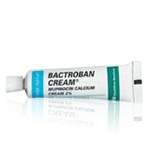
Bactroban (Mupirocin 2% Ointment/Cream) represents the foundational topical antibiotic therapy for bacterial skin infections and the gold standard for MRSA nasal decolonization in surgical and outbreak settings. Originally developed by SmithKline Beecham (now GlaxoSmithKline) and FDA-approved as Bactroban ointment in 1988, mupirocin established itself as the definitive topical antistaphylococcal agent representing the only clinically used member of the pseudomonic acid antibiotic class. As bioequivalent generic manufactured by GSK Pharma India and Biochem Pharmaceuticals under WHO-GMP quality standards, Bactroban provides gold-standard mupirocin therapy at accessible cost. The mupirocin molecule offers unique advantages among topical antibiotics — no cross-resistance with other antibiotic classes because it targets bacterial isoleucyl-tRNA synthetase, an enzyme not shared with other antibiotic mechanisms; excellent activity against methicillin-resistant Staphylococcus aureus (MRSA) including community-acquired strains; and minimal systemic absorption through intact skin providing excellent safety profile.
Mupirocin works through selective inhibition of bacterial protein synthesis by targeting isoleucyl-tRNA synthetase (IleRS) — the enzyme responsible for incorporating isoleucine amino acid into growing bacterial proteins. This selective enzyme inhibition prevents bacterial cells from synthesizing essential proteins required for growth and replication, producing bacteriostatic effect at low concentrations and bactericidal effect at higher concentrations typically achieved with topical application. The narrow selective spectrum focuses activity on Gram-positive bacteria including Staphylococcus aureus (methicillin-sensitive and methicillin-resistant), Streptococcus pyogenes, and coagulase-negative staphylococci. Mupirocin has limited activity against Gram-negative bacteria, anaerobes, and fungi making it uniquely suited for staphylococcal and streptococcal skin infections without disrupting normal skin flora.
Bactroban serves multiple bacterial skin infection scenarios. Primary uses include impetigo (classic pediatric bacterial skin infection); folliculitis and furunculosis; ecthyma (deeper impetigo); secondary infected eczema and traumatic wounds; small wound and burn prophylaxis; and intranasal MRSA decolonization for surgical patients and outbreak control settings.
Bactroban applied topically 2-3 times daily for 5-10 days depending on infection severity. Available in 5 g tubes as ointment or cream from GSK Pharma India and Biochem Pharmaceuticals.


Free prescription
Discrete packaging
Have questions?
Quality Assurance


- Folliculitis: Bacterial infection of hair follicles producing red pustular papules typically caused by Staphylococcus;
- Furunculosis: Deep bacterial hair follicle infections producing painful boils that may progress to abscesses;
- Ecthyma: Deeper form of impetigo extending into dermis producing ulcerative crusted lesions;
- Secondary Infected Eczema: Bacterial superinfection complicating atopic dermatitis and other eczematous skin conditions;
- Secondary Skin Infections: Bacterial infections complicating existing dermatologic conditions requiring targeted antimicrobial therapy;
- Infected Traumatic Wounds: Bacterial infection complicating minor cuts abrasions and other traumatic skin lesions;
- Wound Infection Prevention: Prophylactic use in small wounds cuts and minor traumatic skin injuries at infection risk;
- Minor Burn Infection Prevention: Prophylactic topical antibacterial therapy for minor thermal burns and abrasions;
- MRSA Skin Infections: Effective against methicillin-resistant Staphylococcus aureus including community-acquired MRSA strains;
- Nasal MRSA Decolonization: Gold standard for eradicating nasal MRSA carriage before surgery and outbreak control;
- Preoperative Decolonization: Reduces surgical site infection risk through preoperative nasal MRSA eradication protocols;
- MRSA Outbreak Control: Hospital and community outbreak management through targeted decolonization of carriers;
- Staphylococcus Aureus Infections: Effective against methicillin-sensitive and resistant staphylococcal skin infections;
- Streptococcus Skin Infections: Active against Streptococcus pyogenes causing impetigo cellulitis and other cutaneous infections;
- Localized Nasal Cavity Infections: Intranasal treatment for staphylococcal nasal infections beyond decolonization;
- Newborn Umbilical Colonization: Off-label use for staphylococcal umbilical colonization prevention in neonates;
- Coagulase Negative Staphylococci: Active against Staphylococcus epidermidis and other coagulase-negative staphylococci;
- Antibiotic Resistant Bacteria: No cross-resistance with other antibiotic classes preserves activity when standard antibiotics fail;
- Generic Topical Antibiotic Therapy: Bioequivalent GSK/Biochem generic alternative to brand Bactroban at accessible cost.
- Treats Bacterial Skin Infections: Rapid clinical improvement within 3-5 days for impetigo folliculitis furunculosis and ecthyma;
- Prevents Infection in Minor Wounds: Prophylactic application to small wounds cuts and minor injuries reduces bacterial infection risk;
- Less Antibiotic Resistance Risk: Unique mechanism produces no cross-resistance with other antibiotic classes preserving multiple therapy options;
- Localized Topical Treatment: Direct application to affected skin delivers high concentrations at infection site with minimal systemic exposure;
- Limited Systemic Absorption: Minimal systemic drug exposure through intact skin ensures excellent safety profile even with extensive use;
- Rapid Symptom Relief: Clinical improvement typically within 3-5 days of treatment initiation for typical bacterial skin infections;
- Effective for MRSA Infections: Excellent activity against methicillin-resistant Staphylococcus aureus including community-acquired MRSA strains;
- Better Nasal MRSA Decolonization: Gold standard for eradicating nasal MRSA carriage before surgery reducing surgical site infection risk;
- Better Preoperative Decolonization Protocols: Reduces surgical site infection rates through preoperative nasal Staphylococcus elimination;
- Better Impetigo Response: Treatment of choice for pediatric impetigo with rapid clearance and minimal scarring risk;
- Better Selective Antibiotic Spectrum: Narrow Gram-positive spectrum preserves normal skin flora unlike broad-spectrum topical antibiotics;
- Better Pediatric Safety Profile: Excellent safety in children over 2 months making it preferred pediatric topical antibiotic;
- Better Pregnancy Compatibility: Pregnancy Category B — safe during pregnancy when clinically indicated for skin infections;
- Better Two Formulation Options: Ointment and cream formulations enable selection based on skin site and patient preference;
- Better Unique Mechanism Antibiotic: Isoleucyl-tRNA synthetase inhibition provides mechanism unshared with other antibiotic classes;
- Better Outbreak Control Tool: Essential resource for hospital and community MRSA outbreak decolonization protocols;
- Better Convenient Application: Simple 2-3 times daily topical application for 5-10 days improves treatment adherence;
- Better GSK Biochem Manufacturing: WHO-GMP manufacturing standards ensure consistent bioequivalent generic quality;
- Treats Skin Infections Quickly and Effectively: Rapid clearance of bacterial skin infections improves quality of life and reduces complication risks.
Generic Bactroban (Mupirocin 2% 5 mg) Medication guide:
💊 Welcome to Bactroban - Mupirocin for Skin Infections
💊 Bactroban is topical mupirocin 2 percent, and almost everything worth knowing about it follows from four numbers.
🧩 It comes as a 5-gram tube of ointment or cream, from GSK Pharma India or Biochem, and that one tube is a full course for most lesions. 🩹 The drug goes directly onto the infected skin three times a day for five days, occasionally ten. No tablets, no blood tests, no monitoring, no dose adjustment for anything. 🔑 That simplicity is not marketing. It falls out of the chemistry: mupirocin barely crosses intact skin, so there is almost nothing systemic to manage.
🦠 What it treats is a short, specific list. Impetigo above all, which is why four out of five prescriptions go to children. Then folliculitis, secondarily infected cuts and scrapes, and in its separate nasal formulation, MRSA decolonisation before surgery or in households caught in a cycle of reinfection.
📉 That isolation cuts both ways, which is the reason dermatologists are protective about it. ⚠️ Because nothing else cross-selects, mupirocin resistance comes almost entirely from mupirocin use itself — long courses, repeat courses, and subtherapeutic application. The five-day limit is not timidity about side effects. It is the one lever that keeps the drug working.
🔎 What this guide covers, in the order a patient actually needs it:
- 🪑 How to apply it so it works — the washing, the thin layer, the margin, and the three errors that waste a course
- 📅 What each day should look like — and the day-three decision point where a lack of change means something is wrong
- 🦠 Which infections it treats and which it does nothing for — fungal, viral and inflammatory lesions all get mistaken for impetigo
- 🚨 The warning signs that mean it is no longer a topical problem — fever, spreading redness, red streaks
- 👪 How to stop it coming back — nasal carriage, household cycles, and the hygiene that does the real work
📜 From Soil Bacterium to Pharmacy Shelf
🔬 Mupirocin was not designed in a laboratory. 🌍 It was found in soil, in a bacterium called Pseudomonas fluorescens, which makes the compound to kill off its neighbours in the competition for territory. Chemists at Beecham in England isolated it in 1971 and called it pseudomonic acid A.
🧪 What they had was awkward. The molecule killed staphylococci beautifully in a dish, but swallowed or injected it was destroyed within minutes by ordinary blood esterases, which chop it into inactive monic acid. 💡 That failure turned out to be the whole point. A drug that cannot survive in the bloodstream but is perfectly stable sitting on skin is a topical antibiotic and nothing else — and because it is useless systemically, it is never given systemically, so the hospital pressure that wrecked so many other antibiotics never applied to it.
📅 The development path was slow by modern standards. The ointment reached the United States in 1987 under FDA approval for impetigo, the nasal formulation followed in 1995, and the cream in 1997. 🏥 Then the hospital era began: as MRSA spread through surgical wards in the 1990s and 2000s, nasal mupirocin went from a niche product to a routine part of preoperative protocol.
📊 Three trials turned it from a useful ointment into infection-control policy, and they are worth knowing because they explain why a nurse may hand you a tube before an operation you thought had nothing to do with your nose.
- 💉 Perl, 2002. Nasal mupirocin before surgery reduced Staphylococcus aureus surgical site infections. The first large trial to show that treating carriage prevented disease
- 🧬 Bode, 2010. Rapid screening plus nasal mupirocin plus a chlorhexidine body wash cut staphylococcal surgical site infections by roughly 60 percent. This is the combination still used today
- 🏥 REDUCE-MRSA, 2013. Treating every intensive care patient rather than only known carriers cut MRSA bloodstream infections by about 37 percent and non-MRSA bloodstream infections by about 44 percent
📖 Four decades on, the clinical guidelines still name mupirocin first for localised impetigo and first for nasal decolonisation. ⚠️ Very few antibiotics approved in the 1980s can still say that, and the reason is the one from section 1: nothing else drives resistance to it except its own overuse.
🔬 How Mupirocin Kills Bacteria and Spares You
🔬 Every living cell builds proteins by loading amino acids onto transfer RNA, and each amino acid has its own loading enzyme. 🥒 Mupirocin jams exactly one of them: isoleucyl-tRNA synthetase, the enzyme that loads isoleucine. Without it the bacterium cannot assemble any protein that contains isoleucine, which is essentially all of them.
⏳ That is a complete shutdown rather than a slowdown. 🤹 At the concentration a 2 percent ointment delivers to the skin surface, mupirocin is bactericidal — it kills rather than merely holding bacteria in check while the immune system catches up. At the far lower concentrations found deeper in tissue it is only bacteriostatic, and that difference is why the drug works on the surface of a lesion and fails on anything deep.
📊 The selectivity is the part worth seeing as a number. Mupirocin binds the bacterial enzyme thousands of times more tightly than the human one.
💊 The second half of the mechanism is the vehicle, and patients underrate it. 🪑 Mupirocin has to stay in contact with the lesion long enough to work, which is what the polyethylene glycol ointment base does and what a thick glob of it prevents. Pile it on and you trap moisture against healing skin; spread it thin and the drug reaches the bacteria on the surface where they are sitting.
🦠 One more thing the mechanism explains: the spectrum. The enzyme mupirocin attacks is shaped slightly differently across bacterial species, and the drug fits the staphylococcal and streptococcal versions well. ❌ It fits the Pseudomonas and E. coli versions poorly, which is exactly why hot-tub folliculitis and gram-negative wound infections do not respond.
🎯 What Bactroban Treats and What It Does Not
🎯 Mupirocin covers a narrow range of bacteria very well and almost everything else not at all. 🧩 That narrowness is a feature on skin, where the organisms causing superficial infection are predictable, but it means a lesion caused by anything outside the list will not improve no matter how carefully the ointment is applied.
| 🦠 Organism | 📊 Activity | 🏥 What that means on the skin |
|---|---|---|
| Staphylococcus aureus including MRSA |
Excellent | The main target. Methicillin resistance does not affect mupirocin, which is why it kept working through the MRSA era while other topicals did not |
| Streptococcus pyogenes | Good | The second impetigo organism, often present alongside staph. Covered well enough that mixed lesions respond to mupirocin alone |
| Other streptococci | Variable | Usually enough for a superficial lesion, not something to rely on for a deeper or spreading infection |
| Pseudomonas aeruginosa | None | Hot-tub folliculitis will not respond. It mostly settles on its own; severe cases need oral ciprofloxacin |
| E. coli and other enterics | None | Relevant for wounds near the groin or perineum, where gram-negative contamination is common and a different antibiotic is needed |
| Anaerobes | None | Why animal and human bites need amoxicillin-clavulanate rather than any topical |
| Fungi and viruses | None | Completely outside the spectrum. Ringworm, thrush, cold sores and shingles need their own classes of drug entirely |
🔎 The practical reading of that table is a short list of lesions that look bacterial, get treated with mupirocin, and then do not budge. ⚠️ Recognising them saves the three to five days that otherwise get spent on the wrong tube.
- 🟢 A ring with a raised scaly edge and a clearing centre — that is tinea, and it needs an antifungal such as terbinafine or clotrimazole
- 💧 A cluster of small blisters on the lip or genitals, often preceded by tingling — herpes simplex, which needs aciclovir
- 🫧 Itchy red skin with no crust and no pustules — an eczema flare rather than an infection, so the answer is a topical steroid and an emollient
- 💉 Pustules centred on the beard area after shaving — often ingrown hairs rather than bacteria, and an antibiotic does nothing for those
- 🚬 Red bumps appearing a day or two after a hot tub — Pseudomonas, outside the spectrum, and usually self-limiting
💡 The honest summary of the spectrum: if the lesion has a honey-coloured crust, pustules, or yellow discharge, mupirocin is a reasonable bet. If it is scaly, blistering, ring-shaped or simply itchy, the diagnosis is probably something else and a clinician will save you a wasted week.
🧴 Ointment Cream or Nasal - Choosing the Right One
🧰 Bactroban exists in two skin formulations and one nasal one, and the choice between ointment and cream is not a preference. 🧩 Both contain the same mupirocin at the same 2 percent strength. What differs is the base carrying it, and the base decides where each one belongs.
🧹 Ointment
🧩 Polyethylene glycol base. Greasy, thicker, stays in contact longer
🎯 Impetigo, crusted lesions, small infected cuts. The default for almost everything
⚠️ Not for large areas of broken skin. The glycol base is absorbed through damaged skin and cleared by the kidneys
💰 Cheaper and far more widely stocked
💧 Cream
🧩 Water-based. Lighter, absorbs faster, no greasy film
🎯 Face, skin folds, fragile or very dry skin
✅ Safe over a wider area, because there is no glycol load to clear
💍 The answer when the ointment stings every time
👂 The nasal preparation is a third product and not interchangeable with either. ⚠️ Bactroban Nasal is calcium mupirocin in a base formulated for nasal mucosa, and the skin ointment must never be substituted for it — the polyethylene glycol base is an irritant inside the nostril. 🏥 It exists for one job: clearing nasal carriage before surgery or in a household cycling reinfection, twice daily for five days.
💡 In practice the decision takes about ten seconds. 🚩 A crusted impetigo lesion on a child arm gets the ointment. 🟢 A lesion on the cheek, or on a patient whose skin is thin and dry, gets the cream. 👂 Carriage in the nose gets the nasal preparation and nothing else. And if the ointment has stung badly on the first two applications, switching to cream solves it far more often than stopping the drug does.
🚫 Formulation mistakes that come up constantly.
🔹 Using the skin ointment inside the nose. Wrong base, real irritation, and it is not what the decolonisation trials used
🔹 Using either one in or near the eye. Neither is an ophthalmic preparation. An eyelid-margin infection goes to an eye clinic
🔹 Spreading the ointment over a large burn or raw wound. This is the one genuine toxicity concern with the product, and it is about the glycol base rather than the mupirocin
📋 Applying Bactroban Properly in Sixty Seconds
📋 More courses of mupirocin fail from technique than from resistance. 🪑 The drug is reliable; the application is where it goes wrong, and the three common errors — too thick a layer, no cleaning first, and missing the margin — are all easy to correct once someone has seen how it should look.
⏱️ The whole sequence takes about sixty seconds and happens three times a day — morning, afternoon, bedtime is the usual spacing. ⚠️ Twice daily is not an equivalent schedule; the drug clears from the skin surface and the gap lets bacteria recover.
💊 Sarah Mitchell PharmD on what actually goes wrong
The two mistakes I see over and over are applying too much and not cleaning the lesion first. A thick dollop on a two-centimetre lesion wastes most of the tube, because the drug does not penetrate any better for being piled up — it just traps moisture against skin that is trying to heal. And ointment on an unwashed crusty lesion sits on dead material rather than reaching the bacteria underneath it. Thirty seconds of gentle washing before each application changes the outcome more than anything written on the label. When a parent tells me a course has not worked, I ask them to show me how they do it before I consider anything else.
🔑 One pass through the sequence, as a reminder to keep by the sink:
📅 Why a Bactroban Course Runs Five Days
📅 Five days is the answer for almost every lesion mupirocin is prescribed for, and it is worth understanding why that number is so firm. 📊 In paediatric impetigo trials, five days of topical mupirocin cleared lesions as reliably as seven to ten days of an oral antibiotic. Extending the topical course did not improve clearance. It only added selection pressure.
⏳ What the five days actually look like is predictable enough to plan around.
🔎 Nasal decolonisation runs on the same five days but twice daily rather than three times, and it is counted backwards from the operation: the course finishes on the morning of surgery. ⚠️ Start it too early and recolonisation begins before the incision; start it too late and carriage has not cleared at the moment it matters.
✅ When a course runs longer than five days, and when it must not.
🔹 Up to ten days is acceptable for a lesion that is clearly improving but not finished, on a clinician decision rather than a patient one
🔹 Beyond ten days, stop and reassess. At that point the question is no longer the duration but the diagnosis, and a culture answers it in two days
🔹 Never run a second course straight after a failed first one. If a correctly applied five days did nothing, a further five will not either, and each course narrows the options for next time
💡 Stopping at the right time matters as much as starting. 🟢 When the lesion is flat and the crust gone, the course is done — a lingering pink mark is new skin, not remaining infection, and it fades over one to two weeks on its own. ⚠️ Carrying on applying an antibiotic to healed skin is the quiet, well-meant route to resistance.
⏱️ The First 48 Hours on Bactroban
⏱️ The first forty-eight hours tell you whether the course is going to work. 📉 Improvement with topical mupirocin is early: if the drug is going to clear the lesion, something visible changes within a day or two. ⚠️ A lesion that looks identical at the 48-hour mark is a signal, not a reason for patience.
🔎 What counts as improvement is more specific than "looks a bit better", and the distinction matters because the early changes are easy to miss.
| 📅 Checkpoint | ✅ Signs it is working | 🔧 What to do |
|---|---|---|
| 24 hours | Less itching and tenderness, the redness has stopped widening, no new lesions nearby | Carry on. Early change is subtle and the crust may even look worse as it loosens |
| 48 hours | Crust loosening in places, discharge stopped, surrounding redness clearly contracted | Carry on. This is the checkpoint that predicts the rest of the course |
| Day 3 | Most of the crust lifted, lesion visibly smaller, pink healing skin underneath | No change at all by here means see a clinician, not extend the course |
| Day 5 | Lesion flat and closed, only a pink mark left | Stop the ointment. Moisturise the area for one to two weeks while the barrier rebuilds |
🤕 Two things routinely get mistaken for failure in the first two days. 💧 Mild stinging on application happens to roughly a quarter of users on raw skin, lasts a few minutes, and settles by day two — it is not an allergy. 🪑 And the lesion sometimes looks worse on day one as the crust softens and lifts, exposing the healing surface beneath. Both are expected.
🚨 What is never expected is the lesion behaving as though the infection has moved beyond the skin surface. These signs mean the problem is no longer a topical one.
🚨 Stop and get seen the same day, not at the end of the course, if:
🔹 Red streaks are running from the lesion toward the armpit or groin. That is infection travelling in the lymphatics
🔹 Fever above 38 C has appeared. A superficial skin infection does not cause fever, so fever means it is no longer superficial
🔹 The red area is widening by a centimetre or more a day despite correct application — that is developing cellulitis
🔹 Pain is out of proportion to what you can see, or the area feels firm and swollen below the surface
⚠️ No stronger ointment fixes any of these. They need an oral antibiotic, and the delay is what causes the damage.
💡 Set against that short list, the reassuring version is the common one. 🟢 Most lesions are visibly better at 48 hours and healed by day five, with nothing needed beyond the tube, soap, and washed hands. The point of knowing the warning signs is not to expect them — it is so the rare case gets an antibiotic by mouth on day two instead of day six.
👶 Impetigo - The Number One Reason for Bactroban
👶 Four out of five Bactroban prescriptions are written for impetigo, and most of those go to children between two and six years old. 🦠 It is a surface infection of the skin, caused by Staphylococcus aureus on its own or together with Streptococcus pyogenes, and it almost never becomes dangerous. 😬 What it does instead is spread through a household faster than parents expect.
🧹 That peak is not about weaker skin. ✊ It is about behaviour — small children touch everything, scratch what itches, and share towels and pillows without thinking. 👷 Adults who work in close contact with children, in nurseries and primary schools, sit on the small second bump in that curve for exactly the same reason.
🔍 Recognising impetigo matters more than it sounds, because the look-alikes do not respond to mupirocin at all. The real thing follows a pattern:
- 🔴 It starts as a flat red spot, not a bump — usually around the nose and mouth, or on an arm or leg where the skin was already scratched or grazed
- 💧 A thin blister forms and breaks within a day, leaving a wet raw patch about the size of a pea that the child keeps touching
- 🍯 It dries into a thick honey-coloured crust — that golden crust is the one sign that nothing else on the skin imitates convincingly
- 🧠 The child feels well. Mild itch, no fever, normal appetite. Fever with impetigo-looking lesions means something deeper is going on
🧪 Two forms exist and both answer to the same ointment. Non-bullous impetigo is about seven cases in ten: small lesions, fast crusting, often several at once. Bullous impetigo is the rest, caused by toxin-producing staph strains, and it makes larger floppy blisters that sit for a day or two before they collapse. 💊 Topical mupirocin three times daily for five days is the first answer to both, as long as the total area involved is small and the child is otherwise well.
📅 Left alone, impetigo clears on its own in two to three weeks. ⏱️ Treated properly, it stops being contagious in 24 to 48 hours and the crusts are gone by day five to seven. 🏫 That gap of about two weeks is the real reason the prescription gets written — not because the infection is serious, but because a child with untreated impetigo keeps a nursery class infected for a fortnight.
👃 MRSA Nasal Decolonization - The Five-Day Protocol
👃 About 30 percent of healthy people carry Staphylococcus aureus permanently in the front of the nose, and a few percent of those carry MRSA. 🧬 The nose is the reservoir: hands touch it dozens of times a day without the owner noticing, and from there the bacteria reach every cut, every surgical incision, every family member. 💊 Bactroban Nasal is the calcium mupirocin formulation made specifically to empty that reservoir.
📋 The protocol is short and rigid, and the whole benefit depends on doing all five days:
🧺 Nasal mupirocin on its own clears carriage in roughly six people out of ten. 🛀 Pair it with a chlorhexidine body wash and the number jumps, because the two reach different places — the ointment handles the nose, the wash handles the armpits, groin and skin folds where staph also sits.
🪥 Who actually needs this? 🧵 People booked for joint replacement or cardiac surgery, where a staph infection in the wound is a catastrophe and screening is now routine. 🏡 Households stuck in a cycle of recurring boils, where one carrier keeps reseeding everyone else. 🏥 Dialysis patients and ICU admissions in units that run universal decolonisation. ❌ What nobody needs is nasal mupirocin as a precaution with no reason behind it — carriage returns within months in most people, and repeated courses are the single clearest driver of resistance.
🟡 Folliculitis and Furunculosis Management
🪥 Hair follicles get infected constantly and almost always sort themselves out. 💥 Folliculitis is the mildest version: a ring of redness around a single hair, sometimes with a small yellow head. 💧 When the infection pushes deeper and the body walls it off with pus, the same spot becomes a furuncle — a boil. ⚠️ The point where topical treatment stops being the answer sits somewhere between those two, and knowing where saves a wasted week.
| 🔍 What you are looking at | 💉 How deep it goes | 🎯 What it needs |
|---|---|---|
| Superficial folliculitis Red ring around one hair, maybe a pinhead of pus |
The opening of the follicle only | Often nothing at all. Warm compresses and leaving the area unshaved clear most cases in a few days. Mupirocin is reasonable when several spots appear together |
| Deep folliculitis Tender red lump, the whole follicle involved |
The full depth of the follicle | Mupirocin three times daily sits well here, together with warm compresses. Expect softening within two to three days |
| Furuncle (boil) A painful nodule with a pus pocket you can feel move |
Below the follicle, into the fat | Drainage, not ointment. No topical antibiotic crosses into a closed pus pocket. Mupirocin helps only on the skin around it afterwards |
| Carbuncle Several boils fused, often with fever |
A connected network under the skin | A clinician today. Surgical drainage plus oral antibiotics. A tube of ointment here costs days that matter |
🧰 The dividing line is simple enough to use at home: if you can feel fluid moving under the skin, the problem is a pocket and a pocket has to be opened. 💊 If the lump is firm and tender with no movement in it, the infection is still in tissue, and mupirocin reaches tissue.
🚲 Not every rash around a hair is a staph problem.
💧 Hot tub folliculitis shows up 12 to 48 hours after a pool or spa, as itchy bumps under the swimsuit area. It is Pseudomonas, mupirocin does nothing to it, and it resolves by itself in a week or two.
🦯 Razor bumps on the neck and jaw are ingrown hairs with inflammation, not infection. Antibiotic ointment on them is wasted, and the fix is changing how you shave.
🧳 Malassezia folliculitis on the chest and upper back is a yeast, looks like uniform small itchy bumps, and gets worse on antibacterial treatment rather than better.
🩹 Two practical habits do more than the ointment in recurring cases. ✂️ Stop shaving over the area until it has settled, because every pass reopens follicles that are trying to close. 👕 And change the clothing that sits on the spot — tight synthetic fabric over a sweaty back is the reason so many of these come back in the same place.
🩹 Infected Cuts Scrapes and Minor Wounds
🩹 Most cuts and grazes never need an antibiotic. 💧 A wound washed properly under running water and kept covered heals on its own, and the biggest single thing you can do for it is the washing. 💊 Bactroban enters the picture when a wound that was healing stops healing — when the edges redden, the surface weeps, and a crust that should have been drying starts looking wet again.
⚠️ Before reaching for the tube it is worth placing the wound into one of three groups, because the top group is not a pharmacy problem at all:
🚨 Today, and not at the pharmacy
An animal or human bite · a puncture from a nail, needle or thorn · anything with grit or glass still in it · a wound over a joint that will not close · redness spreading outward by more than a centimetre a day · fever above 38 C · red streaks running up the limb · a foot wound in anyone with diabetes
🟡 Ask a clinician in the next day or two
A graze larger than the palm of your hand · a wound still weeping after four days · one that smells · a burn that blistered · a surgical wound with any new redness · no improvement after three days of correct mupirocin · a tetanus booster more than ten years ago
🟢 Reasonable to treat at home with mupirocin
A small graze or shallow cut with reddened edges · a scratched insect bite that has turned crusty · a cracked heel or fingertip that has gone red and sore · a healing wound that has developed one or two honey-coloured spots on its surface
🔎 The bottom band is the honest home-treatment zone, and it is narrower than most medicine cabinets assume. 💊 In that zone the approach is the same as for impetigo: wash, dry, thin layer over the wound and a margin around it, cover, three times daily for five days.
📏 Size is the part people judge wrongly, so here are the numbers that matter. A single lesion wider than 10 cm or more than 10 separate spots is past what a topical antibiotic is tested for, and the answer there is an oral course. 💉 Apply out to a 5 mm margin of normal-looking skin, because that rim is where the bacteria you cannot see are sitting. ⏱️ And expect the first real change within 48 hours — less redness at the edge, a drier surface, less soreness when it is touched.
🧹 One more thing worth saying plainly, because it undoes a lot of good work. 🚫 Mupirocin is not a dressing and it is not a substitute for cleaning. Ointment spread over a wound that still has dirt in it seals the problem in. Thirty seconds under the tap first, every time, is what makes the rest of it work.
🚫 When Bactroban Is Not the Right Choice
❌ A good share of failed Bactroban courses were never going to work, because the thing being treated was not bacterial. 🧬 Mupirocin kills Staphylococcus aureus and Streptococcus pyogenes and does almost nothing else. 🔍 Fungi ignore it. Viruses ignore it. Inflammation without infection ignores it, and sometimes gets worse under an occlusive ointment.
| 🤔 What it gets mistaken for | 🔎 The giveaway | ✅ What it actually needs |
|---|---|---|
| Ringworm | A ring with a raised scaly edge and a clearing centre, slowly widening, itchy rather than sore | An antifungal cream such as clotrimazole or terbinafine for two to four weeks |
| Cold sore or shingles | Clustered small blisters that tingle or burn before they appear, on the same spot each time | An antiviral. Shingles in a band on one side of the body is urgent, within 72 hours |
| Eczema flare | Itch dominates over pain, the border is vague, and the same areas have flared before | Emollients and a topical steroid. Mupirocin only if it has visibly become infected on top |
| Acne | Blackheads and whiteheads mixed in, on the face chest and back, going on for months | Acne treatment. The bacteria in acne are a different species that mupirocin barely touches |
| Cellulitis | A warm spreading red area with a soft edge, often with fever and malaise | Oral or intravenous antibiotics. The infection is in the deep dermis, where no ointment reaches |
| Abscess | A tense lump with fluid you can feel shift under the skin when you press either side | Incision and drainage. Antibiotics alone, oral or topical, do not resolve a pus pocket |
💡 The practical rule that covers most of this table: mupirocin treats what is wet, crusted and spreading at the surface. 🚫 Anything scaly, anything ring-shaped, anything blistering in a cluster, anything deep and hot — different problem, different medicine.
🛑 Three places mupirocin must never go, regardless of what the skin looks like.
👁️ In or near the eye. The polyethylene glycol base in the ointment is a serious irritant to the cornea. Eye infections have their own preparations and this is not one of them.
🩸 On a large open burn or a wide raw area. The ointment base is absorbed through damaged skin and cleared by the kidneys. On extensive open surfaces, and especially in anyone with reduced kidney function, that load becomes a real problem.
💉 Onto an intravenous line site or into a wound cavity. Mupirocin is for intact or superficially broken skin. Packing it into a deep cavity does nothing useful and delays the drainage that is actually needed.
⏳ One timing rule closes this out. 📅 If a lesion has not changed after three days of correctly applied mupirocin, the most likely explanation by a wide margin is that the diagnosis is wrong — not that the dose is too low, and not yet that the organism is resistant.
🚿 Combining with Soap Hygiene and Barrier Care
🚿 The ointment does roughly half the work in impetigo. 💧 The other half is washing — mechanical removal of crust, bacteria and the sticky fluid they sit in. 🔍 Trials that compared mupirocin with careful antiseptic cleansing alone found the gap between them smaller than anyone expects, which tells you how much of the result comes from the cloth and the soap.
📅 A day on treatment looks like this, repeated three times:
🧰 Plain soap is deliberate. ❌ Antibacterial washes, alcohol gels and antiseptic liquids on an open impetigo lesion sting badly, dry the skin around it, and add nothing that the mupirocin is not already doing. 💊 Save the chlorhexidine for whole-body washing in a decolonisation protocol, where it has a job.
🏡 Around the treatment, the household side matters just as much:
- 🧹 One towel per person, changed daily — shared bath towels are the commonest route from one child to the next in the same family
- 🛏️ Wash bedding, towels and the clothing that touches lesions at 60 C, separately from everything else, until the lesions have crusted over and dried
- 💃 Cut the fingernails short and keep them clean. Most self-spread happens under a nail at night, and short nails break that chain more reliably than any instruction not to scratch
- 🩹 Cover lesions on hands, forearms and knees while out of the house, and leave the rest uncovered at home so they dry faster
- 🪓 Moisturise the skin around the lesion, not the lesion itself — repeated washing cracks the surrounding skin by day four, and cracked skin is where the next lesion starts
🔒 One habit undoes all of it, so it is worth naming. ✊ Picking at crusts spreads impetigo more efficiently than anything else a person can do. The crust lifts on its own once the skin underneath has healed, usually around day four or five. Softening it with a warm cloth is fine; pulling it off opens a fresh raw surface and puts live bacteria on the fingertips.
🏠 Household and Family Spread Prevention
🏡 A single case of impetigo in one child is a small problem. 🔁 The same family coming back a third time in six months is a different problem with a different answer, and treating it as if it were the first case is why those cycles run for years. 🧬 Somewhere in the household, usually in a nose, there is a reservoir that keeps reseeding everybody.
🟢 One case, first time
💊 Treat the lesions only. Five days of mupirocin three times daily on the affected skin
🧹 Separate towels and daily hot washes for the duration, and nothing more elaborate than that
🚪 Back to school after 48 hours of treatment, with lesions covered if they are on the hands
❌ Do not treat the rest of the family. Mupirocin on healthy skin selects for resistance and prevents nothing
🔄 Third round in a year
🔎 Ask for a nasal swab on the person who keeps getting it, and often on the whole household
👃 Nasal mupirocin twice daily for five days for everyone who tests positive, all starting on the same day
🚿 Chlorhexidine body wash alongside it, because the skin reservoir and the nasal one have to go together
🩹 Replace razors and loofahs, hot-wash all bedding on day one, and check pets are not the source of recurring skin lesions
📅 The detail that decides whether the second approach works is the calendar. 👥 Everyone treats on the same five days. Staggered treatment is the classic failure: the first person finishes, picks the organism straight back up from the one who started three days later, and the cycle restarts looking like treatment failure when it is simply reinfection.
🧬 Emily Chen MD MPH on the household that keeps coming back
When a family has had three rounds of boils or impetigo in a year, I stop treating the lesion in front of me and start asking who else in the house has had something on their skin in the last six months. The answer is almost always someone who never mentioned it — a teenager with a spot on the thigh, a father with a recurring sore in his beard. Then I want a swab before we treat, because about one in twenty of these turns out to carry a strain with high-level mupirocin resistance, and five more days of the same ointment in every nostril in that house would be five wasted days plus more selection pressure. The swab costs two days and it changes the plan often enough to be worth it every time.
🚩 Two household facts tend to get missed. 🐾 Pets carry Staphylococcus aureus too, and a dog with a recurring skin problem can be the quiet source in a family that has done everything else right. 🏋 And the second is contact sport: wrestling, rugby and judo move skin infections between households entirely, which is why clubs have rules about covering lesions and why those rules exist in writing rather than as advice.
🚨 The Resistance Question - Low-Level and High-Level
🧬 Mupirocin has an unusual position among antibiotics. 🧩 It blocks isoleucyl-tRNA synthetase, a target no other clinical antibiotic attacks, so nothing else in the pharmacy selects for resistance to it. ⚠️ That protection has one hole in it, and the hole is mupirocin itself. Every extra day of use pushes in the same direction.
📊 Two kinds of resistance exist and they behave very differently. Low-level resistance comes from a point mutation that reshapes the enzyme slightly, and the ointment may still work at the concentration it reaches on skin. High-level resistance comes from the mupA plasmid, which carries an entirely different enzyme the drug cannot bind — and against those strains topical mupirocin does nothing at all. 🔍 Surveillance puts high-level resistance at roughly 1 to 5 percent of MRSA isolates in most of Europe and North America, rising steeply in hospitals that use mupirocin heavily.
🤔 When a course fails, three things are true in this order:
- 🔍 Most apparent failures are not resistance at all. Wrong diagnosis and wrong application technique together explain the large majority of them, which is why a clinician asks to see how the ointment is being put on before changing anything
- ❌ A second topical course rarely rescues the first once the first was applied correctly. It adds five more days of selection pressure and usually ends in the same place
- 🛠️ A culture with sensitivity testing answers the question in two days and changes what gets prescribed. That is why it beats guessing at a stronger ointment or a longer run
🔒 The single most effective thing any individual does about mupirocin resistance happens at the tube. 📅 Five days, then stop. ❌ No repeat course without a reason. 🚫 No using the leftover half of a tube on something unrelated three months later.
📊 Where resistance comes from, in order of how much it contributes.
📅 Prolonged and repeated courses — the strongest driver by a wide margin. Studies of units that ran mupirocin continuously for months show resistance climbing from under 2 percent into double figures.
🏥 Universal decolonisation without screening — treating everyone regardless of carriage puts the drug on thousands of people who were never colonised, with all of the pressure and none of the benefit.
📦 Leftover tubes used for the wrong thing — an old half-tube on a rash of unknown cause is a sub-therapeutic exposure, and sub-therapeutic exposure is exactly the condition under which resistant strains are selected.
💡 There is one piece of good news in the resistance picture. 🔁 Where mupirocin use is cut back, resistance rates fall again — the mupA plasmid carries a cost for the bacterium and is lost when the pressure comes off. Several hospital programmes have brought high-level resistance back down below two percent simply by restricting who gets decolonised. ⏳ That is not true of every antibiotic, and it is the reason short, targeted courses are worth protecting.
📈 How to Know Your Treatment Is Working
📈 Knowing whether a course is working is mostly a matter of knowing what to look at and when. ⏱️ Impetigo does not clear the way a headache clears — there is no single moment where it is suddenly gone. 🔍 It fades through a sequence, and each stage has a day attached to it.
🤔 That first bar is the one that causes the phone calls. 🚫 Only about a third of lesions are finished at day three, which means two thirds of correctly treated children still have something visible at the point where parents start worrying the ointment has failed. 💡 The question at day three is not whether it is gone. It is whether it is moving.
✅ The signs that say the drug is doing its job, roughly in the order they appear:
- 🔴 The red halo around the lesion shrinks first, usually within 24 to 48 hours. This is the earliest reliable sign and the one worth checking against a photograph taken on day one
- 💧 The surface stops weeping — a lesion that was wet and sticky becomes dry and matt by about day two or three
- 🍯 The crust lifts at the edges instead of thickening. A crust that looks slightly worse on day two while it loosens is normal, and pulling it off is not
- 🟢 No new lesions appear after 48 hours. One or two new spots on day one are already-infected skin declaring itself; new spots on day four are a failed course
- 😘 It stops hurting when touched, and the child stops picking at it without being told
📷 One practical trick beats all of the above. 📱 Photograph the lesion on day one with a coin or a fingertip next to it for scale, and again on day three. Day-to-day change is too slow to see by memory, and half the courses abandoned as failures were improving steadily. 📅 Expect the pink mark left behind to take two to four weeks to fade completely — that is skin recolouring, not infection, and it needs no treatment.
🔄 What to Do If Bactroban Fails After 3 Days
⏳ Three days of correct application with no movement at all is the point where continuing becomes the wrong decision. ❌ Not because mupirocin has stopped working, but because at that point the odds favour one of four other explanations, and each of them has a different answer.
🔎 Working through them in order takes about a minute:
📊 The order of that tree reflects the real frequencies. 🔍 Technique and diagnosis together account for the large majority of failed courses; documented mupirocin resistance explains only a small minority, and it is the last thing to reach for rather than the first.
⚠️ Four things that look like fixes and are not.
📦 Extending the course to ten or fourteen days on your own. Beyond day ten the added benefit is close to zero and the added selection pressure is real. Ten days is the outer limit, and it is a clinical decision rather than a home one.
💊 Applying more ointment or applying it more often. The skin surface saturates. A thicker layer traps moisture against healing skin and changes nothing about the kill rate.
🧪 Adding a second antibiotic cream on top. Two topicals at once irritates the skin, confuses the picture, and makes it impossible to tell which one caused a reaction.
🚫 Switching to an old leftover tube of something else. Neomycin in particular is a common skin allergen, and a contact dermatitis on top of an unresolved infection is a genuinely difficult situation to untangle.
🧪 What a swab actually buys is worth spelling out, since it feels like a delay. 📅 A culture with sensitivity testing comes back in two to three days and names the organism and what kills it. 💡 If it shows high-level resistance, the alternatives are fusidic acid, retapamulin, or an oral antibiotic — and no amount of extra mupirocin would have worked. If it shows a sensitive strain, the problem was always technique or diagnosis, and that is equally useful to know.
🚨 Bactroban Side Effects - Full Spectrum Explained
🩹 Mupirocin is one of the better-tolerated medicines in any pharmacy, and the reason is structural rather than lucky. 💊 Less than one percent of an applied dose crosses intact skin, and whatever does cross is broken down within minutes into monic acid, which has no antibacterial activity and no meaningful effect anywhere. 🧬 There is no liver monitoring, no blood level, no dose adjustment for age or kidney function, and no interaction with tablets taken by mouth.
⏱️ Almost everything that goes wrong goes wrong at the skin, and when it starts tells you what it is:
💡 That single distinction — settles over days versus builds over days — separates almost all harmless irritation from the reactions that matter. 📊 In the registration studies local reactions of any kind were reported by roughly 1 to 3 percent of users, and fewer than one in a hundred stopped treatment because of one.
- 🔵 Brief stinging on the first two applications — reported by around a quarter of users, lasts a few minutes, and is the polyethylene glycol base rather than the antibiotic. It fades by the third dose
- 📆 Dryness and tightness around the lesion by day four — caused by washing three times a day, not by the drug. Moisturise the skin around it and leave the lesion itself alone
- 📍 Itching that gets worse each day from day three — this is the contact dermatitis pattern. Stop the ointment and ask for an alternative
- 🩸 Headache, nausea or a strange taste with the nasal formulation — reported in about one to two percent of people, usually because a little ointment reaches the back of the throat. It passes
- ⚠️ Redness extending beyond where the ointment is applied — the one local change that is never simply irritation, and the one to act on
💉 Systemic side effects are the part most people expect to find and there is very little to report. 🧬 No effect on blood counts, kidney function, liver enzymes or blood pressure has been established at normal use. 🚲 The one genuine systemic caution attaches to the polyethylene glycol base in the ointment rather than to mupirocin itself: used over large areas of broken skin, especially in someone with impaired kidneys, that base is absorbed and has to be cleared. 💊 The cream has no glycol load, which is exactly why it is the preferred choice for wider or more fragile areas.
🛑 Stop the ointment and get medical help the same day if any of these appear.
😶 Swelling of the face, lips, tongue or throat, or any difficulty breathing or swallowing. This is angioedema and it is a genuine emergency, rare as it is with a topical antibiotic.
🚨 Hives spreading away from the treated area, or widespread itching over skin the ointment never touched — a systemic allergic reaction rather than a local one.
🔥 Blistering, peeling or skin coming away in sheets, with or without fever and sore eyes or mouth. Severe skin reactions are very rare with mupirocin but they are not survivable to wait on.
💩 New watery diarrhoea during or after a course, particularly after wide application. Antibiotic-associated colitis is extremely uncommon from topical use but it has been reported, and it needs assessing rather than treating with an anti-diarrhoeal.
🧴 Managing Local Irritation Without Stopping
💧 Most of the discomfort people feel on a Bactroban course is not a reason to stop it. 🧩 Stinging, dryness and a mild burn come from the ointment base and from washing the same patch of skin nine times in three days. ❌ Stopping a course on day two for those is how a treatable lesion turns into a two-week problem.
🤔 Telling simple irritation apart from an allergy is the whole skill here, and the two look different in four specific ways:
🟢 Irritation — keep going
⏱️ Starts within minutes of applying and eases off well before the next dose
📉 Gets milder with each day, not worse. By day three it is usually gone entirely
📍 Stays exactly where the ointment went, with no spread into normal skin
🔥 Burning and tightness dominate, and itch is mild or absent
🔴 Contact allergy — stop
📅 Starts on day three to five, often after two or three comfortable days
📈 Gets worse with each application, and is still there hours after the dose
🧭 Spreads past the application site, sometimes with small blisters at the edge
🧵 Itch dominates and it is hard to leave alone, which is the clearest single difference
💊 For plain irritation, four adjustments usually fix it without interrupting the course. 🧹 Pat the skin dry rather than rubbing, and give it a full minute before the ointment goes on — applying onto damp skin makes the sting noticeably worse. 💧 Use plain soap instead of anything antibacterial. 💉 Put a bland moisturiser on the skin around the lesion at a different time of day, never on it. 🧰 And if the ointment stings consistently on the face or in a skin fold, ask about switching to the cream, which has no polyethylene glycol in it and is usually comfortable where the ointment is not.
💡 One more thing that sounds minor and is not. 🌡️ A tube stored somewhere warm — a bathroom windowsill, a car glovebox — separates slightly, and the separated base stings far more than a properly stored tube. 🔍 If a course that was comfortable for two days suddenly becomes uncomfortable, look at where the tube has been sitting before concluding anything about the skin.
🛑 Allergic Reactions - When to Stop Immediately
🧭 True allergy to mupirocin itself is rare. 🧩 Far more often the culprit is something else in the tube — the polyethylene glycol base in the ointment, or the benzyl alcohol and cetyl alcohol in the cream — which matters, because an allergy to one formulation does not automatically rule out the other.
⚠️ What to do about a reaction depends almost entirely on how fast it is moving:
🚨 Stop now and call emergency services
Swelling of the lips, tongue, face or throat · tightness in the throat or chest · difficulty breathing or swallowing · hives appearing across the body · dizziness or faintness with any of the above · a sudden drop in blood pressure
🟡 Stop the ointment and speak to a clinician today or tomorrow
Itching that has increased every day since day three · small blisters at the edge of the treated area · redness spreading into skin the ointment never reached · weeping from skin that was previously intact · a rash appearing somewhere else on the body
🟢 Keep going and mention it at the next contact
A sting lasting a few minutes after each dose · dry tight skin around the lesion by day four · mild redness exactly at the application site that fades between doses · a strange taste after using the nasal ointment
🔎 Confirming a genuine allergy is done with patch testing by a dermatologist, not with a blood test, and it is worth doing when someone has reacted to several topical preparations. 📋 The result frequently names the base rather than the antibiotic, which opens the door back up to a different formulation. 📝 Until that is sorted out, the reaction belongs in the medical record as it was observed — which product, which day it started, what the skin did — rather than as a blanket note saying no topical antibiotics.
💊 Sarah Mitchell PharmD on the allergy that is usually not an allergy
I see mupirocin allergy written in records far more often than it exists. Most of the time what happened was a sting on the first application, the patient stopped, and the label stuck. That label then follows them for twenty years and removes a first-line option every time they need one. So when someone tells me they are allergic, I ask two questions: which day did it start, and did it get better or worse with each dose. A reaction on the first dose that eased by the third is the base, not an allergy. A reaction that began on day four and climbed is the one I take seriously, and that is the person worth sending for patch testing — because knowing whether it was the glycol or the drug decides whether the cream is still available to them.
🔬 Rare but Serious Reactions to Recognize
🔬 The rare end of the mupirocin side-effect picture is genuinely rare, and it is worth setting out plainly rather than leaving as a vague warning. 📊 Everything in the table below has been reported in post-marketing surveillance, which means it has happened to someone, somewhere, out of many millions of courses.
| 🤕 What has been reported | 🔍 How it shows itself | 💉 What to do |
|---|---|---|
| Systemic allergic reaction Very rare |
Hives away from the treated skin, facial or throat swelling, wheeze, faintness — usually within an hour of a dose | Emergency care immediately. Wash off what is still on the skin while waiting |
| Severe skin reactions Extremely rare |
Blistering or peeling spreading beyond the treated area, often with fever and sore eyes or mouth | Stop and seek care the same day. These are treated in hospital and the drug is never used again |
| Antibiotic-associated colitis Very rare from topical use |
Watery diarrhoea with cramping, during the course or up to two months after it | Medical assessment, and no anti-diarrhoeal. Slowing the bowel in colitis makes it worse |
| Overgrowth of other organisms Uncommon, mostly with long courses |
A lesion that improves and then changes character — satellite spots, a yeasty sheen, a different smell | Stop and have it looked at. Continuing an antibacterial on a fungal overgrowth feeds it |
| Glycol load from the ointment base Only with wide use on broken skin |
No skin signs at all. It shows up as changing kidney numbers in someone already impaired | Avoid the ointment over large raw areas in kidney disease. Use the cream, which has no glycol |
| Corneal injury From accidental eye contact |
Immediate severe stinging, watering, blurred vision and a gritty sensation that does not settle | Rinse for fifteen minutes with clean water and have the eye examined if anything persists |
📊 Scale is the missing piece in every list like that one. 💊 Mupirocin has been in use since 1985, across hundreds of millions of courses, and the serious entries above are counted in case reports rather than percentages. 🧰 For comparison, the ordinary risks of an untreated spreading skin infection — cellulitis, abscess, bloodstream spread — are very much more common than anything in that table.
📝 What does deserve a moment is reporting. 📞 If something unexpected happens on a course, telling the prescriber is how post-marketing surveillance works at all. 🔍 Nearly everything known about the rare end of this drug came from individual clinicians writing up single cases over four decades, which is also why the list is short and specific rather than long and hedged.
🌱 Pregnancy and Breastfeeding - Category B Safety
🌱 Pregnancy raises a reasonable question about every medicine, and with topical mupirocin the answer is unusually clear. 💊 Less than one percent of an applied dose crosses intact skin, and what does cross is broken down within minutes into an inactive compound. 🧬 There is simply very little drug available to reach anything.
| 📅 Situation | 🔍 What is known | ✅ Practical answer |
|---|---|---|
| Pregnancy, any trimester | Animal studies at doses far above human exposure showed no harm to the fetus. Human data is limited but four decades of use have produced no signal | Used routinely when there is a reason to. An untreated spreading skin infection is the larger risk by far |
| Breastfeeding, lesion away from the breast | Amounts reaching milk are below the level of detection. Listed as compatible with breastfeeding in lactation references | No interruption and no pumping-and-discarding needed |
| Cracked or infected nipple | Commonly prescribed for this. The concern is the baby swallowing ointment directly, not drug in the milk | Apply after a feed and wipe gently before the next one. Do not apply immediately before feeding |
| Nasal decolonisation before a caesarean | Used in surgical protocols in pregnancy where screening shows carriage | Decided by the obstetric team, usually with a chlorhexidine wash alongside it |
| Large raw areas in pregnancy | The caution is the polyethylene glycol base rather than mupirocin, as in anyone else | Use the cream rather than the ointment where the area is wide or broken |
💡 The part of that table people find surprising is the nipple row. 👶 Mupirocin is one of the standard answers for a cracked, infected nipple during establishment of breastfeeding, and the instruction is about timing rather than avoidance — apply straight after a feed so there are two to three hours before the next one.
🌱 What a topical antibiotic genuinely prevents in pregnancy.
🧬 Staphylococcus aureus is the organism behind most postnatal wound and breast infections. Clearing an impetigo lesion on a hand or forearm before delivery removes a reservoir that would otherwise be in constant contact with a newborn.
💉 Mastitis frequently starts at a cracked nipple. Treating the crack early is treating mastitis before it happens, and it avoids the oral antibiotic course that a full-blown case requires.
👶 Newborn skin picks up whatever the household carries. Impetigo in a toddler at home is a direct route to the baby, and a five-day course in the toddler is the simplest protection there is.
🚫 Two limits still apply. 👁️ The ointment stays away from the eye area whatever the trimester. ⚠️ And a skin infection in pregnancy that comes with fever, spreading redness or feeling generally unwell is not a topical problem at all — that needs same-day assessment, because the threshold for treating infection systemically is deliberately lower in pregnancy than outside it.
👶 Pediatric Use From Infants to Teenagers
👶 Children are the main users of this medicine, and almost all of the practical difficulty is about getting the ointment onto a moving target rather than about safety. 💊 Mupirocin ointment is approved from two months of age, the cream from three months, and the dose does not change with weight — a thin layer is a thin layer whether the child is two or twelve.
🩹 What does change is the technique, and these five adjustments make the difference between a course that works and one that gets abandoned:
💧 Swallowing a little ointment off the face is the fear that comes up most often, and it is not a dangerous event. 🧬 Mupirocin taken by mouth is poorly absorbed and rapidly inactivated; the realistic consequence of a licked lip is a bad taste and perhaps a loose stool. 📞 A child who has eaten a meaningful amount straight from the tube should still be discussed with a clinician or poison service, mostly because of the quantity of base rather than the antibiotic.
📏 The numbers worth holding on to for children. Approved from 2 months for the ointment and 3 months for the cream. Back to nursery or school after 48 hours of treatment with lesions covered, which is the rule most institutions actually apply. And a review rather than a second tube if there is no change by day 3.
🧳 Two paediatric situations need naming separately. 👶 In newborns under two months, any skin infection is assessed by a clinician rather than treated at home, because the threshold for systemic illness at that age is very low. 😶 And in a child with eczema, impetigo on top of a flare is common and genuinely confusing — the honest signs that infection has joined in are weeping, golden crust and sudden worsening of an area that was stable, and the eczema treatment usually continues alongside the antibiotic rather than stopping.
🔗 What Not to Put on the Same Skin as Bactroban
🔗 Mupirocin has no drug interactions worth the name. 💊 It is not absorbed in meaningful quantity, it is not processed by the liver enzymes that cause most interaction problems, and it does not change the level of anything taken by mouth. 🔍 The entire interaction question for this medicine happens on the surface of the skin, in the few square centimetres where other products are being applied at the same time.
| 🥄 What else is going on the skin | 📊 What happens | ✅ How to handle it |
|---|---|---|
| Moisturiser or emollient | Applied on top, it dilutes the ointment across a wider area and thins the layer that matters | Separate them. Moisturiser on the skin around the lesion, at a different time of day |
| Topical steroid for eczema | Both are often needed at once when eczema has become infected, and they do not cancel each other out | Leave 20 to 30 minutes between them, or use one morning and one evening as directed |
| Antiseptics - iodine, hydrogen peroxide, alcohol gel | Strong oxidising antiseptics on an open lesion sting hard and dry the surrounding skin for no added benefit | Plain soap and water instead. Pick one approach rather than layering both |
| Another antibiotic cream | No added kill, more irritation, and no way to tell which product caused a reaction if one appears | One topical antibiotic at a time. Switching is a clinical decision, stacking is not a strategy |
| Sunscreen or make-up over a facial lesion | Occlusion traps the ointment and the moisture, and brushes or sponges then carry bacteria elsewhere | Keep the lesion bare while it is active, and discard the applicator used near it |
| Tablets of any kind | No documented interaction. Blood thinners, contraceptives, antidepressants, heart drugs are all unaffected | Nothing to change. No timing adjustment and no monitoring |
💡 The last row is the one worth saying out loud to anyone on a long medication list. 💊 There is no tablet that has to be rescheduled, paused or monitored because of topical mupirocin, including warfarin, oral contraceptives and immunosuppressants. That is unusual for an antibiotic and it is one of the quiet advantages of a drug that stays where it is put.
📦 Combination products deserve one caution. ⚠️ Tubes sold as triple antibiotic ointment contain neomycin, which is among the commonest causes of allergic contact dermatitis from a topical medicine. 🔍 Using one of those alongside or instead of mupirocin is how an uncomplicated lesion acquires a second problem, and if a reaction appears there is no way to tell which ingredient caused it.
🍷 Alcohol and Bactroban - What Actually Matters
🍷 The honest answer about alcohol and Bactroban is shorter than most people expect. 💊 There is no interaction. Mupirocin stays on the skin, almost none of it reaches the bloodstream, and what does is broken down within minutes by a route that has nothing to do with how the body handles alcohol. ✅ No disulfiram-type reaction, no reduced effect, no need to space anything out.
✅ What you can do normally while using Bactroban.
🍻 Drink as you ordinarily would. Unlike metronidazole or tinidazole, mupirocin produces no flushing reaction and no nausea with alcohol.
💉 Take your usual medicines on the usual schedule. Alcohol does not change how mupirocin behaves on the skin and mupirocin does not change how alcohol is cleared.
🚘 Nothing about the drug affects driving, concentration or reaction time. There is no sedation to account for and no warning on the label about machinery.
🔎 That said, alcohol does matter for the infection even though it does not matter for the drug — and the distinction is the part worth understanding. 🧬 Heavy drinking reduces how well white blood cells reach and clear bacteria in the skin, and people who drink heavily have measurably more skin infections, slower wound healing and more recurrences. 😴 A night of poor sleep and dehydration on top of that is a real handicap for tissue that is trying to repair itself.
📊 Where the numbers sit, roughly. Occasional drinking at 1 to 2 units has no measurable effect on skin healing. Regular intake above 14 units a week begins to show up in wound-healing studies. And sustained heavy use above 35 units a week is independently associated with more frequent and more severe skin and soft tissue infection.
🚫 Two practical points close this. 💧 Alcohol-based hand gel is not the same question — it is fine on the hands, but it should never go onto the lesion itself, where it stings badly and dries the skin the ointment is meant to protect. ⚠️ And a skin infection in someone with liver disease from long-term alcohol use is treated with a lower threshold for oral antibiotics, because the immune handicap is substantial and cellulitis in that group behaves more aggressively.
🕰️ Bactroban in Older Adults - Practical Points
🕰️ Mupirocin needs no dose adjustment for age, no reduction for kidney function and no blood monitoring in older patients. 💊 The drug itself is as straightforward at eighty as at eight. 🔍 What changes with age is the skin it is going onto and the reasons the infection appeared in the first place.
- 💜 Older skin tears and stays torn — it is thinner, holds less water and repairs more slowly, so a graze that would close in three days at thirty takes a week or more, and has longer to become infected
- 💉 The glycol caution carries more weight. Kidney function declines quietly with age, and the ointment base over a large raw area is cleared by kidneys that may already be working at half capacity. The cream avoids that entirely
- 👁️ Seeing and reaching the lesion is often the real obstacle. A leg wound behind the calf, applied three times a day, by someone who cannot bend easily and cannot see it clearly — that is where courses quietly fail
- 🌡️ Fever is an unreliable signal after seventy-five. A serious skin infection can present as confusion, loss of appetite or a fall rather than a temperature, which moves the threshold for getting it looked at
- 🩸 Diabetes, venous disease and reduced circulation are common at this age and each one changes the answer. A leg ulcer in a diabetic patient is never a topical-antibiotic problem
👥 The practical answer to most of that is other people. 💊 A district nurse, a family member or a carer applying the ointment while actually looking at the lesion each time turns a doubtful course into a reliable one — and gives you someone who will notice on day three that it has not changed.
🧬 Emily Chen MD MPH on skin infection in older patients
The mistake I see most often in this age group is treating the lesion and ignoring why it is there. A recurring infected patch on the lower leg of a seventy-eight-year-old is almost never a mupirocin question — it is venous disease, or swelling, or diabetes, and the skin is breaking down because of the circulation underneath it. You can clear the bacteria five times over and it will come back every time until the leg is compressed, the swelling is managed and the sugar is controlled. So when I am asked for a repeat tube in an older patient, my first question is whether anyone has looked at the whole leg rather than the sore. That one question changes the plan more often than any swab result.
📅 One timing note specific to this group. ⏱️ Older skin shows improvement more slowly, so the day-three checkpoint is read with a little more patience — direction of travel matters more than distance travelled. But no change at all by day three still means the same thing at eighty as at twenty, and still deserves the same reassessment rather than a second tube.
🩸 Diabetes HIV and Immunosuppression Considerations
🩸 The same lesion behaves differently depending on who is carrying it. 🧬 In a healthy adult, a small infected graze is a self-limiting nuisance that mupirocin finishes off. ⚠️ In someone with poorly controlled diabetes, or on immunosuppressive treatment, the same lesion is the opening act of something that needs watching closely.
💡 That chart is often misread, so it is worth being precise. 💊 Mupirocin kills the bacteria just as effectively in all three groups — nothing about diabetes or immunosuppression makes the drug less active. ⏱️ What changes is the race: impaired circulation and a slower immune response mean the infection spreads further during the two days it takes the antibiotic to work, and more often outruns a topical approach entirely.
🛑 Situations where a skin infection skips the topical stage altogether.
🦵 Any foot lesion in diabetes. A sore, blister or crack on a diabetic foot is assessed by a clinician the same week, every time. Reduced sensation means it does not hurt, reduced circulation means it does not heal, and what looks superficial very often is not.
💉 Neutropenia or chemotherapy within the last month. With a low white cell count, a small red area with fever is an emergency rather than a skin complaint, and it is treated systemically from the start.
🩸 Transplant recipients and anyone on biologic therapy. The usual signs are muted by the medication, so the lesion looks milder than the infection actually is. Lower the threshold for getting it seen, not the threshold for treating it yourself.
🦠 Advanced HIV with a low CD4 count. Recurrent staph skin infection is common, often involves MRSA, and the right move is a culture early rather than a third empirical tube.
📊 Blood sugar deserves one line of its own, because it is the part that is actually controllable. 🧪 White cells work noticeably less well once glucose runs persistently high, and the difference between well-controlled and poorly controlled diabetes shows up directly in how fast skin infections clear. 💊 Tightening control during an infection is not a side issue — it changes the outcome as much as the antibiotic does.
🌡️ Storing Bactroban at Home and While Travelling
🌡️ Mupirocin ointment is a semi-solid suspension in a glycol base, and heat is the one thing that genuinely ruins it. 🧰 Above about thirty degrees for a sustained period the base starts to separate, and a tube that has separated applies unevenly, stings far more and no longer delivers a reliable dose.
📏 The storage numbers are simple. Keep it at 20 to 25 C, which is ordinary room temperature, and treat 30 C as the line not to cross for any length of time. 🚘 A closed car in summer passes 60 C within an hour, which is more than enough to spoil a tube in a single afternoon. ❄️ Do not refrigerate it either — cold thickens the ointment to the point where it will not spread and the cold-warm cycle separates it just as effectively as heat does.
🛏️ The bathroom cabinet is the worst common choice, for exactly the reason it is the obvious one. 💧 A room that reaches high humidity and thirty-plus degrees twice a day is not a storage place for anything in a tube. 📦 A bedroom drawer out of direct sun is better in every respect, and keeping the cap on properly matters more than people assume — an open nozzle dries a plug of ointment that then blocks the next dose.
✈️ Travelling with a course underway takes four decisions, and all of them can be made at the packing stage:
📅 A tube lasts two to three years unopened if it has been stored properly, and the expiry date assumes exactly that. ⚠️ Once opened, treat it as a single course: finish it, then dispose of it. 🚫 The leftover half-tube in a drawer is a recurring theme in this guide for a reason — by the time it gets used on something unrelated, it is usually old, possibly heat-damaged, and almost always being applied to the wrong problem.
🗑️ Disposal is a small point with a real justification. 💧 Antibiotic residues washed down a sink end up in water systems where they contribute to resistance at population level. 💊 An unused tube goes back to a pharmacy, which disposes of medicines properly, rather than into a bin or a drain.
🏃 Sports Gyms and Workplace Rules for Skin Infection
🏃 Skin infections and contact sport have a long shared history, and it is the reason most federations have written rules rather than advice. 🧬 Mats, shared equipment and skin-on-skin contact move Staphylococcus aureus between athletes efficiently, and an outbreak in a wrestling or rugby squad can take out half a team in a fortnight.
⏱️ The days are a minimum and not a permission slip. 🔍 Every set of rules adds the same second condition: the lesion has to be dry, crusted and coverable before return, whatever the calendar says. 🚫 A weeping lesion under a dressing on day four is still an outbreak waiting to happen, and most federations explicitly disallow covering an active lesion to compete.
| 🏋 Setting | ✅ What is usually allowed |
|---|---|
| Wrestling, judo, rugby, MMA | No contact training at all until the lesion is dry and crusted. Written rules, checked at weigh-in or by a team doctor, and covering an active lesion does not satisfy them |
| Swimming pools | Out of the water while the lesion is weeping. The risk is mostly to other swimmers in the changing area rather than from the chlorinated water itself |
| Gym with shared equipment | Fine with the lesion covered, plus wiping down benches and bars after use and keeping your own towel between you and every surface |
| Running, cycling, solo training | No restriction at all. Sweat under a dressing is the only practical issue, so change it afterwards |
| Healthcare, catering, childcare work | Occupational health decides, and the rules are stricter. Uncovered lesions on the hands usually mean reassignment until they have healed |
🛀 Prevention in a squad is unglamorous and it works. 🚿 Shower immediately after training rather than at home. 🧹 Never share towels, razors or water bottles. 👔 Wash kit after every session at a proper temperature. 🔍 And have someone check skin routinely, because the athlete who hides a lesion to avoid missing a match is how a whole squad ends up out for a month.
⚖️ Bactroban Compared With Other Topical Antibiotics
⚖️ The topical antibiotic shelf is small, and the choices on it are genuinely different from one another rather than interchangeable. 🔍 Knowing which one belongs where saves both a wasted course and an unnecessary one.
💊 Mupirocin
🎯 First line for impetigo and for nasal decolonisation, and the reference point everything else is measured against
🧬 Covers MRSA, and its target is shared with no other clinical antibiotic, so nothing else selects for resistance to it
✅ Safe in pregnancy and from two months of age, with no monitoring and no drug interactions
⚠️ Five days, then stop. Its one weakness is what repeated use does to it
🧪 Fusidic acid and retapamulin
🔄 The alternatives when mupirocin cannot be used — allergy, or a strain with documented high-level resistance
🧩 Chemically unrelated to mupirocin, so an allergy to one does not carry over to the other
📉 Fusidic acid resistance is climbing where it is used heavily, which is why it is held back rather than used first
📍 Availability varies by country, and neither is sold in every market
🩹 Bacitracin and triple antibiotic
🛍️ Sold without prescription and used far more widely than the evidence supports
❌ Weak against an established lesion, and they do not reliably cover MRSA
⚠️ Neomycin is a common skin allergen, which is how a simple lesion acquires a contact dermatitis
✅ Reasonable for a fresh clean cut you want to keep from turning — which is a different job entirely
💡 The practical summary fits in two sentences. 💊 If there is an actual infection to treat, mupirocin is the topical answer in most of the world, with fusidic acid or retapamulin held in reserve for when it cannot be used. 🩹 If the skin is merely broken and you want to keep it clean, washing and a dressing do as much as any over-the-counter ointment, without the allergy risk.
🧪 One comparison gets asked about constantly and deserves a straight answer. 💉 Oral antibiotics are not stronger versions of mupirocin — they are a different approach for a different depth. For a surface lesion, a topical delivers a far higher concentration where the bacteria actually are, with none of the gut and resistance costs of a systemic course. ⚠️ The moment the infection is deeper than the surface, that advantage reverses completely, and no amount of ointment substitutes for a tablet.
💬 When a Skin Infection Needs a Specialist
💬 Most skin infections are handled perfectly well by a general practitioner and a tube of ointment. 🔍 A small number are not, and the signal is usually repetition rather than severity — the same thing coming back, in the same place, after courses that looked like they worked.
🔎 Reasons to ask for a specialist rather than another prescription.
🔄 A third episode within twelve months. Recurrence at that rate points at a carriage reservoir, an undiagnosed skin condition underneath, or a resistant strain — and none of the three is solved by a fourth course.
😶 A rash nobody has managed to name. If two clinicians have treated it as something different and neither was right, a dermatologist with a biopsy and a scraping settles it in one appointment.
🩸 Infection in someone immunosuppressed, transplanted or on a biologic. The usual signs are blunted by the medication, so these are assessed by someone who knows what that looks like.
🦵 Any ulcer or non-healing wound on the foot or lower leg. This belongs with a diabetic foot service or a vascular team, because the circulation underneath decides the outcome rather than the bacteria on top.
🧭 Reactions to several different topical products. Patch testing names the ingredient, which is what keeps future options open rather than closing all of them off.
📝 What makes a specialist appointment worth the wait is what you bring to it. 📷 Photographs of each episode, dated, are more useful than any description. 📋 A list of what was tried, for how long, and what happened. 🧪 And any swab results, including the ones that came back negative — a negative culture from the right site is information rather than a blank.
💊 Between episodes there is usually something to be done. 🧬 If carriage is the issue, a nasal decolonisation course for the whole household on the same five days is the standard answer. 🛍️ If an underlying skin condition is the issue, controlling it is what stops the infections, and antibiotics are only ever the clean-up. 📊 And if circulation or blood sugar is the issue, that is the treatment — the ointment was never going to be enough on its own.
⛔ Bactroban Contraindications - When to Avoid Mupirocin
⛔ Bactroban has one absolute contraindication and a short list of situations where it is the wrong choice rather than a forbidden one. 🔍 Keeping those two categories apart matters, because a long undifferentiated warning list leads people to avoid a medicine that would have helped them.
🚫 Absolute — do not use
Known hypersensitivity to mupirocin or to any ingredient in the formulation · in or around the eye · inside the ear canal with a perforated eardrum · on a confirmed severe skin reaction attributed to this drug
⚠️ Relative — a clinician decides, and often chooses the cream instead
Large open or raw areas, where the polyethylene glycol base in the ointment is absorbed · moderate to severe kidney impairment combined with wide application · extensive burns · packing into a deep wound cavity · use on mucous membranes other than the nose · the nasal preparation used anywhere except the nose, or the skin preparations used inside it
✅ Not contraindications, despite being assumed to be
Pregnancy and breastfeeding · infancy from two months of age · old age · kidney or liver disease with ordinary small-area use · diabetes · any tablet taken by mouth, warfarin and contraceptives included · alcohol · a penicillin allergy, which has no relationship to mupirocin at all
💡 That bottom band is the one worth reading twice. 💊 A penicillin allergy rules out nothing here — mupirocin is structurally unrelated to penicillins and cross-reaction does not occur. 🌱 And pregnancy, which generates more hesitation than any other item on the list, is a situation in which this drug is used routinely because the alternative of leaving an infection untreated carries the greater risk.
🤔 Three questions cover the whole picture before any tube goes onto new skin:
- 🔍 Is this actually a bacterial infection of the skin surface? Not scaly, not ring-shaped, not a cluster of blisters, not deep and hot. If the answer is no, mupirocin is the wrong medicine whatever else is true
- 📏 Is the area small and the skin mostly intact? Under ten centimetres, fewer than ten lesions, no large raw surfaces. If the answer is no, the question becomes the ointment base and an oral antibiotic rather than a topical one
- 💉 Has this person reacted to a topical antibiotic before, and which one? A reaction to the ointment base still leaves the cream available, and that distinction is worth establishing rather than ruling out the drug class on a single bad experience
📅 One final boundary that is easy to miss, because it looks like caution rather than a limit. ⚠️ Ten days is the outer edge of a mupirocin course, and that is a clinical decision rather than a home one. 🔍 Beyond it the added benefit falls close to zero while the selection pressure keeps accumulating — so a lesion that still needs treatment on day ten needs a different plan, not a longer one.
Bactroban — Frequently Asked Questions
-
What is Bactroban used for?
Bactroban is used to treat certain skin infections such as impetigo, minor cuts, wounds, burns, and other bacterial skin infections. -
How does Bactroban work?
It works by stopping the growth of certain bacteria, specifically by inhibiting the synthesis of bacterial proteins, effectively treating the infection. -
How is Bactroban applied?
A small amount should be applied to the affected area 3 times a day unless directed otherwise by a healthcare provider. The area may be covered with a sterile bandage after application. -
Can Bactroban be used on open wounds?
Yes, it can be used on minor open wounds but should be used under the guidance of a healthcare provider. -
Is Bactroban effective against all types of bacteria?
Bactroban is primarily effective against gram-positive bacteria, including MRSA. It's not effective against fungal or viral infections. -
Can Bactroban treat acne?
While not specifically approved for acne, it may be used off-label for bacterial-related acne under a doctor's supervision. -
How long should I use Bactroban?
Treatment duration depends on the infection type but typically ranges from 1 to 2 weeks. Follow your healthcare provider's instructions.
See all Bactroban questions (32)
📚 Drug Description Sources:
The information in this Bactroban (mupirocin 2 percent) guide is compiled from authoritative pharmaceutical, medical, and regulatory sources covering the topical antibiotic first developed from Pseudomonas fluorescens soil fermentation at Beecham laboratories in the 1970s, four decades of clinical use in impetigo and other bacterial skin infections, modern MRSA decolonization protocols, and the resistance surveillance that shapes current practice.
🏛️ Regulatory and government agencies
- FDA NDA 050-591 (Bactroban Ointment, Beecham, December 1987) - the original US approval for topical mupirocin for impetigo caused by susceptible strains of Staphylococcus aureus and Streptococcus pyogenes
- FDA NDA 050-746 (Bactroban Nasal, GlaxoSmithKline, December 1995) - the calcium mupirocin nasal formulation approved for MRSA decolonization
- FDA NDA 050-803 (Bactroban Cream, GlaxoSmithKline, March 1997) - the cream formulation approved for secondarily infected traumatic skin lesions
- CDC Guidelines on MRSA community-associated infection management (2024 update) - current US guidance on when to use mupirocin and when to escalate to oral or IV therapy
- WHO Essential Medicines List (2023) - includes topical mupirocin as a core topical antibacterial
- EMA referral on topical mupirocin resistance (2021) - European-level review of resistance surveillance data
📚 Professional societies and clinical guidelines
- Infectious Diseases Society of America (IDSA) Clinical Practice Guidelines for the Management of Skin and Soft Tissue Infections (Stevens DL et al., Clin Infect Dis 2014;59:e10-e52) - defines when topical mupirocin is appropriate versus when systemic therapy is needed
- IDSA Clinical Practice Guidelines for the Treatment of Methicillin-Resistant Staphylococcus aureus Infections (Liu C et al., Clin Infect Dis 2011;52:e18-e55) - the US standard for MRSA decolonization protocols
- American Academy of Pediatrics Red Book (2024 edition) - pediatric impetigo treatment, including the mupirocin 5-day protocol
- British Association of Dermatologists guidelines for impetigo (Hartman-Adams H et al., Clin Dermatol 2014) - UK impetigo and secondary skin infection reference
- NICE guideline NG153 (Impetigo: antimicrobial prescribing, 2020) - UK National Institute for Health and Care Excellence impetigo pathway recommending topical hydrogen peroxide or mupirocin first
🔬 Landmark clinical research
- Fuller AT, Mellows G, Woolford M et al., Nature 1971;234:416-417 - the paper that first isolated pseudomonic acid A from Pseudomonas fluorescens and identified antibiotic activity
- Hughes J, Mellows G., Biochem J 1980;191:209-219 - the mechanistic study showing mupirocin inhibits bacterial isoleucyl-tRNA synthetase
- Perl TM, Cullen JJ, Wenzel RP et al., N Engl J Med 2002;346:1871-1877 - landmark trial of nasal mupirocin for perioperative Staphylococcus aureus decolonization reducing surgical site infections
- Bode LG, Kluytmans JA, Wertheim HF et al., N Engl J Med 2010;362:9-17 - rapid screening + mupirocin plus chlorhexidine body wash cut S aureus surgical site infections by about 60 percent
- Huang SS, Septimus E, Kleinman K et al., N Engl J Med 2013;368:2255-2265 - the REDUCE-MRSA trial in 74 ICUs across the US, universal nasal mupirocin plus chlorhexidine most effective strategy for reducing bloodstream infections
- Simor AE, Phillips E, McGeer A et al., Clin Infect Dis 2007;44:178-185 - landmark Canadian study on mupirocin resistance patterns and clinical implications
📖 Medical references and textbooks
- Mandell Douglas Bennetts Principles and Practice of Infectious Diseases, Ninth Edition, Elsevier 2020, Chapter 36 Mupirocin - current infectious diseases reference chapter
- Bolognia JL, Schaffer JV, Cerroni L. Dermatology, Fifth Edition, Elsevier 2024, Chapter 75 Bacterial Skin Infections - dermatology reference for impetigo and secondarily infected lesions
- Nelson Textbook of Pediatrics, 22nd Edition, Elsevier 2024, Chapter on Impetigo and Pyoderma - pediatric reference for impetigo management
- Sanford Guide to Antimicrobial Therapy (2026 edition) - clinical decision support reference
- UpToDate Topical mupirocin and other skin antibiotics (Baddour LM, 2026 update) - current clinical review
- LactMed Mupirocin entry (US National Library of Medicine, 2026) - lactation safety reference, generally compatible with breastfeeding
Note: This information is educational and does not replace consultation with qualified healthcare providers. Mupirocin is a prescription topical antibiotic. Decisions about when to use it, when to extend therapy, when to switch to oral antibiotics, and when a bacterial culture is needed should be made with a clinician who can examine the infection and judge the clinical picture.
🩺 Medical Expert Review:
Content based on the published research and clinical practice of infectious diseases and dermatology authorities with particular expertise in bacterial skin infections, methicillin-resistant Staphylococcus aureus, hospital decolonization protocols, and pediatric impetigo. The following experts represent authoritative research and clinical practice perspectives on topical mupirocin and its proper place in the modern treatment of skin and soft tissue infections.
Prof. Henry F. Chambers, MD
Professor of Medicine, Division of Infectious Diseases, University of California San Francisco — San Francisco, California, USA
Chaired the IDSA Clinical Practice Guidelines for Treatment of Methicillin-Resistant Staphylococcus aureus Infections (Clin Infect Dis 2011;52:e18-e55), the US reference that structures how mupirocin fits into MRSA care. Director of the UCSF Antibacterial Resistance Leadership Group, lead investigator on multiple landmark MRSA treatment trials, and author of more than 400 peer-reviewed papers on Staphylococcus aureus pathogenesis and therapy. His work defines when mupirocin is enough and when systemic therapy is required.
Prof. Stephan Harbarth, MD, MS
Head of the Infection Control Program, Geneva University Hospitals, University of Geneva — Geneva, Switzerland
One of Europe leading voices on MRSA decolonization strategy and antibiotic stewardship. His European multicenter studies on nasal mupirocin plus chlorhexidine body wash have shaped the perioperative decolonization standards now used across much of the EU. Published more than 300 peer-reviewed papers on hospital-acquired infection prevention, including the landmark trials that showed universal decolonization reduces post-surgical infection rates by half.
Prof. Susan S. Huang, MD, MPH
Professor of Medicine, Division of Infectious Diseases, University of California Irvine — Irvine, California, USA
Principal investigator of the REDUCE-MRSA trial (N Engl J Med 2013;368:2255-2265), the 74-ICU US cluster-randomized study that showed universal nasal mupirocin plus chlorhexidine body wash reduced bloodstream infections across the whole intensive care population, not just MRSA cases. Co-chair of multiple CDC Healthcare Infection Control Practices Advisory Committee working groups. Her studies define how US hospitals now routinely use mupirocin for decolonization.
Prof. Sheldon L. Kaplan, MD
Head, Section of Infectious Diseases, Texas Children Hospital, Baylor College of Medicine — Houston, Texas, USA
The leading US authority on pediatric Staphylococcus aureus skin infections, with more than 500 peer-reviewed publications on bacterial infections in children. His cohort data from the Texas Children Hospital Infection Database defines current pediatric antibiotic choices for impetigo, folliculitis, and skin abscesses. Co-author of the AAP Red Book pediatric infection chapters that structure how mupirocin is used in children.
Prof. Loren G. Miller, MD, MPH
Professor of Medicine, Lundquist Institute at Harbor-UCLA Medical Center — Torrance, California, USA
Lead investigator on multiple landmark trials of community-associated MRSA decolonization and household management of recurrent infection. His 2015 Clinical Infectious Diseases paper on household mupirocin plus chlorhexidine for recurrent MRSA skin infections defined the modern approach to families with multiple affected members. His work bridges the gap between hospital decolonization and community recurrence prevention.
Disclosure: Expert names and credentials are cited for educational reference. This content is not endorsed by named experts. Content prepared by RXshop editorial team based on published literature and clinical guidelines.
More Skin Care Medications