Acute Muscle Pain: The Spasm Cycle and the Way Out


Quick take ✅
Acute muscle pain is a sudden “lock-up” of muscle tissue—pain + tightness + spasm—often triggered by overload, awkward movement, or minor injury. The big problem is not only soreness. It is the spasm loop: pain causes guarding, guarding reduces motion and circulation, and reduced motion keeps pain alive.
The fastest recoveries come from a simple strategy: calm the spasm, protect the area briefly, then reintroduce safe movement step-by-step. Guesswork usually makes it worse (too much rest or too much push—both can backfire).
⚡ What it feels like
A sudden pull, sharp ache, or “board-like” tightness, often with reduced range of motion and a protective spasm that resists stretching.
🧭 What doctors check first
Severity, red flags, nerve symptoms, and the exact trigger—because the plan differs for a simple strain vs. a deeper tear or spine-related pain.
🎯 The goal
Not “perfect comfort in one hour,” but a safe return to movement with controlled pain relief and a short, predictable recovery curve.
Why acute muscle pain happens 🔍
Acute muscle pain usually begins when muscle fibers are overloaded or stretched beyond their comfortable range. The body reacts fast: it “guards” the area with automatic muscle tightening to prevent further damage.
- Overuse (new workouts, long sessions, repetitive work)
- Sudden strain (lifting, twisting, sprinting, slipping)
- Cold muscles + explosive movement (warm-up skipped)
- Posture fatigue (neck/shoulders/back tension from sitting)
- Dehydration or low electrolytes (more cramp-prone tissue)
Doctor note 🧑⚕️
Clinicians often focus on the “trigger moment” (what exactly happened) because it predicts which tissues are irritated and which movements should be temporarily limited.
The spasm trap: pain ➜ guarding ➜ more pain 🌀
A muscle strain is not only torn fibers. It is a nervous-system reaction. When pain signals rise, the brain increases muscle tone to protect the area. That protection becomes a problem when it stays switched on.
The result is a loop: pain increases muscle tone, high tone restricts motion and circulation, and restricted motion makes the tissue feel even more painful and “stuck.”
Quick clarity 💡
The fastest improvement often appears when the spasm eases—even before the tissue is fully healed—because movement becomes smoother and safer again.
When it is NOT “just a strain” 🚑
Acute muscle pain is common, but certain signs suggest you need medical assessment urgently. These are not meant to scare you—just to keep the plan safe.
- Severe weakness or inability to bear weight
- Visible deformity, a popping sound, or suspected tear
- Numbness, tingling, or pain shooting down an arm/leg
- Loss of bladder/bowel control (emergency evaluation)
- High fever, unexplained swelling, or redness spreading
- Major trauma, or pain that rapidly worsens despite rest
Safety reminder ⚠️
If you are unsure, it is safer to get assessed than to “push through” and convert a small injury into a longer recovery.
What to do first (practical ladder) 🪜
Acute muscle pain improves fastest when you combine short protection with smart motion. Use this ladder to avoid two classic mistakes: doing nothing for too long or doing too much too early.
Step 1 ✅ Calm it
Reduce load for 24–48 hours. Use gentle positioning, short walks if tolerable, and avoid the single motion that “grabs” the pain.
Step 2 🧊/🔥 Choose the right local tool
Early irritation often responds to cooling. Later stiffness often responds to heat. Keep sessions short and consistent.
Step 3 🎯 Reintroduce motion
Add gentle range-of-motion moves that do not spike pain. The goal is smoothness, not intensity.
Best principle ✅
If pain is improving daily and motion is slowly returning, you are on the right path—even if you are not “fully normal” yet.
Clinical patterns doctors commonly see 🧾
Acute muscle pain is not one single thing. Clinicians often recognize a pattern that guides what to do next. This prevents over-treating mild strain or under-treating serious injury.
| Pattern | What patients notice | Common next step |
|---|---|---|
| Simple strain | Localized pain, tightness, worse with one movement | Short rest + gradual motion ladder |
| Spasm-dominant | “Locked” muscle, sudden cramp-like guarding | Spasm control + gentle mobility |
| Nerve-like symptoms | Burning, tingling, shooting pain down limb | Assessment for nerve involvement |
| Possible tear | Pop, bruising, weakness, major motion loss | Medical evaluation, imaging if needed |
Doctor note 👨⚕️
Pattern recognition reduces delays: if the story suggests a tear or nerve involvement, the plan shifts from “home ladder” to structured clinical evaluation.
When medication can help 💊
Medication is not the “main cure,” but it can be a helpful bridge when pain and spasm block movement. The key is to support function while the tissue calms down—without turning short-term relief into long-term risk.
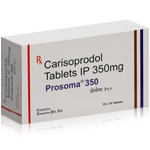
In selected cases, Prosoma (Carisoprodol) may be used for short-term relief of acute musculoskeletal pain when spasm is a dominant feature and rest/physical measures need extra support. It is typically paired with a recovery plan (mobility ladder + activity adjustment), not used alone.
Quick clarity 💡
If pain relief allows safe movement and better sleep, recovery often accelerates. If relief leads to overdoing activity, symptoms can rebound.
Coordination and daily activity safety 🧠
Some muscle-relaxing medications can reduce alertness and reaction speed. That is why planning your day matters. If your plan includes driving, operating tools, or sports, treat safety as part of treatment.
🧩 CNS effect
Muscle relaxation may come with lower alertness, especially early in treatment or with higher sensitivity.
🎯 Coordination impact
Balance and precision tasks may feel “off.” Plan demanding activities after you understand your response.
Daily activities impact table
| Activity | Impact level | Why it matters |
|---|---|---|
| Driving | High (for some users) | Reaction time and attention may drop |
| Operating machinery | High | Slower reflexes increase risk of accidents |
| Sports / training | Moderate–High | Coordination and balance can be affected |
| Office work | Low–Moderate | Focus and speed may decrease |
| Light household tasks | Low | Usually manageable if sedation is mild |
Doctor note 🩺
Prosoma (Carisoprodol) can be effective for short-term spasm relief, but users should avoid alcohol and be cautious with driving until they know how it affects alertness.
Dependence risk and safe-use rules 🔒
Some muscle relaxants carry a real risk of misuse when taken too long or combined with sedating substances. Safe use is not complicated—it is about duration, dosing discipline, and avoiding risky combinations.
Important ⚠️
Risk increases when use becomes prolonged, doses are escalated without supervision, or sedatives/alcohol are added.
How dependence tends to develop
- Tolerance drift: the same dose feels weaker over time
- Behavioral reinforcement: fast relief teaches “repeat the pill”
- Rebound discomfort: stopping suddenly after longer use can feel unpleasant
- Risk stacking: combining sedatives multiplies impairment
Practical safe-use guidelines
✅ Keep duration short
Use short-term for acute episodes, not as a long-term daily routine.
🧾 Never self-escalate
More does not mean better—often it just increases sedation and risk.
🚫 Avoid sedative combinations
Alcohol and other sedatives can make impairment dangerous.
🎯 Do not treat chronic pain
Persistent pain needs diagnosis and a long-term plan, not sedation.
The return plan: move smart, not hard 🏁
The biggest difference between fast recovery and lingering stiffness is how you return to activity. The winning approach is controlled exposure: small amounts of safe movement repeated consistently.
- Week 1 mindset: protect the trigger motion, maintain gentle mobility
- Early strengthening: light tension work without pain spikes
- Stability first: smooth control beats heavy resistance
- Progress check: pain should trend down across days, not up
Doctor note 🧑⚕️
In sports medicine, clinicians often prefer early safe movement rather than prolonged immobilization—because stiffness and fear-avoidance can extend the recovery timeline.
Clinical overview (fast reference) 📌
| Aspect | What it means | What usually helps |
|---|---|---|
| Sudden tightness | Protective spasm and guarded movement | Short rest + gentle mobility |
| Sharp pain with one motion | Specific fiber irritation | Avoid trigger briefly, then graded exposure |
| Stiffness after inactivity | Reduced motion and circulation | Heat later phase + movement snacks |
| Sleep disruption | Pain keeps the nervous system “on” | Positioning + symptom control |
Final clinical perspective ✅
Acute muscle pain is common, but it is not random: it follows a pattern. When you calm the spasm loop and return to motion gradually, recovery usually becomes predictable and faster.
For selected short-term cases, Prosoma (Carisoprodol) may be used as part of a supervised plan to reduce muscle spasm and discomfort, especially when pain blocks mobility and sleep. The safest outcomes come from pairing relief with a clear return-to-movement strategy.
Drug Description Sources: U.S. National Library of Medicine, Drugs.com, WebMD, Mayo Clinic, RxList.
Reviewed and Referenced By:
- Dr. Christopher L. Camp — Orthopedic Sports Medicine Specialist (Mayo Clinic), focused on acute sports injuries, return-to-play planning, and evidence-based rehabilitation pathways.
- Dr. William C. Shiel Jr. — Internal Medicine and Rheumatology Physician (WebMD / RxList), known for clinical education on musculoskeletal pain, inflammation patterns, and safe medication use principles.
- Dr. Melinda Ratini — Internal Medicine Physician and medical reviewer (WebMD), with experience in patient-centered guidance on acute pain care, medication safety, and prevention strategies.
(Updated at Jan 24 / 2026)
Prosoma Carisoprodol articles: