Intestinal Parasites: Causes, Health Impact, and Therapeutic Management


Understanding Intestinal Parasites 🦠
Intestinal parasites are organisms that inhabit the human gastrointestinal tract and rely on the host for nutrients. These infections are widespread globally, particularly in areas with poor sanitation and limited access to clean water.
- ✔ Common in tropical and subtropical regions
- ✔ Spread through contaminated food, soil, or water
- ✔ Affect both children and adults
Untreated infections can lead to chronic inflammation, nutrient deficiencies, and weakened immunity, increasing susceptibility to other diseases.
Causes of Intestinal Parasites 🚰
Infections occur when parasite eggs, larvae, or cysts enter the body, usually via the oral route. These parasites are resilient and can survive in harsh environments for extended periods.
- ⚠ Drinking contaminated water or eating unwashed fruits and vegetables
- ⚠ Poor hand hygiene, especially after using the toilet or soil contact
- ⚠ Contact with contaminated soil, especially walking barefoot
- ⚠ Close living conditions or crowded daycare environments
- ⚠ Inadequate sanitation and waste management
Repeated low-level exposure may result in chronic parasitic colonization without obvious symptoms, highlighting the importance of preventive measures.
Types of Intestinal Parasites 🔬
Intestinal parasites are categorized based on structure and life cycle. Proper identification is essential for targeted treatment.
- Helminths (worms): Roundworms, hookworms, tapeworms that attach to intestinal walls or migrate through tissues.
- Protozoa: Single-celled organisms like Giardia lamblia that multiply rapidly and trigger acute gastrointestinal symptoms.
Correct classification ensures effective therapy and reduces reinfection risk.
Symptoms and Clinical Impact ⚠️
Symptoms depend on parasite type, infection intensity, and host immunity.
- ➤ Persistent diarrhea or constipation
- ➤ Abdominal cramps, bloating, nausea
- ➤ Fatigue from anemia or nutrient deficiency
- ➤ Growth delays and cognitive effects in children
Long-term infections may damage the intestinal lining and impair absorption of essential nutrients.
Diagnosis and Evaluation 🧪
Diagnosis relies on stool examination to detect eggs, larvae, or cysts. Multiple samples are often necessary due to intermittent parasite shedding. Blood tests can reveal anemia or eosinophilia, supporting the diagnosis.
Early detection enhances treatment success, reduces complications, and prevents transmission within communities.
| Parasite Type | Common Species | Main Symptoms |
|---|---|---|
| Roundworms | Ascaris lumbricoides | Abdominal pain, malnutrition |
| Hookworms | Necator americanus | Anemia, weakness |
| Protozoa | Giardia lamblia | Chronic diarrhea, bloating |
Pharmacological Treatment Options 💊
Effective treatment focuses on eliminating parasites, alleviating symptoms, and restoring intestinal function. Broad-spectrum therapy is valuable in areas with multiple parasite types.
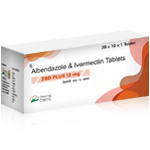
ZBD Plus, combining Albendazole + Ivermectin, is widely used for intestinal parasitic infections. It targets different parasite life stages and improves overall eradication.
Mechanism of Action Explained ⚙️
- ★ Albendazole inhibits parasite glucose metabolism, leading to energy depletion.
- ★ Ivermectin causes neuromuscular paralysis in parasites, facilitating expulsion.
- ★ Combination ensures treatment of both larvae and adult parasites.
This complementary mechanism enhances therapy success and reduces recurrence risk.
| Component | Primary Action | Target Parasites |
|---|---|---|
| Albendazole | Metabolic inhibition | Helminths |
| Ivermectin | Neuromuscular paralysis | Strongyloides, filarial worms |
Clinical Use and Patient Considerations 👥
ZBD Plus is prescribed after diagnosis. Full adherence is critical for clearing infections and preventing relapse. Most patients tolerate the therapy well, with mild side effects such as nausea or headache, often reflecting parasite die-off rather than the medication itself.
Prevention and Public Health Importance 🌍
Preventing intestinal parasites requires a combination of personal hygiene, community awareness, and environmental measures.
- ✓ Frequent handwashing with soap, especially before eating or after using the toilet
- ✓ Consumption of clean, filtered, or boiled water
- ✓ Proper washing, peeling, and cooking of fruits and vegetables
- ✓ Avoiding contact with contaminated soil and using footwear outdoors
- ✓ Improved sanitation facilities and safe sewage disposal in communities
- ✓ Public health programs, including mass deworming campaigns in schools and endemic regions
- ✓ Education campaigns on parasite transmission and safe hygiene practices
Combining these strategies with effective anti parasitic medication provides the best outcomes in controlling intestinal parasitic infections and reducing recurrence.
Doctor Opinion 👨⚕️
Dr. Peter J. Hotez – Tropical Medicine and Infectious Disease Specialist:
Intestinal parasitic infections remain a major public health concern worldwide. From my clinical experience, effective management requires a combination of accurate diagnosis, broad-spectrum therapy, and prevention education. ZBD Plus is highly effective, as it targets multiple parasite life stages, improving eradication rates and reducing the risk of chronic or recurrent infection. However, pharmacological treatment alone is not sufficient. Sustainable parasite control also requires access to safe water, improved sanitation, and ongoing health education programs. Monitoring, patient adherence, and community-wide interventions are all critical components for long-term success.
Drug Description Sources 📚
U.S. National Library of Medicine, Drugs.com, WebMD, Mayo Clinic, RxList.
Reviewed and Referenced By ✅
Dr. Amanda Lewis – Clinical Pharmacologist: Albendazole-based therapies remain a cornerstone in intestinal parasite management due to proven efficacy and safety.
Dr. Samuel Hart – Parasitology Research Specialist: Ivermectin combinations enhance treatment outcomes in regions where mixed parasitic infections are prevalent.
Dr. Caroline Hayes – Pharmaceutical Economics Specialist: Generic combination treatments provide clinically equivalent results while improving global accessibility.
(Updated at Jan 3 / 2026)