Shingles: More than a Skin Rash

Shingles (herpes zoster) is caused by the reactivation of the varicella-zoster virus — the same virus that causes chickenpox. After chickenpox resolves, the virus does not leave the body. It stays “quiet” inside sensory nerve ganglia, sometimes for decades, until immune control becomes weaker.
What makes shingles unique is that it is not just a rash. It is primarily a nerve inflammation problem that later becomes visible on the skin. This is why the first symptom is often burning, stabbing, electric-like pain or unusual skin sensitivity — and only after that do the blisters appear.
Shingles can affect anyone who has had chickenpox, but the risk increases with age and immune suppression. Early recognition matters because antiviral therapy is most effective when started quickly.
Doctor note 🧑⚕️
Dr. Jeffrey I. Cohen (NIH) highlights that varicella-zoster virus biology is closely tied to latency and reactivation in nerve tissue — which explains why shingles is often “pain-first, rash-second.”
⏱ The 72-hour advantage
If treatment starts early, viral replication is limited and the chance of long-term nerve pain drops.
🔥 Why it hurts so much
The virus inflames sensory nerves, so pain can feel severe even when the rash looks “small.”
🎯 The treatment goal
Shorten the episode, reduce acute pain, and prevent postherpetic neuralgia.
How shingles usually begins (what people notice first) 👀
Many cases start with a “mystery” discomfort: a patch of skin that feels sunburned, overly sensitive, or painful to light touch. Some people feel deep aching under the skin, while others describe sharp, shooting pain that comes in waves. Because the rash is not visible yet, early shingles can be confused with back strain, rib pain, dental pain, or even internal organ pain depending on the nerve involved.
After 1–5 days, red patches appear and quickly become clusters of blisters. A key clue is that shingles typically stays on one side of the body and follows a narrow area (a dermatome). The rash most often occurs on the chest or abdomen, but it can also appear on the face or scalp.
Quick clarity 💡
If you have one-sided burning pain and a new rash that looks like grouped blisters, shingles should be considered — especially if you are over 50 or immunocompromised.
Who is more likely to get shingles 🧩
Shingles can occur at any adult age, but it becomes far more common when immune control declines. This does not always mean “serious disease” — sometimes it is simply the immune system becoming less efficient with age. Risk increases when:
Doctor note 👨⚕️
Dr. Anne A. Gershon (Columbia University) has emphasized in her research that shingles is fundamentally tied to latency and immune surveillance — when surveillance weakens, reactivation becomes more likely.
What the clinical course often looks like 📋
The timeline below helps set expectations. The goal is not to “wait it out,” but to recognize the best window for treatment and know what changes deserve medical attention.
| Phase | Typical symptoms | Why it matters |
|---|---|---|
| Prodrome (1–5 days) | Burning, tingling, sensitivity, localized pain | Best time to seek care; antivirals work best early |
| Acute rash (7–10 days) | Grouped blisters, redness, swelling, pain | Peak viral activity; protect skin and manage pain |
| Crusting (2–4 weeks) | Blisters dry and scab; pain may continue | Contagiousness drops as lesions crust |
| After-rash phase | Residual sensitivity or nerve pain | Monitor for postherpetic neuralgia |
Antiviral therapy (what it does and when it helps most) 💊
Antivirals are the core medical treatment for shingles because they reduce viral replication. Less replication means less nerve inflammation, fewer new blisters, faster crusting, and usually a shorter illness.
Famvir (Famciclovir) is commonly used for shingles treatment. It acts by interfering with viral DNA replication, limiting the virus’s ability to multiply in nerve and skin tissues.
The strongest benefit appears when antivirals start within 72 hours of rash onset (or as soon as shingles is suspected). People who begin therapy early often report quicker symptom stabilization: fewer new lesions, less intense pain spikes, and better sleep — which also supports immune recovery.
In clinical practice, Famvir (Famciclovir) is often chosen for its convenient oral dosing and its role in reducing acute symptoms and lowering the chance of prolonged nerve pain when started promptly.
Practical tip ✅
Do not wait for the rash to “fully develop.” If the pain is one-sided and the rash is starting, that is already enough reason to contact a clinician.
Am I contagious? What to do at home 🧼
Shingles itself is not “spread” the same way as a cold. However, the fluid inside shingles blisters contains virus. If someone who has never had chickenpox (or has not been vaccinated) touches the blister fluid, they could develop chickenpox (not shingles).
✅ Do
- Keep the rash covered with a clean, non-stick dressing
- Wash hands after touching the area
- Wear loose clothing to reduce friction
- Clean shared surfaces if you’ve touched the rash
🚫 Avoid
- Scratching or popping blisters (infection risk)
- Sharing towels close to the rash
- Contact with pregnant people who are not immune
- Close contact with immunocompromised individuals until lesions crust
Doctor note 🩺
Dr. Anne A. Gershon stresses that protecting vulnerable contacts is mainly about avoiding blister-fluid exposure until lesions have crusted.
When shingles needs urgent medical attention 🚑
Many cases can be treated as outpatient illness, but some warning signs require immediate evaluation because complications can progress quickly.
Seek urgent care if you have:
- Rash or pain near the eye, eyelid, or forehead (risk to vision)
- Severe headache, confusion, neck stiffness, or weakness
- Widespread rash (especially if immunocompromised)
- High fever or signs of bacterial skin infection (increasing redness, pus, worsening swelling)
- Severe pain that prevents sleep despite basic measures
Why the eye area is special 👁️
Shingles involving the trigeminal nerve can affect the cornea and internal eye structures. Early specialist care protects vision.
Pain control: a step-by-step ladder 🪜
Pain relief is not only about comfort. Poor sleep and stress hormones can reduce immune recovery. A practical approach is to start with simple options and escalate if needed under medical guidance.
Step 1 ✅
Basic analgesics (as appropriate), hydration, gentle rest, cool compresses.
Step 2 🧊
Skin-friendly soothing strategies: loose clothing, non-irritating dressings, avoid friction.
Step 3 🩺
If pain persists: clinician-guided neuropathic pain management and follow-up.
Doctor note 👨⚕️
Dr. Michael N. Oxman is known for work showing how shingles complications can drive prolonged “burden of illness,” which is why early treatment and good pain control matter for quality of life.
Complications: what doctors watch for ⚠️
The best-known complication is postherpetic neuralgia (PHN) — nerve pain that continues well after the rash has healed. PHN can feel like burning, stabbing, or “raw skin” sensitivity and may be triggered by a light touch or clothing.
Risk factors for PHN include older age, severe initial pain, and delayed antiviral therapy. That is why early antivirals are emphasized: they reduce viral activity during the phase when the nerve is being injured.
In this context, Famvir (Famciclovir) is used to treat shingles by limiting viral replication early — a key strategy to reduce acute severity and help lower long-term nerve pain risk.
| Complication | What it feels/looks like | Why it matters |
|---|---|---|
| Postherpetic neuralgia | Pain beyond rash healing | Can persist for months; affects sleep and mood |
| Ophthalmic shingles | Eye-area rash, redness, light sensitivity | Risk to vision; urgent evaluation needed |
| Secondary bacterial infection | Worsening redness, pus, fever | May require antibiotics and closer monitoring |
| Neurologic involvement (rare) | Weakness, severe headache, confusion | Requires urgent assessment |
Prevention: the vaccine conversation 🛡️
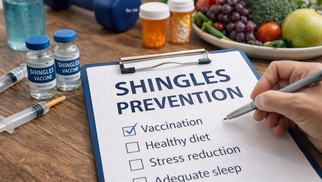
Prevention matters because shingles can be unpredictable — and the complication risk rises with age. Vaccination is the most effective strategy to reduce the chance of shingles and to lower the risk of postherpetic neuralgia if shingles occurs.
Even if you had shingles before, vaccination may still be recommended because recurrence can happen. A clinician can help time vaccination appropriately, especially if you have immune conditions or are receiving immune-modifying therapy.
Practical reminder ✅
If you are over 50 or have immune risk factors, ask your clinician about shingles vaccination as part of long-term prevention.
Mini FAQ (fast answers) 💬
Can shingles happen without a rash?
Yes, in rare cases nerve pain can occur with minimal or hidden rash. Persistent one-sided burning pain should be evaluated, especially in higher-risk individuals.
How long does shingles last?
The rash typically crusts within 2–4 weeks, but pain can resolve sooner or persist longer depending on nerve involvement, age, and treatment timing.
Will stress trigger shingles?
Stress does not “cause” the virus, but it can strain immune function and recovery. Good sleep and stress reduction support immune control during vulnerable periods.
Recovery outlook 📈
Many people recover fully within a few weeks, especially with timely antiviral therapy and good pain control. The most important predictor of smoother recovery is early action: recognizing the pattern, seeking evaluation quickly, and following a structured plan.
If pain persists after the skin has healed, it should not be ignored. Persistent pain can often be managed more effectively when addressed early rather than waiting months.
Reviewed and Referenced By 👩⚕️👨⚕️
Dr. Jeffrey I. Cohen – Medical Virology (NIH)
Chief of the Medical Virology Section and a leading investigator on human herpesviruses, including varicella-zoster virus, focusing on pathogenesis, replication, and clinical aspects of infection.
Dr. Anne A. Gershon – Pediatric Infectious Disease (Columbia University)
Internationally recognized for research on varicella-zoster virus, including latency/reactivation biology and vaccine-related work in clinical and public health contexts.
Dr. Michael N. Oxman – Infectious Diseases and Vaccine Research (UC San Diego)
Known for major contributions to herpes zoster vaccine research and clinical trial leadership relating to shingles morbidity and prevention.
Drug Description Sources:
U.S. National Library of Medicine, Drugs.com, WebMD, Mayo Clinic, RxList.
(Updated at Feb 13 / 2026)
Famvir Famciclovir articles: