Back Pain Reset


Back pain is common, but most episodes improve when you combine the right actions: keep moving (gently), calm inflammation and muscle tension, protect sleep, and build back strength. The fastest progress usually comes from simple routines done consistently, not from one “perfect” trick.
Think of recovery as a process: reduce flare intensity first, then restore normal movement, then prevent recurrence. Each block below adds a tool you can actually use—so you always know what to do next.
🎯 Pain Relief Meter (simple and clear)
Use this as a motivation cue: you are not chasing “perfect” overnight—your goal is steady progress across days and weeks. The most helpful question is: “Is my body tolerating more normal life than last week?”
🧠 Why back pain happens (in plain language)
Your back is a coordinated system of bones, discs, joints, muscles, and nerves. Pain often starts when tissues are irritated, overloaded, or temporarily “guarded” by tight muscles. Even when imaging looks scary, symptoms can still improve because many pain episodes are driven by irritation + sensitivity, not permanent damage.
A helpful mindset: back pain is frequently a signal to adjust load, not to stop all movement. Too much rest can increase stiffness and reduce confidence. The best plans balance protection (avoid sharp triggers) and confidence-building movement (safe activity that calms the nervous system and supports healing).
- Muscle strain after lifting or twisting
- Posture overload from prolonged sitting
- Facet or SI joint irritation (movement-sensitive)
- Disc flare that calms with time + mobility
- Nerve compression (shooting pain, numbness)
- Spinal stenosis (leg symptoms with walking)
- Inflammatory back pain (morning stiffness, improves with activity)
- Referred pain from hip or abdominal sources
🚑 Red flags: when to seek care quickly
Most back pain is not dangerous, but some patterns should be assessed promptly. If you notice any of the items below, treat it as a medical priority rather than a “wait it out” situation. Early evaluation can prevent complications and reduce anxiety from uncertainty.
- New weakness in a leg or foot, or worsening numbness
- Loss of bladder or bowel control, or saddle-area numbness
- Fever, unexplained weight loss, or severe night pain
- Major trauma (fall, accident), especially in older adults
- Cancer history with new persistent back pain
📋 Types of back pain (what it often feels like)
This quick map helps patients describe symptoms more accurately, which improves treatment choices. The same person can have more than one type at the same time, and symptoms can shift during recovery.
| Pattern | Typical clues | What usually helps |
|---|---|---|
| Muscle / mechanical | Localized ache, worse with certain movements, improves with gentle activity | Movement breaks, heat, gradual strengthening, posture changes |
| Nerve-related (sciatica-like) | Shooting pain, tingling, numbness, pain traveling down the leg | Targeted exercises, activity modification, clinician-guided plan |
| Inflammatory pattern | Morning stiffness, improves with activity, may wake you in early morning | Medical evaluation, anti-inflammatory strategy, consistent mobility |
| Posture overload | Worse after sitting/standing long periods, “tight” low back | Ergonomics, frequent micro-breaks, hip mobility + core endurance |
🧰 48-hour first-aid plan (calm the flare without freezing)
The first two days are about reducing irritation while maintaining safe movement. Total bed rest is rarely helpful—aim instead for “quiet activity” that doesn’t spike symptoms. The goal is to prevent stiffness, protect sleep, and avoid the fear loop that makes muscles guard more.
- Short walks every 2–3 hours
- Gentle hip and back mobility (pain-free range)
- Heat for stiffness or cold for sharp inflammation
- Support sleep with a comfortable position
- Heavy lifting and deep bending under load
- “Testing” painful movements repeatedly
- Long, unbroken sitting
- Sudden high-intensity workouts during a flare
💊 Topical anti-inflammatory support (ointment/gel)
When a flare is driven by local inflammation—tight, sore areas in the lower back or upper back—topical therapy can be a helpful option. It targets the painful area directly and may cause fewer whole-body effects than oral pain medicine for some people. Many patients use topical options to make walking, light stretching, and daily tasks easier, which supports faster functional recovery.
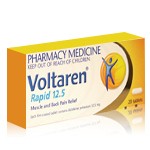
Voltaren (Diclofenac) topical ointment/gel is applied to the skin over the painful area to help reduce inflammation and relieve pain. Use it exactly as directed on the product label or by a clinician, and avoid applying it to broken or irritated skin. If you have ongoing skin sensitivity, start with a small area first and monitor tolerance.
- Apply a thin layer to the painful zone and wash hands after use
- Use it to enable walking and mobility, not to “power through” heavy lifting
- Keep the area simple: avoid stacking multiple strong topical products at once
- Avoid contact with eyes and mucous membranes
- Do not apply under tight occlusive wraps unless directed
- Stop and seek advice if you develop a strong rash or irritation
✅ Adherence Score Bar (weekly habit tracker)
Back pain relief improves when you repeat small actions consistently. Track your week like a “recovery score” to reinforce habits that stabilize the spine. This is especially useful after a flare, when people tend to overdo on a good day and then crash.
📊 Micro Progress Chart (pain trend snapshots)
Improvement is rarely a straight line. This mini chart is a reminder that “better” can mean smaller spikes, faster recovery after activity, and fewer bad mornings—even if you still feel occasional discomfort. If your “bad days” are less intense or less frequent, you are moving in the right direction.
🏃♂️ Movement that helps (without provoking a flare)
The goal is not to “push through pain”—it is to find the safest movement window and expand it gradually. Start with low-load activity, then build endurance and strength so your back tolerates daily life better. If you are unsure, choose the movement that reduces stiffness and does not increase pain afterward.
- Short, frequent walks (even 3–5 minutes)
- Gentle hip mobility (pain-free range)
- Breathing + abdominal bracing for stability
- Light stretching after warmth or a shower
- Core endurance (short holds rather than max effort)
- Glute and hip strengthening (supports low back load)
- Gradual return to lifting with good form
- Progression: increase time before intensity
🗓️ Timeline (start, retest, stabilize)
Having a timeline helps patients feel less anxious: you know what to do now, when to reassess, and what “normal progress” looks like. It also helps avoid stopping too early on good days or panicking on a temporary flare day.
🧭 Decision Tree (symptoms → next action)
Use this mini decision aid when you’re unsure what to do next. It prevents two common mistakes: waiting too long with red flags, or overreacting to normal soreness. Keep it simple: safety first, then function, then consistency.
🌿 Long-term strategy (preventing repeat episodes)
Long-term back pain relief is built on durable habits: stronger hips and core endurance, better lifting mechanics, fewer long sitting blocks, and a plan for early flare management. Recurrence is common, but many patients reduce frequency and intensity when they consistently train stability, pacing, and posture hygiene.
For some patients, a clinician may recommend Voltaren (Diclofenac) topical ointment/gel as short-term support during a localized inflammatory flare, especially when the goal is to stay active with walking and gentle rehabilitation. The key is to treat relief as a bridge back to movement—not a reason to overload the spine too early.
- Micro-breaks every 30–60 minutes if you sit a lot
- Hip strength and glute training 2–3 times/week
- Core endurance (short holds, consistent practice)
- Lift smarter: hinge, brace, keep load close
- Symptoms persist beyond a typical recovery window
- Pain pattern changes or spreads down the leg
- You notice weakness or increasing numbness
- Sleep disruption becomes frequent and severe
Drug Description Sources: U.S. National Library of Medicine, Drugs.com, WebMD, Mayo Clinic, RxList.
Reviewed and Referenced By:
Dr. Steven J. Atlas – MD, MPH (Massachusetts General Hospital; Harvard Medical School): Back pain care often works best as a stepwise plan—start with conservative strategies that restore function and only escalate when symptoms persist, worsen, or show red-flag features.
Dr. W. Michael Hooten – MD (Mayo Clinic; Pain Medicine): Evidence-based pain management is most effective when medication supports a broader functional program—pacing, physical reconditioning, and realistic goals—rather than replacing them.
Dr. Richard A. Deyo – MD, MPH (Oregon Health & Science University; Family Medicine / Evidence-Based Care): Many patients improve with approaches that prioritize function and reduce unnecessary interventions—clear education, safe activity, and careful decision-making help prevent chronic disability.
(Updated at Jan 4 / 2026)
Voltaren Diclofenac articles: