Periarthritis: When Joint Support Structures Become Inflamed


Periarthritis is inflammation and irritation in the soft tissues around a joint — the tendons, ligaments, joint capsule, and bursae that guide motion and keep the joint stable. That is why periarthritis can hurt a lot even when X-rays look “okay”: the joint surface may be preserved, but the surrounding support system is inflamed and tight.
It most often involves the shoulder (classic “frozen shoulder” patterns), but it can also affect the hip, knee, elbow, or ankle. The story is usually the same: pain starts quietly, then stiffness grows, and daily movements (reaching, lifting, turning, walking upstairs) suddenly feel like a negotiation.
Doctor note 🧑⚕️
Shoulder specialists often remind patients that periarthritis is not “weakness” or “laziness” — it is a tissue inflammation and tightening problem. The earlier you calm inflammation and restore motion safely, the easier it is to avoid long-term stiffness.
🎯 What it is
A periarticular inflammation: the joint “tools” (tendons, capsule, bursae) become irritated, swollen, and less flexible.
⚡ Why it matters
Pain can trigger protective “guarding,” which reduces motion and may lead to stiffness and weakness over time.
✅ The win
With a smart plan — inflammation control + gradual rehab — most people regain function and return to normal activity.
Clinical overview (quick and clear) 🧾
Think of periarthritis as a “soft tissue traffic jam.” The joint may be structurally intact, but movement becomes painful because the surrounding tissues are inflamed or tight.
| Category | Description |
|---|---|
| What is inflamed | Tendons, ligaments, capsule, bursae around a joint |
| Most common sites | Shoulder (often), also hip, knee, elbow, ankle |
| Main symptoms | Pain with motion, night pain, stiffness, reduced range of motion |
| Typical triggers | Overuse, minor trauma, repetitive work, prolonged immobilization |
| Common co-factors | Diabetes, thyroid disorders, posture and ergonomic strain |
| Core strategy | Reduce inflammation + restore motion gradually + strengthen support muscles |
Quick clarity 💡
Periarthritis is often about movement quality as much as pain control: the goal is calm tissues now and better mechanics later.
Why periarthritis happens (the usual suspects) 🔎
Periarticular tissues are built for load — but not for endless repetitive strain, awkward angles, or sudden spikes in activity. Small micro-injuries can accumulate, inflammation builds, and the body responds by tightening the area for protection. That protection is helpful short-term, but it can become a long-term problem if the joint stops moving normally.
Common risk factors include:
- Repetitive motions (work, sports, lifting, reaching overhead)
- Minor injury or sudden increase in training intensity
- Prolonged immobilization after pain, fracture, or surgery
- Diabetes or thyroid disorders (tissue metabolism and healing can change)
- Posture issues and poor ergonomics (especially shoulder and neck mechanics)
Doctor note 🩺
Shoulder surgeons often see a “snowball effect”: pain reduces motion, reduced motion increases stiffness, and stiffness increases pain. Breaking that loop early is a major part of successful recovery.
Symptoms: what people actually complain about 🗣️
Daily-life signs
- Pain when reaching into a back pocket or fastening a bra
- Difficulty lifting objects away from the body
- Stiffness after sitting, driving, or sleeping
- “I can do it, but it hurts afterward” pattern
Pain patterns
- Night pain that wakes you up or makes side-sleeping impossible
- Sharp pain with specific angles, then aching later
- Reduced range of motion (especially rotation and overhead reach)
- Protective muscle tightness around the joint
Reality check ✅
If pain is paired with progressive stiffness (not just soreness), periarthritis should be on the checklist.
Progression: from irritation to stiffness (and back) 🔄
Periarthritis often moves through recognizable phases. You do not need to memorize them — just know that the plan changes depending on whether pain or stiffness is the main driver.
| Phase | What it feels like | Main focus |
|---|---|---|
| Inflammatory | Pain dominates, especially with motion; irritation may spread | Calm inflammation, protect from overload |
| Stiffening | Range of motion starts shrinking; pain still present | Gentle mobility + smart pain control |
| Stiff | Movement is limited; pain may be less sharp but persistent | Progressive stretching and strengthening |
| Recovery | Motion slowly returns; strength and confidence rebuild | Function, endurance, return to normal activity |
Why this matters
Pushing aggressive stretching during a very inflamed phase can backfire, while doing nothing during a stiff phase can slow recovery. The “right effort” depends on timing.
Diagnosis: confirm the target before you treat 🎯
A clinician typically diagnoses periarthritis through history + physical exam and uses imaging when needed to rule out other problems. The key question is whether pain is coming from the joint surface or from the surrounding tissues.
What a clinician may use:
- Range-of-motion testing (active and passive)
- Provocation tests for tendons and bursae
- X-ray (mainly to exclude arthritis or fracture)
- Ultrasound (tendon or bursa irritation)
- MRI (capsule, tendons, deeper soft-tissue detail)
Doctor note 🧑⚕️
Shoulder experts frequently stress that imaging is a tool — not a verdict. Your symptoms and movement pattern often explain more than a single scan.
Treatment: the calm-and-rebuild playbook 🧠💪
Successful care usually blends three pillars: reduce inflammation, restore motion, and strengthen the supporting system. The goal is not just pain relief today — it is better movement tomorrow.
✅ A balanced plan often includes:
- Activity modification (avoid the angles that provoke sharp pain)
- Cold or heat strategies depending on phase and comfort
- Guided exercises for mobility and strength
- Targeted anti-inflammatory support when appropriate
- Ergonomic corrections (workstation, lifting mechanics, sleep position)
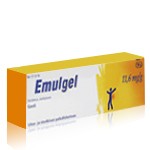
For localized periarticular pain, topical NSAIDs can be useful. Emulgel (Dicloflam) is a topical anti-inflammatory option applied to the painful area to help reduce inflammation and discomfort while keeping systemic exposure lower than many oral approaches.
Practical tip ✅
Pain control should make movement safer and smoother, not encourage overuse. If pain is “muted,” do not jump to heavy activity too quickly.
Rehab and mobility: small steps, real progress 🧭
Rehabilitation is where long-term recovery is built. The trick is to move enough to prevent stiffness, but not so aggressively that you flare inflammation. Many people do best with a daily micro-routine rather than one intense weekly session.
Mobility focus
- Gentle range-of-motion drills (pain-limited)
- Capsule-friendly stretching (short and frequent)
- Breathing and relaxation to reduce guarding
Strength focus
- Scapular and posture muscles (shoulder cases)
- Rotator cuff and stabilizers (graded loading)
- Functional strength for daily tasks
When pain is localized and movement work is starting, some patients use topical support to stay consistent. In that context, Emulgel (Dicloflam) may help reduce discomfort so exercises can be performed with better control and less guarding.
Doctor note 🩺
Many shoulder surgeons emphasize that “range first, strength second” is not a strict rule — it is a timing tool. As motion improves, gradual strengthening protects the joint from relapse.
Daily habits that support healing (and help prevent relapse) 🌿
Recovery is faster when your daily routine stops irritating the tissues. Tiny changes repeated every day can outperform a perfect plan done once.
| Change | Why it helps | Easy example |
|---|---|---|
| Ergonomics | Reduces repetitive strain and awkward angles | Elbows supported, screen at eye level |
| Sleep positioning | Less night irritation and morning stiffness | Pillow support, avoid compressing the painful side |
| Load management | Prevents flare-ups during healing | Gradually increase weight and volume |
| Regular movement | Keeps capsule and tendons from stiffening | Short mobility breaks during the day |
| Weight and metabolic health | Supports tissue recovery and reduces stress | Balanced diet, steady activity |
Myths vs facts (fast reality check) 💬
Myth: If the X-ray is normal, nothing is wrong
Fact: Periarthritis is often a soft tissue problem. X-rays may look normal because the joint surface is not the main issue.
Myth: Complete rest is the fastest cure
Fact: Too much rest can increase stiffness. The goal is smart movement that does not provoke sharp pain.
Myth: Stretching harder always fixes stiffness faster
Fact: Aggressive stretching can inflame tissues and increase guarding. Consistent, graded work usually wins.
Long-term outlook: what recovery typically looks like 📈
Many cases improve with a structured approach, but progress can feel slow because soft tissues heal and remodel over time. The strongest predictors of good outcome are early action, consistent rehab, and realistic pacing.
If pain is severe, function is rapidly declining, or symptoms persist despite a solid plan, a clinician may consider additional options such as guided injections, supervised physical therapy, or further imaging to make sure the diagnosis is correct and no other condition is being missed.
Drug Description Sources: U.S. National Library of Medicine, Drugs.com, WebMD, Mayo Clinic, RxList.
Reviewed and Referenced By:
Dr. Edward G. McFarland – Professor of Orthopaedic Surgery, Johns Hopkins School of Medicine: Wayne H. Lewis Professor of Shoulder and Elbow Surgery and Director of the Division of Shoulder Surgery, with a clinical focus on shoulder and elbow disorders and injuries.
Dr. Evan L. Flatow – Orthopaedic Surgeon and Research Faculty, Icahn School of Medicine at Mount Sinai: Shoulder and elbow specialist with longstanding academic and research work in rotator cuff disorders, shoulder fractures, and shoulder replacement, associated with Mount Sinai.
Dr. Robert Z. Tashjian – Professor of Orthopaedics, University of Utah School of Medicine: Shoulder and elbow surgeon with clinical and academic work in primary and revision shoulder and elbow surgery, including rotator cuff disease, arthritis, and shoulder arthroplasty.
(Updated at Feb 26 / 2026)
Emulgel Dicloflam articles: