Treatment and Prevention of Thrombosis and Embolism of Blood Vessels


Blood clots are not just a medical diagnosis — they are a circulation crisis. When blood suddenly changes from flowing freely to forming a solid mass inside a vessel, everything downstream begins to suffer. Oxygen delivery drops, waste products accumulate, and tissues begin to fail. This is why thrombosis and embolism are among the leading causes of sudden hospitalization, disability, and death worldwide.
What makes clots dangerous is not just their size — it is their location and stability. A small clot in the wrong place can block blood to the brain or lungs just as effectively as a large one. That is why modern treatment focuses not on chasing individual clots, but on creating a blood environment that prevents them from forming, growing, or breaking loose.
🧬 Why blood suddenly turns into a clot
Clot formation is not random. In almost every patient, it follows a predictable biological pattern called Virchow triad. Three forces interact inside the bloodstream:
- Slow flow — when blood moves too slowly, cells stick together more easily. This happens during long flights, bed rest, heart failure, or after surgery.
- Vessel injury — inflammation, trauma, catheters, or plaques damage the inner lining of vessels and activate clotting.
- Hypercoagulability — some blood is chemically “stickier” due to cancer, hormones, pregnancy, genetic disorders, or systemic disease.
When even two of these are present, clotting risk rises sharply. When all three combine, a clot is almost inevitable unless preventive measures are used.
🚨 Why clots can be deadly even when symptoms feel mild
One of the most dangerous myths about thrombosis is that it must hurt. In reality, many of the most dangerous clots cause little or no pain. A pulmonary embolism can begin with nothing more than mild breathlessness. A brain clot may feel like light dizziness before turning into a stroke.
The danger comes from oxygen starvation. When blood flow stops, tissues suffocate. The heart strains. The lungs fail to exchange oxygen. The brain loses function. Damage begins long before pain appears.
🩺 How doctors stabilize the blood during a clot crisis
| Tool | What it does | Why it saves lives |
|---|---|---|
| Anticoagulants | Stop blood from forming new clots | Prevents growth and embolization |
| Thrombolytics | Dissolve existing clots | Used when organs are threatened |
| Mechanical removal | Physically extract the clot | For massive or resistant emboli |
Once the immediate danger is controlled, the focus shifts to long-term clot prevention — this is where chronic anticoagulation becomes critical.
💊 How Coumadin (Warfarin) protects against deadly recurrence
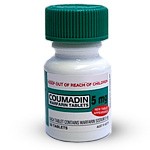
Coumadin (Warfarin) does not attack clots directly. Instead, it changes how the liver produces clotting factors, making the blood less able to build strong fibrin networks. This turns the bloodstream into a hostile environment for clot formation.
This makes warfarin especially powerful for patients who must remain protected for months or years — those with prior pulmonary embolism, deep vein thrombosis, atrial fibrillation, or artificial heart valves.
Same dose daily, same time, regular INR testing, steady diet.
Skipping doses, doubling up, sudden stops, or diet swings.
🛡️ How future clots are prevented in daily life
Prevention is not just medication — it is a system. Movement keeps blood flowing. Hydration keeps blood from thickening. Compression supports the veins. Medication keeps clot chemistry under control.
For high-risk patients, long-term protection is achieved through Coumadin (Warfarin), which keeps the blood safely anticoagulated and prevents silent clot buildup.
🔍 What patients and doctors watch during therapy
| Signal | What it means | What to do |
|---|---|---|
| Easy bruising | Blood is too thin | Adjust INR |
| Nose or gum bleeding | Excess anticoagulation | Contact clinic |
| Leg swelling | Possible new clot | Urgent evaluation |
📊 Why stability matters more than strength
Over-thinning causes bleeding. Under-thinning causes clots. The goal is stable balance. That is why Coumadin (Warfarin) is guided by INR — it keeps the blood in the safe protective zone day after day.
Chest pain, sudden breathlessness, one-sided weakness, confusion, or heavy bleeding require immediate medical care.
🌿 Life after a clot
With structured anticoagulation and awareness, most people return to work, travel, and exercise. Clots do not have to control life — controlled blood chemistry does.
Drug Description Sources: U.S. National Library of Medicine, Drugs.com, WebMD, Mayo Clinic, RxList.
Reviewed and Referenced By:
Dr. Deepak L. Bhatt – Cardiovascular Medicine Specialist, Harvard Medical School.
Dr. Samuel Z. Goldhaber – Venous Thromboembolism Specialist, Brigham and Women’s Hospital.
Dr. Amanda Lewis – Clinical Pharmacologist, Anticoagulation Therapy Research.
(Updated at Jan 13 / 2026)
Coumadin Warfarin articles: