Hepcvir is a new inhibitor which appeared

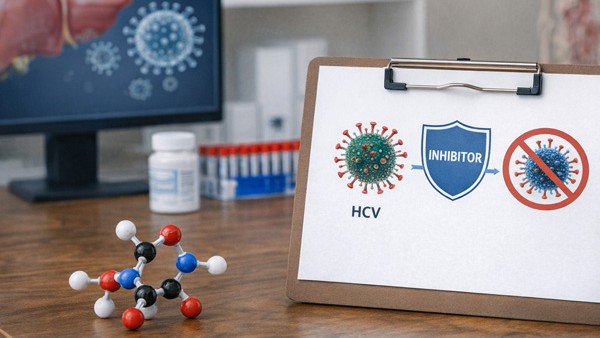
For 24 years between 1989 and 2013, hepatitis C treatment was essentially the same story: weekly injections of pegylated interferon-alpha, daily ribavirin tablets, six to twelve months of brutal flu-like side effects, depression in roughly a third of patients, and at the end of all that — a coin flip. Cure rates topped out at 45-55% for the most common HCV genotypes. Many patients abandoned the treatment before completing it; many of those who finished still had detectable virus afterward and were told to try again or wait for something better. Then, in December 2013, the FDA approved sofosbuvir — and the entire 24-year treatment paradigm was obsolete inside eighteen months. Hepcvir 400 mg from Cipla is the licensed generic of that breakthrough molecule, manufactured under WHO-prequalified GMP, used worldwide today as the affordable face of what is arguably the most dramatic single therapeutic transformation in modern medicine.
This article tells that story properly. What HCV treatment actually looked like before 2013, how sofosbuvir's mechanism solved a problem the field had wrestled with for two decades, what the modern 12-week Hepcvir-based regimen looks like in real-world practice, and why a drug invented in a US laboratory ended up curing hepatitis C in over 90 countries through the generic licensing system that produced Hepcvir.
📅 The HCV treatment timeline — from 1989 to 2013
Hepatitis C virus was identified in 1989 — before that, it was simply called "non-A, non-B hepatitis." The 24-year journey from identification to actual cure tracks roughly four distinct treatment eras, each modestly better than the last and none of them genuinely satisfactory until the fourth:
| Era | Regimen | Duration | Cure rate (SVR) | Tolerability |
|---|---|---|---|---|
| 1991-1998 | Interferon-alpha monotherapy | 6-12 months | ~10-15% | Severe; many discontinue |
| 1998-2001 | Interferon + ribavirin | 12 months | ~35-45% | Severe; depression common |
| 2001-2011 | Pegylated interferon + ribavirin | 6-12 months | ~45-55% | Severe; flu-like, fatigue |
| 2011-2013 | + first-gen protease inhibitor (telaprevir/boceprevir) | 6-12 months | ~65-75% (genotype 1) | Severe; rash; anemia |
| Dec 2013 onward | Sofosbuvir-based, oral only | 12 weeks | 90-98% | Mild; fatigue, mild headache |
The table tells the story but understates the human cost of the pre-2013 era. Every interferon course meant weekly subcutaneous injections, often for a full year. Side effects routinely included high fever after each injection, persistent muscle aches, hair loss, weight loss, severe fatigue, anemia from the ribavirin component, and depression severe enough to require psychiatric intervention in a substantial minority of patients. Many doctors recommended NOT treating asymptomatic HCV-positive patients precisely because the cure was sometimes worse than the disease — and even after all that, half of patients still had detectable virus at the end.
🏚 The interferon era — what came before
Interferon-alpha works by activating broad antiviral pathways in human cells — essentially conscripting the body's general immune defences to fight the virus. The mechanism is dramatic but indiscriminate. Patients on interferon experience flu-like symptoms not because they are infected with flu, but because their immune system is artificially primed to behave as though they are — for months at a time. The most notorious psychiatric effect is profound depression that arrives 4-8 weeks into therapy and persists until weeks after the last injection.
Ribavirin, the partner drug, contributed its own toxicities: a predictable haemolytic anemia (red blood cells breaking down) that often required dose reduction, occasional rash, and significant teratogenicity that mandated 6 months of strict contraception after the last dose — a fact that complicated treatment timing for any patient of reproductive age.
⚗ How sofosbuvir actually works — the NS5B story
HCV replicates by hijacking the infected liver cell's machinery to copy its own RNA genome. The viral enzyme responsible for the copying is NS5B polymerase — a target the field had pursued for over a decade with limited success because the early NS5B inhibitors were either insufficiently potent or had unacceptable toxicity. Sofosbuvir was designed as a nucleotide analogue: a molecule chemically similar enough to a normal RNA building block to be incorporated by NS5B into the growing viral chain, but structurally modified so that no further nucleotide can be added once it joins. The result is a chain-terminator. Every time NS5B tries to copy the viral genome, the copy is cut short and the resulting viral particle is non-functional.
Three features made sofosbuvir clinically transformative compared to earlier NS5B candidates. First, it targets a viral enzyme — not a human one — which is why its side-effect profile is so much milder than interferon's broad immune stimulation. Second, it has a uniquely high barrier to resistance: viral mutations that escape sofosbuvir are unfit and rarely persist. Third, it works against all six HCV genotypes, where earlier drugs typically worked against only one or two. This pan-genotypic activity is what allowed the field to write a single sentence regimen ("sofosbuvir for 12 weeks, plus partner X by genotype") instead of a fragmented map of "different drugs for different patients."
🎯 What made the 2013 approval different
The December 2013 FDA approval of sofosbuvir was not the first new HCV drug of the decade — it followed telaprevir and boceprevir in 2011, both of which were genuine advances but still required interferon as a backbone. What made sofosbuvir different was that it could be combined with another oral direct-acting antiviral without interferon — and the resulting two-pill regimens produced cure rates above 90% with the side-effect profile of a multivitamin compared to what came before.
| Outcome metric | Pre-2013 (interferon era) | Post-2013 (sofosbuvir era) |
|---|---|---|
| SVR (cure) rate, genotype 1 | ~45-55% | ~95-98% |
| SVR rate, all genotypes pooled | ~50% | ~95% |
| Treatment duration | 24-48 weeks | 12 weeks (most patients) |
| Route | Weekly injection + daily tablets | Oral tablets only |
| Discontinuation rate | ~30-40% | <5% |
| Severe depression incidence | ~25-30% of patients | Not a recognised effect |
| Anemia incidence | ~30-40% (ribavirin-related) | ~5% (only when ribavirin still used) |
The transformation was not gradual. Within eighteen months of sofosbuvir's approval, every major hepatology guideline globally had pivoted to recommend interferon-free regimens as first-line therapy. By 2017 it was difficult to find a hepatologist willing to start a new patient on interferon at all — the drug went from standard of care to historical footnote in under four years.
💊 Hepcvir specifically — the Cipla generic that made it global
Gilead Sciences priced the original branded sofosbuvir (Sovaldi) at $1,000 per tablet in the United States at launch — roughly $84,000 for a standard 12-week course. The price triggered international pressure, parliamentary inquiries, and patient activism that ultimately produced a wave of voluntary licensing agreements between Gilead and Indian generic manufacturers. Cipla was one of the first companies to receive a licence — fitting, given Cipla's earlier role in breaking the global price barrier on HIV antiretrovirals during the 2000s through similar licensing pathways.
Hepcvir launched in 2015 under that licensing arrangement. The product is manufactured to WHO-prequalified GMP standards, the same quality system that governs Cipla's HIV antiretroviral exports to over 170 countries through PEPFAR and the Global Fund. Therapeutic equivalence with branded sofosbuvir is regulatory fact established by bioequivalence testing — same active ingredient, same dose, same indication, same cure rates, dramatically lower price.
⏱ How Hepcvir is used today — the modern 12-week protocol
The standard regimen is conceptually simple: one Hepcvir 400 mg tablet, once daily, with food, for 12 weeks. The partner antiviral varies by HCV genotype — ledipasvir for genotypes 1, 4, 5, 6; ribavirin or daclatasvir for genotype 2; daclatasvir (sometimes with ribavirin) for genotype 3. Food matters more than most patients realise — sofosbuvir absorption increases by 40-80% with a meal, and consistent food intake stabilises plasma levels through the long course.
Standard Hepcvir-based regimen:
Day 0: baseline blood tests — HCV RNA viral load, liver enzymes, kidney function, mandatory HBV screen.
Daily for 12 weeks: one Hepcvir 400 mg tablet with breakfast, plus the partner drug at the prescribed dose and schedule.
Week 4 check: blood test to confirm HCV RNA is dropping. Most patients are already undetectable at this point — strongest predictor of eventual cure.
Week 12 (end of treatment): last Hepcvir tablet. Active therapy is finished; next 12 weeks are observation only.
Week 24 — the SVR12 test: blood test 12 weeks after the last dose. Undetectable virus = cured.
⚠ Side effects — the contrast with the interferon era
The most striking thing about sofosbuvir's side-effect profile in clinical use is how unremarkable it is. The original 2013 trials reported the dominant complaints as fatigue, headache, and mild nausea — all manageable, all expected to resolve as therapy proceeds, and all dwarfed by what patients on the same trial arm were used to from interferon-based therapy.
🚫 Who shouldn't take Hepcvir
The contraindication list inherits from the broader sofosbuvir prescribing profile:
- Active amiodarone therapy — absolute contraindication. Amiodarone + sofosbuvir produces severe bradycardia; deaths have been reported. Amiodarone's half-life is measured in weeks, so recent stoppage still counts.
- Untreated chronic hepatitis B co-infection — clearing HCV can reactivate dormant HBV severely. Mandatory pre-treatment screening; co-treatment if positive.
- Severe renal impairment (eGFR <30 mL/min/1.73 m²) — sofosbuvir clearance depends on kidney function; alternative regimens preferred.
- Pregnancy and breastfeeding — limited safety data; ribavirin-containing regimens are explicitly teratogenic and must be avoided.
- Strong CYP3A4 inducers (rifampicin, St John's wort, phenytoin, carbamazepine) — reduce sofosbuvir levels below therapeutic threshold.
👨⚕️ Specialist view
❓ Frequently asked questions
What does "sustained virological response" (SVR) mean exactly?
SVR is the formal definition of cure in hepatitis C. The standard metric used since 2013 is SVR12 — undetectable HCV RNA in blood 12 weeks after the last tablet of the treatment course. Once SVR12 is achieved, the virus is gone in over 99% of patients — late relapse beyond this point is exceptionally rare. SVR12 replaced the older SVR24 standard around 2013-2014 when accumulating data showed the two were almost identical and the shorter window allowed faster confirmation of treatment success.
Why was interferon used for so long if it was so brutal?
Because for 24 years it was the only thing that worked at all. The 45-55% cure rate of the interferon era was unimpressive but it was not zero — and untreated chronic HCV slowly destroys the liver over 20-30 years. The risk-benefit calculation for many patients tilted toward treatment despite the side effects. The transition away from interferon was not a sudden discovery; it was the gradual accumulation of direct-acting antivirals through the 2000s, culminating in sofosbuvir's pan-genotypic potency in 2013.
If sofosbuvir is so good, why isn't HCV eliminated globally?
Three reasons. First, diagnosis — roughly 80% of HCV-infected people worldwide are unaware they carry the virus. Cure requires diagnosis first. Second, access — generic licensing dramatically improved access in low- and middle-income countries, but cost remains a barrier in some regions, and the United States itself paradoxically lags behind several lower-income countries in HCV elimination progress because of high brand pricing. Third, reinfection — cured patients can be reinfected through the same routes (shared needles, unsterile equipment); harm reduction programmes are essential alongside treatment.
Is Hepcvir really identical to brand-name Sovaldi?
Therapeutically yes. Same active ingredient (sofosbuvir 400 mg), same dose, same indication, manufactured under WHO-prequalified GMP standards by Cipla under voluntary licence from Gilead. Bioequivalence is regulatory fact, not marketing claim. The differences are commercial — packaging, branding, and price. Hepcinat from Natco is a second therapeutically equivalent generic available on the same catalogue.
How long until I am officially "cured" on a Hepcvir course?
Total real-world timeline is about 6 months from first tablet to confirmed cure. 12 weeks of treatment + 12 weeks of follow-up for the SVR12 blood test = 24 weeks. Most patients feel substantially better — less fatigue, less brain fog — well before the official cure is confirmed at week 24. The virus is usually undetectable by week 4 on treatment, but the clock to "cure" is measured from the last dose, not the first negative test.
Can I still benefit from sofosbuvir if I previously failed interferon?
Yes — and many of the early sofosbuvir trials specifically enrolled prior-interferon failures, demonstrating cure rates above 90% in that exact population. Failing interferon therapy in the pre-2013 era is not a marker of poor response to modern DAAs; the two drug classes have entirely different mechanisms. If you were told 10+ years ago that HCV could not be cured for you, that conclusion is no longer accurate.
✨ Bottom line
The story of hepatitis C between 1989 and 2013 was the story of slow, incremental, inadequate progress against a disease that quietly destroyed livers over decades. The story since December 2013 is fundamentally different — a 12-week oral course that cures 95% of patients with mild side effects, available worldwide through generic licensing at a price most health systems can afford. Hepcvir 400 mg from Cipla is one of the two licensed generics that made that revolution global; Hepcinat 400 mg from Natco is the other. Both deliver the same outcome through the same molecule. What matters clinically is the genotype-appropriate partner drug, the pre-treatment safety screens for HBV and amiodarone, and disciplined adherence for 12 weeks. With those three boxes ticked, modern sofosbuvir therapy is one of the most reliably curative interventions in all of medicine — and a clean demonstration that pharmaceutical revolutions can be both real and globally distributed when the licensing system works.
📚 References & further reading
- FDA approval of Sovaldi (sofosbuvir), December 6 2013 — historical regulatory record; first all-oral interferon-free HCV regimen.
- EASL (European Association for the Study of the Liver) — current Clinical Practice Guidelines on hepatitis C treatment by genotype.
- AASLD (American Association for the Study of Liver Diseases) — HCV guidance on sofosbuvir-based regimens; comparison data vs interferon era.
- WHO Global Health Sector Strategy on viral hepatitis 2022-2030 — sofosbuvir licensing context and global elimination targets.
- Hepcinat 400 mg — alternative sofosbuvir generic by Natco Pharma, therapeutically interchangeable.
- Copegus and Rebetol — ribavirin partner-drug options for genotypes still requiring ribavirin.
- Hepcvir for Every HCV Genotype — companion guide focused on genotype-by-genotype clinical detail.
- What is Generic Hepcinat? — companion guide on the Natco sofosbuvir generic.
- RXshop Editorial Team — content reviewed by licensed pharmacist; for adult patient education, not a substitute for individual hepatology consultation.