Jan 9 / 2026
When Motivation Goes Silent: Understanding Apathy in Depression


Quick take ✅
In depression, apathy is not “laziness” and not a moral failure. It is a low-drive state where the brain struggles to generate initiative, interest, and reward. The good news: apathy is measurable, it has common patterns, and recovery is often built through small, repeatable steps plus the right clinical plan.
🧩 Apathy in depression: what it really feels like
People often describe apathy as “nothing matters,” but clinically it is more specific: the engine won’t start. You may still care about your family, work, or goals in theory, yet your mind cannot produce the “go” signal. That mismatch creates guilt (“I should be able to…”) and confusion (“Why can’t I just do it?”).
- Initiation problems: starting tasks feels oddly impossible, even simple ones.
- Emotional flattening: fewer sparks of joy, curiosity, or motivation.
- Reduced reward: activities do not “pay off” emotionally the way they used to.
- Social withdrawal: not dislike of people, but lack of energy to engage.
🔎 Apathy vs fatigue vs anhedonia (they overlap, but they are not the same)
Sorting these terms helps you and your clinician choose smarter interventions. Fatigue is low physical or mental energy. Anhedonia is reduced pleasure. Apathy is reduced drive—the push to begin and persist. You can be tired without apathetic, apathetic without tired, or both together.
| State | Core experience | Common “tell” | What tends to help |
|---|---|---|---|
| Apathy | Low initiative / low “starting power” | “I want to want to, but I can’t begin.” | Behavioral activation, structured cues, clinical review of meds and comorbidities |
| Fatigue | Low energy / exhaustion | “I can’t sustain effort, even if I start.” | Sleep optimization, medical workup, pacing, targeted treatment |
| Anhedonia | Low pleasure / reduced reward | “Nothing feels enjoyable anymore.” | Therapy + medication plan, meaningful activities, gradual reward rebuilding |
Doctor opinion 🩺 (Dr. Andrew A. Nierenberg): In mood disorders, it is clinically useful to separate “can’t start” from “can’t enjoy.” When we label the pattern accurately, we can match treatment strategies more precisely instead of guessing. :contentReference[oaicite:0]{index=0}
🧠 Why apathy happens in depression (simple brain logic)
A helpful model is that depression can disrupt reward prediction and effort allocation. The brain starts treating normal tasks as “high effort, low payoff,” so it conserves energy by shutting down initiative. This is not a character flaw; it is the system trying to protect you in the wrong way.
Common contributors include:
- Sleep disruption (too little, too much, irregular timing)
- Chronic stress and constant threat scanning
- Inflammation / medical illness (thyroid issues, anemia, chronic pain)
- Medication side effects (some can blunt drive or emotion)
- Comorbid ADHD, anxiety, or substance use
🚩 When apathy needs a closer medical check
If apathy is paired with major changes in sleep, appetite, concentration, or functioning, it may signal a deeper depressive episode or a medical driver. Also, sudden “switches” in energy or agitation can suggest a different mood pattern that deserves careful assessment.
- New or worsening sleep problems that persist for weeks
- Marked cognitive fog or memory trouble interfering with daily life
- Medication changes followed by emotional blunting or “numbness”
- Possible sleep disorder (loud snoring, pauses in breathing, severe daytime sleepiness)
🗺️ A practical progress map: from stuck to steady
Apathy often improves in a sequence. You may notice capacity returning before desire. In other words, you can do things before you feel like doing them—and that is still real progress.
| Phase | What you might notice | What to focus on |
|---|---|---|
| Start | Very low drive; tasks feel “blocked” | Micro-steps, routines, reduce decisions |
| Warm-up | Some tasks become possible, still no enjoyment | Consistency, external cues, gentle accountability |
| Stabilize | More follow-through; better day structure | Sleep rhythm, movement, social re-entry |
| Build | Reward signals return; interests reappear | Meaningful goals, therapy skills, relapse prevention |
Doctor opinion 🩺 (Dr. Madhukar H. Trivedi): In clinical depression, we often track functioning and day-to-day capability—not only mood. When structure and functioning improve, mood and motivation frequently follow. :contentReference[oaicite:1]{index=1}
🧱 The “low-decision” framework (because apathy hates choice overload)
Apathy is worse when every action requires negotiation. Reduce decisions and make movement “automatic.” The goal is not perfection; it is reliable motion.
🕒 Time anchors
Pick 2 fixed anchors: wake time and first outing (even 5 minutes outside). Anchors beat motivation.
✅ Minimum dose tasks
Create a “bare minimum list” of 3 items: one body (water/shower), one space (clear one surface), one connection (message someone).
🎯 One target
Choose one priority per day. Apathy improves when the brain can predict a finish line.
🧬 Treatment: what clinicians usually combine
Apathy responds best to a combined plan. Medication can stabilize core symptoms, while therapy and habit architecture rebuild drive. Your clinician may consider:
- Psychotherapy: CBT, behavioral activation, or structured problem-solving.
- Sleep and circadian support: consistent timing, light exposure, reduced late caffeine.
- Movement: short walks and gentle strength work to nudge reward pathways.
- Medical review: thyroid, B12/iron, sleep apnea risk, medication side effects.
- Medication strategy: individualized; adjusted based on response and tolerability.
⚡ Where wake-promoting support may fit
Some patients with depression report a specific cluster: daytime sleepiness, cognitive “slowness,” and a foggy inability to initiate tasks. In carefully selected cases, a clinician may consider a wake-promoting agent as an adjunct (add-on), especially when sleep disorders or medication-related sedation are part of the picture.
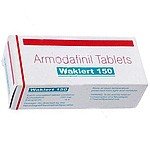
Waklert (Armodafinil) is primarily approved for sleep-wake conditions, but in real-world practice it is sometimes discussed as an adjunct option when depression includes prominent sleepiness and impaired daytime functioning. This should be a clinician-led decision, not a self-experiment.
Doctor opinion 🩺 (Dr. Andrew A. Nierenberg): Adjunct strategies are often considered when a patient has partial response to core depression treatment and disabling residual symptoms like fatigue or cognitive slowing. The key is careful monitoring and individualized risk-benefit balance. :contentReference[oaicite:2]{index=2}
🛡️ Safety notes (important, not scary)
Anything that increases alertness can also increase anxiety in sensitive people, disrupt sleep if timed poorly, or interact with other medications. A clinician will typically review blood pressure, heart history, sleep schedule, and mood pattern (including any history of bipolar spectrum symptoms).
- Timing matters: taken too late, it can worsen insomnia and next-day mood.
- Anxiety sensitivity: some people feel jittery or “wired.”
- Monitoring: track sleep, appetite, irritability, and overall functioning.
- Not a replacement: it does not replace psychotherapy or core depression treatment.
📋 The “anti-apathy” checklist (small but high impact)
Apathy improves when you reduce friction and increase cues. Try the checklist below for 10–14 days and track what changes. The goal is to create predictable wins.
✅ Morning ignition
- Drink water
- Open curtains / get light
- 2-minute tidy
🚶 Movement cue
- 5–15 minute walk
- One stretch set
- Stop before exhaustion
🤝 Connection dose
- Send one message
- Short call or voice note
- Low-pressure social plan
🧪 A clinician’s “fit check” for add-on alertness support
If your clinician considers Waklert (Armodafinil) as an add-on, the discussion often includes: “What symptom is it targeting?” “How will we measure benefit?” and “What will we do if it worsens sleep or anxiety?” That measurement mindset keeps treatment practical.
| Question | Why it matters | Simple way to track |
|---|---|---|
| What symptom are we aiming at? | Apathy is broad; target one driver (sleepiness, fog, initiation) | Daily 0–10 rating for “start power” |
| Is sleep stable enough? | Unstable sleep can mimic/worsen apathy | Sleep time + wake time for 2 weeks |
| What is the stop rule? | Clear boundaries reduce risk | Stop if insomnia/anxiety spikes |
Doctor opinion 🩺 (Dr. Madhukar H. Trivedi): In depression care, measurement-based follow-up is powerful—when we track symptoms and functioning consistently, we can adjust treatment earlier and avoid “drifting” with partial response. :contentReference[oaicite:3]{index=3}
🧠 Therapy tools that specifically target apathy
Apathy improves when you stop waiting for motivation and start building activation loops. In behavioral activation, the plan is to schedule small, meaningful actions first—and let mood catch up later.
- Activity sampling: try short “tests” of activities rather than committing fully.
- Values-based steps: pick actions that match what you care about, not what you “should” do.
- Reward priming: pair tasks with small rewards (music, tea, brief rest).
- Social scaffolding: do tasks alongside someone (body doubling) to reduce friction.
🧭 Apathy is also a “circuit” symptom
Modern depression research often treats motivation as a brain-circuit function involving reward, effort, and decision-making networks. This perspective supports a practical message: if apathy is “circuit-level,” then small, repeated inputs (sleep rhythm, movement, structured engagement) can help retune the system over time.
Doctor opinion 🩺 (Dr. Helen S. Mayberg): Viewing depression as a brain-network condition helps explain why symptoms like low motivation can persist—and why targeted, stepwise interventions can gradually restore functioning. :contentReference[oaicite:4]{index=4}
🔁 Putting it together: what “success” looks like
Success is not becoming “motivated all day.” Success is: you can start more often, recover faster after a low day, and rebuild interest in real life. For some patients, that may happen through therapy and routine alone; for others, clinicians may add medication adjustments and, in selected cases, adjunct options like Waklert (Armodafinil) to support daytime functioning while the broader depression plan does its work.
A simple marker of improvement is shorter delay between “I should” and “I did.” Even a 10% improvement is meaningful—because it compounds.
🏁 Bottom line
Apathy is a real, common depressive symptom that responds to clarity and structure. Treat it like a systems problem: reduce decision load, add stable anchors, track one or two outcomes, and work with a clinician to adjust the plan based on data—not guilt. With time, the brain relearns that effort can lead to reward again.
Drug Description Sources: U.S. National Library of Medicine, Drugs.com, WebMD, Mayo Clinic, RxList.
Reviewed and referenced by:
- Dr. Andrew A. Nierenberg – Professor of Psychiatry: Focus on precise symptom targeting and careful monitoring in mood-disorder treatment plans.
- Dr. Madhukar H. Trivedi – Professor of Psychiatry: Emphasizes functioning and measurement-based follow-up to guide adjustments and improve outcomes.
- Dr. Helen S. Mayberg – Physician-scientist in brain-circuit depression research: Supports a network-based view of depression to guide stepwise, targeted care.
(Updated at Jan 9 / 2026)
Waklert Armodafinil articles:
Jan 23 / 2026
(216)
Waklert Armodafinil 150 mg
Improves wakefulness and cognitive performance, prescribed for sleep disorders like narcolepsy and obstructive sleep apnea.
(50)

Price for 100 pills:
$220.00 ($295.56)