Buy Lasix (Furosemide) Online - Powerful Loop Diuretic Generic to Reduce Edema and Treat Heart Failure

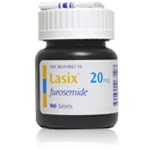
Lasix (Furosemide) stands as the most prescribed loop diuretic worldwide and the foundational therapy for managing severe fluid overload across multiple cardiovascular, renal, and hepatic conditions. As a powerful Na-K-2Cl cotransporter inhibitor, Lasix rapidly eliminates excess body fluid through dramatically increased urine output, providing life-saving symptom relief in acute pulmonary edema and chronic management of edematous conditions. The 20/40/80 mg oral tablets deliver fast onset diuresis across millions of patients globally with over 60 years of clinical use.
Furosemide works by blocking the sodium-potassium-2 chloride (NKCC2) cotransporter in the thick ascending limb of the loop of Henle, the kidney segment responsible for reabsorbing approximately 25% of filtered sodium. This blockade prevents sodium reabsorption causing massive sodium and water elimination through urine. The result: urine output rises 300-500%, body weight drops 1-3 kg in first 24 hours, blood pressure decreases 10-15 mmHg, and edema-related symptoms improve dramatically within minutes of intravenous dose or 30-60 minutes orally.
Lasix serves as essential therapy across multiple critical indications. For acute pulmonary edema and heart failure exacerbations, intravenous furosemide provides life-saving rapid fluid removal preventing respiratory failure. For chronic management, oral Lasix controls congestive heart failure edema, chronic kidney disease edema, liver cirrhosis ascites, nephrotic syndrome edema, and supports blood pressure control in resistant hypertension. The medication also treats hypercalcemia by enhancing urinary calcium excretion and serves selected cases of acute renal failure requiring forced diuresis.
Lasix offers flexible dosing from once-daily for mild edema to multiple daily doses for severe fluid overload, with intravenous form available for hospital emergencies. The medication reaches peak diuresis within 30 minutes (IV) or 1-2 hours (oral) and shows short 0.5-2 hour half-life requiring repeated doses for sustained effect. Generic furosemide from quality manufacturers including Cipla, Sun Pharma, and Teva provides identical therapeutic effects to brand Lasix at substantially lower cost. The active ingredient remains chemically identical to original Sanofi-Aventis / Hoechst formulation across both branded and generic versions of this established loop diuretic therapy.
Free prescription
Discrete packaging
Have questions?
Quality Assurance


- Swelling: Visible body tissue enlargement from fluid buildup commonly affecting feet ankles and lower legs;
- Water Retention: Excess body fluid accumulation causing weight gain bloating and visible tissue swelling;
- Heart Failure: Condition where heart cannot pump enough blood causing fluid backup into lungs and tissues;
- Heart Failure Edema: Fluid accumulation in legs and lungs caused by heart pump failure requiring diuretic therapy;
- Congestive Heart Failure: Severe heart failure with widespread fluid backup throughout body requiring potent diuresis;
- Pulmonary Edema: Life-threatening lung fluid accumulation causing severe breathing distress requiring urgent diuresis;
- Acute Pulmonary Edema: Sudden lung fluid emergency from heart failure exacerbation requiring intravenous furosemide;
- Hypertension: Persistently elevated blood pressure above 130/80 mmHg damaging arteries and organs;
- High Blood Pressure: Force of blood against artery walls exceeding healthy levels causing damage over time;
- Arterial Hypertension: Sustained elevation of blood pressure in arteries requiring antihypertensive medication;
- Kidney Failure: Reduced kidney function causing fluid retention waste buildup and electrolyte imbalances;
- Acute Renal Failure: Sudden kidney function loss requiring forced diuresis to maintain urine output and clearance;
- Chronic Kidney Disease Edema: Fluid accumulation specifically caused by reduced kidney filtration in chronic kidney disease;
- Renal Failure Edema: Body swelling from severe kidney function decline requiring potent diuretic intervention;
- Nephrotic Syndrome Edema: Severe body swelling from kidney protein loss causing extreme tissue fluid accumulation;
- Liver Cirrhosis Ascites: Abdominal fluid accumulation in liver cirrhosis patients requiring loop diuretic therapy;
- Hepatic Edema: Body swelling caused by advanced liver disease with portal hypertension and protein loss;
- Hypercalcemia: Elevated blood calcium levels requiring forced diuresis to enhance urinary calcium excretion;
- Resistant Hypertension: High blood pressure uncontrolled despite three antihypertensive medications including a diuretic;
- Combination Antihypertensive Therapy: Combined with other blood pressure medications for enhanced control in resistant patients;
- Loop Diuretic Therapy: Loop diuretic drug class treatment for severe fluid overload requiring rapid diuresis.
- Less Body Swelling: Total body fluid accumulation decreases rapidly as urine output dramatically increases;
- Less Water Retention: Excess body water eliminates through urine reducing weight gain and bloating sensation;
- Lower Blood Pressure: Systolic blood pressure drops 10-15 mmHg through reduced blood volume and vasodilation;
- Less Pulmonary Congestion: Lung fluid accumulation decreases improving breathing comfort in heart failure patients;
- Less Shortness of Breath: Dyspnea from fluid overload improves significantly as pulmonary congestion resolves;
- Better Heart Failure Symptoms: Fatigue exertion intolerance and orthopnea improve as fluid burden decreases;
- Less Heart Failure Hospitalization: Hospital admission risk for fluid overload decreases with consistent diuretic action;
- Faster Action Onset: Diuretic effect begins within 30 minutes orally or 5 minutes IV providing rapid fluid removal;
- Strong Diuresis Effect: Urine output increases 300-500% making it one of the most potent diuretics available;
- Less Cirrhotic Ascites: Abdominal fluid accumulation in liver cirrhosis patients decreases through forced diuresis;
- Less Nephrotic Edema: Severe protein-loss edema improves through powerful sodium and water elimination;
- Lower Calcium Levels: Blood calcium decreases through enhanced urinary calcium excretion benefiting hypercalcemia patients;
- Better Acute Renal Failure Recovery: Forced diuresis maintains urine output supporting recovery from acute kidney injury;
- Better Exercise Tolerance: Heart failure patients regain ability to walk climb stairs and engage in mild physical activity;
- Less Resistant Hypertension: Blood pressure improves in difficult-to-control hypertension when added to combination therapy;
- Lower Weight in Edematous States: Body weight drops 1-3 kg within 24 hours reflecting fluid loss not lean mass;
- Better Combination Therapy Effect: Synergistic effects when combined with thiazides or potassium-sparing diuretics for resistant edema;
- Flexible Oral and IV Forms: Oral tablets for chronic use and IV form for hospital emergencies provides full clinical flexibility;
- Better Quality of Life: Daily wellbeing improves dramatically as fluid overload symptoms resolve and breathing eases.
Generic Lasix (Furosemide 40 mg) Medication guide:
📖 What Lasix Is and How Furosemide Works
Lasix is the classic brand of furosemide, the most widely prescribed loop diuretic worldwide. Introduced in 1966, furosemide has been in continuous clinical use for over 60 years. Sanofi produces the original Lasix brand; many other manufacturers produce generic furosemide globally. Furosemide is standard therapy for fluid overload in heart failure, cirrhotic ascites, pulmonary edema, and nephrotic syndrome. Also used for hypertension in specific situations. Potent, rapid-onset, well-established.
Lasix at a glance
| Active ingredient | Furosemide |
| Class | Loop diuretic |
| FDA approval | 1966 |
| Available strengths | 20 mg, 40 mg, 80 mg tablets; IV/IM injection |
| Standard oral dose HF | 20-80 mg daily; variable |
| Onset (oral) | 30-60 minutes |
| Onset (IV) | 5-10 minutes |
| Duration | 6-8 hours (oral) |
| Half-life | 30-120 minutes |
| Bioavailability (oral) | 10-90 percent (highly variable) |
| Manufacturer | Sanofi (original) plus many generics |
| Global status | WHO Essential Medicines List |
How furosemide works
Blocking loop of Henle sodium reabsorption
Furosemide blocks the Na-K-2Cl cotransporter (NKCC2) in the thick ascending limb of the loop of Henle. This segment normally reabsorbs 25 percent of filtered sodium - much more than thiazides target in the distal tubule (5-10 percent). Blocking sodium reabsorption here causes substantial natriuresis and diuresis. Effect is potent and dose-dependent.
The diuresis magnitude
Expected diuretic effect
- Substantial urine output within hours
- Peak diuresis at 1-2 hours (oral); 30 minutes (IV)
- Duration approximately 6-8 hours (oral)
- Effect dose-dependent up to ceiling
- Can be repeated as needed
- Much more potent than thiazides
Primary indications
Where furosemide is standard therapy
- Heart failure with fluid overload - most common use; standard therapy
- Acute pulmonary edema - IV furosemide standard emergency treatment
- Cirrhotic ascites - combined with spironolactone
- Nephrotic syndrome - substantial edema
- Chronic kidney disease with fluid overload - primary diuretic
- Hypertension - specific situations (CKD, HF, resistant)
- Hypercalcemia - combined with saline hydration
The bioavailability variability
Absorption varies substantially
Oral furosemide bioavailability ranges 10-90 percent between individuals. Same dose may work differently for different clients. Gut edema in HF further reduces absorption. This variability is one reason for torsemide preference in some HF settings (more predictable absorption). Dose titration to response essential.
Where furosemide does not fit
Not appropriate for
- Anuria - no urine output
- Severe electrolyte depletion untreated
- Severe volume depletion
- Severe sulfonamide allergy - furosemide is a sulfonamide (ethacrynic acid alternative)
- Hepatic coma - can worsen encephalopathy
- Hypersensitivity to furosemide
Loop diuretics vs thiazides
Different roles
Loop diuretics (furosemide, torsemide, bumetanide) - potent; target loop of Henle; for substantial edema and heart failure. Thiazides (HCTZ, chlorthalidone, indapamide) - modest; target distal tubule; first-line for hypertension. Different mechanisms, different indications, sometimes combined (sequential nephron blockade).
This guide walks through what furosemide does, its major indications (heart failure, pulmonary edema, cirrhotic ascites, nephrotic syndrome), dosing across scenarios, common side effects and monitoring, and modern positioning. Treat this guide as a companion to what your cardiologist, nephrologist, hepatologist, or general practitioner tells you.
💓 Lasix for Heart Failure Congestion Management
Heart failure with fluid overload is the primary furosemide indication. Standard first-line diuretic for HF congestion.
Heart failure background
A common condition
Heart failure affects approximately 6 million adults in the US and 60+ million globally. The heart cannot pump blood effectively - fluid backs up causing edema in lungs (breathlessness), legs, and abdomen. Multiple causes - coronary artery disease, hypertension, valve disease, cardiomyopathy. Chronic condition requiring lifelong management.
HF classification
Modern HF categories
- HFrEF (reduced EF) - ejection fraction under 40 percent
- HFmrEF (mildly reduced EF) - ejection fraction 41-49 percent
- HFpEF (preserved EF) - ejection fraction 50 percent or higher
- Acute HF - sudden decompensation; often hospitalization
- Chronic HF - ongoing management
- Furosemide used across all types when fluid overload present
The furosemide role in HF
Symptom relief central
Furosemide relieves congestion symptoms - breathlessness, leg swelling, abdominal fullness. Improves exercise capacity. Reduces hospitalisations. Standard HF therapy for anyone with fluid overload. Does not directly improve heart function - other HF medications (ACE inhibitors, beta-blockers, MRAs, SGLT2 inhibitors) address disease progression.
Guideline-directed medical therapy (GDMT)
Modern HFrEF four-pillar therapy
- ACE inhibitor, ARB, or ARNI (sacubitril/valsartan)
- Beta-blocker (carvedilol, metoprolol succinate, bisoprolol)
- MRA (spironolactone or eplerenone)
- SGLT2 inhibitor (dapagliflozin or empagliflozin)
- Plus loop diuretic (furosemide) for fluid overload as needed
- Loop diuretic is symptomatic; the four pillars are disease-modifying
Acute HF management
Hospital care
Acute HF decompensation - hospital admission typically. IV furosemide first-line therapy. Higher doses often needed than chronic outpatient. DOSE trial supports higher IV dose bolus or continuous infusion. Rapid symptom improvement with adequate dosing.
Chronic HF management
Outpatient furosemide
- Lowest effective dose maintaining dry weight
- Typically 20-80 mg daily; variable
- Higher doses (100+ mg daily) for advanced HF
- Daily weight monitoring at home
- Adjust dose based on weight and symptoms
- Sometimes divided twice daily for better response
Home flexible dosing
Client-managed adjustments
Many HF clients trained to adjust furosemide dose based on weight - increase dose if weight rises 2+ lbs over 1-2 days, decrease if weight drops substantially. Empowers clients, reduces hospitalisations. Requires education and clinical team support.
The dry weight concept
Target euvolemia
- Dry weight - weight without fluid overload
- Established individually
- Daily home weight monitoring
- Same time daily (typically morning after urination)
- Weight above dry weight indicates fluid accumulation
- Weight below dry weight indicates over-diuresis
Response monitoring
Symptoms and objective measures
Symptoms - breathlessness, orthopnea, exercise tolerance, leg swelling, abdominal fullness. Objective - weight, edema examination, jugular venous pressure, lung sounds, kidney function, electrolytes, natriuretic peptides (BNP, NT-proBNP). Comprehensive assessment.
Diuretic resistance
When furosemide inadequate
Diuretic resistance - inadequate diuresis despite substantial furosemide. Options - increase dose, twice daily dosing, switch to torsemide (better absorption), add thiazide (sequential nephron blockade), add acetazolamide (ADVOR trial evidence), IV route, sometimes ultrafiltration. Specialist HF care.
Sodium restriction
Complementary to diuretic
Dietary sodium restriction (2-3 grams daily) complements furosemide effectiveness. High sodium intake defeats diuretic effect. Fluid restriction sometimes used in advanced HF (typically 1.5-2 L daily). Individualised based on HF severity and hyponatremia risk.
Heart failure with fluid overload is primary furosemide indication. Central to HF congestion management. Combined with four-pillar GDMT for HFrEF. Acute HF often IV; chronic HF oral daily. Dry weight and home monitoring central. Diuretic resistance strategies for inadequate response.
🫁 Lasix for Pulmonary Edema Emergency Treatment
Pulmonary edema is a medical emergency where furosemide plays a central life-saving role.
Pulmonary edema background
Life-threatening emergency
Acute pulmonary edema - sudden fluid accumulation in the lungs impairing oxygen exchange. Causes severe breathlessness, cough with pink frothy sputum, anxiety, and hypoxia. Medical emergency requiring immediate treatment. Common cause - acute decompensated heart failure. Also from other causes.
Emergency treatment approach
LMNOP mnemonic (traditional)
- L - Lasix (furosemide) IV
- M - Morphine (less commonly used now due to concerns)
- N - Nitroglycerin (vasodilator)
- O - Oxygen
- P - Positioning (upright)
- Plus - non-invasive ventilation (CPAP/BiPAP), consideration of ACE inhibitor
Furosemide in acute pulmonary edema
IV furosemide central
IV furosemide is first-line diuretic for acute pulmonary edema. Typical initial dose - 40 mg IV (higher if already on furosemide). Onset within 5-10 minutes. Peak effect 30 minutes. Substantial diuresis follows. Can be repeated as needed. Higher doses (up to 200 mg IV bolus or continuous infusion) for severe cases.
The immediate vasodilatory effect
Rapid symptom relief
IV furosemide has an immediate vasodilatory effect that reduces pulmonary congestion before diuresis begins. This explains rapid symptom improvement often noted within minutes - before substantial urine output. Reduces preload and pulmonary venous pressure.
Dosing in acute pulmonary edema
Dose approach
- Diuretic-naive - 40 mg IV initial
- Already on furosemide - 2.5x home dose IV
- Severe or CKD - higher doses (80-200 mg IV)
- Continuous infusion - 10-40 mg/hour after loading dose
- Repeat as needed - can dose every 2-6 hours
- Monitor response - urine output, symptoms
The DOSE trial insights
Higher dose vs continuous infusion
DOSE trial (NEJM 2011) compared low-dose vs high-dose furosemide, and bolus vs continuous infusion in acute HF. High-dose (2.5x home dose) achieved better decongestion. Bolus and continuous infusion comparable. Modern practice - higher IV doses more commonly used than historic low-dose approach.
Non-cardiac pulmonary edema
Different causes
- Cardiogenic - most common; from HF
- Non-cardiogenic (ARDS) - inflammatory; different treatment
- Neurogenic - from brain injury
- High-altitude - specific treatment
- Post-obstructive - after airway obstruction relief
- Furosemide most useful for cardiogenic type
Positioning and oxygenation
Adjunctive measures
Client upright position - reduces preload, improves oxygenation. Legs dangling if possible. Oxygen supplementation. Non-invasive ventilation (CPAP/BiPAP) if severe. Sometimes intubation needed. These measures alongside furosemide.
Vasodilators
Complementary therapy
- Sublingual nitroglycerin - rapid preload reduction
- IV nitroglycerin - continuous vasodilation
- IV nitroprusside - potent vasodilator in severe cases
- ACE inhibitor - if not hypotensive
- Careful BP monitoring throughout
Post-emergency care
Following acute event
After acute pulmonary edema resolved - hospital admission typical. Investigate cause - HF exacerbation, cardiac ischemia, arrhythmia, valve issue, non-adherence, sodium indiscretion, medication issue. Optimise chronic HF therapy. Home management plan for prevention.
Home worsening HF recognition
Seek emergency care for
- Sudden severe breathlessness at rest
- Cannot lie flat
- Pink frothy sputum
- Chest pain
- Confusion
- Substantial weight gain over days
- Severe leg swelling
- Blue lips or fingertips
Acute pulmonary edema is medical emergency. IV furosemide central life-saving therapy. Higher doses more effective (DOSE trial). Immediate vasodilatory effect precedes diuresis. Combined with oxygen, positioning, vasodilators, non-invasive ventilation. Rapid symptom improvement typical.
🪵 Lasix for Cirrhotic Ascites Management
Cirrhotic ascites is a major furosemide indication, typically combined with spironolactone for optimal effect.
Cirrhotic ascites background
Common cirrhosis complication
Ascites - fluid accumulation in the peritoneal cavity - is a common complication of cirrhosis. Develops in approximately 50 percent of cirrhosis clients within 10 years of diagnosis. Causes abdominal distension, discomfort, breathlessness, and increased infection risk. Requires long-term management.
The standard cirrhosis diuretic combination
Spironolactone plus furosemide
Standard cirrhosis ascites therapy - spironolactone (aldosterone antagonist) plus furosemide (loop diuretic). Spironolactone is first-line because cirrhosis causes secondary hyperaldosteronism. Furosemide added for enhanced diuresis. Typical ratio - 100 mg spironolactone plus 40 mg furosemide daily. Can be scaled proportionally.
Why combination is preferred
Complementary effects
- Spironolactone counteracts secondary hyperaldosteronism in cirrhosis
- Furosemide provides additional potent diuresis
- Balanced potassium effects - spironolactone raises, furosemide lowers
- Enhanced efficacy vs either alone
- Reduced electrolyte disturbances vs either alone
Dosing in cirrhotic ascites
Titration approach
- Start - spironolactone 100 mg + furosemide 40 mg daily
- Maintain 100:40 ratio during titration
- Titrate up every 3-5 days if inadequate response
- Maximum - spironolactone 400 mg + furosemide 160 mg daily
- Target weight loss - 0.5 kg/day without peripheral edema; 1 kg/day with edema
- Avoid overdiuresis - can precipitate hepatorenal syndrome
Dietary sodium restriction
Central to cirrhosis ascites
Sodium restriction (2 g daily maximum, sometimes less) is central to cirrhosis ascites management. Enables diuretic effectiveness. High sodium intake defeats diuretics. Dietary counseling essential. Combined with diuretics for optimal effect.
Fluid restriction
When to restrict fluids
- Hyponatremia present (sodium under 125)
- Typically 1-1.5 L daily
- Not routinely needed if sodium normal
- Individual assessment
Refractory ascites
When diuretics inadequate
Refractory ascites - inadequate response despite maximum diuretics and sodium restriction, or intolerance to diuretics. Options - large volume paracentesis with albumin, TIPS (transjugular intrahepatic portosystemic shunt), liver transplantation evaluation. Advanced hepatology management.
Complications to watch
Diuretic complications in cirrhosis
- Hyponatremia - very common; can be severe
- Hepatorenal syndrome - overdiuresis triggering renal failure
- Hepatic encephalopathy - electrolyte and volume shifts
- Hypokalemia (from furosemide) or hyperkalemia (from spironolactone)
- Muscle cramps - common in cirrhosis
- Gynecomastia - from spironolactone (eplerenone alternative)
Monitoring in cirrhosis
Comprehensive assessment
- Daily weight - central monitoring parameter
- Abdominal girth - measure and record
- Electrolytes weekly initially then monthly
- Creatinine and eGFR - watch for hepatorenal
- Encephalopathy signs - confusion, asterixis, sleep changes
- Liver function - albumin, bilirubin, INR
The paracentesis role
Large volume drainage
Large-volume paracentesis - draining ascites fluid with a catheter - for tense ascites or diuretic resistance. Albumin replacement typically (6-8 g per liter drained). Rapid symptom relief. Not a cure - ascites reaccumulates unless underlying cirrhosis addressed. Recurrent paracentesis for advanced cases.
Liver transplant consideration
Definitive therapy
Refractory ascites, recurrent complications, or advanced cirrhosis - liver transplant evaluation. Only definitive treatment for underlying disease. Diuretic management is bridge therapy. Hepatology and transplant hepatology team involvement.
Cirrhotic ascites managed with spironolactone plus furosemide combination. Standard 100:40 ratio. Dietary sodium restriction central. Careful titration to avoid complications (hyponatremia, hepatorenal syndrome). Paracentesis for tense ascites or diuretic resistance. Liver transplant for advanced disease.
🚾 Lasix for Nephrotic Syndrome and Kidney Disease
Nephrotic syndrome and chronic kidney disease are additional major furosemide indications.
Nephrotic syndrome background
Substantial protein loss
Nephrotic syndrome - kidney disease characterized by substantial urinary protein loss (over 3.5 g/day), hypoalbuminemia, edema, and hyperlipidemia. Multiple causes - minimal change disease, focal segmental glomerulosclerosis, membranous nephropathy, diabetes, systemic diseases. Substantial edema often present.
Furosemide in nephrotic syndrome
Higher doses often needed
- Hypoalbuminemia reduces furosemide effectiveness - drug binds albumin for delivery
- Higher doses often needed - 80-160+ mg daily typical
- IV route often more effective than oral for substantial edema
- Sometimes combined with albumin infusion for optimal effect
- Thiazide addition for sequential nephron blockade
CKD considerations
Loop diuretic preferred
Loop diuretics (furosemide) preferred over thiazides in advanced CKD. Thiazides largely ineffective below eGFR 30-40. Loop diuretics retain effectiveness even in advanced CKD (though higher doses needed). Standard diuretic choice for CKD-associated volume overload.
Furosemide dosing in CKD
Higher doses as GFR declines
- Normal kidney - 20-40 mg oral effective
- eGFR 30-60 - 40-80 mg
- eGFR 15-30 - 80-160 mg
- eGFR under 15 - 160+ mg often needed
- ESRD on dialysis - very high doses (200+ mg) or ineffective
CKD volume management
Balance and hypertension
CKD clients often have volume overload contributing to hypertension. Furosemide addresses both - reduces BP through volume reduction and directly manages edema. Standard part of CKD management. Careful dosing to avoid over-diuresis and acute kidney injury.
Hepatorenal syndrome consideration
Advanced cirrhosis with kidney failure
Hepatorenal syndrome (HRS) - functional kidney failure in advanced cirrhosis. Furosemide generally NOT effective in HRS and may worsen. Specific treatment includes vasoconstrictors (terlipressin, midodrine, octreotide) plus albumin. Nephrology and hepatology specialist care essential.
Kidney monitoring during furosemide
Watch renal function
- Baseline creatinine and eGFR
- Recheck after starting or dose changes
- Small rise typically acceptable (particularly early)
- Substantial rise (over 30 percent) needs investigation
- Could indicate over-diuresis or worsening CKD
- Consider dose reduction if significant
Diuretic resistance in CKD
Common challenge
Diuretic resistance common in advanced CKD. Strategies - higher furosemide doses, twice daily dosing, IV route, addition of thiazide (metolazone particularly), addition of acetazolamide. Sometimes ultrafiltration or dialysis needed for severe volume overload.
Dialysis considerations
Furosemide in dialysis clients
- Clients with residual urine output - furosemide preserves residual function
- Reduces interdialytic weight gain
- Sometimes very high doses (200-500 mg daily)
- Anuric clients - furosemide ineffective
- Individual approach based on residual function
The albumin infusion consideration
In severe hypoalbuminemia
Severe hypoalbuminemia (under 2.5 g/dL) - furosemide binding to albumin reduced, delivery to tubules impaired. Concurrent albumin infusion sometimes improves furosemide response. Not universally beneficial. Used in specific severe nephrotic syndrome or cirrhosis scenarios.
Long-term management
Chronic therapy
CKD and nephrotic syndrome often require long-term furosemide. Individualised dosing. Regular monitoring. Combined with disease-modifying therapy (ACE inhibitors, ARBs, immunosuppression for glomerular disease). Nephrology specialist care typical.
Nephrotic syndrome and CKD - furosemide standard therapy. Higher doses often needed with reduced albumin or reduced GFR. Loop preferred over thiazides in advanced CKD. Diuretic resistance strategies for inadequate response. Hepatorenal syndrome requires different approach. Careful renal monitoring essential.
🩸 Lasix for Hypertension Specific Situations
Furosemide has a specific role in hypertension - not first-line but useful in particular scenarios.
Not first-line for hypertension
Thiazides preferred
For uncomplicated hypertension - thiazide diuretics (HCTZ, chlorthalidone) preferred over loop diuretics. Longer duration of action, more sustained BP effect, better tolerated. Furosemide reserved for specific hypertension situations.
When furosemide is appropriate for hypertension
Specific hypertension scenarios
- CKD with hypertension (eGFR under 30) - thiazides ineffective
- Heart failure with hypertension - furosemide for HF also addresses BP
- Resistant hypertension with fluid overload
- Hypertension with substantial edema
- Acute hypertensive emergency - IV furosemide part of some protocols
The short duration issue
Why furosemide not first-line
Once-daily furosemide has 6-8 hour effect. For remaining 16+ hours, sodium retention rebounds. Result - inadequate 24-hour BP control from once-daily dosing. Twice-daily dosing needed for meaningful BP effect. Thiazides with longer duration provide sustained 24-hour BP effect.
Dosing for hypertension
Twice daily typically
- Furosemide 20-40 mg twice daily for hypertension
- Higher doses in CKD
- Morning and afternoon (not evening - nighttime urination)
- Combined with other antihypertensives typically
- Not effective as single antihypertensive in most cases
CKD-associated hypertension
Volume-driven
CKD hypertension is often volume-driven. Furosemide addresses volume component. Combined with ACE inhibitor or ARB for renoprotection. Standard CKD hypertension approach. Torsemide sometimes preferred for longer duration.
HF with hypertension
Dual purpose
HF clients with hypertension - furosemide for HF congestion also contributes to BP control. Combined with HF GDMT (ACE/ARB/ARNI, beta-blocker, MRA, SGLT2i) which also reduce BP. Comprehensive approach addresses both conditions.
Resistant hypertension
Volume-related resistance
- Some resistant hypertension has volume overload component
- Switch from thiazide to loop diuretic may help
- Or add loop to thiazide for sequential nephron blockade
- Specialist hypertension input often helpful
- Address secondary hypertension causes
Acute hypertensive emergency
Emergency setting
Hypertensive emergency with pulmonary edema - IV furosemide part of standard treatment (alongside vasodilators). Hypertensive emergency without pulmonary edema - furosemide not routinely used; vasodilators primary. Emergency department and ICU management.
Combination approach
Rarely alone for BP
Furosemide rarely used alone for hypertension. Usually combined with ACE inhibitor, ARB, calcium channel blocker, or other antihypertensives. Provides volume management component. Full BP control requires multiple mechanisms.
The dry weight consideration
Volume-BP relationship
- Volume overload contributes to hypertension
- Diuresis to dry weight substantially reduces BP
- Particularly true in CKD and HF
- Sometimes eliminates need for multiple BP drugs
- Dietary sodium restriction essential
Monitoring in furosemide hypertension
Standard monitoring
BP monitoring, electrolytes, kidney function - same as any furosemide use. Home BP monitoring helpful. Watch for postural symptoms. Adjust based on response and tolerance.
Furosemide not first-line for uncomplicated hypertension. Thiazides preferred for most hypertension. Furosemide appropriate for CKD hypertension (eGFR under 30), HF with hypertension, resistant hypertension with fluid overload, hypertensive emergency with pulmonary edema. Twice-daily dosing needed. Combined with other antihypertensives.
🔬 How Furosemide Blocks Loop of Henle Transporter
Understanding furosemide mechanism clarifies its potent effects and specific characteristics.
The nephron target site
Thick ascending limb of loop of Henle
Furosemide acts on the thick ascending limb of the loop of Henle - a specific kidney tubule segment that normally reabsorbs 25 percent of filtered sodium. This is much more than thiazides target (5-10 percent in distal tubule). Blocking sodium reabsorption here creates potent natriuresis and diuresis.
The Na-K-2Cl cotransporter (NKCC2)
Molecular target
On the luminal (urine-facing) membrane of thick ascending limb cells is the Na-K-2Cl cotransporter (NKCC2). This transporter moves sodium, potassium, and two chloride ions from urine back into cells. Furosemide binds NKCC2 and blocks this reabsorption. All loop diuretics share this mechanism.
Step-by-step mechanism
The diuretic sequence
- Take furosemide orally or IV
- If oral - absorbed variably (10-90 percent bioavailability)
- Binds plasma albumin (over 90 percent)
- Reaches renal tubule
- Secreted into tubular lumen
- Reaches thick ascending limb
- Binds NKCC2 on luminal membrane
- Blocks sodium, potassium, chloride reabsorption
- Sodium and water remain in urine
- Substantial diuresis follows within hours
- Effect duration 6-8 hours (oral); shorter (IV)
The immediate vasodilatory effect
Before diuresis begins
IV furosemide has an immediate vasodilatory effect that reduces pulmonary venous pressure before diuresis begins. Mechanism involves prostaglandin release. This explains rapid symptom improvement in acute HF - occurs within minutes, before substantial urine output. Preload reduction contributes to acute HF relief.
Consequences of blocking NKCC2
Multiple electrolyte effects
- Substantial sodium loss - drives diuresis
- Chloride loss - follows sodium; can cause hypochloremia
- Water loss - follows sodium osmotically
- Potassium loss - both from NKCC2 blockade and distal secretion
- Magnesium loss - substantial; often overlooked
- Calcium loss - opposite of thiazides; increases urinary calcium
- Hydrogen ion loss - contraction alkalosis
- Uric acid retention - competition for renal excretion
- Modest glucose intolerance - through complex mechanisms
The calcium-wasting distinction
Opposite of thiazides
Loop diuretics increase urinary calcium - opposite of thiazides which retain calcium. Clinical implications - useful for hypercalcemia treatment (combined with saline hydration), but risk of osteoporosis with long-term high-dose loop diuretic. Also contributes to hypocalcemia risk.
Pharmacokinetics
| Bioavailability (oral) | 10-90 percent (highly variable) |
| Peak plasma (oral) | 1-2 hours |
| Peak effect (IV) | 30 minutes |
| Half-life | 30-120 minutes |
| Protein binding | Over 90 percent (albumin) |
| Metabolism | Minimal; excreted unchanged |
| Excretion | Renal (glucuronide plus unchanged) |
The bioavailability variability explained
Why response varies
Oral furosemide absorption highly variable - 10-90 percent bioavailability. Factors include gut edema in HF, food effects, individual differences, and formulation. This variability means same oral dose can produce very different effects. IV bypasses this - more predictable. Torsemide has more consistent 80-100 percent bioavailability.
Compensatory mechanisms
Body counter-adjustments
- RAAS activation - substantial; drives compensatory sodium retention
- Distal nephron hypertrophy - enhanced downstream sodium reabsorption
- Post-diuretic rebound sodium retention - between doses
- Reduces net diuretic effectiveness over time
- Combining with ACE inhibitor or ARB counters RAAS activation
- Sequential nephron blockade counters distal compensation
Renal function and dosing
Higher doses in CKD
Furosemide requires tubular secretion into lumen to reach site of action. CKD reduces this delivery. Higher doses needed to achieve tubular concentration. Furosemide remains effective in advanced CKD (unlike thiazides). Very high doses (200+ mg) sometimes needed.
Mechanism-driven side effects
What the mechanism produces
- Potent diuresis - therapeutic effect
- Hypokalemia - substantial potassium wasting
- Hypomagnesemia - substantial magnesium wasting
- Hyponatremia - particularly with excessive intake or SIADH
- Hypocalcemia - calcium wasting
- Metabolic alkalosis - contraction alkalosis
- Ototoxicity - specific to loop diuretics; dose-related
- Hyperuricemia and gout
- Volume depletion and hypotension if excessive
Furosemide blocks NKCC2 in loop of Henle - potent natriuresis. Immediate vasodilatory effect for IV. Substantial bioavailability variability oral. Multiple electrolyte losses (potassium, magnesium, sodium, calcium). RAAS activation and distal compensation. Higher doses in CKD. Careful monitoring essential.
⚖️ Lasix vs Torsemide vs Bumetanide Loop Comparison
Furosemide, torsemide, and bumetanide are the three loop diuretics available. Understanding differences guides choice.
The three loop diuretics
Same mechanism
All three - furosemide, torsemide, bumetanide - block NKCC2 in loop of Henle. Same fundamental mechanism. Different pharmacokinetics and clinical characteristics. Ethacrynic acid is fourth loop diuretic - rarely used except sulfa allergy.
Pharmacokinetic comparison
| Feature | Furosemide | Torsemide | Bumetanide |
|---|---|---|---|
| Oral bioavailability | 10-90% (variable) | 80-100% (predictable) | 80-90% (predictable) |
| Half-life | 30-120 min | 3-4 hours | 1-1.5 hours |
| Duration | 6-8 hours | 12-16 hours | 4-6 hours |
| Potency (mg equivalent) | 40 mg | 20 mg | 1 mg |
| Availability | Universal, cheapest | Widely available | Widely available |
| HF outcomes | Standard | Possibly better (some data) | Similar |
| Absorption in gut edema | Substantially reduced | Better preserved | Better preserved |
Furosemide - the reference standard
Most widely used globally
Furosemide is by far the most commonly prescribed loop diuretic globally. Universal availability. Cheapest. Familiar dosing. Substantial clinical experience. Bioavailability variability is the main drawback. Standard first choice for most scenarios.
Torsemide - the predictable alternative
Advantages
- More predictable absorption (80-100 percent)
- Longer duration (12-16 hours) - once daily typically adequate
- Better absorption in gut edema
- Some evidence suggests possibly better HF outcomes
- More expensive than furosemide
- Preferred by some cardiologists for HF particularly
Bumetanide - the potent option
Higher potency per mg
Bumetanide 1 mg equivalent to furosemide 40 mg. Better oral bioavailability than furosemide. Shorter duration than torsemide. Sometimes preferred in specific situations. Less commonly used than furosemide or torsemide.
TRANSFORM-HF trial
Furosemide vs torsemide in HF
TRANSFORM-HF trial (JAMA 2023) - 2,859 HF clients randomized to torsemide vs furosemide. No difference in all-cause mortality at 12 months. Suggests loop diuretic choice between torsemide and furosemide does not substantially affect outcomes. Some earlier smaller trials had suggested torsemide advantage.
The dose conversion
Equivalent doses
- Furosemide 40 mg = Torsemide 20 mg = Bumetanide 1 mg
- Furosemide 80 mg = Torsemide 40 mg = Bumetanide 2 mg
- Furosemide 160 mg = Torsemide 80 mg = Bumetanide 4 mg
- IV furosemide has better bioavailability than oral (approximately double)
- Oral furosemide 40 mg = IV furosemide 20 mg approximately
Ethacrynic acid - the sulfa-free option
Non-sulfonamide alternative
- Only loop diuretic that is not a sulfonamide
- Option for severe sulfonamide allergy
- Rarely used otherwise
- Higher ototoxicity risk than other loop diuretics
- Limited availability in some regions
Practical choice considerations
Which loop when
Furosemide - default choice; cost-effective; wide availability. Torsemide - inconsistent response to furosemide, gut edema issues, once-daily dosing preferred. Bumetanide - alternative when furosemide inadequate. Ethacrynic acid - severe sulfa allergy.
Switching between loop diuretics
Transitions
- Use equivalent doses (see conversion table)
- Monitor BP, weight, electrolytes after switch
- May need dose adjustment based on response
- Individual variability affects response
The class effect view
Overall similar
Modern view - three main loop diuretics all effective, similar mechanism, similar overall outcomes. Individual pharmacokinetic differences guide specific choices. Furosemide remains most widely prescribed globally due to availability, cost, and familiarity. Torsemide gaining favor in HF for pharmacokinetic advantages.
Furosemide, torsemide, and bumetanide are the three main loop diuretics - same mechanism, different pharmacokinetics. Furosemide most widely used globally. Torsemide more predictable absorption and longer duration. Ethacrynic acid for sulfa allergy. TRANSFORM-HF trial shows similar outcomes torsemide vs furosemide. Choice individualised.
🤝 Lasix Combination with Thiazide Sequential Nephron Blockade
Sequential nephron blockade - combining furosemide with a thiazide - is a powerful strategy for diuretic resistance.
The concept
Blocking multiple sites
Sequential nephron blockade - blocking sodium reabsorption at multiple sites along the nephron. Furosemide blocks loop of Henle. Thiazide blocks distal tubule (where compensatory sodium retention occurs after loop diuretic). Combined - potent additive diuresis.
Why the combination works
Overcoming compensation
- Loop diuretic increases distal sodium delivery
- Distal tubule hypertrophies with chronic loop diuretic use
- Reabsorbs increasingly more sodium (compensation)
- Thiazide addition blocks this distal compensation
- Result - much more effective natriuresis
- Overcomes diuretic resistance
When to use combination
Diuretic resistance
Sequential blockade indicated for diuretic resistance - inadequate diuresis despite substantial loop diuretic doses. Common scenarios - advanced HF, cirrhosis with refractory ascites, nephrotic syndrome, CKD. Not first-line therapy - reserved for resistance.
Thiazide options
Which thiazide
- Metolazone - thiazide-like; most commonly used for sequential blockade; retains effectiveness in CKD unlike other thiazides
- Chlorthalidone - alternative
- HCTZ - also used; less effective than metolazone in CKD
- Indapamide - option
The metolazone tradition
Preferred for sequential blockade
Metolazone (thiazide-like) traditional choice for sequential nephron blockade. Retains effectiveness in advanced CKD. Long duration. Given 30 minutes before furosemide dose for optimal effect. Typical dose 2.5-10 mg once daily.
Dosing approach
Practical combination
- Continue current furosemide dose
- Add metolazone 2.5-5 mg once daily (or HCTZ 25-50 mg)
- Metolazone 30 minutes before furosemide for optimal effect
- Response often dramatic - substantial diuresis within hours
- Careful electrolyte monitoring essential
- Not for continuous use typically - use for decongestion then taper
The CLOROTIC trial
HCTZ plus furosemide in acute HF
CLOROTIC trial (Eur Heart J 2022) - HCTZ added to IV furosemide in acute HF. Improved decongestion (greater weight loss, improved congestion scores). More electrolyte disturbances. Supports sequential blockade approach with careful monitoring.
The ADVOR trial - acetazolamide addition
Different mechanism enhancement
ADVOR trial (NEJM 2022) - acetazolamide added to IV furosemide in acute HF. Substantial improvement in decongestion. Different mechanism (blocks proximal tubule sodium reabsorption). Complementary to loop diuretic. Alternative or additional strategy to thiazide combination.
Monitoring during sequential blockade
Substantial monitoring needed
- Daily electrolytes initially - potassium, sodium, magnesium
- Daily weight
- Daily creatinine - watch for AKI
- Substantial hypokalemia risk - often need potassium supplementation
- Hyponatremia risk
- Volume depletion risk
- Hypotension monitoring
Complications management
Common issues
Substantial hypokalemia - potassium supplementation typically needed. Hyponatremia - may require reducing intensity. Volume depletion or AKI - reduce doses or stop temporarily. Balance decongestion goals against complications.
Duration of combination
Typically short-term
Sequential blockade typically used short-term - achieve decongestion goal then taper thiazide. Chronic combination less common. Advanced HF or refractory ascites sometimes need ongoing combination. Specialist management essential.
Specialist supervision
Cardiology or nephrology
Sequential nephron blockade typically requires specialist supervision - cardiology for HF, hepatology for cirrhosis, nephrology for CKD or nephrotic syndrome. Complex management with substantial risk of complications. Hospital or close outpatient monitoring typically needed.
Sequential nephron blockade - furosemide plus thiazide (metolazone typically) - potent strategy for diuretic resistance. Blocks compensatory distal tubule reabsorption. Metolazone preferred; retains effectiveness in CKD. 30 minutes before furosemide for optimal effect. Substantial monitoring essential. Specialist supervision.
⏰ Lasix Dose Schedule and Titration Strategy
Furosemide dosing is highly individualised based on indication, response, and kidney function.
Dosing by indication
| Indication | Typical dose |
|---|---|
| Chronic HF (mild) | 20-40 mg once daily |
| Chronic HF (moderate) | 40-80 mg once or twice daily |
| Chronic HF (advanced) | 80-160+ mg daily; often divided |
| Acute HF/pulmonary edema (IV) | 40-80 mg IV initial; higher if on chronic furosemide |
| Cirrhotic ascites | 40 mg daily with spironolactone 100 mg (100:40 ratio) |
| Nephrotic syndrome | 80-160 mg daily; often needs high doses |
| CKD volume overload | 40-200 mg daily; higher with lower eGFR |
| Hypertension | 20-40 mg twice daily; not first-line |
| Hypercalcemia | 20-40 mg IV every 2-4 hours with saline hydration |
Available strengths
Lasix strengths
- 20 mg tablet - starting dose or fine titration
- 40 mg tablet - standard dose
- 80 mg tablet - higher doses
- 10 mg/mL oral solution - for those unable to swallow tablets
- 10 mg/mL injection - IV or IM administration
Response-guided dosing
Titrate to symptoms
Furosemide dose titrated to clinical response - weight, symptoms, edema, laboratory values. Not fixed doses like many medications. Individual variability substantial. Lowest effective dose maintaining dry weight goal.
Twice-daily dosing considerations
When to divide
- Total daily dose over 80 mg
- Post-diuretic rebound sodium retention issue
- Hypertension indication (once daily inadequate BP effect)
- Better tolerability at lower per-dose amounts
- Morning and afternoon (not evening - nighttime urination)
The ceiling dose concept
Threshold before maximal effect
Furosemide has a ceiling dose - threshold below which no diuretic effect occurs. Above threshold, effect increases with dose up to maximum. For normal kidney - 40-80 mg. Advanced CKD - much higher (160-200+ mg) needed to reach threshold. Doses below threshold ineffective; increase dose rather than dose frequency.
IV vs oral considerations
Route considerations
- Oral - chronic outpatient use standard
- IV - acute settings, hospitalization, gut edema, inadequate oral response
- Bioavailability difference - IV approximately 2x oral
- Continuous IV infusion - severe acute HF; 10-40 mg/hour
- IM route - rarely used; slower absorption than IV
Titration approach
Response-driven
Start at appropriate dose for indication. Assess response - urine output, weight change, symptoms, electrolytes. Titrate up if inadequate diuresis. Titrate down if excessive diuresis or complications. Individual response variability large.
Renal function and dosing
Higher doses with lower eGFR
- Normal eGFR - 20-80 mg effective
- eGFR 30-60 - 40-160 mg
- eGFR 15-30 - 80-200 mg
- eGFR under 15 - 200+ mg often needed
- Ceiling threshold rises as GFR falls
Duration of therapy
Furosemide for HF, cirrhosis, or CKD often lifelong therapy. Regular reassessment. Sometimes dose can be reduced with lifestyle improvements or disease modification. Discontinuation rare unless underlying condition resolves.
Expected effect timeline
Diuresis development
- Oral onset - 30-60 minutes
- Oral peak - 1-2 hours
- IV onset - 5-10 minutes
- IV peak - 30 minutes
- Duration - 6-8 hours (oral); shorter (IV)
- Weight change - typically within first day
Do not stop suddenly
Stopping furosemide - fluid retention resumes rapidly. HF, ascites, or edema can worsen dramatically. Do not stop without medical guidance. If discontinuation needed - taper gradually with monitoring.
Furosemide dosing highly individualised. Response-guided. IV vs oral considerations. Higher doses with reduced kidney function. Ceiling dose concept - threshold before effect occurs. Twice-daily dosing sometimes needed. Titrate to symptoms and dry weight goal. Lifelong therapy typical for HF, cirrhosis, CKD.
📅 Starting Lasix - First Days and Weeks
Starting Lasix requires careful assessment and monitoring - potent medication requiring appropriate use.
Typical initiation experience
Most clients notice substantial increased urination within hours of first dose. Weight typically drops over first few days as fluid removed. Symptoms - breathlessness, edema, abdominal fullness - improve as decongestion progresses. Excellent symptom relief typical for appropriate indications.
The potent start
Furosemide is one of the more potent medications commonly prescribed. Substantial diuresis begins within hours. Careful initiation with monitoring supports safe therapy. Understanding what to expect helps clients participate in management.
Pre-treatment assessment
Baseline evaluation
- Confirmed indication - HF diagnosis, ascites, edema cause, hypertension pattern
- Kidney function - creatinine, eGFR, urinalysis
- Electrolytes - baseline potassium, sodium, magnesium, chloride
- Liver function - albumin, bilirubin
- Uric acid, glucose, lipids - baseline for monitoring changes
- Sulfonamide allergy history
- Concurrent medications - ACE inhibitor, ARB, aminoglycosides, NSAIDs, lithium, digoxin
- Home weight and BP monitoring capability
Setting expectations
Practical points for new starters
- Take in morning - avoids nighttime bathroom trips
- Substantial increased urination - expected; part of therapeutic effect
- Weight loss expected - fluid removal
- Symptom improvement - within days typically
- Stand up slowly - orthostatic effects possible
- Daily weight monitoring - important part of management
- Sodium restriction - critical for effectiveness
- Report unusual symptoms - muscle cramps, confusion, severe weakness
Follow-up schedule
| Timing | Focus |
|---|---|
| Days 3-7 | Weight review; electrolytes recheck |
| Week 2-4 | Response assessment; dose adjustment |
| Month 1-2 | Stable dose established; comprehensive labs |
| Every 3-6 months | Ongoing weight, symptoms, electrolytes, kidney function |
| Annual | Full CV/renal/hepatic assessment as appropriate |
Warning signs during initiation
Contact team promptly if these occur
- Severe rash particularly with mucosal involvement
- Severe dizziness, falls, or fainting
- Substantial muscle weakness or cramps
- Confusion (electrolyte concern)
- Substantial reduction in urination
- Yellow skin or eyes
- Persistent nausea or vomiting
- Gout attack
- Hearing changes or ringing in ears
Home weight monitoring
Best practice
- Same scale daily
- Same time (typically morning after urination, before breakfast)
- Similar clothing
- Record daily in log or app
- Bring log to appointments
- Report rapid weight gain (2+ lbs in 1-2 days) or substantial loss
The dry weight discovery
Individual target
Dry weight - weight without fluid overload - established over first weeks. Weight where symptoms resolve without volume depletion. Individual to each person. Once identified, target for maintenance dosing.
Timing considerations
Morning dosing preferred
- Take first thing in morning
- Diuresis complete by evening
- Avoids nighttime bathroom trips
- Twice-daily doses - morning and early afternoon
- Not close to bedtime
Bathroom access planning
Practical consideration
Substantial diuresis in first hours after dose. Take when bathroom access easy. Not before long meetings or travel. Not before events without bathroom access. Plan first hours of day around dose.
Combined disease-modifying therapy
Furosemide is symptomatic
Furosemide relieves fluid overload symptoms but does not modify underlying disease. Combine with disease-modifying therapy - HF GDMT (ACE/ARB/ARNI, beta-blocker, MRA, SGLT2i), CKD therapy (ACE/ARB, SGLT2i), cirrhosis management, or hypertension GDMT. Comprehensive approach yields best long-term outcomes.
Lasix initiation involves careful assessment and setting expectations. Morning dosing preferred. Substantial diuresis expected. Daily weight monitoring central. Follow-up in first week for early adjustment. Combined with disease-modifying therapy for underlying condition. Lifelong therapy typical.
📏 Lasix Response Assessment and Dose Adjustment
Furosemide response assessment and dose adjustment guided by weight, symptoms, and lab values.
Response parameters
Multiple assessments
Furosemide response assessed through - weight (daily home monitoring), symptoms (breathlessness, edema, fatigue), examination (leg edema, lung sounds, jugular venous pressure), laboratory (electrolytes, creatinine, natriuretic peptides if HF).
Common adjustments
| Situation | Action |
|---|---|
| Weight gain 2+ lbs over 1-2 days | Increase dose or add extra dose |
| Weight at dry weight, symptoms resolved | Continue current dose |
| Weight below dry weight, symptoms of volume depletion | Reduce dose or hold temporarily |
| Substantial hypokalemia | Add potassium supplement, MRA, or reduce dose |
| Substantial hyponatremia | Fluid restriction; reduce dose if severe |
| Rising creatinine substantial | Assess volume status; reduce dose if over-diuresed |
| Gout attack | Consider allopurinol; may continue furosemide |
| Inadequate diuresis | Increase dose, add thiazide, or IV route |
The flexible dosing approach in HF
Client-managed adjustments
Many HF clients trained in flexible dosing - increase dose if weight rises 2+ lbs over 1-2 days from dry weight. Decrease if weight drops substantially. Empowers clients, reduces hospitalisations. Requires clear plan and clinical team support.
Managing hypokalemia
Potassium supplementation approaches
- Dietary approach first - potassium-rich foods
- Add MRA (spironolactone, eplerenone) - HF indication and potassium-sparing
- Add ACE inhibitor or ARB - modest potassium-raising
- Oral potassium supplement - 10-40 mEq daily (or more)
- IV potassium - if severe or unable to take oral
- Address magnesium too - often depleted; contributes to hypokalemia
Managing hyponatremia
Common in HF and cirrhosis
Hyponatremia common with furosemide, particularly HF and cirrhosis. Options - fluid restriction (1-1.5 L daily), reduce diuretic if severe, add SGLT2 inhibitor (some effect in HF), avoid worsening factors. Severe hyponatremia may need hospitalization.
The gout consideration
Furosemide raises uric acid
Furosemide can precipitate gout. If gout develops - continue furosemide (usually essential for HF, ascites) plus add allopurinol for gout prevention. Address acute gout attack with colchicine or NSAID (caution with NSAIDs on furosemide). Rarely switch away from furosemide for gout.
Rising creatinine investigation
Differential considerations
- Over-diuresis - volume depletion; reduce furosemide
- Progression of CKD - underlying disease
- Interaction (NSAIDs, contrast)
- Cardio-renal syndrome in HF
- Hepatorenal syndrome in cirrhosis
- Investigation to determine cause; guide management
Inadequate response investigation
Investigate before assuming resistance
Confirm adherence. Verify diet compliance (sodium restriction). Check for medication interactions (NSAIDs). Assess absorption - gut edema? Consider IV route or torsemide switch. Add sequential blockade (metolazone). Address underlying disease worsening.
When to consider IV route
Switching triggers
- Substantial fluid overload not responding to oral
- Suspected gut edema reducing absorption
- Rapid decompensation needing quick effect
- NPO status
- Vomiting
- Hospitalization for acute HF
When to consider torsemide switch
Switching considerations
Variable furosemide response - torsemide has more predictable absorption. Advanced HF with fluid overload despite high-dose furosemide. Once-daily dosing preferred (torsemide longer duration). Cost consideration - torsemide more expensive.
Age-related considerations
Older adult adjustment
Older adults - lower doses often adequate initially; more frequent electrolyte monitoring; particular attention to orthostatic symptoms and falls; kidney function considerations. Section 25 covers detail.
Furosemide dose adjustment based on weight, symptoms, and labs. Flexible dosing approach in HF empowers clients. Manage hypokalemia through diet, MRA, supplementation. Address hyponatremia through fluid restriction or dose reduction. Investigate rising creatinine. Consider IV or torsemide for inadequate response.
💊 How to Take Lasix Tablets Properly
Taking Lasix properly supports optimal outcomes and minimizes bathroom disruptions.
The basics
Once or twice daily morning
Take Lasix in the morning for once-daily dosing. Twice-daily doses - morning and early afternoon (not evening). Better on empty stomach for absorption but can take with food if GI upset. Water with tablet. Same time each day helps memory.
Timing options
Common timing patterns
- Empty stomach 30 minutes before breakfast - optimal absorption
- With breakfast - acceptable; slightly reduced absorption
- Twice daily - morning and early afternoon (e.g., 8 AM and 2 PM)
- Not evening or bedtime - would cause nighttime bathroom trips
- Plan around bathroom access for first hours
Bathroom planning
Substantial urination expected
Peak diuresis 1-2 hours after oral dose. Frequent urination for 4-6 hours. Plan first hours around bathroom access - not for long meetings, travel, or events without easy access. Home in morning generally works well.
Practical adherence tips
Supporting daily habit
- Pill organizer weekly
- Same location daily
- Alarm reminder if helpful
- Pair with morning routine
- Refill early - do not run out
- Travel supply always in carry-on
Fluid intake awareness
Individualised
Fluid intake varies by indication. HF may need fluid restriction (1.5-2 L daily) if severe or hyponatremic. Cirrhosis - fluid restriction only if hyponatremic. CKD - individualised. Not universal - follow specific team guidance.
Home weight monitoring
Best practice
- Same scale daily
- Same time (morning after urination)
- Similar clothing
- Log or app record
- Rapid weight gain (2+ lbs in 1-2 days) - concerning
- Rapid weight loss beyond dry weight - over-diuresis concern
- Bring log to appointments
Standing up slowly
Orthostatic awareness
Furosemide can cause orthostatic hypotension - BP drops on standing. Stand slowly, hold onto support initially. Sit at edge of bed briefly before standing. Older adults particularly affected. Falls risk consideration.
Combining with lifestyle
Complementary behaviors
Furosemide works with dietary sodium restriction, fluid appropriate amount, disease-specific lifestyle (HF activity, cirrhosis abstinence, CKD diet). Comprehensive approach best long-term outcomes.
Take Lasix in morning (or morning plus early afternoon for twice daily). Plan around bathroom access. Daily weight monitoring central. Stand slowly. Individualised fluid intake. Continued lifestyle attention important.
🍴 Food Timing and Lasix Dietary Sodium
Food and dietary sodium considerations are central to furosemide effectiveness.
Food timing
Food modestly reduces absorption
Food reduces furosemide absorption modestly - taking on empty stomach 30 minutes before breakfast optimal. But if this is impractical or causes GI upset, taking with food acceptable. Same practice daily supports consistent response.
Dietary sodium restriction
Sodium critical
- HF - target 2-3 g sodium daily
- Cirrhosis - target 2 g sodium daily (sometimes less)
- CKD - individualised; typically 2-3 g
- Hypertension - target 2-3 g
- High sodium defeats furosemide - sodium retention overcomes diuretic effect
- Reduce processed foods - main sodium source
- Cook fresh - control sodium
Foods to limit
High sodium sources
- Processed and packaged foods
- Deli meats and sausages
- Canned soups (unless low-sodium)
- Fast food and restaurant meals
- Pickled foods, olives
- Cheese (higher-sodium varieties)
- Salted snacks (chips, crackers)
- Bread and cereals (some high)
- Condiments (soy sauce, salad dressings)
Potassium intake
Potassium-rich foods help
- Target adequate potassium from diet
- Bananas, oranges - familiar sources
- Potatoes, sweet potatoes - excellent
- Beans, lentils - very high
- Leafy greens, spinach - good
- Salmon, chicken - protein sources
- Helps offset furosemide potassium wasting
- CKD clients may need restricted potassium - individualised
Magnesium consideration
Often overlooked
Furosemide substantially depletes magnesium. Dietary magnesium-rich foods - nuts, seeds, dark chocolate, whole grains, leafy greens, avocado. Sometimes oral magnesium supplement needed if serum magnesium low or if hypokalemia despite potassium supplementation (magnesium needed for potassium homeostasis).
Fluid intake
Individualised by indication
- Chronic HF with hyponatremia - fluid restrict 1.5-2 L daily
- Chronic HF without hyponatremia - typically no strict restriction
- Cirrhosis with hyponatremia - fluid restrict 1-1.5 L daily
- Cirrhosis without hyponatremia - typically no strict restriction
- CKD - individualised
- Hypertension - normal intake typically
The salt substitute question
Potassium salt substitutes
Salt substitutes containing potassium chloride can add potassium but risk hyperkalemia particularly with ACE inhibitor, ARB, MRA, or CKD. Discuss with clinical team before use. Balance with furosemide potassium wasting.
Cirrhosis-specific diet
Nutritional considerations
- Adequate calories - cirrhosis has increased needs
- Adequate protein - previously restricted; now supported
- Small frequent meals - reduces catabolism
- Late evening snack helpful
- Strict sodium restriction essential
- Nutrition consultation valuable
HF-specific diet
DASH-style approach
HF clients benefit from DASH-style diet - fruits, vegetables, whole grains, lean protein, low-fat dairy. Rich in potassium, magnesium (offsetting diuretic losses). Reduced sodium. Complements HF therapy.
Alcohol consideration
Alcohol interacts with furosemide - orthostatic effects, dehydration. Cirrhosis clients - complete abstinence essential. HF - moderation acceptable if not alcohol-related HF. Section 15 covers detail.
Weight management
Complex in HF
HF weight management complex - fluid weight vs body weight distinction. Daily weight for fluid tracking. Body weight changes over weeks. Weight loss in obesity may benefit HF. Cachexia in advanced HF - separate concern.
Dietary sodium restriction critical for furosemide effectiveness. Individualised limits by indication. Potassium and magnesium supportive. Fluid restriction only when indicated (hyponatremia typically). Salt substitutes with caution. Cirrhosis-specific and HF-specific nutritional considerations.
🍷 Alcohol Rules During Lasix Therapy
Alcohol rules during Lasix therapy - highly variable by underlying condition.
Cirrhosis - abstinence essential
Complete alcohol avoidance
Cirrhosis clients on furosemide - complete alcohol abstinence essential. Continued alcohol worsens liver disease, cancels benefits of therapy, and can precipitate hepatic decompensation. Not negotiable in cirrhosis. Support services (AA, counseling, medications for alcohol use disorder) if needed.
Heart failure - moderation typically
Depends on HF cause
Alcohol-related cardiomyopathy - complete abstinence essential; can improve or reverse HF. Other HF causes - moderation acceptable (up to 1-2 drinks daily typically). Excessive alcohol worsens HF - fluid retention, arrhythmia, cardiomyopathy. Individual assessment.
CKD - moderation
Standard limits
CKD clients - standard alcohol moderation (up to 1-2 drinks daily). Excessive alcohol contributes to hypertension worsening CKD. Individual assessment based on CKD cause and severity.
Hypertension - moderation
Standard limits
- Men - up to 2 standard drinks daily
- Women - up to 1 standard drink daily
- Standard drink - 12 oz beer, 5 oz wine, 1.5 oz spirits
- Excessive alcohol raises BP substantially
- Reduction to moderate substantially reduces BP
Alcohol and furosemide specifically
Additive effects
Alcohol plus furosemide - additive dehydration, orthostatic hypotension, potassium loss (alcohol itself lowers potassium modestly), electrolyte disturbances. If moderate use, hydrate well and stand slowly. Avoid heavy binges - substantial risk of dehydration, arrhythmia, BP swings.
The orthostatic consideration
Postural hypotension enhanced
- Furosemide causes orthostatic effects
- Alcohol adds vasodilation and dehydration
- Combined - more pronounced BP drops on standing
- Older adults particularly affected
- Stand slowly, hold on to something
- Fall risk if severe
Special situations
Alcohol avoidance in
- Any cirrhosis or advanced liver disease
- Alcohol-related HF or cardiomyopathy
- Alcohol use disorder history
- Uncontrolled hypertension
- Concurrent medications with alcohol interaction
- Poor volume status
- Falls history
- Pregnancy
Reduction strategies
For heavy drinkers wanting to reduce
- Track intake honestly
- Gradual reduction typically easier
- Alcohol-free days weekly
- Support group or counseling
- Naltrexone or acamprosate for alcohol use disorder
- Address underlying reasons
- Substantial disease improvement possible
If drinking, drink smart
Practical guidance
If choosing to drink and appropriate for condition - stay within moderate limits, hydrate well with water alongside alcohol, avoid heavy binges, stand up slowly, monitor weight and symptoms. Discuss with clinical team.
The cirrhosis reality
Alcohol-related liver disease
Cirrhosis from alcohol - abstinence can lead to substantial improvement in some cases. Some liver function returns. Continued alcohol - progressive decompensation, complications, death. Substantial motivation for abstinence. Support services central to management.
Alcohol rules on Lasix depend on underlying condition. Cirrhosis - complete abstinence essential. HF - moderation typically, abstinence if alcohol-related. CKD, hypertension - standard moderation. Additive orthostatic and dehydration effects with furosemide. Support for reduction if heavy drinker.
🚨 Lasix Side Effects Complete Overview and Warnings
Furosemide has substantial side effects requiring monitoring. Most manageable with appropriate care.
Common side effects (usually manageable)
Frequent side effects
- Substantial increased urination - therapeutic effect
- Dehydration risk particularly with poor intake
- Orthostatic hypotension - stand up slowly
- Fatigue
- Hypokalemia (low potassium) - common; may need supplementation
- Hypomagnesemia (low magnesium) - substantial
- Hyponatremia (low sodium) - particularly with HF, cirrhosis
- Hyperuricemia and gout
- Modest hyperglycemia
- Modest hyperlipidemia
- Muscle cramps - often from electrolyte depletion
- Metabolic alkalosis - contraction alkalosis
Serious side effects
Substantial but less common
- Severe electrolyte disturbances
- Acute kidney injury
- Ototoxicity (hearing loss, tinnitus) - dose-related; usually reversible; permanent possible
- Severe hypersensitivity reactions (Stevens-Johnson, TEN - rare)
- Pancreatitis (rare)
- Hepatic dysfunction (rare)
- Bone marrow suppression (rare)
- Acute angle-closure glaucoma (rare)
- Interstitial nephritis (rare)
Managing common side effects
Practical approaches
Increased urination - therapeutic; morning dosing avoids nighttime. Orthostatic dizziness - stand slowly; hold onto support. Fatigue - typically resolves. Muscle cramps - check potassium and magnesium; supplement if low. Gout - allopurinol prevention.
The ototoxicity concern
Hearing loss and tinnitus
Furosemide can cause ototoxicity - hearing loss, tinnitus, sometimes vertigo. More common with high doses (IV bolus over 240 mg), rapid IV infusion, concomitant aminoglycosides, or renal failure. Usually reversible but permanent hearing loss possible. Report any hearing changes immediately.
Electrolyte disturbances
Common and important
- Hypokalemia - most common; monitor and treat
- Hypomagnesemia - often overlooked; contributes to hypokalemia
- Hyponatremia - HF and cirrhosis particularly
- Hypocalcemia - modest; occasional
- Hypochloremia - contraction alkalosis
- Regular monitoring essential (Section 17 detail)
The gout consideration
Furosemide raises uric acid
Furosemide raises uric acid substantially. Can precipitate gout. Unlike thiazides where switch to alternative easy, furosemide typically essential for HF, cirrhosis - continue with allopurinol for gout prevention. Address acute gout with colchicine (caution with NSAIDs).
The AKI consideration
Over-diuresis or interactions
Furosemide can cause acute kidney injury from over-diuresis leading to volume depletion. Also from combination with NSAIDs, contrast agents, ACE inhibitors during acute illness. Monitor creatinine. Reduce dose if substantial rise. Hydration if volume depleted.
Sulfonamide allergy consideration
Cross-reactivity possible
- Furosemide is a sulfonamide
- Cross-reactivity with sulfonamide antibiotic allergy possible but not universal
- Severe sulfonamide antibiotic reaction (Stevens-Johnson) - avoid furosemide
- Mild reaction - furosemide generally acceptable with caution
- Ethacrynic acid - only non-sulfonamide loop diuretic; alternative
When to contact clinical team
Contact team promptly for
- Hearing changes or ringing in ears
- Severe rash particularly with mucosal involvement
- Severe muscle weakness or cramps
- Confusion (electrolyte or hepatic concern)
- Falls or severe dizziness
- Substantial reduction in urination
- Substantial weight gain (fluid overload) or loss (over-diuresis)
- Yellow skin or eyes
- Severe abdominal pain
- Gout attack
- Unusual bleeding or bruising
Overall tolerability
Manageable with monitoring
Furosemide side effects substantial but manageable with appropriate monitoring. Regular electrolyte checks, weight monitoring, symptom review. Most clients tolerate long-term therapy well when carefully managed. The alternative - untreated fluid overload - has much worse outcomes than the side effect burden.
Furosemide side effects substantial but generally manageable. Common effects electrolyte disturbances, orthostatic hypotension, gout risk. Serious effects include ototoxicity, AKI. Regular monitoring essential. Report hearing changes, severe symptoms, or unusual signs promptly. Overall risk-benefit favorable for appropriate indications.
🧂 Lasix Electrolyte Depletion Potassium Magnesium Monitoring
Electrolyte monitoring is central furosemide care. Understanding what to watch guides management.
The electrolyte effects
Predictable from mechanism
Furosemide predictably causes substantial potassium loss (hypokalemia), sodium loss (hyponatremia), magnesium loss (hypomagnesemia), and modest calcium loss. All potent effects requiring monitoring and often intervention.
Hypokalemia (low potassium)
Most common furosemide concern
- Normal potassium - 3.5-5.0 mEq/L
- Mild hypokalemia - 3.0-3.5 (common on furosemide)
- Moderate - 2.5-3.0 (needs attention)
- Severe - under 2.5 (dangerous)
- Symptoms - fatigue, muscle weakness, cramps, palpitations, arrhythmias
- Substantial arrhythmia risk with digoxin
Managing hypokalemia
Multiple approaches
Dietary - potassium-rich foods first line. MRA (spironolactone, eplerenone) - HF indication and potassium-sparing. ACE inhibitor or ARB - modest potassium-raising. Oral potassium supplement - 10-40+ mEq daily. IV potassium - if severe or unable to take oral. Address magnesium too - often depleted simultaneously.
Hypomagnesemia (low magnesium)
Often overlooked
Furosemide substantially depletes magnesium. Often not routinely tested. Normal magnesium 1.7-2.4 mg/dL. Under 1.5 needs attention. Contributes to hypokalemia (magnesium needed for potassium homeostasis). Persistent hypokalemia despite potassium supplementation - check magnesium. Oral or IV magnesium if low.
Hyponatremia (low sodium)
Common in HF and cirrhosis
- Normal sodium - 135-145 mEq/L
- Mild - 130-135
- Moderate - 125-130 (needs attention)
- Severe - under 125 (dangerous)
- Symptoms - confusion, headache, nausea, muscle cramps, seizures if severe
- Multiple mechanisms - true depletion, dilutional, medication
Managing hyponatremia
Complex assessment
Distinguish depletional (true sodium loss - furosemide contributing) vs dilutional (water excess - HF or cirrhosis). Approach differs. Depletional - modify diuretic. Dilutional - fluid restriction, sometimes tolvaptan (vaptans for specific scenarios). Substantial hyponatremia often requires specialist input.
Calcium considerations
Calcium wasting
- Furosemide increases urinary calcium (opposite of thiazides)
- Long-term risk of osteoporosis particularly with high doses
- Adequate dietary calcium and vitamin D
- Bone density monitoring for long-term users, particularly women
- Osteoporosis therapy if needed
Chloride and acid-base
Metabolic alkalosis
Furosemide causes chloride loss and contraction alkalosis. Bicarbonate rises. Usually modest and asymptomatic. Substantial contraction alkalosis - reduce furosemide dose or consider acetazolamide addition (which corrects the alkalosis while adding diuresis).
Monitoring schedule
| Timing | Tests |
|---|---|
| Baseline (before starting) | Potassium, sodium, magnesium, calcium, chloride, creatinine, glucose, uric acid, liver function |
| Week 1 after starting | Potassium, sodium, magnesium, creatinine |
| Month 1 (or dose change) | Potassium, sodium, magnesium, creatinine |
| Every 3-6 months (stable) | Comprehensive metabolic panel plus magnesium |
| Annual | Full labs plus lipids, uric acid, glucose, liver function |
| After illness with vomiting/diarrhea | Potassium, sodium, magnesium, creatinine |
| Bone density (long-term) | DXA scan periodically |
When to worry
Alerting values
- Potassium under 3.0 mEq/L
- Potassium over 5.5 mEq/L (with MRA or ACE/ARB)
- Sodium under 130 mEq/L
- Magnesium under 1.5 mg/dL
- Substantial creatinine rise (over 30 percent)
- New arrhythmia
- Symptoms suggesting electrolyte depletion
The digoxin interaction
Hypokalemia enhances digoxin toxicity
Digoxin plus furosemide - hypokalemia enhances digoxin cardiac toxicity substantially. Common combination in HF. Careful potassium monitoring essential - keep above 4.0 mEq/L ideally. MRA addition helpful (potassium-sparing).
Electrolyte monitoring central to furosemide care. Hypokalemia most common - manage through diet, MRA, supplementation, addressing magnesium. Hyponatremia particularly relevant in HF and cirrhosis. Magnesium often overlooked but substantial. Calcium wasting long-term. Regular monitoring schedule essential.
👂 Lasix Ototoxicity and Hearing Protection Awareness
Ototoxicity - hearing loss and tinnitus - is a specific loop diuretic concern requiring awareness.
The ototoxicity risk
Substantial with high doses
Furosemide can damage inner ear (cochlear) function causing hearing loss, tinnitus (ringing), and sometimes vertigo. Class-specific effect of loop diuretics. More common with high-dose IV, rapid IV infusion, aminoglycoside combination, and renal failure. Usually reversible but permanent hearing loss possible.
Mechanism of ototoxicity
Cochlear ion transport disruption
Loop diuretics affect ion transport in the cochlea (inner ear structure for hearing). NKCC2 also present in cochlea; blockade disrupts endolymph composition. Result - temporary or permanent hearing dysfunction. High serum levels associated with more risk.
Risk factors for ototoxicity
Higher risk situations
- High IV doses - particularly bolus over 240 mg or greater than 40 mg/hour infusion
- Rapid IV infusion - reduce infusion rate to under 4 mg/minute
- Aminoglycoside antibiotics - gentamicin, tobramycin, amikacin (also ototoxic; synergistic)
- Other ototoxic drugs - cisplatin, vancomycin
- Renal failure - reduced clearance leads to higher levels
- Pre-existing hearing loss
- Ethacrynic acid - non-sulfonamide loop diuretic; higher ototoxicity risk than furosemide
Reducing ototoxicity risk
Practical strategies
Slow IV infusion - if giving IV bolus, over 1-2 minutes rather than rapid push. Continuous infusion - preferred over high bolus doses. Limit peak concentration. Avoid concurrent aminoglycosides when possible. Lower doses when possible. Monitor in high-risk clients.
Symptoms of ototoxicity
Watch for these signs
- Hearing loss - gradual or sudden
- Tinnitus - ringing, buzzing, whooshing in ears
- Vertigo - spinning sensation
- Fullness in ears
- Balance problems
- Report immediately to clinical team
Management if ototoxicity develops
Approach
- Reduce furosemide dose
- Slow IV administration if IV needed
- Switch to alternative loop diuretic (torsemide or bumetanide - similar risk but sometimes different tolerance)
- Discontinue aminoglycosides if concurrent
- Audiologic evaluation
- Balance with hemodynamic need - HF congestion vs ototoxicity risk
Reversibility
Usually but not always reversible
Ototoxicity from furosemide usually reverses within days to weeks after dose reduction or discontinuation. Some cases result in permanent hearing loss - particularly with very high doses, prolonged exposure, or aminoglycoside combination. Prompt recognition and dose adjustment reduces permanent damage risk.
Chronic outpatient furosemide risk
Lower risk chronic setting
Chronic oral furosemide at typical HF doses (20-160 mg daily) - low ototoxicity risk. Higher risk with IV boluses, particularly in ICU settings with rapid administration for acute pulmonary edema. Chronic outpatient use generally well-tolerated.
Hearing monitoring
When to test
- Pre-existing hearing loss - baseline audiogram before starting
- Any hearing symptoms - prompt evaluation
- Long-term high-dose users - periodic hearing checks
- Aminoglycoside combination - baseline and follow-up hearing tests
- Not routine for typical outpatient furosemide use
Comparison with other loop diuretics
Ototoxicity ranking
- Ethacrynic acid - highest risk
- Furosemide - moderate risk
- Torsemide - lower risk
- Bumetanide - lower risk
- Switch may help if ototoxicity issue
The aminoglycoside caution
Synergistic ototoxicity
Aminoglycoside antibiotics (gentamicin, tobramycin, amikacin) are independently ototoxic. Combined with furosemide - synergistic risk. Baseline hearing test if planning combination. Alternative antibiotics if possible. Careful monitoring if combination necessary.
Practical awareness
Uncommon but important
Ototoxicity is uncommon at typical chronic outpatient furosemide doses. Higher concern in acute inpatient settings with high IV doses or aminoglycoside combinations. All clients should know to report any hearing changes. Prompt recognition and dose adjustment reduces permanent damage.
Furosemide ototoxicity - dose-related; more common with high IV doses, rapid infusion, aminoglycoside combination. Symptoms include hearing loss, tinnitus, vertigo. Usually reversible but permanent damage possible. Slow IV administration. Report hearing changes immediately. Chronic outpatient use generally low risk.
🩺 Lasix Kidney Function and Volume Status Effects
Furosemide substantially affects kidney function and volume status - understanding guides appropriate use.
The kidney function effects
Multiple mechanisms
Furosemide affects kidney function through - volume depletion (excessive diuresis reducing kidney perfusion), direct tubular effects (blocking NKCC2), compensatory RAAS activation, and interactions with other kidney-affecting drugs. Understanding these guides safe use.
Expected creatinine changes
What is normal
- Small rise (10-20 percent) - often expected with decongestion; typically acceptable
- Modest rise (20-30 percent) - monitor closely
- Substantial rise (over 30 percent) - investigate
- Return to baseline after decongestion often
- Persistent rise - indicates cardio-renal syndrome or over-diuresis
Cardio-renal syndrome
HF and kidney interaction
Cardio-renal syndrome - kidney dysfunction in HF from multiple factors including reduced cardiac output, venous congestion, over-diuresis. Furosemide can both improve (relieving venous congestion) and worsen (over-diuresis) kidney function. Balancing decongestion and kidney perfusion challenging.
Hepatorenal syndrome
Cirrhosis complication
Hepatorenal syndrome (HRS) - functional kidney failure in advanced cirrhosis. Diuretic use is common precipitating factor - over-diuresis triggers HRS. Furosemide should be reduced or stopped in developing HRS. Specific treatment includes vasoconstrictors and albumin, not more diuretic.
Volume status assessment
Multiple parameters
- Weight - most practical daily measurement
- Symptoms - breathlessness, orthopnea, edema
- Examination - jugular venous pressure, lung sounds, ankle edema
- Blood pressure - orthostatic changes suggest volume depletion
- Heart rate - tachycardia may indicate volume depletion
- Skin turgor and mucous membranes - clinical assessment
- Laboratory - BUN:creatinine ratio, urine sodium
- Bedside ultrasound - IVC assessment
- Natriuretic peptides - BNP, NT-proBNP for HF
Signs of over-diuresis
Watch for these
- Weight below dry weight
- Orthostatic hypotension
- Increased thirst
- Fatigue, weakness
- Dizziness or falls
- Reduced urine output
- Rising creatinine
- Elevated BUN:creatinine ratio (over 20:1)
- Increased hematocrit (hemoconcentration)
Signs of under-diuresis
Persistent congestion
Weight above dry weight. Persistent breathlessness. Continued leg swelling. Elevated jugular venous pressure. Lung crackles. Elevated natriuretic peptides. Increase furosemide dose or add sequential blockade.
Balancing decongestion and kidney function
Modern approach
- Complete decongestion is priority in HF
- Small creatinine rises during decongestion often acceptable
- Congestion itself harms kidneys (venous congestion)
- Relieving congestion often improves kidney function
- Substantial creatinine rise - investigate; may need dose adjustment
- Under-diuresis with persistent congestion also harmful
Recovery after over-diuresis
Approach
Signs of over-diuresis - reduce or hold furosemide temporarily. Encourage fluid intake if appropriate for underlying condition. Kidney function typically recovers over days. Restart at lower dose. Reassess dry weight target.
Diuretic resistance
When maximum furosemide inadequate
- Increase furosemide dose
- Change to IV route
- Continuous infusion
- Add thiazide (metolazone) - sequential blockade
- Add acetazolamide (ADVOR trial)
- SGLT2 inhibitor addition
- Switch to torsemide
- Ultrafiltration in extreme cases
Kidney disease progression
Long-term monitoring
Furosemide use should be reassessed as kidney function changes. Higher doses needed as eGFR falls. Reduced diuretic response. Sometimes ultrafiltration or dialysis needed for advanced CKD with volume overload. Nephrology involvement often helpful.
Furosemide affects kidney function through multiple mechanisms. Small creatinine rises during decongestion often acceptable. Substantial rises need investigation. Cardio-renal and hepatorenal syndromes important considerations. Volume status assessment multiple parameters. Balance decongestion and kidney perfusion. Diuretic resistance strategies for inadequate response.
💉 Lasix Drug Interactions Complete Overview and Warnings
Furosemide has several substantial drug interactions. Comprehensive medication review supports safe use.
Interaction categories
Main mechanisms
Furosemide interacts through - electrolyte effects (hypokalemia enhancing other drug toxicity), renal effects (competing drugs, altered kidney function), ototoxicity synergy (with aminoglycosides), additive volume effects, and lithium clearance.
Substantial interactions
Notable interactions
- Aminoglycosides (gentamicin, tobramycin) - synergistic ototoxicity and nephrotoxicity
- NSAIDs (ibuprofen, naproxen) - reduce furosemide effect; kidney injury risk
- Lithium - furosemide raises lithium levels; toxicity risk
- Digoxin - hypokalemia enhances digoxin toxicity
- ACE inhibitors and ARBs - potentiated hypotension during first doses; kidney effects
- Other diuretics (thiazides) - additive effects; sometimes intentional (sequential blockade)
- MRAs (spironolactone) - beneficial combination; balance potassium
- Corticosteroids - additive potassium wasting
- Amphotericin B - additive potassium wasting
- IV contrast - increased AKI risk if volume depleted
Common concurrent medications
Common HF combinations (typically acceptable)
- ACE inhibitors, ARBs, ARNI - standard HF combination; monitor potassium and creatinine
- Beta-blockers - HF standard therapy
- MRA (spironolactone, eplerenone) - beneficial; potassium-sparing
- SGLT2 inhibitors - HF benefit; modest diuretic effect
- Statins - fine
- Aspirin - low-dose fine
- Anticoagulants - no direct interaction
- PPIs, H2 blockers - fine
The NSAID consideration
Common problematic combination
NSAIDs (ibuprofen, naproxen, celecoxib, others) reduce furosemide effect through renal sodium retention. Also increase kidney injury risk substantially in HF, CKD, cirrhosis. Occasional NSAID for headache typically OK. Chronic NSAID use problematic - alternatives (acetaminophen, topical NSAIDs) preferred.
The aminoglycoside caution
Synergistic toxicity
Aminoglycoside antibiotics plus furosemide - synergistic ototoxicity and nephrotoxicity. If both essential (uncommon), careful monitoring, hearing tests, kidney function checks. Alternative antibiotics preferred when possible.
Over-the-counter considerations
OTC awareness
- NSAIDs - most common concern; avoid regular use
- Cold/flu medicines with decongestants - can raise BP
- Antacids - fine; take separately if convenient
- Vitamins - fine; watch potassium supplements
- Herbal supplements - some interact (licorice, ephedra, hawthorn)
- Salt substitutes - potassium content
Herbal supplement considerations
Cardiovascular herbs particularly
Licorice - additive potassium wasting. Ephedra - raises BP. Hawthorn - cardiovascular effects (studied in HF but with conflicting data). St. John wort - many interactions. Disclose all herbal use to clinical team. Discuss before starting new herbal products.
Contrast agent considerations
Contrast nephropathy risk
IV contrast (CT, cardiac catheterization) - increased kidney injury risk if volume depleted. Adequate hydration essential. Some protocols hold furosemide on contrast day. Individual assessment based on kidney function and volume status.
Medication review checklist
Regular review
- All prescription medications
- All OTC medications regularly used
- All supplements, vitamins, herbal products
- Alcohol and recreational substances honestly
- Any recent changes
- Annual comprehensive medication review
Practical strategies
Reducing interaction risk
Keep updated medication list. Show pharmacist all medications when picking up new prescription. Ask about new medication interactions. Report any new symptoms after medication change. Annual medication review with clinical team.
Furosemide has several substantial drug interactions - aminoglycosides, NSAIDs, lithium, digoxin most notable. Many common medications acceptable to combine including HF GDMT. NSAIDs common problematic OTC. Herbal supplement awareness. Regular medication review recommended.
🛑 Lasix Aminoglycoside NSAID and Lithium Cautions
Aminoglycosides, NSAIDs, and lithium represent three highest-priority furosemide interactions requiring specific attention.
Aminoglycoside interaction
Synergistic toxicity
Aminoglycoside antibiotics (gentamicin, tobramycin, amikacin, streptomycin) plus furosemide - synergistic ototoxicity (hearing loss, tinnitus, vertigo) and nephrotoxicity (kidney injury). Both drug classes independently toxic; combination substantially amplifies risk.
Managing aminoglycoside combination
If both essential
- Avoid combination when possible
- Alternative antibiotic classes preferred
- Baseline audiogram and creatinine
- Monitor aminoglycoside levels closely
- Adequate hydration between doses
- Discontinue at earliest safe opportunity
- Report any hearing or vestibular symptoms immediately
NSAID interaction
Substantial and common
NSAIDs reduce furosemide effect and increase kidney injury risk. Mechanism - NSAIDs cause renal sodium retention opposing furosemide, and reduce renal prostaglandins protecting kidney. Effect variable but can be substantial in HF, CKD, cirrhosis clients.
Managing NSAIDs
Practical approach
- Occasional NSAID - generally acceptable if not HF exacerbation
- Regular NSAID use - discuss with clinical team; alternatives strongly preferred
- Alternatives - acetaminophen, topical NSAIDs, physical therapy
- Aspirin - low-dose (81 mg) fine; higher doses similar to other NSAIDs
- Advanced HF, CKD, cirrhosis - avoid NSAIDs completely if possible
- Monitor kidney function and weight if NSAID use
Lithium interaction
Lithium level rise
Furosemide reduces lithium clearance, raising lithium levels. Less predictable than thiazide-lithium interaction. Toxic lithium levels possible - tremor, confusion, ataxia, arrhythmias, seizures, coma. Bipolar disorder clients on lithium plus furosemide need careful monitoring.
Managing lithium plus furosemide
Approach
- Check lithium levels within week of furosemide start
- Recheck at 2-4 weeks and after any furosemide dose change
- Adjust lithium dose based on levels
- Watch for lithium toxicity symptoms
- Coordinate with psychiatrist
- Alternative diuretic sometimes considered
Digoxin consideration
Hypokalemia and toxicity
Digoxin cardiac toxicity substantially enhanced by hypokalemia. Furosemide commonly causes hypokalemia. Common HF combination. Careful potassium monitoring essential - keep above 4.0 mEq/L ideally. Symptoms - nausea, vomiting, visual changes, arrhythmias.
Managing digoxin plus furosemide
Careful approach
- Baseline potassium check
- Regular potassium monitoring
- Keep potassium above 4.0 mEq/L
- Add MRA (spironolactone) for potassium sparing plus HF benefit
- Digoxin level monitoring per usual
- Report symptoms suggestive of digoxin toxicity
ACE inhibitor/ARB consideration
Beneficial combination
ACE inhibitors or ARBs commonly combined with furosemide in HF and hypertension. Complementary mechanisms. First doses can cause hypotension particularly if volume depleted. Monitor kidney function - small rise typical, substantial rise investigate. MRA addition also beneficial.
MRA consideration
Standard HF combination
MRAs (spironolactone, eplerenone) - standard HF therapy combined with furosemide. Potassium-sparing (offsets furosemide potassium wasting). Watch for hyperkalemia particularly with combined ACE/ARB. Regular potassium monitoring.
Other high-priority interactions
Additional interactions to know
- Corticosteroids - additive potassium wasting; also fluid retention issue
- Amphotericin B - additive potassium wasting
- Beta-adrenergic agonists (albuterol) - additive potassium wasting
- Insulin - hypokalemia can enhance insulin-related potassium shifts
- Sucralfate and cholestyramine - reduce furosemide absorption; separate doses
- Vancomycin - increased nephrotoxicity risk
- Cyclosporine - increased gout risk (both raise uric acid)
Alcohol consideration
Additive effects
Alcohol plus furosemide - additive orthostatic hypotension, dehydration risk, potassium loss. Section 15 covers detail based on underlying condition.
Practical monitoring
Comprehensive review
Aminoglycosides, NSAIDs, and lithium are highest-priority furosemide interactions. Regular medication review catches issues. Pharmacist consultation valuable for polypharmacy. Report new medications to clinical team.
Aminoglycosides plus furosemide - synergistic ototoxicity and nephrotoxicity; avoid when possible. NSAIDs plus furosemide - reduced diuretic effect and kidney injury risk; alternatives preferred. Lithium plus furosemide - lithium toxicity risk; careful monitoring. Digoxin - hypokalemia enhances toxicity.
💊 Lasix with ACE Inhibitors ARBs Beta-Blockers HF
Furosemide combined with ACE inhibitors, ARBs, ARNI, beta-blockers - standard HF combinations with specific considerations.
Furosemide plus ACE inhibitor/ARB/ARNI
Standard HF combination
Furosemide plus ACE inhibitor (lisinopril, enalapril), ARB (losartan, valsartan), or ARNI (sacubitril/valsartan) - standard HF combination. Furosemide relieves congestion; RAAS blocker provides disease-modifying benefit. Both essential for HFrEF.
The complementary mechanisms
Why combination works well
- Furosemide activates RAAS through diuresis
- ACE inhibitor/ARB blocks compensatory RAAS activation
- Full diuretic effect maintained
- ACE inhibitor/ARB provides HF outcomes benefit independently
- Modest potassium-raising effect of ACE/ARB offsets furosemide wasting
- Substantially reduced HF hospitalisation and mortality
First-dose hypotension
Volume-depleted clients particularly
Adding ACE inhibitor or ARB to furosemide - first-dose hypotension possible, particularly if volume-depleted. Start low doses. Monitor BP after first dose. Take initially at bedtime (safer for orthostatic effects). Adjust furosemide first if aggressive diuresis in progress.
Furosemide plus beta-blocker
HF standard combination
HF-approved beta-blockers (carvedilol, metoprolol succinate, bisoprolol) combined with furosemide - standard HF therapy. Beta-blocker provides disease-modifying benefit. Furosemide manages congestion. Both essential for HFrEF.
Beta-blocker considerations in HF
Careful titration
- Start beta-blocker when euvolemic (not fluid overloaded)
- Low starting dose, slow titration
- Fluid retention temporarily possible - adjust furosemide as needed
- Watch for bradycardia, hypotension
- Beta-blocker benefit is long-term (weeks to months)
- Do not stop abruptly - can precipitate decompensation
Furosemide plus MRA
Standard HF fourth-drug
- Spironolactone or eplerenone added when appropriate
- Potassium-sparing - offsets furosemide wasting
- Additional diuretic effect
- Substantial HF outcomes benefit
- Watch for hyperkalemia particularly with ACE/ARB combination
- Standard HFrEF component
Furosemide plus SGLT2 inhibitor
Modern HF addition
SGLT2 inhibitors (dapagliflozin, empagliflozin) - fourth pillar HFrEF therapy. Modest diuretic effect complements furosemide. HF hospitalization reduction independent of diabetes. Osmotic diuresis mechanism different from loop diuretic. Now standard HF combination.
The four-pillar HFrEF regimen
Modern HFrEF standard
- ARNI or ACE/ARB
- Beta-blocker (HF-approved)
- MRA
- SGLT2 inhibitor
- Plus furosemide (or other loop diuretic) for congestion
- All four disease-modifying agents plus symptomatic diuretic
Furosemide plus hydralazine/nitrate
Specific populations
Hydralazine plus isosorbide dinitrate - additional HF therapy particularly in Black clients (A-HeFT trial) or those unable to tolerate ACE/ARB. Combined with standard therapies including furosemide. Individual approach.
Furosemide plus ivabradine
Additional HF option
- Ivabradine for HF with heart rate over 70 despite optimal beta-blocker
- Sinus rhythm required
- SHIFT trial evidence
- Combined with furosemide fine
- Additional therapy option
Furosemide plus vericiguat
Newer HF option
Vericiguat (sGC stimulator) - for HFrEF with recent worsening. VICTORIA trial evidence. Combined with standard HF therapies including furosemide. Additional option for advanced or worsening HF.
The complexity of advanced HF
Multi-drug regimens
Advanced HF regimens can include furosemide plus ACE inhibitor/ARB/ARNI plus beta-blocker plus MRA plus SGLT2 inhibitor plus other therapies. Complex regimens require careful monitoring. Cardiology specialist care. Adherence support essential.
Comprehensive HF approach
Beyond diuretic
HF management extends beyond diuretic - device therapy (ICD, CRT), cardiac rehabilitation, palliative care in advanced disease, mechanical support in end-stage. Furosemide is essential symptomatic component but not disease-modifying alone.
Furosemide combined with HF disease-modifying therapies is standard HFrEF care. ACE/ARB/ARNI plus beta-blocker plus MRA plus SGLT2 inhibitor - four pillars. Furosemide manages congestion symptoms. Comprehensive regimens require careful monitoring. Modern HF care substantially improves outcomes.
⏱️ What to Do If You Miss Lasix
Missed doses of Lasix require thoughtful handling given diuretic potency and fluid balance considerations.
The basic rule
Take it later or skip
If you remember within a few hours - take the missed dose. If it is closer to the next scheduled dose or would cause nighttime urination - skip the missed dose. Never double up - two doses at once may cause excessive diuresis, electrolyte disturbances, dehydration.
Time-based decision
Practical timing
- Within a few hours of usual time - take missed dose
- Later in the day but before evening - take dose
- Evening or later - skip to avoid nighttime bathroom trips
- Next morning - skip missed dose; take usual morning dose
HF flexible dosing implications
Weight-based adjustment
Many HF clients on flexible dosing plans. Missed doses can cause weight gain. If missed dose noted and weight rising - take missed dose (if morning) or add extra dose later. Home weight monitoring central. Report to team if frequent misses.
Multiple missed doses
Substantial impact
Multiple missed doses substantially affect fluid balance particularly in HF. Weight increases within days. Congestion symptoms return. Resume normal dosing. May need temporary higher dose to catch up. Contact clinical team if substantial weight gain or symptoms.
If you miss because of vomiting
Illness with fluid loss
- Persistent vomiting - do not force furosemide; substantial dehydration risk
- Diarrhea similarly - furosemide adds dehydration risk
- Resume when eating and drinking normally
- Home weight monitoring during recovery
- Substantial or prolonged illness - contact team; may need electrolyte check
If you take double by accident
Watch closely
Accidental double dose - substantially more urination and possible dehydration, dizziness, electrolyte shifts. Drink water. Skip next scheduled dose. Monitor for symptoms. Contact team if substantial symptoms - orthostatic hypotension, confusion, muscle cramps, substantial weight drop.
Home weight monitoring during missed doses
Track effects
- Continue weight monitoring during and after missed doses
- Weight may rise rapidly after missed doses in HF
- Substantial rise - add extra dose or contact team
- Log missed doses
- Share with clinical team if frequent
Strategies to reduce misses
Adherence support
Pill organizer weekly. Alarm reminder. Pair with existing morning routine. Same location daily. Blister packs. Family reminders if helpful. Address barriers - cost, side effects, bathroom disruption planning.
When missed doses become concerning
Frequent adherence issues
If missing furosemide regularly - discuss with clinical team. Address underlying reasons. Consider simpler regimens. Torsemide (once daily) alternative. Simplification supports adherence. Frequent missed doses lead to HF decompensation, cirrhosis complications, uncontrolled fluid overload.
Missed Lasix doses - take if within hours, skip if closer to next dose. Never double up. Multiple missed doses substantially affect fluid balance. Vomiting/diarrhea - wait until settled. Home weight monitoring during interruptions. Adherence strategies critical for chronic HF or ascites management.
🩺 Lasix Monitoring Weight Electrolytes Kidney Function
Furosemide monitoring is comprehensive - weight, electrolytes, kidney function, and clinical status.
Daily home monitoring
Weight central
Daily home weight monitoring is central furosemide care - single most important assessment. Same time daily (morning after urination). Same scale. Log or app. Report substantial changes to team. Weight-based adjustments in flexible dosing.
Baseline monitoring
Before starting
- Comprehensive metabolic panel (electrolytes, creatinine, glucose)
- Magnesium level
- Liver function tests
- Uric acid
- Lipid profile
- Natriuretic peptides if HF
- Weight and vital signs
- Symptom assessment
Ongoing monitoring schedule
| Timing | Assessment |
|---|---|
| Days 3-7 (starting) | Weight, electrolytes, creatinine, symptoms |
| Week 2-4 | Weight, comprehensive metabolic panel, magnesium |
| Month 1-2 (or dose change) | Full assessment |
| Every 3-6 months (stable) | Weight, comprehensive labs, symptoms |
| Annual | Full labs, imaging as indicated, comprehensive review |
| After illness/hospitalisation | Comprehensive reassessment |
| Bone density | Periodic for long-term users |
Symptom monitoring in HF
HF symptom review
- Breathlessness - at rest, exertion, lying flat, waking
- Exercise tolerance - functional capacity changes
- Fatigue - level and impact
- Edema - legs, ankles, abdominal
- Weight trends
- Sleep quality - orthopnea, paroxysmal nocturnal dyspnea
- Appetite and eating - abdominal fullness
Cirrhosis-specific monitoring
Ascites and encephalopathy focus
Cirrhosis clients - abdominal girth, ascites assessment, encephalopathy signs (confusion, asterixis, sleep changes), liver function trends (albumin, bilirubin, INR), MELD score, HCC screening. Regular hepatology follow-up.
The natriuretic peptide role
BNP and NT-proBNP
- Objective HF congestion marker
- Rises with volume overload
- Falls with successful decongestion
- Individual baseline established
- Trend more useful than single value
- Complements clinical assessment
Electrolyte thresholds
Alerting values
- Potassium under 3.0 mEq/L - substantial action
- Potassium over 5.5 mEq/L - with MRA or ACE/ARB
- Sodium under 130 mEq/L - substantial action
- Magnesium under 1.5 mg/dL - supplementation
- Creatinine rise over 30 percent - investigation
Renal function monitoring
Creatinine and eGFR trends
Baseline creatinine and eGFR. Recheck early after starting. Small rises during decongestion often acceptable. Substantial rises need investigation - volume status, interactions, disease progression. Persistent rise may indicate cardio-renal or hepatorenal syndrome.
The comprehensive annual review
Annual assessment
- Underlying disease progression assessment
- Comprehensive metabolic panel plus magnesium
- Lipid profile
- Uric acid
- Natriuretic peptides for HF
- Liver function for cirrhosis
- Bone density for long-term users
- Medication review
- Preventive care
Bone health monitoring
Long-term calcium wasting
Long-term furosemide - calcium wasting increases osteoporosis and fracture risk. DXA scan periodically particularly older adults, postmenopausal women. Adequate calcium and vitamin D. Osteoporosis therapy (bisphosphonates, denosumab) if indicated.
Frequency adjustment
Individualised approach
Stable outpatient on stable doses - every 3-6 months typical. Unstable HF, cirrhosis, or CKD - more frequent. Elderly or multiple comorbidities - more frequent. Recent hospitalization - close follow-up.
Furosemide monitoring comprehensive - weight, symptoms, electrolytes, kidney function, natriuretic peptides. Daily home weight central. Baseline comprehensive assessment. Early follow-up in first week. Ongoing per stability. Annual comprehensive review. Bone density for long-term users.
👵 Lasix in Older Adults Careful Management
Furosemide in older adults - commonly used but requires careful attention to specific age-related concerns.
Common in older adults
HF prevalence increases with age
HF prevalence increases substantially with age - approximately 10 percent of adults over 70. Furosemide commonly used in older adults for HF, edema, hypertension with fluid overload. Standard therapy. Requires appropriate age-specific adjustments and monitoring.
Age-related pharmacokinetic changes
Considerations
- Reduced kidney function - eGFR declines with age; requires dose adjustment
- Reduced tubular secretion - furosemide delivery reduced
- Higher risk of electrolyte disturbances
- Increased orthostatic effects
- Higher fall risk
- Slower recovery from volume disturbances
Starting dose considerations
Start low, go slow
Older adults typically respond to lower initial doses. Start 20-40 mg once daily for mild HF or hypertension. Titrate slowly based on response. Avoid unnecessary high doses. But adequate dosing important - undertreatment leaves fluid overload issues.
Orthostatic considerations
Substantial issue in older adults
Older adults have baseline orthostatic risk. Furosemide adds volume depletion and BP effects. Check orthostatic BP (lying then standing). Stand slowly, hold support. Fall risk substantial. Combined with other orthostatic medications - additive effects.
Fall prevention
Practical measures
- Stand slowly from lying or sitting
- Sit at edge of bed briefly before standing
- Hold onto support initially
- Home safety assessment - clear pathways, grab bars, adequate lighting
- Assistive devices if needed - cane, walker
- Vitamin D and calcium for bone health
- Osteoporosis assessment and treatment
- Physical therapy for strength and balance
Electrolyte vigilance
More frequent monitoring
Older adults - electrolyte disturbances more common, more consequential. More frequent electrolyte checks. Watch for hyponatremia particularly (common in older adults on furosemide). Confusion or falls may indicate electrolyte disturbance.
Kidney function considerations
Age-related renal changes
- eGFR declines with age
- Many older adults have CKD
- Higher furosemide doses often needed
- More vulnerable to AKI from over-diuresis
- Frequent creatinine monitoring important
Polypharmacy
Multiple medications
Older adults often on multiple medications. NSAIDs particularly problematic. Beta-blocker plus furosemide plus other antihypertensives - additive orthostatic effects. ACE inhibitor plus MRA plus furosemide - potassium balance. Regular medication review essential.
Cognitive considerations
Brain considerations
- Substantial hyponatremia can cause confusion (reversible)
- Dehydration can affect cognition
- Simple regimens support adherence
- Family or caregiver involvement often helpful
- Torsemide once-daily alternative for adherence
Bone health
Substantial concern
Older adults on furosemide have compounded osteoporosis risk - age plus calcium wasting from furosemide. Adequate calcium and vitamin D. DXA scans periodically. Osteoporosis treatment if indicated. Substantial fracture risk with falls - both factors important.
Frailty consideration
Individualised approach
Frail elderly with multiple comorbidities - benefit vs harm calculation different. Undertreatment causes decompensation. Overtreatment causes falls, AKI, electrolyte disturbances. Individualised approach. Geriatrician input helpful. Deprescribing appropriate in advanced frailty or end-of-life.
Caregiver involvement
Support benefits
- Daily weight monitoring assistance
- Medication management
- Symptom monitoring
- Recognition of concerning changes
- Transportation to appointments
- Advocacy for care
Monitoring in older adults
More frequent for vulnerable
Frail older adults or multiple comorbidities - more frequent BP, weight, and lab monitoring. Assess orthostatic effects. Symptom review. Fall risk assessment. Comprehensive geriatric assessment for complex clients.
Furosemide in older adults common but requires careful attention. Start low doses. Frequent electrolyte monitoring. Orthostatic and fall considerations substantial. Bone health concern with long-term use. Polypharmacy management. Caregiver involvement helpful. Individualised approach for frail elderly.
🤒 Sick Days and Illness on Lasix Therapy
Sick days on Lasix therapy require attention to fluid balance, electrolytes, and dehydration risk.
Standard illness
Most illnesses continue therapy
Standard illness (cold, flu, minor infection without vomiting or diarrhea) - continue furosemide typically. Monitor weight. Continue eating and drinking as able. No dose adjustment typically needed. Sometimes reduce dose if reduced oral intake.
Vomiting and diarrhea concern
Substantial dehydration risk
Vomiting or diarrhea plus furosemide - substantial dehydration and electrolyte depletion risk. Furosemide amplifies fluid and potassium loss. Guidance - pause furosemide during acute vomiting/diarrhea until settled and eating/drinking normally.
The sick day rule
Standard guidance
Standard sick day guidance - pause furosemide if unable to keep down fluids, substantial vomiting/diarrhea, high fever with reduced intake, or unable to eat. Also pause ACE inhibitor, ARB, NSAIDs, metformin, SGLT2 inhibitors during these illnesses. Resume when eating and drinking normally.
When to definitely pause
Pause furosemide if
- Vomiting more than once
- Persistent diarrhea
- High fever with reduced intake
- Unable to keep down fluids
- Substantially reduced appetite
- Signs of dehydration (dry mouth, dizziness, dark urine)
- Weight below dry weight
Resumption
Resume when normal
Resume furosemide when eating and drinking normally, vomiting/diarrhea resolved, weight back toward dry weight. If prolonged illness - contact team; may need electrolyte check before resuming. Weight monitoring during recovery.
Fever considerations
Fever alone
- Isolated fever without GI symptoms - continue if eating/drinking
- Fever with substantial sweating - increased fluid loss; watch dehydration
- Very high fever with reduced intake - pause furosemide
- Fluid intake priority
- Acetaminophen for fever preferred over NSAIDs
Hot weather
Heat stress
Hot weather increases sweat losses. Furosemide adds to fluid loss. Substantial dehydration risk particularly in older adults. Adequate hydration important. Some clinical teams recommend temporary dose reduction during extreme heat. Discuss with team beforehand.
Exercise considerations
Physical activity
- Regular exercise beneficial for HF and general health
- Cardiac rehabilitation programs helpful for HF
- Adequate hydration during exercise
- Avoid extreme exertion in hot weather
- Watch for excessive sweating with fluid loss
- Report exercise intolerance changes
When to contact clinical team
During illness contact team for
- Persistent vomiting or diarrhea over 24 hours
- Signs of substantial dehydration
- Substantial weight gain (HF worsening) or loss (over-diuresis)
- Confusion or unusual weakness
- Substantial reduction in urination
- Increased breathlessness
- Chest pain
- Any concerning symptoms
HF exacerbation recognition
Warning signs
- Weight gain 2+ lbs over 1-2 days
- Increased breathlessness at rest or exertion
- Cannot lie flat
- Increased leg swelling
- Abdominal fullness or distention
- Reduced exercise tolerance
- Persistent cough
- Fatigue substantially worse
Older adult sick day considerations
Extra vigilance
Older adults particularly vulnerable to dehydration and electrolyte disturbance during illness. Lower threshold for pausing furosemide. Family or caregiver assistance with monitoring. Contact team earlier rather than later.
Sick days on Lasix - pause during vomiting/diarrhea until settled. Standard illness continue typically. Hot weather extra hydration. Watch for HF exacerbation signs. Older adults extra vigilant. Contact team for persistent symptoms or worsening HF signs. Resume normally when illness resolves.
📅 Vaccinations and Immunizations While Taking Lasix
Vaccinations and immunizations proceed normally on Lasix therapy - no interactions.
Vaccine safety on furosemide
No vaccine restrictions
Furosemide does not affect immune function. All vaccines - live, inactivated, mRNA, protein subunit - can be received on schedule. No adjustments needed to furosemide dosing around vaccination.
Standard adult vaccinations
Recommended for adults
- Influenza (annual) - all clients; particularly HF and cirrhosis
- COVID-19 - per current guidance
- Tdap - every 10 years
- Pneumococcal - age 65+ or high-risk (HF, CKD, cirrhosis all high-risk)
- Zoster (shingles) - age 50+
- RSV - age 75+ (60+ high-risk including HF)
- Hepatitis B - if not previously vaccinated
- Hepatitis A - particularly for cirrhosis clients
Special vaccine considerations by condition
Condition-specific recommendations
HF clients - influenza particularly important; reduces CV events. Cirrhosis clients - hepatitis A and B; influenza; pneumococcal. CKD clients - pneumococcal; hepatitis B; influenza. All benefit from standard adult vaccines plus condition-specific.
The HF client vaccination importance
CV disease vaccine benefits
- Influenza triggers acute HF decompensation
- Pneumonia can precipitate HF hospitalization
- COVID-19 can severely worsen HF
- Vaccination substantially reduces these risks
- Annual influenza vaccine strongly recommended
Timing considerations
Practical timing
Take furosemide normal time. Receive vaccine same day or any day. No need to hold furosemide around vaccination. Post-vaccination fever - stay hydrated. Continue weight monitoring.
Post-vaccination fever
Common reaction
Post-vaccination fever common (mild elevation typically). Stay hydrated. Acetaminophen preferred over NSAIDs (NSAIDs interact with furosemide). Typically resolves within 1-2 days. Contact team if high fever, prolonged, or concerning symptoms.
Cirrhosis-specific vaccine timing
Consider timing
- Cirrhosis clients - reduced vaccine response with advanced disease
- Vaccinate earlier in disease course when possible
- Consider higher-dose influenza vaccine
- Pneumococcal both PCV15/20 and PPSV23
- Hepatitis A and B if not immune
Travel vaccinations
International travel
- Standard travel vaccines proceed normally
- Yellow fever, typhoid, hepatitis A per destination
- Travel clinic consultation for exotic destinations
- HF, cirrhosis clients - discuss travel feasibility
- Hot climates require particular hydration attention
Reduced-immunocompetence in advanced disease
Reduced response possible
Advanced cirrhosis, HF, or CKD - immune response to vaccines may be reduced. Vaccinate earlier when possible. Sometimes higher-dose or extended-schedule vaccines. Post-vaccination antibody testing sometimes considered for hepatitis B.
Older adult vaccination
Age-specific vaccines
- High-dose influenza vaccine 65+
- Pneumococcal 65+
- Shingles 50+
- RSV 75+ (60+ if HF)
- Extra hydration attention post-vaccination
Practical approach
Stay on schedule
Furosemide does not affect vaccination. All recommended vaccines can be received. Continue furosemide normally. Condition-specific vaccine recommendations. Particularly important for HF, cirrhosis, and CKD clients.
Vaccinations on Lasix therapy - no restrictions. All vaccine types acceptable. Continue furosemide normally. Influenza, COVID, pneumococcal, shingles, RSV per age-appropriate schedules. Acetaminophen preferred over NSAIDs for post-vaccine symptoms. Particularly important for HF, cirrhosis, CKD clients.
🤰 Lasix in Pregnancy - Second-Line Consideration
Furosemide in pregnancy - second-line consideration; typically avoided when alternatives available.
The general recommendation
Not first-line in pregnancy
Furosemide generally avoided in routine hypertension in pregnancy. Preferred alternatives - methyldopa, labetalol, nifedipine, hydralazine. Furosemide reserved for specific situations - heart failure in pregnancy, severe volume overload, hypertensive emergency with pulmonary edema.
Why furosemide is generally avoided
Concerns
- Volume depletion may impair placental perfusion
- Pregnancy has physiologic volume expansion - diuretic counterproductive
- Fetal effects - electrolyte changes
- Neonatal effects - electrolyte disturbances
- Alternative antihypertensives with better pregnancy data
- Reserved for maternal indications outweighing risks
When furosemide is appropriate in pregnancy
Specific indications
Heart failure in pregnancy - furosemide standard therapy; benefits outweigh risks. Acute pulmonary edema in pregnancy - IV furosemide life-saving. Severe cardiogenic edema. Some hypertensive emergencies with pulmonary edema. Specialist maternal-fetal medicine management.
Pre-pregnancy planning
Discussion topics
- Women with HF, cirrhosis, or advanced CKD on furosemide - discuss family planning
- Underlying condition affects pregnancy safety independent of furosemide
- HF may preclude safe pregnancy
- Preconception counseling with cardiology/hepatology/nephrology plus obstetrics
- Effective contraception if pregnancy contraindicated
If pregnancy occurs while on furosemide
Contact team promptly
If pregnancy discovered while on furosemide - contact clinical team promptly. Do not stop abruptly on your own. Discuss whether furosemide should be continued for underlying condition or if alternatives appropriate. Some clients continued through pregnancy with monitoring under specialist care.
Pregnancy-appropriate antihypertensives
Preferred in pregnancy
- Methyldopa - traditional first-line; extensive safety data
- Labetalol - commonly used; combined alpha and beta blockade
- Nifedipine - calcium channel blocker; extended-release forms
- Hydralazine - vasodilator; often for acute BP control
- Avoid ACE inhibitors and ARBs (teratogenic)
HF in pregnancy - specific scenario
Furosemide often necessary
HF in pregnancy (existing or developing peripartum cardiomyopathy) - furosemide often necessary for congestion. Benefits outweigh risks in significant HF. ACE inhibitors and ARBs contraindicated (teratogenic) - switch to hydralazine/nitrate combination. Maternal-fetal medicine and cardiology co-management essential.
Peripartum cardiomyopathy
Pregnancy-specific HF
- Develops late pregnancy through first months postpartum
- Furosemide standard therapy
- Bromocriptine sometimes used
- Specialist maternal-fetal medicine plus cardiology
- Careful monitoring both mother and fetus
- Post-delivery furosemide continues typically
Fetal monitoring considerations
Multiple parameters
Fetal monitoring during maternal furosemide - fetal growth, fetal well-being, maternal-fetal specialist oversight. Neonate may need electrolyte monitoring after birth. Overall fetal outcomes typically good with careful management.
Delivery considerations
Peripartum management
Delivery timing and mode - obstetrics decision considering maternal cardiac status. Careful fluid management peripartum. Furosemide typically continues. Post-delivery diuresis often occurs naturally (postpartum fluid shifts).
The comprehensive approach
Multidisciplinary care
Pregnant clients on furosemide - multidisciplinary care (obstetrics, maternal-fetal medicine, cardiology/hepatology/nephrology as appropriate). Careful maternal and fetal monitoring. Post-delivery follow-up. Individualised approach.
Furosemide generally avoided for routine hypertension in pregnancy. Reserved for HF, pulmonary edema, or specific indications. Not teratogenic but volume effects concerning. Alternatives (methyldopa, labetalol, nifedipine, hydralazine) preferred for uncomplicated hypertension. Contact team promptly if pregnancy occurs. Multidisciplinary care for HF or complex cases in pregnancy.
🍼 Breastfeeding While Taking Lasix Furosemide Safely
Breastfeeding while taking Lasix - generally acceptable with monitoring for milk supply effects.
Furosemide in breast milk
Small transfer
Furosemide appears in breast milk in small amounts. Infant plasma levels typically very low. Considered generally acceptable during breastfeeding for standard therapeutic doses. LactMed database rates as acceptable with monitoring.
The milk supply concern
Substantial lactation reduction possible
Furosemide can substantially reduce milk supply through volume effects and possibly direct effects on prolactin. Higher doses more likely to affect supply. Watch milk supply carefully when starting furosemide postpartum. Alternative diuretic considered if supply issue.
Postpartum considerations
After delivery
- If furosemide needed postpartum (HF, other conditions) - continue typically
- Lowest effective dose
- Monitor milk supply establishment
- Monitor infant growth
- Alternative if supply issue develops
- Coordinate with pediatrician
Alternatives for breastfeeding
If diuretic needed
- Torsemide - possibly less milk supply effect; some data
- HCTZ - low doses acceptable; some milk supply concern
- Spironolactone - acceptable
- Individual decision based on indication and response
The HF postpartum scenario
Peripartum cardiomyopathy
Peripartum cardiomyopathy - HF developing late pregnancy or early postpartum. Furosemide typically needed for congestion. Breastfeeding still possible with monitoring. Some HF medications (bromocriptine) suppress lactation - individualised decision.
Infant monitoring
Watch for effects
Breastfed infant of mother on furosemide - monitor growth and feeding. Watch for feeding difficulties. Substantial concerns unusual. Report any feeding difficulties or unusual symptoms to pediatrician.
Practical guidance
Optimising both
- Use lowest effective dose
- Monitor mother weight, symptoms, kidney function, electrolytes
- Monitor infant growth and feeding
- Ensure adequate maternal hydration and nutrition
- Coordinate with pediatrician
- Adjust if issues arise
Maternal hydration
Adequate fluid intake
Breastfeeding mothers need adequate fluid intake. Furosemide adds to fluid losses. Extra attention to hydration important. Balance with any underlying condition-specific fluid recommendations.
Timing considerations
No specific need to time furosemide around breastfeeding sessions - minimal milk transfer regardless of timing. Take at usual morning time. Continue normal feeding schedule.
Duration considerations
Long-term feeding
- Furosemide acceptable throughout breastfeeding duration
- Milk supply may improve as underlying condition improves
- Regular monitoring both mother and infant
- Nutrition support if supply concerns
The comprehensive maternal-infant approach
Coordinated care
Breastfeeding mother on furosemide - coordinated care between HF/cirrhosis/CKD provider and pediatrician. Both mother and infant monitored. Furosemide generally acceptable but milk supply attention important. Alternative available if issues.
Furosemide generally acceptable during breastfeeding at standard doses. Small milk transfer to infant. Watch milk supply - reduction possible particularly at higher doses. Alternatives available if issues. Maternal hydration important. Coordinated care between medical and pediatric providers.
⚕️ Lasix Around Procedures and Surgery Management
Furosemide around procedures and surgery requires attention to hydration status and BP management.
General surgery approach
Hold on day of surgery
Furosemide typically held on the morning of surgery to avoid volume depletion during anesthesia. Resume postoperatively when eating and drinking normally, stable BP, stable renal function. Exception - HF clients with active congestion may need continued therapy under anesthesia team supervision.
Why hold furosemide
Rationale
- Volume depletion worsens intraoperative hypotension
- Electrolyte imbalances complicate anesthesia
- NPO status already reduces intake
- Anesthesia causes vasodilation
- Simpler intraoperative fluid management
- Reduced risk of AKI
Pre-operative planning
Discuss with surgeon and anesthesiologist
Include furosemide in preoperative medication review. Follow specific team guidance. HF clients - discuss balance between decongestion needs and perioperative volume management. Sometimes reduced dose rather than complete hold.
Minor procedures
Simple procedures
- Dental procedures with local anesthesia - continue furosemide
- Skin biopsies - continue
- Colonoscopy - hold on procedure morning (already NPO with bowel prep)
- Endoscopy - hold on procedure morning
- Cataract surgery - typically continue with sips of water
- Bowel prep for colonoscopy causes substantial fluid loss - adequate hydration
Major surgery
Extended holds
Major surgery - typically hold furosemide morning of surgery. Some scenarios hold 24-48 hours before for optimal volume status. Anesthesia and surgical team preferences vary. HF with active congestion - complex decision.
Emergency surgery
Unable to hold in advance
- Emergency surgery proceeds despite recent furosemide dose
- Anesthesia team manages fluid balance accordingly
- Volume replacement as needed
- BP monitoring continuous
- Not a reason to delay urgent surgery
Post-operative resumption
When ready
Resume furosemide when eating and drinking normally, stable BP, stable renal function, no ongoing complications. Simple procedures - resume next day typically. Major surgery - may be several days. Check electrolytes and creatinine before resuming after major surgery.
Post-op fluid overload consideration
Common issue in HF
Postoperative IV fluids often cause fluid overload in HF clients. May need higher furosemide doses postoperatively to remove accumulated fluid. Weight and symptom monitoring. Careful balance with volume status.
Contrast studies
Contrast nephropathy risk
CT or cardiac catheterization with IV contrast - dehydration increases contrast nephropathy risk. Adequate hydration before and after contrast. Some protocols hold furosemide on day of contrast study. Individual assessment based on kidney function and volume status.
Cardiac procedures
Special considerations
- Cardiac catheterization - contrast plus procedural fluid
- Echocardiogram - no furosemide changes needed
- Stress testing - continue furosemide
- Cardiac surgery - complex; specialist management
- Device implantation (ICD, CRT, pacemaker) - typically hold morning
Paracentesis
Cirrhosis clients
Large-volume paracentesis - typically continue furosemide unless hypotension. Albumin replacement per protocol. Continue after procedure. Combined with diuretic strategy for ascites management.
The comprehensive approach
Team-based management
Procedure and surgical planning - discuss all medications with surgeon and anesthesiologist. Follow specific instructions. Resume medications appropriately postoperatively. Monitor volume, BP, kidney function through perioperative period. HF clients need particularly careful management.
Furosemide typically held on day of surgery. Minor procedures - continue often. Major surgery - hold morning of, sometimes 24-48 hours before. Resume postoperatively when eating, drinking, stable. Contrast studies - hydration important. HF clients need careful fluid balance management. Team-based perioperative approach.
🔄 Switching Furosemide and Alternative Loop Diuretic Options
Switching furosemide - between formulations, to alternative loop diuretics, or to other therapy approaches.
Between furosemide formulations
Bioavailability variability
Furosemide bioavailability substantially variable (10-90 percent) even between generic manufacturers. Some clients report differences between brands. If issues - report to team; may need dose adjustment or brand consistency.
Furosemide to torsemide
Common switch
- More predictable absorption
- Longer duration (once daily often adequate)
- Better in gut edema
- Possibly better HF outcomes (mixed evidence)
- Dose conversion - furosemide 40 mg to torsemide 20 mg
- More expensive than furosemide
Furosemide to bumetanide
Alternative loop
Bumetanide - alternative loop diuretic. Better oral bioavailability than furosemide. Shorter duration than torsemide. Dose conversion - furosemide 40 mg to bumetanide 1 mg. Similar overall effect. Less commonly used than furosemide or torsemide.
Furosemide to ethacrynic acid
Sulfa-free option
Ethacrynic acid - only non-sulfonamide loop diuretic. Option for severe sulfonamide allergy. Higher ototoxicity risk than furosemide. Uncommonly used. Limited availability. Specialist consideration.
Oral to IV switch
When IV needed
- Substantial fluid overload despite maximum oral
- Suspected gut edema reducing absorption
- Rapid decompensation needing quick effect
- NPO status
- Persistent vomiting
- Hospitalization for acute HF
- Dose conversion - oral furosemide 40 mg to IV 20 mg approximately
IV to oral switch
Transitioning out of hospital
IV to oral transition after acute HF hospitalization. Typically double the IV dose for oral equivalent. Monitor weight and symptoms during transition. Adjust based on response. Ensure adequate outpatient dose before discharge.
Add thiazide combination
Sequential nephron blockade
- For diuretic resistance despite substantial furosemide
- Add metolazone (thiazide-like) 2.5-5 mg daily
- Or HCTZ 25-50 mg daily
- Metolazone 30 minutes before furosemide for optimal effect
- Substantial monitoring for electrolyte disturbances
- Not for continuous long-term use typically
Add SGLT2 inhibitor
Modern HF addition
SGLT2 inhibitor (dapagliflozin, empagliflozin) addition to furosemide - now standard HFrEF and HFpEF care. Modest diuretic effect via glycosuric osmotic diuresis. HF outcomes benefit independent of diabetes. Complements loop diuretic through different mechanism.
Add acetazolamide
ADVOR trial evidence
- Acetazolamide added to IV furosemide in acute HF
- Substantial improvement in decongestion
- Different mechanism (proximal tubule)
- 500 mg IV once daily typical trial dose
- Corrects metabolic alkalosis from furosemide
- Growing use in acute HF
Reasons to switch or add
Common switch scenarios
- Inadequate diuresis on furosemide
- Variable response - torsemide switch
- Sulfa allergy - ethacrynic acid
- Gut edema issues
- Diuretic resistance - sequential blockade
- Ototoxicity - alternative loop
- Adherence issues - once-daily torsemide
Ultrafiltration consideration
When diuretics inadequate
Ultrafiltration - mechanical fluid removal - option for diuretic-resistant severe HF. CARRESS-HF and other trials showed no benefit over aggressive diuretic strategies for most clients but useful in specific scenarios. Specialist advanced HF care.
Practical switching approach
Direct switch typically
Switch between loop diuretics - typically direct switch using equivalent doses. Between furosemide and torsemide - straightforward. Individual response may vary; adjust dose based on response. Monitor weight and electrolytes.
The individualisation principle
Personalised approach
Switching or adding decisions individualised based on response, side effects, alternatives available, and preferences. Clinical team guidance for specific transitions. Weight and symptom monitoring during switches. Adjust based on response.
Switching furosemide between formulations typically straightforward but bioavailability variable. Torsemide alternative with more predictable absorption. Ethacrynic acid for sulfa allergy. Oral to IV or vice versa - dose conversion. Add thiazide for sequential blockade. Add SGLT2 inhibitor for HF. Add acetazolamide for acute HF. Ultrafiltration for extreme cases.
🛑 Lasix Contraindications When to Avoid Furosemide
Furosemide has specific contraindications and situations of caution. Understanding these guides appropriate use.
Absolute contraindications
Do not use furosemide if
- Anuria - no urine output
- Severe hypersensitivity to furosemide or sulfonamides (Stevens-Johnson, TEN history)
- Severe electrolyte depletion not corrected
- Severe volume depletion
- Hepatic coma or precoma - can worsen encephalopathy
- Untreated Addison disease
Relative contraindications (use with caution)
Requires careful assessment
- Mild sulfonamide allergy - individual assessment
- Substantial hyponatremia at baseline
- Substantial hypokalemia at baseline
- Advanced hepatic disease without coma - encephalopathy risk
- Substantial dehydration
- Prostatic hyperplasia or urinary retention
- Diabetes with poor control
- Gout with frequent attacks
- Pregnancy - generally avoided
- Combined with aminoglycosides
The sulfonamide allergy consideration
Cross-reactivity
Furosemide is a sulfonamide. Cross-reactivity with sulfonamide antibiotic allergy possible but not universal. Severe sulfonamide antibiotic reaction (Stevens-Johnson, TEN) - avoid furosemide. Mild sulfonamide antibiotic reaction (rash) - furosemide generally acceptable with caution. Ethacrynic acid only non-sulfonamide loop diuretic - alternative if needed.
Anuria contraindication
No urine to diurese
Furosemide requires urine flow to work. Anuria means furosemide ineffective. Sometimes attempted in acute anuric renal failure but generally ineffective. Renal replacement therapy considerations. Not routine use in anuric clients.
Hepatic coma consideration
Encephalopathy risk
Hepatic coma or precoma - furosemide can worsen encephalopathy through electrolyte shifts (particularly hypokalemia). Avoid until encephalopathy controlled. Cirrhosis without encephalopathy - furosemide acceptable with careful monitoring.
Addison disease
Sodium and volume loss dangerous
Untreated Addison disease - clients already have sodium loss and hypovolemia tendency. Furosemide compounds this - potentially life-threatening. Contraindicated. Treated Addison disease with steroid replacement - individualised consideration.
Volume depletion
Correct first
Substantial volume depletion (from recent illness, dehydration) - correct volume status before starting or continuing furosemide. Baseline volume depletion worsened by furosemide. Pause furosemide during acute volume depletion.
Substantial electrolyte disturbances
Correct before starting
- Severe hypokalemia (potassium under 3.0) - correct first
- Severe hyponatremia (sodium under 130) - individualised approach
- Substantial hypomagnesemia - address before
- Hypochloremic metabolic alkalosis - may need correction
Prostatic hyperplasia
Urinary retention risk
Men with prostatic hyperplasia and urinary retention symptoms - substantial urine production from furosemide can precipitate acute urinary retention. BPH management (alpha-blocker, 5-alpha reductase inhibitor) helpful. Monitor for retention symptoms.
Diabetes consideration
Glucose effects
Furosemide can modestly worsen glucose control. Diabetes clients on furosemide - continue diabetes monitoring per usual. If HbA1c rises attributed to furosemide - discuss alternatives, but usually continue for underlying HF/edema benefit. SGLT2 inhibitor helpful (both HF and diabetes benefit).
Pregnancy consideration
Second-line
Furosemide generally avoided for routine hypertension in pregnancy. Reserved for HF or pulmonary edema in pregnancy where benefits outweigh risks. Discuss with maternal-fetal medicine.
Gout consideration
Individualised
Recurrent gout on furosemide - typically continue for essential HF or ascites indication plus add allopurinol for gout prevention. Not absolute contraindication. Individual balance of essential diuretic benefit and gout burden.
Aminoglycoside combination
Substantial toxicity
Aminoglycoside antibiotics plus furosemide - synergistic ototoxicity and nephrotoxicity. Avoid combination when possible. Alternative antibiotics preferred. Careful monitoring if combination essential.
The comprehensive contraindication assessment
Individualised evaluation
Furosemide appropriate for most clients with HF, cirrhotic ascites, or other appropriate indications. Absolute contraindications few - anuria, severe sulfonamide allergy, hepatic coma, untreated Addison. Relative contraindications more common. Individualised assessment weighing benefits and risks. Alternatives available when furosemide not appropriate.
Furosemide absolute contraindications - anuria, severe sulfonamide allergy, hepatic coma, untreated Addison disease. Relative contraindications - mild sulfa allergy, substantial baseline electrolyte disturbances, hepatic disease, volume depletion, pregnancy, prostatic hyperplasia, aminoglycoside combination. Alternative loop diuretics or approaches available.
📦 Storage Travel and Long-term Review Approach
Storage, travel, and long-term review complete the practical Lasix guide.
Standard storage
Room temperature protected from light
Store Lasix at room temperature (68-77 degrees F / 20-25 C). Protect from light and moisture. Original container preferred. Keep in original bottle with desiccant if provided. Away from children and pets. Cool dry place - not humid bathroom.
Storage practical tips
Optimal storage
- Bedroom drawer or kitchen cabinet - good options
- Not bathroom (humidity, temperature variation)
- Away from stove, windows, direct sunlight
- Original bottle preferred
- Do not remove desiccant packets
- Check expiration dates
- Furosemide light-sensitive - protected containers
Travel considerations
Take enough
Travel with more furosemide than needed - typical trip plus several extra days. Original prescription labeled bottle. Keep in carry-on for flights (avoids lost luggage). Not in checked luggage. Also not exposed to extreme heat (car glove compartment in summer).
International travel
Prescription documentation
- Prescription with generic name (furosemide) - internationally recognised
- Doctor letter for customs sometimes helpful
- Furosemide widely available globally
- Time zone changes - adjust dosing time
- Hot climate - hydration attention
- Have supply for whole trip plus extra
Hot weather travel
Extra hydration needed
Hot climate travel - furosemide plus heat plus increased sweating - substantial dehydration risk. Drink extra water. Watch for dehydration signs (dry mouth, dark urine, dizziness, weakness). Consider whether to reduce furosemide during heat exposure or extreme exertion - discuss with team beforehand.
Time zone changes
Adjustment approach
- Small time changes (2-3 hours) - shift dose immediately
- Larger changes - gradual shift over 2-3 days
- Or simply take at new local morning time
- Missed doses during travel - resume normal schedule
- Weight monitoring during travel
Air travel considerations
Practical planning
Take furosemide before flight (not during). Bathroom access limited on flights. Aisle seat helpful. Adequate hydration during flight (dry air adds fluid loss). Compression stockings for HF clients on long flights (reduces edema). DVT prevention important particularly with fluid restriction.
Long-term therapy review
Regular reassessment
Long-term furosemide requires regular reassessment - underlying disease status, dose optimization, side effects, complications, alternative therapies. Annual comprehensive review at minimum. Cardiology, hepatology, or nephrology specialist follow-up as appropriate.
Deprescribing considerations
When to reduce or stop
- Substantial HF improvement with disease-modifying therapy
- Weight loss reducing HF congestion
- Resolution of edema cause
- Frail elderly with high fall risk (individualised)
- End-of-life care considerations
- Persistent hypotension or over-diuresis
- Never stop abruptly without medical guidance
Refills and continuity
Never run out
Refill furosemide before running out - typically request refill 1-2 weeks before finishing. Do not skip doses due to prescription lapse (particularly critical in HF - can precipitate decompensation). Multiple month supplies convenient. Mail-order pharmacy option.
Cost considerations
Furosemide is inexpensive
- Generic furosemide very inexpensive globally
- Often on low-cost prescription lists
- One of most cost-effective diuretics
- Torsemide more expensive if switch needed
- Insurance typically covers well
Signs to escalate
Contact team for
- Substantial weight gain (HF worsening)
- Substantial weight loss (over-diuresis)
- Increased breathlessness
- Substantial side effects
- Symptoms suggesting electrolyte disturbance
- Fall or substantial dizziness
- Hearing changes
- Substantial reduction in urination
- Gout attack
- Substantial rash
The long-term commitment
Chronic condition management
HF, cirrhosis, CKD - chronic conditions requiring long-term furosemide typically. Substantial symptom control and outcomes benefit. Well-tolerated for most with appropriate monitoring. Combined with disease-modifying therapies. Regular clinical team relationship supports long-term success.
Summary of key points
Furosemide essentials
- Most widely used loop diuretic globally
- Standard therapy for HF congestion, ascites, edema
- Morning dosing preferred
- Daily weight monitoring central
- Regular electrolyte monitoring essential
- Bioavailability variability - individual response
- Combined with disease-modifying therapy
- Sodium restriction critical
- Ototoxicity awareness - report hearing changes
- Cost-effective globally
- Lifelong therapy typical for chronic conditions
Storage at room temperature protected from light and moisture. Travel with adequate supplies in carry-on. Hot climates require extra hydration attention. Annual comprehensive reviews. Lifelong therapy typical. Furosemide remains one of the most widely used, effective diuretics globally for HF, cirrhosis, and other volume overload conditions.
Lasix — Frequently Asked Questions
-
What is Lasix (Furosemide)?
Lasix is a diuretic medication used to treat fluid retention and high blood pressure. -
How does Lasix work?
It works by causing the kidneys to get rid of unneeded water and salt from the body into the urine. -
Who should not take Lasix?
Individuals allergic to furosemide or sulfonamides, unable to urinate, or with severe kidney disease should avoid Lasix. -
How should I take Lasix?
Take Lasix exactly as prescribed, usually once or twice a day. -
Can Lasix be used with other blood pressure medications?
Yes, but it should be used under the guidance of a healthcare provider. -
What are the side effects of Lasix?
Common side effects include dehydration, electrolyte imbalances, low blood pressure, and dizziness. -
What should I do if I miss a dose?
Take the missed dose as soon as you remember, but skip it if it's almost time for your next dose.
📚 Drug Description Sources:
The information in this Lasix (furosemide) guide is drawn from cardiology, nephrology, hepatology, and clinical pharmacology sources. Content reflects over 60 years of clinical experience with furosemide since introduction in 1966. Lasix is manufactured by Sanofi and multiple other generic manufacturers globally. Furosemide is the most widely prescribed loop diuretic worldwide. Standard therapy for heart failure with fluid overload, cirrhotic ascites, pulmonary edema, and various other edema scenarios. Also used for hypertension in specific situations.
🏛️ Regulatory and government agencies
- FDA (US Food and Drug Administration) - furosemide approved 1966 as Lasix; one of the earliest potent diuretics; current DailyMed prescribing information
- EMA (European Medicines Agency) - furosemide authorised across European Union
- MHRA (UK) - furosemide summary of product characteristics
- Health Canada - furosemide product monograph
- CDSCO (India) - Cipla and other manufacturer regulation
- WHO Essential Medicines List - furosemide included as essential diuretic globally
📚 Professional societies and clinical guidelines
- ACC/AHA/HFSA Heart Failure Guidelines (2022) - loop diuretic as standard HF congestion therapy
- ESC Heart Failure Guidelines (2021) - loop diuretic role in HF
- NICE (UK) Chronic Heart Failure Guidelines
- AASLD (American Association for the Study of Liver Diseases) Ascites Guidelines
- EASL (European Association for the Study of the Liver) Ascites Guidelines
- KDIGO Clinical Practice Guidelines - diuretic considerations in CKD
🔬 Landmark clinical research
- DOSE Trial - Felker et al. NEJM 2011 - furosemide dosing strategies in acute HF; established high-dose IV approach
- ROSE Trial - Chen et al. JAMA 2013 - dopamine or nesiritide added to diuretic in acute HF
- CARRESS-HF Trial - Bart et al. NEJM 2012 - ultrafiltration vs diuretic in acute HF
- ADVOR Trial - Mullens et al. NEJM 2022 - acetazolamide added to loop diuretic in acute HF
- CLOROTIC Trial - Trulls et al. Eur Heart J 2022 - hydrochlorothiazide added to loop diuretic
- Torsemide vs furosemide studies - torsemide better bioavailability but similar outcomes
📖 Medical references and textbooks
- Braunwald Heart Disease - the standard cardiology reference
- Brenner and Rector The Kidney - nephrology reference
- Sherlock Diseases of the Liver - hepatology reference for ascites management
- Goodman and Gilman Pharmacological Basis of Therapeutics
- UpToDate - furosemide clinical monographs
- Lexicomp and Micromedex - furosemide drug information databases
- JACC, Circulation, European Heart Journal, Journal of Cardiac Failure - specialised research journals
Note: This information is educational and does not replace consultation with a cardiologist, nephrologist, hepatologist, or general practitioner. Furosemide has an established safety and effectiveness profile over 60+ years. Standard therapy for HF congestion, cirrhotic ascites, and various edema scenarios. Requires careful monitoring given potent effects. Always follow the treating team specific instructions.
🩺 Medical Expert Review:
Content reviewed for accuracy by authorities in heart failure pharmacotherapy, loop diuretic clinical trials, and cardiovascular medicine - the disciplines shaping furosemide use worldwide.
Prof. Milton Packer, MD
Distinguished Scholar in Cardiovascular Science; Baylor Heart and Vascular Institute; Baylor University Medical Center — Dallas, Texas, USA
Prof. Packer is one of the most cited heart failure clinical scholars globally. His scholarship on heart failure pharmacotherapy, ACE inhibitors, beta-blockers, and diuretic strategies shaped modern HF practice. Led multiple landmark HF trials including CIBIS, COPERNICUS, EMPEROR. His work on decongestion and diuretic use in HF widely referenced.
Prof. John J.V. McMurray, MD
Professor of Medical Cardiology; British Heart Foundation Cardiovascular Research Centre; University of Glasgow — Glasgow, Scotland, UK
Prof. McMurray led transformative HF trials including PARADIGM-HF, DAPA-HF, and DELIVER. His scholarship on heart failure pharmacotherapy, diuretic strategies, and clinical trial methodology shapes global HF practice. Multiple co-authored HF guidelines.
Prof. Clyde W. Yancy, MD, MSc
Vice Dean; Chief, Division of Cardiology; Magerstadt Professor of Medicine; Northwestern University Feinberg School of Medicine — Chicago, Illinois, USA
Prof. Yancy chaired the ACC/AHA Heart Failure Guidelines multiple editions. Past President of the American Heart Association. His scholarship on heart failure management, disparities in HF care, and cardiovascular prevention shapes global HF practice.
Prof. Wilfried Mullens, MD, PhD
Professor of Medicine; Head of Heart Failure and Cardiac Transplant Programme; Ziekenhuis Oost-Limburg; Hasselt University — Genk, Belgium
Prof. Mullens led the transformative ADVOR trial establishing acetazolamide plus loop diuretic in acute HF. His scholarship on decongestion strategies, diuretic resistance, and combination diuretic therapy shapes contemporary HF diuretic practice.
Prof. Adriaan A. Voors, MD, PhD
Professor of Cardiology; Department of Cardiology; University Medical Center Groningen; University of Groningen — Groningen, Netherlands
Prof. Voors is a leading acute heart failure scholar. His scholarship on acute heart failure management, diuretic response, biomarkers, and clinical trials shapes contemporary HF care. Multiple key positions in European heart failure research.
More Diuretics Medications