Buy Advair Diskus (Fluticasone + Salmeterol) Online — GSK ICS + LABA Combination Inhaler for Asthma & COPD Maintenance Therapy

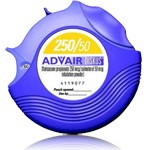
Advair Diskus is the original brand-name formulation of a fixed-dose combination of Fluticasone Propionate + Salmeterol — the foundational ICS + LABA combination inhaler for asthma and COPD maintenance therapy. Developed by GlaxoSmithKline (GSK) and FDA-approved since 2000 (Diskus dry powder inhaler) and 2006 (Advair HFA metered dose inhaler), Advair revolutionized maintenance therapy by combining two complementary mechanisms in a single device. Listed on the WHO Model List of Essential Medicines, Advair has 25+ years of clinical use globally.
The active ingredients work through complementary mechanisms. Fluticasone Propionate is a synthetic corticosteroid that reduces airway inflammation, decreases mucus production, and reduces airway hyperresponsiveness. Salmeterol is a long-acting beta-2 agonist (LABA) providing smooth muscle relaxation and bronchodilation lasting ~12 hours. Combined, they address two distinct pathophysiological mechanisms of asthma: chronic airway inflammation (ICS) and bronchoconstriction (LABA). Advair Diskus delivers medication via a breath-activated dry powder inhaler.
Advair Diskus is FDA-approved for asthma maintenance therapy in patients aged 4 years and older (Advair HFA: 12+) and chronic obstructive pulmonary disease (COPD) maintenance in adults. Advair is NOT a rescue inhaler — for maintenance only. LABA monotherapy is contraindicated in asthma but the ICS + LABA combination IS appropriate and effective.
The medication is available as Advair Diskus 100/50 mcg, 250/50 mcg, and 500/50 mcg (Fluticasone/Salmeterol) dry powder inhalers, and Advair HFA in similar strengths as metered dose inhalers. Standard dosing for asthma: 1 inhalation twice daily. For COPD: 250/50 mcg 1 inhalation twice daily (only this strength approved for COPD).
Critical safety considerations include the FDA boxed warning regarding LABA monotherapy and asthma-related deaths (combination with ICS as in Advair is the recommended safe approach), local ICS side effects (oral candidiasis/thrush, dysphonia, hoarseness — rinse mouth after use), systemic ICS effects with high doses (HPA axis suppression, growth reduction in children, cataracts, glaucoma, decreased bone mineral density), increased pneumonia risk in COPD patients, LABA-related cardiovascular effects (rare), paradoxical bronchospasm, hypokalemia, drug interactions with strong CYP3A4 inhibitors.
Free prescription
Discrete packaging
Have questions?
Quality Assurance

- Moderate Persistent Asthma: For moderate persistent asthma requiring daily controller therapy;
- Severe Persistent Asthma: For severe persistent asthma (typically 500/50 mcg strength);
- Pediatric Asthma Age 4: FDA-approved for pediatric asthma from age 4 (Advair Diskus);
- Adolescent Asthma: For adolescent asthma maintenance therapy;
- Adult Asthma: For adult asthma maintenance therapy (all strengths);
- Exercise Induced Asthma Adjunct: For prevention of exercise-induced asthma in patients on maintenance therapy;
- COPD Maintenance / Chronic Obstructive Pulmonary Disease: FDA-approved for COPD maintenance (250/50 mcg only);
- COPD Exacerbation Reduction: For reduction of COPD exacerbation frequency;
- Chronic Bronchitis COPD: For chronic bronchitis component of COPD;
- Emphysema Symptomatic: For symptomatic emphysema as part of COPD therapy;
- Asthma COPD Overlap (ACO): For asthma-COPD overlap syndrome (ACO);
- Step Up Therapy Asthma: For asthma step-up therapy when ICS alone inadequate;
- Frequent SABA Use: For asthma patients requiring frequent rescue SABA inhaler use;
- Nocturnal Asthma Symptoms: Particularly effective for nocturnal asthma symptoms (LABA bronchodilation);
- Switch From ICS Monotherapy: For step-up from inhaled corticosteroid (ICS) monotherapy;
- Pregnancy Asthma Maintenance: For asthma maintenance during pregnancy (Pregnancy Category C);
- Long Term Asthma Maintenance: Suitable for long-term asthma maintenance therapy;
- Long Term COPD Maintenance: Suitable for long-term COPD maintenance therapy;
- Maintenance NOT Rescue: For MAINTENANCE only — NOT a rescue inhaler for acute attacks.
- Less Asthma Exacerbations: Significant reduction in asthma exacerbation frequency and severity;
- Better Lung Function: Improvement in FEV1 (forced expiratory volume) and peak flow measurements;
- Less Nocturnal Symptoms: Significant reduction in nighttime asthma symptoms;
- Better Sleep: Improved sleep quality through reduced nocturnal symptoms;
- Less Daytime Symptoms: Reduction in daytime asthma symptoms allowing normal activities;
- Less Rescue Inhaler Use: Reduction in need for short-acting rescue inhalers (SABA);
- Better Exercise Tolerance: Improved exercise capacity through bronchodilation;
- Less Exercise-Induced Symptoms: Prevention of exercise-induced asthma symptoms;
- Better Daily Function: Return to school, work, and normal activities with effective asthma control;
- Less School Absences: Reduction in school absences in pediatric asthma patients;
- Less Work Absences: Reduction in work absences in adult asthma patients;
- Less COPD Exacerbations: Significant reduction in COPD exacerbation frequency and severity;
- Less COPD Hospitalizations: Reduction in COPD-related hospitalizations;
- Better COPD Lung Function: Improvement in lung function measurements in COPD patients;
- Less COPD Dyspnea: Reduction in shortness of breath in COPD;
- Better COPD Exercise Tolerance: Improved exercise tolerance in COPD patients;
- Better Quality of Life: Substantial improvement in quality of life with effective asthma/COPD control;
- Better Asthma Action Plan Adherence: Convenient twice-daily dosing supports adherence to controller therapy;
- Less Asthma Mortality Risk: Effective ICS + LABA combination reduces asthma-related mortality vs LABA alone;
- Brand Advair Diskus: Original GlaxoSmithKline brand of Fluticasone + Salmeterol with established global clinical reputation since 2000;
- Generic Fluticasone Salmeterol: Generic versions (Wixela Inhub, AirDuo Respiclick) expand global access;
- Advair HFA MDI: Advair HFA metered dose inhaler alternative formulation;
- Wixela Equivalent: Same Fluticasone + Salmeterol combination as generic Wixela Inhub;
- ICS LABA Combination Inhaler: Foundational ICS + LABA combination inhaler class — modern asthma standard;
- Inhaled Corticosteroid ICS: Inhaled corticosteroid component reduces airway inflammation;
- Long Acting Beta Agonist LABA: Long-acting beta-2 agonist provides ~12-hour bronchodilation;
- Airway Inflammation ICS: ICS targets chronic airway inflammation pathway;
- Bronchoconstriction LABA: LABA targets bronchoconstriction pathway with sustained 12-hour effect;
- Twice Daily Maintenance: Convenient twice-daily dosing supports excellent adherence;
- Multiple Strengths Asthma Severity: Three strengths (100/250/500 mcg fluticasone) for different asthma severity levels;
- Pediatric Approved Age 4: Pediatric FDA-approval from age 4 years (Advair Diskus);
- Asthma First Line Combination: First-line ICS + LABA combination for moderate-to-severe persistent asthma;
- COPD Standard Therapy: Standard ICS + LABA combination therapy for COPD maintenance;
- WHO Essential Medicine: Listed on the WHO Model List of Essential Medicines for respiratory care;
- 25 Plus Year Inhaler History: Extensive real-world safety and efficacy data since 2000 across billions of doses globally.
Generic Advair Diskus (Fluticasone / Salmeterol 250 mcg) Medication guide:
💊 What Is Advair Diskus Combination Inhaler
Advair Diskus is a combination inhaler containing fluticasone propionate (inhaled corticosteroid, ICS) plus salmeterol xinafoate (long-acting beta-2 agonist, LABA). Delivered through the distinctive Diskus dry powder inhaler device, Advair provides both anti-inflammatory action and sustained bronchodilation for maintenance treatment of asthma and chronic obstructive pulmonary disease (COPD). Originally developed by GlaxoSmithKline and FDA-approved in 2000, Advair Diskus is available on RXshop as the Cipla and Lupin Pharmaceuticals generic versions.
The two components work through complementary mechanisms: fluticasone reduces airway inflammation that drives asthma and COPD symptoms, while salmeterol relaxes airway smooth muscle providing sustained bronchodilation. This dual mechanism enables improved asthma and COPD control compared to either component alone in patients requiring combination therapy.
📊 Advair Diskus at a glance
| Attribute | Detail |
|---|---|
| Generic names | Fluticasone propionate (ICS) + Salmeterol xinafoate (LABA) |
| Drug class | Combination inhaled corticosteroid plus long-acting beta-2 agonist |
| Innovator | GlaxoSmithKline - approved as Advair Diskus (US) and Seretide (EU) |
| Generic manufacturers | Cipla Ltd; Lupin Pharmaceuticals Inc |
| FDA approval | August 2000 for asthma; 2003 for COPD |
| Delivery device | Diskus dry powder inhaler with dose counter |
| Strengths available | 100/50 mcg, 250/50 mcg, 500/50 mcg (fluticasone/salmeterol) |
| Standard dosing | One inhalation twice daily (morning and evening, approximately 12 hours apart) |
| Primary indications | Asthma maintenance therapy (age 4+); COPD maintenance therapy (adult) |
| Not indicated for | Acute asthma or COPD exacerbations (NOT rescue inhaler) |
✨ What makes Advair Diskus distinctive
✅ Clinical strengths
Dual mechanism combination - ICS anti-inflammatory plus LABA bronchodilation. Twice-daily convenience. Established evidence base for asthma and COPD. Diskus device with clear dose counter. Effective for patients not controlled on ICS alone. Widely used globally with extensive real-world experience.
⚠️ Safety considerations
FDA boxed warning historically for LABA class - asthma-related deaths with LABA monotherapy. Not a rescue inhaler - patients need separate short-acting inhaler for acute symptoms. Oral thrush and dysphonia common local effects. Systemic corticosteroid effects at higher doses. Cardiovascular considerations for LABA class.
📌 Where Advair Diskus fits in practice
- Asthma maintenance therapy: When ICS monotherapy inadequate
- Step-up from lower-dose ICS: Alternative to increasing ICS dose alone
- Persistent asthma symptoms: Age 4 years and older
- COPD maintenance therapy: Frequent exacerbators particularly
- Not for acute symptoms: Requires separate rescue medication
- Long-term therapy: Ongoing daily use expected for chronic conditions
❤️ NOT a rescue inhaler - critical distinction
⚠️ Advair Diskus is NOT for acute symptoms
Advair Diskus is a maintenance controller medication - NOT a rescue inhaler:
- Salmeterol onset: Approximately 15-30 minutes (too slow for rescue)
- Fluticasone anti-inflammatory: Requires days-weeks for full effect
- Patients need separate rescue inhaler: Short-acting beta-agonist (SABA) like albuterol/salbutamol
- Do not increase Advair for acute symptoms: Use rescue inhaler and seek care
- Increasing rescue inhaler use: Signals inadequate control - contact prescriber
Takeaway: Advair Diskus is a combination inhaled corticosteroid plus long-acting beta-agonist maintenance therapy for asthma (age 4+) and COPD - fluticasone (ICS) plus salmeterol (LABA) delivered through the Diskus dry powder inhaler. Twice-daily use. NOT a rescue inhaler - requires separate short-acting bronchodilator for acute symptoms. Available in three strengths (100/50, 250/50, 500/50 mcg) from Cipla and Lupin generic manufacturers.
📖 History GSK Advair Development Journey
The Advair Diskus story reflects the evolution of asthma and COPD combination therapy - from separate inhalers to combined devices, and the pivotal safety trials that shaped LABA class prescribing recommendations.
📆 Advair Diskus development milestones
| Year | Milestone | Significance |
|---|---|---|
| 1970s-1980s | Development of fluticasone propionate | Potent inhaled corticosteroid with low systemic bioavailability |
| 1990 | Salmeterol first synthesized | First long-acting beta-2 agonist |
| 1994 | Salmeterol Diskus approved (Serevent) | First LABA available; twice-daily bronchodilation |
| 1994 | Fluticasone propionate approved (Flovent) | Foundational potent ICS |
| Late 1990s | Combination Diskus development | GSK combined components in single device |
| August 2000 | FDA approves Advair Diskus for asthma | First combination ICS/LABA inhaler in US |
| 1999 | EU approval as Seretide | European market entry (different brand name) |
| 2003 | FDA approves for COPD | Expanded indication |
| 2006 | SMART trial published (Nelson et al. Chest) | LABA safety signal - foundational boxed warning |
| 2007 | TORCH trial published (Calverley et al. NEJM) | Foundational COPD combination evidence |
| 2010-2011 | FDA boxed warning updates | Requires ICS + LABA combination for asthma - never LABA monotherapy |
| 2016 | AUSTRI and VESTRI trials published | Established safety of combination ICS/LABA in adults and children |
| 2017 | FDA removes asthma-related deaths from boxed warning | Based on AUSTRI/VESTRI reassuring safety data |
| 2019 | First generic version approved (Wixela Inhub - Mylan) | Generic era begins in US |
| 2020s | Global generic manufacturers including Cipla and Lupin | Widespread affordable access |
🔬 The combination inhaler concept
Combining inhaled corticosteroid with long-acting beta-agonist offered several advantages:
- Single device convenience: Improved adherence over two separate inhalers
- Ensured concurrent use: Patients could not use LABA without ICS (safety)
- Enhanced clinical effect: Synergistic actions of two mechanisms
- Cost efficiency: Single device rather than two
- Simplified regimens: One device, one instruction set
❤️ The SMART trial and LABA safety
⚠️ SMART trial reshaped LABA prescribing
The Salmeterol Multi-center Asthma Research Trial (SMART, Nelson et al. Chest 2006) was pivotal in shaping LABA prescribing:
- Design: Large placebo-controlled trial of salmeterol vs placebo added to usual asthma care
- Population: Adults with asthma; approximately 26,000 patients
- Key finding: Increased asthma-related deaths in salmeterol group vs placebo
- Particularly African American patients affected
- Signal appeared linked to LABA monotherapy rather than combined ICS/LABA
- Led to FDA boxed warning requiring LABA be used only with ICS for asthma
Modern practice never uses LABA as monotherapy for asthma - always with concurrent ICS as combination or separate inhaler.
✅ AUSTRI/VESTRI trials - reassuring safety data
✅ AUSTRI and VESTRI established combination ICS/LABA safety
Two large safety trials in 2016 provided reassuring evidence for combination ICS/LABA:
- AUSTRI (Peters et al. NEJM 2016): Fluticasone/salmeterol vs fluticasone alone in ~11,000 adult asthmatics; no increased serious asthma events with combination
- VESTRI (Stempel et al. NEJM 2016): Similar trial in ~6,200 children; no increased serious asthma events
- Led to FDA removing asthma death boxed warning in 2017
- Combination therapy safety confirmed for both adults and children
- ICS component provides essential safety alongside LABA
🌬 COPD - the TORCH trial
For COPD indication, the TORCH trial (Calverley et al. NEJM 2007) was foundational:
- Design: Randomized trial of fluticasone/salmeterol vs individual components vs placebo
- Population: Over 6,000 COPD patients
- Duration: 3 years
- Findings: Combination therapy reduced exacerbations, improved lung function and health status
- Mortality trend favorable: Reduction not quite reaching statistical significance
- Established combination therapy in COPD framework
🌍 Modern positioning
Today Advair Diskus (and equivalents) hold established positions:
- GINA asthma guidelines: Included at Step 3-4 for moderate-severe asthma
- GOLD COPD guidelines: Included for specific COPD phenotypes with exacerbations
- Generic availability: Substantially expanded access globally
- Newer combinations available: Symbicort, Breo Ellipta, Dulera, Trelegy - but Advair remains foundational
- Cipla and Lupin manufacturing supports global access
Takeaway: Advair Diskus emerged from GSK combination of established components (fluticasone 1994 + salmeterol 1994) into combined Diskus device (2000). SMART trial (2006) established LABA safety signal driving requirement for combination with ICS. AUSTRI/VESTRI (2016) confirmed combination safety leading to boxed warning update. TORCH (2007) established COPD combination evidence. Generic era began 2019 (Wixela) with Cipla and Lupin supporting global access.
🧪 Chemistry Fluticasone Salmeterol Components Detail
Advair Diskus combines two chemically distinct components - fluticasone propionate (an inhaled corticosteroid) and salmeterol xinafoate (a long-acting beta-2 agonist). Understanding both components explains the combined mechanism and specific properties of each.
🧪 Fluticasone propionate identity
| Property | Fluticasone propionate |
|---|---|
| Chemical name | S-(fluoromethyl) 6,9-difluoro-11-hydroxy-16-methyl-3-oxo-17-(1-oxopropoxy)androsta-1,4-diene-17-carbothioate |
| Molecular formula | C25H31F3O5S |
| Molecular weight | 500.57 g/mol |
| Chemical class | Synthetic trifluorinated corticosteroid |
| Key features | Fluorinated for potency; propionate ester for lipophilicity; carbothioate for local activity |
| Systemic bioavailability | Very low - extensive first-pass metabolism of swallowed fraction |
| Metabolism | CYP3A4 to inactive 17-beta-carboxylic acid |
🧪 Salmeterol xinafoate identity
| Property | Salmeterol xinafoate |
|---|---|
| Chemical name | 4-hydroxy-alpha-1-((6-(4-phenylbutoxy)hexyl)aminomethyl)-1,3-benzenedimethanol, 1-hydroxy-2-naphthalene-carboxylate |
| Molecular formula | C25H37NO4 (salmeterol) + C11H8O3 (xinafoate salt) |
| Chemical class | Long-acting beta-2 adrenergic agonist |
| Distinctive structural feature | Long lipophilic side chain that anchors to beta-2 receptor |
| Duration of action | Approximately 12 hours - basis for twice-daily dosing |
| Onset of action | Approximately 15-30 minutes (slower than SABA) |
| Metabolism | Hepatic hydroxylation; primarily fecal elimination |
🔬 Fluticasone - the inhaled corticosteroid
💡 Fluticasone propionate design principles
Fluticasone was specifically designed for inhaled delivery with high local anti-inflammatory potency and low systemic bioavailability:
- Trifluorinated structure: Enhances glucocorticoid receptor binding potency
- Carbothioate ester: Provides local activity in airways
- Extensive first-pass metabolism: Swallowed portion largely inactivated
- Low oral bioavailability (~1%): Minimal systemic exposure from swallowed drug
- Result: high local, low systemic effect - safety advantage over older steroids
🔬 Salmeterol - the LABA design
💡 Salmeterol lipophilic tail design
Salmeterol was designed for sustained beta-2 receptor engagement through its distinctive structure:
- Long lipophilic side chain: Anchors to region near beta-2 receptor
- "Exosite" binding hypothesis: Repeated receptor engagement over hours
- 12-hour duration: Enables twice-daily dosing
- Slower onset than SABA: 15-30 minutes vs immediate
- NOT for acute symptoms - fundamental design consequence
👤 The two active ingredients working together
| Feature | Fluticasone propionate | Salmeterol xinafoate |
|---|---|---|
| Drug class | Inhaled corticosteroid (ICS) | Long-acting beta-2 agonist (LABA) |
| Primary effect | Anti-inflammatory | Bronchodilation |
| Onset | Days-weeks for full anti-inflammatory effect | 15-30 minutes |
| Duration | Sustained with continued therapy | Approximately 12 hours |
| Local effect | Airway inflammation | Airway smooth muscle |
| Systemic exposure | Very low from inhaled | Very low from inhaled |
| Common local effects | Oral candidiasis, dysphonia | Tremor, palpitations (mild systemic) |
📦 Advair Diskus formulations available
Cipla and Lupin Advair Diskus are available in three strengths:
| Strength (fluticasone/salmeterol) | Primary use |
|---|---|
| 100/50 mcg | Lower-dose asthma maintenance; pediatric use; step-up from lower-dose ICS monotherapy |
| 250/50 mcg | Standard adult asthma dose; COPD maintenance |
| 500/50 mcg | Higher-dose asthma maintenance; severe COPD |
Note: The salmeterol dose stays constant at 50 mcg across all three strengths - only fluticasone varies. This reflects that increasing LABA above 50 mcg twice daily doesn't add benefit but may add cardiovascular risk. Dose escalation focuses on ICS component when needed.
👤 Diskus device delivery
The Diskus is a distinctive dry powder inhaler with characteristics affecting drug delivery:
- Dry powder formulation: No propellant needed
- Breath-actuated: Patient inspiratory flow triggers delivery
- Blister strip: 60 individual doses in foil blisters
- Dose counter: Visible count remaining
- Requires adequate inspiratory flow: May limit use in severe airflow obstruction
- Delivered dose vs metered dose: Some drug retained in device
✅ Quality and bioequivalence
✅ Generic quality bioequivalent to innovator
Cipla and Lupin generic Advair Diskus meet bioequivalence and manufacturing quality standards. Inhaled combination products have complex bioequivalence testing including both PK and PD parameters - generics meeting these standards provide equivalent clinical performance to innovator product across approved indications.
Takeaway: Advair Diskus combines fluticasone propionate (potent inhaled corticosteroid with low systemic exposure through fluorinated structure and extensive first-pass metabolism) plus salmeterol xinafoate (long-acting beta-2 agonist with distinctive lipophilic tail providing 12-hour duration). Three strengths (100/50, 250/50, 500/50 mcg fluticasone/salmeterol) allow ICS dose adjustment while maintaining constant LABA dose. Delivered via Diskus dry powder device.
🔬 Mechanism ICS Anti-inflammatory Plus LABA Bronchodilation
Advair Diskus provides dual mechanism therapy - fluticasone reducing airway inflammation and salmeterol relaxing airway smooth muscle. Understanding both mechanisms explains the combined clinical effect and the specific safety profile.
🔬 Fluticasone mechanism - anti-inflammatory
Fluticasone works as an inhaled corticosteroid (ICS) through multiple anti-inflammatory pathways:
- Binds intracellular glucocorticoid receptor
- Receptor-drug complex translocates to nucleus
- Alters gene transcription of inflammatory mediators
- Reduces production of pro-inflammatory cytokines: IL-4, IL-5, IL-13, and others
- Reduces inflammatory cell recruitment: Eosinophils, T-cells, mast cells
- Reduces airway edema and mucus production
- Reduces bronchial hyperresponsiveness over time
- Enhances beta-agonist receptor sensitivity
🔬 Salmeterol mechanism - bronchodilation
Salmeterol works as a long-acting beta-2 adrenergic agonist (LABA):
- Binds beta-2 adrenergic receptors on airway smooth muscle
- Stimulates adenylate cyclase activity
- Increases cyclic AMP (cAMP)
- Activates protein kinase A (PKA)
- Phosphorylation of target proteins relaxes smooth muscle
- Bronchodilation results
- Long lipophilic side chain anchors near receptor for sustained effect
- Approximately 12-hour duration of action
🎯 Complementary dual mechanism
🫁 Fluticasone - addresses inflammation
Reduces underlying airway inflammation that drives asthma and COPD symptoms. Reduces inflammatory cell numbers, mediator production, and airway edema. Takes days-weeks for full effect. Essential for asthma safety (allowing safe LABA use).
💨 Salmeterol - relaxes smooth muscle
Provides sustained bronchodilation through 12 hours after each dose. Improves airflow, reduces symptoms, improves exercise tolerance. Does not address underlying inflammation. Not for acute symptoms - too slow onset.
🔬 Synergy between components
The two components have documented synergistic effects:
- Corticosteroids enhance beta-agonist receptor expression: More beta-2 receptors available
- Beta-agonists enhance corticosteroid receptor translocation: More efficient steroid action
- Reduced tachyphylaxis to bronchodilator effect
- Better symptom control than either alone at equivalent doses
- Documented in AUSTRI and TORCH trials
❤️ Why LABA needs ICS in asthma
⚠️ LABA never used alone for asthma
The critical safety principle:
- LABA alone can mask underlying inflammation
- Reduced symptoms without addressing underlying disease
- Increased risk of severe asthma exacerbations and death per SMART trial
- ICS provides anti-inflammatory foundation
- Combination ICS + LABA is safe: AUSTRI/VESTRI trials confirmed
- Never prescribe LABA alone for asthma - always with ICS
👤 Clinical effect timing
| Effect | Timing |
|---|---|
| Bronchodilation from salmeterol | 15-30 minutes; sustained 12 hours |
| Initial anti-inflammatory effect | Days |
| Full anti-inflammatory effect | 2-4 weeks typically |
| Peak symptom control | 4-8 weeks |
| Sustained control with continued therapy | Long-term |
| Loss of effect if discontinued | Symptoms return within days-weeks |
👤 Effect on airway function
Combination therapy produces multiple benefits:
- Improved FEV1 (forced expiratory volume in 1 second)
- Reduced airway inflammation: Reduced eosinophils, cytokines
- Reduced airway hyperresponsiveness over time
- Reduced symptoms: Wheeze, cough, dyspnea, chest tightness
- Reduced rescue inhaler use
- Reduced exacerbation frequency
- Improved quality of life
👤 Local vs systemic effects
Advair Diskus delivers mostly local airway effect with limited systemic exposure:
- Local airway effect: Primary therapeutic action
- Systemic absorption from lung: Some, though limited
- Systemic absorption from swallowed drug: Fluticasone extensively metabolized (safety); salmeterol modestly absorbed
- Systemic effects at higher doses: HPA suppression, growth effects
- Cardiovascular effects from LABA: Usually mild
Takeaway: Advair Diskus provides dual mechanism therapy - fluticasone reduces airway inflammation through glucocorticoid receptor effects (days-weeks for full effect) while salmeterol provides 12-hour bronchodilation through beta-2 receptor activation (15-30 minute onset). Complementary synergistic actions provide better control than either alone. Critical safety principle: LABA never used alone for asthma - must combine with ICS.
📊 Pharmacokinetics Inhaled Delivery Systemic Exposure
Advair Diskus pharmacokinetics are dominated by inhaled delivery with predominantly local airway action and limited systemic absorption. Understanding both fluticasone and salmeterol PK explains dosing and adverse effect profiles.
📊 Fluticasone pharmacokinetic profile
| Parameter | Fluticasone value |
|---|---|
| Inhaled delivery to lung | Approximately 15-20% of nominal dose reaches lung |
| Oral bioavailability | Very low (~1%) - extensive first-pass metabolism |
| Time to peak plasma level | 1-2 hours after inhalation |
| Protein binding | Approximately 91% |
| Volume of distribution | Large (~4.2 L/kg) |
| Metabolism | Extensive hepatic via CYP3A4 to inactive 17-beta-carboxylic acid |
| Elimination half-life | Approximately 8 hours (systemic) |
| Elimination route | Primarily fecal (bile); minor renal |
📊 Salmeterol pharmacokinetic profile
| Parameter | Salmeterol value |
|---|---|
| Inhaled delivery to lung | Approximately 10-20% of nominal dose reaches lung |
| Oral bioavailability | Very low from swallowed portion |
| Time to peak plasma level | Very low plasma levels overall |
| Protein binding | Approximately 96% |
| Metabolism | Extensive hepatic via CYP3A4 to alpha-hydroxysalmeterol |
| Elimination half-life | Approximately 5.5 hours (systemic) |
| Duration of bronchodilation | Approximately 12 hours (independent of half-life) |
| Elimination route | Primarily fecal (bile) |
🫁 Inhaled delivery efficiency
💡 Only a fraction of nominal dose reaches lungs
With any inhaler, only a portion of the nominal (labeled) dose reaches the lungs where it acts:
- Approximately 15-20% reaches lung deposition with Diskus and good technique
- Remainder is swallowed or retained in device
- Swallowed fluticasone extensively metabolized - minimal systemic effect
- Swallowed salmeterol minimally absorbed
- Good technique maximizes lung deposition
- Poor technique substantially reduces lung deposition
🔬 First-pass metabolism protects from systemic effects
Fluticasone systemic safety comes from extensive first-pass metabolism:
- Swallowed portion enters GI tract
- Absorbed into portal circulation
- Extensive first-pass hepatic metabolism
- Fluticasone extensively converted to inactive metabolite
- Only ~1% reaches systemic circulation from swallowed portion
- Result: high local airway effect, low systemic effect
🕑 Time-effect relationships
| Timepoint after inhalation | Effect |
|---|---|
| 15-30 minutes | Salmeterol bronchodilation onset |
| 1-2 hours | Peak plasma fluticasone and salmeterol levels |
| 2-4 hours | Peak bronchodilation from salmeterol |
| 12 hours | Salmeterol bronchodilation duration - next dose needed |
| Days-weeks | Full fluticasone anti-inflammatory effect |
| 1-2 weeks | Steady state on regular dosing |
👤 Systemic absorption sources
Systemic drug exposure comes from two sources:
- Lung absorption: Drug deposited in lung absorbed into systemic circulation
- Gut absorption from swallowed portion: Much of this metabolized in first pass
Both components rely primarily on first-pass metabolism for systemic safety - though inhalation still results in some systemic exposure that can produce systemic effects at higher doses or with prolonged use.
👤 Special population PK considerations
| Population | PK consideration |
|---|---|
| Elderly | Modest changes; no formal dose adjustment |
| Renal impairment | Limited effect - inhaled drugs minimally excreted renally |
| Mild-moderate hepatic impairment | Modest PK changes; enhanced monitoring |
| Severe hepatic impairment | Substantially elevated systemic exposure; enhanced monitoring |
| Pediatric (age 4+) | Weight-based deposition considerations |
| Strong CYP3A4 inhibitors | Increased fluticasone and salmeterol exposure |
👤 CYP3A4 interaction consideration
Both components metabolized via CYP3A4:
- Strong CYP3A4 inhibitors: Ketoconazole, itraconazole, ritonavir, clarithromycin
- Substantially elevated fluticasone and salmeterol exposure
- Systemic effects can emerge: HPA suppression, cardiovascular effects
- Enhanced monitoring or avoidance recommended
- Alternative inhaler considered in some cases
👤 Device technique affects PK
Proper Diskus technique substantially affects delivered dose:
- Adequate inspiratory flow essential: Diskus requires patient effort
- Breath-hold maximizes deposition
- Poor technique reduces lung delivery
- Systemic exposure varies with technique
- Regular technique verification important
Takeaway: Advair Diskus PK involves inhaled delivery of both components with predominantly local airway action. Only 15-20% of nominal dose reaches lung. Extensive first-pass metabolism of swallowed portion provides systemic safety. CYP3A4 interactions can substantially elevate systemic exposure. Device technique substantially affects delivery. Salmeterol bronchodilation duration (12 hours) exceeds systemic half-life due to receptor binding characteristics.
📋 Indications Asthma Maintenance and COPD
Advair Diskus has two approved indications - maintenance therapy for asthma (age 4 and older) and maintenance therapy for chronic obstructive pulmonary disease (COPD) in adults. Understanding indication-specific approach guides appropriate use.
📋 Approved indications framework
| Indication | Approach |
|---|---|
| Asthma maintenance therapy (age 4+) | For patients not adequately controlled on lower-dose ICS alone; or as initial maintenance for moderate-severe asthma |
| COPD maintenance therapy (adult) | Reduces exacerbations; improves lung function and symptoms; specific COPD phenotypes benefit |
| NOT indicated for | Acute asthma or COPD exacerbations; primary therapy for asthma with only mild-intermittent symptoms |
🫁 Asthma indication detail
Asthma is the primary and most common Advair Diskus indication:
- Age 4 and older
- Maintenance treatment - not acute
- Alternative to increasing ICS monotherapy dose
- Step-up therapy in patients not controlled on lower-dose ICS
- Persistent asthma requiring maintenance controller
- Regular twice-daily use
- Long-term therapy for chronic condition
🫁 COPD indication detail
COPD is the secondary indication:
- Adult patients only
- Maintenance treatment - not acute
- Reduces exacerbation frequency
- Improves lung function and symptoms
- Regular twice-daily use
- Particularly for exacerbation-prone patients
- Consider ICS pneumonia risk in patient selection
❤️ What Advair Diskus does NOT treat
⚠️ NOT for acute symptoms - critical distinction
Advair Diskus is NOT appropriate for:
- Acute asthma attacks: Onset too slow; need short-acting bronchodilator
- Acute COPD exacerbations: Need short-acting bronchodilator, systemic steroids, sometimes antibiotics
- Rescue therapy of any kind: Requires separate SABA (albuterol/salbutamol)
- Primary asthma monotherapy for mild intermittent asthma: Rescue inhaler + as-needed approach may suffice
- Anaphylaxis: Requires epinephrine and emergency care
- Pulmonary conditions other than asthma/COPD without evidence: ILD, bronchiectasis, others - individual assessment
👤 Asthma severity framework
Advair Diskus positioning within asthma severity:
| Asthma severity | Advair Diskus role |
|---|---|
| Mild intermittent | Not typically needed - as-needed SABA or as-needed ICS-formoterol may suffice |
| Mild persistent | Low-dose ICS monotherapy usually first-line |
| Moderate persistent | Advair 100/50 or 250/50 appropriate - Step 3-4 GINA |
| Severe persistent | Advair 500/50 or high-dose alternatives; consider biologics if inadequate |
| Very severe/uncontrolled | Specialist care; biologics for eligible phenotypes; other approaches |
👤 COPD phenotype considerations
ICS/LABA combination in COPD:
- Frequent exacerbators: Primary benefit demographic
- Elevated blood eosinophils: Predicts ICS response
- Prior asthma history or ACO (asthma-COPD overlap): Benefits from ICS
- Not routine for all COPD: LABA/LAMA combinations may be preferred for many
- Pneumonia risk consideration with ICS in COPD: Important safety balance
👤 When Advair Diskus is appropriate
✅ Advair Diskus appropriate for
- Persistent asthma inadequately controlled on ICS alone
- Moderate to severe persistent asthma initial therapy
- Asthma with frequent SABA use
- Age 4+ asthma requiring maintenance controller
- COPD with frequent exacerbations
- COPD with elevated eosinophils
- Prior asthma-COPD overlap
🔵 Alternative preferred for
- Mild intermittent asthma (as-needed approach)
- Age under 4 (device or dose inappropriate)
- COPD without frequent exacerbations (LABA/LAMA may be preferred)
- Severe airflow obstruction limiting inspiratory flow through Diskus
- Prior ICS or LABA hypersensitivity
- Uncontrolled fungal infections
👤 Combined asthma-COPD overlap
Some patients have features of both asthma and COPD:
- Asthma-COPD overlap syndrome (ACOS): Older diagnostic category
- Now emphasis on treatable traits
- Elevated eosinophils, allergic features: ICS particularly important
- Advair Diskus often appropriate for these patients
- Individual assessment of features
👤 Rescue inhaler concurrent use
Patients on Advair Diskus need a rescue inhaler:
- Short-acting beta-agonist (SABA): Albuterol/salbutamol typically
- For acute symptoms
- Rapid onset: Minutes
- Use as needed for symptoms
- Frequent use signals inadequate control: Contact prescriber
- Never substitute Advair for rescue inhaler
Takeaway: Advair Diskus has two approved indications - asthma maintenance therapy (age 4+) and COPD maintenance therapy (adult). NOT for acute symptoms - patients need separate short-acting rescue inhaler. Positioned for moderate-severe persistent asthma inadequately controlled on ICS monotherapy, and for exacerbation-prone COPD patients. Individual assessment of patient factors and severity guides appropriate use.
🫁 Asthma Treatment Framework Modern Guidelines
Asthma is the primary Advair Diskus indication. Understanding modern asthma management framework and where combination ICS/LABA therapy fits supports optimal patient care and outcomes.
🫁 Asthma overview and prevalence
Asthma is a chronic inflammatory airway disease affecting approximately 300 million people globally - about 8% of US adults and 7% of children. Characterized by variable airflow obstruction, airway hyperresponsiveness, and underlying inflammation. Modern management aims for control - reduced symptoms, prevented exacerbations, and normal lung function.
🎯 Modern asthma management goals
Contemporary asthma care aims for comprehensive control:
- Minimal daytime symptoms
- Rare nighttime awakenings
- Minimal rescue inhaler use (2 times per week or less)
- Normal activity and exercise capacity
- Normal lung function
- Prevented exacerbations
- Minimized side effects
📋 GINA stepwise approach
Modern asthma management follows the Global Initiative for Asthma (GINA) stepwise approach:
| Step | Approach |
|---|---|
| Step 1 | As-needed low-dose ICS-formoterol; alternative: as-needed SABA + low-dose ICS whenever SABA taken |
| Step 2 | Daily low-dose ICS OR as-needed low-dose ICS-formoterol |
| Step 3 | Low-dose ICS-LABA maintenance OR medium-dose ICS - Advair 100/50 or 250/50 relevant |
| Step 4 | Medium-high dose ICS-LABA - Advair 250/50 or 500/50 relevant |
| Step 5 | High-dose ICS-LABA plus add-on (LAMA, biologics, low-dose OCS) |
💊 Advair Diskus positioning in asthma
Advair Diskus role in asthma stepwise therapy:
- Step 3: Advair 100/50 mcg - low-dose ICS-LABA maintenance
- Step 4: Advair 250/50 or 500/50 mcg - medium-high dose ICS-LABA
- Step 5: High-dose Advair 500/50 mcg as part of comprehensive regimen
- Alternative to increasing ICS monotherapy dose
- Adding LABA often preferable to doubling ICS for enhanced control
🫁 Rescue inhaler concept evolution
💡 GINA has updated rescue therapy concept
Modern GINA emphasizes:
- Preferred rescue: as-needed low-dose ICS-formoterol (available as separate product)
- SABA-only rescue no longer recommended for most patients
- Rationale: Every SABA use is an opportunity for inflammation reduction
- Advair Diskus patients still need SABA rescue (salmeterol too slow onset for rescue)
- Some patients use MART (maintenance and reliever therapy) with ICS-formoterol for both
👤 When to step up therapy
Consider stepping up asthma therapy when:
- Symptoms frequent despite current step
- Rescue inhaler use frequent (more than 2 times per week for regular users)
- Nighttime awakenings from asthma
- Activity limitation from asthma
- Recent exacerbation
- Declining lung function
👤 When to step down therapy
Consider stepping down when:
- Good control for 3 months
- Reduce dose gradually - typically 25-50% at a time
- Maintain ICS-LABA rather than removing LABA in most cases
- Do not stop ICS entirely - continued anti-inflammatory needed
- Monitor for loss of control after each step-down
👤 Assessing asthma control
Standardized asthma control assessment:
- ACT (Asthma Control Test): Score above 20 suggests good control
- ACQ (Asthma Control Questionnaire): Alternative assessment
- Symptom frequency, activity, sleep, rescue use questions
- Lung function measurement (spirometry, PEF)
- Exacerbation history
- Regular assessment at visits
👤 Pediatric asthma considerations
Advair Diskus in pediatric patients:
- Age 4 and older approved
- Age 4-11: 100/50 mcg typically appropriate
- Adolescents: adult dosing approach
- Growth monitoring important
- Adherence support
- School and activity considerations
- Family education essential
- Rescue inhaler at school
👤 Asthma trigger management
Address asthma triggers alongside pharmacotherapy:
- Allergens: Dust mites, pet dander, pollens, mold
- Respiratory infections: Vaccination, hand hygiene
- Tobacco smoke: Cessation counseling
- Environmental pollutants
- Exercise-induced symptoms: Pre-exercise SABA
- Occupational exposures
- Medications: Aspirin sensitivity, beta-blockers in some
- Emotional triggers
👤 Comorbid condition management
Address conditions affecting asthma:
- Allergic rhinitis: Often coexists - treat both
- Sinusitis
- Obesity: Weight management improves control
- Sleep apnea
- GERD: Can trigger asthma
- Depression/anxiety: Affect adherence and perception
Homer A. Boushey, MD — University of California San Francisco
“Advair Diskus and other ICS/LABA combinations represent modern asthma maintenance therapy for patients not adequately controlled on inhaled corticosteroids alone. The combination provides both anti-inflammatory effect through fluticasone and sustained bronchodilation through salmeterol. Modern GINA guidelines emphasize combination therapy with the ICS component providing crucial safety.”
Takeaway: Advair Diskus is positioned at GINA Steps 3-5 for moderate-severe persistent asthma. Alternative to increasing ICS monotherapy dose. Combination approach preferred over LABA monotherapy (safety) or high-dose ICS alone. Modern GINA emphasizes ICS-containing rescue therapy but Advair patients still need SABA rescue. Regular assessment of asthma control guides step-up or step-down. Comprehensive care includes trigger management and comorbidity treatment.
🫁 COPD Treatment Framework Overview
COPD is the secondary Advair Diskus indication. Understanding modern COPD management framework and specific ICS/LABA positioning supports appropriate patient selection and outcomes.
🫁 COPD overview and prevalence
Chronic obstructive pulmonary disease (COPD) is a common chronic lung disease characterized by persistent airflow limitation, chronic symptoms, and exacerbations. Global prevalence approximately 10% of adults over 40. Primary risk factor is tobacco smoking; other exposures include biomass smoke and occupational dusts. Cannot be cured but can be effectively managed.
🎯 COPD management goals
Modern COPD care aims for:
- Reduced symptoms: Dyspnea, cough, sputum production
- Improved exercise tolerance
- Improved health status and quality of life
- Prevention of disease progression
- Prevention and treatment of exacerbations
- Reduced mortality
📋 GOLD classification and treatment framework
GOLD (Global Initiative for COPD) classification uses:
- Spirometric severity (GOLD 1-4): Based on FEV1
- Symptom burden (mMRC or CAT scores)
- Exacerbation history (frequent vs infrequent)
- Combined ABE assessment (as of 2023 update)
👤 GOLD ABE combined assessment
| Group | Symptoms and exacerbations | Typical initial therapy |
|---|---|---|
| Group A | Low symptoms, low exacerbation risk | Bronchodilator (SABA/SAMA or LABA/LAMA) |
| Group B | High symptoms, low exacerbation risk | LABA + LAMA combination |
| Group E | Frequent exacerbations (any symptom level) | LABA + LAMA; consider ICS if eosinophils elevated |
💊 Advair Diskus positioning in COPD
💡 ICS/LABA positioning has evolved
Modern COPD guidelines position ICS/LABA more selectively than historically:
- Not first-line for all COPD: LABA/LAMA now preferred for many
- Advair appropriate for frequent exacerbators with elevated eosinophils
- Add-on to LABA/LAMA in exacerbation-prone patients (triple therapy)
- Prior asthma or asthma-COPD overlap features favor ICS use
- Pneumonia risk with ICS in COPD warrants consideration
👤 When ICS/LABA appropriate in COPD
- Frequent exacerbators: 2 or more moderate exacerbations, or 1 severe hospitalization
- Elevated blood eosinophils: Above 300 cells/microliter typically predicts ICS response
- Prior asthma or ACO features
- Not adequately controlled on LABA/LAMA alone
- Individualized decision considering pneumonia risk
👤 When alternatives may be preferred
- Non-exacerbator COPD: LABA/LAMA typically preferred
- Very low blood eosinophils: Less likely to benefit from ICS
- High pneumonia risk: Elderly, recurrent infections
- Low symptom burden: Simpler bronchodilator may suffice
🔬 TORCH trial - foundational COPD evidence
The TORCH trial (Calverley et al. NEJM 2007) was pivotal:
- Design: Randomized trial of fluticasone/salmeterol vs individual components vs placebo
- Population: Over 6,000 COPD patients
- Duration: 3 years
- Primary outcome: All-cause mortality at 3 years
- Key findings:
- Reduced exacerbation frequency (25% reduction)
- Improved lung function (FEV1)
- Improved health status (SGRQ)
- Mortality reduction favorable but not statistically significant (17.5% vs 15.2%)
- Increased pneumonia rate with ICS-containing arms
- Established combination therapy in COPD framework
❤️ Pneumonia risk with ICS in COPD
⚠️ ICS pneumonia risk in COPD
Important safety consideration for ICS use in COPD:
- ICS in COPD elevates pneumonia risk (approximately 40-60% relative increase)
- Fluticasone particularly associated with pneumonia in COPD
- Absolute risk still modest but clinically important
- Higher risk in elderly, prior pneumonia, severe COPD
- Consider ICS eosinophil threshold and exacerbation frequency for benefit
- Discussion with patient of risk-benefit
👤 COPD assessment tools
Standardized COPD assessment:
- Spirometry: FEV1/FVC ratio, FEV1 percent predicted
- mMRC dyspnea scale: 0-4 scoring
- CAT (COPD Assessment Test): 0-40 scoring
- Exacerbation history: Frequency and severity in past year
- Blood eosinophils: For ICS response prediction
- Regular reassessment at visits
👤 COPD exacerbation management
Advair Diskus reduces but does not eliminate exacerbations. Exacerbation management:
- Short-acting bronchodilators: Albuterol/salbutamol; ipratropium
- Systemic corticosteroids: Prednisolone 40 mg daily for 5 days typical
- Antibiotics: If bacterial infection suspected
- Oxygen if hypoxemic
- Non-invasive ventilation for severe cases
- Continue maintenance Advair through exacerbation typically
👤 Non-pharmacologic COPD management
Comprehensive COPD care includes:
- Smoking cessation: Most important intervention
- Pulmonary rehabilitation: Structured exercise and education program
- Vaccination: Influenza annually, pneumococcal, COVID-19
- Nutrition support: Address weight loss
- Oxygen therapy for chronic hypoxemia
- Surgical options for select patients: LVRS, transplantation
Bartolome R. Celli, MD — Harvard Medical School
“For patients with COPD and frequent exacerbations, ICS/LABA combination therapy provides meaningful exacerbation reduction and quality of life improvement. TORCH trial established fluticasone/salmeterol reduced exacerbations and had favorable mortality trend. Modern GOLD guidelines position combination therapy for specific COPD phenotypes with careful assessment of pneumonia risk with ICS.”
Takeaway: Advair Diskus is positioned for COPD with frequent exacerbations, elevated eosinophils, or asthma-COPD overlap features. Not first-line for all COPD - LABA/LAMA often preferred. TORCH trial established combination benefit (exacerbation reduction, lung function, health status) with pneumonia risk consideration. Modern GOLD ABE assessment guides therapy. Comprehensive COPD care includes pharmacotherapy plus smoking cessation, pulmonary rehabilitation, vaccination, and other measures.
💊 Diskus Inhaler Device Technique Instructions
Proper Diskus device technique is essential for effective therapy - poor technique substantially reduces drug delivery to lungs, undermining the therapeutic effect. Understanding correct technique and common errors supports patient outcomes.
💊 Diskus device overview
The Diskus is a distinctive dry powder inhaler:
- Multi-dose device: 60 individually sealed doses in foil blister strip
- Breath-actuated: Patient inhalation triggers delivery
- Visible dose counter: Shows doses remaining
- No propellant: Dry powder formulation
- Rounded disc-shaped device
- Requires adequate inspiratory flow
👤 Step-by-step Diskus technique
| Step | Action |
|---|---|
| 1. Open device | Hold in one hand; slide thumb grip fully back with other thumb until it clicks |
| 2. Slide lever | Hold Diskus with mouthpiece toward you; slide lever fully back until it clicks (loads dose from blister) |
| 3. Do not tilt or shake | Keep device level to prevent powder loss |
| 4. Breathe out fully | Away from mouthpiece; do not exhale into device (would blow powder out) |
| 5. Place mouthpiece | Between teeth; close lips firmly around it |
| 6. Inhale deeply and forcefully | Breathe in as forcefully and deeply as possible through mouth |
| 7. Hold breath | Approximately 10 seconds to allow drug deposition |
| 8. Remove mouthpiece | Exhale slowly away from device |
| 9. Close device | Slide thumb grip fully back to closed position (protects for next dose) |
| 10. Rinse mouth | Rinse mouth with water and spit out (reduces oral thrush risk) |
✅ Key technique success points
✅ Critical technique elements
Success factors:
- Adequate inspiratory flow: Diskus requires fast forceful inhalation
- Deep inhalation: As deep as possible
- Breath-hold: 10 seconds allows drug deposition
- Do not exhale into device: Would blow powder out
- Mouth rinse after use: Reduces oral thrush
- Keep device level while loaded
❤️ Common technique errors
⚠️ Common errors that reduce effectiveness
- Inadequate inspiratory flow: Too slow or shallow inhalation - insufficient drug delivery
- Exhaling into mouthpiece: Blows powder out of device
- Not sealing lips around mouthpiece: Air leaks reduce delivery
- No breath-hold: Reduces drug deposition
- Not rinsing mouth: Increases thrush risk
- Tilting device: Can cause dose loss
- Not activating lever: No dose delivered
- Storage in humid environments: Powder clumping
👤 Dose counter and device tracking
Diskus has visible dose counter:
- Starts at 60
- Counts down with each dose
- Colored area (last 5 doses) alerts refill needed
- Zero means device empty - replace
- Do not delay refill: Ensure continuous therapy
👤 Storage and care
- Room temperature storage
- Away from moisture: Do not store in bathroom
- Original packaging or pouch: Protects from environmental factors
- Once opened (foil pouch), use within 6 weeks
- Do not wash device - keep dry
- Wipe mouthpiece with dry cloth if needed
- Keep out of reach of children
👤 When technique verification appropriate
Verify technique regularly:
- Initial prescription: Demonstrate and observe patient
- Every follow-up visit: Have patient demonstrate
- Symptom worsening: Consider technique issue
- Poor response to therapy: Verify technique before escalation
- Pharmacist counseling
- Written and video instructions available
👤 Diskus vs other inhalers
Comparing Diskus with other inhaler types:
| Inhaler type | Characteristics |
|---|---|
| Diskus (dry powder) | Breath-actuated; requires adequate inspiratory flow; dose counter |
| MDI (metered dose inhaler) | Uses propellant; requires coordination between actuation and inhalation; slower inhalation |
| MDI with spacer | Reduces coordination challenge; better lung delivery for many patients |
| Ellipta (dry powder) | Similar to Diskus but different design |
| Handihaler (dry powder) | Different device technique; single capsule loading |
| Breezhaler (dry powder) | Different device technique |
| Soft mist inhaler (Respimat) | Different mechanism; slow mist |
👤 Special populations and Diskus technique
- Elderly: May have inspiratory flow limitations; consider MDI + spacer alternative
- Pediatric age 4-5: Often struggle with technique - MDI + spacer alternative preferred by some
- Severe COPD: May not achieve adequate inspiratory flow
- Cognitive impairment: Caregiver support important
- Physical limitations: Arthritis affecting device manipulation
👤 Missed dose management
- Take when remembered if within few hours of scheduled time
- Skip if close to next dose: Do not double
- Standard twice-daily schedule: Approximately 12 hours apart
- Consistency important for control
👤 When to seek help with device
- Unable to inhale with adequate force
- Device appears damaged or not functioning
- Dose counter behaving unusually
- Unsure about technique
- Poor symptom control despite regular use
Takeaway: Proper Diskus technique is essential for effective therapy. Key steps: open device, slide lever to load dose, breathe out away from device, inhale deeply and forcefully through mouthpiece, hold breath 10 seconds, close device, rinse mouth. Common errors include inadequate inspiratory flow and exhaling into device. Regular technique verification at follow-up visits. Elderly and pediatric patients may benefit from MDI + spacer alternatives if Diskus technique difficult.
🔗 Combination Therapy vs Separate Components
The combination therapy approach - single device delivering both ICS and LABA - offers advantages over separate inhalers. Understanding the rationale for combination inhalers supports appreciation of Advair Diskus positioning.
🔗 Why combination inhalers exist
Combination ICS/LABA inhalers emerged for several reasons:
- Ensured concurrent use: Patients cannot use LABA without ICS (safety)
- Improved adherence: Single device simpler than two
- Simplified regimens: One device, one instruction set
- Cost efficiency: Single device typically less than two
- Consistent dosing: Two components delivered together
- Synergistic effect: Combined mechanism enhanced
👤 Combination vs separate inhalers
Combination inhaler advantages
- Single device simplicity
- Better adherence
- Ensures LABA not used alone
- Less inhaler waste
- Simpler patient education
- Cost efficiency
Separate inhaler considerations
- Individual dose adjustment
- Different component regimens
- May be preferred by some patients
- Legacy prescribing patterns
- Potentially different generic access
❤️ The critical safety principle
⚠️ LABA never used alone for asthma
The most important principle in combination therapy:
- SMART trial (2006) established LABA monotherapy asthma safety signal
- FDA required LABA + ICS for asthma
- Combination inhaler enforces this: Cannot use LABA without ICS
- Separate LABA inhaler for asthma is not appropriate
- Salmeterol (Serevent) alone no longer used for asthma
- Advair Diskus provides safe way to use LABA for asthma
🔬 Synergistic effects of combination
The two components enhance each other:
- Corticosteroids upregulate beta-2 receptors: More receptors for LABA effect
- Beta-agonists enhance corticosteroid receptor activity: Better anti-inflammatory response
- Reduced tachyphylaxis to bronchodilator effect
- Better symptom control than either alone at same doses
- Documented in AUSTRI, TORCH, other trials
👤 Adherence advantages of combination
Combination inhalers improve adherence:
- Single device to remember
- Single dosing schedule
- Simplified refill process
- Reduced complexity for elderly, cognitively impaired
- Better outcomes with adherence
- Insurance often simpler for single product
👤 When separate inhalers may be considered
Occasionally separate inhalers may be preferred:
- Need for independent dose titration of components
- Cost or access considerations for specific formulations
- Prior established therapy with individual components
- Individual patient preference
- Specific dosing needs not met by combination strengths
👤 Combination inhaler evolution
Combination inhalers have evolved:
| Era | Combination approach |
|---|---|
| 1990s and earlier | Separate ICS and LABA inhalers |
| 2000 | Advair Diskus - first US combination ICS/LABA |
| 2000s | Multiple ICS/LABA combinations developed (Symbicort, Dulera, others) |
| 2010s | Once-daily combinations (Breo Ellipta) |
| 2010s onwards | LABA/LAMA combinations for COPD (Anoro, Stiolto, others) |
| 2020s | Triple therapy inhalers (ICS/LABA/LAMA) - Trelegy, Breztri |
👤 Combining with additional therapies
Advair Diskus may be combined with other asthma/COPD medications:
- SABA rescue inhaler: Standard - all patients need
- LAMA (long-acting muscarinic antagonist): Triple therapy for severe COPD
- Leukotriene modifiers: Occasional add-on
- Biologics for severe asthma: Additional therapy
- Oral corticosteroids: Rescue or severe cases (limit chronic use)
- Nasal corticosteroids for concurrent rhinitis
👤 Triple therapy transition
For severe COPD or asthma, triple therapy (ICS/LABA/LAMA) may be needed:
- Trelegy Ellipta: Fluticasone/umeclidinium/vilanterol - single device
- Breztri Aerosphere: Budesonide/glycopyrrolate/formoterol
- Add-on LAMA to Advair: Two device approach
- Consider triple therapy for frequent exacerbators
👤 Practical combination framework
- Confirm indication for combination therapy
- Choose combination inhaler: Advair Diskus or alternatives
- Consider device factors: Patient ability to use Diskus
- Consider strength: Match to severity
- Educate on device technique
- Ensure rescue inhaler available
- Follow up for control assessment
- Adjust as needed
Takeaway: Combination ICS/LABA inhalers like Advair Diskus offer critical safety advantage - ensuring LABA never used alone for asthma. Combined with adherence benefits, cost efficiency, and synergistic mechanism effects. Modern landscape includes multiple combination options and triple therapy (ICS/LABA/LAMA) for severe disease. Rescue inhaler always needed separately.
🎯 Position vs Other Combination Inhalers
Multiple combination ICS/LABA inhalers exist in modern practice. Understanding how Advair Diskus compares to alternatives supports informed prescribing.
🔬 Modern combination inhaler landscape
Available ICS/LABA combination inhalers:
| Combination | Brand names | Device | Dosing |
|---|---|---|---|
| Fluticasone propionate / Salmeterol | Advair Diskus, Seretide, Wixela Inhub | Diskus (dry powder) | Twice daily |
| Budesonide / Formoterol | Symbicort | Turbuhaler (dry powder) or MDI | Twice daily; can be as-needed reliever |
| Fluticasone furoate / Vilanterol | Breo Ellipta | Ellipta (dry powder) | Once daily |
| Mometasone / Formoterol | Dulera | MDI | Twice daily |
| Beclometasone / Formoterol | Fostair, Foster | MDI | Twice daily; can be as-needed reliever |
👤 Advair Diskus (fluticasone/salmeterol) features
- ICS: fluticasone propionate - established potent ICS
- LABA: salmeterol - slow onset (15-30 min), 12-hour duration
- Device: Diskus dry powder inhaler
- Dosing: twice daily
- Cannot be used as reliever - salmeterol too slow onset
- Long clinical experience since 2000
- Widely available globally with generics
👤 Symbicort (budesonide/formoterol) features
- ICS: budesonide - established ICS
- LABA: formoterol - rapid onset (1-3 min), 12-hour duration
- Device: Turbuhaler or MDI
- Dosing: twice daily; can also be used as reliever
- MART (maintenance and reliever therapy) possible
- Rapid formoterol onset enables reliever use
- Modern GINA preferred rescue therapy option
👤 Breo Ellipta (fluticasone furoate/vilanterol) features
- ICS: fluticasone furoate - potent once-daily ICS
- LABA: vilanterol - 24-hour duration
- Device: Ellipta dry powder inhaler
- Dosing: once daily - major convenience advantage
- Cannot be used as reliever - vilanterol too slow onset
- Newer than Advair - approved 2013
- Ellipta device widely considered easier to use than Diskus
👤 Dulera and Fostair features
- Dulera: Mometasone/formoterol via MDI; twice daily; not reliever
- Fostair: Beclometasone/formoterol via MDI; twice daily; can be MART with certain regimens
- MDI devices may suit patients who prefer
- Alternative ICS components
🎯 Comparison summary
| Feature | Advair Diskus | Symbicort | Breo Ellipta |
|---|---|---|---|
| LABA onset | 15-30 minutes | 1-3 minutes (fast) | Not fast enough for reliever |
| Can be reliever | No | Yes (with certain regimens) | No |
| Dosing frequency | Twice daily | Twice daily | Once daily |
| Device type | Diskus (DPI) | Turbuhaler or MDI | Ellipta (DPI) |
| Generic availability | Extensive (Cipla, Lupin, Wixela, others) | Growing | Limited |
| Cost | Generic - affordable | Moderate-high | Higher |
👤 When Advair Diskus preferred
✅ Advair Diskus preferred when
- Cost is important consideration (generic)
- Patient tolerates Diskus device well
- Adequate inspiratory flow
- Twice-daily dosing acceptable
- Established response history
- Broad global availability needed
🔵 Alternative combination preferred when
- Once-daily preferred (Breo Ellipta)
- Reliever function desired (Symbicort)
- MDI preferred over dry powder (Dulera, Fostair)
- Diskus device difficult
- Insufficient inspiratory flow for Diskus
- Specific ICS component desired
👤 ICS potency comparison
Different ICS components have different potencies:
| ICS | Relative potency |
|---|---|
| Beclometasone | Reference potency (older) |
| Budesonide | Similar to beclometasone |
| Fluticasone propionate | Approximately 2x more potent than beclometasone/budesonide |
| Mometasone | Similar to fluticasone propionate |
| Fluticasone furoate | Highest potency; used at lower mcg doses |
👤 LABA characteristics comparison
Different LABAs have distinct properties:
- Salmeterol: Slow onset (15-30 min); 12-hour duration; used in Advair
- Formoterol: Rapid onset (1-3 min); 12-hour duration; can be reliever
- Vilanterol: Slower onset; 24-hour duration; once-daily
- Indacaterol: 24-hour LABA; typically combined with LAMA
- Olodaterol: 24-hour LABA; typically combined with LAMA
👤 Switching between combinations
Patients may switch between combinations:
- Similar clinical effects across combinations
- Individual patient response variation
- Device preference matters
- Insurance coverage affects choice
- Verify equivalent ICS dose during switch
- Reassess control after switch
👤 Triple therapy alternatives
For severe disease requiring three components:
- Trelegy Ellipta: Fluticasone furoate/umeclidinium/vilanterol - once-daily triple
- Breztri Aerosphere: Budesonide/glycopyrrolate/formoterol MDI
- Trimbow: Beclometasone/formoterol/glycopyrronium (EU)
- Alternative: Advair + separate LAMA
- Individualized decision
Takeaway: Multiple combination ICS/LABA inhalers exist - Advair Diskus (fluticasone/salmeterol), Symbicort (budesonide/formoterol), Breo Ellipta (fluticasone furoate/vilanterol), Dulera, Fostair. Advair Diskus advantages: cost (generic), established evidence, twice-daily. Alternatives may offer once-daily convenience, reliever capability (Symbicort with formoterol), or preferred device. Individual patient factors and preferences guide selection. Triple therapy options for severe disease.
🌍 Modern Positioning and Generic Access
The Advair Diskus products available reflect the modern global generic pharmaceutical landscape - Cipla and Lupin Pharmaceuticals generic fluticasone/salmeterol formulations supporting affordable access to combination inhaler therapy.
🌍 Modern Advair Diskus positioning
Advair Diskus holds established position globally:
- Included in GINA asthma guidelines - Steps 3-5
- Included in GOLD COPD guidelines - for appropriate phenotypes
- WHO Essential Medicines List includes combination inhalers
- Widely available globally through generic manufacturers
- Over 25 years of clinical experience since 2000 approval
- Newer alternatives available but Advair remains foundational
🇮🇳 Cipla Ltd overview
Cipla is a leading Indian pharmaceutical company:
- Founded: 1935 in Mumbai, India
- One of India's largest pharmaceutical companies
- Global generic manufacturing capacity
- Strong respiratory portfolio: Substantial inhaler experience
- Regulatory approvals: US FDA, EMA, WHO, and many others
- Presence in 80+ countries
- "Caring for Life" mission
🇮🇳 Lupin Pharmaceuticals overview
Lupin is another major Indian pharmaceutical company:
- Founded: 1968 in Mumbai, India
- Substantial global generic operations
- Established US presence: Lupin Pharmaceuticals Inc.
- Broad therapeutic portfolio
- Multiple regulatory approvals
- Strong respiratory generics program
📦 Advair Diskus formulations available
| Attribute | Detail |
|---|---|
| Manufacturers | Cipla Ltd; Lupin Pharmaceuticals Inc |
| Strengths available | 100/50 mcg, 250/50 mcg, 500/50 mcg (fluticasone/salmeterol) |
| Package | 60-dose Diskus device |
| Regulatory status | Multiple national and international approvals |
| Bioequivalence | Demonstrated to innovator product per inhaled combination standards |
✅ Quality and bioequivalence
✅ Generic quality equivalent to innovator
Cipla and Lupin generic Advair Diskus meet bioequivalence and manufacturing quality standards. Inhaled combination products have complex bioequivalence testing requirements including:
- In vitro testing: Aerodynamic particle size distribution, dose delivery uniformity
- Pharmacokinetic bioequivalence: Systemic exposure of both components
- Pharmacodynamic bioequivalence: Clinical effect equivalence
- Device performance requirements
Meeting these standards provides equivalent clinical performance to innovator across approved indications.
💰 Access-oriented pricing
Generic Advair Diskus offers substantial cost advantage:
- Substantially lower cost than innovator
- Affordable long-term therapy
- Enables adherence in cost-conscious patients
- Public health impact: Broader access to combination therapy
- Global availability supports treatment worldwide
🌍 Global generic combination inhaler landscape
Multiple manufacturers produce generic fluticasone/salmeterol globally:
- Cipla (Advair Diskus generic): Available on RXshop
- Lupin (Advair Diskus generic): Available on RXshop
- Mylan/Viatris (Wixela Inhub): Major US generic
- Sandoz (AirDuo): Alternative US generic
- Various regional manufacturers
👤 Continued relevance despite newer alternatives
Advair Diskus maintains foundational role despite newer options:
- 25+ years of clinical experience
- Established efficacy and safety framework
- Cost-effectiveness with generic availability
- Broad availability
- Well-known prescriber familiarity
- Established Diskus device recognition
- Alternatives (Symbicort, Breo, Dulera) for specific scenarios
👤 The evolving inhaler landscape
Modern respiratory therapy continues evolving:
- Once-daily combinations gaining ground: Breo Ellipta, others
- MART approaches: ICS-formoterol as maintenance and reliever
- Triple therapy inhalers: Trelegy, Breztri for severe disease
- Biologics for severe asthma: Anti-IgE, anti-IL5, anti-IL4Ra
- Novel targets under investigation
- Personalized medicine approach evolving
👤 Patient perspective on modern therapy
- Twice-daily oral inhaler: Established routine
- Diskus device: Distinctive but requires technique
- Long-term commitment: Chronic use for chronic conditions
- Meaningful control possible: Reduced symptoms, exacerbations
- Affordable therapy through generics
- Well-known drug: Prescriber and patient familiarity
👤 Access considerations globally
Advair Diskus access varies by region but generally excellent:
- Developed markets: Widely available; multiple generic options
- Emerging markets: Substantial availability through Indian manufacturers
- Cost-limited settings: Generic options reduce cost barrier
- Insurance coverage: Generally well-covered
- Public health programs: Include combination inhalers for asthma/COPD
👤 Future directions
Ongoing developments:
- Continued generic competition: Further cost reductions likely
- Device innovation: Easier-to-use inhalers
- Digital adherence tools: Connected inhalers
- Precision medicine: Biomarker-guided therapy
- Novel drug classes for severe asthma
Takeaway: Cipla and Lupin generic Advair Diskus provide affordable access to combination fluticasone/salmeterol inhaler therapy. Global manufacturing including Indian facilities supports broad availability. Modern positioning includes GINA Steps 3-5 asthma and appropriate COPD phenotypes. Continued relevance despite newer alternatives due to established evidence, cost-effectiveness, and prescriber familiarity. Access generally good across regions with insurance coverage widely available.
💊 Adult Dosing Strengths and Approach
Adult Advair Diskus dosing follows an indication and severity-based approach - selecting the appropriate strength based on ICS dose need, with the salmeterol component constant at 50 mcg across all strengths.
💊 Standard adult dosing framework
| Indication and severity | Standard adult dose |
|---|---|
| Asthma - moderate persistent | Advair 100/50 mcg one inhalation twice daily; may increase to 250/50 mcg if needed |
| Asthma - moderate-severe | Advair 250/50 mcg one inhalation twice daily |
| Asthma - severe | Advair 500/50 mcg one inhalation twice daily |
| COPD maintenance | Advair 250/50 mcg one inhalation twice daily (FDA-approved COPD dose) |
| Maximum | 500/50 mcg twice daily - do not exceed |
🕑 Dosing schedule
Standard dosing pattern:
- One inhalation twice daily
- Approximately 12 hours apart (e.g., morning and evening)
- Consistent daily timing supports habit
- Do not double for missed dose
- Do not use for acute symptoms
👤 Selecting appropriate strength
Strength selection based on ICS dose needs:
- 100/50 mcg: Low-medium dose ICS equivalent - moderate persistent asthma
- 250/50 mcg: Medium-high dose ICS - moderate-severe asthma; standard COPD
- 500/50 mcg: High dose ICS - severe asthma; severe COPD in select patients
- Salmeterol 50 mcg constant across all strengths
💊 Fluticasone dose equivalence
Fluticasone doses in Advair correspond to ICS categories:
| Fluticasone daily dose (Advair BID) | ICS category |
|---|---|
| 200 mcg (100 mcg BID) | Low-medium dose ICS |
| 500 mcg (250 mcg BID) | Medium-high dose ICS |
| 1000 mcg (500 mcg BID) | High dose ICS |
❤️ Maximum dose principle
⚠️ Do not exceed maximum dose
Do not exceed 500/50 mcg twice daily:
- Higher LABA doses do not provide additional benefit
- Higher LABA increases cardiovascular risk
- Higher fluticasone doses increase systemic corticosteroid effects
- If inadequate control at 500/50 mcg twice daily: Add-on therapy needed (LAMA, biologics, etc)
- Do not increase dosing frequency: Twice daily only
👤 Strength adjustment approach
Step-up and step-down adjustments:
- Step up: Increase to next higher strength if inadequate control
- Assess response after 2-4 weeks at new dose
- Step down after 3+ months of good control
- Do not step down too rapidly - risk of loss of control
- Consider maintenance at lowest effective dose
👤 Timing and administration best practices
- Consistent twice-daily schedule
- Approximately 12 hours between doses
- Rinse mouth after each dose: Reduces thrush and dysphonia
- Verify device technique regularly
- Ensure rescue inhaler available
- Do not use for acute symptoms
👤 Duration considerations
Advair Diskus is typically long-term therapy:
- Chronic asthma/COPD: Ongoing lifelong therapy typical
- Regular assessment of continued need and dose
- Step down when control achieved sustainably
- Discontinuation considered rarely - usually maintained for chronic conditions
- Loss of control if discontinued in most patients
👤 Missed dose management
- Take when remembered if within few hours of scheduled time
- Skip if closer to next dose: Do not double
- Standard schedule: Twice daily, ~12 hours apart
- Consistency important for control
👤 When switching between combinations
If switching from another combination:
- Verify equivalent ICS dose during switch
- Consider LABA differences (salmeterol slower onset than formoterol)
- Reassess control after switch
- Adjust dose if needed based on response
📋 Practical adult dosing checklist
- Confirm indication: Asthma or COPD maintenance
- Assess severity to select appropriate strength
- Verify no contraindications
- Ensure rescue inhaler prescribed separately
- Educate on device technique
- Emphasize NOT for acute symptoms
- Emphasize mouth rinsing after use
- Follow up for control assessment 4-8 weeks
- Adjust dose based on response and control
Takeaway: Adult Advair Diskus dosing is one inhalation twice daily (approximately 12 hours apart). Strength selection: 100/50 mcg for lower ICS needs, 250/50 mcg standard for moderate-severe asthma and COPD, 500/50 mcg for severe asthma. Maximum 500/50 mcg twice daily. Rinse mouth after each dose. NOT for acute symptoms - requires separate rescue inhaler.
👶 Pediatric Dosing Age Four Plus
Advair Diskus is approved for pediatric use age 4 and older for asthma maintenance. Understanding pediatric-specific considerations including dose selection, device technique, and growth monitoring supports safe effective pediatric care.
👶 Pediatric age framework
| Age group | Advair Diskus approach |
|---|---|
| Under 4 years | Not indicated - alternative approaches |
| 4-11 years | Advair Diskus 100/50 mcg one inhalation twice daily - only strength approved for this age group |
| 12 years and older | Adult dosing approach - all strengths appropriate based on severity |
| Adolescents transitioning | Weight and maturity based; typically adult dosing |
💊 Pediatric dosing detail
Pediatric dosing specifics:
- Age 4-11 years: Only Advair Diskus 100/50 mcg approved
- Higher strengths (250/50, 500/50) not approved for age 4-11
- Twice-daily administration
- Same twice-daily schedule as adults
- Adolescents 12+ can use higher strengths if severity warrants
👤 Diskus device in pediatric use
Device considerations for children:
- Requires adequate inspiratory flow
- Age 4 minimum - younger children often cannot generate adequate flow
- Under age 4 - MDI with spacer typically preferred alternative
- Regular technique verification essential
- Family involvement in device use
- School considerations for adherence
🔬 VESTRI trial - pediatric safety
The VESTRI trial (Stempel et al. NEJM 2016) established pediatric safety:
- Design: Randomized trial of fluticasone/salmeterol vs fluticasone alone
- Population: Approximately 6,200 children ages 4-11 with asthma
- Duration: 26 weeks
- Primary outcome: Serious asthma events (death, intubation, hospitalization)
- Key finding: No increased serious asthma events with combination vs ICS alone
- Established pediatric safety of combination ICS/LABA
- Contributed to FDA removing pediatric asthma death boxed warning in 2017
❤️ Pediatric growth considerations
⚠️ ICS may modestly affect pediatric growth
Inhaled corticosteroids including fluticasone may modestly affect pediatric growth:
- Modest growth velocity reduction reported
- Approximately 0.5-1 cm final adult height reduction in some studies
- Effect appears early in treatment then diminishes
- Final adult height reached but modestly reduced
- Growth monitoring important during long-term ICS use
- Use lowest effective dose to minimize systemic effects
- Effect is modest vs benefits of asthma control - uncontrolled asthma has substantial adverse effects
👤 Pediatric monitoring approach
Enhanced pediatric monitoring:
- Growth (height and weight): At each visit
- Growth velocity tracking
- Asthma control assessment
- Device technique verification
- Adherence assessment
- School and activity impact
- Watch for local effects: Oral candidiasis, dysphonia
- Pediatric formulation of ACT (childhood ACT for age 4-11)
👨👩👧 Family and patient education
Comprehensive family education:
- Explain asthma nature age-appropriately
- Device technique training - all caregivers
- Distinguish controller vs rescue inhaler
- Rescue inhaler always available
- Take Advair even when feeling well
- Report any concerning symptoms
- Regular follow-up importance
- School inhaler protocols
👤 When alternatives may be preferred in pediatric use
- Age under 4: MDI with spacer alternatives
- Inadequate inspiratory flow for Diskus: MDI + spacer
- Severe growth concerns: Reassess dose or consider alternatives
- Difficulty with Diskus technique: Alternative device
- Insurance or access considerations
👤 Adolescent transition considerations
Transitioning to adult care:
- Weight and maturity based dosing
- Adult dosing approach as appropriate
- Enhanced patient responsibility for own care
- Adherence support during transition
- Address vaping and smoking concerns
- Athletic considerations
- Higher-dose strengths may be appropriate for severity
👤 School considerations
Practical school considerations:
- Advair Diskus taken at home twice daily typically
- Rescue inhaler at school essential
- Asthma action plan documented
- School nurse coordination
- Physical education accommodation as needed
- Athletic participation with adequate control
👤 Practical pediatric framework
- Comprehensive baseline assessment including growth
- Family education on device and disease
- Age-appropriate strength (100/50 for age 4-11)
- Rescue inhaler prescription
- Asthma action plan
- School coordination
- Follow-up 4-8 weeks then regular
- Growth monitoring at each visit
- Step down when sustained control achieved
- Reassess device technique regularly
Takeaway: Advair Diskus approved for pediatric asthma age 4+. Age 4-11 receives only 100/50 mcg twice daily strength. Age 12+ can use higher strengths per adult approach. VESTRI trial established pediatric safety of combination ICS/LABA. Growth monitoring important with ICS - modest effect but benefits of asthma control outweigh. Family education, device technique verification, rescue inhaler availability, and school coordination essential.
🧓 Elderly Dosing Enhanced Monitoring Considerations
Elderly patients frequently need combination inhaler therapy for asthma or COPD. Understanding age-specific considerations - device technique, cardiovascular concerns, pneumonia risk, and comorbidities - supports safe effective elderly use.
🧓 Elderly-specific considerations
Adults over 65 years have distinctive considerations:
- High COPD prevalence: Advair Diskus commonly used
- Enhanced CV disease burden: LABA class considerations
- Elevated pneumonia risk with ICS in COPD
- Reduced inspiratory flow potential: Diskus technique
- Cognitive considerations: Device use, adherence
- Polypharmacy: Multiple drug interactions possible
- Comorbidity burden
- No specific dose adjustment for age alone
💊 Elderly dosing approach
Elderly dosing framework:
- Same strengths available: 100/50, 250/50, 500/50 mcg
- Standard twice-daily dosing
- Consider lower strength when possible
- Match to severity and indication
- Enhanced monitoring more important than dose reduction
- Individualize based on comorbidities
❤️ Elderly-specific safety amplification
⚠️ Elderly safety considerations
Several considerations amplify in elderly:
- Cardiovascular effects of LABA: Higher baseline CV disease
- Pneumonia risk with ICS in COPD: Elderly at higher baseline pneumonia risk
- Osteoporosis effects of long-term ICS: Additive to age-related bone loss
- Ocular effects (cataracts, glaucoma): Age-related conditions may be worsened
- Systemic corticosteroid effects at higher doses
- Drug interactions with polypharmacy
- Device technique difficulty: Arthritis, cognitive impairment
👤 Enhanced elderly monitoring
For elderly patients on Advair Diskus:
- Device technique verification: Regularly - decline may occur
- Disease control assessment
- Pneumonia surveillance (COPD)
- Bone health monitoring: DEXA if long-term high-dose
- Ocular monitoring: Regular eye exams
- Cardiovascular symptom review
- Systemic corticosteroid effect awareness
- Local effects: Oral candidiasis, dysphonia
- Medication reconciliation for interactions
👤 Elderly cardiovascular considerations
⚠️ LABA cardiovascular considerations in elderly
Elderly patients often have cardiovascular concerns:
- Baseline higher CV disease prevalence
- LABA class may modestly affect heart rate and rhythm
- Concurrent beta-blockers may reduce LABA effect
- QT prolongation concern with certain combinations
- Assess CV status
- Monitor for palpitations, arrhythmias
- Comprehensive CV risk management
❤️ Pneumonia risk in elderly COPD
⚠️ Pneumonia risk elevated in elderly COPD patients
Elderly COPD patients on ICS have elevated pneumonia risk:
- Age-related pneumonia risk elevated
- ICS in COPD increases risk further
- Fluticasone associated with pneumonia in COPD trials
- Consider ICS benefit vs pneumonia risk
- Pneumococcal and influenza vaccination important
- Prompt evaluation of respiratory infections
- Consider LABA/LAMA alternative if pneumonia recurrent
👤 Device considerations in elderly
Diskus device in elderly patients:
- Assess inspiratory flow adequacy
- Arthritis may impede device manipulation
- Cognitive impairment affects technique
- Vision considerations for dose counter reading
- Consider MDI + spacer alternative if Diskus difficult
- Caregiver support if needed
- Regular technique verification essential
💊 Elderly polypharmacy considerations
Common concurrent medications and interactions:
- Beta-blockers: Reduce LABA effect; usually not contraindicated but consider
- Diuretics: May potentiate LABA hypokalemia
- Digoxin: LABA-induced hypokalemia can precipitate toxicity
- QT-prolonging drugs: Enhanced attention
- Strong CYP3A4 inhibitors: Increase fluticasone/salmeterol exposure
- Anticholinergics: May combine safely if COPD triple therapy
👤 Elderly bone health considerations
Long-term ICS use in elderly:
- Additive to age-related bone loss
- Consider DEXA screening for long-term high-dose users
- Calcium and vitamin D supplementation as appropriate
- Bone protective therapy for high-risk patients
- Weight-bearing exercise encouragement
- Fall prevention important
👤 Elderly ocular considerations
ICS ocular effects in elderly:
- Cataracts risk (age-related plus ICS)
- Glaucoma consideration
- Regular eye examinations for long-term users
- Prompt evaluation of vision changes
👤 Comorbidity management in elderly
Comprehensive care for elderly:
- Hypertension
- Cardiovascular disease
- Diabetes: Systemic steroid effects
- Osteoporosis
- Kidney function decline
- Cognitive impairment
- Nutrition
- Fall risk
📋 Practical elderly management framework
- Comprehensive baseline assessment including CV, bone, ocular status
- Confirm indication appropriate
- Address polypharmacy
- Verify device technique and inspiratory flow
- Consider MDI + spacer alternative if Diskus challenging
- Vaccinations current: Pneumococcal, influenza, COVID-19
- Enhanced monitoring per protocol
- Regular reassessment of continued need
- Comprehensive comorbidity management
Takeaway: Elderly use of Advair Diskus common - no specific dose adjustment for age but enhanced monitoring important. Amplified considerations include LABA CV effects, pneumonia risk with ICS in COPD, bone density, ocular effects, and polypharmacy. Verify Diskus device technique and adequate inspiratory flow; consider MDI + spacer alternative if difficult. Pneumococcal and influenza vaccination important. Comprehensive comorbidity management supports overall outcomes.
💧 Renal Considerations Limited Systemic Concern
Renal considerations for Advair Diskus are generally minimal - inhaled delivery with limited systemic absorption and extensive first-pass metabolism mean renal function has limited impact on this therapy.
💧 Renal considerations overview
Advair Diskus renal profile:
- Limited systemic absorption from inhaled delivery
- Both components extensively hepatically metabolized
- Renal elimination minimal for both components
- Renal impairment has limited impact on PK
- No dose adjustment typically needed for renal impairment
- Contrast with many systemic medications
💊 Renal impairment approach
| Renal function (eGFR) | Advair Diskus approach |
|---|---|
| Normal (>90) | Standard dosing |
| Mild impairment (60-89) | Standard dosing |
| Moderate impairment (30-59) | Standard dosing with monitoring |
| Severe impairment (15-29) | Standard dosing; enhanced systemic effect monitoring |
| End-stage renal disease | Standard dosing; individual assessment |
| Dialysis | Standard dosing; not affected by dialysis |
🔬 Why renal impairment less relevant
Advair Diskus renal considerations are minimal because:
- Inhaled delivery: Only 15-20% reaches lung; rest largely swallowed and first-pass metabolized
- Fluticasone systemic bioavailability ~1%: Minimal renal exposure
- Both components hepatically metabolized via CYP3A4
- Metabolites eliminated primarily via bile
- Minimal renal excretion of unchanged drug
- Renal function has limited impact on drug levels
👤 Concurrent renal considerations
However, some renal-related considerations exist:
- Systemic corticosteroid effects at high doses: Fluid retention, hypertension possible
- Salmeterol hypokalemia: Additive with diuretics; renal considerations
- Concurrent nephrotoxic medications: Standard consideration
- CKD-associated comorbidities: Comprehensive care
👤 Systemic corticosteroid renal considerations
At higher Advair doses, systemic corticosteroid effects possible:
- Sodium and water retention
- Modest blood pressure elevation
- Consider in renal impairment patients
- Usually not clinically significant at appropriate doses
👤 Salmeterol hypokalemia consideration
LABA class hypokalemia:
- Beta-agonists can cause hypokalemia through cellular potassium shift
- Modest effect at therapeutic doses
- Enhanced with diuretics
- Renal patients often on diuretics
- Enhanced with hypoxia
- Monitor potassium in high-risk patients
- Address concurrent diuretic-induced hypokalemia
🔍 Renal monitoring during therapy
For patients with kidney disease:
- Baseline renal function assessment
- Standard periodic monitoring per CKD stage
- Not specifically related to Advair Diskus
- Address concurrent nephrotoxic medications
- Address volume status
- Potassium monitoring in select patients
👤 Dialysis considerations
Advair Diskus in dialysis patients:
- No specific concerns from dialysis itself
- Standard dosing appropriate
- Drug not effectively removed by dialysis
- Standard asthma or COPD management
- Address other dialysis-related considerations
👤 Post-transplant considerations
Post-transplant patients:
- Standard asthma or COPD approach
- Immunosuppressant interactions consideration: Cyclosporine, tacrolimus may interact with CYP3A4 inhibitors alongside Advair
- Ritonavir-based antivirals often used post-transplant: Substantially elevate Advair systemic exposure
- Enhanced monitoring for systemic corticosteroid effects
- Transplant team involvement
👤 NSAID and Advair coadministration
NSAIDs may be used by patients with asthma/COPD:
- NSAID renal considerations independent of Advair
- Standard NSAID cautions apply
- Aspirin-exacerbated respiratory disease (AERD) consideration in some asthma patients
- NSAIDs may exacerbate asthma in AERD
👤 When renal function affects choice
Renal function generally does not affect combination inhaler choice, but:
- Advanced CKD patients on multiple medications: Interaction assessment
- Dialysis considerations for scheduling and monitoring
- Overall comprehensive care important
📋 Practical renal framework
- Standard baseline assessment
- Standard dosing regardless of renal function
- Enhanced potassium monitoring with concurrent diuretics
- Address concurrent nephrotoxic medications
- Standard periodic renal monitoring
- Comprehensive asthma/COPD care
Takeaway: Renal considerations for Advair Diskus are minimal due to inhaled delivery with limited systemic absorption and extensive hepatic metabolism. Standard dosing across renal function stages. Potential concerns include salmeterol hypokalemia (especially with diuretics), systemic corticosteroid effects at high doses. Standard asthma/COPD management approach regardless of renal function. Not effectively removed by dialysis.
💛 Hepatic Considerations Enhanced Systemic Exposure
Hepatic considerations for Advair Diskus are more clinically relevant than renal - both fluticasone and salmeterol are extensively hepatically metabolized via CYP3A4. Hepatic impairment increases systemic exposure and adverse effect risk.
💛 Hepatic metabolism importance
Both Advair components rely on hepatic metabolism:
- Fluticasone extensively metabolized by CYP3A4: First-pass metabolism critical for systemic safety
- Salmeterol extensively metabolized by CYP3A4
- Hepatic impairment reduces metabolism: Higher systemic exposure
- Enhanced systemic corticosteroid effects possible
- Enhanced beta-agonist effects possible
- Enhanced adverse effect risk overall
💊 Hepatic impairment dosing framework
| Hepatic status | Advair Diskus approach |
|---|---|
| Normal hepatic function | Standard dosing appropriate |
| Mild impairment (Child-Pugh A) | Standard dosing with monitoring |
| Moderate impairment (Child-Pugh B) | Use lowest effective dose; enhanced monitoring |
| Severe impairment (Child-Pugh C) | Use lowest effective dose; substantial monitoring; individual assessment |
| Active hepatitis | Individual assessment; address underlying |
🔬 Enhanced systemic exposure in hepatic impairment
⚠️ Hepatic impairment amplifies systemic effects
Reduced hepatic metabolism increases systemic drug exposure:
- Fluticasone systemic corticosteroid effects amplified
- HPA suppression more likely
- Salmeterol beta-agonist effects amplified
- Cardiovascular effects more likely
- Hypokalemia risk enhanced
- Use lowest effective dose
- Enhanced monitoring for systemic effects
👤 Systemic corticosteroid effects
Enhanced fluticasone systemic effects with hepatic impairment:
- HPA axis suppression
- Cushingoid features possible at higher doses
- Fluid retention
- Hypertension
- Hyperglycemia
- Bone density effects
- Skin thinning
- Immunosuppression effects
👤 Salmeterol systemic effects
Enhanced salmeterol systemic effects:
- Tremor
- Palpitations
- Tachycardia
- Hypokalemia
- Hyperglycemia
- QT prolongation
🔍 LFT monitoring approach
LFT monitoring for Advair Diskus:
- Baseline LFTs in patients with hepatic concerns
- Periodic monitoring in ongoing hepatic disease
- Not routinely required for patients without hepatic disease
- Investigation of hepatic symptoms
- Assess for concurrent hepatotoxic medications
❤️ CYP3A4 interactions amplified in hepatic impairment
⚠️ Strong CYP3A4 inhibitors amplify considerations
In hepatic impairment, CYP3A4 interactions are more clinically significant:
- Ritonavir and other strong CYP3A4 inhibitors substantially increase fluticasone/salmeterol exposure
- Ketoconazole, itraconazole: Similar effect
- Clarithromycin: Modest increase
- Grapefruit juice: Modest effect
- Consider alternative combination or dose reduction
- Enhanced monitoring
👤 Alcohol considerations
Alcohol interactions:
- Alcohol may worsen underlying hepatic disease
- Reduce alcohol in hepatic disease patients
- No specific direct Advair-alcohol interaction
- Individual counseling based on hepatic status
💛 Hepatic warning signs
⚠️ Symptoms warranting evaluation
- Jaundice
- Dark urine
- Right upper quadrant pain
- Unusual fatigue
- Nausea or loss of appetite
- Any concerning general symptoms
👤 Practical hepatic framework
- Assess baseline hepatic status
- Standard dosing for normal or mild impairment
- Use lowest effective dose for moderate-severe impairment
- Enhanced monitoring for systemic effects
- Address concurrent CYP3A4 inhibitors carefully
- Enhanced HPA and CV monitoring
- Alcohol counseling in hepatic patients
- Regular LFT monitoring in hepatic disease
👤 Special hepatic conditions
- Chronic hepatitis: Individual assessment
- Cirrhosis: Reduced dose consideration; enhanced monitoring
- Post-transplant on immunosuppressants: CYP3A4 interaction concerns
- Fatty liver disease: Standard approach with monitoring
Takeaway: Hepatic considerations for Advair Diskus more relevant than renal - both components extensively metabolized via CYP3A4. Standard dosing for normal or mild impairment; lowest effective dose for moderate-severe with enhanced monitoring. Enhanced systemic corticosteroid and beta-agonist effects possible in hepatic impairment. CYP3A4 drug interactions particularly amplified. Watch for HPA suppression, cardiovascular effects, hypokalemia signs.
🔗 Drug Interactions Overview and Management
Advair Diskus has a substantial drug interaction profile with several clinically important considerations - CYP3A4 inhibitors substantially amplifying systemic exposure, beta-blockers potentially reducing effect, and specific cardiovascular and metabolic interactions.
🔗 Interaction mechanism categories
Advair Diskus interactions occur through several mechanisms:
- CYP3A4 metabolism: Both components metabolized this way; inhibitors amplify systemic exposure
- Beta-2 receptor pharmacodynamics: Beta-blockers block LABA effect
- Hypokalemia additivity: With diuretics, other beta-agonists
- QT prolongation potential: With QT-prolonging drugs
- Corticosteroid effects: Additive with other steroids
💊 Major drug interactions summary
| Drug/class | Effect | Management |
|---|---|---|
| Strong CYP3A4 inhibitors (ritonavir, cobicistat, ketoconazole, itraconazole) | Substantially increased fluticasone and salmeterol systemic exposure - Cushing syndrome, adrenal suppression, CV effects | Avoid combination; use alternative inhaler; if unavoidable, careful monitoring |
| Moderate CYP3A4 inhibitors (clarithromycin, erythromycin, diltiazem, verapamil) | Modestly increased exposure | Enhanced monitoring |
| Beta-blockers | Block LABA bronchodilator effect; may worsen asthma | Avoid non-selective; cardioselective beta-blockers acceptable when essential |
| MAOIs and tricyclic antidepressants | Enhanced CV effects of salmeterol; use with caution | Enhanced monitoring; consider alternatives |
| QT-prolonging drugs | Enhanced QT prolongation potential | Individual assessment; enhanced monitoring |
| Diuretics (thiazide, loop) | Enhanced hypokalemia risk with LABA | Potassium monitoring; address as needed |
| Digoxin | Hypokalemia can precipitate digoxin toxicity | Potassium monitoring; digoxin level monitoring |
| Other beta-agonists (SABA rescue) | Additive - potential for systemic effects | Use SABA as needed for acute symptoms only |
| Systemic corticosteroids | Additive systemic effects | Enhanced HPA and other systemic monitoring |
| Anticholinergics (LAMA) | Compatible - often combined for COPD triple therapy | Standard combination approach |
❤️ CYP3A4 inhibitors - major concern
⚠️ Strong CYP3A4 inhibitors - critical interaction
The most important Advair drug interaction:
- Mechanism: Blocked metabolism of both fluticasone and salmeterol
- Effect: Substantially increased systemic exposure
- Ritonavir particular concern: Used in HIV therapy and boosting
- Cobicistat similar concern: Newer boosting agent
- Cushing syndrome, adrenal suppression reported
- Fluticasone particularly affected - normally only ~1% systemic bioavailability
- Ketoconazole, itraconazole: Antifungals; substantially increase exposure
- Clarithromycin: Antibiotic; modest but clinically relevant
- Recommendation: avoid combination or use alternative inhaler
👤 HIV therapy considerations
HIV therapy interaction with Advair particularly important:
- Ritonavir-boosted regimens common
- Substantially elevate fluticasone systemic exposure
- Cushing syndrome and adrenal suppression cases reported
- Consider alternative: Beclometasone/formoterol has less CYP3A4 metabolism
- Or use non-ritonavir HIV regimen if possible
- Coordination with HIV team essential
❤️ Beta-blocker interaction
⚠️ Beta-blockers may block LABA effect
Beta-blockers antagonize LABA effect:
- Non-selective beta-blockers: Block beta-2 receptors; may worsen asthma; often contraindicated
- Cardioselective beta-blockers (metoprolol, atenolol, bisoprolol): Selectively block beta-1; asthma effect less pronounced
- Cardioselective beta-blockers acceptable when essential: Post-MI, heart failure
- Use lowest effective beta-blocker dose
- Monitor asthma control closely
- Alternative CV medications may be preferred in asthma when possible
👤 MAOIs and TCAs
These medications enhance salmeterol CV effects:
- Mechanism: Reduced metabolism of adrenergic substances; enhanced sympathomimetic effects
- Enhanced CV effects: Hypertension, arrhythmias
- Use with caution
- Consider alternative respiratory therapy or alternative psychiatric medication
- Applies also to recent use (within 2 weeks) of MAOIs
👤 QT prolongation considerations
LABA class may modestly prolong QT interval:
- Additive with other QT-prolonging drugs: Antiarrhythmics, some antibiotics (fluoroquinolones, macrolides), antipsychotics, antidepressants
- Individual assessment for QT prolongation risk
- ECG monitoring in high-risk combinations
- Address electrolyte disturbances (hypokalemia, hypomagnesemia)
👤 Potassium considerations
Multiple mechanisms may cause hypokalemia:
- LABA class hypokalemia
- Diuretics (thiazide, loop)
- Systemic corticosteroids
- Hypoxia enhances effect
- Xanthines (theophylline) enhance
- Monitor potassium in high-risk patients
- Address contributing factors
👤 Concurrent inhaled bronchodilators
SABA rescue inhalers used alongside Advair:
- Standard concurrent use: Every Advair patient needs SABA rescue
- Frequent SABA use signals inadequate control
- Consider systemic effects at very high combined use
- LAMA + LABA combinations for COPD triple therapy compatible
👤 Anticholinergic (LAMA) combinations
For COPD triple therapy:
- Tiotropium (Spiriva) commonly added
- Compatible with Advair Diskus
- Alternative: switch to triple therapy inhaler (Trelegy)
- Enhanced anti-cholinergic monitoring
👤 Systemic corticosteroid additivity
If systemic corticosteroids used alongside Advair:
- Additive systemic corticosteroid effects
- Enhanced HPA suppression
- Enhanced immunosuppression
- Enhanced fluid retention, hypertension, hyperglycemia
- Enhanced bone density concerns
- Minimize systemic corticosteroid duration when possible
- Careful taper approach
📋 Interaction management framework
- Complete medication reconciliation before starting Advair
- Screen for strong CYP3A4 inhibitors - particularly HIV therapy, antifungals
- Assess beta-blocker use and consider cardioselective if essential
- Screen for MAOIs and TCAs
- Assess QT prolongation risk with concurrent medications
- Consider potassium monitoring in high-risk patients
- Patient education about new medications
- Coordination with other specialists as needed
Takeaway: Advair Diskus has substantial drug interaction profile - most importantly strong CYP3A4 inhibitors (ritonavir, ketoconazole, itraconazole) substantially amplify systemic exposure with Cushing syndrome and adrenal suppression risk. Beta-blockers may block LABA effect (cardioselective preferred if essential). MAOIs/TCAs enhance CV effects. QT prolongation with certain combinations. Hypokalemia risk with diuretics. Comprehensive medication reconciliation before initiation essential.
🤰 Pregnancy Considerations and Planning Framework
Advair Diskus pregnancy considerations are generally favorable - well-controlled asthma is important for pregnancy outcomes, and inhaled corticosteroids and LABAs have reassuring pregnancy safety profiles.
🤰 Pregnancy considerations overview
Advair Diskus in pregnancy:
- Uncontrolled asthma poses substantial pregnancy risks - hypoxia, preterm birth, low birth weight, preeclampsia
- Well-controlled asthma associated with better pregnancy outcomes
- Inhaled corticosteroids generally considered acceptable in pregnancy
- Salmeterol also generally acceptable
- Continued asthma control usually preferred over discontinuation
- Individual risk-benefit assessment
👤 The critical pregnancy principle
✅ Uncontrolled asthma worse than medication
The critical principle: uncontrolled asthma poses greater risk than the medications used to control it. Pregnancy outcomes are better with controlled asthma:
- Maternal hypoxia harms fetal development
- Uncontrolled asthma associated with preterm birth
- Low birth weight risk
- Preeclampsia risk
- Perinatal mortality risk
- Do not discontinue Advair for pregnancy without alternative plan
🔬 Available pregnancy data
What is known about Advair components in pregnancy:
- Fluticasone: Multiple observational studies; generally reassuring
- Salmeterol: Studies suggest low risk of adverse effects
- Combination: Some studies specifically of Advair use in pregnancy
- Generally favorable safety profile
- Not associated with major congenital anomalies
- Modest low birth weight signal possible at higher doses
👤 Pregnancy management scenarios
| Scenario | Approach |
|---|---|
| Chronic asthma on Advair, planning pregnancy | Continue therapy; ensure optimal control before conception; discuss with provider |
| Chronic asthma on Advair, pregnancy occurs | Continue therapy typically; assess control and adjust as needed |
| New asthma diagnosis during pregnancy | Standard asthma management including Advair if warranted |
| Uncontrolled asthma during pregnancy | Escalate therapy - control is priority |
| Severe asthma exacerbation | Emergency management; systemic corticosteroids if needed |
| COPD during pregnancy (rare) | Individual assessment |
🫁 Asthma management approach in pregnancy
Modern pregnancy asthma management:
- Standard stepwise approach with adjustments for pregnancy
- ICS preferred as controller
- LABA added if ICS alone inadequate
- Combination therapy (Advair) acceptable when indicated
- SABA rescue for acute symptoms
- Regular monitoring throughout pregnancy
- Address triggers as with non-pregnant patients
- Vaccinations current: Influenza, pertussis
👤 ICS-specific pregnancy considerations
Inhaled corticosteroid use in pregnancy:
- Fluticasone acceptable during pregnancy
- Budesonide sometimes preferred: Historic Category B (older classification)
- Continue current ICS typically: Do not switch solely for pregnancy
- Use lowest effective dose
- Well-controlled asthma priority
👤 LABA pregnancy considerations
Long-acting beta-agonist use in pregnancy:
- Salmeterol acceptable in pregnancy
- Formoterol also acceptable
- Continue LABA if needed for control
- Combination with ICS as before pregnancy
- Do not use LABA alone (standard principle)
❤️ Pregnancy-specific asthma exacerbation management
⚠️ Acute asthma exacerbation in pregnancy is emergency
Acute asthma exacerbation during pregnancy is a medical emergency:
- Maternal hypoxia rapidly harms fetus
- Prompt emergency management
- Systemic corticosteroids used when needed: Prednisolone acceptable in pregnancy
- Nebulized bronchodilators as needed
- Oxygen if hypoxemic
- Continue Advair maintenance
- Coordination with obstetric and pulmonary care
👤 Peripartum considerations
Advair use around delivery:
- Continue during labor and delivery
- SABA rescue available
- Prostaglandin F2 alpha use in postpartum hemorrhage - may worsen asthma
- Oxytocin preferred over prostaglandins if possible
- Continue maintenance therapy postpartum
👤 Fetal monitoring
Standard pregnancy monitoring plus:
- Regular obstetric care
- Fetal growth assessment
- Enhanced surveillance if severe asthma
- Standard prenatal care approach
👤 Preconception counseling
For women with asthma planning pregnancy:
- Optimize asthma control before conception
- Continue effective medications
- Discuss any concerns
- Address modifiable triggers
- Update vaccinations
- Folic acid supplementation as recommended
👤 Male Advair use and partner pregnancy
Male use of Advair Diskus:
- No specific concerns for partner pregnancy
- Standard use appropriate
- No paternal exposure concerns established
👤 Practical pregnancy framework
- Continue asthma controller therapy in pregnancy
- Prioritize maternal asthma control
- Standard Advair Diskus use if indicated
- Enhanced monitoring throughout pregnancy
- Multidisciplinary care: Obstetrics, pulmonology, primary care
- Vaccinations current
- Address exacerbations promptly
- Continue therapy postpartum
Takeaway: Advair Diskus pregnancy considerations are generally favorable - uncontrolled asthma poses greater pregnancy risk than the medications used to control it. Fluticasone and salmeterol both generally acceptable in pregnancy. Continue therapy; do not discontinue for pregnancy without alternative plan. Emergency management of acute exacerbations essential. Multidisciplinary care throughout pregnancy. Male use has no partner pregnancy concerns.
🤱 Breastfeeding Considerations and Alternative Options
Advair Diskus breastfeeding considerations are generally favorable - minimal systemic absorption of inhaled medications and both components extensively metabolized means low infant exposure with reassuring safety data.
🤱 Breastfeeding considerations overview
Advair Diskus in breastfeeding:
- Very low systemic absorption from inhaled delivery
- Fluticasone extensively metabolized in first pass
- Salmeterol extensively metabolized
- Minimal breast milk excretion expected
- Case reports and clinical experience reassuring
- Generally considered compatible with breastfeeding
✅ Breastfeeding acceptability
✅ Advair Diskus generally acceptable in breastfeeding
Advair Diskus is generally considered acceptable during breastfeeding. Key considerations:
- Very low systemic maternal exposure from inhaled delivery
- Minimal expected breast milk exposure
- Reassuring available data
- Alternative inhalers similarly considered
- Continue asthma control for maternal health
🔬 What is known about breast milk excretion
Data on breast milk excretion:
- Direct measurement studies limited
- Expected to be very low based on pharmacology
- Very low maternal systemic exposure
- Extensive protein binding limits milk transfer
- Case reports show no adverse infant effects
👤 Maternal asthma control priority
Maternal asthma control important postpartum:
- Postpartum asthma symptoms may worsen or improve
- Adequate control essential for maternal wellbeing
- Newborn care demands physical wellness
- Uncontrolled asthma affects breastfeeding capacity
- Continue effective therapy
👤 Postpartum asthma considerations
Postpartum asthma changes:
- Asthma control can shift postpartum
- Some patients improve, others worsen
- Address changes with appropriate adjustment
- Hormonal shifts may affect symptoms
- Sleep deprivation may affect control
- Ongoing monitoring important
👤 Infant considerations
Monitoring infant during maternal Advair use:
- Standard infant assessment
- Watch for unusual symptoms: Rare given very low exposure
- Feeding and growth normal expected
- Any concerning symptoms warrant evaluation
- Premature or ill infants: Enhanced consideration
👤 Practical breastfeeding framework
- Prenatal planning for postpartum asthma management
- Continue Advair Diskus if indicated
- Standard use with monitoring
- Rescue inhaler as needed
- Assess asthma control regularly postpartum
- Address any control changes
- Standard infant monitoring
- Discuss any concerns with prescriber
👤 Alternative approaches during breastfeeding
If concerns about Advair specifically:
- Other combination inhalers similar considerations: Symbicort, Breo, others
- ICS monotherapy acceptable if control adequate
- SABA acceptable for acute symptoms
- Comprehensive asthma management appropriate
👤 When to consider modifications
- Very premature or ill infant: Individual assessment
- Infant concerning symptoms: Evaluate and reassess
- Maternal high-dose therapy: Enhanced consideration
- Concurrent maternal medications: Comprehensive assessment
👤 Discussion points with mothers
- Advair Diskus generally acceptable during breastfeeding
- Very low expected infant exposure
- Maternal asthma control priority
- Standard monitoring for infant
- Report any concerning infant symptoms
- Continue effective therapy
👤 Combination therapy in pediatric use
For future reference - Advair Diskus in pediatric patients themselves:
- Approved for age 4+ (as covered in section 14)
- Different considerations than breastfeeding infant exposure
- Both scenarios generally reassuring
Takeaway: Advair Diskus breastfeeding considerations generally favorable - very low systemic absorption from inhaled delivery means minimal breast milk exposure. Fluticasone and salmeterol both considered acceptable during breastfeeding. Continue maternal asthma control - important for maternal wellbeing and breastfeeding capacity. Standard infant monitoring. Postpartum asthma may change; adjust therapy as needed.
⚠️ Common Adverse Effects Framework Overview
Most Advair Diskus users experience some adverse effects, most of which are mild local effects related to inhaled corticosteroid or LABA class properties. Understanding the common adverse effects framework supports appropriate patient counseling and monitoring.
📊 Adverse effect frequency framework
| Frequency category | Examples with Advair Diskus |
|---|---|
| Very common (>10%) | Upper respiratory tract infection, headache, throat irritation |
| Common (1-10%) | Oral candidiasis (thrush), dysphonia (hoarseness), cough, nausea |
| Uncommon (0.1-1%) | Tremor, palpitations, muscle cramps, contusions, hyperglycemia |
| Rare (0.01-0.1%) | Paradoxical bronchospasm, severe hypersensitivity, hypokalemia |
| Very rare | HPA suppression, Cushing syndrome, cataracts, glaucoma, growth reduction, severe skin reactions |
💊 Common adverse effects to expect
Most frequent effects:
- Oral candidiasis (thrush): Common local ICS effect - prevented by mouth rinsing
- Dysphonia (hoarseness): Common local ICS effect - laryngeal deposition
- Throat irritation: Common local effect
- Cough: Occasional after inhalation
- Headache: Common but usually mild
- Upper respiratory infections: Common but generally not severe
- Nausea: Occasional
- Tremor: Systemic LABA effect - usually mild
🫁 Oral candidiasis (thrush)
💡 Oral thrush prevention critical
Oral candidiasis is common but preventable local ICS effect:
- Frequency: Approximately 5-10% without prevention
- Mechanism: ICS suppresses local oral immunity
- Prevention: Rinse mouth with water and spit after each dose
- Additional: Consider tongue brushing
- Treatment when occurs: Topical antifungal (nystatin, clotrimazole)
- Not typically requiring Advair discontinuation
🗣️ Dysphonia (voice changes)
Voice changes with ICS:
- Frequency: Approximately 5-15%
- Mechanism: Laryngeal muscle myopathy from local ICS deposition
- Symptoms: Hoarseness, weak voice
- Usually reversible with dose reduction or discontinuation
- Prevention: Proper technique reducing laryngeal deposition; mouth rinsing
- May be permanent in some cases
- Particularly problematic for voice professionals
👤 LABA systemic effects
Common salmeterol systemic effects:
- Tremor: Fine tremor of hands, occasional
- Palpitations: Awareness of heartbeat
- Tachycardia: Modest heart rate increase
- Headache
- Muscle cramps: May relate to hypokalemia
- Usually mild and transient
👤 Effects that may improve with time
Some initial effects may diminish:
- Tremor: Often improves with continued use
- Palpitations: May diminish
- Headache: Often improves
- Muscle cramps: May improve as body adjusts
👤 Effects that may persist
- Oral thrush risk: Ongoing without prevention
- Dysphonia potential: Ongoing risk
- Local throat effects
❤️ Effects requiring immediate attention
⚠️ Symptoms requiring prompt medical attention
- Paradoxical bronchospasm after use: Immediate worsening breathing
- Signs of severe allergic reaction: Face swelling, difficulty breathing
- Signs of pneumonia (COPD patients): Fever, worsening cough, sputum
- Chest pain, palpitations, or arrhythmia symptoms
- Signs of adrenal insufficiency: Extreme fatigue, weakness, dizziness
- Signs of Cushing syndrome: Facial swelling, weight gain, striae
- Vision changes
- Signs of severe hypokalemia: Weakness, arrhythmia
👤 Symptoms to report to prescriber
- Persistent thrush despite mouth rinsing
- Persistent dysphonia
- Worsening asthma or COPD symptoms
- Frequent rescue inhaler use
- Weight gain or fluid retention
- Frequent infections
- Concerning general symptoms
- New medications being considered
🔬 Adverse effect management approach
- Assess severity and impact
- Rule out other causes
- Local effects (thrush, dysphonia): Mouth rinsing, spacer consideration, technique verification
- Systemic effects: Consider dose reduction
- Concerning effects: discontinue and evaluate
- Severe effects: immediate medical care
🔍 Monitoring during ongoing therapy
- Oral cavity examination periodically
- Symptom review each visit
- Asthma/COPD control assessment
- Device technique verification
- Growth in pediatric patients
- Bone density in long-term high-dose users
- Eye examinations periodically
- Systemic corticosteroid effect awareness
👤 Prevention approaches for common effects
Simple prevention strategies:
- Rinse mouth after every dose: Prevents thrush and reduces dysphonia
- Proper device technique: Reduces oropharyngeal deposition
- Regular technique verification
- Use lowest effective dose
- Address concurrent risk factors
Takeaway: Common Advair Diskus adverse effects include local ICS effects (oral thrush 5-10%, dysphonia 5-15%, throat irritation), LABA systemic effects (tremor, palpitations, headache), and general effects (URI, headache). Serious effects (paradoxical bronchospasm, pneumonia in COPD, adrenal insufficiency, HPA suppression) uncommon. Mouth rinsing after every dose critical prevention. Proper device technique reduces local effects. Standard monitoring includes oral exam, symptoms, control assessment.
📋 Side Effects Comprehensive Reference Summary
This section provides comprehensive overview of the Advair Diskus side effect profile organized by category - the reference summary for what to know, what to monitor, and what warrants immediate attention. Detailed discussions follow in subsequent sections.
📊 Side effect profile at a glance
| Category | Common concerns | Serious concerns (uncommon-rare) |
|---|---|---|
| Local oral effects (ICS) | Oral candidiasis (thrush), dysphonia, throat irritation | Severe thrush; permanent dysphonia rare |
| Respiratory | Cough, upper respiratory infections | Paradoxical bronchospasm, pneumonia (COPD with ICS) |
| Cardiovascular (LABA) | Palpitations, tremor, tachycardia | Serious arrhythmias, QT prolongation, MI (rare) |
| Metabolic | Hypokalemia (mild), hyperglycemia | Severe hypokalemia, HPA suppression, adrenal crisis |
| Musculoskeletal | Muscle cramps, muscle pain | Osteoporosis with long-term high-dose use |
| Ocular | Rare with inhaled use | Cataracts, glaucoma with long-term high-dose |
| Skin | Contusions, thinning uncommon | Systemic corticosteroid skin effects at high doses |
| Growth (pediatric) | Modest growth velocity reduction | Modest final adult height reduction |
| Hypersensitivity | Rare hypersensitivity reactions | Severe allergic reactions, angioedema |
❤️ LABA class historical boxed warning
⚠️ LABA class safety context
Historical LABA boxed warning shaped current practice:
- Original SMART trial (2006) established LABA-associated asthma deaths
- Boxed warning required LABA + ICS combination for asthma
- AUSTRI/VESTRI (2016) established combination safety
- FDA removed asthma death boxed warning 2017 based on combination trials
- Never use LABA alone for asthma remains critical principle
- Combination ICS/LABA (Advair) is safe way to use LABA
🫁 Local ICS effects - most common
💡 Local ICS effects are most common adverse effects
Local oropharyngeal effects are the most common Advair adverse effects:
- Oral candidiasis (thrush): 5-10%
- Dysphonia (hoarseness): 5-15%
- Throat irritation
- Cough
- Prevention: mouth rinsing after each dose - critical practice
- Proper technique reduces deposition
❤️ Serious safety focus areas
⚠️ Serious safety concerns warranting attention
- Paradoxical bronchospasm: Rare but requires immediate SABA
- Pneumonia in COPD: ICS elevates risk
- HPA suppression: High-dose or with CYP3A4 inhibitors
- Cushing syndrome: Especially with CYP3A4 inhibitor combinations
- Cardiovascular events: Rare but LABA class considerations
- Osteoporosis: Long-term high-dose ICS use
- Growth effects in pediatric
- Cataracts and glaucoma: Long-term ICS use
👤 Sections that follow in this med guide
The subsequent sections drill into specific safety areas:
- LABA boxed warning historical context
- Oral candidiasis and thrush
- Dysphonia and voice effects
- Paradoxical bronchospasm
- Systemic corticosteroid effects
- Bone density and osteoporosis
- Ocular effects
- Growth effects in pediatric
- Cardiovascular considerations
- Overdose management
👤 Framework for adverse event thinking
- Local effects most common: Prevented by mouth rinsing and technique
- Systemic effects at higher doses: Use lowest effective dose
- CYP3A4 interactions amplify systemic effects: Screen carefully
- Pneumonia risk with ICS in COPD: Balance benefit vs risk
- LABA class CV considerations: Monitoring appropriate
- Long-term ICS effects: Bone, ocular, growth monitoring
- Rare serious effects: Awareness for prompt recognition
- Individual variation: Some patients tolerate very well
👤 Risk factors for adverse effects
Amplified adverse effect risk populations:
- Higher doses (500/50 mcg BID)
- Long-term use
- Elderly patients
- Concurrent strong CYP3A4 inhibitors
- Concurrent systemic corticosteroids
- Poor device technique (increases oropharyngeal deposition)
- Failure to rinse mouth after doses
- COPD (for pneumonia risk with ICS)
- Pre-existing CV disease (for LABA CV concerns)
❤️ What to report and when
⚠️ Immediately report or seek attention for
- Paradoxical bronchospasm after use (worsening breathing immediately)
- Signs of severe allergic reaction (face swelling, difficulty breathing)
- Signs of pneumonia (COPD patients) - fever, worsening cough
- Chest pain, palpitations, or serious arrhythmia symptoms
- Signs of adrenal insufficiency (extreme fatigue, weakness, dizziness)
- Signs of Cushing syndrome (facial swelling, weight gain)
- Vision changes
- Signs of severe hypokalemia (weakness, arrhythmia)
- Sudden worsening asthma or COPD symptoms
Report to prescriber promptly:
- Persistent oral thrush
- Persistent dysphonia
- Frequent rescue inhaler use (signals inadequate control)
- Any concerning general symptoms
- New medications being considered
Sally E. Wenzel, MD — University of Pittsburgh
“For patients with asthma inadequately controlled on medium-dose inhaled corticosteroid monotherapy, combination ICS/LABA therapy like Advair Diskus provides substantial control improvement. The LABA component adds sustained bronchodilation to the ICS anti-inflammatory effect. Modern practice emphasizes that LABA must be combined with ICS - never used alone for asthma.”
Takeaway: Advair Diskus side effect profile organized around local ICS effects (thrush, dysphonia - most common), LABA class effects (CV, hypokalemia, tremor), systemic ICS effects at higher doses (HPA suppression, bone, ocular, growth), pneumonia in COPD, and rare severe effects (paradoxical bronchospasm, severe hypersensitivity). Historical LABA boxed warning shaped current practice - never LABA alone for asthma. Mouth rinsing after every dose critical. Subsequent sections provide detailed discussion.
❤️ LABA Boxed Warning Historical Context
The LABA class historical boxed warning represents one of the most important pharmacovigilance stories in respiratory medicine. Understanding this context supports appropriate current prescribing and patient counseling.
❤️ LABA boxed warning historical overview
⚠️ Historical LABA boxed warning shaped modern practice
Timeline of LABA class safety concerns:
- Late 1990s: Salmeterol widely used including as monotherapy for asthma
- 2003: FDA issues black box warning about asthma-related deaths
- 2006: SMART trial published - definitively established safety signal
- 2010-2011: FDA required LABA + ICS combination for asthma
- 2016: AUSTRI and VESTRI trials established combination safety
- 2017: FDA removed asthma death boxed warning based on combination trials
🔬 The SMART trial pivotal safety signal
The Salmeterol Multi-center Asthma Research Trial (SMART, Nelson et al. Chest 2006) was pivotal:
- Design: Large placebo-controlled trial of salmeterol added to usual asthma care
- Population: ~26,000 adult asthma patients
- Duration: 28 weeks
- Primary outcome: Combined respiratory-related events
- Key finding: Salmeterol group had:
- Small but significantly increased asthma-related deaths
- Increased asthma-related intubations
- Higher combined respiratory outcomes
- African American patients disproportionately affected
- Signal appeared linked to LABA monotherapy specifically
- Combined with ICS - signal not present in subgroup analyses
👤 The mechanism theory
Why LABA monotherapy may be problematic:
- LABA masks underlying inflammation: Better bronchodilation without addressing inflammation
- Patients may feel better with worsening underlying disease
- Reduced awareness of deteriorating control
- May delay presenting for care when needed
- Result: catastrophic exacerbations possible
- ICS addresses inflammation and provides safety
✅ Combination therapy safety confirmation
✅ AUSTRI and VESTRI established combination safety
The 2016 trials definitively established combination ICS/LABA safety:
- AUSTRI (Peters et al. NEJM 2016):
- Fluticasone/salmeterol vs fluticasone alone
- ~11,000 adult asthma patients
- NO increased serious asthma events with combination
- VESTRI (Stempel et al. NEJM 2016):
- Similar design in pediatric patients
- ~6,200 children ages 4-11
- NO increased serious asthma events
- Both trials specifically designed to address boxed warning concerns
- Established safety allowing FDA to remove asthma death warning in 2017
👤 Current boxed warning status
Current FDA labeling:
- 2017: Asthma-related death boxed warning removed for combination ICS/LABA products
- Current label: Contains warnings but no boxed warning for asthma deaths
- LABA monotherapy still contraindicated for asthma
- Must be combined with ICS for asthma
- Standard warnings for other adverse effects retained
- COPD indication - never had this specific boxed warning
❤️ Enduring critical principle
⚠️ LABA never used alone for asthma - enduring principle
The critical principle remains:
- LABA monotherapy for asthma is contraindicated
- Salmeterol (Serevent) alone not for asthma
- Always combine LABA with ICS for asthma
- Combination inhaler (Advair) provides safe framework
- Or separate LABA + separate ICS with prescriber verification
- Advair Diskus enforces this by combining components
👤 COPD context differs from asthma
LABA use in COPD differs from asthma:
- SMART trial signal was asthma-specific
- LABA monotherapy is acceptable for COPD
- COPD does not have same LABA monotherapy safety concern
- Serevent (salmeterol alone) still approved for COPD
- Combination ICS/LABA used for specific COPD phenotypes
- Advair Diskus for COPD has additional benefit from ICS for exacerbations
👤 Current LABA safety framework
Modern LABA prescribing framework:
- Asthma: ALWAYS combination with ICS
- COPD: LABA monotherapy acceptable
- COPD combination therapy for specific indications
- Standard cardiovascular monitoring
- Standard adverse effect monitoring
👤 What this history means for patients today
Practical implications:
- Advair Diskus combination is safe for asthma: Extensively established
- Combination provides essential ICS safety alongside LABA benefit
- Should not fear LABA as component of combination
- Adherence to combination therapy important - do not skip ICS
- Regular follow-up for control assessment
- Continue rescue inhaler use for acute symptoms
👤 Patient counseling about LABA
Key counseling points:
- Advair contains LABA that requires ICS partner
- Do not skip Advair thinking rescue inhaler is enough
- Do not use LABA-only inhaler for asthma
- Combination provides both anti-inflammatory and bronchodilator
- Regular use for maintenance control
- Report worsening symptoms - do not attribute to LABA
Takeaway: LABA boxed warning history is critical context for modern practice. SMART trial (2006) established LABA monotherapy asthma safety signal - leading to combination requirement. AUSTRI/VESTRI (2016) confirmed combination safety allowing FDA to remove asthma death boxed warning in 2017. Enduring principle: LABA never used alone for asthma. Advair Diskus combination inhaler enforces safe LABA use. COPD context differs - LABA monotherapy acceptable. Combination provides essential safety framework.
🫁 Oral Candidiasis Thrush Prevention
Oral candidiasis (thrush) is one of the most common Advair Diskus adverse effects - a local ICS effect that is preventable through good technique and mouth care. Understanding prevention and management supports patient comfort and adherence.
🫁 Oral candidiasis overview
Oral thrush with ICS:
- Local ICS effect from oropharyngeal deposition
- Frequency: 5-10% without prevention
- Substantially reduced with proper prevention
- Caused by Candida albicans (or other Candida species)
- ICS suppresses local oral immunity
- Not typically systemic infection
👤 Clinical presentation
Recognition of oral thrush:
- White or cream-colored plaques on tongue, palate, buccal mucosa
- Plaques can be scraped off (may leave red base)
- Sometimes red inflamed patches without white plaques
- Sore mouth or throat
- Altered taste sensation
- Cracked corners of mouth (angular cheilitis)
- Dysphagia in severe cases
- Rarely spreads beyond oral cavity in immunocompetent patients
✅ Prevention strategies
✅ Prevention critical for oral thrush
Prevention strategies are highly effective:
- Rinse mouth with water after every dose - critical practice
- Spit out water, do not swallow
- Consider gargling to reach back of throat
- Brush teeth after inhaler use
- Tongue cleaning as part of oral hygiene
- Ensure proper Diskus technique to reduce oropharyngeal deposition
- Consider spacer with MDI alternatives if thrush recurrent
👤 Risk factors for thrush
Factors increasing thrush risk:
- High ICS doses (500/50 mcg BID)
- Long-term therapy
- Failure to rinse mouth after doses
- Poor inhaler technique
- Concurrent immunosuppression
- Diabetes
- Xerostomia (dry mouth)
- Elderly with reduced immunity
- Poor oral hygiene
- Dentures
👤 Treatment approach
When thrush develops:
- Topical antifungal typically first-line
- Nystatin oral suspension: 400,000-600,000 units 4 times daily; swish and swallow
- Clotrimazole troches: Dissolve in mouth 5 times daily
- Miconazole oral gel: Alternative topical
- Duration: 7-14 days typically
- Continue Advair with prevention measures
- Consider systemic fluconazole for severe or recurrent cases
❤️ Fluconazole interaction consideration
⚠️ Systemic azole antifungals interaction with Advair
If systemic antifungal needed:
- Fluconazole modest CYP3A4 inhibitor: Modest effect on Advair
- Ketoconazole and itraconazole strong CYP3A4 inhibitors: Substantially elevate Advair systemic exposure
- Prefer fluconazole if systemic antifungal needed
- Consider Advair dose reduction if ketoconazole/itraconazole needed
- Or consider alternative inhaler less CYP3A4 metabolized
👤 Refractory or recurrent thrush
Management of refractory or recurrent cases:
- Verify prevention practices: Mouth rinsing, technique
- Assess for contributing factors: Diabetes, immunosuppression
- Consider ICS dose reduction if control allows
- Consider MDI + spacer alternative
- Consider alternative combination inhaler
- Extended topical antifungal course
- Systemic antifungal for severe recurrent cases
- Culture and sensitivity if refractory
- Referral for evaluation of underlying immunodeficiency if very recurrent
👤 Special populations
- Elderly: Higher risk; enhanced prevention emphasis
- Immunocompromised: Higher risk; enhanced monitoring
- Diabetes: Higher risk; address glycemic control
- Pediatric: Prevention teaching to family
- Denture wearers: Denture care important
👤 Patient education for prevention
- Rinse mouth with water and spit after every Advair dose
- Do not swallow rinse water
- Consider gargling for throat coverage
- Brush teeth regularly
- Clean tongue as part of oral hygiene
- Watch for white patches or mouth soreness
- Report early to allow prompt treatment
- Denture wearers: clean dentures daily
👤 When thrush warrants concern
- Recurrent despite good prevention
- Severe or spreading
- Dysphagia or odynophagia - esophageal spread possible
- Not responding to typical treatment
- Associated with underlying immunodeficiency concern
📋 Practical thrush management framework
- Prevention emphasis: mouth rinsing after every dose
- Verify device technique regularly
- Address risk factors
- Prompt topical treatment when thrush occurs
- Continue Advair with prevention measures
- Consider dose reduction for recurrent cases
- Consider alternative inhaler if refractory
- Systemic antifungal for severe cases
Takeaway: Oral candidiasis is common but preventable Advair Diskus adverse effect (5-10% without prevention). Prevention through mouth rinsing after every dose is critical. Proper Diskus technique reduces oropharyngeal deposition. Treatment with topical antifungal (nystatin, clotrimazole) usually effective. Refractory cases warrant dose reduction, alternative inhaler, or systemic antifungal (fluconazole preferred over CYP3A4-inhibiting azoles). Enhanced risk in elderly, immunocompromised, diabetes.
🗣️ Dysphonia and Voice Effects
Dysphonia (voice changes, hoarseness) is a common local ICS effect that can be problematic particularly for voice professionals. Understanding causes and management supports patient outcomes.
🗣️ Dysphonia overview
ICS-associated dysphonia:
- Frequency: approximately 5-15% of users
- Higher rates in some populations and with higher doses
- Mechanism: laryngeal myopathy from local ICS deposition
- Not typically indicating serious pathology
- Usually reversible with dose reduction or discontinuation
- May be permanent in some cases with prolonged use
👤 Clinical presentation
Recognition of ICS dysphonia:
- Hoarseness: Most common presentation
- Reduced voice volume
- Voice fatigue
- Voice quality changes
- Reduced vocal range
- Sometimes throat discomfort
- Chronic if ongoing therapy without adjustment
🔬 Mechanism of ICS dysphonia
Why ICS causes voice changes:
- Local ICS deposition on vocal cords and laryngeal muscles
- Corticosteroid-induced myopathy of vocal cord muscles
- Reduced muscle strength affects voice production
- Not vocal cord edema typically
- Not usually indicating vocal cord pathology
- Effect proportional to laryngeal drug deposition
👤 Risk factors for dysphonia
- Higher ICS doses
- Long-term therapy
- Poor inhaler technique (increased laryngeal deposition)
- Failure to rinse mouth (contributes to laryngeal exposure)
- Voice-demanding profession or activity
- Age (elderly)
- Female sex (slight)
✅ Prevention strategies
✅ Prevention of ICS dysphonia
Strategies to reduce dysphonia risk:
- Proper Diskus device technique
- Rinse mouth and gargle after every dose
- Use lowest effective ICS dose
- MDI + spacer may reduce laryngeal deposition (alternative)
- Do not shout or strain voice
- Adequate hydration
- Address any vocal cord conditions
👤 Management approach
When dysphonia occurs:
- Verify prevention practices: Mouth rinsing, gargling
- Verify device technique
- Assess severity and impact on patient
- Consider ICS dose reduction if control allows
- Consider brief drug holiday (if asthma allows) to assess reversibility
- Consider MDI + spacer alternative
- Consider alternative combination inhaler
- Otolaryngology referral if severe or persistent
- Speech therapy in select cases
👤 Special considerations for voice professionals
Enhanced considerations for singers, teachers, actors, others:
- Enhanced prevention emphasis
- Consider spacer with MDI as alternative
- Lowest effective ICS dose
- Regular voice assessment
- Otolaryngology consultation for baseline
- Prompt attention to voice changes
- Consider ICS with less deposition (ciclesonide, others)
- Alternative combination inhalers may be preferred
👤 Reversibility
Dysphonia reversibility considerations:
- Often reversible with dose reduction or discontinuation
- Days to weeks for improvement typically
- May be persistent in some cases with prolonged use
- Complete recovery not guaranteed
- Early intervention improves reversibility
👤 When ENT evaluation warranted
- Persistent dysphonia despite prevention
- Severe dysphonia
- Voice professional
- Concerning voice features (pain, dysphagia)
- Baseline evaluation before starting for voice professionals
👤 Speech therapy considerations
Speech therapy may help:
- Vocal hygiene teaching
- Voice production techniques
- Voice conservation strategies
- Complementary to medical management
- Particularly valuable for voice professionals
👤 Distinguishing dysphonia causes
Not all voice changes are ICS-related:
- Vocal cord nodules or polyps: Voice overuse
- Laryngitis: Infection
- GERD-associated laryngitis
- Vocal cord paralysis
- Malignancy (rare, requires evaluation)
- Age-related voice changes
- Timing relative to ICS start helps distinguish
👤 Patient education
- Explain ICS-related voice effect
- Prevention through rinsing and gargling
- Report voice changes to prescriber
- Not usually serious but bothersome
- Often reversible with intervention
- Voice professionals should have low threshold to report
Takeaway: Dysphonia is common ICS effect (5-15%) - hoarseness from laryngeal myopathy due to corticosteroid deposition. Prevention through mouth rinsing, gargling, proper technique. Usually reversible with dose reduction or discontinuation, though may persist with prolonged use. Voice professionals warrant enhanced consideration and prevention. MDI + spacer alternative may reduce laryngeal deposition. Otolaryngology and speech therapy referral for severe or persistent cases.
🫁 Paradoxical Bronchospasm Rare Reaction
Paradoxical bronchospasm is a rare but potentially serious reaction where the inhaler triggers acute bronchospasm rather than providing bronchodilation. Recognition and immediate response are essential.
🫁 Paradoxical bronchospasm overview
⚠️ Paradoxical bronchospasm is medical emergency
Paradoxical bronchospasm characteristics:
- Rare but potentially life-threatening
- Acute wheezing and bronchospasm after inhaler use
- Opposite of expected bronchodilator effect
- Requires immediate intervention with SABA
- Discontinue offending inhaler
- Emergency evaluation
🔬 Clinical presentation
Recognition of paradoxical bronchospasm:
- Immediate worsening of breathing after inhalation
- Increased wheezing
- Chest tightness
- Cough
- Shortness of breath
- Progressive within minutes of dose
- Not responding to more Advair (would worsen)
👤 Distinguishing from other causes
Consider differential:
- Asthma or COPD exacerbation: Usually not immediately after inhaler
- Anaphylaxis: Usually with other features (rash, hypotension)
- Vocal cord dysfunction: May mimic bronchospasm
- Cardiac wheezing (heart failure): Consider in appropriate context
- Foreign body aspiration: Timing with food
- Timing immediately after inhaler suggests paradoxical bronchospasm
🔬 Possible mechanisms
Why paradoxical bronchospasm occurs:
- Reactivity to lactose carrier in Diskus (dry powder inhalers use lactose)
- Preservative sensitivity (less relevant to Diskus)
- Cold air trigger from inhalation of dry powder
- Direct bronchospasm from powder itself
- Individual hypersensitivity
- Underlying severe hyperreactivity
👤 Immediate management
⚠️ Immediate paradoxical bronchospasm management
- Immediately administer SABA (albuterol/salbutamol)
- Discontinue Advair Diskus
- Emergency medical care if severe
- Nebulized bronchodilators if available
- Oxygen if hypoxemic
- Systemic corticosteroids if severe
- Do not administer more Advair
- Do not administer other dry powder inhaler
👤 After paradoxical bronchospasm event
Following event:
- Discontinue Advair Diskus permanently
- Alternative asthma or COPD therapy needed
- MDI with spacer may be alternative
- Different combination inhaler with different device
- Nebulized therapy may be needed
- Specialist evaluation warranted
- Document in medical record
- Consider lactose allergy testing
👤 Risk factors for paradoxical bronchospasm
- Very severe asthma or COPD
- Highly reactive airways
- Lactose allergy (dry powder inhaler)
- Previous inhaler reactions
- Cold air sensitivity
- Cannot always predict
👤 Prevention and initial trial
For patients at higher risk:
- Observe first inhalation in clinical setting
- Ensure SABA available
- Consider MDI + spacer alternative
- Test dose approach in some scenarios
- Enhanced monitoring
👤 Lactose allergy consideration
Diskus uses lactose carrier:
- Very small amount of lactose
- Usually not clinically significant
- Severe lactose allergy warrants consideration
- Milk protein allergy vs lactose intolerance distinction
- Milk protein allergic patients: consider alternative device
- Lactose intolerant patients: usually fine (not IgE-mediated)
👤 Alternative inhaler options after event
Alternative therapy after paradoxical bronchospasm:
- MDI-based combinations (Dulera, Fostair): Different delivery mechanism
- MDI + spacer: May reduce reactivity
- Nebulized therapy: If severe or inhaler-reactive
- Different dry powder device may be tolerated: Individual variation
- Individual assessment with specialist
👤 Patient education
- Recognize immediate worsening after inhaler use
- Use rescue SABA immediately
- Do not use more Advair if breathing worse
- Seek emergency care for severe worsening
- Report to prescriber promptly for evaluation
👤 Practical framework
- Awareness of possibility
- SABA always available for Advair patients
- Consider observed initial dose in high-risk patients
- Immediate SABA and discontinuation if bronchospasm occurs
- Emergency care for severe cases
- Alternative therapy after event
- Documentation in medical record
Takeaway: Paradoxical bronchospasm is rare but potentially serious - immediate worsening of breathing after Advair Diskus use rather than expected bronchodilation. Immediate SABA rescue essential. Discontinue Advair permanently after event. Alternative therapy needed (MDI, MDI+spacer, nebulized, different device). Ensure SABA rescue always available for Advair patients. Consider observed initial dose in high-risk patients. Emergency care for severe bronchospasm.
💊 Systemic Corticosteroid Effects Considerations
Advair Diskus contains an inhaled corticosteroid designed for local action, but systemic corticosteroid effects can occur - particularly at higher doses, with long-term use, or with CYP3A4 inhibitor combinations. Understanding these effects supports safe long-term use.
💊 Systemic corticosteroid effects overview
Systemic effects from inhaled fluticasone:
- Generally minimal at standard doses
- Emerge at higher doses (500/50 mcg BID)
- Amplified by long-term use
- Substantially amplified by CYP3A4 inhibitors
- Individual variation exists
- Similar to but usually less than oral corticosteroids
📊 Spectrum of systemic effects
| System | Potential effects |
|---|---|
| HPA axis | HPA suppression at higher doses; adrenal insufficiency in severe cases |
| Bone | Osteoporosis with long-term high-dose use (covered in section 28) |
| Eye | Cataracts, glaucoma with long-term use (covered in section 29) |
| Growth (pediatric) | Modest growth velocity reduction (covered in section 30) |
| Skin | Thinning, easy bruising, striae at high doses |
| Metabolic | Hyperglycemia, fluid retention |
| Cushingoid features | Facial swelling, weight gain, striae in severe cases |
| Psychiatric | Mood changes, insomnia possible at high doses |
| Immunologic | Increased infection risk at higher doses |
❤️ HPA axis suppression
⚠️ HPA suppression is important systemic concern
Hypothalamic-pituitary-adrenal axis suppression:
- Rare at standard Advair doses
- Higher risk with 500/50 mcg BID long-term
- Substantially higher risk with concurrent CYP3A4 inhibitors
- Cushing syndrome cases reported particularly with ritonavir combination
- Adrenal crisis possible during stress if severe suppression
- Symptoms: Fatigue, weakness, weight loss, low BP
- Stress dose corticosteroids may be needed during illness or surgery
🔬 Cushing syndrome from Advair
Iatrogenic Cushing syndrome with Advair:
- Rare with Advair alone at standard doses
- Much more likely with strong CYP3A4 inhibitors
- Ritonavir-based HIV therapy particular concern
- Ketoconazole, itraconazole, cobicistat concerning combinations
- Symptoms: Facial swelling (moon face), central weight gain, striae, thin skin, easy bruising, muscle weakness, hyperglycemia, hypertension
- Requires reduction or discontinuation
- Slow HPA recovery after discontinuation
👤 Risk factors for systemic effects
Amplified risk populations:
- High-dose Advair (500/50 mcg BID)
- Long-term therapy (years)
- Concurrent strong CYP3A4 inhibitors
- Concurrent systemic corticosteroids
- Frequent oral corticosteroid bursts for exacerbations
- Hepatic impairment (reduced metabolism)
- Elderly
- Small stature (relatively higher dose per body size)
- Concurrent nasal corticosteroids
- Concurrent dermatologic corticosteroids
🔍 Monitoring for systemic effects
Monitoring approach:
- Physical examination for Cushingoid features
- Blood pressure monitoring
- Weight monitoring
- Blood glucose in diabetic or at-risk patients
- Bone density DEXA for long-term high-dose users
- Consider morning cortisol or ACTH stimulation if concern
- Growth in pediatric patients
- Eye examinations
👤 Managing systemic effects
When systemic effects develop:
- Reduce Advair dose to lowest effective
- Address concurrent CYP3A4 inhibitors - major factor
- Reduce concurrent corticosteroid exposure from other sources
- Consider alternative inhaler with less CYP3A4 metabolism
- Endocrinology consultation for HPA suppression
- Stress dose corticosteroids during illness/surgery if HPA suppressed
- Address individual manifestations
❤️ Adrenal crisis considerations
⚠️ Adrenal crisis is potential emergency
Patients with HPA suppression risk adrenal crisis during stress:
- Illness, surgery, trauma can precipitate
- Symptoms: Nausea, vomiting, weakness, hypotension, shock
- Stress dose corticosteroids may be needed
- Medical alert bracelet consideration
- Emergency IV hydrocortisone for adrenal crisis
- Do not stop Advair abruptly in suppressed patients - taper
👤 Discontinuation considerations
If discontinuing Advair after long-term high-dose use:
- Consider gradual step-down rather than abrupt cessation
- Assess HPA axis before rapid discontinuation
- Slow HPA recovery may take weeks-months
- Consider stress dose coverage during transition
- Endocrinology consultation for complex cases
👤 Skin effects
Systemic corticosteroid skin effects:
- Skin thinning (atrophy)
- Easy bruising (purpura)
- Striae (stretch marks)
- Delayed wound healing
- Skin infections potential increase
- Uncommon at typical Advair doses
- More common with high doses or CYP3A4 inhibitor combinations
👤 Metabolic effects
- Hyperglycemia: Enhanced in diabetes; may require diabetic therapy adjustment
- Fluid retention
- Mild hypertension
- Hypokalemia: Additive with LABA and diuretics
- Usually mild at standard doses
👤 Prevention approach
- Use lowest effective Advair dose
- Address concurrent CYP3A4 inhibitors - major intervention
- Minimize concurrent corticosteroid exposure
- Proper device technique reduces systemic absorption
- Regular reassessment of dose need
- Step down when control allows
Takeaway: Systemic corticosteroid effects with Advair Diskus generally minimal at standard doses but amplified by high doses (500/50 mcg BID), long-term use, concurrent CYP3A4 inhibitors (particularly ritonavir), and other corticosteroid exposure. HPA suppression and Cushing syndrome possible - particularly with CYP3A4 inhibitor combinations. Monitor for Cushingoid features, BP, weight, glucose. Use lowest effective dose. Address CYP3A4 interactions. Stress dose coverage may be needed during illness/surgery in suppressed patients.
🦴 Bone Density Osteoporosis Considerations
Long-term high-dose inhaled corticosteroid use can affect bone density - a systemic corticosteroid effect that warrants monitoring in appropriate patients.
🦴 Bone effects of ICS
ICS bone considerations:
- Systemic corticosteroid effect on bone
- Reduced bone formation, increased resorption
- Effect dose-dependent
- Effect duration-dependent
- Modest at standard ICS doses
- More clinically significant at high doses long-term
- Additive to other bone risk factors
👤 Bone density effects
| ICS exposure | Bone effect |
|---|---|
| Low-medium ICS doses | Minimal or no clinical effect |
| High ICS doses long-term | Modest bone density reduction |
| Advair 500/50 mcg BID chronic use | Potential concern with cumulative exposure |
| With concurrent oral corticosteroids | Substantially amplified effect |
| Individual variation | Substantial - other factors matter |
❤️ Risk factors for bone effects
⚠️ Bone risk factors amplify ICS effects
Amplifying factors:
- Postmenopausal women
- Elderly (both sexes)
- Small body frame
- Family history of osteoporosis
- Prior fracture
- Low calcium/vitamin D intake
- Physical inactivity
- Smoking
- Heavy alcohol use
- Chronic oral corticosteroid bursts
- Other medications affecting bone
- Certain conditions (hyperthyroidism, hyperparathyroidism)
🔍 Bone monitoring approach
Consider bone monitoring for:
- Long-term high-dose ICS users (500/50 mcg BID chronically)
- Postmenopausal women on chronic high-dose
- Elderly with multiple risk factors
- Prior fracture history
- Frequent oral corticosteroid bursts
- Multiple bone risk factors combined
👤 DEXA scan considerations
DEXA (dual-energy X-ray absorptiometry) scanning:
- Baseline in high-risk patients
- Every 2 years for at-risk patients on ongoing high-dose ICS
- Less frequent for lower-risk patients
- Assessment of hip and lumbar spine typical
- T-score interpretation: Normal, osteopenia, osteoporosis
- Guides bone protective therapy decisions
👤 FRAX assessment
FRAX (fracture risk assessment tool):
- Estimates 10-year fracture risk
- Includes multiple risk factors
- Includes corticosteroid use as factor
- Guides intervention decisions
- Country-specific versions available
✅ Bone health optimization
✅ Bone health strategies
General bone health approach for Advair users:
- Adequate calcium intake: 1000-1200 mg daily
- Adequate vitamin D: 800-1000 IU daily typically
- Weight-bearing exercise regularly
- Resistance training
- Smoking cessation
- Moderate alcohol use
- Fall prevention
- Address other risk factors
👤 Bone protective therapy considerations
When bone protective therapy considered:
- Established osteoporosis (T-score less than -2.5)
- Osteopenia with elevated FRAX risk
- Prior fragility fracture
- High-dose long-term corticosteroid exposure
- Consider bisphosphonates, denosumab, others
- Endocrinology or rheumatology consultation
👤 ICS dose optimization
Bone health through ICS dose management:
- Use lowest effective ICS dose
- Step down when control allows
- Address exacerbations promptly to minimize OCS bursts
- Consider bone impact in high-dose decisions
- Individual risk-benefit assessment
👤 Oral corticosteroid consideration
Oral corticosteroid bursts amplify bone concerns:
- Common for asthma or COPD exacerbations
- Cumulative exposure over years significant
- Address exacerbations to prevent bursts
- Effective Advair helps prevent exacerbations
- Balance: Advair may protect bone by preventing OCS bursts
👤 Special populations
- Postmenopausal women: Highest baseline bone risk
- Elderly: Age-related bone loss additive
- Pediatric (long-term high-dose): Peak bone mass acquisition concern
- Male hypogonadism: Additive bone risk
- Frailty: Fall risk important
👤 Fall prevention considerations
Alongside bone health, address fall prevention:
- Home safety assessment
- Balance and strength training
- Vision correction
- Address orthostatic hypotension
- Medication review for fall-associated drugs
- Assistive devices as needed
👤 Practical bone health framework
- Assess baseline bone risk factors
- Consider baseline DEXA for high-risk patients
- Adequate calcium and vitamin D
- Weight-bearing exercise encouragement
- Use lowest effective Advair dose
- Minimize OCS burst exposure through good control
- Periodic DEXA in ongoing high-dose users
- Bone protective therapy per guidelines
- Fall prevention
Takeaway: Long-term high-dose Advair Diskus can modestly reduce bone density through systemic corticosteroid effect on bone. Amplified by concurrent oral corticosteroids and other bone risk factors (postmenopausal, elderly, small frame, smoking, prior fracture). Consider baseline and periodic DEXA in high-risk chronic users. Comprehensive bone health approach - calcium, vitamin D, weight-bearing exercise, smoking cessation. Use lowest effective ICS dose. Bone protective therapy per general osteoporosis guidelines when indicated.
👁️ Ocular Effects Cataracts Glaucoma
Long-term inhaled corticosteroid use can affect the eyes - cataracts and glaucoma are recognized ICS ocular effects. Regular eye examinations support early detection and management.
👁️ ICS ocular effects overview
Ocular considerations with ICS:
- Cataracts
- Glaucoma (open-angle)
- Rare with inhaled use vs oral steroids
- More concern with long-term high-dose therapy
- Additive to age-related ocular conditions
- Regular eye examinations recommended
👤 Cataracts
Cataract considerations with ICS:
- Posterior subcapsular cataracts particularly associated with corticosteroids
- Modest risk increase with high-dose long-term ICS
- Additive to age-related cataract risk
- Reversible cataracts do not exist - only surgical treatment
- Symptoms: Cloudy vision, glare sensitivity, difficulty with night driving
- Progression variable
- Successful surgical treatment available
👤 Glaucoma
Glaucoma considerations with ICS:
- Open-angle glaucoma associated with corticosteroids
- Elevated intraocular pressure (IOP)
- Individual variation - "steroid responders"
- Approximately 30% of population has some IOP response to steroids
- Higher risk in patients with baseline glaucoma or family history
- Progressive vision loss if untreated
- Regular IOP monitoring important in at-risk patients
❤️ Risk factors for ocular effects
⚠️ Ocular risk factors amplify ICS effects
Enhanced risk populations:
- Elderly (baseline age-related risk)
- Diabetes mellitus
- High myopia
- Family history of glaucoma or cataracts
- Prior ocular surgery
- Concurrent systemic corticosteroids
- Concurrent ocular corticosteroids
- High-dose long-term ICS use
- African ancestry (glaucoma)
🔍 Eye examination monitoring
Recommended eye monitoring:
- Baseline eye examination for long-term high-dose users
- Annual or biennial examinations as appropriate
- More frequent in high-risk patients
- Age-appropriate general eye care
- Prompt evaluation of vision changes
- IOP measurement particularly for glaucoma risk
👤 Age-appropriate ocular screening
General eye screening recommendations enhanced for ICS users:
| Age group | Recommendation |
|---|---|
| Under 40 | Baseline exam; every 5-10 years typically |
| 40-54 | Every 2-4 years |
| 55-64 | Every 1-3 years |
| 65+ | Every 1-2 years |
| High-risk ICS users | Enhanced frequency as needed |
| Diabetic patients | Annual regardless of ICS |
👤 Cataract symptoms and evaluation
Recognition of cataracts:
- Cloudy or blurred vision
- Glare sensitivity - particularly night driving
- Halos around lights
- Reduced color perception
- Frequent prescription changes
- Progressive over time
- Ophthalmology evaluation and surgical treatment
👤 Glaucoma symptoms and evaluation
Recognition of glaucoma:
- Often asymptomatic until advanced
- Peripheral vision loss (early)
- Tunnel vision (advanced)
- Elevated IOP on examination
- Optic disc changes on examination
- Visual field defects
- Prompt ophthalmology evaluation
- Multiple treatment options available
👤 Managing ICS in patients with ocular disease
Considerations for existing ocular conditions:
- Existing cataracts: Do not typically preclude ICS; may accelerate progression
- Existing glaucoma: Enhanced IOP monitoring; may need treatment adjustment
- Steroid responders: Enhanced monitoring for IOP
- Post-cataract surgery: Standard approach with monitoring
- Ophthalmology coordination for complex cases
👤 ICS dose optimization for ocular health
- Use lowest effective ICS dose
- Step down when control allows
- Address concurrent corticosteroid exposure
- Balance ocular concerns with asthma/COPD control
- Individual assessment
✅ Prevention approach
✅ Ocular health strategies
General approach:
- Regular eye examinations
- UV protection (sunglasses)
- Not smoking (cataract risk factor)
- Diabetes control (retinopathy)
- Balanced diet with adequate antioxidants
- Report vision changes promptly
👤 When to seek ophthalmology consultation
- Any vision changes during Advair use
- Baseline for long-term high-dose users
- Family history of glaucoma or cataracts
- Diabetes
- Prior ocular issues
- Elderly patient consideration
- Concerning symptoms requiring prompt evaluation
👤 Practical ocular framework
- Baseline ocular history assessment
- Age-appropriate eye examinations
- Enhanced monitoring for high-risk patients
- Baseline eye exam for long-term high-dose users
- Report vision changes promptly
- Ophthalmology consultation for concerning findings
- Address ICS dose for concerning ocular findings
- Comprehensive age-appropriate eye care
Takeaway: Long-term Advair Diskus use associated with modest ocular effect risk - cataracts (posterior subcapsular particularly) and glaucoma (open-angle from steroid response). Amplified by age, diabetes, high myopia, family history, concurrent corticosteroids. Regular age-appropriate eye examinations recommended; enhanced monitoring for high-risk patients and long-term high-dose users. Baseline eye exam for high-risk long-term users. Prompt evaluation of vision changes. Use lowest effective ICS dose.
🧒 Growth Effects Pediatric Considerations
Pediatric use of inhaled corticosteroids raises growth effect concerns. Understanding the modest but real growth impact and appropriate monitoring supports informed pediatric use.
🧒 Growth effects overview
ICS effect on pediatric growth:
- Modest growth velocity reduction in first year
- Effect diminishes with continued therapy
- Small final adult height reduction possible
- Approximately 0.5-1 cm final adult height reduction per some studies
- Balance: uncontrolled asthma has substantial adverse effects on growth too
- Regular growth monitoring important
🔬 Understanding the growth data
What research has established:
- CAMP study (Childhood Asthma Management Program): Long-term follow-up of pediatric ICS use
- Modest growth velocity reduction in first year of ICS use
- Attenuation of effect over subsequent years
- Small final adult height reduction (approximately 1 cm)
- Not progressive with continued therapy
- Individual variation substantial
👤 Balance considerations
💡 Growth effect must be balanced against asthma control benefits
Important context:
- Uncontrolled asthma affects growth adversely
- Oral corticosteroid bursts have substantial growth effects
- Effective ICS reducing OCS need may protect growth
- Well-controlled asthma allows normal activity and nutrition
- Modest final height effect vs benefits of control
- Uncontrolled asthma is worse than modest ICS growth effect
👤 Age-specific growth considerations
| Age group | Growth considerations |
|---|---|
| Preschool (age 4-5) | Growth monitoring; effect on early growth patterns |
| School age (6-11) | Steady growth phase; monitor velocity |
| Peripubertal (11-13) | Growth spurt phase; monitor pubertal timing |
| Pubertal (12-15) | Peak growth phase; important to monitor |
| Late adolescent (16-18) | Near final height; less concern |
| Age 18+ | Growth typically complete; not an issue |
🔍 Growth monitoring approach
Pediatric growth monitoring for Advair users:
- Height and weight at every visit
- Plot on growth curves
- Track growth velocity
- Bone age assessment in select cases
- Nutrition assessment
- Pubertal staging when appropriate
- Endocrinology consultation if concerning
👤 What growth patterns are concerning
Growth patterns warranting evaluation:
- Decreasing growth velocity below expected
- Crossing percentiles downward
- Growth velocity less than 4 cm/year in mid-childhood
- Delayed puberty
- Significant deviation from parental target height
- Combined with other concerning features
👤 Managing growth concerns
Approach when growth concerning:
- Confirm actual growth trend with careful measurements
- Rule out other causes: Nutrition, endocrine, systemic disease
- Assess asthma control: Uncontrolled asthma affects growth
- Assess OCS burst frequency
- Consider ICS dose reduction if control allows
- Consider alternative ICS with different profile
- Endocrinology consultation for persistent concerns
- Bone age assessment
👤 ICS dose optimization for growth
- Use lowest effective ICS dose
- Step down when control allows
- Advair 100/50 mcg BID is only pediatric-approved strength
- Address concurrent corticosteroid exposure
- Excellent asthma control minimizes OCS bursts
👤 Alternative ICS considerations for growth
Different ICS have different systemic effects:
- Fluticasone propionate: In Advair - well-studied in pediatrics
- Budesonide: Similar systemic effects
- Beclometasone: Older; different profile
- Ciclesonide: Prodrug activated in lungs - may have less systemic effect
- Mometasone: Some studies suggest less growth effect
- Individual assessment for specific concerns
👤 Parent education about growth
- Explain modest possible growth effect
- Explain context of uncontrolled asthma impact
- Regular growth monitoring importance
- Not typically prohibitive of ICS use
- Effect vs benefit balance
- Report any growth concerns
👤 Long-term outcome considerations
Long-term pediatric ICS considerations:
- Final adult height reduction modest (~1 cm)
- Not clinically significant for most
- Benefits of asthma control substantial
- Growth normalizes toward end of puberty
- Peak bone mass considerations (see section 28)
👤 When to consider endocrinology referral
- Persistent poor growth velocity
- Falling percentiles significantly
- Concerns about pubertal timing
- Signs of systemic corticosteroid excess
- Combined growth and other endocrine concerns
👤 Nutrition and growth
- Adequate nutrition essential for growth
- Assess dietary intake
- Adequate protein and calories
- Adequate calcium and vitamin D
- Address any nutritional deficiencies
- Nutrition consultation for concerns
👤 Practical pediatric growth framework
- Baseline growth assessment
- Regular height/weight at every visit
- Growth chart plotting
- Family education about balance
- Use lowest effective ICS dose
- Address contributing factors: Nutrition, control, OCS bursts
- Endocrinology referral for concerning patterns
- Long-term perspective in decision-making
Takeaway: Pediatric Advair Diskus use associated with modest growth velocity reduction (particularly first year) and small final adult height reduction (~1 cm). Effect must be balanced against uncontrolled asthma adverse effects on growth including from OCS bursts. Regular growth monitoring important - height/weight at every visit, growth chart plotting. Use lowest effective ICS dose. Address contributing factors. Long-term perspective emphasizes benefits of asthma control despite modest growth effect.
❤️ Cardiovascular Considerations LABA Class Effects
Cardiovascular considerations with Advair Diskus relate primarily to the LABA class effects. Understanding CV effects, monitoring, and patient selection supports safe use.
❤️ Cardiovascular effects overview
Advair CV considerations:
- Salmeterol (LABA) primary CV component
- Fluticasone (ICS) minimal direct CV effect
- Systemic corticosteroid effects at high doses (HTN, fluid retention)
- Overall CV profile generally favorable at standard doses
- Enhanced consideration in established CV disease
👤 Common LABA CV effects
Salmeterol CV effects usually mild:
- Palpitations
- Modest tachycardia
- Tremor (beta-1 activation)
- Occasional headache
- Usually mild and transient
- Often improve with continued use
❤️ Serious CV considerations
⚠️ Serious CV concerns - uncommon but important
Serious CV effects:
- Arrhythmias: Atrial fibrillation, supraventricular tachycardia
- QT prolongation (modest)
- Myocardial ischemia in susceptible patients
- Hypertension exacerbation
- Cardiovascular death very rare
- Enhanced with high LABA doses (not applicable to Advair BID)
🔬 SUMMIT trial - CV safety in COPD
The SUMMIT trial (Vestbo et al. Lancet 2016) assessed CV safety:
- Design: Randomized trial of fluticasone furoate/vilanterol vs individual components vs placebo
- Population: Approximately 16,500 COPD patients with elevated CV risk
- Duration: Median 1.8 years
- Primary outcome: All-cause mortality
- Key findings:
- No significant mortality difference
- Similar CV event rates across groups
- Reassuring CV safety profile for combination inhaler
- Different LABA (vilanterol) but similar class
- Provides confidence about combination CV safety
👤 Baseline CV assessment
Before initiating Advair Diskus consider:
- Comprehensive CV history
- Current CV medications
- Physical examination: BP, cardiac exam
- ECG in patients with CV disease or symptoms
- Rhythm considerations
- CV risk factor assessment
👤 CV risk factor considerations
Enhanced consideration in:
- Established coronary artery disease
- Prior arrhythmias
- Uncontrolled hypertension
- Heart failure
- QT prolongation (baseline or drug-induced)
- Elderly with multiple CV risk factors
- Concurrent QT-prolonging medications
🔍 CV monitoring during therapy
CV monitoring approach:
- BP monitoring at follow-up visits
- Symptom review: Palpitations, chest pain, syncope
- ECG if concerning symptoms or high-risk patient
- Address concurrent CV risk factors
- Consider ECG at baseline for CV disease
❤️ Symptoms warranting evaluation
⚠️ CV symptoms warranting evaluation
- Chest pain
- Severe palpitations
- Irregular heartbeat
- Syncope or near-syncope
- Severe or persistent tachycardia
- New or worsening hypertension
- Signs of heart failure worsening
👤 Beta-blocker interaction
Beta-blocker considerations covered in section 18:
- Non-selective beta-blockers block LABA effect
- Cardioselective beta-blockers acceptable when essential
- Continue essential CV medications
- Monitor asthma control if beta-blocker required
👤 QT prolongation considerations
QT prolongation with LABA class:
- Modest effect at therapeutic doses
- Additive with other QT-prolonging drugs
- Enhanced with hypokalemia
- ECG monitoring in high-risk combinations
- Address hypokalemia
👤 Hypertension considerations
BP considerations:
- Modest BP effect from salmeterol
- Systemic corticosteroid at high doses may elevate BP
- Address existing hypertension
- Monitor BP during therapy
- Standard antihypertensive approach
👤 Heart failure considerations
Advair in heart failure patients:
- Standard use appropriate for most
- Enhanced monitoring for HF symptoms
- Concurrent beta-blocker considerations (cardioselective if needed)
- Fluid balance monitoring
- Comprehensive HF management
👤 Arrhythmia considerations
Advair with existing arrhythmias:
- Standard use appropriate for most stable arrhythmias
- Enhanced monitoring
- Address potassium and magnesium
- Avoid combinations with QT-prolonging drugs when possible
- Cardiology coordination for complex cases
👤 Ischemic heart disease considerations
Patients with coronary artery disease:
- LABA can modestly increase myocardial oxygen demand
- Enhanced monitoring for anginal symptoms
- Address hypokalemia
- Comprehensive CV management
- Standard antianginal therapy
👤 Peripheral vascular considerations
Peripheral vascular disease patients:
- Beta-agonist may cause mild vasoconstriction of some peripheral vessels
- Usually not clinically significant
- Enhanced monitoring in severe PVD
👤 CV medication management
Compatibility with CV medications:
- ACE inhibitors, ARBs: Compatible
- Calcium channel blockers: Compatible
- Beta-blockers: Non-selective avoid; cardioselective if needed
- Diuretics: Compatible; monitor potassium
- Statins: Compatible
- Anticoagulants: Compatible
- Antiarrhythmics: QT consideration
- Digoxin: Compatible; watch hypokalemia toxicity
👤 When alternatives may be considered
Alternative therapy for CV concerns:
- Severe uncontrolled arrhythmias
- Very high CV risk profile
- Beta-agonist intolerance
- Alternative includes: ICS monotherapy, LAMA/LABA (for COPD), triple therapy
👤 Practical CV framework
- Comprehensive CV assessment
- Standard Advair for most patients
- Enhanced monitoring in CV disease
- Address concurrent CV medications
- Address CV risk factors comprehensively
- Monitor BP and symptoms
- ECG in high-risk situations
- Cardiology coordination for complex cases
Takeaway: Advair Diskus CV considerations relate primarily to LABA (salmeterol) class effects - usually mild (palpitations, tremor, modest tachycardia). Serious CV effects uncommon. SUMMIT trial provided reassurance about combination inhaler CV safety in COPD patients with elevated CV risk. Enhanced consideration in established CV disease. Standard baseline assessment and monitoring. Cardioselective beta-blockers acceptable when essential; avoid non-selective. Address hypokalemia and QT prolongation risks.
🆘 Overdose Management and Supportive Care
Advair Diskus overdose is uncommon and generally not life-threatening at typical exposures. Understanding overdose presentation, management, and prevention supports safe use.
🆘 Overdose scenarios
Overdose can occur through:
- Accidental multiple doses
- Pediatric accidental use
- Confusion about proper technique or dosing
- Intentional overdose: Self-harm
- Deliberate misuse
🔬 Overdose presentation
Advair overdose typically presents with:
- Enhanced LABA effects: Tremor, tachycardia, palpitations
- Hypokalemia: May be marked
- Hyperglycemia
- Arrhythmias possible in severe cases
- Hypertension
- Muscle cramps
- Anxiety, insomnia
- Systemic corticosteroid effects with acute massive overdose limited
- Chronic overdose - Cushing syndrome possible
❤️ Overdose management approach
⚠️ Overdose requires medical evaluation
Any suspected Advair Diskus overdose requires medical evaluation. Contact poison control or seek emergency care.
Bring the medication packaging to medical evaluation. Provide accurate dose and timing information.
👤 Medical overdose management
Medical management typically includes:
- Initial assessment: Vital signs, ECG, symptom evaluation
- Laboratory studies: Electrolytes (particularly potassium), glucose
- Cardiac monitoring: If symptomatic or severe overdose
- Supportive care
- Address hypokalemia: Potassium replacement often needed
- Address hyperglycemia if present
- Symptomatic management of tremor, palpitations
- Cautious beta-blocker for severe tachycardia/arrhythmias: Consider cardioselective given asthma
- Observation: Extended for salmeterol given 12-hour effect
👤 Salmeterol-specific considerations
LABA overdose considerations:
- Effects last ~12 hours due to salmeterol duration
- Extended monitoring appropriate
- Hypokalemia can be marked
- Cardiac arrhythmias possible
- Cautious beta-blocker if severe: Cardioselective (metoprolol) preferred given asthma
- Address underlying respiratory disease
👤 Fluticasone-specific considerations
Acute ICS overdose:
- Extensive first-pass metabolism limits acute systemic effects
- Acute massive overdose - HPA suppression possible
- Chronic overdose (long-term high dose) - Cushing syndrome, HPA suppression
- Do not stop abruptly if chronic overdose - taper
- Endocrinology consultation for chronic overdose HPA effects
👤 Hypokalemia management
Hypokalemia is important overdose finding:
- Check potassium promptly
- Oral or IV replacement per severity
- Cardiac monitoring during correction
- Address contributing factors (diuretics, other beta-agonists)
- Repeat potassium after correction
👤 Cardiac considerations
Cardiac management in overdose:
- ECG monitoring
- Watch for arrhythmias
- QT monitoring
- Address hypokalemia (arrhythmia contributor)
- Cautious cardioselective beta-blocker for severe tachyarrhythmia
- Consider magnesium for QT prolongation
👤 Prevention approaches
Overdose prevention strategies:
- Medication safety education: One inhalation twice daily
- Understand dose counter and timing
- Storage safety: Away from children
- Caregiver involvement for pediatric or elderly cognitive impairment
- Medication reconciliation: Avoid duplicate combination inhalers
- Depression screening
- Limit dispensing: For patients with suicide risk
👤 Special populations
- Pediatric: Adult Advair concerning for small children - keep secure
- Elderly with dementia: Caregiver medication management
- Mental health concerns: Enhanced supervision
👤 Poison control resources
Immediate resources for overdose:
- Local poison control center
- Emergency services for severe presentations
- Hospital emergency department
- Bring medication packaging
👤 Post-overdose considerations
After overdose recovery:
- Reassess Advair continuation
- Address contributing factors
- Enhanced medication management going forward
- Consider caregiver medication administration if appropriate
- Reduced dispensing if concerns
- Endocrinology follow-up if chronic overdose HPA effects
👤 Duplicate medication consideration
Important duplicate medication concern:
- Some patients on Advair also prescribed separate ICS or LABA
- Duplicate corticosteroid or LABA exposure
- Medication reconciliation essential
- Address duplicate prescriptions
- Enhanced monitoring if identified
Takeaway: Advair Diskus overdose uncommon and generally not life-threatening at typical exposures. Presentation includes amplified LABA effects (tremor, tachycardia, hypokalemia, hyperglycemia) with extended duration due to salmeterol 12-hour effect. Management is supportive - address hypokalemia, monitor cardiac status, symptomatic care. Cardioselective beta-blocker cautious use for severe tachyarrhythmia. Chronic overdose - HPA suppression consideration. Prevention through safety education, storage, and medication reconciliation.
🔄 Alternative Combination Inhaler Options
Multiple alternative combination inhaler options exist beyond Advair Diskus. Understanding alternatives supports informed prescribing decisions when Advair is not optimal.
🔬 Alternative combination inhaler landscape
| Combination | Brand names | Distinguishing features |
|---|---|---|
| Fluticasone propionate / Salmeterol | Advair Diskus, Seretide, Wixela Inhub | Foundational; twice daily; Diskus device |
| Budesonide / Formoterol | Symbicort | Rapid onset formoterol; can be used as reliever (MART) |
| Fluticasone furoate / Vilanterol | Breo Ellipta | Once daily; Ellipta device (easier for many) |
| Mometasone / Formoterol | Dulera | MDI device; twice daily |
| Beclometasone / Formoterol | Fostair, Foster | MDI device; can be MART with certain regimens |
| Fluticasone furoate / Umeclidinium / Vilanterol | Trelegy Ellipta | Triple therapy - ICS/LAMA/LABA |
| Budesonide / Glycopyrrolate / Formoterol | Breztri Aerosphere | Triple therapy MDI |
👤 Reasons to switch from Advair Diskus
- Once-daily preference (Breo Ellipta)
- Reliever capability needed (Symbicort with formoterol)
- MDI preferred over dry powder (Dulera, Fostair)
- Diskus device difficulty
- Insufficient inspiratory flow for Diskus
- Local ICS effects intolerable (thrush, dysphonia)
- Cardiovascular considerations with salmeterol
- Insurance or access considerations
- Need triple therapy (Trelegy, Breztri)
- Cost considerations in some scenarios
👤 Symbicort - MART capability
Symbicort features:
- Budesonide (ICS) + formoterol (LABA)
- Formoterol rapid onset (1-3 minutes) - can be used as reliever
- MART approach: Maintenance and reliever therapy
- Single inhaler for both controller and reliever
- Preferred in modern GINA for many patients
- Twice-daily maintenance plus as-needed reliever
- Simplifies asthma regimen
👤 Breo Ellipta - once daily convenience
Breo Ellipta features:
- Fluticasone furoate (potent ICS) + vilanterol (24-hour LABA)
- Once daily dosing: Major convenience advantage
- Ellipta device: Often considered easier than Diskus
- Cannot be used as reliever - vilanterol slow onset
- Approved for asthma and COPD
- Newer than Advair - approved 2013
👤 Dulera and Fostair - MDI options
MDI-based combinations:
- Dulera: Mometasone/formoterol MDI
- Fostair: Beclometasone/formoterol MDI (particularly in Europe)
- MDI advantages for some patients: Familiar device, coordination with breath
- Formoterol enables reliever use in some regimens
- Alternative ICS components
👤 Triple therapy options
For severe disease requiring three components:
- Trelegy Ellipta: Fluticasone furoate/umeclidinium/vilanterol once daily
- Breztri Aerosphere: Budesonide/glycopyrrolate/formoterol MDI twice daily
- Trimbow: Beclometasone/formoterol/glycopyrronium (EU)
- Alternative: Advair + separate LAMA (two inhalers)
- Position: severe COPD; severe asthma per GINA Step 5
👤 Choosing between alternatives
✅ Advair Diskus advantages
- Cost (generic available)
- Long clinical experience
- Broad availability globally
- Established efficacy evidence
- Twice-daily dosing familiar
- Three strength options
🔵 Alternative advantages
- Breo: once-daily convenience
- Symbicort: reliever capability
- Dulera/Fostair: MDI device
- Ellipta: easier device technique
- Trelegy: triple therapy convenience
- Specific ICS component preference
👤 Switching approach
Switching between combinations:
- Assess control on current therapy
- Identify reason for switching
- Select alternative with appropriate strength
- Verify equivalent ICS dose
- Educate on new device technique
- Ensure rescue inhaler continues
- Follow up in 4-8 weeks
- Assess control after switch
👤 ICS dose equivalence for switching
| ICS component | Daily dose equivalence (approx) |
|---|---|
| Fluticasone propionate 100 mcg BID (Advair 100/50) | Low-medium dose |
| Fluticasone propionate 250 mcg BID (Advair 250/50) | Medium-high dose |
| Fluticasone propionate 500 mcg BID (Advair 500/50) | High dose |
| Fluticasone furoate 100 mcg daily (Breo 100/25) | Medium-high dose |
| Fluticasone furoate 200 mcg daily (Breo 200/25) | High dose |
| Budesonide 200 mcg BID (Symbicort 200) | Low-medium dose |
| Budesonide 400 mcg BID (Symbicort 400) | Medium-high dose |
👤 Non-combination alternatives
Sometimes non-combination approach preferred:
- ICS monotherapy: If LABA not needed or tolerated
- SABA + as-needed ICS: For mild asthma per modern GINA
- LAMA monotherapy: For some COPD phenotypes
- LABA/LAMA (no ICS) for COPD without exacerbations
- Biologics for severe asthma phenotypes
- Oral therapies (leukotriene modifiers, macrolides)
👤 Cost considerations
Cost varies substantially:
- Advair Diskus (generic): Most affordable
- Wixela Inhub (US generic): Similar cost
- Symbicort: Moderate
- Breo Ellipta: Higher
- Dulera: Moderate-high
- Trelegy: Higher
- Insurance coverage varies substantially
👤 Practical alternative framework
- Assess reason for considering alternative
- Select alternative addressing specific concern
- Verify appropriate strength
- Consider device factors
- Educate on new device
- Ensure rescue inhaler
- Reassess control after switch
- Adjust as needed
Takeaway: Multiple alternative combination inhalers exist beyond Advair Diskus - Symbicort (formoterol enables MART), Breo Ellipta (once daily), Dulera/Fostair (MDI), Trelegy/Breztri (triple therapy). Choose based on specific patient needs - convenience, device preference, reliever capability, disease severity, cost. Advair Diskus advantages include cost (generic), long experience, broad availability. Alternative selection considers switching reason, appropriate strength, and control reassessment.
🔍 Monitoring During Therapy Structured Approach
Effective Advair Diskus monitoring supports safe long-term use. Structured monitoring across efficacy, adverse effects, and long-term systemic effects enables optimal outcomes.
🔍 Comprehensive monitoring framework
Advair Diskus monitoring spans multiple domains:
- Disease control: Asthma or COPD control assessment
- Symptom review: Adverse effects and disease
- Device technique verification
- Local ICS effects: Oral cavity examination
- Growth in pediatric patients
- Bone health in long-term high-dose users
- Ocular monitoring
- Cardiovascular monitoring in at-risk patients
- Systemic corticosteroid effect awareness
👤 Baseline assessment
Before initiating Advair Diskus:
- Comprehensive history: Asthma/COPD status, comorbidities, medications
- Physical examination
- Baseline vitals: BP, weight, height (pediatric)
- Lung function: Spirometry, peak flow
- Oral cavity examination
- Consider baseline eye exam for long-term high-dose users
- Consider baseline DEXA for high-risk long-term users
- Medication reconciliation: Especially CYP3A4 inhibitors
- Vaccination status: Influenza, pneumococcal, COVID-19
👤 Monitoring schedule
| Timeframe | Monitoring focus |
|---|---|
| Baseline | Comprehensive assessment as above |
| Week 4-8 after initiation | Response assessment; device technique; adverse effects |
| Every 3 months first year | Control assessment; device technique; local effects; adjustments |
| Every 6-12 months maintenance | Comprehensive review; step down consideration |
| Annually | Long-term effect monitoring (bone, ocular, growth) |
| Exacerbations | Reassessment; adjustment as needed |
🫁 Disease control assessment
Regular control assessment:
- Asthma: ACT (Asthma Control Test), symptom frequency, rescue use, night awakenings, activity limitation
- COPD: CAT score, mMRC, exacerbation frequency
- Lung function: Spirometry annually or as indicated
- Peak flow monitoring for asthma (home monitoring)
- Exacerbation history since last visit
- Quality of life assessment
👤 Device technique verification
Critical ongoing assessment:
- Verify technique at every visit
- Have patient demonstrate
- Address any errors
- Video demonstrations available
- Pharmacist reinforcement
- Consider alternative device if technique difficult
🫁 Local effects monitoring
Oral examination for local ICS effects:
- Oral candidiasis (thrush) inspection
- Dysphonia assessment (patient report and voice observation)
- Throat irritation
- Mouth rinsing habit verification
- Address any concerns promptly
🧒 Pediatric growth monitoring
Enhanced pediatric monitoring:
- Height and weight at every visit
- Growth chart plotting
- Growth velocity tracking
- Address concerning patterns
- Address contributing factors
- Endocrinology referral for persistent concerns
🦴 Long-term bone monitoring
Bone health assessment:
- Baseline DEXA for high-risk long-term users
- Periodic DEXA (every 2 years) in ongoing high-risk users
- Calcium and vitamin D adequacy
- Weight-bearing exercise assessment
- Fracture history
- Bone protective therapy per guidelines
👁️ Long-term ocular monitoring
Eye examination approach:
- Age-appropriate eye examinations
- Enhanced frequency for high-risk long-term users
- Baseline for high-risk patients
- Report vision changes promptly
- Ophthalmology referral for concerning findings
❤️ Systemic corticosteroid effect monitoring
⚠️ Systemic effects monitoring for high-dose users
For long-term high-dose users, monitor for:
- Cushingoid features: Facial swelling, weight gain, striae
- Blood pressure
- Blood glucose in diabetic or at-risk
- Signs of adrenal suppression: Fatigue, weakness
- Consider morning cortisol for concerning symptoms
- Address concurrent CYP3A4 inhibitors
👤 Cardiovascular monitoring
CV monitoring approach:
- BP at follow-up visits
- Symptom review: Palpitations, chest pain
- ECG in patients with CV disease or concerning symptoms
- Address CV risk factors
👤 When to reassess continued need
Ongoing therapy reassessment:
- Every 6-12 months at minimum
- When control good sustained: Consider step-down
- When adverse effects concerning
- When comorbidities evolve
- Aging patient
👤 Step-down considerations
When to consider step-down:
- Good control for 3+ months
- Reduce dose 25-50% at a time
- Maintain combination therapy typically: Do not discontinue ICS
- Monitor for control loss
- Return to prior dose if control lost
👤 Home monitoring by patient
Patient contributions to monitoring:
- Symptom diary
- Rescue inhaler use tracking
- Peak flow monitoring (asthma)
- Home BP monitoring for at-risk
- Report new symptoms between visits
- Report new medications being considered
- Report device issues
👤 Discontinuation considerations
- Chronic conditions rarely allow discontinuation
- Consider gradual step-down rather than abrupt
- HPA suppression consideration for long-term high-dose
- Anticipate potential control loss
- Have alternative plan
👤 Practical monitoring framework
- Comprehensive baseline assessment
- Structured follow-up schedule
- Regular disease control assessment
- Device technique verification at every visit
- Local ICS effect surveillance
- Long-term systemic effect monitoring for high-dose users
- Pediatric growth monitoring
- Bone and ocular health for at-risk
- Home monitoring integration
- Regular reassessment of continued need
Takeaway: Structured Advair Diskus monitoring supports safe long-term use - baseline comprehensive assessment, initial 4-8 week follow-up, regular control assessment every 3 months first year then every 6-12 months. Key elements include disease control (ACT, CAT scores), device technique verification, local ICS effects (oral exam), and long-term systemic effect monitoring (growth in pediatric, bone/ocular for high-risk long-term users, CV monitoring). Home monitoring by patients important. Regular step-down consideration when control sustained.
🗣️ Patient Counseling Points Comprehensive Framework
Effective patient counseling supports safe and effective Advair Diskus use. Comprehensive counseling covers understanding the medication, taking it correctly, monitoring responsibilities, warning signs, and lifestyle considerations.
👤 Understanding the medication
Foundational patient understanding:
- What Advair Diskus is: Combination controller inhaler for asthma or COPD
- What it does: Reduces airway inflammation and provides bronchodilation
- How it works: Two medications in one device - fluticasone (corticosteroid) plus salmeterol (bronchodilator)
- NOT a rescue inhaler: Critical distinction
- Long-term maintenance therapy
- Take even when feeling well
- Time to full effect: Days to weeks
❤️ NOT a rescue inhaler - critical education
⚠️ Advair is maintenance, NOT rescue inhaler
The most critical patient education point:
- Advair Diskus is NOT for acute breathing problems
- Salmeterol onset too slow for rescue (15-30 minutes)
- You need a separate rescue inhaler (SABA - albuterol/salbutamol)
- Use rescue inhaler for immediate symptoms
- Take Advair on schedule twice daily regardless of symptoms
- Do not increase Advair dose for acute symptoms - use rescue inhaler
- Frequent rescue use signals inadequate control - contact prescriber
🕑 Taking the medication
Practical instructions:
- One inhalation twice daily
- Approximately 12 hours apart (morning and evening)
- Same time each day - consistency helps
- Follow Diskus device technique carefully
- Rinse mouth with water and spit after each dose
- Missed dose: Take when remembered if within few hours; skip if closer to next dose
- Do not double dose
- Continue prescribed regimen even when feeling well
👤 Device technique training
✅ Proper Diskus technique essential
Key technique points:
- Open device with thumb grip
- Slide lever fully back until it clicks (loads dose)
- Breathe out fully AWAY from mouthpiece
- Place mouthpiece firmly between lips
- Inhale DEEPLY and FORCEFULLY through mouth
- Hold breath approximately 10 seconds
- Close device
- Rinse mouth with water and spit out
🫁 Mouth rinsing importance
Critical prevention practice:
- Rinse mouth with water after EVERY dose
- Spit out water - do not swallow
- Consider gargling to reach back of throat
- Prevents oral thrush
- Reduces dysphonia (voice changes)
- Simple but critical practice
👤 What to expect
Expected effects and timing:
- Salmeterol bronchodilation: Onset 15-30 minutes; lasts 12 hours
- Fluticasone anti-inflammatory: Days to weeks for full effect
- Meaningful control improvement: 4-8 weeks
- Reduced rescue inhaler use over time
- Reduced exacerbation frequency
- Improved exercise tolerance
- Long-term therapy typical
👤 Rescue inhaler use
Understanding rescue inhaler:
- Separate short-acting bronchodilator (SABA)
- Albuterol/salbutamol typically
- Use for acute breathing symptoms
- Rapid onset (minutes)
- Have available at all times
- Track frequency - increased use signals concern
- Never substitute Advair for rescue
❤️ Warning signs - immediate attention
Seek immediate medical care for:
- Paradoxical bronchospasm after inhalation: Immediate worsening
- Severe asthma or COPD exacerbation
- Signs of severe allergic reaction: Face swelling, difficulty breathing
- Rescue inhaler not helping
- Persistent severe wheezing
- Difficulty speaking due to breathing
- Cyanosis (blue lips/fingernails)
- Chest pain
- Persistent fever (COPD patients - pneumonia concern)
👤 Symptoms to report to prescriber
Report at next visit or sooner if concerning:
- Persistent oral thrush
- Persistent voice changes
- Worsening symptoms overall
- Frequent rescue inhaler use
- New health conditions
- New medications being considered
- Concerning general symptoms
- Any weight gain or fluid retention
- Frequent infections
👤 Medications and interactions
- Complete medication list: Keep prescriber informed
- CRITICAL: strong CYP3A4 inhibitors - ritonavir, ketoconazole, itraconazole
- HIV therapy interactions important
- Beta-blockers may affect asthma: Discuss any beta-blocker prescription
- Diuretics enhance hypokalemia: Monitoring may be needed
- OTC medications and supplements: Report to prescriber
- Continue essential CV medications
👤 Lifestyle factors
- Smoking cessation: Substantially improves asthma/COPD
- Avoid known triggers
- Regular physical activity
- Vaccinations current: Influenza annually, pneumococcal, COVID-19
- Weight management
- Adequate nutrition
- Address environmental triggers
- Stress management
👤 Special situation guidance
- Surgery or dental procedures: Inform provider about Advair
- Pregnancy planning: Continue therapy; discuss with prescriber
- Breastfeeding: Generally compatible
- Travel: Bring adequate supply; carry rescue inhaler
- Exercise: Standard rescue inhaler if exercise-induced symptoms
- Acute illness: May need rescue and prescriber contact
- Vaccinations: Standard schedule; annual flu shot important
👤 Storage and disposal
- Room temperature storage
- Away from moisture (not bathroom)
- Original packaging or provided pouch
- Once foil pouch opened, use within 6 weeks
- Do not wash device - keep dry
- Keep out of reach of children
- Watch dose counter - refill before empty
- Dispose empty device per local guidance
👤 Follow-up and monitoring
- Attend scheduled follow-up appointments
- Have peak flow meter for asthma home monitoring
- Track symptoms and rescue inhaler use
- Ask about asthma action plan (if asthma)
- Communicate openly about concerns
- Regular reassessment of therapy
👤 Asthma action plan (if asthma)
- Personalized written plan
- Green zone: Normal - continue maintenance therapy
- Yellow zone: Symptoms - increase rescue use, may need short OCS burst
- Red zone: Severe symptoms - emergency care
- Discuss with prescriber
- Keep accessible for reference
Takeaway: Effective patient counseling for Advair Diskus covers understanding as maintenance controller (NOT rescue inhaler), proper Diskus technique with critical mouth rinsing, twice-daily regular use, expected time to effect, rescue inhaler for acute symptoms, warning signs requiring attention, medication interactions (especially CYP3A4 inhibitors), and lifestyle factors (smoking cessation, vaccinations, trigger avoidance). Asthma action plan for asthma patients. Regular follow-up essential.
⛔ Contraindications and Warnings Comprehensive Overview
This section provides comprehensive summary of Advair Diskus contraindications and warnings - the situations where Advair should NOT be used and where enhanced caution required. Understanding these is essential for safe prescribing and patient self-assessment.
⛔ Absolute contraindications
⚠️ Absolute contraindications - do not use
- Known hypersensitivity to fluticasone, salmeterol, milk protein, or any component
- Primary treatment of status asthmaticus or acute episodes requiring intensive measures
- NOT to be used as rescue inhaler for acute symptoms
🫁 Respiratory-related contraindications
⚠️ Respiratory contraindications
- Acute asthma exacerbation as primary treatment
- Status asthmaticus
- Acute COPD exacerbation as primary treatment
- Prior paradoxical bronchospasm to Advair or Diskus device
- Active severe pulmonary infection (individual assessment)
🦠 Infection-related considerations
⚠️ Infection-related cautions
- Active untreated infection (individual assessment)
- Active tuberculosis
- Active fungal, bacterial, viral, or parasitic infections of respiratory tract requiring treatment first
- Untreated ocular herpes simplex
- Enhanced pneumonia risk in COPD patients (individual risk-benefit)
❤️ Cardiovascular considerations
⚠️ CV considerations requiring caution
- Severe cardiovascular disease - individual assessment
- Uncontrolled arrhythmias
- Significant QT prolongation
- Uncontrolled hypertension
- Severe hyperthyroidism - potentiates beta-agonist effects
💛 Hepatic considerations
⚠️ Hepatic cautions
- Severe hepatic impairment - enhanced monitoring; lowest effective dose
- Active severe hepatitis
🔗 Drug combination contraindications
⚠️ Drug combinations requiring attention
- Strong CYP3A4 inhibitors (ritonavir, cobicistat, ketoconazole, itraconazole): Avoid or use with substantial caution
- Non-selective beta-blockers: Contraindicated in asthma; enhanced consideration in COPD
- MAOIs and tricyclic antidepressants: Enhanced CV effects
- Concurrent LABA-only inhaler for asthma: Do not add duplicate LABA
- Concurrent ICS-only inhaler: Address duplicate
👶 Age considerations
⚠️ Age-related considerations
- Under 4 years: Not approved
- Age 4-11: Only 100/50 mcg strength approved
- Age 12+: All strengths available
- COPD indication: adult only (age 18+)
🫁 LABA-specific principle
⚠️ LABA never used alone for asthma
- Never use LABA-only inhaler (Serevent alone) for asthma
- Combination with ICS required for asthma
- Advair provides safe LABA use through combination
📊 Comprehensive contraindication summary table
| Category | Contraindications and cautions |
|---|---|
| Hypersensitivity | Prior reaction to fluticasone, salmeterol, milk protein, components |
| Acute respiratory | NOT for status asthmaticus, acute exacerbations, or rescue use |
| Paradoxical bronchospasm history | Do not rechallenge |
| Active infections | Active TB, severe fungal/viral/bacterial pulmonary infections |
| Cardiovascular | Severe uncontrolled CV disease, arrhythmias, hypertension, QT prolongation |
| Metabolic | Severe uncontrolled hyperthyroidism |
| Hepatic | Severe hepatic impairment - enhanced monitoring |
| Drug combinations | Strong CYP3A4 inhibitors; non-selective beta-blockers in asthma; MAOIs/TCAs caution; duplicate LABA/ICS |
| Age | Under 4 not approved; age 4-11 only 100/50 mcg; COPD adult only |
| Pediatric growth | Growth monitoring; balance vs asthma control |
👤 Relative contraindications requiring caution
Situations requiring substantial caution:
- Elderly patients - enhanced monitoring particularly CV and pneumonia risk
- Diabetes - hyperglycemia potential
- Osteoporosis - additive bone effects
- Glaucoma or cataracts - additive ocular effects
- Chronic infections - immunosuppression consideration
- Concurrent OCS therapy - additive corticosteroid effects
- Pregnancy - continue for asthma control; standard use
- Breastfeeding - generally acceptable
- Voice professionals - dysphonia concern
- Cognitive impairment - device technique challenges
👤 Self-assessment before use
Patients should verify with prescriber:
- Any history of severe reaction to Advair or components?
- Any allergies including milk protein?
- Any history of paradoxical bronchospasm to inhaler?
- Any active infections?
- Any history of tuberculosis?
- Any severe heart disease?
- Any liver disease?
- Are you pregnant, planning pregnancy, or breastfeeding?
- What medications are you taking? (CRITICAL - HIV meds, antifungals, beta-blockers)
- Any planned surgery or procedures?
👤 When contraindications develop
If contraindications develop during ongoing therapy:
- Paradoxical bronchospasm: Immediate discontinuation; alternative therapy
- Severe hypersensitivity reaction: Permanent discontinuation; medical alert
- New pneumonia (COPD): Assess ICS role; consider alternative
- New serious CV event: Reassess therapy
- New CYP3A4 inhibitor prescription: Reassess Advair or alternative inhaler
- Pregnancy (rare change from standard): Usually continue
👤 Alternative approaches when Advair contraindicated
When Advair contraindicated, alternatives:
- Alternative combination inhaler: Symbicort, Breo, Dulera, Fostair
- MDI + spacer alternative for device issues
- ICS monotherapy if LABA contraindicated
- LABA/LAMA (no ICS) for some COPD patients
- Biologics for severe asthma
- Specialist consultation for complex situations
👤 Pregnancy and breastfeeding considerations
✅ Pregnancy and breastfeeding - generally acceptable
Unlike many medications, Advair Diskus is generally acceptable in pregnancy and breastfeeding. Uncontrolled asthma poses greater risks than the medication. Continue therapy for asthma control. Multidisciplinary care recommended.
Takeaway: Advair Diskus has contraindications organized around hypersensitivity, acute respiratory conditions (NOT for rescue or status asthmaticus), paradoxical bronchospasm history, active infections including TB, severe uncontrolled CV disease, severe hepatic impairment, drug combinations (strong CYP3A4 inhibitors, non-selective beta-blockers in asthma), and age considerations. Never use LABA alone for asthma. Careful pre-prescribing assessment essential. Pregnancy and breastfeeding generally acceptable - control priority. Multiple alternative inhalers available when contraindicated.
Advair Diskus — Frequently Asked Questions
-
What is Advair Diskus (Fluticasone / Salmeterol)?
Advair Diskus is a combination inhaler used to manage asthma and chronic obstructive pulmonary disease (COPD). -
How does Advair Diskus work?
It contains fluticasone, a corticosteroid that reduces inflammation, and salmeterol, a long-acting bronchodilator that relaxes muscles in the airways. -
What conditions does Advair Diskus treat?
It's primarily used for asthma and COPD, including chronic bronchitis and emphysema. -
How should Advair Diskus be used?
Inhale the prescribed dose twice daily. Follow the instructions for correct inhaler use. -
Can Advair Diskus be used with other asthma medications?
Yes, but consult your doctor for the appropriate combination of medications. -
What are the common side effects of Advair Diskus?
These include headache, throat irritation, hoarseness, and possible fungal infections in the mouth. -
Are there any severe side effects?
Severe side effects can include worsening breathing problems, high blood pressure, and weakened immune system.
See all Advair Diskus questions (32)
📚 Drug Description Sources:
📚 Regulatory sources
- US Food and Drug Administration (FDA) - Advair Diskus prescribing information; August 2000 initial approval; LABA class boxed warning framework; asthma and COPD indications.
- European Medicines Agency (EMA) - Seretide (European brand name) product characteristics.
- Health Canada - Advair product monograph with monitoring requirements.
- Therapeutic Goods Administration (Australia) - Fluticasone/salmeterol Product Information.
🔬 Pivotal clinical trials
- Nelson et al. Chest 2006 (SMART trial) - Salmeterol Multi-center Asthma Research Trial - foundational safety data establishing LABA-related asthma mortality signal driving boxed warning.
- Peters et al. NEJM 2016 (AUSTRI trial) - Large safety trial establishing fluticasone/salmeterol combination safety profile in adult asthma.
- Stempel et al. NEJM 2016 (VESTRI trial) - Pediatric safety trial in children with asthma.
- TORCH trial (Calverley et al. NEJM 2007) - Foundational COPD trial establishing fluticasone/salmeterol mortality effects vs monotherapy or placebo.
- SUMMIT trial (Vestbo et al. Lancet 2016) - Cardiovascular safety in COPD patients with elevated cardiovascular risk.
🏥 Professional guidelines
- Global Initiative for Asthma (GINA) - Comprehensive asthma management guidelines including ICS/LABA positioning.
- Global Initiative for Chronic Obstructive Lung Disease (GOLD) - COPD management guidelines.
- National Asthma Education and Prevention Program (NAEPP) - US asthma guidelines updates.
- British Thoracic Society (BTS) / Scottish Intercollegiate Guidelines Network (SIGN) - UK asthma guidelines.
- European Respiratory Society (ERS) - European respiratory management guidance.
🎓 Educational and reference
- UpToDate fluticasone/salmeterol monograph - Comprehensive clinical reference covering asthma and COPD applications.
- Martindale The Complete Drug Reference - Pharmacology, adverse effects, and interaction data.
- Goodman and Gilman The Pharmacological Basis of Therapeutics - Corticosteroid and beta-agonist pharmacology.
- BNF (British National Formulary) - UK prescribing reference with inhaler technique guidance.
🩺 Medical Expert Review:
Homer A. Boushey, MD
Professor of Medicine Emeritus, University of California San Francisco; Chief of Allergy and Immunology Division; internationally recognized asthma clinical researcher; contributor to NAEPP asthma guidelines; over 300 peer-reviewed publications.
"Advair Diskus and other ICS/LABA combinations represent modern asthma maintenance therapy for patients not adequately controlled on inhaled corticosteroids alone. The combination provides both anti-inflammatory effect through fluticasone and sustained bronchodilation through salmeterol. Modern GINA guidelines emphasize combination therapy with the ICS component providing crucial safety."
Sally E. Wenzel, MD
Professor of Medicine, University of Pittsburgh; Director of University of Pittsburgh Asthma Institute; internationally recognized severe asthma researcher; contributor to numerous asthma clinical trials and guidelines.
"For patients with asthma inadequately controlled on medium-dose inhaled corticosteroid monotherapy, combination ICS/LABA therapy like Advair Diskus provides substantial control improvement. The LABA component adds sustained bronchodilation to the ICS anti-inflammatory effect. Modern practice emphasizes that LABA must be combined with ICS - never used alone for asthma."
Bartolome R. Celli, MD
Professor of Medicine, Harvard Medical School; senior investigator on foundational COPD trials including TORCH and UPLIFT; contributor to GOLD COPD guidelines; internationally recognized COPD researcher.
"For patients with COPD and frequent exacerbations, ICS/LABA combination therapy provides meaningful exacerbation reduction and quality of life improvement. TORCH trial established fluticasone/salmeterol reduced exacerbations and had favorable mortality trend. Modern GOLD guidelines position combination therapy for specific COPD phenotypes with careful assessment of pneumonia risk with ICS."
Erika von Mutius, MD, MSc
Professor of Pediatric Allergology, Ludwig Maximilian University of Munich; Director of Institute of Asthma and Allergy Prevention, Helmholtz Zentrum Munchen; internationally recognized pediatric asthma researcher.
"Pediatric asthma management with ICS/LABA combinations like Advair Diskus enables control in children age 4 and older not adequately controlled on ICS monotherapy. The VESTRI trial established safety in pediatric populations similar to adult trials. Modern approach emphasizes stepwise therapy escalation and monitoring for growth effects."
Fernando D. Martinez, MD, MS
Director of Asthma and Airway Disease Research Center, University of Arizona; internationally recognized respiratory medicine researcher spanning asthma, COPD, and pediatric respiratory disease; over 500 peer-reviewed publications.
"Combination ICS/LABA therapy has transformed maintenance treatment for both asthma and COPD. The evolution from separate inhalers to combination devices simplifies regimens and improves adherence. Modern practice emphasizes appropriate patient selection - the ICS component provides essential safety, particularly for asthma where LABA monotherapy is contraindicated."
More Asthma Medications