Buy Imiquad 5 Percent Imiquimod Cream Online
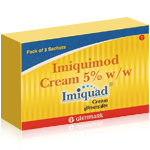
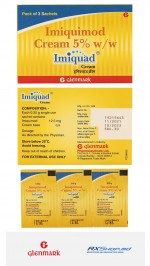
Imiquimod (Imiquad) is a topical immune response modifier used to help the body fight certain skin and viral lesions. It is widely used for external genital and perianal warts caused by HPV, and in some cases may also be prescribed for actinic keratosis or superficial basal cell carcinoma under medical supervision.
This 5% cream works by stimulating local immune activity at the application site rather than acting like a classic antiviral or antibiotic.
Common effects include redness, itching, burning, peeling, or swelling, which often signal immune activation. Apply only to the affected area exactly as directed, avoid eyes and mucous membranes, wash hands after use, and do not cover with airtight dressings unless instructed.
For safer results, use this medication as part of a clear treatment plan and follow guidance on treatment duration and skin care.

- Perianal warts: Targets wart tissue around the anus and supports local immune clearance;
- Vulvar warts: Used on external vulvar skin lesions confirmed as HPV-related;
- Penile warts: Applied to external penile skin warts to reduce wart size and recurrence risk;
- Scrotal warts: Treats HPV warts on scrotal skin when lesions are suitable for topical therapy;
- Groin area warts: Supports clearance of external warts in the groin fold region;
- Actinic keratosis (face/scalp): Treats rough sun-damage spots that can progress if untreated;
- Field treatment of actinic keratosis: Addresses multiple subclinical sun-damaged lesions in a defined area;
- Superficial basal cell carcinoma: Non-surgical option for selected, biopsy-proven superficial BCC;;
- Low-risk superficial BCC on trunk/neck: Considered when lesions are small, surface-level, and appropriately located;
- Recurrent external genital warts: Used when warts return and a clinician recommends immune-based topical therapy;
- Multiple external genital warts: Useful when there are several lesions and patient-applied treatment is preferred;
- Sensitive-area wart management: Option when destructive procedures are not ideal and clinician approves;
- HPV wart suppression after removal: Sometimes used to reduce recurrence after procedural wart treatment.
- Patient-applied treatment: Can be used at home following a clear schedule;
- Targets visible warts: Helps shrink and clear external genital and perianal warts;
- Reduces recurrence risk: May lower the chance of warts returning after clearance;
- Treats the whole affected area: Can address tiny, early lesions in the treated skin zone;
- Non-destructive option: Avoids freezing, cautery, or surgical removal in many cases;
- Cosmetic advantage: Less risk of scarring than some destructive procedures when used correctly;
- Useful for multiple lesions: Practical when there are several warts rather than one isolated lesion;
- Treats sun-damage lesions: Helps clear actinic keratosis and improves overall skin field health;
- Non-surgical alternative for superficial BCC: Option for selected low-risk, surface-level cancers under clinician supervision;
- Flexible treatment planning: Can be combined with clinician follow-up and other therapies when needed;
- Localized exposure: Minimal systemic absorption compared with many systemic medicines;
- Supports long-term skin control: May help maintain clearer skin with proper follow-up and trigger management;
- Clear response signals: Local skin reaction can indicate the immune process is active.
Generic Imiquimod (Imiquad 5 %) Medication guide:
🧴 Imiquimod (Imiquad 5%) Medication Guide - Overview and Patient-Friendly Summary
This medication guide explains what imiquimod 5% cream is, why it is prescribed, and what many patients experience during a typical course. This treatment is a topical immune response modifier. In patient terms, it helps your skin switch on local immune signaling in the exact area where you apply it, so the body can better recognize and clear targeted abnormal or virus-affected cells. Because the effect depends on your immune response, improvement is usually gradual, and visible irritation can be part of the expected process.
Quick take ✅
This is not a fast cosmetic cream. It is a planned, step-by-step therapy where the goal is steady progress with a tolerable local skin reaction. Mild redness, itching, and burning are common. Severe pain, open sores, or fever are reasons to pause and get medical advice.
🧠 What this medication is, in simple terms
This medication does not work like an antibiotic, and it is not a routine anti-itch cream. It supports immune activity locally by encouraging the skin to produce immune messengers (often discussed as interferon-related signaling). That is why you may see a treatment-zone reaction such as redness and flaking. For many conditions, the cream is applied on a schedule for weeks. The benefit can continue building even when progress feels slow at first.
- Core idea: immune activation in a very specific treated skin area;
- Typical pace: week-by-week improvement rather than overnight change;
- Common experience: the area can look irritated before it looks clearly better;
- Goal: effective response without excessive tissue damage or unbearable discomfort.
🎯 Realistic expectations - how response patterns usually look
Many patients fall into one of these practical patterns. None of them automatically means the medication is failing. The key is the overall direction: symptoms should be stabilizing, not escalating into severe injury.
Most common patterns:
- ✅ Fast responders: visible improvement starts during early weeks and continues with consistent use;
- 🐢 Slow responders: changes are subtle at first, then become clearer later in the course;
- 🧩 Partial responders: some lesions improve, but irritation, triggers, or recurrence risk remains and may need follow-up.
Patient-friendly rule:
If your skin is mildly red or flaky and you can continue normal life, that is often manageable. If you have intense pain, open erosions, or swelling that interferes with walking, urination, or daily comfort, the regimen may need a break or adjustment.
🚫 Where it is meant to be used - and strict no-go zones
This therapy is generally intended for external skin only. Applying it to internal mucosal surfaces can cause strong reactions and complications. It should be kept away from eyes, lips, and inside-body areas. If the diagnosis area is unclear, confirm with a clinician before applying.
- Use only as directed: apply to the exact external area prescribed;
- Avoid internal use: do not apply inside the vagina, rectum, or inside the anal canal;
- Protect sensitive tissues: avoid eyes and mouth, rinse with water if accidental contact occurs;
- No airtight covering: avoid occlusion unless a clinician specifically instructs it.
⚠️ What symptoms should trigger a pause or medical contact
Mild to moderate local irritation can be expected, but there are clear stop-signs. If you develop severe ulceration, bleeding, intense swelling, or widespread rash beyond the treatment area, stop using the cream and seek guidance. Flu-like symptoms such as fever, chills, or unusual fatigue should be taken seriously.
Stop-signs ⚠️
Severe burning with open sores, rapidly increasing swelling, pus-like drainage, fever, chills, or a reaction spreading far beyond the treated area.
🧴 Practical tips that often improve tolerance
Comfort strategies should not replace medical instructions, but they can help you stay consistent. Using a thin layer, applying to clean and dry skin, and avoiding friction and harsh skincare products may reduce unnecessary irritation. Many regimens allow short breaks when reactions become too strong, then a restart, but changes should follow professional advice.
- Less is often better: a thin film reduces irritation without wasting product;
- Dry skin application: wet skin can intensify stinging;
- Avoid irritants: skip scrubs, strong acids, alcohol-heavy products on the area;
- Reduce friction: breathable, loose clothing can help comfort and healing;
- Plan intimacy carefully: avoid sexual contact while cream is on the skin and follow clinician guidance.
📌 At-a-glance summary tables
| Topic | What patients usually notice | Why it matters |
|---|---|---|
| Medication type | Immune-based topical therapy, not a direct germ-killing cream. | Explains gradual results and why irritation is common. |
| Expected pace | Changes often build over weeks, sometimes late in the course. | Helps set realistic expectations and improves adherence. |
| Common local reactions | Redness, burning, itching, dryness, scaling, tenderness. | Many reactions are manageable, severe ones need action. |
| Strict boundaries | External skin only, avoid internal mucosa and eyes. | Prevents severe tissue irritation and complications. |
| Stop-signs | Open sores, major swelling, spreading rash, fever, chills. | May require pausing, reassessment, or urgent care. |
| Pattern | Typical meaning | What to do |
|---|---|---|
| Gradual stabilization | Often consistent course response. | Continue as directed and monitor tolerance. |
| Looks worse before better | Local immune reaction can peak mid-course. | Use comfort strategies, consider brief pause if severe. |
| Severe ulceration or intense pain | Overreaction or wrong application area. | Stop and seek medical guidance promptly. |
| Flu-like symptoms | Systemic reaction is possible and should be evaluated. | Stop and contact a clinician urgently. |
Clinical perspective 👨⚕️
The best time to reassess is when treatment becomes hard to tolerate or the response is only partial. That is when application technique, diagnosis accuracy, and triggers can be refined before repeating another full course out of habit.
Safety note: This guide supports education and does not replace diagnosis or personalized medical advice. Always confirm the exact condition and application area with a qualified clinician, especially for sensitive genital or perianal skin.
🎯 Key Benefits and What This Treatment Is Designed to Do
The main purpose of imiquimod 5% cream is to help your body clear targeted abnormal or virus-affected skin cells by activating a local immune response in the area of application. The benefits are not usually instant, because this therapy works by signaling and recruiting immune activity rather than directly destroying tissue on contact. For many patients, the most meaningful benefits are not only visible clearance of lesions, but also a clearer understanding of how to manage reactions, reduce triggers, and lower the chance of recurrence over time.
Benefit mindset ✅
This treatment is designed to produce controlled immune activity. The ideal benefit is a steady, tolerable local response that leads to lesion reduction, not extreme burning or skin breakdown.
✅ Core benefits patients typically aim for
- Lesion reduction: gradual shrinking, flattening, or clearing of targeted external lesions in the treated area;
- Immune-supported clearance: helps the body recognize affected cells rather than only removing surface tissue;
- Non-surgical approach: a topical option that may reduce the need for procedures in selected cases;
- Field effect potential: may address early, less visible changes in the treated zone, not only the most obvious lesion;
- Convenience and privacy: can be applied at home with a consistent routine when used correctly.
🧩 Condition-specific benefit profile
The same medication can be used for different conditions, but the benefit expectations differ by diagnosis and location. The treatment goal may be complete clearance of visible lesions, reduction of lesion burden, or confirmation of response before follow-up evaluation.
| Condition goal | What benefit often looks like | What patients should not assume |
|---|---|---|
| External genital/perianal warts | Warts shrink, soften, flatten, and may clear over the planned course. | Clearance does not always mean the virus is fully gone forever. |
| Actinic keratosis | Rough, scaly spots reduce and the treated field becomes smoother. | Sun exposure habits can still create new lesions later. |
| Superficial basal cell carcinoma | Selected lesions resolve with a strong local response and follow-up confirmation. | Not all skin cancers are suitable for topical therapy. |
⏳ What benefit timing usually looks like
Many patients expect a linear improvement, but real response is often staged. Some people see early changes, some see delayed improvement, and some see a mid-course peak reaction before visible clearing becomes obvious.
Typical timing patterns:
- ✅ Early responders: improvement starts within the early weeks and continues with consistent use;
- 🐢 Delayed responders: irritation appears first, then clearance becomes clearer later;
- 🧩 Mixed responders: some lesions respond faster than others, especially in friction-prone areas.
🧯 Benefits vs side effects - how to interpret the local reaction
A local reaction often signals that the medication is active, but more is not always better. The practical goal is a reaction that is noticeable yet manageable. If the treated area becomes so painful that you cannot continue normal life, the benefit can be lost because treatment must be stopped too often.
Good balance ✅
Mild to moderate redness, itching, and flaking that you can tolerate often fits the intended response pattern.
Too much ⚠️
Severe burning, ulceration, or swelling that interferes with daily activities often means the regimen needs a pause and reassessment.
🛡️ Long-term value - what the best outcomes include
Beyond short-term lesion changes, many patients gain benefit from a more structured approach to prevention and follow-up. This includes learning personal irritation triggers, improving application technique, and knowing when follow-up is smarter than repeating another course without confirming the diagnosis.
- Better technique: thin-film application reduces unnecessary irritation and improves consistency;
- Trigger control: friction, shaving, harsh soaps, and moisture can amplify discomfort;
- Prevention habits: risk-reduction steps can matter depending on the condition;
- Smarter follow-up: reassessment is valuable when response is partial or reactions are severe.
Clinical perspective 👨⚕️
The strongest results usually come from two things: correct diagnosis and consistent application technique. If either one is off, patients often experience either excessive irritation with little gain, or minimal reaction with slow progress. A short reassessment early can prevent weeks of frustration.
🧠 How Imiquimod Works - Immune Response Modulation Explained Simply
Imiquimod 5% cream works by activating the body immune response directly in the skin where it is applied. Instead of attacking germs or removing tissue on contact, this medication triggers local immune signaling that helps the body identify and clear targeted abnormal or virus-affected cells. This is why the treatment often feels like a planned immune reaction and why the treated area may become red, irritated, and inflamed during the course.
Simple explanation ✅
Think of this medication as a local "immune alarm" for the skin. It helps the body pay attention to a specific area so it can clear what should not be there.
🔔 The core mechanism - turning on local immune signals
When applied to the skin, imiquimod stimulates immune pathways that lead to the production of immune messengers. In many medical references, this is described as activation of innate immune receptors and increased signaling that supports interferon-related responses. In practical patient terms, this means the treated skin begins communicating with immune cells more actively, which can help the body remove targeted lesions over time.
- Primary action: boosts local immune signaling in the applied area;
- Downstream effects: increased immune cell activity and inflammatory response in the lesion zone;
- Clinical result: gradual clearance or reduction of certain external lesions over weeks.
🔥 Why irritation is common - and why it is not always a bad sign
Because this medication relies on immune activation, local inflammation is a frequent part of the experience. Redness, burning, itching, scaling, tenderness, or mild swelling can reflect immune activity in the skin. However, an overly intense reaction can damage skin and force repeated interruptions, reducing overall benefit.
Local reaction levels:
- ✅ Mild to moderate: redness, flaking, mild burning - often manageable and may align with activity;
- ⚠️ High intensity: strong pain, erosions, ulceration, large swelling - may require pause and reassessment;
- 🚑 Systemic symptoms: fever, chills, severe fatigue - should be evaluated promptly.
Practical target ✅
The best outcome is a response you can tolerate consistently: enough local activity to work, but not so much that you must stop repeatedly.
🧬 Why results take time - the staged response effect
Immune-mediated therapies often show a delayed and staged pattern. Early on, inflammation may appear before visible clearance. Mid-course, the local reaction can peak. Later, the lesion may flatten, shrink, or clear as the immune response resolves and the treated tissue normalizes. This is why some patients feel the area looks worse before it looks better.
| Stage | What patients may notice | What it may reflect |
|---|---|---|
| Early phase | Redness, itching, burning, mild swelling, dryness. | Immune signaling starts and the skin begins reacting. |
| Mid-course peak | More visible irritation, crusting, tenderness, flaking. | Immune activity intensifies in the lesion area. |
| Resolution phase | Lesion shrinking, flattening, smoother texture. | Clearance and healing as the response settles. |
| After completion | Gradual calming of skin, possible residual redness. | Recovery and evaluation of final response. |
🧩 How this mechanism matches real-world use
This mechanism is why imiquimod is used on specific external skin conditions rather than as a general-purpose cream. It is also why correct diagnosis matters. If a lesion is not suitable for immune-based topical therapy, you may get strong irritation without meaningful improvement. It is also why application technique matters: too much cream can trigger unnecessary inflammation without improving clearance.
- Correct target: best results come when the lesion type matches what imiquimod can help with;
- Correct technique: thin-film application reduces excessive irritation and improves consistency;
- Correct boundaries: external skin only helps avoid severe mucosal reactions;
- Consistent schedule: immune signaling is built by repeated, controlled exposures.
🛡️ Why follow-up matters even if you improve
Because this medication supports immune clearance rather than creating permanent immunity, recurrence can still occur depending on the condition. Follow-up is important when the response is partial, when lesions recur quickly, or when the treated site shows unusual changes. The safest approach is to complete the planned course and then evaluate the outcome, rather than self-repeating courses without reassessment.
Clinical perspective 👨⚕️
The most common reason patients struggle is not the medication itself, but the mismatch between expectations and mechanism. If you expect instant removal, you will feel disappointed. If you understand it as a controlled immune process, you can pace the regimen, manage irritation, and get a clearer end-of-course result.
🧪 Active Ingredient Profile and Chemical Formula - C14H16N4
Imiquimod is the active ingredient in this product, while Imiquad 5% is the product name used for the formulation. This medication is designed for topical use, meaning it is applied directly to the skin in a thin layer to create a localized immune effect in the treated area. The strength 5% is typically understood as 5% w/w in cream form - about 50 mg of imiquimod per 1 gram of cream. The formulation is intended to deliver the active ingredient in a controlled way on external skin surfaces, not for internal use.
Quick take ✅
The active ingredient is imiquimod, an immune response modifier used in a 5% topical cream. The formula is C14H16N4. Strength and dosing strategy are designed to activate a local immune reaction - not to work like an antibiotic or a chemical cautery agent.
🧬 Chemical identity - what the formula means
The chemical formula C14H16N4 describes the elements that make up imiquimod and their counts in one molecule. For patients, the most practical meaning is that this is a single defined active compound (not a mix of herbs or enzymes) with predictable pharmacologic behavior when used correctly on the skin.
- Active molecule: imiquimod;
- Chemical formula: C14H16N4;
- Medication class: topical immune response modifier;
- Primary target area: external skin at the application site.
🧴 Strength and formulation - what 5% usually represents
Imiquad 5% is a topical cream formulation built to spread in a thin film over a defined skin area. The 5% concentration is selected to create immune activation while still being usable in short repeated courses. In real-world use, the strength does not mean you should apply more to get stronger results. Applying too thick a layer often increases irritation without increasing effectiveness.
Practical dosing logic ✅
With topical immune therapies, thin-film technique is part of the treatment design. More product usually means more inflammation, not better clearance.
- Typical interpretation of 5%: about 50 mg per gram of cream;
- Best application style: thin, even layer over the instructed external area;
- Common mistake: thick application that triggers unnecessary burning and skin breakdown;
- Best safety habit: apply only to the diagnosed area, not surrounding healthy skin.
🧩 What the formulation is designed to optimize
A topical product has two jobs: deliver the active ingredient where it is needed and support a consistent routine without excessive irritation. The base (vehicle) helps spreadability and adherence to the skin, while the active compound drives the immune signaling. Exact inactive ingredients can vary by manufacturer, but the functional goal is similar - stable cream texture, predictable skin contact, and controlled local delivery.
| Formulation element | Patient meaning | Why it matters |
|---|---|---|
| Active ingredient | Imiquimod triggers local immune signaling in treated skin. | Drives the therapeutic effect and also influences irritation. |
| Cream vehicle | Helps the medication spread in a thin, even film. | Improves consistent coverage and predictable skin contact. |
| 5% concentration | Standard strength used in approved clinical settings for select conditions. | Chosen to balance activity with tolerability in repeated schedules. |
| Topical delivery | Localized action at the application site, not intended for internal use. | Explains strict boundaries and why mucosal use can be risky. |
🔎 How the active ingredient connects to real-world outcomes
Because the active ingredient works through immune activation, the expected outcome is usually a staged change over weeks: local reaction, lesion remodeling, then healing. Some redness and flaking can be part of the process, but severe ulceration or intense pain suggests the reaction is too strong or the application area is not appropriate. This is why correct diagnosis and correct technique matter as much as the strength.
Red flag ⚠️
If the treated skin develops deep open sores, major swelling, or pain that disrupts daily activities, the formulation may be over-applied, applied to the wrong surface, or the condition may require reassessment.
👨⚕️ Clinical perspective - what matters more than the chemical details
Patients often focus on the percentage and assume higher exposure equals better results. With this medication, the clinical reality is different: outcomes depend heavily on diagnosis accuracy, application boundaries, and consistency. When technique is correct, many patients can complete a full course with a manageable reaction. When technique is poor, irritation rises and adherence drops - and the treatment loses its advantage.
- Most important success factor: correct diagnosis of a condition suitable for imiquimod;
- Most important technique factor: thin-film application to external skin only;
- Most common reason for failure: stopping too often due to excessive irritation or incorrect use;
- Smart next step when response is partial: reassess early rather than repeating full courses blindly.
🧬 What Conditions This Therapy Can Treat - Quick Indication Map
This section provides a practical, patient-friendly map of the most common real-world uses for imiquimod 5% cream. The key idea is that this medication is typically prescribed for specific external skin conditions where activating a local immune response can help the body clear targeted abnormal or virus-affected cells. It is not a general-purpose cream for any rash, irritation, or infection. The best outcomes happen when the diagnosis is correct and the application area is clearly defined.
Quick map ✅
Imiquimod 5% is most often used for external genital/perianal warts, actinic keratosis, and selected cases of superficial basal cell carcinoma. These uses have different schedules, treatment zones, and follow-up needs.
✅ Primary condition categories this therapy is used for
- Viral-related external lesions: mainly external genital and perianal warts in diagnosed cases;
- Sun-damage precancerous lesions: actinic keratosis on specific skin areas, typically face or scalp;
- Selected superficial skin cancers: superficial basal cell carcinoma in carefully chosen situations with follow-up confirmation.
🧩 Indication map - what each use usually means in practice
| Indication area | What the condition usually looks like | Typical treatment goal | Key caution |
|---|---|---|---|
| External genital warts | Small raised, flat, or cauliflower-like lesions on external genital skin. | Gradual wart reduction and clearance over the planned course. | External use only, avoid mucosal surfaces and open wounds. |
| Perianal warts | Warts around the anus on external perianal skin. | Clear or reduce wart burden while managing irritation and friction. | Not for internal anal canal use, irritation can be stronger here. |
| Actinic keratosis | Rough, scaly, sandpaper-like patches from sun damage, often on face/scalp. | Clear visible lesions and improve the treated skin field. | Sun protection is essential or new lesions may form. |
| Superficial basal cell carcinoma | Superficial, red, scaly patch-like lesion diagnosed by a clinician. | Non-surgical clearance in selected cases, with follow-up confirmation. | Not suitable for all BCC types, follow-up is mandatory. |
🔎 What this cream is NOT designed to treat
Because this medication works by immune activation, it can worsen irritation if used on the wrong condition. People sometimes confuse warts with other genital skin problems. Misuse can delay proper diagnosis and treatment.
Important caution ⚠️
Do not use this cream for undiagnosed bumps, ulcers, or rashes. Many conditions can mimic warts. If the diagnosis is uncertain, the safest step is medical evaluation before starting therapy.
- Not a fungal treatment: it does not treat yeast infections or jock itch;
- Not for bacterial infections: it is not a substitute for antibiotics;
- Not for herpes outbreaks: it does not treat active herpes lesions and can worsen irritation;
- Not for open wounds: applying to broken skin can cause severe burning and ulceration;
- Not for internal use: do not apply inside genital or rectal canals.
🧠 Why correct diagnosis matters more than the label on the tube
Many patients assume any genital bump equals a wart, but that is not always true. Skin tags, molluscum, dermatitis, folliculitis, psoriasis, and other conditions may look similar. If the cream is used on the wrong condition, you can get inflammation without benefit. Correct diagnosis also helps define the correct treatment zone, which reduces the risk of applying the cream too broadly and causing unnecessary skin damage.
Patient-friendly safety rule ✅
Apply only to lesions you are confident about and only to the external area a clinician confirmed. Correct targeting is one of the strongest predictors of success.
🛡️ When follow-up is especially important
Follow-up is useful whenever the response is incomplete, lesions recur quickly, or the treated area shows unusual changes. It is also critical when the medication is used for potentially precancerous or cancerous skin lesions, where the end-of-course outcome must be verified by a professional.
- Partial response: improvement is present but lesions do not fully clear;
- Quick recurrence: lesions return soon after a completed course;
- Unusual changes: bleeding, rapid growth, dark pigmentation, or persistent ulceration;
- Skin cancer context: any suspected or diagnosed carcinoma requires confirmed follow-up.
Clinical perspective 👨⚕️
In practice, the most common reason patients struggle is mis-targeting. When the diagnosis is correct and the cream is applied only to the right external area, many patients can complete therapy with a predictable reaction and measurable improvement. When the diagnosis is uncertain, irritation rises and real progress becomes harder to judge.
✅ FDA Approved Indications for Imiquimod 5% Cream - Official Uses and Age Limits
This section explains the FDA-labeled indications for imiquimod 5% cream (the same active ingredient used in Imiquad 5%). FDA labeling is important because it defines who the medication is for, which specific conditions it targets, and where on the body it should be used. When your diagnosis, age, and treatment area match the label, outcomes are generally more predictable and the safety profile is clearer.
FDA snapshot ✅
Imiquimod 5% cream is FDA-labeled for: actinic keratosis (face or scalp) in immunocompetent adults; biopsy-confirmed primary superficial basal cell carcinoma in selected locations in immunocompetent adults; and external genital and perianal warts in immunocompetent patients 12 years and older.
📌 Official FDA indication map (what is included on-label)
| FDA-labeled condition | Who it is for | Eligible treatment area | Key label limits - patient meaning |
|---|---|---|---|
| Actinic Keratosis (AK) | Immunocompetent adults. | Face or scalp. |
Intended for clinically typical lesions commonly described as nonhyperkeratotic and nonhypertrophic; Pediatric safety/effectiveness is not established for this indication. |
| Superficial Basal Cell Carcinoma (sBCC) | Immunocompetent adults. | Trunk (excluding anogenital skin), neck, or extremities (excluding hands and feet). |
Must be biopsy-confirmed and primary superficial type; Typically limited to lesions up to 2.0 cm in diameter for labeled use; Generally considered when surgical methods are medically less appropriate and follow-up can be assured; Not established for other BCC subtypes (example: nodular, morpheaform). |
| External Genital and Perianal Warts (EGW) | Immunocompetent patients 12 years and older. | External genital and external perianal skin only. |
External use only - internal mucosal use is not part of labeled use; Safety/effectiveness under 12 years is not established. |
🚫 Route and boundaries supported by FDA labeling (high-impact safety rules)
Imiquimod 5% is a topical skin medication. The most important safety boundary is that it is intended for external skin, not internal mucosal surfaces. Mucosa can react more aggressively, and misuse is a common reason for severe burning, erosions, and treatment interruption.
Do not apply ⚠️
Inside the vagina; Inside the anal canal; Inside the urethral opening; On deep open wounds or actively bleeding skin; Near the eyes or inside the mouth.
👶 Age limits - what the label supports
- External genital/perianal warts: FDA-labeled use is for patients 12 years and older;
- Actinic keratosis: FDA-labeled for adults, pediatric use is not established;
- Superficial basal cell carcinoma: FDA-labeled for adults, pediatric use is not established.
🧠 Why matching FDA indications prevents the most common failures
In real life, the biggest problems come from mismatch: wrong lesion type, wrong surface, or wrong location. For example, not every genital bump is a wart, and not every scaly patch is actinic keratosis. Using an immune-activating cream on the wrong condition can create inflammation without benefit, delay correct diagnosis, and make the final result harder to judge.
Best-practice checklist ✅
Diagnosis confirmed; Location fits the label; External skin only; Age fits the label; You can complete follow-up evaluation.
👨⚕️ Clinical perspective - using FDA labeling as a safety filter
From an expert standpoint, the FDA indication map is not only a legal definition - it is a practical safety filter. When patients stay within the labeled boundaries, they are more likely to experience a manageable reaction and a clear end-of-course outcome. When patients push outside those boundaries (internal surfaces, uncertain diagnosis, unsuitable lesion type), irritation rises and the treatment advantage is often lost.
Expert note 👨⚕️
If you are unsure whether the area is truly external skin or whether the lesion is truly the labeled condition, reassessment early is usually smarter than forcing a full course. A correct target and correct boundary often matter more than persistence.
🔎 Limitations of Use - When This Cream Is Not Appropriate
This section explains the most important limitations of use for imiquimod 5% cream. These limits exist because the medication works by triggering a local immune reaction. When applied to the wrong condition, the wrong surface, or the wrong timing, the result can be inflammation without benefit, severe irritation, delayed diagnosis, and unnecessary anxiety. The safest approach is to treat only the condition and external skin area that has been clearly identified as appropriate.
Core limitation ✅
This medication is designed for specific external skin indications. It is not a general solution for undiagnosed bumps, ulcers, infections, or rashes - especially in the genital area.
🚫 Not for internal use - strict mucosal and sensitive-area limits
The cream is intended for external skin. Internal mucosal surfaces are more fragile and can react far more aggressively. Applying the cream inside-body areas can cause severe burning, erosions, and swelling. This is one of the most common misuse patterns.
Do not apply ⚠️
Inside the vagina; Inside the anal canal; Inside the urethral opening; On the cervix; On rectal mucosa; Near the eyes; Inside the mouth.
🩹 Not for open wounds, freshly irritated skin, or post-procedure areas
This medication can feel much stronger on damaged or freshly irritated skin. Using it on open wounds, actively bleeding areas, or skin that has just been shaved, waxed, scrubbed, or treated with a procedure can lead to excessive inflammation, ulceration, and prolonged healing time.
- Avoid on broken skin: open sores, fissures, bleeding, deep erosions;
- Avoid right after shaving/waxing: micro-cuts can amplify burning;
- Avoid right after procedures: laser, cryotherapy, chemical peels, biopsy sites unless told otherwise;
- Avoid on severe dermatitis: uncontrolled eczema-like inflammation may worsen.
🦠 Not a treatment for acute infections (bacterial, fungal) or active herpes lesions
Because this medication is immune-activating rather than germ-killing, it does not replace antibiotics or antifungals. In the genital area, people sometimes misinterpret irritation or ulcers as warts. Using this cream on active herpes lesions or other ulcerative conditions can increase pain and delay correct therapy.
| Problem type | Why this cream is not appropriate | What is safer |
|---|---|---|
| Bacterial infection | Does not directly treat bacteria; inflammation may worsen discomfort. | Medical evaluation and targeted antibiotic therapy if indicated. |
| Fungal infection | Does not eradicate fungus; may intensify burning and redness. | Antifungal treatment and trigger control. |
| Active herpes outbreak | Ulcerated skin is highly reactive; can significantly increase pain. | Antiviral management and clinician-guided care. |
| Undiagnosed ulcers | May mask symptoms and delay diagnosis of serious conditions. | Prompt clinical assessment before any immune-activating topical therapy. |
🧩 Not for uncertain diagnosis - common look-alike conditions
One major limitation is that many conditions can mimic the appearance of warts or scaly lesions. Treating the wrong condition can produce a strong reaction without real improvement. This is especially important for genital skin, where irritation and anxiety can escalate quickly.
Common look-alikes:
- Skin tags and benign papules;
- Molluscum contagiosum;
- Folliculitis or ingrown hairs;
- Contact dermatitis from soaps, lubricants, condoms, or shaving;
- Psoriasis or other inflammatory skin conditions;
- Other sexually transmitted conditions that require different care.
Safety rule ✅
If you are not confident about the diagnosis, do not start a full course. Confirm first. Correct targeting prevents most severe irritation events.
⚠️ Not appropriate when severe reactions have already occurred
If you previously experienced severe ulceration, intense swelling, or systemic symptoms such as fever or chills while using this medication, repeating the same regimen without medical supervision is risky. A clinician may recommend a different schedule, a shorter exposure time, alternative therapies, or reassessment of the diagnosis.
- High-risk history: deep erosions, bleeding, severe swelling, or pain that stopped treatment;
- Systemic symptoms: fever, chills, severe fatigue, body aches;
- Spread beyond zone: widespread rash far outside the application area.
🛡️ Not intended for large uncontrolled areas or excessive application
This therapy is designed for defined lesions or defined treatment fields. Applying it over large areas or applying thick layers can create excessive inflammation, increase the chance of skin breakdown, and make adherence difficult. The goal is thin film and precise targeting, not aggressive coverage.
Common misuse ⚠️
Applying thick layers; covering large areas "just in case"; treating healthy surrounding skin; reapplying after washing multiple times per day.
👨⚕️ Clinical perspective - the biggest limitation is mis-targeting
From an expert viewpoint, the number one limitation is not the medication itself - it is using it for the wrong problem or on the wrong surface. When the lesion is correctly diagnosed and the application is limited to external skin only, the response is more predictable and manageable. When people try to self-treat undiagnosed genital lesions, irritation often becomes severe and delays proper care.
Expert note 👨⚕️
If the skin is ulcerated, bleeding, or the diagnosis is uncertain, the smartest move is to pause and confirm the condition. Treating first and diagnosing later is the most common path to avoidable complications.
🦠 External Genital and Perianal Warts - What to Expect From Treatment
This section explains what many patients experience when using imiquimod 5% cream for external genital and perianal warts. The goal is to set realistic expectations: this is an immune-based therapy, so improvement is typically gradual, and a visible local reaction is common. In many cases, warts shrink and flatten over weeks, but the treated skin can also become red, sore, flaky, or tender during the process.
Quick take ✅
For external genital/perianal warts, the aim is progressive reduction and clearance with a tolerable skin reaction. Some irritation is expected. Severe pain, deep ulceration, or swelling that disrupts normal activity is not the goal and should trigger a pause and reassessment.
🧩 What this treatment is trying to achieve
In patient terms, the cream helps the immune system focus on the treated area so it can clear wart tissue. This approach may reduce the need for procedures in some patients, but it requires patience and consistent technique. The treatment area should be limited to external skin only, applied as a thin film, and used on the schedule recommended by a clinician.
- Primary goal: warts flatten, shrink, and clear over the planned course;
- Secondary goal: learn a routine that controls irritation so you can stay consistent;
- Long-term goal: reduce recurrence risk through follow-up and prevention habits.
🔎 What counts as external genital and perianal warts
External genital warts are located on the outer genital skin (for example, penile shaft skin, vulvar external skin) and external perianal skin is the skin around the anus. These are different from internal lesions. Internal mucosal surfaces can react much more intensely and are not part of the intended external application zone.
Boundary warning ⚠️
Do not apply inside the vagina; inside the anal canal; inside the urethral opening; or on actively bleeding, deeply broken skin. External skin targeting is a major safety factor.
⏳ What improvement may look like week by week
Response timing varies. Some patients improve early; others see the reaction first and the clearing later. It is also common for the area to look worse before it looks better, because inflammation can peak mid-course.
| Typical phase | What you may notice | What it usually means |
|---|---|---|
| Early phase | Mild redness, tingling, itching, dryness, small tenderness. | Local immune activity is starting, technique may need fine-tuning. |
| Mid-course | More visible irritation, flaking, crusting, soreness, stronger burning after application. | Reaction often peaks, warts may begin flattening or softening. |
| Late phase | Warts look smaller, flatter, less raised; skin begins calming between applications. | Clearance and healing phase becomes clearer for many patients. |
| After completion | Residual redness or sensitivity may remain briefly; lesions are reassessed. | Final result is judged and follow-up plan is set. |
🔥 Local reactions - what is common vs what is too much
Because this is immune activation, a local reaction is common. The practical goal is a reaction you can tolerate consistently. Too much reaction can force repeated stopping, which can reduce overall effectiveness and increase healing time.
Most common local effects:
- Redness, itching, burning sensation;
- Dryness, flaking, scaling, mild crusting;
- Tenderness or mild swelling;
- Discomfort that is stronger in friction zones (walking, sweating, tight clothing).
Often acceptable ✅
Redness and mild to moderate irritation that you can manage with routine comfort steps and that does not create deep open sores.
Too intense 🚑
Severe burning with deep erosions, significant swelling, bleeding, pain that disrupts urination or walking, pus-like drainage, or fever and chills. These signals usually mean you should stop and seek medical guidance.
🧴 Comfort and tolerance strategies that many patients find useful
These practical tips can help reduce unnecessary irritation and make the course easier to complete. They do not replace clinician instructions, but they support good technique and comfort.
- Thin-film rule: apply a thin layer to the wart area only, avoid healthy surrounding skin;
- Dry skin application: ensure the area is clean and fully dry before applying;
- Friction control: use loose, breathable clothing and avoid rubbing when possible;
- Gentle cleansing: wash off as instructed using mild soap and water, avoid harsh scrubbing;
- Pause when needed: if irritation becomes severe, many regimens allow brief breaks with clinician guidance.
🛡️ Sexual contact considerations during wart treatment
When the cream is on the skin, the area can be irritated and sensitive. Sexual contact can increase friction, worsen reactions, and potentially expose partners to the medication. In addition, the treated skin may be more fragile and prone to micro-injury.
Practical caution ⚠️
Avoid sexual contact while the cream is on the skin. If you have questions about protection methods and timing, follow clinician guidance because irritation and product residue can complicate comfort and safety.
🔄 Recurrence and follow-up - what to know after clearance
Even after successful clearance, warts can recur. The cream supports local immune clearance, but it does not guarantee permanent elimination of the underlying virus. Follow-up is useful if lesions return, if new lesions appear, or if the treated area remains painful or ulcerated after completing the course.
- Recurrence is possible: especially if immune status changes or new exposure occurs;
- New lesions: may appear outside the original treated zone;
- Follow-up value: confirms clearance and ensures no look-alike condition was missed;
- Prevention layer: risk-reduction strategies and vaccination discussions may help some patients.
Clinical perspective 👨⚕️
The most successful patients treat warts like a structured course: precise targeting, thin-film application, and early adjustment when irritation becomes too strong. When patients apply too broadly or continue through severe erosions, they often end up stopping repeatedly, which delays clearance and prolongs recovery.
⏳ Timeline of Results for Genital Warts - Typical Week-by-Week Progress
This section gives a realistic, patient-friendly timeline of what many people experience when using imiquimod 5% cream for external genital and perianal warts. The exact pace differs by wart size, location, immune status, skin sensitivity, and how precisely the cream is applied. The most important expectation is that this is usually a weeks-based process. Some people see early improvement, others see the local reaction first and the visible clearing later.
Quick take ✅
Most patients notice local skin changes before they see full clearance. A manageable reaction can be part of the process. The goal is steady progress without severe erosions or swelling that forces repeated stopping.
🧭 Before week 1 - setting the stage (why technique matters)
The first step is not speed - it is accuracy. When the cream is applied in a thin film to the wart tissue only, you reduce unnecessary inflammation in healthy surrounding skin and improve consistency. Many delays happen because patients apply too broadly, apply too much, or treat irritated skin, leading to intense burning and forced breaks.
- Best setup: confirm lesions are appropriate for treatment and truly external;
- Best technique: thin film only on wart area, avoid healthy surrounding skin;
- Best timing: apply on intact, dry skin, not right after shaving or friction;
- Best mindset: expect weeks, not days.
Consistency rule ✅
A slightly slower but consistent course usually beats an aggressive start that causes severe irritation and repeated interruptions.
📅 Typical week-by-week timeline (what many patients notice)
| Time window | What you may see or feel | What it often means | Practical focus |
|---|---|---|---|
| Week 1 | Mild tingling, itching, light burning after application; mild redness or dryness. | The skin begins responding to immune stimulation. | Confirm correct area, keep thin-film technique, avoid friction triggers. |
| Week 2 | Redness becomes more visible; flaking or mild crusting may start; tenderness in friction zones. | Local immune activity increases; the reaction becomes clearer. | Protect skin from rubbing, keep cleansing gentle, do not increase amount. |
| Week 3 | Some warts may begin flattening or softening; irritation may peak; burning may be stronger. | Peak response is common; visible wart changes may start. | If reaction is severe, consider brief pause with clinician guidance. |
| Week 4 | Clearer changes: smaller wart size, less elevation; skin may still be red between doses. | Wart tissue begins resolving for many patients. | Stay consistent, avoid overtreating healthy skin, monitor for erosions. |
| Weeks 5 to 6 | Some patients reach near-clearance; others see gradual shrinking and fewer raised lesions. | Late responders often become obvious here. | Continue as directed, evaluate if progress is stalling or irritation is excessive. |
| Weeks 7 to 8+ | Final outcome becomes clearer; residual redness may remain after lesions improve. | End-of-course evaluation period; some may require reassessment. | Do not automatically repeat without reassessment if response is partial. |
🧩 Common response patterns (why your timeline may differ)
Two patients can follow the same schedule and still have different outcomes. The difference often comes from lesion burden, skin sensitivity, and irritation triggers such as sweat and friction. Knowing your pattern helps you avoid panic when the course looks uneven.
Most common patterns:
- ✅ Early responder: warts start shrinking by weeks 2 to 4, irritation stays manageable;
- 🐢 Late responder: irritation appears first, visible wart reduction becomes clear later (weeks 4 to 8);
- 🧩 Mixed response: some lesions clear faster, others persist in friction-prone areas;
- ⚠️ Overreaction pattern: severe erosions develop early, requiring pauses that slow progress.
🔥 How to tell "expected irritation" from "too much"
Local irritation is expected, but the treatment goal is not to injure skin. Excessive inflammation can prolong healing, increase pain, and force repeated stops, which makes results slower and less predictable.
Often acceptable ✅
Mild to moderate redness, burning, and flaking that you can tolerate and that does not produce deep open sores.
Too much 🚑
Deep erosions, bleeding, major swelling, pain that disrupts urination or walking, pus-like drainage, spreading rash far beyond the treated area, or fever and chills.
🛠️ Practical adjustment points (what many clinicians change first)
If the response is too harsh or too mild, the first adjustment is usually not adding more cream. It is often improving technique, limiting spread to healthy skin, controlling friction, and using short breaks when necessary. If there is little progress after a reasonable course, diagnosis confirmation and alternative options should be considered.
- Too much irritation: reduce spread to healthy skin, ensure dry application, manage friction, consider short pause with guidance;
- Too little change: confirm diagnosis and correct targeting, review application steps, avoid washing off too soon;
- Plateau: reassess lesion type, consider combination or alternative therapies;
- Recurrence after clearance: follow-up evaluation and prevention strategy discussion.
Clinical perspective 👨⚕️
The most useful timeline is not the calendar, it is the trend: if warts are gradually flattening and the reaction is tolerable, stay consistent. If you are developing deep erosions early or stopping repeatedly, the course often becomes longer than it needs to be. Technique refinement and early reassessment typically save time.
🧴 Actinic Keratosis - Field Treatment Basics for Face and Scalp Lesions
This section explains how imiquimod 5% cream is commonly approached for actinic keratosis (AK) on the face and scalp. Actinic keratoses are rough, scaly lesions caused by long-term sun exposure. They are considered precancerous because a small portion can progress to squamous cell carcinoma over time. Imiquimod is often used as a field therapy, meaning it treats not only the visible spots but also the surrounding sun-damaged skin that may contain early changes that are not yet obvious.
Quick take ✅
For actinic keratosis, imiquimod is often used as field treatment on face or scalp. Expect visible redness, scaling, crusting, and a staged healing process. Sun protection and correct treatment boundaries are critical for safe, meaningful results.
🌞 What actinic keratosis is - and why field treatment is used
Actinic keratosis is typically described as a sandpaper-like rough patch, sometimes with visible scale, redness, or mild thickening. Many lesions are easier to feel than to see. A major concept in AK care is field cancerization: sun-damaged skin around visible AKs may contain early abnormal cells even if it looks normal. Field treatment aims to improve the entire affected zone rather than only spot-treating a few lesions.
- Cause: cumulative UV exposure over years;
- Typical feel: rough, scaly, persistent patch;
- Common areas: forehead, temples, cheeks, nose, scalp in balding areas;
- Why it matters: some AK lesions can evolve into more serious skin disease if ignored.
Field concept ✅
Spot treatments remove what you can see. Field treatment aims to improve what you cannot see yet in sun-damaged skin.
🎯 What success looks like for AK field therapy
Success is often a combination of visible and tactile improvements. The treated skin may become red and crusted during the course, then gradually smooth out. Clinicians often evaluate success after the course is complete and the skin has had time to calm and repair.
| Outcome marker | What patients may notice | Why it matters |
|---|---|---|
| Texture improvement | Less sandpaper feeling, smoother skin surface. | Suggests reduction in abnormal keratinization across the field. |
| Visible lesion reduction | Fewer scaly spots, thinner patches, less redness in discrete lesions. | Indicates meaningful response in the targeted area. |
| Field clarity | More even tone after healing, fewer recurring crusted points. | Supports the field treatment goal, not only spot clearance. |
| Follow-up stability | Fewer new AKs when sun protection is consistent. | Long-term success depends strongly on UV reduction habits. |
🔥 Expected local reaction on face and scalp (staged response)
AK field therapy often creates a visible reaction because the medication activates immune activity in sun-damaged skin. Many patients notice that the treated area looks worse before it looks better. The reaction may include redness, tenderness, scaling, crusting, and sometimes small erosions. The important safety point is to keep reactions manageable and to pause if erosions become deep, bleeding becomes significant, or swelling is severe.
Common AK field reaction features:
- Redness and warmth in the treated area;
- Dryness, flaking, peeling, scaling;
- Crusting and tenderness, especially around active lesions;
- Temporary worsening of cosmetic appearance during the course.
Red flag ⚠️
Severe swelling around the eyes, deep open sores, pus-like drainage, or fever and chills are not typical. Pause treatment and seek medical guidance if these occur.
🧴 Skin care rules during AK treatment (what helps and what hurts)
Face and scalp skin can be sensitive, and harsh skincare can magnify irritation. During the course, gentle cleansing and avoiding irritants often makes the reaction easier to tolerate. Many clinicians recommend avoiding strong acids, retinoids, exfoliating scrubs, and alcohol-heavy toners on the treated field.
- Gentle cleansing: mild cleanser and lukewarm water, no scrubbing;
- Avoid irritants: retinoids, AHA/BHA acids, abrasive exfoliants, fragrance-heavy products;
- Do not occlude tightly: avoid airtight bandaging unless instructed;
- Hands hygiene: wash hands after application, avoid touching eyes.
☀️ Sun exposure and UV precautions (non-negotiable for AK)
UV exposure is the root driver of AK. During treatment, sun exposure can worsen irritation and prolong healing. After treatment, unprotected sun can lead to new AKs and undermine the benefit of field therapy. This is why sun protection is not optional - it is a core part of the treatment plan.
Protection strategy ✅
Broad-spectrum sunscreen, hats, shade habits, and avoiding peak UV hours help both comfort during the course and long-term prevention after the course.
| UV habit | Why it helps | Practical tip |
|---|---|---|
| Daily sunscreen | Reduces UV-driven inflammation and future AK formation. | Use broad-spectrum and reapply with outdoor exposure. |
| Hat and shade | Protects scalp and face areas that are high-risk fields. | Wide-brim hats are especially useful for scalp/forehead. |
| Avoid peak sun | Limits intense UV that worsens irritation during treatment. | Plan outdoor activity earlier or later in the day when possible. |
🩺 When to reassess instead of pushing through
If the treated area becomes extremely painful, develops deep ulceration, or the reaction is spreading beyond the intended field, continuing without guidance can cause avoidable injury. Reassessment is also important if lesions do not behave like typical AK, if they bleed easily, rapidly grow, or fail to heal. Those features may suggest a different diagnosis or a lesion that needs biopsy.
- Reassess if: severe pain, deep erosions, large swelling, or spreading rash occurs;
- Reassess if: a lesion bleeds repeatedly, grows quickly, or does not heal;
- Reassess if: you are unsure whether the area is truly face/scalp field AK.
Clinical perspective 👨⚕️
With AK field therapy, the reaction is often the price of progress, but the goal is not injury. The best courses balance visible immune activity with skin integrity. If the field becomes ulcerated or the patient cannot tolerate daily life, a brief pause and technique review usually protects outcomes better than forcing continuous applications.
🩺 Before You Start - What to Tell Your Doctor and What to Check First
Before using imiquimod 5% cream, it is smart to do a short safety and accuracy check. This medication works by creating a controlled immune reaction in the area you treat, so success depends heavily on three things: correct diagnosis, correct location (external skin only), and tolerable plan you can actually follow for weeks.
✅ The 10-second goal
Confirm what you are treating, confirm where you can apply it, confirm how you will handle irritation.
📍 Location matters
This cream is for external skin. Using it on mucosa can cause severe burning and erosions.
🧴 Technique matters
A thin film on the lesion is usually better than more cream on more skin.
⏳ Patience matters
Most outcomes are judged over weeks, not days.
🧠 Step 1 - Confirm the diagnosis (do not treat guesses)
The biggest reason people fail with this medication is not the product itself. It is treating the wrong condition. Many problems can mimic genital warts or scaly sun lesions. If the diagnosis is uncertain, confirm first. Treating first and diagnosing later often creates inflammation without benefit.
Doctor note 👨⚕️
If a lesion is unusual, bleeding, rapidly changing, ulcerated, or not healing, diagnosis confirmation is more important than starting a course quickly. For suspected skin cancer, confirmation and follow-up are part of treatment safety.
🧾 Step 2 - What to tell your doctor (high-impact disclosure checklist)
- Exact location of lesions and whether anything feels internal or mucosal;
- How long the lesions have been present and whether they are changing;
- Any bleeding, ulceration, pus-like drainage, or severe tenderness;
- History of severe reactions to topical products (burning, swelling, erosions);
- Immune status (immunosuppressive therapy, recent serious illness, immune disorders);
- Pregnancy or breastfeeding status if relevant to your situation;
- Other products used on the area (acids, retinoids, steroid creams, antiseptics, fragrances);
- Recent procedures (cryotherapy, laser, biopsy) or recent shaving/waxing patterns;
- Sexual health context if treating genital lesions (partner symptoms, recurrence pattern);
- Ability to follow the schedule (work routine, travel, tolerance concerns).
🔍 Step 3 - Self-check questions before the first application
Use this quick self-check on day 0. If you answer yes to any red flag items, it is safer to pause and get guidance.
✅ Green light questions
- Is the skin intact (no deep open sores);
- Is the area external skin only;
- Is the skin clean and fully dry before application;
- Can you apply a thin film only to the target area.
⚠️ Yellow flag questions
- Did you shave or wax the area within 24 to 48 hours;
- Is there significant friction expected (sports, long walking, tight clothing);
- Do you have a history of very sensitive skin or dermatitis;
- Are you using other irritating products on the same zone.
🚑 Red flags - pause and contact a clinician
- Deep ulcers, bleeding cracks, or intense swelling in the area;
- Suspected infection (pus-like drainage, worsening heat, spreading redness);
- Fever, chills, unusual fatigue before starting treatment;
- Uncertain diagnosis or lesions that change rapidly.
🧴 Step 4 - Prep routine (small steps that prevent big irritation)
- Wash the area gently and pat dry, wait until the skin is fully dry;
- Do not scrub, exfoliate, or apply alcohol-heavy products before treatment;
- Plan friction control (loose clothing, breathable fabric) for the first few applications;
- Apply only a thin film to the target external skin area as instructed;
- Wash hands before and after application, and avoid touching eyes or lips.
🗒️ Patient observation log (helps you and your doctor)
Many people stop too early because they cannot judge progress. A simple log turns vague discomfort into clear data and supports smarter adjustments.
Patient note 🧑💬
I track three things: (1) redness level 0 to 10, (2) pain/burning level 0 to 10, (3) wart size and texture changes. If pain jumps above my normal tolerance or I see deep erosions, I pause and contact my clinician instead of pushing through.
- Record dosing days and whether you washed off on time;
- Score irritation (redness, burning, swelling) from 0 to 10;
- Note lesion changes (flattening, shrinking, softening);
- Note triggers (sweat, friction, shaving, harsh soaps);
- Write down stop-signs (ulceration, bleeding, fever) and actions taken.
🧠 Quick comparison - start now vs wait for confirmation
Sometimes waiting 2 to 7 days for confirmation prevents weeks of unnecessary irritation.
✅ Start now (when appropriate)
- Diagnosis is confirmed and the area is clearly external;
- Skin is intact and you can follow the schedule;
- You understand expected irritation and stop-signs.
⏸️ Wait and confirm (often smarter)
- Diagnosis is uncertain or lesions look atypical;
- There is ulceration, bleeding, or infection-like drainage;
- The area might be mucosal or internal, not clearly external skin.
👨⚕️ Clinical perspective - the best first move is precision
From a practical standpoint, the best way to improve outcomes is not pushing harder. It is starting with precision: confirmed diagnosis, correct external location, thin-film technique, and a plan for irritation control. If you begin accurately, you typically need fewer pauses, you get clearer trends, and you reach an end-of-course decision faster.
🧴 Step-by-Step Application Instructions - How to Apply Imiquimod 5% Correctly
This section is a practical, technique-focused guide for applying imiquimod 5% cream. Correct technique is one of the biggest predictors of success because this medication works by triggering a local immune reaction. A thin, precise layer on the right external skin area usually gives a better balance of results and tolerability than aggressive over-application.
🎯 Target
Treat only the lesion area on external skin. Do not paint healthy skin.
🧪 Amount
Use a thin film. More cream usually means more irritation, not more benefit.
🕒 Timing
Apply on a schedule your clinician recommended. Consistency matters more than speed.
🧼 Wash-off
Follow wash-off timing instructions. Leaving it on longer is not automatically better.
✅ 1) Prepare the skin (do this every time)
- Wash the target area gently using mild soap and water;
- Pat dry and wait until the skin is fully dry;
- Avoid scrubbing, exfoliating, or using alcohol-heavy products before application;
- Do not apply immediately after shaving or waxing because micro-cuts increase burning;
- Wash your hands before you start.
🎯 2) Identify the exact treatment zone
The safest approach is to treat the lesion surface and a minimal margin if instructed. Most irritation problems happen when patients apply the cream to a broad area "just in case." Precise targeting makes the course easier to tolerate and makes results easier to judge.
- Best practice: apply only to the lesion(s) and the area clearly advised by a clinician;
- Avoid: spreading onto healthy surrounding skin;
- Never apply: inside the vagina, inside the anal canal, inside the urethral opening, near eyes or mouth.
🚑 Safety boundary reminder
If you are not sure the surface is truly external skin, stop and confirm before applying. Mucosal surfaces can react aggressively and cause severe erosions.
🧪 3) Measure the amount - the thin-film rule
You do not need a thick layer. The goal is a thin film that can be gently rubbed in until it is no longer visible as a white smear. Thick application is one of the fastest ways to cause severe burning and ulceration.
| Application approach | What it looks like | Likely outcome |
|---|---|---|
| Thin-film (recommended) | A light layer rubbed in gently until it is absorbed. | More tolerable course, clearer trend, fewer forced pauses. |
| Thick layer (common mistake) | White paste-like coating left on the surface. | Higher burning risk, more erosions, more interruptions. |
| Wide-area painting (misuse) | Cream spread over large healthy skin zones. | Inflammation without added benefit, harder recovery. |
🧴 4) Apply the cream (technique steps)
- Place a small amount on a fingertip or applicator as instructed;
- Apply to the lesion area in a thin film;
- Rub in gently until it is absorbed and not sitting as a thick layer;
- Avoid touching eyes, lips, or other sensitive areas;
- Wash hands after application.
🕒 5) During the exposure period - what to avoid
While the medication is on the skin, friction and moisture can increase discomfort. This is especially relevant for genital and perianal areas. Many patients tolerate treatment better when they reduce sweating, avoid tight clothing, and avoid sexual contact while the cream is present.
- Avoid sexual contact while the cream is on the skin;
- Avoid heavy sweating: intense workouts may increase burning in friction zones;
- Avoid tight clothing: choose breathable fabric;
- Avoid occlusion: do not cover tightly unless directed.
Practical comfort tip ✅
Friction control is a hidden success factor. Many patients improve tolerance by simply switching to looser clothing and reducing sweat exposure on dosing days.
🧼 6) Wash off correctly
After the recommended exposure time, wash the area using mild soap and water. Do not scrub aggressively. Gentle wash-off protects the skin barrier and prevents unnecessary erosions. If the area becomes very irritated, avoid harsh antiseptics unless a clinician recommended them.
- Wash off with mild soap and lukewarm water;
- Pat dry, do not rub aggressively;
- Avoid applying irritating cosmetics or acids afterward on the treated zone;
- Observe the skin and document reaction level.
🗒️ 7) After-application monitoring - what to record
Tracking the reaction helps you and a clinician decide whether you should continue, pause, or adjust the plan. A simple scoring system is enough.
🧾 Track
- Redness 0 to 10;
- Burning/pain 0 to 10;
- Swelling 0 to 10;
- Lesion size and texture change.
⚠️ Pause signals
- Deep erosions or bleeding cracks;
- Severe swelling;
- Pus-like drainage or spreading redness;
- Fever or chills.
👨⚕️ Doctor guidance style - why less cream often works better
Many patients believe a stronger burn means stronger effectiveness. With this medication, that is not reliable. A controlled reaction that you can tolerate and repeat on schedule is usually more effective than severe tissue injury that forces frequent stopping. If you are repeatedly forced to pause due to pain or ulceration, technique review and reassessment are usually better than pushing through.
Expert note 👨⚕️
If you apply thinly, precisely, and consistently, you usually get a cleaner trend and a clearer end-of-course decision. If you over-apply and injure the skin, you often extend the timeline and increase recurrence risk because you cannot complete a stable course.
📅 Typical Dosing Schedules and Duration - How Often to Apply and For How Long
Imiquimod 5% is not a cream you apply randomly. The outcome depends on a structured schedule that builds a controlled local immune response over time. The correct frequency and total duration vary by condition, and using a stronger schedule than recommended often increases irritation without improving results. A consistent plan you can tolerate is usually better than an aggressive plan you cannot finish.
🕒 When most people apply
Often at bedtime to reduce friction and allow controlled contact time while sleeping.
🧴 Wash-off habit
Many regimens use an overnight exposure followed by gentle wash-off with mild soap and water.
⏳ Why weeks matter
Immune-response therapy is typically judged over weeks, not days, and late response can still be meaningful.
🧩 Schedule cards - common labeled-style patterns (your clinician may adjust)
🦠 External genital and perianal warts
- Frequency: commonly 3 times per week (example: Mon/Wed/Fri);
- Time of day: often bedtime with planned contact time overnight;
- Typical course: up to 16 weeks depending on response and tolerability;
- Where: external skin only, applied to wart tissue with minimal spread;
- Goal: gradual flattening, shrinking, and clearance over the course.
☀️ Actinic keratosis on face or scalp
- Frequency: commonly 2 times per week;
- Time of day: often evening/bedtime to reduce daytime irritation visibility;
- Typical course: often around 16 weeks as a field-treatment plan;
- Where: a defined treatment field, not the entire face or scalp;
- Goal: reduce rough scaly spots and improve the sun-damaged field.
🧫 Superficial basal cell carcinoma
- Frequency: commonly 5 times per week;
- Time of day: often bedtime due to stronger local reaction potential;
- Typical course: often around 6 weeks, followed by confirmation of clearance;
- Where: lesion plus a small margin as directed, not wide-area application;
- Goal: non-surgical clearance in selected cases with follow-up verification.
🗓️ How to choose your dosing days (make it hard to fail)
Many people succeed by using a simple weekly routine that fits their lifestyle. The best schedule is the one you can maintain without repeatedly stopping due to irritation.
- Pick fixed days: choose consistent weekdays rather than deciding daily;
- Avoid high-friction days: plan around long walks, intense workouts, or heat exposure;
- Keep spacing logical: spread dosing days rather than clustering them back-to-back;
- Use reminders: calendar alerts reduce missed doses and random overuse;
- Track reactions: a quick log helps you adjust early if irritation escalates.
🧠 Dose does not mean amount - frequency is not an excuse to apply thickly
A common misunderstanding is that a more frequent schedule means you should use more cream each time. In practice, most tolerance problems come from too much cream or too much spread onto healthy skin, not from the calendar. The schedule controls how often the skin receives immune stimulation. The technique controls how intense that stimulation becomes.
✅ Better
Thin film + correct targeting + consistent schedule.
🚫 Worse
Thick layer + wide spread + frequent pauses from severe irritation.
⏸️ When a short pause is smarter than pushing through
Some regimens allow brief breaks if the reaction becomes too intense. The point of a pause is to protect the skin barrier so you can return to a stable schedule. If you are developing deep erosions, major swelling, or pain that disrupts daily function, stopping and getting guidance is safer than forcing more doses.
| Situation | What patients often do (mistake) | What usually works better |
|---|---|---|
| Strong burning and bright redness | Apply thicker next time to finish faster. | Maintain thin film, reduce spread to healthy skin, consider brief pause if severe. |
| Small erosions start | Continue dosing without adjustment. | Pause and reassess early before erosions deepen and prolong healing. |
| No visible progress by week 2 | Increase frequency without guidance. | Confirm diagnosis and technique first, and reassess timing expectations. |
| Progress but repeated stop-start cycles | Restart randomly without a plan. | Use a structured restart plan with tolerability focus and monitoring. |
🧾 Missed dose guidance (simple, practical rule)
If you miss a dose, avoid double dosing to catch up. The goal is steady immune stimulation, not spikes. Restart on the next planned day and keep the schedule stable.
- If you forget one dose: skip it and continue on the next scheduled day;
- If you miss multiple doses: restart gently and consider why it happened (irritation or routine problem);
- If you stopped due to severe reaction: do not restart without guidance if there are deep sores or severe swelling;
- If you are unsure: pause and confirm the safest restart plan with a clinician.
Doctor message 👨⚕️
The schedule is a tool, not a test of willpower. If the skin is breaking down, you are not failing - the plan needs adjustment. Most successful courses aim for a reaction you can tolerate repeatedly, because consistent dosing with intact skin is what produces a clear, reliable result.
Patient note 🧑💬
I stopped trying to rush. Once I picked fixed days and applied a thin layer only to the lesions, the irritat
⚠️ Common Side Effects and Local Skin Reactions - What Is Normal and What Is Not
Imiquimod 5% is designed to trigger a local immune response, so side effects are often concentrated in the treated area. Many people experience visible skin changes during the course. The goal is not to avoid all reaction, but to keep the reaction tolerable and safe while still allowing the treatment to work. This section helps you interpret what you are seeing and decide when a reaction is expected vs when it is a stop-signal.
📌 Fast recognition guide (one glance)
| Reaction type | Typical look/feel | What it often means | What to do |
|---|---|---|---|
| Expected local irritation | Redness, mild to moderate burning, itching, dryness, flaking. | Immune activity in treated skin; common during therapy. | Continue if tolerable; use gentle care and friction control. |
| Moderate inflammation | Tenderness, swelling, crusting, discomfort with friction. | Stronger local response; may still be manageable. | Review technique; consider short pause if intensity escalates. |
| Severe skin injury | Deep erosions, bleeding cracks, severe pain, large swelling. | Reaction is too strong or cream is applied to wrong surface. | Stop and seek clinical guidance before restarting. |
| Infection-like complication | Pus-like drainage, spreading warmth/redness, worsening pain. | Possible secondary infection or significant barrier breakdown. | Stop and get medical evaluation promptly. |
| Systemic reaction | Fever, chills, intense fatigue, body aches. | Uncommon; needs assessment. | Stop and seek medical guidance urgently. |
🔥 The most common local skin reactions (by symptom)
Redness and warmth
Often the earliest visible sign. Usually stronger on thin skin and friction zones.
- Typical: localized around treated lesions;
- Concerning: spreading far beyond the target area.
Burning and stinging
Common after application, especially if applied too thickly or to irritated skin.
- Typical: mild to moderate, improves after wash-off;
- Concerning: severe pain that disrupts urination, walking, or sleep.
Dryness, flaking, scaling
Often appears mid-course as the skin barrier reacts and sheds.
- Typical: peeling, mild crusting;
- Concerning: deep cracks with bleeding.
Swelling and tenderness
More likely in friction zones and when cream spreads to healthy skin.
- Typical: mild puffiness localized to treatment zone;
- Concerning: major swelling with intense pain or functional limitation.
🧪 Less common but important reactions (do not ignore)
- Erosions or ulceration: open sores suggest the reaction is too strong and skin integrity is compromised;
- Bleeding: small pinpoint bleeding can occur with erosions, but persistent bleeding is a stop-signal;
- Severe crusting with drainage: may indicate secondary infection risk;
- Widespread rash beyond treatment area: suggests excessive spread, sensitivity, or stronger systemic reaction;
- Systemic symptoms: fever, chills, strong fatigue, body aches require clinical advice.
🧩 Why side effects happen (mechanism-to-symptom translation)
This medication activates immune signaling in the treated skin. Immune activity increases blood flow (redness), activates nerve endings (burning), and accelerates skin turnover (flaking). When the reaction is too intense, the barrier breaks down, causing erosions and higher pain. This is why using a thin film and limiting spread to healthy skin is not just comfort advice, it is part of safe pharmacology.
📉 Risk factors that make reactions stronger
| Risk factor | Why it increases side effects | Simple prevention move |
|---|---|---|
| Thick application | Higher exposure creates stronger inflammation without necessarily improving clearance. | Thin-film technique, rub in gently until absorbed. |
| Wide spread to healthy skin | Healthy skin becomes inflamed and painful, increasing overall reaction size. | Treat only lesions or defined field boundaries. |
| Friction and sweat | Mechanical irritation amplifies burning and swelling. | Loose clothing, avoid intense exercise on dosing days if needed. |
| Applying on damaged skin | Micro-cuts increase penetration and pain; barrier is already compromised. | Avoid right after shaving, avoid open sores and cracked skin. |
| Harsh skincare products | Acids, retinoids, scrubs can compound irritation. | Use gentle cleansers and avoid irritants during the course. |
🛠️ What to do if reactions are uncomfortable (practical ladder)
Step 1 ✅
Confirm thin-film use and reduce spread to healthy skin. Control friction and sweating.
Step 2 ⚠️
If irritation becomes strong, consider a short pause and resume with improved technique (with clinician guidance if needed).
Step 3 🚑
Stop and seek medical advice if there are deep erosions, major swelling, infection-like drainage, or systemic symptoms.
🧑💬 Patient diary style - what people commonly report
Patient observation 🧑💬
I noticed the burning got worse on days when I walked a lot or wore tight underwear. Once I switched to looser clothing and applied only a thin layer to the lesions, the reaction became more predictable and the area started to look flatter by the next few weeks.
👨⚕️ Clinical perspective - the goal is controlled inflammation
The best outcomes usually come from controlled inflammation. Mild to moderate redness and flaking can be acceptable if the patient can continue on schedule and the skin remains intact. Severe ulceration and constant high pain are not a sign of "stronger healing", they are usually a sign that technique, target, or schedule needs reassessment. A tolerable course completed consistently often beats a stop-start course driven by severe reactions.
🚑 Severe Reactions and When to Stop - Practical Safety Triggers
This section focuses on the situations where you should pause or stop imiquimod 5% and seek medical guidance. Because the medication triggers an immune reaction, skin irritation is expected. But there is a clear line between a manageable reaction and a reaction that can cause avoidable injury or signal the wrong diagnosis, wrong surface, or a complication like secondary infection.
Emergency mindset
Your goal is controlled inflammation. If the skin becomes injured (deep sores, heavy bleeding) or you feel systemically unwell (fever, chills), stop and get guidance. Do not try to push through.
🧯 The STOP checklist (if any item is true, pause and reassess)
1) Deep skin breakdown 🚑
- Deep erosions or crater-like ulcers;
- Bleeding cracks that reopen daily;
- Raw skin that makes walking or urination painful.
2) Swelling that affects function ⚠️
- Major swelling in genital/perianal areas;
- Swelling that interferes with urination or bowel movements;
- Severe tightness or pressure-like pain.
3) Infection-like signs 🚑
- Pus-like drainage or bad-smelling discharge;
- Rapidly spreading redness and heat beyond the treatment zone;
- Worsening pain with tenderness that feels different than irritation.
4) Systemic symptoms ⚠️
- Fever or chills;
- Intense fatigue or flu-like body aches;
- Dizziness or feeling generally unwell.
🧪 Reaction severity scale (simple scoring that helps decisions)
If you are unsure whether your reaction is "normal", score it quickly. This helps you communicate clearly and reduces panic-driven overuse or sudden quitting.
| Level | What it looks like | What it feels like | Practical action |
|---|---|---|---|
| Mild | Pink/red skin, dryness, light flaking. | Mild burning or itch, tolerable. | Continue with thin-film technique and gentle skin care. |
| Moderate | Bright redness, crusting, mild swelling. | Noticeable burning, discomfort with friction. | Review technique, reduce spread, consider brief pause if escalating. |
| Severe | Deep erosions, bleeding cracks, extensive swelling. | Severe pain, function affected (walking, urination). | Stop and contact a clinician before restarting. |
| Critical | Rapid spreading redness, pus-like drainage, large ulcers. | Fever/chills, strong weakness, severe pain. | Urgent medical evaluation is recommended. |
🧩 Why severe reactions happen (common causes and fixes)
Cause: too much cream
Thick application creates unnecessary intensity and longer recovery.
Cause: wrong surface
Mucosa and broken skin react far more aggressively than external intact skin.
Cause: too wide spread
Healthy skin becomes inflamed and painful, making the reaction feel out of control.
Cause: friction and sweat
Mechanical irritation multiplies burning and swelling, especially in genital zones.
🧴 What to do immediately after stopping (safe short-term steps)
- Gently cleanse with mild soap and lukewarm water, no scrubbing;
- Keep the area dry and reduce friction with loose clothing;
- Do not reapply until the skin barrier has recovered and you have guidance;
- Document what happened (photos for personal tracking, reaction score, dosing day);
- Seek medical advice if there is deep ulceration, severe swelling, or infection-like drainage.
Patient note 🧑💬
I thought I had to continue no matter what. When I finally paused because the skin was breaking down, healing started quickly. After that, my clinician helped me restart with a thinner layer and better targeting, and the reaction became manageable.
🩺 When to restart (and when not to)
Restarting depends on why you stopped. If you stopped due to mild to moderate irritation, restarting may be possible after recovery with improved technique. If you stopped due to deep erosions, bleeding, major swelling, or systemic symptoms, do not restart without medical guidance.
| Reason you stopped | Restart risk | Safer restart idea |
|---|---|---|
| Mild irritation | Low | Resume with thin-film technique and friction control. |
| Moderate inflammation | Medium | Resume after recovery, consider spacing doses, confirm targeting. |
| Deep erosions or bleeding | High | Wait until healed and get clinician guidance before restarting. |
| Fever, chills, infection-like drainage | Very high | Urgent evaluation is recommended, restart only after full assessment. |
👨⚕️ Doctor note - do not confuse injury with progress
With immune-based topical therapy, some redness and peeling can be part of an effective course. But deep ulceration and loss of function are not necessary for success. When the reaction becomes severe, it usually signals excessive exposure or incorrect surface use. Protecting the skin barrier and getting the course back to a stable, tolerable plan typically produces better outcomes than forcing continuous applications through injury.
Best safety principle ✅
Controlled reaction is useful. Skin injury is not. If you cross into injury, stop, recover, and reassess.
🤝 Drug Interactions and Product Compatibility - What You Can Combine and What to Avoid
This section covers practical compatibility issues while using imiquimod 5% cream: topical products, procedures, and habits that can intensify irritation or confuse results. Because this therapy is immune-activating, most "interactions" are not classic bloodstream drug interactions - they are skin barrier and inflammation interactions. In simple terms: what you put on the same skin can make the reaction safer, harsher, or misleading.
✅ Safe principle
Keep the treated zone simple: gentle cleansing, minimal other actives, low friction.
⚠️ Biggest risk
Layering irritants can turn a controlled reaction into skin breakdown.
🎯 Best strategy
One active at a time on the treated zone so you can judge what is working.
🧴 Topical product compatibility (face/scalp vs genital/perianal areas)
Compatibility depends on skin thickness and sensitivity. Genital/perianal skin is much more reactive than many face/scalp zones. That is why "normal skincare" products can be problematic if applied to the same area during a course.
| Product or category | Compatibility level | Why it matters | Practical guidance |
|---|---|---|---|
| Gentle cleanser | Usually compatible | Reduces irritation from over-washing or harsh soaps. | Use mild soap, lukewarm water, no scrubbing. |
| Fragranced soaps, deodorant-style products | Often problematic | Fragrance and surfactants can add dermatitis and burning. | Avoid on the treated zone, especially genital/perianal skin. |
| Retinoids (tretinoin, adapalene) | High irritation risk | They increase turnover and sensitivity, compounding inflammation. | Avoid on the treated area during the course unless a clinician instructs otherwise. |
| AHA/BHA acids, exfoliants, scrubs | High irritation risk | Barrier disruption can lead to erosions and severe pain. | Do not combine on the same zone during therapy. |
| Alcohol-based toners or antiseptics | High irritation risk | Drying and stinging can worsen burning and cracking. | Avoid routine use; gentle cleansing is usually safer. |
| Topical steroids | Case-dependent | May reduce inflammation but can alter the local immune response and mask complications. | Use only if prescribed for a specific plan. |
| Other wart treatments (salicylic acid, podophyllotoxin, caustics) | Often not compatible | Double irritation increases injury risk and makes results hard to judge. | Do not stack without clinician guidance. |
🧩 Classic "drug interactions" - what matters most in real life
Since this is a topical medication, classic systemic drug interactions are usually less central than immune status and skin condition. However, there are practical situations where other therapies change risk.
- Immunosuppressive therapy: may reduce response or change risk profile, clearance may be less predictable;
- Other immune-modulating treatments: may alter inflammation patterns and healing;
- Recent antibiotics/antifungals: not usually direct interactions, but underlying infections can be confused with irritation;
- Blood thinners: not a direct interaction, but if erosions occur, bleeding may be more noticeable and should be monitored;
- Alcohol intake: not a direct interaction, but it may worsen skin irritation indirectly through dehydration and lifestyle factors.
Practical advice
If you are on immunosuppressive drugs or have an immune condition, treat this as a clinician-guided therapy. The response can be weaker or different, and follow-up becomes more important.
🧼 Compatibility with hygiene, shaving, and grooming (high impact)
Many strong reactions are caused by friction and micro-injury rather than the schedule itself. Shaving creates micro-cuts and makes the skin more permeable, which can turn a normal dose into a severe burn-like reaction.
⚠️ Shaving rule
Avoid applying on the same day you shave or wax. Give the skin time to recover first.
✅ Hygiene rule
Gentle wash, pat dry, no aggressive scrubbing, avoid perfumed products.
🎽 Clothing rule
Loose breathable fabric reduces friction-triggered burning and swelling.
🧊 Combining with procedures and in-office treatments
Procedures such as cryotherapy, laser treatment, or biopsy can leave the skin temporarily vulnerable. Applying imiquimod too soon after a procedure can intensify pain and injury. On the other hand, some clinicians may plan staged or combined therapy. The key is: do not improvise combinations.
| Procedure or event | Why timing matters | Safer approach |
|---|---|---|
| Cryotherapy / laser | Skin is inflamed and fragile, barrier is disrupted. | Wait until the area heals and follow clinician timing advice. |
| Biopsy | Open wound needs healing before immune stimulation. | Resume only after closure and clinician approval. |
| Peels / aggressive exfoliation | Barrier is weakened, irritation risk spikes. | Avoid during the course on the treated zone. |
💡 Combination logic - how to avoid confusion and over-irritation
If you combine multiple active therapies, it becomes hard to know what caused improvement or what caused harm. A clean plan reduces guesswork and makes course decisions clearer.
Simple rule
On the treated zone: one main active therapy at a time, plus gentle supportive care.
🧑💬 Patient experience - why stacking products often backfires
Patient note 🧑💬
I tried to speed things up by adding another wart product. The area became raw, and I had to stop everything. When I went back to a single plan with thin application and less friction, I could actually stay consistent and the results were easier to see.
Clinician comment 👨⚕️
If the skin barrier breaks down, you lose time. A controlled, tolerable reaction completed on schedule usually beats a harsh reaction that forces stop-start cycles and confuses assessment.
✅ Summary - compatibility priorities
- Keep the treated zone simple: gentle cleansing and minimal additional actives;
- Avoid stacking irritants: acids, retinoids, caustics, harsh antiseptics on the same area;
- Plan around friction: sweating, tight clothing, and shaving can amplify burning;
- Do not improvise combinations: procedures or other wart treatments should be clinician-guided;
- Prioritize a schedule you can finish: tolerability is part of effectiveness.
🛡️ Precautions for Special Populations - Pregnancy, Breastfeeding, Immune Status, and Seniors
This section explains precautions for people who may need extra care when using imiquimod 5% cream. Although it is applied to the skin, the medication can still trigger a strong local immune response and cause systemic-like symptoms in some users. The goal here is not fear - it is smart risk control, especially when the person is pregnant, breastfeeding, immunocompromised, very sensitive to inflammation, or managing multiple conditions.
🤰 Pregnancy
Use only if clearly needed and clinician-guided. Avoid self-directed dosing changes.
🤱 Breastfeeding
Avoid infant contact with treated skin. Prevent transfer by washing hands and covering as advised.
🧬 Immune status
Response and irritation can be unpredictable. Follow-up and diagnosis confirmation are higher priority.
👴 Older adults
Skin may heal slower. Controlled dosing and barrier care reduce complications.
🤰 Pregnancy - practical caution without panic
Pregnancy decisions are about balancing benefit and risk. For external genital warts, some cases can be managed conservatively, while others require treatment for comfort or clinical reasons. Because pregnancy is high-stakes and individual, it is best to treat imiquimod use as clinician-guided rather than self-directed. Avoid experimenting with frequency, thickness, or large coverage areas.
Pregnancy caution ⚠️
Do not start or continue this medication during pregnancy without medical guidance. If pregnancy begins during treatment, contact a clinician for the safest plan.
- Focus: confirm diagnosis and confirm external-only application area;
- Avoid: aggressive schedules, thick application, treating large areas;
- Plan: follow-up to ensure lesions are responding safely.
🤱 Breastfeeding - preventing transfer matters most
For breastfeeding, a key concern is accidental transfer from treated skin to the infant. Even if systemic exposure is limited, direct skin-to-skin contact with the treated area is avoidable risk. The practical strategy is strict hygiene: wash hands after application, keep medication away from areas that could contact the infant, and avoid any possibility that the infant ingests residue.
✅ Safer habits
- Wash hands before and after application;
- Prevent infant contact with treated skin;
- Use clothing barriers if advised by a clinician;
- Do not apply near areas that contact the infant.
⚠️ Avoid
- Breast or nipple area application;
- Sleeping with the infant against treated skin;
- Leaving residue on fingers or clothing that touches the infant.
🧬 Immunocompromised patients - why outcomes can differ
This medication depends on local immune activation. If a person is immunocompromised, the response can be weaker or unpredictable, and lesion recurrence risk may be higher. In addition, skin breakdown can become more complicated if healing is impaired. This is why immunocompromised patients should generally treat this as a supervised therapy with a clear diagnosis and structured follow-up.
Doctor note 👨⚕️
In immunocompromised patients, the key issue is not only effectiveness. It is also clarity: diagnosis confirmation, avoiding mucosal misuse, and documenting response so that persistent lesions are reassessed rather than repeatedly treated without certainty.
| Immune-related factor | What can happen | Safer approach |
|---|---|---|
| Reduced immune response | Slower clearing or incomplete response. | Confirm diagnosis early, use structured follow-up, avoid random dose escalation. |
| Barrier vulnerability | Greater risk of erosions and secondary infection if skin breaks down. | Use thin film, strict external-only targeting, pause early if ulceration starts. |
| Higher recurrence tendency | Lesions may return after initial clearance. | Plan follow-up and discuss prevention strategies with a clinician. |
👴 Older adults - slower healing and stronger field reactions
Older adults may have thinner skin and slower barrier recovery. For actinic keratosis field therapy, reactions on face/scalp can look dramatic. This does not always mean danger, but it does mean that the plan should prioritize a reaction the patient can tolerate without deep erosions or prolonged raw skin.
What often changes with age
Skin can be drier, more fragile, and slower to heal after crusting or erosions.
What helps most
Gentle cleansing, friction control, and early pauses if erosions develop.
🧑⚕️ People with inflammatory skin conditions (eczema-like dermatitis, psoriasis)
If the person has active inflammatory skin disease in or near the treatment field, imiquimod can amplify inflammation and blur what is caused by the condition vs what is caused by therapy. In these cases, clinicians often prefer stabilizing the baseline skin condition first or choosing a plan with stronger monitoring.
- Higher risk: burning and erosions may occur earlier than expected;
- Assessment problem: dermatitis flare can mimic treatment complications;
- Better plan: stabilize baseline skin condition before starting when possible.
🧑💬 Patient perspective - why special populations need simpler plans
Patient note 🧑💬
I tried to treat a bigger area to finish faster, and my skin could not tolerate it. When I reduced the area, used a thin layer, and followed a predictable routine, I could actually stay consistent. For me, a simpler plan gave better results than an aggressive one.
✅ Practical summary - precautions that matter most
- Pregnancy and breastfeeding: clinician-guided use only, focus on preventing transfer and avoiding dose improvisation;
- Immunocompromised status: confirm diagnosis early, expect less predictable response, plan follow-up;
- Older adults: prioritize tolerability and barrier protection, pause early if erosions occur;
- Inflammatory skin conditions: consider stabilizing baseline inflammation before starting;
- All groups: thin film, external-only targeting, and structured scheduling reduce complications.
🔬 Monitoring Progress - How to Know If It Is Working and When to Reassess
This section helps users judge whether imiquimod 5% is producing meaningful progress and when it is smarter to reassess instead of continuing on autopilot. Because this is an immune-activating topical therapy, progress is usually not linear. Some patients see irritation first and clearance later. The best monitoring approach is to look for trend signals and to document them so decisions become clear.
✅ Best marker
Lesions become flatter, smaller, and less distinct over time.
🧠 Best method
Track changes weekly, not daily, and focus on pattern rather than single-day reactions.
⚠️ Reassess early
If the area becomes ulcerated or the diagnosis is uncertain, do not keep pushing.
📍 Progress indicators by condition (what improvement looks like)
| Condition treated | Most useful progress signs | Common misleading signs | What to focus on |
|---|---|---|---|
| External genital/perianal warts | Flattening, shrinking, softening, fewer raised edges; fewer discrete lesions. | Temporary swelling or redness that makes lesions look larger. | Weekly comparison photos and texture changes. |
| Actinic keratosis field therapy | Less roughness, fewer scaly points, smoother field after healing. | Crusting that looks worse mid-course but later clears. | Post-course skin texture and lesion persistence. |
| Superficial basal cell carcinoma | Lesion resolves and the area heals smoothly after course completion. | Surface improvement while deeper disease persists (cannot be confirmed visually alone). | Follow-up confirmation and reassessment if any suspicion remains. |
📸 A simple monitoring system (the 3-photo method)
Photos taken at the same distance and lighting once per week can clarify progress dramatically. Daily photos often create anxiety because irritation fluctuates day to day.
📅 Photo 1: baseline
Take before starting, with normal lighting and clear focus.
📅 Photo 2: week 2 to 3
Captures the common peak reaction window and early changes.
📅 Photo 3: week 4+
Shows whether the trend is moving toward clearing or stalling.
🧾 The weekly scorecard (fast and objective)
Use this simple scorecard once per week. It reduces emotion-based decisions and makes it easier to communicate with a clinician.
| Metric | How to rate it | What change suggests progress |
|---|---|---|
| Lesion size | Smaller / same / larger | Smaller over 2 to 4 weeks |
| Lesion height | Flatter / same / more raised | Flatter over time |
| Lesion texture | Softer / same / harder | Softer then resolving |
| Number of lesions | Fewer / same / more | Fewer lesions or less distinct borders |
| Reaction level | 0-10 redness and pain | Manageable reaction that does not cause deep erosions |
🧠 What is normal variability (do not panic)
These changes can occur even when the course is working:
- Looks worse mid-course: inflammation can temporarily enlarge the visible area;
- Uneven clearing: some lesions respond faster than others;
- Peaks and dips: irritation can fluctuate based on friction, sweat, and technique;
- Redness after clearance: skin can remain pink after lesions flatten.
🚩 When to reassess earlier than planned
🚑 Severe injury
Deep ulcers, bleeding cracks, major swelling, infection-like drainage.
⚠️ Diagnosis doubt
Lesions look atypical, rapidly grow, bleed easily, or do not behave like expected.
⚠️ No meaningful trend
After several weeks there is no flattening, shrinking, or texture change.
🚑 Systemic symptoms
Fever, chills, strong fatigue, body aches while using the cream.
🧑💬 Patient experience - the moment progress became obvious
Patient note 🧑💬
I stopped judging day-to-day. Once I compared photos weekly, I could see that the bumps were flatter even though the area was red. That made me calmer and helped me stay consistent without over-applying.
👨⚕️ Clinician perspective - what matters most in monitoring
Monitoring should answer two questions: (1) Is the treatment trend moving toward clearance, and (2) Is the skin staying intact enough to continue safely. If the patient is in constant pain, develops erosions, or keeps restarting randomly, the course becomes longer and less predictable. A structured weekly assessment with simple documentation often produces better decisions than relying on memory.
Expert note 👨⚕️
The goal is not maximum redness. The goal is a stable course that produces a clear trend. If you cannot measure progress weekly, you cannot manage the plan intelligently.
🧼 Storage, Handling, and Disposal - Keeping the Cream Effective and Avoiding Accidental Exposure
This section covers how to store and handle imiquimod 5% cream safely so it stays effective and does not accidentally irritate other skin areas, family members, or pets. With topical immune-activating therapies, many real-world problems come from contamination: residue on fingers, towels, underwear, bedding, or bathroom surfaces. Good handling habits reduce unnecessary irritation and prevent accidental transfer.
🏠 Storage goal
Keep it in a stable, dry place, away from heat and direct sunlight.
🧤 Handling goal
Prevent residue transfer to eyes, lips, and other sensitive skin.
🗑️ Disposal goal
Dispose of used sachets and contaminated materials safely, out of reach of children and pets.
🏷️ Storage rules (simple and safe)
- Store at room temperature unless your product label says otherwise;
- Keep away from heat sources such as radiators, car dashboards, heaters, or hot bathroom shelves;
- Protect from moisture, do not store in a steamy environment if you can avoid it;
- Keep away from direct sunlight to reduce stability risk;
- Do not freeze unless the label explicitly says freezing is acceptable;
- Keep out of reach of children and pets.
Real-life tip
A bedroom drawer or a closed cabinet outside the bathroom is usually safer than a humid bathroom shelf.
📦 Handling different packaging types (why it matters)
Imiquimod 5% can be supplied in different formats depending on manufacturer. The handling risks differ, mainly around contamination and re-use.
| Packaging type | Common handling risk | Safer approach |
|---|---|---|
| Single-use sachets | Leaving opened sachet exposed leads to contamination or drying. | Use immediately after opening, then discard safely. |
| Multi-dose tube | Tip contamination from fingers or contact with skin. | Avoid touching the tube tip to skin; cap tightly after use. |
🧤 Application hygiene and contamination control (the hidden safety layer)
The most common accidental exposures happen after the application, not during. Residue can transfer to eyes, nose, lips, or to partners through contact with bedding or clothing. These habits reduce transfer risk.
✅ Do
- Wash hands before and after application;
- Keep the application area small and precise;
- Use separate towels for the treated zone if needed;
- Wash off as instructed with mild soap and water.
🚫 Avoid
- Touching eyes or lips after application;
- Leaving residue on bedding that contacts other skin areas;
- Sharing towels, washcloths, or underwear;
- Applying before heavy sweating or friction activities.
🧺 Laundry and bedding hygiene (especially for genital/perianal use)
If you apply imiquimod in genital or perianal areas, underwear and bedding can become an exposure route. This does not mean you need extreme cleaning. It means you should reduce transfer and keep the routine predictable.
- Underwear: change daily and use breathable fabrics to reduce friction and sweat;
- Bedding: change regularly if the treated area contacts sheets while medication is present;
- Towels: do not share towels used for the treated zone;
- Hands: handwashing after application is the highest-impact step.
🗑️ Safe disposal - what to throw away and how
Disposal is mainly about preventing accidental contact by others. Used sachets, wipes, or applicators may contain residue that can irritate skin.
Dispose safely
- Place used sachet or applicator in a small bag or tissue;
- Seal or wrap it so residue is not exposed;
- Throw into household waste out of reach of children and pets;
- Wash hands after disposal.
🧪 Expiration and quality checks (do not use questionable product)
Topical therapies can become less predictable if they are expired, stored improperly, or contaminated. If the product has changed unexpectedly, it is safer to replace it than to test it on sensitive skin.
| Quality concern | What you might notice | What to do |
|---|---|---|
| Expired product | Date has passed or label is unclear. | Replace the product, do not use on sensitive skin. |
| Heat or sun exposure | Stored in car, near heater, or in direct sunlight. | Replace if exposure was significant or prolonged. |
| Contamination risk | Tube tip touched skin or product contacted dirty surfaces. | Consider replacement to reduce infection and irritation risk. |
| Unexpected texture/odor change | Separation, unusual smell, gritty texture. | Do not use and replace. |
🧑💬 Patient comment - the small habit that prevented big problems
Patient note 🧑💬
My biggest issue was accidentally touching my face after applying. Once I started washing my hands immediately and keeping the sachets in one dedicated place, the random irritation in other areas stopped completely.
👨⚕️ Clinician note - why handling is part of treatment success
Many treatment failures are not medical failures. They are routine failures: too much cream, wrong surface, contamination, friction, and poor wash-off habits. Stable storage, clean handling, and predictable disposal reduce unnecessary irritation and help patients complete a course consistently. Consistency makes outcome evaluation more accurate and reduces the chance of repeating therapy unnecessarily.
🧠 Recurrence and Prevention - Why Warts or Lesions Can Return and How to Reduce Risk
Even when imiquimod 5% works well, recurrence can happen. This is not always a failure. It often reflects the biology of the condition: viral persistence for genital warts, ongoing sun damage for actinic keratosis, or the need for strict confirmation and follow-up for superficial basal cell carcinoma. This section explains why return happens and what prevention steps are realistic and helpful.
🦠 Genital warts
Recurrence often relates to HPV persistence and immune fluctuations.
☀️ Actinic keratosis
Recurrence often relates to ongoing UV exposure and field damage.
🧫 sBCC
Key issue is confirmed clearance and monitoring for new lesions.
✅ Common prevention theme
Prevention is mostly about risk control, not perfection.
🔍 Why recurrence happens (the real reasons, without myths)
Reason 1: the underlying driver is still present
HPV can remain in local skin even after warts clear. UV exposure continues unless habits change.
Reason 2: the course was interrupted repeatedly
Stop-start cycles from severe irritation can reduce clarity and consistency of outcomes.
Reason 3: diagnosis or lesion type was not ideal
Some lesions are not true warts or are not the subtype expected, so response is different.
Reason 4: immune conditions and lifestyle factors
Sleep deprivation, chronic stress, smoking, and immune suppression can affect recurrence risk.
🦠 Genital warts recurrence - what helps most
For genital warts, recurrence is often about the virus rather than the cream. Many people clear visible warts, then later notice small new lesions. Prevention here is mainly reducing reinfection risk, supporting immune stability, and catching recurrences early when lesions are small.
- Partner and reinfection awareness: recurrence can reflect ongoing HPV exposure and shared viral environment;
- Barrier protection: condoms can reduce transmission but do not cover all skin areas;
- Avoid trauma: shaving irritation and friction can worsen local vulnerability;
- Early detection: treat small recurrences earlier rather than waiting months;
- Follow-up: if recurrence is frequent, consider clinician reassessment for diagnosis confirmation and alternative strategies.
Patient reflection 🧑💬
My recurrence was smaller than the first outbreak. The biggest difference was that I noticed it early, avoided shaving irritation, and did not over-apply. That made the second course much easier than the first.
☀️ Actinic keratosis recurrence - prevention is mostly UV discipline
Actinic keratosis tends to recur because sun damage is cumulative. Even after a successful field treatment, new lesions can appear in the same sun-exposed area. The most powerful prevention tools are behavioral and physical UV protection measures.
✅ High-impact prevention
- Daily broad-spectrum sunscreen;
- Hat or scalp coverage for balding areas;
- Shade habits and avoiding peak UV time;
- Regular skin checks for new rough spots.
⚠️ What keeps AK coming back
- Skipping sunscreen on cloudy days;
- Working outdoors without head protection;
- Assuming cleared skin means the field is "reset";
- Delaying evaluation of persistent crusted spots.
🧫 Superficial basal cell carcinoma - recurrence vs incomplete clearance
With superficial basal cell carcinoma, the key safety issue is making sure the lesion is truly cleared. A return at the same site can be a recurrence or can mean that a small portion remained. Because this is cancer, follow-up evaluation is essential, and any suspicious persistence should be reassessed rather than repeatedly treated without confirmation.
| Scenario | What it may mean | What to do |
|---|---|---|
| Patch looks gone but returns months later | Possible recurrence or incomplete clearance. | Clinical evaluation is recommended; consider biopsy confirmation. |
| Area never fully heals smoothly | Persistent lesion needs reassessment. | Do not keep treating blindly; confirm diagnosis and next step. |
| New lesion in nearby sun-damaged skin | New lesion rather than recurrence. | Routine surveillance and early evaluation are helpful. |
🧱 Prevention framework - what you can actually control
Prevention becomes easier when you focus on controllable factors rather than chasing a guarantee. Use the framework below as a realistic long-term strategy.
🧴 Technique control
Thin film, correct targeting, avoid mucosa and broken skin.
📅 Schedule control
Follow a stable plan you can complete without repeated stop-start cycles.
🩺 Follow-up control
Reassess unusual lesions and confirm clearance when needed.
🌿 Lifestyle stability
Sleep, stress management, smoking avoidance, and immune-supportive habits help risk control.
☀️ UV discipline
For AK and skin cancer risk, UV protection is the core prevention tool.
👨⚕️ Clinician perspective - recurrence is information, not defeat
Recurrence usually means one of three things: the underlying driver is still active, the course was too disrupted to produce durable clearance, or the diagnosis needs confirmation. The best response is not panic or over-application. The best response is structured reassessment: confirm what the lesion is, confirm where it is located, and choose the next step based on risk and practicality. In many cases, early detection makes recurrences smaller and easier to manage.
🧭 What If Results Are Limited - Next Steps, Switching Options, and When to Seek In-Office Care
Sometimes a course of imiquimod 5% gives only partial improvement or seems to stall. This does not automatically mean the medication is useless. Most limited-response cases fall into a few repeatable categories: wrong diagnosis, wrong surface, technique or schedule problems, or a condition that simply needs a different strategy. The goal of this section is to help you decide what to do next without guessing or over-applying.
Core rule
If there is no clear trend and the skin is getting injured, the best move is reassess, not "push harder".
Most common fix
Improve targeting and keep a stable schedule you can complete.
Most important safety step
Confirm the diagnosis if lesions are atypical, persistent, or changing fast.
🧩 The 4 main reasons the plan stalls (quick self-audit)
- Diagnosis mismatch: the lesion is not what you think it is, or mixed lesions are present;
- Wrong surface: cream reaches mucosa or broken skin, forcing stops due to severe injury;
- Technique drift: thick layer, wide spread to healthy skin, inconsistent wash-off habits;
- Stop-start cycle: frequent pauses from intense inflammation prevent a stable course from forming.
🧪 Scenario-based decisions (choose your situation)
Scenario A - Mild reaction, but little progress
Skin is intact and tolerable, but lesions do not flatten or shrink.
- Re-check that you are treating the lesion surface, not surrounding skin;
- Use weekly photos to confirm if any subtle trend exists;
- If no trend after several weeks, request diagnosis confirmation and plan review.
Scenario B - Strong reaction, but you keep stopping
You see redness and burning, but the skin breaks down and you cannot stay consistent.
- Reduce intensity first: thin film, smaller target area, friction control;
- Pause early if erosions start, restart only when the barrier recovers;
- Ask a clinician about a tolerability-adjusted plan rather than forcing the same pattern.
Scenario C - Some lesions clear, others stay
Partial clearance is common, especially with multiple lesions.
- Verify you are not missing a different lesion type in the same area;
- Document which lesions respond and which do not;
- Discuss targeted in-office removal for persistent lesions while continuing field control if advised.
🧰 Switching options (overview table by purpose)
| Goal | What this approach does | When it is commonly considered | Trade-off |
|---|---|---|---|
| Remove visible lesions fast | In-office destruction or removal of lesions. | Large or persistent external warts; repeated recurrence; need for quick clearance. | May not address the whole field, and recurrence can still happen. |
| Field control and immune support | Topical immune response over weeks. | Multiple small lesions; preference for non-invasive strategy; clinician-approved plan. | Slower timeline; local irritation is common. |
| Confirm cancer clearance | Definitive assessment and treatment with follow-up confirmation. | Suspected or confirmed sBCC or atypical lesions; uncertainty after topical course. | Requires clinical visits, and sometimes procedural treatment. |
| Reduce AK recurrence risk | UV protection and skin surveillance plus appropriate field therapy. | Actinic keratosis field damage; repeated rough scaly spots. | Requires long-term discipline rather than a single course. |
🗣️ Two perspectives (why the same plan fails for one person and works for another)
Patient note 🧑💬
I thought more burning meant better results, so I applied a thick layer and treated a wide area. The skin became raw, I stopped for a week, restarted randomly, and nothing was consistent. When I switched to thin-film targeting and fixed dosing days, I finally saw flattening over the next weeks.
Doctor note 👨⚕️
When response is limited, I first check diagnosis and surface. Many failures come from treating mucosa, treating irritation instead of the lesion, or repeating stop-start cycles. The best next step is usually precision: confirm the lesion, tighten technique, and choose a plan the patient can finish, or switch to definitive in-office therapy when appropriate.
🚩 When you should move to clinical reassessment quickly
- Atypical lesion behavior: rapid growth, easy bleeding, ulceration, or persistent crusting;
- Severe reactions: deep erosions, major swelling, infection-like drainage, fever or chills;
- No trend after several weeks: no flattening, no size reduction, no texture change;
- Suspected skin cancer context: any uncertainty about clearance or lesion type.
Practical takeaway ✅
If the plan is tolerable but stalled, reassess diagnosis and technique. If the plan is injuring the skin, stop and reset. If lesions are atypical or persistent, move to clinician evaluation instead of repeating cycles blindly.
🧴 Comfort and Skin Care Tips
Imiquimod 5% often works best when the local reaction stays controlled and the skin barrier remains intact. This section is about supportive care - small habits that reduce burning, friction, and accidental over-irritation, so you can follow a stable course without turning treatment into a stop-start cycle.
✅ Goal
Keep irritation tolerable so the schedule stays consistent.
🧠 Mindset
More burning does not always mean more progress.
🎯 Key habit
Thin film on lesions, minimal spread to healthy skin.
🧼 Gentle daily routine (simple and repeatable)
A minimal routine is often the most protective. Harsh soaps, scrubs, and fragrance-heavy products can stack irritation on top of the immune reaction and push the skin toward cracking or erosions.
- Cleanse gently: mild soap and lukewarm water, then pat dry;
- Keep it dry: moisture plus friction increases burning in sensitive zones;
- Reduce friction: breathable clothing and less rubbing on dosing days;
- Protect the barrier: supportive care after wash-off, not during active exposure;
- Track reactions: note what triggers flares (sweat, shaving, tight clothing).
Practical tip ✅
If you only change one thing, change friction. Many patients feel 30-50% better just by switching to looser, breathable clothing and avoiding sweat on dosing days.
🔥 Comfort ladder for burning and stinging
Burning is common, but you want to prevent it from escalating into deep soreness. Use a step-by-step approach rather than reacting impulsively with extra products.
Step 1 - Technique check
- Confirm thin film only;
- Confirm no wide spread to healthy skin;
- Confirm external skin only and no broken skin.
Step 2 - Environment control
- Reduce sweating and heat exposure;
- Use breathable fabric and minimize rubbing;
- Schedule dosing on lower-activity days.
Step 3 - Support after wash-off
- Gentle cleansing, no scrubs;
- Barrier support if advised by a clinician;
- Monitor for cracks or erosions.
🧊 Supportive measures that often help (without overcomplicating)
Supportive care should not introduce new irritants. Choose simple measures that reduce heat, friction, and dryness.
| Problem | Supportive action | What to avoid |
|---|---|---|
| Dryness and flaking | Gentle wash-off, avoid scrubbing, consider barrier support after wash-off if advised. | Exfoliants, acids, retinoids, fragranced lotions on the treated zone. |
| Friction pain | Loose clothing, breathable fabric, reduce long walks on dosing days. | Tight underwear, prolonged cycling, heavy sweating with cream present. |
| Crusting | Let crusts detach naturally, keep cleansing gentle. | Picking crusts, aggressive rubbing, alcohol-based products. |
| Swelling | Reduce spread to healthy skin, control heat and friction, reassess intensity. | Thick application, treating large areas, continuing through severe swelling. |
📍 Area-specific comfort strategies
Genital and perianal areas
- Prioritize friction control and dryness;
- Apply on a predictable bedtime schedule when possible;
- Avoid shaving or waxing near dosing days;
- Avoid sexual contact while cream is present;
- Watch closely for erosions and stop early if skin breaks down.
Face and scalp field treatment
- Keep cleanser gentle and avoid harsh toners;
- Expect visible redness and crusting during the course;
- Use UV protection strategies to reduce ongoing field damage;
- Do not treat beyond the defined field without guidance;
- Reassess if a spot persists or behaves atypically after healing.
🧑💬 Patient perspective (common mistake and what fixed it)
Patient note 🧑💬
I tried to speed up results by covering a wider area. The burning doubled, I stopped for a week, then restarted randomly. When I switched to thin-film on lesions only and focused on friction control, the reaction became predictable and I could stay consistent.
Patient note 🧑💬
My biggest comfort improvement was scheduling dosing on lower-activity days. Sweat and tight clothing were my main triggers. Once I reduced both, the course felt manageable.
👨⚕️ Expert note (why comfort is part of effectiveness)
Expert comment 👨⚕️
The best outcomes usually come from a reaction that the patient can tolerate repeatedly. If discomfort forces frequent pauses, the course becomes longer and less predictable. Comfort is not a luxury - it is part of treatment mechanics because it protects schedule consistency and skin integrity.
🚩 When comfort measures are not enough (escalation triggers)
Supportive care is for mild to moderate irritation. If the reaction crosses into injury or infection-like signs, the correct move is to stop and get guidance rather than adding more products.
- Deep erosions or bleeding cracks: stop and seek guidance;
- Major swelling or severe pain: stop and reassess before restarting;
- Pus-like drainage or spreading redness: possible infection risk, seek evaluation;
- Fever, chills, strong fatigue: systemic symptoms require medical advice.
❤️ Sex and Partner Safety
When using imiquimod 5% cream for external genital or perianal warts, intimacy rules matter for two reasons: skin irritation and HPV transmission risk. The safest approach is practical and consistent - avoid contact while the cream is present, prevent transfer to a partner, and do not let discomfort push you into over-application or random schedule changes.
✅ Main rule
Do not have sexual contact while the cream is on the skin, and wash off as directed before intimacy.
⚠️ Main risk
Residue can irritate partner skin and can weaken barrier protection if intercourse happens too soon.
🎯 Best strategy
Plan dosing nights around low-intimacy days to reduce stress and keep treatment consistent.
🧴 While the cream is on the skin
- Avoid sexual activity: intercourse and oral contact can transfer medication and amplify irritation;
- Avoid skin-to-skin friction: friction increases burning and swelling in sensitive zones;
- Prevent partner exposure: keep treated skin covered by clothing if close contact is possible;
- Wash hands immediately: reduce accidental transfer to eyes, lips, and other body areas.
🧼 Before intimacy (simple safety checklist)
If intimacy is planned, treat it like a routine step, not a guess. The goal is to remove residue and calm the skin surface.
Checklist ✅
- Wash treated area gently with mild soap and lukewarm water;
- Pat dry and allow skin to fully dry;
- Check for erosions, cracks, or severe tenderness;
- If skin is injured, postpone intimacy to avoid worsening the barrier.
Do not do 🚫
- Do not assume residue is gone without washing;
- Do not try to cover burning by applying extra products before sex;
- Do not push through pain or swelling, it increases injury risk.
🧩 Barrier protection and transmission reality
Barrier methods can reduce risk, but they do not guarantee full prevention because HPV can be present on nearby skin. The goal is risk reduction and honest planning, not perfect control. If a partner has symptoms or concerns, a clinician evaluation is sensible.
| Topic | What is realistic | Practical best move |
|---|---|---|
| Condom protection | Reduces risk but does not cover all skin. | Use consistently and avoid sex when warts are inflamed or cream is present. |
| Partner irritation | Residue can irritate partner skin. | Wash off before contact and avoid dosing right before intimacy. |
| When warts are painful | Friction can worsen injury and prolong healing. | Pause intimacy until skin integrity returns and discomfort is low. |
| Recurrence risk | Recurrence can happen even after clearing. | Monitor and address small recurrences early with clinician guidance. |
💬 How to talk with a partner (short scripts that reduce stress)
Supportive message
I am treating a skin condition with a topical cream that can irritate skin. To protect you and help me heal, we should avoid contact on treatment nights and keep things gentle while my skin recovers.
Clear boundary message
If my skin is sore or has cracks, intimacy will make it worse and extend treatment. Let us take a short break and restart when the skin is calm again.
🧑💬 Patient note (what made relationships easier)
Patient note 🧑💬
The biggest improvement was planning dosing nights as no-intimacy nights. Once we agreed on that rule, I stopped feeling rushed and I stopped over-applying. The treatment became calmer and more consistent.
👨⚕️ Expert note (why timing is part of the therapy)
Expert comment 👨⚕️
Many severe reactions happen when the cream is combined with friction, heat, or mucosal exposure. Separating dosing from sexual activity protects the barrier, improves tolerability, and helps patients complete a stable course, which is often the key to reliable results.
🚫 Contraindications
Contraindications are situations where imiquimod 5% should not be used or should only be used under strict clinical supervision. Because this medication triggers a local immune response, the main risks are not typical systemic drug risks - they are skin injury, misuse on the wrong surface, and treating the wrong diagnosis. This section is written in a practical way: what is truly a stop-sign vs what is a caution sign.
Absolute stop
Do not use if you have a known serious allergy to imiquimod or product ingredients.
Clinical-only use
Avoid self-treatment if the diagnosis is uncertain or lesions behave atypically.
Barrier rule
Do not apply to mucosa or open wounds, where injury risk rises sharply.
🛑 Absolute contraindication (do not use)
The only true absolute contraindication for most patients is hypersensitivity to the active ingredient or the formulation components. If a person has had a serious allergic reaction to this medication before, re-exposure may be dangerous.
- History of severe allergy: swelling of face or throat, breathing difficulty, widespread hives;
- Severe skin allergy pattern: widespread blistering or generalized rash beyond the treated area;
- Confirmed allergy to ingredients: prior documented reaction to this formulation.
Emergency trigger 🚑
If you develop breathing difficulty, throat tightness, facial swelling, or widespread hives after applying, stop immediately and seek urgent medical care.
⚠️ Practical contraindications (do not self-treat)
These are not always labeled as classic contraindications, but they are the most common situations where self-treatment becomes unsafe or ineffective.
| Situation | Why it is risky | Safer approach |
|---|---|---|
| Uncertain diagnosis | You may treat the wrong condition and delay proper care. | Get clinical confirmation before continuing. |
| Atypical lesion behavior | Rapid growth, easy bleeding, ulceration can signal other diseases. | Stop and get evaluation, consider biopsy when appropriate. |
| Suspected cancer without confirmation | Topical response can be misleading and may mask persistence. | Use clinician-guided plan and confirm clearance after therapy. |
| Severe skin breakdown | Open sores increase pain, absorption, and infection risk. | Stop until healed and get guidance before restarting. |
| Active secondary infection | Inflammation can worsen, and infection can spread. | Treat infection first and restart only after stabilization. |
🚫 Do not apply to these areas (location contraindications)
Even when the medication is appropriate, applying it to the wrong surface can cause severe injury. The most important safety rule is external skin only when used for genital/perianal warts. Mucosal tissue is much more sensitive and more likely to ulcerate.
⚠️ Avoid mucosa
Do not apply inside the vagina, inside the anus, inside the urethra, or on internal genital mucosal surfaces.
⚠️ Avoid broken skin
Do not apply onto open wounds, active ulcers, or fresh shaving cuts.
⚠️ Avoid eyes and lips
Do not allow contact with eyes, mouth, nostrils, or other highly sensitive areas.
🧬 Immune status and special clinical caution
In immunocompromised patients, response can be less predictable and recurrence risk can be higher. This does not always mean the drug is prohibited, but it does mean that a clinician-guided plan is strongly preferred and persistent lesions should be reassessed rather than repeatedly treated without confirmation.
- Immunosuppressive therapy: response may be weaker and follow-up becomes more important;
- Organ transplant history: higher risk context, treatment decisions should be clinician-guided;
- Severe chronic illness affecting healing: skin breakdown risk increases, monitor closely.
🧑💬 Patient warning story (why contraindications matter)
Patient note 🧑💬
I applied it too close to sensitive inner tissue because I assumed it was all the same area. The reaction became extremely painful and I had to stop for weeks. Once I kept it strictly on external skin and used a thin layer, the course was uncomfortable but manageable.
👨⚕️ Expert note (safe use is mostly about correctness)
Expert comment 👨⚕️
Most serious complications happen from misapplication: wrong surface, too much product, or continuing through ulceration. Contraindications are not just medical labels, they are practical safety triggers that prevent avoidable injury and delayed diagnosis.
⚠️ Key Warnings and Precautions
Imiquimod 5% is an immune-response modifier. Most risks come from how and where it is used, not from classic systemic toxicity. The safest outcomes usually happen when you keep the application precise, protect the skin barrier, and treat any unusual lesion behavior as a reason to reassess rather than push harder.
📍 Location warning
Use on external skin only where your plan allows, avoid mucosa and open wounds.
🔥 Reaction warning
Irritation is expected, but skin injury is not. Ulcers and severe swelling are stop-signs.
🧴 Technique warning
Thick layers and wide spreading increase harm without guaranteeing better results.
🚑 Safety warning
Fever, chills, pus-like drainage, or rapidly spreading redness require prompt evaluation.
🚫 Where not to apply (high-risk surfaces)
- Internal mucosa: inside the vagina, inside the anus, inside the urethra, or other internal genital surfaces;
- Open skin: ulcers, bleeding cracks, fresh shaving cuts, or raw erosions;
- Sensitive zones: eyes, lips, inside the nose, or near areas where residue can easily transfer;
- Unclear lesions: any growth that is rapidly changing, easily bleeding, or looks atypical.
🧪 Major warnings (what they mean and what to do)
| Warning | Why it matters | Practical action |
|---|---|---|
| Do not occlude unless instructed | Occlusion increases absorption and irritation, raising ulceration risk. | Let the area breathe, avoid tight coverings that trap heat and moisture. |
| Avoid applying after shaving | Micro-injury increases burning and can cause severe reactions. | Leave a recovery window before application, prioritize barrier integrity. |
| Wash off as directed | Leaving residue too long increases irritation and transfer risk. | Wash gently with mild soap and water, then pat dry. |
| Do not treat large areas impulsively | Large-field exposure can trigger intense inflammation and stop-start cycles. | Follow the planned field size and dosing schedule, do not expand coverage. |
| Pause if skin breaks down | Ulcers and deep erosions increase infection risk and prolong healing. | Stop, allow recovery, and seek guidance before restarting. |
| Confirm diagnosis if response is odd | Some lesions mimic warts and will not respond normally. | Reassess early if there is no trend or lesions behave atypically. |
🚩 Red flags that need medical advice
🚑 Stop and seek help
- Deep ulcers, bleeding cracks, or severe pain that affects walking or urination;
- Pus-like drainage, bad smell, or rapidly spreading warmth and redness;
- Fever, chills, intense fatigue, or flu-like body aches.
⚠️ Reassess soon
- No visible trend after several weeks, even with correct technique;
- Lesions that rapidly grow, change color, or bleed with minimal contact;
- Persistent crusted spot that does not heal smoothly after the course.
🧠 Common mistakes that create avoidable problems
- Using more cream to speed up results: often causes injury and delays completion;
- Spreading onto healthy skin: increases burning and swelling without targeting lesions;
- Combining irritants: acids, retinoids, harsh antiseptics, or other wart products on the same zone;
- Judging progress daily: inflammation fluctuates, weekly trend is what matters.
Expert comment 👨⚕️
Most complications are preventable. Precision beats intensity. A thin, targeted application on the correct surface with a stable schedule usually produces better outcomes than aggressive coverage that forces repeated pauses.
Patient note 🧑💬
My turning point was treating only the lesions and planning low-friction days. Once I stopped trying to make the reaction stronger, the routine became manageable and progress was easier to measure.
🧾 Missed Dose and Schedule Tips
Imiquimod 5% works best when the schedule is stable and the skin reaction stays manageable. Missing a dose is common and usually not a disaster. The bigger problem is what people do next: doubling up, applying extra thick, or changing days every week. This section gives simple rules that keep the course on track without increasing injury risk.
✅ Core rule
Do not double the next dose to compensate for a missed one.
🎯 Best goal
Return to your normal schedule as soon as possible.
⚠️ Most common mistake
Applying extra to “catch up” which often causes erosions and restarts.
⏰ If you miss one dose (simple decision tree)
| When you realize it | What to do | What not to do |
|---|---|---|
| Same night, only a few hours late | Apply a thin layer if it still fits your plan and you can wash off as directed. | Do not apply thick, do not expand the area. |
| Next morning | Skip and continue with the next scheduled dose day. | Do not apply twice in one day. |
| Next scheduled dose day is today | Follow your normal plan for today only. | Do not add an extra dose because you missed the previous one. |
| You missed multiple days | Restart with the normal schedule and keep intensity low until skin reaction is stable. | Do not compress the schedule to catch up. |
📅 How to keep a stable weekly schedule
Many regimens use fixed weekly dosing days. The most common stability strategy is to pick the same days each week and treat them as non-negotiable routine days.
Example pattern
Mon - Wed - Fri is easier to remember than random dosing days.
Reminder habit
Tie dosing to a fixed activity: after shower, before bedtime, same time window.
Low-friction planning
Choose days when you can avoid heavy sweat and long friction activities.
🧯 If your skin is too irritated on a planned dose day
Sometimes you technically did not miss a dose, but your skin is too inflamed to apply safely. This is a different situation. In this case, protecting the barrier can be the smarter choice.
- If the skin is intact but red: consider continuing with a thin film and strict targeting;
- If there are cracks or erosions: pause and restart only after the skin heals;
- If swelling affects function: stop and seek guidance;
- If you repeatedly skip because of irritation: reassess technique and consider a tolerability-adjusted plan.
Practical tip ✅
If you need to pause for irritation, keep the schedule concept the same. Do not turn it into random dosing. Pause, heal, then resume the same days when possible.
🧑💬 Patient note (how consistency improved results)
Patient note 🧑💬
I missed doses and tried to catch up, which made my skin raw and forced more breaks. Once I stopped doubling and treated the schedule like a routine, the reaction became predictable and the lesions slowly flattened.
Patient note 🧑💬
The biggest help was picking fixed days and setting a phone reminder. It removed decision-making and stopped me from applying on random nights.
👨⚕️ Expert note (why missed doses are less harmful than over-dosing)
Expert comment 👨⚕️
A single missed dose rarely ruins a course. Over-dosing to compensate is far more damaging because it increases ulceration risk and creates stop-start cycles. Consistency and tolerability are the real drivers of successful completion.
🧼 Overdose and Overuse Guidance
With imiquimod 5%, an “overdose” usually means too much cream, too large an area, or too frequent dosing. The main risk is not poisoning - it is skin injury and sometimes flu-like systemic symptoms. This section shows how to recognize overuse early and what actions reduce harm without panic.
✅ Most common overdose
Applying a thick layer or spreading onto healthy skin.
⚠️ Biggest danger
Ulceration, severe swelling, and a stop-start cycle that delays healing.
🚑 Seek help
Fever, chills, spreading redness, pus-like drainage, or intense pain.
📌 What counts as overuse (real-life patterns)
- Too thick: visible heavy white layer, not a thin film;
- Too wide: treating a large field far beyond lesions or prescribed area;
- Too often: adding extra days to the schedule to “speed up” results;
- Too long exposure: leaving on longer than instructed and repeating this regularly;
- Wrong surface: applying to mucosa or open skin, which amplifies injury risk.
🔎 Early signs you are overusing (catch it before injury)
Some redness is normal. Overuse tends to produce signals that are stronger and more disruptive.
| Sign | What it suggests | What to do |
|---|---|---|
| Severe burning within hours | Too much product or wrong surface exposure. | Wash off gently sooner and reassess technique. |
| Swelling that affects function | Inflammation beyond intended reaction. | Stop, cool the area, and seek guidance if swelling is major. |
| Open sores or ulcers | Barrier injury, high risk for infection and prolonged pain. | Stop immediately and allow healing before any restart. |
| Spreading redness beyond treated zone | Over-spread to healthy skin or significant irritation pattern. | Reduce treated area and avoid contact transfer. |
| Flu-like symptoms | Higher systemic response in some individuals. | Stop and consult a clinician, especially if fever or chills occur. |
🧯 What to do if you applied too much (step-by-step)
Step 1 - Wash off gently
Use mild soap and lukewarm water, pat dry, do not scrub.
Step 2 - Protect the barrier
Reduce friction, avoid shaving, avoid irritants, keep the area calm.
Step 3 - Pause if needed
If there are erosions, cracks, or severe pain, do not reapply until healed.
Step 4 - Escalate if red flags appear
Seek advice for fever, chills, pus-like drainage, or rapidly spreading redness.
🧪 What not to do (common panic mistakes)
- Do not apply a second layer to compensate for uneven coverage;
- Do not add extra dosing days because you think progress is slow;
- Do not use harsh antiseptics to “clean” the irritation;
- Do not pick crusts or peel irritated skin;
- Do not cover tightly with occlusive dressings unless instructed.
🧑💬 Patient experience (how overuse delayed progress)
Patient note 🧑💬
I thought the cream was not strong enough, so I applied more and treated a larger area. The result was raw skin and a long pause. When I went back to thin-film targeting and stopped trying to catch up, I finally saw steady flattening over the next weeks.
Patient note 🧑💬
My lesson was that missing a dose was less harmful than applying extra. Overuse created more breaks than the original schedule ever did.
👨⚕️ Expert note (why less is often safer and more effective)
Expert comment 👨⚕️
Imiquimod is not a “more is better” medication. The correct dose is a thin film on the correct surface at the correct frequency. Overuse increases barrier injury and forces pauses, which often delays outcomes more than any conservative approach.
📌 When to See a Doctor
Most people can complete an imiquimod 5% course with predictable, local irritation. The reason to see a doctor is not mild redness - it is uncertainty, danger signs, or lack of progress. This section gives clear triggers so patients do not delay needed evaluation and do not keep treating a problem that requires a different approach.
✅ Common reason
You need a plan review because the reaction is too strong or progress is unclear.
⚠️ Important reason
The diagnosis might be wrong or the lesion behaves atypically.
🚑 Urgent reason
You have systemic symptoms, infection-like signs, or severe skin injury.
🚑 Seek urgent medical care (same day)
These are red flags that can indicate severe reaction, infection, or an unsafe course. Do not keep applying and “wait it out” if these appear.
| Urgent sign | What it can indicate | What to do now |
|---|---|---|
| Fever, chills, severe body aches | Strong systemic response or illness that needs assessment. | Stop treatment and seek medical advice urgently. |
| Pus-like drainage, bad odor | Possible secondary infection. | Stop and seek evaluation, do not add harsh antiseptics. |
| Rapidly spreading redness or warmth | Severe inflammation or infection risk. | Stop and get evaluated promptly. |
| Severe swelling affecting urination or movement | High-risk reaction in sensitive areas. | Stop and seek urgent care. |
| Breathing difficulty or facial swelling | Possible allergic reaction. | Emergency care immediately. |
⚠️ Make a doctor appointment soon
These situations are not always emergencies, but delaying can prolong disease or cause repeated stop-start cycles. A short visit often saves weeks of trial-and-error.
Progress is unclear
- No flattening or size reduction after several weeks;
- Some lesions clear but others persist stubbornly;
- You are unsure whether the lesion is changing or just inflamed.
Diagnosis doubt
- Lesions bleed easily or grow rapidly;
- Color or shape looks unusual for warts;
- A crusted spot persists after the course.
Tolerability problems
- You keep stopping due to pain or erosions;
- Skin breaks down repeatedly;
- Swelling or burning prevents normal daily life.
🧬 Special situations where clinician guidance is strongly preferred
- Immunocompromised status: response and recurrence may be less predictable;
- Pregnancy or breastfeeding: treatment should be clinician-guided;
- History of skin cancer or suspicious lesions: confirmation and follow-up are important;
- Large treatment fields: field therapy should be planned to avoid severe injury;
- Repeated recurrence: consider a prevention and partner strategy review.
🧑💬 Patient note (what the visit changed)
Patient note 🧑💬
I kept treating and stopping because the area became too raw. The doctor showed me I was spreading the cream too widely. Once I used thin-film targeting and reduced friction triggers, I could finish the course and finally see a clear trend.
Patient note 🧑💬
I was convinced it was a wart, but it did not respond. The visit helped confirm the diagnosis and prevented me from wasting more time on the wrong treatment.
👨⚕️ Expert note (what clinicians look for)
Expert comment 👨⚕️
The key questions are: is the diagnosis correct, is the treatment applied to the correct surface, and is the reaction within safe limits. If those three factors are stable, the course can usually be completed safely. If any of them are uncertain, reassessment is smarter than intensity.
🗓️ Follow-Up and Long-Term Plan
After an imiquimod 5% course, the most important step is not guessing if it worked. It is confirming the outcome and building a simple long-term plan that fits your indication. Follow-up protects you from two common problems: silent persistence (lesion looks better but is not fully cleared) and unnoticed recurrence (small return that is easier to manage early).
✅ What success looks like
Area heals smoothly and lesions flatten or disappear over time.
🎯 Your goal
Confirm clearance and set a simple monitoring routine.
⚠️ Common trap
Restarting repeatedly without diagnosis review or clear plan.
🧭 Follow-up timeline (easy schedule)
Use a predictable timeline. It reduces anxiety and prevents random decisions.
Day 1-7 after last dose
- Let the skin barrier recover, avoid friction and irritants;
- Do not judge success during peak redness and crusting;
- Watch for infection-like signs if skin is broken.
Week 2-4 after last dose
- Assess trend: flatter, smaller, smoother texture;
- Use weekly photos for objective comparison;
- Reassess any persistent unusual spot.
Month 2-3
- Monitor for recurrence or new lesions;
- Address small returns early with clinician guidance;
- Reinforce prevention habits for your condition.
📋 Follow-up plan by indication
| Indication | What to check after course | When reassessment is recommended | Long-term prevention focus |
|---|---|---|---|
| External genital/perianal warts | Flattening, disappearance, smooth healing without persistent raised areas. | If lesions persist, recur often, bleed easily, or diagnosis is uncertain. | Reduce friction triggers, partner safety planning, early detection of small recurrences. |
| Actinic keratosis | Smoother skin field and fewer rough scaly points after healing. | If a spot persists, becomes tender, bleeds, or does not heal smoothly. | UV protection discipline and routine skin checks. |
| Superficial basal cell carcinoma | Complete resolution and stable healed surface after the full plan. | Any persistence, return at same site, or uncertain clearing. | Clinical surveillance and early evaluation of new suspicious lesions. |
🧪 Self-check routine (2 minutes weekly)
A simple routine prevents overthinking and catches early returns.
Step 1 - Visual check
- Is the lesion flatter or gone compared to last week;
- Is there new growth near the treated field;
- Is there unusual bleeding or crusting that persists.
Step 2 - Texture check
- Is the surface smoother or still rough;
- Is there a hard spot that does not soften;
- Is there tenderness that appears without friction.
Step 3 - Decision rule
- If improving, continue monitoring weekly;
- If stable with no trend, plan reassessment;
- If worsening or atypical, seek evaluation promptly.
🧑💬 Patient note (why follow-up reduced stress)
Patient note 🧑💬
I used to check every day and it looked different each morning. Weekly photos and one weekly check-in made it obvious what was improving. It also stopped me from reapplying impulsively.
Patient note 🧑💬
When I saw a tiny recurrence, I addressed it early instead of waiting. That was easier than dealing with a larger return later.
👨⚕️ Expert comment (the safest long-term mindset)
Expert comment 👨⚕️
Follow-up is not only for problems. It is a confirmation step. When clearance is verified and the patient has a simple monitoring plan, recurrence becomes a manageable event, not a crisis.
🚩 Follow-up red flags (do not delay)
- Persistent non-healing spot: area stays crusted or ulcerated after the expected healing window;
- Unexpected bleeding: bleeds easily with minimal touch or without friction;
- Rapid change: grows fast, changes color, or becomes unusually painful;
- Infection-like signs: pus-like drainage, bad odor, spreading warmth and redness.
📚 Brand Names and Alternatives
This section helps users recognize imiquimod 5% across different markets and packaging formats. People often get confused because the same active ingredient may appear under many brand labels, and some alternatives treat the same condition but work in a different way. The goal is to avoid buying the wrong product, using the wrong strength, or switching between therapies without a clear plan.
✅ Active ingredient
Imiquimod (topical immune response modifier).
🎯 What changes
Brand name, packaging, and sometimes dosing instructions.
⚠️ What must match
Strength (5%) and correct indication usage plan.
🏷️ Common brand names (same active ingredient)
Below are widely recognized brand labels for topical imiquimod. Availability varies by country and manufacturer.
| Brand name | Active ingredient | Typical strength | Common notes |
|---|---|---|---|
| Aldara | Imiquimod | 5% cream | Well-known reference brand in many markets. |
| Zyclara | Imiquimod | 3.75% cream (also exists in other formats) | Different strength is used for some field regimens, do not mix plans. |
| Imiquad | Imiquimod | 5% cream | Generic market brand name used in some regions. |
| Generic Imiquimod | Imiquimod | 5% cream | May come as sachets or tubes depending on manufacturer. |
🧩 Packaging differences (what changes in real life)
Single-use sachets
- Cleaner dosing control;
- Lower contamination risk;
- More waste and easier to misplace.
Multi-dose tube
- Flexible dosing quantity;
- More contamination risk if tip touches skin;
- Requires careful capping and hygiene.
🔁 Alternatives for similar conditions (not the same medicine)
Alternatives may treat the same problem but through different mechanisms. Some options are in-office procedures rather than home therapy. Choice depends on lesion size, number, location, pregnancy status, immune status, and urgency of clearance.
| Alternative type | What it does | When it may be preferred | Main limitation |
|---|---|---|---|
| Topical wart therapy (non-imiquimod) | Directly damages wart tissue or alters local growth patterns. | When immune therapy is not tolerated or response is limited. | Can irritate strongly and may require strict technique. |
| In-office destruction | Physically removes visible lesions. | Large lesions, quick clearance needs, persistent recurrence. | May not treat the whole field, recurrence can still happen. |
| Field management for AK | Targets sun-damaged field to reduce lesion count. | Multiple rough scaly lesions across a sun-exposed region. | Requires UV discipline and follow-up surveillance. |
| Definitive cancer care | Confirms and treats suspicious or persistent lesions. | Suspected sBCC, incomplete clearance concern, atypical lesions. | Requires clinical assessment and follow-up confirmation. |
🧑💬 Patient note (avoiding a common brand confusion)
Patient note 🧑💬
I almost bought a different strength because the brand name looked similar. Once I checked the active ingredient and the percent strength, it was clear which product matched my plan.
👨⚕️ Expert comment (how to choose between options)
Expert comment 👨⚕️
Do not switch based on irritation alone. First confirm technique and surface. If the plan remains intolerable or response is limited, switching to a different strategy or in-office therapy can be rational, but it should be driven by diagnosis, lesion type, and patient safety, not impatience.
🛒 Where to Buy on rxshop.md Safely
Buying imiquimod 5% online should be about two priorities: authentic product and safe ordering experience. Because topical therapies are often purchased internationally, the biggest risks are not only price - they include incorrect strength, wrong indication use, poor storage during shipping, and unclear policies. This section gives a practical buying checklist and explains what to verify before you place an order.
✅ Buy the correct strength
Confirm you are ordering imiquimod 5% (not another percent) and the correct format (sachets or tube).
📦 Check shipping logic
Prefer clear delivery time, packaging protection, and tracking when available.
🧾 Verify policies
Look for transparent refund, reshipment, and customer support rules.
🧪 Product verification checklist (before you order)
| What to verify | Why it matters | What you want to see |
|---|---|---|
| Active ingredient | Avoid buying a different cream marketed for similar problems. | Imiquimod clearly stated as the active ingredient. |
| Strength | Different strengths can follow different regimens. | 5% clearly shown for the product you selected. |
| Dosage form | Handling and contamination risk differ. | Sachets or tube clearly described with quantity. |
| Indication fit | Wrong use can cause injury or delay proper care. | Clear guidance that it is used for approved/typical uses on external skin when applicable. |
| Storage and packaging | Heat and moisture can degrade products and worsen tolerability. | Reasonable storage guidance and protective shipping packaging. |
| Batch and expiry | Expired or poorly documented product is not worth the risk. | Expiry information and professional packaging appearance. |
📦 Shipping and delivery checks (what smart buyers do)
Shipping affects both product integrity and user confidence. Even a correct medication becomes a problem if it arrives damaged, unsealed, or with unclear labeling.
Delivery basics
- Choose a shipping option that fits your timeline;
- Prefer packaging that protects from crushing and moisture;
- Track the parcel when tracking is available;
- Inspect the package immediately on arrival.
On-arrival inspection
- Packaging is sealed and not leaking;
- Label is readable, strength and name match your order;
- Expiry date is acceptable;
- Cream texture and smell seem normal, not separated or unusual.
🚩 Red flags (do not ignore these)
Product red flags
- Strength is missing or does not match what you ordered;
- Packaging looks tampered, unsealed, or inconsistent;
- Texture is separated, gritty, or has an unusual odor;
- Expiry date is missing or already passed.
Service red flags
- No clear policies about reshipment or refunds;
- No clear customer support channel for order questions;
- Claims that encourage unsafe self-treatment of uncertain lesions;
- Pressure tactics that push you to buy without reading details.
🔐 Privacy and safety habits for online orders
For sensitive conditions, privacy matters. A safe purchase flow should feel predictable and professional.
- Use a secure device: avoid shared public computers for checkout;
- Keep order records: save the order confirmation for reference;
- Check support responsiveness: a reliable store can answer basic shipping and product questions;
- Do not self-treat uncertain lesions: if the diagnosis is unclear, buy only after evaluation.
🧑💬 Patient note (what reduced anxiety)
Patient note 🧑💬
The checklist approach helped me. I verified the strength, packaging type, and policies first. When the order arrived, I checked the label and expiry before starting. That removed most of the stress and prevented impulse decisions.
👨⚕️ Expert comment (buying safely is part of treatment)
Expert comment 👨⚕️
Many “treatment failures” start before the first application: wrong strength, wrong product, unclear instructions, or misuse for the wrong diagnosis. Safe purchasing and verification protect the entire course by ensuring the plan is based on the correct medication and predictable handling.
Drug Description Sources:
- FDA Prescribing Information for imiquimod 5% cream (reference labeling such as Aldara);
- DailyMed (U.S. National Library of Medicine) - official imiquimod topical labeling summaries;
- CDC STI Treatment Guidelines - clinical guidance for external anogenital warts management;
- American Academy of Dermatology - clinical and patient resources on actinic keratosis and skin cancer care;
- NCCN Guidelines - professional guidance for basal cell skin cancer management and follow-up;
- DrugBank - mechanism overview and pharmacology profile for imiquimod;
- PubChem (NIH) - compound record and basic chemical data for imiquimod;
- MedlinePlus - patient-focused safety and use information for topical imiquimod.
Reviewed and Referenced By:
This section is intended for transparency and quality control. The specialists listed below are real, published clinicians whose work is frequently cited in discussions of imiquimod, HPV-related disease, actinic keratosis, and superficial basal cell carcinoma. They have not reviewed this specific page unless you contract them directly for an official review.
🎯 Review goal
Confirm safe-use logic and prevent misuse in sensitive areas.
🧠 Key focus
Correct surface, thin film, stable schedule, and clear stop-signs.
📌 Quality trigger
Atypical lesions require reassessment, not repeated cycles.
🚑 Safety trigger
Ulcers, severe swelling, fever, or infection-like signs need escalation.
🧾 Suggested reviewer types
- Dermatologist (MD): topical immunomodulators, actinic keratosis, superficial BCC, skin surveillance;
- Infectious Disease Specialist (MD): HPV counseling, recurrence patterns, partner safety;
- OBGYN or Urologist (MD): anogenital lesion assessment and sensitive-area safety;
- Dermatologic Surgeon (MD): biopsy triggers, management of persistent or non-healing lesions.
📚 Published clinician examples
| Clinician | Field | How their work relates |
|---|---|---|
| K. R. Beutner, MD | Dermatology, clinical trials | Published research on imiquimod use patterns and outcomes, including external genital warts and superficial basal cell carcinoma topics. |
| Stephen K. Tyring, MD, PhD | Dermatology, HPV research | Published work connected to HPV-related disease, immune-response approaches, and condylomata management discussions. |
| Brian Berman, MD, PhD | Dermatology, actinic keratosis | Published discussions and studies on actinic keratosis field therapy and tolerability concepts relevant to topical immunomodulators. |
| J. K. Geisse, MD | Dermatology, sBCC trials | Published trial data frequently referenced in discussions of imiquimod and superficial basal cell carcinoma outcomes. |
| I. Arany, PhD | Mechanism research | Published mechanistic and immune-response observations connected to imiquimod use in HPV-related lesions. |
| Andrew L. Ondo, MD | Dermatology, real-world outcomes | Published clinical reports describing practical approaches in superficial BCC care that include topical strategies and follow-up logic. |
✅ Reviewer checklist for this page
Accuracy checks
- Indications are described clearly and without exaggerated promises;
- External-only warning is prominent for anogenital use;
- Overuse risk messaging emphasizes skin injury and stop-signs.
Safety checks
- Red flags include ulceration, swelling affecting function, fever, and infection-like signs;
- Pause and restart rules are conservative and practical;
- Misdiagnosis triggers are included, such as bleeding and rapid change.
Usability checks
- Steps are easy to follow for non-medical readers;
- Schedule advice avoids doubling or catch-up behavior;
- Partner safety guidance discourages contact while cream is present.
Yes, that is normal. Imiquimod (Imiquad) often works gradually, and small early changes are expected. Continuing the treatment as prescribed allows it to deliver the full benefit over time.