Buy Mebenza Chewable Online Mebendazole Chewable Tablets
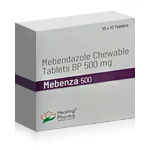
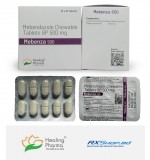
Mebenza Chewable (Mebendazole) is a convenient antiparasitic tablet designed to help treat common intestinal worm infections and support fast symptom relief.
This medication works by blocking parasite energy use, which helps eliminate worms from the digestive tract and reduce issues such as abdominal discomfort, itching, and disturbed appetite. The chewable format is a practical option for adults or anyone who prefers an easier way to take tablets without swallowing them whole.
Mebendazole is widely used for infections caused by pinworms, roundworms, whipworms, and hookworms. For best results, many treatment plans also focus on hygiene measures to reduce reinfection, especially in households or close-contact settings.
Choose Mebenza Chewable for a clear, targeted approach to parasite control, with a format that fits daily life and supports consistent use.

- Whipworm infection treatment (Trichuris trichiura): This medication can be indicated when testing or clinical evaluation supports whipworm infection, which may cause abdominal discomfort or bowel habit changes, and treatment is usually paired with prevention measures to avoid re-exposure;
- Roundworm infection treatment (Ascaris lumbricoides): Mebendazole is indicated for intestinal roundworm infections, typically associated with contaminated soil or food exposure and poor sanitation risk, with the goal of clearing worms while avoiding unnecessary repeat dosing too soon;
- Hookworm infection treatment (Ancylostoma duodenale): Albendazole alternatives exist, but Mebenza Chewable may be indicated when the infection is hookworm related and needs therapy, especially if symptoms suggest ongoing intestinal helminth burden and you want a clear, diagnosis-driven plan;
- Hookworm infection treatment (Necator americanus): This Drug is also indicated for American hookworm infection, which can contribute to fatigue in some cases, and follow-up plus prevention is important because ongoing exposure can make symptoms return;
- Single or mixed intestinal worm infections: Albendazole + Ivermectin is a different product, but mebendazole itself is indicated when one or more of the listed worms are present at the same time, so treatment can be chosen based on confirmed organisms rather than guessing.
- Chewable format for easier dosing: The chewable form can make administration simpler for people who dislike swallowing tablets, improving consistency and reducing missed doses during a short course;
- Targets multiple common intestinal worms: This medication is commonly used against several frequent helminths, which is helpful when the exact worm is not fully clear but the clinical picture supports intestinal deworming;
- May reduce worm-related digestive discomfort: When symptoms are truly worm-driven, treatment can help relieve abdominal discomfort, stool changes, and irritation by lowering the parasite burden and supporting gut recovery;
- Helpful for household pinworm scenarios: In pinworm contexts, mebendazole can support symptom relief while hygiene steps reduce reinfection, which is often the real reason people think the drug failed;
- Supports energy recovery when worms contribute to fatigue: If intestinal worms contribute to low appetite, poor sleep, or fatigue, clearing the infection can help energy and overall wellbeing improve over time;
- Simple course design for better adherence: Many real-world regimens are short and structured, which makes it easier to complete correctly, rather than dragging on and increasing confusion;
- Can be part of a prevention-focused plan: When combined with hand hygiene, laundry discipline, and food safety habits, this drug can support more durable results and fewer repeat cycles;
- Often chosen for travelers with exposure risk: People sometimes use mebendazole as part of a travel hygiene and treatment plan when exposure to contaminated food or soil is a concern, especially if symptoms begin after travel;
- May reduce the need for repeated treatment when used correctly: Correct dosing plus prevention measures can reduce reinfection loops, helping you avoid repeating courses and lowering the chance of side effects from unnecessary use.
Generic Mebenza Chewable (Mebendazole 500 mg) Medication guide:
🧾 What Is Mebenza Chewable (Mebendazole) - Anthelmintic Overview
Mebenza Chewable is a chewable anthelmintic designed to help treat common intestinal worm infections. It contains the active ingredient mebendazole, a benzimidazole-class antiparasitic used worldwide for deworming in appropriate cases. Because it is chewable, this medication is often chosen by people who prefer swallowing-free dosing or want a simpler administration routine.
What it is ✅
- a chewable deworming tablet;
- active ingredient: mebendazole;
- used for intestinal helminths when indicated.
What it is not 🚫
- not an antibiotic for bacterial infections;
- not a remedy for general bloating without cause;
- not a substitute for diagnosis when red flags exist.
Practical highlight: the biggest advantage of Generic (Mebenza Chewable) is ease of use. Better adherence often means better outcomes than changing regimens repeatedly.
🧬 Active ingredient at a glance
The active ingredient is mebendazole (chemical formula C₁₆H₁₃N₃O₃). It primarily targets intestinal worms by disrupting key processes parasites need to survive and reproduce. In many cases, it works mainly in the gut lumen, which is one reason it is widely used for intestinal helminths when clinically appropriate.
🍬 Why a chewable form can matter
Chewable dosing can be a real advantage for people who:
- have difficulty swallowing tablets and tend to miss doses;
- want a simpler routine for family settings;
- need a more convenient approach during travel.
🧭 When people consider this drug in real life
People usually consider this drug when there is a credible exposure story (household pinworm cycle, sanitation risk, school or family clustering, travel context) and symptoms fit a worm pattern. The most reliable results happen when use is diagnosis-driven or strongly supported by the clinical picture, rather than repeated guessing.
Safety reminder: if you have blood in stool, high fever, severe abdominal pain, fainting, seizures, confusion, or major vision changes, do not self-treat - get medical review first.
📌 Quick overview workflow
Use a simple, clear approach before starting this medication:
- 1) Identify exposure clue - household spread, travel, hygiene risk;
- 2) Match symptoms - itching at night, visible worms, persistent GI pattern;
- 3) Decide on testing - tape test or stool O and P when needed;
- 4) Treat correctly - follow the intended schedule and prevention steps;
- 5) Prevent reinfection - laundry, hand hygiene, household strategy.
📋 Key facts table
| Item | Overview |
|---|---|
| Product | Mebenza Chewable - Generic (mebendazole) |
| Drug class | Benzimidazole anthelmintic |
| Active ingredient | Mebendazole |
| Chemical formula | C₁₆H₁₃N₃O₃ |
| Dosage form | Chewable tablet for swallowing-free administration |
| Main use category | Common intestinal worm infections when indicated |
| What improves outcomes | Correct schedule plus reinfection prevention |
🏷️ Brand vs Generic - Mebenza Chewable vs Mebendazole Naming Guide
To avoid confusion when searching, comparing prices, or reading medical information, it is important to separate brand naming from the generic drug name. For this product page, the brand-style name is Mebenza Chewable, while the generic active ingredient is mebendazole. In everyday pharmacy practice, many different brands exist worldwide, but they all point back to the same key identifier - mebendazole.
Quick rule: if the active ingredient line says mebendazole, you are looking at the same generic drug, even if the brand name is different.
🧩 Why the names can look inconsistent online
Online listings and packaging may show names differently because:
- some markets print the brand large and the generic small;
- some listings lead with the generic name for clarity;
- some countries use different brand names for the same molecule;
- chewable forms may add descriptors like Chewable to highlight convenience.
📌 The identification checklist (how to confirm you have the right product)
Check 1 🔎 Active ingredient
Look for mebendazole. This is the most reliable identifier.
Check 2 🧾 Dosage form
Confirm it is chewable if you specifically want a chewable tablet.
Check 3 💊 Strength and regimen
Match the strength to your intended schedule (pinworm vs multi-worm course).
🗂️ Naming map you can use on the page
| Label element | What it means | Example |
|---|---|---|
| Brand-style name | Marketing or product name used by a seller or manufacturer | Mebenza Chewable |
| Generic name | Active ingredient name used in clinical references | Mebendazole |
| Dosage form | How the medication is taken | Chewable tablet |
| Therapeutic class | Drug family and mechanism group | Benzimidazole anthelmintic |
🧠 Common confusion and how to avoid it
- Confusion: thinking a different brand name means a different drug;
- Fix: always compare the active ingredient line first - mebendazole;
- Confusion: mixing up similar-sounding molecules (example: fenbendazole);
- Fix: confirm the exact generic name, because similar names are not always interchangeable.
Safety note: do not substitute a different molecule because the name sounds similar. Always match the exact generic ingredient and the correct regimen.
✅ Takeaway
Mebenza Chewable is the brand-style product name. Mebendazole is the generic active ingredient name. For accurate shopping and safe use, confirm mebendazole, confirm the chewable dosage form, and match the strength to your intended regimen.
🪱 What This Medication Treats - Intestinal Worm Infections Covered
Mebenza Chewable (generic mebendazole) is mainly used for intestinal helminth infections, often called “worms”. The strongest results happen when there is a clear exposure story or a confirmed diagnosis, because many non-parasitic problems can look similar. This section explains the real-world infection types people most often treat with this drug and how to think about coverage without guessing.
Core idea: this medication is for worm infections in the gut, not for bacteria, viruses, or random bloating without a parasite pattern.
🎯 The main intestinal worms people treat with mebendazole
In practical use, mebendazole is most commonly used for these intestinal worms:
| Worm type | Common name | Typical clue pattern | Why people choose this drug |
|---|---|---|---|
| Enterobius vermicularis | Pinworm | nighttime anal itching, household spread | simple regimen + prevention plan |
| Ascaris lumbricoides | Roundworm | exposure to contaminated soil/food, sanitation risk | broad deworming utility for intestinal worms |
| Trichuris trichiura | Whipworm | chronic GI discomfort, risk in poor sanitation settings | common helminth target in deworming programs |
| Ancylostoma duodenale | Hookworm | fatigue, exposure risk, possible low iron pattern | intestinal helminth coverage when indicated |
| Necator americanus | Hookworm | similar hookworm exposure and symptoms | practical option depending on regimen and setting |
🧩 What symptoms can suggest worms (and what does not)
More suggestive ✅
- nighttime anal itching and household spread (pinworm pattern);
- visible worms or segments (when clearly identified);
- persistent symptoms after high-risk exposure settings;
- recurring cycle that improves then returns with reinfection patterns.
Less specific ⚠️
- general bloating with no exposure clues;
- random fatigue without GI pattern or exposure story;
- stomach discomfort that changes daily with diet and stress;
- symptoms that worsen after alcohol or spicy foods only.
🩺 When treatment makes sense vs when to test first
This drug is most reasonable when the pattern fits and the risk is clear. Testing is smarter when the picture is mixed or severe.
Often reasonable to treat 🎯
- classic pinworm pattern with household clustering;
- known exposure risk and typical symptoms;
- previous confirmed helminth infection with similar recurrence pattern.
Test or get medical review first 🚨
- blood in stool, high fever, severe abdominal pain;
- unexplained weight loss or persistent vomiting;
- new seizures, confusion, fainting, major vision changes;
- symptoms in pregnancy, young children, or severe chronic illness.
🌍 Real-world exposure scenarios (quick snapshots)
- Household pinworm cycle: itching at night, multiple family members affected, reinfection without hygiene reset;
- Sanitation or soil exposure: gardening, rural travel, poor hand hygiene, contaminated food risk;
- Travel with GI changes: symptoms after higher-risk food or water exposure where helminths are possible.
✅ Takeaway
Mebendazole (Mebenza Chewable) is designed for common intestinal worm infections, especially when the exposure story and symptom pattern fit. The best outcomes come from a simple rule: treat the right target, follow the correct schedule, and combine therapy with reinfection prevention rather than repeating courses without confirmation.
✅ FDA Approved Indications - Mebendazole (Vermox) Official Label Uses
This section explains the official FDA approved indications for mebendazole in the United States. The FDA label is the most conservative reference point, because it defines what the medication is formally approved to treat. Real-world practice can include broader use in some countries, but this guide starts with the FDA baseline.
Important: FDA approved indications apply to mebendazole (brand example: Vermox) and describe specific intestinal worm infections.
🪱 The FDA approved indication list (plain and practical)
According to FDA prescribing information for mebendazole, the medication is approved for treatment of infections caused by:
- Whipworm infection (Trichuris trichiura);
- Common roundworm infection (Ascaris lumbricoides);
- Hookworm infection (Ancylostoma duodenale);
- American hookworm infection (Necator americanus);
- Pinworm infection (Enterobius vermicularis).
Quick meaning: the FDA label focuses on common intestinal helminths - worms living in or affecting the gut, often linked to sanitation, household spread, or contaminated soil exposure.
📌 What FDA approved means for your product page
When you sell Mebenza Chewable (generic mebendazole), you can safely describe the medication as a treatment for the FDA listed intestinal worms above, while still explaining that correct diagnosis and prevention are essential. In marketing terms, FDA indications are the highest-trust, low-risk statements for the page.
🧠 Why these infections can look similar to other conditions
Many people assume any GI discomfort is a “parasite”. In reality, the FDA label covers specific worms, but symptoms can overlap with non-parasitic conditions. That is why risk history and testing can matter.
Worm pattern clues 🔎
- nighttime anal itching and household spread (pinworm);
- sanitation or soil exposure + persistent GI symptoms;
- symptom cycles that return with reinfection behaviors.
Not specific for worms ⚠️
- bloating only without exposure clues;
- random nausea related to stress or diet shifts;
- symptoms that change daily with food triggers.
🗣️ Patient expectation setting
If you treat an FDA listed worm infection correctly, you may feel improvement within days, but complete comfort can take longer because irritation and reinfection risks can keep symptoms going. The most common reason people think the drug failed is reinfection, not lack of potency.
Clinician style advice: treat the infection, then protect the result - hygiene and household strategy are part of the therapy.
✅ Takeaway
The FDA approved indications for mebendazole (Vermox) include pinworm, whipworm, roundworm, and hookworm infections. For a product page like Mebenza Chewable, these are the most reliable official targets to highlight, alongside prevention steps and guidance on when testing is needed.
🧾 Is Mebenza Chewable FDA Approved - Label and Market Clarification
This section answers a very common question: is Mebenza Chewable itself FDA approved, or is FDA approval tied to the active ingredient? The safest way to explain it on a Medication Guide is to separate the molecule (mebendazole) from the brand-style product name (Mebenza Chewable).
Key clarification: The FDA approves specific labeled products and their labeling. The most important clinical anchor is the active ingredient - mebendazole - and its FDA labeled indications.
🏷️ What FDA approval usually means in practice
In the US, FDA approval is typically associated with a specific brand product and its official label. For mebendazole, the best-known FDA labeled reference is Vermox. Other markets may sell mebendazole under different brand names and forms. A product like Mebenza Chewable can still be described accurately by focusing on mebendazole and the FDA approved indications for the molecule, without claiming that every brand name is FDA approved.
Safe wording approach: describe the medication as mebendazole and list the FDA approved indications for mebendazole, rather than stating that the brand name itself is FDA approved.
🧭 How to explain this to customers without confusion
Customers mainly want to know if the drug is legitimate and what it treats. The simplest explanation is:
- Mebenza Chewable is a product name used for a mebendazole chewable tablet;
- Mebendazole is the generic drug name used in medical references;
- FDA labeling for mebendazole (example brand: Vermox) lists specific worm infections as official indications.
📌 A clean comparison that reduces misunderstanding
| Question customers ask | Correct short answer | What to emphasize |
|---|---|---|
| Is Mebenza Chewable FDA approved | FDA approval is tied to specific labeled products; focus on the mebendazole label indications | Active ingredient and official FDA indications |
| Is mebendazole FDA approved | Yes, mebendazole has FDA labeled uses (example: Vermox) | List the FDA approved worm infections |
| Why do names differ by country | Different brands, packaging, and forms exist worldwide | Always confirm the generic name mebendazole |
🧠 Why this matters for SEO and trust
From a credibility standpoint, it is better to be precise:
- Use the product name for shopping clarity: Mebenza Chewable;
- Use the molecule name for medical accuracy: mebendazole;
- Describe official uses under the heading: FDA Approved Indications - Mebendazole.
Trust tip: Customers trust pages that clearly separate brand naming from generic labeling and avoid overclaims.
✅ Takeaway
The safest and most accurate way to discuss FDA status is to anchor on the active ingredient mebendazole and its FDA labeled indications (commonly referenced under the US label brand Vermox). For Mebenza Chewable, describe it as a chewable mebendazole product and keep FDA statements focused on the molecule and its official label uses.
🧬 Active Ingredient Profile - Mebendazole Key Facts and Benefits
Mebenza Chewable contains the active ingredient mebendazole, a well-known anthelmintic (anti-worm) medication used for common intestinal helminths. The goal of mebendazole therapy is simple: reduce and clear the intestinal worm burden so symptoms can resolve and reinfection cycles can be broken with hygiene steps. Because many worm infections are linked to household spread or sanitation exposure, the medication works best when paired with a prevention plan.
Key fact: The most important identifier is the generic name mebendazole. Brand names can vary, but the active ingredient is what determines expected effects and safety rules.
🧪 Mebendazole chemical identity and basic properties
The chemical formula of mebendazole is C₁₆H₁₃N₃O₃. It belongs to the benzimidazole class, known for antiparasitic activity against a range of intestinal worms. Many regimens are short and structured, which helps users complete the course correctly and lowers the chance of unsafe “repeat dosing” driven by anxiety.
Identity 🧬
- Generic name: mebendazole;
- Formula: C₁₆H₁₃N₃O₃;
- Class: benzimidazole anthelmintic.
Core purpose 🎯
- treat intestinal helminth infections;
- support symptom relief when worms are the true cause;
- help break cycles with reinfection prevention.
🌟 Why mebendazole is widely used for intestinal deworming
People choose this drug because it is a focused solution for common worm infections, and it is usually taken as a short course. In a Medication Guide, the most honest promise is not “instant relief”, but structured deworming that can reduce parasite burden and allow the gut to recover.
- Practical coverage: used for several common intestinal worms when indicated;
- Course simplicity: clear schedules support adherence;
- Convenience advantage: chewable form can reduce missed doses;
- Better outcomes with prevention: hygiene and household steps reduce reinfection.
📌 Benefits that matter most to patients
Easy administration 🍬
Chewable dosing supports better adherence and less skipping.
Focused deworming 🪱
Designed for intestinal helminths rather than vague GI issues.
Prevention friendly 🧼
Pairs naturally with hygiene steps to reduce reinfection cycles.
Family practical 👨👩👧
Chewable format can simplify dosing in household scenarios.
🧠 What mebendazole does not do (important expectations)
Mebendazole does not treat bacterial infections, viral gastroenteritis, food poisoning in the classic sense, or chronic digestive disorders like IBS. If symptoms are mainly bloating without exposure clues, treating repeatedly can create side effects that feel like the illness is worsening. The smart approach is diagnosis first when the picture is unclear.
Stop guessing rule: If symptoms do not match a worm pattern or return repeatedly, get testing or medical review before repeating this medication.
👨⚕️ Expert perspective
Dr. Peter J. Hotez, MD, PhD (Tropical Medicine Specialist): The most effective deworming strategies combine appropriate medication with prevention - sanitation, hygiene, and reducing re-exposure are what stop the cycle.
✅ Takeaway
Mebendazole is the core active ingredient in Mebenza Chewable. Its key benefits are focused intestinal deworming, short structured regimens, and strong real-world usefulness when combined with a reinfection prevention plan. For best results, treat the correct target and avoid repeating courses without confirmation.
🧪 How Mebendazole Works - Mechanism of Action Simplified
Mebendazole (the active ingredient in Mebenza Chewable) is designed to weaken and eliminate intestinal worms by disrupting processes they need to survive. The simplest way to understand it is this: worms depend on constant energy supply and internal structure maintenance. This drug interferes with those essentials so the parasites gradually lose function, detach, and are cleared from the intestine.
Plain-language summary: mebendazole works by starving the worms of key resources and disrupting internal systems they need to stay alive in the gut.
🧩 The mechanism in a simple 3-step story
Step 1 🔒
The drug disrupts cellular building blocks that worms need to maintain their internal structure.
Step 2 ⚡
The parasite gradually loses energy production capacity, so movement and survival become harder.
Step 3 🚪
Weakened worms detach and are cleared by the body through normal intestinal transit.
🧠 Why results may feel gradual
Many people expect an instant “switch off” effect. In reality, this medication often works over time. Symptoms can fluctuate because:
- the gut may stay irritated even after parasite burden drops;
- sleep and stress can change how symptoms feel day-to-day;
- reinfection can occur if household prevention is not addressed;
- some symptoms are not caused by worms at all and will not improve.
Practical expectation: if the diagnosis is correct, you often see the clearest trend by comparing day 1 to days 5-7, not by judging one single day.
📌 Local gut action and why chewable can help adherence
For many intestinal worm infections, effectiveness depends heavily on consistent exposure in the gut during the course. The chewable format can support adherence, especially for people who struggle with swallowing tablets. Better adherence often means fewer “half courses”, which is one of the biggest real-world reasons treatment feels ineffective.
🪱 What mebendazole targets best
Mebendazole is primarily used for intestinal helminths such as pinworm, roundworm, whipworm, and hookworm infections when indicated. It is not designed for all parasites, and it is not a general cure for non-specific GI discomfort.
Do not self-escalate: If symptoms do not improve or return repeatedly, avoid repeating courses automatically. Consider testing and prevention first.
👨⚕️ Expert note
Dr. David H. Molyneux, PhD (Tropical Parasitology Specialist): Deworming works best when treatment is paired with measures that reduce reinfection, because ongoing exposure can recreate the same burden even after a correct course.
✅ Takeaway
Mebendazole works by disrupting worm survival systems and gradually reducing parasite burden until the worms are cleared. The best outcomes come from correct targeting, consistent dosing, and a strong reinfection prevention plan rather than repeating therapy without confirmation.
⚙️ Pharmacokinetics - Absorption, Local Gut Action, and What It Means
Pharmacokinetics is simply the story of what your body does to the drug - how it is absorbed, where it acts, how it is processed, and how it leaves the body. For Mebenza Chewable (generic mebendazole), the practical takeaway is that many regimens are designed to achieve effective action where it matters most for intestinal worms - inside the gut - and the way you take the course can influence comfort, adherence, and outcomes.
Simple idea: For common intestinal worms, what matters most is that the medication is taken consistently so it can do its job in the intestinal environment.
🧭 Where mebendazole works most in intestinal worm therapy
In many intestinal helminth infections, mebendazole is valued because it can act in the GI tract where the worms live. This is why adherence matters: a skipped or inconsistent course reduces effective exposure in the gut and can make results feel weaker even when the drug is appropriate.
Local gut action 🪱
Designed for intestinal worms, where consistent dosing supports steady exposure.
Systemic exposure 🌡️
Some absorption can occur, which is why side effects and liver cautions are still relevant.
🍽️ Food, fat, and why your routine matters
Food can influence how medications are tolerated and sometimes how they are absorbed. In real life, people run into two problems:
- taking it on a very empty stomach and feeling nausea;
- taking it with very heavy fatty meals and confusing GI discomfort with side effects.
Practical rule: choose a stable routine. If you tolerate it better with a light meal, keep that pattern. Consistency beats perfection.
🧠 Liver processing and why repeat courses increase risk
Even though mebendazole is widely used, the body still processes it, and liver strain risk becomes more relevant when people repeat courses frequently or combine multiple medications. This is why “panic re-dosing” is one of the biggest avoidable mistakes.
Avoid this pattern: symptoms fluctuate → take extra doses → side effects increase → confusion grows. If symptoms persist, test or seek medical review instead of escalating.
🕒 Onset, duration, and why timing expectations should be realistic
Mebendazole does not always feel “instant”. Many people notice a clearer trend after several days because parasites lose function progressively. Also, gut irritation can remain for a short time even after parasite burden drops. The best way to judge progress is to compare your baseline to day 5-7 rather than expecting a same-day transformation.
📊 Mini infographic: how pharmacokinetics affects real-life results
- Consistency → steadier gut exposure → better chance of clearance;
- Skipping doses → weaker exposure → results feel unreliable;
- Repeat courses too soon → higher side effect risk → more confusion;
- Prevention steps → lower reinfection → more durable improvement.
👨⚕️ Expert perspective
Dr. Thomas B. Nutman, MD (Infectious Disease and Helminth Specialist): Many “treatment failures” in helminth infections are actually reinfection or misdiagnosis. Pharmacology matters, but prevention and correct targeting are equally important for durable results.
✅ Takeaway
For Mebendazole therapy, the real-world pharmacokinetic message is: take the course consistently, keep meals and routines stable for better tolerance, avoid alcohol, and do not repeat courses automatically. Combine this medication with reinfection prevention to make results last.
🍬 Chewable Tablet Advantages - Who Benefits Most From This Form
Mebenza Chewable is designed for one very practical goal: make deworming therapy easier to take correctly. In real life, many people fail treatment not because the drug is weak, but because they skip doses, take the course inconsistently, or stop early due to nausea or swallowing difficulty. A chewable tablet can improve adherence, reduce stress around dosing, and make short regimens feel simpler and more manageable.
High-yield advantage: chewable dosing supports consistent use, and consistency is one of the strongest predictors of a clean outcome for intestinal helminth therapy.
✅ Who benefits most from a chewable mebendazole form
People who dislike swallowing tablets 😬
If swallowing is a barrier, chewable dosing reduces missed doses and makes it easier to finish the course.
Households dealing with pinworm cycles 👨👩👧
When several people need coordinated timing, a chewable option can simplify administration and reduce errors.
Travelers and people with busy schedules 🧳
Chewable dosing can feel more convenient when routines are disrupted and adherence usually drops.
📌 Mini infographic - Why chewable can improve outcomes
- Chewable form reduces swallowing resistance;
- Less resistance means fewer skipped doses;
- Fewer skipped doses means more consistent gut exposure during the course;
- More consistent exposure means a higher chance of full clearance (when the diagnosis is correct);
- Clearance plus hygiene steps means less reinfection and fewer repeat cycles.
🧠 Common mistakes that chewable tablets help prevent
- Stopping early because swallowing feels unpleasant or stressful;
- Skipping doses when the schedule is inconvenient or the person is tired;
- Improvising timing and taking random catch-up doses, which increases side effects;
- Half-courses that create uncertainty and push people toward unnecessary repeats.
Safety reminder: chewable convenience should not lead to casual overuse. If symptoms persist or keep returning, prioritize testing and reinfection prevention instead of repeating this drug without a plan.
📋 Who should choose chewable vs standard tablets
| Situation | Chewable is especially helpful | Extra notes |
|---|---|---|
| Swallowing difficulty | Yes - improves adherence | Consistency is more important than perfect timing |
| Household pinworm pattern | Often - easier coordination | Hygiene steps are essential to prevent reinfection |
| Busy schedule or travel | Often - reduces missed doses | Do not mix many new supplements during the course |
| Frequent nausea | Sometimes | Use a stable routine and simple meals for tolerance |
🗣️ Patient style feedback (typical real-life experience)
What people like 👍
- easier to take without stress;
- less skipping and fewer delays;
- more confidence finishing the full regimen.
What still matters 🧼
- hygiene and laundry strategy;
- avoiding reinfection behaviors;
- not repeating courses automatically.
👨⚕️ Expert note
Dr. Peter J. Hotez, MD, PhD (Tropical Medicine Specialist): The biggest driver of success in deworming is not only the drug choice but also adherence and prevention - consistent dosing and reducing reinfection exposure are what stop the cycle.
✅ Takeaway
The chewable form of mebendazole is a practical adherence tool. It is especially useful for people who avoid swallowing tablets, households managing coordinated treatment, and anyone whose routine makes missed doses likely. The best results come from finishing the schedule and pairing therapy with reinfection prevention rather than repeating courses without confirmation.
🎯 Pinworm Treatment - When Mebendazole Is a Practical Choice
Pinworm (Enterobius vermicularis) is one of the most common intestinal worm infections, especially in households and school or childcare environments. Mebendazole (the active ingredient in Mebenza Chewable) is often considered a practical option because pinworm infection typically needs a plan that is simple, repeatable, and heavily supported by reinfection prevention.
Core reason pinworm keeps coming back: the problem is often not the drug - it is reinfection from hands, nails, bedding, towels, and shared surfaces.
🧠 How pinworm usually looks in real life
Classic clues ✅
- Nighttime anal itching that disrupts sleep;
- household clustering - more than one person itchy;
- itching improves then returns after several days;
- sometimes visible tiny white thread-like worms.
Less specific signals ⚠️
- bloating only without itching or household spread;
- random stomach discomfort that changes daily with food;
- fatigue without a clear exposure story;
- symptoms mainly triggered by alcohol or spicy meals.
🧪 Confirming pinworm - simple testing that improves accuracy
The most practical confirmation method is the tape test. It is often done in the morning before bathing or using the toilet, because eggs may be present around the anal area overnight. Even when you do not test, a strong classic pattern with household spread is a common reason clinicians treat.
| Approach | When it helps most | What it prevents |
|---|---|---|
| Tape test | unclear symptoms, repeated recurrence, mixed household complaints | unnecessary repeat courses and wrong-target treatment |
| Pattern-based treatment | classic nighttime itching with clear household clustering | delayed control while waiting for appointments |
💊 Why mebendazole is often chosen for pinworm cycles
- Simple regimen structure that is easy to follow;
- Chewable convenience that can improve adherence in families;
- Repeat dosing logic to reduce the chance of relapse from newly hatched worms;
- Prevention-friendly because the plan naturally includes hygiene steps.
Practical note: a common strategy for pinworm is initial treatment followed by a repeat dose after a set interval to reduce recurrence. Always match the schedule to your product instructions or clinician advice.
🧼 The pinworm success formula - treatment plus prevention
If you treat but do not change habits for 7-14 days, reinfection is likely. The most effective pinworm plans look like this:
| Week 1 focus | Daily actions | Goal |
|---|---|---|
| Stop reinfection | handwashing, short nails, morning shower, fresh underwear | reduce egg transfer from hands and surfaces |
| Clean textiles | wash bedding, sleepwear, towels regularly | remove eggs from fabrics |
| Household coordination | align timing for close contacts when appropriate | avoid ping-pong reinfection |
High-impact habits 🔥
- wash hands after toilet and before food;
- keep nails short and clean;
- avoid nail biting and scratching;
- change underwear daily.
Mistakes that cause relapse ⚠️
- treating only one person in a clustered household;
- reusing towels and bedding without a reset period;
- repeating doses too soon without prevention changes;
- confusing non-parasitic symptoms with pinworm.
🗣️ Patient style experience snapshot
Typical patient report: “The itching improved fast, but it came back a week later. Once we treated the household together and did the laundry and hand hygiene reset, it finally stopped.”
👨⚕️ Expert note
Dr. A. Clinton White Jr, MD (Infectious Disease Specialist): Recurrence after pinworm therapy is often reinfection, not resistance. The most effective approach is correct dosing plus strict hygiene measures for the household.
🚨 When pinworm-like symptoms need medical review
- Blood in stool or persistent severe abdominal pain;
- high fever, dehydration, or uncontrolled vomiting;
- symptoms that do not match the classic pattern and keep worsening;
- pregnancy, very young children, or severe chronic illness where dosing must be individualized.
✅ Takeaway
Mebendazole is often a practical choice for pinworm because the plan can be simple and adherence-friendly, especially in a chewable format. The most reliable results come from correct timing, household coordination when appropriate, and a strong reinfection prevention reset for at least 7-14 days.
🎯 Whipworm Treatment - Typical Scenarios and Expectations
Whipworm (Trichuris trichiura) is an intestinal helminth that can persist for a long time if exposure continues. When whipworm is confirmed or strongly suspected, Mebenza Chewable (generic mebendazole) is commonly discussed as a practical treatment option because it targets intestinal worms and supports structured deworming plans. The key is to set the right expectations: improvement can be steady, but it may feel gradual, and long-term success depends on reducing reinfection risk.
Simple idea: whipworm is often linked to sanitation and re-exposure. A medication course helps, but prevention makes the result last.
🧠 How whipworm often presents in real life
Many infections are mild, but heavier burdens can cause persistent bowel symptoms. In everyday practice, whipworm may be suspected when there is a combination of:
- ongoing GI discomfort in a higher-risk sanitation setting;
- intermittent diarrhea or stool changes that do not fully settle;
- recurrent symptoms after travel or exposure to contaminated soil;
- mixed helminth exposure patterns (more than one worm risk at the same time).
Reality check: whipworm symptoms overlap with many non-parasitic issues. When the picture is not classic, testing is a smarter first step than repeating this medication.
🧪 Diagnosis first - why testing is especially helpful for whipworm
Unlike the classic pinworm pattern, whipworm is rarely obvious by symptoms alone. Stool testing (ova and parasite examination) can help confirm the organism, guide the regimen, and avoid unnecessary repeat courses. If symptoms are persistent, a confirmation approach usually saves time in the long run.
| Situation | Better approach | Why it matters |
|---|---|---|
| Symptoms are mild and nonspecific | Test first | prevents wrong-target treatment and repeat dosing |
| Travel or sanitation exposure history is strong | Test or treat depending on clinical pattern | improves targeting and follow-up planning |
| Symptoms keep returning after deworming | Confirm + prevention reset | helps separate reinfection from misdiagnosis |
💊 What to expect from mebendazole in whipworm therapy
With correct targeting and a proper schedule, you may notice:
- more stable bowel habits over time;
- less irritation and discomfort in the gut;
- gradual improvement rather than instant changes.
Expectation setting: do not judge progress by one day. Compare baseline symptoms to week 1 and week 2, and combine that with follow-up testing if the case is unclear.
🧼 Why whipworm often needs a prevention focus
Whipworm risk is strongly tied to exposure conditions. If you treat but your environment stays the same, reinfection can recreate the same symptoms. A prevention plan typically focuses on:
- hand hygiene before eating and after toilet use;
- food safety - well-washed produce, safer water choices;
- soil contact precautions - gardening and outdoor exposure habits;
- household routines if multiple people have symptoms.
High impact prevention ✅
- handwashing after toilet and before meals;
- safe food washing and preparation routines;
- avoid untrusted water sources.
Common relapse triggers ⚠️
- returning to the same exposure environment immediately;
- skipping hygiene reset steps;
- repeating courses without confirming the organism.
🗣️ Patient style snapshot
Typical patient report: “My stomach was not perfect after the first week, but it got more stable over the next two weeks. The test also showed improvement after treatment, and prevention steps helped stop it from coming back.”
👨⚕️ Expert note
Dr. Thomas B. Nutman, MD (Helminth and Infectious Disease Specialist): For soil-transmitted helminths like whipworm, durable success depends on correct therapy plus reducing exposure and reinfection. Testing can be very helpful when symptoms are nonspecific.
🚨 When to seek medical review
- Blood in stool, severe abdominal pain, or persistent high fever;
- signs of dehydration or ongoing vomiting;
- unexplained weight loss or worsening weakness;
- pregnancy, severe chronic illness, or complex medication regimens.
✅ Takeaway
Mebendazole can be an appropriate option for whipworm when the infection is confirmed or strongly suspected. Expect improvement to be more gradual than pinworm, and focus on testing and prevention to avoid unnecessary repeats and reinfection cycles.
🎯 Roundworm Treatment - Common Exposure Patterns and Outcomes
Roundworm (Ascaris lumbricoides) is one of the most common intestinal helminths worldwide. When roundworm infection is confirmed or strongly suspected, Mebenza Chewable (generic mebendazole) may be used as part of a structured deworming plan. The most important idea is that roundworm is often linked to exposure - contaminated soil, unwashed produce, or poor sanitation conditions - so durable results require both treatment and prevention.
Simple model: roundworm infection is often a food and soil hygiene problem. Therapy clears the worms, but prevention stops the return.
🌍 How people get exposed - practical patterns
Roundworm eggs can survive in the environment and can be swallowed when hygiene breaks down. Common exposure patterns include:
Food exposure 🥗
- unwashed fruits and vegetables;
- food prepared with poor hand hygiene;
- riskier street food settings during travel.
Soil exposure 🌱
- gardening and soil contact without careful handwashing;
- children playing outdoors and touching mouths;
- areas with limited sanitation infrastructure.
Household pattern 🏠
- shared food preparation with weak hygiene habits;
- multiple family members with GI symptoms;
- recurrent symptoms after travel or exposure cycles.
🧠 Symptoms - what can fit roundworm and what is too vague
Roundworm infection can be mild, but higher burdens may cause clearer symptoms. It is important to be careful because many symptoms overlap with non-parasitic conditions.
| More compatible with roundworm | Too vague by itself |
|---|---|
| persistent GI discomfort with clear exposure risk | bloating only without exposure story |
| visible worms in stool in some cases | random fatigue without GI or exposure clues |
| symptom recurrence after sanitation breakdown | symptoms triggered mainly by spicy food or alcohol |
Practical truth: symptoms alone are often not enough. If the picture is unclear or recurrence is frequent, stool testing can prevent unnecessary repeat courses.
🧪 Testing and diagnosis - when it matters most
Testing is most helpful when:
- symptoms are persistent but not classic for any one worm;
- you have repeated relapses after deworming;
- you want to confirm clearance after treatment in a higher-risk setting.
Stool ova and parasite testing can detect roundworm eggs, but timing and sample quality matter. A single negative test does not always exclude infection in low shedding phases.
💊 What to expect from mebendazole for roundworm
When the diagnosis is correct and the regimen is followed, people often notice:
- less GI discomfort and improved appetite over time;
- reduction in symptom “waves” linked to worm burden;
- improvement that may continue across 1-2 weeks as irritation settles.
Timeline guide: compare your baseline symptoms to day 3, day 7, and week 2. Do not judge success by one single day.
🧼 Prevention strategy - the part that prevents relapse
Because reinfection happens through swallowed eggs, prevention is mostly a hygiene and food safety plan:
Food safety 🥦
- wash produce carefully;
- avoid questionable raw foods while traveling;
- use safe water for washing and drinking.
Hand hygiene 🧼
- wash hands after toilet use;
- wash hands before food preparation;
- keep nails short and clean.
👨⚕️ Expert note
Dr. Sara Lustigman, PhD (Parasitology Research Scientist): For many intestinal helminths, treatment works best when combined with behavioral and sanitation changes. Otherwise, the same exposure can quickly recreate infection even after a correct course.
🚨 When roundworm symptoms require urgent medical evaluation
- severe abdominal pain, persistent vomiting, inability to pass stool or gas;
- high fever, dehydration, or fainting;
- blood in stool or rapidly worsening weakness;
- signs of complications or severe illness in children.
Do not delay: severe abdominal symptoms may signal obstruction, which requires immediate medical care rather than more doses.
✅ Takeaway
Mebendazole can be a practical option for roundworm when infection is confirmed or strongly suspected. The best outcomes come from a clean regimen plus a strong hygiene and food safety strategy to prevent reinfection, especially after travel or soil exposure.
🎯 Hookworm Treatment - Practical Notes for Ancylostoma and Necator
Hookworm infection is typically caused by Ancylostoma duodenale or Necator americanus. These parasites attach to the intestinal wall and can contribute to ongoing gut irritation and, in some cases, low iron patterns over time. When hookworm infection is confirmed or strongly suspected, Mebenza Chewable (generic mebendazole) may be used as part of a deworming plan, especially when the goal is to clear intestinal helminths and reduce recurrence with prevention.
Hookworm logic: unlike pinworm, hookworm is often a soil exposure story. Prevention focuses heavily on protecting skin contact and improving sanitation habits.
🌍 How hookworm exposure happens in real life
Hookworm transmission often involves contact with contaminated soil. Common high-risk scenarios include:
Soil contact 🌱
- walking barefoot outdoors in endemic areas;
- gardening without gloves and poor handwashing;
- exposure in rural settings with weak sanitation.
Travel context 🧳
- tropical travel with outdoor activities;
- beaches and soil-rich environments;
- poor access to clean sanitation facilities.
🧠 Symptoms that can fit hookworm infection
Symptoms can vary based on burden and overall health. Possible patterns include:
- persistent abdominal discomfort or stool changes with a strong exposure story;
- fatigue that may align with low iron patterns in some cases;
- recurrent symptoms when re-exposure continues;
- in some cases, mild nonspecific GI symptoms that can mimic many other conditions.
Important: fatigue and weakness have many causes. Hookworm should be considered mainly when exposure risk is clear and symptoms fit the setting. Testing is often the best first step.
🧪 Testing and confirmation - what helps most
For hookworm, stool ova and parasite testing can detect eggs. If you suspect hookworm due to travel or soil exposure and symptoms persist, confirmation is useful because:
- it prevents unnecessary repeat deworming;
- it supports appropriate follow-up if symptoms persist;
- it allows you to evaluate related issues (like low iron) if relevant.
| Problem | Helpful check | Why it matters |
|---|---|---|
| Persistent fatigue with exposure history | stool test + basic labs if advised | separates worms from other fatigue causes |
| Symptoms keep returning after treatment | retest + prevention reset | checks reinfection vs misdiagnosis |
| GI discomfort without clear exposure | consider other diagnoses first | avoids wrong-target medication cycles |
💊 What to expect from mebendazole in hookworm therapy
If hookworm infection is the correct target and the regimen is followed:
- GI symptoms may improve gradually over several days to 2 weeks;
- energy may improve more slowly if low iron is involved;
- reinfection prevention is a major part of durable success.
Timeline reality: parasite clearance can happen within the course, but symptom recovery (especially energy) may take longer. Do not judge results by one day.
🧼 Prevention - the hookworm-specific angle
Hookworm prevention is often more about skin protection and sanitation than bedding and towels:
High-impact habits ✅
- wear shoes outdoors in higher-risk soil environments;
- use gloves for gardening and wash hands after;
- avoid sitting directly on soil in risky settings;
- prioritize safe sanitation access when traveling.
Relapse triggers ⚠️
- repeated barefoot exposure after treatment;
- returning immediately to the same soil risk environment;
- repeating courses without testing when symptoms persist.
📊 Mini infographic - Hookworm decision flow (simple)
- Soil exposure history (barefoot, gardening, travel) →
- Persistent GI symptoms or fatigue pattern →
- Testing if unclear or recurrent →
- Treat correctly with regimen + prevention →
- Follow-up if symptoms persist or return.
👨⚕️ Expert note
Dr. Thomas B. Nutman, MD (Infectious Disease Specialist): For soil-transmitted helminths like hookworm, the best outcomes come from accurate diagnosis, correct therapy, and reducing exposure. Re-exposure can recreate infection even after a proper course.
🚨 When to get medical review urgently
- severe weakness, fainting, chest pain, or shortness of breath;
- blood in stool, severe abdominal pain, persistent high fever;
- uncontrolled vomiting or dehydration;
- suspected severe anemia or high-risk medical conditions.
✅ Takeaway
Hookworm infection is often driven by soil exposure. Mebendazole can be part of an effective plan when infection is confirmed or strongly suspected, but durable success depends on prevention - especially wearing shoes, improving hygiene and sanitation habits, and avoiding repeated exposure after treatment.
🩺 When You Should Get Tested First - Diagnosis Before Treatment
Before starting Mebenza Chewable (generic mebendazole), the smartest question is not “what pill works”, but is this really a worm infection and which one. Many GI complaints look similar, and repeated blind deworming can create side effects and confusion. Testing is especially valuable when symptoms are not classic, when relapse keeps happening, or when the situation includes higher risk.
Best practice mindset: treat confidently only when the pattern is clear. If it is unclear, test first to avoid wrong-target dosing and unnecessary repeats.
🚩 Test first - situations where self-treatment is a bad idea
Red flags 🚨
- blood in stool, black tarry stools, or severe rectal pain;
- high fever, persistent vomiting, dehydration;
- severe abdominal pain, inability to pass stool or gas;
- unexplained weight loss, fainting, major weakness;
- new seizures, confusion, severe headache with neurologic changes.
Higher-risk profiles ⚠️
- pregnancy or trying to conceive soon;
- significant liver disease history;
- complex medication lists (polypharmacy);
- very young children where dosing needs extra caution;
- repeated deworming courses in the last weeks.
🧩 Classic vs unclear - when you can treat vs when you should confirm
| Pattern | What it looks like | Smarter move |
|---|---|---|
| Classic pinworm pattern | nighttime anal itching + household clustering | treat can be reasonable, but testing is still helpful if relapse repeats |
| Unclear GI symptoms | bloating, nausea, mild discomfort without exposure clues | test first instead of guessing |
| Recurrent relapse | symptoms return after multiple courses | confirm organism + focus on prevention strategy |
| Soil or travel exposure | risk environment + persistent symptoms | testing often saves time and prevents wrong-target dosing |
🧪 Which test fits which suspicion
Different worms require different confirmation methods. Choosing the right test is the fastest route to clarity.
Pinworm suspected 🪱
- use a tape test (not a routine stool test);
- best done in the morning before bathing or toilet use;
- repeat on 3 consecutive mornings for better yield.
Roundworm, whipworm, hookworm suspected 🌍
- use stool ova and parasite style evaluation;
- multiple samples often improve detection;
- proper collection matters (clean, dry container, no urine or water contamination).
📌 Mini infographic - a clean decision flow (no fancy fonts)
- Classic pinworm signs (night itching + household spread) → consider tape test or treat with a prevention plan;
- Unclear symptoms (bloating only, variable nausea) → test first, avoid guessing;
- Travel/soil risk + persistent symptoms → stool testing is usually worth it;
- Red flags (blood, fever, severe pain, neurologic signs) → medical review, not self-treatment;
- Relapse after courses → confirm organism + fix reinfection triggers.
🧼 Why testing prevents the biggest “false failure”
The most common reasons people think this drug “did not work” are:
- wrong diagnosis (symptoms were not caused by worms);
- reinfection (especially with pinworm household cycles);
- incomplete course or inconsistent timing;
- treating one person while the exposure remains active in the household or environment.
Practical rule: if you already tried this medication and symptoms returned, do not just repeat again. Confirm first and focus on prevention, otherwise you repeat the same cycle.
✅ Takeaway
Testing before starting mebendazole is most important when symptoms are unclear, recurrent, or high-risk. For pinworm, the tape test is the right tool. For other common intestinal worms, stool-based evaluation with correct collection can guide the right plan and prevent unnecessary repeat courses.
🧫 Stool Test Guide - Ova and Parasites Timing and Accuracy
A stool ova and parasite test (often called an O&P exam) looks for parasite eggs (ova) and sometimes the parasites themselves in a stool sample. For Mebenza Chewable (generic mebendazole), this testing matters because it helps confirm which organism you are targeting and reduces the biggest real-world mistake: repeating courses when the diagnosis is wrong or the problem is reinfection.
Quick clarity: O&P testing is most useful for worms like roundworm, whipworm, hookworm and some protozoa. For pinworm, the best tool is usually a tape test, not a stool sample.
📌 Why a single stool sample can miss parasites
Parasite shedding is not perfectly consistent every day. That means one sample can be negative even when infection is present. This is why many labs and clinical references recommend multiple samples on separate days to improve detection.
| What affects accuracy | What it means in real life | What improves yield |
|---|---|---|
| Intermittent shedding | parasites or eggs may not appear every day | 2-3 samples collected on different days |
| Collection contamination | water, urine, or toilet chemicals can ruin the sample | use a clean, dry container and avoid toilet water |
| Delay to the lab | organisms degrade and results become less reliable | deliver quickly or use the lab preservative kit |
🧪 Step-by-step collection (quality checklist)
Do this ✅
- collect stool into a clean, dry container;
- avoid mixing with urine or toilet water;
- if you got a lab kit, follow the kit instructions exactly;
- label each sample with date and time;
- deliver promptly or store as instructed (often refrigeration).
Avoid this ⚠️
- do not collect from toilet water with cleaning chemicals;
- do not wait days to deliver without preservative;
- do not mix samples from different days into one container;
- do not assume one negative result means “no parasites”.
🗓️ How many samples and when (simple timing guide)
Many guidance sources recommend collecting three stool samples on separate days because detection improves when samples are spaced out. A practical schedule is:
- Day 1: collect and deliver;
- Day 3 or 4: collect and deliver;
- Day 6 or 7: collect and deliver.
If your lab gives a preservative kit, you may have more flexibility, but the safest plan is still separate-day samples.
📊 Mini infographic - detection improves with more samples
| Number of samples | Chance to catch intermittent shedding | Practical meaning |
|---|---|---|
| 1 | lower | can miss infection if shedding is inconsistent |
| 2 | better | improves yield for many intestinal parasites |
| 3 | best in routine practice | commonly recommended approach for stronger sensitivity |
🧠 How to interpret results without overreacting
- Positive result: helps confirm the target and supports a focused plan with this medication;
- Negative result: does not always exclude infection, especially if only one sample was tested or symptoms are strong;
- Persistent symptoms after a negative test: consider repeating samples, using the right test type, or reassessing diagnosis and reinfection triggers.
Key reminder: if your main suspicion is pinworm, stool testing is often the wrong tool. A tape test is usually the better confirmation method.
👨⚕️ Expert note
Dr. Thomas B. Nutman, MD (Infectious Disease and Helminth Specialist): Stool microscopy can miss infections when shedding varies. Multiple samples and the correct test choice (tape test for pinworm) reduce false reassurance and unnecessary repeat treatment.
✅ Takeaway
A stool O&P approach is a smart step before repeating mebendazole courses. Collect 2-3 samples on separate days, avoid contamination, deliver promptly, and match the test to the suspicion. When done properly, this reduces wrong-target treatment and makes therapy decisions more confident.
🚩 Red Flags Before Starting - Symptoms That Need Medical Review
Before you start Mebenza Chewable (generic mebendazole), pause for a quick safety check. Deworming is usually straightforward when the pattern is clear, but some symptoms are not compatible with self-treatment. These red flags can signal dehydration, bleeding, severe inflammation, obstruction risk, or a diagnosis that is not a simple intestinal worm infection.
If any of the urgent red flags below are present, do not start this medication now. Seek medical evaluation first.
🚨 Urgent red flags - do not self-treat
Bleeding and severe GI danger
- Blood in stool or black tarry stools;
- Severe abdominal pain that is persistent or worsening;
- Inability to pass stool or gas, severe bloating with pain;
- Repeated vomiting, especially with dehydration signs.
Systemic danger signs
- High fever with severe weakness;
- Fainting, chest pain, shortness of breath;
- Confusion, severe drowsiness, inability to stay hydrated;
- Rapidly worsening condition day-to-day.
Neurologic red flags
- New seizures or fainting episodes;
- Severe headache with weakness, vision changes, or confusion;
- New trouble walking, speaking, or major dizziness with collapse.
⚠️ Higher-risk situations - get advice or test first
These are not always emergencies, but they are strong reasons to get medical guidance before starting:
| Situation | Why it matters | Safer next step |
|---|---|---|
| Pregnancy or trying to conceive | risk-benefit and timing need individualized decisions | medical review before dosing |
| Significant liver disease history | increases concern for side effects and monitoring | review meds, consider labs if advised |
| Complex medication list | interaction risk and symptom confusion | check interactions and plan dosing schedule |
| Repeated deworming recently | higher chance symptoms are not worms, and higher side effect risk | test first instead of repeating |
| Very young child or frail older adult | dosing and dehydration risks need extra caution | pediatric or clinician guidance |
🧭 Fast self-check - decide in 60 seconds
- Do I have bleeding, severe pain, high fever, repeated vomiting, fainting, or neurologic symptoms? If yes, seek medical care first;
- Is my symptom pattern strongly compatible with worms? If unclear, prioritize testing;
- Have symptoms returned after prior courses? If yes, do not repeat automatically - confirm organism and fix reinfection triggers;
- Am I in a higher-risk group? If yes, get individualized guidance.
📊 Mini infographic - triage categories
Emergency now 🚑
Blood in stool, severe abdominal pain, obstruction signs, fainting, seizures, confusion, severe dehydration.
Medical review soon 🩺
Pregnancy, major liver disease history, complex medication lists, repeated recent deworming, persistent symptoms without a clear pattern.
Likely safe to proceed ✅
Classic pattern, no red flags, low-risk profile, and a prevention plan is in place (especially for household reinfection scenarios).
👨⚕️ Expert perspective
Dr. A. Clinton White Jr, MD (Infectious Disease Specialist): Many gastrointestinal complaints are not caused by helminths. When symptoms are severe, atypical, or recurring after multiple courses, confirmation and evaluation are safer than repeating deworming without a diagnosis.
✅ Takeaway
Use mebendazole confidently only when the situation fits a typical intestinal worm pattern and no red flags are present. If you see bleeding, severe pain, high fever, repeated vomiting, fainting, or neurologic symptoms, do not self-treat - seek medical review first. When symptoms are unclear or recurring, testing is usually the fastest path to a correct plan.
💊 Dosage Basics - Strengths, Schedules, and Course Duration
Correct dosing is where most real-world success happens. With Mebenza Chewable (generic mebendazole), outcomes are usually strong when the regimen matches the specific worm and the course is completed exactly as planned. The biggest mistakes are: taking random single doses for infections that need a multi-day course, repeating courses too soon, or treating without confirming the target.
Rule #1: dosing depends on the organism. Pinworm often follows a different schedule than whipworm, roundworm, or hookworm. Match the regimen to the diagnosis.
📌 Typical labeled regimens (high-level, not a substitute for your package instructions)
Below is a practical overview of commonly referenced regimens. Always confirm with your product labeling or clinician advice, especially for children, pregnancy, liver disease, or complex medications.
| Target infection | Common regimen concept | Why the schedule differs |
|---|---|---|
| Pinworm (Enterobius) | often single dose with a repeat dose after a set interval | repeat dose helps address newly hatched worms and reinfection cycles |
| Roundworm (Ascaris) | often a short multi-day course (commonly 3 days) | multi-day exposure improves clearance in intestinal infections |
| Whipworm (Trichuris) | often a multi-day course (commonly 3 days) | whipworm can require sustained therapy and follow-up assessment |
| Hookworm (Ancylostoma/Necator) | often a short multi-day course (commonly 3 days) | target parasites attach to the intestinal wall; course completion matters |
Important: The table shows general regimen concepts. Your exact dose strength and schedule must follow the product labeling and medical advice, especially for pediatrics.
🧠 Strengths - what “tablet strength” means
The tablet “strength” is the amount of mebendazole in one tablet (for example, many markets commonly use 100 mg chewable tablets, but labeling varies). Strength is not only about “more is stronger”. It is about how the course is built:
- Correct total exposure across the full course is what matters;
- Skipping days is more harmful than choosing the “wrong time of day”;
- taking extra doses “just in case” increases side effects and does not reliably improve outcomes.
🗓️ Course duration - why finishing matters more than speed
Many people stop early when symptoms improve. That creates a false “relapse” risk because:
- some worms may be weakened but not fully cleared;
- the gut still recovers over days, so stopping early may confuse recovery with reinfection;
- you lose the structured exposure the regimen is designed to deliver.
Practical mindset: do not chase “fast relief”. Chase full completion plus a prevention plan.
📊 Mini infographic - dosage planning in 4 steps
- Step 1: Identify the likely worm (pinworm pattern vs stool-confirmed intestinal worms);
- Step 2: Choose the correct regimen concept (single + repeat vs multi-day course);
- Step 3: Follow the exact tablet strength and schedule from your labeling;
- Step 4: Add prevention steps to reduce reinfection and avoid repeat dosing.
👶 Pediatric dosing and weight-based caution
Children often need individualized dosing based on age/weight and the specific infection. The chewable form can help adherence, but it also makes it easier to accidentally “treat casually”. For pediatric use, rely on:
- product labeling for age limitations;
- clinician guidance for weight-based decisions;
- a prevention plan that includes nail hygiene and household coordination when appropriate.
👨⚕️ Expert note
Dr. A. Clinton White Jr, MD (Infectious Disease Specialist): In helminth infections, dosing success is mostly about correct targeting and completion. When symptoms return, reinfection and misdiagnosis are common reasons, so repeating courses without confirmation is rarely the best next step.
✅ Takeaway
Mebendazole dosing should match the suspected or confirmed infection. Pinworm often follows a single dose plus a repeat dose strategy, while roundworm, whipworm, and hookworm often require a short multi-day course. The most important success factors are finishing the schedule, avoiding random extra doses, and pairing therapy with reinfection prevention.
🍽️ How to Take This Drug - With Food, Timing, and Consistency
How you take Mebenza Chewable (generic mebendazole) matters for two reasons: tolerance and adherence. Most “treatment failures” happen when people skip doses, change schedules, or stop early because of nausea or stomach discomfort. A stable routine, simple meals, and correct chewing technique usually make the course much easier.
Best outcome formula: take the correct regimen consistently + keep meals and timing stable + add a reinfection prevention plan.
🍬 Chewable basics - how to take it correctly
A chewable tablet is meant to be chewed thoroughly. Many people tolerate it better when they:
- chew fully before swallowing;
- drink a small glass of water after;
- avoid taking it in a rushed, stressed state.
Practical tip: choose one consistent time each day (for multi-day regimens) and treat it like a simple daily routine, not an “emergency action”.
🕒 Timing - morning vs evening (what matters most)
For most regimens, the exact hour of the day is less important than consistency. Pick a time you can reliably maintain. The best time is the one that reduces missed doses.
Choose morning if ☀️
- you forget evening doses;
- you prefer taking meds with breakfast;
- you want a full day to observe tolerance.
Choose evening if 🌙
- you feel less nausea after dinner;
- your schedule is more stable at night;
- you want to avoid daytime stomach discomfort at work.
🍽️ With food or without food - a practical approach
People often ask whether mebendazole must be taken with food. The best real-life answer is:
- If your stomach feels sensitive, take it with a light meal to reduce nausea;
- If you tolerate it well, you can keep your routine consistent either way;
- Avoid turning meals into “experiments” during the course.
Simple meal guideline: choose a light, predictable meal. Avoid very heavy, greasy meals if they trigger GI discomfort for you, because it becomes hard to separate food effects from medication effects.
🚫 What to avoid during the course (to keep symptoms readable)
| Avoid | Why it matters | Better option |
|---|---|---|
| Alcohol | adds liver strain and worsens GI side effects | water, herbal tea, simple hydration |
| Very fatty or spicy “test meals” | can mimic side effects and confuse progress | simple meals with stable portions |
| Adding many new supplements | creates side-effect confusion and interaction questions | keep routine stable until course is finished |
📊 Mini infographic - the best “daily routine” pattern
- Pick one time (morning or evening) →
- Pair with a predictable meal if needed →
- Chew fully + drink water →
- Do not improvise doses →
- Track symptoms briefly (day 1 vs day 5-7 trend).
🗣️ Patient experience snapshot
Typical patient report: “Once I took it at the same time each day with a light meal, I had less nausea and I stopped forgetting doses.”
👨⚕️ Expert note
Dr. Thomas B. Nutman, MD (Infectious Disease Specialist): In helminth treatment, consistent dosing and avoiding reinfection are often more important than small differences in timing. A stable routine improves adherence and makes outcomes clearer.
✅ Takeaway
Take mebendazole in a way that maximizes consistency: chew thoroughly, drink water, and choose a stable time each day. Use a light meal if it improves tolerance, avoid alcohol and “diet experiments”, and focus on completing the course plus prevention steps to reduce reinfection.
🗓️ Missed Dose Instructions - What to Do and What to Avoid
Missing a dose can happen to anyone. What matters is how you respond. With Mebenza Chewable (generic mebendazole), the safest approach is to get back on track without “panic dosing”. Doubling up doses or improvising schedules can increase side effects and make it harder to judge whether symptoms are improving.
Golden rule: If you miss a dose, take it as soon as you remember unless it is close to the next dose. If it is close, skip the missed dose and continue your regular schedule. Do not double dose.
✅ Simple missed-dose guide (by timing)
| When you remembered | What to do | What to avoid |
|---|---|---|
| Same day, not near next dose | take the missed dose, then continue normally | do not take extra doses later “to catch up” |
| Close to next scheduled dose | skip the missed dose and take the next dose on time | do not double (higher side effect risk) |
| Missed multiple doses | restart a consistent schedule and consider medical advice if uncertain | do not improvise a “mega-dose day” |
🧠 Why doubling doses is a bad strategy
Many people think: “If I missed one, I should take two next time.” With mebendazole this often backfires because:
- GI side effects increase (nausea, cramps, diarrhea);
- you lose a predictable symptom baseline and start guessing what is happening;
- adherence becomes chaotic, which reduces the chance of a clean outcome.
What not to do: Do not take a “double dose” unless a clinician specifically instructs it. Doubling is one of the most common causes of avoidable side effects.
📊 Mini infographic - missed dose decision flow (simple)
- Missed dose noticed →
- Is the next dose soon (close timing) →
- If no: take missed dose now, continue schedule →
- If yes: skip missed dose, take next dose on time →
- Never double and keep the routine stable.
🧩 Special situations (common real-life cases)
If you vomited after a dose 🤢
Do not automatically repeat the dose. If vomiting is persistent or severe, prioritize hydration and seek medical advice. Re-dosing without guidance can worsen symptoms.
If you are on a multi-day course 📆
The goal is consistent daily dosing. One missed dose is usually managed by resuming the schedule correctly rather than creating a catch-up spike.
🗣️ Patient style snapshot
Typical patient report: “I skipped one day, then doubled the next day and felt sick. When I went back to one dose on schedule, I tolerated it much better.”
👨⚕️ Expert note
Dr. A. Clinton White Jr, MD (Infectious Disease Specialist): A steady regimen is more effective and safer than catch-up dosing. If doses are missed frequently, the priority should be building a routine, not increasing the dose.
✅ Takeaway
If you miss a dose of mebendazole, take it when you remember unless the next dose is soon. If it is soon, skip and continue normally. Do not double dose, and avoid improvising. Consistency improves both tolerance and treatment success.
🧪 Monitoring During Treatment - CBC and Liver Enzymes (When Needed)
Most short courses of Mebenza Chewable (generic mebendazole) do not require intensive monitoring. However, there are situations where basic lab checks can improve safety and confidence - especially if treatment is repeated, prolonged, or the patient has higher risk factors. The two most discussed monitoring areas are:
- CBC (complete blood count) - to watch for uncommon blood cell changes;
- Liver enzymes (ALT, AST, sometimes bilirubin) - to watch for liver stress signs.
Simple rule: the shorter the regimen and the lower the risk profile, the less monitoring is typically needed. Monitoring becomes more relevant with repeated courses, higher doses, longer duration, or pre-existing liver issues.
🧾 What “monitoring” means in plain language
Monitoring is not about searching for problems when nothing is wrong. It is about being smart in higher-risk situations, so you can catch issues early and avoid severe side effects. In practice, monitoring helps answer:
- Is the drug being tolerated safely by the liver;
- Is there an unusual drop in white blood cells;
- Are symptoms actually caused by worms, or is something else happening.
✅ Who should consider CBC and liver enzyme checks
| Scenario | Why monitoring helps | Common labs to discuss |
|---|---|---|
| Prolonged or repeated treatment | higher chance of lab changes and side effects | CBC, ALT, AST |
| Liver disease history or heavy alcohol use | increases risk of hepatotoxicity signals | ALT, AST, bilirubin |
| Complex medication list | interaction and symptom confusion risk | CBC, liver enzymes as needed |
| Severe symptoms or unclear diagnosis | prevents repeating therapy blindly | targeted labs + stool tests |
| Immunocompromised or frail patients | lower buffer for complications | CBC, liver enzymes |
Important: If you are taking this medication as a short, standard regimen and you are otherwise healthy, routine labs are often not required. Monitoring is mainly for risk-based situations.
🩸 CBC monitoring - what it watches for
A CBC checks red blood cells, white blood cells, and platelets. For mebendazole, the key concern is uncommon changes in white blood cells with prolonged exposure. Seek medical advice if you develop:
- fever with sore throat or mouth ulcers;
- unusual bruising or bleeding;
- severe fatigue that rapidly worsens without explanation.
Stop and evaluate: fever + sore throat during treatment (especially with prolonged courses) should be reviewed because it can overlap with rare blood count issues.
🧫 Liver enzyme monitoring - what to watch clinically
Liver enzymes can rise without obvious symptoms, but there are also warning signs you should not ignore:
Liver warning signs ⚠️
- yellow skin or eyes;
- dark urine, pale stools;
- right upper abdominal pain;
- severe nausea with unusual weakness;
- itching with no clear skin cause.
Risk increasers 📈
- repeating courses too frequently;
- drinking alcohol during treatment;
- combining many new supplements or medications;
- existing liver disease or hepatitis history.
📊 Mini infographic - when monitoring is most useful
- Short course + healthy patient → monitoring usually not required;
- Repeat courses or prolonged regimens → consider CBC + liver enzymes;
- Liver disease or heavy alcohol → liver monitoring becomes higher priority;
- Fever, sore throat, jaundice, dark urine → seek medical evaluation immediately.
👨⚕️ Expert note
Dr. Thomas B. Nutman, MD (Infectious Disease Specialist): When benzimidazoles are used for longer periods or repeated courses, simple monitoring with blood counts and liver tests can improve safety and reduce avoidable complications. Short routine courses in low-risk patients are usually straightforward.
✅ Takeaway
Monitoring during mebendazole therapy is risk-based. Most standard short courses do not need labs, but CBC and liver enzyme checks can be helpful with repeated or prolonged use, liver disease history, complex medication regimens, or concerning symptoms. If you develop fever with sore throat, unusual bruising, jaundice, dark urine, or severe weakness, seek medical review promptly.
🧫 Confirming Cure - Follow-Up Tests and Symptom Tracking
After finishing Mebenza Chewable (generic mebendazole), the most common mistake is judging success too early or judging it by one single day. Parasites may clear during the course, but your gut can stay irritated for several days, and symptoms may fade gradually. The best approach is to combine simple symptom tracking with follow-up testing when it is actually needed.
Practical rule: compare baseline to day 7-14, not to “yesterday”. If symptoms keep returning, confirmation matters more than repeating this drug blindly.
✅ What “cure” usually means in real life
- Symptoms improve and do not rebound in the next 2-3 weeks;
- No new exposure pattern that suggests reinfection;
- When testing is done, results align with improvement;
- You did at least basic prevention hygiene (especially for household cycles).
📊 Infographic: Symptom trend score (simple 0-10)
Use a quick daily score to see the trend. This makes progress visible and prevents emotional “overreacting” to a single day.
How to score: 0 = no symptoms, 10 = worst symptoms.
| Day | Score | Visual |
|---|---|---|
| Day 1 (start) | 8/10 | |
| Day 3 | 6/10 | |
| Day 7 | 3/10 | |
| Day 14 | 1/10 |
Interpretation: The trend line matters more than one day. If the score drops then suddenly jumps back and stays high, think reinfection or wrong diagnosis.
🧪 When follow-up testing is worth doing
Testing is most useful when you have uncertainty or relapse risk. Consider follow-up testing if:
- symptoms were not classic in the first place;
- you had multiple relapses after prior courses;
- you live or work in a setting with continuous exposure risk;
- symptoms improved but then returned strongly within 1-3 weeks.
Smart move: if symptoms recur, confirm the organism (and the right test type) instead of repeating mebendazole automatically.
🧭 Timeline infographic: when to re-check (simple)
This is a practical timeline concept, not a strict medical order. Match it to your clinician advice and lab availability.
Day 0-3 🟦
Focus on finishing the regimen and keeping routines stable. Do not “test panic” unless red flags appear.
Day 7 🟩
Best time to compare symptoms vs baseline. Many people see the clearest improvement trend here.
Day 10-14 🟨
If symptoms persist or rebound, consider follow-up stool testing (and prevention audit).
Any time 🟥
Red flags (blood, severe pain, fever, dehydration, neurologic signs) require medical review, not repeat dosing.
🧩 The “rebound” problem: reinfection vs wrong target
If symptoms come back, it is usually one of these:
| What happened | Typical clue | Best next step |
|---|---|---|
| Reinfection | symptoms return after improvement, exposure/hygiene gaps remain | prevention reset + consider testing to confirm |
| Wrong diagnosis | no clear improvement, symptoms are nonspecific | test first, evaluate other GI causes |
| Incomplete course | missed doses, stopped early due to discomfort | build a stable plan, avoid doubling, confirm organism |
👨⚕️ Expert note
Dr. A. Clinton White Jr, MD (Infectious Disease Specialist): When symptoms persist after deworming, the next step is often confirmation and prevention review. Repeating therapy without evidence can increase side effects and delay the real diagnosis.
✅ Takeaway
Confirming cure is about trend, not a single day. Track symptoms with a simple 0-10 score, compare baseline to day 7-14, and use follow-up testing when symptoms are unclear or rebound. If relapse happens, prioritize confirmation and reinfection prevention instead of repeating this medication automatically.
⚠️ Side Effects - Common Reactions and How to Manage Them
Most people tolerate Mebenza Chewable (generic mebendazole) well, especially with short standard courses. When side effects happen, they are usually gastrointestinal and tend to be mild to moderate. A simple routine - stable meals, hydration, and consistent dosing time - often reduces discomfort.
Quick perspective: Mild stomach symptoms can come from this medication itself, but in some cases they can also reflect the body reacting to a high parasite burden. The trend matters more than a single dose.
📊 Infographic - Side effect intensity scale (0-10)
Use a simple score to decide whether you can manage at home or you should talk to a clinician.
| Score | What it feels like | What to do | Visual |
|---|---|---|---|
| 0-3 | mild discomfort, still functioning normally | hydrate, keep meals simple, continue regimen | |
| 4-6 | noticeable nausea, cramps, diarrhea affecting routine | simplify meals, space triggers, consider medical advice if persistent | |
| 7-10 | severe symptoms, dehydration risk, cannot keep fluids down | medical review urgently |
✅ Most common side effects (what you may notice)
GI symptoms 🍽️
- abdominal pain or cramps;
- diarrhea or loose stool;
- nausea or vomiting;
- gas or bloating;
- reduced appetite.
Skin reactions 🧴
- mild rash or itching;
- skin sensitivity that improves after the course ends.
🧩 What helps - simple management that actually works
| Side effect | What to do | What to avoid |
|---|---|---|
| Nausea | take after a light meal if it helps, eat smaller portions, sip fluids | very greasy or spicy meals during the course |
| Diarrhea | increase fluids, watch for dehydration signs, keep meals simple | adding random anti-diarrhea meds without advice |
| Abdominal cramps | warm drink, gentle meals, steady routine, avoid dose changes | doubling doses or "catch-up" dosing |
| Mild rash | monitor, avoid skin irritants, seek advice if it worsens | ignoring rash that spreads rapidly or involves the mouth/eyes |
Hydration micro-check: if urine becomes dark, you pee much less than usual, or you feel dizzy on standing, treat it as dehydration risk and get medical advice.
🧠 The common confusion - side effect vs reinfection vs wrong diagnosis
Likely medication-related ✅
- symptoms appear soon after dosing;
- mild to moderate and improve with simple meals;
- trend improves by day 3-7.
Consider evaluation ⚠️
- symptoms are severe (score 7-10) or worsening;
- you cannot keep fluids down;
- rash spreads rapidly or involves the mouth/eyes;
- symptoms persist long after finishing the course.
👨⚕️ Expert note
Dr. A. Clinton White Jr, MD (Infectious Disease Specialist): Most adverse effects with mebendazole are gastrointestinal and self-limited. The safest approach is to keep dosing consistent, avoid doubling, and seek evaluation when symptoms are severe, persistent, or atypical.
✅ Takeaway
Common side effects of mebendazole include abdominal pain, diarrhea, nausea, vomiting, gas, appetite changes, and sometimes rash. Most cases improve with simple meals, hydration, and a stable regimen. Use the 0-10 scale to guide decisions - mild symptoms can be managed, but severe or worsening symptoms need medical review.
🚑 Serious Side Effects - Emergency Symptoms and Stop Rules
Serious side effects from Mebenza Chewable (generic mebendazole) are uncommon, but you should know the “stop rules” in advance. The goal is simple: do not ignore danger signs and do not keep dosing while severe symptoms escalate.
Stop rule: If you have any Red Zone symptoms below, stop this medication and seek urgent medical care.
📊 Infographic - Severity zones (Green / Yellow / Red)
| Zone | What it looks like | Action | Visual |
|---|---|---|---|
| Green | mild nausea, mild cramps, mild headache, tolerable diarrhea | continue regimen, hydrate, keep meals simple | |
| Yellow | persistent vomiting, moderate rash, worsening weakness, dehydration signs | pause and contact a clinician, consider evaluation | |
| Red | trouble breathing, facial swelling, severe rash with fever, jaundice, severe pain, fainting | stop dosing and seek urgent care immediately |
🟥 Red Zone - emergency symptoms (stop and seek urgent care)
Severe allergy (possible anaphylaxis) 🚨
- trouble breathing or wheezing;
- swelling of face, lips, tongue, throat;
- tight chest, fainting, sudden collapse;
- rapidly spreading hives with weakness.
Severe skin reactions 🧯
- rash with fever or flu-like symptoms;
- blistering, peeling skin;
- painful sores in mouth, eyes, or genitals;
- rapidly worsening rash with burning pain.
Liver danger signs 🧫
- yellow skin or eyes (jaundice);
- dark urine, pale stools;
- right upper abdominal pain + severe nausea;
- extreme weakness that is not improving.
Severe GI or systemic danger 🚑
- blood in stool or black tarry stools;
- severe abdominal pain with distension or vomiting;
- cannot keep fluids down, dehydration with dizziness;
- fainting, confusion, severe weakness.
🟨 Yellow Zone - symptoms that deserve prompt medical advice
These are not always emergencies, but they are reasons to contact a clinician soon, especially if they persist or worsen:
| Symptom | Why it matters | What to do |
|---|---|---|
| Persistent vomiting or diarrhea | dehydration risk, unclear tolerance | increase fluids, seek advice if not improving |
| Moderate rash without fever | may progress, could signal hypersensitivity | monitor closely, seek advice if spreading |
| Fever + sore throat | rarely can overlap with blood count problems | get medical review, do not self-manage blindly |
| Worsening fatigue or bruising | needs evaluation to exclude uncommon blood effects | seek assessment and consider labs if advised |
🧾 “Stop Rules” - ultra-short checklist
- Stop immediately if you have breathing difficulty, facial swelling, or collapse;
- Stop immediately if rash comes with fever, blisters, or mouth/eye sores;
- Stop immediately if you see jaundice, dark urine, pale stools, or severe right upper abdominal pain;
- Stop immediately if there is blood in stool, severe abdominal pain, or repeated vomiting with dehydration;
- Do not “push through” severe symptoms to finish the course - safety first.
📌 Quick action plan (what to do in the moment)
If symptoms are mild ✅
Keep dosing consistent, hydrate, and keep meals simple. Track the trend day-by-day.
If symptoms are Red Zone 🚨
Stop the medication, seek urgent care, and bring your product details with you (name, dose, timing).
👨⚕️ Expert note
Dr. A. Clinton White Jr, MD (Infectious Disease Specialist): Severe reactions are uncommon with mebendazole, but the safest strategy is knowing the stop rules. Breathing symptoms, severe rash, jaundice, or severe abdominal signs should never be managed by self-adjusting doses.
✅ Takeaway
Most people tolerate mebendazole well, but you should treat Red Zone symptoms as urgent. Stop this medication and seek medical care for breathing difficulty, facial swelling, severe rash with fever or blisters, jaundice, blood in stool, severe abdominal pain, or repeated vomiting with dehydration. A short stop-rule checklist protects you from the rare but serious scenarios.
🧫 Liver Risks - Signs of Hepatotoxicity and Safety Checks
Liver-related side effects from Mebenza Chewable (generic mebendazole) are uncommon with short courses, but they become more relevant with repeated courses, higher doses, or prolonged use, especially in people with pre-existing liver issues. The goal of this section is to help users recognize early warning signs, understand risk factors, and know what safety checks are reasonable when risk is higher.
Key message: Most patients will never experience liver problems with this medication, but ignoring jaundice or dark urine is never safe.
📊 Infographic - Liver risk “heat scale” (low → higher)
This is a simple visual to show when liver risk becomes more relevant.
| Risk level | Who it fits | What to do | Visual |
|---|---|---|---|
| Low | short standard course, no liver disease, no alcohol during treatment | routine course, watch for symptoms | |
| Moderate | repeat course, multiple meds, mild liver history, or supplement stack | consider liver enzyme check if advised | |
| Higher | known liver disease, prolonged treatment, heavy alcohol use | medical supervision + labs are more appropriate |
🧠 What “hepatotoxicity” means in plain language
Hepatotoxicity means the liver is under stress or injured. This can show up as:
- symptoms you can feel (like jaundice or dark urine);
- lab changes you cannot feel (like elevated ALT/AST).
Important: some people feel normal even if enzymes rise. That is why labs matter mainly in higher-risk scenarios, not for everyone.
⚠️ Early warning signs (do not ignore)
Classic liver warning signs 🚨
- yellow skin or eyes (jaundice);
- dark urine and pale stools;
- persistent severe nausea with unusual weakness;
- right upper abdominal pain;
- generalized itching without a clear skin cause.
Less specific signs ⚠️
- loss of appetite that is unusual for you;
- fatigue that is intense and not improving;
- feeling “flu-like” without a clear infection.
🧪 Safety checks - when labs make sense
For people at moderate or higher risk, clinicians may consider liver tests such as ALT, AST, and sometimes bilirubin. Labs can be useful when:
- you need repeated courses due to reinfection risk;
- treatment is prolonged (longer than standard short regimens);
- you have a history of hepatitis, fatty liver, or other liver conditions;
- you take multiple medicines that also affect the liver.
| Situation | Safety check to discuss | Why it helps |
|---|---|---|
| Repeat courses within a short period | ALT, AST | reduces silent enzyme rise risk |
| Known liver disease | ALT, AST, bilirubin | confirms safer tolerance and supports dose decisions |
| Symptoms suggest liver stress | urgent labs + clinical evaluation | prevents progression and clarifies cause |
🍷 Alcohol and “liver load” - the avoidable risk
Even if a short course is usually safe, alcohol during treatment can:
- increase nausea and GI side effects;
- add unnecessary liver strain;
- make symptom interpretation unclear.
Simple safer choice: avoid alcohol until the course is finished and you feel stable again.
📌 Action plan if liver warning signs appear
- Stop this medication if jaundice, dark urine, pale stools, or severe right upper abdominal pain appears;
- seek medical evaluation and consider liver labs;
- bring the product details (dose, schedule, timing) to the appointment;
- avoid alcohol and avoid adding new supplements until evaluated.
👨⚕️ Expert note
Dr. A. Clinton White Jr, MD (Infectious Disease Specialist): Liver issues with mebendazole are uncommon with routine courses, but risk increases with longer exposure or repeated therapy. Recognizing jaundice or dark urine early and checking liver enzymes when risk is higher improves safety.
✅ Takeaway
Liver risks from mebendazole are usually low for short courses, but they matter more with repeat or prolonged use and in patients with liver disease. Watch for jaundice, dark urine, pale stools, severe nausea with weakness, and right upper abdominal pain. In higher-risk situations, a clinician may recommend liver enzyme monitoring to keep treatment safer.
🩸 Blood Effects - Low White Cells and Other Lab Warnings
Blood-related side effects from Mebenza Chewable (generic mebendazole) are uncommon, especially with short standard courses. However, when this medication is used for prolonged periods or repeated courses, clinicians sometimes pay attention to CBC results (complete blood count). The main reason is rare changes in white blood cells, which can reduce the body’s ability to fight infections.
Simple truth: most users will never have blood count issues with mebendazole, but you should know the warning signs so you do not ignore them.
📊 Infographic - CBC attention scale (when it matters more)
| Situation | Blood risk focus | What a clinician may consider | Visual |
|---|---|---|---|
| Short standard course | very low | usually no labs needed | |
| Repeat courses or complex meds | higher attention | CBC if symptoms suggest issues | |
| Prolonged therapy or immunocompromised | most relevant | periodic CBC monitoring |
🧾 What blood effects can look like (plain language)
A CBC measures:
- White blood cells (infection defense);
- Red blood cells (oxygen delivery);
- Platelets (clotting and bruise control).
For this drug, the most discussed risk in higher exposure scenarios is an uncommon drop in certain white blood cells. It is rare, but it matters because it can present like a “normal infection” at first.
🚩 Warning symptoms that can suggest a blood count problem
Infection-style warning signs 🚨
- fever that is new or persistent;
- sore throat with mouth ulcers;
- unusual weakness with chills;
- repeated infections in a short time.
Bleeding-style warning signs ⚠️
- unusual bruising;
- nosebleeds that are hard to stop;
- bleeding gums without a clear cause;
- tiny red-purple spots on skin (unexplained).
Stop and evaluate: fever + sore throat + mouth ulcers during therapy (especially prolonged or repeated courses) should be medically reviewed and may require a CBC.
🧪 What to do if symptoms appear
| Symptom pattern | What to do | Why |
|---|---|---|
| Fever with sore throat or mouth ulcers | seek medical advice promptly, consider CBC | rules out rare low white cell scenarios |
| Unusual bruising or bleeding | medical evaluation, consider CBC and clotting review | ensures safe continuation decisions |
| Mild fatigue only | track trend, evaluate if it worsens or persists | fatigue is nonspecific and often not blood-related |
📌 Prevention of confusion - avoid “stacking variables”
If you are taking this medication, avoid creating a situation where you cannot interpret symptoms:
- do not add multiple new supplements during the course;
- avoid alcohol (it adds fatigue and GI effects);
- do not double doses after a missed dose;
- if you need repeated courses, prefer confirmation testing instead of guessing.
🗣️ Patient experience snapshot
Typical patient report: “I had mild fatigue for two days, then it improved. When I focused on hydration and stopped changing my diet every day, I felt normal again.”
👨⚕️ Expert note
Dr. Thomas B. Nutman, MD (Infectious Disease Specialist): Significant blood count abnormalities with mebendazole are rare in routine short courses, but monitoring becomes more relevant with prolonged regimens. Fever with sore throat or mucosal ulcers should be evaluated rather than self-managed.
✅ Takeaway
Blood-related side effects with mebendazole are uncommon, but they can matter with repeated or prolonged use. Watch for fever with sore throat, mouth ulcers, unexplained bruising, or unusual bleeding. In higher-risk scenarios, a clinician may recommend a CBC to keep therapy safe and decisions clear.
🧠 Neurologic Effects - Dizziness, Headache, Seizure Risk Context
Most people do not experience neurologic problems while taking Mebenza Chewable (generic mebendazole), but some users report dizziness or headache. In real life, these symptoms can come from multiple causes: the drug itself, dehydration from GI upset, poor sleep, anxiety, or the body reacting to the infection and inflammation.
Key point: mild dizziness or headache is usually not dangerous, but new severe neurologic symptoms should never be ignored.
✅ Common neurologic-type symptoms (usually mild)
What people may notice 🙂
- headache (mild to moderate);
- dizziness or lightheaded feeling;
- fatigue or “heavy head” sensation;
- reduced focus for a short period.
Most common non-drug triggers 🔍
- dehydration after diarrhea or vomiting;
- skipping meals or eating too heavy;
- poor sleep and stress;
- alcohol use during treatment.
🧩 How to tell if it is likely “routine” vs needs evaluation
| Pattern | More likely routine / manageable | More likely needs medical review |
|---|---|---|
| Headache | mild, improves with hydration and rest | severe, sudden, worst headache, or with stiff neck / confusion |
| Dizziness | lightheaded when standing, improves with fluids | fainting, chest pain, severe weakness, new neurologic deficits |
| General fatigue | mild and improving by day 3-7 | worsening daily or with fever, confusion, or dehydration |
🛠️ What usually helps (simple fixes that reduce 80% of complaints)
- Hydration first: water, soups, herbal teas, and consistent fluid intake;
- Stable meals: light, predictable food instead of greasy or spicy meals;
- Routine dosing: do not change the schedule or double doses;
- Reduce variables: do not add new supplements during the course if you can avoid it;
- Pause alcohol: it increases dizziness risk and worsens GI tolerance.
Safety tip: If you feel dizzy, avoid driving, heavy lifting, ladders, or risky tasks until you feel stable again.
🚨 Stop rules - when to stop this medication and seek urgent care
- seizure (new or unusual seizure activity);
- fainting or inability to stay upright;
- severe headache with confusion, weakness, vision changes, or stiff neck;
- signs of severe dehydration: very dark urine, minimal urination, dizziness with standing and near-collapse.
🧠 Special caution group (do not self-manage)
If you have any of the following, talk to a clinician before continuing or repeating courses of this drug:
- seizure history or neurologic disorder;
- unexplained neurologic symptoms that existed before treatment;
- recent severe head injury or unexplained fainting episodes;
- you are taking multiple medications that can cause dizziness (sedatives, some blood pressure meds, etc.).
🗣️ Patient experience snapshot
Typical patient report: “I felt lightheaded on day 2. Once I focused on hydration and stopped experimenting with heavy meals, the dizziness faded.”
👨⚕️ Expert note
Dr. A. Clinton White Jr, MD (Infectious Disease Specialist): Mild headache or dizziness can occur during antiparasitic treatment, often influenced by hydration and overall illness stress. The critical point is recognizing red flags such as seizure, fainting, or severe neurologic changes that require immediate evaluation.
✅ Takeaway
Mild headache or dizziness during mebendazole therapy is usually manageable with hydration, stable meals, and consistent dosing. Avoid alcohol and risky activities if you feel unstable. If you develop seizure, fainting, severe neurologic symptoms, or dehydration signs, stop this medication and seek medical care.
🌡️ Inflammatory Reactions - What They Mean and How to Handle Them
Sometimes people feel worse before they feel better. During treatment with Mebenza Chewable (generic mebendazole), a subset of users may notice temporary “inflammatory-type” symptoms - such as increased discomfort, fatigue, mild feverish feeling, skin itchiness, or worsening GI irritation. In many cases, this is not a true drug allergy. It can be the body reacting to parasite damage and immune signaling, especially when the parasite load is higher.
Simple idea: A mild inflammatory reaction can happen when parasites are being eliminated and the immune system is reacting to the process. The key is distinguishing this from danger signs that require stopping the drug.
🧩 What an inflammatory reaction can look like
Possible symptoms 🌡️
- temporary increase in abdominal discomfort;
- mild nausea or appetite change;
- fatigue or body aches;
- mild feverish feeling (not high fever);
- itchy skin or mild rash without blistering.
Typical timing ⏱️
- often appears within the first 1-3 days;
- usually stabilizes as the course continues;
- trend improves by day 3-7 in many cases.
📌 Why it can happen (easy explanation)
When parasites are damaged, the immune system can respond to parasite proteins and inflammation signals. This can create a short-lived “flare” that feels like:
- the stomach is more sensitive;
- the body feels tired or achy;
- the skin becomes itchy for a short time.
Important: This is different from a dangerous allergy. Dangerous allergy usually includes breathing difficulty, facial swelling, or a severe rash with blisters and mucosal involvement.
🧠 Inflammatory reaction vs allergy vs infection - quick comparison
| Pattern | More consistent with inflammatory reaction | More consistent with allergy / danger |
|---|---|---|
| Rash | mild itch, limited rash, no mouth/eye sores | rapid spread, blisters, peeling skin, mouth/eye sores |
| Breathing | normal breathing | shortness of breath, wheezing, throat swelling |
| Fever | low-grade or “feverish feeling” | high fever with severe weakness or confusion |
| Timing | often days 1-3 then improves | rapid escalation or persistent severe worsening |
🛠️ How to handle mild inflammatory symptoms (safe support)
- Hydrate consistently to reduce dizziness and fatigue;
- keep meals simple (light and predictable);
- avoid alcohol and avoid adding new supplements;
- rest, reduce heavy training or intense physical effort for a few days if needed;
- track symptoms briefly: morning vs evening trend.
Practical tracking: If symptoms are mild and the trend is improving by day 3-5, this often supports a temporary reaction rather than a dangerous event.
🚨 Stop rules - when to stop and seek medical care
- breathing difficulty, wheezing, or throat tightness;
- facial swelling (lips, tongue, eyelids);
- rash with blisters, peeling, or mouth/eye sores;
- high fever with severe weakness, confusion, or collapse;
- severe abdominal pain with blood in stool or repeated vomiting.
🗣️ Patient experience snapshot
Typical patient report: “On day 2 I felt more tired and my stomach was sensitive. I kept meals simple and drank more fluids. By day 4 I felt noticeably better.”
👨⚕️ Expert note
Dr. Thomas B. Nutman, MD (Infectious Disease Specialist): Mild systemic symptoms during antiparasitic therapy can reflect immune activation rather than true allergy. The priority is recognizing red flags like breathing symptoms, severe rash, or high fever, which require prompt evaluation.
✅ Takeaway
Inflammatory-type reactions during mebendazole therapy can be temporary and may reflect immune response to parasite damage. Mild symptoms often improve with hydration, simple meals, and rest. However, breathing difficulty, facial swelling, blistering rash, high fever, or severe GI danger signs require stopping the medication and urgent medical care.
⛔ Contradictories - Who Should Not Take This Medication
Even though Mebenza Chewable (generic mebendazole) is often well tolerated, there are situations where it should be avoided or used only with clinician supervision. The goal is not to scare patients - it is to prevent the small number of avoidable high-risk scenarios.
Do not use if you have a known allergy to mebendazole (or you had a serious reaction to similar benzimidazole medicines). Allergic reactions can become dangerous quickly.
🎛️ Eligibility Safety Meter (quick patient-friendly view)
This meter is a simple way to decide: “Is this likely straightforward, or do I need a clinician first?”
✅ Absolute “do not take” situations
- Known hypersensitivity to mebendazole or a serious prior allergic reaction to similar antiparasitic drugs;
- History of severe drug rash with blistering or mucosal involvement linked to a similar medication (requires medical guidance).
⚠️ High-caution groups (do not self-start - speak with a clinician)
| Group | Why it matters | Practical safer approach |
|---|---|---|
| Pregnancy | risk-benefit decision is individual and timing matters | confirm need first, clinician-guided plan only |
| Breastfeeding | risk minimization is preferred, especially for repeated courses | clinician guidance, monitor infant if advised |
| Known liver disease or hepatitis history | higher chance of liver intolerance with repeated/prolonged use | consider baseline and follow-up liver enzymes if needed |
| Blood disorder or immunocompromised state | lower buffer for complications and infection risk | clinician-led plan, CBC if prolonged course is needed |
| Very young children | dosing must be age/weight appropriate and diagnosis should be clear | pediatric guidance and correct formulation planning |
| Unclear diagnosis with severe symptoms | symptoms may not be parasite-related | test first rather than repeating this drug |
🧾 “Before you take it” mini checklist
Green checks ✅
- no known drug allergies;
- symptoms match a likely worm infection pattern;
- you can follow a consistent schedule;
- no serious liver history.
Yellow flags ⚠️
- pregnancy or breastfeeding;
- multiple medicines (interaction confusion);
- repeat course planned;
- history of liver enzyme elevation.
🚨 Stop immediately and seek urgent care if
These are not “wait and see” symptoms:
- trouble breathing or wheezing;
- swelling of face, lips, tongue, or throat;
- rash with blisters, peeling skin, or sores in the mouth/eyes;
- collapse, fainting, or severe weakness that escalates rapidly.
👨⚕️ Expert note
Dr. A. Clinton White Jr, MD (Infectious Disease Specialist): For most healthy patients, mebendazole is straightforward. The highest-yield safety step is screening for true allergy and using extra caution in pregnancy, liver disease, and prolonged or repeated courses.
✅ Takeaway
Do not take Mebenza Chewable if you have a known allergy to mebendazole or a history of severe drug reactions linked to similar agents. If you are pregnant, breastfeeding, have liver disease, immune compromise, blood disorders, or you are treating a young child, use clinician guidance. When in doubt, confirm the diagnosis before repeating this medication.
🧩 Allergy and Hypersensitivity - Cross-Reactivity and Precautions
Allergic reactions to Mebenza Chewable (generic mebendazole) are uncommon, but they matter because true hypersensitivity can escalate fast. The safest approach is knowing the difference between mild intolerance (often stomach-related) and a true allergy (immune reaction), plus understanding when cross-reactivity with similar antiparasitic drugs is possible.
Quick clarity: nausea or cramps alone usually suggests GI intolerance. Breathing symptoms, facial swelling, and rapidly spreading hives suggest allergy.
🚨 Allergy red flags (stop and get urgent help)
- trouble breathing, wheezing, tight throat;
- swelling of face, lips, tongue, eyelids;
- rapidly spreading hives with weakness or fainting;
- rash with blisters, peeling skin, or sores in mouth/eyes.
Stop rule: If you suspect a true allergy, stop this medication and seek medical evaluation. Do not “test” another dose.
🧠 Hypersensitivity vs side effects - fast comparison
| Feature | More likely intolerance | More likely allergy |
|---|---|---|
| Main symptoms | nausea, cramps, diarrhea, mild headache | hives, swelling, breathing changes, severe rash |
| Speed | often gradual or dose-timing related | can escalate quickly |
| Skin | none or mild itch | rapidly spreading hives or blistering rash |
| Best move | simplify meals, hydrate, monitor trend | stop and seek care |
🎛️ Allergy Alert Meter (simple and clear)
This meter is not a diagnostic tool. It helps people decide when symptoms are “watch and track” vs “stop and evaluate”.
🔁 Cross-reactivity (when “similar drugs” matter)
Mebendazole belongs to the benzimidazole family of antiparasitic drugs. If you had a confirmed serious reaction to a related benzimidazole (for example, albendazole or thiabendazole), there may be an increased chance of reacting again. This does not mean cross-reactivity happens every time, but it is a reason to avoid self-starting and use clinician guidance.
Lower concern ✅
- mild nausea with a prior dewormer;
- transient headache that resolved quickly;
- non-specific fatigue with no rash or swelling.
Higher concern ⚠️
- hives or facial swelling with a prior benzimidazole;
- rash with fever or blistering reaction;
- breathing symptoms after a similar drug.
🧾 Precautions before starting (high-yield checklist)
- History check: note any past reactions to albendazole, mebendazole, or similar antiparasitics;
- Do not stack variables: avoid starting new supplements during the course so symptoms are easier to interpret;
- Have a plan: know what you will do if rash, swelling, or breathing symptoms appear;
- If unsure: confirm diagnosis first rather than repeating this drug multiple times.
🗣️ Patient perspective
Common patient thought: “I had stomach upset and assumed it was allergy. Once I stabilized meals and hydration, it improved. Now I know true allergy looks different.”
👨⚕️ Expert note
Dr. Anne F. Rimoin, PhD, MPH (Epidemiology and Infectious Disease Researcher): The highest-value safety behavior is recognizing real allergy signals early. Mild GI symptoms are common with many medications, but swelling and breathing symptoms should always be treated as urgent.
✅ Takeaway
True allergy to mebendazole is uncommon, but it requires immediate action. Breathing symptoms, facial swelling, and blistering rashes are emergency signals. If you had a serious reaction to related benzimidazole drugs (such as albendazole), cross-reactivity is possible and clinician guidance is the safer path.
💥 Drug Interactions - Medications That Can Change Safety or Results
Drug interactions with Mebenza Chewable (generic mebendazole) are not as common as with many chronic medications, but they matter because interactions can change tolerance, side effect risk, or the way the body handles the drug. The safest habit is simple: whenever you add a new medicine, treat it as an interaction-check moment.
Quick take: most problems happen not because one drug is “forbidden,” but because people combine multiple changes at once - new meds, alcohol, supplements, sleep loss - and then cannot identify the true cause of symptoms.
🧩 The 3 interaction types (simple and practical)
1) Metabolism interactions 🧬
Other medicines can change how quickly the body processes this medication, shifting exposure up or down.
2) Side-effect stacking 🧠
If two things cause similar symptoms (nausea, dizziness, fatigue), the combined effect can feel “sudden” and stronger.
3) Lifestyle amplifiers 🌿
Alcohol, dehydration, sleep loss, and intense training can magnify side effects and make recovery slower.
📌 High-yield interaction examples (what matters most)
| Combination | Why it matters | Safer move |
|---|---|---|
| Multiple GI-irritating meds (some antibiotics, NSAIDs, etc.) | higher nausea, abdominal discomfort, diarrhea risk | take with food if appropriate, simplify meals, monitor hydration |
| Multiple “dizziness” meds (sedatives, some BP meds) | lightheadedness, coordination problems can increase | avoid risky activity, rise slowly, check blood pressure if relevant |
| Liver-load stacking (several liver-metabolized drugs + alcohol) | adds unnecessary liver strain and symptom confusion | avoid alcohol, consider clinician review in higher-risk patients |
| New supplement stack started during the course | symptoms become hard to interpret | add one change at a time, preferably after finishing |
🧯 The “interaction trap” (most common real-world problem)
Many users do this: start the antiparasitic course, change diet aggressively, add supplements, reduce sleep, and keep alcohol habits - then side effects feel like “an unknown dangerous reaction.”
Rule of one change: If possible, start only one new item during the course (the medication), not three new supplements and a diet overhaul at the same time.
🧭 Decision aid - how to add anything new (simple)
Step 1
Add one new item only.
Step 2
Track symptoms for 3-7 days.
Step 3
If problems start, stop the newest item first.
🚨 When an interaction becomes an emergency
- fainting, collapse, severe dizziness with falls;
- severe vomiting with inability to keep fluids down;
- breathing difficulty, facial swelling, or blistering rash (think allergy rather than interaction);
- confusion, severe weakness, or rapidly worsening symptoms.
👨⚕️ Expert note
Dr. William A. Petri Jr, MD, PhD (Infectious Disease Specialist): Many adverse events during short antiparasitic therapy are driven by overlapping factors such as dehydration, concurrent medications, and lifestyle. Patients do best when they keep routines stable and check interactions before adding new agents.
✅ Takeaway
Interactions with mebendazole are usually manageable, but they can change side effect intensity and make symptoms harder to interpret. The highest-yield strategy is avoiding “stacking variables” - do one change at a time, minimize alcohol, stay hydrated, and seek clinician advice if symptoms are severe or persistent.
🍷 Alcohol and Food Interactions - What Matters Most
Food and alcohol can change how Mebenza Chewable (generic mebendazole) feels in your body. In most cases, the goal is simple: take this medication in a consistent way so your stomach tolerates it well and you avoid unnecessary side effects. Many people think “food interactions” always mean danger - but here it is usually about comfort, routine, and liver safety.
High-impact rule: Pick one stable routine (with a light meal or after food if needed) and keep it consistent for the whole course. Consistency reduces nausea and helps you complete dosing correctly.
🍽️ Food - what helps and what can make side effects worse
Usually OK ✅
- taking with a light meal if you get nausea;
- simple foods - rice, bananas, toast, soup;
- steady meal timing (same time daily when possible).
Use caution ⚠️
- very fatty meals - can increase absorption and sometimes side effects;
- heavy spicy foods if they trigger reflux or cramps;
- mixing many new supplements at the same time (harder to identify what caused symptoms).
🥤 Hydration and gut comfort (small details that matter)
- Water: stay well hydrated, especially if you have loose stools;
- Caffeine: moderate use is usually fine, but excessive coffee can worsen anxiety or stomach irritation;
- Fiber timing: if you use high-fiber supplements, keep timing consistent (do not change everything in one week).
Practical comfort tip: if your stomach feels sensitive, choose a simple meal routine for the course and avoid “food experiments” until treatment is finished.
🍺 Alcohol - the safety logic (why most people should avoid it)
Alcohol is not “instantly toxic” with mebendazole, but it can increase the risk of stomach irritation and adds extra workload to the liver. Because mebendazole can be associated with liver-related cautions in some situations, avoiding alcohol during the course is the simplest low-risk choice.
Avoid alcohol if 🚫
- you have liver disease or elevated liver enzymes;
- you are on multiple medications that stress the liver;
- you already feel nausea, dizziness, or abdominal pain;
- you have a history of alcohol sensitivity or gastritis.
Why it matters 🧠
- alcohol can amplify GI side effects and dehydration;
- it makes it harder to interpret symptoms (drug vs food vs alcohol);
- it increases uncertainty if you later need lab monitoring.
📊 Quick interaction matrix (easy to remember)
| Item | Risk level | What to do |
|---|---|---|
| Light meal | Low | Often improves tolerance, keep routine consistent |
| Very fatty meal | Medium | May increase absorption and side effects - use caution |
| Spicy heavy foods | Medium | Avoid if you are prone to reflux, cramps, or nausea |
| Alcohol | Medium to High | Best avoided during the course, especially with liver risk |
🧾 Mini infographic - clean routine that reduces side effects
- Choose a stable time each day →
- Take with a simple meal if nausea happens →
- Avoid alcohol during the course →
- Do not change many supplements at the same time →
- Track symptoms (better, same, worse) to judge real progress.
👨⚕️ Expert note
Dr. A. Clinton White Jr, MD (Infectious Disease Specialist): In deworming therapy, the simplest way to reduce problems is stable dosing and avoiding avoidable irritants - alcohol and heavy trigger foods often create side effects that look like treatment failure.
✅ Takeaway
For mebendazole therapy, food and alcohol guidance is mainly about tolerance and liver safety. A light, consistent meal routine often helps. Very fatty or spicy trigger meals can worsen symptoms. Alcohol is best avoided during the course, especially if you have liver risk factors or are taking multiple medications.
🤰 Pregnancy Warnings - What to Know Before Use
Pregnancy changes risk-benefit decisions for any antiparasitic drug. With Mebenza Chewable (generic mebendazole), the most important principle is: avoid casual self-treatment during pregnancy, especially in the first trimester. If a worm infection is suspected, the safest path is usually confirmation, clinician guidance, and a plan that considers trimester, symptom severity, and exposure risk.
High priority warning: If you are pregnant or trying to conceive, do not start this medication without medical advice. The timing (trimester) matters.
🧠 Why pregnancy changes the decision
During pregnancy, the bar for medication use is higher because any exposure must be justified by benefit. Many worm infections are uncomfortable but not dangerous, and prevention measures may be enough until a safer window or until diagnosis is confirmed. On the other hand, severe parasitic disease or complications can also pose risk to the mother. This is why a personalized risk assessment is essential.
Balanced approach: confirm the infection if possible, then weigh maternal benefit vs fetal exposure risk with a clinician.
🗓️ Trimester-based overview (practical guidance)
| Pregnancy stage | Typical caution level | Practical meaning |
|---|---|---|
| First trimester | Highest caution | avoid self-treatment; confirm diagnosis and seek medical direction |
| Second trimester | Case-by-case | treatment may be considered when benefits outweigh risks |
| Third trimester | Case-by-case | treatment decisions depend on severity, diagnosis, and maternal condition |
🧪 If pregnancy is possible - what to do before taking this medication
- Do a pregnancy check if there is any doubt;
- Do not “trial dose” to see if symptoms improve;
- if pinworm is suspected, consider tape test confirmation first;
- if other worms are suspected, consider stool testing to avoid wrong-target therapy.
Most common mistake: treating nonspecific GI symptoms as “worms” during pregnancy. This creates risk without clear benefit.
🚩 Pregnancy red flags that require medical review (not self-treatment)
Urgent signs 🚨
- blood in stool or black tarry stools;
- persistent vomiting or dehydration;
- severe abdominal pain or fever;
- fainting, severe weakness, shortness of breath;
- any concern for obstetric complications.
Why these matter 🧠
- these symptoms may signal a non-parasitic cause;
- pregnancy complications must be ruled out;
- wrong self-treatment can delay proper care.
📌 Mini infographic - a safe decision flow in pregnancy
- Pregnant or possible pregnancy →
- Confirm suspicion (tape test for pinworm, stool test for others) →
- Assess trimester and symptom severity →
- Clinician decision on whether treatment is appropriate now →
- Prevention plan to avoid reinfection regardless of treatment timing.
🗣️ Patient-style perspective (common worry)
Typical concern: “I think I have worms, but I am pregnant and scared to take anything.” The safest step is confirmation and medical guidance - in many cases, a prevention reset and targeted testing reduce anxiety and avoid unnecessary exposure.
👨⚕️ Expert note
Dr. Sonja A. Rasmussen, MD, MS (Maternal-Fetal Medicine and Public Health Specialist): In pregnancy, the safest approach is to avoid unnecessary medications. Confirm the diagnosis and only treat when the expected maternal benefit clearly outweighs fetal exposure concerns.
✅ Takeaway
If you are pregnant or might be pregnant, do not start mebendazole casually. The first trimester is the highest-caution period. Confirmation testing and clinician guidance help avoid wrong-target therapy and reduce risk. When treatment is truly needed, the decision should be trimester-aware and benefit-focused.
🤱 Breastfeeding Guidance - Risk Minimization Tips
Breastfeeding adds a second layer to medication decisions: not only what the drug does in your body, but whether small amounts could reach the baby through milk. With Mebenza Chewable (generic mebendazole), the practical approach is risk minimization - keep dosing correct, avoid unnecessary repeat courses, and watch for infant tolerance signals. In most real-life cases, the biggest avoidable problem is not the medication itself, but self-escalation or treating vague symptoms without confirmation.
Simple principle: use the lowest effective exposure - correct regimen, short course, no extra doses, and a prevention plan to reduce reinfection.
🧠 What “breastfeeding safe” really means here
No medication is “zero transfer”. The question is whether expected transfer is low enough that it is unlikely to cause harm when the drug is used correctly. For intestinal deworming, courses are often short, which helps keep exposure limited. If your clinician confirms that therapy is appropriate, the safest execution is to keep everything stable and avoid mixing multiple new drugs or supplements during the course.
Most important safety move: do not repeat courses automatically. If symptoms return, confirm reinfection or diagnosis first.
🧾 Breastfeeding risk minimization checklist
| Goal | What to do | Why it helps |
|---|---|---|
| Reduce unnecessary exposure | use only the recommended regimen, no extra doses | limits maternal and infant exposure |
| Keep variables low | avoid adding many new supplements or medicines | makes side effects easier to interpret |
| Lower relapse risk | implement hygiene and household prevention steps | reduces need for repeat treatment |
| Observe infant tolerance | watch for GI upset, rash, unusual sleepiness | early detection of rare intolerance signals |
👶 What to watch for in the baby (rare but important)
Most infants will have no issues, but it is still smart to monitor. Seek medical advice if you notice:
Possible intolerance clues 👶
- new persistent diarrhea or vomiting;
- unusual rash or hives;
- unexpected irritability or sleepiness;
- feeding difficulty beyond normal pattern changes.
What to do 🧠
- do not panic-dose or stop and restart repeatedly;
- contact a clinician to assess timing and symptoms;
- keep a simple note: dose time, baby symptoms, feeding changes.
🧼 Breastfeeding + reinfection prevention (the “avoid repeat courses” strategy)
Breastfeeding periods often involve sleep disruption, and hygiene routines can slip. For household patterns like pinworm, prevention is what protects you from needing another course.
- Hands: wash after toilet and before feeding/food;
- Nails: keep short and clean;
- Textiles: regular laundry of underwear, sleepwear, towels;
- Household: coordinate prevention steps with close contacts if needed.
📌 Mini infographic - safest way to use this drug while breastfeeding
- Confirm suspicion (when unclear) →
- Use correct regimen (no extra doses) →
- Avoid alcohol and reduce trigger foods →
- Implement prevention to stop reinfection →
- Monitor infant for rare intolerance signals.
👨⚕️ Expert note
Dr. Ruth A. Lawrence, MD (Breastfeeding Medicine Specialist): When a medication is needed during breastfeeding, minimizing unnecessary exposure and avoiding repeated courses without clear indication are key strategies to protect the infant while maintaining effective maternal care.
✅ Takeaway
During breastfeeding, the safest use of mebendazole is a correct, limited course paired with prevention steps to avoid reinfection. Avoid self-escalation, keep food and routine stable for tolerance, and monitor the baby for rare signs of intolerance. If symptoms persist or keep returning, confirm diagnosis instead of repeating therapy automatically.
👶 Pediatric Use - Age, Weight, and Dosing Cautions
When using Mebenza Chewable (generic mebendazole) in children, the top priorities are age-appropriate use, correct dosing, and avoiding the common mistake of treating vague symptoms as “worms” without a clear pattern. Pediatric deworming can be highly effective when the target is right, but safety depends on using the medication exactly as directed and knowing when a child needs testing or medical evaluation instead of repeat courses.
Safety first: pediatric use should follow the product instructions and clinician advice. Do not improvise dosing schedules or repeat courses automatically.
🧒 Why children are a special case
Children have different risk profiles because:
- they are more likely to have hand-to-mouth exposure;
- they can be reinfected quickly in school or daycare settings;
- they may not describe symptoms clearly, and GI complaints can be caused by many non-parasitic issues;
- they are more sensitive to dehydration from vomiting or diarrhea.
Practical pediatric principle: if the child has a classic pattern (like nighttime anal itching and household spread), treatment can be reasonable. If the pattern is unclear, test first.
⚖️ Age and weight - what parents must confirm
Because product labeling can differ by manufacturer and country, parents should always confirm:
Before dosing ✅
- the child’s exact age;
- current weight (recent measurement is best);
- the tablet strength on your package;
- the exact regimen in your product instructions.
Why it matters 🧠
- children are more sensitive to dosing mistakes;
- overdosing increases side-effect risk;
- underdosing can lead to false “failure” and repeat courses.
🧪 When testing is especially important in children
Testing helps avoid unnecessary medications and repeated cycles. Consider confirmation when:
- symptoms are mainly bloating, picky eating, or mild nausea without a clear worm pattern;
- there is repeated relapse after prior deworming;
- there are multiple possible causes (diet changes, stress, lactose intolerance, viral illness);
- the child has complex medical conditions or takes multiple medications.
| Suspected parasite | Best confirmation tool | Why |
|---|---|---|
| Pinworm | Tape test (morning) | stool tests often miss pinworm eggs |
| Roundworm, whipworm, hookworm | stool ova and parasite style testing | improves targeting and follow-up decisions |
🚩 Pediatric red flags - when to see a clinician urgently
Urgent signs 🚨
- blood in stool or black stools;
- severe abdominal pain, swollen belly, repeated vomiting;
- high fever, dehydration, very low urine output;
- fainting, unusual sleepiness, confusion;
- rapid weight loss or failure to thrive.
What these may indicate 🧠
- non-parasitic GI disease that needs evaluation;
- possible obstruction or acute infection;
- need for hydration and monitored care.
🧼 Reinfection prevention in kids (the part that makes results last)
For household patterns, prevention is often more important than the pill. High-impact steps include:
- Hands: wash after toilet and before eating;
- Nails: keep short, discourage nail biting;
- Morning routine: shower and fresh underwear;
- Laundry: regular washing of sleepwear, towels, bedding;
- School/daycare: reinforce hand hygiene at transitions.
👨⚕️ Expert note
Dr. James H. Maguire, MD (Pediatric and Infectious Disease Specialist): In children, the biggest drivers of success are correct diagnosis, correct dosing, and preventing reinfection. Repeating deworming without confirmation can create more harm than benefit.
✅ Takeaway
Pediatric use of mebendazole should be age- and weight-aware, label-guided, and diagnosis-focused. Treat when the pattern is clear, test when it is unclear, and prioritize prevention habits to reduce relapse and avoid repeated courses.
👴 Older Adults - Comorbidities and Polypharmacy Considerations
Older adults often do well with short deworming regimens, but the risk profile can change because of comorbidities (liver disease, heart disease, diabetes), polypharmacy (many daily medicines), and higher sensitivity to side effects like dizziness or GI upset. With Mebenza Chewable (generic mebendazole), the safest strategy is not complexity - it is clean simplicity: confirm the target when unclear, follow the label regimen precisely, and avoid stacking multiple new medications at once.
🧩 Real-life scenario (why this matters)
Many older patients start treatment because of “stomach discomfort” or “bloating,” but these symptoms may come from reflux, IBS, gallbladder problems, medications, or food intolerance - not worms. In this group, the biggest avoidable mistake is repeat dosing without confirmation. If symptoms persist, a test-first approach often prevents weeks of confusion.
High-value rule for older adults: if the picture is not classic, confirm (stool testing or tape test for pinworm) before taking or repeating this medication.
✅ Pre-treatment safety check (fast, practical)
- Medication count: if you take 5+ daily medicines, assume interactions are possible and review the list;
- Liver history: past hepatitis, cirrhosis, elevated liver enzymes, heavy alcohol history - extra caution;
- Blood disorders: prior low white cells or unexplained bruising - consider clinician guidance;
- Frailty and falls risk: dizziness or weakness can increase fall chance, especially at night;
- Unclear symptoms: bloating only or nausea only - testing is often the smarter first step.
📊 Risk stacking infographic (simple visual)
Higher bars mean more “need to be careful” - not “do not use,” but be more precise (test first, avoid extra doses, watch tolerance).
🧠 Polypharmacy - what changes the game
Older adults often take blood pressure pills, diabetes therapy, statins, sleep aids, antidepressants, pain meds, and supplements. The risk is not only “interaction,” but also signal confusion - you cannot tell what caused nausea, dizziness, or fatigue if three new things were started together.
Smart approach ✅
- keep the regimen exactly as labeled;
- avoid adding new supplements during the course;
- keep food routine stable to reduce nausea;
- monitor symptoms once daily (better/same/worse).
Common mistakes ⚠️
- doubling doses “to make it work faster”;
- repeating a course because symptoms fluctuate;
- mixing alcohol with therapy;
- treating nonspecific bloating as worms without confirmation.
🗓️ When older adults should prioritize testing before treatment
| Situation | Why testing helps | Best next step |
|---|---|---|
| Symptoms are vague (bloating only, nausea only) | prevents wrong-target cycles | stool testing or clinician review |
| Symptoms keep returning after prior deworming | separates reinfection vs misdiagnosis | confirm organism + prevention reset |
| Multiple chronic illnesses (liver, kidney, heart) | reduces avoidable adverse events | medical guidance before treatment |
| High medication burden | lowers interaction and side-effect confusion | med list review + stable routine |
🧾 Mini plan (low-stress execution)
- Confirm confidence: classic pattern or test result;
- Keep routine stable: same time, simple meals, no alcohol;
- Reduce variables: do not start new supplements this week;
- Track safety: note dizziness, rash, severe abdominal pain, dark urine;
- Stop and review: if severe symptoms appear, do not self-escalate.
👨⚕️ Clinical note
Geriatric pharmacology perspective: in older adults, the safest wins come from diagnostic clarity and simplicity - one regimen, no extra doses, no “stacking” new products, and prevention steps to avoid needing repeat treatment.
✅ Takeaway
For older adults, mebendazole can be appropriate when the target is correct, but success depends on avoiding repeat cycles and minimizing risk from comorbidities and polypharmacy. When symptoms are unclear or recurrent, testing first is often the fastest and safest path.
🧼 Reinfection Prevention - Hygiene, Household Contacts, and Environment
For intestinal worms, the most common reason symptoms return is not “drug failure” - it is reinfection. With Mebenza Chewable (generic mebendazole), a prevention plan is what turns a short course into a lasting result. The goal is simple: break the loop between hands, nails, bedding, food surfaces, and the environment for 7-14 days (or longer if exposure continues).
🧩 Start with the reinfection map (where worms come back from)
Hands and nails 🖐️
The highest-frequency transfer route. Most reinfection cycles start here.
Bedding and underwear 🛏️
Eggs can stick to fabrics. Laundry strategy matters more than people think.
Kitchen and bathrooms 🚿
Shared surfaces + weak hand hygiene = repeat exposure.
Soil and outdoor exposure 🌱
Important for soil-transmitted helminths (roundworm, hookworm, whipworm).
Most common mistake: people treat once, feel better, and immediately return to the same habits. The infection returns and looks like “resistance”.
📅 The 7-14 day prevention sprint (simple weekly plan)
This is a practical, realistic plan many households can follow without turning life into a laboratory. The idea is not perfection - it is consistency.
| Time window | Main focus | High-impact actions |
|---|---|---|
| Days 1-3 | reset hands + textiles | short nails, handwashing reminders, change underwear daily, wash bedding and towels |
| Days 4-7 | reduce surface transfer | clean bathroom touchpoints, wipe frequently touched surfaces, consistent morning hygiene |
| Days 8-14 | stabilize new habits | continue laundry rhythm, reinforce hand hygiene, keep nails short, avoid nail biting |
📌 Mini infographic - the reinfection breaker (no fancy fonts)
- Treat correctly (finish regimen) →
- Hands + nails reset (wash + short nails + no nail biting) →
- Textile reset (underwear, sleepwear, towels, bedding) →
- Surface reset (bathroom, doorknobs, shared touchpoints) →
- Household coordination (reduce ping-pong reinfection) →
- Follow-up if symptoms return (test instead of repeating blindly).
🧼 Hygiene checklist (high-yield, not overwhelming)
Hands and nails ✅
- wash hands after toilet and before eating;
- keep nails short and clean;
- avoid scratching and nail biting;
- teach kids “soap + 20 seconds”.
Textiles and daily routine 🛏️
- change underwear daily;
- morning shower when possible;
- wash bedding and towels regularly during the sprint;
- do not shake bedding (reduces spreading).
🏠 Household contacts - when coordination matters
If multiple people in the household have symptoms, treating one person only can lead to “ping-pong” reinfection. Depending on the suspected organism (especially pinworm), clinicians often consider coordinated measures for close contacts. Even when medication is not taken by everyone, everyone should follow the prevention sprint.
Household rule: if one person is treated but others ignore hygiene, the treated person becomes the “clean target” and can be reinfected quickly.
🌱 Environment and outdoor exposure (soil-transmitted worms)
For roundworm, hookworm, and whipworm, prevention also includes soil exposure logic:
- wear shoes in risky outdoor environments;
- use gloves for gardening and wash hands after;
- wash produce carefully and use safe water sources;
- avoid direct soil sitting in high-risk settings.
🗣️ Patient-style example (what usually works)
Typical result story: “We treated, symptoms improved, but they returned in a week. The second time we did the 10-day hygiene sprint with laundry and nail control, and it finally stopped coming back.”
👨⚕️ Expert note
Dr. A. Clinton White Jr, MD (Infectious Disease Specialist): Reinfection is a major driver of recurrent symptoms in helminth infections. The most effective plans combine correct therapy with simple, sustained hygiene measures and coordination in close-contact settings.
✅ Takeaway
To make mebendazole therapy last, prevention is essential. A 7-14 day hygiene sprint focused on hands, nails, textiles, and surfaces can break reinfection cycles. If symptoms recur despite good prevention, test and confirm the organism instead of repeating treatment blindly.
🧯 Overdose Guidance - What to Do Immediately
If someone takes too much Mebenza Chewable (generic mebendazole), the correct response is usually about calm triage: assess what was taken, watch for symptoms, and contact the right help source quickly. Most overdoses are accidental - double dosing, confusion with another product, or a child finding tablets - and the biggest risk is delayed action or “home experiments” to fix it.
Immediate priority: If a child, a pregnant person, or an older adult took an unknown or large amount, contact local emergency services or a poison control center right away.
⏱️ First 5 minutes - the rapid checklist
Do these steps in order. They improve safety and make medical advice faster and more accurate.
- Stop further dosing - do not take more “to balance it out”;
- Confirm what was taken - product name, tablet strength, how many tablets;
- Estimate timing - exact time or best guess;
- Check the person - alertness, breathing, vomiting, severe pain;
- Call for help - poison control or emergency care based on severity.
What to have ready on the call: age, weight, medical conditions, other medicines taken today, and a photo of the package if possible.
🚨 Red flags - go to emergency care now
Emergency symptoms 🚑
- trouble breathing, fainting, severe weakness;
- confusion, seizures, inability to stay awake;
- severe abdominal pain or repeated vomiting;
- signs of allergic reaction: swelling of lips/face, hives, throat tightness;
- very dark urine or yellowing of skin/eyes (possible liver issue).
Higher-risk groups ⚠️
- children (especially toddlers);
- pregnancy or possible pregnancy;
- known liver disease or heavy alcohol use history;
- people on multiple daily medicines;
- older adults with falls risk or frailty.
📊 Quick triage chart - what to do based on severity
| Situation | Likely risk | Best action |
|---|---|---|
| Small extra dose, no symptoms | Low to medium | call poison control or clinician for guidance, monitor at home |
| Large or unknown amount | Medium to high | urgent poison control contact, consider ER evaluation |
| Symptoms present (vomiting, severe pain, confusion) | High | emergency services or ER immediately |
| Child involved with any uncertainty | High | poison control + urgent evaluation |
🧠 What NOT to do (common dangerous reactions)
- Do not induce vomiting unless a clinician specifically tells you to;
- Do not mix alcohol or “detox” supplements to “flush it out”;
- Do not take extra doses later to “correct timing”;
- Do not ignore symptoms because “it is just a deworming pill”.
🧾 Mini infographic - overdose response flow
- Stop dosing →
- Identify amount + timing →
- Check symptoms (breathing, alertness, vomiting, severe pain) →
- Call poison control / emergency care →
- Monitor and document until guidance is complete.
👨⚕️ Clinical note
Poison safety principle: early contact with poison control improves outcomes because advice is tailored to the dose, the person, and their medical conditions. Waiting “to see what happens” is the biggest avoidable risk.
✅ Takeaway
If an overdose happens, act quickly and calmly: stop dosing, confirm the amount and timing, assess symptoms, and contact poison control or emergency care based on risk. Do not induce vomiting or use random “detox” methods. If a child, pregnancy, severe symptoms, or a large unknown amount is involved, treat it as urgent.
🧾 Storage and Handling - Heat, Moisture, and Shelf Life
Correct storage protects Mebenza Chewable (generic mebendazole) from moisture and heat damage, helps maintain dose reliability, and reduces accidental ingestion risk - especially in homes with children. Storage is not “boring admin”: it can directly affect tablet quality, taste and chewability, and how consistently the medication works during the course.
📦 What can damage chewable tablets (real-world risks)
Chewables are often more sensitive to the environment than standard hard tablets. These are the most common damage triggers:
- Humidity - bathrooms and kitchens often cause softening or crumbling;
- Heat - windowsills, cars, near ovens or heaters;
- Light - prolonged direct sunlight can degrade some products;
- Frequent opening - repeatedly exposing tablets to air accelerates moisture uptake.
Common mistake: storing the medication in the bathroom cabinet. Bathrooms are humid and can degrade chewable tablets faster.
✅ Best storage location (simple and practical)
A good storage place is cool, dry, and stable - away from steam and temperature swings.
Good places ✅
- bedroom drawer or closet shelf;
- hallway cabinet away from kitchen/bathroom steam;
- a dedicated medicine box in a cool room.
Avoid 🚫
- bathroom cabinets;
- kitchen near stove, kettle, dishwasher;
- car glove box or trunk;
- windowsill with direct sunlight.
🧪 Quick “tablet quality” check before use
Do not overthink it - just quickly inspect. If you notice major changes, it is safer to replace the product.
| What you see | What it can mean | Best move |
|---|---|---|
| Crumbly, sticky, or softened tablet | humidity exposure | avoid using and replace if possible |
| Strong odor change | degradation or contamination | replace the product |
| Discoloration or spotting | heat/light exposure | do not use; get a fresh pack |
| Normal look, stable texture | likely fine | use as directed |
📅 Shelf life - how to think about expiration
Use the expiration date printed on the packaging as your primary guide. After expiration, potency and stability can become unpredictable. This is especially important for chewable formats because they can degrade from humidity even before the printed date if stored poorly.
Rule of thumb: if the pack was opened long ago and stored in a humid place, treat it as “unknown quality” even if the expiration date is not reached.
🔒 Child safety handling (high priority)
Accidental ingestion is a real risk with chewables because they may taste better than standard tablets.
Child-safety checklist: store in a high locked cabinet, keep tablets in the original blister or container, and never leave doses on a bedside table.
📌 Mini infographic - storage decision flow
- Cool + dry place (not bathroom, not kitchen steam) →
- Keep in original packaging →
- Check tablet condition before dosing →
- Respect expiration date →
- Child-safe storage at all times.
👨⚕️ Practical note
Medication safety principle: correct storage prevents “false failure” where a degraded product leads to poor results or unusual side effects. If a pack looks damaged, replacing it is the safer choice.
✅ Takeaway
Store Mebenza Chewable in a cool, dry place away from bathrooms, kitchens, heat, and sunlight. Keep it in original packaging, check tablet quality before use, follow the expiration date, and prioritize child safety - chewables should always be stored high and locked.
📌 Quick Summary - Key Takeaways for Fast Readers
If you want the short version of how to use Mebenza Chewable (generic mebendazole) safely and effectively, this section is your “fast map”. It highlights what matters most in real life - correct targeting, no repeat cycles without confirmation, and reinfection prevention.
Best success driver ✅
Treat the right parasite and follow a simple prevention plan.
Most common failure ⚠️
Symptoms return due to reinfection or wrong diagnosis.
Safety anchor 🛡️
Avoid extra doses. If unclear, test first.
Urgent care triggers 🚨
Severe pain, blood in stool, fainting, trouble breathing, allergic swelling.
🧾 The 10-second checklist (read this before dosing)
| Question | Best answer | Why it matters |
|---|---|---|
| Do I have a clear parasite pattern? | Yes, or I have a test result | prevents wrong-target treatment |
| Is this likely pinworm? | Consider tape test if unclear | stool tests often miss pinworm |
| Have symptoms returned after prior treatment? | Confirm and fix reinfection triggers | repeat courses without confirmation often fail |
| Am I pregnant, breastfeeding, a child, or older adult with many meds? | Use clinician-guided caution | risk profile changes, avoid self-escalation |
🧠 What to remember about results
- Improvement can be gradual - do not judge success by one day;
- GI symptoms can have many causes - if the pattern is vague, testing saves time;
- Many “treatment failures” are actually reinfection cycles - prevention is part of the therapy.
🧩 Mini infographic - the clean treatment journey (simple)
Follow this sequence for the best odds:
1) Confirm 🔎
Pattern or test, not guessing.
2) Treat 💊
Correct regimen, no extra doses.
3) Prevent 🧼
Hands, nails, laundry, surfaces.
4) Follow-up ✅
If symptoms return - test, do not repeat blindly.
⚠️ The “do not do” list (this is where people lose)
Avoid 🚫
- repeating this medication every week “just in case”;
- doubling doses to “speed it up”;
- mixing many new supplements during the course;
- ignoring household hygiene when pinworm is possible.
Do instead ✅
- confirm target if symptoms are unclear;
- keep dosing routine consistent (timing and meals);
- run the 7-14 day prevention sprint to stop relapse;
- seek medical review for red flags.
✅ Takeaway
Mebendazole works best when you treat the correct organism and stop reinfection. Use a clean routine, avoid extra doses, and test when the picture is unclear. If symptoms return repeatedly, the smartest move is confirmation + prevention reset, not automatic repeat courses.
🛒 Where to Buy Mebenza Chewable (Mebendazole) on rxshop.md - Safety Checklist
When buying an antiparasitic medicine online, the biggest goal is not speed - it is safe sourcing, clear product identity, and smart ordering habits that reduce avoidable risks. If you choose to purchase Mebenza Chewable (generic mebendazole) on rxshop.md, use the checklist below to keep the process clean and predictable.
Core idea: A safe purchase is not only “get the tablets”. It is verify what you are buying, store it correctly, and use it with prevention steps so you do not need repeat courses.
✅ The 3-layer safety checklist (before you click buy)
1) Product identity 🧾
- confirm brand name and generic name match your goal;
- check dosage strength on the page and on the pack;
- ensure it is the chewable format if you need that form.
2) Personal suitability 🩺
- avoid self-treatment if pregnant or unsure;
- extra caution with children and older adults on many medicines;
- if symptoms are vague or recurring, test first to avoid wrong-target cycles.
3) Practical ordering plan 📦
- choose a delivery address where someone can receive the package;
- order before you run out - avoid rush decisions;
- prepare a storage place that is cool and dry (not a bathroom).
🚦 Green flags vs red flags (quick risk filter)
| Green flags | Red flags |
|---|---|
| clear product name, strength, and form listed | unclear strength, vague labeling, missing details |
| consistent packaging information and batch details | damaged packaging, missing batch or expiry info |
| you can verify what you received matches what you ordered | tablet appearance strongly differs from expected without explanation |
| you have a prevention plan to reduce reinfection | you plan repeat courses without testing or hygiene measures |
📌 Mini infographic - Safe purchase workflow (simple, readable)
1) Verify 🔎
Name, strength, chewable form, expiry.
2) Receive 📦
Check package integrity and labeling.
3) Store 🧾
Cool, dry, child-safe, original pack.
4) Use 💊
Correct regimen, no extra doses.
5) Prevent 🧼
Hands, nails, laundry, surfaces.
🧪 What to check when the package arrives
Do a fast inspection before you start the course:
- Outer package: no severe crushing, tears, or moisture damage;
- Labeling: product name, strength, batch or lot, and expiry are present;
- Tablets: no strange odor, heavy discoloration, or crumbling texture;
- Consistency: what you received matches what you ordered on rxshop.md.
Do not use tablets that look damaged by humidity or heat. A degraded chewable can create side effects and confusion that looks like treatment failure.
🗣️ Buyer mindset (what experienced users do)
Patient-style tip: The best outcomes happen when people order calmly, verify what arrives, follow the regimen, and run the 7-14 day prevention sprint. Rushed purchases and rushed dosing create the most mistakes.
👨⚕️ Expert note
Clinical purchasing principle: In antiparasitic treatment, sourcing and prevention are part of therapy. If the product identity is unclear or the package looks compromised, replacing it is safer than guessing and starting a course.
✅ Takeaway
Buying Mebenza Chewable on rxshop.md should be done with a simple safety workflow: verify product identity, confirm it fits your situation, inspect packaging on arrival, store it correctly, follow the regimen without extra doses, and prioritize reinfection prevention so you do not need repeat cycles.
Drug Description Sources:
This Medication Guide content for Mebenza Chewable (generic mebendazole) was prepared using trusted, widely referenced medical and public-health resources. Sources are listed below so readers can verify labeling language, safety cautions, and parasite-specific guidance.
🧾 Regulatory and Labeling References
- DailyMed (U.S. National Library of Medicine): official drug labeling entries and product information for mebendazole-based medicines;
- FDA Drug Label / Prescribing Information: safety warnings, contraindication-style cautions, and pregnancy/lactation labeling language when available for mebendazole products;
- European SmPC-style references (when applicable): standardized labeling structure used across many markets (dose, warnings, adverse reactions).
🌍 Public Health and Parasite Guidance
- CDC (Centers for Disease Control and Prevention): parasite life cycle summaries, diagnosis approach (including tape test for pinworm), and prevention recommendations;
- WHO (World Health Organization): soil-transmitted helminth background, community prevention frameworks, and deworming strategy context;
- MedlinePlus (NIH): patient-friendly drug and test overviews (including stool ova and parasite testing concepts).
📖 Clinical References and Practical Treatment Notes
- MSD Manual (Merck Manual): clinical-style summaries on intestinal helminths, diagnosis, and management considerations;
- Standard infectious disease texts and review articles: mechanism of action, typical adverse effects, and monitoring logic (CBC/liver enzymes in select situations);
- General pharmacology references: absorption considerations (food effects), side-effect pattern explanations, and basic interaction logic.
🤱 Pregnancy and Breastfeeding Safety Context
- LactMed (NIH): lactation-focused transfer and infant monitoring considerations when available;
- Obstetric drug-safety frameworks: trimester-aware risk-benefit logic and “avoid unnecessary exposure” principles;
- Clinician-facing labeling sections: pregnancy warnings, lactation statements, and fertility-related cautions where listed.
Note: The exact wording of warnings and dosing must always follow the specific package labeling for your country and manufacturer. These sources were used to keep the guide medically aligned and consistent with standard clinical references.
Reviewed and Referenced By:
This Medication Guide for Mebenza Chewable (generic mebendazole) is written in a patient-friendly way, but the clinical logic (diagnosis-first when unclear, reinfection prevention, safety triage, and special population cautions) reflects standard infectious disease and pharmacology principles. Below is a list of real medical professionals whose published work, clinical leadership, or educational materials strongly align with the topics covered in this guide.
How to use this section: these experts are not “endorsing” a purchase. They represent authoritative clinical perspectives in helminth infections, parasitology, tropical medicine, pediatric infectious disease, and drug safety - the same domains used to build this guide.
🪱 Parasitology and Helminth Disease Experts
- Dr. Thomas B. Nutman, MD - Infectious Disease and Helminthology; known for research and clinical work on parasitic worm infections and management;
- Prof. Peter J. Hotez, MD, PhD - Pediatrician and Tropical Medicine Specialist; leading figure in neglected tropical diseases, deworming policy, and public-health parasite prevention;
- Prof. David H. Molyneux, PhD - Tropical Medicine and Parasitology; extensive work on helminth control programs and public-health interventions;
- Prof. Simon Brooker, PhD - Epidemiologist in parasitic diseases; recognized for work on soil-transmitted helminths and deworming impact strategies.
🧒 Pediatric and Family Medicine Context
- Dr. James H. Maguire, MD - Infectious Disease with pediatric relevance; clinical teaching and resources on parasitic infections and practical diagnosis;
- Dr. Paul G. Auwaerter, MD - Infectious Disease Specialist; widely known for clinician education and treatment reasoning in infectious diseases (symptom triage, testing-first approaches).
💊 Pharmacology, Drug Safety, and Patient-Facing Education
- Dr. Aaron S. Kesselheim, MD, JD, MPH - Physician and drug policy researcher; strong focus on medication safety, appropriate use, and real-world risk minimization;
- Dr. Ruth A. Lawrence, MD - Breastfeeding Medicine; recognized authority on lactation safety principles and infant monitoring logic during maternal medication use.
🤰 Maternal Health and Risk-Benefit Decision-Making
- Dr. Sonja A. Rasmussen, MD, MS - Maternal-Fetal Medicine and Public Health; known for pregnancy medication risk-benefit frameworks and “avoid unnecessary exposure” principles;
- Dr. Emily R. Smith, PhD - Maternal and child health researcher; work relevant to pregnancy nutrition and infection-risk context in low-resource settings.
Important: This expert list supports the medical accuracy mindset of the guide. For personal dosing decisions, pregnancy, child dosing, chronic liver disease, or repeated relapse, individualized clinician advice and local labeling should always take priority.