Buy ZBD Plus Online - Albendazole + Ivermectin Antiparasitic Tablets
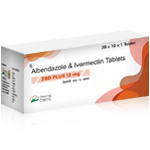
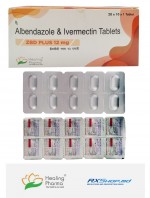
ZBD Plus combines Albendazole + Ivermectin in one regimen to support broad antiparasitic coverage when a clinician recommends dual-action therapy. Albendazole targets many intestinal worms by disrupting parasite energy processes, while ivermectin affects nerve and muscle function in susceptible parasites, helping reduce infestation burden.
This combination is commonly discussed for deworming strategies and situations where mixed parasitic exposure is suspected, with treatment choice guided by symptoms, local risk, and medical evaluation.
For safer use, follow the prescribed schedule, keep doses consistent, and review your current medicines to avoid interaction surprises. Some people may experience nausea, stomach discomfort, dizziness, or headache, especially during the first doses. Seek medical advice if you develop severe weakness, rash, breathing difficulty, or persistent abdominal pain. Store tablets in a cool, dry place and keep them away from children. When used correctly, ZBD Plus can be a practical option for patients who need combined antiparasitic support.

- Mixed helminth infections (multiple worms): Considered when stool testing or local epidemiology suggests more than one worm type may be involved and combination therapy is chosen;
- Soil transmitted helminth infections: A general SEO phrase for roundworm, whipworm, and hookworm exposure linked to contaminated soil and poor sanitation, often managed with deworming programs;
- Ascariasis treatment (roundworm): Indication for intestinal Ascaris infection causing abdominal symptoms, poor appetite, or visible worms in stool in some cases;
- Hookworm infection treatment: Used for hookworm related anemia, fatigue, and GI symptoms when infection is confirmed or strongly suspected;
- Trichuriasis treatment (whipworm): Considered for whipworm infection that can cause diarrhea, abdominal pain, and chronic bowel irritation;
- Strongyloidiasis treatment: Ivermectin is a key drug for Strongyloides stercoralis; combination use may be considered in complex or high-burden parasitic settings under medical direction;
- Onchocerciasis treatment (river blindness): Ivermectin is widely used for Onchocerca volvulus control; combo products may be discussed in some mass treatment or research contexts, depending on local protocols;
- Lymphatic filariasis support therapy: Ivermectin based regimens are used in certain endemic control programs to reduce microfilariae; exact combinations vary by country guidelines;
- Scabies treatment with ivermectin: Used when scabies is severe, crusted, widespread, or when topical therapy fails or is impractical, under clinician supervision;
- Crusted scabies treatment: A severe form of scabies with heavy mite burden where oral ivermectin is commonly included and additional measures are required;
- Cutaneous larva migrans treatment: A creeping skin eruption often from hookworm larvae; albendazole or ivermectin may be used depending on severity and clinician choice;
- Toxocariasis treatment (visceral larva migrans): Albendazole is used for tissue larval infections that can affect organs; treatment decisions depend on symptoms and testing;
- Neurocysticercosis therapy support: Albendazole is used for Taenia solium larvae in the brain, but this is a specialized condition requiring imaging and close medical monitoring, not self-treatment;
- Taeniasis treatment (tapeworm): Albendazole may be used in some cases for intestinal tapeworm infection, depending on species and clinician preference;
- Enterobiasis treatment support (pinworm): Albendazole can be used for pinworm deworming; household hygiene and sometimes treating close contacts are key to prevent reinfection;
- Giardiasis treatment: Albendazole has some activity against Giardia, but it is not the first choice everywhere; therapy depends on local guidelines and confirmed diagnosis;
- Eosinophilia due to parasites: Elevated eosinophils can suggest parasitic infection; clinicians may use deworming agents after evaluation of travel history and symptoms;
- Parasitic infection after travel: A common phrase used when symptoms begin after visiting endemic areas; clinicians choose treatment based on likely organisms and testing;
- Deworming for high risk exposure: Used when there is significant exposure risk (endemic area, poor sanitation, contaminated food or water) and a clinician recommends preventive or presumptive therapy;
- Veterinary parasite exposure in humans: Considered when close contact with infected animals and compatible symptoms raise suspicion of certain zoonotic parasites, requiring medical evaluation and targeted therapy;
- Helminth infection with abdominal pain and diarrhea: A symptom-based phrase describing GI complaints that may prompt stool tests and deworming therapy if parasites are confirmed;
- Persistent itching and rash from parasitic infestation: Relevant when scabies or other parasitic skin conditions are suspected; diagnosis should be confirmed before treatment;
- Parasitic infection causing anemia and fatigue: Hookworm and other parasites may cause iron deficiency anemia; deworming can be part of the management plan along with iron support;
- Important note: ZBD Plus is a combination product and should be used only when a clinician confirms the indication or recommends dual therapy based on your case, local parasite risks, and safety factors.
- Broad spectrum deworming support: May reduce intestinal worm burden in suspected or confirmed helminth infections under medical guidance;
- Mixed parasite exposure coverage: Useful when more than one parasite type is suspected and a combined regimen is chosen;
- Albendazole worm eradication support: Helps disrupt parasite energy processes, contributing to clearance of susceptible intestinal worms;
- Ivermectin parasite paralysis effect: Affects nerve and muscle signaling in susceptible parasites, helping reduce infestation intensity;
- Soil transmitted helminth control: Supports treatment strategies for roundworm, hookworm, and whipworm exposure in endemic settings;
- Strongyloides management support: Ivermectin component aligns with common clinical approaches for strongyloidiasis treatment plans;
- Scabies oral treatment option: May be used for widespread or difficult scabies cases when topical therapy is not enough;
- Crusted scabies intensive support: Can be part of clinician supervised regimens for severe, high-burden scabies presentations;
- Reduced itching from infestation: By lowering parasite load, treatment may help relieve itch and skin irritation over time;
- Simplified dual therapy regimen: Combines two actives in one plan, potentially reducing complexity versus separate products;
- Improved adherence potential: Fewer separate medicines can make schedules easier to follow, supporting consistent therapy;
- Public health deworming relevance: Albendazole and ivermectin are widely referenced in parasite control programs in many regions;
- Lower reinfestation cycle risk: Proper treatment plus hygiene measures may reduce ongoing reinfection patterns in households;
- Symptom relief for GI parasite burden: May help reduce abdominal discomfort or diarrhea when parasites are the underlying cause;
- Support for anemia related parasite burden: Treating hookworm burden can support recovery alongside iron and nutrition management;
- Post travel parasite treatment support: Useful when travel history and testing suggest helminths or other susceptible parasites;
- Eosinophilia parasite workup support: May be selected after evaluation when parasite related eosinophilia is suspected;
- Quality controlled dosing clarity: Fixed strength tablets help deliver consistent dosing when used according to medical instructions;
- Broad antiparasitic tablets for deworming: May support parasite burden reduction across multiple susceptible organisms when dual action therapy is needed.
Generic ZBD Plus (Albendazole + Ivermectin 12 mg) Medication guide:
🧾 What Is ZBD Plus (Albendazole + Ivermectin) - Combination Antiparasitic Overview
ZBD Plus is a combination antiparasitic product that brings together two well-known active ingredients: albendazole and ivermectin. You will also see it described by its generic identity as albendazole + ivermectin. In practice, this kind of pairing is discussed when someone needs a focused approach against suspected parasites and when a clinician wants coverage that may address more than one parasite group or scenario.
Simple definition: ZBD Plus is one product name for the combination of albendazole + ivermectin. You may also encounter wording like Generic (ZBD Plus) or Generic (albendazole + ivermectin), depending on how the listing is presented.
It is important to keep expectations realistic. This medication is not an antibiotic, not an antiviral, and not a general cure for any stomach discomfort. Parasites cause symptoms that can look like many other problems. That is why the best outcomes usually happen when treatment choice is matched to a plausible parasite exposure, symptom pattern, and sometimes lab confirmation.
Why people get confused: diarrhea, bloating, nausea, fatigue, itchy skin, and weight changes can be caused by many non-parasitic conditions. Taking albendazole + ivermectin without a clear reason can delay the right diagnosis diagnosis and waste time.
🧬 What Makes ZBD Plus Different From Single-Ingredient Therapy
Albendazole and ivermectin work through different biological pathways, which is why some regimens consider using both. Albendazole is commonly positioned in therapy for various worm infections and some tissue parasites, while ivermectin is widely known for activity against certain nematodes and for use in selected ectoparasite regimens (for example, scabies protocols vary by region and patient factors).
Albendazole focus: often chosen when broad intestinal helminth coverage is needed and when certain tissue parasite scenarios are suspected.
- Strength: broad worm activity in many common contexts;
- Typical limitation: dosing and duration can vary a lot by condition.
Ivermectin focus: often discussed for specific nematodes and for selected skin or exposure-driven protocols.
- Strength: strong role in certain nematode conditions and protocols;
- Typical limitation: must consider travel risks and special screening in some regions.
🎯 What This Drug Is Designed For - The Practical Use Case
Think of ZBD Plus (albendazole + ivermectin) as a tools-based approach. It is used when there is a plausible parasitic cause and a treatment plan is chosen for that likely cause. Sometimes the plan targets a specific organism, and sometimes it is selected because symptoms and exposure history suggest a high probability of parasites.
Exposure history matters a lot: travel to endemic regions, untreated water, undercooked meat or fish, close-contact outbreaks, and household clustering of itching symptoms can strongly change the suspected parasite list.
🧭 Decision Path (Concept Map)
Step 1 🧳 Exposure clue (travel, water, food, close contact)
Step 2 🧩 Symptom cluster (GI symptoms, skin itching, anemia-like fatigue)
Step 3 🧪 Consider testing when feasible (stool test, targeted evaluation)
Step 4 💊 Choose regimen (single agent vs albendazole + ivermectin)
Step 5 ✅ Follow-up (symptom tracker, repeat test if needed)
📌 Quick Understanding Table - What It Is and What It Is Not
| Category | What It Means |
|---|---|
| Product identity | ZBD Plus - a brand name presentation of albendazole + ivermectin. |
| Drug class | Combination antiparasitic therapy (two mechanisms in one plan). |
| Main purpose | To treat selected parasitic infections when a proper clinical rationale exists. |
| What it is NOT | Not an antibiotic, not an antiviral, not a general GI remedy, not a detox product. |
| Key success factor | Matching the regimen to the suspected organism and using appropriate follow-up. |
🪱 Symptom Clues Map - When People Start Thinking About Parasites
Many users land on a product page after searching symptoms. The table below is a clue map, not a diagnosis tool. A clinician uses these patterns together with exposure history and, when possible, testing.
| Common Symptom Pattern | How Clinicians Think About It | What Helps Next |
|---|---|---|
| GI symptoms (bloating, loose stool, cramps) | Could be intestinal parasites, but also IBS, food intolerance, infections, or stress. | Exposure review, hydration assessment, consider stool testing if persistent. |
| Itching (especially at night) and household spread | Often triggers evaluation for close-contact conditions and exposure patterns. | Check household contacts, hygiene plan, and regimen choice if confirmed. |
| Unexplained fatigue with possible anemia signs | Some parasites can contribute indirectly, but many other causes exist. | Basic labs and clinical review before assuming parasites. |
👨⚕️ Doctor Perspective - Practical Advice That Improves Outcomes
Infectious disease clinicians commonly emphasize: do not treat symptoms alone - treat a plausible organism. If the plan includes albendazole + ivermectin, confirm there is a reason for combination therapy, and do not skip follow-up when symptoms persist.
- Best habit: document exposure (travel, food, water, close contact);
- Best safety habit: review current meds and major health conditions before starting this drug;
- Best results habit: use a simple symptom tracker to see real improvement vs random fluctuation.
🧑🤝🧑 Patient Perspective - What People Usually Care About
Common patient concerns (summarized from typical user discussions): people want a plan that is easy to follow, want to know how fast symptoms should change, and worry about side effects. Many also ask whether they should treat family members or repeat dosing. These topics will be handled in later sections of this Medication Guide.
📊 Mini Chart - What Most Often Determines Success (Conceptual)
This is a conceptual chart that helps users understand where most mistakes happen with ZBD Plus or with albendazole + ivermectin in general. It is not a statistical dataset.
| Success Driver | Impact Level | What It Looks Like in Real Life |
|---|---|---|
| Right target organism | ██████████ High | Regimen chosen because exposure + symptoms fit a parasite scenario. |
| Correct schedule and completion | █████████ Medium-High | Course duration and timing are followed consistently. |
| Follow-up and prevention | ████████ Medium | Reinfection prevention steps and reassessment if symptoms remain. |
| Random symptom fluctuation | ████ Low | Some symptoms improve temporarily even without correct treatment. |
✅ Key Takeaways From This Section
- ZBD Plus is a brand presentation of albendazole + ivermectin, a combination antiparasitic approach;
- The combination can be discussed for broader scenarios, but it is not universal for all symptoms or all parasites;
- Exposure history is a major clue and often more useful than guessing from symptoms alone;
- Many high-quality outcomes depend on correct regimen selection, consistent use, and follow-up, not on taking this drug once and hoping.
Safety reminder: If symptoms include severe weakness, dehydration, confusion, fainting, blood in stool, persistent fever, or neurological symptoms, do not rely on this medication alone. Seek urgent medical evaluation.
🧬 Active Ingredients - Albendazole vs Ivermectin (Key Differences)
ZBD Plus combines two distinct antiparasitic actives in one plan: albendazole and ivermectin. If you describe it by its generic identity, it is simply albendazole + ivermectin. The key idea is that these ingredients work in different ways and tend to be chosen for different parasite scenarios, which is why some regimens consider the pairing (sometimes listed as Generic (ZBD Plus) or Generic (albendazole + ivermectin)).
Quick takeaway: Albendazole is best understood as a drug that disrupts parasite cell structure and energy handling, while ivermectin is best understood as a drug that disrupts parasite nerve and muscle signaling. Because the targets are different, this medication can be discussed when a broader approach is clinically reasonable.
⚙️ Mechanism of Action - Two Different Biological Targets
Although both ingredients fight parasites, they do not overlap perfectly. Albendazole primarily interferes with microtubules (cell scaffolding and transport inside parasite cells). Ivermectin primarily affects chloride channels involved in nerve and muscle function in many invertebrates.
| Active Ingredient | What It Targets | What That Does to Parasites |
|---|---|---|
| Albendazole | β-tubulin and microtubule formation | Disrupts essential cell functions and nutrient handling, weakening or killing susceptible parasites |
| Ivermectin | Glutamate-gated chloride channels (in invertebrates) | Leads to impaired nerve and muscle activity, causing paralysis and parasite death or clearance |
Albendazole in one sentence: weakens parasites by damaging core cellular structures needed for survival.
Ivermectin in one sentence: disables parasites by disrupting nerve and muscle signaling pathways that mammals largely do not use the same way.
🪱 Parasite Coverage - Where Each Ingredient Commonly Fits
People often assume one antiparasitic covers everything. In reality, parasite groups behave differently. That is why the generic pairing albendazole + ivermectin can be considered in selected cases, but the choice should still match the likely organism.
Important: This is a simplified educational map, not a diagnosis tool. Your real target organism depends on exposure history, symptoms, and sometimes testing.
- Albendazole is commonly discussed for: many intestinal helminths and certain tissue parasite scenarios, depending on the condition and regimen;
- Ivermectin is commonly discussed for: specific nematode infections and selected protocols for ectoparasites (for example, some scabies regimens);
- Combination logic: may be considered when there is a reason to cover more than one likely parasite group or when the clinical scenario supports it;
- Main limitation: this drug is not a universal fix for all stomach issues, itching, or fatigue.
🍽️ Practical Differences - Food, Timing, and Why That Matters
Even when two medicines are taken in the same course, they can behave differently in the body. Albendazole exposure can vary based on how it is taken, and ivermectin use may require extra screening in special travel scenarios. For many buyers, the most useful mindset is: follow a consistent plan, avoid guesswork, and do not ignore warning signs.
Why food questions come up: some antiparasitics show meaningful changes in absorption depending on meal context. This is one reason to follow the regimen instructions rather than switching randomly between empty stomach and heavy meals.
Why travel history matters: ivermectin safety planning can change if someone has lived in or traveled to areas where specific parasites (example: Loa loa) are present.
🧯 Safety Focus - What Each Ingredient Is Known For
Side effects and risks are covered in depth later, but understanding the difference in risk profiles helps users set expectations and communicate better with a clinician. In general terms, albendazole safety conversations often highlight liver and blood counts (especially with longer or repeated courses), while ivermectin discussions often highlight neurologic symptoms, dizziness, and inflammatory reactions in certain parasite contexts.
| Topic | Albendazole (Typical Focus) | Ivermectin (Typical Focus) |
|---|---|---|
| Monitoring | Liver enzymes and blood counts may matter more in longer courses | Screening considerations may matter more in certain travel or endemic exposures |
| Common feeling reported | GI upset can occur, and tolerance varies by dose and duration | Dizziness or fatigue can occur, and reactions can depend on parasite burden |
| Key caution concept | Do not ignore signs of liver stress or unusual weakness during therapy | Do not ignore severe headache, confusion, vision changes, or intense systemic reactions |
Stop-and-check rule: If severe symptoms appear (fainting, confusion, intense weakness, severe rash, breathing difficulty), stop this medication and seek urgent medical evaluation.
📊 Mini Infographic - "Why Did My Doctor Choose One vs Both?"
Single-agent plan ✅
Usually chosen when the suspected organism is narrow and the regimen is straightforward.
Combination plan (ZBD Plus or albendazole + ivermectin) 🧩
Considered when exposure and symptoms suggest more than one plausible parasite scenario or when clinical protocols support broader coverage.
Not chosen ⛔
When symptoms are unlikely to be parasitic, when red flags require a different workup, or when screening risks are present.
👨⚕️ Expert Note - What Clinicians Tend to Emphasize
Clinical mindset: Treat the organism, not the worry. Many infectious disease specialists emphasize exposure history, targeted testing when feasible, and follow-up, because symptom-only self-treatment can miss the real cause.
- Best question to ask: what parasite are we targeting and why this regimen;
- Best safety question: do I have travel exposure that changes ivermectin screening;
- Best follow-up habit: track symptoms and reassess if there is no clear improvement.
🧑🤝🧑 Patient Voice - Typical Expectations and Mistakes
What patients often expect: fast relief after one dose. Reality: improvement depends on the organism, the regimen, reinfection risk, and whether the original symptoms were actually caused by parasites.
- Common mistake: repeating doses too soon without a plan;
- Common mistake: treating the whole household without understanding the exposure pattern;
- Better approach: follow a clear regimen and use prevention steps to reduce reinfection.
✅ Key Differences Summary (Fast Scan)
- Albendazole mainly disrupts parasite microtubules and core cell functions;
- Ivermectin mainly disrupts parasite nerve and muscle signaling via chloride channels;
- ZBD Plus (albendazole + ivermectin) is discussed when broader coverage is clinically justified;
- This drug works best when it matches the likely organism and includes follow-up and prevention.
🎯 What This Medication Treats - Parasite Types and Real-World Use
ZBD Plus is positioned as a combination antiparasitic option that contains albendazole + ivermectin. In real-world terms, people look at this medication when there is a reasonable parasite suspicion based on exposure, symptom patterns, and sometimes basic testing. The most important principle is simple: parasites are not one thing, so the best regimen depends on the likely parasite group and the situation.
Plain-English goal: ZBD Plus (or Generic (albendazole + ivermectin)) may be considered when a broader antiparasitic approach is clinically sensible, but it should not be treated as a universal shortcut for every GI complaint or itch.
🧩 Parasite Groups - A Simple Map (So It Makes Sense)
Parasites are usually discussed in a few big groups. Understanding these categories helps users interpret why one drug is chosen, why a combination might be considered, and why this drug is not always the best answer.
| Parasite Group | What It Includes (Examples) | How People Commonly Get Exposed | What Usually Matters Most |
|---|---|---|---|
| Nematodes (roundworms) | Common intestinal worm types, plus some tissue nematodes | Food, water, soil contact, travel-related exposure | Exposure story + symptom pattern + correct schedule |
| Cestodes (tapeworms) | Tapeworm infections and related tissue scenarios | Undercooked meat or contaminated food routes | Correct identification and proper regimen length |
| Trematodes (flukes) | Fluke-related infections | Regional freshwater or food-related exposures | Often needs targeted therapy, not guesswork |
| Ectoparasites | Skin-related infestations in specific protocols | Close contact, household spread, shared bedding/clothing | Treat contacts and prevent reinfestation |
Why this matters: if you pick the wrong parasite group, you may pick the wrong plan, even if symptoms feel convincing.
Why combinations exist: albendazole and ivermectin do not overlap perfectly, so the generic pairing can be considered in selected mixed-risk scenarios.
🌍 Real-World Scenarios - When People Look for Albendazole + Ivermectin
Below are common real-world situations that trigger interest in ZBD Plus. These are scenario signals, not diagnoses. This drug should be chosen based on plausibility and safety screening, not fear-driven guessing.
- Travel exposure: symptoms begin after travel to higher-risk regions, especially with untreated water or street food;
- Food exposure: undercooked meat or fish is part of the story, plus new GI symptoms;
- Household pattern: multiple people in one home develop itching or similar complaints in the same period;
- Persistent GI pattern: repeated bloating, cramps, irregular stool, and no clear non-parasitic explanation;
- Reinfection risk: symptoms improve and return because hygiene and contact prevention were not addressed.
Reality check: many non-parasitic conditions imitate parasites. If there is fever, blood in stool, severe dehydration, confusion, fainting, or strong ongoing pain, do not rely on this medication alone.
🧭 Mini Infographic - How Clinicians Think (Concept Flow)
Quick flow: from suspicion to the right plan and follow-up.
Step 1 - 🧳 Exposure clue
Travel, untreated water, undercooked food, close-contact spread in the household.
↓
Step 2 - 🧩 Symptom cluster
GI symptoms, skin itching, or systemic signs - matched to the exposure story.
↓
Step 3 - 🧪 Optional confirmation
Stool testing or targeted evaluation when symptoms persist or the case is unclear.
↓
Step 4 - 💊 Regimen choice
Single agent vs ZBD Plus, or the generic plan albendazole + ivermectin - based on the most likely organism.
↓
Step 5 - ✅ Follow-up
Symptom tracking, reinfection prevention, and reassessment if improvement is not clear.
📌 What This Drug Is NOT For - Common Misuse Patterns
People sometimes take this medication because of anxiety, social media advice, or a general desire to "clean the body". That approach creates unnecessary risk and delays correct care.
Not a detox product: Generic (ZBD Plus) is not a routine cleanse or wellness supplement.
Not for unclear symptoms: if the story does not fit parasites, testing and evaluation are usually smarter than guessing.
Not a one-dose miracle: outcomes depend on organism, schedule, and reinfection control.
🧑⚕️ Clinician Commentary - The Two Questions Doctors Ask First
Practical doctor mindset: many clinicians start with two questions before recommending albendazole + ivermectin.
- Question 1: What parasite are we targeting, and what is the evidence (exposure, pattern, or tests);
- Question 2: Is there any safety reason to avoid or adjust this drug (travel-related risks, liver concerns, other meds).
🗣️ Patient Experience Snapshot - What People Commonly Report
What patients often say: many people focus on how quickly they will feel better. In practice, some symptoms fluctuate naturally, and the real signal is consistent improvement plus prevention steps that reduce reinfection.
✅ Section Summary - Clear, Actionable Understanding
- ZBD Plus is a brand presentation of albendazole + ivermectin, used when parasite suspicion is plausible;
- Parasites fall into different groups, so regimen choice must match the likely organism;
- This medication is most useful when guided by exposure history, consistent schedule, and follow-up;
- Misuse risk rises sharply when people treat vague symptoms without a parasite-focused rationale.
✅ FDA Approved Indications - Albendazole (Official Label Uses)
In ZBD Plus, one of the two active ingredients is albendazole. When we talk about FDA approved indications, we are referring to the official uses listed on the U.S. FDA labeling for the branded reference product of albendazole (commonly known as ALBENZA). This matters because it helps separate official label indications from uses that may be discussed in practice outside the label.
Why this section is important: ZBD Plus is a combination (albendazole + ivermectin). The FDA indications below apply to albendazole as a single active ingredient on its official U.S. label, not automatically to the fixed combination product.
📌 Albendazole - FDA Approved Indications (Core)
On the FDA label, albendazole is indicated for the treatment of specific parasitic infections. The two key FDA approved indications are:
- Neurocysticercosis: treatment of parenchymal neurocysticercosis (larval forms of Taenia solium) in the brain;
- Hydatid disease: treatment of hydatid disease (echinococcal cysts) caused by Echinococcus granulosus.
Plain-English meaning: Albendazole is FDA-approved for serious tissue parasite conditions that often require careful medical supervision, monitoring, and sometimes additional therapies. These are not casual self-treatment conditions.
🧠 FDA Indication 1 - Neurocysticercosis (Brain Infection by Larval Tapeworm)
Neurocysticercosis is a condition where larvae of the pork tapeworm (Taenia solium) affect the central nervous system. It can lead to seizures, headaches, neurological deficits, or other serious complications. In label-based practice, albendazole may be used as part of a plan that can include additional medications (for example, to manage inflammation or seizure risk), depending on clinical judgment.
Safety note: Neurocysticercosis treatment can trigger inflammatory reactions as parasites die, which is one reason clinicians often manage this condition with specialist input and careful monitoring rather than self-treatment.
🫧 FDA Indication 2 - Hydatid Disease (Echinococcal Cysts)
Hydatid disease is caused by Echinococcus granulosus and can form cysts in organs such as the liver or lungs. Albendazole is FDA-approved for this indication because it can help treat the parasitic component of the disease. In real-world care, treatment decisions can also involve imaging, monitoring cyst changes, and sometimes procedures depending on cyst type, location, and clinical status.
What makes this different from "intestinal worms": hydatid disease is a tissue cyst condition. It is typically managed as a structured medical case, not as routine deworming.
📊 Quick Table - FDA Label Uses vs Common Non-Label Conversations
| Topic | Albendazole FDA Approved | Often Discussed Outside Label |
|---|---|---|
| Main official FDA indications | Neurocysticercosis; Hydatid disease (echinococcal cysts) | Various intestinal helminths and other parasitic infections depending on regional guidance |
| Typical complexity | Higher complexity, frequently needs monitoring | Can range from simple to complex depending on parasite and patient risk |
| Why careful dosing matters | Dose and duration are tied to disease type and severity | Regimens vary widely, and wrong schedules can reduce results |
👨⚕️ Expert View - Why FDA Indications Are Narrow
Clinical perspective: FDA labeling is usually based on where the strongest evidence and formal approval exist. Albendazole is used more broadly in practice and in global guidelines, but this section is strictly about official U.S. FDA indications, which are focused on serious tissue parasite conditions.
🧑🤝🧑 Patient Lens - What People Should Understand Before Using This Drug
Common misunderstanding: many people assume albendazole is "just a dewormer." FDA-approved uses include conditions that can involve the brain or organ cysts. That is why safe use depends on correct evaluation, not guessing.
✅ Key Takeaways
- Albendazole has FDA-approved indications for neurocysticercosis and hydatid disease;
- These official indications apply to the ingredient itself, not automatically to the combination product ZBD Plus;
- Both conditions can require medical supervision due to inflammation risk, imaging needs, and regimen complexity;
- If symptoms are vague, it is usually safer to evaluate first rather than self-treat with this medication.
✅ FDA Approved Indications - Ivermectin (Official Label Uses)
In ZBD Plus, the second active ingredient is ivermectin. When we say FDA approved indications, we mean the official uses listed on the U.S. FDA label for ivermectin tablets (commonly referenced through the branded label STROMECTOL). This section is strictly about ivermectin as an ingredient, not automatically about the fixed combination albendazole + ivermectin.
Important clarity: FDA labeling applies to ivermectin tablets. ZBD Plus is a combination product name, and this medication may be discussed in broader contexts than the FDA label. Label-based facts help users separate official indications from non-label discussions.
📌 Ivermectin - FDA Approved Indications (Core)
On the FDA label, ivermectin tablets are indicated for treatment of:
- Strongyloidiasis of the intestinal tract: infection caused by Strongyloides stercoralis;
- Onchocerciasis: infection caused by Onchocerca volvulus (commonly linked to river blindness).
Plain-English meaning: ivermectin is FDA-approved for specific nematode infections. It is not a general antibiotic, not a treatment for viruses, and not a universal answer for vague GI symptoms.
🪱 FDA Indication 1 - Strongyloidiasis (Strongyloides stercoralis)
Strongyloidiasis is caused by a tiny intestinal nematode that can persist for years in some people. Many cases are mild or silent, but symptoms can include GI discomfort, intermittent diarrhea, abdominal pain, skin findings, and eosinophilia (a type of blood cell elevation). The key clinical concern is that in certain high-risk patients, the infection can become severe.
High-stakes warning: In people with weakened immunity or those using steroids, Strongyloides can escalate into severe forms. In these situations, do not rely on self-treatment. Evaluation and a structured plan are critical.
What treatment tries to achieve: eliminate the parasite and prevent ongoing autoinfection that can keep symptoms returning.
What follow-up often checks: symptom resolution and, when appropriate, targeted testing based on clinician guidance.
👁️ FDA Indication 2 - Onchocerciasis (Onchocerca volvulus)
Onchocerciasis is a filarial infection transmitted by blackflies in endemic regions. It can affect the skin and eyes. Ivermectin is used because it reduces the burden of microfilariae (immature forms) that drive inflammation and symptoms.
Key concept: Ivermectin is primarily microfilaricidal. In many clinical explanations, it reduces microfilariae and helps control symptoms and transmission. Management in endemic settings can involve repeat dosing strategies under public health protocols.
🧭 Mini Infographic - Two FDA Indications, Two Different Goals
Strongyloidiasis (intestinal tract) 🪱
Goal - eradicate the parasite and prevent ongoing autoinfection, especially important if risk factors exist.
Onchocerciasis (river blindness context) 👁️
Goal - reduce microfilariae burden to limit inflammation, skin symptoms, and eye complications in endemic exposure settings.
📊 Quick Table - FDA Label Uses vs Common Non-Label Conversations
| Topic | Ivermectin FDA Approved | Often Discussed Outside Label |
|---|---|---|
| Main official indications | Strongyloidiasis; Onchocerciasis | Other parasitic conditions depending on local protocols and clinician judgment |
| Typical exposure story | Endemic travel or residence; specific risk factors | Household outbreaks, skin scenarios, mixed symptom stories (needs careful evaluation) |
| Why misuse happens | People assume it is a universal antiparasitic | Online advice and symptom-based guessing without parasite confirmation |
🌍 Safety Reality That Affects Indications - Travel and Loa loa Screening
Even when ivermectin is the correct tool, there are special geographic risks. If someone has lived in or traveled through certain regions of Central or West Africa, clinicians may consider Loa loa exposure risk before using ivermectin because severe reactions can occur in high microfilarial loads.
Do not skip this step: If the exposure history suggests Loa loa risk, this drug should not be started casually. Screening and specialist guidance can be essential.
👨⚕️ Doctor Perspective - Why FDA Indications Are Specific
Clinical perspective: FDA indications usually reflect where formal approval and label evidence exist. Clinicians may use ivermectin in broader parasitic contexts, but this section is intentionally limited to official label uses so readers understand what is confirmed vs what is situational.
🧑🤝🧑 Patient Lens - What People Usually Want to Know First
Common patient questions: How fast should symptoms change, do I need follow-up, and should I repeat dosing. The best answer depends on the specific parasite scenario. This is why ZBD Plus and the generic combination albendazole + ivermectin should be used with a clear plan, not guesswork.
✅ Key Takeaways
- Ivermectin has FDA-approved indications for strongyloidiasis and onchocerciasis;
- These FDA indications apply to ivermectin tablets, not automatically to ZBD Plus as a combination product;
- Travel and regional exposure history can change safety planning, especially for Loa loa risk scenarios;
- This medication works best when it matches a plausible organism and includes appropriate follow-up.
🧾 Is Albendazole + Ivermectin FDA Approved as a Combo - Off-Label Clarification
Many buyers assume that if a product contains two well-known antiparasitic drugs, the combination itself must be FDA-approved. In reality, FDA approval works in a very specific way. Albendazole and ivermectin each have their own FDA-approved uses as individual ingredients, but a fixed combo like albendazole + ivermectin is a separate product concept that would require its own formal FDA pathway to be considered an FDA-approved combination.
Bottom line: FDA approval of each ingredient does not automatically mean FDA approval of the combination. ZBD Plus is typically discussed as a brand-style presentation of albendazole + ivermectin, and this combo may be used in practice under clinical judgment, but it is not the same thing as a specifically FDA-approved fixed-dose combination product.
✅ What FDA Approved Really Means (In Plain English)
FDA approved means a drug product has been reviewed for specific labeled indications, dosing, and safety information within the U.S. regulatory system. It is not just about the active ingredients, it is also about the product labeling, evidence package, and approved claims.
- FDA approved ingredient use: an ingredient has official labeling for certain conditions, in certain doses and regimens;
- FDA approved product: the specific product form and its label claims have been reviewed and authorized;
- Combination approval: a fixed-dose combo is treated as its own product and needs its own approval to make combination claims.
Common misunderstanding: People see albendazole and ivermectin on the same page and conclude the combo is FDA-approved. That conclusion is not automatically correct.
🧩 Ingredient Approval vs Combination Use - The Practical Difference
Albendazole has FDA-approved indications (for specific tissue parasite diseases) and ivermectin has FDA-approved indications (for specific nematode diseases). A listing such as ZBD Plus combines these actives for a broader antiparasitic approach. That can be clinically discussed, but it is different from saying the fixed combination is an FDA-approved combo product.
| Question People Ask | Correct Interpretation | What It Means for You |
|---|---|---|
| Is albendazole FDA-approved? | Yes, for specific labeled indications (ingredient-level approval). | Label-based uses exist, but regimen must match the condition. |
| Is ivermectin FDA-approved? | Yes, for specific labeled indications (ingredient-level approval). | Label-based uses exist, but travel and screening can matter. |
| Is albendazole + ivermectin FDA-approved as a fixed combo? | Not automatically. A fixed combo would require its own FDA approval. | Do not assume the combination has FDA-approved combo labeling. |
| Can a clinician still use both actives? | Yes, clinical practice may consider it when appropriate. | This medication should be used with a clear rationale and plan. |
📌 What Off-Label Means (And What It Does NOT Mean)
Off-label can mean: a doctor uses an FDA-approved ingredient in a way not listed on the U.S. label when evidence and clinical judgment support it.
Off-label does NOT mean: unsafe, fake, or automatically wrong. It means the use is outside the specific labeled indication.
Important boundary: Off-label prescribing is different from marketing claims. A seller should not present the fixed combo as "FDA-approved for everything" just because each ingredient exists in FDA labeling for certain conditions.
🧭 Mini Infographic - How to Read Claims Correctly (No Special Fonts)
Step 1 - ✅ Identify what is FDA-approved
Albendazole and ivermectin have FDA-approved labels for specific indications as individual ingredients.
Step 2 - 🧾 Separate ingredient approval from combo approval
A fixed combo like albendazole + ivermectin is not automatically an FDA-approved combination product.
Step 3 - 🎯 Ask the right clinical question
What parasite is most likely, and why is ZBD Plus (or a plan using both actives) appropriate for that scenario?
Step 4 - ✅ Confirm safety and follow-up
Consider interactions, travel screening risks, and what follow-up looks like if symptoms do not improve.
👨⚕️ Doctor Perspective - Why This Distinction Matters
Typical clinician reasoning: When a doctor considers using both actives, the decision is usually based on a risk-based parasite hypothesis (exposure + symptoms + local patterns) and a safety screen. The question is not "is the combo famous online" - the question is does this regimen match the likely organism and patient risk.
- Best question to ask: What parasite are we targeting with albendazole + ivermectin?
- Best safety question: Is there any travel or exposure factor that changes ivermectin risk screening?
- Best follow-up habit: What is the plan if symptoms do not clearly improve?
🧑🤝🧑 Patient Voice - The Most Common Confusion
What patients often misunderstand: they expect one course of ZBD Plus to solve any gut discomfort or itching. The better expectation is: this drug helps when the symptoms truly match a parasite scenario and when reinfection risks are handled.
✅ Key Takeaways
- Albendazole and ivermectin each have FDA-approved indications as individual ingredients;
- A fixed combination like albendazole + ivermectin is not automatically an FDA-approved combo product;
- ZBD Plus may still be discussed in clinical use when a broader antiparasitic plan is reasonable, but the rationale must be clear;
- If you see strong claims like "FDA-approved combo for everything," treat that as a red flag and verify the indication logic.
🪱 Most Common Worm Infections This Drug Targets - Practical Scenarios
Quick take ✅ People usually consider ZBD Plus when the story fits parasites - not just symptoms. The strongest clue is often exposure (travel, water, food, household spread) plus a consistent symptom pattern.
ZBD Plus is a brand-style presentation of albendazole + ivermectin. In day-to-day discussions, the generic pairing may be considered for common worm scenarios when a clinician expects helminths and wants a practical regimen approach. This medication is not a universal answer for every stomach problem or itch, but it can make sense when the exposure story and symptom cluster point toward parasites.
🧩 The 3 most common "worm scenarios" people actually face
Not every parasite situation looks like a textbook case. These three buckets help readers quickly understand where albendazole, ivermectin, or the combined plan is usually discussed.
1) Intestinal exposure 🍽️
Food, untreated water, travel meals, or poor sanitation patterns that increase worm risk.
- Typical clues: recurrent cramps, loose stools, bloating;
- Useful next move: exposure review plus stool testing when symptoms persist;
- Common pitfall: treating once and ignoring reinfection routes.
2) Soil and outdoor contact 🌱
Gardening, rural work, barefoot exposure, or children bringing exposure home.
- Typical clues: GI issues plus fatigue over time;
- Useful next move: check household patterns and hygiene habits;
- Common pitfall: assuming every fatigue symptom is parasites.
3) Travel and special-risk exposure 🧳
Travel to endemic regions or prolonged exposure where nematodes are more common.
- Typical clues: symptoms starting after travel with no clear food trigger;
- Useful next move: discuss region-specific risks with a clinician;
- Common pitfall: starting ivermectin without considering regional screening issues.
🪱 Common worm types people mean (and how to think about them)
Below is a patient-friendly map of "common worms" that people usually refer to. This is not a diagnosis tool. It helps readers know what questions to ask before using ZBD Plus or a plan based on albendazole + ivermectin.
| Worm category | Common clue pattern | What to discuss before taking this drug | Why follow-up matters |
|---|---|---|---|
| Common intestinal roundworms | GI discomfort, bloating, irregular stool, symptoms after exposure changes | Exposure story, stool testing if persistent, correct dosing schedule | Symptoms can fluctuate, reinfection is common if prevention is ignored |
| Hookworm-type exposure patterns | Fatigue patterns plus GI symptoms, sometimes linked to soil exposure | Check risk factors and consider basic labs if fatigue is significant | Some outcomes depend on correcting reinfection routes and nutrition support |
| Whipworm-type patterns | Prolonged GI upset in higher-risk sanitation contexts | Do not guess - confirm plausibility with testing when possible | Wrong target organism means poor results even with correct dosing |
| Strongyloides concern | Intermittent symptoms, sometimes silent for long periods | Risk assessment is essential, especially if immune suppression exists | High-risk patients need structured follow-up, not casual self-treatment |
📈 Risk Meter - how "likely parasite" feels from the story (fast reader view)
This is a simple concept tool to reduce guesswork. It is not a medical scoring system.
Story-based likelihood: based on exposure + symptom consistency + household pattern.
- Low: symptoms only, no exposure clue, short duration;
- Medium: symptoms plus one exposure clue, inconsistent pattern;
- High: clear exposure + consistent symptoms or household clustering.
🔁 Mini Infographic - the reinfection loop (why symptoms return)
Step 1 💊 Treatment happens
ZBD Plus or the albendazole + ivermectin plan is started.
→
Step 2 🧼 Prevention is skipped
Household, hygiene, food, or water habits do not change.
→
Step 3 🔁 Symptoms return
People assume the drug failed, but the environment was never fixed.
Practical fix: treat the pathway, not only the parasite. Prevention steps are a major part of results.
👨⚕️ Doctor note - what experienced clinicians often emphasize
Doctor perspective: the most common reason this drug "does not work" is not resistance. It is wrong target organism, wrong regimen timing, or reinfection. A clear exposure story plus a follow-up plan usually beats guesswork.
🧑🤝🧑 Patient voice - what people often notice first
Typical patient experience: some people feel partial improvement quickly, then symptoms fluctuate. The most reliable signal is steady improvement over days plus fewer triggers from food, water, and household exposure.
✅ What to do next if this section matches your story
- Write down exposure facts: travel dates, food or water issues, household clustering;
- Track symptoms for 7 days: stool pattern, cramps, itch timing, fatigue level;
- Consider confirmation: stool testing if symptoms persist or the story is unclear;
- Plan prevention: hygiene, laundering, food safety, and contact strategy if needed;
- Use this medication with a plan: do not improvise dosing or repeat cycles too fast.
Safety reminder: If there is severe weakness, dehydration, blood in stool, persistent fever, confusion, fainting, or neurological symptoms, do not self-manage. Seek urgent medical evaluation.
🧪 How Albendazole Works - Mechanism of Action Simplified
Quick take ✅ Albendazole works by disrupting parasite cell structure and blocking energy handling, so the parasite cannot maintain normal life functions. This is one of the reasons ZBD Plus (albendazole + ivermectin) is discussed as a broader antiparasitic approach in selected scenarios.
Albendazole is one of the two active ingredients in ZBD Plus. When you describe this medication in generic terms, you are referring to a plan built on albendazole + ivermectin. Albendazole is best understood as a drug that targets a parasite at the cellular level, reducing its ability to survive, move normally, and maintain vital internal processes.
🧬 The Core Target - Microtubules (The Parasite Internal "Scaffolding")
Inside parasite cells, there are structures called microtubules. Think of microtubules as the cell internal framework that helps with:
- Cell structure stability: keeping the cell organized and functional;
- Internal transport: moving essential materials inside the cell;
- Cell division: supporting replication and survival over time.
Simple explanation: Albendazole binds to parasite proteins involved in microtubule formation. When microtubules cannot form properly, the parasite internal systems become unstable.
⚙️ Energy Disruption - Why Parasites Get Weaker Over Time
Many parasites rely on efficient energy management. When albendazole disrupts cell structure and transport, parasites can lose the ability to take in and process nutrients effectively. That leads to a progressive decline in function and survival.
What patients may notice: improvement can be gradual depending on parasite type and burden. Not every benefit feels immediate.
Why schedule matters: some regimens need multiple doses because parasite life stages can differ in sensitivity.
🧩 Albendazole - What It Tends to Be Strong At (High-Level)
Albendazole is often discussed for a broad range of helminth scenarios. It is also the ingredient with FDA-approved indications for serious tissue parasite diseases. Even if someone buys Generic (ZBD Plus), it is useful to understand albendazole as a cell-level parasite disruptor that is used in different schedules depending on the condition.
Practical detail: The same drug can be used as a single-dose strategy for some intestinal worms, but may require longer structured courses for tissue parasite diseases. That difference is one reason self-treatment can go wrong.
📊 Concept Chart - Where Albendazole Does Its Best Work
This is a simplified concept chart to explain why the albendazole component of this medication can be used across very different parasite situations.
| Parasite setting | What albendazole is trying to do | Why regimens can vary |
|---|---|---|
| Intestinal helminths | Disrupt parasite survival inside the gut | Different worms, different life stages, different dosing strategies |
| Tissue parasite diseases | Reduce or eliminate parasite activity within tissues | Course length and monitoring can be needed due to complexity |
| Mixed-risk scenarios | Provide broad helminth coverage as part of a plan | May be paired with ivermectin depending on exposure and clinical goal |
🧭 Mini Infographic - How Albendazole Weakens Parasites (Step by Step)
Step 1 - 🧬 Target binding
Albendazole binds to parasite proteins involved in microtubule formation.
Step 2 - 🧱 Structural breakdown
Microtubules cannot form normally, so the parasite cell internal systems become unstable.
Step 3 - ⚙️ Energy and nutrient failure
Transport and nutrient handling are disrupted, so the parasite becomes weaker and may die.
Step 4 - ✅ Clearance
The body clears dead or weakened parasites over time, and symptoms may improve if the organism was the true cause.
👨⚕️ Doctor note - what clinicians often warn about
Doctor perspective: Albendazole is powerful, but the regimen must match the parasite scenario. Longer or repeated courses can require monitoring (for example, liver enzymes and blood counts). That is why a structured plan is safer than improvising with this drug.
🧑🤝🧑 Patient voice - what people often misunderstand
Common patient confusion: Some people expect immediate relief after a single dose. In reality, improvement can be gradual, and if symptoms do not clearly improve, it may mean the original problem was not parasites or the regimen did not match the organism.
✅ Key Takeaways
- Albendazole disrupts parasite microtubules, weakening parasite cell structure and transport;
- This leads to energy and nutrient failure, reducing parasite survival over time;
- Regimen length can vary widely, so self-treatment mistakes are common without a clear plan;
- In ZBD Plus (albendazole + ivermectin), albendazole provides a strong cellular-level antiparasitic action as part of a broader approach.
🧠 How Ivermectin Works - Mechanism of Action Simplified
Quick take ✅ Ivermectin works mainly by disrupting parasite nerve and muscle signaling. In simple terms, it can paralyze susceptible parasites, making them unable to survive and allowing the body to clear them. This is one reason ZBD Plus (albendazole + ivermectin) is discussed as a broader antiparasitic option in selected scenarios.
In ZBD Plus, ivermectin is the second active ingredient. When readers describe the product by its generic identity, it is the pairing albendazole + ivermectin. Ivermectin is best explained as a medication that targets invertebrate signaling pathways that are not the same in humans, which helps create a therapeutic window against certain parasites.
⚡ The Main Target - Chloride Channels in Parasites
Many parasites rely on specific nerve and muscle signaling channels to move, feed, and attach. Ivermectin interacts with glutamate-gated chloride channels found in many invertebrates. When these channels are affected, parasite nerve and muscle function can become severely impaired.
Plain explanation: ivermectin increases chloride flow in susceptible parasites, which can cause paralysis. A paralyzed parasite cannot maintain normal function, and the body can clear it over time.
🪱 Why It Helps in Certain Worm Scenarios
Parasites differ in where they live and how they survive. Ivermectin is commonly discussed for specific nematode conditions, including FDA-labeled uses for strongyloidiasis and onchocerciasis. In broader real-world discussions, this drug may also be used in other parasite contexts under clinician judgment.
What ivermectin is best known for: strong performance in certain nematode scenarios where nerve and muscle disruption is a key weakness.
What people forget: not all parasites are equally sensitive. Wrong target organism means poor results even with a correct dose.
🧩 Ivermectin vs Albendazole - Why Some Plans Combine Them
Albendazole attacks parasites at the cell structure and nutrient processing level, while ivermectin targets nerve and muscle signaling. Because the mechanisms differ, a plan based on albendazole + ivermectin can be considered when a clinician expects that two different angles improve coverage for a specific scenario.
| Mechanism angle | Albendazole | Ivermectin |
|---|---|---|
| Main target | Microtubules and parasite cell function | Invertebrate chloride channels and neuromuscular signaling |
| Result in parasite | Weakening and death through cellular disruption | Paralysis and clearance due to signaling disruption |
| Combination logic | Two different targets, used together in selected cases when clinically justified | |
🧭 Mini Infographic - How Ivermectin Weakens Parasites (Step by Step)
Step 1 - 🎯 Target contact
Ivermectin interacts with parasite channels involved in neuromuscular signaling.
Step 2 - ⚡ Signal disruption
Chloride flow changes, reducing normal nerve and muscle communication.
Step 3 - 🪱 Paralysis
Susceptible parasites may become immobilized and cannot maintain survival behavior.
Step 4 - ✅ Clearance
The body clears parasites over time, and symptoms can improve if parasites were the true cause.
🌡️ Why Reactions Can Happen - The "Die-Off" Concept (Patient-Friendly)
Some people feel worse briefly after starting therapy. This can happen when parasites are affected and the body reacts to changes. This is not always an allergy, but any severe reaction still requires attention.
Stop-and-check rule: If there is severe headache, confusion, vision changes, fainting, breathing difficulty, or severe rash, stop this medication and seek urgent medical evaluation.
👨⚕️ Doctor note - the safety point clinicians stress most
Doctor perspective: Before using ivermectin, clinicians often check exposure geography. In certain regions (example: Loa loa endemic areas), safety screening can be critical. The best results come from matching the drug to the organism and matching the plan to the patient risk profile.
🧑🤝🧑 Patient voice - what people usually notice first
Typical patient experience: Many people focus on how fast itching or GI discomfort changes. Some improve steadily, others see fluctuation. If there is no clear improvement, it often means the target organism was wrong or reinfection factors were not addressed.
✅ Key Takeaways
- Ivermectin disrupts parasite neuromuscular signaling through chloride channel effects;
- This can lead to paralysis and eventual clearance of susceptible parasites;
- It is FDA-approved for strongyloidiasis and onchocerciasis as an ingredient, but is discussed more broadly in practice under clinician judgment;
- In ZBD Plus (albendazole + ivermectin), ivermectin adds a distinct mechanism that complements albendazole cellular disruption.
⏱️ How Fast It Works - Expected Timeline and Symptom Tracking
Quick take ✅ With ZBD Plus or a plan based on albendazole + ivermectin, the goal is not instant relief in hours. The goal is steady improvement over days if parasites were the true cause and reinfection risks are controlled.
People often ask: how fast will ZBD Plus work? If you describe the same product by its generic identity, it is the albendazole + ivermectin combination, and the timeline depends on the parasite type, parasite burden, and the regimen schedule. This medication can feel fast for some symptoms (for example, reduced itching intensity in certain scenarios), while GI patterns may change more gradually.
🧩 What changes the timeline the most (so expectations stay realistic)
Target organism accuracy
If the symptoms were not caused by parasites, any improvement may be random or temporary.
Reinfection control
If hygiene, household exposure, or food and water habits stay the same, symptoms can return even after a good response.
Regimen structure
Some parasite scenarios require repeated dosing or longer courses. A one-time guess dose is a common reason for poor results.
📊 Progress Meter - what "normal improvement" often looks like
This is a patient-friendly way to think about progress. It is not a medical scoring tool. Use it to avoid panic when progress is gradual.
Progress signal: combine symptom trend + exposure control + completion of the plan.
- Expected: symptoms trend better over several days and do not rebound strongly;
- Watch: partial improvement but unstable pattern or new side effects appear;
- Reassess: no meaningful improvement, symptoms worsen, or red flags appear.
🗓️ Timeline Ladder - what to expect and what to do at each step
| Time window | What you might notice | Best move | When to contact a clinician |
|---|---|---|---|
| First 24 hours | Mild GI upset, fatigue, or dizziness can occur; symptoms may not change yet. | Stick to the plan, hydrate, avoid alcohol, avoid dose improvisation. | If severe reaction appears, stop this drug and seek urgent care. |
| Day 2 to Day 3 | Some people notice early symptom easing, others feel fluctuations. | Track symptoms once daily, focus on reinfection prevention steps. | If new neurological symptoms occur or dehydration worsens. |
| Day 4 to Day 7 | Steadier improvement is a better sign than a single good day. | Continue consistent routine, review exposure sources in the home. | If no meaningful improvement by the end of the week. |
| Week 2 and beyond | Persistent symptoms may mean wrong target organism or reinfection. | Consider targeted testing and clinician review of the scenario. | Any persistent severe symptoms or repeated relapse patterns. |
🧾 Decision aid - the 7-day symptom tracker (simple and effective)
Use this tracker once per day. It makes it easier to see real improvement and reduces the urge to take extra doses too soon. This medication works best when you can prove the trend.
Track GI 🥣
stool pattern, cramps, bloating.
Track itch 🧤
intensity, time of day, household clustering.
Track energy 🔋
fatigue level, sleep quality, dizziness.
Track tolerability ⚠️
nausea, headache, rash, unusual weakness.
Doctor note: Clinicians often prefer tracking over guessing. If you are using ZBD Plus or Generic (albendazole + ivermectin), a simple trend log helps decide whether to continue, reassess, or test - without panic-driven dose changes.
🧑🤝🧑 Patient voice - the two most common expectation mistakes
- Mistake 1: expecting a dramatic change after one dose, then assuming failure if symptoms fluctuate;
- Mistake 2: repeating doses too soon instead of checking reinfection sources and confirming the organism.
🚨 When to treat the situation as urgent
- Severe dizziness with falls or fainting;
- Breathing difficulty, facial swelling, or severe rash;
- Confusion, severe headache, vision changes, or new neurological symptoms;
- Severe dehydration from vomiting or diarrhea;
- Blood in stool, persistent high fever, or severe abdominal pain.
✅ Key Takeaways
- Best timeline expectation: steady improvement over days, not instant transformation in hours;
- Best success driver: correct parasite target plus reinfection prevention, not extra doses;
- Best tool: a 7-day tracker that makes the trend obvious and reduces guesswork;
- Best safety habit: stop this medication and seek urgent help if severe warning symptoms appear.
💊 How to Take It - Dosing Principles and Safe Use Rules
Quick take ✅ The safest way to use ZBD Plus is to follow a condition-matched regimen. Albendazole + ivermectin dosing depends on the suspected organism, body weight in some cases, and risk factors. Do not improvise schedules or repeat doses too fast.
ZBD Plus is a brand-style presentation of albendazole + ivermectin. Because dosing varies widely by parasite scenario, this section focuses on safe, practical rules rather than giving a one-size-fits-all dosing schedule. This medication can be used in different ways worldwide, and the correct plan depends on what parasite is most likely, how strong the exposure story is, and whether follow-up testing is possible.
Important: Do not treat this drug like a casual supplement. If your case may involve tissue parasites, neurological symptoms, immune suppression, pregnancy risk, or travel exposure in special-risk regions, this medication should be clinician-guided.
📌 The 5 dosing principles that prevent most mistakes
1) Target first 🎯
Choose the regimen based on the most likely parasite, not anxiety or random symptoms.
2) Schedule matters ⏱️
Some parasites need repeat dosing or longer courses. One guess-dose is often ineffective.
3) Avoid stacking ⚠️
Do not repeat doses early because you feel impatient. That raises side effect risk without improving results.
4) Prevent reinfection 🧼
If the environment is not fixed (household, food, water), symptoms can return even after success.
5) Plan follow-up ✅
Use a tracker and know when to reassess or test. This drug works best with a plan.
🍽️ Food and timing - simple rules that improve tolerability
Many users ask whether to take this medication with food. Because each ingredient can behave differently, the safest habit is consistency. If the regimen instructions say with food, do that consistently. If the regimen says empty stomach, do not switch randomly.
Consistency rule: take doses the same way each time (same meal context, same time window).
GI comfort rule: if nausea is a problem, a light meal and hydration often help more than skipping doses.
Avoid rule: do not combine with alcohol or dehydration patterns while using this medication.
🧪 Weight-based dosing - when it becomes relevant
Ivermectin regimens are often discussed in weight-based terms in formal medical guidance. That is one reason it is risky to guess doses. If you are not sure about the correct dose based on your weight and scenario, treat it as a clinician-check item.
Practical advice: do not copy a friend schedule. A person at a different body weight or different parasite scenario can require a different regimen.
🧩 Decision aid - how to take anything new safely (without chaos)
This mini tool reduces impulsive dosing changes and helps you identify whether symptoms are improving or you are simply reacting to random fluctuations.
Step 1
Add or change one thing only (no multiple changes in the same week).
Step 2
Track symptoms for 7 days with the same daily routine.
Step 3
If problems start, stop the new change first and reassess.
🚫 What to avoid while taking this drug (high-yield list)
High-yield avoid list 🧷
- Alcohol and binge drinking patterns;
- Dehydration (heat exposure, heavy workouts without fluids, diarrhea);
- Self-dosing changes like doubling, repeating early, or combining extra antiparasitics;
- Mixing multiple new supplements at once (hard to know what caused side effects);
- Driving or risky work if dizziness or sleepiness occurs.
👨⚕️ Doctor note - what clinicians want to hear from the patient
Doctor perspective: The most useful patient report is simple: exposure story, exact dosing times, and a symptom trend log. That makes it easier to decide whether to continue the plan, adjust the regimen, or test for a different cause.
🚨 When to stop and seek urgent help
- Breathing difficulty, facial swelling, or severe rash;
- Severe dizziness with falls or fainting;
- Confusion, severe headache, vision changes, or new neurological symptoms;
- Severe vomiting or dehydration signs;
- Chest pain, palpitations, or any symptom that feels dangerous.
✅ Key Takeaways
- Safe dosing is condition-based: the regimen must match the likely parasite and patient risk profile;
- Do not improvise: avoid early repeats, doubling, or mixing extra antiparasitic products;
- Be consistent: same timing and food context helps tolerability and reduces confusion;
- Track and follow up: the 7-day tracker is one of the strongest tools for safe use of this medication.
🔁 Drug Interactions - What Can Change Safety or Effect
Conceptual analogy: Think of drug interactions like changing the road conditions, not the car. ZBD Plus (albendazole + ivermectin) can still be effective, but interactions can change the speed, the handling, or the risk of side effects.
Interactions are often the hidden reason side effects suddenly appear "out of nowhere". The safest habit is simple: whenever you add a new medication, supplement, or alcohol pattern, treat it as an interaction check moment. This matters for ZBD Plus and for Generic (albendazole + ivermectin) because both ingredients can be influenced by metabolism, liver stress, and nervous system sensitivity.
Doctor commentary: Most "bad reactions" are not mysterious. They usually come from stacking too many changes at once - new pills, dehydration, poor sleep, alcohol, and then blaming this medication.
🧩 The 3 interaction types (so it becomes easy to understand)
Not every interaction is chemistry. Some interactions are practical - they change hydration, coordination, or judgment, and that can be just as dangerous. Here is a patient-friendly way to group them.
Metabolism interactions ⚙️
Other drugs may change how fast the body processes albendazole or ivermectin, shifting exposure up or down.
Brain-effect stacking 🧠
Dizziness, sleepiness, coordination issues can rise when multiple CNS-active agents are combined.
Lifestyle amplifiers 🍷
Alcohol, dehydration, heat, sleep loss, and stimulants can magnify side effects and relapse risk.
⚙️ Metabolism interactions - what can shift drug exposure
Albendazole is processed through the liver and converted to active metabolites. Many people tolerate it well, but exposure can change if other substances affect liver enzymes. The same logic applies to ivermectin. The practical message is:
- If you take multiple prescriptions: treat this drug as a check-point for interactions;
- If you use strong supplements or herbal products: introduce them one at a time, not as a bundle;
- If you have liver concerns: interaction risk becomes more relevant, and clinician guidance is smarter.
Practical warning: Do not add a new "liver support" stack while taking Generic (albendazole + ivermectin). It sounds helpful, but it can create unpredictable changes and side effects that look like a drug reaction.
🧠 Brain-effect stacking - the most common real-world issue
Even though this medication is not a classic sedative, some users experience dizziness, fatigue, or brain fog. Those effects can become stronger when combined with other agents that affect the nervous system.
High-yield examples 🧷
- Alcohol and binge drinking patterns;
- Sleep medications and strong antihistamines that cause drowsiness;
- Benzodiazepines or other strong sedatives;
- Opioid pain medications;
- Multiple psychiatric medications that reduce alertness or coordination.
Safety rule: If dizziness appears, avoid driving, ladders, sharp tools, and risky workouts until you see a stable pattern.
🍷 Lifestyle amplifiers - what makes side effects feel worse
Many side effects are not purely drug-driven. They are amplified by lifestyle factors that can be fixed quickly. This is where results often improve without changing the regimen.
Hydration 💧
Dehydration increases headache, dizziness, weakness, and nausea.
Sleep stability 🌙
Sleep loss makes irritability, brain fog, and GI sensitivity worse.
Alcohol and heat 🔥
Alcohol plus overheating can turn mild side effects into a bad day quickly.
Clinical guidance: The goal is not fear. The goal is to prevent surprise side effects by reviewing combinations early and removing the obvious amplifiers first.
📋 Interaction checklist - fast patient-friendly view
| Combination type | Why it matters | What to do |
|---|---|---|
| Multiple liver-processed drugs | May increase exposure and side effects, especially nausea or fatigue | Keep routine stable, avoid adding new supplements, consider clinician review |
| CNS-active agents combined | Higher dizziness, coordination problems, slowed reaction time | Avoid alcohol, avoid risky activities, monitor alertness |
| Alcohol or dehydration patterns | Amplifies headache, weakness, GI upset, and poor tolerance | Hydrate, avoid binge patterns, keep sleep stable |
🌿 Supplements and herbal products (the overlooked category)
Supplements can change energy, blood pressure, sleep, and anxiety - and that can interact with how this medication feels. The safest approach is not to fear supplements, but to add them one at a time and track what changes.
Decision aid: If you want to add anything new, change one item only, track for 7 days, and if problems start, stop the new item first.
🚨 When an interaction becomes an emergency
Urgent evaluation is needed if you notice:
- New confusion, disorientation, unusual drowsiness, or inability to stay awake;
- Severe weakness or collapse, fainting, or repeated falls;
- Breathing difficulty, facial swelling, or severe rash;
- Severe vomiting or dehydration signs;
- Severe headache, vision changes, or new neurological symptoms.
✅ Takeaway
Interactions often explain sudden side effects. The highest real-world risks come from stacking CNS-active drugs, alcohol, sleep collapse, dehydration, and making too many changes at once. Whether you call it ZBD Plus or albendazole + ivermectin, the safest path is simple: keep your routine stable, review combinations early, and track symptoms instead of improvising.
🚫 Contradictories - Who Should Not Use This Drug
Clinical warning: ZBD Plus combines albendazole + ivermectin. Contraindications and high-risk situations can be different for each ingredient. If a risk category applies to you, do not self-treat - get clinician guidance first.
This section lists contradictories (contraindications and major avoid situations) for ZBD Plus and for the generic combination albendazole + ivermectin. Some risks are absolute, others are "do not use unless a clinician decides it is necessary". The goal is simple: prevent harm from avoidable high-risk use.
🧾 The most important absolute stop signals
- Known allergy to albendazole, ivermectin, or any component of the tablets;
- Previous severe reaction to benzimidazoles (albendazole family) or ivermectin-type medicines;
- Unable to get urgent help if a severe reaction occurs (high-risk self-treatment setting).
Conceptual analogy: Think of contraindications like "no-entry signs". They exist because the risk is predictable, not because doctors want to make treatment difficult.
🤰 Pregnancy and breastfeeding - the highest sensitivity category
Antiparasitic therapy during pregnancy is a special medical decision. Albendazole is generally avoided in pregnancy unless a clinician determines benefits outweigh risks. Ivermectin also requires careful decision-making. Because ZBD Plus contains both, it is not a casual choice for pregnancy scenarios.
If pregnant or possibly pregnant:
Do not start this medication without clinician guidance and a clear diagnosis strategy.
If breastfeeding:
Discuss timing and safety planning with a clinician, especially for multi-dose regimens.
🧠 Neurological symptoms or suspected tissue parasite disease
If you have seizures, new severe headaches, confusion, vision changes, or other neurological symptoms, do not self-treat with ZBD Plus. Albendazole is FDA-labeled for serious tissue parasite conditions, and treating tissue parasites can trigger inflammatory reactions as parasites die. Those cases often require structured monitoring and supportive medications decided by clinicians.
Doctor commentary: Neurological symptoms are not a "take a pill and see" situation. They are a "confirm the diagnosis and protect the patient" situation.
🌍 Special travel risk - Loa loa exposure concern
Ivermectin can be dangerous in people with high microfilarial loads of Loa loa. If you have lived in or traveled through certain areas of Central or West Africa where Loa loa can occur, clinicians may screen before ivermectin use. This is a major reason not to self-start Generic (albendazole + ivermectin) after travel without evaluation.
Do not guess: If your exposure history suggests Loa loa risk, do not start this drug without clinician screening advice.
🧪 Liver disease and heavy liver-load situations
Albendazole is processed by the liver and can affect liver enzymes. Most people tolerate it well, but risk rises in people with existing liver disease or when multiple liver-processed drugs are taken together. If you have hepatitis history, cirrhosis, unexplained jaundice, or abnormal liver tests, self-treatment is not the safest approach.
| Risk category | Why it matters | Safer approach |
|---|---|---|
| Known liver disease | Higher risk of abnormal liver enzymes and intolerance | Clinician-guided plan, consider monitoring if course is longer |
| Heavy co-medication | Interaction risk and unpredictable exposure changes | Interaction review before starting |
| Symptoms of jaundice | Could signal underlying liver stress already present | Do not self-treat, evaluate urgently |
🩸 Blood disorders or immune suppression
Albendazole can rarely affect blood counts, and parasitic infections like Strongyloides can become severe in immune-suppressed patients. If you are on steroids, chemotherapy, transplant medications, or have a diagnosed immune disorder, using ZBD Plus should be treated as a clinician-guided decision.
Clinical guidance: In immune suppression, the question is not only "what drug kills the parasite". The question is also "how do we prevent severe complications and confirm clearance".
🧒 Children and dosing uncertainty
Children require age- and weight-based dosing and careful selection of regimens. If dosing guidance is unclear, do not improvise. Pediatric use should follow clinician or pediatric guideline-based instructions.
Parent rule: If you cannot explain the exact dose and schedule confidently, do not give this medication to a child without clinician guidance.
🚨 Neurological and systemic warning signs (urgent stop list)
Urgent evaluation is needed if you notice:
- New confusion, disorientation, unusual drowsiness, or collapse;
- Severe weakness with rapid worsening;
- Severe headache, vision changes, seizures, or fainting;
- Breathing difficulty, facial swelling, or widespread rash;
- Chest pain, palpitations, or severe dizziness with falls.
Do not wait: if symptoms escalate rapidly, restarting or increasing doses without medical advice can delay proper treatment and increase risk.
✅ Key Takeaways
- Absolute avoid: allergy to ingredients or previous severe reactions;
- High-risk groups: pregnancy, immune suppression, liver disease, and children with unclear dosing;
- Special travel risk: possible Loa loa exposure requires extra caution before ivermectin use;
- Neurological symptoms: treat as an urgent evaluation issue, not a self-treatment scenario.
⚠️ Side Effects - What Is Common vs What Needs Urgent Action
Side effects with ZBD Plus can come from either ingredient, from the parasite "die-off" response, or from practical factors like dehydration and alcohol. When you describe this product by its generic identity, you are discussing albendazole + ivermectin, and the safest approach is to separate expected mild effects from red-flag reactions.
Quick take ✅ Most side effects are mild and temporary (GI upset, headache, fatigue). The danger is ignoring warning signs like severe rash, breathing trouble, confusion, fainting, or worsening neurological symptoms.
🧾 The common side effects (often manageable)
These are the effects patients most frequently report when using this medication. They often improve when dosing is consistent, hydration is adequate, and alcohol is avoided.
- Nausea or stomach upset: mild discomfort, reduced appetite, occasional cramps;
- Diarrhea or loose stool: can occur due to GI sensitivity or changes in gut function;
- Headache: often worse with dehydration or poor sleep;
- Dizziness or light-headedness: more likely if multiple CNS-active drugs are present;
- Fatigue: may be related to the body clearing parasites or to sleep disruption;
- Skin itch or mild rash: can appear as parasite activity changes.
Doctor commentary: Mild side effects are often intensified by lifestyle amplifiers - dehydration, alcohol, heat exposure, and adding new supplements. Fix those first before assuming the regimen is failing.
🧩 Side effects that are often not "true allergy" (but still need attention)
Some reactions happen because parasites are affected and the immune system responds. This may feel like a temporary worsening before improvement. It is not a reason to panic, but it is a reason to track severity and timing.
Possible die-off pattern 🔁
temporary headache, mild feverish feeling, itch flare, fatigue.
Common confusion 🧠
people mistake dehydration, sleep collapse, or alcohol effects as a drug allergy.
📊 Side Effect Risk Ladder - what to do at each level
| Level | What it feels like | Best first move | When to call a clinician |
|---|---|---|---|
| Mild | minor nausea, mild headache, light fatigue, soft stool changes | hydrate, light meals, stable sleep, avoid alcohol | if not improving in several days |
| Moderate | persistent vomiting, worsening dizziness, significant rash, severe diarrhea | stop risky activities, review co-medications and supplements | same week, especially if symptoms escalate |
| Severe | fainting, confusion, breathing trouble, severe rash or swelling | stop this medication and seek urgent evaluation | same day, emergency evaluation |
🚨 Severe warning signs (urgent evaluation is needed)
Urgent evaluation is needed if you notice:
- Breathing difficulty, wheezing, facial swelling, or throat tightness;
- Widespread rash with swelling, blisters, or severe skin pain;
- Confusion, disorientation, collapse, or inability to stay awake;
- Severe headache with vision changes, seizures, or fainting;
- Severe weakness or rapid worsening of systemic symptoms;
- Chest pain, palpitations, or dangerous dizziness with falls.
🧭 When timing matters - symptoms after stopping can still matter
Some warning signs require action even if they appear after treatment completion. Symptoms that worsen or reappear shortly after stopping therapy may indicate reinfection, misdiagnosis, or a different condition that needs reassessment.
Do not wait: If symptoms escalate rapidly, self-adjusting doses or restarting ZBD Plus without medical advice can delay proper treatment.
Clinical guidance: Warning signs are not a failure of therapy. They are signals that the clinical situation has changed and requires reassessment.
🧑🤝🧑 Patient voice - what people usually want to know
Typical patient question: Is it normal to feel worse before better? Sometimes mild fluctuation can happen, but red flags (breathing trouble, confusion, fainting, severe rash) are never something to "wait out".
✅ Takeaway
Most side effects are manageable and improve with hydration, stable sleep, and avoiding alcohol. The safety skill is recognizing severe warning signs early and not trying to fix them by doubling doses. Whether you call it ZBD Plus or Generic (albendazole + ivermectin), safe use means tracking symptoms, avoiding interaction amplifiers, and seeking urgent care for red-flag reactions.
🕒 Missed Dose, Vomiting After a Dose, or Too Much Taken - What to Do
Even with ZBD Plus, the most common real-world problems are not "the drug did not work". They are timing mistakes, dose stacking, and panic repeats. The same applies when people describe this medication by its generic identity - albendazole + ivermectin.
Conceptual analogy: Treat dosing like a flight schedule. Missing a step does not mean you should "teleport" by doubling. The safest fix is usually a calm return to the plan, not a bigger dose.
✅ First, identify which situation you are in
A) Missed dose 🕒
You forgot a scheduled dose or took it much later than intended.
B) Vomited after a dose 🤢
You took the tablets, then vomited and are unsure if absorption happened.
C) Too much taken ⚠️
You took extra tablets, repeated too soon, or a child may have swallowed tablets.
🕒 A) Missed dose - the safest rule set
Because regimens for albendazole and ivermectin can be single-dose, repeat-dose, or multi-day depending on the parasite scenario, the safest universal rule is to avoid improvisation.
Practical rules (high-yield):
- Do not double the next dose to "catch up";
- Do not compress the schedule by taking doses closer together;
- Return to the plan as soon as practical, using the original timing pattern;
- If unsure whether the regimen is single-dose or multi-dose, contact a clinician or pharmacist before changing anything.
Doctor commentary: Dose stacking is one of the top causes of avoidable side effects. A missed dose is usually safer than an aggressive catch-up strategy, especially with Generic (albendazole + ivermectin).
🤢 B) Vomiting after a dose - what matters most
If vomiting happens, the key question is not panic. The key question is timing and severity. Re-dosing without guidance can create overdose risk, while doing nothing might reduce effectiveness in a multi-dose plan.
Best safe move: If vomiting occurs soon after taking ZBD Plus, do not automatically repeat the dose. Instead, stabilize hydration, note the timing, and ask a clinician or pharmacist what to do next.
| Scenario | Why it matters | Safer next step |
|---|---|---|
| Vomiting is mild and stops | May be tolerability, food timing, or dehydration | Hydrate, light meals, keep routine stable, avoid extra doses |
| Repeated vomiting | Dehydration risk rises, absorption becomes unpredictable | Seek medical advice the same day, avoid self-redosing |
| Vomiting plus severe symptoms | May indicate serious reaction or different illness | Stop this medication and seek urgent evaluation |
⚠️ C) Too much taken - the situations that require urgent action
Overdose risk is highest when people:
- repeat doses early because symptoms fluctuate;
- combine multiple antiparasitic products in the same week;
- mix alcohol or severe dehydration with dosing;
- leave tablets accessible and a child swallows them.
Clinical alert: If a child may have taken tablets, treat it as urgent even if they look fine. Contact local emergency services or a poison control resource immediately.
🚨 Warning signs - do not wait
Urgent evaluation is needed if you notice:
- Breathing difficulty, facial swelling, or widespread rash;
- Fainting, collapse, severe dizziness with falls;
- Confusion, unusual drowsiness, severe headache, vision changes;
- Persistent vomiting or signs of dehydration;
- Seizure or new neurological symptoms.
Do not wait: Restarting or increasing doses to "fix" worsening symptoms can delay proper treatment and increase risk.
🧑🤝🧑 Patient voice - the most common mistake
What patients often say: I felt a little better, then worse, so I took another dose. This is exactly how avoidable side effects happen. Fluctuation does not automatically mean the regimen failed.
✅ Takeaway
For missed doses, vomiting, or accidental extra dosing, the safest skill is not stacking. Whether you call it ZBD Plus or albendazole + ivermectin, keep the plan stable, document timing, and seek medical guidance when uncertainty or warning signs appear.
🛡️ Warnings and Precautions - Safety Checklist Before, During, and After Treatment
This section is the practical safety layer for ZBD Plus and for the generic combination albendazole + ivermectin. The goal is not to scare the reader. The goal is to prevent the most common avoidable problems: wrong scenario, missed risk screening, and ignoring red flags while taking this medication.
Clinical mindset: The safest use of this drug starts before the first dose, not after side effects appear.
✅ Pre-dose Safety Checklist (60 seconds, high impact)
Before starting ZBD Plus (or Generic (albendazole + ivermectin)), confirm these points. If any item is a "yes", it is usually smarter to get clinician guidance first.
Allergy check 🧪
Any previous severe reaction to albendazole family medicines or ivermectin-type products.
Pregnancy risk 🤰
Pregnant, possible pregnancy, trying to conceive, or breastfeeding without a clear plan.
Liver history 🧫
Hepatitis, cirrhosis, unexplained jaundice, or known abnormal liver tests.
Travel screening alert: If you lived in or traveled through parts of Central or West Africa where Loa loa risk exists, ivermectin safety screening may be important. Do not self-start this medication in that scenario.
🧠 "Do not self-treat" situations (the red-line list)
These are the scenarios where using this drug without supervision can be risky because complications can develop quickly or the diagnosis needs confirmation.
- Neurological symptoms: seizures, confusion, fainting, vision changes, severe headache;
- Severe systemic illness: persistent high fever, severe weakness, dehydration, blood in stool;
- Immune suppression: long-term steroids, transplant meds, chemotherapy, advanced immune disorders;
- Children with unclear dosing: if the exact schedule and dose are not confident, do not improvise;
- Unclear diagnosis: vague symptoms without exposure clues or household pattern.
🧪 Monitoring - when labs become relevant (not always needed)
Many short regimens are tolerated without complex monitoring. But if a clinician recommends a longer or repeated regimen using albendazole (especially) within the albendazole + ivermectin plan, monitoring may be considered. This is about risk management, not routine fear.
| What may be monitored | Why it matters | When it becomes more relevant |
|---|---|---|
| Liver enzymes | Albendazole can affect liver tests in some people | Longer courses, repeat cycles, or existing liver risk |
| Blood counts | Rare blood count changes can occur with certain regimens | Longer courses or higher-risk medical history |
| Symptom trend log | Helps distinguish true improvement vs random fluctuation | Every scenario, especially when diagnosis is not confirmed |
📌 While taking this medication - simple rules that prevent bad days
Rule 1 💧
Hydrate and avoid overheating. Dehydration amplifies headache, dizziness, and nausea.
Rule 2 🚫🍷
Avoid alcohol. It increases dizziness, GI irritation, and poor decision-making with dosing.
Rule 3 🧠
If dizzy or sleepy, avoid driving and risky tasks until your pattern is stable.
Rule 4 ⛔
Do not stack doses or add extra antiparasitic products. More is not safer.
👨⚕️ Expert opinion - the most common avoidable mistake
Clinician note: The top avoidable error is taking ZBD Plus for vague symptoms without an exposure story, then repeating doses early when symptoms fluctuate. A short symptom tracker and basic evaluation often prevent unnecessary risk.
🗣️ Patient experience - what to expect vs what to question
Patients often report that the first few days can feel "uneven". That can be normal. What matters is whether the trend is moving in the right direction and whether reinfection routes are being controlled.
Patient-friendly rule: One good day does not prove success, and one bad day does not prove failure. Look for steady improvement over several days.
🚨 Stop-and-seek-help triggers (do not wait)
- Breathing difficulty, facial swelling, throat tightness;
- Severe rash, blistering, widespread swelling, or severe skin pain;
- Confusion, collapse, fainting, severe dizziness with falls;
- Seizure, severe headache with vision changes, or new neurological symptoms;
- Severe vomiting or dehydration signs that do not settle.
✅ Key Takeaways
- Best safety move: run the pre-dose checklist before starting this drug;
- Highest-risk situations: pregnancy, neurological symptoms, immune suppression, liver disease, and Loa loa travel risk;
- Monitoring matters more in longer or repeated regimens, especially with albendazole-heavy plans;
- Do not stack doses: symptom fluctuation is common, overdose risk is avoidable.
💡 Practical Prevention - How to Avoid Reinfection After Treatment
Many people judge ZBD Plus only by how they feel in the first few days. But with parasites, success is often decided after treatment - by whether reinfection routes are blocked. This section is a practical prevention guide for ZBD Plus and for the generic combination albendazole + ivermectin.
Plain truth: If the environment stays the same, the parasite cycle can restart. The drug can do its job, but prevention decides whether symptoms return.
🧭 Start with the source - where reinfection usually comes from
Most reinfection is not mysterious. It usually comes from 3 routes. Identify which one fits your real life, then act on it.
- Household transmission: shared bathrooms, towels, bedding, close contact;
- Food and water: undercooked food, unwashed produce, unsafe water sources;
- Outdoor and soil exposure: gardening, rural work, pets, children bringing exposure home.
Doctor note: In practice, reinfection is one of the main reasons people think this medication "failed". The drug may have worked. The exposure pathway did not change.
🧩 The Reinfection Shield - 9 simple actions that reduce relapse risk
This is a compact protection protocol. You do not need to do everything perfectly. The goal is to eliminate the biggest reinfection drivers.
| Action | Why it matters | How to do it simply |
|---|---|---|
| Hand hygiene | Interrupts transfer from surfaces to mouth | Wash hands before meals and after bathroom use |
| Nail hygiene | Parasite eggs can persist under nails | Keep nails short, scrub under nails in the shower |
| Daily underwear change | Reduces repeated skin contact exposure | Use clean underwear daily, consider hot wash when needed |
| Bedding and towels | Shared fabric can recycle exposure | Wash towels often, avoid sharing, wash bedding on schedule |
| Bathroom surfaces | Common contact point in households | Clean high-touch points regularly (handles, faucet, toilet area) |
| Food washing | Prevents oral ingestion of contamination | Wash produce well, avoid risky raw foods in uncertain settings |
| Safe water | Water can be a silent reinfection driver | Use treated water if source reliability is uncertain |
| Foot protection | Soil exposure is a known pathway | Wear shoes outdoors, gloves for gardening |
| Pet and child routines | They can reintroduce exposure | Keep pet hygiene, teach kids handwashing habits |
🧼 Household Micro-Plan (7 days after treatment)
This is a simple plan you can follow without obsessing. It is designed for the week right after a course of ZBD Plus or Generic (albendazole + ivermectin).
Day 1 to Day 2 ✅
- fresh underwear daily;
- handwashing before meals;
- do not share towels;
- basic bathroom wipe-down.
Day 3 to Day 5 🧽
- wash bedding once;
- clean high-touch surfaces;
- wash produce carefully;
- review food and water exposure habits.
Day 6 to Day 7 🔁
- repeat towel and bedding discipline;
- confirm symptom trend is improving;
- decide if testing or clinician follow-up is needed.
🧠 Fast decision tool - is it reinfection or something else?
Use this simple logic. It prevents unnecessary repeat dosing and helps you choose the next step.
- If symptoms improve then return quickly: reinfection route is likely, fix prevention first;
- If symptoms never improve: wrong target organism or wrong diagnosis is likely, reassess and consider testing;
- If symptoms worsen sharply: consider side effects or another illness, do not self-redose.
🗣️ Patient voice - what people report when prevention is ignored
Common story: I felt better for a few days, then the same symptoms returned. In many cases, the household or food route was never fixed, and people mistakenly repeated doses instead of closing the exposure loop.
✅ Takeaway
Prevention is part of treatment. Whether you call it ZBD Plus or albendazole + ivermectin, the drug helps most when you remove the reinfection pathway. A short, calm household plan and simple hygiene habits can protect your results and reduce relapse.
🧼 Hygiene and Household Rules - Simple Steps That Actually Work
Goal: make reinfection difficult without turning your home into a hospital. These rules support results after ZBD Plus and after a plan based on albendazole + ivermectin.
Hygiene advice on the internet is often extreme: either nothing matters, or you must disinfect everything daily. In real life, you only need to focus on high-impact points - the places where parasite eggs or contamination are most likely to move from person to person.
🧩 The 80/20 household rule (most results with minimal effort)
If you do only a few things, do these. They deliver the biggest reduction in reinfection risk:
- Hands before eating and after the bathroom;
- Separate towels for each person (no sharing);
- Daily underwear change and basic shower habits;
- Bedding schedule once per week during the treatment period and the week after;
- Bathroom high-touch cleaning (handles, faucet, toilet area) several times per week.
Real-world tip: The goal is to break the hand-surface-mouth route. You do not need to sterilize every object.
🏠 Where contamination usually hides (so you clean smarter)
Instead of cleaning randomly, focus on these hotspots:
Bathroom zone 🚿
toilet area, flush handle, faucet handles, sink edges.
Fabric zone 🧺
underwear, towels, bedding, pajamas, shared blankets.
Kitchen zone 🍽️
hands before meals, cutting boards, produce washing routines.
Kids and pets 🐾
handwashing training, nail trimming, pet hygiene basics.
📅 A simple 3-level plan (choose your intensity)
Pick the level that matches your household reality. Doing a consistent Level 1 is better than doing Level 3 for one day and giving up.
| Plan level | Who it fits | Daily actions | Weekly actions |
|---|---|---|---|
| Level 1 - Basic | Most households | Handwashing, separate towels, daily underwear | Bedding wash once, bathroom wipe-down routine |
| Level 2 - Focused | Recurring symptoms or multiple family members | Level 1 plus bathroom hotspot cleaning and nail hygiene | Bedding wash, towel rotation, targeted surface cleaning |
| Level 3 - High control | Household clustering or high-risk exposure | Level 2 plus stricter fabric rules and kitchen discipline | More frequent towel and bedding schedule as feasible |
🧠 Mini Checklist - What to do the same day you start treatment
- Assign towels to each person, do not share;
- Trim nails and clean under nails in the shower;
- Wash underwear and change daily;
- Pick a bedding day and stick to it for two weeks;
- Clean bathroom hotspots (faucet, handles, toilet area).
👨⚕️ Doctor note - why hygiene advice matters medically
Clinician perspective: In many parasite scenarios, a medication plan works, but repeated exposure keeps symptoms alive. Hygiene is not cosmetic - it is a treatment amplifier that protects your results.
🗣️ Patient voice - what actually changed outcomes
Common patient insight: People often say the turning point was not a stronger dose. It was finally separating towels, washing bedding consistently, and stopping the household loop.
✅ Takeaway
Hygiene for parasite prevention is about targeted habits, not perfection. Focus on hands, fabric, bathroom hotspots, and kitchen basics. If you keep the plan consistent for 1-2 weeks after ZBD Plus or Generic (albendazole + ivermectin), you dramatically reduce relapse risk.
🍽️ Food, Water, and Travel Safety - Preventing Parasite Exposure
Many parasite problems begin long before symptoms appear. They begin with a simple exposure: food, water, or travel habits. If someone uses ZBD Plus (albendazole + ivermectin) but keeps the same risky routine, the outcome often becomes a cycle - treat, feel better, get exposed again.
Practical truth: Prevention is easier than treatment. Safe food and water habits reduce the chance you need this medication again.
💧 Water rules that remove most risk
Water is a hidden pathway. People focus on food, but water quietly defeats a good prevention plan. Use these rules when the water source is uncertain.
Rule 1 🚰
If you would not drink it, do not use it to brush teeth.
Rule 2 🧊
Avoid ice if you do not trust the water source used to make it.
Rule 3 🥤
Use sealed bottled water or properly treated water in high-risk areas.
Travel reminder: "Clear water" does not mean "safe water". Risk depends on treatment quality, not appearance.
🥗 Food safety - simple habits that cut exposure sharply
Parasite exposure through food is often about one of three patterns: undercooked proteins, poor produce washing, or contaminated preparation surfaces. Use a clean, simple logic.
| Risk category | What makes it risky | Safer move |
|---|---|---|
| Undercooked meat and fish | Parasites can survive in insufficient cooking conditions | Prefer fully cooked proteins, avoid questionable street meat |
| Raw produce in uncertain settings | Contamination can persist on surfaces | Wash carefully, peel when appropriate, avoid risky salads when traveling |
| Cross-contamination | Knife, board, hands move contamination to ready-to-eat food | Separate cutting boards, wash hands, clean prep surfaces |
🧳 Travel exposure map - what to watch for (without paranoia)
Travel does not mean parasites are guaranteed. But it does raise exposure probability depending on habits. Use this easy map to guide behavior.
- Low exposure travel: reliable hotels, sealed water, cooked food, good hygiene routines;
- Medium exposure travel: mixed food sources, occasional street food, uncertain water for brushing;
- High exposure travel: rural stays, untreated water exposure, frequent raw foods, poor sanitation.
One habit that changes everything: choose cooked food you see served hot. It removes many unknowns.
🌱 Soil and outdoor exposure - the forgotten pathway
People often forget soil exposure because it feels normal - gardening, farming, barefoot walking, kids playing outside. Some parasite pathways are linked to soil contact, so basic protection matters.
Gardening rule 🧤
Use gloves and wash hands after soil work.
Foot rule 👟
Avoid barefoot exposure outdoors in high-risk environments.
Kids rule 🧒
Teach handwashing after outdoor play, keep nails short.
👨⚕️ Expert warning - avoid risky self-treatment after travel
Clinician perspective: After travel, the key is not "take the strongest combo". The key is "identify the likely organism and screen for special risks". This is especially important for ivermectin in certain African exposure scenarios.
✅ Takeaway
Food, water, and travel habits decide whether you need antiparasitic therapy again. Focus on safe water use, avoid risky ice, prefer fully cooked foods, wash produce carefully, and reduce soil exposure with gloves and shoes. These habits protect your results after ZBD Plus or Generic (albendazole + ivermectin) and reduce reinfection cycles.
🧪 Diagnosis and Testing - How to Confirm Parasites and Avoid Guesswork
Before repeating ZBD Plus, it helps to answer one question: Was it really parasites? Many symptoms overlap with food intolerance, IBS, viral illness, allergies, skin conditions, or medication side effects. A basic testing mindset prevents unnecessary cycles with albendazole + ivermectin and makes this medication safer and more effective.
Quick take ✅ If symptoms are persistent or unclear, testing is often the fastest path to the right decision - continue, change the plan, or stop and reassess.
🧩 Three real-world cases - which one matches you?
Case A - Clear exposure story 🧳
Travel or known risk plus a consistent symptom pattern.
Best move: consider targeted evaluation and follow-up, not random repeats.
Case B - Household clustering 🧑🤝🧑
Multiple people with similar symptoms or reinfection loop signs.
Best move: prevention + confirm if possible (stool testing), then treat the pathway.
Case C - Symptoms only 🌀
No clear exposure clue, symptoms are vague or long-term.
Best move: pause self-treatment and confirm cause first.
🧭 A simple diagnostic workflow (no special fonts, just clear steps)
Step 1 - Exposure facts 🧾
Travel, water source, food risk, soil contact, household clustering.
Step 2 - Symptom pattern 🔍
GI vs skin vs systemic. Duration, triggers, severity, progression.
Step 3 - Choose confirmation level 🧪
Basic stool testing when available, plus targeted evaluation for special-risk scenarios.
Step 4 - Treatment plan 💊
Single agent vs Generic (ZBD Plus) vs a different diagnosis entirely.
Step 5 - Follow-up ✅
Track symptoms for 7 days and reassess reinfection routes.
🧪 What tests are typically considered (patient-friendly overview)
The exact testing strategy depends on symptoms and exposure. This table is a simple guide to help readers understand what clinicians commonly use and why.
| Test or evaluation | What it can help with | When it is most useful |
|---|---|---|
| Stool testing | Supports or reduces the likelihood of intestinal parasites | Persistent GI symptoms, household clustering, exposure story |
| Basic blood work | Helps detect patterns like inflammation or anemia that can accompany some infections | Long duration symptoms, fatigue, unexplained weakness |
| Targeted clinician evaluation | Checks for special-risk scenarios and alternative diagnoses | Neurological symptoms, severe systemic signs, high-risk travel exposure |
🧠 Myth vs Fact (quick clarity block)
Myth: If I feel itching and stomach issues, it must be worms.
Fact: Those symptoms are common in many non-parasitic conditions. Confirming the cause protects you from unnecessary dosing.
Myth: If symptoms return, the drug failed.
Fact: Reinfection is common if the pathway is not fixed. This drug can work, but prevention must support it.
Myth: More doses means more success.
Fact: Dose stacking increases risk. A diagnosis-driven plan beats improvisation.
👨⚕️ Expert opinion - when testing becomes the best decision
Clinician note: If symptoms persist beyond 7-14 days, if there is no clear improvement, or if the exposure story is weak, testing often saves time. It prevents repeating this medication for a condition that is not parasites.
🚨 Red flags that should trigger medical evaluation (not self-treatment)
- Blood in stool, persistent high fever, or severe abdominal pain;
- Confusion, fainting, seizures, severe headache with vision changes;
- Severe dehydration from vomiting or diarrhea;
- Breathing difficulty, facial swelling, or widespread severe rash;
- Rapid worsening weakness or systemic symptoms.
✅ Takeaway
Diagnosis is the shortcut to safer outcomes. If you have a strong exposure story and clear symptoms, confirmation can guide the best regimen. If the story is weak or symptoms are vague, testing helps avoid repeating ZBD Plus or albendazole + ivermectin when parasites are not the true cause.
✅ Follow-Up and Retesting - How to Confirm Clearance and Avoid Repeat Cycles
After finishing ZBD Plus (albendazole + ivermectin), the smartest next step is not guessing - it is follow-up. Many people either stop too early when they feel better, or they repeat this medication too fast when symptoms fluctuate. A clean follow-up plan helps you confirm whether the treatment worked, whether reinfection is happening, or whether the original problem was not parasites.
Quick take ✅ Your outcome is decided by two things: symptom trend and exposure control. Retesting is optional in some cases, but it becomes very valuable when symptoms persist or return.
🧭 Pick your path - which outcome pattern matches you?
Pattern 1 - Clear improvement ✅
Symptoms trend better over several days and do not rebound strongly.
Best move: prevention focus + simple monitoring.
Pattern 2 - Partial improvement 🟡
Some symptoms improve, others persist, or progress is unstable.
Best move: consider testing + check reinfection routes.
Pattern 3 - No improvement or worse ⛔
Symptoms do not improve meaningfully, or warning signs appear.
Best move: reassess diagnosis - do not self-redose.
🗓️ Follow-up planner - what to do and when (simple schedule)
| Time window | What to check | Smart action | When testing helps most |
|---|---|---|---|
| Day 1 to Day 3 | tolerability, hydration, sleep, early symptom direction | keep routine stable, avoid alcohol, do not add new supplements | usually not needed unless severe symptoms |
| Day 4 to Day 7 | trend clarity (better, same, worse), reinfection clues | continue prevention rules, track once daily | useful if symptoms persist or are confusing |
| Week 2 | relapse vs steady recovery | if symptoms return, focus on exposure pathway first | helpful for repeated relapse or household clustering |
| Week 3 to Week 4 | persistent symptoms or repeat cycles | consider clinician review and targeted evaluation | strongly helpful when this medication did not give clear results |
🧾 The 2-minute symptom log (better than guessing)
Once per day, write 4 numbers (0 to 10):
- GI discomfort (cramps, stool changes, bloating);
- Itch or skin symptoms (intensity, timing);
- Energy (fatigue, weakness);
- Tolerability (nausea, headache, dizziness).
Why it works: it makes patterns obvious and reduces impulse redosing with this drug.
🔎 Retesting - when it is worth doing (and when it is not)
Testing is most valuable when it changes your decision. Use this simple rule:
Retesting helps most when:
- symptoms never improved clearly;
- symptoms return quickly after improvement;
- multiple people in the home have similar symptoms;
- there is a travel or water exposure story;
- you are considering another round of Generic (albendazole + ivermectin).
Retesting may be less necessary when:
- symptoms improved steadily and remain stable;
- prevention steps are in place and working;
- there are no relapse signals or red flags.
👨⚕️ Expert opinion - the most common follow-up error
Clinician note: The biggest error is repeating this medication without confirming either the organism or the reinfection pathway. If the diagnosis is wrong, repeating ZBD Plus only adds side effect risk, not benefit.
🗣️ Patient voice - what usually happens in repeat cycles
Common experience: I felt better for a few days, then symptoms returned - so I took another dose. Later it turned out the household route was never fixed, or the problem was not parasites. Follow-up planning prevents this loop.
🚨 When follow-up becomes urgent (do not wait)
- blood in stool, persistent high fever, or severe abdominal pain;
- confusion, fainting, seizures, severe headache with vision changes;
- breathing difficulty, facial swelling, or widespread severe rash;
- severe dehydration from vomiting or diarrhea;
- rapid worsening weakness or neurological symptoms.
✅ Takeaway
A clean follow-up plan protects results and prevents unnecessary repeats. Track symptoms daily, fix exposure routes, and use testing when it will change your decision. Whether you call it ZBD Plus, Generic (ZBD Plus), or this medication, the best outcomes come from trend + prevention + smart reassessment.
🧠 Special Populations - Pregnancy, Children, Elderly, and Liver Disease
Most readers want one simple answer: is ZBD Plus safe for me? The honest answer is that safety depends on the person. This section highlights the groups that require extra caution when using ZBD Plus or the generic combination albendazole + ivermectin.
Key idea: In special populations, the goal is not only killing parasites. The goal is protecting the patient while choosing the safest effective plan.
🤰 Pregnancy and trying to conceive
Pregnancy is one of the highest sensitivity categories. Albendazole is generally avoided during pregnancy unless a clinician decides benefits outweigh risks. Ivermectin also requires careful evaluation. Because ZBD Plus contains both ingredients, pregnancy scenarios should be clinician-guided.
Do not self-treat: If pregnant, possibly pregnant, or trying to conceive, do not start this medication without a clinician plan and risk review.
- Pregnancy suspected: confirm pregnancy status and get medical advice before use;
- First trimester risk: generally treated as the highest caution period for many medications;
- Alternative approach: clinician may prioritize diagnosis confirmation and timing decisions.
🍼 Breastfeeding
Breastfeeding decisions depend on dose, schedule, infant age, and maternal risk factors. Some regimens may be considered under clinician guidance, but the safest approach is to avoid self-directed dosing changes.
Practical advice: If breastfeeding, ask a clinician or pharmacist about timing strategies and whether temporary feeding adjustments are needed for your exact regimen.
🧒 Children and adolescents
Children are not small adults. Doses and schedules are often weight-based, and the selection of a regimen depends on age and the likely organism. If the regimen is not clearly pediatric-approved for your scenario, do not improvise.
Pediatric safety checklist:
- Confirm weight accurately (not a guess);
- Confirm the schedule for the specific organism scenario;
- Avoid mixing multiple antiparasitic products;
- Watch for dehydration from vomiting or diarrhea;
- Keep tablets out of reach to prevent accidental ingestion.
👴 Older adults
Older adults can be more sensitive to dehydration, dizziness, and interactions. Many are on multiple prescriptions, which increases interaction potential and makes self-treatment more risky.
Best practice: If taking multiple medications for blood pressure, heart rhythm, diabetes, sleep, or anxiety, do a medication interaction review before starting this drug.
🧫 Liver disease or history of abnormal liver tests
Albendazole is metabolized in the liver and can affect liver enzymes in some people, especially with longer or repeated regimens. If you have liver disease or unexplained jaundice, using Generic (albendazole + ivermectin) should be treated as a clinician-guided decision.
High-yield rule: If you have liver risk, avoid alcohol completely during the course and avoid adding new supplements that claim "liver support".
| Group | Main concern | Safer approach |
|---|---|---|
| Pregnancy | risk-benefit decisions and timing | clinician-guided plan only |
| Breastfeeding | infant exposure depends on regimen | pharmacist or clinician guidance |
| Children | weight-based dosing and regimen selection | pediatric guidance, no improvisation |
| Older adults | interactions, dizziness, dehydration | interaction review, stable routine |
| Liver disease | enzyme changes and intolerance risk | avoid alcohol, consider monitoring in longer courses |
👨⚕️ Expert note - when special populations need faster medical review
Clinician perspective: In special populations, the threshold for evaluation is lower. If symptoms are severe, if there are neurological signs, or if there is significant travel exposure, a targeted workup can prevent complications and wrong-treatment cycles.
✅ Takeaway
Special populations require special caution. Pregnancy, breastfeeding, pediatric use, older age with multiple medications, and liver disease are situations where ZBD Plus or albendazole + ivermectin should not be used casually. A short interaction review and a diagnosis-driven plan dramatically improve safety.
🧠 Neuro and Eye Safety - When Parasites or Treatment Can Affect the Nervous System
This section is about the safety zone many people ignore. Some parasite scenarios can involve the nervous system or eyes, and some treatments (especially when parasites die in tissues) can trigger inflammation that needs medical supervision. That is why ZBD Plus (albendazole + ivermectin) should not be used casually when neurological or eye symptoms exist.
Stop and evaluate: If you have seizures, confusion, fainting, severe headache, vision changes, or new weakness, do not self-treat with this medication. Seek medical evaluation.
👁️ What symptoms count as neuro or eye red flags?
People often minimize these symptoms because they are intermittent. But in parasite and antiparasitic therapy contexts, these signals change the entire risk profile.
Neuro red flags 🧠
- seizures or seizure-like episodes;
- confusion or unusual drowsiness;
- fainting or collapse;
- new weakness, numbness, or coordination problems;
- severe headache that is new or escalating.
Eye red flags 👁️
- blurred vision or new double vision;
- eye pain or severe light sensitivity;
- new floaters or flashes;
- visual field loss (missing areas of vision);
- rapid change in vision over hours or days.
🧩 Why the nervous system changes the rules
For many intestinal parasites, treatment is straightforward. But when parasites are in tissues, eyes, or the nervous system, therapy decisions can become more complex. In certain tissue parasite diseases, albendazole is used in FDA-labeled indications and clinicians may add supportive medications and monitoring to reduce inflammation risks. In other settings, ivermectin may require special screening depending on exposure geography.
Conceptual analogy: Treating tissue parasites can be like putting out a fire in a closed room. When the target is hit, inflammation can rise quickly. That is why clinicians control the environment - not just the medication.
🔍 Common "mistaken assumptions" that cause harm
These are the mental traps that lead to unsafe self-treatment patterns:
- I have headaches, so I will take antiparasitics. Headache has many causes and can signal urgent conditions;
- If symptoms are severe, I need a stronger dose. Dose stacking increases risk and can mask the real diagnosis;
- Vision changes will go away. Eye symptoms require faster evaluation because delays can increase harm.
🧭 What a clinician may do differently (why evaluation matters)
This is not a prescription plan. It is a patient-friendly explanation of why doctors change strategy when neuro or eye risk appears.
| Clinical concern | Why it matters | What evaluation can add |
|---|---|---|
| Possible tissue parasite involvement | Inflammation risk and complications can rise during treatment | Diagnosis confirmation and monitoring plan |
| Seizures or confusion | Could signal urgent neurological causes | Rule out emergencies and choose safer regimen |
| Vision changes | Eye conditions can worsen rapidly | Eye exam or specialist review when needed |
| Travel exposure in special-risk regions | Some parasites require screening before ivermectin | Reduce rare but severe reactions risk |
👨⚕️ Expert note - the rule that prevents most disasters
Clinician perspective: If neurological or eye symptoms exist, the priority is evaluation first. Self-treatment with albendazole + ivermectin can delay diagnosis and increase risk if the true condition is not parasites.
🗣️ Patient voice - what people often regret later
Common regret: I tried to fix severe headaches and dizziness by repeating doses. Later it turned out I needed evaluation, not another round of this medication. Neuro and eye symptoms should not be treated as a guesswork problem.
🚨 Urgent action list (same day or emergency)
Seek urgent evaluation if any of these happen:
- seizure, fainting, confusion, or inability to stay awake;
- severe headache with vision changes, neck stiffness, or vomiting;
- new weakness, numbness, slurred speech, or poor coordination;
- sudden vision loss, severe eye pain, or rapidly worsening vision;
- chest pain or breathing difficulty with systemic symptoms.
✅ Takeaway
Neuro and eye symptoms change the safety rules. If those symptoms exist, do not self-treat with ZBD Plus or Generic (albendazole + ivermectin). Evaluation first helps confirm the cause, reduce inflammation risk, and protect vision and neurological function.
🧬 Liver and Blood Safety - Monitoring, Warning Signs, and What to Avoid
This section focuses on two areas that matter most for longer or repeated antiparasitic regimens: liver function and blood counts. ZBD Plus combines albendazole + ivermectin, and while many people tolerate short courses well, risk management becomes more important if you have liver history, take multiple medications, or repeat this medication too often.
Bottom line: Most problems come from two patterns - using this drug when liver risk already exists, or stacking doses without a plan.
🧫 Why the liver matters here (simple explanation)
Albendazole is processed by the liver and converted to active metabolites. That is normal. The issue is that in some people, especially with longer regimens or pre-existing liver stress, liver enzymes can rise. Many elevations are temporary, but some require medical supervision. Ivermectin is also processed by the liver, so the combination can increase the relevance of liver caution.
Clinician note: Liver risk is not only about "bad liver disease". It is also about interaction stacking - alcohol, multiple medications, dehydration, and supplements at the same time.
🩸 Blood count changes - rare but important
In certain scenarios, especially longer albendazole-containing regimens, blood count changes can occur. This is not common in short courses, but it becomes more relevant with repeated cycles or in patients with underlying hematologic risk.
Conceptual analogy: Think of monitoring like a dashboard. You do not stare at it every second, but if the trip is long, you want to know if the engine temperature is rising.
📋 The monitoring decision - when labs become useful
This table is a patient-friendly guide. It helps a reader understand when clinicians are more likely to check labs.
| Situation | Monitoring relevance | Why |
|---|---|---|
| Short, single course with no risk factors | Often low | Many people tolerate short regimens without lab issues |
| Repeat courses or extended regimens | Moderate to high | More exposure increases the chance of enzyme or blood count changes |
| Known liver disease or abnormal liver history | High | Baseline risk makes changes more clinically meaningful |
| Multiple prescriptions and supplements | Moderate | Interaction stacking can increase liver stress and side effects |
🚦 Warning signs - what could indicate liver stress or blood issues
Most mild nausea is not a liver emergency. But some symptom clusters deserve faster evaluation.
Liver warning signs 🧫
- yellowing of skin or eyes;
- dark urine or very pale stools;
- right upper abdominal pain or strong tenderness;
- severe persistent nausea with loss of appetite;
- unusual itching that is new and widespread.
Blood count warning signs 🩸
- unusual bruising or bleeding;
- persistent fever or frequent infections;
- severe fatigue beyond usual tiredness;
- shortness of breath not explained by exercise;
- rapid worsening weakness or pale skin.
🚫 What to avoid if you care about liver safety (high-yield)
These are the most important "do not combine" patterns in real life. They are responsible for many avoidable adverse events.
- Alcohol during the course and for a short period after if your stomach or liver feels stressed;
- Multiple new supplements added at the same time (especially "detox" or "liver cleanse" stacks);
- Repeat dosing early or doubling to catch up a missed dose;
- Dehydration from heavy workouts, heat exposure, vomiting, or diarrhea without replacing fluids.
👨⚕️ Expert note - what clinicians do differently in longer regimens
Clinician perspective: For longer albendazole-based regimens, clinicians may monitor liver enzymes and sometimes blood counts, especially when there is liver history or multi-medication use. This is not because the drug is "bad". It is because longer exposure deserves safety oversight.
🚨 When to stop and seek urgent evaluation
Seek urgent evaluation if you notice:
- yellow skin or eyes, very dark urine, severe right upper abdominal pain;
- confusion, collapse, or severe weakness;
- uncontrolled vomiting or severe dehydration;
- unusual bleeding or widespread bruising;
- breathing difficulty or severe allergic-type reaction.
✅ Takeaway
Liver and blood safety are most relevant in longer or repeated regimens. If you have liver history, take multiple medications, or consider repeating ZBD Plus, do it with a plan and consider clinician guidance. Avoid alcohol, avoid supplement stacking, hydrate well, and treat warning signs seriously.
📦 Storage, Handling, and Shelf Life - Keep This Medication Effective
Storage looks boring, but it affects real-world outcomes. If ZBD Plus is stored incorrectly, tablets can degrade, lose potency, or become unreliable. The same rule applies if you refer to the product as albendazole + ivermectin - proper handling protects effectiveness and reduces the risk of taking a damaged product.
Quick take ✅ Store tablets in a cool, dry place, away from humidity, heat, and direct light. Keep them in original packaging when possible, and always keep this drug out of reach of children.
🌡️ The 3 enemies of tablet quality
Most storage failures come from these three factors. If you control them, you control quality.
Heat 🔥
Heat can accelerate degradation. Avoid windowsills, cars, and near-heater storage.
Humidity 💧
Bathrooms and kitchens can be humid. Moisture can weaken tablets and coatings.
Light ☀️
Direct sunlight can harm some medicines. Keep packaging closed and stored away from light.
🏠 Best place to store Generic (albendazole + ivermectin)
The best storage location is not a specific room - it is a stable environment. A cool, dry drawer or cabinet in a bedroom or hallway often works better than a bathroom shelf.
Best storage practices:
- Keep in original blister pack until use (reduces humidity exposure);
- Close the outer box after taking a dose;
- Do not store in the bathroom (steam is a constant enemy);
- Do not store in a car (temperature swings destroy stability);
- Keep away from children and pets (accidental ingestion is urgent).
🔍 How to recognize tablets that should not be used
Do not take tablets that look damaged or suspicious. With ZBD Plus, visible changes can signal moisture exposure or degradation.
| What you see | What it may mean | Safer action |
|---|---|---|
| Cracked or crumbling tablet | humidity exposure or physical damage | do not use, replace if possible |
| Unusual odor | packaging compromised or contamination | avoid use, replace if possible |
| Discoloration | possible degradation or heat exposure | do not use, seek replacement |
| Blister pack opened or punctured | loss of moisture protection | avoid long storage of exposed tablets |
🧳 Travel handling - keep it stable on the move
Many storage problems happen during travel. Heat and humidity exposure can be intense in bags, cars, or near windows.
Travel tip: Keep this medication in a small pouch inside your main bag, not in the car glove box or direct sun. Avoid leaving it in hot environments.
🗑️ Disposal - what to do with expired or unused tablets
Expired or unused tablets should be disposed of safely. Avoid leaving them accessible or mixing them into household trash without protection, especially if children or pets are present.
Safety rule: If you cannot use a pharmacy take-back option, keep tablets sealed and inaccessible before disposal. Do not flush medications unless local guidance specifically instructs it.
👨⚕️ Expert note - why storage affects treatment success
Clinician perspective: When patients report "no effect", one hidden factor can be poor storage. Heat and humidity exposure can reduce reliability, especially if tablets were carried around for weeks.
✅ Takeaway
Store ZBD Plus or Generic (albendazole + ivermectin) in a cool, dry place away from heat, humidity, and direct sunlight. Keep tablets in their blister packaging until use, and never use tablets that look damaged or suspicious. Proper storage is a simple step that protects effectiveness.
⏳ Duration of Therapy - Why Some Regimens Are One-Time and Others Repeat
The duration of therapy is one of the most misunderstood parts of antiparasitic treatment. People often assume that “more days” automatically means “more success”. With ZBD Plus (albendazole + ivermectin), that is not true. Duration depends on the suspected organism, exposure risk, and how the body responds. This section explains the logic behind short vs repeat regimens without turning it into a dosing prescription.
Quick take ✅ Duration is chosen to match the parasite life cycle and reinfection risk. The safest mistake is “too little”, but the most dangerous mistake is “repeat too soon” without a plan.
🧩 The core idea - parasite life cycles decide duration
Some parasites are easiest to treat with a short approach because they are present mainly in the gut. Others require repeat therapy because eggs or larvae can survive a first wave, or because exposure continues in the environment. Albendazole and ivermectin can be used in different ways depending on scenario, and the combination is often viewed as a broad coverage option, not a universal rule.
Conceptual analogy: Some targets are like “one-room cleaning”. Others are like “cleaning plus repeating” because new dust (eggs/larvae) reappears after the first pass.
📌 Three common duration patterns (simple overview)
This is not a dosing chart. It is a patient-friendly map of why duration can differ.
Pattern 1 - Single event ⚡
Used when the scenario is low-complexity and exposure is controlled.
Main risk: people repeat too early out of fear.
Pattern 2 - Short course 📅
Used when the parasite biology or symptom pattern suggests multiple days improve clearance.
Main risk: missing doses or stopping early.
Pattern 3 - Repeat cycle 🔁
Used when reinfection is likely, household clustering exists, or life cycle timing matters.
Main risk: repeating without diagnosis or prevention control.
📊 What decides duration (decision factors table)
| Factor | How it affects duration | Practical takeaway |
|---|---|---|
| Exposure intensity | High exposure increases relapse risk | Prevention may matter more than longer therapy |
| Household clustering | Reinfection cycles can happen quickly | Hygiene rules + follow-up become essential |
| Symptom duration | Long-term symptoms often require diagnosis confirmation | Testing may prevent unnecessary repeating of this drug |
| Tolerability | Side effects can limit continuation or require evaluation | Do not stack doses to “push through” severe symptoms |
| Special-risk travel history | May require screening before ivermectin in rare cases | Evaluation first is safer than improvisation |
🧠 The most common duration mistakes (and how to avoid them)
- Repeating too soon: symptom fluctuation is common and does not automatically mean failure;
- Stopping early: especially when symptoms improve quickly, people quit and relapse later;
- Changing multiple variables: starting new supplements, alcohol, and diet changes makes it hard to judge effect;
- Ignoring prevention: extending therapy without fixing exposure pathways rarely solves relapse.
Doctor commentary: Longer therapy is not always smarter therapy. In many cases, better outcomes come from correct diagnosis, correct timing, and prevention against reinfection - not from repeating albendazole + ivermectin repeatedly.
🗣️ Patient voice - why people repeat cycles
Common patient thought: I still feel something, so I should do another round. In reality, many symptoms are inflammation, gut recovery, or reinfection exposure - not a reason to repeat this medication blindly.
✅ Takeaway
Duration is chosen to match parasite biology and exposure risk. Single event, short course, and repeat cycles each exist for a reason. The safest approach is to follow a clear plan, avoid dose stacking, and use follow-up or testing when symptoms do not improve clearly.
⚖️ Benefits vs Risks - When This Medication Makes Sense
ZBD Plus combines two well-known antiparasitic agents: albendazole + ivermectin. The main benefit of a combo approach is broader coverage in certain real-world scenarios. The main risk is using it when the diagnosis is weak, the exposure pathway is not controlled, or a special-risk population is involved. This section helps readers weigh benefits vs risks in a clear, non-panic way.
Quick take ✅ The best use case is a clear exposure story and a parasite pattern where treatment is actually appropriate. The worst use case is repeating this medication for vague symptoms without testing or prevention.
🎯 The benefits (what people hope to get)
- Broad antiparasitic coverage: targets multiple parasite categories used in real-world practice;
- Convenience: one product can simplify a plan vs separate products (when a clinician chooses a combo strategy);
- Symptom relief potential: improved GI comfort, reduced itching, better energy when parasites are the true cause;
- Reinfection control support: may be part of a plan that includes prevention and hygiene rules.
⚠️ The risks (what can go wrong)
- Wrong diagnosis: symptoms may be from non-parasitic causes, so treatment adds risk without benefit;
- Special travel risk: ivermectin is not a casual choice in certain exposure histories (screening may be needed);
- Liver stress: risk rises with liver disease, alcohol, or longer/repeated regimens;
- Side effects: nausea, dizziness, headache, rash, and rare severe reactions;
- Dose stacking: repeating too soon increases adverse event probability.
🧠 The balance test - 4 questions that decide the risk/benefit
These four questions are a simple filter. If you cannot answer them, risk rises quickly.
| Question | If the answer is "yes" | If the answer is "no" |
|---|---|---|
| 1) Is there a clear exposure story? | benefit likelihood increases | consider testing or reassessment first |
| 2) Are there special-risk factors? | risk increases, needs guidance | standard precautions may be enough |
| 3) Are reinfection routes controlled? | results are more durable | relapse risk stays high |
| 4) Are symptoms trending better? | follow-up is usually enough | avoid repeating, confirm diagnosis |
🧭 A simple decision map (not a prescription)
Use this logic:
- Clear exposure + matching symptoms: benefits are more likely;
- No exposure story + vague symptoms: risks dominate, testing is smarter;
- Symptoms return after improvement: treat prevention pathway first;
- Worsening symptoms or red flags: stop and seek evaluation.
👨⚕️ Expert opinion - the most common benefit/risk mistake
Clinician perspective: The biggest mistake is using albendazole + ivermectin as a “symptom eraser”. It is a targeted tool. When the target is wrong, risk rises and outcomes disappoint.
🗣️ Patient voice - why people feel confused
Common feeling: I expected an instant fix, but symptoms fluctuated. In many cases, recovery includes gut stabilization and prevention changes, not only taking another round of this medication.
✅ Takeaway
The benefit of ZBD Plus is strongest when the parasite scenario is likely and prevention routes are controlled. The risk becomes dominant when diagnosis is unclear, special-risk factors exist, or the medication is repeated without a plan. A diagnosis-driven approach and smart follow-up deliver the best balance.
🧾 What to Tell Your Doctor - A Short Script That Improves Care
Many patients go to a clinician with a vague message: "I think I have parasites." That usually leads to guesswork. A better approach is a clean, structured story. This section gives a practical script for people who used ZBD Plus or Generic (albendazole + ivermectin), or who are considering this medication and want medical guidance.
Quick take ✅ When you describe the exposure + symptom pattern + what you already took, clinicians can make faster and safer decisions.
🗣️ The 30-second script (simple, clear, effective)
You can say:
I have symptoms that started on [date]. My main symptoms are [GI / skin / systemic]. My exposure risks are [travel / water / food / soil / household clustering]. I took [ZBD Plus / albendazole + ivermectin] on [dates] and my response was [improved / partially improved / no change / worse]. I want to confirm if this is parasites and what follow-up or testing makes sense.
📌 The 7 details doctors value most
If you cannot remember everything, focus on these. They change clinical decisions directly.
- Start date: when symptoms began and whether they were sudden or gradual;
- Main symptom group: GI (pain, diarrhea, bloating), skin (itch, rash), systemic (fever, fatigue);
- Exposure story: travel, water source changes, raw foods, soil contact, household clustering;
- What you took: product name and whether it was Generic (ZBD Plus) or separate drugs;
- Timing: exact dates of doses and whether any dose was repeated early;
- Side effects: nausea, rash, dizziness, or any red-flag symptoms;
- Prevention steps: what hygiene and food/water changes you already made.
🧪 Bring this evidence if available (makes visits faster)
Clinicians make better decisions when they have objective info. If you can bring any of these, it helps - but do not delay urgent care just to collect paperwork.
Exposure proof 🧳
travel dates, regions, water source details, food events.
Symptom log 📝
daily 0-10 ratings for GI, itch, energy, tolerability.
Testing results 🧪
stool tests or blood work already performed.
❓ Questions to ask (so you do not leave confused)
| Question | Why it helps |
|---|---|
| What is the most likely cause of my symptoms? | Prevents tunnel vision on parasites |
| Do I need stool testing or other confirmation? | Guides safe decision-making and avoids repeat cycles |
| Is my travel or exposure history a special risk for ivermectin? | Important for rare but serious risk scenarios |
| Should my household also take prevention steps? | Reduces reinfection loops |
| What warning signs mean I should seek urgent care? | Protects safety during and after treatment |
👨⚕️ Expert note - why this structure works
Clinician perspective: Exposure + symptoms + timing + response is the fastest diagnostic framework. It helps clinicians decide whether to test, treat, or switch the entire direction.
🗣️ Patient voice - what changes after using the script
Common experience: When I came prepared, the doctor stopped guessing and gave me a clear plan. I left with either a targeted test strategy or a safer treatment path.
✅ Takeaway
If you need medical advice about ZBD Plus or albendazole + ivermectin, do not just say "parasites". Give a structured story: start date, symptom type, exposure risks, what you took and when, and how you responded. That script improves care and prevents unnecessary repeat cycles.
🛒 Where to Buy ZBD Plus Online Safely - rxshop.md
Goal: help the reader buy safely, avoid counterfeit risks, and understand what a trustworthy checkout experience looks like. This section applies to ZBD Plus and to the generic concept albendazole + ivermectin.
✅ The safe purchase path (simple and clear)
Use this sequence:
Step 1: Confirm the product and strength match your intended use;
Step 2: Review contraindications and special-risk flags before ordering;
Step 3: Choose a pharmacy with transparent policies and support access;
Step 4: After delivery, verify packaging integrity before first dose.
🔍 Trust signals vs red flags (quick comparison)
| What you see | Trust signal | Red flag |
|---|---|---|
| Product information | clear ingredient listing (albendazole + ivermectin), strength, and usage guidance | missing strength, vague labeling, or “miracle cure” language |
| Policies | visible shipping, refund, privacy, and support policies | no policy pages or unclear terms |
| Checkout experience | consistent order flow and confirmation steps | pressure tactics, countdown scams, suspicious popups |
| After delivery | sealed packaging and intact blisters | opened blisters, damaged box, tablets with unusual smell or discoloration |
🧭 Why buyers choose a structured pharmacy experience
For antiparasitic products, the biggest real-world risk is not only side effects. It is product quality uncertainty. A site like rxshop.md is useful when it offers a predictable buying path: clear product page, clear support access, and clear delivery expectations.
Buyer benefit ✅
Less confusion about what you ordered and how to use it responsibly.
Safety benefit 🛡️
Clear rules reduce the chance of repeating doses or combining risky products.
Outcome benefit 🎯
Better follow-through with prevention and follow-up, not only purchase.
📦 Delivery inspection checklist (60 seconds)
- Box condition: no major crushing or moisture damage;
- Blister integrity: no punctures or opened pockets;
- Tablet appearance: no unusual discoloration, cracks, or strong odor;
- Label clarity: ingredients and strength are readable and consistent;
- Storage readiness: you have a cool, dry place ready before opening the pack.
📊 Risk mini-score (simple self-check before buying)
Use this visual as a practical guide. Higher risk means you should pause and confirm before ordering or taking this medication.
If certainty is low, consider testing before repeating albendazole + ivermectin.
Pregnancy, liver disease, neuro symptoms, or special travel exposure increases caution.
If prevention is weak, results may not last even if treatment works.
👨⚕️ Expert note - the safest buying mindset
Clinician perspective: Buying safely is not just about payment or shipping. It is about avoiding impulse repeats. A stable pharmacy experience with clear product guidance supports safer decisions.
✅ Takeaway
For online purchase safety, look for transparent product information, clear policies, and reliable support. On rxshop.md, the buyer should focus on confirming the correct product, reviewing safety flags, and verifying packaging on arrival. This approach reduces counterfeit risk and helps ensure ZBD Plus or Generic (albendazole + ivermectin) is used responsibly.
🔎 Authenticity and Quality Checks - How to Avoid Counterfeit ZBD Plus
When people say this medication did not work, the cause is not always the parasite or the regimen. Sometimes the problem is product quality. For ZBD Plus (albendazole + ivermectin), authenticity checks are a practical safety step that protects effectiveness and reduces avoidable side effects from unknown ingredients.
Safety warning: If packaging looks tampered with or tablets look abnormal, do not take them. Counterfeit or degraded products can be ineffective or unpredictable.
✅ The Authenticity Flow (simple sequence)
Step 1: Choose a pharmacy with clear policies and support access;
Step 2: Inspect the outer package and blister integrity immediately;
Step 3: Inspect tablet appearance, smell, and uniformity;
Step 4: Store correctly to preserve potency until the last dose.
🧾 Before you buy - the red flags that matter
Counterfeit risk rises when the seller uses pressure tactics, hides policies, or provides unclear product details.
Red flag 🚩
No clear ingredient listing for albendazole + ivermectin or missing strength details.
Red flag 🚩
No shipping, refund, or privacy policy pages that are easy to find.
Red flag 🚩
Aggressive popups, fake countdown timers, or unrealistic miracle claims.
Red flag 🚩
Support is unreachable or only available through suspicious channels.
📦 After delivery - the 90-second inspection
This inspection protects you from taking a product that is damaged, degraded, or suspicious.
| Check | Normal / reassuring | Suspicious |
|---|---|---|
| Outer box | clean printing, no moisture damage, no heavy crushing | wet spots, heavy crushing, torn seals, unusual re-taping |
| Blister pack | sealed, intact pockets, no punctures | opened pockets, pinholes, loose tablets inside pack |
| Tablet appearance | uniform color and shape, no crumbling | discoloration, cracks, powdery surface, irregular shapes |
| Smell | no strong or unusual odor | chemical smell, strong musty odor, oily odor |
❓ Quick Q and A (what people usually ask)
Q: The tablets look slightly different than before. Is it counterfeit?
A: Not always. Manufacturers can change appearance. But if the change comes with damaged blisters, unusual odor, or crumbling tablets, treat it as suspicious.
Q: Can heat ruin this drug?
A: Yes. Heat and humidity can reduce stability. Even authentic product can become unreliable if stored in a hot car, near a heater, or in a humid bathroom.
Q: What is the safest move if I suspect counterfeit?
A: Do not take it. Contact the seller for clarification or replacement, and seek pharmacist or clinician advice if you already took any tablets and feel unwell.
👨⚕️ Pharmacist note - why authenticity matters clinically
Pharmacist perspective: Poor quality products can create a false story: the patient thinks the parasite is resistant, repeats dosing, and side effects increase. Authenticity checks prevent that loop.
🗣️ Patient voice - the most common learning moment
Common experience: People often realize too late that the package was already damaged or the blisters were open. A quick inspection at delivery can prevent taking a questionable product.
✅ Takeaway
Authenticity is part of safe treatment. Buy from a trustworthy source, inspect packaging and blisters immediately, confirm tablets look normal, and store correctly. If anything looks suspicious, do not take this medication until the issue is resolved.
📦 Shipping, Packaging, and Delivery - What to Expect and What to Do if Something Looks Wrong
Buying ZBD Plus online is only half of the process. The second half is delivery handling. Even authentic albendazole + ivermectin can become unreliable if the package is crushed, exposed to moisture, or stored poorly after arrival. This section explains what a safe delivery experience looks like and what actions actually protect your result.
Quick take ✅ When your order arrives, do a 60-90 second inspection, store it correctly, and avoid taking damaged tablets. This protects safety and treatment effectiveness.
🧭 Delivery journey map (simple timeline)
Step 1 Order placed;
Confirm product name and strength;
Step 2 Processing;
Keep email confirmation and order details;
Step 3 Transit;
Avoid heat exposure if stored in mailbox/car;
Step 4 Delivered;
Inspect packaging and blisters before first dose.
🕵️ What safe packaging should look like (and what is suspicious)
Discreet packaging is common with online orders. The key is not the design - it is the integrity of the box and blister packs.
| Item | Normal / acceptable | Suspicious / not OK |
|---|---|---|
| Outer box | minor scuffs, normal shipping wear | heavy crushing, wet spots, re-taping that looks unusual |
| Blister packs | sealed, pockets intact, no punctures | open pockets, pinholes, loose tablets inside |
| Tablets | uniform color and shape | crumbling, discoloration, strong chemical or musty odor |
| Storage condition on arrival | cool, dry, stable temperature | very hot package, moisture exposure, left in a car or sun |
✅ The 60-second arrival checklist (do this once, then relax)
- Check the box: no heavy crush damage or moisture stains;
- Check blisters: no punctures and no opened pockets;
- Check tablets: consistent look, no powdery surface or cracks;
- Check smell: no unusual chemical or strong musty odor;
- Store immediately: cool, dry drawer or cabinet, away from sunlight.
🚦If something is wrong: what to do (decision table)
This prevents the most common mistake: taking questionable tablets “just to start”. If quality is uncertain, outcome becomes uncertain.
| Problem | Best action | What to avoid |
|---|---|---|
| Package looks wet or heavily crushed | pause use and contact support with photos | starting the course anyway |
| Blisters are punctured or opened | do not use exposed tablets, request guidance | storing exposed tablets for weeks |
| Tablets are discolored or crumbling | treat as unreliable and request replacement advice | doubling dose to “compensate” |
| Delivery delay happened | inspect carefully and store correctly immediately | assuming delay equals counterfeit automatically |
🧊 Heat and humidity - why delivery conditions matter more than people think
High-yield reminder: A genuine product can become unreliable if it sits in high heat or humidity. This is why storage and arrival inspection matters for Generic (ZBD Plus) and for this medication in general.
👨⚕️ Pharmacist note - the problem that creates false “treatment failure”
Pharmacist perspective: If tablets are degraded by heat or moisture, the patient may feel no improvement, then repeat albendazole + ivermectin early. That increases side effects and confusion. A quick delivery inspection prevents this loop.
🗣️ Patient voice - what feels “small” but changes outcomes
Common experience: People say the best habit was opening the package calmly, checking blisters, and storing it correctly right away. It reduced stress and removed the question “was it the product?”.
✅ Takeaway
Safe delivery handling is part of safe treatment. Inspect packaging and blisters, avoid using damaged tablets, and store ZBD Plus in a cool, dry place. If anything looks suspicious, pause and contact support rather than taking a risk with questionable product quality.
📊 Symptom Tracker and Recovery Timeline - What Improvement Usually Looks Like
After starting ZBD Plus (albendazole + ivermectin), recovery often looks messy, not perfect. A good tracker does one thing: it shows direction. You are not trying to prove you feel great every hour. You are trying to confirm whether the overall trend is improving, stable, or worsening - and whether reinfection or a different diagnosis is more likely.
Quick take ✅ Track 4 signals once per day, compare Day 1 vs Day 5-7, and avoid impulse redosing of this medication based on one bad day.
🧾 The Daily 4-Signal Log (simple, consistent, powerful)
Every evening, rate each item from 0 to 10. One entry per day is enough.
| Signal | What it includes | Why it matters | Best supporting action |
|---|---|---|---|
| GI symptoms | cramps, bloating, stool instability, nausea related to gut | shows whether the main complaint is trending down | stable meals, hydration, avoid new supplements |
| Skin symptoms | itching, rash, crawling sensation, flare timing | skin can improve slower and may fluctuate | hygiene basics, avoid trigger exposures, avoid scratching damage |
| Energy | fatigue, weakness, ability to function normally | helps separate recovery from anxiety-driven symptom focus | sleep routine, hydration, light activity as tolerated |
| Tolerability | headache, dizziness, stomach upset from the drug | prevents the mistake of continuing through severe side effects | pause alcohol, keep routine stable, seek advice if severe |
Optional notes (one short line):
- Exposure today: risky food, uncertain water, soil contact, close household contact;
- Diet change: new foods, heavy meals, alcohol, unusual caffeine;
- Stress and sleep: poor sleep can mimic relapse symptoms.
🧠 How to read your tracker (3 rules that prevent wrong decisions)
Rule 1 ✅ Compare Day 1 to Day 5-7
Short-term ups and downs are normal. The main question is whether scores are lower by the end of the first week.
Rule 2 ⚠️ Separate symptoms from side effects
If tolerability is getting worse while symptoms do not improve, repeating this drug is rarely the correct move.
Rule 3 🔁 Rebound usually means pathway, not failure
If you improved then rebound happens, first check reinfection routes (household, food, water, soil) before blaming the medication.
🗓️ Example: a clean weekly log (numbers only, easy to compare)
This is an example format you can copy. Lower numbers over days suggest improvement. Use your own scores.
| Day | GI (0-10) | Skin (0-10) | Energy (0-10) | Tolerability (0-10) | Note (optional) |
|---|---|---|---|---|---|
| Day 1 | 7 | 6 | 7 | 3 | baseline |
| Day 2 | 6 | 6 | 6 | 4 | mild nausea |
| Day 3 | 5 | 5 | 6 | 3 | sleep improved |
| Day 4 | 4 | 4 | 5 | 2 | stable meals |
| Day 5 | 3 | 4 | 4 | 2 | better appetite |
| Day 6 | 3 | 3 | 4 | 1 | prevention strict |
| Day 7 | 2 | 3 | 3 | 1 | clear trend |
🚦The 3-zone recovery check (Green, Yellow, Red)
Green zone ✅
- scores improve by Day 5-7;
- tolerability stays mild;
- no new red-flag symptoms.
Focus: prevention and calm follow-up.
Yellow zone 🟡
- partial improvement only;
- rebound after initial relief;
- unclear exposure route still exists.
Focus: tighten prevention, consider testing or clinician review.
Red zone ⛔
- no improvement trend;
- tolerability is severe or worsening;
- neuro or eye symptoms appear.
Focus: stop self-management and seek evaluation.
🕒 Recovery timeline (what many people experience)
This is general guidance, not a promise. Use it as a reference frame while you track your own trend.
- First 72 hours: tolerability effects may appear, appetite and gut can be unstable;
- Day 4 to Day 7: trend becomes clearer, prevention starts to influence outcomes;
- Week 2: energy and stool stability often improve in uncomplicated cases;
- Week 3 to Week 4: if symptoms persist, consider reinfection or a non-parasitic diagnosis.
👨⚕️ Expert note - the safest interpretation of "I still feel something"
Clinician perspective: Residual symptoms can reflect inflammation and recovery, not active parasites. If your tracker shows no downward trend, do not repeat albendazole + ivermectin blindly. Confirm the diagnosis and check reinfection pathways.
🚨 Red flags during recovery (seek urgent evaluation)
- blood in stool, persistent high fever, or severe abdominal pain;
- confusion, fainting, seizures, severe headache with vision changes;
- breathing difficulty, facial swelling, or severe widespread rash;
- uncontrolled vomiting or dehydration;
- rapid worsening weakness or neurological symptoms.
✅ Takeaway
A good tracker replaces guesswork with a trend. Record four numbers once per day, compare Day 1 vs Day 5-7, and use the Green/Yellow/Red zones to decide your next step. This approach protects safety and reduces unnecessary repeats of this medication.
🧼 Hygiene and Household Prevention - How to Stop Reinfection Cycles
Many people blame the medication when symptoms return. In reality, a common reason is reinfection. Parasite exposure can continue through household contact, shared bathrooms, contaminated food routines, or poor hand hygiene. If the reinfection route stays open, ZBD Plus (albendazole + ivermectin) may help temporarily but results will not last.
Quick take ✅ The best prevention plan is simple: break the cycle for 7-14 days with strict hygiene, laundry discipline, and handwashing. This is often more important than repeating this medication.
🔁 The reinfection cycle (what usually happens)
Reinfection rarely feels obvious. It often looks like “I improved, then symptoms came back”. Here is the typical pattern:
- Exposure happens: hands, surfaces, food, shared towels, bedding;
- Symptoms flare: GI discomfort, itch, fatigue;
- Treatment helps: improvement starts, confidence rises;
- Prevention is weak: normal routine returns too early;
- Reinfection: symptoms rebound and the cycle repeats.
🧤 Hand hygiene (the highest-impact habit)
Handwashing sounds basic, but it is the most powerful prevention tool in household settings. The key is timing, not obsession.
Wash hands after 🧼
- toilet use;
- changing diapers or helping a child;
- handling dirty laundry;
- gardening or soil contact;
- pet cleanup tasks.
Wash hands before 🍽️
- preparing food;
- eating snacks;
- touching contact lenses;
- caring for a baby;
- taking this drug.
🛏️ Laundry and bedding rules (7-14 day reset)
If household reinfection is suspected, the most effective plan is a short “reset window”. It does not have to be perfect forever. It has to be strict for long enough to break the loop.
| Item | What to do | Why it matters |
|---|---|---|
| Underwear and sleepwear | change daily during the reset | reduces contamination carryover |
| Bedding | change regularly during the reset | reduces repeated exposure from sheets |
| Towels | use personal towel, do not share | sharing can spread exposure |
| Dirty laundry handling | avoid shaking, wash hands after | limits spread through airborne dust |
Practical tip: Put a dedicated laundry basket for “reset-week” items. Fewer steps means better consistency.
🚿 Bathroom and surface control (minimal work, maximum payoff)
You do not need to disinfect your entire home. Target the high-contact points where reinfection routes live.
High-contact targets:
- toilet handle and seat;
- faucet handles;
- door handles;
- phone screens (especially before meals);
- kitchen prep surfaces and cutting boards.
👶 Kids and household clustering (why families struggle)
Children are the most common “reinfection engine” because they touch everything and forget handwashing. A realistic approach works better than strict rules nobody follows.
Kid-friendly rules 🧒
- short nails;
- handwash before snacks;
- separate towels;
- no sharing water bottles.
Parent move ✅
Create one “wash station” habit: bathroom wash after toilet + kitchen wash before food. Repetition beats lectures.
🐾 Pets (simple, no panic)
Not every parasite concern is about pets, but pets can carry dirt and exposure pathways. Use basic hygiene without going into extreme cleaning.
- wash hands after cleaning litter boxes or pet feces;
- avoid pets licking faces during the reset period;
- keep pet sleeping areas clean and separate from kitchen surfaces.
👨⚕️ Expert note - prevention beats repetition
Clinician perspective: When symptoms rebound, the first step is not always another course of albendazole + ivermectin. The first step is confirming the diagnosis and tightening household prevention. This strategy prevents repeated side effects and repeated disappointment.
🗣️ Patient voice - what makes people finally succeed
Common experience: People often say the “reset week” was the turning point. It was not harder treatment. It was better prevention that stopped the cycle.
✅ Takeaway
Household prevention protects your results. Focus on timed handwashing, personal towels, bedding and underwear discipline for 7-14 days, and targeted surface cleaning. If you call it ZBD Plus, Generic (ZBD Plus), or this medication, the same rule applies: break reinfection routes to make outcomes last.
🍽️ Food and Drink Rules - What to Eat, What to Avoid, and Why It Matters
Diet will not replace ZBD Plus, but food choices can strongly affect how you feel during and after therapy. Many “treatment failures” are actually gut irritation, dehydration, or alcohol-related side effects. This section gives a practical food plan that supports tolerability and recovery while using ZBD Plus or the generic combination albendazole + ivermectin.
Quick take ✅ Keep meals simple, hydrate consistently, avoid alcohol, and do not test new supplements or extreme diets during the course.
🥤 Hydration first (the simplest side effect reducer)
Dehydration makes nausea, headache, dizziness, and fatigue worse. It also makes people feel “sicker” and assume the medication is not working. Good hydration is a direct comfort multiplier.
Hydration habits that work:
- small sips throughout the day instead of large amounts at once;
- extra fluids if diarrhea or sweating occurs;
- oral rehydration style drinks can help if stools are loose (especially in heat or travel).
✅ Best foods during therapy (gentle, stable, reliable)
Choose foods that calm the gut and keep energy stable. This is not about perfection. It is about lowering irritation while your body recovers.
Gentle staples 🍚
- rice, oats, simple porridge;
- bananas, applesauce;
- toast, crackers;
- boiled potatoes or pasta.
Protein that usually tolerates well 🍗
- eggs;
- lean poultry;
- white fish;
- plain yogurt or kefir if you tolerate dairy.
Soothing extras 🍵
- ginger tea (helps nausea in some people);
- light soups and broths;
- cooked vegetables instead of raw salads.
🚫 Foods and drinks to avoid (high-yield list)
These items commonly amplify side effects or confuse symptom interpretation.
| Avoid | Why it matters | What to choose instead |
|---|---|---|
| Alcohol | increases liver stress and worsens nausea/dizziness | water, light tea, electrolyte drink |
| Very fatty meals | can worsen nausea and GI discomfort | lean protein + rice or soup |
| Spicy foods | irritates gut when it is already sensitive | mild seasonings, cooked foods |
| Large sugar loads | can worsen diarrhea and energy swings | simple carbs and fruit in moderation |
| New supplements | confuses side effects vs symptoms, may irritate liver | keep routine stable during the course |
🧠 Practical timing - how to reduce stomach upset
Some people tolerate this medication better with a consistent meal routine. The most important principle is not the “perfect timing”, it is predictability.
- Eat steady meals: avoid long fasting windows during therapy;
- Keep caffeine moderate: strong coffee on an empty stomach can mimic side effects;
- Do not change 10 variables: new diet + new supplements + this drug equals confusion.
🍋 Probiotics and gut support (simple, not hype)
Some people want probiotics immediately. That can help in some cases, but introducing many new products at once can also worsen bloating. Keep it minimal and practical.
Low-risk approach: choose one gentle fermented food you already tolerate (like yogurt or kefir). If you do not tolerate dairy, skip it rather than forcing it.
👨⚕️ Expert note - why diet affects perceived effectiveness
Clinician perspective: Many people interpret nausea, loose stool, or fatigue as “parasites still active”. In reality, gut irritation, alcohol, dehydration, or diet extremes can mimic relapse. A stable diet makes your response clearer.
🗣️ Patient voice - what people say helped most
Common experience: People often say that stopping alcohol, eating simpler meals, and hydrating made the course feel easier and made the results clearer.
✅ Takeaway
Food rules are not a detail. They shape tolerability and clarity. Hydrate consistently, eat simple and gentle meals, avoid alcohol and heavy fatty or spicy foods, and keep supplements stable while using ZBD Plus or albendazole + ivermectin.
💊 Drug Interactions - What Can Clash With Albendazole or Ivermectin
Drug interactions matter because they can change how you feel, increase side effect risk, or reduce reliability of therapy. Most people are not taking only one product. They may also use blood pressure medications, sleep aids, supplements, or alcohol. This section explains interaction logic for ZBD Plus (albendazole + ivermectin) in a practical way.
Safety note: If you take multiple prescription drugs, especially for seizures, heart rhythm, or liver disease, do a pharmacist check before using this medication.
🧠 Why interactions happen (simple explanation)
Interactions often happen through two mechanisms:
Mechanism 1 ⚙️ Metabolism competition
Other drugs can change how the liver processes albendazole or ivermectin, raising or lowering drug levels.
Mechanism 2 🧩 Side effect stacking
Two products can cause similar side effects, so symptoms become stronger (dizziness + dizziness, nausea + nausea).
📋 Interaction risk map (practical categories)
This table is a risk awareness tool. It does not replace a personal medication review.
| Category | Examples | Why it matters with this drug | Safer approach |
|---|---|---|---|
| Seizure medications | certain antiepileptics | may change metabolism and affect levels | pharmacist review before starting |
| Blood thinners | anticoagulants | illness and diet changes can affect bleeding balance | monitoring guidance from clinician |
| Strong sedatives | sleep aids, strong anxiety meds | dizziness and drowsiness may worsen | avoid stacking sedatives, ask clinician |
| Liver-impacting drugs | multiple hepatically metabolized drugs | liver stress may increase | avoid alcohol, consider monitoring in longer courses |
| Herbal or "detox" stacks | unknown blends, high-dose extracts | unpredictable liver effects and GI irritation | pause non-essential supplements during therapy |
🚫 The most common risky combinations (real-world)
These combinations are not always forbidden, but they are the most frequent reasons people feel worse and blame the medication.
- Alcohol + this medication: increases nausea, dizziness, and liver stress;
- Multiple new supplements at once: makes side effects impossible to interpret;
- Strong sleep aid + therapy: dizziness and sedation can stack and become unsafe;
- Repeat dosing too early: not an interaction, but it behaves like one by amplifying toxicity risk.
✅ The best way to do an interaction check (fast)
If you want a clean and safe review, prepare a simple list.
Give your pharmacist or clinician:
- all prescription medications (name + dose);
- OTC products (painkillers, cold meds, antacids);
- all supplements (including vitamins, herbals, pre-workouts);
- alcohol use pattern and any liver history;
- the product: ZBD Plus or Generic (albendazole + ivermectin).
👨⚕️ Expert note - why interaction checks prevent repeat cycles
Clinician perspective: Many “treatment failures” are actually tolerability failures caused by interaction stacking. When nausea, dizziness, or fatigue spike, patients stop early or repeat later. A quick interaction review makes outcomes more consistent.
🗣️ Patient voice - the most common surprise
Common experience: People are often surprised that the biggest “interaction” was not a prescription drug. It was alcohol, dehydration, and supplement stacking that made everything feel worse.
✅ Takeaway
Interactions are about metabolism and side effect stacking. Avoid alcohol, avoid adding many new supplements, and get a quick pharmacist review if you use seizure medications, blood thinners, strong sedatives, or have liver risk. Safe interaction management makes ZBD Plus easier to tolerate and results easier to judge.
🌍 Loa loa Risk Screening - Why Travel History Is Critical
Most people have never heard of Loa loa, but it is one of the most important safety topics connected to ivermectin. In certain parts of Central Africa, some people can carry a high level of Loa loa microfilariae in the blood without obvious symptoms. In that situation, taking ivermectin may trigger a severe inflammatory reaction, including serious neurologic complications. This is why a simple travel history can change the entire safety plan.
Critical safety point: If you lived in or traveled extensively in Loa loa endemic areas, do not self-treat with ivermectin-containing products. Screening may be needed before using this medication.
🧭 What Loa loa is (simple explanation)
Loa loa is a filarial parasite transmitted by deerflies (Chrysops species). In endemic regions, infection can be silent or mild, but high microfilarial loads can create risk when certain antiparasitic drugs are taken. The concern here is not “Loa loa is common everywhere”. The concern is where you have been.
Why this matters for ZBD Plus: the ivermectin component is the key reason Loa loa screening exists as a safety concept.
🗺️ Who is at risk (the travel and residence checklist)
The risk is mainly linked to specific parts of Central Africa where Loa loa is endemic. If you have a history that fits, your safest step is evaluation, not self-treatment.
| History | Risk meaning | Safer action |
|---|---|---|
| Lived in Central Africa for months or years | higher chance of exposure and higher-load infection | seek clinician guidance, consider screening first |
| Long travel (weeks+) in rural rainforest areas | possible exposure depending on region and activities | do not self-treat with ivermectin-based regimens |
| Short urban travel | lower risk, but not zero depending on itinerary | review travel details if uncertain |
| Never traveled to endemic regions | Loa loa risk is usually not a factor | standard precautions apply |
🚩 Symptoms that can suggest possible filarial exposure (not diagnostic)
Most people with these symptoms still do not have Loa loa. But in the presence of relevant travel history, they should raise caution before using ivermectin.
Possible clues 🔎
- recurrent localized swelling (Calabar-type swelling concept);
- unexplained itching that comes and goes;
- eye irritation episodes with travel history;
- eosinophilia on blood tests (a clue, not a proof).
But remember ✅
Many conditions can mimic these symptoms. The key risk factor is still where you lived or traveled, not one symptom alone.
🧪 What screening looks like (high-level, patient-friendly)
Screening is typically based on blood evaluation. Clinicians may consider timing of blood collection and additional tests depending on history. The main point is that a professional risk check can prevent rare but severe complications.
Practical note: If you have relevant Central Africa exposure, do not start ivermectin-containing therapy first and ask questions later. Screening first is the safer order.
🚨 What can happen if risk is ignored
In high microfilarial load Loa loa infection, ivermectin can trigger intense inflammatory reactions that may affect the nervous system. This is uncommon globally, but it is a known safety issue in endemic contexts.
Seek urgent evaluation if after taking ivermectin you develop:
- confusion, severe headache, seizures, fainting;
- vision changes or severe eye symptoms;
- rapid worsening weakness or neurologic changes;
- high fever with severe systemic symptoms.
👨⚕️ Expert note - the value of one question
Clinician perspective: The single most important question before ivermectin in certain cases is travel history in Central Africa. One question can prevent a rare but severe complication pathway.
✅ Takeaway
Loa loa risk is not a daily concern for most people. It becomes critical when there is relevant Central Africa travel or residence history. In those cases, do not self-treat with ivermectin-containing products. Screening and clinician guidance are the safest approach before using ZBD Plus or any albendazole + ivermectin regimen.
🧠 Neurocysticercosis Precautions - When Specialist Care Is Needed
Neurocysticercosis (NCC) is an infection where Taenia solium larvae form cysts in the brain or nervous system. It is not “just a gut parasite”. It can cause seizures, headaches, and neurologic symptoms. This matters because antiparasitic therapy can trigger an inflammatory response around dying cysts, which can worsen symptoms or create dangerous complications without proper medical supervision.
Critical rule: If there is any possibility of neurocysticercosis, do not self-treat with antiparasitic regimens. Evaluation and specialist-directed care are needed.
🧩 Why neurocysticercosis changes the safety plan
In uncomplicated intestinal parasites, the goal is clearance and prevention. In NCC, the goal is controlled therapy. Killing cysts in the nervous system can trigger swelling that affects brain function. This is why clinicians often combine antiparasitic treatment with additional management (for inflammation and seizures) and why imaging and diagnosis matter.
Simple takeaway: When the nervous system is involved, treatment is not only about killing parasites - it is also about controlling the body’s inflammatory response.
🚩 Red flags that require evaluation before any antiparasitic use
These symptoms do not automatically mean NCC, but they are strong reasons to pause and get medical review rather than self-treating with this medication.
| Red-flag symptom | Why it matters | Safer action |
|---|---|---|
| New seizure or seizure-like episodes | can be a sign of CNS involvement | urgent evaluation, avoid self-treatment |
| Severe headache with vomiting | possible increased intracranial pressure | urgent evaluation, especially if worsening |
| Confusion, fainting, personality change | neurologic dysfunction needs assessment | seek medical review |
| Vision changes or abnormal eye symptoms | possible neurologic or ocular involvement | urgent eye or neurologic assessment |
| Focal weakness or numbness on one side | possible brain lesion pattern | emergency evaluation |
🌍 Who is at higher risk (practical context)
NCC risk depends on exposure patterns, travel, and sanitation conditions. It is more likely when a person has lived in or traveled to areas where Taenia solium is common and hygiene conditions allow transmission. The risk is not limited to one country. It is tied to exposure context.
Higher-risk contexts 🌍
- long-term travel or residence in areas with poor sanitation;
- exposure to undercooked pork in higher-risk settings;
- household clustering with tapeworm history;
- unexplained seizures with travel history.
Important clarification ✅
Most people with GI symptoms and no neurologic signs do not have NCC. The warning is aimed at those with neurologic red flags or relevant exposure history.
🧪 What evaluation usually includes (high-level)
Diagnosis is typically based on clinical history plus imaging and supportive tests. The key point for a Medication Guide is simple: NCC is not a DIY scenario.
What doctors may consider: neurologic exam, brain imaging (CT/MRI), labs, and evaluation for seizure management and inflammation control.
⚠️ Why combination antiparasitic therapy is not the first decision here
Even if a clinician chooses albendazole-based therapy for NCC, it is typically part of a monitored plan rather than an impulsive regimen. The wrong timing or lack of inflammation control can worsen symptoms. This is why “broad coverage” thinking can be dangerous when the brain is involved.
Do not do this: starting antiparasitic tablets to "see if symptoms improve" when you have seizures, severe headache, confusion, or vision changes.
👨⚕️ Expert note - what clinicians are protecting you from
Neurology perspective: The biggest danger is not the parasite itself - it is uncontrolled brain inflammation after parasite death. Specialist care focuses on controlling swelling, preventing seizures, and choosing the right timing.
🗣️ Patient voice - why early evaluation matters
Common experience: People often say the turning point was getting proper imaging and a clear diagnosis. It removed uncertainty and replaced guessing with a real plan.
✅ Takeaway
Neurocysticercosis is a special high-risk condition where antiparasitic therapy can trigger dangerous inflammation. If you have seizures, severe headaches with vomiting, confusion, focal weakness, or vision changes, do not self-treat. Seek urgent evaluation and specialist care before using ZBD Plus or any albendazole + ivermectin regimen.
🧯 Overdose Guidance - What to Do Immediately
Overdose is not only "taking a huge amount at once". With ZBD Plus (albendazole + ivermectin), the most common real-world overdose scenario is repeat dosing too soon or mixing multiple antiparasitic products because symptoms feel scary. This section is a practical emergency guide for what to do if you think you took too much of this medication or took it incorrectly.
First rule: Do not take another dose "to balance it out" or "to finish the course faster". Stop, assess, and get advice.
🚩 What counts as overdose or unsafe use (common scenarios)
If any of the situations below happened, treat it seriously and follow the steps in this section.
- Took extra doses because symptoms did not improve fast enough;
- Repeated a full course early without a clinician plan;
- Combined multiple antiparasitics (stacking) in the same time window;
- Took the wrong product strength or misunderstood the schedule;
- A child swallowed tablets or the wrong person took the dose;
- Took tablets with heavy alcohol use and then developed intense symptoms.
🧭 What to do in the first 10 minutes (simple actions)
- Stop dosing immediately: do not take any more tablets;
- Check the details: how many tablets, which strength, what time, and whether alcohol or other drugs were involved;
- Keep the packaging: take a photo of the box/blister and dose information;
- Do not induce vomiting: unless a medical professional specifically instructs it;
- Call for guidance: contact your local poison control center or emergency services if symptoms are severe.
📞 When to seek urgent help (do not wait)
These symptoms require urgent evaluation after suspected overdose or unsafe dosing.
- severe dizziness, fainting, or inability to stand safely;
- confusion, severe headache, seizures, or unusual behavior;
- vision changes or severe eye symptoms;
- trouble breathing, facial swelling, or widespread rash (possible allergy);
- uncontrolled vomiting, severe abdominal pain, dehydration;
- yellow skin or eyes, dark urine, severe fatigue (possible liver injury signs).
📋 What information emergency teams will ask for
Having this prepared can speed up care and reduce stress.
| What to provide | Example | Why it matters |
|---|---|---|
| Product name | ZBD Plus or albendazole + ivermectin | confirms what was taken |
| Amount and timing | number of tablets and when | guides toxicity risk assessment |
| Other substances | alcohol, sedatives, supplements, other drugs | identifies interaction stacking |
| Symptoms | dizziness, vomiting, rash, confusion | helps triage severity |
| Medical history | liver disease, seizures, pregnancy | changes the risk pathway |
🧊 What you can do at home while waiting for advice (if symptoms are mild)
If symptoms are mild and you are not in an emergency state, supportive actions can help while you contact a professional.
Hydrate 💧
Small sips, avoid alcohol, avoid heavy meals until nausea settles.
Keep stable 🛌
Sit or lie down if dizzy. Do not drive. Avoid risky activity.
Do not stack products 🚫
No extra antiparasitics, no "detox" blends, no new supplements.
👨⚕️ Expert note - the most common overdose mistake
Clinician perspective: The most common overdose pattern is not a single massive dose. It is repeated dosing because symptoms fluctuate. Fluctuation does not equal failure. Repeating too soon increases toxicity risk and confusion.
🗣️ Patient voice - what people wish they did earlier
Common experience: People often say they wish they stopped at the first sign of severe dizziness or rash and contacted a professional instead of taking another tablet.
✅ Takeaway
If you suspect overdose or unsafe dosing, stop taking this medication, collect the details, and seek professional guidance. Seek urgent care for neurologic symptoms, breathing issues, severe rash, uncontrolled vomiting, or liver injury signs. Do not try to self-correct by taking extra doses.
Drug Description Sources:
Below are the main high-trust medical references used to shape the clinical logic, safety rules, and labeling-aligned statements for this Medication Guide (ZBD Plus / albendazole + ivermectin).
Note: This section is intentionally provided as a list (no tables). You can add clickable links in your CMS if needed.
- FDA Prescribing Information: ALBENZA (albendazole) - indications, dosing, warnings, and monitoring guidance;
- FDA Prescribing Information: STROMECTOL (ivermectin) - official indications, dosing concepts, and safety warnings;
- CDC clinical guidance (Immigrant and Refugee Health): intestinal parasite treatment notes including practical co-administration considerations for albendazole and ivermectin;
- World Health Organization (WHO): lymphatic filariasis treatment and mass drug administration regimens involving albendazole and ivermectin in specific settings;
- IDSA and ASTMH clinical practice guideline: neurocysticercosis diagnosis and treatment framework, including monitoring logic for albendazole in longer courses.
Reviewed and Referenced By:
These are real, publicly recognized specialists whose work is directly relevant to helminth infections, loiasis risk screening, neurocysticercosis, and evidence-based antiparasitic therapy. This is a suggested reviewer list. Inclusion here does not mean they reviewed this page.
Neurocysticercosis and clinical guidelines 🧠
- A. Clinton White Jr - guideline author in neurocysticercosis clinical management;
- Christina M. Coyle - specialist known for work on larval tapeworm infections and neurocysticercosis;
- Hector H. Garcia - neurocysticercosis leader and director of a cysticercosis research unit;
- Theodore E. Nash - NIH-associated neurocysticercosis researcher and clinical investigator.
Filarial infections and Loa loa risk context 🌍
- Thomas B. Nutman - NIH helminth immunology and clinical parasitology leadership with filarial disease focus;
- Vedantam Rajshekhar - contributor in neurocysticercosis guideline work and neurologic disease context;
- Gagandeep Singh - contributor in neurocysticercosis guideline work and seizure-related clinical context.
Neglected tropical diseases and helminth control 🪱
- Peter Jay Hotez - tropical medicine leader with major focus on helminth and neglected tropical diseases.