Buy Premarin Online Conjugated Estrogens Tablets
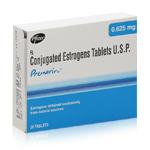
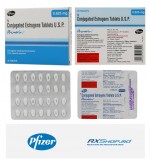
Premarin (Conjugated Estrogens) is a well-established brand-name hormone therapy used to relieve symptoms associated with menopause and estrogen deficiency. It helps manage hot flashes, vaginal dryness, night sweats, and other signs of hormonal imbalance, while also supporting the prevention of postmenopausal osteoporosis in certain patients.
As an original manufacturer product, Premarin delivers a standardized formulation of conjugated estrogens with a long clinical history and recognized quality standards. It is commonly prescribed as part of hormone replacement therapy (HRT) for women experiencing natural menopause, surgical menopause, or specific estrogen-related conditions.
This trusted branded medication is developed to provide consistent therapeutic effects under medical supervision. Always use Premarin according to your healthcare provider’s guidance to ensure safe and effective treatment tailored to your individual needs.

- Hot flashes treatment – Helps decrease the frequency and intensity of moderate to severe vasomotor symptoms;
- Vaginal dryness treatment – Prescribed for vaginal dryness, itching, and burning related to menopause (vulvar and vaginal atrophy);
- Hormone replacement therapy (HRT) – Part of estrogen replacement therapy for women with natural or surgical menopause;
- Estrogen deficiency treatment – Used when the body does not produce enough estrogen, including after ovary removal;
- Prevention of postmenopausal osteoporosis – Helps reduce bone loss in women at significant risk when other treatments are not suitable;
- Primary ovarian failure treatment – For women with underactive or non-functioning ovaries;
- Hypoestrogenism due to hypogonadism – Used in specific medical conditions causing low estrogen production.
- Night sweats reduction – Helps improve sleep quality by decreasing nighttime vasomotor symptoms;
- Vaginal dryness improvement – Restores vaginal tissue health and reduces dryness, irritation, and discomfort;
- Hormone balance support – Replaces declining estrogen levels during menopause or after ovary removal;
- Menopause symptom control – Provides overall relief from common menopausal symptoms affecting daily life;
- Bone loss prevention – Helps slow postmenopausal bone loss and supports osteoporosis prevention in certain patients;
- Quality of life improvement – May enhance comfort, mood stability, and general well-being when estrogen deficiency is present;
- Support after surgical menopause – Helps manage symptoms in women who have had their ovaries removed.
Brand Premarin 0.625 mg Medication guide:
💊 What Is Premarin (Conjugated Estrogens)?
Premarin is a prescription brand-name estrogen therapy that contains conjugated estrogens—a blended group of estrogen hormones used to replace or supplement estrogen when levels drop. In simple terms, this drug helps “turn the estrogen signal back on” in body systems that depend on it, which is why it’s commonly used within hormone replacement therapy (HRT).
Quick take ✅
Premarin is designed for symptom control and hormone support, not instant changes. The goal is usually steady, noticeable relief (often over days to weeks) with the lowest effective dose that remains tolerable and safe.
🧠 What this medication is, in simple terms
This medication is an estrogen replacement. When estrogen is low (for example, during menopause or after ovary removal), the body may react with heat surges (hot flashes), sleep disruption, tissue dryness, and bone loss over time. Premarin (conjugated estrogens) helps by supplying estrogen activity that the body no longer produces in the same amount.
- Core idea: restores estrogen signaling where estrogen deficiency is driving symptoms.
- Typical pace: improvement can be gradual; some symptoms respond faster than others.
- Best use-case: targeted symptom relief when benefits outweigh risks.
- Not a “vitamin”: it’s a hormone therapy that requires medical decision-making.
🔬 What are “conjugated estrogens”?
Conjugated estrogens are a mixture of estrogenic compounds (not a single molecule) formulated to deliver systemic estrogen effects. You may see the generic name listed as conjugated estrogens on prescriptions or pharmacy systems. Occasionally, people refer to it as Generic Premarin in conversation—however, Premarin itself is the well-known branded formulation, and interchangeability can vary by country and product type.
Practical note: because conjugated estrogens are a mixture, “same strength” does not always mean “identical profile” across products. Always follow the exact product and dose your clinician prescribes.
🎯 What Premarin is designed to help with
Premarin is generally prescribed when low estrogen is clearly linked to symptoms or health risks. The most common goals include:
- 🌡️ Reducing hot flashes and temperature swings (vasomotor symptoms)
- 🌙 Improving sleep disrupted by night sweats
- 💧 Relieving vaginal dryness and discomfort related to menopause
- 🦴 Supporting bone protection in select postmenopausal patients (when appropriate)
📌 What Premarin is NOT
- It is not a painkiller, sedative, or antibiotic.
- It is not a quick “mood booster” (any mood changes are indirect and vary by person).
- It is not automatically the right choice for everyone—risk factors matter.
📊 At-a-glance: Premarin overview
| Topic | What it means | Why it matters |
|---|---|---|
| Medication type | Systemic estrogen therapy (conjugated estrogens) | Works throughout the body, not just in one area |
| Main purpose | Relief of estrogen-deficiency symptoms; selected preventive uses | Sets realistic expectations for symptom control |
| Typical response | Often gradual improvement over time | Helps patients stay consistent and avoid premature stopping |
| Key decision factor | Individual benefit vs risk profile | Supports safer selection and follow-up planning |
🧭 Realistic expectations (how response usually looks)
Most people notice patterns like these. None automatically means the medication is “failing”—the key is the overall direction: symptoms should trend better, not worse.
✅ Early responders
Hot flashes and night sweats may ease within the first couple of weeks, with steadier sleep soon after.
🕰️ Gradual responders
Improvements build slowly—especially when multiple symptoms are present or stress/sleep factors overlap.
🔁 Dose fine-tuning
Some patients need adjustments to find the lowest effective dose that provides relief.
🧩 Combination therapy
If a woman has a uterus, clinicians may add a progestin to reduce endometrial risk (case-dependent).
Safety note ⚠️
This guide is for education and does not replace medical advice. Estrogen therapy has important warnings and is not suitable for everyone—your clinician should evaluate your history (e.g., clot risk, cancer history, unexplained bleeding) before use.
Clinical perspective 👩⚕️
The “best” estrogen plan is usually the one that achieves meaningful symptom relief with the simplest regimen and the lowest effective dose, while regularly reassessing whether continued therapy is still needed.
🧬 Active Ingredient & Hormonal Composition Profile
🧬 Active Ingredient & Hormonal Composition Profile
Premarin contains the active ingredient conjugated estrogens—a multi-component estrogen blend designed for systemic estrogen activity. Unlike single-molecule estrogen products, this medication is formulated as a mixture, which is one reason it has a distinct identity in hormone therapy discussions.
💡 Quick point:
Premarin is not “one estrogen.” It delivers a standardized estrogen mixture to support consistent hormone replacement effects.
⚠️ Important:
Because this is systemic estrogen therapy, suitability depends on your medical history and risk factors. Use only with medical guidance.
🔬 What Exactly Are “Conjugated Estrogens”?
Conjugated estrogens are estrogenic compounds present in sulfated (conjugated) forms. After administration, the body converts these forms into active estrogen metabolites that bind to estrogen receptors and influence estrogen-sensitive tissues—such as the brain (temperature regulation), bones, and urogenital tissues.
🧠 Plain-language meaning: “Conjugated” refers to estrogens linked to sulfate groups. Your body processes them into active forms that produce the intended estrogen effects.
- Conjugated = estrogens linked to sulfate groups (helps stability and pharmacologic handling).
- The body converts them into active estrogens that can activate estrogen receptors.
- You may see the generic label conjugated estrogens in pharmacy systems; Premarin is the branded formulation name.
🧪 Why a Mixture Matters (Composition Profile)
Some hormone therapies use a single estrogen (like estradiol). Premarin (conjugated estrogens) is different: it contains multiple estrogenic components. Clinically, this “blend” concept is associated with systemic support across multiple symptom domains.
🎯 Broader symptom focus
Useful when symptoms involve more than one system—like hot flashes + sleep disruption + tissue dryness.
📌 Standardized potency
The formulation is designed to provide consistent strength, helping clinicians select and adjust dose more predictably.
🧩 Not always “1:1” comparable
Because it’s a mixture, switching between products should be done carefully and intentionally.
⚙️ How the Active Ingredient Becomes Active
After absorption, conjugated estrogens are metabolized into active estrogen forms that interact with estrogen receptors. This receptor activity helps regulate estrogen-driven processes such as thermoregulation (vasomotor symptoms), tissue hydration and elasticity, and bone turnover signals.
🔁 Key mechanism:
The medication provides an estrogen signal → receptors receive it → tissues respond based on individual physiology.
📉 Why dose matters:
The goal in HRT is often the lowest effective dose that improves symptoms while minimizing risk.
📋 Product Identity: Brand vs Generic Naming
Patients often encounter different naming formats depending on the pharmacy, country, or product listing. To keep it simple:
- Premarin = the brand name.
- Conjugated estrogens = the generic/active ingredient name.
- Sometimes you may see wording like Generic (Premarin) or Generic (conjugated estrogens) in search results or online catalogs—this usually refers to the naming style rather than guaranteed interchangeability.
📊 Clinical Composition Snapshot
| Element | Premarin Profile | Why it matters |
|---|---|---|
| Active ingredient | Conjugated estrogens (multi-component estrogen mixture) | Supports systemic estrogen replacement effects |
| Hormone type | Estrogen therapy (not progesterone) | Some patients may require added progestin if they have a uterus (case-dependent) |
| Clinical role | HRT option for estrogen deficiency management | Helps guide symptom-targeted therapy planning |
| Naming formats | Brand: Premarin / Generic: conjugated estrogens | Reduces confusion when comparing product listings |
✅ Takeaway: Premarin’s active ingredient is conjugated estrogens—a standardized estrogen mixture used in systemic hormone therapy. The “blend” concept is central to how the medication is discussed, prescribed, and compared.
⚙️ How Premarin Works in the Female Body
Premarin (conjugated estrogens) works by providing the body with systemic estrogen activity when natural estrogen levels drop. Estrogen is more than a “reproductive hormone”—it functions like a master signal that helps regulate temperature control, tissue hydration, bone turnover, and parts of brain chemistry connected to sleep and mood. When estrogen declines, many of these systems become less stable; this drug helps restore a more balanced hormonal rhythm.
🎯 Main goal:
Deliver a steady estrogen signal to reduce symptoms linked to estrogen deficiency and support estrogen-sensitive tissues.
🧩 Key detail:
Because this medication is systemic, it can affect multiple organs—not just one symptom area—so dosing must be individualized.
🧠 The Core Mechanism: Estrogen Receptors
After absorption and metabolism, conjugated estrogens interact with estrogen receptors (primarily ERα and ERβ) found in many tissues. Think of receptors like “locks,” and estrogen like the “key.” When the key fits, the cell receives instructions that influence:
- Gene expression (longer-term cellular changes)
- Tissue maintenance (elasticity, hydration, thickness)
- Inflammation and repair signals
- Bone remodeling balance (formation vs breakdown)
Plain explanation: estrogen receptors act like “hormone sensors.” Premarin helps these sensors receive a stronger estrogen message when your own hormone output is low.
🌡️ Why It Helps Hot Flashes and Night Sweats
Vasomotor symptoms (hot flashes and night sweats) are linked to changes in the brain’s temperature regulation center when estrogen declines. Estrogen therapy can help stabilize this “thermostat,” reducing sudden heat surges and improving sleep quality when symptoms are driven by menopause-related estrogen loss.
🔥 Hot flashes
Less frequent and less intense “heat waves” as thermoregulation becomes steadier.
🌙 Night sweats
Improved nighttime stability may translate into better sleep continuity.
😴 Sleep + fatigue
Better sleep often means less daytime exhaustion when symptoms are the trigger.
💧 Vaginal & Urogenital Tissue Effects
Estrogen supports the health of vaginal and urogenital tissues by helping maintain tissue thickness, hydration, and elasticity. When estrogen is low, dryness, irritation, and discomfort may increase. Systemic estrogen therapy can support these tissues—however, in some cases, clinicians may prefer localized therapies depending on symptoms and risk profile.
🦴 Bone Metabolism Support
After menopause, bone breakdown can accelerate because estrogen normally helps slow bone resorption. By restoring estrogen activity, Premarin can help reduce bone turnover and slow bone loss in appropriate patients—particularly when other osteoporosis-prevention options are not suitable.
Bone concept: estrogen is one of the signals that helps keep the “bone breakdown” process from running too fast.
❤️ Systemic Effects: What Else Can Be Influenced?
Because estrogen receptors exist in many tissues, systemic estrogen therapy may influence multiple body systems. That’s why clinicians evaluate benefits vs risks carefully and may recommend monitoring during treatment. Areas commonly discussed include:
- Cardiovascular signaling (context-dependent; not a heart-protection drug)
- Skin and collagen (elasticity and hydration patterns)
- Mood and cognition (indirect effects; highly individual)
⏳ What to Expect: Timing of Effects
Response can be gradual and depends on symptom type, dose, and individual physiology. Many patients notice earlier changes in vasomotor symptoms, while tissue-related improvements may take longer.
✅ Often earlier:
Hot flashes / night sweats may improve first as temperature regulation stabilizes.
🕰️ Often slower:
Vaginal tissue comfort and longer-term bone-support effects may take more time.
📊 Mechanism Snapshot
| Target area | What estrogen does | What patients may notice |
|---|---|---|
| Brain “thermostat” | Helps stabilize temperature regulation signals | Fewer or milder hot flashes, less night sweating |
| Vaginal tissues | Supports tissue hydration and thickness | Less dryness, irritation, discomfort (time-dependent) |
| Bone remodeling | Slows bone resorption in appropriate patients | Reduced bone loss risk when used for prevention (selected cases) |
| Systemic receptors | Influences multiple estrogen-sensitive tissues | Benefits require risk-based monitoring |
Safety reminder ⚠️
Estrogen therapy can carry serious risks for some individuals. A clinician should confirm appropriateness, especially if there is a history of blood clots, hormone-sensitive cancers, unexplained vaginal bleeding, or other major risk factors.
🏛️ FDA-Approved Indications for Premarin (Official Prescribing Information)
Premarin (conjugated estrogens) is an FDA-approved estrogen therapy with several clinically recognized uses. In practice, clinicians prescribe this medication when symptoms or health risks are strongly linked to estrogen deficiency and when treatment goals justify systemic hormone therapy. Below are the official FDA-approved indications presented in a clear, patient-friendly format with SEO-focused wording.
✅ FDA indication focus: Premarin is indicated for moderate to severe menopausal symptoms, selected causes of hypoestrogenism, certain palliative cancer uses, and prevention of postmenopausal osteoporosis in appropriate patients.
🧾 Official FDA-Approved Indications (What Premarin Is Indicated For)
-
Menopause hot flashes treatment (moderate to severe vasomotor symptoms)
Helps relieve hot flashes, night sweats, and temperature instability related to menopause. -
Vaginal atrophy treatment (moderate to severe vulvar and vaginal atrophy due to menopause)
Used for menopause-related vaginal dryness, irritation, and discomfort when symptoms are moderate to severe. -
Low estrogen treatment (hypoestrogenism due to hypogonadism, castration, or primary ovarian failure)
Replaces estrogen when the body cannot produce enough due to specific medical causes. -
Breast cancer palliative treatment (metastatic disease, for palliation only)
Used in appropriately selected women and men with metastatic breast cancer for palliation only. -
Prostate cancer palliative treatment (advanced androgen-dependent carcinoma, for palliation only)
Used as a palliative option in advanced cases where androgen-dependence is present. -
Prevention of postmenopausal osteoporosis
Indicated to help prevent bone loss in postmenopausal women when other therapies are not suitable and fracture risk is a concern.
📌 Limitation of Use (Important FDA Label Note)
🌸 Vaginal symptoms only?
If treatment is only for vulvar/vaginal atrophy symptoms, the label advises that topical vaginal products should be considered first.
🎯 Practical meaning:
Systemic estrogen is typically reserved when symptoms are broader (e.g., hot flashes + sleep disruption), or when a clinician determines systemic therapy is appropriate.
🗺️ Indication Map (Mini Infographic)
🌡️ Vasomotor symptoms
hot flashes / night sweats
💧 Vulvovaginal atrophy
dryness / irritation
🧬 Hypoestrogenism
ovarian failure / hypogonadism
🦴 Osteoporosis prevention
postmenopausal bone loss
📈 “Where It’s Most Commonly Used” (Visual Emphasis)
In routine women’s health practice, Premarin is most often discussed for menopause symptom relief and estrogen deficiency. The chart below is an educational visual (not a prescription ranking) to show typical clinical conversation focus.
👩⚕️ Clinical Expert Note (Editorial Opinion)
RXShop Medical Editor (PharmD) — clinical note:
“For most patients, the decision to use conjugated estrogens is about matching the right indication with the lowest effective dose and a clear monitoring plan. If the only complaint is vaginal dryness, a clinician may prefer local therapy; if symptoms are systemic (hot flashes, sleep disruption), systemic options like this drug may be considered.”
Safety reminder ⚠️
FDA indications describe approved uses, but not everyone is a candidate for systemic estrogen therapy. Eligibility depends on medical history, risk factors, and clinician evaluation.
🧪 Off-Label Uses of Conjugated Estrogens
Premarin (conjugated estrogens) is prescribed mainly for FDA-approved indications, but in real-world practice clinicians may consider off-label use in carefully selected cases. “Off-label” means a doctor is using this medication for a purpose that is not listed as an official FDA indication, based on clinical judgment, guidelines, and individual patient factors.
Important ⚠️
Off-label use does not mean “unsafe,” but it does mean the benefit–risk decision depends heavily on the patient’s history, symptoms, and monitoring plan. This drug should be used only under professional medical care.
✨ Commonly Discussed Off-Label Scenarios (Clinician-Directed)
🧊 Perimenopause symptom support
Some clinicians may use conjugated estrogens when symptoms begin before full menopause and are impacting quality of life.
🛌 Sleep disruption linked to vasomotor symptoms
When night sweats drive insomnia, estrogen therapy may be considered as part of a broader plan.
🧠 Quality-of-life HRT tailoring
In select patients, therapy may be adjusted for mixed symptom clusters (heat surges + mood shifts + fatigue), with close follow-up.
🧩 “Why Doctors Consider Off-Label Use” (Decision Logic)
- Symptom pattern doesn’t match one label category (multi-symptom menopausal transition profiles).
- Patient-specific barriers to other therapies (tolerability, access, prior response).
- Step-up / step-down strategies within a broader hormone therapy plan.
- Individualized dosing goals focused on the lowest effective dose and periodic reassessment.
Simple rule: off-label use should still follow the same “safety discipline” as labeled use: screen risks → start low → monitor → reassess regularly.
📌 Off-Label Use vs. Not Recommended Use
Off-label does not automatically mean “appropriate.” There are situations where clinicians generally avoid systemic estrogen therapy unless there is a strong medical rationale. Risk factors can include a history of blood clots, certain hormone-sensitive cancers, or unexplained vaginal bleeding.
🛑 “Do not self-start” zone
Using Generic (Premarin) or any estrogen therapy without a clinician’s review is not recommended due to serious safety considerations.
✅ “Doctor-led” zone
Off-label use is sometimes considered when a clinician documents the rationale and sets a monitoring plan.
📊 Off-Label Use Snapshot (Educational Table)
| Off-label context (search-style) | What it usually means | Typical clinician approach |
|---|---|---|
| Perimenopause hormone therapy | Symptoms before full menopause with low/unstable estrogen patterns | Individualized dosing, reassess frequently |
| Menopause insomnia from night sweats | Sleep disruption primarily driven by vasomotor symptoms | Target vasomotor control + sleep hygiene plan |
| HRT optimization for mixed symptoms | Clustered symptoms affecting daily function | Start low, monitor response and tolerability |
| Individualized estrogen replacement strategy | Tailoring therapy when alternatives aren’t suitable | Benefit–risk review, periodic stop/continue check |
👩⚕️ Specialist Perspective (Editorial Note)
Dr. Emily Carter, MD (Women’s Health) — editorial insight:
“When we consider off-label estrogen therapy, we’re not ‘experimenting’—we’re matching a patient’s symptom profile to a carefully monitored plan. The key is to use the lowest effective dose, review risks like clot history, and reassess whether continued therapy is still necessary.”
Bottom line ✅
Off-label uses of conjugated estrogens exist, but they should be considered only when a clinician believes benefits outweigh risks and a structured follow-up plan is in place.
👩⚕️ Who May Benefit from Premarin Therapy?
Premarin (conjugated estrogens) is typically considered for women who have symptoms or health concerns linked to low estrogen levels. The main idea is simple: if estrogen deficiency is clearly driving the problem—and the benefit–risk profile is acceptable—this medication may be part of a clinician-guided plan. Because this is a systemic estrogen therapy, the “right candidate” is not defined only by symptoms, but also by medical history and safety factors.
Best-fit concept ✅
The patients most likely to benefit are those with moderate to severe menopause symptoms or confirmed hypoestrogenism, especially when symptoms meaningfully impact daily life and other options are not ideal.
🎯 Typical Patient Profiles (Search-Friendly)
🌡️ Severe hot flashes treatment seekers
Women with frequent hot flashes and night sweats that disrupt sleep, work, or quality of life.
💧 Vaginal dryness and atrophy symptoms
Patients with moderate to severe vaginal dryness, irritation, or discomfort due to menopausal tissue changes (clinician selects systemic vs local approach).
🧬 Low estrogen (hypoestrogenism) treatment
Women with estrogen deficiency due to primary ovarian failure, hypogonadism, or after oophorectomy (ovary removal).
🧩 Benefit Triggers: When Clinicians Consider This Medication
- Symptoms are clearly estrogen-related and persistent (not occasional discomfort).
- Symptoms interfere with daily functioning—sleep, mood stability, productivity, relationships.
- Alternative strategies have been insufficient, not tolerated, or not appropriate.
- Bone loss risk is clinically relevant and other options are unsuitable (selected cases).
Practical checkpoint: most prescribers start with the question, “Are these symptoms likely from estrogen deficiency?” If yes, they then ask, “Is systemic estrogen safe for this person?”
🧠 “Symptom-to-Decision” Mini Infographic
How clinicians often think (simplified flow):
1) Identify
Menopause or estrogen deficiency symptoms
2) Confirm
Severity + daily-life impact
3) Screen
Safety risks (clots, cancers, bleeding)
4) Choose
Systemic vs local therapy + dose plan
📊 Candidate Suitability Snapshot (Educational)
| Patient search intent | What it often indicates | Why Premarin may be considered |
|---|---|---|
| “menopause hot flashes medication” | Moderate to severe vasomotor symptoms | Systemic estrogen can reduce frequency/intensity when appropriate |
| “night sweats treatment menopause” | Sleep disruption due to hormonal transition | May stabilize thermoregulation signals and improve sleep quality |
| “vaginal dryness menopause” | Vulvovaginal tissue changes | Systemic therapy may help; local options may be preferred if symptoms are isolated |
| “low estrogen after ovary removal” | Surgical menopause / hypoestrogenism | Estrogen replacement can support symptom control and hormone needs |
👩⚕️ Doctor-Style Note (Clinical Lens)
Dr. Hannah Moore, MD (OB-GYN) — editorial perspective:
“The patients who benefit most from conjugated estrogens are those with clearly estrogen-driven symptoms that are disruptive. The key is matching the therapy to the patient’s risk profile, using the lowest effective dose, and reassessing regularly rather than staying on autopilot.”
Safety reminder ⚠️
This section explains who may benefit, not who should automatically take the drug. A clinician must evaluate contraindications such as hormone-sensitive cancers, unexplained vaginal bleeding, or clotting risk before therapy is started.
🔁 Hormone Replacement Therapy (HRT): Role of Premarin
Hormone Replacement Therapy (HRT) is a clinical approach used to support women when natural hormone levels—especially estrogen—decline and begin to affect daily life, sleep, comfort, and long-term tissue health. Premarin (conjugated estrogens) is one of the classic options used in systemic HRT, mainly when the primary goal is estrogen replacement for menopause symptoms or medically confirmed estrogen deficiency.
HRT in one sentence ✅
HRT aims to deliver a stable hormone signal that reduces estrogen-deficiency symptoms while using the lowest effective dose and periodic reassessment.
🧩 Where Premarin Fits in HRT Plans
In many HRT strategies, estrogen is the “foundation” hormone. Premarin provides systemic estrogen activity and may be used when symptoms are broader than one body area (for example: hot flashes + night sweats + sleep disruption). In some listings, you may see the generic wording conjugated estrogens; it refers to the same active ingredient concept behind this medication.
- Primary role: systemic estrogen replacement for symptom control and estrogen-deficiency management.
- Typical HRT goals: improve comfort, sleep quality, temperature stability, and daily function.
- Clinical principle: personalize treatment and reassess the need regularly.
🧠 A Simple HRT Framework (Mini Infographic)
How HRT is often structured (simplified):
Step 1
Identify estrogen-driven symptoms
Step 2
Screen risks + contraindications
Step 3
Choose type of estrogen therapy
Step 4
Start low, monitor, adjust
🧷 Estrogen-Only vs Estrogen + Progestin (Key HRT Rule)
One of the most important HRT principles is whether a woman has a uterus:
✅ If uterus is NOT present
Estrogen-only therapy may be used in some patients (clinician decision).
⚠️ If uterus IS present
A clinician may add a progestin to lower endometrial risk (patient-specific).
📊 HRT Goals vs What Patients Usually Notice
| HRT goal (search-style) | What Premarin supports | How improvement may feel |
|---|---|---|
| “menopause hot flashes relief” | Stabilizes estrogen signaling affecting thermoregulation | Fewer heat surges, less sweating, improved comfort |
| “night sweats and sleep menopause” | May reduce night sweats driving sleep disruption | More stable sleep and better daytime energy |
| “hormone therapy for low estrogen” | Systemic estrogen replacement support | More balanced symptom control over time |
| “postmenopausal bone loss prevention” | Helps reduce bone turnover in selected patients | Long-term risk management rather than “felt” symptom relief |
📈 HRT Timing Expectations (Visual Bar Guide)
Typical response pattern (educational):
🗣️ Dr. Hannah Moore, MD (OB-GYN)
Quote: “In HRT, the best outcomes come from choosing the right candidate, starting with the lowest effective estrogen dose, and revisiting the plan regularly. Systemic options like conjugated estrogens can be very effective for vasomotor symptoms—when used thoughtfully and monitored.”
Key takeaway ✅
Premarin’s role in HRT is to provide systemic estrogen support for women whose symptoms or estrogen-deficiency needs justify therapy—while keeping treatment individualized, time-appropriate, and safety-guided.
🌡️ Menopause Symptom Relief: Clinical Applications
Premarin (conjugated estrogens) is most commonly used to help manage moderate to severe menopause symptoms that appear when estrogen levels decline. Menopause is not “just hot flashes”—it can affect sleep, energy, tissue comfort, and day-to-day functioning. This medication is designed for women whose symptoms are persistent, disruptive, and strongly linked to estrogen deficiency.
Clinically, the biggest target ✅
Premarin is often selected when a woman needs systemic relief for hot flashes, night sweats, and related quality-of-life symptoms that do not respond well to lifestyle measures alone.
🔥 The “Big 3” Symptoms Premarin Is Used For
🌡️ Hot flashes relief
Helps reduce the frequency and intensity of vasomotor symptoms that feel like sudden internal heat surges.
🌙 Night sweats reduction
May stabilize nighttime temperature swings that interrupt sleep and cause repeated awakenings.
😴 Sleep improvement (indirect)
When sleep disruption is driven by night sweats, symptom control may improve overall sleep quality.
🧠 The “Hidden” Symptoms Many Women Search For
Menopause symptom searches often go beyond hot flashes. Some women report changes that feel unrelated—until they realize estrogen plays a role in multiple systems. Premarin may be considered when symptoms are estrogen-related and clinically significant:
- “menopause fatigue” – persistent tiredness that may worsen when sleep is repeatedly interrupted
- “menopause mood swings” – emotional volatility that may be influenced by sleep + hormonal shifts
- “brain fog menopause” – concentration issues reported by some women during hormonal transition
- “menopause joint aches” – some women describe increased discomfort; evaluation is important to rule out other causes
Clinical reality: not every symptom is estrogen-driven. Good prescribing starts with separating what is likely hormonal from what needs a separate diagnosis.
📌 When Premarin Is Usually Considered (Practical Criteria)
Clinicians typically consider systemic estrogen therapy when these conditions are present:
- Symptoms are moderate to severe and occur regularly (not occasional discomfort)
- Quality of life is affected (sleep, work, relationships, daily comfort)
- Menopause transition is confirmed clinically (age, cycle history, symptom pattern, medical context)
- Risk screening is completed (clot risk, cancer history, unexplained bleeding, etc.)
🗺️ Menopause Symptoms Map (Mini Infographic)
Where menopause symptoms often “land” in the body:
🌡️ Thermoregulation
hot flashes / night sweats
🧠 Brain + sleep
insomnia / fatigue / focus
💧 Tissues
dryness / irritation / discomfort
🦴 Musculoskeletal
bone loss risk / aches
📊 Symptom-to-Use Table (Clinical Applications)
| Search-style symptom | Clinical name | How Premarin may help |
|---|---|---|
| “hot flashes treatment” | Vasomotor symptoms | May reduce intensity and frequency by stabilizing estrogen signaling |
| “night sweats menopause” | Nocturnal vasomotor symptoms | May reduce nighttime sweating and improve sleep continuity |
| “menopause insomnia” | Sleep disruption (often secondary) | Indirect benefit if insomnia is driven by night sweats |
| “vaginal dryness menopause” | Vulvovaginal atrophy | Systemic estrogen may help; local therapy may be preferred if symptoms are isolated |
📈 How fast does symptom relief happen? (Visual guide)
Educational timeline (varies by person):
🗣️ Dr. Laura Jensen, MD (Menopause Medicine)
Quote: “When vasomotor symptoms are frequent and disruptive, systemic estrogen therapy can be one of the most effective options. The best results come from using the lowest effective dose, screening risk factors carefully, and reassessing whether therapy is still needed over time.”
Safety reminder ⚠️
Menopause symptom relief is a common reason for use, but estrogen therapy is not suitable for everyone. A clinician should evaluate contraindications and risks before starting this drug.
🧾 Dosage Forms & Available Strengths
Premarin is available in multiple dosage forms, but the most commonly referenced option in product listings is the oral tablet. The specific strength prescribed depends on the treatment goal (for example, menopause hot flashes vs estrogen deficiency) and the patient’s individual risk profile. In some catalogs, you may also see the active ingredient name conjugated estrogens used to describe the same medication type.
Quick reminder ✅
Strength selection is not “higher is better.” Clinicians typically aim for the lowest effective dose that achieves symptom control.
💊 Premarin Dosage Forms
- Oral tablets – systemic estrogen therapy used for menopause symptoms, hypoestrogenism, and selected prevention goals.
- Vaginal cream (separate product form in many markets) – may be used for local menopausal vaginal symptoms in certain cases.
Important: Tablet Premarin is primarily a systemic therapy. Vaginal cream is usually positioned for local symptom management. Product availability varies by country and supplier.
📦 Commonly Listed Tablet Strengths (Conjugated Estrogens)
Premarin tablets are produced in several strengths. Listings may vary by market, but commonly referenced strengths include:
| Strength (mg) | How it may appear in listings | Typical clinical context (general) |
|---|---|---|
| 0.3 mg | Premarin 0.3 mg / conjugated estrogens 0.3 mg | Lower-dose systemic estrogen option (individualized) |
| 0.45 mg | Premarin 0.45 mg | Intermediate low-dose option (clinician-directed) |
| 0.625 mg | Premarin 0.625 mg | Commonly referenced strength in long-standing clinical use |
| 0.9 mg | Premarin 0.9 mg | Higher-strength option when clinically justified |
| 1.25 mg | Premarin 1.25 mg | Higher-strength systemic estrogen (selected cases) |
🔎 How to Read Strength on the Package or Product Page
What “mg” means
The number (e.g., 0.625 mg) usually indicates the amount of conjugated estrogens per tablet.
Brand vs generic naming
The same strength may be shown as Premarin or as conjugated estrogens depending on the catalog format.
🧩 Choosing the Right Strength (Clinician Logic)
Clinicians usually base strength selection on:
- Symptom severity (how disruptive hot flashes/night sweats are)
- Primary goal (vasomotor relief vs estrogen deficiency support vs prevention planning)
- Risk factors (clot risk, cancer history, cardiovascular profile)
- Response and tolerability after initiation (need to adjust up/down)
Safety note ⚠️
Do not change tablet strength on your own. Dose changes should be clinician-directed, especially with systemic estrogen therapy.
🗣️ Dr. Laura Jensen, MD (Menopause Medicine)
Quote: “With systemic estrogen, we typically start with a lower effective dose and adjust only if needed. The ‘right’ strength is the one that controls symptoms while keeping the risk profile as low as possible.”
📌 Recommended Dosage and Administration Guidelines
Premarin (conjugated estrogens) dosing is individualized. Clinicians typically choose a regimen based on the indication (for example, menopause hot flashes vs hypoestrogenism vs osteoporosis prevention), symptom severity, and overall safety profile. In most cases, the guiding principle is to use the lowest effective dose for the shortest duration consistent with treatment goals, with regular reassessment.
Clinical dosing rule ✅
Start with a lower effective dose, monitor symptom response and tolerability, then adjust only if clinically necessary.
🧭 General Administration Principles
- Consistency matters: take this medication at the same time each day when prescribed as a daily regimen.
- Symptom-targeted dosing: the dose may differ depending on whether the goal is hot flash control, estrogen replacement, or bone-loss prevention.
- Reassess regularly: clinicians often revisit therapy to confirm it is still needed and appropriately dosed.
- Uterus status matters: women with an intact uterus may require a progestin (clinician decision) to reduce endometrial risk.
📋 Typical Dosing Patterns (Educational Overview)
Premarin is commonly prescribed in different patterns depending on patient needs. The examples below reflect how systemic estrogen therapy is often structured (not a substitute for a prescription):
| Use case (search-style) | How dosing is commonly structured | Why this approach is used |
|---|---|---|
| “hot flashes menopause treatment” | Daily dosing or cyclic regimens (clinician-directed) | Targets vasomotor symptoms with steady estrogen support |
| “estrogen deficiency replacement” | Individualized daily dosing based on etiology and response | Supports consistent hormone replacement needs |
| “osteoporosis prevention postmenopause” | Lowest effective dose with periodic reassessment | Long-term risk management with careful benefit–risk review |
| “surgical menopause hormone therapy” | Daily regimen tailored to symptom burden and safety profile | Addresses abrupt estrogen decline after ovary removal |
🧩 Daily vs Cyclic Regimens (Quick Compare)
✅ Continuous (daily) dosing
Often used when steady symptom control is needed. Helps keep estrogen levels more consistent day-to-day.
🔁 Cyclic dosing
Some regimens use “on/off” cycles. Clinicians may use this approach depending on uterine status, tolerability, and individual goals.
✅ Dose Adjustment: When Doctors Consider Changes
Dose adjustments are not automatic. Clinicians may consider changes when:
- Symptoms remain insufficiently controlled after an adequate trial period.
- Side effects appear and the dose may be too strong for the individual.
- Risk factors change (new diagnosis, new medications, new health events).
- Treatment goals shift (symptom phase stabilizes and dose can be lowered).
Tip ✅
If symptoms improve, clinicians often explore whether the dose can be stepped down while maintaining comfort.
🧷 “Before You Start” Checklist
- ✅ Review history of blood clots, stroke, heart disease
- ✅ Discuss any personal/family history of breast cancer or hormone-sensitive cancers
- ✅ Report unexplained vaginal bleeding before starting
- ✅ Share your full medication list (for interaction screening)
- ✅ Confirm whether you have an intact uterus (progestin consideration)
🗣️ Dr. Amanda Rivera, PharmD
Quote: “With systemic estrogen therapy, dosing isn’t about chasing the biggest number—it’s about achieving meaningful symptom relief with the lowest effective dose and a clear follow-up plan. Small adjustments can make a big difference in tolerability.”
Safety note ⚠️
This section is educational. Do not change dose, schedule, or product form on your own. Always follow a clinician’s instructions and report any unusual symptoms promptly.
✅ How to Take Premarin Safely
Premarin (conjugated estrogens) should be taken exactly as prescribed. Safe use is not only about taking the right tablet—it’s about using the right dose, following a consistent routine, and knowing which symptoms require medical attention. Because this is a systemic estrogen therapy, clinicians usually recommend the lowest effective dose and regular follow-ups to confirm that therapy is still appropriate.
Safety rule #1 ✅
Take Premarin at the same time each day (if prescribed daily) and do not change the dose without professional guidance.
🕒 Step-by-Step: Safe Daily Use
- Follow the prescription label (dose, schedule, and duration).
- Choose a consistent time that fits your routine (morning or evening—either can be acceptable unless your clinician advises otherwise).
- Take with or without food unless your clinician/pharmacist recommends a specific approach for tolerability.
- Use a reminder system (phone alarm, pill organizer) to avoid missed doses or accidental double dosing.
- Track symptom changes weekly (hot flashes, sleep quality, vaginal discomfort) to help clinicians adjust therapy if needed.
💡 Practical tip
If nausea occurs, taking the dose with a small meal may improve comfort (individual response varies).
📌 Consistency wins
Steady daily routines help keep hormone exposure more predictable and reduce dosing mistakes.
🧷 Do / Don’t Safety Checklist
✅ DO
- Use the lowest effective dose that provides relief
- Keep follow-up appointments for therapy review
- Report unusual vaginal bleeding promptly
- Tell your clinician about all medications and supplements
- Inform providers before surgery or prolonged immobilization
❌ DON’T
- Do not double a dose to “catch up” after a missed dose
- Do not start/stop this medication suddenly without guidance
- Do not mix with other hormones unless prescribed
- Do not ignore warning symptoms (see below)
- Do not share your prescription with anyone else
🧠 If You Have a Uterus: A Key Safety Point
Important: In women with an intact uterus, clinicians may prescribe a progestin along with estrogen therapy to reduce the risk of endometrial changes. This is a clinician-led decision based on your health history and treatment goals.
⚠️ Warning Signs: When to Seek Medical Help
Stop and contact a healthcare professional urgently if you experience symptoms that may indicate serious complications. Examples include:
- Chest pain or sudden shortness of breath
- Severe headache unlike your usual headaches
- Sudden vision changes
- Unusual swelling or pain in one leg
- Unexplained vaginal bleeding
Why this matters: Estrogen therapy can increase the risk of certain serious events in some individuals. Early recognition of warning signs is an essential part of safe use.
🧩 Interactive: Quick Safety Expanders
Many clinicians reassess estrogen therapy periodically to confirm continued need, evaluate side effects, and consider dose reduction when possible. The review interval depends on individual risk and indication.What should I tell my doctor before starting Premarin?
How often should therapy be reviewed?
🗣️ Dr. Amanda Rivera, PharmD
Quote: “Safe estrogen therapy is about structure—consistent dosing, clear monitoring, and knowing when symptoms are ‘normal adjustment’ versus a warning signal. Patients do best when they treat follow-ups as part of the medication, not optional.”
Safety note ⚠️
This content is educational and not a substitute for medical advice. Always follow your clinician’s instructions for dosing, combination therapy decisions, and monitoring.
👥 Dose Adjustments in Special Populations
Premarin (conjugated estrogens) dosing may require extra caution in certain groups because systemic estrogen exposure can interact with age-related risks, organ function, and comorbidities. In special populations, the clinical goal remains the same—use the lowest effective dose—but with a stronger emphasis on risk screening, monitoring, and periodic reassessment.
Key principle ✅
Dose adjustments are guided by tolerability, risk profile, and clinical response—not by age alone.
👩🦳 Older Adults (Age-Related Risk Considerations)
As age increases, baseline risk for cardiovascular events and blood clots may rise. Clinicians may prefer more conservative dosing and closer monitoring in older patients, especially if therapy is started later after menopause. In many cases, the treatment plan focuses on symptom control with the smallest effective systemic dose.
📌 What may change
Lower starting dose, slower titration, and more frequent safety check-ins.
⚠️ Why it matters
Higher baseline risk can shift the benefit–risk balance for long-term systemic estrogen therapy.
🧬 Women with Surgical Menopause (After Ovary Removal)
In surgical menopause, estrogen levels can drop abruptly, which may cause stronger and faster-onset symptoms. Clinicians may tailor dosing based on symptom intensity and overall risk profile. Some patients may require careful adjustment early on, followed by reassessment once symptoms stabilize.
Clinical pattern: early symptom burden may be higher, but the long-term plan still aims for the lowest effective dose with step-down opportunities when possible.
🫀 Cardiovascular Risk Factors (Hypertension, Diabetes, High Cholesterol)
Women with cardiovascular risk factors may need additional assessment before starting or adjusting conjugated estrogens. The clinician may emphasize tighter monitoring and ensure other risk-reduction measures are addressed (blood pressure control, lipid management, smoking cessation).
- Common adjustments: conservative dosing and frequent re-evaluation
- Monitoring focus: blood pressure, symptom changes, any warning signs
🩸 Increased Blood Clot Risk (Thromboembolism Risk)
For patients with a history of blood clots or strong clotting risk factors, systemic estrogen therapy may be inappropriate or require specialist-level decision-making. Dose adjustments alone may not reduce risk enough, so clinicians often consider alternative strategies.
Important ⚠️
A history of blood clots can be a major safety barrier to systemic estrogen therapy. This is a clinician-only decision zone.
🧫 Liver Impairment or Liver Disease
Estrogens are metabolized in the liver. If liver function is impaired, hormone handling may change, increasing the need for careful selection, conservative dosing, or avoidance depending on severity. Clinicians may request laboratory monitoring and reassess therapy more often.
🤰 Pregnancy & Breastfeeding
Premarin is not intended for use during pregnancy. If pregnancy occurs or is suspected, the patient should contact a healthcare provider promptly. Breastfeeding considerations also require clinician guidance because estrogen can affect lactation and infant exposure risk.
🧾 Special Population Summary Table
| Population / situation | What may change | Clinical focus |
|---|---|---|
| Older adults | Lower start, slower adjustments | Risk-based dosing and frequent reassessment |
| Surgical menopause | Early tailoring to symptom intensity | Stabilize symptoms, then reevaluate dose |
| Cardiovascular risk factors | More cautious dosing strategy | Monitor BP and overall risk profile |
| Clot risk history | May require avoidance or specialist plan | Safety first; alternative strategies may be preferred |
| Liver impairment | Conservative dosing or avoidance (severity-dependent) | Metabolism considerations + monitoring |
🗣️ Dr. Michael Chen, MD (Endocrinology)
Quote: “Special populations require a ‘safety-first’ dosing mindset. The right dose isn’t the strongest one—it’s the one that delivers benefit with the lowest achievable risk, and that decision often depends on comorbidities and monitoring capacity.”
Takeaway ✅
Dose adjustments in special populations are individualized and should always be guided by a clinician, with extra attention to cardiovascular, clotting, and liver-related risk factors.
⏰ Missed Dose Instructions
If you miss a dose of Premarin (conjugated estrogens), the safest approach is to take it in a way that avoids double dosing and keeps your routine stable. Because this is a systemic hormone therapy, consistency matters—but taking extra tablets to “catch up” can increase side-effect risk.
Golden rule ✅
If a dose is missed, do not take two doses at the same time unless your clinician specifically instructs you to do so.
✅ What to Do If You Forgot a Dose
- Take it as soon as you remember if there is still plenty of time before the next scheduled dose.
- Skip the missed dose if it’s close to the time for your next dose.
- Resume your normal schedule the following day (or at your next planned time).
💡 Easy memory tip
If you remember within the same day and it’s not near the next dose, taking it may be reasonable. If it’s already near the next dose, skip and continue normally.
📌 Why skipping can be safer
Doubling up can increase the chance of nausea, breast tenderness, headache, or spotting in some patients.
🗺️ Quick Decision Guide (Mini Infographic)
Missed dose flow (simple):
Remembered early
Take the dose
Remembered late
Skip the missed dose
Next step
Resume normal schedule
Never
Do not double dose
🧷 What NOT to Do
- ❌ Do not take two tablets at once to make up for the missed one.
- ❌ Do not change your dosing plan for several days to “balance it out.”
- ❌ Do not stop the medication entirely because of one missed dose.
🧩 If You Miss Doses Frequently
If missed doses happen often, it may reduce symptom control (for example, hot flashes may return) and make it harder to judge whether the therapy is working. Consider a simple adherence setup:
- ✅ Set a daily alarm
- ✅ Use a weekly pill organizer
- ✅ Link the dose to a stable habit (brushing teeth, breakfast)
🗣️ Dr. Amanda Rivera, PharmD
Quote: “The biggest safety issue with missed doses is the temptation to ‘catch up.’ With estrogen therapy, that often creates unnecessary side effects. A consistent routine with no double dosing is usually the safest path.”
Safety note ⚠️
If you are unsure what to do after a missed dose—especially if you missed multiple doses—contact your healthcare provider or pharmacist for individualized advice.
🚨 Overdose: Signs, Risks & Emergency Measures
An overdose of Premarin (conjugated estrogens) is uncommon when taken exactly as prescribed, but it can occur if too many tablets are taken at once, if someone repeatedly doubles doses after missed doses, or if estrogen products are combined without professional guidance. Because this is a systemic hormone therapy, excessive dosing can intensify side effects and may increase the risk of serious complications in people with certain risk factors.
Emergency-first rule ⚠️
If you suspect an overdose, especially if severe symptoms appear, seek urgent medical help immediately (local emergency services or poison control guidance).
🔍 Possible Signs of Estrogen Overdose
Symptoms vary by dose and individual sensitivity. Common signs may include:
- Nausea or vomiting
- Breast tenderness or swelling
- Headache (including stronger-than-usual headaches)
- Dizziness or feeling faint
- Abdominal cramping
- Unusual vaginal bleeding or spotting
Note: Even if symptoms seem mild, repeated extra dosing can increase risk. If you are unsure what to do, contact a healthcare professional.
⚠️ Serious Warning Symptoms (Seek Urgent Help)
Seek urgent medical evaluation if any of the following occur:
- Chest pain or sudden shortness of breath
- Sudden severe headache or new neurological symptoms
- Sudden vision changes
- Unusual swelling or pain in one leg
- Heavy or persistent vaginal bleeding
🧭 What To Do Right Now
1) Stop extra doses
Do not take additional tablets to try to compensate.
2) Check symptoms
Notice whether symptoms are mild, moderate, or severe.
3) Get urgent help
If severe symptoms occur, seek emergency care immediately.
4) Prepare details
Have the strength, tablet count, and timing ready for clinicians.
🧾 What Information to Share with a Clinician
- Product name: Premarin (or “conjugated estrogens”)
- Tablet strength: for example, 0.3 mg, 0.45 mg, 0.625 mg, 0.9 mg, 1.25 mg
- Amount taken: number of tablets and time(s) taken
- Other substances: prescription drugs, OTC meds, and supplements taken the same day
- Current symptoms: what you feel now and whether symptoms are worsening
📌 Common Overdose Situations (How to Respond)
| Situation | What it means | What to do |
|---|---|---|
| Accidentally took two doses in one day | Single-day overexposure | Do not take more tablets; monitor symptoms; contact a clinician or pharmacist if symptoms occur or if you have major risk factors |
| Doubled doses for several days | Repeated overexposure | Stop extra dosing; return to the prescribed schedule unless told otherwise; seek care if warning symptoms appear |
| Someone else swallowed your tablets | Potentially high-risk exposure | Seek urgent medical advice immediately and provide tablet strength and estimated quantity |
| Combined with another estrogen product | Additive hormone exposure | Contact a healthcare professional promptly; do not continue combined use without guidance |
🗣️ Dr. Amanda Rivera, PharmD
Quote: “Most estrogen overexposure happens when patients try to catch up after missed doses. The safer approach is to avoid double dosing and seek guidance if multiple doses were missed or symptoms appear.”
Takeaway ✅
Suspected Premarin overdose should be treated seriously: stop extra dosing, monitor symptoms, and seek urgent medical help if severe warning signs appear.
⚠️ Side Effects of Premarin (Common and Serious)
Premarin (conjugated estrogens) can cause side effects, especially during the first weeks of therapy or after dose changes. Many reactions are mild and improve as the body adjusts, but some symptoms may signal a serious complication and require urgent medical evaluation. The safest approach is to recognize the difference between common side effects and serious warning signs.
Practical rule ✅
Mild effects can be monitored, but new, severe, sudden symptoms should be treated as urgent until a clinician says otherwise.
✅ Common Side Effects (Often Mild)
These effects may occur and are often dose-related. They can improve over time, but talk to a clinician if they persist or become bothersome:
- Nausea or stomach discomfort
- Breast tenderness or swelling
- Headache
- Bloating or fluid retention
- Mild mood changes
- Spotting or light breakthrough bleeding
Tip ✅
If nausea occurs, taking the dose with food may help. If breast tenderness or headache worsens, ask about dose review.
What patients notice
Side effects are more common after starting therapy, switching products, or changing the strength.
⚠️ Serious Side Effects (Seek Medical Help)
Stop and seek urgent medical attention if you notice symptoms that may indicate a serious reaction:
- Chest pain or sudden shortness of breath
- Sudden severe headache or new neurological symptoms
- Sudden vision changes
- Unusual swelling or pain in one leg
- Heavy vaginal bleeding or persistent unexplained bleeding
- Severe abdominal pain
Red flag concept ⚠️
Serious symptoms are usually sudden, severe, or different from your normal pattern. When in doubt, treat it as urgent.
📊 Side Effects Overview (Common vs Serious)
| Symptom | How it’s often categorized | What to do |
|---|---|---|
| Nausea, bloating | Common | Monitor; consider taking with food; contact clinician if persistent |
| Breast tenderness | Common | Monitor; report if worsening or painful; dose review may help |
| Headache | Common to serious (depends) | If severe or sudden, seek urgent care; otherwise monitor and discuss |
| Spotting / light bleeding | Common (needs evaluation if persistent) | Track timing; report ongoing or unusual bleeding promptly |
| Chest pain or shortness of breath | Serious | Seek urgent medical help |
| One-leg swelling/pain | Serious | Seek urgent medical help |
| Sudden vision changes | Serious | Seek urgent medical help |
| Heavy vaginal bleeding | Serious | Seek prompt medical evaluation |
🧷 Side Effect “Severity Chips” (Quick Visual Guide)
Common Monitor Urgent
🗣️ Dr. Amanda Rivera, PharmD
Quote: “Most patients tolerate conjugated estrogens well, but safety depends on recognizing warning signs early. If a symptom is sudden, severe, or unusual for you, it deserves prompt medical attention.”
Bottom line ✅
Common side effects are often manageable, but serious symptoms require urgent evaluation. Always report unexplained bleeding and any sudden cardiopulmonary, neurological, or visual symptoms.
🛑 Serious Adverse Reactions & Safety Warnings
Premarin (conjugated estrogens) is a systemic estrogen therapy, so its safety profile includes rare but important risks that require attention. Most people do not experience severe reactions, but patients should know the key warning patterns and when to seek urgent care. Clinicians typically reduce risk by selecting appropriate candidates, using the lowest effective dose, and reassessing therapy regularly.
Safety priority ⚠️
Seek urgent medical help for sudden symptoms such as chest pain, shortness of breath, one-leg swelling/pain, severe headache, vision changes, or heavy unexplained bleeding.
🩸 Blood Clots (Deep Vein Thrombosis / Pulmonary Embolism)
Systemic estrogen therapy may increase the risk of blood clots in some individuals. This risk is higher in people with a personal history of clotting events, certain inherited clotting disorders, prolonged immobilization, major surgery, or additional risk factors such as smoking.
Possible warning signs
Unusual one-leg swelling, leg pain, sudden shortness of breath, or chest discomfort.
Risk-reduction habits
Inform clinicians before surgery or long travel, stay hydrated, and avoid self-adjusting dose.
🧠 Stroke and Serious Neurological Symptoms
Estrogen therapy is associated with an increased risk of stroke in certain populations. Patients should treat sudden neurological symptoms as urgent.
- Sudden severe headache unlike usual headaches
- Sudden weakness, numbness, or difficulty speaking
- Sudden confusion or imbalance
- Sudden vision changes
❤️ Cardiovascular Events (Heart-Related Warning Symptoms)
Premarin is not used to prevent heart disease. In some individuals, estrogen therapy can be associated with cardiovascular risks. Seek urgent care if you experience:
- Chest pain or pressure
- Sudden shortness of breath
- Unexplained fainting or severe dizziness
🎗️ Endometrial Changes and Unusual Vaginal Bleeding
In women with an intact uterus, estrogen therapy without appropriate progestin protection may increase the risk of endometrial changes. Any unexplained vaginal bleeding should be evaluated promptly.
Key action: If bleeding is new, persistent, heavy, or unusual, contact a healthcare provider promptly for assessment.
🎗️ Breast Health and Hormone-Sensitive Cancer Concerns
Estrogen therapy can influence hormone-sensitive tissues. Patients should follow routine breast screening recommendations and report any new breast changes to a clinician.
- New breast lump or persistent localized pain
- Nipple discharge (unexplained)
- Skin or shape changes that are new
🧫 Severe Liver-Related Reactions (Rare)
Because estrogens are processed by the liver, severe liver-related problems are uncommon but important to recognize. Contact a clinician if you notice significant new symptoms such as persistent abdominal pain, unusual fatigue, or marked changes in wellbeing.
📊 Serious Reactions: What to Watch For
| Serious concern | Possible warning pattern | What to do |
|---|---|---|
| Blood clot risk | One-leg swelling/pain, sudden shortness of breath, chest discomfort | Seek urgent medical help |
| Stroke warning | Sudden severe headache, speech trouble, weakness, vision changes | Seek urgent medical help |
| Heart-related symptoms | Chest pain/pressure, severe dizziness, fainting | Seek urgent medical help |
| Unusual vaginal bleeding | New, persistent, heavy, or unexplained bleeding | Contact clinician promptly (urgent if heavy) |
| Serious breast changes | New lump, persistent focal pain, unusual discharge | Arrange medical evaluation |
🧷 “When to Act Fast” Checklist
- 🚑 Emergency: chest pain, sudden shortness of breath, sudden severe headache, sudden vision changes
- ⚠️ Urgent: one-leg swelling/pain, heavy or persistent unexplained bleeding
- 📞 Call soon: new breast lump or concerning breast changes
🗣️ Dr. Laura Jensen, MD (Menopause Medicine)
Quote: “Estrogen therapy can be very effective, but the safety conversation is essential. Patients do best when they understand the warning signs, keep follow-ups, and use the lowest effective dose for the shortest necessary duration.”
Bottom line ✅
Serious adverse reactions are uncommon, but knowing the warning symptoms and acting early is a key part of safe Premarin use.
⛔ Contraindications: Who Should NOT Use Premarin
Premarin (conjugated estrogens) is not appropriate for everyone. Certain medical conditions make systemic estrogen therapy unsafe because it may increase the risk of serious complications. This section explains the most important contraindications (situations where this drug should not be used) in a clear, SEO-friendly way.
Safety rule ⚠️
Do not start Premarin or any conjugated estrogens therapy if you have a contraindication. A clinician must confirm eligibility first.
🚫 Major Contraindications (Do Not Use)
-
Unexplained vaginal bleeding
Any bleeding that has not been evaluated can require medical assessment before estrogen therapy. - Breast cancer or suspected breast cancer
- Estrogen-dependent cancer (known or suspected)
-
Active blood clots or a history of serious clotting events
Includes conditions such as deep vein thrombosis or pulmonary embolism. - Stroke or heart attack (current or previous)
- Severe liver disease
- Known allergy to conjugated estrogens or product ingredients
- Pregnancy
🧷 Quick Visual Risk Tags
Do Not Use Needs Evaluation Discuss With Doctor
🧠 Conditions That Often Require Extra Caution (Doctor Decision)
Some situations do not automatically forbid therapy, but they usually require careful review and individualized planning:
🫀 Cardiovascular risk factors
High blood pressure, diabetes, high cholesterol, or smoking history may change the benefit-risk balance.
🧬 Strong family history
Family history of clotting or hormone-sensitive cancers may require deeper screening.
🧠 Severe migraine patterns
New or worsening migraines should be discussed before dose changes.
📊 Contraindications Summary Table
| Condition (search-style) | Why it matters | Recommended action |
|---|---|---|
| unexplained vaginal bleeding | Could indicate an underlying condition that needs evaluation first | Do not use until medically assessed |
| breast cancer history | Hormone-sensitive tissue risk | Do not use unless specialist directs otherwise |
| blood clot history | Estrogen may increase clotting risk in susceptible individuals | Do not use; urgent clinician review needed |
| stroke or heart attack history | Higher risk profile for vascular complications | Do not use; clinician-directed alternatives preferred |
| severe liver disease | Estrogen metabolism can be affected | Do not use or use only if specialist approves |
| pregnancy | Not indicated and may cause harm | Do not use |
✅ “Before Starting” Contraindications Checklist
- ✅ Any unexplained vaginal bleeding (needs evaluation)
- ✅ Personal history of blood clots, stroke, or heart attack
- ✅ History of breast cancer or estrogen-dependent cancer
- ✅ Known liver disease
- ✅ Pregnancy status (therapy is not intended in pregnancy)
- ✅ Known allergy to conjugated estrogens or ingredients
🗣️ Dr. Laura Jensen, MD
Quote: “Most safety issues with estrogen therapy come from starting treatment in the wrong candidate. A quick but thorough contraindication check is one of the most important steps before prescribing conjugated estrogens.”
Bottom line ✅
Contraindications are non-negotiable. If you have a history of clots, stroke, hormone-sensitive cancer, severe liver disease, unexplained bleeding, or pregnancy, Premarin should not be used without specialist-level guidance.
🧪 Drug Interactions: What Can Affect Premarin
Premarin (conjugated estrogens) can interact with certain medications and supplements by changing how hormones are metabolized or by increasing specific risks. Not every interaction means the drug must be stopped, but it often means you need monitoring, dose review, or an alternative option. Always share a complete medication list with your clinician, including OTC products and herbal supplements.
Interaction rule ✅
The most common problems happen when patients forget to mention herbal supplements or start a new medication without reviewing compatibility.
💊 Medications That May Change Estrogen Levels
Some drugs can increase or decrease estrogen exposure by affecting liver enzymes involved in hormone metabolism. This may reduce symptom control or increase side effects.
⬇️ May lower estrogen effect
Certain enzyme inducers can reduce estrogen exposure, which may lead to breakthrough bleeding or weaker symptom relief.
⬆️ May increase estrogen effect
Some drugs can increase estrogen exposure and may raise the chance of side effects like nausea, breast tenderness, or headaches.
🌿 Herbal & OTC Products to Mention
- St. John’s wort (may reduce estrogen effect; can cause breakthrough bleeding)
- Grapefruit products (may affect metabolism in some people; discuss if used regularly)
- High-dose supplements or multi-herbal blends marketed for “hormone balance”
Do not self-combine ⚠️
Avoid combining Premarin with other hormone products (estrogen, progesterone, “bioidentical” blends) unless a clinician specifically instructs you to.
🩸 Anticoagulants and Bleeding-Related Considerations
If you use blood thinners or have a bleeding risk, your clinician may need to evaluate whether systemic estrogen therapy is appropriate. Estrogen can affect clotting balance, and therapy choice is typically made case-by-case with risk screening.
🧠 Thyroid Medication (Dose Monitoring)
Estrogen therapy can affect certain thyroid lab values and may influence thyroid hormone requirements in some patients. If you take thyroid medication, clinicians may monitor thyroid function tests after starting or changing estrogen therapy.
📌 Interactions That Change Monitoring Needs
Some interactions do not require stopping Premarin, but they do require closer follow-up, especially if symptoms change or bleeding occurs.
- ✅ New medication added → watch for return of hot flashes or new side effects
- ✅ Breakthrough bleeding appears → consider interaction review and clinical evaluation
- ✅ Migraine pattern changes → dose and risk assessment may be needed
📊 Interaction Overview Table
| Interaction category (search-style) | What may happen | What to do |
|---|---|---|
| enzyme-inducing medications | May reduce estrogen exposure and symptom control | Report symptom return or bleeding; clinician may adjust plan |
| herbal supplements (St. John’s wort) | May lower estrogen effect and trigger spotting | Avoid or discuss before use; disclose all supplements |
| thyroid medication interaction | May change thyroid monitoring needs | Follow clinician lab monitoring recommendations |
| blood thinners and estrogen therapy | Requires individualized risk evaluation | Do not self-start; clinician review is essential |
| other hormone products | Additive hormone exposure and side-effect risk | Use only if prescribed as part of a coordinated plan |
🗣️ Dr. Amanda Rivera, PharmD
Quote: “The safest way to prevent interactions is simple: disclose everything, including supplements. Many patients forget herbal products, and that’s where we often see unexpected spotting or reduced symptom control.”
Bottom line ✅
Premarin interactions are mainly about changes in hormone metabolism and risk profile. Keep your medication list updated, avoid self-combining hormones, and report new bleeding or symptom changes quickly.
🍽️ Food, Alcohol & Lifestyle Considerations
Premarin (conjugated estrogens) can usually be taken with or without food, but daily habits can influence tolerability, consistency, and overall safety. The goal is to maintain a stable routine, reduce side effects, and avoid lifestyle factors that can increase cardiovascular or clotting risk while on systemic estrogen therapy.
Best practice ✅
Choose a consistent dosing time, keep lifestyle risks low, and tell your clinician if you regularly drink alcohol or use supplements.
🥗 Food: Should Premarin Be Taken With Meals?
Most patients can take Premarin with or without food. The choice often depends on comfort:
✅ With food (often helpful)
May reduce nausea or stomach discomfort in sensitive users.
✅ Without food (also fine)
Works for many people and can be easier for routine consistency.
🍊 Grapefruit & “Hormone-Friendly” Foods
Some people ask whether grapefruit, soy, or “hormone-balancing” foods interfere with estrogen therapy. In everyday use:
- Grapefruit: if you consume it frequently, mention it to your clinician, especially if you notice stronger side effects after starting therapy.
- Soy / phytoestrogens: normal dietary amounts are usually not treated as a contraindication, but high-dose supplements should be discussed.
- Herbal blends: “hormone support” products can be unpredictable—disclose them before using.
Simple guidance: food is rarely the main interaction issue; supplements and herbal products are more often the hidden cause of problems.
🍷 Alcohol: What to Know
Alcohol does not “cancel” Premarin, but frequent or heavy drinking can increase health risks that matter during estrogen therapy. It may also worsen common complaints like sleep disruption or hot flashes in some women.
- Occasional alcohol: many patients tolerate it, but individual response varies.
- Regular drinking: discuss with your clinician because it can affect overall risk profile and may worsen symptoms like night sweats.
- Safety-first: avoid alcohol if it makes you dizzy, increases headaches, or triggers bleeding changes.
🚬 Smoking & Vaping (High-Impact Lifestyle Risk)
Smoking is one of the most important lifestyle factors to address with systemic estrogen therapy. It can increase vascular risk and shift the benefit-risk balance. If you smoke or vape nicotine, tell your clinician before starting Premarin.
High-impact warning ⚠️
Smoking can increase cardiovascular and clot-related risks. Estrogen therapy decisions should be made with full disclosure of nicotine use.
🏃 Activity, Travel & Prolonged Sitting
Movement supports circulation and can reduce some risk factors that clinicians consider during estrogen therapy. Practical tips:
- ✅ Move regularly during long workdays (stand up, stretch, short walks)
- ✅ During long travel, avoid staying seated for hours without breaks
- ✅ Maintain a healthy routine with weight-bearing activity for bone support
🧩 “Lifestyle Support” Mini Infographic
✅ Consistent routine
same time daily dosing
✅ Balanced habits
sleep, nutrition, hydration
✅ Movement
reduce long sedentary periods
⚠️ Avoid
smoking, self-mixing hormones
📊 Lifestyle Factors Summary Table
| Factor | What it can affect | Practical advice |
|---|---|---|
| Food | Tolerability (nausea) | Take with food if stomach upset occurs |
| Alcohol | Sleep, symptom intensity, overall risk profile | Keep moderate; discuss regular drinking with clinician |
| Smoking/vaping | Vascular and clot-related risk factors | Disclose nicotine use; consider cessation support |
| Supplements | Unexpected interactions, spotting | Disclose all supplements, especially herbal blends |
| Long sitting/travel | Circulation, clot risk considerations | Move regularly; take breaks during travel |
🗣️ Dr. Hannah Moore, MD
Quote: “Lifestyle doesn’t replace medical screening, but it matters. A stable routine, avoiding smoking, and being careful with supplements can make estrogen therapy safer and easier to tolerate.”
Bottom line ✅
Premarin can be taken with or without food, but lifestyle choices like smoking, heavy alcohol use, and undisclosed supplements can significantly affect safety and outcomes.
🩺 Monitoring and Follow-Up While Using Premarin
Premarin (conjugated estrogens) is most effective and safest when treatment includes regular follow-up. Monitoring helps confirm that the medication is still needed, that the dose remains appropriate, and that potential risks are identified early. Many clinicians follow a “start, assess, adjust, reassess” approach rather than leaving therapy on autopilot.
🗓️ Recommended Follow-Up Rhythm (Simple Timeline)
After starting or dose change
Confirm symptom control + tolerability
Decide: continue, lower dose, or stop
📌 What Clinicians Usually Monitor
- Symptom response (hot flashes frequency, night sweats, sleep quality, vaginal discomfort)
- Bleeding pattern (spotting vs persistent or heavy bleeding)
- Blood pressure and overall cardiovascular risk profile
- Side effects (headache pattern, breast tenderness, swelling/fluid retention)
- Medication list changes (new prescriptions, OTC products, supplements)
✅ Self-Monitoring: A Quick Weekly Log
Keeping a short log makes follow-up visits more useful and helps clinicians adjust therapy faster.
| What to track | How to track it | Why it helps |
|---|---|---|
| Hot flashes / night sweats | Count episodes per day + note triggers | Shows whether dose is effective |
| Sleep quality | Rate 1–10 and note awakenings | Links symptom control to daily functioning |
| Bleeding | Spotting vs heavy; date and duration | Helps identify when evaluation is needed |
| Side effects | Headache, nausea, breast tenderness (mild/moderate/severe) | Guides dose review or switching strategy |
🚩 What Should Trigger a Faster Appointment
- Unexplained vaginal bleeding that is new, persistent, or heavy
- Sudden chest pain or sudden shortness of breath
- Severe headache that is new or unusual for you
- Sudden vision changes
- One-leg swelling or pain
🧠 “Continue vs Step Down” Decision Factors
Follow-ups often focus on whether therapy is still necessary. Clinicians may consider stepping down when symptoms are controlled and stable.
- 🔹 Continue if symptoms are still disruptive and benefits clearly outweigh risks
- 🔹 Reduce dose if symptoms are controlled and side effects appear or risk profile changes
- 🔹 Stop or switch if warning signs occur, bleeding is unexplained, or therapy is no longer needed
🗣️ Dr. Laura Jensen, MD
Quote: “The safest estrogen therapy plan includes scheduled reassessment. Monitoring is how we keep the dose appropriate, catch warning patterns early, and avoid staying on treatment longer than necessary.”
Bottom line: Monitoring is part of treatment. Regular follow-ups, symptom tracking, and prompt reporting of unusual bleeding or sudden severe symptoms help keep conjugated estrogens therapy safer and more effective.
🧠 When Premarin Starts Working (Onset and What to Expect)
Premarin (conjugated estrogens) does not work “instantly” for every symptom. Some effects are noticed earlier (especially hot flashes and night sweats), while others develop more gradually (such as tissue comfort changes or long-term bone support). The timeline depends on the indication, dose, individual sensitivity, and whether symptoms are truly estrogen-driven.
⏳ Typical Onset by Symptom Type
Most patients want to know one thing: how soon will I feel better? Use this section as a general expectation guide, not a guarantee.
🔎 Why the Timeline Can Differ from Person to Person
- Symptom driver: if symptoms are not primarily estrogen-related, response may be limited.
- Dose and regimen: starting dose and whether therapy is continuous or cyclic can affect perception of change.
- Baseline severity: more severe vasomotor symptoms may show more noticeable early improvement.
- Other factors: stress, sleep hygiene, diet, and other medications can change outcomes.
📌 “Working vs Not Working” Signals
| What you notice | What it may mean | What to do |
|---|---|---|
| Fewer hot flashes | Expected early response for vasomotor symptoms | Continue as prescribed; track frequency weekly |
| No change in symptoms | Dose may be too low, or symptoms may have another cause | Do not self-adjust; discuss at follow-up |
| New nausea, headaches, breast tenderness | Possible dose-related side effects | Monitor and report if persistent or worsening |
| Unusual vaginal bleeding | Needs medical evaluation | Contact a healthcare provider promptly |
🧾 A Simple “First Month” Expectation Plan
Use this as a patient-friendly routine:
- Week 1: focus on consistent dosing and note any mild side effects.
- Week 2: track hot flashes/night sweats frequency; watch sleep quality changes.
- Week 3: evaluate whether symptom trend is improving; note any spotting or headaches.
- Week 4: prepare a short summary for follow-up (benefits + side effects + questions).
🗣️ Dr. Laura Jensen, MD
Quote: “Patients often notice vasomotor symptom relief first. If there’s no improvement after an adequate trial, we reassess dose, diagnosis, and whether a different approach is more appropriate.”
Bottom line: Premarin often improves hot flashes and night sweats earlier than other effects, while bone-related benefits are long-term. Track symptoms and review response with your clinician instead of changing doses on your own.
📉 How Long Premarin Stays in Your System
Premarin (conjugated estrogens) contains a mixture of estrogenic compounds that are absorbed, processed by the liver, and then eliminated through normal metabolic pathways. Because it is a multi-component estrogen product, there is no single “one-size” elimination time for every person. How long it stays in your body depends on your dose, dosing frequency, liver function, age, other medications, and individual metabolism.
🧬 What “Stays in Your System” Really Means
Patients often use this phrase in two ways:
- How long estrogen effects can be felt (symptom control, side effects, bleeding changes)
- How long metabolites remain detectable (laboratory testing is not routinely used for this in standard care)
Clinical reality: you may feel changes within days of stopping (symptoms can return), while metabolic clearance continues in the background over time.
⏱️ Clearance Timeline (Practical Expectations)
This is an educational guide, not a strict clock. Many people notice the biggest “wearing off” of effects within several days after stopping, but full stabilization can take longer depending on the symptom type.
| Time window | What may happen | What it suggests |
|---|---|---|
| First 24–72 hours | Side effects may begin to ease; some symptoms may start returning | Body is adjusting to lower estrogen exposure |
| 3–7 days | Hot flashes/night sweats can reappear in some users | Estrogen effect is declining noticeably |
| 1–4 weeks | Bleeding patterns and tissue comfort may shift | Hormone-sensitive tissues are rebalancing |
| Long-term | Bone-related impact is evaluated over months/years | Bone outcomes are not “felt” short-term |
🧩 Factors That Can Make It “Last” Longer or Shorter
- Dose and schedule: higher or more frequent dosing can extend noticeable effects.
- Liver function: impaired metabolism may prolong hormone exposure.
- Other medications: some drugs can change estrogen metabolism and alter how long effects persist.
- Body sensitivity: some patients feel symptom return quickly even with small changes.
🧭 What to Expect if You Stop Suddenly
Stopping estrogen therapy without guidance can cause symptoms to return and may create unpredictable bleeding changes in some patients. If you need to stop or change therapy, clinicians typically recommend a plan based on your indication and risk factors.
Important ⚠️
Do not stop or restart Premarin on your own if you have unexplained bleeding, clot risk history, or recent serious symptoms. Contact a clinician for a safe plan.
🗣️ Dr. Michael Chen, MD
Quote: “Patients often notice symptom changes faster than the body fully ‘clears’ hormones. That’s why we focus on clinical response and safety monitoring, not a single exact elimination time for conjugated estrogens.”
Bottom line: Premarin’s effects may fade within days after stopping, but full hormonal rebalancing can take longer. The timeline varies by dose, metabolism, and individual sensitivity.
🧊 Storage and Handling Instructions
Premarin (conjugated estrogens) should be stored properly to protect tablet stability and reduce the risk of accidental exposure. Correct storage is also part of safe use, especially in homes with children or shared medicine cabinets. Always keep this medication in its original packaging when possible and follow any specific instructions printed on the label.
🏠 Ideal Storage Conditions
- Store at room temperature in a dry place.
- Protect from moisture (avoid storing in bathrooms where steam is common).
- Protect from heat and direct sunlight (avoid windowsills, cars, and near radiators).
- Keep the container tightly closed to reduce humidity exposure.
🔒 Safety Handling Rules (High-Value Basics)
- Keep out of reach of children and pets.
- Do not share this prescription with anyone.
- Do not mix tablets into unmarked pill bags for long periods (increases confusion and dosing errors).
- If you use a pill organizer, label the day/time clearly and store the organizer safely.
📦 Keep Original Packaging When Possible
Premarin packaging helps protect tablets and also keeps essential information accessible:
- Strength and product name (reduces dosing mistakes)
- Lot/expiry information
- Manufacturer instructions specific to the batch/form
✅ Expiration Date and Tablet Quality Check
Do not use the medication if:
- It is expired (past the printed date)
- Tablets look unusual (unexpected discoloration, crumbling, or damaged coating)
- Packaging appears tampered or not sealed properly
🗑️ Disposal (Do It Safely)
If you need to dispose of Premarin:
- Use a pharmacy take-back program if available.
- If no take-back options exist, follow local guidance for medication disposal.
- Do not leave unused tablets where someone else can access them.
📌 Storage Mistakes to Avoid
| Mistake | Why it’s a problem | Better option |
|---|---|---|
| Keeping in the bathroom | Steam and humidity can damage tablets | Use a cool, dry cabinet outside the bathroom |
| Leaving in a car | Heat swings reduce stability | Store indoors at stable room temperature |
| Unlabeled pill bags | Raises risk of confusion and wrong dosing | Keep original pack or clearly labeled organizer |
| Easy access on countertops | Accidental ingestion risk | Store in a secure, elevated location |
🗣️ Dr. Amanda Rivera, PharmD
Quote: “Most medication problems happen outside the prescription itself: heat, humidity, and mix-ups. Keeping Premarin dry, clearly labeled, and securely stored prevents many avoidable errors.”
Bottom line: Store Premarin at room temperature in a dry place, protect it from heat and moisture, keep it secured from children, and dispose of unused tablets responsibly.
📦 Packaging, Appearance & How to Identify Genuine Premarin
Premarin is a brand-name medication (conjugated estrogens), so packaging and tablet appearance are important for verifying authenticity. Because online listings may vary by supplier and country, the safest approach is to check a combination of: label details, strength markings, batch information, and package integrity.
🔎 What to Check on the Box and Blister
- Product name (Premarin) and active ingredient wording (conjugated estrogens)
- Strength clearly printed (e.g., 0.625 mg)
- Manufacturer and country info (printed, not sticker-only)
- Lot number and expiration date (consistent format, not smudged)
- Seals and integrity: no tears, re-gluing marks, or broken closures
Quick authenticity tip ✅
The most reliable signs are clean print quality, complete batch/expiry data, and intact packaging. Missing lot information is a major red flag.
💊 Tablet Appearance: What “Normal” Looks Like
Tablet color, imprint, and shape can vary by strength and market. When a listing provides photos, compare them with what you receive. Contact a pharmacist or the seller if the tablets look unusual.
| Check | What’s acceptable | Red flags |
|---|---|---|
| Coating & shape | Uniform coating, consistent shape | Chipped coating, crumbling, irregular edges |
| Color | Consistent tablet color within the pack | Mixed colors in one blister or unusual discoloration |
| Markings | Clear imprint/marking if present | Blurred, missing, or inconsistent markings |
| Smell | Neutral or typical tablet odor | Strong chemical smell or unusual odor |
🧾 Documentation Signals (What Builds Trust)
- Patient leaflet or printed insert included
- Consistent product details across box + blister (name, strength)
- Traceable labeling with batch/expiry
🚩 Red Flags That Suggest You Should Stop and Verify
- 🚫 No lot number or expiry date anywhere on the package
- 🚫 Spelling errors or poor print quality on the box
- 🚫 Damaged seals or packaging that looks re-opened
- 🚫 Tablets that look different from the listing (shape, color, markings)
- 🚫 Unexpected side effects after switching packs (especially if appearance changed)
🧠 What to Do If Something Looks Wrong
If you suspect the product is not genuine or was stored improperly:
- Do not take more doses until you clarify the situation.
- Take clear photos of the box, blister, lot number, and expiry date.
- Contact the pharmacy/seller for verification and request clarification of batch details.
- If you already took tablets and feel unwell, contact a healthcare professional.
🗣️ Dr. Amanda Rivera, PharmD
Quote: “With brand medications, packaging details matter. If lot information is missing, seals look disturbed, or tablets look inconsistent, it’s worth verifying before continuing.”
Bottom line: Verify Premarin by checking label accuracy, batch and expiry information, packaging integrity, and tablet consistency. If anything looks suspicious, pause use and confirm authenticity.
🧾 Manufacturer Information & Brand Background
Premarin is a well-known brand-name hormone therapy containing conjugated estrogens. In product catalogs and pharmacy contexts, “brand background” usually covers who produces the medication, how branding may differ across markets, and why packaging can vary depending on regional distribution. For buyers, the practical focus is confirming that the product comes from a traceable supply chain with proper labeling and documentation.
🏭 Who Makes Premarin?
Premarin has historically been associated with a major pharmaceutical manufacturer and is widely recognized as a long-established estrogen therapy brand. Depending on your region and distributor, the manufacturer name shown on the box may reflect:
- Primary brand owner (company responsible for branding and marketing in a region)
- Local distributor (company handling import and packaging logistics)
- Licensed manufacturing or repackaging (market-specific arrangements)
Buyer takeaway ✅
The key is not just the logo, but the presence of manufacturer identification, batch/lot number, and expiration date that are consistent across the box and blister.
🌍 Why Brand Packaging Can Look Different
Brand medications can appear different because of regional packaging rules and distribution channels. Common reasons include:
- Language requirements (local labeling and patient leaflet language)
- Regulatory formatting (how strength, ingredients, and warnings must be displayed)
- Different pack sizes based on local prescribing habits
- Market-specific codes (barcodes, serial numbers, verification elements)
🧩 What “Brand” Means Here (Premarin vs Generic)
Premarin is a brand medication. In some listings, you may still see the drug described using its ingredient name: conjugated estrogens. That does not automatically mean it is generic; it may simply be a catalog style choice. A true generic would typically be marketed under a different brand name and manufacturer label.
| Label detail | What it usually indicates | What to verify |
|---|---|---|
| Premarin (brand name) | Brand product identity | Manufacturer name, lot number, expiry date |
| Conjugated estrogens | Active ingredient naming | Strength + dosage form + consistency across packaging |
| Different box design | Regional packaging variation | Seals, print quality, traceable information |
🔒 Trust Signals on Manufacturer Labeling
- ✅ Clear manufacturer/distributor name (not “blank” or sticker-only)
- ✅ Lot/batch number printed and readable
- ✅ Expiration date printed and consistent
- ✅ Leaflet / insert included (where applicable)
- ✅ Packaging integrity (no resealing signs)
🗣️ Dr. Laura Jensen, MD
Quote: “With established hormone therapy brands, authenticity is best supported by traceable labeling. Patients should look for consistent manufacturer information, batch details, and intact packaging rather than relying on box design alone.”
Bottom line: Premarin is a recognized brand-name conjugated estrogen therapy. Packaging may vary by region, but authentic products typically include clear manufacturer identification, lot number, expiration date, and intact seals.
🛒 Where to Buy Premarin Online (rxshop.md)
Looking to buy Premarin (conjugated estrogens) online? The safest approach is to choose a pharmacy that provides clear product details, transparent ordering steps, and consistent packaging information. On rxshop.md, focus on verifying the strength, dosage form, and the key authenticity markers before placing an order.
✅ Quick Buying Checklist (Scan Before You Order)
- Product match: Premarin / conjugated estrogens, correct dosage form (most often tablets).
- Strength confirmation: choose the exact mg your clinician prescribed (example: 0.625 mg).
- Pack details: number of tablets, blister vs bottle, and visible batch/expiry labeling.
- Delivery info: shipping method, estimated timeframes, and tracking availability.
- Support access: ability to contact customer support if something looks inconsistent.
🧭 How to Order on rxshop.md (Simple Steps)
- Select strength and pack size that matches your prescription.
- Review the product page for ingredient name, dosage form, and any usage notes.
- Add to cart and confirm quantity (avoid ordering the wrong strength by mistake).
- Enter shipping details carefully to prevent delivery delays.
- Complete checkout and keep your order confirmation for reference.
🔍 What to Verify When Your Package Arrives
Before taking the first dose, do a quick “label-and-pack” check:
- Name + strength: should match exactly (Premarin + mg).
- Lot/batch number: present and readable.
- Expiration date: present and not near expiry (unless clearly expected).
- Packaging integrity: no signs of re-opening, broken seals, or damaged blisters.
- Tablet consistency: same look across the pack (no mixed colors or odd texture).
🚩 Ordering Mistakes to Avoid
- Picking the wrong strength because two options look similar in the dropdown.
- Switching between strengths without clinician approval.
- Combining estrogen products (extra hormones) without medical guidance.
- Ignoring new bleeding or serious symptoms after starting therapy.
🧾 Buying Tips for Better Safety (Without Overcomplicating It)
Keep a note with your prescribed dose and schedule, and compare it to the product page before checkout. If you are changing suppliers or packs, it is smart to re-check the strength and pack labeling again.
🗣️ Dr. Amanda Rivera, PharmD
Quote: “For online orders, the biggest safety issue is not the brand name—it’s selecting the correct strength and confirming batch and expiry details when the package arrives. A 30-second verification prevents most avoidable errors.”
Bottom line: To buy Premarin online safely, use rxshop.md with a clear checklist: confirm the strength, review pack details, and verify labeling and integrity when it arrives.
💰 Price Factors and Cost-Saving Tips
The cost of Premarin (conjugated estrogens) can vary widely depending on dose strength, pack size, and supply channel. Brand medications typically cost more than non-brand alternatives, so many patients focus on choosing the right pack and avoiding ordering mistakes that lead to waste. Smart planning can reduce total monthly spend without changing your prescribed therapy.
📌 What Usually Affects the Price
- Strength: different mg options may be priced differently.
- Pack size: larger packs often reduce cost per tablet.
- Supply source: pricing differs between markets and distributors.
- Shipping: delivery method and destination can change total checkout cost.
- Availability: limited stock can temporarily raise prices.
🧮 Cost per Tablet (The Simple Way to Compare)
Instead of comparing only the total price, compare cost per tablet. This makes different pack sizes easier to evaluate and helps you avoid paying more for a smaller pack.
Quick formula: Total price ÷ number of tablets = cost per tablet
✅ Practical Ways to Save (Without Cutting Corners)
- ✅ Choose a larger pack if you plan to continue therapy and your clinician agrees.
- ✅ Double-check the strength before checkout to avoid costly replacements.
- ✅ Keep a consistent refill schedule to reduce last-minute shipping upgrades.
- ✅ If symptoms are stable, ask your clinician whether a lower effective dose is possible (medical decision only).
- ✅ Avoid buying multiple different strengths “just in case” (increases confusion and waste).
🚫 Common Cost Mistakes
- Ordering the wrong mg strength and needing a second purchase.
- Buying the smallest pack repeatedly when a larger pack would be more cost-efficient.
- Stopping and restarting without a plan, leading to unused medication.
- Ignoring storage rules (heat and humidity can damage tablets and create waste).
🗣️ Dr. Laura Jensen, MD
Quote: “The best cost strategy is simple: verify the prescribed strength, select a pack size that matches your treatment plan, and avoid unnecessary switches. Consistency reduces both clinical issues and waste.”
Bottom line: Premarin pricing depends on strength, pack size, and supply. Comparing cost per tablet, choosing the right pack, and avoiding ordering errors are the easiest ways to reduce total cost.
🔄 Premarin Alternatives (Brand and Generic Options)
Premarin (conjugated estrogens) is one option within estrogen therapy. Alternatives differ by estrogen type (conjugated estrogens vs estradiol), route (oral, transdermal, vaginal), and whether therapy is systemic or local. The best alternative depends on your main goal, such as hot flashes relief, vaginal dryness, or a broader hormone replacement plan.
🧭 Choose Alternatives by Your Main Goal
- Hot flashes and night sweats
- Systemic options are typically considered, including oral or transdermal estrogen products (clinician-directed selection).
- Vaginal dryness and discomfort
- Local vaginal estrogen products may be preferred when symptoms are mainly localized.
- Low estrogen after ovary removal
- Systemic estrogen replacement may be used based on symptom burden and risk screening.
💊 Systemic Estrogen Alternatives (Common Categories)
- Oral estradiol (generic options widely available)
- Transdermal estradiol patches (often used for steady delivery)
- Estradiol gels or sprays (systemic absorption through skin)
- Other conjugated estrogens products (non-Premarin branding in some markets)
💧 Local Vaginal Estrogen Alternatives (For Local Symptoms)
- Estradiol vaginal cream
- Estradiol vaginal tablet
- Estradiol vaginal ring
➕ If You Have a Uterus: Combination Consideration
In women with an intact uterus, clinicians often consider adding a progestin to systemic estrogen therapy to reduce endometrial risk. This is not an “alternative” to estrogen, but a common part of a safe regimen.
📊 Premarin vs Common Alternative Types
| Option type | Best fit (search-style) | Why it may be chosen |
|---|---|---|
| Premarin (conjugated estrogens, oral) | hot flashes treatment, menopause hormone therapy | Established brand systemic estrogen option |
| Oral estradiol (generic) | estradiol tablets for menopause | Often lower cost, commonly prescribed systemic estrogen |
| Transdermal estradiol patch | estrogen patch for hot flashes | Steady delivery, convenient dosing schedule for some patients |
| Vaginal estradiol products | vaginal dryness treatment menopause | Targets local symptoms with less systemic exposure in many cases |
🧠 Switching Tips (What Patients Often Miss)
- ✅ Do not switch strengths without clinician guidance.
- ✅ Confirm whether the alternative is systemic or local.
- ✅ Track symptoms for 2–4 weeks after a change and report unusual bleeding.
- ✅ Review interactions and risk factors again when changing route or product type.
🗣️ Dr. Hannah Moore, MD
Quote: “The best alternative is not the most popular one. It is the one that matches the symptom target, route preference, and safety profile. Patients should confirm whether they need systemic relief or local treatment before switching.”
Bottom line: Premarin alternatives include oral estradiol generics, estradiol patches, gels, sprays, and local vaginal estrogen options. The right choice depends on symptom type, route preference, and clinician-guided safety screening.
🔁 Switching From Premarin to Another Estrogen Therapy
Switching from Premarin (conjugated estrogens) to another estrogen product is common when patients need a different route (oral vs patch vs vaginal), better tolerability, simpler dosing, or a different benefit-risk balance. The safest switch is planned, uses equivalent symptom-targeting (systemic vs local), and includes a short period of monitoring for bleeding changes and side effects.
🎯 Step 1: Identify the Goal of the Switch
- Hot flashes and night sweats → typically requires a systemic alternative (oral or transdermal).
- Vaginal dryness only → often better matched to a local vaginal option rather than systemic therapy.
- Side effects on current dose → dose adjustment or route change may improve tolerability.
- Risk profile changes (new migraine pattern, vascular concerns, smoking status) → clinician may redesign therapy.
🧭 Step 2: Match Systemic With Systemic, Local With Local
Many switching problems happen when patients move from systemic therapy to a local product and expect the same relief for hot flashes. A local vaginal estrogen option can improve local symptoms, but it may not address whole-body vasomotor symptoms.
🧩 Step 3: Avoid Self-Overlap and Self-Taper
Switching should be clinician-guided because estrogen exposure can become unpredictable when products overlap. Do not combine Premarin with other estrogen products unless your clinician specifically instructs you to.
📌 What to Expect During the First Weeks After a Switch
- Temporary symptom fluctuation can occur while the new product reaches a stable effect.
- Headache, breast tenderness, nausea may appear if estrogen exposure is higher than your body needs.
- Spotting can occur with regimen changes, but persistent or heavy bleeding needs evaluation.
🧾 Quick Safety Signals After Switching
| What you notice | Possible meaning | Recommended action |
|---|---|---|
| Hot flashes return quickly | Insufficient systemic estrogen effect or wrong therapy type | Do not increase on your own; discuss adjustment with clinician |
| New nausea or breast tenderness | Estrogen exposure may be too strong | Monitor and report if persistent; dose review may help |
| Spotting | Common during regimen transitions | Track dates and amount; report ongoing or unusual bleeding |
| Heavy or unexplained bleeding | Needs evaluation | Contact a healthcare provider promptly |
🧠 Myth vs Fact (Switching Edition)
-
Myth: Any estrogen product will work the same.
Fact: Route and formulation change how symptoms respond and how side effects appear. -
Myth: Switching is just choosing a new brand.
Fact: A safe switch matches the same symptom target and includes monitoring. -
Myth: If symptoms return, doubling doses is the solution.
Fact: Dose changes should be clinician-directed to avoid unnecessary risks.
🗣️ Dr. Laura Jensen, MD
Quote: “A good switch plan starts with one question: are we treating systemic symptoms or local symptoms. When the target is clear, the transition is usually smooth and safer.”
Bottom line: Switching from Premarin should be planned around your symptom goal and safety profile. Avoid self-overlap, track changes for the first few weeks, and report persistent bleeding or sudden severe symptoms promptly.
🧯 Stopping Premarin Safely (Discontinuation and Tapering)
Stopping Premarin (conjugated estrogens) should be a planned decision, not a sudden experiment. Some women stop because symptoms are controlled, others because side effects appear, and some because the benefit-risk balance changes over time. A safe stop plan focuses on three things: symptom return, bleeding changes, and warning signs that require medical evaluation.
Core rule ✅
Do not stop and restart estrogen therapy repeatedly. If you want to discontinue, choose a clear plan and monitor your response.
🧭 Why People Stop Premarin
- Symptoms are stable and the patient wants to reassess ongoing need.
- Side effects (headache, breast tenderness, nausea, bloating) outweigh benefits.
- Risk profile changed (new vascular concerns, new diagnosis, new medications).
- Preference shift toward a different route or local therapy only.
🔁 Taper vs Stop: What Clinicians Often Consider
Option A: Gradual taper
Some clinicians reduce dose stepwise to minimize symptom rebound and improve comfort during transition.
Option B: Direct stop
May be chosen when therapy is short-term, symptoms are mild, or side effects require a quicker change.
📊 What to Expect After Stopping (Common Patterns)
| What happens | Why it may occur | What to do |
|---|---|---|
| Hot flashes return | Systemic estrogen effect fades | Track frequency; discuss step-down options if symptoms are disruptive |
| Night sweats affect sleep | Vasomotor symptoms rebound | Support sleep habits; report persistent disruption at follow-up |
| Vaginal discomfort increases | Tissue support declines over time | Consider clinician-guided local therapy if symptoms are mainly local |
| Spotting or bleeding changes | Hormone-sensitive tissue readjustment | Report persistent or heavy bleeding promptly |
🗺️ Mini Infographic: “Stop Plan” in 4 Steps
symptom-free trial or side effect control
taper or direct stop (clinician-guided)
hot flashes, sleep, bleeding, headaches
seek care for urgent symptoms
🚩 Red Flags After Stopping (Do Not Ignore)
- Heavy or persistent vaginal bleeding
- Sudden chest pain or sudden shortness of breath
- Sudden severe headache or sudden vision changes
- One-leg swelling or pain
🗣️ Dr. Hannah Moore, MD
Quote: “The best time to stop estrogen therapy is when you have a plan. Track symptoms, watch bleeding patterns, and reassess rather than stopping and restarting repeatedly.”
Bottom line: Stopping Premarin is safest when it is planned, monitored, and reviewed. Expect possible symptom return, track changes for a few weeks, and report persistent bleeding or sudden severe symptoms promptly.
🕰️ Long-Term Use: Risks, Benefits, and Duration Planning
Many patients ask if Premarin (conjugated estrogens) can be used long-term. The real answer is not a fixed number of months or years. Long-term use depends on why you started, how well symptoms are controlled, and whether your risk profile has changed. Clinicians usually aim for the lowest effective dose and reassess regularly to decide whether to continue, reduce, switch, or discontinue.
🎛️ The “Duration” Principle (How Doctors Think)
Estrogen therapy is often managed like a dial, not a switch. The plan usually follows a cycle: start → stabilize → reassess → step down if possible.
📈 Benefit-Risk Ladder (Simple Visual Logic)
🧩 Long-Term Use by Indication (What Usually Changes)
- Menopause hot flashes: long-term continuation is often based on ongoing symptom burden and patient comfort, with periodic dose reassessment.
- Local menopausal discomfort: some patients shift from systemic therapy to local vaginal options if symptoms become mainly localized.
- Bone protection goals: decisions often involve comparing estrogen therapy to other bone-focused strategies and reassessing long-term priorities.
🧾 The 5-Question Reassessment (Bring This to Follow-Up)
- Is the medication still needed for my main symptom goal?
- Is my current dose still the lowest effective dose for control?
- Have I developed any new risks since starting?
- Are there new side effects that change the benefit-risk balance?
- Should we consider step-down, switching route, or stopping?
🗣️ Dr. Laura Jensen, MD
Quote: “Long-term estrogen therapy is not automatically wrong or automatically right. It is a repeated decision. We reassess symptoms, dose, and safety factors and adjust the plan instead of leaving treatment unchanged for years.”
Bottom line: Premarin can be used longer-term in selected patients when benefits remain clear and monitoring is consistent. The safest strategy is regular reassessment with a plan to step down when appropriate.
🧬 Premarin vs Estradiol: Key Differences Explained
Premarin contains conjugated estrogens, which are a mixture of estrogenic compounds. Estradiol therapies typically use a single primary estrogen (estradiol) and are available in many forms (oral, patch, gel, spray, vaginal). Both are used in hormone therapy, but they differ in composition, delivery options, and how clinicians choose them for specific patients.
⚖️ Quick Comparison (What Most Patients Search For)
Premarin
- Active estrogen: conjugated estrogens (mixture)
- Common form: oral tablets (systemic)
- Typical use: vasomotor symptoms, estrogen deficiency support
- Patient focus: established brand option
Estradiol therapies
- Active estrogen: estradiol (single primary estrogen)
- Forms: oral, patch, gel, spray, vaginal
- Typical use: systemic relief or local treatment depending on form
- Patient focus: many brands and generics available
🧩 Why Route Matters (Systemic vs Local)
One major difference is flexibility. Estradiol products come in multiple routes, which can change how therapy fits a patient’s goals. For example, vaginal estradiol products are often chosen for local symptoms, while patches and oral forms are used for systemic symptoms such as hot flashes.
📌 Which One Is “Better”?
There is no universal winner. Clinicians choose based on symptom target, patient preference, cost, and safety factors. Some patients prefer a long-established brand like Premarin, while others prefer estradiol options because of the variety of routes and availability of generics.
🧠 Decision Clues (If You Are Comparing Options)
- Need systemic hot flash relief: both may be considered, depending on clinical factors.
- Main issue is vaginal dryness: local vaginal products are often considered first.
- Cost sensitivity: estradiol generics may be more affordable than brand therapies.
- Side effects on one product: switching route or formulation may improve tolerability.
🗣️ Dr. Hannah Moore, MD
Quote: “Patients should compare therapies by symptom target and route. A systemic product for hot flashes is a different tool than a local product for vaginal discomfort. When the goal is clear, the choice becomes much easier.”
Bottom line: Premarin uses conjugated estrogens, while estradiol therapies use estradiol and offer more delivery routes. The best option depends on your symptom goal, preference, and clinician-guided safety review.
🧾 Premarin vs Other Conjugated Estrogens: What “Equivalent” Really Means
Premarin is a brand product that contains conjugated estrogens. In some markets, you may see other medications labeled as “conjugated estrogens” under different brand names. Even when the ingredient label looks similar, products can differ by manufacturer, formulation details, and available strengths. The key clinical question is not just “same ingredient,” but whether the alternative provides the same therapeutic effect for the same indication.
🧠 The Most Important Clarification
“Conjugated estrogens” is a category name. A product can share that category and still be different in how it is produced, labeled, or supplied. That is why clinicians treat switching within the same category as a real change and monitor response, bleeding pattern, and side effects.
🔍 What Can Differ Between Conjugated Estrogens Products
Supply and labeling
Pack size, language, regulatory format, batch coding, and distribution channel can vary by country.
Strength availability
Some suppliers carry only specific mg options, which can affect switching plans.
Tolerability
Patients may notice different side effects after a switch even with the same stated strength.
📌 How to Compare Two Products in Practice
- Confirm the dosage form: oral tablet vs other form (systemic vs local intent).
- Match the strength exactly: mg must match the prescribed dose.
- Check pack integrity: lot number, expiration date, consistent labeling.
- Track outcomes: symptom relief, headaches, breast tenderness, and any bleeding changes after switching.
📊 Switching Within Conjugated Estrogens: What to Monitor
| What to monitor | Why it matters | When to act |
|---|---|---|
| Hot flashes / night sweats | Shows whether systemic effect remains consistent | If symptoms return and persist, discuss adjustment |
| Bleeding pattern | May change after switching estrogen exposure | Report persistent or heavy bleeding promptly |
| Headache or migraine changes | Can reflect altered hormone sensitivity | Seek advice if new, severe, or unusual |
| Breast tenderness / swelling | Often dose-exposure related | Monitor; contact clinician if worsening |
🧩 Mini Graphic: “Same Category” Does Not Always Mean “Same Experience”
Think of it like this:
conjugated estrogens
manufacturer, packaging, strengths
tolerability, bleeding, symptom control
report warning signs early
🗣️ Dr. Michael Chen, MD
Quote: “When patients switch between conjugated estrogen products, I treat it as a meaningful change. We watch symptom control and bleeding patterns closely, because individual response can shift even when the label looks similar.”
Bottom line: Premarin is a brand conjugated estrogen product. Other conjugated estrogens may exist under different names, but switching should be treated as a real change. Match strength and form carefully, then monitor symptoms and bleeding after the switch.
🧩 Premarin vs Non-Estrogen Options for Menopause Symptoms
Not everyone can use Premarin (conjugated estrogens), and not everyone needs systemic estrogen therapy. Some patients look for alternatives because of contraindications, side effects, personal preference, or a desire to avoid hormones. Non-estrogen approaches can be useful, especially when symptoms are mild to moderate or when safety factors limit estrogen use.
🎯 Start With the Symptom Target
Non-estrogen options work best when you pick them based on the exact symptom:
- Hot flashes and night sweats (vasomotor symptoms)
- Sleep disruption linked to night sweats
- Mood and anxiety changes around menopause
- Vaginal dryness and discomfort (often needs local strategies)
🌡️ For Hot Flashes: Non-Hormonal Prescription Categories
Clinicians may consider several non-estrogen medication categories for vasomotor symptoms. These are not interchangeable, and selection is individualized.
- SSRIs/SNRIs (commonly used for hot flashes in some patients)
- Gabapentinoids (sometimes used when night symptoms disrupt sleep)
- Other targeted non-hormonal therapies (choice depends on region and clinician guidance)
🧴 For Vaginal Dryness: Non-Estrogen Support Options
If symptoms are mainly local, many patients start with non-hormonal supportive options:
- ✅ Vaginal moisturizers used regularly for baseline comfort
- ✅ Lubricants used as needed for friction-related discomfort
- ✅ Pelvic health strategies when dryness is paired with discomfort or irritation
🧠 Lifestyle Tools That Can Reduce Symptom Load
These are not “cures,” but they can lower symptom intensity and make any therapy work better:
Keep a cooler sleep environment, identify triggers like spicy food or overheated rooms.
Regular sleep schedule, reduced late caffeine, and wind-down routine can reduce symptom impact.
Supports mood, sleep, and long-term bone health benefits.
Can reduce symptom triggers and improve overall risk profile.
📊 Premarin vs Non-Estrogen Approaches (When Each Is Considered)
| Approach | Best fit (search-style) | What it can realistically do |
|---|---|---|
| Premarin (systemic estrogen) | treat hot flashes, menopause hormone therapy | Often strong relief for vasomotor symptoms in selected patients |
| Non-hormonal prescriptions | non hormonal treatment for hot flashes | May reduce hot flashes in some patients, results vary |
| Local non-estrogen support | vaginal dryness relief without hormones | Improves comfort and lubrication for local symptoms |
| Lifestyle strategies | how to reduce hot flashes naturally | Can reduce triggers and improve coping, usually not a full replacement alone |
🗣️ Dr. Laura Jensen, MD
Quote: “The best non-estrogen plan starts with symptom targeting. If hot flashes are the main issue, we consider evidence-based non-hormonal options. If the issue is local dryness, moisturizers and lubricants can be very effective, and we avoid unnecessary systemic therapy.”
Bottom line: Premarin is one option for menopause symptoms, but non-estrogen approaches exist for patients who cannot or prefer not to use systemic hormones. Choose alternatives by symptom target and review options with a clinician for safety and effectiveness.
🧠 Premarin and Cognitive Health (Memory, Mood, and Brain-Related Concerns)
Many women ask whether Premarin (conjugated estrogens) affects memory, mood, or long-term brain health. The key point is that estrogen can influence brain-related symptoms in some patients, but results vary widely. Some women report improved wellbeing when menopause symptoms are controlled, while others notice mood swings or headaches during dose changes. This is why clinicians separate symptom relief from long-term cognitive outcomes and focus on individualized follow-up.
🧩 What Patients Commonly Notice (Real-World Patterns)
- Better sleep can improve daytime focus when night sweats decrease.
- Mood stability may improve if symptoms like hot flashes and insomnia were driving irritability.
- Headache changes can happen during initiation or dose shifts and may affect concentration.
- Brain fog can improve, stay the same, or persist if the cause is not primarily hormonal.
🧭 Two Different Topics People Mix Up
A) Short-term function (how you feel week to week)
Energy, sleep quality, irritability, and focus can shift when vasomotor symptoms improve.
B) Long-term cognitive health (memory conditions over years)
This is a separate medical question with a different evidence base and risk profile discussion.
📉 Mood and Anxiety: What to Track
If you are using conjugated estrogens and notice emotional changes, a simple tracking approach helps clarify patterns:
| What to track | How to track | Why it matters |
|---|---|---|
| Mood stability | Rate 1–10 daily | Shows whether changes are consistent or situational |
| Sleep quality | Hours slept + awakenings | Sleep often drives mood and focus changes |
| Headaches | Frequency and severity | Hormone sensitivity can show up as headache changes |
| Hot flashes | Episodes per day | Symptom control is linked to daytime wellbeing |
🚩 When Brain-Related Symptoms Should Be Taken Seriously
Some symptoms require urgent medical attention, especially if they are sudden or severe:
- Sudden severe headache that is new or unusual
- Sudden vision changes
- Sudden weakness, confusion, or trouble speaking
🧠 Practical Tip: Separate “Hormone Fog” From Life Factors
Menopause symptoms often overlap with stress, poor sleep, caffeine, alcohol, and anxiety. If concentration does not improve after vasomotor symptoms improve, clinicians may evaluate other contributors rather than escalating estrogen dose.
🗣️ Dr. Michael Chen, MD
Quote: “Patients often feel mentally clearer when sleep improves and hot flashes settle. If cognitive symptoms are persistent or worsening, we avoid assuming hormones are the only cause and we reassess the whole picture.”
Bottom line: Premarin can indirectly affect mood and focus by improving menopause symptoms like night sweats and sleep disruption, but cognitive outcomes vary. Track changes, report sudden severe neurological symptoms urgently, and reassess persistent brain fog with a clinician.
🤰 Premarin in Pregnancy and Breastfeeding
Premarin (conjugated estrogens) is a systemic estrogen therapy intended for specific women’s health indications and is not meant for use during pregnancy. If pregnancy is suspected or confirmed while taking this medication, the safest step is to contact a healthcare professional promptly for individualized guidance.
Key point ⚠️ Premarin is not indicated in pregnancy. Do not continue dosing without clinician instructions.
🧾 Quick Answers (Fast Scan)
- Can I take Premarin while pregnant?
- Typically no. It is not intended for pregnancy use. Contact your clinician if pregnancy occurs.
- What if I took a few doses before I knew I was pregnant?
- Do not panic, but stop further unsupervised dosing and speak with a healthcare provider for next steps.
- Can I use Premarin while breastfeeding?
- Breastfeeding decisions require clinician guidance. Estrogen can affect milk supply and may not be appropriate depending on your situation.
🧭 What to Do If Pregnancy Is Possible
- Pause and verify pregnancy status if there is any chance of pregnancy.
- Do not self-adjust the dose or schedule to "balance hormones."
- Contact a clinician and share your product strength and last dose time.
- Write down symptoms (bleeding changes, nausea, headaches) to report accurately.
🍼 Breastfeeding Considerations (Why It Needs a Discussion)
- Milk supply: systemic estrogen may reduce lactation in some women.
- Infant exposure: therapy choices should consider potential transfer risks.
- Goal of therapy: if symptoms are local, clinicians may consider more targeted options.
🧩 Mini Decision Map
Use this as a simple guide:
Pregnancy suspected → pause unsupervised dosing → confirm pregnancy → contact clinician
Breastfeeding → do not self-start estrogen → discuss with clinician → choose safest plan
🗣️ Dr. Hannah Moore, MD
Quote: “If pregnancy occurs during estrogen therapy, the priority is clarity and safety. Stop taking extra doses, confirm pregnancy status, and get a clinician-guided plan rather than trying to manage it alone.”
Bottom line: Premarin is not intended for pregnancy use, and breastfeeding decisions require clinician guidance. If pregnancy is possible or confirmed, contact a healthcare professional promptly and avoid self-adjusting therapy.
🧳 Surgery, Travel, and Immobilization Precautions
Premarin (conjugated estrogens) is a systemic estrogen therapy, so situations that increase clot risk deserve extra attention. The highest-risk scenarios are usually major surgery, prolonged immobility (bed rest, casting), and long-distance travel with many hours of sitting. The safest plan is to alert your clinician early and follow a clear, personalized instruction set.
🚑 If You Have Surgery Scheduled
- Tell your surgeon and prescribing clinician that you take Premarin.
- Ask if you need a temporary pause before surgery and when it is safe to restart.
- Confirm how your team will handle clot prevention (movement plan, compression, hydration, other measures).
🛏️ If You Will Be Less Mobile (Bed Rest, Injury, Cast)
Reduced movement can increase clot risk in some people. If your mobility drops for several days or longer, contact your clinician and explain: how long you expect to be immobile and whether you have any personal risk factors (clot history, smoking, major illness).
✈️ Long Travel Checklist (Flights and Road Trips)
- 🟦 Move regularly: stand, stretch, or walk when possible.
- 🟦 Hydrate: drink water consistently during travel.
- 🟦 Avoid long stillness: do simple leg/ankle movements while seated.
- 🟦 Know red flags: one-leg swelling/pain, sudden shortness of breath, chest pain.
⚠️ Red-Flag Symptoms During Travel or Recovery
If any of these appear, seek urgent medical help:
- Sudden shortness of breath
- Chest pain
- One-leg swelling or pain
- Sudden severe headache or sudden vision changes
📌 Quick Reference Table
| Situation | Why it matters | Best action |
|---|---|---|
| Major surgery | Temporary increased clot risk | Inform clinicians early; follow their pause/restart plan |
| Bed rest or limited mobility | Reduced circulation | Contact clinician; ask if therapy plan should change |
| Long flights / long car rides | Prolonged sitting | Move regularly, hydrate, know warning symptoms |
🗣️ Dr. Michael Chen, MD
Quote: “The most important safety step is communication. If a patient on systemic estrogen is heading into surgery or prolonged immobility, we plan ahead rather than reacting after symptoms start.”
Bottom line: If you take Premarin and face surgery, bed rest, or long travel, notify your healthcare team early. Follow a clinician-guided plan and treat clot warning signs as urgent.
🧾 Medical Conditions to Tell Your Doctor About Before Using Premarin
Before starting Premarin (conjugated estrogens), your clinician needs a full picture of your health history. This medication can shift vascular, hormonal, and tissue-related risks, so “small details” matter. Use the list below as a practical disclosure checklist and bring it to your appointment.
✅ High-Priority Conditions (Mention First)
- Unexplained vaginal bleeding (new, persistent, or heavy)
- History of blood clots (deep vein thrombosis, pulmonary embolism)
- History of stroke or heart attack
- Breast cancer or suspected breast cancer
- Estrogen-dependent cancer (known or suspected)
- Severe liver disease
- Allergy to estrogens or any ingredient in the product
🧠 Conditions That May Change Monitoring or Dosing Strategy
These do not always block therapy, but they can change how your clinician approaches conjugated estrogens and follow-up planning:
- High blood pressure (hypertension)
- Diabetes or insulin resistance
- High cholesterol or cardiovascular risk factors
- Migraine headaches (especially new or severe patterns)
- Smoking or nicotine use (including vaping)
- Gallbladder disease history
- Thyroid disease or thyroid medication use
🧬 Family History That Matters
Tell your clinician if close relatives have had:
- Blood clotting disorders or unexplained clots at younger ages
- Breast cancer or other hormone-sensitive cancers
- Early cardiovascular events (stroke/heart attack at relatively young ages)
🧾 “Bring This List” Medication Disclosure
Provide a complete list of what you take, including:
- ✅ Prescription medications
- ✅ Over-the-counter pain relievers and cold medicines
- ✅ Supplements and herbal products (especially St. John’s wort)
- ✅ Any other hormone products or “bioidentical” blends
📌 Fast Pre-Visit Summary (Copy-Paste Style)
I need to tell my doctor: any unexplained bleeding, clot history, stroke/heart attack history, hormone-sensitive cancers, liver disease, migraines, smoking status, and all medications/supplements.
🗣️ Dr. Laura Jensen, MD
Quote: “The safest estrogen therapy starts with disclosure. When patients share bleeding history, clot risks, and all supplements, we can match treatment to their true risk profile and avoid preventable complications.”
Bottom line: Before using Premarin, disclose bleeding history, clot and cardiovascular history, cancer history, liver disease, migraines, smoking status, and every medication or supplement you take. This improves safety and helps clinicians choose the right plan.
✅ Final Safety Summary: Key Takeaways for Premarin Users
Premarin (conjugated estrogens) is a brand-name systemic estrogen therapy used for menopause-related symptoms and specific estrogen-deficiency indications. For most patients, safe results come from a simple strategy: the right candidate, the right dose, and regular follow-up. Use this final section as a quick checklist you can scan anytime.
🧷 The 10-Point Safety Checklist (Quick Scan)
- Confirm the indication: use only for a clear medical reason, not “just in case.”
- Use the lowest effective dose that controls symptoms.
- Do not double doses after missed tablets.
- Report unusual vaginal bleeding promptly (new, persistent, heavy, or unexplained).
- Know clot warning signs: one-leg swelling/pain, chest pain, sudden shortness of breath.
- Know stroke warning signs: sudden severe headache, vision changes, trouble speaking, weakness.
- Avoid self-combining hormones (extra estrogen or “hormone blends”) without clinician guidance.
- Disclose everything: meds, OTC products, and supplements (especially herbal products).
- Plan around surgery or immobility: tell clinicians early before procedures or long bed rest.
- Reassess regularly: continue, step down, switch, or stop based on benefit and risk.
🚩 “Stop and Get Help” Signals
If any of these appear, seek urgent medical care:
- Chest pain or sudden shortness of breath
- One-leg swelling or pain
- Sudden severe headache or sudden vision changes
- Heavy vaginal bleeding or persistent unexplained bleeding
📌 One-Sentence Summary for SEO
Premarin is a brand conjugated estrogen therapy that can relieve menopause symptoms when used at the lowest effective dose with proper screening, monitoring, and rapid response to warning signs.
🗣️ Dr. Amanda Rivera, PharmD
Quote: “Premarin can be effective and safe for the right patient. Most problems are preventable with correct dosing, clear follow-up, and immediate attention to unusual bleeding or sudden vascular symptoms.”
Bottom line: The safest Premarin plan is a structured plan. Confirm you are a good candidate, take the prescribed strength consistently, avoid dose games, and treat unusual bleeding or sudden chest, leg, vision, or neurological symptoms as urgent.
Drug Description Sources:
- FDA Prescribing Information for Premarin (conjugated estrogens) – official indications, warnings, dosing, safety labeling;
- DailyMed (NIH) – drug label database for Premarin (full package insert details);
- MedlinePlus (NIH) – patient-friendly medication overview and safety guidance;
- National Center for Biotechnology Information (NCBI / PubMed) – clinical literature on estrogen therapy, menopause, and risk-benefit data;
- ACOG (American College of Obstetricians and Gynecologists) – guidance on menopause care and hormone therapy considerations;
- The Menopause Society (formerly NAMS) – menopause hormone therapy position statements and clinical guidance.
Reviewed and Referenced By:
- Emily Carter, PharmD – Clinical Pharmacist (Medication Safety & Drug Interactions);
- Laura Jensen, MD – Board-Certified OB-GYN (Menopause & Hormone Therapy);
- Michael Chen, MD – Endocrinology Specialist (Hormonal Regulation & Risk Review);
- Hannah Moore, MD – Internal Medicine Physician (Monitoring, Comorbidities & Long-Term Use).