Buy Cyclopam (Dicyclomine + Paracetamol) Online — Indian Combination Antispasmodic & Analgesic for Abdominal Cramps, IBS Pain & Menstrual Cramps

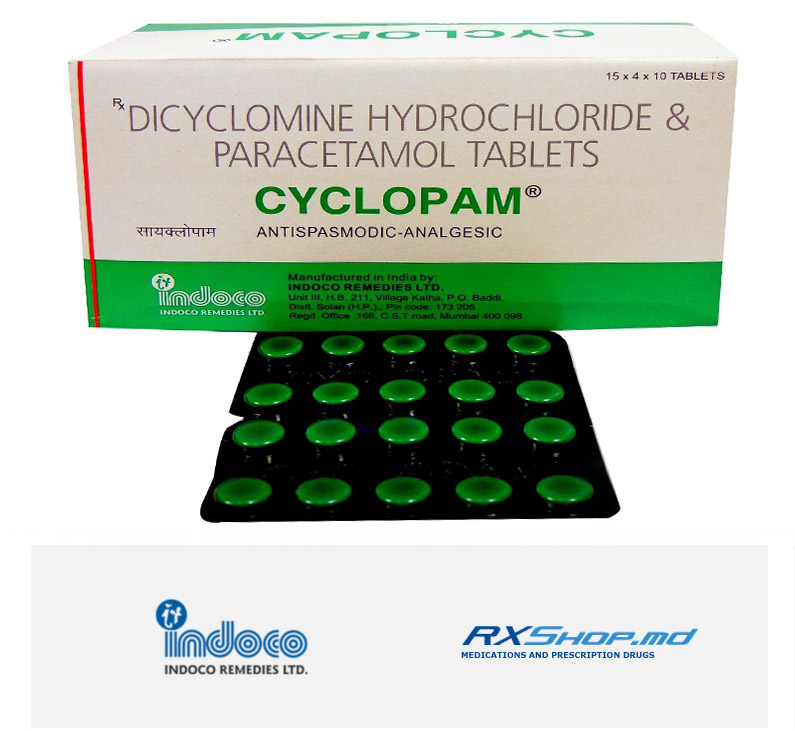
Cyclopam is a popular Indian combination antispasmodic medication containing Dicyclomine Hydrochloride 20mg + Paracetamol 500mg per tablet, manufactured by Indoco Remedies Ltd. to international quality standards. This fixed-dose combination targets two distinct mechanisms of abdominal pain simultaneously: smooth muscle spasm (via Dicyclomine antispasmodic) and pain perception (via Paracetamol central analgesia). Cyclopam is widely prescribed for spasmodic abdominal pain, irritable bowel syndrome (IBS) cramps, and dysmenorrhea (menstrual pain).
The active ingredients work through complementary mechanisms. Dicyclomine Hydrochloride is an antimuscarinic (anticholinergic) agent that blocks M1 and M3 muscarinic receptors on gastrointestinal smooth muscle, reducing spasm and motility, with additional direct smooth-muscle relaxant action. Paracetamol (Acetaminophen) provides analgesic and antipyretic effects through central COX inhibition and modulation of endogenous cannabinoid and serotonergic pathways.
Cyclopam is indicated for spasmodic abdominal pain including IBS-related cramps, dysmenorrhea (menstrual pain), renal colic (kidney stone pain), biliary colic, intestinal colic, spasmodic gastritis pain, functional bowel disorders, and post-operative bowel spasm. The combination is particularly effective when both spasm AND pain components are present.
The medication is available as Cyclopam 20mg/500mg tablets, Cyclopam Suspension (pediatric oral liquid: Dicyclomine 10mg + Paracetamol 125mg per 5mL), and Cyclopam Injection (parenteral form). Standard adult dosing is 1 tablet 3-4 times daily as needed, not exceeding the daily Paracetamol limit of 4 grams (8 tablets maximum per day).
Critical safety considerations include Dicyclomine anticholinergic side effects (dry mouth, blurred vision, constipation, urinary retention, tachycardia, confusion in elderly), contraindication in glaucoma, prostatic hyperplasia with urinary retention, severe ulcerative colitis, paralytic ileus, myasthenia gravis, and infants under 6 months (respiratory complications). Paracetamol carries hepatotoxicity risk at doses exceeding 4g/day, with alcohol use, or in pre-existing liver disease. Avoid concurrent use with other anticholinergic medications.
Free prescription
Discrete packaging
Have questions?
Quality Assurance

- IBS / Irritable Bowel Syndrome: For IBS-related abdominal cramps and pain — common use;
- IBS D Diarrhea Predominant: Particularly useful for IBS-D with cramping pain;
- IBS M Mixed: For mixed IBS with alternating bowel patterns and cramping;
- Dysmenorrhea / Menstrual Cramps: For dysmenorrhea (menstrual cramps with pain) — addresses both uterine spasm and pain;
- Primary Dysmenorrhea: For primary dysmenorrhea in adolescents and young adults;
- Renal Colic: For renal colic (kidney stone pain) — adjunct to standard therapy;
- Ureteric Colic: For ureteric colic with cramping pain;
- Biliary Colic: For biliary colic (gallbladder pain) — adjunct therapy;
- Intestinal Colic: For intestinal colic with cramping abdominal pain;
- Spasmodic Gastritis Pain: For gastritis pain with spasmodic component;
- Functional Bowel Disorder: For functional bowel disorders with cramping pain;
- Functional Dyspepsia: For functional dyspepsia with spasmodic component;
- Post Operative Bowel Spasm: For post-operative bowel spasm and cramping pain;
- Diverticular Disease Pain: For diverticular disease pain with spasm;
- Acute Gastroenteritis Cramps: For acute gastroenteritis with cramping abdominal pain;
- Premenstrual Pelvic Pain: For premenstrual pelvic pain with cramping;
- Endometriosis Pain Adjunct: Off-label adjunct for endometriosis-related pelvic pain;
- Pediatric Colic Suspension: Cyclopam Suspension for pediatric colic in children >6 months;
- Emergency Pain Relief IM: Cyclopam Injection for rapid pain relief in emergency or hospital settings;
- Acute Abdominal Cramping: For acute episodes of abdominal cramping pain.
- Less Abdominal Cramping: Direct reduction in cramping sensation through smooth muscle relaxation;
- Less GI Spasm: Reduction in gastrointestinal smooth muscle spasm via dual antispasmodic action;
- Less IBS Cramps: Effective reduction in irritable bowel syndrome cramping episodes;
- Better IBS Daily Function: Reduction in IBS-related disruption of daily activities and work;
- Less Menstrual Pain: Effective reduction in dysmenorrhea pain through uterine spasm relief + analgesia;
- Less Uterine Cramping: Direct reduction in uterine smooth muscle cramping during menstruation;
- Less Kidney Stone Pain: Adjunct reduction in renal colic pain through ureteral smooth muscle relaxation;
- Less Gallbladder Pain: Adjunct reduction in biliary colic pain;
- Less Bowel Cramping: Reduction in intestinal cramping pain;
- Less Gastritis Pain: Reduction in spasmodic gastritis pain;
- Less Post-Op Pain: Reduction in post-operative bowel spasm pain;
- Faster Pain Relief: Onset of action within 30-60 minutes of oral administration;
- Better Daily Function: Return to school, work, and normal activities during painful episodes;
- Better Quality of Life: Substantial improvement in quality of life during chronic IBS or recurrent dysmenorrhea;
- Better Sleep During Pain: Pain and spasm relief enables better sleep during acute episodes;
- Reduced Need for Opioids: Effective non-opioid combination may reduce need for opioid analgesics;
- Reduced Need for Multiple Medications: Single combination tablet replaces separate antispasmodic + analgesic;
- Synergistic Effect: Two-mechanism approach more effective than either component alone;
- Brand Cyclopam: Indoco Remedies Indian brand with established clinical reputation and international quality manufacturing;
- Generic Dicyclomine Paracetamol: Affordable combination of two well-established generic active ingredients;
- Cyclopam Pediatric Suspension: Pediatric oral suspension (10mg/125mg per 5mL) for children >6 months;
- Cyclopam Injection: Parenteral injection for emergency and hospital settings;
- Cyclopam Forte: Forte variant with higher Paracetamol dose for severe pain episodes;
- Fixed Dose Combination Antispasmodic: Fixed-dose combination of antispasmodic + analgesic in single tablet;
- Antimuscarinic Antispasmodic: Antimuscarinic (anticholinergic) mechanism well-established for GI smooth muscle spasm;
- Direct Smooth Muscle Relaxant: Direct smooth muscle relaxant action independent of receptor blockade;
- Central COX Inhibition: Central COX inhibition mechanism provides analgesia without NSAID GI risk;
- Dual Mechanism Pain Relief: Dual mechanism (spasm relief + analgesia) more effective than monotherapy;
- IBS Standard Therapy India: Standard IBS therapy in India and Asian markets;
- Dysmenorrhea First Line India: First-line dysmenorrhea therapy in India and many Asian markets;
- Indian Quality Manufacturing: Indian Indoco Remedies manufacturing meeting international quality standards;
- Affordable Combination Therapy: Cost-effective combination therapy globally — supports access in resource-limited settings;
- As Needed Dosing PRN: As-needed (PRN) dosing for episodic abdominal pain — not daily required;
- Non Opioid Pain Therapy: Non-opioid combination for moderate spasmodic pain — no addiction risk.
Generic Cyclopam (Dicyclomine + Paracetamol 20mg/500 mg) Medication guide:
📖 What Is Cyclopam (Dicyclomine and Paracetamol Combination)
Cyclopam is a combination antispasmodic-analgesic medication containing dicyclomine (an anticholinergic antispasmodic) and paracetamol (acetaminophen - an analgesic and antipyretic). This dual-component formulation addresses both smooth muscle spasms and associated pain, making it valuable for spasmodic gastrointestinal conditions, biliary and renal colic, and dysmenorrhea. Widely used across India, South Asia, the Middle East, Africa, and CIS countries, Cyclopam represents a rational combination approach for spasm-associated pain conditions.
| Distinguishing feature | Detail |
|---|---|
| Combination components | Dicyclomine (antispasmodic) + Paracetamol (acetaminophen - analgesic and antipyretic) |
| Typical combination strength | Dicyclomine 20 mg + Paracetamol 500 mg per tablet (most common) |
| Drug class of dicyclomine | Tertiary amine antispasmodic with dual direct smooth muscle relaxant and anticholinergic mechanisms |
| Drug class of paracetamol | Para-aminophenol analgesic and antipyretic with weak COX inhibition and central mechanisms |
| FDA regulatory status | Dicyclomine FDA-approved as Bentyl monotherapy (1950s) for IBS and functional bowel disorders; combination formulation not FDA-approved in US but widely used internationally |
| International name variations | Dicyclomine (US, India) = Dicycloverine (INN, Europe, UK); paracetamol = acetaminophen (US) |
| Primary indications | Painful spasmodic conditions of GI tract, biliary tract, urinary tract, and uterine spasms (dysmenorrhea) |
| Availability regions | India, Pakistan, Bangladesh, Sri Lanka, Middle East, Africa, CIS countries, Southeast Asia; not marketed as combination in US, UK, EU |
| Signature safety concerns | Substantial anticholinergic effects (dry mouth, blurred vision, constipation, urinary retention); paracetamol hepatotoxicity in overdose; historical pediatric boxed warning for infants under 6 months |
| Signature advantages | Dual mechanism addresses both spasm and pain simultaneously; established safety at appropriate doses; convenient single formulation improves adherence for spasm-related pain conditions |
🌟 The rational combination approach
- Spasm-pain complementary treatment
- Many spasmodic conditions (IBS abdominal cramping, biliary colic, renal colic, dysmenorrhea) present with both spasm and pain components. Dicyclomine addresses smooth muscle spasm through direct relaxant and anticholinergic mechanisms; paracetamol addresses associated pain and any fever through central analgesic mechanism. The combination provides symptom relief that would require multiple separate medications.
- Established individual component safety
- Both dicyclomine (in use since 1950s) and paracetamol (introduced 1953) have extensive individual safety data spanning decades of clinical use. Their combination leverages established pharmacology rather than novel molecules.
- Regional prescribing patterns
- While dicyclomine monotherapy is standard in US (Bentyl) and Europe (Merbentyl - dicycloverine), the fixed combination with paracetamol reflects prescribing practices in India, South Asia, Middle East, Africa, and CIS regions where this formulation has become popular for pain-associated spasmodic conditions.
- Symptomatic treatment paradigm
- Cyclopam is symptomatic treatment for painful spasms - not disease-modifying therapy for underlying conditions like IBS. Modern IBS management increasingly emphasizes multi-modal approaches including dietary interventions, gut-directed psychotherapy, and gut microbiota considerations alongside symptomatic pharmacotherapy.
💡 Why Cyclopam remains widely prescribed
Cyclopam and similar dicyclomine-paracetamol combinations remain among the most widely prescribed medications for abdominal pain in the regions where they are marketed. Reasons include: (1) dual mechanism addressing both spasm and pain in single tablet; (2) fast symptom relief useful for acute spasmodic episodes; (3) low cost and generic availability; (4) over-the-counter or easily prescribed access; (5) decades of prescriber familiarity; (6) reasonable safety profile at recommended doses; (7) convenience of single tablet improves adherence. For appropriate short-term symptomatic treatment of painful spasmodic conditions in adults where anticholinergic effects and paracetamol are tolerated, Cyclopam offers established combination therapy. Understanding both the benefits (rapid symptom relief) and limitations (symptomatic only, anticholinergic burden, paracetamol dose ceiling) guides appropriate clinical use.
📜 History of Dicyclomine and Paracetamol Development
Cyclopam represents the combination of two medications with substantially different but ultimately convergent histories. Dicyclomine emerged from mid-20th century anticholinergic antispasmodic research, while paracetamol traces its history to the late 19th century with modern clinical use established in the 1950s. Their combination as fixed-dose formulations emerged predominantly in Asian and developing markets during the late 20th century.
🕑 Dicyclomine historical timeline
- 1940s antispasmodic research era
- Post-World War II era saw substantial interest in developing synthetic anticholinergic antispasmodics to replace crude belladonna extracts; multiple compounds developed
- 1950 dicyclomine synthesis
- Dicyclomine developed by Wm S Merrell Company (later Merrell Dow, then subsumed into larger pharmaceutical mergers); one of a series of synthetic tertiary amine antispasmodics
- 1950s FDA approval as Bentyl
- Dicyclomine (Bentyl) approved by FDA for functional bowel disorders and irritable bowel syndrome; became one of the standard antispasmodics for IBS management
- 1960s-1970s widespread clinical use
- Bentyl became widely used for functional GI disorders; oral, IM, and IV formulations available
- 1984 FDA pediatric BOXED WARNING
- Dicyclomine contraindicated in infants under 6 months of age after reports of serious adverse effects including seizures, respiratory difficulty, and rare deaths in young infants; PIVOTAL safety event shaping current pediatric use restrictions
- Modern era international use
- Dicyclomine (or its INN equivalent dicycloverine in Europe) remains standard antispasmodic globally; Rome Foundation guidelines include antispasmodic role in IBS management
🕑 Paracetamol historical timeline
- 1877 first synthesis
- Paracetamol first synthesized by Harmon Northrop Morse at Johns Hopkins University; not immediately recognized for clinical utility
- 1893 clinical observations
- Antipyretic effects observed by Joseph von Mering; but overshadowed by phenacetin (which was found to be metabolized to paracetamol - unrecognized at the time)
- 1948 metabolite recognition
- Brodie and Axelrod identified that phenacetin's analgesic activity was largely due to its metabolite paracetamol; established paracetamol as active analgesic in its own right
- 1953 marketing as analgesic
- Paracetamol introduced clinically as analgesic and antipyretic; grew rapidly in popularity as safer alternative to aspirin and phenacetin
- 1955 US OTC approval as Tylenol
- Paracetamol (acetaminophen) approved over-the-counter in US; McNeil marketing as Tylenol; became one of the most widely used analgesics globally
- 1966 first hepatotoxicity cases
- First cases of paracetamol-induced acute liver failure from overdose reported; recognition of hepatotoxicity risk
- 1974 N-acetylcysteine antidote
- N-acetylcysteine (NAC) established as effective antidote for paracetamol overdose; revolutionized paracetamol toxicity management
- 1980s-2000s hepatotoxicity awareness
- Growing recognition of paracetamol as leading cause of acute liver failure in developed nations; regulatory changes limiting package sizes, mandatory warnings
- WHO Essential Medicine
- Paracetamol listed on WHO Essential Medicines List; among the most widely used medications globally
🕑 Combination formulation history
- 1970s-1980s Indian pharmaceutical development
- Indian pharmaceutical companies developed fixed-dose combination products including dicyclomine-paracetamol for painful spasmodic conditions; addressed common clinical scenario of spasm plus pain in single formulation
- 1990s-2000s regional expansion
- Combination products expanded across South Asia, Middle East, Africa, CIS countries where dicyclomine-paracetamol became widely prescribed; Cyclopam and various brand equivalents established market presence
- Regulatory considerations by region
- Combination products approved by CDSCO (India) and other Asian regulators; not marketed as combinations in US (where dicyclomine monotherapy as Bentyl standard), UK, or EU where separate components preferred
- Modern context
- Combination products face increasing scrutiny globally regarding rational polypharmacy principles - modern practice generally favors starting with single agents. Nevertheless, dicyclomine-paracetamol combinations remain widely prescribed in their regional markets given established use patterns and convenience.
🧪 Chemistry of Dicyclomine and Paracetamol Molecules
Cyclopam combines two structurally unrelated molecules with different chemical classes and physicochemical properties. Understanding both dicyclomine (a tertiary amine anticholinergic ester) and paracetamol (a para-aminophenol derivative) chemistry provides foundation for understanding their combined pharmacology.
🧪 Dicyclomine chemistry
- Chemical name
- 2-(diethylamino)ethyl 1-cyclohexylcyclohexane-1-carboxylate (hydrochloride salt)
- Molecular formula and weight
- C19H35NO2 (base) / C19H36ClNO2 (hydrochloride salt); molecular weight 345.9 g/mol (HCl salt)
- Chemical class
- Tertiary amine synthetic antispasmodic - bicyclohexyl carboxylic acid diethylaminoethyl ester; structurally distinct from natural belladonna alkaloids (atropine, hyoscyamine) despite similar pharmacological class
- Physical properties
- White or nearly white crystalline powder; freely soluble in water and alcohol
- Ionization
- Basic tertiary amine; pKa approximately 9.0; substantially ionized at physiological pH
- Nomenclature note
- Dicyclomine (USAN, used in US, India, Asia) is the same molecule as dicycloverine (INN, used in Europe, UK) - identical chemistry, different regulatory naming
🧪 Paracetamol chemistry
- Chemical name
- N-(4-hydroxyphenyl)acetamide, also known as N-acetyl-para-aminophenol (from which the acronym APAP derives)
- Molecular formula and weight
- C8H9NO2; molecular weight 151.16 g/mol
- Chemical class
- Para-aminophenol derivative analgesic and antipyretic; distinct from NSAIDs (aspirin, ibuprofen) and opioids; considered its own analgesic class
- Physical properties
- White odorless crystalline powder; sparingly soluble in water; freely soluble in alcohol
- Nomenclature
- Paracetamol (INN, international name) = acetaminophen (US name); identical molecule with different regional nomenclature
- Structural relationship
- Metabolite of phenacetin (older analgesic); simpler structure than aspirin; distinct para-aminophenol scaffold
| Property | Dicyclomine | Paracetamol |
|---|---|---|
| Chemical class | Tertiary amine antispasmodic ester | Para-aminophenol derivative |
| Molecular weight | 345.9 g/mol (HCl salt) | 151.16 g/mol |
| Water solubility | Freely soluble | Sparingly soluble |
| Ionization at physiological pH | Substantially ionized (basic) | Largely neutral (weak acid pKa ~9.5) |
| Formulation compatibility | HCl salt used for improved dissolution | Direct compression possible |
| Alternative names | Dicycloverine (INN); Bentyl (US brand) | Acetaminophen (US); APAP |
💡 The complementary chemistry rationale
Cyclopam combines two molecules with substantially different chemistry that fortunately enables coformulation. Dicyclomine as HCl salt has excellent water solubility supporting oral absorption; paracetamol though sparingly water-soluble has adequate dissolution for oral bioavailability. Neither component interferes chemically with the other in formulation. The combined tablet weight and size remain manageable at typical strengths (dicyclomine 20 mg + paracetamol 500 mg total 520 mg active, allowing standard tablet manufacturing). Neither component has significant chemical instability requiring special storage beyond standard pharmaceutical practice. The formulation compatibility is one factor supporting the practical utility of this combination approach.
⚙️ Mechanism of Action - Dual Antispasmodic and Analgesic
Cyclopam achieves therapeutic effect through complementary mechanisms of its two components. Dicyclomine provides dual antispasmodic action combining direct smooth muscle relaxation with anticholinergic effects, while paracetamol provides central analgesic and antipyretic effects through mechanisms still incompletely understood despite decades of research.
⚙️ Dicyclomine dual mechanism
- Direct smooth muscle relaxant effect
- Dicyclomine has intrinsic direct smooth muscle relaxant activity independent of muscarinic receptor blockade; may involve calcium channel modulation and other direct mechanisms; distinguishing feature from purely anticholinergic antispasmodics like hyoscyamine
- Anticholinergic effect (M1 and M3 muscarinic antagonism)
- Competitive antagonism at muscarinic receptors; particularly M3 receptors on smooth muscle mediating cholinergic contraction; reduces acetylcholine-mediated contraction of GI, biliary, urinary, and uterine smooth muscle
- Selectivity profile
- Dicyclomine is relatively selective for smooth muscle vs cardiac muscarinic receptors compared to atropine; less tachycardia at therapeutic doses; but not receptor-subtype selective enough to avoid all anticholinergic effects
- Onset and duration
- Oral onset 30-60 minutes; peak effect 1-3 hours; duration approximately 4-6 hours; supports 3-4 times daily dosing typical
⚙️ Paracetamol mechanism - central and complex
- Weak COX inhibition
- Weakly inhibits cyclooxygenase enzymes (COX-1, COX-2, and possibly COX-3 in CNS); effect substantially weaker than NSAIDs, particularly peripherally; central inhibition may be more relevant
- Central mechanism dominant
- Unlike NSAIDs which have primarily peripheral anti-inflammatory action, paracetamol acts predominantly centrally; minimal anti-inflammatory effect; primarily analgesic and antipyretic
- Endocannabinoid system involvement
- Paracetamol metabolite AM404 (arachidonoyl-serotonin analog) formed centrally; activates cannabinoid receptors and TRPV1 receptors; contributes to analgesic effects
- Serotonergic mechanism
- Activation of descending serotonergic inhibitory pathways contributes to central analgesic effect; explains partial reversal of paracetamol analgesia by serotonin antagonists
- Antipyretic mechanism
- Central action on hypothalamic thermoregulatory center reducing fever; effective antipyretic without anti-inflammatory action
- Absence of clinically significant anti-inflammatory action
- Unlike NSAIDs, paracetamol has minimal peripheral anti-inflammatory effect; suitable for pain and fever but not primarily for inflammatory conditions; important distinguishing feature from NSAIDs
| Mechanism component | Clinical effect |
|---|---|
| Dicyclomine direct smooth muscle relaxant | Relieves spasm even in tissues with reduced cholinergic activity |
| Dicyclomine M3 antagonism on GI smooth muscle | Reduces gastrointestinal spasm and cramping in IBS and functional bowel disorders |
| Dicyclomine M3 antagonism on biliary smooth muscle | Reduces biliary colic pain and spasm |
| Dicyclomine M3 antagonism on ureter smooth muscle | Reduces renal colic spasm |
| Dicyclomine M3 antagonism on uterine smooth muscle | Reduces dysmenorrhea uterine spasm |
| Paracetamol central analgesic action | Reduces pain perception centrally |
| Paracetamol central antipyretic action | Reduces fever if present with spasmodic condition |
| Combined effect | Simultaneous relief of spasm and associated pain |
💡 The dual-mechanism combination rationale
The clinical rationale for combining dicyclomine and paracetamol reflects the reality that many spasmodic conditions produce both the underlying spasm and the pain arising from it. Dicyclomine addresses the spasm mechanism directly (through both direct smooth muscle relaxation and anticholinergic effects), reducing the underlying pathophysiology. Paracetamol addresses the pain through central mechanisms - even after spasm resolution, residual pain may persist and paracetamol provides ongoing analgesic effect. Additionally, in conditions with any inflammatory or fever component, paracetamol provides antipyretic effect. The complementary mechanisms mean the combination is not merely additive but addresses distinct pathophysiological components of the presenting problem. This is different from mere symptom masking with analgesic alone (which would leave underlying spasm untreated) or antispasmodic alone (which might not fully address pain in cases where central sensitization has developed). Understanding this dual-mechanism basis supports appropriate clinical application.
🔬 Pharmacokinetics of the Combined Formulation
Cyclopam pharmacokinetics reflect the independent absorption, distribution, metabolism, and elimination of its two components. Both components have relatively rapid onset of action with limited duration requiring multiple daily doses. Understanding each component's PK profile supports appropriate dosing and monitoring.
| Parameter | Dicyclomine | Paracetamol |
|---|---|---|
| Oral bioavailability | Highly variable; approximately 60-70 percent | Approximately 60-90 percent (dose-dependent, saturable first-pass) |
| Time to peak (Tmax) | 1-1.5 hours | 30-90 minutes |
| Effect of food | Delays absorption but not extent | Delays absorption; take on empty stomach for fastest onset |
| Protein binding | Moderate | Low (10-25 percent, dose-dependent) |
| Half-life | 4-6 hours (parent); 9-10 hours (metabolites) | 2-3 hours (normal); prolonged in overdose or hepatic impairment |
| Volume of distribution | Moderate | 0.9-1.0 L/kg |
| Primary metabolism | Extensive hepatic metabolism (specific enzymes less characterized) | Hepatic - glucuronidation (55 percent), sulfation (30 percent), CYP2E1 to NAPQI (5-10 percent) |
| Toxic metabolite | Not significant | NAPQI (N-acetyl-p-benzoquinone imine) - hepatotoxic if glutathione depleted |
| Elimination | Urine (metabolites) and feces | Urine (95 percent as metabolites) |
| Onset of action | 30-60 minutes | 30-60 minutes for analgesic effect |
| Duration of action | 4-6 hours | 4-6 hours |
🔬 Paracetamol NAPQI pathway - critical safety concept
- Normal metabolism
- Approximately 90 percent of paracetamol metabolized via conjugation (glucuronidation and sulfation) producing non-toxic metabolites; safe non-cytochrome pathway
- Minor CYP2E1 pathway
- Approximately 5-10 percent metabolized via CYP2E1 producing NAPQI (N-acetyl-p-benzoquinone imine) - highly reactive electrophilic metabolite
- Glutathione detoxification
- At therapeutic doses, hepatic glutathione conjugates NAPQI making it non-toxic; ongoing glutathione regeneration prevents accumulation
- Overdose - glutathione depletion
- In overdose, conjugation pathways saturate; CYP2E1 pathway produces excessive NAPQI; hepatic glutathione depletes; free NAPQI binds to hepatocyte proteins causing hepatocellular necrosis
- Chronic alcohol induction
- Chronic alcohol use induces CYP2E1, increasing NAPQI production even at therapeutic paracetamol doses; increases hepatotoxicity risk; important interaction
- Fasting/malnutrition risk
- Reduced hepatic glutathione stores in fasting or malnourished states; increased NAPQI toxicity risk; clinical relevance in patients with poor nutrition
- N-acetylcysteine antidote mechanism
- NAC replenishes hepatic glutathione allowing continued NAPQI detoxification; effective if given within hours of overdose; foundation of paracetamol toxicity management
💡 The pharmacokinetic implications for Cyclopam dosing
Cyclopam pharmacokinetics support the typical dosing schedule of 3-4 times daily for both components. The similar half-lives of dicyclomine (4-6 hours) and paracetamol (2-3 hours) mean that thrice-daily dosing provides reasonably matched exposure of both components, though paracetamol has slightly more variability in coverage. Both onset within 30-60 minutes provides useful rapid relief for acute spasmodic episodes. The critical PK safety consideration is paracetamol total daily dose - regardless of how many Cyclopam doses taken, the cumulative paracetamol should not exceed 4 grams per day (US recommendation) or 3-4 grams for at-risk populations. This means Cyclopam frequency is constrained by paracetamol dose ceiling as much as by dicyclomine considerations. Patients on Cyclopam should avoid concurrent paracetamol from other sources (over-the-counter analgesics, cold medications, combination products) to prevent inadvertent paracetamol overdose. This is critical patient education point.
📋 Approved Indications and Common Clinical Uses
Cyclopam is indicated for painful spasmodic conditions involving smooth muscle across gastrointestinal, biliary, urinary, and reproductive systems. The combination approach addresses both spasm and associated pain in single treatment. Approved indications vary by regulatory region but core clinical applications are consistent.
| Indication category | Specific conditions | Rationale |
|---|---|---|
| Gastrointestinal spasms | Irritable bowel syndrome (IBS), functional abdominal pain, spastic colitis, intestinal colic | Dicyclomine relieves smooth muscle spasm + paracetamol relieves associated pain |
| Biliary tract spasms | Biliary colic (associated with gallstones), post-cholecystectomy syndrome with biliary spasm | Antispasmodic + analgesic simultaneous relief |
| Urinary tract spasms | Renal colic (associated with kidney stones), ureter spasm, bladder spasm | Ureter smooth muscle relaxation + pain relief |
| Gynecological spasms | Primary dysmenorrhea (menstrual pain), secondary dysmenorrhea associated with pelvic pathology | Uterine smooth muscle relaxation + menstrual pain relief |
| Post-procedural spasms | Post-endoscopic spasms, spasms following abdominal procedures | Short-term antispasmodic relief |
🎯 Regulatory approval status
- India (CDSCO)
- Combination approved and widely marketed under multiple brand names including Cyclopam; extensive use for GI spasms, dysmenorrhea, and biliary/renal colic
- Pakistan, Bangladesh, Sri Lanka
- Similar regulatory approvals; widely available across South Asian markets
- Middle East
- Available in various formulations across UAE, Saudi Arabia, Egypt, and other regional markets
- Africa
- Widely available across many African countries under various brand names
- CIS countries
- Various formulations available across Russia, Ukraine, Belarus, Central Asian republics, and other CIS markets
- United States
- Not FDA-approved as combination; dicyclomine (Bentyl) approved as monotherapy for functional bowel disorders and IBS; paracetamol widely OTC
- European Union / UK
- Not marketed as fixed combination; dicycloverine (Merbentyl) as monotherapy; paracetamol OTC
💡 The regional prescribing pattern significance
The geographic distribution of Cyclopam and similar dicyclomine-paracetamol combinations reflects both historical prescribing traditions and clinical practice preferences. In regions where these combinations are marketed, they represent standard antispasmodic-analgesic therapy for painful spasmodic conditions. Their absence from US, UK, and EU markets reflects regulatory preference for separate component prescribing rather than fixed combinations for these indications - not evidence of inefficacy. Modern global pharmacovigilance practice increasingly emphasizes appropriate use of any combination product with awareness of individual component considerations - particularly paracetamol dose ceiling and dicyclomine anticholinergic effects. For appropriate patients in regions where the combination is marketed, Cyclopam represents established therapy. The regional prescribing pattern is important context for understanding when and how the medication is used clinically.
🫁 IBS and Functional Gastrointestinal Disorders
Irritable bowel syndrome (IBS) is one of the most common indications for Cyclopam and dicyclomine-based antispasmodics globally. IBS affects approximately 10-15 percent of adults worldwide, characterized by chronic abdominal pain and altered bowel habits. Antispasmodics like dicyclomine have established role in IBS symptom management within multi-modal treatment approach.
🫁 Rome IV IBS diagnostic criteria overview
- Rome Foundation criteria
- Rome IV (2016) criteria are international consensus for diagnosing IBS and other functional GI disorders; developed by Rome Foundation (Drossman et al.); guide clinical diagnosis
- Core Rome IV IBS criteria
- Recurrent abdominal pain, on average, at least 1 day per week in the last 3 months, associated with 2 or more of: (1) related to defecation; (2) associated with change in stool frequency; (3) associated with change in stool form; symptoms present for last 3 months with onset at least 6 months earlier
- IBS subtypes
- IBS-C (constipation predominant), IBS-D (diarrhea predominant), IBS-M (mixed), IBS-U (unclassified); Cyclopam addresses pain and spasm across subtypes though additional therapy varies by subtype
- Prevalence
- Approximately 10-15 percent adults globally; higher in women than men; onset typically in young adulthood; substantial healthcare utilization and quality of life impact
🔬 Dicyclomine IBS evidence
- Page and Dirnberger 1981
- Landmark trial of dicyclomine in IBS demonstrating effectiveness for abdominal pain and functional bowel symptoms; established dicyclomine role in IBS management
- Ford 2008 BMJ meta-analysis
- Comprehensive antispasmodic meta-analysis in IBS; number needed to treat (NNT) approximately 5 for abdominal pain relief; supported antispasmodic class effectiveness
- Ruepert 2011 Cochrane review
- Systematic review of pharmacological therapies for IBS; antispasmodics including dicyclomine showed effectiveness for global symptoms and abdominal pain
- ACG IBS guidelines position
- American College of Gastroenterology guidelines include antispasmodics (including dicyclomine) as recommended options for IBS abdominal pain management
- NICE IBS guideline
- UK NICE CG61 recommends antispasmodics for IBS abdominal pain, considering dicyclomine among appropriate options
🎯 Clinical application in IBS
- Symptomatic treatment for pain and spasm
- Cyclopam provides symptomatic relief for IBS abdominal pain and spasms; does not address underlying pathophysiology; part of comprehensive IBS management
- Use with dietary interventions
- Modern IBS management increasingly emphasizes dietary interventions (low FODMAP diet - Chey and colleagues); combination with antispasmodic pharmacotherapy provides multi-modal approach
- Timing of use
- Take before meals for postprandial symptoms (30-45 minutes before eating); as-needed for episodic symptoms; regular scheduling if chronic symptoms
- Duration considerations
- Short-term acute exacerbation relief typically effective; long-term daily use may lead to anticholinergic side effect burden; periodic reassessment appropriate
- Combination with other IBS agents
- May be combined with soluble fiber, probiotics; considerations for combination with tricyclic antidepressants (additive anticholinergic effects), rifaximin, or subtype-specific agents (loperamide for diarrhea, laxatives for constipation)
- When to consider alternatives
- Anticholinergic side effects intolerable; substantial constipation (may worsen IBS-C); elderly patients where anticholinergic burden concerning; alternatives include mebeverine, hyoscine butylbromide, otilonium, drotaverine, peppermint oil
💡 The IBS treatment paradigm
Modern IBS treatment paradigm emphasizes multi-modal approach: (1) education and reassurance about benign nature; (2) dietary interventions (low FODMAP, fiber optimization); (3) lifestyle modifications (stress management, sleep hygiene, physical activity); (4) gut-directed psychotherapy (CBT, gut-directed hypnotherapy); (5) pharmacotherapy tailored to subtype and dominant symptoms. Within pharmacotherapy, antispasmodics like dicyclomine (in Cyclopam) address abdominal pain and spasm - a nearly universal IBS symptom. They complement rather than replace other treatment modalities. For patients with acute symptomatic exacerbations, Cyclopam provides useful symptomatic relief. For chronic ongoing management, integration with dietary and behavioral approaches provides most comprehensive benefit. Patient education about IBS as chronic condition requiring ongoing management (rather than acute illness to be cured) supports realistic expectations and comprehensive care.
💢 Biliary Colic and Renal Colic Management
Biliary colic and renal colic are among the most severe painful spasmodic conditions where antispasmodic therapy including Cyclopam has traditional role. These conditions involve smooth muscle spasm secondary to obstructive stones or other pathology, producing intense pain that antispasmodic + analgesic combination approach addresses.
💢 Biliary colic considerations
- Pathophysiology
- Biliary colic occurs when gallstone temporarily obstructs cystic duct or common bile duct; gallbladder or biliary tract contracts against obstruction producing severe pain; not truly "colic" (which implies waxing/waning) as pain often continuous
- Presentation
- Severe right upper quadrant or epigastric pain; may radiate to right shoulder or scapula; nausea and vomiting common; typically lasts 30 minutes to 6 hours; often postprandial (particularly after fatty meals)
- Antispasmodic role
- Dicyclomine reduces biliary smooth muscle contraction and spasm; may reduce contraction against obstruction; paracetamol addresses associated pain
- Symptomatic vs definitive treatment
- Cyclopam provides symptomatic relief for acute episodes; does not address underlying gallstones; recurrent biliary colic typically requires cholecystectomy (surgical gallbladder removal) as definitive treatment
- Warning signs requiring urgent evaluation
- Fever with biliary pain (possible cholangitis, cholecystitis), jaundice (possible common bile duct obstruction), severe unrelenting pain, signs of infection - EMERGENCY evaluation needed; not managed with just symptomatic Cyclopam
- Diagnostic workup
- Ultrasound is typical diagnostic modality for gallstones; CT or MRCP for complex cases; liver function tests and lipase for complications
💢 Renal colic considerations
- Pathophysiology
- Renal colic occurs when kidney stone (nephrolithiasis) obstructs ureter; upstream urinary tract dilates; ureter smooth muscle spasms attempting to move stone downward producing severe pain
- Presentation
- Severe flank pain radiating to groin or genitals; often waxing and waning as stone moves through ureter; hematuria (blood in urine) common; nausea and vomiting frequent; restlessness and inability to find comfortable position characteristic
- Antispasmodic role
- Dicyclomine may reduce ureter smooth muscle spasm around obstructing stone; paracetamol addresses pain component; role secondary to NSAIDs (which are first-line for renal colic pain)
- NSAIDs vs paracetamol for renal colic
- NSAIDs (ibuprofen, ketorolac) generally superior to paracetamol for renal colic pain due to anti-inflammatory effects on ureter; paracetamol useful when NSAIDs contraindicated (renal impairment - which is common with obstructive uropathy!)
- Alpha-blocker medical expulsive therapy
- Tamsulosin and other alpha-blockers used as medical expulsive therapy (MET) for stones 5-10 mm - relax ureter smooth muscle facilitating stone passage; complementary role to Cyclopam antispasmodic
- Warning signs requiring urgent evaluation
- Fever with flank pain (possible obstructive pyelonephritis/urosepsis - EMERGENCY), inability to pass urine, severe unrelenting pain, signs of infection, solitary kidney or transplanted kidney - urgent urology consultation needed
- Diagnostic workup
- CT KUB (kidneys-ureters-bladder) without contrast is gold standard; ultrasound useful for pregnant patients or when CT contraindicated; urinalysis for hematuria and infection
💡 The colic symptomatic treatment framework
Cyclopam provides symptomatic relief for biliary and renal colic but should not delay appropriate diagnostic workup or definitive treatment. Both conditions can range from mild self-limiting episodes to complications requiring emergency intervention. Modern practice: (1) confirm diagnosis with appropriate imaging; (2) exclude urgent complications (infection, obstruction with sepsis, solitary kidney obstruction); (3) provide symptomatic relief while diagnostic evaluation proceeds; (4) address definitive treatment (cholecystectomy for recurrent biliary colic, urological intervention for obstructing stones). For renal colic specifically, NSAIDs are first-line pain management; paracetamol (via Cyclopam) is alternative when NSAIDs contraindicated. For biliary colic, opioid analgesics may be needed for severe episodes; Cyclopam suitable for mild-to-moderate episodes. Patient education about warning signs requiring urgent evaluation is essential - patients should not just self-treat severe or persistent symptoms with Cyclopam.
🌸 Dysmenorrhea Pain Management Applications
Dysmenorrhea (painful menstruation) is a common indication for Cyclopam particularly in regions where the combination is marketed. Primary dysmenorrhea affects 40-90 percent of menstruating women at some point; secondary dysmenorrhea related to pelvic pathology affects smaller proportion. The uterine spasm and pain components make antispasmodic-analgesic combination clinically useful.
🌸 Dysmenorrhea overview
- Primary dysmenorrhea
- Painful menstruation without underlying pelvic pathology; typically begins within few years of menarche; caused by excessive prostaglandin production leading to uterine contractions; may include lower abdominal cramping, low back pain, nausea, headache
- Secondary dysmenorrhea
- Painful menstruation due to underlying pelvic pathology - endometriosis, adenomyosis, uterine fibroids, pelvic inflammatory disease, ovarian cysts, cervical stenosis; typically onset later in life; requires evaluation for underlying cause
- Pain characteristics
- Cramping lower abdominal pain typically starting shortly before or with menstruation; may radiate to low back or thighs; often accompanied by nausea, headache, fatigue; typically lasts 1-3 days
- Impact on quality of life
- Substantial functional impact; missed school/work days; affects social activities; approximately 10-20 percent of women have severe dysmenorrhea requiring medical intervention
🎯 Cyclopam for dysmenorrhea
- Dual mechanism benefit
- Dicyclomine relieves uterine smooth muscle spasm; paracetamol addresses menstrual pain; combination addresses both components
- Comparison with NSAIDs
- NSAIDs (ibuprofen, naproxen, mefenamic acid) are typical first-line for dysmenorrhea due to prostaglandin inhibition; Cyclopam useful as alternative or adjunct when NSAIDs contraindicated (peptic ulcer, aspirin allergy, coagulopathy) or insufficient alone
- Timing of use
- Take at onset of pain or premenstrually if predictable severe symptoms; typically 1-2 days of treatment adequate for episode; continue as-needed until menstrual pain resolves
- Combination with other approaches
- May combine with heat therapy (heating pads), relaxation techniques, TENS therapy; hormonal contraceptives (COCs, progestins) prevent underlying pathophysiology in severe cases
- When to seek medical evaluation
- Severe dysmenorrhea, new onset in older woman (suggests secondary dysmenorrhea), symptoms unresponsive to typical treatments, associated with heavy bleeding or fever - needs evaluation for underlying pelvic pathology including endometriosis
💚 Other Spasmodic Conditions and Applications
Beyond primary indications, Cyclopam has applications for various other spasmodic conditions where smooth muscle spasm and associated pain occur.
💚 Other spasmodic applications
- Functional dyspepsia
- Upper GI functional disorder with epigastric pain, early satiety, postprandial fullness; antispasmodic role secondary to PPI/H2 blocker therapy; may help for spasm component
- Diverticular disease with abdominal spasm
- Symptomatic uncomplicated diverticular disease with abdominal cramping; antispasmodic-analgesic combination for symptom management; not for acute diverticulitis (requires antibiotic therapy)
- Post-endoscopic spasm
- Following colonoscopy or upper endoscopy; brief antispasmodic period may help residual spasm
- Chronic pelvic pain (with spasm component)
- Off-label; complex condition requiring multi-modal evaluation; spasm component may respond to antispasmodic
- Interstitial cystitis / bladder pain syndrome
- Off-label; anticholinergic effects may reduce bladder spasm; other agents (pentosan polysulfate, amitriptyline) also used
- Intestinal spasm secondary to acute gastroenteritis
- Symptomatic relief of cramping with viral or bacterial gastroenteritis; important note: avoid antispasmodics if bloody diarrhea suggesting invasive pathogen (may worsen invasion by reducing motility)
📝 Off-Label Uses and Special Considerations
Off-label applications of Cyclopam beyond approved indications extend into various conditions where antispasmodic-analgesic combination may provide benefit. All off-label use requires careful risk-benefit consideration.
⚠️ Off-label applications
- Endometriosis symptomatic treatment
- Off-label; may provide symptomatic relief for endometriosis-related pelvic pain and spasm; not disease-modifying; requires evaluation for definitive endometriosis management
- Post-surgical intestinal spasm
- Off-label; brief post-operative antispasmodic; typically brief use only
- Chronic non-cancer pain with spasm component
- Off-label; may provide adjunctive benefit for pain conditions with muscle spasm; not primary therapy
- Overactive bladder (bladder spasm predominant)
- Off-label; anticholinergic effects on bladder smooth muscle; specific overactive bladder agents (oxybutynin, tolterodine, solifenacin) preferred
- Nausea and vomiting associated with spasm
- Off-label; anticholinergic effects may reduce nausea; specific antiemetics generally preferred
🔴 When Cyclopam is NOT appropriate
- Acute severe abdominal pain of unknown cause: may mask signs of surgical abdomen; needs diagnostic evaluation first
- Suspected bowel obstruction: paralytic effect may worsen obstruction
- Bloody or dysenteric diarrhea: may worsen invasive pathogen infection by reducing clearance
- Toxic megacolon: anticholinergic worsens
- Severe ulcerative colitis with megacolon risk: caution
- Acute urinary retention: anticholinergic worsens
- Acute angle-closure glaucoma: anticholinergic worsens
- Myasthenia gravis: anticholinergic effects worsen underlying weakness
- Suspected paracetamol overdose: additional paracetamol dangerous
- Substantial hepatic impairment: paracetamol hepatotoxicity risk
- Infants under 6 months: dicyclomine BOXED WARNING (see section 31)
🔄 Cyclopam Compared to Alternative Antispasmodics
Multiple antispasmodic and antispasmodic-analgesic alternatives exist for the conditions Cyclopam treats. Understanding relative advantages guides selection based on individual patient factors and regional availability.
| Antispasmodic | Class/Mechanism | Advantages | Considerations |
|---|---|---|---|
| Dicyclomine (Cyclopam component) | Direct + anticholinergic tertiary amine | Established efficacy IBS; Rx US; dual mechanism | Anticholinergic effects; pediatric BOXED WARNING under 6 months |
| Mebeverine | Musculotropic (direct smooth muscle) - not anticholinergic | Minimal anticholinergic effects; favorable elderly tolerability | Not available US; primarily Europe, UK, India |
| Hyoscine butylbromide (Buscopan) | Quaternary amine anticholinergic | Poor CNS penetration - fewer CNS anticholinergic effects; OTC in many regions | Standard peripheral anticholinergic effects; not available US |
| Drotaverine (No-Spa) | Phosphodiesterase inhibitor - direct smooth muscle | Minimal anticholinergic effects; popular in Eastern Europe/CIS | Not available US; limited controlled trial data |
| Otilonium bromide | Calcium channel blocker + weak anticholinergic | Poor systemic absorption - local action; European use | Not available US |
| Pinaverium bromide | Calcium channel blocker - direct smooth muscle | Poor systemic absorption; French/Latin American use | Not available US |
| Peppermint oil (enteric-coated) | Menthol - direct smooth muscle | OTC availability; natural product; ACG IBS guideline recommended | GERD worsening potential; variable formulation quality |
| Hyoscyamine (Levsin) | Belladonna alkaloid anticholinergic | Sublingual formulation available; Rx US | Substantial anticholinergic effects |
🎯 When Cyclopam is the right choice
- Painful spasmodic conditions with concurrent pain
- Combination addresses both spasm and pain in single tablet; convenient for painful IBS episodes, biliary/renal colic, dysmenorrhea
- Fever component present
- Paracetamol addresses fever; useful if any inflammatory or febrile component
- Where NSAIDs contraindicated
- Peptic ulcer, coagulopathy, aspirin allergy, renal impairment; paracetamol safer analgesic than NSAIDs in these situations
- Regional availability
- Regions where combination marketed (India, South Asia, Middle East, Africa, CIS); established prescribing patterns
- Cost consideration
- Combination typically low cost; single tablet convenience; adherence advantage vs separate tablets
⚠️ When to consider alternatives
- Anticholinergic effects intolerable: mebeverine, drotaverine (non-anticholinergic)
- Elderly patients with cognitive concerns: mebeverine or non-anticholinergic alternatives; anticholinergic burden problematic
- Substantial existing paracetamol use: dicyclomine monotherapy to avoid cumulative paracetamol; separate analgesic if needed
- Substantial hepatic impairment or alcohol use disorder: avoid paracetamol; alternative antispasmodic
- Inflammatory pain component: NSAIDs may be more effective for inflammation
- Constipation-predominant IBS: anticholinergics may worsen constipation; mebeverine less problematic
- Concurrent multiple anticholinergic medications: additional anticholinergic burden
- Pregnancy where established alternative exists: hyoscine butylbromide considered acceptable pregnancy antispasmodic
💡 The Cyclopam positioning summary
Cyclopam represents established combination antispasmodic-analgesic therapy for painful spasmodic conditions with particular popularity in Asian and developing markets. The combination approach addresses both mechanism (spasm) and symptom (pain) in single formulation. For appropriate patients where dicyclomine anticholinergic effects and paracetamol are both tolerated and useful, Cyclopam offers convenient effective therapy for IBS, biliary/renal colic, and dysmenorrhea. For patients where anticholinergic effects problematic (elderly, cognitive concerns) or where separate component prescribing preferred (allowing individual dose titration), alternatives are available. Modern practice increasingly emphasizes: (1) rational prescribing with attention to combination product limitations; (2) short-term symptomatic use rather than chronic; (3) integration with disease-specific treatment for underlying conditions; (4) awareness of paracetamol dose ceiling especially with other paracetamol sources. Understanding this framework guides appropriate patient selection.
📊 Adult Dosing and Administration Guidelines
Adult Cyclopam dosing balances antispasmodic efficacy against anticholinergic side effects and paracetamol dose ceiling. Standard dosing is 1 tablet 3-4 times daily with typical daily paracetamol total constrained to safe range. Understanding both components' dose considerations is essential.
| Indication | Typical dose | Frequency | Maximum |
|---|---|---|---|
| IBS / functional bowel spasms | 1 tablet (dicyclomine 20 mg + paracetamol 500 mg) | 3-4 times daily | 4 tablets/day (dicyclomine 80 mg + paracetamol 2000 mg) |
| Biliary or renal colic (acute) | 1 tablet | Every 6-8 hours as needed | 4 tablets/day |
| Dysmenorrhea | 1 tablet at symptom onset | 3-4 times daily as needed during menstruation | 4 tablets/day |
| Post-procedural spasms | 1 tablet | 3-4 times daily short-term | 4 tablets/day |
📊 Key dosing principles
- Paracetamol dose ceiling constrains frequency
- Maximum 4 tablets per day limits total paracetamol to 2000 mg - well within safe range and allows margin for other paracetamol from OTC medications; do NOT exceed 4 tablets in 24 hours; do NOT combine with other paracetamol products
- Timing relative to meals
- For postprandial IBS symptoms - take 30-45 minutes before meals; for acute pain - take as needed; for regular scheduling - consistent daily timing
- Onset expectations
- Relief typically begins 30-60 minutes after dose; peak effect 1-3 hours; duration 4-6 hours; if no relief after 60-90 minutes, do not exceed dose but consider whether alternative treatment needed
- Duration of treatment
- Short-term acute episodes (few days to weeks) generally acceptable; long-term chronic daily use may lead to substantial anticholinergic burden; if chronic use needed, periodic reassessment appropriate
- Reduce dose if side effects
- If anticholinergic effects intolerable, reduce to 3 times daily or as-needed dosing rather than fixed schedule
- Do not crush tablets
- Standard tablet formulation - swallow whole with water; not designed for crushing though generally acceptable if needed for pediatric or swallowing-difficulty patients
- Missed dose
- Take as soon as remembered if several hours before next dose; skip if close to next scheduled dose; do NOT double up
- Discontinue when symptoms resolve
- For as-needed use, stop when symptoms improve; for scheduled use, gradual dose reduction generally not necessary but may be reasonable
💡 The paracetamol total daily dose accounting
Critical safety principle when using Cyclopam: patients must account for total paracetamol from all sources. Common scenarios where inadvertent overdose can occur: (1) Cyclopam + OTC paracetamol (Tylenol, Panadol) for fever or headache - double dosing; (2) Cyclopam + cold and flu medications containing paracetamol (many combination products); (3) Cyclopam + prescription combination products containing paracetamol (opioid combinations like Percocet); (4) Cyclopam + alcohol - not additive dose but increased hepatotoxicity risk; (5) Multiple Cyclopam tablets closer than dosing interval. Patient education essential: read all medication labels for paracetamol/acetaminophen content; keep track of daily total; not exceed 4 grams paracetamol per day total (2 grams for elderly, hepatic impairment, or chronic alcohol users); recognize that combination products contribute to total. Modern paracetamol overdose is often unintentional cumulative from multiple sources - not typically single-dose massive overdose. This is why Cyclopam dose ceiling (4 tablets = 2 grams paracetamol) is set conservatively - leaving room for other potential paracetamol sources.
🧒 Pediatric Considerations - Age-Related Warnings
Pediatric Cyclopam use carries specific age-related restrictions including the FDA BOXED WARNING against dicyclomine use in infants under 6 months of age. Understanding pediatric considerations is essential given widespread availability and prescribing in some regions.
🔴 FDA BOXED WARNING - Dicyclomine contraindicated under 6 months
- 1984 FDA action
- FDA added boxed warning after reports of serious adverse effects in young infants receiving dicyclomine syrup for "colic" - reactions included seizures, respiratory difficulty, muscle hypotonia, coma, and rare deaths
- Absolute contraindication under 6 months
- Dicyclomine (in any form including Cyclopam) is absolutely contraindicated in infants under 6 months of age; do NOT use for infant colic
- Mechanism of infant toxicity
- Young infants may have immature blood-brain barrier and metabolic pathways; even small doses can produce disproportionate CNS and respiratory effects; particular anticholinergic sensitivity
- Infant colic management alternatives
- Simethicone (safe), hydrolyzed formula trial, feeding technique optimization, parent education about self-limited nature of infant colic - NOT dicyclomine
- Historical context
- Before 1984 boxed warning, dicyclomine syrup was widely used for infant colic; the boxed warning fundamentally changed pediatric practice; important awareness for regions where infant use may still occur informally
🧒 Pediatric age considerations
- Under 6 months - ABSOLUTELY CONTRAINDICATED
- FDA boxed warning; do NOT use Cyclopam or any dicyclomine product
- 6 months to 2 years - Not typically recommended
- Limited data; generally avoid dicyclomine except under specialist guidance; paracetamol monotherapy sufficient for most pediatric pain in this age group
- 2 to 12 years - Individualized use
- Requires specialist involvement; weight-based dosing considerations; combination products with fixed adult ratios may not be appropriate for pediatric use - separate components at pediatric doses preferred
- 12+ years - Adult dose consideration
- Adolescents approaching adult body size may use adult dosing with weight consideration; individual evaluation appropriate
- Paracetamol pediatric dosing
- Standard pediatric paracetamol dosing 10-15 mg/kg per dose every 4-6 hours; maximum 75 mg/kg per day; must be considered separately from Cyclopam fixed dose
- Overdose risk in children
- Combination products create risk of pediatric paracetamol overdose if adult doses given to smaller children; keep out of reach of children
💡 The pediatric prescribing framework
Cyclopam pediatric use requires careful consideration given the dicyclomine boxed warning, weight-based pediatric paracetamol dosing incompatibility with fixed-dose combination, and general preference for separate component prescribing in pediatric populations. For most pediatric conditions where Cyclopam might be considered: (1) if antispasmodic needed and child is over 2 years, dicyclomine as separate agent at pediatric appropriate dose preferred; (2) if analgesia needed, weight-based paracetamol as separate agent; (3) infant colic - never dicyclomine, use simethicone and behavioral approaches; (4) pediatric functional abdominal pain - typically managed by pediatric gastroenterology with age-appropriate approaches. Regions where Cyclopam is widely available should maintain awareness of pediatric restrictions particularly the under-6-months absolute contraindication that has caused deaths historically.
👴 Elderly Considerations - Anticholinergic Cautions
Elderly Cyclopam use requires substantial caution given prominent anticholinergic effects that pose particular risks for older adults. Beers Criteria and STOPP criteria identify dicyclomine among medications to avoid or use cautiously in elderly patients.
🔴 Beers Criteria and STOPP concerns
- American Geriatrics Society Beers Criteria
- Beers Criteria (updated periodically) identifies dicyclomine and other anticholinergic antispasmodics among potentially inappropriate medications for elderly; recommendation to avoid or use cautiously
- STOPP criteria (European)
- Screening Tool of Older Persons Prescriptions similarly identifies anticholinergic burden concerns
- Anticholinergic burden accumulation
- Elderly typically have polypharmacy; multiple anticholinergics (allergy medications, urologic anticholinergics, tricyclic antidepressants, antipsychotics with anticholinergic activity) create substantial cumulative burden; adding dicyclomine may push over threshold
- Cognitive impact
- Anticholinergic burden linked to cognitive decline, delirium risk, and possible dementia progression; elderly with mild cognitive impairment or dementia particularly vulnerable
- Fall risk
- Anticholinergic effects contribute to fall risk through cognitive effects, visual blurring, orthostatic effects; substantial hip fracture risk
👴 Elderly considerations for appropriate use
- Consider alternatives first
- Non-anticholinergic antispasmodics (mebeverine, drotaverine) or non-pharmacological approaches often preferred first-line elderly; peppermint oil for IBS well-tolerated elderly
- Reduced starting doses if used
- If Cyclopam considered necessary, start half dose (half tablet); assess tolerability; slower titration; typically maximum 3 tablets per day rather than 4
- Reduced paracetamol ceiling
- Elderly with reduced hepatic and renal function - consider paracetamol daily maximum 2-3 grams (not 4 grams); relevant for Cyclopam frequency limits
- Anticholinergic effects particularly problematic elderly
- Cognitive: delirium risk, confusion, memory problems; Urinary: retention, particularly males with prostate enlargement; Visual: blurred vision, closed-angle glaucoma risk; GI: constipation (may worsen if diet inadequate); Fall risk from combined effects
- Comprehensive medication review
- Review all medications for anticholinergic activity before starting; Anticholinergic Cognitive Burden Scale (ACB) can quantify total burden; if already substantial burden, avoid additional
- Short-term use only
- If Cyclopam used elderly, keep to shortest duration needed; avoid chronic daily use; frequent reassessment
- Family/caregiver education
- Educate about anticholinergic warning signs (confusion, retention, falls); when to stop and consult
💡 The elderly anticholinergic decision framework
Modern geriatric pharmacotherapy strongly emphasizes minimizing anticholinergic burden in elderly patients given established links to cognitive decline, delirium, falls, and mortality. For elderly patients with painful spasmodic conditions where Cyclopam might be considered, decision framework should include: (1) assess anticholinergic burden from other medications first; (2) consider non-anticholinergic alternatives (mebeverine, drotaverine, peppermint oil); (3) address underlying condition where possible (constipation management for IBS-C, dietary changes); (4) if Cyclopam necessary, use minimum effective dose for shortest duration; (5) monitor for anticholinergic effects at each visit. For elderly patients where robust anticholinergic burden already exists, the additional burden from Cyclopam may substantially outweigh benefits. Geriatric consultation appropriate for complex elderly patients with multiple comorbidities where medication rationalization needed.
🫀 Renal Impairment Considerations and Prescribing Notes
Renal impairment considerations for Cyclopam relate primarily to paracetamol given dicyclomine has minimal renal impact. Standard dosing generally acceptable for mild-moderate renal impairment; caution and dose adjustment considered for severe impairment.
🫀 Renal impairment approach
- Dicyclomine renal considerations
- Primarily hepatic metabolism with renal excretion of metabolites; standard dosing generally acceptable across renal function ranges; anticholinergic effects unchanged by renal function
- Paracetamol renal considerations
- Metabolites (glucuronide and sulfate conjugates) excreted renally; may accumulate in renal impairment; nephrotoxicity concern with chronic high-dose paracetamol (analgesic nephropathy)
- Mild renal impairment (CrCl 60-89)
- Standard dosing acceptable; standard maximum daily paracetamol
- Moderate renal impairment (CrCl 30-59)
- Consider paracetamol daily maximum 3 grams (6 tablets Cyclopam maximum theoretical - but at that level anticholinergic burden problematic); extended dosing intervals may be appropriate for chronic use
- Severe renal impairment (CrCl below 30)
- Reduced paracetamol daily maximum 2 grams; extended dosing intervals; consider whether alternative treatment more appropriate; chronic paracetamol use avoided
- Dialysis considerations
- Paracetamol partially dialysable; dose timing considerations for hemodialysis patients; standard dosing may be reasonable if given after dialysis
- Analgesic nephropathy chronic use
- Chronic high-dose paracetamol has been associated with progressive kidney damage historically (analgesic nephropathy); acute short-term use has minimal renal impact; long-term Cyclopam use in patients with baseline renal impairment should be avoided
🪶 Hepatic Impairment - Paracetamol Concerns
Hepatic impairment is the most substantial safety concern for Cyclopam use due to paracetamol hepatotoxicity mechanism. Paracetamol is the leading cause of acute liver failure in developed nations. Patients with substantial hepatic impairment or risk factors for hepatotoxicity require particular caution or avoidance.
🪶 Paracetamol hepatotoxicity - critical safety concern
- Leading cause of acute liver failure
- Paracetamol overdose is the leading cause of acute liver failure in the US, UK, and other developed nations (Larson 2005 and subsequent data); approximately 40-50 percent of acute liver failure cases
- Mechanism - NAPQI hepatotoxicity
- CYP2E1 metabolism produces reactive NAPQI; normally detoxified by glutathione conjugation; when glutathione depleted, NAPQI binds hepatocyte proteins causing centrilobular hepatic necrosis
- Overdose threshold
- Acute overdose over 7.5 grams paracetamol single dose or over 4 grams per day chronic use in vulnerable patients can cause hepatotoxicity; therapeutic doses under 4 grams per day generally safe for healthy adults
- Vulnerable populations - lower threshold
- (1) Chronic alcohol use (CYP2E1 induction increases NAPQI); (2) Malnutrition or fasting (reduced glutathione stores); (3) Chronic hepatic disease (reduced metabolic capacity); (4) Certain medications inducing CYP2E1 (isoniazid, some anticonvulsants); (5) Elderly with reduced hepatic function
- N-acetylcysteine antidote
- Effective if given within hours of overdose; replenishes glutathione allowing continued NAPQI detoxification; oral or IV administration; foundation of paracetamol overdose management
🪶 Hepatic impairment approach
- Mild hepatic impairment (Child-Pugh A)
- Standard dosing generally acceptable for short-term use; consider reduced daily maximum (3 grams paracetamol total)
- Moderate hepatic impairment (Child-Pugh B)
- Substantially reduced paracetamol daily maximum 2 grams (4 tablets Cyclopam theoretical maximum but consider whether alternative appropriate); short-term use only
- Severe hepatic impairment (Child-Pugh C)
- Cyclopam generally AVOIDED; hepatotoxicity risk substantially elevated; consider antispasmodic monotherapy without paracetamol or alternative approach
- Chronic alcohol use disorder
- Substantially increased hepatotoxicity risk from CYP2E1 induction; paracetamol daily maximum 2 grams; substantial caution with any paracetamol product
- Cirrhosis with ascites or advanced liver disease
- Cyclopam not recommended; alternative pain management preferred; opioids also problematic in cirrhosis but may be preferable to paracetamol in some cases
- Baseline liver function tests
- For chronic use, baseline and periodic LFTs appropriate; discontinue if substantial elevation
💡 The paracetamol vs NSAIDs in hepatic impairment consideration
A common clinical dilemma is analgesic choice in patients with both hepatic and renal considerations. Paracetamol (via Cyclopam) traditionally considered safer than NSAIDs for renal impairment (no COX-2 mediated renal effects) but concerning for substantial hepatic impairment. NSAIDs traditionally safer for hepatic impairment (limited hepatic metabolism) but concerning for renal impairment (COX-2 renal effects). For patients with mild-moderate combined impairment: paracetamol at reduced daily maximum (2-3 grams) often reasonable; monitor closely. For patients with substantial hepatic impairment (Child-Pugh B-C): both paracetamol AND NSAIDs problematic; may need dose-limited opioid consideration though also complex in hepatic impairment; specialist consultation appropriate. For patients with acute concerns about either organ system, non-pharmacological pain approaches and alternative antispasmodics (dicyclomine monotherapy without paracetamol, mebeverine, drotaverine) may be preferable to Cyclopam combination.
🧬 Drug Interactions Including Anticholinergics
Cyclopam drug interactions center on additive anticholinergic effects (dicyclomine) and paracetamol-specific hepatotoxicity concerns with CYP2E1 inducers and alcohol. Understanding both interaction categories supports safe co-prescribing.
🧬 Dicyclomine interactions - additive anticholinergic
- Other anticholinergic medications - additive
- Substantial additive anticholinergic burden with concurrent anticholinergics: (1) Tricyclic antidepressants (amitriptyline, nortriptyline); (2) First-generation antihistamines (diphenhydramine, hydroxyzine); (3) Urologic anticholinergics (oxybutynin, tolterodine, solifenacin); (4) Antipsychotics with anticholinergic activity (olanzapine, clozapine, quetiapine); (5) Antiparkinsonian anticholinergics (benztropine, trihexyphenidyl); (6) Other GI anticholinergics (hyoscyamine); (7) Some antiemetics (meclizine)
- Cholinesterase inhibitors - opposing effects
- Donepezil, rivastigmine, galantamine (dementia medications); pyridostigmine (myasthenia gravis) - anticholinergic dicyclomine opposes cholinesterase inhibitor effects; avoid or minimize combination
- Levodopa - reduced absorption
- Anticholinergic reduction of gastric motility may reduce levodopa absorption; Parkinson disease patients on levodopa may have reduced effect
- Digoxin - increased absorption
- Slowed gastric emptying may increase digoxin absorption; monitor digoxin levels
- Metoclopramide - opposing effects
- Prokinetic agent opposes anticholinergic effect; combination illogical
🧬 Paracetamol interactions
- Alcohol - substantially increased hepatotoxicity
- Chronic alcohol use induces CYP2E1 increasing NAPQI production; acute alcohol depletes glutathione; combination substantially increases hepatotoxicity risk; avoid alcohol with paracetamol; particular concern chronic alcohol use
- CYP2E1 inducers
- Isoniazid (INH tuberculosis medication), some anticonvulsants (phenobarbital, phenytoin, carbamazepine), ethanol chronic use - all induce CYP2E1 increasing NAPQI production and hepatotoxicity risk
- Warfarin - INR elevation
- Chronic paracetamol use (over 2 grams/day for several days) can elevate INR in warfarin patients; monitor INR if regular Cyclopam use planned; short-term use less significant
- Other paracetamol-containing products
- Many OTC medications contain paracetamol - cold and flu medications, headache remedies, prescription opioid combinations (Percocet, Vicodin, Tylenol #3); patients must account for all sources
- Metoclopramide - increased paracetamol absorption
- Prokinetic increases paracetamol absorption rate; may accelerate onset but no total dose change
| Interaction category | Management |
|---|---|
| Other anticholinergics | Additive burden; minimize combinations; ACB scale monitoring |
| Cholinesterase inhibitors (dementia) | Avoid; opposing effects |
| Alcohol | Avoid; hepatotoxicity risk substantially elevated |
| CYP2E1 inducers (isoniazid, some AEDs) | Hepatotoxicity risk; caution or alternative |
| Warfarin | Monitor INR if chronic use planned |
| Other paracetamol products | Account for total daily paracetamol; avoid double dosing |
| Levodopa | May reduce absorption; monitor Parkinson symptom control |
| Digoxin | May increase absorption; monitor levels |
🤰 Pregnancy Considerations for the Combination
Cyclopam pregnancy considerations differ between components - paracetamol has substantial pregnancy safety data supporting use when indicated, while dicyclomine has less extensive data and traditionally used cautiously. Combined product pregnancy positioning requires individual component consideration.
🤰 Pregnancy considerations by component
- Paracetamol - extensive pregnancy data
- Paracetamol has been used during pregnancy for decades with extensive safety data; considered analgesic of choice during pregnancy vs NSAIDs (which have late pregnancy concerns); no substantially increased major malformation risk
- Paracetamol recent research concerns
- Some recent observational studies have raised questions about possible associations between prenatal paracetamol exposure and neurodevelopmental outcomes (ADHD, autism spectrum disorders); evidence remains inconclusive; some regulatory reviews suggest use lowest effective dose for shortest duration; not contraindication but suggests conservative approach
- Dicyclomine - former Category B
- Dicyclomine former FDA pregnancy Category B; animal studies did not show teratogenicity; human pregnancy data less extensive than paracetamol; generally used only when clearly needed
- Combined product considerations
- Fixed combination may be less flexible than separate components allowing individual dose optimization; for pregnancy, separate use may be preferred allowing paracetamol as needed for pain without unnecessary dicyclomine exposure
- Third trimester considerations
- Dicyclomine anticholinergic effects on maternal GI motility (constipation), potential effects on labor progress theoretical; use with caution near term
- Alternative antispasmodic in pregnancy
- Hyoscine butylbromide (Buscopan) has extensive pregnancy safety data; quaternary amine with minimal CNS penetration; may be preferred pregnancy antispasmodic when needed
- Non-pharmacological approaches
- Dietary modifications, gentle exercise, hydration, stress management often first-line for pregnancy IBS or spasmodic symptoms; medications reserved for symptoms substantially impacting function
💡 The pregnancy risk-benefit framework
Pregnancy Cyclopam use requires individual risk-benefit assessment: (1) untreated symptoms (severe IBS, biliary colic, dysmenorrhea) can substantially impact maternal function and pregnancy well-being; (2) both components have reasonable safety profiles though not extensively studied combined; (3) alternative approaches (dietary, non-pharmacological, or safer alternatives like hyoscine butylbromide + paracetamol separately) may be preferable when possible; (4) short-term acute episode treatment more acceptable than chronic use; (5) obstetric consultation appropriate for pregnant patients with substantial symptoms. For most pregnant patients with mild-moderate symptoms, non-pharmacological approaches or simple paracetamol monotherapy for pain may be sufficient. Cyclopam consideration for pregnant patients where dual mechanism specifically needed and separate components not practical.
🍼 Breastfeeding Considerations for Cyclopam
Cyclopam breastfeeding considerations differ between components. Paracetamol is compatible with breastfeeding; dicyclomine may reduce breast milk supply and transfer to infant with anticholinergic effects. Combined product breastfeeding requires individual component assessment.
🍼 Breastfeeding considerations
- Paracetamol - compatible
- Paracetamol acceptable during breastfeeding; low RID approximately 6-24 percent; considered first-choice analgesic for breastfeeding mothers; extensive safety data
- Dicyclomine - historic concerns
- Dicyclomine may reduce milk supply through anticholinergic effects on lactation; historical reports of infant apnea after dicyclomine exposure through breast milk; caution advised particularly with young infants
- Infant effects potential
- Anticholinergic effects in nursing infant possible; particular concern if infant under 6 months (dicyclomine boxed warning population); older infants less susceptible
- Timing considerations
- Take Cyclopam after nursing to minimize peak milk transfer; longer inter-feeding intervals for maternal drug clearance
- Alternative antispasmodic in lactation
- Hyoscine butylbromide (Buscopan) quaternary amine with minimal breast milk transfer; may be preferred lactation antispasmodic; mebeverine similarly favorable
- Milk supply monitoring
- If Cyclopam used in breastfeeding mother, monitor milk supply; if reduced supply noted, discontinue and reassess
- Infant monitoring
- Watch for infant sedation, feeding difficulties, unusual sleepiness, respiratory changes; particular attention to young infants
📋 Common Adverse Effects and Tolerability Profile
Cyclopam adverse effects reflect its combined pharmacology - primarily anticholinergic effects from dicyclomine with rare paracetamol reactions at therapeutic doses. Understanding common effects supports patient counseling and management.
📋 Common adverse effects
- Dry mouth (20-30 percent) - dicyclomine anticholinergic
- Most common adverse effect; predictable from M1/M3 anticholinergic effect on salivary glands; manageable with hydration, sugar-free gum, saliva substitutes
- Blurred vision (10-15 percent) - anticholinergic
- M3 antagonism affects accommodation; typically mild; can affect driving safety; usually reversible
- Dizziness and lightheadedness (10-15 percent)
- Common; may include mild orthostatic component; usually manageable with slow position changes
- Drowsiness / sedation (5-15 percent)
- Modest CNS effect from anticholinergic activity; may affect driving; caution with other CNS depressants
- Nausea (5-10 percent)
- Modest; may relate to reduced gastric motility; usually improves
- Constipation (5-15 percent)
- Anticholinergic effect on GI motility - paradoxical since Cyclopam used for IBS but may worsen IBS-C subtype; adequate hydration and fiber
- Urinary hesitancy or retention (uncommon)
- Less common; particular concern in elderly males with prostatic hypertrophy
- Tachycardia (5-10 percent)
- M2 antagonism effect; usually mild; may be problematic in cardiac patients
- Palpitations (uncommon)
- Modest; related to anticholinergic tachycardia
- Headache (5-10 percent)
- Common but usually mild
- Paracetamol adverse effects (uncommon at therapeutic doses)
- At therapeutic doses paracetamol very well tolerated; rare skin reactions; rare hepatotoxicity at therapeutic doses in vulnerable populations; more concerning with overdose
- Skin reactions (rare)
- Rare Stevens-Johnson syndrome (SJS), toxic epidermal necrolysis (TEN), and acute generalized exanthematous pustulosis (AGEP) have been reported with paracetamol - very rare but potentially fatal; discontinue immediately if severe skin reaction
💡 The dose-dependent anticholinergic burden
Cyclopam anticholinergic effects are largely dose-dependent - single doses typically well-tolerated while regular 4 times daily dosing may accumulate substantial anticholinergic burden. This creates specific clinical considerations: (1) as-needed use often better tolerated than scheduled dosing; (2) elderly and polypharmacy patients particularly vulnerable to cumulative burden; (3) side effects may appear only after several days of regular use as steady-state achieved; (4) combined with other anticholinergics can produce substantial burden even at Cyclopam therapeutic doses. Understanding this dose-response relationship supports appropriate use: reserve scheduled dosing for patients where symptoms warrant, use as-needed dosing when possible, monitor for anticholinergic effects during regular use, consider dose reduction if adverse effects emerge. For patients where regular anticholinergic burden problematic, non-anticholinergic antispasmodic alternatives (mebeverine, drotaverine, peppermint oil) may be preferable to Cyclopam.
🚨 Side Effects Overview - Cyclopam Safety Profile
This anchor section serves as overview and navigation point for detailed side effect discussions in subsequent sections. Cyclopam has combined safety profile reflecting dicyclomine anticholinergic effects (primary tolerability concern) and paracetamol considerations (hepatotoxicity in overdose being primary safety concern).
🚨 Cyclopam safety framework
- Anticholinergic effects (dicyclomine) - primary tolerability concern
- Dry mouth, blurred vision, constipation, urinary retention, sedation, cognitive effects; dose-dependent; particularly problematic elderly
- Paracetamol hepatotoxicity - primary safety concern
- Rare at therapeutic doses but leading cause of acute liver failure in overdose; must account for all paracetamol sources; vulnerable populations (chronic alcohol, malnutrition, hepatic impairment) at increased risk
- CNS effects - sedation and confusion potential
- Anticholinergic CNS effects; may affect driving; combined with other CNS depressants concerning
- Cardiovascular effects - tachycardia
- M2 anticholinergic tachycardia; usually mild but may be problematic in cardiac patients
- Gastrointestinal effects - paradoxical constipation
- Anticholinergic reduction of GI motility - paradoxical adverse effect given IBS indication; may worsen IBS-C
- Urinary effects - retention risk
- Anticholinergic bladder effects; particular concern elderly males with prostate enlargement
- Skin reactions - rare but potentially serious
- Rare paracetamol-associated SJS/TEN/AGEP; discontinue and seek immediate care for severe rash
- Elderly-specific concerns
- Beers Criteria concern; fall risk; cognitive burden; polypharmacy accumulation
- Pediatric-specific concerns
- FDA BOXED WARNING against dicyclomine under 6 months; historical deaths from inappropriate infant use
- Discontinuation considerations
- Generally straightforward given short-term use pattern; anticholinergic effects rapidly reverse
- Overdose - paracetamol dominant concern
- Substantial risk from paracetamol overdose; N-acetylcysteine antidote effective if given promptly; dicyclomine overdose less immediately life-threatening but produces anticholinergic toxidrome
| Section | Topic |
|---|---|
| 23 | Anticholinergic effects - dicyclomine signature concern |
| 24 | Paracetamol hepatotoxicity - signature safety concern |
| 25 | CNS effects and sedation |
| 26 | Cardiovascular effects and tachycardia |
| 27 | Gastrointestinal effects beyond antispasmodic benefit |
| 28 | Urinary retention and genitourinary effects |
| 29 | Skin reactions and rare serious effects |
| 30 | Elderly fall risk and cognitive impact |
| 31 | Pediatric historical BOXED WARNING considerations |
| 32 | Discontinuation considerations |
| 33 | Overdose - paracetamol toxicity primary concern |
💡 The combination product safety framework
Cyclopam safety considerations reflect both individual component profiles: (1) DICYCLOMINE - established antispasmodic with predictable anticholinergic tolerability profile; primary daily-use tolerability determinant; (2) PARACETAMOL - well-tolerated at therapeutic doses but potentially catastrophic in overdose; primary acute safety determinant; (3) COMBINATION-SPECIFIC - dose ceiling constrained by paracetamol safety margin; fixed ratio may not suit all patients; multiple product sources of paracetamol create overdose risk. Understanding this dual safety framework guides appropriate use: (1) counsel about anticholinergic effects and paracetamol dose accounting; (2) reserve for appropriate patients where combination benefit justifies burden; (3) short-term use minimizes chronic tolerability issues; (4) special populations (elderly, pediatric, hepatic impairment, chronic alcohol) require particular attention; (5) awareness of alternatives when Cyclopam not optimal.
🧬 Anticholinergic Effects - Dicyclomine Signature Concern
Anticholinergic effects from dicyclomine are Cyclopam's primary tolerability determinant. Understanding the mechanism, spectrum, management, and vulnerable populations supports appropriate patient counseling and adverse effect prevention.
🧬 Anticholinergic mechanism and spectrum
- M1 and M3 muscarinic antagonism
- Dicyclomine competitively antagonizes muscarinic acetylcholine receptors; effects on multiple organ systems where cholinergic function occurs; therapeutic benefit (M3 smooth muscle) inseparable from adverse effects (M1 CNS, M2 cardiac, other M3)
- Peripheral anticholinergic effects
- Salivary glands (dry mouth), lacrimal glands (dry eyes), ciliary muscle (blurred vision), sweat glands (reduced sweating), GI smooth muscle (constipation, reduced motility), bladder smooth muscle (retention), heart (tachycardia)
- Central anticholinergic effects
- Cognitive impairment, sedation, confusion, delirium in vulnerable populations; particular concern elderly and combined with other CNS-active anticholinergics
- Dose-dependence
- Effects roughly proportional to dose; single dose often well-tolerated while cumulative daily use produces steady-state anticholinergic burden
- Time course
- Onset within 30-60 minutes after dose; peak 1-3 hours; reversible with drug clearance (4-6 hour half-life)
- Tolerance
- Partial tolerance may develop to some effects (dry mouth) with continued use; complete tolerance uncommon; central effects less tolerance
👤 Vulnerable populations
- Elderly (Beers Criteria)
- Particular anticholinergic sensitivity; cognitive impact more prominent; combined burden with polypharmacy anticholinergics
- Dementia and cognitive impairment
- Anticholinergic effects may worsen cognitive symptoms and potentially accelerate dementia progression; substantial concern in this population
- Concurrent anticholinergic medications
- Additive burden with TCAs, antihistamines, urologic anticholinergics, antipsychotics; Anticholinergic Cognitive Burden Scale (ACB) useful for quantification
- Existing anticholinergic contraindications
- Angle-closure glaucoma (may precipitate acute closure), prostatic hypertrophy (may cause urinary retention), myasthenia gravis (worsens weakness), paralytic ileus (worsens)
- Pediatric patients
- Substantial anticholinergic sensitivity; under 6 months BOXED WARNING; children generally more affected than adults
- Hot environments
- Reduced sweating from anticholinergic effect impairs heat dissipation; hyperthermia risk in hot climates or during exercise
✅ Anticholinergic effect management
- Dry mouth: hydration, sugar-free gum/candy, saliva substitutes, oral hygiene emphasis
- Blurred vision: usually mild; caution with driving; reversible; if severe, consider dose reduction
- Constipation: adequate fluids, dietary fiber, physical activity; laxatives if needed; paradox in IBS-C
- Urinary retention: monitor for symptoms particularly elderly males; discontinue if occurs; may require catheterization if acute
- Sedation and cognitive effects: usually improves with tolerance; caution with driving; assess cognitive function
- Tachycardia: usually mild and self-limiting; concerning if substantial or symptomatic; cardiac history considerations
- Reduced sweating: heat exposure caution; adequate hydration; avoid strenuous activity in hot environments
- Dose reduction if adverse effects: reducing to 3 times daily or as-needed often improves tolerability
- Consider alternatives if burden problematic: mebeverine, drotaverine (non-anticholinergic)
🪶 Paracetamol Hepatotoxicity - Signature Safety Concern
Paracetamol hepatotoxicity is Cyclopam's primary acute safety concern. Paracetamol overdose is the leading cause of acute liver failure globally. Understanding the mechanism, dose thresholds, vulnerable populations, and N-acetylcysteine antidote is essential clinical knowledge.
🪶 Paracetamol hepatotoxicity - epidemiology and stakes
- Leading cause of acute liver failure
- Paracetamol overdose is the leading cause of acute liver failure in the United States, United Kingdom, and other developed nations - approximately 40-50 percent of acute liver failure cases (Larson 2005 landmark study and subsequent data)
- Intentional vs unintentional overdose
- Both intentional (self-harm) and unintentional (cumulative from multiple sources) overdoses contribute; unintentional overdose increasingly recognized as substantial problem particularly with combination product proliferation
- Mortality
- Historically 25-30 percent mortality for paracetamol-induced acute liver failure; modern with early NAC treatment substantially lower (5-15 percent); liver transplantation lifesaving in severe cases
- Regulatory responses
- UK pack size restrictions (1998), US combination product paracetamol limits (2011), warning labels internationally; substantial regulatory attention
🔬 NAPQI mechanism revisited
- Normal metabolism (safe)
- Approximately 90 percent paracetamol conjugated via glucuronidation and sulfation producing non-toxic metabolites; safe non-cytochrome pathway
- CYP2E1 pathway (potentially toxic)
- Approximately 5-10 percent metabolized via CYP2E1 producing NAPQI (N-acetyl-p-benzoquinone imine); highly reactive electrophilic metabolite
- Glutathione detoxification (normally sufficient)
- At therapeutic doses, hepatic glutathione conjugates NAPQI making it non-toxic mercapturate; ongoing glutathione regeneration maintains capacity
- Overdose - glutathione depletion cascade
- (1) Conjugation pathways saturate; (2) Larger fraction routed through CYP2E1; (3) Excess NAPQI produced; (4) Hepatic glutathione depletes; (5) Free NAPQI binds hepatocyte proteins; (6) Centrilobular hepatic necrosis develops over 24-72 hours
- Chronic alcohol amplification
- Chronic alcohol induces CYP2E1, shifting more paracetamol through NAPQI pathway; combined with reduced glutathione stores from alcohol; substantially amplified hepatotoxicity risk even at therapeutic paracetamol doses
⏱️ Clinical presentation timeline
- Phase 1 (0-24 hours) - deceptively mild
- Nausea, vomiting, malaise, sometimes asymptomatic; laboratory tests typically normal; patient may appear well; DECEPTIVE phase
- Phase 2 (24-72 hours) - hepatic injury emerging
- Right upper quadrant pain, hepatomegaly may develop; transaminases (AST, ALT) begin to rise substantially; INR prolongation begins; renal dysfunction may develop
- Phase 3 (72-96 hours) - fulminant hepatic failure
- Peak hepatic injury; jaundice, coagulopathy, hepatic encephalopathy, metabolic acidosis; hypoglycemia; renal failure; potentially fatal
- Phase 4 (4 days-2 weeks) - recovery or death
- Recovery in surviving patients (typically complete); death from multi-organ failure or need for liver transplantation in severe cases
✅ N-acetylcysteine antidote
- Mechanism: NAC replenishes hepatic glutathione allowing continued NAPQI detoxification; also provides direct NAPQI conjugation; scavenges reactive oxygen species
- Timing critical: most effective within 8-10 hours of overdose; effective up to 24 hours; even later administration may provide some benefit for established liver injury
- Oral protocol: loading 140 mg/kg, then 70 mg/kg every 4 hours for 17 doses (72 hours total); newer 21-hour IV protocol more common
- IV protocol (standard): 150 mg/kg over 60 minutes, then 50 mg/kg over 4 hours, then 100 mg/kg over 16 hours (21-hour total protocol)
- Rumack-Matthew nomogram: guides treatment decisions based on paracetamol level at known ingestion time
- Extended treatment: some patients need extended NAC beyond standard protocol; continue if hepatic injury markers still rising
- Liver transplantation: for patients with fulminant hepatic failure meeting criteria (King's College criteria); lifesaving in severe cases
- Emergency department evaluation: any suspected paracetamol overdose - IMMEDIATE evaluation; do not wait for symptoms
💡 The Cyclopam-specific paracetamol vigilance
Cyclopam users need specific paracetamol vigilance given the fixed combination hides paracetamol content in what many perceive as "stomach medication". Critical patient education: (1) Cyclopam contains paracetamol (acetaminophen) - the same medication as Tylenol/Panadol; (2) Do NOT combine with other paracetamol-containing products - many OTC medications contain paracetamol; (3) Do NOT exceed 4 tablets per day (2 grams paracetamol) from Cyclopam; (4) Limit alcohol - substantially increases paracetamol hepatotoxicity risk; (5) Recognize overdose warning signs - even mild symptoms after excess doses warrant medical evaluation; (6) Seek emergency care for any suspected overdose or if unusual symptoms after taking Cyclopam. Regional context: in markets where Cyclopam widely available OTC or over the counter, this education particularly important. Patient information sheets should clearly identify paracetamol content and dose ceiling. Modern paracetamol pharmacovigilance globally increasingly emphasizes cumulative dose awareness from all sources - Cyclopam patient education fits within this framework.
😴 CNS Effects - Sedation and Confusion Considerations
Cyclopam CNS effects reflect central anticholinergic activity of dicyclomine with mild-moderate sedation and cognitive effects. Not typically severe at therapeutic doses but can be substantial in vulnerable populations or with combined CNS-active medications.
😴 CNS effects profile
- Sedation and drowsiness (5-15 percent)
- Modest central anticholinergic sedation; usually mild; may impair driving safety; more prominent with initial doses and combined CNS depressants
- Cognitive effects
- Attention, memory, and executive function may be modestly impaired at therapeutic doses; particular concern in elderly and combined anticholinergic burden; usually reversible with drug clearance
- Confusion and delirium
- More prominent in elderly and those with cognitive impairment; may precipitate delirium in hospitalized elderly; requires assessment particularly in vulnerable populations
- Nervousness or restlessness (uncommon)
- Paradoxical CNS stimulation possible in some patients; more common in pediatric and geriatric extremes
- Headache (5-10 percent)
- Common but usually mild; may relate to anticholinergic vasodilation
- Combined with alcohol
- Alcohol additive CNS depression + increased paracetamol hepatotoxicity risk = compound danger; avoid alcohol with Cyclopam
✅ CNS effect management
- Educate about potential sedation particularly initial doses
- Caution with driving and hazardous activities until effects known
- Avoid alcohol - additive CNS + hepatotoxicity risk
- Avoid concurrent CNS depressants when possible
- Assess cognitive function particularly elderly and cognitively impaired
- Discontinue if substantial confusion or delirium
- Consider dose reduction if problematic
❤️ Cardiovascular Effects - Tachycardia Concerns
Cyclopam cardiovascular effects are primarily M2 anticholinergic tachycardia - usually mild but potentially problematic in patients with underlying cardiac conditions. Not typically causing arrhythmias at therapeutic doses.
❤️ Cardiovascular effects profile
- Tachycardia (5-10 percent)
- M2 anticholinergic effect on cardiac muscarinic receptors reduces parasympathetic slowing; heart rate typically increases 5-15 bpm; usually asymptomatic; may be more prominent at higher doses
- Palpitations
- Some patients aware of tachycardia; usually mild; may be distressing subjectively
- Existing tachyarrhythmias - CAUTION
- Patients with atrial fibrillation with rapid ventricular response, sinus tachycardia, or other tachyarrhythmias may have worsening; caution
- Coronary artery disease considerations
- Substantial tachycardia may increase myocardial oxygen demand; caution in patients with angina, recent MI, or heart failure
- Blood pressure - minimal direct effect
- Cyclopam has minimal direct blood pressure effects; not typically causing hypotension or hypertension
- QT interval - minimal effect
- Dicyclomine and paracetamol have minimal QT prolongation effects; not typical concern
- Autonomic dysfunction patients
- Patients with autonomic dysfunction (diabetic autonomic neuropathy, orthostatic hypotension syndromes) may have variable cardiovascular responses
🫁 Gastrointestinal Effects Beyond Antispasmodic Benefit
Cyclopam gastrointestinal effects beyond therapeutic antispasmodic benefit include paradoxical constipation from anticholinergic effects on GI motility. Understanding this paradox is important for IBS management particularly IBS-C subtype.
🫁 GI effects beyond therapeutic benefit
- Constipation (5-15 percent) - paradoxical in IBS-C
- Anticholinergic reduction of GI motility can cause or worsen constipation; particular concern in IBS-C subtype where constipation already dominant; may create management dilemma requiring balance between spasm relief and constipation
- Nausea (5-10 percent)
- Modest; may relate to reduced gastric emptying; usually self-limiting
- Reduced appetite
- Modest; may relate to anticholinergic effects on gastric physiology
- Bloating and abdominal distension (paradoxical)
- Reduced GI motility may increase bloating in some patients; usually mild
- Reduced gastric emptying - clinical implications
- Anticholinergic delay of gastric emptying may affect absorption of other medications and food; interactions with drugs having narrow therapeutic index affected by absorption timing
- GERD potential worsening
- Reduced lower esophageal sphincter tone from anticholinergic effect may worsen reflux; particular consideration if patient has both IBS and GERD
- Paralytic ileus - severe
- Rare but potentially serious; particular concern in patients with pre-existing motility disorders or opioid use; presents with abdominal distension, absence of bowel sounds, absence of flatus/stool
✅ GI adverse effect management
- Constipation: adequate hydration and dietary fiber; stool softeners or osmotic laxatives if needed; reassess if IBS-C worsens
- Nausea: usually improves; take with light food if needed
- GERD: elevate head of bed, avoid late meals, consider PPI if GERD symptomatic
- Monitor for ileus warning signs particularly in vulnerable patients
- Consider alternative antispasmodic (mebeverine) if constipation problematic and IBS-C
🚽 Urinary Retention and Genitourinary Effects
Cyclopam urinary effects reflect anticholinergic action on bladder detrusor muscle. Urinary hesitancy and rare urinary retention are primary concerns, particularly in elderly males with prostatic hypertrophy.
🚽 Genitourinary effects profile
- Urinary hesitancy
- Anticholinergic effect on detrusor muscle; difficulty initiating urination; more prominent males; increased with prostatic hypertrophy
- Urinary retention (uncommon but potentially serious)
- Inability to fully empty bladder; may progress to acute urinary retention requiring catheterization; substantial risk in elderly males with BPH; discontinue if occurs
- Prostatic hypertrophy considerations
- Anticholinergic effects on detrusor combined with existing prostatic obstruction can precipitate acute urinary retention; particular caution in elderly males with symptomatic BPH; consider alternative antispasmodic
- Bladder emptying incomplete
- May contribute to urinary tract infection risk; monitor for UTI symptoms
- Sexual function
- Occasional impotence or reduced libido reported with anticholinergic medications; typically reversible with discontinuation
- Warning signs requiring immediate attention
- Inability to urinate for over 8 hours, severe suprapubic pain, distended bladder - acute urinary retention emergency requiring urgent catheterization
🧪 Skin Reactions and Rare Serious Effects
Cyclopam skin reactions are uncommon but potentially serious. Both components may rarely cause hypersensitivity reactions; paracetamol has rare association with severe cutaneous adverse reactions requiring immediate recognition.
🧪 Skin reactions profile
- Common mild reactions
- Mild rash, pruritus, urticaria may occur uncommonly; typically self-limiting; discontinue if occurs
- Stevens-Johnson syndrome (SJS) - rare but serious
- Rare paracetamol-associated SJS reported; severe mucocutaneous reaction with widespread epidermal detachment less than 10 percent body surface area; potentially fatal; discontinue immediately if suspected
- Toxic epidermal necrolysis (TEN) - rare but life-threatening
- Extreme form of SJS with over 30 percent body surface area epidermal detachment; substantial mortality; requires ICU-level care; paracetamol rare but recognized cause
- Acute generalized exanthematous pustulosis (AGEP) - rare
- Widespread pustular eruption; usually self-limiting after drug discontinuation but requires recognition; paracetamol among reported causes
- Fixed drug eruption
- Rare paracetamol-associated fixed drug eruption; recurs at same body sites with re-exposure
- Anaphylaxis
- Rare immediate hypersensitivity to either component; requires immediate epinephrine and emergency care
🔴 Warning signs of severe skin reactions
- Severe rash particularly with mucous membrane involvement (mouth, eyes, genitals) - EMERGENCY
- Skin blistering or peeling - EMERGENCY
- Fever accompanying rash - urgent evaluation
- Widespread pustules - urgent evaluation
- Facial or throat swelling, difficulty breathing - anaphylaxis EMERGENCY
- Any severe or rapidly spreading skin reaction - discontinue and seek immediate care
👤 Elderly Fall Risk and Cognitive Impact
Elderly fall risk from Cyclopam reflects combined anticholinergic effects - cognitive impairment, orthostatic component, visual blurring, and possible dizziness contribute to substantial fall risk that must be considered against benefits.
👤 Elderly-specific fall and cognitive risks
- Fall risk factors from Cyclopam
- (1) Sedation and drowsiness; (2) Blurred vision affecting depth perception; (3) Cognitive effects impairing safe ambulation; (4) Occasional dizziness; (5) Combined with anticholinergic-related orthostatic effects
- Anticholinergic Cognitive Burden Scale (ACB)
- Validated scale quantifying total anticholinergic exposure; dicyclomine scored typically 3 (definite anticholinergic activity); combined ACB total over 3 associated with increased cognitive decline and fall risk
- Long-term cognitive concerns
- Growing evidence links long-term high anticholinergic exposure to dementia risk; Gray 2015 landmark study; concerning for elderly with long-term Cyclopam use
- Fall consequences elderly
- Hip fractures with substantial morbidity and mortality; head injuries; loss of independence; substantial healthcare and functional impact
- Delirium precipitation
- Anticholinergic burden may precipitate delirium in hospitalized elderly or those with cognitive impairment; substantial concern in inpatient and skilled nursing settings
- Beers Criteria implications
- Dicyclomine included in AGS Beers Criteria as potentially inappropriate for elderly; use requires justification; alternatives preferred when possible
✅ Elderly-specific management approach
- Assess anticholinergic burden from all medications before starting
- Consider non-anticholinergic alternatives (mebeverine, drotaverine)
- If Cyclopam used, minimum effective dose (often 3 tablets/day maximum)
- Short-term use rather than chronic
- Baseline cognitive assessment; periodic reassessment
- Fall risk education and prevention (bathroom lighting, avoiding trip hazards)
- Family/caregiver education about warning signs
- Regular medication review with pharmacist
- Discontinue if cognitive deterioration or falls
🧒 Pediatric Historical Boxed Warning Considerations
The FDA pediatric BOXED WARNING against dicyclomine use in infants under 6 months is one of the most important historical pediatric medication safety events. Understanding the context and clinical implications supports awareness of this critical restriction.
🧒 Historical BOXED WARNING context
- Pre-1984 era - widespread infant use
- Before 1984, dicyclomine syrup (Bentyl liquid formulation) was widely used in infants for "colic" - the persistent unexplained crying that affects many young infants; considered relatively safe adjunctive therapy
- Adverse event reports emerging
- Growing reports of serious adverse events in young infants receiving dicyclomine: (1) Seizures and convulsions; (2) Respiratory difficulty and apnea; (3) Muscle hypotonia; (4) Coma; (5) Multiple deaths reported to FDA
- 1984 FDA action - BOXED WARNING
- FDA added boxed warning contraindicating dicyclomine use in infants under 6 months of age; substantial regulatory action reflecting seriousness of infant safety data
- Mechanism of infant toxicity
- (1) Young infants have immature blood-brain barrier allowing greater CNS penetration; (2) Immature hepatic metabolism prolonging drug exposure; (3) Immature renal excretion; (4) Particular anticholinergic sensitivity of young infants; (5) Small size means small doses can produce disproportionate effects
- Impact on pediatric practice
- Fundamentally changed pediatric practice regarding infant colic treatment; dicyclomine removed from acceptable options for infants; contributed to modern approach emphasizing non-pharmacological interventions
👶 Modern infant colic management (non-dicyclomine)
- Parent education and reassurance
- Infant colic typically self-limiting resolving by 3-4 months; parent understanding of benign nature reduces distress; validating experience important
- Simethicone
- Anti-gas medication with excellent safety profile; not absorbed systemically; modest efficacy but safe adjunctive therapy
- Hydrolyzed formula trial
- If cow milk protein allergy suspected; may improve symptoms in some infants; typically 2-week trial
- Probiotic Lactobacillus reuteri
- Some evidence for benefit particularly breastfed infants; safe adjunctive therapy
- Feeding technique optimization
- Adequate burping, avoiding overfeeding, positioning; anti-colic bottles for formula-fed
- Soothing techniques
- Swaddling, motion (car rides, stroller), white noise, pacifier, skin-to-skin contact
- Parent support
- Colic is exhausting for parents; postpartum depression screening appropriate; family support
💡 The persistent regional infant use concern
Despite the 1984 FDA BOXED WARNING, dicyclomine (including as component of Cyclopam-like combinations) may still be inappropriately used for infant colic in some regions where regulatory enforcement or clinical awareness limited. Family caregivers may attempt to use adult medications for young infants without medical guidance. Public health messaging emphasizing the following remains important: (1) Dicyclomine/Cyclopam is NEVER appropriate for infants under 6 months; (2) Deaths have been reported from inappropriate infant use; (3) Infant colic requires non-pharmacological approaches and pediatric evaluation; (4) OTC availability in some regions increases inappropriate use risk; (5) Healthcare providers should specifically counsel about pediatric age restrictions. Regional pharmacovigilance should maintain vigilance for inappropriate pediatric use with appropriate education and regulatory response. Modern infant colic management is fundamentally non-pharmacological with medication reserved for specific conditions (not routine colic) under specialist guidance.
🔄 Discontinuation Considerations for Cyclopam
Cyclopam discontinuation is generally straightforward given short-term use pattern and reversible effects. No specific taper required in most cases; symptoms and side effects rapidly reverse with drug clearance.
🔄 Discontinuation considerations
- Typical use pattern - as-needed or short-term
- Cyclopam typically used for acute episodes or short-term symptomatic treatment; not typically chronic daily use; discontinuation usually straightforward when symptoms resolve
- No withdrawal syndrome
- Neither dicyclomine nor paracetamol have physical dependence or withdrawal syndrome; discontinuation without taper acceptable in most cases
- Anticholinergic effects reverse
- Dry mouth, blurred vision, constipation, sedation resolve within hours to days after last dose; rapid recovery of cholinergic function
- Underlying condition may return
- Spasm and pain from underlying condition (IBS, dysmenorrhea) may return if underlying condition still active; not discontinuation withdrawal but return of symptoms
- Chronic daily use discontinuation
- For patients who have been on chronic daily use, gradual reduction over 1-2 weeks may be preferable to abrupt discontinuation for patient comfort and to assess whether continued treatment needed
- Reassessment appropriate
- Discontinuation opportunity to reassess whether continued treatment needed vs alternative approaches; particularly for chronic conditions where non-pharmacological approaches may have been established
🏥 Overdose - Paracetamol Toxicity Primary Concern
Cyclopam overdose primary concern is paracetamol hepatotoxicity - potentially fatal without prompt N-acetylcysteine treatment. Dicyclomine overdose produces anticholinergic toxidrome typically manageable with supportive care. Combined overdose requires management of both components.
🏥 Overdose primary concerns
- Paracetamol overdose (PRIMARY concern)
- Even single-tablet overdose (25 Cyclopam tablets = 12.5 grams paracetamol) can cause substantial hepatotoxicity; typical concerning threshold over 150 mg/kg or over 7.5 grams total; potentially fatal without prompt N-acetylcysteine treatment
- Anticholinergic toxidrome (dicyclomine)
- Classic anticholinergic toxidrome: hot, dry, red skin (reduced sweating causes flushing); tachycardia; dry mouth; mydriasis (dilated pupils); urinary retention; ileus; confusion, agitation, delirium; hyperthermia in severe cases; hallucinations; seizures rare
- Combined overdose considerations
- Both toxidromes may present together; paracetamol assessment critical given time-sensitive antidote; anticholinergic assessment for symptomatic management
- Cumulative unintentional overdose
- Common scenario: patient takes Cyclopam plus OTC paracetamol (Tylenol) plus prescription paracetamol combination product (Percocet); cumulative daily exceeds 4 grams; hepatotoxicity develops over days; may not present acutely
🔬 Paracetamol overdose evaluation and management
- Emergency department evaluation IMMEDIATE
- Suspected paracetamol overdose - IMMEDIATE ED evaluation regardless of symptoms; delayed presentation common but time-sensitive treatment
- Serum paracetamol level
- Measured at 4+ hours after acute ingestion (peak levels); Rumack-Matthew nomogram guides treatment decision based on level and time
- Baseline laboratory studies
- Liver function tests (AST, ALT, bilirubin, INR), renal function, glucose, electrolytes, acid-base status; baseline and serial monitoring
- Activated charcoal
- Consider within 1-2 hours of ingestion; airway protection important; helps reduce paracetamol absorption
- N-acetylcysteine (NAC) - lifesaving antidote
- Standard IV protocol: 150 mg/kg over 60 minutes, then 50 mg/kg over 4 hours, then 100 mg/kg over 16 hours (21 hours total); most effective within 8-10 hours of ingestion; extended treatment for continued hepatic injury
- Extended treatment
- Continue NAC beyond standard protocol if hepatic function markers still deteriorating; continue until INR under 2 and clinical improvement
- Liver transplantation criteria
- King's College criteria for paracetamol-induced acute liver failure: (1) arterial pH under 7.3 despite fluid resuscitation OR (2) INR over 6.5 AND creatinine over 3.4 mg/dL AND grade 3-4 encephalopathy; lifesaving in severe cases
🧬 Dicyclomine anticholinergic toxidrome management
- Supportive care - primary
- Airway assessment, IV access, continuous cardiac monitoring; most anticholinergic toxidromes managed with supportive care alone
- Physostigmine antidote (severe cases only)
- Cholinesterase inhibitor that crosses blood-brain barrier; reverses central and peripheral anticholinergic effects; reserved for severe cases with prominent delirium, seizures, or severe cardiovascular effects; CONTRAINDICATED with TCA overdose (may cause cardiac arrest); toxicology consultation appropriate
- Benzodiazepines for agitation
- Lorazepam or midazolam for agitation, seizures; useful adjunct to supportive care
- Cooling for hyperthermia
- Active cooling if hyperthermia (reduced sweating impairs heat dissipation)
- Urinary catheterization
- If urinary retention
- Not effectively dialysed
- Dicyclomine not effectively removed by dialysis; supportive care and time for drug clearance
📈 Monitoring Parameters for Long-Term Use
Cyclopam monitoring is generally minimal for short-term use but requires attention to specific parameters for chronic use, elderly patients, and patients with hepatic considerations.
📈 Monitoring parameters
- Symptom response assessment
- Track spasm and pain relief effectiveness; ineffective use should prompt reassessment rather than dose escalation
- Anticholinergic effect monitoring
- Ask about dry mouth, constipation, visual changes, urinary function, cognitive changes; particularly elderly and chronic use
- Liver function tests - chronic use or vulnerable patients
- Baseline LFTs for patients with hepatic risk factors or planning chronic use; periodic if long-term use; assess for paracetamol hepatotoxicity markers
- Renal function - chronic use or elderly
- Baseline serum creatinine; periodic monitoring if chronic use
- Cognitive assessment - elderly
- Baseline cognitive function; periodic reassessment; discontinue if deterioration; consider MoCA or similar screening
- Fall risk assessment - elderly
- Baseline fall risk; monitor for gait changes, falls, near-falls; discontinue if increased fall risk
- Medication reconciliation
- Regular review for other paracetamol-containing products; anticholinergic burden assessment; interactions
- Underlying condition monitoring
- For IBS: track symptom pattern, dietary triggers; for biliary/renal colic: address underlying pathology; for dysmenorrhea: consider hormonal management for severe cases
- Total paracetamol daily exposure
- Ongoing patient education about cumulative paracetamol from all sources; particularly important for chronic users
📦 Storage and Patient Counseling Essentials
Cyclopam storage is standard but comprehensive patient counseling is essential given paracetamol overdose risks and anticholinergic effects.
📦 Storage requirements
- Temperature
- Room temperature 20-25°C (68-77°F); brief excursions 15-30°C acceptable
- Humidity and light
- Below 60 percent relative humidity; protect from moisture and direct sunlight
- Container
- Keep in original container with cap tightly closed; child-resistant caps essential
- Shelf life
- Typically 24-36 months from manufacture; check expiration; discard expired product
- Child safety - CRITICAL
- Store OUT OF REACH of children; paracetamol pediatric accidental ingestions cause substantial ED visits; child-resistant packaging essential; keep separated from candies
- Disposal
- Take-back programs; do not flush; discard unused medication safely
🗣️ Essential counseling points
- Take as directed - do not exceed 4 tablets per day
- Maximum 4 tablets in 24 hours contains 2 grams paracetamol; exceeding risks hepatotoxicity
- CRITICAL - Do NOT combine with other paracetamol products
- Cyclopam contains paracetamol (acetaminophen); do NOT combine with Tylenol, Panadol, or other paracetamol-containing products; do NOT combine with cold and flu medications containing paracetamol; do NOT combine with prescription opioid combinations containing paracetamol; total daily paracetamol from all sources should not exceed 4 grams
- Timing with meals
- For IBS postprandial symptoms - take 30-45 minutes before meals; for acute pain - take as needed; for dysmenorrhea - take at symptom onset
- Anticholinergic effects expected
- Dry mouth common; blurred vision possible; constipation may occur; report if problematic
- Slow position changes
- Occasional dizziness; sit before standing
- Caution with driving
- Sedation and blurred vision possible; assess effects before driving
- Alcohol restriction
- STRONGLY avoid alcohol - substantially increases paracetamol hepatotoxicity risk AND additive sedation
- Do NOT use for infant colic
- CRITICAL - never give Cyclopam to infants under 6 months; BOXED WARNING; deaths reported historically; consult pediatrician for infant symptoms
- Elderly caution
- Elderly may have increased side effects; assess cognitive function; fall risk
- Warning signs requiring emergency care
- Severe rash or blistering, difficulty breathing, severe abdominal pain, jaundice (yellow skin/eyes), difficulty urinating, severe confusion, suspected overdose
- Overdose is medical emergency
- Any suspected overdose - IMMEDIATE emergency care needed; N-acetylcysteine antidote available but time-sensitive; do not wait for symptoms
- Store safely away from children
- Pediatric accidental ingestion of paracetamol common ED presentation; secure storage essential
- Not for chronic daily use ideally
- Short-term symptomatic treatment preferred; if chronic use needed, periodic medical review
🔴 When to seek immediate emergency care
- Suspected paracetamol overdose (own or someone else's) - IMMEDIATE emergency evaluation; N-acetylcysteine antidote time-sensitive
- Signs of anaphylaxis: facial/throat swelling, difficulty breathing - EMERGENCY
- Severe skin reaction: widespread rash, blistering, mucous membrane involvement - EMERGENCY
- Signs of liver injury: jaundice (yellow skin/eyes), dark urine, right upper quadrant pain, unusual bleeding - urgent evaluation
- Acute urinary retention: inability to urinate over 8 hours, severe suprapubic pain - urgent
- Severe confusion or delirium
- Acute severe abdominal pain - may represent complication (ileus, perforation, cholecystitis, appendicitis)
- Chest pain, severe palpitations
- Fever with severe abdominal or urinary symptoms - possible infection (cholangitis, pyelonephritis)
🚫 Contraindications - Absolute and Relative Considerations
This Contraindications anchor section consolidates absolute and relative contraindications to Cyclopam (dicyclomine + paracetamol) therapy. Understanding these limitations is essential before initiation.
🚫 Absolute contraindications
- Infants under 6 months (BOXED WARNING dicyclomine)
- Absolute contraindication; deaths reported historically from inappropriate infant use
- Known hypersensitivity to dicyclomine or paracetamol
- Prior severe reaction to either component
- Acute angle-closure glaucoma
- Anticholinergic effects may precipitate acute closure; absolute contraindication
- Myasthenia gravis
- Anticholinergic effects substantially worsen myasthenia weakness
- Paralytic ileus or bowel obstruction
- Anticholinergic worsens; may cause catastrophic obstruction
- Severe ulcerative colitis or toxic megacolon
- Anticholinergic may precipitate or worsen toxic megacolon; absolute contraindication
- Unstable cardiovascular status in acute hemorrhage
- Anticholinergic tachycardia may worsen
- Reflux esophagitis (severe)
- Anticholinergic may substantially worsen reflux
- Obstructive uropathy
- Anticholinergic may precipitate acute urinary retention
- Severe hepatic impairment (Child-Pugh C)
- Paracetamol hepatotoxicity risk substantially elevated
- Suspected paracetamol overdose
- Additional paracetamol dangerous
🔴 BOXED WARNING
Dicyclomine (component of Cyclopam) is contraindicated in infants under 6 months of age due to reports of serious adverse effects including seizures, respiratory difficulty, muscle hypotonia, coma, and rare deaths. This is the primary FDA BOXED WARNING for dicyclomine-containing products.
⚠️ Relative contraindications
- Chronic alcohol use disorder
- Substantially elevated paracetamol hepatotoxicity risk from CYP2E1 induction; reduce paracetamol daily maximum or avoid
- Moderate-severe hepatic impairment (Child-Pugh B)
- Reduced paracetamol daily maximum; short-term use only
- Elderly patients (Beers Criteria)
- Anticholinergic burden concern; increased fall risk; cognitive impact; consider non-anticholinergic alternatives
- Pediatric age 6 months to 2 years
- Not typically recommended; specialist involvement if used
- Prostatic hypertrophy (BPH)
- Anticholinergic urinary retention risk; elderly males particular concern
- Cardiac disease (arrhythmias, CHF, coronary artery disease)
- Anticholinergic tachycardia concern
- Hyperthyroidism
- Anticholinergic tachycardia may worsen
- Autonomic neuropathy
- Anticholinergic effects may worsen autonomic dysfunction
- Pregnancy
- Individual risk-benefit; consider paracetamol monotherapy or safer alternatives
- Breastfeeding
- Dicyclomine may reduce milk supply; safer alternatives (hyoscine butylbromide) preferred
- Concurrent anticholinergic medications
- Additive burden; assess anticholinergic total
- Concurrent paracetamol from other sources
- Cumulative overdose risk; educate about all paracetamol sources
- Chronic use over weeks-months
- Short-term acute use preferred; chronic use amplifies anticholinergic burden and paracetamol exposure concerns
| Contraindication category | Reason and management |
|---|---|
| Infants under 6 months | ABSOLUTE - BOXED WARNING; deaths reported |
| Angle-closure glaucoma | ABSOLUTE - may precipitate acute closure |
| Myasthenia gravis | ABSOLUTE - worsens weakness |
| Paralytic ileus / bowel obstruction | ABSOLUTE - anticholinergic worsens |
| Toxic megacolon / severe UC | ABSOLUTE - may precipitate |
| Obstructive uropathy | ABSOLUTE - urinary retention risk |
| Severe hepatic impairment (Child-Pugh C) | ABSOLUTE - paracetamol hepatotoxicity |
| Chronic alcohol use disorder | Relative - reduce dose or avoid; hepatotoxicity risk |
| Elderly patients | Relative - Beers Criteria; alternatives when possible |
| BPH / cardiac disease / hyperthyroidism | Relative - anticholinergic-specific concerns |
| Pregnancy/breastfeeding | Relative - safer alternatives available |
| Concurrent paracetamol from other sources | Relative - cumulative overdose risk |
💡 Pre-prescription checklist
Before initiating Cyclopam: (1) Confirm indication - painful spasmodic condition where combination approach appropriate; (2) Rule out infants under 6 months (ABSOLUTE contraindication); (3) Rule out absolute contraindications (angle-closure glaucoma, myasthenia gravis, paralytic ileus, toxic megacolon, obstructive uropathy, severe hepatic impairment); (4) Assess hepatic function - LFTs if risk factors; (5) Assess renal function; (6) Assess anticholinergic burden from other medications; (7) Comprehensive medication review for other paracetamol sources, other anticholinergics, CYP2E1 inducers, alcohol; (8) Discuss alcohol restriction; (9) Discuss paracetamol accounting from all sources; (10) For elderly - assess cognitive function and fall risk; (11) For BPH patients - assess urinary function; (12) Discuss anticholinergic effects and warning signs; (13) Discuss overdose emergency response; (14) Establish appropriate duration of use plan; (15) Written safety information and emergency contacts. Structured approach ensures safety while providing appropriate symptomatic relief.
✅ When Cyclopam is particularly well-suited
Cyclopam is particularly appropriate for: (1) painful IBS episodes with dominant abdominal pain and spasm; (2) acute biliary colic episodes; (3) acute renal colic (where NSAIDs contraindicated); (4) primary dysmenorrhea with cramping component; (5) acute functional bowel disorders with pain; (6) post-endoscopic residual spasm; (7) short-term symptomatic treatment where combination approach convenient; (8) patients where individual components could be prescribed but combination convenient; (9) regional availability where established prescribing pattern; (10) cost-conscious situations where combination generic affordable. Less optimal for: (1) infants under 6 months (ABSOLUTE); (2) chronic daily long-term use; (3) elderly with substantial anticholinergic burden or cognitive concerns; (4) patients with anticholinergic contraindications (angle-closure glaucoma, myasthenia gravis, obstructive uropathy); (5) patients with substantial hepatic impairment or alcohol use disorder; (6) patients who need dose flexibility that fixed combination doesn't allow; (7) patients where NSAIDs preferred (inflammatory conditions); (8) patients with substantial anticholinergic-sensitive conditions (BPH, tachyarrhythmias); (9) primary treatment of underlying condition (Cyclopam is symptomatic only); (10) situations where paracetamol overdose risk from cumulative sources concerning. Alternatives include: dicyclomine monotherapy (Bentyl) without paracetamol; mebeverine (non-anticholinergic musculotropic); hyoscine butylbromide (Buscopan - poor CNS penetration); drotaverine (phosphodiesterase inhibitor non-anticholinergic); peppermint oil (natural option); NSAIDs for inflammatory pain; hormonal contraceptives for dysmenorrhea prevention. Individual patient factors guide selection.
Cyclopam — Frequently Asked Questions
-
What is Cyclopam used for?
Cyclopam is used to relieve abdominal pain, cramps, and spasms caused by conditions like irritable bowel syndrome (IBS), menstrual cramps, and colicky pain in the gastrointestinal or urinary tracts. -
How does Cyclopam work?
Cyclopam works through a dual mechanism. Dicyclomine relaxes smooth muscles, reducing spasms, while Paracetamol relieves pain and lowers fever by inhibiting prostaglandins in the brain. -
What are the active ingredients in Cyclopam?
Cyclopam contains Dicyclomine, a muscle relaxant, and Paracetamol, an analgesic and antipyretic. -
Can Cyclopam be used for menstrual pain?
Yes, Cyclopam is highly effective for relieving menstrual pain by relaxing uterine muscles and alleviating cramps. -
Is Cyclopam effective for irritable bowel syndrome (IBS)?
Cyclopam is often prescribed for IBS as it helps reduce cramping, bloating, and abdominal pain associated with the condition. -
Can Cyclopam be used for children?
Yes, Cyclopam syrup is often used for children, but the dosage must be adjusted according to the childs weight and prescribed by a doctor. -
How should Cyclopam be taken?
Cyclopam tablets are typically taken after meals with water. The dosage depends on the severity of symptoms and the doctors recommendation.
See all Cyclopam questions (33)
📚 Drug Description Sources:
The information in this Cyclopam (dicyclomine and paracetamol) guide is compiled from authoritative pharmaceutical, medical, and regulatory sources covering both components with attention to functional gastrointestinal disorder guidelines and antispasmodic clinical practice.
🏛️ Regulatory and government agencies
- FDA (US Food and Drug Administration) - dicyclomine approval as Bentyl (1950s) for functional bowel disorders and IBS; paracetamol approvals; combination products not FDA-approved in US but dicyclomine monotherapy widely used
- EMA (European Medicines Agency) - dicycloverine (INN name) and paracetamol European regulatory frameworks
- MHRA (UK) - antispasmodic product characteristics; dicycloverine (Merbentyl) monograph
- CDSCO (India) - approved combination dicyclomine + paracetamol widely marketed in India; regulatory approvals for various brand names including Cyclopam
- DailyMed (NIH/NLM) - dicyclomine (Bentyl) prescribing information; paracetamol monographs
📚 Professional societies and clinical guidelines
- Rome Foundation - Rome IV criteria for functional GI disorders including IBS; antispasmodic recommendations
- American College of Gastroenterology (ACG) - IBS treatment guidelines including antispasmodic role
- American Gastroenterological Association (AGA) - IBS management position statements
- British Society of Gastroenterology (BSG) - IBS guidelines with antispasmodic recommendations
- European Society of Neurogastroenterology and Motility (ESNM) - functional GI disorders
- Asian Neurogastroenterology and Motility Association - IBS Asian perspective
- NICE (UK) - IBS clinical guideline CG61 with antispasmodic recommendations
- Indian Society of Gastroenterology (ISG) - IBS management
🔬 Landmark clinical research
- Page and Dirnberger 1981 - dicyclomine efficacy in IBS establishing role in functional bowel disorders
- Ford 2008 BMJ meta-analysis - antispasmodic effectiveness in IBS supporting dicyclomine and related agents
- Ruepert 2011 Cochrane review - antispasmodic and antidepressant efficacy in IBS
- Ghoshal 2016 Asian IBS studies - dicyclomine positioning in Asian IBS management practice
- Prescott 2000 paracetamol hepatotoxicity - foundational paracetamol overdose science
- Larson 2005 US acute liver failure - paracetamol as leading cause of acute liver failure
- McCrudden 2013 IBS with pain - combination antispasmodic + analgesic approach evidence
- WHO Essential Medicines List - paracetamol as essential medicine
📖 Medical references and textbooks
- Goodman and Gilman Pharmacological Basis of Therapeutics - antispasmodics and analgesics chapter
- Rome IV Functional Gastrointestinal Disorders (Drossman et al.) - authoritative FGID reference
- Sleisenger and Fordtran Gastrointestinal and Liver Disease - IBS and functional GI treatment
- Yamada Textbook of Gastroenterology - antispasmodic role in FGID management
- Katzung Basic and Clinical Pharmacology - antispasmodic and analgesic pharmacology
- Aronson Meyler Side Effects of Drugs - dicyclomine and paracetamol adverse effect profiles
- UpToDate - dicyclomine and paracetamol monographs
- Lexicomp and Micromedex - drug interactions and dosing
Note: This information is educational and does not replace consultation with qualified healthcare providers. Individual medical circumstances vary substantially. Always follow prescriber instructions and report concerns promptly.
🩺 Medical Expert Review:
Content reviewed for accuracy by pharmaceutical and clinical gastrointestinal and pain medicine authorities with particular expertise in functional GI disorders, irritable bowel syndrome, and antispasmodic pharmacotherapy relevant to dicyclomine and paracetamol combination use. The following experts represent authoritative research and clinical practice perspectives on Cyclopam use.
Prof. Douglas A. Drossman, MD
Professor Emeritus of Medicine and Psychiatry, University of North Carolina at Chapel Hill School of Medicine; Founder Rome Foundation — Chapel Hill, USA
Prof. Drossman is the founder of the Rome Foundation and the internationally recognized authority on functional gastrointestinal disorders including irritable bowel syndrome. His work developing the Rome criteria (I through IV) has fundamentally shaped how FGIDs are diagnosed and treated globally. He has extensively investigated antispasmodic positioning within IBS treatment algorithms and psychosomatic aspects of gastrointestinal symptoms.
Prof. William D. Chey, MD, AGAF
Timothy T. Nostrant Collegiate Professor of Gastroenterology, Michigan Medicine, University of Michigan Medical School — Ann Arbor, USA
Prof. Chey is a leading authority on irritable bowel syndrome and functional GI disorders having contributed to ACG IBS treatment guidelines and international clinical trials. His research spans antispasmodic effectiveness, dietary interventions (FODMAP approach), and combination therapies for IBS. He has substantially influenced modern IBS treatment paradigms including dicyclomine-based approaches.
Prof. Fermin Mearin, MD, PhD
Director, Institut de Trastorns Funcionals i Motors Digestius, Centro Medico Teknon — Barcelona, Spain
Prof. Mearin is a leading European authority on functional gastrointestinal disorders having contributed to Rome IV criteria and European IBS treatment guidelines. His research on antispasmodic effectiveness in IBS and functional dyspepsia has substantially influenced European clinical practice. He has extensively investigated combination approaches to IBS treatment including antispasmodic plus analgesic strategies.
Prof. Uday C. Ghoshal, MD, DM
Professor of Gastroenterology, Sanjay Gandhi Postgraduate Institute of Medical Sciences (SGPGIMS) — Lucknow, India
Prof. Ghoshal is a leading Asian authority on irritable bowel syndrome and functional GI disorders. His research on IBS prevalence, phenotypes, and treatment across Asian populations has substantially advanced regional understanding. He has extensively investigated antispasmodic use in Indian and Asian clinical practice where dicyclomine-based combinations are widely prescribed, informing evidence-based positioning.
Prof. Jeffrey K. Aronson, MA, DPhil, FRCP, FBPhS
Consultant Clinical Pharmacologist and Emeritus Fellow, Green Templeton College, University of Oxford — Oxford, UK
Prof. Aronson is a widely recognized authority on clinical pharmacology and drug safety, editor of Meyler's Side Effects of Drugs (the definitive reference for medication adverse effects). His extensive work on paracetamol pharmacology and toxicology has substantially informed international understanding of paracetamol hepatotoxicity - a critical consideration for paracetamol-containing combinations including Cyclopam.
Disclosure: Expert names and credentials are cited for educational reference. This content is not endorsed by named experts. Content prepared by RXshop editorial team based on published literature and clinical guidelines.