Prediabetes: What the Numbers Actually Mean, and Why This Is the Easiest Stage to Turn Around

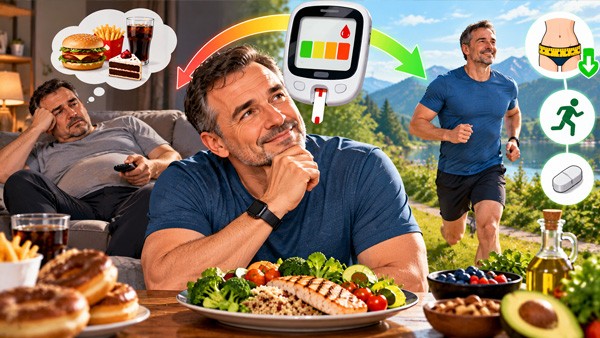

A routine blood test, a number slightly above the line, and a sentence that sounds reassuring: we will keep an eye on it.
Three years later the number has crossed the next line, and now it is diabetes — a diagnosis that stays for life. Nothing happened in between, because nobody said what to do and the condition produced no symptoms to force the issue.
💡 Two things that make this the most worthwhile stage to act on.
🔹 This is the one point where the direction genuinely reverses. Not managed, not slowed — numbers return to normal in a large share of people who change something. Once it becomes diabetes, that door mostly closes.
🔹 "We will watch it" is not a plan. Watching produces a record of the deterioration. The trial evidence here is unusually strong and unusually specific about what works, and the targets are modest — roughly seven percent of body weight and a brisk walk most days.
📊 The numbers that define it
Prediabetes means blood sugar is above normal but below the diabetes threshold. Three different tests can show it, and they do not always agree — one abnormal result is enough to place you in the range.
| Test | Normal | Prediabetes | Diabetes |
|---|---|---|---|
|
HbA1c average over 2–3 months |
Below 5.7% below 39 mmol/mol |
5.7–6.4% 39–47 mmol/mol |
6.5% or above 48 mmol/mol or above |
|
Fasting glucose after 8 hours without food |
Below 100 mg/dL below 5.6 mmol/L |
100–125 mg/dL 5.6–6.9 mmol/L |
126 mg/dL or above 7.0 mmol/L or above |
|
Two-hour glucose after a measured sugary drink |
Below 140 mg/dL below 7.8 mmol/L |
140–199 mg/dL 7.8–11.0 mmol/L |
200 mg/dL or above 11.1 mmol/L or above |
📌 Three practical notes on reading your own result.
Thresholds differ slightly between countries. Some systems treat the high-risk HbA1c band as 6.0–6.4% rather than starting at 5.7%, so a result called borderline in one place is called prediabetes in another. The direction of travel matters more than which side of a line you landed on.
The tests can disagree. HbA1c can be misleading in anaemia, after recent blood loss, in kidney disease and in some inherited haemoglobin variations. If the picture does not fit, a fasting glucose settles it.
Ask for the actual number, not the word. "Slightly raised" tells you nothing. An HbA1c of 5.8% and one of 6.4% are both prediabetes and they are very different situations.
🕶️ Why there is nothing to feel
Prediabetes produces almost no symptoms. That is the whole problem — there is no discomfort to prompt action, so it is found by testing or not found at all.
Worth testing if any of these apply:
- ⚖️ Carrying extra weight, particularly around the middle
- 🎂 Age over about 35 to 45, even without other risk factors
- 👪 A parent or sibling with type 2 diabetes
- 🤰 Diabetes during a pregnancy, or a baby over about 4 kg
- 👩 Polycystic ovary syndrome
- 🩸 High blood pressure, or abnormal cholesterol and triglycerides
- 🫀 Fatty liver found on a scan, which travels with insulin resistance
- 🛋️ Little physical activity
- 💤 Sleep apnoea, or loud snoring with daytime sleepiness
- 🌍 South Asian, African, Caribbean, Middle Eastern or Hispanic background, where risk rises at a lower weight and younger age
✅ One visible sign that is almost always missed.
Dark, velvety patches of skin at the back of the neck, in the armpits or in the groin — soft to the touch and looking faintly like ingrained dirt that will not wash off.
This is acanthosis nigricans, and it is a visible marker of insulin resistance. People try to scrub it off for years. If you have it, ask for a blood sugar test.
⏳ What happens if nothing changes
Without intervention, a meaningful proportion of people with prediabetes develop type 2 diabetes each year, and over a decade a large share do.
But the more important point is less well known: the damage does not politely wait for the diagnosis.
- 🫀 Cardiovascular risk is already elevated in prediabetes, before any diabetes diagnosis exists
- 🦶 Some people already have nerve damage by the time diabetes is confirmed, meaning it began during the prediabetes years. See diabetic neuropathy
- 👁️ A proportion already have early eye changes at diagnosis for the same reason
- 🩸 Early kidney changes can also be present. See diabetic kidney disease
So prediabetes is not a warning about something in the future. It is a milder version of the same process, already running.
📉 What actually works, with the numbers attached
This question has an unusually clear answer, because it was tested properly in a large trial that compared intensive lifestyle change against metformin against doing nothing.
| Approach | Reduction in progression to diabetes |
|---|---|
|
Intensive lifestyle change around 7% weight loss plus 150 minutes of activity a week |
About 58% lower — and even better in people over 60 |
| Metformin | About 31% lower, with the strongest effect in people under 60, those carrying considerably more weight, and women with previous gestational diabetes |
Two conclusions follow, and the second is the one usually left out.
Lifestyle change was roughly twice as effective as the tablet. That is not a motivational slogan, it is what the trial found, and the advantage held up in long-term follow-up.
But metformin worked too, and for some people it is the realistic option. A thirty-one percent reduction is a real reduction, and it is available to someone who cannot sustain intensive lifestyle change right now.
⚖️ The weight target in real numbers
Seven percent sounds abstract until you convert it.
| Current weight | 7% target | Goal weight |
|---|---|---|
| 80 kg | 5.6 kg | about 74 kg |
| 90 kg | 6.3 kg | about 84 kg |
| 100 kg | 7 kg | about 93 kg |
| 110 kg | 7.7 kg | about 102 kg |
Two things worth knowing about this target. It is not a path to an ideal weight — it is a modest, specific amount that produces a disproportionately large change in insulin sensitivity, and the benefit appears well before any cosmetic difference does. And the benefit starts below the target: five percent helps, three percent helps less but still helps. Each kilogram counts rather than only the final figure.
Where the weight comes from matters too. Fat around the organs responds first to weight loss and is the fat most responsible for insulin resistance, which is why blood sugar often improves earlier than the scales suggest it should.
🏃 The activity target, in practical terms
- 🚶 150 minutes a week of moderate activity — thirty minutes five times a week, or shorter sessions more often. Brisk walking counts, and that is the whole target for most people
- 💪 Add resistance work twice a week. Muscle is where most glucose goes after a meal, so more muscle means more somewhere for it to go. Bodyweight exercises count
- 🍽️ Walk after meals. Ten to fifteen minutes after eating blunts the post-meal glucose rise noticeably — one of the highest-return habits available
- 🪑 Break up sitting. Standing and moving for a couple of minutes every half hour measurably improves glucose handling, independently of formal exercise
- 📅 Do not leave more than two days between sessions. The insulin sensitivity benefit of exercise fades within about 48 hours, so regularity beats intensity
The last point is the useful one. Three hard sessions at the weekend and nothing midweek works far less well than short, frequent movement.
🥗 What to change about eating
Nothing exotic, and no single correct diet — several patterns work. What they have in common is more useful than their names.
- 🥤 Sugary drinks go first. Including fruit juice. This is the single highest-impact change for most people, because liquid sugar arrives faster than anything else
- 🍚 Reduce refined carbohydrate — white bread, white rice, pastries, breakfast cereals. Not eliminate; reduce and replace with wholegrain versions
- 🫒 Mediterranean-style eating has the strongest evidence: vegetables, pulses, fish, nuts, olive oil, limited processed meat
- 🧀 Pair carbohydrate with protein, fat or fibre. The same bread with eggs raises glucose less than the same bread alone
- 🥦 Eat the vegetables and protein first in a mixed meal, carbohydrate last. A small, free adjustment with a measurable effect
- 🍝 More fibre — pulses, oats, vegetables, whole fruit rather than juice
- 🍷 Alcohol adds calories and tends to loosen everything else. Worth counting
- 🕔 Avoid eating late at night. Glucose handling is worse in the evening than in the morning
😴 The factors nobody mentions
These affect blood sugar genuinely, and they are absent from almost every list.
- 🛏️ Short sleep. Regularly sleeping under six hours measurably worsens insulin sensitivity. Someone doing everything else right on five hours of sleep is fighting their own treatment
- 😮💨 Sleep apnoea is strongly linked to insulin resistance and is massively underdiagnosed. Loud snoring with breathing pauses and daytime sleepiness is worth investigating — see sleep apnoea
- 😰 Chronic stress raises cortisol, which raises blood sugar directly
- 🚬 Smoking increases insulin resistance, on top of everything else it does
- 💊 Some medicines raise blood sugar — steroids above all, also some antipsychotics, certain diuretics and some HIV treatments. Worth reviewing rather than assuming
💊 When metformin is added
Glycoheal (Metformin) is the only drug with substantial trial evidence for preventing progression from prediabetes to diabetes. It reduces the amount of glucose the liver releases and improves the body's response to insulin.
It is generally considered alongside lifestyle change — not instead of it — particularly where:
- 📈 HbA1c is near the top of the prediabetes range, or rising despite genuine effort
- ⚖️ Body mass index is well into the obese range
- 🎂 Age under 60, where the trial benefit was clearest
- 🤰 Previous gestational diabetes, one of the groups it helped most
- 👩 Polycystic ovary syndrome, where it is also used for other reasons
- 🚫 Sustained lifestyle change is not achievable right now for practical reasons — shift work, disability, caring responsibilities
Dosing for this purpose typically builds up gradually to around 850 mg twice daily. The gut side effects that make people abandon it are largely avoidable with a slow start — see our guide to metformin side effects and how to avoid them.
📌 The trap to avoid with a tablet at this stage.
Starting metformin and quietly letting the lifestyle part lapse gives you the weaker of the two interventions instead of both. In the trial these were compared separately, and the tablet came second.
Metformin is a useful addition and a poor replacement. If it is started, the walking and the seven percent stay on the list.
🔬 What else to check at the same time
Prediabetes rarely travels alone. Finding it is a reasonable prompt to look at the rest of the picture.
| Check | Why it belongs here |
|---|---|
| Blood pressure | Clusters with insulin resistance and compounds cardiovascular risk. See arterial hypertension |
| Cholesterol and triglycerides | The typical pattern is high triglycerides with low HDL. See high cholesterol |
| Liver function and a liver scan | Fatty liver is extremely common alongside prediabetes and often the first thing found |
| Waist measurement | Tracks the fat that matters more closely than weight alone does |
| Sleep | Hours slept, and screening for sleep apnoea where there is snoring and daytime sleepiness |
| Thyroid, B12, kidney function | Baseline, and B12 specifically if metformin is being started |
📅 How often to retest
- 🔁 At least once a year for anyone in the prediabetes range
- ⚡ Every six months if the number is near the top of the range, rising, or if several risk factors are present
- 📈 Three months after any serious change — a new exercise routine, significant weight loss or starting metformin — since HbA1c reflects the previous two to three months and will not show a change made last week
- 📝 Keep your own record of the numbers. A single value tells you little; four values over two years tell you everything, and nobody else is tracking the trend for you
📞 When to seek help
⚠️ Seek medical advice promptly for the symptoms of actual diabetes: passing urine far more often, especially at night; persistent thirst; unexplained weight loss; blurred vision; wounds healing slowly; or recurrent thrush and skin infections. These mean the glucose is no longer in the prediabetes range.
Worth an appointment:
- Told you were "borderline" without being given the number — ask for the actual result
- Prediabetes found and no follow-up arranged
- The number has risen between two tests
- Six months of genuine effort with no improvement, which is the point to discuss metformin
- Dark velvety patches on the neck or in the armpits
- Loud snoring with daytime sleepiness, for sleep apnoea assessment
- Previous gestational diabetes and no testing since
- Polycystic ovary syndrome without a glucose check
- Taking steroids long term, or another drug that raises blood sugar
- Planning a pregnancy with prediabetes
- New numbness or tingling in the feet, which should not be happening at this stage
❓ Frequently asked questions
What HbA1c counts as prediabetes?
Generally 5.7 to 6.4 percent, or 39 to 47 mmol/mol. Some countries use a narrower high-risk band of 6.0 to 6.4 percent, so thresholds vary slightly, and the trend across tests matters more than a single line.
Can prediabetes be reversed?
Yes, often. This is the stage where numbers genuinely return to normal in a substantial share of people who lose around seven percent of body weight and become regularly active. Once it becomes diabetes, that largely changes.
How much weight do I need to lose?
Around seven percent of current body weight, which is roughly six kilograms for someone at ninety. Benefit starts below that figure, and fat around the organs responds first, so blood sugar often improves before the scales show much.
Is lifestyle change or metformin more effective?
Lifestyle change, by roughly two to one in the main trial, reducing progression by about 58 percent against about 31 percent for metformin. Metformin still works and suits specific groups, best as an addition rather than a replacement.
Who should take metformin for prediabetes?
Most often people under 60, those with a body mass index well into the obese range, women with previous gestational diabetes, and anyone whose HbA1c keeps rising despite genuine lifestyle effort.
Does prediabetes have symptoms?
Almost none, which is why it is found by testing or not at all. One visible clue is acanthosis nigricans, dark velvety patches at the neck or armpits, which people often mistake for ingrained dirt.
How much exercise is needed?
About 150 minutes a week of moderate activity, and brisk walking counts. Add resistance work twice weekly, walk after meals, and avoid leaving more than two days between sessions since the benefit fades within about 48 hours.
Does prediabetes cause damage already?
Yes. Cardiovascular risk is raised before any diabetes diagnosis, and some people already have early nerve, eye or kidney changes when diabetes is confirmed, meaning the damage began during the prediabetes years.
Does sleep affect blood sugar?
Yes. Regularly sleeping under six hours measurably worsens insulin sensitivity, and sleep apnoea is strongly linked to insulin resistance while being widely undiagnosed. Both are worth addressing alongside diet and activity.
How often should prediabetes be retested?
At least annually, or every six months if the number is near the top of the range or rising. Allow three months after any major change, since HbA1c reflects the previous two to three months.
📑 Sources and editorial
- Diabetes association standards of care defining prediabetes by HbA1c, fasting plasma glucose and two-hour oral glucose tolerance test thresholds, and criteria for screening
- World Health Organization and national guideline definitions of impaired fasting glucose, impaired glucose tolerance and non-diabetic hyperglycaemia, including differences in HbA1c threshold between systems
- Guidance on conditions affecting HbA1c reliability, including anaemia, recent blood loss, chronic kidney disease and haemoglobin variants
- Diabetes Prevention Program trial results and long-term outcomes study follow-up, comparing intensive lifestyle intervention with metformin and placebo, including the 7 percent weight loss and 150 minutes weekly activity targets and subgroup findings by age, body mass index and gestational diabetes history
- Diabetes association recommendations on metformin for diabetes prevention, including the groups in whom it is most strongly considered
- Evidence on cardiovascular risk associated with prediabetes independent of progression to diabetes
- Literature on the prevalence of retinopathy, neuropathy and early nephropathy at the time of type 2 diabetes diagnosis
- Evidence on visceral adiposity, insulin sensitivity and the disproportionate metabolic benefit of modest weight reduction
- Evidence on post-meal walking, interruption of sedentary time, resistance training and the duration of exercise-induced improvement in insulin sensitivity
- Dietary evidence on Mediterranean dietary patterns, sugar-sweetened beverage intake, dietary fibre and food order on postprandial glycaemia
- Literature on short sleep duration, obstructive sleep apnoea and chronic stress in relation to insulin resistance
- Guidance on medications associated with hyperglycaemia, including corticosteroids, certain antipsychotics, thiazide diuretics and some antiretroviral agents
- Clinical descriptions of acanthosis nigricans as a cutaneous marker of insulin resistance
- Guidance on associated metabolic assessment including blood pressure, lipid profile, hepatic steatosis and waist circumference
- Related reading: metformin side effects and how to avoid them, when metabolic control starts to collapse, diabetic kidney disease, diabetic neuropathy
- Related products: Glycoheal (Metformin), Dapavel (Dapagliflozin), diabetes category
- RXshop Editorial Team — reviewed by Daniel Kim, MD — Endocrinologist & Diabetes Specialist
Medical Disclaimer: The information in this article is for educational and informational purposes only and is not a substitute for professional medical advice, diagnosis, or treatment. Always seek guidance from a qualified healthcare provider with any questions you may have regarding a medical condition, and before starting, stopping or changing any medication.