Arterial Hypertension: Target Numbers, Drug Classes and How to Measure It Properly

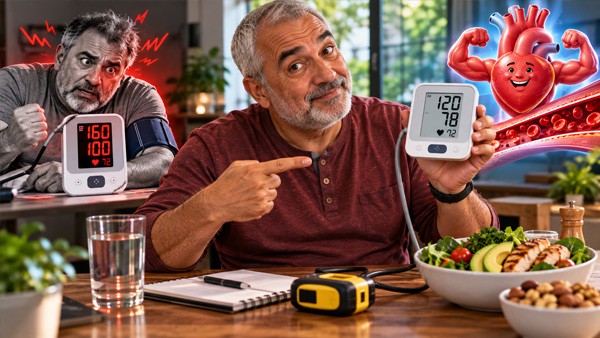

Blood pressure is the product of two things: how much blood the heart pushes out per minute, and how much resistance the arteries offer. Raise either and the number goes up. In the great majority of cases the driver is resistance, from small arteries that have become narrower and stiffer over decades.
What makes hypertension the leading modifiable cause of death worldwide is not that it is dangerous at any given moment. It is that it is silent, so it runs unopposed for twenty or thirty years while the left ventricle thickens, the kidney filters scar and the arteries of the brain weaken.
Two things therefore matter more than anything else in this article: getting an accurate number, because most treatment decisions rest on measurements taken badly, and knowing the target, because a reading of 150 treated to 145 achieves close to nothing.
📏 The numbers, and the ones that are different at home
| Category | Office reading | Home reading |
|---|---|---|
| Normal | Under 120/80 | Under 120/75 |
| Elevated | 120 to 129 / under 80 | — |
| Stage 1 | 130 to 139 / 80 to 89 | 130 to 134 / 80 to 84 |
| Stage 2 | 140/90 or above | 135/85 or above |
| Treatment target for most adults | Under 130/80 | Under 130/80 |
🏠 Home thresholds are lower than office ones, and that confuses people constantly. The clinic is an unfamiliar, slightly stressful place, so readings there run higher. A home average of 138/88 is not reassuring just because it is below 140/90 — at home that is stage 2 hypertension. Home and ambulatory measurements predict cardiovascular events better than office readings, which is why they now drive most treatment decisions.
Two patterns only home monitoring reveals. White-coat hypertension, high in the clinic and normal at home, affects a substantial minority and usually does not need drug treatment, though it does need follow-up because many go on to develop sustained hypertension. Masked hypertension is the reverse: normal in the clinic, high at home, and it carries the same risk as sustained hypertension while being routinely missed.
📝 The measurement errors that change the diagnosis
Each of the following inflates a reading by a clinically meaningful amount, and several together can manufacture hypertension in someone who does not have it.
| Error | Effect on systolic reading |
|---|---|
| Arm unsupported and hanging down | Up to 10 mmHg higher; the arm must be supported at heart level |
| Cuff too small for the arm | Up to 10 mmHg higher |
| Cuff over clothing | Several mmHg higher |
| Talking during measurement | Around 7 mmHg higher |
| Back or feet unsupported | Around 6 mmHg higher |
| Full bladder | Up to 10 mmHg higher |
| No rest before measuring | Variable and often large |
Done properly: empty the bladder, sit with back supported and feet flat for five minutes, arm bare and resting on a table at heart height, no talking, take two readings a minute apart and average them. Measure morning and evening for seven days, discard day one, and average the rest. That average is the number worth acting on.
🧪 Before starting treatment: the curable causes
Around one person in ten with hypertension has a specific underlying cause, and some of those are correctable rather than merely controllable. Screening is warranted when hypertension appears before 40, when it is severe or sudden in onset, when it resists three drugs, or when potassium is low.
- Primary aldosteronism
- The most common identifiable cause, and much more frequent than the textbooks once suggested. An adrenal gland overproduces aldosterone, which retains salt and wastes potassium. Screened with an aldosterone to renin ratio. Depending on the type it is treated surgically or with spironolactone. A hypertensive patient with unexplained low potassium should be screened.
- Obstructive sleep apnoea
- Very common and underdiagnosed. Suggested by snoring, witnessed pauses in breathing, morning headache and daytime sleepiness, and by blood pressure that does not fall overnight.
- Kidney disease and renal artery narrowing
- Checked with creatinine, eGFR and urine protein. A bruit over the abdomen or a sharp rise in creatinine after starting an ACE inhibitor points to renal artery disease.
- Thyroid disease
- Both over- and underactivity raise blood pressure. One blood test.
- Phaeochromocytoma
- Rare, but memorable: attacks of headache, sweating and palpitations with very high pressure.
- Substances that raise pressure
- Regular NSAIDs, nasal decongestants, combined oral contraceptives, corticosteroids, ciclosporin, some antidepressants, liquorice, cocaine and amphetamines, and excess alcohol. Reviewing this list is free and occasionally solves the whole problem.
🥗 Lifestyle, with the numbers attached
These are worth listing with their actual effect sizes, because most are comparable to a low dose of a drug.
| Change | Typical systolic reduction |
|---|---|
| Losing 10 kg | 5 to 20 mmHg |
| DASH-style eating pattern | 8 to 14 mmHg |
| Cutting sodium to under 2 g daily | 5 to 6 mmHg, more in salt-sensitive people |
| 150 minutes of aerobic activity weekly | 4 to 9 mmHg |
| Reducing alcohol to within limits | 2 to 4 mmHg |
| Potassium-enriched salt substitute | 3 to 5 mmHg, with reduced stroke risk in trials |
On salt, the figure to know is that 2 g of sodium equals about 5 g of salt, roughly one level teaspoon for the entire day, and most of it arrives already inside bread, processed meat, cheese, sauces and ready meals rather than from the salt cellar. Potassium-based salt substitutes lowered stroke and death in a large trial, and they are avoided in advanced kidney disease and alongside spironolactone, where potassium can rise dangerously.
💊 The four first-line classes
Four classes have outcome evidence and are used first. Beta-blockers are no longer among them for uncomplicated hypertension, and are chosen when there is another reason to use one, such as angina, previous heart attack, heart failure or atrial fibrillation.
| Class | Example and dose | Best for | Main side effect |
|---|---|---|---|
| ACE inhibitor | Zestril (Lisinopril), 10 mg daily rising to 40 mg | Diabetes, kidney disease with protein, heart failure, after a heart attack | Dry cough in 10 to 20 percent |
| ARB | Diovan (Valsartan), 80 to 320 mg daily | The same indications, and anyone who developed a cough on an ACE inhibitor | Very well tolerated |
| Calcium channel blocker | Norvasc (Amlodipine), 5 to 10 mg daily | Older patients, African or Caribbean ancestry, isolated systolic hypertension, angina | Ankle swelling, dose-related |
| Thiazide-like diuretic | Lozol (Indapamide), 1.5 to 2.5 mg daily | Older patients, heart failure, salt-sensitive hypertension | Low potassium and sodium, gout, raised glucose |
Choice by age and ancestry is a real and useful rule. Under 55 and not of African or Caribbean descent, an ACE inhibitor or ARB is preferred, because renin activity tends to be higher. Over 55, or of African or Caribbean descent, a calcium channel blocker or diuretic works better, because renin activity tends to be lower. Our full range is in the blood pressure category.
🤰 ACE inhibitors and ARBs must be stopped in pregnancy. In the second and third trimesters they cause kidney failure in the fetus, reduced amniotic fluid, skull defects and death. Any woman of childbearing age taking one should know to stop it and seek advice as soon as pregnancy is suspected or planned. Methyldopa, labetalol and nifedipine are the antihypertensives used in pregnancy.
⚠️ What to expect from each class
- 🗣️ ACE inhibitor cough is dry, persistent and tickly, and it can start weeks or months after beginning the drug, so it often goes unconnected. It resolves within one to four weeks of switching to an ARB
- 😡 Angioedema — swelling of the lips, tongue or throat — is rare, can occur years into treatment, is more frequent in people of African descent, and is an emergency. The drug is never restarted
- 🦵 Amlodipine ankle swelling is not fluid overload and does not respond to a diuretic. Reducing the dose or combining with an ACE inhibitor or ARB reduces it substantially
- 🩸 ACE inhibitors and ARBs raise potassium and creatinine slightly; a rise in creatinine of up to about 30 percent is expected and acceptable. Blood tests are checked one to two weeks after starting or increasing
- 🧂 Thiazides lower potassium and sodium and raise urate, so they can precipitate gout. Bloods are checked at the same interval
- 😴 Beta-blockers cause fatigue, cold hands and vivid dreams, are avoided in asthma, and are never stopped abruptly because rebound angina and arrhythmia can follow
💎 Two drugs in one tablet, from the start
The older approach of starting one drug at a low dose and slowly increasing it has largely been replaced. Most patients need two drugs to reach target, and doubling the dose of one drug adds far less than adding a second class, while producing more side effects.
Current guidance therefore recommends starting most people with two drugs in a single pill unless they are frail, very old, or only slightly above target. The gains are practical: target is reached faster, adherence is better with one tablet than two, and side effects are lower because each drug is at a modest dose.
The combinations that work are ACE inhibitor or ARB plus a calcium channel blocker, or ACE inhibitor or ARB plus a diuretic. We stock Hyzaar (Losartan and Hydrochlorothiazide), Zestoretic (Lisinopril and Hydrochlorothiazide) and Lotrel (Amlodipine and Benazepril).
⛔ One combination is never used: an ACE inhibitor together with an ARB. Both block the same pathway, the added blood pressure reduction is small, and trials found more kidney injury, more high potassium and more fainting. If you find both on a prescription list, query it.
🔐 When three drugs are not enough
Resistant hypertension means blood pressure above target on three drugs including a diuretic, at proper doses. Before accepting that label, four things are checked, and the first is the commonest explanation by a wide margin.
- Adherence. Studies using urine or blood testing find that a large proportion of patients labelled resistant are not taking some or all of their tablets. This is not judged; it is asked about openly, because the solutions differ — side effects, cost, complexity, forgetting
- Measurement. An oversized arm with an undersized cuff, or clinic-only readings, can create apparent resistance
- Interfering substances. Regular NSAIDs alone can add 5 to 10 mmHg
- Secondary causes. Particularly primary aldosteronism and sleep apnoea
Where resistance is genuine, the fourth drug with the best evidence is spironolactone, at 25 to 50 mg daily — it outperformed the alternatives clearly in a randomised comparison. Potassium and kidney function are monitored, and it can cause breast tenderness in men. It is stocked as Aldactone (Spironolactone).
🚨 Very high readings: urgency or emergency
🚑 The distinction decides what happens next.
Hypertensive emergency means a very high pressure with evidence of organ damage happening now: chest pain, breathlessness from pulmonary oedema, neurological symptoms, severe headache with visual loss, or reduced urine output. This needs emergency care and controlled intravenous lowering.
Hypertensive urgency means a very high reading with no such features. It is managed over days with oral medication and follow-up, not in an emergency department.
The instinct to take an extra tablet and bring the number down quickly is the wrong one. Dropping pressure rapidly in someone whose vessels have adapted to it causes stroke, blindness and heart attack by under-perfusing the brain, retina and heart. Repeat the reading after five minutes of rest, and if there are no symptoms, contact a doctor the same day rather than self-treating.
📈 Follow-up that keeps it controlled
- 📅 Review every 2 to 4 weeks while adjusting, then every 3 to 6 months once at target
- 🩸 Kidney function and potassium one to two weeks after starting or increasing an ACE inhibitor, ARB, diuretic or spironolactone, then annually
- 🏠 Home readings brought to appointments, as a seven-day average rather than the single worst number
- 👁️ Assessment of target organs: urine protein, ECG for left ventricular thickening, retinal examination, lipids and glucose
- ♾️ Treatment is long term. Blood pressure returns to its previous level within weeks of stopping. Where substantial weight loss and lifestyle change have occurred, a supervised reduction can be tried, but it is done with monitoring rather than unilaterally
❓ Frequently asked questions
What blood pressure should I be aiming for?
Under 130/80 for most adults, measured properly. Home thresholds are lower than clinic ones: 135/85 at home corresponds to 140/90 in the clinic, so a home average of 138/88 is stage 2 hypertension despite looking acceptable.
How do I measure blood pressure correctly at home?
Empty the bladder, sit with back supported and feet flat for five minutes, bare arm resting on a table at heart height, no talking, two readings a minute apart. Measure morning and evening for seven days, discard day one and average the rest.
Why do I have a dry cough since starting my tablet?
Dry persistent cough affects 10 to 20 percent of people on an ACE inhibitor and can start weeks or months in, so the connection is often missed. It resolves within one to four weeks of switching to an ARB, which does not cause it.
Why are my ankles swollen on amlodipine?
It is a direct effect of the drug on small blood vessels rather than fluid overload, so a diuretic does not help. Reducing the dose or combining amlodipine with an ACE inhibitor or ARB reduces it substantially.
Should I take an extra tablet if my reading is very high?
No. Lowering pressure rapidly in someone whose vessels have adapted to it can cause stroke, blindness or heart attack. Rest five minutes and repeat the reading; if there are no symptoms such as chest pain or neurological changes, contact a doctor the same day rather than self-treating.
Why have I been given two drugs straight away?
Because most people need two to reach target, and adding a second class lowers pressure far more than doubling the dose of one while causing fewer side effects. Current guidance starts most patients on two drugs in a single pill.
Can I take blood pressure tablets in pregnancy?
Not ACE inhibitors or ARBs, which cause fetal kidney failure and skull defects and must be stopped as soon as pregnancy is suspected or planned. Methyldopa, labetalol and nifedipine are used instead.
My pressure stays high on three drugs. What now?
Four things are checked first: whether every dose is actually being taken, whether measurement is accurate, whether NSAIDs or decongestants are involved, and whether there is a secondary cause such as primary aldosteronism or sleep apnoea. Where resistance is genuine, spironolactone is the fourth drug with the best evidence.
Can high blood pressure have a curable cause?
Yes, in around one case in ten. The most common is primary aldosteronism, suggested by unexplained low potassium, and it is treated surgically or with spironolactone. Sleep apnoea, thyroid disease and renal artery narrowing are others worth excluding, particularly under 40 or with resistant pressure.
Will I need medication for life?
Usually. Pressure returns to its previous level within weeks of stopping, because the tablets control rather than cure. Where substantial weight loss and sustained lifestyle change have occurred, a supervised reduction can be attempted with close monitoring.
📑 Sources and editorial
- ACC/AHA and ESC/ESH guidelines on the diagnosis and management of arterial hypertension
- The SPRINT trial of intensive blood pressure lowering, and trials of single-pill combination initiation
- PATHWAY-2, comparing spironolactone with alternatives as fourth-line therapy in resistant hypertension
- ALLHAT, including the early termination of the alpha-blocker arm for excess heart failure
- Trials of potassium-enriched salt substitution on stroke and mortality
- Prescribing information for lisinopril, valsartan, amlodipine, indapamide, metoprolol and spironolactone
- Studies quantifying blood pressure measurement error by arm position, cuff size, talking and bladder fullness
- Related products: Zestril (Lisinopril), Diovan (Valsartan), Norvasc (Amlodipine), Aldactone (Spironolactone), blood pressure category
- RXshop Editorial Team — reviewed by Robert Hayes, MD, FACC — Cardiologist & Cardiovascular Disease Specialist
Medical Disclaimer: The information in this article is for educational and informational purposes only and is not a substitute for professional medical advice, diagnosis, or treatment. Always seek guidance from a qualified healthcare provider with any questions you may have regarding a medical condition, and before starting, stopping or changing any medication.