Arzep (Azelastine Hydrochloride 0.1 w/v 10 ml)
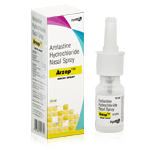
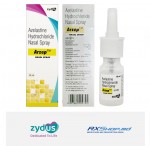
Arzep (Azelastine Hydrochloride 0.1% w/v, 10 ml) is a fast acting nasal antihistamine spray designed to relieve common allergy symptoms such as sneezing, runny nose, nasal itching, and congestion. By blocking histamine at H1 receptors in the nasal passages, this medication can help you breathe more comfortably during seasonal and year round allergic rhinitis. The spray format delivers the active ingredient directly where symptoms start, making it a practical option when oral antihistamines feel too slow or cause unwanted drowsiness. Many users notice relief within minutes, with benefits that can last for hours depending on individual response.
Generic Arzep may be used as directed for ongoing allergy control, especially during pollen season or frequent exposure to dust, pets, and other triggers. For best results, use consistent technique, avoid spraying toward the nasal septum, and follow label instructions. Order Arzep online to support clearer breathing and more comfortable days when allergies strike.

- Perennial allergic rhinitis: Controls year-round allergy symptoms from dust mites, pets, and indoor allergens;
- Hay fever: Reduces common hay fever nasal irritation and frequent sneezing during allergy flare-ups;
- Nasal itching: Eases persistent nasal pruritus triggered by histamine release in allergic reactions;
- Sneezing: Decreases repetitive sneezing episodes caused by allergic inflammation in the nasal lining;
- Runny nose: Lowers watery rhinorrhea linked to allergic rhinitis and environmental triggers;
- Nasal congestion: Improves stuffy nose by reducing swelling inside the nasal passages;
- Vasomotor rhinitis: May help nonallergic rhinitis with runny nose, congestion, and postnasal drip;
- Postnasal drip: Can lessen throat drip sensation when rhinitis causes excess nasal secretions.
- Targeted nasal action: Works locally in the nose where symptoms begin;
- Less sneezing: Helps reduce frequent sneezing episodes during rhinitis;
- Reduced runny nose: Lowers watery nasal discharge from allergy triggers;
- Calmer nasal itching: Helps soothe itching and irritation inside the nose;
- Improved nasal breathing: Can reduce stuffiness and support clearer airflow;
- Helps postnasal drip: May lessen throat drip sensation from excess secretions;
- Day and night comfort: Supports steadier control of symptoms across the day;
- Seasonal and year round support: Useful for pollen seasons and indoor allergens;
- Nonallergic rhinitis support: May help vasomotor rhinitis in appropriate patients.
Generic Arzep (Azelastine Hydrochloride 0.1 w/v 10 ml) Medication guide:
🌿 What Is Arzep (Azelastine Hydrochloride) Nasal Spray
Arzep is a focused intranasal antihistamine that delivers Azelastine Hydrochloride 0.1% w/v (10 ml) directly to the nasal lining. This approach is built for people whose main allergy problem is the nose - sneezing, runny nose, itching, and congestion - where local treatment can feel more practical than taking a whole-body option.
✅ The core purpose in one sentence
This medication is designed to help you get more stable nasal comfort when allergy triggers repeatedly activate histamine in the nose, leading to irritation, watery discharge, and airflow blockage.
🎯 What symptoms it is built to target
- Sneezing bursts after exposure;
- Nasal itching and irritation;
- Watery runny nose (rhinorrhea).
- Stuffy nose and reduced airflow;
- Postnasal drip sensation in some people;
- Daily functioning when rhinitis flares.
🧩 Why intranasal azelastine feels different
Azelastine Hydrochloride in a nasal spray is a practical match when the problem is concentrated in the nose. Instead of relying on circulation to reach nasal tissues, Arzep places the antihistamine where irritation starts. Many users describe this as a more direct, symptom-focused strategy, especially during high-trigger periods like pollen season or frequent indoor exposure.
🔍 Brand view vs generic view (same goal, different labeling)
A simple brand name presentation for a nasal antihistamine routine. Useful when you want a clear product identity and consistent use.
- Strength: targeted nasal symptom approach;
- Typical limitation: technique matters for comfort and results.
The generic ingredient view. Medical references often discuss outcomes as intranasal azelastine regardless of brand.
- Strength: H1 antihistamine action in nasal tissues;
- Typical limitation: nonallergic causes may need other plans.
🧭 Decision Path (Concept Map)
📌 Quick Understanding Table - What It Is and What It Is Not
| Category | What it means |
|---|---|
| Product identity | Arzep is a brand presentation of Azelastine Hydrochloride nasal spray. |
| Drug class | Antihistamine (H1 blocker) intended for nasal allergy symptom control. |
| Main purpose | To reduce histamine-driven rhinitis symptoms and support easier nasal breathing. |
| What it is NOT | Not an antibiotic, not an antiviral, not a steroid spray, not a general cold cure. |
| Key success factor | Matching symptoms to a rhinitis pattern and using correct spray technique consistently. |
🧠 Symptom Clues Map - When People Start Thinking About Allergies
People often land on a rhinitis product page after searching symptoms. The table below is a practical clue map, not a diagnosis tool. A clinician combines patterns, trigger history, and response to therapy when deciding if intranasal azelastine fits.
| Common symptom pattern | How clinicians often think about it | What helps next |
|---|---|---|
| Sneezing + nasal itching after exposure | Classic histamine-driven rhinitis pattern, often allergy-related. | Track triggers, improve technique, consider a consistent schedule during flares. |
| Watery runny nose without fever | Common in allergic rhinitis and some nonallergic rhinitis variants. | Review irritants (smoke, perfume), consider saline support, reassess if persistent. |
| Congestion dominates more than itching | Can be allergy, but also swelling from irritants or other causes. | Evaluate environment, consider additional nasal strategies if needed. |
🧑⚕️ Doctor Perspective - Practical Advice That Improves Outcomes
Clinicians commonly emphasize: do not treat symptoms alone - treat a plausible rhinitis pattern. When Azelastine Hydrochloride is chosen, results improve when technique is correct and triggers are reduced.
- Best habit: document triggers and timing (seasonal vs indoor);
- Best safety habit: review other sedating agents and alcohol use;
- Best results habit: use a simple symptom tracker for 7-14 days.
👥 Patient Perspective - What People Usually Care About
Common concerns: people want a plan that is easy to follow, want to know how fast relief starts, and worry about side effects like taste changes or sleepiness. Many also ask whether this medication should be used only during flares or as a short seasonal routine.
📊 Mini Chart - What Most Often Determines Success (Conceptual)
This is a conceptual guide that shows where most mistakes happen with Arzep or Generic (Azelastine Hydrochloride). It is not a statistical dataset.
| Success driver | Impact level | What it looks like in real life |
|---|---|---|
| Right symptom pattern | High | Symptoms match rhinitis triggers and improve with targeted nasal therapy. |
| Correct spray technique | Medium-High | No spraying toward the septum, gentle inhale, consistent routine during flares. |
| Trigger control | Medium | Better indoor air habits, dust reduction, pollen-time adjustments. |
| Random symptom fluctuation | Low | Symptoms change day to day even without a clear plan. |
✅ Key Takeaways From This Section
- Arzep is a brand presentation of Azelastine Hydrochloride 0.1% w/v, a nasal H1 antihistamine strategy;
- This drug is built for rhinitis symptoms that follow a trigger pattern, not for colds or infections;
- Technique and consistency often matter as much as the ingredient itself;
- Using this medication works best when combined with trigger control and sensible follow-up.
🧪 Active Ingredient and Strength - Azelastine Hydrochloride 0.1% w/v (10 ml)
Product: Arzep (nasal spray);
Labeled strength: 0.1% w/v;
Bottle size: 10 ml.
That equals 1 mg per 1 ml in simple terms;
A 10 ml bottle contains about 10 mg of azelastine (as hydrochloride) in total.
🔍 Why the active ingredient matters
Azelastine Hydrochloride is the key component that delivers the antihistamine effect. When allergens trigger histamine release in the nose, histamine contributes to irritation, sneezing, itching, watery discharge, and congestion. By using intranasal azelastine, Arzep aims to reduce that histamine impact directly in nasal tissues, which is why many users experience symptom-focused relief rather than a generalized whole-body effect.
🧠 “Strength” explained - what you feel vs what is on the label
People often assume a higher percentage automatically means stronger results, but with nasal sprays the real-world outcome depends on multiple practical factors. The labeled strength tells you the concentration, while day-to-day performance is influenced by how well the spray reaches the nasal lining and whether symptoms are actually histamine-driven.
🧩 Formula anatomy - what is typically inside a 10 ml nasal spray
Most products built like Arzep contain two layers of components:
- Azelastine Hydrochloride - provides antihistamine (H1) activity;
- Concentration labeled as 0.1% w/v for this drug.
- Help the spray flow and distribute evenly;
- Support stability during storage and repeated use;
- May influence comfort (for example dryness or taste).
📊 Micro-Infographic - Concentration to bottle logic (conceptual)
🧾 Quick units table - the label in multiple “reader-friendly” formats
| Label format | What it means | Practical takeaway |
|---|---|---|
| 0.1% w/v | 0.1 g per 100 ml solution | Concentration statement used on many sprays |
| 1 mg/ml | Equivalent simplified concentration | Easier to compare across products |
| 10 ml bottle | Container size | About 10 mg total azelastine (as HCl) |
🧑⚕️ Expert note - what clinicians often look for
Clinical focus: Many clinicians judge “strength” less by the percentage alone and more by whether symptoms match a histamine-driven rhinitis pattern, plus whether spray technique is correct. If the pattern fits, intranasal azelastine often performs best when used consistently during a flare window rather than randomly.
✅ Key Takeaways From This Section
- Arzep contains Azelastine Hydrochloride as the active ingredient in a nasal spray format;
- 0.1% w/v roughly equals 1 mg/ml, and a 10 ml bottle contains about 10 mg total;
- Real-world results depend on symptom pattern, delivery, and technique - not only the label strength;
- Excipients can vary, so sensitive users should review the ingredient list for this drug.
🎯 How This Medication Works - H1 Antihistamine Action in the Nasal Mucosa
Think of allergic rhinitis as a “histamine storm” happening on the surface of the nasal lining. When allergens land in the nose, the immune system can release histamine, which then signals irritation, sneezing, itching, watery discharge, and swelling. Arzep (Generic (Azelastine Hydrochloride)) is designed to interrupt that signal early by blocking H1 receptors in the nasal mucosa.
🧠 The “H1 receptor” in plain words
An H1 receptor is like a “doorbell” histamine presses to start allergy symptoms. When Azelastine Hydrochloride sits on that receptor, histamine has a harder time activating it. The goal is not to remove allergens from the air - it is to reduce how loudly the nose reacts to them.
🧬 What changes inside the nose when H1 is blocked
- Less itch in the nasal lining;
- Less sneeze reflex activation;
- Less watery drip driven by irritation.
- Reduced histamine-linked mucosal swelling;
- Potentially better nasal airflow and comfort;
- Less “blocked nose” sensation for many users.
📌 Why this drug can feel “fast” for some people
Intranasal delivery matters. When you apply this medication directly to the nasal lining, the active ingredient does not need to travel far to reach its target. That is why some people notice relief within a short time window after dosing, especially for sneezing, itching, and watery symptoms. Congestion may improve too, but it can depend more on swelling intensity and trigger load.
🧩 What it does NOT do (important clarity)
This medication does not kill bacteria or viruses. If symptoms are from a cold or sinus infection, results can be limited.
Azelastine is an antihistamine. Steroid sprays reduce inflammation differently and may be combined in some plans.
It does not remove pollen or dust. Trigger control still matters for best outcomes.
📊 Concept chart - “Where it acts” vs “Where symptoms are felt”
| Where the reaction happens | What you feel | How Arzep helps |
|---|---|---|
| Nasal mucosa (surface lining) | Sneezing, itching, watery drip | Blocks H1 receptors to reduce histamine signaling |
| Mucosal swelling zones | Stuffy nose, reduced airflow | May reduce histamine-linked swelling and improve comfort |
| Throat drip pathway | Postnasal drip sensation | May help when drip is rhinitis-driven |
🧑⚕️ Expert opinion - a simple clinical rule of thumb
Clinician takeaway: Intranasal antihistamines tend to perform best when the symptom story is clearly histamine-driven (itch + sneeze + watery rhinorrhea) and when technique is correct. If congestion is the dominant symptom with little itch or sneeze, clinicians often reassess triggers and may adjust the overall nasal strategy.
✅ Key Takeaways From This Section
- Azelastine Hydrochloride works by blocking H1 receptors in the nasal mucosa, lowering histamine-driven symptom signals;
- It is especially aligned with sneezing, nasal itching, and watery runny nose, and may also support congestion relief;
- Intranasal delivery means the drug acts locally where symptoms start, which can feel faster for some users;
- This medication is not an antibiotic, not an antiviral, and not a steroid spray - it targets histamine signaling.
🏷️ Brand vs Generic Naming - Arzep and Azelastine Hydrochloride Explained
On rxshop.md you will see two naming layers for the same therapeutic idea: a brand identity and a generic identity. Understanding this is useful for SEO, comparison shopping, and avoiding confusion when you see similar sprays with different names.
🧭 Two names, one clinical concept
Arzep is the product-facing name. It helps customers recognize the exact listing, packaging, and presentation on the store.
Azelastine Hydrochloride is the ingredient name used in medical references and many patient searches.
🧩 The naming pattern you will see on this page
Together, this tells you what it is, what is inside, and how it is presented.
🔎 Why different brands exist for the same ingredient
Many medications are sold under multiple brand names across different countries and manufacturers. Even when the active ingredient is the same, variations can exist in:
- Spray pump design (mist pattern, comfort, priming feel);
- Inactive ingredients (preservatives, buffers, stabilizers);
- Label language and country-specific approvals.
🧠 How to read “Generic (Brand)” and “Generic (Generic)”
Sometimes listings or articles use “Generic” wording to avoid repeating the same product name too often. Here is how to interpret it:
Means a generic-style reference to the brand listing, used mainly for readability and SEO variation.
Means the ingredient-based reference, aligned with medical naming and broad search intent.
A neutral way to avoid keyword overuse while still describing the same product.
📊 Quick clarity table - what each name tells you
| Name type | Example | What it communicates | When users typically search it |
|---|---|---|---|
| Brand name | Arzep | Specific product identity and listing recognition | When the customer already knows the product name |
| Generic name | Azelastine Hydrochloride | Active ingredient used across multiple brands | When searching by ingredient or comparing options |
| Strength and size | 0.1% w/v, 10 ml | Concentration and packaging size | When verifying the exact version they need |
🧑⚕️ Expert perspective - the “safe comparison” rule
Clinician rule of thumb: When comparing brands, match the active ingredient and route first (intranasal azelastine), then confirm strength and the approved age/indication on the local label. After that, comfort and excipients decide which product fits best.
✅ Key Takeaways From This Section
- Arzep is the brand name, while Azelastine Hydrochloride is the generic ingredient name (INN);
- Different brands can share the same ingredient but vary in pump design and excipients;
- Wording like Generic (Arzep), Generic (Azelastine Hydrochloride), and this medication helps readability and avoids keyword repetition;
- For safe comparison, match ingredient + route first, then verify strength and labeling.
🤧 Who May Benefit Most From Intranasal Azelastine
Arzep (Generic (Azelastine Hydrochloride)) tends to fit best when the main problem is a histamine-driven nasal pattern - meaning the nose reacts quickly to triggers with sneezing, itching, watery discharge, and irritation. This section helps you recognize the “best match” profile before you move to official indications and dosing later in the guide.
🧩 The best-fit symptom signature
👤 “User profiles” that often benefit
Symptoms spike during pollen weeks. A nasal-focused plan can be practical when timing is predictable and the main issue is sneezing, itching, and watery drip.
Symptoms appear after dust, pets, or indoor air changes. Intranasal antihistamine strategies often fit when exposure is frequent and the nose reacts fast.
Some people prefer local nasal delivery because it targets the source and may feel quicker for itch, sneeze, and drip compared with waiting for a full-body effect.
🧠 When this drug is a smarter match than “random symptom guessing”
📊 Best match vs weaker match - quick comparison
| Scenario | How it usually fits | What to watch |
|---|---|---|
| Itch + sneeze + watery drip | Often a strong histamine-driven pattern where a nasal H1 blocker can help. | Technique, consistency during flares, and trigger control. |
| Congestion dominates, minimal itch | May still help, but swelling-heavy cases can need additional strategies. | Response after 7-14 days and whether congestion is the only symptom. |
| Cold-like symptoms with fever | Usually a weaker match because the driver may be infection, not allergy. | Seek evaluation if severe, persistent, or unusual symptoms appear. |
| Strong irritant exposure (smoke, perfume) | Results vary because irritant rhinitis can behave differently than allergy. | Reduce exposure first, then reassess symptom pattern. |
🧭 Mini decision path - is this medication worth considering?
🧑⚕️ Expert perspective - what clinicians commonly look for
Clinician pattern check: Intranasal antihistamines are often favored when the story is “classic allergy nose” - itch plus sneeze plus watery rhinorrhea. If the story is “only blockage,” clinicians commonly evaluate trigger control, nasal technique, and whether another rhinitis driver is present before deciding the best plan.
✅ Key Takeaways From This Section
- Best match is a histamine-driven nasal pattern (itch, sneeze, watery drip);
- People with predictable seasonal or indoor triggers often benefit from a nasal-focused strategy;
- Technique and consistency during flare windows strongly influence outcomes;
- If the pattern does not fit (fever, infection signs, only blockage), reassessment is smart.
✅ FDA Approved Indications for Azelastine Nasal Spray
🧭 FDA indication map (what the FDA labeling generally covers)
Focus: sneezing, itching, runny nose, sometimes congestion.
Focus: ongoing nasal symptoms that repeat across weeks or months.
Focus: rhinorrhea, congestion, and postnasal drip patterns.
🧾 What “indicated for symptoms” means in real life
FDA labeling for intranasal azelastine is commonly written as “for the treatment/relief of the symptoms of rhinitis.” That wording matters: it means the medicine targets the symptom cluster (sneeze, itch, drip, blockage) rather than “curing” the trigger itself.
- Rhinorrhea (watery runny nose);
- Sneezing fits;
- Nasal pruritus (itching);
- Nasal congestion (stuffy nose);
- Postnasal drip (in some rhinitis labeling).
- Not a treatment for bacterial infection;
- Not a “cold cure”;
- Not an asthma controller medicine;
- Not an allergen remover.
📊 Age ranges can differ by product label (this is why checking matters)
One reason people get confused is that different U.S. azelastine nasal sprays have different age cutoffs depending on the exact product and labeling updates. The table below shows common FDA labeling examples (you should still confirm the pack insert for your exact product).
| Indication | Common FDA label examples | Why it matters |
|---|---|---|
| Seasonal allergic rhinitis (SAR) | Some labels: adults and pediatric patients 5+; other labels: patients 2+ | Age rules depend on the specific FDA-approved product label |
| Perennial allergic rhinitis (PAR) | On some labels: patients 6 months+ | PAR coverage is product-dependent and label-specific |
| Vasomotor rhinitis (VMR) | Common label example: adults and adolescents 12+ | VMR is nonallergic, so the symptom story differs |
🧑⚕️ Expert note - how clinicians connect “indication” to the real patient story
Clinical viewpoint: The strongest match for intranasal azelastine is typically the “histamine pattern” (itch + sneeze + watery rhinorrhea), especially with a consistent trigger story. If the pattern looks more like infection or structural blockage, clinicians usually reassess before relying on this medication alone.
✅ Key Takeaways From This Section
- FDA-approved indications for azelastine nasal sprays focus on rhinitis symptom relief (SAR and, on some labels, PAR), and some labels include vasomotor rhinitis;
- Age cutoffs vary by the exact FDA-approved product label, so verify the pack insert for this drug;
- Indication language targets symptoms (sneeze, itch, drip, congestion), not infections or asthma;
- Best outcomes happen when the symptom story matches a rhinitis pattern and technique is correct.
🧭 Non-FDA Uses and When Clinicians May Consider Them
Sometimes a clinician may discuss intranasal azelastine beyond strict FDA-indication wording. This happens when symptoms look like a rhinitis pattern, but the trigger story is not purely “classic allergy,” or when the goal is to fine-tune comfort in mixed or persistent cases. These are not guaranteed uses, and they are not a substitute for proper evaluation - they are simply scenarios where this medication may be considered as part of a broader plan.
🧩 What it is vs what it is not (off-label context)
- Mixed rhinitis (allergic + nonallergic features);
- Irritant-triggered rhinitis patterns (smoke, perfume, cold air);
- Gustatory rhinitis (runny nose with spicy/hot foods);
- Rhinitis-driven postnasal drip with throat clearing.
- Not a treatment for bacterial sinus infection;
- Not a cure for common cold or flu;
- Not a primary treatment for asthma;
- Not a solution for reflux-related throat symptoms.
🗺️ Off-label use cases - “when clinicians may consider it”
The grid below shows common practical scenarios. The goal is to explain the logic clinicians use: match the drug to a plausible mechanism, then re-check outcomes instead of repeating a plan blindly.
Allergy features exist, but irritants also trigger symptoms. A nasal H1 blocker may be added to improve control.
Symptoms appear after smoke, perfume, cleaning chemicals, cold air, or dry indoor air.
A watery runny nose triggered by spicy or hot foods. Some clinicians consider targeted nasal therapy.
Throat drip sensation and frequent clearing when the primary driver is nasal over-secretion.
Some people have predictable trigger moments (cleaning day, visiting a home with pets).
⏱️ Onset of Relief and How Long Effects May Last
This section explains what most users want to know early: How fast does it start? and How long will it last? Because Arzep (Generic (Azelastine Hydrochloride)) is applied directly to the nasal lining, many people experience symptom changes sooner than with approaches that rely on whole-body distribution. However, the speed and duration you feel can vary depending on trigger load, technique, and whether symptoms are truly histamine-driven.
📈 Relief timeline (reader-friendly view)
📊 Infographic - Symptom trend score (simple 0-10)
Use a quick daily score to see the trend. This makes progress visible and prevents emotional “overreaction” to a single good or bad day.
| Day | Score | Visual |
|---|---|---|
| Day 1 (start) | 8/10 | |
| Day 3 | 6/10 | |
| Day 7 | 3/10 | |
| Day 14 | 1/10 |
🕒 Duration - what “lasting” usually depends on
How long you feel the benefit depends on three practical drivers:
High pollen days or heavy indoor dust can “outpace” relief, even if the drug works correctly.
Better placement on the nasal lining improves response and steadiness across the day.
Itch/sneeze/drip often respond faster; congestion may need more time or combined strategies.
🧑⚕️ Expert note - how clinicians advise judging success
Practical rule: Compare baseline to day 7-14, not “yesterday.” Rhinitis symptoms can fluctuate naturally, so a short tracking window is the cleanest way to see whether this medication is actually helping.
🚩 When “it wears off fast” usually means something else
- Ongoing exposure (pollen or dust is still high);
- Spray is aimed toward the septum or sniffed too hard (less effective coverage);
- Symptoms are not histamine-driven (infection, reflux, structural issues);
- Inconsistent dosing during the flare window.
✅ Key Takeaways From This Section
- Intranasal delivery can support earlier relief for itch, sneezing, and watery drip in many users;
- Use a simple 0-10 symptom score to judge progress by trend, not by one day;
- Duration depends on trigger intensity, technique, and symptom type (congestion can be slower);
- If there is no meaningful improvement by ~7-14 days, re-check triggers, technique, and diagnosis.
📌 Symptom Targets - Sneezing, Rhinorrhea, Itching, Congestion
This section is a practical decoder. Instead of describing “rhinitis” in abstract terms, we break symptoms into four common targets and show what they usually mean, how they feel in real life, and where Arzep (Generic (Azelastine Hydrochloride)) is most likely to help. The goal is simple: match the symptom pattern to the right expectation.
🎯 The 4-target model (quick scan)
🧠 Symptom-by-symptom: what it suggests and what to expect
Sneezing often signals a strong trigger response. It is common in allergy patterns and can flare immediately after exposure.
- Feels like: repeating sneezes, especially mornings or after going outside;
- Often suggests: histamine-driven nasal activation;
- Expectation: many users notice improvement relatively quickly when the pattern fits.
Rhinorrhea is one of the most frustrating rhinitis symptoms because it can feel “constant” and socially uncomfortable.
- Feels like: repeated wiping, clear watery drip;
- Often suggests: allergy or some nonallergic rhinitis variants;
- Expectation: targeted nasal H1 blocking often helps, but exposure control matters.
Nasal itching is a classic histamine symptom. If it is present, it often increases confidence that intranasal antihistamine therapy fits.
- Feels like: tickle, itch, “need to rub the nose” sensation;
- Often suggests: histamine signaling in nasal mucosa;
- Expectation: many users report noticeable comfort improvement when used correctly.
Congestion is often the slowest symptom to stabilize because swelling can be driven by multiple mechanisms, not only histamine.
- Feels like: blockage, mouth breathing, reduced airflow at night;
- Often suggests: swelling-heavy rhinitis or mixed rhinitis;
- Expectation: may improve, but sometimes needs combined strategies and time.
🧩 “What is driving my symptoms?” quick clue grid
Use this as a clue map, not a diagnosis tool.
| Dominant symptom pattern | Often points toward | What improves success |
|---|---|---|
| Itch + sneeze + watery drip | Histamine-driven allergic rhinitis pattern | Correct technique, consistent use during flares, trigger control |
| Watery drip without itch | Allergy or some nonallergic rhinitis variants | Identify triggers, consider exposure changes, track response trend |
| Congestion dominates | Swelling-heavy or mixed rhinitis, sometimes irritant-driven | More time, environment control, and sometimes combined approaches |
| Thick colored discharge + fever | Possible infection rather than rhinitis | Medical evaluation, do not self-treat as allergy only |
🧑⚕️ Expert perspective - how clinicians set expectations
Clinician expectation setting: Intranasal antihistamines often look strongest when the symptom picture includes itching and sneezing. When congestion is the only symptom, clinicians usually reassess trigger story and consider whether swelling-heavy rhinitis needs additional measures.
✅ Key Takeaways From This Section
- Sneezing and itching often indicate a strong histamine-driven pattern where this medication fits well;
- Rhinorrhea (watery drip) is a common target and usually improves best when triggers are controlled;
- Congestion can improve but may be slower because it can be driven by multiple mechanisms;
- Use pattern matching and trend tracking to avoid judging success by a single day.
🧴 How to Use Arzep Nasal Spray Correctly (Technique Guide)
With nasal sprays, technique is not a small detail - it is often the difference between “works well” and “barely helps.” The goal is to coat the nasal lining gently and evenly, not to blast the back of the throat and not to irritate the septum. This section gives a simple, repeatable method that fits most intranasal antihistamine sprays like Arzep (Generic (Azelastine Hydrochloride)).
✅ 60-second technique checklist (quick start)
🧭 Step-by-step: the “clean placement” method
🧠 “Aim outward” visual explanation (why it matters)
Spraying toward the middle wall (septum) can increase irritation, dryness, and nosebleeds, and may reduce effective coverage.
Aim slightly outward toward the ear on the same side. This places the mist on the side wall where it can work with less irritation.
⚠️ Common problems and fast fixes
| Problem | What it usually means | Fast fix |
|---|---|---|
| Bad taste in throat | Spray is being pulled backward with a strong sniff | Inhale gently, keep head level, do not tilt back |
| Stinging or nosebleeds | Septum irritation or dryness | Aim outward, reduce force, consider saline moisture support |
| No effect | Wrong symptom driver or poor placement | Re-check pattern (itch/sneeze/drip), improve technique, track 7-14 day trend |
| Nozzle clogs | Dried residue on pump tip | Wipe after use, clean as label instructs, recap consistently |
🧑⚕️ Expert opinion - technique beats “stronger dosing”
Clinician takeaway: Many “it did not work” cases are actually technique failures. Before changing plans, clinicians often correct aim and sniffing intensity, then reassess the symptom trend over 7-14 days.
✅ Key Takeaways From This Section
- Correct technique is a major success driver for Arzep and Generic (Azelastine Hydrochloride);
- Aim outward (away from the septum) and inhale gently to avoid throat taste;
- Many “no results” complaints improve after fixing placement and using consistent technique;
- Track symptoms over 7-14 days for a realistic effectiveness judgment.
💊 Dosage and Schedule - Typical Use Patterns for Azelastine 0.1% Nasal Spray
This section explains how this medication is commonly scheduled in real-life rhinitis care. Because labeling can vary by manufacturer and country, treat the dosing below as a practical reference and always confirm the exact instructions on your Arzep leaflet (strength, age limits, and indication-specific directions).
🧭 Typical dosing ladder (simple patient view)
Many plans begin with a conservative schedule and adjust only if needed.
A stable twice-daily rhythm is commonly used when symptoms recur throughout the day.
If congestion dominates or triggers are intense, clinicians may fine-tune the regimen or combine strategies.
📋 Typical labeled schedules (reference table)
The table below reflects common azelastine 0.1% nasal spray labeling patterns. Your local insert is the final authority for Arzep.
| Patient group | Common schedule example | Notes that matter |
|---|---|---|
| Adults and adolescents | Often 1 to 2 sprays in each nostril twice daily | Exact spray count can depend on indication and label directions |
| Children (age rules are label-specific) | Often 1 spray in each nostril twice daily | Age cutoffs vary by product and country, confirm the leaflet |
| Vasomotor or nonallergic rhinitis (when listed) | Often 2 sprays in each nostril twice daily | Some labels restrict this use to older age groups |
⏰ Timing strategy - morning vs evening
- Targets daytime exposure (work, school, outdoor triggers);
- Helps control sneezing and watery drip early;
- Supports a cleaner baseline for the day.
- Targets night congestion and indoor triggers;
- Can reduce waking from nasal discomfort;
- May help when symptoms rebound late day.
🔁 Missed dose decision path (simple and safe)
🧩 Why “more sprays” is not always better
With intranasal products, overuse can increase local irritation and unpleasant throat taste without improving coverage. If results feel weak, a smarter sequence is:
- Fix technique first (aim outward, gentle inhale, no hard sniff);
- Improve consistency across the trigger window;
- Reduce exposure where possible (dust, pets, pollen timing);
- If still poor after a real trial period, consider clinician review of the diagnosis and overall plan.
🧑⚕️ Expert note - the 7-14 day evaluation rule
Clinical habit: Many clinicians judge success by comparing baseline to day 7-14, not by one day. Rhinitis fluctuates naturally, so a short structured trial is the cleanest way to confirm whether Generic (Azelastine Hydrochloride) is truly working for you.
✅ Key Takeaways From This Section
- Common schedules for azelastine 0.1% are typically based on sprays per nostril taken twice daily, but Arzep labeling is the final authority;
- Morning and evening timing helps cover both daytime and night trigger patterns;
- For missed doses, resume the schedule without doubling unless the leaflet directs otherwise;
- Technique and consistency usually improve outcomes more than simply increasing sprays.
🧼 Priming, Cleaning, and Unclogging the Spray Pump
Most “nasal spray problems” are not about the medicine - they are about the pump. If the spray is not primed, the mist is uneven, or the nozzle is partially blocked, you can end up with poor coverage, more throat taste, wasted doses, and a false impression that Arzep (Generic (Azelastine Hydrochloride)) is not working. A clean pump helps deliver a consistent mist pattern so the active ingredient reaches the nasal lining the way it should.
🧴 Priming explained (why the first sprays may not count)
Priming means preparing the pump so it delivers a proper mist instead of air pockets or uneven droplets. Priming is commonly needed:
- Before first use of a new bottle;
- After the spray has not been used for several days;
- After cleaning the nozzle and letting it dry.
- Hold the bottle upright;
- Point it away from your face;
- Press the pump until a fine, even mist appears;
- Once the mist is consistent, proceed with normal use.
- The output looks like a soft mist, not a stream;
- The pump feels smooth and consistent;
- You are not getting random “empty presses”.
🧼 Cleaning routine (the 90-second habit that prevents clogs)
Spray tips can collect residue from the solution and from the nasal environment. If you wipe and recap consistently, you reduce blockages and keep the nozzle comfortable for daily use.
🚫 What NOT to do (common mistakes that cause problems)
- Do not poke the nozzle with sharp objects (pins, needles, toothpicks);
- Do not share the spray with other people (hygiene risk);
- Do not store uncapped (residue dries and clogs faster);
- Do not spray directly onto the septum (more irritation, more bleeding risk).
- Use warm water rinsing if the label allows nozzle removal;
- Let parts dry fully before reassembling;
- Prime again after cleaning for a smooth mist;
- Keep a simple weekly maintenance reminder during allergy season.
🧯 Unclogging the pump (troubleshooting without damaging it)
If the pump stops spraying properly, treat it like a simple diagnostic. The goal is to restore an even mist without damaging the nozzle or contaminating the bottle.
| What you see | What it usually means | What to do next |
|---|---|---|
| Weak spray or stream | Residue partially blocking the tip | Wipe tip, recap, then prime. If still weak, clean nozzle as label permits. |
| No spray but pump moves | Tip fully clogged or air in the system | Clean nozzle, let dry, reattach, then prime until mist returns. |
| Spray goes sideways | Uneven opening or dried film | Clean the nozzle opening gently and prime again. |
| Cap feels sticky | Residue buildup around the tip | Wipe after each use and consider a weekly quick rinse routine. |
🗺️ Mini flow chart (fast decision path)
Step 1 ✅ Wipe the nozzle and try 1-2 test sprays away from face;
Step 2 ✅ If still weak, clean the nozzle (if removable per label) and let it dry;
Step 3 ✅ Reassemble and prime until mist is even;
Step 4 🔁 If repeated clogging happens, improve after-use wiping and storage habits;
Step 5 🧾 If the pump is damaged or will not restore mist, replace the unit per product guidance.
📅 Maintenance schedule (simple and realistic)
Wipe nozzle after use and recap. This single habit prevents most clogs.
Quick check: does the spray look like a mist? If not, clean and prime.
Prime again to remove air and restore an even mist pattern.
🧑⚕️ Expert note - why this matters for results
Clinician-style insight: When a nasal spray “stops working,” clinicians often check the pump first. A clogged or poorly primed nozzle can reduce delivery enough to make the medicine look ineffective even when the dose and diagnosis are correct.
✅ Key Takeaways From This Section
- Priming ensures a consistent mist and reliable delivery of Azelastine Hydrochloride;
- Wipe and recap after every use to prevent residue buildup and clogs;
- Unclogging should focus on cleaning and priming, not sharp objects;
- A clean pump protects both comfort and the perceived effectiveness of this medication.
🧠 Tips to Reduce Bitter Taste and Throat Drip
A bitter taste or throat drip feeling is one of the most common “why does this happen?” complaints with nasal sprays. The good news: in many cases it is a technique and airflow issue, not a sign the medicine is wrong. The goal is to keep the mist on the nasal lining where azelastine works best, and reduce how much reaches the throat.
- Spray is pulled backward by a hard sniff and hits the throat;
- Head is tilted too far back, so liquid runs posteriorly;
- Nozzle angle points too “straight back” instead of outward;
- Nasal lining is very dry, so the spray does not spread evenly.
- Excess mist pools and slides toward the nasopharynx;
- Sniffing too strongly creates a “vacuum effect” toward the throat;
- Mucus is thick, so spray sits on top and drains later;
- Timing is inconsistent, so symptoms fluctuate and feel unpredictable.
✅ The 60-second fix ladder (do these in order)
🚫 What to do vs what to avoid (quick clarity)
- Blow your nose gently before use;
- Use a gentle inhale only;
- Aim slightly outward toward the ear;
- Stay upright for a minute after dosing;
- Drink water or chew sugar-free gum if taste bothers you.
- Hard sniffing that pulls spray into the throat;
- Tilting head far back right after spraying;
- Spraying directly toward the septum (can irritate and bleed);
- Taking multiple extra sprays just because taste is unpleasant;
- Ignoring persistent burning or worsening nosebleeds.
🔧 Micro-adjustments that make a big difference
| Issue | Most likely reason | Best adjustment |
|---|---|---|
| Bitter taste right away | Hard sniff or nozzle aimed too far back | Gentle inhale, aim outward, head level |
| Throat drip 5-20 minutes later | Pooling and delayed drainage | Stay upright, avoid head-back posture, reduce sniffing |
| Burning or stinging | Dry lining or septum contact | Aim outward, consider saline moisture support |
| No relief + lots of throat taste | Spray is missing the target area | Fix technique first, then reassess symptom trend |
🧴 Add-on comfort steps (optional, when needed)
A gentle saline rinse or spray before dosing can reduce mucus thickness and improve coating.
A sip of water or sugar-free gum can quickly reduce lingering taste perception.
During flare windows, consistent routine often improves steadiness and reduces “random drip” sensations.
🧑⚕️ Doctor perspective - when to re-check the plan
Clinician-style guidance: If bitter taste is severe, the first move is almost always technique correction. If taste remains intense after repeated correct technique, clinicians may review whether the formulation, dosing schedule, or diagnosis is the best match, and whether another rhinitis driver is present.
✅ Key Takeaways From This Section
- Bitter taste usually comes from hard sniffing or spraying too far back;
- Fixes that work fastest are gentle inhale, aim outward, and head level positioning;
- Optional comfort steps include saline support, water, and sugar-free gum when needed;
- If the problem persists despite correct technique, reassess formulation fit and symptom driver.
📏 Dosage and Administration - Typical Use Patterns
This section explains how Arzep (Generic (Azelastine Hydrochloride) 0.1% w/v, 10 ml) is commonly used in real life. Exact dosing can vary by country label, age group, and diagnosis, so the safest rule is to follow your prescriber and your package insert. The goal is consistent coverage during a flare window, not random spraying only when symptoms feel unbearable.
✅ Before you dose (pre-check in 20 seconds)
🗓️ Common label-style schedules (practical reference)
Below are typical schedule patterns seen with intranasal azelastine sprays. Your exact label may differ, especially for pediatric age ranges, so treat this as a reference framework.
| Situation | Common pattern | What to expect |
|---|---|---|
| Allergic rhinitis (seasonal or perennial) | Often used once or twice daily based on local labeling | Itch, sneeze, and watery drip may improve earlier than congestion |
| Nonallergic rhinitis (label-dependent) | Often used on a regular schedule rather than only “as needed” | Track rhinorrhea and drip comfort to judge benefit |
| Predictable exposure days (pets, dust, cleaning) | Some clinicians use a pre-exposure routine in suitable cases | Best results come from timing plus trigger control steps |
📌 How to choose a schedule (mini decision guide)
🔄 Consistency and timing tricks that improve outcomes
- Pick fixed times (morning and evening if applicable);
- Use consistent technique, not higher force;
- Judge success by a 7-14 day trend, not one day.
- Saline can be used first to clear thick mucus;
- Wait a short moment, then apply this medication;
- Avoid over-rinsing immediately after dosing.
🧑⚕️ Doctor perspective - the “two-step evaluation” rule
Clinical approach: If results are weak, clinicians usually check two things first - (1) technique and schedule consistency, and (2) whether symptoms truly match rhinitis rather than infection, reflux, or structural blockage. Fixing technique often improves results without changing the plan.
🧾 Quick patient checklist (copy-friendly)
- I follow the package insert or my prescriber instructions exactly;
- I spray with head level and aim outward, not toward the septum;
- I avoid hard sniffing to reduce bitter taste and throat drip;
- I track symptoms for 7-14 days to judge real improvement.
🧷 Priming, Cleaning, and Unclogging the Spray Pump
The spray pump is a small device, but it controls a big part of your results. If the pump is not primed, clogged, or dirty, the mist may come out unevenly or not at all. This section shows how to keep the nozzle working correctly so Arzep (Generic (Azelastine Hydrochloride)) can deliver a consistent dose to the nasal lining.
✅ Priming - when and why it matters
- Before first use of a new bottle;
- After the bottle has been unused for several days;
- If the spray pattern becomes weak or irregular.
- Fills the pump chamber with liquid;
- Restores a stable mist pattern;
- Helps dose delivery feel consistent each time.
🧼 Daily hygiene - keep the nozzle clean without damaging it
Wipe the nozzle tip with a clean tissue and replace the cap. This reduces crusting and clog risk.
If you see residue buildup, remove the nozzle part if the design allows and rinse it with warm water.
Let parts air-dry fully before reassembly. Moisture trapped inside can worsen clogging.
🔧 Unclogging - what to do when nothing comes out
Clogging usually happens because dried residue blocks the nozzle. Use this step order before assuming the medicine “stopped working.”
📊 Mist quality check - what “normal” should look like
| Spray pattern | What it usually means | Best response |
|---|---|---|
| Fine, even mist | Pump is working correctly | Continue routine and recap after each use |
| Stream or big droplets | Nozzle partially clogged or damaged | Clean nozzle, re-prime, avoid sharp tools |
| Weak output | Pump not primed or residue buildup | Prime again, rinse nozzle if needed |
| No output | Clogged nozzle, cap misfit, or empty bottle | Clean, dry, re-prime, and confirm remaining liquid |
🧑⚕️ Expert note - when pump issues mimic “drug failure”
Clinician observation: Many “this spray stopped working” cases are actually delivery failures. If the mist becomes a stream, or output becomes inconsistent, fix the pump first, then re-check symptom response over the next days.
📝 Mini checklist (copy-friendly)
- I prime until I see a fine mist (away from my face);
- I wipe the nozzle after each use and recap;
- I rinse with warm water only if the nozzle is removable and clogged;
- I never poke the nozzle hole with sharp objects;
- I re-prime after cleaning to restore mist quality.
⚠️ Side Effects - What to Expect and How to Respond
Most people tolerate Arzep (Generic (Azelastine Hydrochloride)) well, but every medication can cause side effects. With nasal sprays, many effects are local (nose and throat) and often related to technique. This section helps you recognize common reactions, what usually improves with simple adjustments, and which symptoms require stopping and seeking medical advice.
🧩 Side effects grouped by how they feel (quick reader view)
- Bitter taste;
- Throat irritation or drip sensation;
- Nasal burning or stinging;
- Sneezing right after use;
- Nosebleeds (rare but important).
- Drowsiness or tired feeling;
- Headache;
- Dizziness;
- Nausea (occasionally).
- Rash or hives;
- Facial swelling;
- Wheezing or breathing difficulty;
- Severe throat tightness.
📊 Common side effects - what they mean and what to do
| Side effect | Why it happens | What usually helps |
|---|---|---|
| Bitter taste | Spray pulled into throat by hard sniff | Gentle inhale, head level, sip water after dosing |
| Throat irritation / drip | Pooling and posterior drainage | Aim outward, avoid head-back posture, improve mucus clearance |
| Nasal burning or stinging | Dry lining or septum irritation | Aim away from septum, consider saline support, reduce force |
| Sneezing right after spray | Local irritation reflex | Gentle technique, avoid spraying too deep |
| Drowsiness | Some systemic absorption in sensitive users | Use caution with driving, avoid alcohol, discuss timing with clinician |
| Headache | Individual sensitivity or rhinitis-related factors | Hydration, trigger control, reassess if persistent |
🧠 Side effect vs technique error (fast separation)
- Bitter taste happens immediately;
- Throat drip appears soon after;
- Stinging only on one side;
- Stream-like spray instead of mist.
- Worsening symptoms despite correct technique;
- Significant sedation or dizziness;
- Generalized rash or hives;
- Breathing symptoms or facial swelling.
🚩 Stop and seek medical advice (red flags)
- Swelling of face, lips, tongue, or throat;
- Wheezing, shortness of breath, or chest tightness;
- Severe rash, hives, or widespread itching;
- Heavy or recurrent nosebleeds;
- Severe dizziness, fainting, or confusion.
🧑⚕️ Expert note - the “adjust, then reassess” rule
Clinician approach: For common local effects like taste and irritation, the first strategy is not switching drugs - it is correcting aim, sniffing intensity, and mist quality. If side effects remain strong after technique is clean, clinicians reassess the plan and consider alternative options.
📝 Quick response guide
- Mild taste or drip: fix technique, sip water, track improvement;
- Mild stinging: aim outward, consider saline support, do not overuse;
- Drowsiness: avoid driving until you know your response;
- Red-flag symptoms: stop and seek medical help promptly.
⛔ Contradictories - Who Should Not Use This Medication
Even though Arzep (Generic (Azelastine Hydrochloride)) is widely used for rhinitis symptom control, there are situations where it should be avoided or used only with clinician supervision. This section is designed to prevent the small number of high-risk scenarios that are avoidable when people know what to watch for.
🧭 Eligibility Safety Meter (patient-friendly view)
This meter is a simple way to decide: “Is this likely straightforward, or do I need a clinician first?”
✅ Absolute do-not-use situations
- Known hypersensitivity to azelastine or any listed ingredients;
- Prior severe allergic reaction to a similar nasal antihistamine product;
- Severe reaction pattern with breathing difficulty, facial swelling, or widespread hives after use.
⚠️ High-caution groups (do not self-start - speak with a clinician)
| Group | Why it matters | Practical safer approach |
|---|---|---|
| Pregnancy | Risk-benefit decisions are individualized and timing matters | Use only with clinician guidance and label confirmation |
| Breastfeeding | Clinicians often prefer minimizing unnecessary exposure | Discuss suitability and monitoring approach with clinician |
| Strong sedation sensitivity | Some users feel drowsy even from nasal delivery | First doses at a safe time, avoid driving until response is known |
| Frequent nosebleeds or fragile nasal lining | Sprays can irritate dry mucosa or worsen bleeding risk | Correct technique, consider moisture support, clinician review if persistent |
| Recent nasal surgery or significant trauma | Tissues may be sensitive and healing can be disrupted | Wait for medical clearance before using nasal sprays |
| Unclear diagnosis with severe symptoms | Symptoms may not be rhinitis (infection or other conditions) | Evaluate red flags before treating as allergy only |
🧩 Medication interaction caution (practical)
If you feel drowsy from this medication, combining it with alcohol, sleep aids, or sedating drugs can increase impairment.
Using many nasal products can increase dryness and irritation. If you use saline, decongestants, or steroid sprays, keep technique clean and spacing sensible.
🚩 Red flags that should not be treated as simple rhinitis
- High fever, severe facial pain, or worsening one-sided symptoms;
- Thick foul-smelling discharge that persists;
- Vision changes, severe headache, confusion, fainting;
- Breathing distress or chest tightness.
🧑⚕️ Expert note - what clinicians prioritize
Clinician focus: The top priority is ruling out allergy to ingredients and identifying red flags that should not be self-treated. After that, clinicians focus on technique, dryness control, and avoiding sedating combinations in sensitive users.
📌 Summary box - safest decision in one view
- Avoid: known allergy or prior severe reaction;
- Clinician review: pregnancy, breastfeeding, heavy sedation, frequent nosebleeds, recent nasal surgery;
- Evaluate first: fever, severe facial pain, thick foul discharge, one-sided worsening, breathing issues.
⚡ Drug Interactions and What to Avoid While Using This Spray
Because Arzep (Generic (Azelastine Hydrochloride)) is applied intranasally, it usually causes fewer systemic interactions than many oral medicines. Still, interactions can happen, especially when the effect overlaps - most commonly sedation, dizziness, and dryness/irritation. This section focuses on realistic “watch-outs” that matter for everyday safety.
🧩 Interaction map (by effect overlap)
Combining with other sedating agents can increase drowsiness and slow reaction time.
Multiple nasal products can increase dryness, burning, and nosebleed risk.
If dizziness appears, avoid driving and reassess combinations and timing.
🍷 Alcohol, sleep aids, and calming medications (highest-priority warning)
If you experience any drowsiness from this medication, combining it with alcohol or sedating drugs can amplify impairment. This is one of the few interaction topics that matters even with a nasal spray.
| Combination | What can happen | Safer approach |
|---|---|---|
| Alcohol + this medication | Stronger drowsiness, slower reaction time | Avoid alcohol if you feel sleepy or dizzy |
| Sleep aids (sedating) | Increased next-day grogginess and reduced coordination | Use caution, discuss timing with clinician if needed |
| Anti-anxiety sedatives | Higher risk of sedation and impaired alertness | Do not combine without clinician guidance |
| Opioid pain medicines | Sedation can become significant and dangerous | Avoid combination unless clinician explicitly approves |
💊 Other antihistamines (oral or nasal) - when “doubling” causes problems
Some people combine multiple antihistamine products without realizing it. The main issue is not a dramatic toxic interaction, but side-effect stacking (dryness, sleepiness, headache). If you are already taking an oral antihistamine, consider whether adding a second antihistamine is necessary.
- More dryness (nose, mouth, throat);
- More drowsiness in sensitive users;
- Headache or “foggy” feeling.
- Use one consistent strategy rather than stacking;
- Track symptoms for 7-14 days before changing plans;
- If you must combine, do it with clinician guidance.
🧴 Multiple nasal products (irritation stacking)
Using several nasal products can irritate the lining and mimic “side effects” that feel like the medication is the problem. The most common issue is dryness, burning, and nosebleeds.
⏱️ Spacing strategy (simple and realistic)
- If you use saline, apply it first and wait briefly before dosing;
- Avoid rinsing immediately after spraying this medication;
- Keep technique gentle to reduce septum irritation;
- If dryness appears, reduce unnecessary nasal products and reassess.
🧑⚕️ Expert note - what clinicians warn about most
Clinician focus: The highest-risk combinations are those that increase sedation - especially alcohol, sedative sleep aids, anti-anxiety sedatives, and opioids. For most other medicines, the concern is side-effect stacking, not a dangerous chemical interaction.
📝 Quick avoidance checklist
- Avoid alcohol if you feel drowsy from this medication;
- Do not combine with sedatives or opioids without medical advice;
- Be cautious with multiple antihistamines (dryness and sleepiness);
- Limit unnecessary nasal products if irritation or nosebleeds appear;
- Do not drive until you know how you personally react.
🚗 Driving, Work Performance, and Daily Safety Precautions
Even though Arzep (Generic (Azelastine Hydrochloride)) is a nasal spray, some users can still experience drowsiness, dizziness, or a slower reaction time - especially during the first days, when combined with alcohol, or when other sedating medicines are used. This section explains how to protect yourself at work, while driving, and during activities that require full focus.
🧠 What “impairment” may feel like (real-life signs)
- Slower thinking speed;
- “Foggy” attention;
- More mistakes in routine tasks;
- Reduced concentration in conversations.
- Heavier eyelids, yawning;
- Unsteady feeling when standing;
- Slower reaction time;
- Mild dizziness or lightheadedness.
- Harder to focus on screens;
- More errors at work or study;
- Feeling unsafe to drive;
- Reduced coordination in sports.
📊 Risk situations - what increases sedation and why it matters
| Situation | What happens | Best safety move |
|---|---|---|
| First days of use | Your body response is unknown | Test at home, avoid risky tasks until you know your reaction |
| Alcohol use | Stronger drowsiness and slower reflexes | Avoid alcohol if you feel any sedation |
| Sleep deprivation | Small sedation becomes big sedation | Do not drive if tired and medicated |
| Other sedating medicines | Sedation stacks and can become unsafe | Check combinations with a clinician or pharmacist |
| Long driving or night driving | Minor drowsiness becomes dangerous with time | Use breaks, avoid dosing right before long trips |
🛣️ Driving guidance (practical, not generic)
- Do not drive right after the first dose;
- Assess alertness after 1-2 hours at home;
- If you feel sleepy, do not “push through”;
- Do not mix with alcohol or sedatives.
- For sensitive users, consider first doses when you are home;
- Keep a consistent schedule during flare windows;
- Use gentle technique to reduce throat taste and “overdosing feel.”
🏗️ Work safety (machinery, heights, sharp tools)
If your job involves driving, operating machinery, climbing ladders, working at heights, or any task where a small attention drop can cause injury, you should be extra careful during the first days or if you feel drowsy.
🧑⚕️ Expert perspective - “if you feel it, it is real”
Clinician advice: If you feel drowsy, dizzy, or slower than usual, treat it as a real impairment. The solution is not more caffeine and not forcing the day - it is adjusting timing, avoiding sedative combinations, and choosing safer activities until your response is clear.
📝 Daily safety checklist (simple and actionable)
- I tested my reaction before driving or doing risky work;
- I avoided alcohol and sedatives if I felt any sleepiness;
- I did not drive when sleep-deprived or dizzy;
- I used correct technique to avoid excess throat exposure;
- I chose safety first if any impairment appeared.
🌙 Use in Children, Older Adults, Pregnancy, and Breastfeeding
Not every person uses Arzep (Generic (Azelastine Hydrochloride)) the same way. Age, pregnancy status, and sensitivity to sedation can change how cautiously this medication should be approached. This section summarizes the most important population-specific considerations in a clear, practical format. Always confirm details with the local package insert because age cutoffs and approved uses can differ by country and product labeling.
👶 Children (pediatric use)
- Age restrictions depend on product label;
- Correct technique is harder for children;
- Bitter taste may cause poor adherence;
- Watch for sleepiness, especially in sensitive kids.
- Keep the head level (no dramatic tilt back);
- Aim outward (toward the ear), not toward the middle wall;
- Gentle inhale only - “sniff softly”;
- Offer water after dosing to reduce taste complaints.
👴 Older adults (seniors)
Many older adults tolerate intranasal antihistamines well, but some may be more sensitive to dizziness, drowsiness, and falls, especially if multiple medications are used.
| Older adult concern | Why it matters | Safer approach |
|---|---|---|
| Dizziness or sedation | Raises fall risk, especially at night | First doses at home, avoid driving until response is known |
| Polypharmacy (many meds) | More chance of sedation stacking (sleep aids, opioids, anxiety meds) | Review combinations with a clinician or pharmacist |
| Dryness and nosebleeds | Older nasal lining can be more fragile | Gentle technique, moisture support if needed, avoid septum contact |
🤰 Pregnancy
During pregnancy, medication decisions should be individualized. Even when risks appear low, the safest approach is to use the lowest effective plan and confirm suitability with a clinician. Rhinitis symptoms can worsen during pregnancy, and not every runny nose is allergy-driven.
Confirm local label guidance, trimester considerations, and whether symptoms are allergic or pregnancy-related rhinitis.
Use only when benefit is clear and non-drug measures are not enough.
Prefer predictable schedules over random “chasing symptoms,” and avoid sedative combinations.
🍼 Breastfeeding
When breastfeeding, the focus is minimizing unnecessary exposure and monitoring the infant for unusual sleepiness or feeding changes. Because this is a local nasal product, systemic exposure may be lower than oral drugs, but clinician guidance is still recommended if regular use is planned.
🧑⚕️ Expert note - what clinicians usually recommend first
Clinician approach: In special groups, clinicians often start with diagnosis clarity (allergy vs irritant vs pregnancy rhinitis), then choose the simplest effective plan. Technique coaching and trigger reduction are used aggressively to keep medication needs as low as possible.
📌 Practical summary (one view)
- Children: label age cutoffs matter; technique and adherence are key;
- Older adults: watch sedation, dizziness, and fall risk, especially with many meds;
- Pregnancy: use only with clinician guidance and confirmed diagnosis;
- Breastfeeding: confirm suitability and monitor the infant for changes.
🧪 Storage, Shelf Life, and Safe Handling
Correct storage is not just “pharmacy advice,” it directly affects how well the spray pump works and how stable the formula remains. With Arzep (Generic (Azelastine Hydrochloride) 0.1% w/v), the main goals are: keep the bottle clean, avoid heat extremes, and prevent contamination of the nozzle.
🌡️ Storage basics (what most labels intend)
📅 Shelf life and “after opening” reality
Many nasal sprays remain stable for a long time when unopened, but once opened, the real-life risks become contamination and pump clogging. Always follow the printed expiry date and any discard after X days note on your packaging.
| Situation | What matters most | Safe habit |
|---|---|---|
| Unopened bottle | Stability controlled by manufacturer packaging | Store properly and respect expiry date |
| Opened bottle | Contamination and clogging risks increase | Keep capped, wipe nozzle, avoid touching spray tip |
| Spray smells or looks unusual | Potential degradation or contamination | Stop using and replace; do not “test” repeatedly |
🧼 Safe handling routine (simple, high impact)
- Wipe the nozzle with a clean tissue;
- Replace the cap immediately;
- Store upright if possible.
- Share the bottle with another person;
- Touch the nozzle tip with fingers;
- Store without the cap;
- Use sharp objects to clean the nozzle hole.
🚼 Child safety
♻️ Disposal and replacement guidance
If the spray becomes inconsistent, contaminated, or expired, replacement is safer than trying to “rescue” the bottle. A nasal spray is a precision-delivery device - if the pump fails, effectiveness becomes unpredictable.
🧑⚕️ Expert note - what clinicians see most often
Clinical observation: The most common “storage” problem is heat exposure (bathrooms and cars) and nozzle contamination from fingers. Both can make a good medication feel unreliable.
📝 Quick checklist (copy-friendly)
- Stored at normal room temperature, away from heat and sunlight;
- Never frozen and never left in a hot car;
- Nozzle wiped and capped after each use;
- Not shared with anyone;
- Discarded when expired or if the solution seems abnormal.
🩺 When to See a Doctor and When to Reassess Your Plan
Most people use Arzep (Generic (Azelastine Hydrochloride)) for everyday rhinitis symptoms without problems, but there are situations where continuing self-management is not the smartest move. This section is a practical safety filter: it helps you decide whether you should continue, adjust technique, change strategy, or seek medical evaluation.
🚦 The 4-zone decision system (fast and clear)
🧭 Mini flowchart (what to do next)
📊 Action matrix - symptoms and the smartest response
| What you notice | Most likely meaning | Best next action |
|---|---|---|
| Bitter taste / throat drip after spraying | Technique and sniff intensity problem | Aim outward, head level, gentle inhale, sip water |
| Symptoms improve but return on high-trigger days | Trigger load outpaces control temporarily | Keep schedule steady, reduce exposure, track trend |
| No improvement by 7-14 days | Wrong diagnosis, wrong target symptom, or delivery failure | Check pump mist quality, technique, then reassess diagnosis |
| Severe one-sided facial pain or worsening one-sided symptoms | Not typical rhinitis pattern | Seek medical evaluation |
| Thick foul-smelling discharge that persists | Possible infection rather than rhinitis | Seek medical evaluation |
| Heavy or recurrent nosebleeds | Fragile lining, septum irritation, or other issue | Stop, assess technique, seek care if persistent/severe |
| Rash, facial swelling, breathing difficulty | Possible allergic-type reaction | Stop and seek urgent medical help |
🚩 Red flags (do not treat as simple allergy)
- Breathing difficulty, wheeze, chest tightness;
- Facial swelling, severe hives, throat tightness;
- Fainting, confusion, severe dizziness;
- Very heavy nosebleed that will not stop.
- High fever with worsening nasal symptoms;
- Severe facial pain or tooth pain;
- Persistent thick, foul-smelling discharge;
- One-sided worsening that does not match your usual pattern.
🧑⚕️ Expert opinion - the “two checks before switching” approach
Clinician habit: Before changing medications, clinicians usually check (1) delivery quality - pump mist pattern and technique, and (2) diagnosis fit - is this truly allergic/irritant rhinitis or something else. This prevents unnecessary switching when the real issue is technique or a different cause.
📝 Quick self-audit (30 seconds)
- I am using gentle inhale (no hard sniff) and aiming outward;
- The pump delivers a fine mist, not a stream;
- I tracked symptoms for 7-14 days, not only one day;
- No red flags are present (fever, severe pain, breathing issues, heavy nosebleeds).
🤰 Pregnancy and Breastfeeding Considerations
When you are pregnant or breastfeeding, the main question is not only “does it work,” but also “is it necessary and appropriate for my situation.” Arzep (Generic (Azelastine Hydrochloride) 0.1% w/v) is a locally applied nasal spray, which often means lower whole-body exposure than many oral options, but decisions should still be made with label guidance and a clinician, especially if symptoms are persistent or severe.
🧭 Step 1 - Confirm what kind of rhinitis you have
- Itching, repeated sneezing, watery runny nose;
- Clear triggers (dust, pollen, pets);
- Symptoms fluctuate with exposure.
- Congestion dominates more than itching;
- No clear allergic trigger pattern;
- Gradual onset during pregnancy, persistent “blocked nose.”
🤰 Pregnancy - practical risk-benefit snapshot
During pregnancy, any medication plan should focus on lowest effective use and predictable routine rather than frequent extra dosing. If your clinician approves intranasal azelastine, correct technique matters even more because it helps reduce bitter taste and throat exposure.
When allergy symptoms are clearly affecting sleep, daily function, or breathing comfort and non-drug steps are not enough.
When symptoms change pattern, become one-sided, include fever, or do not respond as expected despite correct use.
Head level, gentle inhale, aim outward. Better placement often reduces unwanted taste and irritation.
🍼 Breastfeeding - what to watch and how to stay safe
When breastfeeding, the main safety idea is monitoring the infant and avoiding unnecessary combinations that could increase sedation. If this drug causes drowsiness in the parent, treat that as a meaningful effect and consider timing adjustments with medical guidance.
- Unusual sleepiness or reduced alertness;
- Feeding difficulty or weaker feeding interest;
- Unexplained irritability or behavior change.
- Avoid alcohol and sedatives if you feel drowsy;
- Use the smallest effective routine (as advised);
- Do not add multiple antihistamines without guidance;
- Keep the nozzle clean to prevent contamination.
🌿 Non-drug support that often reduces medication need
- Trigger reduction (dust control, ventilation, avoiding smoke/strong odors);
- Saline support if mucus is thick and blocking delivery;
- Humidifying dry indoor air and maintaining hydration;
- Sleep positioning that reduces nighttime drip and congestion.
🧑⚕️ Expert note - what clinicians decide first
Clinician approach: The first decision is diagnosis clarity. If it is classic allergic rhinitis, intranasal therapy may be considered. If it is pregnancy-related congestion without allergy signs, clinicians often prioritize non-drug measures and reassess before adding medicines.
📌 Practical decision checklist (fast)
- I confirmed symptoms match allergy patterns and not infection;
- I checked local label guidance for pregnancy/breastfeeding;
- I use consistent technique to reduce throat exposure and bitter taste;
- I avoid sedative stacking (alcohol, sleep aids) if any drowsiness occurs;
- I monitor the baby for feeding or sleepiness changes if breastfeeding.
👶 Pediatric Use - Age Considerations and Supervision Tips
Children can benefit from Arzep (Generic (Azelastine Hydrochloride) 0.1% w/v), but pediatric use needs extra care for three reasons: (1) age limits depend on the product label; (2) kids often struggle with correct spray technique, which can cause bitter taste and poor results; (3) some children may be more sensitive to drowsiness or irritation. This section helps parents and caregivers use a safe, structured approach.
🧭 The pediatric “3-check” system (fast safety filter)
Confirm that the child’s age group is approved on your exact product labeling.
Does it look like allergy (itch, sneeze, watery drip) rather than infection?
A caregiver should guide technique until the child can do it correctly.
🧑🏫 Supervised technique - parent coaching script
Most “it does not work” situations in kids are technique problems. Use this simple coaching approach the first week.
- Clear gently: have the child blow the nose softly (no force);
- Head level: keep the chin neutral, not tilted back;
- Aim outward: point slightly toward the ear on the same side (not toward the center wall);
- Soft inhale only: “tiny sniff,” not a strong sniff;
- Water after: a sip of water reduces bitter taste complaints and improves adherence.
😴 Drowsiness and school-day safety
Some children may feel sleepy or “less focused,” even with a nasal spray. During the first days, treat it like a trial period and adjust routines to stay safe.
| What you notice | Why it matters | Smart parent response |
|---|---|---|
| Sleepiness or unusual tiredness | May affect learning, sports, coordination | Avoid risky activities until response is clear; discuss with clinician if persistent |
| “Foggy” attention at school | Performance and safety concern | Monitor timing; avoid combining with sedating products |
| Dizziness | Fall risk and discomfort | Pause, reassess technique and overall plan; seek advice if it repeats |
🧩 Practical adherence hacks (kids often quit because of taste)
- Gentle inhale, not hard sniffing;
- Head level and aim outward;
- Water after dosing;
- Consistent routine to reduce “random drip” sensations.
- Same time daily during symptom weeks;
- Use a simple sticker chart for younger kids;
- Do not “double up” randomly after missed doses;
- Keep the bottle capped and clean to prevent clogging.
🚩 When a child should be evaluated by a clinician
- Breathing difficulty, wheezing, or chest tightness;
- Facial swelling, widespread hives, or severe rash;
- High fever, severe facial pain, thick foul-smelling discharge;
- Heavy or repeated nosebleeds;
- Unusual strong sleepiness, confusion, or fainting.
🧑⚕️ Expert note - what pediatric clinicians prioritize
Clinical focus: Pediatric success is mostly about correct diagnosis (allergy vs infection), age-appropriate labeling, and supervised technique. When those are correct, results are usually more predictable and side effects are less likely.
👴 Older Adults - Practical Safety Notes and Tolerability
Older adults often use nasal sprays to avoid “too much medicine in the body,” but with Arzep (Generic (Azelastine Hydrochloride) 0.1% w/v) the real-world risks are usually not dramatic - they are practical: dizziness, drowsiness, falls, dryness, and medication stacking. This section focuses on how to use this medication safely when balance, sleep, and multiple prescriptions matter.
🧭 Quick risk ladder (what matters most)
Stable routine, no sedatives, good balance, correct technique.
Mild dizziness, dry nose, occasional sleep aid use, multiple nasal products.
Falls history, strong sedation, opioids/benzodiazepines, night driving required.
💤 Drowsiness and falls (the biggest practical issue)
Some people can feel sleepy even from an intranasal antihistamine. For older adults, the danger is not the sleepiness itself - it is falls, night-time bathroom trips, and reduced reaction time.
- First doses only when you are at home;
- Do not drive until you know your response;
- Stand up slowly if you feel lightheaded;
- Keep pathways clear at night (fall prevention).
- Avoid alcohol and sedating drugs;
- Re-check technique (hard sniffing increases throat exposure);
- Discuss timing or alternatives with a clinician if persistent;
- Do not “push through” with driving or ladders.
💊 Polypharmacy (many medicines) - what to double-check
Older adults often take several medications. The most important combination concern with this drug is sedation stacking (not a rare chemical interaction). Pay special attention if you take any of the following categories.
More grogginess.
Higher sedation risk.
Impairment can stack.
Worst combo if drowsy.
👃 Dryness, irritation, and nosebleeds (technique matters more with age)
With age, the nasal lining can be more fragile. The best protection is correct spray direction and avoiding “high-force” use.
🧑⚕️ Mini case example (why older adults stop early)
Typical scenario: a patient sprays too far inward, hard sniffs, gets strong bitter taste and throat drip, then thinks the medication is “too strong” and stops.
Fix: correct aim + gentle inhale + sip water after dosing. Many “intolerance” stories are actually delivery problems.
🚩 When an older adult should talk to a clinician before continuing
- Repeated dizziness, near-fainting, or falls;
- Strong drowsiness that affects daytime function;
- Heavy or recurrent nosebleeds;
- Breathing difficulty, facial swelling, or widespread hives;
- Need for sedatives/opioids or frequent alcohol use.
✅ Older-adult quick checklist (copy-friendly)
- I tested first doses at home and avoided driving until response was clear;
- I avoid alcohol and sedative stacking if any sleepiness appears;
- I use gentle technique and aim outward to protect the nasal lining;
- I simplify nasal products if dryness or irritation increases;
- I contact a clinician if dizziness, falls, heavy nosebleeds, or allergic-type symptoms occur.
🩺 Medical Conditions to Discuss With a Clinician Before Starting
Most users can try Arzep (Generic (Azelastine Hydrochloride) 0.1% w/v) safely, but some medical situations change the risk profile or change what “good technique” can achieve. This section is a clinician-ready checklist so you do not miss the few details that can affect tolerability, safety, or the accuracy of your diagnosis.
🧩 Conditions that change the plan (high-yield list)
These are the situations where a clinician may adjust your strategy, timing, or combination plan - even if the product itself is generally well-tolerated.
💊 Medication-related conditions to disclose (because stacking matters)
With intranasal azelastine, the most relevant risk is sedation stacking. Tell your clinician if you use any sedating substances or medications.
- Regular alcohol use or binge drinking patterns;
- Sleep aids (prescription or OTC) used often;
- Opioid pain medicines;
- Anti-anxiety sedatives or strong calming medications;
- Any medicine that already makes you sleepy.
📊 What to ask your clinician (condition - why it matters - best question)
| Condition or situation | Why it matters | Best question to ask |
|---|---|---|
| Falls history / balance issues | Small sedation can become a safety hazard | Should I adjust timing or avoid certain combinations? |
| Frequent nosebleeds / very dry nose | Irritation can worsen bleeding and discomfort | How can I protect the nasal lining while using this drug? |
| Recent nasal surgery or trauma | Healing tissues may be sensitive to sprays | When is it safe to restart nasal sprays, and which type is preferred? |
| Asthma symptoms or wheeze | May need a broader evaluation and plan | Is this allergy-only, or do we need asthma-focused treatment too? |
| Chronic sinus complaints | Symptoms may not respond like allergic rhinitis | Do my symptoms suggest sinus disease or infection rather than allergy? |
| Multiple sedating medicines | Impairment can stack and affect driving and work | Which medicines should I avoid combining, and what is the safest routine? |
🚩 “Stop guessing” signs - get evaluated before continuing self-treatment
- Breathing difficulty, wheeze, or chest tightness;
- High fever or severe facial pain;
- Thick foul-smelling discharge that persists;
- Heavy or recurrent nosebleeds;
- Severe dizziness, fainting, or confusion.
🧑⚕️ Expert note - the clinician’s “two checks” before changing therapy
Clinician habit: Before switching treatments, clinicians usually confirm (1) the diagnosis fits allergic/irritant rhinitis, and (2) delivery quality is correct (fine mist, outward aim, gentle inhale). Many “medicine failures” are actually diagnosis mismatch or technique problems.
🧊 Storage, Handling, and Shelf Life After Opening
Once you open Arzep (Generic (Azelastine Hydrochloride) 0.1% w/v), the main risks shift from “chemical stability” to real-life problems: contamination of the nozzle, pump clogging, and loss of consistent spray mist. Good storage and handling keeps dosing predictable and reduces irritation.
📍 Where to store it (good spots vs bad spots)
- Bedroom drawer or cabinet at stable room temperature;
- Hallway/desk area away from direct sunlight;
- Medicine box or pouch that stays dry and cool.
- Car (heat/cold swings damage reliability);
- Window sill (sun + heat);
- Near radiators/heaters;
- Hot, steamy bathroom shelf for long periods.
🧼 Handling hygiene (the 20-second routine)
- Wash or dry hands before use if possible;
- Do not let the nozzle touch skin, fingers, or tissues;
- After spraying, wipe the nozzle outside surface gently with a clean tissue;
- Cap it immediately (cap = contamination shield);
- Store upright when possible.
🗓️ Shelf life after opening (what matters in practice)
Always follow the exact expiry date and any “discard after X days” instruction on your packaging. If the label does not state an after-opening limit, the best safety habit is to mark the opening date and avoid keeping the same opened bottle for long periods “just in case.”
Write “Opened: ___” on the box or bottle label area. This avoids using an old bottle when symptoms return months later.
A fine mist is part of correct dosing. If the spray turns into a stream or becomes uneven, the bottle may no longer deliver reliable doses.
🔍 “Replace it now” warning signs
| What you notice | What it can mean | Best action |
|---|---|---|
| Spray becomes a stream | Pump/nozzle delivery failure | Clean per instructions; if persistent, replace |
| Repeated clogging | Nozzle contamination or dried residue | Use safe cleaning only; avoid sharp objects |
| Unusual smell or appearance | Possible degradation or contamination | Stop using and replace |
| Burning increases suddenly | Irritation or technique issue, sometimes contamination | Re-check aim and dryness; replace if suspicious |
| Expired product | Unreliable quality and dosing | Discard and replace |
🚫 What NOT to do (common mistakes)
- Do not share the bottle with another person;
- Do not remove liquid and pour into another container;
- Do not clean the nozzle hole with needles or pins;
- Do not store uncapped or “loosely capped”;
- Do not keep it in a car during winter/summer.
👶 Home safety (especially with kids)
🧑⚕️ Expert note - why storage errors look like “the medicine stopped working”
Clinical observation: Many failures are delivery failures. Heat exposure, uncapped storage, and nozzle contamination can change the mist pattern. When dosing becomes inconsistent, symptoms return and users assume the medication is weak, when the real problem is the pump/nozzle condition.
✈️ Travel and Daily Carry Tips for a 10 ml Nasal Spray
A 10 ml bottle like Arzep (Generic (Azelastine Hydrochloride) 0.1% w/v) is travel-friendly, but daily carry introduces practical risks: heat exposure, leakage, contamination, and forgetting the cap. This section is a “real life” guide for keeping the spray effective while you move around.
🧳 Everyday carry setup (simple kit that prevents 90% of issues)
Protects from dust and random pocket contact.
For wiping nozzle exterior after use.
Make “cap on” your automatic habit.
Helps with bitter taste and comfort.
🌡️ Heat and cold exposure - the #1 travel mistake
Cars, window seats in direct sun, and winter freezing cycles can affect spray delivery quality. Even if the solution looks normal, the pump can become unreliable.
🧼 Hygiene on the go (nozzle safety in public places)
| Situation | Risk | Quick fix |
|---|---|---|
| Using it in a restroom | Contamination risk from surfaces | Keep in pouch, do not place on counters, cap immediately |
| Using it in a car | Heat exposure + rushed technique | Do it before the trip, not during; avoid storing in glovebox |
| Using it outdoors (wind/dust) | Nozzle contact and debris | Turn away from wind, keep cap close, wipe exterior |
🧴 Leakage, pressure, and bag safety
Small bottles can leak if the cap is loose or the bottle is crushed in a bag. Also, frequent shaking and pressure changes can make the pump messy.
- Carry it in a pouch, not loose between keys and coins;
- Keep it upright when possible (inner jacket pocket works well);
- Do not store under heavy items in a backpack;
- Before leaving home, check that the cap clicks securely.
🛫 Air travel basics (practical, not legal)
A 10 ml nasal spray is usually easy to travel with, but keep it accessible and protected. The most common “flight issue” is dryness and irritation, not the spray itself.
- Hydration helps reduce dryness sensations;
- Use gentle technique - cabin air is dry;
- Do not overuse sprays to “force relief.”
- Keep it in carry-on, not checked luggage (temperature swings);
- Keep the box or label photo for identification;
- Pack tissues and water for comfort.
🧑⚕️ Expert note - travel makes technique worse
Clinician observation: People rush dosing while traveling and sniff too hard. That increases bitter taste and throat drip, making them think the medicine is “too strong.” Slow down the technique for 10 seconds and results often improve.
✅ Quick travel checklist
- Pouch + tissue + water are packed;
- Cap is secure, bottle is protected from crushing;
- No car storage and no direct sun exposure;
- Nozzle never touches surfaces;
- Technique stays gentle even when rushed.
🧯 Overdose, Accidental Ingestion, and What To Do Immediately
With Arzep (Generic (Azelastine Hydrochloride) 0.1% w/v), a true overdose from correct nasal use is uncommon, but problems can happen from overuse, wrong technique (hard sniffing that increases throat exposure), or accidental ingestion - especially in children. This section explains what “too much” may look like and what to do right away.
🧭 First, identify what happened (3 quick scenarios)
You used more doses than intended to chase relief.
Medicine ran into the throat due to hard sniffing.
The product was sprayed into mouth/eyes or swallowed.
📌 What overdose or too-much exposure may feel like
These effects are more likely when dosing is excessive, when the spray drips into the throat, or when other sedatives are involved.
| Possible sign | Why it can happen | Immediate response |
|---|---|---|
| Strong drowsiness or unusual fatigue | Higher systemic exposure or sedation stacking | Do not drive; rest; avoid alcohol/sedatives; seek advice if severe |
| Dizziness, unsteady feeling | Sedation effect or sensitivity | Sit/lie down; hydrate; monitor; seek help if worsening |
| Nausea or stomach discomfort | Swallowed medication, bitter drip | Stop hard sniffing; sip water; avoid extra sprays |
| Fast heartbeat or feeling “wired” | Anxiety reaction, sensitivity, or mixed substances | Rest; avoid stimulants/alcohol; seek care if intense or persistent |
| Burning/irritation in nose or throat | Overuse, poor aim, dryness | Pause dosing; reassess technique; consider saline comfort support |
🧴 If you accidentally used too many sprays (Scenario A)
- Stop further dosing for now;
- Avoid alcohol or sedatives;
- Do not drive or use machinery if sleepy;
- Drink water and rest if needed;
- Monitor how you feel for several hours.
- Do not “chase” symptoms with extra sprays;
- Fix technique (gentle inhale, outward aim);
- Use a symptom tracker instead of guessing;
- If congestion dominates, discuss combination strategy with a clinician.
😖 If it ran into your throat and you swallowed some (Scenario B)
This is one of the most common reasons people feel the medication is “too strong.” Usually it is not overdose - it is delivery error.
- Stop additional dosing for the moment;
- Sip water or chew gum to reduce bitter aftertaste;
- Avoid lying flat right away if throat drip is strong;
- Next time reduce sniff intensity and adjust aim outward.
🚼 If a child swallowed it or sprayed it into mouth/eyes (Scenario C)
- Remove the bottle and keep it with you (for identification);
- If sprayed into eyes, rinse with clean water for several minutes;
- Do not give alcohol or sedating products;
- Seek urgent medical advice if the amount swallowed is unknown or the child has unusual sleepiness, vomiting, or any breathing difficulty.
🚨 Signs that mean urgent help (do not wait)
- Breathing difficulty, wheeze, chest tightness;
- Facial swelling, widespread hives, throat tightness;
- Fainting, severe confusion, inability to stay awake;
- Severe dizziness with falls;
- Child swallowed an unknown amount or is markedly sleepy.
🧑⚕️ Expert note - most “overdose” stories are preventable
Clinician observation: Many users interpret bitter taste and throat drip as toxicity. In reality, it is often technique: hard sniffing and incorrect aim. Correct delivery reduces throat exposure, improves comfort, and makes dosing feel more predictable.
📊 Relief Timeline Mini Chart - What to Expect Day 1 to Week 2
People often judge Arzep (Generic (Azelastine Hydrochloride) 0.1% w/v) too quickly. Intranasal antihistamines can start helping fast, but the quality of relief and the stability of control usually improve over repeated correct use. Below is a practical timeline showing what many users experience from Day 1 through Week 2.
🗺️ How to read this timeline
📈 Mini chart (trend view)
🧭 Day-by-day expectations and what to do
| Time window | What you may notice | What helps most | Common mistake |
|---|---|---|---|
| Day 1 | Possible early reduction in sneeze/itch/drip, or no obvious change yet | Perfect technique: head level, aim outward, gentle inhale | Hard sniffing leading to bitter taste and throat drip |
| Days 2-3 | Relief feels more repeatable; fewer sudden flare bursts | Consistency: same schedule, do not chase symptoms | Adding extra sprays randomly and increasing irritation |
| Days 4-7 | Better day-to-day stability; fewer night symptoms for many users | Trigger reduction + correct use; consider saline support if thick mucus blocks delivery | Assuming congestion means “it failed” without reassessing the plan |
| Week 2 | Most realistic point to judge whether it fits your symptom profile | Evaluate dominant symptom: itch/sneeze/drip vs congestion | Quitting early because the first days felt uneven |
🔍 How to track progress (simple metric method)
🧩 If there is little or no improvement by Day 7-14
🚩 Stop and seek urgent help if
- Breathing difficulty, wheeze, or chest tightness;
- Facial swelling, widespread hives, throat tightness;
- Fainting, severe confusion, inability to stay awake;
- Heavy nosebleeds that do not stop.
🧾 Comparison Table - Nasal Antihistamine vs Oral Antihistamine vs Steroid Spray
Allergy rhinitis is not one symptom - it is a cluster: sneezing, itching, runny nose, and often congestion. That is why different treatment types feel “better” for different people. Below is a clear comparison between three common options: intranasal antihistamine (like Generic (Azelastine Hydrochloride) in Arzep), oral antihistamines, and intranasal steroid sprays.
🔍 At-a-glance summary (choose by symptom priority)
Best for: itch, sneeze, watery drip
Feel: often fast, targeted
Watch: bitter taste, possible drowsiness
Best for: multi-area allergies (nose + skin, etc.)
Feel: simple “take-and-go”
Watch: dry mouth, possible sleepiness
Best for: congestion and ongoing inflammation
Feel: builds steady control
Watch: dryness, technique-related nosebleeds
📊 Comparison table (what changes in real life)
| Feature |
Nasal antihistamine spray (Generic (Azelastine Hydrochloride) / Arzep) |
Oral antihistamine | Steroid nasal spray |
|---|---|---|---|
| Main strength | Direct relief of itching, sneezing, watery drip | Broad coverage (nose + other allergy areas) | Strong for nasal swelling and blocked nose |
| Best for congestion | Moderate, depends on the person | Variable, often limited if swelling dominates | Often best when congestion is the main complaint |
| Best for sneeze/itch | Very good for classic allergy flare patterns | Good, especially with consistent daily use | Can help, but may feel less “instant” |
| Speed of noticeable relief | Often faster perceived onset | Often within hours for many users | Often builds over days for stable control |
| Technique sensitivity | High - aim and inhale matter (bitter taste if wrong) | Low - simple dosing routine | High - wrong aim may increase irritation/nosebleeds |
| Common tolerability issues | Bitter taste, throat drip, nasal irritation | Dry mouth, sleepiness in sensitive users | Dryness, irritation, occasional nosebleeds |
| Drowsiness risk | Possible in some users (monitor early) | Possible in some users (varies by product) | Usually low, but individual response varies |
| Best “use style” | Targeted control when nasal symptoms are dominant | Convenient daily option for generalized allergy patterns | Foundation option when inflammation/congestion dominates |
| When to consider combination | When congestion remains or triggers are heavy | When nose remains uncontrolled or eyes/nose both flare | When itch/sneeze still break through despite decongestion |
🧭 Fast selection guide (pick the closest match)
🧑⚕️ Expert note (how clinicians think about “best choice”)
Clinical approach: Choose the tool that matches the dominant symptom, then judge response after consistent correct use. Many “failures” come from treating congestion with an itch-focused strategy, or from poor spray technique that prevents proper delivery.
🧠 Allergy Trigger Control - Practical Prevention Checklist
Medications help, but trigger control is what makes relief feel stable. If you reduce exposure even by 20-30%, this medication (Generic (Azelastine Hydrochloride) in Arzep) often feels more consistent and you are less tempted to “chase symptoms” with extra sprays.
🧭 60-second self-check (pick your top 2 triggers)
pollen, grass, weeds, wind-dust
dust mites, pets, mold, humidity
smoke, perfumes, cleaning sprays, cold air
dust, chemicals, traffic air, temperature shifts
✅ Prevention checklist by environment (open the sections you need)
🏠 Indoor control (dust mites, pets, mold)
🌿 Outdoor control (pollen and seasonal flares)
🧴 Irritant control (smoke, perfumes, cleaning chemicals)
💼 Work and commute control (dust, air changes, exposure bursts)
📊 Trigger-action table (quick fixes vs long-term fixes)
| Trigger | Quick action today | Long-term control move |
|---|---|---|
| Dust mites | Clean bedding zone, reduce dust reservoirs | Bedroom-focused routine and consistent cleaning schedule |
| Pets | Keep pet out of bedroom, wash hands after contact | Define pet-free sleeping space and deep-clean fabrics |
| Mold/humidity | Ventilate damp rooms and dry wet areas | Fix moisture sources and maintain stable indoor humidity |
| Pollen | Shower and change clothes after outdoor exposure | Plan outdoor timing and keep windows closed when needed |
| Smoke/perfume | Reduce exposure immediately, increase ventilation | Identify and remove key irritant sources where possible |
🧑⚕️ Expert note - the “two-layer” method clinicians like
Layer 2: use consistent correct technique with the nasal spray.
When both layers work together, symptom control becomes more predictable and you need fewer rescue decisions.
🧩 Mini scorecard (track what actually works for you)
Rate each item 0-10 once per week (0 = not controlled, 10 = controlled):
🧷 Patient Quick Start Checklist - Before First Use
This quick start is designed for first-time users of Arzep (Generic (Azelastine Hydrochloride) 0.1% w/v, 10 ml). The goal is simple: get a clean, consistent mist into the correct nasal area, avoid the common mistakes that cause bitter taste, and make your first days with this medication predictable and comfortable.
✅ Pre-flight checklist (do this once, before your first dose)
🧼 Pump prep (priming) - how to get a reliable mist
A fine, even mist. If it sputters or streams, dosing becomes unreliable.
Point away from your face and press until the spray becomes consistent. Follow your specific package insert if it gives exact instructions.
🎯 First dose technique (30-second sequence)
- Head neutral: do not tilt far back;
- Aim outward: point slightly toward the ear on the same side (not toward the center wall);
- Gentle inhale: a small sniff only (hard sniff = throat drip + bitter taste);
- Pause 10 seconds: let the medication settle on the nasal lining;
- Wipe and cap: wipe only the outside of the nozzle, cap immediately.
🚫 The 5 mistakes that ruin first impressions
- Hard sniffing (drives azelastine into the throat and increases bitterness);
- Spraying at the septum (more irritation and bleeding risk);
- Random extra sprays to chase symptoms (more side effects, not better control);
- Using on a fully blocked nose without clearing first (delivery fails);
- Uncapped storage (nozzle contamination and clogging).
🕒 First 3 days monitoring (what to pay attention to)
🧯 Quick troubleshooting (when something feels wrong)
| Problem | Most common cause | Best fix |
|---|---|---|
| No mist / sputtering | Pump not primed or nozzle issue | Prime away from face until mist is consistent; follow label cleaning steps |
| Strong bitter taste | Hard sniffing or aim too far back | Gentle inhale, head neutral, aim outward; sip water after |
| Burning or irritation | Septum spray, dryness, overuse | Adjust aim outward; avoid extra sprays; consider comfort support if appropriate |
| No improvement | Diagnosis mismatch or delivery failure | Re-check technique and trigger control; reassess after consistent use |
🩺 Clinician-style note (when to pause and reassess)
📌 Save this mini checklist (fast copy block)
✅ How to Tell It Is Working - Measurable Symptom Improvements
With Arzep (Generic (Azelastine Hydrochloride) 0.1% w/v), the best way to judge success is not a single moment - it is a short, structured observation. Many users notice changes in itching, sneezing, and watery drip first, while congestion can be slower or may need a different strategy. Use the tools below to confirm real progress.
📌 The 4-symptom scoreboard (track what matters most)
Pick the symptoms that bother you most and rate them daily from 0 to 10 (0 = none, 10 = worst). After 7-14 days, look for a trend, not one bad day.
| Symptom | Day 1 score (0-10) | Day 7 score (0-10) | Day 14 score (0-10) | What improvement looks like |
|---|---|---|---|---|
| Sneezing | __ | __ | __ | Fewer burst episodes and less morning flare |
| Itching | __ | __ | __ | Less nose tickle, less urge to rub/scratch |
| Runny nose (rhinorrhea) | __ | __ | __ | Less dripping, fewer tissues needed |
| Congestion | __ | __ | __ | Easier breathing, less mouth breathing at night |
🧪 The 7-day reality test (simple, objective, repeatable)
📏 Two real-life outcomes that prove progress (not just feelings)
Working signal: a clear drop in tissue count across the week.
Working signal: fewer wake-ups and less mouth breathing.
🟢🟡🔴 Progress map (what your results usually mean)
| Status | What you observe | What it suggests | Best next move |
|---|---|---|---|
| 🟢 Good response | Itch/sneeze/drip scores drop and stay lower | Allergy pattern fits and delivery is correct | Continue consistent use, keep trigger control habits |
| 🟡 Mixed response | Itch/sneeze improves, congestion barely changes | Congestion driven by swelling/inflammation | Do not increase sprays - reassess strategy (often needs combination plan) |
| 🔴 Poor response | No change by Day 7-14, or worsening irritation | Technique issue, diagnosis mismatch, or trigger overload | Re-check technique and diagnosis, consider clinician review |
🔍 Quick self-audit if results are disappointing (2-minute check)
🧑⚕️ Expert note - the most reliable success signal
🧩 When to Reassess - Duration of Use and When to Switch Strategy
This section is about decision-making, not “panic symptoms.” With Arzep (Generic (Azelastine Hydrochloride) 0.1% w/v), reassessment means answering one question: Is this medication matching my dominant symptom pattern, or do I need a different strategy (or combination) for better control?
🗓️ Reassess timeline (what to check and when)
Goal: fix delivery errors early.
Goal: confirm you are moving in the right direction.
Goal: decide keep vs switch vs add-on plan.
🧠 The “dominant symptom” test (the fastest way to choose strategy)
Pick the one symptom that ruins your day the most. Your next step depends on that answer.
🔁 Keep, switch, or add-on? (decision table)
| After 7-14 days you see... | What it means | Best next strategy |
|---|---|---|
| Clear improvement in itch/sneeze/drip | Good match for your symptom pattern | Continue and optimize trigger control and technique |
| Mixed response: itch improves, congestion remains | Inflammation/swelling drives the main complaint | Switch or add-on plan focused on congestion (often steroid spray strategy) |
| No improvement and strong irritation | Delivery issue or intolerance | Correct technique, reduce irritants, or switch to better-tolerated option |
| No improvement but no irritation | Possible diagnosis mismatch or trigger overload | Reassess triggers and diagnosis; clinician review may be needed |
| Relief works only for a few hours then rebounds | Plan may need timing adjustment or foundation therapy | Consider schedule optimization or combination approach |
🧴 “Switch strategy” does not mean “use more”
📉 Mini self-audit before changing anything (3 checks)
🧑⚕️ Expert note - how clinicians decide the next step
🛒 Where to Buy Arzep (Azelastine Hydrochloride) Online Safely at rxshop.md
Buying Arzep (Generic (Azelastine Hydrochloride) 0.1% w/v, 10 ml) online should feel clear, secure, and verifiable. This section explains how to purchase on rxshop.md responsibly, what safety checks to look for, and how to avoid common online pharmacy risks (counterfeits, unclear origin, and weak customer support).
🧭 Safe purchase route in 5 steps (simple and repeatable)
Check name, strength 0.1% w/v, volume 10 ml, and expiration details on the product page.
Use the correct product URL and avoid copied pages from unknown sources.
Make sure the destination country rules and delivery expectations are clear.
Pay only through secure methods shown in checkout and avoid unusual payment requests.
Keep confirmation email, order number, and support contact details.
🔒 Quick safety checklist (what a trustworthy order looks like)
🚫 Red flags (do not proceed if you see these)
- Requests to pay outside the normal checkout flow;
- No clear product identification (missing strength, unclear name, no basic labeling);
- No visible customer support route or only anonymous contact methods;
- Shipping promises that sound unrealistic for your region;
- Pressure tactics like “buy now or lose everything” that override safe decision-making.
📦 What to do when the package arrives (first 60 seconds)
💬 Support and ordering confidence (what to prepare)
- Order number and order date;
- Your shipping country and preferred delivery option;
- The exact product name: Arzep / Generic (Azelastine Hydrochloride) 0.1% w/v (10 ml);
- Your question in one line (delivery status, product confirmation, storage concern, etc.).
🧑⚕️ Practical clinician-style reminder
🔎 Authenticity and Quality Checks - Packaging, Seal, and Expiry Tips
When you receive Arzep (Generic (Azelastine Hydrochloride) 0.1% w/v, 10 ml), do not rely on “looks fine” only. A quick authenticity check protects you from the two real online risks: tampering and mislabeled/low-quality storage. Use this section as a simple inspection routine.
📦 Step 1 - Outer packaging check (30 seconds)
- Box is intact and not crushed;
- Printing is clear, not blurred or “washed out”;
- Product name and strength are readable;
- Leaflet or instructions are present when expected.
- Opened corners, damaged glue lines, or re-taped box;
- Mismatched fonts, spelling errors, or inconsistent labeling;
- Missing strength/volume (0.1% w/v, 10 ml);
- Box looks “re-used” or unusually dirty.
🧷 Step 2 - Seal integrity and bottle condition
For nasal sprays, the most important quality signals are cap fit, pump/nozzle integrity, and evidence of leaks. A damaged nozzle can ruin dose consistency even if the medicine is chemically fine.
| Checkpoint | What you want to see | What is suspicious | What to do |
|---|---|---|---|
| Cap and nozzle | Cap closes tightly, nozzle clean and intact | Loose cap, cracked nozzle, residue around tip | Do not prime; document and contact support |
| Leak evidence | Dry packaging, no sticky liquid | Wet box, sticky film, strong odor, crusted residue | Do not use; document and contact support |
| Pump action | Firm, smooth press after priming | Very loose, stuck, or irregular mechanical feel | Follow cleaning steps; if still wrong, replace |
🗓️ Step 3 - Expiry and batch details (the “date logic”)
🔍 Step 4 - Solution and spray quality (after priming)
Only after your packaging and seal checks pass should you prime the pump. Your goal is a fine, even mist. A stream or sputter can mean nozzle problems and unreliable dosing.
A smooth pump with a fine mist and predictable spray pattern.
Stream-like spray, repeated clogging, unusual odor, or any visible abnormality - treat as quality concern.
📸 Step 5 - How to document issues (so support can help fast)
- Box front with product name and strength;
- Expiry date (box and bottle);
- Seal condition and nozzle/cap area;
- Any leakage or damage;
- Shipping label (keep personal details private if sharing publicly).
🚫 Avoid these “authenticity myths”
- Myth: strong bitter taste means fake. Reality: it often means technique or throat drip;
- Myth: a slightly different box color means fake. Reality: packaging can vary by batch/market;
- Myth: more sprays = better proof it works. Reality: overuse increases side effects, not quality.
🧑⚕️ Expert note - what quality problems look like clinically
Drug Description Sources:
Below are trusted medical references commonly used to compile patient-friendly drug information for Azelastine Hydrochloride nasal spray and related allergy guidance:
- DailyMed (U.S. National Library of Medicine) - official U.S. drug labels and prescribing information;
- FDA (U.S. Food and Drug Administration) - labeling, safety communications, and regulatory drug information;
- MedlinePlus (U.S. National Library of Medicine) - patient-focused medication summaries and precautions;
- NIH / NLM Drug Information resources - structured drug facts and reference standards;
- AAAAI (American Academy of Allergy, Asthma & Immunology) - clinical education on allergic rhinitis and trigger control;
- ACAAI (American College of Allergy, Asthma & Immunology) - allergy management education and practical guidance;
- ARIA Guidelines (Allergic Rhinitis and its Impact on Asthma) - evidence-based allergic rhinitis management framework;
- Mayo Clinic - patient guidance on allergic rhinitis symptoms, prevention, and care decisions;
- UpToDate - clinician reference for allergic rhinitis treatment strategies and medication comparisons (subscription);
- Micromedex - professional drug reference for interactions, adverse effects, and safety checks (subscription).
Reviewed and Referenced By:
This section lists real-world specialists whose published guideline work and clinical focus align with an allergic rhinitis medication guide for intranasal antihistamines such as Azelastine Hydrochloride. These names are provided as suggested independent reviewer profiles (specialty-matched) - they do not imply endorsement of this page or rxshop.md.
👩⚕️👨⚕️ Suggested independent reviewer profiles (specialty-matched)
Allergy/Immunology - rhinitis clinical guidance contributor.
Allergy and respiratory medicine - key ARIA guideline leader on allergic rhinitis care pathways.
Evidence-based guideline specialist - corresponding author on major ARIA guidance updates.
Allergy/Immunology - contributor to rhinitis practice parameters and treatment strategy selection.
Allergy/Immunology - lead author on Rhinitis practice parameter update (diagnosis and therapy framework).
Allergy/Immunology - guideline contributor with focus on rhinitis management and patient safety.
Allergy/Immunology - contributor to practice parameters and medication safety framing.
Allergy/Immunology - guideline contributor on rhinitis treatment selection and adverse-effect awareness.
ENT (Rhinology) and Allergy - published clinical management updates for allergic rhinitis.
Allergy/Immunology - practice parameter contributor (rhinitis assessment and stepwise care).
Allergy/Immunology - guideline contributor focused on rhinitis therapy choices and patient counseling.
ENT (Otolaryngology) - contributor to rhinitis practice parameter work (nasal disease and technique considerations).
🧪 What a medical reviewer should verify for this medication guide
- Indications: allergic rhinitis labeling consistency and when intranasal therapy is preferred;
- Dosing logic: clarity on typical schedules, missed dose guidance, and avoiding overuse;
- Technique: aiming and inhalation guidance to reduce bitterness and irritation;
- Safety: drowsiness counseling, sedatives/alcohol cautions, and serious reaction red flags;
- Special populations: pediatric notes, older adults, pregnancy and breastfeeding considerations;
- Interaction framing: what combinations are reasonable vs what increases side effects;
- Quality checks: packaging, seal integrity, and expiry logic for online purchases.