Buy Billargic (Generic Bilastine) Online — Modern Non-Sedating Antihistamine for Allergic Rhinitis & Chronic Hives


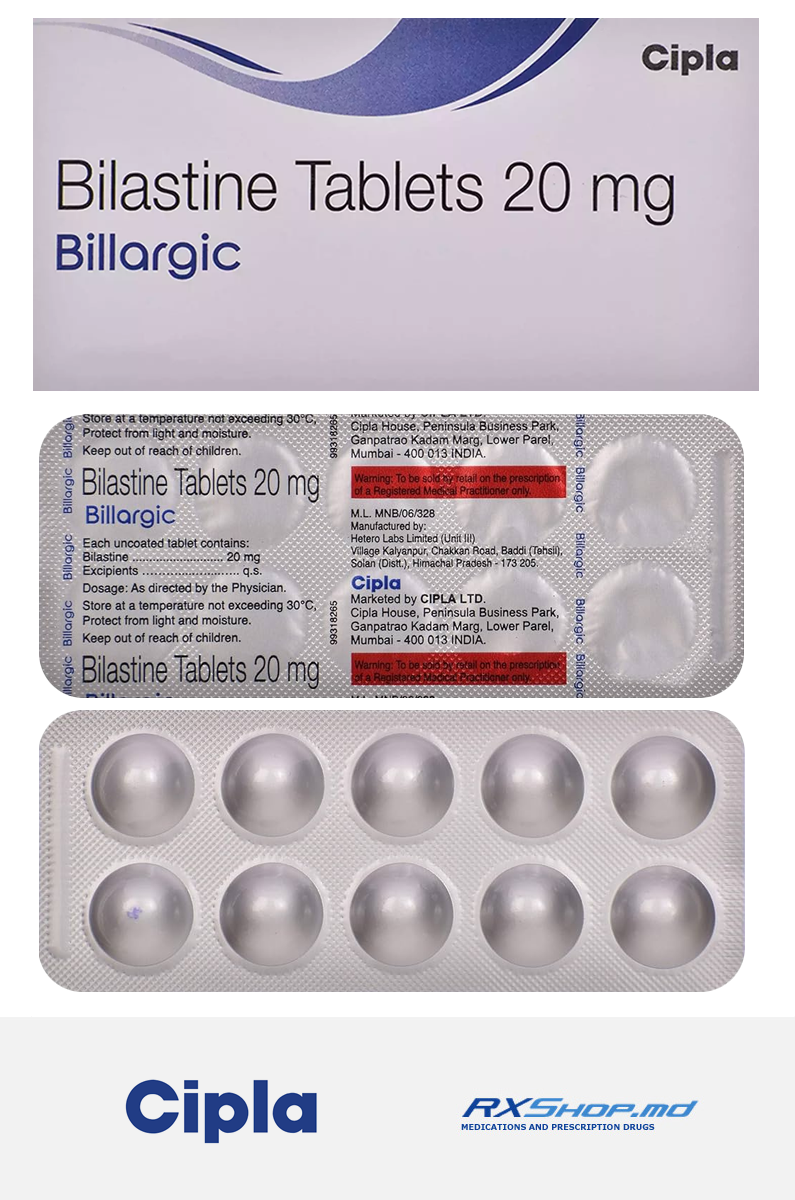
Billargic is an affordable generic Bilastine — a modern second-generation oral antihistamine developed in the 2000s and approved across Europe, Latin America, Asia, and many other markets for the treatment of allergic rhinitis and chronic urticaria. Bilastine is widely considered one of the most refined antihistamines available today, with a pharmacological profile specifically optimised to maximise allergy relief while minimising side effects, drug interactions, and central nervous system involvement. As a generic Bilastine, Billargic delivers this advanced therapeutic profile at a significantly lower price than brand-name versions such as Bilaxten and Blexten.
Generic Bilastine works as a selective, peripheral H1-receptor antagonist — blocking histamine at sites in the nasal mucosa, skin, and conjunctiva where allergic symptoms originate. What sets Bilastine apart is its extremely low penetration of the blood-brain barrier: less than 1% of the dose reaches the CNS, which translates into one of the lowest sedation profiles of any oral antihistamine available worldwide. This makes Billargic particularly attractive for patients who need to drive, fly, study, or perform demanding cognitive tasks during allergy season.
A distinguishing pharmacokinetic feature of Bilastine is that it is not metabolised by the cytochrome P450 system — meaning virtually no significant drug-drug interactions with the vast majority of medications. This is a critical advantage for elderly patients on polypharmacy, patients with multiple chronic conditions, transplant recipients, and oncology patients where antihistamine selection often depends on interaction safety.
Billargic is approved for seasonal allergic rhinitis, perennial allergic rhinitis, and chronic spontaneous urticaria in adults and adolescents aged 12 years and older. Pediatric oral lyophilisate formulations are also approved for children aged 6-11 in many markets.
The standard dose is one 20 mg tablet once daily. An important practical consideration is that Bilastine should be taken on an empty stomach — at least 1 hour before or 2 hours after food — because food significantly reduces absorption. Fruit juice should also be avoided around dosing for the same reason.
Billargic offers 24-hour symptom relief, no clinically meaningful effect on cardiac QT interval, no need for dose adjustment in hepatic or renal impairment, and no significant impact on psychomotor or driving performance — making generic Bilastine the modern antihistamine of choice for active adults worldwide.
Free prescription
Discrete packaging
Have questions?
Quality Assurance
- Seasonal Allergies: For pollen-driven hay fever from spring tree pollens through autumn weed and mould allergens;
- Year Round Allergies: For continuous symptom control against indoor allergens like dust mites, pet dander, cockroach allergens, and indoor moulds;
- Chronic Urticaria: First-line therapy for chronic hives of unknown origin with documented benefit at up-titrated doses per international guidelines;
- Inducible Urticaria: For physical urticarias including dermatographism, cholinergic urticaria, and cold-induced hives;
- Polypharmacy Allergies: Particularly valuable in adults on multiple chronic medications — no CYP interactions simplifies safe co-prescription;
- Elderly Allergies: Preferred non-sedating option for older adults due to negligible cognitive effects and minimal cardiovascular interactions;
- Hepatic Impairment Allergy: No metabolic burden on the liver — no dose adjustment required even in severe liver dysfunction;
- Renal Impairment Allergy: Predominantly faecal elimination of unchanged drug — safe across all stages of chronic kidney disease;
- Pilot Allergies: Documented absence of psychomotor or driving impairment makes Billargic preferred for aviation and pilot use;
- Driver Allergies: For professional drivers and operators where safety-critical alertness must be maintained during allergy treatment;
- Adolescent Allergies: Approved for patients aged 12 years and older — supports school-aged adherence with simple once-daily dosing;
- Pediatric Allergies: Oral lyophilisate formulations support younger pediatric patients aged 6-11 in many international markets;
- Cardiac Patient Allergies: No clinically meaningful QT effect — preferred in patients with arrhythmia history or on QT-prolonging medications;
- Transplant Allergies: Lack of CYP interactions allows safe co-administration with calcineurin inhibitors, mTOR inhibitors, and immunosuppressives;
- Oncology Allergies: Pharmacokinetic simplicity supports use in cancer patients on multiple concurrent therapies;
- HIV Allergies: No CYP-mediated interactions with antiretroviral therapies including protease inhibitors and integrase inhibitors.
- Less Runny Nose: Reduces rhinorrhea associated with seasonal and perennial allergic rhinitis;
- Less Eye Itching: Reduces ocular itching, tearing, and irritation associated with allergic conjunctivitis;
- Less Nasal Itching: Calms persistent itching inside the nose during allergy season;
- No Drowsiness: Negligible sedating effects supporting normal daytime functioning during allergy treatment;
- No Sedation: Under 1% CNS penetration — one of the lowest of any oral antihistamine ever developed;
- Daytime Alertness: Maintains energy and focus throughout the workday without sedation;
- 24 Hour Coverage: Once-daily 20 mg dosing maintains steady plasma levels through full day and night;
- Once Daily Dosing: Simple morning regimen on empty stomach supports adherence during long allergy seasons;
- Better Sleep: Effective allergy symptom control supports restful sleep during peak allergen exposure;
- Quality of Life: Measurable improvements in sleep, productivity, and cognitive function during allergy seasons;
- Driving Safety: No clinically meaningful impact on driving performance documented in formal on-road driving studies;
- Cognitive Performance: No measurable effect on attention, working memory, or reaction time at therapeutic doses;
- Non Sedating Antihistamine: One of the lowest sedation profiles of any oral antihistamine — preserves alertness for demanding cognitive work;
- Second Generation Antihistamine: Modern antihistamine class with significantly better tolerability than first-generation agents;
- No CYP Antihistamine: No CYP450 metabolism — eliminates virtually all clinically meaningful drug-drug interactions;
- Hepatic Safe Antihistamine: No dose adjustment needed even in severe hepatic impairment — uniquely simplifies prescribing;
- Renal Safe Antihistamine: No dose adjustment in chronic kidney disease — safe across all CKD stages;
- Cardiac Safe Antihistamine: No clinically meaningful QT effect — suitable for patients with cardiac history or on QT-prolonging medications;
- Hay Fever Relief: Effective relief from sneezing, runny nose, and itchy eyes during peak pollen seasons;
- Chronic Hives Relief: First-line per international urticaria guidelines with support for dose up-titration to 2-4x standard;
- Allergic Rhinitis Relief: Effective relief of nasal allergy symptoms with reliable 24-hour coverage from single daily dose;
- Pediatric Antihistamine: Approved for children aged 6 and older with oral lyophilisate formulations in many markets;
- Generic Bilastine: Affordable generic version of brand-name Bilaxten and Blexten at significantly lower price;
- Bilaxten Equivalent: Same Bilastine molecule as branded Bilaxten with bioequivalence at fraction of cost;
- Blexten Equivalent: Same Bilastine molecule as Canadian brand Blexten — familiar option across North American markets;
- Polypharmacy Antihistamine: Particularly suitable for elderly and complex patients on multiple chronic medications;
- Elderly Antihistamine: Negligible anticholinergic activity and absence of CYP interactions ideal for geriatric allergy care;
- Refractory Hives Treatment: Up-titrated dosing often achieves symptom control before biologics are needed in chronic urticaria;
- Pilot Safe Antihistamine: Aviation authorities recognise favourable cognitive safety profile for pilot use;
- HIV Compatible Antihistamine: Safe co-administration with antiretroviral regimens including protease inhibitors and integrase inhibitors;
- Transplant Compatible Antihistamine: No interference with tacrolimus, ciclosporin, sirolimus, or mycophenolate mofetil;
- Pregnancy Safety: Reassuring data for use during pregnancy and lactation when antihistamine therapy is needed;
- Empty Stomach Dosing: Take 1 hour before or 2 hours after food and fruit juice for optimal absorption;
- Faecal Excretion: Predominantly excreted unchanged via faeces and urine without metabolic activation;
- No Anticholinergic Effects: No dry mouth, urinary retention, or constipation common with first-generation antihistamines;
- Stable Storage: Room-temperature stable — convenient for travel, school, work, and emergency kits;
- Globally Available: Widely supplied in branded (Bilaxten, Blexten) and generic forms across European, Asian, and Latin American markets.
Generic Billargic (Bilastine 20 mg) Medication guide:
💊 What is Billargic (Bilastine) and what it treats
Billargic is a brand name for bilastine, a modern second-generation non-sedating H1 antihistamine. Developed by Faes Farma in Spain and approved by the European Medicines Agency in 2010, bilastine has rapidly become one of the most widely used antihistamines in Europe, Latin America, Asia, and many other regions. Notably, it is not approved by the U.S. FDA, making it less familiar to American patients but a standard option throughout the rest of the world.
What Billargic treats
- 🤧 Seasonal allergic rhinoconjunctivitis (hay fever) — nasal and eye symptoms from pollen, mould spores
- 🍃 Perennial allergic rhinitis — year-round symptoms from dust mites, pet dander, indoor allergens
- 🌹 Chronic urticaria — recurring hives lasting more than 6 weeks
- 👁 Allergic conjunctivitis — itchy, watery, red eyes from allergens
- 💨 Allergic skin reactions with itching and hives
- Active ingredient: bilastine
- Drug class: second-generation non-sedating H1 antihistamine
- Manufacturer: Faes Farma (Spain) and licensed partners
- EU approval: 2010 via European Medicines Agency
- FDA status: NOT approved in the United States
- Standard adult dose: 20 mg once daily
- Pediatric form: 10 mg orodispersible tablet (children 6-11)
- Onset: typically within 1 hour
- Duration: 24 hours per dose
- Half-life: approximately 14 to 15 hours
- Markets: over 100 countries globally
What makes Billargic distinctive
- No significant sedation — placebo-like sedation rate in clinical trials
- No CYP450 metabolism — one of very few antihistamines with this profile
- Minimal drug-drug interactions — result of unchanged excretion
- No QT prolongation — unlike older first-generation antihistamines
- No cognitive impairment — safe for driving and operating machinery
- Once-daily dosing — simple regimen for adherence
- Orodispersible pediatric form — designed for children unable to swallow tablets
What Billargic does NOT do
Billargic is not appropriate for:
- Severe acute allergic reactions like anaphylaxis (requires epinephrine)
- Anxiety disorders (it has no anxiolytic effect, unlike hydroxyzine)
- Insomnia (no sedating effect)
- Pre-operative sedation
- Pruritus from non-allergic causes (limited benefit)
- Routine asthma (uses bronchodilators and inhaled steroids)
The regulatory difference - approved globally except in USA
Bilastine has been approved in over 100 countries since 2010 but is notably absent from the U.S. market. Faes Farma did not pursue full FDA approval, and no major U.S. partner has done so. For American patients used to Zyrtec, Claritin, or Allegra, Billargic represents a similar class of medication that is simply unavailable through standard U.S. pharmacies but widely accessible in Europe, Canada, Latin America, and Asia.
Billargic represents the current standard for non-sedating antihistamine therapy outside the United States. Its combination of effectiveness, minimal side effects, lack of drug interactions, and once-daily dosing makes it a particularly attractive option for patients with allergic rhinitis and chronic urticaria who want reliable symptom control without the limitations of older medications.
🇪🇸 Faes Farma origins and bilastine's Spanish heritage
Bilastine, the active ingredient in Billargic, has a uniquely Spanish corporate heritage. Unlike many global antihistamines developed by large multinational pharmaceutical companies in the United States, Switzerland, or the UK, bilastine was discovered and developed by Faes Farma, a mid-sized Spanish pharmaceutical company based in Bilbao, in the Basque Country of northern Spain. Understanding this corporate origin helps explain why Billargic has particular prominence in European and Latin American markets while remaining absent from U.S. pharmacies.
Faes Farma corporate history
- Founded: 1933 in Bilbao, Spain, as Fabricación Española de Productos Químicos y Farmacéuticos
- 1960s-1990s: Established as significant Spanish pharmaceutical company; portfolio of cardiovascular, respiratory, and dermatology products
- Late 1990s: Bilastine research and development program initiated
- 2000s: Extensive clinical trials of bilastine in allergic rhinitis and urticaria
- 2010: European Medicines Agency approval of bilastine (Bilaxten brand)
- 2010-present: Global licensing partnerships with regional manufacturers including Billargic
- Today: Faes Farma continues as one of Spain's leading pharmaceutical companies
The bilastine discovery
Bilastine was specifically designed to address limitations of existing second-generation antihistamines. The Faes Farma research team aimed to create a compound with:
- High selectivity for the H1 histamine receptor (avoiding sedation)
- Minimal CYP450 metabolism (reducing drug interactions)
- No cardiac side effects (avoiding the QT prolongation seen with some older antihistamines)
- Once-daily dosing with stable plasma levels
- Excretion mostly unchanged through bile and urine
The molecule designed by Faes Farma chemists achieved all of these goals, leading to a medication with one of the cleanest pharmacological profiles among modern antihistamines.
The Bilbao research facility
- Faes Farma R&D center in Leioa, near Bilbao
- One of largest privately-funded Spanish pharmaceutical research operations
- Clinical trials primarily conducted in Spanish and European medical centers
- Spanish allergy specialists (SEAIC members) heavily involved in development
- Manufacturing in Spain with high quality standards
- Symbol of Spanish biotech and pharmaceutical capability
Global licensing and brand variations
Faes Farma licenses bilastine to regional pharmaceutical companies that market under different brand names in their territories:
| Region | Brand name |
|---|---|
| Spain (original) | Bilaxten, Ibis, Obalix |
| UK | Ilaxten |
| Germany | Bitosen |
| Russia | Nixar |
| Japan | Bilanoa |
| Various international | Billargic, Lambdaxel, Bilastinum |
| Generic name | Bilastine (consistent internationally) |
Why Spanish origin matters
- Spanish allergy research tradition is internationally respected
- SEAIC (Spanish Society of Allergology) is one of Europe's most active allergy societies
- Mediterranean climate creates significant year-round allergy populations driving research interest
- European pharmaceutical regulation through EMA provides rigorous oversight
- Latin American markets benefit from Spanish-language clinical literature and shared research culture
- Long-term commitment from a focused mid-sized company rather than a portfolio drug at a multinational
Billargic carries the legacy of focused Spanish pharmaceutical research aimed at creating a better antihistamine. While the brand name Billargic is licensed for certain markets, the underlying medication is bilastine, the product of over a decade of dedicated research by Faes Farma scientists in Bilbao. This corporate focus has produced a medication with notably few side effects and drug interactions, achievements not always seen with drugs developed as one of many products at large multinationals.
🌍 Where Billargic is sold (and why not in the USA)
One of the most distinctive aspects of Billargic is its global availability everywhere except the United States. Bilastine is approved and widely used in over 100 countries across Europe, Latin America, Asia, Africa, and Oceania, yet remains absent from U.S. pharmacies. Understanding this regulatory geography helps patients navigate where they can fill prescriptions and why American patients may not be familiar with this medication.
Where Billargic is approved and available
| Region | Availability | Year of approval |
|---|---|---|
| European Union (all member states) | Widely available; prescription | 2010 (EMA) |
| United Kingdom | Available | 2010 (carried over post-Brexit) |
| Canada | Approved; available | 2016 |
| Australia / New Zealand | Available | 2015 |
| Japan | Available as Bilanoa | 2017 |
| South Korea | Available | 2014 |
| India | Multiple generic options | 2015 |
| Russia | Available as Nixar | 2014 |
| Most of Latin America | Widely available | 2011-2014 |
| South Africa, Middle East | Available | Various |
| United States | NOT approved by FDA | No application submitted |
Why bilastine is not in the United States
- Faes Farma did not pursue full FDA approval for the U.S. market
- No major U.S. pharmaceutical partner has licensed bilastine for American distribution
- FDA approval process requires separate clinical trials, regulatory submissions, and substantial investment
- U.S. market is highly competitive with established second-generation antihistamines (Zyrtec, Claritin, Allegra) that are now over-the-counter
- Faes Farma is a mid-sized European company — not focused on the U.S. market
- Regulatory cost may have exceeded projected returns
- This is a commercial decision, not a safety concern
What U.S. patients use instead
American patients have access to similar second-generation antihistamines:
- Cetirizine (Zyrtec) — available OTC; similar effectiveness profile
- Loratadine (Claritin) — OTC; similar but less effective for some
- Fexofenadine (Allegra) — OTC; closest pharmacological match to bilastine
- Levocetirizine (Xyzal) — OTC; refined cetirizine
- Desloratadine (Clarinex) — prescription; refined loratadine
For most American patients, bilastine offers no critical advantage over these alternatives. For patients who have travelled and used bilastine elsewhere, its absence in U.S. pharmacies can be a notable inconvenience.
For travelers and expatriates
- European travel: Billargic and equivalent brands easily available
- Latin American travel: Multiple brand options at most pharmacies
- Asian travel: Available in most major Asian markets
- U.S. travel: Need to bring supply or switch to fexofenadine (Allegra) closest alternative
- Returning to U.S. after expatriation: Discuss alternative second-generation antihistamine with U.S. physician
- Travel back to home country: Billargic typically available
Importing for personal use
Some U.S. patients have considered importing bilastine for personal use. Important considerations:
- FDA personal importation policy generally allows small quantities of unapproved medications for personal use
- U.S. customs can seize medications at their discretion
- No FDA approval means no formal U.S. regulatory oversight
- Counterfeit risk with online purchases from unfamiliar sources
- U.S. healthcare providers may be unfamiliar with the medication
- For most patients, available U.S. alternatives are clinically equivalent
Billargic is widely available globally and represents standard antihistamine therapy in much of the world. The U.S. regulatory absence reflects commercial decisions rather than safety or efficacy concerns. Patients used to bilastine outside the United States have multiple equivalent options if they relocate to America; patients in the rest of the world have access to one of the most well-tolerated antihistamines available.
🔬 How Billargic works - selective H1 receptor mechanism
Billargic (bilastine) is a highly selective H1 histamine receptor antagonist. Unlike older antihistamines that block multiple receptor systems, bilastine targets only the H1 histamine receptor with very high precision. This selectivity is the key to bilastine's clean pharmacological profile - explaining both why it works so well for allergies and why it has so few side effects.
What histamine does in allergic reactions
- When you encounter an allergen (pollen, dust mite, pet dander), mast cells release histamine
- Histamine binds to H1 receptors in tissues throughout the body
- This binding triggers the classic allergic symptoms:
- - Vasodilation (causing congestion, redness)
- - Increased vascular permeability (causing runny nose, swelling)
- - Sensory nerve activation (causing itching, sneezing)
- - Mucus secretion
- - Smooth muscle contraction
How Billargic blocks the allergic response
Bilastine works by competitively binding to H1 receptors without activating them. This blocks histamine from attaching and triggering allergic symptoms. The medication occupies the receptor for an extended period, providing 24-hour symptom control with once-daily dosing.
The exceptional selectivity advantage
| Receptor | Bilastine activity | Clinical implication |
|---|---|---|
| H1 histamine | Strong blockade | Anti-allergic effect |
| H2 histamine (stomach) | Minimal | No stomach effects |
| Muscarinic acetylcholine | Minimal | No anticholinergic effects (no dry mouth, blurred vision) |
| Serotonin receptors | Minimal | No serotonergic effects |
| Alpha-1 adrenergic | Minimal | No blood pressure effects |
| Dopamine receptors | Minimal | No dopaminergic effects |
| hERG potassium (cardiac) | Minimal | No QT prolongation |
Compare this to first-generation antihistamines like hydroxyzine, which act on H1, serotonin, alpha-1, and muscarinic receptors simultaneously. Bilastine's highly selective H1-only action explains why it has so few side effects.
Why Billargic doesn't enter the brain
- Bilastine is a substrate for the P-glycoprotein transporter at the blood-brain barrier
- This transporter actively pumps bilastine back out of the brain
- Result: brain bilastine levels remain very low even at therapeutic doses
- This is why bilastine does not cause sedation
- This is also why it does not impair driving or cognitive function
- Among second-generation antihistamines, bilastine has one of the highest selectivities against brain entry
The unique pharmacokinetic profile
| Parameter | Value | Significance |
|---|---|---|
| Absorption | ~60% on empty stomach | Food reduces by 30% |
| Peak plasma level | 1.3 hours | Rapid onset |
| Half-life | 14 to 15 hours | Allows once-daily dosing |
| Plasma protein binding | ~85% | Standard |
| Metabolism | Minimal (not metabolized by CYP450) | Few drug interactions |
| Excretion | 95% unchanged in feces (67%) and urine (33%) | Predictable elimination |
How the effects develop
| Time after dose | Activity |
|---|---|
| 30 to 60 minutes | Initial absorption; effects begin |
| 1 to 2 hours | Peak plasma level; significant H1 blockade |
| 4 to 24 hours | Sustained antihistamine effect |
| 24 hours | Time for next dose |
Bilastine's mechanism reflects modern drug design principles applied to an old drug class. By targeting only the H1 receptor with high selectivity, avoiding brain entry, skipping CYP metabolism, and avoiding cardiac potassium channels, Billargic achieves the goal that early antihistamines could not: effective allergic symptom control with minimal collateral effects on the rest of the body.
🤧 Billargic for seasonal allergic rhinitis
Seasonal allergic rhinitis - commonly called hay fever - is the most familiar and well-studied indication for Billargic. Triggered by outdoor allergens like tree, grass, and weed pollens that appear at specific times of year, seasonal allergic rhinitis affects approximately 10-30% of the global population. Bilastine has been extensively studied in this indication and is included as a first-line option in modern international guidelines.
What seasonal allergic rhinitis feels like
- Sneezing - repeated bouts, particularly on allergen exposure
- Runny nose - clear, watery discharge
- Nasal congestion - stuffiness, difficulty breathing through nose
- Itching - nose, throat, ears, eyes
- Postnasal drip - throat clearing, cough
- Allergic conjunctivitis - itchy, watery, red eyes
- Fatigue - from chronic congestion and disrupted sleep
- Reduced productivity - often more impactful than patients realize
Where Billargic fits in seasonal rhinitis treatment
Modern ARIA (Allergic Rhinitis and its Impact on Asthma) guidelines recognize bilastine as a first-line option for treating seasonal allergic rhinitis. Specifically:
- For intermittent symptoms: Bilastine 20 mg once daily as needed
- For persistent symptoms: Bilastine 20 mg once daily during exposure season
- Pre-treatment strategy: Start 1-2 weeks before expected onset of season
- For severe symptoms: Combine with intranasal corticosteroid
- For breakthrough: Add antihistamine eye drops or intranasal antihistamine
Typical seasonal allergy patterns
| Season | Typical allergens | When to start Billargic |
|---|---|---|
| Spring | Tree pollens (oak, birch, maple, juniper) | Mid-January to early February |
| Late spring / summer | Grass pollens (timothy, Bermuda, rye) | Mid-April |
| Late summer / autumn | Weed pollens (ragweed, sagebrush) | Mid-July |
| Late summer | Outdoor mould spores | 2 weeks before personal trigger |
What clinical trials show for bilastine in seasonal rhinitis
- Significantly more effective than placebo for total nasal symptom score
- Comparable to cetirizine in head-to-head trials
- Comparable to desloratadine in head-to-head trials
- Better tolerability than cetirizine regarding sedation
- Improved quality of life measures in seasonal allergy patients
- Sustained 24-hour effect with once-daily dosing
- Onset of action within 1 hour
- Reduced eye symptoms alongside nasal symptoms
What to expect on Billargic for seasonal allergies
- Within 1 hour: Initial symptom reduction
- Within 2-4 hours: Peak effect
- Sustained through 24 hours: Continuous control with once-daily dosing
- Day 1-3: Consistent symptom relief
- Week 1+: Full benefit appreciated
- Throughout season: Daily use prevents symptom breakthrough
Pre-treatment strategy
For predictable seasonal patterns, start Billargic 1 to 2 weeks before your typical allergy season. Patients who treat preventively often have substantially better symptom control than those who wait until symptoms force them to start. The 14-15 hour half-life means steady-state plasma levels develop over a few days; pre-loading allows full effect when allergen exposure begins.
Combining Billargic with other treatments
| Combination | When useful |
|---|---|
| Billargic + intranasal corticosteroid | Moderate to severe persistent symptoms |
| Billargic + intranasal antihistamine (azelastine) | Severe nasal symptoms; particularly congestion |
| Billargic + antihistamine eye drops | Severe eye symptoms |
| Billargic + saline nasal rinses | High allergen exposure days |
| Billargic + allergen immunotherapy | Severe persistent allergies; long-term disease modification |
Lifestyle measures that support Billargic
- Pollen forecasts - check daily during season
- Close windows during high pollen periods
- Shower after outdoor time to remove pollen from skin and hair
- Wash bedding regularly in hot water
- Air conditioning with HEPA filter when possible
- Sunglasses outdoors reduce eye allergen exposure
- Saline nasal rinses after high-exposure activities
- Avoid outdoor activities during peak pollen periods if possible
Billargic provides excellent control of seasonal allergic rhinitis with the convenience of once-daily dosing and minimal side effects. The combination of preventive pre-treatment timing, consistent daily use through the allergy season, and complementary measures (intranasal steroids for severe cases, lifestyle changes) provides the best results. For most patients with seasonal allergies, Billargic alone is sufficient; combination therapy is reserved for moderate-severe cases.
🌹 Billargic for chronic urticaria
Chronic urticaria - recurring hives lasting more than 6 weeks - is one of the most distressing skin conditions. Severe itching disrupts sleep, work, and quality of life. Bilastine has emerged as one of the most useful medications for chronic urticaria treatment, and is recommended by the international EAACI/GA?LEN/EDF/WAO urticaria guidelines as a first-line option, including at higher than standard doses for difficult cases.
What chronic urticaria looks like
- Hives (wheals) - raised, red, itchy welts
- Itching - often severe; the most distressing symptom
- Angioedema - swelling of deeper tissues (lips, eyelids, hands)
- Episodic appearance - lesions come and go over hours
- Worse at night - intense itch disrupts sleep
- Often no identifiable trigger - "chronic spontaneous urticaria"
- Duration - by definition, lasting more than 6 weeks; often years
- Quality of life impact - comparable to severe asthma
The international urticaria treatment ladder
| Step | Treatment | Billargic role |
|---|---|---|
| 1 | Non-sedating antihistamine at standard dose | Billargic 20 mg daily — first-line |
| 2 | Same antihistamine at up to 4 times standard dose | Billargic up to 80 mg daily (off-label, specialist supervision) |
| 3 | Add omalizumab (anti-IgE biologic) | Billargic continues as adjunct |
| 4 | Cyclosporine or other immunosuppressant | For refractory cases |
Why Billargic is favoured for chronic urticaria
- Once-daily dosing simpler than 2-4x daily older antihistamines
- No sedation allows continued work and daily activities
- Safe at higher doses (4x standard) when standard insufficient
- No QT prolongation even at high doses
- No drug interactions simplifies addition to existing regimens
- Long-term safety established for chronic daily use
- EAACI guidelines explicit endorsement
Standard and high-dose strategies
| Dose strategy | Indication |
|---|---|
| Standard 20 mg once daily | First-line for chronic urticaria |
| 40 mg once daily (2x) | If standard dose insufficient after 2-4 weeks |
| 60 mg once daily (3x) | Continued breakthrough symptoms |
| 80 mg once daily (4x maximum) | Maximum off-label per guidelines; specialist supervision |
| Add omalizumab | If 4x dose still inadequate |
What to expect on Billargic for chronic urticaria
- Day 1-3: Some symptom improvement
- Week 1: Significant reduction in hives and itching
- Week 2-4: Steady-state effect; full control
- Week 4+: Sustainable long-term control
- If insufficient at 20 mg: Dose escalation to 40, 60, or 80 mg
- Breakthrough symptoms: Discuss with prescriber
Why high-dose bilastine is safer than alternative options
- Studies have evaluated up to 80 mg daily with reasonable safety
- No QT prolongation even at higher doses
- No significant increase in sedation at higher doses
- Drug interactions remain minimal
- Cardiovascular safety maintained
- Patient tolerability generally well-preserved
- This makes bilastine particularly suitable for the "up-dosing" strategy
The remission perspective
Chronic spontaneous urticaria has a natural tendency to remit. Studies show that about 50% of patients achieve remission within 1 year and roughly 80% within 5 years. While the wait can feel endless, the condition is not usually permanent. Billargic helps maintain quality of life and sleep during that period of waiting for natural resolution.
Long-term use considerations
- Bilastine is safe for long-term daily use
- No tolerance develops to effect
- No withdrawal on discontinuation
- Periodic reassessment recommended — can dose be reduced?
- Watch for remission — patients can sometimes stop after months without symptoms
- Trigger identification remains important if possible
For most patients with chronic urticaria, Billargic 20 mg daily provides reliable, well-tolerated symptom control. When this is inadequate, the ability to safely escalate up to 80 mg daily before considering biological therapy makes bilastine a particularly valuable agent in the urticaria treatment ladder. The combination of effectiveness, safety, and dosing flexibility explains why bilastine has rapidly become a preferred choice in international urticaria guidelines.
👁 Billargic for allergic conjunctivitis
Allergic conjunctivitis - the eye component of allergic disease - causes itchy, watery, red eyes that often accompany nasal allergy symptoms. Billargic addresses both nasal and eye symptoms as part of its core indication of allergic rhinoconjunctivitis. While intranasal medications often cannot reach the eyes effectively, an oral antihistamine like bilastine provides systemic action that covers both areas.
What allergic conjunctivitis looks like
- Itching - the cardinal symptom; "itchy eyes" highly specific for allergy
- Watery discharge - clear, often profuse
- Redness - conjunctival injection
- Burning sensation
- Eyelid swelling - particularly upper eyelid puffiness
- Light sensitivity
- Foreign body sensation - "something in my eye"
How Billargic helps eye symptoms
Unlike intranasal antihistamines or steroids that mainly affect the nose, Billargic is taken orally and distributes systemically throughout the body, including the eye tissues. This means:
- Blocks histamine at H1 receptors in conjunctiva (eye tissue)
- Reduces vascular permeability in eye blood vessels
- Reduces histamine-mediated itch from sensory nerves
- Provides 24-hour coverage with single daily dose
- Treats nose and eyes simultaneously with one medication
What clinical studies show for eye symptoms
- Significant reduction in eye symptom scores vs placebo
- Reduced ocular itching within hours
- Improved tear quality measures
- Reduced conjunctival redness
- Comparable to dedicated antihistamine eye drops for moderate symptoms
- Better than placebo in environmental exposure chamber studies
When Billargic is sufficient for eye allergies
| Eye symptom severity | Billargic role |
|---|---|
| Mild eye symptoms with nasal symptoms | Often sufficient alone |
| Moderate eye symptoms | Billargic + eye drops as needed |
| Severe eye-dominant symptoms | Eye drops primary; Billargic adjunct |
| Eye symptoms only (no nasal) | Eye drops often more practical |
| Severe allergic conjunctivitis | Specialist evaluation; combination therapy |
Combining Billargic with eye drops
- Antihistamine eye drops (olopatadine, ketotifen) for breakthrough
- Mast cell stabiliser drops (cromolyn, lodoxamide) for prevention
- Combination drops with both mechanisms
- Artificial tears for comfort and to dilute allergens
- Cool compresses for symptom relief
- Avoid decongestant eye drops for chronic use - rebound effects
Lifestyle measures for allergic eye symptoms
- Sunglasses outdoors reduce direct allergen exposure to eyes
- Avoid rubbing eyes - releases more histamine
- Cool compresses for acute relief
- Saline eye rinses after high-exposure activities
- Remove contact lenses during severe flares
- Disposable contacts may be better than monthly during allergy season
- Wash hands frequently before touching face
When eye symptoms warrant ophthalmology referral
- Eye pain (not just itching or burning)
- Vision changes
- Severe redness in one eye only
- Thick yellow or green discharge
- Light sensitivity with pain
- Symptoms persisting despite proper treatment
- Contact lens wear with eye symptoms
Specific allergic eye conditions
| Condition | Billargic role |
|---|---|
| Seasonal allergic conjunctivitis | First-line; often sufficient |
| Perennial allergic conjunctivitis | Daily Billargic; chronic management |
| Vernal keratoconjunctivitis | Adjunct to specialised treatment |
| Atopic keratoconjunctivitis | Part of multi-pronged treatment |
| Giant papillary conjunctivitis | Address contact lens issues; specialist input |
For most patients with allergic rhinoconjunctivitis (nose + eyes), oral Billargic effectively addresses both areas simultaneously. For severe eye-dominant symptoms or breakthrough on Billargic alone, adding antihistamine or mast cell stabiliser eye drops provides excellent complementary coverage. This combined oral-plus-topical strategy delivers comprehensive allergic disease control with minimal medication burden.
🍃 Billargic for perennial allergic rhinitis
Perennial allergic rhinitis means year-round nasal allergy symptoms caused by indoor allergens that persist through all seasons. Unlike seasonal allergies that come and go with pollen calendars, perennial allergies cause continuous lower-grade symptoms that interfere with daily life every day. Billargic is well-suited for perennial allergic rhinitis because of its once-daily dosing simplicity, sustained 24-hour effect, and long-term safety profile - all important when treatment is needed indefinitely.
Common perennial allergens
| Allergen | Where it lives |
|---|---|
| House dust mites | Mattresses, pillows, bedding, carpets, upholstery |
| Cat dander | Cat skin flakes; lingers in homes for months |
| Dog dander | Dog saliva and skin; varies by breed |
| Cockroach allergen | Urban environments, food storage areas |
| Mouse / rat allergen | Urinary proteins; in walls of older buildings |
| Indoor moulds | Bathrooms, basements, water-damaged areas |
| Bird allergens | Feather and droppings allergen |
How perennial differs from seasonal allergies
- Continuous symptoms rather than seasonal peaks
- More nasal congestion, less sneezing/itching than seasonal
- Often less severe daily but more persistent and tiring over time
- Associated with chronic sinusitis, sleep disturbance, secondary headaches
- Higher rates of asthma coexistence
- Children may have learning difficulties from chronic congestion and poor sleep
- Daily treatment needed rather than seasonal use
Standard Billargic dosing for perennial allergies
- Adults: 20 mg once daily, every day, indefinitely
- Adolescents 12+: Same as adult dosing
- Children 6-11: 10 mg orodispersible tablet daily
- Empty stomach: at least 1 hour before food or 2 hours after
- Same time daily for consistency
- No need for dose adjustments for kidney or liver function (unique advantage)
Why daily treatment is necessary
Unlike seasonal allergies where pre-treating before allergen exposure works, perennial allergies require continuous daily use of medication. Stopping treatment for even a few days allows inflammation to rebuild, requiring weeks to re-establish control. Long-term daily use of Billargic is safe and is the only way to maintain symptom control for perennial sufferers.
What to expect with continuous perennial treatment
- Week 1: Significant symptom improvement
- Week 2-4: Steady-state effect; nasal mucosa healing
- Month 2+: Sustained relief; quality of life improvement
- Long-term: Safe for years of continuous use
- No tolerance: medication remains effective
- No dependence: can stop without withdrawal (symptoms simply return)
The role of allergen avoidance
- Dust mite reduction: Hot wash bedding weekly; mite-proof covers; reduce carpet
- Pet allergens: Keep pets out of bedroom; HEPA air filters; regular bathing of pets
- Mould control: Reduce humidity; fix leaks; improve ventilation
- Air filtration: HEPA filters for bedroom and main living areas
- Cockroach control: Pest management; food storage; cleaning
- Allergen testing: Identify specific triggers worth avoiding
Comparison: Billargic for perennial vs seasonal
| Aspect | Seasonal | Perennial |
|---|---|---|
| Duration of treatment | 2-4 months per season | Year-round, indefinitely |
| Start timing | 1-2 weeks before season | Continuous |
| Pause options | Off-season holidays | No - continuous needed |
| Allergen avoidance | Limited - cannot avoid pollen | More controllable - home environment |
| Symptom pattern | Seasonal peaks | Continuous lower-grade |
| Long-term planning | Annual cycle | Ongoing management |
Long-term safety considerations
For patients using Billargic continuously for perennial allergies, important considerations include:
- Bilastine has been used clinically since 2010 with established long-term safety
- No cumulative toxicity identified
- No effect on HPA axis (unlike intranasal steroids)
- No metabolic effects
- No cardiovascular effects in healthy individuals
- Periodic reassessment recommended to confirm continued need
- Allergen immunotherapy can be combined for long-term disease modification
Perennial allergic rhinitis is a chronic condition like asthma or eczema. The goal is not to "cure" it but to achieve daily symptom control that allows normal life. Billargic is well-suited for this role because of once-daily dosing, no significant side effects to limit long-term use, no tolerance development, and lack of drug interactions allowing combination with other medications when needed. For most patients with perennial allergies, daily Billargic is a sustainable foundation of treatment.
📋 Standard Billargic dosing
Billargic dosing is refreshingly simple compared to many medications. The standard adult dose is 20 mg once daily, with the only practical complication being the requirement to take it on an empty stomach. For chronic urticaria, doses can be escalated up to 80 mg daily under specialist supervision. Children have a dedicated 10 mg orodispersible form. This is the practical reference for Billargic dosing across all situations.
Standard Billargic dosing by age and indication
| Age / Indication | Dose | Frequency |
|---|---|---|
| Adults 18+ - allergic rhinitis | 20 mg tablet | Once daily |
| Adults 18+ - chronic urticaria | 20 mg tablet (up to 80 mg off-label) | Once daily |
| Adolescents 12-17 | 20 mg tablet (adult dose) | Once daily |
| Children 6-11 | 10 mg orodispersible tablet | Once daily |
| Children under 6 | Not currently approved | Use alternatives |
Adjustments for organ function
Unlike most medications, Billargic requires no dose adjustment for renal or hepatic impairment. This is because bilastine is not metabolised by the liver (95% excreted unchanged in feces and urine) and has a clean elimination profile. This dramatically simplifies prescribing for patients with kidney or liver disease.
| Condition | Dose adjustment |
|---|---|
| Mild renal impairment | None — standard 20 mg |
| Moderate renal impairment | None — standard 20 mg |
| Severe renal impairment | None — standard 20 mg |
| Hemodialysis | None — standard 20 mg |
| Mild-severe hepatic impairment | None — standard 20 mg |
Dosing for chronic urticaria - the escalation strategy
- Step 1: 20 mg once daily (standard dose)
- Step 2 (if inadequate): 40 mg once daily (2x standard)
- Step 3 (continued breakthrough): 60 mg once daily (3x standard)
- Step 4 (maximum): 80 mg once daily (4x standard)
- Step 5: Add omalizumab or escalate to immunosuppressant
Maximum daily dose considerations
| Indication | Approved maximum | Off-label maximum (guidelines) |
|---|---|---|
| Allergic rhinitis | 20 mg/day | Standard dose usually sufficient |
| Chronic urticaria | 20 mg/day per label | Up to 80 mg/day per EAACI |
| Pediatric (6-11) | 10 mg/day | Higher doses not recommended |
What time of day to take Billargic
- Morning is most common - covers daytime symptoms
- 30-60 minutes before breakfast on empty stomach
- Alternative: 2 hours after breakfast if morning eating routine
- Bedtime alternative if morning routine disrupted
- Consistent daily time for steady-state plasma levels
- No advantage to specific time for effectiveness
Starting Billargic - what to expect
- Day 1: Initial dose; effects within 1 hour
- Day 1-3: Significant symptom control
- Day 3-5: Steady-state plasma levels develop
- Week 1+: Full benefit appreciated
- No titration needed for standard 20 mg dose
- If insufficient at standard dose: Discuss escalation for urticaria
If you need to skip the empty stomach rule
If you cannot take Billargic on an empty stomach consistently:
- The medication still works, just less effectively
- Symptoms may not be as well controlled
- Consider taking 20 mg consistently with the same meal pattern
- Empty stomach remains the optimal approach
- Discuss with prescriber if struggling with timing
Dosing principles summary
- Standard: 20 mg once daily
- Empty stomach: 1 hour before food or 2 hours after
- Same time daily for consistency
- No organ adjustments needed
- Children 6-11: 10 mg orodispersible
- Long-term use safe
- Chronic urticaria off-label escalation up to 80 mg
Billargic offers some of the simplest dosing in modern allergy medicine: one dose, once daily, no adjustments for kidney or liver function, no titration required. The one practical complication is the empty stomach requirement, which is manageable with consistent timing. For most patients, the standard 20 mg daily dose provides complete symptom control with minimal effort.
🥗 The empty stomach rule - critical timing requirement
The single most important practical rule for taking Billargic is the empty stomach requirement. Food reduces bilastine absorption by approximately 30%, which can significantly affect symptom control. Following the timing rule correctly ensures you get the full benefit of the medication. Understanding why this matters and how to fit it into your daily routine is essential for successful Billargic therapy.
The rule in simple terms
- Take Billargic at least 1 hour BEFORE any food
- OR take at least 2 hours AFTER any food
- Water is fine at any time
- This applies to every dose, every day
Why this rule exists
- Bilastine is absorbed in the upper small intestine
- Food in the stomach slows gastric emptying
- Food competes with bilastine for absorption surface
- Result: 30% reduction in bilastine absorption when taken with food
- Lower plasma levels mean less effective allergy control
- This is a specific feature of bilastine, not all antihistamines
- Cetirizine and loratadine do not have this requirement
Specific foods that reduce absorption
| Food category | Effect on Billargic |
|---|---|
| Any solid food | Reduces absorption ~30% |
| High-fat meals | May reduce more |
| Grapefruit juice | Significantly reduces absorption |
| Orange juice and apple juice | Reduce absorption |
| Milk and dairy | Reduce absorption |
| Coffee with milk/cream | Reduces absorption |
| Black coffee/tea | Minimal effect; mostly fine |
| Water | No effect; can drink any time |
The grapefruit juice issue
- Grapefruit juice significantly reduces bilastine absorption
- This affects bilastine specifically, not all antihistamines
- Effect is through inhibition of intestinal transporters (P-glycoprotein and OATP)
- This is opposite to most "grapefruit interactions" which increase drug levels
- Avoid grapefruit juice for at least 2 hours around Billargic doses
- Other citrus juices (orange, apple) also reduce absorption but less dramatically
Practical daily timing strategies
| Strategy | How to implement |
|---|---|
| First thing in morning | Take immediately on waking; wait 1 hour before breakfast |
| Bedtime dosing | Take 2 hours after dinner before bed |
| Mid-afternoon gap | Take between lunch and dinner (2 hours after lunch, 1 hour before dinner) |
| Late morning | 2 hours after breakfast; before lunch |
| Linked to coffee | Take with morning black coffee on empty stomach |
The "first-thing-in-the-morning" approach (most common)
- Wake up and immediately take Billargic with water
- Engage in morning routine for 60 minutes: shower, dress, prepare for day
- Now eat breakfast at the 1-hour mark
- Result: Optimal absorption with minimal disruption
- This works well for people who can delay breakfast by an hour
The "bedtime" approach
- Dinner ends by 7-8 PM
- Wait 2 hours
- Take Billargic at 9-10 PM
- Go to bed
- Result: Full overnight absorption
- Useful for shift workers or those with morning eating routine
The reality of imperfect timing
- The medication still works, but 30% less effectively
- You may notice less complete symptom control
- Be consistent: same meal pattern relative to medication
- Higher dose may be needed if effectiveness compromised
- Consider switching to cetirizine if empty stomach impractical
- Discuss with prescriber if struggling
Travel and irregular schedules
| Situation | Solution |
|---|---|
| Time zone change | Shift gradually; long half-life forgives |
| Plane food schedule | Time around flight meals |
| Shift work | Establish consistent meal-medication pattern |
| Religious fasting (Ramadan) | Take during eating window allowance |
| Intermittent fasting | Take during fasting period (water OK) |
| Hospital admission | Inform staff about timing requirement |
The Billargic empty stomach rule is the single practical compromise that comes with this otherwise highly convenient medication. Once you establish a routine (morning before breakfast, or evening 2 hours after dinner), it becomes second nature. The 30% absorption advantage of correct timing translates to noticeably better allergy control - well worth the small effort of scheduling.
🚀 How quickly Billargic starts working
Billargic has a relatively rapid onset of action for an oral antihistamine - typically producing noticeable symptom relief within 1 hour of taking the tablet. This onset speed is comparable to cetirizine and faster than loratadine. For acute allergy symptoms emerging suddenly, this matters - you do not need to wait through hours of misery before relief begins.
The Billargic timeline
| Time after dose | What is happening | What you notice |
|---|---|---|
| 0-30 minutes | Absorption from small intestine | Nothing yet |
| 30 minutes - 1 hour | Drug entering bloodstream; reaching H1 receptors | Beginning symptom relief; itching eases |
| 1 hour | Significant receptor occupancy | Clear improvement in symptoms |
| 1.3 hours | Peak plasma concentration | Maximum effect |
| 2-4 hours | Sustained effect | Steady symptom control |
| 4-12 hours | Plateau of effectiveness | Consistent relief |
| 14-15 hours | Half-life reached | Half of drug eliminated |
| 24 hours | Time for next dose | Effects waning; next dose needed |
Comparison with other second-generation antihistamines
| Medication | Onset | Peak | Duration |
|---|---|---|---|
| Billargic (bilastine) | 1 hour | 1.3 hours | 24 hours |
| Cetirizine (Zyrtec) | 30 min - 1 hour | 1 hour | 24 hours |
| Loratadine (Claritin) | 1-3 hours | 8-12 hours | 24 hours |
| Fexofenadine (Allegra) | 1-3 hours | 2-3 hours | 12-24 hours |
| Desloratadine (Clarinex) | 1-3 hours | 3 hours | 24 hours |
| Levocetirizine (Xyzal) | 30 min - 1 hour | 1 hour | 24 hours |
The half-life advantage
- Sustained therapeutic levels across 24 hours
- Once-daily dosing is genuinely effective
- Steady state develops over 2-3 days
- Single missed dose has minimal impact (long residual)
- Stopping the drug takes 2-3 days for full washout
- Drug interactions are minor due to no enzyme involvement
What relief looks like across the day
| Time of day | Typical experience with morning dose |
|---|---|
| Morning (8 AM - dose) | Mild symptoms; medication absorbing |
| Mid-morning (9-10 AM) | Symptoms easing |
| Late morning (11 AM) | Peak symptom control |
| Afternoon (12-6 PM) | Sustained relief |
| Evening (6-10 PM) | Continued control |
| Overnight (10 PM - 8 AM) | Steady plasma levels; some natural decline |
| Next morning | Symptoms may begin emerging; time for next dose |
If Billargic seems slower than expected
| Concern | Possible cause | Solution |
|---|---|---|
| Onset slower than 1 hour | Taken with food | Take on empty stomach |
| Less effective than expected | Severe allergic exposure | Combine with intranasal steroid |
| Wearing off before 24 hours | Inadequate dose for urticaria | Discuss escalation |
| No improvement | Wrong diagnosis or non-histamine cause | Reassess with prescriber |
Onset for first-time users
- First dose: Effect within 1 hour
- Second dose: Effects build on residual from first
- Day 3: Steady-state achieved; full effect
- Week 1: Full benefit appreciated
- For seasonal allergies: Start 1-2 weeks before season
- For urticaria: Daily use needed; full effect over 1-2 weeks
Billargic's 1-hour onset is fast enough for practical use as a "rescue" dose when allergy symptoms emerge unexpectedly, and the 24-hour duration means you only need to dose once daily. The combination of reasonably quick onset and long sustained effect makes it well-suited for both planned daily prevention and as-needed relief - though the empty stomach requirement makes it less convenient than some alternatives for spontaneous use.
💊 Billargic tablets and orodispersible forms
Billargic is available in two main oral forms: the standard 20 mg film-coated tablet for adults and older children, and a 10 mg orodispersible tablet designed for children aged 6 to 11. The orodispersible form represents thoughtful pediatric pharmaceutical design - dissolving instantly on the tongue without water, making it easy for children who cannot swallow traditional tablets.
The two Billargic formulations
| Form | Strength | Target patients |
|---|---|---|
| Film-coated tablet | 20 mg | Adults and adolescents 12+ |
| Orodispersible tablet | 10 mg | Children 6-11 |
The standard 20 mg tablet
- Strength: 20 mg bilastine
- Appearance: White, round, scored film-coated tablet
- Size: Approximately 9-10 mm diameter
- Scoring: May have score line (varies by manufacturer)
- How to take: Swallow whole with water
- Empty stomach: 1 hour before or 2 hours after food
- Splitting: Some tablets can be halved at score line; check specific brand
- Storage: Room temperature in original packaging
The 10 mg orodispersible tablet
- Strength: 10 mg bilastine
- Appearance: Round, dissolvable tablet
- Dissolves on tongue within seconds
- No water needed
- Pleasant taste for children (varies by brand)
- Same empty stomach rule applies
- Particularly useful for children who cannot swallow tablets
- Adult use of pediatric form: Not standard but technically usable for half-doses
How to take the orodispersible form
| Step | Instruction |
|---|---|
| 1. Hands clean and dry | Tablet dissolves with any moisture |
| 2. Remove from blister | Carefully peel - do not push through foil |
| 3. Place on tongue | Center of tongue |
| 4. Allow to dissolve | Takes seconds; do not chew or swallow whole |
| 5. Swallow | Once fully dissolved, swallow with saliva |
| 6. Water optional | Can have water after, but not necessary |
Why orodispersible matters for pediatric use
- No swallowing difficulty — major issue for young children
- No water needed — convenient for school or travel
- Easier dose verification — parents can confirm dissolution
- Pleasant taste better tolerated
- Faster onset potentially — some absorption begins in mouth
- Reduces medication refusal — common pediatric issue
- Designed specifically for ages 6-11 — appropriate dosing
Common challenges with standard tablets
| Challenge | Solution |
|---|---|
| Difficulty swallowing | Discuss orodispersible form (if available for adults) |
| Tablet stuck in throat | Tilt head slightly forward; drink more water |
| Cannot stay on empty stomach | Routine restructuring (see empty stomach section) |
| Forgetting morning dose | Phone alarm; consistent timing |
| Travel without water | Carry small water bottle; or ODT alternative |
Storage of both forms
- Room temperature (15-25°C / 59-77°F)
- Original blister packaging until use
- Dry location - especially important for ODT
- Away from direct sunlight
- Out of reach of children
- Do not refrigerate
- Check expiry periodically
Generic versions
- Generic bilastine has become available in many markets
- Pharmacologically equivalent to branded Billargic
- Same dosing applies
- Same empty stomach requirement
- Substantially lower cost
- Tablet appearance may differ by manufacturer
- Pharmacist will note any specific manufacturer differences
Distinguishing the forms
| Feature | 20 mg standard tablet | 10 mg orodispersible |
|---|---|---|
| Strength | 20 mg | 10 mg |
| Texture | Smooth film-coated | Quick-dissolving |
| Requires water | Yes | No |
| Taste | Slight bitter if chewed | Mild pleasant |
| Approved age | 12 and older | 6-11 years |
For adults and adolescents, the standard 20 mg film-coated tablet is the appropriate form. For children aged 6-11 - particularly those who struggle with traditional tablets - the 10 mg orodispersible form is specifically designed for them. The pharmaceutical thoughtfulness of providing a child-friendly formulation is one of the practical advantages of Billargic over older antihistamines that often have only adult-oriented forms.
😊 Why Billargic doesn't make you sleepy
The single most appreciated practical feature of Billargic is that it does not cause sedation. Unlike older antihistamines (Atarax, Benadryl) and even some newer ones (cetirizine causes drowsiness in 12-15% of users), bilastine has a sedation rate essentially indistinguishable from placebo in clinical trials. This means patients can take Billargic during the day, drive, work, study, and engage in any normal activity without functional impairment.
The clinical evidence
- Sedation rate in placebo-controlled trials: ~0-2% above placebo
- Cognitive performance tests: No significant impairment vs placebo
- Driving simulation studies: No impairment of driving performance
- Cognitive function: Memory, attention, reaction time all preserved
- EEG studies: No brain wave changes typical of sedating medications
- Subjective sleepiness: Equivalent to placebo
- Multiple Sleep Latency Test: No alteration of normal sleep patterns
How Billargic achieves non-sedation
The non-sedating profile of bilastine results from active exclusion from the brain by the P-glycoprotein transporter at the blood-brain barrier. When bilastine attempts to enter brain tissue, this transporter actively pumps it back into the bloodstream. The result is therapeutic plasma levels that effectively control allergy symptoms in the body while keeping brain concentrations very low.
| Aspect | First-gen antihistamines | Billargic |
|---|---|---|
| Crosses blood-brain barrier | Yes - readily | No - actively excluded |
| Brain H1 occupancy | High | Minimal |
| Sedation | Common (30-50%) | Rare (placebo-level) |
| Cognitive impairment | Yes | None |
| Driving impairment | Yes | None |
| Hangover effect | Common next day | None |
Comparison with other second-generation antihistamines
| Medication | Sedation rate |
|---|---|
| Hydroxyzine (Atarax) | 30-50% |
| Diphenhydramine (Benadryl) | 40-60% |
| Cetirizine (Zyrtec) | 12-15% |
| Levocetirizine (Xyzal) | 10-15% |
| Loratadine (Claritin) | ~8% |
| Desloratadine (Clarinex) | ~6% |
| Fexofenadine (Allegra) | 2-3% |
| Billargic (bilastine) | 0-2% (placebo level) |
Among modern non-sedating antihistamines, bilastine has one of the lowest sedation rates - comparable only to fexofenadine.
What this means in practice
- Drive normally without concern about reaction time
- Work productively without cognitive fog
- Study effectively - learning and memory unaffected
- Exercise normally - no fatigue or impairment
- Operate machinery safely
- Make critical decisions - judgement preserved
- Enjoy social activities - mental presence intact
- No "drugged" feeling at all
Patient experiences
Patients often describe the Billargic experience as remarkable specifically because they feel nothing different aside from allergy symptom relief. Compared to first-generation antihistamines (Benadryl, hydroxyzine), where users describe heavy sedation, or even mild sedating second-gen options (cetirizine), where some users describe mild grogginess, bilastine produces no cognitive effect that patients can detect.
Even the 80 mg dose does not cause sedation
- Studies have evaluated bilastine up to 80 mg daily for chronic urticaria
- Even at 4 times the standard dose, sedation remained placebo-level
- No cognitive impairment at higher doses
- Reflects the strong blood-brain barrier exclusion
- This is unusual for antihistamines - most show some sedation at high doses
- Allows urticaria dose escalation without functional cost
Comparison with alcohol
- Studies have evaluated bilastine combined with alcohol
- Result: bilastine does NOT amplify alcohol's effects on cognition or coordination
- This is different from sedating antihistamines, which significantly amplify alcohol
- Suggests no meaningful additive CNS effect
- Note: this does not mean Billargic + alcohol is risk-free, but bilastine itself adds no risk
Why even mild sedation matters
Even small amounts of antihistamine sedation can have meaningful consequences:
- Cumulative effect with multiple medications
- Subtle reaction time slowing matters for driving safety
- Memory effects impact learning and work
- Fatigue compounds with allergy fatigue itself
- Productivity loss across population scale is substantial
- Safety in critical occupations (pilots, drivers, surgeons)
The placebo-level sedation rate of Billargic is one of the most genuinely important practical advantages over older antihistamines and even some newer ones. For patients whose work or life requires full cognitive function and reaction time - which is most patients - this freedom from sedation is the defining benefit of bilastine over options like hydroxyzine or even cetirizine.
🚗 Billargic and driving - the safer alternative
Driving safely on antihistamines is a real concern. First-generation antihistamines like hydroxyzine and diphenhydramine carry official warnings against driving, and even some second-generation antihistamines (cetirizine, levocetirizine) can cause mild driving impairment in susceptible patients. Billargic is one of the only antihistamines explicitly shown not to impair driving in formal driving studies - making it the safest option for patients whose work or life depends on operating vehicles.
The driving safety evidence
- Lane-keeping equivalent to placebo
- Reaction time not impaired
- Steering control unaffected
- Speed maintenance normal
- Attention to road preserved
- Even at 80 mg dose (4x standard) - no driving impairment
- Combined with alcohol - no additive impairment from bilastine
Why this matters for everyday driving
For most patients, the answer to "can I drive on this allergy medication?" matters enormously:
- Commercial drivers — need medications that don't disqualify them
- Pilots — aviation authorities flag sedating antihistamines
- Long-distance commuters — daily safety
- Parents driving children — family safety priority
- Patients in rural areas — cannot avoid driving
- Healthcare workers — on-call driving
- Anyone with a long drive — sustained alertness needed
Comparison with other antihistamines for driving
| Medication | Driving safety |
|---|---|
| Hydroxyzine, Diphenhydramine | Significant impairment; do not drive |
| Cetirizine (Zyrtec) | Mild impairment possible in some patients |
| Levocetirizine (Xyzal) | Mild impairment possible |
| Loratadine (Claritin) | Minimal impairment |
| Fexofenadine (Allegra) | No documented impairment |
| Billargic (bilastine) | No impairment documented in formal studies |
Professional driver considerations
- Commercial truck drivers — bilastine generally permitted by occupational medicine
- Pilots — aviation medical examiners often approve bilastine
- Bus drivers — similar considerations
- Train operators — case-by-case
- Police, ambulance, fire — generally acceptable
- Marine pilots — case-by-case
- Always check with your specific occupational medical examiner
Driving while allergy symptoms occur
Untreated severe allergic rhinitis can itself impair driving:
- Sneezing fits — momentary loss of attention
- Eye irritation — reduced vision
- Tearing — obstructed vision
- Fatigue from poor sleep — reduced alertness
- Distraction from itch — reduced focus
- Congestion-related headache — impaired concentration
For these reasons, treating allergies effectively with Billargic may actually improve driving safety compared to driving while symptomatic.
Combined with alcohol
- Studies show bilastine alone does not impair driving
- Bilastine does NOT amplify alcohol effects on driving
- This is unlike sedating antihistamines which significantly amplify alcohol
- However, alcohol itself impairs driving regardless of medication
- Legal alcohol limits apply normally
- Bilastine combined with alcohol: alcohol concerns apply but no bilastine-specific additional risk
The night-time driver scenario
Some patients take their antihistamine at bedtime to handle nighttime symptoms. For Billargic:
- Bedtime dose works fine for symptom control
- No next-morning grogginess unlike sedating antihistamines
- Morning commute safe
- Early morning shift work safe
- Long overnight drives after evening Billargic safe
What if you feel any sedation on Billargic?
- Individual variation exists - placebo-level rate is not zero
- If you do feel sedation, assess your individual response
- Do not drive if you feel impaired by the medication
- Consider that other factors (sleep deprivation, illness) may be contributing
- Discuss with prescriber if sedation persists
- Switch to fexofenadine if Billargic causes individual sedation
Regulatory and insurance perspectives
The European Medicines Agency labelling of bilastine explicitly notes no expected effect on the ability to drive or use machines. This regulatory recognition has practical implications:
- Aviation medicine often permits bilastine where sedating antihistamines are prohibited
- Driving regulations in many countries do not require disclosure
- Insurance medical exams generally accept bilastine
- Workplace health programs typically approve
- Safety-critical jobs often acceptable
For patients whose lives require driving - which is essentially everyone in most modern societies - Billargic offers genuine peace of mind that older antihistamines cannot. The combination of strong allergy relief and complete preservation of driving ability is among the most important practical advantages of bilastine over hydroxyzine, diphenhydramine, and even cetirizine.
💼 Billargic and work productivity
The productivity cost of untreated allergies is enormous - studies estimate that allergic rhinitis alone costs billions of dollars annually in reduced workplace productivity, missed school days, and impaired cognitive performance. Sedating antihistamines, while controlling symptoms, often add their own productivity penalty through drowsiness and cognitive fog. Billargic addresses both problems: effective allergy control without sedation, preserving full work performance.
The productivity equation
- Untreated allergies: reduced productivity from symptoms (concentration, fatigue, missed days)
- Sedating antihistamines: reduced productivity from drowsiness and cognitive impairment
- Some 2nd-gen antihistamines: mild productivity reduction in sensitive patients
- Billargic: minimal productivity impact - allergies controlled, no sedation
- Result: closest to "untreated, asymptomatic" work performance
Work scenarios where Billargic excels
| Profession | Why non-sedating matters |
|---|---|
| Healthcare workers | Critical decisions; long shifts; patient safety |
| Surgeons / dentists | Fine motor skills; sustained attention |
| Pilots | Aviation safety; regulatory compliance |
| Commercial drivers | Sustained alertness; reaction time |
| Knowledge workers / programmers | Complex problem-solving; focus |
| Teachers / professors | Engagement; clear communication |
| Students / researchers | Learning; memory consolidation |
| Customer service | Verbal fluency; patience |
| Manufacturing operators | Safety; attention to detail |
| Athletes / coaches | Performance; reaction time |
| Military / emergency services | Critical decisions; physical performance |
The hidden productivity costs of untreated allergies
- Missed work days from severe symptoms
- Presenteeism - present but reduced performance
- Concentration loss from sneezing, itching, congestion
- Fatigue from poor sleep (allergy-disrupted)
- Brain fog from chronic nasal congestion
- Reduced creativity from sustained discomfort
- Avoiding outdoor work during allergy seasons
- Impaired meetings from symptoms
Why even mild sedation hurts productivity
| Cognitive function | Impact of mild sedation |
|---|---|
| Reaction time | Subtle slowing affects safety-critical tasks |
| Working memory | Reduced ability to hold information in mind |
| Executive function | Planning and decision-making affected |
| Sustained attention | Long tasks more difficult |
| Learning new information | Retention compromised |
| Mood and engagement | Mild flattening |
| Creative thinking | Reduced flexible cognition |
The student perspective
- No impact on learning — memory and concentration preserved
- No exam day fog — full cognitive performance
- No afternoon class drowsiness common with sedating antihistamines
- Athletic performance preserved — school sports continue
- Social engagement — remain present with peers
- Pediatric form available for younger students (10 mg ODT)
The shift worker scenario
For shift workers, antihistamine selection particularly matters:
- Night shift workers — daytime sleep, evening alertness needed
- Rotating shifts — varied sleep schedule already challenges alertness
- Healthcare night staff — patient safety implications
- Emergency services — on-call alertness critical
- Industrial operators — safety-critical sustained attention
- Billargic does not add to sleep-shift work fatigue
Athletic and sports considerations
| Sports concern | Billargic status |
|---|---|
| WADA prohibited list | Not prohibited; permitted for athletes |
| Physical performance | No impairment |
| Reaction time | No impairment |
| Endurance | Unaffected |
| Coordination | Unaffected |
| Concentration | Preserved |
The career-critical decision
If your work depends on full cognitive function, sustained attention, fast reaction time, or critical decision-making, the choice of antihistamine matters more than many patients realize. Even small cognitive penalties accumulate over years of daily use. Billargic offers genuinely best-in-class non-sedation among effective antihistamines, making it the rational choice for career-critical professionals.
For patients whose work requires sustained cognitive performance - effectively everyone in modern knowledge work or safety-critical roles - Billargic offers a significant advantage over older antihistamines and even some newer ones. The combination of strong allergic symptom control with full preservation of cognitive function and reaction time supports productivity in ways that older medications cannot match.
🔄 Billargic's exceptional drug interaction profile
One of Billargic's most distinctive advantages over other antihistamines is its exceptional drug interaction profile. Because bilastine is not metabolized by the cytochrome P450 system - the liver enzymes responsible for processing most medications - it has remarkably few drug-drug interactions. This makes Billargic particularly valuable for patients on multiple medications, elderly patients with polypharmacy, and patients with complex chronic conditions.
Why most drugs interact with each other
- The liver contains cytochrome P450 (CYP) enzymes that metabolize most medications
- When multiple medications use the same CYP enzymes, they can interact:
- Inhibitors slow other drugs' metabolism (raising their levels)
- Inducers speed up metabolism (lowering levels)
- This is why many medications have warnings about combinations
- Bilastine does not use CYP enzymes - it bypasses this entire system
How Billargic is eliminated
| Elimination pathway | Percentage |
|---|---|
| Excreted unchanged in feces | ~67% |
| Excreted unchanged in urine | ~33% |
| Metabolized by CYP enzymes | ~5% (minimal) |
This means 95% of bilastine is excreted unchanged, simply passing through your body in its active form before elimination. No liver processing, no metabolic interactions.
The practical advantages
- No interactions with most prescription medications
- Safe with antibiotics including those that interact with other antihistamines
- Safe with antifungals that affect cytochrome enzymes
- Safe with HIV medications (significant CYP interactors)
- Safe with cardiac medications requiring metabolic precision
- Safe with antidepressants that use CYP systems
- No dose adjustments needed for kidney or liver disease
- Predictable plasma levels across patients
- Simplified medication review for polypharmacy patients
Comparison with other antihistamines
| Antihistamine | CYP metabolism | Interaction concerns |
|---|---|---|
| Hydroxyzine (Atarax) | Multiple CYPs | Significant; includes QT-prolonging drugs |
| Loratadine | CYP3A4, CYP2D6 | Some interactions; macrolides, antifungals |
| Desloratadine | CYP3A4 (some) | Moderate interactions |
| Cetirizine | Minimal CYP | Few interactions |
| Fexofenadine | Minimal CYP | P-gp interactions only |
| Billargic (bilastine) | Essentially none | Exceptionally few |
The few known interactions of Billargic
Despite the clean profile, a small number of medications can affect Billargic levels through the P-glycoprotein (P-gp) transporter:
| Medication | Effect on Billargic |
|---|---|
| Ketoconazole | Increases bilastine levels (P-gp inhibition) |
| Erythromycin | Increases bilastine levels modestly |
| Diltiazem | Mild increase in bilastine levels |
| Cyclosporine | May increase bilastine levels |
| Ritonavir | May increase bilastine levels |
These interactions are typically mild and do not require dose adjustment in most cases. The clinical significance is limited.
Medications that have NO interaction with Billargic
- Most antibiotics (amoxicillin, doxycycline, etc.)
- Most antiviral medications
- Antihypertensives (BP medications)
- Statins (cholesterol medications)
- Diabetes medications
- Thyroid medications
- Anticoagulants (warfarin, DOACs)
- Birth control pills
- Asthma inhalers
- Most antidepressants
- Most antipsychotics
- Acetaminophen, ibuprofen
- PPIs and acid blockers
- Most chemotherapy medications
- Most immunosuppressants
Why this matters for special patient groups
| Patient group | Why clean interaction profile helps |
|---|---|
| Elderly patients | Polypharmacy typical (5+ medications); fewer interaction concerns |
| Transplant patients | On immunosuppressants requiring stable levels |
| HIV patients | On antiretrovirals with many interactions |
| Heart patients | On precision cardiac medications |
| Cancer patients | On chemotherapy with sensitive dosing |
| Psychiatric patients | On multiple psychiatric medications |
| Kidney/liver disease | No metabolic burden; no dose adjustment |
Billargic's pharmacological cleanness - bypassing the CYP450 system that creates most drug interactions - makes it particularly valuable for patients on complex medication regimens. For elderly patients on five or more medications, transplant patients, HIV patients, or anyone with multiple chronic conditions, this is one of the most clinically important advantages of bilastine over other antihistamines.
🍇 Billargic with food, fruit juice, and beverages
Beyond the empty stomach rule covered earlier, Billargic has a few specific considerations regarding food, fruit juices, and beverages. While most foods and drinks have no effect once the medication is absorbed, certain items significantly reduce absorption when taken near dosing time. Understanding these specific interactions helps patients get the full benefit of their Billargic.
Quick reference for beverages and food
| Item | Effect on Billargic absorption |
|---|---|
| Water | ✅ No effect; ideal for swallowing tablet |
| Black coffee (no milk) | 🟡 Minimal effect; acceptable |
| Black tea (no milk) | 🟡 Minimal effect |
| Grapefruit juice | 🚨 Significantly reduces absorption; avoid near dose |
| Orange juice | 🟡 Reduces absorption (less than grapefruit) |
| Apple juice | 🟡 Reduces absorption |
| Cranberry juice | 🟡 May reduce absorption |
| Milk (any kind) | 🟡 Reduces absorption |
| Yogurt | 🟡 Reduces absorption (food + dairy) |
| Any solid food | 🚨 Reduces absorption ~30% |
| Alcohol | 🟡 No absorption effect; CNS effects negligible |
| Soft drinks | 🟡 Minor effect |
| Sports drinks | 🟡 May reduce absorption |
The grapefruit juice problem in detail
- Grapefruit juice contains compounds that inhibit P-glycoprotein and OATP transporters
- For most drugs, grapefruit increases drug levels (problematic)
- For bilastine, grapefruit DECREASES drug levels (different mechanism)
- The transporter inhibition prevents bilastine from being absorbed
- Result: significantly less effective allergy control
- Effect can last 24-72 hours after grapefruit consumption
- This is opposite to the usual grapefruit interaction pattern
Practical grapefruit guidance
- Avoid grapefruit juice within 2 hours of Billargic dose (minimum)
- Better: avoid grapefruit juice entirely while on Billargic
- Whole grapefruit fruit has similar effects
- Grapefruit-derived supplements avoid
- Pomelo and Seville orange have similar effects
- Regular oranges, lemons, limes have less effect but still reduce absorption
The fruit juice category
| Juice | Effect | Recommendation |
|---|---|---|
| Grapefruit | Strong reduction | Avoid entirely |
| Orange | Moderate reduction | Separate by 2+ hours |
| Apple | Moderate reduction | Separate by 2+ hours |
| Cranberry | Moderate reduction | Separate by 2+ hours |
| Pineapple | Minor | Separate ideally |
| Pomegranate | Minor | Separate ideally |
| Vegetable juices | Minor | Separate ideally |
Alcohol and Billargic
- Bilastine does not amplify alcohol effects on cognition (clinical studies)
- Alcohol does not significantly affect bilastine absorption
- Combined use generally safe from medication interaction standpoint
- Alcohol's own effects apply normally (judgment, coordination, etc.)
- Driving: alcohol legal limits apply; bilastine adds no additional impairment
- Heavy chronic alcohol can affect liver and overall health
- Moderate alcohol use compatible with Billargic therapy
Caffeine interactions
| Caffeine source | Compatibility with Billargic |
|---|---|
| Black coffee (small amounts) | ✅ Acceptable; minimal absorption effect |
| Espresso | ✅ Acceptable; small volume |
| Coffee with milk | 🟡 Milk reduces absorption; separate timing |
| Cappuccino, latte | 🟡 Milk reduces absorption |
| Black tea | ✅ Acceptable |
| Tea with milk | 🟡 Milk reduces absorption |
| Energy drinks | 🟡 Generally acceptable; high caffeine separate concern |
The most foolproof morning routine
- Wake up
- Drink plain water
- Take Billargic with water only
- Wait 1 hour (shower, dress, prepare for day)
- Then breakfast including coffee/tea with milk if desired
- If you want morning coffee before food: black coffee is acceptable
- Save fruit juice for later in the day, separate from dose
For patients who can't avoid food/juice timing
- If you must take with breakfast: medication will work but less effectively
- Consider switching dose to bedtime when stomach is empty
- Be consistent: same meal pattern relative to medication daily
- Watch for breakthrough symptoms indicating reduced absorption
- Higher dose may be needed for chronic urticaria if absorption compromised
- Discuss with prescriber if struggling with timing
For Billargic specifically, the food and beverage rules matter more than for most antihistamines. Water is always safe and the ideal accompaniment. Plan to keep the medication separated from food and especially from fruit juices by at least an hour before and two hours after eating. Establishing a consistent routine makes this straightforward in daily life.
💊 Billargic with other prescription medications
One of Billargic's clinical advantages is its compatibility with most other prescription medications. Because bilastine does not use the CYP450 metabolism system, it does not compete with or interfere with most prescription drugs. This makes it particularly useful for patients on complex medication regimens, elderly patients with polypharmacy, and patients with chronic conditions requiring multiple medications.
Categories of medications with no Billargic interaction
| Category | Examples | Compatibility |
|---|---|---|
| Most antibiotics | Amoxicillin, doxycycline, levofloxacin | ✅ No interaction |
| Macrolide antibiotics | Erythromycin, clarithromycin, azithromycin | 🟡 Mild increase in bilastine levels; clinically insignificant |
| Antivirals | Acyclovir, oseltamivir | ✅ No interaction |
| Blood pressure medications | ACE inhibitors, beta-blockers, calcium channel blockers | ✅ No significant interaction |
| Statins | Atorvastatin, simvastatin, rosuvastatin | ✅ No interaction |
| Diabetes medications | Metformin, insulin, sulfonylureas | ✅ No interaction |
| Thyroid medications | Levothyroxine | ✅ No interaction |
| Anticoagulants | Warfarin, apixaban, rivaroxaban, dabigatran | ✅ No interaction |
| Birth control pills | All hormonal contraceptives | ✅ No interaction; contraception efficacy maintained |
| Asthma medications | Inhaled steroids, bronchodilators, montelukast | ✅ Safe combination; often complementary |
| Acid blockers | Omeprazole, ranitidine | ✅ No interaction |
| Antidepressants | SSRIs, SNRIs, tricyclics | ✅ Safe combinations |
| Anti-anxiety | SSRIs, buspirone, benzodiazepines | ✅ No interaction |
| Antipsychotics | Most modern atypicals | ✅ Compatible |
| Pain medications | NSAIDs, acetaminophen, most opioids | ✅ No interaction |
| Chemotherapy | Most chemotherapy regimens | ✅ Compatible |
| HIV medications | NRTIs, integrase inhibitors | ✅ Mostly safe; ritonavir mild increase |
| Immunosuppressants | Tacrolimus, mycophenolate | ✅ Compatible; cyclosporine mild increase |
The specific known interactions
- Ketoconazole — raises bilastine levels approximately 2-fold
- Erythromycin — mild increase in bilastine levels
- Diltiazem — mild increase
- Cyclosporine — may increase bilastine levels
- Ritonavir — may increase bilastine levels
- Generally clinically insignificant — no dose adjustment needed in most cases
- Specialist supervision appropriate for high-risk combinations
Combination with other allergy medications
| Combination | Compatibility |
|---|---|
| Billargic + intranasal corticosteroid (Flonase) | ✅ Excellent combination; complementary |
| Billargic + intranasal antihistamine (Astelin) | ✅ Safe; complementary for severe symptoms |
| Billargic + antihistamine eye drops | ✅ Safe; targeted eye coverage |
| Billargic + montelukast (Singulair) | ✅ Compatible; useful in allergic asthma |
| Billargic + decongestants | ✅ Safe; usually short-term |
| Billargic + omalizumab (Xolair) | ✅ Compatible; sequential urticaria therapy |
| Billargic + allergen immunotherapy | ✅ Compatible; complementary approaches |
| Billargic + another oral antihistamine | 🟡 Usually redundant; pick one |
What to tell your prescriber and pharmacist
- All prescription medications
- Over-the-counter medications (cold remedies, sleep aids, etc.)
- Herbal supplements (St. John's wort, etc.)
- Vitamins and minerals
- Recreational drug use including cannabis
- Alcohol use patterns
- Recent changes to medication regimen
- Any traditional medicines
The pharmacist check approach
Whenever a new prescription or OTC product is being considered, ask your pharmacist to check for interactions with Billargic. Modern pharmacy interaction-checking systems automatically screen these combinations. The Billargic profile makes most checks reassuring, but verification gives confidence in complex regimens.
Surgical and dental considerations
| Situation | Billargic guidance |
|---|---|
| Routine surgery | Generally continue; inform anesthesia team |
| Dental procedures | Continue; no specific concerns |
| Emergency surgery | Inform team; no major concerns |
| Endoscopic procedures | Continue; affects allergy not procedure |
| Pregnancy delivery | Discuss with obstetrician |
For the vast majority of prescription medications, Billargic combines without significant concerns. The few documented interactions are mild and typically do not require dose adjustment. For patients on complex medication regimens, Billargic's clean interaction profile is one of its most clinically valuable features compared to other antihistamines that interact more extensively through CYP enzymes.
🚨 Billargic Side Effects
Billargic has an exceptionally favourable side-effect profile for an effective antihistamine. The placebo-level sedation rate combined with minimal anticholinergic effects (no significant dry mouth, blurred vision, or urinary retention) makes bilastine one of the best-tolerated allergy medications available. Most patients experience no noticeable side effects beyond the symptom relief itself.
🔔 Side effect zones (quick reference)
Green zone - mostly mild and uncommon
What helps: usually resolves with continued use; rarely needs intervention. |
Yellow zone - monitor (very rare)
Best move: contact prescriber; reassessment may be needed. |
Red zone - seek care (extremely rare)
Action: emergency department if severe. |
📌 Most common side effects with frequency
- Headache: 4-6% (similar to placebo)
- Drowsiness: 0-2% (placebo-level)
- Fatigue: 1-2%
- Dizziness: 1%
- Dry mouth: 1% (uncommon)
- Nausea: 1%
- Abdominal pain: 1%
- Tinnitus: < 1%
- Increased appetite: < 1%
- Insomnia: < 1%
📋 Side effect comparison with other antihistamines
| Side effect | Billargic | Cetirizine | Loratadine | Hydroxyzine |
|---|---|---|---|---|
| Sedation | 0-2% | 12-15% | 8% | 30-50% |
| Dry mouth | 1% | 5-10% | 2-5% | 20% |
| Headache | 4-6% | 5-10% | 10% | 10% |
| Fatigue | 1-2% | 5-10% | 5% | 15-25% |
| QT prolongation | None | Minimal | Minimal | Yes (2015 warning) |
| Drug interactions | Few | Few | Moderate | Many |
What makes Billargic side effects so few
- Highly selective for H1 receptor — minimal off-target effects
- No CNS entry — no sedation, no cognitive effects
- Minimal anticholinergic activity — no dry mouth, blurred vision
- No cardiac potassium channel effects — no QT prolongation
- No significant CYP metabolism — few drug interactions
- Excreted unchanged — no toxic metabolites
Time course of side effects
| Time | What to expect |
|---|---|
| Day 1 | Initial dose; effects within hour; minimal side effects |
| Week 1 | Adaptation; mild headache or fatigue may occur |
| Week 2-4 | Most patients have no detectable side effects |
| Long-term | Tolerability remains excellent over years |
| Dose escalation (urticaria) | Side effects do not significantly increase |
Rare serious side effects
- Severe allergic reaction (facial swelling, difficulty breathing, hives)
- Severe skin reaction with blistering
- Stevens-Johnson syndrome (extremely rare)
- Severe persistent headache with neurological symptoms
- Severe abdominal pain
- Yellowing of skin or eyes (jaundice)
- Severe palpitations or chest pain
Side effects compared with the relief
For most patients, Billargic provides substantial allergy symptom relief with side effects that are mild, uncommon, and clinically insignificant. The medication is essentially equivalent to placebo for most "side effect" measures while providing strong therapeutic effect. This favourable balance is one of the strongest arguments for bilastine over older antihistamines.
🟢 Why Billargic side effects are remarkably few
Billargic has one of the cleanest side-effect profiles among effective antihistamines - genuinely placebo-like for most measured side effects. This is not marketing claim but consistent finding across multiple clinical trials and post-marketing surveillance. Understanding the specific pharmacological reasons for this exceptional tolerability reveals why bilastine represents the modern evolution of antihistamine design.
The five pharmacological advantages
- 1. High H1 receptor selectivity — targets only the relevant allergy receptor
- 2. Active brain exclusion by P-glycoprotein — no CNS effects
- 3. Minimal anticholinergic activity — no muscarinic receptor effects
- 4. No cardiac potassium channel effects — no QT prolongation
- 5. Minimal CYP metabolism — no toxic metabolites or drug interactions
What older antihistamines do that Billargic doesn't
| Mechanism | Older antihistamines | Billargic |
|---|---|---|
| Cross blood-brain barrier | Yes - causes sedation | Actively excluded - no sedation |
| Block muscarinic receptors | Yes - causes dry mouth, blurred vision | Minimal - no anticholinergic effects |
| Block serotonin receptors | Some do (hydroxyzine) - affects mood | None |
| Block alpha-1 receptors | Some do - affects blood pressure | None |
| Block cardiac potassium channels | Some do - QT prolongation | None |
| Use CYP enzymes | Yes - drug interactions | Minimal - few interactions |
The drug design evolution
- First generation (1950s): Broad receptor blockade - effective but many side effects
- Second generation (1990s): Reduced brain penetration - less sedation, but some side effects
- Third generation (2000s): Refined metabolites of second-gen - similar profiles
- Modern designed (2010+, including bilastine): Highly selective with multiple "clean" features built in
The hidden costs of "minor" side effects
Even side effects considered "minor" or "tolerable" in older antihistamines have real impact:
| "Minor" side effect | Real-life cost |
|---|---|
| Mild sedation (15%) | Reduced productivity, driving concerns, learning impairment |
| Dry mouth (10%) | Dental decay risk, swallowing difficulty, taste issues |
| Mild blurred vision (5%) | Driving safety, reading difficulty |
| Mild constipation (5%) | Daily discomfort, lifestyle impact |
| Cognitive fog (subtle) | Career impact in knowledge work |
| Anticholinergic burden (cumulative) | Long-term cognitive decline risk in elderly |
The high-dose safety advantage
Most medications develop more side effects as the dose increases. Bilastine is unusual in that even at 4 times the standard dose (80 mg) for chronic urticaria, side effects remain placebo-level. This high-dose tolerability is what makes bilastine particularly suitable for the EAACI urticaria escalation strategy — you can increase the dose without significantly worsening tolerability.
The pediatric tolerability picture
- The 10 mg orodispersible form for ages 6-11 shows excellent tolerability
- No impact on learning or school performance
- No effect on growth in long-term use
- No behavioural changes
- Parents typically report children "don't notice the medication"
- Particularly important advantage during school years
Long-term tolerability
| Duration of use | Tolerability concern |
|---|---|
| 1 day | Excellent |
| 1 week | Excellent |
| 1 month | Excellent |
| 1 year | Excellent |
| 5+ years | Excellent; no cumulative concerns |
What patients typically report
In patient surveys and clinical experience, the most common Billargic feedback is essentially:
- "I forget I'm taking it"
- "My allergies are controlled and I feel normal"
- "No drowsiness like with Benadryl or Atarax"
- "No dry mouth or other annoying effects"
- "Easy to take and forget about"
- "Doesn't interfere with my work or driving"
This pattern of "forgetting you're on it" is the gold standard for chronic medication tolerability.
The benefit of clean side effects for long-term users
For patients with perennial allergic rhinitis or chronic urticaria using medication daily for years or decades, the difference between an antihistamine with mild side effects and one with essentially no side effects is enormous. Daily mild dry mouth becomes chronic dental issues. Daily mild sedation becomes career performance impact. Daily cumulative anticholinergic burden has been linked to cognitive decline in elderly. Billargic's clean profile is particularly valuable for these long-term users.
The remarkable few side effects of Billargic are not marketing claim but documented clinical reality based on multiple comparative trials and over a decade of global use. For patients who have tolerated other antihistamines but felt various small side effects, the transition to bilastine often reveals what "no side effects" actually feels like - a level of tolerability that older medications simply cannot match.
💧 Less common Billargic side effects to be aware of
While Billargic has an exceptionally clean side-effect profile, no medication is entirely without potential effects. Beyond the well-known mild headache and rare drowsiness, a few less common but documented side effects are worth knowing about. Most patients will never experience these, but awareness helps you recognize them if they occur.
Less common side effects documented in clinical trials
| Side effect | Frequency | Notes |
|---|---|---|
| Tinnitus (ringing in ears) | < 1% | Usually mild and transient |
| Increased appetite | < 1% | Uncommon antihistamine effect |
| Mild weight gain | Very rare | Reported but not clearly drug-related |
| Mild insomnia | < 1% | Particularly if evening dose |
| Vivid dreams | Very rare | Uncommon report |
| Anxiety | Very rare | Uncommon |
| Mild GI upset | 1-2% | Usually mild; often resolves |
| Mild abdominal pain | ~1% | Uncommon |
| Diarrhea | ~1% | Uncommon |
| Constipation | < 1% | Mild anticholinergic effect |
| Skin rash (allergic) | Very rare | Allergy to bilastine itself |
| Photosensitivity | Very rare | Rare report |
| Mild liver enzyme elevation | Very rare | Usually mild and reversible |
| Mild palpitations | Very rare | Despite no QT effect |
Rare serious reactions
- Hypersensitivity reactions — allergic reaction to bilastine itself; very rare
- Anaphylaxis — severe allergic reaction; extremely rare
- Stevens-Johnson syndrome — severe skin reaction; extremely rare
- Severe liver dysfunction — very rare; usually with other contributing factors
- Severe arrhythmia — despite no QT effect, very rare reports in vulnerable patients
- Severe rash with eosinophilia (DRESS) — extremely rare
Side effects in special populations
| Population | Specific considerations |
|---|---|
| Elderly | Side effect profile similar to general adults; falls risk minimal |
| Children 6-11 | Excellent tolerability; no specific concerns |
| Pregnancy | Limited data; discussed in dedicated section |
| Liver disease | No dose adjustment; no metabolic burden |
| Kidney disease | No dose adjustment; predictable excretion |
| Asthma | No bronchospasm risk; safe |
Side effects with dose escalation
- Side effect frequency does NOT increase significantly
- Headache rate may slightly increase
- No additional sedation despite higher dose
- No significant anticholinergic increase
- No QT prolongation
- Generally well-tolerated up to 80 mg
- This high-dose tolerability is unusual among antihistamines
Reasons people stop Billargic (clinical trial data)
| Reason | Frequency |
|---|---|
| Insufficient effectiveness | Most common reason for discontinuation |
| Side effects | Less than 2% discontinuation for side effects |
| Symptoms remitted | Some urticaria patients stop after remission |
| Switched to alternative | Sometimes for cost or availability |
| Pregnancy | Switched to alternatives with more pregnancy data |
Comparison with placebo
In clinical trials, many "side effects" of Billargic occur at rates similar to placebo - meaning some people on placebo also report these symptoms because they happen naturally. This is a remarkable benchmark - the medication produces strong therapeutic effects without producing additional side effects above background rates. Most modern medications cannot achieve this profile.
If you experience an unexpected side effect
| Situation | Action |
|---|---|
| Mild new symptom | Note it; may resolve; mention at next appointment |
| Persistent mild symptom | Discuss with prescriber |
| Moderate concerning symptom | Contact prescriber; reassessment |
| Severe symptom or allergic reaction | Stop medication; emergency care |
| Unusual or unexpected | Document; report to prescriber for pharmacovigilance |
Pharmacovigilance considerations
Bilastine has been used clinically since 2010 with extensive pharmacovigilance monitoring. The European Medicines Agency and national regulators continuously monitor safety reports. The accumulated experience suggests:
- No unexpected safety signals have emerged
- Cardiovascular safety remains excellent
- Long-term tolerability well-established
- Pediatric safety confirmed in extensive use
- Special population safety profile remains favourable
The less common side effects of Billargic are worth knowing about for completeness, but most users will never experience them. The medication is exceptionally well-tolerated at standard doses for the vast majority of patients. The value of this section is in helping you recognize rare effects if they occur and seek appropriate care. Report any unexpected effects to your prescriber to contribute to ongoing pharmacovigilance monitoring.
🚫 Billargic Contraindications
Billargic has relatively few absolute contraindications compared to older antihistamines, reflecting its clean pharmacological profile. The few situations where Billargic should not be used or should be used with caution are specific and well-defined. For most patients with allergic rhinitis or chronic urticaria, Billargic is suitable without concern.
🚫 Absolute contraindications (do not use)
- Known hypersensitivity to bilastine or any of the inactive ingredients
- Allergy to other piperidine antihistamines (cross-reactivity possible)
- Severe allergic reaction to a previous dose of bilastine
🟡 Relative contraindications (use with caution)
- Pregnancy — limited safety data; alternatives often preferred
- Breastfeeding — limited data on infant exposure
- Children under 6 — safety not established for this age
- Severe heart conditions — not because of QT but general caution
- Long QT syndrome — although bilastine itself doesn't prolong QT, baseline cardiac monitoring helpful
- Severe kidney disease requiring dialysis — standard dose appropriate but monitoring useful
- Severe liver disease — standard dose appropriate but caution reasonable
🟢 Conditions that are NOT contraindications
- Adults of all ages
- Older adults (no Beers criteria flag, unlike hydroxyzine)
- Children 6-11 (with 10 mg orodispersible form)
- Mild to moderate kidney impairment
- Mild to moderate liver impairment
- Diabetes
- Hypertension
- Asthma
- COPD
- Depression and anxiety disorders
- Patients on multiple medications (clean interaction profile)
- Substance use recovery (non-controlled, non-addictive)
- Most cardiac conditions (no QT effect)
- Most psychiatric conditions
Decision guide - should you start Billargic?
| Patient situation | Recommendation |
|---|---|
| Healthy adult with seasonal allergies | Proceed — ideal candidate |
| Adult with chronic urticaria | Proceed — first-line per EAACI |
| Child 6-11 with allergic rhinitis | Proceed with 10 mg orodispersible |
| Elderly with multiple medications | Proceed — clean interaction profile |
| Patient with kidney disease | Proceed — no dose adjustment |
| Patient with liver disease | Proceed — no dose adjustment |
| Patient on warfarin or DOACs | Proceed — no interaction |
| Patient with cardiac history | Proceed — no QT or cardiac concerns |
| Pregnant patient | Caution — limited data; alternatives preferred |
| Breastfeeding | Caution — limited data |
| Child under 6 | Avoid — not approved for this age |
| Known bilastine allergy | Do not use |
| Allergy to piperidine antihistamines | Caution or avoid |
What to disclose before starting Billargic
- Complete medication list including OTC and supplements
- Prior reactions to antihistamines
- Allergies to medications
- Pregnancy status or planning
- Breastfeeding
- Liver or kidney disease severity
- Cardiac history
- Children's age and indication (for pediatric prescription)
- Grapefruit juice consumption habits
Compared with hydroxyzine contraindications
| Condition | Hydroxyzine | Billargic |
|---|---|---|
| Long QT syndrome | Absolute contraindication | Caution only |
| QT-prolonging drugs | Avoid combination | No concern |
| BPH (enlarged prostate) | Relative contraindication | No concern |
| Closed-angle glaucoma | Relative contraindication | No concern |
| Elderly Beers criteria | Flagged | Not flagged |
| First trimester pregnancy | Avoid | Caution; limited data |
| Multiple anticholinergic drugs | Avoid combination | No concern |
| Severe liver/kidney disease | Dose reduction | No dose change |
The clean contraindication profile
The contraindication list for Billargic is remarkably short compared to many other medications. For most adults with allergic rhinitis or chronic urticaria, including elderly patients, patients on multiple medications, and patients with various chronic conditions, Billargic is a safe choice without significant pre-prescription concerns. The only routine considerations are bilastine allergy (rare) and pregnancy/breastfeeding (limited data, alternatives often available).
For healthy adults and children aged 6+, Billargic is one of the safest prescription antihistamines available. The very short contraindication list reflects the clean pharmacological profile - no QT prolongation, no significant anticholinergic effects, no major drug interactions, no organ adjustments needed. The few cautions (pregnancy, breastfeeding, young children) are about limited safety data rather than known safety issues.
💚 Why Billargic doesn't prolong QT (unlike older antihistamines)
One of the most important safety distinctions between Billargic and older antihistamines is that bilastine does not prolong the QT interval. This contrasts sharply with hydroxyzine (Atarax), where the 2015 European Medicines Agency review established new dose limits specifically because of QT prolongation concerns. For patients with cardiac risk factors or on QT-prolonging medications, this difference makes Billargic a notably safer option.
What QT prolongation means
- QT interval is the time the heart's electrical system takes to reset between heartbeats
- Measured on an electrocardiogram (ECG)
- Normal range (corrected for heart rate): 350-440 milliseconds
- Significantly prolonged (above 500 ms) can trigger dangerous arrhythmia called torsades de pointes
- Torsades can degenerate to ventricular fibrillation — potentially fatal
- Multiple medications can prolong QT; combinations increase risk
How Billargic differs from QT-prolonging antihistamines
| Antihistamine | QT prolongation | Regulatory action |
|---|---|---|
| Hydroxyzine (Atarax) | Yes — meaningful | 2015 EMA dose limits |
| Terfenadine (withdrawn) | Yes — severe | Withdrawn from market 1997 |
| Astemizole (withdrawn) | Yes — severe | Withdrawn from market 1999 |
| Cetirizine (Zyrtec) | Minimal | Standard labeling |
| Loratadine (Claritin) | Minimal | Standard labeling |
| Fexofenadine (Allegra) | Minimal | Standard labeling |
| Billargic (bilastine) | None demonstrated | No cardiac warnings |
The clinical evidence for no QT effect
- Thorough QT studies have evaluated bilastine specifically for cardiac effects
- No significant QT prolongation at standard 20 mg dose
- No significant QT prolongation at supratherapeutic 200 mg dose (10x standard)
- No torsades de pointes reported in extensive post-marketing surveillance
- No cardiac structural changes on echocardiography
- Safe with concomitant QT-prolonging medications
- Holter monitoring shows no rhythm disturbances
Why this matters for patients with cardiac concerns
| Cardiac situation | Hydroxyzine concern | Billargic status |
|---|---|---|
| Congenital long QT syndrome | Absolute contraindication | No special concern |
| Family history sudden death | Significant concern | No concern |
| On amiodarone | Avoid combination | Safe |
| On macrolide antibiotics | Concern | Safe |
| Electrolyte abnormalities | Risk factor | No special concern |
| Heart failure | Caution | Safe |
| Recent heart attack | Caution | Safe |
| Bradycardia | Caution | Safe |
Combining Billargic with QT-prolonging drugs
- Macrolide antibiotics (azithromycin, clarithromycin, erythromycin)
- Fluoroquinolones (ciprofloxacin, levofloxacin, moxifloxacin)
- Antiarrhythmics (amiodarone, sotalol)
- Antipsychotics (haloperidol, ziprasidone)
- Antidepressants (citalopram at higher doses)
- Antiemetics (ondansetron)
- Methadone
The high-dose cardiac safety
Bilastine has been evaluated up to 80 mg daily (4 times standard) for chronic urticaria, and at supratherapeutic doses for cardiac safety studies. Even at these high doses, no QT prolongation is observed. This is one of the strongest cardiac safety profiles among any prescription medication.
Why the cardiac safety story matters
For patients comparing Billargic to other antihistamines, the cardiac safety profile is particularly relevant if any of these apply:
- You have a personal cardiac history
- Family history of sudden cardiac death
- You take multiple QT-affecting medications
- You have electrolyte issues (low potassium, magnesium)
- You're elderly with cardiovascular risk factors
- You take diuretics affecting electrolytes
- You have eating disorders affecting electrolytes
- You have chronic kidney disease
The 2015 hydroxyzine review context
- The European Medicines Agency reviewed hydroxyzine cardiac safety
- Identified that QT prolongation was a real concern at higher doses
- Established new dose limits: 100 mg/day adults, 50 mg/day elderly
- Previously much higher doses had been used
- Updated contraindications added including long QT syndrome
- This was the largest single safety event for hydroxyzine
- None of these concerns apply to Billargic
Why Billargic avoids these problems
The mechanistic reasons bilastine does not affect QT:
- Minimal hERG potassium channel binding — the channel responsible for cardiac repolarization
- Predictable pharmacokinetics — no metabolite accumulation
- No CYP interactions — no inadvertent high levels from interactions
- Low brain penetration — no central effects on autonomic regulation
- Specifically designed to avoid cardiac side effects from older antihistamines
What the regulatory labeling says
European Medicines Agency labeling for bilastine notes:
- No QT prolongation observed
- No cardiac warnings in standard labeling
- No ECG monitoring requirement
- Safe with QT-prolonging drugs
- No specific cardiac contraindications
This is in marked contrast to hydroxyzine where multiple cardiac warnings appear in current labeling.
For patients with any cardiac risk factors, family history of cardiac issues, or who take multiple medications, Billargic's lack of QT prolongation is one of the most important safety advantages over older antihistamines. The contrast with hydroxyzine's 2015 EMA dose limits illustrates why modern antihistamine design has improved patient safety in clinically meaningful ways.
🤰 Billargic during pregnancy
Pregnancy decisions about Billargic involve balancing maternal benefit against limited safety data. Because bilastine was approved relatively recently (2010) and pregnant women are typically excluded from clinical trials, the pregnancy safety database is smaller than for older antihistamines. The general guidance is to use Billargic during pregnancy only when needed and to prefer antihistamines with more extensive pregnancy data when possible.
What we know about Billargic in pregnancy
- Limited human pregnancy data available since 2010 approval
- Animal studies have not shown direct teratogenic effects
- EMA labeling: avoid during pregnancy as precaution unless benefit clear
- Pregnancy registries ongoing in some European countries
- Existing exposure cases have not shown alarming patterns
- Limited animal reproductive toxicity at high doses
Trimester-specific considerations
| Trimester | Billargic status |
|---|---|
| First trimester | Generally avoid; theoretical highest concern for any new drug |
| Second trimester | Caution; consider only if benefit clearly outweighs theoretical risk |
| Third trimester | Caution; same principles |
| Near term / labor | Generally avoid; switch to better-studied options |
Preferred pregnancy antihistamines
When pregnancy treatment for allergies is needed, antihistamines with more extensive pregnancy safety data are typically preferred:
| Medication | Pregnancy preference |
|---|---|
| Cetirizine (Zyrtec) | More extensive data; generally preferred |
| Loratadine (Claritin) | Extensive pregnancy data; preferred |
| Chlorpheniramine | Decades of pregnancy use; established |
| Diphenhydramine | Established pregnancy data; sedation issue |
| Billargic (bilastine) | Limited data; avoid when possible |
| Intranasal sodium cromoglicate | Mast cell stabilizer; safest in pregnancy |
When Billargic might be considered in pregnancy
- Severe pregnancy allergy not controlled by safer alternatives
- Severe chronic urticaria with significant distress
- Previously stable on Billargic and switching might destabilize
- Allergic to other antihistamines
- Pregnancy planning with adequate alternative trial planned
- 2nd/3rd trimester only with documented rationale
Pre-conception planning
- Discuss your allergy treatment with your obstetrician before conception
- Consider switching to better-studied alternatives proactively
- Cetirizine or loratadine are reasonable transitions
- If pregnancy occurs while on Billargic, do not stop abruptly without consultation
- Most early exposure has not shown harmful patterns
- Document for healthcare team
Untreated allergy versus medication in pregnancy
| Consideration | Risk |
|---|---|
| Severe untreated allergic rhinitis | Sleep deprivation, fatigue, possible asthma exacerbation |
| Severe untreated urticaria | Severe distress, sleep loss, stress hormone elevation |
| Mild allergy without medication | Manageable; non-pharmacologic measures helpful |
| Allergic conjunctivitis | Often manageable with eye drops alone |
Non-pharmacologic approaches in pregnancy
- Saline nasal rinses — safe and effective
- Avoidance of triggers — close windows during pollen, etc.
- HEPA air filtration — reduces indoor allergens
- Cool compresses for hives — symptomatic relief
- Identification of specific triggers
- Stress reduction — helps urticaria
- Topical mast cell stabilizers for eye symptoms
Pregnancy chronic urticaria considerations
Chronic urticaria during pregnancy can be particularly challenging because:
- Hormonal changes can worsen or trigger urticaria
- Sleep deprivation from severe itch affects pregnancy
- Stress response from chronic illness
- Treatment options limited by pregnancy considerations
- Specialist input often needed
- Omalizumab sometimes used in pregnancy when severe
Documentation if Billargic is continued in pregnancy
| Documentation element | Purpose |
|---|---|
| Rationale for continuing | Clear medical justification |
| Alternatives considered | Why bilastine over cetirizine/loratadine |
| Patient counselling | Informed consent about limited data |
| Dose used | Lowest effective dose |
| Pregnancy outcome | Contribute to pharmacovigilance |
For most pregnant women with allergies, Billargic is not the best first choice due to limited safety data. Cetirizine or loratadine offer more reassurance based on extensive pregnancy databases. Billargic should be reserved for situations where these alternatives are inadequate or contraindicated, with clear documentation and shared decision-making with the obstetrician.
🤱 Billargic during breastfeeding
Breastfeeding considerations for Billargic are similar to pregnancy — limited specific safety data means alternatives with more extensive lactation information are usually preferred. However, the pharmacological profile of bilastine (minimal CNS effects, no anticholinergic activity, clean drug profile) suggests low likelihood of significant infant effects. The decision balances maternal benefit, available data, and infant monitoring.
What we know about Billargic in breastfeeding
- Limited specific lactation studies for bilastine
- Animal data show some passage into breast milk
- Human data limited but suggest low infant exposure
- Pharmacological profile suggests low likelihood of infant effects
- EMA labeling recommends caution; consider alternatives
- Active drug excreted unchanged — predictable pharmacokinetics
Lactation classifications
| System | Billargic rating |
|---|---|
| LactMed (NIH database) | Limited data; alternatives recommended if possible |
| European Medicines Agency | Generally avoid; consider alternatives |
| Hale's Lactation Risk | L3 (moderately safe; use caution) |
Preferred breastfeeding-compatible antihistamines
- Loratadine (Claritin) — extensive lactation data; minimal milk transfer
- Cetirizine (Zyrtec) — good lactation data; well-tolerated by infants
- Fexofenadine (Allegra) — minimal milk transfer; well-studied
- Chlorpheniramine — established history; some sedation possible
- Topical/intranasal medications — minimal systemic exposure
What to watch for in the breastfed infant
- Unusual sleepiness — though bilastine doesn't cause sedation, monitor
- Poor feeding — difficulty waking for feeds
- Weight gain pattern — should remain normal
- Behavioural changes — unusual fussiness or lethargy
- Skin rash — rare allergic reaction in infant
- GI symptoms — unusual feeding difficulties
When extra caution is warranted
| Infant situation | Consideration |
|---|---|
| Newborn (under 2 months) | Immature metabolism; more cautious approach |
| Premature infant | Even more cautious |
| Infants with feeding difficulties | Maternal medication may add to challenges |
| Multiple feeds daily | Cumulative infant exposure |
| Long-term breastfeeding | Extended exposure period |
Strategies for safe breastfeeding
| Strategy | Benefit |
|---|---|
| Use lowest effective dose | Less drug in milk |
| Take immediately after feeding | Maximum time before next feed |
| Bedtime-only dosing | Less daytime exposure if nighttime gap allows |
| Monitor infant carefully | Catch any concerning effects early |
| Consult lactation specialist | Expert advice for specific situations |
| Consider alternative | Switch to loratadine or cetirizine |
Single-dose vs daily use considerations
| Use pattern | Breastfeeding consideration |
|---|---|
| Single dose for acute event | Generally acceptable; minimal cumulative exposure |
| PRN occasional use | Acceptable; minimal infant exposure |
| Daily short-term (1-2 weeks) | Closer monitoring; consider alternatives |
| Long-term daily use | More careful evaluation; alternatives preferred |
The mother who chooses Billargic during lactation
- Allergic to other antihistamines
- Established control on Billargic from before pregnancy
- Severe symptoms not controlled by alternatives
- Non-sedating profile valued for postpartum function
- Clean drug profile important for complex medication regimens
- Maternal need clearly outweighs theoretical risk
Postpartum allergy considerations
Postpartum allergies can present specific challenges:
- Hormonal changes can affect allergic responses
- Sleep deprivation compounds symptom impact
- Postnatal stress affects urticaria specifically
- Need for full cognitive function while caring for infant
- Non-sedating preferred for safety while caring for baby
- This is one situation where Billargic's non-sedation may genuinely matter
For most breastfeeding mothers needing antihistamine therapy, cetirizine or loratadine offer more pregnancy and lactation safety data and are reasonable first choices. Billargic can be considered when these alternatives are inadequate or when maternal benefit clearly outweighs the limited data concerns. The choice should be made with input from both obstetrician and pediatrician, with appropriate infant monitoring.
👶 Billargic in children (orodispersible 10mg form)
Billargic offers a specifically designed pediatric formulation — the 10 mg orodispersible tablet for children aged 6 to 11. This thoughtful pharmaceutical design recognizes that children often cannot swallow standard tablets and need lower doses than adults. The combination of effectiveness, lack of sedation, and child-friendly delivery makes Billargic particularly suitable for pediatric allergic conditions.
Pediatric Billargic indications and dosing
| Age | Form | Dose |
|---|---|---|
| Children under 6 | Not approved | Use alternatives |
| Children 6-11 | 10 mg orodispersible tablet | Once daily |
| Adolescents 12+ | 20 mg film-coated tablet | Once daily (adult dose) |
Why the orodispersible form matters for children
- No swallowing difficulty — major issue for many children
- No water needed — convenient at school, sports, travel
- Pleasant taste — designed for child acceptance
- Quick dissolution — on tongue in seconds
- Dose accuracy — tablet form ensures consistent dose
- Lower 10 mg strength — appropriate for child body weight
- Designed specifically for ages 6-11
- Reduces medication refusal
Childhood allergic conditions where Billargic helps
| Condition | Billargic role |
|---|---|
| Seasonal allergic rhinitis | First-line; daily during seasons |
| Perennial allergic rhinitis | Daily maintenance therapy |
| Allergic conjunctivitis | Systemic coverage for eye symptoms |
| Chronic urticaria | Effective; can dose-escalate |
| Acute hives | Symptomatic relief |
| Insect bite reactions | Reduces local and systemic itch |
Why non-sedating matters for children
- School performance preserved — no impact on learning
- Concentration in class — full attention available
- Athletic performance — no impairment for sports
- Social engagement — remain present with peers
- Homework efficiency — no cognitive fog
- Test taking — no impact on cognitive performance
- Exams — full mental clarity
- This is a major advantage over older sedating antihistamines
Practical advice for parents
| Situation | Practical tip |
|---|---|
| Empty stomach rule for kids | Take immediately on waking; breakfast 1 hour later |
| School day timing | Morning before breakfast works well |
| Weekends with sleep-in | Consistency more important than time |
| Sports and activities | No restrictions; no impairment |
| School trips / camps | ODT form makes travel easy |
| Child refuses medication | ODT often better accepted than syrup or tablets |
| Forgotten doses | Take when remembered; once daily simpler |
Pediatric side effects on Billargic
- No sedation — consistent with adult experience
- Minimal headache — uncommon and mild
- No behavioural changes — mood remains normal
- No effect on appetite — normal eating patterns
- No effect on growth — established with long-term use
- No school performance impact
- Excellent tolerability over years of use
Pediatric special populations
| Child situation | Considerations |
|---|---|
| Asthma comorbid | Safe; complementary to asthma medication |
| Atopic dermatitis | Helps systemic itch component |
| ADHD with stimulants | Safe combination; no interaction |
| Developmental delays | Standard dosing; non-sedating preserves function |
| Seizure disorder | Safe; no seizure precipitation |
| Cardiac conditions | No QT or cardiac concerns |
Long-term pediatric use
For children with chronic perennial allergies or chronic urticaria, daily Billargic over months and years has excellent established safety. No effect on growth, learning, behaviour, or development has been documented. The combination of effectiveness and complete preservation of cognitive function makes Billargic particularly well-suited for childhood chronic allergic conditions.
Billargic represents thoughtful pediatric pharmaceutical design with the orodispersible 10 mg form. For children aged 6-11 with allergic conditions requiring oral antihistamine therapy, this medication offers effective symptom control without sedation, learning impairment, or other side effects that older antihistamines impose. The pediatric form makes daily medication acceptable to children who might refuse tablets or syrups.
👴 Billargic in older adults
Older adults are particularly well-served by Billargic. The combination of no anticholinergic effects, no sedation, no QT prolongation, no significant drug interactions, and no organ adjustment needs makes bilastine ideal for the geriatric population. Unlike older antihistamines like hydroxyzine that appear on the Beers Criteria of medications to avoid in elderly, Billargic has no such flags and can be used confidently in older adults.
Why Billargic is well-suited for older adults
- No anticholinergic burden — major concern in elderly
- No sedation — preserves cognitive function
- No falls risk amplification
- No QT prolongation — cardiac safety preserved
- No CYP interactions — polypharmacy safe
- No organ adjustments needed
- Once-daily dosing — simple regimen
- Not on Beers Criteria — unlike hydroxyzine
The Beers Criteria contrast
| Antihistamine | Beers Criteria status |
|---|---|
| Hydroxyzine | Flagged; avoid in elderly |
| Diphenhydramine | Flagged; avoid in elderly |
| Chlorpheniramine | Flagged; avoid |
| Promethazine | Flagged; avoid |
| Cetirizine | Not flagged; acceptable |
| Loratadine | Not flagged; acceptable |
| Fexofenadine | Not flagged; acceptable |
| Billargic (bilastine) | Not flagged; recommended |
Standard dosing for elderly
- Standard adult dose — 20 mg once daily
- No reduction needed for normal aging
- No reduction for mild-moderate kidney impairment common in elderly
- No reduction for mild-moderate liver impairment
- Empty stomach rule applies same as adults
- Same time daily for consistency
Anticholinergic burden — why this matters in elderly
- Many medications have anticholinergic effects
- These accumulate when multiple anticholinergic drugs combine
- Long-term anticholinergic exposure linked to increased dementia risk
- Falls, cognitive decline, urinary issues common
- Modern geriatrics emphasises minimising anticholinergic burden
- Billargic adds zero to this burden — major advantage
- Hydroxyzine and first-gen antihistamines significantly add to burden
Polypharmacy and elderly
| Polypharmacy concern | Billargic relevance |
|---|---|
| Drug interactions | Minimal; clean CYP profile |
| QT-prolonging drugs | Safe combination |
| Multiple anticholinergics | Billargic adds none |
| Sedating combinations | Billargic adds none |
| Kidney dose adjustments | None needed for Billargic |
| Liver dose adjustments | None needed |
| Cognitive concerns | No impact |
| Falls history | No falls risk addition |
Elderly-specific allergy concerns
Allergic conditions in older adults have specific characteristics:
- Late-onset allergic rhinitis increasingly recognised in elderly
- Chronic urticaria can appear at any age
- Drug-induced allergic reactions common with polypharmacy
- Asthma with allergy may worsen
- Skin conditions with itch component
- Sleep disruption from allergies has greater impact in elderly
Specific elderly populations that benefit
- Active elderly — preserves driving and activities
- Memory-concerned elderly — no anticholinergic burden
- Polypharmacy patients — clean interaction profile
- Cardiac history — no QT concerns
- BPH patients — no anticholinergic urinary effects
- Glaucoma patients — no anticholinergic eye effects
- Falls history — no sedation contribution
- Kidney impairment — no dose adjustment
Cognitive monitoring on long-term elderly use
- Any new cognitive symptoms — though unlikely due to medication
- Family observations — partners often notice changes first
- Functional changes — activities of daily living
- Driving safety — periodic reassessment
- Other anticholinergic medications — ongoing list review
- Falls events — investigate other contributors
Comparison with hydroxyzine in elderly
| Concern | Hydroxyzine elderly | Billargic elderly |
|---|---|---|
| Sedation | Significant | None |
| Anticholinergic effects | Major concern | None |
| Falls risk | Significant | No addition |
| Cognitive decline | Possible long-term | No concern |
| QT prolongation | 2015 EMA limits | None |
| Dose adjustment | 50 mg/day elderly max | Standard 20 mg/day |
| Drug interactions | Many | Few |
| Beers Criteria | Flagged | Not flagged |
Billargic is one of the safest antihistamines for older adults, offering effective allergy control without the anticholinergic, sedation, cardiac, or interaction concerns that limit older antihistamines in this population. The clean profile, lack of dose adjustment needs, and once-daily dosing make it particularly well-suited to elderly patients with polypharmacy. Compared to hydroxyzine in particular, the advantage is dramatic.
🆚 Billargic vs cetirizine (Zyrtec)
Cetirizine (Zyrtec) is the most commonly used second-generation antihistamine globally and the most direct comparison for Billargic. Both target allergic rhinitis and chronic urticaria with similar effectiveness, but they differ in several practical respects. Understanding the differences helps patients and prescribers choose between these similar but distinct options.
Side-by-side comparison
| Feature | Billargic (bilastine) | Zyrtec (cetirizine) |
|---|---|---|
| Generation | 2nd | 2nd |
| Approval year | 2010 (EU) | 1995 (US) |
| USA availability | NOT approved | OTC widely available |
| Standard dose | 20 mg once daily | 10 mg once daily |
| Onset | 1 hour | 30 minutes - 1 hour |
| Duration | 24 hours | 24 hours |
| Half-life | 14-15 hours | 10 hours |
| Sedation rate | 0-2% (placebo) | 12-15% |
| Empty stomach required | Yes | No |
| Driving impairment | None documented | Mild possible |
| Renal/hepatic adjustment | None needed | Renal adjustment if impaired |
| CYP metabolism | Minimal | Minimal |
| Drug interactions | Very few | Few |
| Pregnancy data | Limited | Extensive |
| Cost | Prescription; variable | OTC generic; very low |
| Effectiveness | Equivalent | Equivalent |
Where Billargic has advantages over Zyrtec
- Sedation matters — placebo-level vs 12-15%
- Driving is essential — no impairment documented
- Cognitive performance critical — full preservation
- Kidney disease present — no adjustment needed
- Complex medication regimen — even cleaner interaction profile
- QT-prolonging drugs — no cardiac concerns
- Children 6-11 with ODT preference
Where Zyrtec has advantages over Billargic
- Cost is important — OTC generic much cheaper
- Pregnancy — more extensive safety data
- Breastfeeding — more lactation data
- USA-based patient — Billargic not available
- Empty stomach impractical — can take with food
- Established success — no reason to switch
- Pediatric under 6 — Zyrtec approved younger
The cetirizine metabolite story
- Cetirizine is the active metabolite of hydroxyzine (Atarax)
- It was discovered as part of hydroxyzine metabolism research
- Bilastine is a completely different molecule
- Both work through similar H1 receptor blockade mechanism
- But pharmacokinetic profiles differ meaningfully
Side effect comparison
| Side effect | Billargic | Zyrtec |
|---|---|---|
| Drowsiness | 0-2% | 12-15% |
| Dry mouth | 1% | 5-10% |
| Headache | 4-6% | 5-10% |
| Fatigue | 1-2% | 5-10% |
| GI symptoms | 1-2% | 2-5% |
Switching between Billargic and Zyrtec
Switching between these antihistamines is straightforward:
- No washout period needed
- Direct substitution at the appropriate dose
- 20 mg Billargic = 10 mg Zyrtec in approximate effectiveness
- Each is once daily
- If switching for sedation: Billargic is better choice
- If switching for cost: Zyrtec is cheaper
- If both fail: try fexofenadine
For patients without significant cost constraints, Billargic offers measurable advantages in sedation, driving safety, and renal flexibility. For cost-sensitive patients or those in countries where Billargic isn't available, Zyrtec remains an excellent alternative with extensive safety data. Both effectively treat allergic rhinitis and chronic urticaria - the choice often comes down to availability, cost, and individual side effect concerns.
🆚 Billargic vs loratadine (Claritin)
Loratadine (Claritin) is another commonly used second-generation antihistamine and one of the most extensively studied. The comparison with Billargic reveals interesting similarities and differences. Loratadine has the longest pregnancy safety database and lowest sedation among 2nd-gen alternatives (excluding fexofenadine and bilastine), while Billargic offers a cleaner overall profile.
Side-by-side comparison
| Feature | Billargic | Claritin (loratadine) |
|---|---|---|
| Approval year | 2010 (EU) | 1993 (US) |
| USA availability | NOT approved | OTC widely available |
| Standard dose | 20 mg once daily | 10 mg once daily |
| Onset | 1 hour | 1-3 hours (slower) |
| Peak | 1.3 hours | 8-12 hours |
| Duration | 24 hours | 24 hours |
| Half-life | 14-15 hours | 8-12 hours |
| Sedation rate | 0-2% | ~8% |
| Empty stomach required | Yes | No (can take with food) |
| CYP metabolism | Minimal | CYP3A4 and CYP2D6 (significant) |
| Drug interactions | Very few | Some (macrolides, antifungals) |
| Pregnancy data | Limited | Extensive; often first-line |
| Effectiveness | Slightly better (some studies) | Effective but slightly less potent |
| Cost | Prescription | OTC very low cost |
Where Billargic has advantages over Claritin
- Faster onset needed (1 hr vs 1-3 hr for loratadine)
- Stronger effect needed (slightly more potent)
- Drug interactions concern (much cleaner)
- CYP-sensitive medications in regimen
- Even less sedation wanted (0-2% vs 8%)
- Chronic urticaria escalation needed (Billargic up-doses safely)
Where Claritin has advantages over Billargic
- Pregnancy — most extensive safety data of all antihistamines
- Cost — OTC generic very inexpensive
- Empty stomach impractical — can take with food
- USA-based patient — Billargic not available
- Mild allergies — loratadine often sufficient
- Pediatric under 6 — loratadine approved as young as 2
- Established success — no need to switch
The onset speed comparison
The clinically meaningful difference between Billargic and Claritin in clinical trials is the faster onset of bilastine:
- Billargic: Symptom relief within 1 hour
- Claritin: Symptom relief takes 1-3 hours
- For acute allergic symptoms, this difference can matter
- For chronic daily use, less practically important
The drug interaction comparison
- CYP3A4 substrate — affected by many drugs
- Erythromycin, clarithromycin raise loratadine levels
- Ketoconazole, itraconazole significantly raise levels
- Cimetidine raises levels
- Most of these issues do NOT apply to Billargic
- This is a meaningful advantage for polypharmacy patients
Switching between Billargic and Claritin
| Switching reason | Direction |
|---|---|
| Cost reduction | Billargic to Claritin (OTC) |
| Pregnancy | Billargic to Claritin (better data) |
| Insufficient effect | Claritin to Billargic |
| Drug interaction concern | Claritin to Billargic |
| Faster onset needed | Claritin to Billargic |
Loratadine remains an excellent first-choice antihistamine, particularly for mild allergies, cost-sensitive patients, and pregnancy. Billargic offers measurable advantages in onset speed, drug interaction profile, and slightly greater effectiveness, but at higher cost and with the empty stomach requirement. For patients with moderate to severe symptoms or those who want the cleanest interaction profile, Billargic is the upgrade. For routine mild allergies, Claritin remains hard to beat for value.
🆚 Billargic vs fexofenadine (Allegra)
Fexofenadine (Allegra) is the second-generation antihistamine most pharmacologically similar to Billargic - both are highly selective H1 antagonists with minimal CNS effects and minimal CYP metabolism. The comparison reveals two excellent modern antihistamines with very similar profiles but a few practical differences.
Side-by-side comparison
| Feature | Billargic | Allegra (fexofenadine) |
|---|---|---|
| Approval year | 2010 (EU) | 1996 (US) |
| USA availability | NOT approved | OTC widely available |
| Standard dose | 20 mg once daily | 120-180 mg once daily |
| Onset | 1 hour | 1-3 hours |
| Duration | 24 hours | 12-24 hours |
| Half-life | 14-15 hours | 14 hours |
| Sedation rate | 0-2% | 2-3% (similarly low) |
| Empty stomach required | Yes (food reduces 30%) | Yes (similar requirement) |
| Fruit juice reduces absorption | Yes (grapefruit, etc.) | Yes (similar concern) |
| CYP metabolism | Minimal | Minimal |
| Drug interactions | Very few | Few |
| Renal/hepatic adjustment | None needed | Renal adjustment if impaired |
| Pregnancy data | Limited | Moderate |
| Cost | Prescription | OTC generic available |
The remarkable similarities
- Both have minimal CNS penetration — similar non-sedation
- Both have minimal CYP metabolism — clean interaction profiles
- Both have empty stomach requirements — food reduces absorption
- Both are highly selective H1 antagonists
- Both have similar efficacy profiles
- Both are well-tolerated long-term
- Both are once daily
Where Billargic has advantages over Allegra
- Renal impairment — no dose adjustment needed
- Once daily preference over twice (depending on Allegra dose)
- Faster onset in some studies (1 hr vs 1-3 hr)
- Slightly higher selectivity for H1 receptor
- Chronic urticaria up-dosing — established at 4x dose
Where Allegra has advantages over Billargic
- Cost — OTC generic widely available
- USA-based patient — Billargic not available
- More extensive safety record — longer global availability
- Pregnancy data — somewhat more
- Established success — no reason to switch
- Pediatric formulations available at younger ages in some markets
Effectiveness comparison
In clinical trials directly comparing bilastine to fexofenadine:
- Both show similar reduction in nasal symptoms
- Both show similar improvement in eye symptoms
- Both show similar effect on quality of life measures
- Bilastine may have slightly faster onset
- Fexofenadine has longer track record
- Either is effective for routine allergic rhinitis
The "cleanest profile" question
- Both Billargic and Allegra represent the modern standard
- Both have minimal CNS effects
- Both have minimal drug interactions
- Both have minimal cardiovascular effects
- The choice often comes down to availability and cost
- In countries where both available, individual patient response can guide choice
Switching between Billargic and Allegra
| Switching scenario | Direction |
|---|---|
| Travel to USA | Billargic to Allegra |
| Cost reduction | Billargic to Allegra |
| Renal impairment | Allegra to Billargic (no adjustment) |
| Travel to Europe | Allegra to Billargic (Billargic available) |
| Insufficient effect | Either direction; try the other |
This is genuinely a close comparison between two excellent modern antihistamines with very similar profiles. Both represent the modern standard for clean, non-sedating allergy therapy. The practical choice often comes down to geographic availability (Allegra in USA, Billargic in EU) and cost (Allegra is cheaper OTC). Either is a reasonable choice for routine allergic rhinitis or chronic urticaria.
🆚 Billargic vs first-generation antihistamines (hydroxyzine, Benadryl)
Comparing Billargic to first-generation antihistamines like hydroxyzine (Atarax) or diphenhydramine (Benadryl) shows the dramatic evolution of allergy medication. The first generation works through similar receptor blockade but with much broader effects, causing significant sedation, anticholinergic side effects, and other limitations. Billargic represents what 50+ years of pharmaceutical refinement has achieved.
The fundamental difference
- First generation (1950s) — broad receptor blockade; many side effects
- Billargic (2010) — highly selective H1 blockade only
- Same therapeutic mechanism for allergies
- Different profile of other effects
- Modern design specifically avoiding old problems
Comprehensive comparison
| Feature | Billargic | Hydroxyzine (Atarax) | Diphenhydramine (Benadryl) |
|---|---|---|---|
| Generation | 2nd (modern) | 1st | 1st |
| Year | 2010 | 1956 | 1946 |
| Sedation rate | 0-2% | 30-50% | 40-60% |
| Dry mouth | 1% | 20% | 25% |
| Cognitive impairment | None | Significant | Significant |
| Driving impairment | None | Significant | Significant |
| QT prolongation | None | Yes (EMA 2015 limits) | Minor |
| Anticholinergic burden | None | Moderate | High |
| Beers Criteria | Not flagged | Flagged | Flagged |
| Drug interactions | Very few | Many | Many |
| Onset | 1 hour | 30-60 min | 30-60 min |
| Duration | 24 hours | 4-6 hours | 4-6 hours |
| Dosing | Once daily | 3-4x daily | 4-6x daily |
| Anxiolytic effect | None | Yes (additional use) | Sedation only |
When first-generation still has a role
- Anxiety alongside allergies — hydroxyzine has anxiolytic effect
- Sleep induction — sedation is wanted
- Pre-operative sedation — sedation needed
- Severe nocturnal itch — sedation breaks itch-scratch cycle for sleep
- Acute severe allergic reaction (combined with epinephrine) — rapid action
- Cost extremely limited — generics very cheap
- Difficult chronic urticaria not responding to newer agents
When to switch from first-gen to Billargic
| Situation | Reason to switch |
|---|---|
| Driving safety concerns | Billargic doesn't impair |
| Work productivity | Billargic doesn't impair cognition |
| Elderly patient | Beers Criteria concerns |
| Cardiac risk factors | Billargic has no QT effect |
| Polypharmacy | Billargic interaction-free |
| BPH or glaucoma | No anticholinergic effects |
| Daily long-term use | Cumulative cleanness advantage |
| Cognitive concerns | No anticholinergic burden |
The transition strategy
- No washout period needed
- Direct substitution at appropriate dose
- Expect noticeable difference in side effects (less of them)
- For chronic urticaria, may need dose-escalation to 40-80 mg
- For sleep aid use, switch to dedicated sleep medication if needed
- For anxiety use, discuss alternative anxiolytic
- Most patients appreciate the change immediately
The "no going back" experience
Patients who switch from first-generation antihistamines to Billargic often report:
- "I didn't realise how foggy Benadryl was making me"
- "I can drive without worry now"
- "My dry mouth is gone"
- "I don't feel hungover the next morning"
- "My concentration is much better"
- "I sleep better naturally without the medication causing it"
This pattern of patients not wanting to return to first-gen after experiencing modern antihistamines is consistent across cultures and patient populations.
For routine allergy treatment, Billargic represents nearly 60 years of pharmaceutical refinement over first-generation antihistamines. The differences are not subtle: 0-2% vs 50% sedation, no vs significant anticholinergic effects, no vs significant cognitive impairment, no vs documented driving impairment, no vs measurable QT effects. For most modern patients, the only reasons to still use first-generation antihistamines are specific cases where sedation is wanted (sleep) or anxiety relief is needed (hydroxyzine's unique property).
💧 Billargic vs intranasal antihistamines (Astelin)
Beyond oral antihistamines, allergy treatment includes intranasal antihistamines like azelastine (Astelin) and olopatadine (Patanase). These work locally in the nose rather than systemically. Understanding when oral Billargic versus intranasal antihistamines is the better choice helps optimize allergy treatment.
The fundamental difference
- Oral (Billargic) — systemic action; affects body throughout
- Intranasal (Astelin) — local action primarily in nose
- Both effectively treat allergic rhinitis
- Different practical considerations
Side-by-side comparison
| Feature | Billargic (oral) | Astelin (intranasal azelastine) |
|---|---|---|
| Delivery | Oral tablet | Nasal spray |
| Action site | Systemic throughout body | Primarily local in nose |
| Onset | 1 hour | 15 minutes |
| Duration | 24 hours | 12 hours |
| Dosing | Once daily | Twice daily |
| Sedation | 0-2% | ~12% |
| Bitter taste | No | Yes (signature side effect) |
| Nose symptom control | Good | Excellent (direct application) |
| Eye symptom control | Good | Limited (need separate) |
| Skin symptom control | Yes | No |
| Practical convenience | Very easy (one tablet) | Requires spray technique |
Where Billargic has advantages
- Multiple symptom sites — nose AND eyes AND skin
- Chronic urticaria — spray doesn't help skin
- Convenience — tablet easier than spray technique
- Allergic conjunctivitis — systemic helps eyes
- Once daily dosing preferred
- Patient dislikes nasal sprays
- Travel convenience — tablet packs easier
Where Astelin has advantages
- Severe nasal symptoms dominating clinical picture
- Vasomotor (non-allergic) rhinitis — Astelin specifically approved
- Faster onset needed (15 min vs 1 hour)
- Antihistamine-resistant nasal symptoms on oral therapy
- Severe nasal congestion not responding to oral
- Add-on therapy to oral antihistamine
Combination therapy
| Combination | When useful |
|---|---|
| Billargic + Astelin | Severe rhinitis with multi-site symptoms |
| Billargic + intranasal steroid | Severe persistent rhinitis |
| Billargic + antihistamine eye drops | Severe eye symptoms |
| All three combined | Refractory severe allergic disease |
Practical considerations
- Tablet convenience — major advantage for most
- Spray technique required for Astelin
- Bitter taste of Astelin a real issue for some
- Carrying medication easier with tablets
- School-age children often prefer tablets/ODT
- Elderly may prefer oral
- Athletes often prefer tablets
For most patients with allergic rhinoconjunctivitis (nose + eyes), oral Billargic is more practical and provides systemic coverage. For patients with severe nose-dominant symptoms not controlled by oral therapy, adding intranasal Astelin or switching to it can help. For chronic urticaria, oral Billargic is the appropriate choice as intranasal sprays don't help skin symptoms. Many patients ultimately use both during severe seasonal allergies for maximum control.
📅 If you miss a Billargic dose
Billargic has a long half-life of 14 to 15 hours, making it relatively forgiving of occasional missed doses. Missing an occasional dose has minimal impact on long-term allergy control. Still, consistent dosing produces the best results. This guide covers what to do when a dose is missed.
The general rules
- If you remember within a few hours of the missed dose time: take it (still on empty stomach), continue normal schedule
- If you remember later in the day but before next dose: take it now if stomach is empty
- If you remember near the next scheduled dose (less than 6 hours before): skip the missed dose, take next dose as scheduled
- Never double-dose to make up for a missed one
Different scenarios - what to do
| Scenario | What to do |
|---|---|
| Missed morning dose, remembered at lunch | Take before lunch (empty stomach if possible) |
| Missed morning, remembered at evening | Take 2 hours after dinner; resume morning schedule next day |
| Missed afternoon/evening dose | Take if remembered within a few hours; otherwise skip |
| Missed entire day | Resume normal dosing next day; do not double |
| Missed 2-3 days | Resume normal dosing; symptoms may worsen briefly |
| Missed week or more | Resume; may take a few days for steady state |
Why doubling up is harmful
- Does not improve symptom control — one normal dose restores levels quickly
- Wastes medication — extra absorbed dose doesn't enhance effect
- Slight increase in side effect potential (though Billargic side effects are minimal)
- Sends wrong adherence message
- No therapeutic benefit
What happens when you miss doses
| Time past dose | Expected impact |
|---|---|
| 4-6 hours past | Effects continue; significant drug remains |
| 12 hours past | Drug levels declining; mild symptom emergence possible |
| 24 hours past | Half-life elapsed; symptoms may emerge |
| 48-72 hours past | Effective washout; symptoms return |
| 1+ week past | Pre-treatment baseline; need to restart steady-state |
No withdrawal concerns
- No physical dependence — unlike some medications
- No withdrawal syndrome — can stop safely
- No rebound allergies — symptoms return to underlying level only
- No taper needed — can stop abruptly
- Restarting straightforward — full effect within days
Adherence strategies
| Strategy | Best for |
|---|---|
| Phone alarms | Most patients |
| Daily routine linkage | "Right after waking" is most common |
| Pill organizer | Visual dose tracking |
| Smartphone apps | Track adherence over time |
| Bedside or kitchen counter location | Visible reminder |
| Family/partner reminders | Particularly elderly |
| Travel pack | Carry with you for forgotten home dose |
Travel and time zones
- Short trips: Pack adequate supply; maintain schedule
- Time zone changes: Adjust gradually; long half-life forgives
- Long-distance flights: Consider taking with planned in-flight schedule
- Always carry on plane: Never in checked luggage
- Bring prescription for customs questions
- Once-daily dosing simplifies travel
The empty stomach factor in missed doses
- If catching up later in the day, still try empty stomach if possible
- Mid-afternoon (2 hours after lunch) often works
- Bedtime (2 hours after dinner) works
- If neither possible, take with light meal — medication still works at 70% absorption
- Don't sacrifice the make-up dose entirely just because of empty stomach issue
Billargic's long half-life means missing an occasional dose has minimal impact. There is no withdrawal, no rebound, no dependence. The only consequence of missed doses is potentially less symptom control during the gap. Build a sustainable routine and treat occasional misses as one-time events rather than failures.
🔁 Long-term Billargic use - safety considerations
Billargic is one of the medications best-suited for long-term daily use. For patients with perennial allergic rhinitis or chronic urticaria using medication daily for months or years, the clean side-effect profile, lack of cumulative concerns, and predictable effectiveness make bilastine an excellent choice for indefinite therapy. The combination of effectiveness, safety, and tolerability supports long-term use without significant concerns.
What we know about long-term Billargic
- Used clinically for over 15 years globally
- Millions of patients have used long-term
- Extensive pharmacovigilance data accumulated
- No long-term safety signals have emerged
- No cumulative toxicity identified
- No tolerance development to effectiveness
- No effect on bone density, organ function, or major systems
Long-term concerns to monitor
| Concern | Long-term Billargic status |
|---|---|
| Cumulative anticholinergic burden | None — Billargic not anticholinergic |
| Cognitive decline (anticholinergic-related) | No risk — no anticholinergic effects |
| Falls risk in elderly | No risk — non-sedating, no orthostatic effect |
| QT prolongation cumulative | No risk — no QT effect |
| Liver damage cumulative | No risk — no liver processing |
| Kidney damage cumulative | No risk identified |
| Bone density effects | None — unlike intranasal steroids |
| Tolerance to effect | None develops |
| Drug-drug interactions | Few; doesn't accumulate over time |
Long-term use scenarios
| Use scenario | Long-term appropriateness |
|---|---|
| Perennial allergic rhinitis | Years; very appropriate |
| Chronic urticaria | Until remission; can be years |
| Seasonal allergic rhinitis | 2-4 months annually; long-term annually |
| Pet exposure (chronic) | Indefinitely if pet continues |
| Occupational allergens | For duration of exposure |
Periodic reassessment
- Still effective for current symptom level?
- Side effects remain minimal/acceptable?
- Adherence maintained?
- Cost sustainable?
- Underlying allergy still present? (Some patients outgrow)
- Allergen avoidance optimised to reduce medication need?
- Immunotherapy consideration?
- Combination therapy needed if escalating symptoms?
Stopping after long-term use
| Aspect | Stopping considerations |
|---|---|
| Physical dependence | None |
| Withdrawal syndrome | None |
| Rebound symptoms | No rebound — symptoms return to underlying level |
| Taper needed | No — can stop abruptly |
| Symptom return timing | Within 1-3 days as drug clears |
| Restart if needed | Straightforward; full effect within days |
Long-term cost considerations
- Prescription cost can accumulate over years
- Generic bilastine increasingly available, reducing cost
- Compare with newer alternatives periodically
- Insurance coverage matters for long-term affordability
- Compare with OTC alternatives (Zyrtec, Claritin) if cost concern
- 3-month supplies often more economical
The allergen immunotherapy alternative
For patients on long-term Billargic with identified specific allergens, consider allergen immunotherapy (allergy shots or sublingual tablets). Unlike Billargic which controls symptoms, immunotherapy modifies the underlying immune response. After 3-5 years of treatment, many patients can stop Billargic or reduce frequency. This represents the only allergic disease-modifying therapy available.
Long-term tolerability summary
| Duration | Tolerability profile |
|---|---|
| 1 month | Excellent |
| 1 year | Excellent |
| 5 years | Excellent; no cumulative concerns |
| 10+ years | Excellent based on current experience |
For chronic allergic conditions requiring long-term medication, Billargic is one of the best-suited antihistamines because of its exceptionally clean profile. No anticholinergic burden, no QT effects, no organ system concerns, no tolerance development — this combination is ideal for medications that may be needed for years or decades. The decision to continue, modify, or discontinue should be based on clinical effectiveness rather than safety concerns.
🧊 Storing Billargic safely
Proper storage preserves Billargic's effectiveness over its shelf life. The medication is relatively stable in normal storage conditions, but specific requirements apply. Understanding how to store at home, travel with the medication, and recognize when to replace it prevents both clinical problems and unnecessary expense.
Standard storage requirements
- Temperature: Below 30°C (86°F); ideally room temperature 15-25°C
- Humidity: Dry location; protect from moisture
- Light: Original blister packaging protects from light
- Original packaging until use
- Out of reach of children
- Check expiry periodically
- Orodispersible particularly sensitive to moisture
Temperature considerations
| Temperature | Effect on Billargic | Guidance |
|---|---|---|
| Below 0°C (freezing) | Generally fine for film-coated tablets | Avoid extreme cold for ODT |
| 15-25°C (room) | Ideal | Standard storage |
| 25-30°C (warm) | Acceptable; within label | No long-term concern |
| 30-40°C (hot) | Above label recommendation | Avoid prolonged exposure |
| Above 40°C | Potential degradation | Discard if exposed for hours |
Where NOT to store Billargic
- Bathrooms — humidity from showers degrades medication
- Kitchen near stove — heat exposure
- Direct sunlight — UV may affect stability
- Cars in summer — extreme heat
- Above heat-producing appliances
- Refrigerator — not recommended; condensation issues
Better storage locations
- Bedroom drawer or shelf
- Kitchen cabinet away from stove
- Medicine cabinet (not in bathroom)
- Office desk drawer if not in direct sun
- Living room cabinet
Special considerations for orodispersible form
- Highly moisture-sensitive — designed to dissolve quickly
- Keep in original blister until immediate use
- Do not transfer to pill organizer for ODT (will degrade)
- Dry hands when handling
- Press through foil carefully to remove
- Use immediately after removal from blister
Travel with Billargic
- Carry enough for trip plus extra week as backup
- Pack in carry-on luggage — never checked baggage
- Original packaging with prescription label — for customs
- Doctor letter for international travel
- Translation of medication name in destination language
- Cool bag for hot climates or tropical travel
- Not a controlled substance — fewer customs concerns
- USA travel — bring supply since Billargic not available there
International travel considerations
| Region | Considerations |
|---|---|
| Within EU | Widely available; easy replacement if lost |
| USA | Not approved; bring supply; alternatives (Zyrtec/Claritin/Allegra) available |
| Asia (Japan, Korea, India) | Various brand names; available |
| Latin America | Widely available |
| Tropical destinations | Heat/humidity protection |
| Middle East | Check importation rules; carry prescription |
Signs of medication deterioration
- Tablets stuck together (humidity exposure)
- Tablet color change or surface changes
- Unusual smell
- Past expiry date
- Packaging compromised before use
- Orodispersible tablets crumbled or partially dissolved in blister
- Discoloured film coating
Disposal of expired or unused Billargic
- Pharmacy take-back program — first choice; environmentally responsible
- Drug collection sites — periodic events in many countries
- Household trash — mixed with unpalatable substance (coffee grounds, kitty litter) in sealed container if take-back not available
- Do not flush down toilet or sink — environmental contamination
- Remove personal information from prescription label before disposal
Practical storage tips
- Keep in original blister when possible
- Original outer packaging provides additional protection
- Keep out of reach of children
- Check expiry annually — do not stockpile
- Rotate stock if you have multiple supplies
- Travel with extra in case of delays
- Don't transfer ODT to pill organisers
- Inform family where stored for emergency access
Billargic tablets are quite stable in normal storage. The main considerations are protecting from extreme heat, humidity (especially for orodispersible form), and keeping in original packaging. Travel considerations include the medication's USA non-availability requiring careful supply planning for American trips, but otherwise Billargic travels well with standard precautions.
Billargic — Frequently Asked Questions
-
What is Billargic (Bilastine) used for?
Billargic is an antihistamine primarily used to relieve symptoms associated with allergic conditions such as hay fever or allergic rhinitis. -
How does Bilastine work?
Bilastine works by blocking the effects of histamine, a natural substance produced by the body during an allergic reaction. -
Can Billargic be taken for skin allergies?
Yes, Billargic can be prescribed to alleviate symptoms of skin allergies like itching and hives. -
Is Bilastine a sedative?
Bilastine is a non-sedating antihistamine, meaning it is less likely to cause drowsiness compared to some other antihistamines. -
Can Billargic be taken on an empty stomach?
Bilastine can be taken with or without food, according to personal preference. -
Is Bilastine safe for children?
Billargic may be prescribed for children, but the dosage should be determined by a pediatrician. -
How long does it take for Billargic to start working?
The onset of action varies, but Bilastine typically starts working within an hour.
See all Billargic questions (30)
📚 Drug Description Sources:
The clinical and practical information about Billargic (Bilastine) in this guide is compiled from European regulatory authorities, peer-reviewed clinical literature, and authoritative allergy practice guidelines. Note: Bilastine is not approved by the U.S. FDA but is approved in over 100 countries through European Medicines Agency and national regulators.
- European Medicines Agency (EMA) — bilastine assessment reports and product information
- Spanish Agency of Medicines and Medical Devices (AEMPS) — primary regulatory authority for Faes Farma products
- MHRA (UK) — UK bilastine labeling
- Health Canada — bilastine approved 2016
- TGA (Australia) — Australian regulatory information
- PMDA (Japan) — bilastine approved 2017
- KFDA (Korea) — Korean regulatory approval
- ANSM (France), AIFA (Italy), BfArM (Germany) — major EU national regulators
- WHO drug information — international pharmacovigilance
- European Pharmacopoeia — bilastine standards
- BNF (British National Formulary) — UK clinical guidance
- Vidal (France) — French clinical reference
- Rote Liste (Germany) — German drug compendium
- Martindale: The Complete Drug Reference — international pharmacology
- IBM Micromedex — international drug information
- Lexicomp — clinical drug references
- ARIA (Allergic Rhinitis and its Impact on Asthma) Guidelines — international rhinitis consensus
- EAACI (European Academy of Allergy and Clinical Immunology) — bilastine position papers
- EAACI / GA²LEN / EDF / WAO Urticaria Guidelines — chronic urticaria management
- Spanish Society of Allergology and Clinical Immunology (SEAIC) — Spanish allergy guidelines
- BSACI (British Society for Allergy and Clinical Immunology) — UK guidance
- Allergy (EAACI journal) — peer-reviewed research
- Clinical and Experimental Allergy — specialty research
- International Forum of Allergy & Rhinology
- Drugs of Today, Drug Design, Development and Therapy — bilastine pharmacology reviews
🩺 Medical Expert Review:
The clinical content of this Billargic (Bilastine) Medication Guide draws on the published research of recognised authorities in allergic rhinitis, urticaria, and antihistamine pharmacology. Bilastine has been extensively studied since its 2010 European approval, with research particularly from Spanish, European, and Asian academic centers.
Spanish allergy researcher with extensive published work on bilastine in allergic rhinitis. His clinical trials contribute to the evidence base for bilastine's efficacy in seasonal and perennial allergic rhinitis.
Internationally recognised rhinologist; co-author of multiple bilastine pivotal trials and ARIA consensus documents. His research informs the allergic rhinitis sections of this guide.
European allergy authority and former EAACI president. His work on second-generation antihistamines and EAACI position papers underpins the modern antihistamine context of this guide.
Lead author of international urticaria guidelines that include bilastine as a first-line option. His comprehensive work on antihistamine-based urticaria treatment informs the chronic urticaria sections.
Lead author of British Society for Allergy and Clinical Immunology (BSACI) rhinitis guidelines. Her clinical research informs the practical use sections of this guide for UK and English-speaking patient context.
This guide is provided for informational purposes only. The named experts contribute to the scientific basis of the content through their published clinical research; this material does not represent personal endorsement of this specific page by named individuals. Always consult your prescribing physician for personalised medical advice.
More Allergy Medications