Buy Avodart Dutasteride Online for Enlarged Prostate Treatment and Male Hair Loss 5-Alpha Reductase Inhibitor Pills

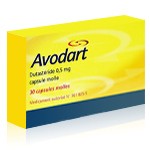
Avodart (Dutasteride 0.5mg) stands as the most potent 5-alpha-reductase inhibitor available — the only medication that simultaneously blocks BOTH Type I and Type II isoenzymes of 5-alpha-reductase, versus finasteride which blocks only Type II. Developed by GlaxoSmithKline and FDA-approved in 2001, Avodart provides deeper hormonal suppression than any other 5-alpha-reductase inhibitor for treating benign prostatic hyperplasia (BPH). The 0.5 mg once-daily soft-gel capsules deliver ~95% suppression of dihydrotestosterone versus ~70% with finasteride — translating to substantially larger prostate volume reduction and superior BPH symptom control in appropriate patients.
Dutasteride works through irreversible competitive inhibition of both Type I and Type II 5-alpha-reductase isoenzymes. Type II is dominant in prostate tissue and hair follicles, while Type I dominates in liver and skin. Blocking both isoenzymes provides ~95% total DHT suppression versus the ~70% achievable with Type II blockade alone. This dramatically decreased DHT exposure produces greater effects on androgen-dependent tissues. In prostate: dutasteride reduces prostate volume 25-27% over 24 months versus 18-20% with finasteride, maximum urine flow improves significantly, and acute urinary retention risk drops 57% similar to finasteride but at deeper hormonal suppression. Off-label hair loss applications benefit from stronger DHT reduction in resistant androgenetic alopecia.
Avodart serves the primary FDA-approved indication of symptomatic benign prostatic hyperplasia — particularly beneficial in men with enlarged prostates above 40 mL requiring maximum volume reduction. The medication treats moderate to severe BPH symptoms including weak urinary stream, urinary hesitancy, nocturia, incomplete bladder emptying, and urinary frequency. Widely used as combination therapy with alpha-blockers (particularly tamsulosin — sold combined as Duodart) for synergistic BPH control. Off-label uses include refractory androgenetic alopecia where finasteride response is inadequate, and reducing acute urinary retention and surgery need in high-risk BPH patients.
Avodart offers convenient once-daily oral dosing taken at any consistent time with or without food. The medication has an extraordinarily long 5-week half-life providing sustained pharmacological effect and stable serum levels. Steady-state achieved after 3-6 months of daily dosing. Maximum BPH benefits develop over 6-12 months with continued improvement through 24 months. Generic dutasteride from quality manufacturers provides identical therapeutic outcomes to brand Avodart at substantially lower cost.
Free prescription
Discrete packaging
Have questions?
Quality Assurance

- Enlarged Prostate: Non-cancerous prostate enlargement responding to dual 5-alpha-reductase inhibition;
- Prostate Enlargement: Progressive prostate growth from DHT stimulation responsive to potent 5-AR inhibition;
- Symptomatic BPH: BPH with bothersome urinary symptoms benefiting from volume-reducing dutasteride therapy;
- Weak Urinary Stream: Decreased force of urination from prostate obstruction improving as prostate shrinks;
- Urinary Hesitancy: Difficulty initiating urination from BPH-related urethral compression resolving with treatment;
- Nocturia: Nighttime urination episodes from BPH improving as prostate volume decreases;
- Incomplete Bladder Emptying: Sensation of incomplete emptying from BPH obstruction improving with prostate reduction;
- Urinary Frequency: Frequent urination from BPH-related bladder irritation improving with treatment;
- Urinary Urgency: Sudden urgent need to urinate from BPH-related bladder changes improving with therapy;
- Acute Urinary Retention Prevention: Reducing 57% the risk of complete urinary blockage requiring emergency catheterization;
- Large Prostate Volume: Prostates above 40 mL benefit most from potent dual 5-AR inhibitor volume reduction;
- BPH Surgery Prevention: Reduced need for transurethral prostate resection and other BPH surgeries;
- Alpha Blocker Combination Therapy: Combined with tamsulosin (Duodart) for synergistic rapid plus durable BPH control;
- Refractory Hair Loss: Off-label use for androgenetic alopecia not responding to finasteride monotherapy;
- Advanced Androgenetic Alopecia: Off-label hair loss treatment when Type II inhibition proves insufficient;
- Advanced Male Pattern Baldness: Off-label DHT suppression for hair loss patients requiring stronger response;
- Deep DHT Suppression: 95% DHT reduction versus 70% with finasteride for stronger androgen-dependent effect;
- Dual 5 Alpha Reductase Inhibition: Blocks both Type I and Type II isoenzymes for maximum DHT suppression;
- 5 Alpha Reductase Inhibitor Therapy: Drug class blocking DHT production for BPH and androgen-driven conditions.
- Less Dihydrotestosterone: DHT levels drop approximately 95% versus 70% with finasteride through dual isoenzyme blockade;
- Better Urinary Flow Rate: Maximum urine flow rate increases substantially as prostate volume reduces;
- Less Weak Urinary Stream: Force of urination improves as prostate volume reduces and urethral pressure relieves;
- Less Urinary Hesitancy: Difficulty starting urination from BPH obstruction resolves with consistent treatment;
- Less Nighttime Urination: Frequency of nighttime urination decreases allowing better sleep quality;
- Better Bladder Emptying: Complete bladder emptying restores as prostate obstruction resolves preventing post-void residual;
- Less Urinary Frequency: Daytime urination episodes decrease as bladder irritation from BPH improves;
- Less Urinary Urgency: Sudden urgent urination episodes from BPH-related bladder changes decrease substantially;
- Less Acute Urinary Retention Risk: Risk of complete urinary blockage requiring catheterization drops 57% over 4 years;
- Less BPH Surgery Need: Need for transurethral prostate resection and other BPH surgeries decreases with dutasteride;
- Better Alpha Blocker Synergy: Combination with tamsulosin provides rapid symptom relief plus durable prostate reduction;
- Better Sleep Quality: Restful sleep returns as nighttime bathroom trips from nocturia decrease;
- Better Refractory Hair Loss Response: Advanced androgenetic alopecia not responding to finasteride benefits from deeper DHT suppression;
- Better Long Term BPH Management: Sustained prostate volume control over years of consistent therapy;
- Less BPH Progression Anxiety: Knowing BPH is actively controlled reduces worry about future complications;
- Better BPH Quality of Life: Daily activities no longer disrupted by urinary symptoms allowing normal travel and routines;
- Better Stable Serum Levels: 5-week half-life provides remarkably stable serum concentrations minimizing daily fluctuations;
- Once Daily Convenience: Single daily soft-gel capsule at any consistent time fits any routine without timing restrictions;
- Better Quality of Life: Daily wellbeing improves dramatically as urinary symptoms resolve and BPH complications are prevented.
Generic Avodart (Dutasteride 0.5 mg) Medication guide:
📌 What Avodart Is and the Dutasteride Story
Avodart is a brand name of dutasteride, a dual 5-alpha reductase inhibitor originally developed by GlaxoSmithKline and approved by the US FDA in 2001. The medication is used to treat benign prostatic hyperplasia (BPH) in men with enlarged prostate, and off-label in many countries for male pattern hair loss.
The dutasteride molecule works by blocking both isoforms (type 1 and type 2) of the 5-alpha reductase enzyme, which converts testosterone into the more potent androgen dihydrotestosterone (DHT). By reducing DHT levels by more than 90%, dutasteride shrinks enlarged prostate tissue and slows the hair follicle miniaturization that drives androgenetic alopecia.
✨ What Makes Dutasteride Distinct
- Dual 5-AR enzyme inhibition — blocks both type 1 and type 2 isoforms
- DHT reduction above 90% — compared to about 70% with finasteride
- Half-life of 5 weeks — longest among 5-ARIs; stable blood levels
- Once-daily 0.5 mg capsule — simple dosing schedule
- Prostate volume reduction averaging 25% at two years
Why dutasteride was developed. Finasteride, approved in 1992 for BPH (Proscar) and 1997 for hair loss (Propecia), inhibits only the type 2 isoform of 5-alpha reductase. Researchers at GlaxoSmithKline reasoned that blocking both isoforms would produce more complete DHT suppression and potentially better clinical outcomes. The dutasteride molecule was designed to meet that goal.
Clinical trials confirmed the pharmacologic difference: dutasteride reduces serum DHT by approximately 93-95%, compared to 65-75% with finasteride. Whether this translates into clinically meaningful advantage has been a focus of research since dutasteride launched, with the EPICS trial comparing the two agents head-to-head for BPH outcomes.
📋 Approved Indications and Clinical Uses
- Benign prostatic hyperplasia (BPH) — FDA approved; EMA approved; worldwide standard indication
- Combination therapy with tamsulosin — marketed as Jalyn (Duodart in Europe)
- Male pattern hair loss — approved in South Korea (2009) and Japan (2015); off-label in US and EU
- Prostate surgery prevention — reduces need for TURP and other prostate procedures
- Clinical trials ongoing — prostate cancer prevention, hirsutism, acne (uncommon)
Dutasteride is produced as a soft gelatin capsule containing 0.5 mg of active ingredient in oily solution. The capsule is typically yellow or amber and taken once daily with or without food. Available formulations include brand Avodart from GSK and generic dutasteride from numerous manufacturers worldwide including Indian producers for international markets.
Clinical placement. Avodart is a first-line medical therapy for men with moderate to severe BPH symptoms and enlarged prostate volume (greater than 30-40 mL). Men with smaller prostates may be better served by alpha blockers alone, since the benefit of 5-ARIs scales with prostate size. For hair loss, dutasteride is used in men who have responded inadequately to finasteride or who want stronger DHT suppression.
🏬 GSK Developed Avodart as a BPH Treatment
GlaxoSmithKline (GSK) originated the Avodart brand after discovering dutasteride through its pharmaceutical research program in the 1990s. The medication reached the US market in 2001, offering the first dual 5-alpha reductase inhibitor option for men with benign prostatic hyperplasia.
2001
US FDA approval of Avodart for benign prostatic hyperplasia treatment
2003
European Medicines Agency approval across EU member states
2010
Jalyn (dutasteride + tamsulosin fixed combination) FDA approved
2015
Japan approves dutasteride for male pattern hair loss (0.5 mg)
The ARIA pivotal trials. Three phase III studies known as ARIA3001, ARIA3002, and ARIA3003 enrolled more than 4000 men with moderate to severe BPH symptoms and prostate volume at least 30 mL. Men were randomized to dutasteride 0.5 mg daily or placebo for two years. Results showed:
- Prostate volume reduction of 25.7% at 24 months (placebo: increase of 1.7%)
- AUA symptom score improvement of 4.5 points (placebo: 2.3 points)
- Peak urinary flow rate increase of 2.2 mL/s (placebo: 0.6 mL/s)
- Reduced risk of acute urinary retention by 57%
- Reduced risk of BPH-related surgery by 48%
These outcomes established dutasteride as a disease-modifying medication for BPH, meaning the drug not only improves symptoms but also alters the underlying natural history of the condition by shrinking the gland and preventing complications.
The CombAT breakthrough. In 2008, GSK and partner Boehringer Ingelheim published the CombAT (Combination of Avodart and Tamsulosin) Study, a four-year trial comparing dutasteride alone, tamsulosin alone, and the combination in more than 4800 men. The combination arm showed superior symptom improvement and greater reduction in BPH progression than either monotherapy, launching the fixed combination Jalyn in 2010.
🏫 How Avodart Compares to Earlier 5-ARI Development
- Finasteride (Merck, 1992) — first 5-ARI; type 2 selective; 5 mg for BPH, 1 mg for hair loss
- Dutasteride (GSK, 2001) — dual isoform inhibitor; 0.5 mg for both BPH and hair loss
- No third-generation 5-ARI has reached the market since dutasteride
- Topical finasteride and topical dutasteride are under development for hair loss with reduced systemic absorption
Patent expiration in the United States occurred around 2015, opening the market to generic dutasteride from multiple manufacturers. Indian pharmaceutical producers including Dr Reddy's, Cipla, Sun Pharma, and others manufacture dutasteride capsules for domestic and export markets where generic use is permitted. The active molecule is identical across brand Avodart and quality generic equivalents.
Today, Avodart and generic dutasteride together represent a cornerstone medical therapy for BPH worldwide, with hundreds of millions of prescriptions written since launch and extensive long-term safety data accumulated across more than two decades of clinical use.
🧬 How Dutasteride Blocks 5-Alpha Reductase Enzymes
Dutasteride works by inhibiting the enzyme 5-alpha reductase, which converts testosterone into the more potent androgen dihydrotestosterone (DHT). The mechanism is central to understanding both the therapeutic effects of the medication and its side effect profile.
🧬 The Dutasteride Mechanism in Four Steps
Step 1 — Testosterone circulates. The testes produce testosterone, which travels through the bloodstream to target tissues including prostate, scalp hair follicles, and body hair follicles.
Step 2 — 5-alpha reductase converts testosterone to DHT. In target tissues the enzyme 5-alpha reductase transforms testosterone into dihydrotestosterone, which binds androgen receptors with far greater affinity than testosterone.
Step 3 — Dutasteride blocks both isoforms. The medication binds and inactivates both type 1 and type 2 isoforms of 5-alpha reductase, preventing conversion of testosterone to DHT across all androgen-sensitive tissues.
Step 4 — DHT levels fall by over 90%. With both enzyme isoforms blocked, circulating DHT drops dramatically, reducing androgen stimulation of prostate growth and hair follicle miniaturization.
Two isoforms of the enzyme. Human 5-alpha reductase exists as two distinct enzymes encoded by separate genes:
Why dual inhibition matters. Finasteride selectively blocks type 2 and partially spares type 1, so DHT suppression plateaus around 65-75%. Dutasteride blocks both isoforms with high affinity, pushing DHT suppression above 90%. In tissues that depend on both isoforms (such as scalp hair follicles with mixed type 1 and type 2 expression), the dual approach produces more complete androgen reduction.
💡 Why DHT Is the Target
DHT is 5-10 times more potent than testosterone at androgen receptors in prostate and scalp tissue. In susceptible men, elevated DHT drives:
- Prostate growth — glandular hyperplasia and stromal proliferation
- Hair follicle miniaturization — shortened growth phase, thinner hair strands
- Scalp balding pattern — frontal and vertex thinning in men with genetic sensitivity
- Body hair patterns — some effects on body and beard hair with high DHT
Reducing DHT reverses prostate enlargement partially over 6-12 months and slows or reverses hair follicle miniaturization over 6-24 months.
What dutasteride does not affect. The medication does not reduce testosterone levels — blood testosterone actually rises slightly (10-20%) because less is converted to DHT. Men on dutasteride maintain testosterone-dependent functions including muscle mass, bone density, red blood cell production, and most aspects of libido. Side effects, when they occur, are related to reduced DHT activity rather than low testosterone.
⚖️ Dutasteride vs Finasteride Direct Comparison Analysis
The most common comparison for men considering Avodart is to finasteride (Proscar for BPH, Propecia for hair loss). Both are 5-alpha reductase inhibitors, but they differ in enzyme selectivity, DHT suppression, half-life, and some aspects of the clinical profile.
The EPICS trial head-to-head. The Enlarged Prostate International Comparator Study (EPICS), published in 2011, randomized 1630 men to dutasteride 0.5 mg or finasteride 5 mg for 12 months. Results showed equivalent symptom improvement and prostate volume reduction between the two medications, with no meaningful difference in BPH outcomes. The study is often cited as evidence that for standard BPH treatment, finasteride and dutasteride produce comparable results.
🎯 When Dutasteride May Be Preferred
- Partial response to finasteride — stronger DHT suppression may help
- Hair loss unresponsive to finasteride — dual inhibition addresses type 1 contribution
- Very large prostate volume — some clinicians prefer dutasteride for highest DHT reduction
- Simpler PSA interpretation preferred — both halve PSA, but dutasteride more consistently
- Patient preference after discussion of options
When finasteride may be preferred.
- Shorter washout required — finasteride clears quickly if the man wants to father children or needs PSA reassessment
- Lower side effect concern — some clinicians perceive slightly lower sexual and breast adverse effects (though evidence is mixed)
- Approved for hair loss in the US — prescription support easier for insurance
- Longer clinical experience — nearly a decade head start on dutasteride
- Lower cost in some markets — generic finasteride is widely available at low prices
Practical choice. For most men with BPH, either medication is a reasonable option. For men whose hair loss has stalled on finasteride and who want to try a stronger approach, dutasteride is the natural next step. The side effect profile is similar enough that medication choice typically rests on prescriber preference, prior response history, and specific clinical context rather than large efficacy differences.
💊 Avodart 0.5 mg Standard Daily Dose Explained
Avodart is dosed at 0.5 mg once daily for all approved indications. This single standard dose applies to BPH treatment, combination therapy with tamsulosin, and off-label use for male pattern hair loss. The medication is produced as a soft gelatin capsule containing the drug in oily solution.
💊 Dosing Essentials
- 0.5 mg one capsule daily — same dose for all indications
- Take at approximately the same time each day — morning or evening
- With or without food — absorption is adequate either way
- Swallow whole — do not crush, open, or chew the soft gel capsule
- Avoid skin contact with the liquid contents — dutasteride absorbs through skin
- No dose adjustment needed for renal impairment or mild hepatic impairment
Why only one dose strength. Clinical trials established that 0.5 mg produces maximal DHT suppression achievable with dutasteride. Higher doses do not produce greater benefit because the enzyme inhibition is already near-complete at 0.5 mg. Lower doses have been studied for hair loss (0.1 mg, 0.25 mg) but are not commercially marketed as separate strengths.
Taking the capsule correctly.
Missed dose. If a dose is missed, take it as soon as remembered if within 12 hours of the usual time. If more than 12 hours have passed, skip the missed dose and resume the normal schedule. Do not double up to make up for a missed dose. Because of the long half-life, a single missed dose does not significantly affect DHT suppression.
🚨 Important Handling Warnings
- Women must not handle broken or leaking capsules — dutasteride absorbs through skin and is harmful to a male fetus
- Keep capsules in original container — moisture and heat can degrade the soft gel
- Store below 30 degrees Celsius — away from direct sunlight
- Discard any capsule that has leaked — the oily contents are not meant to touch skin or surfaces
- Wash hands after handling — even an intact capsule as a general precaution
Duration of therapy. Dutasteride is intended for long-term continuous use rather than short courses. BPH symptom improvement develops over 3-6 months and continues to benefit for years of continuous therapy. Hair loss response takes 6-12 months to assess and requires indefinite continuation to maintain the effect. Stopping the medication returns prostate volume and hair loss progression to their natural course over several months.
🕚 Avodart Response Timeline First Six Months
Dutasteride does not produce overnight results. Both BPH symptom improvement and hair loss response unfold over months rather than days, following a predictable timeline that reflects the biology of prostate shrinkage and hair follicle recovery.
⏰ Avodart Response Timeline
Week 1-2 — DHT begins to fall; serum DHT reduction reaches 85-90% by the end of week two. No clinical change yet felt by the patient.
Month 1-3 — subtle prostate changes begin. Some men notice very early symptom improvement; most do not see meaningful change yet. Hair loss may continue to progress at prior rate.
Month 3-6 — BPH symptom scores (AUA-SI) typically improve by 2-4 points. Prostate volume reduction underway but incomplete. Hair shedding may stabilize; new growth not yet visible.
Month 6-12 — meaningful BPH response established. Prostate volume down 15-20%. Urinary flow improved. For hair loss, hair thickening and some regrowth may become visible, especially at vertex.
Month 12-24 — BPH benefit peaks and plateaus. Prostate volume reduction reaches 20-25%. Hair response fully evident; stable results with continued therapy.
Year 2+ — sustained benefit with ongoing use. Dutasteride is a long-term maintenance medication rather than a short course.
Why the slow response? Dutasteride suppresses DHT quickly (within days), but tissue effects take months because the prostate must undergo gradual tissue remodeling and because hair follicles cycle through growth phases that take months to produce visible change.
BPH-specific timeline.
- Nocturia reduction — often first symptom to improve, by month 2-4
- Urinary flow improvement — measurable at month 3-6 on uroflowmetry
- Residual urine reduction — typically month 6+
- Symptom score improvement — AUA-SI drops by 4-5 points at month 12
- Prostate volume shrinkage — 25% reduction at month 24
Hair loss-specific timeline.
- Shedding stabilization — by month 2-4 the hair fall slows
- Hair diameter increase — by month 4-6 remaining hairs thicken
- Visible density gain — typically month 6-12
- Peak response — evaluated at month 12-24
- Early shed phase — some men experience a transient shed in the first 1-3 months as new growth cycles start
💡 Setting Realistic Expectations
Men starting Avodart should plan for:
- No visible change in first month — this is normal
- Partial improvement at month 3-6 — useful but not full
- Full assessment at month 12 — this is when response is judged
- Possible initial shed in hair loss use — transient, often a sign the medication is working
- Long-term commitment — benefit requires continued daily use
Men who discontinue early (before 6 months) often conclude the medication does not work, when in fact they have not given it enough time to produce visible effect. Six months is the minimum reasonable trial; one year is more informative for both BPH and hair loss evaluation.
👨 Avodart for BPH Prostate Volume Reduction
Benign prostatic hyperplasia (BPH) is the primary approved indication for Avodart. BPH affects more than half of men over age 50 and up to 80% of men over 80. The condition involves progressive enlargement of the prostate gland around the urethra, which produces lower urinary tract symptoms (LUTS) that can significantly impair quality of life.
25%
Average prostate volume reduction at 24 months on dutasteride
57%
Reduction in risk of acute urinary retention
48%
Reduction in risk of BPH-related prostate surgery
4-5 pts
Average AUA Symptom Index improvement at 12 months
Who benefits most. Dutasteride works best in men with moderate to severe LUTS and enlarged prostate volume (greater than 30-40 mL on ultrasound). The clinical benefit of 5-ARIs scales with prostate size, so men with small prostates (less than 30 mL) typically derive less benefit and may do better with alpha blockers alone.
Lower urinary tract symptoms addressed.
Disease modification vs symptom treatment. This distinction is important. Alpha blockers (tamsulosin, alfuzosin, silodosin) relax prostate smooth muscle and improve symptoms quickly but do not change prostate size or disease progression. Dutasteride and finasteride shrink the gland and reduce BPH progression, but take months to produce symptom improvement. Many men benefit from combination therapy that addresses both mechanisms.
📊 Prostate Size Thresholds
- Less than 30 mL — small prostate; 5-ARI benefit limited; alpha blocker alone often preferred
- 30-50 mL — moderate enlargement; 5-ARI with or without alpha blocker
- 50-80 mL — significant enlargement; combination therapy often best
- Over 80 mL — large prostate; combination therapy or evaluation for surgery
BPH complication prevention. One of dutasteride's most important long-term benefits is preventing BPH complications:
- Acute urinary retention — sudden inability to urinate requiring catheterization; dutasteride reduces risk by 57%
- Need for BPH-related surgery — TURP, laser enucleation, or open prostatectomy; dutasteride reduces risk by 48%
- Recurrent urinary tract infections — secondary to incomplete bladder emptying
- Bladder stones — secondary to chronic retention
- Renal impairment — in advanced long-standing obstruction
For men with moderate to severe BPH and enlarged prostate, dutasteride is not just symptom relief but genuine disease modification — preserving urinary health over the long term.
💆 Avodart Off-Label Use for Male Pattern Baldness
Although Avodart is FDA-approved only for BPH in the United States and Europe, dutasteride is widely used off-label for androgenetic alopecia (male pattern hair loss). Several countries have granted formal approval for this indication, and clinical evidence supports stronger hair response than finasteride in many men.
2009
South Korea first approves dutasteride 0.5 mg for male pattern hair loss
2015
Japan approves dutasteride under brand Zagallo for AGA treatment
0.5 mg
Standard daily hair loss dose; same as BPH dose
6-12 mo
Time to visible hair response; peak effect at 12-24 months
Why dutasteride for hair loss? Scalp hair follicles express both type 1 and type 2 isoforms of 5-alpha reductase. Finasteride, blocking only type 2, reduces follicular DHT partially. Dutasteride, blocking both isoforms, achieves more complete DHT suppression at the follicle level. For men whose hair loss has not responded fully to finasteride, dutasteride offers a stronger therapeutic lever.
The Olsen dose-ranging study. A pivotal 2006 trial by Olsen and colleagues compared placebo, dutasteride 0.1 mg, 0.5 mg, and 2.5 mg daily against finasteride 5 mg daily for 24 weeks in men with hair loss. Dutasteride 2.5 mg produced the greatest increase in hair count, but 0.5 mg daily was superior to finasteride 5 mg daily and became the standard off-label dose because of the better side-effect-to-benefit profile.
💆 Hair Loss Response Pattern
- Hair shedding slows — within 2-4 months
- Hair diameter increases — remaining hairs become thicker by month 4-6
- Visible density gain — typically month 6-12
- Vertex and mid-scalp respond best — frontal hairline less consistently
- Receded frontal hairline — unlikely to regrow with any medical therapy
- Peak response at 12-24 months — maintained with continued use
Dutasteride versus finasteride for hair loss. Several comparison studies have reported outcomes:
- Greater hair count increase with dutasteride in head-to-head comparisons
- Better response in men with partial finasteride response — switching to dutasteride often improves hair density
- Similar sexual side effect incidence — the two medications have comparable adverse effect profiles
- Longer washout from dutasteride — important consideration for men planning children
Combination approaches for hair loss. Many men combine dutasteride with other hair loss treatments:
- Topical minoxidil 5% — different mechanism; often combined for additive benefit
- Low-level laser therapy (LLLT) — adjunctive at-home treatment
- Platelet-rich plasma (PRP) — dermatologic office procedure
- Hair transplantation — dutasteride helps protect transplanted and native hair
- Microneedling — may enhance topical minoxidil absorption
📋 Starting Dutasteride for Hair Loss
- Confirm androgenetic alopecia diagnosis — rule out other causes
- Discuss off-label status — approved for BPH, used off-label for hair loss in most countries
- Review side effect profile — sexual, breast, mood considerations
- Baseline photos — essential for later assessment of response
- 12-month trial — before judging response
- Not for women of reproductive age — or any pregnant women (teratogenic)
- Not for men planning to father children within 6 months
For men whose hair loss is a significant personal concern and who have not fully responded to finasteride or who want to start with the strongest medical approach, dutasteride is a reasonable choice. The combination of dutasteride plus topical minoxidil has become a standard regimen for serious hair loss treatment in many hair restoration practices worldwide.
⏳ Dutasteride Half-Life Five Weeks and Clinical Impact
Dutasteride has an unusually long plasma half-life of approximately 5 weeks, substantially longer than finasteride's 6-8 hours. This pharmacokinetic difference has several practical implications for men taking Avodart and for prescribers managing therapy around other medical events.
⏳ Half-Life Comparison
- Dutasteride — approximately 5 weeks (35 days)
- Finasteride — 6-8 hours
- Steady state with dutasteride — reached at about 6 months of daily dosing
- Elimination to below detectable — 4-6 months after last dose
- Clinical effect persists — DHT suppression continues for weeks after stopping
Why dutasteride has such a long half-life. The molecule binds 5-alpha reductase irreversibly and distributes extensively into tissue compartments. It is cleared slowly by hepatic metabolism. The long half-life means a missed dose does not significantly reduce DHT suppression — by the time one half-life has passed, the next scheduled dose has long since been taken.
Clinical implications of the long half-life.
Steady state and dose onset. After starting dutasteride, serum DHT falls rapidly in the first 1-2 weeks and reaches near-maximal suppression. However, serum dutasteride concentration continues to rise for 3-6 months before reaching steady state. For practical purposes, DHT suppression is adequate from early in therapy, but the full accumulation profile is only in place after half a year.
💡 Why This Matters Practically
- Missed a day of pills? No urgent action needed; take the next scheduled dose
- Going on vacation? Even a week off dutasteride barely affects therapy
- Had surgery and skipped doses? Resume when you can; no catch-up needed
- Need to stop before fathering a child? Allow 6 months before conception attempt
- Planning to donate blood? Wait 6 months after your last dose
- Thinking about PSA testing? Dutasteride affects PSA for months after stopping
The washout challenge. The long half-life is a double-edged sword. The forgiveness around missed doses is convenient. But if side effects develop or the man needs to stop the medication for medical reasons, the effect does not wear off quickly. Men should understand this before starting therapy, because dutasteride is less "trial-and-stop" friendly than medications with shorter half-lives.
Not reversible like short-acting medications. Finasteride can be stopped and most effects reverse within weeks. Dutasteride cannot be reversed as quickly. This is relevant to sexual side effect concerns: men who experience sexual dysfunction on dutasteride may need to wait several months after stopping for the effect to clear, compared to a few weeks with finasteride.
📊 Avodart CombAT Study Combination With Tamsulosin
The CombAT (Combination of Avodart and Tamsulosin) Study is one of the most influential BPH clinical trials in modern urology. Published in 2008-2010 with four-year follow-up data, CombAT established combination therapy with dutasteride plus the alpha blocker tamsulosin as a superior approach for men with moderate to severe BPH and enlarged prostate.
📊 CombAT Study Design
Population: 4844 men aged 50 or older with moderate-to-severe BPH symptoms and prostate volume at least 30 mL and PSA 1.5-10 ng/mL
Treatment arms: dutasteride 0.5 mg daily, tamsulosin 0.4 mg daily, or both in combination
Duration: 4 years of treatment with regular assessments
Primary endpoints: time to BPH clinical progression, symptom score, prostate surgery, acute urinary retention
Key findings. At four years:
- Combination therapy was superior to dutasteride alone for symptom improvement through the first 2 years
- Combination therapy was superior to tamsulosin alone for reducing BPH progression throughout the full 4 years
- Combination therapy reduced the risk of clinical progression by 44% vs tamsulosin and 31% vs dutasteride
- Combination therapy reduced the risk of acute urinary retention or surgery by 65.8% vs tamsulosin
- By year 4, dutasteride alone matched or exceeded the symptom improvement of tamsulosin alone, showing the long-term disease-modifying effect of 5-ARI therapy
🎯 What CombAT Changed
- Established combination therapy as a first-line option for men with LUTS and enlarged prostate
- Led to the fixed combination Jalyn (dutasteride 0.5 mg + tamsulosin 0.4 mg) marketing in 2010
- Shaped AUA, EAU, and NICE guidelines for BPH management
- Confirmed long-term disease-modifying effect of 5-ARI therapy
- Supported the cost-effectiveness of 5-ARI use in men with enlarged prostate despite higher drug cost than alpha blockers alone
Who benefits from combination therapy. Based on CombAT, the ideal candidates for combination dutasteride plus alpha blocker are:
- Men with prostate volume at least 30-40 mL
- Men with moderate to severe LUTS (AUA-SI score 8+)
- Men with elevated PSA (greater than 1.5 ng/mL) indicating larger prostate
- Men wanting both quick symptom relief and long-term progression reduction
- Men who have already failed alpha blocker monotherapy
Alpha blocker options. Although CombAT used tamsulosin, other alpha blockers work equivalently in combination with dutasteride:
- Tamsulosin 0.4 mg — most studied; uroselective; preferred option for combination
- Silodosin 8 mg — highly uroselective; less blood pressure effect
- Alfuzosin 10 mg — good alternative
- Doxazosin 4-8 mg — broader blood pressure effect; less preferred in combination
- Terazosin 5-10 mg — older agent; less preferred
💊 Jalyn Fixed Combination
Jalyn combines dutasteride 0.5 mg and tamsulosin 0.4 mg in a single capsule for once-daily dosing. Advantages:
- One pill daily instead of two
- Simplified adherence
- Insurance coverage often favorable for the combined product
- Same clinical effect as taking the two medications separately
Not every man needs combination therapy. For men with smaller prostates or primarily storage symptoms, monotherapy with either agent is appropriate.
CombAT remains the gold-standard reference for combination therapy in BPH and shapes clinical decisions for men with enlarged prostate seeking medical rather than surgical treatment.
🔽 Avodart Reduces PSA Impacts Prostate Cancer Screening
Dutasteride reduces serum prostate-specific antigen (PSA) levels by approximately 50% after 6-12 months of therapy. This effect is predictable and reversible, but it complicates PSA interpretation for prostate cancer screening. Both the man and his doctor must adjust PSA interpretation to avoid missing a cancer signal masked by the medication.
🔽 Why Dutasteride Lowers PSA
- PSA is produced primarily by prostate epithelial cells
- Dutasteride shrinks the prostate by 25% at 2 years
- Smaller gland produces less PSA proportionally
- DHT reduction also directly reduces PSA gene expression
- Net effect: PSA drops by approximately 50% at 6-12 months and stabilizes
Clinical adjustment. After 6+ months of dutasteride therapy, measured PSA should be doubled to approximate what the PSA would be without the medication. This "corrected" value is used for prostate cancer screening decisions.
Rising PSA on dutasteride is a warning sign. Perhaps more important than absolute PSA value is the trajectory. Once a man is on steady-state dutasteride, his PSA should stay stable or decline. If PSA begins to rise, this suggests possible underlying prostate cancer that is producing enough PSA to overcome the medication's suppressive effect. Any sustained PSA rise on dutasteride warrants urologic evaluation.
📋 PSA Monitoring Plan on Dutasteride
- Baseline PSA before starting dutasteride — critical reference point
- Repeat PSA at 3-6 months after starting therapy
- Establish new baseline PSA at 6-12 months once dutasteride effect is stable
- Annual or biannual PSA going forward depending on risk
- Double the measured value for cancer screening thresholds
- Investigate any rise above the new baseline promptly
- Hold dutasteride briefly if PSA is being used for complex screening decisions (though 6 months off is needed for full washout)
Free PSA and PSA kinetics. Beyond total PSA, other tools help interpret cancer risk on dutasteride:
- Free PSA ratio — dutasteride does not change the ratio much; a low free PSA ratio (less than 25%) still raises cancer suspicion
- PSA velocity — the rate of rise over time; useful on dutasteride if PSA is rising
- PSA density — PSA divided by prostate volume; adjusts for gland size
- MRI of the prostate — increasingly used for men with suspicious PSA trajectory on dutasteride
Discussion with your urologist is essential. Any man starting dutasteride should discuss PSA monitoring strategy with his urologist before beginning therapy. The medication is safe and effective, but its impact on PSA requires careful interpretation to maintain reliable cancer screening throughout treatment.
🤰 Pregnancy Warning Women Must Not Handle Avodart
Dutasteride is a pregnancy category X medication that can cause abnormal development of male fetal genitalia. Pregnant women and women of reproductive age must not take dutasteride, must not handle broken or leaking capsules, and should avoid any exposure to the active ingredient.
🤰 Critical Pregnancy Warning
A pregnant woman exposed to dutasteride could have a male fetus with incomplete masculinization, including abnormalities of the external genitalia. The risk is highest in the first trimester.
Why dutasteride is dangerous in pregnancy. The 5-alpha reductase enzyme is critical for normal male fetal development. During the first trimester, the type 2 isoform of 5-alpha reductase converts testosterone to DHT in the developing male fetus, driving the formation of the penis, scrotum, and prostate. Blocking this enzyme during that window causes incomplete masculinization — the same effect seen in boys born with hereditary 5-alpha reductase deficiency.
🚫 Handling Rules for Dutasteride
- Women who are or may become pregnant must not handle broken, leaking, or crushed capsules
- Dutasteride absorbs through skin from an open or leaking capsule
- Intact capsules are low risk but women should still avoid routine handling as a precaution
- Children should not handle the medication
- Store in a secure place out of reach of family members
- Discard any capsule that has leaked with care to avoid skin contact
- Wash exposed skin immediately with soap and water if accidental exposure occurs
Semen transfer concern. Dutasteride is detectable in the semen of men taking the medication. For men planning to father a child with a female partner:
- Discontinue dutasteride at least 6 months before conception attempt
- The 6-month washout allows complete elimination of the drug from body tissues and semen
- Use condoms during the washout period if sexual activity continues while trying to conceive is on hold
- Men whose female partners are already pregnant may want to consider stopping dutasteride, although semen levels transferred during intercourse are very low and theoretical risk is small
Finasteride vs dutasteride for fertility planning. Finasteride has a much shorter half-life (hours vs weeks), so washout before conception attempt is only 2-4 weeks compared to 6 months for dutasteride. Men who plan to have children in the next year may prefer finasteride for this reason, with the option to switch to dutasteride later.
🏥 If Accidental Exposure Occurs
- Woman handles broken capsule: wash skin thoroughly; notify physician if pregnant
- Capsule ingested by child: poison control call; usually not toxic in single accidental dose but evaluate
- Pregnant partner exposed to semen: very low risk at normal exposure levels; consult obstetrician for reassurance
- Woman planning pregnancy inadvertently exposed: consult physician; usually no action beyond stopping exposure
Dutasteride and women. The medication is not approved for women for any indication. Some clinicians use low-dose finasteride off-label for women with androgenetic alopecia (female pattern hair loss), but dutasteride is almost never used in women because of the long half-life and higher pregnancy risk. Women who cannot have children (post-menopausal, hysterectomy) might theoretically use dutasteride, but there is minimal clinical evidence to support this and it is rarely prescribed.
The pregnancy risk is the most important safety concern with dutasteride for men whose households include women of reproductive age. Simple precautions (keep capsules in container, do not break open, store securely) make the risk very manageable in practice.
🩸 Blood Donation Restrictions During Avodart Treatment
Men taking Avodart cannot donate blood while on therapy and for a 6-month washout period after stopping the medication. This restriction exists to prevent accidental exposure of pregnant women who might receive the donated blood, since dutasteride residues could theoretically transfer and harm a male fetus.
🩸 Blood Donation Rule
Do not donate blood while taking Avodart or within 6 months of your last dose. This is a hard rule applied by blood collection agencies worldwide (American Red Cross, European blood services, international Red Cross standards).
Why the 6-month wait. Dutasteride has a plasma half-life of about 5 weeks, meaning the drug takes months to clear fully. Six months after the last dose, serum levels are near-undetectable and residual drug in red blood cells (donated blood component) is minimal. The 6-month rule provides a safety buffer that virtually eliminates any theoretical risk to a transfusion recipient.
Comparison to finasteride. Finasteride donation deferral is only 1 month because of its much shorter half-life. Men who want to continue donating blood frequently may prefer finasteride for this reason, especially if BPH or hair loss response is adequate with the shorter-acting 5-ARI.
Honesty with blood donation screening. Blood donation screening questionnaires specifically ask about recent medications. Men on dutasteride who omit this information put potential pregnant recipients at risk. Honest disclosure is essential for safe blood supply.
🩸 If You Plan to Donate Blood
- Men who already donate regularly should discuss with the prescriber whether finasteride is a reasonable alternative
- Men who rarely donate can usually accept the dutasteride deferral without issue
- Autologous blood donation for one's own future surgery is permitted (does not affect others)
- Platelet or plasma donation deferral rules may differ; check with the specific blood service
- Rare blood types — discuss carefully with the blood service and prescriber for the best approach
Other donation types.
- Sperm donation — typically deferred during and 6 months after dutasteride use
- Living kidney donation — may need to be off dutasteride; discuss with transplant team
- Living liver donation — similar discussion needed with transplant team
- Bone marrow donation — may be deferred during dutasteride use
The blood donation restriction is not a safety concern for the man himself — it is purely a public health measure to protect pregnant women who might receive donated blood products. For most men, this is a minor inconvenience; for frequent donors or men with uncommon blood types, it is a factor to weigh when choosing between dutasteride and finasteride.
🧠 Avodart Does Not Treat Prostate Cancer Risk
Avodart does not treat prostate cancer and should not be used as a cancer therapy. The medication treats benign prostatic hyperplasia — non-cancerous enlargement of the prostate gland — which is a different condition from prostate cancer, even though both involve the prostate and can produce overlapping symptoms.
🧬 BPH vs Prostate Cancer
Why patients get confused. Both BPH and prostate cancer can cause urinary symptoms (frequency, urgency, hesitancy, weak stream) and can both raise PSA levels. A man with urinary symptoms may ask whether the medication he is taking also treats or prevents cancer. The answer is nuanced:
- Dutasteride does not treat established prostate cancer
- Dutasteride reduces the risk of being diagnosed with low-grade prostate cancer in screening studies (REDUCE trial)
- Dutasteride does not reduce overall prostate cancer mortality in randomized data
- Dutasteride may slightly increase the detection of high-grade cancers (see Section 32)
- A man with prostate cancer still needs appropriate cancer therapy — BPH medication is not a substitute
Prostate cancer diagnosis on dutasteride. If a man is diagnosed with prostate cancer while on Avodart, decisions about continuing or stopping the medication depend on the cancer treatment plan:
🏥 If Prostate Cancer Is Diagnosed on Dutasteride
- Active surveillance for low-risk cancer — dutasteride may be continued, though opinions vary
- Radical prostatectomy — dutasteride typically stopped before surgery; no clear benefit of continuing
- Radiation therapy — often continued for BPH symptom benefit during and after radiation
- Hormone therapy — dutasteride may be discontinued as hormone therapy covers 5-ARI effect
- Advanced metastatic cancer — dutasteride is not part of cancer therapy; alpha blockers may be used for symptom relief
The REDUCE trial findings. The 2010 REDUCE trial (Reduction by Dutasteride of Prostate Cancer Events) randomized more than 8000 men at risk for prostate cancer to dutasteride vs placebo for 4 years. Key findings:
- Overall cancer detection reduced by 23% with dutasteride
- Low-grade cancer (Gleason 6) — significantly reduced
- High-grade cancer (Gleason 8-10) — a slight numerical increase in dutasteride arm (not statistically significant but noted by FDA)
- Cancer mortality — no clear effect
- FDA did not approve dutasteride for prostate cancer prevention based on these mixed findings
Clinical bottom line. If you have BPH and want BPH treatment, dutasteride works well for that purpose. If you have or suspect prostate cancer, you need appropriate oncology evaluation and treatment. Dutasteride is not an oncology drug and is not a cancer prevention strategy that justifies starting the medication for men without BPH symptoms or hair loss concerns.
Men on dutasteride still need standard prostate cancer screening (PSA monitoring, digital rectal examination, discussion of biopsy if indicated) according to age-appropriate guidelines, with the PSA adjustment for dutasteride effect described in Section 11.
🔄 Avodart Combination Therapy With Alpha Blockers
Combination therapy with Avodart plus an alpha blocker (tamsulosin, silodosin, alfuzosin, doxazosin) is the standard approach for men with moderate to severe BPH and enlarged prostate. The two medication classes work through completely different mechanisms and complement each other with minimal overlap in side effects.
🔄 How the Two Mechanisms Complement
Who benefits most from combination therapy. The CombAT study and subsequent analyses identified clear predictors of combination benefit:
- Prostate volume at least 30-40 mL
- Moderate to severe LUTS (AUA-SI score 8 or higher)
- PSA at least 1.5 ng/mL (indicating larger prostate)
- Previous poor response to alpha blocker alone
- Risk factors for BPH progression — age over 65, large prostate, high symptom score
Alpha blocker selection for combination.
Starting combination therapy. Typically alpha blocker is started first, with dutasteride added within weeks to months. Alpha blocker provides quicker symptom relief while dutasteride takes effect over 3-6 months. After 12-18 months of combination therapy, some clinicians consider stopping the alpha blocker in men who have had excellent response, because by then the prostate has shrunk significantly and dutasteride alone may suffice.
🔄 De-Escalation Strategy
The SMART trial showed that alpha blocker can be withdrawn after 6-9 months of combination therapy in some men who have had good response. The approach:
- Start combination for first 6-12 months
- Assess symptom score, flow, prostate volume
- If excellent response and prostate has shrunk, consider stopping alpha blocker
- Monitor symptoms over the following 3 months
- Resume alpha blocker if symptoms worsen
For men whose symptoms are not fully controlled on combination, both medications are usually continued long-term.
Jalyn fixed combination. The fixed combination of dutasteride 0.5 mg plus tamsulosin 0.4 mg (Jalyn in US, Duodart in Europe) simplifies dosing to one capsule daily. Clinically equivalent to taking the two medications separately but with better adherence due to the single pill.
Combination therapy is the evidence-based standard for men with moderate-to-severe BPH and enlarged prostate, offering both immediate symptom relief and long-term disease modification.
👩⚕️ Who Should Start Avodart Patient Selection
Avodart is not for every man with urinary symptoms. Patient selection matters because dutasteride works best in specific clinical situations and because its side effect profile deserves consideration against expected benefits.
✅ Good Candidates for Avodart
- Moderate to severe BPH symptoms
- Prostate volume at least 30-40 mL
- Age 50 or older
- Partial response to alpha blocker alone
- Risk factors for BPH progression
- Hair loss not fully responsive to finasteride
- Willing to commit to long-term therapy
⚠️ Consider Alternatives First
- Small prostate volume (less than 30 mL)
- Primarily storage symptoms (frequency, urgency)
- Men planning children in the next year
- Men who donate blood frequently
- Younger men (under 45) with mild symptoms
- Hair loss responding well to finasteride
❌ Should Not Use Avodart
- Women of any age
- Children or adolescents
- Known hypersensitivity to dutasteride
- Severe hepatic impairment
- Household with pregnant woman (handling precautions needed)
- Partner currently trying to conceive
Baseline evaluation before starting.
- AUA Symptom Index — standardized BPH symptom questionnaire
- Digital rectal examination — assesses prostate size, consistency, nodules
- Prostate volume measurement — transrectal ultrasound or MRI (optimal); physical exam estimate (acceptable)
- PSA — baseline for cancer screening and progression monitoring
- Urinalysis — rule out urinary tract infection or hematuria
- Serum creatinine — kidney function (chronic obstruction can affect kidneys)
- Uroflowmetry — peak flow rate as objective measure
- Post-void residual — ultrasound measure of bladder emptying
Hair loss-specific evaluation. For men considering dutasteride for male pattern hair loss:
- Clinical diagnosis — androgenetic alopecia pattern confirmed by dermatologist
- Rule out other causes — thyroid dysfunction, iron deficiency, telogen effluvium
- Baseline photos — standardized vertex, frontal, lateral views
- Discussion of off-label use — in countries where dutasteride is not approved for AGA
- Review of alternatives — finasteride, topical minoxidil, PRP, transplantation
🎯 Decision Framework
- Confirm appropriate indication — BPH with enlarged prostate, or AGA
- Review alternatives — alpha blocker alone, finasteride, non-medical options
- Discuss long-term commitment — benefit requires continued use
- Review side effect profile — sexual, breast, mood considerations
- Pregnancy risk discussion — household handling, blood donation deferral
- Baseline evaluation — PSA, prostate exam, photos for hair
- Shared decision — patient and prescriber agree on plan
- Follow-up schedule — 3 months, 6 months, 12 months, then annually
Age considerations. Dutasteride is safe in men over 50, which captures the vast majority of BPH patients. In younger men (40-50), the medication can be used for hair loss or early BPH, with careful discussion of side effects over the lifetime of continuous use. In men over 75, consider overall life expectancy and whether the 3-6 month delay to benefit is worthwhile versus simpler alpha blocker monotherapy.
The right patient for Avodart is a man with moderate-to-severe BPH symptoms and an enlarged prostate who understands the long-term nature of therapy and accepts the risk of possible sexual or breast side effects. Many men meet these criteria and benefit significantly from dutasteride over years of use.
💔 Avodart Sexual Side Effects Overview
Sexual side effects are the most clinically important adverse effect category with Avodart because they affect quality of life, treatment adherence, and partner relationships. The three main sexual side effects are decreased libido, erectile dysfunction, and ejaculation disorders, each occurring at low but measurable frequency.
Why DHT reduction affects sexual function. Although testosterone is the primary driver of male libido and erectile function, DHT contributes through several mechanisms:
- Androgen receptor binding — DHT binds receptors with higher affinity than testosterone
- Local tissue effects — DHT in penile tissue supports erection physiology
- Central nervous system effects — some neurosteroid activity
- Nitric oxide pathway — DHT supports endothelial function in penile vasculature
Suppressing DHT by 90%+ removes these contributions, and in a minority of men this produces measurable sexual effects. For most men, testosterone's effects fully compensate and sexual function is unchanged. For some, the DHT loss produces mild to moderate sexual effects.
💔 Managing Sexual Side Effects
- Wait 3-6 months — some side effects diminish with continued use
- Rule out other causes — stress, depression, relationship factors, other medications
- Add PDE5 inhibitor — sildenafil, tadalafil, avanafil often restore erection quality
- Check testosterone — coexisting hypogonadism makes everything worse
- Dose reduction — not standard but occasionally tried (0.5 mg every other day)
- Switch to finasteride — some men tolerate finasteride better
- Discontinue if side effects are intolerable — discuss with prescriber
Timing of sexual side effects. Most sexual side effects develop early in therapy (within the first 3-6 months) and are often reported at the first follow-up visit. New-onset sexual dysfunction after years of stable dutasteride therapy is less likely to be medication-related and more likely to reflect other factors (aging, new medical conditions, new medications).
Discontinuation and recovery. If dutasteride is stopped, sexual side effects usually resolve over weeks to months. The long half-life (5 weeks) means recovery is slower than with finasteride but typically complete. A minority of men report persistent symptoms (see Section 22 on post-dutasteride syndrome).
Discussing with your partner. Open communication about any sexual effects supports both the man and the relationship. Many men find that discussing the medication's effects with their partner reduces anxiety and allows the couple to adapt together. For men with persistent sexual concerns, sex therapy or couples counseling can complement medical management.
Sexual side effects affect a minority of men and are usually manageable. For most men taking Avodart, sexual function remains comparable to before starting therapy, and the BPH or hair benefits outweigh any sexual effects experienced. The next section covers libido and erectile effects in more detail.
📉 Reduced Libido and Erectile Dysfunction on Dutasteride
Reduced libido (sexual desire) and erectile dysfunction are the two most reported sexual effects of dutasteride. Both occur at frequencies similar to finasteride and both can usually be managed with specific interventions rather than requiring dutasteride discontinuation.
📉 Reduced Libido on Dutasteride
What men report:
- Less frequent spontaneous sexual thoughts
- Reduced interest in sexual activity
- Less motivation to initiate intimacy
- Decreased response to erotic stimuli
Severity: usually mild to moderate; truly severe libido loss is uncommon with dutasteride. Many men experience subtle reduction that is noticeable but not disabling.
Factors that make libido reduction more likely.
- Preexisting low testosterone — already compromised baseline
- Depression or anxiety — mood conditions affect libido independently
- Relationship distress — interpersonal factors magnify medication effects
- Other medications affecting libido — SSRIs, opioids, beta blockers
- Alcohol or chronic substance use
- Fatigue or sleep problems
- Chronic illness — especially cardiovascular, metabolic
Managing libido changes.
💡 Libido Management Approach
- Give it 3-6 months — initial libido changes often lessen
- Check testosterone — morning blood test; treat if truly low
- Address mood — depression and anxiety treatment helps
- Review other medications — adjust ones that reduce libido
- Lifestyle optimization — sleep, exercise, stress management
- Partner communication — reduces anxiety and allows adaptation
- Consider stopping — if libido loss is significant and persistent after 6 months
Erectile dysfunction on dutasteride. Erection changes range from mild (occasional softness) to moderate (reduced quality during activity) to severe (inability to achieve functional erection). The incidence attributable to dutasteride is 2-3% above placebo rate, meaning most men do not develop ED on the medication.
📋 ED Management on Dutasteride
- PDE5 inhibitors work well — sildenafil, tadalafil, avanafil restore erection quality
- Daily low-dose tadalafil — also treats BPH symptoms (approved indication); double benefit
- Address vascular factors — blood pressure, diabetes, lipids, smoking
- Cardiovascular risk assessment — new ED can signal vascular disease
- Rule out testosterone deficiency — low T amplifies all sexual effects
- Vacuum erection device — mechanical option if PDE5 inhibitors insufficient
- Consider stopping dutasteride — if ED is severe and medication is the clear cause
Daily tadalafil is a particularly useful combination. For men on Avodart who develop erectile dysfunction, daily low-dose tadalafil (5 mg) is a dual-purpose therapy:
- Treats erectile dysfunction (approved indication)
- Treats BPH symptoms (approved indication at this dose)
- Can be combined with dutasteride for BPH + ED management
- Does not have significant interaction with dutasteride
When discontinuation is reasonable. If sexual side effects significantly reduce quality of life after 6+ months despite management attempts, discontinuing dutasteride is appropriate. Options include:
- Switch to finasteride — some men tolerate it better; shorter half-life allows faster reassessment
- Alpha blocker monotherapy — for BPH, if dutasteride is causing more side effects than benefit
- Non-medical approaches — for hair loss, consider topical minoxidil, PRP, transplantation
- Surgical BPH treatment — TURP, laser, or other procedure if medical therapy is intolerable
Sexual side effects are a real concern but affect a minority of men. For the majority, dutasteride is well tolerated sexually and provides substantial BPH or hair loss benefit.
🩹 Side Effects From Avodart Therapy Overview
Beyond sexual effects, Avodart has a broader side effect profile that includes breast changes, mood effects, and rare systemic reactions. Most men tolerate the medication well, but understanding the full spectrum of possible effects helps with informed decisions and prompt recognition if adverse effects develop.
Overall tolerability. In the ARIA pivotal trials, approximately 8-10% of men on dutasteride reported any sexual, breast, or related side effect, compared to 4-5% on placebo. The net attributable adverse effect rate is 4-5%, meaning most men experience no identifiable side effects beyond what might occur spontaneously.
💡 When Side Effects Develop
- Early effects (first 3-6 months) — sexual effects most common in this window
- Breast effects (3-12 months) — gynecomastia develops gradually
- Mood effects (anytime) — watch for depression, anxiety, mood lability
- Later effects (year 1+) — less common; adaptation often occurs
- Discontinuation effects — some side effects may persist for weeks to months after stopping
Managing side effects. General principles:
- Document baseline before starting therapy — sexual function, mood, breast status
- Report new symptoms at follow-up visits
- Distinguish medication effects from other causes (aging, mood, other medications)
- Try targeted management before stopping (PDE5 inhibitor for ED, mood support for depression)
- Dose considerations — dutasteride has only one dose, so adjustment options are limited
- Discontinuation — a reasonable option if side effects outweigh benefits
- Expect slow washout — side effects may persist for months after stopping
Serious adverse events. Though rare, certain adverse events require immediate medical attention:
- Angioedema — swelling of face, lips, tongue, throat; stop and seek emergency care
- Severe allergic reaction — rash, hives, breathing difficulty
- Breast lump — new lump or persistent breast tenderness warrants evaluation to exclude breast cancer
- Severe depression or suicidal thoughts — discuss with physician promptly
- Significant visual changes — rare but reported; evaluate
Most men tolerate dutasteride without significant adverse effects. The following sections cover specific side effects (gynecomastia, mood changes, post-dutasteride syndrome) in more detail.
👕 Gynecomastia Breast Changes on Avodart
Gynecomastia — enlargement of male breast tissue — occurs in approximately 1-3% of men on dutasteride and is one of the more distinctive side effects of 5-alpha reductase inhibitors. The breast change can range from mild tenderness to visible enlargement that is noticeable through clothing.
👕 Why Breast Changes Occur
- Testosterone levels rise slightly on dutasteride (10-20%) because less converts to DHT
- Testosterone can be aromatized to estradiol in peripheral tissues
- Slightly elevated estrogen-to-androgen ratio in some men stimulates breast tissue
- Breast tissue is sensitive to even small hormonal shifts in some individuals
- Age-related sensitivity — older men are more prone to gynecomastia from any cause
Presentations of breast change.
- Breast tenderness — often the first symptom; may precede visible change
- Nipple sensitivity — discomfort with contact or pressure
- Subareolar enlargement — firm tissue beneath the nipple
- Diffuse breast enlargement — more generalized tissue growth
- Unilateral or bilateral — may affect one or both breasts
- Nipple discharge — rare; warrants prompt evaluation
Timeline of gynecomastia development. Breast changes typically develop between 3 and 12 months after starting dutasteride. Early tenderness may be subtle, with visible enlargement developing over months. Established gynecomastia tends to be persistent if left untreated, even if the medication is stopped.
🏥 What to Do If Breast Changes Occur
- Report to physician promptly at first sign of tenderness or change
- Physical examination to assess tissue vs fat enlargement and rule out concerning features
- Rule out breast cancer — especially for unilateral mass, fixed lesion, nipple discharge, or axillary lymphadenopathy
- Consider imaging — ultrasound or mammogram if findings are concerning
- Discuss continuation decision — weighing BPH or hair benefits against breast changes
- Early intervention — stopping within the first 6 months of symptoms gives the best chance of reversal
- Surgical consultation — for established large gynecomastia; subcutaneous mastectomy or liposuction
Reversibility. Gynecomastia from dutasteride may partially reverse after stopping the medication, especially if caught early (within 6 months of onset). Longer-standing gynecomastia often persists because breast tissue fibrosis develops over time and does not reverse with hormonal normalization. For men with persistent cosmetic concern after discontinuation, surgical reduction is an option.
Male breast cancer consideration. Although rare, male breast cancer can develop in men with gynecomastia. Features that raise concern include:
🏥 Warning Signs Requiring Prompt Evaluation
- Unilateral breast mass that is firm, fixed, or irregular
- Nipple retraction or inversion
- Nipple discharge, especially bloody
- Skin changes — dimpling, ulceration, redness
- Axillary lymph node enlargement
- Rapid change in previously stable gynecomastia
These findings require evaluation with examination, imaging, and possible biopsy to exclude breast cancer. 5-ARI-associated gynecomastia is usually bilateral, soft, and symmetric; features that deviate from this pattern warrant workup.
Risk factors for gynecomastia on dutasteride.
- Age over 65
- Obesity (adipose tissue aromatase increases estradiol)
- Concurrent medications that cause gynecomastia (spironolactone, ketoconazole, cimetidine)
- Chronic liver disease
- History of prior gynecomastia
- Low baseline testosterone
For most men, gynecomastia is a rare and manageable side effect of dutasteride. The possibility should be mentioned at the start of therapy so that men know to report any breast changes promptly for the best outcomes.
🧠 Mood Changes and Depression Risk With Avodart
Mood changes including depression and anxiety have been reported with 5-alpha reductase inhibitors, though the frequency is low and the causal relationship is debated. The FDA added a mood effects warning to finasteride and dutasteride labels after post-marketing reports accumulated, and prescribers now routinely discuss this possibility at the start of therapy.
🧠 Mood Effects Reported
- Depression — new onset or worsening of pre-existing mood
- Anxiety — new or intensified anxiety symptoms
- Suicidal ideation — rare but reported in post-marketing data
- Irritability — mood lability
- Cognitive changes — occasional reports of "brain fog" or difficulty concentrating
- Fatigue — which can overlap with depression symptoms
Biological plausibility. DHT and its metabolites (particularly 3-alpha-androstanediol) are neurosteroids that modulate GABA-A receptor activity in the brain. These neurosteroids have anxiolytic and mood-stabilizing effects in animal studies. Suppressing DHT by 90%+ reduces neurosteroid production, which in theory could affect mood. Clinical data supporting this mechanism in humans is suggestive but not definitive.
Clinical trial data vs post-marketing reports. Interestingly, randomized trials have not shown dramatic mood effects with dutasteride compared to placebo. Reports of significant mood changes have come primarily from post-marketing surveillance and case reports. This discrepancy means:
- Mood effects are uncommon in the average patient
- A subset of susceptible men may experience significant mood effects
- Individual sensitivity varies substantially
- Pre-existing mood vulnerability may be a risk factor
🚨 When Mood Changes Warrant Action
- New depressive symptoms after starting dutasteride
- Significant anxiety that is new or worsened
- Loss of interest in usual activities
- Persistent fatigue or low energy
- Sleep disturbance not attributable to BPH symptoms
- Suicidal thoughts or self-harm ideation — this is urgent; seek immediate help
- Changes noticed by partner or family — sometimes others notice before the patient does
Baseline screening. Before starting dutasteride, prescribers increasingly document mood status to establish a baseline:
- Depression screening — PHQ-9 or similar validated tool
- Anxiety screening — GAD-7 or similar
- History of mood disorder — prior depression, anxiety, bipolar disorder
- Current psychiatric medications
- Family history of mood disorders
- Pre-existing suicidal ideation — this is a contraindication to many medications; discuss with mental health specialist
Managing mood changes on dutasteride.
💡 Mood Management Plan
- Report any mood changes promptly at follow-up visits
- Rule out other causes — sleep problems, other medications, chronic illness
- Mental health evaluation — if symptoms meet criteria for depression or anxiety
- Supportive measures — exercise, sleep hygiene, social connection
- Antidepressant therapy — if indicated; SSRIs or SNRIs; note some antidepressants also affect libido
- Discontinuation consideration — if mood changes are significant and medication is likely cause
- Washout monitoring — mood may take weeks to months to normalize after stopping dutasteride
Suicidal ideation requires immediate attention. Any new suicidal thoughts while on dutasteride warrant urgent mental health evaluation and typically discontinuation of the medication. Contact emergency services, mental health hotlines, or go to an emergency department if there is any safety concern.
Discontinuation and mood recovery. Mood effects usually improve after stopping dutasteride, but recovery may take weeks to months because of the long half-life. Some men report persistent mood changes beyond the washout period (see Section 22 on post-dutasteride syndrome).
For most men, mood is unchanged on Avodart. For the minority who experience mood effects, early recognition and prompt action — from supportive measures to medication adjustment or discontinuation — prevent prolonged distress and preserve quality of life.
💥 Post-Dutasteride Syndrome Persistent Symptoms Debate
Post-dutasteride syndrome (PDS) and the related post-finasteride syndrome (PFS) describe a reported pattern of persistent sexual, physical, and psychological symptoms that some men report continuing or developing after stopping 5-alpha reductase inhibitors. The syndrome is a subject of ongoing clinical debate, with strong patient advocacy, mixed research findings, and uncertain mechanisms.
💥 Reported Symptoms of PDS/PFS
Sexual symptoms:
- Persistent reduced libido
- Erectile dysfunction continuing after medication clearance
- Reduced ejaculate volume or quality
- Genital numbness or reduced sensation
- Loss of morning erections
Physical symptoms:
- Muscle weakness or loss of mass
- Fatigue
- Changes in fat distribution
- Dry skin
- Reduced body hair growth
Psychological symptoms:
- Depression (sometimes severe)
- Anxiety
- Cognitive difficulties ("brain fog")
- Anhedonia
- Suicidal ideation in severe cases
The scientific controversy. Randomized clinical trials have not clearly established that persistent post-5-ARI syndrome exists as a specific entity. Several factors complicate the research:
- Nocebo effect — expectation of side effects can produce real symptoms
- Reporting bias — men experiencing problems are more likely to report; men without problems rarely volunteer this information
- Overlap with other causes — aging, depression, cardiovascular disease, other medications
- Difficulty confirming medication causation — the long dutasteride half-life means attribution is complex
- Limited mechanism research — animal studies suggest possible neurosteroid changes but human data is limited
Patient advocacy perspective. The Post-Finasteride Syndrome Foundation and similar groups argue that PFS/PDS is a real, understudied condition affecting a meaningful minority of men. They advocate for research funding, prescriber awareness, and improved informed consent before starting 5-ARIs.
🏥 How Prescribers Should Approach PDS Risk
- Discuss the possibility of persistent symptoms before starting therapy
- Document baseline sexual, mood, physical status
- Thorough informed consent including this concern
- Monitor during therapy for new or worsening symptoms
- Early discontinuation if significant adverse effects develop
- Take persistent symptoms seriously after stopping; do not dismiss as unrelated
- Multidisciplinary approach for men with persistent symptoms (urology, endocrinology, mental health)
Risk estimation. The frequency of persistent symptoms after stopping 5-ARIs is uncertain. Published estimates range widely from "very rare" to several percent, depending on the definition and study methodology. For men considering dutasteride, the risk of persistent symptoms is low but not zero, and the possibility deserves honest discussion before starting.
Mechanisms being studied. Hypothesized explanations for persistent symptoms include:
- Epigenetic changes — alterations in androgen receptor regulation
- Neurosteroid depletion — brain-active steroids reduced by 5-AR inhibition
- Androgen receptor downregulation — sustained changes in tissue sensitivity
- Immunological changes — some evidence of inflammatory markers
- Peripheral nerve changes — possible contribution to numbness symptoms
Managing persistent symptoms. There is no established treatment protocol for PDS. Approaches tried include:
- Testosterone replacement if low T is documented
- PDE5 inhibitors for persistent erectile dysfunction
- Mental health treatment for mood and anxiety symptoms
- Supportive care and multidisciplinary follow-up
- Research study enrollment for men willing to participate in ongoing investigations
For prospective patients. The possibility of persistent symptoms is one factor among many in the decision to start dutasteride. For men with significant BPH symptoms or hair loss concerns, the potential benefit often justifies the small risk of persistent effects. For men with mild symptoms considering dutasteride for optimization rather than necessity, the decision calculus deserves more careful review. Discussion with the prescriber about personal risk tolerance helps guide the choice.
🧪 Avodart Lab Monitoring PSA Testosterone Liver
Men on Avodart need periodic laboratory monitoring for prostate cancer screening (via PSA), hormonal status (testosterone), and medication safety (liver function). The monitoring schedule is simple but important for safe long-term therapy.
PSA monitoring details.
- Baseline PSA — obtained before the first dose of dutasteride; crucial reference point
- 3-6 month PSA — confirms expected 50% reduction and establishes new on-treatment baseline
- 6-12 month PSA — stable on-treatment value becomes the reference for future comparison
- Annual PSA after stabilization — monitor for any rise
- Double any measured value for cancer screening threshold comparison
- Investigate any rise from on-treatment baseline — even if absolute value is still "normal"
🧪 Testosterone Testing
Dutasteride slightly raises testosterone (10-20%) because less converts to DHT. Routine testosterone testing is not needed for most men on dutasteride, but is useful if:
- Sexual side effects develop and testosterone deficiency is suspected
- Fatigue, mood changes, or loss of muscle mass suggests hypogonadism
- Patient has risk factors for low T (obesity, diabetes, opioid use)
- Comprehensive men's health evaluation is being done
Measure morning (8-10 AM) total testosterone; confirm on second occasion if initially low.
Liver function. Dutasteride is metabolized by the liver via CYP3A4. Hepatic impairment increases serum levels. Routine liver function testing is not required for all men but is recommended if:
- Known liver disease or history of hepatitis
- Alcohol use at levels of hepatic concern
- Concurrent hepatotoxic medications
- New symptoms suggesting liver issue — jaundice, right upper quadrant pain, fatigue
- Severe hepatic impairment is a contraindication
Monitoring for BPH response. Beyond laboratory testing, clinical monitoring is important for BPH management:
- AUA Symptom Index — standardized score at 3, 6, 12 months and annually
- Peak urinary flow rate — uroflowmetry at 6-12 months
- Post-void residual urine — ultrasound measurement
- Prostate volume — transrectal ultrasound at 12-24 months if available
- Digital rectal exam — annually
Monitoring for hair loss response. For dutasteride used for AGA:
- Standardized photographs — vertex, frontal, lateral at 6 and 12 months
- Hair pull test — informal assessment of shedding
- Patient-reported outcomes — satisfaction with hair thickness and density
- Dermatologist evaluation — especially if response is inadequate at 12 months
📋 Standard Follow-up Schedule
- Month 1-2 — phone or brief visit to check tolerability
- Month 3 — office visit; PSA; symptom check; side effect review
- Month 6 — office visit; PSA; symptom score; adherence check
- Month 12 — comprehensive annual review; full assessment
- Annually thereafter — PSA, DRE, symptom score, side effect review
Simple and consistent monitoring supports safe long-term use of Avodart. Most lab values on dutasteride are stable and reassuring; the main value of monitoring is early detection of any PSA rise suggesting cancer or any clinical change requiring further workup.
🔁 Switching From Finasteride to Dutasteride Protocol
Men who have been taking finasteride may consider switching to dutasteride for better BPH response, better hair loss outcome, or because of partial response or progression on finasteride. The switch is straightforward and does not require a washout period.
🔁 Switching Protocol
- Stop finasteride on the chosen switch day
- Start dutasteride 0.5 mg daily on the next day
- No washout period needed — both are 5-ARIs; continuous therapy without gap
- Expect gradual response change — dutasteride reaches steady state over 6 months
- Monitor PSA — already suppressed by finasteride; may decline further on dutasteride
- Watch for new side effects — usually similar to finasteride but individuals vary
Reasons to switch from finasteride.
Reasons to switch from dutasteride to finasteride.
- Planning to father a child — finasteride washout is 2-4 weeks vs 6 months for dutasteride
- Blood donation — shorter deferral with finasteride (1 month vs 6 months)
- Side effect concerns — some men perceive better tolerability on finasteride
- Cost considerations — generic finasteride can be less expensive
- Lower DHT suppression preference — theoretical argument for maintaining some DHT activity
🔄 Switching from Finasteride 5 mg to Dutasteride
For men on finasteride 5 mg daily for BPH who switch to dutasteride 0.5 mg daily:
- Direct one-to-one switch next day
- Dutasteride 0.5 mg replaces finasteride 5 mg completely
- No overlap or taper needed
- Monitor PSA 3-6 months after switch
- Expect additional 10-20% DHT suppression beyond what finasteride achieved
🔄 Switching from Finasteride 1 mg to Dutasteride
For men on finasteride 1 mg daily for hair loss who switch to dutasteride 0.5 mg daily:
- Direct one-to-one switch next day
- Dutasteride is more potent and more complete DHT suppressor
- Hair response may improve over 6-12 months
- Discuss off-label use for hair loss in markets where this applies
- Baseline photos recommended at switch to allow comparison
Managing side effect concerns during switch. If side effects (sexual, breast) were present on finasteride, they may or may not improve on dutasteride. Some men report similar or slightly worse side effects on dutasteride because of its stronger inhibition. Others report similar tolerability. Individual response varies, and the switch is a reasonable trial if finasteride tolerability was marginal.
Switching back to finasteride. If dutasteride does not improve response or is less well tolerated, switching back to finasteride is also simple:
- Stop dutasteride, start finasteride the next day
- No washout required
- Note that dutasteride clears slowly, so DHT suppression continues for weeks
- Finasteride effect establishes over 1-2 weeks
Switching between 5-ARIs is a low-risk clinical decision that can optimize response and tolerability. Honest discussion with the prescriber about reasons for the switch and expected outcomes helps the plan match the man's priorities.
🛑 Discontinuing Avodart What To Expect After Stopping
Men may decide to stop Avodart for various reasons: side effects, planning children, cost, perceived lack of benefit, or achieving desired treatment goals. Understanding what happens after discontinuation helps set expectations about the timing and extent of effect reversal.
⏳ Timeline After Stopping Dutasteride
Weeks 1-4 — serum dutasteride level begins to fall; DHT suppression continues; no clinical change yet.
Months 1-3 — serum dutasteride falls substantially; DHT levels begin to recover; prostate may begin to regrow slowly.
Months 3-6 — dutasteride level approaches undetectable; DHT returns to pre-treatment range; BPH symptoms may worsen; hair shedding may begin.
Months 6-12 — prostate volume returns toward pre-treatment baseline; hair loss may progress; most clinical benefits lost.
Beyond year 1 — disease natural course resumes; BPH symptoms may continue to progress; AGA pattern continues typical progression.
BPH changes after stopping.
- PSA returns to pre-treatment levels over 3-6 months
- Prostate volume begins to regrow — may take 1-2 years to return to pre-treatment size
- Urinary symptoms may worsen gradually over 6-12 months
- Risk of acute urinary retention and surgery returns to pre-treatment levels within a year
- Men should remain under BPH surveillance after stopping
Hair loss changes after stopping.
- Hair benefits begin to decline within 3-6 months
- Gained hair gradually lost as miniaturization resumes
- Within 12-24 months, hair pattern approaches what would have existed without treatment
- Not reversible to pre-treatment appearance quickly — dutasteride does not permanently alter the natural trajectory
- Alternative therapy — many men continue topical minoxidil or finasteride if dutasteride discontinued for specific reasons
🛑 Managing Discontinuation
- No tapering needed — stop the medication directly
- Communicate with prescriber — discuss alternative management if BPH or AGA continues to need treatment
- Consider finasteride substitution for men who need ongoing 5-ARI therapy with faster washout profile
- Plan BPH follow-up — symptom assessment and PSA monitoring continue
- Hair loss alternative — topical minoxidil, procedural options
- Document reason for stopping for future reference
Side effect resolution after stopping. Most medication-related side effects improve over weeks to months after discontinuation. The long dutasteride half-life means recovery is slower than with finasteride:
- Sexual function — typically recovers over 1-6 months
- Breast changes — tenderness resolves quickly; established gynecomastia often persists
- Mood effects — usually improve over weeks to a few months
- Fatigue — usually resolves promptly
- Rare persistent symptoms — see Section 22 on post-dutasteride syndrome
When discontinuation is medically urgent. Some situations warrant prompt discontinuation rather than planned taper:
- Angioedema or severe allergic reaction
- Pregnancy of partner (if conception attempt was not planned)
- Prostate cancer diagnosis and treatment planning
- Severe depression or suicidal ideation
- Significant breast changes or new breast lump
- New hepatic dysfunction
Discontinuation is a reasonable choice when benefits no longer justify therapy. The reversibility of most dutasteride effects (over months) means stopping is not permanent commitment — the medication can be resumed later if desired. For most men, the long-term BPH or hair benefits outweigh the inconvenience of continued therapy.
🔗 Dutasteride Interactions and CYP3A4 Metabolism Pathway
Dutasteride is metabolized by CYP3A4 and CYP3A5 in the liver, with the parent drug and its active metabolites excreted largely in feces. Medications that significantly inhibit CYP3A4 can increase dutasteride blood levels, though this rarely causes clinically important problems.
Clinical significance of CYP3A4 inhibition. Although strong CYP3A4 inhibitors raise dutasteride levels, the clinical significance is typically minimal because:
- Dutasteride has a very wide therapeutic index
- Maximum DHT suppression is already achieved at 0.5 mg; higher blood levels do not add benefit or significantly add side effects
- Short courses of CYP3A4 inhibitors (antibiotic treatment, antifungal) have minimal impact on long-term dutasteride therapy
- No dose adjustment is typically needed for most interacting medications
🔗 When to Consider Interaction Management
- Chronic strong CYP3A4 inhibitor therapy — HIV protease inhibitors, chronic antifungals, chronic macrolide use
- Hepatic impairment plus strong CYP3A4 inhibitor — combined effect may be more significant
- New side effects after adding interacting medication — investigate for drug interaction
- Switching between inducers and inhibitors — may require monitoring during transition
Other considerations.
- Grapefruit juice — moderate CYP3A4 inhibition; mild theoretical interaction; not clinically significant
- Alcohol — no direct interaction with dutasteride metabolism; however, chronic heavy alcohol use may affect liver function
- Testosterone replacement — dutasteride does not interfere with TRT; can be used together
- Over-the-counter medications — most have no interaction with dutasteride
- Herbal supplements — St John wort is the main concern (CYP3A4 inducer); saw palmetto has no clinical interaction
Saw palmetto and dutasteride. Saw palmetto is a popular herbal supplement for BPH. There is no significant interaction with dutasteride, but combining them does not typically add benefit either. Men using both can continue both without harm, though dutasteride does the real work and saw palmetto provides little documented additional benefit in clinical trials.
📋 Before Starting a New Medication
If your prescriber adds a new medication while you are on dutasteride, mention your dutasteride use. In most cases there will be no interaction concern. For the few cases where a strong CYP3A4 inhibitor is being prescribed long-term, your prescriber may want to monitor more closely or discuss alternative therapy. The pharmacist can also run interaction checks whenever a new prescription is dispensed.
Overall, Avodart has a benign drug interaction profile. The medication can be safely combined with most other prescriptions and does not require elaborate interaction management for routine prescribing.
👴 Avodart in Elderly Men Age-Related Considerations
BPH is strongly age-related, with prevalence rising from 20% at age 40 to 90% at age 85. Most men who use Avodart are in the age range of 60-80, and dutasteride is well tolerated in older men. However, some age-specific considerations deserve attention.
💊 No Dose Reduction Needed
Age alone does not require dutasteride dose adjustment. The 0.5 mg daily dose is used across adult age groups.
🏥 Comorbidity Burden
Older men typically have multiple chronic conditions. Baseline cardiovascular, hepatic, and renal assessment matters.
📊 Polypharmacy Review
Men over 70 average 5-7 chronic medications. Check for interactions and ensure dutasteride adds value.
🕚 Time Horizon
Benefit develops over 6-12 months. Consider the man's expected timeline for therapy and life expectancy.
Life expectancy considerations. Dutasteride is most beneficial when used for at least 1-2 years because:
- Full BPH response takes 12 months to develop
- Prostate volume reduction maximum at 24 months
- Progression prevention benefits accrue over years
For men with life expectancy less than 2 years (advanced malignancy, severe heart failure, advanced dementia), dutasteride offers less benefit relative to the lower-threshold symptom relief of alpha blocker monotherapy. The decision becomes individual based on specific clinical goals.
👴 Common Elderly-Specific Issues
Nocturia management:
- Nocturia is a leading quality-of-life issue in older men
- Dutasteride improves nocturia significantly over months
- Combine with lifestyle measures (evening fluid restriction)
- Consider sleep disorder evaluation if nocturia persists
Falls risk:
- Dutasteride itself does not increase fall risk
- Combined with alpha blocker, orthostatic hypotension can contribute to falls
- Start alpha blocker lowest dose; monitor BP standing
- Reassess combination therapy if falls occur
Cognitive function:
- Rare reports of "brain fog" with 5-ARIs
- Nocturia reduction may improve sleep and daytime cognition
- Watch for new cognitive complaints after starting therapy
Hepatic considerations. Mild hepatic impairment does not require dose adjustment. Severe hepatic impairment (Child-Pugh C) is a contraindication. For older men with cirrhosis or advanced liver disease, consider alpha blocker monotherapy instead.
Renal considerations. Dutasteride is minimally cleared through kidneys. Even severe renal impairment does not typically require dose adjustment. For men on dialysis, dutasteride is generally considered safe though formal study data is limited.
Interaction with other elderly medications. Several commonly prescribed medications in older men deserve mention:
- Anticholinergics for overactive bladder (oxybutynin, tolterodine, solifenacin) — may be combined with dutasteride for men with mixed BPH plus overactive bladder; monitor for urinary retention
- Antidepressants — no interaction, but SSRIs can affect libido independently
- Antihypertensives — no direct interaction; alpha blocker combination can lower BP
- Diuretics — may worsen nocturia; consider dosing timing
- Opioids — can cause urinary retention independent of dutasteride
- Antihistamines — some can worsen urinary retention
💡 Starting Dutasteride in Older Men
- Confirm BPH as the symptom driver — rule out other causes of urinary symptoms
- Baseline PSA, DRE, flow rate, residual urine
- Comprehensive medication review
- Discuss timeline — benefit over 6-12 months, long-term use expected
- Review alternatives — alpha blocker monotherapy, surgical options
- Set follow-up plan — 3-6 months, then annually
- Address falls, cognitive, and polypharmacy context
Dutasteride is safe and effective in older men with BPH. Thoughtful selection based on individual circumstances, co-existing conditions, and life expectancy ensures the medication provides meaningful benefit over its expected course of use.
🏃 Lifestyle Factors Affecting BPH Response to Avodart
Dutasteride works regardless of lifestyle factors, but certain daily habits can meaningfully improve BPH symptoms alongside medication therapy. Combining Avodart with targeted lifestyle changes often produces better results than either approach alone.
🏃 Lifestyle Changes That Help BPH
Hydration and fluid management:
- Reduce fluid intake in the 2-3 hours before bedtime (reduces nocturia)
- Spread fluids throughout the day rather than large bolus drinks
- Limit alcohol and caffeine (bladder irritants)
- Avoid holding urine for prolonged periods
Weight management:
- Obesity worsens BPH symptoms
- Weight loss of 5-10% improves urinary flow
- Metabolic syndrome amplifies BPH progression
Physical activity:
- Regular aerobic exercise reduces BPH progression
- Walking 30 minutes daily is sufficient
- Pelvic floor exercises help some men
Diet:
- Mediterranean dietary pattern may slow BPH progression
- Reduce red meat and processed food
- Include vegetables, fruits, fish, olive oil
- Lycopene (tomatoes), zinc (seeds), selenium (nuts) have modest supporting evidence
Caffeine and alcohol. Both are bladder irritants and diuretics that worsen urinary urgency, frequency, and nocturia. Men on dutasteride who continue to have significant storage symptoms often improve substantially by:
- Limiting caffeine to morning hours only
- Avoiding alcohol in the evening
- Reducing total alcohol intake — benefits beyond BPH include cardiovascular health, mood, sleep
- Switching to herbal tea or water for evening fluids
Medications that worsen BPH symptoms. Several commonly used medications can exacerbate urinary symptoms and partially blunt dutasteride response:
💡 Simple Behavioral Changes
- Timed voiding — empty bladder on schedule rather than waiting for strong urge
- Double voiding — try to urinate again a few minutes after first voiding
- Avoid holding — prolonged bladder distension worsens symptoms
- Evening fluid restriction — stop fluids 2 hours before bed for nocturia
- Bladder training — progressively lengthen intervals between voids
- Review and reduce caffeine
- Avoid cold medications with decongestants or antihistamines
Prostate massage and other interventions. Some men use practices like regular ejaculation or prostate massage based on anecdotal reports. Evidence for benefit is limited but not harmful. Regular ejaculation (several times per week) does not treat BPH but may reduce prostatic congestion in some men.
Herbal and supplement options. Many men ask about herbal BPH treatments:
- Saw palmetto — most studied; meta-analyses show minimal benefit over placebo
- Pygeum africanum — limited evidence
- Beta-sitosterol — may provide modest symptom improvement
- Pumpkin seed extract — limited evidence
- Lycopene supplements — limited evidence
These are generally safe to combine with dutasteride but provide little additional benefit beyond what the medication achieves. For most men, focus on lifestyle fundamentals (weight, exercise, hydration patterns, caffeine moderation) provides more meaningful symptom improvement than herbal supplementation.
The combined benefit. Men who take dutasteride AND maintain healthy lifestyle factors typically report better overall BPH control than men who rely on medication alone. Simple daily habits amplify what the medication accomplishes.
🌙 Avodart and Nighttime Urination Nocturia Improvement
Nocturia — waking up at night to urinate — is often the most disruptive BPH symptom for men and their sleep partners. Dutasteride improves nocturia for most men over 3-6 months of therapy, though multiple contributing factors beyond prostate size often need to be addressed for maximum benefit.
🌙 Why Nocturia Is Common and Bothersome
- Disrupts sleep — even one episode can fragment sleep architecture
- Fall risk — nighttime bathroom trips in elderly men cause fractures
- Daytime fatigue — cumulative sleep loss impairs function
- Partner impact — disrupts partner sleep as well
- Cardiovascular impact — chronic sleep fragmentation affects BP and metabolic health
Causes of nocturia. Nocturia is not always from BPH. The condition can arise from:
- Benign prostatic obstruction — incomplete emptying leaves residual urine
- Overactive bladder — detrusor overactivity causes urgency
- Nocturnal polyuria — excess urine production overnight
- Heart failure — fluid redistribution when lying down
- Diabetes mellitus — increased urine volume
- Sleep apnea — related to nocturnal natriuretic peptide release
- Diuretic medications — especially evening dosing
- Chronic kidney disease
- Primary sleep disorders — waking leads to urination rather than vice versa
How dutasteride helps nocturia. By shrinking the prostate and improving bladder emptying:
- Reduces post-void residual urine — starts the night with empty bladder
- Decreases bladder overactivity — secondary to improved outflow
- Larger functional bladder capacity at night
- Typical reduction — 0.5 to 1 episode per night at 12 months in clinical trials
🛏️ Nocturia Diary
A 3-day nocturia diary helps clarify the cause and track treatment response. Record:
- Time of each void (day and night)
- Volume of each void (use a measuring container)
- Fluid intake with timing
- Caffeine and alcohol consumption
- Sleep times and awakening reasons
If overnight volume is more than 1/3 of daily volume, nocturnal polyuria is contributing — look for heart failure, diabetes, sleep apnea, or evening fluid patterns.
Combined management approach.
- Dutasteride — for the BPH component
- Alpha blocker — for faster symptom relief in combination (see CombAT discussion)
- Fluid timing — limit fluids 2-3 hours before bed
- Caffeine cessation — especially afternoon and evening
- Alcohol limitation — evening drinking is particularly disruptive
- Diuretic timing — take morning rather than afternoon if medically possible
- Sleep apnea evaluation — if snoring, witnessed apneas, or daytime sleepiness
- Heart failure assessment — if peripheral edema or shortness of breath
- Diabetes screening — if risk factors or symptoms suggest
- Behavioral intervention — bladder training, timed voiding
💡 Realistic Expectations
- Dutasteride typically reduces nocturia by about 1 episode per night at 12 months
- Combining with alpha blocker may add 0.3-0.5 additional reduction
- Addressing fluid timing and caffeine can reduce by another 0.5-1 episode
- Treating comorbid conditions (sleep apnea, heart failure, diabetes) can produce further improvement
- Complete elimination of nighttime urination is uncommon — realistic goal is 0-1 episode per night
For most men with BPH-related nocturia, dutasteride plus simple behavioral changes produces meaningful improvement in sleep quality within 3-6 months. For men whose nocturia persists, broader evaluation for other contributing conditions often reveals treatable causes beyond the prostate.
🏥 Avodart Reduces Need for Prostate Surgery
One of the most important long-term benefits of Avodart is reducing the need for prostate surgery. Clinical trials show dutasteride cuts the risk of BPH-related surgery by approximately 48% over 2-4 years, which for many men means postponing or avoiding transurethral prostate resection and similar procedures.
🏥 BPH Surgical Options
- Transurethral resection of the prostate (TURP) — the historical standard; still common
- Laser enucleation (HoLEP) — alternative to TURP; good for large prostates
- Photoselective vaporization (GreenLight laser) — outpatient option
- UroLift (prostatic urethral lift) — minimally invasive; preserves sexual function
- Rezum (water vapor therapy) — minimally invasive option
- Simple prostatectomy — for very large prostates (greater than 100 mL)
Why surgery is sometimes needed. BPH progression can lead to:
- Acute urinary retention — sudden inability to urinate
- Chronic urinary retention — progressive bladder dilation
- Recurrent urinary tract infections
- Bladder stones from chronic incomplete emptying
- Hydronephrosis — back-pressure damage to kidneys
- Renal failure from chronic obstruction
- Persistent hematuria from BPH tissue
- Symptoms refractory to medical therapy
How dutasteride prevents surgery. By shrinking the prostate and modifying disease progression, dutasteride:
- Reduces acute urinary retention by 57%
- Reduces need for surgery by 48%
- Reduces BPH-related complications overall
- Maintains benefit cumulatively over years of use
📊 CombAT Four-Year Surgical Prevention Data
- Tamsulosin alone — 5.1% required BPH surgery
- Dutasteride alone — 2.4% required BPH surgery
- Combination therapy — 1.8% required BPH surgery
- Relative risk reduction with dutasteride vs tamsulosin alone: 48%
- Absolute benefit — prevented about 1 surgery per 30 men over 4 years
When surgery is still needed on dutasteride. Even on dutasteride, some men progress to needing surgery. Scenarios include:
- Partial response — symptoms improve but not enough
- Very large prostate — may require surgery despite medical therapy
- Side effects limiting medication — cannot tolerate dutasteride
- Complication develops — retention, stones, infections
- Patient preference — some men prefer definitive surgical treatment
Managing dutasteride around surgery.
🏥 Perioperative Dutasteride
- Continuing dutasteride before surgery — may reduce prostatic bleeding during resection (some evidence)
- Stopping before surgery — often done; discuss with urologist
- Resuming after surgery — usually not needed after TURP or HoLEP since the obstructing tissue has been removed
- Continuing after minimally invasive procedures — may be appropriate after UroLift or Rezum where prostate tissue remains
- Hair loss continuation — if dutasteride was prescribed for both BPH and hair, discuss with prescriber about continuing for hair benefit after prostate surgery
Comparison to alpha blockers for surgery prevention. Alpha blockers (tamsulosin, silodosin, alfuzosin, doxazosin) provide fast symptom relief but limited surgery prevention. 5-ARIs provide slower symptom relief but meaningful surgery prevention. Combination therapy captures both benefits and is standard for men with moderate-to-severe BPH and enlarged prostate.
Long-term cost perspective. Although dutasteride cost accumulates over years of therapy, surgery prevention produces meaningful healthcare cost reduction at the population level. For individual men, avoiding a hospitalization and surgical recovery is a quality-of-life benefit that often justifies the ongoing medication.
For men with enlarged prostate who want to minimize their chances of eventually needing BPH surgery, dutasteride is one of the most effective interventions available. The medication does not guarantee avoidance of surgery, but it meaningfully shifts the odds and often postpones surgery to the point of being unnecessary during the man's lifetime.
📈 Long-Term Avodart Use Multi-Year Benefit Pattern
Avodart is a long-term medication. Clinical benefit requires sustained use, and both BPH and hair loss outcomes continue to accrue over years of therapy. Men starting dutasteride should understand that the medication is not a short course but a chronic treatment comparable to other preventive therapies for chronic conditions.
📈 Multi-Year Benefit Pattern
Year 1:
- DHT suppression established in first weeks
- Symptom improvement develops over 3-6 months
- Prostate volume reduction underway
- Hair response visible at month 6-12
Year 2:
- Peak prostate volume reduction (25%)
- Peak BPH symptom improvement
- Hair benefits plateaued and stable
- Side effects, if any, usually established by now
Years 3-4:
- Sustained benefit maintained
- Continued reduction in surgery and retention risk
- Hair stability
- Long-term safety data remains reassuring
Years 5+:
- Benefit remains if medication is continued
- Stopping would allow gradual reversal over months to years
- Natural progression of BPH or AGA resumes if stopped
- No pharmacologic tolerance or waning efficacy with continued use
Why benefit persists. Unlike medications that control symptoms transiently, dutasteride produces structural changes to the prostate and hair follicles that persist as long as DHT suppression is maintained. The medication does not need to be escalated or rotated with other agents because it continues to produce the same biologic effect indefinitely.
📋 Long-Term Follow-up Plan
- Annual PSA — monitor for stability or rising trend
- Annual digital rectal exam
- Annual symptom score assessment
- Side effect review
- Medication review for new interactions
- Reassessment of continuation considering life expectancy and goals
- Alternative options review if side effects emerge
Long-term safety. With more than two decades of post-marketing experience, dutasteride has a well-characterized long-term safety profile:
- Cardiovascular safety — no excess cardiovascular events in long-term users
- Hepatic safety — no cumulative hepatotoxicity in men without pre-existing liver disease
- Renal safety — no cumulative renal effects
- Metabolic effects — neutral on glucose and lipids in most men
- Bone health — no significant effect on bone density
- Muscle mass — occasional reports of subjective change but no robust effect on measured muscle mass
- Cognitive function — mixed observational data; no clear long-term cognitive effect in trials
Does benefit diminish over time? No. Clinical trial data and observational studies confirm that dutasteride continues to produce DHT suppression and prostate shrinkage indefinitely with continued use. There is no pharmacologic tolerance to the medication. Men who report declining benefit over years should be evaluated for:
- Adherence issues — missed doses adding up
- Natural BPH progression continuing despite partial medication effect
- New contributing conditions — overactive bladder, sleep apnea, diabetes
- New medications affecting symptoms — anticholinergics, opioids
- Prostate cancer — needs to be excluded with rising PSA
💡 Considerations for Lifetime Therapy
- Mental model — think of dutasteride like a chronic cardiovascular medication, not a short course
- Adherence — daily dosing becomes routine; long half-life forgives occasional misses
- Review every 1-2 years — confirm continuation still appropriate
- Life events — discuss discontinuation if planning children, needing blood donation, or if major new illness occurs
- Cost planning — generic dutasteride is affordable in most markets; verify ongoing coverage
For men whose BPH or AGA responds well to Avodart, continued use throughout life is reasonable. The medication is safe, effective, and provides sustained benefit that preserves urinary function and hair over decades of use.
🧬 Avodart Prostate Cancer Research and High-Grade Debate
The relationship between dutasteride and prostate cancer has been one of the most researched and debated topics in urology. The REDUCE trial (Reduction by Dutasteride of Prostate Cancer Events) and parallel finasteride trial (PCPT) raised specific questions about high-grade prostate cancer risk that led to a FDA Black Box warning on dutasteride.
🧬 REDUCE Trial Summary
- Design: 8231 men at risk for prostate cancer randomized to dutasteride vs placebo
- Duration: 4 years with scheduled biopsies at 2 and 4 years
- Population: men age 50-75 with elevated PSA but negative initial biopsy
- Overall cancer detection: 23% reduction with dutasteride
- Low-grade cancer (Gleason 6): significantly reduced with dutasteride
- High-grade cancer (Gleason 8-10): slight numerical increase in dutasteride arm
- Cancer mortality: no clear effect in either direction
The high-grade cancer finding. At 4 years, there were 29 cases of Gleason 8-10 cancer in the dutasteride arm vs 19 in placebo. This represented a numerical excess that was statistically significant and prompted FDA concern. Several explanations have been proposed:
- Detection bias — smaller prostates (from dutasteride) make high-grade cancer more detectable on biopsy
- Gleason grading artifact — androgen suppression can make benign tissue look higher grade
- Selective effect — dutasteride may genuinely prevent low-grade cancers while not affecting high-grade cancers
- Chance finding — small numbers in a large trial
- Promotion of pre-existing high-grade clones — theoretical but not well supported
FDA response. In 2011 the FDA added a warning to dutasteride (and finasteride) labels about the potential for increased risk of high-grade prostate cancer. The FDA did not approve dutasteride for prostate cancer prevention and recommended that men considering 5-ARI use for prevention should discuss this risk explicitly.
🏥 FDA Label Warning
Dutasteride is not approved for prostate cancer prevention. Studies showed a possible increase in the risk of high-grade prostate cancer in men taking 5-ARIs for prevention. Men taking dutasteride should have appropriate prostate cancer screening with PSA (adjusted) and consultation with urology.
Expert interpretation. The urology community is divided on how to interpret the high-grade cancer signal:
- Position 1 (reassurance): The signal is a detection artifact; smaller prostates make cancer more easily found at biopsy; absolute numbers are small; overall cancer mortality is not increased; dutasteride remains safe for BPH use
- Position 2 (concern): The signal may be real; even if partially artifactual, the possibility of promoting aggressive cancer is concerning; use for prevention should be avoided; use for BPH is a reasonable risk-benefit decision
- Position 3 (synthesis): Dutasteride is appropriate for BPH treatment with full informed consent about the possibility of high-grade cancer; it is not appropriate for use solely for prostate cancer prevention; standard cancer screening continues
📋 Practical Approach for Men Taking Avodart
- Discuss cancer screening approach at start of therapy
- Baseline PSA before starting dutasteride
- Monitor PSA trajectory — rising PSA on dutasteride is a warning
- Double measured PSA values for comparison to standard thresholds
- Promptly evaluate concerning PSA changes — MRI, repeat PSA, consider biopsy
- Continue standard prostate cancer screening at age-appropriate intervals
- Discuss risk-benefit periodically as part of ongoing care
Long-term follow-up data. Extended analyses of REDUCE participants over 10+ years have shown:
- No significant difference in overall mortality between dutasteride and placebo arms
- No clear difference in cancer-specific mortality
- Continued support for the detection bias explanation
- Reassuring overall for men using dutasteride for BPH
Bottom line for most men. For men taking dutasteride for BPH or hair loss, the cancer risk discussion is one factor among many but does not warrant avoiding the medication for appropriate indications. For men considering dutasteride solely to prevent prostate cancer (no BPH symptoms, no hair loss), this is not an approved indication and the risk-benefit calculation does not favor use.
Open conversation with the prescribing physician about this complex topic is important. Men who want to understand the trial data in depth, or who have specific risk factors for aggressive prostate cancer, benefit from a longer discussion to ensure the medication choice is well informed.
🚫 Who Should Not Use Avodart Contraindications
Certain conditions, medications, and personal circumstances make Avodart unsafe or inappropriate. These contraindications apply to all 5-alpha reductase inhibitors but have specific implications for dutasteride given its long half-life.
🛑 Absolute Contraindications to Avodart
Patient population:
- Women of any age — teratogenic to male fetus; not approved for any female indication
- Pregnant women — absolute contraindication
- Children and adolescents — not indicated below age 18
- Known hypersensitivity to dutasteride or 5-ARI class
Medical conditions:
- Severe hepatic impairment (Child-Pugh C)
- Known hypersensitivity to any 5-ARI
- History of angioedema on prior 5-ARI use
Personal circumstances:
- Planning to conceive a child within 6 months (relative; discuss alternatives)
- Household member in or planning pregnancy who may handle the capsules
- Frequent blood donation that cannot be deferred for 6 months after stopping
Relative contraindications requiring careful review. These conditions do not absolutely prevent dutasteride use but require specialist input, dose consideration, and close monitoring:
Age limits. Dutasteride is approved for men age 18 and above for its indications. There is no formal upper age limit, but life expectancy and overall health status become important factors in the decision for men over 80.
📋 Pre-Avodart Safety Checklist
Before starting Avodart, confirm that none of these apply to you:
- You are a woman or trans person with ovarian function
- You are under age 18
- You have a known allergy to dutasteride
- You have severe liver disease
- You previously experienced angioedema on finasteride or dutasteride
- You previously experienced post-finasteride syndrome
- You are planning to conceive a child in the next 6 months
- You have an active prostate cancer that is not being managed appropriately
- You are a frequent blood donor whose donation schedule cannot accommodate the 6-month deferral
- Your household includes a pregnant woman who cannot avoid handling the capsules
If any contraindication applies. There are non-dutasteride approaches to BPH and hair loss:
For BPH:
- Alpha blockers — tamsulosin, silodosin, alfuzosin for symptom relief
- Finasteride — shorter-acting 5-ARI with faster washout; fewer blood donation and conception restrictions
- PDE5 inhibitor daily tadalafil — approved for BPH symptoms
- Combination with any of the above
- Surgical options — TURP, laser, minimally invasive procedures
- Behavioral and lifestyle interventions
For hair loss:
- Finasteride 1 mg — approved for AGA; shorter washout profile
- Topical minoxidil 5% — no systemic effects
- Low-level laser therapy
- Platelet-rich plasma
- Hair transplantation
- Oral minoxidil low dose — off-label option in dermatology
- Topical finasteride — investigational with reduced systemic absorption
Discontinuing dutasteride if contraindication arises. If a new contraindication develops (new liver disease, planning conception, new angioedema), dutasteride should be stopped. The long half-life means effect persists for months after discontinuation, so planning ahead is essential for situations like conception planning or blood donation.
Discuss any uncertainty about contraindications with your prescriber. The medication is highly effective and generally safe for appropriate patients. For patients where contraindications apply, several alternative strategies address BPH and hair loss without the specific concerns raised by dutasteride.
Avodart — Frequently Asked Questions
-
What is Avodart (Dutasteride)?
Avodart, containing Dutasteride, is a medication primarily used for treating benign prostatic hyperplasia (BPH). -
How does Avodart work?
Avodart works by inhibiting the conversion of testosterone into dihydrotestosterone (DHT), a hormone that causes enlargement of the prostate gland. -
Who should use Avodart?
It's prescribed for men with an enlarged prostate gland. -
Can women use Avodart?
No, it's not recommended for women, especially during pregnancy, due to potential risk to a male fetus. -
How should I take Avodart?
Take it as prescribed by your doctor, usually once a day, with or without food. -
What are the side effects of Avodart?
Common side effects include sexual dysfunction, breast tenderness or enlargement, and a decrease in sperm count. -
Can Avodart be taken with other medications?
Always consult your doctor as it can interact with other drugs.
See all Avodart questions (33)
📚 Drug Description Sources:
The information in this Avodart guide is compiled from authoritative urologic, dermatologic, and endocrine sources covering dutasteride therapy since FDA approval in 2001, the European and international 5-alpha reductase inhibitor clinical placement, the specific differences between dutasteride and finasteride in enzyme inhibition and clinical outcomes, and the dual role of the medication in benign prostatic hyperplasia treatment and off-label male pattern hair loss management.
🏛️ Regulatory and Government Agencies
- FDA Approved Labeling — Avodart Capsules — the original GSK dutasteride prescribing information from 2001
- EMA Avodart Scientific Reference — European dutasteride marketing authorization documents
- CDSCO India Dutasteride Product Information — Central Drugs Standard Control Organisation listings
- MHRA UK Dutasteride Safety Information — United Kingdom regulatory position
- FDA Prostate Cancer Risk Communication 2011 — 5-ARI high-grade cancer warning
📚 Professional Societies and Clinical Guidelines
- AUA Benign Prostatic Hyperplasia Guidelines — American Urological Association clinical recommendations
- EAU Management of Non-Neurogenic Male LUTS Guidelines — European Association of Urology standards
- NICE Lower Urinary Tract Symptoms in Men — UK National Institute for Health and Care Excellence
- Japanese Dermatological Association AGA Guidelines — dutasteride for androgenetic alopecia (approved in Japan)
- Korean AGA Treatment Guidelines — dutasteride use in male pattern hair loss
🔬 Landmark Clinical Research
- Roehrborn ARIA3001-3003 dutasteride pivotal trials — established efficacy for FDA approval
- CombAT (Combination of Avodart and Tamsulosin) Study — four-year combination therapy data
- REDUCE Trial (Reduction by Dutasteride of Prostate Cancer Events) — prostate cancer prevention evidence
- EPICS Head-to-Head Trial — dutasteride versus finasteride for BPH
- Olsen 2006 dutasteride hair loss dose-ranging study
📖 Medical References and Textbooks
- Campbell Walsh Wein Urology — standard urology reference including BPH chapters
- Goodman and Gilman Pharmacological Basis of Therapeutics — 5-alpha reductase inhibitor pharmacology
- Harrison Principles of Internal Medicine — benign prostatic hyperplasia evaluation
- Olsen Disorders of Hair Growth — androgenetic alopecia treatment reference
- UpToDate - Medical treatment of benign prostatic hyperplasia — continuously updated reference
Note: This information is educational and does not replace consultation with qualified medical providers. Avodart is a brand name originally registered by GlaxoSmithKline for dutasteride. Clinical evidence applies equally to brand Avodart, Indian generic dutasteride capsules, and the fixed combination with tamsulosin (Jalyn). The medication is prescription-only and requires baseline assessment of prostate symptoms, PSA testing, and discussion of sexual side effect profile that may influence individual treatment decisions.
🩺 Medical Expert Review:
Content reviewed for accuracy by international urology, hair restoration, and clinical trials authorities with particular expertise in 5-alpha reductase inhibitor therapy, benign prostatic hyperplasia management, male pattern hair loss treatment, and the clinical placement of dutasteride alongside finasteride and other options for androgen-related conditions.
Dr. Claus G. Roehrborn, MD
Professor and Chairman of Urology, UT Southwestern Medical Center — Dallas, Texas
Dr. Roehrborn led the pivotal dutasteride ARIA trials and co-chaired the CombAT four-year study of dutasteride plus tamsulosin. His research is foundational to the US and international BPH treatment paradigm, and he has contributed to AUA guidelines on male lower urinary tract symptoms.
Dr. Steven A. Kaplan, MD
Professor of Urology, Icahn School of Medicine at Mount Sinai; Director Mens Wellness Program — New York, New York
Dr. Kaplan has published extensively on benign prostatic hyperplasia pathophysiology and treatment outcomes including the role of 5-alpha reductase inhibitors in prostate volume reduction. His research informs clinical practice for men with LUTS secondary to BPH across the United States.
Dr. Kevin T. McVary, MD, FACS
Professor and Director of the Center for Male Health, Stritch School of Medicine Loyola University — Chicago, Illinois
Dr. McVary has chaired the AUA Benign Prostatic Hyperplasia Guidelines Panel and published landmark research on BPH medical therapy. His editorial work shapes US clinical practice for the use of 5-ARIs alone and in combination with alpha blockers.
Prof. Stavros Gravas, MD, PhD
Professor of Urology, University of Thessaly School of Medicine; chair of EAU Non-Neurogenic Male LUTS Guidelines Panel — Larissa, Greece
Prof. Gravas leads the European guidelines for male lower urinary tract symptoms and has shaped European consensus on 5-alpha reductase inhibitor use. His research covers prostate volume outcomes, surgery prevention, and long-term dutasteride and finasteride comparisons.
Prof. Shigeki Inui, MD, PhD
Professor of Regenerative Dermatology, Osaka University Graduate School of Medicine — Osaka, Japan
Prof. Inui has published key research on dutasteride for androgenetic alopecia and the pathophysiology of male pattern hair loss. Japan approved dutasteride for AGA in 2015, and his research supports the clinical use of 0.5 mg daily for hair loss in Asian men.
Disclosure: Expert names and credentials are cited for educational reference. This content is not endorsed by the named experts. Content prepared by the RXshop editorial team based on published literature, regulatory documents, and international guidelines current at the time of writing.
More Men's Health Medications