Buy Unogra (Sildenafil Citrate 50mg) Online - FDA Recommended Starter Dose Generic Viagra for Mild ED


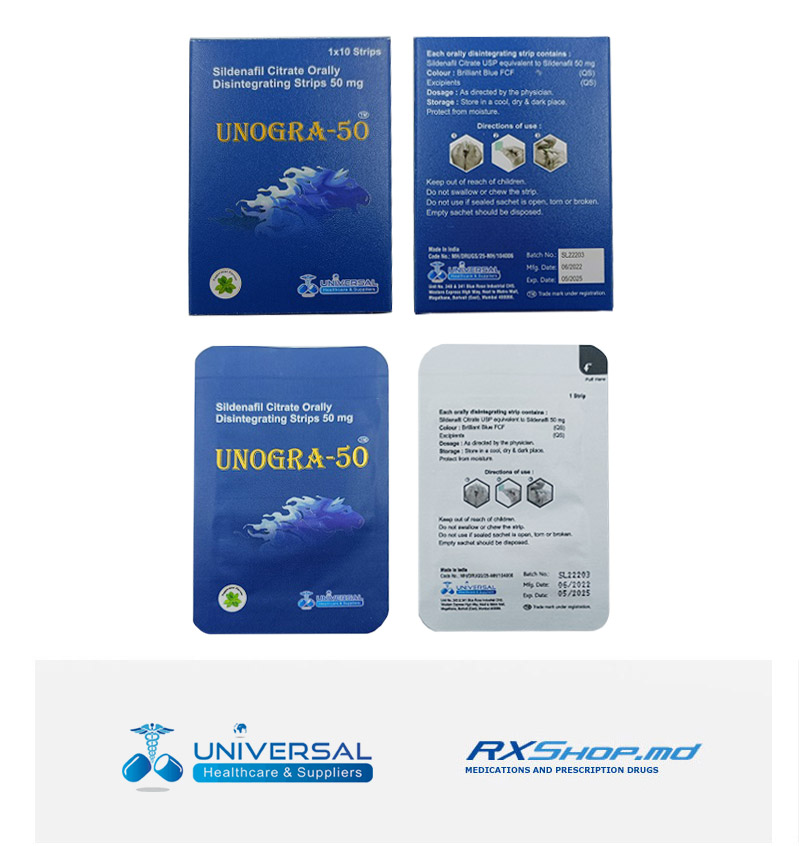
Unogra (Sildenafil Citrate 50mg) represents a budget-friendly Indian generic Viagra option from Universal Healthcare & Suppliers — providing the proven PDE5 inhibitor mechanism at the standard 50 mg starter dose ideal for treatment-naive patients, men with mild ED, elderly patients requiring reduced clearance dosing, or those wanting to titrate from lower strength before considering escalation. This unbranded-tier generic focuses specifically on the 50 mg dose sweet spot — the recommended starting dose per FDA labeling for adult men beginning sildenafil therapy — offering cost-conscious access to proven ED treatment without paying for higher strengths that many men do not need.
Sildenafil Citrate works through selective phosphodiesterase type 5 (PDE5) inhibition in the corpus cavernosum smooth muscle. During sexual arousal, released nitric oxide triggers cyclic guanosine monophosphate (cGMP) production which relaxes smooth muscle allowing blood inflow producing erection. PDE5 normally breaks down cGMP ending erection. Sildenafil selectively inhibits PDE5, allowing cGMP to accumulate and sustaining smooth muscle relaxation and blood inflow. The result at 50 mg dose: successful intercourse in approximately 65% of attempts, onset within 30-60 minutes, 4-6 hour window of responsiveness, and predictable dose-response with FDA-recommended starter strength for adult men.
Unogra serves erectile dysfunction of all major etiologies at the appropriate starting dose. The medication treats psychogenic ED from anxiety and performance concerns, vasculogenic ED from arterial insufficiency, diabetic ED from microvascular changes, post-prostate surgery ED, age-related decline, hypertension-related ED, and mixed etiology ED. Particularly valuable for treatment-naive patients starting sildenafil therapy for the first time — the FDA specifically recommends beginning with 50 mg dose to assess individual response and tolerance before considering escalation to 100 mg. The 50 mg starting approach minimizes side effect risk while establishing baseline response.
Unogra requires on-demand dosing 30-60 minutes before anticipated sexual activity, no more than once per 24 hours. Absorption reduced by high-fat meals. Peak concentrations at 1 hour, 4-hour half-life. Universal Healthcare & Suppliers India manufactures under WHO-GMP standards.
Free prescription
Discrete packaging
Have questions?
Quality Assurance

- ED: Medical abbreviation for erectile dysfunction affecting millions of men worldwide;
- Mild ED 50mg Therapy: FDA-recommended starting dose for mild ED or treatment-naive patients;
- Treatment Naive Patient Therapy: 50mg starter dose for men beginning PDE5 inhibitor therapy for first time;
- Reduced Penile Blood Flow: Insufficient arterial blood inflow to corpus cavernosum improving with PDE5 inhibition;
- Reduced Sexual Performance: Impaired sexual response improving through PDE5-mediated vasodilation;
- Impotence: Traditional term for erectile dysfunction affecting sexual function and confidence;
- Male Sexual Dysfunction: Male sexual response impairment responding to PDE5 inhibitor therapy;
- Psychogenic Erectile Dysfunction: Anxiety-driven or performance-anxiety erectile dysfunction responding to therapy;
- Vasculogenic Erectile Dysfunction: ED from arterial insufficiency responding to PDE5-mediated vasodilation;
- Diabetes Induced ED: Diabetes-related erectile dysfunction from microvascular and neuropathic changes;
- Age Related Erectile Issues: Progressive age-related erectile function decline responding to PDE5 inhibition;
- Elderly Reduced Clearance Patients: 50mg reduced dose appropriate for elderly with reduced hepatic clearance;
- Post Prostate Surgery ED: Erectile dysfunction after radical prostatectomy responding to PDE5 rehabilitation;
- Hypertension Related ED: ED in men with hypertension particularly those on antihypertensive medications;
- Low Nitric Oxide Levels: Reduced nitric oxide-mediated erection response improving through PDE5 preservation of cGMP;
- On Demand ED Therapy: Situational ED treatment taken 30-60 minutes before anticipated sexual activity;
- Budget Generic ED Therapy: Universal Healthcare provides cost-effective sildenafil generic option;
- PDE5 Inhibitor Therapy: Drug class targeting phosphodiesterase type 5 for erectile function restoration;
- Generic Viagra Therapy: Bioequivalent generic alternative to brand-name Viagra at substantially lower cost.
- Better FDA Recommended Starter: 50mg is the FDA-labeled starting dose for adult men beginning sildenafil therapy;
- 30-60 Minute Onset: Effect begins within 30-60 minutes of dosing enabling planned sexual activity;
- Better 4-6 Hour Response Window: Sustained responsiveness allows flexibility in sexual timing after single dose;
- Better Penile Blood Flow: cGMP-mediated smooth muscle relaxation improves corpus cavernosum blood inflow;
- Better Penile Circulation: Enhanced blood flow supports stronger and longer-lasting erections in response to stimulation;
- Less Side Effect Risk 50mg: Starting dose minimizes side effect risk while establishing baseline response;
- Better Diabetes ED Response: Diabetic ED patients respond to PDE5 inhibition despite microvascular disease;
- Better Age Related Response: Progressive age-related erectile decline responds well to PDE5 inhibitor supplementation;
- Better Elderly Appropriate Dose: 50mg starter appropriate for elderly patients with reduced hepatic clearance;
- Better Vascular ED Response: Arterial-insufficiency-driven ED improves through selective vasodilation;
- Better Psychogenic ED Response: Performance anxiety and psychological ED respond through predictable reliable erection;
- Better Post Prostatectomy Response: Nerve-sparing prostatectomy patients gain functional recovery with PDE5 rehabilitation;
- Better Sexual Confidence: Reliable erectile response restores sexual confidence and reduces performance anxiety;
- Better Relationship Satisfaction: Restored sexual function improves relationship satisfaction and intimacy quality;
- Better Sexual Flexibility: 4-6 hour window supports planned and semi-spontaneous sexual encounters;
- Less Performance Anxiety: Predictable response reduces anxiety about sexual performance and outcomes;
- Better Emotional Well Being: Sexual function restoration improves overall emotional wellness and self-image;
- Better Generic Cost: 85-95% lower cost than brand Viagra makes proven starter-dose ED therapy accessible;
- Better Quality of Life: Daily wellbeing improves dramatically as ED-related distress resolves and sexual confidence returns.
Generic Unogra (Sildenafil Citrate 50 mg) Medication guide:
🏷️ Unogra Sildenafil Citrate 100 mg Overview
GENERIC SILDENAFIL CITRATE 100 MG
Unogra delivers the same sildenafil molecule that launched the modern era of oral ED treatment in 1998 — at generic-era pricing.
The compound inside Unogra tablets is sildenafil citrate, the first-approved phosphodiesterase type 5 (PDE5) inhibitor and the pharmacologic workhorse of ED therapy for more than two decades. Over a billion sildenafil doses have been dispensed globally since Pfizer brought the molecule to market as Viagra; generic entry across major markets starting in 2017 brought per-dose costs down by 90-95%, making effective ED treatment accessible to men who could never have afforded the branded product.
100 mg
PER TABLET
4-6 h
WINDOW
30-60
MIN ONSET
80%
RESPONSE
Clinically, sildenafil is the most-studied oral ED medication in history. The 1998 NEJM pivotal trial by Goldstein and colleagues established 50-80% response rates across the dose range in men with ED of mixed etiology; subsequent trials have replicated and extended these findings in diabetic ED, post-prostatectomy ED, spinal cord injury, SSRI-associated sexual dysfunction, and specific subpopulations like men with chronic kidney disease, stable cardiovascular disease on non-nitrate regimens, and men on antihypertensive combinations. The pharmacology is predictable, the safety profile is well-characterised across more than two decades of post-marketing surveillance, and the clinical response is measurable with validated instruments (IIEF-5, SEP-2, SEP-3).
Unogra sits within this therapeutic context as a generic equivalent to the branded formulation. Regulatory bioequivalence standards require generic sildenafil manufacturers to demonstrate equivalent peak concentration (Cmax) and total exposure (AUC) within specified confidence intervals before FDA, EMA, or equivalent approval. Clinical response is therefore expected to be equivalent to branded Viagra; the price gap reflects patent expiration and competitive generic manufacturing, not any pharmacologic difference. For a man whose primary care physician would otherwise write a Viagra prescription, Unogra 100 mg tablets provide the same molecule at a fraction of the per-dose cost.
What the medication does: amplifies the natural erection pathway by prolonging the cGMP signal that nitric oxide produces during sexual arousal. What it does not do: create arousal, generate spontaneous erection without stimulation, or substitute for addressing underlying contributors (vascular disease, hormonal deficits, medications that cause ED, lifestyle factors, relational issues). The medication is powerful within its mechanism and limited outside it — a distinction worth understanding before the first dose.
🔬 NO / cGMP Pathway and PDE5 Mechanism
The physiology that Unogra works through is the nitric oxide / cyclic GMP (NO/cGMP) pathway in erectile tissue. Understanding this pathway clarifies both why sildenafil works when arousal is present and why it does nothing when arousal is absent — a fundamental point that shapes expectations.
🔬 The NO / cGMP / PDE5 pathway
In concrete terms, the sequence works like this: sexual stimulation activates central nervous system pathways that signal through the cavernous nerves to the erectile tissue. Nerve terminals and vascular endothelial cells release nitric oxide. NO activates the enzyme soluble guanylate cyclase inside cavernosal smooth muscle cells, which converts GTP (guanosine triphosphate) to cyclic GMP (cGMP). cGMP triggers smooth muscle relaxation, arterial dilation, and the venous-occlusive mechanism that traps blood in the cavernosal spaces. The result is a rigid erection sufficient for sexual activity.
The erection would end quickly on its own because phosphodiesterase type 5 (PDE5) is continuously present in cavernosal tissue, breaking down cGMP as fast as it is produced. For most men this balance works: arousal produces enough cGMP to overwhelm PDE5 and achieve adequate rigidity. For men with ED, often the balance is tilted — endothelial dysfunction produces less NO, nerve signalling is impaired, cavernosal smooth muscle has reduced reserve, or a combination.
Sildenafil shifts the balance by inhibiting PDE5 competitively. Instead of PDE5 breaking down cGMP within seconds of its production, the enzyme is temporarily blocked, cGMP accumulates to higher levels, and the smooth muscle relaxation signal is amplified and prolonged. The practical consequence: a man who achieves only partial erection without medication can achieve adequate rigidity with it, and maintenance through intercourse improves because the cGMP signal is sustained rather than quickly degraded.
💡 Why arousal is still required
Sildenafil blocks the enzyme that degrades cGMP. It does not produce cGMP. Without arousal, there is no NO release, no guanylate cyclase activation, no cGMP production in the first place — and therefore nothing for the medication to amplify. This is why Unogra does not produce spontaneous erections and why libido-enhancing medications are a completely separate therapeutic category. The medication is an amplifier of an existing physiological response, not a trigger for a new one.
PDE5 is highly concentrated in cavernosal tissue but is also present at lower levels in other smooth muscle beds (pulmonary vasculature, platelets, retina). This distribution explains the medication's secondary indication for pulmonary arterial hypertension (branded as Revatio when used for that purpose) and some of the side effect profile: the pulmonary vasodilation can mildly lower systemic blood pressure, and weak cross-reactivity with retinal PDE6 can produce the brief blue-green visual tint some men notice at higher doses.
Among the four approved PDE5 inhibitors, sildenafil has the least cross-reactivity with PDE11 — an isoform concentrated in skeletal muscle. This is the pharmacologic reason why sildenafil rarely causes the back pain and myalgia pattern that is characteristic of tadalafil. For men bothered by muscular side effects on tadalafil, sildenafil (via Unogra or any other generic sildenafil formulation) often resolves the issue entirely.
⏱️ Sildenafil Pharmacokinetics in Depth
Sildenafil pharmacokinetics have been characterised in extensive detail across more than two decades of regulatory and clinical research. The parameters below describe the oral 100 mg dose in healthy adults; important modifications for age, hepatic function, renal function, and concomitant CYP3A4 modifiers are covered later in this guide.
PEAK AT
60-120 min
time to peak plasma concentration (Tmax)
HALF-LIFE
3-5 h
terminal elimination half-life (t½)
BIOAVAILABILITY
~40%
first-pass hepatic metabolism significant
📊 Full pharmacokinetic profile at 100 mg oral dose
The pharmacokinetic profile explains several practical features of sildenafil use. The 4-6 hour effective window is substantially shorter than tadalafil (36 h) or vardenafil (6-8 h), which makes sildenafil better suited to planned intimacy than to opportunistic spontaneity. Men who want long-window flexibility are usually better served by tadalafil; men who want reliable short-window response at proven dose levels are well-served by sildenafil in any form, including Unogra.
The 24-hour nitrate washout rule derives directly from the terminal half-life. After five half-lives (approximately 20 hours in healthy adults), serum levels drop to roughly 3% of peak — low enough that nitrate administration becomes clinically acceptable. For men with hepatic impairment or taking strong CYP3A4 inhibitors, clearance can be substantially slower, and the practical washout can extend to 48 hours or more. The 24-hour spacing between consecutive doses derives from the same logic: giving the first dose time to fully clear before the next.
The active metabolite N-desmethyl sildenafil is often under-appreciated in discussions of sildenafil pharmacokinetics. Formed via CYP3A4 metabolism of the parent compound, it retains approximately 50% of sildenafil's PDE5 inhibitory activity and reaches 40% of the parent compound's plasma concentration. This contributes meaningfully to the overall pharmacologic effect, particularly in the later part of the dosing window. CYP3A4 inhibitors that elevate parent sildenafil levels tend to elevate the metabolite in parallel, compounding the net exposure.
💡 Why food matters more for sildenafil than tadalafil
Sildenafil absorption is more sensitive to meals than tadalafil. A high-fat meal taken within 1-2 hours before dosing can reduce peak concentration (Cmax) by approximately 29% and delay Tmax by about 60 minutes on average. The total exposure (AUC) is less affected. In practical terms this means: dose Unogra on a relatively empty stomach when possible, or allow extra time (closer to 90-120 minutes) between dose and anticipated activity when a heavy meal is in play. This food-sensitivity is one of the practical disadvantages of sildenafil compared to the food-independent tadalafil formulations.
💊 Dose Ladder, Scenarios, and Spacing Rules
Dose selection for Unogra follows the standard sildenafil ladder: three approved on-demand strengths (25 mg, 50 mg, 100 mg), with 50 mg the typical starting dose, 25 mg for men with risk factors for elevated plasma levels, and 100 mg for men whose 50 mg response was inadequate. The 100 mg strength provided by Unogra tablets is scored on most generic manufacturers for optional 50 mg dosing by splitting.
📊 Sildenafil dose ladder
quarter tab
reduced-dose indications
HALF TAB
typical start
full tab
FDA ceiling
The 50 mg starting dose represents a balance between clinical response and side effect burden. Approximately 60-70% of men respond adequately to 50 mg sildenafil for their ED presentation; stepping up to 100 mg captures another 10-15% who had partial response. Beyond 100 mg, FDA labelling does not permit higher doses because clinical data do not demonstrate incremental benefit, while side effect frequency rises steeply. Men who do not respond adequately to 100 mg sildenafil after a fair trial (four to six attempts under reasonable conditions) are generally better served by switching to another PDE5 inhibitor, workup for correctable underlying factors, or escalating to second-line therapies, rather than attempting above-label doses.
🎯 Dose selection by clinical context
👨⚕️ What a prescriber recommends
The first trial of Unogra should be 50 mg taken on a relatively empty stomach, 60 minutes before anticipated intimacy, in a setting with minimal alcohol and reasonable rest. A single attempt is not enough to judge response: variability in timing, context, stress level, and partner dynamics means first attempts often undersell the medication's true response capability. Four to six fair attempts over several weeks give the honest assessment.
If 50 mg gives inadequate response across these attempts, stepping up to 100 mg is appropriate before concluding that sildenafil does not suit. If 50 mg gives good response with bothersome side effects, stepping down to 25 mg is often adequate and improves tolerability. Dose titration is a conversation, not a self-service decision — involve the prescribing physician.
Dose adjustment for hepatic or renal impairment matters because both affect sildenafil clearance. Mild-to-moderate hepatic impairment (Child-Pugh A or B) usually warrants a 25 mg starting dose with upward titration only if tolerated. Severe hepatic impairment (Child-Pugh C) is not contraindicated per se but data are limited; the manufacturer label does not recommend use. Severe renal impairment (CrCl under 30 mL/min) warrants a 25 mg starting dose; moderate renal impairment (CrCl 30-80) typically does not require dose adjustment. These adjustments reflect the pharmacokinetics of impaired clearance, not reduced efficacy at approved doses.
⚖️ Sildenafil vs Other PDE5 Inhibitors
The PDE5 inhibitor class contains four FDA-approved molecules: sildenafil (1998 approval, provided here as Unogra), tadalafil (2003 approval, Cialis), vardenafil (2003 approval, Levitra), and avanafil (2012 approval, Stendra). All four work through the same mechanism — competitive inhibition of PDE5 — but differ in half-life, selectivity for other PDE isoforms, onset timing, food sensitivity, and specific side effect profiles. Choosing between them is a practical lifestyle match rather than a question of which molecule is universally better.
⚖️ Head-to-head PDE5 inhibitor comparison
Reading the comparison table, several practical patterns emerge. Sildenafil (Unogra) wins on data depth and generic economics — a quarter-century of continuous use, the deepest clinical trial base, and the lowest per-dose generic prices in most markets. Sildenafil also wins on the absence of tadalafil's PDE11 back pain, which matters for men who tried tadalafil and found the muscular effect limiting. The shorter half-life is sometimes framed as a disadvantage but is actually an advantage when a man wants the medication fully cleared from his system within 24 hours (for nitrate availability, for example, or for travellers who dislike residual drug effects).
Tadalafil wins on duration and daily dosing. The 36-hour window and FDA approval for daily 2.5-5 mg use create a different lifestyle fit — particularly for couples with frequent intimacy, men with BPH symptoms (dual indication), and men wanting continuous availability rather than planning around individual doses. For a man whose intimate pattern is sudden rather than scheduled, tadalafil often fits better than sildenafil.
Vardenafil has a distinct side effect profile and some evidence of modestly higher efficacy in certain difficult-to-treat populations. The potential for QT interval prolongation warrants caution in men with cardiac rhythm disorders or those taking QT-prolonging medications. In most practical scenarios, vardenafil and sildenafil are interchangeable, and the choice comes down to tolerability trial.
Avanafil has the fastest onset of the class (15-30 minutes), the lowest reported visual side effects, and the shortest nitrate washout window (12 hours). As the newest member of the class, it has less long-term data than the three older agents, and generic availability is more limited internationally. For men wanting rapid onset without visual tint, avanafil is the natural choice if available.
🎯 When Unogra sildenafil is the best fit
🌟 Sildenafil wins when...
- Lowest per-dose cost matters
- On-demand use pattern (not daily)
- Need for complete overnight clearance
- Tadalafil caused PDE11 back pain
- Nitrate availability within 24-48 hours occasionally needed
- Deep clinical data preferred (longest track record)
🏛️ Consider switching when...
- Visual tint at 100 mg bothersome (consider tadalafil / avanafil)
- Long window wanted (consider tadalafil)
- Daily dosing wanted (consider tadalafil 5 mg)
- BPH symptoms present (consider daily tadalafil)
- Fastest onset wanted (consider avanafil)
- Food timing is inconvenient (consider tadalafil / avanafil)
Approximately 20% of men who respond poorly to one PDE5 inhibitor respond adequately to another. The cross-response pattern likely reflects individual variation in pharmacokinetics, specific PDE isoform binding, and tissue-specific factors. For a man who tried sildenafil without success, a trial of tadalafil (or vice versa) is a reasonable step before escalating to injection therapy or declaring PDE5 failure. Switching does not require any washout beyond the standard dosing interval of the previously used agent.
🍴 Food Timing and Grapefruit Interaction
Food timing is one of the more consequential practical considerations with Unogra and other sildenafil formulations. Unlike tadalafil, which absorbs essentially independently of meals, sildenafil absorption is meaningfully affected by food composition and timing. This difference traces to the pharmacokinetics of absorption from the small intestine and the ability of fatty meals to delay gastric emptying while simultaneously altering drug dissolution.
🍴 How food affects sildenafil absorption
The 29% peak reduction number comes from original Pfizer bioavailability studies submitted to FDA. Clinically it translates to a man who would have a strong response on empty stomach feeling that the medication did not work as well after a heavy dinner, when in fact total exposure is similar — just stretched over a longer time with a lower peak. For a planned intimate evening, the practical workaround is simple: either dose at least two hours after the meal (giving the stomach time to empty), or dose on an empty stomach before dinner and allow the extended effective window to cover the later intimate hour. Both approaches work.
💡 What "high-fat" actually means
Clinical trial definitions of a "high-fat meal" are roughly 50% of calories from fat and 800-1000 total calories — think a cheeseburger with fries and a milkshake, or a steak with cream sauce and buttery sides. A moderate meal (salad with grilled chicken, pasta with tomato sauce) has substantially less effect. Breakfast cereals, sandwiches, and most non-fried lunches barely register. The practical rule is to think specifically about saturated and total fat content when timing the dose around food.
Grapefruit deserves separate attention because its effect works through a different mechanism than other foods. Grapefruit contains furanocoumarins (particularly bergamottin and 6,7-dihydroxybergamottin) that inhibit intestinal CYP3A4 activity. Because sildenafil is substantially metabolised by CYP3A4 in the gut wall during absorption, grapefruit intake can elevate sildenafil plasma levels. The effect is dose-dependent: an occasional glass of grapefruit juice has clinically trivial impact; daily heavy consumption (multiple glasses, grapefruit sections at breakfast daily) can raise levels enough to compound side effects at a 100 mg dose. Men who regularly drink grapefruit juice may be better served by a 25-50 mg Unogra dose rather than 100 mg, at least until they can quantify their individual response.
Other foods and dietary habits have no clinically meaningful interaction with sildenafil. Caffeine, dairy products, fiber supplements, protein shakes, standard herbal teas, chocolate, spicy foods — none of these alter sildenafil absorption or metabolism in a way that matters clinically. Men can maintain their normal diet without any special adjustments beyond the specific points about high-fat meals and grapefruit noted above.
A quieter food consideration is hydration status. Sildenafil causes mild systemic vasodilation that is more noticeable in dehydrated men — the fall in effective blood volume compounds the vasodilatory effect, which can produce more intense flushing, headache, or orthostatic sensation. For men prone to these effects, aggressive hydration in the hours before and after dosing often reduces intensity substantially. A glass of water with the dose, another during the first hour, and continued fluid intake across the response window is simple and effective.
🍷 Alcohol — Three Distinct Effects
The alcohol question with Unogra comes up constantly in clinical practice because sildenafil is often used in social-intimate contexts where some alcohol is common. The honest answer requires separating three distinct effects: additive hypotension from combined vasodilation, alcohol-induced ED that no medication can overcome, and long-term lifestyle effects of chronic heavy drinking on vascular health.
🍷 Alcohol dose-response spectrum
The additive hypotension effect is the first consideration. Alcohol itself produces vasodilation at even modest doses — this is why flushing after wine is common. Sildenafil adds its own vasodilatory effect. Combined, blood pressure may fall more than either substance would produce alone. For a healthy man with normal baseline blood pressure, 1-2 drinks and standard 50 mg sildenafil produce no clinically meaningful hypotension. For a man already on antihypertensive medications (particularly alpha-blockers), the combination may push into symptomatic territory with lightheadedness on standing, flushing, or in extreme cases syncope.
The alcohol-induced ED effect is a separate and often more clinically important issue. Alcohol depresses the central nervous system pathways that initiate and maintain arousal; it also impairs the neuromuscular coordination required for erection. Beyond approximately 3-4 drinks, these central and peripheral effects increasingly overwhelm what sildenafil can accomplish — the medication amplifies a signal that is itself being suppressed by the alcohol. A man drunk enough to be unsteady on his feet will not get adequate erectile response regardless of PDE5 inhibitor dose.
Chronic heavy alcohol use creates a longer-arc problem that no medication solves. Multiple mechanisms contribute: hepatic damage reduces testosterone production and alters sildenafil clearance; nutritional deficiencies affect endothelial function; direct toxic effects on cavernosal smooth muscle reduce reserve; relational consequences of alcoholism compound the psychogenic layer. For men whose ED has a significant alcohol component, reducing intake — often with professional support — is a more important intervention than any dose adjustment of PDE5 therapy.
📏 One US standard drink reference
A US standard drink contains approximately 14 grams of pure ethanol. The common equivalents:
- 12 oz (355 mL) regular beer at 5% ABV
- 5 oz (148 mL) wine at 12% ABV
- 1.5 oz (44 mL) spirits at 40% ABV
- 8 oz (236 mL) malt liquor at 7% ABV
Important real-world caveat: pub pours, craft beers (often 7-9% ABV), restaurant wine glasses (often 6-8 oz), and cocktails (often multiple shots) frequently count as 1.5-2 standard drinks per serving. Men planning to use Unogra should count conservatively when assessing their intake against the thresholds above.
Practical rule for most men: 1-2 drinks with dinner is compatible with a planned Unogra dose, 3 drinks is pushing the edge of acceptable, 4+ drinks compromises both safety and response quality. For evenings involving heavier social drinking, either plan to dose earlier in the evening (before most alcohol is consumed) and accept that the response window will span less of the drinking period, or skip the Unogra and plan for intimacy on a different occasion. Trying to overcome alcohol's effect with a second dose or a higher dose is both pharmacologically illogical and risky.
🛑 Nitrate Contraindication — Why It Can Kill
ABSOLUTE CONTRAINDICATION
Nitrates and sildenafil must never meet in the same patient within a 24-hour window.
This is the single most important safety rule for PDE5 inhibitor use. The interaction can produce severe, prolonged hypotension that is dangerous and sometimes fatal. There is no safe dose combination, no safe shorter timing, no exception that permits workaround.
Understanding why this interaction is dangerous requires briefly revisiting the mechanism. Both drug families work by elevating cGMP, though through different routes. Nitrates donate nitric oxide, which activates guanylate cyclase, which produces cGMP. Sildenafil blocks the PDE5 enzyme that breaks cGMP down. Combined, the two produce massive and sustained cGMP accumulation throughout the vascular smooth muscle beds — not just in cavernosal tissue but systemically. The result is profound vasodilation that drops blood pressure dangerously and holds it there until both medications clear.
The clinical consequences of this hypotension depend on the patient's baseline. For a young, healthy man with no cardiac disease, severe hypotension might cause syncope, falls, and transient brain hypoperfusion but typically resolves without permanent damage once the medications clear. For an older man with coronary artery disease — the demographic most likely to be prescribed nitrates in the first place — the same hypotension can precipitate myocardial infarction, stroke, or death. Published case series and FDA adverse event reports include dozens of fatalities attributed to this specific interaction.
The recreational nitrite category is particularly worth addressing because men who use these substances socially often do not consider them "medication" and may not mention them to their prescriber. Amyl nitrite ("poppers") is used both medically and recreationally in some communities; combining popper use with sildenafil creates the same dangerous interaction as combining nitroglycerin with sildenafil. The absence of a prescription does not change the pharmacology. Men who use these substances need to know that any PDE5 inhibitor including Unogra is incompatible with that use, within the same 24-hour window.
⚠️ If chest pain develops during the 24-hour window
If a man taking Unogra develops chest pain or symptoms suggesting myocardial infarction within 24 hours of his last dose, standard nitrate-based emergency treatment is contraindicated. Emergency medical staff must know about recent sildenafil use to make the right treatment decision. Alternative anti-ischemic treatments exist for the overlap period: morphine for pain, beta-blockers (metoprolol, atenolol) for rate control and reducing oxygen demand, calcium channel blockers (amlodipine, diltiazem) for coronary vasodilation through a non-nitrate mechanism, and prompt coronary catheterisation when appropriate.
A medical ID bracelet or wallet card mentioning PDE5 inhibitor use is a reasonable precaution for men who use these medications regularly, particularly those with known coronary disease. It eliminates the need for the man to communicate information while in distress and lets the ER team make the right treatment decision immediately.
Riociguat deserves separate mention because it works through a related mechanism to nitrates. Riociguat is a soluble guanylate cyclase stimulator used for pulmonary arterial hypertension. It directly activates guanylate cyclase, bypassing the NO pathway, and produces the same dangerous combined vasodilation when paired with any PDE5 inhibitor. The contraindication is absolute — sildenafil and riociguat must never be co-prescribed, and there is no safe washout window that permits combination.
Honesty with the prescribing physician about any nitrate or nitrite use is the single most important safety behaviour for a man starting Unogra. The disclosure should cover prescribed nitrates, over-the-counter products that may contain nitrates, and recreational nitrite use including occasional popper use. For men whose medical situation genuinely requires nitrate therapy, alternative ED treatments are available — intracavernosal injection, vacuum erection device, and penile prosthesis all work without the nitrate interaction. Trying to use sildenafil around a nitrate schedule by timing doses is not safe and should not be attempted.
🫀 Cardiovascular Evaluation and Princeton Framework
Cardiovascular evaluation before starting Unogra is often more important than the medication prescription itself. ED is a known clinical marker of underlying vascular disease: the small cavernosal arteries show endothelial dysfunction earlier than larger coronary vessels, so new-onset ED in a man over 40 frequently precedes a cardiac event by three to five years. A visit for sildenafil is often the first moment a man engages with the healthcare system around his vascular health, and treating that visit purely as a prescription writeup misses the opportunity.
Sexual activity itself imposes moderate cardiovascular demand. The energy expenditure of intercourse averages 3-5 metabolic equivalents (METs), equivalent to climbing two flights of stairs briskly or walking rapidly on level ground. Heart rate typically rises to 120-130 beats per minute briefly at orgasm; blood pressure can transiently reach 160/90. These demands are routine exertion for most men but can precipitate ischemia in those with significant coronary disease.
The Princeton Consensus IV framework stratifies men into low, intermediate, and high cardiovascular risk categories to guide safe PDE5 therapy decisions. It is the standard clinical tool for this question and sits in both AUA and EAU ED guidelines. The framework recognises that for high-risk patients, the limiting factor is sexual activity itself rather than the medication — stabilising the cardiac condition precedes any PDE5 discussion.
🏛️ Princeton Consensus IV Framework
For a man in the intermediate risk category, the practical path is often a treadmill stress test or equivalent functional cardiac assessment. The question the test answers is: can this patient achieve 5-6 METs of exertion without inducible ischemia, significant arrhythmia, or symptomatic hemodynamic response? If yes, Unogra use is reasonable with standard precautions. If no, the sexual activity itself is the risk and the cardiac condition needs further workup before PDE5 therapy enters the discussion. Many patients in this category end up with coronary catheterisation, revascularisation, or medication optimisation that both improves cardiac status and often improves ED response subsequently.
👨⚕️ What a prescriber recommends
Treat the Unogra visit as a cardiovascular screening opportunity. For any man presenting with new ED over age 40 who has not had recent primary care contact, the visit should include: blood pressure measurement, fasting lipid panel, HbA1c or fasting glucose, waist circumference, smoking history, family history of early coronary disease, and Framingham or ASCVD 10-year risk calculation.
If risk factors cluster to produce 10-year ASCVD risk above 7.5%, statin therapy and aggressive risk factor modification are appropriate independent of the ED question. Men who come forward about ED often gain access to screening that catches silent cardiovascular disease years before a cardiac event, which arguably provides more health benefit than the ED medication itself.
A quieter concern worth noting: sildenafil has been associated with sudden hearing loss in postmarketing reports. The exact mechanism is unclear but may involve microvascular events in the inner ear similar to the NAION ocular events. The frequency is low enough that routine screening is not recommended, but men should know that sudden hearing change — particularly unilateral, often with tinnitus — warrants prompt discontinuation and medical evaluation. The hearing loss can be partial or complete, is sometimes permanent, and is more common at higher doses and in men with pre-existing hearing conditions.
📊 Common Side Effects at Normal Doses
The side effect profile of sildenafil is among the best-characterised in all of modern pharmacology, with more than two decades of continuous postmarketing surveillance and dozens of large clinical trials. Most men experience one or two of the common effects occasionally; the overall tolerability is good enough that treatment discontinuation specifically due to side effects runs under 5% in trial populations. The format of Unogra (standard tablet) does not alter this profile — the molecule is identical to branded sildenafil.
📊 Common side effect frequencies at 100 mg sildenafil
Headache is by far the most common side effect and the main reason men dislike sildenafil. The mechanism is vasodilation of cranial vessels — the same vasodilatory effect that benefits erectile tissue causes systemic effects elsewhere. Typical onset is 1-3 hours after dosing, intensity ranges from mild to moderate, and duration is 4-6 hours but can extend to 12+ hours in sensitive individuals. The headache is pharmacologic rather than cardiogenic; it does not indicate dangerous hypotension unless accompanied by other symptoms. For men bothered by it, mitigation strategies include aggressive hydration before and after dosing, acetaminophen taken either prophylactically 30 minutes before or at headache onset, dim environments during the response window, and dose reduction (25 or 50 mg instead of 100 mg).
Flushing comes from the same vasodilation. Face and neck warmth, visible redness, occasionally a sense of overall body warmth. The effect is cosmetic rather than medically concerning, lasts 1-2 hours typically, and improves in cool environments or with cool drinks. Many men consider the flushing bothersome rather than seriously problematic; it rarely drives discontinuation. Partners often notice the visible flushing, which some men find awkward and others find irrelevant.
Dyspepsia presents as an acid reflux pattern — retrosternal burning, acid taste, sometimes nausea. The mechanism likely involves relaxation of the lower esophageal sphincter from the vasodilatory smooth muscle effects. More common in men prone to reflux at baseline. Antacids taken at onset work for most; H2 blockers or proton pump inhibitors used prophylactically help men who get the symptom reliably with each dose. Avoiding lying flat for 1-2 hours after dosing is a simple additional measure.
👁️ The sildenafil visual tint signature
The blue-green visual tint some men notice after sildenafil is one of the medication's distinctive side effects. The mechanism is weak cross-reactivity between sildenafil and PDE6, an enzyme concentrated in retinal photoreceptors. Normal retinal function depends on PDE6 activity in rod and cone cells; sildenafil's partial inhibition of this enzyme transiently alters color perception, usually producing a mild blue-green tint, increased light sensitivity, or a sense of overall brightness.
The effect is dose-dependent (3% at 50 mg, up to 11% at 100 mg), appears 1-2 hours after dosing, lasts a few hours, and resolves completely as the medication clears. It is harmless and does not indicate retinal damage. For men who find the tint unacceptable, switching to tadalafil (no PDE6 effect) or avanafil (minimal PDE6 effect) resolves the issue entirely. Dropping from 100 mg to 50 mg reduces the frequency and intensity substantially for those who prefer to stay on sildenafil.
Nasal congestion presents as a brief stuffy nose, usually resolving within hours, from vasodilation of nasal mucosal vessels. Saline nasal spray helps symptomatically. Pseudoephedrine-containing decongestants should be avoided — they are vasoconstrictors that could counteract the medication's intended effect and may raise blood pressure.
Dizziness is predominantly orthostatic — rising rapidly from sitting or lying produces lightheadedness. Hydration, rising slowly, and avoiding alcohol compound this effect. Men on alpha-blockers for prostate symptoms are particularly susceptible and should start sildenafil at 25 mg with four-hour spacing from the alpha-blocker dose.
Back pain and myalgia are notably absent with sildenafil — this is a key clinical difference from tadalafil, where PDE11 cross-reactivity produces the characteristic back pain in 5-7% of users. Sildenafil lacks meaningful PDE11 affinity, so this specific side effect essentially does not occur. For men who tried tadalafil and found the back pain limiting, sildenafil (via Unogra or any other sildenafil formulation) typically eliminates the problem while preserving overall PDE5 efficacy.
🧠 Performance Anxiety and the Vicious Cycle
Performance anxiety is the invisible contributor to many ED presentations, and the sympathetic nervous system activation it produces works directly against erection physiology. Vasoconstriction, catecholamine release, and attentional narrowing all oppose the parasympathetic-mediated nitric oxide signal that Unogra is designed to amplify. For a significant subset of men with ED, performance anxiety is not just a reaction to failed attempts — it is a primary driver that no PDE5 inhibitor can fully overcome on its own.
🔄 The performance anxiety cycle
The cycle self-reinforces: a man who worries about his sexual function before an encounter triggers sympathetic activation that compromises the physiological response he is worried about. The compromised response confirms his fear, which strengthens anticipatory anxiety at the next opportunity. Over weeks or months the cycle can produce functional ED in a man with entirely normal vascular physiology — a presentation that is pharmacologically responsive to sildenafil but will not resolve fully until the psychological layer is also addressed.
Several features suggest a primarily psychogenic component to the ED: sudden rather than gradual onset, situational pattern (occurring with partner but not with self-stimulation, or occurring with new partners but not longer-term ones), preserved morning erections, intact masturbation function, acute onset after a specific stressor (job loss, relationship conflict, witnessed sexual difficulty), and absence of significant vascular risk factors. Men whose presentation fits this pattern often respond to Unogra pharmacologically but still benefit from psychological or sex therapy approaches that address the underlying anxiety.
How Unogra can help break the cycle: reliable pharmacologic response produces successful experiences. Successful experiences rebuild confidence. Confidence reduces anticipatory anxiety at the next encounter. Over four to six attempts, many men with primarily psychogenic ED find themselves functioning better than their worst recent memories suggested. The medication serves as a "circuit breaker" that interrupts the self-reinforcing failure loop and lets natural response patterns reassert themselves.
🌟 What tends to help the psychological layer
Cognitive-behavioral therapy for performance anxiety specifically: identifying anxiety-producing thought patterns, developing counter-thoughts, graded exposure to intimate situations without pressure for intercourse (sensate focus exercises), partner inclusion in the therapeutic process.
Sex therapy with a trained practitioner: structured approach to rebuilding intimate function, often with specific behavioural homework between sessions, usually involving both partners.
Mindfulness-based approaches: present-moment focus that reduces attentional capture by performance concerns. Not sex-specific but often transferable.
Treatment of comorbid depression or anxiety: SSRIs sometimes required despite their own ED side effects (sildenafil counters SSRI-induced ED effectively). Non-SSRI alternatives like bupropion have less sexual effect.
For men whose ED has mixed origins — vascular contribution plus psychogenic amplification, which is quite common — the combination of Unogra plus therapy typically outperforms either alone. The medication addresses the physiological limiting factor; the therapy addresses the layer the medication cannot reach. Most published outcome research supports this combination approach for men who have both contributors.
Partner involvement often matters more than men expect. A partner who understands the anxiety cycle, participates in the solution, and reduces pressure during the recovery period contributes to outcomes in ways that neither medication nor therapy alone can replicate. For couples where the ED has become a loaded topic, bringing the partner into one or two therapy sessions — or at minimum reading the same educational material together — tends to improve both the pharmacological and psychological trajectories.
📅 Response Patterns Across Decades of Life
Response patterns to Unogra sildenafil shift gradually across decades of life, driven primarily by cumulative vascular aging and secondarily by medication-adjustment considerations like slower hepatic clearance. The pattern is not an absolute decline — many men over 70 respond beautifully to standard doses — but as a general trend, both response rate and tolerability shift with age in ways that affect dose selection and management.
Men in their 40s who develop ED often have specific precipitants — new stress, relationship issues, medication side effects, lifestyle factors — overlaid on vascular systems that are still relatively healthy. Response rate at 50 mg sildenafil is high (85-90%) because the physiologic infrastructure is intact; the medication amplifies a response pathway that works well when nothing is specifically opposing it. For these men, ED presentation is also a prime opportunity to catch early-stage vascular disease before cardiac events materialise.
Men in their 50s see rising prevalence of hypertension, dyslipidemia, type 2 diabetes, and early vascular disease. ED prevalence rises in parallel; response rate at 50 mg drops modestly (75-85%) and more men need 100 mg for adequate response. Comorbid medications become common — antihypertensives, statins, antiplatelets — most of which are compatible with Unogra but worth reviewing systematically before first dose. This is often the decade where sildenafil becomes a routine prescription for men who had not previously thought of themselves as needing medical treatment.
Men in their 60s face more complex pictures. Diabetes prevalence approaches 25-30%; BPH symptoms are common; prostate cancer survivors with post-treatment ED enter the population; cardiovascular comorbidity shapes the risk calculus. Response rate at standard doses runs 70-80%; dose selection shifts downward (25-50 mg start) because hepatic clearance is slower and antihypertensive combinations compound the vasodilatory effect. Men over 65 clear sildenafil approximately 40% more slowly than younger men — effective plasma levels at any given dose are higher, which translates to more intense side effects at 100 mg.
Men over 70 represent the greatest heterogeneity. Some respond beautifully to 25 mg; others get inadequate response at 100 mg; the range reflects the enormous individual variation in vascular aging. Polypharmacy becomes universal, which raises interaction concerns particularly around alpha-blockers (often used for BPH), CYP3A4 modifier medications, and antihypertensive combinations. Specialist evaluation often becomes appropriate at this age for ED that does not respond cleanly to simple sildenafil titration, because the yield from vascular workup, hormonal evaluation, and other investigations rises substantially.
👨⚕️ What a prescriber recommends
For men over 65 starting Unogra, the recommended initial dose is 25 mg (quartered 100 mg tablet) rather than the standard 50 mg. Hepatic clearance slowing of approximately 40% means that a 50 mg dose in a 70-year-old produces plasma levels similar to what a 50 mg dose produces in a 40-year-old plus about 20-30% more. The side effects scale with plasma level; starting lower and titrating upward if needed produces a better overall experience than starting at the standard dose and backing down.
The same principle applies to men on strong CYP3A4 inhibitors (certain antifungals, HIV protease inhibitors, macrolide antibiotics) where 25 mg is the effective ceiling regardless of age. And it applies to men on multiple antihypertensives (particularly three or more agents) where additive hypotensive effect compounds the sildenafil cardiovascular profile. In all these scenarios, 25 mg first, with careful titration, works better than default 50 mg prescribing.
Age-related response decline is not inevitable or uniform. Men who maintain cardiovascular fitness, control metabolic parameters, maintain healthy weight, avoid smoking, and manage comorbidities often respond at standard doses well into their 70s. Men whose cardiovascular health has deteriorated through years of neglected risk factors face more challenging responses regardless of age. Lifestyle optimisation is as relevant for a 65-year-old starting Unogra as it is for a 45-year-old — often more so because the opportunity cost of continued neglect is higher.
💇♂️ BPH Overlap and Alpha-Blocker Interaction
Benign prostatic hyperplasia (BPH) and erectile dysfunction share enormous patient overlap. Men over 60 commonly carry both diagnoses: BPH prevalence approaches 50% by that age, ED prevalence rises in parallel, and the vascular and smooth-muscle changes that drive BPH frequently also affect erectile tissue. Managing both conditions together requires attention to alpha-blocker interactions with sildenafil and understanding when daily tadalafil might better serve a man with both diagnoses than on-demand Unogra plus a separate BPH medication.
Sildenafil (including Unogra) is not FDA-approved for BPH symptoms — that approval belongs specifically to daily low-dose tadalafil. For a man with ED and no BPH symptoms, Unogra on-demand is a complete solution. For a man with ED and significant BPH, the treatment decision becomes more layered because BPH typically requires continuous rather than intermittent therapy, which does not fit sildenafil's dosing profile.
⚠️ Alpha-blocker interaction — the central practical issue
Men with BPH symptoms are commonly prescribed alpha-adrenergic blocking medications — tamsulosin, silodosin, alfuzosin, doxazosin, terazosin, prazosin. These drugs relax smooth muscle in the bladder neck and prostate, reducing urinary symptoms. They also produce systemic vasodilation and lower blood pressure, which can be meaningful in men with coexisting hypertension.
Combining an alpha-blocker with sildenafil produces additive hypotension. The combined vasodilation can drop blood pressure enough to cause lightheadedness on standing, dizziness, or in extreme cases syncope. The effect is dose-dependent on both medications and more pronounced when they peak simultaneously.
Practical management: Stable alpha-blocker regimen first (at least a week), then introduce sildenafil at 25 mg rather than 50 mg, with at least 4-hour spacing from the alpha-blocker dose. If 25 mg is well tolerated, titrate upward if needed. The more alpha-1-selective agents (tamsulosin, silodosin) interact less dangerously than the non-selective agents (doxazosin, terazosin, prazosin), but the spacing and dose-reduction rules apply across the class.
🌳 Treatment paths for ED + BPH
Path A — Alpha-blocker + Unogra on-demand
Continue existing alpha-blocker (tamsulosin, silodosin, alfuzosin). Add Unogra 25 mg initially, spaced 4+ hours from alpha-blocker dose. Titrate to 50 mg if 25 mg well tolerated and response partial. Best fit when: BPH already well-managed on alpha-blocker, patient prefers on-demand ED treatment, intimacy frequency is once-twice weekly or less.
Keep existing BPH medication; add dose-adjusted sildenafil
Path B — Switch to daily tadalafil 5 mg
Daily tadalafil 5 mg is FDA-approved for both ED and BPH symptoms. Single medication, dual benefit. IPSS (International Prostate Symptom Score) typically improves 4-6 points over 2-4 weeks of daily use. Erectile response is continuous rather than planned. Best fit when: both ED and BPH are active and bothersome, intimacy frequency is 2+ times weekly, patient prefers single-medication approach.
Not Unogra; switch class to tadalafil for dual indication
Path C — Alpha-blocker + daily tadalafil (combined)
For severe BPH where monotherapy is insufficient, alpha-blocker plus daily tadalafil provides additive benefit. More intensive but often necessary for men with large prostates and significant urinary symptoms. Still requires alpha-blocker dose spacing and tadalafil dose selection appropriate for comorbidities.
Severe BPH plus ED needing both agents
For very large prostates (over 40 g measured by ultrasound or MRI), a 5-alpha reductase inhibitor like finasteride or dutasteride may be added to the regimen. These medications shrink the prostate gland over 6-12 months of use, providing durable symptom improvement that complements the smooth-muscle relaxation effects of alpha-blockers and tadalafil. The important caveat: 5-alpha reductase inhibitors can themselves cause or worsen ED through their effect on dihydrotestosterone (DHT) levels, and some men experience persistent sexual side effects even after discontinuation. The potential benefit for prostate size reduction should be weighed against the potential sexual cost, particularly in men whose ED is a central concern.
A quiet additional consideration: alpha-blockers themselves can affect ejaculation (particularly tamsulosin and silodosin, which commonly cause reduced ejaculate volume or anejaculation). This is a mechanical effect from smooth muscle relaxation in the ejaculatory ducts. Men who notice this effect should know it is not a sildenafil issue and does not represent a problem that Unogra adjustment will fix. For men bothered by the ejaculatory effect, alternative BPH treatments (alfuzosin has less effect, 5-alpha reductase inhibitors have different side effect profile) may be worth discussing with the prescribing physician.
🏃♂️ Four Lifestyle Levers That Shape Response
Lifestyle habits determine what Unogra can achieve. The medication amplifies response in reasonably healthy vasculature; it cannot repair severe vascular compromise or compensate for continued smoking, obesity, or sedentary patterns. The published research on lifestyle intervention in ED is extensive and consistent: four levers — smoking cessation, weight reduction, regular aerobic exercise, and quality sleep — produce measurable ED improvement in most men who adopt them, often rivalling pharmacological efficacy at low-dose PDE5 therapy.
Smoking cessation
Measurable ED improvement typically within 3-6 months of quitting. Mechanism involves recovery of endothelial function, improved nitric oxide bioavailability, reduced oxidative stress on cavernosal tissue. Vaping is better than smoking but not neutral — nicotine itself causes vasoconstriction.
Among the fastest-acting single interventions for ED
5-10% weight reduction
Can restore significant erectile function in overweight men. Addresses testosterone (adipose tissue aromatises testosterone to estradiol), blood pressure, metabolic health, and systemic inflammation simultaneously. The most-studied non-pharmacological ED intervention with the largest effect size in the literature.
Compounds multiple ED-contributing problems at once
Aerobic exercise 150 min/week
Standard recommendation of 150 minutes weekly moderate-intensity aerobic activity plus 2 strength sessions. Works through endothelial function improvement and increased nitric oxide synthesis. Published trials show that Mediterranean diet plus regular exercise over 6 months produces ED improvement equivalent to low-dose PDE5 therapy in men with mild-to-moderate ED.
Rivals medication effect in mild ED populations
7-9 hours quality sleep
Testosterone production peaks during overnight sleep; chronic sleep debt lowers morning levels and overall libido. Sleep apnea deserves specific workup because CPAP treatment of moderate-to-severe apnea often transforms response to any PDE5 inhibitor — men who could not get adequate response to 100 mg sildenafil before CPAP sometimes find 50 mg adequate afterward.
Sleep apnea is the most underdiagnosed ED cause
Beyond the four main levers, several other lifestyle factors deserve attention. Pelvic floor exercises (Kegel-type contractions of the perineal muscles) have modest evidence of ED benefit, likely through improved venous occlusion and ischiocavernosus muscle function. Mediterranean dietary pattern (vegetables, legumes, fish, olive oil, nuts, moderate wine) shows the strongest evidence among dietary interventions for ED, likely through endothelial function improvement and anti-inflammatory effects. Chronic stress management through meditation, structured exercise, therapy, or workload adjustment affects both vascular and psychogenic contributors to ED.
💡 Finding worth knowing
Multiple published trials demonstrate that Mediterranean dietary pattern combined with regular aerobic exercise, sustained over six months, produces ED improvement equivalent to low-dose PDE5 therapy in men with mild-to-moderate ED. The Esposito 2004 JAMA trial was the landmark; subsequent trials have replicated the finding across different populations.
The practical implication: for men with mild ED, lifestyle change can delay or avoid medication entirely. For men already using Unogra or other PDE5 inhibitors, lifestyle optimisation tends to reduce the dose needed, improve response consistency, and reduce side effect intensity by lowering the effective dose required. The medication becomes a smaller part of the solution rather than carrying the full load.
The honest counterpoint: not every man with ED can address lifestyle contributors meaningfully. Some have significant vascular disease beyond what lifestyle will reverse; some have genetic or acquired testosterone deficits that require replacement regardless of weight or exercise; some have severe comorbidities (diabetes with established neuropathy, post-cancer treatment damage, spinal cord injury) where lifestyle optimisation helps overall health without specifically restoring erectile function. For these men, Unogra and other medications carry the therapeutic load, and that is a legitimate role for the medication class.
🧪 Hormonal Workup — the Gatekeeper Test
Testosterone status is a critical gatekeeper question when sildenafil response is inadequate. Low testosterone compromises PDE5 inhibitor response through a mechanism no dose increase can overcome: nitric oxide synthase (NOS) activity in erectile tissue is partially androgen-dependent, and sildenafil requires NOS-generated NO to produce effect. A hypogonadal man taking even 100 mg sildenafil may get disappointing response because the upstream signal is weak, not because the amplification is insufficient.
🧪 Total testosterone reference range
LOW
Under 300 ng/dL — hypogonadism, replacement often indicated
BORDERLINE
300-450 ng/dL — check free testosterone, symptoms
NORMAL
450+ ng/dL — adequate for PDE5 response
Testing is straightforward. Morning sample (7-10 AM) for total testosterone, drawn fasting, with a confirmatory second sample before diagnosing hypogonadism. Normal range runs 300-1000 ng/dL in most reference laboratories; the lower bound is somewhat age-adjusted (the Endocrine Society uses 264 ng/dL as the practical cutoff for most clinical decisions). For borderline results (300-450), checking free testosterone (unbound, biologically active fraction) and sex hormone binding globulin (SHBG) adds clarity, particularly in older men where SHBG rises and may shift the free testosterone picture even when total appears borderline normal.
Additional hormonal workup when primary testosterone is low: luteinizing hormone (LH) and follicle-stimulating hormone (FSH) distinguish primary (testicular failure, elevated LH/FSH) from secondary (pituitary or hypothalamic cause, inappropriately normal or low LH/FSH) hypogonadism. Prolactin screens for pituitary adenoma particularly in secondary hypogonadism. TSH screens for thyroid contribution. For complex pictures or very young men with hypogonadism, endocrinology referral is often appropriate.
Treatment of confirmed hypogonadism often transforms PDE5 response. Men whose Unogra 100 mg gave disappointing response at a total testosterone of 220 ng/dL may find that the same dose works much better after testosterone replacement brings levels into the normal range. The replacement options include topical gel (daily application), injection (weekly or biweekly), subcutaneous pellet (every 3-4 months), nasal gel, and oral agents (less commonly used due to variable absorption). Each has trade-offs in convenience, cost, and the shape of the resulting testosterone level curve.
👨⚕️ What a prescriber recommends
Check morning total testosterone in any man with ED plus any of these features: reduced libido (a particularly suggestive combination), fatigue or energy loss, mood changes, reduced muscle mass or strength, weak response to maximum PDE5 doses, testicular size changes, chronic opioid therapy (opioids suppress testosterone directly), recent chemotherapy or head trauma, HIV with chronic illness. In these populations the yield from testosterone testing is high enough that the test should be reflexive rather than optional.
When confirmed hypogonadism is treated appropriately, response to Unogra often improves measurably within weeks of achieving physiologic testosterone levels. The two therapies are complementary rather than redundant: testosterone restores the upstream signal; sildenafil amplifies it. Combination response typically exceeds what either alone would produce.
Testosterone replacement is not without consequences and the decision deserves careful conversation. Suppression of endogenous testosterone production occurs with exogenous replacement; the suppression is largely reversible after discontinuation but recovery takes months. Impact on spermatogenesis matters for men planning to father children — exogenous testosterone typically reduces sperm count substantially and can cause infertility. Hematocrit elevation (polycythemia) requires monitoring. Prostate monitoring (PSA) is standard practice during replacement. Cardiovascular safety data are mixed with evolving consensus; most current evidence suggests replacement is cardiovascularly safe in appropriately selected patients but the question is not fully settled.
The practical path for a man whose Unogra response is suboptimal: check testosterone first before escalating to injection therapy, specialist referral, or trial of alternative PDE5 agents. If testosterone is low, address that first and reassess Unogra response after replacement reaches steady state. If testosterone is normal, rule out other correctable contributors (sleep apnea, medication interactions, lifestyle factors, undiagnosed vascular disease) before concluding that sildenafil truly does not suit the patient. The sequence of workup matters because fixing the right thing first often changes the eventual medication decision.
💊 Prescription Interactions by Drug Class
Drug interactions deserve systematic review before the first Unogra dose. The adult taking no other medications is now the exception rather than the rule; most men presenting for ED treatment take something for blood pressure, cholesterol, mood, prostate symptoms, or combinations. The interactions range from absolute contraindications (nitrates, riociguat) through serious caution (alpha-blockers, strong CYP3A4 inhibitors) to fully compatible (most antihypertensives, SSRIs, statins, oral hypoglycemics).
Alpha-blocker interaction deserves emphasis because it is the most common clinically meaningful interaction in real-world practice. The combination of sildenafil and alpha-blocker (particularly non-selective agents like doxazosin or terazosin) produces additive hypotension that can cause symptomatic orthostasis. The practical rules: ensure the alpha-blocker regimen is stable for at least a week before adding sildenafil; start sildenafil at 25 mg; space the two by at least 4 hours; monitor for lightheadedness particularly in the first several doses; prefer the more alpha-1-selective agents (tamsulosin, silodosin, alfuzosin) over non-selective agents when the choice is open.
CYP3A4 inhibitors raise sildenafil levels because the metabolism of sildenafil is primarily via this enzyme. Strong inhibitors can elevate levels three to four-fold. HIV protease inhibitors (ritonavir prominently) are the paradigm case — sildenafil 25 mg maximum, with careful attention to side effects. Azole antifungals (ketoconazole, itraconazole) similarly significant. Macrolide antibiotics (clarithromycin, telithromycin) less commonly significant but worth awareness during courses of treatment. For men on chronic strong CYP3A4 inhibitors, Unogra 25 mg is the effective ceiling regardless of ED severity.
Full disclosure of OTC medications, herbal supplements, and recreational substances matters more than many men realise. "Male enhancement" herbal products sold in gas stations and online commonly contain undeclared sildenafil or tadalafil analogs; combining them with prescribed Unogra produces unpredictable overdose. Yohimbine supplements have alpha-adrenergic effects that raise cardiovascular concerns. Recreational nitrites must be disclosed to avoid the dangerous combination. The prescribing conversation should include an explicit question about all substances, not just prescription medications.
🔍 Core ED Workup Before Medication
Before concluding that Unogra alone will handle a man's ED presentation, a focused evaluation identifies the contributing factors. Most ED has mixed origins — vascular plus hormonal, or vascular plus psychogenic, or lifestyle plus medication side effects, often in combinations — and understanding the mix shapes the treatment approach beyond pharmacology alone. A systematic workup takes 20-30 minutes in a well-organised clinic and dramatically improves the probability of a satisfactory outcome.
🔍 Core ED workup checklist
📝 CLINICAL HISTORY
🩺 PHYSICAL EXAMINATION
🧪 LABORATORY TESTS
📊 BASELINE SCORING AND RISK
The history-taking portion is often the highest-yield part of the workup. Specific features point strongly toward specific causes: sudden onset after a stressful life event suggests psychogenic; gradual onset over years with risk factors suggests vascular; preserved morning erections with absent partner response suggests psychogenic or relational; absent morning erections with reduced libido suggests hormonal or systemic; onset shortly after starting a new medication suggests drug side effect. A careful history alone can direct subsequent evaluation efficiently and sometimes resolve the diagnostic question without extensive laboratory testing.
The physical examination is quick but worth doing. Blood pressure measurement is non-negotiable because it both screens for hypertension and establishes baseline for medication safety. Waist circumference identifies metabolic syndrome more sensitively than BMI alone. Testicular examination catches rare but important findings like testicular atrophy (hypogonadism), varicocele (fertility implications), masses (cancer screening). Penile examination identifies Peyronies plaques that may affect PDE5 response and signal need for different treatment approaches. Peripheral pulse examination screens for peripheral vascular disease that often correlates with coronary disease.
The IIEF-5 questionnaire is a standard tool worth using even in primary care. Five brief questions scored 1-5 each give a total 5-25 that classifies ED severity: 22-25 no ED, 17-21 mild, 12-16 mild-moderate, 8-11 moderate, 5-7 severe. Baseline documentation lets later follow-up visits make an objective comparison — "did Unogra actually help?" has a quantitative answer rather than relying on subjective recall. For men whose IIEF-5 improves 5+ points from baseline on sildenafil, the medication is working effectively; smaller improvements suggest that other factors may be limiting response.
For complex presentations or inadequate response to a reasonable sildenafil trial, specialist referral enters the picture. Peyronies with significant curvature, suspected pituitary disease, suspected prostate cancer, ED following pelvic surgery or trauma, refractory ED without obvious cause — all warrant urological evaluation. Hormonal pictures beyond simple testosterone deficiency often benefit from endocrinology input. Mental health referral is appropriate for severe performance anxiety, significant depression contributing to ED, trauma history affecting intimacy, or relational distress that medication alone will not resolve.
📈 Response Dashboard Across Attempts
Objective tracking of Unogra response matters more than most men expect. The first attempt is rarely representative — context, timing, confidence, partner dynamics, and medication timing all improve across early attempts. Judging the medication by the first encounter sells it short; judging across 4-6 fair attempts gives the honest picture. The spacing between attempts also matters: men should allow at least 24-72 hours between attempts to let the previous dose fully clear and give each attempt independent context.
📈 Six dimensions worth tracking across attempts
01 · RIGIDITY
Hardness adequate for comfortable penetration throughout the full duration of intended intimacy
02 · ONSET TIMING
Perceivable response at expected window (30-60 min after dose); documents absorption and PK adequacy
03 · MAINTENANCE
Response holds through to completion rather than fading mid-intercourse; the "SEP-3" dimension of trial measures
04 · SIDE EFFECTS
Pattern, intensity, duration — tolerable background, bothersome, or limiting enjoyment / function
05 · PARTNER RESPONSE
Partner comfort with the arrangement, satisfaction with the intimate experience, any noted concerns
06 · CONFIDENCE
Personal sense of confidence going into subsequent attempts; the "psychological pay-off" dimension
The SEP-2 and SEP-3 questions used in clinical trials capture two of the most important dimensions: "Were you able to insert your penis into your partner's vagina?" (SEP-2) and "Did your erection last long enough for you to have successful intercourse?" (SEP-3). A man can track these for himself over 4-6 attempts and see whether the yes/no answers are improving. Trials typically show 70-80% positive SEP-3 response at 100 mg sildenafil in general ED populations; a man whose own SEP-3 is positive on half or more of his attempts is responding appropriately. Positive responses on fewer than half the attempts suggest either dose increase, workup for contributors, or trial of alternative PDE5 agent.
🎯 Decision branches after 4-6 attempts
When documenting response for the follow-up visit, concrete descriptions help the physician more than scales. "I could get hard enough to penetrate but lost it within a few minutes" says something specific that points toward dose increase or workup for venous leak. "I got hard but it felt weaker than I remember from a decade ago" says something different that may represent normal aging rather than inadequate response. "The headache was manageable but my partner noticed me flushing" says the medication worked and tolerability is close to acceptable. Specific descriptions enable targeted adjustments; vague descriptions produce vague clinical responses.
A quiet rule worth internalising: do not stack doses because the first attempt felt inadequate. The 24-hour spacing exists because serum levels persist across most of that window. Taking a second dose 6 hours after the first does not double response proportionally — the response ceiling is near-reached — but does scale side effects and cardiovascular risk substantially. Honest documentation of what happened at the first dose, followed by prescriber conversation about dose adjustment for the next attempt, is the safe path.
🏥 Managing Common Side Effects
Side effect management with Unogra centers on the specific sildenafil pattern — headache as the most common complaint, visual tint as the medication's distinctive signature, dyspepsia for men prone to reflux, and the absence of the back pain that characterises tadalafil. Most of the common effects respond to simple strategies; the question for a given patient is whether the medication can be comfortably used at a dose that produces adequate response, or whether a different approach fits better.
👨⚕️ What a prescriber recommends
The common assumption that 100 mg always produces stronger response than 50 mg is often wrong in practice. The response ceiling for most men is reached well below 100 mg; the extra dose amplifies side effects more than it amplifies response. For a man who finds 100 mg bothersome, trying 50 mg before concluding sildenafil does not suit him is almost always worth doing. Many men who returned medication claiming it did not work would have done well at a lower dose with better tolerability.
When side effects persistently limit enjoyment or function despite dose titration, the PDE5 class has three other members (tadalafil, vardenafil, avanafil) with somewhat different side effect profiles. Switching between PDE5 inhibitors is a reasonable step when sildenafil specifically is not fitting well. The 20% cross-response rate means a man who did not do well on sildenafil may do well on tadalafil — or vice versa — without changing therapeutic class.
Beyond the common effects, uncommon but serious side effects deserve awareness. Priapism (erection lasting 4+ hours) and NAION (sudden vision loss) are rare but genuine emergencies that are addressed in detail in the next section. Sudden hearing loss has been reported in postmarketing surveillance and warrants immediate discontinuation and medical evaluation. Severe hypotension particularly in combination with nitrates or alpha-blockers can precipitate falls, syncope, and cardiac events. Allergic reactions including facial swelling, breathing difficulty, and anaphylaxis are rare but reported. For any serious adverse event, discontinue the medication and seek medical attention promptly.
🚨 Priapism, NAION, and Hearing Emergencies
Priapism and NAION are the two medical emergencies worth knowing about before the first Unogra dose, not after. Both are rare — priapism in roughly one in ten thousand doses, NAION substantially less common — but recognition and prompt action change outcomes dramatically for both. Sudden hearing loss is a third rare emergency worth awareness. All three represent situations where the medication must be stopped immediately and prompt medical evaluation sought.
EMERGENCY SIGN №1
🚨 Priapism — erection lasting 4+ hours
Prolonged erection without arousal, or persisting long after intercourse has ended. Blood is trapped in cavernosal tissue; oxygen depletion begins within hours. Ischemic damage to erectile tissue becomes permanent beyond 6-8 hours without treatment, with permanent erectile dysfunction a real risk if the episode continues past 12 hours.
⏱️ Priapism timeline for intervention
⚠️ Never take another PDE5 dose attempting to resolve priapism. Never drive if dizzy. Tell ER staff immediately about recent Unogra use including dose and timing. Men with sickle cell disease, multiple myeloma, leukemia, or other conditions predisposing to priapism should discuss these risks with the prescribing physician before any PDE5 inhibitor use.
EMERGENCY SIGN №2
👁️ NAION — sudden vision loss
Non-arteritic ischemic optic neuropathy. Partial or complete painless vision loss, usually in one eye, often noticed on waking or shortly after sildenafil dose. Mechanism involves microvascular compromise of the optic nerve blood supply.
The NAION risk factors include age over 50, small optic disc anatomy ("disc-at-risk"), smoking, sleep apnea, hypertension, diabetes, and prior NAION in the other eye. The absolute risk from sildenafil use is low (estimated 2-3 per 100,000 users annually by postmarketing surveillance), but the consequences of the condition are severe and often permanent — vision loss may be partial or complete, and recovery is typically incomplete even with prompt treatment.
Response to suspected NAION: discontinue Unogra immediately and permanently. Urgent ophthalmology or emergency department evaluation. Prior NAION contraindicates all PDE5 inhibitors going forward — the risk of recurrence in the contralateral eye is considered too high to justify continued use. The event should be reported to the prescribing physician for the medical record. For men over 50 with multiple cardiovascular risk factors who are considering Unogra, a baseline ophthalmology examination can document optic disc anatomy and inform the risk discussion.
👂 Sudden hearing loss — third rare emergency
Postmarketing reports have documented sudden sensorineural hearing loss associated with sildenafil use, typically unilateral and sometimes accompanied by tinnitus or dizziness. Onset is usually within hours of a dose. The mechanism likely involves microvascular compromise in the inner ear similar to the NAION mechanism in the optic nerve. The event is rare (frequency not precisely established) but can be partial or complete and sometimes permanent. Response: discontinue Unogra immediately, seek prompt otolaryngology or emergency evaluation, treatment with high-dose corticosteroids within 24-72 hours may partially recover hearing.
🛡️ Risk reduction for all three emergencies
Use the lowest effective dose that produces adequate response. Observe 24-hour spacing between consecutive sildenafil doses. Never combine with other PDE5 inhibitors or herbal "male enhancement" supplements. Address cardiovascular risk factors (hypertension, diabetes, dyslipidemia, smoking) which reduces both NAION and sudden hearing loss risk. Treat sleep apnea when present. Baseline eye examination for men over 50 with vascular risk factors. Medical ID or wallet card mentioning PDE5 use for emergency staff. These measures do not eliminate rare events but reduce the overall risk profile meaningfully.
🔬 Diabetic ED and Multimodal Care
Diabetic erectile dysfunction represents one of the most clinically important subpopulations for Unogra and PDE5 therapy generally. Diabetes affects an estimated 460 million adults worldwide and dramatically raises ED risk: diabetic men experience ED roughly three times more frequently than non-diabetic age-matched peers, with earlier onset and more severe presentations. Response to standard sildenafil doses runs 60-70% in diabetic ED compared to 80% in non-diabetic ED — a gap large enough to require specific attention to multimodal management.
NON-DIABETIC ED
~80%
response rate at 100 mg sildenafil
DIABETIC ED
~60-70%
response rate at 100 mg sildenafil
The mechanisms behind diabetic ED are layered and partially irreversible. Endothelial dysfunction reduces nitric oxide bioavailability; the signal that Unogra amplifies is itself weaker in diabetic cavernosal tissue. Microvascular disease compromises penile blood flow structurally — the pipes themselves are damaged, not just the signalling. Autonomic neuropathy affects the parasympathetic nerve supply that initiates and sustains erection; the nerves that should release NO are themselves impaired. Advanced glycation end products (AGEs) accumulated over years of hyperglycemia stiffen tissue structures. Diabetic men are also more likely to be hypogonadal, which compounds the response difficulty.
The duration of diabetes matters. Men diagnosed within the past 5 years with reasonable glycemic control usually respond to sildenafil nearly as well as non-diabetic men. Men with 15+ years of diabetes, particularly those with established complications (retinopathy, nephropathy, neuropathy, cardiovascular disease), face substantially lower response rates and often need 100 mg sildenafil rather than 50 mg for adequate response. The response difference is not fully reversible even with aggressive glycemic improvement, though improvement does help.
🎯 Multimodal approach for diabetic ED
Glycemic control
HbA1c target under 7.5%; tighter in young diabetics without cardiovascular disease
Blood pressure
Target under 130/80; multiple antihypertensives often needed
LDL cholesterol
Under 100 mg/dL; often under 70 mg/dL with established cardiovascular disease
Weight reduction
5-10% of body weight; often improves glycemic control and response simultaneously
Testosterone
Screen in all diabetic men with ED (higher hypogonadism prevalence); treat if confirmed low
Drug choice
SGLT2 inhibitors and GLP-1 agonists add cardiovascular benefit beyond glucose lowering
For diabetic men whose metabolic parameters have been optimised and who still have inadequate response at 100 mg sildenafil, the next steps include trying tadalafil (some evidence of modestly better response in diabetic ED, possibly through the longer window allowing more flexibility around nerve response variability), intracavernosal injection therapy (works in nearly all men regardless of underlying cause including severe diabetic ED), vacuum erection device as adjunct or standalone, or penile prosthesis for refractory cases. Diabetic men represent a substantial fraction of the population receiving injection therapy and penile prostheses because their PDE5 response is genuinely limited by irreversible vascular changes.
A quieter point worth emphasising: ED in a diabetic man is often an early warning sign of cardiovascular disease. The same microvascular changes that limit cavernosal function also affect coronary and cerebrovascular circulations. A diabetic man presenting with new ED deserves careful cardiovascular evaluation beyond the standard workup — stress testing is often appropriate, lipid optimisation becomes urgent, antiplatelet therapy may be warranted. Treating the ED alone without addressing the broader vascular picture misses the point. For many diabetic men, the ED visit is the one that finally brings them into comprehensive cardiovascular care.
🛏️ Post-Prostatectomy Rehabilitation Timeline
Prostate cancer treatment creates a specific and often challenging ED pattern. Both radical prostatectomy (surgical removal of the prostate) and radiation therapy damage the neurovascular bundles that control erection — nerve fibres and blood vessels that run along the lateral surfaces of the prostate and traverse the surgical field. Even with modern nerve-sparing surgical technique, 40-60% of men experience significant ED afterward. The pattern persists for months to years, and the rehabilitation approach matters enormously for long-term functional outcomes.
🛏️ Post-Prostatectomy Rehabilitation Timeline
Week 0 — Surgery
Radical prostatectomy performed. Even with nerve-sparing technique on both sides, 40-60% of men experience significant ED afterward. The surgical trauma to neurovascular bundles causes immediate loss of erectile function; recovery depends on degree of nerve preservation, patient age, baseline function, and vascular health.
Week 2-4 — Start rehabilitation
Begin daily low-dose tadalafil 5 mg (daily use is FDA-approved for this purpose; sildenafil including Unogra is not approved for daily rehabilitation but is sometimes used off-label). Add Unogra on-demand for actual intercourse attempts. The on-demand component gives higher peak levels for actual encounters; the daily component maintains baseline tissue oxygenation.
Months 1-6 — Tissue preservation phase
Daily PDE5 therapy keeps cavernosal tissue oxygenated. Vacuum erection device can be added for mechanical tissue stretch. Without regular blood flow, cavernosal smooth muscle undergoes atrophy within months; fibrotic changes may become permanent. The rehabilitation protocol specifically targets preserving tissue structure so that it can respond when nerves recover.
Months 6-12 — Nerve recovery begins
First signs of nerve recovery often appear in this window if they are going to appear at all. Partial return of spontaneous erections possible. Response to Unogra and other PDE5 inhibitors begins improving. Patience is clinically important — the trajectory often continues improving through month 18-24.
Months 12-24 — Full recovery window
Nerve recovery completes if it is going to. Many men achieve adequate functional response during this period; some do not. For men whose response does not recover despite the rehabilitation protocol, injection therapy or penile prosthesis become appropriate considerations. Full assessment at 18-24 months defines the long-term functional outcome.
The early rehabilitation principle underpins modern post-prostatectomy care. Without regular cavernosal blood flow, smooth muscle undergoes atrophy; the oxygen tension in the tissue falls; fibrotic changes develop. These structural changes may become permanent if the tissue remains inactive during the nerve recovery window. Daily PDE5 therapy (ideally tadalafil 5 mg for its approved daily dosing; alternatively sildenafil off-label) keeps the tissue oxygenated and responsive, so that when nerve signals eventually return, the structural capacity to respond is preserved rather than lost.
👨⚕️ What a prescriber recommends
For post-prostatectomy men, the preferred combination is daily tadalafil 5 mg for rehabilitation (switch class from sildenafil) plus on-demand Unogra for intercourse attempts. The daily tadalafil handles tissue preservation at approved dosing; the on-demand sildenafil provides higher peak levels for actual encounters. Starting rehabilitation within 2-4 weeks of surgery produces better long-term functional outcomes than waiting until spontaneous recovery is confirmed inadequate.
For men who prefer to stay on sildenafil entirely (which is off-label for daily rehabilitation but is sometimes used), on-demand Unogra two to three times weekly plus vacuum erection device daily can provide similar tissue preservation benefit. The specific regimen is less important than the principle of maintaining regular cavernosal blood flow during the recovery window.
Post-radiation ED follows a different pattern. Radiation causes gradual vascular damage with ED typically emerging 6-24 months after treatment and worsening over subsequent years. Early PDE5 therapy tends to work well; response may decline as years pass and vascular compromise accumulates. For men whose response fades over time, injection therapy or penile prosthesis become appropriate options. Androgen deprivation therapy (ADT) used for prostate cancer compounds the ED picture dramatically by lowering testosterone directly — PDE5 response is substantially reduced during active ADT, and functional recovery typically requires discontinuation of ADT if clinically possible.
A partner-inclusive approach makes a significant difference in post-cancer-treatment ED outcomes. The combination of medical therapy, rehabilitation protocol, partner support, counselling for the psychological impact of cancer and sexual function changes, and realistic expectations about the trajectory produces better outcomes than any single element alone. Many cancer centers now have dedicated sexual rehabilitation programs that bring these elements together systematically for men post-prostatectomy.
💞 Partner Communication and Relational Context
Partner communication around ED often matters more than medication selection. The relational context shapes meaning, response, and continuity of treatment. A medication that produces reliable physical response in a man whose partner feels confused or hurt by the ED produces different outcomes than the same medication in a couple working on the problem together. Research consistently shows that outcomes with PDE5 therapy are better in couples where the partner is informed and involved than in couples where the man takes the medication secretly.
💞 What tends to help the conversation
🌆 Timing
Calm, private moment outside the bedroom — not during or immediately after a sexual encounter. Mid-encounter attempts to explain tend to make things worse. The conversation benefits from being planned rather than defensive.
🤝 Framing
Joint problem to solve together, not a personal failing to confess. ED is a medical condition like hypertension or diabetes — the framing shapes the receiving tone enormously.
📖 Shared knowledge
Share what you have learned about causes, mechanism, and the treatment plan. Partners who understand that sildenafil amplifies response to arousal (rather than creating arousal spontaneously) have more realistic expectations about what to anticipate during intimacy.
🎯 Realistic expectations
Not every attempt will succeed, even in good responders. 70-80% response rate on individual attempts is the realistic frame. Occasional disappointment is normal rather than meaningful of either partner's desirability.
Partners commonly experience their own reactions to ED that deserve naming and processing. Confusion about desirability — "did he stop finding me attractive?" is a common unspoken worry that persists until explicitly addressed. Guilt about applying unintended performance pressure — some partners worry that their enthusiasm for intimacy made the problem worse. Grief about the intimate life they expected — realistic acknowledgment that chronic ED changes the shape of the relationship, even when treatment is largely successful. Relief when a medical cause and treatment plan materialise — often the dominant emotion once the picture becomes clear.
Including the partner in one or two medical visits often transforms outcomes. The partner hears the same information from the prescribing physician that the patient does, which reduces the common pattern of a man selectively relaying bits of information shaped by his own anxiety. The partner can ask questions directly — "What exactly does the medication do?" "Is it safe for his heart?" "Should I notice side effects?" — and get authoritative answers. The joint visit also signals that the ED is being treated as a shared problem rather than an individual secret.
💬 When professional help enters the picture
Formal couples therapy or sex therapy becomes appropriate when the ED has caused relational distress that medication alone will not resolve. The combination of pharmacology for the proximate response and therapy for the relational context tends to work better than either in isolation. For couples where the ED has become a sore topic that avoids conversation, a few sessions with a trained practitioner often change the dynamic in ways that neither partner can achieve alone.
Specific situations where sex therapy helps most: new-onset ED after a specific relational stressor (job loss, affair, new baby), ED in context of long-standing relationship patterns where intimacy has gradually disappeared, performance anxiety that persists despite reliable pharmacological response, loss of partner interest that compounds the man's ED, difficulty resuming intimacy after a period of avoidance driven by ED. The therapist does not replace the prescribing physician — both roles complement each other.
The medication is a tool. The relationship is the context in which the tool is used. For most couples, partner understanding and collaborative approach transform the clinical intervention into relational support — which multiplies the medication practical benefit beyond what the pharmacology alone can achieve. The time investment in these conversations pays back substantially in the overall experience of using Unogra across months and years.
🌞 Daily Tadalafil vs On-Demand Unogra
Within the PDE5 class, daily low-dose dosing is a different philosophy than on-demand use. Among the four approved PDE5 inhibitors, only tadalafil has FDA approval for daily use (2.5 and 5 mg tablets). Sildenafil including Unogra is approved only for on-demand dosing. For men choosing between daily low-dose tadalafil (a different medication) and on-demand Unogra, the decision depends on intimacy frequency, BPH coexistence, cost structure, and preference for continuous availability versus planned dosing.
The pharmacology that enables daily tadalafil dosing is specifically its 17.5-hour half-life, which allows continuous therapeutic plasma levels with once-daily administration. Sildenafil's 3-5 hour half-life does not support this dosing pattern — serum levels fall below therapeutic threshold within 10-15 hours after dosing, so a man dosing sildenafil daily would have substantial gaps in coverage. This is why daily sildenafil is not approved and is rarely prescribed off-label.
🔁 Matching approach to lifestyle
The economic calculation shifts based on usage frequency. At once-weekly use, on-demand sildenafil (Unogra generic) at perhaps $1-5 per dose costs $4-20 per month, which beats daily tadalafil 5 mg at perhaps $15-60 per month. At three-times-weekly use, on-demand sildenafil runs $12-60 monthly while daily tadalafil stays at the same $15-60 monthly — roughly equal cost but very different experiences. At daily or near-daily use, daily tadalafil wins cleanly on both cost and spontaneity. The frequency crossover point depends on specific pricing in the man's market.
A hybrid approach that works for some men: daily tadalafil 5 mg for background readiness, plus Unogra on-demand for specific anticipated encounters where a stronger peak response is wanted. This combination is sometimes used in penile rehabilitation protocols after prostatectomy and in men whose daily tadalafil response is adequate for most encounters but insufficient for occasions where they want more vigorous response. The combination requires attention to overall dosing (not stacking two active PDE5 agents too tightly), spacing from any alpha-blocker or antihypertensive doses, and cardiovascular appropriateness of the layered exposure.
For a man uncertain which approach fits best, the practical test is honest self-assessment of intimacy frequency. Most men initially overestimate their frequency when considering daily dosing (it sounds appealing) and then find that the actual pattern is less frequent than they thought. A 2-3 month trial of on-demand Unogra — which lets him see what his actual pattern looks like with reliable availability — often clarifies whether daily dosing would be worth switching to. The on-demand trial is also cheaper to abandon if the man finds that it fits well enough that daily becomes unnecessary.
❌ Common Myths and Realistic Expectations
A handful of misconceptions about Unogra and sildenafil generally shape expectations in ways that create unnecessary concern or false confidence. Clearing them up before the first dose supports better outcomes. Most of these myths come from a mix of early-era marketing exaggeration, Internet folklore, and partial understanding of the pharmacology.
Setting these expectations ahead of time prevents disappointment at a single off night, prevents false hope that the medication can fix problems it was never meant to address, and prevents dangerous choices around nitrate combination or dose stacking. A good conversation with the prescribing physician before the first Unogra dose should cover all of these myth-vs-reality points explicitly rather than leaving them to Internet research and bar-stool advice.
One additional point worth naming: sildenafil does not increase penis size, improve sperm count, enhance fertility, delay ejaculation, enhance orgasm intensity, or cure premature ejaculation. These are claims that occasionally appear in online marketing and are not what the medication does. Sildenafil amplifies the erectile response pathway. Full stop. Other sexual concerns require other interventions.
🏆 Second-Line Treatment Hierarchy
When Unogra at 100 mg does not produce adequate response across multiple fair attempts, a hierarchy of alternatives exists. The failure of one PDE5 inhibitor does not predict failure of all; the four approved members have overlapping but not identical response profiles. Beyond the PDE5 class, several effective non-oral options exist for men whose ED does not respond to oral medications.
🏆 Treatment hierarchy after Unogra inadequate
1. Switch to a different PDE5 inhibitor
Tadalafil, vardenafil, or avanafil · ~20% of sildenafil non-responders succeed on an alternative
2. Vacuum erection device (VED)
60-80% response rate · mechanical, no systemic medication · adjunct or standalone option
3. Intraurethral alprostadil (MUSE)
40-60% response rate · for men unwilling to self-inject · moderate learning curve
4. Intracavernosal injection therapy
Over 90% response regardless of underlying cause · fine needle, in-office training
5. Penile prosthesis implant
Over 90% satisfaction · definitive surgical treatment · when all else inadequate
The first switch worth considering is simply another PDE5 inhibitor. Roughly 20% of men who respond poorly to sildenafil respond adequately to tadalafil, and vice versa. The difference likely reflects variation in individual pharmacokinetics, slight differences in binding profiles at PDE5, and the different half-life profiles affecting when the man experiences peak and trough effects relative to his intimate pattern. Avanafil is the newest and shortest-acting; vardenafil has a distinct side effect profile and sometimes helps men bothered by sildenafil's visual tint. Switching between PDE5 inhibitors does not require any washout beyond the standard dosing interval of the previous agent.
Vacuum erection device (VED) works mechanically rather than pharmacologically. The device creates a vacuum around the penis that draws blood in, producing erection; a constriction ring at the base maintains the erection during intercourse. 60-80% response rate across diverse ED populations. The learning curve is 2-4 weeks for most men; the result is less spontaneous than oral medication but entirely medication-free. Particularly useful for men who cannot or should not take systemic medications — some cardiovascular conditions, severe hepatic impairment, specific drug interactions that preclude PDE5 use. VED can also be combined with Unogra or other PDE5 therapy as adjunctive measure.
Intracavernosal injection therapy with alprostadil (prostaglandin E1) or combination formulations (bimix with phentolamine, trimix with phentolamine and papaverine) works through direct smooth muscle relaxation independent of the NO/cGMP pathway. Response rate exceeds 90% regardless of underlying cause including severe diabetic ED, post-prostatectomy ED, and spinal cord injury. The barrier is practical: a fine needle, in-office training to learn self-administration, moderate anxiety about injecting into the penis that most men overcome within a few sessions. For men who have failed PDE5 therapy, injection therapy is typically the next step a urologist recommends, often with excellent results.
Intraurethral alprostadil (MUSE — Medicated Urethral System for Erection) delivers the same alprostadil molecule as injection but through a small pellet inserted into the urethra via a disposable applicator. Response rate 40-60%, substantially lower than injection but higher than inadequate PDE5 response. Primarily useful for men who want injection-level efficacy but are unwilling to self-inject. Burning sensation during use is common; occasional urethral bleeding. Not as reliable as injection but less invasive.
Penile prosthesis is the definitive answer for refractory ED. Surgical implantation of an inflatable (three-piece) or malleable (semi-rigid) device within the cavernosal bodies produces reliable erection on demand without medication or external device. Satisfaction rates run above 90% in appropriately selected candidates. Infection risk 1-3% (higher in diabetic men); mechanical failure 10-15% within a decade (modern devices perform better than older generations). For men who have cycled through PDE5, VED, and sometimes injection therapy and still have inadequate function, the prosthesis conversation is appropriate rather than premature. Decision deserves urological consultation with a surgeon experienced in prosthetic surgery.
The hierarchy exists because failure of oral medication does not mean failure of ED treatment generally. Many men who tried Unogra without adequate response and discontinued the entire category of ED treatment would have done well with injection therapy or prosthesis. The specialist referral conversation should happen when PDE5 therapy fails rather than being deferred indefinitely; the second-line options are effective and worth considering.
✈️ Travel Planning with Unogra
Travel with Unogra involves practical considerations around time zones, climate, security, and continuity of supply. The compact tablet form travels easily; the main complications arise from international regulatory variation, customs documentation, and the practical reality that intimate encounters while traveling may happen in unpredictable timing that complicates the standard dosing framework.
✈️ Air travel checklist
🏷️ Original pharmacy packaging
Carry-on bag with prescription label visible. Avoids most customs questions.
📄 Written prescription copy
Backup for restrictive destinations or customs follow-up questions.
🌡️ Store 15-30°C
Avoid car dashboards, direct sunlight, hot bathroom cabinets. Tropical destinations warrant insulated case.
🔄 Split your supply
Some tablets in carry-on, some in checked bag — reduces risk from lost luggage.
📋 Supply plus buffer
Trip duration plus 1 week minimum. Covers unexpected extensions and travel delays.
🏷️ Generic name note
Note "sildenafil citrate" (generic name) in case replacement needed abroad under local brand.
🌍 Regional regulatory notes
🇬🇧 United Kingdom and most of Europe
Standard sildenafil 50 mg is available over-the-counter in UK pharmacies since 2017 (pharmacist consultation required but no prescription). Most of EU requires prescription but accepts personal travel supply. Documentation of prescription from home country usually adequate for customs.
🇦🇪 Middle East (UAE, Saudi Arabia, Qatar, Oman)
Prescription documentation recommended. Personal use quantities generally accepted; larger supplies may draw additional attention. UAE is relatively permissive; Saudi Arabia and smaller Gulf states more conservative. Original packaging with prescription label makes customs encounters smoother.
🇹🇭 Southeast Asia (Thailand, Vietnam, Indonesia, Philippines)
Often available OTC or with minimal pharmacy consultation. Original packaging preferred for easy identification. Counterfeit risk is higher in some tourist areas — stick with established pharmacies rather than street vendors or dubious online sources.
🇲🇽 Latin America (Mexico, Costa Rica, Brazil, Argentina)
Mexico and most of Central America accept personal use well; prescription requirements vary by country. Brazil has strict pharmaceutical regulations but accepts documented personal use. Argentina similar. Original packaging and prescription documentation always helpful.
🇨🇳 China, Japan, South Korea
China permits personal use quantities with documentation. Japan requires prescription and may question larger supplies. South Korea prescription required; personal travel supply typically accepted. Original packaging essential in all three.
Jet lag effects on sildenafil response deserve mention. Fatigue, disrupted sleep patterns, and overall energy depletion during the first 2-3 days after major time zone changes reduce both intrinsic libido and PDE5 inhibitor response. The first day or two in a new location is often a poor time to judge the medication because overall physiologic reserve is depleted. Men planning intimate encounters at the start of international trips may find the response disappointing compared to home baseline, which is not a medication problem but a jet lag problem. Allowing a day or two of recovery before expecting peak response produces better experiences.
Partner awareness matters more when traveling because local medical care is less familiar. A note of the generic name (sildenafil citrate) helps if replacement is needed abroad under a different local brand. A medical ID or wallet card mentioning PDE5 inhibitor use helps emergency staff make the right decision quickly if cardiovascular symptoms arise in a foreign ER. For men who travel frequently with Unogra, discussing an emergency plan with the regular prescribing physician before travel is a reasonable precaution.
💰 Generic Pricing and Source Verification
Economic access to sildenafil has transformed completely since generic entry in 2017-2018. Branded Viagra prices (often $20-70 per tablet in US retail) stand next to generic sildenafil at $1-5 per dose with insurance, and under $1 in international pharmacies with verified sources. The clinical response is equivalent; the price gap reflects patent expiration and competitive generic manufacturing, not any pharmacological difference. Unogra occupies the generic segment, providing the same molecule at a fraction of the original branded cost.
💰 Approximate per-dose costs across markets
For a man taking 50 mg once a week, Unogra at generic pricing runs roughly $5-20 per month depending on source. For 100 mg twice weekly, perhaps $10-50 per month. These are costs that fit comfortably into typical medication budgets and would be impossible at branded Viagra prices for most men. The economic barrier to effective ED treatment has essentially disappeared in markets with generic access.
Cost optimisation strategies for men paying out of pocket: split 100 mg tablets to 50 mg if 50 mg is adequate (doubles the supply at the same per-tablet cost); comparison shop across pharmacies (differences of several-fold within the same metro area are common); use mail-order services for chronic use with 90-day supplies often cheaper per dose; check insurance tier placement — generic sildenafil is usually the lowest cost tier when covered; manufacturer coupons for branded Cialis or Viagra if the man specifically wants branded for some reason; international pharmacy options with careful source verification required.
⚠️ Source caution — counterfeits are a real problem
Sildenafil is one of the most-counterfeited medications globally. The high demand, substantial branded-generic price gap, and ease of making a tablet that looks like sildenafil but contains anything (or nothing) all drive active counterfeit production. FDA and WHO have documented counterfeit sildenafil containing: inert placebo (no active ingredient), underdosed sildenafil, overdosed sildenafil (doses several times labeled amount), adulteration with other PDE5 inhibitors (bootleg generic tadalafil in a sildenafil tablet), contamination with amphetamines, antibiotics, dye materials, and various unknown substances.
Warning signs of problematic sources: no prescription requirement when the destination country normally requires one; prices substantially below the generic market in that region; unknown manufacturer with no verifiable address; inconsistent packaging between batches; unusual tablet appearance (wrong color, wrong shape, wrong markings); website that will not accept credit cards or requires cryptocurrency payment; aggressive marketing claims about enhancement beyond standard ED treatment. Verified pharmacy sources matter more than squeezing the last cent out of pricing.
The economic case for generic sildenafil including Unogra is overwhelming. Clinical equivalence to branded Viagra is established by bioequivalence standards. Per-dose cost is 90-95% lower. The only legitimate reasons to prefer branded Viagra are patient preference based on brand familiarity or specific insurance arrangements that make the branded product cheaper than the generic alternatives (occasionally happens with specific insurance tier structures but is unusual). For most men, Unogra or an equivalent generic sildenafil is the correct choice both clinically and economically.
📖 Scientific History of Sildenafil Discovery
Sildenafil has one of the most-told origin stories in modern pharmacology, and the story is largely true. Pfizer researchers in Sandwich, England began developing a cardiovascular medication for angina pectoris in the late 1980s. The compound was originally designated UK-92,480. Early clinical trials in the mid-1990s showed modest cardiac benefit but patients consistently reported an unexpected side effect that caused reluctance to return unused medication at trial end: substantially improved erections. Clinical direction shifted; the medication was reformulated and re-studied specifically for erectile dysfunction and approved by FDA in March 1998 as Viagra — the first oral treatment for ED and one of the most consequential pharmaceutical approvals of the twentieth century.
📖 Sildenafil and PDE5 class milestones
The scientific contribution of sildenafil extends well beyond ED treatment. Research into the drug clarified the role of nitric oxide and cGMP in erectile physiology, opened the therapeutic door to pulmonary arterial hypertension (sildenafil as Revatio for this indication, often lifesaving in severe PAH), established PDE5 inhibition as a validated therapeutic principle that led to subsequent development of tadalafil, vardenafil, and avanafil, and arguably transformed the broader cultural conversation about sexual health in middle-aged and older men. The combined dispensing count across all PDE5 inhibitors since 1998 exceeds several billion doses globally; sildenafil accounts for the majority.
The approval reshaped sexual medicine in ways that are easy to underappreciate from the current vantage point. Before sildenafil, ED treatment meant intracavernosal injection therapy, intraurethral alprostadil, vacuum erection devices, or penile prosthetic surgery — all effective but presenting substantial practical barriers for men. Oral therapy removed those barriers and brought millions of men into treatment who would never have pursued earlier options. The "ED visit" itself became a far more common occurrence in primary care offices worldwide, which carried the secondary benefit of catching more cardiovascular disease early.
Generic entry starting in 2017 completed the transformation. The economic barrier to effective ED treatment essentially disappeared in markets with generic access. Unogra and other generic sildenafil formulations now provide the same clinical efficacy as the original Viagra at pricing that fits comfortably within most medication budgets. For a man presenting with ED today, the practical treatment is accessible, affordable, and well-characterised in ways that would have been unimaginable in 1997.
📅 Follow-Up Rhythm and Review Triggers
Follow-up during ongoing Unogra therapy serves three purposes: confirming the medication continues to suit the man as circumstances change, catching new drug interactions that arise as other prescriptions evolve, and reassessing the broader cardiovascular picture as the patient ages. A typical schedule starts intensive during the first few months of use and spaces out as stability is established.
🚨 Triggers that warrant a prompt consultation rather than waiting
As men progress through decades on Unogra, several patterns warrant reassessment. Progressive vascular disease may change response characteristics gradually — a dose that worked well at 55 may be inadequate at 65 as vascular reserve declines. New prostate symptoms may make daily tadalafil more attractive than continued on-demand sildenafil. Testosterone decline may compound inadequate response and warrant hormonal workup. Growing medication burden raises interaction opportunities with each new prescription. Cardiovascular events change the risk framework and may require specialist clearance for continued use.
The follow-up rhythm catches these evolving contraindications and shifting response patterns before they become clinical problems. A man who has been doing well on Unogra 50 mg for five years and is now considering adding tamsulosin for new BPH symptoms benefits from a planned adjustment conversation (step down sildenafil to 25 mg, space the two doses, consider daily tadalafil switch) rather than discovering interaction consequences by accident. Routine annual follow-up is the simplest way to catch these transitions early.
👩⚕️ Specialist Referral Indications
Not every case of ED belongs with primary care. Several patterns call for urologist or sexual medicine specialist evaluation — sometimes early in the workup when the presentation suggests complex pathology, sometimes later when primary care trials of Unogra and other PDE5 inhibitors fall short.
The specialist's additional diagnostic capacity includes several tests not typically available in primary care. Penile Doppler ultrasound with intracavernosal injection assesses arterial inflow and venous outflow directly — distinguishing arteriogenic ED, venogenic ED (venous leak), and mixed presentations in ways that guide treatment selection. Dynamic infusion cavernosometry provides more detailed hemodynamic assessment. Nocturnal penile tumescence testing (less commonly used now) distinguishes organic from psychogenic ED. Specialised hormonal evaluation for complex pictures. These tests rarely change management for straightforward ED but can be clarifying for complex presentations.
Mental health referral has its own place in ED management. Severe performance anxiety that does not respond to medication plus brief counselling benefits from formal cognitive-behavioral therapy or sex therapy. Significant depression contributing to ED often requires parallel psychiatric treatment — both for the mood symptoms themselves and because depression medications may need adjustment (SSRIs cause ED frequently; bupropion is a lower-sexual-side-effect alternative). Trauma history affecting intimacy benefits from trauma-informed therapy. Couples therapy or sex therapy addresses relational distress that medication alone will not resolve.
👨⚕️ What a prescriber recommends
For complex ED the right care model is often primary care + urologist + mental health + occasionally endocrinologist working together. Starting with primary care and escalating as needed usually works well; occasionally the initial presentation makes clear that specialist involvement should begin from the first visit rather than after months of primary care trials.
A specific scenario where early urology referral is almost always right: a man with Peyronies disease and ED. The curvature affects which PDE5 inhibitor and dose make sense; it affects whether injection therapy can safely be used; it may require surgical intervention for the curvature itself alongside the ED management. Primary care management of this specific combination usually suboptimises both conditions.
The specialist's additional treatment options also matter. Intracavernosal injection therapy requires in-office training and dose titration that primary care cannot usually provide. Penile prosthesis consultation requires surgical expertise. Advanced hormonal management (for example, HCG therapy for men wanting to preserve fertility) requires endocrinology input. Specialist referral is not a sign that primary care has failed — it is a sign that the specific problem exceeds what primary care tools can address, and getting the right expertise early produces better outcomes than extended primary care trials of options that are not working.
🛌 Sleep Apnea Link to ED Response
Obstructive sleep apnea (OSA) is one of the most underdiagnosed contributors to erectile dysfunction, present in roughly 20-30% of older men with ED presentations. The relationship works in both directions: OSA independently causes ED through multiple mechanisms, and untreated OSA limits response to PDE5 inhibitor therapy including Unogra. Treating the OSA often transforms both the baseline ED and the medication response.
😴 How apnea harms erectile function
Intermittent hypoxia
Repeated oxygen drops during apneic episodes damage endothelial function. Reduced nitric oxide synthesis in cavernosal tissue. Vascular dysfunction accumulates over years of untreated apnea.
Fragmented sleep
Testosterone production peaks during deep sleep phases that OSA disrupts. Chronic sleep fragmentation lowers morning testosterone levels. Daytime libido suffers.
Sympathetic surge
OSA causes elevated sympathetic nervous system tone throughout the day, not just during sleep. Chronic sympathetic activation opposes the parasympathetic signals that initiate erection.
The classic sleep apnea profile is easy to recognise when all features are present: overweight middle-aged or older man, loud snoring, witnessed apneas during sleep (partner reports), choking or gasping during sleep, daytime fatigue despite adequate sleep time, morning headaches, poor concentration, large neck circumference. For a man with this profile presenting with ED, sleep apnea evaluation should happen alongside the ED workup rather than being deferred.
The subtler presentations are what get missed. Thinner men with structural issues (narrow airway anatomy, retrognathia, nasal obstruction) can have significant OSA without the obesity clue. Men who sleep alone may not know about their snoring or apnea episodes. Men whose only daytime complaint is reduced libido and poor PDE5 response may not connect it to sleep quality. The Epworth Sleepiness Scale, STOP-BANG questionnaire, and Berlin questionnaire are quick screening tools that primary care can use to triage who deserves formal sleep study referral.
CPAP treatment of moderate-to-severe sleep apnea often transforms ED response. Men who could not get adequate response from 100 mg sildenafil before CPAP sometimes find that 50 mg suffices after their sleep normalises over 3-6 months. The mechanism involves recovery of endothelial function, improvement in testosterone production, reduction in sympathetic tone, and overall energy improvement that supports better sexual response. The combination of CPAP plus PDE5 inhibitor typically works better than either alone in men who need both.
👨⚕️ What a prescriber recommends
For any man with ED plus any of these features — snoring, daytime fatigue, hypertension poorly controlled, obesity, large neck circumference, witnessed apneas, poor sildenafil response at maximum doses — a sleep study before further ED workup is often the highest-yield next step. CPAP treatment of moderate-to-severe apnea often improves ED response enough that originally inadequate PDE5 doses become adequate.
Treated apnea also reduces NAION risk (which is relevant for all PDE5 therapy) and overall cardiovascular risk. The investment in sleep apnea diagnosis and treatment pays returns well beyond the ED context. For older men presenting with ED, OSA screening deserves a place in the standard workup rather than being an afterthought.
For men unable or unwilling to tolerate CPAP, alternatives exist with varying efficacy: positional therapy (predominantly supine apnea responds to side sleeping), weight loss (dramatic cases of OSA can resolve with substantial weight loss), mandibular advancement devices (dental appliances for mild-to-moderate OSA), upper airway surgery for selected anatomical cases, and hypoglossal nerve stimulation for men with severe OSA intolerant of CPAP. The specific treatment matters less than identifying and addressing the condition.
🛑 Unogra Contraindications and Pre-Prescription Checklist
Unogra carries the standard sildenafil contraindication framework. The absolute contraindications are hard lines that must not be crossed; the relative contraindications call for specialist judgment, dose adjustment, and sometimes alternative treatment selection rather than automatic avoidance. A systematic pre-prescription review of these conditions is standard practice and takes only a few minutes but prevents the preventable adverse events that account for most sildenafil-related harm.
Unogra is not approved for use in women, children, or recreational enhancement in men without ED. Combination with other PDE5 inhibitors (tadalafil, vardenafil, avanafil) is never appropriate — the combined vasodilatory effect produces no additional response and raises cardiovascular risk substantially. Combination with "male enhancement" herbal supplements that may contain hidden PDE5 compounds is unsafe for the same reason. Yohimbine supplements have alpha-adrenergic effects that may interact unpredictably.
Before the first Unogra dose, a prescribing physician should have systematically confirmed: complete medication list including supplements and recreational substances; exclusion of nitrate use both prescribed and recreational (poppers); cardiovascular status assessment with Princeton Consensus category assignment; blood pressure measurement and verification of adequate control; vision history (any NAION, retinitis pigmentosa, or other degenerative retinal disease); hearing history for baseline comparison if sudden hearing changes occur; hepatic function assessment (basic metabolic panel adequate for most patients, formal Child-Pugh classification for men with known liver disease); renal function assessment (creatinine and estimated GFR); evaluation for priapism predisposition (sickle cell screening in appropriate ethnic backgrounds, hematologic workup for suggestive history); identification of CYP3A4 modifier medications that would require dose adjustment; alpha-blocker therapy status with spacing plan; appropriate starting dose selection based on all above factors; review of emergency symptoms that would require immediate discontinuation; and follow-up timing establishment.
With that groundwork done, Unogra offers a well-characterised, broadly safe, and clinically effective treatment option for erectile dysfunction. The combination of the longest clinical safety record in the PDE5 class, generic-era pricing, bioequivalent efficacy to the branded product, and 25+ years of accumulated prescribing experience makes sildenafil — via Unogra or any other generic sildenafil formulation — the reasonable first choice for most men presenting with ED today. The medication is powerful within its mechanism, limited outside it, and most clinically useful when combined with attention to the underlying contributors (cardiovascular health, hormonal status, lifestyle factors, relational context) that shape response and long-term outcomes.
Unogra — Frequently Asked Questions
-
What is Unogra (Sildenafil Citrate)?
Unogra, containing the active ingredient Sildenafil Citrate, is a medication used to treat erectile dysfunction (ED) in men by increasing blood flow to the penis, helping achieve and maintain an erection. -
How does Unogra work?
Unogra works by inhibiting the enzyme phosphodiesterase type 5 (PDE5), which regulates blood flow in the penis. This inhibition results in increased blood flow, enabling an erection when sexually stimulated. -
What conditions does Unogra treat?
Unogra is primarily used to treat erectile dysfunction (ED), a condition where a man has difficulty achieving or maintaining an erection. -
How should I take Unogra?
Take Unogra as directed by your healthcare provider, typically about 30 to 60 minutes before sexual activity. Swallow the tablet whole with water. -
How long does Unogra last?
The effects of Unogra can last up to 4 hours, providing a window of opportunity for sexual activity. -
Can I take Unogra with food?
Yes, Unogra can be taken with or without food. However, a high-fat meal may delay the onset of action. -
What are the common side effects of Unogra?
Common side effects include headache, flushing, indigestion, nasal congestion, and dizziness.
📚 Drug Description Sources:
The information in this Unogra (sildenafil citrate) guide is compiled from authoritative pharmaceutical, urological, cardiovascular, and regulatory sources covering erectile dysfunction, PDE5 inhibitor pharmacology, cardiovascular safety, and long-term outcomes with generic sildenafil use across diverse patient populations.
🏛️ Regulatory and government agencies
- FDA (US Food and Drug Administration) - sildenafil prescribing information, approved indications, dose ceilings, boxed warnings including nitrate contraindication, NAION risk, and sudden hearing loss postmarketing reports; original approval 1998 for Viagra, generic approval 2017
- EMA (European Medicines Agency) - European Public Assessment Report for sildenafil; harmonised SmPC across EU member states
- MHRA (UK Medicines and Healthcare Products Regulatory Agency) - UK marketing authorisation; reclassification of sildenafil 50 mg to pharmacy supply (OTC via pharmacist) in 2017
- Health Canada - sildenafil citrate product monograph; schedule F prescription status with post-market surveillance
- TGA (Therapeutic Goods Administration, Australia) - sildenafil Product Information and Consumer Medicine Information; S4 prescription-only schedule
- DailyMed (US NIH/NLM) - current sildenafil prescribing information with regular updates from brand and generic manufacturers
- NIH ClinicalTrials.gov - registered sildenafil clinical trials spanning ED, pulmonary hypertension, Raynaud phenomenon, and other investigational indications
📚 Professional societies and clinical guidelines
- American Urological Association (AUA) Erectile Dysfunction Guideline 2023 - current US guidance on evaluation and oral PDE5 inhibitor use, dose ladder, response assessment timing
- European Association of Urology (EAU) Male Sexual and Reproductive Health Guidelines 2024 - evidence-based European framework for ED management including sildenafil-specific recommendations
- International Society for Sexual Medicine (ISSM) - consensus statements on PDE5 safety, cardiovascular considerations, combination therapy, and sexual medicine fundamentals
- Princeton Consensus IV - cardiovascular risk stratification before sexual activity and PDE5 therapy; most-cited framework for cardiac clearance
- American College of Cardiology / American Heart Association (ACC/AHA) - joint statement on sexual activity in cardiovascular disease
- Canadian Urological Association - national guideline on ED pharmacotherapy and specialist referral triggers
- British Society for Sexual Medicine (BSSM) - practical guidance for primary care prescribing of sildenafil
- Sexual Medicine Society of North America (SMSNA) - position statements on PDE5 inhibitor use, including guidance on counterfeit risk
🔬 Landmark clinical research
- Boolell M et al. 1996 (Int J Impot Res) - foundational pharmacology paper establishing sildenafil as a selective PDE5 inhibitor
- Goldstein I et al. 1998 (NEJM) - landmark pivotal trial establishing oral PDE5 inhibition for ED, opening the modern pharmacologic era
- Rosen RC et al. - development and validation of the International Index of Erectile Function (IIEF-5) scoring system, the standard measure used across sildenafil trials
- Padma-Nathan H and colleagues - foundational phase III trials of sildenafil in diverse ED populations, dose-response characterisation
- Carson CC et al. - long-term sildenafil efficacy and safety across years of continuous use
- McMahon CG - comparative efficacy research across PDE5 inhibitor class including sildenafil, tadalafil, vardenafil, avanafil
- Montorsi F et al. - European leadership on PDE5 inhibitor trials, cardiovascular safety, and post-prostatectomy use
- Hatzimouratidis K et al. - EAU evidence synthesis guiding European guideline recommendations
- DeBusk R et al. - Princeton Consensus cardiovascular safety framework underlying PDE5 clearance decisions
📖 Medical references and textbooks
- Goodman and Gilman Pharmacological Basis of Therapeutics - PDE5 inhibitor pharmacology chapter, nitric oxide / cGMP pathway
- Harrison Principles of Internal Medicine - erectile dysfunction evaluation and treatment
- Campbell-Walsh-Wein Urology - authoritative urological reference including sexual dysfunction
- Smith and Tanagho General Urology - clinical urology including ED pharmacotherapy
- UpToDate - sildenafil monographs covering drug interactions, cardiovascular considerations, special populations
- Lexicomp and Micromedex - drug interaction and dosing databases
- Stockley Drug Interactions - detailed PDE5 inhibitor interaction profiles
- Katzung Basic and Clinical Pharmacology - cardiovascular pharmacology context for PDE5 use
- Marietta Rang and Dale Pharmacology - mechanistic treatment of PDE5 inhibition
Note: This information is educational and does not replace consultation with qualified healthcare providers. Individual medical circumstances vary substantially. Always follow prescriber instructions and report concerns promptly.
🩺 Medical Expert Review:
Content reviewed for accuracy by urological and sexual medicine authorities with particular expertise in sildenafil pharmacology, PDE5 inhibitor class comparative research, cardiovascular safety, and the development of validated ED outcome measures. The following experts represent authoritative research and clinical practice perspectives on sildenafil use.
Prof. Raymond C. Rosen, PhD
Chief Scientist Emeritus, New England Research Institutes (NERI); Research Professor of Psychiatry, University of California San Francisco — Boston, USA
Prof. Rosen led development of the International Index of Erectile Function (IIEF) and its abbreviated IIEF-5 version, the validated instrument used across virtually every sildenafil clinical trial since 1998. His epidemiological work — including the Massachusetts Male Aging Study — established baseline prevalence of ED in the general population and informed how PDE5 inhibitor use fit into broader men health care.
Prof. Harin Padma-Nathan, MD, FRCS, FACS
Clinical Professor of Urology, Keck School of Medicine, University of Southern California; Founder, Male Clinic — Los Angeles, USA
Prof. Padma-Nathan led multiple phase III sildenafil pivotal trials that formed the basis of the original 1998 FDA approval. His subsequent research on dose titration, special populations (diabetic ED, post-prostatectomy, spinal cord injury), and real-world adherence has shaped how sildenafil is prescribed worldwide.
Prof. Markus A. Kuczyk, MD, PhD, FEBU
Professor and Director of the Department of Urology, Hannover Medical School — Hannover, Germany
Prof. Kuczyk is a European leader in oncological urology and sexual medicine, contributing to the EAU guideline panels that set evidence-based positioning for sildenafil within the PDE5 class. His research on post-prostatectomy sexual rehabilitation has shaped German and broader European practice.
Prof. Ignacio Moncada Iribarren, MD, PhD, FECSM
Head of Urology, Hospital Universitario La Zarzuela; Associate Professor of Urology, Universidad Francisco de Vitoria — Madrid, Spain
Prof. Moncada is a Spanish sexual medicine authority who served as president of the European Society for Sexual Medicine (ESSM). His research on PDE5 inhibitor comparative efficacy and patient preference studies has informed real-world prescribing patterns across Southern Europe and Latin America.
Prof. Eric Chung, MBBS, FRACS, PhD
Associate Professor of Urology, Faculty of Medicine, University of Queensland; Director, AndroUrology Centre — Brisbane, Australia
Prof. Chung is an Asia-Pacific authority on sildenafil use across ethnic populations, Peyronie disease, and penile prosthetic surgery. He has led regional guideline work for the Asia-Pacific Society for Sexual Medicine and published extensively on real-world PDE5 inhibitor outcomes.
Disclosure: Expert names and credentials are cited for educational reference. This content is not endorsed by named experts. Content prepared by RXshop editorial team based on published literature and clinical guidelines.
More Men's Health Medications