Buy Buspar (Buspirone 5mg / 10mg) Online - Original BMS Brand Intas Generic Non-Benzodiazepine Anxiolytic

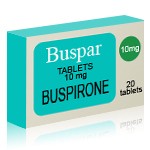
Buspar (Buspirone 5 mg / 10 mg) represents the foundational non-benzodiazepine anxiolytic therapy - the reference azapirone class medication providing effective generalized anxiety disorder (GAD) treatment without sedation, dependence risk, or cognitive impairment associated with benzodiazepines. Originally developed by Bristol-Myers Squibb and FDA-approved as BuSpar in 1986, buspirone established a novel therapeutic approach to anxiety management through selective serotonin 5-HT1A receptor partial agonism rather than GABA receptor modulation. Buspar on rxshop.md is manufactured by Intas Pharmaceuticals Ltd - Indian pharmaceutical company with WHO-GMP certification, US FDA-inspected manufacturing facilities, and established mental health and neurology product portfolio serving global markets.
Buspirone is a selective serotonin 5-HT1A receptor partial agonist with additional weak dopamine D2 receptor antagonism. Unlike benzodiazepines that provide rapid anxiolytic effect through GABA-A receptor modulation, buspirone works through gradual serotonergic system modulation. First, buspirone binds hippocampal and raphe nucleus 5-HT1A receptors as partial agonist. Second, this modulates serotonin neurotransmission throughout limbic and cortical regions. Third, buspirone reduces anxiety symptoms without sedation - patients remain fully alert. Fourth, buspirone provides no dependence potential and no withdrawal syndrome upon discontinuation. Fifth, buspirone requires gradual onset of therapeutic effect - initial improvement typically within 1-2 weeks, maximum effect within 4 weeks.
Buspar serves comprehensive anxiety indications with primary FDA approval for generalized anxiety disorder (GAD). Common off-label uses include anxiety-depression combinations as adjunctive therapy, SSRI-augmentation in treatment-resistant depression, premenstrual syndrome mood symptoms, and anxiety in elderly patients where benzodiazepine risks (falls, cognitive impairment, dependence) are concerning. Buspar distinctive advantages include no sedation, no cognitive impairment, no motor coordination effects, no dependence potential, no cross-tolerance with benzodiazepines, and no withdrawal syndrome.
Buspar is available in two dose strengths - 5 mg and 10 mg tablets - each in 100-pill pack sizes providing extended monthly supply for continuous therapy management. The dual-strength availability enables flexible titration from starting 5 mg twice daily through standard maintenance 10-15 mg twice daily up to maximum 30 mg twice daily. Contraindicated in concurrent MAOI therapy (2-week separation required), severe hepatic or renal impairment, and hypersensitivity to buspirone. Requires 2-4 weeks for full therapeutic effect - patient education essential for expectations.
Free prescription
Discrete packaging
Have questions?
Quality Assurance

- Anxiety Symptoms Management: Treatment of persistent anxiety symptoms including worry tension irritability and restlessness;
- Non-Benzodiazepine Alternative: Alternative to benzodiazepine therapy without sedation dependence or cognitive impairment concerns;
- Elderly Anxiety Treatment: Preferred anxiolytic in elderly patients avoiding benzodiazepine risks including falls and cognitive impairment;
- Anxiety with Depression Off Label: Off-label adjunctive therapy for mixed anxiety-depression syndromes with SSRI augmentation potential;
- SSRI Augmentation Off Label: Off-label augmentation therapy for SSRI-resistant depression through serotonin receptor modulation;
- Chronic Anxiety Long Term: Long-term therapy for chronic anxiety without dependence risk unlike benzodiazepines;
- Anxiety Substance Abuse History: Preferred anxiolytic in patients with substance abuse history due to non-addictive profile;
- Panic Symptom Adjunct Off Label: Off-label adjunctive therapy for panic disorder symptoms as adjunct to SSRIs;
- PMS Mood Symptoms Off Label: Off-label use for premenstrual mood symptoms including irritability and anxiety;
- Social Anxiety Adjunct Off Label: Off-label adjunctive therapy for social anxiety disorder as adjunct to SSRIs;
- Anxiety Cardiovascular Patients: Suitable anxiolytic in cardiac patients without cardiovascular concerns;
- Anxiety Respiratory Disease: Preferred anxiolytic in COPD and respiratory disease avoiding benzodiazepine respiratory depression;
- Anxiety with Cognitive Concerns: Suitable therapy for anxiety patients where cognitive preservation is important;
- Occupational Safety Requirements: Anxiety therapy for patients requiring cognitive alertness for occupational safety (drivers, pilots, machinery);
- 5-HT1A Partial Agonist Therapy: Serotonergic anxiolytic therapy through selective 5-HT1A receptor partial agonism mechanism;
- Anxiety Fall Risk Elderly: Preferred anxiolytic in elderly with fall risk avoiding benzodiazepine coordination effects;
- Anxiety with Sleep Preservation: Anxiety therapy without sedation preserving normal sleep architecture and alertness;
- Azapirone Class Anxiolytic: First-in-class azapirone anxiolytic with distinctive serotonin receptor mechanism;
- Chronic GAD Maintenance: Long-term maintenance therapy for chronic generalized anxiety disorder without dependence.
- No Sedation: Unique advantage over benzodiazepines - patients remain fully alert without cognitive impairment;
- No Dependence Potential: Non-addictive - no development of tolerance dependence or drug-seeking behavior over time;
- No Withdrawal Syndrome: Can be discontinued without withdrawal symptoms unlike benzodiazepines requiring gradual taper;
- No Cognitive Impairment: Preserves memory concentration and cognitive function unlike benzodiazepines;
- No Motor Coordination Effects: No impairment of driving ability or machinery operation unlike benzodiazepines;
- Preserved Sleep Architecture: Does not affect REM sleep or sleep quality unlike benzodiazepines;
- Safe Cardiovascular Profile: No significant cardiovascular effects making suitable for cardiac patients;
- Safe Respiratory Profile: No respiratory depression unlike benzodiazepines - suitable for COPD patients;
- Elderly Patient Suitable: Preferred anxiolytic in elderly avoiding benzodiazepine fall and cognitive risks;
- Substance Abuse History Safe: Suitable for patients with addiction history due to non-addictive profile;
- Occupational Safety Compatible: Compatible with occupations requiring alertness including driving and machinery operation;
- Long Term Therapy Suitable: Well-suited for chronic anxiety requiring long-term treatment without tolerance concerns;
- Two Strength Dosing Flexibility: 5 mg and 10 mg tablets enable individualized titration from starting through maximum doses;
- Oral Tablet Convenience: Simple oral daily administration in convenient tablet formulation;
- Original BMS Brand Heritage: Bristol-Myers Squibb FDA-approved 1986 with over 35 years continuous clinical use;
- Intas Manufacturing Quality: WHO-GMP and US FDA-inspected Indian manufacturer providing bioequivalent generic quality;
- Effective for GAD: FDA-approved primary indication with established efficacy in generalized anxiety disorder;
- Cost Effective Anxiolytic: More affordable than newer anxiolytics with established safety profile over decades;
- Better Quality of Life: Effective anxiety management without side effects of alternative therapies substantially improves quality of life.
Generic Buspar (Buspirone 5 mg) Medication guide:
Buspar (Buspirone 5 mg / 10 mg) represents the foundational non-benzodiazepine anxiolytic therapy - the reference azapirone class medication providing effective generalized anxiety disorder (GAD) treatment without sedation, dependence risk, or cognitive impairment associated with benzodiazepines. Originally developed by Bristol-Myers Squibb and FDA-approved as BuSpar in 1986, buspirone established a novel therapeutic approach to anxiety management through selective serotonin 5-HT1A receptor partial agonism rather than GABA receptor modulation. Buspar on rxshop.md is manufactured by Intas Pharmaceuticals Ltd - Indian pharmaceutical company with WHO-GMP certification and US FDA-inspected manufacturing facilities. This comprehensive medication guide covers azapirone class pharmacology, serotonin 5-HT1A partial agonism mechanism, all approved and off-label indications, comprehensive dosing protocols with titration, managing onset delay expectations, contraindications including MAOI interaction, drug interactions, pregnancy considerations, and long-term therapy considerations for chronic anxiety management.

💊 Introduction to Buspar
Buspar is a prescription oral medication containing buspirone hydrochloride as its active ingredient in two dose strengths (5 mg and 10 mg) as oral tablets. Buspirone is a first-in-class azapirone anxiolytic - a novel chemical class distinct from benzodiazepines, SSRIs, and tricyclic antidepressants. Buspirone works through selective serotonin 5-HT1A receptor partial agonism providing anxiolytic effect through serotonergic system modulation rather than GABA receptor modulation used by benzodiazepines.
Buspirone was originally developed by Bristol-Myers Squibb (BMS) and received FDA approval as BuSpar in 1986 for treatment of anxiety disorders. This introduction represented a significant advance in anxiety therapy providing the first effective anxiolytic without benzodiazepine-associated risks of sedation, dependence, tolerance, withdrawal syndrome, and cognitive impairment. Bristol-Myers Squibb marketed BuSpar for decades before generic buspirone became widely available following patent expiration establishing the foundation for modern non-benzodiazepine anxiolytic therapy.
The Buspar brand available on rxshop.md is manufactured by Intas Pharmaceuticals Ltd - established Indian pharmaceutical company with global operations, WHO-GMP certification, US FDA-inspected manufacturing facilities, EU-GMP certification, and comprehensive mental health and neurology product portfolio serving international markets. Intas Pharmaceuticals produces bioequivalent generic buspirone with quality standards supporting equivalent clinical effects to original brand formulation.
Buspar occupies a distinctive position in anxiolytic therapy as the primary non-benzodiazepine alternative for generalized anxiety disorder. Key advantages over benzodiazepine therapy include no sedation, no cognitive impairment, no motor coordination effects, no dependence potential, no tolerance development, no withdrawal syndrome, no cross-tolerance with benzodiazepines, and compatibility with occupational alertness requirements. These advantages make buspirone particularly valuable for elderly patients, patients with substance abuse history, patients requiring occupational alertness, and patients requiring long-term chronic anxiety management.
Buspar requires patient education about delayed onset of therapeutic effect. Unlike benzodiazepines that provide immediate anxiolytic effect within hours, buspirone requires 1-2 weeks for initial improvement and 4 weeks for maximum therapeutic effect. This gradual onset reflects the serotonergic mechanism requiring receptor adaptation. Patients must understand this delayed onset to avoid premature discontinuation before full therapeutic effect develops.
🏭 Intas Pharmaceuticals Manufacturer
Intas Pharmaceuticals Credentials
Intas Pharmaceuticals Ltd credentials:
- Established Indian pharmaceutical manufacturer founded in 1976
- Global operations in over 85 countries worldwide
- WHO-GMP certification - highest quality manufacturing standards
- US FDA-inspected facilities serving American regulatory market
- EU-GMP certification serving European market
- MHRA UK approval for United Kingdom distribution
- Multiple manufacturing facilities across India
- Comprehensive mental health portfolio including anxiolytics and antidepressants
- Established neurology and psychiatry product lines
- Top 10 Indian pharmaceutical company by revenue
Manufacturing Quality Standards
Intas Pharmaceuticals produces Buspar generic buspirone with rigorous quality control ensuring bioequivalent buspirone content per tablet at each strength (5 mg and 10 mg), pharmaceutical-grade excipients, batch-to-batch consistency, stability testing for shelf-life reliability, and compliance with international pharmacopeia standards. The Intas manufacturing infrastructure provides consistent quality supporting equivalent clinical effects to original brand BuSpar formulation for mental health therapy applications worldwide.
📜 Bristol-Myers Squibb Brand Heritage
BuSpar Historical Development
| Year | Development Milestone |
|---|---|
| 1972 | Buspirone first synthesized by Mead Johnson Pharmaceutical Research |
| 1970s-1980s | Clinical development of buspirone as first non-benzodiazepine anxiolytic |
| 1986 | FDA approval of BuSpar by Bristol-Myers Squibb for anxiety disorders |
| 1990s | Establishment as reference non-benzodiazepine anxiolytic |
| 2000s | Off-label uses expanded including SSRI augmentation for depression |
| 2001 | BuSpar patent expiration - generic buspirone became widely available |
| Present Day | Over 35 years continuous clinical use - reference azapirone anxiolytic |
BuSpar Significance in Psychiatry
BuSpar introduction in 1986 represented a paradigm shift in anxiety therapy. Before buspirone, benzodiazepines were the primary anxiolytic option despite significant limitations including dependence risk, sedation, cognitive impairment, and withdrawal syndrome. Buspirone provided the first effective alternative without these limitations through novel serotonergic mechanism. Over 35 years of continuous clinical use has established buspirone as reference non-benzodiazepine anxiolytic with well-documented safety profile particularly valuable for populations at higher risk from benzodiazepine adverse effects.

🧠 Understanding Anxiety Disorders
Generalized Anxiety Disorder (GAD)
Generalized Anxiety Disorder overview:
- Definition: Excessive worry and anxiety about multiple events lasting 6+ months
- Prevalence: Approximately 3-5 percent of adults during lifetime
- Female predominance: Twice as common in women vs men
- DSM-5 diagnostic criteria: Excessive worry more days than not with associated symptoms
- Physical symptoms: Restlessness, fatigue, muscle tension, sleep disturbance
- Cognitive symptoms: Difficulty concentrating, irritability, catastrophizing
- Impact: Substantial functional impairment affecting work relationships and daily life
- Chronic nature: Typically chronic requiring long-term management
Anxiety Disorder Spectrum
- Generalized Anxiety Disorder: Primary buspirone indication
- Panic Disorder: Recurrent panic attacks - SSRIs typically first-line
- Social Anxiety Disorder: Fear of social scrutiny - SSRIs first-line
- Specific Phobias: Focused fears - typically not requiring pharmacotherapy
- Post-Traumatic Stress Disorder: Trauma-related anxiety - specific treatments
- Obsessive-Compulsive Disorder: Compulsive behaviors - SSRIs first-line
🧬 Understanding Anxiolytic Class
Anxiolytic Categories
Anxiolytic medication classes:
- Benzodiazepines: Alprazolam (Xanax), lorazepam (Ativan), diazepam (Valium), clonazepam (Klonopin) - GABA modulation
- Azapirones: Buspirone (Buspar) - 5-HT1A partial agonism - non-sedating
- SSRIs: Sertraline, escitalopram, paroxetine - long-term first-line for many anxiety disorders
- SNRIs: Venlafaxine, duloxetine - alternative for GAD
- Beta-blockers: Propranolol - performance anxiety, physical symptoms
- Antihistamines: Hydroxyzine - short-term mild anxiety
- Pregabalin/Gabapentin: Alternative anxiolytics with distinct mechanism
Buspirone Position Within Anxiolytic Class
Buspirone occupies unique position as the first-in-class azapirone anxiolytic. Advantages include non-benzodiazepine mechanism avoiding GABA-related side effects, no sedation preserving cognitive function and alertness, no dependence potential enabling long-term use, no withdrawal syndrome upon discontinuation, no cross-tolerance with benzodiazepines, and suitable for populations at risk from benzodiazepine adverse effects. Limitations include delayed onset (1-4 weeks) requiring patient education, not effective for acute anxiety or panic attacks, and generally considered less potent than benzodiazepines for severe anxiety.
🧪 Chemistry of Buspirone
Chemical Structure
Buspirone hydrochloride has the chemical formula C21H31N5O2·HCl with molecular weight approximately 421.97 g/mol. Chemically, buspirone is an azaspirodecanedione derivative - structurally distinct from benzodiazepines, SSRIs, and tricyclic antidepressants. The compound features azaspirodecanedione core with distinctive spirocyclic ring system providing selective 5-HT1A receptor binding activity.
Structural Features
Buspirone structural features:
- Azaspirodecanedione core - distinctive azapirone class structure
- Piperazine ring - contributes to serotonin receptor binding
- Pyrimidine substituent - enhances receptor affinity
- No benzodiazepine structure - fundamentally different chemistry
- Small molecule - good oral bioavailability
- Hydrochloride salt - improves aqueous solubility
- Extensive first-pass metabolism - low oral bioavailability
🔬 Mechanism of Action
Serotonergic Mechanism
Buspirone mechanism at cellular level:
- 5-HT1A receptor binding: Buspirone binds serotonin 5-HT1A receptors with high affinity
- Partial agonist activity: Acts as partial agonist providing intermediate receptor activation
- Presynaptic autoreceptor effect: Reduces serotonin release in raphe nucleus initially
- Postsynaptic receptor effect: Direct activation of postsynaptic 5-HT1A receptors in hippocampus and cortex
- Serotonergic system modulation: Progressive adaptation of serotonin neurotransmission
- Dopamine D2 antagonism: Weak D2 receptor antagonism (secondary effect)
- Gradual therapeutic effect: Receptor adaptation over 1-4 weeks produces anxiolytic response
- No GABA activity: Unlike benzodiazepines - no direct GABA receptor effects
Distinct from Benzodiazepines
Buspirone mechanism fundamentally differs from benzodiazepines. Benzodiazepines enhance GABA neurotransmission at GABA-A receptors producing immediate sedation, anxiolysis, muscle relaxation, and anticonvulsant effects with substantial dependence potential. Buspirone modulates serotonin neurotransmission through 5-HT1A partial agonism producing gradual anxiolytic effect without sedation, dependence, or GABA-related effects. This mechanistic distinction explains all clinically relevant differences between the two classes.
🔬 Pharmacokinetic Profile
| Parameter | Value | Clinical Significance |
|---|---|---|
| Oral absorption | Rapid and complete | Predictable oral therapy |
| Oral bioavailability | Approximately 4 percent | Low - extensive first-pass metabolism |
| Time to peak (Tmax) | 40-90 minutes | Rapid absorption when taken correctly |
| Half-life | 2-3 hours | Short half-life requires twice-daily dosing |
| Food effect | May increase bioavailability | Take consistently with or without food |
| Protein binding | Approximately 95 percent | Highly protein bound |
| Metabolism | Hepatic CYP3A4 extensive | Significant drug interactions with CYP3A4 modulators |
| Active metabolites | 1-PP (1-pyrimidinylpiperazine) | Weak pharmacological activity |
| Elimination | Renal (primarily) and fecal | Mixed elimination pathways |
| Steady state | Within 2 days | Rapid steady state but delayed clinical effect |
| Onset of therapeutic effect | 1-2 weeks initial, 4 weeks maximum | Delayed onset - patient education essential |

🔄 Buspirone vs Benzodiazepines Comparison
| Feature | Buspirone (Buspar) | Benzodiazepines |
|---|---|---|
| Mechanism | 5-HT1A partial agonism | GABA-A receptor modulation |
| Onset of action | 1-4 weeks (gradual) | 30-60 minutes (immediate) |
| Sedation | None | Significant |
| Cognitive impairment | None | Present - memory and concentration |
| Motor coordination | Preserved | Impaired - fall risk |
| Dependence potential | None | High - physical and psychological |
| Tolerance development | None | Present with regular use |
| Withdrawal syndrome | None | Significant - potentially dangerous |
| Substance abuse risk | Low | High - controlled substance |
| Respiratory depression | None | Present - dangerous with opioids/alcohol |
| Elderly suitability | Preferred | Beers Criteria warning |
| Efficacy for acute anxiety | No | Yes - immediate effect |
| Efficacy for chronic GAD | Excellent | Effective but with risks |
🎯 Approved Indications

- Generalized Anxiety Disorder (GAD)
- Primary FDA indication for chronic excessive worry lasting 6+ months affecting multiple life domains. Standard dosing: 5 mg twice daily starting, escalate to 10-15 mg twice daily maintenance dose (30 mg daily total), maximum 30 mg twice daily (60 mg daily total).
- Anxiety Disorder Management
- Broad anxiety symptom management including worry, tension, irritability, sleep disturbance related to anxiety. First-line for patients requiring non-sedating anxiolytic therapy.
- Anxiety with Cognitive Preservation Requirements
- Preferred anxiolytic for patients requiring maintained cognitive function including students, professionals, drivers, machinery operators, and elderly at risk from benzodiazepine cognitive effects.
- Chronic Anxiety Long-Term Therapy
- Long-term chronic anxiety management without dependence risk, tolerance development, or withdrawal concerns unlike benzodiazepines. Suitable for years of continuous therapy.
- Anxiety in Substance Abuse History Patients
- Preferred anxiolytic in patients with alcohol, benzodiazepine, or other substance abuse history due to non-addictive profile. Standard dosing appropriate.
- Elderly Anxiety Treatment
- Preferred anxiolytic in elderly avoiding benzodiazepine risks including falls, cognitive impairment, and delirium. Start at lower doses (2.5-5 mg twice daily) with careful titration.
🌸 Off-Label Applications
Common off-label uses:
- SSRI augmentation for treatment-resistant depression: Add-on to inadequate SSRI response
- Anxiety-depression combinations: Adjunctive to antidepressant therapy
- Premenstrual syndrome mood symptoms: Irritability and anxiety cyclic symptoms
- Social anxiety disorder adjunct: Adjunct to SSRIs for residual symptoms
- Panic disorder adjunct: Not first-line but potential adjunctive role
- Sexual dysfunction from SSRIs: Some evidence for buspirone augmentation
- Bruxism (teeth grinding): Limited evidence for use
- Autism-related irritability: Off-label investigational use
👤 Ideal Patient Selection
Buspar most appropriate for:
- Adults with generalized anxiety disorder requiring pharmacotherapy
- Patients requiring non-sedating anxiolytic (occupational alertness requirements)
- Elderly patients avoiding benzodiazepine fall and cognitive risks
- Patients with alcohol or substance abuse history
- Patients requiring long-term chronic anxiety management
- Patients with respiratory disease avoiding benzodiazepine respiratory depression
- Patients preferring non-addictive anxiolytic therapy
- Patients accepting 1-4 week delayed onset of therapeutic effect
- Patients needing SSRI augmentation for depression (off-label)
- Cognitively demanding occupations (drivers, pilots, students)
- Patients experiencing benzodiazepine side effects or intolerance
- Patients accepting twice-daily dosing schedule
- Patients without concurrent MAOI therapy
🚫 Contraindications

Absolute Contraindications
- Concurrent MAOI therapy - severe hypertensive reactions risk - 2-week separation required
- Hypersensitivity to buspirone or tablet excipients
- Severe hepatic impairment - impaired metabolism
- Severe renal impairment - impaired elimination
- Concurrent linezolid or IV methylene blue - MAOI-like effects
MAOI Interaction Warning
CRITICAL: MAOI Interaction Warning
Concurrent use of buspirone with monoamine oxidase inhibitors (MAOIs) can cause severe hypertensive reactions and serotonin syndrome. Discontinue MAOI at least 14 days before starting buspirone. If discontinuing buspirone to start MAOI, allow at least 14 days washout. Also applies to linezolid and IV methylene blue which have MAOI-like activity.
Precautions
Use with caution in:
- Mild-moderate hepatic impairment: Reduced dose consideration
- Mild-moderate renal impairment: Dose adjustment may be needed
- Concurrent SSRI or SNRI use: Serotonin syndrome risk - monitor
- Concurrent CNS depressants: Additive effects possible
- Elderly patients: Start with lower doses
- Concurrent CYP3A4 inhibitors: Increased buspirone levels
- Concurrent CYP3A4 inducers: Reduced buspirone effectiveness
- Depression concerns: Buspirone not primary depression therapy
- Suicidal ideation: Monitor mental status
💉 Comprehensive Dosing Protocols
Standard Dosing Schedule
| Phase | Dose | Duration |
|---|---|---|
| Starting | 5 mg twice daily (10 mg total daily) | First 3-7 days |
| Titration Week 1-2 | 7.5-10 mg twice daily | Increase by 5 mg every 3-7 days as tolerated |
| Standard Maintenance | 10-15 mg twice daily (20-30 mg total daily) | Long-term therapy |
| Maximum Dose | 30 mg twice daily (60 mg total daily) | If inadequate response at standard dose |
| Elderly Starting | 2.5-5 mg twice daily | Gentle initiation with careful titration |
| Hepatic/Renal Impairment | Reduced dose - 2.5-5 mg twice daily | Individualized based on function assessment |
Administration Guidelines
- Take tablets whole with water
- Take consistently with or without food (choose one approach)
- Space doses evenly - typically morning and evening (8-12 hour intervals)
- Take at approximately same times each day
- Do not double dose if missed - resume next scheduled dose
- Continue therapy for prescribed duration - do not discontinue abruptly
- Avoid grapefruit and grapefruit juice - substantially increases buspirone levels
- Avoid excessive alcohol consumption
- Patient education about delayed onset of therapeutic effect essential
- Regular follow-up appointments for dose adjustment and monitoring
⏰ Managing Onset Delay
Managing patient expectations for delayed onset:
- Patient education: Explain buspirone requires 1-2 weeks for initial improvement
- Maximum effect timeline: Full therapeutic effect typically at 4 weeks
- Comparison to benzodiazepines: Not immediate relief - different mechanism
- Prevention of premature discontinuation: Encourage adherence during onset period
- Symptom tracking: Consider anxiety symptom tracking for objective improvement assessment
- Follow-up scheduling: Assessment appointment at 2-4 weeks recommended
- Combination consideration: Short-term benzodiazepine may bridge if severe acute anxiety
- Realistic expectations: Buspirone effective for chronic anxiety not acute panic
📊 Clinical Effectiveness Data
| Outcome | Response Data |
|---|---|
| GAD symptom reduction | Effective reduction of Hamilton Anxiety Scale scores comparable to benzodiazepines |
| Time to initial improvement | 1-2 weeks typical |
| Time to maximum effect | 4 weeks typical |
| Response rate at 4 weeks | Approximately 60-70 percent of GAD patients |
| Long-term efficacy | Sustained response over months and years without tolerance |
| SSRI augmentation | Modest improvement in treatment-resistant depression |
| Discontinuation success | Can be discontinued without withdrawal syndrome |
| Long-term safety | Over 35 years continuous clinical use with established profile |
⚠️ Side Effects

Common Side Effects
- Dizziness: Common - approximately 12 percent
- Nausea: Common - approximately 8 percent
- Headache: Common - approximately 6 percent
- Nervousness/excitability: Occasional - paradoxical reaction possible
- Lightheadedness: Common - typically transient
- Fatigue: Occasional
- Insomnia: Occasional
- Confusion: Uncommon
- Dry mouth: Occasional
- Blurred vision: Uncommon
- Muscle aches: Uncommon
- Numbness or tingling: Uncommon
- Restlessness: Uncommon
Serious Adverse Events
Seek immediate medical attention for:
- Signs of serotonin syndrome: Fever, agitation, tremor, sweating, altered mental status
- Severe allergic reactions: Angioedema, difficulty breathing
- Severe depression or suicidal thoughts
- Severe dizziness with fainting
- Signs of hypertensive crisis (with MAOI interaction)
- Signs of liver dysfunction: Jaundice, dark urine
- Severe skin reactions: Rash, blistering
- Chest pain
- Severe psychomotor agitation
🔄 Drug Interactions
| Drug/Substance | Interaction |
|---|---|
| MAOIs (phenelzine, tranylcypromine) | CONTRAINDICATED - severe hypertensive reactions - 14-day separation required |
| Linezolid | MAOI-like activity - avoid concurrent use |
| IV methylene blue | MAOI-like activity - avoid concurrent use |
| SSRIs and SNRIs | Serotonin syndrome risk - monitor closely |
| Grapefruit juice | Substantially increases buspirone levels via CYP3A4 inhibition - avoid |
| Ketoconazole, itraconazole | Strong CYP3A4 inhibition increases buspirone levels - reduce dose |
| Erythromycin, clarithromycin | CYP3A4 inhibition increases buspirone levels |
| Ritonavir | Substantially increases buspirone levels - dose reduction |
| Rifampicin | CYP3A4 induction reduces buspirone effectiveness |
| Phenytoin, carbamazepine | CYP3A4 induction reduces buspirone levels |
| St Johns Wort | Herbal enzyme induction reduces buspirone levels |
| CNS depressants (opioids, sedatives) | Additive CNS effects - use cautiously |
| Alcohol | Additive CNS effects - limit consumption |
🛡️ Special Populations
- Adults with GAD
- Primary target population. Comprehensive psychiatric evaluation before initiation. Address concurrent psychiatric conditions.
- Elderly Patients
- Preferred anxiolytic vs benzodiazepines. Start lower (2.5-5 mg twice daily). Careful titration. Enhanced fall prevention counseling.
- Substance Abuse History Patients
- Preferred non-addictive anxiolytic. Standard dosing appropriate. Coordinate with addiction medicine when relevant.
- Depression with Anxiety
- Buspirone alone not depression treatment. Combined with SSRI for augmentation. Monitor for serotonin syndrome.
- Occupational Alertness Requirements
- Preferred anxiolytic for drivers, pilots, machinery operators, students, and cognitive workers. No sedation preserving occupational function.
- Cardiovascular Disease Patients
- No significant cardiovascular concerns. Suitable for cardiac patients. Monitor for orthostatic effects in elderly.
- Respiratory Disease Patients
- Preferred anxiolytic in COPD, sleep apnea, or other respiratory conditions - no respiratory depression unlike benzodiazepines.
- Pregnancy
- Pregnancy Category B. Limited human data. Use only if benefits clearly outweigh risks. Non-pharmacological approaches preferred when possible.
- Breastfeeding
- Excreted in breast milk. Effects on infant not established. Use with caution during breastfeeding.
- Hepatic Impairment
- Severe hepatic impairment contraindicated. Mild-moderate impairment - reduce dose. Extensive hepatic metabolism.
- Renal Impairment
- Severe renal impairment contraindicated. Mild-moderate impairment - dose adjustment. Monitor renal function.
📦 Storage and Handling
- Store at room temperature 15-30°C (59-86°F)
- Protect from light and moisture
- Keep tablets in original packaging
- Keep out of reach of children and pets
- Do not use past expiration date
- Do not share medication with others
- Return unused medication to pharmacy for proper disposal
- Store in dry area - avoid humid bathrooms
👨⚕️ When to Contact Your Doctor
- Signs of serotonin syndrome: fever, agitation, tremor, sweating
- Severe allergic reactions: angioedema, breathing difficulty
- Severe depression or suicidal thoughts
- Severe dizziness with fainting
- Signs of hypertensive crisis (with MAOI interaction)
- Signs of liver dysfunction: jaundice, dark urine
- Severe skin reactions
- Chest pain
- Severe psychomotor agitation
- Inadequate response after 4 weeks at maximum dose
- Persistent side effects affecting daily activities
- Consideration of dose adjustment or therapy change
- Starting new medications potentially interacting
- Suspected pregnancy
- Time for scheduled follow-up appointments
- Discussion about therapy duration or discontinuation
🌟 Key Takeaways
Essential points about Buspar therapy:
- Buspar is Intas Pharmaceuticals generic buspirone at two strengths (5 mg and 10 mg)
- Original Bristol-Myers Squibb brand BuSpar - FDA-approved 1986
- Over 35 years continuous clinical use worldwide
- First-in-class azapirone non-benzodiazepine anxiolytic
- Azaspirodecanedione derivative - distinct chemistry from all other anxiolytics
- Works through selective serotonin 5-HT1A receptor partial agonism
- Weak dopamine D2 antagonism as secondary effect
- Primary FDA indication: Generalized Anxiety Disorder (GAD)
- Off-label uses: SSRI augmentation, PMS mood symptoms, anxiety with depression
- Key advantages over benzodiazepines: no sedation, no dependence, no withdrawal, no cognitive impairment
- Preferred anxiolytic in elderly, substance abuse history, occupational alertness needs
- Standard dosing: 5 mg twice daily starting, escalate to 10-15 mg twice daily maintenance
- Maximum dose: 30 mg twice daily (60 mg daily total)
- Take twice daily consistently with or without food
- DELAYED ONSET - 1-2 weeks initial, 4 weeks maximum effect
- Patient education about onset delay essential to prevent premature discontinuation
- Not effective for acute anxiety or panic attacks
- CRITICAL: MAOI contraindication - 14-day separation required
- Avoid grapefruit juice - substantially increases buspirone levels
- Serotonin syndrome risk with SSRIs, SNRIs, tramadol - monitor
- Contraindicated in severe hepatic or renal impairment
- Can be discontinued without withdrawal unlike benzodiazepines
Important Medical Disclaimer: This medication guide provides general information about Buspar (Intas Pharmaceuticals generic buspirone 5 mg and 10 mg tablets) and does not constitute individualized medical advice. Every patient situation is unique and requires evaluation by a psychiatrist, primary care physician, or qualified healthcare provider before starting anxiolytic therapy. Buspar requires comprehensive psychiatric evaluation to establish accurate anxiety diagnosis and rule out concurrent psychiatric conditions before therapy initiation. CRITICAL SAFETY: Absolutely contraindicated with concurrent monoamine oxidase inhibitor (MAOI) therapy including phenelzine, tranylcypromine, isocarboxazid, and selegiline due to severe hypertensive crisis risk - 14-day washout required between MAOI and buspirone. Also applies to linezolid and IV methylene blue with MAOI-like activity. Contraindicated in severe hepatic impairment, severe renal impairment, and hypersensitivity to buspirone. Serotonin syndrome risk with concurrent SSRIs, SNRIs, tramadol, triptans, or other serotonergic medications - monitor for symptoms including fever, agitation, tremor, sweating, and altered mental status. CYP3A4 metabolism creates significant drug interactions - avoid grapefruit juice, ketoconazole, itraconazole, erythromycin, clarithromycin, and ritonavir which substantially increase buspirone levels. Rifampicin, phenytoin, carbamazepine, and St Johns Wort reduce buspirone effectiveness through enzyme induction. CRITICAL DELAYED ONSET: Buspirone requires 1-2 weeks for initial improvement and 4 weeks for maximum therapeutic effect - patient education essential to prevent premature discontinuation. Not effective for acute anxiety, panic attacks, or immediate anxiety relief - benzodiazepines have immediate effect. Buspirone advantages over benzodiazepines include no sedation, no cognitive impairment, no dependence potential, no tolerance development, no withdrawal syndrome, and no cross-tolerance with benzodiazepines. Preferred anxiolytic in elderly patients, substance abuse history, cognitive alertness occupations, respiratory disease, and long-term chronic anxiety management. Report severe adverse reactions, serotonin syndrome symptoms, severe dizziness, suicidal ideation, or persistent inadequate response immediately. If you experience concerning symptoms contact your healthcare provider promptly. The information provided here should complement but never replace direct professional medical guidance from your psychiatrist or healthcare provider.
Buspar — Frequently Asked Questions
-
What is Buspar used for?
Buspar is primarily used to treat generalized anxiety disorder (GAD), helping to reduce symptoms such as fear, tension, irritability, dizziness, pounding heartbeat, and other physical symptoms of anxiety. -
How does Buspar work?
Buspar works by affecting neurotransmitters in the brain, particularly serotonin and dopamine, which are involved in anxiety and mood regulation. Unlike other anxiety medications, it does not have sedative or muscle relaxant properties. -
How long does it take for Buspar to work?
It may take one to two weeks to feel the initial effects of Buspar, with full benefits usually seen within 4 to 6 weeks of consistent use. -
Is Buspar a benzodiazepine?
No, Buspar is not a benzodiazepine. It belongs to a class of medications known as anxiolytics, which are specifically designed to treat anxiety without the sedative and addictive properties of benzodiazepines. -
Can Buspar be used for short-term anxiety relief?
Buspar is generally prescribed for long-term management of anxiety and is not typically used for immediate or short-term relief of acute anxiety symptoms. -
What are the common side effects of Buspar?
Common side effects include dizziness, nausea, headache, nervousness, lightheadedness, and excitement. Most side effects are mild and tend to diminish over time. -
Can Buspar cause withdrawal symptoms?
Buspar does not typically cause withdrawal symptoms and is considered to have a low risk of dependence.