Esophageal Cancer: Warning Signs, Who Needs an Urgent Endoscopy and How Nausea and Reflux From Treatment Are Managed


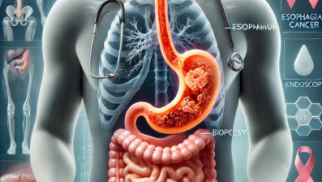
🍽️ Most people never think about the esophagus until food starts to stick on the way down. Trouble swallowing that slowly gets worse, together with weight loss you did not plan, is the classic warning sign of esophageal cancer, and it deserves a camera test within days or weeks, not months. 🔍 This guide explains the two main types of esophageal cancer and who is at risk, how the early signs differ from ordinary heartburn, which symptoms mean an urgent endoscopy, what the staging tests show, how the cancer is treated at each stage, and how the side effects that patients talk about most (nausea during chemotherapy, painful swallowing during radiotherapy and reflux after surgery) are managed with everyday medicines.
🧭 What the esophagus does and where cancer starts
📏 The esophagus is a muscular tube about 25 cm long that carries food from the throat to the stomach. It runs behind the windpipe and the heart, passes through the diaphragm and joins the stomach just below it. Its wall is built in layers, and cancer almost always begins in the thin inner lining, called the mucosa, before it grows outward into the muscle and then into nearby lymph nodes. That layered structure matters, because the depth of the tumour decides whether it can be removed through an endoscope, needs an operation, or needs chemotherapy and radiotherapy first.
⏳ A tumour that stays in the lining causes no symptoms at all. By the time food starts to stick, the tumour has usually narrowed the tube by more than half, which is why doctors pay so much attention to people at higher risk and to the first change in swallowing.
🔬 Squamous cell cancer and adenocarcinoma: two different diseases
🌍 Worldwide, most esophageal cancers are squamous cell carcinomas, which grow from the flat cells that line the upper and middle esophagus. In Western Europe, North America and Australia the picture has changed over the last 40 years: adenocarcinoma of the lower esophagus is now the more common type in these countries, driven by long-term reflux, Barrett esophagus and obesity. The two types share the name and the symptoms, but their causes, the part of the esophagus they affect and sometimes their treatment are different.
⚠️ Who is at higher risk
📋 Esophageal cancer is uncommon before the age of 50 and most people are diagnosed in their sixties or seventies. Smoking raises the risk of both types, and smoking combined with heavy alcohol use multiplies the risk of squamous cell cancer far more than either habit alone. The table lists the factors doctors ask about.
| 🔎 Risk factor | 🔬 Mainly linked to | 📝 Comment |
|---|---|---|
| Smoking | Both types | Risk falls slowly after quitting |
| Heavy alcohol use | Squamous cell | Strongest when combined with tobacco |
| Very hot drinks (above about 65 °C) | Squamous cell | Repeated heat injury to the lining; let tea cool a few minutes |
| Long-term reflux (GERD) | Adenocarcinoma | Years of acid and bile exposure |
| Barrett esophagus | Adenocarcinoma | The main known precursor |
| Obesity, especially around the waist | Adenocarcinoma | Raises pressure on the stomach and reflux |
| Achalasia, lye (caustic) injury, earlier chest radiotherapy | Squamous cell | Risk shows up many years later |
| Earlier head and neck cancer | Squamous cell | Shared cause in tobacco and alcohol |
📖 Head and neck cancers share many risk factors with squamous esophageal cancer; see head and neck cancer tumours and their treatment.
🔥 Reflux and Barrett esophagus: how big is the link?
🧪 Heartburn is very common and the great majority of people with reflux never develop cancer. The risk rises with frequent reflux over many years, and the main step on the way is Barrett esophagus, where the normal lining of the lower esophagus is replaced by a stomach-like or intestinal-like lining. Barrett esophagus without dysplasia turns into cancer in well under 1% of people per year, which is why it is watched with regular endoscopy rather than removed. The detail of surveillance intervals is covered in Barrett esophagus after an endoscopy.
💊 Acid-lowering tablets heal inflamed lining and control symptoms; how long healing takes on each grade of esophagitis is explained in reflux esophagitis grades A to D. Whether they prevent cancer in Barrett esophagus is still debated, so they do not replace endoscopy for people with warning signs.
🚨 Early warning signs
🔍 Early tumours are silent. When symptoms do appear, they tend to creep in over weeks and months, and people adapt without noticing: they cut meat smaller, drink more water with meals, choose soups. Any new trouble swallowing in an adult is a symptom to report, even if it seems mild or comes and goes.
🤔 Other signs include a cough when drinking, which can mean food or liquid is entering the airway, new indigestion that persists in someone over 55, persistent hiccups, and pain in the chest or between the shoulder blades. None of these proves cancer, and most have harmless causes, but together with weight loss they form a pattern that doctors take seriously.
📉 How swallowing trouble progresses
📊 A cancer narrows the tube from the inside, so the problem gets worse in a typical order. A tumour causes steady progression from solids to soft foods to liquids, while problems with the muscle of the esophagus usually affect solids and liquids from the start.
⏱️ This change often unfolds over two to four months. People commonly wait until they can only manage soups before they see a doctor. The earlier step, when only meat or bread sticks, is the best moment to ask for a test.
🧩 Other causes of trouble swallowing
📖 Most adults with difficulty swallowing do not have cancer. The only way to tell the causes apart with confidence is to look inside, but the pattern of symptoms gives the doctor useful clues.
| 🔎 Cause | 📋 Typical clues | 🧪 Usual test |
|---|---|---|
| Peptic stricture from reflux | Years of heartburn, slow trouble with solids, little weight loss | Endoscopy, dilation |
| Eosinophilic esophagitis | Younger adults, food getting stuck, allergies, asthma | Endoscopy with biopsies |
| Achalasia | Solids and liquids from the start, regurgitation at night | Manometry, barium swallow |
| Esophageal spasm | Squeezing chest pain, food sticking on and off | Manometry |
| Pill injury | Sudden pain after taking a tablet with little water | History, endoscopy |
| Cancer | Steady worsening, weight loss, age over 50, smoking | Endoscopy with biopsy |
📖 More detail on two of these conditions: eosinophilic esophagitis in adults and esophageal spasm that mimics a heart attack.
☑️ Who needs an urgent endoscopy
📆 Many health systems use fast-track rules so that people with alarm symptoms are seen within about two weeks. Trouble swallowing at any age is enough on its own to qualify.
🔭 What happens at the endoscopy and biopsy
📷 An upper endoscopy (gastroscopy) uses a thin flexible camera passed through the mouth. It takes about 10 to 15 minutes and is done with a throat spray, light sedation or both. It is the key test, because it lets the doctor see the lining and take tissue samples for the pathologist; a barium swallow X-ray can show a narrowing but cannot prove what it is.
🧬 When cancer is confirmed, the laboratory also tests the tissue for markers that guide treatment later, such as HER2 and PD-L1 in adenocarcinoma, and PD-L1 in squamous cell cancer. These results decide whether targeted drugs or immunotherapy are likely to help.
🗺️ Staging tests: how far has it spread?
🧮 After the diagnosis, a series of scans answers three questions: how deep the tumour goes, whether lymph nodes are involved, and whether it has spread to distant organs. The answers decide between endoscopic removal, surgery, chemoradiation or treatment aimed at control rather than cure.
📊 Stages in plain words
📝 Doctors use the TNM system (Tumour, Nodes, Metastasis) and group the results into stages 0 to 4. For patients, it helps to think of four broad groups, each with its own treatment aim.
Lining only; removal through the endoscope
Into the deeper wall, no nodes; surgery
Through the wall or nodes; treatment first, then surgery
Distant organs; control and symptom relief
🔪 Very early cancer: treatment through the endoscope
✨ When the cancer is confined to the lining, it can often be cut out through the endoscope with endoscopic mucosal resection or endoscopic submucosal dissection. This avoids major surgery and keeps the esophagus in place, with cure rates in carefully selected patients that compare well with an operation. Any remaining Barrett lining is usually treated afterwards with radiofrequency ablation, and the patient stays on a PPI and has regular checks with the endoscope for years, because new areas can appear.
🏥 Locally advanced cancer: treatment before surgery
🧭 For tumours that have grown through the wall or reached lymph nodes, surgery alone often leaves cancer behind. Giving chemotherapy, often with radiotherapy, before the operation shrinks the tumour and improves survival. The exact plan depends on the type of cancer, its position and the fitness of the patient, and it is agreed by a multidisciplinary team of surgeons, oncologists, radiologists and specialist nurses.
🩺 Esophagectomy: the operation and recovery
🔧 In an esophagectomy the surgeon removes the diseased part of the esophagus and nearby lymph nodes, then pulls the stomach up into the chest and joins it to the remaining esophagus. It is done through the abdomen and chest, often with keyhole or robotic techniques. It is a major operation, and recovery is measured in months, not weeks.
🍽️ Eating after the operation
🥣 The new stomach tube is smaller and lies in the chest, and the valve that kept stomach contents down is gone. Eating six small meals instead of three large ones is the single most useful change. Some people get dumping syndrome: sweating, faintness, cramps or diarrhoea soon after a sugary meal, or a low blood sugar feeling one to three hours later. Fewer sweet foods and drinks, more protein, and drinking between rather than with meals usually help.
🛏️ Reflux after esophagectomy and the role of acid tablets
🌙 Without the lower valve, acid and bile can flow back up freely when lying flat or bending forward. Night-time regurgitation and cough are common after surgery, and most surgeons advise sleeping with the head of the bed raised by about 30 degrees, or on a wedge pillow, for life. Acid-lowering tablets reduce the acid part of the reflux and protect the join, and many patients take a proton pump inhibitor (PPI) every day. They do not stop bile reflux, so positioning and meal timing still matter.
💡 Long-term PPI use is generally safe under medical review. Possible downsides include lower magnesium and vitamin B12 levels over years and a small rise in some gut infections. Your surgeon or oncologist, not the pharmacy shelf, should decide the dose after esophagectomy, because the right amount depends on symptoms and findings at follow-up endoscopy.
🤢 Nausea during chemotherapy and radiotherapy
💉 Nausea is one of the side effects patients fear most, and it is also one of the best controlled today. Anti-sickness medicines work best when they are taken on schedule before and after treatment, not only once vomiting starts. The chemotherapy used for esophageal cancer varies in how strongly it causes nausea: cisplatin is highly emetogenic, while carboplatin and oxaliplatin are moderate, and the anti-sickness plan is matched to the drug.
🏥 For highly emetogenic chemotherapy the hospital usually adds an NK1 blocker such as aprepitant and a short course of dexamethasone on the day of treatment, and sometimes low-dose olanzapine. Tablets taken at home should follow the written plan from the oncology team, since the right combination changes from cycle to cycle. Ondansetron can affect heart rhythm at high doses or with other QT-prolonging medicines, so the team should know about every medicine you take.
🧭 Which anti-sickness medicine for which kind of nausea
| 🤢 Situation | ✅ Usual first choice | ➕ Often added |
|---|---|---|
| Day of chemotherapy, first 24 hours | Ondansetron with dexamethasone | NK1 blocker for cisplatin |
| Delayed nausea, days 2 to 4 | Dexamethasone, NK1 blocker, metoclopramide | Olanzapine in some plans |
| Breakthrough nausea at home | Prochlorperazine or metoclopramide | Call the team if vomiting continues |
| Nausea during radiotherapy to the upper abdomen | Ondansetron before each session | Small, dry, bland snacks |
| Full quickly, slow stomach after surgery | Metoclopramide short course | Small meals, upright after eating |
| Anticipatory nausea before a cycle | Better control at earlier cycles | Relaxation, short-acting calming medicine |
📖 Repeated bouts of vomiting from other causes, and how ondansetron is used in them, are covered in cyclic vomiting syndrome.
🔥 Painful swallowing during radiotherapy
📆 Radiotherapy to the chest inflames the lining of the esophagus. Radiation esophagitis usually starts in the second or third week of treatment and settles over two to four weeks after the last session. It feels like a burning or a lump on swallowing, and it can make it hard to keep eating just when nutrition matters most.
🛠️ What usually helps during radiation esophagitis:
🔹 Pain relief taken regularly, often as liquids, about 20 to 30 minutes before meals.
🔹 An acid-lowering tablet such as Prilosec (Omeprazole), since acid makes the inflamed lining sting more.
🔹 Soft, moist, lukewarm food; avoid alcohol, spicy food, citrus, very hot drinks and dry crusts.
🔹 Nutritional drinks between meals if weight is falling.
🔹 Tell the team the same day if you cannot keep fluids down, as a feeding tube or a pause in treatment may be needed.
🧪 Oral thrush is also common during treatment and makes swallowing hurt more. White patches in the mouth or a sudden worsening of pain should be checked, because an antifungal medicine clears it quickly.
💊 Advanced cancer: control and comfort
🧭 When the cancer has spread to distant organs, treatment aims to slow it down, help the person live longer and keep swallowing possible. Modern drug combinations have improved survival in advanced disease, especially for tumours that carry the right markers.
🛠️ A self-expanding metal stent placed through an endoscope opens a blocked esophagus within a day or two and lets the person eat soft food again. Stents across the lower valve can cause strong reflux, so a daily PPI is usually prescribed with them. Food should be soft and well chewed and followed by a fizzy or warm drink to keep the stent clear.
⚖️ Keeping weight on through treatment
📉 Many people have already lost weight by the time of diagnosis, and treatment adds more strain. Losing muscle makes chemotherapy harder to tolerate and slows recovery from surgery, so nutrition is treated as part of the cancer plan, not an extra. A feeding tube placed into the small bowel during or before surgery is common and temporary.
🚭 Lowering the risk: smoking, alcohol and hot drinks
✅ Some risk factors cannot be changed, but the biggest ones can. Stopping smoking lowers the risk of both types of esophageal cancer and also makes surgery and chemotherapy safer; patients who stop before an operation have fewer chest complications. Cutting down on alcohol, letting hot drinks cool for a few minutes, keeping a healthy waist and treating reflux complete the list.
Start 1 to 2 weeks before the quit date, 0.5 mg daily rising to 1 mg twice daily, usually for 12 weeks. Nausea is the most common side effect. Chantix (Varenicline)
150 mg once daily for 3 days, then twice daily, starting 1 to 2 weeks before quitting. Not for people with seizures or eating disorders. Zyban (Bupropion)
Counselling or a quit service roughly doubles the chance of success when combined with medicine
📖 How the quit-smoking medicines compare and how to use them: understanding smoking cessation aids. The benefits of drinking less are summed up in the most important benefits of giving up alcohol.
📈 Outlook: what survival depends on
📊 Esophageal cancer is a serious diagnosis, but survival figures have improved as treatment before surgery and immunotherapy have become standard. The single biggest factor is how far the cancer has spread at diagnosis. Fitness, response to treatment before surgery and the tumour markers also matter. Figures below are rounded five-year survival averages from large cancer registries and cannot predict an individual case.
🗿 Myths about esophageal cancer
🚑 When to see a doctor
⛔ Go to emergency care now if:
🔹 Food is stuck and you cannot swallow your own saliva.
🔹 You vomit blood or material that looks like coffee grounds, or pass black, tarry stools.
🔹 You have chest pain with breathlessness, sweating or pain spreading to the arm or jaw.
🔹 During treatment you have a fever of 38 °C or more, or cannot keep fluids down for a day.
🩺 Book a prompt appointment if: swallowing has become harder over weeks, you are losing weight without trying, your voice has been hoarse for more than three weeks, or reflux keeps returning despite treatment.
📖 Coughing or chest infections in someone with swallowing trouble can mean food is going into the lungs; see aspiration pneumonia in older adults. Unplanned weight loss has many causes besides cancer, and a doctor visit with a weight record and a list of symptoms is the fastest way to sort them out.
❓ Frequently asked questions
What is usually the first sign of esophageal cancer?
Most often it is trouble swallowing solid food such as bread or meat, which slowly gets worse, often with weight loss. Early tumours usually cause no symptoms at all.
Can heartburn turn into esophageal cancer?
Most people with heartburn never get cancer. Frequent reflux over many years can lead to Barrett esophagus, which carries a small yearly risk of adenocarcinoma and is monitored with endoscopy.
Which test diagnoses esophageal cancer?
An upper endoscopy with biopsy. It lets the doctor see the lining and take tissue samples. Scans such as CT and PET then show whether it has spread.
Who should have an urgent endoscopy?
Anyone with new or worsening difficulty swallowing, and people aged 55 or over with weight loss plus reflux, indigestion or upper abdominal pain. Vomiting blood or black stools also need prompt assessment.
Can a PPI hide esophageal cancer?
A PPI can ease reflux symptoms even when a tumour is present, so feeling better on tablets does not rule out cancer. Alarm signs still need an endoscopy.
Is esophageal cancer curable?
Yes, when found early. Very early tumours can be removed through the endoscope, and many locally advanced tumours are cured with chemotherapy or chemoradiation followed by surgery.
How is nausea from chemotherapy for esophageal cancer controlled?
With anti-sickness medicines taken on schedule, such as ondansetron and dexamethasone, often with an NK1 blocker for cisplatin. Prochlorperazine or metoclopramide are used for breakthrough nausea.
Why do I have reflux after an esophagectomy?
The operation removes the valve between the esophagus and stomach. Sleeping with the head raised, small meals and a daily PPI usually keep it under control.
Why does swallowing hurt during radiotherapy?
Radiation inflames the lining of the esophagus. It usually begins in week 2 or 3 and settles a few weeks after treatment ends. Regular pain relief, acid-lowering tablets and soft food help.
How can I lower my risk of esophageal cancer?
Stop smoking, limit alcohol, let very hot drinks cool, keep a healthy weight and get frequent reflux assessed. People with Barrett esophagus should keep their surveillance appointments.
📑 Sources and editorial
- 📘 National and international clinical guidelines on the diagnosis and management of esophageal and gastroesophageal junction cancer
- 📆 Primary care referral guidance for suspected upper gastrointestinal cancer
- 🔬 Gastroenterology society guidance on Barrett esophagus, surveillance and endoscopic therapy
- 💉 Randomised trials of chemoradiation and perioperative chemotherapy before esophagectomy, and of immunotherapy in esophageal cancer
- 🤢 Oncology guidelines on the prevention of chemotherapy and radiotherapy induced nausea and vomiting
- 📊 Population cancer registry data on incidence and survival
- 💊 Product information for ondansetron, metoclopramide, prochlorperazine, proton pump inhibitors, famotidine, varenicline and bupropion
- 📖 Related reading: Barrett esophagus after an endoscopy, reflux esophagitis grades A to D, eosinophilic esophagitis, esophageal spasm, smoking cessation aids
- 🛒 Related products: Zofran (Ondansetron), Compazine (Prochlorperazine), Maxolon (Metoclopramide), Prilosec (Omeprazole), Nexium (Esomeprazole), Protonix (Pantoprazole), Pepcid (Famotidine), Chantix (Varenicline)
- 🩺 RXshop Editorial Team — reviewed by Emily Chen, MD — Internal medicine