Norovirus: Why Hand Gel Does Not Stop It

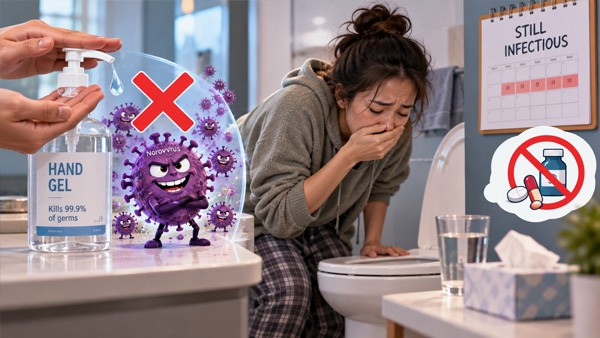
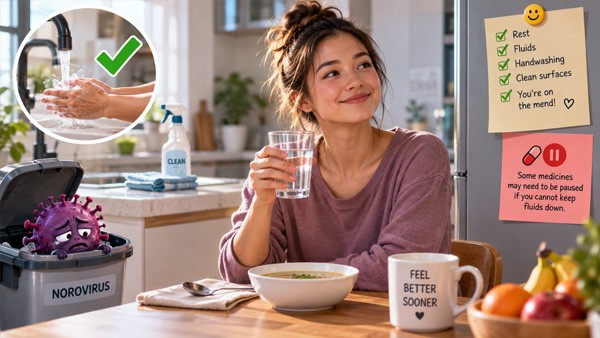
Norovirus is short, violent and almost impossible to contain, and the reasons for the last part are not obvious. Two of the things people do most conscientiously to stop it spreading — using hand gel, and returning to work as soon as they feel better — do not work, and one of them actively helps it move.
There is also a set of instructions about medication during this illness that very few people have been given and that matters considerably more than anything else on this page.
🧫 The number that explains the whole thing. Most infections need a substantial dose of an organism to take hold. Norovirus needs, by some estimates, fewer than twenty individual virus particles.
An infected person sheds them in the billions. So the quantity required to infect somebody else is invisibly, unimaginably small — a trace on a door handle, a tap, a phone, a shared bowl of crisps. That single fact accounts for why it tears through households, schools, hospitals and ships in days, and why ordinary hygiene that works against other stomach bugs fails here.
🧼 The hand gel problem
Alcohol-based hand sanitiser works by dissolving the fatty envelope that surrounds many viruses. Norovirus does not have one. It is a bare, tough protein shell, and alcohol does very little to it.
Soap and water is the answer, and the mechanism is different from killing. Soap lifts the particles off the skin and running water carries them away physically. It is removal rather than destruction, which is why the twenty seconds and the attention to fingertips, thumbs and nail beds genuinely matter rather than being ritual.
This is worth knowing precisely because hand gel is now the default everywhere. Someone conscientiously gelling their hands after caring for a sick relative, and then making a sandwich, has done almost nothing to protect themselves. The same limitation applies to several other stomach bugs, so the habit is worth carrying generally: after any vomiting or diarrhoea illness, soap and water rather than gel.
📅 The timeline that catches people out
| Stage | Timing | What matters |
|---|---|---|
| After exposure | 12 to 48 hours | No symptoms yet. This is why the source of an outbreak is so hard to identify |
| The illness | Usually 12 to 72 hours | Sudden onset, often projectile vomiting, watery diarrhoea, cramps, aching, sometimes a low fever |
| Feeling better | Day 2 to 4 | Still highly infectious. This is where the mistake is made |
| The 48-hour rule | 48 hours after the last episode | The standard exclusion period for work, school and visiting. It is not excessive caution |
| Continued shedding | Up to two weeks or more | Reduced but not zero, which is why careful handwashing continues well after recovery |
There is a second transmission route that explains outbreaks in enclosed places. Vomiting aerosolises the virus. Fine droplets carry through the air and settle on surfaces several metres away, where the virus survives for days. An episode in a corridor or a restaurant contaminates a considerably larger area than the visible mess, which is why professional cleaning protocols cover so much ground around the site.
🚨 The medicines to stop, and the one to increase
🔴 If you take regular medication, some of it becomes dangerous while you are vomiting or losing fluid, and almost nobody is told this in advance. Dehydration reduces blood flow to the kidneys, and several common drugs become harmful in that state.
Pause while you are unwell and unable to keep fluids down, then restart when eating and drinking normally for 24 to 48 hours:
- Metformin — risk of a serious build-up of acid in the blood when dehydrated
- Newer diabetes tablets whose names end in gliflozin — can cause a dangerous metabolic state even when blood sugar looks normal, which is why it gets missed
- Blood pressure medicines ending in pril or sartan — risk of acute kidney injury
- Water tablets — they remove fluid you are already losing
- Anti-inflammatory painkillers — add to the kidney risk
- Lithium — dehydration raises the level into the toxic range, and the early signs are tremor, vomiting and confusion, which look exactly like the illness itself
The exceptions, which run the other way and matter just as much:
- Steroid tablets must be increased, not stopped — the body needs more during illness and cannot produce it. If you cannot keep them down, you need an injection urgently rather than a wait-and-see
- Insulin in type 1 diabetes is never stopped, even when not eating. The dose may change; it does not go to zero
If you are unsure which of your medicines fall into which group, a pharmacist can tell you in two minutes — and it is worth asking before you are ill rather than at three in the morning.
💧 Getting fluid in when nothing stays down
There is no treatment for the virus. Everything that matters is about fluid, and the technique makes more difference than the drink.
Small and frequent beats large and occasional. A few sips every five to ten minutes is absorbed; a glassful triggers another episode of vomiting and loses more than it delivers. It feels agonisingly slow and it works.
Plain water alone is not ideal. Absorption of water across the gut wall is driven by sodium and glucose moving together, so a solution containing both is taken up far more efficiently than water. That is the entire principle behind rehydration salts, and it is why they outperform anything improvised.
Sports drinks are the wrong shape — too much sugar, too little salt — and very sugary drinks can worsen diarrhoea by drawing water into the bowel. Fruit juice has the same problem. Rehydration sachets are inexpensive and worth keeping in a cupboard before they are needed, since nobody wants to go out for them mid-illness.
Eat when you feel able, and do not wait for full recovery. Plain starchy food is usually tolerated first. Prolonged fasting delays gut recovery rather than helping it, and the old advice to starve is out of date.
💊 What helps, and what does nothing
Anti-sickness medication has a specific and useful role here, which is not simply comfort. If vomiting can be stopped for a few hours, oral rehydration becomes possible, and that is frequently the difference between managing at home and needing a drip. Ondansetron is the usual choice because it works well for this and, unlike the older anti-sickness drugs, does not cause the muscle spasms and restlessness described in the article on that drug family. It can cause constipation and headache.
Anti-diarrhoeal medication is a more qualified matter. In an otherwise healthy adult with watery diarrhoea and no fever, short-term use is reasonable and can make a journey or a shift survivable. It should not be used where there is blood in the stool or a high fever, since those suggest a bacterial infection that the body is trying to clear, and it is not recommended for children.
Antibiotics do nothing at all. Norovirus is a virus, and taking an antibiotic for it delivers no benefit while disturbing the gut bacteria described in the article on the intestinal flora — which raises the risk of a considerably worse infection afterwards. This matters because a stomach bug is one of the situations where people most often reach for a leftover course.
There is no antiviral and no vaccine in general use, though vaccines are in development.
🧹 Cleaning it out of the house
The virus survives on surfaces for days to weeks and resists many ordinary cleaning products. Two things are needed.
A chlorine bleach solution on hard surfaces — door handles, taps, light switches, toilet flush, remote controls, phones, bannisters. Detergent alone removes some of it; bleach is what reliably inactivates it. Ventilate while you work.
Laundry at the hottest temperature the fabric allows, washed separately, and handled without shaking, since shaking contaminated bedding puts particles into the air.
Beyond that: one designated bathroom for the ill person where possible, no shared towels, and no food preparation by anyone who has been ill until 48 hours clear — a rule that exists because food handlers have caused a great many outbreaks by returning while feeling perfectly well.
🩹 When it is something else
Norovirus is short and self-limiting. Features that do not fit deserve attention rather than patience.
- Blood in the stool — not norovirus
- High fever with severe abdominal pain
- Diarrhoea lasting beyond three or four days, or vomiting beyond two
- Recent antibiotics — raises the possibility of a specific and serious bowel infection
- Recent travel abroad
- Symptoms in someone with a weakened immune system, where the illness can be prolonged and severe
- Severe pain concentrated in one area rather than generalised cramping
🩺 When to seek help
- No urine passed for eight to twelve hours, or very dark urine — significant dehydration
- Dizziness or fainting on standing, confusion, or unusual drowsiness
- Unable to keep any fluid down for more than a few hours
- A baby with no wet nappies, no tears, or a sunken soft spot — urgent
- Blood in vomit or stool
- Anyone on steroid tablets who cannot keep them down — urgent, an injection is needed
- Anyone with type 1 diabetes who is vomiting — do not stop insulin, and seek advice early
- Anyone taking lithium — dehydration can push the level into the toxic range
- Older adults and those with kidney or heart conditions — a lower threshold for asking, since dehydration is less well tolerated
Anti-sickness treatment is stocked in the nausea and vomiting category, including Zofran (ondansetron), which stops vomiting long enough for fluids to be taken and carries no risk of the movement effects associated with older anti-sickness drugs. Compazine and Maxolon also treat sickness but both act on dopamine and both carry those effects. None of these treats the infection, which resolves on its own — the fluid is the treatment.
❓ Frequently asked questions
Does hand sanitiser kill norovirus?
Not effectively. Alcohol gels work by dissolving the fatty envelope around many viruses, and norovirus does not have one — it is a bare, tough protein shell. Soap and water is the answer, and it works by physically lifting particles off the skin and washing them away rather than by killing them. That is why the twenty seconds and the attention to fingertips and nail beds genuinely matter.
How long am I contagious?
Longer than you feel ill. The standard rule is to stay away from work, school and visiting for 48 hours after the last episode of vomiting or diarrhoea, and reduced shedding continues for up to two weeks or more afterwards. Returning as soon as you feel better is the single commonest way outbreaks keep going, particularly where food is handled.
Why does it spread so fast?
Because the infectious dose is tiny — by some estimates fewer than twenty virus particles — while an infected person sheds billions. A trace on a tap or a phone is enough. Vomiting also aerosolises the virus, so fine droplets settle on surfaces several metres away, where it survives for days. Ordinary hygiene that works against other stomach bugs is simply not enough here.
Should I stop my regular medication?
Some of it, temporarily. Metformin, diabetes tablets ending in gliflozin, blood pressure medicines ending in pril or sartan, water tablets, anti-inflammatory painkillers and lithium all become risky while you are dehydrated, and are usually paused until you have been eating and drinking normally for a day or two. But steroid tablets go up rather than down, and insulin in type 1 diabetes is never stopped. Ask a pharmacist which of yours is which.
What should I drink?
Rehydration salts, in small frequent sips rather than glassfuls. Water absorption across the gut wall depends on sodium and glucose moving together, so a solution containing both is taken up far more efficiently than plain water. Sports drinks have too much sugar and too little salt, and very sugary drinks including fruit juice can worsen diarrhoea. Sachets are cheap and worth keeping before you need them.
Will antibiotics help?
No. It is a virus, so antibiotics have nothing to act on, and taking one disturbs the gut bacteria in a way that raises the risk of a considerably worse bowel infection afterwards. A stomach bug is one of the situations where people most often reach for a leftover course, which makes this worth saying plainly. There is also no antiviral and no vaccine in general use.
Can I take something to stop the vomiting?
Yes, and it has a real purpose beyond comfort — stopping vomiting for a few hours makes oral rehydration possible, which is often the difference between managing at home and needing a drip. Ondansetron is the usual choice because it works well and does not cause the muscle spasms and restlessness associated with older anti-sickness drugs. It can cause constipation and headache.
What about anti-diarrhoea tablets?
Reasonable for short-term use in an otherwise healthy adult with watery diarrhoea and no fever. Not to be used where there is blood in the stool or a high fever, since those point to a bacterial infection the body is trying to clear, and not recommended for children. They treat the inconvenience rather than the illness, which is a legitimate goal for a working day but not a substitute for fluid.
How do I clean the house properly?
Chlorine bleach solution on hard surfaces — handles, taps, switches, flush, phones, bannisters — because detergent alone does not reliably inactivate it and the virus survives on surfaces for days to weeks. Wash laundry at the hottest temperature the fabric allows, separately, and without shaking it, since shaking puts particles into the air. Use one bathroom for the ill person where possible and no shared towels.
When is it not norovirus?
Blood in the stool is the clearest sign it is something else. So are a high fever with severe abdominal pain, diarrhoea lasting beyond three or four days, pain concentrated in one area rather than generalised cramping, recent travel abroad, and recent antibiotics, which raise the possibility of a specific and serious bowel infection. Symptoms in someone immunosuppressed also need assessment rather than waiting.
📑 Sources and editorial
- Literature on norovirus infectious dose, viral shedding duration and environmental persistence
- Evidence on the reduced efficacy of alcohol-based hand sanitisers against non-enveloped viruses
- Public health guidance on exclusion periods following gastrointestinal illness
- Literature on aerosolised transmission during vomiting episodes and surface contamination radius
- Guidance on sick day rules for metformin, SGLT2 inhibitors, renin-angiotensin inhibitors, diuretics and NSAIDs during acute dehydrating illness
- Guidance on glucocorticoid dose increase during intercurrent illness and on insulin continuation in type 1 diabetes
- Literature on lithium toxicity precipitated by dehydration
- Evidence on oral rehydration solution composition and sodium-glucose co-transport
- Trial evidence for ondansetron in acute gastroenteritis and reduction of intravenous fluid requirement
- Guidance on loperamide use and contraindications, and on antibiotic-associated bowel infection
- Environmental cleaning guidance for norovirus, including chlorine-based disinfection
- Related reading: anti-sickness drugs and their effects, gut bacteria, steroids and sick day rules
- Related products: nausea and vomiting category
- RXshop Editorial Team — reviewed by Sarah Mitchell, PharmD, Clinical Pharmacist and Chief Editorial
Medical Disclaimer: The information in this article is for educational and informational purposes only and is not a substitute for professional medical advice, diagnosis, or treatment. Always seek guidance from a qualified healthcare provider with any questions you may have regarding a medical condition, and before starting, stopping or changing any medication.