Buy Arcoxia (Etoricoxib) Online — Merck COX-2 Selective NSAID for Osteoarthritis, Rheumatoid Arthritis, Ankylosing Spondylitis & Acute Gout

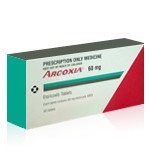
Arcoxia is the original brand-name formulation of Etoricoxib — a highly selective COX-2 inhibitor (Coxib) developed by Merck/MSD and one of the most prescribed NSAIDs internationally. Available since 2002 in Europe, Arcoxia is approved in 80+ countries worldwide (EU, UK, India, Asia, Latin America, Australia) for arthritis and acute pain management. Etoricoxib is NOT FDA-approved in the United States (the FDA declined approval based on cardiovascular safety concerns after the Vioxx withdrawal), but remains widely used globally as a cornerstone selective NSAID with a favorable GI tolerability profile vs non-selective NSAIDs.
The active ingredient is Etoricoxib, a highly selective COX-2 inhibitor (~106x more selective for COX-2 vs COX-1 — more selective than celecoxib). Etoricoxib inhibits prostaglandin synthesis at inflammation sites through selective COX-2 blockade, while largely sparing COX-1 which protects gastric mucosa. This selectivity explains the reduced GI side effect profile compared to non-selective NSAIDs (ibuprofen, naproxen, diclofenac). Long plasma half-life (~22 hours) supports convenient once-daily dosing.
Arcoxia is approved (in countries where licensed) for osteoarthritis, rheumatoid arthritis, ankylosing spondylitis, acute gouty arthritis, acute musculoskeletal pain, post-surgical and dental pain, and primary dysmenorrhea. Off-label uses include chronic low back pain, migraine pain (selected cases), renal colic pain, and various inflammatory conditions. Pediatric use is generally not approved.
The medication is available as Arcoxia 30 mg, 60 mg, 90 mg, and 120 mg tablets. Standard adult dosing by indication: osteoarthritis 30 mg once daily (max 60 mg), rheumatoid arthritis 60-90 mg once daily, ankylosing spondylitis 90 mg once daily, acute gouty arthritis 120 mg once daily for max 8 days, acute pain 90-120 mg once daily for max 8 days, primary dysmenorrhea 60-120 mg once daily.
Critical safety considerations include cardiovascular risk (MI, stroke — increased with COX-2 selectivity, particularly with prolonged high-dose use), GI risk (ulceration, bleeding — reduced vs non-selective NSAIDs but not eliminated), significant hypertension (more than other NSAIDs), edema and fluid retention, renal effects (avoid in renal impairment), hepatotoxicity, rare Stevens-Johnson syndrome, contraindication in third-trimester pregnancy, and significant drug interactions (warfarin, lithium, methotrexate, ACE inhibitors).
Free prescription
Discrete packaging
Have questions?
Quality Assurance


- Knee Osteoarthritis: For symptomatic knee osteoarthritis pain and inflammation;
- Hip Osteoarthritis: For symptomatic hip osteoarthritis;
- Hand Osteoarthritis: For hand osteoarthritis pain and stiffness;
- Rheumatoid Arthritis (RA): Approved for rheumatoid arthritis symptomatic relief (60-90 mg/day);
- Ankylosing Spondylitis (AS): Approved for ankylosing spondylitis pain and inflammation (90 mg/day);
- Acute Gouty Arthritis: Approved for acute gouty arthritis flares (120 mg/day for max 8 days);
- Acute Musculoskeletal Pain: Approved for acute musculoskeletal pain (90-120 mg/day for max 8 days);
- Post Surgical Pain: Approved for post-surgical pain management;
- Post Dental Pain: Approved for post-dental procedure pain;
- Primary Dysmenorrhea: Approved for primary dysmenorrhea (menstrual cramps) — 60-120 mg/day;
- Chronic Low Back Pain: Off-label for chronic low back pain;
- Migraine Pain: Off-label for migraine pain in selected cases (not abortive standard);
- Renal Colic Pain: Off-label for renal colic pain — effective NSAID for kidney stone pain;
- Tendinitis Bursitis: Off-label for tendinitis and bursitis inflammation;
- Sports Injury Inflammation: Off-label for sports injury inflammation and pain;
- Psoriatic Arthritis Pain: Off-label for psoriatic arthritis pain (adjunct to DMARDs);
- Juvenile Arthritis Selective: Off-label selective use in juvenile arthritis (specialist supervision);
- GI Sensitive Patients: For patients with GI intolerance to non-selective NSAIDs;
- Aspirin Sensitive Pain: For patients requiring NSAID without aspirin-like antiplatelet effect.
- Less Joint Stiffness OA: Reduction in osteoarthritis-related morning and activity-induced stiffness;
- Better OA Joint Function: Improvement in joint function and range of motion in osteoarthritis;
- Less RA Joint Pain: Reduction in rheumatoid arthritis joint pain and inflammation;
- Less RA Morning Stiffness: Reduction in characteristic RA morning joint stiffness;
- Less RA Inflammation: Reduction in synovial inflammation in active RA;
- Less Ankylosing Spondylitis Pain: Reduction in axial spinal pain in ankylosing spondylitis;
- Better AS Mobility: Improvement in spinal mobility in ankylosing spondylitis;
- Less Gouty Arthritis Pain: Rapid reduction in acute gout flare pain (120 mg/day);
- Less Gout Joint Inflammation: Reduction in gouty joint inflammation and swelling;
- Less Acute Musculoskeletal Pain: Effective relief of acute musculoskeletal pain;
- Less Post-Surgical Pain: Effective post-surgical pain management;
- Less Post-Dental Pain: Effective post-dental procedure pain relief;
- Less Menstrual Cramps: Effective reduction in primary dysmenorrhea pain;
- Less Chronic Low Back Pain: Off-label benefit in chronic low back pain;
- Less Migraine Pain: Off-label benefit in migraine pain in selected cases;
- Less Renal Colic Pain: Off-label effective NSAID for kidney stone pain;
- Less Tendinitis Pain: Off-label reduction in tendinitis and bursitis pain;
- Less Sports Injury Pain: Off-label benefit in sports injury inflammation and pain;
- Faster Pain Relief Onset: Onset of analgesic action within 30-60 minutes of oral administration;
- Better Daily Function: Return to normal daily activities with effective pain control;
- Better Sleep Without Pain: Reduction in pain-related sleep disturbance;
- Better Quality of Life: Substantial improvement in quality of life with effective arthritis pain control;
- Less Need for Opioids: Effective non-opioid pain therapy may reduce opioid requirement;
- Better GI Tolerability vs Non-Selective NSAIDs: COX-2 selectivity provides better GI tolerability than ibuprofen/naproxen;
- No Aspirin-Like Antiplatelet Effect: Selective COX-2 inhibition spares platelet aggregation — no bleeding interference;
- Once-Daily Convenience: Long half-life supports convenient once-daily dosing across all indications;
- Brand Arcoxia: Original Merck/MSD brand of Etoricoxib with established global clinical reputation since 2002;
- Generic Etoricoxib: Affordable generic versions expand global access to highly selective COX-2 therapy;
- COX-2 Selective Inhibitor: Highly selective COX-2 inhibitor (Coxib) class — reduced GI risk vs non-selective NSAIDs;
- 106x COX-2 Selectivity: ~106x more selective for COX-2 vs COX-1 — more selective than celecoxib;
- Prostaglandin Synthesis Inhibition: Inhibits prostaglandin synthesis at inflammation sites with COX-2 selectivity;
- Reduced GI Side Effects: Reduced GI side effect profile compared to non-selective NSAIDs;
- Long 22 Hour Half Life: Long ~22 hour plasma half-life supports once-daily dosing;
- 80 Plus Countries Approved: Approved in 80+ countries worldwide (EU, UK, India, Asia, Latin America, Australia);
- Multiple Strengths Flexibility: Available in 30, 60, 90, 120 mg strengths for indication-appropriate dosing;
- 20 Plus Year Clinical Use: Extensive real-world safety and efficacy data since 2002 across millions of patient courses globally.
Generic Arcoxia (Etoricoxib 60 mg) Medication guide:
📖 What Is Arcoxia Cipla Etoricoxib COX-2 Inhibitor
Arcoxia is the branded name for etoricoxib - a COX-2 selective non-steroidal anti-inflammatory drug (NSAID) belonging to the coxib class. Originally developed by Merck (MSD) and first approved in Europe in 2002, Arcoxia has become widely used across 80+ countries for arthritis pain, ankylosing spondylitis, and acute gout. The Arcoxia products available on RXshop are the Cipla Limited and Intas Pharmaceuticals generic versions.
Etoricoxib has the highest COX-2 selectivity in its class. This selectivity provides substantially reduced gastrointestinal adverse effects compared to traditional non-selective NSAIDs while maintaining strong anti-inflammatory and pain relief effects. However, cardiovascular considerations shape its use - the reason Arcoxia is not approved in the United States despite widespread global availability.
💊 Arcoxia at a glance
| Attribute | Detail |
|---|---|
| Generic name | Etoricoxib |
| Drug class | COX-2 selective NSAID (coxib class); bipyridine derivative |
| Innovator | Merck (MSD) |
| Generic sponsors | Cipla Limited, Intas Pharmaceuticals (Mumbai/Ahmedabad, India) |
| EMA approval | 2002 - approved across European Union |
| FDA status | Not approved in United States - rejected in 2007 due to cardiovascular safety concerns |
| Global approval | Approved in 80+ countries worldwide |
| Formulations | 30 mg, 60 mg, 90 mg, 120 mg film-coated tablets |
| Standard dosing | Indication-specific - 30 mg OA to 120 mg acute gout/pain (max 8 days) |
| Primary indications | Osteoarthritis, rheumatoid arthritis, ankylosing spondylitis, acute gout, acute pain |
🎯 What makes etoricoxib distinctive
Etoricoxib stands out in the NSAID landscape for several distinctive features:
✅ Clinical strengths
Highest COX-2 selectivity in class - substantially reduced GI adverse effects vs traditional NSAIDs. Once-daily dosing convenience. Multiple approved indications with dose-specific approach. Rapid onset for acute pain and gout. Long clinical track record (20+ years).
⚠️ Safety considerations
Cardiovascular concerns (why not FDA approved). Hypertension effect - enhanced BP monitoring. Contraindicated in established ischemic heart disease, cerebrovascular disease, peripheral arterial disease. Renal considerations. Not for chronic pain in high CV risk patients.
📌 Where Arcoxia fits in modern practice
- Osteoarthritis: Long-term symptomatic treatment (typically 30-60 mg daily)
- Rheumatoid arthritis: Symptomatic pain and inflammation control alongside DMARDs (60-90 mg daily)
- Ankylosing spondylitis: First-line NSAID option (60-90 mg daily)
- Acute gout: Effective anti-inflammatory (120 mg daily, max 8 days)
- Acute pain: Short-term severe pain (120 mg daily, max 8 days)
- GI-intolerant patients: Preferred over traditional NSAIDs for those with GI concerns
Takeaway: Arcoxia is a well-established COX-2 selective NSAID with 20+ years of European and global clinical use. Its distinctive advantage is substantially reduced GI adverse effects. Cardiovascular considerations shape prescribing decisions - not appropriate for patients with established cardiovascular disease. Cipla and Intas generic manufacturers support affordable global access.
📜 History Merck Etoricoxib to Generic Era
The etoricoxib story reflects the broader coxib class journey - initial enthusiasm for GI-sparing NSAIDs, subsequent cardiovascular safety concerns that reshaped the class, and continued global use where regulatory bodies have accepted the risk-benefit profile.
🔬 The coxib class origins
The coxib class emerged in the late 1990s following the discovery that cyclooxygenase exists as two isoforms - COX-1 (constitutive, protective of gastric mucosa) and COX-2 (inducible during inflammation). Selective COX-2 inhibition promised to preserve gastric protection while providing anti-inflammatory and analgesic effects.
First-generation coxibs celecoxib (Celebrex) and rofecoxib (Vioxx) launched in 1998-1999. Etoricoxib followed as a second-generation coxib with higher selectivity, developed by Merck. EMA approval came in 2002.
📆 Etoricoxib development milestones
| Year | Milestone | Significance |
|---|---|---|
| Late 1990s | Merck develops etoricoxib | Second-generation coxib design |
| 2002 | EMA European approval | Widespread European launch |
| 2004 | Rofecoxib withdrawn (Vioxx) | APPROVe trial CV events - class shadow |
| 2005 | Coxib class regulatory review | EMA/FDA reassessment of coxib safety |
| 2006 | MEDAL trial publication | Cannon et al. Lancet - etoricoxib vs diclofenac CV safety |
| 2007 | FDA rejection of etoricoxib | Denied US approval due to CV concerns |
| 2007 | EMA maintains approval with warnings | Enhanced CV warnings but continued availability |
| 2000s-2010s | Global generic launches | Cipla, Intas, other manufacturers |
| Present | Widely used globally | 80+ countries; established coxib option |
🔬 The rofecoxib and MEDAL context
The coxib class was reshaped in 2004 when rofecoxib (Vioxx) was withdrawn after the APPROVe trial revealed increased cardiovascular events. This raised concerns across the entire coxib class and prompted rigorous CV safety evaluation.
For etoricoxib, the pivotal safety study was the MEDAL trial (Multinational Etoricoxib and Diclofenac Arthritis Long-Term Program). Published by Cannon et al. in Lancet 2006, this large trial compared etoricoxib to diclofenac in over 34,000 arthritis patients. Key findings:
- Similar cardiovascular event rates between etoricoxib and diclofenac (non-selective NSAID)
- Substantially reduced upper GI events with etoricoxib
- Modestly elevated BP with etoricoxib vs diclofenac
- Comparable overall safety profile supporting continued availability
The MEDAL findings supported EMA continued approval but did not overcome FDA concerns - resulting in the distinctive regulatory divergence where etoricoxib is widely used globally but not in the United States.
🌍 Global positioning today
Today etoricoxib is widely available in Europe, Canada, Latin America, Asia, Australia, and many other regions - approximately 80+ countries. It is used as an established coxib alternative in these markets. Generic manufacturers including Cipla and Intas support affordable global access.
The FDA regulatory decision creates a distinctive situation where etoricoxib is a common medication globally but essentially absent from US medical literature and prescribing. This does not reflect fundamental safety differences but rather regulatory judgment variation.
Takeaway: Etoricoxib has 20+ years of clinical use globally as a second-generation COX-2 selective NSAID. The MEDAL trial supports continued use with appropriate CV consideration. FDA rejected US approval but EMA and 80+ countries have approved it. Cipla and Intas generic manufacturers enable ongoing affordable access globally.
🧪 Chemistry Bipyridine Coxib Class
Etoricoxib is chemically a bipyridine derivative - part of the coxib class of COX-2 selective NSAIDs. Its distinctive molecular structure enables the highest COX-2 selectivity in the coxib class.
🧪 Chemical identity
| Property | Value |
|---|---|
| Chemical name | 5-Chloro-6-methyl-3-[4-(methylsulfonyl)phenyl]-2,3-bipyridine |
| Molecular formula | C18H15ClN2O2S |
| Molecular weight | 358.84 g/mol |
| Chemical class | Bipyridine COX-2 selective NSAID (coxib) |
| Physical form | Off-white to pale yellow crystalline powder |
| Solubility | Poorly soluble in water; soluble in organic solvents |
| Related coxibs | Celecoxib (Celebrex), rofecoxib (Vioxx - withdrawn), valdecoxib, parecoxib |
🔬 Structural features driving COX-2 selectivity
Etoricoxib COX-2 selectivity comes from specific structural features:
- Bipyridine core: Distinctive scaffold that fits the larger COX-2 binding pocket
- Methylsulfonyl phenyl group: Key pharmacophore for selective binding
- Chloro-methyl substitution: Enhances selectivity and binding affinity
- Larger molecular size: Preferentially fits COX-2 active site (larger than COX-1)
- Overall lipophilicity: Enables oral absorption and tissue penetration
🔬 Coxib class structural comparison
Etoricoxib differs structurally from other coxibs, contributing to its distinctive properties:
| Coxib | Chemical class | COX-2 selectivity |
|---|---|---|
| Etoricoxib | Bipyridine | Highest in class (~106-fold) |
| Celecoxib | Diaryl-substituted pyrazole (contains sulfonamide) | Moderate (~7-30 fold) |
| Rofecoxib (withdrawn 2004) | Diaryl-substituted furanone | High (~35-50 fold) |
| Valdecoxib (withdrawn 2005) | Diaryl-substituted isoxazole (contains sulfonamide) | High |
| Parecoxib (prodrug of valdecoxib) | Injectable prodrug | High |
🔑 Sulfonamide vs sulfonyl distinction
Note that etoricoxib contains a methylsulfonyl group, not a sulfonamide. This is important for patients with sulfa allergy:
- Etoricoxib (methylsulfonyl): Not a sulfonamide - typically safe in sulfa allergy patients
- Celecoxib (sulfonamide): Contains sulfonamide - contraindicated in some sulfa allergy patients
📦 Arcoxia formulations available
Cipla and Intas Arcoxia are available in multiple film-coated tablet strengths supporting indication-specific dosing:
- 30 mg tablets: Osteoarthritis primary dose
- 60 mg tablets: Higher OA dose, chronic conditions
- 90 mg tablets: RA, ankylosing spondylitis
- 120 mg tablets: Acute gout, acute pain (short-term, max 8 days)
All Arcoxia formulations are bioequivalent to the innovator Merck product per standard pharmacokinetic studies.
Takeaway: Etoricoxib bipyridine chemistry provides the highest COX-2 selectivity in the coxib class - approximately 106-fold vs COX-1. The methylsulfonyl group (not sulfonamide) makes etoricoxib generally safe for sulfa-allergic patients unlike celecoxib. Multiple tablet strengths support indication-specific dosing across five approved uses.
⚙️ Mechanism Selective COX-2 Inhibition
Etoricoxib works through selective inhibition of cyclooxygenase-2 (COX-2) - the inflammation-associated enzyme responsible for prostaglandin production in inflamed tissues. Its high selectivity spares COX-1 mediated gastric protection while maintaining strong anti-inflammatory and analgesic effects.
🔬 The COX enzymes
Cyclooxygenase exists as two isoforms with distinct roles:
🛡️ COX-1 (constitutive)
Continuously expressed in most tissues. Protective functions: gastric mucosal integrity, platelet aggregation, renal blood flow regulation. Inhibition causes GI ulcers, bleeding, and platelet effects seen with traditional NSAIDs.
🔥 COX-2 (inducible)
Induced during inflammation. Produces pro-inflammatory prostaglandins driving pain, fever, and swelling. Also constitutive in some tissues (kidney, brain, vasculature). Selective inhibition provides anti-inflammatory effect without COX-1-related GI effects.
🎯 Etoricoxib mechanism
Etoricoxib provides highly selective COX-2 inhibition - approximately 106-fold more selective for COX-2 than COX-1. This is the highest selectivity in the coxib class. The mechanism cascade:
- Oral absorption: Etoricoxib absorbed with peak plasma levels within 1 hour
- Selective COX-2 binding: Fits the larger COX-2 active site preferentially
- Reduced prostaglandin synthesis: Blocks pro-inflammatory PGE2 and other prostaglandins
- Anti-inflammatory effect: Reduced inflammation in affected joints and tissues
- Analgesic effect: Reduced pain signaling
- COX-1 sparing: Preserves gastric mucosal protection, platelet function
🎮 COX-2 selectivity clinical implications
| Effect | Traditional NSAIDs | Etoricoxib (COX-2 selective) |
|---|---|---|
| Anti-inflammatory efficacy | Effective | Effective - comparable |
| Analgesic effect | Effective | Effective - comparable |
| Antipyretic effect | Effective | Effective |
| GI mucosal effects | Substantial - ulcers, bleeding risk | Substantially reduced |
| Platelet inhibition | Yes (aspirin most, others variable) | Minimal - COX-1 sparing |
| Renal effects | Present | Similar renal considerations |
| Cardiovascular effects | Variable by drug | Present - similar to diclofenac per MEDAL |
🔬 The GI protection advantage
The primary clinical advantage of etoricoxib over traditional NSAIDs is substantially reduced upper GI adverse events. This includes reduced risk of:
- Peptic ulcers
- Upper GI bleeding
- Perforation
- NSAID-associated gastropathy
- Dyspepsia (modestly reduced)
The MEDAL trial and other studies have documented approximately 50% reduction in upper GI events with etoricoxib compared to diclofenac and other traditional NSAIDs. This makes etoricoxib particularly valuable for patients with elevated GI risk.
❤️ Cardiovascular considerations
⚠️ Cardiovascular safety considerations apply
The MEDAL trial (Cannon et al. 2006 Lancet) established that etoricoxib cardiovascular event rates are similar to diclofenac - not zero risk, but comparable to a traditional NSAID.
However, coxibs including etoricoxib have higher CV event rates than naproxen. Etoricoxib is contraindicated in established ischemic heart disease, cerebrovascular disease, and peripheral arterial disease. Enhanced BP monitoring is standard. These considerations shape prescribing decisions.
Takeaway: Etoricoxib provides highly selective COX-2 inhibition (highest in coxib class) with substantially reduced GI adverse effects compared to traditional NSAIDs. Anti-inflammatory and analgesic effects comparable to traditional NSAIDs. Cardiovascular considerations warrant attention - contraindicated in established CV disease and requires BP monitoring.
🔬 Pharmacokinetics Once-Daily Convenience
Etoricoxib pharmacokinetics are characterized by rapid absorption, extensive hepatic metabolism, and long half-life supporting once-daily dosing. Understanding these parameters supports appropriate dosing across special populations.
📊 Pharmacokinetic profile
| Parameter | Value | Clinical implication |
|---|---|---|
| Oral bioavailability | Approximately 100% | Complete absorption - reliable oral dosing |
| Time to peak (Tmax) | Approximately 1 hour | Rapid onset for acute pain |
| Food effect | Delays absorption ~2 hours; no exposure change | For acute pain, take on empty stomach; otherwise flexible |
| Protein binding | Approximately 92% | Moderate to high protein binding |
| Volume of distribution | Approximately 120 L | Widely distributed to tissues |
| Elimination half-life | Approximately 22 hours | Supports convenient once-daily dosing |
| Primary metabolism | Hepatic - CYP3A4 major, CYP2D6/2C9 minor | Drug interactions possible via CYP3A4 |
| Elimination | Renal ~70%, fecal ~20% (as metabolites) | Predominantly renal elimination of metabolites |
| Time to steady state | Approximately 7 days | Full anti-inflammatory effect over first week |
🕑 Absorption and onset
Etoricoxib has essentially complete oral bioavailability (~100%) - among the best of oral medications. Peak plasma concentrations occur within 1 hour of dosing, supporting rapid onset of effect for acute pain and acute gout scenarios.
Food delays absorption by approximately 2 hours but does not affect total exposure. For chronic use (OA, RA, AS), timing relative to food is not critical - patient preference determines. For acute pain or acute gout, taking on an empty stomach may accelerate onset.
🕑 Once-daily dosing
The 22-hour half-life supports convenient once-daily dosing across all indications. This is a substantial adherence advantage over traditional NSAIDs that require 2-4 times daily dosing (ibuprofen, diclofenac immediate-release).
🔬 Hepatic metabolism
Etoricoxib undergoes extensive hepatic metabolism primarily via CYP3A4 with minor contributions from CYP2D6 and CYP2C9. The active drug is largely converted to inactive metabolites before elimination. This creates potential for drug interactions:
- CYP3A4 inducers (rifampin, some anticonvulsants) may reduce etoricoxib levels
- CYP3A4 inhibitors (ketoconazole, some antivirals) may modestly increase levels
- Enhanced monitoring may be appropriate in complex polypharmacy scenarios
👤 Special population considerations
- Elderly: Modest PK changes - no formal dose adjustment but enhanced monitoring
- Mild hepatic impairment: Standard dosing appropriate
- Moderate hepatic impairment: Dose adjustment recommended - max 60 mg every 2 days
- Severe hepatic impairment: Contraindicated - insufficient data
- Renal impairment: Mild-moderate no adjustment; severe use with caution
- Pediatric: Not established - not for pediatric use
Takeaway: Etoricoxib excellent oral bioavailability (~100%), rapid onset (1 hour), long half-life (22 hours) supporting once-daily dosing, and hepatic CYP3A4 metabolism define its PK profile. These features support convenient use across chronic and acute pain indications with predictable dose-response relationships.
📋 Indications OA RA AS Gout Acute Pain
Etoricoxib has multiple approved indications across arthritis and pain conditions - one of the broadest indication frameworks among NSAIDs. The dose-specific approach (different doses for different indications) is a distinctive feature of etoricoxib prescribing.
📋 Approved indications framework
Etoricoxib is approved (in EU and 80+ countries) for the following indications, each with specific recommended dosing:
| Indication | Recommended dose | Duration |
|---|---|---|
| Osteoarthritis (OA) | 30 mg once daily; may increase to 60 mg if inadequate | Long-term as needed |
| Rheumatoid arthritis (RA) | 60 mg once daily; may increase to 90 mg | Long-term as symptomatic component |
| Ankylosing spondylitis (AS) | 60 mg once daily; may increase to 90 mg | Long-term first-line NSAID |
| Acute gouty arthritis | 120 mg once daily | Maximum 8 days |
| Acute pain including postoperative | 120 mg once daily | Maximum 8 days |
🎯 The dose-indication principle
Unlike many NSAIDs used at similar doses across indications, etoricoxib has indication-specific dose recommendations. This is important for both efficacy and safety:
- Lower doses for chronic use: OA at 30 mg, RA/AS at 60 mg - minimize cumulative CV exposure
- Higher doses for acute use: 120 mg for acute gout and pain - short-term intensity
- Duration limits at higher doses: 120 mg limited to 8 days - avoids chronic high-dose exposure
- Do not exceed recommended maximum: Higher doses not more effective and increase CV risk
🔬 Efficacy evidence base
Etoricoxib efficacy is supported by pivotal trials across each indication:
- Osteoarthritis: Multiple trials showing comparable efficacy to diclofenac 150 mg and naproxen 1000 mg
- Rheumatoid arthritis: Reicin et al. and other pivotal trials establishing efficacy vs placebo
- Ankylosing spondylitis: Van der Heijde et al. establishing efficacy vs naproxen
- Acute gout: Rubin et al. trial - comparable to indomethacin at higher tolerability
- Acute pain: Post-dental and post-surgical pain trials
👤 Where etoricoxib fits within NSAID class
Etoricoxib is one of several NSAID options for these indications. Its distinctive positioning:
- Best-in-class GI protection: Highest COX-2 selectivity means best GI tolerability
- Once-daily convenience: Better adherence than multiple-daily-dose alternatives
- CV consideration: Not preferred for patients with established CV disease
- Alternative for NSAID-intolerant: Different chemistry may be better tolerated by some
- Established evidence base: 20+ years of clinical use with substantial trial data
❌ What etoricoxib does not treat
Etoricoxib is not indicated for:
- Fibromyalgia (non-inflammatory chronic pain)
- Neuropathic pain (different mechanism needed)
- Migraine or headaches (not established indication)
- Cancer pain (opioid or specific approaches typically used)
- Chronic use in patients with established cardiovascular disease
- Pediatric use (not established)
Takeaway: Etoricoxib has broad approved indications spanning OA, RA, AS, acute gout, and acute pain - with dose-specific recommendations for each. Once-daily convenience and substantial GI protection make it distinctive. CV considerations shape patient selection. Not FDA approved in US - regulatory status varies by country.
🦴 Osteoarthritis Treatment Framework
Osteoarthritis is the most common indication for etoricoxib globally - the drug provides effective symptomatic pain and inflammation relief for this common chronic condition. Understanding OA treatment framework and where etoricoxib fits supports optimal use.
🦴 Osteoarthritis overview
Osteoarthritis (OA) is the most common form of arthritis - affecting approximately 300 million people globally. Most common in older adults but can affect younger patients. Characterized by cartilage degradation, subchondral bone changes, and secondary inflammation. Most commonly affects knees, hips, hands, and spine.
OA symptoms include joint pain (often worse with activity, better with rest), morning stiffness (typically less than 30 minutes), reduced range of motion, and functional limitation. Progression varies - some patients stable for years, others progress requiring surgical intervention.
🎯 OA treatment framework
Modern OA management follows a stepped approach per OARSI, ACR, and EULAR guidelines:
| Level | Interventions |
|---|---|
| Non-pharmacological (foundation) | Weight loss, exercise, physical therapy, patient education, assistive devices |
| Topical therapy | Topical NSAIDs (diclofenac gel), capsaicin cream |
| Oral analgesics | Acetaminophen (first-line if mild), NSAIDs (etoricoxib, others) |
| Intra-articular therapy | Corticosteroid injections; hyaluronic acid selectively |
| Surgical intervention | Arthroscopy, osteotomy, joint replacement for advanced disease |
💊 Etoricoxib in OA
Etoricoxib is a well-established option for OA symptomatic treatment. Key features:
- Starting dose: 30 mg once daily
- Dose escalation: May increase to 60 mg daily if inadequate response
- Long-term use: Appropriate for chronic OA management
- GI advantage: Substantially reduced GI adverse effects vs traditional NSAIDs
- Once-daily convenience: Better adherence than 2-4 times daily alternatives
👤 When etoricoxib is particularly useful in OA
- GI-intolerant patients: Prior GI adverse effects with traditional NSAIDs
- Elevated GI risk: Elderly, prior GI bleeding, concurrent anticoagulation, corticosteroid use
- Chronic daily need: Long-term daily NSAID use accumulates GI risk with traditional agents
- Once-daily preference: Adherence challenges with multiple daily dosing
- Combined with PPI limitation: Some patients prefer coxib over NSAID + PPI combination
❤️ When etoricoxib may not be appropriate
⚠️ Cardiovascular considerations shape OA prescribing
Etoricoxib is not appropriate for OA patients with established cardiovascular disease, cerebrovascular disease, or peripheral arterial disease. In these patients, naproxen may be a safer NSAID choice given its more favorable CV profile.
For elderly OA patients with cardiovascular risk factors, individualized decision considering CV vs GI risk balance. Enhanced BP monitoring during therapy. Consider alternative approaches (topical NSAIDs, acetaminophen, non-pharmacological measures) where CV risk elevated.
🔬 Efficacy evidence in OA
Etoricoxib OA efficacy is supported by multiple trials including comparisons to diclofenac 150 mg and naproxen 1000 mg. Key findings:
- Comparable efficacy to traditional NSAIDs for pain relief and functional improvement
- Substantially reduced GI adverse events - approximately 50% reduction
- Similar effect on WOMAC pain and function scores
- Sustained efficacy in long-term extension studies
Steven B. Abramson, MD — NYU Grossman School of Medicine
“For osteoarthritis patients with elevated GI risk, coxibs like etoricoxib provide meaningful advantage over traditional NSAIDs. The key is patient selection - CV risk profile drives the choice between coxib and naproxen. Get it right, and patients benefit substantially.”
Takeaway: Etoricoxib is a well-established option for OA symptomatic treatment - starting 30 mg daily, may increase to 60 mg. Best-in-class GI protection makes it particularly valuable for GI-risk patients. CV considerations preclude use in established CV disease. Individualized patient selection weighs GI vs CV risk balance.
👤 Rheumatoid Arthritis Treatment Framework
Etoricoxib provides symptomatic pain and inflammation control in rheumatoid arthritis alongside disease-modifying antirheumatic drugs (DMARDs). It is not disease-modifying itself but valuable for symptom control during DMARD onset and for breakthrough symptoms.
👤 Rheumatoid arthritis context
Rheumatoid arthritis (RA) is a chronic autoimmune inflammatory joint disease affecting approximately 0.5-1% of adults. Modern RA management requires disease-modifying antirheumatic drugs (DMARDs) - methotrexate first-line, followed by leflunomide, sulfasalazine, biologics, or JAK inhibitors as needed.
Etoricoxib does not modify RA disease progression. It provides symptomatic relief while DMARDs take effect (weeks to months) and for breakthrough pain. This distinction is important - NSAIDs are adjunctive in RA, not primary therapy.
💊 Etoricoxib dosing in RA
For rheumatoid arthritis:
- Starting dose: 60 mg once daily
- May increase to 90 mg daily if inadequate response
- Long-term use: Appropriate as symptomatic component alongside DMARDs
- Time to effect: Rapid symptomatic relief within days (unlike DMARDs)
🎯 Where etoricoxib fits in RA management
- Adjunctive to DMARDs: Symptom control while DMARDs work
- Bridge therapy: During DMARD onset (methotrexate takes 4-8 weeks)
- Breakthrough symptoms: For flares or increased disease activity
- GI-intolerant patients: Preferred over traditional NSAIDs for those with GI risk
- Combination with biologics: Compatible with all biologic DMARDs
- Combination with JAK inhibitors: Compatible
👤 RA-specific etoricoxib considerations
RA patients have some particular considerations for NSAID use:
- Elevated cardiovascular risk from RA: RA itself increases CV risk approximately 50% - important context for coxib choice
- Concurrent corticosteroids: Common in RA - additive GI risk with traditional NSAIDs makes coxib appealing
- Elderly population: RA peak at 40-60 years, aging population - CV considerations often relevant
- Hepatic monitoring: Concurrent methotrexate warrants hepatic monitoring - etoricoxib does not particularly compound
- Renal considerations: Chronic NSAID use in RA warrants ongoing renal monitoring
🔬 Efficacy in RA
Etoricoxib RA efficacy is supported by pivotal trials. Findings:
- Rapid symptomatic improvement: Pain and morning stiffness reduction
- Functional improvement: Better HAQ-DI scores
- Comparable efficacy to traditional NSAIDs for symptom control
- GI advantage: Substantially reduced GI adverse events vs traditional NSAIDs
- Not disease-modifying: Does not slow structural damage - DMARDs required for this
👤 NSAID discontinuation in RA
An emerging concept in modern RA management is NSAID discontinuation once disease control is achieved. If DMARDs (with or without biologics) achieve remission or low disease activity, chronic NSAID use may become unnecessary. This reduces cumulative NSAID exposure and associated risks:
- Reassess NSAID need at each visit
- Trial discontinuation when disease well-controlled
- Return to NSAID for symptomatic flares
- Balance chronic symptom control vs cumulative risk
Takeaway: Etoricoxib provides valuable symptomatic pain and inflammation control in RA alongside DMARDs. Not disease-modifying but useful as bridge therapy and for breakthrough symptoms. Enhanced consideration of CV risk given RA-associated CV elevation. Consider NSAID discontinuation when disease well-controlled to minimize cumulative exposure.
🦴 Ankylosing Spondylitis Framework
Ankylosing spondylitis represents a distinctive niche where etoricoxib is particularly well-positioned - NSAIDs are first-line therapy for AS, and etoricoxib GI advantage supports chronic use in this often young patient population.
🦴 Ankylosing spondylitis overview
Ankylosing spondylitis (AS) is a chronic inflammatory arthritis primarily affecting the spine and sacroiliac joints. Part of the axial spondyloarthritis spectrum. Typical age of onset is 15-45 years - often young adults. More common in men (approximately 2:1 male-to-female ratio historically, though the difference is narrower with modern imaging).
AS causes progressive spinal inflammation that can lead to bony fusion (ankylosis) over time. Early diagnosis and effective treatment can substantially slow progression.
🎯 AS treatment framework
Modern AS management follows ASAS (Assessment of SpondyloArthritis International Society) guidelines:
| Line of therapy | Approach |
|---|---|
| First-line | NSAIDs continuously or as needed - foundational AS therapy |
| Physical therapy | Essential adjunct - regular exercise crucial |
| Second-line (if NSAID inadequate) | Biologics - anti-TNF, IL-17 inhibitors |
| Targeted synthetic DMARDs | JAK inhibitors (tofacitinib, upadacitinib) |
| Conventional DMARDs | Limited role for axial disease (some peripheral joint benefit) |
💊 Etoricoxib in AS - a distinctive positioning
NSAIDs are first-line for AS, and etoricoxib is well-positioned in this indication. Key features:
- First-line therapy: Not adjunctive - primary treatment for AS symptoms and inflammation
- Dose: 60 mg once daily; may increase to 90 mg
- Long-term use: Chronic daily therapy typical - AS is lifelong condition
- Continuous vs on-demand: Continuous use may slow radiographic progression per some evidence
- Once-daily convenience: Better adherence than multiple-daily-dose alternatives
🌟 Why coxib matters in AS particularly
AS patients often need long-term daily NSAID therapy. This creates cumulative GI risk over years to decades. Etoricoxib GI protection advantage is particularly valuable:
- Chronic daily use: Cumulative NSAID exposure across young patient lifespan
- GI risk accumulates: Traditional NSAID chronic use elevates GI bleeding risk substantially
- Young patients: Life expectancy on NSAIDs may span decades
- Concurrent medications: Corticosteroids, biologics may compound GI considerations
- Preferred over NSAID + PPI: For some patients, coxib preferred to combination therapy
❤️ Cardiovascular considerations in AS
AS patients also have elevated cardiovascular risk from the chronic inflammation. This creates a tension:
- AS itself elevates CV risk: Chronic inflammation contributes to atherosclerosis
- NSAIDs (including coxibs) elevate CV risk: Additional consideration
- Balance: Effective AS control reduces inflammation-driven CV risk
- Enhanced CV risk factor management: BP, lipids, smoking cessation important
- Alternative for high CV risk: Naproxen may be preferred in some elevated CV risk patients
🔬 Efficacy evidence in AS
Etoricoxib AS efficacy is supported by pivotal trials including Van der Heijde et al. comparing etoricoxib to naproxen and placebo. Findings:
- Superior to placebo for pain and function
- Comparable to naproxen 1000 mg for AS symptom control
- Sustained efficacy in long-term extension studies
- Improved BASDAI and BASFI scores (standard AS outcome measures)
- Substantially reduced GI adverse events vs comparators
👤 Continuous vs on-demand NSAID use in AS
An interesting debate in AS management is whether continuous NSAID use is superior to on-demand use. Some evidence suggests continuous use may:
- Slow radiographic progression (spinal fusion)
- Provide better daily symptom control
- Reduce overall inflammation burden
Counter-considerations:
- Cumulative cardiovascular and GI risk
- Cost and adherence considerations
- Some patients prefer on-demand use
The decision is individualized based on disease activity, patient preference, and risk factor profile.
Takeaway: Etoricoxib is well-positioned as first-line NSAID for ankylosing spondylitis. AS patients often need long-term daily NSAID therapy, making GI protection particularly valuable. Once-daily 60-90 mg supports adherence. CV considerations balance with inflammation-driven CV risk from untreated AS. Continuous vs on-demand use individualized based on patient factors.
🧬 Acute Gout Treatment Framework
Etoricoxib is a well-established option for acute gouty arthritis - offering rapid onset, once-daily convenience, and comparable efficacy to traditional acute gout therapies. The 120 mg dose for maximum 8 days provides intense short-term anti-inflammatory effect.
🧬 Acute gout overview
Acute gouty arthritis is caused by monosodium urate crystal deposition in joints, triggering intense inflammatory response. Typical presentation: sudden severe pain, redness, swelling, warmth - often affecting the first metatarsophalangeal joint (podagra) but any joint can be affected. Attacks typically last days to weeks if untreated, hours to days with effective therapy.
Modern acute gout treatment aims for rapid symptom resolution. Multiple therapeutic options exist - NSAIDs (including etoricoxib), colchicine, and corticosteroids are all effective first-line options.
💊 Etoricoxib for acute gout
For acute gouty arthritis:
- Dose: 120 mg once daily
- Duration: Maximum 8 days (per approved label)
- Onset: Symptom improvement typically within 24-48 hours
- Comparable efficacy: Non-inferior to indomethacin (traditional acute gout NSAID)
- GI advantage: Better tolerated than indomethacin (which has high GI burden)
🎯 Acute gout treatment options
| Option | Typical use |
|---|---|
| NSAIDs (including etoricoxib) | First-line if no contraindications - etoricoxib 120 mg or indomethacin, naproxen |
| Colchicine | First-line alternative - most effective if started within 24-36 hours of attack |
| Corticosteroids (oral or intra-articular) | Effective option - particularly if NSAIDs contraindicated |
| IL-1 inhibitors (anakinra, canakinumab) | For refractory or contraindicated cases |
👤 When etoricoxib is preferred for acute gout
- Once-daily convenience: Simpler than multiple-daily-dose alternatives
- GI advantage: Better tolerated than indomethacin (which is often poorly tolerated at effective doses)
- Reliable efficacy: Established in Rubin et al. pivotal trial
- Rapid onset: Symptom improvement within 24-48 hours
- Established prescriber comfort: Widely used in this indication
❤️ When alternatives may be preferred
- Cardiovascular disease: Contraindication warrants alternative (colchicine or steroids)
- Renal impairment: Careful with all NSAIDs - alternative may be safer
- Anticoagulation: NSAID may not be ideal - steroids often preferred
- Contraindications to NSAIDs generally: Colchicine or corticosteroids preferred
🔬 Efficacy evidence for acute gout
The Rubin et al. pivotal trial and subsequent studies established etoricoxib efficacy for acute gout:
- Comparable pain relief to indomethacin (traditional acute gout NSAID)
- Better tolerability than indomethacin - particularly GI
- Rapid onset within 24 hours
- Sustained symptom control over 8-day treatment
👤 Beyond acute treatment
Etoricoxib treats the acute attack but does not modify underlying hyperuricemia. Long-term gout management includes:
- Urate-lowering therapy: Allopurinol, febuxostat, or uricosurics for chronic management
- Lifestyle modification: Diet, alcohol reduction, weight management
- Comorbidity management: Hypertension, obesity, chronic kidney disease
- Attack prophylaxis: Colchicine during urate-lowering therapy initiation
Etoricoxib provides acute attack treatment; chronic gout management requires urate-lowering strategy separately.
Takeaway: Etoricoxib 120 mg daily for maximum 8 days is a well-established option for acute gouty arthritis - rapid onset, once-daily convenience, better tolerability than indomethacin. Cardiovascular and other NSAID contraindications require alternative approaches (colchicine, corticosteroids). Effective acute attack treatment complements chronic urate-lowering therapy.
🤕 Acute Pain Treatment Framework
Etoricoxib is approved for acute pain including post-operative and post-dental pain - providing rapid onset, once-daily convenience, and coxib GI protection advantage. The 120 mg dose for maximum 8 days provides intense short-term analgesia.
🤕 Acute pain framework
Acute pain represents diverse scenarios warranting effective analgesia:
- Post-surgical pain: Following various surgical procedures
- Post-dental pain: After extractions, root canals, or oral surgery
- Musculoskeletal injury: Sprains, strains, minor injuries
- Traumatic pain: Various acute traumatic scenarios
- Migraine treatment: Off-label but some use
- Menstrual pain: Off-label use for dysmenorrhea
💊 Etoricoxib for acute pain
For acute pain (approved indication):
- Dose: 120 mg once daily
- Duration: Maximum 8 days (per approved label)
- Onset: Rapid analgesic effect within 1 hour of dose (given ~1 hour Tmax)
- Once-daily convenience: Sustained analgesia through 24 hours
- GI advantage: Better tolerated than traditional NSAIDs in acute settings
🎯 Acute pain management context
| Approach | Role |
|---|---|
| NSAIDs (including etoricoxib) | Excellent for inflammatory or musculoskeletal acute pain |
| Acetaminophen | Mild-moderate pain; combined with NSAID for enhanced effect |
| Opioids (short-term) | Severe post-surgical pain; short-term use to minimize dependence |
| Combination therapy | NSAID + acetaminophen; NSAID + short opioid course |
| Non-pharmacological | Ice, elevation, immobilization for musculoskeletal injury |
👤 When etoricoxib preferred for acute pain
- Post-surgical pain: Effective analgesia with GI advantage
- Post-dental pain: Well-studied indication with rapid effect
- Musculoskeletal injury: Anti-inflammatory + analgesic benefit
- Opioid-sparing: Effective NSAID reduces opioid requirements
- GI-intolerant patients: Preferred over traditional NSAIDs
- Once-daily convenience: Simpler than multiple-daily-dose acute pain regimens
🔬 Efficacy evidence for acute pain
Etoricoxib acute pain efficacy is supported by multiple trials in post-dental and post-surgical settings:
- Superior to placebo for pain relief
- Comparable to standard NSAID doses for post-dental pain
- Rapid onset within 1 hour
- Sustained relief over 24 hours from single 120 mg dose
- Opioid-sparing effect in post-surgical settings
❤️ Acute pain safety considerations
Short-term acute pain use (max 8 days) reduces but does not eliminate CV and other concerns:
- CV contraindications still apply: Even for short courses, established CV disease contraindicates
- Renal impairment caution: Short-term NSAID use can affect renal function
- Post-surgical patients: Fluid shifts, potential renal implications
- Anticoagulation consideration: Bleeding risk if concurrent anticoagulants
- Perioperative use: Discuss with surgical team - bleeding considerations
👤 Practical acute pain framework
- Assess pain type: Inflammatory/musculoskeletal favors NSAID; neuropathic warrants different approach
- Screen for contraindications: CV disease, renal impairment, GI risk, allergies
- Consider duration needs: Etoricoxib for max 8 days at 120 mg
- Combination approaches: Acetaminophen + etoricoxib often more effective than either alone
- Opioid-sparing strategy: Effective NSAID reduces opioid need in post-surgical settings
- Non-pharmacological adjuncts: Ice, elevation, rest for musculoskeletal injury
- Follow-up plan: Reassessment; step-down as symptoms improve
Takeaway: Etoricoxib 120 mg daily for maximum 8 days provides effective acute pain treatment for post-surgical, post-dental, and musculoskeletal pain. Rapid onset (within 1 hour), once-daily convenience, and GI protection make it valuable. Standard NSAID contraindications apply. Opioid-sparing benefit in post-surgical settings.
🌍 Modern Positioning Cipla Generic Access
The Arcoxia products available on RXshop are Cipla Limited and Intas Pharmaceuticals generic etoricoxib formulations. This section provides context for the generic manufacturing framework and how it enables affordable global access.
🌍 Modern etoricoxib positioning
Etoricoxib holds a stable position in modern NSAID prescribing globally:
- Well-established coxib option: 20+ years of clinical use across EU and 80+ countries
- Highest COX-2 selectivity: Distinctive class positioning
- Multiple indication coverage: OA, RA, AS, gout, acute pain
- Once-daily convenience: Adherence advantage
- Generic availability: Substantially expanded access
- CV consideration continues: Patient selection important
- Not FDA approved: Distinctive absence from US market
🇮🇳 Cipla Limited overview
Cipla is a leading Indian pharmaceutical company founded in 1935. Substantial global generic manufacturing capacity with approvals from major regulatory authorities including US FDA, WHO Prequalification, EMA. Broad therapeutic portfolio including HIV antivirals, respiratory, dermatology, rheumatology.
🇮🇳 Intas Pharmaceuticals overview
Intas Pharmaceuticals is another major Indian pharmaceutical company - founded in 1976 and headquartered in Ahmedabad. One of the top Indian pharma companies with substantial generic and biosimilar portfolios. Growing international presence.
| Manufacturer | Details |
|---|---|
| Cipla Limited | Founded 1935, Mumbai. Global generic supplier. US FDA, EMA, WHO approvals. |
| Intas Pharmaceuticals | Founded 1976, Ahmedabad. Substantial generic and biosimilar portfolios. |
| Arcoxia strengths | 30 mg, 60 mg, 90 mg, 120 mg from various manufacturers |
| Regulatory approvals | Multiple national and international regulatory bodies |
✅ Bioequivalence and quality
✅ Generic quality equivalent to innovator
Cipla and Intas generic etoricoxib demonstrate bioequivalence to innovator Merck Arcoxia through standard pharmacokinetic studies. Peak concentration, AUC, and time to peak all fall within the 80-125% bioequivalence limits accepted by regulators worldwide.
Clinical outcomes with generic etoricoxib match innovator product performance across all approved indications. Multiple generic manufacturers ensure competitive supply and accessible pricing.
💰 Access-oriented pricing
Generic etoricoxib - including Cipla and Intas Arcoxia - is available at substantially more affordable prices than the innovator Merck product. This has expanded access globally, particularly in cost-conscious healthcare settings.
🌍 Global access considerations
The generic etoricoxib era has expanded global NSAID options:
- Multiple generic manufacturers: Competition supports supply and pricing
- National healthcare coverage: Etoricoxib often covered by national insurance in approved countries
- Global supply: Multiple sources support reliable availability
- Quality assurance: Bioequivalence and regulatory approval maintain product quality
👤 Continued relevance in modern practice
Despite the emergence of biologics and newer therapies for arthritis, NSAIDs including etoricoxib remain foundational for symptom control across OA, RA, AS, and acute pain. Modern practice guidelines continue to include etoricoxib as a treatment option in regions where approved. Individualized patient selection considering CV and GI risk balance drives appropriate use.
Takeaway: Cipla and Intas Arcoxia provide affordable generic access to etoricoxib in the many countries where it is approved. The generic era has expanded global etoricoxib access substantially. Modern practice continues to include etoricoxib as an established coxib option with distinctive high COX-2 selectivity. CV considerations shape appropriate patient selection.
📊 Adult Dosing Framework by Indication
Etoricoxib dosing is distinctive among NSAIDs for its indication-specific dose recommendations. Different doses apply to different conditions, and understanding this framework is essential for safe and effective use.
💊 The indication-specific dosing framework
Unlike many NSAIDs where a single dose range applies broadly, etoricoxib has clearly defined doses for each approved indication:
| Indication | Standard dose | May increase to | Duration |
|---|---|---|---|
| Osteoarthritis (OA) | 30 mg once daily | 60 mg once daily | Long-term as needed |
| Rheumatoid arthritis (RA) | 60 mg once daily | 90 mg once daily | Long-term |
| Ankylosing spondylitis (AS) | 60 mg once daily | 90 mg once daily | Long-term |
| Acute gouty arthritis | 120 mg once daily | (do not exceed) | Maximum 8 days |
| Acute pain | 120 mg once daily | (do not exceed) | Maximum 8 days |
🎯 Dosing principles
- Start at the lower recommended dose for each indication
- Escalate only if inadequate response after adequate trial period
- Use the lowest effective dose for the shortest necessary duration
- Do not exceed maximum recommended doses - no additional efficacy, increased CV risk
- Respect duration limits for 120 mg - acute gout and pain limited to 8 days
🕑 Timing and administration
Etoricoxib is taken orally once daily. Additional practical considerations:
- With or without food: Food delays onset ~2 hours but does not affect total exposure - for chronic use, take at any convenient time
- For rapid effect (acute pain, acute gout): Take on empty stomach for fastest onset
- Consistent daily timing: For chronic indications, same time daily supports adherence
- Swallow tablet whole with water; do not crush or chew
- Missed dose: Take when remembered if not near next scheduled dose; do not double
🔬 Dose escalation timing
When dose escalation is considered:
- Osteoarthritis: Allow 1-2 weeks at 30 mg before escalating to 60 mg
- RA and AS: Allow 2-4 weeks at 60 mg before escalating to 90 mg
- Reassess if escalation does not help: Alternative NSAID or different approach may be needed
- Do not exceed maximum: Higher doses not shown to be more effective
❤️ The maximum dose ceiling
⚠️ Do not exceed indication-specific maximum doses
Higher etoricoxib doses do not provide additional efficacy but do increase cardiovascular and other risks. The 120 mg dose is only for short-term acute use (max 8 days). Chronic conditions never require doses above 60 mg (OA) or 90 mg (RA, AS).
If inadequate response at maximum indication-specific dose, consider alternative NSAID or different therapeutic approach rather than exceeding the recommended maximum.
👤 Duration considerations
- Chronic indications (OA, RA, AS): Long-term use appropriate with ongoing monitoring
- Acute gout (120 mg): Maximum 8 days - short intensive treatment
- Acute pain (120 mg): Maximum 8 days - typically shorter as pain resolves
- Reassess chronic use periodically: Continued need should be evaluated regularly
- Consider trial discontinuation: For chronic use, periodic assessment of continued need
Takeaway: Etoricoxib dosing is indication-specific - 30-60 mg for OA, 60-90 mg for RA and AS, 120 mg for acute gout and acute pain (max 8 days). Start at lower dose, escalate only if inadequate response, never exceed indication maximum. Once-daily oral dosing with or without food supports convenience.
🧒 Pediatric Considerations
Etoricoxib is not established for pediatric use. This is an important limitation - the drug is approved only for adult populations (typically 16 years and older) with limited exceptions in some jurisdictions.
👶 Age limitations
| Age group | Etoricoxib status |
|---|---|
| Infants (0-2 years) | Not indicated; no data |
| Children (2-11 years) | Not indicated; no established dosing |
| Adolescents (12-15 years) | Generally not recommended; limited data |
| Adolescents 16-17 years | Some jurisdictions permit adult dosing; verify local guidance |
| Adults (18+) | Fully approved with indication-specific dosing |
🔬 Why etoricoxib is not established for pediatric use
- Limited pediatric clinical trials: Sponsor did not pursue pediatric indications
- Different pediatric NSAID options available: Ibuprofen, naproxen well-established in pediatrics
- CV concerns: Long-term CV effects in pediatric populations not evaluated
- Skeletal development considerations: Limited data on effects during growth
- Alternative approaches for pediatric arthritis: DMARDs, biologics, alternative NSAIDs
👤 Pediatric arthritis alternatives
For pediatric rheumatologic conditions, established alternatives include:
- Ibuprofen: Widely used, well-established pediatric dosing
- Naproxen: Established for juvenile arthritis
- Meloxicam: Some pediatric use for juvenile arthritis
- Celecoxib: Pediatric juvenile idiopathic arthritis indication in some jurisdictions
- Methotrexate: Foundational DMARD for juvenile idiopathic arthritis
- Biologics: Anti-TNF and other biologics for moderate-severe pediatric arthritis
❤️ Practical guidance
⚠️ Not for pediatric use
Do not use etoricoxib in children under 16 years. Pediatric use is not established and safety and efficacy in this population have not been demonstrated.
If a pediatric patient requires NSAID therapy, use established pediatric options (ibuprofen, naproxen) or consult a pediatric rheumatologist for specialized guidance. For juvenile inflammatory arthritis, DMARDs and biologics are typically required alongside or instead of chronic NSAIDs.
👨⚕️ Adolescents transitioning to adult care
For adolescents transitioning from pediatric to adult rheumatologic care:
- Age 16-17 in some jurisdictions: Adult dosing may be considered - verify local prescribing guidance
- 18 and above: Standard adult approach
- Consider CV risk carefully: Young adults have decades of potential NSAID exposure ahead
- Alternative options: Traditional NSAIDs (naproxen, ibuprofen) also appropriate for young adults
- Individualized decision: Balance efficacy, tolerability, and long-term considerations
Takeaway: Etoricoxib is not established for pediatric use - approved only for adults in most jurisdictions. Pediatric patients requiring NSAID therapy should use established pediatric options (ibuprofen, naproxen) or specialist-directed alternatives. Adolescents 16-17 may qualify for adult dosing in some regions; verify local prescribing guidance.
👴 Older Adult Considerations
Elderly patients frequently need NSAID therapy for arthritis but also have distinctive considerations - enhanced cardiovascular risk, renal function decline, and polypharmacy. Etoricoxib dosing does not change with age, but monitoring intensifies.
👤 Elderly-specific considerations
Adults over 65 years form a substantial portion of NSAID users. Key considerations:
- Same recommended doses: No specific dose reduction for age alone
- Enhanced monitoring: BP, renal function, cardiovascular status
- Careful patient selection: Cardiovascular status is central
- Polypharmacy attention: Multiple concurrent medications increase interaction potential
- Fall and cognitive considerations: Age-related concerns
🔬 Age-related PK changes
Etoricoxib pharmacokinetics show modest changes with age but not requiring specific dose adjustment:
| PK parameter | Elderly change | Clinical implication |
|---|---|---|
| Absorption | Similar to younger adults | No adjustment needed |
| Distribution | Modest changes with body composition | Not clinically significant |
| Hepatic metabolism | Some age-related decline | Monitor if hepatic dysfunction |
| Renal elimination | Age-related decline in renal function | Monitor renal function |
| Half-life | Approximately 22 hours - similar | Same once-daily dosing |
❤️ Cardiovascular considerations amplified in elderly
⚠️ CV risk assessment critical in elderly
Elderly patients have substantially higher baseline cardiovascular risk. Coronary artery disease, cerebrovascular disease, and heart failure prevalence increase with age. Etoricoxib contraindications for established CV disease are more frequently encountered.
Careful assessment for CV disease before initiating etoricoxib in elderly patients. For elderly patients with established CV disease, alternative NSAIDs (naproxen at moderate doses) or non-NSAID approaches may be safer choices.
👤 Renal considerations in elderly
- Age-related renal function decline: GFR decreases with age even without kidney disease
- Baseline renal assessment: Check eGFR before initiating and periodically
- Volume status: Dehydration increases NSAID renal risk
- Concurrent nephrotoxins: Diuretics, ACE inhibitors, ARBs - the "triple whammy" concern
- Enhanced monitoring: Renal function during ongoing NSAID therapy
💊 Elderly polypharmacy considerations
Elderly patients often take multiple medications - increasing interaction potential:
- Antihypertensives: ACE inhibitors, ARBs, diuretics - reduced efficacy with NSAIDs
- Anticoagulants: Warfarin - bleeding risk (though etoricoxib does not affect platelet function)
- Direct oral anticoagulants: DOACs - similar bleeding considerations
- Corticosteroids: Additive GI risk (though attenuated with coxib)
- SSRIs: Additive GI bleeding risk
- Multiple antihypertensives: BP effect of NSAID may complicate control
👤 Practical elderly management framework
- Comprehensive CV assessment before initiating etoricoxib
- Baseline renal function and periodic monitoring
- Medication reconciliation - identify interactions and additive risks
- BP monitoring - baseline and during therapy
- Trial appropriate dose - start at lower recommended dose
- Reassess need periodically - avoid indefinite use without review
- Consider alternatives - topical NSAIDs, acetaminophen, non-pharmacological approaches
Takeaway: Etoricoxib dose does not require age-based reduction, but elderly patients need enhanced monitoring - CV assessment before initiation, ongoing BP and renal monitoring, careful attention to polypharmacy. Contraindications in established CV disease apply. Consider alternatives when CV risk is elevated.
🫀 Renal Impairment Considerations
Renal impairment substantially affects NSAID use. Etoricoxib carries standard NSAID renal considerations - safe in mild-moderate impairment with monitoring, cautious use in more advanced disease, avoid in severe impairment or acute kidney injury.
🔬 NSAID effects on the kidney
Prostaglandins produced by COX enzymes play important roles in renal physiology:
- Renal blood flow regulation: Particularly in states of volume depletion or activated RAAS
- Sodium and water handling: Tubular function
- Autoregulation: Maintenance of glomerular filtration in various states
NSAIDs including etoricoxib inhibit these prostaglandin functions. In normal renal function, this rarely causes clinical problems. In impaired renal function or volume depletion, effects can be substantial - reduced GFR, sodium and water retention, hyperkalemia, or acute kidney injury.
🔬 COX-2 role in renal function
Interestingly, COX-2 is constitutively expressed in the kidney - not only induced during inflammation. This means selective COX-2 inhibition affects renal physiology similarly to non-selective NSAIDs. The GI advantage of coxibs does not extend to renal safety - renal risks are similar between coxibs and traditional NSAIDs.
💊 Etoricoxib dosing by renal function
| Renal function | Approach |
|---|---|
| Normal (eGFR >90) | Standard dosing appropriate |
| Mild impairment (eGFR 60-89) | Standard dosing with monitoring |
| Moderate impairment (eGFR 30-59) | Use with caution; enhanced monitoring; consider alternatives |
| Severe impairment (eGFR <30) | Use with substantial caution; benefit must outweigh risk |
| End-stage renal disease | Generally avoid; consult nephrology |
| Dialysis | Generally avoid |
| Acute kidney injury | Do not use |
❤️ High-risk renal scenarios
⚠️ Renal risk amplification scenarios
Several situations substantially amplify NSAID renal risk:
- Volume depletion - dehydration, gastroenteritis, aggressive diuresis
- Heart failure - reduced effective circulating volume activates RAAS
- Cirrhosis with ascites - similar renal vulnerability
- Concurrent ACE inhibitors + diuretics (triple whammy) - NSAID completes the trio increasing AKI risk substantially
- Elderly with existing renal impairment - reduced reserve
- Sepsis or acute illness - hemodynamic instability
Avoid or use with substantial caution in these scenarios. If NSAID essential, ensure volume repletion and enhanced renal monitoring.
👤 Renal monitoring during etoricoxib therapy
- Baseline renal function: Serum creatinine, eGFR, electrolytes
- Volume status assessment: Hydration, edema, weight
- Concurrent medication review: ACE/ARB/diuretic combinations, other nephrotoxins
- Reassess at 1-2 weeks: If chronic use starting, check renal function early
- Periodic monitoring: Ongoing chronic use warrants ongoing renal assessment
- Increased monitoring in high-risk: Elderly, existing CKD, high-risk medications
- Discontinue if AKI develops: Rising creatinine warrants NSAID discontinuation
👤 Hyperkalemia consideration
NSAIDs including etoricoxib can cause hyperkalemia through effects on renin-angiotensin-aldosterone system. Particular concern:
- Concurrent ACE inhibitors, ARBs, or potassium-sparing diuretics
- Renal impairment
- Elderly patients
- Diabetic patients with type 4 renal tubular acidosis
Monitor potassium in high-risk patients. Discontinue etoricoxib if significant hyperkalemia develops.
🔬 Renal safety - alternative approaches
For patients with renal considerations, alternative approaches include:
- Topical NSAIDs: Diclofenac gel provides local effect with minimal systemic absorption
- Acetaminophen: No renal prostaglandin effect (though also potential nephrotoxicity considerations)
- Non-pharmacological approaches: Physical therapy, weight loss, joint injections
- Corticosteroid injections: Intra-articular corticosteroids for local relief
- Alternative systemic analgesics: Duloxetine (approved for OA pain), tramadol (opioid caution)
Takeaway: Etoricoxib has standard NSAID renal considerations - safe with monitoring in mild-moderate impairment, cautious in severe impairment, avoid in acute kidney injury. Volume depletion, heart failure, and ACE/ARB + diuretic combinations amplify renal risk substantially. Baseline and periodic renal monitoring essential in at-risk patients.
🪶 Hepatic Impairment Considerations
Etoricoxib undergoes extensive hepatic metabolism via CYP3A4. This creates specific dosing considerations for patients with hepatic impairment - dose reduction in moderate impairment, avoidance in severe impairment.
🔬 Hepatic considerations for NSAIDs
NSAID effects on the liver span several considerations:
- Metabolism dependency: Most NSAIDs metabolized hepatically - impairment affects clearance
- Hepatotoxicity potential: All NSAIDs can rarely cause liver injury
- Portal hypertension: NSAIDs can affect renal function in cirrhosis
- Fluid retention: Sodium retention exacerbates ascites
- Bleeding risk: Coagulopathy in advanced liver disease compounds any bleeding risk
💊 Etoricoxib dosing by hepatic function
| Hepatic status | Etoricoxib approach |
|---|---|
| Normal hepatic function | Standard dosing appropriate |
| Mild impairment (Child-Pugh A) | Standard dosing appropriate; monitor |
| Moderate impairment (Child-Pugh B) | Maximum 60 mg every other day |
| Severe impairment (Child-Pugh C) | Contraindicated - insufficient data |
| Active hepatitis | Avoid until resolved and normalized |
| Elevated LFTs of unknown cause | Evaluate before initiating |
❤️ Severe hepatic impairment - contraindicated
⚠️ Contraindicated in severe hepatic impairment
Etoricoxib is contraindicated in Child-Pugh C hepatic impairment. Insufficient pharmacokinetic and safety data exist for this population. Do not use.
For patients with severe liver disease requiring analgesia, alternative approaches include acetaminophen at reduced doses (2-3 g daily maximum in cirrhosis), topical therapies, or non-pharmacological approaches. Consult hepatology for pain management guidance in advanced liver disease.
👤 Moderate hepatic impairment - reduced dose
For Child-Pugh B moderate hepatic impairment:
- Maximum dose 60 mg every other day - reduced frequency due to prolonged half-life
- Enhanced monitoring: LFTs periodically; volume status
- Careful indication assessment: Benefit must outweigh risk in this population
- Avoid concurrent hepatotoxins: Alcohol, other hepatotoxic drugs
- Reassess frequently: Any hepatic deterioration warrants reevaluation
🔬 Hepatotoxicity monitoring
All NSAIDs including etoricoxib can rarely cause hepatotoxicity. Signs and monitoring:
- Symptoms to watch: Jaundice, dark urine, right upper quadrant pain, unusual fatigue, nausea
- LFT monitoring: Baseline; periodic in long-term use or existing hepatic issues
- Elevated LFTs: ALT/AST elevation more than 3x upper limit warrants evaluation
- Marked elevation: LFTs more than 5-10x ULN - discontinue and evaluate
- Chronic use monitoring: Periodic LFTs during ongoing chronic therapy
🔬 Common hepatic patterns with NSAIDs
NSAID hepatic effects when they occur include:
- Mild transaminase elevation: Often asymptomatic and reversible
- Hepatocellular injury: Pattern seen with some NSAIDs
- Cholestatic injury: Less common but occurs
- Mixed pattern: Also observed
- Severe hepatotoxicity: Rare but possible with all NSAIDs
👤 Cirrhosis-specific considerations
Patients with cirrhosis have additional considerations beyond hepatic metabolism:
- Hepatorenal considerations: Cirrhosis with ascites at very high renal risk from NSAIDs
- Volume/sodium retention: Can exacerbate ascites
- Variceal bleeding: Any bleeding risk amplified by cirrhotic coagulopathy and portal hypertension
- Hepatic encephalopathy: Altered mental status considerations for any CNS-acting medication
- Alternative approaches strongly preferred: Acetaminophen at reduced doses, topical therapies
Takeaway: Etoricoxib requires dose reduction to 60 mg every other day in moderate hepatic impairment (Child-Pugh B) and is contraindicated in severe hepatic impairment (Child-Pugh C). Standard dosing appropriate in mild impairment with monitoring. Rare hepatotoxicity warrants awareness. Alternative approaches strongly preferred for advanced liver disease.
🧬 Drug Interactions Framework
Etoricoxib has a moderate drug interaction profile spanning cardiovascular, renal, hepatic metabolism, and additive risk categories. Understanding these interactions supports safe co-prescribing.
🔬 Interaction mechanism categories
Etoricoxib interactions occur through several mechanisms:
- Pharmacodynamic interactions: Additive or antagonistic effects on BP, renal function, bleeding
- CYP3A4 metabolism: Etoricoxib metabolized via CYP3A4 - inducers/inhibitors affect levels
- Protein binding displacement: Generally minimal clinical impact
- Renal clearance: Some renally-cleared drugs affected by NSAID-induced renal changes
💊 Major drug interactions
| Drug/class | Effect | Management |
|---|---|---|
| Warfarin | Increased INR possible (though etoricoxib no antiplatelet effect) | Enhanced INR monitoring; report unusual bleeding |
| Direct oral anticoagulants (DOACs) | Bleeding risk consideration | Monitor for bleeding; assess GI risk carefully |
| Lithium | Increased lithium levels (reduced renal clearance) | Monitor lithium levels closely; dose adjustment may be needed |
| Methotrexate | Increased methotrexate levels possible | Enhanced monitoring; particularly at high MTX doses |
| ACE inhibitors / ARBs | Reduced antihypertensive effect; enhanced renal risk | Monitor BP and renal function |
| Diuretics | Reduced diuretic effect; enhanced renal risk | Monitor volume status and renal function |
| Beta-blockers | Modest reduced antihypertensive effect | Monitor BP |
| Ciclosporin / tacrolimus | Enhanced nephrotoxicity potential | Careful monitoring; alternatives may be preferred |
| Digoxin | Modest increase in levels possible | Monitor digoxin levels if concerns |
| SSRIs | Additive GI bleeding risk (though attenuated with coxib) | Awareness; enhanced monitoring in high-risk |
🔬 CYP3A4 interactions
Etoricoxib is metabolized primarily by CYP3A4:
- Strong CYP3A4 inhibitors (ketoconazole, itraconazole, ritonavir, clarithromycin): Modestly increased etoricoxib levels - typically not clinically significant but awareness appropriate
- Strong CYP3A4 inducers (rifampin, carbamazepine, phenytoin, St John's wort): Reduced etoricoxib levels - efficacy may be reduced
- Grapefruit juice: Modest CYP3A4 inhibition possible - typically not clinically significant
❤️ Additive risk combinations
⚠️ The renal triple whammy
The combination of ACE inhibitor (or ARB) + diuretic + NSAID (including etoricoxib) substantially increases acute kidney injury risk - the "triple whammy". This combination should be avoided or used with substantial caution and enhanced monitoring.
Particular risk in elderly patients, those with existing renal impairment, volume depletion, or acute illness. If NSAID essential in triple-whammy scenario, ensure volume repletion and monitor renal function early and frequently.
👤 Concurrent aspirin considerations
Low-dose aspirin (75-100 mg) for cardiovascular protection is often continued alongside etoricoxib:
- No direct pharmacokinetic interaction between etoricoxib and low-dose aspirin
- Additive GI risk: Aspirin GI effects add to NSAID GI considerations
- Concurrent PPI often appropriate: GI protection when both aspirin and NSAID needed
- The GI advantage of coxib is partially offset by concurrent aspirin
- Continue aspirin for CV protection: Do not discontinue cardioprotective aspirin due to NSAID
🔬 Other NSAID interactions
Concurrent use with other NSAIDs (including OTC ibuprofen, naproxen) not recommended:
- Additive GI risk without additional efficacy
- Additive renal risk
- Additive cardiovascular considerations
- Instruct patients about OTC NSAIDs in cold/flu combinations
👤 Interaction management framework
- Complete medication reconciliation - prescription, OTC, herbal, supplements
- Identify high-risk interactions - anticoagulants, antihypertensives, lithium
- Assess triple-whammy scenarios - ACE/ARB + diuretic + NSAID
- Baseline labs where indicated - renal function, INR, lithium level if applicable
- Enhanced monitoring for at-risk combinations
- Patient education: Report new symptoms, avoid OTC NSAIDs, medication updates
Takeaway: Etoricoxib has moderate interaction profile - major considerations include warfarin/DOACs (bleeding), lithium (levels), ACE/ARB + diuretic (triple whammy), CYP3A4 modulators (levels), and additive GI risk with aspirin/SSRIs/corticosteroids. Complete medication reconciliation and enhanced monitoring for high-risk combinations support safe use.
🤰 Pregnancy Considerations
Etoricoxib is contraindicated in pregnancy - particularly in the second and third trimesters. This aligns with NSAID class-wide concerns about pregnancy effects.
🤰 Pregnancy contraindication overview
⚠️ Contraindicated in pregnancy
Etoricoxib is contraindicated in pregnancy. NSAIDs including coxibs pose risks to the developing fetus and to pregnancy outcomes at various gestational stages.
Women of childbearing potential should use effective contraception during etoricoxib therapy. Pregnancy planning should include discontinuation of NSAIDs in advance where feasible. Immediate discontinuation upon pregnancy recognition.
🔬 NSAID pregnancy concerns by trimester
| Timing | Concerns |
|---|---|
| Preconception | Prostaglandin inhibition may affect ovulation and implantation - reduced fertility possible |
| First trimester | Possible increased miscarriage risk; some data on modest structural anomaly risk |
| Second trimester | Renal effects - fetal renal impairment, oligohydramnios possible |
| Third trimester (particularly >30 weeks) | Premature ductus arteriosus closure - serious fetal cardiovascular concern |
| Peripartum | Prolonged labor, increased bleeding risk, delayed onset of labor |
❤️ Third trimester specific concerns
⚠️ Third trimester particularly high risk
NSAIDs including etoricoxib after approximately 30 weeks gestation can cause premature closure of the fetal ductus arteriosus - a serious complication affecting fetal cardiovascular circulation.
Additional third trimester concerns include reduced amniotic fluid (oligohydramnios), delayed labor, increased peripartum bleeding, and fetal renal effects. Complete NSAID avoidance in late pregnancy is essential.
👤 Pregnancy planning considerations
- Preconception counseling: Discuss NSAID discontinuation before conception
- Contraception during therapy: Effective contraception essential
- Immediate discontinuation if pregnancy suspected: Do not continue if pregnancy possible
- Chronic arthritis management planning: Alternative approaches during pregnancy
- Rheumatologist involvement: For chronic inflammatory arthritis
👤 Managing arthritis in pregnancy
For women with chronic arthritis planning pregnancy or pregnant, alternative approaches:
- Non-pharmacological: Physical therapy, joint protection, activity modification
- Acetaminophen: Generally considered safer for pain relief in pregnancy
- Corticosteroid injections: Local intra-articular for specific joint symptoms
- Systemic corticosteroids: Sometimes used at lowest effective dose
- Certain DMARDs: Some (hydroxychloroquine, sulfasalazine) may be compatible with pregnancy
- Certain biologics: Some may be continued in pregnancy per rheumatologist guidance
- Avoid teratogens: Methotrexate, leflunomide, mycophenolate contraindicated
🔬 Fertility considerations
NSAIDs including etoricoxib may affect fertility through prostaglandin effects on ovulation:
- Ovulatory dysfunction: NSAIDs may impair ovulation in some women
- Reversible on discontinuation: Effects reverse when NSAIDs stopped
- Consider for fertility workup: Chronic NSAID use may be relevant
- Discontinue if trying to conceive: Preconception discontinuation appropriate
👤 Post-pregnancy resumption
After delivery (and if not breastfeeding - see next section):
- Etoricoxib can be resumed once no longer pregnant and not breastfeeding
- Postpartum arthritis flares: Common; may need NSAID or other therapy
- Consider transition planning: Individualized approach based on breastfeeding status
- Full disease management: Rheumatology follow-up for chronic conditions
Takeaway: Etoricoxib is contraindicated in pregnancy - all trimesters concerning, third trimester particularly high risk (ductus arteriosus closure). Women of childbearing potential need effective contraception. Immediate discontinuation upon pregnancy recognition. Alternative approaches for pregnancy-compatible pain and arthritis management. Fertility effects reversible on discontinuation.
🍼 Breastfeeding Considerations
Etoricoxib is not recommended during breastfeeding. Limited data exist on etoricoxib excretion into breast milk, and safer NSAID alternatives are available for breastfeeding mothers.
🍼 Breastfeeding recommendation
⚠️ Not recommended during breastfeeding
Etoricoxib is not recommended during breastfeeding. Limited data on breast milk excretion, and safer alternatives are available.
Discontinue breastfeeding or discontinue etoricoxib based on clinical assessment. For NSAID needs during breastfeeding, ibuprofen is generally preferred due to better-characterized breast milk excretion profile.
🔬 What is known about NSAIDs and breastfeeding
| NSAID | Breastfeeding compatibility |
|---|---|
| Ibuprofen | Preferred NSAID during breastfeeding - well-characterized, minimal milk excretion |
| Naproxen | Acceptable but longer half-life; short-term use |
| Diclofenac | Acceptable with monitoring; limited data |
| Celecoxib | Limited data; some acceptability data |
| Etoricoxib | Not recommended - limited data |
| Aspirin (high dose) | Avoid - Reye syndrome concerns |
| Aspirin (low dose cardioprotective) | Generally acceptable for cardioprotection |
👤 Breastfeeding-compatible pain management
For breastfeeding mothers with pain, arthritis, or inflammation:
- Acetaminophen: Preferred first-line - excellent breastfeeding safety profile
- Ibuprofen: Preferred NSAID during breastfeeding
- Topical NSAIDs: Diclofenac gel - minimal systemic absorption reduces breast milk concerns
- Corticosteroid injections: Intra-articular use - local effect, minimal systemic exposure
- Non-pharmacological: Physical therapy, activity modification
👤 Special breastfeeding considerations
- Timing considerations: If NSAID needed, timing relative to feeds may reduce infant exposure
- Duration considerations: Short courses generally lower infant exposure than chronic use
- Infant monitoring: Watch for feeding difficulties, unusual sleepiness, GI symptoms
- Premature infants: More vulnerable to any drug exposure - additional caution
- Consider transitioning: If chronic NSAID need, may inform breastfeeding duration decisions
🔬 Making individualized decisions
The decision balances multiple factors:
- Maternal condition severity: How essential is the NSAID
- Available alternatives: Are ibuprofen or acetaminophen adequate
- Infant age and health: Term healthy infants tolerate exposure better than premature
- Breastfeeding importance: Impact of discontinuation on mother and infant
- Duration of therapy: Short vs long-term need
👤 Discussion points with mothers
- Etoricoxib is not recommended during breastfeeding
- Ibuprofen is the preferred NSAID alternative
- Acetaminophen is preferred first-line for mild-moderate pain
- Topical NSAIDs offer localized effect with minimal systemic exposure
- Individual decision may involve discontinuing etoricoxib, transitioning to alternative, or (in select cases) discontinuing breastfeeding
- Rheumatologist and lactation consultant input may be valuable for complex cases
Takeaway: Etoricoxib is not recommended during breastfeeding due to limited data - use ibuprofen or acetaminophen for pain relief in breastfeeding mothers. Topical NSAIDs offer localized relief with minimal breast milk exposure. Individualized decision considers maternal condition, alternatives, and infant factors.
📋 Common Adverse Effects Profile
Most etoricoxib users tolerate treatment well. Understanding the common adverse effects framework - what to expect, what to report, and typical patterns - supports good outcomes and appropriate monitoring.
📊 Adverse effect frequency framework
Common adverse effects with etoricoxib, using standard MedDRA frequency categories:
| Frequency | Definition | Examples with etoricoxib |
|---|---|---|
| Very common | >10% | None specific to etoricoxib in this category |
| Common | 1-10% | Dyspepsia, headache, hypertension, dizziness, edema |
| Uncommon | 0.1-1% | Palpitations, insomnia, taste alterations, elevated LFTs, respiratory infection |
| Rare | 0.01-0.1% | Serious cardiovascular events, severe GI events |
| Very rare | <0.01% | Severe hepatic injury, Stevens-Johnson syndrome, angioedema |
💊 Common adverse effects to expect
Most common effects that may occur (typically 1-10% of users):
- Dyspepsia: Upper abdominal discomfort, indigestion - less common than with traditional NSAIDs
- Headache: Generally mild, often improves with continued use
- Hypertension: BP elevation - important clinical consideration
- Dizziness: Occasional; typically mild
- Edema: Fluid retention - mild peripheral edema
- Nausea: Generally mild
- Flu-like symptoms: Uncommon but reported
🔬 Coxib vs traditional NSAID adverse profile
| Adverse effect | Traditional NSAIDs | Etoricoxib (coxib) |
|---|---|---|
| Dyspepsia | Common (~15-25%) | Reduced (~5-10%) |
| Peptic ulcer | Substantial risk | Substantially reduced |
| GI bleeding | Substantial risk | Substantially reduced |
| Hypertension | Present | Similar or slightly higher |
| Edema | Present | Similar or slightly higher |
| CV events | Variable by drug | Similar to diclofenac; higher than naproxen |
| Renal effects | Present | Similar |
| Skin reactions | Present | Similar |
👤 Effects that improve with time
Some initial effects may diminish with continued use:
- Headache: Often improves within first week
- Dyspepsia: May improve with continued use
- Nausea: Typically transient
- Dizziness: Usually diminishes
❤️ Effects requiring attention
⚠️ Symptoms requiring prompt medical attention
Seek prompt medical evaluation for:
- Chest pain, shortness of breath, or symptoms of heart attack
- Weakness, difficulty speaking, or symptoms of stroke
- Black stools, vomiting blood, or severe abdominal pain
- Significant swelling of face, tongue, or throat
- Severe skin reaction, rash with blisters, or peeling skin
- Jaundice, dark urine, or right upper quadrant pain
- Substantial reduction in urine output
These are uncommon but potentially serious effects requiring immediate evaluation.
👤 Monitoring during ongoing therapy
- Blood pressure: At initiation and periodically
- Renal function: Baseline and periodically, especially in at-risk patients
- Hepatic function: If chronic use or elevated risk factors
- Symptom review: GI symptoms, edema, general tolerability
- Ongoing indication assessment: Continued need for NSAID therapy
🔬 Tolerability comparison context
Etoricoxib is generally well-tolerated:
- Better GI tolerability than traditional NSAIDs - primary advantage
- Similar cardiovascular effects to diclofenac - not worse but not better
- Similar renal effects to other NSAIDs - not a coxib advantage
- Similar skin reaction rates to other NSAIDs
- Overall discontinuation rate similar to comparators but for different reasons
Takeaway: Etoricoxib is generally well-tolerated with common effects being dyspepsia, headache, hypertension, dizziness, and edema. GI tolerability is substantially better than traditional NSAIDs. Serious effects are rare but include cardiovascular events, severe GI events, hepatotoxicity, and skin reactions. Standard monitoring includes BP, renal function, and symptom review.
🚨 Arcoxia Side Effects Navigation Guide
This section provides comprehensive overview of the etoricoxib side effect profile organized by organ system - the reference summary for what to know, what to monitor, and what warrants immediate attention. Detailed organ-system discussions follow in subsequent sections.
📊 Side effect profile at a glance
| Organ system | Common concerns | Serious concerns (rare) |
|---|---|---|
| Cardiovascular | Hypertension, edema, palpitations | Myocardial infarction, stroke, heart failure exacerbation |
| Gastrointestinal | Dyspepsia (reduced vs traditional NSAIDs), nausea | Peptic ulcer, GI bleeding (substantially reduced vs traditional NSAIDs) |
| Renal | Fluid retention, mild renal function changes | Acute kidney injury, hyperkalemia |
| Hepatic | Elevated LFTs (uncommon) | Severe hepatotoxicity (very rare) |
| Skin | Rash, itching (uncommon) | Stevens-Johnson syndrome, toxic epidermal necrolysis (very rare) |
| CNS | Headache, dizziness | Serious CNS effects rare |
| Respiratory | Bronchospasm in NSAID-sensitive asthmatics | Severe bronchospasm (rare) |
| Hematologic | Minimal platelet effect (COX-1 sparing) | Rare bleeding disorders |
❤️ Cardiovascular - primary safety focus
⚠️ Cardiovascular considerations dominate etoricoxib safety profile
Cardiovascular effects are the primary safety focus for etoricoxib - they underlie the FDA non-approval and shape prescribing recommendations globally. Key concerns:
- Contraindicated in established ischemic heart disease
- Contraindicated in cerebrovascular disease
- Contraindicated in peripheral arterial disease
- Contraindicated in moderate-severe heart failure
- Hypertension effects require BP monitoring
- CV event rates similar to diclofenac per MEDAL trial - not zero risk
- Higher CV event rates than naproxen - naproxen may be preferred in high CV risk
CV risk assessment is essential before initiating etoricoxib.
✅ Gastrointestinal - primary tolerability advantage
✅ GI protection is the coxib class advantage
Substantially reduced GI adverse effects vs traditional NSAIDs is etoricoxib primary clinical advantage. Approximately 50% reduction in serious upper GI events per pivotal trials.
This makes etoricoxib particularly valuable for patients with elevated GI risk - prior GI bleeding, elderly, concurrent corticosteroids, high-dose NSAID need, prolonged treatment duration.
👤 Sections that follow in this med guide
The subsequent sections drill into specific organ system side effects with detailed discussion:
- Cardiovascular effects - detailed CV risk profile, monitoring, patient selection
- Hypertension - BP effects and management
- Gastrointestinal effects - GI safety detail vs traditional NSAIDs
- Renal effects - Renal safety detail and monitoring
- Hepatic effects - Liver safety and monitoring
- Skin and hypersensitivity effects - Rare but important reactions
- CNS effects - Headache, dizziness, other CNS concerns
- Bleeding considerations - Coxib platelet-sparing effect
- Elderly cardiovascular - Special elderly considerations
- Overdose management - Acute overdose approach
👤 Framework for adverse event thinking
When considering etoricoxib adverse events, the following framework helps organize thinking:
- Cardiovascular considerations: Central to prescribing decisions - CV risk assessment before initiation
- Gastrointestinal advantage: Primary reason to choose coxib over traditional NSAID
- Renal considerations: Standard NSAID renal concerns apply - not a coxib advantage
- Hypertension effects: BP monitoring standard practice
- Rare severe effects: Awareness of possible severe reactions warranting immediate attention
- Individual variation: Some patients tolerate very well; others develop concerning effects
- Individualized monitoring: Risk-based intensity of monitoring
🔬 What to report and when
⚠️ Immediately report or seek attention for
- Chest pain, shortness of breath, or heart attack symptoms
- Weakness, speech difficulty, or stroke symptoms
- Black stools, blood in vomit, severe abdominal pain
- Significant swelling of face, tongue, or throat
- Severe skin reaction or peeling skin
- Jaundice or dark urine
- Substantially reduced urine output
Report to prescriber promptly:
- Any new BP elevation
- Persistent GI symptoms
- Unusual swelling or weight gain
- New skin rash
- Persistent headache or dizziness
Christopher P. Cannon, MD — Brigham and Women Hospital, Harvard Medical School
“The MEDAL trial established that etoricoxib cardiovascular event rates are similar to diclofenac. This is important context - etoricoxib is not zero-risk cardiovascularly, but is comparable to a widely-used traditional NSAID. The GI protection advantage is real. The right patient benefits substantially from this profile.”
Takeaway: Etoricoxib side effect profile is dominated by cardiovascular considerations (primary safety focus) and gastrointestinal tolerability advantage (primary clinical benefit). CV assessment essential before initiation; enhanced BP monitoring during therapy; substantially reduced GI events vs traditional NSAIDs. Rare severe effects (hepatic, skin, hypersensitivity) require awareness. Subsequent sections provide detailed organ-system discussion.
❤️ Cardiovascular Effects and Considerations
Cardiovascular effects are the primary safety focus for etoricoxib and dominate prescribing decisions. Understanding the specific CV concerns, contraindications, and monitoring requirements is essential for safe use.
🔬 The coxib class CV concern
The coxib class CV concern originated with rofecoxib (Vioxx) withdrawal in 2004 after the APPROVe trial revealed increased cardiovascular events. Subsequent research established that most NSAIDs - not only coxibs - carry some CV risk, but the magnitude varies by drug.
Etoricoxib specifically was evaluated in the MEDAL trial (Cannon et al. Lancet 2006) - a large 34,000+ patient trial comparing etoricoxib to diclofenac. Key findings established etoricoxib CV event rates similar to diclofenac (a widely-used traditional NSAID) - not zero risk, but comparable to accepted alternatives.
📊 NSAID CV risk hierarchy
| NSAID | CV risk relative position |
|---|---|
| Naproxen | Lowest CV risk among NSAIDs (may have modest antiplatelet effect) |
| Ibuprofen (low-moderate dose) | Modest CV risk |
| Ibuprofen (high dose) | Higher CV risk |
| Celecoxib | Modest CV risk at typical doses (PRECISION trial data) |
| Diclofenac | Higher CV risk |
| Etoricoxib | Similar to diclofenac (MEDAL trial) |
| Rofecoxib (withdrawn 2004) | Higher CV risk - reason for withdrawal |
❤️ Specific cardiovascular contraindications
⚠️ Absolute CV contraindications
Etoricoxib is contraindicated in patients with:
- Established ischemic heart disease - prior MI, angina, coronary artery disease
- Cerebrovascular disease - prior stroke, TIA
- Peripheral arterial disease - clinical PAD or intermittent claudication
- Moderate to severe heart failure (NYHA class II-IV)
- Uncontrolled hypertension (BP persistently >140/90)
These are strict contraindications - do not initiate etoricoxib in these patients.
👤 CV risk assessment framework
Before initiating etoricoxib, assess:
- Personal history: Any prior MI, stroke, angina, revascularization, heart failure
- Family history: Premature CAD in first-degree relatives
- Traditional risk factors: Hypertension, diabetes, dyslipidemia, smoking, obesity
- Current CV medications: Antihypertensives, statins, cardioprotective aspirin
- Baseline BP: Must be controlled before etoricoxib initiation
- Overall 10-year CV risk: Using standard calculators for higher-risk decisions
👤 Monitoring during etoricoxib therapy
- Blood pressure: Within 2 weeks of initiation, periodically thereafter
- Symptom review: Chest pain, dyspnea on exertion, edema, palpitations
- Weight and edema: Fluid retention monitoring
- Ongoing CV risk assessment: Reassess as clinical situation evolves
- Discontinue if concerning symptoms: New chest pain, dyspnea, or edema
👤 Specific CV event considerations
| Event type | Considerations |
|---|---|
| Myocardial infarction | Increased risk vs placebo; similar to diclofenac; lower than rofecoxib |
| Stroke | Modestly increased risk; similar to other NSAIDs |
| Heart failure exacerbation | Fluid retention can worsen existing HF; contraindicated in moderate-severe HF |
| Atrial fibrillation | Small increased risk noted with NSAIDs generally |
| Sudden cardiac death | Small increased risk noted with some NSAIDs |
🔬 What patients should know
⚠️ Recognize cardiovascular event symptoms
Seek emergency medical care for:
- Chest pain, pressure, or discomfort - may radiate to arm, jaw, or back
- Shortness of breath at rest or with mild exertion
- Sudden weakness on one side of the body
- Sudden difficulty speaking or understanding speech
- Sudden severe headache unlike usual patterns
- Sudden vision changes in one or both eyes
- Sudden loss of consciousness or severe dizziness
Time is critical for cardiovascular emergencies - do not delay seeking care.
Takeaway: Cardiovascular effects are the primary etoricoxib safety concern. Absolutely contraindicated in established ischemic heart disease, cerebrovascular disease, peripheral arterial disease, moderate-severe heart failure, or uncontrolled hypertension. MEDAL trial established CV event rates similar to diclofenac. Baseline CV assessment and ongoing monitoring essential.
📈 Hypertension Framework
Hypertension is a predictable and clinically important effect of etoricoxib. Blood pressure elevation occurs commonly - typically modest but sometimes substantial. Enhanced BP monitoring is standard practice during etoricoxib therapy.
🔬 Mechanism of NSAID hypertension
NSAIDs including etoricoxib elevate BP through several mechanisms:
- Reduced vasodilating prostaglandins: Prostaglandins normally promote vasodilation
- Sodium and water retention: Renal effects lead to fluid retention
- Reduced diuretic and antihypertensive efficacy: Antagonism of these mechanisms
- Sympathetic nervous system effects: Some contribution to BP elevation
📊 Typical BP effect magnitude
| Population | Typical BP effect |
|---|---|
| Normotensive patients | Modest elevation (~2-4 mmHg systolic) |
| Hypertensive patients | More substantial elevation possible (~5-10 mmHg systolic) |
| Patients on antihypertensives | Reduced antihypertensive efficacy; BP control may be worse |
| Elderly patients | Enhanced BP effect possible |
| Patients with heart failure | Fluid retention can exacerbate HF - contraindicated in moderate-severe HF |
👤 Etoricoxib vs other NSAIDs BP effects
Etoricoxib BP effects appear modestly greater than some comparators:
- Etoricoxib: Modestly greater BP effect than diclofenac in MEDAL trial
- Celecoxib: Somewhat less BP effect than etoricoxib in comparison studies
- Traditional NSAIDs: Similar BP effects to celecoxib
- Naproxen: Similar BP effect to other NSAIDs
🔬 Antihypertensive interactions
Etoricoxib can reduce the efficacy of most antihypertensive classes:
| Antihypertensive class | Interaction with etoricoxib |
|---|---|
| ACE inhibitors | Reduced antihypertensive effect; enhanced renal risk |
| Angiotensin receptor blockers (ARBs) | Reduced antihypertensive effect; enhanced renal risk |
| Diuretics (thiazide, loop) | Reduced diuretic and antihypertensive effect |
| Beta-blockers | Modestly reduced antihypertensive effect |
| Calcium channel blockers | Minimal effect on antihypertensive efficacy |
| Alpha-blockers | Minimal effect |
❤️ Uncontrolled hypertension - contraindication
⚠️ Uncontrolled hypertension is a contraindication
Etoricoxib is contraindicated in uncontrolled hypertension (BP persistently >140/90). BP must be controlled before initiating etoricoxib.
If BP elevation develops during etoricoxib therapy, address through antihypertensive adjustment, etoricoxib dose reduction, or alternative therapy. Persistent uncontrolled BP warrants etoricoxib discontinuation.
👤 BP monitoring protocol
- Baseline BP measurement before initiating etoricoxib
- Confirm BP control - if hypertensive, BP must be adequately controlled
- Follow-up BP within 2 weeks of initiation
- Periodic BP monitoring during ongoing therapy (monthly initially, then per stable control)
- Home BP monitoring valuable for many patients
- Address elevated BP - antihypertensive intensification or etoricoxib dose reduction
- Discontinue if uncontrollable BP elevation
👤 Managing BP elevation on etoricoxib
If BP rises during etoricoxib therapy:
- Confirm elevation: Repeat measurements; consider home BP monitoring
- Assess lifestyle factors: Sodium intake, alcohol, weight, other contributors
- Reassess etoricoxib need: Is continued therapy essential
- Reduce etoricoxib dose if possible: Lower dose may reduce BP effect
- Intensify antihypertensive therapy: Add or increase antihypertensive
- Calcium channel blockers useful: Less affected by NSAID interaction
- Consider alternative NSAID: If BP effect problematic
- Discontinue if uncontrollable: When BP cannot be adequately controlled
🔬 Patient education
- Understand BP monitoring is important during etoricoxib therapy
- Home BP monitoring provides valuable ongoing information
- Report any consistent BP elevation to prescriber
- Continue antihypertensive medications as prescribed
- Report headaches or symptoms that might suggest high BP
Takeaway: Hypertension is common with etoricoxib - modest elevation typical, sometimes substantial. Baseline BP must be controlled; monitoring within 2 weeks then periodically standard. Reduced efficacy of ACE inhibitors, ARBs, diuretics, beta-blockers. Uncontrolled hypertension is a contraindication. Manage through antihypertensive adjustment, etoricoxib dose reduction, or discontinuation as needed.
🫁 Gastrointestinal Effects vs Traditional NSAIDs
Gastrointestinal safety is the primary clinical advantage of etoricoxib over traditional NSAIDs. Substantially reduced GI adverse events - particularly serious upper GI events - makes etoricoxib valuable for patients with elevated GI risk.
🔬 The GI protection mechanism
The GI protection advantage stems from COX-1 sparing:
- COX-1 in gastric mucosa: Produces protective prostaglandins
- Traditional NSAIDs inhibit COX-1: Reduces gastric protection
- Etoricoxib spares COX-1: Preserves gastric protection
- Result: Substantially reduced peptic ulcers, GI bleeding, and dyspepsia
✅ GI safety - the coxib advantage documented
✅ Substantially reduced GI adverse events
MEDAL trial and other pivotal studies documented substantially reduced upper GI events with etoricoxib vs traditional NSAIDs:
- Approximately 50% reduction in serious upper GI events (bleeding, perforation, obstruction)
- Reduced peptic ulcer formation documented endoscopically
- Reduced dyspepsia rates (5-10% vs 15-25% with traditional NSAIDs)
- Similar or reduced NSAID discontinuation due to GI symptoms
This is the primary reason to choose etoricoxib over traditional NSAIDs.
📊 GI event rate comparison
| GI outcome | Traditional NSAIDs | Etoricoxib |
|---|---|---|
| Dyspepsia | ~15-25% common | ~5-10% |
| Endoscopic ulcers | Substantial rate over months | ~50% reduction |
| Symptomatic peptic ulcers | 1-4% annually | ~50% reduction |
| Upper GI bleeding | ~1-2% annually | ~50% reduction |
| Perforation | Rare but occurs | Substantially reduced |
| Nausea | Common | Reduced |
| Diarrhea | Occurs | Occurs |
👤 Who benefits most from GI protection
Patients with elevated GI risk benefit particularly from etoricoxib GI protection:
- Prior GI bleeding or peptic ulcer: Substantial baseline risk
- Elderly (over 65): Age-related GI vulnerability
- Concurrent corticosteroids: Additive GI risk
- Concurrent anticoagulants: Bleeding risk amplification
- Concurrent SSRIs: Additive bleeding risk
- H. pylori infection: Enhanced ulcer risk
- Chronic high-dose NSAID need: Cumulative GI exposure
- Prior NSAID intolerance due to GI symptoms
🔬 Aspirin consideration reduces the advantage
An important consideration: concurrent low-dose aspirin partially attenuates the GI advantage of coxibs. Aspirin itself has GI effects. When both are needed:
- Continue cardioprotective aspirin - do not discontinue for cardiovascular protection
- Consider PPI concurrent - proton pump inhibitor for enhanced GI protection
- The GI advantage is reduced but not eliminated - still typically better than traditional NSAID + aspirin
- Individual risk-benefit assessment - weighing CV, GI, and cost factors
👤 GI symptoms during etoricoxib therapy
Even with GI protection, some patients experience GI symptoms:
- Mild dyspepsia: May improve with continued use; food timing may help
- Nausea: Typically transient; food may help
- Diarrhea: Occasional; usually not severe
- Abdominal discomfort: Usually mild if it occurs
❤️ GI symptoms requiring attention
⚠️ Report immediately
- Black or tarry stools - may indicate GI bleeding
- Vomiting blood or coffee-ground appearance material
- Severe abdominal pain - particularly if sudden
- Unusual weakness or dizziness - may indicate blood loss
- Persistent severe dyspepsia not responding to conservative measures
These symptoms warrant prompt medical evaluation.
👤 Practical GI risk management
- Baseline GI risk assessment: Prior ulcer, bleeding, H. pylori, concurrent medications
- PPI consideration: For higher-risk patients or with concurrent aspirin
- H. pylori evaluation: For prior ulcer patients
- Symptom monitoring: Regular review of GI tolerability
- Investigate significant symptoms: Endoscopy if severe symptoms
- Consider PPI trial: For persistent dyspepsia
Takeaway: Substantially reduced GI adverse events (approximately 50% reduction in serious upper GI events) is the primary etoricoxib clinical advantage over traditional NSAIDs. Particularly valuable for elderly, prior GI events, concurrent corticosteroids/anticoagulants, chronic high-dose needs. Concurrent aspirin partially attenuates the advantage - concurrent PPI may help. Symptoms warranting attention include GI bleeding signs.
🫀 Renal Effects Framework
Renal effects of etoricoxib are similar to other NSAIDs - the coxib GI advantage does not extend to renal safety. Understanding renal considerations, high-risk scenarios, and monitoring supports safe use.
🔬 Why coxib GI advantage does not extend to kidney
Unlike GI mucosa where COX-1 predominates, the kidney has substantial COX-2 constitutive expression. COX-2 in the kidney contributes to normal renal function. Selective COX-2 inhibition therefore affects renal physiology similarly to non-selective NSAIDs - the coxib GI advantage does not carry over to renal protection.
📊 Specific renal effects
| Renal effect | Frequency | Clinical significance |
|---|---|---|
| Sodium and water retention | Common | Mild edema, modest BP elevation |
| Modest creatinine elevation | Uncommon | Usually reversible on discontinuation |
| Hyperkalemia | Uncommon | Watch in at-risk patients |
| Acute kidney injury | Rare | Serious - discontinue if develops |
| Chronic kidney disease progression | Long-term concern | Careful use in existing CKD |
| Interstitial nephritis | Rare | Possible allergic mechanism |
| Papillary necrosis | Very rare | Long-term NSAID use concern |
👤 Physiological effects
Understanding the physiology helps predict who is at higher risk:
- Prostaglandin-dependent renal blood flow: Volume depletion, heart failure, cirrhosis create RAAS activation with prostaglandin dependency
- Sodium and water handling: COX inhibition promotes retention
- Renin-angiotensin effects: Complex interactions with RAAS
- Aldosterone effects: Can contribute to hyperkalemia
❤️ High-risk renal scenarios
⚠️ Situations of substantially amplified renal risk
- Volume depletion (dehydration, vomiting, diarrhea, aggressive diuresis)
- Heart failure (reduced effective circulating volume)
- Cirrhosis with ascites (similar renal vulnerability)
- Triple whammy (NSAID + ACE inhibitor/ARB + diuretic)
- Elderly with reduced renal reserve
- Existing chronic kidney disease
- Concurrent nephrotoxins (aminoglycosides, contrast, ciclosporin)
- Acute illness or hemodynamic instability
In these scenarios, avoid etoricoxib or use with substantial caution and enhanced monitoring.
👤 Hyperkalemia specifically
Etoricoxib can contribute to hyperkalemia:
- Mechanism: Reduced aldosterone through renin suppression; potassium retention
- Higher risk: Existing CKD, concurrent ACE inhibitors/ARBs, potassium-sparing diuretics, diabetes with type 4 RTA
- Monitoring: Baseline and periodic potassium in higher-risk patients
- Clinical significance: Usually modest; can be concerning in high-risk scenarios
- Discontinue for significant hyperkalemia: Reassess NSAID need if concerning potassium elevation
👤 Chronic use renal considerations
Long-term NSAID use can contribute to chronic kidney disease progression:
- NSAID-associated CKD: Documented association with cumulative NSAID exposure
- Established CKD patients: Cautious use; benefit vs risk assessment
- Periodic renal monitoring: Ongoing chronic use warrants ongoing renal assessment
- Reassess indication periodically: Continued NSAID need should be evaluated
- Alternative approaches: Topical NSAIDs, non-pharmacological measures reduce cumulative renal exposure
👤 Renal monitoring protocol
- Baseline serum creatinine and eGFR
- Baseline electrolytes including potassium
- Volume and hemodynamic assessment
- Concurrent medication review for renal risk
- Follow-up at 2-4 weeks for initiation
- Periodic monitoring during chronic therapy
- Prompt evaluation for concerning changes - rising creatinine, edema, oliguria
👤 When renal function deteriorates
If renal function worsens during etoricoxib therapy:
- Discontinue etoricoxib - primary intervention
- Assess volume status - correct depletion if present
- Review other nephrotoxins - discontinue where possible
- Recheck renal function after 1-2 weeks - typically improves
- Consider alternative approaches - topical NSAIDs, acetaminophen, non-pharmacological
- Nephrology consultation for persistent renal dysfunction
Takeaway: Etoricoxib renal effects are similar to other NSAIDs - the coxib GI advantage does not extend to kidney. Standard NSAID renal considerations apply: sodium/water retention, potential hyperkalemia, rare acute kidney injury. High-risk scenarios (volume depletion, heart failure, triple whammy, elderly CKD) require substantial caution. Baseline and periodic monitoring in at-risk patients essential.
🪶 Hepatic Effects and Monitoring
Hepatic effects of etoricoxib span from common mild transaminase elevations to rare severe hepatotoxicity. Understanding the spectrum, monitoring approach, and management of hepatic events supports safe use.
🔬 NSAID hepatic effects spectrum
All NSAIDs including etoricoxib can affect the liver:
- Asymptomatic transaminase elevations: Most common - typically mild and reversible
- Hepatocellular injury: Uncommon - can be more substantial
- Cholestatic injury: Less common pattern
- Mixed pattern: Also observed
- Severe hepatotoxicity: Rare but possible - acute liver failure has been reported with NSAIDs
📊 Hepatic effect frequency
| Hepatic effect | Approximate frequency |
|---|---|
| Mild ALT/AST elevation (<3x ULN) | Uncommon (~1-2%) |
| Moderate elevation (3-5x ULN) | Rare (<1%) |
| Marked elevation (>5x ULN) | Very rare |
| Symptomatic hepatitis | Very rare |
| Severe hepatotoxicity | Very rare |
| Acute liver failure | Extremely rare |
👤 Timing considerations
NSAID hepatic effects typically follow patterns:
- Most within first 3-6 months of therapy
- Can occur at any time during ongoing therapy
- Idiosyncratic timing possible - some events unpredictable
- Usually reversible on discontinuation - improvement typical over weeks
- Rare cases progress despite discontinuation - severe injury may not fully resolve
👤 Risk factors for hepatic effects
- Existing liver disease: Enhanced vulnerability
- Alcohol use: Additive hepatic risk
- Concurrent hepatotoxic drugs: Cumulative exposure
- Age: Modest increase with age
- Female sex: Some hepatotoxicity patterns more common in women
- Elevated baseline LFTs: Any elevation warrants evaluation before initiation
🔬 Hepatic monitoring
Monitoring approach based on baseline factors:
| Situation | Monitoring approach |
|---|---|
| Healthy patient, short-term use | No routine monitoring needed |
| Healthy patient, chronic use | Baseline; annual check reasonable |
| Baseline LFT elevation | Evaluate before initiating; monitoring during therapy |
| Existing liver disease | Careful patient selection; regular monitoring |
| Alcohol use | Address alcohol; monitoring appropriate |
| Concurrent hepatotoxins | Monitoring appropriate; consider alternatives |
| Symptoms suggesting hepatic issue | Prompt LFT evaluation |
❤️ Hepatic warning signs
⚠️ Symptoms suggesting hepatic issue - report immediately
- Jaundice - yellowing of skin or eyes
- Dark urine - tea-colored
- Right upper quadrant pain or tenderness
- Unusual fatigue - particularly if progressive
- Nausea and loss of appetite - especially if new
- Itching without rash (cholestatic pattern)
- Pale or clay-colored stools
- Fever with any of above
These symptoms warrant prompt LFT evaluation and typically etoricoxib discontinuation until evaluated.
👤 Management of elevated LFTs during therapy
If LFTs rise during etoricoxib therapy:
- Mild elevation (<3x ULN), asymptomatic: Consider repeat; continue with monitoring
- Moderate elevation (3-5x ULN): Discontinue; evaluate for other causes; consider alternative
- Marked elevation (>5x ULN) or symptomatic: Discontinue immediately; comprehensive evaluation
- Any hepatocellular pattern with bilirubin elevation: Serious - discontinue and evaluate urgently
- Rule out other causes: Viral hepatitis, other drugs, alcohol, autoimmune
👤 After hepatic event
If a patient develops significant hepatic reaction to etoricoxib:
- Discontinue etoricoxib permanently in most cases
- Avoid similar coxibs - potential cross-reactivity concern
- Traditional NSAIDs may be acceptable after resolution - but caution
- Consider alternative pain management - acetaminophen (with hepatic-appropriate dosing), non-pharmacological
- Hepatology consultation for severe or persistent hepatic issues
🔬 Rechallenge considerations
Rechallenge with etoricoxib after a hepatic event is generally not advised:
- Risk of more severe reaction on rechallenge
- Multiple alternative NSAIDs available
- Etoricoxib not FDA approved provides additional caution
- Individual assessment if rechallenge specifically considered
Takeaway: Etoricoxib hepatic effects range from common mild transaminase elevations to rare severe hepatotoxicity. Monitoring based on baseline factors - routine monitoring not required for healthy short-term users, but appropriate for chronic use, existing liver issues, or concerning symptoms. Hepatic warning signs warrant prompt evaluation and typically discontinuation. Alternative NSAIDs available if hepatic reaction develops.
🧪 Skin Reactions
Skin and hypersensitivity reactions with etoricoxib range from common mild rashes to rare but serious reactions including Stevens-Johnson syndrome. Understanding the spectrum, recognition, and response supports safe use.
🔬 Reaction spectrum
Etoricoxib can cause a range of hypersensitivity reactions:
- Common mild rash: Non-specific eruptions, itching
- Urticaria: Hives - allergic-type reaction
- Angioedema: Swelling of face, tongue, throat - can be serious
- Photosensitivity: Enhanced sun sensitivity - uncommon
- Fixed drug eruption: Recurrent lesions at same sites
- Stevens-Johnson syndrome (SJS): Severe - immediate discontinuation, urgent care
- Toxic epidermal necrolysis (TEN): Life-threatening severe reaction
- DRESS syndrome: Drug reaction with eosinophilia and systemic symptoms
- Anaphylaxis: Rare but life-threatening
📊 Reaction frequency
| Reaction | Frequency | Severity |
|---|---|---|
| Mild rash | Uncommon (~1%) | Typically mild |
| Urticaria | Uncommon | Mild-moderate |
| Angioedema | Rare | Can be serious |
| Photosensitivity | Uncommon | Mild-moderate |
| Stevens-Johnson syndrome | Very rare | Serious - life-threatening |
| Toxic epidermal necrolysis | Very rare | Life-threatening |
| DRESS | Very rare | Serious |
| Anaphylaxis | Very rare | Life-threatening |
🔬 NSAID hypersensitivity patterns
Some patients experience hypersensitivity to multiple NSAIDs:
- Aspirin/NSAID-exacerbated respiratory disease: Aspirin-sensitive asthma/nasal polyp population - may or may not tolerate coxibs
- Aspirin/NSAID-induced urticaria: Cross-reactivity variable
- Single NSAID hypersensitivity: Specific to one drug - other NSAIDs may be tolerated
- Coxib tolerance in NSAID-sensitive: Some NSAID-sensitive patients tolerate coxibs; others do not
❤️ Stevens-Johnson syndrome and TEN
⚠️ SJS and TEN - life-threatening skin emergencies
Stevens-Johnson syndrome (SJS) and toxic epidermal necrolysis (TEN) are severe skin reactions that can occur with any medication including etoricoxib. Recognition and immediate response are critical.
Warning signs requiring immediate medical attention:
- Widespread skin rash with pain, blistering, or skin peeling
- Mucous membrane involvement - oral ulcers, eye involvement, genital involvement
- Fever with skin rash
- Flu-like prodrome followed by skin eruption
If SJS/TEN suspected: discontinue etoricoxib immediately; seek emergency care. These conditions have high mortality without appropriate care.
👤 Angioedema and anaphylaxis
Immediate hypersensitivity reactions:
- Angioedema: Swelling of face, lips, tongue, or throat
- Difficulty breathing: Bronchospasm or airway swelling
- Hives: Widespread urticaria
- Anaphylaxis: Rapid multi-system reaction - low BP, difficulty breathing
If these reactions occur:
- Immediate discontinuation
- Emergency medical care - can be life-threatening
- Epinephrine for anaphylaxis - immediate intramuscular injection
- Airway management - if airway compromise
- Future NSAID avoidance - typically avoid this and related NSAIDs
- Medical alert bracelet - identify allergy for future care
👤 Photosensitivity
Enhanced sun sensitivity is uncommon but can occur:
- Increased sunburn risk with UV exposure
- Sun protection appropriate: sunscreen, protective clothing
- Reversible on discontinuation
- Not a reason to discontinue for most patients - use sun protection
👤 Managing mild skin reactions
For mild non-serious skin reactions:
- Assess severity: Rule out concerning features (mucous membranes, systemic symptoms)
- Consider alternative causes: Other medications, infections, dermatological conditions
- Symptomatic management: Topical corticosteroids, antihistamines for itching
- Reassess etoricoxib need: If mild rash, may continue with monitoring
- Discontinue if worsening: Progressive rash warrants discontinuation
- Consider alternative NSAID: Different NSAID may be better tolerated
👤 Sulfa allergy consideration
Important distinction for coxib class:
- Etoricoxib contains methylsulfonyl group - NOT a sulfonamide
- Generally safe in sulfa allergy patients - no sulfonamide cross-reactivity
- Distinction from celecoxib: Celecoxib does contain sulfonamide - contraindicated in some sulfa-allergic patients
- Etoricoxib is often the preferred coxib for sulfa-allergic patients requiring COX-2 selective therapy
Takeaway: Skin and hypersensitivity reactions with etoricoxib span mild rashes to rare life-threatening reactions (SJS/TEN, anaphylaxis). Immediate discontinuation and emergency care for severe reactions. Sulfa allergy is not a contraindication for etoricoxib (methylsulfonyl not sulfonamide). Photosensitivity uncommon and manageable. Mild rashes may permit continued use with monitoring.
🧠 CNS and Other Effects
Central nervous system effects of etoricoxib are typically mild - headache and dizziness are the most common. Serious CNS effects are rare. Understanding common patterns and rare concerns supports appropriate response.
🧠 Common CNS effects
| CNS effect | Frequency | Typical pattern |
|---|---|---|
| Headache | Common (~5-10%) | Usually mild; often improves with continued use |
| Dizziness | Common (~1-5%) | Usually mild; positional effects |
| Insomnia | Uncommon | May affect some patients |
| Somnolence | Uncommon | Some patients experience daytime sleepiness |
| Fatigue | Uncommon | General tiredness |
| Confusion | Uncommon | Particularly in elderly |
| Depression | Uncommon | Rare mood effects reported |
| Taste alterations | Uncommon | Metallic or altered taste |
👤 Headache patterns
Headache is the most common CNS effect:
- Usually mild: Not typically severe
- Often improves: May diminish with continued use
- Timing: Can occur at various times relative to dose
- Rebound consideration: Some patients experience headache when discontinuing chronic NSAIDs
- Management: Usually resolves; acetaminophen may help if needed
👤 Dizziness considerations
Dizziness may reflect several mechanisms:
- Vestibular effects: Possible direct CNS effect
- Orthostatic effects: Related to BP changes
- Volume shifts: Fluid retention effects
- Combined with antihypertensives: Enhanced orthostatic potential
Management:
- Rise slowly from lying or sitting
- Assess BP - orthostatic evaluation
- Adequate hydration
- Consider medication timing adjustments
👤 Sleep and mood effects
Uncommon but reported:
- Insomnia: Some patients experience sleep disruption
- Somnolence: Others experience daytime sleepiness
- Fatigue: Non-specific tiredness
- Mood changes: Rare mood alterations reported
- Anxiety: Uncommon but reported
Management:
- Assess for other contributors (pain from underlying condition, other medications, sleep disorders)
- Consider dose timing adjustments
- Sleep hygiene measures
- If persistent, consider alternative therapy
❤️ Rare serious CNS effects
⚠️ Rare serious CNS symptoms - seek evaluation
- Sudden severe headache unlike usual patterns - may indicate hemorrhagic stroke
- Sudden weakness or numbness - possible stroke symptoms
- Difficulty speaking or understanding - possible stroke
- Sudden vision changes in one or both eyes
- Persistent confusion or altered mental status
- Seizure - rare but reported with NSAIDs
- Loss of consciousness - urgent evaluation needed
These symptoms warrant immediate medical evaluation. Cardiovascular events (which have CNS manifestations) are a primary concern with NSAIDs.
👤 Aseptic meningitis
NSAID-induced aseptic meningitis is very rare but documented:
- Symptoms: Headache, fever, neck stiffness
- Predisposition: More common in patients with autoimmune conditions (lupus, RA)
- Evaluation: Requires medical assessment to distinguish from other causes
- Management: Discontinue NSAID; supportive care
- Resolves on discontinuation: Typically full recovery
👤 Special CNS considerations
- Elderly: Enhanced CNS sensitivity - confusion or dizziness more likely
- Underlying neurological disease: Careful assessment
- History of stroke: Absolute contraindication (CV concerns)
- Migraine history: Etoricoxib not indicated for migraine treatment
- Alcohol use: Additive CNS effects possible
👤 Practical management of CNS effects
- Assess severity and pattern
- Rule out other causes - other medications, underlying conditions
- Rule out serious CV/cerebrovascular events - key differential
- Mild effects: May continue with monitoring; often improve
- Persistent or bothersome effects: Consider dose reduction or alternative
- Severe or concerning effects: Discontinue and evaluate
Takeaway: CNS effects of etoricoxib are typically mild - headache and dizziness most common, often improving with continued use. Rare serious effects (aseptic meningitis, seizure) warrant discontinuation. Sudden severe neurological symptoms may indicate cardiovascular events (stroke) and require immediate evaluation. Elderly patients may be more sensitive to CNS effects.
🩸 Bleeding and Anticoagulation
Etoricoxib has a distinctive bleeding profile compared to traditional NSAIDs - minimal effect on platelet function due to COX-1 sparing, but GI and other bleeding considerations remain relevant.
🔬 The coxib platelet advantage
Platelet function requires COX-1 (which produces thromboxane A2 in platelets):
- Traditional NSAIDs inhibit COX-1 in platelets - reduce platelet aggregation reversibly
- Aspirin irreversibly inhibits COX-1 - permanently affects that platelet
- Etoricoxib spares COX-1 - minimal platelet effect
- Result: Etoricoxib has minimal impact on platelet-related bleeding
📊 Bleeding profile comparison
| Bleeding type | Traditional NSAIDs | Etoricoxib |
|---|---|---|
| Platelet function | Reversibly inhibited | Minimal effect |
| Bleeding time | Prolonged | Minimal change |
| Surgical bleeding | Increased risk | Not increased (though caution appropriate) |
| GI bleeding | Substantial risk | Substantially reduced but not zero |
| Interaction with anticoagulants | Enhanced bleeding risk | Some risk enhancement (though attenuated) |
✅ Platelet-sparing effect - clinical implications
✅ Etoricoxib platelet-sparing effect - practical benefits
The minimal platelet effect of etoricoxib provides practical benefits in several scenarios:
- Perioperative: Can be continued closer to surgery than traditional NSAIDs (though consult surgical team)
- Menstrual bleeding: Does not exacerbate menstrual flow like traditional NSAIDs
- Bleeding disorders: Less concerning than traditional NSAIDs (though caution still appropriate)
- With antiplatelets: Additive bleeding risk less than traditional NSAIDs
- With anticoagulants: Somewhat safer combination than traditional NSAIDs
However, GI bleeding risk (independent of platelet effects) still applies - GI protection is the primary benefit.
👤 Perioperative considerations
NSAID management around surgery:
- Traditional NSAIDs: Often discontinued 5-7 days before major surgery
- Etoricoxib: May be continued closer to surgery (less platelet effect)
- Surgeon preference: Individual surgical team preferences vary
- Post-surgical use: Etoricoxib can be used post-operatively with appropriate patient selection
- Bleeding surgeries: Discussion with surgical team
👤 Anticoagulant coprescription
Etoricoxib with anticoagulants requires careful consideration:
- Warfarin: Monitor INR closely; potential increase possible
- Direct oral anticoagulants (DOACs): Enhanced monitoring; consider bleeding risk
- Low-molecular-weight heparin: Similar considerations
- Combined GI risk: Consider PPI for GI protection
- Enhanced monitoring: Watch for any bleeding signs
❤️ Bleeding warning signs
⚠️ Bleeding signs requiring evaluation
- Black or tarry stools - possible GI bleeding
- Vomiting blood or coffee-ground material
- Blood in urine
- Nosebleeds that are frequent or difficult to stop
- Easy bruising - unusual bruising patterns
- Prolonged bleeding from minor cuts
- Heavy or prolonged menstrual bleeding
- Unusual weakness or fatigue - possible blood loss
Report these signs promptly - particularly if on concurrent anticoagulants or antiplatelets.
👤 Bleeding disorder considerations
Patients with bleeding disorders:
- Hemophilia: Etoricoxib platelet-sparing but consult hematology
- Von Willebrand disease: Individual assessment; may be safer than traditional NSAIDs
- Thrombocytopenia: Etoricoxib platelet-sparing but bleeding risk from low platelet count remains
- Anticoagulation for atrial fibrillation: Individual assessment - benefits and risks
👤 Aspirin cardiovascular protection
Some patients take cardioprotective low-dose aspirin (75-100 mg):
- Aspirin platelet effect is not replaced by coxib - continue aspirin for CV protection
- Adds antiplatelet effect to etoricoxib - bleeding risk considerations
- PPI often appropriate when combining aspirin + NSAID for GI protection
- Individual risk-benefit assessment
👤 Female-specific bleeding considerations
For female patients:
- Menstrual bleeding: Etoricoxib does not typically exacerbate (unlike traditional NSAIDs which may)
- Perimenopausal bleeding: Report any abnormal patterns
- Post-menopausal bleeding: Any bleeding warrants evaluation regardless of NSAID
Takeaway: Etoricoxib platelet-sparing effect (COX-1 sparing) provides practical benefits perioperatively and with concurrent antiplatelets/anticoagulants. GI bleeding risk is substantially reduced vs traditional NSAIDs but not zero. Enhanced monitoring for bleeding signs still appropriate. Aspirin cardioprotection should be continued alongside etoricoxib - consider PPI for GI protection.
👴 Elderly Cardiovascular Considerations
Elderly patients form a substantial portion of NSAID users but face amplified cardiovascular considerations. Understanding elderly-specific CV concerns supports appropriate etoricoxib use in this population.
👤 Why elderly CV considerations amplify
Several factors compound elderly CV considerations with NSAIDs:
- Higher baseline CV risk: Age-related increase in coronary artery disease, cerebrovascular disease, heart failure
- Higher prevalence of contraindications: More elderly patients have established CV disease
- Enhanced hypertension effects: BP effect may be more clinically significant
- Reduced physiological reserve: Less ability to compensate for adverse effects
- Polypharmacy: More drug interactions and additive effects
- Renal function decline: Contributes to hemodynamic effects
📊 Age-related CV risk progression
| Age group | Baseline CV considerations |
|---|---|
| Under 55 | Generally low baseline CV risk; screen risk factors |
| 55-64 | Moderate CV risk emerging; assess established disease |
| 65-74 | Substantial CV risk; many patients have established disease |
| 75-84 | High CV risk; comprehensive assessment essential |
| 85+ | Very high CV risk; alternatives strongly preferred in most |
❤️ Elderly-specific contraindication frequency
⚠️ Elderly patients frequently have etoricoxib contraindications
In elderly populations:
- Coronary artery disease - approximately 20-30% of those over 65
- Prior stroke - substantial proportion of elderly
- Heart failure - approximately 10% of those over 65
- Peripheral arterial disease - common in elderly
- Uncontrolled hypertension - common in elderly
This means many elderly patients cannot receive etoricoxib due to CV contraindications. Careful assessment before consideration.
👤 Careful patient selection framework
For elderly patients considered for etoricoxib:
- Comprehensive CV history: Prior MI, stroke, TIA, angina, PAD, heart failure
- Current CV medications: What conditions are being treated
- Physical examination: BP, edema, cardiac exam
- Recent CV assessment: Recent ECG or cardiac evaluation if concerning
- Alternative NSAID consideration: Naproxen may be safer CV choice
- Non-NSAID alternatives: Topical NSAIDs, acetaminophen, non-pharmacological
- Cardiology input: For complex CV history
👤 Elderly NSAID selection thinking
For elderly patients requiring NSAID therapy, consideration framework:
| Elderly patient profile | NSAID consideration |
|---|---|
| Established CV disease | Avoid etoricoxib; consider naproxen or non-NSAID |
| No CV disease, elevated GI risk | Etoricoxib appropriate with monitoring |
| No CV disease, no elevated GI risk | Either coxib or traditional NSAID |
| Renal impairment | Cautious with all NSAIDs; topical alternatives |
| Very frail, multiple comorbidities | Alternative approaches strongly preferred |
👤 Enhanced elderly monitoring
For elderly patients on etoricoxib:
- Baseline CV assessment: Comprehensive evaluation before initiation
- BP within 2 weeks: Then every 1-3 months
- Renal function at 2-4 weeks: Then periodically
- Symptom review each visit: Chest pain, dyspnea, edema, functional changes
- Ongoing indication review: Continued need periodically assessed
- Consider trial discontinuation: Assess whether continued NSAID essential
- Fall risk consideration: Dizziness contribution
👤 Communication with elderly patients
- Discuss CV risk clearly: Understanding informs adherence and monitoring
- Symptom recognition: What to report and when
- Emergency signs: Chest pain, stroke symptoms
- BP monitoring: Home monitoring often valuable
- Medication reconciliation: Include OTC and supplements
- Reassessment discussions: Periodic evaluation of continued need
👤 When to prefer alternatives in elderly
Alternative approaches often preferred in elderly:
- Topical NSAIDs: Diclofenac gel - minimal systemic absorption
- Acetaminophen: First-line for mild-moderate pain in elderly
- Duloxetine: Approved for OA pain in some jurisdictions
- Corticosteroid injections: Intra-articular for local relief
- Physical therapy: Foundation for OA and other conditions
- Non-pharmacological measures: Weight loss, exercise, assistive devices
- Naproxen at moderate doses: If systemic NSAID essential and no CV disease
Takeaway: Elderly cardiovascular considerations amplify with etoricoxib. Many elderly patients have contraindications (established CV disease). Careful assessment essential. Enhanced monitoring standard for elderly initiations. Alternative approaches (topical NSAIDs, acetaminophen, naproxen for low CV risk) often preferred. Ongoing reassessment of continued need.
☠️ Overdose Considerations
Etoricoxib overdose is uncommon but requires prompt medical evaluation. Understanding overdose presentation, management principles, and prevention supports safe use.
🔬 Overdose scenarios
Overdose can occur through several scenarios:
- Accidental double dosing: Uncertainty about whether dose taken
- Pediatric accidental ingestion: Access to adult medication
- Confusion or cognitive impairment: Elderly with dementia
- Intentional overdose: Self-harm
- Deliberate misuse: Seeking effect at higher doses
📊 Overdose severity by dose
| Ingestion | Typical severity |
|---|---|
| Up to 500 mg (~4x max daily) | Usually mild symptoms; observation appropriate |
| 500-1000 mg | Moderate severity possible |
| Over 1000 mg | Serious - requires prompt medical care |
| Very high doses | Potentially serious - hospitalization typically warranted |
👤 Overdose presentation
Etoricoxib overdose typically presents with amplified therapeutic effects:
- GI symptoms: Nausea, vomiting, abdominal pain, possible bleeding
- Cardiovascular: Hypertension, edema, potentially arrhythmias
- Renal: Acute kidney injury possible - reduced urine output
- CNS: Headache, dizziness, drowsiness, possible confusion
- Hepatic: Possible LFT elevation
- Metabolic: Electrolyte disturbances possible
❤️ Overdose management approach
⚠️ Overdose requires medical evaluation
Any suspected etoricoxib overdose requires medical evaluation. Contact poison control center or seek emergency care.
Do not induce vomiting. Do not give activated charcoal without medical guidance. Bring the medication packaging to medical evaluation. Provide accurate dose and timing information.
👤 Medical overdose management
Medical management typically includes:
- Initial assessment: Vital signs, level of consciousness, symptom evaluation
- Laboratory studies: CBC, comprehensive metabolic panel, LFTs, coagulation studies
- ECG: Baseline cardiac assessment
- Supportive care: IV fluids for volume, symptom management
- Activated charcoal: Consider if presentation within 1-2 hours of ingestion
- Gastric lavage: Generally not recommended
- No specific antidote: Supportive care principles
- Renal monitoring: Watch for AKI development
- Hemodialysis: Not effective (high protein binding)
- Cardiovascular monitoring: Continuous if severe
- Observation period: Typically 24-48 hours
👤 Symptom-specific management
- Hypertension: Standard antihypertensive approaches
- Renal impairment: IV hydration, monitor for AKI, discontinue nephrotoxins
- GI bleeding: PPI therapy; endoscopy if severe; transfusion if significant
- Hepatic elevation: Monitor; supportive care
- Electrolyte disturbances: Correction as indicated
👤 Prevention approaches
Overdose prevention strategies:
- Medication safety education: Clear instructions, single dose vs multiple daily
- Reminder systems: Pill boxes, alarms for elderly with memory issues
- Storage safety: Away from children, secure storage
- Caregiver involvement: For patients with cognitive impairment
- Medication reconciliation: Avoid duplicate NSAIDs (including OTC)
- Depression screening: Address underlying mental health
- Limit dispensing: Smaller quantities for patients with suicide risk
👤 Special populations
- Pediatric: Even therapeutic adult doses can be significant for children - keep secure
- Elderly with dementia: Caregiver medication management
- Mental health concerns: Enhanced supervision; consider alternative approaches
👤 Poison control resources
Immediate resources for overdose:
- Local poison control center: Country-specific number
- Emergency services: For severe presentations
- Hospital emergency department: Comprehensive evaluation
- Bring medication packaging: Facilitates accurate assessment
Takeaway: Etoricoxib overdose requires prompt medical evaluation. Presentation includes amplified therapeutic effects - GI, cardiovascular, renal, CNS. Management is supportive - no specific antidote. Prevention through medication safety education, storage security, and appropriate patient selection. Contact poison control for any suspected overdose.
🔗 Alternative NSAID Framework
Understanding how etoricoxib compares to alternative NSAIDs supports informed prescribing decisions. Different NSAIDs have distinct advantages, disadvantages, and appropriate patient populations.
🔬 NSAID class overview
Modern NSAIDs span several categories:
- Non-selective NSAIDs: Traditional NSAIDs inhibiting both COX-1 and COX-2
- COX-2 selective (coxibs): Etoricoxib, celecoxib - selective inhibition
- Salicylates: Aspirin (traditional) and derivatives
- Topical NSAIDs: Local application, minimal systemic exposure
- Injectable NSAIDs: Ketorolac, parecoxib - short-term parenteral use
📊 Detailed NSAID comparison
| NSAID | COX selectivity | CV risk | GI risk | Dosing |
|---|---|---|---|---|
| Etoricoxib | Highly COX-2 selective | Similar to diclofenac | Low | Once daily |
| Celecoxib | COX-2 selective | Modest | Low | Once or twice daily |
| Naproxen | Non-selective | Lowest among NSAIDs | Moderate-high | Twice daily |
| Ibuprofen | Non-selective | Modest (dose-dependent) | Moderate | 3-4 times daily |
| Diclofenac | Non-selective (slight COX-2 preference) | Higher | Moderate-high | 2-3 times daily |
| Meloxicam | Modest COX-2 preference | Moderate | Moderate | Once daily |
| Indomethacin | Non-selective | Moderate | High | 2-3 times daily |
| Ketoprofen | Non-selective | Moderate | Moderate-high | 2-3 times daily |
👤 Choosing between coxib and traditional NSAID
Framework for selection:
✅ Coxib (etoricoxib) preferred when
- Elevated GI risk (prior bleeding, elderly, corticosteroids, anticoagulants)
- Prior NSAID intolerance due to GI symptoms
- Chronic high-dose need
- Sulfa allergy (etoricoxib not sulfonamide)
- Once-daily preference
- No established CV disease
🔵 Traditional NSAID (e.g., naproxen) preferred when
- Established cardiovascular disease
- Elevated CV risk
- Low GI risk profile
- Cost considerations favor generic traditional NSAID
- Combined antiplatelet effect desired (aspirin-like from naproxen)
- Etoricoxib not approved/available in jurisdiction
👤 Coxib-to-coxib comparison
Etoricoxib vs celecoxib:
| Feature | Etoricoxib | Celecoxib |
|---|---|---|
| Selectivity | Highest in class | Moderate |
| Sulfonamide | No (methylsulfonyl) | Yes |
| Sulfa allergy safety | Generally safe | Contraindicated in some |
| US availability | Not FDA approved | FDA approved |
| Global availability | 80+ countries | Widely available |
| Dosing frequency | Once daily | Once or twice daily |
| CV risk (comparative) | Similar to diclofenac | Modest |
| Indication breadth | Broad (OA, RA, AS, gout, acute pain) | OA, RA, AS, JIA, familial adenomatous polyposis |
🔬 Naproxen - often the CV-safest choice
Naproxen has distinctive CV positioning:
- Lowest CV risk among commonly-used NSAIDs
- Modest antiplatelet effect - may provide some CV protection
- Long half-life supporting twice-daily dosing
- Established generic availability - cost-effective
- Moderate GI risk: Standard NSAID GI concerns
- Preferred choice for CV risk patients needing NSAID
👤 Topical NSAIDs - underutilized alternative
Topical NSAIDs (particularly diclofenac gel) offer distinctive advantages:
- Local effect with minimal systemic exposure
- Reduced systemic adverse effects - GI, CV, renal
- Effective for localized joint pain - hand, knee OA
- Underutilized in practice despite favorable profile
- Consider first-line for localized joint issues
- Can combine with systemic therapies in some cases
👤 Non-NSAID pain alternatives
Non-NSAID options for pain relief:
- Acetaminophen: Different mechanism, different adverse profile
- Duloxetine: Approved for OA pain in some jurisdictions
- Corticosteroid injections: Intra-articular for local relief
- Tramadol: Weak opioid - use with opioid caution
- Stronger opioids: Short-term severe pain - opioid caution
- Non-pharmacological: Physical therapy, exercise, weight loss, heat/cold
👤 Practical selection framework
- Assess indication: Which condition being treated
- Assess CV risk: Contraindications first
- Assess GI risk: Elevated risk favors coxib
- Assess renal function: All NSAIDs need consideration
- Consider allergies: Sulfa allergy affects celecoxib but not etoricoxib
- Consider patient preferences: Dosing frequency, cost, prior experience
- Consider alternatives: Topical NSAID or non-NSAID may be more appropriate
- Individualize based on complete picture
Takeaway: Etoricoxib provides highest COX-2 selectivity with best GI tolerability but similar CV risk to diclofenac. Naproxen preferred for CV-risk patients. Celecoxib is a coxib alternative with sulfonamide (avoid in sulfa allergy). Topical NSAIDs are underutilized alternatives with minimal systemic exposure. Non-NSAID alternatives include acetaminophen, duloxetine, corticosteroid injections. Selection framework balances CV, GI, renal, allergy, and patient factors.
📈 Monitoring Framework for Arcoxia Therapy
Effective etoricoxib monitoring supports safe long-term use. A structured monitoring approach - baseline assessment, initial follow-up, and ongoing surveillance - identifies concerning changes early and enables appropriate response.
👤 Monitoring intensity by risk profile
Monitoring intensity should match patient risk:
| Risk profile | Monitoring approach |
|---|---|
| Low risk (young, healthy, short-term) | Minimal formal monitoring; symptom review |
| Moderate risk (chronic use, no comorbidities) | BP monitoring; periodic labs annually |
| Higher risk (elderly, CV risk factors, chronic conditions) | Regular BP; renal function every 6-12 months; symptom review |
| Highest risk (multiple risk factors, polypharmacy) | Frequent BP; renal function every 3-6 months; comprehensive review |
👤 Baseline assessment
Before initiating etoricoxib:
- Comprehensive history: Prior CV, GI, renal, hepatic events
- Medication reconciliation: Prescription, OTC, herbal, supplements
- Physical examination: BP, cardiac exam, edema assessment
- Baseline vitals: Documented BP, heart rate, weight
- Baseline labs: Serum creatinine, eGFR, electrolytes (potassium especially)
- Additional labs by risk: LFTs, CBC for higher-risk patients
- Screen for contraindications: Established CV disease, severe hepatic impairment
👤 Initial follow-up (weeks 1-4)
Early follow-up focuses on:
- Tolerability assessment: Any adverse effects, functional response
- BP measurement: Within 2 weeks of initiation
- Symptom review: GI, CV, CNS, general tolerability
- Efficacy assessment: Pain relief, functional improvement
- Renal function: At 2-4 weeks in higher-risk patients
- Dose reassessment: Escalate if inadequate response, reduce if adverse effects
👤 Ongoing monitoring schedule
| Assessment | Frequency |
|---|---|
| BP measurement | Every 1-3 months chronic use |
| Renal function (creatinine, eGFR) | Every 6-12 months (more frequent in higher risk) |
| Serum potassium | Every 6-12 months in at-risk patients |
| LFTs | Baseline; annually or as indicated |
| CBC | Baseline; annually or as indicated |
| Symptom review | Every visit |
| Indication reassessment | Every 6-12 months |
| CV risk reassessment | Annually or as clinical situation evolves |
👤 What to assess at each visit
- Symptom review: Current pain and function; adverse effects
- BP measurement: Or review home BP data
- Weight and edema: Fluid retention assessment
- Medication reconciliation: Any new medications, OTC use
- Adherence assessment: Actual use pattern
- Continued need assessment: Is NSAID still essential
- Dose optimization: Lowest effective dose principle
❤️ Concerning changes triggering evaluation
⚠️ Findings warranting prompt evaluation
- New or worsening hypertension - not previously present
- Rising serum creatinine or declining eGFR
- New edema or fluid retention
- Elevated LFTs - especially >3x ULN
- Hyperkalemia - concerning potassium elevation
- Symptoms of CV event - chest pain, dyspnea, TIA-like
- GI symptoms suggesting bleeding
- Skin reactions - especially severe or progressive
These findings may warrant dose reduction, temporary discontinuation, or alternative therapy.
👤 When to reassess continued need
Ongoing NSAID need should be periodically reassessed:
- Every 6-12 months at minimum for chronic users
- When adverse effects develop - reassess risk-benefit
- When comorbidities evolve - new CV disease may contraindicate
- When alternative approaches emerge - new treatments for underlying condition
- Consider trial discontinuation - assess whether NSAID still essential
- Aging patient - risk profile changes with age
👤 Home monitoring by patient
Patients can contribute to monitoring:
- Home BP monitoring: Log values, share at visits
- Symptom diary: Track pain, function, adverse effects
- Weight monitoring: Weekly weights help detect fluid retention
- Medication log: Actual usage pattern
- OTC awareness: Avoid adding OTC NSAIDs
- Report new symptoms: Any concerning changes between visits
👤 Discontinuation considerations
Etoricoxib can be discontinued abruptly:
- No tapering required - no withdrawal syndrome
- Effect diminishes over 1-2 weeks due to half-life
- Underlying condition may flare - anticipate need for alternative approach
- Trial discontinuation approach: Consider periodic breaks to assess continued need
Takeaway: Structured monitoring supports safe long-term etoricoxib use - baseline assessment, initial follow-up within 2-4 weeks, and ongoing periodic monitoring calibrated to patient risk profile. Key monitoring elements are BP, renal function, symptoms, and continued need reassessment. Concerning changes warrant prompt evaluation. Home monitoring by patients contributes valuable information.
📦 Storage and Patient Counseling
Effective patient counseling supports safe and effective etoricoxib use. Key counseling points span understanding the medication, expected effects, monitoring responsibilities, and when to seek attention.
👤 Understanding the medication
Foundational patient understanding:
- What etoricoxib is: Anti-inflammatory pain medication in the coxib class
- What it treats: Specific indication for this patient (OA, RA, AS, gout, acute pain)
- How it works: Reduces inflammation and pain by selective COX-2 inhibition
- Advantages: Once-daily convenience; better GI tolerability than traditional NSAIDs
- Considerations: Cardiovascular considerations; monitoring needed
- Duration expectations: Chronic for OA/RA/AS; short-term (max 8 days) for acute gout/pain
🕑 Taking the medication
Practical instructions:
- Once daily: Take at the same time each day for consistency
- With or without food: Food delays but does not reduce absorption
- For acute pain/gout: Empty stomach for faster onset
- Swallow whole with water: Do not crush or chew tablet
- Missed dose: Take when remembered if not near next dose; do not double
- Duration: Follow prescribed duration (especially 120 mg 8-day limit)
- Do not exceed: Higher doses do not provide more benefit
👤 What to expect
Expected effects and timing:
- Pain relief onset: Within 1 hour for acute use; several days for chronic conditions
- Full effect for chronic conditions: May take 1-2 weeks to assess
- Common effects: May experience mild headache, dyspepsia, dizziness initially
- Effects that improve: Headache, mild GI upset often improve with continued use
- Sustained effect: Continues while taking; effect diminishes 1-2 weeks after stopping
👤 Cardiovascular awareness
⚠️ Cardiovascular considerations
Etoricoxib has cardiovascular considerations you should understand:
- May increase blood pressure - monitoring is important
- May increase risk of heart attack or stroke - though rare
- Not for patients with existing heart disease
- Report any chest pain, shortness of breath, or stroke symptoms immediately
- Continue any prescribed cardioprotective aspirin
- Report any new medications - some interact
👤 Blood pressure monitoring
- Baseline BP: Document before starting
- Home BP monitoring: Consider home BP cuff
- Regular measurement: Weekly initially, then per prescriber guidance
- Report elevation: Any consistent elevation
- Continue antihypertensives: Take as prescribed
👤 Warning signs - immediate attention
Seek immediate medical care for:
- Chest pain or heart attack symptoms - pressure, discomfort, radiation to arm/jaw
- Shortness of breath at rest or with mild exertion
- Stroke symptoms - weakness on one side, speech difficulty, sudden vision changes
- Severe allergic reaction - face swelling, difficulty breathing, widespread rash
- Severe skin reaction - blistering, peeling, mucous membrane involvement
- Signs of GI bleeding - black stools, vomiting blood, severe abdominal pain
- Signs of severe hepatic reaction - jaundice, dark urine, right upper quadrant pain
👤 Symptoms to report to prescriber
Report at next visit or sooner if concerning:
- Consistent BP elevation on home monitoring
- New or persistent edema (swelling)
- Unusual weight gain
- Persistent dyspepsia not responding to conservative measures
- New or persistent headaches
- Persistent dizziness
- Any new rash
- Reduced urine output
- New medications being considered
👤 Medications and interactions
- Complete medication list: Keep prescriber informed of all medications
- OTC medications: Avoid other NSAIDs (ibuprofen, naproxen) - including in cold/flu combinations
- Supplements and herbals: Some interact - discuss all supplements
- New prescriptions: Verify compatibility with etoricoxib
- Cardioprotective aspirin: Continue if prescribed
- Antihypertensives: Continue as prescribed; may need adjustment
👤 Lifestyle factors
- Alcohol: Moderate; excessive alcohol adds GI and hepatic risk
- Sodium intake: Moderate; excessive sodium worsens fluid retention
- Adequate hydration: Especially important for renal safety
- Sun protection: If sensitive skin reactions develop
- Non-pharmacological measures: Continue exercise, PT for underlying condition
- Weight management: Helpful for OA and general cardiovascular health
👤 Special situation guidance
- Surgery or dental procedures: Inform provider about etoricoxib use
- Pregnancy planning: Discontinue before conception; discuss with prescriber
- Breastfeeding: Discuss alternatives with prescriber
- Illness (fever, GI illness): May need to hold etoricoxib during acute illness (volume depletion concern)
- Travel: Bring medication in original packaging; note any dietary considerations
- Aging: Reassess with prescriber as you age (CV risk increases)
👤 Storage and disposal
- Room temperature storage: Away from heat and moisture
- Original packaging: Keep in original container
- Secure storage: Away from children and confused adults
- Expired medications: Dispose per local pharmacy guidance
- Unused medication: Return to pharmacy or per local disposal guidance
👤 Follow-up and monitoring
- Attend scheduled follow-up appointments
- Complete recommended lab monitoring
- Home BP monitoring supports care
- Symptom tracking useful for visits
- Discuss ongoing need periodically
Takeaway: Effective patient counseling for etoricoxib covers understanding the medication, taking it correctly, expected effects, cardiovascular awareness, monitoring responsibilities, warning signs requiring attention, and lifestyle considerations. Empowered patients contribute to safer and more effective long-term use. Regular follow-up and open communication with prescriber support optimal outcomes.
🚫 Arcoxia Contraindications Absolute and Relative
This section provides comprehensive summary of etoricoxib contraindications - the situations where etoricoxib should NOT be used. Understanding contraindications is essential for safe prescribing and self-assessment before use.
❤️ Cardiovascular contraindications
⚠️ Absolute cardiovascular contraindications
Etoricoxib must NOT be used in patients with:
- Established ischemic heart disease - prior myocardial infarction, angina, coronary artery disease, revascularization
- Cerebrovascular disease - prior stroke, transient ischemic attack (TIA)
- Peripheral arterial disease - clinical PAD, intermittent claudication
- Congestive heart failure NYHA II-IV - moderate to severe heart failure
- Uncontrolled hypertension - BP persistently above 140/90 mmHg despite treatment
These contraindications are absolute. Do not use etoricoxib. Consider alternative NSAIDs (naproxen) or non-NSAID approaches.
❤️ Gastrointestinal contraindications
⚠️ Gastrointestinal contraindications
- Active peptic ulcer
- Active gastrointestinal bleeding
- Active inflammatory bowel disease - Crohn disease flare, active ulcerative colitis
- History of gastrointestinal perforation
- Recurrent peptic ulcer or GI bleeding history
❤️ Renal contraindications
⚠️ Renal contraindications
- Severe renal impairment (eGFR less than 30 mL/min without dialysis planning)
- End-stage renal disease (generally)
- Acute kidney injury
- Estimated creatinine clearance less than 30 mL/min
❤️ Hepatic contraindications
⚠️ Hepatic contraindications
- Severe hepatic impairment (Child-Pugh class C)
- Serum albumin less than 25 g/L or Child-Pugh score 10 or higher
- Active liver disease with substantial dysfunction
- Prior severe hepatic reaction to etoricoxib
❤️ Pregnancy and lactation contraindications
⚠️ Pregnancy and breastfeeding contraindications
- Pregnancy - all trimesters contraindicated (third trimester particularly high risk)
- Breastfeeding not recommended
- Women of childbearing potential require effective contraception
❤️ Hypersensitivity contraindications
⚠️ Hypersensitivity contraindications
- Prior hypersensitivity reaction to etoricoxib or any component of the formulation
- Aspirin/NSAID-exacerbated respiratory disease - aspirin-sensitive asthma with nasal polyps (may or may not tolerate coxibs; individual assessment)
- Prior anaphylaxis or angioedema to NSAIDs
- Prior Stevens-Johnson syndrome or TEN to NSAIDs
❤️ Other contraindications
⚠️ Additional contraindications
- Children under 16 years - pediatric use not established
- Coronary artery bypass graft (CABG) surgery - perioperative NSAID use contraindicated
- Coagulation disorders - relative contraindication; individual assessment
📊 Comprehensive contraindication summary table
| Category | Contraindications |
|---|---|
| Cardiovascular | Ischemic heart disease, cerebrovascular disease, PAD, HF (NYHA II-IV), uncontrolled hypertension |
| Gastrointestinal | Active peptic ulcer, active GI bleeding, active IBD, prior perforation, recurrent ulcer/bleeding history |
| Renal | Severe renal impairment (eGFR <30), ESRD, acute kidney injury |
| Hepatic | Severe hepatic impairment (Child-Pugh C), active liver disease with dysfunction |
| Pregnancy/lactation | All trimesters of pregnancy; breastfeeding not recommended |
| Hypersensitivity | Prior reaction to etoricoxib; aspirin/NSAID-exacerbated respiratory disease; prior severe skin reactions |
| Age | Children under 16 years |
| Perioperative | CABG surgery period |
👤 Relative contraindications requiring caution
Some situations require substantial caution rather than absolute avoidance:
- Elderly patients - enhanced monitoring; alternative approaches often preferred
- Moderate hepatic impairment (Child-Pugh B) - dose reduction to 60 mg every other day
- Moderate renal impairment (eGFR 30-59) - enhanced monitoring
- Elevated cardiovascular risk without established disease - individual assessment
- Diabetes - enhanced monitoring for renal and BP effects
- Coagulation disorders - individual assessment; less concerning than traditional NSAIDs due to platelet-sparing effect
- Asthma - though etoricoxib generally better tolerated than traditional NSAIDs in asthma
- Prior GI intolerance to NSAIDs - etoricoxib often tolerated but individual assessment
👤 Drug interaction contraindications
Some drug combinations warrant avoidance:
- Other NSAIDs - do not combine with other NSAIDs (increases risks without additional benefit)
- Anticoagulant polypharmacy - triple therapy (anticoagulant + antiplatelet + NSAID) very high bleeding risk
- Renal triple whammy - NSAID + ACE/ARB + diuretic - substantial AKI risk
- Multiple nephrotoxins - avoid combining with other nephrotoxic agents
👤 Self-assessment before use
Patients should verify with their prescriber before etoricoxib use:
- Any history of heart attack or angina?
- Any history of stroke or mini-stroke?
- Do you have heart failure?
- Is your blood pressure controlled?
- Any history of stomach ulcer or GI bleeding?
- Any current stomach or bowel problems?
- Any kidney disease or reduced kidney function?
- Any liver disease?
- Are you pregnant, planning pregnancy, or breastfeeding?
- Any prior severe allergic reactions?
- Are you taking any other NSAIDs (including OTC)?
- Are you on anticoagulants or antiplatelet therapy?
👤 When contraindications develop
If contraindications develop during ongoing etoricoxib therapy:
- New cardiovascular event: Discontinue etoricoxib; alternative approach for pain
- New GI bleeding: Discontinue; evaluate; PPI therapy
- Deteriorating renal function: Discontinue; supportive care; alternative approach
- New pregnancy: Immediate discontinuation
- Severe allergic reaction: Permanent discontinuation; medical alert
🔬 Alternative approaches when etoricoxib contraindicated
When etoricoxib contraindicated, consider:
- Naproxen at moderate doses (500-1000 mg daily) - lowest CV risk among NSAIDs; often preferred for CV-risk patients
- Topical NSAIDs - diclofenac gel - minimal systemic exposure
- Acetaminophen - first-line for mild-moderate pain
- Duloxetine - for chronic OA pain in some jurisdictions
- Intra-articular corticosteroids - for focal joint issues
- Non-pharmacological approaches - PT, exercise, weight management, assistive devices
- Consultation with rheumatology, pain management, or relevant specialist
Takeaway: Etoricoxib has substantial contraindications spanning cardiovascular (most important - established CV disease absolutely contraindicated), gastrointestinal (active ulcer/bleeding), renal (severe impairment), hepatic (severe impairment), pregnancy/lactation, hypersensitivity, and age (under 16). Careful pre-prescribing assessment essential. When contraindications develop during therapy, discontinuation and alternative approaches needed. Multiple alternative NSAIDs and non-NSAID options available for pain management.
Arcoxia — Frequently Asked Questions
-
What is Arcoxia (Etoricoxib)?
Arcoxia is a selective COX-2 inhibitor, a type of non-steroidal anti-inflammatory drug (NSAID) used for pain relief. -
How does Arcoxia work?
It works by selectively inhibiting COX-2 enzymes, reducing the production of pain-causing prostaglandins. -
What conditions does Arcoxia treat?
It's used for osteoarthritis, rheumatoid arthritis, gouty arthritis, and for relieving chronic musculoskeletal pain. -
How should Arcoxia be taken?
Take as prescribed by your doctor, usually once daily. It can be taken with or without food. -
Can Arcoxia be taken with food?
Yes, it can be taken with or without food, but taking it with food may help minimize stomach upset. -
What are common side effects of Arcoxia?
Side effects include stomach pain, indigestion, headache, and dizziness. -
Are there any severe side effects?
Serious side effects can include heart attack, stroke, high blood pressure, and serious allergic reactions.
See all Arcoxia questions (32)
📚 Drug Description Sources:
The information in this Arcoxia (etoricoxib) guide is compiled from authoritative pharmaceutical, medical, and regulatory sources covering etoricoxib as a COX-2 selective NSAID (coxib class), osteoarthritis, rheumatoid arthritis, ankylosing spondylitis, gout, and acute pain treatment frameworks, the Merck innovator development, and Cipla/Intas generic manufacturing supporting global access.
🏛️ Regulatory and government agencies
- EMA (European Medicines Agency) - Arcoxia (etoricoxib) approved in Europe in 2002 by Merck; multiple indications and warnings
- FDA (US Food and Drug Administration) - etoricoxib NOT approved in United States; rejected in 2007 due to cardiovascular safety concerns
- Regulatory approvals in 80+ countries - widely approved globally including EU, Canada, Latin America, Asia, Australia
- Merck (MSD) - innovator sponsor; developed etoricoxib as second-generation COX-2 inhibitor
- Cipla Limited and Intas Pharmaceuticals - Indian generic manufacturers of Arcoxia products available on RXshop
- WHO (World Health Organization) - NSAID framework in pain management guidance
📚 Professional societies and clinical guidelines
- American College of Rheumatology (ACR) - OA and RA treatment guidelines; NSAID positioning
- European League Against Rheumatism (EULAR) - RA, OA, gout management recommendations
- Osteoarthritis Research Society International (OARSI) - OA treatment guidelines
- American College of Physicians (ACP) - pain management guidelines
- British Society for Rheumatology (BSR) - UK rheumatology guidance
- Assessment of SpondyloArthritis International Society (ASAS) - ankylosing spondylitis recommendations
🔬 Landmark clinical research
- MEDAL trial (Cannon et al. 2006 Lancet) - foundational cardiovascular safety comparison of etoricoxib vs diclofenac; pivotal for coxib CV understanding
- EDGE and EDGE II trials - etoricoxib vs diclofenac in OA; efficacy and GI tolerability
- Reicin et al. etoricoxib registration trials - initial efficacy establishment
- Rubin et al. etoricoxib gout trial - acute gout pivotal efficacy
- Van der Heijde et al. ankylosing spondylitis trial - AS efficacy establishment
- Global observational cohorts - real-world safety and efficacy data
📖 Medical references and platforms
- Goodman and Gilman Pharmacological Basis of Therapeutics - NSAID pharmacology
- Harrison Principles of Internal Medicine - arthritis and pain management
- Kelley Firestein Textbook of Rheumatology - comprehensive reference
- BNF (British National Formulary) - UK prescribing reference including etoricoxib
- EMA European Public Assessment Report - detailed Arcoxia regulatory information
- UpToDate - etoricoxib monograph and coxib class review
Note: This information is educational and does not replace consultation with qualified healthcare providers. Etoricoxib treatment requires clinical assessment given cardiovascular considerations, dose selection by indication, and monitoring requirements. Not approved in United States - regulatory status varies by country.
🩺 Medical Expert Review:
Content based on the published research and clinical practice of cardiovascular, rheumatology, and pain management authorities with expertise spanning NSAID cardiovascular safety, coxib class positioning, and arthritis pain treatment frameworks. The following experts represent authoritative international perspectives on etoricoxib clinical use.
Prof. Christopher P. Cannon, MD
Professor of Medicine, Harvard Medical School; Senior Investigator, TIMI Study Group; Cardiovascular Division, Brigham and Women Hospital — Boston, USA
Prof. Cannon was principal investigator of the MEDAL (Multinational Etoricoxib and Diclofenac Arthritis Long-Term) trial - the foundational study evaluating etoricoxib cardiovascular safety vs diclofenac published in Lancet 2006. His research has substantially informed understanding of coxib and NSAID cardiovascular safety across the class. His work continues to shape guidelines on NSAID positioning in patients with cardiovascular considerations.
Prof. Steven B. Abramson, MD
Frederick H. King Professor and Chair, Department of Medicine; Executive Vice President and Vice Dean for Education, Faculty, and Academic Affairs, NYU Grossman School of Medicine — New York, USA
Prof. Abramson is an internationally recognized osteoarthritis and NSAID research authority. His extensive contributions span OA pathogenesis, NSAID mechanisms, cartilage biology, and clinical trial design for OA. He has been principal investigator on numerous OA and NSAID clinical trials and has substantially informed ACR and OARSI OA treatment guidelines.
Prof. Nicholas Moore, MD, PhD
Emeritus Professor of Clinical Pharmacology, Université de Bordeaux; Bordeaux PharmacoEpi INSERM — Bordeaux, France
Prof. Moore is internationally recognized for his contributions to pharmacoepidemiology and drug safety research including NSAID and coxib class safety. His research has substantially informed European understanding of NSAID cardiovascular and GI risks. His work spans clinical pharmacology, drug safety monitoring, and evidence-based prescribing recommendations.
Prof. Loreto Carmona, MD, PhD
Scientific Director, Instituto de Salud Musculoesquelética (Institute of Musculoskeletal Health); Adjunct Professor — Madrid, Spain
Prof. Carmona is a leading Spanish rheumatology authority whose contributions span RA, ankylosing spondylitis, and PsA clinical research and treatment guideline development. She has served on multiple EULAR guideline committees and led major European rheumatology cohort studies. Her work has substantially informed European rheumatology practice.
Prof. Piercarlo Sarzi-Puttini, MD
Professor of Rheumatology, University of Milan; Director, Rheumatology Unit, ASST Fatebenefratelli-Sacco Hospital — Milan, Italy
Prof. Sarzi-Puttini is a leading Italian rheumatology and pain research authority whose work spans chronic pain conditions, fibromyalgia, arthritis, and NSAID clinical use including etoricoxib positioning. His research has substantially informed European pain management practice and NSAID selection frameworks for arthritis pain.
Disclosure: Expert names and credentials are cited for educational reference. This content is not endorsed by named experts. Content prepared by RXshop editorial team based on published literature and clinical guidelines.
More Arthritis Medications