Buy Valacyclovir 1000 mg and 500 mg Online - Valtrex Generic by Cipla for Genital Herpes, Cold Sores and Shingles

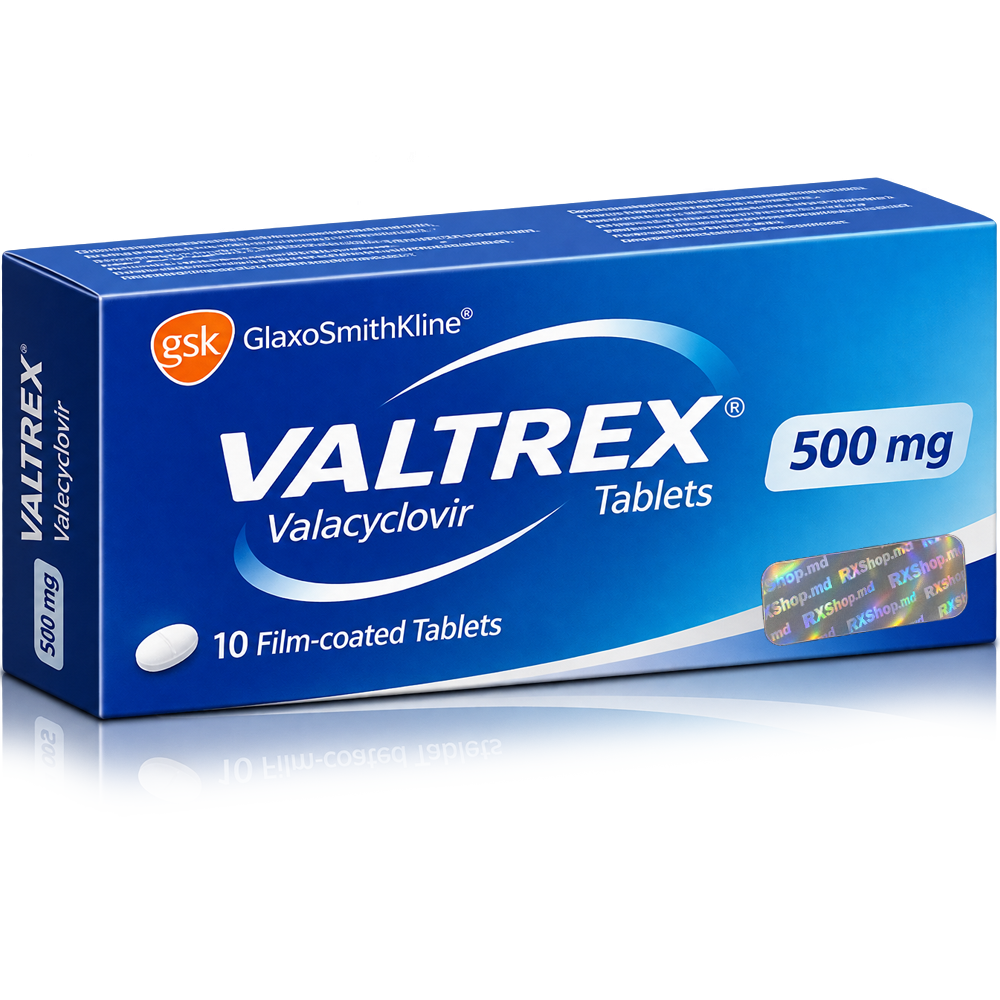
Valtrex is the original brand-name formulation of Valacyclovir — one of the most widely prescribed anti-herpes antiviral medications globally and the modern oral standard for herpes simplex virus (HSV) and varicella-zoster virus (VZV) infections. Developed by GlaxoSmithKline (GSK) and FDA-approved since 1995, Valtrex is distinguished by its significantly higher oral bioavailability compared to acyclovir — making it the preferred oral antiviral for herpes zoster (shingles), genital herpes, and cold sores. Listed on the WHO Model List of Essential Medicines, Valacyclovir is uniquely FDA-approved for reduction of HSV-2 sexual transmission with suppressive therapy.
The active ingredient is Valacyclovir Hydrochloride, an L-valyl ester prodrug of acyclovir. After oral administration, Valacyclovir is rapidly hydrolyzed by valacyclovir hydrolase to acyclovir, achieving ~55% bioavailability — 3-5x better than acyclovir itself (15-30%). Acyclovir is then phosphorylated by viral thymidine kinase (TK) to its active triphosphate, which selectively inhibits viral DNA polymerase. TK-dependent activation provides excellent selectivity for virus-infected cells.
Valtrex is FDA-approved for acute herpes zoster (shingles) in immunocompetent adults, recurrent genital herpes (HSV-2) treatment, suppression of recurrent genital herpes (including reduction of sexual transmission), cold sores (orolabial herpes — single-day regimen), recurrent mucocutaneous HSV in HIV-positive patients, and chickenpox in immunocompetent pediatric patients (2+ years). Off-label uses include Bell's palsy adjunct, herpes simplex keratitis, HSV prophylaxis in immunocompromised, and CMV prophylaxis in transplant patients (high dose).
The medication is available as Valtrex 500 mg and 1 g (1000 mg) tablets. Standard adult dosing varies by indication: herpes zoster 1 g three times daily for 7 days, recurrent genital herpes 500 mg BID for 3 days, genital herpes suppression 500 mg once daily, cold sores 2 g BID for 1 day (single-day regimen), and HSV in HIV+ 1 g BID for 5-10 days.
Critical safety considerations include generally excellent tolerability — most common side effects are mild headache, nausea, fatigue. Important concerns: acute renal failure (especially in dehydration, elderly, or high doses), rare thrombotic thrombocytopenic purpura/hemolytic uremic syndrome (TTP/HUS) in immunocompromised patients, CNS side effects (encephalopathy, hallucinations, confusion) in elderly and renal impairment, mandatory renal dose adjustment for CrCl below 50 mL/min.


Free prescription
Discrete packaging
Have questions?
Quality Assurance
- Acute Shingles Treatment: For acute shingles within 72 hours of rash onset (1 g three times daily x 7 days);
- Postherpetic Neuralgia Reduction: Reduces incidence of post-herpetic neuralgia following shingles;
- Recurrent Genital Herpes: FDA-approved for recurrent genital herpes (HSV-2) treatment (500 mg BID x 3 days);
- Genital Herpes Suppression: FDA-approved for chronic suppression of recurrent genital herpes (500 mg once daily);
- HSV Transmission Reduction FDA: FDA-approved for reduction of HSV-2 sexual transmission — signature unique indication;
- Orolabial Herpes / Cold Sores: FDA-approved for recurrent orolabial herpes/cold sores (HSV-1) — single-day 2 g BID regimen;
- Cold Sore Single Day Regimen: Convenient single-day 2 g BID regimen for recurrent cold sores;
- HSV HIV Positive Patients: FDA-approved for recurrent mucocutaneous HSV in HIV-positive patients (1 g BID);
- Chickenpox Pediatric: FDA-approved for chickenpox (varicella) in immunocompetent pediatric patients 2+ years;
- First Episode Genital Herpes: For first-episode genital herpes (1 g BID x 10 days);
- Herpes Simplex Keratitis: Off-label for herpes simplex keratitis (with ophthalmology specialist);
- Eczema Herpeticum: Off-label for eczema herpeticum (HSV infection in atopic dermatitis);
- HSV Encephalitis Step Down: Off-label oral step-down after IV acyclovir for HSV encephalitis;
- HSV Immunocompromised: Off-label for HSV infection in immunocompromised patients;
- CMV Prophylaxis Transplant: Off-label high-dose for CMV prophylaxis in transplant patients;
- Bell Palsy HSV Reactivation: Off-label adjunct for Bell's palsy associated with HSV reactivation;
- HSV Whitlow: Off-label for herpetic whitlow (HSV finger infection);
- HSV Pregnancy Suppression: For HSV suppression late in pregnancy to reduce neonatal HSV transmission;
- Recurrent HSV Suppression: For chronic suppression in patients with frequent HSV recurrences;
- Renal Dose Adjusted HSV: Renal dose adjustment for CrCl below 50 mL/min — flexible dosing in renal impairment.
- Less Shingles Pain: Reduction in acute shingles pain duration and severity;
- Less Postherpetic Neuralgia: Reduces incidence and severity of post-herpetic neuralgia following shingles;
- Faster Shingles Rash Resolution: Accelerates herpes zoster rash crusting and resolution;
- Less Genital Herpes Episode Duration: Shortens duration of recurrent genital herpes episodes;
- Less Genital Herpes Symptoms: Reduces severity of genital herpes recurrence symptoms;
- Faster Genital Herpes Healing: Accelerates lesion healing in recurrent genital herpes;
- Less Genital Herpes Frequency: Suppressive therapy significantly reduces recurrence frequency;
- Less HSV-2 Sexual Transmission: FDA-approved reduction in HSV-2 sexual transmission to partners — signature unique benefit;
- Less Cold Sore Duration: Single-day 2 g BID regimen effectively reduces cold sore episode duration;
- Faster Cold Sore Healing: Accelerates cold sore lesion healing with convenient single-day regimen;
- Less HSV Viral Shedding: Reduces viral shedding in recurrent HSV-1/HSV-2 infections;
- Less HIV-HSV Severity: Effective treatment of recurrent mucocutaneous HSV in HIV-positive patients;
- Less Chickenpox Severity: FDA-approved reduction in chickenpox severity in pediatric patients (2+ years);
- Less Neonatal HSV Risk: Off-label suppression late in pregnancy reduces neonatal HSV transmission;
- Better Daily Function: Return to normal daily activities with faster healing of herpes episodes;
- Better Quality of Life: Substantial quality of life improvement through reduced HSV recurrence frequency and severity;
- Less Psychological Distress HSV: Reduces psychological distress associated with recurrent genital herpes;
- Better Sexual Health: Reduces interference with sexual relationships from HSV recurrences;
- Excellent Tolerability: Generally excellent tolerability with minimal side effects;
- Brand Valtrex: Original GlaxoSmithKline brand of Valacyclovir with established global clinical reputation since 1995;
- Generic Valacyclovir: Affordable generic versions expand global access to gold-standard anti-herpes therapy;
- Acyclovir L Valyl Prodrug: L-valyl ester prodrug of acyclovir with superior oral bioavailability;
- 55 Percent Oral Bioavailability: ~55% oral bioavailability vs 15-30% for acyclovir — 3-5x improvement;
- Anti Herpes Antiviral: Foundational anti-herpes antiviral medication;
- Nucleoside Analog Antiviral: Foundational nucleoside analog antiviral class;
- Viral DNA Polymerase Inhibition: Viral DNA polymerase inhibition mechanism — selective for infected cells via TK activation;
- Selective Virus Infected Cells: TK-dependent activation provides selectivity for virus-infected cells — excellent safety profile;
- Shingles First Line Oral: First-line oral therapy for acute herpes zoster (shingles) in immunocompetent adults;
- Genital Herpes Standard: Standard therapy for recurrent genital herpes treatment and suppression;
- Cold Sore Standard: Standard therapy for recurrent orolabial herpes/cold sores with convenient single-day regimen;
- HSV Transmission Reduction FDA: Uniquely FDA-approved for reduction of HSV-2 sexual transmission — signature distinction;
- Pediatric Chickenpox FDA: FDA-approved for pediatric chickenpox (varicella) treatment from age 2 years;
- Convenient Twice Daily: Twice-daily dosing for most indications — fewer doses than acyclovir's 5x daily;
- WHO Essential Medicine: Listed on the WHO Model List of Essential Medicines;
- 25 Plus Year Anti Herpes History: Extensive real-world safety and efficacy data since 1995 across hundreds of millions of patient courses.
Valtrex — Frequently Asked Questions
-
What is Valtrex (Valacyclovir)?
Valtrex is a prescription medication containing valacyclovir, primarily used to treat herpes infections, including genital herpes, cold sores, and shingles. -
How Does Valtrex Work?
Valtrex works by converting into acyclovir in the body, inhibiting the growth and spread of the herpes virus. -
Is Valtrex a Cure for Herpes?
Valtrex is not a cure but helps control and manage herpes outbreaks, reducing symptoms and the frequency of recurrences. -
When Should I Take Valtrex?
Take Valtrex as prescribed by your healthcare provider, usually with food to improve absorption. -
What Types of Herpes Infections Does Valtrex Treat?
Valtrex is effective against genital herpes, cold sores (herpes labialis), and shingles (herpes zoster). -
Can Valtrex Be Used for Herpes Prevention?
Valtrex can be used to reduce the risk of herpes transmission and recurrent outbreaks. -
How Effective is Valtrex in Reducing Herpes Transmission?
Valtrex significantly reduces the risk of transmitting genital herpes to a partner.
See all Valtrex questions (30)
More Antiviral Medications





Valtrex (Valacyclovir) Reviews:

No, Valtrex cannot cure herpes. The virus stays in the body in an inactive form. However, Valtrex is very effective at controlling outbreaks, reducing how often they occur, and making symptoms milder and shorter.
Valtrex works best if taken at the very first sign of a cold sore—such as tingling, itching, or burning before blisters appear. Starting early can shorten healing time and reduce pain. If you wait until the sore is fully developed, the medicine will still help but may not be as effective. Always keep your prescribed medication on hand so you can begin treatment promptly.
Yes. Daily suppressive therapy with Valtrex has been shown to significantly reduce viral shedding, which lowers transmission risk. However, it does not eliminate the risk entirely. Combining antiviral therapy with safe practices offers the best protection.