Itching and Raised Scars After a Burn Heals: Moisturizing, Silicone, Pressure Garments and Anti-Itch Medicines

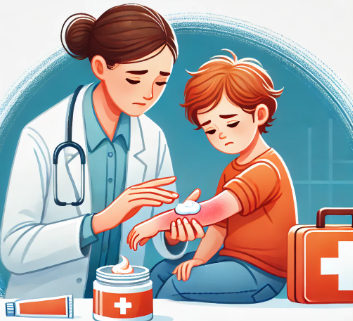
🔥 The day a burn finally closes feels like the end of the problem. For many families it is the start of a second, quieter one. Healed burn skin very often itches, sometimes so hard that a child scratches it raw at night, and over the following weeks the pink new skin can thicken into a raised, tight, red scar. 🔍 Both problems are normal parts of how deep burns heal, both can be eased, and both respond best when care starts early rather than after the scar has set. This guide explains why healed burns itch, how to tell a flat scar that will settle from a hypertrophic scar that needs treatment, what moisturizing, massage, silicone and pressure garments really do, which anti-itch medicines doctors use (from hydroxyzine and cetirizine to gabapentin for nerve itch), and which signs mean the scar or the skin around it needs a doctor.
🩹 After the wound closes: a second stage of healing
🧬 When a burn stops weeping and the last dressing comes off, the surface is closed, but the skin underneath keeps remodelling for a year or more. New collagen is laid down fast and in a disorganised way, tiny blood vessels grow in to feed the repair, and nerve endings regrow into the area. This busy repair phase is what makes young scars pink, warm, itchy and sometimes raised. It slowly calms down as the collagen reorganises and the extra blood vessels close. 📖 First aid and care of a fresh burn (cool running water, what not to put on it, blisters) are covered in minor burns and scalds at home. This article starts where that one ends: the healed burn and the scar.
🤏 Why healed burns itch so much
🧪 Itch after a burn has several causes at once, which is why a single remedy rarely fixes it. Dry skin, histamine from healing tissue and misfiring new nerve endings all add up, and heat, sweat, tight clothing and stress make each of them worse. Deep burns also destroy the oil and sweat glands, so the new skin cannot keep itself moist and stays dry for months.
🌙 Itch is usually worst in the evening and at night, when there is nothing to distract from it and the skin warms under the blankets. In children, night scratching is often the first sign that the itch needs more than cream. Parents may notice blood spots on the sheets, fresh scratch marks in the morning, broken sleep and tiredness at school.
📊 How itch usually changes over time
🧱 Flat scar, hypertrophic scar or keloid?
🔎 Not every burn scars badly. A superficial burn that heals within about two weeks usually leaves flat skin that is a little pink or darker for some months and then fades. A deeper burn that takes longer than three weeks to heal is much more likely to form a hypertrophic scar: a thick, raised, red, firm and itchy scar that stays inside the borders of the original burn. A keloid is different and less common: it grows beyond the original wound edge and does not settle on its own.
| 🔎 Feature | 🍃 Flat scar | 🧱 Hypertrophic scar | 🔴 Keloid |
|---|---|---|---|
| Height | Level with skin | Raised, firm | Raised, lumpy |
| Border | Within the burn | Within the burn | Spreads beyond it |
| When it appears | As the wound closes | Weeks 4 to 8 after closing | Months later, keeps growing |
| Itch | Mild, fades | Often strong | Often strong, may hurt |
| Natural course | Fades in months | Slowly improves over 1 to 2 years | Rarely improves alone |
⚠️ Who is most at risk of a raised scar
👶 Children deserve a special mention. Their skin heals fast, but young skin also builds scar tissue very actively, and a scar on a growing body can pull as the child grows. A burn on the hand, elbow, armpit, neck or front of the chest in a toddler needs follow-up for years, not weeks.
📅 The scar timeline, month by month
🧴 Moisturizing: the first and cheapest step
💧 Because deep burn skin has lost its oil glands, moisturizing is the single most useful daily habit for itch. A plain, fragrance-free emollient (a thick cream or ointment rather than a thin lotion) applied two to four times a day, and always after a bath, keeps the scar supple and calms the dryness part of the itch. Many burn units suggest keeping a tub in the fridge: cool cream gives quick relief during an itch attack.
- 📌 Choose products without perfume, dyes, lanolin or essential oils, which can irritate new skin
- 📌 Apply in a thin layer and massage it in until it disappears
- 📌 Use lukewarm, short baths or showers; hot water makes the itch worse
- 📌 Pat dry, do not rub, and moisturize within a few minutes
- 📌 Avoid vitamin E oil, cocoa butter or herbal mixtures if they cause redness; plain emollient works as well
👐 Scar massage: how and when
✋ Firm massage helps soften scar tissue, loosen tightness and reduce itch, probably by stretching the collagen and giving the nerves a stronger signal than itch. Massage starts only when the skin is fully closed and can tolerate pressure without blistering, usually a couple of weeks after healing. The burn team or nurse will show the right pressure.
💎 Silicone gel and silicone sheets
🧪 Silicone is the best-studied home treatment for raised scars. It covers the scar, cuts water loss from the surface and seems to calm the overactive scar-building cells. Silicone works only when it is used for many hours every day, for at least two to three months, and it is most useful on young scars. Sheets suit flat areas and can be washed and reused; gel suits the face, joints and children who will not keep a sheet on.
⚠️ Silicone should not go on open wounds or fresh blisters. A heat rash or small spots under a sheet usually mean it was worn too long too soon, or the skin was not washed; reduce the hours and build up again.
🧦 Pressure garments: why they are worn so long
🧵 Custom-made pressure garments press evenly on the scar. The pressure reduces blood flow into the young scar and helps the collagen lie flatter. They are usually worn about 23 hours a day, taken off only to wash and moisturize, for 6 to 12 months or longer, until the scar is mature. Pressure also reduces itch for many people, because it calms the nerves and stops rubbing.
Measured by the burn team, usually two sets so one can be washed
Every few months, and more often in a growing child
Numb, cold, blue fingers or toes mean it is too tight
💡 The biggest problem is not the garment itself but giving up on it. Summer heat, school, sport and teenage self-consciousness all make it hard. Wearing it a few hours a day gives much less benefit than near-constant wear, so it helps to agree on a plan with the burn team rather than quietly dropping it.
💊 Antihistamines for burn itch
🧫 Antihistamine tablets are the medicines most often used for itch after burns. They block the histamine part of the itch and, in the older sedating types, also help sleep. A common approach is a non-drowsy antihistamine in the day and a sedating one at night, so the child or adult can sleep without scratching. They do not touch the nerve part of the itch, which is why some people need more.
👶 Doses for children are set by age and weight, and should come from the doctor or the product leaflet, never from an adult dose cut in half by guesswork. Sedating antihistamines are generally avoided in children under 2 years unless a doctor specifically advises them, because they can cause breathing problems or agitation in very young children.
🌙 Hydroxyzine at night: what to know
😴 Hydroxyzine is popular for burn itch because one evening dose often eases both the itch and the broken sleep. It starts working within about an hour. The same sedation that helps at night can carry into the morning, so the first doses are best taken when the next day is calm, and adults should not drive until they know how it affects them. 📖 The same night-time itch cycle in eczema, and how hydroxyzine fits there, is explained in night-time eczema itch.
| 🚫 Situation | 📝 Why caution is needed with hydroxyzine |
|---|---|
| Heart rhythm problems, long QT | Can prolong the QT interval; avoid with other QT-prolonging medicines |
| Older adults | More confusion, falls, dry mouth and urine retention |
| Pregnancy, especially early, and breastfeeding | Usually avoided; ask a doctor for an alternative |
| Alcohol, opioids, sleeping tablets | Sedation adds up |
| Glaucoma, enlarged prostate | Anticholinergic effects can worsen them |
| Epilepsy | Can lower the seizure threshold |
⚡ When the itch is nerve itch: gabapentin
🧠 Some burn itch feels different: burning, prickling, crawling or electric, often in grafted skin, and it barely changes with antihistamines. This is neuropathic itch, caused by regrowing nerve fibres that fire on their own. Gabapentin, a medicine that calms overactive nerve signals, is the drug burn specialists most often add here, and several studies in burn patients found it reduced itch better than antihistamines alone.
📋 How it is commonly used in adults
💊 Started low, often 100 to 300 mg at night
📈 Increased slowly over days to weeks to the dose that works
⏱️ Usually taken in two or three doses a day
⚠️ Points to discuss
😵 Dizziness and drowsiness, mostly at the start
🫘 Lower doses if the kidneys work less well
🚫 Risky with opioids or alcohol: slowed breathing
📉 Stopped gradually, not suddenly
👶 In children, gabapentin is prescribed by the burn or pain team with a dose based on weight. It is not a first step for mild itch, and it should never be started at home with tablets meant for an adult. Pregabalin is a related option some specialists use when gabapentin is not tolerated. 💡 Nerve pain and nerve itch share the same pathways, which is why the same medicine can help both.
🎯 Matching the treatment to the type of itch
| 🤏 What the itch is like | ✅ First steps | ➕ May add |
|---|---|---|
| Dry, tight, flaky skin | Thick emollient 2 to 4 times a day, cool cream | Massage |
| Itch with redness, worse at night | Emollient plus sedating antihistamine at night | Daytime non-drowsy antihistamine |
| Burning, prickling, electric itch | Emollient, pressure, cool packs | Gabapentin from a doctor |
| Raised, firm, red scar that itches | Silicone plus pressure plus massage | Steroid injection or laser at a scar clinic |
| Itch with new pain, pus or spreading redness | See a doctor: possible infection | Antibiotic if confirmed |
🧒 Helping a child who cannot stop scratching
🧸 Small children cannot be told to stop scratching. The practical goal is to make scratching less damaging and less tempting, while the medicines and creams do their work. Many parents find a combination of the steps below works better than any single one.
💥 Blisters and open spots on healed skin
🫧 New burn skin is fragile for months. Small blisters often appear after rubbing, scratching, tight shoes or a new pressure garment, even on skin that had healed well. They are usually harmless and heal in days. Leave the roof on if possible, cover with a non-stick dressing, and take a break from silicone and pressure on that spot until it closes.
- 📌 Wash gently with clean water and keep the area covered
- 📌 A small open spot that is clean does not need antibiotic cream
- 📌 If a spot becomes crusted, yellow or weepy, a doctor may suggest Bactroban (Mupirocin) ointment for a few days
- 📌 Repeated blisters in the same place mean the garment, shoe or splint needs adjusting
📖 How to tell normal healing from infection in a small wound, and when an ointment is enough, is covered in infected cut or graze: signs of wound infection. Honey-coloured crusts that spread to other areas can be impetigo: see impetigo treatment.
🦠 When the scar area gets infected
💊 Spreading redness around a burn is cellulitis until proved otherwise, and it needs a doctor. If tablets are needed, cephalexin is a common first choice for skin infection, for example Keflex (Cephalexin), with a different antibiotic for people allergic to penicillin or when MRSA is suspected. 📖 See cellulitis and skin infections: what needs an antibiotic.
🧒 A rare danger in young children after a burn:
🔹 Toxic shock syndrome can follow even a small burn, usually in the first days. Signs are high fever, a widespread red rash, vomiting or diarrhoea, and a child who is floppy, drowsy or unusually unwell, often while the burn itself looks fine.
🔹 This is an emergency: go to the emergency department straight away.
🦵 Tight scars over joints: contractures
📏 A scar shortens as it matures. Over a joint, a shortening scar can pull the joint into a bent position, which is called a contracture. Fingers, the elbow crease, the armpit, the front of the neck and the back of the knee are typical places. Early, regular stretching, splints worn at night to hold the joint straight, and keeping the limb moving during the day prevent most contractures.
👶 Children need scar checks as they grow, because a scar that fitted at age three may be too short at age seven. Some need a small operation later to release a tight band. That is a normal part of burn care, not a sign that anything went wrong.
☀️ Sun protection for new scars
🌞 Young scar skin burns easily and can darken permanently in the sun. Cover the scar or use a broad-spectrum sunscreen of SPF 30 to 50 for at least the first year, reapplying every two hours outdoors and after swimming. Clothing, hats and shade are more reliable than cream on a child. Grafted skin also sweats poorly, so a person with large scars can overheat quickly on hot days and needs water, shade and rest. 📖 Some medicines make the skin even more sensitive to sun: see medicines that make skin burn in the sun.
🏥 Scar clinic treatments for stubborn scars
💉 When a scar stays thick, red and itchy despite months of silicone, pressure and massage, a burn or scar clinic has further options. These are added to home care, not used instead of it.
🗿 Myths about burn scars and itch
💜 The emotional side of scars
🤗 Itch that wakes a child every night wears down the whole family. Scars on the face, neck or hands can also affect confidence, especially in teenagers, who may refuse to wear garments or go swimming. Many burn services have psychologists and peer support groups for children and parents, and summer camps for young burn survivors exist in many countries. Parents often carry guilt about the accident; talking about it with the burn team is part of normal care, not a weakness. Adults with severe or lasting itch also have higher rates of poor sleep, low mood and anxiety, which deserve treatment in their own right.
🗓️ A realistic plan for the first year
Moisturize, protect fragile skin, night antihistamine if needed
Massage, silicone, garments fitted, stretching
Review itch; add gabapentin if nerve itch persists
Scar clinic for stubborn scars; garments refitted
🚨 When to see a doctor
⛔ Contact a doctor or the burn team soon if:
🔹 Redness is spreading, the area is swollen, painful, oozing pus or smells bad, or there is a fever.
🔹 A young child has fever, rash, vomiting or diarrhoea in the days after a burn, or seems floppy or very unwell: go to emergency care now.
🔹 The itch stops sleep for more than a few nights despite cream and an antihistamine.
🔹 The scar is getting thicker, redder or harder after the first 6 to 8 weeks, or is spreading beyond the original burn.
🔹 A joint cannot fully straighten, or a child starts to limp, hold a hand curled or tilt the head.
🔹 An old burn scar develops a new sore that does not heal for several weeks, bleeds or changes shape; rarely, long-standing scars can develop skin cancer and need a biopsy.
❓ Frequently asked questions
Why does a healed burn itch so much?
New burn skin has lost its oil glands and becomes dry, healing tissue releases histamine, and regrowing nerve endings send itch signals by mistake. Heat and sweat make it worse.
How long does itching last after a burn?
It is usually worst in the first weeks and months after the wound closes and eases as the scar matures over 12 to 18 months. Large or grafted burns can itch for longer.
What is a hypertrophic burn scar?
It is a thick, raised, red and often itchy scar that stays within the borders of the original burn. It is most likely when a burn took more than three weeks to heal.
When can I start scar massage?
Once the wound is fully closed and the skin can take firm pressure without blistering, usually a couple of weeks after healing. The burn team can show the right technique.
Do silicone sheets really work on burn scars?
Silicone is the best-studied home treatment for raised scars, but it needs to be worn for many hours every day for at least two to three months, on closed skin.
How long are pressure garments worn?
Usually about 23 hours a day, removed only to wash and moisturize, for 6 to 12 months or longer until the scar is mature. Children need regular refitting as they grow.
Which antihistamine is best for burn itch?
Many people use a non-drowsy one such as cetirizine or fexofenadine in the day and a sedating one such as hydroxyzine at night. Doses for children depend on age and weight.
When is gabapentin used for itching after burns?
When the itch feels burning, prickling or electric and does not respond to antihistamines. It calms overactive regrowing nerves and is started at a low dose by a doctor.
How can I stop my child scratching a healed burn at night?
Keep nails short, use cotton gloves, a cool room and light bedding, apply cool cream during itch attacks, and ask the doctor about a night-time antihistamine suitable for the age of the child.
Should a new burn scar be kept out of the sun?
Yes. Young scars burn easily and can darken permanently, so cover them or use SPF 30 to 50 sunscreen for at least the first year.
📑 Sources and editorial
- 📘 Clinical practice guidelines on burn scar management and rehabilitation
- 🧪 Systematic reviews of silicone gel, silicone sheets and pressure garment therapy for hypertrophic scars
- ⚡ Studies of post-burn pruritus mechanisms and of gabapentin and antihistamines in burn survivors
- 👶 Paediatric burn care guidance on scar follow-up, contractures and toxic shock syndrome
- 💊 Prescribing information for hydroxyzine, cetirizine, fexofenadine, cyproheptadine and gabapentin
- 🔬 Reviews of laser and steroid injection treatment for burn scars
- 📖 Related reading: minor burns and scalds at home, infected cut or graze, cellulitis and skin infections, night-time eczema itch
- 🛒 Related products: Atarax (Hydroxyzine), Atarise (Hydroxyzine), Zyrtec (Cetirizine), Allegra (Fexofenadine), Periactin (Cyproheptadine), Neurontin (Gabapentin), Gabatop (Gabapentin), Bactroban (Mupirocin), Keflex (Cephalexin)
- 🩺 RXshop Editorial Team — reviewed by Emily Chen, MD — Internal medicine
Medical Disclaimer: The information in this article is for educational and informational purposes only and is not a substitute for professional medical advice, diagnosis, or treatment. Always seek guidance from a qualified healthcare provider with any questions you may have regarding a medical condition, and before starting, stopping or changing any medication.