Buy Atarise (Generic Hydroxyzine Hydrochloride) Online — Affordable Antihistamine for Allergy, Itching & Anxiety

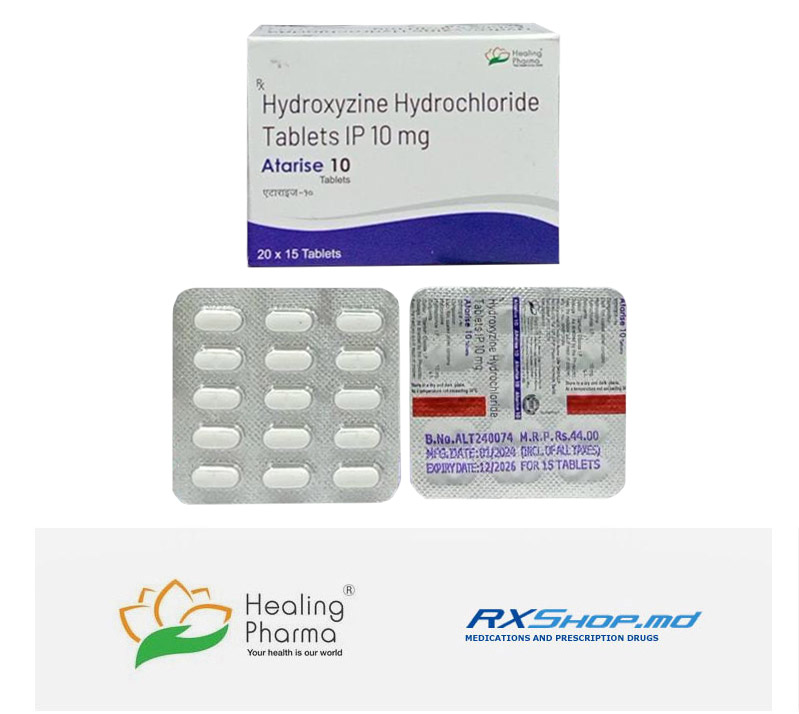
Atarise is an affordable generic Hydroxyzine hydrochloride — the same versatile antihistamine molecule found in the original brand-name Atarax. Hydroxyzine is one of the most established multi-purpose medications in modern medicine, used for over 65 years to treat allergic skin reactions, chronic itching, anxiety, and pre-operative sedation. As a generic Hydroxyzine, Atarise provides identical therapeutic effects to brand-name versions at a significantly lower price — making both allergy and anxiety management financially sustainable for long-term care.
Generic Hydroxyzine is a first-generation H1-antihistamine with a unique multi-mechanism action: it blocks peripheral H1-histamine receptors throughout the body, crosses the blood-brain barrier to produce calming and sedating effects, and exerts mild anticholinergic and antiserotonergic activity. This combination of peripheral antiallergic action and central sedating action is what makes Hydroxyzine effective across such a wide range of conditions — particularly when allergy symptoms and anxiety overlap.
Atarise is approved for the treatment of pruritus (itching) of allergic origin, including chronic urticaria, atopic dermatitis, and contact dermatitis, where the sedating effect provides additional nighttime symptom relief and improved sleep. Generic Hydroxyzine is also approved for symptomatic relief of anxiety and tension associated with psychoneurosis, as an adjunct in pre-operative sedation, and for nausea, vomiting, and various adjunctive clinical uses.
A defining advantage of generic Hydroxyzine over benzodiazepines for anxiety is that it is not a controlled substance and has no abuse potential. This makes Atarise particularly valuable for patients with substance use concerns, athletes subject to performance regulations, and those requiring long-term anxiolytic therapy without dependency risk — at an affordable generic price.
Atarise is taken orally with standard adult dosing of 25-100 mg up to 4 times daily, depending on the indication. Pediatric formulations support weight-based dosing in children. Onset of action is rapid, with relief beginning within 15-30 minutes of oral administration.
Common side effects of Hydroxyzine reflect its first-generation profile: drowsiness, dry mouth, blurred vision, and constipation. While the sedating effect is therapeutic in many indications, patients should be cautious about driving or operating machinery when initiating therapy. Cardiac safety monitoring is recommended at higher doses. With over 65 years of clinical experience with the active molecule, generic Hydroxyzine like Atarise remains a globally trusted option across allergy, dermatology, psychiatry, and surgical practice.
Free prescription
Discrete packaging
Have questions?
Quality Assurance

- Hives Outbreak: For acute hives episodes from foods, medications, infections, or unidentified triggers requiring rapid relief;
- Chronic Hives: For long-term management of persistent hives where modern second-generation antihistamines provide inadequate control;
- Eczema Itching: As nighttime sedating therapy for atopic dermatitis flares with severe pruritus that disrupts sleep;
- Poison Ivy Itching: For relief of intense itching from poison ivy, poison oak, and similar plant-induced contact dermatitis reactions;
- Insect Bite Itching: For widespread itching from mosquito bites, bee stings, and other insect-related allergic reactions;
- Drug Reaction Itching: For non-severe medication-related itching and skin reactions presenting as pruritus;
- Anxiety Relief: For symptomatic relief of anxiety as a non-controlled-substance alternative to benzodiazepines;
- Surgical Anxiety: For reducing pre-operative anxiety and tension before scheduled surgical procedures;
- Dental Anxiety: For patients with dental procedure anxiety requiring oral pre-procedural calming;
- Pre Procedure Sedation: For mild sedation before minor medical procedures, imaging studies, or interventional radiology;
- Sleep Anxiety: Off-label for patients whose insomnia is driven primarily by anxiety symptoms;
- Motion Sickness: For prevention and treatment of motion sickness during car, sea, or air travel;
- Vertigo: For vestibular vertigo from Meniere's disease and other inner-ear disorders with associated nausea;
- Chemotherapy Nausea: For mild-to-moderate chemotherapy-induced nausea, often combined with newer antiemetics;
- Pain Adjunct: Potentiates opioid analgesia, allowing lower opioid doses while reducing opioid-related nausea;
- Cold Urticaria: For cold-induced hives where other antihistamines provide insufficient relief;
- Mastocytosis Symptoms: For histamine-mediated symptoms in cutaneous or systemic mastocytosis with anti-itch and sedating benefits;
- Childhood Anxiety: Weight-based pediatric dosing for short-term anxiety and pruritus management under clinical monitoring.
- Less Anxiety: Calms acute and chronic anxiety symptoms through central nervous system antihistamine effects;
- Less Hives: Reduces wheal formation, redness, and itching in chronic and acute urticaria;
- Less Restlessness: Reduces physical restlessness and inner tension common in anxiety states;
- Less Tension: Eases muscular tension and mental tension associated with anxiety disorders;
- Better Sleep: Sedating effect supports falling asleep faster and improving sleep quality during anxiety or pruritus;
- Calm Mood: Steady calming effect reduces emotional reactivity throughout the day;
- Less Nausea: Useful as antiemetic for post-operative, motion sickness, and pregnancy-related nausea;
- Pre Procedure Calmness: Reduces pre-operative anxiety and tension before surgical and dental procedures;
- Faster Sleep Onset: Sedating action helps patients fall asleep faster, particularly when anxiety contributes to insomnia;
- Generic Hydroxyzine: Affordable generic alternative to brand-name Atarax at significantly lower cost — supports sustained long-term therapy;
- Atarax Equivalent: Same Hydroxyzine molecule as branded Atarax at fraction of the cost — meets bioequivalence standards;
- Vistaril Equivalent: Equivalent to Hydroxyzine pamoate brand Vistaril for anxiety and pruritus management;
- First Generation Antihistamine: Classical antihistamine with strong sedating and anti-itch properties beyond modern non-sedating agents;
- Multi Purpose Antihistamine: Treats allergy, anxiety, sedation, nausea, and opioid adjunct needs in one medication — rare versatility;
- Non Addictive Anxiolytic: Treats anxiety without abuse potential or dependence risk — major advantage over benzodiazepines;
- Allergic Itching Relief: Effective relief of allergic skin itching with added nighttime sedation supporting sleep recovery;
- Chronic Hives Treatment: Effective when second-generation antihistamines fail to control chronic urticaria symptoms;
- Anxiety Antihistamine: Rare combination of allergy and anxiety treatment in single agent — ideal when conditions overlap;
- Pediatric Anxiety Treatment: One of few non-controlled anxiety options for short-term pediatric anxiety management;
- Preoperative Sedative: Established role in pre-surgical anxiety and sedation protocols across multiple surgical disciplines;
- Opioid Pain Adjunct: Potentiates opioid analgesia, allowing lower opioid doses and reducing opioid-related nausea;
- Anti Itch Sedating: Combines anti-pruritic action with sedation — particularly valuable for nighttime allergic itching that disrupts sleep;
- Multiple Formulations: Tablets and oral syrup support outpatient and pediatric settings with weight-based dosing;
- Rapid Oral Onset: Begins working within 15-30 minutes of oral administration;
- Flexible Dosing: 2-3 daily doses allow individualised regimens around sleep, mealtimes, or specific symptom triggers;
- Long Clinical History: Hydroxyzine has over 65 years of clinical use since 1956 with extensive characterised safety profile;
- Daytime Caution: Sedating effect requires care when driving or operating machinery, especially when initiating therapy;
- Stable Storage: No refrigeration required — practical for home, travel, and long-term storage;
- Globally Available: Widely stocked in international markets in both branded (Atarax, Vistaril) and generic Hydroxyzine forms.
Generic Atarise (Hydroxyzine Hydrochloride 10 mg) Medication guide:
💊 What is Atarise and what conditions it treats
Atarise is a brand name for hydroxyzine hydrochloride — a prescription medication used since 1956 for three main purposes: calming anxiety, reducing itching, and producing sedation. The Atarise brand is particularly common in Japan, India, Korea, and other Asian markets, where it is sold alongside the related brand Atarax (same active drug). Whether labelled Atarise, Atarax, or a local equivalent, the underlying medication and its clinical effects are identical.
What Atarise treats
- 😰 Anxiety and tension — acute situational, pre-procedure, and adjunct in generalized anxiety disorder
- 💧 Itching (pruritus) — including allergic, atopic dermatitis-related, and idiopathic
- 🌹 Chronic urticaria — particularly antihistamine-resistant cases and nocturnal symptoms
- 😴 Pre-operative sedation — reducing anxiety and opioid requirements around surgery
- 💤 Short-term insomnia — particularly when anxiety or itch contributes
- Active ingredient: hydroxyzine hydrochloride
- Drug class: first-generation H1 antihistamine with anxiolytic and sedative properties
- Available form: oral tablets (10 mg and 25 mg are most common)
- Onset: 30 to 60 minutes after dose
- Duration per dose: 4 to 6 hours
- Half-life: approximately 20 hours
- Adult maximum dose (post-2015): 100 mg/day
- Elderly maximum: 50 mg/day
- Most common markets: Japan, India, Korea, other Asian countries
What Atarise does NOT do
Atarise is not appropriate for:
- Long-term treatment of severe anxiety disorders (SSRIs are first-line)
- Severe acute allergic reactions like anaphylaxis (requires epinephrine)
- Routine daily allergic rhinitis (newer non-sedating antihistamines preferred)
- Use during the first trimester of pregnancy without specialist advice
- Patients with congenital long QT syndrome or significant cardiac arrhythmia
Why Atarise has a particular place in Asian medicine
- Atopic dermatitis is highly prevalent in Asian populations; Atarise is commonly prescribed for severe itching
- Anxiety treatment in Asia tends to favour non-addictive options over benzodiazepines
- Pre-operative sedation protocols in Japan and Korea routinely include hydroxyzine
- Dermatology clinics in Japan use it as standard adjunct to topical treatments
- Wide availability as both branded Atarise and generic forms across most Asian pharmacies
Atarise is a well-established prescription tool for symptoms where calm, anti-itch effect, and mild sedation are needed together. For patients used to seeing the brand "Atarax" in Western markets, encountering "Atarise" in Asian pharmacies is simply a regional naming difference for the same medication.
🆚 Atarise vs Atarax - same hydroxyzine, two brand names
The single most common question patients ask about Atarise is whether it is the same as Atarax. The answer is yes — same active drug, identical effects, different brand name. Understanding why two brand names exist for the same medication and how this affects you in practice helps patients navigate prescriptions and pharmacy encounters across different countries.
The straight answer
Both Atarise and Atarax contain the same active ingredient (hydroxyzine hydrochloride) at the same standard strengths. They have the same indications, the same dosing, the same side effects, and the same contraindications. Whichever you take, your body receives identical hydroxyzine.
Side-by-side comparison
| Aspect | Atarise | Atarax |
|---|---|---|
| Active ingredient | Hydroxyzine HCl | Hydroxyzine HCl (identical) |
| Drug class | 1st-gen H1 antihistamine | Same |
| Strengths available | 10 mg, 25 mg tablets | 10 mg, 25 mg, 50 mg, 100 mg tablets |
| Onset | 30–60 minutes | Same |
| Duration per dose | 4–6 hours | Same |
| Half-life | ~20 hours | Same |
| Indications | Anxiety, itch, sleep | Same |
| Side effects | Sedation, dry mouth, etc. | Same |
| Primary markets | Japan, India, Korea, parts of Asia | USA, UK, EU, global |
| Manufacturer | Various; some UCB-licensed | UCB Pharma original |
| Prescription required | Yes | Yes |
Why two brand names for the same drug?
Multiple brand names for the same active drug is common in pharmacy. For hydroxyzine specifically, the reasons include:
- Regional marketing strategy — original manufacturer UCB Pharma uses different brand names in different markets
- Licensing arrangements — local pharmaceutical companies may license rights to produce under regional brand names
- Cultural and linguistic preferences — Atarise reads more naturally in some Asian markets
- Trademark availability — brand name registration varies by country
- Historical marketing decisions dating back decades
What this means for you in practice
| Situation | What it means |
|---|---|
| You take Atarise in Japan, travel to Europe | Pharmacy will likely dispense Atarax or generic hydroxyzine — equivalent |
| You take Atarax in USA, fill prescription in India | May receive Atarise or generic hydroxyzine — equivalent |
| Doctor prescribes Atarise; pharmacy has only Atarax | Direct substitution at same mg-for-mg dose works |
| Cost differences between brands | Generic hydroxyzine cheapest in either case |
| Switching between Atarise and Atarax | No washout, no titration, no clinical impact |
Other brand names you may encounter
- Atarax-P (Japan) — the same as Atarax; "P" indicates pamoate salt
- Vistaril (USA) — hydroxyzine pamoate capsules
- Ucerax (UK) — hydroxyzine HCl under different brand
- Multipax (Canada) — another Canadian brand
- Hidroxizina (Spanish-speaking countries) — generic name
- Generic hydroxyzine (most countries) — same drug, lowest cost
Do not be confused by the multiple brand names for hydroxyzine. Atarise and Atarax are not competing products with subtle clinical differences — they are the same medication marketed under different names in different regions. If you have been doing well on one, you will do equally well on the other.
🇯🇵 Atarise in Japan, Asia, and global markets
While hydroxyzine is sold globally, the Atarise brand has particular prominence in Japan and other Asian markets. Understanding the regional distribution of this brand helps patients who travel internationally, expatriates seeking equivalent prescriptions, and anyone curious about why they encounter different brand names in different countries.
Where Atarise is most prominent
| Country / Region | Atarise availability | Common usage context |
|---|---|---|
| Japan | Widely available; Atarax-P also common | Atopic dermatitis, anxiety, pre-procedure |
| India | Multiple Indian generics use Atarise-like naming | Dermatology, anxiety, sleep |
| South Korea | Available; common in dermatology | Pruritus, allergy |
| Taiwan | Available through regional pharmacies | Allergy, anxiety |
| Southeast Asia | Variable; often as generic | Itch, anxiety |
| USA / Europe | Less common; Atarax or generic dominates | Anxiety, urticaria |
Why Atarise is particularly Asian-market focused
- High atopic dermatitis prevalence in East Asian populations creates strong demand for antihistamines that help with severe itch
- Cultural preference for non-addictive options for anxiety treatment over controlled substances like benzodiazepines
- Established prescribing patterns in Japan dating back decades for hydroxyzine in dermatology
- Regional licensing arrangements allow local pharmaceutical companies to market under the Atarise name
- Lower barrier to access compared to controlled substances in many Asian healthcare systems
The Japanese market in particular
Japan has the deepest hydroxyzine prescribing culture of any major market. Factors include:
- Atopic dermatitis affects 7–15% of Japanese children, creating chronic patient populations
- Hydroxyzine has been a standard antipruritic in Japanese dermatology for over 50 years
- Atarax-P (pamoate) is one of the most prescribed hydroxyzine products in Japan
- Atarise is a related brand often dispensed when Atarax-P unavailable
- Japanese clinical guidelines include hydroxyzine in atopic dermatitis management ladders
- Lower benzodiazepine prescribing compared to USA makes hydroxyzine a more prominent anxiolytic
For travelers and expatriates
- If you have been taking Atarise in Asia and travel to Western countries, you can ask for "Atarax" or "hydroxyzine HCl" — they are equivalent
- If you have been taking Atarax in the West and find yourself in Japan or India, "Atarise" or local generic hydroxyzine is the same medication
- Bring original prescription label showing active ingredient and dose
- A doctor letter stating "hydroxyzine hydrochloride" will work in any pharmacy globally
- Strength may vary between markets — Western markets have wider strength options (up to 100 mg tablets); Japan/Asia commonly 10 mg and 25 mg
- Generic hydroxyzine is widely available and equivalent everywhere
Why this matters for SEO and product searches
Patients searching online for their medication encounter different brand names depending on geography. Whether you search for "Atarise," "Atarax," "hydroxyzine," "???????" (Japanese), or local equivalents, you are looking for the same drug. Patient information is consistent regardless of brand name.
Hydroxyzine is on the WHO Essential Medicines List and available in virtually every country. The Atarise brand reflects regional marketing rather than clinical distinction. Patients moving between Western and Asian markets can confidently use either brand name product knowing the active drug is identical.
🏭 UCB Pharma origins and the discovery of hydroxyzine
The story of hydroxyzine — the active ingredient in Atarise — began at the Belgian pharmaceutical company UCB Pharma (Union Chimique Belge) in the early 1950s. Understanding the corporate and scientific origins of this medication helps patients appreciate why Atarise has the unique combination of antihistamine and anxiolytic effects, and why related brand names like Atarax, Vistaril, and Atarax-P all trace back to the same discovery.
UCB Pharma - the Belgian roots
- Founded: 1928 in Brussels, Belgium, as Union Chimique Belge
- Original focus: chemicals and pharmaceuticals
- Early 1950s: Research division begins synthesising new antihistamine compounds
- 1955: Hydroxyzine synthesised by UCB researchers
- 1956: FDA approval for Atarax (hydroxyzine HCl) in the United States
- 1958: Vistaril (hydroxyzine pamoate) introduced as a sister formulation
- 1980s: Researchers discover cetirizine, the active metabolite of hydroxyzine
- 1995: Cetirizine launched commercially as Zyrtec, also by UCB
- Today: UCB Pharma remains a major global pharmaceutical company with focus on neurology and immunology
The discovery story
The 1950s were a transformative decade in pharmaceutical research. The success of diphenhydramine (Benadryl) in 1946 inspired researchers worldwide to develop newer antihistamines. UCB Pharma's chemists were among those looking for compounds that would block histamine more effectively or with fewer side effects.
When hydroxyzine entered clinical testing, researchers noted something unexpected: in addition to its antihistamine properties, the compound had significant calming and anti-anxiety effects that were not predicted from its chemical structure alone. This dual mechanism was unusual at the time and made hydroxyzine commercially attractive in a way that simple antihistamines were not.
The branding family tree
| Brand | Year | Form | Market |
|---|---|---|---|
| Atarax | 1956 | HCl tablets | USA, global |
| Vistaril | 1958 | Pamoate capsules | USA primarily |
| Atarax-P | Japan launch | Pamoate tablets | Japan |
| Atarise | Regional launches | HCl tablets | Asia, India |
| Ucerax | European launch | HCl tablets | UK, parts of EU |
| Zyrtec (cetirizine) | 1995 | Tablets/syrup | Global; metabolite of hydroxyzine |
The cetirizine discovery - hydroxyzine's offspring
- When hydroxyzine is taken, the liver converts most of it to a metabolite called cetirizine
- UCB researchers in the 1980s isolated cetirizine and tested it independently
- They found cetirizine retained the antihistamine effects but had much less ability to cross into the brain
- This meant cetirizine produced antihistamine effects without significant sedation
- UCB commercialised cetirizine as Zyrtec starting in 1995
- So when you take Atarise, your liver also produces some Zyrtec internally — the parent drug and metabolite work together
What this history means for Atarise users today
- Atarise contains a medication with nearly 70 years of clinical use
- Safety profile is among the most thoroughly characterised of any prescription drug
- Generic availability dates back decades, making it inexpensive
- The medication is on the WHO Essential Medicines List — recognised as essential globally
- The dual antihistamine-anxiolytic effect is genuinely useful, not a marketing claim
Few medications have the depth of clinical experience and corporate stewardship that hydroxyzine carries. From its 1956 introduction by UCB Pharma to its current global availability under brand names including Atarise, this medication represents one of the most reliable workhorses in modern prescribing.
🔬 How Atarise works on multiple receptor systems
Unlike newer antihistamines that target only one type of receptor, Atarise (hydroxyzine) acts on multiple receptor systems simultaneously. This multi-receptor activity explains why one medication can produce antihistamine effects, anxiety relief, sedation, and mild antiemetic effects all at once. It also explains the side-effect pattern that comes with the medication.
The four main receptor effects
| Receptor | What blocking it does | Clinical effect |
|---|---|---|
| H1 histamine | Blocks histamine action throughout body and brain | Anti-itch, anti-allergy, sedation |
| 5-HT2A serotonin | Modulates serotonin signaling in anxiety pathways | Anti-anxiety (anxiolytic) |
| Alpha-1 adrenergic | Reduces sympathetic nervous system activation | Calm, mild blood pressure lowering |
| Muscarinic acetylcholine | Reduces parasympathetic activity | Dry mouth, blurred vision, constipation (side effects) |
Why brain penetration matters
- Modern non-sedating antihistamines like Zyrtec or Allegra are designed NOT to enter the brain
- Atarise (hydroxyzine) does enter the brain — this is by design from a 1950s drug
- Brain entry produces the calming effect that makes Atarise useful for anxiety
- Brain entry also produces sedation — the trade-off for the calming effect
- You cannot get the anxiolytic benefit without the sedation; they share the same mechanism
The metabolism story - Atarise becomes Zyrtec
One of the most interesting aspects of Atarise pharmacology is that the liver converts much of the drug to cetirizine — the same active ingredient that is sold as Zyrtec. This means:
- When you take Atarise, your body receives the original hydroxyzine effects (including sedation)
- It also receives the cetirizine metabolite effects (antihistamine without sedation)
- The cetirizine portion provides additional long-lasting antihistamine effect
- This may explain why Atarise often provides sustained relief beyond what you would expect from the dosing interval
How quickly the effects develop
| Effect | Onset | Peak |
|---|---|---|
| Sedation | 15–30 minutes | 1–2 hours |
| Itch reduction | 15–30 minutes | 1–2 hours |
| Anxiolytic effect | 30–60 minutes | 1–2 hours |
| Dry mouth | 30–60 minutes | 1–2 hours |
Effect on the body summarised
- In the skin and mucous membranes: blocks histamine-driven itch, redness, swelling
- In the brain: calms anxiety circuits and produces drowsiness
- In the autonomic nervous system: mild sympathetic blockade calms physical anxiety symptoms
- In the stomach and intestines: mild anti-nausea effect
- In salivary glands: reduces saliva production (dry mouth)
- In the eye: may affect accommodation (mild blurred vision)
- In the bladder: can affect emptying in susceptible patients
The same broad receptor activity that makes Atarise versatile (treating multiple conditions with one medication) also explains the side effects. Newer medications target specific receptors and have cleaner side-effect profiles but lack the dual antihistamine-anxiolytic action that defines hydroxyzine. The trade-off is the essence of why this old medication remains useful.
😰 Atarise for anxiety and tension
Anxiety is one of the most common reasons Atarise is prescribed in clinical practice today. The medication offers an important advantage over many alternatives: effective anxiolysis without dependence or abuse potential. As concerns about benzodiazepine harms have grown over the past decade, Atarise and other hydroxyzine products have gained renewed attention as safer alternatives for many situations.
How Atarise relieves anxiety
Atarise works on anxiety through a combination of mechanisms that differ from both benzodiazepines (which act on GABA) and SSRIs (which adjust serotonin reuptake):
- 5-HT2A serotonin receptor modulation — the primary mechanism for anxiolysis
- Brain H1 antihistamine effect — reduces hyperarousal and racing thoughts
- Alpha-1 adrenergic blockade — calms sympathetic nervous system overactivity
- Mild sedation — helps interrupt anxiety-perpetuating cycles
Crucially, Atarise does not act on GABA-A receptors — the same receptor system that benzodiazepines target and that makes those drugs addictive. This receptor difference is why hydroxyzine is non-addictive.
Anxiety conditions where Atarise helps
| Condition | Atarise role |
|---|---|
| Generalized anxiety disorder (GAD) | FDA-approved indication; useful adjunct to SSRIs or alternative when SSRIs contraindicated |
| Acute anxiety episodes | Fast onset makes it useful for unexpected stress |
| Anxiety with substance use history | Non-addictive nature is a key advantage |
| Anxiety during SSRI initiation | "Bridge therapy" covers the 4–6 weeks before SSRI works |
| Anxiety with associated insomnia | Sedation helps sleep onset |
| Anxiety from medical conditions | Useful in cancer, chronic illness, terminal care |
| Anxiety in chronic itch | One medication addresses both itch and emotional distress |
Standard Atarise dosing for anxiety
- Adults: 25 to 50 mg per dose, 3 to 4 times daily
- Maximum: 100 mg per day (per 2015 EMA guidance)
- Elderly: maximum 50 mg per day; start at 10 to 25 mg
- Acute episode: 25 to 50 mg as a single dose may help within an hour
- Onset: noticeable relief in 30 to 60 minutes
- Duration per dose: 4 to 6 hours
What anxiety relief feels like on Atarise
- 30 to 60 minutes after dose: noticeable reduction in psychological tension and racing thoughts
- Physical anxiety symptoms ease: tense muscles relax, sweating decreases, heart rate slows
- Calming without euphoria: your mood remains your own, just less anxious
- Some sedation: often welcomed at night, can affect daytime function
- Cognitive function preserved: unlike benzodiazepines, no impaired memory or judgement
- No high or "buzz": minimal abuse potential
Why Atarise is increasingly chosen over benzodiazepines
- No tolerance: effect does not diminish over time
- No physical dependence: can stop without withdrawal
- No abuse potential: not a controlled substance
- No memory effects: unlike benzodiazepines
- Safer in overdose: respiratory depression is not a primary concern
- Compatible with opioid therapy: no black-box warning like benzodiazepines
When Atarise alone is not enough
For chronic anxiety disorders (lifelong anxiety, panic disorder, PTSD, OCD), Atarise alone is rarely the best long-term approach. In these cases:
- SSRIs like sertraline or escitalopram provide better long-term control
- Cognitive behavioural therapy (CBT) addresses root patterns
- Atarise serves as adjunct for breakthrough symptoms or initial weeks
- Long-term hydroxyzine monotherapy for severe chronic anxiety has limited evidence
For acute situational anxiety, pre-procedural distress, and as adjunct or bridge therapy, Atarise is one of the most useful and underused options. For chronic anxiety disorders, it works best as part of a comprehensive approach including SSRIs and therapy rather than as standalone treatment.
💼 Atarise for situational anxiety (work, exams, travel)
One particularly useful application of Atarise is for situational anxiety — the temporary stress around specific events like job interviews, exams, public speaking, flights, or important meetings. Unlike chronic anxiety disorders that require long-term treatment, situational anxiety needs short-term, on-demand relief. Atarise fits this role well because of its rapid onset, non-addictive nature, and lack of cognitive impairment at standard doses.
What situational anxiety looks like
- Major presentation or public speaking at work
- Job interview — high-stakes meetings
- Academic examinations — final exams, qualifying tests, board exams
- Air travel for people with flight anxiety
- Important social events — weddings, family gatherings causing stress
- Medical procedures — dental work, blood draws, MRI scans
- Court appearances or other high-stakes legal situations
- Performance situations — auditions, sports competitions
- Driving anxiety — long trips or unfamiliar routes (with caution)
Why Atarise suits situational use particularly well
| Feature | Why it matters for situational anxiety |
|---|---|
| 30 to 60 minute onset | Take an hour before event for peak effect |
| 4 to 6 hour duration | Covers the duration of most events |
| No memory effects | Unlike benzodiazepines, you remember the event |
| No "drugged" feeling | Can still function and think clearly |
| Non-addictive | Occasional use does not lead to dependence |
| No drug screening positives | Not detected on standard tests |
| Available with standard prescription | Not a controlled substance |
Practical timing for major events
- For an event at 10 AM: take 25 mg at 9 AM
- For an evening event at 7 PM: take 25 mg at 6 PM
- For day-long events (exams, conferences): 25 mg morning, possibly 25 mg midday if needed
- For flights: 25 to 50 mg about 1 hour before boarding
- For dental work: 25 to 50 mg one hour before appointment (with prescriber approval)
- Try at home first: if you have never used Atarise, do a trial dose at home days before the event to see how you respond
The "test dose" approach
If you are considering Atarise for an important upcoming event, do a trial dose at home several days before the actual event. This lets you:
- See how much sedation you experience individually
- Test whether you can think and function clearly
- Confirm there are no unexpected side effects for you
- Determine if 25 mg is enough or if you need 50 mg
- Avoid surprises on the day that matters
Important cautions for situational use
- Do not drive after taking Atarise if you have not tested your individual response — sedation varies
- Do not combine with alcohol at events where alcohol is served — significant impairment
- Pilots and commercial drivers may face professional restrictions; check with medical officer
- Performance situations requiring fine motor skills may be affected
- Critical decision-making situations — the calming effect may be desired, but verify you can still think clearly
- One-off use is fine; if needing frequently (weekly+), discuss underlying anxiety with prescriber
Alternatives for situational anxiety
| Option | Comparison to Atarise |
|---|---|
| Propranolol | Better for physical symptoms (tremor, racing heart); does not affect mental state |
| Benzodiazepines | Stronger but cause memory issues; addictive with frequent use |
| Buspirone | Daily use only; not effective for one-time situations |
| Atarise | Calm without memory issues; non-addictive; mild sedation |
| Behavioural techniques | No side effects; require practice; can combine with medication |
For occasional high-stakes events causing severe anxiety, Atarise is a practical, safe, and effective option. It calms without impairing, lacks the addictive risk of benzodiazepines, and produces effects within an hour. For people whose anxiety is concentrated around specific predictable events rather than chronic, Atarise can transform their ability to navigate those moments.
🌹 Atarise for chronic urticaria
Chronic urticaria — recurring hives lasting more than 6 weeks — is one of the most frustrating dermatological conditions, with severe itching that often disrupts sleep and daily life. While modern non-sedating antihistamines have become first-line treatment, Atarise (hydroxyzine) retains an important role for nighttime symptom control and for cases that do not respond fully to newer alternatives.
Where Atarise fits in chronic urticaria treatment
- First-line: non-sedating antihistamine like cetirizine or fexofenadine at standard dose
- Second-line: up to 4 times the standard dose of the same antihistamine
- Atarise addition: sedating antihistamine added at bedtime for nocturnal itch control
- Third-line: add omalizumab (anti-IgE biologic) for severe cases
- Fourth-line: cyclosporine or other immunosuppressant
Why Atarise specifically helps nocturnal urticaria
| Mechanism | Why it matters for nighttime hives |
|---|---|
| Brain H1 blockade | Reduces central perception of itch |
| Sedation | Allows sleep despite residual itch |
| Anxiolytic effect | Reduces stress-amplified itch perception |
| Peripheral H1 blockade | Reduces ongoing wheal formation |
| Long half-life | Sustained overnight coverage |
Standard Atarise dosing for chronic urticaria
- Adults daytime: 25 mg three times daily if used alone
- Adults bedtime focus: 25 to 50 mg at bedtime (most common when added to daytime non-sedating antihistamine)
- Common practical regimen: cetirizine 10 mg in the morning plus Atarise 25 to 50 mg at bedtime
- Maximum: 100 mg per day in adults; 50 mg per day in elderly
- Duration of trial: at least 1 to 2 weeks to assess effect
What to expect on Atarise for urticaria
- 30 to 60 minutes: itch begins to ease
- 1 to 2 hours: peak relief; sedation may be noticeable
- 4 to 6 hours: effects gradually decline; bedtime dose lasts through night
- Week 1: first impressions; some sedation tolerance developing
- Week 2 to 4: steady-state symptom control; sedation often less noticeable
- Long-term: sustainable relief while underlying condition runs its course
Why Atarise sometimes works when newer antihistamines do not
- Central nervous system action — addresses the brain component of itch perception
- 5-HT2A serotonin antagonism — some itch involves serotonin pathways
- Multi-receptor effects — broader action than selective H1-only antagonists
- Sedation — interrupts the itch-scratch-loss-of-sleep cycle
- Possible mast cell stabilisation — theoretically additive effect
Lifestyle measures that help alongside Atarise
- Cool environment — warmth triggers urticaria in many patients
- Loose clothing — reduce mechanical irritation
- Lukewarm showers — avoid hot water
- Identify and avoid triggers — specific foods, medications, stress, exertion
- Cool compresses for acute breakouts
- Adequate sleep — sleep deprivation worsens urticaria
- Stress management — psychological component is real
The remission perspective
Chronic spontaneous urticaria has a natural tendency to remit. Studies show that about 50% of patients achieve remission within 1 year and roughly 80% within 5 years. While the wait can feel endless, the condition is not usually permanent. Atarise helps maintain quality of life and sleep during that period of waiting for natural resolution.
For chronic urticaria, Atarise is not first-line but it has a clear and useful role as bedtime adjunct in combination with daytime non-sedating antihistamines. Its sedating action, while a side effect in many contexts, is precisely what makes it valuable for severe nocturnal itch that disrupts sleep.
💧 Atarise for atopic dermatitis itch
Atopic dermatitis (eczema) is one of the most common chronic skin conditions globally, with particularly high prevalence in East Asian populations. Severe itching is the most distressing symptom for most patients and the main reason Atarise is prescribed. In Japan and Korea, where atopic dermatitis affects 7–15% of children and 1–3% of adults, hydroxyzine has been a standard adjunct to topical therapy for decades.
Why atopic dermatitis itch is particularly debilitating
- Skin barrier dysfunction exposes nerve endings
- Inflammation sensitizes itch receptors
- Itch becomes intense, especially at night
- Scratching damages skin, worsening the barrier
- Sleep is disrupted, raising stress hormones
- Stress worsens both itch and inflammation
- Cycle perpetuates the condition
Atarise role in atopic dermatitis management
| Treatment component | What it does |
|---|---|
| Topical moisturizers | Restore skin barrier function (foundation) |
| Topical corticosteroids | Reduce active inflammation during flares |
| Topical calcineurin inhibitors | Steroid-sparing for sensitive areas (tacrolimus, pimecrolimus) |
| Atarise (oral antihistamine) | Controls itch and allows sleep |
| Trigger avoidance | Reduces flare frequency |
| Biologics (dupilumab, tralokinumab) | For severe disease not responding to standard care |
The Japanese Dermatological Association approach
- Hydroxyzine is recognised in Japanese guidelines as an option for itch control
- Particularly useful for nocturnal itch that disrupts sleep
- Often used as a short-term bridge during flare periods
- Combined with intensive topical therapy
- Newer non-sedating antihistamines preferred for daytime use
- Hydroxyzine reserved for severe cases or bedtime
Standard Atarise dosing for atopic dermatitis
| Age group | Typical dosing |
|---|---|
| Adults | 25 to 50 mg at bedtime; sometimes 25 mg added daytime during flares |
| Adolescents (12+) | 25 mg at bedtime; up to 50 mg if needed |
| Children 6-11 | 0.5 to 1 mg/kg at bedtime; specialist supervision |
| Younger children | Specialist decision; weight-based dosing |
What to expect when using Atarise for atopic itch
- 30 minutes to 1 hour after dose: noticeable reduction in itch urge
- Bedtime use: facilitates sleep onset despite itchy skin
- Reduced overnight scratching: less damage to skin
- Better sleep quality: contributes to lower stress and reduced flare frequency
- Morning grogginess possible: particularly with higher doses
- Cumulative anti-inflammatory effect: may take 1-2 weeks to fully appreciate
The skin care routine that supports Atarise
- Daily moisturizer on all skin, even when calm
- Lukewarm baths — not hot
- Mild non-soap cleansers
- Pat dry, do not rub
- Moisturize within 3 minutes of bathing
- Cotton clothing, avoid wool and synthetics
- Cool bedroom at night
- Keep fingernails short to minimize scratch damage
- Identify triggers — foods, stress, weather, products
Pediatric atopic dermatitis considerations
- Atarise is sometimes used in children but with caution
- Dose is weight-based, given at bedtime
- Goal is allowing sleep and breaking itch-scratch cycle during flares
- Not for chronic daily use in children — intermittent for flares
- Discuss with pediatric dermatologist
- Modern approach increasingly favours biologic therapy (dupilumab) for moderate-severe pediatric eczema
While modern atopic dermatitis treatment has expanded dramatically with biologics and targeted therapies, Atarise remains useful for the practical reality of managing severe itch and disrupted sleep during flares. In Asian dermatology in particular, where atopic dermatitis is common and hydroxyzine has decades of experience, Atarise continues to be a standard adjunct to topical therapy.
😴 Atarise for sleep and short-term sedation
Although not formally approved as a sleep medication, Atarise is widely used off-label for short-term sleep difficulties, particularly when anxiety, itching, or pre-procedural concerns contribute. Its sedating effect, which is often a side effect in other contexts, becomes the desired action when sleep is the goal. Compared to over-the-counter sleep aids, Atarise offers more predictable effect and less anticholinergic burden than diphenhydramine.
When Atarise is useful for sleep
| Sleep situation | Why Atarise helps |
|---|---|
| Anxiety-related insomnia | Addresses both anxiety and sleep onset |
| Itch-disrupted sleep | Treats itch and sedates simultaneously |
| Short-term stress insomnia | Useful for 1-2 weeks during life events |
| Pre-procedure night | Sleep before surgery, dental work |
| Travel-related sleep difficulty | New environments, time zone adjustment |
| Substance recovery insomnia | Non-addictive alternative |
| Sleep onset difficulty | Strong onset of sedation within 30-60 minutes |
Standard Atarise dosing for sleep
- Adults: 25 to 50 mg about 30 minutes before bed
- Elderly: 10 to 25 mg starting dose; max 50 mg/day per EMA
- Take with small amount of water
- Avoid heavy meal just before dose (can delay onset)
- Allow 30 minutes for absorption and onset
- Set up sleep environment before dose works
Sleep aid comparison
| Sleep aid | Pros | Cons |
|---|---|---|
| Atarise (hydroxyzine) | Non-addictive; multi-symptom relief; established safety | Morning grogginess; anticholinergic effects |
| Diphenhydramine (Benadryl) | OTC; cheap | Stronger anticholinergic; tolerance develops |
| Melatonin | OTC; safe; circadian-supportive | Mild effect; mainly helps onset |
| Zolpidem (Ambien) | Strong; less hangover | Sleep behaviours; dependence potential |
| Trazodone (low-dose) | Long-term safe; antidepressant effect | Orthostatic hypotension |
| Benzodiazepines | Strong effect | Dependence; cognitive impairment; falls |
The morning after - what to expect
- Some morning sleepiness common with 50 mg bedtime dose
- Less common with 25 mg dose
- Improves with use as tolerance develops over 1-2 weeks
- Caffeine helps if grogginess concerning
- Avoid driving if grogginess is significant
- Earlier bedtime dose (8 PM rather than midnight) reduces morning effect
When Atarise is not the right sleep aid
- Chronic insomnia — behavioural therapy (CBT-I) preferred long-term
- Sleep apnea — sedation could worsen breathing
- Elderly with cognitive concerns — anticholinergic and falls risk
- Need for sustained 7-8 hour sleep — effect wears in 4-6 hours
- QT prolongation risk — safer alternatives exist
- Hospital inpatient elderly — delirium risk
Sleep hygiene matters even with medication
- Consistent sleep schedule — same bedtime and wake time
- Dark, cool, quiet bedroom
- No caffeine after early afternoon
- No alcohol within 3 hours of bed
- No screens 1 hour before bed
- Light exercise during day
- Wind-down routine
- Address stress directly
How long to use Atarise for sleep
| Duration | Appropriateness |
|---|---|
| Single night (pre-procedure) | Standard use |
| 1-2 weeks during life stress | Appropriate short-term use |
| 1-3 months | Acceptable if needed; reassess |
| Long-term daily for sleep alone | Reconsider; address underlying causes |
| As-needed (PRN) | Can use intermittently long-term safely |
Atarise is a useful sleep medication for the right patient at the right time. It excels when anxiety or itch contributes to insomnia, when non-addictive medication is preferred, or for short-term situational sleep difficulties. For chronic insomnia, behavioural approaches and addressing underlying causes generally work better than long-term medication.
🏥 Atarise as pre-operative sedation and surgical adjunct
One of the most established uses of hydroxyzine is as a pre-operative medication. In Japanese and Asian anesthesia practice in particular, Atarise has been a standard pre-op tool for decades. It provides anxiolysis, mild sedation, antiemetic effect, and contributes to opioid-sparing analgesia — all without the dependence risk of benzodiazepines or the respiratory depression of opioids.
What Atarise does around surgery
- Anxiolysis — calms pre-surgery anxiety
- Mild sedation — relaxes patient before induction
- Anti-nausea — reduces postoperative nausea and vomiting
- Antihistamine cover — reduces allergic reactions to surgical materials
- Opioid sparing — reduces opioid requirement during procedure
- Antitussive — reduces coughing during recovery
- Sialolytic effect — reduces salivation during procedures
Standard Atarise pre-operative dosing
| Approach | Adult dose | Timing |
|---|---|---|
| Oral (tablet) | 50 to 100 mg | 1 to 2 hours before procedure |
| Intramuscular (IM) | 50 to 100 mg | 30 minutes before procedure |
| Pediatric oral | 0.5 mg/kg | 1 to 2 hours before |
| Pediatric IM | 1 mg/kg (max 100 mg) | 30 minutes before |
Hydroxyzine causes severe tissue damage, hemolysis, and in rare cases amputation when given IV. This is a strict and absolute rule across all formulations including Atarise. Only intramuscular injection or oral routes are acceptable.
Procedures where Atarise is commonly used
| Procedure type | Specific value of Atarise |
|---|---|
| Outpatient surgery | Anxiolysis with rapid recovery |
| Dental procedures | Anxiety control plus post-op pain |
| Endoscopy / colonoscopy | Pre-procedural anxiety |
| Plastic surgery | Anxiety plus antiemetic benefit |
| Cesarean delivery | Anxiety and post-op nausea |
| Orthopedic surgery | Anxiety plus opioid-sparing |
| Pediatric procedures | Better tolerated than benzodiazepines in children |
| MRI in anxious patients | Allows tolerance of enclosed space |
The opioid-sparing benefit
Modern anesthesia and post-operative care increasingly emphasises multi-modal pain management — using multiple medications to reduce opioid needs. Atarise contributes to this strategy:
- Mild direct analgesic effect
- Potentiates opioid effect — less opioid needed for same pain control
- Reduces opioid-induced nausea — improves opioid tolerance
- Reduces anxiety component of pain — pain feels worse when anxious
- Improves sleep — reduces post-op pain sensitivity
Pediatric pre-operative use
- Particularly useful for pre-op anxiety in older children (5+) and adolescents
- Better tolerated than oral benzodiazepines like midazolam in many children
- Avoids paradoxical excitation sometimes seen with benzodiazepines in children
- Standard in Japanese pediatric anesthesia for many decades
- Combined with EMLA cream for IV insertion in needle-phobic children
- Parent or guardian education about expected sedation important
Post-operative use
- Anxiety management during recovery (25 to 50 mg every 4 to 6 hours)
- Adjunct to pain management — reduces opioid requirement
- Sleep promotion — helps post-surgical sleep
- Treat opioid-induced itch — common complication of post-op opioids
- Nausea prevention — antihistamine effect
- Usually short-term (1-3 days post-op); transition off as recovery progresses
What to expect on pre-op Atarise
- 30 to 60 minutes after dose: calming begins; mild sedation
- Mouth dryness often noticeable
- Mild drowsiness in waiting room
- Better tolerance of pre-op nervousness
- Smoother induction of anesthesia
- Less nausea after waking
- Mild post-op grogginess beyond what anesthesia alone causes
Atarise (hydroxyzine) remains one of the most useful and reliable pre-operative medications — especially in anesthesia traditions where benzodiazepines are used more sparingly. The combination of anxiolysis, antiemetic effect, and opioid-sparing makes it particularly valuable in the current era of opioid stewardship.
🧴 Atarise in dermatology clinics - the topical adjunct angle
Dermatology clinics, particularly in Japan, Korea, and other Asian countries, use Atarise as a standard adjunct to topical therapy for many skin conditions. While topical creams, ointments, and steroids treat the skin directly, Atarise addresses the itch perception and inflammation systemically. This combination — topical for skin, oral hydroxyzine for itch — has been a standard dermatology approach for decades.
Why dermatologists prescribe Atarise alongside topical treatments
| Topical alone limits | What Atarise adds |
|---|---|
| Localised effect only | Systemic anti-itch action |
| Slow onset (hours to days) | Faster relief (within 30-60 min) |
| Does not address sleep disruption | Sedation allows sleep |
| Limited overnight effect | Long half-life provides overnight coverage |
| Does not affect anxiety component | Anxiolytic effect breaks stress-itch cycle |
| Compliance issues for hard-to-reach areas | Single oral dose covers entire body |
Skin conditions where Atarise is commonly used as adjunct
- Atopic dermatitis flares — particularly when itch disrupts sleep
- Contact dermatitis — allergic reactions to substances
- Drug-induced rashes — while waiting for causative drug to clear
- Chronic spontaneous urticaria — particularly nocturnal hives
- Insect bite reactions — severe itching
- Severe psoriasis with itch component
- Lichen planus with significant pruritus
- Prurigo nodularis — chronic intensely itchy nodules
- Pemphigoid and other autoimmune skin diseases with itch
- Sun-related dermatitis (polymorphic light eruption)
Typical dermatology prescription pattern
| Topical component | Atarise component |
|---|---|
| Topical corticosteroid (twice daily) | Atarise 25 mg at bedtime |
| Topical calcineurin inhibitor (tacrolimus) | Atarise 25 mg at bedtime |
| Emollients (3+ times daily) | Atarise 25 mg at bedtime as needed |
| Topical antibiotic + steroid | Atarise 25 to 50 mg at bedtime |
| Phototherapy | Atarise can complement for itch control |
Why Japanese dermatologists particularly favour this approach
- Atopic dermatitis is extremely common in Japanese pediatric and adult populations
- Long history of hydroxyzine use in Japanese dermatology (60+ years)
- Established protocols in Japanese Dermatological Association guidelines
- Atarax-P (pamoate) particularly favoured for pediatric use
- Sleep disruption from severe itch heavily emphasised as quality-of-life issue
- Insurance coverage for hydroxyzine well-established
- Patient familiarity with the medication across generations
Practical use in dermatology clinics
- Typically prescribed for flares rather than chronic daily use
- Bedtime dosing most common for sleep disruption focus
- 1-2 week duration for acute flares
- Combined with intensive topical therapy for best results
- Reassessed at follow-up — can it be stopped?
- Pediatric use requires specialist guidance
The bedtime ritual approach
- 1 hour before bed: Lukewarm shower with mild cleanser
- Within 3 minutes of bath: Apply prescription topical treatments
- Then apply moisturizer liberally to all skin
- 30 minutes before bed: Take Atarise tablet with small water
- Cool bedroom, loose cotton nightwear
- Keep fingernails short to minimize scratching damage
- Cool damp washcloth available for severe itch breakthrough
Alternative oral medications dermatologists use
| Alternative | Compared to Atarise |
|---|---|
| Cetirizine (Zyrtec) | Less sedating; daily use; metabolite of hydroxyzine |
| Fexofenadine (Allegra) | Minimal sedation; less effect on severe itch |
| Gabapentin (off-label) | For neuropathic itch; different mechanism |
| Doxepin (low dose) | Strong antihistamine; significant sedation |
| Mirtazapine (low dose) | For itch with insomnia; antidepressant |
Decades of clinical use have established Atarise as a reliable adjunct in dermatology — particularly in Asian markets where atopic dermatitis is prevalent and where its sedating effects align well with the nocturnal itch problem. The combination of topical and oral therapy remains the standard for moderate-severe pruritic skin disease.
🚻 Atarise in Asian psychiatric practice
Psychiatric prescribing patterns in Asian countries differ significantly from those in Western markets, and these differences directly affect how Atarise is used for anxiety. In Japan, Korea, and other East Asian markets, benzodiazepines are generally prescribed more cautiously, SSRI uptake has historically been slower, and hydroxyzine has retained a more prominent role as an anxiolytic than it has in the United States or Western Europe.
Why Asian psychiatric practice differs from Western
- Concern about benzodiazepine dependence has historically been higher in Japanese medical culture
- SSRI introduction was delayed in Japan and Korea compared to the West
- Stigma around mental health medications affected prescribing patterns
- Preference for somatic explanations of psychological symptoms in some Asian traditions
- Internal medicine and primary care handle more anxiety than psychiatry in many Asian countries
- Hydroxyzine fits the preference for "physical" symptom-relief medications over "psychiatric" ones
The Atarise advantage in Asian psychiatric context
- Non-controlled substance status reduces prescribing barriers
- Familiar medication — decades of established clinical use
- Multi-symptom treatment appeals when patients present with somatic and psychological symptoms
- Acceptable to patients who would refuse "psychiatric" medications
- Useful in primary care without psychiatric specialist involvement
- Workplace mental health programs sometimes use it for situational stress
How Atarise is used in Asian anxiety practice
| Clinical pattern | Approach |
|---|---|
| Acute work stress | Short-term Atarise 25 mg PRN; combined with stress management |
| Generalised anxiety | Daily Atarise as bridge or alternative to SSRIs |
| Insomnia with anxiety | Bedtime Atarise for both effects |
| Somatic anxiety (with physical complaints) | Atarise addresses both psychological and antihistamine components |
| Elderly anxiety | Cautious use; lower doses; falls awareness |
| Adolescent anxiety | Sometimes preferred over benzos for school stress |
The work-stress context in Japan
- Japanese work culture creates significant occupational stress
- "Karoshi" (death from overwork) is recognised
- Workers often seek treatment for work-related anxiety
- Atarise is prescribed for short-term coping with work stress
- Non-addictive nature appeals to workers concerned about dependence
- Hidden from employers — not a controlled substance flagged in employment
Korean psychiatric practice context
- Korea has the highest suicide rate in OECD countries
- Mental health treatment historically stigmatised
- Recent expansion of psychiatric services
- Anxiety treatments commonly initiated in primary care
- Atarise familiar across primary care and psychiatry
- Combined with psychotherapy increasingly common
Indian psychiatric prescribing
- Many generic forms of hydroxyzine available
- Used commonly for anxiety in general practice
- Lower psychiatrist density means more anxiety treated by GPs
- Lower cost than newer antidepressants makes hydroxyzine accessible
- Cultural acceptance of "calming medication" higher than for "psychiatric medication"
Comparison with Western anxiety practice
| Aspect | Asian practice | Western practice |
|---|---|---|
| First-line acute anxiety | Often hydroxyzine | Often benzodiazepine |
| First-line chronic anxiety | SSRI (growing); hydroxyzine adjunct | SSRI standard |
| Where anxiety treatment initiated | Often primary care | Mix of primary and psychiatry |
| Stigma about medication | Higher (decreasing) | Lower (varies) |
| Benzodiazepine concerns | Historically strong | Growing recently |
| Cost considerations | Important (varies by country) | Variable |
What this means for patients
- If you are Asian and prescribed Atarise for anxiety, your prescriber is following well-established regional practice
- If you live in the West and have heard of Atarise from Asian connections, the medication is the same as Atarax
- The non-addictive nature is a genuine advantage that explains Asian prescribing patterns
- Modern integration of SSRIs with hydroxyzine adjunct is increasingly common globally
- Cultural context matters for how anxiety treatment is approached, but the drugs work the same regardless
The prominence of hydroxyzine in Asian anxiety practice is not because of inferior medicine — it reflects a different balance of trade-offs that prioritises non-addictiveness, multi-symptom treatment, and accessibility. As Western prescribers increasingly worry about benzodiazepine harms, the Asian approach to using hydroxyzine for anxiety is being adopted more widely. This represents convergence between global practices rather than divergence.
📋 Standard Atarise dosing by indication
Atarise dosing differs based on what you are treating. Anxiety, urticaria, pruritus, sleep, and pre-procedure use each have somewhat different optimal doses. The 2015 EMA review established important maximum limits that all current prescribing must follow. This is the practical reference for Atarise dosing across the most common indications.
Quick reference - adult Atarise dosing by purpose
| Purpose | Dose per intake | Frequency |
|---|---|---|
| Anxiety - daily regimen | 25 to 50 mg | 3 to 4 times daily; max 100 mg/day |
| Acute anxiety episode | 25 to 50 mg | Single dose; effect 30-60 min |
| Chronic urticaria | 25 mg; up to 50 mg bedtime | 3 to 4 times daily; or bedtime only |
| Atopic dermatitis itch | 25 to 50 mg | Bedtime; sometimes daytime added |
| Other pruritus | 25 mg | 3 to 4 times daily |
| Sleep aid (off-label) | 25 to 50 mg | Bedtime; 30 min before sleep |
| Pre-operative | 50 to 100 mg | Single dose 1-2 hours before |
| Situational anxiety (PRN) | 25 mg | 1 hour before event |
The 2015 EMA maximum doses
- Adults: maximum 100 mg per day
- Elderly (65+): maximum 50 mg per day
- Children: maximum 2 mg/kg per day
- These limits replaced older higher maximums (200-600 mg/day in some older references)
- Established to reduce QT prolongation risk
- Exceeding these doses provides no additional therapeutic benefit
Atarise pediatric dosing
| Child weight | Per-dose | Maximum daily |
|---|---|---|
| 10 kg | 5 to 10 mg | 20 mg/day |
| 20 kg | 10 to 20 mg | 40 mg/day |
| 30 kg | 15 to 30 mg | 60 mg/day |
| 50 kg | 25 to 50 mg | 100 mg/day |
Adjustments for kidney or liver conditions
| Condition | Dose adjustment |
|---|---|
| Mild renal impairment | Standard dose with monitoring |
| Moderate-severe renal impairment | Reduce dose by 50% |
| Mild hepatic impairment | Standard dose with monitoring |
| Moderate hepatic impairment | Reduce dose; longer interval |
| Severe hepatic impairment | Avoid or use minimum dose only |
| Hemodialysis | Reduce dose; specialist guidance |
Practical dosing strategies
- "Bedtime loading": 25 mg morning + 25 mg afternoon + 50 mg bedtime — for itch and anxiety with sleep disruption
- "Three times daily": 25 mg three times daily — for continuous anxiety or urticaria coverage
- "Bedtime only": 25 to 50 mg at bedtime — for sleep-focused indications
- "As needed (PRN)": 25 to 50 mg when symptoms occur — for acute or situational
- "Start low": 10 to 25 mg trial dose to assess sedation tolerance before higher doses
Starting and titrating
- Day 1-2: Try 10 to 25 mg at bedtime to assess individual response
- Day 3-7: Increase to target dose for your indication
- Week 1-2: Steady-state effect develops; sedation tolerance often improves
- Adjust as needed: based on symptom control and side effects
- Stay within EMA limits — do not exceed maximum daily dose
Maximum dose: old vs new guidance
| Population | Pre-2015 max | Post-2015 max |
|---|---|---|
| Adults | 200-600 mg/day (older sources) | 100 mg/day |
| Elderly | 100 mg/day | 50 mg/day |
If you encounter older medical literature mentioning much higher doses, those reflect outdated guidance. Current safe prescribing follows the lower 2015 EMA limits.
"Start low, titrate slowly, respect the maximum" applies to Atarise. The medication is effective at modest doses (25 to 50 mg per intake) for most indications. Exceeding the 2015 EMA maximums increases QT prolongation, sedation, and anticholinergic effects without therapeutic benefit. Most patients do well within 25 to 75 mg total daily dose.
💊 Atarise tablet strengths and how to take them
Atarise is available as oral tablets in standard strengths used internationally. Unlike some other hydroxyzine brands that come in multiple formulations (syrup, capsules, injection), Atarise is primarily a tablet medication, particularly in Asian markets where it is most commonly used. Understanding the available strengths and how to take Atarise tablets correctly helps patients use this medication safely and effectively.
Available Atarise tablet strengths
- 10 mg tablets — commonly used for elderly, dose titration, pediatric, situational use
- 25 mg tablets — the most commonly prescribed strength for adults
- Higher strengths (50 mg, 100 mg) may be available in some markets as Atarax brand
- Score lines on some tablets allow halving for dose adjustment
How to take Atarise tablets
| Step | Recommendation |
|---|---|
| 1. Swallow whole | Swallow the tablet whole with water |
| 2. With water | A glass of room temperature water is ideal |
| 3. Food optional | Can be taken with or without food |
| 4. Halving | Tablets with score line can be halved; otherwise do not split |
| 5. Avoid crushing | Generally not recommended; bitter taste |
| 6. Timing | Consistent times daily for regular use |
If you have trouble swallowing tablets
- Tilt head slightly forward — helps tablet go down
- Drink water before tablet to lubricate throat
- Plenty of water with tablet — minimum half a glass
- If still difficult: ask prescriber about hydroxyzine syrup (available under other brand names like Atarax syrup)
- For elderly: consider switching to liquid form if available
- Do not crush Atarise tablets without prescriber approval — bitter taste, dose accuracy issues
Common tablet color and identification
Atarise tablets typically come in distinctive colours depending on strength and manufacturer:
- 10 mg tablets — often white or off-white, smaller size
- 25 mg tablets — commonly white or yellow-tinted
- Manufacturer markings may include "Atarise" name, dose, or manufacturer logo
- Variation by country — appearance differs by regional manufacturer
- Generic versions may look different from branded Atarise
- If your tablets look different than expected, verify with pharmacist before taking
Storage tips for Atarise tablets
| Storage detail | Recommendation |
|---|---|
| Temperature | Room temperature, 15-25°C |
| Humidity | Dry place; avoid bathroom |
| Light | Away from direct sunlight |
| Original packaging | Keep in original bottle/blister |
| Children | Out of reach; child-resistant cap |
| Expiry | Check periodically; do not use expired |
Practical tablet routine
- Same time daily — link to a regular activity (meal, brushing teeth)
- Pill organiser — helps track 3-4x daily dosing
- Phone alarm — particularly for multi-dose regimens
- Keep at bedside — if taking evening dose
- Travel pack — small pill container for portability
- Backup supply — keep some at work or in travel bag
Common questions about Atarise tablets
| Question | Answer |
|---|---|
| Can I take with milk? | Yes; no significant interaction |
| Can I take with coffee? | Yes; caffeine may partially offset sedation |
| Should I take with food? | Optional; food can reduce stomach upset |
| Can I cut the tablet? | Only if it has a score line |
| What if I bite or chew it? | Bitter taste; medication still works |
| What about generic versions? | Pharmacologically equivalent to branded Atarise |
Unlike some prescription medications with complex administration requirements, Atarise tablets are simple to take: swallow with water, with or without food, at consistent times. This simplicity is one of the practical advantages of the medication and makes it suitable for long-term use across age groups.
🚀 How quickly Atarise starts working
One of Atarise's practical advantages is its rapid onset of action. Unlike SSRIs that take weeks to work for anxiety, or biologics that take months for chronic urticaria, Atarise produces noticeable effects within an hour of an oral dose. This makes it useful for situations where waiting is not acceptable: acute anxiety, sudden severe itch, pre-procedural distress, or sleep onset difficulty.
The Atarise onset timeline
| Time after dose | What is happening internally | What you notice |
|---|---|---|
| 0-15 minutes | Absorption begins from stomach | Nothing noticeable yet |
| 15-30 minutes | Drug enters bloodstream; reaches receptors | Beginning calm; itch starting to ease; mild sedation |
| 30-60 minutes | Significant receptor occupancy | Anxiety relief noticeable; itch better; sedation clearer |
| 1-2 hours | Peak plasma concentration | Maximum symptom relief; peak sedation |
| 2-4 hours | Sustained effect at plateau | Steady relief; sedation may decrease |
| 4-6 hours | Effects beginning to wear | Symptoms may return |
| 8-12 hours | Significant residual present (long half-life) | Some sedation may persist |
| 20+ hours | Half-life elapsed | Minimal direct effect |
Why the long half-life matters
- Single dose effect peaks at 1-2 hours and declines over 4-6 hours
- But significant drug remains in body for many more hours
- Steady state with regular dosing develops over 3-5 days
- At steady state: less peak-trough variation, more sustained effect
- This is why regular dosing works better than as-needed for chronic conditions
- For acute use (single dose), onset matters more than half-life
Onset for different indications
| Indication | When effects become noticeable |
|---|---|
| Acute anxiety | 30 to 60 minutes |
| Itch reduction | 15 to 30 minutes (faster) |
| Sleep induction | 30 minutes |
| Urticaria suppression | 30 to 60 min initial; 1 to 2 weeks for sustained |
| Pre-op sedation | 30 to 60 min oral; 30 min IM |
| Antiemetic effect | 30 to 60 minutes |
| Atopic dermatitis flare | First night benefit; full effect over 1-2 weeks |
Factors that affect onset speed
| Factor | Effect on onset |
|---|---|
| Empty stomach | Faster onset (15-30 min) |
| Heavy meal | Slower onset (45-90 min) |
| Higher dose | Same onset; stronger peak |
| Liquid form (syrup) | Slightly faster than tablet |
| IM injection | Faster than oral (~30 min) |
| Age (elderly) | Sometimes slower onset |
| Severe anxiety state | Subjective effect may seem slower (perception) |
Comparison with other anxiolytics
| Medication | Onset for anxiety | Duration |
|---|---|---|
| Atarise (hydroxyzine) | 30-60 min | 4-6 hours per dose |
| Alprazolam (Xanax) | 15-30 min | 4-6 hours |
| Lorazepam (Ativan) | 30 min | 6-8 hours |
| Diazepam (Valium) | 30-60 min | 12+ hours |
| Buspirone | 2-4 weeks | Maintenance only |
| SSRIs | 4-6 weeks | Maintenance only |
| Propranolol | 30-60 min | 3-4 hours |
If Atarise does not seem to work fast enough
| Concern | Possible cause | Solution |
|---|---|---|
| Onset slower than expected | Heavy meal; constipation | Take on empty stomach |
| Effect feels weak | Dose may be too low | Discuss dose increase within limits |
| Wearing off too quickly | Single dose timing issue | Regular dosing for sustained effect |
| Only sedation, no anxiolysis | Higher dose may be needed | Titrate up within EMA limits |
Atarise works within an hour - faster than SSRIs (weeks) and buspirone (weeks) but slightly slower than fast-acting benzodiazepines. This onset speed makes it useful for situations where waiting is not acceptable but extreme rapid action is not needed. For acute pre-procedural anxiety, take Atarise 1 hour before the event for peak effect during the procedure.
🥗 Taking Atarise with food, drinks, and timing strategies
Atarise has no significant food interactions — you can take it with or without meals, with most foods, and at any time of day. This simplicity is convenient for patients on multi-dose regimens. Understanding the few timing strategies that can optimize your experience helps you get the best results from your medication.
The bottom line on food
Food has no significant impact on Atarise effectiveness. Take it whenever fits your schedule. The medication works the same with or without food.
When taking with food might be preferred
- Sensitive stomach — food can reduce any GI upset
- Tendency to nausea — food helps
- Routine establishment — "with breakfast" easier to remember
- Slower onset desired — food slightly slows absorption (gentler effect curve)
- Elderly with sensitive stomach
When empty stomach might be preferred
- Acute anxiety — faster onset useful
- Sleep induction — bedtime dose typically hours after dinner
- Maximum predictable peak
- Morning dose before breakfast integrates with morning routine
Timing strategies by indication
| Indication | Best timing |
|---|---|
| Regular anxiety | Anchored to meals: breakfast, lunch, dinner, bedtime |
| Acute anxiety attack | Empty stomach for faster onset |
| Sleep aid | 30 min before bed; typically 2-3 hours after dinner |
| Itch with sleep disturbance | 30 min before bed; food irrelevant |
| Pre-operative | 2 hours before; usually NPO (nothing by mouth) |
| Atopic dermatitis (bedtime) | 30 min before sleep |
| Multi-dose urticaria | With meals for adherence |
Beverages and Atarise
| Beverage | Effect on Atarise |
|---|---|
| Water | Ideal for swallowing |
| Coffee | Compatible; caffeine may partially offset sedation |
| Tea (green, black) | Compatible |
| Fruit juices | Compatible |
| Milk | Compatible |
| Sports drinks | Compatible |
| Soda / soft drinks | Compatible |
| Grapefruit juice | Minor possible effect; not clinically significant |
| Alcohol | Avoid — significant sedation amplification |
| Energy drinks | Caution; combined cardiac effects possible |
Foods that are completely fine with Atarise
- Heavy meals (slight onset delay only)
- Light meals
- Dairy products
- High-protein foods
- Spicy foods
- Cold or hot foods
- Snacks
- Asian, Western, or any cuisine
The 3-4 times daily challenge
- Anchor to meals — breakfast/lunch/dinner/bedtime easier than arbitrary times
- Phone alarms — particularly if you skip meals or have irregular schedule
- Pill organizer — visible dose tracking
- Carry dose with you — small pill case for work or travel
- Talk to prescriber if multi-dose impossible — sometimes 2x daily acceptable
- Switch to bedtime-only if symptoms allow — simpler regimen
Bedtime dose timing
For Atarise taken at bedtime (common for sleep, urticaria, atopic dermatitis):
- 30 minutes before sleep — allow time for onset
- 2 to 3 hours after dinner — food usually not relevant by then
- Empty stomach is fine — do not need to eat just for medication
- Water to swallow — do not need full glass
- Then prepare for sleep — brush teeth, bathroom, set alarm
- Have water nearby — dry mouth may wake you wanting drink
Time zone changes (travel)
- Atarise's 20-hour half-life is forgiving of timing variations
- Gradual shift by 1-2 hours per day to new time zone
- Eastward travel (losing hours): take next dose at new local meal time
- Westward travel (gaining hours): stretch interval if needed
- Long flights: useful as in-flight anti-anxiety or sleep aid
- Customs documentation: carry prescription label
Specific foods to be aware of
| Food/diet pattern | Note |
|---|---|
| Asian foods (sushi, kimchi, miso) | No specific concern |
| Vegetarian/vegan diet | No concern with Atarise |
| Ketogenic diet | No specific interaction |
| Intermittent fasting | Take Atarise during eating window or fasting time as preferred |
| Religious fasting (Ramadan, etc.) | Adjust timing to permitted hours; discuss with prescriber |
Compared to medications with strict food timing requirements (some antibiotics, thyroid medication, certain HIV drugs), Atarise imposes very few restrictions. Pick a routine that works for you and stick with it — with meals, between meals, with any beverage except alcohol, at any time of day. The medication works the same regardless.
🚨 Atarise Side Effects
Atarise has a well-characterised side-effect profile after nearly 70 years of clinical use. Most patients tolerate it well at standard doses, with the most common effects being sedation and mild anticholinergic symptoms (dry mouth, blurred vision). Understanding the full picture — from common manageable effects to rare serious reactions — helps patients use this medication confidently.
🔔 Side effect zones at a glance
Green zone - usually manageable
What helps: hydration, dose timing, tolerance usually develops in 1-2 weeks. |
Yellow zone - monitor and adjust
Best move: contact prescriber; dose reduction or alternative may be needed. |
Red zone - stop and seek care
Action: emergency department if severe; urgent doctor visit if developing. |
📌 Most reported side effects with frequency
- Drowsiness/sedation: the most common; affects 30 to 50% of patients noticeably; often desired (sleep) or tolerable (anxiety)
- Dry mouth: approximately 20%; from anticholinergic effect; usually mild
- Dizziness: 10 to 15%; particularly on standing
- Fatigue: related to sedation; may continue as "next-day grogginess"
- Headache: approximately 10%; usually mild
- Blurred vision: mild and usually transient
- Constipation: manageable with diet
- Mild tremor: uncommon
- Bitter aftertaste: some patients report after taking tablet
📋 Quick problem-solving table
| Side effect | Likely cause | First steps | When to escalate |
|---|---|---|---|
| Daytime drowsiness | Antihistamine effect | Move dose to evening; reduce dose | Affecting work, driving, function |
| Dry mouth | Anticholinergic | More water; sugar-free gum; lip balm | Severe; tooth decay; swallowing trouble |
| Dizziness on standing | Alpha-1 blockade | Stand slowly; hydrate | Falls; near-fainting |
| Constipation | Anticholinergic | Water, fiber, exercise | Days without bowel movement |
| Urinary retention | Anticholinergic; BPH | Report to prescriber | Cannot urinate; bladder distention |
| Memory difficulty | CNS effect | Note pattern; discuss with prescriber | Significantly affecting daily life |
What worsens side effects
|
🍷 Alcohol Significantly amplifies sedation; can cause dangerous CNS depression in combination. |
💤 Other sedating medications Benzodiazepines, opioids, sleep aids, sedating antidepressants amplify effects. |
👴 Older age Elderly experience more side effects at lower doses; cognitive risks elevated. |
Rare but serious reactions
- Anaphylaxis — severe allergic reaction to hydroxyzine itself; very rare; emergency
- Severe skin reactions — Stevens-Johnson syndrome; extremely rare
- QT prolongation — cardiac rhythm; see dedicated section
- Seizures — rare; usually in overdose or seizure-prone patients
- Hallucinations — particularly in elderly; usually with overdose
- Severe delirium — particularly elderly or already confused patients
- Hepatitis — extremely rare
- Blood disorders — rare leukopenia, thrombocytopenia
Time course of side effects
| Time | Expected pattern |
|---|---|
| Day 1-3 | Maximum effects; sedation, dry mouth most noticeable |
| Week 1 | Tolerance to sedation begins |
| Week 2-4 | Most patients have adapted |
| Month 1+ | Steady-state tolerance |
| Dose changes | Side effects may re-emerge for 1-2 weeks |
- Severe allergic reaction - facial swelling, breathing difficulty, hives
- Irregular or rapid heartbeat with dizziness
- Loss of consciousness or near-fainting
- Severe confusion or delirium
- Widespread skin reaction with blistering
- Severe urinary retention (cannot urinate)
- New seizures
😔 The sedation effect on Atarise
Sedation is the most distinctive feature of Atarise — affecting 30 to 50% of users noticeably. Whether sedation is a desired effect (for sleep or anxiety) or an unwanted side effect (for daytime function) depends on why you are taking the medication. Understanding sedation patterns and how to manage them helps you use Atarise optimally.
What Atarise sedation feels like
- Heavy eyelids — want to close eyes
- Slower mental tempo — thoughts less rushed
- Calm sleepiness — different from anxious tiredness
- Reduced startle response
- Decreased alertness — takes longer to notice things
- Mild cognitive slowing
- Coordination preserved — not "drunk"
- No euphoria — mood remains your own
Dose and sedation relationship
| Dose | Sedation level | Functional impact |
|---|---|---|
| 10 to 25 mg | Mild | Most can function normally |
| 25 to 50 mg | Moderate | Variable functional impact |
| 50 to 100 mg | Pronounced | Significant; not for daytime function |
| Above 100 mg/day | Heavy | Exceeds 2015 EMA limit |
Sedation timeline
- 30 to 60 minutes: Initial sedation onset
- 1 to 2 hours: Peak sedation
- 4 to 6 hours: Gradual wearing off
- Next morning after bedtime dose: residual grogginess possible
- Regular dosing: sedation more constant; less peak-trough variation
- Tolerance development: over 1 to 2 weeks of regular use
When sedation is desired vs unwanted
| Indication | Is sedation desired? |
|---|---|
| Sleep induction | Yes — main goal |
| Pre-op sedation | Yes — main goal |
| Nocturnal itch (atopic, urticaria) | Helpful — allows sleep |
| Anxiety - bedtime dose | Often acceptable for sleep onset |
| Anxiety - daytime dose | Side effect; limits use |
| Pruritus - daytime | Side effect |
| Driving, work, school | Not desired; limits use |
Managing unwanted sedation
- Shift dose to evening — take larger dose at bedtime, smaller during day
- Reduce dose — 25 mg often works almost as well as 50 mg
- Allow tolerance time — sedation often improves over 1-2 weeks
- Caffeine in morning — offsets residual sedation
- Exercise — physical activity counters sedation
- Avoid sedating combinations — alcohol, sleep aids, opioids
- Switch to less-sedating alternative — cetirizine or fexofenadine for allergy; SSRI for anxiety
Driving on Atarise
- Assess individual response in first 1-2 weeks before driving
- Pilots and commercial drivers often grounded on hydroxyzine
- Many countries classify as driving impairment risk
- Time of day matters — safer if last dose was many hours ago
- Combined with alcohol or sedatives: never drive
- Asian driving regulations vary; check Japanese, Korean, Indian local rules
Sedation comparison with other antihistamines
| Antihistamine | Sedation level | % with drowsiness |
|---|---|---|
| Atarise (hydroxyzine) | Heavy | 30-50% |
| Diphenhydramine | Heavy | 40-60% |
| Chlorpheniramine | Moderate | 25-35% |
| Cetirizine (Zyrtec) | Mild | 12-15% |
| Loratadine | Low | ~8% |
| Fexofenadine | Very low | 2-3% |
Tolerance to sedation
- Most patients develop tolerance to sedation over 1-2 weeks of regular use
- Anxiolytic and antihistamine effects are preserved despite sedation tolerance
- No physical dependence develops — this is not the same as tolerance to benzodiazepines
- Stop and restart: tolerance lost after few days off; sedation returns initially
- Many who initially could not tolerate find they adapt
Sedation is what makes Atarise a first-generation antihistamine and what distinguishes it from modern non-sedating allergy medications. For sleep, severe nocturnal itch, and acute anxiety, sedation is the feature you want. For daytime functional needs, it is something to manage through dose timing and dose adjustment. Knowing your purpose for the medication clarifies how to think about its sedation.
👄 Anticholinergic effects - dry mouth, blurred vision, constipation
Beyond sedation, the other significant side effect cluster from Atarise involves anticholinergic effects — dry mouth, blurred vision, constipation, urinary retention, and sometimes mild cognitive effects. These come from the medication blocking acetylcholine receptors throughout the body. Understanding these effects helps patients recognize and manage them, and helps prescribers identify when alternative medications might be safer.
What does "anticholinergic" mean?
- Acetylcholine is a neurotransmitter throughout the body
- It controls "rest and digest" functions: saliva, tears, digestion, urination
- It also affects brain function: memory, attention
- Atarise blocks some of these signals as a side effect of its main action
- Result: drier mucous membranes, slower gut, harder urination, possible cognitive effects
- Many medications have anticholinergic effects; they can add up
Common anticholinergic effects of Atarise
| Effect | Mechanism | Frequency |
|---|---|---|
| Dry mouth | Reduced saliva | ~20% |
| Blurred vision | Reduced lens accommodation | ~10% |
| Constipation | Slower gut motility | 10-15% |
| Urinary retention | Bladder relaxation | ~5% |
| Dry eyes | Reduced tears | Common; mild |
| Increased heart rate | Vagal blockade | Mild |
| Reduced sweating | Sweat gland inhibition | Mild; affects heat tolerance |
Managing dry mouth
- Drink water frequently — small sips throughout day
- Sugar-free gum or candy — stimulates saliva
- Saliva substitutes — for severe cases (Biotene, OraCoat)
- Lip balm — lips also affected
- Alcohol-free mouth rinses
- Humidifier at bedtime — reduces overnight oral dryness
- Watch for tooth decay — dry mouth increases risk
- Regular dental check-ups — particularly for long-term users
Blurred vision considerations
- Usually mild — reading print may be slightly affected
- Affects accommodation — ability to focus at different distances
- Usually resolves with continued use
- Reading glasses may help during initial adjustment
- Driving precaution — particularly at night
- Closed-angle glaucoma risk — rare but worth knowing if you have glaucoma history
Constipation management
- Increase fluid intake — 8 glasses water daily
- Increase fiber — fruits, vegetables, whole grains
- Physical activity — even walking helps
- Stool softeners if dietary measures insufficient
- Avoid stronger laxatives long-term if possible
- Address with prescriber if severe
Urinary retention warning
- Patients with BPH (enlarged prostate) at highest risk
- Symptoms: difficulty starting stream, weak stream, dribbling, incomplete emptying
- Severe retention: cannot urinate; bladder distention; medical emergency
- Discuss BPH history with prescriber before starting
- Caution in: prostate issues, neurogenic bladder
- If retention develops: report immediately
Anticholinergic burden and Asian populations
- Lower body weight generally in Asian populations may concentrate drug effects
- Higher sensitivity to anticholinergic effects has been reported in some Asian studies
- Traditional Chinese medicine herbs sometimes have additive anticholinergic effects
- Diet considerations — lower fiber Asian diets may worsen constipation
- Dose adjustments sometimes appropriate at lower starting doses
- Lower max doses in some Asian clinical guidance
Other anticholinergic medications to be aware of
| Medication category | Examples |
|---|---|
| First-gen antihistamines | Diphenhydramine, chlorpheniramine, hydroxyzine |
| Tricyclic antidepressants | Amitriptyline, nortriptyline |
| Bladder medications | Oxybutynin, tolterodine |
| GI medications | Dicyclomine, hyoscyamine |
| Some antipsychotics | Olanzapine, clozapine |
| Motion sickness | Meclizine, dimenhydrinate |
Anticholinergic effects on Atarise are predictable, manageable, and usually mild at standard doses. They become more concerning at higher doses, in elderly patients, or when multiple anticholinergic medications combine. The key is awareness: knowing what to watch for, what to manage simply, and when to discuss alternatives with your prescriber.
🧠 Cognitive effects and memory considerations
One concern that has gained attention in recent years is the impact of first-generation antihistamines on cognitive function and long-term dementia risk. While the effects of Atarise on day-to-day thinking are usually subtle, the cumulative impact of long-term use — particularly in older adults — deserves attention. Understanding these effects helps patients make informed decisions about long-term use.
Short-term cognitive effects of Atarise
| Cognitive function | Effect of Atarise |
|---|---|
| Reaction time | Slightly slowed; important for driving |
| Sustained attention | Mildly reduced |
| Working memory | Mildly affected at higher doses |
| Short-term memory | Mild effects; recovers when off medication |
| Learning new information | Somewhat impaired |
| Executive function | Mildly affected at higher doses |
| Long-term memory | Not significantly affected |
| Spatial reasoning | Minor effect |
How Atarise affects cognition
- Brain H1 histamine blockade — histamine maintains alertness
- Brain muscarinic acetylcholine blockade — acetylcholine is critical for memory and learning
- Sedation — secondary cognitive effects from reduced alertness
- Multi-receptor activity — broader cognitive impact than newer antihistamines
The long-term dementia risk question
- Several large observational studies have found association between long-term anticholinergic use and dementia risk
- First-generation antihistamines like hydroxyzine are among the medications in this category
- The risk appears dose-related and duration-related — higher doses, longer use, greater concern
- The risk is greater in older adults
- Studies are observational, not proof of causation
- Modern guidance: minimise long-term anticholinergic burden in elderly
Who is at higher cognitive risk on Atarise
- Adults over 65 — the primary population of concern
- Patients with mild cognitive impairment
- Patients with dementia — should generally avoid
- Patients on multiple anticholinergic medications — burden adds up
- Higher doses — cognitive effects scale with dose
- Long-term users — cumulative exposure matters
- Patients with sleep apnea — compounds cognitive effects
Monitoring cognitive function on long-term Atarise
- New or worsening forgetfulness
- Difficulty learning new tasks or information
- Slower mental processing
- Word-finding difficulties
- Family or partner observations — often more accurate than self-assessment
- Performance changes at work
- Confusion in unfamiliar situations
Strategies to reduce cognitive impact
| Strategy | Benefit |
|---|---|
| Use lowest effective dose | Dose-dependent effect |
| Bedtime dosing only | Effects during sleep matter less |
| Intermittent use | Reduces cumulative exposure |
| Address other anticholinergics | Reduces total burden |
| Periodic reassessment | Stop when no longer needed |
| Switch to non-sedating alternatives | When practical |
| Cognitive exercise (puzzles, reading) | May offset some effects |
| Adequate sleep, exercise | Supports cognition generally |
When cognitive effects resolve
- Short-term cognitive effects typically reverse within days to weeks of stopping
- Long-term effects from prolonged anticholinergic exposure may take longer to recover or may not fully reverse
- This is why minimising duration of high-dose use matters
- Brief courses (1-2 weeks) are unlikely to cause lasting cognitive impact in healthy adults
- Years of daily use in elderly is the situation that warrants most concern
Patient self-assessment is unreliable
- Patients often underestimate their own cognitive changes
- Subtle effects develop gradually and feel "normal"
- Family members notice patterns before patient does
- Important to encourage family to comment if they notice changes
- Periodic objective testing may be appropriate for long-term users
Cognitive effects of Atarise are usually subtle and reversible for short-term users. The picture changes for long-term use in older adults, where the cumulative burden of anticholinergic medications has been linked to dementia risk. Modern prescribing tries to minimise this through lowest effective doses, shortest necessary duration, and preferring alternative medications when possible — particularly for elderly patients. Discuss your long-term plan with your prescriber.
💧 Less common side effects to be aware of
Beyond the well-known sedation and anticholinergic effects, Atarise has a range of less common but worth-knowing side effects. Most patients never experience these, but being aware helps you recognize them if they occur and seek appropriate care. This section covers effects that are real but uncommon — not the well-known sedation but the second-tier effects worth keeping in mind.
Less common but documented effects
| Effect | Frequency | Notes |
|---|---|---|
| Tremor (fine shaking) | Uncommon | Usually mild; affects hands |
| Paradoxical excitation | Rare in adults; more common in children, elderly | Becomes hyperactive instead of sedated |
| Restlessness/agitation | Uncommon | Particularly first doses |
| Hallucinations | Rare; usually overdose or elderly | Visual or auditory |
| Delirium | Rare; particularly elderly | Confusion, disorientation |
| Seizures | Very rare | Usually overdose or seizure-prone |
| Dystonic reactions | Very rare | Muscle stiffness or spasm |
| Increased appetite | Uncommon | Antihistamine effect |
| Weight gain | Possible with long-term use | Minor; less than some antipsychotics |
| Skin rash | Rare | Allergic reaction |
| Photosensitivity | Rare | Increased sun sensitivity |
| Liver enzyme elevation | Rare | Usually mild and reversible |
| Hepatitis | Very rare | Inflammation of liver |
| Blood cell changes | Rare | Leukopenia, thrombocytopenia |
| Hypotension | Mild common; severe rare | From alpha-1 blockade |
| Sweating reduction | Mild common | Heat tolerance reduced |
Paradoxical excitation in children and elderly
- Instead of becoming sedated, the patient becomes more agitated, hyperactive, or excited
- More common in children, especially toddlers and preschoolers
- Sometimes seen in elderly with dementia
- Mechanism not fully understood
- If observed in your child, discontinue and contact prescriber
- Alternative anti-itch medications can be used
Severe rare reactions
- Anaphylaxis — severe allergic reaction with breathing difficulty, throat swelling, hives
- Stevens-Johnson syndrome — severe skin reaction with peeling, blistering, fever
- Toxic epidermal necrolysis — severe skin disease
- Severe cardiac arrhythmia — particularly torsades de pointes from QT prolongation
- Acute angle-closure glaucoma — sudden eye pain, vision change
- Severe urinary retention — cannot urinate; bladder distention
- Severe hypotension with syncope — fainting from low blood pressure
Heat-related concerns
- Reduced sweating — anticholinergic effect
- Decreased thirst awareness — may lead to dehydration
- Mild blood pressure effects
- Important in hot climates and summer — including Asian summer heat
- Watch in athletes, outdoor workers
- Watch in elderly — heat stroke risk
- Increase fluid intake in hot conditions
- Avoid prolonged sun exposure if possible
Specific Asian regional considerations
| Context | Consideration |
|---|---|
| Hot humid Asian summers | Increase fluids; avoid prolonged heat exposure |
| Spicy Asian cuisines | No specific issue; dry mouth may amplify spice sensation |
| Asian work culture (long hours) | Watch for cognitive effects affecting performance |
| Traditional medicine use | Some herbs interact; discuss with prescriber |
| Driving in dense Asian cities | Sedation impairs reaction time critically |
Sexual side effects
- Generally minimal sexual side effects
- Far less than SSRIs (40-70% sexual dysfunction)
- Rare reports of decreased libido
- Rare reports of erectile dysfunction
- Vaginal dryness from anticholinergic effect uncommon but possible
- Not a primary concern with this medication
Specific to long-term users
- Weight changes — minor weight gain possible with long-term use
- Dental health — chronic dry mouth raises tooth decay risk
- Cognitive concerns — covered in dedicated section
- Cumulative anticholinergic burden
- Reduced sweating tolerance over time
- Possible falls in elderly from cumulative effects
The less common side effects of Atarise are worth knowing about, but most users will never encounter them. The medication is well-tolerated at standard doses for the vast majority of patients. The value of this section is in helping you recognise rare effects if they occur and seek appropriate care. Report unexpected effects to your prescriber to help with safety monitoring.
🚫 Atarise Contraindications
Atarise has a moderate list of contraindications and cautions reflecting its multi-receptor action and the 2015 EMA cardiac safety review. Most adults can use Atarise safely, but specific populations and conditions require avoidance or extra care. Knowing these contraindications before starting therapy prevents most preventable problems.
🚫 Absolute contraindications (do not use)
- Known hypersensitivity to hydroxyzine, cetirizine, or other piperazine derivatives
- Congenital long QT syndrome
- Significant acquired QT prolongation
- Concurrent use of QT-prolonging medications in those at risk
- Significant electrolyte abnormalities — low potassium, magnesium
- Severe bradycardia (slow heart rate)
- Severe heart failure or recent heart attack
- Early pregnancy (first trimester) — per EMA guidance
- Porphyria — can trigger acute porphyria episodes
- Intravenous administration — never IV; causes severe tissue damage
🟡 Relative contraindications (use with caution)
- Age over 65 — max 50 mg/day per EMA; alternatives often preferred
- Closed-angle glaucoma — anticholinergic effect can worsen
- BPH (enlarged prostate) — urinary retention risk
- Severe constipation or paralytic ileus
- Myasthenia gravis
- Severe liver impairment — affects metabolism
- Severe renal impairment
- Dementia or cognitive impairment
- Falls history — particularly in elderly
- Safety-critical work — pilots, drivers
- Multiple anticholinergic medications
- Hyperthyroidism
- Asthma with thick secretions
- Sleep apnea — sedation may worsen
🟢 Conditions that are generally OK
- Second and third trimester pregnancy (when alternatives inadequate)
- Breastfeeding (with infant monitoring)
- Children (age and weight-based dosing)
- Mild liver or kidney disease
- Diabetes
- Hypertension (mild BP-lowering effect possible)
- Depression (may even help anxiety component)
- Substance recovery (non-addictive advantage)
- Concurrent SSRI use
- Atopic dermatitis
Decision guide - should you start Atarise?
| Patient situation | Recommendation |
|---|---|
| Healthy adult with anxiety needing non-addictive option | Proceed — ideal candidate |
| Adult with atopic dermatitis and severe nocturnal itch | Proceed — established indication |
| Child age 6+ with eczema flare and sleep disruption | Proceed with weight-based dosing |
| Pre-operative patient needing non-opioid sedation | Proceed — standard pre-op use |
| Elderly with mild anxiety | Caution — max 50 mg/day; alternatives preferred |
| Patient with long QT syndrome | Do not use |
| Patient on amiodarone | Avoid if possible; ECG monitoring if used |
| Patient with BPH and urinary symptoms | Caution or alternative |
| Closed-angle glaucoma | Avoid; ophthalmology consult |
| First-trimester pregnancy | Avoid unless alternatives inadequate |
| Porphyria | Avoid |
| Severe dementia | Avoid — anticholinergic burden |
| Commercial pilot or driver | Discuss with employer/medical examiner |
Drug interactions of particular concern
- QT-prolonging drugs — many antibiotics (azithromycin, ciprofloxacin), antipsychotics (haloperidol), antiarrhythmics (amiodarone)
- CNS depressants — alcohol, benzodiazepines, opioids, sleep aids
- Other anticholinergic medications — additive effects
- MAO inhibitors — theoretical concern
- Cimetidine — may increase Atarise levels
What to disclose before starting Atarise
- Complete medication list including OTC and herbs/supplements
- Cardiac history — particularly any rhythm problems, fainting
- Family history of sudden cardiac death
- Pregnancy status or planning
- Breastfeeding
- Liver or kidney disease
- Urinary symptoms
- Eye problems including glaucoma
- Cognitive concerns
- Alcohol use patterns
- Driving or safety-critical job
- Falls history (elderly)
- Allergies to other medications
- Traditional medicine or herbal supplements use (particularly in Asian context)
For most healthy adults under 65, Atarise is a safe and well-tolerated medication. The contraindications that warrant serious attention are: cardiac rhythm concerns, elderly with anticholinergic burden, BPH, glaucoma, first-trimester pregnancy, and porphyria. For everyone else, individual factors determine optimal use within safe parameters.
💓 The 2015 cardiac safety update - QT prolongation
The single most important regulatory event in Atarise's recent history is the 2015 European Medicines Agency (EMA) review of hydroxyzine's cardiac safety. This review identified that hydroxyzine and its metabolite cetirizine can prolong the QT interval — a measurement on the electrocardiogram that, when significantly extended, can trigger dangerous heart rhythms. The resulting dose limits and contraindications apply to Atarise globally and remain important for any patient.
What is QT prolongation?
- The QT interval is the time the heart's electrical system takes to reset between heartbeats
- It is measured on an electrocardiogram (ECG)
- Normal range (corrected for heart rate): 350 to 440 milliseconds
- Significantly prolonged (above 500 ms) can trigger a dangerous rhythm called torsades de pointes
- Torsades de pointes can become ventricular fibrillation — potentially fatal
- Multiple medications can prolong QT; combinations increase risk
How Atarise affects QT
Hydroxyzine and cetirizine both block the hERG potassium channel involved in cardiac repolarization. This causes:
- Dose-dependent QT prolongation — higher doses cause more prolongation
- Most patients have minor, clinically insignificant changes
- Susceptible patients can have significant changes
- Combination with other QT drugs magnifies the effect
- Rare but real risk of triggering torsades de pointes
The 2015 EMA review findings
- Measurable QT prolongation at higher doses
- Rare cases of torsades de pointes reported in safety monitoring
- Risk concentrated in patients with multiple QT risk factors
- Conclusion: keep medication available but with stricter limits and clearer contraindications
- New recommendations issued March 2015 and adopted globally
The new maximum doses
| Population | Pre-2015 max | Post-2015 max |
|---|---|---|
| Adults | 200-600 mg/day | 100 mg/day |
| Elderly | 100 mg/day | 50 mg/day |
| Children | 2 mg/kg/day | 2 mg/kg/day (unchanged) |
Risk factors for QT-related events
- Congenital long QT syndrome — absolute contraindication
- Female sex — slightly higher risk
- Age over 65
- Hypokalemia (low potassium)
- Hypomagnesemia (low magnesium)
- Bradycardia (slow heart rate)
- Heart failure
- Recent heart attack
- Cardiac structural abnormalities
- Family history of sudden cardiac death
- Use of other QT-prolonging drugs
- Liver or kidney disease — affects elimination
- Severe vomiting or diarrhea — electrolyte loss
QT-prolonging drugs to watch for
| Category | Examples |
|---|---|
| Macrolide antibiotics | Azithromycin, clarithromycin, erythromycin |
| Fluoroquinolones | Ciprofloxacin, levofloxacin, moxifloxacin |
| Antiarrhythmics | Amiodarone, sotalol, dofetilide |
| Antipsychotics | Haloperidol, ziprasidone, thioridazine |
| Antidepressants | Citalopram (high doses), tricyclics |
| Antiemetics | Ondansetron, droperidol |
| Methadone | Significant QT effect |
| Antifungals | Ketoconazole, itraconazole |
Symptoms to watch for
- Palpitations — awareness of irregular or rapid heartbeat
- Lightheadedness or near-fainting
- Syncope — actually fainting
- Sudden severe weakness
- Chest discomfort with palpitations
- Sudden cardiac arrest — rare but serious
When ECG monitoring is appropriate
| Situation | ECG approach |
|---|---|
| Healthy adult, low dose, no other risks | Routine ECG not needed |
| Patient with cardiac history | Baseline ECG before starting |
| Adding to other QT-prolonging drug | ECG before; consider follow-up |
| Elderly with multiple risk factors | Baseline ECG; clinical monitoring |
| Known long QT syndrome | Avoid Atarise |
| Symptoms emerge on Atarise | Urgent ECG; consider stopping |
Real-world risk context
- The vast majority of Atarise users have no cardiac issues
- The 2015 limits are precautionary; following them reduces risk substantially
- Combination with other QT-prolonging drugs is the main practical concern
- Healthy adults at standard doses can use Atarise safely
- The medication remains widely used for good reason — benefits clearly outweigh risks in appropriate patients
If you have cardiac concerns and need Atarise
- Discuss with cardiologist — particularly with heart rhythm history
- Document risk factors — help prescriber weigh options
- Use lowest effective dose
- Avoid combination QT-prolonging drugs when possible
- Keep electrolytes normalized
- Periodic ECG if multiple risk factors
- Know warning signs and respond quickly
The 2015 EMA review of hydroxyzine reflected appropriate pharmacovigilance — identifying real but rare cardiac risks and adjusting dose recommendations to reduce them. The medication remains safe for the vast majority of patients when used within the new limits. For patients with cardiac risk factors, awareness and appropriate precautions allow continued use of this valuable medication.
🍷 Atarise with alcohol and CNS depressants
The combination of Atarise with alcohol or other central nervous system (CNS) depressants is one of the most important practical safety concerns. Both substances cause sedation through overlapping pathways, and together they have additive effects that can range from harmless tiredness to dangerous over-sedation. Understanding how this combination behaves and how to manage it allows safe use.
Why this combination matters
- Both Atarise and alcohol sedate the brain
- Combined sedation can exceed sum of each alone
- Reaction time impairment more pronounced
- Cognitive function (memory, judgement) more affected
- Coordination and balance worsen
- Falls risk increases
- Driving impairment becomes dangerous
- Respiratory depression possible at high combined doses
- Risk of accidents and dangerous behaviour
Alcohol-specific guidance
| Drinking pattern | Risk on Atarise | Recommendation |
|---|---|---|
| No alcohol | None added | Ideal |
| Occasional 1 drink (rarely) | Low to moderate | Generally acceptable; assess response |
| 1-2 drinks occasionally | Moderate | Caution; do not drive; watch sedation |
| Regular moderate drinking | High | Substantial concern; address with prescriber |
| Heavy or binge drinking | Very high | Avoid combination; substance treatment |
Other CNS depressants to be aware of
| Medication class | Examples | Combination concern |
|---|---|---|
| Benzodiazepines | Lorazepam, alprazolam, diazepam | Significant sedation; falls risk |
| Opioids | Hydrocodone, oxycodone, morphine, tramadol | Additive sedation; respiratory risk |
| Sleep aids | Zolpidem, eszopiclone, doxepin | Cumulative grogginess |
| Sedating antidepressants | Mirtazapine, trazodone, amitriptyline | Heavy sedation possible |
| Muscle relaxants | Cyclobenzaprine, baclofen | Significant sedation amplification |
| Anticonvulsants | Gabapentin, pregabalin | Additive drowsiness |
| Antipsychotics | Quetiapine, olanzapine | Sedation overlap; QT concerns |
| 1st-gen antihistamines | Diphenhydramine, chlorpheniramine | Redundant + additive |
Symptoms of dangerous over-sedation
- Cannot stay awake — falling asleep at inappropriate times
- Severe confusion or disorientation
- Slurred speech beyond normal alcohol effect
- Difficulty walking — severe coordination loss
- Slow or shallow breathing
- Unresponsiveness
- Skin appears bluish (cyanosis)
- Unconsciousness
Practical alcohol scenarios on Atarise
- "Glass of wine at dinner": Acceptable if dose was earlier; do not drive after
- "Drinks with friends": Skip or reduce Atarise that day
- "Wedding or event with drinking": Consider holding Atarise the day of event
- "Daily glass before bed": Not advisable; combination causes morning grogginess
- "Sobriety in recovery": Ideal — Atarise is safe choice for anxiety
- "Asian work culture drinking": Consider implications of nomikai (drinking parties)
Driving and operating machinery
- FDA warning advises caution with driving
- Combined with alcohol, this becomes critical
- Legal alcohol limits still apply, but impairment occurs at lower levels
- Reaction time can be more than doubled
- Professional drivers should not combine
- Long-distance driving after both substances should be avoided
- Asian driving laws vary; check local rules
The substance use disorder advantage
For patients with substance use history, Atarise is one of the safer prescription anxiolytic options:
- Not a controlled substance
- No dependence develops
- No abuse potential
- Safe for patients in alcohol or drug recovery
- Often preferred over benzodiazepines for this population
- Can be used during recovery without compromising sobriety
Asian cultural drinking contexts
- Japanese nomikai (work drinking parties): essentially obligatory; consider holding Atarise that day
- Korean drinking culture: similar considerations; can be hard to abstain socially
- Asian alcohol flush reaction: patients with ALDH2 deficiency already have higher alcohol sensitivity; Atarise compounds
- Chinese banquet drinking (baiju): high alcohol content; avoid Atarise that day
- Workplace pressure to drink may need to be discussed with prescriber
Harm reduction approach
If you cannot avoid combining Atarise with alcohol:
- Use lowest doses of both
- Avoid driving completely
- Have a sober person present
- Drink water alongside
- Avoid other sedating substances
- Eat before/during alcohol
- Set time limits
- Watch for warning signs
- Discuss with prescriber — may need different medication
Moderate occasional alcohol use with Atarise is usually safe with reasonable precautions (no driving, watch sedation). The combination becomes problematic with heavy drinking, daily use, or operation of machinery. The medication itself can be valuable for anxiety with substance use history precisely because it does not promote further substance use.
🤰 Atarise during pregnancy
Pregnancy decisions about Atarise involve careful weighing of maternal benefit against potential fetal risk. The 2015 EMA review specifically advised avoiding hydroxyzine during the first trimester, while permitting cautious use in later pregnancy when alternatives are inadequate. Understanding the pregnancy guidance helps pregnant patients and their obstetricians make informed treatment decisions.
The current pregnancy guidance
- Avoid Atarise in early pregnancy (first trimester)
- Use cautiously in later pregnancy if alternatives inadequate
- Avoid near term if possible due to neonatal effects
- FDA Pregnancy Category C — animal studies showed effects at very high doses
What the pregnancy data shows
Available evidence on hydroxyzine in pregnancy includes:
- Animal studies showed some teratogenic effects at high doses
- Human data from decades of use without clear birth defect pattern
- First trimester exposure has theoretical concerns but human data is reassuring
- Later pregnancy shows no clear pattern of harm
- Near delivery: hypotonia and withdrawal-like symptoms reported in newborns
- Long-term outcomes in exposed children generally reassuring
Trimester-specific guidance
| Trimester | Atarise status | Notes |
|---|---|---|
| First trimester | Avoid | Organogenesis period; theoretical highest concern |
| Second trimester | Cautious use | If benefits justify; lowest effective dose |
| Third trimester | Cautious use | Watch for fetal effects |
| Near term / labor | Avoid if possible | Neonatal hypotonia, withdrawal symptoms reported |
Pregnancy treatment ladder for anxiety and itch
| Step | Approach | Comments |
|---|---|---|
| 1 | Non-pharmacological: therapy, mindfulness, skincare | First-line for mild symptoms |
| 2 | SSRIs (sertraline, escitalopram) for anxiety | Most extensive pregnancy data |
| 3 | Cetirizine or loratadine for allergic conditions | Better pregnancy safety data than Atarise |
| 4 | Atarise (2nd/3rd trimester) | When alternatives insufficient |
| 5 | Older antihistamines (chlorpheniramine) | Established but older alternatives |
When Atarise is the right choice in pregnancy
- Severe pregnancy anxiety (2nd/3rd trimester) not controlled by therapy
- Severe pruritus of pregnancy — intrahepatic cholestasis, polymorphic eruption
- Severe atopic dermatitis flare with sleep disruption
- Severe urticaria not controlled by safer alternatives
- Insomnia related to anxiety or itch when other approaches fail
- Pre-cesarean delivery sedation (single dose)
- Acute severe anxiety requiring rapid relief
Pregnancy itch conditions where Atarise helps
- Intrahepatic cholestasis of pregnancy (ICP) — severe itch, particularly palms and soles; requires specialist management
- Polymorphic eruption of pregnancy (PEP) — itchy rash in third trimester
- Pemphigoid gestationis — rare autoimmune skin condition
- Atopic eruption of pregnancy — most common pregnancy dermatosis
- Simple pruritus gravidarum — idiopathic itching
- Atarise sometimes used for severe pregnancy itch when topical treatment insufficient
Pre-conception planning
- Discuss Atarise use with obstetrician before conception
- Consider switching to safer alternatives proactively (cetirizine, SSRI if needed)
- If on Atarise when pregnancy occurs, do not stop abruptly without prescriber input
- Adjust timing to avoid first-trimester exposure if possible
- Document for healthcare team
Asian pregnancy practice context
Some considerations specific to Asian pregnant patients on Atarise:
- Japanese obstetric practice uses Atarax-P sometimes for hyperemesis gravidarum (severe pregnancy nausea)
- Korean clinical guidelines generally follow EMA recommendations
- Indian context: Atarise is often discussed in obstetric anxiety with limited alternatives
- Lower body weight in Asian patients may suggest lower doses
- Traditional medicine concurrent use needs disclosure to obstetrician
Atarise in pregnancy requires careful weighing of maternal benefit against fetal risk. Avoid in first trimester unless absolutely necessary; use cautiously in second and third when alternatives insufficient. The decision should always involve the obstetrician with documented rationale, lowest effective dose, and shortest duration. For most pregnant women with mild anxiety or allergy, safer alternatives are available and preferred.
🤱 Atarise during breastfeeding
Breastfeeding considerations for Atarise are different and generally less restrictive than pregnancy considerations. The medication does pass into breast milk in small amounts, but the clinical concerns differ. Understanding what is known about Atarise in lactation helps nursing mothers and their clinicians decide whether continued use is appropriate.
What we know about Atarise and breast milk
- Excretes into breast milk in small amounts
- Active metabolite cetirizine also passes into milk
- Limited specific lactation studies
- Generally considered compatible with breastfeeding
- Watch infant for unusual sedation or feeding difficulties
- Higher doses require more careful monitoring
Lactation safety classification
| Classification system | Atarise rating |
|---|---|
| Hale's Lactation Risk Categories | L2 (probably safe) |
| LactMed (NIH database) | Limited data; alternative drug preferred for newborns |
| WHO Essential Medicines | Compatible with breastfeeding with monitoring |
| Asian lactation guidelines | Generally allowed with infant monitoring |
What to watch for in the breastfed infant
- Unusual sleepiness — sleeping much more than typical
- Poor feeding — difficulty waking for feeds
- Weight gain pattern — should remain normal
- Behavioural changes — unusual fussiness or lethargy
- Skin rash — rare allergic reaction in infant
- GI symptoms — unusual feeding difficulties
When extra caution is warranted
- Newborn (under 2 months) — immature metabolism; more cautious
- Premature infants — even more cautious
- Infants with feeding difficulties — established baseline
- Infants with respiratory conditions — sedation concerns amplified
- Infants on other sedating medications
- Multiple feeds per day exposure — cumulative effect
Strategies for safe breastfeeding on Atarise
| Strategy | Benefit |
|---|---|
| Use lowest effective dose | Less drug in milk |
| Take immediately after feeding | Maximum time before next feed |
| Bedtime-only dosing | Less daytime infant exposure if nighttime gap allows |
| Monitor infant | Catch any concerning effects early |
| Consult lactation specialist | Expert advice for specific situations |
| Discuss alternatives | Cetirizine or loratadine often preferred |
Alternative breastfeeding-compatible options
- Cetirizine (Zyrtec) — for allergic conditions; well-established in lactation
- Loratadine (Claritin) — minimal sedation; good lactation safety data
- Fexofenadine (Allegra) — minimal milk transfer
- Sertraline (Zoloft) — for chronic anxiety; lowest milk levels of SSRIs
- Cognitive behavioural therapy — no medication exposure
- Topical treatments for skin conditions
Single-dose vs daily use considerations
| Use pattern | Breastfeeding consideration |
|---|---|
| Single dose for acute event | Generally fine; consider pumping and discarding milk for 1 feed if concerned |
| PRN occasional use | Acceptable; infant monitoring |
| Daily short-term (1-2 weeks) | Acceptable for many infants; close monitoring |
| Long-term daily use | More careful evaluation; consider alternatives |
Postpartum anxiety considerations
- Hormonal changes can worsen anxiety
- Sleep deprivation amplifies symptoms
- Stress of new parenthood common
- Atarise can help for breakthrough symptoms
- SSRIs may be needed for ongoing postpartum anxiety
- Cognitive behavioural therapy important
- Maternal mental health affects infant well-being too
Atarise is generally compatible with breastfeeding for most situations, especially intermittent or short-term use in older infants. Newborns and premature infants warrant more caution. Many lactation specialists prefer cetirizine or loratadine when antihistamines are needed. The most important factor is open communication with both your obstetrician/family doctor and your pediatrician.
👴 Atarise in older adults
Atarise in older adults requires particular caution due to increased sensitivity to sedation, anticholinergic effects, falls risk, and cognitive impact. The 2015 EMA review specifically established a lower maximum daily dose for elderly patients (50 mg/day vs 100 mg/day for younger adults). For many elderly patients, alternative medications are preferred. When Atarise is used in elderly patients, careful monitoring is essential.
Why elderly patients are more sensitive to Atarise
- Slower drug clearance — kidneys and liver less efficient
- Longer half-life — drug accumulates more
- More sensitive nervous system — pronounced sedation
- Reduced brain acetylcholine — cognitive effects more pronounced
- Multiple medications common — cumulative anticholinergic burden
- Reduced muscle reserves — falls more dangerous
- Cardiac sensitivity — QT prolongation effects more concerning
Specific risks elevated in elderly
| Risk | Why it matters in elderly |
|---|---|
| Falls and fractures | Sedation + orthostatic hypotension; hip fractures common in elderly |
| Cognitive decline | Anticholinergic burden associated with dementia risk |
| Delirium | Acute confusion, particularly during hospitalization |
| Urinary retention | More common with prostate enlargement |
| QT prolongation | More risk factors; often on QT-prolonging drugs |
| Drug interactions | Average elderly patient on 5+ medications |
| Heat intolerance | Reduced sweating; heat stroke risk |
Beers Criteria consideration
The American Geriatrics Society Beers Criteria identifies first-generation antihistamines (including hydroxyzine) as potentially inappropriate medications for older adults due to anticholinergic burden, sedation, falls risk, and cognitive effects. This is a strong recommendation against routine use, though not absolute. When Atarise is used in elderly patients, the rationale should be documented and alternatives should have been considered.
Elderly dosing
- Maximum 50 mg per day per 2015 EMA
- Start at 10 to 25 mg to assess tolerance
- Slow titration if increasing
- Monitor cognitive function at each dose change
- Monitor for falls
- Monitor orthostatic changes
- Reassess regularly — can it be reduced or stopped?
When Atarise is acceptable in elderly
| Scenario | Approach |
|---|---|
| Severe acute anxiety with no alternative | Short course; low dose; specialist supervision |
| Severe nocturnal itch from chronic urticaria | Lowest effective bedtime dose |
| Pre-operative sedation (single dose) | Acceptable; benefits clear |
| End-of-life care | Comfort prioritized; concerns reduced |
| Other alternatives clearly inadequate | Document rationale |
Better alternatives in elderly
| Indication | Elderly-preferred alternative |
|---|---|
| Chronic anxiety | SSRIs (sertraline, escitalopram) with cognitive monitoring |
| Acute anxiety | Buspirone; psychotherapy; limited benzodiazepine |
| Insomnia | CBT-I; low-dose trazodone; melatonin |
| Urticaria | Cetirizine, fexofenadine, loratadine |
| Pruritus | Topical treatments; non-sedating antihistamines; gabapentin |
Long-term elderly use considerations
- Document rationale — why alternatives inadequate
- Use minimum effective dose — rarely above 25 mg twice daily
- Periodic reassessment — can it be stopped or reduced?
- Cognitive monitoring — baseline and periodic
- Falls prevention — home environment safety
- Family involvement — aware of risks
- Specialist input — geriatric medicine, pharmacy
Asian elderly populations
- Generally lower body weight — may need lower starting doses
- Some Asian populations have CYP2D6 polymorphisms affecting metabolism
- Traditional medicine use may add anticholinergic burden
- Multi-generational households may help with safety monitoring
- Japanese geriatric guidelines emphasize fall prevention
- Korean and Japanese elderly atopic dermatitis is common; Atarise sometimes still used
The Beers Criteria flag on hydroxyzine reflects accumulated evidence that this medication is more problematic in older adults than younger patients. This does not mean never use it, but it does mean: prefer alternatives when available, use lowest effective dose, monitor closely, and document clear rationale. For elderly patients without dementia, falls history, or significant polypharmacy, short-term Atarise can still be appropriate.
👶 Atarise in children and adolescents
Atarise has been used in pediatric care for over 60 years and remains useful for specific situations: severe pruritus, allergic flares, pre-operative sedation, and acute anxiety. The 2015 EMA review established weight-based dosing limits for children, and modern pediatric practice has refined when this older medication is the right choice versus alternatives. In Japanese pediatric dermatology in particular, hydroxyzine remains a standard treatment for atopic dermatitis itch.
Pediatric Atarise uses
| Indication | Age range |
|---|---|
| Pruritus / itching | Most pediatric ages with care |
| Acute anxiety (situational) | Children 6+ |
| Pre-operative sedation | Children 6+ |
| Allergic urticaria | Most pediatric ages |
| Atopic dermatitis flares | Children with sleep disruption |
| Insect bite reactions | All pediatric ages |
Pediatric dosing
- Standard dose: 0.5 to 1 mg/kg per dose every 6 hours
- 2015 EMA limit: maximum 2 mg/kg/day
- Children under 6: max 50 mg/day total
- Children 6-12: max 50-100 mg/day depending on weight
- Adolescents 12+: adult dosing applies (max 100 mg/day)
Practical pediatric dose examples
| Child weight | Typical per-dose | Maximum daily |
|---|---|---|
| 10 kg (2-year-old) | 5 to 10 mg | 20 mg/day |
| 20 kg (5-year-old) | 10 to 20 mg | 40 mg/day |
| 30 kg (9-year-old) | 15 to 30 mg | 60 mg/day |
| 40 kg (12-year-old) | 20 to 40 mg | 80 mg/day |
| 50 kg (teen) | 25 to 50 mg | 100 mg/day |
Atarise for childhood atopic dermatitis in Asia
- Atopic dermatitis affects 7-15% of Japanese children
- Severe nocturnal itch disrupts sleep and family life
- Atarise (or Atarax-P) commonly prescribed for itch control during flares
- Bedtime dosing most common pattern
- Combined with intensive topical therapy
- Short-term during flares, not chronic daily use
- Modern alternative: cetirizine (less sedating) often considered first
Pediatric side effects to monitor
| Side effect | Pediatric specific concern |
|---|---|
| Sedation | May affect school performance; useful at bedtime |
| Paradoxical excitation | Child becomes hyperactive instead of sedated; report immediately |
| Dry mouth | Watch dental concerns long-term |
| Constipation | Manage with diet and hydration |
| Behavioural changes | Mood, attention; usually transient |
| School performance | Sedation can affect learning |
Pediatric anxiety considerations
- SSRIs (sertraline, fluoxetine) first-line for childhood anxiety disorders
- Cognitive-behavioral therapy highly effective in children
- Atarise useful for acute or situational, not chronic GAD
- Benzodiazepines generally avoided in children
- Buspirone sometimes used
- Discuss treatment options with child psychiatrist
Pediatric pre-operative use
- Particularly useful for pre-op anxiety in children 6+
- Better tolerated than oral benzodiazepines in many children
- Avoids paradoxical excitation sometimes seen with benzodiazepines
- Standard in Japanese pediatric anesthesia
- Combined with EMLA cream for IV insertion in needle-phobic children
- Parent education about expected sedation important
Practical tips for parents
- Use oral syringe for syrup if prescribed (not Atarise but related forms)
- For tablets: ensure child can swallow safely
- Mix syrup with juice if child refuses pure liquid
- Bedtime dose particularly useful for nocturnal itch
- Set alarm for next dose to maintain schedule
- Watch for sedation affecting school the next day
- Inform school if child takes morning dose
- Communicate with prescriber about effectiveness and side effects
Pediatric special populations
| Situation | Atarise considerations |
|---|---|
| Autism spectrum disorder | Sometimes used for acute anxiety; specialist supervision |
| ADHD | Caution with stimulant combinations; specialist input |
| Developmental delay | Standard dosing; watch behavioural effects |
| Seizure disorder | Usually fine; rare seizure precipitation |
| Congenital heart disease | QT concerns; specialist input |
Atarise remains valuable in pediatric practice despite the rise of newer alternatives. It excels at severe nocturnal itch in atopic dermatitis (allowing sleep), acute hives, pre-operative anxiety, and severe acute allergic reactions. For chronic anxiety, SSRIs and therapy are preferred. As always, individualized treatment with pediatrician or child specialist input is essential.
🌏 Atarise in Asian populations - metabolism considerations
One topic that receives particular attention with Atarise in Asian markets is genetic variation in drug metabolism. Asian populations have higher prevalence of certain CYP2D6 enzyme polymorphisms that can affect how hydroxyzine and its metabolite cetirizine are processed. While this rarely changes practical dosing dramatically, awareness of these factors can help individualise treatment in Asian patients.
Why metabolism matters
- Hydroxyzine is metabolised primarily in the liver
- Main metabolic pathway converts it to cetirizine
- Various CYP450 enzymes are involved in different metabolic steps
- Genetic variation in these enzymes can affect drug levels
- Asian populations have specific polymorphism patterns different from European
- Lower body weight in many Asian patients also affects concentration
CYP2D6 polymorphism in Asian populations
| Population | CYP2D6*10 frequency | Effect |
|---|---|---|
| European | ~2-3% | Reference |
| Japanese | ~38-50% | Reduced enzyme activity |
| Chinese | ~35-50% | Reduced enzyme activity |
| Korean | ~40-50% | Reduced enzyme activity |
| South Asian | ~10-15% | Variable |
| Southeast Asian | ~30-50% | Reduced enzyme activity |
What this means practically
- Slower hydroxyzine clearance in many patients with reduced CYP2D6 activity
- Higher plasma concentrations at standard doses
- Longer effective duration
- More pronounced sedation may occur
- Lower starting doses often appropriate
- Slower titration recommended
- Same maximum daily dose per 2015 EMA still applies
Other Asian-specific metabolism factors
| Factor | Effect on Atarise |
|---|---|
| Lower body weight (average) | Higher drug concentration per dose |
| CYP2D6 polymorphism (East Asian) | Slower clearance |
| CYP3A4 variations | Minor effect on hydroxyzine |
| ALDH2 deficiency (East Asian) | Increases alcohol sensitivity; combined with Atarise |
| Traditional medicine use | May affect metabolism (induction or inhibition) |
Clinical implications for Asian patients
- Start at lower dose — 10 mg or 25 mg as initial
- Titrate slowly — assess response carefully
- Watch sedation — may be more pronounced
- Anticholinergic effects may be more sensitive
- QT considerations — ECG awareness in at-risk patients
- Drug interactions — particularly with other CYP2D6 substrates
- Hydration — important in hot Asian climates
Asian elderly population considerations
Elderly Asian patients have particular Atarise considerations:
- Combined elderly + Asian metabolism = significantly higher drug exposure
- Lower starting doses particularly important — 10 mg may be enough
- Slower titration over weeks rather than days
- Falls awareness in Japanese elderly (smaller body frame)
- Polypharmacy — check for CYP-affecting medications
- Family monitoring — multigenerational households help
When pharmacogenetic testing might help
| Situation | Pharmacogenetic testing utility |
|---|---|
| First-time use, no problems | Not routinely needed |
| Unusual response (very strong or very weak) | May help explain |
| Combination with other CYP2D6 medications | Sometimes useful |
| Adverse reaction at standard dose | Worth considering |
| Poor response despite full dose | Worth considering |
Hispanic and other ethnic considerations
While this section focuses on Asian populations because Atarise is most prominently marketed in Asia, similar considerations exist for other ethnic groups:
- Hispanic populations — some CYP variations affecting hydroxyzine
- African ancestry — different polymorphism patterns
- Middle Eastern populations — varied metabolic profiles
- Mixed-ancestry patients — variable response
- Individualised dosing remains the practical approach
While pharmacogenetic differences are real, the practical impact for most Asian patients on Atarise is modest. The recommended approach is "start low, go slow" with lower starting doses and slower titration. The 2015 EMA maximum dose limits apply equally. For most patients, individual response is more important than population-level genetics. Discuss your individual response with your prescriber for personalised optimisation.
💊 Atarise with psychiatric medications
Atarise is frequently combined with other psychiatric medications - particularly as adjunctive treatment to SSRIs for anxiety, as breakthrough medication for acute distress, or as a sleep aid alongside antidepressants. Most combinations are safe and clinically useful, but specific pairings warrant attention for additive sedation or QT prolongation concerns.
Atarise with antidepressants
| Antidepressant | Combination notes |
|---|---|
| Sertraline (Zoloft) | ✅ Safe; common adjunctive therapy |
| Escitalopram (Lexapro) | ✅ Safe; watch QT at higher doses |
| Citalopram (Celexa) | 🟡 Both prolong QT; caution at high doses |
| Fluoxetine (Prozac) | ✅ Safe; long half-life of both |
| Paroxetine (Paxil) | ✅ Safe; mild additive anticholinergic |
| Venlafaxine (Effexor) | ✅ Safe combination |
| Duloxetine (Cymbalta) | ✅ Safe combination |
| Bupropion (Wellbutrin) | ✅ Safe; may offset sedation |
| Mirtazapine (Remeron) | 🟡 Heavy combined sedation |
| Trazodone | 🟡 Heavy sedation; QT concerns |
| Amitriptyline / nortriptyline | 🟡 High combined anticholinergic; QT |
| MAOIs | ⚠ Theoretical concern |
The SSRI + Atarise combination
- SSRI provides long-term anxiolytic effect
- Atarise provides immediate anxiolytic effect for breakthrough
- SSRI bridge therapy: Atarise covers first 4-6 weeks until SSRI works
- Once SSRI established: Atarise can be tapered or used PRN
- Both well-studied in this combination
- Watch combined QT effect with citalopram or escitalopram at high doses
Atarise with benzodiazepines
| Benzodiazepine | Combination notes |
|---|---|
| Lorazepam (Ativan) | 🟡 Significant additive sedation; falls risk |
| Alprazolam (Xanax) | 🟡 Heavy sedation; cognitive impairment |
| Diazepam (Valium) | 🟡 Very long combined half-life |
| Clonazepam (Klonopin) | 🟡 Cumulative effect |
| Midazolam (pre-op) | ✅ Common combination; supervised |
Why benzo + Atarise is sometimes used
- Pre-operative sedation (midazolam + Atarise common)
- Alcohol withdrawal (benzo + Atarise for agitation)
- Severe acute anxiety (brief combined use)
- During benzodiazepine taper (Atarise supportive)
- Inpatient psychiatric care (specialist supervised)
Atarise with mood stabilizers
| Mood stabilizer | Combination notes |
|---|---|
| Lithium | ✅ Safe; monitor lithium levels |
| Valproate (Depakote) | ✅ Safe; some additive sedation |
| Lamotrigine | ✅ Safe combination |
| Carbamazepine | 🟡 May reduce Atarise effect |
| Oxcarbazepine | ✅ Safe combination |
Atarise with antipsychotics
- Heavy combined sedation with most antipsychotics
- Additive QT prolongation with many antipsychotics
- Additive anticholinergic burden with olanzapine, clozapine
- Specialist supervision required
- Aripiprazole, ziprasidone lower antihistamine and sedation overlap
- Haloperidol has QT concerns; combination requires care
Atarise with stimulants (ADHD)
| Stimulant | Combination notes |
|---|---|
| Methylphenidate (Ritalin) | ✅ Compatible; can offset Atarise sedation |
| Amphetamines (Adderall) | ✅ Compatible; specialist supervision |
| Atomoxetine (Strattera) | ✅ Safe combination |
| Guanfacine / clonidine | 🟡 Additive sedation |
Buspirone combination
- Generally safe combination
- Both target anxiety through different mechanisms
- Buspirone non-sedating; Atarise sedating - complementary
- Sometimes used together for complex anxiety
- Specialist supervision useful
Atarise combines well with most psychiatric medications when guided by a knowledgeable prescriber. The biggest concerns are additive sedation with benzos, sleep aids, and sedating antidepressants; QT prolongation with citalopram, antipsychotics, tricyclics; and anticholinergic burden with tricyclics and some antipsychotics. Most combinations are manageable with awareness.
🔄 Atarise with non-psychiatric prescriptions
Beyond psychiatric medications, Atarise interacts with relatively few non-psychiatric prescriptions. The main concerns are QT prolongation interactions, anticholinergic burden additions, and a few specific medications. For most patients on routine medications - blood pressure, cholesterol, diabetes drugs - Atarise can be added without significant adjustment.
Common non-psychiatric medications compatibility
| Category | Compatibility | Notes |
|---|---|---|
| Most antibiotics (amoxicillin, doxycycline) | ✅ Safe | Standard use |
| Macrolides (azithromycin, clarithromycin) | 🟡 QT concern | Avoid if possible |
| Fluoroquinolones (ciprofloxacin, levofloxacin) | 🟡 QT concern | Caution; shorter courses |
| Antifungals (some) | 🟡 Some QT concerns | Ketoconazole, fluconazole |
| Antivirals (acyclovir, oseltamivir) | ✅ Safe | Standard use |
| Acetaminophen / NSAIDs | ✅ Safe | Standard dosing |
| Blood pressure medications | ✅ Safe | Watch additive BP-lowering |
| Statins | ✅ Safe | No special precautions |
| Diabetes medications | ✅ Safe | No glucose effect |
| Thyroid medications | ✅ Safe | No interaction |
| Anticoagulants (warfarin, DOACs) | ✅ Safe | No effect on coagulation |
| Birth control pills | ✅ Safe | No contraception effect |
| Asthma inhalers | ✅ Safe | Continue both |
| PPIs and acid blockers | ✅ Mostly safe | Cimetidine minor concern |
| Antiarrhythmics | 🟡 Major QT concerns | Amiodarone, sotalol: avoid |
| Bladder medications (oxybutynin) | 🟡 Anticholinergic burden | Particularly elderly |
The QT prolongation interactions in detail
- Macrolide antibiotics: azithromycin, clarithromycin, erythromycin
- Fluoroquinolones: ciprofloxacin, levofloxacin, moxifloxacin
- Antiarrhythmics: amiodarone, sotalol, dofetilide
- Antipsychotics: haloperidol, ziprasidone, thioridazine
- Antiemetics: ondansetron, droperidol, prochlorperazine
- Methadone
- Some antifungals: ketoconazole, itraconazole
- Some HIV medications: certain protease inhibitors
The anticholinergic burden additions
| Anticholinergic medication | Combined burden |
|---|---|
| Tricyclic antidepressants | Heavy combined; avoid in elderly |
| Bladder antispasmodics (oxybutynin) | Significant; specialist guidance |
| GI antispasmodics (dicyclomine) | Significant burden |
| Antiparkinson (benztropine) | Major burden in elderly |
| Motion sickness (scopolamine) | Additive burden |
| Some antipsychotics (olanzapine) | Heavy combined |
Medications affecting Atarise metabolism
- Cimetidine (Tagamet) — may increase Atarise levels
- Some antifungals — ketoconazole, fluconazole
- Some antibiotics — erythromycin, clarithromycin
- Carbamazepine — may decrease effect
- Rifampin — may decrease effect
Common scenarios in routine medical care
| Situation | Atarise approach |
|---|---|
| Antibiotic for infection | Continue; check class of antibiotic |
| New BP medication | Continue both; watch additive BP effects |
| Surgery scheduled | Inform team; sometimes used pre-op |
| Pregnancy diagnosed | Discuss immediately; switch if first trimester |
| Dental work | Continue; no specific concerns |
| Vaccine | No interaction; continue |
| New cholesterol medication | No concern; continue both |
For most non-psychiatric medications, Atarise combines without significant concerns. The interactions that warrant attention are: QT-prolonging drugs, anticholinergic medications, and sedating drugs. For patients on routine medications — BP pills, statins, diabetes drugs, contraceptives, common antibiotics — Atarise can be added without complex coordination.
🌿 Atarise with herbal supplements and OTC products
Many patients combine prescription medications with herbal supplements, traditional medicines, and over-the-counter (OTC) products — sometimes without realizing potential interactions. This is particularly relevant for Asian patients where traditional Chinese, Japanese (Kampo), Korean, and Ayurvedic medicines are commonly used alongside Western prescriptions. Understanding how these products interact with Atarise helps patients use both safely.
Why this matters specifically for Atarise
- Many herbs have additional sedating effects — combined drowsiness
- Some have anticholinergic effects — cumulative burden
- Some have QT prolongation potential
- Some affect liver metabolism enzymes — can change drug levels
- Many patients do not disclose herbal use to prescribers
- Quality control of herbal products varies widely
Sedating herbs and supplements
| Herbal product | Effect with Atarise |
|---|---|
| Valerian root | 🟡 Additive sedation |
| Kava | 🟡 Significant sedation amplification; liver concerns |
| Chamomile | 🟡 Mild additive sedation |
| Passionflower | 🟡 Additive sedation |
| Hops | 🟡 Mild additive sedation |
| Ashwagandha | 🟡 Some sedation potential |
| L-theanine | 🟡 Mild additive calm |
| Melatonin | 🟡 Combined sleep effect; usually acceptable |
Traditional Asian medicines
- Japanese Kampo — some formulas contain herbs with sedating or anticholinergic effects
- Chinese herbal formulas — variable composition; St. John's wort affects metabolism
- Korean traditional medicine — similar concerns
- Ayurvedic (Indian) — some affect metabolism; ashwagandha has sedation
- Reishi mushroom — mild sedation
- Ginseng — can affect anxiety
- Ginkgo biloba — rare bleeding concerns; not significant with Atarise
Herbs that may affect metabolism
| Herb | Effect on Atarise |
|---|---|
| St. John's wort | May decrease Atarise levels (CYP induction) |
| Goldenseal | May increase Atarise levels (CYP inhibition) |
| Echinacea | Variable; may affect metabolism |
| Grapefruit (as supplement) | Minor effect; not clinically significant |
| Licorice root | QT concerns if hypokalemia develops |
OTC products to be aware of
- Cold and flu medications — often contain first-gen antihistamines like diphenhydramine; redundant + additive
- Sleep aids — Tylenol PM, Advil PM contain antihistamines; avoid combining
- Motion sickness pills — meclizine, dimenhydrinate; additive sedation
- Allergy combination products — may double-dose antihistamines
- Cough suppressants — some contain dextromethorphan; mild sedation
- OTC sleep supplements — melatonin, valerian; additive sleep effect
- OTC nausea medications — bismuth subsalicylate generally OK
Cannabis and CBD products
- THC products — significant additive sedation; avoid combination
- CBD products — mild sedation; affects liver enzymes
- Hemp products — varied; check active components
- Legal status varies by country — particularly relevant in Asian countries
- Asian regulatory variation — cannabis strict in many Asian countries
- Discuss with prescriber if using regularly
Vitamin and mineral supplements
| Supplement | Interaction with Atarise |
|---|---|
| Multivitamins | ✅ No concern |
| Vitamin C, D, B vitamins | ✅ No concern |
| Omega-3 fish oil | ✅ No concern |
| Magnesium | ✅ Helpful (electrolyte balance for QT) |
| Potassium | ✅ Helpful (electrolyte balance for QT) |
| Iron | ✅ No concern |
| Probiotics | ✅ No concern |
The disclosure conversation
- Bring all bottles to appointments — including herbs and supplements
- Mention traditional medicines from cultural practice (Kampo, TCM, Ayurveda)
- Disclose tea preparations if regular consumption
- Mention topical or aromatherapy products
- Include recreational use of any substance
- Confidentiality protects you in legitimate medical care
- Information allows safer prescribing
Asian regional considerations
- Japan: Kampo medicine widely used; many formulas have sedating components
- China: TCM very common; complex multi-herb formulas; quality varies
- Korea: Traditional Korean medicine common; similar concerns
- India: Ayurveda common; ashwagandha and other adaptogens widely used
- Southeast Asia: Variable; local herbal traditions
- Tea culture in Asia means significant daily herbal intake
Many patients use both prescription and traditional medicines, and this combination can usually be safe with good communication. The key is disclosure: telling your prescriber what you take, including herbs and traditional medicines. This is particularly important for Atarise where sedating, anticholinergic, and metabolism-affecting interactions are possible. Pharmacist consultations can help identify issues before they become problems.
🆚 Atarise vs benzodiazepines for acute anxiety
The choice between Atarise and benzodiazepines (Xanax, Ativan, Valium) for acute anxiety is one of the most clinically important medication decisions. Both work, but they differ profoundly in strength, speed, dependence potential, and long-term safety. The recent renaissance of hydroxyzine reflects growing awareness of benzodiazepine harms and renewed appreciation of non-addictive alternatives - particularly in Asian medical practice where this preference has long existed.
Quick comparison
| Feature | Atarise | Benzodiazepines |
|---|---|---|
| Mechanism | 5-HT2A + H1 receptors | GABA-A receptors |
| Onset | 30-60 minutes | 15-30 minutes (faster) |
| Strength | Moderate | Stronger |
| Duration | 4-6 hours | 4-12+ hours |
| Controlled substance | No | Yes (Schedule IV) |
| Tolerance | None | Develops in weeks |
| Physical dependence | None | Develops with regular use |
| Withdrawal | None | Can be severe; potentially dangerous |
| Abuse potential | Very low | Significant |
| Cognitive effects | Mild memory effects | Significant; especially elderly |
| Falls risk in elderly | Moderate | Significant |
| Respiratory depression OD | Minimal | Significant risk |
| Combined with opioids | Acceptable | Dangerous (FDA black box) |
| Cost | Very low (generic) | Low (generic) |
When benzodiazepines are clearly better
- Severe acute anxiety requiring immediate strong relief
- Panic disorder - benzos work well for panic attacks
- Status epilepticus - lorazepam, diazepam life-saving
- Alcohol withdrawal - cross-tolerance; gold standard
- Severe agitation in psychiatric emergencies
- Acute manic episodes
- Procedural sedation (conscious sedation)
- Anesthesia induction (midazolam, lorazepam)
When Atarise is clearly better
- Substance use history - alcohol or drug recovery
- Need for non-addictive option
- Concurrent opioid use (avoiding benzo + opioid black box)
- Elderly without dementia (safer than benzos in many ways)
- Long-term use needed (no tolerance develops)
- Pregnancy 2nd/3rd trimester (better data than benzos)
- Anxiety + insomnia + itch (multi-symptom relief)
- Patient prefers non-controlled substance
- Mild-to-moderate anxiety (benzos overkill)
- Asian markets where benzo prescribing is more restricted
The Asian preference context
- Japanese medical culture has historically been cautious about benzodiazepine dependence
- Korean prescribing also leans toward non-addictive options
- Indian practice often uses hydroxyzine in general medicine before referring to psychiatry
- Workplace stigma around controlled substances higher in Asia
- Hydroxyzine fits the preference for "physical symptom" rather than "psychiatric" medications
- This Asian approach is now being adopted more broadly in Western practice
The opioid combination issue
The FDA has issued a black box warning against combining benzodiazepines with opioids due to fatal respiratory depression risk. Atarise does NOT carry the same warning. This makes Atarise significantly safer for patients on chronic opioid therapy who also need anxiety treatment.
The stronger but riskier trade-off
Benzodiazepines are more powerful than Atarise for acute anxiety. They work faster, produce more reliable calm, and reach deeper sedation. But this strength comes with costs:
- Dependence develops with regular use - even at low doses over weeks
- Tolerance means escalating doses needed
- Withdrawal is potentially dangerous - can include seizures, death
- Cognitive effects accumulate over time
- Elderly users have measurably increased dementia risk on long-term benzos
- Falls and fractures common in elderly users
- Abuse potential is real
Modern clinical guidance
| Anxiety scenario | Modern preferred approach |
|---|---|
| First-time mild-moderate anxiety | SSRI + Atarise (or alone) + therapy |
| Acute situational anxiety | Atarise PRN; short-term benzo if severe |
| Panic disorder | SSRI + brief benzo during titration; psychotherapy |
| Chronic GAD | SSRI long-term; Atarise for breakthrough |
| Substance use comorbid anxiety | SSRI + Atarise; avoid benzos |
| Elderly mild anxiety | SSRI; therapy; avoid benzos when possible |
| Pregnancy | SSRI; Atarise 2nd/3rd trimester; avoid benzos |
For most outpatient anxiety treatment, the field has shifted toward Atarise over benzodiazepines as the first-line PRN anxiolytic. Benzodiazepines retain a role for specific acute situations and severe disorders, but the appreciation of their long-term harms makes Atarise the safer default for many indications. This represents convergence with the long-standing Asian preference for non-addictive anxiety treatment.
🆚 Atarise vs newer antihistamines (Zyrtec, Claritin, Allegra)
For routine allergic conditions, newer non-sedating antihistamines like Zyrtec (cetirizine), Claritin (loratadine), and Allegra (fexofenadine) have largely replaced first-generation antihistamines like Atarise. Yet Atarise retains specific value for situations where its sedating effect is desired or where multiple actions are needed. The interesting twist is that cetirizine is the active metabolite of hydroxyzine — when you take Atarise, your body also produces Zyrtec.
The family tree
- Atarise (hydroxyzine) is the original molecule, on the market since 1956
- The liver converts most of it to cetirizine
- Cetirizine is the active ingredient in Zyrtec, launched 1995
- Cetirizine does not cross the blood-brain barrier as readily
- So cetirizine has the antihistamine effect without significant sedation
- Levocetirizine (Xyzal) is the refined active enantiomer of cetirizine
- Same company (UCB Pharma) commercialised both
Side-by-side comparison
| Feature | Atarise | Zyrtec | Claritin | Allegra |
|---|---|---|---|---|
| Generation | 1st | 2nd | 2nd | 3rd |
| FDA approved | 1956 | 1995 | 1993 | 1996 |
| Onset | 30 min | 30-60 min | 1-3 hours | 1-3 hours |
| Duration | 4-6 hours | 24 hours | 24 hours | 12-24 hours |
| Sedation | Heavy (30-50%) | Mild (12-15%) | Low (8%) | Very low (3%) |
| Anxiolytic effect | Yes | No | No | No |
| Dosing | 3-4x daily | Once daily | Once daily | 1-2x daily |
| Prescription | Yes | No (OTC) | No (OTC) | No (OTC) |
| Anticholinergic | Moderate | Minimal | Minimal | Minimal |
| Use in elderly | Beers caution | Generally safe | Generally safe | Generally safe |
For routine allergy, newer wins
- Less sedation - maintain daily function
- Once-daily dosing - better adherence
- OTC availability - easier access
- Less anticholinergic burden - safer in elderly
- Comparable allergy effectiveness
- Lower interaction risk - cleaner profile
For specific situations, Atarise still wins
- Severe nocturnal itch - sedation is desired
- Anxiety component - only Atarise has this
- Antihistamine-resistant urticaria - sometimes works when newer fail
- Pre-operative use - combined sedation needed
- Sleep difficulty with itch - addresses both
- Combined with newer - bedtime adjunct to daytime non-sedating
The combination strategy
| Strategy | Approach |
|---|---|
| Newer antihistamine alone | Cetirizine, loratadine, fexofenadine daily — mild routine allergy |
| High-dose newer | Up to 4x standard dose — chronic urticaria off-label |
| Daytime newer + bedtime Atarise | Zyrtec AM + Atarise PM — severe nocturnal itch |
| Atarise alone | 3-4x daily — anxiety with allergy |
The pharmacologically interesting insight
Because Atarise is metabolized to cetirizine, patients taking Atarise receive both the parent drug effects (sedation + antihistamine + anxiolytic) AND the metabolite effects (additional 24-hour antihistamine coverage). This may partly explain why Atarise often provides sustained allergy control despite shorter dosing intervals. The "drug" is actually a duo.
For routine allergy management, cetirizine, loratadine, or fexofenadine are clearly preferred over Atarise because of better daytime function. Atarise remains uniquely valuable for the specific scenarios where sedation and anxiolytic effects are wanted (sleep, anxiety, severe nocturnal itch) or where newer antihistamines have failed.
🆚 Atarise vs SSRIs for chronic anxiety
The choice between Atarise and SSRIs for chronic anxiety reflects different therapeutic philosophies: immediate symptom relief vs underlying disease modification. SSRIs treat the neurochemical basis of anxiety disorders over weeks; Atarise provides immediate symptom relief within an hour. Both have legitimate roles, and many patients benefit from using both. Understanding the differences clarifies which is right for which situation.
Side-by-side comparison
| Feature | Atarise | SSRIs (sertraline, escitalopram, etc.) |
|---|---|---|
| Mechanism | 5-HT2A antagonist + H1 antihistamine | Serotonin reuptake inhibition |
| Onset for anxiety | 30-60 minutes | 4-6 weeks |
| Strength for acute | Moderate | Limited initially |
| Chronic GAD effectiveness | Limited long-term data | Strong (multiple RCTs) |
| Panic disorder | Limited | Strong; first-line |
| PTSD | Limited | Strong; first-line |
| Social anxiety | Limited | Strong |
| OCD | Limited | Effective |
| Sedation | Heavy | Variable; mostly minimal |
| Sexual side effects | Minimal | Common (40-70%) |
| Weight gain | Minimal | Common |
| Discontinuation syndrome | None | Real (gradual taper needed) |
| Long-term safety | Acceptable | Excellent for years |
| Cost | Very low | Low (generic) |
| Pregnancy | Avoid 1st trimester | Sertraline preferred |
When SSRIs are clearly better
- Chronic anxiety disorder requiring daily treatment for months/years
- Panic disorder — treats underlying disorder
- PTSD — sertraline, paroxetine first-line
- Social anxiety disorder
- Obsessive-compulsive disorder
- Depression with anxiety
- Anxiety in pregnancy — more extensive data
- Sedation cannot be tolerated — daily function important
When Atarise is clearly better
- Acute situational anxiety — needs immediate relief
- Pre-procedural anxiety — surgery, dental work
- Bridge therapy — first weeks while SSRI builds effect
- Breakthrough anxiety on SSRI
- Patient cannot tolerate SSRI side effects (sexual, weight, GI)
- Patient declines daily medication — preference for PRN
- Combined anxiety + insomnia or itch
- Short-term need — weeks not months
The SSRI bridge therapy approach
- Day 1: Start SSRI (low dose); start Atarise PRN for breakthrough
- Week 1-2: SSRI building; Atarise covers immediate symptoms
- Week 3-4: SSRI titrated; Atarise still useful for breakthrough
- Week 4-6: SSRI taking full effect; Atarise needed less often
- Month 2+: Atarise usually PRN only; SSRI maintains baseline
- Outcome: Patient never experiences uncontrolled anxiety while waiting for SSRI
SSRI side effect comparison
| SSRI side effect | Frequency | Vs Atarise |
|---|---|---|
| Sexual dysfunction | 40-70% | Atarise minimal |
| Weight gain | 10-30% | Atarise minimal |
| GI upset (initial) | 25-30% | Atarise less GI |
| Initial anxiety/agitation | ~20% | Atarise sedating, not activating |
| Sleep disturbance | 15-20% | Atarise improves sleep |
| Emotional blunting | Reported | Atarise does not cause |
| Suicidal ideation (young adults) | Slight increased risk (black box) | Atarise no black box |
| Discontinuation syndrome | Common; need gradual taper | Atarise no discontinuation |
Different SSRIs for anxiety
| SSRI | Particular anxiety indication |
|---|---|
| Sertraline (Zoloft) | First-line for GAD, PTSD, social anxiety; pregnancy-preferred |
| Escitalopram (Lexapro) | First-line GAD; well-tolerated |
| Paroxetine (Paxil) | Strong for PTSD, social anxiety, panic |
| Fluoxetine (Prozac) | Activating; may worsen initial anxiety |
| Citalopram (Celexa) | QT concerns at high doses |
The Asian anxiety treatment context
- SSRI uptake slower in Japan and Korea historically
- Cultural stigma around psychiatric medications affected prescribing
- Hydroxyzine retained more prominent role longer
- Modern integration — SSRIs increasingly accepted
- Combination approach with Atarise + SSRI common
- CYP2D6 polymorphism may affect SSRI metabolism in Asian patients
SSRIs and Atarise address anxiety on different timescales. For chronic anxiety disorders, SSRIs are the foundation — they treat the underlying disorder over months to years. Atarise fills critical gaps — the weeks before SSRIs work, breakthrough episodes, pre-procedural distress. Most patients benefit from having both available rather than choosing one over the other.
📅 If you miss an Atarise dose
Atarise has a long half-life of approximately 20 hours, making it relatively forgiving of occasional missed doses. Missing an occasional dose has minimal impact on long-term symptom control. Still, consistent dosing produces the best results. This guide covers what to do when a dose is missed and when missed doses become a pattern worth addressing.
The general rules
- If you remember within 1-2 hours of the missed dose time: take it immediately, continue normal schedule
- If more than 2 hours late but next dose is > 3 hours away: take now, continue schedule
- If next dose is within 3 hours: skip the missed dose, take next dose as scheduled
- Never double-dose to make up for a missed one
Different scenarios - what to do
| Scenario | What to do |
|---|---|
| Missed morning dose, remembered at lunch | Take now; continue afternoon and evening normally |
| Missed morning, remembered at dinner | Skip morning; take evening dose only |
| Missed afternoon dose | Take when remembered if before evening; otherwise skip |
| Missed evening/bedtime dose | If still awake, can take; otherwise skip until next day |
| Missed entire day | Resume normal dosing next day; do not catch up |
| Missed 2-3 days | Resume normal dosing; symptoms may worsen briefly |
| Missed week or more | Resume normal dosing; may take a week to regain steady-state |
Why doubling up is harmful
- Does not improve symptom control — one normal dose restores levels quickly
- Increases sedation significantly
- Increases anticholinergic effects — dry mouth, blurred vision worse
- Increases QT effects — cardiac safety concern
- Increases falls risk — particularly in elderly
- Can exceed daily maximum — 100 mg/day adult limit per EMA
What happens when you miss doses
| Time without dose | Expected impact |
|---|---|
| 4-6 hours past | Effects beginning to wane; symptoms may emerge |
| 8-12 hours past | Significant drug still present (long half-life) |
| 24 hours past | Substantial drug remains; mild symptoms possible |
| 48-72 hours past | Effective washout; symptoms may return fully |
| 1+ week past | Pre-treatment baseline; need to restart steady-state |
The good news about stopping
- No physical dependence — unlike benzodiazepines or SSRIs
- No withdrawal syndrome — can stop abruptly safely
- No rebound anxiety — underlying anxiety returns to baseline, not worse
- No rebound itch — underlying condition resumes
- No taper needed — can stop and restart freely
- The main thing that returns when you stop is the original symptoms
Adherence strategies
| Strategy | Best for |
|---|---|
| Phone alarms | Most patients; multi-dose reminder |
| Pill organizer (compartmentalized) | Visible dose tracking |
| Linked to meals | Breakfast/lunch/dinner/bedtime routine |
| Smartphone medication apps | Track adherence over time |
| Bottle in visible location | Bedside, kitchen counter |
| Family/partner reminders | Particularly helpful for elderly |
| Multiple bottles in different locations | Home, work, travel bag |
| Reduce dosing frequency | If multi-dose consistently missed |
When missed doses become a pattern
- Forgetting because of scheduling? — phone alarms
- Sedation making adherence difficult? — discuss timing
- Symptoms improving so feels unnecessary? — discuss tapering
- Side effects bothersome? — discuss alternatives
- Multiple dosing too complex? — simplify schedule
- Cost concerns? — generic versions affordable
Travel and time zones
- Short trips: Pack adequate supply; maintain normal schedule
- Time zone changes: Adjust gradually over a few days
- Long-distance flights: May use Atarise to help with anxiety/sleep on flight
- Always carry on plane: Never in checked luggage
- Bring prescription for any customs concerns
- Asian travel: Local generic hydroxyzine widely available if needed
Atarise's long half-life means missing an occasional dose has minimal impact. Unlike medications where withdrawal is a concern, the only consequence of missed Atarise doses is potentially less symptom control during the gap. Build a sustainable routine for the doses you do take, and treat occasional misses as one-time events rather than failures.
🧊 Storing Atarise safely
Proper storage preserves Atarise's effectiveness over its shelf life. The medication is relatively stable in normal storage conditions, but specific requirements apply. Understanding how to store at home, travel with the medication, and recognize when to replace it prevents both clinical problems and unnecessary expense.
Standard storage requirements
- Temperature: Room temperature, 15-25°C (59-77°F)
- Humidity: Dry place; protect from moisture
- Light: Away from direct sunlight
- Keep capped when not in use
- Original packaging until use
- Out of reach of children
- Check expiry periodically
Temperature considerations
| Temperature | Effect on Atarise | Guidance |
|---|---|---|
| Below 0°C (freezing) | Generally fine for tablets | Avoid extreme cold |
| 15-25°C (room) | Ideal | Standard storage |
| 25-30°C (warm) | Acceptable short-term | No long-term concern |
| 30-40°C (hot car/Asian summer) | Begins to degrade | Do not leave in parked car |
| Above 40°C | Notable potency loss | Avoid; discard if exposed for hours |
Asian climate considerations
- Japanese summers: hot humid; air conditioning helps
- Tropical Southeast Asia: persistent heat and humidity; consider refrigeration if available
- Korean monsoon season: high humidity; use moisture-absorbing storage
- Indian summer: extreme heat; protect medication
- Chinese seasonal variation: wide temperature range; consistent storage location
- Air-conditioned room ideal for medication storage in hot climates
Humidity and location considerations
- Bathrooms — humidity from showers degrades medication; surprisingly bad location
- Kitchen near stove — heat exposure
- Direct sunlight — UV affects tablet stability
- Cars in summer — extreme heat
- Above heat-producing appliances
- Bedroom drawer
- Kitchen cabinet away from stove
- Medicine cabinet (not in bathroom)
- Office drawer (if work environment)
Travel with Atarise
- Carry enough for trip + 1 extra week as backup
- Pack in carry-on luggage — never checked baggage
- Original packaging with prescription label — for customs
- Doctor letter for international travel
- Translation of medication name in destination language
- Time zone changes: long half-life forgiving
- Cool bag for hot climates or tropical travel
- Multiple bottles for long trips
- Not a controlled substance — usually fewer customs concerns
International travel - regional notes
| Region | Considerations |
|---|---|
| Within Asia | Atarise widely available; easy replacement if lost |
| USA/Europe | Likely receive Atarax or generic hydroxyzine; equivalent |
| Middle East | Check importation rules; carry prescription |
| Tropical destinations | Heat/humidity concerns; cool bag |
| Some strict-regulation countries | Psychiatric medication scrutiny; documentation |
Signs of medication deterioration
- Tablets stuck together or appearing damp
- Tablet color change or surface changes
- Unusual smell (chemical, vinegar, off odor)
- Past expiry date
- Packaging compromised before use
- Visible mold or particles
Disposal of expired or unused Atarise
- Pharmacy take-back program — first choice; safe and environmentally responsible
- Drug collection sites — periodic events in many countries
- Household trash — mixed with unpalatable substance (coffee grounds, kitty litter) in sealed container if take-back not available
- Do not flush down toilet or sink — environmental contamination
- Remove personal information from prescription label before disposal
Practical storage tips
- Keep in original bottle when possible — designed for stability
- Cap immediately after use — prevents contamination
- Keep out of reach of children — particularly important; child-resistant cap
- Check expiry annually — do not stockpile
- Rotate stock if you have multiple bottles
- Travel with extra in case of delays
- Inform family where Atarise is stored for emergency access
Atarise tablets are quite stable in normal storage. The most common storage problems are: leaving in hot cars, storing in humid bathrooms, and using expired tablets. Choose a consistent storage location away from kitchens and bathrooms, monitor for expiry dates, and dispose of medications properly when no longer needed. The medication is inexpensive enough that replacing rather than stretching expired supplies is reasonable.
Atarise — Frequently Asked Questions
-
What is Atarise used for?
Atarise is used to treat anxiety, tension, allergies such as hives and contact dermatitis, and is also used as a sedative before surgery. -
How does Atarise work?
It works as an antihistamine by blocking histamine receptors and has sedative properties by suppressing activity in the central nervous system. -
Can Atarise be used for insomnia?
Yes, due to its sedative effects, Atarise can be prescribed to help manage insomnia by promoting relaxation and sleep. -
Is Atarise effective for severe anxiety?
Atarise is effective for mild to moderate general anxiety but may not be sufficient for severe anxiety disorders without other treatments. -
How quickly does Atarise work?
The effects can be felt within 15 to 30 minutes after taking it orally. -
What are the common side effects of Atarise?
Common side effects include drowsiness, dry mouth, and dizziness. -
Can Atarise cause weight gain?
Weight gain is not a common side effect of Atarise.
See all Atarise questions (32)
📚 Drug Description Sources:
The clinical and practical information about Atarise (Hydroxyzine HCl) in this guide is compiled from regulatory authorities, clinical reference databases, peer-reviewed medical literature, and authoritative practice guidelines from the markets where Atarise is most commonly used.
- Japan PMDA (Pharmaceuticals and Medical Devices Agency) — Japanese regulatory labeling for hydroxyzine products including Atarax-P
- Japanese Pharmacopoeia — official pharmaceutical standards
- India CDSCO (Central Drugs Standard Control Organization) — Indian regulatory framework
- U.S. FDA Prescribing Information — for hydroxyzine HCl reference
- European Medicines Agency (EMA) — 2015 PRAC review and cardiac safety update
- WHO Essential Medicines List — hydroxyzine listed since 1977
- Korean MFDS — South Korean regulatory information
- AHFS Drug Information — professional monograph
- IBM Micromedex — drug interaction and safety data
- Lexicomp — clinical drug references
- Japanese medical formularies — clinical references used by Japanese physicians
- BNF (British National Formulary) — antihistamine class guidance
- Japanese Dermatological Association — atopic dermatitis treatment guidelines
- Asian Pacific Society of Allergy, Asthma and Clinical Immunology — regional allergy guidelines
- EAACI / GA²LEN Urticaria Guidelines — international consensus
- American Psychiatric Association — anxiety disorder practice parameters
- Journal of Allergy and Clinical Immunology — specialty research
- Journal of Dermatological Science — Asian dermatology research
- British Journal of Dermatology — chronic urticaria research
- Journal of Clinical Psychiatry — psychiatric use of hydroxyzine
🩺 Medical Expert Review:
The clinical content of this Atarise (Hydroxyzine HCl) Medication Guide draws on the published research of internationally recognised authorities in antihistamine pharmacology, chronic urticaria, atopic dermatitis, and clinical psychopharmacology.
Internationally recognised authority on H1-receptor antagonist pharmacology. Her comprehensive reviews of antihistamine generations and pharmacokinetics inform the mechanism, sedation, and dose-response sections of this guide.
Leading authority on chronic urticaria and mast cell biology. His translational research on antihistamine dosing in difficult urticaria informs the practical itch and urticaria sections of this Atarise guide.
Lead author of Japanese Dermatological Association atopic dermatitis guidelines. His work on antihistamine adjunctive therapy in atopic dermatitis informs the Asian dermatology context of this Atarise guide.
Pioneer of chronic urticaria immunology research. His clinical research informs the urticaria pathophysiology and treatment-resistant urticaria sections.
Internationally recognised psychopharmacology authority. His writing on antihistamines including hydroxyzine in generalized anxiety disorder informs the anxiety-indication sections of this guide.
This guide is provided for informational purposes only. The named experts contribute to the scientific basis of the content through their published clinical research; this material does not represent personal endorsement of this specific page by named individuals. Always consult your prescribing physician for personalised medical advice.
More Allergy Medications