Buy Plendil (Felodipine) Online — AstraZeneca Long-Acting Dihydropyridine Calcium Channel Blocker for Hypertension with Once-Daily ER Convenience

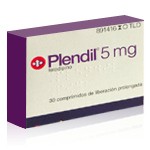
Plendil is the original brand-name formulation of Felodipine manufactured by AstraZeneca — a long-acting dihydropyridine calcium channel blocker (DHP CCB) distinguished by its highly vascular-selective profile and famous as the textbook example of clinically significant grapefruit juice drug interaction (3-4x AUC increase — most studied grapefruit-drug interaction in pharmacology). FDA-approved since 1991, Plendil is delivered in the standard extended-release (ER) formulation supporting once-daily dosing with smooth absorption profile. Internationally available as Renedil (Canada). Featured as the study drug in the landmark HOT trial 1998 (Hypertension Optimal Treatment) — validating intensive blood pressure targets for cardiovascular event reduction in hypertensive patients.
The active ingredient is Felodipine, a dihydropyridine calcium channel blocker with high vascular selectivity. Felodipine blocks L-type calcium channels in vascular smooth muscle — producing peripheral vasodilation, reduced peripheral vascular resistance, BP reduction. Vascular selectivity exceeds that of older DHP CCBs (Nifedipine), with minimal direct cardiac effects (no significant negative inotropy/chronotropy). Half-life ~11-16 hours; ER formulation provides smooth 24-hour BP control with less reflex tachycardia than immediate-release DHP CCBs. Hepatic metabolism via CYP3A4 — producing the characteristic grapefruit juice interaction and interactions with other strong CYP3A4 inhibitors (clarithromycin, ketoconazole, ritonavir).
Plendil is FDA-approved for hypertension — as monotherapy or combination therapy. Off-label uses include stable angina pectoris, Raynaud phenomenon, and other vasospastic disorders requiring vasodilator therapy. Historically used in the combination Lexxel (Felodipine + Enalapril, discontinued in US ~2006).
Available as Plendil ER 2.5 mg, 5 mg, and 10 mg extended-release tablets. Standard adult HTN dosing: 5 mg once daily start, max 10 mg/day. Elderly: 2.5 mg start. Take consistently relative to meals (food does not significantly affect ER absorption); ⚠️ AVOID GRAPEFRUIT JUICE entirely — clinically significant interaction.
Critical safety: ⚠️ GRAPEFRUIT JUICE INTERACTION — 3-4x AUC increase, must be avoided. Dose-dependent peripheral edema (DHP CCB class effect, ankle swelling), headache, flushing, dizziness, palpitations. Gingival hyperplasia rare. CYP3A4 substrate — interactions with strong inhibitors. Pregnancy Category C.
Free prescription
Discrete packaging
Have questions?
Quality Assurance

- HOT Trial 1998 BP Targets: Landmark HOT trial — intensive BP target validation using Felodipine;
- Mild Hypertension: For mild hypertension (stage 1) — effective monotherapy;
- Moderate Hypertension: For moderate hypertension (stage 2);
- Severe Hypertension: For severe hypertension (combination therapy);
- Isolated Systolic Hypertension: For isolated systolic hypertension in elderly — DHP CCB class strength;
- Resistant Hypertension Add On: Add-on for resistant hypertension — combination with ACE-i/ARB/diuretic;
- Elderly Hypertension: For elderly HTN (start 2.5 mg);
- Black Patient Hypertension: Particularly effective in Black hypertensives — DHP CCB class effect;
- HTN With Asthma COPD: HTN in asthma/COPD patients — safer than β-blockers;
- HTN Diabetes: HTN in diabetic patients — metabolically neutral;
- Stable Angina Off Label: Off-label for chronic stable angina — coronary vasodilation;
- Vasospastic Angina Off Label: Off-label for vasospastic Prinzmetal's angina;
- Raynaud Phenomenon: Off-label for Raynaud phenomenon — vasodilator reduces vasospasm;
- Vasospastic Disorders: For various vasospastic disorders requiring vasodilator therapy;
- HTN With Angina Dual: HTN with concomitant angina — dual benefit (off-label angina);
- Step Up From Monotherapy: For step-up therapy in resistant HTN;
- HTN Salt Sensitive: For salt-sensitive HTN — DHP CCB class strength;
- Hypertension With ACE i Combination: Combination with ACE inhibitors (historically Lexxel + Enalapril);
- Hypertension With ARB Combination: Combination with ARBs for resistant HTN;
- Once Daily Compliance Sensitive: For patients requiring once-daily convenience — ER formulation.
- Better 24-Hour BP Coverage: ER formulation provides smooth 24-hour BP control with single daily dose;
- Less Reflex Tachycardia vs IR: Smooth ER absorption reduces reflex tachycardia vs immediate-release DHP CCBs;
- Less Angina Symptoms Off Label: Off-label reduction of chronic stable angina symptoms (coronary vasodilation);
- Less Vasospastic Angina: Effective off-label in vasospastic Prinzmetal's angina;
- Less Raynaud Symptoms: Reduces vasospasm and symptoms in Raynaud phenomenon;
- Better Cardiovascular Outcomes HOT: HOT trial validated intensive BP targets reduce CV events;
- Less Stroke Risk: Reduces stroke risk with effective BP control — foundational antihypertensive evidence;
- Less Cardiovascular Events: Reduces cardiovascular events in high-risk patients;
- Better Daily Function: Return to normal daily activities with effective BP control;
- Better Quality of Life: Substantial improvement in quality of life;
- Better Compliance Once Daily: Once-daily ER dosing improves compliance;
- Better Elderly Tolerability Low Dose: 2.5 mg starting dose well-tolerated in elderly;
- Better Black Patient HTN Control: Particularly effective in Black hypertensives;
- Better Asthma-COPD Compatible: Compatible with asthma/COPD (vs β-blockers);
- Better Diabetes Compatible: Metabolically neutral — no glycemic adverse effect (vs thiazides);
- Better Combination Therapy Synergy: Synergistic with ACE-i, ARB, diuretic, β-blocker for resistant HTN;
- Brand Plendil AstraZeneca: Original AstraZeneca brand of Felodipine — established clinical reputation since 1991;
- Generic Felodipine: Affordable generic Felodipine versions expand global access to long-acting DHP CCB;
- Plendil ER Extended Release: Plendil ER extended-release formulation — smooth 24h coverage;
- Renedil Canada Brand: Same Felodipine molecule as international brand Renedil (Canada);
- Dihydropyridine Calcium Channel Blocker: Dihydropyridine CCB — vascular-selective mechanism;
- Highly Vascular Selective DHP: Highly vascular-selective — minimal cardiac effects;
- L Type Calcium Channels Vascular: Blocks L-type Ca²⁺ channels in vascular smooth muscle;
- CYP3A4 Hepatic Substrate: CYP3A4 hepatic substrate — metabolism mechanism;
- Grapefruit Juice Interaction Classic: ⭐ Textbook grapefruit juice interaction example (3-4x AUC increase);
- Extended Release Once Daily: Extended-release ER formulation enables once-daily dosing;
- Smooth Onset Less Reflex Tachycardia: Smooth ER absorption profile reduces reflex tachycardia;
- HOT Trial 1998 BP Targets: Landmark HOT trial — study drug for intensive BP target validation;
- Anti Anginal Vasodilator: Off-label anti-anginal vasodilator — coronary vasodilation benefit;
- 30 Plus Year Clinical History: 30+ years of clinical use since 1991 — established DHP CCB.
Generic Plendil (Felodipine 5 mg) Medication guide:
🎯 What Plendil Is and Who Should Take It
Plendil is the brand name for felodipine, a once-daily pill used to lower high blood pressure and to prevent angina (chest pain from coronary artery disease). It belongs to a family called dihydropyridine calcium channel blockers, the same family as amlodipine and nifedipine. Felodipine was developed by Astra AB in Sweden and reached the market in 1988; the extended-release formulation that dominates modern use was approved in the US in 1991. It is one of the most vascular-selective CCBs, meaning it relaxes arteries strongly with minimal direct effect on heart rate.
Plendil is not a rescue pill for a spike of BP or a sudden episode of chest pain. It is a long-term medicine, taken every day for years, that shifts your average BP down by roughly 8 to 15 mmHg systolic on its own. Combined with an ACE inhibitor, ARB, or diuretic, the drop can add another 8 to 12 mmHg. Its main claim to fame in the trial literature is the HOT study - a landmark trial that used felodipine as the core drug to establish how tightly BP should be controlled, and set BP targets that guidelines still reference today.
Who is Plendil typically prescribed for
- Adults with essential hypertension as first-line therapy or in combination
- Adults with chronic stable angina where reducing chest pain frequency is the goal
- People who tolerate ACE inhibitors poorly (cough, angioedema) and need an alternative first-line drug
- People of African or Caribbean descent where CCBs and diuretics work particularly well as first-line hypertension therapy
- People with metabolic concerns (diabetes, prediabetes, gout, high uric acid) where the metabolically neutral profile matters
- People with mild-to-moderate kidney impairment where no dose adjustment is needed
- People with Raynaud phenomenon - CCBs relax the finger and toe arteries
- People who transitioned from amlodipine because of ankle swelling - felodipine is often no better, but a trial is reasonable
Plendil is not the pill for someone in acute severe heart failure with reduced ejection fraction (though V-HeFT III showed felodipine was neutral in stable heart failure, it is not a treatment), or for someone with severe aortic stenosis (where sudden vasodilation can drop pressure below what the narrowed valve tolerates). It is also not a rescue pill for one-off high readings or unstable chest pain - both need urgent medical attention rather than an extra Plendil dose.
This guide will walk you through what Plendil does, how to take it (with the critical extended-release rule), what to eat and drink alongside (especially the grapefruit warning that matters more here than for any other BP drug in the class), which side effects to expect - especially the signature ankle swelling and the less-discussed gum overgrowth - and how to fit it into the rest of your life: shift work, travel, exercise, illness, surgery. By the end you should know Plendil the way you know a tool you have used for years.
🔬 How Plendil Works - Blocking L-Type Calcium Channels
To understand Plendil you need to know about L-type calcium channels - the specific channels in blood vessel walls and heart muscle cells that let calcium in. Calcium is the trigger that makes smooth muscle contract, and in arteries that means "narrow"; less calcium in means "relax", and relaxation lowers blood pressure.
Step 1 - The calcium channel
Blood vessel walls contain smooth muscle. When calcium ions flood into these cells through L-type channels, the muscle contracts and the vessel narrows. This is the normal mechanism that keeps blood pressure up on standing, in the cold, or during stress. In chronic hypertension, this contractile tone runs too high for too long - vessels stay tight, and average pressure creeps up.
Step 2 - Felodipine blocks the channel with high vascular selectivity
Felodipine binds to L-type calcium channels and blocks calcium entry. Smooth muscle in artery walls cannot contract as strongly, arteries relax, and BP falls. Felodipine is particularly selective for arterial channels rather than heart muscle channels - even more so than amlodipine. This means it strongly lowers BP with minimal direct effect on heart rate or contractility.
The trade-off of high vascular selectivity is a stronger reflex increase in heart rate (Section 34). When the BP drops from arterial relaxation, the body responds by speeding the heart briefly. This effect is usually mild and adaptive; occasionally it needs a beta-blocker partner.
Step 3 - Why coronary arteries matter for angina
Angina is caused by narrowed coronary arteries not delivering enough blood to the heart muscle during exertion. Felodipine relaxes coronary arteries and reduces heart muscle work by lowering the pressure the heart has to pump against. Both effects reduce the frequency and severity of angina attacks.
The timeline you actually feel
| Timeframe | What happens |
|---|---|
| Hours 2-5 after first dose | Vessels relax; BP starts to fall |
| Days 1-3 | Drug accumulates to steady state; BP drops progressively |
| Weeks 2-4 | Full BP effect visible; angina attacks reduce |
| Months 3-24 | Long-term protection of arteries measurable in trial data |
The half-life of felodipine is 10-25 hours in the extended-release form - shorter than amlodipine (30-50 hours) but still long enough for reliable once-daily dosing. The extended-release design is essential; immediate-release felodipine acts too briefly and causes sharper BP swings that trigger reflex tachycardia. Section 8 covers why the tablet must never be crushed or chewed.
📋 What Doctors Prescribe Plendil For
Plendil has two main indications - essential hypertension and chronic stable angina - both with strong evidence and long practical use. A few off-label uses are established in specialist care.
1. Essential hypertension (high blood pressure without a specific cause)
The most common reason for a Plendil prescription. Both major sets of guidelines list calcium channel blockers as one of the four first-line drug classes. Plendil is often used alone in mild cases or, more commonly, combined with an ACE inhibitor, ARB, or diuretic in established hypertension. It is a particularly good first-choice drug in older clients with isolated systolic hypertension and in clients where metabolic concerns favour a metabolically neutral agent.
2. Chronic stable angina
In someone with stable coronary artery disease whose chest pain comes on predictably during exertion, felodipine reduces the frequency and severity of attacks by relaxing coronary arteries and reducing the workload of the heart. It is often combined with a beta-blocker (which slows heart rate and counteracts the reflex tachycardia) and short-acting nitrates (for immediate relief of an attack). Section 6 covers this in detail.
Off-label but reasonable: Raynaud phenomenon
In Raynaud, exposure to cold triggers spasm of the small arteries in fingers and toes. Calcium channel blockers relax those arteries and reduce attacks. Nifedipine is more commonly used but felodipine is a reasonable alternative, especially if once-daily dosing suits the client better than nifedipine slow release.
What Plendil is NOT prescribed for
- Acute severe heart failure with reduced ejection fraction (HFrEF) - CCBs are not treatments; felodipine was shown neutral in V-HeFT III but is not first choice
- Unstable angina or acute coronary syndrome - urgent medical care needed
- Severe aortic stenosis - sudden vasodilation can drop pressure below what the valve tolerates
- Cardiogenic shock
- Emergency BP reduction - it is a long-term drug, not for one-off use
- Rescue treatment for a single angina attack - short-acting nitrates fit that job
Doctors weigh Plendil against the other main first-line hypertension classes. The main practical comparison is with amlodipine - a very similar drug from the same class. Amlodipine has a longer half-life (more forgiving of missed doses) and less strong grapefruit interaction. Felodipine has slightly more vascular selectivity and the HOT trial pedigree. In many countries amlodipine is the default choice; Plendil earns its prescription when a specific reason (formulary availability, previous good response, clinician familiarity) makes it fit.
💊 Felodipine Explained - The Vascular-Selective CCB
Felodipine sits in the dihydropyridine subgroup of calcium channel blockers. Understanding what makes it distinct helps you see why your doctor chose it and how it fits within the wider CCB family.
Felodipine among the calcium channel blocker family
| Drug | Subgroup | Half-life | Notes |
|---|---|---|---|
| Felodipine (Plendil) | Dihydropyridine | 10-25 hours (ER) | Very vascular-selective; strong grapefruit interaction |
| Amlodipine (Norvasc) | Dihydropyridine | 30-50 hours (longest) | Most-used; forgiving of missed doses |
| Nifedipine slow-release | Dihydropyridine | 2 h (SR extends) | Used in Raynaud and hypertension in pregnancy |
| Lercanidipine | Dihydropyridine | 8-10 h (long tissue action) | Less ankle swelling reported |
| Diltiazem | Non-dihydropyridine | 3-4 h (SR extends) | Slows heart rate; do not combine with beta-blocker |
| Verapamil | Non-dihydropyridine | 3-7 h (SR extends) | Slows heart; used in arrhythmia and angina |
Why felodipine is extended release only
Immediate-release felodipine has a natural half-life of only 3-4 hours - too short for daily dosing and prone to producing sharp BP drops followed by rebound. The extended-release (ER, sometimes labelled Plendil ER, felodipine SR, felodipine XL) formulation was designed specifically to smooth this out. Blood levels rise gradually over 2-5 hours after the dose and stay in the therapeutic range for the full 24 hours.
This is why splitting, crushing, or chewing a Plendil tablet is dangerous - it destroys the release mechanism and delivers the full daily dose in one hit.
The available strengths of Plendil
- 2.5 mg extended-release tablets - starting dose in older or frail clients
- 5 mg extended-release tablets - standard adult starting and maintenance dose
- 10 mg extended-release tablets - higher maintenance when 5 mg does not reach target
The specific strength matters for side effects. Ankle swelling in particular is dose-related - about 5 percent of clients on 2.5 mg experience it, 15 percent on 5 mg, and up to 25 percent on 10 mg. Many doctors prefer to add an ACE inhibitor or ARB rather than push felodipine to 10 mg alone, because the combination gives more BP effect with less ankle swelling than the higher single-drug dose.
📊 The HOT Study - How Low Should Blood Pressure Go?
The Hypertension Optimal Treatment (HOT) study is the trial most tied to felodipine specifically. It was one of the largest hypertension outcome trials of its era and it did something no BP trial had really done before: it directly tested how low BP should be pushed. Felodipine was the drug the investigators picked to titrate.
The trial in short
- Who: 18 790 clients aged 50-80 with diastolic BP 100-115 mmHg
- What: Randomised to three target diastolic BPs: 90 or below, 85 or below, or 80 or below
- How: Felodipine 5 mg once daily as core drug, plus ACE inhibitor or beta-blocker added to hit the target
- Second question: aspirin 75 mg vs placebo in half the clients
- Follow up: Median 3.8 years
What the trial showed
- Lower diastolic BP targets did not clearly reduce total cardiovascular events in the whole population
- In diabetic clients specifically, targeting diastolic under 80 halved cardiovascular events vs targeting under 90
- Low-dose aspirin reduced cardiovascular events by 15 percent vs placebo
- Aspirin increased major bleeding modestly, but net benefit favoured aspirin for cardiovascular clients
- Felodipine + ACE inhibitor combination proved feasible and well tolerated at target-driven doses
Why HOT still matters
The specific numbers from HOT - especially the diabetic finding - shaped BP target recommendations for a generation. Modern guidelines still cite HOT when explaining why BP targets in diabetics are tighter than in the general hypertensive population.
The trial also confirmed felodipine + ACE inhibitor as a legitimate and well-tolerated combination, one that many clients around the world take today.
Two other felodipine trials worth naming
- STOP-2 (1999) - felodipine was one of the CCBs in the modern-treatment arm; showed equivalence to older regimens in elderly hypertension
- V-HeFT III (1997) - felodipine was neutral (not harmful, not clearly beneficial) in stable heart failure with reduced ejection fraction
- FEVER (2005) - felodipine + hydrochlorothiazide reduced cardiovascular events in Chinese hypertensive clients
The practical takeaway: felodipine is a well-tested BP drug with a defined evidence base. HOT gave it particular pedigree by using it as the trial's core drug for a landmark question (how low should BP go?). If it fits your clinical picture, continued long-term use is well supported by the evidence.
🫀 Plendil for Chronic Stable Angina
Angina is chest pain (or pressure, heaviness, or a squeezing feeling) caused by narrowed coronary arteries not delivering enough blood to the heart muscle during exertion. Felodipine has been used for chronic stable angina since the 1990s because it works through two complementary mechanisms.
How Plendil helps angina
1. Coronary artery relaxation. Felodipine directly relaxes the smooth muscle of coronary arteries, widening them and improving blood delivery to the heart muscle - especially valuable in vasospastic angina (Prinzmetal angina) where the arteries clamp shut in spasm.
2. Reduced heart workload. By lowering systemic BP, felodipine reduces the pressure the heart has to pump against. Less pumping work means less oxygen demand, and less mismatch between supply and demand - which is what angina is.
When Plendil fits the angina picture
- Chronic stable angina with hypertension - one drug treats both
- Angina in someone who cannot tolerate beta-blockers (asthma, severe fatigue, sexual side effects)
- Vasospastic (Prinzmetal) angina - CCBs are first-line here; beta-blockers can make it worse
- Angina in older clients where the metabolic neutrality of Plendil is welcome
- Added to beta-blocker when the beta-blocker alone does not control attacks
Plendil + beta-blocker - the classical anti-anginal duo
The combination of a dihydropyridine CCB (Plendil) and a beta-blocker (bisoprolol, metoprolol) is one of the most effective anti-anginal regimens. The beta-blocker slows the heart rate (which also counteracts the reflex tachycardia that felodipine can cause) and reduces oxygen demand; felodipine relaxes coronary arteries and reduces afterload. Unlike verapamil or diltiazem with a beta-blocker (which can produce dangerous bradycardia), felodipine-with-beta-blocker is safe and often synergistic.
What Plendil does NOT do for angina
- It does not stop an acute attack - use short-acting nitrates (sublingual glyceryl trinitrate spray or tablet)
- It does not treat unstable angina - that is an emergency requiring hospital assessment
- It does not remove plaques or open blocked arteries - only revascularisation (stents, bypass) can do that
- It does not replace aspirin and statin - these are the foundation of coronary artery disease management
Signs of an angina attack that needs urgent attention
- Chest pain at rest not brought on by exertion
- Chest pain lasting more than 10-15 minutes despite rest and nitroglycerin
- Chest pain with severe shortness of breath, cold sweat, or nausea
- A sudden change in the pattern - more frequent attacks, with less exertion
- Chest pain radiating to jaw, arm, back with unusual features
Call emergency services. Plendil keeps stable angina stable; it does not treat unstable angina or a heart attack.
For someone on Plendil for angina, the yearly review should include: how many attacks per month, use of short-acting nitrate rescue, exercise tolerance, and whether the coronary disease has been fully assessed (angiography, stress test). Plendil is one part of a multi-drug plan.
📅 The First Few Weeks on Plendil
Starting Plendil has a predictable rhythm. Knowing what to expect prevents unnecessary calls to your doctor about things that are normal, and helps you spot the few things that are not.
Days 1-3
Very little that you feel. A gentle drop in BP begins within a few hours of the first dose. Most people notice nothing beyond perhaps mild lightheadedness on standing quickly - not always present.
Some flushing or a mild headache can appear in the first days as vessels dilate. Usually fades within a week.
Week 1-2
Drug reaches steady state. Blood levels stabilise within 3-5 days. BP continues to fall over this period.
Home BP shows the effect. Readings typically show a drop of 8 to 15 mmHg systolic by end of week 2.
Flushing and headache usually fade.
Week 3-8
Full BP effect matures. This is when Plendil reaches its full potential; BP averages settle into their new baseline.
Any dose adjustment happens now. If BP is still above target on 5 mg, your doctor may either rise to 10 mg or add a second pill (more common - ACE inhibitor or ARB). If BP is well controlled, no change.
Ankle swelling may appear in weeks 4-8 if it is going to appear. Section 17.
Signs that are NOT normal and need a call to your doctor
- Severe dizziness that does not resolve in a week or that causes a fall
- New or worsening chest pain - especially at rest
- Palpitations that persist or feel worrying
- Sudden breathlessness or ankle swelling that came on within days (not the gradual pattern over weeks)
- Severe skin rash: blistering, peeling
- Yellow skin or eyes, dark urine (rare liver reaction)
- Severe swelling of face, lips, or tongue (rare allergic reaction)
Most people notice essentially nothing in the first weeks on Plendil - just a lower BP number on the home monitor. This is one of the practical strengths of the drug. If the first month passes without incident, the long-term outlook is usually smooth.
⏰ When to Take Plendil - The Extended-Release Rule
Plendil timing is flexible. Because the extended-release formulation provides steady blood levels over 24 hours, taking it a few hours earlier or later than usual barely affects BP control. The main practical rule is consistency - and the critical warning is about how you swallow the tablet.
🚨 The extended-release rule: SWALLOW WHOLE
Plendil tablets are designed to release felodipine gradually over 24 hours. Splitting, crushing, chewing, or breaking the tablet destroys this release mechanism and delivers the full daily dose in one hit. The consequences can include:
- Severe BP drop in the first hours
- Reflex tachycardia with palpitations
- Fainting or falls
- In coronary disease clients, precipitation of angina
- Loss of 24-hour BP cover - the drug is gone by evening rather than lasting through the night
Swallow the tablet whole with water. If you cannot swallow whole tablets, ask your doctor about switching to a different BP drug.
The best time to take Plendil
Whichever time you will remember most reliably. Morning is most common because it anchors to waking. Evening dosing is also acceptable. Consistency of your chosen time matters more than which specific hour you pick.
Once you have chosen a time - stick with it. Do not swing between morning and evening, because the transition period may feel less controlled.
Water only for swallowing - not grapefruit juice
Take Plendil with plain water. Do not use grapefruit juice, Seville orange juice, or pomelo juice to swallow the tablet - the grapefruit interaction is real and covered in Section 9. Tea or coffee is fine but water is best for consistency.
Practical anchors
- With breakfast - simplest for most people
- When you brush your teeth in the morning
- With your evening meal
- At bedtime with a glass of water
- Weekly pillbox filled every Sunday
If you cannot swallow the tablet
Illness, tooth surgery, or difficulty swallowing may make tablet swallowing hard temporarily. If this happens for more than a day or two, contact your doctor for an alternative approach - Plendil cannot simply be crushed into apple sauce. Options include switching temporarily to another BP drug that comes in liquid form, or using an intravenous equivalent in hospital settings.
🍊 Food, Grapefruit and Plendil - The Critical Interaction
This section is about the strongest food interaction of any BP drug in Plendil's class. Grapefruit does not just modestly affect felodipine the way it does amlodipine - it can raise felodipine blood levels by two to three times. This is not a hypothetical concern; it is one of the classic examples used in pharmacology teaching around the world.
🚩 AVOID GRAPEFRUIT ON PLENDIL
Grapefruit and grapefruit juice contain compounds (furanocoumarins - especially bergamottin) that potently inhibit the CYP3A4 enzyme in the intestine. Felodipine is heavily metabolised by CYP3A4 during first-pass absorption. When grapefruit blocks this enzyme:
- Felodipine blood levels rise 200-300 percent
- Peak blood level is much higher
- Effective dose can approximately double or triple
- The effect lasts 24-72 hours after a single glass of juice - spacing the dose does not fix it
- Even a single grapefruit fruit has a measurable effect
Consequences: excess BP drop, dizziness, ankle swelling, palpitations, reflex tachycardia.
Other citrus fruits with the same effect
- Seville oranges (bitter oranges used in marmalade) - same furanocoumarin
- Pomelos and pomelo hybrids
- Some tangelos (tangelo = grapefruit x tangerine)
Regular oranges, lemons, limes, mandarins, satsumas, clementines are all safe - they do not contain the interacting compounds.
Watch for hidden grapefruit
- Fruit juice blends often include grapefruit even when labelled "citrus mix"
- Cocktails like Paloma or Greyhound
- Marmalade made with Seville oranges
- Hotel breakfast buffets often serve grapefruit juice in pitchers alongside orange juice
- "Diet" or "detox" juices often include grapefruit
Food rules for Plendil (aside from grapefruit)
- Take with or without food - be consistent with your choice
- Swallow whole with water - never split, crush, or chew (Section 8)
- No specific food avoidance beyond the grapefruit note above
- Salt still matters for BP - keep total daily salt under 5-6 g
The DASH-style pattern helps BP alongside Plendil
- Vegetables, especially leafy greens, tomatoes, root veg
- Oily fish 2 times a week
- Beans, lentils, chickpeas
- Nuts and seeds (unsalted, moderate portions)
- Whole grains rather than refined
- Fresh fruit - regular oranges, apples, berries (not grapefruit)
- Low-fat dairy or yoghurt
The grapefruit rule is easy to follow once you know it. It is worth committing to memory: no grapefruit, no Seville oranges, no pomelos while you are on Plendil. If you are transitioning off Plendil to another drug where grapefruit is fine (say, an ARB), the food restrictions lift at that point.
🍷 Alcohol and Plendil
Alcohol and Plendil are compatible in moderate amounts. Both dilate blood vessels and lower BP, so combining them can amplify dizziness, worsen ankle swelling, and undermine long-term BP control in heavy drinkers.
Three things happen when you drink on Plendil
- BP drops more than expected. Alcohol is a vasodilator; Plendil is also a vasodilator. Together the drop can produce dizziness, faintness, or a fall - especially after standing.
- Ankle swelling can worsen. Alcohol dilates veins as well as arteries, and combined with felodipine can make ankle oedema more visible the day after drinking.
- Chronic drinking raises baseline BP. Anyone drinking more than 2 units daily on average will find that BP creeps up over months.
A sensible framework
- Up to 1 standard drink per day for women, 2 for men is compatible with Plendil
- Drink water between alcoholic drinks - reduces dehydration and hangover
- Never drink on an empty stomach on Plendil
- Skip alcohol for 48 hours after any dose increase
- Do not drive after any alcohol on Plendil
- Watch for cocktails containing grapefruit juice (Section 9)
Situations where alcohol on Plendil is a bad idea
- Recent starting or dose increase
- Recent liver problems (Plendil is liver-metabolised)
- Age 75 or older with any dizziness or fall history
- Hot weather with limited water intake
- Recent illness with vomiting or diarrhoea
- Angina - alcohol can trigger vasospastic attacks in vulnerable clients
The bigger picture: for long-term BP, lower alcohol is better. A weekly average of 5-6 units, spread across the week, is compatible with well-controlled hypertension on Plendil. Heavier intake undermines the whole treatment.
☕ Coffee, Caffeine and Energy Drinks
Caffeine causes a small brief rise in BP - typically 3 to 8 mmHg for 1 to 3 hours after a strong cup - but the effect fades in habitual drinkers. It does not directly interact with Plendil at a metabolic level. Normal coffee habits are compatible with well-controlled BP on the drug.
Coffee on Plendil - the practical rules
- Up to 3-4 cups of coffee per day is compatible with well-controlled BP
- Do not measure BP within 30-60 minutes of coffee - readings will be falsely high
- Drink water alongside in hot weather - caffeine is a mild diuretic
- Habitual heavy drinkers develop tolerance - the BP bump is smaller than in occasional drinkers
Energy drinks - a different story
Energy drinks combine large caffeine loads (often 200-400 mg per can) with sugar, taurine, guarana, and sometimes borderline ephedrine-type extracts. These produce a larger and longer BP spike, sometimes palpitations or arrhythmias.
On Plendil, energy drinks are best kept to an occasional small can - not a daily habit, and not before exercise. The reflex tachycardia that Plendil can already cause is worsened by caffeine spikes.
Pre-workout supplements - be cautious
Many pre-workout supplements combine 200-400 mg of caffeine with stimulants that raise BP acutely. On Plendil these can produce sudden BP swings and palpitations. If you use one, choose a caffeine-only or caffeine-plus-creatine kind, start with half a scoop, and check home BP once during the session for a week.
Decaf, tea, chocolate
Decaf coffee (2-15 mg caffeine per cup), tea (40-70 mg per cup) and chocolate contain small amounts that do not need avoidance on Plendil. Normal daily habits are fine.
If you notice palpitations, tremor, or unusual dizziness after coffee on Plendil, cut back. Otherwise, your usual habit is compatible with the drug and there is no need to give up your morning cup because you started BP treatment.
🩺 Checking It Is Working - Home BP Monitoring
Office BP checks show one snapshot from one moment in one room; they miss almost everything about how your pressure actually behaves through a day. Home monitoring on Plendil tells the real story, and it is the single most useful habit you can adopt on this drug.
What to buy
- Upper arm cuff monitor - wrist monitors are less accurate
- Validated model - look for BHS, ESH or dabl accreditation
- Correct cuff size for your arm - too small overestimates, too large underestimates
- Automatic (oscillometric) not manual
How to measure correctly
- Sit quietly for 5 minutes before the first reading
- Back supported, feet flat on floor, legs uncrossed
- Cuff on bare upper arm at heart level
- Do not talk or use your phone during measurement
- Take 2 readings 1-2 minutes apart
- Ideally: morning (before Plendil and before coffee) and evening (before dinner)
- Do this 4-7 days out of every 2 weeks in the first months, then weekly once stable
Home BP targets on Plendil
| Group | Home BP target (average) |
|---|---|
| Adults under 65 without CKD or diabetes | Under 135/85 (aim closer to 125/75) |
| Adults with diabetes or CKD | Under 130/80 (HOT trial specifically supports tighter targets in diabetes) |
| Adults 65-79 | Under 140/85, aim toward 130/80 if tolerated |
| Adults 80 and over | Under 145/85 (fall risk matters more) |
Reading the pattern
- Persistently above target after 6-8 weeks on 10 mg - review with your doctor, consider adding a partner drug
- Below 110/70 with dizziness - dose may be too much
- Very variable readings - is technique consistent? Are you measuring near coffee or after a walk?
- Sudden jump of 20+ mmHg - check for new drugs (NSAIDs, decongestants, steroids) or new stress
Bring your recorded readings to every doctor visit - a small notebook, a monitor with memory, or a smartphone app all work. Dose decisions on Plendil track home averages much better than single office readings.
⚖️ Plendil Doses and How They Are Adjusted
Plendil dosing is simple compared to many BP drugs - three strengths, once-daily dosing, no fine-grained titration. The right dose is whichever one gets your home BP to target with tolerable or no side effects.
The standard adult dosing pathway
| Step | Dose | Timing |
|---|---|---|
| Starting dose | 5 mg once daily | First 2-4 weeks |
| Older or frail | 2.5 mg once daily | First 2-4 weeks |
| Titration step (if BP still above target) | Increase to 10 mg once daily OR add second drug | After 2-4 weeks assessment |
| Maximum recommended | 10 mg once daily | Not usually exceeded - add second drug instead |
| Liver disease | 2.5 mg once daily; consider avoiding | See Section 30 |
Why 5 mg is the usual starting point
Five milligrams provides most of the achievable BP drop from felodipine (about 60-70 percent of what 10 mg produces), with substantially less risk of ankle swelling and other dose-related side effects.
Doubling to 10 mg adds only a small extra BP reduction (roughly 3-5 mmHg systolic on average) but significantly raises the ankle swelling rate (from around 15 percent to 25 percent). Many doctors prefer to keep felodipine at 5 mg and add a second drug (ACE inhibitor, ARB, or diuretic) rather than push to 10 mg alone.
The "start low, go slow" mindset
Do not push doses up in the first two weeks. It takes 3-5 days for felodipine to reach steady state and another 1-2 weeks for the full BP effect to appear. Judging response before 2 weeks and increasing the dose too soon leads to overshooting BP downward and unnecessary side effects.
The right rhythm: start 5 mg, check home BP for 2 weeks, review with your doctor at 2-4 weeks, then adjust if needed.
What to do if BP is still above target on 10 mg
Adding a second drug is almost always more effective than pushing felodipine higher. The common partners are ACE inhibitors (perindopril, ramipril, lisinopril), ARBs (losartan, olmesartan, valsartan), or thiazide-like diuretics (indapamide). Beta-blockers are added when there is coronary artery disease or reflex tachycardia issues. Section 14 covers combinations in detail.
🔗 Combining Plendil With Other BP Pills
Most people on Plendil eventually take at least one other BP drug alongside. Combining two or three drugs with different mechanisms tends to give more BP effect with fewer side effects than pushing any single drug to its maximum. Here are the pairings you are most likely to see.
Plendil + ACE inhibitor
Examples: Plendil + ramipril, Plendil + perindopril, Plendil + lisinopril, Plendil + enalapril.
Why it works: The two drugs work by different mechanisms - Plendil relaxes arteries directly through calcium channel blockade; ACE inhibitors relax them by blocking angiotensin II formation. Combined, BP drops by an average of 20-30 mmHg systolic - more than either drug alone.
Bonus: ACE inhibitors reduce ankle swelling by dilating veins as well as arteries. This is a genuine advantage. Kidney protection in CKD and diabetes is also stronger with an ACE inhibitor present.
Plendil + ARB
Examples: Plendil + losartan, Plendil + olmesartan, Plendil + telmisartan, Plendil + valsartan.
Similar to ACE inhibitor combination but without the cough side effect. Preferred if an ACE inhibitor was tried and caused a persistent dry cough. Ankle swelling reduction and kidney protection benefits are similar.
Plendil + thiazide diuretic
Examples: Plendil + indapamide, Plendil + hydrochlorothiazide, Plendil + chlortalidone.
Effective particularly for isolated systolic hypertension in older clients. FEVER trial evidence supports this combination. Diuretic side effects (low potassium, low sodium, uric acid rise) need attention on blood tests.
Plendil + beta-blocker
Examples: Plendil + bisoprolol, Plendil + metoprolol, Plendil + carvedilol.
Common combination when angina is present, or when reflex tachycardia becomes bothersome on felodipine alone. Unlike verapamil or diltiazem, felodipine is safe with a beta-blocker - the two do not both slow the heart to a dangerous degree.
Combinations to be aware of
- Plendil + potassium-sparing diuretic (spironolactone, amiloride) - fine, no direct interaction; total BP effect additive
- Plendil + alpha-blocker (doxazosin) - fine but can produce more postural drops; watch standing BP
- Plendil + centrally acting drug (moxonidine, methyldopa) - reserved for treatment-resistant hypertension
Do not adjust these combinations on your own. If you are getting side effects (dizziness, ankle swelling, cough on ACE inhibitor), talk with your doctor rather than stop one drug on your own initiative. Most combinations have a specific reason behind them that reflects your overall picture - stopping one part can undermine the whole plan.
⚠️ Drug Interactions You Need to Know About
Plendil is one of the more interaction-prone BP drugs because it is metabolised by the CYP3A4 enzyme, one of the most crowded drug-metabolism pathways in the liver. Any drug or food that speeds up or slows down CYP3A4 changes felodipine levels.
Drugs that raise felodipine levels (CYP3A4 inhibitors)
- Erythromycin, clarithromycin (macrolide antibiotics) - can double or triple felodipine levels
- Ketoconazole, itraconazole, fluconazole (antifungals)
- Ritonavir, other HIV protease inhibitors
- Ciclosporin, tacrolimus (transplant drugs)
- Cimetidine (older stomach acid drug)
- Grapefruit juice and Seville oranges (Section 9)
Effect: excessive BP drop, ankle swelling, headache, palpitations.
Drugs that lower felodipine levels (CYP3A4 inducers)
- Phenytoin, carbamazepine, phenobarbital (antiepileptics)
- Rifampicin, rifabutin (antibiotics for TB)
- St Johns Wort (herbal, over-the-counter)
- Efavirenz (HIV medicine)
Effect: felodipine can lose most of its potency; BP rises. If you must be on one of these, expect much higher felodipine doses or a switch to a non-CYP3A4 alternative (amlodipine, an ARB, an ACE inhibitor).
Common everyday interactions
| Drug | Effect |
|---|---|
| Ibuprofen, naproxen, diclofenac (NSAIDs) | Reduce BP effect; also strain kidneys. Occasional use OK, daily use best avoided |
| Pseudoephedrine (decongestant) | Raises BP. Avoid on Plendil |
| Sildenafil, tadalafil, vardenafil | Additive BP drop but not dangerous in usual doses (unlike nitrates) |
| Digoxin | Small rise in digoxin levels; monitoring wise |
| Simvastatin, atorvastatin (statins) | Compete for CYP3A4 but the clinical effect is small; usually safe together |
| Alcohol | Additive vasodilation; moderate intake OK (Section 10) |
Two habits that protect you
- Show your full drug list at every visit. Include over-the-counter and herbal - especially St Johns Wort, which many people take without seeing it as "medicine".
- Ask the pharmacist about any new prescription. "I take Plendil - is this safe together?" catches most bad combinations.
🚨 Side Effects of Plendil
Most people on Plendil have mild or no side effects. Because felodipine has been in use for over 35 years, its side effect profile is well characterised - a small number of common, expected effects (mostly reflecting vasodilation), a few less common but recognisable ones, and a very small handful of rare serious reactions.
Common side effects (1-10 percent of clients)
| Effect | Frequency | Notes |
|---|---|---|
| Ankle swelling | 5-25 percent (dose-related) | Signature CCB effect - see Section 17 |
| Headache | 5-15 percent | Common early, fades within 1-2 weeks |
| Facial flushing | 3-10 percent | Usually mild and settles |
| Dizziness or lightheadedness | 2-6 percent | More common on standing |
| Palpitations | 2-4 percent | Reflex tachycardia; usually mild |
| Fatigue | 1-3 percent | Usually early and transient |
| Constipation or nausea | 1-2 percent | Mild, usually manageable |
Less common side effects (0.1-1 percent)
- Gum overgrowth (gingival hyperplasia) - Section 19; usually appears after months
- Skin rash - if severe, stop and seek advice
- Nightmares or vivid dreams - rare
- Impotence or reduced libido - less common than with beta-blockers
- Muscle pain, joint pain
- Increased urinary frequency
Rare serious effects - seek urgent medical help
- Severe swelling of face, lips, tongue or throat (angioedema - rare on CCBs but recognised)
- Widespread skin blistering or peeling (Stevens-Johnson syndrome, toxic epidermal necrolysis - extremely rare)
- Yellow skin or eyes, dark urine (liver toxicity - very rare)
- Chest pain that is new or dramatically worse (paradoxical angina worsening - very rare)
- Fainting, especially after a dose
- Persistent rapid or irregular heartbeat
If you experience any of the rare serious effects, stop the tablet, seek urgent medical help, and take your medication list with you. For the common effects, most fade or become manageable; a dose reduction or partner-drug adjustment often solves the problem without abandoning Plendil altogether.
🦵 Ankle Swelling - The Signature Side Effect
Ankle swelling is the signature side effect of dihydropyridine calcium channel blockers. It affects roughly 5-25 percent of clients on felodipine (dose-dependent) and is the reason more prescriptions are switched than any other single issue. Understanding what it is, what it is not, and what to do about it prevents unnecessary drug changes.
What causes the swelling
Felodipine relaxes small arteries (arterioles) much more than it relaxes small veins (venules). This means more blood pressure gets to the capillaries at the far end of the circulation, but the veins do not dilate to match. The mismatch pushes fluid out of the capillaries into the surrounding tissue - and gravity draws that fluid to the lowest points: ankles, feet, sometimes lower calves.
This is not salt retention, not heart failure, and not kidney failure. Your body is not accumulating extra fluid overall; the fluid is just re-distributed within your circulation. Blood tests and diuretic pills do not fix it.
The signature pattern
- Both ankles equally (not one only - one-sided is a different problem)
- Worse by evening, better by morning (gravity)
- Worse in hot weather, on long flights, after a day standing
- Pressing a finger leaves an indent (pitting oedema)
- Appears gradually over 2-8 weeks after starting or dose increase
- Not painful, not red, not warm (redness/warmth = infection, not CCB)
What to do about it
- Compression stockings (15-20 mmHg over the counter, or 20-30 mmHg if prescribed) worn during the day - the single most effective non-drug measure
- Elevate legs above heart level for 20-30 minutes in the evening - lying on the couch with feet on 2-3 pillows
- Walk every hour, even briefly, if you sit for work
- Avoid long stretches of standing when possible
- Ask your doctor about adding an ACE inhibitor or ARB if not already on one - these dilate veins and often reduce CCB-induced swelling substantially
- Reduce Plendil dose if 10 mg - going to 5 mg often reduces swelling more than adding an ACE inhibitor does
What does NOT help
- Diuretic pills (furosemide, hydrochlorothiazide) - do not fix the mechanism and can dehydrate you
- Reducing salt intake - useful for BP but does not fix CCB swelling
- Herbal "water pills"
Signs that swelling might not be from Plendil
- Only one ankle swollen (deep vein thrombosis, cellulitis)
- Swelling reaches thighs or belly (heart failure, kidney disease)
- Red, hot, painful (infection)
- Started suddenly (over 1-2 days), not gradually
- Associated with new breathlessness
Any of these warrants a medical review, not just a Plendil dose change.
Ankle swelling from Plendil is cosmetic and inconvenient but not medically dangerous. Many long-term clients live with mild swelling and use compression stockings. If it is severe enough to be socially embarrassing or physically limiting, either dose reduction or partner-drug addition usually solves it. Switching to amlodipine rarely helps because amlodipine causes essentially the same problem.
❤️ Flushing, Headache and Palpitations
These are three vasodilation-related effects that show up in the first weeks and usually fade with time. Knowing what to expect prevents unnecessary alarm and unnecessary drug switches.
Flushing
Warm, pink face or neck, sometimes with a sense of heat rising from chest to head. Common in the first 1-2 weeks; caused by direct vasodilation of skin arteries. Not dangerous, does not indicate allergy.
What helps: Wear cool, breathable clothing early in treatment. Avoid alcohol or very hot drinks in the first two weeks. Report to your doctor if it persists beyond 4-6 weeks or if it comes with severe itching, rash, or wheezing (this points to allergy, not simple flushing).
Headache
Dull, pressure-like, front of head, sometimes throbbing. Common in the first week or two as arteries in the head widen. Usually resolves as the body adapts.
What helps: Take with a light meal; ensure adequate water intake. Paracetamol 500-1000 mg is fine for symptomatic relief; avoid ibuprofen and other NSAIDs which reduce BP effect and strain kidneys. If headache persists beyond 3-4 weeks or is severe, discuss - occasionally the dose needs adjustment or switch.
Palpitations (reflex tachycardia)
Awareness of a rapid or forceful heartbeat, usually mild, more noticeable at rest or when lying down. Happens because BP drop triggers a reflex speed-up of the heart to maintain circulation.
What helps: Usually fades within 2-4 weeks. Reduced caffeine intake reduces the feeling. Very rarely needs specific treatment.
When it needs review: if palpitations are strong, sustained (over 100 bpm at rest for extended periods), or associated with dizziness or chest pain. In this case a beta-blocker partner drug typically settles it - or a switch to amlodipine (which causes less reflex tachycardia than felodipine).
Two everyday adaptations that help all three
- Give it two full weeks before judging. Almost every early vasodilation effect fades as your body auto-regulates.
- Stand up slowly for the first week. Pause on the edge of the bed, then stand slowly. This alone prevents most of the early dizziness and lightheadedness.
🦷 Gum Overgrowth - Gingival Hyperplasia
Gingival hyperplasia (gum overgrowth) is a lesser-known but real side effect of calcium channel blockers, including Plendil. It affects perhaps 3-5 percent of long-term users of felodipine. Recognising it early and managing it is easier than reversing advanced overgrowth.
What it looks like
- Gums become thicker, redder, and start growing between and over teeth
- Front teeth are affected first, especially where plaque tends to sit
- Bleeding when brushing or flossing is common
- Cosmetically the gums look "puffy" and the visible tooth surface shrinks
- Difficult to clean the tooth edges because gums are in the way
- Rarely painful unless secondary gum inflammation develops
Risk factors
- Poor oral hygiene is by far the strongest risk factor - plaque triggers the overgrowth response
- Higher felodipine doses (10 mg) more than lower
- Younger age (paradoxically, gum tissue is more responsive)
- Coexisting phenytoin or ciclosporin - both cause gum overgrowth themselves; combined effect is worse
- Existing gum disease makes overgrowth more pronounced
Prevention - which mostly works
- Brush twice daily with a soft brush and fluoride toothpaste
- Floss daily - this alone dramatically reduces the risk
- Professional dental cleaning every 3-6 months if you are on Plendil long term
- Tell your dentist you take Plendil (felodipine) so they can watch for early signs
If it develops
- Intensive gum cleaning (deep scaling and root planing) by a dentist or periodontist
- Meticulous home oral hygiene - brushing after every meal, daily flossing
- Consider dose reduction - dropping from 10 mg to 5 mg reduces the driving force
- Consider switch to non-CCB drug if severe - ACE inhibitors and ARBs do not cause this
- Rarely, surgical trimming of overgrown gum tissue (gingivectomy) is needed
Because Plendil is often a long-term drug, the interaction with dental care matters more than for short-term medications. A once-yearly dental check-up is a minimum on this drug; every 6 months is better. Your dentist can catch early gum changes long before you would notice at home.
⏱️ What to Do If You Forget or Miss a Dose
Because Plendil is once daily with a 10-25 hour half-life, one missed dose is generally forgiving - but not something to make a habit of. The following rules avoid confusion and prevent under- or over-dosing.
The one-line rule
If you remember within about 12 hours of your usual time, take the missed dose. If more than 12 hours has passed, skip it and take the next dose at the normal time. Never take two Plendil tablets to catch up.
Common scenarios
| Scenario | What to do |
|---|---|
| Take morning dose - remember at noon | Take it now; skip nothing |
| Take morning dose - remember late evening | Skip; take tomorrow morning as usual |
| Skipped whole day | Restart next day at normal time; do not double-up |
| Skipped 2-3 days | Restart normally; BP may creep up over that period. Check your monitor |
| Vomited within 30 minutes of taking | Take another dose (drug not yet absorbed); if more than 1 hour has passed, do not repeat |
Do NOT take double dose to catch up
A doubled Plendil dose produces excessive vasodilation - dizziness, ankle swelling, palpitations, sometimes fainting. Even one doubled dose can produce a real fall in an older client. The BP effect of one missed day is much smaller than the harm of a doubled dose.
Systems that prevent missed doses
- Weekly pillbox with slots for each day - refill every Sunday. Instantly shows if today was missed
- Phone alarm at the same time daily
- Anchor it to breakfast, tooth-brushing, or coffee
- Keep spare tablets at work or in a travel bag
- Order the next box before you are down to your last week's supply
If you find yourself missing doses regularly (more than once every 2 weeks), the tablet is probably not fitting your routine. Talk with your doctor about switching to amlodipine (longer half-life, more forgiving) or moving your dose time to something that anchors better - after dinner, or at bedtime.
🌙 Plendil for Night Shift Workers
Night shift work is one of the harder situations for BP treatment because sleep-wake cycles are upside-down. Plendil is workable on shifts but needs a plan.
Two workable approaches
Option A - fixed time, ignore shift. Pick one clock time and take Plendil at that time every day regardless of shift. Simplest to remember. BP control remains steady because the 24-hour drug level does not depend on when you sleep.
Option B - anchor to your "morning". Take Plendil when you wake up, whenever that is - after night shift, "morning" might be 2 pm. Both approaches work; pick whichever feels more natural to you.
Night-shift specific considerations
- Coffee timing. Heavy coffee use during shifts raises BP briefly; do not measure BP within an hour of coffee
- Sleep BP is different. When you finally sleep, BP falls. That is normal - do not worry about morning-after-shift readings being low
- Ankle swelling worse on long standing shifts (nurses, kitchen staff, security). Compression stockings help
- Water intake matters - dehydration during hectic shifts amplifies dizziness
- Grapefruit juice served at hospital canteens - avoid (Section 9)
Measuring BP on shifts
Standard advice - morning before dose, evening before dinner - does not fit a rotating shift schedule. Instead: pick 2 fixed clock times (say 9 am and 9 pm) and stick with them regardless of shift. This gives consistent data across shift patterns. Or measure at "start of my day" and "end of my day" whenever those are.
Shift workers often have higher average BP over time (poor sleep, stress, irregular eating). Being on Plendil is a step toward correcting this, but non-drug measures matter more than they do for day workers: daytime sleep hygiene (dark room, cool, quiet), managed caffeine, meal timing, and regular exercise on days off.
🚗 Plendil for Drivers and Machine Operators
Plendil affects driving less than beta-blockers or centrally acting drugs, but the first weeks and any dose adjustment can affect concentration and alertness through dizziness and headache. If your job depends on driving or operating machinery, plan around this.
First 2-4 weeks - the caution period
- Do not drive on the first day until you know how you personally react to Plendil
- Avoid long-distance driving alone in weeks 1-3
- Do not use heavy machinery in the first week
- Get up carefully from seated positions - especially after long drives - dizziness on standing is peak in early treatment
After the first month - most people are fine
Most clients on stable-dose Plendil drive normally with no restrictions. Reaction time and alertness are not detectably affected. Long-distance haulage drivers, taxi drivers, pilots, bus drivers, train drivers - all can typically continue on Plendil once stable.
Job-specific rules to check
Commercial licences (heavy goods vehicles, buses, taxis, aviation) usually require a doctor's note confirming the medication does not impair fitness to drive. Plendil does not usually disqualify anyone, but the paperwork is often a hoop to jump through. Ask your doctor for the fitness-to-drive letter if your role requires it.
When NOT to drive
- First day on Plendil
- After a dose increase, for the first 24-48 hours
- If you feel unusually dizzy or lightheaded
- If you have had any alcohol
- If you have fainted or nearly fainted in the previous week
Report any driving incident (even a near-miss caused by dizziness) to your doctor - it may indicate the dose needs adjustment or a different drug is better for your circumstances.
💪 Plendil, Exercise and Sports
Plendil affects exercise capacity minimally in most people. Because it does not slow heart rate (unlike beta-blockers), your maximal heart rate on exercise is largely preserved. The main things to know are about the reflex tachycardia, the standing BP behaviour, and the ankle swelling on prolonged standing sports.
What happens to heart rate on exercise on Plendil
Unlike beta-blockers, Plendil does not blunt your heart rate response to exercise. Maximum heart rate is preserved. Some clients notice their heart rate is slightly higher than usual at rest and low exercise levels (the reflex tachycardia effect), but this fades over weeks and does not limit performance.
Perceived exertion during exercise is unchanged from before treatment. If you compete in aerobic sports, Plendil rarely interferes.
Safe exercise on Plendil
- Aerobic - walking, jogging, cycling, swimming (150 minutes moderate weekly is ideal for BP)
- Resistance training - fine; avoid heavy Valsalva strains (holding breath during maximal lifts)
- Team sports, tennis, hiking - all fine
- Yoga, Pilates - avoid extreme inverted poses in the first weeks (headstand)
Two practical exercise tips
- Warm up and cool down more slowly. Blood vessels are already dilated on Plendil; sudden vasoconstriction from stopping exercise abruptly can cause dizziness. A 5-10 minute cool-down walk prevents post-exercise faintness.
- Drink water. Dehydration during hot weather exercise on Plendil is more likely to cause dizziness than the same dehydration off treatment. Sip through the workout.
Exercise cautions
- Angina clients: exercise within limits set by your specialist; if angina appears at lower workloads than before, stop and review
- Heat and hot yoga/sauna: add to vasodilation - risk of dizziness and faints
- Prolonged standing sports (golf, cricket) in hot weather: ankle swelling can be pronounced by day end
- Endurance events (marathon, cycling long distance): discuss with your doctor before major events
If a specific sport is central to your life - competitive running, cycling, football - tell your doctor. Plendil rarely limits sport but if it does, alternatives exist (ACE inhibitors, ARBs) that may fit your training better.
🍬 Plendil If You Also Have Diabetes
Diabetes and hypertension travel together in about two out of every three people. Plendil is a good choice for diabetic clients because it is metabolically neutral - it does not raise blood sugar, does not affect cholesterol, does not touch uric acid, and does not interact with insulin or oral diabetes drugs.
Why Plendil fits well with diabetes
- Metabolically neutral - unlike thiazides and older beta-blockers
- Does not mask hypoglycaemia - unlike beta-blockers
- No effect on kidney function directly - unlike ACE inhibitors and ARBs (though those have specific diabetic kidney benefits)
- Well-studied in diabetics - HOT trial diabetic subgroup showed clear benefit of tight BP control on this class
- No interaction with metformin, sulfonylureas, GLP-1 agonists, SGLT2 inhibitors, insulin
The HOT diabetic finding
The Hypertension Optimal Treatment trial showed in its diabetic subgroup that targeting diastolic BP under 80 mmHg (rather than under 90 mmHg) halved cardiovascular events. This was a big finding that shaped modern guidelines for tighter BP control in diabetes. Felodipine was the trial's core drug.
BP targets in diabetes
- Office BP target: under 130/80
- Home BP target: under 125/75 (allowing for the office-home gap)
- Combining with ACE inhibitor or ARB is usual - kidney protection benefits
- Combining with SGLT2 inhibitor - has its own small BP-lowering effect; monitor for dizziness
Practical diabetes-and-Plendil habits
- Regular kidney function checks (eGFR, urine albumin) - part of diabetic care anyway
- Foot inspections - Plendil does not cause foot problems but diabetes does; ankle swelling on Plendil is not from diabetes
- HbA1c targets and BP targets are separate - both matter for long-term outcomes
- Statin (usually) added - most diabetics also need cholesterol lowering
Plendil does not treat diabetes but does not interfere with it either. As long as your BP is well controlled and your diabetes team is aware of what you take, the combination is a natural one.
🫘 Plendil for Chronic Kidney Disease
Plendil is one of the more kidney-friendly BP drugs because it does not depend on the kidneys for elimination. Felodipine is metabolised entirely in the liver, so no dose adjustment is needed as kidney function declines. This makes it a good choice for clients with chronic kidney disease.
Plendil across the stages of kidney disease
| eGFR | CKD stage | Plendil dose |
|---|---|---|
| 60-90 | Stage 2 (mild) | Normal dose |
| 45-59 | Stage 3a | Normal dose |
| 30-44 | Stage 3b | Normal dose |
| 15-29 | Stage 4 (severe) | Normal dose (specialist supervision) |
| Under 15 or dialysis | Stage 5 | Normal dose - not removed by dialysis |
Why Plendil is often chosen for advanced kidney disease
- No dose adjustment needed - simpler than many alternatives
- Does not raise potassium unlike ACE inhibitors and ARBs
- Does not cause acute kidney injury in dehydration episodes
- Not removed by dialysis - dosing on dialysis days is the same
- Effective in low-renin hypertension common in advanced CKD
The usual combination in CKD
Plendil is often combined with an ACE inhibitor or ARB in CKD. The ACE inhibitor or ARB provides kidney protection specifically (slowing progression of proteinuric CKD), and Plendil provides additional BP reduction. This combination is a workhorse for clients with kidney disease.
Kidney transplant considerations
Transplant clients on ciclosporin or tacrolimus need special attention. Felodipine competes for the CYP3A4 enzyme, so ciclosporin and tacrolimus levels can rise on Plendil. Doses of the transplant drug may need reducing, guided by blood level monitoring. Amlodipine is often preferred in transplant clients for this reason, though felodipine is not forbidden.
If you have CKD and are starting Plendil, your yearly review should include kidney function, urine protein, potassium (especially if also on ACE inhibitor or ARB), and a discussion of overall progression rate. Plendil does not damage the kidneys, but coordinating it with the rest of your care matters.
🌱 Plendil and Pregnancy - Serious Discussion Needed
Plendil is not safe in pregnancy. Felodipine is classified as pregnancy category C by regulators - animal studies showed harm, and human data are limited but concerning. If you are on Plendil and become pregnant, or are planning to become pregnant, this needs a serious conversation with your doctor before anything else.
If you are pregnant on Plendil
- Do NOT stop Plendil suddenly on your own - a sudden BP rise can be worse than continuing briefly
- Contact your obstetrician or GP within 24-48 hours to plan a switch to a pregnancy-safe BP drug
- Typical switches: labetalol, nifedipine (surprisingly - nifedipine is used in pregnancy despite being in the same class as felodipine, because more data exist), methyldopa
- ACE inhibitors, ARBs, spironolactone, and thiazides are also contraindicated in pregnancy
- Keep home BP records so the transition team has data
If you are planning to become pregnant
Talk with your doctor before you stop contraception. A pre-conception switch to a pregnancy-safe BP drug prevents a rushed switch after a positive pregnancy test. Ideally the switch is made 1-3 months before trying, so BP stability on the new drug is established.
Pregnancy-safe BP options - a menu
| Drug | Comment |
|---|---|
| Labetalol | Most-used first-line in pregnancy hypertension |
| Nifedipine slow release | Same class as Plendil but extensive pregnancy data |
| Methyldopa | Older but well-tested in pregnancy |
| Hydralazine | For emergency BP treatment in pregnancy |
The core message: Plendil is a stop-and-switch drug in pregnancy, but do not stop cold on your own. Chronic hypertension in pregnancy that is uncontrolled causes serious problems (pre-eclampsia, growth restriction, placental abruption) - safer to bridge with a switch under supervision than to leave BP untreated.
🍼 Plendil While Breastfeeding
Felodipine passes into breast milk in small amounts. Data on breastfeeding safety are limited but generally not alarming. Most sources treat Plendil as acceptable during breastfeeding with monitoring, though many doctors prefer a switch to nifedipine or another better-studied drug.
What is known
- Small amounts of felodipine transfer into breast milk - baby receives roughly 1-2 percent of the maternal dose
- No cases of harm to breastfed babies reported in the published record, but numbers are small
- Baby's BP is not clinically affected at the doses reached in milk
- Colic, feeding problems, or unusual drowsiness in the baby would warrant review but are not commonly reported
Options for a breastfeeding mother with hypertension
Continue Plendil - reasonable if BP is well controlled and mother prefers to continue. Watch baby for feeding, weight gain, drowsiness. Once-daily dose taken shortly after a feed minimises baby's exposure at the next feed.
Switch to nifedipine slow release - better data in breastfeeding, similar drug class. This is often the preferred approach.
Switch to enalapril or captopril - short-acting ACE inhibitors with acceptable breastfeeding data.
Practical points
- Take Plendil right after feeding so blood levels are lowest at the next feed
- Watch baby's feeding pattern, weight gain, sleepiness
- Tell your health visitor and paediatrician what you take
- Premature babies or those with medical conditions - a switch to nifedipine SR or an alternative is more cautious
The decision is individual. Discuss it with your obstetrician or GP - a joint decision that balances your BP control, your baby's health, and the current best evidence usually leads to a comfortable outcome for the pair.
📚 Plendil for Children and Teenagers
Plendil is not approved for children in most countries. There is a small evidence base in adolescent hypertension but felodipine is rarely used in paediatric practice - amlodipine and ACE inhibitors are the usual choices.
Why felodipine is rare in children
- Limited paediatric trial data
- Amlodipine has better paediatric evidence and comes as a liquid formulation
- Extended-release tablets cannot be split or crushed for smaller doses
- ACE inhibitors are often first choice in paediatric hypertension
Adolescents (16-18 years)
In late adolescents with hypertension, adult regimens are generally used and Plendil is one option. Doses follow adult schedules (typically 5 mg once daily starting). A paediatric or adolescent hypertension specialist usually leads care rather than a family doctor alone.
Storage safety at home
If children or grandchildren visit your home, keep Plendil out of reach and preferably in a lockable cabinet. A single 10 mg tablet can cause serious BP drop in a small child. Extended-release tablets are hazardous even in single-tablet accidental ingestion because the full 10 mg is designed to release over 24 hours - the child continues to absorb drug for hours after ingestion. Any suspected paediatric ingestion needs urgent medical review, even if the child seems fine at first.
If your child is diagnosed with hypertension, expect the specialist to reach for amlodipine, an ACE inhibitor, or an ARB before considering Plendil. Adult Plendil use in the household requires the standard adult-medication safety practices.
🕰️ Plendil for Older Clients (65 and Above)
Older clients are the largest group taking Plendil worldwide. CCBs are particularly effective for the isolated systolic hypertension that is common after age 65, and STOP-2 provided specific evidence for felodipine in this age group. But older bodies also handle drugs differently, and there are age-specific issues to plan around.
What changes with age on Plendil
| Age-related change | Effect on Plendil |
|---|---|
| Reduced first-pass metabolism | Higher blood levels for the same dose - hence lower starting dose |
| Blunted baroreflex | More postural BP drops - dizzy on standing |
| Stiffer arteries | Isolated systolic hypertension pattern - CCB especially effective |
| More concurrent drugs | More interaction potential - review the whole list |
| Slower gum tissue turnover | Gingival hyperplasia may progress slowly - watch dental checks |
Dose approach in older clients
- Start 2.5 mg once daily in over-70s or frail clients
- Rise slowly - 4-6 weeks between adjustments rather than 2-4
- Check standing BP at every review - postural drop over 20 mmHg systolic means slow the pace
- Home BP with a large-numbers monitor - easier to read
- Do not push below 140/85 systolic in over 80s unless very robust health
Fall risk - the specific concern
Any BP drug adds a small increment to fall risk in older clients. Plendil is not the worst offender (alpha-blockers and older centrally-acting drugs are) but standing dizziness is a real thing early in treatment. Preventive measures: stand slowly, use grab rails, adequate hydration, avoid alcohol, and remove trip hazards at home. A single fall usually deserves a review of every BP drug being taken.
Older clients often do very well on Plendil once the initial titration is complete. The trick is patience during the first 2-3 months, then a steady long-term dose that keeps BP well controlled without causing dizziness or falls.
🧪 Plendil If You Have Liver Problems
Felodipine is metabolised entirely in the liver by the CYP3A4 enzyme. In liver disease, this metabolism is slowed and felodipine levels can rise substantially. This is one of the more important dose-adjustment situations for Plendil.
Dose adjustment across liver disease severity
| Liver status | Plendil approach |
|---|---|
| Mild fatty liver, no cirrhosis | Normal dose |
| Mild cirrhosis (Child-Pugh A) | Start 2.5 mg once daily; increase cautiously |
| Moderate cirrhosis (Child-Pugh B) | Start 2.5 mg with close monitoring; consider alternative |
| Severe cirrhosis (Child-Pugh C) | Avoid - consider alternative (amlodipine, ARB) |
| Acute hepatitis, jaundice | Stop Plendil, review with specialist |
Signs Plendil levels are too high
- Persistent dizziness or lightheadedness
- BP below 100/60 with symptoms
- Severe ankle swelling
- Frequent flushing episodes
- Palpitations or heart-rate concerns
Practical points if you have liver problems
- Alcohol is a bigger factor - stricter avoidance recommended
- Paracetamol dose limits apply (max 3 g daily in cirrhosis)
- Yearly liver function tests as part of general care
- Consider switching to amlodipine or a non-liver-metabolised BP drug if liver disease worsens
If you have known liver disease and Plendil is being suggested, ask specifically about the alternatives. Amlodipine is metabolised the same way but has more forgiving pharmacokinetics; ARBs and ACE inhibitors are excreted differently and are often the safer default in advanced liver disease.
🌡️ Plendil During Illness - Sick Day Rules
Illness changes how BP drugs behave. Fever, vomiting, diarrhoea, or reduced eating can push BP down more than usual - and taking your Plendil on top of that can produce dizziness, faints, or acute kidney injury. Sick day rules keep you safe when you are unwell.
Consider pausing Plendil for 24-48 hours if you have any of:
- Diarrhoea more than 3-4 times daily
- Vomiting that prevents keeping fluids down
- Fever with reduced eating and drinking
- Very high external temperatures + reduced fluid intake
- Home BP below 100/60 with dizziness
- Symptoms of dehydration (dry mouth, dark urine, thirst, reduced urination)
Resume when you are back to eating and drinking normally for 24 hours. If uncertain, phone your doctor - do not tough it out.
Mild illness where you keep taking Plendil
- Head cold with mild fever, appetite mostly intact
- Sinus symptoms with normal fluid intake
- Mild throat infection
- Migraine or ordinary headache
- Muscle pain or joint pain
Cough and cold medicines - what to avoid
- Pseudoephedrine or phenylephrine (decongestants) - raise BP against Plendil
- Ibuprofen (in combination cold preparations) - reduces Plendil's effect
- Antihistamine + decongestant combos - contain the same problem ingredients
Safer choices: paracetamol, saline nasal spray, steam inhalation, honey for cough, plenty of fluids. Ask the pharmacist "which cold medicine is safe with high BP treatment?"
A one-page sick day plan
If you have diabetes or CKD, ask your doctor for a written sick day plan that includes what to do about all your medicines. For simple hypertension on Plendil, the rules above suffice. Keep a home BP monitor and a thermometer at home; measure both during illness.
🏥 Surgery, Dental Work and Travelling With Plendil
Surgery and dental procedures change how BP is managed. Plendil is generally continued through most procedures but there are specific situations that need advance planning. Travel adds its own challenges - climate, food, jet lag, and the practical mechanics of getting the tablets across borders.
Elective surgery
Generally continue Plendil including the morning of surgery. Stopping BP drugs before surgery causes larger BP swings during and after the operation. The anaesthetist will be aware and adjust accordingly.
Exception: if you are having a major operation where blood loss and fluid shifts are expected, the surgical team may adjust the plan. Follow their advice, not general rules.
Dental work
No routine change needed. Take Plendil normally on the day of a dental procedure. Local anaesthetic with adrenaline is fine at usual dental doses (2-3 cartridges of lidocaine + adrenaline).
Tell your dentist you take Plendil because of the gum overgrowth risk (Section 19) - they should watch for early signs at your visits.
Travel checklist
- Carry enough Plendil for the whole trip plus 1 extra week in case of delays
- Keep tablets in hand luggage - checked bags get lost
- Keep in original box with pharmacy label - customs may ask
- Bring a doctor's letter (in English) with generic name and dose for long trips or unusual destinations
- Note the generic name felodipine - brand names differ by country (Renedil, Munobal, Splendil)
- Time zone shift under 6 hours - no dose adjustment needed
- Time zone shift over 6 hours - gradually shift dose time over 2-3 days
Climate-specific issues
- Hot tropical climates - dehydration + Plendil vasodilation = dizziness. Drink water actively, avoid noon sun on first days
- High altitude (over 2500m) - initial vasodilation adds to altitude effects. Ascend slowly, monitor
- Long flights - ankle swelling worse than usual. Compression socks and get up every hour
Emergency BP contact
Take a copy of your home BP records and a photo of your medication list on your phone. If you need emergency care abroad, showing recent BP readings and current dose speeds up decision-making enormously.
💗 Sexual Function on Plendil
Sexual side effects on Plendil are less common than with beta-blockers, thiazide diuretics, and older centrally-acting BP drugs. Most people report no change; a minority notice reduced libido or mild erectile difficulties, usually early in treatment and often improving over months.
What may happen
- Mild erectile difficulty in 1-3 percent of men - usually early and often improves
- Reduced libido - occasional
- Fatigue reducing sexual interest - usually early
- In women: vaginal dryness or reduced desire - rare and not specifically CCB-related
Erectile dysfunction drugs on Plendil
Sildenafil, tadalafil, vardenafil, and avanafil are all safe on Plendil at usual doses. Both drug classes are vasodilators so BP may drop slightly more, but this is not dangerous.
Nitrates + PDE-5 inhibitors is the contraindication - not Plendil + PDE-5. If you take short-acting nitrates for angina, PDE-5 inhibitors are not safe.
Practical points
- Give it 4-6 weeks - early sexual side effects often improve as the body adapts
- Consider other contributors - stress, tiredness, alcohol, other drugs (SSRIs, beta-blockers) all play a role
- If persistent, discuss with your doctor - alternatives exist (ACE inhibitors, ARBs) with even lower sexual side effect rates
- Do not stop Plendil to trial it - a controlled switch under supervision is safer
Sexual concerns are often unspoken in BP consultations but are a leading reason for silent drug-stopping. Plendil is one of the better BP drugs from this perspective. If problems appear, talk to your doctor - solutions exist that keep BP controlled without accepting sexual side effects.
🔀 Reflex Heart Rate and Beta-Blocker Combinations
One of the recognisable features of vascular-selective CCBs like felodipine is reflex tachycardia - a mild speeding up of the heart in response to arterial vasodilation. This effect is usually gentle and adaptive, but it becomes more relevant in specific clinical situations.
Why felodipine causes reflex tachycardia
When arteries dilate quickly, BP drops. Baroreceptors in the neck sense this and signal the brain to speed up the heart to compensate. In healthy young people, the effect is barely perceptible - heart rate rises by 3-8 beats per minute at rest.
Because felodipine is one of the more vascular-selective CCBs, this reflex is slightly more pronounced than with amlodipine or lercanidipine. In most clients it settles within 2-4 weeks. In some it persists.
When it needs addressing
- Resting heart rate consistently above 90-100 bpm
- Palpitations that are bothersome or interfere with sleep
- Coronary artery disease - fast heart worsens ischaemia
- Atrial fibrillation with fast ventricular response
- Hyperthyroidism - already fast heart
Beta-blocker combination - the classical fix
Adding a beta-blocker (bisoprolol, metoprolol, or atenolol) counteracts the reflex tachycardia perfectly. This combination is safe, well-studied, and often synergistic - each drug attacks BP by a different mechanism.
Unlike verapamil or diltiazem with a beta-blocker (which produces dangerous bradycardia because both slow the heart), felodipine + beta-blocker only slows the heart from the beta-blocker; felodipine itself has no direct effect on heart rate.
Alternative approaches
- Reduce felodipine dose - going from 10 mg to 5 mg reduces the reflex
- Switch to amlodipine - the longer half-life produces less reflex tachycardia
- Reduce caffeine intake - a mundane but effective step
- Address hyperthyroidism separately if that is the underlying issue
For most Plendil clients, reflex tachycardia is a minor early phenomenon that fades and needs no intervention. When it lasts or matters clinically, the toolkit above resolves it.
🛑 Contraindications - When Plendil Must Be Avoided
Plendil is not for everyone. Some conditions make it dangerous, others make it inappropriate. Knowing the full list matters for you, because you may develop one of these conditions later and need to discuss whether Plendil should stop.
Absolute contraindications - Plendil MUST NOT be used
- Known allergy to felodipine or another dihydropyridine CCB (amlodipine, nifedipine, nicardipine)
- Cardiogenic shock - already dangerously low BP
- Recent heart attack (within 4 weeks) with heart failure
- Unstable angina
- Severe aortic stenosis - CCB vasodilation can drop pressure below what the narrow valve tolerates
- Uncontrolled congestive heart failure
- Pregnancy (Section 26)
- Severe hypotension (systolic below 90 mmHg)
Relative contraindications - use with caution or seek alternative
- Severe liver disease (Child-Pugh C) - Section 30
- Concurrent strong CYP3A4 inhibitors - ketoconazole, itraconazole, ritonavir; adjust dose or switch
- Concurrent strong CYP3A4 inducers - phenytoin, rifampicin, St Johns Wort; Plendil may lose effect
- Advanced heart failure with reduced ejection fraction - V-HeFT III was neutral but not a proven benefit
- Prior severe ankle swelling on any dihydropyridine CCB
- Prior severe gum overgrowth on any CCB
- Recent stroke with low BP
Not a contraindication - common misconceptions
- Asthma or COPD - Plendil is not a beta-blocker; no bronchial effect
- Diabetes - Plendil is one of the better BP drugs for diabetics (Section 24)
- Gout or high uric acid - Plendil does not raise uric acid
- Depression - Plendil does not cross the blood-brain barrier much
- Kidney disease (any stage) - Plendil is safe without dose adjustment (Section 25)
- Peripheral vascular disease - Plendil is fine, may even help symptoms
If you develop any of the absolute contraindications while on Plendil (a heart attack, severe heart failure, aortic stenosis diagnosis, pregnancy), the drug will need to stop or switch. Bring your Plendil list to every hospital admission - the medical team may need to make an urgent decision.
🔄 Switching, Stopping, Storage and Your Yearly Review
How Plendil fits into your life over the long term is as important as how it is prescribed. This closing section covers switching between BP drugs, when and how to stop, everyday storage, and the annual review that keeps everything on track.
Switching from another BP drug to Plendil
Doctors have two approaches. The direct switch starts Plendil the day after stopping the old drug. This works for switching from amlodipine or another CCB. The overlap starts Plendil while the old drug is still being taken, weans the old drug over 1-2 weeks. This works for switching from beta-blockers (which need weaning to prevent rebound) or from ACE inhibitors/ARBs.
Switching from Plendil to something else
Reasons include ankle swelling too severe, gum overgrowth, sexual side effects, drug interactions, cost, or non-response. The common switches:
- To amlodipine - if ankle swelling is not the reason (same class, same issue)
- To ACE inhibitor (perindopril, ramipril) - non-CCB class; often chosen if ankle swelling is the reason
- To ARB (losartan, olmesartan) - if ACE inhibitor caused cough
- To thiazide-like diuretic (indapamide) - if metabolic profile is acceptable
Stopping Plendil altogether
Unlike beta-blockers or clonidine, Plendil can usually be stopped without weaning - there is no rebound hypertension. BP will rise back to its pre-treatment level over 1-3 weeks.
Do not stop on your own initiative. If you are considering it, discuss first - often a simpler alternative (dose reduction, partner drug adjustment) solves the problem without stopping treatment.
Storage
- Store below 30 degrees Celsius, dry place
- Not in the bathroom - humidity degrades tablets
- Not on the kitchen windowsill - light and heat
- Keep in original blister/bottle until use
- Out of children's reach - Section 28
- Note the expiry date - do not use past-date tablets
Your yearly Plendil review - what to expect
- Home BP averages - are they at target?
- Side effect check - swelling, dizziness, palpitations, sexual function
- Dental review confirmation - has the dentist noted any gum changes?
- Kidney function - creatinine, eGFR
- Full drug list review - any interactions crept in?
- Cardiovascular risk update - lipids, HbA1c if diabetic, weight, smoking status
- Life changes - retirement, new job, new medications, planning pregnancy
Plendil, for most people who take it, becomes a background part of daily life within a couple of months - one tablet, once a day, no dramas. The knowledge you have built up through this guide is meant to keep it that way: to spot problems early, to distinguish the harmless from the important, and to have the language to work with your doctor when adjustments are needed. When something is not working, come back to the guide - the answer, most often, is here.
📚 Drug Description Sources:
The information in this Plendil (felodipine) guide is compiled from authoritative pharmaceutical, medical, and regulatory sources covering cardiovascular medicine, hypertension treatment guidelines, calcium channel blocker pharmacology, and over three decades of felodipine clinical experience spanning its 1988 Swedish introduction through the modern extended-release era shaped by the HOT and STOP-2 landmark trials.
🏛️ Regulatory and government agencies
- FDA (US Food and Drug Administration) - felodipine extended release approval 1991 for hypertension; subsequent expansions to angina; current prescribing information at DailyMed including grapefruit interaction boxed warning
- EMA (European Medicines Agency) - felodipine European regulatory framework; harmonised summary of product characteristics across EU member states
- MHRA (UK Medicines and Healthcare products Regulatory Agency) - Plendil summary of product characteristics; UK-specific pregnancy and lactation labelling
- MPA (Swedish Medical Products Agency) - original developer country regulatory documentation; Astra AB 1988 launch
- Health Canada - Plendil product monograph; Canadian labelling requirements
- TGA (Australian Therapeutic Goods Administration) - felodipine product information
- DailyMed (NIH/NLM) - current Plendil US prescribing information
📚 Professional societies and clinical guidelines
- American College of Cardiology / American Heart Association (ACC/AHA) 2017 Hypertension Guideline - calcium channel blocker positioning as first-line hypertension therapy
- European Society of Cardiology / European Society of Hypertension (ESC/ESH) 2023 Hypertension Guideline - dihydropyridine CCBs including felodipine in modern combination therapy
- NICE (National Institute for Health and Care Excellence, UK) NG136 - hypertension in adults; CCBs first-line especially in African-Caribbean clients and clients over 55
- Canadian Cardiovascular Society BP Guidelines - CCB use in hypertension
- International Society of Hypertension 2020 Practice Guidelines - global BP management recommendations
- ACC Stable Ischaemic Heart Disease Guideline - dihydropyridine CCBs in chronic stable angina
- Kidney Disease Improving Global Outcomes (KDIGO) - CCB safety across CKD stages
🔬 Landmark clinical research
- HOT Trial (Hypertension Optimal Treatment, Lancet 1998) - 18 790 hypertensive clients used felodipine as core drug to test different diastolic BP targets; showed halving of cardiovascular events in diabetic subgroup at tighter targets; foundational trial for BP target thresholds
- STOP-2 (Swedish Trial in Old Patients with hypertension-2, Lancet 1999) - felodipine among CCB arm in elderly hypertension; demonstrated equivalence to older regimens
- V-HeFT III (Vasodilator Heart Failure Trial III, Circulation 1997) - felodipine neutral (safe, not harmful) in stable heart failure with reduced ejection fraction
- FEVER (Felodipine EVent Reduction Study, J Hypertens 2005) - felodipine + hydrochlorothiazide reduced cardiovascular events in Chinese hypertensive clients
- Bailey 1991 (Lancet) - original discovery of grapefruit-felodipine interaction; showed 2-3 fold rise in blood levels; foundational pharmacology paper
- Edgar 1992 (Clin Pharmacol Ther) - felodipine kinetics in healthy men
- Toepfer et al. (Nephrol Dial Transplant) - felodipine-induced gingival hyperplasia in renal transplant clients
📖 Medical references and textbooks
- Goodman and Gilman Pharmacological Basis of Therapeutics - calcium channel antagonists chapter
- Braunwald's Heart Disease A Textbook of Cardiovascular Medicine - definitive cardiology reference on dihydropyridine CCBs
- Harrison's Principles of Internal Medicine - hypertension and coronary artery disease chapters
- Katzung Basic and Clinical Pharmacology - calcium channel blocker pharmacology fundamentals
- Kaplan's Clinical Hypertension - dedicated hypertension textbook including CCB comparative pharmacology
- UpToDate - felodipine clinical monographs and grapefruit interaction reviews
- Lexicomp and Micromedex - CYP3A4 drug interactions, dosing tables, and adverse reaction data
- British National Formulary (BNF) - UK prescribing reference for felodipine dosing and interactions
Note: This information is educational and does not replace consultation with qualified healthcare providers. Individual medical circumstances vary substantially. Always follow prescriber instructions and report concerns promptly.
🩺 Medical Expert Review:
Content reviewed for accuracy by cardiovascular medicine authorities with particular expertise in hypertension, calcium channel blocker pharmacology, blood pressure target trials, and the landmark HOT and FEVER studies that established felodipine's modern clinical positioning. The following experts represent authoritative research and clinical practice perspectives on felodipine use within contemporary cardiovascular management.
Prof. Giuseppe Mancia, MD
Emeritus Professor of Medicine, University of Milan-Bicocca; former Director, Department of Clinical Medicine, San Gerardo Hospital — Milan, Italy
Prof. Mancia is an internationally recognised hypertension authority and served as investigator on the HOT (Hypertension Optimal Treatment) trial that used felodipine as core drug in 18 790 clients to establish modern BP target thresholds. He served as President of the European Society of Hypertension and chair of multiple ESH/ESC hypertension guidelines. His scholarship on ambulatory BP monitoring and calcium channel blocker outcomes has directly informed European clinical practice.
Prof. Bryan Williams, MD, FRCP, FMedSci
Chair of Medicine, University College London; Director, Institute of Cardiovascular Science — London, United Kingdom
Prof. Williams chaired the NICE Hypertension Guideline Development Group that established calcium channel blockers as first-line therapy in clients of African-Caribbean descent and clients over 55. He led the PATHWAY-2 trial on resistant hypertension and has authored over 400 peer-reviewed publications. His work has directly shaped UK hypertension management and international guideline positioning of dihydropyridine CCBs.
Prof. John Chalmers, AC, MD, PhD
Senior Director, The George Institute for Global Health; Emeritus Professor, University of Sydney — Sydney, Australia
Prof. Chalmers led or co-led multiple landmark antihypertensive trials including PROGRESS, ADVANCE and HOPE-3 that collectively enrolled over 50 000 clients globally. His work has directly informed World Health Organization and International Society of Hypertension guidelines. He was appointed Companion of the Order of Australia (AC) for services to medicine, and served as President of the International Society of Hypertension.
Prof. Michael A. Weber, MD, FACC, FAHA
Professor of Medicine, Division of Cardiovascular Medicine, State University of New York Downstate College of Medicine — Brooklyn, USA
Prof. Weber served as Founding President of the American Society of Hypertension and Founding Editor of the Journal of Clinical Hypertension. His extensive research portfolio spans four decades of calcium channel blocker outcomes including landmark trials of dihydropyridines in hypertension and cardiovascular disease. His scholarship has substantially informed international CCB positioning and combination therapy recommendations.
Prof. Kazuomi Kario, MD, PhD, FACP, FAHA
Professor and Chairman, Division of Cardiovascular Medicine, Jichi Medical University School of Medicine — Tochigi, Japan
Prof. Kario is an internationally recognised authority on ambulatory blood pressure monitoring, morning BP surge, and nocturnal hypertension. He served as President of the Japanese Society of Hypertension and led landmark research on calcium channel blocker efficacy across circadian BP patterns. His scholarship has directly influenced Japanese and international guidelines on home BP monitoring and CCB timing.
Disclosure: Expert names and credentials are cited for educational reference. This content is not endorsed by named experts. Content prepared by RXshop editorial team based on published literature and clinical guidelines.
More Blood Pressure Medications