Buy Cardizem (Diltiazem) Online — Bausch Health Non-Dihydropyridine Calcium Channel Blocker for Hypertension, Angina, Atrial Fibrillation & Flutter Rate Control

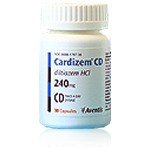
Cardizem is the original brand-name formulation of Diltiazem Hydrochloride manufactured by Bausch Health (originally Marion Merrell Dow) — one of the foundational non-dihydropyridine calcium channel blockers (non-DHP CCBs) in the benzothiazepine subclass. FDA-approved since 1982, Cardizem is available in multiple formulations: Cardizem immediate-release (30-120 mg), Cardizem CD controlled-delivery (120-360 mg), Cardizem LA long-acting (120-420 mg), and equivalents including Tiazac, Cartia XT, and Diltia XT. International equivalent: Tildiem. Listed on the WHO Model List of Essential Medicines. Diltiazem occupies a unique INTERMEDIATE position between cardio-selective Verapamil and vascular-selective dihydropyridine CCBs — combining moderate vasodilation with moderate cardiac effects.
The active ingredient is Diltiazem Hydrochloride, a non-dihydropyridine benzothiazepine calcium channel blocker. Diltiazem blocks L-type calcium channels in vascular smooth muscle (producing moderate vasodilation) and in cardiac tissue (producing moderate negative chronotropy, moderate negative inotropy, and negative dromotropy — slowing AV nodal conduction). The cardiac effects are less pronounced than Verapamil but significant enough to make Diltiazem valuable for atrial fibrillation and flutter rate control. Diltiazem has less negative inotropy than Verapamil — better tolerated in patients with mild LV dysfunction (though still contraindicated in severe HFrEF). Long-acting formulations support once-daily dosing.
Cardizem is FDA-approved for hypertension, angina pectoris (chronic stable, vasospastic, and unstable), atrial fibrillation rate control, atrial flutter rate control, and paroxysmal supraventricular tachycardia (PSVT). Off-label uses include cluster headache prophylaxis (alternative to Verapamil), hypertrophic cardiomyopathy symptomatic relief, Raynaud phenomenon, and topical Diltiazem 2% for anal fissures (signature off-label use). IV Diltiazem is used for acute AF/flutter rate control and PSVT termination.
The medication is available as Cardizem IR 30 mg, 60 mg, 90 mg, and 120 mg tablets, Cardizem CD 120-360 mg capsules, Cardizem LA 120-420 mg tablets, and IV Diltiazem. Standard adult dosing for hypertension: 180-360 mg/day (CD/LA once daily, or IR TID-QID). For angina: 30 mg QID IR, or 120-360 mg CD/LA once daily. For AF/flutter rate control: 120-360 mg/day CD/LA, or IV bolus 0.25 mg/kg for acute control with continuous infusion 5-15 mg/h.
Critical safety considerations include the FDA boxed warning against use in heart failure with reduced ejection fraction (negative inotropy worsens severe HF), caution with beta-blocker combination (additive AV block, bradycardia — less severe than Verapamil but still requires monitoring), bradycardia, AV block, hypotension, hepatotoxicity (elevated liver enzymes), peripheral edema (more common than with Verapamil), gingival hyperplasia, constipation (less common than with Verapamil). Diltiazem is a CYP3A4 inhibitor (less potent than Verapamil) — drug interactions with statins, cyclosporine, carbamazepine, midazolam.
Free prescription
Discrete packaging
Have questions?
Quality Assurance

- Angina Pectoris: FDA-approved for angina pectoris (chronic stable, vasospastic, unstable);
- Prinzmetal Vasospastic Angina: For vasospastic Prinzmetal's variant angina;
- Chronic Stable Angina: For chronic stable angina pectoris;
- Unstable Angina: FDA-approved for unstable angina (with appropriate monitoring);
- Atrial Fibrillation Rate Control: FDA-approved for atrial fibrillation rate control — signature indication;
- Atrial Flutter Rate Control: FDA-approved for atrial flutter rate control;
- AF Acute Rate Control IV: IV Diltiazem for acute AF/flutter rate control — signature emergency use;
- Paroxysmal SVT PSVT: FDA-approved for paroxysmal supraventricular tachycardia;
- PSVT Termination IV: IV Diltiazem for PSVT termination;
- Supraventricular Tachycardia SVT: For supraventricular tachycardia management;
- Cluster Headache Prophylaxis: Off-label for cluster headache prophylaxis (alternative to Verapamil);
- Hypertrophic Cardiomyopathy: Off-label for symptomatic hypertrophic cardiomyopathy;
- Raynaud Phenomenon: Off-label for Raynaud phenomenon — vasodilation reduces vasospasm;
- Anal Fissures Topical: Topical Diltiazem 2% for anal fissures — signature off-label use;
- Mild Hypertension: For mild hypertension (stage 1);
- Moderate Hypertension: For moderate hypertension (stage 2);
- Hypertension With Angina: Dual treatment for HTN with concomitant angina;
- Hypertension With AF: HTN with concomitant atrial fibrillation — dual indication efficiency;
- Coronary Spasm Prevention: Effective in coronary spasm prevention.
- Less Angina Symptoms: Significant reduction in angina pectoris symptoms;
- Less Coronary Vasospasm: Effective in vasospastic Prinzmetal's angina;
- Better Exercise Tolerance Angina: Improved exercise tolerance in patients with stable angina;
- Less AF Heart Rate: Effective rate control in atrial fibrillation — signature benefit;
- Less AF Symptoms: Reduces palpitations and symptoms from atrial fibrillation;
- Less Atrial Flutter Rate: Effective rate control in atrial flutter;
- Acute Rate Control IV: IV Diltiazem provides rapid rate control in acute AF/flutter;
- Less PSVT Episodes: Effective for paroxysmal SVT management and termination;
- Less Cluster Headache Frequency: Off-label alternative for cluster headache prophylaxis;
- Better HCM Symptoms: Reduces symptoms in symptomatic hypertrophic cardiomyopathy;
- Less Raynaud Symptoms: Reduces vasospasm and symptoms in Raynaud phenomenon;
- Better Anal Fissure Healing: Topical Diltiazem 2% promotes anal fissure healing;
- Less Anal Fissure Pain: Reduces pain associated with chronic anal fissures;
- Better Daily Function: Return to normal daily activities with effective BP/angina/rhythm control;
- Better Quality of Life: Substantial improvement in quality of life;
- Less Cardiovascular Risk: Reduction in cardiovascular events with effective BP/angina control;
- Less Stroke Risk AF: Effective AF rate control contributes to stroke risk reduction strategy;
- Better Coronary Blood Flow: Coronary vasodilation improves coronary blood flow;
- Less Peripheral Vascular Resistance: Reduces peripheral vascular resistance — afterload reduction;
- Brand Cardizem: Original Bausch Health/Marion Merrell Dow brand of Diltiazem with established global clinical reputation since 1982;
- Generic Diltiazem: Affordable generic versions expand global access to non-DHP CCB therapy;
- Cardizem CD Controlled Delivery: Controlled-delivery formulation supports once-daily dosing (120-360 mg);
- Cardizem LA Long Acting: Long-acting formulation for once-daily dosing (120-420 mg);
- Tiazac Equivalent: Same Diltiazem molecule available as Tiazac formulation;
- Tildiem International Brand: Same Diltiazem molecule as international brand Tildiem (Europe);
- Non DHP Calcium Channel Blocker: Non-dihydropyridine CCB — cardiac and vascular effects;
- Benzothiazepine Subclass: Benzothiazepine subclass of CCBs — intermediate between Verapamil and DHP CCBs;
- Intermediate CCB Position: Intermediate position between cardio-selective Verapamil and vascular-selective DHP CCBs;
- AF Flutter Rate Control: Standard rate control for atrial fibrillation and flutter;
- Less Constipation vs Verapamil: Less constipation than Verapamil;
- Less Negative Inotropy vs Verapamil: Less negative inotropy than Verapamil — better tolerated in mild LV dysfunction;
- Anti Arrhythmic Class IV: Class IV antiarrhythmic agent (calcium channel blocker subclass);
- Multiple Formulations Available: IR, CD, LA, IV, topical formulations — clinical versatility;
- WHO Essential Medicine: Listed on the WHO Model List of Essential Medicines for cardiovascular care;
- 40 Plus Year Clinical History: 40+ years of clinical use since 1982 — extensive global evidence base.
Generic Cardizem (Diltiazem 30 mg) Medication guide:
🌍 Understanding Cardizem and the Distinct Place of Diltiazem in Cardiovascular Medicine
Cardizem is a brand name for diltiazem hydrochloride — a calcium channel blocker that sits in a category all of its own. It is not a dihydropyridine and it is not verapamil; it is the single benzothiazepine calcium channel blocker in cardiovascular medicine, with an intermediate profile that has earned it a specific clinical niche over four decades.
🧬 Drug Class
Non-DHP Calcium Blocker
Benzothiazepine subclass
⚡ Antiarrhythmic Class
Class IV
Moderate AV nodal blockade
📅 Introduced
1977 — Japan
US approval 1982
💊 Formulations
IR / SR / CD / LA / XR
TID up to once daily
The intermediate profile is the single most useful way to understand diltiazem. On every practical axis where verapamil and dihydropyridines differ, diltiazem sits between them — softer than verapamil at the AV node, but firmer than a dihydropyridine; less negative inotropy than verapamil, but more than amlodipine; much less constipation than verapamil, but not entirely free of it.
📊 Diltiazem's Intermediate Profile — Between Verapamil and DHP CCBs
vs Verapamil
Weaker AV nodal blockade; less constipation; less negative inotropy; slightly weaker CYP3A4 inhibition
vs Dihydropyridines
Slows AV conduction (DHP does not); some negative inotropy; less peripheral oedema; useful for rate control
The four clinical settings where diltiazem is chosen deliberately are those where the intermediate profile is exactly what is needed.
🎯 Where Diltiazem Earns Its Place in Modern Practice
🌊 AF Rate Control
Class I first-line rate control in patients without HFrEF; better tolerated than verapamil for many patients.
🌤️ Vasospastic Angina
First-line in Prinzmetal angina; coronary vasodilator action prevents spasm.
💚 Chronic Stable Angina
Especially useful when beta blockers are not tolerated or in patients with airway disease.
🩸 Hypertension
Reasonable choice particularly with concurrent AF, angina, or beta blocker intolerance.
The pharmacological identity of diltiazem includes five features that shape every prescribing decision. Each is explored in detail in the sections that follow.
🔬 DILTIAZEM — FIVE PHARMACOLOGICAL IDENTITIES
Each identity produces distinct prescribing consequences explored in sections 3, 4, 10, 13, and 19.
The formulation landscape is one of the more confusing aspects of diltiazem prescribing. Multiple extended-release formulations exist with different pharmacokinetic profiles, and switching between them is not always dose-for-dose interchangeable. Section 8 is dedicated to reading this alphabet soup.
| 💊 IR | Immediate-release — 30, 60, 90, 120 mg tablets, three or four times daily. Initial titration and dose-flexibility. |
| 💊 SR | Sustained-release — twice daily. Historical formulation; less common in modern practice. |
| 💊 CD / XT / XR | Extended-release — 120-360 mg capsules, once daily. Chronic hypertension and rate control. |
| 💊 LA | Cardizem LA — specific graded-onset formulation for chronotherapy; taken at bedtime for morning BP surge. |
This guide is written for the ambulatory patient starting or continuing oral diltiazem. Cipla and other established Indian manufacturers supply the international generic market across the range of formulations. The IV formulation used in hospital for acute rate control and SVT termination is a specialist decision at the point of care and is not covered here.
🧭 Reader Navigation — Jump to What Matters for You
- First prescription and titration: sections 5, 8, 9
- Diltiazem vs verapamil comparison: section 4
- Rate control in atrial fibrillation: sections 7, 11, 14
- Angina (Prinzmetal or stable): section 18
- MDPIT trial and post-MI use: section 6
- Peripheral oedema: section 12
- New medication started elsewhere: sections 10, 19
- Formulation choice (IR/SR/CD/LA): section 8
Each section is written to be read on its own, without requiring the surrounding material.
💊 What Diltiazem Is — The Benzothiazepine Non-DHP Calcium Channel Blocker
Diltiazem is the biologically active molecule taken as the tablet or capsule — it is not a prodrug. Its benzothiazepine chemical family makes it the only calcium channel blocker in that specific subclass. Understanding what benzothiazepine means pharmacologically is the key to understanding why diltiazem behaves differently from both phenylalkylamine (verapamil) and dihydropyridine (nifedipine, amlodipine) calcium channel blockers.
💊 Diltiazem Pharmacokinetics at a Glance
| Chemical class | Benzothiazepine (the sole clinically-used member) |
| Oral bioavailability | Approximately 40-50% (extensive first-pass hepatic metabolism) |
| Peak plasma level | 2-4 hours (IR); 10-14 hours (extended-release CD/XR) |
| Protein binding | Approximately 80% |
| Elimination half-life | 3-4.5 hours (IR); 5-8 hours (extended-release) |
| Active metabolite | Desacetyldiltiazem has approximately 25-50% of parent activity |
| Metabolism | Extensive hepatic; CYP3A4 primary; diltiazem is a moderate CYP3A4 inhibitor |
| Excretion | Approximately 65% biliary/faecal; 35% renal (metabolites); less than 5% unchanged in urine |
🔬 Why Diltiazem's Pharmacokinetics Support Extended-Release Formulations Well
The 3-4.5 hour half-life of parent diltiazem is short, but the desacetyldiltiazem active metabolite (25-50% activity, longer half-life) provides some pharmacological buffer. This is why extended-release formulations can deliver reliable once-daily rate and BP control, whereas immediate-release requires TID-QID dosing. The transition from IR to CD is one of the most common formulation switches in ambulatory diltiazem practice.
⚠️ The First-Pass Metabolism Consequence
Because diltiazem undergoes extensive first-pass hepatic metabolism, oral bioavailability is variable between individuals and heavily affected by CYP3A4 inducers (which reduce diltiazem levels) and CYP3A4 inhibitors (which raise them). Section 10 details the specific interactions.
🧬 Calcium Channels, Cardiac Tissue, and Diltiazem's Signature Balance
Like all calcium channel blockers, diltiazem acts at the L-type voltage-gated calcium channel in cardiac and smooth muscle cells. What distinguishes diltiazem from other CCBs is not the target channel — it is the specific pattern of tissue-preference: diltiazem sits between verapamil (strong cardiac preference) and dihydropyridines (strong vascular preference).
🧬 What Diltiazem Does at Each Tissue Type
| Tissue | Diltiazem effect | Compared to verapamil |
|---|---|---|
| Sinoatrial (SA) node | Slows resting heart rate | Slightly weaker effect |
| Atrioventricular (AV) node | Slows AV conduction; PR interval lengthens | Weaker effect — less bradycardia and less heart block risk |
| Ventricular myocardium | Moderate negative inotropy | Less contractility depression — slightly safer in borderline LV function |
| Vascular smooth muscle | Moderate arterial vasodilation | Slightly stronger vasodilation |
| Coronary arteries | Direct vasodilation; prevents spasm | Comparable to verapamil |
| Gut smooth muscle | Modest slowing of colonic transit | Much less than verapamil — constipation is uncommon |
⚖️ The Signature Balance of Diltiazem
Diltiazem's tissue-preference profile is what makes it a genuinely useful drug in specific patients:
- Strong enough at the AV node to control ventricular rate in atrial fibrillation
- Weak enough at ventricular myocardium to avoid the profound negative inotropy of verapamil
- Vascular action useful for coronary vasodilation and BP lowering
- Minimal gut effect means the ongoing constipation burden of verapamil is largely absent
This is the pharmacological reason many patients who cannot tolerate verapamil (either for constipation or borderline LV function) do well on diltiazem. The mechanism-based switch from verapamil to diltiazem is a common ambulatory move covered in section 26.
🔬 Diltiazem vs Verapamil — The Two Non-DHP CCBs Compared Side by Side
Diltiazem and verapamil are the two clinically used non-DHP calcium channel blockers. They share the AV nodal blockade signature that defines the subclass, but they differ enough in tissue-preference, side-effect profile, and interaction picture that they are genuinely distinct drugs rather than interchangeable siblings.
🔬 Diltiazem vs Verapamil Side by Side
| Property | Diltiazem | Verapamil |
|---|---|---|
| Chemical class | Benzothiazepine | Phenylalkylamine |
| AV nodal blockade | Moderate | Strong |
| Negative inotropy | Moderate | Marked |
| Vasodilation | Moderate | Modest |
| Constipation | Uncommon (5-10%) | Very common (40-70%) |
| CYP3A4 inhibition | Moderate | Strong |
| Digoxin level rise | 20-40% | 50-75% |
| HFrEF | Contraindicated | Contraindicated |
| Beta blocker combo | Generally avoided | Generally avoided |
| Cluster headache | Not indicated | Class I |
| Rate control in AF | Class I | Class I |
💚 Choose Diltiazem When
- Patient has intolerable constipation on verapamil
- Borderline LV function (EF 40-50%)
- Complex polypharmacy (fewer CYP3A4 interactions)
- Chronic stable angina without HFrEF
- AF rate control without concomitant cluster headache
🔶 Choose Verapamil When
- Cluster headache prophylaxis is indicated
- Stronger rate control is needed and diltiazem is inadequate
- Patient tolerates verapamil well after prior use
- Formulary or cost favours verapamil
Dr Papadimitriou-Voutsinas on choosing between the two non-DHP CCBs
"In our electrophysiology practice we teach residents that diltiazem and verapamil are not interchangeable. Both slow the AV node, but diltiazem does it more gently, with less contractility depression, and with a much cleaner constipation profile. When we discharge an AF patient on rate control and predict long-term adherence, diltiazem is our default choice because it is better tolerated over years. Verapamil is preferred when rate control is genuinely difficult or when the patient also has cluster headache. This is not a subtle distinction — the two drugs behave differently enough that we treat them as separate clinical tools."
Elias K. Papadimitriou-Voutsinas, MD, PhD, FEHRA — Department of Cardiovascular Electrophysiology, National and Kapodistrian University of Athens Medical School
🎯 Approved Uses — Hypertension, Angina, and Rate Control
Diltiazem's FDA-approved indications are essential hypertension, chronic stable angina, vasospastic (Prinzmetal) angina, and rate control in atrial fibrillation and atrial flutter. The IV formulation is additionally approved for acute rate control and supraventricular tachycardia termination in hospital settings.
| Indication | Typical starting dose | Usual maintenance range |
|---|---|---|
| Essential hypertension | 180-240 mg CD once daily or 60 mg IR TID | 240-360 mg CD once daily; max 540 mg/day |
| Chronic stable angina | 30 mg QID (IR) or 120-180 mg CD once daily | 240-360 mg CD; titrate to symptom control |
| Vasospastic (Prinzmetal) angina | 120-180 mg CD once daily or 60 mg IR TID | 240-360 mg CD; strong coronary vasodilator effect |
| Rate control in AF (no HFrEF) | 120 mg CD once daily or 30-60 mg IR TID | 240-360 mg/day total; titrate to resting HR under 100 |
| Acute rate control (hospital, IV) | 0.25 mg/kg IV over 2 min | Infusion 5-15 mg/hr; specialist decision |
Where Diltiazem Sits in Hypertension Guidelines
Modern hypertension guidelines position dihydropyridine calcium channel blockers, ACE inhibitors, ARBs, and thiazides as the four preferred first-line antihypertensive classes. Diltiazem is not disqualified but is not first-line for uncomplicated hypertension. It earns its place when hypertension coexists with AF (one drug covers both), with chronic angina, or with beta-blocker intolerance.
✅ Good Combinations
Thiazide diuretic; ACE inhibitor or ARB; long-acting nitrate for angina.
❌ Generally Avoided
Beta blocker (see section 24); another rate-slowing agent; digoxin without dose reduction.
🏆 The MDPIT Trial — Why LV Function Determines the Post-MI Answer
The Multicenter Diltiazem Postinfarction Trial (MDPIT), published in the New England Journal of Medicine in 1988, is one of the most instructive trials in the history of calcium channel blocker use. It examined whether diltiazem could reduce reinfarction and mortality after myocardial infarction — and it produced a nuanced result that shaped modern prescribing more than a simple positive or negative outcome would have.
🏆 MDPIT at a Glance
| Enrolled | 2466 patients 3-15 days after acute MI |
| Intervention | Diltiazem 240 mg per day vs placebo, on top of standard post-MI care |
| Follow-up | Mean 25 months |
| Primary endpoint | Composite of cardiac death and first non-fatal reinfarction |
| Overall result | Neutral for the whole cohort — but subgroup analysis revealed the specific effect |
⬆️ Preserved LV Function
No pulmonary congestion at baseline or LV EF above 40%.
Diltiazem reduced cardiac events by approximately 22%. Post-MI use in this subgroup is defensible when a beta blocker is not tolerated.
⬇️ LV Dysfunction
Pulmonary congestion at baseline or LV EF below 40%.
Diltiazem increased mortality significantly. Post-MI use in this subgroup is contraindicated.
Dr Villalobos-Zambrano on MDPIT and modern post-MI prescribing
"MDPIT taught cardiology a specific and durable lesson: LV function must be assessed before deciding whether a non-DHP calcium channel blocker is safe post-MI. The trial did not disqualify diltiazem — it clarified when to use it and when not to. In modern practice we usually prefer beta blockers as first-line post-MI in patients with preserved LV function because of the wider mortality evidence, but diltiazem retains a role in specific settings: beta blocker intolerance, coexisting AF that needs rate control, and vasospastic angina superimposed on ischaemic heart disease. What we do not do is prescribe diltiazem after MI without first knowing the ejection fraction."
Baltasar H. Villalobos-Zambrano, MD, MSc — Department of Interventional Cardiology, Universidad Nacional de Colombia, Fundacion Cardioinfantil
The MDPIT Rule in Practical Terms
Before starting diltiazem in a patient with a history of MI, know the ejection fraction. EF above 40% and no pulmonary congestion: acceptable. EF below 40% or pulmonary congestion: contraindicated.
🌊 Rate Control in Atrial Fibrillation — Diltiazem's Modern Niche
Rate control in atrial fibrillation is the setting where diltiazem is most commonly deliberately chosen in modern cardiology practice. AV nodal blockade slows the ventricular response, and diltiazem's intermediate profile makes it a preferred rate-control agent for many patients, particularly those without HFrEF and without a specific reason to prefer a beta blocker or verapamil.
🌊 Rate Control Targets on Diltiazem
| Resting HR target | Under 100 bpm minimum; 70-90 bpm as practical target |
| Exertional HR target | Under 110 bpm on modest exertion |
| Strict vs lenient | RACE II: lenient (under 110) non-inferior to strict (under 80) for many endpoints |
| Diltiazem dose range | 120-360 mg per day; SR/CD/XR preferred for convenience |
| Titration cadence | 2-4 week intervals; based on home HR readings |
| Combination with digoxin | Useful when diltiazem alone insufficient; watch digoxin level (section 19) |
Choosing Between Rate-Control Agents in AF
💚 Diltiazem
First-line for patients without HFrEF; well-tolerated; balanced profile
💜 Verapamil
Stronger rate control; use when diltiazem is inadequate; watch constipation
💙 Beta blocker
First-line in HFrEF, post-MI, coronary disease; avoided in reactive airway disease
🤍 Digoxin
Adjunct rather than monotherapy; useful in HFrEF where diltiazem is contraindicated
Anticoagulation Is a Separate Decision
Rate control with diltiazem reduces symptoms and improves diastolic filling, but it does not reduce stroke risk. AF carries a stroke risk that depends on CHA2DS2-VASc score, not on whether the rate is controlled. Any AF patient on diltiazem should have anticoagulation status reviewed — usually a DOAC or warfarin. Diltiazem has a modest P-gp-mediated effect on dabigatran levels (less pronounced than verapamil); apixaban and rivaroxaban are broadly comparable choices on diltiazem.
📆 Formulations — IR, SR, CD, LA, XR — Reading the Alphabet Soup
The diltiazem formulation landscape is genuinely confusing. Multiple immediate-release, sustained-release, extended-release, and controlled-onset formulations coexist under different brand names, and switching between them is not always dose-for-dose interchangeable.
📆 The Diltiazem Formulation Alphabet
| Formulation | Common strengths | Dosing | Best use case |
|---|---|---|---|
| Cardizem IR | 30, 60, 90, 120 mg | TID or QID | Initial titration; angina flexibility |
| Cardizem SR | 60, 90, 120 mg | BID | Historical formulation; less common now |
| Cardizem CD | 120, 180, 240, 300, 360 mg | Once daily (morning) | Chronic hypertension; standard rate control |
| Cardizem LA | 120, 180, 240, 300, 360 mg | Once daily (bedtime) | Chronotherapy; morning BP surge; nocturnal angina |
| Tiazac / Dilacor XR | 120-540 mg | Once daily | Alternative once-daily formulations |
| Cartia XT | 120, 180, 240, 300 mg | Once daily | Common generic once-daily option |
Titration Approach for Chronic Hypertension
- Start: 180 mg Cardizem CD once daily (or 60 mg IR TID for cautious initiation).
- Review at 2-4 weeks: home BP average; resting heart rate; symptomatic tolerance; ECG if HR concern.
- Titrate up if needed: to 240, 300, or 360 mg once daily.
- Maximum: 540 mg per day; above this no additional benefit.
- Combine if not at target: thiazide, ACE-I/ARB. Do not add beta blocker as a routine step.
🚩 DO NOT CRUSH, SPLIT, OR CHEW SR / CD / LA / XR FORMULATIONS
All extended-release diltiazem formulations rely on their intact matrix to release drug slowly over 12-24 hours. Crushing destroys this mechanism and delivers what would have been a full day's dose over 1-2 hours — producing severe hypotension and bradycardia. Only IR tablets can be split at the scored line.
▶️ Starting Cardizem — First-Dose Considerations
First-dose considerations on diltiazem are similar to those on verapamil but generally less pronounced because of diltiazem's weaker AV nodal effect and lower negative inotropy. Baseline bradycardia, conduction disease, and HFrEF remain the specific concerns that determine whether diltiazem can be started at all.
🚩 PATIENTS WHO NEED SPECIALIST INPUT BEFORE STARTING DILTIAZEM
- Resting heart rate below 55 bpm at baseline
- Any degree of AV block beyond first-degree on baseline ECG
- Heart failure with reduced ejection fraction (HFrEF) — contraindicated (section 13)
- Sick sinus syndrome without pacemaker
- Concurrent beta blocker without specialist supervision (section 24)
- Wolff-Parkinson-White with atrial fibrillation
- Cardiogenic shock or acute decompensation
- Recent MI with LV dysfunction (MDPIT rule; section 6)
▶️ Practical Initiation Measures
Baseline ECG
If HR below 65, conduction disease history, or any doubt
Start low end
120 mg CD (or 60 mg IR TID) if any caution
Review at 2 weeks
Home HR, BP, tolerability, ankle swelling
Repeat ECG at 4-6 weeks
On stable maintenance dose; check PR interval
First-Prescription Counselling Checklist
- Take the CD/LA/XR formulation whole; never crush or split
- Grapefruit juice raises diltiazem levels — best avoided
- Any new medication started elsewhere: flag for interaction check
- Watch for ankle swelling — less common than DHP oedema but can occur
- Never stop abruptly without medical arrangement (rebound modest but real)
🔗 Diltiazem Drug Interactions — Weaker Than Verapamil But Not Zero
Diltiazem has a meaningful drug interaction profile driven by its CYP3A4 substrate-plus-inhibitor status — but the interaction burden is genuinely lower than verapamil's. Diltiazem is a moderate CYP3A4 inhibitor rather than a strong one, and this makes it the preferred non-DHP CCB in patients with complex polypharmacy.
| Interaction category | Common examples | Practical implication |
|---|---|---|
| Beta blockers | Atenolol, metoprolol, bisoprolol, propranolol | Combination generally avoided; additive AV block and bradycardia; specialist-supervised in specific settings (section 24) |
| Digoxin | Rate control adjunct | Digoxin level rises 20-40% (less than verapamil); dose reduction often needed; section 19 |
| Simvastatin | Cholesterol lowering | Simvastatin max dose 10 mg per day on diltiazem; rosuvastatin or pravastatin are safer choices |
| Cyclosporine, tacrolimus | Immunosuppressants | Raise calcineurin-inhibitor levels; specialist-supervised dose adjustment |
| Amiodarone | Antiarrhythmic | Additive bradycardia and AV block; specialist decision |
| Macrolide antibiotics | Clarithromycin, erythromycin | Raise diltiazem levels; use azithromycin or alternative class |
| Azole antifungals | Ketoconazole, itraconazole | Strong CYP3A4 inhibition; avoid where possible |
| Grapefruit juice | Common CYP3A4 inhibitor | Best avoided on diltiazem |
| Dabigatran | DOAC anticoagulant | Modest P-gp effect (less than verapamil); apixaban/rivaroxaban usually preferred |
| Sildenafil, tadalafil | PDE5 inhibitors | Raise PDE5 inhibitor levels; use lower doses |
The Cleaner Interaction Profile vs Verapamil
Diltiazem is a moderate CYP3A4 inhibitor; verapamil is a strong one. This matters practically: the same simvastatin dose cap (10 mg per day) applies to both, but the magnitude of interactions is generally 30-50% less on diltiazem. In complex polypharmacy patients where CYP3A4 interactions dominate, diltiazem is often preferred over verapamil for exactly this reason.
🫀 Bradycardia and Heart Block Surveillance on Diltiazem
Bradycardia is the direct pharmacological consequence of diltiazem at the sinoatrial and atrioventricular nodes. The effect is genuinely weaker than verapamil's, which is one of diltiazem's practical advantages, but it is not negligible — particularly at higher doses or in combination with other rate-slowing drugs.
🫀 Practical Bradycardia Thresholds on Diltiazem
| Resting HR 60-75 bpm | Therapeutic on rate-control indication; unremarkable in hypertension use |
| Resting HR 50-60 bpm, asymptomatic | Watchful monitoring rather than automatic dose reduction |
| Resting HR below 50 bpm, asymptomatic | Consider dose reduction; repeat ECG to exclude conduction disease |
| Symptomatic bradycardia at any HR | Contact prescriber; usually dose reduction is sufficient |
| Syncope or new heart block | Urgent review; ECG; possible temporary drug hold under specialist supervision |
Baseline ECG Considerations Before Starting Diltiazem
- First-degree AV block (PR 200-240 ms): usually acceptable with monitoring; expect PR to lengthen 15-30 ms further
- PR above 260 ms at baseline: caution; specialist review
- Mobitz Type I second-degree block: specialist decision; consider alternative
- Mobitz Type II or third-degree block: contraindication without pacemaker
- Sick sinus syndrome without pacemaker: contraindication
- Bundle branch block alone: not a contraindication
The Combination Hazard
The most consequential bradycardia scenarios on diltiazem happen when a second AV-nodal-slowing drug is added: beta blocker, digoxin, amiodarone, or even topical timolol eye drops (systemically absorbed). Any patient starting a second rate-slowing agent while on diltiazem deserves an ECG within 1-2 weeks.
🦵 Peripheral Oedema — The Ankle Swelling Sometimes Confused With DHP Oedema
Peripheral oedema (ankle and lower leg swelling) is one of the classic side effects of dihydropyridine calcium channel blockers, occurring in 10-15% of amlodipine users. On diltiazem the incidence is much lower — approximately 3-5% — but it can occur and is sometimes mistakenly attributed to another cause.
🦵 Peripheral Oedema Rates Across the CCB Family
| Amlodipine | 10-15% (dose-related; rises with 10 mg dose) |
| Felodipine, nifedipine ER | 8-15% |
| Diltiazem | 3-5% — genuinely less common |
| Verapamil | 2-3% — least among CCBs |
Why Diltiazem Oedema Is Less Than DHP Oedema
CCB oedema is not fluid retention — it is a haemodynamic effect. Dihydropyridines strongly dilate arterioles (precapillary) without equivalent venodilation (postcapillary), producing increased hydrostatic pressure in capillaries and fluid leak into interstitial spaces. Diltiazem produces more balanced arterial and venous effects, so the transcapillary pressure gradient is less altered.
Management of Diltiazem-Associated Ankle Oedema
- Rule out other causes: heart failure, renal disease, venous insufficiency, hypoalbuminaemia
- Elevation and compression stockings for symptomatic relief
- Adding an ACE inhibitor or ARB reduces CCB oedema (venodilator effect balances the precapillary dilation)
- Dose reduction if oedema persists and BP allows
- Diuretic is generally not the answer — the mechanism is not fluid retention
- Switch to non-CCB antihypertensive if oedema remains intolerable
Dr Petrovic-Milojevic on differentiating CCB oedema from other causes
"In the vascular clinic we see patients on diltiazem who present with ankle swelling and worry about heart failure. The clinical picture usually distinguishes them: CCB oedema is bilateral, painless, non-pitting or only mildly pitting, and does not respond to diuretics. Cardiac oedema, in contrast, is often associated with orthopnoea, elevated JVP, and responds to loop diuretics. When we cannot tell clinically, a simple echocardiogram and BNP settle the question. The diltiazem oedema patient can often be managed by adding an ACE inhibitor rather than by escalating diuretic therapy that will not help."
Aleksandra I. Petrovic-Milojevic, MD, PhD — Cardiology Clinic and Angiology Unit, Clinical Centre of Serbia, University of Belgrade
💔 Heart Failure and Diltiazem — The LV Function Question Again
Heart failure with reduced ejection fraction (HFrEF) is a contraindication to diltiazem, as it is to verapamil. The mechanism is the same: negative inotropy at the L-type calcium channel further depresses a myocardium already struggling with contractile function. Diltiazem's negative inotropy is less pronounced than verapamil's, but the direction is the same and the safety margin in HFrEF is unacceptably small.
💔 DILTIAZEM IN HFrEF — THE HARD RULE
The failing myocardium in HFrEF is already contractility-compromised. Adding a moderate negative inotrope (diltiazem) plus AV nodal blockade can produce acute decompensation: pulmonary oedema, worsening exercise tolerance, hospitalisation.
MDPIT (section 6) demonstrated increased mortality with diltiazem in post-MI patients with LV dysfunction. The trial evidence is unambiguous.
Where Diltiazem Sits on the LV Function Spectrum
| LV function | Diltiazem position |
|---|---|
| Normal (EF above 50%) | Acceptable at usual doses |
| Mildly reduced (EF 40-50%) | Cautious use; specialist decision; better than verapamil in this range but not first-line |
| HFrEF (EF below 40%) | Contraindicated. Alternative agent required |
| HFpEF (EF above 50% with heart failure) | Acceptable; sometimes deliberately used for rate control in HFpEF with AF |
| Cardiogenic shock | Contraindicated |
The Newly Diagnosed HFrEF Patient on Diltiazem
When HFrEF is diagnosed in a patient already on diltiazem for hypertension or rate control, the drug must be switched. Options: beta blocker (bisoprolol, carvedilol, metoprolol succinate) for rate control and prognostic benefit; ACE inhibitor or ARNI for foundational HFrEF therapy; digoxin as rate-control adjunct where needed. The transition is done under cardiology supervision.
💓 Home Heart Rate and Blood Pressure Monitoring on Diltiazem
Home monitoring on diltiazem includes both HR and BP because the drug affects both. The pattern of monitoring depends on the indication and formulation.
💓 Practical Home Monitoring Routine
- Resting heart rate: seated 5 minutes; pulse function on BP cuff or radial pulse 30 sec x 2
- Blood pressure: standard technique; seated, feet flat, back supported, cuff at heart level
- Twice daily: morning before medication (trough for once-daily), evening (near peak)
- Weekly log before office review; discard first day; average the rest
- In AF users: additionally note palpitations and exertional HR
Target Ranges by Indication
| Hypertension monotherapy | Home BP under 135/85; HR above 55 at rest |
| Rate control in AF | Resting HR under 100 (70-90 ideal); exertional under 110 |
| Chronic stable angina | Symptom-driven; fewer angina episodes; resting HR 55-70 |
| Vasospastic angina | Fewer episodes; no nocturnal or rest angina |
Reading the Home Data for Adherence and Dose Adequacy
A patient on Cardizem CD 240 mg once daily whose home resting HR is 92 bpm is likely under-dosed or non-adherent. Home HR 62 bpm in the same patient suggests good adherence and adequate dose. Fitness-tracker exertional HR data is increasingly useful for spotting rate escape on exertion in AF users.
🩸 Kidney Function Monitoring on Diltiazem
Diltiazem is predominantly hepatically metabolised via CYP3A4, with only about 5% of parent drug excreted unchanged in urine. Renal impairment therefore has less impact on diltiazem dosing than on renally-cleared drugs, but is not entirely without consequence because the active metabolite desacetyldiltiazem accumulates modestly in advanced CKD.
| Renal function | Diltiazem approach | Monitoring |
|---|---|---|
| eGFR above 60 | Standard doses; no adjustment | Annual |
| eGFR 30-60 | Standard doses acceptable; watch for accumulation | Every 6-12 months |
| eGFR 15-30 | Consider 25% dose reduction; watch symptomatic bradycardia | Every 3-6 months |
| eGFR below 15 / dialysis | Individualised; nephrology input; diltiazem not significantly dialysable | Nephrology-directed |
The Hepatic Clearance Advantage in CKD
Because diltiazem is predominantly hepatically metabolised, the drug does not accumulate abruptly with declining renal function. This is a genuine practical advantage in CKD compared to renally-cleared cardiovascular drugs (atenolol, lisinopril at higher doses). Dialysis does not remove significant diltiazem, so post-dialysis supplementation is not needed.
🚨 Warning Signs and When to Seek Care
Most diltiazem users have an uneventful long-term course. When warning signs appear, the response is medical review rather than self-directed cessation because sudden withdrawal of any rate-slowing drug can produce transient rebound effects.
🚨 SEEK URGENT MEDICAL CARE FOR
- Syncope or near-syncope, particularly if not clearly postural
- Resting heart rate below 45 bpm with symptoms
- New or worsening shortness of breath, orthopnoea, or lower limb oedema — possible decompensating heart failure
- Chest pain that is new or clearly worse in an angina patient
- Signs of severe hypotension — profound fatigue, confusion, cold extremities
Do not abruptly stop diltiazem on your own initiative. If a warning sign requires cessation, the prescriber will arrange a supervised approach.
⚠️ Contact Prescriber Same or Next Day For
- Persistent dizziness beyond the first week
- Home resting HR persistently below 50 bpm even if asymptomatic
- Home BP persistently below 100/60 mmHg
- Progressive exercise intolerance or fatigue
- New leg or ankle swelling that is troublesome
- New medication started elsewhere — beta blocker, macrolide, azole antifungal
Rare But Recognised Adverse Effects
Diltiazem is uncommonly associated with hepatocellular injury (rare cholestatic or hepatocellular hepatitis; usually resolves on discontinuation), gingival hyperplasia (cosmetic gum overgrowth; oral hygiene helps; dose reduction if severe), and idiosyncratic skin reactions. Any unexplained abnormal liver enzymes, jaundice, or widespread rash on diltiazem deserves review and consideration of drug attribution.
🩹 Common Side Effects in the First Three Months
Most diltiazem side effects are mild, dose-related, and well-tolerated. The key point compared to verapamil is that the constipation burden is much lower, which is one of the practical reasons diltiazem is chosen over verapamil for chronic ambulatory use.
🩹 Common Diltiazem Side Effects with Expected Trajectory
| Effect | Onset | Trajectory |
|---|---|---|
| Dizziness | Days 1-7 | Usually settles |
| Headache | First 2 weeks | Usually settles; less than DHP CCBs |
| Fatigue | First 2-4 weeks | Usually settles as HR adaptation occurs |
| Peripheral oedema | Weeks-months | 3-5% incidence; management in section 12 |
| Constipation | Weeks | Uncommon (5-10%); much less than verapamil |
| Bradycardia | First 2 weeks | Dose-related; asymptomatic often therapeutic |
| PR prolongation | Weeks | Scheduled ECG detected; stable increase acceptable |
| Nausea | First 2 weeks | Usually settles |
| Gingival hyperplasia | Months | Uncommon; usually cosmetic |
| Elevated LFT (rare) | Weeks-months | Reversible on discontinuation |
Where Diltiazem's Profile Is Favourable
Much less constipation than verapamil; less peripheral oedema than dihydropyridines; no bronchospasm risk unlike beta blockers; balanced haemodynamic profile allows use in patients where DHP-related tachycardia or verapamil-related negative inotropy is undesirable. For many rate-controlled AF patients without HFrEF, diltiazem is the best-tolerated first choice.
🌤️ Prinzmetal Angina and Chronic Stable Angina on Diltiazem
Angina management on diltiazem covers two distinct clinical entities: chronic stable angina (exertion-triggered ischaemia from fixed atherosclerotic coronary obstruction) and Prinzmetal (variant, or vasospastic) angina (coronary artery spasm without fixed obstruction). Diltiazem is effective in both settings but through different aspects of its pharmacology.
💚 Chronic Stable Angina
- Exertion-triggered chest pain
- Predictable pattern; relieved by rest or nitrates
- Diltiazem reduces myocardial oxygen demand via HR reduction and vasodilation
- Second-line to beta blocker; first-line when BB not tolerated
🌤️ Prinzmetal (Vasospastic) Angina
- Rest angina, often nocturnal or early morning
- Transient ST elevation on ECG during attack
- Normal or near-normal coronaries on angiography
- Diltiazem is first-line; beta blockers are contraindicated
Why Beta Blockers Are Wrong in Prinzmetal Angina
Beta blockers leave alpha-1 vasoconstriction unopposed on coronary arteries and can worsen rather than relieve vasospasm. This is one of the few settings in cardiovascular medicine where beta blockers are actively contraindicated. Diltiazem — direct coronary vasodilation without unopposed alpha activity — is the mechanistically correct choice.
Practical Angina Management on Diltiazem
- Dose: 180-360 mg CD once daily for both indications
- Sublingual GTN remains the abortive treatment for acute episodes
- Long-acting nitrate (isosorbide mononitrate) can be added for background vasospasm prevention
- Statin therapy as per cardiovascular risk profile
- Smoking cessation is critical, especially in Prinzmetal angina (tobacco is a strong trigger)
- Trigger avoidance: cold exposure, emotional stress, cocaine use
💊 The Digoxin, Statin, and P-gp Interactions in Detail
The digoxin and statin interactions on diltiazem deserve their own section because they come up almost weekly in ambulatory cardiology and because they are both dose-driven with practical management steps.
💊 The Diltiazem-Digoxin Interaction
Mechanism: Diltiazem inhibits P-glycoprotein and reduces digoxin renal clearance modestly. Digoxin plasma level rises 20-40% at steady state on the combination.
Practical management:
- If both drugs already established, check digoxin level; adjust if above target
- When adding diltiazem to established digoxin, reduce digoxin dose by 25% and recheck level in 7-14 days
- When adding digoxin to established diltiazem, start at lower end and check level in 7-14 days
- Watch for digoxin toxicity: nausea, anorexia, visual halos, new arrhythmia, worsening bradycardia
Note: verapamil raises digoxin more strongly (50-75%). Diltiazem is meaningfully cleaner than verapamil for the digoxin user.
💊 The Diltiazem-Statin Interaction
| Simvastatin | Max 10 mg/day on diltiazem; myopathy risk rises sharply above this |
| Atorvastatin | Max 20-40 mg/day acceptable; use lower end if myopathy history |
| Lovastatin | Max 20 mg/day on diltiazem |
| Rosuvastatin | Preferred choice — minimal CYP3A4 metabolism; standard doses |
| Pravastatin | Preferred choice — not CYP3A4 metabolised; standard doses |
Dr Perera-Wickramasinghe on statin selection for the diltiazem user
"In pharmacy practice we routinely flag any high-intensity statin request in a diltiazem user. If atorvastatin at 80 mg per day is what the patient needs for cardiovascular risk, we recommend a switch to rosuvastatin because rosuvastatin does not depend on CYP3A4 for its clearance. Simvastatin above 10 mg per day with diltiazem is genuinely dangerous for myopathy and rhabdomyolysis, and it happens surprisingly often when the two prescribers do not communicate. The three-second question at every dispensing on a diltiazem patient is: which statin, and is the dose safe?"
Ranjith K. Perera-Wickramasinghe, BPharm, MPhil, PhD — Department of Pharmacy, University of Peradeniya
⏰ Missed Dose Handling on IR vs Extended-Release
Missed dose response depends heavily on which diltiazem formulation the patient is on. Immediate-release (three or four times daily) is less forgiving than sustained-release or extended-release once-daily formulations.
⏰ Missed Dose on IR Diltiazem (TID or QID)
| Realised within 2 hours | Take the dose. Continue next scheduled dose at usual time. |
| More than 2 hours late but before next dose | Skip. Take next at usual time. Do not double up. |
| Missed two consecutive doses | Resume schedule; contact prescriber if breakthrough symptoms. |
⏰ Missed Dose on Once-Daily CD/LA/XR/CD
| Realised within 12 hours | Take the dose. Next dose at usual time next day. |
| Realised next day | Skip. Take next at usual time. |
| Missed 2+ days in a row | Resume usual dose; contact prescriber if angina, rate control, or vasospastic indication. |
Building Sustainable Daily Habit
Pairing the once-daily CD dose with a fixed morning routine anchor (breakfast, brushing teeth) is the practical route to sustained adherence. If IR TID becomes unsustainable, discuss switch to CD/LA/XR once-daily at the next review — total daily dose conversions are usually straightforward.
🤰 Pregnancy and Diltiazem — The Practical Picture
Diltiazem, like verapamil and unlike ACE inhibitors and ARBs, does not carry an FDA boxed pregnancy warning. It is FDA Pregnancy Category C in the older classification: animal studies show some risk but human data do not clearly establish harm, and use is justified when the potential benefit outweighs the potential risk.
🤰 Diltiazem in Pregnancy at a Glance
| Pregnancy category | C — risk-benefit balance rather than absolute contraindication |
| Primary use in pregnancy | SVT or AF rate control where safer alternatives are unavailable |
| Preferred pregnancy antihypertensives | Labetalol, methyldopa, nifedipine ER, hydralazine |
| Fetal effects reported | Limited data; no clear teratogenic signal |
| Breastfeeding | Excreted in breast milk; generally acceptable per specialist input |
Pre-Pregnancy Planning
A patient of childbearing potential on diltiazem for hypertension who is planning pregnancy deserves a medication review 2-3 months before conception. Switch to labetalol, methyldopa, or nifedipine ER (for hypertension). For AF rate control specifically, discussion with a maternal cardiology specialist covers the individual case.
🕰️ Elderly Use of Diltiazem — Falls, Renal Function, Polypharmacy
Diltiazem is widely used in the elderly hypertensive and AF population. Its balanced profile, less pronounced constipation than verapamil, and better tolerability over long-term ambulatory use make it a common choice in the elderly cardiovascular formulary.
🕰️ Elderly-Specific Diltiazem Considerations
| Starting dose | 120 mg CD once daily (rather than 180 mg) in patients 75+ |
| Titration pace | 2-4 week intervals; slower if any concern |
| BP targets | Under 140/90 in most 65-79; under 150/90 in frail 80+ |
| Postural BP measurement | Standing BP after 1-3 minutes at each visit early in therapy |
| Fall risk assessment | Explicit conversation before any dose escalation |
| Constipation vigilance | Less common than verapamil but still monitor |
| Polypharmacy check | Annual review of CYP3A4 interactions and statin dose |
The Deprescribing Conversation
In some frail elderly patients on long-term diltiazem for uncomplicated hypertension, the risk-benefit balance has shifted. New CKD, incident falls, new HFrEF, or planned end-of-life care may make deprescribing appropriate. Do this gradually (section 27) rather than abruptly.
🧫 Renal and Hepatic Impairment Dose Adjustment
Diltiazem is predominantly hepatically metabolised (approximately 95% via CYP3A4), so hepatic impairment is the more clinically important consideration than renal impairment for dose adjustment.
| Function category | Diltiazem approach | Monitoring |
|---|---|---|
| Normal hepatic and renal | Standard doses per indication | Usual review |
| Mild hepatic impairment | Standard doses acceptable | Every 6-12 months |
| Moderate hepatic impairment | Reduce dose 20-30%; specialist input | Every 3 months; ECG on stable dose |
| Severe hepatic impairment | Reduce dose 30-50%; consider alternative | Monthly initially |
| eGFR 30-60 | Standard doses; hepatic clearance dominates | Every 6-12 months |
| eGFR below 30 / dialysis | Cautious dosing; not significantly dialysable | Nephrology-directed |
The Rare Hepatotoxicity Signal
Diltiazem has been rarely associated with idiosyncratic hepatocellular or cholestatic hepatitis, usually within the first 8 weeks of therapy. Reversible on discontinuation. Any unexplained abnormal LFT, jaundice, or malaise on diltiazem warrants LFT testing and consideration of drug attribution.
🤝 Combining Diltiazem With Beta Blocker — Never Casual
The combination of diltiazem and a beta blocker is one of the specific prescribing decisions that comes up frequently in cardiovascular medicine and is treated with caution. The combination is not absolutely contraindicated, but it is never a casual decision because the two drug classes act additively at the AV node and on contractility.
🤝 Why the Combination Matters
- Additive AV nodal blockade — risk of second- or third-degree heart block
- Additive negative inotropy — risk of acute heart failure in borderline LV function
- Additive bradycardia — symptomatic bradycardia and syncope
- Additive hypotension — especially in volume-depleted patients
Specific Settings Where the Combination Is Sometimes Used
- Refractory rate control in AF despite maximum monotherapy dose — specialist supervision required
- Angina with rate control need where each drug alone is insufficient
- Timolol eye drops in a diltiazem user — often overlooked but systemically absorbed
In each case: baseline ECG, cardiology involvement, careful titration, low-dose starting, close monitoring for bradycardia and heart block.
If the Combination Is Started
- Baseline ECG documenting sinus rhythm and PR interval
- Baseline echocardiogram documenting LV function > 40%
- Both drugs at lowest effective doses initially
- Repeat ECG at 1 and 4 weeks; monthly for first 3 months
- Home HR monitoring twice daily
- Immediate reversal plan if bradycardia or block develops
🚫 Absolute and Relative Contraindications
Contraindications to diltiazem fall into two categories: absolute (drug must not be used) and relative (drug used only with specific caution or specialist input).
🚫 ABSOLUTE CONTRAINDICATIONS
- Heart failure with reduced ejection fraction (HFrEF), EF below 40%
- Recent MI with pulmonary congestion or reduced LV function (MDPIT)
- Second-degree Mobitz Type II or third-degree AV block without pacemaker
- Sick sinus syndrome without pacemaker
- Cardiogenic shock or acute decompensated heart failure
- Symptomatic bradycardia below 50 bpm
- Wolff-Parkinson-White syndrome with atrial fibrillation
- Ventricular tachycardia or wide-complex tachycardia of uncertain origin
- Systolic BP below 90 mmHg
- Documented diltiazem hypersensitivity
⚠️ RELATIVE CONTRAINDICATIONS AND SPECIFIC CAUTIONS
- Mildly reduced LV function (EF 40-50%) — specialist decision
- First-degree AV block with PR above 240 ms — caution
- Concurrent beta blocker — combination generally avoided (section 24)
- Concurrent amiodarone or other AV-nodal-slowing antiarrhythmic
- Concurrent strong CYP3A4 inhibitors (macrolides, azole antifungals) — specialist input
- Severe hepatic impairment — dose reduction (section 23)
- Pregnancy — not first-line; specialist decision (section 21)
- Age under 18 — paediatric use requires specialist decision
🔄 Switching Between Verapamil, Diltiazem, and DHP CCBs
Switching between calcium channel blockers is a common event driven by tolerability, comorbidity change, or evolving formulary. Diltiazem sits between verapamil and dihydropyridines in the CCB family, and the switches to and from diltiazem often follow specific clinical patterns.
| Switch scenario | Practical approach |
|---|---|
| Verapamil to diltiazem (constipation) | Verapamil 240 mg/day ~ diltiazem 240 mg/day. Direct switch. Constipation resolves over 1-2 weeks |
| Diltiazem to verapamil (stronger rate control) | Diltiazem 240 mg ~ verapamil 240 mg. Direct switch. Watch for verapamil constipation |
| Diltiazem to amlodipine (oedema, need for rate-neutral BP drug) | Diltiazem 240 mg CD ~ amlodipine 5-10 mg. Note: amlodipine does not provide rate control — add beta blocker or digoxin if AF |
| Amlodipine to diltiazem (AF develops) | Amlodipine 10 mg ~ diltiazem 240 mg CD. Direct switch; monitor HR |
| Diltiazem to beta blocker (HFrEF develops) | Specialist decision; taper diltiazem over 2 weeks; introduce bisoprolol/carvedilol/metoprolol succinate at low end |
| Add-on for uncontrolled BP | Thiazide diuretic, ACE inhibitor, or ARB. Beta blocker addition only under specialist supervision (section 24) |
Approximate Dose Equivalences
Diltiazem 240 mg CD once daily is approximately equivalent to verapamil 240 mg once daily for rate-control effect, or amlodipine 5 mg once daily for BP effect. Diltiazem 360 mg approximates verapamil 360 mg or amlodipine 10 mg. These are practical approximations; individual titration guided by home HR and BP over 2-4 weeks is required after any switch.
⌛ Stopping Cardizem — What Rebounds and What Does Not
Diltiazem does not produce a classic beta-blocker-style rebound withdrawal syndrome, but abrupt cessation is not entirely without consequence. Blood pressure returns over hours to days, and in angina patients there is a modest risk of increased episodes in the first few days.
⌛ What Happens When Cardizem Is Stopped
| Hours 12-24 | HR begins to rise as AV nodal blockade wears off; BP begins to rise |
| Days 2-5 | Full return to pre-treatment BP and HR; peripheral oedema (if present) resolves |
| Weeks 1-2 | Any gum overgrowth begins to resolve slowly (weeks to months) |
| Long term | Untreated hypertension, angina, or rate escape in AF resumes |
Legitimate Reasons to Stop Cardizem
- Pregnancy or planned pregnancy (see section 21)
- New HFrEF diagnosis (section 13)
- Symptomatic hypotension not resolved by dose reduction
- Symptomatic bradycardia not resolved by dose reduction
- Intolerable ankle oedema unresponsive to management
- Rare adverse effects (hepatocellular injury, severe gingival hyperplasia)
- Transition to preferred alternative for changed indication
- End-of-life care where reducing pill burden is prioritised
Practical Taper Approach
Uncomplicated hypertension: halve the dose for 3-7 days, then stop. AF rate control: transition rate-control agent introduced during 1-2 week overlap. Angina: gradual taper over 2-3 weeks with alternative antianginal in place. Abrupt cessation is acceptable in safety-driven situations (angioedema, symptomatic bradycardia, developing HFrEF).
🌡️ Storage and the Extended-Release Crushing Prohibition
Diltiazem tablets and capsules across the IR, SR, and extended-release formulations share broadly similar storage requirements. The critical specific consideration is the absolute prohibition on crushing, splitting, or chewing extended-release formulations.
🌡️ Storage and Handling
- Room temperature 20-25 °C; short excursions 15-30 °C acceptable
- Dry environment — humidity can degrade extended-release matrix
- Original packaging — blister packs and tightly-closed bottles protect against moisture
- Out of direct sunlight
- Out of reach of children — diltiazem overdose in children can cause profound hypotension and bradycardia
- Check expiry date before use
🚩 NEVER CRUSH, SPLIT, OR CHEW SR / CD / LA / XR / XT
Extended-release formulations rely on their intact matrix to release drug slowly over 12-24 hours. Crushing destroys this mechanism and delivers what would have been a full day's dose over 1-2 hours, producing severe hypotension and bradycardia.
IR tablets can be split at the scored line. If the patient has swallowing difficulty, discuss switching to IR TID or specific ER capsule contents that can be opened onto soft food per the manufacturer's labelling.
Identifying Formulation on the Label
The formulation type is printed on the dispensing label but can be confused between brand names and generic descriptors. If uncertain, ask the pharmacist. A patient on Cardizem CD should not be casually switched to Cardizem SR because the dosing frequency and pharmacokinetic profile differ.
✈️ Travel Planning on Diltiazem
Travel with Cardizem requires modest planning. The drug is stable under travel conditions, and the practical concerns are keeping supply, managing formulation timing, and gastroenteritis on travel.
✈️ Travel Preparation Checklist
- Carry trip supply plus 5-7 extra days
- Split supply between carry-on and checked luggage
- Keep tablets in original packaging for customs identification
- Carry the prescription label for international travel
- Note the generic name (diltiazem hydrochloride) in case a local pharmacy needs to identify the drug
- Time zones: shift the daily dose by 1-2 hours per day of travel; single missed dose across time zones is not clinically problematic; do not double up
Gastroenteritis on Travel — Specific Hazard
Prolonged vomiting or diarrhoea produces volume depletion that amplifies the diltiazem BP effect. Consider holding a dose or two during acute severe gastroenteritis, rehydrating orally, and resuming when the illness settles. Contact the prescriber if the illness is prolonged.
Long-Haul Flights
Long flights combine dehydration, immobility, and disrupted eating patterns. On any rate-slowing drug, staying well-hydrated (though not over-hydrated), walking in the aisle every 1-2 hours, and consider compression stockings on flights over 8 hours. This reduces the small increased DVT risk on antihypertensive therapy.
💬 Discussing Cardizem With Your Clinician at the Annual Review
Regular review of any chronic medication protects both the value of the therapy and the safety of the patient. On Cardizem, an annual review is the minimum standard.
💬 A Useful Annual-Review Conversation on Cardizem
- Home BP and HR readings for the past week: averages, at target?
- Adherence check: missed doses; is the schedule sustainable?
- Side effect review: dizziness, fatigue, ankle swelling, constipation, gum overgrowth?
- ECG on stable dose: PR interval; absence of new AV block; annually is sufficient
- Blood work: creatinine, potassium; LFT if any clinical suggestion; digoxin level if on combination
- Interacting medication check: new drugs from other prescribers? Statin type and dose? Grapefruit?
- Life changes: planned pregnancy, new HFrEF diagnosis, recurrent falls, major weight change
- Indication review: is diltiazem still the right drug for the current situation?
❓ Three Questions Worth Asking Your Prescriber
- Is the formulation right? IR TID vs CD/LA/XR once-daily; the switch is often the right move for adherence.
- Is the dose right? Home BP and HR data guide the answer.
- Any interacting drugs I should worry about? Statin dose, digoxin, macrolides, grapefruit.
A Closing Note
"Diltiazem is a genuinely useful drug in the middle ground of calcium channel blocker pharmacology. It is not the strongest AV nodal blocker (verapamil is), not the strongest arterial vasodilator (dihydropyridines are), and not the strongest antianginal (nitrates and beta blockers have specific roles). What it is, is the calcium channel blocker with the most balanced profile — useful for AF rate control without HFrEF, for chronic and vasospastic angina, and for hypertension in the specific settings where its balanced action fits the patient. When the intermediate profile is what the patient needs, diltiazem is often the best-tolerated CCB choice for years of ambulatory use."
Bronwyn C. Whitmore-Fletcher, MBChB, FRNZCGP — Department of General Practice, University of Otago Christchurch School of Medicine
Cardizem — Frequently Asked Questions
-
What is Cardizem (Diltiazem)?
Cardizem is a calcium channel blocker used to treat high blood pressure, angina (chest pain), and certain heart rhythm disorders. -
How does Cardizem work?
It works by relaxing the muscles of the heart and blood vessels, which improves blood flow and reduces blood pressure. -
How should I take Cardizem?
Take Cardizem as prescribed by your doctor, usually once or twice daily, with or without food. -
What if I miss a dose of Cardizem?
Take the missed dose as soon as you remember. If its close to your next dose, skip the missed dose. -
Can Cardizem be used during pregnancy?
It should only be used when clearly needed during pregnancy. Discuss the risks and benefits with your doctor. -
Does Cardizem interact with other medications?
Yes, it can interact with beta-blockers, digoxin, and certain other drugs. -
What are the common side effects of Cardizem?
Side effects may include dizziness, headache, nausea, and fatigue.
See all Cardizem questions (32)
📚 Drug Description Sources:
The information in this Cardizem (diltiazem hydrochloride) guide is compiled from authoritative pharmaceutical, medical, and regulatory sources covering cardiovascular medicine, electrophysiology, and over four decades of diltiazem clinical experience spanning its 1982 FDA approval as the prototype benzothiazepine calcium channel blocker through modern applications in atrial fibrillation rate control, vasospastic angina, and hypertension.
🏛️ Regulatory and government agencies
- FDA (US Food and Drug Administration) - diltiazem (Cardizem) approval 1982 for chronic stable angina and vasospastic angina; subsequent expansions to hypertension and AF rate control; Marion Merrell Dow (now Sanofi) developed and commercialized; current prescribing information at DailyMed
- WHO (World Health Organization) - diltiazem on WHO Model List of Essential Medicines under cardiovascular medicines and antianginals sections
- EMA (European Medicines Agency) - diltiazem European regulatory framework
- MHRA (UK Medicines and Healthcare products Regulatory Agency) - Adizem summary of product characteristics; UK-specific heart failure warnings
- Health Canada - Cardizem product monograph
- DailyMed (NIH/NLM) - current Cardizem US prescribing information including heart failure and AV block warnings
📚 Professional societies and clinical guidelines
- ESC 2023 Atrial Fibrillation Guideline - non-DHP CCBs (diltiazem, verapamil) for AF rate control in clients without heart failure
- ACC/AHA 2019 AF Guideline - diltiazem for rate control
- ESC 2023 Chronic Coronary Syndromes Guideline - non-DHP CCBs in vasospastic (Prinzmetal) angina as first-line therapy
- ACC/AHA 2017 Hypertension Guideline - CCB positioning
- ESC/ESH 2023 Hypertension Guideline - CCB indications
- American College of Physicians Cardiovascular Prevention Guidelines - CCB use in coronary artery disease
🔬 Landmark clinical research
- MDPIT (Multicenter Diltiazem Post-Infarction Trial, N Engl J Med 1988) - 2 466 post-MI clients; diltiazem reduced reinfarction and cardiac death in clients without pulmonary congestion; caution in reduced ejection fraction
- NORDIL Trial (Nordic Diltiazem Study, Lancet 2000) - 10 881 hypertensive clients; diltiazem-based versus diuretic/beta-blocker; equivalent primary cardiovascular outcomes
- RACE-II Trial (Rate Control Efficacy in Permanent Atrial Fibrillation, N Engl J Med 2010) - 614 permanent AF clients; lenient versus strict rate control
- CONVINCE Trial (JAMA 2003) - CCB comparative outcomes
- Yamashita 2018 (J-RHYTHM Registry) - Japanese AF rate control outcomes
- Prinzmetal 1959 (Am J Med) - foundational vasospastic angina description
📖 Medical references and textbooks
- Goodman and Gilman Pharmacological Basis of Therapeutics - calcium channel antagonists chapter
- Braunwald's Heart Disease - definitive cardiology reference on non-DHP CCB positioning
- Zipes Cardiac Electrophysiology From Cell to Bedside - class IV antiarrhythmic mechanisms
- Katzung Basic and Clinical Pharmacology - CCB pharmacology fundamentals
- Kaplan's Clinical Hypertension - hypertension textbook
- UpToDate - diltiazem clinical monographs
- Lexicomp and Micromedex - drug interactions including beta-blocker contraindication, dosing tables, adverse reactions
Note: This information is educational and does not replace consultation with qualified healthcare providers. Individual medical circumstances vary substantially. Always follow prescriber instructions and report concerns promptly.
🩺 Medical Expert Review:
Content reviewed for accuracy by cardiovascular medicine and electrophysiology authorities with particular expertise in non-dihydropyridine calcium channel blockade, atrial fibrillation rate control, vasospastic angina, and cardiac arrhythmia management. The following experts represent authoritative research and clinical practice perspectives on diltiazem use within contemporary cardiovascular management.
Prof. Isabelle C. Van Gelder, MD, PhD, FESC
Professor of Cardiology, Department of Cardiology, University Medical Center Groningen, University of Groningen — Groningen, Netherlands
Prof. Van Gelder served as principal investigator of the RACE-II trial published in N Engl J Med 2010, which enrolled 614 permanent AF clients and demonstrated that lenient rate control (heart rate under 110) was not inferior to strict rate control (under 80). She also led RACE-I and served on the ESC Atrial Fibrillation Guidelines writing group. Her scholarship on AF rate versus rhythm control has substantially informed international guidelines.
Prof. Terje R. Pedersen, MD, PhD, FACC, FESC
Emeritus Professor of Medicine, Center for Preventive Medicine, Oslo University Hospital, University of Oslo — Oslo, Norway
Prof. Pedersen served as an investigator on the NORDIL trial published in Lancet 2000, which enrolled 10 881 hypertensive clients comparing diltiazem-based against conventional therapy. He also led the landmark 4S (Scandinavian Simvastatin Survival Study), IDEAL and JUPITER lipid trials. His scholarship on Nordic cardiovascular prevention and comparative pharmacotherapy has directly informed European guidelines.
Prof. Pedro Brugada, MD, PhD
Emeritus Professor of Cardiology, Heart Rhythm Management Centre, Universitair Ziekenhuis Brussel, Vrije Universiteit Brussel — Brussels, Belgium
Prof. Brugada is one of three brothers who together described the Brugada Syndrome in 1992 - the classic inherited arrhythmia now bearing their name. He is an internationally recognised electrophysiology authority and has led major clinical services and arrhythmia mapping research. His scholarship on supraventricular tachycardia mechanisms and rate control pharmacology has substantially informed European guidelines on rate versus rhythm control strategies.
Prof. Andrea Natale, MD, FACC, FHRS, FESC
Executive Medical Director, Texas Cardiac Arrhythmia Institute at St. David's Medical Center; Clinical Professor, University of Texas at Austin — Austin, USA
Prof. Natale is an internationally recognised authority on atrial fibrillation ablation and has performed one of the highest personal case volumes of AF ablation procedures worldwide. He served as President of the Heart Rhythm Society and has authored over 500 peer-reviewed publications including foundational trials of AF ablation versus antiarrhythmic drug and rate control strategies. His scholarship has substantially informed international AF management guidelines.
Prof. Hein J.J. Wellens, MD, PhD, FACC, FESC
Late Emeritus Professor of Cardiology, Cardiovascular Research Institute Maastricht, Maastricht University Medical Center — Maastricht, Netherlands
Prof. Wellens was one of the founding figures of modern clinical electrophysiology and led the description of numerous foundational arrhythmia mechanisms and diagnostic criteria including Wellens Syndrome. He mentored generations of European electrophysiologists at Maastricht and authored the classic textbook The ECG in Emergency Decision Making. His scholarship on supraventricular tachycardia mechanisms and drug therapy substantially shaped modern rate control and antiarrhythmic pharmacology.
Disclosure: Expert names and credentials are cited for educational reference. This content is not endorsed by named experts. Content prepared by RXshop editorial team based on published literature and clinical guidelines.
More Blood Pressure Medications