Buy Olmecip (Olmesartan Medoxomil) Online — Cipla India Angiotensin II Receptor Blocker (ARB) for Hypertension; Cost-Effective Olmesartan Generic

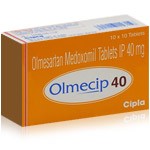
Olmecip is the brand-name formulation of Olmesartan Medoxomil manufactured by Cipla Limited (India) — one of the world's largest generic pharmaceutical manufacturers. Olmecip delivers the same active molecule as the original American/Japanese brand Benicar (Daiichi Sankyo), providing cost-effective access to one of the most potent angiotensin II receptor blockers (ARBs) available. Cipla's manufacturing scale and global reputation make Olmecip a popular Olmesartan choice across developing markets and cost-conscious patients worldwide. Olmesartan is approved for adult and pediatric (6-16 years) hypertension. Listed on the WHO Model List of Essential Medicines. Olmecip is bioequivalent to Benicar — same FDA-approved active ingredient, same indications, same safety profile, at significantly reduced cost.
The active ingredient is Olmesartan Medoxomil, a selective angiotensin II type 1 (AT1) receptor antagonist prodrug hydrolyzed during GI absorption to active olmesartan. Olmesartan has one of the highest AT1 receptor binding affinities ????? all ARBs — making it one of the most potent ARBs available. By blocking AT1 receptors, Olmesartan prevents the vasoconstrictor and aldosterone-secreting effects of angiotensin II — producing peripheral vasodilation and blood pressure reduction. Long half-life (~13 hours) supports convenient once-daily dosing. NO bradykinin effect — NO ACE-i-style cough, significantly lower angioedema risk.
Olmecip is approved for hypertension in adults and pediatric patients (6-16 years). Off-label uses include heart failure, diabetic nephropathy, LV hypertrophy regression, and cardiovascular risk reduction in high-risk patients.
Available as Olmecip 10 mg, 20 mg, and 40 mg tablets (Cipla standard formulations). Standard adult HTN dosing: 20 mg once daily start, max 40 mg/day. Start 10 mg in volume-depleted patients. Pediatric (6-16y): weight-based, 10-40 mg/day. Cipla's 10 mg tablet supports pediatric dosing convenience.
Critical safety: boxed warning regarding pregnancy (Category D in 2nd/3rd trimester — fetal toxicity). ⚠️ SPRUE-LIKE ENTEROPATHY boxed warning — severe chronic diarrhea, weight loss, villous atrophy (unique among ARBs to Olmesartan). Hyperkalemia, hypotension, renal dysfunction, angioedema (rare). NO ACE-i cough.
Free prescription
Discrete packaging
Have questions?
Quality Assurance
- Pediatric Hypertension 6-16: Approved for pediatric hypertension 6-16 years — signature pediatric ARB indication;
- Diabetic Nephropathy: Off-label for diabetic nephropathy — reduces proteinuria;
- Heart Failure Off Label: Off-label for heart failure (LV systolic dysfunction);
- HF ACE i Intolerant: For HF in patients intolerant to ACE inhibitors;
- LVH Regression: For LV hypertrophy regression in HTN with LVH;
- Cardiovascular Risk Reduction: CV risk reduction in high-risk patients;
- Proteinuria Reduction: Reduces proteinuria in diabetic and non-diabetic kidney disease;
- Renoprotection CKD: Renoprotection in chronic kidney disease with proteinuria;
- Post Myocardial Infarction: Off-label for post-MI LV dysfunction;
- Mild Hypertension: For mild hypertension (stage 1);
- Moderate Hypertension: For moderate hypertension (stage 2);
- Severe Hypertension: For severe hypertension (combination therapy);
- Resistant Hypertension Add On: Add-on for resistant hypertension;
- HTN ACE Inhibitor Intolerant: For HTN in patients intolerant to ACE inhibitors (cough/angioedema);
- HTN With Diabetes: HTN in diabetic patients with nephropathy — preferred class;
- HTN With Heart Failure: Dual treatment for HTN with concomitant HF;
- HTN With CKD Proteinuric: HTN with proteinuric chronic kidney disease;
- HTN Cost Sensitive Patients: For HTN patients seeking affordable Olmesartan therapy — Cipla generic;
- Developing Markets Access: Established access for developing markets through Cipla generic manufacturing;
- Hypertension Pediatric Renal: For pediatric hypertension secondary to renal disease.
- Better 24-Hour BP Coverage: Convenient 24-hour BP coverage with once-daily dosing;
- Better Pediatric BP Control: Effective pediatric hypertension control (6-16 years);
- Less Proteinuria: Significant reduction in proteinuria in diabetic/non-diabetic kidney disease;
- Better Kidney Function Preservation: Preserves kidney function in diabetic nephropathy;
- Less LVH Mass: Regression of left ventricular hypertrophy in HTN+LVH;
- Better Heart Failure Symptoms: Off-label HF benefit in ACE-i intolerant patients;
- NO Cough: NO characteristic ACE-i cough — key tolerability advantage;
- Less Angioedema vs ACE-i: Significantly lower angioedema risk vs ACE inhibitors;
- Better Cardiovascular Outcomes: Improved CV outcomes in high-risk patients;
- Better Daily Function: Return to normal daily activities with effective BP control;
- Better Quality of Life: Substantial improvement in quality of life;
- Better Compliance Once Daily: Once-daily dosing improves compliance;
- Better Affordability vs Benicar: Cost-effective vs original Benicar brand — signature Olmecip benefit;
- Better Developing Markets Access: Cipla manufacturing enables developing markets affordable access;
- Better Tolerability vs ACE-i: Better tolerability profile vs ACE inhibitors;
- Better Tolerability Elderly: Well-tolerated in elderly hypertensive patients;
- Brand Olmecip Cipla: Cipla Indian generic brand of Olmesartan Medoxomil — cost-effective alternative;
- Cipla Indian Generic Olmesartan: Cipla Limited Indian generic Olmesartan — established manufacturer reputation;
- Bioequivalent To Benicar: Bioequivalent to original Benicar brand — same Olmesartan Medoxomil active;
- Cost Effective Olmesartan Generic: Cost-effective Olmesartan access — signature generic advantage;
- Cipla Generic Manufacturer: Cipla Limited — one of world's largest generic pharmaceutical manufacturers;
- Selective AT1 Receptor Antagonist: Selective angiotensin II type 1 receptor antagonist;
- Highest AT1 Affinity ARB: One of most potent ARBs — highest AT1 receptor binding affinity;
- Olmesartan Medoxomil Prodrug: Prodrug hydrolyzed during GI absorption to active olmesartan;
- No Bradykinin Effect: No bradykinin effect — NO cough, lower angioedema vs ACE-i;
- Pediatric HTN Approved 6Plus: Approved for pediatric hypertension 6-16 years;
- Renoprotection Established: Established renoprotection — diabetic and non-diabetic kidney disease;
- Once Daily Dosing Convenience: Once-daily dosing supports convenience and compliance;
- Pediatric 10mg Tablet Available: 10 mg tablet supports pediatric dosing convenience;
- WHO Essential Medicine: Listed on the WHO Model List of Essential Medicines;
- Olmesartan Class Since 2002: Olmesartan molecule FDA-approved since 2002 — established global evidence base.
Generic Olmecip (Olmesartan 40 mg) Medication guide:
🎯 What Olmecip Is and Who Should Take It
Olmecip is one of the brand names for olmesartan medoxomil, a once-daily pill used to lower high blood pressure. It belongs to a family called angiotensin II receptor blockers, usually shortened to ARBs. Olmesartan has been on the market since 2002 and is considered one of the more potent ARBs on a per-milligram basis - a 20 mg dose delivers BP-lowering equivalent to higher milligram doses of some older ARBs like losartan.
Olmecip is not a rescue pill for a spike of BP or a stressful afternoon. It is a long-term medicine, taken every day for years, that shifts your average BP down by roughly 8 to 15 mmHg systolic on its own. Combined with a diuretic (hydrochlorothiazide) or a calcium channel blocker (amlodipine), the drop can add another 8 to 12 mmHg. These fixed-dose combinations are the most common form of the drug worldwide, and they are the reason olmesartan has grown into one of the most-prescribed ARBs.
Who is Olmecip typically prescribed for
- Adults with essential hypertension as first-line therapy or in combination
- People who could not tolerate an ACE inhibitor because of persistent dry cough or previous angioedema
- People with type 2 diabetes and normal or slightly raised BP where early kidney protection is a goal - see Section 5
- People with early diabetic kidney disease (microalbuminuria) where slowing progression matters
- People with metabolic concerns - olmesartan has no meaningful effect on glucose, lipids or uric acid
- People with heart failure with preserved ejection fraction where ARBs are one of several options
- People on multiple other drugs where a clean interaction profile matters
Olmecip is not the pill for someone pregnant (any ARB is contraindicated), or for someone with severe kidney impairment requiring specialist decisions, or for someone with bilateral renal artery stenosis where blocking angiotensin can precipitate acute kidney failure. It also has one specific rare warning that distinguishes it from other ARBs - the possibility of a celiac-like intestinal reaction called sprue-like enteropathy that the FDA required labelling for in 2013. Section 18 covers this in detail.
This guide will walk you through what Olmecip does, how to take it, what to eat and drink alongside, which side effects to expect, the two or three warning signs that really matter (angioedema, hyperkalaemia, sprue-like enteropathy), and how to fit it into the rest of your life - shift work, travel, exercise, illness, surgery. By the end you should know Olmecip the way you know a tool you have used for years.
🔬 How Olmecip Works - Blocking AT1 Receptors
To understand Olmecip you first need to understand the renin-angiotensin-aldosterone system - the body's ancient hormone mechanism for keeping blood pressure up when needed. When this system runs too hot in modern life, it becomes one of the main engines of chronic hypertension.
Step 1 - Angiotensin II is the villain
Angiotensin II is the active hormone at the end of the RAAS chain. It squeezes blood vessels shut, tells the adrenal gland to release aldosterone (which holds onto salt and water), and drives kidney damage and heart muscle thickening over years. When angiotensin II binds to a receptor called AT1 on blood vessel walls and heart cells, all these effects happen.
Step 2 - Olmesartan blocks the AT1 receptor
After absorption and intestinal activation of the medoxomil prodrug, olmesartan sits on the AT1 receptor and prevents angiotensin II from activating it. Blood vessels relax, aldosterone drops, salt and water shed, and BP falls. The heart and kidneys stop being pushed to thicken and scar.
Because the block is at the receptor level, ARBs like olmesartan avoid a specific quirk of ACE inhibitors - the buildup of bradykinin that causes the ACE cough. That is why clients who cough on lisinopril or ramipril are usually switched to an ARB such as Olmecip.
Step 3 - Why potent binding matters
Olmesartan binds tightly to the AT1 receptor and stays bound for longer than some earlier ARBs. This is one reason 20-40 mg of olmesartan produces BP-lowering equivalent to higher milligram doses of losartan. Practically, this means the pill is smaller and the dosing simpler.
The timeline you actually feel
| Timeframe | What happens |
|---|---|
| Hours 1-3 | Prodrug activated in intestine; olmesartan enters blood |
| Hours 3-6 | Peak blood level; BP starts dropping |
| Days 1-7 | BP drops modestly and stabilises |
| Weeks 2-4 | Full BP effect visible; steady state |
| Months 3-24 | Long-term protection of heart, kidney and blood vessels becomes measurable |
The half-life of olmesartan is about 13-15 hours - solidly once-daily, but not as long as telmisartan (24 hours). This means blood levels do dip somewhat in the final hour before the next daily dose, but at 20-40 mg the effect stays in the therapeutic range through the full day.
📋 What Doctors Prescribe Olmecip For
Olmecip is used mainly for two conditions, with a third emerging niche in early diabetic kidney disease. Understanding which applies to you helps you know why the drug was chosen and what benefit to expect.
1. Essential hypertension (high blood pressure without a specific cause)
The most common reason for an Olmecip prescription. Both major sets of guidelines list ARBs as one of the four first-line drug classes for hypertension. Olmecip is often used alone in mild-to-moderate hypertension or, more commonly, combined with a diuretic or calcium channel blocker in more established cases.
2. Alternative when an ACE inhibitor cannot be tolerated
The classic scenario: a client is prescribed ramipril, lisinopril or perindopril, develops a persistent dry cough within weeks, and cannot live with it. Switching to Olmecip usually resolves the cough while keeping the BP and cardiovascular protection. Angiodema on an ACE inhibitor is a more delicate switch to make - see Section 19.
3. Type 2 diabetes with normal albuminuria - kidney prevention
The ROADMAP trial (Section 5) showed that starting olmesartan early in type 2 diabetes - before urinary albumin has appeared - delays the onset of microalbuminuria by about 23 percent over three years. This is prevention, not repair. It matters for younger diabetic clients who want to push back the timeline of kidney complications.
4. Established diabetic kidney disease
When urine protein has already appeared (microalbuminuria or overt proteinuria), an ARB or ACE inhibitor is standard treatment to slow further loss of kidney function. Olmecip is a reasonable choice, though the biggest outcome trials in diabetic nephropathy were done with losartan (RENAAL) and irbesartan (IDNT), not olmesartan.
What Olmecip is NOT prescribed for
- Acute severe heart failure with fluid overload - needs loop diuretic first
- Emergency BP reduction - it is a long-term drug, not a rescue pill
- Borderline BP without cardiovascular risk - lifestyle change usually first
- Bilateral renal artery stenosis - blocking angiotensin removes the pressure the kidneys need
- Anyone pregnant or planning pregnancy - see Section 26
- Chronic unexplained diarrhoea history - see Section 18
Doctors weigh Olmecip against three main alternatives: an ACE inhibitor (cheaper, similar efficacy, cough risk), another ARB (similar mechanism, small differences in potency and half-life), and a calcium channel blocker (different mechanism, no potassium risk). Olmecip wins when the potent BP effect at low milligrams, the clean drug interaction profile, or one of the diabetes-related evidence lines matters most.
💊 Olmesartan Explained - The Prodrug ARB
Olmesartan is one of eight or so ARBs on the market. Two features distinguish it from its cousins: it is a prodrug (which affects how it is absorbed), and it has a moderately long half-life with a potent per-milligram effect.
Olmesartan among the ARB family
| Drug | Half-life | Elimination |
|---|---|---|
| Olmesartan (Olmecip) | ~13-15 hours | Renal 40% + biliary 60% |
| Telmisartan (Micardis) | ~24 hours (longest) | Almost entirely biliary/faecal |
| Losartan (Cozaar) | ~2 hours (active metabolite 6-9h) | Renal + hepatic |
| Valsartan (Diovan) | ~6 hours | Biliary + faecal |
| Irbesartan (Avapro) | ~11-15 hours | Renal + faecal |
| Candesartan (Atacand) | ~9 hours | Renal + biliary |
Why olmesartan is a prodrug
The chemical you swallow is olmesartan medoxomil - a modified form that is not itself active. As the tablet passes through the intestine and enters the bloodstream, esterase enzymes clip off the medoxomil part and release active olmesartan. This activation happens automatically and does not require any special step from the client.
The prodrug design was chosen to improve intestinal absorption. From a client's point of view it has no practical implication - you swallow the pill, the intestine does the rest.
Why the clean interaction profile matters
Olmesartan is not metabolised by the CYP450 enzyme family that drives most drug-drug interactions. That means Olmecip is unaffected by drugs like grapefruit, ketoconazole, clarithromycin, or rifampicin that alter blood levels of many other pills. For clients on multiple medications - especially older clients on 8-15 prescriptions - a "clean" pill is a real advantage.
The available strengths
- 10 mg - starting dose in the frail or those with kidney or liver caution
- 20 mg - standard adult starting dose
- 40 mg - target maintenance dose in most cases when 20 mg does not reach BP goal
No dose adjustment is needed for age or race in most cases. The 40 mg strength is the ceiling in most guidelines - beyond this, additional BP effect is small but potassium and side-effect risks rise. If 40 mg does not reach BP target, the next step is almost always to add a diuretic or calcium channel blocker, not push olmesartan higher.
📊 The ROADMAP Study - Kidney Protection and Controversy
ROADMAP stands for the Randomised Olmesartan And Diabetes MicroAlbuminuria Prevention trial. It was the largest and most rigorous study of olmesartan and it answered a specific question: can starting an ARB early in type 2 diabetes push back the onset of urinary protein leakage (microalbuminuria), one of the earliest signs of diabetic kidney damage? The answer was yes - but the trial also raised a cardiovascular signal that has been debated ever since.
The trial in short
- Who: 4 447 clients with type 2 diabetes and at least one additional cardiovascular risk factor, but with normal urinary albumin at baseline
- What: Olmesartan 40 mg daily vs placebo, on top of standard BP care
- Where: 262 centres in 19 countries, 2003 to 2010
- Follow up: Median 3.2 years
The kidney findings - the good news
- Delayed onset of microalbuminuria by 23 percent vs placebo
- Time to first microalbumin appearance was longer in the olmesartan arm
- BP was slightly better controlled in the olmesartan arm
The controversial finding - cardiovascular deaths
Cardiovascular deaths were more common in the olmesartan arm than in the placebo arm (15 vs 3, a small absolute difference but statistically noteworthy). The excess was concentrated in clients with prior cardiovascular disease, particularly those whose BP was pushed under 120 mmHg systolic. In clients without prior CV disease, no signal was seen.
The finding triggered ongoing debate. The FDA reviewed the data in 2011 and did NOT restrict use of olmesartan. Some experts argue the signal is due to over-aggressive BP lowering rather than the drug itself; others urge extra caution in high-risk clients.
Practical translation
If you have type 2 diabetes without established CV disease, olmesartan is a reasonable choice for early kidney protection. If you have established CV disease (prior heart attack, angina, prior stroke), be careful not to push BP below 120 systolic; some doctors prefer a different ARB (telmisartan, on the strength of the ONTARGET trial) in this specific setting.
For pure hypertension without diabetes, ROADMAP is not directly relevant - the drug remains a straightforward BP option.
The Japanese sister trial - ORIENT
ORIENT tested olmesartan in Japanese clients with type 2 diabetes and overt nephropathy (proteinuria already established). It also showed reduced kidney disease progression, and (like ROADMAP) a slightly higher CV mortality signal, though the trial was underpowered for that outcome.
The bigger picture: olmesartan works. Its BP effect and kidney protection are real. The ROADMAP controversy is a reminder that BP targets should be individualised - especially in clients with prior heart disease - and that under-shooting BP can be harmful. Discuss your specific risk profile with your doctor if you have both diabetes and coronary disease.
📅 The First Few Weeks on Olmecip
Starting Olmecip is one of the smoother introductions to BP treatment. The drug works gradually rather than acutely, and most clients experience nothing dramatic in the first days. Knowing the expected pattern helps you distinguish normal adjustment from something worth calling about.
Days 1-3
Very little that you feel. A gentle drop in BP begins within hours of the first dose. Most people notice nothing beyond perhaps mild lightheadedness on standing quickly - not always present.
No dramatic urine change. Unlike a diuretic, Olmecip does not make you pass more water. If you find yourself running to the toilet in the first days, something else is going on.
Week 1-2
BP falls gradually. Home readings typically show a drop of 5 to 10 mmHg systolic by end of week 1, more by week 2.
Blood test at 2-4 weeks. Your doctor should order a blood test around this time to check potassium, sodium, urea and creatinine. Small changes here are expected. See Sections 17 and 25.
Adjustment to standing up. The first 1-2 weeks the head-rush on standing may be slightly more noticeable. Rise slowly from bed or from a chair.
Week 3-8
Full BP effect matures. This is when Olmecip reaches its steady state. Home BP averages settle into their new baseline.
Any dose adjustment happens now. If BP is still above target on 20 mg, your doctor may rise to 40 mg or add a partner drug. If BP is well controlled, no change.
Signs that are NOT normal and need a call to your doctor
- Severe dizziness that does not resolve in a few days or that causes a fall
- Swelling of face, lips, tongue, or throat - stop immediately, seek emergency care (Section 19)
- Muscle cramps or unusual weakness - possible potassium disturbance
- Palpitations or irregular heartbeat
- Marked reduction in urine output
- Yellow skin or eyes, dark urine (rare liver reaction)
- Any new chronic diarrhoea starting weeks-to-months later - see Section 18
Most people notice essentially nothing in the first weeks on Olmecip - just a lower BP number on the home monitor. This is one of the practical strengths of the drug. If the first month passes without incident, the long-term outlook is usually smooth.
⏰ When to Take Olmecip - Flexible Timing
Olmecip is forgiving about timing. Because the half-life is 13-15 hours, taking it a couple of hours earlier or later than usual barely affects blood levels. The rules below are about building a consistent routine rather than about avoiding a specific pharmacological cliff.
The best time to take Olmecip
Whichever time you will remember most reliably. Morning is most common because it anchors to waking. Evening dosing is fine and has some theoretical benefit for early-morning BP surges. Consistency of your chosen time matters more than which specific hour you pick.
Once you have chosen a time - stick with it. Do not swing between morning and evening, because the transition period may feel less controlled.
Morning vs evening
A few studies have suggested evening dosing of long-acting BP drugs may better cover the early-morning BP surge. Other larger trials (TIME trial 2022) found no meaningful outcome difference between morning and evening dosing.
Bottom line for Olmecip: take it whenever you will remember. If your doctor recommends evening dosing based on your specific BP pattern, follow that recommendation.
Practical anchors
- With breakfast - simplest, most people
- When you brush your teeth in the morning
- At bedtime with a glass of water
- When you sit down to your evening meal
- Weekly pillbox filled every Sunday
Weekend and travel drift
Even if you take Olmecip two or three hours later on a Saturday than a Tuesday, BP levels barely notice. Just do not skip the dose entirely, and get back to your usual clock time the next day. Section 20 covers missed doses; Section 32 covers travel and time-zone changes.
🍽️ Food, Meals and Olmecip
Food can be present or absent when you take Olmecip. Studies have shown a small reduction in bioavailability when olmesartan is taken with food, but the difference is not clinically important in most cases. What matters is consistency: if you always take it with breakfast, keep doing that; if you always take it on an empty stomach, keep doing that.
Food rules for Olmecip
- Take at the same relative time to food each day - consistency matters more than empty vs full stomach
- Swallow whole with water - do not crush or chew unless your pharmacist confirms it is safe
- Grapefruit is fine - unlike some BP drugs, olmesartan is not affected by grapefruit
- No specific food avoidance needed
Two dietary things that DO matter on Olmecip
1. Potassium.
Olmecip reduces potassium loss (angiotensin normally pushes potassium out), so blood potassium tends to sit a bit higher on the drug than off it. Most people should get plenty of potassium from a normal balanced diet - but be careful about:
- Salt substitutes containing potassium chloride - can push potassium too high; see Section 17
- Very large amounts of very high-potassium foods (litre-a-day coconut water, huge daily banana milkshakes)
- Over-the-counter potassium supplements - avoid unless your doctor prescribes them
2. Salt.
Cutting salt to about 5-6 g per day (about a teaspoon total) makes Olmecip work noticeably better. High-salt diets undermine BP control on any drug, but the effect is measurable especially on ARBs. The biggest salt sources are usually bread, cheese, cured meats, restaurant food and ready meals.
Foods that help BP alongside Olmecip
- Vegetables, especially leafy greens, tomatoes, root veg
- Oily fish 2 times a week
- Beans, lentils, chickpeas
- Nuts and seeds (unsalted, moderate portions)
- Whole grains rather than refined
- Fresh fruit
- Low-fat dairy or yoghurt
This is the classic Mediterranean or DASH-style pattern - and it adds up to another 8-10 mmHg systolic beyond what any single BP pill delivers.
Beyond salt, potassium, and the general BP-friendly pattern, no specific food needs avoiding on Olmecip. It sits comfortably alongside almost any normal diet.
🍷 Alcohol and Olmecip
Alcohol and Olmecip are compatible in moderate amounts. Both lower BP, so combining them can amplify the drop - most noticeably in the first weeks and after any dose increase. Chronic heavy drinking undermines any BP treatment, but occasional social drinking is fine.
Three things happen when you drink on Olmecip
- BP drops more than expected. Alcohol is a vasodilator; Olmecip blocks vessel-tightening angiotensin. Together the drop can produce dizziness, faintness, or a fall - especially after standing.
- Dehydration adds to the effect. Alcohol is mildly diuretic; hot weather makes it worse. If you already skipped water, the risk of an unpleasant crash rises.
- Chronic drinking raises baseline BP. Anyone drinking more than 2 units daily on average will find that BP creeps up in the long term. Olmecip will still work, but from a higher starting point.
A sensible framework
- Up to 1 standard drink per day for women, 2 for men is compatible with Olmecip
- Drink water between alcoholic drinks - reduces dehydration and hangover
- Never drink on an empty stomach on Olmecip
- Skip alcohol for 48 hours after any dose increase
- Do not drive after any alcohol on Olmecip - the combination is more sedating than either alone
Situations where alcohol on Olmecip is a bad idea
- Recent starting or dose increase
- Recent kidney or liver problems
- Age 75 or older with any dizziness or fall history
- Hot weather and limited water intake
- Recent illness with vomiting or diarrhoea
- Also taking a diuretic - the BP drop is bigger
The bigger picture: for BP long-term, lower alcohol is better. Weekly average of 5-6 units, spread across the week, is compatible with well-controlled hypertension on Olmecip. Higher intake undermines the whole treatment and is not a good long-term partner for cardiovascular protection.
☕ Coffee, Caffeine and Energy Drinks
Caffeine causes a small brief rise in BP - typically 3 to 8 mmHg for 1 to 3 hours after a strong cup - but the effect usually fades in habitual users. It does not directly interact with Olmecip. That said, some sensible rules apply.
Coffee on Olmecip - the practical rules
- Up to 3-4 cups of coffee per day is compatible with well-controlled BP
- Do not measure BP within 30-60 minutes of coffee - readings will be falsely high
- Drink water alongside in hot weather - caffeine is a mild diuretic
- Habitual heavy drinkers develop tolerance - the BP bump is smaller than in occasional drinkers
Energy drinks - a different story
Energy drinks combine large caffeine loads (often 200-400 mg per can) with sugar, taurine, guarana, and sometimes borderline ephedrine-like herbal extracts. These produce a larger and longer BP spike, sometimes palpitations or arrhythmias.
On Olmecip, energy drinks are best kept to an occasional small can - not a daily habit, and not before exercise. Combining energy drinks with exertion on any BP pill has caused reported events in previously well people.
Pre-workout supplements - be cautious
Many pre-workout supplements combine 200-400 mg of caffeine with stimulants, beta-alanine, taurine and (in some products) barely-regulated compounds that push BP up significantly. On Olmecip these can produce sudden BP rises that defeat the drug. If you use one, choose a caffeine-only or caffeine-plus-creatine kind, start with half a scoop, and check home BP once during the session for a week.
Decaf, tea, chocolate
Decaf coffee (2-15 mg caffeine per cup), tea (40-70 mg per cup) and chocolate contain small amounts that do not need avoidance on Olmecip. Normal daily habits are fine.
If you notice palpitations, tremor, or unusual dizziness after coffee on Olmecip, cut back. Otherwise, your usual habit is compatible with the drug and there is no need to give up your morning cup because you started BP treatment.
🩺 Checking It Is Working - Home BP Monitoring
Office BP checks show one snapshot from one moment in one room; they miss almost everything about how your pressure actually behaves through a day. Home monitoring on Olmecip tells the real story, and it is the single most useful habit you can adopt on this drug.
What to buy
- Upper arm cuff monitor - wrist monitors are less accurate
- Validated model - look for BHS, ESH or dabl accreditation
- Correct cuff size for your arm - too small overestimates, too large underestimates
- Automatic (oscillometric) not manual
How to measure correctly
- Sit quietly for 5 minutes before the first reading
- Back supported, feet flat on floor, legs uncrossed
- Cuff on bare upper arm at heart level
- Do not talk or use your phone during measurement
- Take 2 readings 1-2 minutes apart
- Ideally: morning (before Olmecip and before coffee) and evening (before dinner)
- Do this 4-7 days out of every 2 weeks in the first months, then weekly once stable
Home BP targets on Olmecip
| Group | Home BP target (average) |
|---|---|
| Adults under 65 without CKD or diabetes | Under 135/85 (aim closer to 125/75) |
| Adults with diabetes or CKD | Under 130/80 |
| Adults 65-79 | Under 140/85, aim toward 130/80 if tolerated |
| Adults 80 and over | Under 145/85 (fall risk matters more) |
Reading the pattern
- Persistently above target after 6-8 weeks on 40 mg - review with your doctor, consider adding a partner drug
- Below 110/70 with dizziness - dose may be too much
- Very variable readings - is technique consistent? Are you measuring near coffee or after a walk?
- Sudden jump of 20+ mmHg - check for new drugs (NSAIDs, decongestants, steroids) or new stress
Bring your recorded readings to every doctor visit - a small notebook, a monitor with memory, or a smartphone app all work. Dose decisions on Olmecip track home averages far better than the single office reading.
⚖️ Olmecip Doses and How They Are Adjusted
Olmecip dosing is straightforward. Three strengths, one pill a day, and the "target" dose is usually 20-40 mg in most clients. Most people arrive at a dose that suits them within 4-8 weeks and stay there for years.
Standard doses
| Dose | Typical use |
|---|---|
| 10 mg | Frail older clients, low starting BP, kidney or liver caution |
| 20 mg | Common starting dose in average adults; often stays as maintenance |
| 40 mg | Target maintenance dose when 20 mg does not reach BP target |
Titration pattern
Standard: start at 20 mg, review home BP at 4 weeks, rise to 40 mg if BP still above target and tolerance good. Add a partner drug (calcium channel blocker or diuretic) if 40 mg alone does not reach target.
Cautious start: start at 10 mg in older, frail, kidney-impaired or liver-impaired clients. Rise to 20 mg after 2 weeks if tolerance good.
When dose is adjusted downward
- Persistent symptomatic low BP - drop 40 mg to 20 mg, or 20 mg to 10 mg
- Blood potassium above 5.5 mmol/L - dose review, possible partner drug removal
- Significant creatinine rise (over 30% from baseline) - dose review
- Large sustained weight loss - the dose that fit you before may now be too much
- Development of severe liver problems - see Section 30
- Chronic unexplained diarrhoea - stop drug, see Section 18
Do not adjust dose yourself
The urge to "take an extra 20 mg because BP is high today" or "skip today because I feel fine" undermines the drug's smooth 24-hour effect. If you think the dose is wrong, that is a conversation with your doctor - not a solo experiment.
🔗 Combining Olmecip With Other BP Pills
Olmecip is often combined with drugs from other classes because different mechanisms work together better than pushing one drug to its maximum. It combines particularly well with hydrochlorothiazide and amlodipine - one of the reasons single-pill combinations of olmesartan with a diuretic or calcium channel blocker are among the most-prescribed BP products worldwide.
Olmecip + hydrochlorothiazide
A fixed-dose single-pill combination of olmesartan with a low-dose thiazide diuretic. The two mechanisms add together well, and the diuretic mildly nudges potassium down which offsets the potassium-raising tendency of olmesartan.
Typical strengths: 20/12.5, 40/12.5, 40/25 mg. Sold under names like Benicar HCT, Olmetec Plus.
Olmecip + amlodipine
Combining an ARB with a calcium channel blocker gives two complementary mechanisms - one reducing vessel tightening, one relaxing vessel walls directly. Amlodipine causes some ankle swelling, but the olmesartan half tends to reduce that swelling compared to amlodipine alone. Sold under names like Azor, Sevikar.
Triple combination (Olmecip + amlodipine + HCTZ)
Available as a single pill in some markets (Tribenzor, Sevikar HCT). Useful for clients with hard-to-control BP who need three mechanisms. Not usually the starting regimen - it is the endpoint after simpler options do not reach target.
Combinations to AVOID
- Olmecip + ACE inhibitor (perindopril, ramipril, lisinopril, etc.) - no extra benefit, more kidney injury and low BP (ONTARGET finding)
- Olmecip + aliskiren in clients with diabetes or moderate CKD - increases risk of hyperkalaemia, low BP, kidney dysfunction
- Olmecip + another ARB - redundant, not done
- Olmecip + sacubitril/valsartan (Entresto contains an ARB already)
- Olmecip + high-dose potassium-sparing diuretic without close monitoring - hyperkalaemia risk
Where a combination is prescribed, the single-pill (fixed-dose) version is preferred over separate tablets. Adherence improves, and BP control tracks with adherence more than with any dose choice.
⚠️ Drug Interactions You Need to Know About
Olmecip has one of the cleanest interaction profiles of any BP pill. It is not metabolised by the CYP450 enzyme family, so most of the drug-drug interactions that plague many medicines simply do not apply. But there are still a handful worth knowing.
Interactions that matter
| Drug/class | Why it matters |
|---|---|
| ACE inhibitors (ramipril, lisinopril, perindopril) | No benefit, more harm - do not combine |
| Aliskiren in diabetes or CKD | Severe hyperkalaemia and kidney injury risk |
| Potassium supplements, potassium-sparing diuretics (spironolactone, eplerenone, amiloride) | Hyperkalaemia risk; use only with monitoring |
| NSAIDs (ibuprofen, naproxen, diclofenac) | Blunt Olmecip effect, add kidney injury risk especially with dehydration |
| Lithium | Olmecip may raise lithium blood levels; toxicity risk |
| Trimethoprim (in Bactrim/Septra antibiotic) | Additive potassium rise; especially risky in older or CKD clients |
| Sacubitril/valsartan (Entresto) | Contains valsartan - do not combine with Olmecip (double ARB) |
Drugs where monitoring is recommended
- Insulin and oral diabetes drugs - sugar may drift slightly on Olmecip; check home glucose
- Other BP pills - additive; expect BP drop when new class is added
- Warfarin - minimal but not zero interaction; keep INR monitoring regular
- Ciclosporin, tacrolimus (immunosuppression) - transplant clients need specialist review
Over-the-counter drugs and supplements to watch
- Ibuprofen, naproxen, diclofenac gels - even topical NSAIDs count when used chronically
- Nasal decongestants with pseudoephedrine or phenylephrine - raise BP
- Herbal appetite suppressants containing ephedrine, ma huang or "fat burners"
- Liquorice root in large amounts - raises BP directly
- Salt substitutes with potassium chloride - can push potassium too high
The simplest rule: any new prescription, over-the-counter drug or supplement should be flagged with "I take Olmecip" to your pharmacist. Compared to many BP drugs, the interaction list is short - but the few interactions that matter, matter a lot.
🚨 Side Effects of Olmecip
This section is your reference bookmark. It groups Olmecip side effects by how likely they are and how much attention they deserve, and links to deeper sections for the ones that need their own space. If you had to memorise only one section of this guide, this is the one to know cold.
✅ Common but usually mild and often temporary
- Mild lightheadedness on standing (first 1-2 weeks)
- Mild fatigue
- Occasional mild headache
- Mild joint or back ache
- Small drift in some blood tests (potassium, creatinine)
Watch for and monitor
- High potassium (hyperkalaemia) - Section 17
- Dizziness, low BP, faint on standing - Section 16
- Kidney function drift - Section 25
- Chronic diarrhoea developing weeks-to-years into treatment - Section 18 (sprue-like enteropathy)
- Weight loss without dieting - unusual on any BP pill; consider Section 18
🚨 Rare but STOP Olmecip and seek urgent care if:
- Swelling of lips, tongue, face, or throat - possible angioedema (Section 19) - go to emergency
- Trouble breathing, swallowing or speaking
- Severe unexpected weakness - possible extreme high potassium
- Confusion or drowsiness with very low BP
- Very reduced urine output - possible acute kidney injury
- Yellow skin or eyes, dark urine, pale stools - rare liver reaction
- Severe skin rash with blistering or peeling - very rare but recognised
- Chronic watery diarrhoea with weight loss - see Section 18
The olmesartan-specific warning
Among ARBs, olmesartan is uniquely associated with sprue-like enteropathy - a rare celiac-like intestinal reaction that can appear months to years after starting the drug. Section 18 covers this in detail. It is not a reason to fear the drug, but every client on Olmecip should know the warning so an unusual pattern of chronic diarrhoea is not missed for years.
Most people on Olmecip notice nothing at all - just a lower BP number on the home monitor. The value of knowing the side-effect list is not to be anxious - it is to spot the rare event early enough to act.
💫 Dizziness and Orthostatic Symptoms on Olmecip
Dizziness on standing is the most common early side effect of Olmecip. It happens because the drug lowers BP, so when you shift from lying or sitting to standing, blood pools briefly in your legs and the head does not get its usual pressure. Usually harmless, sometimes a nuisance, occasionally a fall risk.
When dizziness is most likely
- First 1-2 weeks after starting
- First week after any dose increase
- After alcohol (Section 9)
- Hot weather with low fluid intake
- Getting up too fast from a chair, bed, or car seat
- After a hot bath or sauna
- When ill with vomiting or diarrhoea
Simple prevention
- Rise from lying to sitting for 30 seconds first, then to standing
- Contract your calf muscles a few times before standing to pump blood back up
- Drink a glass of water when getting up in the morning
- Avoid hot baths or saunas in the first days
- Keep water within reach during the day
- Do not skip meals in the first weeks
When dizziness is more than an adjustment issue
- Persisting beyond 3 weeks or getting worse
- Causing a fall or a near-fall
- With confusion, chest pain, or shortness of breath - emergency
- Home BP consistently below 100 systolic
- Standing BP more than 20 mmHg below sitting BP - orthostatic hypotension needs review
Older clients and fall risk
Dizziness that would be a nuisance at 40 is a fall risk at 78. In older clients, ask your doctor to check standing BP at every review, and mention any near-falls promptly. Options include dose reduction, dropping a partner drug, and adding physical measures (compression stockings, salt at meals if under 80 and not fluid overloaded).
For most clients, dizziness on Olmecip fades within 2-3 weeks as the body adapts to the new BP setting. If it does not fade, the dose may be too much for you - a conversation with your doctor rather than a solo stop is the answer.
🍌 High Potassium on Olmecip - Hyperkalaemia
High blood potassium (hyperkalaemia) is the metabolic side effect that matters most on any ARB, including Olmecip. Because the drug reduces aldosterone (which normally pushes potassium out into urine), potassium builds up. In most people this is a small, well-tolerated rise. In some people - especially with kidney disease, combination with certain drugs, or high potassium intake - it can climb to dangerous levels.
Normal potassium range and thresholds
| Level (mmol/L) | Meaning |
|---|---|
| 3.5 - 5.0 | Normal - most people on Olmecip sit at the upper end |
| 5.0 - 5.5 | Mildly high - watch, dietary and drug review |
| 5.5 - 6.0 | Moderately high - action needed (dose review, remove other K-raising drugs) |
| 6.0 - 6.5 | High - urgent action; may need hospital |
| Above 6.5 | Emergency - can cause fatal cardiac arrhythmia |
Warning signs of high potassium
- Muscle weakness or heaviness in arms/legs
- Palpitations, missed beats, irregular pulse
- Numbness or tingling
- Nausea, vomiting
- Fatigue
- In severe cases: paralysis, cardiac arrest
Who is at highest risk of high potassium on Olmecip
- Chronic kidney disease - especially eGFR under 45
- Diabetes with kidney involvement
- Combination with a potassium-sparing diuretic (spironolactone, eplerenone, amiloride)
- Combination with an ACE inhibitor (never appropriate anyway - see Section 14)
- Combination with an NSAID especially chronic use
- Potassium supplements or salt substitutes containing KCl
- Trimethoprim antibiotic (Bactrim/Septra)
- Type 4 renal tubular acidosis (a specific kidney condition)
Practical prevention
- Blood test at 2-4 weeks after starting or any dose change
- Then annually if stable; every 3-6 months in CKD or diabetes
- Avoid salt substitutes with KCl unless your doctor knows and monitors
- Do not take OTC potassium supplements without medical direction
- Report weakness, palpitations, numbness early
- During illness with vomiting/diarrhoea follow sick day rules (Section 31)
Most well-selected clients on Olmecip with normal or near-normal kidney function have no meaningful potassium problem. The routine 2-4 week blood test catches the small number who drift high, and the treatment is usually a small dietary change and removal of a co-contributor - not stopping Olmecip.
🌾 Sprue-Like Enteropathy - The FDA Warning
This section is the one that distinguishes olmesartan from every other ARB. In July 2013 the FDA required labelling on all olmesartan-containing products warning of sprue-like enteropathy - a rare intestinal reaction that resembles celiac disease clinically but is caused by the drug, not by gluten. The reaction is uncommon, but when it happens it can go undiagnosed for years, so every client on Olmecip should know the pattern.
🚩 The signs to know
Chronic sprue-like enteropathy on olmesartan typically presents with:
- Chronic watery diarrhoea - usually daily, sometimes for months
- Unexplained weight loss - often 5-20 kg over months
- Nausea, vomiting, abdominal pain in some cases
- Fatigue, malabsorption signs - low iron, low vitamin levels
- Symptoms usually start months-to-years after starting olmesartan - not in the first weeks
- Symptoms do NOT respond to a gluten-free diet - which is what distinguishes it from celiac disease
The Mayo Clinic case series and FDA response
In 2012, the Mayo Clinic reported 22 clients on olmesartan who developed chronic diarrhoea, weight loss, and villous atrophy of the small intestine (the same intestinal damage seen in celiac disease). All improved dramatically when olmesartan was stopped, and symptoms recurred when it was restarted. Villous atrophy healed on biopsies done months after drug cessation.
The FDA reviewed the evidence in 2013 and added the warning to olmesartan labels. The mechanism is not fully understood but appears to be an immune-mediated reaction specific to olmesartan (not a class effect of ARBs).
How common is it?
- Rare - estimates range from about 0.2 to 4 cases per 10 000 person-years of olmesartan use
- Not seen with other ARBs - specific to olmesartan
- More common with higher doses (40 mg) and longer duration
- May be under-diagnosed because clients are often initially worked up for celiac disease
What to do if you have these symptoms
- Do not stop Olmecip abruptly on your own - BP can rise. But do call your doctor.
- Mention specifically the possibility of olmesartan-associated enteropathy - not every doctor thinks of this pattern first
- Your doctor will typically stop Olmecip as a diagnostic step and monitor symptoms over 2-4 weeks
- Symptoms usually improve within days-to-weeks of stopping the drug
- A gastroenterology referral is usually arranged for endoscopy and biopsies
- If diagnosed, switch to a different ARB or class - the reaction does not recur on other ARBs
Not every diarrhoea on Olmecip is enteropathy
Short episodes of diarrhoea from a stomach bug, food poisoning, or an antibiotic side effect are much more common than sprue-like enteropathy. The pattern that raises concern is chronic (weeks to months), watery, with weight loss, without an obvious cause, and appearing months-to-years into treatment.
Sprue-like enteropathy is rare, but it is real, it is specific to olmesartan, and it is completely reversible when the drug is stopped. Knowing the pattern means you or your doctor will spot it early rather than after years of misdirected investigation.
🚑 Angioedema - The Rare Emergency Warning
Angioedema on ARBs including Olmecip is rare - around 0.1 percent, roughly ten times less common than on ACE inhibitors - but it is potentially life-threatening. Because it can close the airway within minutes, everyone on Olmecip needs to know the warning signs.
🚩 STOP OLMECIP AND GO TO EMERGENCY IF:
- Swelling of lips, tongue, or inside of the mouth
- Swelling around the eyes or face
- Trouble swallowing, breathing, or speaking
- Sudden change in voice or hoarseness
- A feeling of throat tightness
- Severe unexplained abdominal pain (rare visceral form)
Airway swelling can close the throat within minutes. Do not wait. Call emergency services even if the swelling seems small at first.
Why angioedema can happen on ARBs
The exact mechanism on ARBs is less well understood than on ACE inhibitors, and bradykinin is thought to play a smaller role. What matters practically is that although the risk is low, it exists.
Standard allergy treatments (antihistamines, steroids) do not always work well against bradykinin-mediated angioedema. Specific antidotes (icatibant, C1-inhibitor concentrate, ecallantide) exist and may be given in emergency.
When can angioedema appear on Olmecip?
- Any time - not only in the first days. Some cases appear after months or years
- Usually without warning - no rash, no itching typically
- Sometimes triggered by dental work or minor mouth injury
- More common in people of African descent
- Higher risk if previous angioedema on an ACE inhibitor - some clients cross-react
If it happens once, no more Olmecip or any ARB
Even mild angioedema on Olmecip means all ARBs (and all ACE inhibitors) are off the table permanently. Your doctor will switch you to a completely different class - typically calcium channel blocker + diuretic. Make sure the incident is on your medical record and, if possible, wear a medical alert bracelet or add the drug to allergy alerts on your phone.
Prior ACE-inhibitor angioedema
If you had angioedema on ramipril, lisinopril or another ACE inhibitor and were switched to Olmecip, the change is defensible - most clients tolerate ARBs after ACE angioedema. But the risk of a repeat episode on the ARB is not zero. Discuss with your doctor whether an alternative class is safer, and know the warning signs well.
⏱️ What to Do If You Forget or Miss a Dose
Olmecip is forgiving for missed doses because the 13-15 hour half-life means blood levels barely dip when you are late by a few hours. That said, the point of long-term treatment is consistency, and the drug can only prevent strokes and heart attacks if it is taken over years.
Rules for missed doses
| Situation | What to do |
|---|---|
| Realised within 8 hours of usual time | Take the dose now. Continue usual schedule tomorrow. |
| More than 8 hours late | Skip that dose. Take tomorrow at usual time. Do NOT double up. |
| Missed 2-3 days in a row | Resume as normal. BP may drift back slightly but no rebound spike. |
| Missed a week or more | Resume, monitor home BP for a week, mention at next appointment. |
Do not double up
Doubling an Olmecip dose does not add meaningful protection but does raise the risk of a BP drop and dizziness. It is a common instinct after a missed dose - resist it.
Practical tricks to not forget
- Weekly pillbox filled every Sunday
- Phone alarm labelled "Olmecip"
- Anchor to a daily habit - brushing teeth, coffee, evening meal
- Keep the bottle visible, not hidden in a drawer
- Refill before you run out
- Extra supply in the car or handbag for travel days
The half-life of Olmecip means one missed dose is never a crisis. But the cardiovascular protection is a cumulative effect measured in months and years. Regular adherence, tracked in a home monitor and reviewed each year, is what actually delivers the benefit.
🌙 Olmecip for Night Shift Workers
Night shift and rotating shift workers can take Olmecip easily. The 13-15 hour half-life makes it reasonably well-suited to unpredictable schedules because blood levels do not swing sharply when the dose slides by a few hours.
Why Olmecip fits shift work well
Taking Olmecip three hours later on Monday than on Tuesday does not create a "trough" period of unprotected BP. This is an advantage over shorter-acting BP drugs on chaotic schedules.
Two workable approaches for shift workers
Approach 1: Same clock time every day
Pick one clock hour (say 8 AM or 8 PM) and take Olmecip then whether you are sleeping, working, or between shifts. Simple to remember.
Approach 2: Same body clock time
Take Olmecip at the same point in your personal day (on waking, or with your main meal, or before your main sleep). More responsive to your actual rhythm.
Both approaches work with Olmecip. Consistency of your chosen approach matters more than which one you pick.
Extra shift-work tips on Olmecip
- Sleep quality matters more than most people realise - poor sleep raises BP directly
- Watch energy drinks on night shifts (Section 10)
- Bring water to shifts - shift workers often under-drink for 8-12 hours, which combined with an ARB is not ideal
- Take home BP at consistent points in your rotation so you can compare like with like
- Watch salt intake on canteen and vending machine food
- Tell your GP about your schedule - many treatment plans assume a 9-to-5 life
The bigger picture on shift work
Long-term night-shift work is associated with higher cardiovascular disease risk independent of any specific pill. Olmecip addresses the BP piece but does not fix the underlying shift-work risk. Where feasible, discuss shift patterns and sleep hygiene with your occupational health service. The pill is one part of a bigger picture.
🚗 Olmecip for Drivers and Machine Operators
Driving and machine operation on Olmecip are safe once you are settled on the dose. The first weeks deserve some caution because dizziness on standing is real and less predictable early on.
When dizziness is most likely
- First 1-2 weeks after starting
- First week after any dose increase
- After alcohol (Section 9)
- After a hot bath, sauna, or steam room
- Standing up quickly from a car seat after a long journey
- Hot weather with limited water
Practical driving rules
- Do not drive right after your first Olmecip dose or after any dose change
- Do not drive if you feel unwell - dizziness, nausea, headache
- Skip alcohol before driving
- Stand up slowly from a car seat after long journeys
- Keep water within reach in the vehicle
- Take breaks every 90-120 minutes on long journeys
Commercial drivers and safety-critical roles
Pilots, commercial drivers and other safety-critical workers should check specific rules of their regulator or employer. Olmecip is generally acceptable once you are stable on the dose, but declaration may be required and periodic occupational health review is usually part of the deal.
Machinery operators
The same principles apply for operating dangerous machinery - forklift, factory equipment, construction plant. Do not operate in the first 3-5 days after starting Olmecip or a dose increase. If you feel a head rush, stop, sit, drink water. Once your body has adapted to the drug (usually within 2 weeks), machinery work is usually fine.
💪 Olmecip, Exercise and Sports
Regular exercise is one of the best things you can do for BP and heart, and it works well alongside Olmecip. Physical activity relaxes vessels, improves heart pumping strength, and lowers BP by 5-10 mmHg on its own. Combined with Olmecip, the effect adds up.
✅ Exercise that fits well with Olmecip
- Walking, jogging, cycling, swimming at moderate intensity
- Gym cardio at moderate intensity
- Yoga, pilates, tai chi
- Moderate weight training with rest between sets
- Recreational team sports
- Aim for at least 150 minutes of moderate activity per week
Where to be careful on Olmecip
- Very heavy strength training - spikes BP acutely during max lifts
- Long-duration endurance in hot climates - dehydration risk with any BP pill
- Hot yoga, saunas after workout - can cause faint
- Pre-workout stimulant supplements (Section 10)
- Sudden intense workouts after months of inactivity - build up gradually
Hydration on Olmecip during exercise
- Drink 300-500 ml water 30-60 minutes before exercise
- Small sips every 15-20 minutes during exercise
- Weigh yourself before and after long sessions - each kg lost equals a litre to replace
- Recognise dizziness or cramp as a stop signal, not "push through"
- Avoid alcohol immediately before or after strenuous exercise
Endurance events
For a marathon, half-marathon, long cycling event, or long hike, some clients briefly pause Olmecip the day of the event on their doctor's advice - to reduce dehydration-related BP drop and kidney stress. This is a conversation to have specifically with your doctor before the event, not a solo decision. For shorter events (10 km, casual cycling) no adjustment is usually needed.
Exercise reliably brings home BP down by an extra 5-10 mmHg on top of Olmecip for most people who are physically active 4-5 times a week. Over the years this can be the difference between staying on 20 mg and moving up to a combination pill.
🍬 Olmecip If You Also Have Diabetes
Diabetes and Olmecip have a particularly strong relationship because the ROADMAP trial (Section 5) was specifically designed to test olmesartan in type 2 diabetes. The drug delays the appearance of urinary microalbumin - one of the earliest signs of diabetic kidney damage.
Why doctors often pick Olmecip for people with diabetes
Diabetes damages small blood vessels, especially in the kidneys, retina and heart. Angiotensin II is a major driver of that damage. Blocking its receptor with olmesartan slows the damage measurably. The ROADMAP trial specifically showed delay in the onset of microalbuminuria in diabetic clients with normal BP.
The counter-nuance is the ROADMAP cardiovascular mortality signal in clients with prior CV disease. In clients without prior CV disease, olmesartan is a good choice; in clients with established CV disease, some doctors prefer telmisartan (on ONTARGET data).
Blood sugar effects
- Olmecip has no meaningful effect on blood sugar
- HbA1c usually unchanged
- Check home glucose more often for the first weeks if you are on insulin
Extra kidney monitoring for diabetic clients
People with diabetes should have a urine test roughly once a year that checks for early protein leakage from the kidneys (albumin-to-creatinine ratio or ACR). If protein appears in the urine, Olmecip is often pushed to full dose because that is where the kidney protection is strongest. Section 25 covers this in detail.
Sick day rules for diabetes on Olmecip
During episodes of vomiting, diarrhoea or fever, several drugs may need pausing together to protect your kidneys and prevent low blood sugar or ketoacidosis: Olmecip, metformin, SGLT2 inhibitors, and (with insulin) careful monitoring of doses. See Section 31 for the sick day framework. This is a case where a written pre-agreed plan is worth having.
BP targets in diabetes on Olmecip
Under 130/80 in most people with diabetes; a slightly less aggressive target may fit in frail elderly diabetics. In light of ROADMAP, avoid pushing BP significantly below 120 systolic in diabetic clients with established CV disease.
🫘 Olmecip for Chronic Kidney Disease
One of the strongest evidence-based uses of Olmecip is slowing chronic kidney disease (CKD) progression, especially when there is protein leaking into the urine. If your kidney filter score is dropping and there is albuminuria, Olmecip is one of the standard drugs prescribed to protect what remains.
Why ARBs protect kidneys
Angiotensin II squeezes the tiny arteries that feed and drain each kidney filter. In diabetes, hypertension and existing kidney damage, that pressure destroys the filters over years. Olmecip blocks the receptor and reduces the pressure - the filters are protected.
The protection is measurable through two markers: the kidney filter score (which drops more slowly on Olmecip) and the amount of protein leaking into the urine (which decreases, sometimes back to normal).
✅ The expected small creatinine rise (normal)
After you start Olmecip, your creatinine may rise by 10-20 percent and your eGFR may drop by a similar amount. This is expected. It reflects the drug taking pressure off the filtering system - it does NOT mean the kidney is being damaged. The number usually stabilises within 2-4 weeks.
A rise of more than 30 percent is NOT expected and needs investigation.
What kidney function means for your Olmecip dose
| Kidney filter score | Approach |
|---|---|
| 60 or higher | Standard doses; standard monitoring |
| 30-59 (moderate CKD) | Standard doses; blood tests every 3 months; watch potassium |
| 15-29 (severe CKD) | Start lower (10 mg); careful monitoring; nephrology input |
| Under 15 / dialysis | Nephrology-led decisions |
One kidney condition where Olmecip must NOT be used
If both of your kidney arteries are severely narrowed (bilateral renal artery stenosis), or if you have only one working kidney and its artery is narrowed, Olmecip is not safe. The kidney relies on angiotensin to maintain filtration, and blocking it can cause acute kidney failure. Your doctor screens for this before starting.
🌱 Olmecip and Pregnancy - Serious Warning
Olmecip and pregnancy do not mix. Olmesartan carries a boxed pregnancy warning, as do all ARBs and ACE inhibitors. If you are pregnant, might be pregnant, or are planning to become pregnant, you must talk to your doctor before continuing Olmecip.
🚩 STOP OLMECIP IMMEDIATELY IF PREGNANCY IS CONFIRMED OR SUSPECTED
Olmesartan crosses the placenta and can seriously harm the developing baby, especially in the second and third trimester. Reported harms include:
- Kidney failure in the baby
- Reduced amniotic fluid (oligohydramnios)
- Poor development of the baby's lungs
- Skull deformation
- Newborn death in the worst cases
First-trimester exposure carries lower risk than later exposure but is still avoided.
If you are planning to become pregnant
Do not wait for a positive pregnancy test. Talk to your doctor BEFORE you start trying. Your doctor will switch you to a pregnancy-safe BP medication before conception.
Common pregnancy-safe alternatives include: labetalol, methyldopa, and slow-release nifedipine.
If you find out you are pregnant while taking Olmecip
- Do not panic and do not stop cold-turkey without a plan
- Call your doctor or obstetrician the same day
- Your doctor will arrange a switch to a pregnancy-safe pill, usually within 24-48 hours
- You may be offered a detailed ultrasound to check on the baby
- First-trimester exposure is thought to be less severe than exposure later in pregnancy
Contraception is important on Olmecip
If you are a woman of childbearing age on Olmecip, use effective contraception. Olmecip does not reduce the effectiveness of hormonal birth control.
🍼 Olmecip While Breastfeeding
Olmesartan passes into breast milk in animal studies; human data are limited. Most guidelines describe Olmecip as one to avoid during breastfeeding, and to prefer alternatives where possible.
Current guidance for breastfeeding on Olmecip
- For newly diagnosed high BP after birth, doctors usually pick a pill with more lactation data - labetalol, nifedipine, enalapril, captopril
- If you were on Olmecip before pregnancy, you were likely switched off it early in pregnancy; the same alternative is usually continued through breastfeeding
- Baby monitoring: feeding, wet nappies, weight gain; report any concerns to your GP or paediatrician
- If Olmecip truly must be used during breastfeeding, this is a specialist decision, and the baby is monitored more carefully
Practical tips for new mothers
- Take home BP - the first months after birth are a time of change
- Ask about safe painkillers: paracetamol is generally fine while breastfeeding
- Report severe headache, vision change, or persistent very high BP promptly
- Continue whichever BP pill your doctor chose
- Stay well hydrated - breastfeeding fluid demand is real
Returning to Olmecip after weaning
Once you have stopped breastfeeding, you can generally return to Olmecip if it worked well for you before. Blood tests should be repeated at the switch and 2-4 weeks after.
📚 Olmecip for Children and Teenagers
Olmecip is not usually prescribed for people under 18 in most countries. Paediatric hypertension almost always has an underlying cause that needs specialist investigation before any drug is chosen, and ARBs are not the first-line class in this population.
Why Olmecip is a poor first choice for children
- Underlying causes of high BP in children (kidney disease, hormonal problems, coarctation) need dedicated investigation first
- Paediatric BP drug studies favour ACE inhibitors and calcium channel blockers first-line
- ARBs are avoided in girls approaching childbearing age unless there is a specific indication
- Paediatric dosing data for olmesartan exist (approved from age 6 in some jurisdictions) but are used mostly in specific specialist settings
If your teenager was somehow started on Olmecip
Talk to a paediatric cardiologist or paediatric nephrologist to confirm the diagnosis, look for a reversible cause, and rebuild the regimen from scratch. This is one of the few areas where a second opinion is standard of care rather than optional.
Safe storage away from children
Olmesartan can cause a dangerous BP drop in a child who accidentally swallows a pill. Store Olmecip out of reach and out of sight, ideally in a lockable drawer or medicine cabinet. If a child swallows any amount, call poison control immediately.
🕰️ Olmecip for Older Clients (65 and Above)
Olmecip is commonly used in clients over 65. The clean interaction profile, once-daily dosing, and lack of cough (unlike ACE inhibitors) make it well-suited to older adults on complex regimens. Some cautions apply because older bodies handle BP swings less gracefully than younger ones.
Why Olmecip is often a good pick in older adults
- Once-daily dosing - simpler routine, easier for polypharmacy
- Minimal drug interactions - important in clients on 8-15 other pills
- Metabolically neutral - does not worsen diabetes, gout, or lipids
- No cough (unlike ACE inhibitors)
- No dose adjustment needed for age itself
The three age-related cautions
1. Fall risk from BP drops on standing
A fall in older clients can break a hip. Start with 10 or 20 mg, review standing BP, and if dizziness is present, drop dose rather than push through.
2. Higher risk of high potassium
Older kidneys handle potassium less efficiently. Blood tests every 6-12 months on Olmecip catch drifts.
3. Sensitivity to sick days
A few days of vomiting or diarrhoea can trigger acute kidney injury faster in older adults on Olmecip than in younger ones. Sick day rules (Section 31) matter more.
BP targets in older adults
- Age 65-79 without frailty: under 140/85, aim toward 130/80 if tolerated
- Age 80 and over: under 145/85 - fall risk matters more
- Frail older adults: individualise with your doctor
Age is not a reason to withhold Olmecip. Active treatment saves lives even in the 80+ population. The care is in choosing the right dose, monitoring the right things at the right intervals, and never being afraid to reduce or pause when circumstances (falls, illness, dehydration) demand it.
🧪 Olmecip If You Have Kidney or Liver Problems
Olmecip has an unusual behaviour in organ impairment. It is eliminated about 40 percent renally and 60 percent through the bile - so kidney impairment matters more than for telmisartan but less than for losartan, and liver impairment matters modestly.
Kidney impairment and Olmecip
Section 25 covers this in detail. The short version:
- Mild-moderate CKD (eGFR 30-59): standard 20-40 mg dose, more frequent blood tests
- Severe CKD (eGFR 15-29): start lower (10 mg), nephrology input for combinations
- End-stage/dialysis: nephrology-led decisions
- Bilateral renal artery stenosis: Olmecip not safe
Liver impairment and Olmecip
Because a portion of olmesartan is eliminated by the liver into bile, liver disease affects handling modestly. Effect is less pronounced than for drugs metabolised primarily by CYP450, but caution still applies:
- Mild liver problems (fatty liver, mild fibrosis): standard doses in most cases
- Moderate liver problems: start at 10 mg; watch BP closely
- Severe liver disease/cirrhosis: used cautiously; specialist input; alternative agents may fit better
- Avoid alcohol on Olmecip if you have liver disease
One rare liver reaction
Very rarely, olmesartan has been reported to cause a specific liver problem - hepatitis or cholestatic jaundice. If your skin or the whites of your eyes turn yellow while on Olmecip, or your urine turns dark and stools pale, contact your doctor. Blood tests will clarify what is happening.
🌡️ Olmecip During Illness - Sick Day Rules
Getting sick with a stomach bug, food poisoning, flu with vomiting or bad diarrhoea puts you at risk of dehydration - and dehydration plus an ARB is a well-known combination that can cause acute kidney injury. This is where "sick day rules" come in.
🚩 PAUSE Olmecip temporarily if you have:
- Vomiting for more than 24 hours
- Diarrhoea for more than 24 hours
- High fever with poor fluid intake
- Cannot keep water down
- Working outdoors in extreme heat and cannot drink enough
Resume Olmecip 24-48 hours after you can eat, drink and urinate normally again.
Why dehydration + Olmecip is risky
Both dehydration and the drug lower BP and reduce blood flow to the kidneys. Together they can drop BP too far and injure kidneys. Kidney injury after just 2-3 days of severe illness in someone on an ARB is a recognised cause of hospital admissions - and it is entirely preventable.
Other drugs to pause alongside Olmecip during illness
- NSAIDs (ibuprofen, naproxen, diclofenac)
- Water pills (HCTZ, furosemide, spironolactone) - dehydration amplifier
- SGLT2 inhibitors (empagliflozin, dapagliflozin) if diabetic
- Metformin if severely dehydrated
Practical recovery plan
- Sip small amounts of water or oral rehydration solution frequently
- Do not restart Olmecip until you have kept fluids down for a full day
- Once you resume, take home BP for a few days
- If you feel dizzy on standing after restarting, contact your doctor
- If illness lasted 3+ days, ask about a blood test 5-7 days after restart
If diarrhoea does not resolve after Olmecip is restarted
A short bout of viral diarrhoea should resolve. If diarrhoea persists for weeks after the "sick day" episode should have ended, and especially if there is weight loss, this is a pattern that warrants investigation for sprue-like enteropathy (Section 18).
🏥 Surgery, Dental Work and Travelling With Olmecip
Planning a surgery, tooth extraction, or long trip? Olmecip needs a bit of pre-planning but is generally very travel-friendly and surgery-friendly.
Surgery and dental work on Olmecip
General rule: continue Olmecip normally the day before your procedure. On the morning of surgery, follow the anaesthetist's instructions - which may be to take it or to skip that one dose.
Anaesthetists commonly skip the morning dose:
Long operations under general anaesthesia, procedures with expected big blood loss, fluid-restricted procedures (some heart or brain surgery), or if your baseline BP is on the lower side.
Olmecip is usually continued right through:
Local anaesthetic procedures, most dental work, colonoscopy/gastroscopy under light sedation, cataract surgery.
Bring your Olmecip to the hospital
Take the actual bottle, in original packaging, so staff can confirm dose and brand. Resume as soon as you can eat, drink and urinate normally - usually the same day for minor procedures, the next day for bigger ones. Sick day rules apply if surgery is followed by prolonged fasting or fluid loss.
Travelling with Olmecip
- Take 3-5 extra days' supply in case of delays
- Split between carry-on and checked luggage
- Keep pills in original packaging
- Note your BP and heart rate baseline before travel
- Consider a copy of your prescription for long trips
Time-zone changes
For jumps of up to 6 hours you can just switch to local time on your first morning. For bigger jumps (crossing 8+ time zones), shift gradually - take the pill 2-3 hours earlier or later each day until it matches your new local morning. Do not double up if the shift makes doses closer, do not skip if it makes them further apart.
Hot climates, altitude, long flights
In hot climates or at altitude, drink extra water and watch for dizziness on standing. On long flights, get up and walk every 90 minutes; drink water rather than alcohol; if a leg becomes swollen, painful, red or warm - see a doctor to rule out blood clot.
💗 Sexual Function on Olmecip
Sexual function is a quality-of-life issue that BP treatment can affect. Olmecip, like other ARBs, is one of the more sexually-friendly BP drugs. Unlike beta-blockers and thiazide diuretics, ARBs are generally neutral or even slightly beneficial for erectile function.
Why ARBs are generally sexually-friendly
Some studies suggest ARBs (including losartan and valsartan) may modestly improve erectile function through their effect on blood vessel biology. Olmesartan has not been specifically studied for this outcome, but by class effect it is expected to be similar. There is no evidence that olmesartan worsens sexual function.
In men
- Erectile function is generally maintained or slightly improved on Olmecip
- PDE5 inhibitors (sildenafil, tadalafil, vardenafil) can be used with awareness of additive BP drop
- Do NOT combine PDE5 inhibitors with nitrates - severe hypotension risk
- Do NOT self-treat erectile difficulty by stopping Olmecip - BP will rise back and increase cardiovascular risk
In women
- Sexual function is not usually affected by Olmecip
- If new sexual issues appear on the drug, other causes (hormonal, psychological, other medications) should be considered
What to do if you notice a change
- Raise it with your doctor - this is common enough to be a normal topic
- Rule out other causes - new diabetes, low testosterone, sleep apnoea, depression, stress, other medications
- Consider whether other BP drugs (beta-blocker, thiazide) may be the cause rather than Olmecip
- Ask about PDE5 inhibitors if erectile difficulty is the concern
For most clients, Olmecip is a good BP option from a sexual function perspective. If sexual side effects were the reason another BP drug was stopped in the past, an ARB like Olmecip is often a reasonable next choice.
🩸 Blood Tests and Yearly Monitoring
Long-term Olmecip use benefits from a small handful of routine blood tests. Once you know the schedule, keeping up with it is easy - and it prevents the small number of complications that would otherwise catch you or your doctor by surprise.
Standard monitoring schedule
| Timing | Test |
|---|---|
| Before starting | Sodium, potassium, urea, creatinine, eGFR; urine albumin if diabetic |
| Week 2-4 after starting | Same panel - looking for early potassium or creatinine drift |
| 2-4 weeks after any dose change | Same panel |
| Annual if stable | Same panel + urine albumin (if diabetic or CKD) |
| More often if CKD, diabetes, or on combination therapy | Every 3-6 months |
What each test tells you
- Potassium: the main safety marker - see Section 17
- Sodium: less commonly affected on Olmecip alone; matters more if combined with a diuretic
- Creatinine and eGFR: a small rise is expected (10-20 percent); more than 30 percent needs investigation
- Urine albumin (ACR): tracks diabetic kidney protection - one of the specific things Olmecip does well
Symptoms that mean an urgent blood test regardless of schedule
- Muscle weakness or palpitations (possible hyperkalaemia)
- Marked reduction in urine output (possible acute kidney injury)
- Recent 3+ day illness with vomiting/diarrhoea
- New drug added that raises potassium or affects kidneys
- Chronic diarrhoea and weight loss (see Section 18)
The tests are cheap, quick, and prevent almost all the serious problems that would otherwise occur on Olmecip. Booking the annual review at the same time as your BP consultation makes the whole thing routine.
🛑 Contraindications - When Olmecip Must Be Avoided
This section is a reference list of situations where Olmecip must NOT be used, or must be used with special caution. Show this list to any doctor or dentist about to prescribe you a new drug.
🛑 Absolute contraindications - do NOT take Olmecip
- Known allergy to olmesartan or any other ARB
- Previous history of angioedema on any ARB or ACE inhibitor (Section 19)
- Hereditary or idiopathic angioedema
- Pregnancy - any trimester (Section 26)
- Combination with aliskiren in people with diabetes or moderate kidney disease
- Combination with sacubitril/valsartan (Entresto contains an ARB already)
- Bilateral renal artery stenosis
- Prior sprue-like enteropathy on olmesartan (Section 18)
Relative contraindications - Olmecip may be used but needs specialist input
- Baseline potassium over 5.0 mmol/L - correct first, then use with monitoring
- Severe symptomatic low BP without an active cause being addressed
- Volume depletion - correct with fluids first
- Recent heart attack with borderline BP - may need slower titration
- Primary aldosteronism - ARBs are usually not first-line here
- Severe liver disease - see Section 30
- Diabetes with established CV disease - discuss ROADMAP findings (Section 5)
Drugs you must NOT combine with Olmecip
| Drug/Class | Reason |
|---|---|
| Any ACE inhibitor | ONTARGET showed no benefit, more harm |
| Any other ARB | Redundant, harmful |
| Aliskiren (in diabetes/CKD) | Severe hyperkalaemia, kidney injury |
| Sacubitril/valsartan (Entresto) | Contains valsartan - double ARB |
| Potassium supplements at high dose without monitoring | Dangerous hyperkalaemia |
Situations to notify your doctor before continuing Olmecip
- Recent illness with vomiting/diarrhoea (Section 31)
- Planned surgery or dental extraction (Section 32)
- Starting a new drug (especially NSAIDs, potassium-raising drugs, lithium)
- Planning pregnancy or suspected pregnancy (Section 26)
- Any face, lip or tongue swelling - stop immediately, seek emergency care
- Chronic new diarrhoea with weight loss (Section 18)
🔄 Switching, Stopping, Storage and Your Yearly Review
Olmecip is usually a long-term treatment - most people stay on it for years or the rest of their lives, because high BP and cardiovascular risk are lifelong conditions. But at least once a year, you and your doctor should sit down and check that Olmecip is still the right pill for you.
Your yearly Olmecip review should cover
- Blood pressure control - home averages, not just clinic reading
- Kidney function, potassium, sodium blood tests
- Urine albumin if diabetic or CKD
- Weight changes - big weight change can shift dose need OR signal enteropathy (Section 18)
- Bowel habit review - specifically ask if chronic diarrhoea has appeared
- Symptoms you have on Olmecip - dizziness, muscle cramps
- New drugs added since last review, interaction check
- Lifestyle changes - alcohol, salt, exercise, weight loss
- Adherence honestly - are you actually taking it every day?
- Refill plan for the next 12 months
Switching to a different regimen
Reasons your doctor might consider a switch include:
- Angioedema - stop all ARBs and ACE inhibitors permanently, switch class
- Sprue-like enteropathy - switch to a different ARB (the reaction is olmesartan-specific)
- BP too low or dizziness - halve the dose or switch
- BP not controlled - add a partner (calcium channel blocker or diuretic)
- Pregnancy planning - switch to pregnancy-safe combination
- Recurrent hyperkalaemia despite dose reduction - remove co-contributors first, then consider switch
🚨 Do NOT stop Olmecip abruptly on your own
If you stop Olmecip without a plan:
- BP rises back to your untreated baseline over days to weeks as olmesartan washes out
- Silent damage to arteries, heart, kidneys, and brain resumes immediately
- Cardiovascular event risk rises - especially in the first weeks after stopping
Always talk to your doctor before stopping.
Storage of Olmecip at home
- Room temperature (approx 15-30°C)
- Original blister packaging - protects from light and moisture
- Dry place - NOT the bathroom cabinet
- Do not refrigerate unless the label says otherwise
- Away from children and pets, lockable if possible
- Check expiry date before starting each new pack
- Return expired or leftover Olmecip to a pharmacy for safe disposal - do not flush or bin
The bigger picture
Olmecip is a well-tested and well-tolerated ARB. It has strong BP effect at low milligrams, a clean interaction profile from the lack of CYP450 metabolism, and specific kidney protection evidence in early diabetic disease (ROADMAP). It also carries one specific rare warning - sprue-like enteropathy - that distinguishes it from other ARBs and that every client should know about.
Your job is simple: take it every day, know the emergency signs (angioedema, severe dizziness, sudden weakness) and the pattern of sprue-like enteropathy (chronic diarrhoea with weight loss), keep your yearly review appointment, and stay in touch with your doctor about anything unusual. High BP is a lifelong condition, but with Olmecip and a healthy routine, most clients live full, active, normal lives.
Olmecip — Frequently Asked Questions
-
What is Olmecip (Olmesartan) used for?
Olmecip is primarily used to treat high blood pressure (hypertension), which helps lower the risk of heart attacks, strokes, and kidney problems. -
How does Olmecip (Olmesartan) work?
Olmecip blocks the effects of angiotensin II, a hormone that causes blood vessels to tighten. This helps relax the blood vessels and reduce blood pressure. -
How long does it take for Olmecip to work?
You may start to notice improvements in your blood pressure within 1 to 2 weeks, but it can take up to 4 weeks to see the full effects. -
Can Olmecip be taken with other medications?
Yes, but always inform your healthcare provider about all medications you're taking to avoid potential interactions. -
Can I take Olmecip with food?
Yes, Olmecip can be taken with or without food. Taking it with a meal may help reduce any potential stomach discomfort. -
Is Olmecip suitable for long-term use?
Yes, Olmecip is often prescribed for long-term use to manage blood pressure and reduce the risk of cardiovascular problems. -
What is the typical dosage of Olmecip?
The usual starting dose is 20 mg once daily, which can be increased to 40 mg depending on how well your blood pressure is controlled.
See all Olmecip questions (32)
📚 Drug Description Sources:
The information in this Olmecip (olmesartan medoxomil) guide is compiled from authoritative pharmaceutical, medical, and regulatory sources covering cardiovascular medicine, nephrology, hypertension treatment guidelines, and over two decades of olmesartan clinical experience spanning its 2002 FDA approval through the 2013 boxed warning for sprue-like enteropathy and modern angiotensin receptor blocker positioning shaped by ROADMAP, ORIENT and OSCAR landmark trials.
🏛️ Regulatory and government agencies
- FDA (US Food and Drug Administration) - olmesartan medoxomil (Benicar) approval 2002 for hypertension; 2013 FDA boxed warning on sprue-like enteropathy after Mayo Clinic case series; current prescribing information at DailyMed
- EMA (European Medicines Agency) - olmesartan European regulatory framework; harmonised summary of product characteristics with enteropathy warning
- MHRA (UK Medicines and Healthcare products Regulatory Agency) - Olmetec summary of product characteristics; UK-specific safety updates
- PMDA (Japanese Pharmaceuticals and Medical Devices Agency) - original developer country regulatory documentation; Sankyo (now Daiichi Sankyo) 2002 launch
- Health Canada - olmesartan product monograph including Canadian labelling
- TGA (Australian Therapeutic Goods Administration) - olmesartan product information
- DailyMed (NIH/NLM) - current Benicar US prescribing information including sprue-like enteropathy warning
📚 Professional societies and clinical guidelines
- American College of Cardiology / American Heart Association (ACC/AHA) 2017 Hypertension Guideline - ARB positioning as first-line antihypertensive class
- European Society of Cardiology / European Society of Hypertension (ESC/ESH) 2023 Hypertension Guideline - ARB indications and combination therapy
- NICE (National Institute for Health and Care Excellence, UK) NG136 - hypertension in adults; ARBs first-line for clients under 55 non-African-Caribbean descent
- Kidney Disease Improving Global Outcomes (KDIGO) - ARB use in diabetic and non-diabetic chronic kidney disease with proteinuria
- American Diabetes Association (ADA) - Standards of Care with ARB recommendations for albuminuric diabetic kidney disease
- Japanese Society of Hypertension - JSH Guidelines with olmesartan positioning in Asian populations
- American Gastroenterological Association - guidance on olmesartan-associated enteropathy and differential diagnosis of chronic diarrhoea
🔬 Landmark clinical research
- ROADMAP Trial (Randomised Olmesartan and Diabetes Microalbuminuria Prevention, N Engl J Med 2011) - 4 447 type 2 diabetes clients with normoalbuminuria; olmesartan delayed onset of microalbuminuria; controversial cardiovascular signal in high-risk subgroup
- ORIENT Trial (Olmesartan Reducing Incidence of End-stage renal disease in diabetic Nephropathy Trial, Diabetologia 2011) - 577 Japanese and Hong Kong clients with type 2 diabetic nephropathy
- OSCAR Study (Olmesartan Study Assessing the Effects on Cognitive Capacity and QOL under Antihypertensive Regimens, 2010) - olmesartan in elderly hypertension
- MORE Study (Multicentre Olmesartan atherosclerosis Regression Evaluation) - olmesartan effect on carotid atherosclerosis
- Rubio-Tapia 2012 (Mayo Clinic Proceedings) - foundational case series describing olmesartan-associated sprue-like enteropathy; led directly to 2013 FDA boxed warning
- Marino 2015 (Aliment Pharmacol Ther) - Italian systematic review of olmesartan enteropathy
- ONTARGET Trial (N Engl J Med 2008) - broader ARB class comparison; telmisartan versus ramipril
📖 Medical references and textbooks
- Goodman and Gilman Pharmacological Basis of Therapeutics - renin-angiotensin system inhibitors chapter
- Braunwald's Heart Disease A Textbook of Cardiovascular Medicine - definitive cardiology reference on ARB positioning
- Brenner and Rector's The Kidney - definitive nephrology reference on renin-angiotensin blockade
- Harrison's Principles of Internal Medicine - hypertension and CKD chapters
- Katzung Basic and Clinical Pharmacology - ARB pharmacology fundamentals
- Kaplan's Clinical Hypertension - dedicated hypertension textbook
- UpToDate - olmesartan clinical monographs and enteropathy reviews
- Lexicomp and Micromedex - drug interactions, renal dosing tables, and adverse reaction data
Note: This information is educational and does not replace consultation with qualified healthcare providers. Individual medical circumstances vary substantially. Always follow prescriber instructions and report concerns promptly.
🩺 Medical Expert Review:
Content reviewed for accuracy by authorities across cardiovascular medicine, nephrology, and gastroenterology - reflecting olmesartan's hypertension and renal indications alongside its unique enteropathy safety signal. The following experts represent authoritative research and clinical practice perspectives on olmesartan use within contemporary cardiovascular and renal management.
Prof. Hermann Haller, MD, FASN
Emeritus Professor of Nephrology and Internal Medicine, Department of Nephrology, Hannover Medical School (MHH) — Hannover, Germany
Prof. Haller served as principal investigator of the ROADMAP trial published in N Engl J Med 2011, which enrolled 4 447 type 2 diabetes clients with normoalbuminuria and directly tested whether olmesartan could delay microalbuminuria onset. His research on renin-angiotensin blockade in diabetic kidney disease has substantially informed European Society of Cardiology and international nephrology guidelines. He has authored over 500 peer-reviewed publications across cardiovascular nephrology.
Prof. Alberto Rubio-Tapia, MD
Director, Celiac Disease Program, Digestive Diseases Institute, Cleveland Clinic; formerly Mayo Clinic Rochester — Cleveland, USA
Prof. Rubio-Tapia was the first author of the 2012 Mayo Clinic case series published in Mayo Clinic Proceedings that first described olmesartan-associated sprue-like enteropathy - a syndrome of severe chronic diarrhoea, weight loss and villous atrophy that resolves on drug discontinuation. This foundational report directly led to the 2013 FDA boxed warning and reshaped monitoring of clients on olmesartan. He is a leading authority on celiac disease and sprue-like conditions.
Prof. Salim Yusuf, OC, MBBS, DPhil, FRSC, FRCPC
Distinguished University Professor of Medicine, Population Health Research Institute, McMaster University — Hamilton, Canada
Prof. Yusuf is one of the most-cited cardiovascular researchers globally and served as principal investigator of numerous landmark trials including HOPE, ONTARGET, TRANSCEND, PURE and PolyPill studies. His scholarship on renin-angiotensin blockade, cardiovascular prevention, and global health has substantially informed WHO, ISH and international guidelines. He was appointed Officer of the Order of Canada (OC) and served as President of the World Heart Federation.
Prof. Hans-Henrik Parving, MD, DMSc, FRCP
Emeritus Professor of Medical Endocrinology, Department of Medical Endocrinology, Rigshospitalet, University of Copenhagen — Copenhagen, Denmark
Prof. Parving is an internationally recognised authority on diabetic nephropathy and renin-angiotensin system blockade. He served as principal investigator on IRMA-2 (irbesartan microalbuminuria trial) and multiple foundational ARB nephroprotection studies. His scholarship has directly informed KDIGO, ADA and European nephrology guidelines on ARB use in diabetic kidney disease. He has authored over 800 peer-reviewed publications spanning four decades.
Prof. Sadayoshi Ito, MD, PhD
Emeritus Professor and Chair, Department of Nephrology, Hypertension and Endocrinology, Tohoku University Graduate School of Medicine — Sendai, Japan
Prof. Ito served as President of the Japanese Society of Hypertension and led major hypertension and renal outcomes research in Asian populations including studies on olmesartan efficacy and safety in Japanese hypertensive and diabetic nephropathy clients. His scholarship on renal microcirculation, tubuloglomerular feedback, and ARB effects in CKD has substantially informed Asian and international guidelines. He served on multiple JSH and international guideline task forces.
Disclosure: Expert names and credentials are cited for educational reference. This content is not endorsed by named experts. Content prepared by RXshop editorial team based on published literature and clinical guidelines.
More Blood Pressure Medications