Buy Aldomet (Methyldopa) Online — Centrally Acting Alpha-2 Adrenergic Agonist — First-Line Antihypertensive for Pregnancy Hypertension

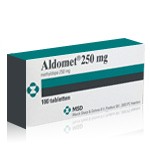
Aldomet is the original brand-name formulation of Methyldopa manufactured by Merck — one of the oldest antihypertensive medications still in clinical use. FDA-approved since 1962, Methyldopa is a centrally acting alpha-2 adrenergic agonist that played a foundational role in mid-20th century hypertension management. While largely superseded by ACE inhibitors, ARBs, CCBs, and modern antihypertensives in non-pregnant patients, Methyldopa remains the FIRST-LINE antihypertensive in pregnancy — with the most established fetal safety record of any antihypertensive over 60+ years of use. Listed on the WHO Model List of Essential Medicines. The original Aldomet brand was discontinued by Merck in the US around 2002, but generic Methyldopa remains widely available globally.
The active ingredient is Methyldopa, a prodrug converted in the CNS to alpha-methylnorepinephrine. The active metabolite stimulates central alpha-2 adrenergic receptors (presynaptic) in the brainstem, reducing sympathetic outflow to the periphery. This results in decreased peripheral vascular resistance, slight reduction in heart rate, and decreased plasma renin activity. The central mechanism is responsible for Methyldopa's unique safety in pregnancy — it does not affect uteroplacental blood flow as peripherally-acting antihypertensives might.
Aldomet is FDA-approved for chronic hypertension. The established modern primary use is pregnancy hypertension: pregnancy-induced hypertension/preeclampsia, gestational hypertension, and chronic hypertension during pregnancy — signature indication where Methyldopa has the strongest fetal safety record. Non-pregnant patients are generally treated with newer agents due to better tolerability. Off-label uses are limited in modern practice.
The medication is available as Aldomet/Methyldopa 125 mg, 250 mg, and 500 mg tablets. Standard adult dosing: start 250 mg twice or three times daily, titrate gradually to maintenance 500 mg-2 g/day in 2-4 divided doses (max 3 g/day). Avoid abrupt discontinuation — gradual taper recommended to prevent rebound hypertension.
Critical safety considerations include significant drowsiness/sedation (very common CNS effect — limits modern non-pregnant use), orthostatic hypotension, depression and mood changes, bradycardia, drug-induced hemolytic anemia (Coombs-positive — characteristic side effect), hepatotoxicity (rare hepatitis), drug-induced lupus syndrome, sexual dysfunction, dry mouth, nasal congestion, and rare pancreatitis/myocarditis/encephalopathy. Drug interactions: lithium (toxicity), MAOIs (contraindicated), iron supplements (reduce methyldopa absorption), TCAs (reduce efficacy).
Free prescription
Discrete packaging
Have questions?
Quality Assurance

- Pregnancy Induced Hypertension (PIH): For pregnancy-induced hypertension;
- Preeclampsia: For preeclampsia blood pressure control (with delivery planning);
- Gestational Hypertension: For gestational hypertension (HTN after 20 weeks without proteinuria);
- Chronic Hypertension Pregnancy: For chronic hypertension during pregnancy continuation;
- Mild Moderate Pregnancy HTN: For mild-moderate hypertension in pregnancy (BP 140-159/90-109);
- Severe Pregnancy HTN Adjunct: For severe pregnancy HTN as adjunct (with labetalol or nifedipine);
- Postpartum Hypertension: For postpartum hypertension management (especially while breastfeeding);
- Breastfeeding Compatible HTN: Compatible with breastfeeding (excreted in milk but considered safe);
- Hypertension Essential (HTN): FDA-approved for chronic essential hypertension (largely replaced by newer agents in non-pregnant patients);
- Resistant Hypertension Combination: For resistant HTN as part of combination therapy (rare modern use);
- Hypertensive Crisis Pregnancy: For management of hypertensive crisis in pregnancy (along with other agents);
- Pediatric Hypertension Selective: Selective use in pediatric hypertension (with appropriate dosing);
- Carcinoid Syndrome Adjunct: Off-label rare use for carcinoid syndrome flushing;
- Pheochromocytoma Pre Op: Rarely used pre-operative pheochromocytoma management (largely replaced);
- Renal Hypertension Pregnancy: For renal hypertension specifically during pregnancy (ACE-i/ARB contraindicated);
- Twin Pregnancy HTN: For hypertension management in twin/multiple gestation pregnancy;
- IVF Pregnancy HTN: For hypertension management in IVF/assisted reproduction pregnancies;
- High Risk Pregnancy HTN: For high-risk pregnancy hypertension (specialist supervision);
- Long Term Pregnancy Maintenance: Suitable for long-term BP maintenance throughout pregnancy.
- Better Pregnancy Outcomes: Effective BP control associated with better pregnancy outcomes;
- Less Preeclampsia Complications: Effective BP management reduces preeclampsia-related complications;
- Better Fetal Safety Profile: Strongest fetal safety record among antihypertensives (60+ years of pregnancy use data);
- Less Stroke Risk Pregnancy: Reduces stroke risk in pregnant patients with hypertension;
- Less Cardiovascular Risk Pregnancy: Reduces cardiovascular risk during pregnancy;
- Better Uteroplacental Blood Flow Preserved: Central mechanism doesn't compromise uteroplacental blood flow;
- Compatible With Breastfeeding: Safe for breastfeeding mothers post-partum;
- Less Postpartum Hypertension: Effective postpartum BP management (especially in breastfeeding mothers);
- Less Severe HTN Crisis Pregnancy: Helps manage severe pregnancy hypertensive crisis (with adjuncts);
- Better IVF Pregnancy Outcomes HTN: Effective BP control in IVF pregnancies with hypertension;
- Better Twin Pregnancy HTN Control: Effective BP management in twin pregnancy HTN;
- Less Renal HTN Pregnancy: Effective alternative when ACE-i/ARBs contraindicated (pregnancy);
- Better Long-Term Pregnancy BP Control: Suitable for long-term BP maintenance throughout pregnancy;
- Better Daily Function Pregnancy: Reduces pregnancy hypertension symptoms allowing daily activities;
- Better Quality of Life Pregnancy: Improves quality of life during high-risk pregnancy with HTN;
- Less Pregnancy-Related Mortality: Effective BP control reduces pregnancy-related maternal mortality;
- Less Preeclampsia Progression: May reduce progression of preeclampsia (with appropriate monitoring);
- Brand Aldomet: Originally Merck brand with established global clinical reputation since 1962 (discontinued US 2002, generic available);
- Generic Methyldopa: Affordable generic versions expand global access to pregnancy-safe antihypertensive therapy;
- Centrally Acting Alpha 2 Agonist: Foundational centrally acting alpha-2 agonist class — unique mechanism vs other antihypertensives;
- Alpha Methylnorepinephrine Active: Prodrug converted in CNS to alpha-methylnorepinephrine (active metabolite);
- Central Mechanism Pregnancy Safe: Central mechanism explains unique pregnancy safety vs peripheral antihypertensives;
- Reduced Sympathetic Outflow: Reduces sympathetic outflow to periphery from brainstem;
- Reduced Peripheral Vascular Resistance: Effective peripheral vascular resistance reduction;
- Reduced Plasma Renin: Decreases plasma renin activity;
- First Line Pregnancy Hypertension: First-line antihypertensive in pregnancy per ACOG, ESC, WHO guidelines — signature unique indication;
- Pregnancy Category B Antihypertensive: Pregnancy Category B — one of few antihypertensives with Category B/safe in pregnancy;
- Multiple Daily Dosing: Multiple daily dosing (BID-QID) — allows precise titration;
- Oral Tablet Format: Oral tablet format for home pregnancy BP management;
- Renal Adjustment Available: Renal dose adjustment available for impaired renal function;
- WHO Essential Medicine: Listed on the WHO Model List of Essential Medicines for cardiovascular care in pregnancy;
- 60 Plus Year Pregnancy Safety History: 60+ years of clinical use since 1962 — the most extensive pregnancy safety data of any antihypertensive.
Generic Aldomet (Methyldopa 250 mg) Medication guide:
📌 Aldomet Centrally-Acting Antihypertensive at a Glance
Aldomet is a brand name for methyldopa, a centrally-acting antihypertensive that reduces blood pressure by activating alpha-2 adrenergic receptors in the brainstem and reducing sympathetic nervous outflow to the heart and blood vessels. First introduced in the 1960s, methyldopa was for many years a mainstay of adult hypertension treatment. Contemporary practice has largely moved on to newer agents for routine adult hypertension, but methyldopa retains a specific and important role as a first-line antihypertensive in pregnancy, where its unmatched track record of long-term safety data in exposed offspring makes it one of the few agents recommended by obstetric guidelines. Cipla and Alkem Laboratories are the two principal Indian manufacturers behind the international generic supply, with MSD as the originator of the Aldomet brand.
This guide covers how central alpha-2 agonist activity lowers blood pressure, why methyldopa remains a first-line choice in pregnancy hypertension despite being an older drug, the distinctive side-effect profile (sedation, dry mouth, mood effects) that shapes tolerability outside pregnancy, the rare but important hepatic and haematological reactions that shape monitoring, and the gradual taper required when the drug is stopped to prevent rebound hypertension. The material follows the FDA prescribing information, NICE hypertension in pregnancy guidance, International Society for the Study of Hypertension in Pregnancy classification and recommendations, and the historical trial and mechanism literature.
📌 Aldomet at a glance
| Generic name | Methyldopa (levorotatory isomer of alpha-methyldopa) |
| Drug class | Centrally-acting alpha-2 adrenergic agonist antihypertensive; converted intracellularly to the active metabolite alpha-methyl-norepinephrine |
| Available strengths | 250 mg and 500 mg film-coated tablets |
| Route and dosing | Oral tablet; two or three times daily in most patients |
| Principal modern indication | Hypertension in pregnancy — gestational hypertension, chronic hypertension in pregnancy, and preeclampsia without severe features |
| Onset of BP effect | 4-6 hours after the first dose; maximum effect at 2-3 days of steady dosing |
| Signature side effects | Sedation, dry mouth, orthostatic hypotension, depression — central and autonomic effects that reflect the mechanism |
| Rare but important reactions | Positive Coombs test (up to 20% of users) with rare haemolytic anaemia; hypersensitivity hepatitis with fever and eosinophilia; both warrant monitoring rules covered later |
Three features distinguish Aldomet from most other contemporary antihypertensive medications. First, the central mechanism of action is fundamentally different from the RAAS blockers, calcium channel blockers, diuretics, and beta blockers that dominate modern hypertension prescribing. Methyldopa works in the brainstem to reduce sympathetic outflow, which produces its characteristic profile of blood pressure lowering with prominent CNS effects. Second, the pregnancy positioning is unusual among older antihypertensives: while most legacy agents have been largely replaced by newer options, methyldopa remains a recommended first-line choice specifically because the decades of pregnancy safety data have not been matched by newer alternatives. Third, the side-effect profile is characteristic and distinctive — sedation, dry mouth, orthostatic symptoms, and mood effects — and is one of the reasons the drug fell out of routine adult hypertension use as better-tolerated alternatives became available.
Some readers arrive at this page for a first prescription of methyldopa during pregnancy; others are established users returning to check a specific detail such as what a rising liver enzyme means or how to taper the drug at delivery. The sections are organised by topic and can be read individually.
💊 What Methyldopa Is
Methyldopa is a small-molecule structural analogue of the natural amino acid L-DOPA, the precursor to dopamine and noradrenaline. The molecule is orally active and is well absorbed from the gastrointestinal tract, though with substantial variability between individuals and moderate first-pass metabolism. The active molecule that reaches the target receptors is not methyldopa itself but its metabolite alpha-methyl-norepinephrine, formed after methyldopa enters central noradrenergic neurones and is decarboxylated and hydroxylated using the same enzymes that normally process L-DOPA.
💊 Methyldopa pharmacokinetics at a glance
| Absorption | Approximately 25% oral bioavailability; considerable inter-individual variability; food modestly reduces absorption |
| Peak plasma level | 2-3 hours after an oral dose |
| Active metabolite | Alpha-methyl-norepinephrine, formed intracellularly in central noradrenergic neurones; this is the molecule that binds central alpha-2 receptors |
| Elimination half-life | Approximately 1.5-2 hours for methyldopa; the effective duration of blood pressure lowering is longer (up to 24 hours) because of continued central metabolite activity |
| Metabolism | Partly hepatic; partly decarboxylated to the active metabolite in central neurones |
| Excretion | Predominantly renal, as methyldopa and metabolites |
Two features of methyldopa's pharmacokinetics have practical consequences. First, the variable oral bioavailability means that the dose-response relationship differs between individuals more than for many other antihypertensives. What controls blood pressure in one patient at 500 mg twice daily may require 1000 mg twice daily in another with equivalent baseline blood pressure. This variability is one of the reasons titration proceeds by response rather than by a fixed protocol. Second, the disconnection between plasma half-life and duration of blood pressure effect reflects the drug's central mechanism: what matters is not the plasma level but the concentration of alpha-methyl-norepinephrine at central alpha-2 receptors, which persists after plasma methyldopa has been cleared.
The renal route of elimination matters in patients with significantly reduced kidney function. Methyldopa exposure rises in advanced renal impairment, and dose reduction or interval extension is warranted at eGFR below 30 mL/min/1.73 m2. Section 22 covers this in more detail.
🧬 Central Alpha-2 Adrenergic Signalling
To understand what methyldopa does, it helps to spend a few minutes on the biology of central adrenergic signalling. The sympathetic nervous system regulates blood pressure through activity in cardiovascular control centres in the brainstem, particularly the rostral ventrolateral medulla and the nucleus tractus solitarius. Neurones in these regions receive input from baroreceptors and from higher centres, and they modulate sympathetic outflow to the heart (raising or lowering heart rate) and to arterial smooth muscle (raising or lowering vascular resistance).
🧬 The role of central alpha-2 adrenergic receptors
- Presynaptic and postsynaptic distribution. Alpha-2 adrenergic receptors sit both on the presynaptic terminals of central noradrenergic neurones (where they provide feedback inhibition of noradrenaline release) and on postsynaptic neurones in cardiovascular control centres.
- Activation reduces sympathetic outflow. When alpha-2 receptors are activated in the brainstem, they reduce the firing rate of sympathetic outflow neurones and reduce the amount of noradrenaline released from noradrenergic terminals.
- Blood pressure falls. Reduced sympathetic drive to the heart lowers heart rate and cardiac output; reduced sympathetic drive to arteries relaxes vascular smooth muscle and lowers peripheral resistance. Together these effects lower blood pressure.
- CNS side effects follow the mechanism. The same central noradrenergic pathways that regulate sympathetic outflow also participate in arousal, wakefulness, and mood. Reducing central noradrenergic activity produces the sedation, tiredness, and mood changes that are characteristic of central alpha-2 agonist antihypertensives.
Two features of central adrenergic biology are worth understanding rather than reading past. First, the alpha-2 receptor is the same receptor targeted by other centrally-acting antihypertensives such as clonidine and guanfacine. Methyldopa differs from these agents in requiring intracellular conversion to alpha-methyl-norepinephrine before activating the receptor, whereas clonidine and guanfacine are direct alpha-2 agonists. The clinical effects are broadly similar within the class, but the pharmacokinetic profiles differ.
Why the mechanism explains the side effect profile
Sedation, dry mouth, and orthostatic hypotension are not accidental features of methyldopa; they are direct consequences of central alpha-2 receptor activation reducing sympathetic tone. This is important to explain to patients because it frames the side effects as an expected part of the mechanism rather than as unexpected reactions. Users who understand this often tolerate the early sedation more comfortably than users who expect a "side-effect-free" antihypertensive.
Second, the separation between the antihypertensive effect and the CNS effects is imperfect. At doses that produce meaningful blood pressure lowering, most users experience some sedation and dry mouth. This is one of the specific reasons the drug fell out of routine adult hypertension use as newer classes (ACE inhibitors, calcium channel blockers, ARBs) became available with cleaner side-effect profiles.
🔬 How Methyldopa Lowers Blood Pressure Centrally
Methyldopa itself has weak activity at alpha-2 receptors; the antihypertensive effect requires intracellular conversion to alpha-methyl-norepinephrine, which then binds central alpha-2 adrenergic receptors and produces the downstream effects described in section 3. This section describes the practical consequences of the mechanism.
🔬 The four practical consequences of central alpha-2 activation by methyldopa
- Reduced sympathetic outflow and lower blood pressure
- Peripheral vascular resistance falls and heart rate slows modestly, producing gradual blood pressure reduction that is well established within 2-3 days of steady dosing. The blood pressure effect is dose-related within the therapeutic range.
- Reduced plasma renin activity
- Because sympathetic drive to the juxtaglomerular cells falls, renin release is reduced. This is one of the reasons methyldopa is particularly effective in high-renin states and less effective in low-renin states (such as primary aldosteronism, where a different mechanism dominates).
- Sedation and reduced arousal
- The central noradrenergic pathways that regulate sympathetic outflow also participate in arousal. Reducing central noradrenergic activity produces the characteristic sedation of the first weeks of therapy, which usually attenuates but does not fully resolve.
- Autonomic effects on salivary glands, gastrointestinal tract, and pupils
- Reduced sympathetic tone to salivary glands produces dry mouth; reduced sympathetic tone to the gut can produce mild constipation; there is variable effect on pupil size. These autonomic side effects (section 18) are dose-related and are one of the reasons some users find higher doses uncomfortable.
Two features of the mechanism deserve emphasis. First, the blood pressure effect emerges over days rather than hours. Unlike a rapid vasodilator (immediate-release nifedipine, hydralazine), methyldopa produces a gradual blood pressure fall that reaches steady state at 2-3 days of stable dosing. This is generally advantageous because it avoids the reflex sympathetic activation that follows rapid blood pressure drops, but it does mean early titration cannot be judged after a single dose. Second, the orthostatic (postural) component of blood pressure lowering can be more prominent than the resting reduction. Users may show a modestly reduced resting blood pressure but a substantial fall on standing, which manifests as postural dizziness. Advising users to stand up slowly and to sit on the edge of the bed for a minute before standing is a small but useful piece of counselling.
Positive Coombs test as a bystander effect
Alongside the pharmacological mechanism, methyldopa has a distinctive off-target effect on the immune system: it induces autoantibodies against red blood cell membrane proteins in approximately 20% of long-term users. This produces a positive direct antiglobulin (Coombs) test but only rarely clinical haemolytic anaemia. Section 14 covers this class effect in detail. The mechanism of the immune effect is not fully understood but is thought to involve haptenisation of red cell antigens by methyldopa or its metabolites.
🎯 Approved Uses — Where Methyldopa Still Fits
Methyldopa's FDA-approved indication is hypertension broadly, but its contemporary practical role is much narrower than the label alone would suggest. This section describes where methyldopa still fits in modern practice and where it has been superseded by other agents.
| Indication | Current positioning | Notes |
|---|---|---|
| Gestational hypertension | First-line, alongside labetalol and nifedipine | Decades of pregnancy safety data including long-term follow-up in exposed offspring; see section 11 |
| Chronic hypertension in pregnancy | First-line for women becoming pregnant on other antihypertensives (usually switched to methyldopa or labetalol pre-conception) | Same rationale as gestational hypertension |
| Preeclampsia without severe features | Reasonable choice for outpatient antihypertensive management under obstetric supervision | Delivery remains the definitive treatment; antihypertensive therapy is temporising |
| Essential hypertension in non-pregnant adults | Not first-line; superseded by ACE inhibitors, ARBs, calcium channel blockers, thiazides | CNS side effects and inconvenient twice-daily dosing make newer agents preferred |
| Resistant hypertension in non-pregnant adults | Third-, fourth-, or fifth-line option | Occasionally used when other options have failed or are not tolerated; not routine primary care practice |
| Sedation-desirable settings | Occasional | The sedative side effect that limits routine use can occasionally be advantageous in specific patients |
Two features of the indication list are worth understanding. First, the concentration on pregnancy hypertension reflects the specific advantage of long-term safety data. When a new antihypertensive is developed, the pregnancy safety database starts from zero and takes decades to build. Methyldopa has been in continuous clinical use since the 1960s, and follow-up studies of children exposed in utero have not identified adverse developmental or cardiovascular signals. Newer antihypertensives — even those without any known risk in pregnancy — do not yet have that depth of long-term outcome data. Second, outside pregnancy the drug is not commonly prescribed today; a hypertensive patient in their fifties presenting for first antihypertensive therapy would not typically be started on methyldopa in contemporary primary care.
A specific note on essential adult hypertension
Patients still taking methyldopa long-term for essential adult hypertension — usually a legacy prescription from decades ago that has never been reviewed — are often good candidates for a supervised switch to a modern first-line agent, provided the pregnancy consideration does not apply. The gradual taper needed to avoid rebound hypertension (section 25) is the practical constraint on any such switch.
📋 Historical Context in the Antihypertensive Landscape
Methyldopa occupies an unusual position in the modern antihypertensive landscape: it is one of the oldest still-used agents, and the specific niche it retains — pregnancy hypertension — is a niche that older drugs are usually pushed out of by newer alternatives. Understanding the historical context helps explain why this particular older agent has survived in this particular application.
📋 The antihypertensive landscape from the 1960s to today
| Era | Dominant classes | Methyldopa role |
|---|---|---|
| 1960s-1970s | Reserpine, hydralazine, thiazide diuretics, methyldopa | First-line antihypertensive; one of the most widely prescribed agents |
| 1980s | Beta blockers dominate; calcium channel blockers introduced | Still commonly used; use starting to decline for adult hypertension |
| 1990s | ACE inhibitors become widely available; ARBs introduced | Adult hypertension use continues to decline; pregnancy indication becomes the primary role |
| 2000s-2010s | Four preferred first-line classes established (ACE-I, ARB, CCB, thiazide) | Adult hypertension use largely restricted to legacy prescriptions and resistant cases |
| 2020s (today) | Foundational four-pillar HF therapy, SGLT2 inhibitors, ARNIs, PCSK9 inhibitors | Pregnancy hypertension is the primary use; adult hypertension use is uncommon |
Two features of this historical arc are worth understanding. First, methyldopa's survival in pregnancy hypertension is a specific consequence of the pregnancy safety data accumulated over sixty years of use. Newer antihypertensives with theoretical advantages have not displaced methyldopa in this indication because they have not accumulated equivalent long-term follow-up data in exposed offspring. Second, the decline in adult hypertension use reflects real advances in tolerability rather than an unfair judgment against methyldopa: ACE inhibitors, calcium channel blockers, and thiazides really are better tolerated than methyldopa for most adult patients, and the shift in prescribing patterns reflects this.
Dr Winthrop-Ashford on methyldopa's place in modern practice
"When we see a patient in our cardiology clinic who is still taking methyldopa for essential adult hypertension, the first question is why. Usually it turns out to be a prescription from decades ago that has never been formally reviewed. In most such cases a supervised switch to a modern first-line agent improves tolerability while maintaining or improving blood pressure control. The exception, and it is an important exception, is any patient of childbearing potential who might benefit from methyldopa if they became pregnant — there the calculation is different."
Ottavia P. Winthrop-Ashford, MD, PhD, FACC — Division of Cardiology, Baylor College of Medicine Houston
A specific point on the WHO Essential Medicines List: methyldopa remains listed as an essential medicine, principally in recognition of its pregnancy use and its availability as a low-cost generic in low- and middle-income healthcare systems where newer alternatives may be less accessible.
📆 Tablet Strengths and Titration Schedule
Aldomet is available in two tablet strengths — 250 mg and 500 mg. Titration proceeds by blood pressure response rather than by a fixed schedule, and dose divisions between two or three daily doses are common. This section describes practical titration for the principal indication of pregnancy hypertension and briefly for adult hypertension.
📆 Titration for pregnancy hypertension
- Start 250 mg two or three times daily (500-750 mg per day) in most patients; titration to blood pressure response.
- Review at 3-7 days for blood pressure response and tolerability; small titration increments if needed.
- Titrate up in 250 mg increments over 1-2 weeks until blood pressure is at target (typically less than 140/90 mmHg in most pregnancy guidelines; less than 150/100 mmHg is the more conservative target for uncomplicated pregnancy hypertension in some guidelines).
- Usual maintenance dose: 500-2000 mg per day in two or three divided doses.
- Maximum dose: 3000 mg per day, though most obstetric practice does not require more than 2000 mg per day.
- Combine with another agent (typically labetalol or nifedipine) if blood pressure is not controlled on methyldopa alone before pushing to maximum dose.
Titration for adult (non-pregnancy) hypertension
- Start 250 mg two or three times daily; lower starting doses in the elderly.
- Titrate to blood pressure response over 2-4 weeks; maximum dose 3000 mg per day.
- Sedation tolerance often limits titration: most non-pregnant adults on higher methyldopa doses would be candidates for a switch to a modern first-line class.
Two features of methyldopa titration are worth understanding. First, the two- or three-times-daily dosing schedule is more inconvenient than the once-daily dosing offered by most modern first-line antihypertensives. Some pregnancy patients find twice-daily dosing acceptable while three-times-daily dosing becomes onerous; discussing the schedule at the outset supports adherence. Second, the upper end of the dose range (2000-3000 mg per day) is rarely used in contemporary pregnancy practice because a second agent is added rather than pushing methyldopa to its maximum. This has historically been different in adult hypertension practice, where higher single-agent doses were common.
Dose timing considerations
Taking the largest dose at bedtime helps make the sedation useful rather than disabling: users often report they sleep well and wake with less residual drowsiness than users who take the largest dose in the morning. This is a small but valuable habit for pregnancy patients starting methyldopa.
▶️ Starting Aldomet — First-Dose Considerations
Starting Aldomet is usually straightforward, though the first-dose blood pressure response can be more variable than for some newer antihypertensives. The blood pressure effect emerges over 4-6 hours after the first dose, peaks after several doses, and reaches steady state at 2-3 days of stable dosing. Symptomatic first-dose hypotension is uncommon but can occur, particularly in patients already volume-depleted or on other antihypertensives.
▶️ Practical initiation of Aldomet
- Baseline blood tests before the first dose: full blood count including reticulocytes, direct antiglobulin (Coombs) test, and liver function tests (see section 20).
- Take the first dose at bedtime to make the initial sedation more comfortable and to catch any first-dose blood pressure fall during sleep.
- Warn about early sedation. Most patients notice significant drowsiness for the first 3-7 days; this usually attenuates. Driving and operating machinery should be avoided in the first week or until the individual response is clear.
- Advise to stand up slowly during the first days to avoid postural dizziness.
- Review at 3-7 days for blood pressure, tolerability, and any early adverse effects; titrate if needed.
- Follow-up liver function tests at 2-4 weeks and 6-8 weeks after starting (see section 15).
Two features of Aldomet initiation are worth understanding. First, the early sedation is characteristic and expected, not an idiosyncratic side effect. Framing this at the first prescription visit as an expected part of the first week (which usually improves) supports the patient staying on the drug during a period that would otherwise feel like an intolerable reaction. Section 12 covers sedation and CNS effects in more detail. Second, the baseline blood tests are not optional for methyldopa. Unlike many antihypertensives that need no specific baseline labs, methyldopa monitoring requires baseline Coombs and liver function so that the specific reactions (haemolytic anaemia in a Coombs-positive patient, drug-induced hepatitis) can be identified against the baseline.
⚖️ Patients where more caution is warranted at initiation
- Patients on multiple other antihypertensives; the additive blood pressure lowering can be more pronounced than expected.
- Elderly patients; slower titration, lower starting doses, closer monitoring for orthostatic effects.
- Patients with pre-existing depression or other mood disorders; the CNS effects may worsen mood symptoms (see section 13).
- Patients with pre-existing liver disease; discuss with hepatology or specialist before initiation; baseline LFTs are essential.
- Patients with autoimmune haemolytic anaemia history; contraindicated.
⏰ Missed Dose Handling
Missed doses on methyldopa require slightly more attention than on some longer-acting antihypertensives, because the drug is typically dosed two or three times daily and because the effective duration of action is intermediate rather than long. This section covers the practical rules.
⏰ What to do about a missed dose
| Realised within 3-4 hours of the usual time | Take the missed dose as soon as remembered; next scheduled dose remains at its usual time |
| Realised closer to the next scheduled dose | Skip the missed dose. Take the next scheduled dose at the usual time. Do not double up. |
| Missed two or three doses in a row | Resume the usual dose; monitor blood pressure at home in the following days; rebound rise usually settles at steady state |
| Missed a week or more | Contact the prescriber; rebound hypertension may develop; do not simply restart the full dose without discussion — a supervised re-initiation may be safer |
Two features of missed-dose management on Aldomet are worth understanding. First, doubling up is never useful and can be harmful. A double dose produces excess CNS effects (sedation, dizziness, orthostatic hypotension) and does not restore the missed effect. The correct response is always to return to the schedule at the next appointment. Second, a period of missed doses can produce rebound blood pressure elevation because the central alpha-2 receptors, downregulated during chronic therapy, take time to reset. This is one of the reasons the gradual taper described in section 25 is important when stopping methyldopa deliberately, and it explains why an unplanned week off the drug should be handled with prescriber input rather than by simply restarting the full dose.
Building an adherence habit
Because methyldopa is dosed two or three times daily and because the CNS effects are silent (blood pressure changes are numbers, not symptoms), forgetting doses is easy. Practical measures include pairing each dose with an established habit (breakfast, main meal, bedtime), using a weekly pill organiser, and setting alarms for each scheduled dose. Twice-daily dosing is generally easier to sustain than three-times-daily; asking the prescriber whether the twice-daily schedule can work is often worthwhile.
🔗 Drug Interactions
Methyldopa's interaction profile is dominated by pharmacodynamic interactions — other drugs that affect the sympathetic nervous system, blood pressure, or the central nervous system — rather than by CYP-mediated pharmacokinetic interactions. This section summarises the interactions worth knowing.
| Interaction category | Common examples | Practical implication |
|---|---|---|
| Other antihypertensives | Labetalol, nifedipine, ACE inhibitors, ARBs, thiazides | Additive blood pressure lowering; combination is intentional in pregnancy hypertension and in resistant hypertension; monitor for symptomatic hypotension |
| Central nervous system depressants | Benzodiazepines, opioids, sedating antihistamines, alcohol | Additive sedation; combination often produces more drowsiness than either agent alone; caution during pregnancy where the sedating antihistamines may be used for allergies |
| Iron salts | Ferrous sulfate, ferrous fumarate (commonly used in pregnancy) | Iron reduces methyldopa absorption; separate doses by at least 2 hours |
| Monoamine oxidase inhibitors (MAOIs) | Phenelzine, tranylcypromine (uncommon today) | Combination avoided; potential for hypertensive crisis paradoxically because methyldopa metabolites can be released from stores |
| Sympathomimetic amines | Pseudoephedrine, phenylephrine (over-the-counter decongestants) | Can partially reverse methyldopa's blood pressure effect; avoid where possible |
| Lithium | Used for bipolar disorder | Increased lithium toxicity risk; monitor lithium levels closely if combined |
| Levodopa | Used for Parkinson disease | Methyldopa competes with levodopa metabolism; combination usually avoided in Parkinson patients |
Two features of the interaction picture matter. First, the iron interaction is particularly relevant in pregnancy, where iron supplementation is routine. Taking iron 2 hours apart from methyldopa preserves the antihypertensive effect that concurrent dosing would blunt. Second, the additive sedation with alcohol and CNS depressants is often underestimated; a pregnant patient starting methyldopa should be counselled that even modest evening alcohol (uncommon in pregnancy) or sedating antihistamines for hayfever will produce more drowsiness than expected.
A note on over-the-counter cold and flu medicines
Many over-the-counter cold and flu preparations contain pseudoephedrine or phenylephrine as a decongestant; some contain sedating antihistamines. Both categories interact with methyldopa — the first by opposing the blood pressure effect, the second by amplifying sedation. Pregnant users of Aldomet should ask the pharmacist about safe options for cold symptoms rather than choosing from the shelf; paracetamol and saline nasal spray are usually the safest first choices.
🌱 Pregnancy Use — The Primary Modern Indication
Hypertension in pregnancy is the principal modern indication for methyldopa, and it is the setting where the drug's specific advantages — decades of accumulated safety data in exposed offspring, established fetal tolerance, and predictable maternal pharmacology — matter most. This section covers the practical use of Aldomet across the pregnancy hypertension spectrum.
🌱 The four hypertensive disorders of pregnancy
| Diagnosis | Definition | Methyldopa role |
|---|---|---|
| Chronic hypertension | Hypertension present before pregnancy or before 20 weeks gestation | First-line antihypertensive; often switched from ACE-I/ARB pre-conception |
| Gestational hypertension | New hypertension after 20 weeks without proteinuria or organ dysfunction | First-line antihypertensive alongside labetalol and nifedipine |
| Preeclampsia | Gestational hypertension plus proteinuria or organ dysfunction | Reasonable outpatient antihypertensive for preeclampsia without severe features; delivery remains definitive |
| Preeclampsia superimposed on chronic hypertension | Chronic hypertension with new-onset proteinuria or organ dysfunction after 20 weeks | Same as preeclampsia; specialist obstetric care |
Two features of methyldopa in pregnancy are worth understanding. First, the safety data supporting first-line use comes not only from short-term trials but from long-term follow-up of children exposed to methyldopa in utero. Studies extending into adolescence and adulthood in exposed children have not identified adverse cardiovascular, neurodevelopmental, or growth signals. This depth of follow-up is unusual for antihypertensives and is one of the specific reasons methyldopa has not been displaced by newer agents in pregnancy. Second, the blood pressure targets in pregnancy differ from those in non-pregnant adults. Contemporary guidelines (CHIPS trial evidence) support tighter blood pressure control targets around 130-135/85 mmHg in most pregnancy hypertension, though the precise target varies by guideline and by the specific clinical picture.
Practical pregnancy antihypertensive selection
- Methyldopa: long-established safety record; twice- or three-times-daily dosing; sedation and dry mouth as trade-offs. Reasonable first choice; particularly useful in patients who tolerate the sedation.
- Labetalol: combined alpha and beta blocker; twice-daily dosing; better-tolerated by many patients; increasingly the first choice in some obstetric practices.
- Nifedipine (extended-release): dihydropyridine calcium channel blocker; once-daily dosing; well-tolerated; particularly useful when a single-drug regimen is desired. Section on Adalat covers this in detail.
- Hydralazine (IV or oral): more commonly used acutely for severe hypertension in preeclampsia rather than for chronic outpatient treatment.
Dr Marchenko-Petrova on choosing among pregnancy antihypertensives
"When we start antihypertensive therapy in gestational hypertension, methyldopa remains a legitimate first-line choice. The decision between methyldopa, labetalol, and extended-release nifedipine turns on the patient's tolerance profile, dosing convenience, and the specific obstetric picture. Methyldopa's trade-off is the sedation, which is more noticeable at initiation and often improves; its advantage is the depth of long-term safety data on exposed offspring, which no newer agent has matched."
Elena V. Marchenko-Petrova, MD, PhD — Department of Obstetrics and Feto-Maternal Medicine, Medical University of Vienna
A specific note on postpartum management: methyldopa is generally continued for the first days to weeks after delivery in patients who were on it during pregnancy. Once postpartum blood pressure is stable and any related lactation considerations have been addressed, transitioning off methyldopa and returning to a modern first-line antihypertensive (or stopping antihypertensive therapy entirely if pre-pregnancy hypertension was absent) is standard practice. Methyldopa passes into breast milk in small amounts and is generally considered compatible with breastfeeding, though individual patient discussion with the obstetric team guides the specific plan.
💤 Sedation and CNS Effects
Sedation is the single most common and most disruptive side effect of methyldopa. It reflects the drug's mechanism directly — central alpha-2 receptor activation reduces central noradrenergic arousal — and it is one of the specific reasons methyldopa has largely been replaced by other agents for routine adult hypertension. In pregnancy, where methyldopa is a first-line agent, the sedation is an expected trade-off rather than a reason to avoid the drug.
💤 What the methyldopa sedation looks like
- Early prominence: most pronounced in the first 3-7 days after initiation and after dose increases; typically attenuates but rarely disappears entirely.
- Dose-related: more pronounced at higher doses (over 1000 mg per day) than at low starting doses.
- Timing: often worst 2-4 hours after each dose, coinciding with peak plasma levels.
- Character: tiredness, drowsiness, mental slowing rather than acute somnolence; concentration and mental sharpness may feel reduced.
- Related effects: impaired concentration, forgetfulness, reduced motivation, occasional depressed mood (section 13).
Two features of the sedation are worth understanding. First, the timing between doses and peak sedation can be turned to the user's advantage. Taking the largest dose at bedtime makes the peak sedation coincide with sleep; taking the morning dose after breakfast rather than on an empty stomach reduces the daytime peak somewhat. Second, the tolerance to sedation is real but partial. Most patients report the drowsiness improves substantially over the first 1-2 weeks. Patients who remain intolerably sedated at 2-4 weeks are unlikely to adapt further and are candidates for a switch of agent.
Practical measures to reduce sedation
- Take the largest dose at bedtime. Making the peak sedation coincide with sleep is the single most useful habit.
- Avoid CNS depressants including sedating antihistamines (for hayfever), alcohol, and anti-nausea drugs like promethazine while adjusting to methyldopa.
- Do not drive or operate machinery in the first week or until the individual response is clearly established.
- Consider a slower titration if daytime sedation is disruptive; smaller dose increments at longer intervals give the CNS more time to accommodate.
- Discuss with the prescriber if sedation remains disruptive at 3-4 weeks; a switch to labetalol or nifedipine may be preferable for pregnancy use.
A note on specific tasks that require alertness. Work involving driving (particularly professional driving), operation of heavy machinery, or safety-critical decision-making warrants careful discussion at initiation. In pregnancy, work modifications may be part of the plan for the first weeks of methyldopa therapy. For patients where such modifications are impossible, a different pregnancy antihypertensive (labetalol or extended-release nifedipine) may be the more practical first choice.
🧠 Depression Risk and Mood Effects
Methyldopa can produce or worsen depressive symptoms, and it is one of the specific psychiatric side effects worth discussing with any patient starting the drug. The frequency is not high (perhaps 5-10% of users at higher doses show measurable mood changes), but it is high enough that the possibility should be part of the initial counselling and part of the routine review.
🧠 What methyldopa-related mood effects look like
- Low mood or depressive symptoms developing over weeks to months after initiation.
- Reduced energy, motivation, and pleasure in usual activities, distinct from the physical fatigue of the underlying condition.
- Sleep disturbance can compound the mood picture, though methyldopa itself often improves sleep because of its sedative effect.
- Occasionally more prominent in patients with a personal or family history of depression.
- Reversible after stopping methyldopa; symptoms usually resolve within 2-6 weeks of switching to another antihypertensive.
Two features of the mood picture are worth understanding. First, the mechanism reflects the pharmacology. Central noradrenergic pathways contribute to mood as well as to sympathetic outflow, so reducing central noradrenergic activity has predictable mood consequences in a subset of users. Second, the distinction between drug-related mood change and depression as an independent condition can be difficult, particularly in pregnancy where perinatal mood disorders are common and the symptoms overlap. A written mood diary over the first weeks of methyldopa therapy is a low-effort way to distinguish these possibilities.
When to consider a switch of antihypertensive
- Clear low mood not previously present, developing within weeks of starting methyldopa.
- Worsening of pre-existing depression on methyldopa.
- Any new suicidal thoughts or thoughts of self-harm — urgent review and switch.
- Family or partner observation of changed mood, even if the patient does not spontaneously report it.
A specific note on pregnancy mood: perinatal depression is common, affecting perhaps 10-15% of pregnancies and post-partum periods. Distinguishing pregnancy-related mood change from methyldopa-related mood change matters because the response is different: perinatal depression is managed with specialist psychiatric input and often with antidepressant therapy (some of which are pregnancy-safe), while methyldopa-related mood change is managed by switching to a different antihypertensive. The obstetric team can help distinguish these possibilities, and any patient with pre-existing depression should have this specifically discussed at initiation.
Patients with active depression or a strong history of depression should ideally not be started on methyldopa when an alternative pregnancy antihypertensive (labetalol, nifedipine) would work. If methyldopa is nonetheless the chosen agent for a specific reason, closer mood monitoring is part of the routine.
🩸 Positive Coombs Test and Rare Hemolytic Anaemia
One of the most distinctive features of methyldopa is its ability to induce autoantibodies against red blood cell membrane proteins. Approximately 10-20% of patients on methyldopa develop a positive direct antiglobulin (Coombs) test after 6-12 months of therapy, though the great majority of these patients do not develop clinical haemolysis. Understanding this class effect is essential for interpreting future blood tests and for recognising the rare but important cases where haemolytic anaemia does develop.
🩸 The Coombs picture on methyldopa
| Direct antiglobulin (Coombs) test | Detects antibodies bound to red blood cell surface; becomes positive in 10-20% of methyldopa users, usually after 6-12 months of therapy |
| Clinical haemolysis | Rare: probably less than 1% of Coombs-positive users develop clinical haemolytic anaemia |
| Diagnostic implication | The positive Coombs test alone is not haemolysis and does not itself require action if the full blood count and haemolysis markers remain normal |
| Cross-matching interference | A methyldopa-positive Coombs test can complicate blood transfusion cross-matching; the transfusion laboratory should be informed of methyldopa use |
| Reversibility | The positive Coombs test may take weeks to months to revert after stopping methyldopa; the clinical haemolysis (if present) usually resolves faster |
🩸 SIGNS OF CLINICAL HAEMOLYSIS ON METHYLDOPA
- Unexplained fatigue and reduced exercise tolerance beyond that attributable to the underlying condition.
- Pallor noticed by the patient or by family.
- Jaundice — yellowing of the skin or the whites of the eyes, reflecting increased bilirubin from red cell breakdown.
- Dark or tea-coloured urine from haemoglobin or urobilinogen.
- Palpitations or dizziness from anaemia-related reduced oxygen carrying capacity.
- Fever during clinical haemolysis is not uncommon (see also section 15 on fever and hepatic reactions).
Two features of the methyldopa-Coombs picture are worth understanding. First, the positive Coombs test as a laboratory finding does not by itself require stopping the drug. If the full blood count is normal, reticulocytes are not elevated, and there is no biochemical evidence of haemolysis (raised lactate dehydrogenase, elevated bilirubin, reduced haptoglobin), the positive Coombs test is a marker of the drug's off-target immune activity but not a marker of clinical illness. Second, the rare cases that do develop clinical haemolysis require prompt recognition and drug discontinuation. Full blood count with reticulocyte count and standard haemolysis markers usually clarify the picture quickly.
Practical monitoring rhythm
Baseline full blood count and direct Coombs test before starting methyldopa; repeat full blood count at 6-12 months if therapy continues at high doses or for prolonged periods. Routine repeat Coombs testing is not usually necessary but is worth performing if unexplained anaemia develops. The transfusion laboratory should be informed of methyldopa use before any planned transfusion.
🔥 Fever, Eosinophilia, and Hepatic Reactions
Methyldopa can produce a distinctive hypersensitivity-type reaction pattern that includes fever, elevated blood eosinophil count, and hepatic enzyme rises. In some patients this progresses to symptomatic hepatitis with jaundice; in a smaller subset the hepatic picture becomes chronic and behaves like autoimmune hepatitis. This section describes the pattern and the monitoring rules.
🔥 The spectrum of methyldopa hepatic reactions
| Transient enzyme rises | Modest and asymptomatic; occur in a minority in the first weeks; usually settle without intervention |
| Hypersensitivity hepatitis | Fever, malaise, eosinophilia, and marked enzyme rise usually appearing 2-12 weeks after initiation; often the first indication is a routine LFT check |
| Symptomatic drug-induced hepatitis | Jaundice, right upper abdominal pain, nausea and vomiting; a small minority of patients progress to this stage; discontinuation is essential |
| Chronic autoimmune-like hepatitis | Rare; presents like autoimmune hepatitis with elevated globulins and antinuclear antibodies; usually reversible after stopping methyldopa though occasional cases require immunosuppressive therapy |
🔥 STOP METHYLDOPA AND SEEK URGENT REVIEW IF
- Fever that is not explained by another obvious cause (particularly if it develops in the first 2-12 weeks of therapy).
- Jaundice — yellowing of the skin or the whites of the eyes.
- Dark urine and pale stools suggesting cholestatic pattern.
- Persistent right upper abdominal pain not explained by other cause.
- Unusual persistent fatigue, nausea, or loss of appetite without other explanation.
Two features of the hepatic pattern are worth understanding. First, the timing is characteristic. Most cases develop between weeks 2 and 12 of therapy, and the pattern is often heralded by fever and eosinophilia before jaundice develops. This is why liver function testing at 2-4 weeks and 6-8 weeks after starting methyldopa is standard monitoring practice, even in asymptomatic patients. Second, most cases are reversible after stopping the drug, but the small minority that progress to chronic autoimmune-like hepatitis may require specialist hepatology input and occasionally immunosuppressive therapy.
Dr Ogundimu-Kolawole on early recognition of methyldopa hepatitis
"The most useful piece of clinical wisdom on methyldopa-associated hepatitis is that early recognition matters. Patients who present with fever and modest eosinophilia at 6-8 weeks of therapy, and where a routine LFT check identifies elevated transaminases, do very well after stopping the drug and switching antihypertensive class. Patients who continue through the early warning signs and present later with jaundice and severe symptomatic hepatitis take longer to recover, and occasionally require prolonged specialist care. The routine LFT check at 2-4 weeks and 6-8 weeks is the specific practice that catches the early presentation."
Adebowale K. Ogundimu-Kolawole, MD, PhD — Drug-Induced Liver Injury Programme, Chris Hani Baragwanath Academic Hospital, Johannesburg
Pre-existing chronic liver disease is a relative contraindication for methyldopa (section 22 and 23), because baseline hepatic reserve is reduced and any drug-induced hepatitis is riskier. Patients with normal baseline liver function tolerate methyldopa well in most cases; the monitoring rhythm described is the standard response to the small but real risk of drug-induced hepatitis.
🩺 Blood Pressure Monitoring at Home
Home blood pressure monitoring is particularly useful during methyldopa therapy for two reasons: the drug's effect is variable between patients and requires titration by response, and pregnancy hypertension patients (the principal group) benefit from close blood pressure surveillance between clinic visits.
🩺 Home monitoring on Aldomet
- Use an upper-arm oscillometric monitor validated for pregnancy use where relevant. Wrist and finger monitors are less reliable.
- Correct cuff size for the arm circumference; too small a cuff overestimates blood pressure.
- Standard measurement conditions: after 5 minutes of quiet sitting, feet flat, back supported, no talking during the reading.
- Two readings a minute apart, twice a day (morning and evening) for a week when quantifying blood pressure control.
- Log the results: a written or app-based log makes the review much more useful than isolated numbers.
Two features of home monitoring on methyldopa are worth understanding. First, the orthostatic component of blood pressure lowering means that home readings taken while sitting comfortably may not fully reflect the drug's effect on daily life. Patients experiencing symptomatic postural dizziness may have well-controlled resting blood pressure but too pronounced an orthostatic drop; this is worth noting in the log. Second, pregnancy blood pressure targets are lower and more stringent than for non-pregnant adults. Home targets around 130-135/85 mmHg are common in pregnancy hypertension guidelines, though the specific target should be confirmed with the obstetric team based on individual circumstances.
Home BP interpretation in pregnancy hypertension
| Below 130/85 mmHg | Well controlled; continue current regimen |
| 130-140/85-90 mmHg | Near or at target depending on guideline used; discuss with obstetric team |
| Above 140/90 mmHg persistently | Not at target; discuss dose increase or second agent |
| Above 160/110 mmHg | Severe hypertension in pregnancy; urgent obstetric review; often requires hospital management |
A useful practical habit for pregnancy patients is to bring the home BP log to every obstetric appointment. The log complements the isolated readings taken in clinic and often reveals patterns (particularly early-morning surges) that isolated visits miss.
🩹 Common Side Effects in the First Three Months
Common methyldopa side effects appear in the first weeks of therapy and are dominated by CNS and autonomic effects that reflect the central alpha-2 agonist mechanism. This section describes the everyday side effects and separates them from the rare but serious reactions covered in dedicated sections.
🩹 Common side effects — typical pattern by month
| System | Common in month 1 | Typical by month 3 |
|---|---|---|
| CNS | Prominent sedation, drowsiness, reduced concentration (see section 12); occasional depression (section 13) | Sedation attenuates but persists; some tolerance develops |
| Cardiovascular | Orthostatic hypotension; slight bradycardia; occasional first-dose hypotension | Steady state; usually well-tolerated |
| Autonomic | Dry mouth, mild constipation, blurred vision, nasal congestion (section 18) | Autonomic effects continue but often become less bothersome |
| Digestive | Nausea, occasional diarrhoea | Usually settles |
| Sexual | Reduced libido; erectile dysfunction in men; delayed ejaculation | Persistent if present; may be a reason to switch outside pregnancy |
| Musculoskeletal | Occasional muscle cramps or joint pain | Usually resolves |
| Skin | Rare rash | Rare persistent skin effects worth review |
🚩 Rare but serious — the reactions covered elsewhere
- Haemolytic anaemia with positive Coombs test (section 14)
- Hypersensitivity hepatitis with fever and eosinophilia (section 15)
- Chronic autoimmune-like hepatitis (section 15)
- Severe symptomatic depression or suicidal thoughts (section 13)
- Bone marrow suppression — very rare
- Parkinsonian symptoms — rare but reported with prolonged high-dose therapy
- Rebound hypertension on abrupt withdrawal (section 25)
Dr Kavanagh-Sheedy on early tolerance framing
"The most useful conversation at the initial methyldopa prescription is that the first week will feel worse than the fourth week. Framing the sedation and dry mouth as expected first-week phenomena that usually attenuate lets patients stay on the drug during a period that would otherwise feel like an intolerable reaction. About two-thirds of patients accommodate to a level they can live with by the end of the first month; the other third are candidates for a switch of agent."
Julia E. Kavanagh-Sheedy, MB BCh, MRCPI — Department of General Practice, University College Dublin School of Medicine
A patient who has been on methyldopa for six months without significant side effects and without any of the serious reactions has, for practical purposes, established that the drug suits them. In pregnancy the drug will be reviewed at delivery and often continued briefly postpartum before a transition to a different antihypertensive; in non-pregnancy adult use, the routine review is about picking up new factors rather than revisiting stable tolerance.
🥤 Dry Mouth and Autonomic Effects
The autonomic effects of methyldopa — dry mouth, mild constipation, blurred vision, nasal congestion — are direct consequences of reduced sympathetic tone. They are usually mild and manageable but can be sufficiently disruptive to be worth specific practical measures.
🥤 Autonomic effects and their practical management
- Dry mouth (xerostomia)
- The most consistent autonomic effect; present to some degree in most users. Practical measures: sip water frequently, chew sugar-free gum, use over-the-counter saliva substitute (particularly in pregnancy when standard dry-mouth mouthwashes may not be preferred), avoid tobacco and alcohol.
- Mild constipation
- Common but usually mild; increase dietary fibre and fluid intake; add a mild osmotic laxative such as lactulose if persistent (pregnancy-safe in most obstetric protocols).
- Blurred vision
- Reflects reduced sympathetic tone to ciliary body; usually mild and settles over weeks. Persistent significant blurring warrants review to distinguish from other causes.
- Nasal congestion
- Loss of nasal vasoconstrictor tone allows mucosal congestion. Saline nasal spray helps; avoid over-the-counter decongestant sprays containing sympathomimetics (they interact with methyldopa; see section 10).
- Fluid retention and modest weight gain
- Some users notice mild ankle swelling and modest weight gain, distinct from pregnancy-related fluid changes. Reducing salt intake and monitoring weight helps distinguish drug effect from other causes.
Two features of the autonomic effects deserve emphasis. First, dry mouth affects dental health if severe and prolonged. The reduced saliva flow removes some of the natural protection against tooth decay, so users on methyldopa for extended periods should maintain good oral hygiene and consider more frequent dental check-ups. In pregnancy the shorter treatment duration usually means this concern is less relevant. Second, the autonomic effects are dose-related. Reducing the dose (if blood pressure permits) often relieves dry mouth and other autonomic symptoms substantially.
A specific caution about decongestants
Over-the-counter decongestants (nasal sprays containing xylometazoline or oxymetazoline; oral pseudoephedrine or phenylephrine) will help nasal congestion but may partially reverse methyldopa's blood pressure effect. This is particularly relevant if a pregnancy patient develops a cold. Saline nasal spray is the safest first choice; discuss with the obstetric team before using systemic decongestants.
🚨 Warning Signs — When to Stop and Seek Care
Several situations on methyldopa warrant same-day contact with a clinician rather than waiting until the next scheduled appointment. This section is the consolidated warning-signs list.
🚨 STOP ALDOMET AND SEEK URGENT CARE IF ANY OF THESE APPEAR
- Fever that is unexplained and appears in the first 2-12 weeks of therapy — possible hypersensitivity hepatitis (section 15).
- Jaundice — yellowing of the skin or eyes; dark urine; pale stools — possible drug-induced hepatitis.
- Persistent right upper abdominal pain not explained by other cause.
- Unusual pallor, unexplained fatigue, or dark urine — possible haemolytic anaemia (section 14).
- Suicidal thoughts or thoughts of self-harm — urgent psychiatric review; stop the drug.
- Fainting or near-fainting particularly on standing — suggests severe symptomatic orthostatic hypotension.
- Fever plus rash, joint pain, and lymphadenopathy — possible severe drug hypersensitivity syndrome.
Warning signs that warrant same-week rather than same-day review
- New persistent low mood or depression not explained by other factors.
- Symptomatic postural dizziness that has not resolved with slower standing.
- Sedation that has not attenuated by 3-4 weeks.
- Poorly-controlled home blood pressure readings.
- Any new medication that could interact (see section 10) or over-the-counter cold and flu preparation.
The distinction between the same-day and same-week lists reflects the specific concerns methyldopa raises. The same-day list captures signs of the rare but serious hepatic, haematological, and psychiatric reactions; the same-week list captures the tolerability issues and blood pressure control concerns that can wait for a scheduled review.
Users established on Aldomet without any of these signs have, for practical purposes, established a stable therapeutic relationship with the drug. In pregnancy the drug is generally reviewed at every antenatal visit; between visits the warning signs above are the triggers for interim contact.
🧪 Baseline and Follow-Up Blood Tests
Methyldopa is one of the antihypertensives that specifically requires a baseline and follow-up blood test schedule rather than the more informal potassium check that suffices for many other agents. This section summarises the schedule and what each test contributes.
🧪 The methyldopa monitoring schedule
| Time point | Tests | Purpose |
|---|---|---|
| Baseline (before first dose) | Full blood count with reticulocyte count; direct antiglobulin (Coombs) test; liver function tests (ALT, AST, ALP, bilirubin); serum creatinine | Establish baseline against which any change can be interpreted |
| Week 2-4 | Liver function tests; brief clinical review for fever, jaundice, unusual fatigue | Catch early hypersensitivity hepatitis |
| Week 6-8 | Liver function tests; full blood count | Confirm no delayed hepatic reaction; check for early haematological effects |
| Ongoing | Repeat FBC every 6-12 months if therapy continues; repeat LFTs if any clinical concern | Long-term monitoring for chronic autoimmune-like patterns |
| Any clinical concern | Repeat tests targeted to the presentation (Coombs if haemolysis suspected; LFTs if hepatitis suspected; full inflammatory workup if severe drug reaction suspected) | Investigate suspected reactions |
Two features of the monitoring schedule are worth understanding. First, the 2-4 week LFT check is not optional. The rarity of clinically significant methyldopa hepatitis has led some prescribers to omit it in the past, but the outcome of the small proportion of patients who develop severe hepatitis is substantially better with early detection at this routine check than with later presentation of jaundice. Second, the baseline Coombs test is important for interpretation later. A patient who develops a positive Coombs after 6 months of methyldopa therapy is a routine finding; a patient with an unexplained positive Coombs at baseline before any methyldopa exposure needs a different diagnostic pathway (autoimmune haemolytic anaemia, other drugs, malignancy).
The pragmatic minimum
Where the full schedule above cannot be delivered, the pragmatic minimum is baseline liver function tests and Coombs test, plus a repeat liver function test at the 6-8 week appointment. Missing the intermediate check is less risky than missing the baseline and the 6-8 week check.
In pregnancy hypertension, blood tests are usually being performed regularly anyway as part of standard antenatal care (booking bloods, glucose tolerance test, third-trimester bloods). Incorporating the methyldopa-specific tests into these existing draws is a small but useful efficiency.
🕰️ Elderly Use and Dose Considerations
Elderly patients on methyldopa are a specific group in contemporary practice: usually not first-time users but patients maintained on legacy prescriptions dating back decades. New initiation of methyldopa in elderly non-pregnant patients is uncommon today because better-tolerated alternatives are available. This section covers both scenarios — the long-established elderly user and the occasional new initiation.
🕰️ Elderly-specific considerations on Aldomet
| Starting dose (new initiation) | 125-250 mg twice daily rather than 250 mg two or three times daily |
| Titration pace | Slower increments and longer intervals between increases |
| Sedation and cognitive effects | More pronounced in elderly patients; can worsen mild cognitive impairment |
| Orthostatic hypotension | Elderly baroreceptor responses are slower; fall risk higher |
| Polypharmacy check | Review medication list for CNS depressants, sympathomimetics (in OTC cold and flu preparations), and iron supplements |
| Legacy prescriptions | Often the specific rationale for methyldopa has been lost to time; consider whether a switch to a modern first-line agent is appropriate |
Two features of elderly use are worth understanding. First, the CNS effects that affect younger patients as sedation can present differently in the elderly: as confusion, mild cognitive impairment, or fatigue that may be mistakenly attributed to age rather than to the drug. A trial of dose reduction or switch of agent often clarifies the picture. Second, legacy methyldopa prescriptions in elderly patients deserve a specific review at any transition of care (new GP, hospital admission, medication reconciliation) because the original rationale may no longer apply and the drug may be contributing more to symptoms than to blood pressure control.
⚖️ When to consider a switch in the elderly
- Any suspicion of drug-related cognitive impairment or sedation contributing to falls.
- New symptomatic depression not explained by other factors.
- Progressive decline in eGFR that raises exposure and increases side-effect burden.
- Any hepatic reaction indication (elevated LFTs, unexplained fever).
- Simply the absence of a specific rationale for continuing methyldopa when a modern first-line agent would work.
Any switch from methyldopa in an elderly patient should follow the gradual taper described in section 25 to avoid rebound hypertension. This is particularly important in the elderly, whose baroreceptor responses may be less able to compensate for sudden blood pressure surges.
⚗️ Renal and Hepatic Considerations
Renal impairment increases methyldopa exposure and may worsen the CNS side-effect burden; hepatic impairment increases the risk of drug-induced hepatitis. Both are relevant to dosing decisions and to whether methyldopa is the right choice for the individual patient.
⚗️ Renal impairment considerations
| eGFR above 60 mL/min/1.73 m2 | Standard dosing |
| eGFR 30-60 | Consider reduced starting dose and slower titration; standard monitoring |
| eGFR below 30 | Reduce dose or extend dosing interval; specialist input for higher doses |
| Dialysis | Methyldopa is dialysable; timing of doses around dialysis matters; specialist decision |
Two features of renal considerations are worth understanding. First, the exposure rise in significant renal impairment amplifies both the antihypertensive effect and the side-effect burden. A patient with eGFR 25 taking 500 mg twice daily may experience more sedation and postural symptoms than an identical dose in a patient with normal renal function. Second, methyldopa is removed by dialysis, which has implications for timing of doses in patients on maintenance haemodialysis; supplemental doses may be needed after each dialysis session.
Hepatic considerations
| Normal liver function | Standard dosing and standard monitoring rhythm (section 20) |
| Mild chronic liver disease | Cautious use with more frequent LFT monitoring; some prescribers avoid |
| Moderate to severe chronic liver disease | Generally avoided; alternative antihypertensive preferred |
| Prior methyldopa hepatitis or unexplained hepatic reaction | Absolute contraindication to re-exposure |
The prior methyldopa hepatitis contraindication is worth understanding. Patients who developed hepatic reactions during previous methyldopa exposure are at high risk of recurrent and often more severe reactions on re-exposure. This applies to any level of previous hepatic reaction — not only clinically severe hepatitis with jaundice but also unexplained enzyme rises attributed to the drug — and it is a lifetime contraindication.
🚫 Absolute and Relative Contraindications
Contraindications to methyldopa are grouped by whether they represent an absolute stop or a relative caution.
🚫 ABSOLUTE CONTRAINDICATIONS
- Known hypersensitivity to methyldopa or any excipient in the tablet.
- Prior methyldopa-induced hepatitis or other significant hepatic reaction — lifetime contraindication.
- Active liver disease including acute hepatitis (viral or other cause), cirrhosis with hepatic decompensation.
- Prior methyldopa-induced haemolytic anaemia.
- Phaeochromocytoma — methyldopa can trigger paradoxical hypertensive crisis in this rare adrenal tumour of catecholamines.
- Concurrent use of monoamine oxidase inhibitors (MAOIs).
Absolute contraindications are not negotiations. Any of the items above means methyldopa should not be used, and if already being taken, should be stopped. An alternative antihypertensive class is arranged, and in pregnancy this is usually labetalol or extended-release nifedipine.
❗ RELATIVE CONTRAINDICATIONS AND CAUTIONS
| Chronic liver disease of any severity | Cautious use; specialist input; some clinicians avoid methyldopa entirely in chronic liver disease |
| Active depression or strong depression history | Alternative antihypertensive usually preferred; if methyldopa used, closer mood monitoring |
| Severe renal impairment (eGFR below 30) | Reduced dosing; specialist input |
| Bradycardia (heart rate below 50) | Methyldopa slows heart rate modestly; may worsen bradycardia |
| Autoimmune conditions (SLE, autoimmune hepatitis) | Methyldopa can trigger or worsen autoimmune phenomena; specialist input |
| Occupations requiring sustained alertness | Not a strict contraindication but the sedation may be disruptive; discuss with the prescriber |
| Non-pregnant adults where a modern first-line agent is available | Not a contraindication but rarely the best choice |
Pregnancy is not a contraindication for methyldopa — it is the principal indication (section 11). This is worth explicitly noting because ACE inhibitors and ARBs are contraindicated in pregnancy while methyldopa is a first-line agent; the direction of the pregnancy consideration for methyldopa is opposite to what many other cardiovascular drugs show.
🔄 Switching From or To Other Antihypertensives
Switching between methyldopa and other antihypertensives is a common clinical scenario. The two most frequent contexts are: switching from an ACE inhibitor or ARB to methyldopa or labetalol before or in early pregnancy, and switching from methyldopa to a modern first-line agent after delivery or in a non-pregnant patient with a legacy prescription.
🔄 Common switching scenarios
| Scenario | Approach |
|---|---|
| ACE inhibitor or ARB → methyldopa (pre-conception or early pregnancy) | Start methyldopa at 250 mg twice daily; recheck BP at 3-7 days; taper the ACE inhibitor or ARB over 1-2 weeks; ideally complete the switch pre-conception |
| Methyldopa → ACE inhibitor or ARB (postpartum) | Start ACE inhibitor or ARB at low dose; taper methyldopa over 1-2 weeks (gradual taper prevents rebound; see section 25) |
| Methyldopa → calcium channel blocker (postpartum or elderly review) | Start CCB (typically extended-release nifedipine or amlodipine) at low dose; taper methyldopa gradually |
| Methyldopa → labetalol (during pregnancy) | Start labetalol at 100-200 mg twice daily; overlap with methyldopa for 1-2 weeks then taper methyldopa gradually |
| Methyldopa → extended-release nifedipine (during pregnancy) | Start ER nifedipine at 30 mg once daily; overlap and taper as above |
Two features of switching involving methyldopa are worth understanding. First, the direction of the switch matters. Adding methyldopa to an existing regimen tolerates the standard low-dose start; removing methyldopa from a regimen requires the gradual taper to avoid rebound hypertension (section 25). Second, the pre-conception switch is one of the more common scenarios in ambulatory obstetrics. A woman on an ACE inhibitor or ARB planning pregnancy should ideally have completed the switch to methyldopa or labetalol before conception rather than at the first missed period, when the fetal RAAS exposure has already begun.
A specific note on adherence during switching
Switching antihypertensives requires the patient to maintain both drugs for a brief overlap period, then to stop one on schedule while continuing the other. Adherence during this transition matters more than during steady-state use, because a missed switch step can produce a blood pressure gap that could otherwise be avoided. A written switching plan and a follow-up appointment within 2 weeks of the transition help support adherence during the switch.
⌛ Stopping Aldomet — The Gradual Taper
Stopping methyldopa abruptly can produce rebound hypertension — a period of blood pressure elevation, sometimes with sympathetic overactivity symptoms (headache, tremor, palpitations, sweating), that follows the sudden loss of central alpha-2 receptor activation. This is one of the specific reasons a gradual taper is standard practice when methyldopa is discontinued deliberately.
⌛ REBOUND HYPERTENSION — WHAT IT LOOKS LIKE AND HOW TO AVOID IT
- Rebound features: blood pressure surges above pre-treatment level within 24-72 hours of abrupt discontinuation; may be accompanied by headache, tremor, sweating, anxiety, palpitations.
- Mechanism: central alpha-2 receptors, downregulated during chronic therapy, take time to reset; sudden loss of receptor activation produces sympathetic overactivity.
- Risk: higher on higher doses; higher after longer therapy; higher in older patients with less baroreceptor reserve.
- Prevention: gradual taper over 1-2 weeks with substitution of another antihypertensive class.
- Not the same as clonidine withdrawal: methyldopa rebound is generally less severe than clonidine rebound, but the principle of gradual taper applies.
Two features of methyldopa withdrawal are worth understanding. First, the gradual taper is not optional in a stable patient on established therapy. Halving the dose every 3-4 days, or reducing by one dose per day at intervals, are both acceptable patterns. During the taper, a replacement antihypertensive is usually started so that blood pressure control is not lost. Second, the postpartum taper in pregnancy patients is often part of the routine transition from methyldopa to a modern first-line agent once the specific pregnancy indication no longer applies. This is done under obstetric supervision in the first weeks postpartum.
Practical taper schedules
| Low dose (250-500 mg per day) | Halve the dose for 3-4 days, then stop; substitute alternative if ongoing therapy needed |
| Moderate dose (500-1500 mg per day) | Reduce by 250-500 mg every 3-4 days over 1-2 weeks |
| High dose (above 1500 mg per day) | Reduce by 250-500 mg every 4-7 days over 2-4 weeks |
| Elderly or particularly cautious circumstances | Slower still; specialist input where advisable |
An emergency abrupt stop is sometimes unavoidable (angioedema-like reaction, severe hepatitis, severe haemolytic anaemia). In these situations blood pressure surveillance must be intensive, and a rapid-onset antihypertensive substitute (labetalol, a calcium channel blocker) is needed to prevent hypertensive crisis. In pregnancy this is usually managed in an inpatient setting.
🌡️ Storage and Handling
Aldomet storage is straightforward. Methyldopa tablets are stable at room temperature and are not especially sensitive to environmental conditions.
🌡️ Storage rules for Aldomet
| Temperature | Room temperature; avoid extremes above 30 degrees Celsius or below freezing |
| Light | Protect from direct sunlight; the foil blister already does most of this work |
| Moisture | Avoid the bathroom cabinet; a kitchen cupboard away from the stove is a better location |
| Blister integrity | Keep tablets in the original blister until each dose is due |
| Expiry date | Printed on the outer carton and blister strip; do not use past that date |
| Travel | Carry in hand luggage; do not put in checked baggage or a car glove box |
Storage mistakes worth avoiding
- Car glove box or dashboard. Summer heat can degrade tablets within an afternoon.
- Bathroom cabinet. Steam and humidity degrade tablets over months.
- Freezing. Never the right storage location.
- Expired packs. Reduced active drug content; the blood pressure effect can be blunted.
Keeping a small buffer stock of one or two packs at home means an ordering delay or a pharmacy problem does not translate into a lapse of therapy. For a pregnancy hypertension patient, uninterrupted methyldopa therapy is important because the rebound consideration of section 25 makes even a few days off less desirable than for many other antihypertensives.
✈️ Missed Doses and Travel Planning
Travel with a chronic medication like Aldomet is largely straightforward. Two considerations are particularly relevant on methyldopa: the additive sedation with alcohol and jet-lag medications, and the difficulty of obtaining refills abroad because methyldopa is less widely stocked than modern first-line antihypertensives in some destinations.
✈️ Practical travel checklist
- Carry medication in hand luggage. Never in checked baggage.
- Bring extra supply. A week or more beyond the trip length; methyldopa may be less widely stocked internationally than modern first-line antihypertensives.
- Keep in original packaging. Blister and outer carton for customs identification.
- Carry a copy of the prescription or a doctor's note naming the medication.
- Time zone changes: for a change of up to 3-4 hours, take doses at the new local time. For larger changes, shift by an hour or two per day over the trip.
- Alcohol and sedating medications: the additive sedation with alcohol, sleeping tablets, and sedating antihistamines is often more pronounced during long-haul travel; caution warranted.
- Cold and flu preparations abroad: some formulations contain sympathomimetics that interact with methyldopa; ask the pharmacist about a decongestant-free option.
Two features of travel on Aldomet are worth understanding. First, the sedation makes long-haul flights particularly comfortable but disrupted sleep patterns particularly resistant to correction. Users should not take additional sleeping tablets to enforce sleep schedules abroad; the combination with methyldopa can produce excessive next-day drowsiness. Second, the sick day rule that applies to ACE inhibitors does not apply in the same way to methyldopa: acute illness with vomiting or diarrhoea does not necessarily require holding the drug, though it may make missed doses more likely. If unwell for more than a day, contact the prescriber's office or a local pharmacist for advice rather than making unilateral decisions.
Pregnancy travel considerations
Pregnant users of Aldomet planning international travel should discuss the trip with the obstetric team beforehand, as some destinations may have limited maternity care or unfamiliar medication availability. A letter from the treating obstetrician naming the medication and providing a summary of the pregnancy context is often useful for local medical care if unexpected issues arise.
🧩 Combination Therapy in Pregnancy and Beyond
Aldomet is often used as monotherapy in mild pregnancy hypertension but is combined with other antihypertensives when blood pressure control on methyldopa alone is inadequate. This section describes the common combinations.
🧩 Common Aldomet combinations in pregnancy hypertension
| Combination | Rationale | Practical use |
|---|---|---|
| Methyldopa + labetalol | Central and peripheral sympathetic blockade; complementary mechanisms | Common when methyldopa alone is inadequate; both agents pregnancy-safe |
| Methyldopa + extended-release nifedipine | Central plus peripheral vasodilator mechanisms | Common alternative; monitor for combined hypotensive effect |
| Methyldopa + hydralazine | Less common outpatient combination; hydralazine more used acutely in preeclampsia | Specialist decision; monitor for reflex tachycardia from hydralazine |
Two features of combination therapy on Aldomet are worth understanding. First, the combinations used in pregnancy are limited to agents with established pregnancy safety. ACE inhibitors, ARBs, and thiazides are not used as combination partners for methyldopa in pregnancy. Second, the combination often allows lower individual doses of each agent than would be needed on either alone, which reduces the dose-related side-effect burden of each.
Combinations to avoid in pregnancy
- Methyldopa plus ACE inhibitor or ARB: ACE inhibitors and ARBs are contraindicated in pregnancy (fetal renal toxicity); not a combination question but a class avoidance rule.
- Methyldopa plus MAOI: potential for paradoxical hypertensive crisis.
- Methyldopa plus sympathomimetic decongestants: reduced blood pressure effect and unpredictable BP surges.
Outside pregnancy, methyldopa is occasionally combined with a modern first-line antihypertensive in resistant hypertension, though this is uncommon in contemporary practice given the availability of more targeted resistant-hypertension therapies (spironolactone, section on Aldactone).
🥗 Lifestyle Complements to Aldomet
Lifestyle measures complement Aldomet in every setting. In pregnancy hypertension the lifestyle measures are somewhat different from those used in non-pregnancy adult hypertension because dietary restrictions and exercise recommendations need to accommodate the pregnancy itself.
🥗 Lifestyle measures alongside Aldomet
- Dietary sodium: moderate reduction; not the extreme low-sodium regimens used in some non-pregnancy hypertension. Aim for around 6 g per day of salt in most pregnancy guidelines rather than drastic restriction, which can be harmful in pregnancy.
- DASH-style eating pattern: fruits, vegetables, whole grains, lean proteins, moderate dairy. Compatible with pregnancy nutrition.
- Physical activity: moderate aerobic exercise (walking, swimming, pregnancy yoga) is generally beneficial in uncomplicated pregnancy hypertension. Confirm with the obstetric team, particularly if preeclampsia has developed.
- Weight gain: follow the recommended pregnancy weight gain range for the pre-pregnancy BMI; excessive weight gain worsens hypertension.
- Sleep: adequate sleep matters; methyldopa often helps sleep, which is one of the useful side effects.
- Stress management: relaxation techniques, prenatal yoga, and mindfulness practice can help; these do not replace medication but complement it.
- Avoid smoking and alcohol: the standard pregnancy avoidance rules apply.
- Caffeine: moderate intake (below 200 mg per day) is compatible with most pregnancy guidelines.
Two features of lifestyle complements in pregnancy are worth understanding. First, the dietary restrictions used in non-pregnancy adult hypertension may be inappropriate in pregnancy. Extremely low-sodium diets, high-protein weight-loss regimens, and time-restricted eating patterns are not appropriate during pregnancy and can harm the fetus. Second, the lifestyle measures are complements rather than substitutes for antihypertensive therapy in gestational hypertension or preeclampsia; the medication remains the mainstay of blood pressure control while the lifestyle measures reduce the overall cardiovascular burden.
Postpartum lifestyle considerations
After delivery and after transitioning off methyldopa to a modern first-line antihypertensive (or off antihypertensives entirely if pre-pregnancy hypertension was absent), the standard adult DASH-style lifestyle approach becomes appropriate again. The postpartum period is also a moment when new lifelong cardiovascular habits often stick; taking the opportunity to build them matters.
💬 Discussing Aldomet With Your Clinician
Aldomet is one of the medicines where the routine review with a prescriber is essential rather than a formality. In pregnancy hypertension this happens naturally at every antenatal visit; outside pregnancy the review may be less frequent but is no less important.
💬 Topics worth covering at the Aldomet review
- Home and office blood pressure. A log of home readings makes the review much more useful than a single measurement.
- Liver function tests at the schedule described in section 20; more frequently if any clinical concern.
- Full blood count at least annually in patients on long-term therapy; repeat Coombs if unexplained anaemia develops.
- Sedation and tolerability — ask specifically, as some patients accept persistent side effects rather than reporting them.
- Mood — ask specifically, particularly in the first months of therapy and if any depression history.
- Medication list update including OTC cold and flu preparations, sedating medicines, and iron supplements.
- Pregnancy plans in women of childbearing potential — the direction is opposite to many other antihypertensives.
- Postpartum transition planning in current pregnancies.
- Legacy prescription review in non-pregnant elderly patients: is methyldopa still the right choice, or would a modern first-line agent be preferable?
The conversation about method choice deserves specific attention in non-pregnancy settings. Users often continue on a specific antihypertensive for years without pausing to consider whether it is still the best fit. In some cases the drug has done its job and can be switched to a better-tolerated agent; in others a review confirms that the current therapy remains appropriate. The annual review is where these questions get asked deliberately.
Notes worth taking home from the appointment
- This visit's BP average, LFTs, and FBC
- A written record makes trends visible over time.
- Current dose and any planned change
- Confirm the dose and any transition instructions.
- The specific stop-criteria
- The warning signs from section 19 and the hepatic pattern from section 15.
- Gradual taper plan if stopping is planned
- The taper schedule from section 25 — do not stop abruptly.
- Next review timing
- Every antenatal visit in pregnancy; every 3-6 months in stable non-pregnancy use; earlier if any concern.
Dr Sundaresan-Iyengar on the methyldopa review in Indian obstetric practice
"In Indian antenatal practice, methyldopa remains a first-line antihypertensive for gestational hypertension and chronic hypertension in pregnancy. The routine review at each antenatal visit turns on three questions: what is the blood pressure, how is the mother tolerating the drug, and are the routine antenatal blood tests satisfactory. Where blood pressure is not at target, adding labetalol or extended-release nifedipine is the standard next step. Where tolerability is the problem, a switch of agent is discussed. Structured questioning at every visit is what makes methyldopa work well in this specific indication."
Meenakshi R. Sundaresan-Iyengar, MBBS, MD (Obstet. Gyn.), FRCOG — Department of Obstetrics and Gynaecology, Christian Medical College Ludhiana
Users who have moved between countries or between health systems sometimes lose continuity of care. Pregnant users on methyldopa should ensure that antenatal continuity is arranged before any move; the specific dosing and monitoring schedule is important and the transition should be planned rather than left to chance.
Aldomet — Frequently Asked Questions
-
What is Aldomet (Methyldopa)?
Aldomet is a medication primarily used to treat high blood pressure (hypertension). -
How does Aldomet work?
It works by controlling nerve impulses along certain nerve pathways, thereby reducing heart rate and relaxing blood vessels. -
How should I take Aldomet?
Take Aldomet as prescribed by your doctor, usually two to three times daily, with or without food. -
What if I miss a dose of Aldomet?
If you miss a dose, take it as soon as you remember, but skip it if it's almost time for your next dose. -
Can Aldomet be used during pregnancy?
Aldomet is commonly used to manage high blood pressure in pregnancy; consult your doctor for advice. -
Does Aldomet interact with other medications?
Yes, it can interact with certain medications including iron supplements, MAO inhibitors, and others. -
What are the common side effects of Aldomet?
Side effects can include dizziness, headache, weakness, and dry mouth.
See all Aldomet questions (32)
📚 Drug Description Sources:
The information in this Aldomet (methyldopa) guide is compiled from authoritative pharmaceutical, medical, and regulatory sources covering obstetric medicine, cardiovascular medicine, and over six decades of methyldopa clinical experience spanning its 1962 FDA approval through modern positioning as the longest-established and most-studied antihypertensive drug in pregnancy.
🏛️ Regulatory and government agencies
- FDA (US Food and Drug Administration) - methyldopa (Aldomet) approval 1962 for hypertension; Merck developed and commercialized; current prescribing information at DailyMed including hepatic and haematologic warnings
- WHO (World Health Organization) - methyldopa on WHO Model List of Essential Medicines under medicines for hypertensive disorders in pregnancy section
- EMA (European Medicines Agency) - methyldopa European regulatory framework
- MHRA (UK Medicines and Healthcare products Regulatory Agency) - Aldomet summary of product characteristics; pregnancy safety category confirmed
- Health Canada - methyldopa product monograph
- DailyMed (NIH/NLM) - current Aldomet US prescribing information
📚 Professional societies and clinical guidelines
- ACOG Practice Bulletin on Chronic Hypertension in Pregnancy - methyldopa as preferred first-line oral antihypertensive in pregnancy alongside labetalol and nifedipine
- WHO Recommendations on Prevention and Treatment of Pre-eclampsia and Eclampsia - methyldopa positioning in low-and-middle-income country hypertensive pregnancy care
- NICE NG133 Hypertension in Pregnancy - methyldopa as one of three first-line options with labetalol and nifedipine slow-release
- Society of Obstetric Medicine of Australia and New Zealand (SOMANZ) Guidelines - methyldopa first-line for chronic pregnancy hypertension
- ESC Guidelines on Cardiovascular Disease in Pregnancy - methyldopa recommended alongside labetalol
- International Society for the Study of Hypertension in Pregnancy (ISSHP) Classification
- ACC/AHA 2017 Hypertension Guideline - methyldopa positioning in special populations
🔬 Landmark clinical research
- CHIPS Trial (Control of Hypertension In Pregnancy Study, N Engl J Med 2015) - 987 pregnant clients with chronic or gestational hypertension; tight versus less-tight BP control using methyldopa or labetalol
- Cockburn 1982 (Lancet) - foundational 7.5-year follow-up study of children exposed to methyldopa in utero; confirmed long-term child developmental safety
- Oates 1963 (JAMA) - original methyldopa hypertension trial; foundational efficacy paper
- Redman 1976 (Lancet) - methyldopa improved fetal outcomes in hypertensive pregnancy
- Sibai et al. Trials of Prevention - methyldopa in severe pregnancy hypertension management
- Cochrane Systematic Review on Antihypertensive Drugs in Pregnancy - methyldopa remains reference agent for pregnancy hypertension comparisons
- PIERS Model (Preeclampsia Integrated Estimate of RiSk) - clinical prediction tool informing hypertensive pregnancy management
📖 Medical references and textbooks
- Williams Obstetrics - definitive obstetric reference on hypertensive disorders of pregnancy
- Chestnut's Obstetric Anesthesia - antihypertensive therapy in obstetric anaesthesia
- Goodman and Gilman Pharmacological Basis of Therapeutics - central sympatholytic agents chapter
- Katzung Basic and Clinical Pharmacology - central adrenergic agonist pharmacology
- Kaplan's Clinical Hypertension - dedicated hypertension in pregnancy sections
- UpToDate - methyldopa clinical monographs including breastfeeding safety
- Lexicomp and Micromedex - drug interactions, dosing tables, and adverse reaction data
- Briggs Drugs in Pregnancy and Lactation - standard pregnancy pharmacology reference
Note: This information is educational and does not replace consultation with qualified healthcare providers. Individual medical circumstances vary substantially. Always follow prescriber instructions and report concerns promptly.
🩺 Medical Expert Review:
Content reviewed for accuracy by obstetric medicine and hypertension authorities with particular expertise in hypertensive disorders of pregnancy, pre-eclampsia, and antihypertensive therapy across gestation - reflecting methyldopa's dominant clinical niche as a pregnancy antihypertensive. The following experts represent authoritative research and clinical practice perspectives on methyldopa use in obstetric care.
Prof. Laura A. Magee, MD, MSc, FRCPC, FRCP(UK)
Professor of Women's Health, Institute of Women and Children's Health, School of Life Course Sciences, King's College London — London, United Kingdom
Prof. Magee served as principal investigator of the CHIPS trial published in N Engl J Med 2015, which enrolled 987 pregnant clients with hypertension and directly tested tight versus less-tight BP control strategies using methyldopa and labetalol. Her scholarship on pre-eclampsia, pregnancy hypertension medication safety, and the PIERS clinical prediction models has directly informed WHO, ACOG, ESC and NICE pregnancy hypertension guidelines.
Prof. Peter von Dadelszen, MBChB, DPhil, FRCSC
Professor of Global Women's Medicine, School of Life Course Sciences, King's College London; formerly University of British Columbia — London, United Kingdom
Prof. von Dadelszen led the development of the PIERS (Preeclampsia Integrated Estimate of RiSk) clinical prediction models that informed international pregnancy hypertension guidelines. He served as co-principal investigator on CHIPS and CLIP (Community-Level Interventions for Pre-eclampsia) trials. His scholarship on maternal mortality prevention in low-and-middle-income countries has directly informed WHO and FIGO recommendations.
Prof. James M. Roberts, MD
Emeritus Professor of Obstetrics, Gynecology and Reproductive Sciences, Magee-Womens Research Institute, University of Pittsburgh — Pittsburgh, USA
Prof. Roberts is an internationally recognised authority on pre-eclampsia pathophysiology and has served as President of the International Society for the Study of Hypertension in Pregnancy (ISSHP). His scholarship on endothelial dysfunction and placental origins of pre-eclampsia has substantially informed clinical understanding of hypertensive pregnancy disorders. He chaired the ACOG Task Force on Hypertension in Pregnancy.
Prof. Louise C. Kenny, MBChB, PhD, MRCOG
Executive Pro-Vice-Chancellor for Faculty of Health and Life Sciences, University of Liverpool; formerly Head of INFANT Research Centre, University College Cork — Liverpool, United Kingdom
Prof. Kenny served as principal investigator of the SCOPE (Screening for Pregnancy Endpoints) international cohort study, which followed over 5 000 first-time pregnancies across four countries and established prediction biomarkers for pre-eclampsia and adverse pregnancy outcomes. Her scholarship on metabolomic and proteomic biomarkers in pregnancy hypertension has directly informed clinical prediction models used internationally.
Prof. Basky Thilaganathan, MBBS, PhD, FRCOG
Professor of Obstetrics and Fetal Medicine, Molecular and Clinical Sciences Research Institute, St George's University of London; Director, Fetal Medicine Unit — London, United Kingdom
Prof. Thilaganathan is an internationally recognised authority on fetal medicine and pregnancy hypertension. His scholarship on maternal cardiac function in pre-eclampsia has reshaped understanding of the maternal cardiovascular contribution to hypertensive pregnancy disorders. He founded the Fetal Medicine Unit at St George's and served as Editor-in-Chief of Ultrasound in Obstetrics and Gynecology.
Disclosure: Expert names and credentials are cited for educational reference. This content is not endorsed by named experts. Content prepared by RXshop editorial team based on published literature and clinical guidelines.
More Blood Pressure Medications