Allergies Explained: Causes, Testing and Treatment

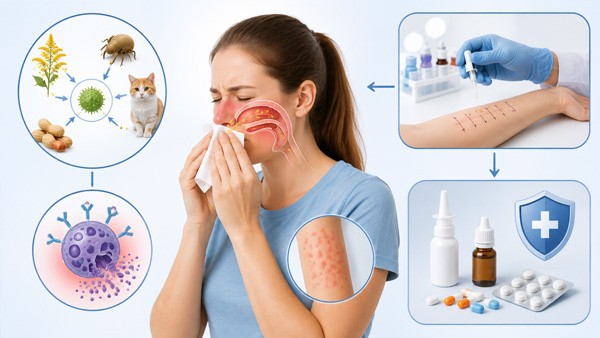
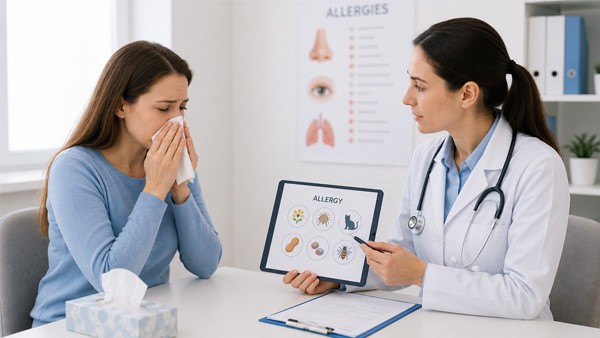
An allergy is the immune system attacking something harmless. Pollen, cat dander, peanut protein and penicillin are not threats, yet in a sensitised person the body responds to them with the same machinery it would use against a parasite — and the resulting inflammation produces everything from a blocked nose to a life-threatening collapse.
Somewhere between a quarter and forty per cent of people worldwide have some allergic condition, and the figure has risen steadily for decades. This guide covers what actually happens during a reaction, which tests are worth having and which are worthless, how the treatments compare, and the areas where advice has reversed completely in recent years.
🧠 The distinction that causes the most confusion: allergy and intolerance are different things. An allergy involves the immune system and can be dangerous in small amounts. An intolerance — lactose being the classic example — is a digestive or metabolic problem, is dose-related, and is unpleasant rather than dangerous. Calling an intolerance an allergy leads to unnecessary restriction; calling an allergy an intolerance leads to someone eating a food that could kill them.
🔬 What happens during a reaction
Allergy develops in two stages, and the first is silent.
Sensitisation occurs on an early encounter with the substance. The immune system misclassifies it as a threat and produces immunoglobulin E antibodies specific to it. These antibodies attach to the surface of mast cells scattered throughout the skin, airways and gut, and to basophils in the blood. Nothing is felt at this stage. The person is now primed.
The reaction occurs on a later encounter. The allergen binds the antibodies already sitting on the mast cells, which cross-link and trigger the cell to degranulate — releasing histamine, tryptase, leukotrienes, prostaglandins and cytokines within minutes.
Those mediators produce the familiar effects directly. Histamine dilates small blood vessels and makes them leaky, producing swelling, redness and a running nose; it stimulates nerve endings, producing itch and sneezing; and it contracts smooth muscle, producing wheeze and cramping. Leukotrienes drive more sustained airway narrowing and mucus.
Several hours later, a late-phase response can follow as other immune cells arrive at the site. This is why nasal congestion often persists long after sneezing has stopped, and why treating only histamine deals with half the problem.
📈 Why allergies keep increasing
The rise is real and not simply better recognition, and no single explanation accounts for it. Several plausible contributors have emerged.
The hygiene hypothesis, now usually refined as the old friends hypothesis, holds that the developing immune system requires exposure to a diverse range of microbes to calibrate itself, and that modern environments provide too little. Evidence supporting it includes the consistently lower rates of allergy in children raised on farms with livestock, and in larger households.
The microbiome appears to matter, with early antibiotic exposure, caesarean delivery and dietary patterns all associated with allergy risk, though causation remains uncertain.
The dual-allergen exposure hypothesis proposes that sensitisation happens through inflamed skin while tolerance develops through the gut — which would explain why eczema in infancy so strongly predicts food allergy, and why early oral introduction protects.
Air pollution, dietary change, vitamin D status and reduced physical activity have all been implicated to varying degrees. The honest summary is that this is an area of active research rather than settled knowledge.
🗂️ The allergic conditions
The same underlying mechanism produces different diseases depending on where it operates, and they cluster together in the same individuals and families — a tendency called atopy.
| Condition | Site | Typical features |
|---|---|---|
| Allergic rhinitis | Nose, eyes | Sneezing, itch, clear discharge, blockage; seasonal with pollen, year-round with mites and pets |
| Allergic asthma | Lower airways | Wheeze, cough, breathlessness, chest tightness, worse at night |
| Atopic dermatitis | Skin | Dry itchy inflamed skin, typically in flexures; often the first condition to appear in infancy |
| Urticaria and angioedema | Skin, deeper tissue | Weals that move and fade within a day; swelling of lips, eyelids, tongue |
| Food allergy | Multiple systems | Onset usually within minutes; can progress to anaphylaxis |
| Drug allergy | Multiple systems | Ranges from rash to anaphylaxis; frequently over-diagnosed, particularly with penicillin |
| Venom allergy | Multiple systems | Reaction to bee or wasp sting; immunotherapy is highly effective |
The sequence in which they appear in childhood is consistent enough to have a name — the atopic march — typically starting with eczema and food allergy in infancy, followed by asthma and then allergic rhinitis. Recognising it matters because early management of eczema may influence what follows.
🚨 Anaphylaxis
Any discussion of allergy that omits this is incomplete, and the older article this replaces did omit it.
Anaphylaxis is a severe, rapid, systemic reaction involving more than one body system, and it can kill within minutes. It typically begins within seconds to an hour of exposure, most often to food, insect venom or medication.
| System | Warning signs |
|---|---|
| Airway | Throat tightness, hoarseness, difficulty swallowing, tongue or throat swelling |
| Breathing | Wheeze, persistent cough, breathlessness |
| Circulation | Dizziness, faintness, pallor, collapse |
| Skin | Widespread hives, flushing, swelling — present in most but not all cases |
| Other | Vomiting, abdominal pain, a sense of impending doom |
🔴 Adrenaline is the treatment, and it is given first. Inject it into the outer thigh at the earliest suspicion, call emergency services, and lie the person flat with legs raised — standing up suddenly during anaphylaxis has caused deaths. Antihistamines and steroids do not treat anaphylaxis and must never delay adrenaline; they address skin symptoms only. A second dose may be needed after five to fifteen minutes. Anyone who has had anaphylaxis needs assessment even after recovery, because a delayed second reaction can occur hours later.
🧪 Testing that works
Allergy testing exists to confirm what the history already suggests. Used that way it is valuable; used as a fishing expedition it produces misleading results, because sensitisation without clinical allergy is extremely common — a positive test in someone who eats the food without any problem means the person is sensitised, not allergic.
| Test | What it involves | Where it fits |
|---|---|---|
| Clinical history | Detailed questioning about timing, exposure and pattern | The most important single element; tests interpret it rather than replace it |
| Skin prick test | Drop of extract pricked into the skin, read at fifteen minutes | Fast, cheap; antihistamines must be stopped beforehand |
| Specific IgE blood test | Measures antibody to a particular allergen | Useful where skin testing is impossible; antihistamines do not interfere |
| Component-resolved testing | Identifies which protein within an allergen is recognised | Helps distinguish serious peanut allergy from pollen cross-reaction |
| Oral food challenge | Supervised graded ingestion in a hospital setting | The definitive test; the only way to confirm or exclude food allergy reliably |
| Patch test | Substances applied under patches for two days | For contact dermatitis, a different mechanism from IgE allergy |
| Spirometry with reversibility | Lung function before and after a bronchodilator | For suspected asthma |
❌ Testing that does not work
A substantial commercial industry sells allergy tests with no diagnostic validity, and the harm is not just financial — people eliminate large numbers of foods on the basis of these results, sometimes to the point of nutritional deficiency, and children are affected most.
- IgG or IgG4 food panels — IgG to food indicates exposure and normal tolerance, not allergy. Professional allergy societies across several continents have issued statements against their use
- Hair analysis — hair contains no information about immune responses
- Applied kinesiology, in which muscle strength is tested while holding a substance
- Electrodermal and VEGA testing, measuring skin electrical resistance
- Cytotoxic and leukocyte activation tests in their commercial forms
- Iridology and pulse testing
If a test result leads to eliminating a long list of ordinary foods, that is a strong signal the test was not valid. Genuine food allergy usually involves a small number of specific foods with clear, reproducible, rapid reactions.
💊 Antihistamines
Antihistamines block the histamine receptor, which addresses itch, sneezing, running nose and hives well, and nasal blockage poorly. They divide into two generations that differ considerably in safety.
| Generation | Examples | Profile |
|---|---|---|
| Second generation | Cetirizine, fexofenadine, loratadine, desloratadine, bilastine | Minimal or no sedation, once daily, preferred for routine use |
| First generation | Promethazine, hydroxyzine, cyproheptadine | Sedating, shorter acting, retain specific roles but not recommended as routine allergy treatment |
The distinction matters practically. First-generation agents cross into the brain, causing drowsiness and impairing driving and concentration — sometimes the following morning, and sometimes without the person realising. They also have anticholinergic effects that make them poorly suited to older adults. Where they retain value is in specific situations: severe itch disturbing sleep, chronic urticaria where sedation at night is useful, and non-allergy indications such as nausea.
Among the second-generation drugs, differences are modest. Cetirizine is generally the most potent and causes mild drowsiness in a minority; fexofenadine and bilastine are the least sedating and suit people who drive or operate machinery; loratadine and desloratadine sit in between. In chronic urticaria, guidelines allow the dose to be increased several-fold above the standard, which is effective and should be done under medical direction rather than independently.
⚠️ Stop antihistamines before skin prick testing. They suppress the reaction and produce false negatives. Several days off is usually required, and the testing service will specify how long. Blood specific IgE testing is unaffected, which is one reason it is chosen when someone cannot interrupt their treatment.
👎 What actually works best for a blocked nose
This is the most useful practical point in the article, because the common assumption is wrong.
Intranasal corticosteroids — fluticasone, ciclesonide, mometasone, budesonide — are more effective than oral antihistamines for allergic rhinitis overall, and considerably more effective for congestion specifically, because they suppress the whole inflammatory process rather than blocking one mediator. They are the first-line treatment for anything beyond mild intermittent symptoms.
Two things determine whether they work:
- Regular use. Full benefit takes days to build. Used only on bad days, they underperform
- Correct technique. Aim the spray outward toward the ear on the same side, not toward the septum in the middle. Aiming at the septum causes irritation and nosebleeds and delivers the drug to the wrong place. Do not sniff hard afterwards
Available options include fluticasone and ciclesonide. Intranasal azelastine is an antihistamine spray that acts faster than a steroid spray and is useful for breakthrough symptoms or in combination.
Decongestant sprays deserve a specific warning. They work impressively for a few days, then cause rebound congestion that is worse than the original problem and drives continued use. They should not be used beyond about three to five consecutive days.
Saline rinsing is cheap, safe and genuinely helpful, clearing allergen and mucus and improving the effect of medicated sprays used afterwards.
Leukotriene receptor antagonists such as montelukast address the mediators antihistamines do not, and are used mainly where asthma and rhinitis coexist. Awareness has grown of neuropsychiatric effects including mood change, sleep disturbance and vivid dreams, particularly in children, so the benefit needs to justify the trial.
💉 Immunotherapy
Everything above controls symptoms. Immunotherapy is the only treatment that changes the underlying allergy.
It works by administering gradually increasing amounts of the allergen — by injection, or as tablets or drops under the tongue — over a period of three to five years. The immune system shifts toward tolerance, producing blocking antibodies and regulatory responses that persist after treatment ends.
It is well established for allergic rhinitis caused by pollen, house dust mite and animal dander, and it is highly effective for insect venom allergy, where it converts a potentially fatal allergy into a manageable one. In children with allergic rhinitis it may reduce the likelihood of going on to develop asthma. Oral immunotherapy for food allergy, particularly peanut, is now available in specialist centres, though it raises tolerance to accidental exposure rather than allowing free eating.
The requirements are real: a long commitment, an accurate diagnosis of which allergen matters, and administration under supervision because reactions can occur. It is not a treatment to start casually, and it is worth considering seriously for anyone whose symptoms persist despite proper medication.
🧬 Biologic treatments
For severe allergic disease not controlled by conventional therapy, antibody treatments targeting specific parts of the allergic pathway have transformed outcomes over the last fifteen years.
Omalizumab binds IgE itself and is used in severe allergic asthma and chronic urticaria. Dupilumab blocks a shared signalling pathway and is used in atopic dermatitis, asthma and nasal polyps, often with dramatic effect in people who had exhausted other options. Several others target individual cytokines in severe asthma.
They are expensive, given by injection, and restricted to specialist services with defined severity criteria. Mentioning them matters because someone whose eczema or asthma has been unmanageable for years may not know these exist.
🏠 Avoidance, honestly assessed
Avoidance is the logical first step and its effectiveness varies enormously depending on the allergen.
| Allergen | What is realistic |
|---|---|
| Food | Strict avoidance where allergy is confirmed; label reading; adrenaline device where anaphylaxis risk exists |
| House dust mite | Barrier bedding covers, hot washing, reduced humidity, hard flooring. Single measures alone show disappointing results in trials; combined measures do better |
| Pollen | Track counts, keep windows shut at peak times, shower and change clothes after being outdoors, wraparound sunglasses. Complete avoidance is impossible, so medication carries most of the load |
| Pets | Removal from the home is effective but allergen persists for months; hypoallergenic breeds are marketing rather than science |
| Mould | Fix damp and leaks, ventilate, remove visible growth |
| Insect venom | Sensible precautions plus immunotherapy, which is the real answer |
👶 What changed in prevention
Advice on preventing food allergy in children reversed completely, and this is worth stating clearly because the old guidance is still repeated.
For years, parents were told to delay introducing peanut, egg and other allergenic foods, on the theory that early exposure caused allergy. Rates rose anyway. A landmark trial then tested the opposite approach in high-risk infants, introducing peanut early rather than avoiding it, and found a large reduction in peanut allergy by age five.
Current guidance therefore recommends introducing allergenic foods early, from around four to six months alongside other solids, and continuing them regularly rather than sporadically. Infants with severe eczema or existing food allergy should be assessed first, but for the general population early introduction is now the recommendation.
Alongside this, treating infant eczema properly matters more than was appreciated, because sensitisation appears to occur through inflamed skin. Consistent emollient use and prompt treatment of flares is not merely about comfort.
✅ A note for parents of older children: the reversal applies to prevention, not to established allergy. A child who already reacts to a food must not be given it to build tolerance. Any attempt to reintroduce an allergenic food in a child with confirmed allergy belongs in a supervised medical setting, never at home.
📋 Building a plan that works
For most people with allergic disease, a workable approach has four parts.
Identify the trigger properly, using history first and testing to confirm, rather than testing broadly and reacting to whatever comes back positive.
Reduce exposure where it is practical, accepting that for pollen this achieves relatively little and medication will do the work.
Treat consistently rather than reactively. The commonest reason allergic rhinitis remains uncontrolled is intermittent use of a treatment that requires regular use. Starting a nasal steroid a couple of weeks before a known pollen season, rather than after symptoms begin, changes the whole season.
Escalate when control is inadequate. Persistent symptoms on proper treatment are a reason to review the diagnosis, add a second agent, or consider immunotherapy — not a reason to accept the situation. Poorly controlled allergic rhinitis worsens asthma, disturbs sleep and measurably affects work and school performance, and the burden is routinely underestimated by everyone involved.
Oral and intranasal treatments are stocked in the allergy category, with Zyrtec (cetirizine) among the most widely used second-generation antihistamines.
❓ Frequently asked questions
What is the difference between an allergy and an intolerance?
An allergy involves the immune system producing IgE antibodies, reacts to tiny amounts, occurs within minutes and can be life-threatening. An intolerance is a digestive or metabolic problem, is dose-related, causes symptoms over hours, and is unpleasant rather than dangerous. Lactose intolerance is the classic example. Confusing the two leads either to unnecessary food restriction or, more seriously, to someone treating a genuine allergy casually.
Are IgG food intolerance tests reliable?
No. IgG antibodies to food indicate exposure and normal tolerance rather than allergy or intolerance, and allergy societies across several continents have issued statements against using these panels. The practical harm is that people eliminate long lists of ordinary foods on the basis of them, sometimes to the point of nutritional deficiency. A result recommending exclusion of many everyday foods is itself evidence that the test was not valid.
Why does my nose stay blocked despite taking antihistamines?
Because antihistamines block one mediator and congestion is driven by broader inflammation, including a late-phase response hours after exposure. Antihistamines handle sneezing, itch and running nose well but congestion poorly. An intranasal corticosteroid is more effective for blockage and is first-line for anything beyond mild intermittent symptoms, provided it is used daily rather than only on bad days.
How should a nasal spray be used correctly?
Aim it outward toward the ear on the same side, using the opposite hand, rather than toward the septum in the middle of the nose. Aiming at the septum causes irritation and nosebleeds and puts the drug where it does least good. Do not sniff hard after spraying, which pulls it down the throat. Use it every day rather than as needed, since full effect builds over several days.
Which antihistamine causes the least drowsiness?
Fexofenadine and bilastine are generally the least sedating, which suits people who drive or operate machinery. Cetirizine is usually the most potent but causes mild drowsiness in a minority. Loratadine and desloratadine sit between them. The older first-generation drugs such as promethazine, hydroxyzine and cyproheptadine are markedly sedating, can impair performance the following morning, and are not recommended as routine treatment for allergic rhinitis.
Why do decongestant sprays stop working?
They cause rebound congestion. After a few days of use the nasal lining becomes dependent on the drug and swells more when it wears off, producing blockage worse than the original problem and driving continued use. They should not be used beyond about three to five consecutive days. Breaking an established cycle usually requires a nasal steroid and a difficult week.
Do I need to stop antihistamines before allergy testing?
Before skin prick testing, yes — they suppress the skin reaction and produce false negatives. Several days off is typically required and the testing service will specify the interval. Blood specific IgE testing is not affected by antihistamines, which is one reason it is chosen for people who cannot interrupt treatment or who have skin conditions preventing skin testing.
What should be done during anaphylaxis?
Give adrenaline into the outer thigh immediately, call emergency services, and lie the person flat with legs raised — standing or sitting up suddenly has caused deaths. Do not wait to see whether symptoms worsen. Antihistamines and steroids do not treat anaphylaxis and must never delay adrenaline. A second dose may be needed after five to fifteen minutes, and medical assessment is required even after apparent recovery because a delayed reaction can occur hours later.
Can allergies be cured?
Immunotherapy is the only treatment that changes the underlying allergy rather than controlling symptoms. Given over three to five years by injection or under the tongue, it shifts the immune response toward tolerance, with benefit persisting after treatment ends. It is well established for pollen, dust mite and animal dander rhinitis, and highly effective for insect venom allergy. Some childhood food allergies, particularly milk and egg, are also outgrown naturally.
Should allergenic foods be delayed in babies?
No, and this advice reversed completely. Delaying peanut and egg was recommended for years, and allergy rates rose regardless. Trial evidence then showed that early introduction in high-risk infants substantially reduced peanut allergy. Current guidance is to introduce allergenic foods from around four to six months alongside other solids and continue them regularly. Infants with severe eczema or existing food allergy should be assessed first.
Are hypoallergenic dog breeds genuinely hypoallergenic?
No. The main allergens are in saliva, skin flakes and urine rather than in hair, and studies measuring allergen levels in homes have found no consistent advantage for the breeds marketed this way. Coat type affects shedding, not allergen production. Where a pet allergy is significant, removal is effective but allergen persists in soft furnishings for months afterwards.
Why does a positive test not always mean an allergy?
Because sensitisation and clinical allergy are different. A positive skin or blood test shows the immune system has produced antibodies to a substance; it does not show that exposure causes symptoms. Many people test positive to foods they eat without any trouble. This is why testing should confirm what the history already suggests rather than being used as a broad search, and why an oral food challenge remains the definitive test.
📑 Sources and editorial
- ARIA guidelines for allergic rhinitis and its impact on asthma
- EAACI and AAAAI position statements on allergy diagnostic testing, including statements against IgG food panels
- Du Toit G et al. — Learning Early About Peanut Allergy trial and subsequent guidance on early allergenic food introduction
- International consensus guidance on anaphylaxis recognition and adrenaline use
- Evidence reviews on allergen immunotherapy for rhinitis, asthma and venom allergy
- FDA prescribing information for cetirizine, fexofenadine, loratadine, azelastine and fluticasone
- Related products: allergy medications category
- RXshop Editorial Team — reviewed by Emily Chen, MD, MPH, Internal Medicine
Medical Disclaimer: The information in this article is for educational and informational purposes only and is not a substitute for professional medical advice, diagnosis, or treatment. Always seek guidance from a qualified healthcare provider with any questions you may have regarding a medical condition, and before starting, stopping or changing any medication.