Buy Ovral (Norgestrel + Ethinyl Estradiol) Online — High-Dose Monophasic Combined Oral Contraceptive (COC) for Pregnancy Prevention

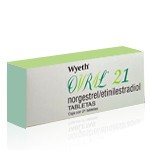
Ovral is the original brand-name high-dose monophasic combined oral contraceptive (COC) tablets containing Norgestrel 0.5 mg + Ethinyl Estradiol 50 mcg per active pill. Originally developed by Wyeth (now Pfizer) and FDA-approved since 1968, Ovral is one of the oldest combined oral contraceptives still available globally. Ovral was discontinued in the United States in favor of lower-dose alternatives (Lo-Ovral, Levlen, modern 20-30 mcg COCs) but remains available internationally. The generic equivalent is Ogestrel. Historically, Ovral was the standard COC for the original Yuzpe emergency contraception regimen (now replaced by dedicated Plan B and ulipristal acetate products).
The two active ingredients work through complementary mechanisms. Norgestrel is the racemic mixture of L- and D-enantiomers — only the L-enantiomer (Levonorgestrel) is biologically active. Therefore, 0.5 mg Norgestrel ≈ 0.25 mg Levonorgestrel of active second-generation progestin. Ethinyl Estradiol 50 mcg is a HIGH dose by modern standards (current first-line COCs use 20-35 mcg). Combined contraceptive action: ovulation suppression, cervical mucus thickening, and endometrial thinning. >99% contraceptive efficacy with perfect use.
Ovral is approved for prevention of pregnancy as primary indication. Historically also used for the Yuzpe emergency contraception regimen (2 Ovral tablets + 2 more 12 hours later within 72 hours of unprotected intercourse) — now superseded by dedicated emergency contraceptives. Off-label uses are similar to other COCs: cycle regulation, menorrhagia reduction, dysmenorrhea, PCOS management. Modern guidelines do NOT recommend Ovral as first-line COC — lower-dose alternatives (20-30 mcg estrogen) are preferred for new starters due to better safety profile.
The medication is supplied as Ovral 21-day or 28-day pill packs: 21 active pills (Norgestrel 0.5 mg + Ethinyl Estradiol 50 mcg) followed by 7 placebo pills (28-day) or 7-day pill-free interval (21-day). Standard dosing: 1 tablet daily at same time. Start on Sunday after period or first day of period.
Critical safety considerations include the FDA boxed warning for cigarette smoking and serious cardiovascular events — smoking + COC contraindicated in women over 35. HIGHER VTE risk than lower-dose COCs due to higher estrogen dose. Other concerns: arterial thromboembolism, hypertension, hepatic adenomas, slight breast cancer risk, migraine with aura contraindication, hyperlipidemia, gallbladder disease. Higher estrogen side effect burden than modern lower-dose COCs (more nausea, breast tenderness, breakthrough bleeding initially).
Free prescription
Discrete packaging
Have questions?
Quality Assurance

- High Dose Monophasic COC: High-dose monophasic COC (50 mcg estrogen vs modern 20-35 mcg standard);
- Combined Oral Contraceptive (COC): Monophasic combined oral contraceptive (constant dose throughout active pills);
- Yuzpe Emergency Regimen Historic: Historical use in Yuzpe emergency contraception regimen (now replaced by dedicated EC);
- Breakthrough Bleeding Refractory: For women with persistent breakthrough bleeding on lower-dose COCs (selective);
- Anti Epileptic Drug Users: For women on enzyme-inducing antiepileptics requiring higher-dose COC (selective);
- Hormone Replacement Adjunct: Off-label selective use in some hormone replacement scenarios;
- Long Term Contraception Selective: Selective long-term contraception when modern lower-dose alternatives unsuitable;
- Cycle Regulation: Off-label for menstrual cycle regulation in women with irregular periods;
- Menorrhagia / Heavy Menstrual Bleeding: Off-label for heavy menstrual bleeding reduction;
- Dysmenorrhea: Off-label for painful menstrual periods (primary dysmenorrhea);
- PCOS / Polycystic Ovary Syndrome: Off-label for PCOS symptom management;
- Functional Ovarian Cysts: Off-label for prevention of functional ovarian cysts;
- Endometriosis Pain: Off-label for endometriosis pain management;
- Anemia Prevention Heavy Bleeding: For prevention of iron-deficiency anemia secondary to heavy menstrual bleeding;
- Continuous Cycle Off Label: Off-label continuous use to suppress menstruation in selected cases;
- Resource Limited Settings: Available legacy COC in resource-limited settings where modern alternatives unavailable;
- Reversible Contraception: Fully reversible contraception — fertility returns rapidly after discontinuation;
- Modern Guidelines Second Choice: Modern guidelines prefer lower-dose alternatives — Ovral is second-line in most scenarios.
- Reliable Cycle Predictability: Predictable monthly bleeding pattern with regular cycle;
- Less Menstrual Pain: Reduction in dysmenorrhea (painful periods);
- Less Heavy Bleeding: Reduction in heavy menstrual bleeding (menorrhagia);
- Less Anemia Risk: Reduced iron-deficiency anemia risk through reduced menstrual flow;
- Less PCOS Symptoms: Off-label improvement in PCOS symptoms;
- Less Endometriosis Pain: Off-label pain management for endometriosis;
- Less Ovarian Cyst Formation: Suppression of ovulation reduces functional ovarian cyst formation;
- Better Cycle Regulation: Predictable cycles in women with previously irregular menstruation;
- Less Ovarian Cancer Risk: Long-term COC use reduces ovarian cancer risk;
- Less Endometrial Cancer Risk: Long-term COC use reduces endometrial cancer risk;
- Better Refractory Breakthrough Bleeding Control: Higher-dose option for women with persistent breakthrough bleeding on lower-dose COCs;
- Effective with Enzyme-Inducing Drugs: Higher dose may overcome reduced efficacy with enzyme-inducing antiepileptics;
- Better Family Planning: Reliable contraception enables life planning and reproductive autonomy;
- Better Sexual Spontaneity: Daily oral contraception eliminates need for at-time-of-intercourse contraception;
- Better Quality of Life: Improvement through reliable contraception and cycle control;
- Brand Ovral: Originally Wyeth/Pfizer brand with established global clinical history since 1968;
- Generic Norgestrel Ethinyl Estradiol: Affordable generic versions available globally;
- Ogestrel Equivalent: Same Norgestrel + Ethinyl Estradiol composition as Ogestrel generic;
- High Dose Monophasic COC: High-dose monophasic combined oral contraceptive (50 mcg estrogen);
- Norgestrel Racemic Mixture: Racemic mixture of L- and D-enantiomers (only L-enantiomer Levonorgestrel is active);
- Ethinyl Estradiol Estrogen: 50 mcg Ethinyl Estradiol synthetic estrogen (high-dose era formulation);
- Second Generation Progestin: Active L-enantiomer is Levonorgestrel (second-generation progestin) — well-characterized safety;
- Ovulation Suppression: Suppresses LH surge and ovulation — primary contraceptive mechanism;
- Cervical Mucus Thickening: Thickens cervical mucus to prevent sperm penetration;
- Endometrial Thinning: Thins endometrial lining — less hospitable for implantation;
- Yuzpe Emergency Regimen Historic: Historical use in Yuzpe emergency contraception regimen (now replaced by dedicated EC products);
- 21 Day Pill Pack: 21-day active pill pack with 7-day pill-free interval (or 28-day with placebos);
- Once Daily Oral Convenience: Once-daily oral dosing — user-controlled contraceptive method;
- Reversible Fertility: Fully reversible — fertility returns rapidly after discontinuation;
- 55 Plus Year Clinical History: 55+ years of clinical use since 1968 — among oldest oral contraceptives in continuous use globally.
Generic Ovral G (Norgestrel and Ethinyl Estradiol 50 mcg) Medication guide:
📌 Ovral High-Dose Monophasic COC at a Glance
Ovral is a high-dose monophasic combined oral contraceptive from the second-generation progestin class. It pairs norgestrel 0.5 mg — a racemic mixture of which the biologically active half is levonorgestrel — with ethinyl estradiol 50 micrograms, delivered in a straightforward 21-active-plus-7-placebo pack. The 50 mcg estrogen dose places Ovral in the higher-dose category by contemporary standards; most modern combined pills use 20-35 mcg. Wyeth originated the brand, and generic equivalents are manufactured by several Indian producers under their own trade names.
This guide covers what makes Ovral distinct within the combined-pill class, how the higher-dose formulation is taken, the honest picture of the venous thromboembolism trade-off at 50 mcg estrogen, the practical side-effect profile, and the specific historical role Ovral played in the Yuzpe emergency contraception regimen. The material follows the FDA prescribing information, the WHO Medical Eligibility Criteria for Contraceptive Use, and the US Selected Practice Recommendations from the Centers for Disease Control and Prevention.
📌 Ovral at a glance
| Drug class | Monophasic combined oral contraceptive; second-generation progestin plus higher-dose estrogen |
| Active ingredients | Norgestrel 0.5 mg (racemic; ~0.25 mg active levonorgestrel) + ethinyl estradiol 50 mcg per active tablet |
| Pack formats | 21-day (active pills only, seven-day pill-free interval) or 28-day (21 active + 7 placebo) |
| Route and timing | One tablet daily by mouth at the same time each day |
| Primary use | Prevention of pregnancy in eligible users; some non-contraceptive benefits |
| Perfect-use efficacy | Over 99% pregnancy prevention when taken correctly every day |
| Typical-use efficacy | Around 91-93% in real-world use, reflecting missed pills and timing errors |
| Signature safety concerns | Higher venous thromboembolism risk than modern 20-35 mcg pills; arterial thrombosis in smokers over 35; migraine with aura |
Two features distinguish Ovral from most contemporary combined oral contraceptives. The first is the 50 mcg ethinyl estradiol dose, which sits above the modern first-line range and reflects the era in which the pill was originally licensed. The second is the historical connection to the Yuzpe emergency contraception regimen, in which combined pills at exactly this estrogen strength were used off-label for post-coital contraception before dedicated emergency contraception products became widely available. Section 16 covers that history in practical detail.
Modern first-line practice generally offers lower-dose combined pills (30 mcg or below) as the routine choice, with Ovral's 50 mcg formulation reserved for specific circumstances: users who did not achieve reliable cycle control on a lower-dose pill and would genuinely benefit from a higher estrogen exposure, or settings where the higher-dose product is what is available. The venous thromboembolism arithmetic behind that first-line preference is spelled out in section 11.
Some readers arrive at this page as users who have been offered Ovral for a specific reason; others are established users looking up how to handle a missed pill or an antibiotic course. The sections are structured so either audience can find the relevant material quickly.
💊 Norgestrel and Ethinyl Estradiol Pairing
The two hormones inside every active Ovral tablet are among the earliest and best-studied synthetic hormones in modern medicine. Norgestrel was first synthesised in the 1960s as a racemic mixture — a fifty-fifty combination of two mirror-image molecules called levonorgestrel and dextronorgestrel. Only levonorgestrel binds meaningfully to the progesterone receptor and produces contraceptive activity; the dextronorgestrel half is essentially pharmacologically inert. This means Ovral's 0.5 mg norgestrel behaves, in practice, like a pill containing approximately 0.25 mg levonorgestrel.
💊 The two hormones side by side
| Property | Norgestrel (racemic) | Ethinyl estradiol |
|---|---|---|
| Hormone class | Second-generation progestin (levonorgestrel + inactive dextronorgestrel) | Synthetic estrogen |
| Dose per active tablet | 0.5 mg (functionally ~0.25 mg levonorgestrel) | 50 mcg (0.05 mg) — higher-dose by modern standards |
| Half-life | Around 24 hours (levonorgestrel half) | Around 12-24 hours |
| Androgenic activity | Moderate; second-generation progestins are more androgenic than third-generation options such as norgestimate or desogestrel | Not androgenic; anti-androgenic when combined with a progestin |
| Metabolism | Extensive hepatic; not a strong inducer or inhibitor of major CYP enzymes | Hepatic first-pass; CYP3A4 among other enzymes |
| Relative VTE risk | Levonorgestrel-family progestins carry the lowest progestin-attributable venous thromboembolism signal within the combined-pill class | Estrogen is the main driver of the venous thromboembolism signal; 50 mcg is higher than modern first-line |
Two features of the pairing are worth understanding rather than reading past. First, the phrase "racemic mixture" is chemistry vocabulary, not marketing language. It describes a molecule that exists in two mirror-image forms; in the human body only one form (levonorgestrel) reaches and activates the progesterone receptor. The manufactured tablet contains equal amounts of both forms because separating them was not economically practical when norgestrel was first developed. Modern pills such as Levlen use pure levonorgestrel at roughly the same effective progestin exposure.
Second, the 50 mcg dose of ethinyl estradiol is important in the venous thromboembolism arithmetic because estrogen is the main driver of the clotting signal from combined pills, and the signal rises with estrogen dose. Early pills used 100 mcg or more; the shift to 50 mcg reduced venous thromboembolism risk substantially, and the subsequent shift to 30-35 mcg and later to 20 mcg reduced it further. Ovral at 50 mcg sits at the upper end of the modern estrogen-dose range, which is the reason contemporary guidelines prefer lower-dose pills as first-line when a combined pill is chosen.
🧬 The Three Contraceptive Mechanisms
Every combined oral contraceptive relies on the same set of three anti-pregnancy mechanisms operating simultaneously. The three barriers together are what push perfect-use efficacy above 99%: if any single mechanism falters on a given cycle, the other two are still active. This section describes each of the three as they operate in Ovral specifically.
- 🌞 Mechanism 1 — Suppression of ovulation
- The daily hormone combination suppresses the pituitary luteinising-hormone surge that would normally trigger ovulation. No egg is released from the ovary. This is the largest single contributor to contraceptive efficacy. On Ovral, the higher 50 mcg estrogen dose reinforces the ovulation-suppression signal relative to a lower-dose pill, though modern lower-dose pills also achieve reliable ovulation suppression at 20-35 mcg.
- 💧 Mechanism 2 — Thickening of cervical mucus
- Progestin activity (via the active levonorgestrel half of norgestrel) turns the cervical mucus from thin, watery, and sperm-friendly around the time of natural ovulation into thick, sticky, and sperm-hostile. Any sperm reaching the cervix face a much harder journey into the uterus. This mechanism is quick to establish after starting and quick to lose after a missed pill, which is why the seven-day backup rule applies whenever the daily rhythm is disturbed.
- 🍃 Mechanism 3 — Endometrial thinning
- The daily hormones prevent the endometrium from developing the receptive lining that would normally accept an implanting embryo. Even in the extremely unlikely event that an egg were released and fertilised, the endometrium is not primed to receive it. This is a third-line barrier rather than a primary mechanism, but it is a real one.
🧬 How the three mechanisms translate into behaviour
Because ovulation suppression is the dominant mechanism and it depends on steady daily hormone levels, missing a pill matters more when it lets levels drop enough for an ovarian follicle to escape suppression. Cervical mucus thickening is fast to establish after starting and fast to lose after a missed pill, which is why the seven-day rule for backup contraception applies whenever the daily rhythm is disturbed enough to threaten mechanism one. On Ovral's higher-dose formulation, the ovulation-suppression margin is modestly wider than on a 20 mcg pill, but this is not a reason to relax the missed-pill rules — the same seven-day rule applies.
None of these three mechanisms is unique to Ovral or to higher-dose pills. Every combined oral contraceptive relies on the same trio, and the differences between combinations are principally about which progestin does the mucus and endometrial work, at what estrogen dose, and with what pack design. What Ovral offers is the pairing of a well-characterised second-generation progestin at a familiar dose with a 50 mcg estrogen that provides reliable cycle control at the cost of higher estrogen exposure than modern first-line pills.
🎯 Perfect Use vs Typical Use Efficacy
Contraceptive efficacy has two important numbers. Perfect use is the pregnancy rate when the method is used exactly as intended without any errors. Typical use is the pregnancy rate observed in the real world, where missed pills, delayed doses, running out before a refill, and lost coverage during illness are all factored in. The gap between the two numbers is often what determines whether Ovral is a good fit for a specific user.
| Method | Perfect use, per year | Typical use, per year |
|---|---|---|
| Ovral (higher-dose COC) | Under 1 pregnancy per 100 users | Around 7-9 pregnancies per 100 users |
| Male condom | 2 per 100 | 13 per 100 |
| Copper IUD | Under 1 per 100 | Under 1 per 100 |
| Contraceptive implant | Under 1 per 100 | Under 1 per 100 |
| Fertility awareness | 3-5 per 100 | 24 per 100 |
Two features of this efficacy picture are worth understanding. First, Ovral's perfect-use pregnancy rate is the same as that of a modern lower-dose combined pill — the higher estrogen dose does not translate into meaningfully better efficacy when the pill is taken exactly on schedule, because ovulation suppression is already essentially complete at 30-35 mcg estrogen. Second, the typical-use gap of around seven to nine pregnancies per 100 users is entirely explained by user factors — missed pills, delayed doses, lost absorption during vomiting or antibiotic courses. The pill itself does not fail; the routine around it does.
🌲 Users who tend to do well on Ovral specifically
- Users who experienced persistent breakthrough bleeding or poor cycle control on a lower-dose combined pill (20 mcg or 30 mcg) and would genuinely benefit from a higher estrogen exposure.
- Users established on Ovral for several years with well-tolerated use, no risk factors, and a stable daily routine.
- Users in settings where the higher-dose formulation is the available product and switching to a lower-dose pill is not feasible.
⚖️ Users for whom a lower-dose pill would usually be preferred
- Users starting combined oral contraception for the first time, where a 20 mcg or 30 mcg pill is standard first-line.
- Users with a personal or family history that raises venous thromboembolism concerns, where a lower estrogen dose or a non-hormonal method is a more conservative choice.
- Users with troublesome estrogen-related side effects (breast tenderness, nausea, headaches during active-pill weeks) on a lower-dose pill; a higher-dose pill is unlikely to help and may worsen these effects.
Neither list is absolute. Individual patterns vary, and users who fell into the second list on one method can settle into Ovral successfully if there is a specific reason to prefer the higher-dose formulation. What matters most is an honest conversation, at the prescribing appointment, about whether the higher estrogen dose is doing anything useful for the individual user or whether a switch to a lower-dose pill would deliver the same contraceptive protection at a smaller cardiovascular cost.
📆 The 21-Active-Plus-7-Placebo Pack Design
Ovral uses a straightforward 21-active-plus-7-placebo pack design that is identical in structure to most standard monophasic combined pills. Every one of the twenty-one active tablets contains the same dose of norgestrel and ethinyl estradiol; there is no dose ramp across the pack the way there is in a triphasic pill, and no biphasic estrogen tail the way there is in some ultra-low-dose combinations. The simplicity is one of the reasons monophasic pills are the most widely used class of combined oral contraceptive worldwide.
📆 The two Ovral pack formats
| Format | Active tablets | Placebo tablets | Pack cycle |
|---|---|---|---|
| 21-day pack | 21 tablets containing 0.5 mg norgestrel + 50 mcg EE | None — user takes a seven-day pill-free break | 28 days total per pack cycle |
| 28-day pack | 21 tablets containing 0.5 mg norgestrel + 50 mcg EE | 7 hormone-free tablets to preserve the daily routine | 28 days total per pack cycle |
The choice between the two formats is largely a matter of preference. The 28-day pack preserves the "one tablet every day" habit through the placebo week, which is helpful for users who worry that a seven-day break will disrupt the routine that makes them reliable on active pills. The 21-day pack is slightly cheaper because it contains fewer tablets, and it appeals to users who prefer a physical reminder — the empty week — that they are in the pill-free interval. Neither is clinically superior; contraceptive coverage is identical because the seven pill-free days behave the same way whether they are truly pill-free or filled with placebo tablets.
Anatomy of one 28-day cycle
- Days 1-21: one active tablet every day at roughly the same time. Contraceptive coverage is being maintained continuously.
- Days 22-28: the pill-free (or placebo) week. Hormone levels fall and a withdrawal bleed usually starts a few days into this week — a physiological signal, not a true menstrual period.
- Day 29 (day 1 of the next pack): restart with a new pack of active tablets, whether or not the withdrawal bleed has finished. No gap between packs beyond the built-in seven days.
Two features of this schedule are worth understanding. First, the withdrawal bleed during the pill-free interval is not a true period — the endometrium is not the same tissue that would have grown during a natural cycle, and the bleeding is a hormone-withdrawal response rather than a menstrual event. On Ovral's higher-dose formulation, the withdrawal bleed tends to be predictable and moderate in most users, sometimes heavier than on ultra-low-dose pills because the endometrium develops slightly more under the higher estrogen exposure.
Second, the seven-day pill-free interval is the point where contraceptive coverage is most vulnerable to disruption. Any extension of the pill-free window beyond seven days — missing the first active pill of a new pack, for example — can allow an ovarian follicle to escape suppression, which is exactly the scenario the missed-pill rules in section 8 are designed to prevent.
⚗️ Norgestrel — The Racemic Second-Generation Progestin
The choice of Ovral over a modern lower-dose second-generation pill like Levlen (30 mcg estrogen with pure levonorgestrel) is a decision that deserves a clear conversation. Both pills sit in the same second-generation progestin category and both have the levonorgestrel-family venous thromboembolism advantage relative to third-generation pills. What differs is the estrogen dose (50 mcg vs 30 mcg) and, historically, the way the progestin was manufactured (racemic norgestrel vs pure levonorgestrel).
⚗️ The racemic-mixture chemistry in plain language
Norgestrel was synthesised in the 1960s as a fifty-fifty combination of two mirror-image forms of the same molecule. Chemists call these enantiomers. One enantiomer, called levonorgestrel, fits the progesterone receptor and produces contraceptive activity. The other enantiomer, dextronorgestrel, does not fit the receptor in a productive way and contributes essentially nothing to the pill's clinical effect.
Separating enantiomers was not practical when norgestrel was first developed, so the tablet contained both forms. Later manufacturing improvements made it feasible to isolate pure levonorgestrel, which is why modern combined pills such as Levlen use the pure isomer at roughly half the norgestrel dose (0.15 mg levonorgestrel corresponds pharmacologically to 0.3 mg racemic norgestrel).
The practical implication of this history is that Ovral's 0.5 mg norgestrel dose delivers approximately the same progestin exposure as 0.25 mg of pure levonorgestrel — slightly more than the 0.15 mg dose used in current second-generation pills like Levlen. The progestin exposure difference is not, on its own, a big deal at the contraceptive level; the ovulation-suppression margin is comfortable at either dose. But it does contribute modestly to progestin-related side effects (androgenic skin effects, mood, breast tenderness in some users) at the higher norgestrel dose.
The estrogen-dose difference is where Ovral is most distinctive
The 50 mcg estrogen in Ovral is meaningfully higher than the 30 mcg in Levlen or the 20 mcg in ultra-low-dose combinations. Estrogen is the main driver of the venous thromboembolism signal from combined pills, and the signal rises with estrogen dose. This is the single largest reason why the shift from 50 mcg to 30 mcg and then to 20 mcg has defined modern combined-pill prescribing: at each step down, the venous thromboembolism arithmetic improved without a meaningful loss of contraceptive efficacy.
Dr Vandenbrouwer on the racemic-mixture heritage
"Norgestrel is one of the last widely-marketed contraceptive ingredients to still be delivered as a racemic mixture rather than as the isolated active enantiomer. From a clinical standpoint the difference matters less than the naming implies: the biologically active levonorgestrel is present in both Ovral and modern pills. What actually distinguishes Ovral is not the progestin's racemic history but the estrogen dose that pairs with it, and that history is where the dose-response conversation lives."
Frederik J. Vandenbrouwer, MD, PhD — Clinical Pharmacology and Pharmacotherapy, KU Leuven
▶️ Starting a New Pack Correctly
How Ovral is started determines how quickly contraceptive coverage is established and whether backup contraception is needed for the first few days. Three starting patterns are used in practice, each with slightly different implications.
▶️ Three ways to start the first Ovral pack
- Day-1 start
- Take the first active tablet on day one of the natural menstrual period. Contraceptive coverage is immediate; no backup contraception is needed. This is the most straightforward starting pattern for users transitioning from no method to Ovral.
- Sunday start
- Take the first active tablet on the Sunday following the start of the period, so the withdrawal bleed later falls during the working week rather than the weekend. Backup contraception (a barrier method) is needed for the first seven days.
- Quick start (any day)
- Take the first active tablet on the day of the prescribing appointment, regardless of where the user is in the natural cycle. Backup contraception is needed for the first seven days, and a pregnancy test may be repeated at follow-up to rule out an early pregnancy that would have been present at initiation.
The quick-start option has become widely accepted because it removes the barrier of waiting for the next period, which is the moment when many people intending to start contraception simply lose momentum. Guidelines from the Faculty of Sexual and Reproductive Healthcare and from the US Centers for Disease Control and Prevention both endorse quick-start prescribing for eligible users, provided pregnancy is not already present.
👉 Choosing a fixed daily time
The exact hour is less important than the fact that it is the same hour every day. Common anchors include:
- With the evening meal, so a partner or housemate can serve as a reminder.
- At bedtime, paired with brushing teeth or setting the alarm.
- First thing in the morning, before the first cup of tea or coffee.
- Immediately after lunch on weekdays, if the morning routine is variable.
For subsequent packs, no starting decision is needed — the new pack begins the day after the last placebo tablet (28-day pack) or after the seventh pill-free day (21-day pack), no matter whether a withdrawal bleed is still finishing. Keeping this transition consistent is what maintains uninterrupted contraceptive coverage from month to month, and it is why a missed first pill of a new pack is treated more strictly than a missed pill in the middle of a pack.
⏰ Missed Pill Rules by Timing
Missed pills are the single most common cause of contraceptive failure with combined oral contraceptives, and the rules for Ovral follow the general framework used across combined pills. Two variables drive the decision: how many pills have been missed, and where in the pack the miss occurred. Because Ovral is a monophasic pill, the missed-pill decision does not depend on which specific active tablet was missed — all 21 active tablets contain the same combination.
| Situation | Take the missed pill? | Backup contraception? | Emergency contraception? |
|---|---|---|---|
| 1 active pill missed by any amount up to 48 hours | Yes — take the missed pill as soon as remembered, even if two on one day | Not needed | Not needed |
| 2 or more active pills missed in week 1 (days 1-7) | Take the most recent missed pill; continue the pack | Barrier method for the next 7 days | Consider if unprotected sex occurred in the past 5 days |
| 2 or more active pills missed in week 2 (days 8-14) | Take the most recent missed pill; continue the pack | Barrier method for the next 7 days | Not needed if week 1 was taken correctly |
| 2 or more active pills missed in week 3 (days 15-21) | Take the most recent missed pill; when active pills run out, skip the pill-free interval and start the next pack immediately | Barrier method for the next 7 days | Not needed if weeks 1 and 2 were taken correctly |
| Placebo pills missed (28-day pack, days 22-28) | No action; discard the missed placebo tablet | Not needed | Not needed |
🚩 The single most dangerous missed pill
The first active pill of a new pack, missed after a full seven-day pill-free interval, extends the hormone-free window to eight days or more — enough time for an ovarian follicle to escape suppression. This is the missed pill that most reliably reduces contraceptive coverage, and it is the reason the guidance emphasises never extending the pill-free interval beyond seven days. Ovral's higher 50 mcg estrogen dose does not add extra margin here; the rule applies exactly as it does to any 21+7 combined pill.
Two practical adaptations of these rules are worth building into daily life. First, keeping the pack in the same visible location every day makes the "did I take today's pill" question easier to answer. A partly used pack tells the truth — the empty blister position is a physical record. Second, the pack should be checked against the day of the week or the pack's day marker at least twice a week, so a partial miss does not compound into a full week's error.
If in doubt about your missed-pill status
Take the most recent pill now, use a barrier method for the next seven days, and either read the missed-pill leaflet inside the pack or call the prescriber's office. The decision about emergency contraception is time-limited — the sooner it is discussed, the more options remain.
🛡️ Backup Contraception in the First Seven Days
Backup contraception is a barrier method — typically male condoms — used alongside Ovral during periods when the pill's contraceptive coverage is not yet fully established or has been reduced by a missed pill, illness, or interaction. This section describes when backup is needed, for how long, and what "seven days" actually means in practice.
🛡️ When backup contraception is needed with Ovral
| First pack, non-day-1 start (Sunday, quick start) | First 7 days of active pills |
| Missed 2 or more active pills in any week of the pack | Next 7 days from when the pack is corrected |
| Vomiting within 2 hours of an active pill | Retake the pill; add 7 days of backup if absorption is doubtful |
| Severe diarrhoea for more than 24 hours | 7 days of backup after the diarrhoea settles |
| Course of an enzyme-inducing drug (see section 22) | Throughout the course plus at least 28 days after |
| Short course of most antibiotics (non-enzyme-inducing) | Not routinely needed — see section 10 |
The seven days that matter for contraceptive coverage are active-pill days, not calendar days. A user who takes an active pill on Monday, misses two active pills on Tuesday and Wednesday, and takes the correcting pill on Thursday needs to count the next seven days of active pill-taking — Thursday through Wednesday — as the window during which backup contraception is needed, not the seven calendar days ending the following Thursday. In practice this distinction rarely matters because most people take their pills every day, but it becomes relevant when illness or travel disrupts the schedule.
If the seven-day backup window would cross into the pill-free interval
If the seven-day backup window would run into the placebo week or into the pill-free interval, contraceptive coverage may still be reduced during that window. In these situations current guidance is to skip the pill-free interval and start the next pack of active pills immediately, so hormone levels never fall enough to allow ovulation. This applies to Ovral exactly as it does to any 21+7 combined pill.
Barrier methods are the default choice for backup because they are widely available without a prescription, they do not interact with the hormones, and they can be started and stopped without further planning. Users who prefer to avoid barrier methods can achieve the same purpose by abstaining from vaginal intercourse during the seven days, but that is often impractical and less sustainable than a barrier method.
🔗 Antibiotic and Common Medication Interactions
The question of whether antibiotics reduce Ovral's effectiveness is one of the most common concerns raised in pharmacies and clinics, and the current evidence is much more reassuring than the once-standard blanket advice suggested. The picture divides cleanly into two categories: most antibiotics do not reduce contraceptive coverage, and a small group of drugs that induce hepatic enzymes do. The distinction is worth learning because it changes practical behaviour during common illnesses.
🔗 Antibiotics and other medicines — sorted by contraceptive relevance
| Category | Examples | Backup contraception? |
|---|---|---|
| Most common antibiotics — no effect on COC | Amoxicillin, penicillin V, cephalosporins, doxycycline, azithromycin, clarithromycin, nitrofurantoin, trimethoprim | Not needed for the antibiotic itself |
| Enzyme-inducing antibiotics — reduce COC effectiveness | Rifampin (rifampicin), rifabutin | Yes — throughout the course plus 28 days after |
| Antifungals — usually no effect | Fluconazole, terbinafine, topical creams | Not needed |
| Antivirals — some reduce COC | Ritonavir-boosted antiretrovirals; certain hepatitis C direct-acting antivirals | Discuss with prescriber; barrier method often added |
| Anticonvulsants — several reduce COC | Phenytoin, phenobarbital, carbamazepine, topiramate at higher doses | Yes — often an alternative contraceptive method is preferred long term |
| Herbal — St John's wort | Widely available over the counter as a mood supplement | Yes — treat as an enzyme inducer |
| Analgesics — no relevant interaction | Paracetamol, ibuprofen, naproxen, low-dose codeine | Not needed |
Two features of this list are worth internalising. First, the once-common blanket instruction to use barrier contraception during any course of antibiotics is no longer supported by the evidence and is not part of current WHO or CDC guidance. The mistake behind it was extrapolating rifampin's enzyme induction to unrelated antibiotic classes that do not share the mechanism. Second, enzyme-inducing drugs cause a real reduction in contraceptive coverage that lasts weeks after the drug is stopped, which is why the twenty-eight-day rule after a rifampin course applies even to short exposures.
🤔 A pragmatic rule for over-the-counter and herbal products
Standard over-the-counter cough and cold medications do not require adjustment of Ovral or vice versa. St John's wort is a moderate CYP3A4 inducer and can reduce norgestrel and estrogen levels modestly — tell the prescriber if it is being used long term. Grapefruit juice does not clinically affect the levels of either hormone at the doses used in Ovral.
⚠️ VTE Risk — Higher-Dose Estrogen Considerations
Every combined hormonal contraceptive carries an increase in the risk of venous thromboembolism — a blood clot in a deep vein (deep vein thrombosis) or in the pulmonary arteries (pulmonary embolism). For Ovral specifically, the relevant question is not only how the risk compares with no contraception at all but also how it compares with modern lower-dose combined pills, because Ovral's 50 mcg estrogen dose sits above the 20-35 mcg range that defines contemporary first-line practice.
⚠️ THE VENOUS THROMBOEMBOLISM ARITHMETIC IN CONTEXT
Non-users of combined oral contraceptives of reproductive age experience roughly 2 venous thromboembolism events per 10,000 women per year. Users of modern lower-dose levonorgestrel-family combined pills (20-30 mcg estrogen) experience roughly 5-7 events per 10,000 women per year. Users of higher-dose 50 mcg preparations like Ovral experience roughly 8-10 events per 10,000 women per year in most cohorts. Users of third-generation desogestrel or gestodene combinations experience roughly 9-12 events per 10,000 women per year. Pregnancy itself carries roughly 29 events per 10,000 women per year, and the six-week postpartum period carries a much higher rate again.
These numbers describe the risk profile at the population level. Individual risk depends on age, weight, smoking status, family history, thrombophilia, immobility, and use of interacting medications. The absolute increase from Ovral compared with modern low-dose second-generation pills is real but modest for a healthy young non-smoker with no risk factors; the increase compared with pregnancy remains reassuring.
The relative venous thromboembolism risk of Ovral (50 mcg estrogen) compared with a modern low-dose levonorgestrel pill (30 mcg estrogen) is estimated at roughly 1.5 to 2 times higher in most observational data. This is the single largest reason contemporary guidelines position lower-dose preparations as first-line and reserve Ovral's higher-dose formulation for specific circumstances such as documented poor cycle control on a lower-dose pill.
⚖️ Individual factors that meaningfully raise venous thromboembolism risk on any combined pill
- The first three months of any combined-pill use (a transient early peak).
- Age above 35, particularly if combined with smoking or high body mass index.
- Body mass index above 30, with the risk increment steepening above 35.
- Prolonged immobility — major surgery, hospitalisation, plaster cast, long-haul travel over four hours.
- Personal history of any venous thromboembolism (an absolute contraindication).
- First-degree family history of unprovoked venous thromboembolism, particularly at a young age.
- Known thrombophilia — Factor V Leiden, prothrombin gene mutation, antiphospholipid syndrome, protein C or S deficiency.
- Inflammatory conditions and some autoimmune diseases in active phase.
Two features of the Ovral venous thromboembolism picture deserve emphasis. First, the elevated relative risk is a real reason to prefer a lower-dose alternative in most users who could reasonably use one, but it is not a reason to abandon Ovral immediately in an established user who has been well controlled and has no risk factors. Any switch should be made deliberately with the prescriber's input, not unilaterally. Second, long-haul air travel of more than four hours combined with combined-pill use produces an additive effect on clotting risk, particularly during the first year of use when the baseline pill-related risk is highest. Practical mitigation includes regular hourly movement around the cabin, well-hydrated water intake, graduated compression stockings for flights over six hours, and avoidance of alcohol during and after the flight.
Dr Wojtaszek-Nowicka on the dose-response arithmetic
"The most useful sentence to share with a user considering a 50 mcg preparation is that the elevated venous thromboembolism risk relative to a 30 mcg pill is real but modest in absolute terms — and that the reason to prefer a lower-dose pill is not that Ovral is dangerous, but that the same contraceptive protection is available at a smaller cardiovascular cost. If a specific reason to use 50 mcg exists, the trade-off can be worth it; if there is no specific reason, it usually is not."
Katarzyna I. Wojtaszek-Nowicka, MD, PhD — Department of Angiology and Internal Diseases, Medical University of Warsaw
🚨 Warning Signs — Stop and Seek Care
Section 11 spelled out the arithmetic. This section is the practical warning-signs list — the collection of symptoms that, in an Ovral user, should trigger an immediate call to a clinician or a same-day visit to urgent care rather than a wait-and-see approach. Because Ovral is a higher-dose formulation, the warning-signs conversation carries even more practical weight than on a modern lower-dose pill; every user should be able to recite the mnemonic without looking it up.
🚨 STOP TAKING OVRAL AND SEEK URGENT MEDICAL CARE IF YOU HAVE ANY OF THESE SIGNS
| A — Abdominal pain | Severe upper abdominal pain, particularly on the right side, or persistent pain that does not settle — possible liver or gallbladder cause |
| C — Chest pain | New chest pain, especially if sharp and worse on breathing in, or combined with breathlessness — possible pulmonary embolism |
| H — Headache | New severe headache, particularly with visual disturbance, one-sided weakness, or speech change — possible stroke or migraine with aura |
| E — Eye problems | Sudden partial or complete loss of vision, double vision, or a new visual field cut — possible retinal vein thrombosis or stroke |
| S — Severe leg pain | Unilateral calf or thigh pain, swelling, warmth, or persistent cramp without injury — possible deep vein thrombosis |
Five categories — abdomen, chest, head, eye, severe leg — do not require memorising individual case descriptions. If a symptom falls into any of the five and it is new, severe, and unexplained, that is enough to stop the pill and seek same-day medical attention. Waiting until the next scheduled appointment is not the right response to any of the signs on the list.
Additional warning signs beyond the ACHES mnemonic
- Jaundice — yellowing of the skin or the whites of the eyes, with or without dark urine, pale stools, or right upper abdominal discomfort.
- New unilateral numbness or weakness in the face, arm, or leg — possible stroke; the "FAST" acronym (face droop, arm weakness, speech difficulty, time to call for help) applies here.
- Fainting or collapse without a clear vasovagal trigger — possible large pulmonary embolism or arrhythmia.
- Sudden new migraine with aura in a user who has not previously had aura — a specific reason to stop the combined pill until reviewed (see section 20).
- Rapidly worsening high blood pressure found on an incidental check — needs same-day review, not next-visit.
Because Ovral sits above the modern first-line estrogen dose range, users and family members who understand the warning-signs list add a second pair of eyes that has caught late-recognised deep vein thromboses in more than one case series. This is not a reason for anxiety; it is a reason for prepared awareness.
🫀 Cardiovascular Risk Factor Assessment
Combined oral contraceptives raise the risk of arterial events — myocardial infarction and ischaemic stroke — when other cardiovascular risk factors are already present. In a healthy young non-smoker without hypertension or diabetes, the absolute increase in arterial risk from Ovral is very small. In a woman with clustering risk factors, the arithmetic shifts, and Ovral's higher estrogen dose makes the shift steeper than it would be on a 20-30 mcg pill.
🫀 The six cardiovascular risk factors that matter most
- Hypertension. Well-controlled blood pressure under treatment is acceptable in many cases; uncontrolled hypertension — consistently above 160/100 mmHg — is a strong reason to avoid any combined pill.
- Diabetes with vascular complications. Uncomplicated diabetes is often compatible with combined pills; established retinopathy, neuropathy, or nephropathy tilts the balance the other way.
- Dyslipidaemia. Severe dyslipidaemia with elevated LDL cholesterol or triglycerides — especially if familial — is a reason for caution.
- Age above 35. Arterial risk from combined pills climbs with age; the 35-year threshold appears repeatedly in eligibility criteria for combinations with other factors.
- Smoking. The single strongest interacting factor; discussed in its own section.
- Obesity. Body mass index above 35 is a stronger caution; between 30 and 35 the balance depends on other factors present.
The WHO Medical Eligibility Criteria for Contraceptive Use grade combined hormonal contraceptives across these variables using categories 1 (no restriction) through 4 (unacceptable health risk). A single well-controlled risk factor most often lands in category 2 or 3 depending on severity; the clustering of two or more risk factors most often pushes the picture into category 4, where a combined pill is not recommended.
Baseline checks at the prescribing appointment
- Blood pressure measurement; combined pills should not be started when blood pressure is uncontrolled.
- Body mass index calculation.
- Smoking status and quantity per day.
- Personal and first-degree family history of venous or arterial thromboembolism.
- Migraine history — specifically whether aura is present.
- Diabetes duration and current control (HbA1c), if relevant.
Because Ovral is a higher-dose combined pill, the cardiovascular risk-factor conversation deserves an additional layer. Users who could reasonably use a lower-dose 20-30 mcg pill should discuss whether the reasons for choosing Ovral specifically (established use, documented cycle-control benefit at the higher dose) outweigh the modest cardiovascular increment associated with 50 mcg estrogen. If the answer is not clearly yes, a switch to a lower-dose formulation is the more conservative choice.
Follow-up review typically checks blood pressure at least annually while on a combined pill, along with a brief revisit of the risk-factor list.
🚬 Smoking, Age 35, and the Contraindication Line
The interaction between smoking and combined oral contraceptives is the single most consistent contraindication across every current guideline. Cigarette smoke raises baseline arterial thrombosis risk on its own, combined pills raise arterial thrombosis risk on their own, and the two effects together produce a substantially larger increase than either would alone. The specific rule that every prescriber applies is the age-35 cutoff. On a higher-dose pill like Ovral, the smoking-and-age arithmetic is even less forgiving than on a lower-dose alternative.
🚬 AGE 35 + SMOKING = CONTRAINDICATED
A woman aged 35 or older who smokes 15 or more cigarettes per day should not use combined hormonal contraceptives, including Ovral. This is WHO Medical Eligibility Category 4 — an unacceptable health risk. A woman aged 35 or older who smokes fewer than 15 cigarettes per day is Category 3, meaning combined pills are generally not recommended unless no alternative works and the clinical judgement is documented explicitly. A woman under 35 who smokes has an increased risk while on a combined pill but is not automatically contraindicated.
The 35-year threshold is not a physiological cliff — the risk climbs gradually with age and the number of cigarettes smoked — but it is the point at which observational cohort data show that the absolute risk of myocardial infarction and ischaemic stroke rises to a level that regulators and eligibility panels have agreed is unacceptable in the presence of a modifiable exposure. On Ovral's 50 mcg estrogen dose, this threshold is reached at a slightly younger age than on a 30 mcg pill in some analyses.
Smoking, age, and combined pill eligibility (WHO MEC categories)
| Age band | Non-smoker | <15 cigarettes/day | ≥15 cigarettes/day |
|---|---|---|---|
| Under 35 | Category 1 — no restriction | Category 2 — advantages outweigh risks | Category 2 — advantages outweigh risks |
| 35 and older | Category 2 (with attention to other risk factors) | Category 3 — risks generally outweigh advantages | Category 4 — unacceptable health risk |
Two clinical practices sit alongside the eligibility table. First, a smoker of any age starting combined contraception should be offered smoking-cessation support at the same appointment. Second, a user who reaches 35 while already on Ovral should have the smoking-and-age conversation moved to the top of the next routine review; on a higher-dose formulation this conversation often ends with a switch to a lower-dose pill even before the smoking cutoff is reached, so that the estrogen exposure comes down before the cardiovascular arithmetic tightens.
🤔 Alternatives for smokers over 35
Progestin-only pills, the progestin-releasing intrauterine device, the copper intrauterine device, and the contraceptive implant do not carry the same smoking-age interaction. Any of these is a suitable substitute for a smoker over 35 who wants ongoing effective contraception without the combined-pill risk profile.
Body weight adds a separate factor to the calculus. Body mass index above 35 combined with age above 35 pushes eligibility into category 3 or 4 depending on the exact BMI and on the presence of other factors.
🩹 Common Side Effects in the First Three Months
Most common Ovral side effects appear in the first three months, are mild, and settle without intervention as the body adjusts to a steady daily hormone exposure. This section describes the frequency and shape of these early effects and separates them from the rare but serious reactions that were covered in sections 11 and 12. On Ovral's higher estrogen dose, some estrogen-related early effects (nausea, breast tenderness, headache during active-pill weeks) are slightly more likely to appear or to be more intense than on a 20-30 mcg pill.
🩹 Early side effects — typical pattern by month
| System | Common in month 1 | Typical by month 4 |
|---|---|---|
| Menstrual | Some breakthrough bleeding possible; withdrawal bleed usually moderate and predictable on higher-dose formulation | Regular predictable withdrawal bleed during placebo week |
| Breast | Tenderness, sensitivity, and fullness are somewhat more common on 50 mcg estrogen than on 20-30 mcg | Settles or predictable around the pack transition |
| Digestive | Nausea is somewhat more common on 50 mcg estrogen than on lower doses | Nausea typically settles within 6-8 weeks |
| Head | Mild headache, particularly in the first pack cycle | Resolves; persistent or worsening headache warrants review |
| Skin | Variable; the second-generation norgestrel is somewhat more androgenic than third-generation options, so acne response is less consistent than on Ortho Tri-Cyclen | Net improvement or unchanged in most users |
| Mood | Minor mood shifts or premenstrual pattern change | Settles for most; new persistent low mood needs review |
| Weight | Mild fluid retention of 1-2 kg possible in early cycles; slightly more common on higher-dose estrogen | Settles; no clinically significant sustained weight gain in systematic reviews |
Two features of Ovral-specific side effects are worth naming. First, because the estrogen dose is 50 mcg, estrogen-related side effects are somewhat more common than on a 20-30 mcg pill — nausea, breast tenderness, mild headache, and fluid retention appear more frequently in the first cycles. This is one of the reasons users who experienced these effects on Ovral often find that a switch to a lower-dose formulation reduces them. Second, the second-generation norgestrel progestin is somewhat more androgenic than third-generation options such as norgestimate or desogestrel; users with a strong desire for a skin benefit sometimes do better on Ortho Tri-Cyclen or a similar third-generation pill.
🚩 Rare but serious — the reactions covered earlier
The rare and serious reactions do not appear on the common side-effect list above because they are qualitatively different. They belong to the warning-signs framework of section 12 and the venous thromboembolism content of section 11. The full list, in summary form:
- Venous thromboembolism — leg or lung clot
- Arterial thromboembolism — heart attack or stroke
- Retinal vein thrombosis — sudden vision loss
- Severe hypertension
- Hepatic adenoma or worsening liver function
- Severe hypersensitivity reactions
A user who has been on Ovral for six months without significant side effects and without any of the warning signs has, for practical purposes, established that the combination suits her. The routine annual review from that point is about picking up new factors — a new hypertension diagnosis, a change in smoking status, a change in migraine pattern — and about revisiting whether the higher-dose formulation is still the right choice.
📜 The Yuzpe Regimen — Ovral's Historical Emergency Role
One of the most enduring roles Ovral has played in reproductive medicine has nothing to do with routine contraception. It is the Yuzpe regimen, a historical use of Ovral and equivalent 50 mcg combined pills as post-coital emergency contraception, described by the Canadian gynaecologist Albert Yuzpe in the 1970s. Understanding this history is worthwhile because it explains why Ovral is still recognised by many clinicians as an emergency-contraception fallback in settings without dedicated products.
📜 The Yuzpe regimen — historical protocol
| First dose | 2 Ovral tablets (delivering 100 mcg ethinyl estradiol + 1 mg norgestrel) taken within 72 hours of unprotected sex |
| Second dose | 2 more Ovral tablets taken 12 hours after the first dose |
| Effectiveness | Approximately 75% pregnancy reduction when taken within 72 hours |
| Common side effects | Substantial nausea and vomiting from the very high estrogen exposure; some regimens included an antiemetic |
| Status today | Superseded by dedicated products; used only as a fallback in settings without them |
The Yuzpe regimen was, for two decades, the standard emergency contraception option worldwide. It worked, it was widely available because Ovral itself was widely available, and it required no separate stock-keeping. What it did not do well was minimise side effects: the double-dose ethinyl estradiol produced substantial nausea and vomiting in a large fraction of users, sometimes severe enough to compromise the effectiveness of the regimen itself if the second dose was vomited up.
🌲 What replaced the Yuzpe regimen and why
- Levonorgestrel 1.5 mg (Plan B and equivalents): a single dose of pure progestin, better tolerated, effective up to 72 hours, over-the-counter in many countries. Now the first-line oral emergency contraception option in most settings.
- Ulipristal acetate 30 mg (ellaOne and equivalents): a single dose of a selective progesterone receptor modulator, effective up to 120 hours and more effective than levonorgestrel near ovulation.
- Copper IUD emergency insertion: the most effective option of all, effective up to 5 days after unprotected sex, providing ongoing contraception thereafter.
Dr Vandenbrouwer on why the Yuzpe regimen still matters
"The Yuzpe regimen is a legacy option today, correctly superseded by better-tolerated dedicated products where those are available. But the historical significance is more than a footnote: it demonstrated that combined pills could be repurposed as emergency contraception at all, which pushed the whole field forward. In settings where dedicated products are unavailable, the Yuzpe regimen remains a reasonable fallback and the WHO still recognises it as such."
Frederik J. Vandenbrouwer, MD, PhD — Clinical Pharmacology and Pharmacotherapy, KU Leuven
Practical note for a current Ovral user
If you are a current Ovral user considering the Yuzpe regimen after a contraceptive failure, the correct first step is still to seek a dedicated emergency contraception product (levonorgestrel 1.5 mg or ulipristal 30 mg) or a copper IUD if either is available. Use the Yuzpe regimen only if none of those options can be obtained within the effective window. Section 25 covers ongoing emergency contraception planning for Ovral users in more detail.
💧 Breakthrough Bleeding Management
Breakthrough bleeding is unscheduled bleeding or spotting during the active-pill weeks of the pack, when a user would normally expect no bleed. On Ovral's higher-dose formulation, breakthrough bleeding tends to be less common than on ultra-low-dose 20 mcg pills, because the higher estrogen dose supports more stable endometrial development. This is one of the specific reasons users who have not achieved stable cycle control on a 20 mcg pill sometimes end up on Ovral.
💧 Breakthrough bleeding — frequency by month of use
| Month 1 | Some breakthrough bleeding possible; typically less than on ultra-low-dose pills |
| Month 2-3 | Frequency drops noticeably; episodes shorter and less intrusive |
| Month 4-6 | Most users have settled into a predictable pattern with clean active-pill weeks |
| After 6 months | Persistent breakthrough bleeding is worth a clinical review; new-onset bleeding after a stable period particularly so |
The mechanism behind early breakthrough bleeding is straightforward. A steady combined-pill exposure keeps the endometrium in a thin, quiet state, but the first cycles are a transition from natural hormonal fluctuations to that steady state. During the transition, small areas of endometrium can shed asynchronously and produce spotting. Once the endometrium has fully adjusted, this stops.
If breakthrough bleeding continues past month 3 on Ovral
- Check pill-taking reliability. Occasional missed pills or delayed doses are the most common single cause of persistent breakthrough bleeding.
- Consider recent illness or medication. A course of an enzyme inducer, a bout of vomiting, or a persistent gastrointestinal upset can all cause bleeding through reduced hormone absorption.
- Rule out an unrelated cause. Cervical infection, chlamydia in particular, can present with post-coital or intermenstrual bleeding at any age.
- Discuss with the prescriber. If Ovral is already the higher-dose formulation, switching to a different progestin (rather than dose escalation) is one of the few remaining options; escalation above 50 mcg estrogen is not routine practice.
Dr Trembleau-Laflamme on troubleshooting persistent spotting
"When a patient returns at month three still spotting on Ovral, my first two questions are about pill-taking consistency and about whether anything might have interrupted absorption. If the answer to both is negative, the higher estrogen dose has already given us the best margin available — the next step is not more estrogen but a switch to a different progestin, or a broader conversation about whether a non-daily method would suit better."
Odette M. Trembleau-Laflamme, MD, MSc — Department of Family and Emergency Medicine, University of Montreal
Absence of a withdrawal bleed during the pill-free interval is a separate pattern to interpret. On Ovral's higher-dose formulation an absent withdrawal bleed is less common than on ultra-low-dose pills because the endometrium is a bit thicker. If a user has taken every pill correctly and no bleed occurs during the placebo week, the most likely explanation is still a very thin endometrium, but a pregnancy test is a reasonable next step if two consecutive withdrawal bleeds are missed or if any missed-pill episode occurred during the pack.
🧠 Mood, Libido, and Skin Effects
Mood, libido, and skin are three effect areas where combined oral contraceptives generate the most controversy in patient conversations, partly because the effects are variable, partly because they are influenced by expectations, and partly because there is real biological variation between users. This section covers each area honestly on Ovral specifically.
🧠 Three effect areas — the honest picture on Ovral
- Mood
- Placebo-controlled trials show a small overall effect of combined pills on mood scores across the population, with most users experiencing no change and a minority reporting worsening or improvement. Women with a history of depression are somewhat more likely to notice a mood shift on starting or stopping a combined pill. On Ovral's higher-dose formulation there is no consistent evidence that the 50 mcg estrogen dose produces a different mood profile from a 30 mcg pill.
- Libido
- The average effect on libido across trial populations is small and near zero, but individual users report noticeable changes in either direction. Reduced libido reported by an individual user is a real finding worth taking seriously, and if it persists past month four it is a reasonable reason to consider a change of progestin or a switch to a different method.
- Skin
- Combined pills tend to improve acne on average because they reduce ovarian androgen effects on skin, though the improvement is not immediate. On Ovral's second-generation norgestrel progestin the skin picture is somewhat less predictable than on third-generation options such as norgestimate: some users see acne improvement, some see no change, and a small minority notice increased oiliness or new spots. Users with a strong desire for skin benefit are often better served by Ortho Tri-Cyclen or a similar third-generation pill.
The gap between individual experience and average trial data is where a lot of the confusion around these three areas comes from. When someone describes a clear mood or libido effect, that experience is not made less real by the fact that the average across many users is small. What the average does tell us is that switching from Ovral to a modern lower-dose levonorgestrel pill is unlikely to produce a dramatically different mood or libido picture, though the estrogen-related effects (breast tenderness, nausea) may ease with the lower estrogen dose.
When to consider a change
A mood, libido, or skin effect that is clearly worse than baseline, persistent past month four, and disruptive to normal life is a reasonable reason to review the method with a prescriber. On Ovral specifically, the first switch to consider is often a lower-dose second-generation pill (30 mcg or lower) rather than a completely different class of contraceptive, because the effect the user is trying to change may be estrogen-related rather than progestin-related.
Users on Ovral for several years without meaningful mood, libido, or skin problems have, for practical purposes, established that the higher-dose formulation suits them. The annual review from that point is about picking up new factors rather than revisiting effects that have already declared themselves.
✨ Non-Contraceptive Benefits
Ovral's primary purpose is contraception, but combined oral contraceptives produce a range of non-contraceptive effects that are, on balance, favourable for many users. This section catalogues those effects honestly, because some of them are legitimate reasons on their own to choose a combined pill over a non-hormonal method even when contraceptive need is not the dominant driver. On Ovral's higher-dose formulation these benefits are broadly similar to those seen on lower-dose combined pills, with some benefits (cycle control, blood loss reduction) slightly more pronounced.
✨ The non-contraceptive benefits of Ovral
| Effect | What it looks like in practice | Time frame |
|---|---|---|
| Cycle regulation | Predictable moderate withdrawal bleeds; less breakthrough bleeding than on ultra-low-dose pills | From the first pack for most users |
| Menstrual pain reduction | Substantial reduction in dysmenorrhoea; often the first thing users notice | From the first or second cycle |
| Menstrual blood-loss reduction | Lighter bleeds; useful in heavy menstrual bleeding not caused by structural pathology | Established by month 3 |
| Premenstrual symptom reduction | Milder premenstrual symptoms in many users; the effect on premenstrual dysphoric disorder is variable | Emerges over the first 3-6 months |
| Endometrial cancer risk reduction | Substantial and durable reduction that persists for decades after stopping | Detectable after roughly 1 year of use; deepens with longer use |
| Ovarian cancer risk reduction | Meaningful and durable reduction that persists for decades after stopping | Detectable after roughly 1 year of use; deepens with longer use |
| Ovarian cyst suppression | Reduced formation of functional ovarian cysts through ovulation suppression | Immediate once ovulation is suppressed |
The endometrial and ovarian cancer risk reductions deserve particular emphasis because they are among the strongest and most durable effects a common medicine produces on a common cancer. The reduction in ovarian cancer risk with several years of combined-pill use is substantial, appears in every major long-term cohort, and does not disappear when the pill is stopped — it persists for decades.
Non-contraceptive scenarios where Ovral specifically earns its place
- A user with heavy menstrual bleeding not responsive to lower-dose combined pills who benefits from the more robust endometrial control at 50 mcg estrogen.
- A user with severe dysmenorrhoea who has not found sufficient relief on lower-dose formulations.
- A user established on Ovral for several years with well-tolerated use and stable risk factors.
These non-contraceptive benefits do not reverse the risk profile discussed in earlier sections. Cardiovascular and thrombosis risks still apply, and the higher-dose venous thromboembolism increment still applies. The eligibility criteria are used regardless of whether contraception is the primary reason for the prescription.
🌀 Menstrual Migraine and Aura
Migraine and combined hormonal contraception have an interaction that every prescriber checks carefully at initiation and every user should understand at the level of the practical rule. The rule turns on whether the migraine has aura — a specific set of visual, sensory, or speech disturbances that precede or accompany the headache. Migraine with aura and combined pills together produce an increase in ischaemic stroke risk that regulators and eligibility panels have agreed is unacceptable in almost every case.
🌀 MIGRAINE WITH AURA + COMBINED ORAL CONTRACEPTIVE = CONTRAINDICATED
A user of any age who experiences migraine with aura should not take Ovral or any other combined hormonal contraceptive. This is WHO Medical Eligibility Category 4. A new episode of migraine with aura in an established Ovral user is a reason to stop the pill and switch method promptly. Progestin-only methods, the copper intrauterine device, and the levonorgestrel-releasing intrauterine device do not carry the same interaction and are the standard alternatives.
How to tell aura from other headache symptoms
- Typical aura features
- Visual disturbance is the most common form: shimmering zigzag lines, a growing blind spot, flashing lights, or a temporary partial field defect. Sensory aura involves progressive tingling or numbness of the face or hand. Language aura involves difficulty finding words. Aura develops gradually over 5-30 minutes and typically lasts less than an hour.
- Not aura
- A dull pre-headache tiredness or sensitivity to light without a specific neurological pattern is not aura. Photophobia during the headache itself is not aura. Nausea before or during the headache is not aura.
- Sudden and severe — not a routine aura
- A sudden onset of severe headache, particularly with new neurological signs, is a warning of a stroke or bleed and needs emergency care regardless of the underlying diagnosis.
Migraine without aura sits in a more nuanced eligibility position. A user under 35 with migraine without aura and no other cardiovascular risk factors can usually take Ovral, monitored for change in headache pattern. A user over 35 with migraine without aura is often Category 3 (risks generally outweigh advantages) or Category 4 depending on other factors. Any change in headache pattern — new aura, more frequent attacks, longer attacks — is a reason to reassess.
Menstrual migraine and the placebo week on higher-dose Ovral
Users who experience menstrual migraine during the pill-free or placebo week of Ovral face a specific trade-off. On the one hand, the higher-dose Ovral produces a larger estrogen drop during the placebo week than a lower-dose pill would, which could theoretically make the withdrawal migraine more intense. On the other hand, the higher active-week estrogen provides more sustained coverage across the pack. If menstrual migraine without aura becomes a clinical problem, a switch to a shortened hormone-free interval regimen (such as Mircette's 21+2+5 design) is often more effective than manipulating the Ovral schedule.
The overall picture: migraine matters for combined-pill decisions, migraine with aura is a hard stop, and any user of Ovral who develops a new aura pattern should stop the pill and contact the prescriber the same day. Progestin-only methods and non-hormonal methods remain available.
🎗️ Cancer Risk — The Balanced Picture
The cancer conversation around combined oral contraceptives is where partial headlines have caused the most confusion. The honest picture involves modest increases in some cancers, substantial decreases in others, and a net balance that turns out to be broadly neutral or slightly favourable for most users when totalled across a lifetime. This section presents the picture site-by-site.
| Cancer site | Direction of effect | Persistence after stopping |
|---|---|---|
| Breast | Modest transient increase during current or recent use; pooled analyses estimate the risk rises slightly and fades over the years after stopping | Elevated risk fades within roughly 10 years of stopping |
| Cervical | Small increase with long-term use; mediated by persistent human papillomavirus infection rather than by the hormones directly | Elevated risk fades over roughly 10 years after stopping |
| Endometrial | Substantial reduction that deepens with longer duration of use | Protection persists for 30 years or more after stopping |
| Ovarian | Substantial reduction including for high-risk subgroups such as BRCA1 pathogenic-variant carriers | Protection persists for 30 years or more after stopping |
| Colorectal | Modest reduction in observational cohorts; the mechanism is not fully understood | Effect persists after stopping |
| Hepatocellular | Small increased risk of hepatic adenoma (benign) and possibly hepatocellular carcinoma with very long-term use, particularly on higher-dose formulations; uncommon in absolute terms | Data on persistence after stopping are limited |
The framing that matters at the individual level is that the two most substantial effects are in opposite directions. The transient increase in breast cancer risk during current use is real but small in absolute terms, and it fades after stopping. The reduction in ovarian and endometrial cancer risk is both larger in relative terms and remarkably durable, lasting for decades after the last pill is taken. For most users, integrated across a lifetime, the arithmetic is not adverse.
🎗️ How the cancer picture usually shapes the decision
- A first-degree family history of breast cancer or a known BRCA1 or BRCA2 pathogenic variant deserves a specific discussion at prescribing; combined pills are not automatically ruled out but they are not the default.
- A first-degree family history of ovarian cancer often tilts the balance towards combined pills, because ovarian cancer risk reduction is one of the strongest effects and it applies to high-risk carriers as well.
- Established cervical dysplasia does not itself contraindicate combined pills, but human-papillomavirus screening and cervical cytology remain important on schedule.
- Known hepatic adenoma, active hepatitis, or severe liver dysfunction is a contraindication in itself; the higher-dose Ovral formulation particularly warrants caution given the small dose-related hepatic adenoma signal.
Estrogen-dose gradient in the cancer picture is a subtle topic. Most site-by-site effects are broadly similar across combined pills regardless of estrogen dose; the exception is the hepatic adenoma signal, where higher-dose preparations carry a slightly steeper risk gradient. This is not a reason to withhold Ovral in eligible users, but it is one more reason contemporary practice prefers lower-dose formulations when the choice can be made.
🧪 Enzyme Inducers That Reduce Efficacy
Enzyme-inducing drugs are the small group of medicines that meaningfully reduce combined-pill effectiveness by speeding up the hepatic metabolism of both hormones. Section 10 introduced them in the context of antibiotic interactions; this section covers the full list and the practical implication that hormonal contraception may not be the right method during a course of an inducer.
🧪 The enzyme-inducing drugs that matter for Ovral
| Category | Common examples | Contraceptive implication |
|---|---|---|
| Antimycobacterials | Rifampin (rifampicin), rifabutin | Strong inducers; combined pills should not be relied on during use and for 28 days after |
| Anticonvulsants | Phenytoin, phenobarbital, carbamazepine, primidone, oxcarbazepine, topiramate at doses above 200 mg/day | Strong inducers; combined pills are often unsuitable long-term; alternative methods preferred |
| Antiretrovirals | Efavirenz, nevirapine, ritonavir-boosted protease inhibitors (selected agents) | Variable; specialist HIV pharmacy input is standard, and non-hormonal methods are often preferred |
| Antifungals | Griseofulvin (older agent, still occasionally used) | Mild inducer; short courses are usually manageable with barrier backup |
| Herbal supplements | St John's wort (Hypericum perforatum) | Moderate inducer; widely available over the counter and often not disclosed to prescribers |
| Pulmonary hypertension agent | Bosentan | Moderate inducer; alternative methods usually chosen |
The 28-day rule after stopping a strong inducer reflects the time required for hepatic enzyme activity to return to baseline. Enzyme induction is a slow-onset, slow-offset phenomenon: it takes about a week to build up after starting the inducer, and it takes about four weeks to fade after stopping. During that fade, contraceptive coverage is still reduced even though the inducing drug is no longer being taken.
Options during a course of a strong inducer
- Add a barrier method throughout the course of the inducer plus 28 days after; the simplest short-course option for a brief exposure.
- Switch temporarily to a non-hormonal method such as the copper intrauterine device; the most reliable option for a longer inducer course.
- Switch permanently to a non-affected method such as a copper IUD or the levonorgestrel-releasing IUD; typically the right choice when the inducer is expected to be taken long-term.
- Higher-dose combined pill: because Ovral is already a higher-dose formulation (50 mcg estrogen), further dose escalation is not routinely available and not recommended. This is one of the practical limits of a legacy high-dose pill during inducer courses.
Users who take herbal or over-the-counter products should disclose them at the prescribing appointment. St John's wort in particular is often taken as a mood supplement without any conscious link to hormonal contraception, and its induction effect has been documented in pharmacokinetic studies. The right response is not always to stop the supplement — sometimes it matters more to the user than the pill does — but the choice should be made with the reduced contraceptive coverage understood.
🚽 Vomiting and Diarrhoea Handling
Vomiting and diarrhoea interrupt combined-pill absorption and can reduce contraceptive coverage the same way a missed pill would. The rules for handling gastrointestinal upset on Ovral are specific and worth committing to memory before an illness happens, because acting quickly during the illness is what preserves contraceptive coverage.
🚽 Vomiting rules — the two-hour window
- Vomiting within 2 hours of taking an active pill: the pill has probably not been absorbed. Take a replacement active pill from the next unused slot as soon as the vomiting settles. Continue the rest of the pack as scheduled.
- Vomiting more than 2 hours after taking an active pill: the pill has probably been absorbed. No replacement needed. Take the next scheduled pill at the normal time.
- Repeated vomiting over more than 24 hours: treat every episode as a potentially missed pill. Retake pills when possible, and add barrier contraception for 7 days after the vomiting settles.
- Vomiting during the placebo week (28-day pack): no contraceptive coverage impact; do not replace.
- If replacement pills are running short: a call to the pharmacy or prescriber for an early repeat prescription is reasonable rather than skipping doses.
The two-hour window is a pragmatic rule, not a physiological cliff. Both norgestrel (via its active levonorgestrel enantiomer) and ethinyl estradiol are largely absorbed in the small intestine within the first hour or two after an oral dose. A pill vomited up ninety minutes later is a genuine grey zone, and the safer default in that zone is to take a replacement, on the principle that an extra pill does no harm while a missed one might.
Diarrhoea rules
- Mild diarrhoea: a few loose stools during the day, no dehydration, no impact on general wellbeing. Contraceptive coverage is not usually affected. Continue as normal.
- Severe diarrhoea lasting more than 24 hours: treat the same way as repeated vomiting. Continue taking pills but add barrier contraception until diarrhoea has settled and for the next 7 active pill days.
- Persistent diarrhoea over several days: discuss with the prescriber before assuming contraceptive coverage is intact; sometimes a switch to a temporary non-hormonal method is the pragmatic answer until the underlying cause is treated.
A specific edge case is chronic gastrointestinal disease with recurrent flares. Crohns disease, ulcerative colitis, and coeliac disease can produce periods of reduced absorption that overlap with the daily pill routine. Users with any of these conditions should discuss the reliability of oral contraception with the prescribing team, and long-acting methods that do not depend on daily absorption are often the more sustainable choice.
Higher-dose margin consideration
Because Ovral is a 50 mcg estrogen preparation rather than 20-30 mcg, the practical margin between full contraceptive coverage and reduced coverage after a partial-absorption episode is slightly wider than on an ultra-low-dose pill. This is not a reason to relax the seven-day backup rule — it applies exactly as on any combined pill — but it does mean the arithmetic is a bit more forgiving in absolute terms after a single missed dose during an illness.
🚫 Absolute and Relative Contraindications
Contraindications to Ovral are grouped by whether they represent an absolute stop (no combined pill under any circumstances) or a relative caution (combined pill may still be reasonable after specific consideration and monitoring). The list draws directly on WHO Medical Eligibility Criteria for Contraceptive Use categories 3 and 4 and reflects consensus across international guidelines.
🚫 ABSOLUTE CONTRAINDICATIONS (WHO CATEGORY 4)
- Current or past venous thromboembolism (deep vein thrombosis, pulmonary embolism).
- Known thrombophilia (Factor V Leiden, prothrombin gene mutation, antiphospholipid syndrome, protein C or S deficiency).
- Current or past ischaemic heart disease, cerebrovascular accident, or peripheral arterial disease.
- Migraine with aura at any age.
- Severe (Category 4) hypertension — systolic 160 mmHg or higher, or diastolic 100 mmHg or higher.
- Smoking of 15 or more cigarettes per day in a woman aged 35 or older.
- Current breast cancer.
- Severe hepatic decompensation, active viral hepatitis, or hepatic adenoma.
- Complicated diabetes with retinopathy, nephropathy, neuropathy, or duration over 20 years.
- Major surgery with prolonged immobilisation (within the four weeks before or the two weeks after).
- Less than 21 days postpartum in a breastfeeding user, or less than 6 weeks in a non-breastfeeding user with any additional risk factor.
- Known or suspected pregnancy.
Absolute contraindications are not negotiations. Any of the items above means an alternative method — progestin-only pill, progestin-releasing intrauterine device, copper intrauterine device, contraceptive implant, injectable progestin, or a non-hormonal method — is the correct choice. None of the alternatives replicate every effect of Ovral exactly, but all of them provide effective contraception without the specific interaction that made the combined pill unsafe in the individual case.
❗ RELATIVE CONTRAINDICATIONS AND CAUTIONS (CATEGORY 3, SOME CATEGORY 2)
| Age 35 or older + fewer than 15 cigarettes/day | Combined pill generally not recommended unless no alternative works and the choice is documented |
| Migraine without aura in a user 35 or older | Continuation of an established pill may be acceptable; new initiation is generally avoided |
| Adequately controlled hypertension on treatment | Case-by-case consideration; blood pressure must be truly under target and monitored |
| Body mass index between 30 and 34.9 | Advantages generally outweigh risks; above 35 the balance shifts |
| Family history of unprovoked venous thromboembolism in first-degree relatives | Thrombophilia screening usually offered before a decision; a lower-dose second-generation pill or non-hormonal method is often preferred over Ovral's higher-dose formulation in this specific setting |
| Past breast cancer, disease-free for 5 or more years | Combined pill generally not recommended; alternatives strongly preferred |
| Established use of an enzyme-inducing drug | Combined pill efficacy is reduced; a non-affected method is usually chosen (see section 22) |
Two contraindications are frequently misunderstood and are worth explicit correction. Kidney impairment, even at end-stage requiring dialysis, is not a contraindication because the hormones are not renally cleared to any meaningful extent. Long-term inhaled corticosteroid use is not a contraindication either. What determines eligibility is the cardiovascular and thrombosis risk-factor picture, not the presence of unrelated medications or comorbidities.
🆘 Emergency Contraception If Ovral Fails
Emergency contraception is used after unprotected sex or after a contraceptive failure to reduce the risk of pregnancy. On Ovral, the situations that most commonly trigger emergency contraception are two or more missed active pills in week 1 with unprotected sex in the previous five days, severe vomiting after a pill within the first pack, and a broken condom during the seven-day backup window after a missed-pill episode. Three emergency-contraception options exist, and their differences matter. This section covers the modern dedicated products; section 16 covers the historical Yuzpe regimen that used Ovral itself as emergency contraception.
🆘 The three modern emergency contraception options
| Method | Effective window | Practical notes |
|---|---|---|
| Copper IUD | Up to 5 days after unprotected sex | Most effective option; provides ongoing contraception; requires an insertion appointment |
| Ulipristal acetate 30 mg (oral) | Up to 120 hours after unprotected sex | Prescription-only in some jurisdictions; more effective than levonorgestrel near the fertile window; wait 5 days before restarting Ovral |
| Levonorgestrel 1.5 mg (oral) | Up to 72 hours after unprotected sex (some evidence up to 96 hours with reduced effect) | Available over the counter in many countries; can be restarted onto Ovral immediately with barrier backup for 7 days |
Timing is the single largest determinant of effectiveness. Emergency contraception taken within 24 hours of unprotected sex is much more effective than the same medicine taken at 72 or 96 hours. The right response to a possible contraceptive failure is therefore not to wait and see whether the next period arrives on time but to seek emergency contraception the same day when possible.
After emergency contraception — getting back onto Ovral
- Levonorgestrel EC: resume Ovral the next day at the usual time; add barrier contraception for the next 7 active-pill days.
- Ulipristal EC: wait 5 days after the ulipristal dose before restarting Ovral (ulipristal and progestin from the pill can interfere with each other); use barrier contraception during the 5-day wait and for 7 active-pill days after restarting.
- Copper IUD: Ovral can be stopped entirely if the IUD is used as ongoing contraception, or continued alongside if the IUD is used only for the emergency.
- Pregnancy test: if the expected withdrawal bleed does not arrive within a week of when it is due, take a pregnancy test regardless of which emergency contraception was used.
If you are considering the Yuzpe regimen using Ovral itself
See section 16 for the historical protocol. The Yuzpe regimen is only a fallback when a dedicated emergency contraception product (levonorgestrel 1.5 mg or ulipristal 30 mg) or a copper IUD cannot be obtained within the effective window. Do not use it as a first-choice emergency option when better-tolerated dedicated products are available.
Two habits that reduce the need to reach for emergency contraception at all are worth mentioning. First, keeping barrier contraception at home reduces the number of times unprotected sex happens in the seven-day backup window after a missed-pill episode. Second, storing a pack of levonorgestrel emergency contraception on a bathroom shelf — where it is available over-the-counter in many countries — means the response to a broken condom or a doubtful missed-pill episode is measured in minutes rather than in the wait for a clinic appointment.
🔄 Switching From Another Method
Switching to Ovral from another contraceptive method is a common scenario, and the timing of the switch affects how quickly contraceptive coverage from Ovral is established. Because Ovral is a higher-dose combined pill, the more common scenario in modern practice is switching to a lower-dose alternative from Ovral rather than the other way around; this section covers both directions.
🔄 Switching in to Ovral from other methods
| From | When to start Ovral | Backup contraception? |
|---|---|---|
| Another combined pill | The day after the last active pill of the previous pack; skip the placebo or pill-free interval | Not needed if switched without gap |
| Progestin-only pill | Any day; start Ovral the day after the last progestin-only pill | Barrier method for 7 days |
| Contraceptive patch or vaginal ring | The day the patch or ring would have been renewed; skip any hormone-free interval | Not needed if switched without gap |
| Contraceptive implant | The day of implant removal, or up to the day the implant would have expired | Not needed if started the same day as removal; 7 days of barrier if there is a gap |
| Depot injection | On the day the next injection would have been due | Not needed if started on schedule; 7 days of barrier if any delay |
| Intrauterine device (either type) | Ideally overlap: start Ovral 7 days before IUD removal, or use barrier method around the removal | Barrier for 7 days if Ovral not overlapped with IUD |
🌲 Switching from Ovral to a lower-dose combined pill (the common modern move)
Because Ovral is a higher-dose formulation, many users are moved from Ovral to a lower-dose 20-30 mcg combined pill at a routine review. The switch is straightforward:
- Take the first active pill of the new lower-dose pack the day after the last active Ovral tablet, without a hormone-free gap.
- No backup contraception is needed if the transition is done without a gap.
- Expect one to two cycles of adjustment: some users notice earlier breakthrough bleeding on a lower-dose pill, and this typically settles by cycle three.
- If breakthrough bleeding persists past cycle three on the lower-dose pill, discuss options with the prescriber; sometimes returning to Ovral is the right call and sometimes a different lower-dose formulation resolves the pattern.
Switching from Ovral to a non-hormonal method (copper IUD, barrier methods, fertility awareness) is straightforward from the contraceptive-coverage perspective: overlap the two methods for at least seven days so no gap in coverage occurs, then stop Ovral.
A specific point on progestin-only pills: they require much stricter timing than combined pills (a three-hour window for many progestin-only formulations, or twelve hours for desogestrel-only preparations). Users switching from Ovral to a progestin-only pill because a contraindication to combined pills has emerged should understand this timing before starting.
⌛ Stopping Ovral and Fertility Return
Fertility return after stopping combined oral contraceptives is one of the most persistent worries among long-term users, and it is also one of the most reassuring pictures in the reproductive-medicine literature. Combined pills do not damage fertility, do not delay the return of fertility beyond the natural cycle timing, and do not accumulate any effect that outlasts a few months of stopping. This applies to Ovral's higher-dose formulation exactly as it does to any lower-dose combined pill.
⌛ What the return-of-fertility data actually shows
- Ovulation returns in the first cycle after stopping for most users; a small minority take a second or third cycle to ovulate consistently.
- Pregnancy rates over the first year off the pill are indistinguishable from pregnancy rates over the first year in women who have never used combined contraception.
- Long duration of use (5 years, 10 years, 20 years) does not prolong the return of fertility once the pill is stopped.
- Age at stopping matters more than duration of use; a 38-year-old stopping the pill will find the same natural age-related picture of reduced fertility that a 38-year-old who never used contraception would.
Two patterns of concern are worth addressing directly. First, some users experience irregular cycles for two or three months after stopping, and this is a normal feature of the endogenous cycle re-establishing itself. It is not a sign of hormonal damage and does not require investigation. Second, some users notice that acne, dysmenorrhoea, or heavy bleeding returns in the first months off the pill; this is the natural condition that was being masked by the combined pill rather than a rebound effect of stopping.
Practical stopping considerations
- If pregnancy is planned
- Ovral can be stopped at the end of a pack. Contraceptive coverage lapses immediately after the last active pill of the last pack is finished. There is no requirement to leave a gap between stopping and trying to conceive.
- If contraception is still needed but not with a combined pill
- Overlap Ovral with the new method for at least seven days, as described in section 26.
- Folic acid before conception
- Standard preconception advice is to start folic acid at 400 micrograms daily (higher doses in specific circumstances) at least a month before trying to conceive, or as soon as the decision to stop the pill is made.
- Cycle tracking
- Because withdrawal bleeds on the pill do not follow the natural cycle, tracking begins after stopping. The first spontaneous period is day 1 of the natural cycle used for tracking ovulation and dating any subsequent pregnancy.
A specific reassurance: the widely repeated concern that oral contraceptives "need to leave the system" before conception is not supported by the evidence. There is no requirement to leave a three-month gap or any other specific interval before trying to conceive after stopping a combined pill. Some clinicians historically advised a short waiting period to make dating a subsequent pregnancy easier, but this is a practical convenience rather than a biological necessity, and current guidelines do not recommend any mandatory waiting period.
🌱 If Pregnancy Occurs During Use
Occasional pregnancies occur during combined-pill use, most often when a missed-pill episode, an inducer interaction, or a vomiting or diarrhoea illness lapsed contraceptive coverage without the user recognising it at the time. This section describes what to do if pregnancy is discovered while taking Ovral, and it addresses the specific concerns most users have about hormone exposure before the pregnancy was recognised.
🌱 Immediate steps if pregnancy is discovered on Ovral
- Stop the pill. There is no benefit to continuing Ovral once a pregnancy is confirmed, and stopping does not affect the pregnancy in either direction.
- Arrange a pregnancy-confirmation and dating visit. Early ultrasound establishes gestational age and rules out ectopic pregnancy, which is important because the missed-pill picture sometimes complicates dating from a last menstrual period.
- Discuss the pregnancy on its own terms. The decision about continuing or ending the pregnancy is the user's to make, and combined-pill exposure in early pregnancy is not itself a reason to end the pregnancy on medical grounds.
- Start standard prenatal care. Folic acid, vitamin D, and any pre-existing medication review are all part of standard early-pregnancy care, regardless of the contraceptive history.
The reassurance on hormone exposure is straightforward, and it applies to Ovral's higher-dose formulation as well as to lower-dose combined pills. Combined oral contraceptives taken during the very early weeks of an unrecognised pregnancy have not been shown to cause an increased risk of congenital malformations. The hormones present in Ovral at daily contraceptive doses are far below the levels that cause teratogenic effects, and observational studies of pregnancies exposed inadvertently to combined pills have not identified a specific pattern of birth defects. Even the higher 50 mcg estrogen dose has not been associated with a teratogenic pattern in the studies performed. This does not mean the pill is being recommended during pregnancy — only that its unintentional continuation for a few days or weeks before the pregnancy was discovered is not a source of specific alarm.
Ectopic pregnancy — a specific concern to know about
Contraceptive failure on any hormonal method is not an ectopic pregnancy risk on its own, but early ultrasound is important to rule ectopic out because the missed-pill picture can obscure the last-menstrual-period timing. Warning signs of ectopic pregnancy include unilateral pelvic pain, shoulder-tip pain, dizziness or fainting, and vaginal bleeding that is unusual for an early pregnancy. Any of these needs urgent evaluation.
Withdrawal bleeds during regular use of Ovral are usually moderate and predictable during the placebo week, which makes an absent withdrawal bleed a more useful pregnancy signal than it would be on an ultra-low-dose pill. A single missed withdrawal bleed in a user who has been taking active pills correctly and has no missed-pill history is unlikely to represent pregnancy but is a reason to take a pregnancy test before starting the next pack, particularly if any absorption disruption occurred during the pack.
🌡️ Storage and Blister Handling
Ovral storage is simple and rarely goes wrong, but a few practical details are worth building into the daily routine. Combined-pill tablets are more forgiving of everyday conditions than many other medications, but they still benefit from a stable storage location and from staying in the original blister until each dose is due.
🌡️ Storage rules for Ovral packs
| Temperature | Room temperature; avoid extremes above 30 degrees Celsius or below freezing |
| Light | Protect from direct sunlight; the foil blister already does most of this work |
| Moisture | Avoid the bathroom cabinet, where daily humidity from showering degrades tablets over time |
| Blister integrity | Do not decant pills out of the blister into a container; the day marker on the blister is part of the safety design |
| Expiry date | Printed on the outer carton and the blister strip; do not use packs beyond that date |
| Travel | Carry in hand luggage on flights; do not put in checked baggage where temperatures can be extreme |
The day marker on the blister is a small but useful safety feature. Each active tablet position is labelled with a day of the week so that on any given day, the user can look at the blister and confirm whether the day's tablet has been taken. Decanting tablets into a pill organiser loses this signal, and while pill organisers are convenient for multiple medications they should be filled only a few days ahead for an Ovral pack rather than weeks in advance.
Storage mistakes worth avoiding
- Car glove box or dashboard. Summer heat in a parked car can reach temperatures that degrade oral tablets within an afternoon.
- Bathroom cabinet. Steam and humidity from showering degrades pills over months and years, even in a sealed blister.
- Freezing. Freeze-thaw cycles crack tablets and change their absorption; the freezer is never the right storage location.
- Loose in a handbag for weeks. Body heat, sun through a bag, and general jostling all reduce tablet integrity; a small dedicated pouch is better if the pack must be carried around.
- Expired packs. An expired pack may have lower active drug content than intended; missed-dose contraceptive coverage cannot be guaranteed.
A specific note on repeat prescriptions and running out. Because a missed first active pill of a new pack extends the pill-free interval past seven days — the most dangerous missed-pill scenario — keeping a small buffer stock of one or two packs at home means an ordering delay or a pharmacy problem does not translate into a lapse of coverage. Users who travel or who have variable pharmacy access particularly benefit from this small habit. Ovral users may find that pharmacy stock is more variable than for modern lower-dose pills because Ovral's higher-dose formulation is prescribed less commonly today than it was decades ago.
💬 Discussing Ovral With Your Clinician
Ovral is one of the medicines where the annual review with a prescriber is not a formality. Combined-pill eligibility changes over time as blood pressure, weight, smoking status, headache pattern, and family history evolve. On a higher-dose combined pill specifically, the annual review is also the natural moment to revisit whether the reasons for choosing Ovral still apply or whether a switch to a modern lower-dose formulation would now be preferable.
💬 Topics worth covering at the annual Ovral review
- Blood pressure measurement. The single most important objective check; a resting reading, ideally on more than one occasion if any concern.
- Smoking status. Any change since the last review, particularly if approaching age 35.
- Headache pattern. Any new pattern, any new aura, any new severity, particularly if not previously discussed.
- Body weight and general wellbeing. Body mass index calculation; note substantial changes in either direction.
- Family history update. Any new venous thromboembolism or breast cancer diagnosis in a first-degree relative since the last review.
- Medication list. Any new prescription or over-the-counter product that could be an enzyme inducer, including St John's wort.
- Higher-dose choice review. Do the reasons for choosing a 50 mcg formulation still apply, or would a modern 20-30 mcg lower-dose pill now fit better?
- Cervical screening on schedule. Not directly related to Ovral but usually addressed at the same appointment.
The higher-dose choice review deserves specific attention on Ovral. Users established on the 50 mcg formulation for many years often continue on it out of routine rather than because the higher dose is still doing something the lower-dose alternative would not. If the original reason for choosing Ovral was documented breakthrough bleeding on a lower-dose pill, that reason may or may not still apply after several years of stable use; a supervised trial of a lower-dose formulation is a reasonable way to find out.
Notes worth taking home from the appointment
- This year's blood pressure and BMI
- A written record makes trends visible over time.
- Any change in eligibility category
- A move from Category 1 to Category 2 is not usually a reason to switch, but it is worth knowing about.
- The specific stop-criteria
- The warning signs from section 12, the migraine-with-aura threshold from section 20, and the smoking-and-age line from section 14.
- Next review timing
- Annual is the standard; earlier if a specific risk factor is newly present or if a symptom needs follow-up.
Dr Padmanabhan on Ovral's place in modern practice
"Ovral is a legacy formulation with a specific place today rather than a first-line choice. Its value is greatest in users who have genuinely established that a lower-dose pill did not work for them and who tolerate the 50 mcg estrogen well. The annual review is where that value is tested each year: has anything changed that would make a lower-dose formulation preferable now? Often the honest answer is yes, and the switch has been quietly overdue."
Sushma R. Padmanabhan, MBBS, MD (Obstet. Gyn.) — Department of Obstetrics and Gynaecology, Kasturba Medical College, Manipal
Users who have moved between countries or between health systems sometimes lose continuity of care and end up self-refilling combined pills through pharmacies without a scheduled review. A yearly review is still worth arranging in these situations, even as a one-off private consultation, because the eligibility factors do not stop changing just because the paperwork has become less structured. The pill is a medicine, and it deserves the same annual attention that any long-term medicine warrants.
Ovral G — Frequently Asked Questions
-
What is Ovral G?
Ovral G is a combined oral contraceptive pill containing Norgestrel and Ethinyl Estradiol, used for birth control. -
How does Ovral G work?
It prevents ovulation, changes the cervical mucus, and alters the uterine lining to prevent pregnancy. -
Is Ovral G effective immediately?
If started on the first day of your menstrual cycle, it's effective immediately. Otherwise, use additional contraception for the first 7 days. -
How should I take Ovral G?
Take one pill daily at the same time each day for 21 days, followed by a 7-day break. -
What if I miss a pill?
If you miss a pill, take it as soon as you remember. If you miss more than one, consult the package instructions or your doctor. -
Can Ovral G cause weight gain?
Some women may experience weight gain, but it's not a common side effect. -
Does Ovral G help with menstrual cramps?
Many women find that hormonal birth control like Ovral G reduces menstrual cramps.
See all Ovral G questions (32)
📚 Drug Description Sources:
Content on this page draws on the norgestrel and ethinyl estradiol high-dose monophasic prescribing information, the WHO Medical Eligibility Criteria for Contraceptive Use, the US Selected Practice Recommendations from the Centers for Disease Control and Prevention, the historical literature on the Yuzpe emergency contraception regimen, and peer-reviewed observational studies of the venous thromboembolism risk associated with higher-dose combined pills relative to modern lower-dose alternatives. Sources are grouped by document type.
📋 Regulatory labels and safety communications
FDA prescribing information for the original Ovral (norgestrel and ethinyl estradiol 0.5 mg / 50 mcg) combined oral contraceptive tablets — historical labelling revisions archived on DailyMed maintained by the U.S. National Library of Medicine, along with the current generic-equivalent labelling used in markets where the higher-dose formulation remains available.
FDA Drug Safety Communication on the venous thromboembolism risk with combined hormonal contraceptives, and the associated evolution of guidance that identifies higher-dose estrogen preparations as carrying a higher venous thromboembolism risk than modern 20-35 mcg preparations.
World Health Organization Model List of Essential Medicines, which lists combined oral contraceptives at the modern lower-dose standard and provides context for the shift away from 50 mcg estrogen preparations in first-line use.
📖 Practice guidelines and eligibility criteria
World Health Organization Medical Eligibility Criteria for Contraceptive Use, most recent edition, which grades norgestrel-containing combined oral contraceptives across cardiovascular, migraine, hepatic, and cancer risk categories.
United States Medical Eligibility Criteria for Contraceptive Use, published by the Centers for Disease Control and Prevention as a formal adaptation of the WHO criteria for American clinicians.
Faculty of Sexual and Reproductive Healthcare clinical guidance on combined hormonal contraception, produced by the Faculty of Sexual and Reproductive Healthcare of the Royal College of Obstetricians and Gynaecologists, which includes specific guidance for when higher-dose preparations may still be appropriate.
🔬 Dose-response studies and cardiovascular outcomes
Lidegaard O and colleagues, hormonal contraception and venous thromboembolism — BMJ, a nationwide Danish cohort study whose stratified analyses include the estrogen-dose gradient across 20 mcg, 30 mcg, and higher preparations.
Vessey MP and Painter R, oral contraception and cardiovascular disease — the historical Oxford Family Planning Association cohort that documented the cardiovascular signal associated with higher-dose combined pills and shaped the shift to lower-dose preparations.
Roach REJ and colleagues, combined oral contraceptives — the risk of myocardial infarction and ischaemic stroke, Cochrane systematic review across estrogen doses and progestin generations.
🧬 Historical emergency contraception and cancer studies
Yuzpe AA and colleagues, post-coital contraception with ethinyl estradiol and norgestrel — the original 1970s publications describing what became known as the Yuzpe regimen using high-dose combined pills such as Ovral for emergency contraception.
Iversen L and colleagues, lifetime cancer risk and combined oral contraceptives — American Journal of Obstetrics and Gynecology, a 44-year follow-up of the RCGP Oral Contraception Study covering the balance of cancer risks by site across combined-pill formulations.
Beral V and colleagues, ovarian cancer and oral contraceptives — Lancet, a collaborative reanalysis of individual patient data from 45 epidemiological studies covering the protective effect of combined oral contraception against epithelial ovarian cancer.
🩺 Medical Expert Review:
Five specialists with direct clinical, pharmacological, or historical experience with high-dose combined oral contraceptives reviewed this page. Their focus areas span reproductive endocrinology, contraceptive pharmacology history, vascular medicine, primary-care women's health, and Indian generic manufacturing of norgestrel combinations.
Guillermina T. Reyes-Ballester, MD, MPH, FACOG
University of California San Francisco, Department of Obstetrics, Gynecology and Reproductive Sciences — San Francisco, California, United States
Verified the sections positioning Ovral among modern combined oral contraceptives and describing the specific circumstances in which a higher-dose formulation may still be appropriate. She confirms that the page accurately presents the shift toward 20-35 mcg estrogen preparations as first-line while acknowledging the continued role of the 50 mcg dose in specific scenarios such as poor cycle control on lower-dose pills.
Frederik J. Vandenbrouwer, MD, PhD
Katholieke Universiteit Leuven, Department of Clinical Pharmacology and Pharmacotherapy — Leuven, Belgium
Reviewed the historical Yuzpe regimen section against the original 1970s literature and the subsequent evolution of dedicated emergency contraception options. He confirms that the page correctly frames the Yuzpe regimen as a legacy option superseded by ulipristal acetate and levonorgestrel 1.5 mg for planned emergency use, while acknowledging its ongoing residual relevance in settings without dedicated products.
Katarzyna I. Wojtaszek-Nowicka, MD, PhD
Medical University of Warsaw, Department of Angiology and Internal Diseases — Warsaw, Poland
Verified the venous thromboembolism content against the historical Oxford Family Planning Association cohort and the more recent Nordic and UK cohort studies that stratify by estrogen dose. She confirms that the page correctly represents the higher venous thromboembolism risk associated with 50 mcg estrogen preparations relative to modern 20-35 mcg pills and does not overstate the absolute increase for healthy young users.
Odette M. Trembleau-Laflamme, MD, MSc
University of Montreal, Department of Family and Emergency Medicine — Montreal, Quebec, Canada
Verified the practical counselling on missed pills, on backup contraception during illness, on breakthrough bleeding, and on the annual review conversation. She confirms that the guidance is faithful to WHO and Canadian family-practice consensus and translates well into ambulatory primary-care settings where a legacy higher-dose combined pill is occasionally prescribed for a specific reason.
Sushma R. Padmanabhan, MBBS, MD (Obstet. Gyn.)
Kasturba Medical College, Department of Obstetrics and Gynaecology — Manipal, Karnataka, India
Verified the description of the norgestrel and ethinyl estradiol high-dose combination as an established generic product manufactured under Wyeth's original brand and by several Indian generic producers under separate trade names. She confirms that the page does not overstate or understate the manufacturing provenance and that it correctly notes the discontinuation of the original brand in the United States market while acknowledging continued availability elsewhere.
More Birth Control Medications