Buy Ciclohale (Generic Ciclesonide by Cipla) Online — Affordable Indian Second-Generation ICS for Asthma Maintenance (Alvesco Equivalent)

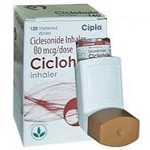
Ciclohale is an affordable Indian generic of Ciclesonide manufactured by Cipla Limited — providing the same therapeutic activity as the original branded Alvesco (Sunovion) at significantly lower cost. Ciclesonide is a second-generation inhaled corticosteroid (ICS) distinguished by its unique pro-drug mechanism — activated only within airway epithelium — resulting in the lowest systemic side effect burden of any inhaled corticosteroid. FDA-approved (as Alvesco) since 2008, Ciclohale represents modern ICS therapy with minimal systemic glucocorticoid exposure and reduced local oropharyngeal side effects.
The active ingredient is Ciclesonide, a unique pro-drug inhaled corticosteroid. After inhalation, Ciclesonide is activated by esterases in airway epithelial cells to its active metabolite des-ciclesonide (des-CIC) — which is 100x more glucocorticoid-receptor active than the parent compound. Because activation occurs primarily in the lungs and not systemically, Ciclesonide has the lowest oral bioavailability (~1%) of any inhaled corticosteroid — minimizing HPA axis suppression, bone effects, and oropharyngeal deposition (reduced thrush, dysphonia). Anti-inflammatory action reduces airway inflammation, mucus production, and airway hyperresponsiveness.
Ciclohale is FDA-approved (as Alvesco) for asthma maintenance treatment in patients aged 12 years and older, as prophylactic therapy — NOT for acute asthma attacks. Off-label uses include adjunctive COPD therapy and various inflammatory airway conditions. Ciclesonide is particularly suitable for patients who experience oropharyngeal side effects (thrush, dysphonia) with other ICS or who require ICS therapy with concerns about systemic glucocorticoid effects (children, elderly, patients on systemic steroids).
The medication is available as Ciclohale HFA 80 mcg and 160 mcg per actuation metered dose inhalers. Standard adult dosing for asthma: 80 mcg twice daily (initial), with maintenance range of 80-160 mcg twice daily, or up to 320 mcg twice daily for severe persistent asthma. Some clinical protocols use 320 mcg once daily. Pediatric dosing for ages 12+ follows adult guidelines.
Critical safety considerations include oral candidiasis (thrush) at lower rate than other ICS, dysphonia and hoarseness (also lower than other ICS), very low risk of HPA axis suppression, growth reduction in children, cataracts, glaucoma, and decreased bone mineral density compared to other ICS. Hypersensitivity reactions rare. Not a rescue inhaler — for maintenance only. Drug interactions: strong CYP3A4 inhibitors (ritonavir, ketoconazole) may increase ciclesonide levels.
Free prescription
Discrete packaging
Have questions?
Quality Assurance
- Mild Persistent Asthma: For mild persistent asthma controller therapy (80 mcg BID initial);
- Moderate Persistent Asthma: For moderate persistent asthma (160 mcg BID);
- Severe Persistent Asthma: For severe persistent asthma (up to 320 mcg BID);
- Adolescent Asthma: FDA-approved for asthma in patients 12 years and older;
- Adult Asthma: For adult asthma maintenance therapy (all strengths);
- Asthma Prophylaxis: As prophylactic therapy for asthma symptom prevention;
- Step Up ICS Monotherapy: ICS monotherapy for step-up from rescue-only therapy;
- ICS Side Effect Sensitive Patients: For patients with oropharyngeal side effects on other ICS (thrush, dysphonia);
- Systemic Steroid Sparing: For patients requiring systemic steroid-sparing ICS therapy;
- Pediatric 12 Plus Asthma: FDA-approved for pediatric asthma from age 12;
- Geriatric Asthma Selective: Preferred in geriatric asthma due to lower systemic exposure;
- Athlete Asthma Selective: Selective use in athletes — minimal systemic glucocorticoid exposure;
- Pregnancy Asthma Maintenance: For asthma maintenance during pregnancy (Pregnancy Category C);
- Exercise Induced Asthma Maintenance: Long-term controller for exercise-induced asthma component;
- Nocturnal Asthma Symptoms: For nocturnal asthma symptoms (suppression of underlying inflammation);
- COPD Adjunct Off Label: Off-label adjunct therapy for COPD (limited evidence);
- Eosinophilic Bronchitis: Off-label for eosinophilic bronchitis;
- Long Term Asthma Maintenance: Suitable for long-term asthma maintenance therapy with favorable safety profile;
- Maintenance NOT Rescue: For MAINTENANCE only — NOT a rescue inhaler for acute attacks.
- Less Asthma Exacerbations: Reduction in asthma exacerbation frequency with consistent use;
- Better Lung Function: Improvement in FEV1 (forced expiratory volume) and peak flow measurements;
- Less Nocturnal Symptoms: Reduction in nighttime asthma symptoms with anti-inflammatory action;
- Better Sleep: Improved sleep quality through reduced nocturnal symptoms;
- Less Daytime Symptoms: Reduction in daytime asthma symptoms allowing normal activities;
- Less Rescue Inhaler Use: Reduction in need for short-acting rescue inhalers (SABA);
- Better Exercise Tolerance: Improved exercise capacity through reduced airway inflammation;
- Less Exercise-Induced Symptoms: Long-term reduction in exercise-induced asthma symptoms;
- Better Daily Function: Return to school, work, and normal activities with effective asthma control;
- Less School Absences: Reduction in school absences in adolescent asthma patients;
- Less Work Absences: Reduction in work absences in adult asthma patients;
- Less Oral Thrush vs Other ICS: Significantly lower oral candidiasis rate than older ICS (fluticasone, budesonide);
- Less Dysphonia vs Other ICS: Lower dysphonia/hoarseness rate than older ICS;
- Less HPA Axis Suppression: Minimal systemic HPA axis suppression vs other ICS;
- Less Bone Density Reduction: Minimal bone mineral density effects vs other ICS at equivalent doses;
- Less Growth Reduction Children: Minimal growth reduction in adolescents vs other ICS;
- Less Cataract Risk: Lower cataract risk than other ICS at equivalent therapeutic doses;
- Less Glaucoma Risk: Lower glaucoma risk than other ICS at equivalent therapeutic doses;
- Better Quality of Life: Substantial improvement in quality of life with effective asthma control and minimal side effects;
- Brand Ciclohale: Affordable Indian Cipla Limited brand of Ciclesonide with international quality manufacturing standards;
- Generic Ciclesonide: Affordable generic Ciclesonide expanding global access to second-generation ICS therapy;
- Alvesco Equivalent: Same Ciclesonide molecule as original Sunovion brand Alvesco with bioequivalent therapeutic profile;
- Cipla Manufacturing: Cipla Limited — one of India's largest and most respected pharmaceutical companies;
- Second Generation ICS: Second-generation inhaled corticosteroid — modern ICS with improved safety profile;
- Pro Drug Lung Activation: Unique pro-drug activated only in airway epithelium — minimal systemic exposure;
- Des Ciclesonide Active Metabolite: Active metabolite des-CIC is 100x more glucocorticoid-receptor active than parent;
- Lowest Systemic ICS Exposure: Lowest oral bioavailability (~1%) of any inhaled corticosteroid;
- Reduced Oropharyngeal Deposition: Reduced oropharyngeal deposition — lower thrush and dysphonia risk;
- Anti Inflammatory Airway Action: Targets airway inflammation, mucus production, and hyperresponsiveness;
- HFA Propellant CFC Free: HFA propellant (CFC-free) — environmentally friendly modern inhaler;
- Twice Daily Maintenance ICS: Twice-daily dosing supports excellent adherence in chronic ICS therapy;
- Indian Quality Manufacturing: Indian Cipla Limited manufacturing meeting international quality and bioequivalence standards;
- WHO Essential Medicine: Listed on the WHO Model List of Essential Medicines for respiratory care.
Generic Alvesco (Ciclohale 80 mcg) Medication guide:
📖 About Ciclohale from Cipla
Ciclohale is the Cipla brand of ciclesonide, a second-generation inhaled corticosteroid designed to control the underlying inflammation of asthma when taken daily. It is manufactured in India, exported to markets across Asia, Africa, and Latin America, and priced significantly below the originator brand (Alvesco) that first brought ciclesonide to Western markets in the mid-2000s. For patients paying out of pocket, that price difference is often the reason an ICS controller becomes affordable at all.
Cipla's respiratory portfolio has been built over four decades. The company is one of the largest global producers of inhaled asthma and COPD medicines, running GMP-certified sites that supply national health programmes as well as private pharmacies. Ciclohale sits in that portfolio as their generic entry in the "second-generation ICS" category alongside their salbutamol range (Asthalin) and their combination ICS-LABA products. Together these give clinicians a full toolkit built around a single, familiar manufacturer.
📋 Ciclohale at a glance
Before going deeper into the pharmacology and practical use, the key facts about this product line are worth pinning down. The stat row below is what a clinician or informed patient would want to confirm on first meeting the product.
Manufacturer
Cipla Limited, Mumbai, India
Active ingredient
Ciclesonide (prodrug ICS)
Drug class
Second-generation inhaled corticosteroid
Strengths
80 mcg and 160 mcg per actuation
Format
HFA metered-dose inhaler
Dosing frequency
Once daily in most patients
Several of these numbers become important later. The once-daily option matters for adherence - one of the biggest reasons asthma controllers stop working is that people forget to take them twice a day. The HFA propellant matters for the spray characteristics people experience and the environmental profile of the product. And the two available strengths (80 mcg, 160 mcg) give real flexibility for step-up and step-down decisions without switching products.
🗺️ Terms you will see across this guide
A few pharmacological terms come up repeatedly in ciclesonide discussions. Getting them straight up front makes the rest of the guide much easier to follow.
- ICS
- Inhaled corticosteroid - the class of controller medications used to reduce airway inflammation. Ciclohale is one of them.
- Prodrug
- A medicine that is inactive when taken and gets converted into its active form inside the body. Ciclesonide becomes des-ciclesonide in the airway.
- HFA
- Hydrofluoroalkane, the propellant used in modern MDIs. Replaced the older CFCs after the Montreal Protocol.
- MDI
- Metered-dose inhaler - a pressurised aerosol canister with a fixed dose per press.
- MMAD
- Mass median aerodynamic diameter - the average size of particles in an aerosol. Ciclesonide has an unusually small MMAD (~1.1 micron), which affects where it deposits in the lung.
- Controller vs Reliever
- Two roles in asthma treatment. Controllers (like Ciclohale) reduce inflammation over weeks and prevent attacks. Relievers (like salbutamol) open airways in minutes during a symptom.
Understanding these terms is more than academic. The whole reason ciclesonide behaves the way it does - once daily, low local side effects, small particle reach into the deep airway - traces back to being a prodrug ICS with extra-fine HFA MDI delivery. That single sentence contains most of what is distinctive about this drug, and every one of its words is a term above.
The one-sentence summary of Ciclohale: a Cipla-made generic of the second-generation inhaled corticosteroid ciclesonide, delivered as an extra-fine HFA MDI, used daily to control the underlying inflammation of asthma - not to relieve a sudden attack.
🧪 What Makes Ciclesonide a Prodrug
Ciclesonide belongs to a small group of inhaled corticosteroids designed as prodrugs - molecules that are pharmacologically inactive at the point of inhalation and only become active after the body converts them. This design was not an accident. It was a deliberate response to the two most persistent complaints about first-generation ICS medicines: local side effects in the throat and mouth (thrush, hoarseness), and concerns about systemic exposure when high doses are needed.
The concept is simple. Instead of shipping the active corticosteroid directly to the airway, the drug arrives as an inert ester. Only the enzymes that live in airway tissue - not those in the throat, gut, or bloodstream - can cleave the ester and release the active form. The result is a much more targeted anti-inflammatory effect: strong where it needs to be, minimal where it does not.
🧬 The lifecycle of a single ciclesonide dose
Following one puff of Ciclohale from the inhaler to its final clearance from the body helps show why the prodrug design matters. Each stage below happens in sequence, with different molecules involved at different points.
The engineering behind this pathway is what separates ciclesonide from older inhaled corticosteroids like beclomethasone. It is not that ciclesonide is more powerful in absolute terms - the anti-inflammatory potency of des-ciclesonide at the receptor is comparable to other modern ICS - it is that the drug reaches its active form only where you want it. Everywhere else it stays inactive or gets cleared quickly.
⚖️ Correcting common misconceptions
Because prodrug pharmacology is unfamiliar to most patients, and even to some clinicians who trained on older ICS medicines, several misunderstandings are worth clearing up before going further.
❌ What ciclesonide is NOT
- Not a bronchodilator - it does not open airways in minutes
- Not a rescue inhaler - it will not stop an attack in progress
- Not "steroid-free" - it is still a corticosteroid, just designed for targeted release
- Not weaker than other ICS - efficacy is comparable
✅ What ciclesonide IS
- A daily anti-inflammatory taken to prevent asthma symptoms
- An inactive prodrug activated inside the airway
- Designed to reduce local side effects (thrush, hoarseness)
- Associated with lower systemic exposure than older ICS at equivalent doses
These two lists together explain most of the practical differences a patient will experience. Someone switching from an older ICS to Ciclohale will often notice they need to rinse their mouth less strictly, that their voice does not get as hoarse, and that once-daily use is realistic. What they will not experience is a fast bronchodilator kick - that requires salbutamol (Asthalin, Ventolin) alongside for actual attacks.
The prodrug design is what makes ciclesonide interesting as a chemistry, but the practical takeaway is simpler: it is an ICS with an unusually clean side-effect profile because most of the drug never reaches active form until it is deep in the airway tissue where it belongs.
🔬 The Airway Activation Story
The activation of ciclesonide inside the airway is one of the more elegant pieces of respiratory pharmacology of the last two decades. It relies on the fact that certain enzymes - carboxylesterases - are strongly concentrated in the tissue that lines the bronchi and much less abundant in the mouth, throat, and gut. Ciclesonide was engineered specifically to be a substrate for these airway enzymes, and only for them.
What this means in practice is that a puff of Ciclohale sends inactive drug particles into the airway, and the airway itself converts the drug into its active form on arrival. The process is fast - most of the activation happens within minutes of deposition - and it is highly selective. Very little activation happens outside the lung, which is why the drug is so well tolerated compared with older ICS medicines whose active molecule was already active from the moment it left the canister.
🔬 The chemistry of activation, step by step
The activation process itself is a specific enzymatic reaction. Each step below has a name, a location, and a purpose. Understanding them helps explain both the strengths and the limits of ciclesonide.
- Ester bond. Ciclesonide is built around an inactive corticosteroid core with a fatty (isobutyryl) ester attached. That ester is what keeps it inactive.
- Enzyme site. Airway carboxylesterases live inside the epithelial cells lining the bronchi. Their active site fits ciclesonide's ester group precisely.
- Hydrolysis. The enzyme cleaves the ester bond, splitting off the isobutyryl group and leaving des-ciclesonide - the naked, active corticosteroid.
- Receptor binding. Des-ciclesonide binds the intracellular glucocorticoid receptor with roughly a 100-fold higher affinity than the parent ciclesonide molecule.
- Fatty acid conjugation. Inside the cell, des-ciclesonide can also become reversibly linked to fatty acids, forming a depot form that slowly releases active drug over hours - the biology behind once-daily dosing.
- Termination. Any active drug that escapes into the circulation is bound almost entirely to plasma proteins and quickly metabolised by the liver, keeping systemic effects small.
This sequence is why the phrase "prodrug ICS" is not marketing language - it is a precise mechanistic description. Ciclesonide as delivered is not the active medicine. The airway itself is what makes it a medicine, through a specific enzymatic conversion. That is genuinely different from what a first-generation ICS does when it arrives already active.
❓ Common questions about how the activation works
Patients often want to understand this at a practical level rather than a chemistry-textbook level. The most common questions follow, with short answers that map back to the pharmacology above.
Does the activation depend on how I inhale?
Not directly. Once the drug particles reach the airway tissue, the enzymes take over regardless of your inhalation force. But how much drug reaches the airway does depend on technique - a poor inhale delivers less prodrug, so less becomes active.
Can the activation "fail" in some patients?
Rare, but theoretically possible. Individual variation in carboxylesterase activity exists, and severe airway inflammation could alter local enzyme function. In practice, the vast majority of patients activate ciclesonide efficiently.
What happens to the ciclesonide I swallow?
Most of it stays inactive - the gut has different enzyme chemistry than the airway. Some low-level activation occurs, but the combination of low absorption and rapid liver clearance keeps systemic exposure small.
Does the once-daily dosing depend on activation timing?
Yes, partly. The reversible fatty-acid conjugation of des-ciclesonide creates a local depot that keeps releasing active drug for many hours after the initial dose. That extends the anti-inflammatory effect long enough to justify a 24-hour dosing interval in most patients.
What these answers share is a theme: the airway is the actual pharmacy. Ciclesonide takes a passive design approach - trust the tissue to make the medicine on arrival, rather than delivering an active drug that then has to be contained. It is a bit like the difference between shipping mixed concrete versus shipping dry ingredients that get mixed on-site.
👤 From Peter J. Barnes, FRS, FMedSci
"Ciclesonide is a good example of drug design solving a specific clinical problem. First-generation inhaled corticosteroids gave excellent asthma control but at the cost of predictable local side effects - thrush, hoarseness, sometimes cough. The prodrug approach was engineered specifically to keep the anti-inflammatory efficacy while removing the local exposure that drives those problems. In everyday practice, that translates into better tolerance and, importantly, better adherence over the years someone actually needs to take a controller."
The other subtle point worth flagging is that this design also reduces the argument for aggressive mouth-rinsing rituals after each dose. Rinsing is still recommended - it never hurts - but the amount of active drug landing in the mouth is fundamentally smaller than with older ICS, so patients who occasionally forget are less likely to develop oral thrush.
✨ Second-Generation ICS at a Glance
The label "second-generation inhaled corticosteroid" is not a marketing designation - it describes a real shift in the design philosophy of ICS drugs that took place from the late 1990s onward. First-generation ICS medicines like beclomethasone dipropionate, budesonide, and to some extent fluticasone propionate were designed for potent local anti-inflammatory action, and they achieve that. But their side-effect profiles - especially local (throat, voice, mouth) and, at high doses, systemic (HPA axis suppression, potential growth effects in children) - drove pharmaceutical chemists to look for a next generation that could match the efficacy while reducing the collateral effects.
Ciclesonide, along with mometasone furoate and to a partial extent fluticasone furoate, sit in this second generation. They are not "better" in a simple sense - a well-managed patient on budesonide may do just as well clinically as one on ciclesonide - but they represent a different set of design trade-offs, and for certain patients (especially those bothered by hoarseness or oral thrush) they can make a real practical difference.
⚖️ First-generation vs second-generation ICS: what actually differs
The table below lays out the design choices side by side. Not every second-generation ICS makes exactly the same trade-offs - ciclesonide is at the more radical end (prodrug design), while mometasone and fluticasone furoate take other paths (higher receptor affinity, longer retention). But the general direction is consistent.
| Attribute | First-generation ICS | Second-generation ICS (incl. ciclesonide) |
|---|---|---|
| Examples | Beclomethasone, budesonide, older fluticasone propionate | Ciclesonide, mometasone furoate, fluticasone furoate |
| Active form at inhalation | Already active | Often prodrug (ciclesonide) or activated on receptor binding |
| Particle size (typical MMAD) | 3-4 microns | 1-2 microns (extra-fine for ciclesonide) |
| Small-airway reach | Moderate | Higher (better distal lung deposition) |
| Local side effects | More common - oral thrush, hoarseness | Reduced - particularly ciclesonide |
| Systemic exposure at usual doses | Low but measurable | Very low - high protein binding, fast clearance |
| Typical dosing frequency | Twice daily | Once daily often adequate |
| Cost (generic) | Very affordable | Historically higher; generics like Ciclohale closing the gap |
What the table cannot capture is the effect these small design differences have on individual patients over months and years. Someone who abandoned an older ICS because of persistent hoarseness or repeated thrush infections may find a second-generation ICS transforms their willingness to stay on daily controller therapy - which, in turn, transforms their long-term asthma outcome. The clinical importance of "small" side effects is often larger than it looks on a spreadsheet.
✨ Three features that define the second-generation approach
Three specific design features run through most second-generation ICS drugs. Ciclohale includes all three, which is why it is a good representative of the category.
Targeted activation
Prodrug design (ciclesonide) or high receptor selectivity ensures the active corticosteroid effect happens where it is wanted - the airway - and not where it causes side effects.
Extra-fine particle delivery
Smaller particles reach further into the lung, treating the small airways that are increasingly recognised as important in asthma pathology.
Once-daily dosing option
Long tissue retention or slow local release supports once-daily rather than twice-daily use, which materially improves adherence over months and years.
These three features work together. Extra-fine particles get the drug to the right place; targeted activation keeps it working there and nowhere else; and long tissue retention means the patient does not have to reinforce the dose twice a day. The three combined are what make ciclesonide - and Ciclohale as its Cipla generic - a genuine option for patients who want a low-friction, well-tolerated controller.
🏷️ Recap in short chips
Those chips are the elevator description of what "second-generation ICS" means for a patient. The rest of this guide unpacks each of them in the specific context of using Ciclohale day to day.
🎯 Why Extra-Fine Particles Matter for Lung Delivery
One of the more consequential design choices in ciclesonide is that it is formulated to produce particles with an unusually small aerodynamic diameter - about 1.1 microns on average, compared with 3-4 microns for older ICS aerosols. That difference sounds small on paper, but in the airway it translates into a fundamentally different pattern of drug distribution: less deposition in the mouth and throat, less in the large central airways, and much more in the small distal airways that are increasingly recognised as central to asthma control.
To understand why particle size matters so much, it helps to picture the anatomy. The airway divides progressively from the trachea down through the bronchi into small bronchioles, ending at the alveolar sacs where gas exchange happens. Larger particles (over 5 microns) tend to impact and stick in the upper airway. Medium particles (3-5 microns) mostly land in the central airways. It is only the smallest particles (under 2 microns) that reach the smallest airways in significant quantities.
📊 Where different particle sizes actually go
The horizontal bars below give a rough sense of how a dose distributes between regions of the airway based on particle size. These are approximations - exact numbers vary with technique, spacer use, and individual anatomy - but the pattern is real and well documented in imaging studies.
Larger particles (3-5 microns) - typical older ICS
Extra-fine particles (~1.1 micron) - ciclesonide profile
The pattern shift is dramatic. The extra-fine ciclesonide profile roughly halves the mouth/throat exposure (which is where local side effects come from) and roughly quadruples the small-airway deposition (which is increasingly considered the underserved region in traditional ICS therapy). The central airway coverage remains roughly similar.
📖 Key terms for talking about aerosols
Several terms come up in every discussion of particle science. A short reference:
- MMAD (mass median aerodynamic diameter)
- The average particle size in an aerosol, weighted by mass. Ciclesonide has an MMAD of about 1.1 microns; older ICS 3-4 microns.
- Fine particle fraction (FPF)
- The proportion of drug in particles under 5 microns - the fraction that can reach the lung at all. Ciclesonide has one of the highest FPF values among ICS aerosols.
- Oropharyngeal deposition
- The fraction of a dose that lands in the mouth and throat. Larger particles have higher oropharyngeal deposition; this is the fraction responsible for local side effects.
- Small airways
- Bronchioles under 2 mm diameter. Historically hard to reach with inhaled therapy. Now recognised as important in persistent asthma inflammation.
👤 From Reynold A. Panettieri Jr., MD
"For decades we treated asthma as if it were a central-airway problem, because that is where the older ICS aerosols delivered their dose. Extra-fine formulations have changed the conversation - they reach the small distal airways where a lot of the persistent inflammation actually lives. Whether that translates into meaningfully better outcomes in every patient is an ongoing question, but for patients whose asthma has stubborn small-airway involvement, this class of ICS opens a real therapeutic option."
The clinical implication for a patient starting Ciclohale is worth stating directly: this is not a niche design choice. The extra-fine particle formulation is one of the main reasons ciclesonide behaves the way it does - fewer local side effects, better small-airway reach, and (when combined with the prodrug chemistry) lower systemic exposure. Every one of those benefits ties back to the aerosol physics.
Because these small particles are more efficiently inhaled, technique still matters but the margin for error is more forgiving than with older MDIs. A slow, steady inhale draws the extra-fine aerosol deep. A rushed inhale still delivers a reasonable dose - much more than a rushed inhale with a large-particle MDI would.
💨 Ciclohale HFA Metered-Dose Inhaler
The physical device used to deliver Ciclohale is a familiar object to most asthma patients: a small pressurised aluminium canister sitting inside a plastic actuator, activated by pressing down on the top of the canister. What differs from an old-school inhaler is what the canister contains - not just ciclesonide, but a specific solution formulation dissolved in HFA propellant, engineered to produce the extra-fine aerosol described earlier. The MDI shell is standard; the fluid inside is not.
Ciclohale HFA is what pharmacists call a "solution MDI" rather than a "suspension MDI." Older ICS inhalers held the drug as tiny particles suspended in a propellant liquid - which is why you had to shake them before each puff to redistribute the drug. A solution MDI dissolves the drug fully in the propellant with a co-solvent, so shaking is less critical, and the spray produced is more consistent from puff to puff.
💨 Key features of the Ciclohale MDI
Several practical design points affect how the inhaler behaves and how patients should use it. Four are worth highlighting.
🌫️ Solution formulation
Ciclesonide is fully dissolved in HFA-134a propellant with ethanol co-solvent. Produces a slower, softer plume than suspension MDIs. Less critical to shake before use, though still recommended.
📏 Fixed metered dose
Each press of the canister delivers a precise, factory-calibrated dose - either 80 mcg or 160 mcg depending on the strength. Consistency across puffs is one of the reasons MDIs remain the standard delivery format.
🌊 Extra-fine aerosol
Particle MMAD around 1.1 micron - one of the smallest among current ICS products. Reaches deeper into the lung than older MDIs; less deposition in the throat.
🎓 Priming requirement
Before first use, and after any break of more than a few days, the inhaler needs 3-4 test sprays into the air to prime the metering chamber. Skipping this leads to underdosing on the first "real" puff.
The device itself is not unusual - most patients who have used any HFA inhaler will recognise the general feel. The subtle differences from other MDIs come mostly from the solution formulation: the spray feels softer, less "kicky," and the plume takes slightly longer to disperse. Some patients find this makes coordination easier; others notice no difference at all.
🔍 Detailed specifications for those who want them
Some patients (and pharmacists) want the specific technical details of the canister and formulation. Others do not. The block below tucks the specifics away so the guide stays readable for everyone.
Show full technical specifications
Propellant: HFA-134a (1,1,1,2-tetrafluoroethane) - non-CFC, ozone-friendly.
Co-solvent: Ethanol, used to dissolve the ciclesonide fully in the HFA propellant.
Container: Aluminium canister with metered-dose valve, seated inside a plastic actuator with mouthpiece.
Metered volume per actuation: A defined small volume delivering 80 mcg or 160 mcg of ciclesonide.
Actuations per canister: Typically 120 metered doses per canister; the label states the exact count.
Particle size (MMAD): Approximately 1.1 microns; fine particle fraction typically over 55 percent.
Plume duration: Slightly longer than typical suspension MDI plumes because of the ethanol co-solvent; approximately 0.4-0.5 seconds.
Nothing in the specifications changes how you use the device day-to-day, but they help answer common questions from patients who like to know exactly what they are inhaling. The short version is: modern HFA propellant, no CFCs, no unusual excipients, and a formulation designed to disperse the drug fully rather than suspend it as particles.
⚠️ Important safety point about the pressurised canister
The canister remains pressurised even when empty. Do not puncture, incinerate, or throw into open flame. Do not store above 25 °C or in direct sunlight. Empty canisters should be disposed of through pharmacy take-back schemes or local hazardous-waste routes rather than general household recycling.
This warning is standard for all HFA MDIs and is easy to overlook - the canister looks like a small aluminium tube long after it has run out. Treating it with respect throughout its life avoids the rare but real hazard of a pressurised container being handled carelessly.
🔢 Choosing Between 80 mcg and 160 mcg Strengths
Ciclohale is available in two strengths: 80 mcg per actuation and 160 mcg per actuation. The choice between them is a clinical decision made by the prescribing clinician based on asthma severity, previous ICS exposure, patient age, and whether the patient is starting fresh, stepping up, or stepping down from a different controller. This section explains the reasoning behind those decisions and how to think about strength choice practically.
An important framing point up front: unlike some medications where the higher strength is "better," ICS strength should always be matched to the smallest effective dose. Using a higher ICS strength than needed does not give faster symptom relief - the therapeutic ceiling for ICS in asthma is reached relatively quickly, and additional dose mostly adds side-effect risk without adding benefit. The goal is enough, not maximum.
🧭 A decision path for strength selection
The flow below is a simplified version of how a clinician typically approaches ICS strength selection. It is not a substitute for personalised medical judgement - the point is to make the logic visible.
Starting fresh, mild asthma
Begin with 80 mcg once daily. This is enough for the majority of patients with mild persistent asthma. Reassess in 4-6 weeks.
Moderate asthma or partial response to 80 mcg
Step up to 160 mcg once daily, or 80 mcg twice daily. If still not controlled after 4-6 weeks, consider adding a LABA rather than increasing ICS further.
Severe or poorly controlled asthma
Consider 160 mcg twice daily as a maximum, but this is usually the point where combination inhalers (ICS-LABA) and specialist input become the right path.
Stepping down from higher doses
Once asthma is well controlled for 3+ months, consider dropping from 160 mcg to 80 mcg. Do not stop entirely without a plan.
That flow reflects a general logic - start low, step up if needed, step down when stable. The actual numbers a specific patient uses will vary with age, background comorbidities, and whether they are switching from another ICS. The important discipline is reassessment every few months rather than settling on a dose and never revisiting.
⚖️ 80 mcg versus 160 mcg side by side
Looking at the two strengths directly can help clarify when one or the other makes sense.
80 mcg per actuation
- Most common starting strength
- Suits mild persistent asthma in adults
- Pediatric use where clinician recommends ICS
- Step-down maintenance from higher dose
- Typical daily dose: 80-160 mcg total
160 mcg per actuation
- Moderate to severe persistent asthma
- Adults who need a higher daily total
- Cases where twice-daily is planned
- Step-up from partial response to 80 mcg
- Typical daily dose: 160-320 mcg total
The two strengths are the same drug in the same delivery device - just a different amount of ciclesonide per puff. Switching between them does not require any retraining on technique or timing. What it does require is a plan for reassessing whether the new dose is right, which is why review appointments matter.
📋 Points that surprise patients switching strengths
The spray feels the same.
Both 80 mcg and 160 mcg use the same solution formulation and the same actuator. Patients switching between them notice no difference in the sensation of the puff itself.
You do not "feel" the higher dose working faster.
ICS effects build over days to weeks regardless of strength. A higher strength does not produce a faster or more dramatic effect - it produces a slightly larger anti-inflammatory footprint that takes the same amount of time to manifest.
Side effect changes are usually subtle.
Doubling the ICS dose does not usually double side effects, especially with ciclesonide's prodrug design. But at the very highest doses (over 320 mcg daily), systemic effects start to be worth monitoring for.
The bottom line for patients is that strength choice is a conversation, not a self-adjustment. Do not switch between 80 and 160 mcg on your own. Both are safe when correctly prescribed, but the reason for the choice - and the plan for reassessing - matters as much as the number itself.
🛡️ Understanding a Controller Rather Than a Rescue Inhaler
The single most important thing to understand about Ciclohale is what it is for. It is a controller medicine - taken every day whether or not you feel symptoms, working slowly in the background to reduce airway inflammation over weeks and months. It is emphatically not a rescue medicine. It will not open your airways in minutes during an asthma attack, and using it more often when you feel worse will not help in the moment.
This distinction is trivial to explain and surprisingly common to get wrong. Every year, clinicians see patients who have been reaching for their ICS inhaler during an attack thinking it would help, and patients who stop taking their ICS during a symptom-free stretch because they think they no longer need it. Both mistakes come from the same misunderstanding: not seeing the ICS as background prevention with delayed effect.
🛑 What Ciclohale does and does not do
Putting the two mental models side by side helps make the boundary clear. The left column is how a rescue inhaler works. The right column is how Ciclohale (or any ICS controller) works. They are complementary tools for different jobs, not substitutes.
Rescue inhaler (salbutamol/Asthalin)
- Bronchodilator - opens narrowed airways
- Onset within minutes
- Used when symptoms happen
- Duration 4-6 hours
- Treats muscle spasm, not inflammation
- Life-saving during an attack
Controller inhaler (Ciclohale/ICS)
- Anti-inflammatory - reduces airway swelling
- Full effect builds over days to weeks
- Used every day, always
- Continuous background effect
- Treats underlying inflammation
- Prevents attacks from starting
A useful shorthand: rescue inhalers treat the symptom that is happening right now; controllers treat the disease that keeps producing symptoms. Ciclohale is in the second category, always.
⛔ A red-line warning about substitution
Never use Ciclohale to try to stop an asthma attack. If breathing is getting harder, use your rescue inhaler (salbutamol) as directed. Continuing to press the Ciclohale inhaler will not help - and the delay may make a serious attack worse. If rescue inhaler use is not helping, seek emergency care immediately.
That warning is worth repeating because it goes against instinct. When someone feels their airway closing, they naturally want to reach for whatever inhaler they have. But ICS medicines simply do not work on that timescale, no matter how many puffs are used. The molecular events (activation, receptor binding, gene regulation) take hours to translate into airway change - which is fine for prevention and useless for rescue.
👤 From Sally E. Wenzel, MD
"The fundamental error I see repeatedly in adult asthma is treating rescue and controller as interchangeable. They are not. Rescue medicines are for the ten minutes when your airway is closing. Controllers are for the ten years you spend having asthma. Neither substitutes for the other, and the patient who understands this distinction is the one whose asthma stays out of the emergency room."
🔑 What "controller" really implies day to day
Framing Ciclohale as a controller has several practical consequences that shape how a patient should approach it. These are the ways of thinking that make daily ICS use actually work.
- Take it whether you feel symptoms or not. The whole point is that background inflammation continues even when you feel fine. Stopping when you feel well is the fastest way to lose control.
- Do not judge it by immediate response. If you take a puff and do not feel different, that is expected. The effect is slow, structural, and cumulative.
- Do not adjust the dose yourself. Add or reduce only when a clinician says so, based on a review that considers symptoms, rescue use, and possibly peak flow.
- Keep your rescue inhaler separately. Ciclohale does not replace salbutamol. You should have both, and they do different things.
- Expect months of use, not weeks. Controllers are for people with a chronic condition. The plan is usually years-long, with periodic reassessment.
If you take away one idea from this entire section, take this one: Ciclohale prevents; Asthalin (or another salbutamol product) rescues. They are complementary, not competing. Almost every patient with more than very mild asthma benefits from having both, used correctly.
📅 Building a Reliable Daily Dosing Schedule
Once-daily dosing is one of the practical advantages of ciclesonide, and Ciclohale gives you an opportunity most first-generation ICS could not: fitting your controller into a single moment of your day. But "once daily" is only useful if you can build a schedule you actually follow, day after day, for months at a time. This section is about designing that schedule and defending it against the everyday chaos that erodes adherence.
The evidence on ICS adherence is not encouraging. Studies in real-world populations consistently show that patients on daily ICS controllers take their medication as prescribed on only about 50-60 percent of days. That gap - between prescribed and actual use - is the single largest driver of poor asthma control in patients who are otherwise well-managed. Any effort to improve adherence has more impact than switching to a fancier medicine, in most cases.
📅 What a good daily schedule looks like
The specific time of day matters less than the consistency. Morning, evening, whichever works - as long as it becomes automatic. The timeline below shows two common patterns, both effective, so you can pick the one that fits your life.
Morning-anchored routine
Evening-anchored routine
Both patterns work equally well from a pharmacological standpoint - ciclesonide's long tissue retention means the exact time of day has little effect on 24-hour anti-inflammatory coverage. The real question is which routine you are most likely to stick with. If you are always rushed in the morning, evening dosing is often more reliable. If you fall asleep the moment you brush your teeth, morning dosing is safer.
🤝 Habit-anchoring strategies that work
The behavioural science on habit formation is fairly clear: new behaviours stick best when they are anchored to something you already do every day, without effort. For an inhaler, the classic anchors are meals, teeth-brushing, or a specific piece of your morning or evening routine.
- Pair with your toothbrush. Keep the Ciclohale inhaler next to your toothbrush. Toothbrushing is one of the most reliable habits most adults have; piggy-backing on it works exceptionally well. It also positions you to rinse your mouth immediately after.
- Attach it to a meal. If you always have coffee in the morning, take the inhaler right after your coffee. If you always eat dinner at a specific time, take it before dinner.
- Use phone alarms as a safety net. A daily reminder at your chosen time is cheap and works. Set it to snooze if you have not taken the inhaler within 10 minutes.
- Keep the inhaler visible. An out-of-sight inhaler is a forgotten inhaler. In the bathroom cabinet or on the kitchen counter, wherever you are at your chosen time, is better than in a drawer.
- Track first, worry second. A simple daily tick mark or app entry catches missed doses before they become weeks of missed doses. Do not judge yourself; just record what happened.
These techniques sound almost embarrassingly simple. They are also more powerful than most patients expect. The reason ICS adherence is hard is not that the medicine is unpleasant - Ciclohale is genuinely well tolerated - it is that daily preventive behaviour, for months on end, is not something humans are naturally good at. External scaffolding helps.
🏷️ Anchor points that work well
Pick one. Commit to it for two weeks. If you miss more than a few days, that is data, not failure - try a different anchor. The habit itself is what makes controller therapy work; the specific molecule is only useful when it actually reaches the airway on schedule.
Most adherence failures with ICS are not about the drug or the delivery device. They are about the moment in the day when the puff was supposed to happen and did not. Investing an hour in designing a routine you can defend against your busiest days pays back over years of better asthma control.
🔁 Making Preventive Use a Habit That Sticks
The previous section covered scheduling - picking a time, anchoring it to an existing habit. This section goes one layer deeper: how to keep the habit alive through the phases of asthma control where it is easiest to abandon. Because ciclesonide works well and quietly, patients who take it consistently often become asymptomatic within weeks. That success is precisely when adherence tends to collapse: "I feel fine, do I still need this?"
Every experienced asthma clinician has seen this pattern. A patient starts an ICS during a symptomatic period, follows the plan for a few months, feels better, and quietly drops the medication after they stop having attacks. Six to twelve weeks later they present with a bad exacerbation and no memory of when they last used the inhaler. The controller worked - it worked so well the patient stopped believing they needed it. Preventing this loop is what long-term ICS adherence is actually about.
🔁 The five-stage adherence pattern to watch out for
Adherence over months has a characteristic shape. Recognising which stage you are in helps you defend the habit at the moments it is most vulnerable.
Knowing this pattern exists is half the battle. When you find yourself in the fade phase thinking "maybe I do not need this anymore," you can recognise the thought as predictable rather than a genuine clinical insight. The right response is not to test it by stopping - it is to book a review with your clinician who can make an informed step-down decision if appropriate.
"I felt so well that I stopped taking it. Two months later I was back in hospital." - one of the most common stories in adult asthma clinics, told with different words by different patients but always the same shape. The controller was working; that was the evidence it was needed, not the evidence it was not.
💡 Practical rules that help preserve the habit long-term
A few concrete rules, distilled from what tends to work in real-world use, are worth building into your approach from the start:
- Keep taking it when you feel well. This is the whole point. If you only take it during bad periods, you are using it as a rescue medicine, and it does not work as one.
- Do not decide to stop on your own. Step-down or discontinuation is a clinical decision made after a period of good control. Self-discontinuation is one of the top predictors of a subsequent exacerbation.
- Refill before you run out. An unplanned gap of a few days can bring back inflammation faster than most patients expect. Set a phone reminder to reorder when there are 15-20 doses left.
- Travel with the inhaler. Do not skip doses because you are away. Modern security screening handles asthma inhalers routinely; there is no travel reason to stop.
- Talk about it at every appointment. Even when things are going well, use every clinical visit as a chance to review whether the current controller and dose are still right.
Every one of these rules sounds obvious in isolation. Following all of them consistently over years is what separates well-controlled asthma from the kind that keeps producing surprise exacerbations. The medicine does its part; the patient's job is to keep the medicine reaching the airway on schedule for as long as the plan calls for it.
🏷️ Warning signs your adherence is drifting
Any of these is a signal to look at your inhaler use pattern honestly and, if adherence has slipped, restart the routine without waiting for a full exacerbation. Restarting daily controller therapy takes days to weeks to rebuild the anti-inflammatory effect - which is why catching a drift early matters much more than reacting after a hospital admission.
⏳ When You Should Notice the First Effect
One of the first questions patients ask when starting Ciclohale is: "When will I feel it working?" It is a reasonable question - and the honest answer requires a short lecture on how inhaled corticosteroids differ from rescue inhalers. You will not feel Ciclohale in the way you feel salbutamol. There is no fast opening of the airways, no immediate sensation of easier breathing. What you get instead is a gradual, largely invisible reduction of the inflammation that has been making your airways twitchy, and that reduction accumulates over days and weeks.
For most patients, meaningful clinical improvement becomes noticeable within 1 to 2 weeks - things like fewer nighttime awakenings, less morning tightness, less coughing after exercise. Peak effect on airway responsiveness usually takes 4 to 8 weeks. And for a fair minority of patients, the full benefit continues to build for 12 weeks or more, particularly if they came into treatment with substantial airway remodelling from long-standing uncontrolled asthma.
📆 What to expect week by week
The timeline below is a rough guide for someone starting Ciclohale from scratch or after a period without an ICS controller. Individual patients will vary - some see effects sooner, some take longer. Do not judge whether the medicine is working based on the first few days.
Days
1-3
Nothing dramatic.
You take the inhaler, you follow the technique, you rinse your mouth - and you feel exactly the same. This is expected. The activation and receptor binding are happening, but airway inflammation does not change fast enough for you to feel it.
Days
4-7
Subtle changes may appear.
Some patients begin to notice one or two nights of better sleep, a slight reduction in the morning cough, or slightly less breathlessness with normal activity. These are early signals - real, but easy to miss unless you look for them.
Weeks
2-4
Clinically meaningful improvement.
The typical window for noticeable improvement: fewer symptoms during the day, less nocturnal disturbance, reduced need for rescue inhaler puffs, better tolerance of exercise or cold air. Peak flow readings often start climbing.
Weeks
4-8
Full anti-inflammatory effect.
Peak effect on airway hyper-responsiveness and inflammation. This is usually when clinicians reassess and decide whether the current dose is right, or whether step-up (or step-down) makes sense.
Months
3+
Continued gradual gains.
In patients with long-standing uncontrolled asthma, further slow improvement in airway remodelling can occur over months to years of consistent controller use. The habit and adherence build the long-term benefit.
This timeline explains why a two-week trial of an ICS is almost never adequate to judge whether it is "working." The pharmacology needs the time. Someone who declares failure after ten days is judging the medicine on a fraction of its actual response curve.
❓ Questions patients ask in the first month
Because the first few weeks feel underwhelming to most patients, a few common questions come up. The answers all trace back to the same underlying pharmacology.
I don't feel anything after the puff. Is it working?
Almost certainly yes, if you took it correctly. ICS medicines do not produce an immediate sensation. The activation is happening; you are just too early to feel the downstream effect.
Should I feel my chest opening up, like with salbutamol?
No. That is a bronchodilator effect specific to rescue medicines. Ciclohale is anti-inflammatory and does not open airways in real time.
My asthma is worse in the first week - is Ciclohale causing it?
Almost never. Asthma has natural variability, and the fact that you started a new medicine coincidentally is easy to attribute cause to. If symptoms are much worse than usual, contact your clinician - it is more likely a trigger or a coincidental worsening than a drug reaction.
When will I know it is working?
Two to four weeks is the typical window for clinical signs: fewer nighttime symptoms, less rescue inhaler use, better tolerance of exercise. At the 4-8 week mark you should be reviewed to confirm.
How long should I give it before deciding it does not work for me?
At least 6-8 weeks of consistent daily use at the prescribed dose. Anything less is not enough time to draw conclusions. If after 8 weeks you have seen no improvement in symptoms or peak flow, that is when a clinician review is appropriate.
The theme running through all these answers is patience. Not the empty motivational kind of patience - the specific kind that comes from understanding why the drug behaves the way it does. Anti-inflammatory action at the receptor level takes days to translate into airway remodelling that a patient can feel. Nothing about the mechanism allows for a faster response. Setting expectations correctly at the start is the difference between someone who abandons Ciclohale after two weeks and someone who gives it the time it needs to work.
If your symptoms have not clearly improved after 6-8 weeks of daily use at the prescribed dose, this is the right moment to see your clinician. Do not silently give up. There are many reasons this can happen - technique, wrong dose, comorbid conditions, or the need for an additional controller class - and each has a specific solution.
🌬️ Proper MDI Inhalation Technique for ICS
Technique matters more for an ICS controller than for a rescue inhaler. When you use a rescue inhaler badly, you notice - the attack does not respond and you take another puff. When you use a controller badly for months, you often do not notice - you just fail to get the anti-inflammatory benefit you were counting on. Every study of ICS effectiveness in real-world populations concludes the same thing: poor inhaler technique is the single largest reason ICS controllers underperform expectations.
The good news is that Ciclohale is relatively forgiving compared with older ICS medicines. Its solution formulation produces a softer, slower plume, and its extra-fine particles are less dependent on perfect inhalation timing than larger particles are. But "more forgiving" is not "does not matter." Even the best-designed inhaler needs a coordinated inhale, an adequate breath-hold, and a clean firing sequence to deliver its designed dose.
🌬️ The eight-step Ciclohale MDI technique
The technique below is what your clinician or pharmacist would demonstrate. Practise it out loud a few times when you first get the inhaler; it becomes automatic within a week or two, but starts feeling fragile if you have not used the inhaler for a while.
- Remove the cap and check the mouthpiece is clean and free of obstruction.
- Shake the inhaler gently for a few seconds. Ciclohale is a solution MDI, so shaking is less critical than with suspension inhalers, but it never hurts.
- Prime if needed - first use or after a break of more than a week: 3-4 test sprays into the air, away from your face.
- Breathe out gently and fully, away from the mouthpiece, to empty your lungs.
- Seal your lips around the mouthpiece (or use a spacer, which is preferred - see next section).
- Start a slow steady inhale, then press the canister down ONCE while continuing to inhale slowly for 3-5 seconds. Do not stop breathing in the moment you fire.
- Hold your breath for about 10 seconds - or as long as comfortable - to let the extra-fine particles settle deep in the airway.
- Exhale slowly, replace the cap, and rinse your mouth with water (see the rinsing section for details).
These eight steps might feel like a lot at first. They compress into a smooth 20-30 second sequence once the routine is grooved in. The most common failure mode - across every study of MDI use - is not any single misstep but a general rushing of the whole thing. Slow, deliberate use gets far more drug to the airway than fast, careless use.
❌ Common technique mistakes and how they hurt delivery
The table below covers the mistakes that occur most often in patients using ICS inhalers. Each is a small deviation that produces a measurable drop in the drug that reaches the lung. Fixing them is usually easier than switching medications.
| Mistake | What actually happens | How to fix it |
|---|---|---|
| Firing before inhaling starts | The plume hits a closed throat, most of the dose sticks to the mouth and pharynx. | Begin the slow inhale first, then press mid-breath. |
| Inhaling too fast | Turbulent airflow deposits drug in the throat, not the lungs. | 3-5 second slow steady inhalation is the target. |
| No breath-hold | Extra-fine particles do not have time to settle before exhalation removes them. | Hold at least 5-10 seconds after each puff. |
| Two puffs in one breath | The second puff wastes drug into the mouth before it can reach the airway. | One puff per breath; wait 30 seconds between puffs if a second is prescribed. |
| Poor lip seal | Drug escapes into ambient air rather than being inhaled. | Firm seal around the mouthpiece; check for gaps at the corners. |
| Skipping priming | First doses after storage are unreliable in metered content. | 3-4 test sprays after any break longer than a week. |
| Not rinsing after use | Drug retained in the mouth increases local side-effect risk over time. | Rinse mouth, gargle, and spit after every ICS dose (details in next section). |
Each of these mistakes reduces effective drug delivery by 10-40 percent depending on how badly it is done and how often. Compound two or three of them and the patient is getting well under half the prescribed dose. That is the mechanism by which "the medicine stopped working" is actually "the technique drifted without anyone noticing."
👁️ Do this. Not that.
✅ Do this
- Exhale before, then start a slow steady inhale
- Press canister mid-inhale, continue inhaling
- Hold breath ~10 seconds after each puff
- Wait 30-60 seconds between puffs if a second is prescribed
- Rinse mouth after every dose
- Ask your pharmacist to watch your technique once a year
❌ Not that
- Firing the puff before your inhale starts
- Inhaling as fast and hard as possible
- Stopping the breath the instant you fire
- Stacking two puffs in one continuous inhale
- Skipping the mouth rinse because you are in a hurry
- Assuming your technique from years ago is still correct
A one-time technique check with a pharmacist or clinician - many pharmacies offer this as a free service - reveals whether any of these habits have crept in. Most patients who have used inhalers for years benefit from at least one such check. It is not a matter of intelligence or diligence; it is a matter of physical routine drifting slowly out of shape.
If any of the eight steps feel awkward, or if you notice yourself repeatedly firing before you have started inhaling, ask about a spacer. A spacer removes the coordination requirement almost entirely and delivers substantially more of each dose to the lungs. It is the single biggest technique upgrade for both children and adults.
🔗 Why a Spacer Improves Ciclesonide Delivery
A spacer - also called a valved holding chamber - is a plastic tube that sits between the MDI and the mouth. The inhaler fires into the tube, and the patient inhales the aerosol out of the tube over a few normal breaths. This tiny addition to the delivery pathway sounds like a nuisance and is one of the most impactful accessories in modern inhaler therapy. For ICS controllers in particular, using a spacer is close to a free upgrade in effectiveness.
The benefit is easy to describe once you know the physics. When an MDI fires, the initial plume is a fast-moving cloud of aerosol carrying larger droplets alongside the fine ones. Without a spacer, those larger droplets hit the throat before the patient can inhale them - so they never reach the lung and instead cause local side effects. A spacer slows the plume, lets the larger droplets settle onto the chamber walls, and holds the fine particles in suspension for a few seconds so the patient can breathe them in at their own pace.
🔗 Four benefits of using a spacer with Ciclohale
📈 More drug reaches the lung
The slowed plume plus a paced inhalation delivers substantially more drug into the airway. Fine particles suspend in the chamber; the patient captures them with a normal breath rather than a coordinated timed inhalation.
🌈 Less drug hits the throat
Because the coarser droplets settle onto the spacer walls, less lands on the throat and mouth. For an ICS this means lower risk of oral thrush, less hoarseness, and less throat irritation.
💡 No perfect timing required
The dose is captured in the chamber for a few seconds. You do not have to press-and-inhale at the exact same instant, which is what most inhaler technique failures are about.
👶 Works for all ages
Adult mouthpiece for older children and adults; face mask attachment for infants and toddlers. Removes the need to coordinate breath timing at any age.
All four benefits apply doubly to ICS therapy because the drug being deposited in the wrong place - the mouth and throat - is exactly what causes the local side effects patients most complain about. With Ciclohale specifically, the prodrug design already reduces local side effects to a low baseline; adding a spacer takes them even lower.
🧰 How to use a spacer correctly
Technique with a spacer is simpler than technique without one, but there are still a few steps that matter. The sequence below is standard for most valved holding chambers and works with any HFA MDI including Ciclohale.
- Shake the Ciclohale MDI briefly and insert it into the back opening of the spacer.
- Seal the mouthpiece around your mouth (or the mask around a child's nose and mouth). Make sure the seal is good - visible mist escaping means dose loss.
- Fire one puff into the spacer chamber.
- Breathe normally in and out through the spacer for 4-6 breaths, OR take one slow deep breath and hold for 10 seconds if you can. Either method works.
- Wait 30-60 seconds before the second puff if a second one is prescribed - fire one puff at a time.
- Remove the MDI, cap it, rinse the spacer according to cleaning instructions, and rinse your mouth.
The "4-6 normal breaths" approach is particularly useful for children and for anyone who cannot reliably hold a slow single deep breath. The result is the same either way: the aerosol in the chamber gets captured, and delivery is much more consistent than any inhaler-only technique.
👤 From Deepak Talwar, MD
"In my Indian practice, one of the most reliable interventions for improving asthma control is not switching medications - it is adding a spacer to whatever inhaler the patient is already using. Patients who thought their controller was not working often discover it was working fine; they were just not delivering the dose to the airway. A spacer makes technique errors much less costly, and for Ciclohale in particular it takes an already-clean side-effect profile and makes it cleaner still."
🧼 Spacer cleaning - simple but easy to forget
A well-cared-for spacer lasts 6-12 months and delivers doses consistently. A neglected spacer collects static, drug residue, and dust that reduce effective delivery and can become uncomfortable to breathe through. Cleaning is straightforward.
- Weekly wash in warm water with a small amount of household detergent.
- Do not rub the inside dry - rubbing generates static that holds aerosol on the walls. Let it air-dry standing on a clean cloth.
- Rinse the outside and let it fully dry before reassembly.
- Replace every 6-12 months or sooner if you see cracks, sticky valves, or misshapen components.
- Check the valves occasionally - they should open and close freely with normal breathing.
A spacer costs a fraction of a single canister of Ciclohale, lasts most of a year, and reliably improves the delivered dose. For any adult using an MDI regularly - and every child under 12 - it should be considered part of the standard equipment, not an optional accessory.
💧 Rinsing the Mouth After Every Dose
Rinsing your mouth after each Ciclohale dose is one of those tiny, low-effort habits that quietly prevents a real problem. The problem in question is oral candidiasis - a yeast infection of the mouth or throat caused by ICS drug residue creating a temporary local environment where Candida albicans can overgrow. It happens to some patients using any ICS, and the risk falls off dramatically with consistent post-dose rinsing.
Because ciclesonide is a prodrug, this risk is already substantially lower than with older ICS medicines - most of what reaches the mouth stays inactive rather than exerting a local steroid effect. That is real and important. It does not, however, make rinsing unnecessary. Some residual active drug does appear in the mouth after each dose, and combined with steroid-related changes in oral flora, occasional cases of thrush do still occur in Ciclohale users. Rinsing after every puff essentially eliminates this.
📄 Why, when, and how
The mechanics of an effective rinse are simple. The table below lays out the essentials in a form you can review after your first few doses to make sure the habit is right.
| Question | Answer |
|---|---|
| Why rinse? | Remove residual ciclesonide from the mouth to prevent local steroid effects (thrush, hoarseness) that a small fraction of the dose can otherwise cause. |
| When? | Every time you use Ciclohale, immediately after the breath-hold and exhale. |
| What to rinse with? | Plain water is sufficient. Some patients prefer a small amount of mouthwash, but plain water works. |
| How much? | Enough to swish thoroughly - roughly 20-30 mL, a mouthful. |
| Swallow or spit? | Spit out. Swallowing sends the rinsed drug into the stomach; spitting removes it from the body. |
| How long to swish? | 20-30 seconds is enough to reach the back of the throat and mobilise drug residue. |
| Should I gargle too? | Yes, ideally. A brief gargle-and-spit reaches the pharyngeal area better than a mouth-only rinse. |
| Do I need toothpaste? | Not immediately, but pairing the rinse with toothbrushing routines is a good way to remember it. |
The whole ritual takes about 30 seconds. Skipping it is one of the most common shortcuts patients make in a hurry, and it is also one of the shortcuts most likely to produce a problem worth avoiding. Thrush is not dangerous - it is treated easily with a short antifungal course - but it is uncomfortable, embarrassing, and completely preventable.
🧫 What oral thrush actually looks and feels like
Signs of possible thrush from ICS use:
- White patches on the tongue, inner cheeks, or the back of the throat
- Red, sore areas underneath the white patches
- Burning or sore sensation in the mouth or throat, especially with acidic foods
- Hoarseness or a change in voice that persists for days
- A bad or metallic taste in the mouth
If you notice any of these, contact your clinician or pharmacist. A short course of antifungal mouthwash or lozenges usually clears it up within a week. Do not stop Ciclohale on your own - the plan is treatment plus a technique/rinsing review to prevent recurrence.
Persistent hoarseness deserves special mention because it is easy to attribute to a cold or normal voice fatigue when it is actually an early ICS local effect. If your voice has been unusually rough for more than a couple of weeks and rinsing has been inconsistent, that is a signal worth acting on.
❓ Rinse-related questions patients ask
What if I forget the rinse just once?
Not a disaster - single missed rinses do not typically cause immediate problems. But make the effort to catch up on the habit; the risk accumulates with repeated skipping.
Can I rinse with mouthwash instead of water?
Yes - alcohol-free mouthwash is fine and some patients prefer the taste. Water is the recommended default because it is universally available and has no additives.
What about swallowing after rinsing - what is the risk?
The risk from swallowing rinsed water is small (most of the drug is bound to protein and rapidly cleared by the liver), but spitting is still better because it fully removes the drug from your body.
Do I need to rinse if I used a spacer?
Yes, still rinse. A spacer reduces mouth deposition but does not eliminate it. The rinse remains worthwhile.
How often should I brush my teeth in relation to my Ciclohale dose?
Brushing right after rinsing is fine and reinforces the habit. Do not skip brushing because you used the inhaler. Just make sure the rinse happens.
A 30-second rinse-and-spit after every Ciclohale dose is the single simplest way to prevent the two most common local side effects of ICS therapy. Pair it with toothbrushing so you do not forget. Over a year of daily use, this habit alone accounts for a significant portion of why Ciclohale remains as well-tolerated as it does.
🚨 How Ciclohale Fits Alongside a Rescue Inhaler
For almost every patient with more than very mild asthma, treatment is not a single medication - it is a small toolkit. The most common toolkit is exactly two inhalers: a daily controller like Ciclohale, and a rescue inhaler like salbutamol (Asthalin, Ventolin) for symptoms as they happen. Using the two together is straightforward once the roles are clear, and getting them mixed up is one of the more common mistakes new asthma patients make.
The framing that helps is thinking about time scales. Ciclohale operates on the scale of weeks and months - reducing inflammation, preventing attacks from forming, keeping the airway baseline healthy. Salbutamol operates on the scale of minutes - relaxing airway muscle to open a narrowed passage right now. Different molecular targets, different pharmacokinetics, different clinical roles. Neither substitutes for the other, and no patient should be relying on only one when they need both.
🛡️ The two-inhaler plan side by side
Ciclohale - Daily controller
Take: Every day, at the same time, regardless of symptoms.
Effect: Anti-inflammatory. Reduces airway swelling and hyper-reactivity.
Onset: Days to weeks for full effect.
Duration: Continuous background presence with daily use.
Goal: Prevent attacks from starting.
Salbutamol - Rescue inhaler
Take: Only when symptoms happen or before a known trigger like exercise.
Effect: Bronchodilator. Relaxes airway muscle to open narrowed airways.
Onset: Within minutes.
Duration: 4-6 hours per dose.
Goal: Stop an attack in progress or prevent one triggered by known exposure.
Both inhalers should be with you or accessible in your daily life. Ciclohale at home for its scheduled dose; salbutamol carried in a bag or kept at your desk for the moment you need it. If you find yourself in a situation where you have your controller but not your rescue, or vice versa, the setup needs a small change - both should always be reachable.
📍 When to reach for each one
The rules for which inhaler to use are simple. The important thing is that they never get confused during a moment of stress - which is exactly when confusion tends to happen.
Reach for Ciclohale when...
- It is your usual scheduled time of day
- You are starting or ending your day and it is part of the routine
- You are travelling and packing morning/evening medication
Reach for salbutamol when...
- You feel breathless, wheezy, chest-tight NOW
- You are about to exercise if that is a known trigger for you
- You wake at night with breathing symptoms
- An asthma attack is starting or ongoing
Nothing subtle. If it is a symptom happening in real time, it is salbutamol. If it is a scheduled preventive dose, it is Ciclohale. Confusion in either direction wastes the medicine and, in the case of using Ciclohale as a rescue, can cost dangerous time.
🏷️ Label your inhalers if you are prone to mixing them up
Simple labeling strategies that work:
- Colour coding. Wrap coloured tape around each inhaler - blue for rescue (salbutamol is often called "the blue one"), a different colour for Ciclohale.
- Written labels. A small permanent-marker label saying "RESCUE - use for symptoms" or "CONTROLLER - daily use only" on each inhaler removes any ambiguity.
- Physical separation. Keep the two inhalers in visibly different locations - Ciclohale near your morning coffee or bathroom cabinet; salbutamol in a bag or a specific pocket.
- Family briefing. Anyone in your household who might help you during an attack should know which inhaler is which and what to hand you.
These strategies matter especially in an emergency, when someone else may be helping you or grabbing an inhaler for you. Clear labels prevent the wrong medicine being reached for at the wrong moment.
The two-inhaler approach is not a compromise. It is the modern standard for essentially every patient with persistent asthma. Ciclohale prevents; salbutamol rescues. Both matter, both need to be available, and neither is optional in a well-controlled asthma plan.
➕ Stepping Up with LABA or Other Controllers
For some patients, an ICS alone is enough. For others, controlling asthma requires more than one class of controller working together. The most common addition is a long-acting beta-2 agonist (LABA), combined with the ICS in a single inhaler or occasionally as a separate inhaler. Other options - leukotriene modifiers, long-acting muscarinic antagonists (LAMA), and biological therapies - are available for specific situations. Understanding when to consider stepping up beyond ICS monotherapy is worth knowing even before your clinician suggests it.
The general principle is stepwise. Start with an ICS controller at a low dose; if control is inadequate, increase the ICS dose to a moderate level; if still inadequate, add a second controller class rather than climbing the ICS ladder to very high doses. This last point matters: at higher ICS doses, the risk-benefit curve flattens - more drug does not help proportionally, and side effects become more likely. Adding a complementary class often gets better control with less total corticosteroid exposure.
📋 When step-up beyond ICS alone should be considered
The criteria for step-up are the same across most modern asthma guidelines, and they are worth knowing so that you can raise the topic at a review visit if you feel your current plan is not working. Any of the following - especially in combination - should prompt a discussion.
- Persistent daily symptoms despite Ciclohale daily use at the current dose for at least 6-8 weeks.
- Frequent rescue inhaler use - more than twice a week outside colds or exercise.
- Nocturnal symptoms - waking with tightness, cough, or wheeze at night.
- Limitations on daily activity because of asthma symptoms.
- Exacerbations requiring oral steroids in the past year.
- Peak flow readings persistently below your personal best despite adherence.
The presence of any one of these does not automatically mean step-up is right - a review needs to first check technique, adherence, and possible triggers. But once those have been ruled out, adding a second controller class is usually the next step rather than raising the ICS dose further.
🔗 Common step-up options and how they combine with Ciclohale
| Add-on class | How it helps | When it fits |
|---|---|---|
| Long-acting beta-2 agonist (LABA) (salmeterol, formoterol, vilanterol) | Provides 12-24 hour bronchodilation - complements ICS anti-inflammation with sustained airway opening. | Most common first add-on; typically as combination ICS-LABA inhaler rather than separate. |
| Leukotriene modifier (montelukast) | Blocks leukotriene-driven inflammation; often useful for allergic components. | Selected patients, especially with allergic rhinitis or exercise-induced components. Oral tablet form. |
| Long-acting muscarinic antagonist (LAMA) (tiotropium) | Complementary bronchodilator working through the muscarinic pathway. | Step-up when ICS-LABA is not enough; especially useful in COPD-overlap features. |
| Higher-dose ICS | More anti-inflammatory drug from the same class. | Considered but often less preferred than adding a second class due to flattening risk-benefit curve at high ICS doses. |
| Biological therapy (anti-IgE, anti-IL-5, anti-IL-4R) | Targets specific inflammatory pathways for severe asthma phenotypes. | Specialist-directed step for severe uncontrolled asthma with the right biomarker profile. |
The step from ICS alone to ICS-LABA combination is the most common transition in asthma care. Combining the two into a single inhaler simplifies adherence and often improves outcomes over monotherapy at higher ICS doses. For a Ciclohale user, this usually means switching from a Ciclohale-only prescription to a combination inhaler containing either ciclesonide with formoterol, or a different ICS-LABA combination altogether.
🏥 When to bring in specialist input
Specialist referral is usually warranted when:
- ICS-LABA combination has been tried and control remains poor
- Multiple exacerbations requiring oral steroids in a single year
- The pattern of asthma is atypical (severe, adult-onset, brittle, occupational)
- You are being considered for biological therapy
- Comorbid conditions (severe rhinitis, nasal polyps, aspirin sensitivity) affect asthma management
Modern respiratory medicine has more options than ever for patients whose asthma does not respond to standard controllers, and specialist input opens access to those options. There is no benefit to spending years on a partly-effective regimen when a clinic that specialises in difficult asthma may offer a fundamentally better path. If your primary care team is uncertain what to try next, ask for referral - it is a standard step, not an admission of failure.
Stepping up asthma therapy is not a defeat - it is standard practice matching the intensity of treatment to the intensity of disease. Ciclohale monotherapy handles a large share of asthma cases well; when it does not, the next step is a conversation about which combination or which add-on class fits your specific pattern.
📏 Standard Adult Dosing Guidelines
Adult dosing for Ciclohale is well established and consistent across major asthma guidelines. The principle is the same as for other second-generation ICS: use the smallest daily dose that controls symptoms, review at appropriate intervals, and step up or down based on ongoing assessment rather than leaving the same dose in place indefinitely. The following section gives the standard dose ladder and how to think about it in clinical context.
One useful frame before the numbers: dose selection is not primarily about how severe your asthma looks on paper. It is about what dose is needed to achieve control - defined as freedom from daytime symptoms, absence of nocturnal symptoms, minimal rescue inhaler use, and normal activity tolerance. Two patients with similar-looking asthma histories may need different doses because they respond differently to ICS therapy. The right dose is the one that works.
📏 Adult dosing ladder
| Asthma severity / phase | Typical daily ciclesonide dose | Dosing schedule | Notes |
|---|---|---|---|
| Mild persistent - starting | 80 mcg | Once daily | Reassess in 4-6 weeks; step up if not controlled |
| Mild persistent - maintained | 80 mcg | Once daily | Continue with regular review |
| Moderate persistent | 160 mcg | Once daily OR 80 mcg twice daily | Once-daily preferred for adherence |
| Moderate persistent - partial response | 160-320 mcg | Once or twice daily | Consider adding LABA before going higher |
| Severe persistent | 320 mcg or higher | Twice daily | Usually combined with LABA; specialist input |
| Stepping down (well-controlled 3+ months) | Reduce by 25-50% | Reduce frequency first if twice daily; then reduce strength | Do not stop entirely; smallest maintenance dose |
| Maximum recommended | 640 mcg per day | Twice daily | Beyond this, add second class or seek specialist input |
The dose numbers should be read as guidance rather than mandate. A clinician making a decision for a specific patient will consider age, comorbidities, tolerance of previous ICS, response to trial doses, and the practical reality of how the patient lives. Someone with clear response to 80 mcg once daily does not need to be pushed higher because a table suggests moderate asthma "typically" needs 160 mcg.
🗓️ Review schedule for adults on Ciclohale
Regular review is what turns a static prescription into a responsive management plan. The intervals below reflect what most guidelines recommend for someone on a stable ICS regimen.
First few weeks
Initial assessment (4-8 weeks after starting).
Confirm technique, review adherence, check whether the starting dose is producing the expected reduction in symptoms and rescue use.
Every 3-6 months
Ongoing routine review while symptoms are stable.
Discuss control, adherence, technique refresh, review whether step-up or step-down is now appropriate.
After any exacerbation
Post-exacerbation review (within 1-2 weeks).
Identify what triggered the flare, whether the controller regimen needs to be stronger, whether a second controller class should be added.
Yearly at minimum
Annual asthma review.
Full assessment including action plan update, spirometry if indicated, medication reconciliation, and confirmation of long-term control status.
👤 From Ian D. Pavord, DM
"Dose selection in ICS therapy is one of the areas where personalised medicine actually matters. Two patients with what looks like the same asthma may respond quite differently to the same ciclesonide dose, and the right answer emerges from a trial-and-response process rather than any absolute rule. The important discipline is not settling on a dose and forgetting about it - a plan that starts at 80 mcg and stays there for a decade without review is almost certainly not the optimised plan."
The other point worth making about adult dosing is that step-down is as important as step-up. Once asthma has been well controlled for several months, moving down to the lowest dose that maintains control reduces cumulative corticosteroid exposure over years without sacrificing symptom management. This is a slow, careful process - not something to be attempted in one big jump - and it is another reason regular review is valuable.
Never adjust your own dose. Both step-up and step-down are clinical decisions made after review of symptoms, rescue use, and possibly peak flow. Self-adjustment is one of the most common causes of loss of control - and the fix once control has been lost takes months longer than the discipline of following the plan would have.
👶 Pediatric Dosing and Practical Considerations
Pediatric ICS therapy is one of the areas where second-generation drugs like ciclesonide have had the largest practical impact. First-generation ICS medicines were effective in children but came with two persistent concerns: local side effects (thrush, hoarseness) that affected treatment tolerance, and small measurable effects on growth velocity at higher doses. Ciclohale's prodrug design, extra-fine particles, and low systemic exposure profile address both concerns while maintaining the anti-inflammatory efficacy children need.
That said, pediatric use always requires a bit more care than adult use. Children absorb, distribute, and respond to inhaled drugs differently. Their airways are smaller. Their inhaler technique is variable, especially under age 6. And parents naturally worry about the long-term implications of daily steroid use in a growing child. Every one of these concerns has a real answer, and modern ICS therapy - Ciclohale included - is much safer than the older generation of drugs that shaped many parents' worries.
👶 Dosing by age
| Age | Typical starting dose | Delivery approach | Notes |
|---|---|---|---|
| Under 6 years | 80 mcg daily (specialist supervision) | MDI with valved holding chamber and face mask; consider alternative ICS in youngest children | Ciclohale is not first-line in youngest children; specialist judgment required |
| 6-11 years | 80 mcg once daily | MDI with spacer and mouthpiece (or mask if not comfortable with mouthpiece) | Same starting dose as mild adult asthma; spacer strongly recommended |
| 12 years and older | 80-160 mcg once daily | MDI with or without spacer (spacer preferred) | Adult dosing applies from age 12 |
The critical takeaway is that every child under 12 should use a spacer. The pediatric literature is emphatic: MDI without a spacer produces variable and often inadequate delivery in children because they cannot reliably coordinate the puff-inhale timing. A spacer removes the coordination requirement and roughly doubles the effective dose delivered to the airways.
📈 Growth: the concern that keeps parents awake
What the growth data actually shows:
- Older first-generation ICS at moderate to high doses can slightly reduce growth velocity in the first year of treatment.
- Long-term studies suggest most of this early effect is compensated over time - final adult height is affected by a small amount (typically less than 1 cm) even after years of ICS use.
- Second-generation ICS (including ciclesonide) show less measurable growth effect due to lower systemic exposure.
- The alternative - poorly controlled asthma - is itself associated with reduced growth via chronic inflammation and poor sleep.
- Choosing not to treat asthma to protect growth typically produces worse outcomes on both fronts.
The consensus across pediatric respirology and endocrinology is that the growth risk is real but small, is smaller with newer ICS, and is dwarfed by the benefits of effective asthma control. Height should still be monitored at annual reviews; the risk is not zero, just manageable.
This is worth explaining to worried parents because the phrase "my child is on a steroid" often triggers concerns based on outdated information about high-dose oral steroids used decades ago. Modern inhaled corticosteroids at pediatric doses are one of the most-studied medication classes in children, and the safety profile of a second-generation drug like ciclesonide is very well characterised.
👨👩👧 Practical tips for parents
- Use a spacer with mask for children under 4-5 who cannot use a mouthpiece reliably. Move to a spacer with mouthpiece as soon as the child can seal their lips around it.
- Make the routine specific and predictable. Same time, same place, same order. Small children respond well to ritual; erratic timing is the enemy of pediatric ICS use.
- Do the rinse with them, especially at first. Swishing water and spitting is a learned skill; not every young child will manage it independently.
- Give the puff during a calm moment, not a crying tantrum. A stressed crying child does not seal the mask and does not breathe rhythmically through the chamber.
- Keep the family briefed. Anyone caring for the child - grandparents, sitters - should know the routine and be able to give the dose correctly.
- Watch for hoarseness or white patches in the mouth. Rare with Ciclohale but possible if rinsing is skipped.
- Bring the inhaler and spacer to every clinic visit. Technique review is part of every pediatric asthma review.
Pediatric asthma management is a partnership between the clinician, the child, and the family. The medicine is the easy part; the routine is the hard part; and consistent implementation of a good routine is what turns an ICS controller from an "OK" solution into an "excellent" one over the years a child is growing up with asthma.
A well-controlled child with asthma should be running, playing sport, sleeping through the night, and missing school no more often than their peers. If that is not the reality, the plan needs review - not lower expectations. Ciclohale in the right dose and format for the child's age is one of the tools that makes this level of control achievable.
⚖️ Adjusting Dose Up or Down Over Time
Asthma is a chronic disease with variable severity - your needs today are not necessarily what they will be six months from now. The dose of Ciclohale that gets you well-controlled in April may be higher than you need by August, or lower than you need by November when a viral illness or seasonal allergy is loading extra work onto your airways. Because of this variability, dose adjustment over time is a normal and expected part of ICS therapy - not a sign that anything has gone wrong.
The important discipline is that dose changes should follow assessment, not the other way around. Adjusting a controller dose based on how you feel today is unreliable - inhaled corticosteroids do not work on a same-day feedback loop. Instead, adjustments are made based on patterns over weeks: rescue use, night awakenings, peak flow trends if you monitor, and clinical judgment at review visits. Once made, an adjustment then needs several weeks to show its full effect.
📊 Criteria for step-up and step-down
| Direction | When to consider | How to adjust | Timeline to reassess |
|---|---|---|---|
| Step up | Increased daytime symptoms, more rescue inhaler use, night awakenings, activity limitation, or exacerbation | Increase Ciclohale dose (e.g. 80 → 160 mcg daily, or add second daily dose), or add second controller class | 4-6 weeks after change |
| Step down | Excellent control for 3+ months on current dose; no rescue use; no night symptoms; normal peak flow | Reduce Ciclohale dose (e.g. 160 → 80 mcg daily, or drop from twice to once daily) - smallest reduction that could work | 4-6 weeks after change; longer if uncertain |
| Hold at current dose | Reasonable control, some minor symptoms but stable | No change; continue and reassess | Next scheduled review |
| Temporarily increase | Anticipating a known trigger (major allergen season, respiratory infection starting) | Consider temporary dose increase per action plan; return to baseline when trigger passes | Depends on trigger; usually 2-4 weeks |
The table simplifies what is often a nuanced clinical decision. In practice, several factors are weighed together - not just symptom count. A patient with mostly good control but two recent night awakenings would probably not warrant step-up; a patient with the same profile plus a hospitalisation last winter probably would. This is where the clinician-patient partnership matters, and why review visits are more useful than any self-adjustment.
🗓️ What "reassess in 4-6 weeks" actually means
The 4-6 week timeframe for reassessing a dose change comes from the pharmacology of ICS therapy. It is not arbitrary. A change in ICS dose needs several weeks to translate into a measurable change in airway inflammation and clinical response. Judging a dose change after two weeks is like judging the effect of a haircut after two days - the trajectory is not yet complete.
Week 1-2
Week 2-4
Week 4-6
🚦 Triggers to book an earlier review
Not all changes wait for the scheduled review. Certain signals warrant an unscheduled clinical contact rather than waiting for the next appointment.
- Marked worsening of symptoms despite consistent adherence - could indicate a new trigger, poor technique, or a need for step-up.
- An exacerbation requiring oral steroids - always warrants a post-exacerbation review within 1-2 weeks to understand what went wrong.
- Persistent side effects that are not resolving despite rinsing and good technique - hoarseness for weeks, recurrent thrush, unusual mood or sleep changes.
- Life changes affecting asthma - a new job with different exposures, a move to a different climate, pregnancy, starting a new medication for another condition.
- Rescue inhaler use climbing - even before it becomes a full symptomatic problem, an upward trend in rescue puff frequency is a signal.
Dose adjustment over time is one of the differences between "having a prescription" and "actively managing a chronic condition." Well-controlled asthma over decades usually involves multiple careful step-ups and step-downs, each guided by symptoms and clinical judgment - not by leaving one dose in place forever.
❓ What to Do When a Dose Is Missed
Missing a dose of a daily controller is going to happen sometimes. It is not a catastrophe. The way you handle a missed dose matters more than the missed dose itself - specifically, the rule is straightforward: take it as soon as you remember if it is the same day; skip it and resume the next day if it is not; never double up to make up for a missed dose. That single sentence covers 95 percent of missed-dose situations correctly.
The reason doubling up is discouraged is that it does not help. A double dose of an ICS does not "catch up" - the anti-inflammatory action does not scale linearly with a single higher dose. What it does do is temporarily raise systemic exposure and possibly local side effects for no clinical benefit. The way to compensate for missed doses is to not miss the next one, not to correct with pharmacology.
🧭 Decision flow for a missed dose
Situation 1: You forgot in the morning; remembered by early afternoon.
Take the dose now. Continue with tomorrow's dose at the usual time. No harm done.
Situation 2: You forgot in the morning; remembered close to the evening of the same day.
If you are on once-daily dosing, take it. If you are on twice-daily and evening dose is due soon, take just the evening dose and skip the missed morning one. Resume normal schedule tomorrow.
Situation 3: You realised the next day that you missed yesterday.
Do not take yesterday's dose today on top of today's dose. Take only the current day's scheduled dose. Do not double up.
Situation 4: You missed several days in a row.
Restart your normal dosing today. Expect anti-inflammatory effect to rebuild over 1-2 weeks. If symptoms worsened during the gap, contact your clinician - a temporary dose adjustment may be warranted.
Situation 5: You have been forgetting more often than remembering for weeks.
This is a bigger conversation than "how to handle a missed dose." Book a review with your clinician. Discuss whether the routine, timing, or formulation needs to change. Simply restarting will not fix a fundamentally broken adherence pattern.
The escalation from situation 1 to situation 5 tracks how much a missed dose signals a routine problem versus a one-off human error. Occasional single missed doses are normal. Systematic misses are a signal that the routine itself needs redesigning.
❌ What NOT to do after a missed dose
- Do not take a double dose. Does not help. May increase side-effect risk.
- Do not decide the medicine "does not work" after missing it and feeling fine. ICS effect persists for days after a dose thanks to tissue retention. Feeling fine after a missed dose does not mean you do not need it.
- Do not treat it as a fresh start requiring extra doses. Just restart your normal schedule.
- Do not stop entirely because you have missed several days in a row. Restarting an ICS is far easier than restarting after a full breakdown of asthma control.
- Do not adjust your rescue inhaler use to compensate. Salbutamol does not substitute for ICS anti-inflammatory action.
🛡️ Preventing missed doses in the first place
Since the best treatment for a missed dose is not missing it, some routine engineering pays off. A few simple habits sharply reduce the missed-dose rate for most patients.
- Same time every day. Consistency is more powerful than any single trick.
- Anchor to something you already do. Toothbrushing, morning coffee, evening reading - pair the puff with an existing habit.
- Keep the inhaler visible. An out-of-sight inhaler is easy to forget.
- Use a daily reminder. Phone alarm at the chosen time. Snooze if you cannot use the inhaler immediately.
- Track use. A tick mark on paper, an app, a habit-tracker. The act of tracking increases follow-through.
- Refill early. Order the next canister when there are 15-20 doses left. Running out is a common reason for accidental multi-day gaps.
Missed doses are a normal part of long-term controller use. Handled well, they do not derail asthma control. Handled badly - by doubling up, panicking, or drifting into a systematic pattern of missing - they can. The rule of thumb remains: take it today if you remember same day; skip if you do not; never make up by doubling; and if the pattern is broken, get help redesigning it.
🔀 Ciclohale Versus Other Inhaled Corticosteroid Choices
Ciclohale is one of several inhaled corticosteroid options available to patients with persistent asthma. The choice between them is usually made by a clinician based on availability, patient history, cost, device familiarity, and specific pharmacological differences that matter for particular clinical situations. Understanding roughly how ciclesonide compares with the other main options helps patients participate in the decision rather than passively accepting whatever they are handed.
An important framing point: all major ICS medicines - beclomethasone, budesonide, fluticasone propionate, mometasone, fluticasone furoate, ciclesonide - are effective for controlling asthma. The differences between them are real but usually incremental. A patient doing well on budesonide does not need to switch to ciclesonide because "second generation is newer." A patient with recurrent thrush or hoarseness on budesonide might benefit from trying ciclesonide because its prodrug design specifically addresses those side effects. Choice is contextual.
🔀 The main ICS options compared
| ICS drug | Generation | Design highlight | Typical dosing | Local side effect profile |
|---|---|---|---|---|
| Beclomethasone dipropionate | First | Long-established generic; well-studied | Twice daily typical | Higher rate of thrush and hoarseness at equivalent doses |
| Budesonide | First | Nebulizable option available; extensive pediatric data | Twice daily typical | Moderate local effect profile; well tolerated overall |
| Fluticasone propionate | First (higher potency) | Higher receptor affinity than earlier ICS | Twice daily typical | Slightly better than beclomethasone; still meaningful |
| Mometasone furoate | Second | Long airway retention; once-daily option | Once or twice daily | Reduced compared with first-generation |
| Ciclesonide (Ciclohale) | Second | Prodrug design; extra-fine particle; low systemic exposure | Once daily typical | Lowest local effect rates among common ICS |
| Fluticasone furoate | Second | Very long airway retention; once-daily | Once daily | Reduced compared with first-generation |
The table simplifies a lot. Individual patient responses vary; someone may do noticeably better on one ICS than another for reasons that do not clearly map to the table. What the comparison shows is the general spectrum - first-generation drugs have more local side effects and typically need twice-daily dosing, while second-generation drugs traded some of the potency-per-milligram for a cleaner side-effect profile and once-daily convenience.
🎯 Practical differences that matter day to day
Several practical distinctions come up in real prescribing decisions:
- Dosing frequency. Once-daily options (mometasone, ciclesonide, fluticasone furoate) tend to have better real-world adherence than twice-daily options over long periods.
- Local side effects. Ciclesonide's prodrug design gives it the lowest reported rates of thrush and hoarseness among current ICS drugs - clinically important for patients bothered by these effects on other options.
- Particle size and small-airway reach. Ciclesonide's extra-fine formulation reaches smaller airways than most other ICS aerosols, which may matter for patients with distal-airway inflammation.
- Cost and availability. First-generation ICS are very inexpensive as generics; second-generation options like Ciclohale are more expensive than beclomethasone but far cheaper than the originator brand of ciclesonide.
- Combination availability. Some ICS drugs are available as fixed combinations with LABA in a single inhaler (budesonide-formoterol, fluticasone-salmeterol, mometasone-formoterol, fluticasone furoate-vilanterol); ciclesonide-formoterol combinations exist in some markets but are less widely available.
The combination point matters for patients who need both ICS and LABA. If your clinician plans to add a LABA soon, the choice of ICS may steer toward one that has a well-established combination product. If ICS monotherapy is the plan, that consideration falls away.
🏷️ When Ciclohale is a particularly good choice
None of these is a hard requirement - many patients do fine on any modern ICS - but if several of these situations describe you, Ciclohale is a natural choice. Discuss the specifics with your clinician; the right ICS is the one that matches your priorities and clinical picture, not the newest name.
Ciclohale is not "the best" ICS in some absolute sense - no ICS is. It is a strong option in the second-generation category with a particular set of design advantages. For the patients whose priorities match those advantages, it can be transformative. For others, an older ICS at a fraction of the cost may work equally well. Choice is contextual and worth a proper conversation.
🩺 Side Effects Local and Systemic
Ciclohale, like every inhaled corticosteroid, has a side-effect profile. It is one of the cleaner profiles in its class - the prodrug design and extra-fine particle delivery mean less active drug reaches the mouth and less systemic exposure occurs at usual doses - but "cleaner" is not "none." This section covers the full spectrum: local effects that happen in the airway and mouth where the drug is delivered, and systemic effects that can occur when drug reaches the bloodstream in significant amounts, usually at higher doses.
Two framing points before the tables. First, the vast majority of Ciclohale users at standard doses (80-160 mcg once daily) experience no clinically significant side effects. Reports of thrush, hoarseness, and systemic effects come mostly from patients on higher doses, patients with pre-existing susceptibility, or patients with technique problems that concentrate drug in the mouth. Second, the alternative - poorly controlled asthma - is itself associated with substantial morbidity. The side-effect discussion should always be weighed against the disease-control benefit, not treated in isolation.
🩺 Local side effects (mouth, throat, airway)
| Side effect | Frequency | What it feels like | Management |
|---|---|---|---|
| Oral candidiasis (thrush) | Uncommon (lower than first-gen ICS) | White patches on tongue/cheeks, sore red areas underneath, sometimes burning | Antifungal mouthwash or lozenges; improve rinsing routine; use spacer |
| Hoarseness / dysphonia | Occasional | Rough voice, vocal fatigue, sometimes lasting days | Voice rest, rinsing improvement, spacer, occasionally step down dose |
| Throat irritation | Occasional | Tickly throat, dry throat feeling right after puff | Rinsing after use; spacer reduces further |
| Cough on inhalation | Occasional | Brief cough immediately after firing the MDI | Slower inhalation, spacer use, occasionally trial of alternative ICS |
| Paradoxical bronchospasm | Rare | Sudden wheeze immediately after inhalation | Discontinue Ciclohale; use rescue inhaler; clinical review essential |
| Bad taste | Uncommon | Metallic or unpleasant aftertaste | Usually settles; rinsing helps; typically minor |
Almost all of these are made worse by poor technique and better by using a spacer plus rinsing. Patients experiencing local side effects should first have their technique reviewed and start using a spacer if they are not already, before considering a change of medication. The vast majority of local side-effect reports on Ciclohale resolve with these two adjustments.
🧬 Systemic side effects
Systemic effects come from drug that reaches the bloodstream in enough quantity to affect tissues elsewhere. Because ciclesonide has very high protein binding (approximately 99 percent) and rapid liver clearance, systemic exposure at standard doses is very low. Effects that do occur are typically related to higher doses (over 320 mcg daily) or to long-term use over years.
| Systemic effect | Frequency and dose dependence | Notes |
|---|---|---|
| HPA axis suppression | Rare at standard doses; possible at high doses | Reduced cortisol response - usually only relevant at over 640 mcg daily or long-term high doses |
| Growth effect in children | Small; less than first-generation ICS | Typically less than 1 cm reduction in final adult height even with years of use |
| Bone density changes | Rare at usual doses | Relevant mainly with cumulative high-dose exposure over many years |
| Cataract or glaucoma risk | Small increase reported with long-term high-dose ICS | Regular eye examinations advisable for long-term users |
| Skin thinning / bruising | Rare at usual doses | Higher risk with long-term high-dose therapy |
| Mood or sleep changes | Rare | Usually related to systemic corticosteroid effect; more relevant with oral steroids |
| Immune / infection susceptibility | Small increase reported in some studies | Chest infections and pneumonia risk very slightly elevated in older ICS users; less clear for second-generation |
The pattern in this table matters more than any individual entry. Systemic side effects of ICS therapy are essentially dose-dependent - they scale with the daily total, cumulative years of use, and the fraction of drug that reaches systemic circulation. Ciclesonide's design specifically minimises that last factor, which is why the systemic footprint is among the smallest in the ICS class.
🚦 Severity triage - when to act
✅ Usually no action
- Brief throat tickle after puff
- Occasional mild bad taste
- Minor voice change that resolves
🟡 Contact clinician
- Persistent hoarseness beyond 2 weeks
- White patches in mouth suggesting thrush
- Recurrent throat irritation
- Cough that started with Ciclohale and persists
⛔ Emergency or urgent
- Sudden wheezing right after inhalation (paradoxical bronchospasm)
- Severe facial or throat swelling
- Difficulty breathing or swallowing
- Signs of severe allergic reaction
👤 From Peter J. Barnes, FRS, FMedSci
"Modern inhaled corticosteroids are one of the safest chronic-disease medication classes we have. That is not marketing - it is the accumulated result of forty years of pharmacovigilance and design refinement. The side effects that do occur are largely predictable, largely manageable, and largely dose-related. Ciclesonide represents a further step in that trend, with the prodrug design specifically engineered to minimise the local and systemic footprint. Patients should take side effects seriously when they occur, but should not let generic fear of 'steroids' keep them off effective controller therapy."
The side-effect profile of Ciclohale is clean by ICS standards - but not zero. Most local effects respond to technique fixes and spacer use. Systemic effects are dose-related and small at usual doses. Serious effects are rare. The bigger risk in almost every case is undertreated asthma, not the medicine used to treat it well.
💊 Drug Interactions and CYP3A4 Notes
Ciclesonide has a relatively small drug-interaction profile compared with many other medications used long-term. The main interaction pathway to know about is metabolism through CYP3A4, the same liver enzyme system that handles a very large number of common drugs. Because ciclesonide's active metabolite (des-ciclesonide) is broken down mainly by CYP3A4, drugs that strongly inhibit this enzyme can raise the level of active ciclesonide in the body - which theoretically increases the risk of systemic corticosteroid effects.
In practical clinical use, this interaction rarely creates problems at standard inhaled doses. The systemic exposure from inhaled ciclesonide is so low to begin with (thanks to high protein binding and low bioavailability) that even a doubling or tripling from CYP3A4 inhibition still leaves total exposure in a safe range for most patients. Where it becomes a genuine concern is at higher ICS doses, in longer courses, or when the CYP3A4 inhibitor is a strong one used chronically.
💊 What CYP3A4 is and why it matters
CYP3A4 is one of the enzymes of the cytochrome P450 family that lives primarily in the liver and metabolises many pharmaceuticals. It is one of the most active drug-metabolising enzymes and handles roughly half of all commonly prescribed drugs. Some drugs strongly inhibit CYP3A4, some strongly induce it, and many others do neither in meaningful amounts.
When another drug inhibits CYP3A4:
The rate at which the body clears ciclesonide (specifically its active metabolite) slows down. Drug levels rise. Over time this can produce systemic corticosteroid effects even from what looks like a normal inhaled dose.
When another drug induces CYP3A4:
Ciclesonide is cleared faster than usual. Drug levels are lower. Anti-inflammatory effect could theoretically be reduced, though this is rarely clinically apparent at inhaled doses.
🔀 Interactions to know about
| Interacting drug or class | Effect on Ciclohale | Practical significance |
|---|---|---|
| Strong CYP3A4 inhibitors (ketoconazole, itraconazole, ritonavir, clarithromycin, cobicistat) | Substantially increase ciclesonide/des-ciclesonide levels | Caution warranted, especially at higher ICS doses; monitor for systemic corticosteroid effects |
| Moderate CYP3A4 inhibitors (erythromycin, fluconazole, diltiazem, verapamil) | Smaller increase in ciclesonide levels | Usually acceptable at standard inhaled doses; watch for cumulative effects with high ICS doses |
| Strong CYP3A4 inducers (rifampicin, phenytoin, carbamazepine) | Faster clearance; potentially lower active drug levels | Rarely clinically important for inhaled route; monitor asthma control |
| Grapefruit juice | Modest CYP3A4 inhibition in the gut | Minor effect for inhaled route; more relevant if oral corticosteroids are also involved |
| HIV protease inhibitors (ritonavir specifically, and combinations containing it) | Very strong CYP3A4 inhibition | Use ICS with awareness; combined with high-dose ICS can produce clinically meaningful systemic corticosteroid effects |
| Other systemic corticosteroids | Additive corticosteroid exposure | Coordinate with prescriber; ICS plus oral corticosteroids has additive systemic footprint |
| Beta blockers (non-selective) | Can blunt the rescue inhaler response, not Ciclohale directly | Prefer cardioselective beta blockers in asthma; avoid non-selective when possible |
| Vaccinations (live vaccines) | Usually fine at standard ICS doses | Very high-dose systemic corticosteroids can affect immune response; standard inhaled use is not a contraindication |
Most patients on standard-dose Ciclohale (80-160 mcg once daily) do not need to change anything based on this table. The interactions become clinically important primarily when several factors combine: high ICS doses, chronic use of a strong CYP3A4 inhibitor, and possibly other systemic corticosteroid exposure.
📋 Practical management approach
Standard-dose Ciclohale with no strong CYP3A4 inhibitors
No special precautions. Take as prescribed.
Standard-dose Ciclohale with a moderate CYP3A4 inhibitor
Usually acceptable. Watch for signs of increased corticosteroid exposure over months (mood, weight, sleep). Report unusual patterns to clinician.
High-dose Ciclohale with a strong CYP3A4 inhibitor
Requires clinical review. May need dose reduction of one or the other, or a switch to an alternative controller class less dependent on CYP3A4.
Starting a new medication while on Ciclohale
Tell the prescriber that you are on inhaled ciclesonide. Ask them to check for CYP3A4 interactions. Most modern prescribing software flags this automatically.
The general rule is to keep your medication list up to date with every clinician and every pharmacist. Include ciclesonide inhaler in that list even if the newest prescription is for something unrelated - the interaction check depends on all your medications being visible.
For most patients, drug interactions with Ciclohale are a theoretical concern rather than a practical one. Standard-dose inhaled ciclesonide produces low systemic exposure to begin with, and modern prescribing systems flag the interactions worth acting on. Do not hesitate to ask your pharmacist if a new prescription might affect your ICS - it is a normal thing to check.
📈 Long-Term Effects on Growth in Children
Few questions from parents come up as reliably as the growth question. If a child needs a daily inhaled corticosteroid to control asthma, will it affect how tall they eventually become? The concern has been present since ICS drugs first entered pediatric use in the 1980s, and it has been studied extensively over the decades since. The short version of what we now know is: there is a real but small effect on growth velocity in the early treatment period, most of it is compensated over time, and second-generation drugs like ciclesonide produce less measurable effect than the older options.
The longer version deserves careful unpacking, because "small effect on growth" can sound alarming even when it is not clinically important. The scale of the effect matters. So does the alternative - poorly controlled asthma is itself associated with reduced growth through chronic inflammation, poor sleep, and periods of oral steroid use during exacerbations. The question is not "steroid or no steroid"; it is "controlled asthma with a well-chosen ICS at the smallest effective dose, or uncontrolled asthma that carries its own growth risks and much larger acute risks."
📖 The terms that come up in growth discussions
- Growth velocity
- The rate at which a child grows in a defined period (usually centimetres per year). ICS use in the first year of treatment can slightly reduce this velocity.
- Final adult height
- Height achieved at the end of growth. Studies following ICS-treated children into adulthood find final adult height slightly reduced compared with untreated peers - typically by less than 1 cm.
- Catch-up growth
- The tendency for growth velocity to recover after an initial reduction. Partial catch-up occurs during continued ICS therapy; most of the first-year effect is offset.
- HPA axis suppression
- Reduction in the hypothalamic-pituitary-adrenal axis response to stress. Much less common with second-generation ICS at standard doses; rare at inhaled ciclesonide doses used in pediatric asthma.
📊 What the long-term data actually shows
The best available data comes from studies that followed ICS-treated children from diagnosis into adulthood, measuring final height and comparing against matched untreated peers. The pattern below is representative of what has been published, especially for first-generation ICS - the numbers for second-generation ICS like ciclesonide trend even smaller.
Relative growth impact on final adult height (typical patterns from long-term studies)
The chart makes the trade-off visible. A child on Ciclohale might end up about half a centimetre shorter as an adult than a peer without asthma - a difference smaller than the standard measurement error in most clinics. A child with uncontrolled asthma is likely to end up shorter still because the disease itself affects growth. Choosing controller therapy is not a choice between "shorter with treatment" and "normal without treatment" - it is between "slightly shorter with excellent asthma control" and "somewhat shorter with poor asthma control and much higher acute risks."
🧫 What affects the size of the growth effect
💡 Dose
Higher daily ICS doses produce measurably more growth impact than lower doses. Using the smallest effective dose is the primary way to minimise this effect.
🔬 ICS choice
Second-generation ICS (ciclesonide, mometasone, fluticasone furoate) produce less measurable growth effect than first-generation drugs at equivalent doses.
🗓️ Duration
Most growth impact happens in the first year of treatment. Longer therapy does not proportionally increase the effect - partial catch-up occurs.
For most parents, the practical takeaway is: yes, monitor your child's height at annual reviews; use the smallest effective ICS dose; choose a second-generation drug like Ciclohale where suitable; and remember that the alternative - untreated asthma - is not neutral for growth either. Making the choice that controls the asthma well usually gives the best outcome for both breathing and long-term development.
🤰 Pregnancy and Breastfeeding Guidance
Pregnancy and asthma control is one of those areas where the popular instinct - "stop the medication, just in case" - is exactly the wrong response. Well-controlled asthma is much safer for both mother and baby than uncontrolled asthma. Every major respiratory and obstetric society emphasises this: continue the controller regimen during pregnancy, adjust dose based on clinical need rather than reflexive precaution, and prioritise attack prevention over any theoretical concern about the medication itself.
Inhaled corticosteroids have been used in pregnancy for decades, and the accumulated safety evidence is reassuring. Ciclesonide specifically has less human pregnancy data than older ICS like budesonide (which has the largest safety dataset in pregnancy), but the general class-level data on ICS in pregnancy is extensive and supportive of continued use. What matters is that the mother stays well-controlled; how that is achieved - which specific ICS, at what dose - is a clinical decision made in partnership with her respiratory clinician and obstetrician.
🤰 Trimester-by-trimester guidance
| Phase | Ciclohale approach | Key considerations |
|---|---|---|
| Planning pregnancy | Continue ICS at current dose | Have an asthma review before conception; optimise control on the smallest effective dose |
| First trimester | Continue ICS as prescribed | Historically the trimester of most concern for teratogens; ICS class shows no consistent teratogenic signal |
| Second trimester | Continue as prescribed | Asthma control often stable; adjust dose if symptoms change (either direction) |
| Third trimester | Continue as prescribed | Rising diaphragm can reduce lung volumes; do not confuse with worsening asthma. Review technique. |
| Labour and delivery | Continue as prescribed | Do not stop for delivery. Nebulized options available if inhaler use is impractical during labour. |
| Postpartum | Continue; breastfeeding-compatible | Postpartum sleep disruption can affect asthma control; keep the controller in place. |
The consistent message across all six phases is the same: continue the medicine. What varies slightly is the emphasis - technique review is more important in the third trimester when breathing mechanics change; sleep support matters more postpartum; a review before conception (or as soon as pregnancy is confirmed) is worth arranging so the plan is explicit rather than assumed.
🍼 Breastfeeding: what nursing mothers should know
Does ciclesonide transfer into breast milk?
Extremely small amounts, if any, appear in milk after inhaled use. The combination of low systemic absorption, high protein binding, and rapid liver clearance keeps milk concentrations very low.
Do I need to time feeds around my inhaler?
No. There is no need to wait between a dose and a feed. Take the inhaler at your normal time regardless of the feeding schedule.
Are there any effects on the baby?
No consistent effects on breastfed infants have been reported. If you notice unusual irritability, feeding changes, or growth concerns, mention them to your paediatrician, but such reports are rare and usually have other causes.
Can I combine Ciclohale with other asthma medications during breastfeeding?
Yes. Inhaled corticosteroids, inhaled bronchodilators, and most combination inhalers are considered breastfeeding-compatible. Discuss specifics with your clinician, especially if adding a new medication.
What about a controller-and-reliever inhaler like ICS-formoterol?
These combination products are also considered breastfeeding-compatible. The same principles apply: low systemic exposure from the inhaled route, standard dosing does not require any adjustment for lactation.
The single most important message for pregnancy and breastfeeding: do not stop asthma medication without discussing it with a clinician. Rising rescue use or missed controller doses during pregnancy should trigger a review, not a self-directed decision to pause treatment. Well-controlled asthma is the goal - the medicine is the tool to achieve it, in pregnancy as in every other phase of life.
🧠 Addressing Common Steroid Fears and Myths
The word "steroid" carries emotional weight that goes well beyond its actual pharmacology, and the fears it triggers are one of the most persistent obstacles to good asthma control. Patients worry that ICS drugs will affect their bones, their hormones, their mental state, or their long-term health in ways that make them reluctant to take them consistently. Some of these worries have a factual basis (usually in high-dose oral corticosteroid use from decades past); others are essentially cultural, transmitted through informal channels rather than clinical evidence. Every experienced asthma clinician spends real time addressing these concerns.
Ciclohale specifically is one of the ICS drugs where the reassurance is easiest to give, because the prodrug design and extra-fine particle delivery produce the smallest systemic footprint in the class. The daily dose that reaches the bloodstream is tiny; the daily dose that lands anywhere other than the airway is smaller still. Understanding this at a factual level - rather than dismissing the concerns as irrational - is what turns hesitant patients into consistent users.
🗯️ Common myths, and what the evidence actually says
MYTH: Inhaled steroids are the same as anabolic steroids or body-building steroids.
FACT: They are unrelated drug classes. Inhaled corticosteroids like ciclesonide are anti-inflammatory. Anabolic steroids are androgens used for muscle building. Sharing "steroid" as a shared root name creates confusion; the pharmacology has essentially nothing in common.
MYTH: You will become dependent on inhaled steroids.
FACT: ICS are not addictive. The airway does not develop dependence in a pharmacological sense. What is true is that stopping abruptly can cause loss of asthma control - which is a return of the underlying disease, not withdrawal from the medicine.
MYTH: Long-term ICS causes serious weight gain.
FACT: Weight gain is associated with oral corticosteroids (like prednisolone), not with inhaled corticosteroids at standard doses. The systemic exposure from an inhaled ICS is a small fraction of oral therapy and does not produce the metabolic changes that cause steroid-related weight gain.
MYTH: ICS wreck your bones over time.
FACT: Very high cumulative doses over many years can slightly reduce bone density. Standard-dose ICS at second-generation drugs like ciclesonide show minimal effect. Regular weight-bearing exercise and adequate vitamin D/calcium far outweigh the small ICS contribution.
MYTH: If I feel fine, I should stop.
FACT: Feeling fine on ICS is evidence the medicine is working, not evidence you no longer need it. Stopping unilaterally is the leading cause of loss of asthma control and the subsequent exacerbations that often exceed the severity that started treatment.
MYTH: My child will not grow properly.
FACT: Small growth velocity reduction in the first year is real; final adult height impact is small (typically less than 1 cm) and smaller with second-generation ICS. Untreated asthma also affects growth. On balance, controlled asthma with the smallest effective dose is the safer choice.
Not every one of these myths comes up with every patient, but at least a couple almost always do - especially when someone is starting a new controller or when a friend or family member has expressed concern. Having short, evidence-based responses ready is part of what makes long-term adherence achievable.
👤 From Sally E. Wenzel, MD
"The steroid fear is real, and dismissing it does not work. What works is taking the time to explain what modern inhaled corticosteroids actually do and do not do. Patients want to know the trade-offs - they will accept small, quantified risks in return for controlling a chronic disease. What they will not accept is being told 'trust me' without the numbers. Ciclesonide has some of the best safety data in the class, and sharing that data honestly is how you turn a hesitant patient into an adherent one."
Modern inhaled corticosteroids at standard doses are one of the safest chronic-disease drug classes available. The fears that surround them mostly reflect confusion between different steroid types, older data from oral steroid use, or informal reports that do not match the systematic evidence. Ciclohale specifically is designed to minimise the systemic footprint further. Understanding this rationally, not just accepting it on authority, is what supports long-term consistent use.
📚 Long-Term Safety Data from Clinical Trials
Ciclesonide has been on the market since the mid-2000s and has accumulated a large body of clinical trial and post-marketing data since then. The safety profile in these datasets is consistently favourable: local side effects lower than first-generation ICS, systemic effects rare at standard doses, no unexpected signals in long-term use. For patients or clinicians who want the evidence base rather than the marketing summary, this section walks through the major categories of data and what they show.
Two useful framings before the specifics. First, "long-term safety data" in ICS studies typically means 6-12 months of continuous use, sometimes stretching to 2-3 years in extension studies. Individual patients often stay on an ICS for many years or decades, and safety inference at those very long timeframes relies on class-level data plus post-marketing surveillance rather than randomised trials. Second, safety is always assessed against a comparator - other ICS drugs, placebo, or oral corticosteroids - not in isolation. Ciclesonide's safety story is best read as "compared to what."
📚 Categories of long-term evidence
Pivotal efficacy and safety trials
The initial approval studies (12-52 weeks) compared ciclesonide against placebo and other ICS. They established efficacy comparable to fluticasone at appropriate dose equivalents, with lower rates of oropharyngeal side effects.
Extension studies
Multi-year follow-up studies confirmed the initial safety observations. No unexpected long-term signals appeared. Cortisol suppression rates remained low; local side effects stayed within expected ranges.
Pediatric studies
Studies specifically in children (ages 4-11 and 12-17) showed growth velocity impacts smaller than those historically observed with first-generation ICS. Bone density and adrenal function markers stayed within normal ranges in study populations.
Comparative effectiveness studies
Head-to-head trials against budesonide, fluticasone, and beclomethasone show non-inferiority for asthma control with generally better tolerance profile - particularly local effects.
Post-marketing surveillance
Ongoing pharmacovigilance since ciclesonide's launch has not identified major unexpected safety concerns. Rare adverse events (paradoxical bronchospasm, hypersensitivity) occur as expected for an inhaled drug.
Reading through these five categories, the pattern is clear: no surprises, no accumulating concerns, no signals that would suggest ciclesonide poses risks not seen with other ICS drugs. If anything, the systematic finding across the evidence base is a slightly cleaner profile - which is consistent with what the pharmacology would predict.
📊 Key safety metrics from ciclesonide clinical trial data
Oral candidiasis (thrush)
Low incidence - typically 1-3% in trials vs 5-10% with first-gen ICS
Dysphonia (hoarseness)
Low incidence - lower than fluticasone or budesonide in comparative studies
HPA axis suppression at standard doses
Uncommon - clinically meaningful suppression rare below 640 mcg/day
Pediatric growth impact (first year)
Small - typically less than half the effect seen with first-gen ICS
Discontinuation for side effects
Low - trial dropout rates for adverse events comparable to placebo
Serious adverse events
Rare - anaphylaxis, angioedema, paradoxical bronchospasm all very uncommon
These metrics come from aggregated study data rather than any single paper. Individual studies will report specific numbers that vary somewhat by patient population and comparator, but the direction is consistent across the evidence base: ciclesonide performs at or better than comparator ICS on almost every safety measure that has been tested.
Twenty years of clinical use and pharmacovigilance have not produced any long-term safety concerns that would warrant reconsidering ciclesonide's place in asthma management. For patients considering a decade or more of daily ICS therapy - which is what modern asthma treatment often involves - this depth of safety evidence is reassuring rather than nice-to-have.
📦 Storage and Handling in Everyday Conditions
The Ciclohale inhaler is a small pressurised container of liquid propellant and dissolved drug. It handles ordinary domestic conditions well - room-temperature storage in a normal home cupboard is fine indefinitely up to the printed expiry date. But it has real vulnerabilities to extreme heat, extreme cold, and physical damage, and understanding these avoids the small failures that occasionally make a canister deliver less than the labelled dose or fail unexpectedly.
The most common storage mistake is treating the inhaler as if it were as robust as a toothbrush or a pill bottle. It is not. A pressurised aluminium canister sitting in a hot car for an afternoon can lose potency; a frozen canister may not spray correctly when it thaws. Neither is dramatic - the inhaler still looks fine, still fires a puff, still smells the same - but the delivered dose can be affected in ways the user cannot see.
✅ Storage: what to do and what to avoid
✅ Do this
- Store at room temperature (15-25 °C)
- Keep in original box away from direct sunlight
- Store in a bedroom drawer or covered kitchen cupboard
- Keep the cap on the mouthpiece when not in use
- Check the dose counter periodically
- Note the expiry date; discard after expiry
❌ Not that
- Do not leave in a hot car (cabin temperatures over 60 °C)
- Do not store in a bathroom (humidity and temperature swings)
- Do not freeze the canister
- Do not puncture, burn, or throw into fire (even when empty)
- Do not immerse in water
- Do not use past the expiry date
The bathroom is worth highlighting because it is where many patients instinctively store medications. It is one of the worst spots for an HFA MDI: humidity during showers, temperature swings through the day, and the risk of the canister being knocked into water. A bedroom drawer or a kitchen cupboard is a much better default location.
🌡️ Temperature extremes: what actually goes wrong
Overheating (above 30 °C, especially over 40 °C):
- Propellant pressure increases; risk of container rupture at extreme temperatures
- Drug stability may be affected over prolonged exposure
- Metering valve may deform if left in extreme heat for extended periods
Freezing (below 0 °C):
- Propellant behaviour changes; may not vaporise properly on release
- Spray pattern can be irregular until canister returns to room temperature
- Repeated freeze-thaw cycles are worse than a single brief exposure
The practical implication: if your inhaler has been in extreme temperatures, let it return to room temperature before use, prime it with a few test sprays, and consider whether the exposure was long or severe enough to warrant a replacement. In doubt, ask your pharmacist.
✈️ Travel and portable storage
The Ciclohale inhaler travels well when handled sensibly. A few habits keep it working reliably on the move:
- Keep it with you in carry-on luggage during flights, not checked bags - hold temperatures are more stable and the cabin is not left in extreme heat on the tarmac.
- Padded inhaler pouch or original box protects against knocks and keeps it out of direct sun in a beach bag.
- Away from car dashboards. Even a "not that hot" day can produce 50 °C surface temperature on a sunlit dashboard.
- Take a second canister if travelling for more than a week or to a location where a replacement would be hard to obtain.
- Carry your prescription information - a small note showing the medication name, dosage, and prescriber makes airport security or a foreign pharmacy visit easier.
- Time zone changes - shift your dosing time gradually to match your new schedule; one day of imprecise timing is not a problem, so long as you continue.
🗑️ Disposal of empty or expired canisters
Empty MDI canisters remain pressurised. Never puncture, burn, incinerate, or dispose of in a household waste stream that includes incineration. Local pharmacy take-back programmes are the safest disposal route. If not available, follow your local hazardous waste disposal rules for pressurised metal containers.
The pressurisation warning is easy to overlook because the canister looks completely inert once the dose counter reaches zero. Treating empty canisters with the same care as full ones prevents rare but real accidents.
Good storage habits add years of reliability to a medication used daily. The rules are simple: room temperature, away from sun and moisture, out of hot cars, capped when not in use. Ten seconds of attention to where you put the inhaler translates into consistent dose delivery across the entire life of the canister.
🛑 Stopping or Tapering Ciclohale Safely
Stopping or tapering an ICS controller is not something to do casually. Once asthma is well controlled on Ciclohale, the temptation to see if you can go without it is understandable - but the actual clinical process of stopping requires the same care as starting. Done properly, it is safe and often successful; done improperly, it can lead to a return of symptoms within weeks and an exacerbation within months.
The general rule across asthma guidelines is: consider step-down only after at least 3 months of good control on the current dose. Reduce gradually rather than in one step. Watch for symptom re-emergence during and after the reduction. And do not stop entirely without a maintenance plan, even if you feel completely well - many patients need some level of ICS long-term, even if the dose is small.
🧭 When to consider stepping down
The criteria for even considering a step-down are straightforward. All of these need to be true, not just some.
- Well-controlled asthma for at least 3 consecutive months - meaning minimal daytime symptoms, no nocturnal symptoms, rescue inhaler used less than twice a week outside colds, and normal daily activity.
- No exacerbation in the last 6-12 months - a recent exacerbation is a reason to hold the current dose, not to step down.
- Stable peak flow readings (if you monitor) at or near your personal best.
- Reliable inhaler technique and adherence - stepping down should not be a way to compensate for missed doses.
- No new upcoming triggers like a seasonal allergen peak, moving to a different climate, or a period of high stress.
If any of these conditions is not met, the answer is usually to wait rather than to attempt a reduction. Step-down works best in stable conditions with a strong track record of control. Attempted step-down during unstable periods often just becomes a return trip up the dose ladder within a month or two.
🗓️ A typical step-down timeline
Week 0
Week 1
Weeks 2-4
Weeks 4-8
Month 3+
Notice that even a successful step-down process takes 8-12 weeks per step, and that a "small" reduction is safer than a "big" reduction. Trying to compress this schedule - dropping straight from 160 mcg to zero, or reducing every two weeks - is one of the most common ways step-down attempts fail. Slow is safer.
🛑 What NOT to do
- Do not stop abruptly. Even if you feel completely fine. Abrupt cessation is the leading cause of step-down failure and subsequent exacerbations.
- Do not skip the clinical review. Step-down is a clinical decision, not a patient self-management choice.
- Do not reduce and rescue. If you find yourself reaching for the rescue inhaler more often after step-down, that is the signal to reverse - not a signal to just use more rescue.
- Do not step down during allergy season, viral illness, or major life stress. Timing matters. Choose stable periods.
- Do not step down two things at once. If you are also on a LABA or leukotriene modifier, step down one class at a time so you can attribute any change to the specific reduction.
🔄 What if you have already stopped without a plan?
Not every patient reads a step-down guide before making changes. If you have already stopped Ciclohale for weeks or months, and now realise it may have been premature, the right move is:
- Restart at your previous dose if you can. Do not double up to "catch up."
- Expect the anti-inflammatory effect to rebuild over 1-2 weeks. Symptoms during the rebuild period are common; they do not mean the medicine is failing.
- Book a review to discuss what happened and what the plan is going forward. This is not a moment for self-blame - it is a moment for a plan.
- If asthma has worsened significantly during the gap, contact your clinician sooner rather than later; you may need a temporary higher dose before returning to maintenance.
Stepping down or stopping an ICS is not a failure of self-discipline or a reward for good behaviour - it is a clinical decision informed by months of stable control and made in partnership with your clinician. Done properly and slowly, it succeeds most of the time. Done impulsively, it usually fails within weeks. The extra caution is worth it.
⛔ Contraindications and When to Avoid
Ciclohale, like all inhaled corticosteroids, has a relatively short list of true contraindications and a longer list of situations where extra caution is warranted. Because it is one of the safer second-generation ICS, the caution list is not primarily about safety in the general sense - it is about specific situations where either the risk-benefit calculation shifts, or the practical use of the drug needs modification. This section covers both categories in a way that respects the fact that most patients are not in any of these situations.
The framing worth carrying through is that "contraindicated" and "requires caution" are not the same thing. A true contraindication means the drug should not be used at all in that situation. A caution means the drug can usually still be used, but with more monitoring, a lower starting dose, or a discussion with a specialist. Very few patients face absolute contraindications to Ciclohale. Many more may fall into a caution category at some point, and knowing how those are managed is worth reading even if none apply today.
⛔ Absolute contraindications
Do not use Ciclohale if:
- Known hypersensitivity to ciclesonide or any of the excipients (including HFA-134a propellant or ethanol co-solvent).
- Previous severe allergic reaction or anaphylaxis to ciclesonide or a closely related corticosteroid.
- History of paradoxical bronchospasm triggered by a previous ciclesonide dose.
These three absolute contraindications are rare in the general asthma population. Most patients never encounter any of them. When they do apply, alternative controller therapy is chosen - usually another ICS with a different formulation or, in cases of true corticosteroid hypersensitivity, a non-steroid controller class.
⚠️ Situations requiring caution
| Condition | Why caution matters | Practical approach |
|---|---|---|
| Active tuberculosis | ICS may mask symptoms or delay diagnosis; theoretical concern about local immune effects | Treat active TB first; ICS after clearance under specialist supervision |
| Untreated fungal or bacterial respiratory infections | ICS could complicate infection course; local immune suppression theoretical concern | Treat infection first; delay initiation or continue with monitoring per clinician |
| Recent cataract surgery | Very long-term high-dose ICS associated with small cataract risk | Continue standard-dose ICS; be alert to visual changes; regular eye reviews for long-term users |
| Glaucoma | Small increased intraocular pressure risk with long-term high-dose ICS | Monitor pressure; usually no change to ICS needed at standard doses |
| Untreated osteoporosis | Cumulative high-dose ICS can slightly worsen bone density | Address bone health (vitamin D, calcium, exercise, medication); usually continue ICS at needed dose |
| Uncontrolled diabetes | Very high-dose ICS may modestly affect blood sugar | Standard-dose Ciclohale rarely a problem; monitor if higher doses needed |
| Strong CYP3A4 inhibitors long-term (ritonavir, ketoconazole) | Can substantially raise systemic ciclesonide exposure | Standard-dose ICS usually manageable; higher doses require clinical review |
| Immunosuppression (organ transplant, chemotherapy) | Small theoretical increase in local infection risk | Continue ICS - benefit usually outweighs; monitor for oral thrush more closely |
| Severe liver disease | Impaired clearance of the active metabolite may increase systemic exposure | Use with caution; monitor for systemic effects; may need lower dose |
Reading this list, most items are situations where Ciclohale is not the primary concern - the underlying condition needs its own management, and the ICS use gets adjusted around it. Very few of these situations lead to stopping ICS entirely; most lead to closer monitoring or a slightly modified dose plan.
👤 From Peter J. Barnes, FRS, FMedSci
"The list of true contraindications to modern inhaled corticosteroids is very short. What deserves more attention than the contraindications themselves is the tendency of patients and sometimes clinicians to treat 'caution' situations as if they were absolute prohibitions. In practice, well-controlled asthma with a slightly modified ICS plan almost always beats the alternative of stopping the controller and hoping the disease behaves. The risk-benefit calculation strongly favours continued treatment in nearly every situation short of true hypersensitivity."
👥 Special populations worth flagging
🧓 Elderly patients
Generally safe. Watch for interactions with polypharmacy, coordinate with any concurrent oral corticosteroid use, and pay extra attention to bone health.
👶 Young children (under 6)
Not first-line under 6; specialist supervision. Older ICS with more pediatric data (budesonide) often preferred in youngest children.
🤰 Pregnancy
Continue as prescribed; well-controlled asthma is safer for mother and baby than any theoretical drug concern.
🤕 Athletes / competitive sports
Inhaled ciclesonide is permitted in most sports; check current rules with your sport's governing body if in competitive play.
The overarching message on contraindications: they are few, and most "caution" situations still allow safe use of Ciclohale with appropriate monitoring or minor adjustments. Discuss your full medical history with your clinician so the plan is personalised. Avoiding a well-tolerated controller because of a marginal caution usually leaves the patient worse off than the caution itself would.
🤒 Ciclohale During Respiratory Infections
Respiratory infections - colds, viral bronchitis, flu, and in recent years the more familiar respiratory viruses - are one of the most common triggers of asthma flare-ups. When you catch a cold, the airway inflammation that Ciclohale is designed to control gets an extra push from the viral inflammation, and the risk of an exacerbation goes up sharply for a week or two. The right approach to Ciclohale during these periods is continue and often intensify, not pause because you are sick.
The instinct to stop or reduce medication when you are unwell is understandable but backwards for asthma controllers. The whole point of an anti-inflammatory controller is that it works best when the airway is most stressed - which is exactly what a respiratory infection produces. Stopping Ciclohale during a cold is like turning off your car's cooling system when the engine is running hot. The reasoning feels intuitive; the mechanism is wrong.
🤒 The sick day rules for Ciclohale users
Rule 1: Do not stop your controller.
Continue Ciclohale at your normal dose throughout a respiratory infection. This is the single most important rule and the one most often broken.
Rule 2: Use your rescue inhaler as needed.
Symptoms may increase; use salbutamol (Asthalin or equivalent) for actual bronchospasm. Do not use Ciclohale as a rescue - it does not work in that timeframe.
Rule 3: Have an action plan ready.
Your written asthma action plan should include what to do when symptoms worsen - typically a temporary dose increase, oral steroids per plan, and specific escalation triggers.
Rule 4: Consider temporary dose increase if action plan allows.
Some action plans include doubling the ICS dose for 1-2 weeks during a cold. Follow your specific plan; do not double up unilaterally without agreement.
Rule 5: Know when to escalate.
Contact your clinician if: rescue inhaler needed every few hours, peak flow drops sharply, cannot speak in full sentences, or oxygen saturation feels low. Seek emergency care if severe.
📉 Signals that require clinical contact during illness
🟡 Contact clinician within 24 hours
- Rescue inhaler needed more than every 4 hours
- Nocturnal symptoms disrupting sleep more than one night
- Peak flow readings below 80% of personal best
- Symptoms not improving after 2-3 days of infection
⛔ Seek emergency care immediately
- Cannot speak in full sentences
- Lips or fingertips turning blue
- Rescue inhaler not helping at all
- Extreme fatigue with breathing effort
- Peak flow below 50% of personal best
💉 Vaccines during Ciclohale therapy
Standard-dose inhaled ciclesonide is not a contraindication to any routine vaccine. Annual influenza vaccination is specifically recommended for people with asthma; pneumococcal vaccine is often recommended too. COVID-19 vaccines and boosters are recommended per public health guidance. Continue Ciclohale normally on vaccination day - no need to adjust or skip doses.
Respiratory infections are one of the most common triggers of asthma exacerbations, and continuing Ciclohale through them is one of the most important preventive habits. Combine that with rescue inhaler use for actual symptoms, adherence to your action plan, and early escalation if things worsen - and most infections pass without becoming a full asthma emergency.
✈️ Traveling with Ciclohale Practical Tips
Ciclohale travels well. The inhaler is small, does not require refrigeration, and works reliably across the temperature range of ordinary travel destinations. What makes travel work smoothly for a patient on daily controller therapy is a bit of planning - making sure you have enough supply, protecting the inhaler from the two or three environmental extremes it does not like, and adjusting your dosing schedule for time zone changes if the trip is long enough for that to matter.
The general goal is: no interruption to your daily controller routine, ever, for any travel reason. A well-controlled patient who stops Ciclohale for a two-week holiday is one who returns home with symptoms creeping back. The cost of a lost inhaler or a missed dose on a trip - a possible cascade of asthma issues that takes weeks to reverse - is much higher than the cost of the small logistics that prevent it.
✈️ Before you travel: a practical checklist
- Check your Ciclohale supply. Make sure you have enough canisters for the full trip plus a buffer of at least 2 weeks. Order a refill before you leave if needed.
- Pack your rescue inhaler too. Salbutamol/Asthalin should always be with you regardless of travel - both inhalers in your carry-on, not in checked luggage.
- Carry a prescription letter or a copy of your prescription, especially for international travel. Customs at some airports may ask.
- Bring the original box or a labelled pouch. Makes airport security screening faster and confirms what the inhaler is if questioned.
- Print your action plan. If you had one written by your clinician, take a copy - useful if you need emergency care abroad and want the plan in a language a local clinician can read.
- Check travel insurance covers asthma. Most standard policies do; some cheap ones exclude "pre-existing conditions." Read the fine print for anything you would want to rely on if unwell abroad.
- Consider a spacer for the trip. If you use one at home, take it. If you do not, some hotels and travel situations disrupt normal technique and a spacer can help ensure reliable delivery.
Every item on this list takes only a few minutes to arrange. Skipping any of them creates a small chance of trouble that only shows up mid-trip when it is inconvenient to fix.
🌐 On arrival: making the new setting work
🏨 Where to keep the inhaler
In a bedside drawer or a cool cupboard - not on a sunlit windowsill, not in a hot beach bag. Room temperature indoor storage is fine anywhere in the world.
🌐 Local pharmacy scoping
On the first day, note where the nearest pharmacy is. If you lose or damage your inhaler, knowing this in advance saves hours.
🌍 Local triggers
Different climates bring different asthma triggers - dust, pollen, humidity, altitude. Continue Ciclohale as normal; use rescue inhaler for new symptoms; consider extra caution the first few days.
🏔️ Altitude
High altitudes (over 2000 m) can worsen asthma in some people. Ciclohale continues to work normally; symptoms tend to peak in the first 24-48 hours before adaptation.
🕚 Time zone changes: adjusting your dosing schedule
For trips crossing a few time zones, you have two reasonable options:
- Gradual shift. Move your dosing time by 1-2 hours per day toward your new destination time. Ends up on the new schedule by the middle of the trip. Least disruptive.
- Immediate switch. On the first full day at the destination, take Ciclohale at the equivalent local time to your normal dose. Might mean a gap of a few extra hours between the last dose at home and the first at destination, but keeps the schedule clean.
Ciclesonide's long tissue retention means either approach is safe pharmacologically. A single day of imprecise timing does not derail control. The bigger risk is losing track entirely and missing days - which is what a phone alarm set to the local time helps prevent.
Asthma is not a reason to stop travelling, and travel is not a reason to stop asthma medication. A little planning removes almost all the friction, and the payoff is a trip that goes as smoothly as it would for anyone else. Continue Ciclohale as normal; have your rescue inhaler and a spacer accessible; and enjoy the trip.
📊 Signs Your Asthma Is Better Controlled
How do you know Ciclohale is working? The question sounds obvious but is worth thinking about carefully, because the answer is not what most patients expect. You will not feel a bronchodilator kick, you will not notice a specific "the medicine is working" sensation. What happens instead is that a whole pattern of small daily events changes over weeks - and if you know what to look for, you can tell the medicine is doing its job long before your next clinical review confirms it.
Recognising these signs is useful for two reasons. First, they reassure you that the daily habit is producing something valuable, which reinforces adherence. Second, they give you an early warning system for the reverse trend - if you have been well-controlled for months and these indicators start slipping in the wrong direction, that is the moment to talk to your clinician before things get worse. Good asthma management is largely about paying attention to slow trends before they become fast problems.
📊 The concrete indicators of good control
Daytime symptoms
Twice a week or less, outside colds and known triggers
Nighttime symptoms
Zero - you should not be waking with asthma
Rescue inhaler use
Twice a week or less, again excluding trigger-specific use
Activity tolerance
Normal - no limitations on daily activity or exercise
Peak flow (if monitored)
At or near your personal best
Exacerbations
None requiring oral steroids in the past year
These six indicators together define "well-controlled asthma" in essentially every modern guideline. Meeting all of them consistently for 3 months or more is the trigger for considering step-down of controller dose. Missing one or two some of the time is normal. Missing several regularly is a signal that the current plan needs revision.
🎯 The less obvious signs to also watch for
Beyond the formal indicators, several softer signals often improve when Ciclohale is doing its job. These are worth noticing too, because they accumulate into a sense of quality of life that is greater than any single number.
- Better sleep. Even if you did not think you were waking with asthma, undisturbed sleep tends to improve when nocturnal airway inflammation is under control.
- Less coughing between colds. Chronic mild cough often reflects background inflammation; when the inflammation settles, the cough often goes with it.
- Cold air and exercise are less bothersome. The airway hyper-responsiveness that makes cold air trigger a cough or exercise trigger tightness is reduced by ICS therapy.
- Perfumes, smoke, and irritants trigger less. Similarly, non-specific airway sensitivity tends to fade as inflammation decreases.
- You forget you have asthma for whole days at a time. This is possibly the truest measure of good control - the disease becomes background, not foreground.
These softer signs sometimes precede the formal indicators. If your rescue inhaler use has not obviously dropped yet but you notice you slept through the night, that is progress. Track it; it is real.
Feeling well is exactly the goal of Ciclohale therapy - and exactly the moment when patients most often abandon it. The relationship needs to reverse: feeling well is evidence the medicine is working, not evidence you no longer need it. Celebrate the improvement, keep the daily habit, and let the plan be adjusted at review visits rather than by self-modification.
🤝 Working with Your Clinician Long Term
Asthma is a long-term relationship - not just with the disease, but with the clinician (or clinicians) who help you manage it. Ciclohale is one part of that relationship, and getting the most from the medicine depends on more than just taking it daily. It depends on regular review, honest reporting of how things are actually going, willingness to adjust the plan when needed, and mutual understanding of the goals of treatment. This final section is about how to make that clinical partnership work over the years you will be using an ICS controller.
Every experienced asthma clinician has patients who come in every six months, briefly, and whose asthma quietly stays under control for decades - and patients who come in every few weeks with fresh crises. The difference is often not the severity of the underlying disease but the quality of the partnership. Patients who prepare for reviews, ask direct questions, share what is not working, and follow through on plan changes get better outcomes than patients who passively accept whatever they are told. Being an active participant is a skill worth developing.
🏥 What a good asthma review includes
- Symptom review. Daytime symptoms, nocturnal symptoms, activity limitation, rescue inhaler use - honest, specific, over the last few months.
- Exacerbation history. Any use of oral steroids, urgent care visits, hospital contact since the last review.
- Inhaler technique check. Actually demonstrating your technique in front of the clinician. Not just being asked "do you know how to use it?" - being watched using it.
- Adherence discussion. Honest conversation about how often you actually take the medicine. Patients underreport missed doses; try not to.
- Peak flow or spirometry. Objective measurement of lung function trending over time, if appropriate.
- Action plan review. Update the written plan to match current medications and any changes in your circumstances.
- Trigger review. Any new exposures - workplace, environment, pets, allergens, medications - that could be affecting control.
- Step-up or step-down discussion. Explicit conversation about whether the current regimen is right or whether adjustment is due.
Not every review needs every element. A short annual review in a stable patient may cover just the essentials. A post-exacerbation review will dig deeper. The point is that a good review is more than "still on Ciclohale? Any problems? See you in six months." If your reviews feel that brief, ask for more.
❓ Questions worth bringing to every review
- "Is my current dose still right?" Not just implied - actually asked. Prompts step-up or step-down consideration.
- "Can we review my inhaler technique together?" Even if you think it is fine.
- "Is my action plan up to date?" Written plan should be current with your current medications.
- "What should I do if [specific situation]?" Cold weather, travel, exercise, upcoming surgery - concrete scenarios rather than general reassurance.
- "Are there any new options I should know about?" Asthma management evolves. Combination inhalers, biologics, and new devices come to market regularly.
- "When should our next review be?" Match interval to current stability rather than accepting a default.
- "Is there anything I should be watching for between now and then?" Specific triggers or warning signs to notice.
👤 From Ian D. Pavord, DM
"The single most valuable thing a patient can bring to an asthma review is an honest account of how the last few months have actually gone - not the version they think their clinician wants to hear. Overreporting good control leads to unnecessary step-down and lost control. Underreporting problems leads to unnecessary step-up and cumulative side effects. Accurate reporting is what makes the clinical partnership actually work, and it takes practice to do well."
🗓️ The rhythm of long-term asthma care
Over the years you will be using Ciclohale, the pattern of clinical contact will vary. Broadly, expect:
- Frequent reviews at the start - every 4-8 weeks in the first few months while starting or adjusting therapy.
- Periodic reviews when stable - every 3-6 months once control is established.
- Annual reviews at minimum - a fuller review at least once a year even when things are going well.
- Post-exacerbation reviews - always within 1-2 weeks after any exacerbation requiring oral steroids.
- Ad hoc contact when things change - new triggers, worsening symptoms, life changes affecting your asthma.
This rhythm keeps the plan responsive to what your asthma is actually doing rather than what it was doing when you were first diagnosed. Asthma severity fluctuates over years - triggered by seasons, life events, other health changes - and a plan that never gets revisited becomes progressively less well-matched to current reality.
Ciclohale is a well-designed medicine, but no medicine can substitute for a good clinical partnership. The daily inhaler is what you do; the review appointments are how the plan stays right; and the honest conversations are what turn treatment into control. Bring the medicine, bring the questions, and expect the partnership to last as long as the asthma does - probably a very long time, and hopefully with very little disruption to the life you want to live.
Alvesco — Frequently Asked Questions
-
What is Alvesco (Ciclesonide)?
Alvesco, also known by its generic name Ciclohale, is an inhaled corticosteroid used for asthma management. -
How does Alvesco work?
It works by reducing inflammation in the airways, making breathing easier and preventing asthma attacks. -
What forms does Alvesco come in?
It's available primarily as an inhaler. -
How should Alvesco be used?
Use as prescribed, typically one or two puffs once or twice daily. Inhalation should be done consistently every day. -
Can Alvesco be used for acute asthma attacks?
No, it's designed for long-term control, not for immediate relief. -
What are common side effects of Alvesco?
These include sore throat, headache, upper respiratory tract infection, and sinusitis. -
Are there any severe side effects?
Severe side effects can include allergic reactions, worsening asthma symptoms, and adrenal insufficiency.
See all Alvesco questions (31)
📚 Drug Description Sources:
🔬 Regulatory and pharmacopeial references
- US FDA prescribing information for ciclesonide (Alvesco reference product) - dosing, formulation, and clinical trial data.
- European Medicines Agency ciclesonide product assessment reports.
- Central Drugs Standard Control Organisation (CDSCO) - Indian approval and monitoring records for Cipla ciclesonide.
- Indian Pharmacopoeia Commission monograph on ciclesonide finished product standards.
📚 Clinical practice guidelines
- GINA 2024 (Global Initiative for Asthma) - positioning of inhaled corticosteroids as first-line asthma controller therapy.
- NAEPP EPR-4 (US) - detailed guidance on ICS use across asthma severity steps.
- Indian Chest Society guidelines - ICS positioning in Indian clinical practice with attention to cost and access.
- ATS/ERS severe asthma guidelines - ICS role in step-up and step-down therapy.
🧪 Peer-reviewed research
- Nave R et al., Clinical Pharmacokinetics - metabolism of ciclesonide to des-ciclesonide in the airway.
- Berger WE et al., Journal of Allergy and Clinical Immunology - efficacy of ciclesonide in adult and pediatric asthma trials.
- Rohatagi S et al., Journal of Clinical Pharmacology - pharmacokinetic profile of ciclesonide compared with other ICS.
- Cochrane Reviews - inhaled corticosteroids in asthma; comparative effectiveness of second-generation ICS.
🏭 Manufacturer and product documentation
- Cipla Ciclohale product monograph - dosing tables, formulation composition, and administration guidance.
- Cipla patient information leaflet - practical usage, storage, and safety notes for patients.
- Alvesco (originator) prescribing information - reference product data supporting generic bioequivalence.
- Batch quality certificates - GMP compliance documentation for Cipla respiratory manufacturing sites.
🩺 Medical Expert Review:
Sally E. Wenzel, MD
University of Pittsburgh, Asthma Institute Director — Pittsburgh, USA
Long-standing authority on severe asthma phenotypes and inhaled corticosteroid response. Her clinical work informs how modern ICS therapy like ciclesonide is stepped and personalised in adult asthma, especially in patients with variable response to standard first-generation ICS.
Ian D. Pavord, DM
University of Oxford, Respiratory Medicine — Oxford, United Kingdom
Recognised globally for research on asthma phenotypes, eosinophilic airway inflammation, and ICS responsiveness. His work shaped how clinicians decide who benefits most from long-term inhaled corticosteroids including second-generation prodrug ICS like ciclesonide.
Reynold A. Panettieri Jr., MD
Rutgers Robert Wood Johnson Medical School, Translational Medicine — New Brunswick, USA
Airway biology researcher whose work on smooth-muscle response to corticosteroids underpins the pharmacology of modern controller therapy. His translational studies inform how ciclesonide interacts with airway tissue at the receptor level.
Deepak Talwar, MD
Metro Centre for Respiratory Diseases, Chairman — Noida, India
Practising pulmonologist with decades of experience prescribing inhaled controllers in Indian clinical settings. Frequent voice on device selection, ICS choice, and step-up therapy in South Asian populations, including positioning of Cipla generics like Ciclohale.
Peter J. Barnes, FRS, FMedSci
Imperial College London, National Heart and Lung Institute (Emeritus) — London, United Kingdom
One of the most cited respiratory scientists worldwide; author of foundational work on inhaled corticosteroid mechanism, receptor pharmacology, and long-term safety. His research directly informs how prodrug ICS like ciclesonide differ from first-generation inhaled steroids.
More Asthma Medications