Buy Sertafine (Generic Sertraline) Online — Affordable Most-Prescribed SSRI Antidepressant for Depression, Anxiety, OCD & PTSD

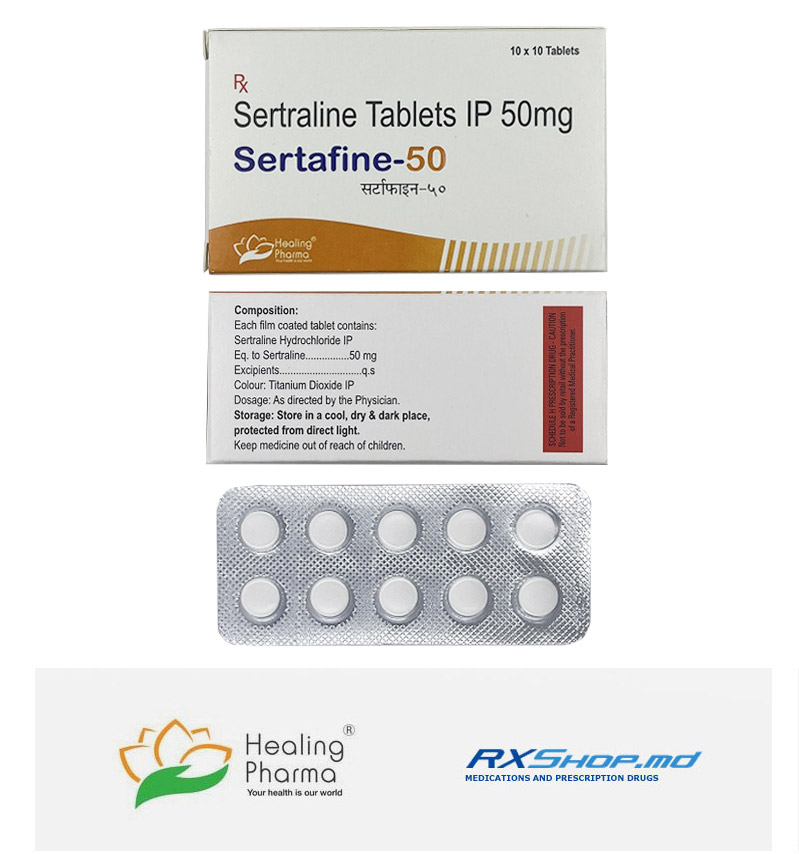
Sertafine is an affordable generic Sertraline — a selective serotonin reuptake inhibitor (SSRI) antidepressant manufactured by Indian pharmaceutical companies to international quality standards. Providing the same therapeutic activity as the original branded Zoloft (Pfizer) at significantly lower cost, Sertafine expands global access to one of the world's most-prescribed antidepressants — frequently ranked the single most-prescribed psychiatric medication globally due to its broad FDA-approved indication range and preferred use in pregnancy.
The active ingredient is Sertraline Hydrochloride, an SSRI that works through highly selective inhibition of presynaptic serotonin reuptake transporters. Sertraline has additional mild dopamine reuptake inhibition (clinically minor) and sigma-1 receptor binding. The drug demonstrates lower CYP450 enzyme interactions than most other SSRIs — supporting its favorable tolerability profile.
Sertafine is FDA-approved for major depressive disorder (MDD), panic disorder, obsessive-compulsive disorder (OCD) — uniquely including pediatric patients ages 6 and older (the youngest FDA-approved SSRI age range for OCD), post-traumatic stress disorder (PTSD), social anxiety disorder, and premenstrual dysphoric disorder (PMDD). Off-label uses include generalized anxiety disorder, bipolar depression adjunct, premature ejaculation, body dysmorphic disorder, postpartum depression, and various other anxiety-spectrum conditions.
The medication is available as 25, 50, and 100 mg tablets and 20 mg/mL oral concentrate solution. Standard adult dosing for depression starts at 50 mg once daily, with target maintenance dose of 50-200 mg/day (maximum 200 mg/day). For pediatric OCD ages 6-12, starting dose is 25 mg/day; for ages 13-17, 50 mg/day starting.
Critical safety considerations include the FDA boxed warning for suicidal ideation in pediatric, adolescent, and young adult patients during treatment initiation, serotonin syndrome risk (with MAOIs, triptans, other serotonergic agents), SIADH-related hyponatremia (especially elderly), bleeding risk, sexual dysfunction, SSRI discontinuation syndrome, GI side effects (most common SSRI side effect for sertraline), and activation syndrome.
Free prescription
Discrete packaging
Have questions?
Quality Assurance

- Adult First Episode Depression: First-line SSRI for adult first-episode major depression;
- Recurrent Depression Maintenance: For long-term maintenance therapy preventing depression recurrence;
- Panic Disorder: FDA-approved for panic disorder with or without agoraphobia;
- Agoraphobia: For panic disorder with agoraphobia component;
- OCD / Obsessive Compulsive Disorder: FDA-approved for OCD in adults and pediatric patients ages 6 and older;
- Pediatric OCD Age 6: FDA-approved for pediatric OCD from age 6 — youngest FDA-approved SSRI for OCD;
- Childhood OCD: For childhood OCD in pediatric patients ages 6-12 years;
- Adolescent OCD: For adolescent OCD in patients 13-17 years;
- PTSD / Post Traumatic Stress Disorder: FDA-approved for post-traumatic stress disorder;
- Combat PTSD: Standard SSRI for combat-related PTSD in veterans;
- Social Anxiety Disorder / Social Phobia: FDA-approved for social anxiety disorder (social phobia);
- PMDD / Premenstrual Dysphoric Disorder: FDA-approved for premenstrual dysphoric disorder — continuous or luteal dosing;
- Generalized Anxiety Disorder (GAD): Off-label for generalized anxiety disorder;
- Pregnancy Depression: Preferred SSRI for depression during pregnancy — most extensive safety data;
- Postpartum Depression: Preferred SSRI for postpartum depression — compatible with breastfeeding;
- Breastfeeding Depression: Preferred SSRI in breastfeeding mothers — lowest milk transfer among SSRIs;
- Bipolar Depression Adjunct: Off-label adjunct for bipolar depression in patients on mood stabilizers;
- Body Dysmorphic Disorder: Off-label for body dysmorphic disorder — OCD-spectrum condition;
- Trichotillomania: Off-label for trichotillomania (hair-pulling disorder);
- Premature Ejaculation: Off-label for premature ejaculation — serotonergic delay of orgasm;
- Menopausal Hot Flashes: Off-label for menopausal hot flashes;
- IBS / Irritable Bowel Syndrome: Off-label for IBS with comorbid anxiety or depression;
- Geriatric Depression: For geriatric depression — favorable drug interaction profile;
- Long Term Antidepressant Maintenance: Suitable for long-term maintenance therapy in chronic depression and anxiety.
- Less Depression: FDA-approved reduction in major depressive disorder symptoms;
- Less Anhedonia: Restoration of pleasure and interest in previously enjoyed activities;
- Better Energy: Improvement in depression-related fatigue and low energy;
- Better Concentration: Improvement in depression-related cognitive impairment;
- Better Appetite: Normalization of depression-related appetite disturbances;
- Less Panic Attacks: FDA-approved reduction in panic attack frequency and severity;
- Less Obsessions: FDA-approved reduction in intrusive obsessive thoughts in OCD;
- Less Compulsions: FDA-approved reduction in compulsive behaviors in OCD;
- Less PTSD Symptoms: FDA-approved reduction in PTSD hyperarousal and intrusion symptoms;
- Less Combat PTSD Flashbacks: Reduction in combat-related PTSD flashbacks and nightmares;
- Less Social Anxiety: FDA-approved reduction in social anxiety symptoms enabling social functioning;
- Less PMDD Symptoms: FDA-approved reduction in premenstrual dysphoric symptoms;
- Less Anxiety: Off-label reduction in generalized anxiety disorder symptoms;
- Less Suicidal Ideation: Long-term reduction in suicidal thoughts with effective depression treatment;
- Better Sleep: Improvement in depression-related sleep disturbances over weeks of therapy;
- Better Daily Function: Return to school, work, and normal activities;
- Better Quality of Life: Substantial improvement in overall quality of life with effective therapy;
- Brand Sertafine: Affordable Indian generic Sertraline with international quality manufacturing standards;
- Generic Sertraline: Affordable generic Sertraline expanding global access to most-prescribed SSRI therapy;
- Zoloft Equivalent: Same Sertraline molecule as original Pfizer brand Zoloft with bioequivalent therapeutic profile;
- Lustral Equivalent: Same Sertraline molecule as UK brand Lustral;
- SSRI Antidepressant: First-line SSRI class antidepressant with established mechanism;
- Most Prescribed Antidepressant Globally: Frequently ranked the single most-prescribed psychiatric medication worldwide;
- Mild Dopamine Reuptake Inhibition: Mild additional dopamine reuptake inhibition unique among SSRIs;
- Sigma 1 Receptor Binding: Sigma-1 receptor binding contributes to therapeutic profile;
- Low CYP450 Interactions: Lower CYP450 enzyme interactions than most other SSRIs — favorable polypharmacy profile;
- MDD First Line SSRI: First-line SSRI for major depressive disorder per psychiatric guidelines;
- Pediatric OCD Earliest SSRI: Youngest FDA-approved SSRI age range for OCD (from age 6);
- Pregnancy Preferred SSRI: Preferred SSRI for depression during pregnancy — most extensive safety data;
- Breastfeeding Preferred SSRI: Preferred SSRI in breastfeeding mothers — lowest milk transfer among SSRIs;
- Postpartum Depression First Line: First-line SSRI for postpartum depression management;
- Combat PTSD Veterans: Standard SSRI for combat-related PTSD in military veterans;
- Geriatric Friendly SSRI: Suitable for elderly patients due to favorable drug interaction profile;
- Once Daily SSRI: Convenient once-daily dosing supports excellent adherence;
- Indian Quality Manufacturing: Indian manufacturing meeting international quality and bioequivalence standards;
- Affordable SSRI: Cost-effective SSRI globally — supports access in resource-limited settings;
- WHO Essential Medicine: Listed on the WHO Model List of Essential Medicines for depression and anxiety care;
- 30 Plus Year SSRI History: Extensive real-world safety and efficacy data since 1991 across billions of patient courses.
Generic Sertafine (Sertraline 50 mg) Medication guide:
📖 What Is Sertafine and Its Generic Sertraline Identity
Sertafine is a generic brand of sertraline hydrochloride, one of the most widely prescribed SSRIs worldwide with the same active pharmaceutical ingredient as brand-name Zoloft. As FDA-approved generic medication, Sertafine provides the established therapeutic benefits of sertraline for depression, OCD, panic disorder, PTSD, social anxiety, and PMDD at substantially lower cost than brand equivalents. Sertraline is often preferred first-line SSRI given best overall tolerability profile and pregnancy/breastfeeding safety data.
📋 Sertafine essentials
- Active ingredient
- Sertraline hydrochloride - identical to Zoloft and all other sertraline products
- Generic status
- FDA-approved generic under bioequivalence standards; AB-rated therapeutic equivalence to reference sertraline product
- Drug class
- Selective serotonin reuptake inhibitor (SSRI); naphthalenamine chemical class
- FDA-approved indications (via reference product)
- Major depressive disorder (1991), OCD adults and pediatric age 6+ (1996-1999), panic disorder (1997), PTSD (2000), social anxiety disorder (2003), PMDD (Zoloft)
- Primary characteristics
- Best overall SSRI tolerability profile; preferred SSRI in pregnancy, breastfeeding, elderly, post-MI; broadest FDA indications alongside paroxetine
- Formulations
- Tablets 25, 50, 100 mg (same strengths as brand); oral concentrate 20 mg/mL
- Adult dose range
- 25-200 mg once daily typically; starting dose 25-50 mg
- Cost advantage
- Substantially lower cost than brand Zoloft; typically 60-90 percent less expensive; widely available generic
| What generic Sertafine provides | Clinical implication |
|---|---|
| Identical active ingredient to Zoloft | Same sertraline hydrochloride pharmacology |
| FDA bioequivalence certification | 80-125 percent AUC/Cmax comparable to reference; therapeutic equivalence |
| Same dosing regimens as brand | No dose conversion needed when switching |
| Same side effect profile | Best overall SSRI tolerability preserved |
| Same drug interactions | Minimal CYP inhibition profile advantage preserved |
| Same 6 FDA-approved indications | Broadest SSRI approval range alongside paroxetine |
| Substantially lower cost | Improves adherence for chronic therapy across depression and anxiety disorders |
| Widespread availability | Multiple manufacturers; no supply concerns |
| Preferred SSRI in pregnancy | Most safety data; no cardiac malformation concerns unlike paroxetine |
| Preferred SSRI in breastfeeding | Extensive lactation safety data; low RID |
💡 The generic Sertafine proposition
Sertafine represents genuine cost-effective alternative to brand-name Zoloft with substantially identical therapeutic effect. Combined with sertraline's inherent advantages as arguably best all-around SSRI (broad FDA approvals, best overall tolerability, preferred in pregnancy/breastfeeding/elderly, favourable overdose profile, minimal CYP interactions), generic Sertafine offers excellent value proposition. For chronic therapy required for depression maintenance, anxiety disorder treatment, or OCD management (all often requiring long-term therapy), cost differential between brand and generic accumulates substantially. Modern practice in 2020s widely uses generic sertraline as standard - brand Zoloft rarely used for new prescriptions given equivalent generic availability at fraction of cost. For patients starting SSRI therapy or transitioning from brand Zoloft, generic Sertafine provides genuine value option with no clinical compromise.
📜 Sertraline History and Modern Generic Availability
The sertraline story began with Pfizer research in 1970s-1980s, culminating in FDA approval of reference product Zoloft in December 1991. As patent protection expired in 2006, generic sertraline products including formulations like Sertafine became available at substantially reduced cost. Generic sertraline has become the standard of prescribing globally.
📅 Sertraline history and generic transition
- 1970s
- Pfizer research on tametraline analogs; sertraline synthesized as improved compound with SSRI selectivity
- 1980s
- Preclinical development; recognition of SSRI activity with weak dopamine reuptake inhibition (distinctive property)
- December 1991
- FDA approves Zoloft (sertraline) for major depressive disorder in United States (second SSRI after fluoxetine 1987)
- 1996
- FDA approves Zoloft for adult OCD; expansion into anxiety disorders begins
- 1997
- FDA approves Zoloft for panic disorder
- 1999
- FDA approves Zoloft for pediatric OCD (age 6+); first SSRI pediatric OCD approval
- 2000
- FDA approves Zoloft for PTSD (alongside paroxetine 2001); establishes SSRI PTSD treatment paradigm
- 2002
- Glassman JAMA publishes SADHART trial establishing sertraline safety in post-MI depression; landmark cardiac safety data
- 2003
- FDA approves Zoloft for social anxiety disorder; PMDD approval
- 2004-2007
- Suicidality black box warnings applied to sertraline as antidepressant class effect
- June 2006
- US patent protection expires; generic sertraline enters market rapidly; substantial price reduction begins
- Late 2000s onwards
- Generic sertraline dominates prescribing globally; brand Zoloft market share declines substantially; sertraline becomes most-prescribed antidepressant in US and many countries
- 2018
- Cipriani Lancet network meta-analysis confirms sertraline among most effective antidepressants alongside escitalopram, paroxetine, vortioxetine, agomelatine, mirtazapine
- 2020s
- Sertraline consistently ranked among top-prescribed medications globally; established as workhorse antidepressant with broadest utility
📌 Historical significance
- Second SSRI to US market after fluoxetine; established SSRI competition
- Broad FDA indication portfolio - 6 major indications including pediatric OCD
- First FDA-approved SSRI for pediatric OCD (1999) - age 6+
- First FDA-approved medication for PTSD alongside paroxetine (2000)
- SADHART landmark trial - established sertraline safety in cardiac disease
- Extensive real-world validation across billions of patient-years globally
- Cipriani 2018 top-tier ranking - among most effective antidepressants
- Most-prescribed antidepressant in US and many countries in 2020s
- Guideline recognition worldwide - CANMAT, WFSBP, BAP, NICE all include as first-line
💡 From breakthrough to standard of care
Sertraline's trajectory represents the model successful antidepressant development: distinguished efficacy, broad clinical utility across depression and anxiety disorders, favourable tolerability profile, and successful transition from expensive brand to affordable generic providing sustained global access. Three decades of clinical experience has confirmed sertraline as arguably the best all-around SSRI - not necessarily best for every indication or every patient, but reasonable first-line choice for most SSRI-appropriate patients given: broad FDA approvals; favourable tolerability profile; preferred status in pregnancy, breastfeeding, elderly, and cardiac patients; minimal drug interactions; favourable overdose profile. Cipriani 2018 meta-analysis findings positioning sertraline among most effective antidepressants alongside expensive alternatives (vortioxetine, escitalopram) reinforce its value proposition. Combined with cost-effective generic availability, Sertafine represents excellent starting point for SSRI therapy across broad range of indications.
⚗️ Chemistry - Naphthalenamine SSRI Structure Same as Brand
Sertafine contains sertraline hydrochloride identical to that in brand-name Zoloft. The naphthalenamine chemical structure, receptor binding properties, and pharmacological profile are exactly the same. FDA generic approval requires demonstration of chemical identity plus bioequivalent absorption and distribution profile.
⚗️ Structural features - identical to brand
- Chemical name
- (1S,4S)-4-(3,4-dichlorophenyl)-N-methyl-1,2,3,4-tetrahydronaphthalen-1-amine hydrochloride
- Structural class
- Naphthalenamine SSRI (tetralin derivative); distinct from other SSRI chemical scaffolds
- Chemical identity
- Identical to brand Zoloft and all other sertraline products - same molecule, same pharmacology
- Stereochemistry
- Two chiral centers; therapeutic sertraline is (1S,4S) enantiomer; single stereoisomer
- Molecular weight
- Approximately 306 g/mol (base); 343 g/mol as hydrochloride salt
- Excipient differences
- Generic formulations may use slightly different fillers, binders (inactive ingredients); may affect appearance but not therapeutic effect
- Solubility and lipophilicity
- Water-soluble hydrochloride salt; lipophilic; excellent CNS penetration - identical for all sertraline products
🔬 Receptor binding profile - identical to brand
- Serotonin transporter (SERT): potent inhibitor; Ki approximately 0.3 nM; among most potent SSRIs
- Dopamine transporter (DAT): WEAK inhibition (distinctive among SSRIs); Ki approximately 25 nM; may contribute to slight activation effect
- Norepinephrine transporter (NET): weak effect (not clinically significant at therapeutic doses)
- Muscarinic receptors: minimal binding; no clinically relevant anticholinergic effect
- Histamine H1: minimal binding; no significant sedation
- Alpha-1 adrenergic: minimal binding
- Sigma receptors: modest binding; possible antidepressant contribution
- Sodium channels: NO effect - favourable overdose profile
| Aspect | Sertafine generic | Brand Zoloft |
|---|---|---|
| Active ingredient | Sertraline HCl | Sertraline HCl (identical) |
| Molecular structure | Identical | Identical |
| Receptor binding | Identical | Identical |
| Therapeutic effect | Same | Same |
| Available strengths | 25, 50, 100 mg | 25, 50, 100 mg |
| Excipients (inactive) | May differ slightly | Original formulation |
| Tablet appearance | May differ (color, markings) | Original brand appearance |
💡 The dopamine reuptake distinction
Sertraline's distinctive feature among SSRIs is the weak dopamine reuptake inhibition. While other SSRIs (fluoxetine, escitalopram, paroxetine, fluvoxamine, citalopram) have essentially pure SERT selectivity, sertraline shows measurable DAT inhibition at higher doses. Clinical significance is debated but may contribute to: (1) slight activation potential; (2) less prominent emotional blunting; (3) preserved motivation; (4) possible benefit for anhedonia. This distinctive property does not make sertraline an SNDRI (serotonin-norepinephrine-dopamine reuptake inhibitor) since the DAT effect is modest, but does provide subtle profile distinction from purer SSRIs. This distinction is preserved in generic Sertafine given identical active ingredient. For patients where slight activation and motivation preservation are therapeutically desired, sertraline may offer advantage over pure SSRIs.
🧠 SSRI Mechanism With Weak Dopamine Reuptake Component
Sertafine primary mechanism is potent selective serotonin reuptake inhibition with weak dopamine reuptake inhibition as distinctive secondary feature. This produces standard SSRI antidepressant and anxiolytic effects with subtle activation potential. Sigma-1 receptor binding may also contribute.
🧠 Primary mechanism - serotonin reuptake
- Serotonin transporter (SERT) inhibition
- Highly potent SERT blockade; sub-nanomolar affinity; blocks reuptake of serotonin into presynaptic neurons
- Synaptic serotonin increase
- Increased serotonin availability in synaptic cleft; enhanced serotonergic neurotransmission across multiple 5-HT receptor subtypes
- Downstream adaptations
- 2-6 weeks: 5-HT1A autoreceptor desensitization allows sustained serotonin release; postsynaptic receptor changes; BDNF upregulation; neurogenesis
- Therapeutic effect timeline
- Initial improvement 1-2 weeks; substantial response 4-6 weeks; full effect 6-8 weeks for depression; 8-12+ weeks for anxiety disorders and OCD
🔬 Secondary mechanisms - distinctive features
- Weak dopamine reuptake inhibition (distinctive)
- Modest DAT inhibition at higher doses; unique among SSRIs; may contribute to activation potential, motivation preservation, less emotional blunting
- Sigma-1 receptor binding
- Modest sigma-1 binding; possible contribution to antidepressant effect; role incompletely understood
- Minimal off-target effects
- Very clean profile - no significant anticholinergic, antihistaminergic, alpha-1 antagonism, sodium channel effects unlike TCAs or some SSRIs (paroxetine)
🎯 Mechanism-condition mapping
- Major depressive disorder
- SSRI mechanism through serotonergic modulation and downstream neuroplasticity; 4-6 weeks for substantial response
- OCD
- Higher-dose serotonergic effect modulates OCD circuit; may require 100-200 mg for full OCD response; 8-12+ weeks trial needed
- Panic disorder
- SERT inhibition modulates panic circuit; amygdala and brainstem regulation
- PTSD
- Serotonergic modulation of intrusive memories, hyperarousal; addresses all four PTSD symptom clusters
- Social anxiety disorder
- Serotonergic modulation of social threat perception
- PMDD
- Rapid effect on affective symptoms; can be dosed continuously or luteal-phase only
💡 The clean mechanism-broad indication combination
Sertraline's clean mechanism profile (potent SERT + weak DAT + minimal off-targets) combined with broad clinical utility across depression and multiple anxiety disorders makes it particularly attractive antidepressant. Unlike paroxetine (anticholinergic effects), fluoxetine (long half-life complications), fluvoxamine (CYP1A2 inhibition), or citalopram (QT concerns), sertraline avoids most off-target concerns while providing robust efficacy. The weak dopamine effect may provide subtle advantages for motivation and activation without producing the pronounced activation of bupropion. Combined with generic availability, favourable interaction profile, preferred pregnancy/breastfeeding status, and broad FDA approvals, Sertafine represents excellent all-around SSRI option. This clean profile is why sertraline is often first choice when SSRI therapy is needed across broad range of clinical situations.
🔬 Pharmacokinetics - Linear Kinetics and Long Half-Life
Sertraline has favourable pharmacokinetic properties including linear kinetics, long half-life supporting once-daily dosing, and minimal active metabolites. These properties are identical for Sertafine given same active ingredient. FDA bioequivalence approval ensures similar absorption profile to reference product.
🔬 PK parameters (same as brand sertraline)
- Absorption
- Well-absorbed orally; Tmax approximately 4-8 hours; bioequivalent to brand within FDA standards
- Bioavailability
- Approximately 44 percent (extensive first-pass metabolism)
- Food effect
- Modest food effect (increased 32 percent absorption with food); can be taken with or without food but consistency recommended
- Protein binding
- Approximately 98 percent (highly protein-bound)
- Volume of distribution
- Very large: approximately 20 L/kg; extensive tissue distribution including CNS
- Half-life
- Approximately 26 hours (favourable for once-daily dosing); somewhat longer in women and elderly
- Steady-state
- Reached in approximately 7 days
- Active metabolites
- Desmethylsertraline (weakly active but shorter half-life); does not contribute significantly to clinical effect - simpler PK than fluoxetine/norfluoxetine or venlafaxine/desvenlafaxine
- Metabolism
- Extensive hepatic: multiple CYP pathways including CYP2B6, CYP2C19, CYP2C9, CYP3A4, CYP2D6; provides redundancy against interactions
- Elimination
- Primarily renal excretion of metabolites; less than 0.2 percent unchanged parent in urine
- Linear pharmacokinetics
- Dose-proportional exposure; unlike paroxetine (nonlinear autoinhibition); predictable dose-response
💡 The favourable PK profile
Sertraline's pharmacokinetic profile represents advantages: (1) linear kinetics provide predictable dose-response (unlike paroxetine); (2) long half-life supports once-daily dosing; (3) multiple redundant metabolic pathways reduce interaction concerns; (4) no clinically significant active metabolites simplify PK relationship; (5) high protein binding reduces distribution to tissues potentially affected; (6) minimal renal elimination reduces renal impairment concerns. These properties make sertraline predictable and easy to prescribe. Steady-state reached in approximately 1 week means dose adjustments can be evaluated within 2 weeks. Combined with minimal drug interactions and favourable tolerability, Sertafine is one of most straightforward antidepressants to prescribe and monitor.
📋 Bioequivalence and Regulatory Standards for Generic Sertraline
FDA generic drug approval requires strict bioequivalence demonstration to reference product. This section explains the regulatory standards ensuring Sertafine provides therapeutically equivalent effect to brand Zoloft. Understanding bioequivalence framework helps patients trust generic substitution.
📋 FDA generic drug approval standards
- Abbreviated New Drug Application (ANDA)
- FDA pathway for generic drug approval established by Hatch-Waxman Act 1984; relies on brand safety and efficacy data
- Same active ingredient required
- Generic must contain identical active ingredient (sertraline hydrochloride)
- Same strength and dosage form
- Generic strengths must match reference (25, 50, 100 mg tablets)
- Bioequivalence demonstration
- Pharmacokinetic testing in healthy volunteers; AUC and Cmax must be within 80-125 percent range (90 percent confidence interval)
- Good Manufacturing Practices
- Generic manufacturers must meet same FDA GMP standards as brand manufacturers
- FDA Orange Book
- Lists approved generic products with therapeutic equivalence ratings; AB rating indicates therapeutic equivalence
| Bioequivalence parameter | FDA requirement | Clinical meaning |
|---|---|---|
| AUC (total exposure) | 80-125% range | Similar total drug in body over time |
| Cmax (peak concentration) | 80-125% range | Similar peak drug concentration |
| Tmax (time to peak) | Similar profile | Similar absorption timing |
| Confidence interval | 90% CI within limits | Statistical reliability |
| Chemical identity | Identical active ingredient | Same molecule = same effect |
| Manufacturing standards | Same GMP as brand | Same quality assurance |
🔬 Sertraline-specific bioequivalence considerations
- Well-suited for generic substitution: linear PK, straightforward absorption, no complex formulation
- Extensive generic experience: many generic manufacturers over decades; well-validated bioequivalence
- Real-world validation: billions of patient-doses of generic sertraline used globally
- Consistent quality assurance: FDA post-marketing surveillance monitors generic quality
- No narrow therapeutic index concerns: sertraline dose-response robust to modest PK variation
💡 The 80-125 percent range - what it means practically
The FDA 80-125 percent bioequivalence range often generates patient concern about generic-brand equivalence. Practical interpretation: this range represents statistical acceptance boundary; most generic products fall much closer to 100 percent than the limits. Studies have consistently shown mean bioavailability differences between generic and brand products are typically less than 5 percent - well within therapeutic equivalence. For sertraline specifically, extensive clinical experience across decades of generic use has validated equivalent clinical outcomes to brand. Sertraline's linear pharmacokinetics and robust dose-response make it particularly well-suited for generic substitution - modest PK variations that might affect narrow therapeutic index drugs (warfarin, digoxin) do not clinically affect sertraline response. For patients concerned about generic-brand equivalence, discussion of FDA framework and extensive real-world validation provides reassurance. Combined with substantial cost savings, generic Sertafine represents excellent value without meaningful clinical compromise.
🧩 Major Depressive Disorder Treatment With Sertafine
Major depressive disorder was sertraline's founding FDA indication (1991). Cipriani 2018 meta-analysis ranks sertraline among most effective antidepressants for depression. Combined with best overall SSRI tolerability profile and favourable safety in special populations, Sertafine represents excellent first-line depression treatment.
🧩 Sertafine in MDD
- Efficacy positioning
- Cipriani 2018 top-tier effectiveness alongside escitalopram, paroxetine, vortioxetine, agomelatine, mirtazapine
- Response rate
- Approximately 55-65 percent response; comparable to other effective antidepressants
- Onset of effect
- Initial improvement 1-2 weeks; substantial response 4-6 weeks; full effect 6-8 weeks
- Dosing for depression
- Start 25-50 mg; typical target 50-100 mg; maximum 200 mg; most patients respond at 50-100 mg
- Guideline positioning
- CANMAT, WFSBP, BAP, NICE all include sertraline as first-line antidepressant; often cited as preferred SSRI
- Special population preference
- Preferred SSRI in pregnancy, breastfeeding, elderly, post-MI patients - unique across-population utility
🌟 Sertafine scenarios ideally suited for MDD
- First-line uncomplicated depression: excellent all-around choice
- Anxious depression: broad anxiety spectrum FDA approvals
- Depression in pregnancy: preferred SSRI given most safety data
- Postpartum depression during breastfeeding: preferred SSRI given breastfeeding safety
- Elderly depression: often preferred SSRI given clean tolerability
- Post-MI depression: SADHART trial validated safety in cardiac patients
- Depression with anxious features: single medication addresses both
- Adolescent depression: FDA-approved for pediatric OCD; used off-label for adolescent depression
- Cost-conscious situations: inexpensive generic
💡 The best all-around SSRI reality
Sertraline is arguably the best all-around SSRI for most clinical situations. Cipriani 2018 confirms top-tier effectiveness. Combined with best overall SSRI tolerability, favourable special population profiles, minimal drug interactions, favourable overdose, and cost-effective generic availability, sertraline represents excellent first-line SSRI choice for majority of depression patients. Alternatives may be preferred for specific circumstances: escitalopram for slight tolerability edge in some patients; mirtazapine for insomnia+depression; bupropion for weight-neutral or activation-desiring; vortioxetine for cognitive-focused. But for standard depression treatment, Sertafine (generic sertraline) is often reasonable first choice. The broad FDA approvals across depression and anxiety disorders provide additional confidence for anxious depression or comorbid presentations. This positioning as workhorse SSRI reflects three decades of clinical validation.
🔁 Obsessive-Compulsive Disorder Treatment Considerations
OCD is important FDA-approved sertraline indication - approved for adults (1996) and pediatric patients age 6+ (1999 - first pediatric OCD SSRI approval). Sertraline provides established option for OCD often preferred among SSRIs given established evidence base, favourable pediatric approval, and generally favourable tolerability.
🔁 Sertafine in OCD
- Evidence base
- Greist 1995 landmark adult OCD trial; Cook 2001 pediatric OCD; substantial evidence base including long-term maintenance
- First pediatric OCD SSRI approval
- Sertraline (1999) was first SSRI FDA-approved for pediatric OCD (age 6+); established SSRI pediatric OCD paradigm
- Response rate
- Approximately 45-55 percent achieve substantial improvement; comparable to other SSRIs
- Dosing for OCD
- Higher than depression: 100-200 mg typically; some patients benefit from 200 mg maximum
- Pediatric OCD dosing
- Age 6-12: start 25 mg, target 50-100 mg; Age 13-17: start 25-50 mg, target 100-200 mg
- Time to effect
- 8-12 weeks minimum for adequate trial; some patients may respond by 24 weeks; longer than depression
- CBT with ERP essential
- Exposure and response prevention therapy complements medication; combined therapy provides best outcomes
- Long-term therapy
- OCD typically chronic; long-term therapy often required; relapse common with discontinuation
🎯 OCD treatment framework
- First-line pharmacotherapy: SSRIs (sertraline often preferred; fluoxetine, fluvoxamine, paroxetine also FDA-approved)
- Sertraline advantages for OCD: pediatric approval, favourable tolerability, linear PK, minimal interactions
- Higher doses needed: OCD typically requires higher SSRI doses than depression
- Clomipramine (TCA): gold standard for treatment-resistant OCD; more effective than SSRIs but worse tolerability
- CBT with ERP essential: cornerstone of OCD treatment
- Augmentation for treatment-resistant: antipsychotic augmentation (risperidone, aripiprazole)
- Long-term treatment expected: OCD chronic; many patients need lifelong therapy
💡 The pediatric OCD sertraline preference
Sertraline's pediatric OCD FDA approval (age 6+) makes it particularly valuable for pediatric OCD treatment - many other SSRIs used off-label in this population. Combined with substantial evidence base, favourable pediatric safety data, and generally acceptable tolerability, sertraline is often first choice for pediatric OCD. For adult OCD, sertraline provides established option among several SSRI choices - all comparable efficacy. Fluvoxamine has unique OCD history (Luvox), fluoxetine long half-life provides discontinuation cushion, paroxetine has anxiety spectrum approvals. For most OCD patients (adult or pediatric), sertraline represents excellent all-around choice given evidence base, tolerability, pediatric approval extending its utility. Combined with essential CBT with ERP by qualified therapist, sertraline provides comprehensive OCD treatment. Long-term therapy expectation should be established with patient given OCD chronicity.
💥 Panic Disorder Treatment With Sertafine
Panic disorder is FDA-approved sertraline indication (1997). Sertraline provides established SSRI option for panic disorder with substantial evidence base including Pollack 1998 landmark trial. Often preferred SSRI for panic given favourable tolerability profile.
💥 Sertafine in panic disorder
- Evidence base
- Pollack 1998 landmark panic disorder trial; multiple positive randomized controlled trials
- Response rate
- Approximately 60-75 percent achieve substantial panic reduction; among most effective SSRIs for panic
- Dosing
- Start LOW: 25 mg for first week (avoid activation); increase to 50 mg; titrate to 50-200 mg based on response
- Time to effect
- 4-6 weeks for panic frequency reduction; 8-12 weeks for substantial improvement
- Activation concern
- Some patients experience initial worsening of panic (activation); low start doses reduce this concern
- Better tolerability than paroxetine
- Sertraline generally better tolerated with less prominent discontinuation syndrome than paroxetine for panic patients (where discontinuation symptoms mimicking panic recurrence particularly problematic)
🎯 Panic disorder treatment framework
- First-line pharmacotherapy: SSRIs (sertraline, paroxetine, escitalopram) or venlafaxine SNRI
- Sertraline often preferred among SSRIs: better tolerability than paroxetine, less discontinuation concern
- CBT combination: substantial evidence; often preferred combination approach
- Benzodiazepines: adjunct early therapy for bridging; not preferred monotherapy
- Long-term therapy typical: 12+ months minimum
- Discontinuation planning: relapse common with discontinuation
🧠 Post-Traumatic Stress Disorder Treatment Approach
Post-traumatic stress disorder is FDA-approved sertraline indication (2000). Sertraline was among the first FDA-approved medications for PTSD (with paroxetine 2001). Brady JAMA 2000 landmark trial established sertraline PTSD efficacy. Given tolerability advantages, sertraline is often preferred first-line SSRI for PTSD treatment.
🧠 Sertafine in PTSD
- Historical significance
- One of first FDA-approved medications for PTSD (2000); established SSRI PTSD treatment paradigm alongside paroxetine
- Evidence base
- Brady et al. JAMA 2000 landmark trial; large evidence base from combat and civilian PTSD studies
- Response rate
- Approximately 55-65 percent achieve substantial improvement
- Dosing
- Start 25 mg; titrate to 50-200 mg based on response; higher doses may be needed for full response
- Time to effect
- 6-12 weeks for substantial response; PTSD may require longer adequate trial than depression
- VA/DoD guidelines
- Sertraline and paroxetine both recommended first-line pharmacotherapy for PTSD
- Sertraline preferred over paroxetine for PTSD often
- Better tolerability, less prominent discontinuation syndrome, safer pregnancy profile
- Symptom clusters addressed
- All four PTSD symptom clusters improve: intrusion, avoidance, negative cognitions, hyperarousal
🎯 PTSD treatment framework
- Trauma-focused psychotherapy: first-line preferred (EMDR, cognitive processing therapy, prolonged exposure)
- Pharmacotherapy first-line: sertraline or paroxetine (FDA-approved); venlafaxine (evidence-based)
- Combined therapy: often optimal outcomes
- Second-line pharmacotherapy: mirtazapine, prazosin (specifically for nightmares)
- Prazosin: alpha-1 antagonist specifically for combat PTSD nightmares
- Benzodiazepines: generally avoided; may worsen PTSD
- Long-term therapy: often years given PTSD chronicity
💡 The preferred PTSD SSRI
Between the two FDA-approved SSRIs for PTSD (sertraline and paroxetine), sertraline is often preferred first choice given tolerability advantages: substantially less prominent discontinuation syndrome (important given long-term therapy typical for PTSD); better pregnancy safety profile (relevant for female patients); less anticholinergic burden; not on Beers inappropriate list. Yehuda's extensive PTSD research supports SSRI positioning as first-line pharmacotherapy. Combined with trauma-focused therapy (strongest PTSD evidence base), medication provides substantial benefit. For combat PTSD with prominent nightmares, adjunctive prazosin is often used. Long-term therapy is typically necessary given PTSD chronicity. Combined with essential access to trauma-focused psychotherapy, sertraline provides established PTSD treatment option with substantial evidence base and favourable tolerability at cost-effective generic pricing.
👥 Social Anxiety Disorder and PMDD Applications
Social anxiety disorder and PMDD represent additional sertraline FDA approvals. SAD approval (2003) and PMDD indication provide broad utility for female-specific and social anxiety patients. Van Ameringen 2001 established SAD efficacy; Yonkers 1997 established PMDD utility.
👥 Sertafine in social anxiety disorder
- Evidence base
- Van Ameringen 2001 landmark trial; substantial evidence base for generalized SAD
- Response rate
- Approximately 55-70 percent achieve substantial improvement
- Dosing
- Start 25 mg; titrate to 50-200 mg; may require higher doses than depression
- Time to effect
- 4-6 weeks initial; 8-12 weeks substantial response; may continue improving over 6 months
- Generalized SAD
- Common form treated; multiple social situations avoided
- Performance-only SAD
- SSRI less clearly indicated; beta-blockers alternative for performance situations
🌸 Sertafine for PMDD (premenstrual dysphoric disorder)
- FDA indication
- Approved for PMDD; provides evidence-based option for severe premenstrual mood symptoms
- Evidence base
- Yonkers 1997 established PMDD efficacy; multiple confirmatory trials
- Dosing options
- Continuous daily dosing (50-150 mg) OR luteal-phase dosing (starting 14 days before menses through menstruation)
- Luteal-phase advantage
- Reduced total drug exposure; may minimize sexual dysfunction concerns; SSRIs paradoxically show rapid effect for PMDD unlike depression
- Response rate
- Approximately 60-70 percent achieve substantial improvement
- Onset
- Rapid for PMDD (1-2 cycles) unlike depression (4-6 weeks); mechanism of rapid PMDD response incompletely understood
💡 The broad indication utility
Sertraline's broad FDA indication portfolio (6 approvals) provides utility across depression and anxiety spectrum plus PMDD. For female patients with depression + PMDD comorbidity, single medication addresses both. For SAD patients, sertraline provides established option with better tolerability than paroxetine. For PMDD specifically, sertraline luteal-phase dosing may minimize adverse effects while providing rapid symptom relief - unique feature of SSRIs in PMDD not seen in depression treatment. Combined with sertraline's general tolerability advantages and cost-effective generic availability, Sertafine provides valuable option across these varied conditions. Yonkers has been leading researcher on PMDD treatment; her work supports SSRI positioning as first-line pharmacotherapy for PMDD.
💰 Generic Sertafine Versus Brand-Name Zoloft Comparison
Direct comparison between generic Sertafine and brand Zoloft shows therapeutic equivalence with substantial cost advantage for generic. Understanding what differs (essentially just cost and appearance) and what does not (therapeutic effect, safety, dosing) guides confident prescribing.
| Feature | Sertafine (generic) | Zoloft (brand) |
|---|---|---|
| Active ingredient | Sertraline HCl | Sertraline HCl (identical) |
| FDA approval status | FDA-approved generic (AB-rated) | FDA-approved reference product |
| Therapeutic effect | Same | Same |
| Dosing | Same regimens | Same regimens |
| Available strengths | 25, 50, 100 mg | 25, 50, 100 mg |
| FDA-approved indications | Same 6 indications | 6 indications (MDD, OCD, panic, PTSD, SAD, PMDD) |
| Side effect profile | Same | Same |
| Drug interactions | Same (minimal CYP inhibition) | Same (minimal CYP inhibition) |
| Pregnancy considerations | Preferred SSRI | Preferred SSRI |
| Breastfeeding preference | Preferred SSRI (extensive data) | Preferred SSRI (extensive data) |
| Post-MI safety | Preferred (SADHART evidence) | Preferred (SADHART evidence) |
| Elderly appropriateness | Preferred SSRI | Preferred SSRI |
| Excipients (inactive) | May differ slightly | Original brand formulation |
| Tablet appearance | May differ (color, markings) | Original brand appearance |
| Cost | Substantially lower (60-90% less) | Higher brand pricing |
| Insurance formulary status | Usually preferred generic | May require prior authorization |
🌟 When to choose Sertafine generic vs Zoloft brand
- New sertraline prescriptions: Sertafine generic generally reasonable first choice
- Cost consideration important: Sertafine substantially more affordable
- Insurance formulary preferring generic: Sertafine generally covered without special authorization
- Long-term therapy planned: cumulative cost savings substantial with Sertafine
- Established brand Zoloft response: switching to generic Sertafine generally maintains therapeutic effect
- Rare excipient sensitivity: switching between manufacturers may help if specific reaction
💡 The genuine value proposition
Sertafine generic sertraline provides genuine value proposition compared to brand Zoloft. The therapeutic effect is identical because the active ingredient molecule is identical. FDA bioequivalence standards ensure similar absorption profile. The only meaningful differences are: (1) substantially lower cost for generic; (2) possibly different appearance of tablets; (3) minor excipient variations rarely causing clinically significant differences. Modern prescribing practice in 2020s widely uses generic sertraline as standard - brand Zoloft rarely used for new prescriptions given equivalent generic availability. For patients concerned about generic-brand equivalence, discussion of FDA regulatory framework, sertraline's well-behaved linear pharmacokinetics well-suited for generic substitution, and extensive real-world validation over decades of use provides reassurance. Combined with substantial cost savings enabling affordable long-term therapy for depression, anxiety disorders, OCD, or PTSD management, generic Sertafine represents excellent value option across the six FDA-approved indications sertraline addresses.
📊 Adult Dosing Across Multiple Indications
Adult Sertafine dosing varies by indication with OCD requiring highest doses. Depression and most anxiety indications share similar dose ranges, while OCD typically requires higher doses. Understanding indication-specific dosing guides effective use.
| Indication | Starting | Target | Maximum |
|---|---|---|---|
| Major depressive disorder | 25-50 mg | 50-100 mg | 200 mg |
| OCD (higher doses) | 25-50 mg | 100-200 mg | 200 mg |
| Panic disorder | 25 mg (activation caution) | 50-200 mg | 200 mg |
| PTSD | 25 mg | 50-200 mg | 200 mg |
| Social anxiety disorder | 25 mg | 50-200 mg | 200 mg |
| PMDD (continuous) | 50 mg | 50-150 mg | 150 mg |
| PMDD (luteal phase only) | 50 mg | 50-100 mg | 100 mg |
| Pediatric OCD (age 6-12) | 25 mg | 50-100 mg | 100 mg |
| Pediatric OCD (age 13-17) | 25-50 mg | 100-200 mg | 200 mg |
📊 Dosing principles
- Starting dose
- 25-50 mg standard for depression; 25 mg for anxiety disorders (avoid activation); PMDD may start higher given rapid effect
- Titration
- Increase every 1-2 weeks by 25-50 mg based on response and tolerability; linear PK allows predictable titration
- Timing
- Once daily; morning if activation prominent; evening if sedation experienced; either time acceptable
- Food
- Increases absorption approximately 32 percent; take consistently with or without food; food may reduce nausea
- Missed dose
- Take as soon as remembered same day; skip if closer to next dose; long half-life reduces missed dose impact
- Duration
- Adequate trial 6-12 weeks depending on indication; maintenance 6-12 months for depression; long-term for OCD/PTSD often 12+ months
- Discontinuation
- Gradual taper over 2-4 weeks recommended; less prominent discontinuation syndrome than paroxetine or venlafaxine
💡 The higher-dose OCD consideration
OCD is the sertraline indication requiring highest doses (100-200 mg vs 50-100 mg for depression). This dose-response relationship holds for other SSRIs used for OCD (fluoxetine, fluvoxamine). At higher OCD doses, side effects may be more prominent - dose-related sexual dysfunction, GI effects, activation. However, sertraline's linear pharmacokinetics make higher-dose response predictable, unlike paroxetine's autoinhibition. For most patients, target dose within recommended range provides adequate response. For patients not responding at 200 mg, consider augmentation strategies or alternative SSRI rather than exceeding maximum dose. Combined with essential CBT with ERP, appropriate dosing provides comprehensive OCD treatment.
🧒 Pediatric Considerations and OCD FDA Approval
Sertraline has FDA-approved pediatric OCD indication (age 6+) - first SSRI approved for pediatric OCD in 1999. This gives sertraline unique pediatric utility among SSRIs. Off-label use for adolescent depression and other pediatric conditions also common with specialist involvement.
🧒 Pediatric considerations
- FDA-approved pediatric indication
- Pediatric OCD age 6+ (1999); first SSRI approved for pediatric OCD; substantial pediatric evidence base
- Black box warning applies
- Suicidality warning for antidepressants; particular concern under age 25; pediatric monitoring essential
- Pediatric OCD dosing
- Age 6-12: start 25 mg, target 50-100 mg (maximum 100 mg). Age 13-17: start 25-50 mg, target 100-200 mg
- Pediatric depression (off-label)
- Fluoxetine and escitalopram are FDA-approved for pediatric depression; sertraline off-label but sometimes used particularly if OCD comorbidity
- Adolescent anxiety disorders
- Off-label but commonly used; substantial evidence for SSRI class
- Pediatric PTSD
- Off-label; SSRI class effect; sertraline reasonable option given adult FDA approval
- Long-term therapy in children
- Long-term data reassuring; important to monitor growth, cognitive development
🌟 Pediatric OCD treatment framework
- Sertraline first-line pediatric OCD: FDA-approved with pediatric evidence base
- Fluoxetine alternative: also FDA-approved pediatric OCD; long half-life advantage
- Fluvoxamine alternative: FDA-approved pediatric OCD; more anticholinergic burden
- Family CBT with ERP essential: family-based cognitive behavioural therapy
- Family involvement in monitoring: critical for pediatric OCD treatment
- School accommodations: may be needed particularly for severe OCD
- Long-term follow-up: OCD often chronic; monitor into adulthood
🔴 Pediatric monitoring protocol
- Baseline suicidality assessment
- Weekly visits first 4 weeks
- Biweekly visits weeks 5-8
- Monthly visits weeks 9-12
- Family involvement in monitoring
- Written safety plan appropriate to child's age
- Emergency contact information
- Behavioural activation monitoring (mania, aggression)
- Growth and development monitoring long-term
- School functioning monitoring
💡 The pediatric OCD sertraline preference
Sertraline's pediatric OCD FDA approval (age 6+) combined with substantial pediatric evidence base makes it valuable first choice for pediatric OCD. The 1999 approval established SSRI pediatric OCD paradigm - previously pediatric OCD relied on clomipramine with substantial tolerability concerns. Sertraline provides much better-tolerated option enabling effective pediatric OCD treatment. Sheffield 2010 supports long-term pediatric sertraline safety. Combined with family-based CBT with ERP (essential complement), sertraline provides comprehensive pediatric OCD treatment. For adolescent depression, fluoxetine remains FDA-approved first choice, but sertraline is commonly used off-label particularly when OCD comorbidity or family history of sertraline response. For all pediatric use, careful monitoring for suicidality per black box warning is essential.
👴 Elderly Considerations - Often Preferred SSRI Choice
Sertraline is often preferred SSRI for elderly patients. Clean tolerability profile, minimal drug interactions, favourable cardiac safety (SADHART), and reasonable overdose profile make it well-suited to geriatric depression. Not on AGS Beers Criteria inappropriate list (unlike paroxetine).
👴 Why Sertafine well-suited for elderly
- AGS Beers Criteria positioning
- Sertraline not on inappropriate list (unlike paroxetine); acceptable SSRI in elderly
- Minimal anticholinergic effects
- Unlike paroxetine or TCAs; important for cognitive preservation in elderly
- Cardiac safety established
- SADHART trial specifically validates sertraline safety in post-MI patients; broader implications for cardiovascular safety
- Minimal drug interactions
- Elderly typically on polypharmacy; sertraline minimal CYP inhibition provides substantial advantage
- Favourable overdose profile
- Much safer than TCAs; important in elderly with potential accidental double-dosing
- Linear pharmacokinetics
- Predictable dose-response; important given variable elderly PK
- Alexopoulos and Steffens research support
- Extensive late-life depression research supports sertraline as reasonable geriatric antidepressant choice
🌟 Elderly dosing approach
- Starting dose
- Start 25 mg for elderly (half of standard adult starting dose)
- Titration
- Slower titration; every 2-4 weeks; typical target 50-100 mg often adequate
- Maximum
- 200 mg rarely needed in elderly; 100 mg often adequate
- Half-life considerations
- Modest half-life increase in elderly; may take longer to reach steady state
- Hyponatremia risk
- SSRI class SIADH concern applies; elderly higher risk; baseline sodium and monitoring 2-4 weeks
- Bleeding risk
- SSRI GI bleeding risk elevated in elderly; PPI when concurrent NSAIDs, anticoagulants
- Fall risk assessment
- Address orthostatic changes; hyponatremia may contribute to falls
💡 The elderly preferred SSRI status
Modern geriatric psychiatry practice often considers sertraline first-line SSRI for elderly depression. The combination of AGS Beers acceptability, minimal anticholinergic burden, SADHART-validated cardiovascular safety, minimal drug interactions, and favourable overdose profile makes it well-suited to elderly needs. Alternatives include escitalopram (also Beers-acceptable, clean profile); mirtazapine (particularly if insomnia/appetite issues); duloxetine (if pain comorbidity). Paroxetine and amitriptyline should generally be avoided per AGS Beers Criteria. For elderly with cardiac history particularly post-MI, sertraline has strongest evidence base (SADHART). For elderly with polypharmacy, sertraline's minimal drug interactions provide substantial advantage. Combined with reduced starting doses (25 mg), slower titration, sodium monitoring, and standard geriatric-focused care, Sertafine provides excellent elderly depression treatment option.
🫀 Renal Impairment Considerations and Prescribing Notes
Sertafine renal impairment considerations are minimal. The drug undergoes extensive hepatic metabolism with negligible unchanged parent drug renal excretion. Standard dosing generally acceptable across renal function ranges.
🫀 Renal impairment approach
- Elimination pathway
- Primarily hepatic metabolism; less than 0.2 percent unchanged parent renal excretion
- Mild-moderate renal impairment
- No specific adjustment needed; standard adult dosing acceptable
- Severe renal impairment
- No specific adjustment needed for parent drug; consider metabolite accumulation; standard dosing generally acceptable with careful monitoring
- Dialysis
- Not effectively removed (large Vd, high protein binding); no supplemental dose after dialysis
- Elderly with renal impairment
- Combined considerations; use elderly starting doses and slow titration
💡 The CKD advantage
Sertafine represents excellent choice for chronic kidney disease patients requiring antidepressant: (1) predictable PK regardless of renal function; (2) clean drug interaction profile important given typical CKD polypharmacy; (3) minimal cardiac effects (CKD patients often have cardiovascular comorbidities); (4) favourable overdose profile; (5) no dose adjustment complexity. This contrasts with duloxetine (renal adjustment considerations), venlafaxine (blood pressure concerns in CKD), or paroxetine (drug interaction and cognitive concerns). Combined with generic cost-effectiveness relevant for CKD patients often facing substantial healthcare costs, Sertafine provides ideal antidepressant option for CKD populations.
🪶 Hepatic Impairment Dose Adjustments and Monitoring
Hepatic impairment affects sertraline pharmacokinetics given extensive hepatic metabolism. Dose reduction and careful monitoring are appropriate in patients with significant liver disease, though multiple redundant CYP pathways provide some resistance to modest impairment.
🪶 Hepatic impairment approach
- Metabolism dependence
- Extensive hepatic metabolism through multiple CYP pathways; provides resistance to modest impairment through pathway redundancy
- Mild hepatic impairment (Child-Pugh A)
- Standard dosing usually acceptable with monitoring; consider reduced starting dose
- Moderate hepatic impairment (Child-Pugh B)
- Reduce dose 50 percent; slower titration; monitor closely
- Severe hepatic impairment (Child-Pugh C)
- Substantial dose reduction; start 25 mg; very slow titration; consider alternative if possible
- Acute hepatitis
- Reduced clearance; may need dose reduction; caution
- Hepatotoxicity risk
- Rare cases of sertraline hepatotoxicity; monitor liver enzymes if clinical concern; usually reversible with discontinuation
💡 Hepatic impairment practical approach
For patients with hepatic impairment, sertraline's multiple redundant CYP metabolic pathways provide some resistance to modest impairment - unlike medications entirely dependent on single CYP. However, substantial impairment reduces clearance meaningfully. For mild impairment, standard dosing generally acceptable. For moderate-severe impairment, dose reduction (start 25 mg, target 25-50 mg) appropriate. Alternatives with cleaner PK profiles may be preferred in Child-Pugh C severe impairment. Combined with monitoring for adverse effects and liver function, sertraline can be used cautiously in hepatic impairment. Rare hepatotoxicity concern warrants attention to unexplained liver enzyme elevations though not routine baseline liver function testing.
💉 Drug Interactions Including CYP2D6 Considerations
Sertraline has favourable drug interaction profile - minimal CYP inhibition compared to other SSRIs (fluoxetine, paroxetine potent CYP2D6; fluvoxamine potent CYP1A2). Multiple redundant metabolic pathways provide resistance to interactions affecting sertraline. This makes Sertafine well-suited to polypharmacy patients.
🚫 Absolute contraindications
- MAOIs (phenelzine, tranylcypromine, isocarboxazid, selegiline): fatal serotonin syndrome; 14-day washout required both directions
- Linezolid, IV methylene blue: MAOI-like activity; same concern
- Pimozide: potential QT prolongation risk
- Disulfiram with sertraline oral concentrate: oral concentrate contains alcohol; disulfiram reaction possible (tablets no concern)
🧬 Sertraline CYP profile - clean advantage
- Sertraline as CYP inhibitor
- Only weak-moderate CYP2D6 inhibition at higher doses (200 mg); minimal effect on CYP2C9, CYP2C19, CYP3A4; substantially cleaner than paroxetine, fluoxetine, fluvoxamine
- Effect on TCAs
- Modest increase in TCA levels (30-50 percent); TDM guidance if combination needed; less pronounced than paroxetine/fluoxetine
- Effect on codeine/tramadol
- Modest CYP2D6 inhibition may reduce analgesic effect; less pronounced than paroxetine; usually manageable
- Effect on tamoxifen
- Modest CYP2D6 inhibition; less concerning than paroxetine but caution advised; venlafaxine or escitalopram often preferred for breast cancer patients
- Sertraline as CYP substrate
- Multiple CYP pathways (CYP2B6, CYP2C19, CYP2C9, CYP3A4, CYP2D6) - redundancy provides interaction resistance
⚠️ Serotonergic and other interactions
- Other SSRIs, SNRIs, TCAs: additive serotonergic effects; serotonin syndrome risk
- Tramadol, tapentadol: serotonergic + seizure threshold; caution
- Triptans: serotonergic addition; usually manageable
- Fentanyl, meperidine: serotonergic effects
- Dextromethorphan: potential additive
- St John Wort: serotonergic; avoid
- MDMA: life-threatening
- Warfarin: enhanced anticoagulation possible; INR monitoring
- NSAIDs: additive bleeding risk; consider PPI
- Antiplatelet agents: additive bleeding; monitor
- Lithium: cautious combination possible; monitor levels and serotonin syndrome
| Interaction category | Management |
|---|---|
| MAOI | Absolute avoid; 14-day washout |
| Pimozide | Absolute avoid; QT concerns |
| CYP2D6 substrates (TCAs, tamoxifen) | Monitor; modest interaction |
| Serotonergic combinations | Educate about serotonin syndrome |
| Warfarin | INR monitoring |
| NSAIDs, antiplatelets | Consider PPI; monitor bleeding |
| Lithium | Cautious combination; monitor |
💡 The polypharmacy-friendly SSRI
Sertraline's favourable drug interaction profile represents genuine clinical advantage particularly for polypharmacy patients (elderly, medically complex). Compared to fluoxetine (potent CYP2D6 inhibition, long half-life), paroxetine (potent CYP2D6, anticholinergic), fluvoxamine (potent CYP1A2), sertraline provides substantially cleaner interaction profile. For patients requiring concurrent complex medications - anticoagulants, cardiac medications, cancer treatments, transplant medications, HIV therapy - sertraline avoids most concerning drug interactions. Only mirtazapine has comparable or better drug interaction profile among common antidepressants. Combined with clinical efficacy and favourable tolerability, sertraline represents ideal SSRI for complex medical patients where drug interactions are major consideration.
🤰 Pregnancy Category C - Preferred SSRI in Pregnancy
Sertraline is the preferred SSRI for pregnancy given extensive safety data and no cardiac malformation concerns (unlike paroxetine). Multiple studies including Alwan NEJM 2007 and Louik NEJM 2007 support sertraline as first-line antidepressant when depression treatment needed during pregnancy.
🤰 Pregnancy considerations - preferred SSRI
- FDA pregnancy category (former)
- Category C (like most SSRIs); FDA transitioned to descriptive labelling; NOT Category D like paroxetine
- Extensive pregnancy safety data
- Most extensive pregnancy safety database among SSRIs; billions of patient-exposures documented; consistently reassuring outcomes
- Malformation risk
- Alwan NEJM 2007, Louik NEJM 2007 and other studies show no substantially increased major malformation risk; Louik specifically identified sertraline as preferred SSRI given cleanest safety signal
- NO cardiac malformation concern
- Unlike paroxetine (Category D for cardiac malformation), sertraline has no specific cardiac concern; important advantage
- Late pregnancy exposure
- Neonatal adaptation syndrome possible: irritability, feeding difficulties, tremor; usually transient
- Persistent pulmonary hypertension
- Small increased risk with SSRI class late pregnancy exposure; discussed with parents
- Untreated maternal depression risks
- Substantial: preterm birth, low birth weight, impaired mother-infant bonding, postpartum depression, maternal suicide risk
✅ Pregnancy management approach
- Preferred first-line SSRI for new depression therapy in pregnancy
- Preconception planning: sertraline generally preferred; discuss options
- Switch consideration: patients on paroxetine planning pregnancy should consider switch to sertraline preconception
- Established sertraline response: continuation during pregnancy generally reasonable
- Untreated depression risks: substantial; do not underemphasize
- Late pregnancy considerations: discuss neonatal adaptation with team
- Delivery planning: pediatric team aware
- Postpartum follow-up: monitor neonate for adaptation symptoms; postpartum depression risk
- Team approach: obstetrician, psychiatrist/prescriber, pediatrician, patient
💡 The preferred pregnancy SSRI positioning
Sertraline's preferred SSRI positioning in pregnancy is one of its most important clinical advantages. The extensive pregnancy safety database, absence of specific malformation concerns like paroxetine, and consistent reassuring outcomes across multiple large studies make sertraline first-choice SSRI for depression treatment during pregnancy. For women of childbearing age starting SSRI therapy, sertraline reasonable choice even before pregnancy planned given potential future need. For women on other SSRIs planning pregnancy, switch to sertraline preconception may be reasonable (particularly from paroxetine). For women becoming pregnant on sertraline, continuation of effective therapy generally appropriate. Untreated maternal depression carries substantial risks - treatment with sertraline when needed provides best balance of maternal well-being and fetal safety. Combined with team-based care, individualized assessment, and appropriate monitoring, sertraline provides excellent pregnancy depression treatment option.
🍼 Breastfeeding - Preferred SSRI for Nursing Mothers
Sertraline is the preferred SSRI for breastfeeding mothers. Extensive breastfeeding safety data, very low relative infant dose, and reassuring outcomes make it first choice for postpartum depression treatment during breastfeeding. Weissman et al. 2004 and subsequent studies consistently support this positioning.
🍼 Lactation considerations - preferred SSRI
- Breast milk transfer
- Very low relative infant dose (RID) approximately 0.5-2 percent (well below 10 percent concerning threshold); among lowest SSRI RID
- Infant plasma levels
- Usually undetectable or very low
- LactMed classification
- Preferred SSRI for breastfeeding; considered highly compatible
- Extensive safety database
- Weissman meta-analysis 2004 supports; most extensive breastfeeding safety data among SSRIs
- Reported infant effects
- Rare; no consistent adverse effect pattern; large case series reassuring
- Neurodevelopmental data
- Long-term follow-up data reassuring for children exposed via breast milk
- Postpartum depression treatment critical
- Untreated postpartum depression substantially impacts mother-infant relationship; treatment often essential
✅ Breastfeeding management
- First-choice SSRI for new therapy in breastfeeding mothers
- Continue effective therapy in most cases
- Monitor infant for sedation, feeding difficulties, weight gain
- No routine infant plasma monitoring needed
- Postpartum depression particularly common time when maternal treatment essential
- Neonatal adaptation may complicate early breastfeeding if sertraline continued through delivery
- Educate mother about signs to monitor
- Combined maternal-infant care team approach
💡 The preferred breastfeeding SSRI
Sertraline's preferred SSRI status for breastfeeding is consistent finding across multiple reviews and guidelines. Very low RID, extensive safety database, and reassuring outcomes make it first choice. For new SSRI therapy in breastfeeding mothers (including postpartum depression), sertraline is generally reasonable first pick. For mothers established on sertraline before pregnancy, continuation through pregnancy and breastfeeding often appropriate seamless approach. For mothers on other SSRIs who deliver, consideration of switch to sertraline for breastfeeding is reasonable option though continuation of established response also acceptable. Postpartum depression treatment is critical given substantial impact on mother-infant relationship and child development. Untreated postpartum depression substantially worse than treated depression for both mother and infant. Combined with team-based maternal-infant care, sertraline provides excellent breastfeeding depression treatment.
📋 Common Adverse Effects and Well-Tolerated Profile
Sertraline has the best overall SSRI tolerability profile in many measures. Common adverse effects reflect SSRI class pharmacology but generally milder than other SSRIs. Notable exception is diarrhea (relatively distinctive to sertraline) - may relate to weak dopamine reuptake inhibition and GI motility effects.
📋 Common adverse effect frequencies
- Nausea (25-30 percent early)
- Common SSRI class effect; usually improves 1-2 weeks; take with food to reduce
- Diarrhea (15-20 percent - notable)
- Somewhat more prominent with sertraline than other SSRIs; may relate to dopamine effects on GI motility; usually manageable
- Dry mouth (10-15 percent - modest)
- Modest; less than paroxetine or TCAs
- Insomnia (15-20 percent) or somnolence (10-15 percent)
- Individual variation; some patients activated (insomnia), others sedated; adjust timing (morning if activation, evening if sedation)
- Fatigue (5-10 percent)
- Modest
- Sexual dysfunction (30-40 percent)
- SSRI class effect; less than paroxetine (40-70%); comparable to other SSRIs
- Sweating (5-10 percent)
- Common
- Tremor (5 percent)
- Fine postural tremor; usually mild
- Dizziness (10 percent)
- Usually mild
- Weight gain
- Modest long-term; less than paroxetine or mirtazapine; typically 1-3 kg over year
| Adverse effect | Sertraline | Paroxetine | Escitalopram |
|---|---|---|---|
| Nausea | 25-30% | 25-35% | 15-20% |
| Diarrhea | 15-20% (notable) | 5-10% | 5-10% |
| Dry mouth | 10-15% | 20-25% | 5-10% |
| Sexual dysfunction | 30-40% | 40-70% (highest) | 25-35% |
| Sedation | 10-15% | 20-25% | 10% |
| Weight gain (long-term) | Modest 1-3 kg | Substantial 4-8 kg | Modest 1-3 kg |
| Discontinuation syndrome | Moderate | Severe (worst) | Mild-moderate |
| Anticholinergic | Minimal | Notable | Minimal |
💡 The diarrhea signature and best overall profile
Sertraline's adverse effect profile is generally the best among SSRIs across most measures except for one notable exception: diarrhea. The 15-20 percent diarrhea rate is somewhat more prominent than other SSRIs (5-10 percent) and may relate to sertraline's weak dopamine reuptake inhibition affecting GI motility. Most diarrhea is manageable with time and dietary adjustments. Beyond diarrhea, sertraline compares favourably: less sexual dysfunction than paroxetine, less weight gain than paroxetine, less sedation than paroxetine, less discontinuation syndrome than paroxetine, minimal anticholinergic effects. Compared to escitalopram, sertraline has slightly more nausea and diarrhea but similar overall tolerability. Combined with broad FDA approvals, favourable safety in special populations, minimal drug interactions, and cost-effective generic availability, sertraline's best-overall tolerability profile makes it excellent SSRI choice for most patients.
🚨 Side Effects Overview - Sertafine SSRI Safety Profile
This anchor section serves as overview and navigation point for detailed side effect discussions in subsequent sections. Sertafine (sertraline) has one of the best overall SSRI tolerability profiles with signature GI effects (diarrhea) as most distinctive concern.
🚨 Sertraline safety framework - SSRI class with distinctive features
- Sexual dysfunction (SSRI class)
- 30-40 percent; substantial concern; less than paroxetine but comparable to other SSRIs
- GI effects with distinctive diarrhea
- Nausea SSRI-typical; diarrhea more prominent than other SSRIs (may relate to weak DAT effect)
- Sedation/activation balance
- Individual variation; less activating than fluoxetine, less sedating than paroxetine; usually balanced
- Suicidality warning
- Antidepressant class black box; particular concern under age 25
- Discontinuation syndrome
- Moderate; less severe than paroxetine or venlafaxine; gradual taper
- Serotonin syndrome
- SSRI class effect; MAOI absolute contraindication
- Bleeding risk
- SSRI class platelet effect; upper GI bleeding particularly with NSAIDs
- Hyponatremia (SIADH)
- SSRI class effect; particularly elderly
- Cognitive effects
- Minimal anticholinergic effects; less emotional blunting than some SSRIs possibly
- Overdose - favourable
- Among safer antidepressants in overdose; SSRI class advantage
| Section | Topic |
|---|---|
| 23 | Sexual dysfunction - common SSRI class concern |
| 24 | GI effects including diarrhea signature |
| 25 | Sedation and activation balance |
| 26 | Suicidality warning boxed notice |
| 27 | Discontinuation syndrome and gradual taper |
| 28 | Serotonin syndrome recognition |
| 29 | Bleeding risk and platelet effects |
| 30 | Hyponatremia and SIADH risk |
| 31 | Cognitive effects and emotional blunting |
| 32 | Overdose - favourable SSRI safety profile |
💡 The best all-around SSRI tolerability
Sertraline's tolerability profile represents best all-around SSRI positioning: less problematic than paroxetine (anticholinergic, discontinuation, weight, sexual dysfunction, pregnancy), comparable to escitalopram (both excellent choices), better GI profile than fluvoxamine, easier discontinuation than paroxetine or fluvoxamine. The main distinctive concern is diarrhea (15-20 percent) which is somewhat more prominent than other SSRIs. Otherwise sertraline provides SSRI class benefits with generally favourable tolerability. Combined with broad FDA approvals, preferred status in special populations (pregnancy, breastfeeding, elderly, post-MI), minimal drug interactions, favourable overdose profile, and cost-effective generic availability, sertraline's well-rounded profile makes it excellent first-line SSRI for majority of patients. This positioning is why sertraline (generic Sertafine) is often first choice when SSRI therapy is needed.
💔 Sexual Dysfunction - Common SSRI Class Concern
Sexual dysfunction is common SSRI class concern with sertraline - approximately 30-40 percent of patients experience some form. Less prominent than paroxetine (40-70%) but substantial reason for adherence problems and treatment discontinuation. Understanding and management approaches improve treatment outcomes.
💔 Sexual dysfunction profile
- Overall frequency
- 30-40 percent of patients report sexual dysfunction; SSRI class effect; less than paroxetine but comparable to fluoxetine, escitalopram, citalopram
- Delayed orgasm and anorgasmia
- Most common; both sexes; often prominent complaint; used therapeutically for premature ejaculation
- Reduced libido
- 20-30 percent; may relate to underlying condition, SSRI, or both
- Erectile dysfunction
- 20-25 percent of men
- Genital anaesthesia
- Reduced genital sensation; may persist
- Onset
- Within days-weeks of starting therapy; often dose-related
- Persistence
- Usually persists throughout therapy
- Post-SSRI sexual dysfunction (PSSD)
- Rare persistent sexual dysfunction after discontinuation; recognized entity though mechanism unclear
✅ Management approaches
- Open discussion at every visit - patients often reluctant to mention
- Dose reduction if depression/anxiety stable - may help
- PDE-5 inhibitors (sildenafil, tadalafil) - effective for men with erectile issues
- Bupropion augmentation - may improve sexual function alongside sertraline
- Mirtazapine augmentation - reduces sexual side effects while enhancing antidepressant
- Switch to alternative: bupropion, mirtazapine substantially less sexual dysfunction
- Drug holidays - controversial; may work for some but risks withdrawal
- Couples counselling for relationship impact
- Realistic expectations discussion: SSRI sexual dysfunction often unavoidable trade-off
💡 Managing SSRI sexual dysfunction
Sexual dysfunction is one of the most common reasons SSRI patients discontinue therapy or fail to reach adequate response due to non-adherence. Sertraline has moderately lower rate than paroxetine but higher than mirtazapine or bupropion. Modern practice increasingly recognizes sexual dysfunction as legitimate treatment consideration warranting: (1) proactive discussion at treatment initiation; (2) baseline sexual function assessment; (3) regular assessment during treatment; (4) prompt intervention when problematic; (5) willingness to switch antidepressant if adequate response allows and sexual function important consideration. For patients where sexual function particularly important, mirtazapine or bupropion may be preferable alternatives from initiation. For SSRI-appropriate patients, sertraline provides established balance of effectiveness with less sexual dysfunction than paroxetine.
🍴 Gastrointestinal Effects Including Diarrhea Signature
Gastrointestinal effects are common SSRI class concern with sertraline having distinctive diarrhea signature. Approximately 15-20 percent experience diarrhea (higher than other SSRIs 5-10%). May relate to sertraline's weak dopamine reuptake inhibition and GI motility effects. Understanding this profile helps set patient expectations.
🍴 GI effect profile
- Nausea (25-30 percent early)
- SSRI class effect; usually improves 1-2 weeks; take with food; comparable to other SSRIs
- Diarrhea (15-20 percent - distinctive signature)
- Somewhat more prominent with sertraline than other SSRIs (5-10 percent); may relate to weak dopamine effect on GI motility; usually manageable
- Constipation (5 percent)
- Less common; some patients paradoxically constipated
- Dyspepsia (5-10 percent)
- Common; often improves
- Abdominal cramping
- Occasional; usually mild
- Upper GI bleeding (bleeding risk)
- SSRI class effect from platelet serotonin depletion; particularly with concurrent NSAIDs
- Onset
- GI effects usually early therapy; peak first 1-2 weeks; usually improve with time
✅ GI effect management
- Take with food - substantially reduces nausea
- Slower titration if severe GI effects; start 25 mg for sensitive patients
- Reassure about transient nature: most GI symptoms improve within 1-2 weeks
- Ginger, small frequent meals may help nausea
- Bland foods, adequate hydration for diarrhea
- Loperamide as needed for persistent diarrhea (evening dosing if daytime problematic)
- Fiber supplementation for chronic diarrhea in some patients
- Persistent diarrhea beyond 4 weeks: consider alternative SSRI
- Consider escitalopram switch for patients with substantial GI intolerance to sertraline
💡 The diarrhea signature
Sertraline's more prominent diarrhea rate (15-20 percent vs 5-10 percent for other SSRIs) is the one adverse effect where sertraline compares unfavourably to alternatives. The mechanism is not fully understood but may relate to sertraline's weak dopamine reuptake inhibition affecting enteric nervous system motility. For most patients, diarrhea is manageable and often improves with time. For patients where diarrhea becomes problematic, escitalopram or citalopram (much less GI effect) may be preferable alternatives. Otherwise sertraline's GI profile is SSRI-typical - nausea common early but improving, dyspepsia manageable. Combined with other tolerability advantages (favourable across most measures), sertraline's diarrhea signature represents modest trade-off for many patients. Setting patient expectations about early GI effects (particularly diarrhea) helps manage tolerability and continue therapy through initial adjustment period.
😴 Sedation and Activation Balance With Sertafine
Sertraline sedation and activation balance is generally well-managed with individual variation between patients. Less activating than fluoxetine, less sedating than paroxetine, sertraline typically occupies middle position with either morning or evening dosing acceptable based on individual patient response.
😴 Sedation/activation profile
- Individual variation
- Some patients experience mild activation (insomnia 15-20%), others mild sedation (somnolence 10-15%); individual response varies
- Activation contribution
- Weak dopamine reuptake inhibition may contribute to slight activation potential; comparable to escitalopram activation
- Sedation minimal
- No significant H1 histamine antagonism; less sedating than paroxetine or fluvoxamine
- Anxiety patients activation concern
- Panic disorder and severe anxiety patients may experience early activation; start low (25 mg) and titrate slowly to manage
- Fatigue
- Modest (5-10 percent); may relate to depression itself or SSRI effect
- Comparison
- Middle position among SSRIs: less activating than fluoxetine, less sedating than paroxetine; individual patient response guides dosing time
✅ Timing and management
- Morning dosing if activation prominent: standard approach for most patients
- Evening dosing if sedation experienced: individual patients report better tolerance
- Consistent timing important: reduces variability
- Insomnia management if activation prominent: may improve with time; sleep hygiene; occasional short-term adjunct if severe
- Sedation not typical concern: unlike paroxetine, mirtazapine, TCAs
- Panic patients start 25 mg: reduce initial activation concern
- Anxiety patients slow titration: reduce activation likelihood
💡 The middle-position advantage
Sertraline's middle position on sedation-activation spectrum represents advantage for many patients: not overly sedating (unlike paroxetine which may impair daytime function) yet not markedly activating (unlike fluoxetine which may worsen initial anxiety). Individual variation exists but sertraline generally allows flexible timing based on patient response. For depression with insomnia, mirtazapine or trazodone augmentation may be added if sertraline sleep not adequate; for depression with fatigue, bupropion augmentation for energy. Combined with generally favourable tolerability across other measures, sertraline's sedation-activation balance makes it suitable for broad patient populations without needing dose adjustments based on this dimension. Individual patient response over first 1-2 weeks guides optimal timing.
☠️ Suicidality Warning Boxed Notice for Antidepressants
The FDA black box warning about suicidal ideation and behaviour applies to sertraline. Understanding this warning, monitoring approach, and clinical context guides appropriate use particularly in young patients. Sertraline's favourable overdose profile relative to TCAs provides some safety advantage.
☠️ FDA black box suicidality warning
- Origin
- 2004 initial pediatric warning; 2007 expanded to young adults through age 24
- Absolute risk
- Approximately 4 per 100 exposed vs 2 per 100 placebo (absolute increase 2 per 100); represents suicidal thinking and behaviour, not completed suicide
- Age gradient
- Highest concern under age 25; no clear increased risk over age 25
- Timing
- Highest risk first 4 weeks and during dose changes
- Sertraline overdose safety advantage
- Favourable overdose profile relative to TCAs; among safer antidepressants; reduces overdose lethality concern for suicidal patients
- Pediatric considerations
- Sertraline FDA-approved for pediatric OCD age 6+; used off-label for adolescent depression; family involvement in monitoring essential
👉 Monitoring protocol (under age 25)
- Baseline suicidality assessment
- Weekly visits first 4 weeks
- Biweekly visits weeks 5-8
- Monthly visits weeks 9-12
- Then routine schedule with vigilance
- Family and patient awareness of warning signs
- Written safety plan
- Emergency contact information
- Prompt psychiatric consultation for concerns
💡 Clinical context
Untreated depression carries substantial suicide risk itself; treatment with sertraline when needed provides best outcomes for most patients. The favourable overdose profile of sertraline compared to TCAs makes it reasonable choice for higher-risk patients from safety perspective. For pediatric depression, fluoxetine remains FDA-approved first choice; sertraline used off-label. For pediatric OCD, sertraline has FDA approval age 6+ with substantial evidence base. Combined with age-appropriate monitoring, safety plan development, family involvement, and prompt access to psychiatric care, appropriate sertraline use is feasible across age spectrum. The 2-per-100 absolute risk increase in young patients requires monitoring but does not preclude appropriate use when depression or anxiety treatment needed.
🔄 Discontinuation Syndrome and Gradual Taper Approach
Sertraline discontinuation syndrome is moderate - less severe than paroxetine or venlafaxine, but present enough to warrant gradual taper. Half-life of 26 hours provides some cushion but does not eliminate discontinuation risk. Understanding this profile guides appropriate taper protocols.
🔄 Discontinuation syndrome features
- Frequency
- Approximately 20-30 percent of chronic users experience symptoms with abrupt cessation
- Severity
- Moderate; less severe than paroxetine (30-50%) or venlafaxine; comparable to citalopram/escitalopram
- FINISH mnemonic
- Flu-like symptoms, Insomnia, Nausea, Imbalance (dizziness), Sensory disturbances (electric shocks less prominent than paroxetine), Hyperarousal (irritability)
- Onset
- Usually 2-4 days after stopping (later than short-half-life SSRIs like paroxetine)
- Duration
- Usually 1-3 weeks; typically self-limited
- Distinguish from relapse
- Discontinuation transient with characteristic physical features; depression/anxiety relapse persistent
✅ Taper protocol
- Short-term use (weeks): may stop without taper
- Longer-term use (months+): gradual taper over 2-4 weeks
- Standard taper: reduce by 25-50 mg every 1-2 weeks
- Very slow taper for sensitive patients: 25 mg decrements over 6-8 weeks
- Oral concentrate for finer titration: 20 mg/mL allows precise dose reductions
- Symptom-based adjustment: pause or slow if symptoms emerge
- Educate about expected symptoms: distinct from depression relapse
- Distinguish from relapse: discontinuation transient (1-3 weeks); relapse persistent
💡 The moderate discontinuation reality
Sertraline's moderate discontinuation profile represents advantage over paroxetine and venlafaxine but not the ease of fluoxetine (long half-life self-tapers). For most patients, gradual taper over 2-4 weeks provides comfortable discontinuation. For particularly sensitive patients or long-term users, slower taper using oral concentrate for precise dose reductions may help. Patient education about expected symptoms and distinguishing from relapse is important. For OCD, PTSD, or chronic anxiety patients, indefinite maintenance therapy is often appropriate rather than trial discontinuation. Combined with symptom-based adjustment and patience, most patients successfully discontinue sertraline when clinically appropriate.
🔥 Serotonin Syndrome Recognition and Management
Serotonin syndrome risk applies to sertraline as a potent SERT inhibitor. Combining with MAOIs, other serotonergic drugs, or drugs with MAOI-like activity produces highest risk. Recognition and prompt management can be life-saving.
🔥 Serotonin syndrome features
- Mental status
- Agitation, restlessness, confusion, hallucinations, coma in severe cases
- Neuromuscular
- Clonus, tremor, hyperreflexia, muscle rigidity, myoclonus, seizures
- Autonomic
- Hyperthermia, tachycardia, hypertension, diaphoresis, mydriasis, diarrhea
- Diagnostic criteria (Hunter)
- Serotonergic agent plus one of: spontaneous clonus, inducible clonus with agitation/diaphoresis, ocular clonus with agitation/diaphoresis, tremor+hyperreflexia, hypertonia with temperature over 38°C plus ocular/inducible clonus
🔴 High-risk combinations
- MAOIs - absolute contraindication; 14-day washout
- Linezolid, IV methylene blue (MAOI-like activity)
- Tramadol, tapentadol - serotonergic + seizure threshold
- Triptans
- Other SSRIs, SNRIs, TCAs
- Fentanyl, meperidine
- Dextromethorphan
- St John Wort
- MDMA (illicit)
✅ Management
- Immediate discontinuation of all serotonergic drugs
- Supportive care: ABC, monitoring, IV fluids
- Aggressive cooling for hyperthermia
- Benzodiazepines for agitation, tremor, seizures
- Cyproheptadine (5-HT2A antagonist) in moderate-severe cases: 12 mg initial then 2 mg every 2 hours
- Avoid antipyretics
- Intensive care for severe cases
- Duration: symptoms usually resolve 24-72 hours with treatment
🩸 Bleeding Risk and Platelet Serotonin Effects
SSRI-associated bleeding risk applies to sertraline like other SSRIs. Platelet serotonin depletion impairs platelet aggregation. Upper GI bleeding is the most notable clinical manifestation particularly with concurrent NSAIDs or anticoagulants.
🩸 Bleeding risk profile
- Mechanism
- Platelet serotonin depletion from SERT inhibition; impaired platelet aggregation
- SSRI alone risk
- Approximately 2-fold increased upper GI bleeding vs no SSRI
- With concurrent NSAID
- Approximately 4-6 fold increased bleeding risk
- With concurrent anticoagulants
- Substantially increased risk; warfarin monitoring particularly important
- Other bleeding sites
- Postoperative bleeding; hemorrhagic stroke (small increased risk); intraoperative bleeding
⚠️ Risk factors
- Elderly age
- Prior GI bleeding history
- Peptic ulcer disease
- Concurrent NSAIDs (aspirin, ibuprofen, naproxen)
- Concurrent anticoagulants (warfarin, DOACs)
- Concurrent antiplatelet agents (clopidogrel)
- Glucocorticoid use
- Chronic alcohol excess
- Chronic kidney disease
- Perioperative period
✅ Prevention and management
- Assess bleeding risk factors before initiation
- Proton pump inhibitor when concurrent NSAIDs, anticoagulants, or antiplatelet
- Minimize concurrent NSAID use; consider acetaminophen alternative
- Warfarin: monitor INR closely
- Educate about warning signs: melena, hematemesis, blood in stools, unusual bruising
- Perioperative considerations
- Consider alternative in high-risk patients: bupropion, mirtazapine lower bleeding risk
💧 Hyponatremia and SIADH Risk in Vulnerable Patients
Hyponatremia via SIADH occurs with sertraline similarly to other SSRIs, particularly in elderly patients. While often subclinical, severe cases can produce confusion, seizures, and coma. Awareness and monitoring in vulnerable populations is essential.
💧 Hyponatremia profile
- Mechanism
- SSRI-induced inappropriate ADH secretion; water retention; dilutional hyponatremia
- Frequency
- Approximately 5 percent overall; substantially higher in elderly (up to 25 percent in some studies)
- Onset
- Usually first 2-4 weeks; can occur later
- Severity spectrum
- Most mild-moderate (Na 125-135); severe (below 125) uncommon
- Symptoms
- Mild often asymptomatic; Moderate: confusion, weakness; Severe: seizures, coma
⚠️ Risk factors
- Elderly age (over 65) - primary risk factor
- Female sex
- Low body weight
- Concurrent diuretics (particularly thiazides)
- Other SIADH-inducing drugs
- Baseline hyponatremia
- Reduced dietary sodium
- Excess water intake
- Underlying medical conditions (heart failure, cirrhosis)
- Recent starting or dose increase
✅ Monitoring and management
- Baseline sodium in elderly and high-risk patients
- Repeat within 2-4 weeks of starting
- Immediate check if suspicious symptoms
- Educate patients about warning signs
- Mild asymptomatic: monitor; consider fluid restriction
- Moderate: discontinue SSRI; fluid restriction; alternative
- Severe: hospitalization; careful correction
- After resolution: consider alternative
😐 Cognitive Effects and Emotional Blunting Considerations
Cognitive effects and emotional blunting are typical SSRI class considerations with sertraline. However, sertraline may have somewhat less prominent emotional blunting than other SSRIs, possibly related to weak dopamine reuptake inhibition preserving motivation. Minimal anticholinergic effects mean cognitive impact is generally modest.
🧠 Cognitive effects
- Minimal anticholinergic burden
- Unlike paroxetine or TCAs; sertraline does not contribute substantial anticholinergic cognitive burden; important for elderly
- Attention and concentration
- Generally preserved; some patients report mild cognitive fogginess early therapy that improves
- Memory
- Generally preserved; SSRI class rarely causes memory impairment
- Executive function
- Generally preserved; weak dopamine effect may support
- Elderly cognitive concerns
- Less concerning than paroxetine; sertraline reasonable choice for elderly requiring SSRI
😐 Emotional blunting
- Frequency
- 30-50 percent report some blunting (SSRI class effect); comparable to other SSRIs
- Possibly less than pure SSRIs
- Weak dopamine reuptake inhibition may preserve motivation and emotional range slightly better than purer SSRIs; anecdotal reports suggest less prominent
- Features
- Reduced emotional range (positive and negative); emotional detachment; reduced empathy; apathy
- Impact
- May affect quality of life particularly for younger patients where emotional experience important
✅ Management
- Open discussion about emotional experiences
- Dose reduction if symptoms stable
- Switch consideration to bupropion (less emotional blunting) if problematic
- Mirtazapine alternative for emotional blunting concerns
- Realistic expectations about long-term treatment
💡 The cognitive-emotional balance
Sertraline's cognitive-emotional profile is generally SSRI-typical with subtle advantages: minimal anticholinergic burden (unlike paroxetine) preserves cognition particularly in elderly; weak dopamine reuptake inhibition may preserve motivation and emotional range slightly better than purer SSRIs. For most patients, cognitive-emotional trade-offs of sertraline are similar to other SSRIs. For patients particularly concerned about emotional blunting or requiring emotional engagement (creative fields, therapy engagement), bupropion or mirtazapine may be preferable alternatives. For patients requiring SSRI for anxiety spectrum where emotional blunting less problematic given anxiolytic benefit, sertraline provides reasonable choice with modest cognitive-emotional advantages over more anticholinergic alternatives.
🏥 Overdose - Favourable SSRI Safety Profile
Sertraline overdose has favourable safety profile - among safer antidepressants in overdose. No sodium channel blockade (unlike TCAs), no significant QT prolongation (unlike citalopram at high doses), no dangerous serotonin syndrome risk when taken alone. This favourable overdose profile makes sertraline reasonable choice for patients where overdose safety is important consideration.
🏥 Favourable overdose profile
- Threshold for toxicity
- Doses over 4000 mg (20x therapeutic max) produce moderate effects; fatal ingestions with sertraline alone rare
- Primary overdose effects
- Sedation, tachycardia, dizziness, agitation; rarely more severe effects
- Cardiovascular effects
- Minimal - no dangerous QT prolongation (unlike citalopram); modest tachycardia usual
- CNS effects
- Sedation may progress to coma at very high doses; usually recoverable with airway protection
- Serotonin syndrome monotherapy risk
- Low with sertraline alone; risk emerges with combinations
- Comparison with TCAs
- Substantially safer; Buckley BMJ 2002 fatality index shows SSRIs including sertraline among safest antidepressants
- Comparison with citalopram
- Sertraline safer - citalopram has QT concerns in overdose (FDA-issued QT dose limit); sertraline does not
- Comparison with other SSRIs
- Comparable to escitalopram, fluoxetine, paroxetine safety; all much safer than TCAs
✅ Overdose management
- Emergency evaluation and stabilization
- Airway protection if substantial sedation
- Continuous monitoring including cardiac
- Activated charcoal if within 1-2 hours and airway protected
- Supportive care with IV fluids as needed
- Benzodiazepines for agitation if present
- Cyproheptadine if serotonin syndrome features from coingestion
- Extended monitoring for coingestions
- Psychiatric evaluation before discharge
- Not effectively dialysed (large Vd, high protein binding)
💡 The overdose safety consideration
Sertraline's favourable overdose profile is one of its practical advantages. For patients where suicide risk is concern, sertraline provides reasonable choice from overdose safety perspective - substantially safer than TCAs, safer than citalopram at high overdose doses, comparable to other SSRIs. Buckley BMJ 2002 fatality index shows SSRIs including sertraline among safest antidepressants. This safety advantage combined with efficacy makes sertraline reasonable choice for higher-risk patients. Combined with appropriate prescription quantities (though less critical than for TCAs), family involvement when needed, safety plan development, and continued psychiatric follow-up, sertraline can be used appropriately across depression severity spectrum. For patients with substantial overdose access concerns, sertraline is preferred over TCAs.
📈 Monitoring Parameters and Follow-Up Schedule
Ongoing monitoring during Sertafine therapy combines outcome assessment across depression and anxiety indications with SSRI class safety surveillance. Structured follow-up allows early identification of both efficacy and safety issues.
📈 Monitoring parameters
- Depression severity (if depression)
- PHQ-9 at baseline and follow-up; response = 50 percent reduction; remission = PHQ-9 less than 5
- Anxiety severity (if anxiety indication)
- GAD-7 for GAD; specific panic/SAD assessment; C-SSRS for suicidality
- OCD severity (if OCD)
- Y-BOCS at baseline and follow-up
- PTSD symptoms (if PTSD)
- PCL-5 or CAPS-5; assess all four symptom clusters
- Suicidality
- Assessment at every visit; particularly first weeks and dose changes
- Adverse effects
- Systematic screening: GI (particularly diarrhea), sexual dysfunction, sedation/activation, weight
- Sodium monitoring
- Baseline in elderly and vulnerable; repeat 2-4 weeks
- Bleeding risk assessment
- Concurrent NSAIDs, anticoagulants; PPI when appropriate
- Weight and metabolic
- Baseline weight; periodic follow-up; annual lipid panel for long-term therapy
| Time point | Assessment focus |
|---|---|
| Baseline | Symptom scales, comprehensive medication review, weight, sodium in vulnerable, suicidality, education about expected side effects |
| Week 1-2 | Early tolerability (GI, activation, sedation), adherence |
| Week 4-6 | Early response assessment; dose optimization; sexual function inquiry |
| Week 8-12 | Full response assessment; symptom scale reassessment; adverse effect review |
| Every 3 months | Efficacy, tolerability, weight, medication changes, continued need |
| Annually | Comprehensive review; long-term maintenance planning; lipid panel |
💡 The straightforward monitoring
Sertafine monitoring is generally straightforward reflecting sertraline's clean profile. Standard SSRI monitoring applies: symptom scale outcome assessment, suicidality vigilance particularly first weeks, adverse effect surveillance, sodium monitoring in vulnerable elderly, bleeding risk assessment. No routine laboratory monitoring required (unlike lithium, TCAs). No specific EKG monitoring needed (unlike citalopram QT concerns). No specific drug level monitoring beneficial (unlike nortriptyline TDM). Combined with symptom-focused outcome assessment and safety monitoring, structured follow-up provides comprehensive care without complexity. This simplicity is one of sertraline's practical advantages for both patients and prescribers.
📦 Storage and Stability Requirements for Sertafine
Proper Sertafine storage maintains potency throughout shelf life. Room temperature storage away from moisture and heat preserves tablet integrity. Oral concentrate has specific storage and dilution requirements.
📦 Storage requirements
- Temperature
- Room temperature 20-25°C (68-77°F); brief excursions 15-30°C acceptable
- Humidity
- Below 60 percent relative humidity; avoid humid environments
- Light exposure
- Protect from direct sunlight; original packaging appropriate
- Container
- Keep in original bottle with cap tightly closed
- Oral concentrate specific
- 20 mg/mL solution; contains alcohol (may interact with disulfiram); dilute before administration in 4 oz water, ginger ale, lemon-lime soda, lemonade, or orange juice; use within specified period after opening
- Oral concentrate + disulfiram warning
- Oral concentrate contains alcohol; disulfiram reaction possible if concurrent disulfiram; tablets do not have this concern
- Shelf life
- Typically 24-36 months from manufacture; check expiration date
- Child safety
- Store out of reach of children; child-resistant caps
- Disposal
- Take-back programs, pharmacy return, or approved disposal methods; do not flush
✅ Storage practical tips
- Store in bedroom or kitchen cabinet away from moisture (not bathroom)
- Keep out of direct sunlight or hot areas
- Never transfer to unmarked containers
- Keep separate from other medications
- Oral concentrate: dilute before administration; do not take undiluted
- Store away from children and pets
- Check periodically for expiration and physical changes
- Travel: keep in original container with prescription label
- Return excess to pharmacy at end of therapy
🗣️ Patient Counseling and Education Essentials
Comprehensive patient education improves Sertafine outcomes through better adherence, adverse effect management, appropriate expectations, and understanding of sertraline's distinctive features. Key counselling covers treatment expectations, GI effects including diarrhea signature, sexual dysfunction realities, and generic-brand equivalence reassurance.
🗣️ Essential counselling points
- Treatment expectations
- Depression: initial improvement 2-4 weeks; full effect 6-8 weeks; Anxiety disorders: 4-6 weeks initial, 8-12 weeks full response; OCD: 12+ weeks may be needed
- Generic-brand equivalence
- Sertafine contains same active ingredient (sertraline hydrochloride) as brand Zoloft; therapeutic effect identical; cost substantially lower
- Once-daily dosing
- Take at consistent time; morning if activation experienced; evening if sedation; take with food to reduce nausea
- Early nausea expected
- 25-30 percent experience nausea first 1-2 weeks; usually improves; take with food
- Diarrhea possibility
- 15-20 percent experience diarrhea (more common with sertraline than other SSRIs); usually manageable; loperamide if needed; discuss if persistent
- Sexual dysfunction possibility
- 30-40 percent experience some form; discuss openly; options available
- Weight monitoring
- Modest weight gain possible (1-3 kg over year); less than paroxetine or mirtazapine; lifestyle strategies
- Alcohol restriction
- Substantial reduction or avoidance
- Do not stop suddenly
- Discontinuation syndrome possible; gradual taper recommended over 2-4 weeks
- Suicidality watch (under 25)
- Especially first weeks; family aware; contact clinician for concerns
- Drug interactions
- Inform all providers; check with pharmacist before any new medications; avoid MAOI absolutely; minimal interactions compared to most SSRIs
- Pregnancy considerations
- Preferred SSRI in pregnancy; discuss if planning; continuation often reasonable
- Breastfeeding considerations
- Preferred SSRI for breastfeeding; safe to continue during nursing
- Missed dose
- Take as soon as remembered same day; skip if closer to next dose; do not double
- Oral concentrate warning
- If using liquid formulation: dilute before administration; contains alcohol - avoid with disulfiram
✅ Lifestyle recommendations
- Psychotherapy consideration: CBT complementary to medication
- Regular sleep schedule: important for depression and anxiety
- Physical activity: mood and anxiety benefit
- Balanced nutrition: manages any weight considerations
- Limit alcohol substantially: safety and depression concerns
- Stress management: essential complement
- Social connection: reduces isolation
- Long-term perspective: many conditions require sustained therapy
🔴 When to seek immediate care
- Suicidal thoughts or plans
- Severe agitation or extreme restlessness
- Symptoms of serotonin syndrome (severe agitation, fever, muscle rigidity, rapid heart)
- Signs of severe hyponatremia (confusion, seizures)
- Signs of GI bleeding (vomiting blood, black tarry stools)
- Severe allergic reaction
- New mania or hypomania symptoms
- Persistent severe headache
- Severe or bloody diarrhea
🚫 Contraindications - Absolute and Relative Considerations
This Contraindications anchor section consolidates absolute and relative contraindications to Sertafine (generic sertraline) therapy. Contraindications are identical to brand sertraline since same active ingredient. Sertraline has relatively few contraindications reflecting favourable safety profile.
🚫 Absolute contraindications
- Concurrent MAOI use
- Absolute contraindication; fatal serotonin syndrome risk; 14-day washout both directions required
- Known hypersensitivity
- Prior severe reaction to sertraline or excipients
- Concurrent pimozide
- QT prolongation risk; contraindicated combination
- Concurrent linezolid or IV methylene blue
- MAOI-like activity; serotonin syndrome risk
- Concurrent disulfiram (oral concentrate only)
- Oral concentrate contains alcohol; disulfiram reaction possible; tablets do not have this concern
⚠️ Relative contraindications
- Bipolar disorder without mood stabilizer
- Risk of mania induction; mood stabilizer required first
- Uncontrolled seizure disorder
- Slight seizure threshold lowering; adequate anticonvulsant therapy
- Severe hepatic impairment (Child-Pugh C)
- Substantially reduced clearance; substantial dose reduction; consider alternative
- High GI bleeding risk
- Concurrent NSAIDs, anticoagulants; add PPI or consider alternative
- Elderly with hyponatremia risk
- Monitor sodium; consider alternative if hyponatremia develops
- Prior tamoxifen concurrent use
- Modest CYP2D6 interaction; less concerning than paroxetine but caution; venlafaxine or escitalopram alternative if concern
- Substantial polypharmacy with QT-prolonging drugs
- Sertraline itself minimal QT effect; total QT burden concerns
- Concurrent serotonergic combinations
- Multiple serotonergic drugs increase syndrome risk; individual assessment
| Contraindication category | Reason and management |
|---|---|
| MAOI | Absolute; serotonin syndrome; 14-day washout |
| Pimozide | Absolute; QT concerns |
| Linezolid, IV methylene blue | Absolute; MAOI-like activity |
| Disulfiram (oral concentrate only) | Absolute for concentrate; tablets acceptable |
| Bipolar without stabilizer | Relative; add stabilizer first |
| Severe hepatic impairment | Relative; substantial dose reduction |
| Seizure disorder | Relative; threshold lowering |
| GI bleeding risk | Relative; add PPI or alternative |
| Tamoxifen | Relative; venlafaxine or escitalopram if concern |
💡 Pre-prescription checklist
Before initiating Sertafine: (1) Verify MAOI absence and 14-day washout; (2) No pimozide, linezolid, IV methylene blue concurrent; (3) If oral concentrate needed, confirm no disulfiram; (4) Confirm no bipolar disorder without mood stabilization; (5) Assess suicide risk; (6) Evaluate hepatic function; (7) Assess seizure history and adequate control; (8) Bleeding risk assessment particularly if NSAIDs or anticoagulants; (9) Discuss pregnancy plans if relevant (preferred SSRI status); (10) Confirm indication and appropriate dose target; (11) Educate about expectations - varies by indication; (12) Establish monitoring plan; (13) Discuss expected side effects including GI (diarrhea signature) and sexual function. Structured approach ensures safety while optimising therapeutic benefit at cost-effective generic pricing.
✅ When Sertafine is particularly well-suited
Sertafine (generic sertraline) is particularly appropriate for: (1) first-line uncomplicated depression given best overall SSRI tolerability; (2) depression in pregnancy - preferred SSRI given most safety data and no cardiac malformation concern; (3) postpartum depression during breastfeeding - preferred SSRI given extensive lactation data; (4) elderly depression - not on Beers inappropriate list, SADHART-validated cardiac safety, minimal drug interactions; (5) post-MI depression - SADHART landmark evidence base; (6) polypharmacy patients - minimal drug interactions; (7) OCD adult and pediatric (age 6+) - FDA-approved with pediatric evidence base; (8) panic disorder - established efficacy, better tolerability than paroxetine; (9) PTSD - FDA-approved with preferred position over paroxetine given tolerability; (10) social anxiety disorder - FDA-approved; (11) PMDD - FDA-approved with luteal-phase dosing option; (12) treatment where cardiac safety important; (13) cost-conscious patients where generic pricing improves adherence; (14) patients with insurance formulary preferring generic. Less optimal for: (1) patients with substantial diarrhea intolerance - escitalopram or citalopram cleaner GI; (2) patients with substantial GI conditions where any GI effect problematic; (3) patients requiring monoamine oxidase inhibitor combination; (4) patients on pimozide or with high QT concerns; (5) patients where sexual function is highly critical - bupropion or mirtazapine alternative; (6) patients on tamoxifen (venlafaxine or escitalopram may be preferred); (7) severe hepatic impairment. Alternatives include: escitalopram (also excellent choice with slight tolerability advantage in some measures); other SSRIs based on specific patient factors; bupropion for weight-neutral/activation-desiring or sexual function concerns; mirtazapine for insomnia+depression or sexual function concerns; SNRIs for pain-comorbid depression. Individual patient factors, comorbidities, and treatment goals guide selection. In appropriate patients, Sertafine provides highly effective treatment across depression and multiple anxiety disorders with best overall SSRI tolerability profile, preferred status in special populations, minimal drug interactions, and favourable overdose safety - all at cost-effective generic pricing.
Sertafine — Frequently Asked Questions
-
What is Sertafine (Sertraline)?
Sertafine, known by its generic name Sertraline, is a selective serotonin reuptake inhibitor (SSRI) antidepressant used to treat various mental health conditions such as depression, anxiety, OCD, PTSD, and PMDD. -
How does Sertafine work?
Sertafine works by increasing the levels of serotonin in the brain, which helps improve mood, reduce anxiety, and enhance emotional stability. -
What conditions does Sertafine treat?
Sertafine is used to treat major depressive disorder (MDD), generalized anxiety disorder (GAD), social anxiety disorder (SAD), panic disorder, obsessive-compulsive disorder (OCD), post-traumatic stress disorder (PTSD), and premenstrual dysphoric disorder (PMDD). -
How should I take Sertafine?
Take Sertafine exactly as prescribed by your healthcare provider, usually once daily, either in the morning or evening, with or without food. -
What are the common side effects of Sertafine?
Common side effects include nausea, dizziness, drowsiness, dry mouth, insomnia, and sexual dysfunction. These side effects are usually mild and temporary. -
Can I drink alcohol while taking Sertafine?
It is advisable to limit or avoid alcohol consumption while taking Sertafine, as it can increase the risk of side effects such as dizziness and drowsiness. -
How long does it take for Sertafine to work?
It may take several weeks to notice the full benefits of Sertafine. Some improvements in symptoms may be noticed within the first week or two.
See all Sertafine questions (32)
📚 Drug Description Sources:
Sertafine (generic sertraline hydrochloride) content is developed from primary FDA documentation on sertraline reference product Zoloft, landmark clinical trials across multiple indications, generic drug approval requirements, and extensive post-marketing safety surveillance across more than three decades of sertraline clinical use. Below are the specific references consulted for this medication guide.
📜 Regulatory History and Generic Approval Standards
- FDA Approval December 1991 - Sertraline hydrochloride reference product approved (as Zoloft by Pfizer)
- Generic sertraline approvals - available since 2006 following patent expiration; multiple manufacturers worldwide
- FDA Orange Book - sertraline generic products listed with AB rating (therapeutic equivalence to reference)
- Bioequivalence standards - FDA requires 80-125 percent AUC and Cmax range compared to reference sertraline
- FDA Prescribing Information (2024 current) - complete label including boxed suicidality warning across all indications
- Multiple FDA indications - major depressive disorder, OCD (adults and pediatric age 6+), panic disorder, PTSD, social anxiety disorder, PMDD
- Generic sertraline strengths - 25, 50, 100 mg tablets commonly available; oral concentrate 20 mg/mL
📈 Landmark Clinical Trials and Meta-Analyses
- Cipriani et al. Lancet 2018 - network meta-analysis ranks sertraline among most effective antidepressants for depression
- Reimherr et al. Am J Psychiatry 1998 - sertraline in depression maintenance
- Greist et al. Arch Gen Psychiatry 1995 - sertraline for OCD
- Cook et al. J Clin Psychiatry 2001 - sertraline for pediatric OCD
- Pollack et al. J Clin Psychiatry 1998 - sertraline for panic disorder
- Brady et al. JAMA 2000 - sertraline for PTSD landmark trial
- Van Ameringen et al. Arch Gen Psychiatry 2001 - sertraline for social anxiety disorder
- Yonkers et al. Obstet Gynecol 1997 - sertraline for PMDD
- Glassman et al. JAMA 2002 - SADHART trial establishing sertraline safety in post-MI depression
💉 Pharmacology and Comparative Effectiveness
- Hiemke and Hartter Pharmacol Ther 2000 - SSRI pharmacology including sertraline unique dopamine effect
- Preskorn et al. J Clin Psychiatry 1997 - sertraline pharmacokinetics and CYP profile
- MacQueen et al. Can J Psychiatry 2016 - CANMAT depression guidelines including sertraline first-line
- Bandelow et al. Int J Neuropsychopharmacol 2017 - WFSBP anxiety guidelines with sertraline
- Cleare et al. J Psychopharmacol 2015 - BAP guidelines for depression treatment
- Nutt et al. J Psychopharmacol 2020 - BAP anxiety disorder guidelines
⚠️ Safety and Special Population Literature
- Alwan et al. N Engl J Med 2007 - SSRI pregnancy outcomes including sertraline reassurance
- Louik et al. N Engl J Med 2007 - SSRIs and birth defects - sertraline preferred
- Weissman et al. Am J Psychiatry 2004 - antidepressants in breastfeeding including sertraline
- Sheffield et al. J Clin Psychiatry 2010 - sertraline in pediatric OCD long-term
- Yehuda et al. Ann N Y Acad Sci 2006 - PTSD treatment outcomes including sertraline evidence
- American Geriatrics Society Beers Criteria 2019 - sertraline positioning in elderly (acceptable alternative)
- Boyer and Shannon N Engl J Med 2005 - serotonin syndrome recognition
- Isbister et al. Br J Clin Pharmacol 2004 - SSRI overdose comparative safety including sertraline
🩺 Medical Expert Review:
The Sertafine (sertraline) medication guide is developed with input from clinical experts in depression pharmacotherapy, anxiety disorders, PTSD research, geriatric depression, and neuropsychopharmacology. Below are the specialists who informed this content review.
Rachel Yehuda, PhD
Endowed Professor of Psychiatry and Neuroscience of Trauma, Icahn School of Medicine at Mount Sinai; Director, Traumatic Stress Studies Division
Professor Yehuda is an internationally recognized authority on PTSD research and neurobiology of trauma. Her extensive contributions to understanding trauma-related disorders have shaped modern PTSD treatment approaches including SSRI positioning where sertraline is one of only two FDA-approved medications.
David J. Nutt, DM, FRCP, FRCPsych, FMedSci
Edmond J. Safra Chair in Neuropsychopharmacology, Division of Brain Sciences, Imperial College London; Past President, European College of Neuropsychopharmacology
Professor Nutt is a distinguished authority on neuropsychopharmacology. His extensive contributions to BAP guidelines for depression and anxiety disorders have shaped evidence-based positioning of sertraline as first-line SSRI across multiple indications.
David C. Steffens, MD, MHS
Professor and Chair, Department of Psychiatry, University of Connecticut School of Medicine
Professor Steffens is a leading authority on late-life depression and geriatric psychiatry. His extensive research on antidepressant treatment in elderly patients has advanced understanding of appropriate SSRI selection where sertraline is often preferred choice given tolerability and safety profile.
Kenji Hashimoto, PhD
Professor and Director, Division of Clinical Neuroscience, Chiba University Center for Forensic Mental Health
Professor Hashimoto is a distinguished authority on depression neurobiology and antidepressant pharmacology. His research on serotonergic mechanisms and antidepressant response has advanced understanding of SSRI class differences and clinical positioning of sertraline.
Anthony J. Cleare, MD, PhD, FRCPsych
Professor of Psychopharmacology and Affective Disorders, Institute of Psychiatry, Psychology and Neuroscience, King's College London; Lead, BAP Depression Guidelines
Professor Cleare led the British Association for Psychopharmacology (BAP) evidence-based guidelines for depression treatment. His extensive research on antidepressant efficacy and treatment-resistant depression has established sertraline's central position in modern depression pharmacotherapy.
More Antidepressants Medications