Buy Namenda (Memantine) Online — Only NMDA Receptor Antagonist FDA-Approved for Moderate-to-Severe Alzheimer's Disease (also Namenda XR & Namzaric)

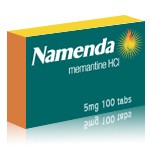
Namenda is the original brand-name formulation of Memantine — the only NMDA receptor antagonist FDA-approved for Alzheimer's disease and a foundational therapy for moderate-to-severe stages. Developed by Forest Laboratories (now Allergan) and FDA-approved since 2003 (with Namenda XR in 2010), Namenda represents a fundamentally different pharmacological approach from cholinesterase inhibitors. Originally developed in Germany (marketed since 1989 as Ebixa), Memantine has 35+ years of clinical use globally.
The active ingredient is Memantine Hydrochloride, an uncompetitive low-to-moderate affinity NMDA receptor antagonist. Memantine works as a 'smart' open-channel blocker — blocking the NMDA receptor only when excessively activated by glutamate (the pathological state in Alzheimer's), while preserving physiological NMDA signaling needed for normal memory and learning. This selectivity gives Memantine its uniquely favorable side effect profile. Long ~60-100 hour half-life supports once-daily dosing.
Namenda is FDA-approved for moderate-to-severe Alzheimer's disease — typically added to or replacing a cholinesterase inhibitor as disease progresses. The combination of Memantine + cholinesterase inhibitor is supported by clinical guidelines and shows synergistic benefit. Off-label uses include mild Alzheimer's, vascular dementia, Lewy body dementia, Parkinson's disease dementia, HIV-associated dementia, migraine prophylaxis, OCD adjunct, and generalized anxiety disorder adjunct.
The medication is available as Namenda 5 and 10 mg tablets, 2 mg/mL oral solution, Namenda XR 7-28 mg extended-release capsules (once-daily), and Namzaric combination capsules (Donepezil + Memantine fixed-dose). Standard adult dosing: start 5 mg once daily, increase by 5 mg/week to target 10 mg twice daily (20 mg/day IR) or 28 mg once daily (XR). Renal dose adjustment required for CrCl <30 mL/min.
Critical safety considerations include excellent overall tolerability — most common side effects are dizziness, headache, confusion, and constipation (all generally mild). Rare adverse effects include hypertension, hallucinations (especially in elderly), and paradoxical aggressive behavior. Avoid concurrent use with other NMDA antagonists (ketamine, amantadine, dextromethorphan).
Free prescription
Discrete packaging
Have questions?
Quality Assurance
- Alzheimer Disease (AD): FDA-approved for Alzheimer's disease as monotherapy or combination with cholinesterase inhibitor;
- Moderate Alzheimer Disease: FDA-approved for moderate Alzheimer's (MMSE 10-20);
- Severe Alzheimer Disease: FDA-approved for severe Alzheimer's (MMSE <10);
- Combination With Donepezil: Standard combination with Donepezil (Aricept) for synergistic benefit in moderate-to-severe disease;
- Combination With Rivastigmine: Combination with Rivastigmine (Exelon) for moderate-to-severe Alzheimer's;
- Mild Alzheimer Off Label: Off-label for mild Alzheimer's disease — benefit less clear than in moderate-severe;
- Vascular Dementia: Off-label for vascular dementia;
- Mixed Dementia: Off-label for mixed Alzheimer's and vascular dementia;
- Lewy Body Dementia (LBD): Off-label for Lewy body dementia — growing evidence base;
- Parkinson Disease Dementia (PDD): Off-label for Parkinson's disease dementia;
- Frontotemporal Dementia: Off-label use in frontotemporal dementia — limited evidence;
- HIV Associated Dementia: Off-label for HIV-associated neurocognitive disorder;
- Migraine Prophylaxis Memantine: Off-label for migraine prophylaxis — some evidence in refractory cases;
- OCD Adjunct: Off-label adjunct for OCD with poor SSRI response;
- Generalized Anxiety Disorder (GAD): Off-label adjunct for treatment-resistant generalized anxiety disorder;
- Bipolar Mania Adjunct: Off-label adjunct for treatment-resistant bipolar mania — limited evidence;
- Pathological Gambling: Off-label for pathological gambling adjunct — limited evidence;
- Pediatric Autism Severe: Off-label for severe behavioral symptoms in pediatric autism;
- Tinnitus Off Label: Off-label for chronic tinnitus — limited evidence;
- Cocaine Use Disorder: Off-label adjunct for cocaine use disorder — preliminary evidence;
- Switch To Memantine: For patients intolerant of cholinesterase inhibitor GI/cardiac side effects;
- Renal Friendly Dementia Drug: For dementia patients requiring dose adjustment in renal impairment;
- Long Term Dementia Maintenance: Suitable for long-term maintenance therapy throughout advanced disease progression.
- Less Cognitive Decline: Slows progression of cognitive decline in moderate-to-severe stages;
- Better Memory Late Stage: Particular benefit in late-stage Alzheimer's where cholinesterase inhibitors lose effectiveness;
- Better Daily Function: Improvement in activities of daily living (dressing, eating, personal hygiene);
- Better Executive Function: Improvement in executive function and problem-solving in moderate-severe disease;
- Less Agitation: Reduction in agitation and behavioral disturbances common in moderate-severe Alzheimer's;
- Less Aggression: Reduction in aggressive behaviors associated with advanced dementia;
- Better Sleep Behavior: Improvement in disturbed sleep-wake cycles in advanced dementia;
- Better Caregiver Reports: Caregiver-reported improvement in patient function and behavior;
- Better Combination Therapy Response: Synergistic benefit when combined with Donepezil or Rivastigmine;
- Less Hospitalization: Effective late-stage dementia therapy reduces hospitalizations and nursing home placement delays;
- Better Patient Quality of Life: Substantial improvement in patient quality of life in moderate-to-severe stages;
- Better Caregiver Quality of Life: Reduction in caregiver burden through patient functional improvements;
- Less Migraine Frequency: Off-label reduction in migraine frequency in refractory cases;
- Less OCD Symptoms Refractory: Off-label benefit in OCD refractory to SSRI alone;
- Less Anxiety Refractory: Off-label adjunct benefit for treatment-resistant anxiety disorders;
- Less Autism Behavior: Off-label improvement in severe behavioral symptoms in pediatric autism;
- Less Tinnitus Severity: Off-label improvement in chronic tinnitus severity;
- Less Cocaine Craving: Off-label reduction in cocaine craving in dependence treatment;
- Excellent Overall Tolerability: Notably favorable tolerability profile vs other dementia medications;
- Less GI Side Effects: Minimal GI burden compared to cholinesterase inhibitors;
- Less Cardiac Side Effects: No cholinergic cardiac effects — safer in patients with bradycardia or conduction issues;
- Less Drug Interactions: Minimal CYP450 interactions due to renal clearance;
- Brand Namenda: Original Forest Labs/Allergan brand of Memantine with established global clinical reputation since 2003;
- Generic Memantine: Affordable generic versions expand global access to NMDA antagonist dementia therapy;
- Ebixa Equivalent: Same Memantine molecule as European Lundbeck brand Ebixa (1989+ German market);
- Namenda XR Extended Release: Extended-release formulation supports once-daily dosing for improved adherence;
- Namzaric Combination: Namzaric fixed-dose combination with Donepezil simplifies regimen in moderate-to-severe disease;
- NMDA Receptor Antagonist: Foundational NMDA receptor antagonist class for neuroprotection;
- Only NMDA Antagonist Alzheimer: ONLY NMDA receptor antagonist FDA-approved for Alzheimer's disease;
- Uncompetitive NMDA Antagonist: Uncompetitive low-to-moderate affinity binding mechanism — unique selectivity;
- Smart Open Channel Blocker: 'Smart' open-channel blocker preserves physiological NMDA signaling for normal memory/learning;
- Favorable Tolerability NMDA: Notably favorable side effect profile unique among NMDA antagonists;
- 60 100 Hour Half Life: Long ~60-100 hour half-life supports stable blood levels and once-daily dosing;
- Moderate Severe Alzheimer Standard: Standard therapy for moderate-to-severe Alzheimer's per international guidelines;
- Combination Therapy Standard: Standard combination partner with cholinesterase inhibitors in advanced disease;
- Renal Adjusted Dosing: Renal-cleared mechanism allows dose adjustment for kidney function;
- WHO Essential Medicine: Listed on the WHO Model List of Essential Medicines for dementia care;
- 35 Plus Year Global History: Extensive real-world experience since 1989 in Germany, 2003 in USA — well-characterized safety.
Generic Namenda (Memantine 5 mg) Medication guide:
The active ingredient of Namenda is memantine. This preparation is available in the form of tabs and must be taken orally. The dose and treatment course duration are determined by the specialist only and depend on the type of dementia and personal features of each patient. Usually, specialists apply it in treatment of the Alzheimer’s disease, vascular dementia, dementia of unspecified genesis and mixed dementia of different levels of power.
One pill of Memantine contains 5 mg or 10 mg of its active ingredient memantine hydrochloride. Its inactive ingredients are next: milk sugar, colloid silicone dioxide, magnesium stearate, and some others. Discuss all drug components with the specialist to avoid allergic reactions. By reducing the action of some specific chemicals in brain, the described medication slows down negative processes in the organism that are caused by Alzheimer’s or Parkinson’s (some symptoms) diseases.
Instructions

It is recommended to order Generic Namenda if you have the doctor’s directions for its usage. After getting one, follow every detail from the label to make the usage of the preparation safe and beneficial for your organism. It is not allowed to increase the recommended dosage to avoid severe allergic reactions and side effects approach. Do not decrease the dose either because it may not be enough to treat your health condition. Read carefully the side effects paragraph and the contradictions paragraph and discuss this information with your health care provider.
Some side effects of the discussed pharmaceutical product may be dangerous for operating the car or doing work with the high risk of injury. Avoid such activity while you are using the Memantine to decrease the risk of catastrophe. Do everything that your health care provider tells you to do.
Usage and dosage

It is important to follow every single detail of doctor’s recommendations in the process of treatment. The health care provider may suggest changing the dose during the process; do everything that is needed. Never use any drug longer than it is recommended by your doctor. It is allowed to use it without food or with it. Try not to crush or chew the tablet; help swallowing with water. Never use alcohol to help swallowing. For obvious effect of the substance, you should use the medication regularly. If you miss the portion, take it as early as it is possible. Do not use the double amount of the medicine; skip the missed one and keep taking it as usual. Do not stop the course of treatment abruptly without your doctor’s permission; it may cause negative consequences. The complete withdrawal of the drug before time is possible only if its side effects are stronger than the benefit of its usage.
The most frequently used dose of the preparation is 5 mg or 10 mg, depending on the disease that is treated. It should be taken once a day. The maximum portion does not have to increase 20 mg a day. It is important to increase the dose (by doctor’s prescription) in one-week intervals to prevent side effects appearance and allergic reactions. Every week 5 mg of the substance can be added, but the final portion should not be more than 20 mg used in one day. The dose of the preparation is determined by the specialist only. Do not use it by recommendations of other people that also consume it. Do not recommend others to use it in the same way you do it. The duration of the treating process is also determined by the doctor, according to your response to the preparation.
Never overdose the medication. The most frequent signs of the overdose are confusion, agitation, loss of consciousness, restlessness, stupor, visual hallucinations, vertigo, vomiting, and weakness. If you recognize any of these, seek medical help immediately.
Side effects

The common and moderate side effects of Memantine are dizziness, headache, skin rush, loss of appetite, joint pain, abnormal urination, and dizziness. It is researched that these ill feelings appear on the early terms of usage, while the organism gets used to the new substance in blood. In a short period of time they fade away and do not show up again.
There are also some severe side effects of the described medication. Immediately contact the specialist if you recognize such symptoms of severe allergy as hives, swelling of upper and lower appendages, throat, lips, and tongue, problems with inhaling. The serious and most dangerous side effects may be the reason to stop using the preparation, but do not do this abruptly; follow the steps, prescribed by the doctor. These severe ill effects are next: chest tightness, chest pain, fast heart beating, sudden numbness of body, skin disorders, confusion, hallucination, blurred vision, coordination disorders, and others. This is not the complete list of possible side effects; talk to your doctor about those that may possibly appear in your particular case.
Remember, that all side effects are possible. They may or may not appear. Usually, if the preparation is taken properly, they do not show up.
Contradictions

Take to notice next contradictions before you buy Generic Namenda. Tell your health care provider if you have allergic reactions on any kind of medicine. Next health condition may become worse if you consume these drugs: seizure disorder, cataracts, bladder infection, kidney infection, liver and/or kidney disease, urination problems, and epilepsy.
It has not been proven that the discussed medication harms unborn babies, but if you are pregnant or plan to become a mother, tell it to your doctor. It is not exactly determined whether the substance gets into the breast milk or not. Discuss this case with the specialist.
There are such side effects of the preparation that can negatively affect your concentration and reaction. Avoid driving or doing a high-risk job to prevent accidents.
Keeping
All pharmaceutical products should be kept in dark, cool, dry places out of children’s reach.
How to buy Generic Namenda?

Those people who have already tried to buy Memantinein some regular drug store, know how hard and even impossible it is. Because of it is prescribed for quite specific health conditions, the drug is almost unavailable in some regions and cities of America, Canada, and other big and small countries. How can people their get the medication they need so much? The answer is clear and obvious –order Memantine online.
You can find many reliable and respectful websites that cooperate with major pharmaceutical companies-producers and whether have rare preparations in storage, or can quickly get it for you right from the factory. The internet gives people opportunity to compare different online drug stores in their prices, bonus programs, ways of payment, and shipping options.
Generic Namenda shipping by Rxshop

After making an order and paying for it, you need to receive it somehow. The best way to get your package is to order from our company. There are several useful services that we provide for our customers. One of them is worldwide shipping. Rxshop delivers packages to the remotest parts of the world, using it. For the United States, we have USA shipping via USPS option. Such delivery’s benefit is its fastness.
Another important service that we offer is shipping with track option. You are able to see the way your order goes and where it is at the moment, using such opportunity. Every container can be tracked on usps.com or another postal services. If you are interested, just contact us and our competent consultants will help you make an order and choose options that are most suitable in your particular case.
Namenda — Frequently Asked Questions
-
What is Namenda (Memantine) used for?
Namenda is used to treat moderate to severe dementia related to Alzheimer's disease. It helps manage symptoms but is not a cure. -
How does Namenda work?
Namenda works by blocking NMDA receptors associated with abnormal activity in the brain, reducing symptoms of dementia. -
When should I take Namenda?
Follow your healthcare provider's instructions. Namenda can be taken with or without food. -
Can Namenda cure Alzheimers disease?
No, Namenda does not cure Alzheimer's but can help manage symptoms and improve quality of life. -
What are the common side effects of Namenda?
Common side effects include dizziness, headache, confusion, and constipation. -
How long does it take for Namenda to work?
Some patients may notice improvements within a few weeks, but it can take up to several months to see the full benefits. -
Can Namenda be stopped abruptly?
It's not recommended to stop taking Namenda abruptly without consulting your healthcare provider, as symptoms may worsen.
See all Namenda questions (32)
More Alzheimers Dementia Medications