Buy Gutron (Midodrine) Online — Sun Pharmaceutical Selective Alpha-1 Adrenergic Agonist for Severe Symptomatic Orthostatic Hypotension Treatment

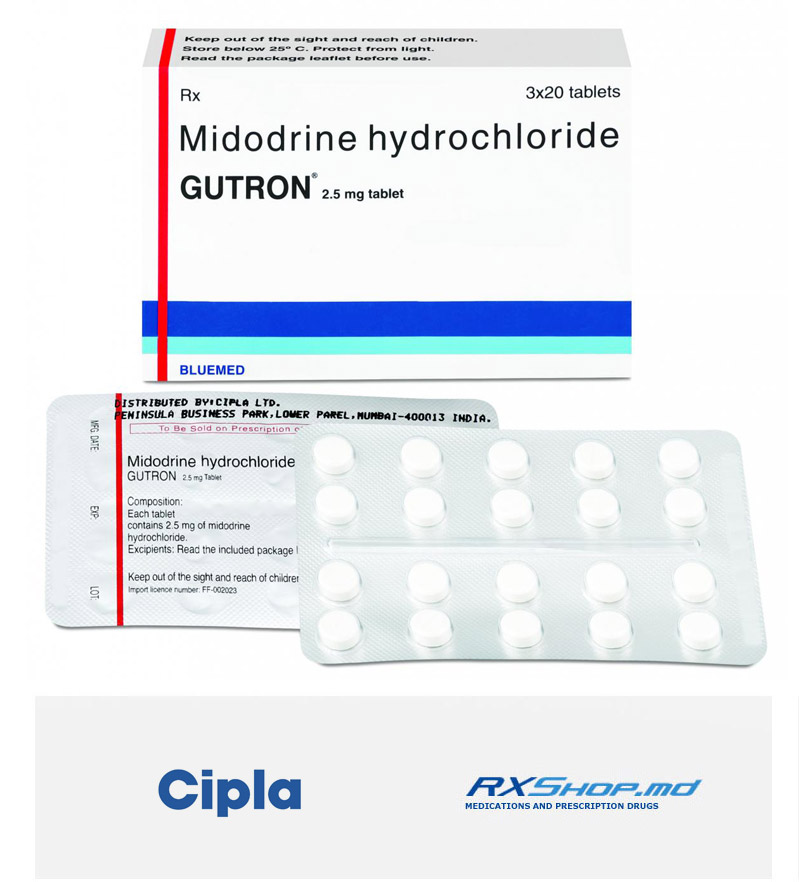
Gutron is the international brand-name formulation of Midodrine Hydrochloride manufactured by Sun Pharmaceutical — the standard selective alpha-1 adrenergic receptor agonist used for severe symptomatic orthostatic hypotension. Midodrine received FDA accelerated approval in 1996 (originally under the ProAmatine brand) for this distinctive indication where no other oral therapy provided comparable benefit. Listed on the WHO Model List of Essential Medicines. International brand equivalents include Amatine (Canada) and Midon (other markets). Gutron addresses a clinical need where patients experience disabling drops in blood pressure upon standing — a condition that can severely limit quality of life and increase fall-related injury risk — through targeted peripheral vasoconstriction without CNS stimulation.
Pharmacology operates through prodrug activation: Midodrine is rapidly hydrolyzed to its active metabolite desglymidodrine, which selectively stimulates alpha-1 adrenergic receptors on arterioles and venous capacitance vessels. The resulting peripheral vasoconstriction increases peripheral vascular resistance and venous return, raising both standing and supine blood pressure. A particularly valuable pharmacological feature is that desglymidodrine does NOT cross the blood-brain barrier — producing peripheral vasopressor effect without central nervous system stimulation, mental disturbance, or sleep disruption that limits use of older systemic vasopressors. Half-life of parent drug ~25 minutes; active metabolite half-life 3-4 hours. Mostly renal excretion.
Gutron is FDA-approved for severe symptomatic orthostatic hypotension. Established off-label uses include neurogenic orthostatic hypotension (Parkinson's disease, multiple system atrophy, autonomic neuropathy), recurrent vasovagal syncope, postural orthostatic tachycardia syndrome (POTS), hemodialysis-induced hypotension, hepatorenal syndrome (combined with octreotide), carcinoid syndrome, and ICU vasopressor weaning protocols.
Available as Gutron 2.5 mg, 5 mg, and 10 mg tablets. Standard adult dosing: 10 mg three times daily during waking hours, typically administered in the morning, midday, and late afternoon (last dose at least 4 hours before bedtime to avoid supine hypertension during sleep). Initial titration starts at 2.5 mg TID with gradual upward adjustment based on response.
Clinical evidence: pivotal trials demonstrated significant standing blood pressure improvement and substantial reduction in orthostatic symptoms. AAN (American Academy of Neurology), Movement Disorder Society, and autonomic society consensus statements continue to recommend Midodrine as a first-line agent for neurogenic orthostatic hypotension.


Free prescription
Discrete packaging
Have questions?
Quality Assurance
- Orthostatic Hypotension Standard: Standard pharmacological approach for orthostatic hypotension — signature use;
- Neurogenic Orthostatic Hypotension: Off-label for neurogenic orthostatic hypotension — AAN, MDS first-line;
- Parkinsons Orthostatic Hypotension: For orthostatic hypotension in Parkinson's disease patients;
- Multiple System Atrophy: For orthostatic hypotension in multiple system atrophy (MSA);
- Autonomic Neuropathy: For orthostatic hypotension in autonomic neuropathy (diabetic, amyloid, etc.);
- Pure Autonomic Failure: For orthostatic hypotension in pure autonomic failure;
- Vasovagal Syncope Recurrent: Off-label for recurrent vasovagal syncope prevention;
- Postural Orthostatic Tachycardia POTS: Off-label for postural orthostatic tachycardia syndrome (POTS);
- Hemodialysis Hypotension: Off-label for hemodialysis-induced hypotension prevention;
- Hepatorenal Syndrome With Octreotide: Off-label for hepatorenal syndrome (combined with octreotide + albumin);
- Carcinoid Syndrome Hypotension: Off-label for carcinoid syndrome hypotension management;
- Catecholamine Deficiency Syndromes: For catecholamine deficiency syndromes (rare congenital conditions);
- ICU Vasopressor Weaning: Off-label for ICU vasopressor weaning protocols (selective use);
- Septic Shock Weaning Adjunct: Selective ICU use for septic shock IV vasopressor weaning;
- Idiopathic Orthostatic Hypotension: For idiopathic orthostatic hypotension without identifiable cause;
- Post Prandial Hypotension: Off-label for post-prandial hypotension in elderly;
- Spinal Cord Injury Orthostatic: For orthostatic hypotension in high spinal cord injury patients;
- Chronic Fatigue Syndrome Selective: Selective off-label use in chronic fatigue syndrome with orthostatic intolerance;
- Quality Of Life Orthostatic Hypotension: Quality-of-life improvement in disabling orthostatic hypotension;
- Fall Risk Reduction Elderly: Fall risk reduction in elderly with orthostatic hypotension.
- Less Orthostatic Symptoms: Reduces lightheadedness, dizziness, blurred vision, fatigue on standing;
- Better Tolerance Standing: Improves tolerance of standing posture in orthostatic hypotension;
- Better Daily Function Standing Activities: Restores ability to perform standing daily activities;
- Better Quality of Life Disabling OH: Substantial quality-of-life improvement in disabling orthostatic hypotension;
- Less Falls Risk Orthostatic: Reduces fall risk in elderly with orthostatic hypotension;
- Less Parkinsons OH Symptoms: Effective for orthostatic hypotension in Parkinson's disease;
- Better MSA OH Management: Effective for orthostatic hypotension in multiple system atrophy;
- Better Autonomic Neuropathy OH: Effective for orthostatic hypotension in autonomic neuropathy (diabetic, amyloid);
- Less Vasovagal Syncope Recurrence: Reduces recurrent vasovagal syncope frequency;
- Better POTS Symptom Control: Off-label benefit in postural orthostatic tachycardia syndrome (POTS);
- Less Hemodialysis Hypotension: Reduces intradialytic hypotension episodes;
- Better Hepatorenal Syndrome Outcomes: Improves hepatorenal syndrome outcomes when combined with octreotide and albumin;
- Better Carcinoid Syndrome BP Management: Off-label benefit in carcinoid syndrome hypotension;
- Better ICU Vasopressor Weaning: Facilitates ICU vasopressor weaning protocols;
- Better Post Prandial Hypotension: Off-label benefit in post-prandial hypotension in elderly;
- Better Spinal Cord Injury Function: Improves function in high spinal cord injury patients with orthostatic hypotension;
- Better Compliance TID Schedule: TID dosing during waking hours (skipping evening dose) supports compliance;
- Less Mental Stimulation vs Other Vasopressors: No CNS stimulation — preserves cognitive function and sleep quality;
- Less Sleep Disruption: Last dose 4h before bedtime — preserves sleep quality, avoids supine hypertension at night;
- Brand Gutron Sun Pharmaceutical: Sun Pharmaceutical international brand of Midodrine — established access;
- Generic Midodrine: Affordable generic Midodrine versions expand global access to orthostatic hypotension therapy;
- Amatine Canada International: Same Midodrine molecule as Canadian brand Amatine;
- Three Tablet Strengths: Three strength options (2.5/5/10 mg) — titration flexibility;
- Selective Alpha 1 Adrenergic Agonist: Selective alpha-1 adrenergic receptor agonist — targeted vasopressor mechanism;
- Desglymidodrine Active Metabolite: Active metabolite desglymidodrine provides primary therapeutic effect;
- No Blood Brain Barrier Penetration: ⭐ Does NOT cross blood-brain barrier — no CNS stimulation, distinct advantage;
- Peripheral Vasoconstriction Only: Peripheral vasoconstriction only — targeted blood pressure raising effect;
- Orthostatic Hypotension Standard: Established standard pharmacological approach for orthostatic hypotension;
- TID Dosing Waking Hours: TID dosing during waking hours — physiological dosing pattern;
- AAN MDS Guideline Recommended: AAN, Movement Disorder Society guideline-recommended first-line for neurogenic OH;
- Renal Excretion Mostly: Mostly renal excretion — predictable elimination pathway;
- WHO Essential Medicine: Listed on the WHO Model List of Essential Medicines;
- 25 Plus Year Clinical History: 25+ years of clinical use since 1996 FDA approval — established orthostatic hypotension therapy.
Generic Gutron (Midodrine 2.5 mg) Medication guide:
📖 What Gutron Is and How It Works
Gutron is a brand of midodrine hydrochloride, a selective alpha-1 adrenergic receptor agonist used to treat severe symptomatic orthostatic hypotension - the condition where blood pressure drops so much on standing up that clients experience dizziness, faintness, or actual loss of consciousness. Midodrine was originally developed by Chemie Linz Nycomed in Austria and approved for use in Europe in the 1980s under the Gutron brand. The US FDA granted accelerated approval in 1996 as ProAmatine.
Midodrine has an unusual regulatory history. In 2010 the FDA proposed withdrawing its accelerated approval because the manufacturer had never completed post-marketing confirmatory trials to demonstrate clinical benefit. A vocal response from autonomic specialists and clients led to the FDA reversing course in 2012 and keeping midodrine on the market. The episode highlighted how important midodrine had become for the small but real population of clients with severe autonomic failure - for whom few effective alternatives exist.
The main uses of Gutron
- 🧠 Neurogenic orthostatic hypotension in autonomic failure - the FDA-approved indication
- 🫀 Pure autonomic failure, multiple system atrophy, Parkinson disease with autonomic involvement
- 💧 Intradialytic (dialysis-related) hypotension
- 💔 Vasovagal syncope prevention (off-label; second-line)
- 🩸 Postural orthostatic tachycardia syndrome (POTS) (off-label; in selected cases)
- 🏥 Post-liver transplant hypotension and hepatorenal syndrome (specialist use)
- 💉 Off-label uses - severe orthostatic symptoms in chronic fatigue, some ejaculatory disorders, occasional priapism management
The mechanism is elegant. Midodrine is a prodrug - the tablet swallowed does little on its own. In the body it is rapidly converted (primarily in the liver and other tissues) to its active metabolite desglymidodrine, which is a selective alpha-1 adrenergic receptor agonist. Desglymidodrine binds alpha-1 receptors on arteries and veins, causing peripheral vasoconstriction. Blood pressure rises. Because desglymidodrine does not cross the blood-brain barrier, it has no central nervous system effects and does not cause the sedation, dry mouth, or cognitive effects seen with older sympathomimetics like ephedrine.
Gutron comes in 2.5 mg, 5 mg, and 10 mg tablets. Standard dosing is 5-10 mg three times daily during waking hours, with the last dose taken at least 4 hours before bedtime. The bedtime restriction is important - lying down while midodrine is still active can cause dangerous supine hypertension. Duration of action is short (about 3-4 hours per dose), which is why multiple daily doses are needed to maintain daytime blood pressure.
This guide walks through what midodrine does, the different clinical settings where it fits, the practical realities of timing doses correctly around waking hours, the dangerous supine hypertension risk if timing rules are broken, non-drug measures that work alongside midodrine, and the contraindications including severe cardiac disease and urinary retention. Midodrine is a specialist medication - it usually comes as part of a broader plan for autonomic failure management. Treat this guide as a companion to what your neurologist, autonomic specialist, cardiologist, or nephrologist tells you.
💊 Why Doctors Prescribe Gutron - Main Indications
Midodrine has a narrow but important set of indications. Understanding the specific reason it has been prescribed to you shapes everything else - the dose, the timing, the monitoring, and what non-drug measures to combine with it.
Neurogenic orthostatic hypotension
The FDA-approved indication and largest use worldwide. Neurogenic orthostatic hypotension (nOH) is a sustained drop in blood pressure on standing (usually defined as a fall of 20 mmHg systolic or 10 mmHg diastolic within 3 minutes) caused by failure of the sympathetic nervous system to respond appropriately to postural change. It presents with dizziness, lightheadedness, weakness, blurred vision, or actual loss of consciousness when standing. Underlying causes include pure autonomic failure, multiple system atrophy, Parkinson disease with autonomic involvement, dementia with Lewy bodies, and various peripheral autonomic neuropathies. Section 3 covers nOH in depth.
Autonomic failure syndromes
Midodrine is one of the mainstays of pharmacological treatment for the group of neurodegenerative and other disorders that damage the autonomic nervous system:
- Pure autonomic failure - isolated autonomic degeneration
- Multiple system atrophy (MSA) - Parkinson-like disorder with prominent autonomic failure
- Parkinson disease with orthostatic hypotension
- Dementia with Lewy bodies with autonomic involvement
- Diabetic autonomic neuropathy with severe orthostatic symptoms
- Amyloid autonomic neuropathy
- Familial dysautonomia (Riley-Day syndrome)
- Post-viral autonomic neuropathies
- Autoimmune autonomic ganglionopathy
Intradialytic hypotension
Blood pressure drops during haemodialysis affect a substantial proportion of dialysis clients. When conservative measures fail (dialysate temperature adjustment, ultrafiltration rate reduction, dry weight optimisation), midodrine given about 30 minutes before dialysis can reduce the frequency and severity of intradialytic hypotension. Off-label but widely used in nephrology. Section 5 covers this.
Vasovagal syncope
For clients with recurrent vasovagal (reflex) syncope who have not responded to counter-manoeuvres, hydration, and lifestyle changes, midodrine is one of the second-line pharmacological options. The POST II and POST IV trials have shown modest reduction in syncope recurrence. Fludrocortisone, beta-blockers, and SSRIs are alternative options. Section 6 covers vasovagal syncope and POTS.
Postural orthostatic tachycardia syndrome (POTS)
POTS is a heart rate rise of over 30 beats per minute on standing (without significant blood pressure drop) accompanied by dizziness, palpitations, brain fog, and fatigue. Midodrine can help selected clients - particularly those with a hyperadrenergic or hypovolemic subtype. Not first-line; used after volume expansion, salt loading, exercise reconditioning, and consideration of beta-blockade or ivabradine.
Specialist and off-label indications
- Hepatorenal syndrome - midodrine combined with octreotide and albumin as bridge to transplant
- Post-liver transplant hypotension
- Refractory ascites with hepatorenal risk
- Chronic fatigue syndrome with orthostatic intolerance
- Retrograde ejaculation - very occasional use in fertility settings
- Post-prandial hypotension in autonomic failure
- Stress urinary incontinence - rare use
Why one drug for so many low-blood-pressure conditions
Midodrine works by direct peripheral vasoconstriction via alpha-1 receptors on blood vessels. It does not depend on nerve signals - so it works even when the autonomic nervous system is damaged. Different diseases, same mechanistic target. The vasoconstriction is peripheral only (no CNS effect), which distinguishes midodrine from older sympathomimetic drugs and makes it tolerable for long-term use.
Ask your treating team which specific indication midodrine has been prescribed for. Timing rules, target blood pressure, and combination with other therapies vary substantially by condition.
🧠 Gutron for Neurogenic Orthostatic Hypotension
Neurogenic orthostatic hypotension (nOH) is the FDA-approved indication for midodrine and the main reason clients take it long-term. Understanding what nOH is, how it differs from ordinary orthostatic hypotension, and why midodrine is central to management makes sense of the whole treatment plan.
Defining orthostatic hypotension
Formal definition (Freeman et al. consensus 2011): a sustained fall in systolic blood pressure of at least 20 mmHg or diastolic pressure of at least 10 mmHg within 3 minutes of standing. The drop can be measured with active standing or head-up tilt table testing. Milder falls may still be symptomatic in individuals.
Neurogenic vs non-neurogenic
- Non-neurogenic orthostatic hypotension - from volume depletion, medications (diuretics, antihypertensives), deconditioning, adrenal insufficiency; usually reversible with treating the cause
- Neurogenic orthostatic hypotension - from failure of the sympathetic nervous system itself; irreversible or slowly progressive; requires ongoing management including midodrine
- Distinguishing feature - in nOH, the heart rate does not rise appropriately with standing (denervated baroreflex); in non-neurogenic OH, tachycardia is present
Symptoms of orthostatic hypotension
- Dizziness or lightheadedness on standing - most common
- Blurred or dim vision when standing
- Weakness or unsteadiness
- Nausea
- Cognitive slowing or brain fog
- Neck or shoulder pain - characteristic "coathanger" pain from muscle hypoperfusion
- Chest pain or breathlessness - sometimes
- Actual loss of consciousness (syncope) - the most serious
- Fall injuries as a consequence
Diagnostic evaluation
- Orthostatic vital signs - blood pressure and heart rate lying, then standing at 1 and 3 minutes
- Head-up tilt table test - more controlled setting; can detect delayed OH
- Autonomic function testing - QSART (sudomotor), Valsalva, deep breathing, tilt with beat-to-beat BP; at specialist autonomic laboratories
- Plasma catecholamines supine and standing - low norepinephrine confirms nOH; distinguishes pure autonomic failure (low) from MSA (normal but non-responsive)
- Review of medications - many drugs contribute or cause OH
- Assessment for underlying neurological disease
Standard midodrine approach in nOH
- Starting dose typically 2.5 mg three times daily
- Titrate up over weeks to typical maintenance 5-10 mg three times daily
- Maximum 10 mg per dose, 40 mg per day per FDA label
- Timing: first dose on rising, second mid-morning to early afternoon, third dose late afternoon (no later than 4 hours before bedtime)
- Combined with non-drug measures (Section 19) and often other drugs (Section 21)
- Effect: raises standing blood pressure by 10-25 mmHg on average; reduces symptoms substantially in most responders
The Low et al. JAMA 1997 pivotal trial
The landmark trial that led to FDA approval - a multicenter randomised controlled trial of midodrine in neurogenic orthostatic hypotension published by Phillip Low and colleagues in JAMA 1997. Midodrine raised standing blood pressure and improved standing tolerance versus placebo. Subsequent open-label experience over decades has confirmed the benefit in autonomic failure clients despite the limited size of the initial trial dataset that later attracted FDA post-marketing scrutiny.
Neurogenic orthostatic hypotension is often part of a broader progressive neurological condition. Midodrine helps the symptomatic falls in standing pressure but does not modify underlying disease. Combined multi-modal care - lifestyle measures, other medications, structured monitoring - gives the best outcome.
🫀 Gutron for Autonomic Failure Conditions
Autonomic failure syndromes are a group of neurodegenerative conditions where the autonomic nervous system progressively fails. Midodrine is one of the mainstays of pharmacological management across most of these conditions, though the specific approach and expected response vary.
Pure autonomic failure (PAF)
- Isolated autonomic degeneration without other neurological signs
- Presents with orthostatic hypotension, urinary dysfunction, sexual dysfunction, sweat abnormalities, GI dysmotility
- Slowly progressive over decades
- Plasma norepinephrine low both supine and standing (peripheral autonomic denervation)
- Midodrine often responds well - denervation supersensitivity of alpha receptors
- Some cases evolve to MSA years or decades later; longitudinal follow-up matters
Multiple system atrophy (MSA)
- Neurodegenerative disorder combining autonomic failure with cerebellar and parkinsonian features
- Two subtypes: MSA-P (parkinsonian predominant) and MSA-C (cerebellar predominant); both have autonomic involvement
- More rapid progression than pure autonomic failure or Parkinson disease
- Alpha-synuclein deposition primarily in oligodendrocytes
- Plasma norepinephrine may be normal but fails to rise appropriately with standing (central autonomic dysfunction)
- Midodrine works but response may be less dramatic than in PAF
- Supine hypertension is more common because of preserved peripheral sympathetic tone at rest
Parkinson disease with autonomic involvement
- Orthostatic hypotension affects roughly 20-50 percent of Parkinson clients over the disease course
- Can be present at diagnosis or develop over years
- Dopaminergic medications (levodopa, dopamine agonists) can worsen it
- Midodrine effective in reducing symptoms and improving standing tolerance
- Combined approach with fludrocortisone, non-drug measures, and medication review
Dementia with Lewy bodies
Shares pathology (alpha-synuclein Lewy bodies) with Parkinson disease. Autonomic involvement common; orthostatic hypotension can be prominent. Midodrine effective but supine hypertension particularly needs careful timing given falls risk from orthostatic drops and cognitive difficulty with dose timing.
Diabetic autonomic neuropathy
Long-standing diabetes can damage autonomic nerves. Manifestations include cardiac autonomic neuropathy (reduced heart rate variability), orthostatic hypotension, gastroparesis, urinary dysfunction. Midodrine is used for the orthostatic symptoms. Diabetes management (glycaemic control, blood pressure, lipids) remains central; midodrine addresses the symptomatic manifestation of the neuropathy.
Amyloid autonomic neuropathy
Familial amyloid polyneuropathy (hereditary transthyretin amyloidosis) and light-chain amyloidosis can cause severe autonomic involvement. Midodrine helps orthostatic hypotension; disease-modifying amyloid therapy (tafamidis, patisiran, inotersen) addresses the underlying disease.
Familial dysautonomia (Riley-Day syndrome)
Rare autosomal recessive disorder in Ashkenazi Jewish populations. Autonomic dysfunction from birth. Midodrine used in some clients but has specific pediatric considerations. Managed at specialist centres like the NYU Dysautonomia Center.
Post-viral and autoimmune autonomic neuropathies
- Post-infectious autonomic dysfunction (post-viral, post-COVID)
- Autoimmune autonomic ganglionopathy - ganglionic acetylcholine receptor antibodies
- Paraneoplastic autonomic neuropathies
- Guillain-Barre syndrome autonomic involvement
- Midodrine used for symptomatic OH; specific autoimmune treatment (IVIG, plasma exchange, immunosuppression) may be indicated depending on cause
Autonomic failure syndromes are managed at specialist centres. Midodrine is one component of care - lifestyle measures, other medications, mobility support, monitoring, and disease-modifying therapy where available all form part of the plan. Regular specialist follow-up is essential.
💧 Gutron for Dialysis-Related Hypotension Prevention
Intradialytic hypotension - blood pressure drops during haemodialysis - affects a substantial proportion of clients on dialysis and can be disabling. Midodrine given prophylactically before dialysis can reduce the frequency and severity of these episodes.
Understanding intradialytic hypotension
- Occurs in 20-30 percent of haemodialysis sessions
- Caused by rapid ultrafiltration removing fluid faster than plasma refill
- Presents with dizziness, nausea, cramping, syncope, chest pain
- Associated with worse long-term outcomes including cardiovascular mortality
- Interrupts dialysis, prolongs sessions, causes patient distress
First-line conservative measures
Before considering midodrine, non-pharmacological approaches are optimised:
- Cooler dialysate temperature (35-35.5 C)
- Sodium modelling in dialysate
- Ultrafiltration rate reduction (under 10 mL/kg/hour)
- Dry weight reassessment
- Interdialytic weight gain limitation
- Sequential ultrafiltration then dialysis
- Longer or more frequent dialysis sessions
- Review of antihypertensive timing - hold doses before dialysis
Midodrine in dialysis
- Given 30 minutes before dialysis session
- Typical dose 5-10 mg per session
- Some clients also take 2.5-5 mg during dialysis if pressure drops
- Reduces intradialytic hypotension episodes in many studies
- Off-label use but well-established in nephrology practice
- Alternative when conservative measures inadequate
The 4-hour bedtime rule still applies
For clients on evening dialysis sessions, midodrine timing can be tricky. Pre-dialysis midodrine given before an evening session may still be active at bedtime - raising supine hypertension risk. Discuss timing with the dialysis unit and consider midodrine only for daytime dialysis sessions or use lower doses for evening dialysis.
Evidence in dialysis
Multiple small trials and observational studies (Cruz et al., Prakash et al., and others) show midodrine reduces intradialytic hypotension episodes. The evidence quality is limited by small sample sizes and heterogeneous protocols. Systematic reviews conclude midodrine is a reasonable option after conservative measures fail but the evidence base is not definitive. Individual response varies substantially.
Alternatives in dialysis
- Cooling dialysate - the most evidence-based intervention
- L-carnitine - some evidence for reducing intradialytic hypotension
- Sodium modelling
- Ultrafiltration modelling
- Sertraline - occasional evidence for intradialytic hypotension
- Home haemodialysis - longer, gentler sessions
- Peritoneal dialysis conversion - avoids the intermittent hypotension pattern
Discuss the plan with your nephrology team. Midodrine for intradialytic hypotension is one of several strategies - the right approach depends on your specific pattern, comorbidities, and dialysis schedule.
💔 Gutron for Vasovagal Syncope and POTS
Vasovagal syncope and postural orthostatic tachycardia syndrome (POTS) are both disorders of orthostatic tolerance but very different mechanisms and management. Midodrine plays a niche but useful role in selected clients with both conditions.
Vasovagal (reflex) syncope
- Common - affects about a third of people in a lifetime; recurrent in some
- Triggered by prolonged standing, heat, emotional stress, blood/needle exposure, dehydration
- Prodromal warning symptoms - nausea, sweating, blurred vision, warmth
- Brief loss of consciousness with rapid recovery
- Mechanism: paradoxical vasodilation and bradycardia mediated by vagal reflex
- Most clients need no specific treatment beyond education and trigger avoidance
- Recurrent or high-risk clients (injury from falls, driving) may need pharmacological therapy
Midodrine for vasovagal syncope
- Second-line pharmacological option after lifestyle measures
- The POST II trial (Sheldon et al.) showed modest benefit
- Larger POST IV trial confirmed reduction in recurrent syncope
- Dose typically 5 mg three times daily
- Not for elderly or clients with cardiac disease as first choice
First-line approaches for vasovagal syncope
- Education about triggers and prodrome recognition
- Counter-pressure manoeuvres at prodrome - leg crossing with muscle tensing, handgrip, arm tensing
- Salt loading and increased fluid intake
- Compression stockings
- Physical counter-manoeuvres training (tilt training - controversial evidence)
- Avoid provoking situations where feasible
- Review of blood-pressure-lowering medications - dose reduction where possible
Other pharmacological options for vasovagal syncope
- Fludrocortisone (POST II trial) - volume expansion; modest evidence
- Beta-blockers (metoprolol) - conflicting evidence; may help specific subgroups
- SSRIs (paroxetine) - modest evidence in recurrent syncope
- Ivabradine - selected cases
- Cardiac pacemakers - reserved for recurrent syncope with documented significant asystolic response
Postural orthostatic tachycardia syndrome (POTS)
- Heart rate rise of over 30 beats per minute within 10 minutes of standing (over 40 in adolescents)
- Without significant blood pressure drop
- Accompanied by dizziness, palpitations, brain fog, fatigue, headache, GI symptoms
- Predominantly affects young women (85 percent female, typical onset 15-30)
- Multiple subtypes proposed - hyperadrenergic, hypovolemic, neuropathic
- Post-infectious POTS increasingly recognised (including post-COVID)
- Often coexists with joint hypermobility, mast cell activation, chronic pain conditions
POTS management approach
- Non-drug foundation: aggressive fluid intake (2-3 L/day), salt loading (10-12 g/day), exercise reconditioning (recumbent then upright), compression stockings
- Beta-blockers or ivabradine for heart rate control
- Fludrocortisone for volume expansion
- Midodrine for hypovolemic or hyperadrenergic subtypes - after other measures
- Pyridostigmine (occasional use)
- Specialist review at autonomic disorder centre
POTS versus nOH - important difference
POTS is not orthostatic hypotension. Blood pressure typically stays stable while heart rate rises. Midodrine works differently in POTS than in nOH - here it may reduce venous pooling and help specific subtypes rather than raise blood pressure per se. POTS management is complex; specialist input matters.
Both vasovagal syncope and POTS are recognised conditions with a growing evidence base. Midodrine is a specialist tool used after first-line measures and in selected clients rather than a routine first choice.
🔬 How Midodrine and Desglymidodrine Work
Midodrine is a prodrug - the tablet swallowed has minimal direct effect. In the body it is converted to desglymidodrine which is the active vasoconstrictor. Understanding this two-step process explains the drug's pharmacokinetics, onset time, duration, and side effect profile.
The two-step activation
- Midodrine - swallowed tablet; parent compound with minimal alpha-1 receptor affinity
- Hydrolysis by aminopeptidase enzymes in the liver and other tissues
- Desglymidodrine - the active metabolite; potent alpha-1 selective agonist
- Peak desglymidodrine levels reached about 60-90 minutes after oral midodrine dose
- Desglymidodrine half-life about 2-3 hours - explains short duration of action
Alpha-1 receptor pharmacology
- Desglymidodrine selectively binds alpha-1 adrenergic receptors on arterial and venous smooth muscle
- Vasoconstriction raises systemic vascular resistance and blood pressure
- Alpha-1 receptors are widespread - vasoconstriction is systemic rather than targeted to one vascular bed
- Also affects alpha-1 receptors on smooth muscle in urinary sphincters, iris, hair follicles (piloerection), and skin
- Minimal beta-adrenergic activity - unlike ephedrine and other older sympathomimetics; no direct cardiac stimulation, no bronchodilation, no CNS effects
Why midodrine does not cross the blood-brain barrier
Desglymidodrine is polar (hydrophilic) and cannot cross the blood-brain barrier. This is a defining feature of midodrine as a therapy - it produces the desired peripheral vasoconstriction without CNS effects like agitation, insomnia, tremor, or cognitive effects that older centrally-acting sympathomimetics cause. This makes midodrine tolerable for long-term use in older or cognitively vulnerable clients.
Pharmacokinetics
- Oral bioavailability - roughly 90 percent for midodrine
- Conversion to desglymidodrine - almost complete within 30 minutes
- Peak effect - about 60-90 minutes after dose
- Duration of blood pressure effect - about 3-4 hours per dose
- Elimination - renal excretion of desglymidodrine and metabolites
- Half-life short - which is why three-times-daily dosing needed for daytime coverage
- Renal impairment extends half-life; dose reduction may be needed
- Hepatic impairment may affect conversion; use with caution
Denervation supersensitivity
In clients with autonomic failure (pure autonomic failure especially), the alpha-1 receptors on blood vessels are supersensitive because they have been chronically deprived of sympathetic input. This means low doses of midodrine can produce large blood pressure responses. Starting dose is therefore low (2.5 mg) with careful titration. Multiple system atrophy clients may have less supersensitivity because their peripheral sympathetic nerves are relatively preserved.
Why supine hypertension develops
The very peripheral vasoconstriction that helps standing blood pressure also raises blood pressure when the person lies down. Without the postural drop, the midodrine effect adds to whatever residual sympathetic tone exists - producing potentially dangerous supine hypertension. This is why the 4-hour bedtime rule is central (Section 15).
The elegance of midodrine as an autonomic failure therapy comes from what it does not do - no CNS effects, no direct cardiac stimulation, no beta-adrenergic activity. What it does is single-purpose: peripheral vasoconstriction for a few hours per dose. Understanding this shapes how it is used correctly.
⏰ Gutron Dose Schedule and Timing Rules
Timing rules are central to safe midodrine use. Getting the schedule right maximises benefit during standing hours and avoids supine hypertension at night.
Standard adult dosing
| Parameter | Value |
|---|---|
| Starting dose | 2.5 mg three times daily |
| Typical maintenance | 5-10 mg three times daily |
| Maximum per dose | 10 mg |
| Maximum daily total | 40 mg (some specialists cautiously exceed for refractory cases) |
| Dose interval | Approximately every 4 hours during waking |
| Last dose timing | At least 4 hours before bedtime |
The 4-hour bedtime rule is absolute
Midodrine has a short duration but the vasoconstriction can persist for several hours. Taking a dose within 4 hours of lying down causes supine hypertension - blood pressure rises to dangerous levels while sleeping. Long-term supine hypertension causes end-organ damage (stroke, heart failure, kidney disease). This is the single most important safety rule with midodrine.
Practical daily schedule
For someone who wakes at 7 AM and goes to bed at 10 PM:
- Dose 1 - on rising, before getting out of bed (7 AM)
- Dose 2 - mid-day (12 noon)
- Dose 3 - late afternoon (5 PM)
- No further doses - bedtime 10 PM means no dose after 6 PM
- If bedtime is earlier (9 PM) - last dose no later than 5 PM
- If bedtime is later (11 PM) - last dose can be up to 7 PM
When to take the first morning dose
- Before rising - most autonomic specialists recommend taking the first dose while still in bed so blood pressure has risen by the time you stand
- Peak effect at 60-90 minutes - plan to sit up gradually and delay standing for 30-60 minutes if severe morning symptoms
- Have breakfast in bed or sitting if morning OH is severe
- Keep tablets and water bedside for morning dose
Special dosing situations
- Pre-dialysis - 5-10 mg given 30 minutes before dialysis session
- Post-prandial hypotension - dose 20-30 minutes before meals
- Anticipated prolonged standing (church service, wedding, work event) - extra dose 30-60 minutes before
- Post-exercise hypotension - dose after prolonged exercise
- Renal impairment - lower doses; extend interval
- Older frail client - lower starting dose; slower titration
If you must lie down while midodrine is active
Sometimes rest is unavoidable during the day - illness, fatigue, exhaustion. If lying down within 4 hours of a midodrine dose, elevate the head of the bed to 30 degrees (semi-recumbent). This mitigates supine hypertension while allowing rest. Do not stay flat if possible. Discuss this with your treating team - they may adjust the timing or reduce a dose.
Timing is the biggest single practical challenge with midodrine. Once you have a consistent daily schedule that fits your waking hours, the medication becomes routine. Discuss any changes to sleep schedule (shift work, jet lag, illness) with your treating team.
📅 Starting Gutron - First Weeks Approach
Starting midodrine is a gradual process. Initial doses are low to assess response and avoid supine hypertension. Titration continues over weeks with close blood pressure monitoring. Understanding what to expect makes the process manageable.
Typical initiation approach
- Week 1 - Start 2.5 mg three times daily; assess response and side effects
- Week 2-3 - Increase to 5 mg three times daily if tolerated and additional benefit needed
- Week 3-4 - Increase to 7.5 mg three times daily if needed
- Week 4+ - Increase to 10 mg three times daily if needed
- Slower titration in elderly and frail clients
- Home blood pressure monitoring throughout titration - standing, sitting, and supine values
Blood pressure monitoring during titration
- Home BP monitor - essential; measures sitting and standing values
- Standing BP after 1 and 3 minutes at various times of day
- Supine BP after being flat for 5-10 minutes, particularly at bedtime
- Log values for anticoagulation clinic review
- Symptom diary alongside - dizziness, syncope, falls
- Bring records to clinic appointments
Target blood pressure goals
- Standing systolic BP - aim for at least 90-100 mmHg, symptom improvement more important than exact number
- Standing tolerance - can stand for at least 3-5 minutes without symptoms
- Reduction in symptoms - primary goal; blood pressure is a means to this end
- Supine BP - should not exceed 180/110 (some experts use 160/100 as threshold)
- Absence of falls or syncope from OH
Expected response
- First dose effect noticeable within 60-90 minutes
- Improvement in standing symptoms usually within days
- Standing systolic BP typically rises by 10-25 mmHg at effective doses
- Individual response varies substantially
- Some clients (particularly severe pure autonomic failure) show much larger responses due to denervation supersensitivity
- Others (particularly MSA) may need higher doses for modest response
Non-response is common - what next
- Confirm timing is right and medication is being taken as prescribed
- Ensure non-drug measures optimised (Section 19)
- Escalate to maximum tolerated dose
- Consider combination therapy - fludrocortisone, pyridostigmine, droxidopa (Section 21)
- Review medications that worsen OH (diuretics, alpha-blockers for prostate, some antidepressants)
- Reassess diagnosis - some conditions labelled nOH have volume component that responds to fludrocortisone rather than pure vasoconstriction
- Specialist review at autonomic disorder centre
Warning signs during initiation
- 🔴 Severe headache - possible supine hypertension
- 🔴 Chest pain or breathlessness
- 🔴 New visual disturbance
- 🔴 Urinary retention
- 🔴 Severe bradycardia
- 🔴 Supine BP consistently over 180/110
Initiation of midodrine is a period of frequent adjustments and close monitoring. It settles into stable dosing within 4-8 weeks for most clients. Keep a detailed BP and symptom log during this phase - the data guides optimal dose choice.
📏 Gutron Dose Adjustments and Individual Response
Midodrine dose response varies between individuals. Denervation supersensitivity in pure autonomic failure can produce large responses at low doses; other conditions need higher doses for modest effect. Continued titration and adjustment is a normal part of long-term midodrine use.
Factors affecting individual response
- Underlying autonomic diagnosis - pure autonomic failure often very responsive; MSA less so
- Degree of denervation supersensitivity
- Concurrent medications - antihypertensives, diuretics, dopaminergics oppose midodrine
- Volume status - dehydration reduces effectiveness
- Salt intake - adequate salt supports response
- Renal function - impairment extends half-life
- Time of day and meal timing
- Body temperature - heat worsens OH and requires more midodrine effect
Dose adjustment principles
- Increase dose when standing symptoms persist despite optimal timing and non-drug measures
- Decrease dose when supine hypertension emerges (particularly overnight readings)
- Redistribute doses - sometimes moving one dose earlier works better than raising individual doses
- Add a fourth dose - not standard but sometimes considered for prolonged waking hours (specialist decision)
- Reduce total dose in warm weather (heat lowers baseline BP naturally)
- Add other agents before further midodrine dose escalation if already at 10 mg TID
Common patterns and adjustments
| Situation | Typical adjustment |
|---|---|
| Standing BP still low despite max midodrine | Add fludrocortisone or droxidopa |
| Supine BP overnight over 180/110 | Reduce afternoon dose; move to earlier |
| Post-prandial hypotension worst | Time doses 20-30 minutes before meals |
| Morning symptoms worst | First dose in bed before rising; wait 60 min before standing |
| Late afternoon symptoms | Third dose moved slightly later (respecting 4-hour bedtime rule) |
| Effect wearing off quickly | Reduce dose interval to every 3 hours (four doses/day) - specialist decision |
Tachyphylaxis
Some clients experience a gradual reduction in midodrine effectiveness over months - tachyphylaxis (drug tolerance). Possible mechanisms include receptor downregulation. Management: consider drug holiday (a few days off), dose escalation, or switch to alternative agent like droxidopa. Not all reduced response is tachyphylaxis - underlying disease progression, medication changes, dehydration, or seasonal factors may explain apparent tolerance.
Practical tips
- Do not adjust dose on your own beyond agreed protocol
- Report any dose change to your specialist team
- Keep home BP monitor and log
- Consistency in meal timing, fluid intake, and salt intake supports stable response
- Report if the medication seems to lose effect
- Regular specialist review (every 3-6 months when stable)
Once optimal dosing is found, most clients settle into a stable regimen for months to years. Periodic review is important because both the disease and other medications change over time.
💊 How to Take Gutron Tablets Properly
Practical routines around Gutron tablets are simple once the timing rule is understood. The tablets themselves are unremarkable - the key is when they are taken and never crossing the 4-hour bedtime line.
Practical daily routine
- Three times a day during waking hours - roughly every 4 hours
- First dose on rising or shortly before getting out of bed
- Last dose at least 4 hours before bedtime
- With water - a full glass
- With or without food - food does not significantly affect absorption; some prefer with meals if nausea
- Do not crush unless specifically instructed - tablets should be swallowed whole
- Refill 2 weeks before running out - long-term therapy needs active management
Adherence tools
- Weekly pillbox with 3 daily compartments (breakfast, lunch, evening) - clear structure for three-times-daily dosing
- Phone alarms at each dose time; label the last alarm "LAST DOSE - no more today"
- Anchor doses to daily routines - breakfast, lunch, dinner or specific activities
- Bedside water and tablets for the morning pre-rising dose
- Family or partner reminder for those with cognitive concerns
- Adherence apps with three daily reminders
Common mistakes
- 🔴 Evening dose too late - the most dangerous mistake; supine hypertension follows
- 🔴 Skipping morning dose because of expected sleep-in - then getting up to severe symptoms
- 🔴 Lying down after afternoon dose for a nap - blood pressure spikes
- 🔴 Taking a fourth dose to cover long evening activity without specialist agreement
- 🔴 Doubling up after a missed dose - never appropriate
- 🔴 Adjusting timing for late nights without discussion - the 4-hour rule still applies to actual bedtime
Adjusting for changed schedules
- Sleeping in on weekend - delay first dose to actual rising time; do not take then go back to sleep
- Late night event - can shift third dose an hour or two later if bedtime also later
- Long day nap - avoid third dose if planning to lie down; discuss with team
- Time zone travel - adjust gradually over 1-2 days
- Shift work - complex; individualise with specialist
Storage and handling
- Room temperature under 25 C in original packaging
- Protect from light and moisture
- Not in bathroom
- Not in hot car
- Out of reach of children and pets
- Do not use past expiry
- Return unused tablets to pharmacy
Once the timing pattern is established, midodrine becomes a background daily routine. The most important habit is the disciplined last-dose cutoff before bedtime - protecting against supine hypertension is more consequential than any other single practice with this drug.
🧂 Food, Diet and Salt on Gutron Therapy
Diet on Gutron works alongside the medication - not in opposition to it. Salt intake is typically increased rather than restricted. Fluid intake matters. Meal timing affects post-prandial blood pressure drops. Understanding the dietary picture makes midodrine more effective.
Salt - eat more, not less
- Most adults with orthostatic hypotension benefit from increased salt intake - 8-10 g of sodium chloride daily (roughly 3-4 g of sodium)
- Salt expands plasma volume and supports blood pressure
- Salt tablets available (1 g NaCl tablets) if dietary intake insufficient
- Contrast to the usual public health advice - opposite direction from general population
- Caution with heart failure, severe kidney disease, or supine hypertension - specialist judgment needed
- Salt loading synergises with midodrine
Fluid intake
- Aim for 2-3 litres of fluid daily spread across the day
- Water is preferred; sports drinks with electrolytes acceptable
- Cold water bolus (300-500 mL over a few minutes) can acutely raise blood pressure - useful before prolonged standing or exercise
- Adequate hydration essential for midodrine to work well
- Increase intake in hot weather, after exercise, during illness
- Avoid excessive fluid right before bed - increases overnight urination and disrupts sleep
Post-prandial hypotension
Large meals cause blood to shift to the splanchnic circulation for digestion, dropping blood pressure elsewhere. For clients with autonomic failure this postprandial drop can be severe - dizziness or syncope 30-60 minutes after eating. Practical measures:
- Smaller frequent meals rather than three large ones
- Reduce refined carbohydrate content (rapid GI absorption worsens postprandial drop)
- Time midodrine dose 20-30 minutes before meals for anticipated symptoms
- Cold water before meal
- Sit for 30-60 minutes after eating before standing
- Coffee sometimes helps (caffeine constricts vessels modestly)
- Acarbose sometimes used to slow carbohydrate absorption
Coffee and caffeine
- Coffee is helpful for many with OH - modest vasoconstrictor effect via adenosine antagonism
- Morning coffee useful for supporting standing pressure early in the day
- Consistency matters - do not suddenly stop or increase
- Avoid caffeine late in the day - sleep disruption
- Similar effect from tea and other caffeinated drinks
Foods that specifically worsen OH
- 🟡 Large high-carbohydrate meals - postprandial drop
- 🟡 Very hot meals or drinks - vasodilation
- 🟡 Alcohol - see Section 13
- 🟡 Large fluid restriction (unusual but relevant for cardiac clients)
Weight and body composition
Weight loss in autonomic failure can worsen OH - reduced muscle mass in legs reduces the "muscle pump" that assists venous return. Maintaining muscle bulk through resistance exercise where possible is beneficial. Substantial rapid weight loss should trigger review of the OH management plan.
Diet is one of the areas where clients on midodrine have unusual guidance - more salt, more fluid, smaller meals, cold water tricks. These deviate from general nutrition advice for good reason. Discuss with your autonomic team what specific dietary approach fits your situation.
🍷 Alcohol Rules During Gutron Therapy
Alcohol on midodrine is problematic for several reasons. It causes vasodilation (opposing midodrine's vasoconstriction), promotes dehydration and orthostatic hypotension directly, and interacts with the drug pharmacologically.
Why alcohol worsens orthostatic hypotension
- Direct vasodilation - alcohol opens peripheral blood vessels; opposes midodrine's effect
- Diuretic effect - alcohol promotes urinary fluid loss; reduces plasma volume
- Impaired autonomic reflexes - blunts remaining sympathetic responses
- Splanchnic vasodilation - blood pooling in gut vessels
- Sedation and impaired judgment - fall risk increases
- Sleep disruption - worsens fatigue and next-day OH
Practical guidance
| Situation | Recommendation |
|---|---|
| Mild orthostatic hypotension, otherwise well | Occasional 1-2 drinks with food acceptable; watch for symptoms |
| Severe autonomic failure | Minimal or no alcohol - the vasodilation can trigger dangerous falls |
| Recent syncope or falls | Abstain until stable |
| MSA, Parkinsons disease with OH | Very cautious; fall risk already high |
| Warm weather | Reduce further - heat compounds effects |
| After exercise | Avoid - post-exertion vasodilation adds to alcohol effect |
Alcohol plus midodrine plus autonomic failure
This combination is one of the more common causes of severe symptomatic falls in autonomic failure clients. The interaction is not just pharmacologic but also situational - alcohol impairs judgment about pacing, standing tolerance, and safety. Falls on midodrine can cause serious injury. Consider midodrine an argument to reduce alcohol intake substantially.
Practical rules if alcohol is consumed
- With food, never on empty stomach
- Small amounts spread out
- Extra hydration with water alongside
- Sit while drinking; sit for 30 minutes after
- Have a companion if going out
- Never mix with new medication changes or after recent falls
- Report honestly to treating team
The overall picture
For most clients with severe symptomatic OH requiring midodrine, alcohol adds meaningful risk with limited benefit. Many autonomic failure clients find their alcohol tolerance drops substantially with disease progression. Reducing or stopping alcohol is often part of the broader management. Discuss honestly with your treating team.
Alcohol is one of the more modifiable factors that either helps or hinders midodrine effectiveness. Reducing intake almost always improves standing tolerance and reduces fall risk in autonomic failure.
🚨 Gutron Side Effects - Complete Overview
Midodrine has a relatively narrow side effect profile because it is a targeted alpha-1 agonist that does not cross the blood-brain barrier. Most side effects reflect on-target vasoconstriction and alpha-1 receptor activation at unwanted sites. Sections 15-22 cover specific issues in depth.
Side effect frequency
| Effect | Frequency |
|---|---|
| Piloerection (goosebumps) and scalp tingling | Very common - 10-15 percent; usually mild and transient |
| Pruritus (itching) especially of scalp | Common - 10 percent |
| Supine hypertension | Common if timing not observed; the main safety concern |
| Urinary retention or hesitancy | Common in men with prostate enlargement |
| Feeling of cold or chills | 5-10 percent |
| Bradycardia (reflex from BP rise) | Uncommon; more common with intact vagal reflexes |
| Nausea or dyspepsia | Uncommon |
| Headache | Uncommon; may reflect supine hypertension |
| Skin flushing | Uncommon |
| Rash | Rare |
| Angina in coronary artery disease | Rare; concerning if it occurs |
| Discontinuation for side effects | Low - roughly 10 percent |
Warning signs - contact treating team urgently
- 🔴 Severe headache particularly overnight or on waking - possible supine hypertension
- 🔴 Chest pain or new breathlessness - possible cardiac effect
- 🔴 Visual disturbance or new stroke-like symptoms - possible hypertensive event
- 🔴 Inability to pass urine - possible acute retention
- 🔴 Very slow heart rate (under 50 bpm) with symptoms
- 🔴 Supine BP consistently above 180/110 on home monitoring
- 🔴 Any new rash or allergic reaction
Common minor side effects
The alpha-1 receptor activation in hair follicles produces the characteristic goosebumps and scalp tingling that many clients notice. These are cosmetic - do not signal harm. Some clients report feeling cold or having pins and needles in the scalp. Most of these settle over weeks or reduce with dose adjustment. If bothersome, discuss with the treating team.
Overall, midodrine is well-tolerated for most clients. The dominant safety consideration is supine hypertension (Section 15) rather than the other side effects. Careful timing prevents the main problem.
🔴 Supine Hypertension - The Main Gutron Risk
Supine hypertension is the most important safety consideration with midodrine. It develops when the drug is still active while the client is lying down - blood pressure rises to potentially dangerous levels. Understanding, monitoring, and preventing supine hypertension is essential.
Why supine hypertension matters
- Long-term supine hypertension causes end-organ damage - left ventricular hypertrophy, stroke, heart failure, kidney disease
- Nocturnal high pressures are as harmful as daytime hypertension
- Autonomic failure clients often have elevated supine BP even without midodrine (baroreflex failure); midodrine adds further
- The paradox of autonomic failure: low blood pressure standing, high blood pressure lying down
How supine hypertension develops on midodrine
- Midodrine is active for several hours per dose
- When standing, the drug offsets orthostatic drop and normalises pressure
- When lying down, there is no orthostatic drop to oppose - drug effect on top of residual sympathetic tone raises BP
- Sleep normally brings BP down (nocturnal dipping) - autonomic failure clients often have reverse dipping (higher pressures at night than day)
- Late-day midodrine dose can push overnight BP to 180-200 mmHg systolic
- The 4-hour bedtime cutoff exists specifically to prevent this
Monitoring supine BP
- Home BP monitor essential for anyone on midodrine
- Measure supine BP at bedtime after being flat for 5-10 minutes
- Also measure on waking before rising
- Log all readings for the treating team
- Ambulatory 24-hour BP monitoring occasionally used to detect nocturnal hypertension patterns
- Target supine BP - varies by expert; most autonomic specialists aim to keep supine BP under 180/110 or under 160/100 for higher-risk clients
Practical measures to reduce supine hypertension
- Strict adherence to the 4-hour bedtime rule - the single most important measure
- Head-up tilt of the bed - elevating the head of the bed by 6-9 inches (15-23 cm) using blocks or wedges; harder than it sounds but effective
- Wedge pillow supporting upper body
- Avoid supine daytime naps - if resting during the day, use semi-recumbent position
- Small snack before bed - postprandial hypotension mitigates supine rise
- Consider short-acting antihypertensive at bedtime in selected cases - specialist decision
- Restrict overnight fluid intake - avoid nocturia which prompts rising with high BP
Pharmacological management of persistent supine hypertension
- Short-acting antihypertensive at bedtime - captopril (short half-life), losartan (moderate), or hydralazine
- Nitroglycerin patch at night - removed in morning; wears off before rising
- Clonidine - short-acting central antihypertensive at bedtime
- Reduce afternoon midodrine dose - or shift earlier
- Combine with earlier head-up tilt
- Nocturnal diuresis may lower morning BP naturally in some clients
Warning signs of supine hypertension
- 🔴 Severe headache overnight or on waking
- 🔴 Blurred vision
- 🔴 Nausea in the morning
- 🔴 Chest pain
- 🔴 New neurological symptoms (weakness, speech difficulty) - could be hypertensive event
- 🔴 Home BP readings above 180/110 supine consistently
- 🔴 Any morning stroke-like symptoms
Supine hypertension is manageable with careful timing, head-up tilt of the bed, and occasional pharmacological help. The 4-hour bedtime cutoff is the anchor of prevention. Home BP monitoring - sitting, standing, and supine - is essential for anyone on long-term midodrine.
❄️ Piloerection and Scalp Tingling on Gutron
Piloerection (goosebumps) and scalp tingling are the most characteristic side effects of midodrine. They reflect alpha-1 receptor activation on arrector pili muscles and on cutaneous nerves. They are cosmetically bothersome but not harmful.
What clients notice
- Goosebumps (piloerection) - hair follicle contractions; often on the scalp, arms, or torso
- Scalp tingling or crawling sensation - like ants under the skin
- Scalp itching - some clients scratch reflexively
- Feeling cold or chills - despite normal temperature
- Onset typically 30-60 minutes after each dose
- Duration matches drug effect - 2-4 hours per dose
- Often reduces over weeks as receptors adapt (though not always)
Why it happens
Alpha-1 adrenergic receptors are present on arrector pili muscles at the base of hair follicles. When activated by desglymidodrine, these muscles contract - lifting the hair and producing goosebumps. Similar activation of sensory nerve fibres in the scalp produces tingling and itching sensations. These are expected pharmacological effects, not allergic reactions.
Management
- Reassurance - these effects are expected and not harmful
- Often reduces over weeks of continued therapy
- Warm environment can mask the cold sensation
- Antihistamines occasionally help itching
- Cool compresses to scalp for itching
- Dose reduction can help if bothersome (accepting some loss of BP effect)
- Rarely a reason to stop the drug
When to worry
- If tingling is accompanied by rash or hives - possible allergic reaction; contact team
- If tingling occurs at unusual times not related to dose timing - investigate other causes
- If sensations are painful rather than tingling - not typical; report
- If accompanied by other neurological symptoms - separate evaluation
Piloerection and scalp tingling are the most characteristic and recognisable midodrine side effects. Once explained they rarely bother clients enough to change the drug. They are effectively signs that the medication is active.
🚽 Urinary Retention and Gutron Prostate Effects
Midodrine can worsen urinary retention because alpha-1 receptor activation contracts the bladder neck and internal urethral sphincter. This effect matters most in men with pre-existing prostatic enlargement but can occur in any client.
Why midodrine causes urinary symptoms
- Alpha-1A adrenergic receptors are abundant in the prostate and bladder neck
- Activation contracts these smooth muscles and increases outlet resistance
- Opposite mechanism to alpha-blockers (tamsulosin, alfuzosin) used to treat BPH
- Can precipitate acute retention in men with untreated significant BPH
- Worsens obstructive urinary symptoms - hesitancy, weak stream, incomplete emptying, dribbling
Who is at risk
- Men over 50 with any pre-existing lower urinary tract symptoms
- Known BPH - benign prostatic hyperplasia
- Previous urinary retention episode
- Diabetes with autonomic neuropathy - already impaired bladder function
- Multiple system atrophy - urinary dysfunction common feature
- Post-pelvic surgery
- Spinal cord disorders
Pre-treatment assessment
- Symptom review - IPSS (International Prostate Symptom Score) or similar
- Post-void residual (PVR) volume measurement if concern about retention
- Digital rectal examination or PSA if BPH suspected
- Review other medications affecting bladder function
- Consider urology referral if urinary symptoms are significant before starting midodrine
Warning signs
- 🔴 Complete inability to pass urine - emergency; catheterisation may be needed
- 🔴 Severe pain in lower abdomen with distended bladder
- 🔴 Very frequent small-volume urination with sensation of incomplete emptying
- 🔴 New nocturia disturbing sleep
- 🔴 Recurrent urinary tract infections (possible retention with stagnation)
- 🔴 Overflow incontinence
Managing urinary symptoms on midodrine
- Dose reduction if urinary symptoms bothersome
- Alpha-blocker for BPH - alfuzosin or silodosin (more selective alpha-1A); avoid tamsulosin which is highly alpha-1A selective and directly antagonises midodrine
- 5-alpha-reductase inhibitor (finasteride, dutasteride) for BPH - shrinks prostate; does not oppose midodrine
- Urology referral for surgical consideration if severe BPH
- Consider stopping midodrine and switching to alternative (droxidopa, other) if urinary problems persist
- Intermittent self-catheterisation occasionally used for those with autonomic bladder dysfunction where midodrine is essential
Women too
While the classic concern is male BPH, women can also develop urinary retention on midodrine - particularly those with pelvic organ prolapse, prior surgery, autonomic neuropathy affecting bladder function, or opioid use adding to voiding difficulty. Do not assume retention risk is only a male concern.
Urinary symptoms on midodrine are manageable but need attention. Discuss any voiding difficulty with your treating team - early intervention prevents acute retention.
🫀 Gutron and Cardiac Effects Bradycardia Risk
Midodrine can cause reflex bradycardia and has small direct cardiac effects. In clients with coronary artery disease or heart failure, midodrine needs specific consideration. Understanding these effects helps navigate cardiac comorbidities safely.
Reflex bradycardia
- Rising BP triggers baroreflex slowing of the heart
- Modest - typically 5-10 bpm reduction
- More pronounced in clients with intact vagal responses
- Less pronounced in autonomic failure (baroreflex impaired)
- Usually not clinically significant
- Can be problematic in clients already on rate-slowing drugs (beta-blockers, verapamil, diltiazem, ivabradine, digoxin)
Cardiac effects in specific conditions
- Coronary artery disease - raising BP raises myocardial oxygen demand; caution required; monitor for angina
- Aortic stenosis - fixed obstruction; peripheral vasoconstriction may increase LV afterload; caution
- Hypertrophic obstructive cardiomyopathy - vasoconstriction may worsen LVOT gradient; specialist input
- Heart failure - raising afterload can worsen; individualised balance
- Chronotropic incompetence - inability to raise heart rate; combined with midodrine can be helpful for postural symptoms
- Pacemaker in situ - not a contraindication; midodrine works well with pacing
Cardiac warning signs on midodrine
- 🔴 New or worsened chest pain, particularly on exertion
- 🔴 Palpitations
- 🔴 New shortness of breath
- 🔴 Ankle swelling worsening
- 🔴 Very slow heart rate under 45 bpm with symptoms
- 🔴 Fainting or near-fainting despite midodrine
Pre-treatment cardiac assessment
- Baseline ECG
- Assessment for known coronary artery disease
- Echocardiography if concern about valvular or ventricular function
- Review of concurrent cardiac medications
- Discussion of anginal symptoms
Ongoing cardiac monitoring
- Heart rate on home BP monitor logs
- Chest pain history at each specialist review
- ECG periodically in higher-risk clients
- Symptom-triggered echocardiography
Cardiac considerations rarely prevent midodrine use in clients who need it for severe autonomic failure. Individual risk-benefit assessment with cardiology input matters for clients with significant coronary artery disease or heart failure.
🧍 Non-Drug Measures for Orthostatic Hypotension
Non-drug measures are the foundation of orthostatic hypotension management. Midodrine is added when these measures alone are insufficient - but they remain important even when the medication is prescribed. In some cases these measures alone allow midodrine dose reduction.
Volume and salt loading
- Fluid intake - 2-3 litres of water daily spread across the day
- Salt intake - 8-10 g NaCl (about 3-4 g sodium) daily; salt tablets if needed
- Cold water bolus - 300-500 mL over a few minutes acutely raises BP; use before prolonged standing
- Increased intake in hot weather, before exercise, after alcohol
Postural techniques
- Rise slowly - sit up in bed for 30-60 seconds, then dangle legs for another minute before standing
- Isometric leg exercises before standing - tense calves and thighs while lying, sit up, tense again, then stand
- Leg crossing with muscle tensing at first sign of dizziness
- Squatting or bending forward at prodrome
- Handgrip tensing - useful when leg tensing not possible
- Head-down position at first sign of impending faint
Head-up tilt of the bed
- Raise head of bed by 6-9 inches (15-23 cm) using solid wooden blocks
- Reduces nocturnal supine hypertension
- Stimulates renin-aldosterone axis and improves morning BP
- Reduces nocturia paradoxically
- Takes some getting used to
- Wedge pillows insufficient; the whole bed needs tilting
- Well-tolerated by most clients
Exercise and reconditioning
- Recumbent exercise - stationary bike, rowing machine, swimming - well tolerated
- Water exercise - hydrostatic pressure supports venous return; excellent option
- Progressive gravity challenge - build to upright activities gradually
- Resistance training particularly for leg muscles - improves muscle pump
- Avoid rapid standing after exercise - post-exercise hypotension can be marked
- Structured cardiac rehabilitation-style program particularly useful in POTS
Trigger avoidance
- Avoid prolonged standing where possible - sit or move
- Avoid hot showers or baths - vasodilation lowers BP
- Avoid Valsalva-triggering activities (straining, heavy lifting)
- Small frequent meals rather than large
- Avoid rapid position changes
- Beware post-exertional slump
- Avoid extreme temperatures
Medication review
Several common medications worsen orthostatic hypotension. Review with the treating team for possible reduction:
- Diuretics
- Antihypertensives (ACE inhibitors, ARBs, calcium channel blockers, alpha-blockers)
- Alpha-blockers for BPH (tamsulosin, alfuzosin)
- Tricyclic antidepressants
- Antipsychotics (particularly clozapine, quetiapine)
- Dopaminergic drugs for Parkinsons disease
- Opioids
- Benzodiazepines
- Alcohol
Non-drug measures alone can control mild-to-moderate OH. Combined with midodrine they enable lower drug doses and better symptom control. Emphasise these lifestyle measures alongside the medication.
🧦 Compression Garments Alongside Gutron Therapy
Compression garments are one of the most useful non-drug adjuncts to midodrine. Well-fitted graduated compression stockings prevent venous pooling in the lower limbs and improve venous return to the heart. Understanding what works and what does not helps make this simple intervention effective.
Why compression works in OH
- On standing, blood pools in leg veins and splanchnic circulation
- External compression opposes this pooling
- Blood returns to the central circulation
- Cardiac output preserved and BP maintained
- Complementary to midodrine (which vasoconstricts) - the two mechanisms add rather than duplicate
What actually works
- Abdominal binder (30-40 mmHg) - the single most effective compression garment; splanchnic pooling is the biggest source of orthostatic drop
- Waist-high compression stockings (30-40 mmHg) - substantially effective
- Thigh-high stockings (30-40 mmHg) - useful; better than knee-high
- Knee-high stockings (30-40 mmHg) - modest benefit; often not enough alone but easy to wear
- Lower-pressure stockings (15-20 mmHg) - little benefit for OH; useful for varicose veins but not autonomic failure
The abdominal binder is under-used
Autonomic specialists consistently emphasise that an abdominal binder is more effective than leg stockings for OH. Splanchnic venous pooling accounts for a large fraction of postural blood shift. A snug abdominal binder worn during upright hours substantially reduces this. Combined with stockings the effect is additive. Yet many clients only wear leg stockings.
Practical use
- Put on before rising - lying down, apply and adjust
- Wear during upright hours; remove for bed
- Get properly fitted at first - measurements matter
- Replace every 6 months as elasticity fades
- Multiple pairs for laundry rotation
- Application aids available for those with limited dexterity (metal frames, stocking sliders)
- Prescription usually needed for medical-grade stockings
Practical challenges
- Uncomfortable in hot weather
- Difficult to apply for older or arthritic clients
- Not always fashionable or cosmetically preferred
- Cost - medical-grade compression is not cheap
- Skin problems - dryness, itching, occasional dermatitis
- Contraindicated in significant peripheral arterial disease
Combining compression with midodrine
- Compression may allow lower midodrine doses
- Combined effect is greater than either alone
- Particularly useful for prolonged standing (church, work, ceremonies)
- Reduces post-prandial hypotension
- Useful during heat exposure
- Should be considered part of standard care, not an optional add-on
Compression is one of the highest-value interventions for orthostatic hypotension. Ask specifically for prescription of medical-grade compression garments if not already using them. The abdominal binder in particular is under-prescribed.
💊 Combining Gutron With Fludrocortisone and Others
Midodrine is often used alongside other drugs for orthostatic hypotension. Combinations provide additive effects and allow lower doses of each drug. Understanding what fits with midodrine and what does not helps navigate polypharmacy in autonomic failure.
Fludrocortisone - the classic partner
- Synthetic mineralocorticoid
- Expands plasma volume through renal sodium retention
- Typical dose 0.1-0.3 mg once daily
- Complementary mechanism to midodrine (volume expansion vs vasoconstriction)
- Widely used together in autonomic failure
- Side effects: hypokalaemia, oedema, worsened supine hypertension, headache
- Monitor potassium regularly
- Avoid in heart failure
Droxidopa (Northera)
- Synthetic norepinephrine precursor - converted to norepinephrine in the body
- Approved by FDA 2014 for neurogenic orthostatic hypotension
- Typical dose 100-600 mg three times daily
- Similar timing rules to midodrine (last dose 3-4 hours before bed)
- Can be used instead of midodrine or in combination for refractory cases
- Effect persists longer than midodrine per dose
- More expensive; not available in all countries
- Section 31 covers switching between midodrine and droxidopa
Pyridostigmine
- Acetylcholinesterase inhibitor
- Enhances ganglionic transmission - improves residual sympathetic responses
- Typical dose 30-60 mg three times daily
- Modest BP effect but useful in combination
- Does not cause supine hypertension (advantage over midodrine and droxidopa)
- Side effects: GI cramping, diarrhoea, urinary urgency, sweating, salivation
- Useful in POTS as well as nOH
Other agents used
- Erythropoietin - for OH with anaemia; expands red cell mass and volume
- Octreotide - reduces postprandial hypotension (specialist use)
- Yohimbine - alpha-2 antagonist; occasional use for combined OH and impotence
- DDAVP (desmopressin) at bedtime - reduces nocturia which forces early rising and OH; caution with hyponatraemia
- Atomoxetine - norepinephrine reuptake inhibitor; some efficacy in specific OH subtypes
- Caffeine - modest vasoconstrictor via adenosine antagonism
Typical combination approach
- Non-drug measures optimised (compression, salt, water, tilt, exercise)
- Fludrocortisone or midodrine as first single agent
- Combine fludrocortisone plus midodrine if inadequate
- Add pyridostigmine if further improvement needed
- Consider droxidopa in place of midodrine if inadequate response or side effects
- Reserve less-standard agents (octreotide, atomoxetine, yohimbine, erythropoietin) for refractory cases
- All in the context of specialist autonomic care
Combination pitfalls
- Supine hypertension gets worse with each added pressor
- Monitor overnight BP more carefully with combinations
- Fludrocortisone plus midodrine plus droxidopa unlikely to give large additional benefit but does add side effects
- Rationalise regularly - not all initial additions remain necessary
Combination therapy is common in autonomic failure. Each agent has a role, and thoughtful sequencing gives the best outcomes. Specialist input matters - autonomic disorder centres see the full range of clients and know which combinations work.
💉 Gutron Drug Interactions Worth Knowing About
Midodrine has a limited but important drug interaction profile. The main considerations are drugs that oppose its action, drugs that add to it, drugs affecting the same alpha-1 receptors, and drugs affecting cardiac conduction.
Drugs that ADD to midodrine (raise BP further)
- 🔴 Other sympathomimetics - pseudoephedrine, phenylephrine (in cold and flu remedies)
- 🔴 MAOIs - dangerous hypertensive crisis possible; avoid combination
- 🔴 Droxidopa - additive vasopressor effect (Section 21 discusses combinations)
- 🔴 Fludrocortisone - additive BP effect (usually beneficial combination)
- 🔴 Migraine triptans (sumatriptan, others) - additive vasoconstriction; caution
- 🔴 Ergot alkaloids - additive vasoconstriction; avoid
- 🔴 Cocaine, amphetamines, MDMA - dangerous additive effect
Drugs that OPPOSE midodrine (lower its effect)
- 🔴 Alpha-blockers for BPH (tamsulosin, alfuzosin, silodosin, doxazosin) - directly antagonise midodrine at alpha-1 receptors
- 🔴 Alpha-blockers for hypertension (prazosin, terazosin, doxazosin)
- 🔴 Diuretics (furosemide, thiazides) - lower volume; opposite direction
- 🔴 Vasodilators (nitrates, hydralazine, sildenafil) - opposite direction
- 🔴 Dopaminergic drugs for Parkinsons (levodopa, dopamine agonists) - can lower BP
- 🔴 Antihypertensives generally - review whether dose reduction possible
- 🔴 Antipsychotics - many have alpha-blocking effect
Cardiac interactions
- 🔴 Beta-blockers - additive bradycardia; usually manageable; particular caution with non-selective (propranolol)
- 🔴 Verapamil, diltiazem - additive bradycardia via calcium channel effect
- 🔴 Digoxin - additive vagotonic slowing; monitor
- 🔴 Ivabradine - direct sinus node blocker; additive slowing
- 🔴 Amiodarone - multiple effects on heart rate and BP
Other interactions worth flagging
- 🟡 Tricyclic antidepressants - alpha-blocking effect adds to OH
- 🟡 Trazodone, quetiapine, olanzapine - alpha-blocking effect
- 🟡 Opioids - reduce BP through histamine release and central effects
- 🟡 Benzodiazepines and hypnotics - modest BP-lowering effect
- 🟡 Insulin and hypoglycaemia - can cause OH; timing matters
- 🟡 Insulin peaks - can worsen post-prandial hypotension
Combinations that are usually fine
- 🟢 Paracetamol
- 🟢 Statins
- 🟢 Metformin
- 🟢 SSRIs (citalopram, escitalopram, sertraline)
- 🟢 SNRIs (venlafaxine, duloxetine)
- 🟢 Levothyroxine
- 🟢 Most vaccines
- 🟢 Antibiotics generally
- 🟢 PPIs and H2 blockers
Rules to work by
- Tell every doctor, pharmacist, and dentist you take midodrine
- Check every new prescription for interaction
- Avoid over-the-counter cold and flu remedies containing sympathomimetics without discussion
- Never take MAOIs without specialist coordination
- Report any new medication to your autonomic specialist
- Keep an updated medication list
- Wear medical alert (bracelet or wallet card) noting midodrine and OH condition
Interactions are fewer than with drugs like warfarin but still important. Careful medication reconciliation at each specialist review catches most issues.
⏱️ What to Do If You Miss Gutron
Missing a midodrine dose is common. The rules are straightforward but the 4-hour bedtime cutoff must still be respected.
The core rule
- Within 1-2 hours of usual time: take the missed dose now
- More than 2 hours late and next dose due soon: skip missed dose, take next dose at usual time
- Never take a dose within 4 hours of bedtime - even if it means skipping the third dose entirely
- Never double up - single skipped dose is not dangerous; doubling causes supine hypertension
- Individual missed doses have limited consequence given short drug half-life
The bedtime cutoff overrides everything
If you remember an evening dose within 4 hours of bedtime, skip it. Do not take a "late" midodrine dose just because you would normally take it. Supine hypertension is more dangerous than one missed dose. Better to have some orthostatic symptoms next morning than to spike blood pressure overnight.
Longer gaps
- Missed full day of doses: restart tomorrow at usual times; symptoms may be more prominent for a day
- Missed several days: restart at usual dose; watch for standing symptoms; note in log
- Stopped for a week or more: contact treating team; may need to restart at lower dose and re-titrate
If pattern of missed doses develops
- 🔴 Reminder system failure - upgrade to pillbox, phone alarms
- 🔴 Cognitive difficulty - family/caregiver involvement
- 🔴 Feeling well without it - talk to team; if orthostatic symptoms have improved, dose reduction may be possible
- 🔴 Side effects driving covert avoidance - discuss with treating team
- 🔴 Complex schedule - simplify where possible
Practical adherence tools
- Weekly pillbox with 3 daily compartments
- Phone alarms with dose-specific labels
- Anchor to daily routines (meals)
- Bedside dose for morning
- Refill 2 weeks before running out
Midodrine is more forgiving than warfarin for missed doses in the short term, but the accumulated effect of poor adherence is inadequate OH control. Consistency matters over months even if individual doses are less critical than for anticoagulation.
🩺 Blood Pressure Monitoring on Gutron Therapy
Blood pressure monitoring is essential for anyone on long-term midodrine. Unlike most cardiovascular medications where high BP is the enemy, midodrine treatment monitors both low standing BP and high supine BP - the tension between them defines successful therapy.
What to monitor at home
- Standing BP after 1 and 3 minutes of standing - the key OH measurement
- Sitting BP as intermediate reference
- Supine BP after 5-10 minutes lying flat - checks for supine hypertension
- Bedtime supine BP - the most important single measurement to prevent overnight hypertension
- Morning BP before rising
- Symptoms alongside - dizziness, faintness, falls, headache
- Heart rate at each measurement
Home BP monitoring routine
| Time | Measurement |
|---|---|
| On waking, before rising | Supine BP |
| 30-60 min after morning dose | Standing BP |
| Before lunch dose | Standing BP (checks for wearing off) |
| Afternoon (2-3 hours post-lunch dose) | Standing BP |
| Before evening dose | Standing BP |
| At bedtime after 5 min lying | Supine BP (critical measurement) |
Frequency of monitoring
- During titration: at least twice daily (morning standing, bedtime supine); often more
- Stable on established dose: weekly checks including bedtime supine
- After any dose change: intensified for 1-2 weeks
- After new medication: extra checks
- During illness or dehydration: extra checks
- Symptoms or falls: checks with each symptom
Ambulatory 24-hour BP monitoring
- Occasionally used when supine hypertension pattern is unclear
- Reveals overnight BP dips (or reverse dips)
- Detects meal-related BP swings
- Specialist ordering; not routine
Choosing a home BP monitor
- Upper arm cuff monitors validated for clinical use (Omron, Welch Allyn, A&D, others)
- Correct cuff size crucial - too small overestimates BP
- Wrist monitors less reliable
- Bluetooth-connected devices useful for logging
- Bring the device to first clinic visit to check calibration against clinic device
Warning readings to report
- 🔴 Standing BP under 90 systolic consistently
- 🔴 Supine BP over 180/110 consistently
- 🔴 Very high supine BP over 200/120 - urgent contact
- 🔴 Heart rate under 45 bpm with symptoms
- 🔴 Big daily variability
- 🔴 Symptoms not matching BP readings (may need re-evaluation)
BP monitoring is the safety net for midodrine therapy. Consistent home monitoring - and honest reporting of readings to the treating team - keeps therapy effective and prevents supine hypertension complications.
👵 Gutron in Older Adults and Frailty
Older adults are a substantial portion of clients on midodrine - orthostatic hypotension rises steeply with age, and neurodegenerative conditions that cause autonomic failure predominate in later life. Age-related considerations affect dose, monitoring, and combination therapy choices.
What changes with age
- Higher baseline BP - more supine hypertension risk on midodrine
- Reduced arterial compliance - dose response can be exaggerated
- Higher fall risk from OH itself
- More comorbidities - cardiovascular disease, prostate enlargement, cognitive change
- Polypharmacy - more interactions
- Cognitive change affects adherence to timing rules
- Renal function decline - extended midodrine half-life
- Higher intracranial haemorrhage risk from supine hypertension complications
Practical adjustments in older adults
- Lower starting dose - 2.5 mg twice or three times daily
- Slower titration - weeks between dose increases
- More frequent BP monitoring, particularly supine
- Careful review of all medications for interactions
- Family or caregiver involvement in timing rules
- Weekly pillbox with clear structure
- Head-up tilt of bed particularly important
- Fall prevention - lighting, hazards, appropriate footwear, walking aids
- Consider whether the underlying condition is progressive and warrants palliative-oriented goals
Cognitive impairment considerations
- Weekly pillbox filled by carer/pharmacy
- Prominent bedtime cutoff signs
- Simplified regimen where possible
- Reconsider midodrine if severe dementia makes safe timing impossible
- Alternative approaches - non-drug measures alone; other agents; reduced dose
Multiple system atrophy in older adults
MSA progresses more rapidly than pure autonomic failure or Parkinsons disease. Older MSA clients often have severe combined disability - motor, autonomic, cognitive. Midodrine improves standing tolerance modestly but does not affect underlying progression. Care goals need periodic review as disease advances.
Balancing OH treatment against fall risk
The paradox of OH management in frail elderly: untreated OH causes falls from dizziness; treated OH may cause overnight supine hypertension and morning strokes. Individual risk-benefit assessment matters. Sometimes accepting slightly more OH symptoms in exchange for safer overnight BP is the right trade-off. Discuss goals honestly with the treating team.
Older adults benefit from midodrine but need thoughtful individualisation. Care goals shift over time in progressive autonomic failure - regular review keeps therapy aligned with what matters to the client.
🤒 Sick Days Illness and Gutron Adjustments
Illness commonly disrupts midodrine therapy. Dehydration, fever, GI upset, and infections can all alter blood pressure control. Understanding how to adjust during illness makes recovery periods safer.
How illness affects OH and midodrine
- Fever - causes vasodilation; OH worsens; more midodrine effect useful
- Vomiting or diarrhoea - dehydration lowers BP substantially; may need increased fluid, salt, or extra midodrine
- Bed rest during illness - deconditions further; standing tolerance drops post-illness
- Reduced oral intake - less fluid and salt reduces plasma volume
- Antibiotics - some directly affect BP (rare)
- Sepsis - massive vasodilation; midodrine effect insufficient; hospital care
Sick day rules
| Illness | Midodrine action |
|---|---|
| Mild cold, viral illness | Continue as usual; extra fluids |
| Vomiting - unable to keep tablets down | Hold until able to take; contact team if over 24 hours |
| Diarrhoea - significant fluid loss | Continue midodrine; extra fluid and salt intake; oral rehydration |
| Fever above 38 C | Continue; consider extra midodrine dose if severe OH |
| Bed rest for illness | Reduce or hold midodrine if lying down - supine hypertension risk |
| Hospital admission | Declare midodrine; hospital may hold if bedridden; resume before discharge |
| Sepsis or shock | Hospital care; midodrine will not be sufficient |
The bed rest paradox
When illness confines you to bed, midodrine timing rules shift. Lying down for extended periods while midodrine is active causes supine hypertension. If you must rest in bed during the day:
- Reduce daytime dose if resting most of the day
- Head-up tilt or semi-recumbent position
- Get up briefly every 1-2 hours if possible
- Skip the last dose if in bed early
- Contact team for guidance on prolonged illness
Hospital admission checklist
- Tell admitting team about midodrine and autonomic condition
- Note timing rules for staff
- Bring recent home BP readings
- Provide list of concurrent medications
- Discuss whether midodrine continues during admission
- Beware new interacting drugs (opioids, sedatives, antihypertensives)
- Ensure resumption of usual schedule before discharge
Emergency scenarios during illness
- 🔴 Severe orthostatic symptoms unable to stand
- 🔴 Fall from OH
- 🔴 Chest pain
- 🔴 Signs of sepsis (fever, confusion, low BP)
- 🔴 Severe headache (could be supine hypertension)
- 🔴 New neurological symptoms
Illness is when otherwise stable midodrine clients get into trouble. Extra vigilance, fluid intake, and contact with the treating team early make the difference between smooth recovery and complications.
🧠 Gutron in Parkinsons Disease and MSA
Parkinsons disease and multiple system atrophy are the two most common causes of severe autonomic failure requiring midodrine. Understanding how OH fits into these broader conditions helps navigate treatment.
Parkinsons disease with orthostatic hypotension
- Affects 20-50 percent of Parkinsons clients over disease course
- Can present at diagnosis or emerge over years
- Reflects Lewy pathology in autonomic ganglia and brainstem
- Often worsened by dopaminergic medications
- Falls in Parkinsons are multifactorial - motor symptoms plus OH plus cognitive change plus visual and vestibular issues
- Midodrine effective; combined approach with fludrocortisone, non-drug measures, and Parkinsons drug adjustment
Multiple system atrophy (MSA)
- Rare, more rapidly progressive neurodegenerative disorder
- Two subtypes: MSA-P (parkinsonian) and MSA-C (cerebellar); both have autonomic failure
- Median survival 6-9 years from onset
- Severe OH often prominent early feature
- Urinary dysfunction common - complicates midodrine use (Section 17)
- Supine hypertension often severe due to preserved sympathetic tone at rest
- Alpha-synuclein pathology in oligodendrocytes
- No disease-modifying therapy currently
- Midodrine central to symptomatic management
Dementia with Lewy bodies (DLB)
Shares pathology with Parkinsons disease. Cognitive fluctuations, visual hallucinations, parkinsonism, and REM sleep behaviour disorder are core features. Autonomic involvement common - orthostatic hypotension can be prominent. Midodrine used but cognitive difficulty with timing rules matters; caregiver involvement essential. Supine hypertension particularly needs monitoring given falls risk from cognitive impairment plus OH.
Distinguishing MSA from Parkinsons disease
- MSA: more rapid progression, more prominent autonomic failure early, less response to levodopa
- MSA: cerebellar signs (MSA-C), pyramidal signs, dysautonomia predominates
- Parkinsons: gradual progression, motor symptoms dominate initially, dopaminergic response strong
- Autonomic failure occurs in both but tends to be earlier and more severe in MSA
- MRI, DAT-SPECT, MIBG scintigraphy can help distinguish
Managing OH in Parkinsons disease
- Review Parkinsons medications - dopaminergic drugs (levodopa, dopamine agonists) can worsen OH; individualise doses
- Non-drug measures - salt, water, compression, tilt, exercise
- Fludrocortisone often first-line pharmacologic addition
- Midodrine when non-drug measures and fludrocortisone insufficient
- Droxidopa as alternative or adjunct
- Pyridostigmine for further layering
- Fall prevention comprehensive - motor symptoms plus OH addressed together
Advanced disease considerations
- As Parkinsons or MSA advances, goals shift toward symptom control and quality of life
- Aggressive OH management may be less important than avoiding falls and injuries
- Palliative goals in end-stage MSA - simplify medication burden
- Discussion with family and treating team about goals of care
- Continued midodrine often provides comfort even in advanced disease
Parkinsons disease and MSA are managed by specialists. Midodrine is one component of a broader movement disorder and autonomic care plan. Regular movement disorder specialist review coordinates the many aspects.
📅 Vaccinations and Immune Function on Gutron
Vaccinations are safe and important for anyone on midodrine. The medication does not affect vaccine response, and vaccine-preventable illness can substantially disrupt OH control.
Vaccines that are safe and recommended
- 🟢 Annual influenza vaccine - strongly recommended
- 🟢 Pneumococcal vaccines (PCV13/PCV15/PCV20 and PPV23)
- 🟢 COVID-19 vaccines - reduces illness that would disrupt OH control
- 🟢 Shingrix (recombinant zoster) - recommended for over 50
- 🟢 Tdap booster
- 🟢 Hepatitis A and B
- 🟢 Meningococcal vaccines where indicated
- 🟢 MMR (live) - not contraindicated by midodrine
- 🟢 Travel vaccines including yellow fever - discuss destinations with specialist
Practical points
- Continue midodrine at usual dose on vaccination day
- Sit for 15-30 minutes after vaccine to avoid post-injection OH-related fall
- Some clients get vasovagal response to injection - lay down briefly if lightheaded
- Post-vaccination fever can worsen OH temporarily - extra fluids helpful
- If unwell post-vaccination for more than 1-2 days, check BP more frequently
Priority vaccinations for OH clients
- Annual influenza - avoids fever and dehydration that disrupt OH control
- Pneumococcal - prevents severe illness in vulnerable clients
- COVID-19 - reduces severe illness and long-COVID which can worsen autonomic function
- Shingrix - painful shingles causes stress and often bed rest, both problematic
- Any vaccine preventing prolonged illness deserves priority
Vaccination is a straightforward safety measure. Do not skip vaccines because of midodrine or autonomic diagnosis - vaccine-preventable illness disrupts autonomic function more than any vaccination side effect.
🚫 Pregnancy and Fertility on Gutron Therapy
Pregnancy and midodrine is a specialist question. Very limited data exist because most clients on midodrine are older adults, not women of reproductive age. Individual decisions require input from maternal-fetal medicine, obstetrics, and the treating autonomic specialist.
The evidence gap
Midodrine is FDA Pregnancy Category C - animal studies showed some fetal harm but human data are limited. It is not used in pregnancy routinely. Where it has been used (mostly for pregnant clients with severe autonomic failure or POTS), individual case reports exist without systematic safety data. Alpha-1 agonism could theoretically reduce uterine blood flow; how much this matters clinically is unclear.
Options for pregnant clients with autonomic hypotension
- Optimise non-drug measures - salt, water, compression, position
- Fludrocortisone - Category C but more experience in pregnancy than midodrine
- Pyridostigmine - used for myasthenia gravis in pregnancy with acceptable safety profile
- Midodrine only if benefit outweighs risk - severe symptomatic OH not controlled by other measures
- Multidisciplinary care - autonomic specialist, MFM, obstetrics from pre-conception
Contraception considerations
- For women of reproductive age on midodrine, effective contraception until pregnancy is planned
- Estrogen-containing contraceptives may modestly worsen OH in some clients; progestin-only or non-hormonal preferred
- Discussion should happen at initiation of midodrine and periodically
- Copper IUD or barrier methods reasonable options
Fertility effects
Midodrine has no known direct fertility effects. The underlying condition may affect fertility (autonomic failure in men can cause erectile and ejaculatory dysfunction; women with severe OH may have reduced sexual activity due to symptoms). The medication itself does not cause infertility.
Pregnancy in POTS
POTS often affects young women of reproductive age. Pregnancy in POTS is a specific clinical situation. Some women improve during pregnancy (from expanded blood volume) while others worsen (postural changes, sleep disruption). Midodrine may be continued in selected cases with careful maternal-fetal medicine involvement. Non-drug measures particularly important.
If pregnancy occurs on midodrine
- Contact autonomic specialist and obstetrics urgently
- Discuss continuation vs. alternative
- Detailed fetal imaging typically arranged
- Maternal-fetal medicine referral
- Individualised risk-benefit balance
- Consider non-drug intensification first
Pregnancy on midodrine is a specialist scenario without clear evidence-based guidelines. Individualised multidisciplinary care with informed decision-making is the appropriate approach.
🍼 Breastfeeding While Taking Gutron Safely
Breastfeeding and midodrine has limited but generally reassuring evidence. Small amounts appear in breast milk. The clinical significance for the infant appears minimal in available reports, but data are limited.
What is known
- Limited data on midodrine excretion in breast milk
- Molecular size and protein binding suggest limited transfer to milk
- No specific studies of infant outcomes from breastfeeding mothers on midodrine
- LactMed database lists as low-risk but with caveat of limited data
- Alternative approaches (formula feeding, waiting until weaning to restart) may be preferred if OH tolerable without midodrine postpartum
Postpartum considerations
- Autonomic function often improves postpartum in POTS (blood volume returns to normal)
- Autonomic failure and MSA rarely affect women of childbearing age - situation less common
- Where midodrine is essential for symptom control, benefit likely outweighs uncertain small infant exposure
- Where OH is manageable without medication, formula feeding while off midodrine is one option
- If breastfeeding on midodrine, monitor infant for irritability, feeding difficulty, unusual pulse
- Multidisciplinary discussion with obstetrics, pediatrics, and autonomic specialist
Practical approach
- If OH is mild postpartum, non-drug measures alone often suffice - allows breastfeeding without medication
- If midodrine needed, weigh maternal benefit against uncertain infant risk
- Time doses to avoid peak milk transfer if possible (pump and dump feasible but adds burden)
- Regular infant weight, feeding, behaviour monitoring by pediatric team
- Formula feeding is a valid alternative for those preferring to avoid uncertain exposure
Breastfeeding on midodrine is a shared decision without robust safety data either way. Individual circumstances - severity of OH, availability of alternatives, personal preference - shape the right approach.
🔄 Switching From Gutron to Droxidopa or Others
Switching between midodrine and alternative agents happens for various reasons - inadequate response, intolerability, supine hypertension, urinary retention, or newer options becoming available. Understanding the alternatives helps navigate the switch.
Droxidopa (Northera)
- Synthetic norepinephrine precursor
- Converted to norepinephrine peripherally by DOPA decarboxylase
- Same-timing rules as midodrine (last dose 3-4 hours before bed)
- Typical dose 100-600 mg three times daily
- Approved by FDA 2014 for nOH
- Similar efficacy to midodrine in head-to-head trials; some clients respond to one and not the other
- More expensive; not available in all markets
- Similar side effect profile including supine hypertension
When to consider switching
- Inadequate response to maximum midodrine dose plus non-drug measures
- Intolerable side effects - scalp tingling, urinary retention, cold sensation
- Recurrent supine hypertension despite timing optimisation
- Tachyphylaxis - loss of effect over time
- Personal preference or physician recommendation
How to switch from midodrine to droxidopa
- Discuss with autonomic specialist
- Options: gradual cross-titration or straight switch
- Start droxidopa 100 mg three times daily
- Increase every 24-48 hours by 100 mg per dose up to 600 mg three times daily as needed
- Continue same timing rules (waking hours, 3-4 hours before bed)
- Some clients benefit from combined midodrine + droxidopa - specialist decision
- Home BP monitoring throughout transition
Non-alpha-agonist alternatives
- Fludrocortisone - volume expansion; often used with or instead of midodrine (Section 21)
- Pyridostigmine - modest effect but no supine hypertension
- Atomoxetine - norepinephrine reuptake inhibitor; investigational for some OH subtypes
- Octreotide - for postprandial hypotension
- Erythropoietin - for OH with anaemia component
Combination often better than switch
For refractory OH, adding a second agent (fludrocortisone plus midodrine plus pyridostigmine, for example) often works better than switching between single agents. Each targets a different mechanism. Specialists at autonomic disorder centres use rational combinations tailored to individual response profiles.
Emerging options
- Ampreloxetine (norepinephrine reuptake inhibitor) - phase 3 trials
- Vibegron and other novel agents in various stages
- Enteric-coated formulations of existing drugs
- Combination products in development
The choice between midodrine, droxidopa, and combination therapy is individualised. Access, cost, side effect tolerance, and response all play a role. Specialist autonomic disorder centres see enough clients to guide these decisions.
🛑 Gutron Contraindications - When to Avoid
Situations where Gutron should not be given, or must be stopped, or requires special caution.
Absolute contraindications
- Severe organic heart disease - severe coronary artery disease, unstable angina
- Acute renal failure
- Urinary retention - active retention or high risk of it
- Pheochromocytoma - endogenous catecholamine tumour; midodrine adds to already dangerous BP swings
- Thyrotoxicosis
- Severe supine hypertension at baseline (over 180/110 lying down)
- Known hypersensitivity to midodrine
- Concurrent MAOI use - severe hypertensive crisis risk
Relative contraindications - use with caution
- Moderate coronary artery disease - individual assessment
- Prostatic hypertrophy with obstructive symptoms - urology review
- Chronic kidney disease - dose reduction; monitor
- Hepatic impairment
- Heart failure with preserved ejection fraction
- Established supine hypertension at baseline
- Pregnancy and breastfeeding
- Cognitive impairment without adequate support for timing rules
- Diabetic ketoacidosis or other acute metabolic states
Reasons to stop midodrine permanently
- Persistent severe supine hypertension despite timing and dose adjustment
- Acute urinary retention
- New anginal symptoms
- New heart failure
- Development of coronary artery disease that becomes symptomatic
- Persistent intolerable side effects
- Loss of efficacy without new alternatives
- Progression to end-stage disease where symptom control shifts to palliative goals
Do not stop midodrine on your own
Sudden midodrine cessation without an alternative in place can cause severe orthostatic symptoms and falls - particularly in clients with severe autonomic failure who have become adapted. Discuss with the treating team; taper may be preferable in some situations. Non-drug measures need to be intensified around any planned cessation.
Contraindications look intimidating but for the great majority of clients with valid autonomic failure indications midodrine is safe long-term. Careful patient selection at the start and ongoing monitoring balance benefit against risks.
📦 Storage, Travel, Surgery and Yearly Review
Final practical topics for long-term Gutron therapy - storage and travel logistics, surgical considerations, and the yearly review checklist that keeps years of therapy on track.
Storage
- Room temperature under 25 C in original packaging
- Protect from light and moisture
- Not in bathroom
- Not in hot car
- Out of reach of children and pets
- Weekly pillbox helpful for adherence and travel
- Do not use past expiry
- Return unused tablets to pharmacy
Travel
- Pack in hand luggage - not checked
- Take 30 percent extra supply
- Original packaging with pharmacy label for customs
- Travel letter from autonomic specialist for overseas trips - notes midodrine, indication, timing rules
- Home BP monitor for travel
- Compression stockings for long flights - reduces OH plus VTE prevention
- Stay well hydrated during travel
- Extra salt intake at destination if hot climate
- Time zones - shift doses gradually over 1-2 days; do not skip morning doses even if arriving late night
- Travel insurance - declare condition and midodrine
- Medical alert bracelet or wallet card
- Know location of medical facilities at destination
Surgery on midodrine
- Tell surgeon and anaesthetist about midodrine and autonomic condition
- Note fluid volume status is important - avoid hypovolemia
- Anaesthetic team should know about supine hypertension risk
- Position considerations - avoid rapid postural change during induction and recovery
- Continue midodrine peri-operatively if possible; hold on morning of anaesthesia is not usually needed but discuss
- Beware induction agents that lower BP (propofol) - anaesthetist plans accordingly
- Post-operative bed rest can cause supine hypertension if midodrine restarted normally - discuss timing with team
- Resume normal midodrine schedule when mobilising
Yearly review checklist
- Review of underlying diagnosis and any progression
- Home BP log review - standing, sitting, supine values
- Time in target BP range assessment
- Symptom review - dizziness, falls, syncope
- Full blood count, renal function, electrolytes
- ECG
- Assessment for cardiac disease, urinary problems, cognitive change
- Medication reconciliation - flag interactions
- Non-drug measures review - compression, salt, water, tilt, exercise
- Consideration of dose adjustment or alternative agent
- Fall risk assessment and prevention plan
- Vaccination status
- Advance care planning where appropriate
- Autonomic specialist review at least yearly
A closing thought
Midodrine is one of the small number of drugs specifically designed for autonomic failure. It has quietly changed the daily lives of many clients with pure autonomic failure, multiple system atrophy, Parkinsons disease with autonomic involvement, and other conditions where standing up would otherwise cause fainting. It is not a cure. It is a symptom control drug that allows clients to stand, walk, attend appointments, and function through the day. Combined with non-drug measures, careful timing, and monitoring, it delivers meaningful benefit at very modest cost. Its regulatory story - accelerated approval, threatened withdrawal, saved by patient and specialist advocacy - highlights how important small niche drugs can be for the people who need them. Taken with the discipline required by the 4-hour bedtime rule and combined with other elements of autonomic care, midodrine remains a foundational tool for one of neurology's most difficult conditions.
Gutron — Frequently Asked Questions
-
What is Gutron (Midodrine) used for?
Gutron (Midodrine) is a medication used to treat orthostatic hypotension, a condition where blood pressure drops when standing up, causing dizziness, lightheadedness, or fainting. It works by tightening blood vessels to increase blood pressure and improve circulation. -
How does Gutron (Midodrine) work?
Gutron is a prodrug that is converted into Desglymidodrine in the body. This active metabolite stimulates alpha-adrenergic receptors, causing blood vessels to constrict, which helps prevent blood from pooling in the legs and raises blood pressure. -
Can Gutron (Midodrine) be used for all types of low blood pressure?
Gutron is specifically designed for symptomatic orthostatic hypotension and some cases of autonomic dysfunction-related hypotension. It is not typically used for conditions like acute shock or low blood pressure due to dehydration or heart failure. -
How quickly does Gutron (Midodrine) start working?
Gutron begins to work within 30 to 60 minutes after taking a dose. The peak effect is usually reached within 1 to 2 hours, and the effects last for about 4 to 6 hours. -
Can Gutron (Midodrine) be taken at night?
No, Gutron should not be taken before bedtime, as it may cause supine hypertension (high blood pressure while lying down). It is usually taken during the day, with the last dose several hours before sleeping. -
How should Gutron (Midodrine) be taken?
- It is typically taken 2 to 3 times daily, depending on medical advice.
- Should be swallowed with water, with or without food.
- Do not take it too close to bedtime to avoid high blood pressure while lying down.
- Stay upright for a while after taking it to ensure proper absorption.
-
What happens if I miss a dose of Gutron (Midodrine)?
If you miss a dose, take it as soon as you remember, unless it is close to the next scheduled dose. Do not double the dose to make up for the missed one.
📚 Drug Description Sources:
The information in this Gutron (midodrine hydrochloride) guide is drawn from pharmaceutical, medical, and regulatory sources covering neurology, autonomic disorders, cardiology, and nephrology. Content reflects nearly three decades of clinical experience since midodrine's US FDA accelerated approval in 1996 as ProAmatine, its earlier European approval as Gutron, and its established role in the small but important field of neurogenic and non-neurogenic orthostatic hypotension.
🏛️ Regulatory and government agencies
- FDA (US Food and Drug Administration) - midodrine accelerated approval 1996 as ProAmatine (Shire); the FDA proposed withdrawing accelerated approval in 2010 but reversed after specialist and patient advocacy; current DailyMed prescribing information
- EMA (European Medicines Agency) - midodrine authorised in multiple European countries as Gutron, MidodrinTAD, and other brands
- MHRA (UK Medicines and Healthcare products Regulatory Agency) - midodrine authorised for severe orthostatic hypotension
- Health Canada - midodrine product monographs
- TGA (Australian Therapeutic Goods Administration) - midodrine product information
- Swissmedic - midodrine authorisation in Switzerland (where it was first developed by Chemie Linz Nycomed)
📚 Professional societies and clinical guidelines
- AAN (American Academy of Neurology) Guideline on Neurogenic Orthostatic Hypotension - midodrine positioning in autonomic failure
- European Federation of Neurological Societies (EFNS) Guidelines on Autonomic Failure - orthostatic hypotension management
- Movement Disorder Society Position Statement on Orthostatic Hypotension in Parkinsons Disease - midodrine and alternatives
- Consensus Statement on Autonomic Nervous System Disorders (Freeman et al. 2011) - foundational definitions
- KDIGO (Kidney Disease Improving Global Outcomes) Guidance on Intradialytic Hypotension - midodrine role in dialysis-related hypotension
- Heart Rhythm Society (HRS) Guidelines on Vasovagal Syncope - midodrine as pharmacologic option
- American Autonomic Society Position Statements - orthostatic hypotension classification and management
🔬 Landmark clinical research
- Low et al. JAMA 1997 - multicenter randomised trial of midodrine in neurogenic orthostatic hypotension; the pivotal study underlying US approval
- Wright et al. Neurology 1998 - midodrine efficacy trial in orthostatic hypotension
- Jankovic et al. Am J Med 1993 - early trial establishing midodrine in orthostatic hypotension
- Freeman R. NEJM 2008 - major review of neurogenic orthostatic hypotension including midodrine
- Kaufmann H. et al. Lancet Neurology 2011 and later trials - droxidopa comparison trials that positioned midodrine alongside newer alternatives
- Perlmuter et al. Am J Ther 2013 - real-world midodrine effectiveness
- Cruz D. et al. Kidney International trials - midodrine for intradialytic hypotension
- Prakash S. et al. Am J Kidney Dis - midodrine dialysis studies
📖 Medical references and textbooks
- Mathias and Bannister Autonomic Failure - the definitive autonomic disorders reference; midodrine chapters
- Low and Benarroch Clinical Autonomic Disorders - Mayo Clinic reference on autonomic function
- Bradley Neurology in Clinical Practice - autonomic disorders chapters
- Braunwalds Heart Disease - syncope and orthostatic hypotension chapters
- Goodman and Gilman Pharmacological Basis of Therapeutics - adrenergic agonists chapter
- UpToDate - midodrine and orthostatic hypotension monographs
- Lexicomp and Micromedex - midodrine drug interactions and dosing databases
- Autonomic Neuroscience journal - specialised research in this field
Note: This information is educational and does not replace consultation with a neurologist, autonomic specialist, cardiologist, or nephrologist. Midodrine therapy requires careful attention to timing and blood pressure monitoring - particularly the risk of supine hypertension if taken too close to bedtime. Always follow the treating team's instructions.
🩺 Medical Expert Review:
Content based on the published research and clinical practice of authorities in autonomic neurology, movement disorders, and cardiology - the three main disciplines where Gutron sits in daily practice. The following experts represent authoritative research and clinical practice perspectives on midodrine use across its full range of indications.
Prof. Roy Freeman, MB, ChB
Professor of Neurology, Harvard Medical School; Director, Center for Autonomic and Peripheral Nerve Disorders, Beth Israel Deaconess Medical Center — Boston, Massachusetts, USA
Prof. Freeman is one of the world's most cited authorities on autonomic nervous system disorders. He co-authored the foundational 2011 consensus statement defining orthostatic hypotension categories and led the AAN Practice Parameter on neurogenic orthostatic hypotension. His scholarship on midodrine, droxidopa, and non-pharmacological management has directly shaped how these therapies are used worldwide.
Prof. Horacio Kaufmann, MD
Felicia B. Axelrod Professor of Dysautonomia Research; Director, Dysautonomia Center; Department of Neurology, NYU Langone Health — New York, New York, USA
Prof. Kaufmann is a globally recognised authority on autonomic disorders and has led the pivotal trials of droxidopa in neurogenic orthostatic hypotension, defining the modern landscape of pharmacologic treatment alongside midodrine. His scholarship on familial dysautonomia, autonomic failure syndromes, and combined pharmacotherapy is foundational.
Prof. Phillip A. Low, MD
Robert D. and Patricia E. Kern Professor of Neurology; Director, Autonomic Laboratory, Mayo Clinic — Rochester, Minnesota, USA
Prof. Low led the original pivotal multicenter trial of midodrine in neurogenic orthostatic hypotension published in JAMA in 1997. He has been central to establishing autonomic function testing methodology, Mayo classification of autonomic disorders, and pharmacologic response prediction. The Mayo Autonomic Laboratory he directs is one of the world's reference centres.
Prof. Christopher J. Mathias, DPhil, DSc, FRCP, FMedSci
Emeritus Professor of Neurovascular Medicine, Imperial College London; Consultant Physician, Autonomic and Neurovascular Medicine Unit, Hospital of St John and St Elizabeth — London, UK
Prof. Mathias is the leading European authority on autonomic nervous system disorders. He co-authored the definitive Mathias and Bannister reference on autonomic failure. His scholarship on orthostatic hypotension mechanisms, midodrine positioning, pure autonomic failure, and multiple system atrophy has been foundational to European autonomic medicine.
Prof. Italo Biaggioni, MD
David Robertson Chair in Clinical Pharmacology; Professor of Medicine and Pharmacology; Director, Autonomic Dysfunction Center, Vanderbilt University Medical Center — Nashville, Tennessee, USA
Prof. Biaggioni directs one of the leading US autonomic dysfunction centres. His scholarship on supine hypertension management, midodrine pharmacology, and combined regimens for autonomic failure has shaped contemporary practice. His work on the interplay between supine hypertension and orthostatic hypotension in autonomic failure directly informs how midodrine is dosed and timed.
More Cardiovascular Medications