Buy Cytotec (Misoprostol) Online - Prostaglandin E1 Generic for NSAID-Induced Stomach Ulcer Prevention

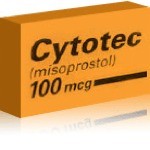
Cytotec (Misoprostol) stands as the only prostaglandin E1 analog medication approved for preventing and treating NSAID-induced gastric ulcers — one of the most common causes of medication-related GI injury worldwide. As a synthetic prostaglandin, Cytotec replaces the natural protective prostaglandins that are reduced by chronic NSAID use, restoring stomach lining defense and promoting ulcer healing. The 100/200 mcg oral tablets deliver consistent mucosal protection for the millions of patients requiring long-term anti-inflammatory therapy.
Misoprostol works through multiple mucosal protective mechanisms by binding EP3 prostaglandin receptors in gastric tissue. The medication increases mucus production coating the stomach lining, stimulates bicarbonate secretion that neutralizes acid at the mucosal surface, enhances mucosal blood flow supporting tissue repair, and provides mild acid suppression through inhibition of parietal cell stimulation. The result: NSAID-induced gastric ulcer rates drop 70-80% when misoprostol is co-administered with chronic NSAID therapy, existing ulcers heal in 4-8 weeks, and serious GI complications including bleeding decrease substantially.
Cytotec serves several distinct clinical indications. The primary FDA-approved use is prevention of NSAID-induced gastric ulcers in patients at high risk including elderly, those with prior ulcer history, and patients on chronic anti-inflammatory therapy. The medication also treats erosive ulcerative lesions of the upper GI tract caused by aspirin and other NSAIDs. Beyond GI applications, misoprostol has well-documented obstetric uses including labor induction, cervical ripening, postpartum hemorrhage prevention, and missed miscarriage management — used worldwide under WHO guidelines despite not being FDA-approved for these indications in the US.
Cytotec requires 4 times daily dosing with meals and at bedtime for GI protection (200 mcg standard dose). The medication is rapidly absorbed and converted to active misoprostol acid with short 20-40 minute half-life of metabolites. Generic misoprostol from quality manufacturers including Cipla, Sun Pharma, and Zydus Cadila provides identical therapeutic effects to brand Cytotec at substantially lower cost. The active ingredient remains chemically identical to original Searle / Pfizer formulation across both branded and generic versions of this established prostaglandin E1 therapy.

Free prescription
Discrete packaging
Have questions?
Quality Assurance


- NSAID Ulcer Prevention: Preventing development of stomach ulcers in patients on chronic NSAID therapy with high-risk factors;
- Stomach Ulcer: Open sores in stomach lining from acid bacteria or medication damage requiring protective therapy;
- Gastric Ulcer: Medical term for stomach ulcer requiring mucosal protection and healing support;
- Duodenal Ulcer: Open sores in upper small intestine causing burning pain typically relieved by food;
- Peptic Ulcer Disease: Combined stomach and duodenal ulcer condition from acid bacterial or medication damage;
- Aspirin Induced Ulcer: Stomach injury from chronic aspirin use particularly in cardiovascular protection regimens;
- Gastric Erosion: Superficial gastric mucosal damage from NSAIDs or stress before ulcer formation;
- Mucosal Protection: Strengthening gastric lining defense in patients vulnerable to medication-induced injury;
- Chronic NSAID Therapy Protection: Protection for patients requiring long-term anti-inflammatory therapy for arthritis or other conditions;
- Elderly NSAID Protection: Particularly important protection for older adults on NSAIDs due to higher ulcer complication risk;
- Prior Ulcer History Protection: Patients with previous peptic ulcers requiring NSAID coverage benefit from misoprostol co-therapy;
- Labor Induction: Off-label obstetric use to initiate labor at term per WHO and ACOG protocols worldwide;
- Cervical Ripening: Off-label use before labor induction to prepare cervix for delivery in obstetric care;
- Postpartum Hemorrhage Prevention: Off-label uterotonic use to prevent or treat postpartum bleeding per WHO guidelines;
- Missed Miscarriage Management: Off-label use to complete incomplete or missed miscarriage as alternative to surgical evacuation;
- Medical Abortion: Off-label use combined with mifepristone for early pregnancy termination under medical supervision;
- Uterotonic Therapy: Uterine contraction stimulation for various obstetric and gynecologic indications;
- Prostaglandin E1 Therapy: Prostaglandin analog drug class for mucosal protection and uterine stimulation indications;
- Gastroprotective Therapy: Therapy enhancing stomach lining defense against acid mechanical or chemical damage.
- Better Ulcer Healing: Existing NSAID-induced ulcers heal in 4-8 weeks with consistent misoprostol therapy;
- Less GI Bleeding: Serious upper GI bleeding complications from NSAID use decrease substantially with misoprostol protection;
- Better Gastric Mucus Production: Stomach lining mucus secretion increases providing physical acid barrier protection;
- Better Bicarbonate Secretion: Mucosal bicarbonate production rises neutralizing acid at stomach surface;
- Better Mucosal Blood Flow: Gastric tissue perfusion improves supporting cellular repair and protection;
- Less NSAID Stomach Pain: Burning epigastric pain from chronic NSAID use improves with protective therapy;
- Less Gastric Erosion: Superficial stomach lining damage decreases before progressing to deeper ulcers;
- Less Aspirin GI Side Effects: Patients on cardioprotective aspirin tolerate therapy better with misoprostol stomach protection;
- Less Ulcer Hospitalization: Hospital admissions for NSAID-induced complicated ulcers and bleeding decrease significantly;
- Better Arthritis Therapy Tolerance: Patients with chronic arthritis can continue effective NSAID therapy with protected stomach;
- Less Elderly NSAID Risk: Older patients on NSAIDs gain substantial protection against age-related ulcer vulnerability;
- Less Recurrent NSAID Ulcers: Patients with prior ulcer history requiring NSAIDs see major reduction in recurrence;
- Better Labor Induction Efficacy: Off-label obstetric uses provide effective uterine contraction stimulation at term;
- Better Cervical Ripening: Off-label cervix preparation for safer labor induction in obstetric care settings;
- Less Postpartum Bleeding: WHO-endorsed off-label use to prevent and treat dangerous postpartum hemorrhage;
- Better Miscarriage Management: Off-label alternative to surgical evacuation for missed or incomplete miscarriage;
- Less Gastric Acid Production: Mild acid suppression through parietal cell inhibition complements mucosal protection;
- Four Times Daily Convenience: Tablets taken with meals and bedtime provide continuous mucosal protection throughout day;
- Better Quality of Life: Daily wellbeing improves as chronic NSAID therapy continues without painful gastric complications.
Generic Cytotec (Misoprostol 200 mcg) Medication guide:
💊 Prostaglandin Basics Misoprostol Mechanism Explained
Cytotec is the American brand name for misoprostol, a synthetic prostaglandin E1 analog with an unusual clinical range - one FDA-approved gastrointestinal indication and a much larger list of obstetric and gynecologic uses that developed after the drug reached the market in the late 1980s.
Misoprostol does two things biologically that matter clinically. It protects gastric mucosa from injury by NSAIDs and other insults through prostaglandin receptor effects on acid secretion, mucus and bicarbonate output. Separately, it causes uterine contractions and cervical softening through prostaglandin receptor effects on the uterus. The same molecule serves both roles.
🧬 What prostaglandin E1 does
Natural prostaglandin E1 is a signaling lipid produced throughout the body. Its actions include:
- Vasodilation
- Smooth muscle relaxation in some tissues and contraction in others
- Mucus and bicarbonate secretion in the stomach
- Modulation of platelet function
- Inflammatory signaling
Misoprostol is a synthetic PGE1 analog engineered for oral stability. Natural PGE1 is degraded rapidly in the gut; misoprostol survives and reaches the bloodstream as its active metabolite, misoprostol acid.
📋 What Cytotec is approved for
FDA label - one indication
Cytotec was approved in the United States in 1988 for prevention of NSAID-induced gastric ulcers in clients at high risk of complications. That remains the only FDA-labeled indication. Every other use is off-label but often standard of care and reflected in guidelines from ACOG, WHO, FIGO and other bodies.
🗺️ The wider clinical picture
Off-label but widely established uses:
- Labor induction at term
- Cervical ripening before induction, delivery or gynecologic procedures
- Medical management of early pregnancy loss (missed and incomplete miscarriage)
- Postpartum hemorrhage prevention and treatment where oxytocin is limited
- Medical abortion regimens in combination with mifepristone
- Cervical priming before intrauterine device insertion in nulliparous or difficult cases
- Cervical priming before hysteroscopy or dilation and curettage
💊 Available forms
Cytotec comes as 100 mcg and 200 mcg tablets. The 200 mcg tablet is the most common formulation and the one most protocols reference. The tablet can be:
- Swallowed orally
- Dissolved sublingually (under the tongue)
- Dissolved buccally (between cheek and gum)
- Placed vaginally
- Administered rectally
Different routes give different pharmacokinetic profiles - onset, peak, duration - which is why obstetric protocols specify not just the dose but the route.
🌍 Global availability and status
Misoprostol is on the WHO Model List of Essential Medicines under obstetric use. Prescription-only in the United States and most Western countries. Available over the counter in some regions. Distributed widely by generic manufacturers under numerous brand names including Cytotec, Cyprostol, Misoprost, Prostokos, Gastrul and others.
🚨 Boxed warnings
Absolute contraindication in pregnancy for the labeled use
The FDA label carries a boxed warning that misoprostol is not to be used for NSAID ulcer prevention in pregnant clients because it causes miscarriage and can cause serious fetal harm. Separately, misoprostol used for labor induction in clients with prior cesarean or other uterine surgery carries a risk of uterine rupture. Section 30 covers detail.
📅 History
Misoprostol was developed by Searle in the 1970s specifically as an oral PGE1 analog to prevent NSAID gastropathy. FDA approval came in 1988. Its uterine effects were known from early development but not part of the label. Obstetric use grew from the 1990s onward through clinical research in Brazil, Egypt, France and elsewhere. Cochrane reviews and WHO guidance eventually codified these uses.
🎯 What Cytotec is not
- Not an acid suppressor like a PPI
- Not an antibiotic
- Not a contraceptive
- Not effective for functional dyspepsia without ulcer
- Not safe in pregnancy (outside of specific obstetric protocols)
⚖️ Regulatory context
The GI-versus-obstetric split is politically loaded because misoprostol is central to medical abortion regimens. Prescription rules and availability vary substantially by country. This guide covers the pharmacology and clinical use in medical settings. Local law and clinical practice govern access.
💡 Bottom picture: Cytotec is a synthetic PGE1 analog with a small FDA label and a large real-world footprint. It protects the stomach from NSAIDs and it acts on the uterus and cervix. The rest of this guide covers each indication, dosing route, safety and practical use.
🩹 Cytotec for NSAID Gastric Ulcer Prevention
NSAID-induced gastric ulcer is the FDA-approved indication for Cytotec. NSAIDs are among the most-used medications globally, and their GI toxicity is a major clinical problem - ulcers, bleeding, perforation. Misoprostol was the first drug specifically approved to prevent this, and although PPIs have taken over most of that role, misoprostol still has a niche.
🩹 NSAID-related mucosal injury
Nonsteroidal anti-inflammatory drugs inhibit cyclooxygenase and reduce mucosal prostaglandins. Consequences include:
- Reduced gastric mucus and bicarbonate secretion
- Reduced mucosal blood flow
- Direct mucosal injury from acidic NSAID molecules
- Erosions, ulcers and complications
Roughly 15 to 30 percent of chronic NSAID users develop endoscopic ulcers; complications (bleeding, perforation) occur at lower but clinically important rates.
🎯 Who is at high risk
Gastroprotection indicated when
- Age 65 or older
- Prior peptic ulcer disease or GI bleeding
- Concurrent corticosteroid use
- Concurrent anticoagulant use
- Concurrent aspirin therapy
- H. pylori infection (test and treat first)
- Chronic high-dose NSAID use
- Serious comorbidity
💊 How misoprostol prevents ulcers
Misoprostol replaces the prostaglandin activity that NSAIDs block:
- Stimulates gastric mucus and bicarbonate secretion
- Enhances mucosal blood flow
- Reduces acid secretion at higher doses
- Restores mucosal defense
Randomized trials in the 1990s (MUCOSA and others) demonstrated substantial reduction in serious upper GI complications.
📏 Dosing for NSAID ulcer prevention
| Regimen | Dose |
|---|---|
| Standard prevention | 200 mcg four times daily with food |
| Reduced dose (better tolerability) | 200 mcg two or three times daily |
| Duration | Continuous while NSAID is used |
| Timing | With meals and at bedtime |
🤔 Why PPIs took over
PPIs are used more often than misoprostol for NSAID ulcer prevention today because:
- Once-daily dosing vs three or four times daily
- Fewer GI side effects (misoprostol causes diarrhea and cramping)
- Similar or better efficacy for uncomplicated ulcer prevention
- Better client acceptance
- Lower cost in some markets
PPIs are now first-line gastroprotection for most NSAID users at risk.
🎯 Where misoprostol still fits
- PPI intolerance
- Concern about long-term PPI side effects (fractures, kidney, C. difficile)
- Clients who prefer non-acid-suppression approach
- Combination products (some countries market NSAID plus misoprostol combinations)
- Specific research or clinical trial contexts
💊 Combination products
Diclofenac plus misoprostol (Arthrotec) is a combined product marketed for arthritis in some countries. Contains 50 or 75 mg diclofenac plus 200 mcg misoprostol per tablet. Combines the anti-inflammatory with automatic gastroprotection. Not widely used in the US.
🔬 Efficacy compared with PPIs
Head-to-head trials:
- Similar efficacy for preventing endoscopic ulcers
- PPIs may be marginally more effective
- Complications reduction similar
- Client tolerability strongly favors PPIs
🔬 Misoprostol vs H2 blockers
H2 blockers (famotidine, ranitidine historically) provide partial protection but are less effective than misoprostol or PPIs for NSAID ulcer prevention. Full-dose PPI or misoprostol are the standard tools; H2 blockers are second-tier for this indication.
🤔 H. pylori first
Test and treat before starting NSAIDs long-term
Clients starting long-term NSAID therapy should be tested for H. pylori and treated if positive. H. pylori and NSAIDs each independently cause ulcers, and combined risk is substantial. Neither misoprostol nor PPI substitutes for eradication of active infection.
🤰 Pregnancy consideration for NSAID prevention
Absolute contraindication
Misoprostol is contraindicated during pregnancy for NSAID ulcer prevention. It causes miscarriage and can cause serious fetal harm including limb defects and M?bius sequence. If NSAID gastroprotection is needed in a pregnant client, use PPI or sucralfate. Reproductive-age women on chronic misoprostol for NSAID prophylaxis need reliable contraception.
💩 Common side effect issue
Diarrhea is the reason many clients stop misoprostol for NSAID prevention:
- Occurs in 15 to 40 percent of clients at 800 mcg daily
- Often self-limits over the first weeks
- Dose splitting reduces severity
- Section 17 covers detail
🔙 When to discontinue
- NSAID stopped
- H. pylori eradicated in someone who tolerates NSAIDs otherwise
- Ulcer risk reassessed to low
- Intolerable side effects
- Pregnancy or planned pregnancy
- Switch to alternative gastroprotection preferred
📆 Long-term therapy
Continue misoprostol while NSAID exposure continues. No known long-term consequences from prolonged misoprostol use for GI protection. Reassess periodically for continued need.
💡 Practical rule: misoprostol for NSAID ulcer prevention is effective but has been largely displaced by PPIs due to easier dosing and better tolerability. Still useful in PPI-intolerant clients and in combination products. Absolute contraindication in pregnancy. Test and treat H. pylori first.
👶 Misoprostol in Labor Induction
Labor induction is one of the largest global uses of misoprostol. WHO essential medicines list includes it, ACOG endorses it, and Cochrane reviews have summarized decades of trials. Low-dose vaginal or oral misoprostol effectively induces labor at term with careful attention to contraindications.
👶 About labor induction
Induction of labor - starting labor artificially before spontaneous onset - is common for medical and obstetric indications:
- Post-term pregnancy
- Preeclampsia or hypertensive disorders
- Diabetes with fetal considerations
- Prelabor rupture of membranes
- Intrauterine growth restriction
- Chorioamnionitis
- Elective induction after 39 weeks in appropriate candidates
Successful induction requires both cervical ripening (softening and effacement) and uterine contractions.
💊 Where misoprostol fits
Two roles in one drug
Misoprostol softens the cervix and induces uterine contractions. That combination lets a single agent handle both cervical ripening and induction, unlike alternatives that separate the two roles.
📏 Standard induction dosing
| Route | Dose | Frequency |
|---|---|---|
| Vaginal (unfavorable cervix) | 25 mcg | Every 3 to 6 hours |
| Vaginal (favorable cervix) | 50 mcg | Every 3 to 6 hours |
| Oral | 50 to 100 mcg | Every 4 hours |
| Sublingual | 25 to 50 mcg | Every 4 hours |
| Maximum | Individualized | Assess response, contractions, fetal status |
🏥 Where induction happens
Labor induction with misoprostol is a hospital procedure with continuous fetal monitoring, availability of emergency cesarean, and staff experienced in complications management. Never a home protocol. Never a self-administered protocol at term.
🔬 Evidence base
Cochrane reviews and multiple randomized trials support:
- Effective cervical ripening and induction
- Similar or better vaginal delivery rates vs alternatives (dinoprostone, oxytocin)
- Comparable or lower cesarean rates
- Attention to uterine tachysystole rates
- Low-dose regimens (25 mcg vaginal) preferred for safety
⚖️ Alternatives for induction
- Dinoprostone (PGE2 gel or vaginal insert) - approved for cervical ripening; more expensive
- Oxytocin infusion - established for induction with ripe cervix
- Mechanical methods - Foley balloon, laminaria; often combined with pharmacologic
- Combined approach - Foley plus misoprostol or oxytocin common
🚨 Uterine rupture warning
Absolute contraindication after prior cesarean
Misoprostol should not be used for labor induction in clients with prior cesarean delivery, prior transmural uterine surgery or other uterine scar. Uterine rupture risk is substantially higher than with other induction methods. This is one of the most important safety points in the drug label. Section 30 covers detail.
⚠️ Uterine tachysystole
Excessive contractions (more than 5 in 10 minutes) with or without fetal heart rate changes can occur with misoprostol induction. Management:
- Reposition client
- Stop oxytocin if being co-administered
- IV fluids
- Oxygen
- Consider tocolysis (terbutaline)
- Vaginal misoprostol removal if recently placed
- Emergency cesarean for persistent fetal distress
👶 Fetal monitoring
Continuous electronic fetal monitoring throughout misoprostol induction:
- Baseline before dose
- Continuous monitoring after administration
- Assess contractions, fetal heart rate
- Ready access to obstetric emergency response
🔬 Vaginal vs oral route
Vaginal misoprostol has longer duration and higher bioavailability; oral is faster onset with shorter effect. Both are effective. Choice depends on:
- Bishop score and cervical status
- Institutional protocol
- Fetal status
- Prior obstetric history
- Client preference where reasonable
🏥 Combined with mechanical methods
Foley balloon plus misoprostol or oxytocin is a common induction combination. The balloon mechanically dilates the cervix while misoprostol softens and stimulates contractions. Trials suggest combined approaches shorten induction-to-delivery interval.
🗓️ Bishop score guidance
The Bishop score assesses cervical readiness:
- Unfavorable (under 6) - misoprostol or dinoprostone for ripening
- Favorable (6 or above) - oxytocin or lower-dose misoprostol; higher chance of successful vaginal delivery
📈 Efficacy
Vaginal delivery rates with misoprostol induction typically 70 to 85 percent depending on parity, indication and starting Bishop score. Cesarean rates modest and comparable to other methods.
🛑 Contraindications for induction
Do not use for induction if
- Prior cesarean delivery or transmural uterine surgery
- Placenta previa or vasa previa
- Malpresentation (transverse lie)
- Nonreassuring fetal heart tracing
- Active genital herpes
- Prior classical uterine incision
- Other cesarean-indication conditions
💡 Practical rule: misoprostol is an effective induction agent for term pregnancy in a hospital setting with continuous fetal monitoring. Absolute contraindication after prior cesarean. Low-dose 25 mcg vaginal every 3 to 6 hours is a standard starting regimen for unfavorable cervix. Managed by obstetric team.
🌸 Cervical Ripening Before Delivery
Cervical ripening - softening, thinning and dilation of the cervix - is a prerequisite for effective labor. When the cervix is unfavorable at term (low Bishop score), pharmacologic or mechanical ripening improves induction success. Misoprostol is one of the standard pharmacologic tools.
🌸 What cervical ripening means
The pregnant cervix at term should become:
- Soft (from firm)
- Effaced (thinned out)
- Dilated (opened)
- Anterior in position
- Fetal head at lower station
The Bishop score captures these features on a scale of 0 to 13. Score under 6 is unfavorable; above 8 is favorable.
💊 Pharmacologic ripening agents
- Misoprostol (PGE1 analog) - vaginal, oral, sublingual, buccal
- Dinoprostone (PGE2) - vaginal gel or vaginal insert
- Foley balloon - mechanical
- Combined approaches - Foley plus misoprostol commonly used
📏 Misoprostol for ripening
| Route | Dose |
|---|---|
| Vaginal 25 mcg | Every 3 to 6 hours |
| Vaginal 50 mcg | Every 6 hours (may cause more tachysystole) |
| Oral 25 to 50 mcg | Every 2 to 4 hours (multiparous) |
| Sublingual 25 mcg | Every 4 hours in some protocols |
🏥 Where ripening happens
Cervical ripening with misoprostol at term is a hospital procedure. Continuous fetal monitoring, immediate access to emergency cesarean and experienced obstetric staff are required. Some centers use outpatient protocols for select low-risk cases with careful monitoring; this is not universal.
⚖️ Misoprostol vs dinoprostone
Similar efficacy, big cost difference
Cochrane reviews found misoprostol comparable or superior to dinoprostone for cervical ripening and induction success. Misoprostol is substantially cheaper - a fraction of the cost of dinoprostone gels or inserts. Institutional preference varies.
🤝 Combined ripening approaches
Foley balloon plus misoprostol is increasingly common:
- Foley provides mechanical dilation
- Misoprostol adds pharmacologic softening and contraction stimulation
- Combined shortens time to delivery
- Standard protocols vary
👶 Fetal safety
Cervical ripening exposes the fetus to increased uterine activity. Vigilance for:
- Uterine tachysystole (over 5 contractions in 10 minutes)
- Fetal heart rate abnormalities
- Meconium passage
- Progression through Bishop scores
- Fetal cardiac output response
🚨 Contraindications
Do not use for cervical ripening if
- Prior cesarean delivery
- Prior transmural uterine surgery
- Placenta previa
- Nonreassuring fetal status
- Grand multiparity (relative)
- Multiple gestation (individual assessment)
- Prior classical uterine incision
🔬 Second and third trimester considerations
Cervical ripening for second-trimester procedures (dilation and evacuation, therapeutic termination) uses different protocols with higher doses. These are specialty procedures in specialized settings.
📈 Ripening success rates
Successful ripening (progression to favorable Bishop score) with misoprostol occurs in most clients within 12 to 24 hours. Time to vaginal delivery ranges widely - 24 to 48 hours typical for unfavorable starting cervix. Failed induction rates are modest.
🔬 Multiparity considerations
Multiparous clients respond more readily to cervical ripening. Lower doses often sufficient. Faster progression. Higher rate of tachysystole with standard doses - some protocols use reduced initial dose in multiparas.
👶 Postterm pregnancy
Postterm pregnancy (over 41 weeks) is a common indication for induction. Cervix often unfavorable. Misoprostol ripening followed by oxytocin augmentation is a standard approach.
🔬 Preeclampsia and hypertensive disorders
Cervical ripening for delivery in preeclampsia:
- Standard misoprostol protocols apply
- Concurrent magnesium sulfate for seizure prophylaxis
- Antihypertensive management
- Fluid balance attention
- Multidisciplinary care
👨⚕️ Protocols and institutional variation
Cervical ripening protocols vary by institution and country. Common elements:
- Bishop score assessment before starting
- Continuous fetal monitoring
- Standard dose intervals
- Response reassessment before each dose
- Transition to oxytocin when appropriate
- Emergency response plan
🌍 Global context
Misoprostol is used for cervical ripening worldwide because it is affordable, stable at room temperature, and effective. WHO and FIGO endorse it in guidelines. Low-resource settings often rely on it because dinoprostone is expensive and requires cold-chain storage.
📋 Client communication
Before starting cervical ripening:
- Explain the plan and expected timeline
- Discuss cramping and contraction expectations
- Review monitoring plan
- Discuss alternatives
- Address anxiety and questions
- Support person involvement
💡 Practical rule: misoprostol is a standard cervical ripening agent - effective, affordable, storage-stable. Used in hospital settings with continuous fetal monitoring and emergency capability. Contraindicated after prior cesarean. Managed by obstetric team.
🩸 Misoprostol for Missed Miscarriage
Medical management of missed miscarriage and incomplete miscarriage with misoprostol is a well-established alternative to surgical management. It avoids anesthesia and surgery, keeps clients out of the operating room, and works reliably when protocols are followed.
🩸 Early pregnancy loss
Early pregnancy loss (miscarriage before 13 weeks) affects roughly 15 percent of recognized pregnancies. Types:
- Threatened miscarriage - bleeding with closed cervix and viable pregnancy
- Missed miscarriage - fetal demise without expulsion
- Incomplete miscarriage - partial expulsion with retained products
- Complete miscarriage - full expulsion, no intervention needed
- Inevitable miscarriage - ongoing loss
- Anembryonic pregnancy - empty gestational sac
🤔 Management options
Three approaches for missed miscarriage and incomplete miscarriage:
- Expectant management - wait for spontaneous expulsion
- Medical management - misoprostol to induce expulsion
- Surgical management - suction curettage or dilation and curettage
All three have similar overall safety. Choice reflects individual client preference, gestational age, clinical context and resource availability.
💊 Misoprostol dosing for missed miscarriage
MISOPROSTOL trial and follow-on protocols
The Zhang MISOPROSTOL trial (2005) established 800 mcg vaginal misoprostol as an effective dose. Subsequent trials and PragmaTIC studies added mifepristone pretreatment for improved efficacy.
| Regimen | Dose |
|---|---|
| Standard vaginal | 800 mcg, may repeat at 24 to 48 hours |
| Sublingual alternative | 600 mcg, may repeat |
| With mifepristone pretreatment | Mifepristone 200 mg 24 hours before, then 800 mcg vaginal misoprostol |
📈 Efficacy
Success rates:
- Single-dose vaginal misoprostol - 71 to 85 percent complete expulsion
- Repeat dose brings rate to 84 to 93 percent
- With mifepristone pretreatment - 91 to 95 percent complete expulsion
- Failure requires surgical management
🔬 Pretreatment assessment
Before starting misoprostol:
- Ultrasound to confirm nonviable pregnancy
- Rh status - anti-D immunoglobulin if Rh negative
- CBC baseline
- Rule out ectopic pregnancy
- Assess vital signs and clinical stability
- Discuss all management options
- Provide written instructions and 24-hour contact
🩺 What to expect
Expected process and symptoms
- Cramping starts within 2 to 6 hours of misoprostol
- Heaviest bleeding and passage of tissue over 4 to 12 hours
- Bleeding continues at reduced level for 1 to 2 weeks
- Nausea, diarrhea, chills, mild fever are common
- Ibuprofen or acetaminophen for cramps
🚨 When to seek emergency care
Warning signs
- Soaking through two pads per hour for two consecutive hours
- Fever over 100.4 F beyond 24 hours after dose
- Severe abdominal pain not relieved by analgesics
- Foul-smelling discharge
- Signs of shock (fainting, cold clammy skin, rapid pulse)
- Failure to bleed at all after the dose
📆 Follow-up
- Ultrasound at 7 to 14 days to confirm complete expulsion
- If retained products detected, options are additional misoprostol dose, expectant management or surgical evacuation
- Serum hCG follow-up in specific scenarios
- Emotional support and grief resources
- Discussion of future pregnancy timing
💑 Emotional care
Missed miscarriage is a distressing event. Medical management provides more privacy and control than surgical management for some clients. For others the process is prolonged and difficult - surgical management may be preferable. Individual preference matters. Bereavement support, follow-up counseling and validation of grief are integral to good care.
⚖️ Comparison with surgical management
| Aspect | Medical (misoprostol) | Surgical (D and C) |
|---|---|---|
| Setting | Home or clinic | Operating room |
| Duration | Days | Hours |
| Success rate | 71-95 percent | Over 95 percent |
| Anesthesia | None | General or conscious sedation |
| Bleeding | Days to weeks | Days |
| Infection risk | Low | Low |
| Emotional experience | Variable; private | Variable; controlled |
💉 Rh immunoglobulin
Anti-D immunoglobulin (RhoGAM) is standard for Rh-negative clients undergoing miscarriage regardless of management approach. Administered within 72 hours.
📋 Contraindications for medical management
- Hemodynamic instability - surgical management
- Signs of infection - surgical management plus antibiotics
- Ectopic pregnancy - separate management path
- Molar pregnancy - specialized management
- Coagulopathy or anticoagulant use - individual assessment
- Client preference for definitive quick resolution
🗓️ Future pregnancy planning
After miscarriage:
- Menstruation returns in 4 to 6 weeks
- Ovulation may return before menstruation
- Waiting for one cycle before conceiving is often suggested but not required for medical reasons
- Grief and readiness matter as much as physical timeline
💡 Practical rule: misoprostol offers effective medical management for missed miscarriage and incomplete miscarriage. Standard dose is 800 mcg vaginal, may repeat. Mifepristone pretreatment improves success rates. Client choice among medical, surgical and expectant options is central. Support, safety-netting and follow-up are all part of good care.
🚨 Postpartum Hemorrhage Management Misoprostol
Postpartum hemorrhage is a leading cause of maternal mortality worldwide. Misoprostol has an established role in both prevention and treatment of PPH, particularly where oxytocin - the first-line uterotonic - is limited by supply, cold chain or delivery route. WHO and FIGO have codified this use.
🚨 About postpartum hemorrhage
Postpartum hemorrhage is blood loss more than 500 mL after vaginal delivery or 1000 mL after cesarean, or any bleeding causing hemodynamic instability. Causes remembered as the four Ts:
- Tone - uterine atony (70 percent of PPH)
- Trauma - lacerations, uterine rupture
- Tissue - retained placenta or products
- Thrombin - coagulopathy
Uterine atony is the target for pharmacologic uterotonic therapy including misoprostol.
💊 Uterotonic hierarchy
Standard uterotonic sequence:
- Oxytocin - first-line prevention and treatment (10 IU IM or IV infusion)
- Carbetocin - long-acting oxytocin analog; preferred in some countries
- Ergot alkaloids (methylergonovine) - second-line; contraindicated in hypertension
- Carboprost (Hemabate) - PGF2-alpha; contraindicated in asthma
- Misoprostol - accessible tool in resource-limited settings; effective
🌍 Where misoprostol shines
Low-resource obstetric settings
Misoprostol requires no refrigeration, no injection equipment, no IV access. Tablets are shelf-stable. Rectal, sublingual and oral routes work when injection is impractical. This has made misoprostol central to PPH management in home births, rural clinics and low-resource facilities where oxytocin cold chain is not reliable.
📏 Misoprostol dosing for PPH
| Purpose | Dose |
|---|---|
| PPH prevention where oxytocin unavailable | 600 mcg oral immediately after delivery |
| PPH treatment | 800 mcg sublingual or rectal |
| Alternative treatment | 1000 mcg rectal (single dose) |
| Maximum single dose | 1000 mcg per WHO recommendations |
🔬 Evidence base
WHO recommendations and Cochrane reviews established:
- Oral or sublingual misoprostol prevents PPH when oxytocin unavailable
- Effect size smaller than oxytocin but clinically meaningful
- Sublingual or rectal misoprostol effective for treatment
- Combined with oxytocin may not add benefit
- Fever and shivering common side effects at higher doses
🤒 Fever and chills
Higher-dose misoprostol causes:
- Fever - up to 20 to 40 percent of clients at 800 mcg or higher
- Shivering and chills
- Usually self-limits over 2 to 6 hours
- Distinguishes from infection through clinical picture
- Acetaminophen for symptomatic relief
🕛 Timing considerations
For PPH prevention:
- Give immediately after delivery of the infant
- Before or with delivery of placenta
- Rapid onset with sublingual route
For PPH treatment:
- Give as soon as diagnosis made
- Combined with uterine massage and other measures
- Rectal or sublingual for fast systemic uptake
🤝 Combined uterotonic therapy
Standard PPH management combines:
- Oxytocin IV
- Uterine massage
- Bimanual compression
- Fluid resuscitation and transfusion
- Misoprostol as second-tier uterotonic
- Methylergonovine if not hypertensive
- Carboprost if not asthmatic
- Tranexamic acid within 3 hours of bleeding onset
- Surgical management for refractory bleeding (compression sutures, hysterectomy)
💉 Tranexamic acid
Tranexamic acid (WOMAN trial) reduces maternal mortality from PPH when given within 3 hours. Standard PPH treatment now includes it alongside uterotonics.
🔬 Community-based programs
WHO endorsed advance distribution of misoprostol to pregnant women in areas without facility birth access. Trained community health workers or the client herself takes 600 mcg oral misoprostol immediately after delivery to prevent PPH. Evidence supports reduced PPH rates in these programs.
🗺️ Global impact
PPH remains the leading cause of maternal death globally. Access to misoprostol has:
- Reduced PPH-related mortality in multiple regions
- Provided a tool where injectable uterotonics are impractical
- Complemented rather than replaced oxytocin where both available
- Prompted continued research on optimal use
🛑 Contraindications
For PPH use, contraindications are limited given the life-threatening scenario:
- Known hypersensitivity to prostaglandins
- Prior severe reaction to misoprostol
Cardiac and asthma concerns that limit carboprost do not apply to misoprostol in the same way.
👶 Fetal considerations post-delivery
Misoprostol given after delivery does not affect the newborn substantially. Breastfeeding compatibility discussed in Section 29.
💉 Facility-based versus home-based use
Different scenarios, different considerations
Facility birth with oxytocin availability - oxytocin first, misoprostol as second-line. Home birth or low-resource clinic without reliable oxytocin - misoprostol becomes first available uterotonic. The right tool depends on the setting.
👨⚕️ Team-based response
PPH management is team-based. Misoprostol is one tool. Response includes:
- Immediate uterotonic administration
- Rapid IV access and fluid resuscitation
- Blood product preparation
- Uterine massage and compression
- Assess for and manage other bleeding causes
- Surgical consultation
- Blood bank activation
🌍 WHO essential medicines status
Misoprostol is on the WHO Model List of Essential Medicines for postpartum hemorrhage. This reflects global consensus that access to the drug saves lives.
💡 Practical rule: misoprostol is a valuable PPH tool where oxytocin is limited or as a second-line agent alongside oxytocin. Doses range from 600 mcg oral (prevention) to 800 to 1000 mcg sublingual or rectal (treatment). Fever and chills are common. Combined with uterine massage, tranexamic acid and other measures.
🎯 Cervical Priming Before IUD Insertion
Cervical priming with misoprostol before intrauterine device insertion is used in specific scenarios - nulliparous clients, prior insertion failure, adolescents - to reduce insertion difficulty and pain. The evidence is mixed, and routine use is not endorsed by ACOG, but individualized use has a role.
🎯 About IUD insertion
Intrauterine devices are highly effective long-acting reversible contraception. Two main types:
- Copper IUD (ParaGard)
- Levonorgestrel IUD (Mirena, Kyleena, Liletta, Skyla)
Insertion involves passing the device through the cervical canal into the uterine cavity. Most insertions in parous clients go smoothly. Nulliparous clients, cervical stenosis and prior failed insertions can complicate the process.
💊 Where misoprostol fits
Misoprostol softens and slightly dilates the cervix before insertion. Theoretical benefits:
- Easier insertion
- Less procedural pain
- Lower rate of insertion failure
- Reduced need for cervical dilators
- Fewer expulsions (theoretical)
🔬 What the evidence actually shows
Mixed evidence, targeted use
Trials of routine pre-IUD misoprostol have not shown consistent benefit in unselected populations. Some show reduced insertion failure in nulliparous clients or after prior failed insertion. Others show no benefit and increased side effects. Current ACOG guidance does not recommend routine use but supports individualized use for difficult cases.
📏 Dosing when used
| Route | Dose | Timing |
|---|---|---|
| Oral | 400 mcg | 3 to 4 hours before insertion |
| Vaginal | 400 mcg | 3 to 4 hours before insertion |
| Sublingual | 400 mcg | 2 to 3 hours before insertion |
🎯 When to consider pre-treatment
Scenarios where pre-IUD misoprostol may help:
- Prior failed insertion attempt
- Cervical stenosis identified on prior exam
- Adolescent nulliparous client
- Post-menopausal client (rare use)
- Anatomic considerations (retroverted uterus with tight canal)
- Client preference after informed discussion
🛑 When routine use is not helpful
- Parous clients without prior difficulty
- Post-abortion or postpartum insertion (cervix already dilated)
- Insertion during menses (natural dilation)
- Unselected outpatient insertions
🔬 Side effect tradeoff
Pre-IUD misoprostol commonly causes:
- Cramping before insertion
- Nausea
- Diarrhea
- Bleeding or spotting
- Discomfort in the waiting period
For clients where the drug does not clearly help, these side effects are a downside without benefit.
💊 Alternatives for difficult insertion
- Paracervical block - direct anesthetic injection
- Topical lidocaine gel - modest effect
- NSAID pretreatment - ibuprofen or naproxen 30 to 60 minutes before
- Cervical dilators at time of procedure
- Ultrasound-guided insertion
- Anxiolytics for very anxious clients
- Conscious sedation for select cases
🕛 Timing on insertion day
Standard schedule with misoprostol pretreatment:
- Take misoprostol 3 to 4 hours before appointment
- Take with food to reduce nausea
- NSAID (ibuprofen 600 to 800 mg) 30 to 60 minutes before insertion
- Insertion by trained clinician
- Post-insertion instructions and follow-up
👩 Nulliparous considerations
Nulliparous IUD insertion is well established as safe and effective. Contemporary IUDs have narrower insertion tubes. Pain and difficulty vary. Some nulliparous clients benefit from misoprostol pretreatment; others do not need it.
🧒 Adolescent considerations
IUD use in adolescents has expanded substantially. Long-acting reversible contraception is highly effective and increasingly recommended for adolescent contraception. Pretreatment with misoprostol has been studied in this population with mixed results. Individualized approach.
🛑 Pain management priorities
Trauma-informed insertion
Modern IUD insertion practice emphasizes trauma-informed care - explain each step, communicate throughout, use adequate pain management, offer options. This addresses the pain problem more comprehensively than misoprostol pretreatment alone. Combined approaches often used.
📋 Client counseling
Discuss with the client:
- Rationale for pretreatment (individual vs routine)
- Expected effects and side effects of misoprostol
- Timing schedule for insertion day
- Alternative approaches
- Post-insertion expectations
🔬 Post-abortion IUD insertion
IUD insertion immediately after surgical abortion or after medical abortion completion does not typically require misoprostol pretreatment because the cervix has already dilated. Post-procedure insertion is convenient and effective.
🤰 Postpartum insertion
IUD insertion during cesarean, immediately postpartum vaginal delivery, or later postpartum - similar cervical status considerations. Immediate postpartum insertion has higher expulsion rates but eliminates gap in contraception.
👨⚕️ Practitioner considerations
Trained IUD inserters develop technique for difficult insertions:
- Cervical stabilization
- Uterine sounding
- Gradual dilation when needed
- Recognition of when to abort attempt
- Rescheduling with pretreatment or dilators for retry
Pretreatment is one tool among many.
🔙 When pretreatment fails
Sometimes misoprostol pretreatment does not achieve enough dilation. Options:
- Additional misoprostol dose (limited evidence)
- Mechanical dilators at time of procedure
- Reschedule with different approach
- Consider alternate contraception
💡 Practical rule: misoprostol pretreatment for IUD insertion is not routine. Selected use in nulliparous clients, prior failed insertion, cervical stenosis or adolescents may help. Side effect tradeoff means unselected routine use is not endorsed. Trauma-informed care and multi-modal pain management address the pain issue more broadly.
🔬 Hysteroscopy Preparation With Misoprostol
Cervical priming before hysteroscopy softens and dilates the cervix, making instrument passage easier and reducing complications. Misoprostol is one of the standard tools for this indication, particularly in nulliparous and postmenopausal clients.
🔬 About hysteroscopy
Hysteroscopy is direct visualization of the uterine cavity through a hysteroscope passed through the cervix. Uses include:
- Evaluation of abnormal uterine bleeding
- Endometrial polyp diagnosis and removal
- Fibroid resection
- Endometrial ablation
- Retained products of conception evaluation
- Infertility workup
- Sterilization procedures (historically)
- Adhesion lysis
💊 Cervical priming rationale
The cervix needs to admit the hysteroscope, which ranges from small diameter diagnostic scopes to larger operative scopes. Cervical stenosis, nulliparity or postmenopausal atrophy can make instrument passage difficult:
- Increased procedural pain
- Risk of cervical laceration
- Risk of uterine perforation
- Failed procedure requiring reschedule
Priming aims to soften the cervix so dilators pass more easily.
📏 Standard priming dose
| Route | Dose | Timing |
|---|---|---|
| Vaginal | 400 mcg | 8 to 12 hours before procedure |
| Sublingual | 400 mcg | 2 to 4 hours before procedure |
| Oral | 400 mcg | 3 to 4 hours before procedure |
🔬 Evidence base
Multiple randomized trials support misoprostol for hysteroscopic cervical priming:
- Reduced cervical dilator requirement
- Fewer cervical lacerations
- Lower rate of failed dilation
- Reduced procedural pain
- Vaginal route associated with more consistent effect
🎯 Who benefits most
Nulliparous and postmenopausal clients
Nulliparous clients and postmenopausal clients often have narrow, firm cervices that resist dilation. Priming has clearest benefit in these groups. Parous premenopausal clients often have adequate baseline dilatability without priming.
👩 Postmenopausal considerations
Postmenopausal cervical atrophy makes dilation harder. Options:
- Vaginal estrogen for 2 to 4 weeks before procedure - improves atrophy
- Misoprostol immediately before - softens
- Both combined for maximum effect
⚖️ Alternatives
- Osmotic dilators (laminaria, Dilapan) - slower onset over hours
- Traction with tenaculum at procedure
- Careful mechanical dilation with graduated dilators
- Ultrasound guidance during dilation
- Vaginal estrogen pretreatment in postmenopausal clients
🤒 Side effects
Same profile as other misoprostol uses:
- Cramping in the priming interval
- Nausea
- Diarrhea
- Bleeding or spotting
- Mild fever (uncommon at 400 mcg)
🕛 Timing considerations
Timing depends on route:
- Vaginal - overnight dosing convenient (8 to 12 hours)
- Sublingual - 2 to 4 hours before, easier morning-of scheduling
- Oral - 3 to 4 hours before, well-tolerated
Institutional protocols vary. Timing that suits the OR schedule and client convenience.
👨⚕️ Anesthesia considerations
Hysteroscopy is done under:
- Local anesthesia (paracervical block) - office hysteroscopy
- Conscious sedation
- General anesthesia - operative hysteroscopy or long procedures
Cervical priming complements local anesthesia by reducing pain from dilation. Under general anesthesia, priming reduces mechanical difficulty regardless of client sensation.
🚨 Contraindications
- Pregnancy (rare context in hysteroscopy workup)
- Hypersensitivity to misoprostol
- Active pelvic infection
- Confirmed cervical malignancy (individual assessment)
🔬 Diagnostic vs operative hysteroscopy
Diagnostic office hysteroscopy uses narrow scopes and often does not require priming. Operative hysteroscopy uses larger sheaths and benefits from priming when the cervix is tight.
👨⚕️ Trauma-informed procedure
Modern hysteroscopy practice emphasizes:
- Explain each step
- Adequate analgesia and anxiolysis
- Communication throughout
- Option to pause or stop
- Support during and after procedure
Cervical priming complements this - it addresses one specific technical issue, not the whole client experience.
📋 Client counseling
Before scheduling with priming:
- Explain the pretreatment and rationale
- Timing instructions for taking the dose
- Expected effects (cramping, nausea)
- What to do if severe symptoms occur
- Arrangements for the day of procedure
🔙 Second procedure after failed dilation
If initial hysteroscopy attempt fails from cervical dilation issues, options for the second attempt:
- Reschedule with misoprostol priming
- Add vaginal estrogen for weeks before if postmenopausal
- Osmotic dilators inserted the day before
- Combined approaches
- Consider general anesthesia for adequate dilation
🔬 Similar procedures using priming
The same principles apply to:
- Dilation and curettage (D and C)
- Endometrial sampling in select clients
- IUD insertion in difficult cases (Section 7)
- Cervical polypectomy
🗓️ Institutional protocols
Local protocols specify:
- Which clients receive priming
- Dose and route
- Timing on procedure day
- Prescription workflow
- Client instructions
- Documentation
💡 Practical rule: misoprostol 400 mcg vaginal 8 to 12 hours before or 400 mcg sublingual 2 to 4 hours before hysteroscopy or D and C makes cervical dilation easier. Most useful in nulliparous and postmenopausal clients. Combined with adequate anesthesia and trauma-informed procedural care.
💊 Medical Abortion Combined Regimens
Medical abortion regimens combining mifepristone and misoprostol are among the most-studied and widely-used applications of misoprostol worldwide. This section covers the clinical protocols as used in medical settings, following ACOG, WHO and FIGO frameworks. Local law and regulations govern access.
📋 Framework and scope
Medical setting only
This section describes medical abortion protocols used by licensed healthcare providers in appropriate clinical settings. Medical abortion requires provider evaluation, laboratory workup, ultrasound confirmation, follow-up and management of complications. Self-managed abortion outside medical care is not covered here and is not recommended. Local law governs where and how these medications can be prescribed and dispensed.
💊 Standard medical abortion regimen
Combined regimen for early pregnancy (up to 70 or 77 days from last menstrual period depending on protocol):
- Mifepristone 200 mg oral - antiprogestin, given first
- Misoprostol 800 mcg buccal or vaginal - 24 to 48 hours later
- Follow-up 7 to 14 days later to confirm completion
This regimen has success rates of 95 to 98 percent in early pregnancy.
💊 Misoprostol-only regimen
Where mifepristone is not available, misoprostol alone can be used but is less effective:
- 800 mcg vaginal, buccal or sublingual
- Repeat every 3 to 6 hours for up to 3 doses
- Success rates lower - 75 to 90 percent depending on gestational age and protocol
- Higher rates of ongoing pregnancy compared with combined regimen
🔬 How the combination works
Mifepristone blocks progesterone receptors:
- Detaches the embryo from the uterine lining
- Softens the cervix
- Increases uterine sensitivity to prostaglandins
Misoprostol adds:
- Uterine contractions
- Further cervical dilation
- Expulsion of pregnancy tissue
The combination works better than either alone.
🔬 Pretreatment evaluation
- Confirmation of intrauterine pregnancy by ultrasound
- Rule out ectopic pregnancy
- Gestational age determination
- Rh status and anti-D immunoglobulin if Rh negative
- Medical history including contraindications
- Discussion of all pregnancy options
- Informed consent
- Written aftercare instructions
- 24-hour contact for complications
🕛 Expected timeline and symptoms
What to expect
- Cramping begins within 30 to 60 minutes of misoprostol
- Heavy bleeding and passage of pregnancy tissue over 4 to 6 hours
- Continued bleeding at reduced level for 1 to 2 weeks
- Nausea, diarrhea, chills, mild fever common
- Ibuprofen or acetaminophen for cramps
- Adequate hydration
- Support person recommended
🚨 When to seek urgent care
Contact the provider or emergency care for
- Soaking through two pads per hour for two consecutive hours
- Fever over 100.4 F beyond 24 hours after misoprostol
- Severe pain not relieved by analgesics
- Foul-smelling vaginal discharge
- Signs of shock - fainting, cold clammy skin, rapid pulse
- Failure to bleed at all after misoprostol
- Persistent pregnancy symptoms after expected completion
📆 Follow-up
- Follow-up visit 7 to 14 days later
- Ultrasound to confirm no ongoing pregnancy
- Alternative: home pregnancy test at 4 weeks (multi-level testing)
- Serum hCG follow-up in specific protocols
- Contraception initiation if desired
- Emotional support
- Address complications if present
🛑 Contraindications
Do not use combined regimen if
- Confirmed ectopic pregnancy
- Gestational age beyond protocol limit
- Hypersensitivity to mifepristone or misoprostol
- IUD in place (remove first)
- Uncontrolled chronic adrenal insufficiency
- Long-term systemic corticosteroid use
- Coagulopathy or anticoagulant use (relative)
- Porphyria
- Uncontrolled bleeding disorder
💉 Rh immunoglobulin
Rh-negative clients receive anti-D immunoglobulin at initiation or during the procedure per protocol.
💉 Antibiotics
Routine antibiotic prophylaxis is not standard for uncomplicated medical abortion. Some protocols use doxycycline; practice varies. Antibiotics are used for suspected or confirmed infection.
🔬 Failed medical abortion
Approximately 2 to 5 percent of combined regimen abortions fail (persistent pregnancy) or are incomplete (retained tissue). Options:
- Additional misoprostol dose
- Expectant management
- Suction curettage
- Individual counseling and choice
💑 Emotional care
The decision to end a pregnancy is significant and individual. Comprehensive care includes:
- Nonjudgmental support
- Grief and emotional support resources
- Post-abortion counseling if desired
- Contraception planning
- Future pregnancy planning discussion
⚖️ Comparison with surgical abortion
| Aspect | Medical | Surgical |
|---|---|---|
| Setting | Home after clinic visit | Clinic or hospital |
| Duration | Days | Hours |
| Success rate | 95 to 98 percent (combined) | Over 99 percent |
| Anesthesia | None | Local or sedation |
| Follow-up | Required | Often not required |
| Pain | Moderate to severe cramping | Brief procedural pain |
🌍 Global regulatory context
Mifepristone and misoprostol availability varies substantially by country. Many countries permit medical abortion in defined circumstances; some restrict it substantially; some have telemedicine protocols. Local law and clinical guidelines govern practice.
🗺️ Ectopic pregnancy consideration
Must rule out before starting
Medical abortion regimen does not treat ectopic pregnancy. Missed ectopic pregnancy can rupture during or after treatment with life-threatening bleeding. Ultrasound confirmation of intrauterine pregnancy before starting is essential. Symptoms of ectopic rupture (severe unilateral pain, shoulder pain, shock) require emergency evaluation.
👨⚕️ Provider oversight
Medical abortion requires trained provider oversight:
- Evaluation and ultrasound
- Prescription per local law
- Counseling and consent
- Written aftercare
- 24-hour contact for complications
- Follow-up confirmation
- Management of complications
💡 Practical rule: combined mifepristone plus misoprostol is a well-established medical abortion regimen with high effectiveness in early pregnancy. Requires medical evaluation, ultrasound confirmation, follow-up and access to complication management. Local law governs practice. Self-managed use outside medical care is not recommended.
⚙️ How Misoprostol Works
Understanding how misoprostol works explains why it has such diverse indications. A single molecule acts on prostaglandin receptors distributed differently across tissues - gastric mucosa, cervical stroma, uterine smooth muscle - and produces effects that fit each clinical need.
🧬 The molecule
Misoprostol is a synthetic analog of prostaglandin E1 (PGE1). Structural modifications - a methyl ester replacing the carboxylic acid, an oxymethylene at position 15, saturation of the double bond - give it:
- Oral stability (natural PGE1 is rapidly degraded)
- Selective prostaglandin receptor activity
- Predictable pharmacokinetics
🎯 Prostaglandin receptors
Prostaglandin E receptors come in four subtypes (EP1 through EP4). Misoprostol acid, the active metabolite, activates EP2, EP3 and EP4 with varying affinity. Distribution of these receptors across tissues determines effects:
- Gastric mucosa - EP3 dominates; misoprostol reduces acid, increases mucus and bicarbonate
- Cervix - EP2 and EP4; softening and dilation
- Uterine smooth muscle - EP1 and EP3; contraction
- Gut smooth muscle - EP3; propulsion (causes diarrhea)
🩹 Gastric mucosal protection
The original approved effect
Misoprostol reduces gastric acid secretion at higher doses, stimulates bicarbonate and mucus secretion, and improves mucosal blood flow. This restores prostaglandin-mediated defenses that NSAIDs suppress. That is why it was approved for NSAID ulcer prevention.
👶 Uterine effects
Misoprostol acts on the uterus in two ways:
- Cervical softening - collagen remodeling, glycosaminoglycan changes, water content increase
- Uterine contractions - direct smooth muscle stimulation via EP1 and EP3
These effects underlie labor induction, cervical ripening, medical abortion and PPH treatment.
🕛 Pharmacokinetics
| Parameter | Value |
|---|---|
| Oral absorption | Rapid |
| Peak plasma (oral) | 30 minutes |
| Peak plasma (vaginal) | 1 to 2 hours |
| Peak plasma (sublingual) | 30 minutes |
| Half-life of misoprostol acid | 20 to 40 minutes |
| Duration of effect | 3 to 6 hours depending on route |
| Metabolism | Hepatic; converted to inactive products |
| Excretion | Renal (metabolites) |
🔬 Prodrug to active metabolite
Oral misoprostol is rapidly de-esterified in plasma to misoprostol acid, the pharmacologically active form. This conversion is fast and complete. Vaginal and buccal routes bypass some hepatic first-pass effects and give different pharmacokinetic profiles.
🌍 Route-dependent effects
The same 200 mcg dose behaves differently by route:
- Oral - fast peak, brief effect, more GI side effects (nausea, diarrhea)
- Vaginal - slower peak, longer duration, sustained uterine effect
- Sublingual - fast peak like oral, better bioavailability
- Buccal - similar to sublingual, less taste burden
- Rectal - similar to vaginal for systemic effect; used when vaginal impractical
Section 12 covers routes in detail.
👤 Human selectivity
Misoprostol is designed to activate human prostaglandin E receptors. Its effects are pharmacologically predictable but not exclusive to one tissue - the gastric mucosa response and the uterine response come from the same drug reaching both places.
🚫 Adverse effect mechanism
Common side effects trace back to prostaglandin receptor distribution:
- Diarrhea - EP3 on gut smooth muscle
- Cramping - EP1 and EP3 on uterine and gut smooth muscle
- Fever and chills - central prostaglandin effects on thermoregulation
- Nausea - central and peripheral effects
- Uterine tachysystole - excessive uterine activation
🧪 No CYP interactions
Misoprostol acid is metabolized by fatty acid oxidation pathways rather than CYP enzymes. This gives it a clean interaction profile - Section 20 covers detail.
👢 Effects on other tissues
Minor effects on other prostaglandin-sensitive tissues:
- Modest bronchodilation (not therapeutically important)
- Slight vasodilation (not clinically important at therapeutic doses)
- Renal effects minor
- Bone effects theoretical
👶 Pregnancy embryotoxicity
Category X
Misoprostol exposure during ongoing pregnancy causes miscarriage. First trimester exposure that does not cause miscarriage has been associated with fetal malformations - M?bius sequence (facial paralysis, limb defects) and terminal transverse limb defects. Uterine vasoconstriction during embryogenesis is proposed as the mechanism.
👶 Newborn considerations
Misoprostol given intrapartum reaches the fetus. Neonatal effects can include respiratory depression at high doses. Standard obstetric doses have not shown consistent neonatal issues but neonatal monitoring is standard practice.
🍼 Breast milk
Misoprostol acid enters breast milk in small amounts and clears rapidly given the short half-life. Section 29 covers breastfeeding considerations.
📆 Duration and residual effects
Because half-life is short:
- Effects wear off within hours
- No accumulation with repeated dosing
- Clean discontinuation
- Effects can be re-created with additional doses
💡 Bottom picture: misoprostol is a synthetic prostaglandin E1 analog with pharmacologic effects on stomach mucosa, cervix and uterine smooth muscle. Route determines pharmacokinetics; receptor distribution determines tissue effects. Rapid clearance means clean dosing but repeated doses when needed. Multiple indications come from the same fundamental mechanism.
📏 Misoprostol Dosing by Indication
Misoprostol dosing varies more by indication than most drugs. A 200 mcg tablet is used from 100 mcg (labor induction) to 1000 mcg (PPH treatment). Understanding the dose-indication matching prevents dangerous errors.
📋 Dosing at a glance
| Indication | Dose | Route |
|---|---|---|
| NSAID ulcer prevention | 200 mcg 3 to 4 times daily | Oral |
| Labor induction (unfavorable cervix) | 25 mcg every 3 to 6 hours | Vaginal |
| Labor induction (favorable cervix) | 50 mcg every 3 to 6 hours | Vaginal |
| Labor induction oral | 50 to 100 mcg every 4 hours | Oral |
| Cervical ripening pre-hysteroscopy | 400 mcg once | Vaginal 8-12h before or sublingual 2-4h before |
| Cervical priming pre-IUD | 400 mcg once | Oral or vaginal 3-4h before |
| Missed miscarriage | 800 mcg, repeat at 24-48h | Vaginal |
| Incomplete miscarriage | 600 mcg once | Oral or sublingual |
| Medical abortion (with mifepristone) | 800 mcg | Buccal or vaginal |
| Medical abortion (misoprostol only) | 800 mcg every 3-6h, up to 3 doses | Sublingual, buccal or vaginal |
| PPH prevention | 600 mcg | Oral after delivery |
| PPH treatment | 800 to 1000 mcg | Sublingual or rectal |
💊 Tablet strength
Cytotec 200 mcg tablets are the most common formulation. 100 mcg tablets exist in some markets. Doses are made up from combinations:
- 25 mcg = one 200 mcg tablet divided into eighths (imprecise; specialty compounding preferred)
- 50 mcg = one 200 mcg tablet quartered
- 100 mcg = one 200 mcg tablet halved or one 100 mcg tablet
- 200 mcg = one tablet
- 400 mcg = two 200 mcg tablets
- 600 mcg = three tablets
- 800 mcg = four tablets
🔪 Tablet division accuracy
25 mcg dosing is imprecise
Dividing 200 mcg tablets into eighths for 25 mcg labor induction dosing produces uneven fragments. Some obstetric protocols use only 50 mcg vaginal (from quartering) to avoid this. Where 25 mcg is used, some centers dissolve the tablet in a specific volume of water and draw specific volumes. Compounding pharmacies can prepare specific low-dose tablets.
🕛 Timing intervals
Repeat dosing intervals vary by indication and route:
- Labor induction - 3 to 6 hours between vaginal doses
- Missed miscarriage - 24 to 48 hours between doses
- Medical abortion - 3 to 6 hours if repeat needed
- PPH - typically single dose
- NSAID prevention - three or four times daily continuous
🌍 Route-based dose adjustment
The same physiologic effect requires different doses by route because bioavailability and pharmacokinetics differ:
- Vaginal absorption is more prolonged and complete than oral
- Sublingual bypasses some first-pass metabolism
- Rectal has similar pharmacokinetics to vaginal
- Buccal is between sublingual and vaginal
Section 12 covers routes in detail.
🧒 Pediatric considerations
Misoprostol is not typically used in children. The uses are all adult indications. Pediatric use in specific rare scenarios (specific gynecologic pathology in adolescents) follows adult protocols.
🩹 Renal impairment
Half-life may be prolonged in severe renal impairment because misoprostol acid and metabolites are renally excreted. Data limited. Dose reductions in principle reasonable for severe CKD. In practice, single-dose obstetric use rarely raises the question; NSAID prevention long-term in CKD is uncommon.
🫀 Hepatic impairment
Misoprostol is de-esterified in plasma and further metabolized in liver. Severe hepatic impairment - individual assessment; standard doses usually acceptable but caution reasonable.
🧓 Older adults
NSAID ulcer prevention is a common indication in older adults. Standard 200 mcg TID or QID applies. GI side effects (diarrhea) may be more troublesome; dose reduction to BID with dietary adjustment is reasonable.
🤰 Pregnancy - dose depends on purpose
The distinction matters:
- Ongoing wanted pregnancy - misoprostol contraindicated
- Missed miscarriage - therapeutic dose for expulsion
- Medical abortion - therapeutic dose for pregnancy termination
- Labor induction - low dose for cervical ripening and induction
- Postpartum - dose for uterine tone after delivery
🍼 Breastfeeding
Standard doses applicable. Half-life short. Section 29 covers detail.
🤔 Maximum daily dose considerations
No single official maximum. Practical ceilings:
- Labor induction - individual titration; total dose over course varies
- Medical abortion misoprostol-only - up to 2400 mcg total
- PPH - single dose up to 1000 mcg
- NSAID prevention - 200 mcg QID (800 mcg/day)
🚨 Overdose considerations
Misoprostol overdose has been reported in intentional and inadvertent scenarios. Symptoms:
- Fever
- Convulsions
- Diarrhea
- Abdominal pain
- Hypotension
- Cardiac arrhythmias in extreme cases
Management is supportive. No specific antidote. Activated charcoal within an hour of ingestion.
📆 Duration of therapy
- Obstetric single-event uses - hours to days
- Medical abortion follow-through - days
- NSAID prevention - continuous while NSAID used
- PPH - single dose, occasionally repeat
📋 Dosing errors
Common errors to avoid
- Confusing 200 mcg (single-dose tablet) with 200 mg (would be 1000x overdose)
- Using labor-induction dose (25 mcg) when medical management dose intended (800 mcg)
- Substituting oral dose for vaginal without adjusting
- Missing the mifepristone step in combined regimen
- Using misoprostol when mechanical dilation would be safer
👨⚕️ Prescribing precision
Written prescriptions and orders should specify:
- Dose in mcg (not mg)
- Route explicitly
- Frequency
- Total number of tablets or doses
- Indication
💡 Practical rule: misoprostol dosing spans from 25 mcg (labor induction with intact fetus) to 1000 mcg (PPH treatment). Wrong dose for the wrong indication is dangerous. Match dose, route and interval to the specific clinical use. Section 12 covers routes in detail.
💊 Oral Vaginal Buccal Rectal Sublingual Routes Compared
Misoprostol can be given by five routes - oral, sublingual, buccal, vaginal and rectal. Each has a different pharmacokinetic profile, and each fits specific indications better than others. Route selection is as important as dose selection.
🕛 Overview of routes
| Route | Peak plasma | Duration | Bioavailability |
|---|---|---|---|
| Oral | 30 min | 2 to 3 hours | Moderate |
| Sublingual | 30 min | 3 to 4 hours | Higher |
| Buccal | 60 min | 3 to 4 hours | Higher |
| Vaginal | 1 to 2 hours | 4 to 6 hours | Highest sustained |
| Rectal | 1 to 1.5 hours | 4 hours | Similar to vaginal |
💊 Oral route
Fast onset, brief duration
Oral misoprostol reaches peak plasma quickly but effect wears off within hours. First-pass metabolism reduces bioavailability. Best for indications needing quick effect - NSAID ulcer prevention, PPH prevention after delivery, some labor induction protocols.
👄 Sublingual route
Tablet placed under the tongue and allowed to dissolve:
- Faster absorption than oral
- Bypasses some first-pass metabolism
- Higher peak plasma than oral
- Bitter taste for many clients
- Used in labor induction, medical abortion, PPH treatment
👄 Buccal route
Tablet placed between cheek and gum:
- Similar bioavailability to sublingual
- Less taste burden
- Used in medical abortion protocols
- Time to dissolve about 30 minutes
- Swallow any residue after 30 minutes
🔱 Vaginal route
Tablet placed in the posterior vaginal fornix:
- Slower absorption but longer sustained plasma levels
- Highest total exposure
- Bypasses first-pass metabolism
- Used in labor induction, missed miscarriage, medical abortion
- Moisten tablet with water or saline for adherence
- Client should remain supine for 15 to 30 minutes after insertion
💩 Rectal route
Tablet placed in the rectum:
- Similar pharmacokinetics to vaginal
- Used when vaginal impractical - postpartum bleeding, active vaginal delivery bleeding, cultural preferences
- PPH treatment is the main indication
- Client positioning to retain tablet
🔬 Why route matters
Different indications favor different pharmacokinetic profiles:
- Labor induction - want sustained but not excessive uterine stimulation; vaginal preferred at low doses
- Missed miscarriage - want strong sustained uterine effect; vaginal 800 mcg standard
- PPH treatment - want fast onset; sublingual or rectal
- Cervical ripening pre-procedure - want reliable softening effect; vaginal or sublingual
- NSAID ulcer prevention - want local plus systemic gastric effect; oral
🤔 Same dose, different effect
800 mcg misoprostol has different clinical effects depending on route:
- Vaginal 800 mcg - strong sustained uterine effect (miscarriage management)
- Oral 800 mcg - fast peak, more GI side effects, brief uterine effect
- Sublingual 800 mcg - fast, high peak, moderate duration
- Rectal 800 mcg - similar to vaginal (PPH)
🤒 Route-related side effects
GI side effects are more pronounced with routes that give higher peak plasma levels:
- Sublingual has highest rate of GI symptoms
- Oral moderate
- Vaginal least (locally absorbed with slower rise)
- Rectal similar to vaginal
- Buccal moderate
🌍 Client preference and cultural factors
Different routes work better for different clients:
- Cultural comfort with vaginal or rectal insertion varies
- Ability to keep tablet in place
- Nausea and vomiting - oral not useful if unable to keep down
- Speed of onset requirement
- Setting (home vs clinic)
🕜 Timing considerations
Route affects timing:
- Sublingual - 30 min for full dissolution
- Buccal - 30 min hold time
- Vaginal - remain supine 15 to 30 min for retention
- Rectal - retain for at least an hour
- Oral - swallow with water
👩⚕️ Route selection in medical abortion
Combined mifepristone plus misoprostol regimens use vaginal or buccal misoprostol most commonly:
- Vaginal - most studied, slightly higher success rate
- Buccal - equivalent efficacy in most trials, less privacy concern
- Sublingual - alternative
- Oral - lower success rate in some studies; less used in current protocols
👶 Route in labor induction
Vaginal 25 mcg every 3 to 6 hours is the most common induction regimen. Oral 50 mcg every 4 hours is used in some protocols. Individual institutional preferences vary.
🚨 Route in PPH
Sublingual or rectal for PPH treatment - active bleeding makes oral impractical (vomiting) and vaginal impractical (bleeding washout). Sublingual preferred where client can cooperate; rectal where unconscious or sedated.
🔪 Cervical priming route
For pre-hysteroscopy or pre-IUD:
- Vaginal 8 to 12 hours before - overnight dosing
- Sublingual 2 to 4 hours before - morning-of dosing
- Oral 3 to 4 hours before - alternative
💝 Tablet placement technique
Vaginal insertion
Wash hands. Squat or lie with knees bent. Moisten tablets with a small amount of water or saline if dry. Insert tablets high in the vagina toward the cervix using clean fingers or an applicator. Remain lying down 15 to 30 minutes for retention.
👄 Sublingual technique
- Place tablet under the tongue
- Allow to dissolve without chewing or swallowing
- Takes 20 to 30 minutes for full dissolution
- Swallow any residue after 30 minutes
- Do not eat or drink until dissolved
🗺️ Institutional protocol variations
Different institutions use different route protocols for the same indication. Cochrane reviews find similar efficacy across routes for most indications with dose adjustments. Institutional experience often shapes preference.
💡 Practical rule: route matters because the same dose behaves differently across oral, sublingual, buccal, vaginal and rectal. Match route to indication and clinical scenario. Follow specific protocols rather than substituting routes casually.
⏰ Onset Duration Timing
Misoprostol acts quickly and clears quickly. That kinetics profile shapes when to expect effects, when to redose, and when to give up on a dose that did not work. Understanding onset and duration prevents both undertreatment and overtreatment.
⏱️ Overall timeline
- Absorption - minutes for sublingual/oral, up to hours for vaginal/rectal
- Peak plasma - 30 minutes (oral, sublingual) to 2 hours (vaginal)
- Clinical effect onset - 30 min to 2 hours
- Peak clinical effect - 1 to 3 hours
- Duration - 3 to 6 hours per dose
- Elimination - largely cleared by 8 hours
🕛 Onset by indication
| Indication | Expected onset |
|---|---|
| Uterine cramping in miscarriage management | 30 min to 4 hours |
| Bleeding after miscarriage misoprostol | 4 to 6 hours typical |
| Contractions in labor induction | 1 to 4 hours after dose |
| Cervical softening for procedure | 3 to 12 hours by route |
| PPH uterine tone improvement | 30 to 90 minutes |
| GI side effects | 30 min to 2 hours |
🔬 Half-life details
Misoprostol acid (the active metabolite) has a half-life of about 20 to 40 minutes. Practical implications:
- No accumulation with repeat doses
- Effect duration is limited
- Repeat doses can be timed by protocol
- Clean washout for follow-up procedures
🤔 When to redose
Repeat dose intervals per indication:
- Labor induction - 3 to 6 hours between vaginal doses
- Missed miscarriage - 24 to 48 hours if first dose incomplete
- Medical abortion - 3 to 6 hours if repeat needed
- PPH treatment - single dose typical; repeat rarely
- Cervical priming - single dose typical
- NSAID prevention - 6 to 8 hours between scheduled doses
🛑 When a dose has failed
Clinical judgment of failure at different timelines:
- Labor induction - no progression in 24 hours
- Missed miscarriage - no bleeding by 24 hours; incomplete expulsion at 7 days
- Medical abortion - persistent pregnancy at 7 to 14 day follow-up
- PPH - continued bleeding despite dose plus other measures
- Cervical priming - inadequate softening at procedure time
🕜 Duration of GI side effects
Diarrhea and cramping from misoprostol usually resolve within:
- 3 to 6 hours per dose
- Longer with vaginal route
- Longer with repeat dosing
- Cramping in miscarriage/abortion may be prolonged for hours
🌡️ Fever timeline
Prostaglandin-related fever:
- Onset within 1 to 2 hours of dose
- Duration typically 3 to 6 hours
- Rarely extends beyond 12 hours
- Persistent fever beyond 24 hours suggests infection, not drug effect
🩸 Bleeding timeline in miscarriage
After misoprostol for missed miscarriage:
- Cramping starts 30 min to 4 hours after dose
- Heaviest bleeding and tissue passage over 4 to 12 hours
- Bleeding tapers over days
- Light bleeding for 1 to 2 weeks total
- Menstruation returns 4 to 6 weeks
🩸 Bleeding timeline in medical abortion
Similar to miscarriage:
- Bleeding within hours of misoprostol
- Heaviest within 4 to 6 hours
- Continued bleeding 1 to 2 weeks
- Menstruation returns 4 to 6 weeks
👶 Labor induction timeline
From first misoprostol dose to delivery varies:
- First contractions - 1 to 4 hours
- Active labor - typically after multiple doses
- Delivery - median 12 to 24 hours from induction start
- Wide individual variation
🔬 Priming timeline for procedures
Pre-hysteroscopy or pre-IUD:
- Vaginal - takes 8 to 12 hours for optimal softening
- Sublingual - 2 to 4 hours
- Oral - 3 to 4 hours
- Effect fades by 12 to 24 hours
🕝 Individual variation
Response timing varies:
- Parity - multiparous clients often respond faster
- Gestational age - later pregnancy sometimes needs less
- Cervical status - unfavorable cervix takes longer
- Body weight - modest impact
- Route of administration - major impact
📆 Cumulative effect
Because half-life is short, cumulative "buildup" is not the mechanism of repeat dosing. Each dose creates its own window of effect. The uterus becomes more responsive over hours with repeated stimulation, but this is uterine physiology rather than drug accumulation.
🕛 Wash-out for follow-up
After completing a course, misoprostol clears rapidly. Follow-up procedures (D and C for retained products, IUD insertion post-abortion) can proceed without waiting for drug clearance.
🤔 When effect seems delayed
Reasons a dose may not have worked as expected:
- Tablet expelled from vagina before absorption
- Tablet vomited if oral
- Extended time to tablet dissolution
- Individual variation in absorption
- Wrong dose or route for the indication
- Clinical situation different from expected
🌫️ Buccal and sublingual duration
Between sublingual (fast peak) and vaginal (slow sustained), the buccal route gives intermediate kinetics. Peak plasma about 60 minutes, duration comparable to vaginal. Used specifically in medical abortion protocols where this profile matches the physiologic need.
🕛 Practical duration summary
Short-lived drug, repeated doses
Misoprostol is a short-lived pharmacologic tool. Individual doses create bursts of effect over hours. Clinical protocols repeat doses at specified intervals when sustained effect is needed. No accumulation means clean pharmacology but requires attention to timing.
💡 Practical rule: effects begin within an hour or two and last three to six hours per dose. Repeat dosing follows protocol timing. Prolonged effects (bleeding after abortion, fever) reflect ongoing physiology rather than drug accumulation. Clean washout allows follow-up procedures without delay.
🚀 Pretreatment Assessment Before Misoprostol
Pretreatment assessment before misoprostol varies by indication but follows core principles - confirm the diagnosis, screen for contraindications, review medications, discuss risks and expectations, and plan follow-up. Skipping this step causes preventable complications.
🔍 Confirm the indication
The indication drives everything else. Common indications:
- NSAID ulcer prevention
- Labor induction at term
- Cervical ripening before procedure
- Missed or incomplete miscarriage
- Postpartum hemorrhage prevention or treatment
- Medical abortion
- Pre-hysteroscopy priming
- Pre-IUD priming in select cases
🤰 Pregnancy status
Must be clarified before dosing
Misoprostol is contraindicated in ongoing wanted pregnancy for GI indications. For obstetric indications, pregnancy status, gestational age, and location (intrauterine vs ectopic) must be confirmed. Ultrasound is standard for miscarriage management and medical abortion.
🧪 Pretreatment for NSAID ulcer prevention
- Confirm indication and NSAID exposure
- H. pylori testing and eradication if positive
- Discuss GI side effects (diarrhea, cramping)
- Consider alternative gastroprotection (PPI) for tolerability
- Pregnancy status; contraception counseling for women of reproductive age
- Baseline CBC not typically needed
👶 Pretreatment for labor induction
Screen for absolute contraindications
- Prior cesarean or transmural uterine surgery
- Placenta previa or vasa previa
- Malpresentation
- Nonreassuring fetal heart tracing
- Active genital herpes
- Prior classical uterine incision
Comprehensive obstetric assessment:
- Gestational age confirmation
- Bishop score
- Fetal presentation and station
- Fetal weight estimation
- Continuous fetal monitoring baseline
- Membranes intact or ruptured
- Discussion of induction indication
- Informed consent
🩸 Pretreatment for missed miscarriage
- Ultrasound confirmation of nonviable pregnancy
- Rule out ectopic
- Rh status - anti-D immunoglobulin if Rh negative
- Baseline CBC and hCG
- Discuss all management options (expectant, medical, surgical)
- Informed consent
- Written aftercare with 24-hour contact
- Emotional support and bereavement resources
💊 Pretreatment for medical abortion
- Ultrasound confirmation of intrauterine pregnancy
- Rule out ectopic pregnancy
- Gestational age within protocol limits
- Medical history
- Contraindication screen
- Rh status and anti-D immunoglobulin
- Baseline CBC
- Discussion of all pregnancy options
- Informed consent
- Contraception planning
- Follow-up plan
- 24-hour contact for complications
👶 Pretreatment for PPH
PPH is an emergency; assessment happens alongside treatment:
- Diagnosis based on bleeding volume and hemodynamic status
- Rapid IV access
- Blood draw for CBC, type and crossmatch
- Cause identification (four Ts)
- Uterotonic administration alongside other management
- Team activation
🔬 Pretreatment for cervical priming
- Confirm indication for procedure
- Pregnancy status if applicable
- Individual assessment (nulliparous, postmenopausal, prior failed insertion)
- Rule out active infection
- Discuss side effects and timing
- Instructions for the day of procedure
- Alternative approaches discussed
💊 Medication review
Misoprostol has minimal drug interactions. The review focuses on:
- Concurrent uterotonics (obstetric use)
- Anticoagulants (bleeding risk)
- Corticosteroids long-term (medical abortion caution)
- Other prostaglandin drugs
- NSAIDs (for GI indication)
Section 20 covers interactions in detail.
🚫 Absolute contraindications
Do not use misoprostol in these scenarios
- Ongoing wanted pregnancy (for GI indication)
- Prior cesarean or uterine scar (for labor induction)
- Hypersensitivity to misoprostol or prostaglandins
- Confirmed ectopic pregnancy
- IUD in place for medical abortion (remove first)
- Certain acute bleeding disorders
- Long-term systemic corticosteroids (medical abortion combined regimen)
💬 Setting expectations
Discuss with the client:
- Purpose of the medication
- What to expect during and after
- Common side effects
- Warning signs to seek care
- Follow-up plan
- Alternatives if applicable
👨⚕️ Informed consent
Written informed consent is standard for obstetric uses. Elements include:
- Indication
- Alternatives
- Risks including uterine rupture, bleeding, incomplete evacuation
- Benefits
- What to expect
- Follow-up plan
📋 Documentation
- Indication
- Gestational age and ultrasound findings if obstetric
- Contraindication screen
- Dose, route, timing
- Counseling documented
- Consent
- Follow-up plan
- Emergency contact
💉 Rh immunoglobulin
Rh-negative clients undergoing medical abortion or miscarriage management receive anti-D immunoglobulin per protocol timing.
💉 Anti-D immunoglobulin timing
- Within 72 hours of the bleeding event
- Standard dose 300 mcg for later gestational age
- 50 mcg (mini-dose) may be used for very early gestation in some protocols
- Coordinated with the misoprostol event
📆 Follow-up planning
Plan follow-up at initial visit:
- Ultrasound or hCG follow-up at 7 to 14 days for pregnancy indications
- Physical assessment
- Symptom review
- Complication management if needed
- Contraception initiation
- Emotional support
🗓️ Advance preparation
Practical items for the client:
- Pain medication (ibuprofen or acetaminophen)
- Sanitary pads (not tampons during acute bleeding)
- Comfortable clothes
- Access to bathroom
- Support person availability
- Understanding of the timeline
- Emergency contact number
💡 Practical rule: pretreatment assessment matches the indication. Confirm the diagnosis, rule out contraindications, discuss risks and expectations, plan follow-up. Written consent for obstetric uses. Emergency contact available. Skipping this step causes preventable harm.
⚠️ Common Cramping Diarrhea Fever Side Effects
Misoprostol side effects come from prostaglandin receptor activation across the gut, uterus and thermoregulatory centers. Cramping, diarrhea, fever and nausea are common. The intensity depends on dose, route and individual sensitivity. Most effects are self-limited.
👍 Overall pattern
Side effects scale with dose. Low doses (25 to 200 mcg) have mild effects. Higher doses (400 to 1000 mcg) commonly produce noticeable but self-limited symptoms. Prostaglandin activation on multiple tissues explains the pattern.
💩 Common short-term side effects
- Diarrhea - most common with oral or sublingual routes and higher doses
- Abdominal cramping - very common regardless of indication
- Nausea and vomiting - common with higher doses
- Fever and chills - dose-related
- Headache
- Dizziness
- Bleeding (uterine) - expected in obstetric indications
- Flushing
📊 Approximate frequency by dose
| Side effect | 200 mcg TID (NSAID prophylaxis) | 800 mcg single dose (obstetric) |
|---|---|---|
| Diarrhea | 15 to 40 percent | Variable (route-dependent) |
| Abdominal cramping | Common | Nearly universal |
| Nausea | Occasional | Common |
| Fever | Rare at low dose | 20 to 40 percent |
| Chills | Rare at low dose | Common |
| Headache | Occasional | Common |
| Vomiting | Rare | Occasional |
🔬 Uncommon side effects
- Constipation (paradoxical, rare)
- Gas and bloating
- Dyspepsia
- Insomnia
- Anxiety
- Rash
- Muscle pain
- Menstrual disturbance in ongoing use
💀 Serious rare events
Rare but serious
- Uterine rupture in labor induction with prior cesarean
- Uterine tachysystole with fetal compromise
- Heavy bleeding requiring transfusion
- Infection after miscarriage or abortion
- Retained products requiring surgical evacuation
- Anaphylaxis - very rare
- Congenital defects with first-trimester exposure that did not cause miscarriage
🕛 Timing of side effects
Most side effects appear within the first hour and resolve within 6 to 12 hours:
- Diarrhea - within 1 to 2 hours; resolves in a few hours
- Cramping - 30 min to 4 hours onset; hours to days by indication
- Fever - 1 to 2 hours; resolves in 3 to 6 hours
- Nausea - within 30 to 60 min; hours
💊 Managing common side effects
- Diarrhea - hydration; loperamide if severe (Section 17)
- Cramps - ibuprofen or acetaminophen; heat
- Nausea - anti-emetic if needed
- Fever/chills - acetaminophen; hydration; wait it out
- Headache - acetaminophen; hydration
🚨 When to seek attention
Warning signs
- Soaking two pads per hour for two consecutive hours
- Fever over 100.4 F beyond 24 hours after dose
- Severe pain not relieved by analgesics
- Signs of shock - fainting, cold clammy skin, rapid pulse
- Persistent vomiting preventing hydration
- Foul-smelling discharge
- Chest pain, shortness of breath, severe headache
- Facial swelling or breathing difficulty
🌌 Dose-related severity
Higher dose, more side effects
NSAID prevention dose (200 mcg 3-4x daily) produces mostly diarrhea and mild cramping. Cervical priming dose (400 mcg once) adds some cramping and nausea. Miscarriage or abortion dose (800 mcg) commonly produces fever, chills, cramping and diarrhea. PPH dose (1000 mcg) has the highest fever rate. Dose selection reflects the indication.
🌍 Route influence
Route affects side effect pattern:
- Oral/sublingual - more GI side effects
- Vaginal - fewer GI side effects at same dose; local vaginal effects
- Rectal - similar to vaginal for GI symptoms
- Buccal - intermediate profile
🧓 Older adults
NSAID ulcer prevention is a common indication in older adults. Side effect considerations:
- Diarrhea can cause dehydration
- Cramping may be attributed to underlying disease
- Cardiac considerations (Section 19) minor
- Overall well tolerated
🤰 Pregnancy indications
For miscarriage and abortion management, cramping and bleeding are the intended effects and not "side effects" in the usual sense. Fever and diarrhea are additional prostaglandin effects.
📅 Duration of therapy considerations
- Single-dose obstetric use - hours of side effects; then done
- Two-dose regimens - repeated bursts
- Chronic NSAID prevention - ongoing but tolerance develops over weeks
🔙 Tolerance and adaptation
Some clients on chronic misoprostol for NSAID prevention find diarrhea and cramping improve after the first weeks. Others discontinue for intolerance and switch to PPI.
🔬 Discontinuation and rebound
Misoprostol can be stopped abruptly:
- No withdrawal syndrome
- Effects wear off within hours
- No rebound
- Underlying condition returns to baseline (NSAID protection lost immediately)
🤔 Distinguishing side effects from complications
Fever within 24 hours of misoprostol is likely drug effect. Fever beyond 24 hours suggests infection.
Cramping within hours is expected. Severe unremitting cramping days later suggests retained products or infection.
Bleeding within days of obstetric misoprostol is expected. Heavy bleeding weeks later needs evaluation.
📆 Long-term consequences
No known long-term consequences from single or short-course misoprostol. Chronic NSAID prevention use has been studied over years - well tolerated. No cumulative organ toxicity signal.
👨👩👧 Future fertility
Misoprostol used for miscarriage or abortion management does not affect future fertility. Standard menstruation returns 4 to 6 weeks. Conception can occur before menstruation resumes. Contraception planning is part of standard post-procedure care.
💡 Practical summary: misoprostol commonly causes cramping, diarrhea, fever and nausea. Effects scale with dose and vary by route. Most resolve within hours to a day. Serious effects (uterine rupture, heavy bleeding, infection) are rare but require prompt attention. Setting expectations reduces anxiety and improves adherence.
🌀 Uterine Contractions and Cramping
Uterine contractions and cramping are the intended effect of misoprostol for obstetric indications - and a byproduct for gastrointestinal indications in reproductive-age women. Understanding what to expect distinguishes normal drug effect from complication.
🌀 Why misoprostol contracts the uterus
Prostaglandin E receptors on uterine smooth muscle mediate contraction. Misoprostol activates these receptors, producing:
- Coordinated uterine contractions
- Cervical softening
- Menstrual-type cramping in nonpregnant clients
- Labor-type contractions in pregnancy
🕛 Timing of contractions
- Onset - 30 minutes to 2 hours after dose
- Peak intensity - 2 to 6 hours
- Duration - 3 to 6 hours per dose
- May persist longer with repeated dosing
🫀 Cramping in NSAID prevention users
Reproductive-age women on chronic misoprostol
Nonpregnant reproductive-age women taking misoprostol for NSAID gastroprotection may experience menstrual-like cramping and spotting. This is a known effect and usually mild. Effective contraception is essential because pregnancy plus misoprostol will cause miscarriage.
🩸 Cramping in miscarriage management
Expected pattern:
- Cramping starts 30 min to 4 hours after dose
- Progresses to labor-like pain
- Peaks during tissue passage
- Eases substantially after major expulsion
- Continues at low level for days as bleeding tapers
💊 Pain management for miscarriage
- Ibuprofen 400 to 600 mg every 6 hours
- Acetaminophen 500 to 1000 mg every 6 hours (can alternate with ibuprofen)
- Heat pad on lower abdomen
- Rest and hydration
- Support person
- Prescription opioids in some protocols for severe pain
👶 Contractions in labor induction
Different pattern from miscarriage or abortion:
- Contractions build gradually over hours
- Coordinated with cervical dilation
- Rhythmic pattern with intervals
- Multiple doses over 24 hours common
- Transition to oxytocin often used
🚨 Uterine tachysystole
More than 5 contractions in 10 minutes
Uterine tachysystole is excessive contraction frequency. Can compromise placental blood flow and fetal oxygenation. Requires immediate intervention - reposition client, IV fluids, oxygen, stop oxytocin, remove vaginal misoprostol if recently placed, consider terbutaline tocolysis. Ongoing fetal distress may need emergency cesarean.
👶 Fetal monitoring during induction
Continuous electronic fetal monitoring is standard during misoprostol labor induction:
- Baseline before dose
- Continuous through dosing and labor
- Assess contraction pattern
- Assess fetal heart rate
- Ready response for concerning tracings
🔬 Cramping severity variability
Individual variation is wide:
- Some clients report mild discomfort
- Others describe severe labor-like pain
- Parity affects perception (multiparas often report less pain)
- Gestational age matters
- Anxiety amplifies pain perception
- Pain tolerance varies genetically and by experience
👶 Cramping in PPH treatment
After delivery, misoprostol stimulates uterine contraction to control atonic bleeding. Cramping is expected. Fundal massage plus contraction from misoprostol together restore tone.
📆 Duration of cramping
| Indication | Cramping duration |
|---|---|
| NSAID prevention | Hours per dose |
| Cervical priming | Hours before procedure |
| Missed miscarriage | Hours peak; days low-level |
| Medical abortion | Hours peak; days low-level |
| Labor induction | Progressive over hours to delivery |
| PPH treatment | Hours |
🩱 Position and comfort measures
- Warm compress or heating pad
- Warm bath (once bleeding stable)
- Gentle movement, walking
- Relaxation techniques
- Support person
- Distraction (music, video)
💉 When to escalate pain management
Contact provider for:
- Severe pain unresponsive to analgesics
- Pain with signs of shock
- Sudden change in pain character
- Pain plus heavy bleeding
- Pain plus fever beyond 24 hours
🤔 Cramping without expected outcome
If cramping occurs but bleeding is minimal:
- May indicate incomplete response
- Additional dose may be indicated per protocol
- Reassess with ultrasound
- Individual clinical judgment
👶 Post-delivery uterine tone
Sustained uterine contraction after delivery prevents PPH from atony. Misoprostol contributes to sustained tone alongside:
- Oxytocin infusion
- Fundal massage
- Breast stimulation (releases endogenous oxytocin)
- Ergot alkaloids in some protocols
💡 Client experience
Set expectations early
Discussing what cramping will feel like before it starts reduces distress. Comparing to menstrual cramps or labor pains depending on indication and severity is helpful. Reassurance that pain is expected and will resolve is central to good care.
👶 Preterm labor risk in wanted pregnancy
Misoprostol exposure during wanted pregnancy can trigger labor, contractions and miscarriage. This is why the drug is contraindicated for ongoing wanted pregnancy in any indication.
🔙 Recovery
Uterine cramping resolves as follows:
- Peak passes within hours
- Low-level cramps continue days
- Menstrual return brings normal cyclical pattern
- No long-term uterine effect
💡 Practical rule: uterine contractions and cramping are the intended effect for obstetric misoprostol uses and a common side effect for GI use in reproductive-age women. Set expectations, offer pain management, monitor for tachysystole in labor induction, and distinguish expected cramping from complications like retained products or infection.
💩 Diarrhea From Prostaglandin Gut Stimulation
Diarrhea is the most common side effect of misoprostol for its GI indication and a very common side effect for obstetric uses. It reflects prostaglandin receptor activation on gut smooth muscle and secretory epithelium. Usually self-limited but sometimes intolerable.
💩 Why misoprostol causes diarrhea
Prostaglandin E1 receptor activation on the gut produces:
- Increased gut motility
- Reduced water absorption
- Increased fluid secretion into the lumen
- Faster transit
- Loose or watery stools
The same mechanism that lets misoprostol treat constipation in some experimental settings causes clinically important diarrhea at therapeutic doses.
📊 Frequency
| Dose regimen | Diarrhea rate |
|---|---|
| 200 mcg QID (NSAID prevention) | 15 to 40 percent |
| 200 mcg TID | 10 to 25 percent |
| 200 mcg BID | Under 10 percent |
| 800 mcg oral or sublingual (obstetric) | Common but self-limited |
| Vaginal or rectal route | Substantially less than oral |
🕛 Timing
Diarrhea onset:
- Within 1 to 2 hours of oral dose
- Peak intensity 2 to 6 hours
- Duration typically resolves in hours
- Chronic dosing may cause persistent looser stools
📆 Chronic dosing pattern
For NSAID prevention on chronic misoprostol:
- Diarrhea common in first weeks
- Often improves over 4 to 8 weeks with continued therapy
- Persistent diarrhea causes discontinuation in a subset
- Dose splitting or reduction may help tolerability
💧 Managing acute diarrhea
- Adequate hydration
- Oral rehydration solutions if severe
- Bland foods
- Avoid additional triggers (caffeine, alcohol, high-fat)
- Loperamide 2 to 4 mg after loose stool if severe
- Usually resolves within hours to a day
💉 Prophylactic strategies
For clients on chronic misoprostol for NSAID prevention:
- Take with food to reduce peak intensity
- Split dose (200 mcg TID rather than QID)
- Try MR formulations where available
- Continue for adaptation period
- Switch to PPI if intolerable
🔬 Distinguishing drug diarrhea from complication
When to worry beyond usual
- Bloody diarrhea
- Fever beyond 24 hours with diarrhea
- Signs of dehydration
- Severe abdominal pain
- Prolonged diarrhea beyond expected drug effect duration
- Antibiotic exposure with new diarrhea (C. difficile concern)
💉 Dehydration risk
Higher-dose misoprostol (obstetric doses) plus intercurrent nausea and reduced intake can produce clinically important dehydration in some clients:
- Older adults
- Clients with baseline volume issues
- Those unable to keep fluids down
- Concurrent illness
Aggressive oral rehydration or IV fluids if severe.
🌍 Post-obstetric diarrhea
After misoprostol for miscarriage, abortion, PPH or labor induction:
- Diarrhea usually within 1 to 4 hours
- Resolves within hours
- Not a "side effect" to worry about in the acute obstetric context
- Distinguish from later infectious diarrhea
🕜 Diarrhea in NSAID users
Common reason for stopping NSAID prevention with misoprostol. Alternatives:
- Switch to PPI (once-daily, better tolerated)
- Sucralfate (four times daily, but no diarrhea)
- H2 blocker (less potent for NSAID prevention)
- Address underlying NSAID indication - avoid unnecessary NSAIDs
🍞 Dietary approaches
- Take misoprostol with meals to buffer effect
- Bland foods during acute diarrhea
- BRAT diet if symptoms severe (bananas, rice, applesauce, toast)
- Avoid caffeine, alcohol, high-fat foods, artificial sweeteners
- Adequate fluid intake
💉 Loperamide use
Loperamide for misoprostol-induced diarrhea:
- Start 4 mg after first loose stool
- Then 2 mg after each loose stool
- Maximum 16 mg per day
- Continue only during active diarrhea
- No interaction with misoprostol
🤔 Chronic diarrhea evaluation
If diarrhea persists beyond expected drug effect duration:
- Rule out infection
- Consider C. difficile if recent antibiotics
- Consider IBD, celiac, IBS overlap
- Consider bile acid diarrhea
- Individual assessment
🤷 Older adults
Older adults on NSAID prevention:
- More susceptible to dehydration
- More likely to have functional consequences (falls after diarrhea)
- Lower threshold to switch to PPI
- Consider baseline continence status
🫧 Fecal urgency
Some clients experience urgency with misoprostol - sudden need to reach the bathroom. Practical considerations:
- Awareness for public settings
- Access planning during obstetric doses
- Loperamide reduces urgency
- Usually resolves within hours
📅 Diarrhea in NSAID prevention: switch decisions
When to switch away from misoprostol:
- Persistent diarrhea beyond adaptation period
- Impact on daily function
- Dehydration episodes
- Client preference
- PPI is generally the preferred alternative
💚 Prevention through dose splitting
Same total daily dose split into more frequent smaller doses often causes less peak-related diarrhea:
- 800 mcg QID is worse than 800 mcg divided as 200 mcg QID
- 200 mcg BID is much better tolerated than 400 mcg BID
- Modified-release preparations if available
💡 Practical rule: diarrhea is the most common misoprostol side effect. Manage acutely with hydration and loperamide if severe. Prevent in chronic dosing by taking with food and splitting doses. Switch to PPI for intolerable persistent diarrhea in NSAID prevention. Distinguish drug effect from infection when timing or symptoms are atypical.
🌡️ Fever and Chills From Higher Misoprostol Doses
Fever and chills are prostaglandin-mediated side effects of misoprostol at higher doses. They are the drug at work on thermoregulatory centers rather than a sign of infection. Understanding this pattern distinguishes normal drug effect from complications that need attention.
🌡️ Prostaglandin and fever
Prostaglandins are the final common pathway of fever. Central thermoregulation in the hypothalamus responds to PGE2 with increased set-point. Misoprostol, as a PGE1 analog, also activates thermoregulation and produces:
- Temperature rise
- Chills and shivering (early)
- Sweating (later as fever breaks)
- Muscle aches
- Malaise
📊 Frequency by dose
| Dose | Fever rate |
|---|---|
| 200 mcg (NSAID prevention) | Under 5 percent |
| 400 mcg (cervical priming) | 10 to 15 percent |
| 600 mcg (PPH prevention oral) | 15 to 25 percent |
| 800 mcg (obstetric single dose) | 20 to 40 percent |
| 1000 mcg (PPH treatment rectal) | 30 to 60 percent depending on setting |
🕛 Timing of fever
- Chills often first - 30 minutes to 2 hours after dose
- Fever peak - 1 to 3 hours
- Resolution - 3 to 6 hours
- Rarely persists beyond 12 hours
🤔 Distinguishing drug fever from infection
Time-limited pattern points to drug
Drug fever from misoprostol appears within hours of the dose and resolves within 6 to 12 hours. Fever persisting beyond 24 hours or reappearing later suggests infection - endometritis after miscarriage or abortion, chorioamnionitis, UTI or unrelated illness. This is one of the most important safety points for after-care.
💊 Managing drug fever
- Acetaminophen 500 to 1000 mg every 6 hours
- Ibuprofen 400 to 600 mg every 6 hours (alternate with acetaminophen)
- Adequate hydration
- Rest
- Layers for chills; light clothing for warmth
- Watch for progression or unusual features
🔬 Fever pattern in specific indications
After miscarriage or medical abortion
Fever within 24 hours is expected drug effect. Fever beyond 24 hours needs evaluation for endometritis. Antibiotics for confirmed infection.
During labor induction
Modest fever during induction may be misoprostol effect or chorioamnionitis. Evaluate in clinical context. Fever plus fetal tachycardia or foul-smelling discharge suggests infection.
After PPH treatment
High-dose misoprostol for PPH commonly produces fever. Distinguish from postpartum infection.
🥵 Shivering and chills
Prostaglandin-mediated shivering:
- Precedes or accompanies fever
- Can be dramatic - dramatic tremors, chattering teeth
- Self-limited
- Warm blankets, hot drinks
- Reassurance
- Not an emergency unless with other concerning features
💉 Anticipatory management
For clients receiving high-dose misoprostol (800 mcg or more), anticipatory instructions:
- Expect possible fever and chills
- Take acetaminophen ahead of or with the dose
- Have warm blankets available
- Adequate hydration
- Watch for prolonged fever
🚨 When fever means infection
Contact provider or seek care for
- Fever over 100.4 F beyond 24 hours after misoprostol
- Fever accompanied by foul-smelling discharge
- Fever with severe pelvic pain
- Fever with fetal tachycardia during labor induction
- Fever after apparent completion of miscarriage or abortion (indicates retained products or endometritis)
- Signs of sepsis - rapid pulse, hypotension, altered mental status
🔬 Endometritis
Post-abortion or post-miscarriage endometritis presents with:
- Fever beyond 24 hours
- Foul-smelling vaginal discharge
- Pelvic pain
- Uterine tenderness on exam
- Elevated inflammatory markers
Treatment with antibiotics; may need retained products evacuation.
👶 Chorioamnionitis during induction
Chorioamnionitis presents during labor induction with:
- Maternal fever
- Fetal tachycardia
- Uterine tenderness
- Foul-smelling amniotic fluid
- Maternal leukocytosis
Requires antibiotics and delivery expedited.
📋 Documentation of fever pattern
Record:
- Time of misoprostol dose
- Temperature at onset of chills or fever
- Peak temperature
- Duration
- Response to antipyretics
- Associated symptoms
Trend distinguishes drug pattern from infection.
📅 Fever in NSAID prevention users
Fever is uncommon in chronic NSAID prevention with 200 mcg doses. When it occurs, consider:
- Drug effect (less likely at low dose)
- Intercurrent infection
- Underlying illness
- Other medications
👶 Fetal effects of maternal fever
Maternal fever during labor - whether from misoprostol or infection - can produce fetal tachycardia. Continuous monitoring guides management. Persistent fetal tachycardia with maternal fever warrants concern for chorioamnionitis.
💧 Hydration priority
Fever plus prostaglandin diarrhea plus possible reduced intake creates dehydration risk:
- Oral rehydration priority
- Electrolyte replacement
- IV fluids if unable to keep fluids down
- Monitor urine output
💉 Prostaglandin fever mechanism
Prostaglandin E affects hypothalamic thermoregulation directly. This is why NSAIDs (which block prostaglandin production) reduce fever from various causes. Misoprostol as a prostaglandin analog does the opposite - it can raise the thermoregulatory set-point.
🤔 Fever without other symptoms
Isolated fever in the expected time window after misoprostol is usually drug effect. Reassurance plus symptomatic care. Watch for late fever or fever with additional signs suggesting infection.
🔙 Fever resolution
Drug fever resolves as misoprostol clears:
- Peak by 2 to 3 hours
- Downtrend by 4 to 6 hours
- Normal temperature by 8 to 12 hours in most
- Persistent fever beyond this window is not drug effect
💡 Practical rule: fever and chills within hours of misoprostol are common at higher doses and self-limited within a day. Fever beyond 24 hours suggests infection - endometritis, chorioamnionitis or unrelated illness. Anticipate, treat symptomatically, and watch the timing pattern.
❤️ Cardiovascular Safety Profile of Misoprostol
Misoprostol has an overall favorable cardiovascular safety profile at therapeutic doses. Unlike other prostaglandin analogs (particularly those used for glaucoma or pulmonary hypertension), misoprostol has minimal direct cardiovascular effects when used in typical GI or obstetric protocols.
❤️ Cardiovascular effects overview
At therapeutic doses, misoprostol has:
- Minimal effect on blood pressure
- Mild transient tachycardia in some clients
- No consistent effect on cardiac rhythm at therapeutic doses
- No arrhythmogenic signal in labeled use
- Modest vasodilation possible
- No effect on cardiac contractility
🩸 Blood pressure
Misoprostol has vasodilatory potential from prostaglandin effects but at oral GI or obstetric doses this rarely produces clinically important blood pressure changes:
- Modest transient effect possible
- Rarely causes hypotension in healthy clients
- Fluid depletion (from diarrhea, vomiting) may compound in specific scenarios
- Hypertensive clients tolerate the drug generally without problem
🔬 Heart rate
Modest tachycardia can accompany:
- Fever from higher-dose misoprostol
- Anxiety related to procedures
- Pain
- Fluid depletion
These are typically secondary rather than direct cardiovascular effects of the drug.
👁️ Chest pain rare
Rare but reported
Rare case reports of coronary vasospasm and chest pain with misoprostol exist. Not a labeled adverse effect. Not a concern in most clinical use. Chest pain during misoprostol therapy warrants standard cardiac workup because clinically important cardiac events can occur coincidentally.
🔬 Cardiac disease and misoprostol
Clients with cardiac disease can generally take misoprostol at therapeutic doses:
- Coronary artery disease - no substantial concern
- Heart failure - modest fluid handling considerations
- Arrhythmias - not directly triggered
- Valve disease - not affected
- Hypertension - not a contraindication
Individual assessment for high-dose obstetric use in complex cardiac disease.
👶 Peripartum cardiomyopathy
Postpartum uterotonic use in clients with peripartum cardiomyopathy or acute heart failure requires attention:
- Volume shifts from uterine involution
- Blood pressure fluctuation
- Ergot alkaloids contraindicated in hypertension
- Carboprost contraindicated in asthma
- Misoprostol relatively safe cardiovascular option
🩸 Preeclampsia and hypertensive disorders
Misoprostol for cervical ripening or induction in preeclampsia:
- No cardiovascular contraindication
- Standard protocols apply
- Concurrent magnesium sulfate for seizure prophylaxis
- Antihypertensive management
- Ergot alkaloids avoided (hypertension)
👶 Uterine tachysystole and fetal cardiovascular effect
Uterine tachysystole from misoprostol reduces placental blood flow, which affects fetal oxygenation:
- Fetal heart rate abnormalities
- Late decelerations
- Fetal distress in severe cases
- Reversible with intervention
- Reason continuous monitoring is required
🔬 Elderly considerations
NSAID ulcer prevention with misoprostol in older adults:
- Baseline cardiovascular disease common
- Modest hemodynamic effects tolerated
- Diarrhea and volume depletion more concerning than cardiac effects
- Falls risk from dehydration or orthostasis
💉 Anticoagulated clients
Clients on warfarin, DOACs or antiplatelet therapy:
- Cardiovascular considerations not amplified by misoprostol
- Bleeding considerations relevant for obstetric doses
- No specific interaction
- Individual assessment for obstetric procedures
👤 Autonomic effects
Some clients experience:
- Flushing
- Mild dizziness
- Warmth sensation
- Diaphoresis with fever
These reflect prostaglandin effects on vasculature and autonomic function. Usually transient.
🔬 ECG changes
No systematic ECG changes reported with misoprostol at therapeutic doses. Rare case reports of arrhythmia are anecdotal.
💩 Hemodynamic effects from diarrhea
The most common clinically important cardiovascular consequence of misoprostol is indirect - dehydration from diarrhea in vulnerable clients:
- Orthostatic hypotension
- Tachycardia from volume depletion
- Falls risk in older adults
- Acute kidney injury in severe cases
Hydration prevents most of this.
🕜 Postpartum cardiovascular considerations
The postpartum period has fluid shifts, volume changes and cardiac stress. Misoprostol for PPH:
- Uterine tone restoration reduces bleeding
- Reduced blood loss preserves hemodynamics
- Fever from higher doses is transient
- Cardiovascular tolerability generally good
🔬 Compared with other uterotonics
Safer cardiovascular profile in specific scenarios
Ergot alkaloids contraindicated in hypertension. Carboprost contraindicated in asthma. Oxytocin generally cardiac-safe. Misoprostol has few cardiovascular restrictions. This makes it useful in clients where other uterotonics are contraindicated.
🔬 Long QT and misoprostol
Misoprostol does not prolong QT interval at therapeutic doses. Compatible with concurrent QT-prolonging medications from the misoprostol side. Individual assessment for combined therapies.
📆 Long-term cardiovascular safety
Chronic misoprostol for NSAID prevention has been studied over years:
- No signal of increased MI or stroke
- No signal of increased heart failure
- No signal of hypertension development
- Well-tolerated cardiovascular profile
🤔 When cardiac workup is warranted
Standard cardiac evaluation for:
- Chest pain during therapy
- Palpitations with concerning features
- Syncope or presyncope beyond expected drug effect
- Unexpected hemodynamic instability
- Signs of heart failure
These are unusual events - work them up as they would be worked up in any client.
👶 Fetal cardiac considerations
Continuous fetal monitoring during labor induction detects effects on fetal cardiovascular status. Fetal tachycardia can reflect uterine tachysystole, maternal fever or chorioamnionitis.
💡 Practical rule: misoprostol has a favorable cardiovascular safety profile. Modest transient effects on blood pressure and heart rate are common; substantial cardiovascular problems are rare. Volume depletion from diarrhea is the most common indirect cardiovascular issue. Compatible with most cardiac conditions and cardiac medications.
🔗 Misoprostol Drug Interactions
Misoprostol has a short drug interaction list. It is not metabolized by CYP enzymes, does not affect major transporters, and has short duration of action. Most concurrent medications continue without adjustment. The interactions that do exist are worth knowing.
🧬 Metabolism basics
Misoprostol is rapidly de-esterified to misoprostol acid in plasma, then metabolized by fatty acid oxidation pathways rather than CYP enzymes. Metabolites are inactive and renally excreted. This gives a clean interaction profile.
✅ No significant interactions
Compatible with most medications
Antihypertensives, statins, diabetes medications, thyroid hormone, antidepressants, antibiotics of any class, PPIs, H2 blockers, most others have no meaningful interaction with misoprostol. The interaction list is functionally short compared with many drugs.
🥄 Antacid interaction
Magnesium-containing antacids can worsen misoprostol-induced diarrhea (magnesium itself causes diarrhea). Practical:
- Avoid magnesium-containing antacids with chronic misoprostol
- Aluminum or calcium carbonate antacids are alternatives
- Not a pharmacokinetic interaction; symptomatic
💊 NSAID interaction
NSAIDs are the reason misoprostol is prescribed for GI protection. Interaction is intentional and beneficial - misoprostol prevents NSAID-induced ulcers. No adverse pharmacokinetic interaction.
💊 Oxytocin combined use
Combined misoprostol plus oxytocin for labor induction or PPH:
- Additive uterine stimulation
- Increased tachysystole risk
- Standard practice is to complete misoprostol before starting oxytocin
- Minimum 4-hour interval typical between misoprostol and oxytocin start
- Continuous fetal monitoring
💉 Ergot alkaloids
Methylergonovine plus misoprostol for PPH treatment:
- Different mechanisms, both uterotonic
- Additive effect
- Ergot contraindicated in hypertension
- Combined use in refractory PPH is reasonable
💉 Prostaglandin analogs
Combining misoprostol with other prostaglandin drugs (dinoprostone for cervical ripening, carboprost for PPH) is not usually done - additive effects without clear benefit. Sequential use with spacing may be reasonable in specific protocols.
💉 Mifepristone
Mifepristone plus misoprostol is the standard combined regimen for medical abortion. Intentional and beneficial combination. Section 21 covers detail.
💊 Corticosteroids
Long-term corticosteroids affect medical abortion decision
Long-term systemic corticosteroid use is a relative contraindication for the mifepristone plus misoprostol regimen because mifepristone has antiglucocorticoid activity that can precipitate adrenal insufficiency. Consult reproductive health services for individual assessment. No interaction between misoprostol alone and steroids.
🩸 Anticoagulants
Warfarin and DOACs:
- No pharmacokinetic interaction with misoprostol
- Concern is bleeding in obstetric indications
- Individual assessment for medical abortion or miscarriage management
- Coagulopathy is relative contraindication
💉 Antiplatelets
Aspirin, clopidogrel: no direct interaction. Bleeding considerations for obstetric use.
💊 Statins
No interaction with any statin. Continue standard dosing.
🧪 Diabetes medications
Metformin, sulfonylureas, DPP-4 inhibitors, SGLT2 inhibitors, GLP-1 agonists, insulin - all continue without adjustment. No interactions.
💉 Thyroid hormone
Levothyroxine absorption is not affected. No timing separation needed. Contrast with sucralfate which chelates levothyroxine.
🩸 Antibiotics
All antibiotic classes continue without misoprostol interaction. Both may be needed together (post-abortion antibiotic if infection).
💉 Antivirals
No meaningful interaction with common antivirals - acyclovir, oseltamivir, HIV medications, hepatitis C drugs. Continue standard dosing.
💉 Immunosuppressants
Tacrolimus, cyclosporine, mycophenolate - no interaction. Individual assessment for transplant clients needing obstetric misoprostol.
🍚 Enteral nutrition
Enteral feeds do not affect misoprostol absorption meaningfully. Timing is not critical for the GI indication. For obstetric indications, oral dose can be given between feeds if convenient.
🌿 Herbal supplements
Most herbal supplements do not interact:
- St. John wort - no direct interaction (misoprostol not CYP-metabolized)
- Ginger, turmeric - no interaction
- Probiotics - no interaction
- Herbs with uterotonic reputation - may compound obstetric effects; discuss
🥂 Alcohol
No direct interaction. Alcohol during misoprostol therapy is discouraged more for the underlying indications than for direct drug reasons.
🧪 Grapefruit juice
No meaningful interaction. Misoprostol is not CYP-metabolized.
💊 Oral contraceptives
No interaction. Contraceptives can be started immediately after medical abortion or miscarriage management.
💚 Loperamide
Common combination with misoprostol - loperamide for misoprostol-induced diarrhea. No interaction. Practical adjunct.
💉 Antiemetics
Ondansetron, metoclopramide, promethazine for misoprostol-induced nausea:
- No interaction
- Practical adjuncts
- Standard antiemetic dosing
👩⚕️ Medication review at initiation
Structured review before starting misoprostol:
- Full medication list including OTC and supplements
- Note NSAID exposure (if indication is GI protection)
- Note anticoagulants (bleeding considerations)
- Note corticosteroids (medical abortion concern)
- Note concurrent uterotonic (labor induction)
- Interactions rare so review is brief
🗺️ Practical schedule
Because misoprostol has minimal interactions, daily schedule is driven by dose timing (with meals for GI use, per protocol for obstetric use) rather than by interaction spacing.
🤔 When to escalate
Unusual concurrent medications, complex clinical scenarios or transplant clients on multiple immunosuppressants may benefit from pharmacy or specialist consultation to review the full picture.
💡 Practical rule: misoprostol has essentially no clinically important pharmacokinetic interactions. Practical adjustments involve avoiding magnesium antacids with chronic use, spacing from oxytocin in labor induction, and awareness of corticosteroid effect on mifepristone combined regimen. Most concurrent medications continue without adjustment.
🤝 Misoprostol Plus Mifepristone Combined Regimen
Combining mifepristone with misoprostol produces the most effective medical abortion regimen. Mifepristone provides the essential first step by blocking progesterone; misoprostol adds uterine contractions and cervical dilation. The combination has been rigorously studied and is included in WHO essential medicines.
🤝 Why the combination works better than either alone
Mifepristone is an antiprogestin - it blocks progesterone receptors and:
- Detaches the embryo from the uterine lining
- Softens the cervix
- Sensitizes the uterus to prostaglandins
Misoprostol adds:
- Uterine contractions
- Further cervical dilation
- Expulsion of pregnancy tissue
Together they achieve 95 to 98 percent success in early pregnancy - substantially better than misoprostol alone (75 to 90 percent).
📋 Standard combined regimen
| Step | Drug and dose |
|---|---|
| Day 0 | Mifepristone 200 mg oral |
| 24 to 48 hours later | Misoprostol 800 mcg buccal or vaginal |
| 7 to 14 days later | Follow-up confirmation |
🔬 Gestational age limits
Standard protocols cover early pregnancy:
- FDA label - up to 70 days from LMP
- Common practice - up to 77 days (11 weeks) from LMP
- Later gestation protocols exist under specialty care
- Second-trimester regimens use higher doses and different sequencing
📈 Success rates
- Up to 63 days LMP - 95 to 98 percent success
- 63 to 70 days - 91 to 94 percent success
- 70 to 77 days - 87 to 92 percent success
- Later gestation - lower success, higher complication rates
💡 Mifepristone mechanism detail
Antiprogestin action
Mifepristone blocks progesterone receptors competitively. Progesterone is essential to maintaining pregnancy in early gestation - it supports the decidua and suppresses uterine contractility. Blocking it detaches the pregnancy and softens the cervix, priming the tissue for expulsion when misoprostol is added.
🕛 Timing between mifepristone and misoprostol
- 24 to 48 hours is standard
- Longer intervals (up to 72 hours) also effective
- Shorter intervals reduce success
- Individual scheduling accommodates client circumstances
🔬 Home versus clinic administration
Modern protocols vary:
- Both drugs in clinic - traditional
- Mifepristone in clinic, misoprostol at home - increasingly common
- Both at home via telemedicine after evaluation - available in some regions per law
- Local practice and regulation vary
🕜 Timeline of expected symptoms
- Mifepristone - minimal symptoms usually; occasional light bleeding
- Misoprostol - cramping within 30 to 60 minutes
- Bleeding heaviest 4 to 6 hours
- Tissue passage typically within same day
- Bleeding tapers over 1 to 2 weeks
- Menstruation returns 4 to 6 weeks
🛑 Contraindications
Do not use combined regimen if
- Confirmed ectopic pregnancy
- Gestational age beyond protocol limit
- Hypersensitivity to mifepristone or misoprostol
- IUD in place (remove first)
- Chronic adrenal insufficiency
- Long-term systemic corticosteroid use
- Uncontrolled bleeding disorder or coagulopathy
- Porphyria
💉 Rh immunoglobulin
Rh-negative clients receive anti-D immunoglobulin per protocol. Standard 300 mcg IM within 72 hours of the abortion event. Some protocols use 50 mcg (mini-dose) for very early gestation.
🔬 Ectopic pregnancy rule-out
Essential before starting
Combined mifepristone plus misoprostol does not treat ectopic pregnancy. Missed ectopic can rupture during or after treatment with life-threatening bleeding. Ultrasound confirmation of intrauterine gestational sac is standard. In very early pregnancy without visible IUP, hCG follow-up and serial imaging identify ectopic pregnancies.
🔬 Confirmation of completion
Follow-up options:
- Ultrasound at 7 to 14 days - most definitive
- Serum hCG at initial visit and follow-up
- Home multi-level pregnancy testing at 4 weeks
- Symptoms review and physical assessment
Persistent pregnancy or retained products require additional intervention - additional misoprostol dose, aspiration, or D and C.
💉 Follow-up management
- Confirm complete expulsion
- Assess bleeding pattern
- Screen for complications
- Contraception initiation if desired
- Emotional support
- Address any complications
📋 Contraception initiation
Contraception can start immediately after medical abortion:
- Combined oral contraceptives - same day of misoprostol
- Progestin-only pills - same day
- Implants - within days
- DMPA injection - same visit
- IUD - after confirmation of complete expulsion (typically at follow-up visit)
💑 Emotional care
Individual experience varies substantially:
- Nonjudgmental support
- Grief acknowledged if pregnancy was wanted (for missed miscarriage) or complex
- Practical guidance
- Follow-up counseling resources
- Contraception planning integrated
🌍 Global availability variations
Mifepristone availability varies substantially by country. Some countries restrict it heavily; others distribute broadly; telemedicine protocols exist in some regions. Local law governs practice. WHO recognizes both drugs on the Essential Medicines list.
🔬 Misoprostol-only regimens
Where mifepristone is unavailable:
- Misoprostol 800 mcg vaginal, buccal or sublingual
- Repeat every 3 to 6 hours up to 3 doses
- Success rates 75 to 90 percent
- Higher rate of ongoing pregnancy
- Alternative when combined regimen not available
👨⚕️ Provider oversight
Medical abortion with combined regimen requires:
- Licensed provider evaluation
- Confirmation of intrauterine pregnancy
- Gestational age determination
- Contraindication screen
- Informed consent
- Written aftercare instructions
- 24-hour contact for complications
- Follow-up plan
- Management of complications when they occur
💡 Practical rule: combined mifepristone plus misoprostol is the standard medical abortion regimen with 95 to 98 percent success in early pregnancy. Sequential 24 to 48 hours apart. Requires medical evaluation and follow-up. Contraindicated in ectopic pregnancy, adrenal insufficiency, chronic corticosteroids and coagulopathy. Local regulation governs practice.
💊 NSAID Plus Misoprostol Gastroprotection Approach
Misoprostol plus NSAID coadministration is the FDA-approved use pattern. The two drugs work in opposite directions on prostaglandin biology - NSAIDs reduce protective prostaglandins in the stomach; misoprostol replaces them. Practical management balances GI protection with client tolerability.
🧬 Mechanism of NSAID gastropathy
NSAIDs inhibit cyclooxygenase enzymes (COX-1 and COX-2). Consequences:
- Reduced gastric mucus and bicarbonate secretion
- Reduced mucosal blood flow
- Direct topical mucosal injury
- Impaired mucosal repair
- Erosions, ulcers and complications
🎯 Risk stratification
Gastroprotection indicated for high-risk NSAID users
- Age 65 or older
- Prior peptic ulcer or GI bleeding
- Concurrent corticosteroids
- Concurrent anticoagulants
- Concurrent aspirin (low or high dose)
- Chronic high-dose NSAID
- H. pylori infection
- Multiple GI risk factors
💊 Misoprostol dosing for NSAID coadministration
| Regimen | Dose |
|---|---|
| Standard prevention | 200 mcg four times daily with food |
| Alternative (better tolerability) | 200 mcg two or three times daily |
| Combination product (Arthrotec) | Diclofenac 50 or 75 mg + misoprostol 200 mcg per tablet, 2 to 3 times daily |
⚖️ Comparison with other gastroprotectants
| Agent | Efficacy | Tolerability | Dosing |
|---|---|---|---|
| Misoprostol | Effective | Diarrhea and cramping common | 3-4 times daily |
| PPI (omeprazole, esomeprazole) | Effective | Well tolerated | Once daily |
| H2 blocker (famotidine) | Less effective for complications | Well tolerated | Twice daily |
| Sucralfate | Modest | Constipation | 4 times daily |
🤔 Why PPI mostly won
PPIs have largely displaced misoprostol for NSAID gastroprotection because:
- Once-daily dosing
- Fewer GI side effects
- Similar or better efficacy
- Better client acceptance
- Comparable cost
Guidelines now suggest PPI as first-line NSAID gastroprotection.
🎯 Where misoprostol still fits
- PPI intolerance
- Concern about long-term PPI side effects
- Preference for non-acid-suppression approach
- Combination products in some markets
- Cost or access considerations
💉 COX-2 selective NSAIDs
Celecoxib and other COX-2 selective NSAIDs have lower GI toxicity but not zero. Considerations:
- Reduced ulcer risk vs traditional NSAIDs
- Not eliminated ulcer risk
- High-risk clients still need gastroprotection
- Increased cardiovascular risk offsets some GI benefit
- Individualized selection
🔬 H. pylori first
Test and treat before starting long-term NSAIDs
Clients starting chronic NSAID therapy should be tested for H. pylori and treated if positive. H. pylori and NSAIDs each independently cause ulcers, and combined risk is substantially higher. Neither misoprostol nor PPI substitutes for eradication of active infection.
🤰 Pregnancy contraindication
Absolute for NSAID prevention
Misoprostol is contraindicated in pregnancy for NSAID ulcer prevention because it causes miscarriage and can cause fetal harm. Reproductive-age women on chronic misoprostol for gastroprotection need reliable contraception. If pregnancy occurs, switch to PPI or sucralfate.
💊 Combined diclofenac plus misoprostol (Arthrotec)
Fixed-dose combination products contain:
- Diclofenac 50 or 75 mg
- Misoprostol 200 mcg
- Per tablet
- Twice or three times daily
Automatic gastroprotection with the NSAID dose. Not widely used in the US but available elsewhere.
📆 Duration of gastroprotection
Continue misoprostol while NSAID exposure continues. Stop when:
- NSAID stopped
- NSAID switched to lower-risk agent
- H. pylori eradicated in someone who tolerates NSAIDs otherwise
- Intolerable side effects (switch to PPI)
- Pregnancy or planned pregnancy
📈 Efficacy evidence
The MUCOSA trial (Silverstein 1995) demonstrated:
- Misoprostol 200 mcg QID reduced serious NSAID complications by 40 percent
- Reduced ulcer rates substantially
- Discontinuation for GI side effects notable
- Later trials with PPIs showed comparable efficacy
🧓 Older adults
Older adults on chronic NSAIDs are common candidates for gastroprotection:
- Baseline elevated ulcer risk
- Multiple concurrent risk factors
- Consider misoprostol tolerance (diarrhea)
- Consider PPI as first choice
- Consider whether NSAID is truly needed vs alternatives
💊 NSAID alternatives
Sometimes the best gastroprotection is avoiding NSAIDs:
- Acetaminophen for pain
- Topical NSAIDs for localized musculoskeletal pain
- Physical therapy for musculoskeletal issues
- Alternative disease-modifying therapy for arthritis
- Opioids in specific severe pain scenarios
📋 Practical daily schedule
Chronic NSAID user on misoprostol prevention:
- Morning - NSAID with breakfast plus misoprostol 200 mcg
- Midday - misoprostol 200 mcg with lunch
- Afternoon - NSAID plus misoprostol 200 mcg with snack
- Evening - NSAID with dinner plus misoprostol 200 mcg
📆 Monitoring
- Symptom monitoring for dyspepsia, bleeding, cramping
- Diarrhea assessment
- Complete blood count if bleeding concerns
- Annual review of NSAID need
- H. pylori retest if symptoms recur
🔙 Discontinuation
When to stop misoprostol for NSAID prevention:
- NSAID discontinued
- Client no longer high risk
- Intolerable diarrhea
- Pregnancy planning
- Switch to PPI preferred
🔬 Reassessment intervals
- 3 months after starting - assess tolerability and continued need
- Yearly - review NSAID indication and gastroprotection need
- Any GI symptoms - re-evaluate
- Consider deprescribing during quiet periods
💡 Practical rule: misoprostol plus NSAID is the labeled use pattern. 200 mcg 3-4 times daily with the NSAID prevents most complications. PPI has taken over as first-line because of easier dosing and better tolerability. Test and treat H. pylori first. Contraindicated in pregnancy.
⏰ Missed Misoprostol Dose
Missed misoprostol doses handled differently by indication - critical for medical abortion timing, less critical for NSAID prevention, and specific rules for labor induction. Understanding the context prevents unnecessary anxiety and inappropriate double-dosing.
📌 Basic principle
Misoprostol has a short half-life and no accumulation. Individual missed doses do not have carryover effects but do leave gaps in coverage when continuous protection is needed. Approach depends on why the drug is being taken.
🩹 Missed NSAID prevention dose
Standard rule:
- Take when remembered if close to the scheduled time
- Skip if close to the next scheduled dose
- Never double up
- Continue normal schedule
- One missed dose does not substantially reduce protection
Multiple missed doses reduce protection - reassess adherence and consider switching to once-daily PPI.
👶 Missed labor induction dose
Labor induction is monitored inpatient. Doses are given by staff on schedule. A "missed" dose in this context is either:
- Deliberate delay for tachysystole or fetal concerns
- Delivery expected soon
- Transition to oxytocin
Not a scenario where the client has missed a dose independently.
🩸 Missed miscarriage or abortion dose
Timing matters for effectiveness
Medical abortion combined regimen has specific timing: misoprostol 24 to 48 hours after mifepristone. Delaying beyond 48 hours may reduce success. If the misoprostol dose is missed within the window, take it as soon as possible. If well beyond the window, contact the provider - may need reassessment.
🔬 Missed follow-up misoprostol
If a repeat misoprostol dose was scheduled (some medical abortion protocols):
- Take as scheduled if possible
- If late by hours, take when remembered
- If late by days, contact provider for reassessment
🕛 Cervical priming timing
Pre-procedure priming dose:
- If missed and procedure is soon, delay procedure and reschedule dose
- If procedure is proceeding, mechanical dilators or alternative approach
- Do not proceed without adequate softening in high-risk client
🤢 Vomiting after dose
Route-specific management
Vomiting is a common side effect. Depending on timing and route:
- Sublingual or buccal - tablet already dissolved and absorbed; no repeat
- Oral swallow within 30 minutes - repeat dose
- Oral swallow beyond 30 to 60 minutes - drug likely absorbed; do not repeat
- Vaginal - not affected by oral vomiting
- Persistent vomiting - contact provider
👒 Vaginal tablet expulsion
Vaginal misoprostol tablets sometimes expel before absorption is complete. Considerations:
- Tablets may dissolve incompletely if not moistened
- Client may pass tablet during urination or defecation
- If tablet passes within 1 hour of insertion, may consider repeat
- If tablet passes after 1 hour, absorption likely adequate
- Contact provider for specific protocol guidance
📆 Multiple missed doses in NSAID prevention
If several doses are missed regularly:
- Adherence review
- Address barriers (schedule, side effects, cost)
- Consider switching to once-daily PPI
- Simplification often improves outcomes
✈️ Travel disruption
Travel commonly disrupts dosing:
- Time zone changes - shift to local schedule
- Delayed flights - take when possible
- NPO periods for medical reasons - hold and resume
- Continue prescribed doses through travel
📆 Adherence strategies for chronic use
- Phone alarms four times daily
- Pair with meals
- Pill organizer
- Combination product (Arthrotec) simplifies to twice daily
- Switch to PPI if schedule is unmanageable
🤔 Common failure patterns
Watch for these
- Skipping the workday doses
- Doubling up after missed doses
- Confusing 200 mcg tablets with other medications
- Vaginal tablet expulsion overlooked
- Misoprostol substituted for a completely different drug
🔙 No withdrawal effect
Missing or stopping misoprostol produces no withdrawal syndrome:
- Effects wear off within hours
- Clean discontinuation
- Underlying condition returns to baseline
- Restart at any time without priming
🤔 What to do if the whole course is missed
For miscarriage or abortion misoprostol not taken at scheduled time:
- Contact provider promptly
- May require rescheduling
- May require repeat pretreatment
- Follow-up assessment
📋 Dose confusion
Common confusion:
- Number of tablets - 200 mcg vs 800 mcg (4 tablets)
- Route - oral vs vaginal vs sublingual
- Timing - 24 or 48 hours after mifepristone
- Repeat protocol - which doses to repeat and when
Written instructions with pictures help. Follow-up phone call after prescription reduces errors.
📆 Adherence tracking
For chronic NSAID prevention:
- Weekly pill counts
- Symptom diary
- Follow-up visits
- Address barriers actively
🔙 When to restart
After stopping misoprostol for any reason:
- Resume dosing per protocol without priming
- Same efficacy expected
- Watch for early side effects again in intermittent users
- Individual assessment for chronic use restart
🤒 When the missed dose was because of illness
If missed dose reflects intercurrent illness:
- Wait until illness settles
- Resume at next scheduled dose
- Do not double up
- For time-sensitive protocols, contact provider
💡 Practical rule: missed doses handled by indication. NSAID prevention - take when remembered, skip if close to next. Medical abortion timing critical - contact provider if outside window. Vaginal expulsion within 1 hour - consider repeat. Never double up. No withdrawal effects.
📊 Follow-up Care After Misoprostol Treatment
Follow-up after misoprostol treatment differs substantially by indication. Confirming completeness of obstetric events, assessing NSAID prevention effectiveness, and monitoring for complications all require different approaches.
📅 Indication-specific follow-up
| Indication | Follow-up plan |
|---|---|
| NSAID prevention | Symptom review at 3 months and annually |
| Labor induction | Standard postpartum care |
| Cervical priming | Post-procedure visit as indicated by procedure |
| Missed miscarriage | Ultrasound at 7 to 14 days to confirm expulsion |
| Medical abortion | Ultrasound or hCG at 7 to 14 days |
| PPH treatment | Standard postpartum care with hemoglobin follow-up |
| Pre-IUD priming | Post-insertion visit at 6 weeks |
| Pre-hysteroscopy | Standard post-procedure care |
🩸 Miscarriage follow-up
After misoprostol for missed or incomplete miscarriage:
- Ultrasound at 7 to 14 days to confirm complete expulsion
- If retained products detected - additional misoprostol dose, expectant management, or surgical evacuation
- Serum hCG follow-up in specific scenarios
- Emotional support and bereavement resources
- Discussion of future pregnancy timing
- Menstrual return expected in 4 to 6 weeks
- Contraception counseling
💊 Medical abortion follow-up
After combined mifepristone plus misoprostol:
- Confirmation follow-up at 7 to 14 days
- Ultrasound - most definitive
- Serum hCG comparison from baseline
- Home multi-level pregnancy test at 4 weeks as alternative
- Symptom review
- Physical exam if concerns
- Contraception initiation
- Emotional support
🔬 Ultrasound findings at follow-up
- Empty uterus or thin endometrium - successful expulsion
- Heterogeneous endometrial contents - may represent blood clots or retained tissue
- Persistent gestational sac - ongoing pregnancy; failed regimen
- Substantial retained products - may need additional intervention
🧪 hCG follow-up
Serum hCG at follow-up should:
- Show substantial decline (over 50 percent) from baseline
- Correlate with symptom pattern
- Not require serial testing typically
- Guide next steps if persistent or rising
👶 Labor induction follow-up
Standard postpartum follow-up applies:
- Immediate post-delivery assessment
- Postpartum unit stay
- 2-week postpartum visit
- 6-week postpartum comprehensive visit
- Standard newborn care
👶 PPH follow-up
Postpartum hemorrhage clients need enhanced follow-up:
- Immediate stabilization
- Hemoglobin monitoring
- Iron supplementation for anemia
- Consider IV iron if severe
- Standard postpartum plus PPH-specific assessment
- Discuss future pregnancy risk
- Emotional recovery from acute event
🩹 NSAID prevention follow-up
- 3 months after starting - assess tolerability
- Yearly review of NSAID need
- Any GI symptoms - re-evaluate
- Ulcer symptoms - workup with endoscopy
- Consider deprescribing during quiet NSAID periods
🔬 Cervical procedure follow-up
After hysteroscopy, D and C, or IUD insertion:
- Standard post-procedure care per specific procedure
- Follow-up as needed for the underlying condition
- IUD 6-week check-up if applicable
- Address any procedural complications
🚨 Complications requiring follow-up
Symptoms indicating problems
- Persistent heavy bleeding
- Fever beyond 24 hours
- Severe pain unresponsive to analgesics
- Foul-smelling discharge
- Signs of shock
- Persistent pregnancy symptoms
- Retained products signs
💑 Emotional follow-up
After miscarriage or abortion:
- Nonjudgmental support
- Bereavement resources
- Individual experience validation
- Recognition that grief varies
- Referral to counseling if needed
- Family and partner support
💉 Contraception initiation
Contraception can start immediately after medical abortion or after miscarriage:
- Combined oral contraceptives - same day of misoprostol
- Progestin-only pills - same day
- Implants - within days
- DMPA injection - same visit
- IUD - after confirmation of complete expulsion
👶 Future pregnancy discussion
- Menstrual return expected 4 to 6 weeks
- Ovulation may occur before menstruation returns
- Fertility is not reduced
- Waiting one cycle is often suggested but not medically required
- Individual readiness matters
- Preconception counseling if desired
🔬 Diagnostic follow-up for recurrent losses
Clients with recurrent pregnancy loss (two or more):
- Formal recurrent pregnancy loss workup
- Antiphospholipid antibody testing
- Karyotyping of miscarriage tissue and both parents
- Thyroid function
- Uterine anatomy assessment
- Diabetes screening
- Reproductive endocrinology referral if warranted
📋 Follow-up documentation
Record for future reference:
- Indication and drug details
- Route and dosing
- Timing and events
- Complications if any
- Follow-up findings
- Contraception plan
🔙 Long-term follow-up considerations
For clients requiring repeat misoprostol interventions:
- Assess pattern (repeated miscarriages need workup)
- Consider underlying diagnoses
- Preconception planning for future
- Chronic use considerations for NSAID prevention
🤔 When follow-up requires escalation
- Complications on presentation - immediate care
- Persistent pregnancy - surgical management
- Retained products - additional misoprostol or D and C
- Infection - antibiotics and workup
- Emotional distress - counseling resources
- Recurrent losses - reproductive endocrinology
💡 Practical rule: follow-up varies by indication. Miscarriage and abortion follow-up confirms complete expulsion at 7 to 14 days. NSAID prevention follow-up is at 3 months and annually. PPH clients need hemoglobin follow-up. Emotional and contraceptive care are integral to post-obstetric follow-up.
🧒 Misoprostol Use in Adolescent Patients
Misoprostol use in adolescents follows the same clinical protocols as in adults for most indications. Adolescent-specific considerations include confidentiality, informed consent, developmental factors and support systems. Legal age of consent for medical decisions varies by jurisdiction.
🧒 Adolescent indications
Adolescent misoprostol use includes:
- Missed miscarriage management in pregnant adolescents
- Medical abortion where legal and appropriate
- Cervical priming before IUD insertion (Section 7)
- Cervical priming before hysteroscopy or D and C
- Postpartum hemorrhage management
- Labor induction in adolescent pregnancy
- Rarely NSAID ulcer prevention
📋 Confidentiality and consent
Age of consent varies by jurisdiction
Adolescent access to reproductive health care follows local law. Many jurisdictions permit minors to consent to reproductive care independently; others require parental involvement. Confidentiality protections vary. Providers navigate legal frameworks while supporting adolescent autonomy and safety.
👶 Adolescent pregnancy
Adolescent pregnancy management:
- Comprehensive options counseling
- Confirmation of intrauterine pregnancy
- Rule out ectopic
- Gestational age determination
- Support system assessment
- Age-appropriate education
- Follow-up planning
- Contraception counseling
🔬 Medical abortion in adolescents
Combined mifepristone plus misoprostol is used in adolescents where legal and clinically appropriate:
- Same protocol as adults
- Same dosing
- Same effectiveness
- Adolescent-specific counseling
- Support person often involved
- Follow-up care with attention to adolescent developmental needs
🩸 Miscarriage in adolescents
Miscarriage in adolescents:
- Same medical management options (expectant, medical, surgical)
- Enhanced emotional support
- Consider developmental stage in explanations
- Family involvement per client preference and legal framework
- Follow-up with attention to grief and future planning
👶 Adolescent labor induction
Labor induction in pregnant adolescents at term:
- Standard indications apply
- Standard protocols
- Enhanced support (mother often involved)
- Attention to adolescent developmental factors
- Postpartum planning
- Contraception planning
💩 Adolescent side effect profile
Same profile as adults:
- Cramping
- Diarrhea
- Fever
- Nausea
Adolescents may tolerate side effects differently - individual assessment. Anticipatory guidance improves experience.
💑 Emotional support
Adolescents undergoing misoprostol treatment often benefit from:
- Support person of their choice
- Age-appropriate information
- Attention to fears and questions
- Confidentiality assurance where applicable
- Peer or professional counseling resources
- Follow-up mental health support
👨👩👧 Parental involvement
Parental involvement varies:
- Client preference is central within legal framework
- Some clients want family support; others do not
- Providers navigate confidentiality and parental notification laws
- When possible, family support benefits adolescent
- When impossible or unsafe, resources and safety planning
👨⚕️ Provider considerations
Providers working with adolescents:
- Nonjudgmental care
- Awareness of local law
- Confidentiality protections
- Age-appropriate communication
- Address safety concerns
- Support systems assessment
- Coordination with pediatric or adolescent specialists as needed
💉 Contraception counseling
Central component of post-treatment care:
- Full range of methods discussed
- Long-acting reversible contraception (LARC) highly effective
- IUDs and implants excellent options for adolescents
- Immediate initiation after abortion or miscarriage
- Ongoing support and switching options
🔬 STI screening
Consider STI screening at initial visit:
- Chlamydia and gonorrhea NAAT
- Syphilis
- HIV
- Age-appropriate discussion
- Treatment if positive
- Partner notification as appropriate
🎓 School and social considerations
Adolescent needs:
- Recovery time from procedure
- School accommodations if needed
- Physical activity restrictions temporary
- Return to normal activities within days
- Confidentiality with school where legally appropriate
🤔 Safety concerns
Screen for coercion and abuse
Adolescent reproductive health visits are opportunities to screen for pregnancy coercion, intimate partner violence, sexual abuse, human trafficking and unsafe home situations. Reporting requirements vary by jurisdiction. Safety planning if concerning findings emerge. Referral to appropriate services.
🌍 Regional access variations
Access varies substantially by:
- Country of residence
- State or province
- Age
- Insurance status
- Ability to travel
- Family circumstances
Local resources guide practice.
📋 Follow-up in adolescents
Attention to:
- Physical recovery
- Emotional recovery
- Return to school and activities
- Ongoing contraception
- Preventive care
- STI follow-up
- Continued support
🩹 Adolescent NSAID prevention
Chronic NSAID use in adolescents is uncommon. When indicated (severe juvenile idiopathic arthritis, other chronic pain conditions):
- Assess GI risk factors
- PPI usually preferred over misoprostol
- Contraception essential for reproductive-age adolescent girls on misoprostol
- Comprehensive discussion of alternatives
🔬 Cervical priming in adolescents
Pre-IUD or pre-procedure priming:
- Standard adult dosing typically appropriate
- Enhanced explanation given developmental context
- Support person accompaniment
- Trauma-informed procedure approach
- Adequate pain management
👨👩👧 Adolescent pregnancy prevention
After any reproductive event, comprehensive contraception counseling:
- LARC (IUD, implant) most effective
- Emergency contraception awareness
- Condoms for STI protection alongside hormonal or LARC
- Regular follow-up
- Preventive gynecologic care
💡 Practical rule: adolescent misoprostol use follows adult clinical protocols with attention to confidentiality, consent, developmental factors and support systems. Contraception counseling essential after any reproductive event. Screen for safety concerns. Local law governs access.
🚑 Managing Complications Bleeding Retained Products
Complications after misoprostol treatment are relatively uncommon but require prompt recognition and management. Retained products, bleeding, infection and failed procedure are the main scenarios. Aftercare instructions with clear warning signs prevent most bad outcomes.
🚑 Common complications
- Retained products of conception - incomplete expulsion after miscarriage or medical abortion
- Ongoing pregnancy - failure of medical abortion regimen
- Heavy bleeding - requiring intervention or transfusion
- Infection - endometritis, occasionally more severe
- Failed cervical priming - inadequate dilation
- Uterine tachysystole with fetal distress - during labor induction
🩸 Retained products of conception
Definition and features:
- Failure to expel all pregnancy tissue
- Persistent bleeding beyond expected duration
- Pelvic pain
- Fever if superinfected
- Ultrasound findings of heterogeneous endometrial contents
- Rising or plateauing hCG
Management options:
- Additional misoprostol dose (600 to 800 mcg)
- Expectant management with follow-up
- Surgical evacuation (suction curettage or D and C)
- Choice depends on symptoms, imaging, client preference
👶 Failed medical abortion
Ongoing pregnancy after regimen
Approximately 2 to 5 percent of combined regimen medical abortions fail with ongoing pregnancy. Recognition through follow-up ultrasound or hCG. Because misoprostol has teratogenic potential, ongoing pregnancy after failed medical abortion should be counseled about fetal risk and offered surgical completion. Continuing pregnancy after teratogenic exposure requires informed decision-making.
🩸 Heavy bleeding
Definition:
- Soaking two pads per hour for two consecutive hours
- Passing large clots (grapefruit-sized)
- Signs of hemodynamic compromise
- Substantial hemoglobin drop
Management:
- Emergency evaluation
- IV access and fluid resuscitation
- Uterotonics (oxytocin, additional misoprostol, methylergonovine)
- Blood transfusion if severe
- Surgical evacuation for retained products
- Rarely embolization or hysterectomy for refractory bleeding
🤒 Infection
Post-procedure infection presentations:
- Endometritis - fever beyond 24 hours, pelvic pain, foul-smelling discharge
- Pelvic inflammatory disease
- Sepsis - rare but serious
Management:
- Broad-spectrum antibiotics
- Doxycycline plus metronidazole common oral regimen
- IV antibiotics for severe cases
- Evaluate for retained products often trigger infection
- Surgical evacuation if retained products present
- Blood cultures for signs of sepsis
💀 Sepsis warning
Rare but requires emergency care
- High fever with rigors
- Tachycardia
- Hypotension
- Altered mental status
- Rapid respiratory rate
- Cold clammy skin
Immediate emergency response with early antibiotics and resuscitation.
🔬 Ultrasound findings after misoprostol
Common findings at 7 to 14 day follow-up:
- Empty uterus - successful completion
- Thin endometrium - normal
- Heterogeneous endometrial contents - may be blood clot or retained tissue
- Persistent gestational sac - ongoing pregnancy
- Endometrial thickening - post-abortion normal or retained products
Interpretation requires clinical context. Not all thickening requires intervention.
🔪 Surgical evacuation
When surgical management indicated:
- Retained products with symptoms
- Ongoing pregnancy after medical regimen
- Heavy uncontrolled bleeding
- Infection with retained tissue
- Failed medical management
- Client preference
Suction curettage or manual vacuum aspiration are standard techniques.
👶 Complications during labor induction
- Uterine tachysystole with fetal distress
- Failed induction (no progression)
- Chorioamnionitis
- Uterine rupture (rare, contraindication in prior cesarean)
- Failed vaginal delivery requiring cesarean
- Postpartum hemorrhage
👶 Uterine rupture
Emergency
Uterine rupture during misoprostol induction, especially with prior cesarean, is a life-threatening event. Presents with sudden loss of contractions, fetal bradycardia, maternal pain and hemodynamic changes. Requires emergency cesarean. Section 30 covers detail.
💉 Rh sensitization risk
Rh-negative clients need anti-D immunoglobulin after any pregnancy event with potential fetomaternal blood mixing. Missed anti-D can lead to Rh sensitization affecting future pregnancies.
💑 Emotional complications
Emotional distress after miscarriage or abortion:
- Normal grief
- Depression symptoms
- Anxiety
- PTSD in some scenarios
- Guilt or ambivalence
Follow-up includes emotional assessment. Referral to counseling for concerning symptoms.
🔬 Rare complications
- Amniotic fluid embolism (labor induction)
- Anaphylaxis to misoprostol - very rare
- Cardiac arrhythmia - very rare
- Cerebrovascular events - very rare, coincidence usually
🔬 Congenital anomalies from failed abortion
First-trimester misoprostol exposure with ongoing pregnancy is associated with:
- M?bius sequence (facial nerve palsy, limb defects)
- Terminal transverse limb defects
- Various other malformations reported
Counseling and options discussion when this occurs.
📋 Prevention and preparation
Reducing complication risk:
- Careful pretreatment evaluation
- Confirm intrauterine pregnancy
- Rule out ectopic
- Contraindication screen
- Written aftercare instructions
- 24-hour contact number
- Clear warning signs identified
- Follow-up plan
🚨 When to seek emergency care
Warning signs
- Soaking two pads per hour for two consecutive hours
- Fever over 100.4 F beyond 24 hours after misoprostol
- Severe pain unresponsive to analgesics
- Signs of shock
- Foul-smelling discharge
- Failure to bleed at all after dose
- Persistent pregnancy symptoms
- Any concerning symptoms
📆 Long-term consequences
Most misoprostol complications, when treated appropriately, do not have long-term consequences:
- Fertility usually preserved
- Menstruation returns normally
- Future pregnancies not affected
- Rare cases of Asherman syndrome after aggressive curettage
- Emotional recovery variable
👨⚕️ Coordinated response
Complications management involves:
- Emergency department capability
- Obstetric or GI surgical backup
- Blood bank availability
- Antibiotic access
- Post-event follow-up planning
💡 Practical rule: complications after misoprostol are uncommon but require prompt recognition. Retained products, ongoing pregnancy, heavy bleeding and infection are main concerns. Aftercare instructions with clear warning signs and 24-hour contact prevent most bad outcomes. Emergency evaluation for concerning symptoms.
💉 Vaccines and Misoprostol No Interaction
Vaccinations proceed normally during and after misoprostol treatment. The drug has short half-life, no immunomodulatory effect, and no interaction with vaccine components. This is one of the shortest interaction stories in the guide.
💉 No interaction
Misoprostol does not affect vaccine responses. All standard vaccines can be received before, during and after misoprostol use. No timing adjustment needed.
📋 Standard adult vaccinations
- Influenza - annual
- COVID-19 - per current guidance
- Tdap - every 10 years
- Pneumococcal - age 65 and older or high-risk
- Zoster (Shingrix) - age 50 and older
- RSV - age 75 and older or 60 to 74 high-risk
- Hepatitis A and B - risk-based
🧬 Live vaccines
Live vaccines are acceptable around misoprostol treatment when not currently pregnant:
- MMR
- Varicella
- Yellow fever
- Oral typhoid
Live vaccines during ongoing pregnancy are contraindicated but this is a pregnancy issue, not a misoprostol issue.
👶 Postpartum vaccinations
Postpartum period after labor induction or PPH:
- Vaccines missed during pregnancy given postpartum
- MMR, varicella (if not immune) - postpartum
- Rubella-nonimmune clients receive MMR postpartum
- Tdap if not given in pregnancy
- Standard schedule
🤰 Pregnancy vaccinations
Pregnancy on misoprostol - the drug is contraindicated in wanted pregnancy. Vaccines applicable to pregnant clients (not on misoprostol for GI indication):
- Tdap in third trimester
- Influenza during pregnancy
- COVID-19 per current guidance
- RSV in third trimester
💉 Post-miscarriage or post-abortion vaccinations
Standard vaccination schedule continues:
- Rh immunoglobulin (technically a passive immunization) for Rh-negative clients
- Standard vaccines per age and risk
- Rubella immunity check and MMR if nonimmune
- Consider Tdap update
🕛 Timing
Vaccinations can be given:
- Before misoprostol treatment
- Same day as misoprostol - no interaction
- During recovery period
- At follow-up visits
- Standard schedule
🤒 Post-vaccine symptoms
Post-vaccine fever and aches:
- Continue misoprostol normally
- Acetaminophen for fever
- Ibuprofen acceptable
- Distinguish vaccine-related fever from misoprostol-related fever by timing
✈️ Travel vaccinations
Standard travel vaccine protocols apply:
- Hepatitis A
- Injectable or oral typhoid
- Yellow fever
- Rabies pre-exposure
- Japanese encephalitis
- Cholera
All compatible with misoprostol therapy.
🧒 Pediatric and adolescent vaccinations
Standard childhood vaccination schedule continues without change. Misoprostol use in adolescents does not affect vaccine decisions.
💉 Immunocompromised clients
Immunocompromised status (chemotherapy, biologics, HIV, transplant) does not interact with misoprostol vaccination decisions. Standard immunocompromised vaccination guidelines apply.
👶 Live vaccine timing after obstetric misoprostol
After miscarriage or medical abortion, live vaccines can be given once pregnancy has ended:
- MMR - typically at follow-up or postpartum visit
- Varicella - similar timing
- Yellow fever - if travel indication
🕛 No vaccination delay
Misoprostol is vaccination-neutral
Because misoprostol has short half-life, does not affect the immune system, and has no interaction with vaccine components, it does not change vaccination decisions. Standard schedule, standard vaccines, standard timing. If there are vaccination concerns, they come from pregnancy status or other medical conditions, not from misoprostol.
🔬 COVID vaccine considerations
COVID vaccines and boosters proceed normally. Misoprostol does not affect immunogenicity or vaccine safety.
🔴 Rabies post-exposure
Rabies post-exposure prophylaxis proceeds normally during misoprostol therapy. Inactivated vaccine. Rabies immune globulin unaffected. Life-saving intervention does not wait.
💉 Rh immunoglobulin
Anti-D immunoglobulin (RhoGAM) after miscarriage, medical abortion or delivery is a passive immunization rather than a vaccine. Standard practice:
- 300 mcg IM within 72 hours of the event
- 50 mcg (mini-dose) for very early gestation in some protocols
- Not a vaccine schedule concern
👨⚕️ Preconception vaccine considerations
Pre-pregnancy planning:
- Update MMR (rubella immunity)
- Update varicella
- Update Tdap
- Hepatitis B if not immune
- HPV if age-appropriate
- Wait 4 weeks after live vaccines before conception
📍 Vaccination site
Standard IM sites (deltoid, thigh) unaffected. No misoprostol-related concerns about injection site or absorption.
💡 Practical rule: Cytotec does not affect vaccinations in any way. Standard schedule continues. No timing adjustments. Rh immunoglobulin after obstetric events per protocol. Live vaccines held during pregnancy but not because of misoprostol - because of pregnancy.
🚫 Absolute Pregnancy Contraindication Category X
Pregnancy is an absolute contraindication to misoprostol for its GI indication (NSAID ulcer prevention) because the drug causes miscarriage and can produce serious fetal harm when it does not. For obstetric indications, misoprostol is used deliberately in pregnancy under strict protocols with pregnancy termination or delivery as the goal.
🚫 Category X for GI indication
Absolute contraindication for NSAID prevention
Misoprostol is FDA pregnancy category X for the NSAID ulcer prevention indication. Category X means the drug is contraindicated because risk clearly outweighs any benefit in that setting. Use in pregnant clients for GI protection is strictly forbidden by the label.
🔬 Mechanism of fetal harm
Misoprostol exposure during ongoing pregnancy can cause:
- Miscarriage (most common consequence)
- Preterm labor
- Uterine contractions
- Fetal malformations if pregnancy continues
Specific malformation patterns:
- M?bius sequence - facial nerve paralysis with variable limb defects
- Terminal transverse limb defects - amputation-like limb defects
- Cranial nerve defects
- Various other CNS and limb malformations
Proposed mechanism is uterine vasoconstriction and hypoperfusion during specific embryonic developmental windows.
📋 Contraception for reproductive-age women
Reproductive-age women taking misoprostol for NSAID prevention need:
- Effective contraception during therapy
- Pregnancy testing before starting where risk of pregnancy
- Discussion of teratogenic risk
- Plan if pregnancy occurs (discontinue immediately, options counseling)
🤔 Inadvertent early exposure
If misoprostol is taken during unrecognized early pregnancy:
- Miscarriage may occur
- Continued pregnancy - counsel about fetal malformation risk
- Discuss options including continuation with careful monitoring or termination
- Detailed ultrasound assessment throughout pregnancy if continued
- Referral to maternal-fetal medicine
👶 Obstetric use is different
Deliberate obstetric use has its own framework
Category X applies to the NSAID ulcer prevention labeled indication. Misoprostol is used deliberately in pregnancy for obstetric indications - labor induction, cervical ripening, missed miscarriage management, medical abortion. These uses are under specialty care with the goals appropriate to each.
👶 Term pregnancy labor induction
At term pregnancy, misoprostol induces labor:
- Low-dose 25 mcg vaginal every 3 to 6 hours
- Hospital setting with continuous fetal monitoring
- Absolute contraindication after prior cesarean
- Section 3 covers labor induction
🩸 Missed miscarriage management
For missed miscarriage:
- Pregnancy has ended embryologically
- Misoprostol facilitates expulsion
- Not causing pregnancy loss (already occurred)
- Section 5 covers detail
💊 Medical abortion
Medical abortion uses misoprostol specifically to end pregnancy:
- Deliberate use to terminate pregnancy
- Combined with mifepristone
- Requires medical evaluation and follow-up
- Section 9 covers detail
🤰 Pre-pregnancy planning
Clients on chronic misoprostol for NSAID prevention who plan pregnancy:
- Discontinue before conception
- Switch to PPI or sucralfate
- Preconception counseling
- Address underlying NSAID need
- Consider whether NSAID can be stopped or switched
🔬 Detection of exposure
Signs suggesting inadvertent misoprostol exposure in early pregnancy:
- Bleeding after expected menses
- Cramping in reproductive-age woman on misoprostol
- Positive pregnancy test
- Ultrasound findings
Investigate and counsel promptly.
👶 If pregnancy continues after exposure
Options and considerations:
- Detailed ultrasound at 11 to 14 weeks and again at 18 to 22 weeks
- Assess for congenital anomalies
- Maternal-fetal medicine consultation
- Options discussion (continuation vs termination)
- Informed decision by client
- Ongoing prenatal care with anomaly surveillance
🤔 Timing of exposure matters
Different developmental windows have different vulnerability:
- Weeks 5 to 8 - vulnerability to major structural defects
- Weeks 8 to 12 - limb and craniofacial development
- Later exposure - fewer structural concerns, more contractile effects
👤 Male fertility not affected
Misoprostol taken by male partners does not affect their partner pregnancy. The teratogenic concern is direct maternal exposure only.
💉 Anti-D immunoglobulin
Rh-negative women exposed to misoprostol who have pregnancy loss should receive anti-D immunoglobulin per standard protocol.
🌍 Global context
Pregnancy category classifications vary by regulatory body but the underlying concern - teratogenicity and miscarriage - is universal. All major regulatory agencies acknowledge fetal risk with misoprostol exposure in ongoing wanted pregnancy.
💑 Emotional support
Inadvertent exposure with subsequent miscarriage or difficult continuation decisions require:
- Nonjudgmental support
- Grief acknowledgment
- Counseling resources
- Peer or professional support
- Follow-up care
👤 Male partner considerations
Male partners of women taking misoprostol for GI indication:
- Contraception discussion typically joint
- Partner awareness of teratogenicity
- Contribution to shared decision-making about therapy
- No direct effect from misoprostol on male fertility
📆 Documentation of pregnancy status
Before starting chronic misoprostol for GI indication:
- Confirm pregnancy status - negative test if any risk
- Document contraception in use
- Written counseling about teratogenicity
- Plan for pregnancy discovery
- Access to emergency contraception discussion
👨⚕️ Provider responsibility
Prescribing misoprostol for chronic use in reproductive-age women includes:
- Comprehensive counseling
- Contraception planning
- Written information
- Follow-up including pregnancy screening
- Alternative options discussed
💡 Practical rule: misoprostol is contraindicated in ongoing wanted pregnancy for GI indication - category X. Causes miscarriage and can cause fetal malformations. Reproductive-age women need reliable contraception. Obstetric uses are deliberate and different framework. Inadvertent exposure requires urgent counseling and specialized care.
🍼 Breastfeeding Safety With Misoprostol Short Half-life
Breastfeeding while taking misoprostol is generally considered acceptable given the drug short half-life and low milk transfer. Different indications have different considerations - single-dose obstetric use versus chronic NSAID prevention.
🍼 Misoprostol in breast milk
Available data suggest:
- Low transfer of misoprostol acid into breast milk
- Short half-life limits sustained exposure
- Rapid maternal clearance
- Minimal expected infant systemic exposure
- Considered generally acceptable during breastfeeding
📚 LactMed classification
- Considered compatible with breastfeeding
- Low relative infant dose
- No documented infant harm at maternal therapeutic doses
- Standard pediatric monitoring appropriate
👶 Postpartum PPH management
Single-dose use compatible
Misoprostol for postpartum hemorrhage is a single or brief course of high-dose therapy given during a life-threatening event. Breastfeeding can begin as normal after resolution. The short half-life means minimal exposure to the neonate through breast milk within hours.
🩸 After medical abortion or miscarriage
For clients breastfeeding an older child while undergoing miscarriage management or medical abortion:
- Continue breastfeeding normally
- Minimal exposure risk
- Watch older infant for GI symptoms (unlikely)
- Standard follow-up
🕛 Timing considerations
No need to time misoprostol around feeds:
- Milk transfer minimal regardless of timing
- Short half-life clears quickly
- Some protocols suggest brief interval if maternal comfort preferred
- Continue normal drug schedule
- Continue breastfeeding on demand
👶 Infant monitoring
Watch for:
- Feeding patterns
- Weight gain
- Unusual GI symptoms (loose stools) - possible but rare
- General wellness
- Report unusual symptoms to pediatrician
🕜 Chronic NSAID prevention while breastfeeding
Chronic misoprostol for NSAID prevention while breastfeeding is uncommon:
- Requires reliable contraception
- Consider PPI as alternative (also breastfeeding-compatible with fewer maternal considerations)
- Individual assessment
- Monitor infant if used
💊 Combined therapy considerations
If breastfeeding client is on multiple medications:
- Each drug reviewed for breastfeeding compatibility
- Misoprostol itself is comfortable
- Other components (mifepristone, other GI drugs) also usually compatible
- Pharmacist review helpful
👩⚕️ Pediatrician discussion
Reassurance and monitoring
Discuss with pediatrician if there are concerns. Standard reassurance about minimal infant exposure applies. Standard infant monitoring continues. Report unusual symptoms. Continued breastfeeding is supported.
✅ Alternative options during breastfeeding
If mother prefers to avoid misoprostol during breastfeeding for chronic NSAID prevention:
- PPI - preferred alternative
- Sucralfate - alternative with minimal systemic absorption
- H2 blockers
- Consider whether NSAID can be stopped or modified
👶 Newborn considerations after intrapartum use
Misoprostol given intrapartum for labor induction reaches the fetus:
- Standard neonatal monitoring
- Watch for neonatal respiratory patterns
- Standard newborn care
- Breastfeeding initiation as usual
🍼 Milk supply
- Misoprostol does not affect milk supply
- Continued breastfeeding supported
- Nutritional recovery from delivery or other events matters
- Adequate maternal calories and hydration
🩸 Post-obstetric fluid management
After delivery, miscarriage or abortion:
- Adequate hydration for milk supply
- Rest and recovery
- Nutritional support
- Address anemia if present
- Breastfeeding support
👶 Emotional considerations
Breastfeeding an older child while managing miscarriage or abortion:
- Complex emotional experience
- Support for the mother
- Bonding with existing child during difficult time
- Recognition of the layered experience
- Professional support if needed
📆 Long-term breastfeeding safety
Long-term maternal misoprostol while breastfeeding (rare scenario) - safety data limited but no cumulative concern identified. Standard monitoring of infant.
👼 Infant medication side effects unlikely
Because transfer is minimal:
- Infant diarrhea or GI symptoms unlikely
- Not a common practical concern
- Watch for any unusual pattern
- Discuss with pediatrician if concerning
📋 Practical daily approach
Breastfeeding client after postpartum misoprostol:
- Continue breastfeeding as usual
- Recovery from acute event
- Standard postpartum care
- Address any complications
- Follow-up with obstetric and pediatric care
🍨 Pumping and dumping
Not needed for standard misoprostol use. The drug clears rapidly. Milk during and immediately after use has minimal drug content. Continue normal feeding pattern.
👶 Newborn after labor induction
Newborns delivered after misoprostol labor induction:
- Standard newborn assessment
- Bilirubin monitoring
- Feeding initiation
- No specific misoprostol-related concerns
👨⚕️ Coordinated care
Postpartum breastfeeding clients:
- Obstetric follow-up for maternal recovery
- Pediatric follow-up for infant
- Lactation consultant for breastfeeding challenges
- Family support
✅ Overall assessment
Misoprostol is a comfortable choice during breastfeeding. Minimal absorption into milk, short half-life, no documented infant harm. Continue breastfeeding through therapy for most scenarios.
💡 Practical rule: continue breastfeeding through misoprostol therapy. Minimal milk transfer given short half-life. No timing adjustments. Standard infant monitoring. PPP treatment does not disrupt breastfeeding initiation. Chronic NSAID prevention rare in breastfeeding clients; alternatives available if preferred.
🚨 Uterine Rupture Risk Prior Cesarean Cytotec
Uterine rupture is the most serious complication of misoprostol used for labor induction, particularly in clients with prior cesarean or other transmural uterine surgery. This is the boxed warning on the label. Understanding why and how to avoid it is essential to safe practice.
🚨 The boxed warning
FDA absolute contraindication
Misoprostol should not be used for labor induction in clients with prior cesarean delivery, prior classical uterine incision, prior transmural uterine surgery, or other uterine scar. Uterine rupture risk is substantially higher than with other induction methods.
🔬 Why the scar matters
Prior uterine surgery leaves scar tissue in the myometrium. During pregnancy and labor:
- Scarred tissue is weaker than normal myometrium
- Strong contractions can tear the scar
- Rupture opens the uterus to the peritoneal cavity
- Massive hemorrhage and fetal compromise result
📊 Rupture rates
| Scenario | Rupture rate |
|---|---|
| Unscarred uterus with misoprostol | Under 1 percent |
| Prior cesarean with spontaneous labor | Under 1 percent |
| Prior cesarean with oxytocin induction | 1 to 2 percent |
| Prior cesarean with misoprostol induction | 5 to 15 percent in early studies |
Modern practice has moved away from misoprostol in these clients entirely.
👶 Presenting signs of rupture
Emergency signs during labor
- Sudden severe abdominal pain
- Sudden cessation of contractions
- Fetal bradycardia or loss of fetal heart tones
- Maternal tachycardia and hypotension
- Vaginal bleeding
- Loss of station of presenting part
- Shoulder tip pain (referred from diaphragm irritation)
🔪 Management of suspected rupture
Emergency response:
- Immediate emergency cesarean
- Massive transfusion protocol activation
- Uterine repair or hysterectomy depending on extent
- Neonatal resuscitation
- Blood bank activation
- ICU-level maternal care
📋 Which surgical histories contraindicate
Absolute contraindication to misoprostol labor induction:
- Prior cesarean delivery (any type)
- Prior classical (vertical) uterine incision
- Prior myomectomy with cavity entry
- Prior uterine reconstruction
- Prior uterine rupture
- Prior corneal ectopic surgical management
- Certain fetal anomaly surgeries
⚖️ Alternative induction methods after cesarean
For clients desiring vaginal birth after cesarean (VBAC):
- Spontaneous labor - lowest rupture risk
- Foley balloon mechanical dilation - acceptable
- Oxytocin induction with caution
- No misoprostol
- Continuous fetal monitoring
- Immediate access to emergency cesarean
🔬 Prior classical cesarean particularly high risk
Classical (vertical upper segment) cesarean has substantially higher rupture risk than lower segment transverse:
- Rupture rate 4 to 9 percent even without induction
- Repeat cesarean generally recommended
- No induction attempt
- Elective repeat delivery before labor onset in some protocols
🔬 Prior myomectomy
Prior myomectomy considerations:
- Depth of resection matters
- Cavity entry increases rupture risk
- Superficial resection lower risk
- Surgical report review essential
- Individualized planning
👶 Rupture rate in non-scarred uterus
Uterine rupture in unscarred uterus during misoprostol induction is rare (under 1 percent) but has been reported. Risk factors:
- Grand multiparity
- Fetal macrosomia
- Malpresentation
- Obstructed labor
- Excessive uterine activity
- Higher misoprostol doses
👶 Uterine tachysystole as warning
Excessive uterine activity precedes rupture in some cases:
- More than 5 contractions in 10 minutes
- Contractions lasting more than 90 seconds
- Elevated resting tone
- Fetal heart rate abnormalities
Management with immediate intervention - reposition, IV fluids, oxygen, terbutaline tocolysis, prepare for delivery.
📋 Institutional protocols
Institutional protocols for misoprostol labor induction typically require:
- Explicit exclusion of prior cesarean or uterine surgery
- Continuous electronic fetal monitoring
- Immediate access to operating room
- Standby anesthesia and surgical team
- Blood products available
- Trained obstetric team
📆 Non-induction obstetric misoprostol use in prior cesarean
Other obstetric uses in clients with prior cesarean:
- Postpartum hemorrhage after successful delivery - can be used (uterus already emptied)
- Missed miscarriage in first trimester - typically acceptable but individual assessment
- Medical abortion in first trimester - typically acceptable but individual assessment
- Second trimester termination - specialized protocols with attention to scar
📋 Client counseling before induction
Informed consent for labor induction includes:
- Available induction methods
- Success rates
- Contraindications explained
- Risks including uterine rupture
- Alternatives
- Emergency response plan
👶 Trial of labor after cesarean (TOLAC)
TOLAC candidates undergo careful selection and monitoring:
- Selection criteria including type of prior incision
- Facility capability requirements
- Continuous monitoring
- No misoprostol allowed
- Careful oxytocin use
- Ready surgical response
- Client informed consent
📆 Interval between cesarean and next pregnancy
Short interpregnancy interval after cesarean increases rupture risk. Waiting 18 to 24 months between deliveries reduces risk.
🔬 Non-obstetric prior surgery
Prior non-obstetric abdominal surgery generally does not contraindicate misoprostol induction unless it involved the uterus. Standard indications and contraindications apply.
🔬 Uterine anomalies
Congenital uterine anomalies (septate uterus, bicornuate) may have altered rupture risk. Individual assessment; typically not absolute contraindication but caution.
👶 Fetal factors
Fetal macrosomia, malpresentation, and other factors may increase rupture risk in labor:
- Estimated fetal weight assessment
- Presentation confirmation
- Individual induction planning
✅ Safe use principles
Prevention is the answer
Uterine rupture from misoprostol is largely preventable through strict adherence to the boxed warning - no misoprostol induction in clients with prior cesarean or other uterine surgery. Alternative induction methods exist for these clients.
💡 Practical rule: misoprostol is absolutely contraindicated for labor induction in clients with prior cesarean, classical incision, transmural myomectomy or other uterine scar. Rupture risk is substantially higher than with other methods. Use Foley balloon, spontaneous labor or careful oxytocin for these clients. Boxed warning is a strict prohibition, not a caution.
🔄 Alternative NSAID Gastroprotection PPI Sucralfate
Alternative NSAID gastroprotection has largely displaced misoprostol as first-line prevention because PPIs offer easier dosing and better tolerability. Understanding the alternatives helps make appropriate choices for individual clients.
🔄 Why alternatives matter
Misoprostol has strong evidence for NSAID ulcer prevention but three practical downsides:
- Three-or-four times daily dosing
- Diarrhea and cramping in 15 to 40 percent
- Absolute contraindication in pregnancy
These have driven the shift to alternatives.
💊 PPI gastroprotection
Current first-line NSAID gastroprotection
PPIs (omeprazole, esomeprazole, pantoprazole, lansoprazole, rabeprazole, dexlansoprazole) are the standard first-line NSAID gastroprotection today. Once-daily dosing, well-tolerated, effective for prevention of NSAID ulcers and their complications.
📏 PPI dosing for NSAID gastroprotection
- Omeprazole 20 mg once daily
- Esomeprazole 20 or 40 mg once daily
- Pantoprazole 40 mg once daily
- Lansoprazole 30 mg once daily
- Standard duration is while NSAID is used
⚖️ PPI vs misoprostol
| Feature | PPI | Misoprostol |
|---|---|---|
| Efficacy for endoscopic ulcers | Excellent | Excellent |
| Efficacy for complications | Excellent | Excellent |
| Dosing frequency | Once daily | 3-4 times daily |
| GI side effects | Uncommon | Common (diarrhea) |
| Pregnancy safety | Category C (acceptable) | Category X (contraindicated) |
| Long-term concerns | Bone, kidney, deficiencies | Very few |
| Cost | Cheap generics | Moderate |
⚠️ PPI long-term concerns
Considerations for chronic use
- Increased fracture risk with prolonged use
- Association with chronic kidney disease
- Increased Clostridioides difficile infection risk
- Increased community-acquired pneumonia risk
- Vitamin B12 deficiency over years
- Magnesium deficiency
- Deprescribing when possible
🔬 H2 blocker option
H2 blockers (famotidine, ranitidine historically):
- Less effective than PPI or misoprostol for NSAID ulcer prevention
- Duodenal ulcers respond well; gastric ulcers less
- Second-line agent for lower-risk clients
- Tolerance develops over time
- Famotidine standard choice after ranitidine withdrawal
🛡️ Sucralfate option
Sucralfate is a mucosal protectant:
- Modest evidence for NSAID ulcer prevention
- Four times daily dosing
- Constipation is main side effect
- No systemic side effects
- Pregnancy category B - can be used
- Not first-line but useful in specific scenarios
🤔 Choosing the right agent
Individual factors that influence choice:
- Standard client - PPI first-line
- Pregnant or reproductive-age without contraception - PPI or sucralfate (avoid misoprostol)
- Long-term PPI concerns - consider misoprostol or sucralfate
- Bile reflux component - add sucralfate to PPI
- Cost or access - PPI generics often cheapest
- Client intolerant of PPI - misoprostol or sucralfate
💊 Combination products
Diclofenac plus misoprostol (Arthrotec) combines NSAID with automatic gastroprotection. Simplifies to twice or three times daily. Available in some markets.
💉 COX-2 selective NSAIDs
COX-2 selective NSAIDs (celecoxib) reduce GI toxicity but do not eliminate it:
- Approximately half the ulcer rate of traditional NSAIDs
- Still not ulcer-free
- High-risk clients still benefit from gastroprotection
- Increased cardiovascular risk offsets some GI benefit
- Individual selection
🤔 When NSAIDs can be avoided entirely
Best gastroprotection is often avoiding NSAIDs:
- Acetaminophen for pain
- Topical NSAIDs for localized musculoskeletal pain
- Physical therapy
- Alternative disease-modifying therapy for arthritis
- Opioids in specific severe pain scenarios (with own risks)
🩹 H. pylori first
Regardless of gastroprotection choice, test and treat H. pylori before starting long-term NSAID therapy. H. pylori plus NSAIDs is a substantial ulcer risk.
📆 Duration of gastroprotection
Continue while NSAID exposure continues. Stop when:
- NSAID stopped
- NSAID switched to lower-risk agent
- Client no longer high risk
- Intolerable side effects
🔬 Special populations
Older adults
- Highest ulcer risk with NSAIDs
- PPI first-line
- Consider whether NSAID can be avoided
- Consider CKD status affecting PPI choice
Anticoagulated clients
- Combined NSAID plus anticoagulant is high bleeding risk
- Avoid NSAIDs if possible
- If used, PPI gastroprotection essential
- Consider aspirin plus PPI for lower-risk profile
CKD
- NSAIDs generally avoided in CKD
- If used, gastroprotection with PPI
- Sucralfate aluminum concerns in advanced CKD
Pregnancy
- Misoprostol contraindicated
- NSAIDs generally avoided (own concerns)
- Sucralfate (category B) or PPI (category C but widely used)
📆 Long-term follow-up
Chronic NSAID users on gastroprotection benefit from:
- Yearly review of NSAID need
- Symptom assessment for GI issues
- Consideration of alternatives
- Deprescribing when possible
- H. pylori retesting if appropriate
👨⚕️ Practical approach
Real-world NSAID gastroprotection algorithm:
- Assess ulcer risk
- Test and treat H. pylori
- Consider NSAID alternatives
- If NSAID needed and high risk - PPI once daily
- PPI intolerance - misoprostol or sucralfate
- Pregnancy - avoid misoprostol; use PPI or sucralfate
- Yearly reassessment
💡 Practical rule: PPI is first-line NSAID gastroprotection today due to easier dosing and better tolerability. Misoprostol remains an alternative for PPI-intolerant clients. Sucralfate is a third option, especially in pregnancy. Test and treat H. pylori first. Consider NSAID alternatives.
🚫 Cytotec Contraindications and Absolute Warnings
Cytotec contraindications span the GI and obstetric indications. The boxed warning about pregnancy and the labor induction contraindication after prior cesarean are the two most important. Additional contraindications reflect specific clinical scenarios.
🚫 Absolute contraindications for GI indication
Do not use Cytotec for NSAID prevention if
- Pregnancy (category X)
- Hypersensitivity to misoprostol or prostaglandins
- Reproductive-age woman without reliable contraception
🚫 Absolute contraindications for labor induction
Do not use for labor induction if
- Prior cesarean delivery (any type)
- Prior transmural uterine surgery
- Prior classical cesarean incision
- Prior uterine rupture
- Placenta previa or vasa previa
- Malpresentation (transverse lie)
- Nonreassuring fetal heart tracing
- Active genital herpes
- Any absolute contraindication to vaginal delivery
🚫 Absolute contraindications for medical abortion regimen
Do not use combined regimen if
- Confirmed ectopic pregnancy
- Gestational age beyond protocol limit
- Hypersensitivity to mifepristone or misoprostol
- IUD in place (remove first)
- Uncontrolled chronic adrenal insufficiency
- Long-term systemic corticosteroid use
- Uncontrolled bleeding disorder or coagulopathy
- Porphyria
⚠️ Relative contraindications
Individual assessment
- Severe hepatic impairment
- Severe cardiovascular disease
- Anticoagulation for obstetric indications
- Prior uterine surgery not involving cavity
- Grand multiparity for labor induction
- Multiple gestation for labor induction
- Anemia
🤰 Pregnancy - the central contraindication
Pregnancy is contraindicated for GI indication because:
- Causes miscarriage
- Can cause fetal malformations if pregnancy continues
- M?bius sequence, limb defects reported
- FDA category X for this indication
Pregnancy is not a contraindication for obstetric indications where the goal is pregnancy management (labor induction, miscarriage, abortion).
👶 Prior cesarean - the induction contraindication
Prior cesarean and misoprostol induction combination:
- Uterine rupture rate 5 to 15 percent in early studies
- Substantially higher than alternative methods
- Boxed warning on label
- Absolute contraindication in current practice
- Section 30 covers detail
🔬 Ectopic pregnancy
Rule out before medical abortion or miscarriage management
Misoprostol does not treat ectopic pregnancy. Missed ectopic can rupture during misoprostol treatment. Ultrasound confirmation of intrauterine pregnancy is essential before starting these protocols. Signs of ectopic (severe unilateral pain, shoulder pain, hemodynamic instability) require emergency evaluation.
💀 Adrenal insufficiency and steroids
Long-term systemic corticosteroids or chronic adrenal insufficiency contraindicate the combined mifepristone plus misoprostol regimen because mifepristone has antiglucocorticoid activity. Misoprostol alone may be acceptable in these clients for other indications.
🩸 Bleeding disorders
Uncontrolled bleeding disorders or coagulopathy:
- Relative or absolute contraindication depending on indication
- Bleeding during obstetric use is expected and can be substantial
- Anticoagulated clients need individual assessment
- Reversal or bridging strategies may be needed
👶 Malpresentation
Transverse or breech presentation contraindicates labor induction with misoprostol:
- Requires cesarean typically
- External cephalic version may be tried
- Individual obstetric assessment
👶 Nonreassuring fetal status
Fetal heart rate abnormalities on baseline monitoring:
- Do not induce labor
- Address the fetal concern
- May need immediate delivery
- Individual obstetric management
👶 Active genital herpes
Active primary or recurrent genital herpes at time of induction:
- Vaginal delivery generally avoided
- Cesarean delivery preferred
- Not an indication for misoprostol induction
🫀 Severe hepatic impairment
Data limited. Individual assessment:
- Short-course obstetric use generally acceptable
- Chronic NSAID prevention use - caution
- Alternative gastroprotection reasonable
🩹 Renal impairment
Renal impairment considerations:
- Not a firm contraindication
- Half-life may be prolonged
- Standard obstetric dosing usually acceptable
- Chronic GI use in advanced CKD - individual assessment
🤒 Hypersensitivity
Prior hypersensitivity to misoprostol or other prostaglandins is a clear contraindication. Alternatives are available:
- PPI or sucralfate for GI indication
- Oxytocin, dinoprostone, or mechanical methods for labor induction
- Different uterotonics for PPH
- Surgical alternatives for miscarriage management
🤔 Cautions requiring monitoring
- Older adults on NSAID prevention (diarrhea, dehydration)
- Grand multiparity (tachysystole risk)
- Multiple gestation (individual assessment)
- Anemia (blood loss during obstetric use)
- Certain cardiac conditions
🔍 Pre-treatment screening
Standard checks:
- Confirmed indication
- Pregnancy status for GI indication
- Ultrasound for obstetric indications
- Contraindication screen
- Medication review
- Discussion of risks and alternatives
🔙 Rechallenge after adverse events
- Mild side effects - can consider rechallenge
- Angioedema or anaphylaxis - avoid rechallenge
- Severe complications - individual assessment
- Alternative agents preferred after serious reactions
📝 Documentation
- Indication and rationale
- Contraindications assessed
- Alternatives considered
- Informed consent
- Follow-up plan
🌍 Regulatory framework
Beyond medical contraindications, legal and regulatory frameworks govern misoprostol prescribing:
- Access to medical abortion varies by jurisdiction
- Prescription requirements vary
- Reporting requirements in some regions
- Practitioner licensing for specific uses
💡 Practical rule: absolute contraindications include pregnancy for GI indication, prior cesarean for labor induction, and ectopic pregnancy for miscarriage management or medical abortion. Relative contraindications require individual assessment. Multiple alternatives exist for most scenarios. Careful pre-treatment screening prevents preventable harm.
📦 Storage Refill Global Availability Notes
The last section covers storage, refill, cost and global availability for Cytotec. The drug is stable at room temperature, has substantial regulatory variation across countries, and is on the WHO Essential Medicines List for obstetric indications.
📦 Standard storage
Store Cytotec at room temperature (68 to 77 degrees F or 20 to 25 C). Protect from moisture and heat. Keep in original packaging. Away from children and pets.
🏡 Storage practical tips
- Original blister packaging preferred
- Cool dry location
- Away from direct sunlight
- Not in bathroom (humidity)
- Not in car glove compartment (heat)
- Check expiration dates
- Do not use expired tablets
💧 Moisture sensitivity
Misoprostol degrades with moisture
Misoprostol is sensitive to moisture. Blister packaging protects individual tablets. Bulk bottles should be tightly sealed with desiccant. Tablets exposed to humidity for extended periods may lose potency. This matters more for storage in warehouses than in home use.
✈️ Travel considerations
- Carry-on luggage
- Original packaging with prescription documentation
- Not a controlled substance
- Prescription documentation for international travel
- Check destination country regulations if traveling with substantial supply
🌍 Global availability
Cytotec and generic misoprostol availability varies by country:
- United States - prescription; limited to specific clinical channels for some indications
- Canada - prescription; broad availability
- UK and Europe - prescription; broad clinical use
- Latin America - variable; prescription in most
- Asia and Africa - variable; often widely available
- Some countries - restricted for specific indications
💰 Cost considerations
- Generic misoprostol is affordable in most markets
- Cytotec brand more expensive in some markets
- Combination products (Arthrotec) moderate cost
- Institutional purchase for obstetric use
- Client cost varies by insurance and country
💰 WHO essential medicines
Misoprostol is on the WHO Model List of Essential Medicines for:
- Postpartum hemorrhage prevention and treatment
- Management of miscarriage
- Cervical ripening in specific circumstances
This reflects global recognition of the drug importance for maternal health.
📅 Expiration and stability
- Standard shelf life is 2 to 3 years from manufacture
- Blister packaging supports full shelf life
- Bulk containers may have shorter effective shelf life
- Discard expired tablets
- Discard tablets exposed to substantial moisture
📦 Refill considerations
- Chronic NSAID prevention users refill as needed
- Single-event obstetric users typically get specific dispensed amount
- Medical abortion clients may have combined kit prescriptions
- Multi-month prescriptions for chronic use
🚫 Prescription requirements
Prescription requirements:
- Prescription-only in US and most Western countries
- Some countries permit OTC availability
- Specific dispensing regulations for medical abortion in some regions
- Documentation requirements vary
🌍 Telemedicine considerations
Telemedicine prescribing of misoprostol has expanded in some regions:
- Medical abortion via telemedicine in specific jurisdictions
- Ultrasound and lab work coordinated
- Medications shipped or picked up locally
- Follow-up virtual or in-person
- Local regulations vary substantially
🗄️ Disposal of unused medication
- Return unused medication to pharmacy for disposal
- Do not flush down toilet
- Do not throw in regular trash unopened
- Medication take-back programs where available
📋 Summary of key points
Cytotec essentials
- Synthetic prostaglandin E1 analog
- Approved for NSAID gastric ulcer prevention (US)
- Widely used off-label for obstetric and gynecologic indications
- 200 mcg tablet is standard formulation
- Multiple routes: oral, sublingual, buccal, vaginal, rectal
- Route affects pharmacokinetics substantially
- Dosing varies from 25 mcg (labor induction) to 1000 mcg (PPH)
- Short half-life; clean pharmacology
- Common side effects: cramping, diarrhea, fever, nausea
- Category X in pregnancy for GI indication
- Boxed warning about uterine rupture in prior cesarean
- Combined with mifepristone for medical abortion
- Alternative to oxytocin for PPH in low-resource settings
- Almost no drug interactions
- Compatible with breastfeeding
- On WHO Essential Medicines List
👨⚕️ Provider oversight
All uses require appropriate medical oversight:
- Licensed prescription
- Evaluation for indication and contraindications
- Written aftercare instructions
- Access to emergency management
- Follow-up
🌍 Continued global research
Ongoing research areas:
- Optimal dosing for specific indications
- Home vs clinic use protocols
- Telemedicine access models
- Combined regimen refinements
- Low-resource setting adaptations
- Newer formulations and delivery systems
📅 Historical perspective
Misoprostol has been used since 1988 for NSAID gastroprotection. Its obstetric uses developed over subsequent decades through clinical research primarily in Brazil, Egypt, France and other countries. WHO essential medicines listing reflects its global public health importance for maternal health.
🌍 Public health impact
Documented public health impact:
- Reduced PPH mortality in low-resource settings
- Alternative to surgical management of miscarriage
- Cost-effective NSAID gastroprotection
- Component of medical abortion regimens
- Storage-stable, distribution-friendly
💡 Practical rule: Cytotec is stored at room temperature away from moisture. Widely available generic globally at moderate cost. WHO essential medicine for obstetric indications. Regulatory framework varies by country. Requires appropriate prescription and medical oversight. Discard expired or moisture-damaged tablets.
Cytotec has been one of the most impactful drugs in reproductive and maternal health over the last four decades. Its unusual profile - one small FDA indication and a much larger real-world obstetric footprint - reflects the way prostaglandin biology touches so many clinical scenarios. Used correctly, in appropriate settings, with proper informed consent and follow-up, it saves lives and provides options where surgical alternatives are impractical or unwanted.
Sources
📚 Clinical Guidelines
- ACOG Practice Bulletin on Labor Induction and Cervical Ripening
- WHO Recommendations for the Prevention and Treatment of Postpartum Haemorrhage
- ACOG Practice Bulletin on Early Pregnancy Loss
- ACG Guideline for Prevention of NSAID-Related Ulcer Complications
🔬 Peer-Reviewed Research
- Cochrane systematic reviews on misoprostol for labor induction
- New England Journal of Medicine - MISOPROSTOL trials in early pregnancy loss
- Obstetrics and Gynecology - postpartum hemorrhage prevention trials
- American Journal of Gastroenterology - NSAID gastropathy prevention research
🏛️ Regulatory and Public Health
- FDA Prescribing Information for Cytotec (misoprostol)
- WHO Model List of Essential Medicines - obstetric section
- EMA and MHRA product assessments for misoprostol formulations
- National regulatory guidance on prescription and dispensing
👨⚕️ Professional Societies
- American College of Obstetricians and Gynecologists (ACOG)
- Society for Maternal-Fetal Medicine (SMFM)
- International Federation of Gynecology and Obstetrics (FIGO)
- American College of Gastroenterology (ACG)
Expert Review
This Cytotec guide was reviewed by obstetricians, maternal-fetal medicine specialists, reproductive health researchers and a gastroenterologist who have published on misoprostol clinical use across its many indications.
Frank A. Chervenak, MD, MMM
Chair of the Department of Obstetrics and Gynecology at Lenox Hill Hospital and Zucker School of Medicine, New York; senior author on obstetric ultrasound and induction of labor references
Dr. Chervenak has published across four decades on labor induction, cervical ripening and clinical ethics in obstetrics. His work informs how misoprostol is used in modern induction protocols.
Beverly Winikoff, MD, MPH
Founder and president of Gynuity Health Projects, New York; long-standing researcher in reproductive health medications
Dr. Winikoff has led international clinical trials on misoprostol for early pregnancy loss, postpartum hemorrhage and other obstetric indications. Her work shaped WHO essential medicines guidance for the drug.
Robert M. Silver, MD
Professor and Chair of the Department of Obstetrics and Gynecology at the University of Utah School of Medicine; past president of the Society for Maternal-Fetal Medicine
Dr. Silver has published on placental disorders, uterine rupture and delivery after cesarean. His work informs the boxed warning about misoprostol use in clients with prior uterine surgery.
G. Justus Hofmeyr, MB ChB, DSc
Emeritus Professor at the University of the Witwatersrand and Walter Sisulu University, South Africa; long-standing Cochrane Collaboration reviewer
Professor Hofmeyr has led Cochrane systematic reviews on misoprostol for labor induction and postpartum hemorrhage prevention. His work shaped WHO and FIGO recommendations for low-resource settings.
Byron Cryer, MD
Professor of Internal Medicine at UT Southwestern Medical Center, Dallas; past president of the American College of Gastroenterology
Dr. Cryer has published on NSAID-related mucosal injury and gastroprotection strategies over three decades. His work informs how misoprostol fits current guidelines for NSAID ulcer prevention.
Cytotec (Misoprostol 100mcg/200mcg) is a synthetic prostaglandin E1 analog that protects the gastric mucosa from NSAID-induced damage and treats various obstetric-gynecologic conditions through its dual actions on gastric protection and uterine contractility. Originally developed by G.D. Searle & Company (later acquired by Pfizer) and FDA-approved in 1988 for prevention of NSAID-induced gastric ulcers, misoprostol has become one of the World Health Organization Essential Medicines with broad applications across gastroenterology, obstetrics, and gynecology. Cytotec provides gastric protection by replacing prostaglandins depleted by NSAID therapy - restoring normal mucus production, bicarbonate secretion, and mucosal blood flow. The version sold on rxshop.md is manufactured by Cipla Limited and Zydus Pharmaceuticals as bioequivalent generic under WHO-GMP quality standards. This comprehensive medication guide covers every aspect of Cytotec therapy from prostaglandin physiology through pharmacology, correct administration, critical pregnancy contraindication warnings, side effects, drug interactions, and special population considerations for optimal treatment outcomes.
💊 Introduction to Cytotec
Cytotec is a prescription oral medication containing misoprostol as its active ingredient available in 100 mcg and 200 mcg oral tablets. Misoprostol (chemical name (11R,16S)-11,16-dihydroxy-16-methyl-9-oxoprost-13E-en-1-oic acid methyl ester, molecular formula C22H38O5, molecular weight approximately 382.5 g/mol) is a synthetic analog of naturally occurring prostaglandin E1 (PGE1). The structural modifications from natural PGE1 enhance oral bioavailability and extend duration of action while maintaining the biological activity of the parent compound.
Misoprostol was originally developed by G.D. Searle & Company (later acquired by Pfizer) as an approach to preventing NSAID-induced gastric ulcers by replacing the protective prostaglandins whose synthesis is blocked by these medications. Following FDA approval in 1988 under the Cytotec brand name, misoprostol established itself as an important cytoprotective agent. Beyond its gastric applications, misoprostol demonstrated significant uterotonic and cervical ripening effects leading to widespread obstetric-gynecologic use worldwide. Related prostaglandin medications include dinoprostone (PGE2 — Prostin/Cervidil for obstetric use), carboprost (PGF2alpha analog — Hemabate for postpartum hemorrhage), and alprostadil (PGE1 — Caverject/Muse for erectile dysfunction). The versions sold under the Cytotec brand name on rxshop.md are manufactured by Cipla Limited and Zydus Pharmaceuticals — both established Indian pharmaceutical manufacturers with WHO-GMP certifications and extensive international distribution experience.
Cytotec is supplied as 100 mcg and 200 mcg tablets allowing flexible dosing for various indications. For NSAID-induced ulcer prevention, standard dosing is 200 mcg four times daily with food and at bedtime. For other indications including obstetric applications, dosing varies significantly and requires specialist supervision. The World Health Organization includes misoprostol on its Essential Medicines List for postpartum hemorrhage prevention and medical management of miscarriage — particularly valuable in low-resource settings due to stability, oral administration, and low cost. Because misoprostol carries significant risks during pregnancy including birth defects and pregnancy loss, its use requires careful patient selection and monitoring particularly for women of reproductive potential.
🔬 Understanding NSAID-Induced Gastric Damage
Understanding how NSAIDs damage the gastric mucosa illuminates why misoprostol prostaglandin replacement therapy provides such effective protection.
The NSAID Mucosal Damage Mechanism
How NSAIDs damage gastric mucosa:
- COX enzyme inhibition: NSAIDs block cyclooxygenase enzymes systemically including in gastric mucosa
- Prostaglandin depletion: Reduced synthesis of protective prostaglandins (PGE1, PGE2, PGI2)
- Loss of mucus barrier: Reduced mucus gel layer thickness
- Loss of bicarbonate secretion: Neutralizing bicarbonate production reduced
- Reduced mucosal blood flow: Impaired vasodilation reduces tissue oxygenation and healing
- Reduced epithelial cell renewal: Slower replacement of damaged cells
- Direct topical injury: Acidic NSAIDs directly damage epithelial cells on contact
- Result: Gastric erosions and ulcers develop in 15-30 percent of chronic NSAID users
NSAID Users at Highest Ulcer Risk
- Age over 65 years: 4x higher ulcer risk
- History of peptic ulcer disease: Especially with prior complications
- Concurrent anticoagulation: Warfarin, apixaban, rivaroxaban
- Concurrent corticosteroids: Additive mucosal damage
- Concurrent multiple NSAIDs: Higher risk than single NSAID
- High-dose NSAID therapy: Dose-dependent risk
- Long duration of NSAID use: Chronic use raises cumulative risk
- H. pylori infection: Additive ulcer risk
- Serious cardiovascular disease: Complications more likely
- Rheumatoid arthritis: Long-term NSAID exposure typical
- Osteoarthritis with pain: Frequent NSAID users
- Smoking and heavy alcohol use: Additional mucosal stress
NSAID-Related GI Complications
- Dyspepsia: 15-40 percent of NSAID users experience upper GI symptoms
- Gastric erosions: Common in chronic users; may be asymptomatic
- Duodenal ulcers: Less common than gastric but still frequent
- Gastric ulcers: Most characteristic NSAID complication
- GI bleeding: 1-2 percent per year in chronic users; may be silent
- Perforation: Life-threatening complication requiring emergency surgery
- Gastric outlet obstruction: From chronic scarring
- NSAID enteropathy: Small bowel damage often unrecognized
- Iron deficiency anemia: From chronic occult blood loss
- Hospitalization and death: Global impact substantial with widespread NSAID use
🧬 Chemistry and Pharmacology of Misoprostol
Misoprostol has the molecular formula C22H38O5 with molecular weight approximately 382.5 g/mol. Structurally, it is a 16,16-dimethyl analog of prostaglandin E1 with additional modifications enhancing oral bioavailability. Following oral administration, misoprostol is rapidly de-esterified to misoprostol acid which is the active metabolite responsible for the therapeutic effects.
Dual Prostaglandin E1 Actions
Misoprostol therapeutic mechanisms:
- Gastric mucosa cytoprotection: Binds PGE receptors on parietal cells and epithelial cells restoring prostaglandin-mediated defense
- Increased mucus production: Restores protective mucus gel layer thickness and quality
- Bicarbonate secretion enhancement: Increases bicarbonate output neutralizing acid at mucosal surface
- Mucosal blood flow improvement: Vasodilation enhances tissue oxygenation and healing capacity
- Modest acid secretion reduction: Weak antisecretory effect at therapeutic doses
- Epithelial cell proliferation stimulation: Enhanced tissue repair
- Uterine smooth muscle contraction: Binds prostaglandin receptors on uterine muscle causing contractions
- Cervical ripening: Collagen degradation and softening of cervical tissue
Distinction from Acid Suppression Medications
Misoprostol works fundamentally differently from PPIs and H2 blockers:
- Cytoprotection focus: Enhances mucosal defense rather than reducing aggression
- Physiological replacement: Restores prostaglandins that NSAIDs deplete
- Preserves acid barrier: Only modest acid reduction preserves defense against pathogens
- Direct mucosal healing: Active stimulation of tissue repair mechanisms
- Same mechanism NSAIDs disrupt: Directly counteracts NSAID damage pathway
- Requires prostaglandin receptors: Effect depends on tissue receptor expression
Pharmacokinetic Profile
| Parameter | Value | Clinical Significance |
|---|---|---|
| Oral bioavailability | Extensive absorption | Rapid onset of effect |
| Peak plasma concentration (Tmax) | 12 minutes (as misoprostol acid) | Very rapid absorption |
| Onset of gastric protective effect | 30 minutes | Rapid mucosal protection |
| Duration of gastric effect | 3-6 hours | Requires 4x daily dosing |
| Onset of uterine contractions | 8 minutes (sublingual), 20 minutes (oral), 40 minutes (vaginal) | Route affects onset for obstetric use |
| Half-life of active metabolite | 20-40 minutes | Short circulating time |
| Protein binding | Approximately 85 percent (albumin) | Highly protein bound |
| Metabolism | De-esterification then beta-oxidation | Not CYP450 mediated |
| Elimination | Renal (80 percent), fecal (15 percent) | Rapid clearance |
| Food effect | Slowed absorption with food | Take with food to reduce diarrhea |
| Route affects pharmacology | Oral, sublingual, vaginal, rectal | Different profiles for different indications |
🎯 Approved Indications
Primary FDA Approved Indication
- Prevention of NSAID-induced gastric ulcers in patients at high risk for complications from gastric ulcer
Broader Clinical Uses
- NSAID-induced ulcer prevention: Primary indication
- Duodenal ulcer treatment: Alternative to acid suppression therapy
- Gastric ulcer treatment: Healing enhancement
- NSAID-induced duodenal ulcer prevention
- Peptic ulcer disease: Adjunctive therapy
- Aspirin-induced ulcers: Prevention and treatment
- Corticosteroid-induced gastritis: Adjunctive protection
- Cervical ripening for labor induction: Off-label but widely used
- Labor induction: Off-label but common in obstetric practice
- Postpartum hemorrhage prevention and treatment: WHO recommended
- Missed miscarriage management: Non-surgical alternative to D&C
- Medical abortion: With mifepristone (off-label in some jurisdictions)
- Second-trimester pregnancy termination
- Cervical preparation: Before gynecological procedures
- Uterine evacuation: For retained products of conception
Off-Label Uses
- Constipation refractory to other treatments
- Chronic constipation with slow transit
- Chronic idiopathic constipation
- Ductus arteriosus maintenance in neonates (specialist use)
Ideal Patient Selection for GI Protection
Cytotec is most appropriate for gastric protection in:
- Chronic NSAID users with high ulcer complication risk
- Elderly patients (age over 65) requiring long-term NSAIDs
- Patients with history of peptic ulcer disease requiring NSAIDs
- Patients on concurrent anticoagulation plus NSAIDs
- Patients on concurrent corticosteroids plus NSAIDs
- Patients with cardiovascular disease requiring both aspirin and other NSAIDs
- Rheumatoid arthritis patients on chronic NSAID therapy
- Patients intolerant of PPIs or preferring alternative gastroprotection
- Patients requiring both gastric protection and other prostaglandin effects
- Non-pregnant patients without contraindications
- Patients able to comply with 4-times-daily dosing
- Patients able to tolerate expected diarrhea side effect
🚫 Critical Contraindications
CRITICAL: Pregnancy Contraindication
BLACK BOX WARNING - PREGNANCY:
Cytotec is CONTRAINDICATED in pregnant women for ulcer prevention or treatment. Misoprostol can cause:
- Uterine rupture: Especially in patients with prior uterine surgery or cesarean section
- Abortion: Uterine contractions can terminate pregnancy at any gestational age
- Premature birth: When used later in pregnancy
- Fetal death
- Birth defects: Mobius syndrome (facial paralysis with limb abnormalities), skull defects, cranial nerve palsies, arthrogryposis, other congenital malformations
Requirements for female patients of reproductive potential:
- Negative serum pregnancy test within 2 weeks before starting therapy
- Effective contraception throughout entire treatment period
- Initiate therapy only on second or third day of next menstrual period
- Comprehensive counseling about pregnancy risks and prevention
- Written informed consent documenting understanding of risks
- Discontinue immediately if pregnancy suspected or confirmed
Other Absolute Contraindications
Cytotec is also contraindicated in:
- Known hypersensitivity to misoprostol, other prostaglandins, or any component
- Concurrent labor induction contraindications when used obstetrically
Relative Contraindications and Cautions
Use with caution in:
- Inflammatory bowel disease: May worsen diarrhea
- Chronic diarrhea: Predominant side effect may become intolerable
- Dehydration: Diarrhea may worsen electrolyte imbalances
- Prior uterine surgery including cesarean section: Uterine rupture risk with obstetric use
- Glaucoma or history of increased intraocular pressure
- Renal impairment: May require monitoring but no routine dose adjustment
- Elderly patients: Higher diarrhea sensitivity
- Cardiovascular disease: Prostaglandin effects on smooth muscle
- Asthma or bronchospastic disease: Theoretical bronchoconstriction concern
- Breastfeeding: Enters breast milk
💉 Dosage and Administration
NSAID Ulcer Prevention Dosing
Recommended Cytotec dosing for gastric protection:
- Standard dose: 200 mcg 4 times daily with food
- Diarrhea intolerant patients: 100 mcg 4 times daily may be effective and better tolerated
- Alternative regimen: 200 mcg 2-3 times daily if 4x daily not tolerated (reduced efficacy)
- Timing: Take with meals and at bedtime
- Duration: Throughout entire duration of NSAID therapy
- Cannot substitute for NSAID discontinuation when clinically appropriate
Obstetric-Gynecologic Dosing (Specialist Use Only)
Obstetric use requires specialist supervision:
- Cervical ripening/labor induction: 25-50 mcg vaginally every 4-6 hours (specialist)
- Postpartum hemorrhage prevention: 600 mcg orally single dose after delivery
- Postpartum hemorrhage treatment: 800-1000 mcg rectally
- Missed miscarriage: 800 mcg vaginally, may repeat
- Medical abortion (with mifepristone): Various protocols
Obstetric protocols vary by institution, gestational age, and clinical scenario. Use only under physician direction with appropriate monitoring.
Administration Guidelines
- Take WITH FOOD - reduces diarrhea and abdominal cramping
- Include bedtime dose - protects during nocturnal acid exposure
- Swallow tablets whole with water for gastric protection use
- Avoid antacids containing magnesium - worsens diarrhea additively
- Complete full course as long as NSAID therapy continues
- Do not stop NSAID abruptly if condition serious - discuss with prescriber
- Adequate hydration: Especially important due to diarrhea potential
- Missed dose: Take as soon as remembered unless close to next dose; do not double up
- Female patients of childbearing potential: Continue effective contraception throughout therapy
- Report suspected pregnancy immediately
- Monitor for signs of ulcer despite prophylaxis: severe abdominal pain, black stools, coffee-ground vomiting
- Report severe diarrhea not controlled by dose reduction
Female Patient Counseling Requirements
Female patients of reproductive potential require:
- Comprehensive risk counseling about pregnancy consequences
- Documentation of understanding and informed consent
- Negative pregnancy test within 2 weeks before starting
- Effective contraception initiated before starting therapy
- Continuation of contraception throughout treatment
- Start therapy on day 2 or 3 of next menstrual period
- Immediate reporting of missed periods or pregnancy suspicion
- Prompt discontinuation if pregnancy occurs
📊 Clinical Effectiveness Data
| Metric | Response Data |
|---|---|
| NSAID-induced gastric ulcer prevention | 70-80 percent reduction with 200 mcg 4x daily |
| NSAID-induced duodenal ulcer prevention | Modest reduction; less effective than for gastric |
| NSAID complications reduction | 40 percent reduction in serious GI events (MUCOSA trial) |
| Comparison vs PPIs for NSAID prevention | Similar efficacy; PPIs better tolerated |
| Cervical ripening effectiveness | Highly effective for labor induction |
| Postpartum hemorrhage prevention | Reduces incidence significantly; WHO essential medicine |
| Missed miscarriage management success | 80-90 percent complete evacuation without surgery |
| Medical abortion success (with mifepristone) | 95-98 percent complete abortion in first trimester |
| Effect on gastric acid | Modest acid reduction (unlike PPIs primary effect) |
| Duration of gastric protection per dose | 3-6 hours - requires frequent dosing |
⚠️ Common Side Effects
Diarrhea and abdominal cramping are the dominant side effects of misoprostol therapy, sometimes limiting tolerability. These effects result from the prostaglandin actions on intestinal smooth muscle and secretion.
Very Common Gastrointestinal Effects
Frequent side effects:
- Diarrhea: 13-40 percent of patients; usually mild-moderate; dose-related
- Abdominal cramping: Common; from smooth muscle stimulation
- Abdominal pain: 7-20 percent
- Nausea: 3-8 percent
- Flatulence: Common
- Dyspepsia: Uncommon
- Vomiting: 3 percent
- Constipation: Rare
Managing Diarrhea
- Take with food: Reduces diarrhea significantly
- Avoid magnesium-containing antacids: Worsens diarrhea additively
- Adequate hydration: 8+ glasses of water daily
- Dose reduction: Try 100 mcg 4x daily if 200 mcg poorly tolerated
- Divided doses: Take smaller amounts more frequently
- BRAT diet: Bananas, rice, applesauce, toast during severe episodes
- Avoid dairy temporarily: May worsen diarrhea
- Loperamide (Imodium): Not routinely recommended but may be used briefly
- Discontinue if severe: Persistent severe diarrhea despite measures
Gynecological Effects
- Menstrual irregularities: Spotting, breakthrough bleeding
- Menstrual cramps: Uterine stimulation effect
- Menorrhagia: Heavy periods possible
- Postmenopausal vaginal bleeding: Rare; investigate for other causes
Other Side Effects
- Headache: 2-4 percent
- Dizziness: Occasional
- Fatigue: Uncommon
- Rash: Rare
- Fever: Rare but reported with high doses (obstetric)
- Chills: Especially with obstetric doses
⚠️ Serious Adverse Events
Serious Reactions Requiring Immediate Action
Seek immediate medical attention for:
- Signs of severe allergic reaction: facial swelling, difficulty breathing, hives
- Suspected or confirmed pregnancy during treatment - stop immediately
- Signs of miscarriage or pregnancy loss: vaginal bleeding, cramping if pregnancy occurred
- Signs of GI bleeding despite prophylaxis: black tarry stools, blood in vomit
- Severe abdominal pain different from typical cramping
- Severe dehydration from diarrhea: dizziness, decreased urine, dry mucus membranes
- Severe uterine bleeding in obstetric use
- Signs of uterine rupture in obstetric use (severe pain, hemodynamic instability)
- Signs of amniotic fluid embolism in obstetric use (respiratory distress, hemodynamic collapse)
Obstetric Complications
Rare but serious obstetric complications:
- Uterine rupture: Especially with prior cesarean or uterine surgery
- Uterine hyperstimulation: Excessive contractions with fetal distress
- Amniotic fluid embolism: Very rare but potentially fatal
- Postpartum hemorrhage: Ironic since misoprostol also treats this
- Retained placenta: May require manual removal
- Sepsis: With incomplete abortion or infected uterine contents
- Cervical laceration
Rare Serious Events
- Anaphylaxis: Very rare
- Severe skin reactions: Stevens-Johnson syndrome (very rare)
- Bronchospasm: Especially in asthma patients
- Cardiac arrhythmias: Reported with high obstetric doses
- Seizures: Very rare
- Hypotension: With high obstetric doses
🔄 Drug Interactions
| Drug/Substance | Interaction |
|---|---|
| Magnesium-containing antacids | Additive diarrhea - avoid combination or space |
| NSAIDs (concurrent use) | Being protected against - continue NSAID as prescribed |
| Aluminum-containing antacids | May be combined - separate administration |
| H2 blockers and PPIs | Can be combined for enhanced protection in high-risk patients |
| Oxytocin (obstetric use) | Sequential use with monitoring - additive uterine effects |
| Mifepristone | Intentional combination for medical abortion protocols |
| Other prostaglandins | Do not combine multiple prostaglandin analogs |
| Anti-diarrheal medications | May be used briefly for severe diarrhea control |
| Bronchoconstrictors | Caution in asthmatics - theoretical additive effect |
| Warfarin | No significant interaction |
| Alcohol | No direct interaction but may worsen GI effects |
🛡️ Special Populations
- Pregnancy
- CONTRAINDICATED for ulcer prevention. Can cause uterine contractions, abortion, birth defects (Mobius syndrome), and pregnancy loss. Selected obstetric uses under specialist supervision only. Category X for ulcer indication.
- Female Patients of Reproductive Potential
- Requires effective contraception. Negative pregnancy test before starting. Comprehensive counseling and documented informed consent essential. Start therapy on day 2 or 3 of next menstrual period. Continue contraception throughout treatment.
- Lactation
- Enters breast milk. Discuss with pediatrician. Consider alternative gastroprotection during breastfeeding when possible.
- Pediatric Population
- Safety and efficacy not established in pediatric patients for GI indications. Not routinely used in this population.
- Elderly Patients
- High-risk group for NSAID complications - most likely to need protection. Higher sensitivity to diarrhea side effect. Consider 100 mcg dosing if 200 mcg poorly tolerated. Monitor for dehydration.
- Chronic Kidney Disease
- No routine dose adjustment. Monitor for enhanced side effects. Higher risk of NSAID complications makes protection especially important.
- Hepatic Impairment
- Metabolism not primarily hepatic - no specific dose adjustment. Use standard dosing with monitoring.
- Inflammatory Bowel Disease Patients
- Use with caution. May worsen diarrhea and possibly disease activity. Consider alternative gastroprotection like PPIs.
- Prior Cesarean or Uterine Surgery Patients (Obstetric Use)
- Increased uterine rupture risk. Obstetric use should be with extreme caution and specialist supervision. Vaginal birth after cesarean protocols exclude prostaglandin use in many institutions.
- Asthma Patients
- Theoretical bronchoconstriction risk. Monitor respiratory symptoms. Consider alternatives if severe asthma.
- Cardiovascular Disease Patients
- May be appropriate high-risk group needing gastroprotection. Prostaglandin effects on cardiovascular system minimal at gastric doses.
- High NSAID Requirement Patients
- Ideal population for prophylaxis. Rheumatoid arthritis, osteoarthritis, or chronic pain patients requiring long-term NSAIDs. Comprehensive risk assessment guides prophylaxis choice.
🔬 Comparison with Other NSAID Gastroprotection Options
| Strategy | Mechanism | Advantages | Disadvantages |
|---|---|---|---|
| Misoprostol (Cytotec) | Prostaglandin replacement | Directly counters NSAID mechanism | Diarrhea; pregnancy contraindication; 4x daily |
| PPIs (omeprazole, esomeprazole) | Acid suppression | Once daily; well-tolerated; effective | Long-term concerns; less effective for gastric ulcers |
| H2 blockers (famotidine) | H2 receptor blockade | Well-tolerated; OTC available | Less effective than PPIs and misoprostol |
| COX-2 selective inhibitors (celecoxib) | Selective COX-2 blockade | Fewer GI effects than nonselective NSAIDs | Cardiovascular concerns; still some GI risk |
| NSAID discontinuation | Remove damaging agent | Most effective when possible | Often not clinically feasible |
| Sucralfate (Carafate) | Mucosal barrier | Excellent safety; pregnancy-safe | 4x daily; limited prevention efficacy vs PPIs |
📆 Post-Treatment Follow Up
Post-Cytotec treatment considerations:
- Continue as long as NSAID therapy continues: Protection ends when misoprostol discontinued
- Alternative strategies if intolerable: Switch to PPI-based prevention
- Reassess NSAID need periodically: Discontinue NSAID when clinically feasible
- Monitor for GI symptoms despite prophylaxis: Prophylaxis not 100 percent effective
- Endoscopy if symptoms concerning: New pain, bleeding warning signs
- H. pylori testing consideration: Address if positive to reduce overall ulcer risk
- Contraception continuation: Female patients throughout treatment
- Pregnancy testing if delayed period: During ongoing treatment
- Diarrhea management: Adjust dose or timing as needed for tolerability
- Regular healthcare provider contact: Monitor tolerability and effectiveness
📦 Storage and Handling
- Store at room temperature between 15°C and 30°C (59°F and 86°F)
- Protect from moisture and light - keep in original packaging
- Sensitive to humidity - keep tightly closed
- Do NOT store in bathroom due to humidity
- Keep out of reach of children
- Do not use if tablets appear discolored or damaged
- Do not use past expiration date
- Return unused or expired medication to pharmacy for proper disposal
- Especially important: Do NOT share with anyone especially pregnant women
- Keep away from pregnant women or those trying to conceive
- Traveling: Keep in carry-on bag
- Ordering ahead: Order refills accounting for 10-21 day shipping to prevent therapy gaps
👨⚕️ When to Contact Your Doctor
- Suspected or confirmed pregnancy - immediately stop and contact doctor
- Missed menstrual period during treatment
- Signs of severe allergic reaction: facial swelling, difficulty breathing, hives
- Signs of GI bleeding despite prophylaxis: black tarry stools, coffee-ground vomiting
- Severe or persistent diarrhea despite management measures
- Signs of dehydration: dizziness, decreased urine, weakness
- Severe abdominal pain differing from typical cramping
- Fever or chills
- Unusual vaginal bleeding
- Severe menstrual bleeding
- Postmenopausal vaginal bleeding
- Signs of miscarriage if pregnancy occurred
- Development of new severe symptoms
- Difficulty completing prescribed course due to side effects
- Time for scheduled follow-up appointments
- Need to discontinue NSAID due to other reasons
- Development of new alarm symptoms suggesting ulcer complications
- Signs of infection especially with obstetric use
🌟 Key Takeaways
Essential points about Cytotec (misoprostol) therapy:
- Cytotec is Cipla and Zydus Pharmaceuticals generic misoprostol available in 100 mcg and 200 mcg tablets
- Synthetic prostaglandin E1 analog - replaces prostaglandins NSAIDs deplete
- Primary FDA indication: prevention of NSAID-induced gastric ulcers
- Mechanism: restores mucus, bicarbonate, mucosal blood flow; modestly reduces acid
- Standard dosing: 200 mcg 4 times daily with food and at bedtime
- Reduces gastric ulcer risk 70-80 percent in chronic NSAID users
- BLACK BOX WARNING - PREGNANCY CONTRAINDICATION
- Can cause uterine contractions, abortion, birth defects (Mobius syndrome)
- Female patients of reproductive potential require: negative pregnancy test, effective contraception, informed consent
- Obstetric uses (specialist only): cervical ripening, labor induction, postpartum hemorrhage, miscarriage management, medical abortion
- Most common side effect: diarrhea (13-40 percent) - take with food to reduce
- Other common effects: abdominal cramping, nausea
- Avoid magnesium-containing antacids - worsens diarrhea
- Use with caution: IBD, chronic diarrhea, dehydration, asthma
- Do not stop NSAID abruptly if clinically necessary - discuss with prescriber
- PPIs generally better tolerated for gastroprotection but misoprostol directly addresses NSAID mechanism
- Continue misoprostol as long as NSAID therapy continues
- Protection ends when misoprostol discontinued
- Immediately stop and report suspected pregnancy or missed period
- WHO Essential Medicine for obstetric emergencies including postpartum hemorrhage prevention
Important Medical Disclaimer: This medication guide provides general information about Cytotec (misoprostol 100/200 mcg) and does not constitute individualized medical advice. Every patient situation is unique and requires evaluation by a qualified healthcare provider. Cytotec is a prescription medication requiring physician supervision. CRITICAL PREGNANCY WARNING: Misoprostol is contraindicated in pregnant patients for ulcer prevention or treatment - it can cause uterine contractions, abortion, birth defects including Mobius syndrome, and pregnancy loss. Female patients of reproductive potential must have negative pregnancy test before starting, use effective contraception throughout treatment, provide informed consent, and start therapy on day 2 or 3 of next menstrual period. Immediately discontinue and contact healthcare provider if pregnancy suspected or confirmed. Obstetric uses of misoprostol require specialist supervision under specific protocols. Diarrhea is the most common side effect - take with food to reduce, ensure adequate hydration, avoid magnesium-containing antacids. Report severe or persistent diarrhea, signs of GI bleeding despite prophylaxis, or new severe abdominal pain. Cytotec should not be shared with anyone especially pregnant women or women trying to conceive. Alternative gastroprotection strategies (PPIs, H2 blockers, COX-2 selective NSAIDs) may be more appropriate for many patients. The information provided here should complement but never replace direct professional medical guidance.
More Gastrointestinal Medications