Buy Lopressor (Metoprolol Tartrate) Online — Novartis Cardioselective Beta-1 Adrenergic Blocker for Hypertension, Angina, Atrial Fibrillation & Post-MI

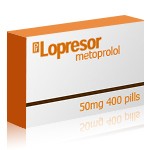
Lopressor is the original brand-name formulation of Metoprolol Tartrate (immediate-release salt form) manufactured by Novartis — one of the world's most prescribed cardioselective beta-1 adrenergic blockers. FDA-approved since 1978, Lopressor delivers Metoprolol in the tartrate immediate-release form (BID dosing) — distinct from Toprol XL (Metoprolol Succinate extended-release, once-daily, AstraZeneca). Available as standalone Lopressor and as Lopressor HCT (combination with hydrochlorothiazide). Listed on the WHO Model List of Essential Medicines. The IR formulation provides flexible BID titration and is available as IV Lopressor for acute use in post-MI and perioperative settings — capabilities not available with extended-release succinate formulations.
The active ingredient is Metoprolol Tartrate, a selective beta-1 adrenergic receptor antagonist (cardioselective). Metoprolol preferentially blocks β1 cardiac receptors at therapeutic doses (reducing heart rate, contractility, cardiac output, renin release) with minimal β2 effect at low-moderate doses — making it safer than non-selective beta-blockers (Propranolol/Inderal/Ciplar LA) in patients with mild asthma/COPD. Cardioselectivity diminishes at higher doses. Metoprolol is moderately lipid-soluble (some CNS penetration) and undergoes extensive hepatic metabolism via CYP2D6 — producing distinctive drug interactions (quinidine, fluoxetine, paroxetine, bupropion all inhibit CYP2D6 and increase Metoprolol levels). Half-life 3-7 hours (IR) supports BID dosing.
Lopressor is FDA-approved for hypertension, angina pectoris (chronic stable), post-myocardial infarction (early IV followed by oral — mortality reduction), and atrial fibrillation rate control. Off-label uses include heart failure (although MERIT-HF used succinate — Toprol XL is the FDA-approved HF formulation), migraine prophylaxis, performance anxiety, hyperthyroid symptomatic control, and sinus tachycardia management.
Available as Lopressor 25 mg, 50 mg, and 100 mg tablets and IV solution. Adult HTN dosing: 50 mg BID start, titrate to 100-450 mg/day divided BID. Angina: 100 mg BID start. Post-MI: 25-50 mg BID (early oral after IV initial). AF rate control: 25-100 mg BID.
Critical safety: boxed warning regarding abrupt withdrawal — angina exacerbation, MI risk; taper over 1-2 weeks. Caution in severe asthma (cardioselectivity lost at higher doses), decompensated HF, 2nd/3rd degree AV block, severe bradycardia. Side effects: bradycardia, hypotension, fatigue, dizziness, depression, sexual dysfunction, cold extremities. Masks hypoglycemia symptoms in diabetics. CYP2D6 interactions important.
Free prescription
Discrete packaging
Have questions?
Quality Assurance
- Angina Pectoris: FDA-approved for chronic stable angina pectoris;
- Chronic Stable Angina: For chronic stable angina pectoris — reduces frequency and severity;
- Post MI Mortality Reduction: FDA-approved for post-MI mortality reduction (early IV + oral);
- Acute MI IV Use: IV Lopressor ??? early acute MI management (within 12 hours);
- Atrial Fibrillation Rate Control: FDA-approved for atrial fibrillation rate control;
- Atrial Flutter Rate Control: For atrial flutter rate control;
- Sinus Tachycardia: For symptomatic sinus tachycardia management;
- Supraventricular Tachycardia SVT: For SVT rate control;
- Heart Failure Off Label: Off-label for heart failure — Toprol XL succinate is FDA-approved HF form (MERIT-HF);
- Migraine Prophylaxis: Off-label for migraine prophylaxis — cardioselective alternative to propranolol;
- Hyperthyroid Symptomatic: For symptomatic hyperthyroidism control (palpitations, tachycardia, tremor);
- Performance Anxiety: Off-label for performance anxiety (cardioselective alternative);
- Essential Tremor Selective: Selective off-label use for essential tremor (less effective than propranolol);
- Perioperative Beta Blockade: Perioperative beta-blockade in cardiac surgery patients;
- Mild Hypertension: For mild hypertension (stage 1);
- Moderate Hypertension: For moderate hypertension (stage 2);
- HTN With Asthma Mild: For HTN in patients with mild asthma — cardioselective advantage over non-selective β-blockers;
- HTN With Angina: Dual treatment for HTN with concomitant angina;
- HTN With Tachyarrhythmia: HTN with tachyarrhythmia — rate control + BP reduction;
- Long QT Syndrome: Off-label for long QT syndrome management.
- Less Angina Symptoms: Significant reduction in angina pectoris symptoms;
- Better Exercise Tolerance Angina: Improved exercise tolerance in patients with stable angina;
- Better Post MI Survival: Reduces mortality after myocardial infarction — landmark benefit;
- Less Post MI Recurrence: Reduces recurrent MI risk in post-MI patients;
- Less AF Heart Rate: Effective rate control in atrial fibrillation;
- Less AF Symptoms: Reduces palpitations and symptoms from atrial fibrillation;
- Less Atrial Flutter Rate: Effective rate control in atrial flutter;
- Less Sinus Tachycardia: Effective for symptomatic sinus tachycardia control;
- Better Heart Failure Symptoms: Off-label HF benefit (Toprol XL preferred for FDA-approved HF use);
- Less Migraine Frequency: Off-label reduction in migraine attack frequency;
- Less Hyperthyroid Symptoms: Reduces adrenergic symptoms of hyperthyroidism (palpitations, tremor);
- Better Performance Anxiety: Off-label symptomatic control of performance anxiety;
- Less Cardiovascular Events: Reduces cardiovascular events in high-risk patients;
- Better Daily Function: Return to normal daily activities with effective BP/cardiac control;
- Better Quality of Life: Substantial improvement in quality of life;
- Better Tolerability vs Non Selective: Better tolerability in mild asthma/COPD vs non-selective β-blockers;
- Less Bronchospasm Risk Mild: Less bronchospasm risk in mild airway disease (cardioselectivity);
- Less Peripheral Vascular Side Effects: Less peripheral vasoconstriction vs non-selective β-blockers;
- Brand Lopressor Novartis: Original Novartis brand of Metoprolol Tartrate — established clinical reputation since 1978;
- Generic Metoprolol Tartrate: Affordable generic Metoprolol Tartrate versions expand global access;
- Lopressor HCT Combination: Lopressor HCT combination with hydrochlorothiazide;
- IV Lopressor Acute Use: IV Lopressor available ??? acute MI and perioperative use — unique IR advantage;
- Cardioselective Beta1 Blocker: Cardioselective β1 adrenergic antagonist — safer in mild asthma/COPD;
- Tartrate IR vs Succinate ER: Tartrate immediate-release vs Succinate extended-release (Toprol XL) — formulation flexibility;
- BID Dosing Flexibility: BID dosing supports flexible titration vs once-daily ER formulations;
- CYP2D6 Hepatic Metabolism: CYP2D6 hepatic metabolism — distinctive drug interaction profile;
- Moderately Lipid Soluble: Moderately lipid-soluble — some CNS penetration enables off-label uses;
- Class II Antiarrhythmic: Class II antiarrhythmic agent — controls supraventricular tachyarrhythmias;
- Beta1 Cardiac Receptor Selectivity: Selective β1 cardiac receptor blockade at therapeutic doses;
- Multiple FDA Indications: Multiple FDA-approved indications — HTN, angina, post-MI, AF rate control;
- Most Prescribed Beta1 Blocker: One of most prescribed cardioselective β1 blockers globally;
- WHO Essential Medicine: Listed on the WHO Model List of Essential Medicines;
- 45 Plus Year Clinical History: 45+ years of clinical use since 1978 — extensive global evidence base.
Generic Lopressor (Metoprolol 100 mg) Medication guide:
💊 What Lopressor Is and Who Should Take It
Lopressor is the brand name of a prescription pill called metoprolol tartrate. It belongs to a family of medicines called beta blockers, and specifically to the subgroup called beta-1 selective beta blockers. Metoprolol was first approved in the 1970s and has become one of the most widely used cardiac medicines in the world. Doctors prescribe it for high blood pressure, chest pain from angina, protection after a heart attack, some heart rhythm problems, and (in its extended-release form) heart failure.
Lopressor is different from some other beta blockers you may have heard about - like propranolol (Inderal) - because it targets mostly the heart and largely leaves other organs alone. This makes it safer for people with mild lung disease and gives fewer side effects on hands, sleep and mood. It is also different from its own extended-release cousin (called Toprol XL, or metoprolol succinate) - which is dosed once a day and has stronger evidence in heart failure. Section 5 explains the difference between the two forms in detail.
This guide is written for you if:
- A doctor has just prescribed Lopressor (or generic metoprolol tartrate) and you want to understand what you are about to take
- You have been on Lopressor for months or years and want a plain-language refresher
- You were started on Lopressor after a heart attack and want to understand why
- You look after a family member on Lopressor for BP, angina or an arrhythmia
- Your doctor mentioned switching between Lopressor and Toprol XL and you want to know what that means
- You need to know how the pill fits with alcohol, coffee, sport, an upcoming operation, or a chest infection
BRAND
Lopressor
Originator: Novartis (formerly Ciba-Geigy); also sold as generic metoprolol tartrate worldwide
ACTIVE INGREDIENT
Metoprolol tartrate
Beta-1 SELECTIVE beta blocker - mainly affects the heart
STRENGTHS
25, 50, 100 mg
Scored tablets can usually be split at the score line
HOW OFTEN
2 to 3 times a day
Because the tartrate form wears off in ~6 hours; Toprol XL is once daily (Section 5)
What Lopressor is not:
- Not a water pill (diuretic) - it does not make you pass more urine
- Not a calcium channel blocker - though verapamil and diltiazem also slow the heart, they work differently and stacking them with Lopressor can be dangerous (Section 13)
- Not addictive - the body does not develop craving; but you must NOT stop it suddenly (Section 36)
- Not the same as Toprol XL - Lopressor is the immediate-release tartrate form; Toprol XL is the long-acting succinate form. See Section 5.
- Not first choice for tremor or performance anxiety - propranolol (Inderal) crosses more into the brain and works better for those
- Not first choice for migraine prevention - propranolol is preferred, though metoprolol has some evidence
How to use this guide
Sections 2-5 explain how Lopressor works, what it treats, what "selective" means, and the tartrate vs succinate question. Sections 6-15 cover practical daily use: timing, food, alcohol, coffee, salt, exercise, home monitoring, blood tests. Section 16 is the Side Effects anchor. Section 17 covers the important asthma question. Section 18 covers missed doses. Sections 19-20 cover the two most important cardiac uses (post-heart-attack and heart failure). Sections 21-32 cover specific situations. Section 33 is storage. Section 34 is the Contraindications anchor. Section 35 covers switching between beta blockers and the CYP2D6 genetic factor. Section 36 covers the never-stop-suddenly rule and the yearly review.
🧬 How Lopressor Works Inside Your Body - Simple Explanation
To understand what Lopressor does, imagine your body has a "stress accelerator" - hormones (adrenaline and noradrenaline) that speed up the heart, tighten some blood vessels, and prepare you for a fight-or-flight response. These hormones dock onto small receivers on cells called beta receptors. There are two main types: beta-1 (mostly in the heart) and beta-2 (mostly in the lungs, hands and blood sugar-releasing part of the liver).
Metoprolol blocks mainly the beta-1 receivers. When those receivers are blocked, adrenaline and noradrenaline cannot speed up the heart. The heart beats slower and less forcefully. Blood pressure comes down. Chest pain from angina becomes less likely because the heart uses less oxygen. Post-heart-attack, the surviving heart muscle is protected from further stress. Heart rhythm disturbances driven by adrenaline settle.
The main things Lopressor does inside you
1. Slows the heart rate
Beta-1 block in the heart pacemaker means fewer, calmer beats. Resting heart rate often falls to 55-70. This lowers BP and reduces heart oxygen demand.
2. Reduces heart's workload
Each beat is less forceful. The heart uses less oxygen for the same output. Chest pain (angina) becomes less likely during exertion.
3. Protects the heart long-term
After a heart attack, beta blockade lowers the risk of another one and reduces the chance of dangerous rhythms. In heart failure (with the succinate form), it slows the disease progression.
4. Quiets rhythm disturbances
Fast heart rates driven by adrenaline (like atrial fibrillation with fast conduction, sinus tachycardia) settle to a more normal rate.
Important: what Lopressor mostly does NOT do
- Does not affect breathing as much as non-selective beta blockers (propranolol) at low or moderate doses - because it mostly leaves beta-2 receivers in the lungs alone
- Does not affect the brain as strongly as propranolol - fewer vivid dreams and mood effects for most people
- Does not affect blood pressure as strongly during standing as some other classes - orthostatic dizziness is less common
- Does not fix the underlying heart disease - it protects and manages; symptoms usually return if stopped
How quickly does Lopressor work?
Metoprolol tartrate (Lopressor) starts working within about 1 hour, peaks at 1-2 hours, and fades by 6 hours. That is why it is dosed 2-3 times a day. For blood pressure, the full effect settles over 2-4 weeks. For heart failure (usually with the succinate form), benefit builds over months.
📝 What Doctors Prescribe Lopressor For - Several Heart Conditions
Doctors prescribe Lopressor for several cardiovascular conditions. Understanding which one applies to you helps you use the rest of this guide and helps you spot when things change. Ask your doctor what the specific reason is.
The main conditions Lopressor is prescribed for
High blood pressure (hypertension)
Dose: 50-100 mg twice daily (up to 400 mg per day). Historically common; today ARBs, ACE inhibitors, calcium channel blockers and thiazides are usually first line, and Lopressor tends to be used when there is another reason (angina, prior heart attack, or a heart rhythm problem).
Angina (chest pain from the heart)
Dose: 50-200 mg per day in divided doses. Slows the heart and reduces oxygen demand, so chest pain on exertion is less likely.
After a heart attack (post-MI)
Dose: started at 25-50 mg twice daily and titrated up. Every client who has had a heart attack with damaged heart muscle should be on a beta blocker unless there is a specific reason not to - metoprolol is one of the standard choices. Section 19 covers this use.
Heart failure with reduced pumping (HFrEF)
Dose: the succinate form (Toprol XL) is used, not the tartrate (Lopressor). Started at very low dose (12.5-25 mg once daily) and slowly titrated over months. Metoprolol succinate is one of the four foundation pills for heart failure. Section 20 covers this use.
Heart rhythm problems (arrhythmias)
Dose: individualised. Used for atrial fibrillation with fast ventricular response, some cases of supraventricular tachycardia, and certain other rhythms.
Less common uses
- Migraine prevention - metoprolol has evidence, though propranolol (Inderal) is usually first choice
- Overactive thyroid symptoms - propranolol is more commonly used; metoprolol is a reasonable alternative
- Aortic dissection prevention - specialist use in people with weakened aorta
- Certain congenital heart problems - specialist use
What Lopressor is NOT usually prescribed for
- Essential tremor - propranolol works better because it crosses into the brain more
- Performance anxiety (stage fright) - same reason - propranolol first choice
- Infantile hemangiomas - propranolol is licensed for this
- Portal hypertension / variceal bleeding in cirrhosis - non-selective beta blockers (propranolol, nadolol, carvedilol) are preferred
- Anxiety or stress-related BP alone - other approaches come first
One question worth asking at your next appointment
"Doctor, which condition am I taking Lopressor for, and what should I track at home?" The answer changes what to bring to your next visit - home BP for hypertension, angina diary for chest pain, heart rate log for arrhythmia, home BP + weight log for heart failure.
⚖️ Selective vs Non-Selective Beta Blockers - Why This Matters
You may have noticed that Lopressor is described as "beta-1 SELECTIVE" while some other beta blockers (like propranolol / Inderal) are "non-selective". This is one of the most important practical differences within the beta blocker family. Understanding it helps you understand why your doctor chose this pill rather than another.
The two types of beta receiver in your body
| Receiver | Mostly located in | What blocking it does |
|---|---|---|
| Beta-1 | Heart pacemaker and muscle | Slows heart rate, weakens each beat, lowers BP, reduces heart oxygen demand |
| Beta-2 | Lung airways, blood vessels in muscles, liver (glucose release), some other places | Narrows airways (bronchospasm), constricts peripheral vessels (cold hands), blunts glucose release (hypoglycemia issue) |
✅ What "beta-1 selective" means in practice
Lopressor mostly blocks beta-1 (heart) receivers and largely leaves beta-2 (lung, muscle, liver) receivers alone at typical doses. Result:
- Usually safer in mild asthma / COPD than non-selective agents (Section 17)
- Less cold hands and feet than on propranolol
- Less masking of low blood sugar warning signs in diabetics
- Less impact on exercise tolerance in athletes
- Less worsening of Raynaud phenomenon
The important nuance: selectivity is not absolute
At higher doses (100 mg twice daily and above), metoprolol's selectivity fades and it starts to block some beta-2 receivers too. That means:
- In moderate or severe asthma, even Lopressor can trigger wheezing at high doses
- In diabetics, hypoglycemia masking can appear at high doses
- Cold hands are more common at high doses than at low doses
This is why the label still says "use with caution in obstructive airways disease" - not "safe" without qualification.
The beta blockers you may see - selectivity table
| Drug | Selectivity |
|---|---|
| Metoprolol (Lopressor, Toprol XL) | Beta-1 selective (moderate) |
| Atenolol (Tenormin) | Beta-1 selective (moderate) |
| Bisoprolol (Concor) | Beta-1 selective (highly) |
| Nebivolol (Nebilet) | Beta-1 selective + vasodilator |
| Propranolol (Inderal, Ciplar-LA) | Non-selective |
| Carvedilol (Coreg) | Non-selective + alpha blocker |
| Timolol (also as eye drops) | Non-selective |
Why doctors sometimes still prefer non-selective
Non-selective beta blockers (propranolol, nadolol, carvedilol) can be better choices in specific situations: essential tremor and performance anxiety (propranolol crosses more into the brain and quiets shaking); portal hypertension in cirrhosis (non-selective blockade reduces the vein pressure that causes bleeding); and heart failure (carvedilol has some of the strongest evidence). If your doctor picked a non-selective agent, they had a reason.
🔄 Tartrate vs Succinate - Lopressor vs Toprol XL Explained
One question comes up constantly: "What is the difference between Lopressor and Toprol XL? Both are metoprolol, right?" Yes - both contain the same active drug, metoprolol. But they are packaged differently, dosed differently, and used slightly differently. This section explains the difference so you understand which one you take and why.
Lopressor vs Toprol XL - side by side
| Feature | Lopressor (metoprolol tartrate) | Toprol XL (metoprolol succinate) |
|---|---|---|
| Salt form | Tartrate (immediate-release) | Succinate (extended-release) |
| How long each dose lasts | 4-6 hours | 24 hours |
| Doses per day | 2 to 3 times | Once daily |
| Best for | BP, angina, arrhythmia; often used in hospital and for immediate control | Heart failure (MERIT-HF evidence); BP where once-daily is preferred; angina long-term |
| Tablet handling | Can be split at the score line | Can be split at the score line but do NOT crush - it destroys the extended-release mechanism |
| Cost | Very cheap in generic form | Usually more expensive; generic (metoprolol succinate ER) is also available |
Why the two salt forms are NOT interchangeable one-for-one
Because tartrate is short-acting and succinate is long-acting, the same total daily amount of metoprolol delivers differently across the day. Splitting the daily dose of Toprol XL into 2-3 doses of Lopressor gives a rougher profile with peaks and troughs. Combining the two forms in the same day is a source of confusion. Never assume you can substitute one for the other on your own - always ask the pharmacist or doctor.
✅ Practical rule: which form suits which condition
- Hospital / acute care: Lopressor (tartrate) - the doctor can see effect within hours
- Long-term BP or angina: either works; Toprol XL is easier to remember (once daily)
- Heart failure with reduced pumping (HFrEF): Toprol XL specifically - the trial evidence (MERIT-HF) used the succinate form; do not substitute tartrate
- Post-heart-attack: either can be used; Toprol XL is often chosen for once-daily convenience
- Fine-tuning across the day (some arrhythmias): Lopressor tartrate's shorter half-life allows adjustments
The trade-off: more doses to remember on Lopressor
The main downside of Lopressor tartrate is that you have to remember 2-3 doses a day. If you find that you keep forgetting doses, tell your doctor - they may switch you to Toprol XL. Missing doses on a beta blocker is worse than on some other pills because the rebound can be significant (Section 36).
▶️ Your First Week on Lopressor - What to Expect
The first week on Lopressor is a settling-in period. Your body is adjusting to a slower heart rate and lower blood pressure. Most clients feel fine after a few days; some notice mild tiredness, cold hands, or a period of slightly reduced exercise tolerance. Knowing what to expect makes the first week easier.
Day-by-day: what you might notice
Day 1 to 2
Heart rate slows within an hour of the first dose. Some clients feel slightly tired or heavy-limbed. Cold hands and feet possible.
Day 3 to 5
Body is adjusting. Mild dizziness on standing may appear; stand up slowly. Sleep is usually not affected as much as on propranolol.
Day 6 to 14
Most early side effects have settled. If Lopressor is for BP or angina, home readings improve. If for arrhythmia, heart rate is more predictable.
End of week 2 and beyond
You will discuss with your doctor whether to keep the dose, raise it, or leave it. Home BP and heart rate logs guide the decision.
✅ Normal in the first week
- Resting heart rate 55-70 (down from your usual)
- Mild dizziness on standing up quickly
- Feeling a bit tired the first few days
- Cold hands and feet in cool weather
- Reduced ability to reach high heart rates during exercise
🚩 Call your doctor if:
- Resting heart rate below 50, especially with dizziness or feeling unwell
- You faint or nearly faint
- Breathlessness or wheezing (asthma / lung concern - Section 17)
- New swelling of ankles or feet
- Marked worsening of mood
- Fingers or toes going white and painful in the cold (Raynaud phenomenon)
One practical tip for the first week
Buy a home blood pressure monitor with a heart rate reading. Take a morning reading before the first dose and an evening reading before the last dose. Note the heart rate along with the BP. This log guides your doctor better than the office measurements. Section 14 explains exactly how to measure correctly.
🕐 Best Times of Day to Take Lopressor (2-3 Doses Spaced Out)
Timing on Lopressor (the tartrate form) is different from once-daily pills because you take it 2-3 times a day. Getting the spacing right keeps the drug at a helpful level in your blood without gaps that let heart rate rise, and avoids peaks that make you feel unwell.
Typical schedules
| Doses per day | Suggested timing | Best for |
|---|---|---|
| 2 times a day | Morning + evening, ~10-12 hours apart | Blood pressure at low-moderate doses; angina; some arrhythmias |
| 3 times a day | Breakfast, lunch, dinner - about 6-8 hours apart | Higher-dose BP or angina, more precise rhythm control |
| 4 times a day | Rarely used - Toprol XL is preferred | Occasional specialist use |
Practical anchors that work
- Anchor to meals: breakfast + dinner if 2x/day, or breakfast + lunch + dinner if 3x/day - the food is a reliable memory hook
- Anchor to routine acts: brushing teeth, coffee, evening TV
- Weekly pillbox with multiple compartments per day - fill it Sunday evening
- Phone alarms labelled clearly (Lopressor 1, Lopressor 2)
- Small bag with midday dose if you are out during a lunch dose time
Timing situations to plan around
- Long meetings or drives: bring a midday dose in your bag
- Weekend lie-ins: taking Lopressor an hour or two later on Saturday is fine
- Night shift work: Section 21 has specific advice
- Travel across time zones: Section 32 covers this
- Fasting (Ramadan, medical fast): talk to doctor about switching dose times to the eating window; do NOT skip doses for many hours (rebound risk - Section 36)
The one timing rule you must not break
If you are on daily Lopressor for BP, angina, post-MI, heart failure or arrhythmia - do NOT stop taking it suddenly, even for a day. The withdrawal reaction is dangerous. Section 36 explains why. This makes forgetting doses more serious than on some other pills; use the practical anchors above.
🍽️ Should You Take Lopressor with Food or on an Empty Stomach?
Taking Lopressor with food is a genuine consideration, not just a preference. Food actually raises how much of the drug reaches your blood (by about 25-40%). The manufacturer's advice is: take Lopressor with food or immediately after food, and be consistent - always with meals or always without, not switching back and forth day to day.
Practical guidance
| With food (preferred) | Absorption more predictable; gentler on stomach. Standard recommendation. |
| On empty stomach | Absorption slightly lower. Not wrong, but pick one approach and stick to it. |
| Tablet handling | Can be split at the score line for dose flexibility. Swallow with water. |
| Consistency | Pick either "always with meals" or "always without" and stick to it. Switching day-to-day causes daily variation. |
Foods and drinks to note (details in Section 13)
- Grapefruit and grapefruit juice: no meaningful interaction with metoprolol. Safe to eat.
- Very salty meals: can partly cancel the BP-lowering effect. Section 12.
- Licorice (real licorice root): can raise blood pressure. Avoid regular use.
- Very high fibre or antacid right at the dose time: may reduce absorption slightly. Not a big issue day-to-day.
- Alcohol with dinner: adds to BP drop and dizziness. Section 9.
Fasting and Lopressor
During a religious fast like Ramadan, or during intermittent fasting for weight management, take Lopressor with your eating windows (pre-dawn meal and evening meal for Ramadan, for example). Talk to your doctor about the specific schedule. Skipping doses for many hours can trigger the withdrawal reaction (Section 36) - do not miss doses just because you cannot eat.
🍷 Alcohol and Lopressor - What You Really Need to Know
Alcohol and Lopressor need care because both slow the body and lower blood pressure. Alcohol also affects how quickly the liver breaks down metoprolol - which can vary the drug's effect. This section explains what happens and gives simple rules for social drinking.
What actually happens when you drink on Lopressor
Alcohol relaxes blood vessels and lowers blood pressure. Lopressor already lowers blood pressure and slows the heart. Combined effects can produce:
- Sharper drop in blood pressure than usual, with dizziness on standing
- Feeling warmer or flushed than usual
- Stronger drowsiness and slower reactions - especially the first hour
- Rarely, fainting - particularly after standing up quickly
Long-term heavy drinking speeds up the liver enzymes that break down metoprolol, which can reduce the drug's effect. Cutting down alcohol is often associated with the pill working better.
✅ Usually acceptable
1 standard drink per day for women, up to 2 for men, ideally not every day
One standard drink = 350 ml beer / 150 ml wine / 45 ml spirit
⚠️ Use caution
A glass or two at a party. Sit down, drink water alongside, do not stand up quickly. Especially avoid on hot days.
🚩 Avoid
Binge drinking. Daily drinking. Drinking during a chest cold. Drinking before driving. Drinking after a heart attack or in heart failure.
Practical rules for a night out
- Take your Lopressor doses at the usual times. Do NOT skip a dose because you plan to drink; skipping can trigger a rebound (Section 36).
- Alternate every alcoholic drink with a full glass of water.
- Eat while you drink.
- Stand up slowly at the end of the evening. Sit on the edge of the seat first.
- Do not drive.
Situations where you should not drink at all
- You take Lopressor after a heart attack - alcohol interferes with cardiac recovery
- You have heart failure - alcohol worsens the heart muscle
- You have liver disease
- You are older than 75 and frail
- You have already fainted once on Lopressor
- You have poorly controlled diabetes with hypoglycemia episodes (alcohol worsens sugar drops on beta blockers)
☕ Lopressor with Coffee, Tea and Energy Drinks
Caffeine and Lopressor pull in opposite directions - caffeine speeds up the heart and mildly raises BP; Lopressor slows the heart and lowers BP. In practice this does not matter for occasional cups of coffee - most clients on Lopressor can enjoy their morning coffee. But home blood pressure measurement needs a 30-minute caffeine-free window.
How caffeine affects things while you are on Lopressor
- Home BP measurement: caffeine raises the top BP number by 5-10 mmHg for 1-3 hours in most adults. No caffeine for 30 minutes before you measure BP at home.
- Heart rate after coffee: the caffeine bump on heart rate is partly blunted by Lopressor - some clients notice this is one of the more visible signs the pill is working.
- If Lopressor is for arrhythmia: avoid large caffeine doses; they can trigger palpitations even on treatment.
- Regular caffeine intake is fine - just avoid big swings (skipping caffeine on one day, then drinking a lot on another) which can affect BP variably.
Typical caffeine amounts
| Drink | Caffeine (approximate) | Lopressor-friendly? |
|---|---|---|
| Espresso, single shot | 60-80 mg | 1-3 per day, fine |
| Filter coffee, standard mug | 80-120 mg | 1-3 per day, fine |
| Black tea, cup | 30-50 mg | Generally very safe |
| Green tea, cup | 20-40 mg | Very safe |
| Cola / soft drink, 330 ml | 30-45 mg | Occasional; watch the sugar |
| Energy drink, 250 ml can | 80-160 mg (plus other stimulants) | Avoid or limit sharply |
| Pre-workout supplements | 150-300 mg (plus other stimulants) | Avoid; ask doctor |
🚩 Energy drinks and pre-workouts
Energy drinks contain high caffeine plus other stimulants (taurine, guarana, ginseng, yohimbe). These directly work against Lopressor - your beta blocker is trying to slow the heart and calm adrenaline; the drink is doing the opposite. On post-MI or arrhythmia clients, this combination can cause palpitations, chest tightness, and even trigger dangerous rhythms.
Avoid energy drinks. Avoid pre-workout stimulant powders.
A note on decaf and herbal teas
Decaffeinated coffee is generally fine. Most herbal teas are fine. Two to know: yohimbe is a chemical opposite of a beta blocker and cancels Lopressor - avoid. Licorice tea can raise BP - avoid regular use. Green tea in normal amounts is not a concern.
🚬 Smoking, Vaping and Your Beta Blocker
Tobacco smoking has a specific interaction with Lopressor that most clients do not know: cigarette smoke speeds up how the liver breaks down metoprolol, which can lower the drug's effect. Beyond the pharmacology, smoking directly damages the heart and vessels - which is often the main reason Lopressor was prescribed in the first place, especially after a heart attack.
What smoking does while you are on Lopressor
- Speeds up liver breakdown of metoprolol - the drug's effect can be reduced in smokers; if you stop smoking, your Lopressor effect increases and dose may need to come down
- Every cigarette narrows blood vessels temporarily - Lopressor is trying to protect the heart; you fight the pill with every cigarette
- Nicotine speeds up the heart rate and constricts vessels - direct opposite of Lopressor
- Smoking after a heart attack multiplies the risk of another one - the biggest single risk factor you can change
- Smoking worsens the "cold hands" side effect
What about vaping (e-cigarettes)?
Vaping still delivers nicotine, which still raises BP and heart rate and cancels part of Lopressor. Vaping is less harmful than smoking because the products of combustion are absent, and it does not speed up the liver enzyme in the same way. Still not harmless.
What to expect when you stop smoking on Lopressor
- Within 24 hours: heart rate and BP begin to fall further
- Within 2-4 weeks: the liver stops speeding up drug breakdown; your Lopressor blood level rises for the same dose - you may notice more tiredness, slower heart rate, cold hands. Tell your doctor; the dose may need to be reduced.
- Within 3 months: circulation improves; walking distance improves; cough clears
- Within 1 year: risk of another heart attack falls by about half
Practical advice
Ask your doctor about nicotine replacement (patches, gum, lozenges) or a smoking cessation medication. Most are safe with Lopressor. If you plan to stop, tell your doctor so they can watch for the dose becoming relatively too strong.
🧂 Salt and Hydration on Lopressor
Salt matters for high blood pressure, and cutting salt makes Lopressor work better. Lopressor does not directly change how the kidneys handle salt or potassium the way ARBs or diuretics do, so the salt story is simpler than on those classes. Hydration also matters - Lopressor can drop BP more than expected in dehydrated clients, especially in hot weather.
Why cutting salt helps Lopressor work
Extra sodium pulls water into your bloodstream, raising blood volume and BP. Lopressor lowers BP by slowing the heart and reducing cardiac output, but on a high-salt diet the effect is blunted.
Target for most adults: under 2,300 mg of sodium per day (about a level teaspoon of table salt). For heart failure or advanced kidney disease: under 1,500 mg per day.
Salt substitutes and Lopressor
Salt substitutes labelled "low sodium" usually contain potassium chloride. Lopressor does not itself hold potassium, so a potassium-based salt substitute is not the same emergency it would be on an ARB, ACE inhibitor or amiloride-containing pill. However - if you take Lopressor AND another BP pill that holds potassium (like Cozaar, lisinopril, or spironolactone), the substitute is risky. Talk to your doctor before using a potassium-based salt substitute.
Safer ways to reduce salt
- Read labels: aim for under 400 mg sodium per serving on packaged foods
- Cook more at home; restaurant food is a huge hidden salt source
- Use lemon juice, vinegar, herbs, garlic, chili, pepper and cumin for flavour
- Rinse canned beans and vegetables (removes about 40% of the added salt)
- Watch hidden salt in bread, cheese, cured meats, soy sauce, sauces, condiments, olives, pickles
Hydration and hot weather
Because Lopressor slows the heart, when you become dehydrated the body cannot speed the heart up as much as usual to compensate. Result: dizziness on standing appears earlier than it would on someone not on a beta blocker. Drink water regularly, especially in hot weather, during exercise, or during illness. If you feel dizzy on standing, sit or lie down and drink water before standing again.
🍌 Foods, Supplements and Other Drugs That Interact with Lopressor
Several drugs and supplements interact with Lopressor, and because Lopressor is often used alongside other cardiac medications (aspirin, statins, ACE inhibitors, water pills), the interaction picture matters. This section lists the ones that come up most often.
Items to be careful with on Lopressor
| Item | Concern | Guidance |
|---|---|---|
| Verapamil or diltiazem (calcium channel blockers) | Both slow the heart - together can cause dangerous slow rate or heart block | Only combine under specialist care |
| Amiodarone or digoxin (heart rhythm drugs) | Can slow heart too much when combined | Combined only when specifically needed; heart rate watched |
| Ibuprofen, naproxen, diclofenac (NSAIDs) daily | Blunt the BP-lowering effect | Occasional dose fine; avoid daily use - use paracetamol instead |
| Cold and flu remedies with pseudoephedrine or phenylephrine | Raise BP and heart rate - cancel Lopressor | Ask pharmacist for a Lopressor-friendly alternative |
| Insulin and diabetes pills | Lopressor can mask warning signs of low blood sugar (less than propranolol does - Section 24) | Extra glucose monitoring |
| Clonidine (a BP pill) | Sudden clonidine stop while on Lopressor causes severe BP rebound | Do not stop clonidine on your own |
| Fluoxetine, paroxetine, bupropion (some antidepressants) | Slow metoprolol breakdown via CYP2D6 - Lopressor effect rises | Dose may need reduction; monitor heart rate |
| Cimetidine, quinidine, terbinafine, diphenhydramine | Same - slow metoprolol breakdown | Discuss with doctor |
| Rifampicin (antibiotic) | Speeds metoprolol breakdown | Dose may need to go up |
| MAOI antidepressants | Complex interactions with BP | Only combine under specialist psychiatry care |
| Yohimbe (herbal supplement) | Chemical opposite of beta blocker | Avoid |
| Grapefruit and grapefruit juice | No meaningful interaction with metoprolol | Safe to eat and drink |
Adrenaline (EpiPen) and Lopressor
If you have a food allergy or bee sting allergy that requires an EpiPen, Lopressor partly blocks how the adrenaline works. The adrenaline still helps - do not hesitate to use the EpiPen in an emergency - but you may need more than one dose. Always tell emergency staff you are on Lopressor.
The pharmacist counter rule
Whenever a new medicine is added (from a doctor, pharmacist, or supplement shop), take 30 seconds to say: "I take Lopressor - it is metoprolol, a beta blocker." That one sentence prevents most bad interactions.
🩺 Home Blood Pressure and Heart Rate Monitoring on Lopressor
Home monitoring on Lopressor has two parts: blood pressure (as for any BP pill) and heart rate. The heart rate log is what tells your doctor the drug is working - a resting heart rate of 55-70 is usually the target. Below 50 with symptoms means the dose may be too high. If Lopressor is for heart failure, a daily weight log matters too.
What kind of monitor to buy
- Upper arm cuff, automatic (digital) with heart rate display - most home monitors show both
- Right cuff size - cuff should cover about 80% of the arm circumference
- Validated model - ask your pharmacist
- Wrist and finger monitors are usually less accurate
- Cost - around 30-70 US dollars for a good one
How to take a correct reading
- No caffeine, no cigarette, no exercise, no big meal for 30 minutes before
- Empty your bladder
- Sit in a chair with back support, feet flat on floor
- Rest quietly for 5 minutes - do not scroll your phone or talk
- Cuff on bare skin, arm at heart level supported on a table
- Two readings a minute apart - record BOTH the BP and the heart rate
- Morning (before dose) and evening (before last dose) for two weeks before your appointment
Heart rate targets on Lopressor
| Resting heart rate | What it means |
|---|---|
| 70-80 | Working but light effect - may need more if for angina or arrhythmia |
| 55-70 | Usually the target range |
| 50-55 | Fine if you feel well; tell doctor if dizzy |
| Under 50 with symptoms | Dose too high - contact doctor |
| Under 45 (any) | Contact doctor promptly |
Daily weight if Lopressor is for heart failure
If you take Lopressor (or usually Toprol XL) for heart failure, weigh yourself first thing every morning and write it down. A rise of 2 kg over 2-3 days or 3 kg in a week may signal fluid buildup and worsening heart failure - contact your heart failure team. The daily weight is often the earliest signal that something is changing.
🩸 Understanding Your Blood Tests on Lopressor
Blood tests on Lopressor are less frequent than on ARBs or diuretics because metoprolol does not directly affect kidney handling of potassium, sodium or creatinine the way those classes do. Still, baseline and periodic monitoring are worth doing. This section explains what your doctor may order and why.
What your doctor may check
1. Kidney function (creatinine, filter score)
What creatinine is: a waste product from muscle metabolism. Kidney filter score (eGFR - estimated glomerular filtration rate) is calculated from it.
Why on Lopressor: baseline health check. Metoprolol is mostly liver-cleared, so kidney disease does not require big dose changes.
2. Liver function (ALT, AST)
What these are: markers of liver health.
Why on Lopressor: the liver breaks down most metoprolol via CYP2D6. In liver disease the drug can accumulate. Baseline check, then periodic monitoring in clients with known liver problems.
3. Full lipid panel and HbA1c (post-MI clients)
If Lopressor is post-heart-attack, cholesterol and diabetes markers are also monitored to guide statin and diabetes therapy.
Note: beta blockers can very mildly raise triglycerides and mildly reduce HDL - usually not clinically significant.
4. Blood sugar (in diabetes)
Lopressor can mask (less than propranolol) the warning signs of low blood sugar. In diabetic clients, home glucose readings and HbA1c matter more (Section 24).
Typical blood test schedule
| Before starting Lopressor | Baseline kidney and liver function; HbA1c if diabetic; lipids if post-MI |
| After 1-3 months on stable dose | Repeat as needed |
| Yearly on stable dose | Kidney and liver function; other tests based on condition |
| Extra test if adding an interacting drug | Depends on the drug |
Ask for a copy of your results
Keep the numbers in a folder or on a patient portal. Trends over time matter more than any single reading.
🩹 Side Effects - Common Reactions and What to Expect
Most people tolerate Lopressor well after the first-week adjustment. This section walks through the side effects you might notice, how likely each is, whether it usually settles, and when it deserves a call to your doctor. Two important warnings have their own sections: the asthma question (Section 17) and the withdrawal rule (Section 36).
✅ The honest picture
Metoprolol has been in wide use since the 1970s and is one of the most extensively prescribed cardiac medicines in the world. Most clients tolerate it well long term. Because it is beta-1 selective, the side effect profile is generally milder than propranolol - less brain penetration, less breathing effect, less cold hands. Of those who stop, the most common reasons are tiredness that does not settle, cold hands, or (in older clients) slow heart rate causing dizziness.
Common and less common side effects
| Effect | How likely | When it happens / what to do |
|---|---|---|
| Slow resting heart rate | Universal | This is how the drug works. Under 50 with symptoms = tell doctor. |
| Tiredness / reduced exercise capacity | Common early on | Usually settles in 2-4 weeks. If lasts, dose can be reduced. |
| Cold hands and feet | Common but milder than propranolol | Gloves, warm socks; tell doctor if fingers go white and painful (Raynaud) |
| Dizziness on standing | Common early on | Stand up slowly. Usually settles. |
| Sleep disturbance or vivid dreams | Less common than on propranolol | Metoprolol crosses into the brain less; if severe, switch to atenolol may help |
| Mild depression / low mood | Uncommon | If new or worsening, tell doctor |
| Reduced sexual desire or erection difficulty | Uncommon | Discuss with doctor |
| Wheezing / breathlessness | Uncommon at low doses; more likely at high doses in asthma / COPD | See Section 17 |
| Diarrhoea or stomach upset | Uncommon | Usually mild; take with food |
| Skin rash | Rare | Tell doctor |
| Serious allergic reaction (swelling, difficulty breathing) | Very rare | Emergency |
Call your doctor if:
- Resting heart rate below 50 with symptoms
- Wheezing or shortness of breath
- New leg swelling
- Sudden weight gain (heart failure signal)
- Depression, low mood, or thoughts of self-harm
- Fingers or toes going white and painful in the cold (Raynaud phenomenon)
- Any signs of low blood sugar you cannot recognise (diabetic clients - Section 24)
Keeping side effects in perspective
The conditions Lopressor treats - post-MI protection, heart failure, high BP, angina, arrhythmia - can significantly shorten life if untreated. Most clients feel better on Lopressor than off, once the first-week settling is over. If a specific side effect is affecting your life, talk to your doctor - alternatives exist within the beta blocker family (Section 35).
🌬️ The Asthma Question - What Beta-1 Selectivity Means for You
This section is important for anyone with a history of wheezing, asthma or COPD who is considering Lopressor. Because metoprolol is beta-1 selective (Section 4), it is safer in mild airway disease than non-selective beta blockers like propranolol. But "safer" is not "safe" - and the selectivity fades at higher doses. This section explains where the practical line sits.
✅ The generally safer situations
- Well-controlled mild asthma at low-to-moderate metoprolol doses (up to 50 mg twice daily)
- Mild to moderate COPD without frequent exacerbations
- Exercise-induced wheezing in the distant past but not currently a problem
- Childhood asthma that resolved by adulthood
In these situations, if a beta blocker is truly needed (post-heart-attack, heart failure), a selective agent like metoprolol at low dose is often used with careful monitoring. Bisoprolol is even more selective and may be preferred.
🚩 LOPRESSOR IS GENERALLY AVOIDED IF YOU HAVE:
- Severe or brittle asthma with frequent attacks
- Severe COPD with reversible airway component and frequent exacerbations
- Active wheezing at the time of starting
- History of near-fatal or life-threatening asthma attack
- Bronchospasm reaction to any beta blocker in the past
Always mention any breathing condition to any doctor considering a beta blocker for you.
Why the selectivity matters and why it fades at high doses
At low-to-moderate doses (up to about 100 mg twice daily), metoprolol mostly blocks beta-1 receivers in the heart and largely leaves the beta-2 receivers in the lungs alone. Reliever inhalers like salbutamol (albuterol) still work.
At higher doses, this selectivity fades - metoprolol starts blocking beta-2 receivers too. In moderate-to-severe asthma, this can trigger wheezing. This is why the dose in a person with any airway concern is kept as low as possible.
If you are already on Lopressor and suddenly develop wheezing
- Use a reliever inhaler (salbutamol / Ventolin) if you have one - it should still work
- Contact your doctor the same day - the beta blocker may need to change or a specialist may need to review
- Go to emergency if breathing does not improve with your inhaler
- Do NOT stop Lopressor cold-turkey on your own unless it is a genuine emergency - the withdrawal rule (Section 36) applies
Beta blocker eye drops (timolol) also count
The same rule applies to non-selective beta-blocker eye drops used for glaucoma (timolol, betaxolol). Small amounts are absorbed and can trigger asthma. If you have asthma and are offered glaucoma eye drops, mention it to the ophthalmologist. Betaxolol is beta-1 selective and usually safer.
⏰ What to Do If You Forget or Miss a Dose
Missing doses of Lopressor matters because the drug is dosed multiple times a day and because sudden stops can trigger a rebound reaction. This section covers exactly what to do so a missed dose does not cause problems.
Rules for missed doses
| Situation | What to do |
|---|---|
| Realised within 2-3 hours of the missed time | Take the dose now. Continue your usual schedule. |
| Realised more than 3 hours late | Skip that dose. Take the next dose at the usual time. Do not double up. |
| Missed 2-3 doses in a row (over a day) | Resume normal schedule. Monitor heart rate and BP - a rebound faster heart rate or higher BP may appear. |
| Missed a full day or more | Contact your doctor before restarting at your usual dose. The rebound reaction can be significant (Section 36). You may need to restart at a lower dose and titrate up. |
| Missed several days | Contact doctor. Symptoms the drug was treating (BP, angina, arrhythmia) may return. Restart plan needs medical guidance. |
Do not double up
Two Lopressor tablets at once produce a bigger BP and heart rate drop than one, with more dizziness. Especially avoid doubling if you are older, on a hot day, or during any illness.
Practical tricks to not forget
- Weekly pillbox with multiple compartments per day - fill it Sunday evening
- Phone alarms at each dose time, labelled clearly
- Anchor to meals - breakfast, dinner (and lunch if 3x/day) are reliable memory hooks
- Keep a spare dose in your bag for the midday one if you are out
- Refill before you run out - most pharmacies allow a refill 3-5 days before you finish
- If you travel, take several extra days' supply in your carry-on
- If you keep forgetting doses, ask your doctor about switching to Toprol XL (once daily - Section 5)
🫀 Lopressor After a Heart Attack (Post-MI)
One of the strongest evidence-based uses of Lopressor is after a heart attack (medical name: myocardial infarction, often shortened to MI). Multiple large studies show that starting a beta blocker in the days-to-weeks after a heart attack reduces the risk of another heart attack, dangerous rhythms, and death. Metoprolol is one of the standard choices for this. This section explains why and what to expect.
Why beta blockers after a heart attack
A heart attack damages part of the heart muscle. The surviving muscle then works harder to compensate. Adrenaline signalling is high in the weeks after the event - which is a survival mechanism but also strains the recovering heart. Beta blockade:
- Reduces the workload on the damaged heart during recovery
- Cuts risk of dangerous rhythms that can appear in the vulnerable weeks after MI
- Lowers risk of another heart attack over the following years
- Improves survival - one of the few interventions with clear mortality benefit
When Lopressor is started after MI
- Usually within the first 24-48 hours after the acute event, once the heart is stable
- Started at a low dose (12.5-25 mg twice daily typically) and titrated up over days to weeks
- Target heart rate is 55-70 beats per minute at rest
- Continued for at least a year, often lifelong
✅ What you should know as a client after a heart attack
- Lopressor is one of several pills you will likely be on: aspirin (or dual antiplatelet), a statin, an ACE inhibitor or ARB, sometimes a nitrate, and Lopressor
- All of them together reduce your risk of another event by 60-80%
- Cardiac rehab is one of the biggest wins - if offered, do it
- Home BP and heart rate log matters more after MI
- Do not stop Lopressor on your own (Section 36); rebound after MI is particularly risky
- Report new chest pain, breathlessness, or fainting promptly
How long to stay on it after MI?
The strongest evidence is for the first year. Beyond that, guidelines still favour continuing in most people, especially those with reduced heart pumping strength. Discuss with your cardiologist at your 1-year visit whether to continue, adjust, or (rarely) taper off. Most people stay on it lifelong. The pill is small, cheap, and generally well tolerated - so continuing is often the easier choice than trying to stop.
❤️ Lopressor for Heart Failure - Why the Succinate Form Matters
Metoprolol is one of only four beta blockers with strong trial evidence in heart failure - the others are carvedilol, bisoprolol, and (in Europe) nebivolol. But there is a critical detail: the heart failure evidence is for metoprolol SUCCINATE (Toprol XL), not for metoprolol TARTRATE (Lopressor). If you have heart failure with reduced pumping strength (called HFrEF), you should be on the succinate form. This section explains why.
❤️ TARTRATE VS SUCCINATE IN HEART FAILURE
The MERIT-HF trial (1999) proved that metoprolol succinate extended-release (Toprol XL) reduces mortality by about a third in heart failure with reduced ejection fraction. This is a huge benefit.
The immediate-release tartrate form (Lopressor) has NOT been proven to give the same benefit in heart failure. It is not considered equivalent for this indication.
If you have heart failure and are on Lopressor tartrate, ask your doctor whether Toprol XL succinate is a better fit for your condition.
How beta blockers work in heart failure
In heart failure, the body compensates for a weak heart by pouring out adrenaline-like hormones. This raises the heart rate and blood pressure short-term but exhausts the heart long-term. Beta blockade breaks this cycle. Started at very low dose and titrated slowly, the heart gradually improves its pumping strength over months.
The key words are "started low, titrated slowly". If you start at a full dose, the heart failure can worsen acutely because you have blocked the compensation before the underlying improvement has time to happen.
Typical titration schedule (with Toprol XL for HFrEF)
- Start: 12.5-25 mg once daily
- Every 2 weeks: double the dose IF weight is stable, no worsening symptoms, heart rate above 55, BP acceptable
- Target: 200 mg once daily (or the maximum you can tolerate)
- Full titration takes 2-3 months
- Benefit builds over 3-6 months and continues to grow year on year
✅ What to expect during the first weeks
Some clients feel slightly worse in the first 2-4 weeks before feeling better. This is normal and expected. Symptoms that may briefly worsen:
- Tiredness
- Mild fluid retention (weight up by 1-2 kg)
- Reduced exercise tolerance
If these appear, do NOT stop the pill - contact your heart failure team. They may adjust water pills or the schedule.
The four pillars of heart failure
Metoprolol succinate is one of four foundational pills for HFrEF. The others: an ARB (or ACE inhibitor, or the newer combination sacubitril-valsartan), an MRA (spironolactone or eplerenone), and an SGLT2 inhibitor (dapagliflozin or empagliflozin). All four together reduce mortality by around 60% compared to no treatment. Modern heart failure care builds on ALL four in most people who can tolerate them.
🌙 Lopressor for People Who Work Night Shifts or Rotating Shifts
If you work night shifts, rotating shifts, or have a very irregular schedule, taking Lopressor 2-3 times a day is more complex because your "day" changes. This section is for shift workers on Lopressor.
Why shift work matters for Lopressor
The important rule for Lopressor is consistent spacing - not a specific wall-clock time. If you take two doses a day, they should be about 10-12 hours apart during your waking time, regardless of when that is on the clock.
Approach for permanent night shift workers
Take Lopressor on your active/waking cycle regardless of what the wall clock says. If you work 8 PM to 8 AM: first dose on waking (afternoon), second at the start of the sleep cycle. Space them roughly 10-12 hours apart across your waking time.
Approach for rotating shift workers
Rotating shifts are harder because your schedule keeps changing. Options:
- Anchor to your waking pattern: first dose on waking, second dose 10-12 hours later
- Ask your doctor about switching to Toprol XL: once a day is often more practical for rotating shifts than immediate-release 2-3 times a day
Extra tips for shift workers on Lopressor
- Take home BP and heart rate readings at consistent points - always relative to your last sleep
- Watch caffeine and energy drinks on night shifts (Section 10)
- Carry midday doses to work in original packaging
- Prioritise sleep quality - blackout curtains, quiet room
- Tell your doctor about your schedule - Toprol XL may be a better fit
- Never let a shift change cause you to skip a dose for 12+ hours - rebound risk (Section 36)
A note if you are transitioning off shift work
If you retire from shift work, shift the Lopressor doses gradually to a standard daytime schedule - move each dose 1-2 hours per day over a week. Keep home BP and heart rate readings during the transition.
🚗 Lopressor for Drivers and People Who Operate Machinery
Driving and machine operation on Lopressor generally does not carry the same first-week faint risk as on Hytrin or Cardura, because Lopressor works on the heart rather than causing sudden BP drops through vessel relaxation. But it can cause dizziness, tiredness, and slower reaction time in some clients, especially early on.
When Lopressor-related dizziness or slowness is most likely
- First 1-2 weeks after starting - the body is adjusting
- First 1-2 weeks after a dose increase
- After alcohol (Section 9)
- On hot days or after a sauna
- Standing up quickly from bed
- Skipped meals - Lopressor can mask low blood sugar warning signs in diabetics
Practical rules for drivers and machine operators
- Do not drive right after your first Lopressor dose or after a dose increase - wait to see how you feel
- Do not drive if you feel dizzy or unusually tired
- Avoid alcohol before driving, and never combine alcohol with Lopressor and then drive
- Stand up slowly from a car seat after a long journey
- Keep water within reach in hot weather
- Eat regularly if diabetic - Lopressor can mask low sugar warning signs (Section 24)
Commercial drivers and safety-critical jobs
Pilots, commercial drivers, train operators, and other safety-critical workers have specific medical fitness rules. Lopressor is generally acceptable once you are stable on the dose (2-4 weeks), but check the specific rules of your regulator or employer. Do not stop the drug to hide it - both the untreated condition and a hidden prescription are worse than proper disclosure.
🏃 Lopressor, Exercise and Sports - Practical Advice
Exercise on Lopressor takes some adjustment because the drug slows the heart. Your maximum heart rate during exercise is lower than it would be off the drug, so the perceived effort at a given intensity feels higher. Regular exercise is still important and safe for most people on Lopressor - it just needs a different approach.
✅ What is generally safe on Lopressor
- Walking, jogging, cycling, swimming at moderate intensity
- Gym cardio at moderate intensity
- Yoga, pilates, tai chi
- Moderate weight training with rest between sets
- Recreational team sports
- Cardiac rehab (if post-MI) is highly recommended
- Aim for 150 minutes of moderate activity per week
Adjusting to lower maximum heart rate
On Lopressor, your resting heart rate is 20-30 beats lower than usual, and your maximum during hard exercise is also lower.
- Do not use standard heart rate zone formulas - they overestimate what you can reach
- Use perceived effort instead - the "talk test" works well
- Warm up longer - your heart takes more time to speed up
- Cool down longer - do not stop suddenly
- Endurance athletes may prefer other BP pills - discuss with doctor
What to be careful with
- Very heavy strength training - spikes BP acutely
- Endurance exercise in the heat - Lopressor may impair heat tolerance
- Hot yoga, saunas after workout
- Pre-workout stimulant supplements
- Sudden intense workouts after months of inactivity - build up gradually
If you compete in sport - anti-doping picture
Beta blockers are on the World Anti-Doping Agency prohibited list for specific sports (archery, shooting, golf, billiards, some motor sports, darts) because they steady the hands and heart. In other sports (running, cycling, swimming) they are not banned but disclosure may be required. If you compete in a tested sport, check your sport's current rules and get a Therapeutic Use Exemption if needed.
🍬 Lopressor If You Also Have Diabetes
Diabetes and Lopressor need care because beta blockade can mask some warning signs of low blood sugar (hypoglycemia). Lopressor is beta-1 selective, so the masking effect is less pronounced than with propranolol - but not zero. This section explains what to watch for and how to manage it safely.
🚩 LOW BLOOD SUGAR - THE MASKING QUESTION
If you take insulin or a diabetes pill that can cause hypoglycemia (sulfonylureas like gliclazide, glimepiride, glibenclamide), Lopressor can:
- Partly block the warning signs (trembling, racing heart) - though sweating usually still happens
- Slow the recovery - blood sugar returns to normal more slowly
- Less masking than propranolol because Lopressor is beta-1 selective - but at high doses selectivity fades
Practical rules for diabetic clients on Lopressor
- Check blood glucose more often - before driving, before exercise, before meals if late
- Keep glucose tablets or gel with you at all times
- Wear medical alert jewellery or carry a card saying you take insulin and Lopressor
- Tell family members what to do if you appear confused or unwell
- Continuous glucose monitors (CGM) are especially useful
✅ Why Lopressor is sometimes preferred over propranolol in diabetes
Beta-1 selective agents like Lopressor (and bisoprolol, atenolol) mask hypoglycemia warning signs less than non-selective agents like propranolol. If you have diabetes AND need a beta blocker for BP, angina, post-MI, or heart failure, a selective agent is usually preferred.
Other diabetes-specific points
- Metformin: no direct interaction with Lopressor
- SGLT2 inhibitors: no direct interaction
- Autonomic neuropathy in long-standing diabetes may worsen Lopressor-related dizziness on standing
- Cold hands and feet can be worse in diabetes; check feet daily for injury
Sick day rules if you have both diabetes and Lopressor
During vomiting, diarrhoea, or fever, Lopressor can usually be continued (unlike ARBs or diuretics, it does not stress the kidneys). Metformin and SGLT2 inhibitors are typically paused. Insulin usually continues but with more sugar checks. Section 30 has full guidance.
🤰 Lopressor and Pregnancy - What You Need to Know
Metoprolol has been used in pregnancy for decades, and the safety picture is better established than for many other cardiovascular drugs. In some situations (severe cardiac arrhythmia, hyperthyroidism, high blood pressure that does not respond to first-choice pregnancy pills) it is used during pregnancy under specialist care. In others it can usually be paused or replaced with a pregnancy-preferred alternative. Talk to your doctor before conception if possible.
Practical picture
- For high blood pressure: pregnancy-preferred first-line pills are labetalol (also a beta blocker but with less foetal impact), nifedipine slow-release, and methyldopa. Metoprolol is sometimes used as an alternative.
- For heart rhythm problems or heart failure: metoprolol may continue - specialist decides
- For post-heart-attack care: continues under specialist care
- For hyperthyroidism: continues; propranolol is more commonly used but metoprolol is acceptable
Concerns about metoprolol in pregnancy
- Reduced growth - long-term use can lead to smaller babies
- Newborn effects immediately after birth - slow heart rate, low blood sugar, low blood pressure, breathing difficulty. Usually resolve in 24-48 hours but the baby may need monitoring.
These risks are usually smaller than the risk of untreated severe hypertension or a cardiac condition.
If you are planning to become pregnant
Talk to your doctor BEFORE you start trying. Depending on why you take Lopressor, the plan may be to switch to labetalol (still a beta blocker but pregnancy-preferred), taper, or continue at the lowest effective dose. Do not stop Lopressor on your own (Section 36).
If you find out you are pregnant while on Lopressor
Contact your doctor or obstetrician the same day. Do not stop suddenly - the withdrawal risk applies in pregnancy too. A specialist-guided taper or switch is safer than an abrupt stop.
🤱 Lopressor While Breastfeeding
Metoprolol passes into breast milk in small amounts. The amount a breastfed baby receives is generally considered low and safe. Compared to many other cardiovascular medicines, metoprolol has one of the better safety records in breastfeeding. The baby is monitored for signs of a slow heart rate or unusual sleepiness in the first days.
Current guidance for breastfeeding on Lopressor
- Metoprolol is considered compatible with breastfeeding by most authorities
- Baby monitored for slow heart rate, unusual sleepiness, or poor feeding in the first 1-2 weeks
- Alternative beta blockers in lactation: propranolol is also considered compatible; atenolol accumulates more in breast milk and is less preferred
- Newborn checked once or twice by the paediatric team
Practical tips for new mothers
- Take home BP and heart rate readings - the first months after birth are a time of change
- Ask about safe painkillers: paracetamol is generally fine while breastfeeding; short-term ibuprofen is usually acceptable
- Report any severe headache, vision change, or persistent very high BP promptly
- Continue Lopressor at the recommended time each day (Section 7)
If you had paused Lopressor during pregnancy
If you had paused Lopressor during pregnancy and want to resume for the original condition, discuss timing with your doctor. Restart at the lower end of the dose range and titrate up.
👶 Lopressor for Children and Teenagers
Metoprolol is used in children and teenagers less commonly than propranolol, but there are situations where it is prescribed - certain arrhythmias, some inherited heart conditions, hypertension, and occasionally migraine prevention. All paediatric use is specialist-guided.
Practical picture
- Not routinely used under age 6 - specialist care
- Weight-based dosing - much smaller than adult doses
- Same beta-1 selectivity benefit as in adults
- Blood tests and heart rate monitoring more frequent than in stable adults
- Tablets can be split at the score line for smaller doses
Practical for parents
- Give doses at the times prescribed - metoprolol tartrate is short-acting, spacing matters
- Never miss doses in children - the dose is calibrated to weight
- Watch for unusual tiredness, slow heart rate, or wheezing
- Store safely - even one adult tablet can cause dangerous heart rate drop in a small child
- Never stop suddenly without specialist guidance
- Follow-up appointments - regular growth checks and heart rate monitoring
🚩 Storage safety for households with children
Even one adult-strength Lopressor tablet can cause dangerously slow heart rate in a small child. If you take Lopressor and there are children in the household:
- Store the bottle out of reach and out of sight
- Do not leave a pillbox on a bedside table if a young child could access it
- If a child accidentally swallows any Lopressor, call emergency services and Poisons Information immediately
👵 Lopressor for Older Clients (65 and Above)
Older clients on Lopressor need slightly different care - the body responds more strongly to beta blockade after 65, and the slower heart rate can affect balance and falls risk. Many older clients do well on Lopressor - it is one of the standard beta blockers after heart attack, and older adults benefit disproportionately from post-MI treatment.
Starting Lopressor after 65
- Lower starting dose - usually 12.5-25 mg twice daily
- Slower titration - 4 weeks between dose increases
- Standing BP check at every appointment - sitting, then after 1 and 3 minutes standing
- Home BP and heart rate monitoring valuable
- Attention to falls risk
Falls are a main risk
A fall in an older person can be more serious than the condition being treated. Every older client on Lopressor should be regularly assessed for:
- Dizziness on standing
- New unsteadiness or trips
- Home BP drops after standing up
- Heart rate too slow
If any of these appear, the Lopressor dose is often reduced.
Practical home tips for older clients (and family carers)
- Keep a night light in the hallway for bathroom trips
- Sit on the edge of the bed for 30 seconds before standing
- Weekly pillbox with multiple slots per day
- Bring the pillbox and BP/HR log to every appointment
- Discuss switching to Toprol XL - once a day may be easier
- Watch heart rate at home - below 50 with symptoms warrants a call
- Consider Toprol XL for heart failure specifically (Section 5)
🧫 Lopressor If You Have Kidney or Liver Problems
Kidney and liver function both matter for Lopressor, but they matter in different ways. The liver breaks down almost all metoprolol via a specific enzyme called CYP2D6 - so liver disease is a bigger factor than kidney disease. Very little Lopressor is cleared by the kidneys unchanged, so mild-to-moderate kidney disease requires no dose change.
Lopressor and kidney function
| Kidney filter score | Practical meaning | Lopressor approach |
|---|---|---|
| 90 or higher | Normal | Standard doses |
| 60-89 | Mildly reduced | Standard doses; no adjustment |
| 30-59 | Moderately reduced | Standard doses acceptable |
| 15-29 | Severely reduced | Slower titration prudent |
| Under 15 / dialysis | Kidney failure | Specialist input |
Lopressor and liver problems - the bigger issue
Because the liver breaks down almost all metoprolol, liver disease can cause the drug to accumulate and produce stronger effects at usual doses.
| Mild liver problem (fatty liver, controlled hepatitis) | Usually fine at standard doses; monitor |
| Moderate liver disease | Start lower, titrate slower |
| Cirrhosis | Standard doses may be too strong; specialist adjusts |
| Severe liver failure | Alternative beta blockers may be preferred |
Alcohol becomes especially important if you have any liver disease
Any degree of liver disease means the safe amount of alcohol on Lopressor drops significantly - often to zero. Ask your doctor for a specific alcohol rule.
🤒 Lopressor During Illness - Colds, Flu, Stomach Bugs
Lopressor during acute illness is a different picture from ARBs or diuretics. Because it does not directly stress kidneys or move fluid, Lopressor usually does not need to be paused during ordinary illness. The main concern is the interaction with the withdrawal rule - stopping without a plan is more dangerous than continuing.
General rule during ordinary illness
Continue Lopressor at the usual doses during a cold, mild flu, or short stomach upset. If you have any doubt, take it. Stopping without a plan can trigger rebound (Section 36).
🚩 When to consider adjusting during illness
- You cannot swallow tablets for many hours - contact your doctor for advice; do not simply skip
- Severe dehydration - dose may need reduction until fluid intake normalises
- Very slow heart rate due to a viral illness affecting the heart (rare)
- Wheezing with a chest infection - Section 17
- Fever plus low blood sugar (diabetic clients) - Section 24
Interactions during common illnesses
- Cold and flu remedies with pseudoephedrine or phenylephrine: raise BP and heart rate. Ask pharmacist for alternatives.
- Cough remedies with codeine: usually safe with Lopressor
- Ibuprofen for fever: occasional use fine; avoid daily on Lopressor if also on other BP pills
- Antibiotics: most are fine
Call your doctor if
The illness lasts more than 48 hours, you cannot keep tablets down, you develop wheezing, you have very slow or very fast heart rate. Do not simply skip Lopressor for many days without a medical plan.
💉 Lopressor Before Surgery, Dental Work or Anaesthesia
Any operation, procedure, or dental work involves stress on the body. Lopressor is usually continued right through surgery - beta blockers help protect the heart during the stress of anaesthesia. This section covers what to expect and what to tell the team.
Typical pre-operative approach
- For most planned operations: the anaesthetist usually recommends continuing Lopressor through the morning of surgery. Beta blockade protects the heart from the stress hormone surge of anaesthesia. Stopping suddenly around surgery can cause rebound (Section 36).
- For minor procedures under local anaesthetic: continue Lopressor as normal.
- For heart surgery: the cardiac team gives specific instructions.
- For emergency surgery: the anaesthetist handles it - just tell them you take Lopressor.
Before surgery: what to tell the team
- The full name of your medication (Lopressor, or generic metoprolol tartrate)
- Your exact dose and how often (2 or 3 times a day)
- The condition it treats (BP, angina, post-MI, HF, arrhythmia)
- All other medications
- Any asthma or COPD history (Section 17)
- Any known drug allergy
Dental procedures
Continue Lopressor for routine dental work. Local anaesthetic used by dentists sometimes contains adrenaline - Lopressor blocks the beta effects. In practice this is rarely a problem, but tell your dentist you are on a beta blocker.
After surgery: continuing Lopressor
Most clients resume Lopressor the same day or next day after surgery, oral if they can swallow, or IV in hospital if not. The surgical team follows heart rate and BP and adjusts if needed.
✈️ Travelling With Lopressor - Practical Checklist
Travelling with Lopressor takes some planning because of the 2-3 daily doses and because sudden interruption is a real risk. This section is your practical checklist.
Packing checklist for Lopressor
- Enough tablets for the whole trip + 5-7 extra days
- Pack in your carry-on bag
- Keep in original packaging
- Prescription copy or letter naming metoprolol, dose, and reason
- Note the generic name - Lopressor is one brand; other countries use different brands
- Home BP monitor if travelling more than a week
- List of your other medications and allergies
Crossing time zones
- Time difference of 3 hours or less: shift each dose to the local time on day one
- Time difference of 4-8 hours: shift each dose by 1-2 hours per day over 2-3 days
- Very long trips: maintain spacing between doses; aim to be on local time by day 3
- On the plane itself: maintain your usual dose spacing even if the meal timing is odd
Hot climates
Lopressor can reduce sweating in some clients and impair heat tolerance. Drink water regularly, avoid heavy exertion at midday, watch for dizziness. Do not stop the pill; the rebound risk is worse than the heat problem in most cases.
Getting sick abroad
If you develop wheezing or a chest infection abroad, tell the local doctor you are on Lopressor. Have travel insurance that covers medical care. If you run out of Lopressor on a trip, contact your home pharmacy - many arrange emergency supplies through local pharmacies.
📦 How to Store Lopressor Properly at Home
Lopressor tablets are stable and easy to store. A few simple rules keep them at their best and safe from anyone who should not have them.
Storage rules for Lopressor tablets
| Temperature | Ordinary room temperature (15-30 C / 59-86 F). No fridge needed. |
| Humidity | Keep tablets in original blister pack or bottle. |
| Location - avoid | Bathroom cabinets (humidity), kitchens next to the stove (heat), car glove boxes (temperature swings) |
| Location - good | Bedroom drawer, kitchen shelf away from stove, hallway cupboard |
| Children and pets | Out of reach - one adult tablet can cause dangerous slow heart rate in a small child or a dog |
| Expiry date | Printed on the box and blister. Do not use past expiry. |
| Weekly pillbox | Fine for the current week. Refill weekly from the original bottle. |
How to dispose of unused Lopressor
- Do not flush down the toilet
- Do not put in household rubbish loose
- Take back to a pharmacy - most accept unused medicines for safe disposal
- If pharmacy return is not available, mix tablets with used coffee grounds or cat litter in a sealed bag before throwing away
Signs the tablets should not be used
Colour change, crumbling, odd smell, tablets stuck together, or punctured blisters. If any appear, do not take them - get a fresh supply.
🛑 Contraindications - When Lopressor Must NOT Be Used
The word "contraindications" simply means situations where a medicine must not be used because the risk clearly outweighs any benefit. Lopressor works well for most clients - but for some specific medical conditions and situations, it is unsafe. This section lists the contraindications clearly. If any apply to you, do not take Lopressor and talk to your doctor about an alternative.
🛑 ABSOLUTE CONTRAINDICATIONS - LOPRESSOR MUST NOT BE USED IF:
- Severe asthma or reactive airway disease (Section 17)
- Very slow resting heart rate - under 45-50 bpm baseline
- Second- or third-degree heart block without a pacemaker
- Cardiogenic shock or severe decompensated heart failure
- Very low blood pressure at baseline (systolic under 90 mmHg with symptoms)
- Sick sinus syndrome without a pacemaker
- Known allergy to metoprolol or any ingredient in the tablet
- Untreated pheochromocytoma (rare adrenaline-producing tumour; alpha blockade must come first)
- Acute heart attack in specific circumstances (very slow rate, low BP, or heart failure symptoms - specialist decides)
⚠️ RELATIVE CONTRAINDICATIONS - USE WITH CAUTION IF:
- Mild COPD or history of childhood asthma - selective beta blockers at low dose can be tried
- Raynaud phenomenon or severe peripheral vascular disease
- Diabetes on insulin or sulfonylureas (Section 24)
- Significant depression
- Severe kidney or liver disease (Section 29)
- You take verapamil, diltiazem or another rate-slowing drug
- Pregnancy (Section 25)
- Serious food or bee-sting allergy - EpiPen effect partly blocked
Do not combine Lopressor with another beta blocker
Never take Lopressor at the same time as another beta blocker (atenolol, bisoprolol, propranolol, carvedilol, nebivolol, timolol eye drops). They are all in the same class and stacking them can drop heart rate dangerously.
🔄 Switching Between Lopressor and Other Beta Blockers - Plus CYP2D6 Genetics
Sometimes doctors decide to switch a client between Lopressor and another beta blocker. There is also a specific pharmacogenetics angle for metoprolol: a proportion of the population has a genetic variant of the liver enzyme (CYP2D6) that breaks metoprolol down more slowly, leading to stronger effects at lower doses. This section covers switching and the CYP2D6 factor.
Common reasons your doctor might switch you
- Trouble remembering 2-3 doses a day - switch to Toprol XL (metoprolol succinate, once daily)
- Heart failure diagnosis - switch to Toprol XL for evidence-based dosing (Section 20)
- Cold hands / Raynaud - switch to nebivolol (vasodilator effect)
- Very high dose needed - selectivity fades; may switch to bisoprolol (more selective)
- Depression, vivid dreams - switch to atenolol (does not cross into the brain)
- Formulary or cost change
The beta blockers you may see
| Drug | Selectivity | Notes |
|---|---|---|
| Metoprolol tartrate (Lopressor) | Beta-1 selective | Immediate-release; 2-3x daily |
| Metoprolol succinate (Toprol XL) | Beta-1 selective | Extended-release; once daily; HF evidence |
| Atenolol | Beta-1 selective | Does not cross brain; kidney-cleared |
| Bisoprolol | Highly beta-1 selective | Often preferred in heart failure and mild lung disease |
| Propranolol (Inderal) | Non-selective | Multiple uses; crosses brain |
| Carvedilol (Coreg) | Non-selective + alpha blocker | Best evidence in heart failure |
| Nebivolol | Beta-1 selective + vasodilator | Better peripheral circulation |
🧬 THE CYP2D6 GENETICS FACTOR
Metoprolol is broken down mainly by a liver enzyme called CYP2D6. Human beings have different genetic variants of this enzyme, which affect how fast the drug is cleared:
- Normal (extensive) metabolisers - most people; standard doses work as expected
- Intermediate metabolisers - about 20-30% (varies by ethnicity); slightly stronger effect per dose
- Poor metabolisers - about 5-10% (varies); much stronger effect per dose; risk of slow heart rate and low BP at usual doses
- Ultra-rapid metabolisers - rare; usual doses may be too weak
What CYP2D6 status means in practice
Routine CYP2D6 testing is not done before prescribing Lopressor. The variant is usually inferred from response:
- Suspect poor metaboliser if the heart rate drops much more than expected at low doses, or if side effects (tiredness, dizziness) appear at doses that should be well tolerated
- Response: reduce the dose or switch to a different beta blocker cleared by a different enzyme (bisoprolol is mostly cleared by different routes)
- Drugs that inhibit CYP2D6 (fluoxetine, paroxetine, bupropion, quinidine, cinacalcet) can convert a normal metaboliser into a "functional poor metaboliser" while they are being taken
- Testing is available in some countries but not routinely funded; consider if repeated intolerance to metoprolol has been an issue
How switches actually happen in practice
Most switches between beta blockers do NOT need a gap - you take the last Lopressor dose and start the new beta blocker the next scheduled dose. Your doctor gives the specific dose translation. Monitor home BP and heart rate for 2-3 weeks after. If switching from Lopressor tartrate to Toprol XL succinate for heart failure, the daily dose usually needs to change - not a straight 1:1 swap.
⏹️ Never Stop Lopressor Suddenly - Withdrawal Rule and Yearly Review
This section combines the most important safety rule for anyone on daily Lopressor - never stop suddenly - with the yearly review structure that keeps your treatment on track for the long haul.
⏹️ THE WITHDRAWAL RULE
If you have been taking Lopressor daily for more than a week or two, do NOT stop it suddenly. Beta receivers in your body compensate for being blocked by making MORE of themselves (upregulation). When Lopressor is suddenly removed, adrenaline docks onto all these extra receivers at once, producing:
- Rebound rapid heart rate
- Rebound high blood pressure
- Palpitations
- In people with heart disease: chest pain, heart attack, dangerous rhythms
- Sweating, tremor, anxiety
The rebound peaks 24-72 hours after the last dose and settles over 1-2 weeks. In someone recovering from a heart attack, this rebound can be dangerous.
How to stop Lopressor safely (when stopping is right)
Stopping requires a gradual taper over at least 1-2 weeks, usually longer. Typical steps:
- Reduce the total daily dose by 25-50% for 3-5 days
- Reduce again by another 25-50% for 3-5 days
- Continue reducing in small steps until the dose is very low
- Stop the final small dose
Your doctor calculates the specific steps for you. Do not improvise the taper.
The three exceptions to the "never stop suddenly" rule
- Severe allergic reaction - stop and get emergency care
- New severe bronchospasm / wheezing - stop and get emergency care (Section 17)
- Severe low heart rate or heart block - hospital care
The yearly review structure
1. Home BP and heart rate log
Bring 2 weeks of readings.
2. Standing BP check
Sitting, then after 1 and 3 minutes standing.
3. Condition-specific review
Angina diary (if for chest pain), rhythm strip (if for arrhythmia), echo (if for heart failure), lipid panel (if post-MI).
4. Blood tests
Kidney and liver function; HbA1c if diabetic.
5. Review of ALL medications
Bring a full list including painkillers, supplements, and herbal remedies.
6. Do we still need Lopressor at this dose?
If the condition has changed (BP well controlled on multiple pills, migraines resolved, heart function improved post-MI), a supervised dose reduction or switch may be reasonable.
What to bring to the appointment
- 2 weeks of home BP and heart rate log
- List of ALL medications
- Weekly pillbox if you use one
- Any recent blood test results
- Questions you want to ask - write them down
Lopressor for the long haul
For many clients, Lopressor is a long-term or lifelong pill. The benefits accumulate: controlled BP, fewer angina episodes, protection after a heart attack, reduced heart failure progression, quieter arrhythmias. The pill is small, cheap in its generic form, and well tolerated once the first-week adjustment is over. A structured yearly review keeps everything aligned so the pill stays a helpful tool for you, not a decision you made once and never revisited.
Lopressor — Frequently Asked Questions
-
What is Lopressor (Metoprolol)?
Lopressor is a beta-blocker used to treat high blood pressure, angina (chest pain), and heart failure. It's also used to improve survival after a heart attack. -
How does Lopressor work?
It works by reducing the heart rate and the heart's workload, which helps to lower blood pressure and reduce chest pain. -
How should I take Lopressor?
Take Lopressor as prescribed by your doctor, usually once or twice daily. It can be taken with or without food. -
What if I miss a dose of Lopressor?
If you miss a dose, take it as soon as you remember. If it's almost time for your next dose, skip the missed dose. -
Can Lopressor be used during pregnancy?
Lopressor should be used during pregnancy only if clearly needed. Consult your doctor. -
Does Lopressor interact with other medications?
Yes, it can interact with other heart medications, asthma medications, and certain antidepressants. -
What are the common side effects of Lopressor?
Common side effects include tiredness, dizziness, and cold hands or feet.
See all Lopressor questions (32)
📚 Drug Description Sources:
The information in this Lopressor (metoprolol tartrate) guide is compiled from authoritative pharmaceutical, medical, and regulatory sources covering cardiovascular medicine, heart failure management, and post-myocardial infarction care. Content spans nearly five decades of metoprolol clinical experience from its 1978 FDA approval through modern positioning as one of only three beta-blockers with proven heart failure mortality benefit (metoprolol succinate specifically) alongside bisoprolol and carvedilol.
🏛️ Regulatory and government agencies
- FDA (US Food and Drug Administration) - metoprolol tartrate (Lopressor) approval 1978 for hypertension and angina; subsequent expansions to post-myocardial infarction; metoprolol succinate (Toprol-XL) approval 1992 with heart failure indication added 2004; Novartis/Ciba-Geigy developed and commercialized
- WHO (World Health Organization) - metoprolol on WHO Model List of Essential Medicines under cardiovascular medicines
- EMA (European Medicines Agency) - metoprolol European regulatory framework
- MHRA (UK Medicines and Healthcare products Regulatory Agency) - Betaloc summary of product characteristics
- Health Canada - Lopressor product monograph
- DailyMed (NIH/NLM) - current Lopressor US prescribing information
📚 Professional societies and clinical guidelines
- ACC/AHA/HFSA 2022 Heart Failure Guideline - metoprolol succinate specifically named as one of three evidence-based beta-blockers for HFrEF (with bisoprolol and carvedilol); metoprolol tartrate NOT recommended for chronic heart failure
- ESC 2021 Heart Failure Guideline - metoprolol succinate Class I recommendation for HFrEF based on MERIT-HF
- ESC 2023 Acute Coronary Syndrome Guideline - beta-blocker use post-MI
- ACC/AHA 2017 Hypertension Guideline - beta-blockers not first-line unless other indication
- ESC 2020 Atrial Fibrillation Guideline - metoprolol for rate control
- AAN Migraine Prevention Guidelines - metoprolol Level B evidence for migraine prophylaxis
🔬 Landmark clinical research
- MERIT-HF Trial (Metoprolol CR/XL Randomized Intervention Trial in Congestive Heart Failure, Lancet 1999) - 3 991 HFrEF clients; metoprolol succinate reduced all-cause mortality by 34 percent; foundational metoprolol succinate heart failure evidence; trial stopped early
- MIAMI Trial (Metoprolol In Acute Myocardial Infarction, Eur Heart J 1985) - 5 778 acute MI clients; foundational post-MI beta-blocker evidence for metoprolol
- Goteborg Metoprolol Trial (Lancet 1981) - 1 395 acute MI clients; early Nordic post-MI evidence
- COMMIT Trial (Lancet 2005) - 45 852 acute MI clients; metoprolol tartrate in acute MI setting; established caution in acute heart failure
- COMET Trial (Carvedilol Or Metoprolol European Trial, Lancet 2003) - carvedilol superior to metoprolol tartrate; reinforced distinction between metoprolol tartrate and succinate formulations
- MDC Trial (Metoprolol in Dilated Cardiomyopathy) - metoprolol in idiopathic dilated cardiomyopathy
- SPRINT Trial (Israeli metoprolol post-MI) - post-MI outcomes
📖 Medical references and textbooks
- Goodman and Gilman Pharmacological Basis of Therapeutics - beta-adrenergic blocking agents chapter
- Braunwald's Heart Disease - definitive cardiology reference on beta-blocker use in heart failure
- Mann's Heart Failure A Companion to Braunwald - dedicated heart failure reference
- Harrison's Principles of Internal Medicine - heart failure and coronary artery disease chapters
- Katzung Basic and Clinical Pharmacology - beta-blocker pharmacology fundamentals
- Kaplan's Clinical Hypertension - dedicated hypertension textbook
- UpToDate - metoprolol clinical monographs
- Lexicomp and Micromedex - drug interactions, dosing tables, adverse reactions
Note: This information is educational and does not replace consultation with qualified healthcare providers. Individual medical circumstances vary substantially. Always follow prescriber instructions and report concerns promptly.
🩺 Medical Expert Review:
Content based on the published research and clinical practice of cardiovascular medicine authorities with particular expertise in beta-blocker pharmacology, heart failure trials, and post-myocardial infarction care. The following experts represent authoritative research and clinical practice perspectives on metoprolol use within contemporary cardiovascular management.
Prof. Ake Hjalmarson, MD, PhD
Late Emeritus Professor of Cardiology, Sahlgrenska Academy, University of Gothenburg — Gothenburg, Sweden
Prof. Hjalmarson served as principal investigator of the MERIT-HF trial published in Lancet 1999, which enrolled 3 991 HFrEF clients and demonstrated that metoprolol succinate reduced all-cause mortality by 34 percent. The trial was stopped early due to overwhelming benefit. He also led the foundational Goteborg Metoprolol Trial in acute MI. His scholarship on beta-blocker cardioprotection shaped modern understanding of neurohumoral heart failure biology.
Prof. Jean-Claude Tardif, MD, FRCP, FACC, FAHA
Professor of Medicine, University of Montreal; Director, Research Centre, Montreal Heart Institute — Montreal, Canada
Prof. Tardif is an internationally recognised authority on cardiovascular pharmacotherapy and directs the Research Centre at Montreal Heart Institute. He has led numerous landmark trials including COLCOT (colchicine), BEAUTIFUL and MERIDIAN. His scholarship on heart rate reduction pharmacotherapy including beta-blocker positioning, imaging biomarkers and inflammatory cardiovascular biology has substantially informed international guidelines.
Prof. Kenneth Dickstein, MD, PhD, FESC, FACC
Late Professor of Cardiology, Institute of Internal Medicine, University of Bergen; Cardiology Division, Stavanger University Hospital — Stavanger, Norway
Prof. Dickstein chaired multiple ESC Heart Failure Guidelines writing groups including the 2008 update and led major European heart failure trials including OPTIMAAL (losartan vs captopril post-MI) and CIBIS-III. His scholarship on renin-angiotensin blockade positioning, beta-blocker sequencing and heart failure trial methodology substantially shaped European guidelines. His legacy shaped modern European cardiovascular medicine.
Prof. Wolfram Doehner, MD, PhD, FESC
Professor of Cardiology and Metabolism; Head, Berlin Institute of Health Centre for Regenerative Therapies (BCRT); Charite Universitatsmedizin Berlin — Berlin, Germany
Prof. Doehner is an internationally recognised authority on cardiometabolic aspects of heart failure. He led major research on iron biology, cachexia, muscle wasting and neurohumoral biology of heart failure. He served on ESC Heart Failure Association Working Groups and has authored influential meta-analyses of beta-blocker outcomes in heart failure with atrial fibrillation. His scholarship has substantially informed European guidelines.
Prof. Ovidiu Chioncel, MD, PhD, FESC
Professor of Cardiology, Emergency Institute for Cardiovascular Diseases Prof. C.C. Iliescu; University of Medicine and Pharmacy Carol Davila — Bucharest, Romania
Prof. Chioncel led the ESC Heart Failure Long-Term Registry investigator core and served on writing groups for the 2019 and 2023 Heart Failure Association Consensus documents. His scholarship on real-world heart failure pharmacotherapy including beta-blocker uptake, guideline-directed medical therapy implementation, and acute heart failure phenotyping has substantially informed European guidelines and quality improvement programmes.
Disclosure: Expert names and credentials are cited for educational reference. This content is not endorsed by named experts. Content prepared by RXshop editorial team based on published literature and clinical guidelines.
More Blood Pressure Medications