Buy Zestoretic (Lisinopril + Hydrochlorothiazide) Online — AstraZeneca ACE Inhibitor + Thiazide Diuretic Combination for Hypertension Combination Therapy

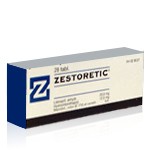
Zestoretic is the original brand-name fixed-dose combination antihypertensive manufactured by AstraZeneca — pairing the ACE inhibitor Lisinopril with the foundational thiazide diuretic Hydrochlorothiazide (HCTZ). FDA-approved since 1989, Zestoretic is one of the longest-established ACE inhibitor + thiazide combinations globally and remains widely prescribed for hypertension requiring dual-mechanism therapy. Available in three strengths: Zestoretic 10/12.5 mg, 20/12.5 mg, and 20/25 mg for flexible titration. Both component active ingredients are listed on the WHO Model List of Essential Medicines. Particularly valuable because Lisinopril's RAAS blockade pharmacodynamically counteracts HCTZ's tendency to activate RAAS (which normally causes K+ wasting), producing synergistic BP control with better potassium balance than HCTZ monotherapy.
The active ingredients combine complementary mechanisms. Lisinopril is the third ACE inhibitor ever approved (1987, following Captopril and Enalapril) and uniquely an active drug, not a prodrug — chemically a lysine derivative of enalaprilat (Enalapril's active metabolite). Lisinopril is hydrophilic with minimal tissue penetration and is mostly renally excreted unchanged. Long half-life ~12 hours supports true once-daily dosing. Hydrochlorothiazide blocks the Na-Cl cotransporter in the distal convoluted tubule — producing initial natriuresis and antihypertensive effect through subsequent vascular smooth muscle relaxation.
Zestoretic is FDA-approved for hypertension when combination therapy is appropriate. Off-label uses include resistant hypertension, HTN with mild edema or fluid retention, and HTN with concomitant diabetic nephropathy benefiting from ACE-i renoprotection plus thiazide BP synergy. Lisinopril component carries additional ATLAS-supported heart failure evidence.
Standard adult dosing: typically Zestoretic 10/12.5 or 20/12.5 mg once daily start, titrate to 20/25 mg as needed. Reduce in renal impairment (Lisinopril is renally excreted). Take consistently at the same time daily.
Critical safety: boxed warning regarding pregnancy (Category D in 2nd/3rd trimester — fetal renal toxicity from ACE-i). Dry cough (5-20%, ACE-i class effect), angioedema, hyperkalemia (mitigated by HCTZ), first-dose hypotension, renal dysfunction, sulfa cross-reactivity (HCTZ), photosensitivity, hyperuricemia, hyperglycemia. Skin cancer concern with chronic HCTZ exposure (FDA 2018).
Free prescription
Discrete packaging
Have questions?
Quality Assurance

- Hypertension Combination Therapy: For HTN when ACE-i or thiazide monotherapy inadequate — primary indication;
- Resistant Hypertension: For resistant hypertension — combination simplifies regimen;
- HTN With Mild Edema: For HTN with mild fluid retention — HCTZ diuretic component;
- Step Up From ACE Monotherapy: For step-up therapy when Lisinopril monotherapy inadequate — convenient single-pill switch;
- Step Up From Thiazide Monotherapy: For step-up therapy when thiazide monotherapy inadequate;
- Moderate Hypertension: For moderate hypertension (stage 2);
- Severe Hypertension: For severe hypertension combination management;
- HTN With Diabetes: HTN in diabetic patients (ACE-i renoprotection + thiazide BP);
- HTN With Diabetic Nephropathy: HTN with diabetic nephropathy — Lisinopril renoprotection benefit;
- HTN With Mild HF: For HTN with concomitant mild HF (ATLAS-supported Lisinopril HF benefit);
- HTN With Proteinuria: For HTN with proteinuria — ACE-i benefit;
- HTN Salt Sensitive: For salt-sensitive hypertension — HCTZ effectiveness;
- HTN Black Patients: HTN in Black hypertensives — HCTZ component particularly effective;
- Elderly Hypertension Systolic: For isolated systolic hypertension in elderly — HCTZ class strength;
- Single Pill Combination Compliance: Single-pill combination improving compliance vs separate prescriptions;
- Renoprotection Diabetic: Lisinopril component provides diabetic renoprotection;
- Cardiovascular Risk Reduction: CV risk reduction with effective BP control;
- HTN ACE Cough Tolerance Test: For patients tolerating ACE-i without cough (combination preserves Lisinopril benefit);
- Step Down From Three Drug: Step-down convenience from three-drug regimens to two-drug combination;
- HTN With Mild Fluid Retention: For HTN with mild fluid retention — HCTZ component addresses both.
- Better BP Synergy: Synergistic BP reduction vs either component alone — complementary mechanisms;
- Better Potassium Balance vs HCTZ Alone: Lisinopril RAAS blockade counteracts HCTZ K+ wasting — signature combo benefit;
- Less Hypokalemia Risk: Reduced hypokalemia risk vs HCTZ monotherapy;
- Less Mild Edema: Reduces mild fluid retention — HCTZ diuretic component;
- Less Proteinuria: Lisinopril reduces proteinuria in diabetic nephropathy;
- Better Kidney Function Preservation: Lisinopril preserves kidney function in diabetic nephropathy;
- Less Cardiovascular Events: Reduces cardiovascular events with effective BP control;
- Less Stroke Risk: Reduces stroke risk with effective BP control;
- Better HF Benefit Mild: Lisinopril ATLAS-supported HF benefit in patients with mild HF;
- Better Compliance Single Pill: Single combination pill improves compliance vs separate prescriptions;
- Less Pill Burden: Reduces pill burden in combination antihypertensive regimens;
- Better Daily Function: Return to normal daily activities with effective BP control;
- Better Quality of Life: Substantial improvement in quality of life;
- Better Renoprotection: Renoprotection from Lisinopril ACE-i component;
- Better Compliance Once Daily: Once-daily dosing improves compliance;
- Better Black Patient HTN Control: HCTZ component particularly effective in Black hypertensives;
- Better Elderly Systolic HTN Control: HCTZ effective for isolated systolic HTN in elderly;
- Brand Zestoretic AstraZeneca: Original AstraZeneca brand combination — established since 1989;
- Generic Lisinopril HCTZ: Affordable generic Lisinopril + HCTZ combinations expand global access;
- Three Strength Options: Three strength options (10/12.5, 20/12.5, 20/25) — titration flexibility;
- ACE Inhibitor Plus Thiazide Combination: ACE inhibitor + thiazide diuretic combination;
- Third ACE Inhibitor Approved: Lisinopril — THIRD ACE inhibitor ever approved (1987);
- Active Drug Not Prodrug: Lisinopril is active drug (not prodrug) — like Captopril, immediate effectiveness;
- Lysine Derivative Enalaprilat: Lisinopril is lysine derivative of enalaprilat (Enalapril's active metabolite);
- Hydrophilic No Tissue Penetration: Hydrophilic — minimal tissue penetration, mostly renal excretion;
- Thiazide Diuretic NCC Blocker: HCTZ blocks Na-Cl cotransporter in distal convoluted tubule;
- Pharmacodynamic Synergy RAAS Blockade: HCTZ activates RAAS, Lisinopril blocks RAAS — favorable interaction;
- ATLAS Trial HF Higher Dose: ATLAS trial — Lisinopril HF benefit at higher doses;
- ALLHAT Trial Comparison: ALLHAT trial — Lisinopril compared favorably with other antihypertensives;
- Long Half Life 12 Hours: Lisinopril long half-life ~12h supports true once-daily dosing;
- Single Pill Convenience: Single-pill convenience vs separate ACE-i + diuretic prescriptions;
- WHO Essential Medicine: Both components listed on the WHO Model List of Essential Medicines;
- 35 Plus Year Clinical History: 35+ years of clinical use since 1989 — foundational combination evidence base.
Generic Zestoretic (Lisinopril Hydrochlorothiazide 5mg/12.5 mg) Medication guide:
📖 What Zestoretic Is and How the Two Drugs Work Together
Zestoretic is two blood pressure medicines baked into one tablet. Lisinopril - an ACE inhibitor. And hydrochlorothiazide, the old dependable water pill nearly everyone calls HCTZ. Merck put them in the same tablet back in 1989, and doctors have been prescribing this combination ever since because it does something neither drug does as well on its own: it hits your blood pressure from two directions at once.
The name is a mashup. Zestril was Merck's brand name for plain lisinopril in Europe. Stick the water pill on the end and you get Zestoretic. Not the most inspired branding, but it stuck.
You will find Zestoretic sold under a few names depending on where you live. Zestoretic in the US and most of Europe. Prinzide, another Merck brand for the same combination. Carace Plus in the UK. And an ocean of generics after lisinopril went off patent in 2002. Whichever name is on the box, the two active ingredients and their doses are what matter.
The three strengths you will see
Zestoretic comes in lisinopril/HCTZ 10/12.5 mg, 20/12.5 mg, and 20/25 mg. That is the whole range. Section 8 explains which one your doctor is most likely to pick and why.
Who is Zestoretic actually for? Mostly adults whose blood pressure has not settled with a single drug, or whose starting BP was high enough that the doctor did not want to fiddle around with sequential monotherapy. It is a workhorse. Not glamorous. Not the newest drug on the block. But when it fits, it fits well, and it is one of the cheapest and most studied combinations you can be handed.
What Zestoretic is not: an emergency drug, a rescue for BP spikes, a heart failure specialty (although lisinopril alone is used there), or anything you should ever start or stop on your own. It is a daily maintenance combination, and its whole benefit rests on you taking it steadily.
This guide walks you through the practical stuff. How the two drugs actually work. Which side effects to expect (the famous dry cough, some electrolyte issues, and a photosensitivity quirk from the water pill). When to take it. What to eat and drink around it. And the situations where Zestoretic is exactly wrong for someone - pregnancy being the loudest of them. If you are new to this combination or thinking about it, spend twenty minutes here.
💊 Why Zestoretic Combines Lisinopril and Hydrochlorothiazide in One Pill
The idea of a fixed-dose combination sounds simple but was slow to catch on. For decades doctors preferred to titrate one drug at a time, adding a second only when the first hit its ceiling. Then several large trials in the 2000s showed the same thing: most people with stage 2 hypertension need two drugs to get to target, and starting them together works better than sequentially. Combination pills fix a real behavioural problem too - clients who take one tablet a day miss fewer doses than clients who take two.
Zestoretic exists because lisinopril and HCTZ do complementary things.
Lisinopril blocks the renin-angiotensin-aldosterone system. Less angiotensin II means less vasoconstriction, less sodium retention, and lower BP. It also protects the kidneys and slows heart failure. Downside: it can raise potassium and it makes one in ten people cough.
HCTZ works at the distal tubule of the kidney, blocking sodium reabsorption. Result: you lose a bit more sodium and water in urine, and BP drops. Downside: it drops potassium too, and can nudge uric acid and blood sugar up.
Look at those two side by side and something jumps out. Lisinopril raises potassium. HCTZ lowers it. Put them in one tablet and the potassium swings roughly cancel. That is not the main reason the combination works, but it is a real bonus. The main reason is that hitting BP through two different mechanisms produces a bigger drop than doubling one drug alone.
The one-tablet convenience is not just cosmetic
Adherence research is boring but consistent: people who take one pill a day get to BP target more often than people who take two, even when the underlying drugs are identical. If you have ever forgotten a mid-morning dose, you know why.
There is a philosophical debate in hypertension circles about whether starting two drugs at once is always the right move. Prof. Franz Messerli has argued yes for decades. NICE in the UK moved more cautiously and still recommends stepwise addition in most people. Both positions have data behind them. Where they agree: once you are on two drugs, a single-pill combination like Zestoretic beats two separate prescriptions.
👤 Who Actually Gets Prescribed Zestoretic
A typical Zestoretic prescription happens in one of three scenarios.
Scenario one. You started on lisinopril alone for high blood pressure. It brought your BP down but not enough - maybe 145/90 when the target was under 135/85. Your doctor could add a separate HCTZ tablet, but Zestoretic collapses both into one pill. Same effect, fewer tablets to forget.
Scenario two. Your BP at diagnosis was already high - say 160/100 or above - and the guidelines suggest starting with two drugs rather than one. Zestoretic (or a similar fixed-dose combination like Lotensin HCT, Prinzide, or a generic lisinopril/HCTZ) is a common opening move.
Scenario three. You were on separate lisinopril and HCTZ tablets that a previous doctor had settled you on, and the new doctor is simplifying the regimen. This is boring but common, and it usually improves how often you actually take the pills.
Zestoretic is also often chosen when
- You have hypertension plus type 2 diabetes. ACE inhibitors are the class of choice here - they protect kidneys as well as lower BP
- You have mild proteinuria or early chronic kidney disease. ACE inhibitors slow progression
- You are Black and struggling to get to target. ACE inhibitors alone respond less well in Black clients; adding a thiazide restores the effect
- You need heart failure protection. Lisinopril has a strong track record there
- Cost matters and generic lisinopril/HCTZ costs cents per day
Where doctors reach for something else instead: someone with severe kidney disease (both drugs get complicated), someone with a history of angioedema on any ACE inhibitor (absolute contraindication, see Section 25), pregnancy or planning pregnancy (Section 27), and someone with gout (HCTZ worsens it, see Section 21).
One quiet trend worth mentioning. Some prescribers now prefer indapamide or chlorthalidone over HCTZ as the thiazide partner because they have slightly better outcome evidence in trials like ALLHAT and SHEP. Zestoretic still works, and generic HCTZ is dirt cheap, but if you and your doctor are choosing a combination today from scratch, the thiazide-like variants may come up.
🔬 How the Lisinopril Half of Zestoretic Works
Lisinopril is the third ACE inhibitor to reach market, after captopril in 1981 and enalapril in 1985. Merck launched it in 1987 as Prinivil and Zestril. Two things make it unusual among ACE inhibitors, and both matter for how it feels day to day.
First: it is not a prodrug. Enalapril and most of the other ACE inhibitors sit inactive in your gut and get switched on by liver enzymes. Lisinopril arrives at its target already active. In practice this means it works fine in people with liver problems, whereas enalapril can be sluggish.
Second: it leaves through the kidneys, not the liver. Roughly 90 percent renal excretion. This is a feature and a bug. Feature: predictable kinetics in most people, no worry about CYP variability. Bug: in kidney impairment, the drug hangs around longer and dose adjustment matters (Section 29 covers this).
What lisinopril does in your body
Your kidneys release renin when blood pressure or blood volume dips. Renin sets off a cascade that ends in angiotensin II, one of the most powerful vasoconstrictors your body makes. Angiotensin II also tells your adrenal glands to release aldosterone, which holds onto sodium and water.
Lisinopril blocks the enzyme that produces angiotensin II. Less angiotensin II = wider arteries + less sodium retention + less aldosterone = lower BP. This is a slow, steady effect. Not a hammer to a spike.
The half-life of lisinopril is about 12 hours, but the useful antihypertensive effect lasts a full 24, so once-a-day dosing is the norm. Peak effect is 6-8 hours after the dose. First-dose hypotension is uncommon but can happen if you were volume-depleted before starting.
Beyond BP, lisinopril has three additional evidence-based effects that come from the same mechanism:
Kidney protection. In diabetes with proteinuria and in early CKD, ACE inhibitors slow the loss of kidney function. This is why nephrologists reach for them almost reflexively.
Heart failure benefit. The GISSI-3 and ATLAS trials showed lisinopril improves outcomes in HFrEF. Plain lisinopril is used for this, not the fixed-dose combination with HCTZ.
Post-MI benefit. Started days after a heart attack, lisinopril modestly reduces mortality and prevents heart failure development.
Zestoretic clients are usually using lisinopril for BP, not for the extras. But if you also have diabetes or early kidney disease, the extras are quietly doing work in the background.
💧 How the Hydrochlorothiazide Half of Zestoretic Works
Hydrochlorothiazide is old. Introduced by Merck in 1959 as HydroDiuril, it followed chlorothiazide (Diuril, 1958) by a year and stayed in constant use ever since. Most doctors under 60 have never practised medicine without HCTZ available. It is on the WHO Essential Medicines list, generic since forever, and costs about two cents a tablet at wholesale.
Here is what HCTZ does. Your kidneys filter about 180 litres of blood a day. Most of what gets filtered is reclaimed on the way out - sodium, water, glucose, amino acids. Thiazides block one specific reclamation channel in the distal tubule of the nephron: the sodium-chloride cotransporter. When you block it, more sodium slips through to the urine. Water follows sodium. You pee slightly more, your blood volume drops a bit, and BP falls.
The peak diuretic effect of HCTZ is at 4-6 hours, but the BP-lowering effect stretches across the day. Take it in the morning for this reason - if you take it at bedtime you may be up at 2 AM.
The BP effect is not just from fluid loss. After a few weeks on a thiazide, your body adjusts its total peripheral resistance downward, and that adjustment persists even after the initial fluid effect has settled. Nobody has fully explained the mechanism but the effect shows up consistently across trials.
The 12.5 mg dose in Zestoretic is small compared with what HCTZ used to be prescribed at. In the 1960s and 70s doses of 50-100 mg were routine and side effects were considerable. Modern practice is 12.5-25 mg because we learned two things: most of the BP effect happens at low doses, and side effects (potassium loss, glucose issues, uric acid rise) scale with dose. Zestoretic 20/25 mg contains the higher thiazide dose and is used when 12.5 mg is not enough.
One thing to know about HCTZ versus its cousins
Chlorthalidone and indapamide are thiazide-like drugs. They work on the same channel but stay in the body much longer (48-60 hours versus 8-12) and have stronger outcome data in trials like ALLHAT and SHEP. Some hypertension specialists prefer them over HCTZ for that reason. But HCTZ is what sits inside Zestoretic, and in the doses used it works.
HCTZ has side effects worth flagging early because Sections 19 through 24 come back to them: it can lower potassium and sodium, it can raise uric acid enough to trigger gout, it can nudge fasting glucose up in people prone to diabetes, and it makes your skin more sensitive to sun. All of these are dose-related and mostly modest at the 12.5 mg dose in most Zestoretic strengths.
🤝 Why the Zestoretic Combination Beats Either Drug Alone
If lisinopril alone works and HCTZ alone works, why put them together? Three reasons that actually matter.
Reason one: additive BP effect. Two drugs on different mechanisms produce roughly additive BP drops. Lisinopril alone lowers systolic BP by about 8-12 mmHg on average. HCTZ 12.5 mg by about 6-10 mmHg. Together you can expect 14-20 mmHg systolic. Doubling either drug alone would give you diminishing returns - the second half of the dose contributes far less than the first.
Reason two: the electrolyte trick. Look at potassium in isolation. Lisinopril raises it. HCTZ lowers it. Combined, most clients on Zestoretic have potassium in the normal range without supplements or extra monitoring beyond routine bloods. This is not just convenient - it is a genuine safety win.
Reason three: adherence. The one-tablet effect on real-world adherence is well documented. Meta-analyses of single-pill combinations versus free combinations show 20-30 percent better adherence with single pills, and BP control follows adherence.
What the trials actually showed
Combining an ACE inhibitor with a thiazide has been tested in dozens of studies since the 1980s. The ALLHAT trial (2002) enrolled 42 000+ clients and confirmed that both drug classes work when used together. STAR (2006) compared the specific lisinopril/HCTZ combination against a valsartan/HCTZ combination and found similar BP control. ACCOMPLISH (2008) suggested ACE + calcium blocker beats ACE + thiazide for cardiovascular events, which nudged some prescribers toward Lotrel-style combinations, but Zestoretic remains a solid choice.
The additive effect is what your doctor is banking on. If you were previously on lisinopril 10 mg and your BP was 145/90 - target under 135/85 - your doctor could either go up to lisinopril 20 mg (small extra BP drop, more side effect risk) or add HCTZ 12.5 mg (bigger drop, different side effect profile). The addition usually wins, and Zestoretic packages the addition in one tablet.
There is a catch worth naming. Combination therapy also combines side effects. If you get the ACE inhibitor cough (Section 16), you get it whether the ACE inhibitor is by itself or in a combination. Same with HCTZ's photosensitivity. Being on a combination does not shield you from either drug's downsides, and if you tolerate one poorly, the combination will not fix that.
📋 Where Zestoretic Fits in Modern Hypertension Guidelines
Modern hypertension guidelines have evolved and Zestoretic's position has evolved with them. Here is the honest picture.
ACC/AHA 2017 (USA)
Recommends starting two drugs when BP is at least 20/10 mmHg above target. ACE inhibitor + thiazide is one of the four preferred initial combinations. Zestoretic fits this recommendation cleanly.
ESC/ESH 2023 (Europe)
Prefers single-pill combinations over free combinations. Lists ACE inhibitor + thiazide as an acceptable pairing but leans slightly toward ACE inhibitor + calcium channel blocker for higher-risk clients based on ACCOMPLISH data.
NICE NG136 (UK)
Uses the ACD algorithm - ACE inhibitor (or ARB), Calcium channel blocker, Diuretic. Step 2 is A + C or A + D. Zestoretic fits step 2 A + D. NICE specifically flags that indapamide or chlorthalidone are preferred over HCTZ, so a UK prescriber writing fresh today might pick a different combination. Existing Zestoretic clients who are well controlled are usually left alone.
So where does that leave Zestoretic in 2026?
Still a solid mainstream choice. Cheaper than most alternatives (generic lisinopril/HCTZ is available essentially everywhere). Backed by three decades of clinical experience. Fine for the majority of adults with hypertension who need two drugs. Slightly out of fashion because newer trial evidence favours indapamide-based or amlodipine-based combinations, but that fashion has not translated into "stop prescribing Zestoretic" anywhere.
When Zestoretic is genuinely the right choice
Adults with stage 2 hypertension who need two-drug therapy. Adults with hypertension plus diabetes or early CKD (the ACE inhibitor does dual duty). Black adults who did not respond well enough to ACE inhibitor alone (HCTZ compensates). Anyone where cost matters - Zestoretic is one of the cheapest branded fixed-dose combinations on the market and generics cost pennies.
Where a modern prescriber might reach for something else: pregnancy (never Zestoretic), gout history (HCTZ worsens it), significant CKD (both drugs need care), or when a chlorthalidone-based or indapamide-based combination is easily available and outcome evidence tips the choice.
⚖️ Choosing Your Zestoretic Strength - 10/12.5, 20/12.5 or 20/25 mg
Zestoretic comes in three strengths. That is the whole range. Your doctor picks one based on your BP, your other conditions, and whether you were on either component drug before.
| Strength | Typical use |
|---|---|
| 10 mg / 12.5 mg | Starting dose for most people. Also used for older clients or those with mild CKD |
| 20 mg / 12.5 mg | Step-up when 10/12.5 is not enough BP effect. Same water pill dose, more ACE |
| 20 mg / 25 mg | Both components at higher dose. Watch electrolytes more closely at this strength |
A common titration path looks like this. Start on 10/12.5 mg. Check BP after 2-4 weeks. If not at target, step up to 20/12.5 mg. Recheck. If still not at target, either move to 20/25 mg or add a third drug (usually a calcium channel blocker like amlodipine). Some doctors go from 20/12.5 to a third drug rather than 20/25 because the higher HCTZ dose adds more side effects than BP benefit at the margin.
Can Zestoretic tablets be split?
The tablets are scored and can be halved for fine adjustment, though most doctors just switch to the next full strength up or down. If you split, be aware that the split dose gives half of both components proportionally - you cannot split to change only one of them.
What about generic lisinopril/HCTZ? Identical chemistry, identical strengths, and clinically no different from branded Zestoretic. Regulatory bioequivalence rules are strict here. The only reason to specifically ask for branded Zestoretic is if your insurance or supply chain makes it available at the same or lower cost - otherwise generics are fine and often cheaper.
One quiet detail. If you were on lisinopril 20 mg and HCTZ 25 mg as separate tablets and your doctor switches you to Zestoretic 20/25, expect identical BP effect. There is no bioequivalence surprise here. Both drugs release from the tablet the same way in solo form and in combination form.
📅 Your First Two Weeks on Zestoretic - What to Expect
What actually happens when you start Zestoretic. This section is more useful than any prescribing summary because it is the day-to-day picture.
Day one. Take the tablet in the morning. Nothing dramatic happens. You may pee a bit more than usual over the next 4-6 hours - that is HCTZ starting to work. BP will start to drop over hours but is not at target yet. If you were volume-depleted before starting (recent stomach bug, low fluid intake, on a strict low-salt diet already), you might feel a bit lightheaded on standing.
Days two to four. The extra urination settles quickly - your kidneys recalibrate. Your body starts adjusting to the lower blood pressure. Mild fatigue is common in the first week and usually fades. If you were a bit dehydrated to begin with, drink normally and this all smooths out.
Week two. Steady state is reached. Home BP should be trending toward target. This is when your doctor may want the first check-in - a phone call, a home BP reading, or a blood test to check kidney function and potassium.
The two-week blood test
Most doctors check three things at 1-2 weeks: creatinine and eGFR (kidneys), potassium (electrolyte balance), and sodium (occasionally). This is not because Zestoretic is dangerous but because starting an ACE inhibitor unmasks any silent kidney artery narrowing, and the water pill can drop potassium or sodium in a small fraction of clients. The test is quick and cheap and worth doing.
Weeks three to six. Most clients are fully adapted by week three. Fatigue is gone. BP is steady. Any dry cough that will develop (the classic ACE inhibitor cough) usually starts to appear in this window - anywhere from a week to three months after starting.
Some things that are normal in the first two weeks:
- Peeing more, especially in the first day or two
- Feeling slightly tired in the afternoon
- A brief mild headache on the first or second day
- BP readings that overshoot low sometimes - this settles
Signs to call your doctor in the first two weeks
- Fainting or near-fainting when standing
- Systolic BP below 100 mmHg with symptoms
- Any facial or throat swelling - stop immediately and seek emergency care (Section 25)
- Sharply reduced urine output
- Muscle weakness or cramping - possible potassium drop
- Persistent nausea or vomiting
The vast majority of people get through these two weeks without incident. Zestoretic has a long safety track record and starts smoothly for most.
⏰ When to Take Zestoretic and Why Morning Dosing Is Standard
Zestoretic is a once-a-day medicine. Morning is the standard time, and there is a good practical reason: HCTZ acts as a diuretic and you do not want to be up at 2 AM because you took it at bedtime.
Beyond that, timing is flexible. Most people take it with breakfast. Some take it with the first coffee of the day. Some tie it to a specific habit like brushing teeth. The critical thing is consistency - same time every day, roughly within an hour or two.
Anchors that work
- First thing after brushing teeth in the morning
- With breakfast, in the same spot on the table each day
- Right after the morning coffee
- A pre-filled weekly pillbox that you refill every Sunday
- A phone alarm labelled with the medicine name
What about evening dosing? Some hypertension research (the MAPEC and Hygia trials) suggested that taking BP drugs at bedtime lowers cardiovascular events, but larger and more recent trials (TIME, 2022) found no significant timing effect. The debate has cooled. If your doctor specifically wants bedtime dosing, follow that advice - some clients with dominant nighttime BP benefit. Most Zestoretic clients do fine with morning dosing.
Can you take Zestoretic with food? Yes. Food does not meaningfully change how the drugs are absorbed. Take it with, or without, or with just water - be consistent about your choice.
Do not lie down straight after the first dose
First-dose hypotension is uncommon but possible. If you were dehydrated or on a strict low-salt diet already, the first Zestoretic tablet can drop your BP more than expected. Take it in the morning when you will be upright and moving. Not last thing at night on an empty stomach after a hot day. This precaution matters most for the first dose only.
One practical note about splitting your day around the dose. HCTZ's peak diuretic effect is 4-6 hours after the pill. If you take it at 7 AM, expect a modest need to pee more between 11 AM and 1 PM. This effect diminishes after the first week as your kidneys adapt. Do not skip drinking water to avoid the extra bathroom trips - HCTZ works whether you drink or not, and dehydration is a worse enemy than a few extra trips.
🍽️ Food, Salt and Diet Rules on Zestoretic
The two big diet topics on Zestoretic are salt and potassium. Both matter differently than you might guess.
Salt. The BP-lowering effect of Zestoretic works better on a lower-salt diet. Aim for under 5-6 grams of salt per day - about a teaspoon total. Most of your salt does not come from the shaker at the table. It comes from processed food, bread, cured meat, cheese, ready meals, canned soup. Halve those and you have made most of the reduction.
Do not go too low. Extreme salt restriction combined with HCTZ can cause hyponatraemia (low sodium in blood), which is worse than moderate salt intake. Older adults are most at risk. If your doctor has asked you to be "salt sensible" rather than "low salt", follow that.
Potassium and Zestoretic
Because the two drugs in Zestoretic push potassium in opposite directions, most clients do not need to think about potassium at all. Section 19 goes deep on this. Short version: eat normally, avoid potassium supplements unless prescribed, and know that salt substitutes labelled "low sodium" are usually potassium chloride - avoid those without checking with your doctor.
Grapefruit. Not a Zestoretic issue. Lisinopril and HCTZ are not metabolised by the enzymes grapefruit inhibits (unlike amlodipine and some statins). Enjoy grapefruit freely.
Alcohol gets its own section (12) because there is a real interaction. So does coffee (Section 13).
A DASH-style eating pattern helps
The DASH diet was designed specifically for BP and works alongside Zestoretic:
- Vegetables and fruit as background, not decoration
- Oily fish twice a week (salmon, sardines, mackerel)
- Beans, lentils, chickpeas a few times a week
- Whole grains over refined
- Low-fat dairy or plain yoghurt
- Nuts and seeds in moderate portions, unsalted
- Cut ultra-processed foods - most of the hidden salt lives there
Supplements to be careful with. Ephedra and yohimbe raise BP and undo Zestoretic's work - avoid both. Liquorice root in large quantities raises BP and lowers potassium (bad combination with HCTZ). Regular vitamins and fish oil are fine. Salt substitutes containing potassium chloride should be discussed with your doctor because they can push potassium too high when combined with lisinopril.
Weight loss is not a food topic exactly but belongs here. Losing 5-10 kg if you carry extra weight lowers BP more than most drug additions. Zestoretic works better in someone who is also losing weight steadily. Not required. Helpful.
🍷 Alcohol and Zestoretic - What Is Safe and What Is Not
Alcohol and Zestoretic interact in one real way and one theoretical way. Understanding both prevents surprises.
The real interaction: alcohol lowers blood pressure short-term. So does Zestoretic. Combine them and you can drop BP more than expected, especially standing up after sitting or getting up in the night. This is not usually dangerous. It just makes you dizzy. First-time drinkers on Zestoretic sometimes get a strong wobble from what used to be a normal glass of wine.
The theoretical worry: chronic heavy drinking pushes BP up over time and negates what Zestoretic is doing. Same drink that makes you dizzy short-term also raises your average BP if you have several every day.
Sensible drinking on Zestoretic
- Up to 1 unit a day for women, 2 for men, is the usual guideline
- No more than 3-4 units in a single sitting
- A couple of alcohol-free days a week
- Never drink to the point of dehydration - HCTZ plus dehydration is a bad combo
- Get up slowly after sitting or lying down when you have had a drink
The first drinks after starting Zestoretic deserve a bit of caution. If your usual is two glasses of wine on Friday night and you have just started this new medicine, try one glass first and see how it lands.
Skip alcohol entirely if
- You have been diagnosed with heart failure and started Zestoretic for that
- You have significant liver disease
- You are in the first two weeks of Zestoretic while your body adapts
- You are unwell with a stomach bug - dehydration risk is too high
One more note. Beer, wine and spirits are equivalent for the BP question - only the alcohol content matters. But beer has more fluid volume, so a night of beer plus a diuretic pushes fluid balance harder than a night of spirits. Not a huge issue, just worth knowing.
☕ Coffee, Tea and Energy Drinks While Taking Zestoretic
Coffee is fine on Zestoretic. There is no drug-level interaction, and moderate caffeine intake does not undo the BP-lowering effect.
What actually happens: caffeine causes a small, temporary BP rise (5-10 mmHg systolic) lasting 30-60 minutes after a cup. Regular coffee drinkers develop tolerance and the effect shrinks. Zestoretic keeps your baseline BP down; the coffee blip runs on top of that but is short and modest. In most people, the two do not fight each other.
Aim for under 400 mg of caffeine a day total - that is roughly four cups of filter coffee or six cups of tea. Energy drinks are a different animal.
Rough caffeine content
| Drink | Caffeine (mg) |
|---|---|
| Espresso (30 ml) | 65 |
| Filter coffee (240 ml) | 95 |
| Black tea (240 ml) | 45 |
| Green tea (240 ml) | 30 |
| Cola (330 ml) | 35 |
| Energy drink (250 ml) | 75-160 |
Energy drinks are worth flagging separately. A tall can can contain 300 mg caffeine plus taurine, guarana, and often other stimulants. Combined with the BP variability of an active day, this can produce palpitations and BP surges that Zestoretic cannot smooth out. Skip them.
Tea is a friend. Green tea in particular has some independent modest BP-lowering effect. Nothing dramatic, but it slots into a healthy-BP routine nicely.
One quirk. If you drink strong coffee first thing in the morning at the same time you take Zestoretic, you may notice your first home BP reading of the day is higher than expected. That is the caffeine transient, not the medicine failing. Measure your BP before coffee if you want a clean number.
🩺 Home Blood Pressure Monitoring on Zestoretic
A home BP monitor is one of the highest-value purchases you can make once you are on Zestoretic. Twenty minutes a week gives your doctor better data than any occasional office measurement, and it lets you spot problems early.
Buy an upper-arm cuff monitor, not a wrist one - wrist monitors are less accurate and easier to misuse. Look for models validated by the British and Irish Hypertension Society, the ESH, or the AAMI. Cost is $30 to $80 for a good one. If you already own one that reports a beat symbol for irregular heartbeat, keep using it - that feature is genuinely helpful.
The five-minute technique
- Sit quietly for five minutes before measuring
- Back supported, feet flat on the floor, legs uncrossed
- Cuff at heart level, on bare skin, on the same arm each time
- Do not talk during the measurement
- Take two or three readings a minute apart. Discard the first if it is much higher than the rest
- Write down the average of the last two
How often to measure? Once or twice a week in a stable client on unchanged Zestoretic. Every day for a week whenever the dose changes. Morning and evening on the day before a doctor visit, so you have fresh data.
Home targets on Zestoretic
Home BP runs about 5 mmHg lower than office BP. So home targets are:
- Most adults: under 135/85 at home
- Diabetes or CKD: under 125/75 at home
- Age 80+: under 140/85 at home is usually fine
Numbers that need a doctor call
- Systolic BP under 100 mmHg with symptoms (dizziness, faint)
- Systolic BP over 180 or diastolic over 110 - hypertensive urgency
- Sudden change of more than 20 mmHg from your usual pattern
- Irregular heartbeat symbol appearing regularly - possible new AF
Keep a simple log. Date, time, top number, bottom number, pulse, and any note about how you feel. A cheap notebook is fine, or a phone app if you prefer. Bring it to appointments. Your doctor will trust your home numbers more than a rushed office reading.
🚨 Zestoretic Side Effects - Full Overview
Zestoretic has a well-mapped side effect profile because both drugs in it have been in constant use for over three decades. Some effects come from the ACE inhibitor side. Some from the water pill side. A few come from the combination. Here is the full picture, split by likelihood.
Common (roughly 5 to 15 percent of clients)
- Dry, tickling cough from lisinopril - Section 16 covers this in detail
- Dizziness on standing - especially first two weeks, mostly settles
- Fatigue in first 1-2 weeks, then usually fades
- Headache - mild, transient
- More urination in the first days, then normalises
Less common (1 to 5 percent)
- Muscle cramps - usually low potassium or low sodium (Sections 19, 20)
- Nausea, mild stomach upset
- Sun sensitivity from HCTZ - Section 24
- Rise in fasting glucose if prediabetic - Section 22
- Uric acid rise, sometimes triggering gout - Section 21
- Mild sexual dysfunction in some men
Uncommon (under 1 percent)
- Rash
- Taste changes
- Kidney function drop beyond expected
- Low sodium (hyponatraemia) - mostly older adults on low-salt diets
- Low potassium requiring supplement
- Photosensitivity rash resembling lupus
Rare but serious - stop and seek emergency care
- Angioedema - swelling of lips, tongue, face, or throat. Section 25. Emergency
- Severe hypotension with fainting
- Very reduced urine output - possible acute kidney injury
- Yellowing of eyes or skin - very rare liver problem
- Severe skin reaction with peeling or blistering
- Severe eye pain with vision changes - very rare HCTZ-linked glaucoma reaction
Most side effects turn out to be either the cough (which forces a drug switch about 5 percent of the time), a mild electrolyte issue that adjusts with a dose or diet tweak, or nothing at all. Serious reactions are rare but the ones listed in the red box need immediate attention.
🤧 The Zestoretic Dry Cough Problem and When to Switch
Here is the one side effect everyone knows about. About 10 percent of clients on any ACE inhibitor develop a dry, tickly cough. This is not a chest infection or asthma. It comes from blocking angiotensin converting enzyme, which also breaks down a substance called bradykinin. When ACE is blocked, bradykinin accumulates and irritates the airway lining. The cough follows.
The cough usually starts within a few weeks of beginning lisinopril but can appear as late as six months in. It is worse at night and when lying flat. It is dry - no phlegm - and hard to shake. Cough suppressants do not help much. The cough goes away only when the drug goes away.
How to tell it is the ACE cough versus something else
- It is dry - no productive phlegm
- It is persistent - not a few days
- It started after you began Zestoretic (or lisinopril before that)
- You do not feel sick otherwise - no fever, no fatigue beyond usual
- Worse at night, lying down, or in cold air
Women get the cough more often than men. Chinese and East Asian clients get it more often than Europeans. There is no way to predict who will get it. There is no allergy test that helps. You either develop it or you do not.
What to do if you develop the cough
Talk to your doctor. The standard move is to swap the ACE inhibitor for an ARB (angiotensin receptor blocker) - losartan (Cozaar), valsartan (Diovan), telmisartan (Micardis), or olmesartan. ARBs work through the same system, give a similar BP effect, and do not cause the cough because they do not affect bradykinin. If you were on Zestoretic, the swap is usually to a losartan/HCTZ combination (Hyzaar) or similar ARB/thiazide combination.
Do not try to power through the cough. It will not adapt away. It will persist as long as you take lisinopril. Some clients try to tough it out for months before finally switching. There is no medal for tolerating it.
Once you stop lisinopril, the cough fades over 1-4 weeks. Occasionally it hangs on longer. If it persists more than a couple of months after stopping, it may be something else and needs looking into.
Why the cough matters for guideline thinking
The cough is the main reason ARBs have partially displaced ACE inhibitors in modern practice. If cost were equal, most doctors would probably start clients on ARBs for BP alone. Cost has equalised now that most ARBs are off patent. Whether you start on an ACE inhibitor or an ARB is often as much local formulary as anything else. In a client who never coughs, there is no clinical reason to switch.
🥵 Dizziness on Standing Up After a Zestoretic Dose
Feeling wobbly when you stand up is called orthostatic hypotension, and it is one of the most common early Zestoretic complaints. Two things drive it. The ACE inhibitor lowers your baseline BP a little. The water pill drops your blood volume a little. Add the two together, get up from a chair, and blood does not reach your head fast enough for a second or two.
Symptoms are: the room dims briefly when you stand, a light-headed feeling, sometimes seeing spots or tunnel vision. It fades within 5-30 seconds once you steady yourself. Occasionally people faint - that is rarer but not unknown, especially in the first week.
Who gets it worst
- Older adults - blood vessel reflexes slow with age
- Clients on other BP drugs at the same time
- Anyone who was volume-depleted before starting (recent stomach bug, hot weather, strict fluid limit)
- Diabetics with autonomic neuropathy
- Anyone drinking alcohol on the day
Simple tricks that help
- Sit on the edge of the bed for 30 seconds before standing in the morning
- Flex your calves a few times before standing up from a chair
- Drink water on Zestoretic days - dehydration makes this much worse
- Compression stockings in warm weather help older clients a lot
- Avoid very hot baths and long saunas in the first weeks
The good news: dizziness on standing almost always fades over 1-3 weeks as your body adapts. It rarely persists long-term. If it is severe or lasting beyond three weeks, your doctor may reduce the Zestoretic dose or step down to plain lisinopril without the water pill for a while.
When to call the doctor
- Actual fainting, not just wobble
- Home BP standing reading under 100/60 mmHg
- Dizziness that lasts more than three weeks
- Falls, especially in an older person
- Dizziness plus chest pain or shortness of breath
One small trick worth mentioning. If you feel it coming on when standing up, cross your legs and squeeze your thigh muscles. This pushes blood back toward the heart and often stops the wobble in its tracks. Physiotherapists teach this to clients with chronic orthostatic hypotension and it also works for the transient version most Zestoretic clients get.
🫀 What Zestoretic Does to Your Kidneys Long-Term
Zestoretic has two opposite effects on the kidneys, and understanding both explains most of the blood tests your doctor will order.
Effect one, the good one: lisinopril protects kidneys long-term in most clients. In diabetes with early proteinuria, in mild-to-moderate CKD, in hypertensive kidney damage, ACE inhibitors slow the loss of kidney function. This is why nephrologists prescribe them so willingly. The protection is well established across dozens of trials.
Effect two, the tricky one: when you first start any ACE inhibitor, your creatinine may go up modestly and your eGFR may drop. This is normal. Angiotensin II normally squeezes the outflow arteriole from the glomerulus, keeping filtration pressure up. Take that squeeze away and filtration eases off. A rise in creatinine of up to 30 percent or a drop in eGFR of up to 20 percent is expected and does not mean the drug is damaging kidneys - it means the drug is doing what it should.
The two-week blood test
This is why your doctor orders bloods 1-2 weeks after you start Zestoretic. Not to catch a rare disaster but to check the normal early kidney adjustment. If creatinine has risen more than 30 percent or if potassium is climbing above about 5.5, something needs looking into - most often bilateral renal artery narrowing, which was silent before the drug unmasked it.
What HCTZ adds to the picture is separate. Thiazides reduce blood volume, which can worsen kidney function slightly if you were dehydrated to begin with. On the other hand, thiazides do not usually damage kidneys at the doses in Zestoretic (12.5 or 25 mg). Bigger doses were once linked to modestly higher risk of kidney injury but the modern doses are safe for most people.
Sick day rules matter here
When you get a stomach bug or a fever with vomiting or diarrhoea, dehydration hits hard. Zestoretic in a dehydrated body can cause acute kidney injury. Many hypertension clinics teach clients a simple rule: if you cannot keep fluids down for 24 hours, hold your Zestoretic and call the doctor. Section 31 goes deeper.
If you have been on Zestoretic steadily for years and your kidney numbers have stayed stable, that is a good result. The 5-year kidney survival in properly monitored ACE inhibitor clients with CKD is significantly better than in similar clients not on ACE inhibitors. The drug earns its keep here.
What worries doctors is not the small early creatinine bump. It is a sudden much larger rise that appears after months of stability - usually triggered by dehydration, a new NSAID (see Section 26), or a change in circumstances. That is why your doctor wants a bloods check once or twice a year even if you feel fine.
🍌 Zestoretic and Potassium - Why the Two Drugs Cancel Out
Potassium is where the two drugs in Zestoretic argue with each other in an interesting way.
Lisinopril raises potassium. Blocking angiotensin means less aldosterone. Less aldosterone means kidneys hold onto less sodium and dump less potassium. Your serum potassium creeps up. In most people the rise is small - 0.1 to 0.3 mmol/L. In a client with mild kidney impairment or in someone taking potassium supplements or a potassium-sparing diuretic like spironolactone, the rise can be dangerous.
HCTZ lowers potassium. More sodium arrives at the distal tubule, which triggers sodium-potassium exchange, dumping potassium into urine. A typical drop on HCTZ alone is 0.2 to 0.5 mmol/L. Higher doses drop it more.
Combine them, as Zestoretic does, and the two effects mostly cancel. The average client sits with potassium in the normal 3.8-4.8 mmol/L range and needs no supplements, no cutting back on bananas, and no special dietary attention beyond eating normally.
Situations where the balance tips one way
Toward high potassium (hyperkalaemia):
- Chronic kidney disease - kidneys handle potassium worse anyway
- Adding a potassium-sparing drug like spironolactone (Aldactone)
- Potassium supplements or salt substitutes labelled "low sodium"
- NSAIDs like ibuprofen
- Trimethoprim antibiotic
Toward low potassium (hypokalaemia):
- Higher HCTZ doses (25 mg in Zestoretic 20/25)
- Vomiting or diarrhoea
- Diuretic abuse or excessive alcohol
- Rare inherited conditions
Symptoms of potassium going wrong are unspecific and easy to miss. Low potassium can cause muscle weakness, cramps, or a fluttery heartbeat. High potassium can cause the same muscle weakness plus, in the worst case, cardiac arrhythmia. Most of the time you feel nothing at all and the problem shows up on the blood test.
Avoid these unless prescribed
- Salt substitutes with "low sodium" or "no salt" - most are potassium chloride
- Over-the-counter potassium supplements
- Bulk sports drinks with added potassium
Bananas, potatoes, oranges and other potassium-rich foods are fine in normal amounts. The issue is with concentrated supplements or salt substitutes that deliver a lot of potassium in one hit.
Your doctor will typically check potassium at 1-2 weeks, at any dose change, and once or twice a year thereafter. That is usually enough monitoring for a stable client. If you have kidney disease or diabetes, more frequent checks make sense.
🧂 Sodium Loss and Muscle Cramps on Zestoretic
Low sodium (hyponatraemia) is not a common Zestoretic side effect, but it is worth understanding because it hits older adults harder than younger ones, and mild cases show up as vague symptoms that get dismissed.
HCTZ causes hyponatraemia by two routes. First, direct sodium loss in urine. Second, it stimulates thirst and interferes with the kidney's ability to dilute urine, so people drink water they do not need and cannot excrete it. Net effect: sodium in the blood drops as it gets diluted.
Who is at higher risk
- Adults over 70 - most affected group
- Women more than men
- Small body size
- Anyone on a strict low-salt diet plus a thiazide
- Concurrent SSRIs (fluoxetine, sertraline, escitalopram)
- Recent hot weather with heavy fluid intake
Symptoms of low sodium are annoying because they are unspecific. Tiredness. Headache. Nausea. A vague foggy feeling. Muscle cramps. Confusion in older clients that can be mistaken for a UTI or the start of dementia. In severe cases, seizures. Most cases picked up on Zestoretic are mild and caught on routine bloods.
Muscle cramps are the symptom that brings people to the doctor most often. Calf cramps at night, especially in older clients on the higher HCTZ dose. The cause is usually a combination of low sodium plus low potassium plus mild dehydration. Fixing any one of the three often fixes the cramps.
Simple prevention
- Drink normally, not excessively - too much water on HCTZ is a problem
- Do not chase an extreme low-salt diet unless specifically told to
- In hot weather, hold your dose and call the doctor if you cannot keep fluids balanced
- Report new confusion in older relatives on Zestoretic - it can be sodium
If your doctor discovers hyponatraemia on your bloods, the usual step is to hold Zestoretic briefly, encourage moderate fluid intake, and recheck. Once sodium is normal, doctor may restart the drug at a lower HCTZ dose (10/12.5 rather than 20/25) or swap the water pill component to indapamide, which has slightly different sodium effects. Persistent hyponatraemia usually means Zestoretic is not the right combination for that client.
One quick tip for cramps that are otherwise unexplained. A magnesium supplement (200-400 mg elemental magnesium daily) sometimes helps night cramps in clients on HCTZ. Magnesium loss goes hand-in-hand with potassium loss on thiazides, and people often supplement potassium and forget magnesium. Ask your doctor before starting.
🦶 Zestoretic, Gout and Uric Acid Rises
HCTZ raises serum uric acid by about 0.5-1.5 mg/dL on average. In most people this is silent and never matters. In people who already sit at the edge of hyperuricaemia, it can push them into gout.
The mechanism is straightforward. HCTZ shares a transport route in the kidney with uric acid. When you use that transporter to secrete HCTZ into urine, you crowd out uric acid, which stays in blood longer. Serum uric acid drifts up. A client with a family history of gout, obesity, or a purine-rich diet suddenly finds his big toe throbbing at 3 AM.
Who is most at risk
- History of gout before Zestoretic - almost guaranteed to flare
- Serum uric acid over 7 mg/dL before starting
- Family history of gout
- Chronic kidney disease
- Regular beer or spirit drinking
- Diet heavy in red meat, offal, shellfish, sugary drinks
If you have never had gout, you probably will not develop it just from Zestoretic. If you have had one gout attack in your life, the risk is real and worth flagging to your doctor before starting. If you have chronic gout on allopurinol or febuxostat, Zestoretic is not automatically off the table but the ACE + calcium blocker combination (like Lotrel or Norvasc + lisinopril) is often preferred instead.
If you get a gout flare on Zestoretic
- Treat the flare as usual - colchicine, NSAID (with caution, see below), or a steroid course
- Do not stop Zestoretic on your own
- Call your doctor within a few days
- Options: switch the thiazide to indapamide (raises uric acid less), or drop the diuretic and add a different second drug
- Long-term urate lowering with allopurinol is often needed if attacks recur
NSAIDs are the usual first-line for gout flares but on Zestoretic they add kidney risk and can drop kidney function further. Colchicine or a short prednisone course is often safer.
Losartan is an interesting alternative
Losartan is the one BP drug that actually lowers uric acid by a small amount, through a modest uricosuric effect that is unique among ARBs. If gout is a recurring problem, a switch from Zestoretic to Hyzaar (losartan + HCTZ) or straight losartan can help with both BP and gout.
Diet advice for someone with gout on Zestoretic is not dramatic. Cut back on beer and spirits. Skip sugary drinks. Moderate red meat and offal. Increase dairy - it lowers uric acid slightly. Drink plenty of water to help urate excretion. Nobody expects a monk-like diet, but reducing the worst triggers helps.
🧁 Zestoretic Effect on Blood Sugar and Diabetes
HCTZ nudges fasting glucose up. The effect is small in most people (2-5 mg/dL) but real, and in a client sitting at the edge of prediabetes it can tip the diagnosis into type 2 diabetes.
The mechanism is not fully worked out. Best guess: low potassium reduces insulin secretion from the pancreas, and mild volume contraction reduces peripheral glucose uptake. Either way, blood sugar drifts up during the first months on any thiazide.
Lisinopril goes the other way. ACE inhibitors slightly improve insulin sensitivity in most clients. So the two drugs in Zestoretic partially cancel each other on blood sugar just as they cancel on potassium. Net effect in most clients is close to zero.
Who to watch
- Prediabetes at baseline (HbA1c 5.7-6.4)
- Family history of type 2 diabetes
- Central obesity, metabolic syndrome
- Existing type 2 diabetes on tablet therapy - HCTZ may nudge HbA1c up slightly
For someone with established type 2 diabetes, Zestoretic remains a reasonable BP choice. Diabetes is not a contraindication. The ACE inhibitor half of it is actually a plus - lisinopril protects kidneys, which is the classic worry in long-term diabetes. You just want to monitor blood sugar and HbA1c a bit more attentively in the first 3-6 months and adjust diabetes drugs if needed.
Diabetes plus hypoglycaemia warning-sign masking
Unlike beta-blockers, ACE inhibitors do not mask low blood sugar. If you use insulin or a sulfonylurea (glimepiride, glipizide, gliclazide), your usual hypo warning signs work normally on Zestoretic. This is a real advantage of Zestoretic over combinations that include a beta-blocker for diabetic clients.
Practical steps if you notice glucose creeping up after starting Zestoretic:
1. Confirm with a proper HbA1c, not just a random glucose. 2. Lifestyle first - weight loss of 5 kg does more for glucose than any drug swap. 3. If the rise is significant and lifestyle is already optimised, your doctor can switch the thiazide component to something more metabolically neutral (indapamide has slightly less glucose effect) or move to an ACE + calcium blocker combination like Lotrel.
Nobody develops overt diabetes just from starting Zestoretic. What can happen is that a client who was already on the boundary tips over. That is not a reason to avoid the drug - it is a reason to know your baseline HbA1c and recheck at 3-6 months after starting.
💗 Sexual Function and Erectile Health on Zestoretic
Sexual side effects from Zestoretic are less common than clients often fear, and the drug is generally kinder to sex life than older BP treatments like propranolol or methyldopa.
ACE inhibitors as a class have modest rates of erectile dysfunction - roughly 5 percent absolute increase over placebo. Some men actually report improved erectile function on lisinopril, probably because the drug improves endothelial function slightly. HCTZ is a bit less friendly - higher-dose thiazides have been linked to ED at rates around 10-15 percent, though the 12.5 mg dose in most Zestoretic strengths is at the lower end of that range.
The tricky part is separating drug effect from disease. Hypertension itself impairs erectile function - the same vascular changes that raise BP also affect the small vessels of the penis. When someone develops ED after starting Zestoretic, the drug often gets the blame even when the underlying vascular disease was doing the work.
If you develop sexual side effects
- Give it 4-8 weeks - many transient effects settle
- Talk to your doctor rather than stopping the drug
- PDE-5 inhibitors (sildenafil, tadalafil) work fine with Zestoretic
- Never combine PDE-5 with nitrates
- Consider switching the HCTZ to a calcium channel blocker if the thiazide seems to be the trigger
- Lifestyle basics matter more than any drug swap - weight loss, exercise, stopping smoking
In women, data on Zestoretic and libido or arousal are sparse. Some women report reduced libido on thiazides. If you notice a change, discuss it - there are other BP options that may not have the effect.
Bring it up with your doctor
Sexual side effects go under-reported because they are awkward to discuss. Doctors will not usually ask. It is worth mentioning explicitly - most doctors have several options for switching drugs that keep BP controlled without the sexual downside. A quiet "this bothers me" opens doors that stoic silence does not.
☀️ Zestoretic and Sun Sensitivity - Skin Cancer Advisory
HCTZ makes your skin more sensitive to sunlight. This is one of the underappreciated side effects and it matters more in the outdoor summer months than in December.
The mechanism is a photochemical reaction. HCTZ absorbed into skin cells reacts with UV light and produces reactive intermediates that damage the surrounding tissue. In most people this shows up as an easy sunburn - you get sunburnt on a day when you would normally have got only tanned. In some people it shows up as a rash on sun-exposed areas: face, neck, forearms, back of hands.
There is a specific concern that has emerged over the last decade. Long-term HCTZ use has been linked in Danish and international studies to a slightly higher risk of non-melanoma skin cancer - basal cell and squamous cell carcinoma. The absolute risk increase is small but real. Melanoma risk seems unaffected. The European Medicines Agency issued advisory statements around 2018 recommending sensible sun protection for long-term HCTZ users, and this remains guidance in most European countries.
Practical sun rules on Zestoretic
- Broad-spectrum sunscreen SPF 30+ daily on face, neck, hands when going out
- SPF 50+ at the beach or on mountain days
- Wide-brimmed hat on sunny days
- Avoid tanning beds - much higher risk than natural sun
- Check any new skin spots that grow, bleed, or crust and do not heal
- Annual skin check with a GP or dermatologist if you have been on HCTZ for years
Should you switch?
For most clients the small skin cancer risk does not outweigh the well-established BP and cardiovascular benefits of the drug. But if you have a personal or family history of non-melanoma skin cancer, or if you are fair-skinned and spend a lot of time outdoors, discuss switching the thiazide component to indapamide, which has not shown the same association. Same BP benefit, different water pill.
The odd photosensitivity rash on Zestoretic is not usually a reason to stop the drug outright, but it deserves a conversation. In severe cases the rash can resemble lupus and needs specialist assessment. Report any new rash after sun exposure that you would not have expected before starting Zestoretic.
Vitamin D deficiency is common in older adults who then over-correct with sun avoidance. This is not the goal. Sensible sun protection means sunscreen and a hat, not hiding indoors. Ten minutes of morning or late-afternoon sun on arms and legs a few times a week is fine.
😡 Angioedema Warning - Zestoretic Rare but Critical Emergency
Angioedema is the ACE inhibitor side effect that no one wants to have and everyone should know about. It happens in roughly 0.1-0.7 percent of clients on any ACE inhibitor. It can happen after the first dose or after ten years. It is more common in Black clients (rate roughly 3-fold higher). It is unpredictable.
What it looks like: sudden swelling of the lips, tongue, cheeks, throat or occasionally the intestine. Not itchy hives. Not the slow puffy face of a food allergy. This is a distinct swelling that comes on over minutes to a few hours, is often asymmetric, and can be dramatic. Tongue swelling that starts to interfere with breathing is a medical emergency.
Emergency signs - get help immediately
- Swelling of the tongue - especially with any change in voice
- Difficulty breathing or swallowing
- Rapid swelling of the throat feeling
- Voice change or hoarseness with facial swelling
- Severe abdominal pain with no other explanation (rare abdominal angioedema)
Call emergency services. Do not drive yourself. Take a photo of the swelling if you can - it may have subsided by the time you reach the hospital, and photos help ER staff understand what happened.
The mechanism is the same bradykinin issue that causes the dry cough. In cough, bradykinin irritates airways. In angioedema, bradykinin causes leaky capillaries and tissue swelling in specific spots. Antihistamines and adrenaline do not work well because it is not a histamine reaction. In hospital, icatibant (a bradykinin receptor blocker) or fresh frozen plasma may be used in severe cases.
After an angioedema event
- Never take any ACE inhibitor again - lifetime avoidance
- ARBs (losartan, valsartan, etc.) can also cause angioedema in about 10 percent of ACE inhibitor angioedema clients - discuss carefully
- Get a medical alert bracelet
- Note "ACE inhibitor angioedema" in every medical record you can
- Alternatives include amlodipine, indapamide alone, or clonidine depending on the BP context
The reason this rare side effect gets a whole section is that it is potentially fatal if it involves the throat, and the drug names can hide behind generic prescriptions. A client who had angioedema on enalapril twenty years ago and now gets a lisinopril combination prescription from a new doctor is a scenario that has caused deaths. Flag your history clearly at every new medical contact.
If you have been on Zestoretic for years without incident, your ongoing risk is low but not zero. The drug can trigger angioedema at any point, even after long stability. The signs deserve to be filed in your memory alongside "chest pain during exercise" - things you never expect to happen but need to recognise if they do.
⚠️ Zestoretic Drug Interactions You Need to Know About
Zestoretic interacts with a handful of drug classes in ways that matter. Not many, but the ones that do interact are common enough that anyone on the pill should know them.
Serious - avoid or use with care
- Potassium supplements or potassium-sparing diuretics (spironolactone, eplerenone, amiloride, triamterene) - can push potassium dangerously high with lisinopril
- Aliskiren (Tekturna) plus lisinopril - contraindicated in diabetes and kidney disease
- Sacubitril/valsartan (Entresto) - dual RAAS blockade contraindicated with ACE inhibitor; must have 36 hour gap
- Lithium - HCTZ raises lithium levels sharply; can cause lithium toxicity
Moderate - watch closely
- NSAIDs (ibuprofen, naproxen, diclofenac) - reduce BP-lowering effect, worsen kidney function, raise potassium. Paracetamol is preferred for pain
- Trimethoprim (or co-trimoxazole) - raises potassium; short courses usually fine, longer courses need monitoring
- Cyclosporine, tacrolimus - kidney and potassium risk stacks
- Insulin, sulfonylureas - Zestoretic can affect glucose in either direction; adjust diabetes drugs if needed
- Cholestyramine, colestipol - reduce HCTZ absorption if taken at same time; separate by 4 hours
- Digoxin - low potassium from HCTZ increases digoxin toxicity risk
- Corticosteroids (prednisone, dexamethasone) - additive potassium loss
- Other antihypertensives - additive BP drop, usually intended but watch for orthostasis
Usually safe together
- Calcium channel blockers (amlodipine, felodipine) - often deliberately combined
- Beta-blockers (bisoprolol, metoprolol) - common combination in heart disease
- Statins (atorvastatin, rosuvastatin, simvastatin)
- SGLT2 inhibitors (dapagliflozin, empagliflozin)
- Most antibiotics except trimethoprim
- Paracetamol - the preferred pain reliever
- PDE-5 inhibitors (sildenafil, tadalafil) for erectile dysfunction
The NSAID problem is the everyday one
This is the interaction that trips up most Zestoretic clients. Ibuprofen for a sore back, naproxen for period pain, diclofenac gel for a bad knee. Occasional use for a few days is usually fine. Regular use of oral NSAIDs on Zestoretic increases risk of acute kidney injury (especially with dehydration) and can raise potassium enough to matter. Paracetamol up to 3-4 g/day is the safer alternative for most everyday pain.
Tell any pharmacist you take Zestoretic before filling any prescription, including over-the-counter medicines. The pharmacist's computer will flag most interactions. Bring an up-to-date list to hospital admissions and pre-surgery visits.
🚫 Pregnancy Warning - Why Zestoretic Is Contraindicated
This is the one area where the answer is unambiguous. ACE inhibitors, including lisinopril, cause serious fetal harm in the second and third trimesters and are contraindicated in pregnancy. HCTZ is also to be avoided, though for different reasons. So Zestoretic is a hard no during pregnancy.
What ACE inhibitors do to a developing fetus
In the second and third trimesters, ACE inhibitors cross the placenta and disrupt fetal kidney development. Consequences include:
- Fetal renal failure and reduced amniotic fluid (oligohydramnios)
- Underdeveloped lungs from the amniotic fluid loss
- Skull ossification defects
- Growth restriction
- Neonatal hypotension and death in the worst cases
First-trimester exposure has been linked to cardiovascular and CNS malformations in some studies. Not every exposure causes damage but the risk is enough that pregnancy is a firm contraindication.
Planning pregnancy on Zestoretic
- Discuss with your doctor before stopping contraception
- Switch to a pregnancy-safe BP drug (labetalol, methyldopa, or nifedipine)
- Do not stop Zestoretic abruptly if BP was high - swap smoothly to the new drug
- Reliable contraception until the switch is complete
If you find out you are pregnant while on Zestoretic
- Do not panic - first-trimester exposure is not automatically catastrophic
- Contact your doctor within 24-48 hours
- Stop Zestoretic under medical guidance and start a pregnancy-safe alternative
- Book an obstetric ultrasound to check fetal development
- Regular pregnancy monitoring afterward
HCTZ on its own has a slightly softer position - it is not clearly teratogenic but it does reduce plasma volume, which is not what you want in pregnancy, and it may reduce placental blood flow. Most obstetricians avoid it. If a diuretic is needed for pregnancy-related BP issues, it is not this one.
The pregnancy-safe BP drugs are labetalol (a mixed alpha/beta-blocker), methyldopa (a central alpha-agonist, the oldest safe option), and nifedipine long-acting (a calcium channel blocker). Between them these cover almost all pregnancy BP scenarios. Your obstetrician and doctor will pick based on your specific situation.
🍼 Breastfeeding While Taking Zestoretic
Breastfeeding on Zestoretic is more permissive than pregnancy but still nuanced. Both drugs pass into breast milk in small amounts. Neither has caused documented harm to breastfed infants at usual maternal doses, but the data are limited.
What the evidence shows
- Lisinopril: very small amounts in breast milk, no infant effects reported. Considered generally compatible
- HCTZ at low doses: minimal transfer, but higher doses may suppress lactation by dropping plasma volume
- Preferred BP drugs while breastfeeding remain enalapril or captopril (better data) among ACE inhibitors
- Discuss with your doctor if lactation seems affected
Practical guidance
- Continue Zestoretic if you need it - do not stop for breastfeeding alone
- Take dose immediately after a feed if you want to minimise infant exposure
- Watch baby for unusual sleepiness, weak feeding, or slow growth
- Tell the paediatrician you are on Zestoretic at every well-baby check
- For hypertension diagnosed during pregnancy that persists postpartum, discuss whether a different combination would be safer
The default is that breastfeeding on Zestoretic is acceptable
Benefits of breastfeeding almost always outweigh the tiny theoretical drug transfer. If you and your paediatrician are worried, an ACE inhibitor swap to enalapril (better lactation data) with continued HCTZ, or a switch to an entirely different antihypertensive class, is a reasonable option.
Premature or low-birth-weight infants may be more sensitive to any maternal medication, so caution is higher in the first weeks of breastfeeding a premature baby. Ask the neonatology team.
👵 Zestoretic in Older Adults and Clients with Kidney Disease
Older adults and people with kidney disease are the two populations where Zestoretic needs the most tailoring. Both share the same underlying issue: reduced kidney reserve means every effect the drug has - good or bad - is amplified.
Older adults (65-80)
- Start at the lower dose - 10/12.5 mg is the usual opener
- Titrate slowly - 2-4 week intervals
- Home BP monitoring especially valuable here
- Check kidney function and electrolytes at 1-2 weeks then every 3-6 months
- Watch for orthostatic hypotension - fall risk
- Hyponatraemia risk is meaningful in this age group - check sodium once a year
Very old adults (80+)
- BP targets are less aggressive: under 145/85 is fine for most
- Frailty matters more than age - a fit 85-year-old handles Zestoretic well; a frail 78-year-old may not
- HYVET data (2008) support BP treatment in the very old, but with careful titration
- If falls are a concern, discuss whether the diuretic component is worth keeping
- Simplify polypharmacy where possible - Zestoretic's single-tablet convenience helps here
Kidney disease (eGFR under 60)
This is where the picture gets more interesting.
- Mild CKD (eGFR 45-60): Zestoretic usually fine; monitor potassium more attentively
- Moderate CKD (eGFR 30-45): Lisinopril often still beneficial for kidney protection; HCTZ becomes less effective; may need a loop diuretic instead
- Severe CKD (eGFR under 30): HCTZ mostly stops working; specialist nephrology input needed; may switch to lisinopril alone plus a loop diuretic like furosemide
- Dialysis: lisinopril still used at reduced dose; Zestoretic combination not standard
Zestoretic in children is uncommon. Neither lisinopril nor HCTZ is routinely prescribed in paediatrics for hypertension - specialist paediatric cardiology or nephrology may use them for congenital or nephrotic disease at weight-based doses, but this is niche practice and not what most Zestoretic clients need to know.
Renal artery stenosis - the silent risk
The one situation where ACE inhibitors cause a sharp kidney drop is bilateral renal artery stenosis - narrowing of both kidney arteries. In this condition, the kidneys are surviving on angiotensin II's squeeze on the outflow arteriole. Block the ACE and filtration collapses. This is why the 1-2 week blood test after starting matters. A creatinine rise of more than 30 percent flags the possibility and needs imaging.
⏱️ What to Do If You Miss or Forget a Zestoretic Dose
Missing a Zestoretic dose is common and rarely dramatic. The half-life of lisinopril is around 12 hours and the BP effect persists further, so one missed dose usually causes no noticeable change. But the pattern of missed doses is what matters, not any single skip.
The rule
- Within 12 hours of usual time: take it now
- More than 12 hours late: skip it, take the next dose at the usual time
- Never double up - can cause hypotension without extra BP benefit
- Missed several days in a row? Restart at usual dose and call the doctor if BP has been running high
- Missed a week or more? Call before restarting - your doctor may want a fresh baseline first
Restarting after a long break usually goes smoothly. Zestoretic does not have a rebound withdrawal problem in the way beta-blockers do. Missing it for a week means your BP drifts back up, not that anything dangerous happens. But long breaks are also a chance to reassess - maybe you have lost weight, maybe you were doing fine without it, maybe the dose needs a rethink.
Systems that reduce missed doses
- Weekly pillbox filled every Sunday - the single most effective habit
- Anchor the dose to a fixed daily habit (breakfast, teeth brushing, morning coffee)
- Phone reminder at exact time
- Refill your prescription 2 weeks before you run out
- Keep a spare 3-day supply somewhere fixed for travel emergencies
One thing worth flagging. If you find yourself deliberately skipping doses because of side effects - especially the cough or dizziness - do not just keep skipping. Talk to your doctor and switch. A drug that gets taken 4 days out of 7 protects less than a drug you tolerate and take every day.
🏥 Sick Days, Night Shifts, Driving and Exercise on Zestoretic
This section covers the everyday practical situations that come up on Zestoretic - being sick, working nights, driving, exercising. None are dramatic on their own but each has its own small rules.
Sick days
The main sick day worry with Zestoretic is dehydration. Vomiting or diarrhoea combined with a diuretic and an ACE inhibitor can lead to volume depletion and acute kidney injury. Many hypertension clinics teach a simple rule:
- If you cannot keep fluids down for more than a few hours - hold Zestoretic and call the doctor
- Fever alone without fluid loss - continue Zestoretic normally
- Restart Zestoretic when eating and drinking normally for 24 hours
- Home BP will drop while you are dehydrated - do not treat that as "Zestoretic is working too well"
Night shifts
If you work rotating shifts, anchor Zestoretic to your morning - whatever time that is - not the calendar morning. The dose works over 24 hours, so the exact time matters less than the interval.
- Keep 24 hours between doses even if the shift changes
- Do not double if you rotate onto a different pattern
- Home BP diary should note whether readings were day or night to help your doctor interpret patterns
Driving
Zestoretic is fine for driving once you have adapted. The first two weeks may bring dizziness, especially standing up, and cautious short trips make sense. After that, normal driving is not a problem. Commercial and professional drivers are usually allowed to keep driving on Zestoretic if BP is controlled and there are no symptomatic side effects; check specific rules in your country.
Exercise
- No exercise limits from Zestoretic itself
- Watch hydration - HCTZ makes dehydration on a hot day more consequential
- Longer cool-down after workouts - BP can drop lower than usual with dilated muscle vessels
- Salt loss through sweat plus HCTZ can produce muscle cramps in endurance athletes; small amount of sodium in electrolyte drinks helps
- No sport is banned on Zestoretic - not even competition
The heat wave scenario
A hot summer week catches many Zestoretic clients out. Extra sweat plus a diuretic plus underlying vasodilation means dehydration hits fast and BP can drop hard. Drink more water than feels necessary. Skip the extra glass of wine on a hot evening. If you feel unusually dizzy or your BP readings run below 100 systolic for a few days, call your doctor - a temporary Zestoretic dose reduction may be warranted.
🛑 Zestoretic Contraindications - When It Must Be Avoided
Some situations where Zestoretic must not be started, or must be stopped if already prescribed. Absolute contraindications first, then situations where care is needed.
Absolute contraindications
- Pregnancy or planning pregnancy soon - see Section 27
- Previous angioedema on any ACE inhibitor or ARB - lifetime avoidance
- Known hypersensitivity to lisinopril, HCTZ or any sulfonamide-derived drug - HCTZ shares chemistry with sulfa drugs
- Anuria - no urine output
- Concurrent use of sacubitril/valsartan (Entresto) - requires 36 hour gap
- Aliskiren in diabetes or CKD
Relative contraindications - use with care
- Bilateral renal artery stenosis - can trigger acute kidney failure
- Severe CKD (eGFR under 30) - specialist input needed; HCTZ largely ineffective
- Persistent hyperkalaemia (K+ over 5.5)
- Persistent hyponatraemia (sodium under 130)
- Recurrent gout on the HCTZ component - consider switching
- Severe liver disease
- Sulfonamide allergy history - HCTZ is sulfa-related and can cross-react rarely
- Aortic or mitral stenosis - hypotension worse tolerated
- Untreated hyperaldosteronism
Reasons to stop Zestoretic permanently
- Angioedema of any kind at any time on the drug
- Persistent troublesome cough not settling on a lower dose - swap to ARB
- Persistent hyponatraemia below 130
- Kidney function deteriorating faster than expected
- Recurrent gout despite dose or partner-drug adjustment
- Non-melanoma skin cancer diagnosis with heavy sun exposure history
- Positive pregnancy test - stop and switch
Unlike beta-blockers, Zestoretic does not need slow tapering when stopped. Blood pressure drifts back up over days to weeks after stopping, but there is no dangerous rebound. Your doctor may still prefer to swap to another drug rather than a naked stop, so BP stays covered.
🔄 Surgery, Travel, Storage and Yearly Zestoretic Review
Final practical topics. Nothing dramatic here - just the details that come up if you take Zestoretic for years.
Surgery and dental work
- Tell your anaesthetist you take Zestoretic
- Modern practice: usually skip the Zestoretic dose the morning of major surgery to reduce risk of intraoperative hypotension
- Resume when eating and drinking normally after surgery
- Dental procedures with local anaesthetic - no dose changes needed
- Sedation dentistry - inform the dentist
Travel
- Pack Zestoretic in hand luggage, not checked
- Take 30 percent more than you strictly need - customs delays, missed connections
- Keep the medicine in original packaging with the pharmacy label if crossing borders
- Time zone changes - shift dose gradually over a few days if the change is over 4 hours
- Hot climates - drink more water than usual, watch home BP
- Long flights - move ankles, walk aisles, hydrate; the diuretic effect is unhelpful in a cramped seat
- Travel insurance - declare hypertension
Storage
- Room temperature, under 25 C, in original packaging
- Not in the bathroom - humidity is the enemy
- Not in a hot car in summer
- Out of reach of children - lisinopril can cause serious hypotension in a small child
- Do not use past the expiry date
- Return unused tablets to a pharmacy - do not flush
Yearly review checklist
A yearly review with your doctor covers:
- Home BP diary - the last few months of readings
- Kidney function (creatinine, eGFR) and electrolytes (sodium, potassium)
- HbA1c if you have diabetes or are at risk
- Uric acid if there is any gout history
- Side effect review - cough, dizziness, sexual function, skin issues
- New drugs added by other doctors - interactions
- Lifestyle - weight, exercise, alcohol, smoking, diet
- Whether the current combination is still the best choice
One closing thought
Zestoretic is old, cheap, well studied, and works for most people who need two-drug BP therapy. It is not the newest, not the trendiest, and not the perfect fit for every client. But when it fits, it fits quietly and does its job for years without drama. Learn how your body responds in the first weeks, keep a simple home BP diary, get your yearly bloods, and involve your doctor when something feels off. That is the whole shape of long-term Zestoretic use.
📚 Drug Description Sources:
The information in this Zestoretic (lisinopril and hydrochlorothiazide) guide is compiled from authoritative pharmaceutical, medical, and regulatory sources covering hypertension, cardiovascular pharmacology, and fixed-dose combination antihypertensive therapy. Content spans over three decades of Zestoretic clinical experience from its 1989 US FDA approval by Merck through modern positioning within international hypertension guidelines, and draws on the landmark trials that established both components as first-line antihypertensive therapy.
🏛️ Regulatory and government agencies
- FDA (US Food and Drug Administration) - Zestoretic US approval December 1989 (Merck & Co); generic lisinopril/HCTZ combinations followed in 2002; current prescribing information at DailyMed
- WHO (World Health Organization) - both lisinopril and hydrochlorothiazide on WHO Model List of Essential Medicines under cardiovascular medicines section
- EMA (European Medicines Agency) - lisinopril/HCTZ European authorisation framework and combination product monographs
- MHRA (UK Medicines and Healthcare products Regulatory Agency) - Carace Plus and generic lisinopril/HCTZ summary of product characteristics
- Health Canada - Zestoretic product monograph
- TGA (Australian Therapeutic Goods Administration) - lisinopril/HCTZ combination product information
- DailyMed (NIH/NLM) - current Zestoretic US prescribing information
📚 Professional societies and clinical guidelines
- ACC/AHA 2017 Hypertension Guideline - ACE inhibitor + thiazide combinations among four preferred initial regimens for stage 2 hypertension
- ESC/ESH 2023 Hypertension Guideline - single-pill combinations preferred over free-drug combinations for adherence
- NICE NG136 (UK) - ACE inhibitor + thiazide as step 2 or 3 combination; indapamide and chlorthalidone preferred over HCTZ
- KDIGO 2021 Blood Pressure in CKD - ACE inhibitor positioning in kidney disease
- ADA 2024 Standards of Care - ACE inhibitor first-line for diabetes with hypertension
- ISH 2020 Global Hypertension Practice Guidelines - fixed-dose combinations for global BP control
🔬 Landmark clinical research
- ALLHAT (JAMA 2002) - 42 418 clients, among the largest hypertension trials conducted; lisinopril arm compared directly against chlorthalidone and amlodipine
- SHEP (JAMA 1991) - 4 736 older clients; thiazide-based therapy reduced stroke by 36 percent in isolated systolic hypertension
- MRC Mild Hypertension Trial (BMJ 1985) - 17 354 clients; foundational thiazide evidence in mild hypertension
- HYVET (NEJM 2008) - 3 845 clients aged 80+; indapamide + perindopril reduced mortality by 21 percent in the very elderly
- EUROPA (Lancet 2003) - perindopril in stable coronary disease; ACE inhibitor class evidence beyond hypertension
- CONSENSUS (NEJM 1987) - enalapril in severe heart failure; the trial that established ACE inhibitors as life-saving
- Cochrane Review of Thiazides (2020) - meta-analysis of 26 trials; thiazides reduce mortality, stroke and MI in hypertension
📖 Medical references and textbooks
- Kaplan and Victor Clinical Hypertension - the standard dedicated hypertension textbook, 12th edition
- Goodman and Gilman Pharmacological Basis of Therapeutics - ACE inhibitor and diuretic pharmacology chapters
- Braunwald's Heart Disease - the definitive cardiology reference
- Harrison's Principles of Internal Medicine - hypertension chapter
- Katzung Basic and Clinical Pharmacology - ACE inhibitor and thiazide mechanism
- UpToDate - lisinopril and hydrochlorothiazide clinical monographs
- Lexicomp and Micromedex - drug interactions and dosing databases
Note: This information is educational and does not replace consultation with qualified healthcare providers. Individual medical circumstances vary substantially. Always follow prescriber instructions and report concerns promptly.
🩺 Medical Expert Review:
Content based on the published research and clinical practice of hypertension medicine authorities with particular expertise in ACE inhibitor and thiazide combination therapy, single-pill combination positioning, and the landmark trials that established modern antihypertensive practice. The following experts represent authoritative research and clinical practice perspectives on lisinopril and hydrochlorothiazide use within contemporary hypertension management.
Prof. Bryan Williams, MD, FRCP, FMedSci
Professor of Medicine, University College London; Chair of Medicine, UCL Institute of Cardiovascular Science — London, UK
Prof. Williams chaired the NICE 2011 hypertension guideline that established the A + C + D combination framework in UK practice, and has served on multiple ESC/ESH hypertension writing groups. He led the PATHWAY-2 trial which established spironolactone for resistant hypertension. His scholarship on fixed-dose combination therapy and thiazide-like diuretics has directly informed UK national guidelines and international clinical practice.
Prof. Suzanne Oparil, MD
Professor of Medicine and Physiology; Director, Vascular Biology and Hypertension Program, University of Alabama at Birmingham — Birmingham, Alabama, USA
Prof. Oparil served as one of the original ALLHAT investigators and past President of the American Society of Hypertension. Her career spans over four decades of hypertension research, and she was a lead author on the SPRINT trial. Her scholarship on ACE inhibitor positioning and hypertension pharmacotherapy has directly informed ACC/AHA guidelines from lisinopril's 1987 US launch through contemporary combination practice.
Prof. Giuseppe Mancia, MD
Emeritus Professor of Medicine, University of Milano-Bicocca; Past President, European Society of Hypertension — Milan, Italy
Prof. Mancia chaired the ESH/ESC Hypertension Guidelines in 2003, 2007, 2013 and 2018. He is among the most cited hypertension researchers in Europe. His scholarship on single-pill combination therapy versus free-drug combinations established key adherence and BP-control evidence that directly shapes current European clinical guidelines.
Prof. Franz H. Messerli, MD, FACC, FACP
Professor of Medicine, Icahn School of Medicine at Mount Sinai; Adjunct Professor, University of Bern — New York, USA / Bern, Switzerland
Prof. Messerli has published more than 1 000 peer-reviewed papers on hypertension and combination therapy over five decades. He was among the first to establish that starting with a two-drug combination outperforms sequential monotherapy in stage 2 hypertension. His editorial contributions in the New England Journal of Medicine and JAMA have directly informed international guideline positioning of fixed-dose antihypertensive combinations.
Prof. Sverre E. Kjeldsen, MD, PhD, FAHA, FESC
Professor of Cardiology, University of Oslo; Department of Cardiology, Oslo University Hospital — Oslo, Norway
Prof. Kjeldsen served as principal investigator on both the VALUE trial (valsartan versus amlodipine) and the ASCOT trial (amlodipine + perindopril versus atenolol + thiazide). These trials established modern combination therapy positioning relative to older BP regimens. His post-ASCOT scholarship directly informed UK guideline transitions from beta-blocker + thiazide to RAAS-based combinations, including the ACE inhibitor + thiazide pairing represented by Zestoretic.
Disclosure: Expert names and credentials are cited for educational reference. This content is not endorsed by named experts. Content prepared by RXshop editorial team based on published literature and clinical guidelines.
More Blood Pressure Medications