Buy Tizan (Tizanidine 2mg) Online - Alpha 2 Adrenergic Agonist Alternative to Baclofen for MS and Stroke Spasticity

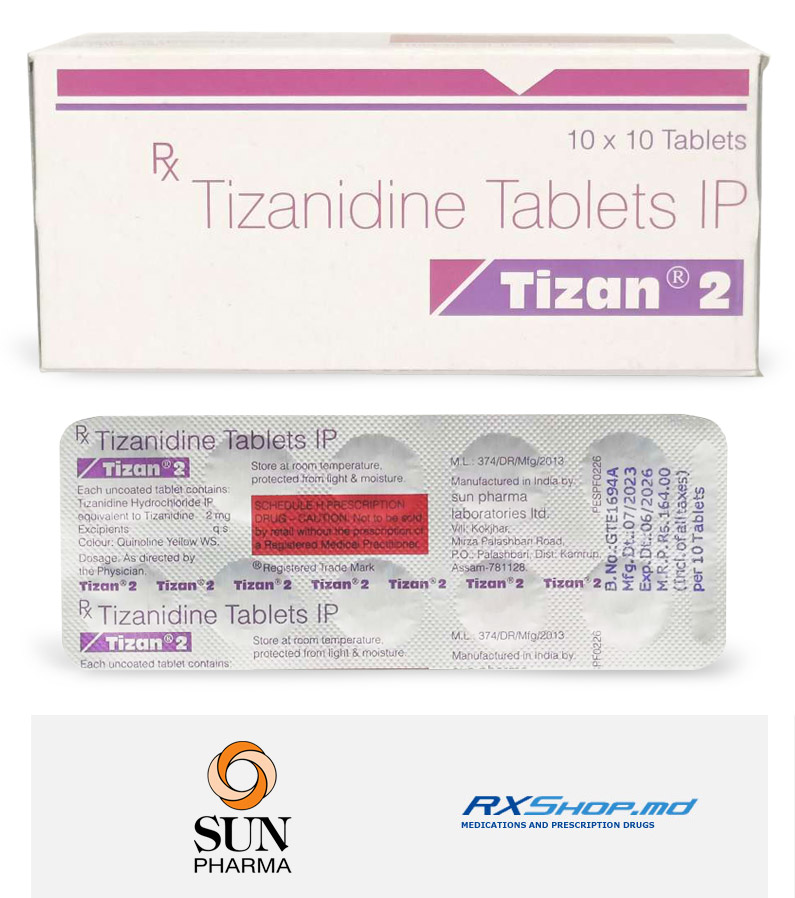
Tizan (Tizanidine 2mg) represents the selective alpha-2 adrenergic agonist first-line therapy alternative to baclofen for treating severe muscle spasticity — the medication established as gold standard cerebral spasticity treatment since Sandoz Pharmaceuticals (now Novartis) developed it as Sirdalud globally and Acorda Therapeutics received US FDA approval as Zanaflex in 1996. Manufactured by Sun Pharmaceutical Industries India as bioequivalent generic, Tizan offers preferred spasticity therapy for cerebral origin conditions (stroke, traumatic brain injury) where baclofen shows limited efficacy, and equivalent effectiveness to baclofen for spinal cord spasticity conditions with often superior tolerability in specific patient populations.
Tizanidine works through selective activation of presynaptic alpha-2 adrenergic receptors in the spinal cord and supraspinal centers — a mechanism entirely distinct from baclofen (GABA-B) or carisoprodol/methocarbamol (CNS depression). Alpha-2 receptor activation inhibits excitatory neurotransmitter release (glutamate, aspartate, substance P) at spinal interneurons, reduces polysynaptic reflex activity, and produces decreased sympathetic outflow from brainstem centers. This produces marked reduction in muscle spasticity, reduced clonus and painful spasms, improved voluntary movement, and enhanced physical therapy outcomes in patients with upper motor neuron disorders. Clinical response: spasticity reduces within 1-2 hours of dosing, peak effect at 1-2 hours, consistent 6-8 hour spasticity control requires typical 3 times daily dosing. Notable feature: tizanidine preserves muscle strength better than baclofen at therapeutic doses — advantageous for patients where weakness would compromise function.
Tizan serves the full range of spasticity indications from upper motor neuron disorders. Primary uses include multiple sclerosis (MS) spasticity as first-line alternative to baclofen with different tolerability profile, spinal cord injury spasticity including traumatic paraplegia and tetraplegia, stroke-related spasticity where alpha-2 agonists show particular efficacy for cerebral origin spasticity, traumatic brain injury spasticity with cerebral origin, other neurological disorders causing upper motor neuron symptoms, and various conditions with chronic spasticity component.
Tizan requires gradual dose titration starting at 2 mg TID with weekly increases to typical maintenance 6-24 mg daily divided TID. Peak concentrations at 1 hour, 2.5 hour half-life requires TID dosing. Extensive hepatic CYP1A2 metabolism — monitor liver function periodically. Sun Pharmaceutical Industries India manufactures under WHO-GMP, US FDA quality standards.
Free prescription
Discrete packaging
Have questions?
Quality Assurance
- Multiple Sclerosis: MS-related spasticity as first-line alternative to baclofen therapy;
- MS Spasticity: Painful muscle stiffness from multiple sclerosis improving with alpha-2 agonist action;
- Spinal Cord Injury Spasticity: Traumatic paraplegia and tetraplegia with severe spasticity;
- Stroke Spasticity: Post-stroke muscle spasticity where alpha-2 agonists show particular efficacy;
- Cerebral Origin Spasticity: Brain-origin spasticity preferentially responding to tizanidine over baclofen;
- Traumatic Brain Injury Spasticity: TBI-related residual spasticity responding to alpha-2 agonist therapy;
- Alpha 2 Agonist Muscle Therapy: Drug class targeting alpha-2 receptors for spasticity control;
- Painful Muscle Spasms: Involuntary muscle contractions causing pain responding to central relaxation;
- Clonus: Rhythmic involuntary muscle contractions decreasing with alpha-2 agonist therapy;
- Muscle Rigidity: Stiff rigid muscles from neurological disorders improving with therapy;
- Baclofen Alternative Therapy: First-line alternative for patients failing or intolerant to baclofen;
- Strength Preserving Spasticity Therapy: Spasticity control without significant muscle weakness at therapeutic doses;
- Rehabilitation Adjunct: Reduced spasticity facilitates physical and occupational therapy outcomes;
- Impaired Mobility from Spasticity: Mobility limitations from muscle stiffness improving with spasticity reduction;
- Chronic Spasticity Management: Long-term daily therapy for persistent spasticity from chronic conditions;
- Upper Motor Neuron Disorders: Conditions with corticospinal tract damage causing spasticity;
- Combination With Baclofen: Complementary mechanism enables combination therapy for severe spasticity;
- Generic Zanaflex Therapy: Bioequivalent generic alternative to brand-name Zanaflex at substantially lower cost;
- Generic Sirdalud Therapy: Bioequivalent generic alternative to Novartis Sirdalud global brand at lower cost.
- Less Painful Muscle Spasms: Involuntary painful muscle contractions decrease with alpha-2 agonist action;
- Better Range of Motion: Joint mobility improves as muscle tightness decreases allowing therapy progress;
- Better Muscle Tone Regulation: Elevated muscle tone reduces to more functional levels;
- Better Voluntary Movement: Reduced spasticity enables improved voluntary control and coordination;
- Better Muscle Strength Preservation: Preserves strength better than baclofen at therapeutic doses;
- Better Cerebral Spasticity Control: Preferential efficacy for stroke and TBI spasticity;
- Less Clonus Episodes: Rhythmic involuntary muscle contractions decrease significantly;
- Better MS Spasticity Management: Multiple sclerosis patients gain first-line alternative with different tolerability;
- Better Post Stroke Rehabilitation: Stroke recovery improves as cerebral spasticity is controlled;
- Better Spinal Cord Injury Management: Traumatic paraplegia and tetraplegia benefits from spasticity control;
- Better Head Injury Recovery: TBI patients experience improved outcomes with cerebral spasticity controlled;
- Better Physical Therapy Effectiveness: Physical therapy sessions more productive with spasticity controlled;
- Better Occupational Therapy Outcomes: OT sessions more effective for ADL restoration;
- Better Rehabilitation Progress: Physical therapy and occupational therapy more effective with spasticity controlled;
- Better Combination Therapy: Complementary mechanism enables combination with baclofen for severe cases;
- Better Sleep Quality: Reduced nighttime muscle spasms improve sleep continuity and restoration;
- Better Sun Pharma Manufacturing: Top Indian pharma with US FDA facilities ensures consistent quality;
- Better Generic Cost: 85-95% lower cost than Zanaflex or Sirdalud makes proven spasticity therapy accessible;
- Better Quality of Life: Daily wellbeing improves dramatically as debilitating spasticity resolves and function returns.
Generic Tizan (Tizanidine 2 mg) Medication guide:
Tizan (Tizanidine 2mg) is the selective alpha-2 adrenergic agonist muscle relaxant offering first-line alternative therapy to baclofen for treating muscle spasticity from multiple sclerosis, spinal cord injuries, stroke, and traumatic brain injury. Developed globally by Sandoz Pharmaceuticals (now Novartis) as Sirdalud and FDA-approved in the United States as Zanaflex by Acorda Therapeutics in 1996, tizanidine has established itself as the preferred spasticity therapy for patients with cerebral origin conditions where baclofen shows limited efficacy. This comprehensive medication guide covers every aspect of Tizan therapy from mechanism and pharmacology through safety considerations, drug interactions, patient selection, dosing strategies, and long-term management recommendations.
💊 Introduction to Tizan
Tizan is a prescription oral medication containing tizanidine hydrochloride as its active ingredient. Tizanidine was originally developed by Sandoz Pharmaceuticals (which merged with Ciba-Geigy in 1996 to form Novartis) and marketed globally under the brand name Sirdalud — still the most recognized tizanidine brand worldwide. In the United States, Acorda Therapeutics received FDA approval for tizanidine as Zanaflex in 1996, making it a relatively newer entry in the muscle relaxant class compared to baclofen (approved 1977) or carisoprodol (approved 1959).
The medication is manufactured by Sun Pharmaceutical Industries India as bioequivalent generic tizanidine sold under the Tizan brand name. Sun Pharma is one of India's largest pharmaceutical companies with US FDA-inspected manufacturing facilities and represents world-class quality standards. Tizan is available in 2 mg oral tablets — the standard low-dose starting formulation. In some markets, tizanidine is also available in 4 mg tablets and extended-release capsules, though the 2 mg immediate-release tablets remain the most commonly prescribed formulation given the standard gradual titration protocol.
Tizan has established a distinctive position in spasticity management as the preferred first-line alternative to baclofen. While baclofen remains the traditional gold standard for spinal cord spasticity from MS and spinal cord injury, tizanidine offers particular efficacy for cerebral spasticity from stroke and traumatic brain injury where baclofen has limited effect. Additionally, tizanidine preserves muscle strength better than baclofen at therapeutic doses — a critical advantage for ambulatory patients whose function depends on preserved motor strength. Many spasticity specialists routinely combine baclofen and tizanidine in severe cases, exploiting their complementary mechanisms to achieve better spasticity control than either alone.
🔬 Understanding Spasticity Origins
Understanding the distinction between cerebral spasticity and spinal spasticity is critical for optimal spasticity treatment selection, and this distinction significantly influences the choice between tizanidine and baclofen therapy.
Cerebral Origin Spasticity
Cerebral spasticity arises from damage to upper motor neurons at the brain level — including motor cortex, subcortical structures, internal capsule, and brainstem above the medullary pyramidal decussation. Common causes include:
- Stroke: Both ischemic and hemorrhagic strokes affecting motor pathways
- Traumatic brain injury (TBI): Head injuries with diffuse or focal brain damage
- Anoxic brain injury: Cardiac arrest or drowning-related brain damage
- Cerebral palsy: Congenital brain injury with spasticity phenotype
- Brain tumors: Space-occupying lesions affecting motor pathways
- Multiple sclerosis lesions: Cerebral MS plaques (mixed cerebral/spinal)
Cerebral spasticity often presents with hemispasticity (one-sided involvement), preserved sensation distinguishing it from spinal cord conditions, and coexisting cognitive or language deficits from associated brain damage. Cerebral spasticity typically shows better response to alpha-2 agonists (tizanidine) than to GABA-B agonists (baclofen), likely because tizanidine acts at both spinal and supraspinal (brainstem) levels while baclofen primarily targets spinal circuits.
Spinal Origin Spasticity
Spinal spasticity arises from damage to the spinal cord below the medullary pyramidal decussation. Common causes include:
- Spinal cord injury (traumatic): Motor vehicle accidents, falls, gunshot wounds
- Spinal cord injury (non-traumatic): Ischemia, tumors, infections
- Multiple sclerosis: Spinal MS plaques affecting motor tracts
- Transverse myelitis: Inflammatory spinal cord damage
- Hereditary spastic paraparesis: Genetic spinal motor tract degeneration
Spinal spasticity typically presents with bilateral involvement (paraparesis or tetraparesis), coexisting sensory deficits from associated spinal cord damage, and often severe flexor spasms triggered by cutaneous stimulation. Spinal spasticity has traditionally been treated primarily with baclofen (GABA-B agonist) given its direct action at spinal reflex arcs — though tizanidine also provides effective spinal spasticity treatment as first-line alternative when baclofen fails or is not tolerated.
Practical clinical implications:
- Stroke and TBI patients with hemispasticity: tizanidine often first choice
- MS with mixed cerebral and spinal lesions: either baclofen or tizanidine as first-line
- Traumatic spinal cord injury: baclofen typically first choice with tizanidine as alternative
- Severe treatment-resistant spasticity: combination therapy with baclofen and tizanidine
🧬 Chemistry and Pharmacology of Tizanidine
Tizanidine has the chemical formula C9H8ClN5S with molecular weight approximately 253.7 g/mol. Structurally, tizanidine is an imidazoline derivative — chemically related to clonidine (a classic alpha-2 agonist used for hypertension), but with structural modifications that provide selective effects on spinal alpha-2 receptors mediating muscle relaxation while minimizing the antihypertensive effects that dominate clonidine action. This selectivity was achieved through careful medicinal chemistry optimization during tizanidine development.
Mechanism of Action
Tizanidine works through selective activation of presynaptic alpha-2 adrenergic receptors in the central nervous system — a mechanism entirely distinct from other muscle relaxants including baclofen (GABA-B), carisoprodol/methocarbamol (general CNS depression), or diazepam (GABA-A benzodiazepine).
Tizanidine mechanism cascade:
- Tizanidine crosses the blood-brain barrier reaching spinal cord and brainstem sites
- Selective binding activates presynaptic alpha-2 adrenergic receptors at spinal interneurons
- Alpha-2 activation inhibits calcium influx into excitatory neuron presynaptic terminals
- Reduced calcium influx decreases release of excitatory neurotransmitters including norepinephrine, glutamate, aspartate, and substance P
- Reduced excitatory input to alpha motor neurons reduces polysynaptic reflex activity
- Additional supraspinal (brainstem) alpha-2 activation reduces descending facilitation of spinal reflexes
- Combined effects produce substantial spasticity reduction while preserving muscle strength better than baclofen
Pharmacokinetic Profile
| Parameter | Value | Clinical Significance |
|---|---|---|
| Time to peak (Tmax) | 1 to 2 hours | Rapid onset of spasticity relief within 1-2 hours |
| Oral bioavailability | Approximately 34-40 percent | Extensive first-pass metabolism limits bioavailability |
| Terminal half-life | 2 to 3 hours | Requires 3 times daily dosing for stable levels |
| Protein binding | Approximately 30 percent | Low protein binding minimizes drug displacement |
| Metabolism | Extensive hepatic CYP1A2 | Numerous drug interactions and hepatotoxicity risk |
| Food effect | Increases peak concentrations significantly | Take consistently with or without food |
| Elimination | 60 percent urinary 20 percent fecal | Mixed elimination pathways |
Metabolism and Elimination
Tizanidine undergoes extensive first-pass hepatic metabolism primarily through cytochrome P450 1A2 (CYP1A2). This metabolic pathway has several important clinical implications: major drug interactions occur with CYP1A2 inhibitors (ciprofloxacin, fluvoxamine, oral contraceptives), potentially life-threatening hypotension can result from these interactions, hepatotoxicity risk requires periodic monitoring of liver enzymes, and smokers have accelerated CYP1A2 activity potentially requiring higher tizanidine doses (though smoking is discouraged for other reasons).
🎯 Indications and Patient Selection
The FDA-approved indication for tizanidine is short-term management of spasticity. However, clinical use extends to chronic spasticity management across various conditions:
- Multiple sclerosis (MS) spasticity — first-line alternative to baclofen with different tolerability
- Spinal cord injury spasticity — traumatic paraplegia and tetraplegia
- Stroke-related spasticity — where tizanidine shows particular efficacy for cerebral spasticity
- Traumatic brain injury spasticity — TBI with cerebral origin spasticity
- Cerebral palsy — pediatric and adult CP patients as alternative to baclofen
- Hereditary spastic paraparesis — genetic spasticity syndromes
Off-Label Uses
Tizanidine has been investigated and sometimes used off-label for:
- Chronic tension headaches: Adjunctive therapy given muscle relaxant properties
- Migraine prophylaxis: Occasional use for chronic migraine prevention
- Chronic low back pain: Short-term adjunct with muscle spasm component
- Fibromyalgia: Some reports of benefit in fibromyalgia symptom management
- Insomnia related to muscle tension: Sedating properties can help sleep in appropriate patients
- Trigeminal neuralgia: Adjunctive therapy for facial nerve pain
Ideal Patient Selection
Tizan therapy is appropriate for patients who:
- Have confirmed upper motor neuron spasticity causing functional impairment
- Have failed adequate baclofen trial due to weakness intolerance or inadequate efficacy
- Have cerebral origin spasticity (stroke TBI) where tizanidine shows preferential efficacy
- Have preserved liver function or acceptance of periodic liver monitoring
- Can adhere to gradual dose titration and 3 times daily dosing schedule
- Are not taking major CYP1A2 inhibitors (ciprofloxacin fluvoxamine)
- Have normal or borderline blood pressure (hypotension is significant side effect)
- Understand the importance of gradual titration and stable dosing
🚫 Contraindications
Absolute contraindications include:
- Hypersensitivity to tizanidine or tablet excipients
- Concurrent ciprofloxacin therapy — CYP1A2 inhibition causes severe hypotension
- Concurrent fluvoxamine therapy — similar CYP1A2 interaction risk
- Severe hepatic impairment given hepatotoxicity concerns
Relative contraindications requiring caution:
- Renal impairment requiring dose reduction and monitoring
- Hepatic impairment requiring liver function monitoring
- Cardiovascular disease including hypotension bradycardia or orthostasis
- Elderly patients at increased risk of hypotension falls and cognitive effects
- Pregnancy (Category C) balancing benefit against fetal risk
- Concurrent antihypertensive therapy requires close blood pressure monitoring
- Depression or suicidal ideation as sedating effects may worsen symptoms
💉 Dosage and Administration
Dose Titration Protocol
Tizanidine requires gradual dose titration to minimize hypotension and sedation while achieving effective spasticity control. Standard protocol:
- Starting dose: 2 mg orally three times daily (6 mg/day total)
- Week 1-2: Assess response and tolerability — most patients can begin titration
- Week 2+: Increase by 2-4 mg increments every 1-4 days as tolerated
- Individual dose limit: Not to exceed 12 mg per single dose
- Total daily dose limit: Not to exceed 36 mg per day (FDA maximum)
- Typical maintenance dose: 6-24 mg/day divided TID
- Effective response window: Most patients respond well to 12-24 mg/day total
Administration Rules
Critical dosing rules:
- Divided doses 3 times daily to maintain stable blood levels
- Take at consistent times each day (morning midday and evening)
- Take consistently with or without food — food changes concentrations significantly
- Do NOT switch between fed and fasted dosing without monitoring
- Start at lowest dose and titrate slowly to minimize hypotension and sedation
- Never abruptly stop higher doses — taper to avoid rebound hypertension
- Monitor blood pressure during initial titration and dose increases
⚠️ Precautions and Warnings
Hepatotoxicity Warning
Hepatotoxicity monitoring required:
Tizanidine has been associated with elevated liver enzymes and rare cases of clinically significant liver injury including fatal hepatic failure. Baseline and periodic liver function testing is recommended.
- Baseline liver function tests before starting therapy
- Repeat at 1 3 and 6 months during initial therapy
- Then periodically during long-term therapy
- Discontinue if AST/ALT rise above 3 times upper limit of normal
- Report immediately: jaundice, dark urine, abdominal pain, unexplained fatigue
Hypotension Warning
Tizanidine causes dose-dependent hypotension that can be severe particularly with concurrent CYP1A2 inhibitors or antihypertensive therapy. Precautions include:
- Monitor blood pressure during titration and after dose increases
- Avoid CYP1A2 inhibitors particularly ciprofloxacin and fluvoxamine
- Warn patients about orthostatic hypotension and fall risk
- Consider timing evening dose to minimize daytime hypotension symptoms
- Use lowest effective dose to minimize hemodynamic effects
📊 Clinical Effectiveness Data
Tizanidine has been extensively studied in clinical trials for various spasticity indications. Typical clinical response metrics:
| Metric | Placebo Response | Tizanidine Response |
|---|---|---|
| Modified Ashworth Scale improvement | 15-20 percent | 55-70 percent significant improvement |
| Muscle spasm frequency reduction | Baseline | 50-70 percent reduction in responders |
| Clonus reduction | Minimal | Substantial in most patients |
| Muscle strength preservation vs baclofen | N/A | Superior strength preservation at equivalent efficacy |
| Global efficacy vs baclofen (comparison studies) | N/A | Equivalent efficacy different side effect profile |
| Patient global satisfaction | Approximately 30 percent | Approximately 65-75 percent satisfied |
⚠️ Side Effect Profile
Common Side Effects
Most tizanidine side effects are dose-dependent and relate to alpha-2 adrenergic activity. Common effects at therapeutic doses include:
- Dry mouth (xerostomia): Approximately 49 percent — most common side effect
- Drowsiness and sedation: Approximately 48 percent — dose-related
- Asthenia (weakness fatigue): Approximately 41 percent
- Dizziness: Approximately 16 percent
- Hypotension: Approximately 16 percent — clinically important
- UTI (urinary tract infection): Approximately 10 percent
- Constipation: Approximately 4-10 percent
- Bradycardia: Approximately 2-10 percent
- Elevated liver enzymes: Approximately 5 percent — requires monitoring
- Vomiting nausea: Approximately 3-4 percent
Serious Side Effects
Seek immediate medical attention for:
- Severe hypotension particularly with dizziness fainting or falls
- Signs of liver injury: jaundice dark urine severe fatigue abdominal pain
- Severe drowsiness making patient unable to be aroused
- Slow heart rate below 50 beats per minute with symptoms
- Signs of allergic reaction: hives facial swelling difficulty breathing
- New or worsening hallucinations or psychotic symptoms
- Severe cognitive impairment particularly new onset
- Rebound hypertension if therapy abruptly discontinued
🔄 Drug Interactions
Major Interactions
| Drug | Mechanism | Effect |
|---|---|---|
| Ciprofloxacin | Potent CYP1A2 inhibition | CONTRAINDICATED — severe hypotension risk |
| Fluvoxamine | Potent CYP1A2 inhibition | CONTRAINDICATED — severe hypotension risk |
| Oral contraceptives | Moderate CYP1A2 inhibition | Reduce tizanidine dose 50 percent |
| CNS depressants (opioids alcohol) | Additive sedation | Increased sedation and respiratory depression |
| Antihypertensives | Additive hypotension | Enhanced blood pressure reduction |
| Clonidine | Additive alpha-2 effects | Severe hypotension and bradycardia |
| Baclofen | Complementary mechanisms | Combination therapy useful for severe spasticity monitor closely |
🛡️ Special Populations
- Elderly Patients Over 65
- Increased risk of hypotension falls and cognitive effects. Start at low doses and titrate slowly. Consider dose reductions in patients with reduced renal function. Monitor cognitive status and fall risk carefully.
- Renal Impairment
- Creatinine clearance below 25 mL/min requires dose reduction. Consider dose reduction of 50 percent or extended dosing intervals. Monitor for accumulation and enhanced side effects. End-stage renal disease requires careful individualized dosing.
- Hepatic Impairment
- Since tizanidine has extensive hepatic metabolism, hepatic impairment substantially affects clearance. Mild-moderate impairment requires dose reduction and monitoring. Severe hepatic impairment is contraindicated given hepatotoxicity risk.
- Pregnancy and Lactation
- Pregnancy Category C — animal studies show reproductive toxicity, use only if benefit justifies risk. Small amounts excreted in breast milk — infant sedation possible, breast-feeding decisions should weigh benefits and risks.
- Pediatric Population
- FDA approved for adults but off-label pediatric use is common for cerebral palsy spasticity and other pediatric neurological conditions. Weight-based dosing with slow titration required. Specialist supervision recommended for pediatric use.
- Smokers
- Smoking induces CYP1A2 metabolism potentially reducing tizanidine levels. Smokers may require higher doses though smoking should be discouraged for other health reasons. Smoking cessation may require tizanidine dose adjustment.
🔬 Comparison with Other Muscle Relaxants
| Property | Tizanidine (Tizan) | Baclofen (Lioresal) | Dantrolene |
|---|---|---|---|
| Mechanism | Alpha-2 adrenergic agonist | GABA-B agonist | Direct muscle action |
| Site of action | Spinal cord + supraspinal | Spinal cord primarily | Peripheral (muscle) |
| Best for cerebral spasticity | Yes - preferred | Limited efficacy | Sometimes used |
| Best for spinal spasticity | Effective alternative | Traditional first-line | Not typically used |
| Sedation | Significant (48 percent) | Moderate dose-dependent | Mild |
| Muscle strength preservation | Superior | Some weakness at high doses | Significant weakness |
| Hepatotoxicity | Monitor liver enzymes | Minimal | Significant requires monitoring |
| Withdrawal risk | Rebound hypertension | High (never abruptly stop) | Low |
| Combination potential | Complements baclofen | Complements tizanidine | Independent mechanism |
🔗 Combination Therapy Considerations
Common combination approaches for spasticity:
- Tizanidine + baclofen: Complementary alpha-2 and GABA-B mechanisms for severe spasticity
- Tizanidine + botulinum toxin injections: Systemic plus focal spasticity control
- Tizanidine + physical therapy: Essential combination for functional improvement
- Tizanidine + occupational therapy: ADL adaptation alongside spasticity control
- Tizanidine + dantrolene: Central and peripheral mechanism combination for select cases
- Tizanidine + surgical interventions: Adjunct to selective dorsal rhizotomy or tendon transfers
📆 Long-Term Use Considerations
Tizanidine has been used long-term for spasticity management for over 25 years. Considerations for long-term therapy include:
- Periodic liver function testing particularly during first 6 months then annually
- Blood pressure monitoring particularly with dose adjustments
- Renal function monitoring in elderly and long-term users
- Assessment of continued need as spasticity may improve or worsen over time
- Dose optimization to maintain effect while minimizing side effects
- Fall risk assessment in patients with mobility issues
- Cognitive assessment in elderly to detect subtle CNS effects
- Medication interactions review when starting any new medications especially CYP1A2 inhibitors
📦 Storage and Handling
- Store at room temperature between 15°C and 30°C (59°F and 86°F)
- Keep in original blister packaging to protect from light and moisture
- Avoid storage in bathrooms where humidity fluctuates significantly
- Keep out of reach of children and pets
- Do not use tablets past the expiration date printed on packaging
- Return unused or expired medication to pharmacy for proper disposal
- Never share tizanidine with others as dose requirements are highly individualized
- Maintain adequate supply to prevent inadvertent discontinuation and rebound hypertension
👨⚕️ When to Contact Your Doctor
- Signs of liver injury including jaundice dark urine unusual fatigue or abdominal pain
- Severe dizziness fainting or falls suggesting significant hypotension
- Very slow heart rate below 50 beats per minute with symptoms
- Confusion hallucinations or significant cognitive changes
- Severe drowsiness limiting daily function
- Signs of allergic reaction including rash swelling difficulty breathing
- Rebound hypertension symptoms if therapy is inadvertently missed
- Starting new medications especially fluoroquinolone antibiotics or antidepressants
- Development of new medical conditions particularly liver or kidney disease
- Pregnancy planning or confirmed pregnancy
- Lack of therapeutic benefit despite adequate trial at maximum doses
- Questions about combining with baclofen or other spasticity therapies
🌟 Key Takeaways
Essential points about Tizan (tizanidine) therapy:
- Tizan is a selective alpha-2 adrenergic agonist first-line alternative to baclofen for spasticity
- Works through spinal and supraspinal alpha-2 receptors reducing excitatory neurotransmitter release
- Particular efficacy for cerebral origin spasticity from stroke and traumatic brain injury
- Preserves muscle strength better than baclofen at therapeutic doses
- Take 3 times daily with gradual titration to effective dose typically 6-24 mg total daily
- Rapid onset of spasticity relief within 1-2 hours of dosing
- Effective for MS spinal cord injury cerebral palsy stroke and TBI spasticity
- Hepatotoxicity monitoring required with baseline and periodic liver function tests
- Hypotension is significant side effect requiring blood pressure monitoring
- CYP1A2 inhibitors including ciprofloxacin and fluvoxamine are contraindicated
- Combines effectively with baclofen for severe spasticity through complementary mechanisms
- Regular follow-up ensures optimal dose adjustment and safety monitoring over long-term therapy
Important Medical Disclaimer: This medication guide provides general information about Tizan (tizanidine) and does not constitute individualized medical advice. Every patient situation is unique and requires evaluation by a qualified healthcare provider before starting continuing adjusting or discontinuing any medication. Do not use Tizan without prescription from a qualified healthcare professional who has evaluated your specific medical situation and confirmed appropriate patient selection. Never combine tizanidine with ciprofloxacin fluvoxamine or other strong CYP1A2 inhibitors due to potentially life-threatening hypotension risk. Report immediately any signs of liver injury including jaundice dark urine or unexplained fatigue. Do not abruptly discontinue tizanidine at higher doses due to rebound hypertension risk. If you experience concerning symptoms contact your healthcare provider promptly. The information provided here should complement but never replace direct professional medical guidance.
Tizan — Frequently Asked Questions
-
What is Tizanidine used for?
Tizanidine is primarily used as a muscle relaxant to treat spasticity, helping to alleviate muscle stiffness and spasms associated with conditions like multiple sclerosis and spinal cord injury. -
How does Tizanidine work?
It works by blocking nerve impulses (pain sensations) that are sent to your brain, effectively relaxing muscle tone and providing relief from spasticity. -
How should I take Tizanidine?
Tizanidine should be taken exactly as prescribed by your healthcare provider, usually every 6 to 8 hours. -
Can Tizanidine be taken with food?
Yes, but taking it with food might increase its effects. Its important to be consistent in how you take it, either always with food or always on an empty stomach. -
What are the common side effects of Tizanidine?
Common side effects include drowsiness, dizziness, weakness, nervousness, hallucinations, depression, vomiting, dry mouth, constipation, diarrhea, stomach pain, heartburn, increased muscle spasms, and sweating. -
Is Tizanidine addictive?
Tizanidine is not classified as a narcotic. However, it can cause physical dependence, so it should be used exactly as prescribed. -
Can I stop taking Tizanidine abruptly?
No, stopping Tizanidine suddenly can lead to withdrawal symptoms. It should be tapered off under the guidance of a healthcare provider.
More Muscle Relaxers Medications