Buy Dapoforce (Dapoxetine 30/60mg) Online - Short Acting SSRI Generic Priligy for Premature Ejaculation

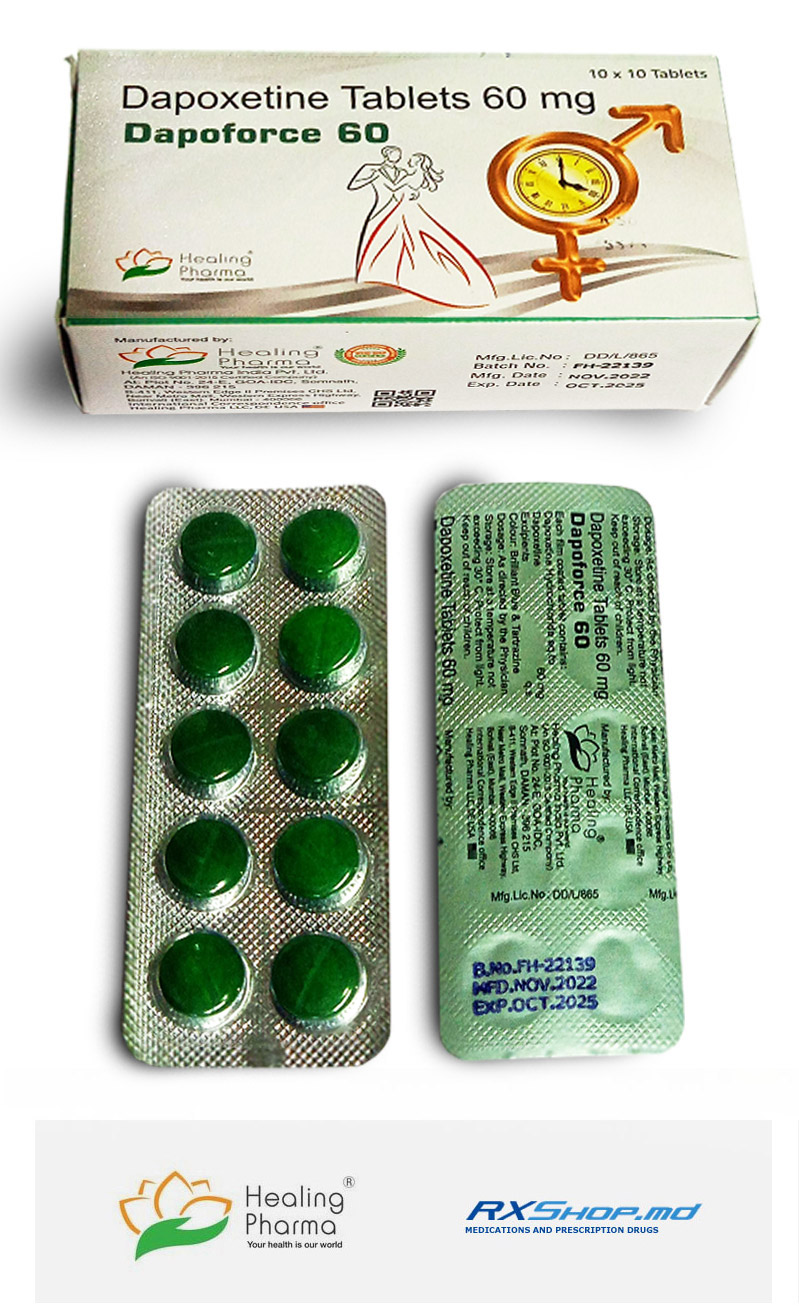
Dapoforce (Dapoxetine 30/60mg) stands as the leading generic version of Priligy — the first medication specifically approved for treating premature ejaculation (PE) in men. Manufactured by Healing Pharma India as a bioequivalent of brand-name Priligy, Dapoforce provides a uniquely short-acting SSRI designed exclusively for on-demand PE treatment — completely different from traditional SSRIs which require daily dosing and cause serotonin buildup with dependence risks. The 30 mg and 60 mg oral tablets deliver flexible dosing options: 30 mg starter dose for treatment-naive patients, 60 mg for those requiring stronger effect or non-responders to lower dose.
Dapoxetine works as a highly selective serotonin reuptake inhibitor (SSRI) targeting the ejaculatory reflex pathway. In premature ejaculation, ejaculatory reflex control is impaired at the level of serotonergic neurotransmission in the brain and spinal cord. By selectively inhibiting serotonin (5-HT) reuptake at synapses in the ejaculatory reflex circuit, dapoxetine increases 5-HT signaling that delays the ejaculatory reflex. What makes dapoxetine unique among SSRIs is its rapid absorption (peak in 1-2 hours) and ultra-short 1.5-hour half-life — allowing on-demand pre-activity dosing without the daily buildup, sexual side effects, and withdrawal issues of long-half-life SSRIs like fluoxetine, sertraline, or paroxetine. Clinical response: intravaginal ejaculation latency time (IELT) increases 2-3 fold versus baseline, patient-reported control improves substantially, personal distress decreases dramatically, and partner satisfaction rises.
Dapoforce serves the primary indication of premature ejaculation in adult men ages 18-64 who meet clinical diagnostic criteria: IELT less than 2 minutes, lack of ejaculatory control, and personal distress or relationship issues from the condition. The medication treats lifelong (primary) PE present since first sexual experience; acquired (secondary) PE developing after previously normal function; situational PE occurring only in certain circumstances; and anxiety-driven PE where performance anxiety exacerbates the reflex. Unlike combo products with PDE5 inhibitors, Dapoforce is pure dapoxetine for men with adequate erectile function but PE requiring treatment.
Dapoforce requires on-demand dosing 1-3 hours before anticipated sexual activity, maximum once per 24 hours. Peak concentrations at 1-2 hours, 1.5-hour half-life means most drug cleared before next day. Start with 30 mg — increase to 60 mg if tolerated but insufficient response. Healing Pharma India manufactures under WHO-GMP standards.
Free prescription
Discrete packaging
Have questions?
Quality Assurance

- PE: Medical abbreviation for premature ejaculation affecting 20-30% of adult men;
- Lifelong Primary PE: Premature ejaculation present since first sexual experience responding to dapoxetine therapy;
- Acquired Secondary PE: PE developing after previously normal ejaculatory function responding to therapy;
- Situational PE: Premature ejaculation occurring only in specific circumstances or with certain partners;
- Short Ejaculation Latency Time: IELT under 2 minutes meeting diagnostic criteria for PE treatment;
- Lack of Ejaculation Control: Poor ejaculatory control improving through serotonergic reflex modulation;
- Anxiety Driven PE: Performance anxiety exacerbating ejaculatory reflex responding to SSRI therapy;
- PE Related Personal Distress: Emotional distress from PE improving as ejaculatory control returns;
- PE Related Relationship Issues: Partner dissatisfaction from PE improving with ejaculatory control restoration;
- Reduced Sexual Satisfaction: Sexual encounter dissatisfaction from short duration improving with PE treatment;
- PE First Line Therapy: Recommended first-line pharmacological treatment for premature ejaculation;
- On Demand PE Treatment: Situational pre-activity dosing without daily medication commitment;
- SSRI for Premature Ejaculation: First SSRI specifically approved and designed for PE indication;
- Non Invasive PE Therapy: Oral medication treatment alternative to behavioral therapy alone;
- Behavioral Therapy Adjunct: Combines effectively with behavioral techniques for enhanced PE management;
- PDE5 Combination Therapy: Combined with sildenafil or tadalafil for men with both ED and PE;
- Adult Male PE 18-64 Years: Approved for adult males in the 18-64 year age range meeting diagnostic criteria;
- SSRI Therapy for PE: Selective serotonin reuptake inhibitor mechanism class for PE management;
- Generic Priligy Therapy: Bioequivalent generic alternative to brand-name Priligy at substantially lower cost.
- Better Extended Ejaculation Time: Intercourse duration extends substantially allowing satisfying sexual encounters;
- Better Sexual Satisfaction: Both partners report improved satisfaction as ejaculatory control returns;
- Better Ejaculatory Serotonin Modulation: Serotonin reuptake inhibition delays ejaculatory reflex at spinal and brain circuits;
- Better On Demand Dosing: Pre-activity dosing avoids daily medication commitment and SSRI buildup;
- Better No Daily SSRI Buildup: 1.5-hour half-life avoids daily accumulation and withdrawal issues of long SSRIs;
- Better Fast Acting SSRI: 1-2 hour peak enables true on-demand PE treatment unlike traditional SSRIs;
- Less Personal Distress: Emotional distress from PE resolves as ejaculatory control restores;
- Better Relationship Satisfaction: Partner dissatisfaction from PE resolves improving relationship dynamics;
- Better Sexual Confidence: PE control restoration eliminates performance anxiety about premature ejaculation;
- Less Performance Anxiety: Predictable ejaculatory control eliminates anxiety about early climax;
- Better Emotional Well Being: PE resolution improves overall emotional wellness and self-image;
- Better Psychological Benefits: Reduced anxiety and improved confidence extend beyond sexual encounters;
- Better Non Invasive PE Option: Oral medication alternative to behavioral therapy or topical anesthetics;
- Better Flexible Dose Options: 30 mg starter and 60 mg strength options for personalized therapy;
- Better ED Combination Compatibility: Combines with PDE5 inhibitors for combined ED and PE treatment;
- Better First Line PE Therapy: Recommended first-line pharmacological treatment per PE guidelines;
- Better Generic Cost: 85-95% lower cost than brand Priligy makes proven PE therapy financially accessible;
- On Demand Dosing Convenience: 1-3 hour pre-activity dosing fits any lifestyle without daily commitment;
- Better Quality of Life: Daily wellbeing improves dramatically as PE-related distress resolves and sexual confidence returns.
Generic Dapoforce (Dapoxetine 30 mg) Medication guide:
Dapoforce (Dapoxetine 30/60mg) is a groundbreaking selective serotonin reuptake inhibitor (SSRI) uniquely developed for treating premature ejaculation (PE) in adult men. Unlike traditional SSRIs used for depression and anxiety disorders, dapoxetine features a distinctive ultra-short pharmacokinetic profile that enables true on-demand pre-sexual dosing without the daily buildup, sexual side effects, and discontinuation syndromes associated with long-acting SSRIs. This comprehensive medication guide covers every aspect of Dapoforce therapy from mechanism and dosing to safety, drug interactions, patient selection, and clinical practice considerations.
💊 Introduction to Dapoforce
Dapoforce is a generic pharmaceutical product containing dapoxetine hydrochloride as its active ingredient, manufactured by Healing Pharma India. It represents a bioequivalent alternative to the brand-name product Priligy, which was the first medication in the world to receive regulatory approval specifically for the treatment of premature ejaculation. Dapoxetine was originally developed by Eli Lilly and ALZA Corporation in the late 1990s. The compound was subsequently acquired by Johnson & Johnson through its Ortho-McNeil-Janssen Pharmaceuticals division, and eventually licensed to Menarini Group, which markets it as Priligy across Europe, Asia, and other regions worldwide.
The European Medicines Agency (EMA) approved dapoxetine in 2009, followed by regulatory approvals in over 60 countries across five continents. It is important to note that dapoxetine has not received approval from the US Food and Drug Administration (FDA) for use in the United States, though it is widely used and prescribed in most other developed markets. Generic manufacturers in India, including Healing Pharma, Sunrise Remedies, Fortune Healthcare, and Centurion Laboratories, have produced high-quality bioequivalent generic versions that have made this therapy accessible worldwide at substantially lower cost than the brand-name reference product.
Dapoforce is available in two oral tablet strengths: 30 mg (the recommended starting dose for treatment-naive patients) and 60 mg (for patients requiring stronger effect or who have shown partial response to the lower dose). Both formulations are designed for on-demand pre-sexual use rather than daily maintenance dosing, reflecting the unique pharmacokinetic profile that distinguishes dapoxetine from all other SSRIs on the market.
🔬 Understanding Premature Ejaculation
Premature ejaculation is one of the most common male sexual dysfunctions worldwide, affecting approximately 20 to 30 percent of adult men at some point in their lives. Despite its prevalence, PE remains substantially underdiagnosed and undertreated because many men feel embarrassed to discuss the condition with healthcare providers, and because until relatively recently there were no medications specifically approved for its treatment.
The International Society for Sexual Medicine defines premature ejaculation using specific clinical criteria that must be present for diagnosis:
- Ejaculation occurring within approximately 1 minute of vaginal penetration for lifelong PE, or a clinically significant reduction in latency time (often to about 3 minutes or less) for acquired PE
- Inability to delay ejaculation on all or nearly all vaginal penetrations
- Negative personal consequences such as distress, bother, frustration, and avoidance of sexual intimacy
Types of Premature Ejaculation
Clinical practice recognizes four distinct subtypes of premature ejaculation, each with different underlying causes and treatment considerations:
- Lifelong (Primary) Premature Ejaculation
- Present since the first sexual experience and persisting throughout the mans lifetime. This form typically has strong neurobiological underpinnings involving genetic variations in serotonergic receptor sensitivity and is generally the most responsive to pharmacological SSRI therapy.
- Acquired (Secondary) Premature Ejaculation
- Develops after a period of normal ejaculatory function. Common triggers include performance anxiety, relationship stress, erectile dysfunction, chronic prostatitis, and hyperthyroidism. Treatment often requires addressing both the underlying cause and the ejaculatory reflex itself.
- Variable Premature Ejaculation
- Occurs inconsistently and situationally, often reflecting normal variations in sexual response rather than a true disorder. Behavioral techniques are usually the first-line approach before considering medication.
- Subjective Premature Ejaculation
- Patient perceives ejaculation as premature despite objective IELT measurements within normal limits. Psychosexual counseling and reassurance are typically more helpful than medication for this presentation.
🧬 Chemistry and Pharmacology
Dapoxetine hydrochloride has the chemical formula C21H23NO·HCl and a molecular weight of approximately 341.9 g/mol. Structurally, dapoxetine is chemically related to fluoxetine but has been specifically modified to alter its pharmacokinetic profile in ways that make it uniquely suitable for on-demand use rather than daily administration.
Mechanism of Action
The ejaculatory reflex is a complex neurobiological process controlled by both spinal and supraspinal mechanisms with substantial involvement of the serotonergic (5-HT) neurotransmitter system. Serotonin exerts an inhibitory effect on ejaculation through activation of 5-HT2C receptors in the brain and spinal cord, while stimulation of 5-HT1A receptors has the opposite effect and accelerates ejaculation. Men with lifelong premature ejaculation may have functional variations in these receptor systems that result in earlier triggering of the ejaculatory reflex.
Dapoxetine mechanism in detail: The compound binds to and inhibits the presynaptic serotonin transporter (SERT) in neurons within the ejaculatory reflex pathway. By blocking 5-HT reuptake, dapoxetine increases synaptic serotonin concentrations, which then activates more 5-HT2C receptors and produces a net inhibitory effect on the ejaculatory reflex. This delays the point at which the ejaculatory threshold is reached during sexual activity, effectively extending the time from vaginal penetration to ejaculation.
Pharmacokinetic Profile
The pharmacokinetic properties of dapoxetine are what make it uniquely suited to on-demand PE treatment. When administered orally, dapoxetine is rapidly and extensively absorbed from the gastrointestinal tract:
| Parameter | Value | Clinical Significance |
|---|---|---|
| Time to peak (Tmax) | 1 to 2 hours | Optimal dosing window is 1 to 3 hours pre-activity |
| Bioavailability | Approximately 42 percent | First-pass metabolism reduces systemic exposure |
| Distribution half-life | 1.5 hours | Rapid initial decline in blood concentrations |
| Terminal half-life | Approximately 19 hours | Residual metabolite levels detectable next day but pharmacologically negligible |
| Protein binding | 99 percent | Highly protein-bound — potential for drug interactions |
| Steady state accumulation | Minimal (approximately 1.5x with daily use) | No significant daily buildup unlike traditional SSRIs |
Metabolism and Elimination
Dapoxetine undergoes extensive hepatic metabolism primarily through the cytochrome P450 enzymes CYP2D6, CYP3A4, and flavin monooxygenase. The primary metabolic pathways include N-demethylation, N-oxidation, and glucuronidation. Some metabolites retain minor pharmacological activity but at concentrations too low to contribute significantly to the clinical effect. Metabolites and small amounts of unchanged parent drug are eliminated primarily through the urine, with a small fraction excreted in the feces.
🎯 Indications and Patient Selection
The approved indication for Dapoforce is the treatment of premature ejaculation in adult men aged 18 to 64 years. Before initiating therapy, healthcare providers should confirm the diagnosis through careful clinical assessment and ensure the patient meets appropriate criteria for pharmacological treatment.
Ideal Candidates for Dapoforce
Dapoforce therapy is most appropriate for men who:
- Have persistent PE with IELT under 2 minutes that causes significant personal distress or interpersonal difficulty
- Have not achieved adequate response to behavioral techniques alone (start-stop method, squeeze technique, sensate focus therapy)
- Have preserved erectile function or well-controlled ED (with PDE5 inhibitor if needed)
- Have no significant cardiovascular disease or history of syncope
- Have no current or recent use of serotonergic medications
- Are able to abstain from alcohol around the time of dosing
- Understand that Dapoforce is for on-demand use, not daily prophylaxis
Off-Label Considerations
While dapoxetine is specifically indicated for PE, some clinicians consider it in select cases of premature ejaculation with concurrent mild anxiety where the short-acting mechanism may provide some benefit without the ongoing serotonergic effects of daily SSRI therapy. However, dapoxetine should NOT be used to treat generalized anxiety disorder, depression, or other traditional SSRI indications because its short half-life makes it unsuitable for these applications.
🚫 Contraindications
Several conditions and medication regimens absolutely preclude the use of Dapoforce due to safety concerns. Careful screening for these contraindications is essential before initiating therapy.
Absolute contraindications include:
- Significant cardiac disease including congestive heart failure (NYHA class II-IV), coronary artery disease with unstable angina, significant valvular disease, arrhythmia disorders, and conduction abnormalities
- History of syncope or recurrent fainting episodes from any cause
- History of mania, hypomania, or bipolar disorder due to risk of triggering mood episode
- Moderate to severe hepatic impairment (Child-Pugh B or C) as dapoxetine is extensively metabolized in the liver
- Current or recent (within 14 days) use of monoamine oxidase inhibitors (MAOIs) including phenelzine, tranylcypromine, isocarboxazid, selegiline, rasagiline, and linezolid, due to risk of fatal serotonin syndrome
- Current or recent use of thioridazine or other CYP2D6 substrates that can cause QT prolongation
- Current use of other SSRIs, SNRIs, tricyclic antidepressants, serotonergic opioids (tramadol, tapentadol, meperidine, methadone), triptans, St. Johns Wort, tryptophan supplements, or lithium due to serotonin syndrome risk
- Hypersensitivity to dapoxetine or any excipients in the tablet formulation
💉 Dosage and Administration
Proper dosing is essential to maximize therapeutic benefit while minimizing side effects. Dapoforce dosing follows a standardized initial approach with individualized titration based on response and tolerability.
Starting Dose Protocol
All treatment-naive patients should begin therapy with the 30 mg dose. This starter dose provides adequate serotonin reuptake inhibition for the majority of men with PE while minimizing the risk of dose-dependent side effects such as nausea, dizziness, and orthostatic hypotension. Patients should try the 30 mg dose for at least four separate sexual encounters before determining response, as individual variability in initial response is common.
Dose Titration to 60 mg
Men who tolerate the 30 mg dose without significant adverse effects but have inadequate improvement in ejaculatory control or IELT may be considered for dose escalation to 60 mg. This higher dose provides increased efficacy in dose-response studies but also carries somewhat higher risk of side effects. The 60 mg dose should not be used as a starting dose in any patient population.
Dosing Frequency Rules
Critical dosing rules:
- Maximum of one dose per 24 hours — do not exceed this frequency under any circumstances
- Take 1 to 3 hours before anticipated sexual activity for optimal pharmacokinetic effect
- Swallow the tablet whole with at least one full glass of water to reduce orthostatic hypotension risk
- Can be taken with or without food — meal timing does not substantially affect efficacy
- Avoid alcohol for 6 hours before and after dosing to minimize dizziness and orthostatic effects
- Not intended for daily use — this is on-demand therapy only
⏱️ Timing and Onset
Understanding the pharmacokinetic timeline helps patients optimize the timing of Dapoforce administration relative to anticipated sexual activity:
- 0 to 30 minutes post-dose: Absorption phase begins — plasma concentrations rising but effect not yet at peak
- 30 to 60 minutes post-dose: Rapid rise in serum levels — effect becoming clinically apparent
- 1 to 3 hours post-dose: Peak plasma concentration and maximum ejaculatory delay effect — optimal window for sexual activity
- 3 to 6 hours post-dose: Plasma concentrations declining but effect continues at reduced intensity
- 6 to 12 hours post-dose: Most active drug cleared — effect diminishes significantly
- 24 hours post-dose: Drug essentially eliminated from circulation — no residual effect and no accumulation with next-day dosing
📊 Clinical Effectiveness Data
Multiple randomized controlled trials have established the efficacy of dapoxetine for premature ejaculation. The pivotal trials enrolled thousands of men with confirmed PE diagnosis and demonstrated consistent benefit across diverse patient populations.
| Clinical Metric | Placebo | Dapoxetine 30 mg | Dapoxetine 60 mg |
|---|---|---|---|
| Baseline IELT (average) | 0.9 min | 0.9 min | 0.9 min |
| Week 12 IELT (average) | 1.75 min (1.9x) | 2.78 min (3.1x) | 3.32 min (3.7x) |
| Rated ejaculatory control as Good or Very Good | 26 percent | 50 percent | 58 percent |
| Rated intercourse satisfaction as Good or Very Good | 28 percent | 52 percent | 61 percent |
| Reduced personal distress from PE | 30 percent | 55 percent | 64 percent |
| Reduced interpersonal difficulty from PE | 27 percent | 50 percent | 58 percent |
⚠️ Side Effect Profile
Understanding potential side effects helps patients recognize expected reactions from concerning symptoms that require medical attention. Most side effects are mild to moderate, transient, and dose-dependent.
Common Side Effects (Frequency Above 5 Percent)
The most frequently reported side effects with dapoxetine therapy include the following, listed by approximate frequency observed in clinical trials at the 60 mg dose (30 mg dose frequencies are generally lower):
- Nausea: Approximately 20 percent of patients — usually mild and transient, improves with continued use
- Dizziness: Approximately 15 percent — typically related to serotonergic effects and orthostatic changes
- Headache: Approximately 12 percent — usually mild and responds to acetaminophen
- Diarrhea: Approximately 7 percent — usually mild and self-limited
- Insomnia: Approximately 5 percent — less common than with daily SSRIs due to short half-life
- Fatigue: Approximately 5 percent — usually mild and transient
Serious Side Effects Requiring Medical Attention
Seek immediate medical attention for any of the following:
- Syncope or near-syncope particularly during the first few doses — most likely from vasovagal or orthostatic mechanism
- Signs of serotonin syndrome including agitation, confusion, rapid heart rate, high blood pressure, dilated pupils, muscle rigidity, tremor, sweating, shivering, or fever — medical emergency
- Manic or hypomanic episode with racing thoughts, decreased need for sleep, elevated mood, or impulsive behaviors
- Severe allergic reaction including facial swelling, tongue swelling, throat swelling, hives, difficulty breathing, or anaphylaxis
- Seizures or convulsions
- Severe mood changes including new-onset severe depression, suicidal thoughts, or aggressive behaviors
🔄 Drug Interactions
Dapoxetine has multiple clinically significant drug interactions that must be carefully considered before prescribing. The interactions fall into several categories based on their mechanisms and clinical significance.
Absolutely Contraindicated Combinations
| Drug Class | Interaction Mechanism | Clinical Consequence |
|---|---|---|
| MAOIs (phenelzine, tranylcypromine, isocarboxazid, selegiline, rasagiline, linezolid) | Additive serotonergic effect | Severe serotonin syndrome, potentially fatal |
| SSRIs (fluoxetine, sertraline, paroxetine, citalopram, escitalopram, fluvoxamine) | Additive serotonin reuptake inhibition | Serotonin syndrome, excessive serotonergic effects |
| SNRIs (venlafaxine, duloxetine, desvenlafaxine) | Additive serotonin reuptake inhibition | Serotonin syndrome risk |
| Tricyclic antidepressants (amitriptyline, imipramine, clomipramine) | Combined serotonergic and cardiac effects | Serotonin syndrome, cardiac arrhythmia |
| Thioridazine | CYP2D6 substrate interaction | QT prolongation, ventricular arrhythmia risk |
Interactions Requiring Dose Adjustment or Caution
| Drug Class | Recommended Approach |
|---|---|
| Strong CYP3A4 inhibitors (ketoconazole, itraconazole, ritonavir, nefazodone, telithromycin) | Limit dapoxetine to 30 mg maximum |
| Moderate CYP3A4 inhibitors (erythromycin, clarithromycin, diltiazem, verapamil, fluconazole) | Use caution, consider dose reduction |
| PDE5 inhibitors (sildenafil, tadalafil, vardenafil, avanafil) | Combination generally safe, monitor for orthostatic effects |
| Alcohol | Avoid or limit — increased CNS depression and orthostatic risk |
| Warfarin | No significant interaction expected but monitor with new medications |
🛡️ Special Populations
Certain patient populations require modified approach to Dapoforce therapy due to altered pharmacokinetics, safety considerations, or lack of adequate clinical data.
- Elderly (Over 65 Years)
- Dapoxetine has not been adequately studied in men over 65 years of age. Given increased risk of orthostatic hypotension, cardiovascular comorbidity, and potential interactions with common geriatric medications, dapoxetine is not recommended in this age group. Behavioral therapy and other approaches should be considered.
- Mild Hepatic Impairment
- Reduced hepatic clearance results in higher dapoxetine exposure. Limit dose to 30 mg maximum and monitor for enhanced side effects. Not recommended for men with moderate or severe hepatic impairment.
- Mild to Moderate Renal Impairment
- Dose adjustment generally not required for mild renal impairment. Use caution with moderate impairment. Not recommended for severe renal impairment or dialysis patients due to limited safety data.
- Pediatric Population
- Dapoxetine is not approved and not recommended for use in patients under 18 years of age due to lack of safety and efficacy data plus regulatory concerns about SSRI use in adolescents.
- Cardiovascular Disease
- Patients with significant cardiovascular disease should not use dapoxetine. Those with well-controlled hypertension may use with caution and initial dose of 30 mg only.
🔗 Combination Therapy Considerations
Dapoxetine is frequently combined with PDE5 inhibitors for men with concurrent premature ejaculation and erectile dysfunction. This combined approach addresses both conditions simultaneously and has become one of the most common uses of dapoxetine worldwide.
Common combination products available worldwide include:
- Sildenafil + Dapoxetine combinations (Super P Force, Cenforce-D) — combines Viagra-style ED therapy with PE control
- Tadalafil + Dapoxetine combinations (Super Tadarise, Tadapox, Super Vidalista) — provides 36-hour ED window with PE control across encounters
- Avanafil + Dapoxetine combinations (Extra Super Avana) — pairs fastest-onset PDE5 inhibitor with PE therapy
- Vardenafil + Dapoxetine combinations (Super Vilitra, Levitra with Dapoxetine) — combines vardenafil ED action with PE control
🔬 Comparison with Alternative Treatments
Understanding how dapoxetine compares to other PE treatment options helps patients and clinicians make informed decisions about therapy selection.
| Treatment | Advantages | Disadvantages |
|---|---|---|
| Dapoxetine (on-demand) | Approved for PE, no daily buildup, fast onset, works within hours | Requires timing, transient side effects, moderate cost |
| Daily SSRIs (paroxetine, sertraline) | Effective but off-label, no timing required | Daily commitment, sexual side effects, discontinuation syndrome |
| Topical anesthetics (lidocaine, prilocaine) | Local action, minimal systemic effects | Can numb partner, requires condom, reduces sensation |
| Behavioral therapy (start-stop, squeeze) | No medication, teaches control | Requires practice, partner cooperation, variable success |
| Tramadol (off-label) | Some efficacy for PE | Opioid dependence risk, seizure risk, serotonin syndrome |
🧠 Psychological and Relationship Aspects
Premature ejaculation frequently has psychological and relational dimensions that extend beyond the physical symptom. Effective long-term management often benefits from addressing these aspects alongside pharmacological therapy.
Performance anxiety is one of the most common exacerbating factors in acquired PE. The distress caused by early ejaculation creates anxiety about subsequent sexual encounters, which further reduces ejaculatory control — creating a self-reinforcing cycle. Successful pharmacological treatment with Dapoforce can break this cycle by providing predictable ejaculatory control, which reduces anxiety and often enables improvement even in encounters without medication.
Relationship communication is critical for men and their partners dealing with PE. Open discussion about the condition, treatment approach, and shared goals reduces the psychological burden and improves treatment outcomes. Many partners feel relieved when the man addresses the issue proactively, and shared decision-making about treatment enhances relationship satisfaction.
Behavioral techniques like the start-stop method (pausing sexual activity before ejaculation and resuming when arousal decreases) and the squeeze technique (partner squeezing the base of the penis to delay ejaculation) can be effectively combined with dapoxetine therapy. Many clinicians recommend continued practice of these techniques even during pharmacological treatment to build lasting ejaculatory control that persists after eventual medication discontinuation.
📦 Storage and Handling
Proper storage maintains medication potency and prevents accidental exposure. Store Dapoforce tablets according to these guidelines:
- Store at room temperature between 15°C and 30°C (59°F and 86°F)
- Keep in original blister packaging to protect from light and moisture
- Avoid storage in bathrooms where humidity fluctuates
- Keep out of reach and sight of children and pets
- Do not use tablets past the expiration date printed on packaging
- Return unused or expired medication to a pharmacy for proper disposal — do not flush down toilet or discard in household trash
👨⚕️ When to Contact Your Doctor
Regular communication with healthcare providers ensures safe and effective use of Dapoforce. Contact your doctor if you experience any of the following:
- Persistent or worsening side effects that do not improve over first few doses
- New symptoms of mood changes including depression, mania, anxiety, or suicidal thoughts
- Any episode of fainting or near-fainting following a dose
- Signs of serotonin syndrome (agitation, confusion, fever, muscle rigidity, rapid heart rate)
- Beginning any new medications, supplements, or herbal products
- Development of new medical conditions particularly cardiovascular or hepatic
- Lack of therapeutic benefit after 4 or more trials at 30 mg dose
- Questions about continuing or discontinuing therapy
📆 Follow-Up and Monitoring
Establish a follow-up schedule with your healthcare provider to monitor treatment progress and safety. Recommended follow-up timing:
- 2 to 4 weeks after starting therapy — assess initial response, tolerability, and need for dose adjustment
- 3 months of therapy — evaluate sustained benefit and any accumulated side effects
- Every 6 to 12 months during long-term use — assess continued need, review medications for new interactions, screen for new contraindications
- As needed for any new symptoms, medication changes, or concerns
🌟 Key Takeaways
Essential points to remember about Dapoforce therapy:
- Dapoforce is the first and only medication specifically approved for premature ejaculation treatment
- Take on-demand 1 to 3 hours before sexual activity, maximum once per 24 hours
- Start with 30 mg dose and try at least 4 trials before considering dose increase to 60 mg
- Take with a full glass of water and avoid alcohol around dosing
- Rise slowly from sitting or lying position to prevent orthostatic dizziness
- Absolutely avoid combining with MAOIs, SSRIs, SNRIs, or other serotonergic medications
- Safe to combine with PDE5 inhibitors like sildenafil or tadalafil for combined ED and PE
- Ultra-short half-life avoids the daily SSRI buildup and discontinuation issues
- Clinical benefit typically develops after several trials as psychological anxiety component decreases
- Regular follow-up with healthcare provider ensures continued appropriateness and safety
Important Medical Disclaimer: This medication guide provides general information about Dapoforce (dapoxetine) and does not constitute individualized medical advice. Every patient situation is unique and requires evaluation by a qualified healthcare provider before starting, continuing, adjusting, or discontinuing any medication. Do not use Dapoforce without confirmed diagnosis of premature ejaculation and clearance from a healthcare professional to rule out contraindications and drug interactions specific to your medical history and current medications. If you experience any concerning symptoms or side effects, contact your healthcare provider or seek emergency medical attention as appropriate. The information provided here should complement but never replace direct professional medical guidance.
Dapoforce — Frequently Asked Questions
-
What is Dapoforce?
Dapoforce contains Dapoxetine, a medication intended for the treatment of premature ejaculation (PE) in men. -
How does Dapoxetine work?
Dapoxetine works by increasing the levels of serotonin in the nervous system, which can enhance the control over ejaculation and increase the time taken to ejaculate. -
Who can use Dapoforce?
Dapoforce is prescribed for adult men aged 18 to 64 years who have premature ejaculation problems. -
How quickly does Dapoforce take effect?
Dapoforce typically starts to work within 1 to 3 hours after taking it. -
How should I take Dapoforce?
Dapoforce should be taken orally, 1 to 3 hours before anticipated sexual activity. It can be taken with or without food. -
Can I take Dapoforce daily?
Dapoforce is usually recommended as needed, not for daily continuous use. -
What are the common side effects of Dapoforce?
Common side effects include dizziness, headache, nausea, and sleep disturbances.
See all Dapoforce questions (32)
More Men's Health Medications