Buy Budesal Respules (Budesonide + Levosalbutamol) Online — Cipla ICS + SABA Combination Nebulizer Solution for Asthma & COPD Exacerbation


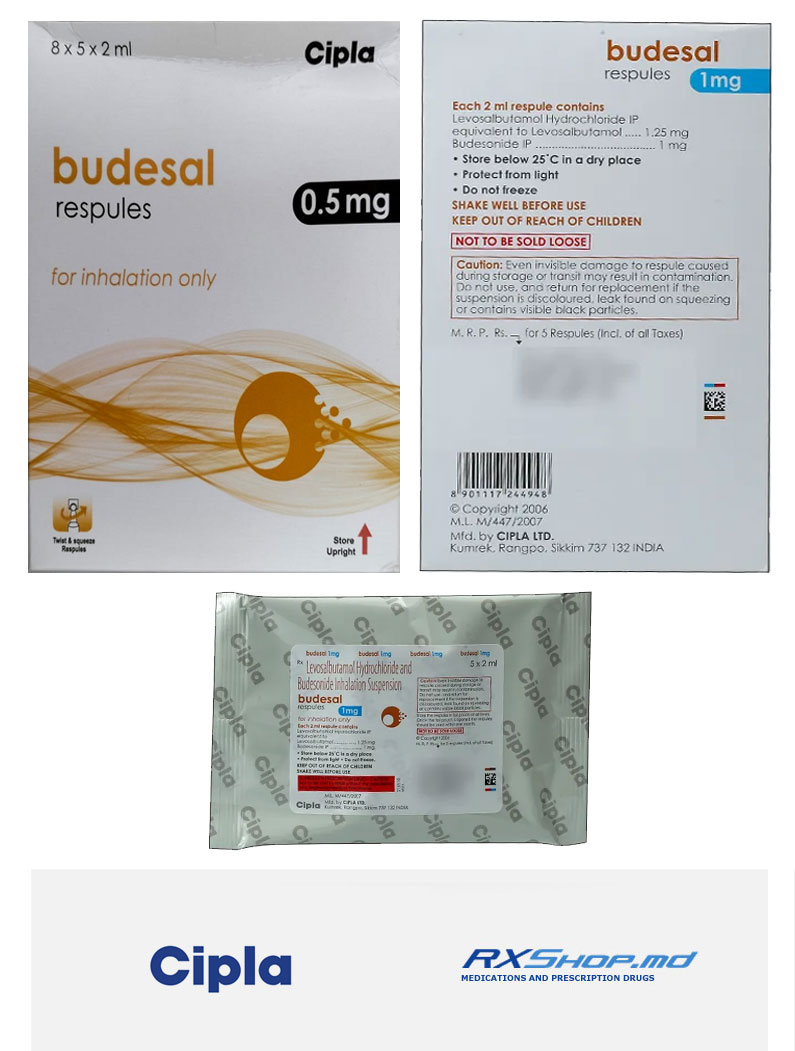
Budesal Respules is a unique Indian combination nebulizer solution containing Budesonide + Levosalbutamol, manufactured by Cipla Limited — combining an inhaled corticosteroid (ICS) with a short-acting beta-2 agonist (SABA) in single-dose respule (ampoule) format for nebulizer use. This combination is particularly valuable for acute asthma exacerbations with inflammatory component, providing both rapid bronchodilation (Levosalbutamol) and anti-inflammatory action (Budesonide) in a single nebulized dose. Not FDA-approved in USA but widely used in India, Asia, and other markets where the ICS + SABA combination is recognized.
The two active ingredients work through complementary mechanisms. Budesonide is a synthetic corticosteroid that reduces airway inflammation, decreases mucus production, and reduces airway hyperresponsiveness. Levosalbutamol (R-Salbutamol) is the active R-enantiomer of racemic salbutamol — a selective short-acting beta-2 agonist (SABA) providing rapid bronchodilation within 5-15 minutes and ~6 hour duration. Levosalbutamol is more potent than racemic salbutamol with potentially fewer cardiovascular side effects. Combined nebulized delivery ensures rapid deep-airway deposition of both medications.
Budesal Respules is used for acute asthma exacerbations (particularly in children and adults requiring nebulizer therapy), severe asthma with inflammatory component, COPD acute exacerbations, bronchospasm with inflammatory component (allergic, viral), hospital and home nebulizer therapy, and bridging therapy until oral steroids are needed. Off-label uses include croup adjunct, severe acute bronchitis with bronchospasm, and various inflammatory airway conditions in pediatric patients.
The medication is available as Budesal Respules in 2 strengths: 0.5 mg Budesonide + 1.25 mg Levosalbutamol per 2 mL and 1 mg Budesonide + 1.25 mg Levosalbutamol per 2 mL. Standard adult and pediatric (>6 years) dosing: 2.5 mL nebulized 2-4 times daily. For children 6 months-5 years: 1-2 mL diluted as needed. Use with standard jet or ultrasonic nebulizer.
Critical safety considerations include Budesonide local side effects (oropharyngeal candidiasis/thrush, dysphonia — rinse mouth after use), Levosalbutamol side effects (tachycardia, tremor, hypokalemia, nervousness, headache), paradoxical bronchospasm, HPA axis suppression at high doses, growth reduction in children with prolonged use, cataracts/glaucoma with chronic use, hyperglycemia in diabetics, and significant cardiovascular effects in patients with heart disease. Not for chronic maintenance alone — for acute exacerbation management primarily.

Free prescription
Discrete packaging
Have questions?
Quality Assurance
- Severe Asthma Attack: For severe asthma attacks with inflammatory component;
- Pediatric Asthma Exacerbation: Particularly valuable for pediatric asthma exacerbations (nebulizer easier for children);
- Status Asthmaticus Adjunct: Adjunct nebulizer therapy in status asthmaticus management;
- Acute COPD Exacerbation: For acute COPD exacerbations with inflammatory component;
- Allergic Bronchospasm Acute: For acute allergic bronchospasm with inflammation;
- Viral Bronchitis Bronchospasm: For viral bronchitis with bronchospasm component;
- Hospital Nebulizer Therapy: Standard hospital nebulizer combination therapy for acute respiratory exacerbations;
- Home Nebulizer Therapy: For home nebulizer use in patients with asthma action plans;
- Pediatric Croup Adjunct: Off-label adjunct for severe croup with bronchospasm;
- Severe Acute Bronchitis: Off-label for severe acute bronchitis with bronchospasm;
- Bronchiolitis Severe: Off-label selective use for severe bronchiolitis (limited evidence);
- Reactive Airway Disease: For reactive airway disease with inflammation;
- Exercise Induced Asthma Severe: For severe exercise-induced bronchospasm requiring combination nebulizer;
- Geriatric Asthma COPD: For geriatric patients with asthma or COPD exacerbations (nebulizer easier than inhaler);
- Bridging To Oral Steroids: As bridging therapy before transitioning to oral systemic steroids in severe exacerbations;
- Difficulty With Inhalers: For patients with difficulty using MDI inhalers (poor coordination, severe attacks);
- Resource Limited Settings: For acute respiratory exacerbations in resource-limited global health settings;
- Acute NOT Chronic Maintenance: For ACUTE exacerbations primarily — not standard chronic maintenance.
- Faster Bronchodilation: Levosalbutamol provides bronchodilation within 5-15 minutes of nebulization;
- Less Airway Inflammation: Budesonide reduces underlying airway inflammation simultaneously;
- Less Wheezing: Quick reduction in characteristic asthma wheezing;
- Less Chest Tightness: Rapid relief from asthma-related chest tightness;
- Less Shortness of Breath: Effective reduction in acute dyspnea;
- Better Lung Function Acutely: Rapid improvement in FEV1 and peak flow measurements;
- Less Mucus Production: Budesonide reduces mucus production in inflamed airways;
- Less Airway Hyperresponsiveness: Long-term anti-inflammatory effect reduces airway hyperresponsiveness;
- Better Pediatric Asthma Control: Particularly valuable for pediatric acute asthma (nebulizer easier than inhaler);
- Less Need for Systemic Steroids: Nebulized Budesonide may reduce need for oral/IV systemic steroids in some cases;
- Less Acute COPD Symptoms: Rapid relief of acute COPD exacerbation symptoms;
- Less Anxiety During Attack: Quick relief reduces panic/anxiety associated with severe asthma attacks;
- Better Sleep After Attack: Effective nighttime relief if acute exacerbation wakes patient;
- Less Hospitalization Risk: Effective acute combination therapy may prevent hospitalization;
- Less ICU Admission Risk: May reduce ICU admission risk in severe asthma exacerbations;
- Better Quality of Life During Attack: Effective acute combination supports quality of life during exacerbations;
- Better Pediatric Family Satisfaction: Nebulizer easier for families to administer to children;
- R-Enantiomer Advantage: Levosalbutamol (R-enantiomer) potentially fewer cardiovascular effects vs racemic salbutamol;
- Brand Budesal: Cipla Limited brand with established Indian clinical reputation;
- Cipla Manufacturing: Cipla Limited — one of India's largest and most respected pharmaceutical companies;
- Generic Budesonide Levosalbutamol: Affordable Indian generic combination expanding global access;
- Respules Single Dose: Single-dose respule ampoules — convenient pre-measured doses for nebulizer use;
- ICS SABA Combination Nebulizer: ICS + SABA combination nebulizer therapy for acute asthma with inflammation;
- Inhaled Corticosteroid ICS: Budesonide ICS component targets airway inflammation;
- SABA Rescue Component: Levosalbutamol SABA component provides rapid bronchodilation;
- R Enantiomer Salbutamol: R-enantiomer of salbutamol (active form) — more potent than racemic mixture;
- Levalbuterol Alternative: Same R-salbutamol as US Xopenex (levalbuterol);
- Rapid Bronchodilation: Rapid 5-15 minute bronchodilation onset via nebulizer;
- Anti Inflammatory Airway Action: Budesonide targets airway inflammation simultaneously with bronchodilation;
- Pediatric Asthma Exacerbation: Particularly valuable for pediatric asthma exacerbations;
- Hospital Nebulizer Therapy: Standard hospital combination nebulizer therapy in Indian/Asian markets;
- Home Nebulizer Asthma Plan: Suitable for home nebulizer use in asthma action plans;
- Indian Quality Manufacturing: Indian Cipla Limited manufacturing meeting international quality standards.
Generic Budesal Respules (Budesonide and Levosalbutamol 1.25mg/0.5 mg) Medication guide:
📖 About Budesal Respules from Cipla
Budesal Respules is a nebulizer formulation from Cipla that combines two active ingredients in a single ready-to-use vial: budesonide, an inhaled corticosteroid (ICS) that reduces airway inflammation, and levosalbutamol, a short-acting bronchodilator that relaxes airway smooth muscle. It is used primarily for asthma exacerbations and in patients - especially children - who cannot use a metered-dose inhaler reliably. Both components are delivered together in a single 5-10 minute nebulizer session.
Combination nebulizer therapy sits in a specific corner of asthma treatment. It is not a daily controller for well-controlled asthma - that would usually be an inhaled corticosteroid alone, delivered by MDI. It is not a rescue medicine for a sudden attack - that would usually be a salbutamol MDI, faster to deploy. What Budesal Respules does well is bridge these two roles for patients who need both anti-inflammatory action and bronchodilation in one session, especially when a nebulizer is already the practical delivery method - young children, patients with severe attacks, or those with technique challenges.
📋 Budesal Respules at a glance
Before going deeper into the pharmacology and practical use, the key facts about this product line are worth pinning down. The stat row below is what a clinician or informed patient would confirm when first meeting the product.
Manufacturer
Cipla Limited, Mumbai, India
Ingredient 1 (ICS)
Budesonide - inhaled corticosteroid
Ingredient 2 (SABA)
Levosalbutamol - R-enantiomer of salbutamol
Format
Respules - single-dose plastic vials, 2 mL
Strengths
0.5 mg or 1 mg budesonide + 1.25 mg levosalbutamol
Delivery
Jet nebulizer with mask or mouthpiece
Several of these numbers become important later. The single-dose vial format matters for consistency of dose and hygiene - no measuring, no dilution errors, no shared multi-dose bottles. The presence of two strengths of budesonide (0.5 mg and 1 mg) with a fixed 1.25 mg of levosalbutamol gives clinicians the ability to adjust the anti-inflammatory dose based on severity while keeping the bronchodilator dose steady. And the respule format specifically supports use in children, in acute care, and in patients whose inhaler technique is unreliable.
🗺️ Terms you will see across this guide
A few pharmacological terms come up repeatedly in Budesal discussions. Getting them straight up front makes the rest of the guide much easier to follow.
- ICS (inhaled corticosteroid)
- The controller class that reduces airway inflammation. Budesonide is the ICS component in Budesal Respules.
- SABA (short-acting beta-2 agonist)
- The rescue class that opens narrowed airways within minutes. Levosalbutamol is the SABA component in Budesal.
- Levosalbutamol
- Also called levalbuterol - the R-enantiomer (mirror-image form) of salbutamol that carries the bronchodilator action.
- Respule
- A single-dose plastic vial of nebulizer solution designed to be twisted open and emptied into a nebulizer cup.
- Nebulizer
- A machine that turns liquid medication into a fine mist that is breathed in through a mask or mouthpiece over several minutes.
- Exacerbation
- A worsening of asthma symptoms beyond baseline, often triggered by infections or allergens - a common reason Budesal Respules is prescribed for short courses.
These terms map onto the rest of the guide's structure. Budesonide is the ICS half of the combination; levosalbutamol is the SABA half; a respule is the delivery format; a nebulizer is the device that turns the respule liquid into breathable mist; and exacerbations are one of the main clinical situations where Budesal is used. Everything else builds on these six ideas.
The one-sentence summary of Budesal Respules: a Cipla-made single-dose nebulizer combination that delivers budesonide (anti-inflammatory) and levosalbutamol (bronchodilator) in one 5-10 minute session, used mainly for asthma exacerbations, in children, and in patients who cannot use MDIs reliably.
🤝 Understanding the ICS + SABA Combination Approach
The idea of putting an ICS and a SABA in the same nebulizer vial is not obvious, and understanding why it is done helps use the product well. The short version: many patients arriving at a nebulizer session need both an immediate airway-opening effect AND an anti-inflammatory push to prevent the airway from re-narrowing over the next hours to days. Historically these two needs were met by sequential nebulizer treatments or by separate inhalers used in sequence. Budesal collapses them into a single 5-10 minute session, which simplifies delivery and reinforces the principle that inflammation, not just bronchospasm, is what needs treating.
Combination nebulizer therapy is particularly common in Indian and other Asian pediatric practice, where nebulizers are widely available in home and clinic settings and where children under 6 often cannot use MDIs even with a spacer. The design brief for a product like Budesal was to give these patients a single, standardised, easy-to-administer treatment that covers both the acute symptom and the inflammatory driver behind it.
⚖️ Rescue-only versus combination approach
Salbutamol alone in a nebulizer
- Opens narrowed airways in minutes
- No anti-inflammatory component
- Suits patients whose airway inflammation is already controlled by daily ICS
- Symptoms may return quickly if inflammation is uncontrolled
- The historical default for acute wheeze
Budesal combination (ICS + SABA)
- Opens narrowed airways in minutes (levosalbutamol)
- Reduces underlying inflammation (budesonide)
- Suits patients where BOTH bronchospasm and inflammation matter
- Longer-lasting effect on airway stability post-session
- The modern default for exacerbation care in many settings
The comparison is not "one is better than the other in every situation" - both approaches remain valid depending on the patient. The comparison is "which better matches this specific episode." A young child with viral bronchospasm on a background of poorly controlled asthma benefits from the combination more than from salbutamol alone. An adult with well-controlled asthma who happens to need a nebulizer session for a mild flare may do fine with salbutamol only.
🔗 Why a single-vial combination beats two sequential nebulizations
Even when both drugs are appropriate, there are practical reasons to prefer a combination vial over running two separate nebulizer sessions. These reasons matter especially in busy clinics, in home care with worried parents, and in emergency settings.
👤 From Bradley E. Chipps, MD
"In pediatric practice, combination nebulizer therapy has an obvious appeal: children tolerate one nebulizer session much better than two, and the parent has one thing to administer rather than two to combine correctly. What clinicians need to remember, and what patients need to understand, is that a combination respule is still not a substitute for daily inhaled controller therapy in a well-set-up asthma management plan. It is a very useful tool in specific situations - exacerbations, transitional care, patients who cannot use MDIs - but the daily controller job usually belongs elsewhere."
The combination approach is powerful in the right hands. Its job is to address both airway spasm and airway inflammation in a single session, with reliable dose ratios and simple administration. Its role is targeted rather than universal - understanding when to reach for it and when to use simpler tools is part of what makes asthma care look competent rather than reflexive.
🛡️ Budesonide as the Controller Component
Budesonide is the ICS half of Budesal Respules. It is a well-established inhaled corticosteroid that has been in clinical use since the 1980s and has one of the largest safety and efficacy datasets in the class - including extensive pediatric data, which is why it is often chosen as the ICS component in combination nebulizer products. Its job in a Budesal session is to reduce airway inflammation over the hours and days following the treatment, complementing the immediate bronchodilator action of levosalbutamol with a longer-lasting anti-inflammatory effect.
Unlike ciclesonide (which is a prodrug), budesonide is active at the moment of inhalation. It binds directly to intracellular glucocorticoid receptors in airway tissue and switches off pro-inflammatory gene programs. The molecule also undergoes a distinctive process called reversible fatty acid conjugation in the airway - it becomes temporarily linked to fatty acids in local cells, forming a slow-release depot that extends the anti-inflammatory action beyond the immediate dose. This is why budesonide can achieve reasonable duration of effect even in an intermittent-use format like a nebulizer respule.
🧬 The lifecycle of the budesonide component in a Budesal session
Following the budesonide fraction through a single nebulizer session helps show what it is doing while the levosalbutamol is opening the airway.
The lifecycle shows why budesonide belongs in a nebulizer combination: it starts working within hours, has meaningful duration of action through its depot mechanism, and has a well-understood systemic clearance path. Its combination with a fast-acting bronchodilator means the airway gets both immediate relief and delayed anti-inflammatory follow-through in a single treatment.
📄 What makes budesonide a common choice for nebulized ICS
Extensive pediatric data.
Budesonide is one of the most-studied ICS drugs in children, from infants upward. Safety, efficacy, growth effect data are all well-characterised over decades.
Long history of nebulized use.
Budesonide has been available in nebulizer form (as Pulmicort Respules originator) for many years. Delivery physics and dosing are well-established.
Depot mechanism supports intermittent use.
The fatty acid conjugation trick lets budesonide achieve reasonable duration even when dosed only once or twice a day - useful for a short exacerbation course.
Pregnancy safety database.
Budesonide has the largest human pregnancy safety dataset of any ICS. When choice matters for pregnant women, budesonide is the ICS most guidelines specifically endorse.
These factors together explain why budesonide - rather than some newer ICS - is the anti-inflammatory component in most combination respules on the market. It is not that budesonide is inherently better than mometasone or ciclesonide; it is that budesonide has the depth of data, the delivery track record, and the specific properties that fit nebulized combination use.
In a Budesal Respule, budesonide is the slow, quiet, long-tail component. It does not produce the immediately noticeable effect that levosalbutamol does, but over the 12-24 hours after a session it is doing the anti-inflammatory work that keeps the airway from re-narrowing. Both components matter; each does a different job on a different timescale.
🚨 Levosalbutamol as the Rescue Component
Levosalbutamol is the fast-acting bronchodilator half of Budesal Respules. It is the R-enantiomer of salbutamol - one of the two mirror-image forms of the salbutamol molecule, and the one that actually carries the bronchodilator action. When you nebulize levosalbutamol, you are delivering essentially the same active pharmacology as when you nebulize traditional (racemic) salbutamol, but at roughly half the mass, because you are skipping the S-enantiomer that does nothing useful in the airway.
The purpose of levosalbutamol in a Budesal session is straightforward: open the airway now. Within minutes of the start of the nebulizer session, the airway smooth muscle relaxes, narrowed bronchi open, wheeze softens, and the patient's ability to move air improves. This is the immediately noticeable half of the combination - the part that makes patients feel better during and right after the session, before the budesonide has had time to do its anti-inflammatory work.
🧬 How levosalbutamol opens the airway
The mechanism is the same as for any beta-2 agonist bronchodilator. The specific stereochemistry of levosalbutamol just makes the process cleaner than with racemic salbutamol.
- Delivery to smooth muscle. Nebulized levosalbutamol reaches the surface of airway smooth muscle cells throughout the bronchi and bronchioles.
- Beta-2 receptor binding. The R-form molecule docks onto beta-2 adrenergic receptors on the smooth muscle cell membrane.
- G-protein cascade. The activated receptor turns on intracellular G-protein signaling, activating adenylate cyclase.
- cAMP rise. Adenylate cyclase produces cyclic AMP; the concentration of cAMP inside the cell climbs quickly.
- Muscle relaxation. High cAMP levels activate protein kinase A, which triggers a cascade ending in relaxation of the contractile machinery. The muscle lets go; the airway opens.
- Sustained effect for 4-6 hours. Levosalbutamol's binding and effect persist for several hours before the muscle returns to its baseline tone.
This sequence happens fast. Onset of noticeable bronchodilation is within 5 minutes of the start of the nebulizer session for most patients; peak effect at around 30-60 minutes; duration of useful effect around 4-6 hours. The pattern is the same as for any well-delivered SABA, which is exactly the point - levosalbutamol is not a fancier drug than salbutamol, it is a cleaner version of the same core action.
🚦 When each level of bronchodilator response happens
🟢 Minutes 0-5
Bronchodilation begins. First easing of breathing effort. Peak flow readings starting to rise if measured.
🟡 Minutes 30-60
Peak bronchodilator effect. Airways at their most open for this dose. Symptoms usually clearly improved.
🔵 Hours 4-6
Bronchodilator effect fading. Airway tone returning to baseline. Anti-inflammatory action from budesonide is meanwhile still building.
The complementary role becomes obvious in this timeline. Levosalbutamol carries the patient through the first few hours after a nebulizer session with clear bronchodilation. Budesonide takes over the longer-term work of preventing the airway from re-narrowing over the following day or two. Neither drug does the other's job well; together they cover the whole response window a symptomatic patient needs.
🏷️ What levosalbutamol does and does not do
Green chips are what levosalbutamol does; red chips are what it does not. This is the same shape of story as with racemic salbutamol - fast, effective bronchodilator, no anti-inflammatory action, no maintenance role. The combination with budesonide in Budesal Respules is what makes the overall product cover both symptomatic and anti-inflammatory ground in the same session.
Levosalbutamol is the visible, fast-acting half of Budesal - the part that makes the patient feel better during the session and for the next few hours. It is not a controller, it is not a long-term solution, and it is not an anti-inflammatory. It is a well-designed short-acting bronchodilator delivered in a single-enantiomer form, working in partnership with budesonide inside the same respule.
⚖️ Why Levosalbutamol Instead of Racemic Salbutamol
Salbutamol as it is traditionally manufactured is a racemic mixture - a 50:50 blend of two mirror-image forms of the molecule, called the R-enantiomer and the S-enantiomer. Only one of them (the R-form) carries the useful bronchodilator action; the S-form is essentially inert as a bronchodilator, and there has been long-running debate about whether it is truly harmless or whether it contributes to some of the side effects that limit high-dose salbutamol use. Levosalbutamol is the pure R-enantiomer, isolated and delivered on its own.
The rationale for using levosalbutamol instead of racemic salbutamol comes down to two propositions. First, if only the R-form does the work, then delivering pure R-form should give the same bronchodilator effect at half the total mass of drug - simpler pharmacology, potentially cleaner side-effect profile. Second, if the S-form contributes to any adverse effects (tremor, tachycardia, or possibly airway hyper-responsiveness in some patients), removing it should improve tolerance. The clinical evidence for these propositions is real but the size of the effect is smaller than the marketing sometimes suggests.
⚖️ Levosalbutamol versus racemic salbutamol
| Attribute | Racemic salbutamol | Levosalbutamol (R-form only) |
|---|---|---|
| Active bronchodilator content | 50% R-form + 50% S-form (inactive) | 100% R-form |
| Typical nebulizer dose | 2.5 mg | 1.25 mg (half the mass) |
| Bronchodilator efficacy | Reference standard - well-established | Comparable at half the mass |
| Onset of action | 5 minutes | 5 minutes |
| Duration of action | 4-6 hours | 4-6 hours |
| Tremor | Common at higher doses | Slightly less at equivalent bronchodilator dose |
| Tachycardia | Common at higher doses | Slightly less at equivalent bronchodilator dose |
| Cost | Very inexpensive (long-established generic) | Higher (newer patent status expiring) |
| Clinical relevance of difference | Well-known reference | Real but usually modest at ambulatory doses |
The table makes clear that the differences are on the margin. Both drugs work. Both open airways within minutes. Both have similar side-effect profiles, with levosalbutamol slightly cleaner at equivalent bronchodilator effect. For a typical ambulatory nebulizer session, most patients would not notice a difference between racemic salbutamol at 2.5 mg and levosalbutamol at 1.25 mg. The bigger differences show up at higher doses or in patients particularly sensitive to SABA side effects.
📊 Side-effect comparison: what studies actually show
Reported side effect frequency at equivalent bronchodilator doses (rough patterns from head-to-head studies)
Tremor (moderate to severe)
Tachycardia (>10 bpm rise)
Serum potassium drop (>0.4 mmol/L)
The pattern is consistent across studies: levosalbutamol tends to produce slightly less tremor and tachycardia at equivalent bronchodilator effect, while metabolic effects (potassium, glucose) show smaller differences because those effects are less enantiomer-specific. The gap in side effects is real but modest. For most patients it is not clinically important; for patients particularly sensitive to SABA side effects, or for higher-dose situations, it can matter.
👤 From James B. Fink, PhD, RRT
"The levosalbutamol story is genuinely interesting pharmacologically - the R-enantiomer really does carry the useful action, and the S-enantiomer really is essentially inactive. Where the clinical debate lives is around how much difference this actually makes in a typical ambulatory nebulizer session. The evidence supports a small edge in tolerability, particularly at higher doses. It does not support the idea that racemic salbutamol is somehow dangerous or that levosalbutamol is transformatively better. Both work well; levosalbutamol is a slightly cleaner version of the same core mechanism."
Using levosalbutamol in Budesal is a design choice for a slightly cleaner tolerability profile at equivalent bronchodilator effect. It matters more for patients on repeated high-dose therapy and less for occasional single-session use. Neither drug is a bad choice; levosalbutamol is a refined choice that leans on the pharmacology of stereochemistry to trim marginal side effects.
🔗 How the Two Ingredients Work Together
The genuine value of a combination like Budesal comes not from the two ingredients being convenient to nebulize together, but from the way they complement each other pharmacologically. Levosalbutamol works fast and covers hours; budesonide works slowly and covers days. Their overlap in time - both acting during the crucial window when a symptomatic patient needs airway improvement - is what makes the combination clinically useful beyond either drug alone.
Understanding the mechanism of this pairing helps use the product well. It also helps avoid the two most common misconceptions: that combination therapy replaces daily inhaled controllers (it does not), and that using more of it more often is a substitute for a proper long-term asthma plan (it is not). The combination is a tool for specific situations, not a shortcut around ongoing controller therapy.
🤝 The five-stage complementary action
The chart below traces what each ingredient does at each stage after a Budesal nebulizer session. Reading it side by side shows why the pair works better than either alone.
Minutes
0-15
Levosalbutamol dominant.
Airway smooth muscle begins to relax within minutes. Wheeze softens. Peak flow starts climbing. Budesonide is being deposited but has not yet begun measurable anti-inflammatory action.
Minutes
15-60
Peak bronchodilation. Budesonide binding underway.
Levosalbutamol reaches peak effect. Budesonide is binding intracellular receptors and beginning to switch off inflammatory gene programs.
Hours
1-6
Handover phase.
Levosalbutamol effect begins to fade as the SABA duration nears its end. Budesonide anti-inflammatory action is building and taking over the airway-stabilising role.
Hours
6-12
Budesonide-carried stability.
Bronchodilator effect gone. Budesonide is now the dominant player, keeping inflammation suppressed and the airway from re-narrowing without the crutch of ongoing SABA.
Hours
12-24
Fatty-acid depot phase.
Slow release of active budesonide from tissue depots continues the anti-inflammatory action into the second half of the 24-hour window, bridging to the next scheduled dose if the plan calls for it.
Reading down this timeline shows what "complementary" really means. There is no single moment when only one drug is doing something useful - the two ingredients hand off gradually, with meaningful overlap in the crucial early hours after a treatment. A patient who received only levosalbutamol would feel better fast but have nothing addressing the inflammation still driving the airway problem. A patient who received only budesonide would have to wait hours for meaningful bronchial change.
💡 Two persistent misconceptions to correct
❌ MYTH: Budesal can replace daily controller therapy.
Intermittent Budesal sessions - even daily ones during an exacerbation - do not deliver the same steady anti-inflammatory coverage as a daily MDI controller does over months. Budesal is for exacerbations and specific situations; a daily ICS is for ongoing control.
❌ MYTH: More Budesal is always better.
Repeated nebulizer sessions without addressing the underlying problem - poor daily controller adherence, unrecognised triggers, or need for step-up in maintenance - is a common pattern that leads to chronic overuse without long-term improvement. Frequent Budesal is a signal to review the plan, not to normalise the pattern.
The combination in Budesal is genuinely clever - fast and slow, symptomatic and anti-inflammatory, in a single respule with a fixed ratio. Used well, it addresses both halves of what makes an asthma attack painful and dangerous. Used as a replacement for proper daily maintenance, it becomes a repeating patch rather than a solution. The distinction matters, and understanding it is what separates one-off crisis management from real asthma control.
💧 What a Single Respule Contains
A Budesal Respule is a small plastic vial - roughly the size of a jellybean - designed to be twisted open at the top and emptied directly into a nebulizer cup. Each vial holds exactly 2 mL of a sterile, preservative-free solution containing budesonide and levosalbutamol at fixed strengths. Once opened, the vial is used immediately for a single nebulizer session; any liquid left over is discarded, not saved.
The single-dose design is one of the practical strengths of the format. There is no measuring, no mixing, no risk of contamination from a shared multi-dose bottle, and no preservatives (like benzalkonium chloride) that occasionally cause paradoxical bronchospasm in sensitive patients. What is in the vial is exactly what reaches the nebulizer cup, in exactly the intended proportions.
📄 What is inside each Respule
| Component | Function | Amount per 2 mL vial (0.5 mg strength) | Amount per 2 mL vial (1 mg strength) |
|---|---|---|---|
| Budesonide | Inhaled corticosteroid (anti-inflammatory) | 0.5 mg | 1 mg |
| Levosalbutamol sulfate | Short-acting beta-2 agonist (bronchodilator) | 1.25 mg | 1.25 mg |
| Sodium chloride | Isotonic saline base for airway tolerance | Sufficient for 2 mL isotonic solution | Sufficient for 2 mL isotonic solution |
| Water for injection | Solvent / carrier | To make 2 mL final volume | To make 2 mL final volume |
| Preservatives | - | None | None |
Notice that the levosalbutamol content is the same in both strengths (1.25 mg). Only the budesonide dose changes between the two available Respule strengths. This is a deliberate design: it lets clinicians choose the ICS dose based on severity and patient age while keeping the bronchodilator dose constant, so patients switching between strengths do not experience a different bronchodilator response.
✅ Practical points about the format
📦 Single-dose design
One vial equals one nebulizer session. No fractional dosing intended for home use; no partial vials saved for later.
🧬 Preservative-free
No benzalkonium chloride or other preservatives - reduces risk of paradoxical bronchospasm in sensitive patients.
💧 Isotonic saline base
Matches airway fluid tonicity to avoid irritation. No need to dilute further with saline unless a clinician specifically directs.
⚖️ Fixed ratio
Budesonide and levosalbutamol arrive in a manufactured proportion. Cannot be adjusted separately without switching to individual drug vials.
❌ Common misuse patterns to avoid
- Do not use half a vial and save the rest. The vials are single-use and preservative-free; contamination risk rises rapidly once opened.
- Do not mix Budesal with other nebulizer medications in the same cup without clinician direction. Compatibility with ipratropium and some antibiotics exists in specific cases but should be prescribed.
- Do not add extra saline to "make it last longer." The delivered concentration determines the dose; dilution can affect how much drug the patient receives.
- Do not use vials that look cloudy, discoloured, or leaking. Physical changes are a signal of failed integrity.
- Do not swallow the contents. Both drugs are designed for inhalation delivery; oral use of the liquid is not the intended route and produces different (and less favourable) pharmacology.
The single-use, preservative-free, fixed-ratio design is what makes Budesal reliable when used correctly - and what makes any deviation risky in unexpected ways. Following the intended use pattern is not a matter of over-caution; it is what the product was designed and tested for.
Each Budesal Respule is a small piece of pharmaceutical engineering: two drugs in a fixed ratio, delivered without preservatives, in a sterile single-dose format sized for one nebulizer session. Treating it as such - one vial, one session, no mixing, no saving - is what keeps the product working as intended.
🔢 Available Strengths and When Each Fits
Budesal Respules are available in two strengths, distinguished by the budesonide content: 0.5 mg + 1.25 mg and 1 mg + 1.25 mg (both per 2 mL vial). The levosalbutamol dose is fixed at 1.25 mg regardless of strength. Choosing between them is a clinical decision that reflects the patient's age, the severity of the situation, and how much anti-inflammatory push is appropriate on top of a fixed bronchodilator dose.
Understanding when to use each strength helps patients and caregivers respect the clinician's choice rather than switching on their own. Doubling the budesonide from 0.5 mg to 1 mg does not double the effect - the anti-inflammatory response is not linear at these doses. But it does meaningfully increase the daily budesonide exposure, which matters for both the intended benefit and the small increase in systemic corticosteroid footprint.
🔢 Strength comparison
| Aspect | 0.5 mg + 1.25 mg strength | 1 mg + 1.25 mg strength |
|---|---|---|
| Budesonide per vial | 0.5 mg | 1 mg |
| Levosalbutamol per vial | 1.25 mg | 1.25 mg |
| Volume per vial | 2 mL | 2 mL |
| Typical age range | Children and lower-severity adult episodes | Older children and adults with more severe exacerbations |
| Typical situation | Mild-to-moderate acute wheeze; step-up from MDI temporarily | Moderate-to-severe acute episodes; established ambulatory exacerbation care |
| Frequency of use | Once or twice daily during a course | Once or twice daily during a course |
| Duration of typical course | 3-10 days depending on response | 3-10 days depending on response |
The table simplifies real clinical decisions. In practice, a clinician also considers the patient's usual daily controller regimen, whether this exacerbation follows a recent step-down, and whether the patient has responded well to nebulized therapy before. The number on the vial is one input among several.
🎯 Which strength suits which situation
0.5 mg + 1.25 mg suits
- Younger children with acute wheeze
- Lower-severity adult episodes
- Situations where the patient already takes a daily MDI ICS and only needs modest additional anti-inflammatory push
- Step-down of an ambulatory course after initial higher-strength use
1 mg + 1.25 mg suits
- Older children and adults with moderate-to-severe exacerbations
- Patients with limited response to lower-strength Budesal
- Established ambulatory or acute-care management of a significant flare
- Patients whose usual daily controller is minimal and who need a bigger anti-inflammatory push during a course
🧭 A simplified decision path for strength choice
Child under 6 with acute wheeze
Usually 0.5 mg + 1.25 mg; specialist input for younger or more severe cases.
Child 6-11 with moderate exacerbation
0.5 mg + 1.25 mg is common starting; move to 1 mg + 1.25 mg if response is inadequate or severity increases.
Adolescent or adult mild exacerbation
Either strength depending on severity; 0.5 mg often sufficient if daily ICS is well-established.
Adult moderate-to-severe exacerbation
1 mg + 1.25 mg often preferred; usually alongside oral steroids in the acute phase.
Any patient with limited response to first strength
Reassess the whole plan rather than automatically stepping up. Poor response can reflect wrong diagnosis, poor technique, or need for other therapy.
The decision path is guidance, not prescription. The specific choice for a specific patient always belongs to the treating clinician who knows the full picture. Patients or caregivers should never switch strengths on their own, because the ratio of anti-inflammatory to bronchodilator dose changes with the choice and that change has real implications for the response window.
Two strengths at a fixed levosalbutamol dose is a thoughtful design - it lets the anti-inflammatory response scale with severity while keeping the bronchodilator dose constant. Following the prescribed strength is what makes this design work; self-switching between strengths defeats the intention behind the two-strength choice.
🏠 Home Nebulizer Setup for Respules
Home nebulizer therapy is one of the more practical strengths of the Budesal format. Once a clinician has prescribed a course, the family can typically administer sessions at home with a standard jet nebulizer compressor - the same kind of equipment used for many other nebulized asthma treatments. The setup is not complicated once learned, but the details matter for consistent drug delivery, and small mistakes can meaningfully reduce how much of each vial actually reaches the airway.
The overall goal is a clean, calm, well-fitting session lasting 5-10 minutes, with visible steady mist coming from the mouthpiece or mask, and the patient breathing normally through the device. Anything that disrupts this - a poorly fitting mask, a stressed crying child, a compressor working at half capacity because of a clogged filter - shows up as either less drug delivered or a session that has to be repeated.
🏠 The eight-step home nebulizer session
- Wash your hands with soap and dry them thoroughly before handling any equipment or the respule vial.
- Gather your equipment. Compressor, tubing, nebulizer cup, mask or mouthpiece, and the single Budesal Respule vial you will use.
- Assemble the nebulizer by connecting one end of the tubing to the compressor outlet and the other end to the base of the nebulizer cup.
- Twist open the Respule vial and empty the full 2 mL contents into the nebulizer cup. Do not add saline unless specifically instructed.
- Attach the mouthpiece (for older children and adults) or mask (for young children and patients who cannot use a mouthpiece) to the top of the cup.
- Sit upright in a comfortable position - upright posture improves breathing depth and drug delivery.
- Turn on the compressor. A steady mist should appear within seconds. Breathe normally through the mouthpiece or mask for 5-10 minutes until the mist becomes sputtery or stops.
- Turn off the compressor, disassemble, rinse the cup and mouthpiece with warm water, and let them air-dry. Rinse your mouth with plain water and spit.
The whole session takes 10-15 minutes including setup and cleanup. Most families become comfortable with the routine within a week of starting. The rinsing step at the end matters especially for Budesal because the budesonide component can cause oral thrush or hoarseness if drug residue stays in the mouth over repeated sessions.
🧰 Home nebulizer equipment checklist
- Jet compressor nebulizer. Most home models work with Budesal. Portable and desktop versions both fine.
- Nebulizer cup. Standard reusable cup that holds the medication. Replace every 3-6 months.
- Tubing. Standard clear plastic tubing connecting compressor to cup. Replace every 6-12 months.
- Mouthpiece and/or mask. Adult mouthpiece, or age-appropriate mask (child, toddler, infant sizes). Replace as needed for hygiene.
- Small cloth or paper towel. For air-drying components after each session.
- Mild household detergent. For weekly wash of cup and mouthpiece.
- Storage container. Clean dry drawer or box for equipment between sessions - protects from dust and accidental damage.
👤 From Sushil K. Kabra, MD
"In Indian pediatric practice, home nebulizer therapy with combination respules is a widely used and well-tolerated approach. What determines success is not the drug or the device - both are reliable - but whether the family has been shown how to run a clean session and been given a plan for how many sessions per day, for how many days, and when to escalate. A ten-minute nebulizer education visit at the start of a course prevents a lot of the recurring problems we see later."
🧼 Cleaning schedule
| Component | After every session | Weekly | Long term |
|---|---|---|---|
| Nebulizer cup | Rinse with warm water, air-dry | Wash with mild soap; disinfect per instructions | Replace every 3-6 months |
| Mouthpiece / mask | Rinse with warm water, air-dry | Wash with mild soap | Replace as needed for hygiene |
| Tubing | Do not wash inside - dry with compressor air by running for a minute | Check for moisture and cracks | Replace every 6-12 months |
| Compressor filter | - | Inspect for dust | Change per manufacturer schedule (typically every 3-6 months) |
| Compressor housing | Wipe outside with damp cloth | Check air intake for dust or obstruction | Follow service schedule for internal components |
A well-run home nebulizer session delivers most of the labelled dose in a calm, repeatable way. A poorly-run session - clogged filter, cracked tubing, kicking child in a bad mask fit - can lose a substantial fraction of the dose without anyone noticing. Setting up the routine correctly at the start of a Budesal course, and reviewing technique periodically, is what makes home therapy actually work.
🌬️ Proper Inhalation with Mask or Mouthpiece
How the patient interfaces with the nebulizer - mouthpiece for older children and adults, mask for young children and anyone who cannot seal lips reliably - has a large effect on how much drug reaches the lung. The two interfaces are not equivalent. Mouthpieces deliver more consistent dose to the lung when used correctly; masks are more forgiving of technique but lose more drug to the face and ambient air. Choosing the right interface for the patient and using it correctly is worth as much attention as the drug choice itself.
For a Budesal Respule specifically, either interface works pharmacologically. The choice depends on age, cooperation, and comfort. Once chosen, the specific technique details for that interface become the priority. A four-year-old with a poorly fitted mask receives less Budesal than an adult with a well-used mouthpiece, and both receive less than an adult who understands and follows all the technique details.
⚖️ Mouthpiece versus mask
👄 Mouthpiece
- Higher lung deposition when technique is good
- Less drug wasted to face and ambient air
- Requires lip seal and ability to breathe through mouth
- Suits older children and adults
- Preferred whenever the patient can use it reliably
😴 Mask
- More forgiving - no lip seal required
- Some drug is lost to face and eyes
- Requires good mask fit around nose and mouth
- Suits young children and patients unable to use a mouthpiece
- Standard for infants, toddlers, and severely distressed patients
A useful rule: use a mouthpiece if the patient reliably can, use a mask if not. Do not have older children on a mask just because it feels easier - the mouthpiece is meaningfully more efficient once a child can cooperate with it, usually around age 4-5 with practice.
👶 Making a mask session work for a child
- Right size mask. Should cover nose and mouth without gaps. Too small = leaks around the edges; too big = seals poorly at the chin. Have a couple of sizes available as the child grows.
- Upright position. Sit the child on your lap facing forward, or in a supportive chair. Never nebulize a lying-down child.
- Calm before session. A crying, kicking child breathes shallowly and rejects the mask. Try to catch a calmer moment; distract with a favourite toy, story, or screen; do not force through resistance.
- No blow-by. Holding the mask an inch away from the face because the child does not like it wastes most of the dose. If the child truly cannot tolerate the mask, stop and reconsider the plan rather than blow-by.
- Watch for visible mist escape. A cloud puffing out around the edges of the mask means the seal is poor. Adjust the fit before continuing.
- Do not talk during the session. Reassuring words are fine but full conversations lose drug from the mask by breaking the seal repeatedly.
Small children rarely enjoy nebulizer sessions the first few times. This is normal. Consistent handling, calm demeanour, and a familiar routine make each session smoother than the last. Most children who need repeated sessions become quite tolerant of the experience within a week or two.
✅ Do this. Not that.
✅ Do this
- Sit upright, chin slightly up
- Breathe normally and steadily through the interface
- Keep mask seal continuous or lip seal on mouthpiece
- Continue until mist becomes sputtery (5-10 minutes)
- Rinse mouth with water after every session
- Note what time and dose was given, for the clinician's review
❌ Not that
- Do not hold the mask off the face (blow-by)
- Do not rush through the session
- Do not talk continuously during a mouthpiece session
- Do not skip the mouth rinse afterward
- Do not stop mid-session because the child is distracted; try to redirect
- Do not use a mouthpiece with a child who cannot maintain a lip seal - switch to mask
Good technique with either interface is worth substantially more than any medication tweak. A patient who has never been shown correct nebulizer technique often gets less than half the labelled dose to the lung; a patient with good technique gets far more. Invest ten minutes at the start of a course to get the interface, position, and breathing right - the payoff compounds over every session.
📏 Typical Adult Dosing Guidelines
Adult dosing with Budesal Respules follows a pattern common to combination nebulizer therapy: use the smallest number of sessions per day that controls symptoms during an acute course, keep the course short (typically 3-10 days), and rely on the daily controller inhaler for ongoing maintenance rather than extending Budesal use indefinitely. The following guidance covers the dosing decisions that come up in ambulatory care - not the higher-frequency dosing sometimes used in hospital emergency departments, which is a specialist decision.
One useful framing before the numbers: Budesal is not a chronic maintenance medicine. It is a short-course treatment for exacerbations or specific bridging situations. Adult patients who find themselves using Budesal for weeks continuously either need a better daily controller regimen, need specialist input, or need reassessment of the underlying diagnosis. Repeated respule use is a signal to look at the whole plan, not to normalise the pattern.
📏 Adult dosing ladder
| Situation | Strength | Frequency | Course duration | Notes |
|---|---|---|---|---|
| Mild adult exacerbation | 0.5 mg + 1.25 mg | Twice daily | 3-5 days | Often alongside temporary increase in daily controller ICS |
| Moderate adult exacerbation | 1 mg + 1.25 mg | Twice daily | 5-7 days | Frequently combined with a short course of oral steroids |
| Bridging after acute care discharge | 0.5 mg or 1 mg + 1.25 mg (per clinician) | Twice daily initially, tapering | 7-10 days | Transition to usual controller inhaler over the course |
| Adult unable to use MDI reliably | 0.5 mg + 1.25 mg | Once or twice daily | Ongoing per clinician judgment | Not the preferred long-term plan; specialist should reassess options |
| Home use during a known trigger period | 0.5 mg + 1.25 mg | Once daily preventively (limited situations) | Duration of trigger exposure | Only per action plan; not routine practice |
The dose numbers are guidance rather than mandate. A clinician making decisions for a specific patient considers age, comorbidities, previous response to Budesal or similar products, current daily controller therapy, and the severity trajectory of the current episode. Someone with a clear response to two sessions per day at the lower strength does not need to be pushed higher because a table suggests moderate exacerbations "typically" need the higher strength.
🎯 Typical adult scenarios
🏥 Adult with viral-triggered flare
0.5 mg + 1.25 mg twice daily for 3-5 days, plus temporary increase in daily ICS controller if the action plan calls for it. Salbutamol MDI available for symptom breakthrough between sessions.
🏗️ Adult with occupational trigger flare
Similar pattern; also identify and remove the trigger where possible. Budesal manages the flare while the trigger is being addressed - not a substitute for exposure control.
🏥 Adult recently discharged after emergency care
Higher strength Budesal twice daily initially, with tapering over 5-10 days as the patient transitions back to daily controller therapy. Oral steroid course usually parallel.
🧓 Older adult with limited MDI technique
Budesal may be preferred format if reliable MDI technique cannot be achieved even with spacer. Specialist review to see whether a different daily controller format is appropriate.
🚦 Safety limits and warnings for adult use
- Do not exceed 4 sessions per 24 hours in ambulatory care without clinician direction. Higher-frequency dosing belongs in supervised settings.
- If symptoms are worsening despite Budesal sessions, escalate care. Do not continue nebulizing indefinitely in the hope things will improve.
- Watch for signs of levosalbutamol overdose: pronounced tremor, rapid heart rate, agitation, chest pain. These indicate too much SABA over too little time.
- Watch for signs of local budesonide effects: hoarseness, oral thrush. Rinsing after every session is essential.
- Do not extend a Budesal course indefinitely. If sessions are still needed after 7-10 days, that is a signal to review with a clinician rather than continue at home.
Adult Budesal use is short-course, well-defined, and always accompanied by attention to what the daily controller inhaler is doing. It is not the primary treatment for asthma - it is a targeted tool for specific situations. Following the prescribed dose ladder and course duration, rinsing after every session, and escalating care if things worsen are the disciplines that keep Budesal safe and useful.
👶 Pediatric Dosing by Age and Weight
Pediatric use of Budesal Respules is one of the more common clinical scenarios where the combination format really earns its place. Children under 6 often cannot use metered-dose inhalers reliably even with a spacer, and the nebulizer format handles the coordination problem entirely - the child just breathes through a mask while the mist arrives. Adding an ICS component to the standard SABA nebulizer also addresses inflammation during viral-triggered exacerbations, which is the trigger behind most pediatric asthma flare-ups.
Pediatric dosing follows a familiar principle: match the dose to the child's age, weight, and severity, use the smallest dose that controls symptoms, and keep courses short. The specific numbers below are guidance based on clinical practice and product labelling; the treating pediatrician's judgement for a specific child is always the authoritative source. Do not adjust pediatric dosing on your own.
👶 Pediatric dosing by age
| Age | Typical starting strength | Frequency | Course duration | Delivery notes |
|---|---|---|---|---|
| Under 2 years | 0.5 mg + 1.25 mg (specialist supervision) | Once or twice daily | 3-5 days per course | Mask-spacer with well-fitted pediatric mask; hold child upright |
| 2-5 years | 0.5 mg + 1.25 mg | Twice daily | 3-7 days per course | Mask-spacer standard; some children can transition to mouthpiece by age 4 |
| 6-11 years | 0.5 mg + 1.25 mg (mild) or 1 mg + 1.25 mg (moderate) | Twice daily | 5-7 days per course | Mouthpiece preferred; mask acceptable if coordination not reliable |
| 12 years and older | 1 mg + 1.25 mg (usually) | Twice daily | 5-10 days per course | Adult dosing applies from age 12; mouthpiece preferred |
Notice that the levosalbutamol dose is the same for every age group (1.25 mg per session) - because this is the fixed component of the respule vial. What varies with age and severity is the strength of the budesonide component and the choice of session frequency. This design is deliberate: it lets the anti-inflammatory dose scale with the patient without changing the bronchodilator response the child experiences.
⚖️ Weight-based considerations
General principles for weight-based pediatric dosing:
- Under 20 kg body weight typically calls for the lower-strength Respule (0.5 mg budesonide).
- Over 20 kg body weight may use either strength depending on severity and clinical judgment.
- Weight-based dosing is less critical for nebulized products than for oral medications because inhaled delivery has natural upper limits (the child stops when the mist runs out).
- A child who cannot complete a full nebulizer session (leaves the mask, cries continuously) receives a smaller effective dose regardless of the labelled amount - work on tolerating the session rather than pushing higher-strength drug.
- Very small infants (under 6 months) with wheeze should be assessed by a specialist before Budesal is prescribed at home.
📈 Growth and long-term ICS use in children
What to know about repeated Budesal courses in children:
- Individual short courses (3-10 days) of Budesal for exacerbations do not meaningfully affect growth.
- Repeated courses over many months add up to a modest cumulative budesonide exposure - though still less than continuous daily ICS at moderate doses.
- If a child needs Budesal courses frequently (more than 3-4 times per year), the underlying maintenance plan usually needs revision - not more Budesal.
- Annual height review is standard for any child on regular or frequent ICS therapy of any kind.
- Discuss any growth concerns with the pediatrician who prescribed the courses - they will consider the whole picture.
The alternative to well-controlled pediatric asthma - repeated severe attacks, emergency visits, oral steroid courses - is itself associated with poorer growth outcomes. Effective treatment usually protects growth over the years, even if any single ICS product introduces a small theoretical concern.
Pediatric asthma management is a partnership between the pediatrician, the child, and the family. Budesal is one tool for handling exacerbations; the daily maintenance controller inhaler is another; recognising triggers and modifying the environment is a third. All three matter, and none substitutes for the others.
A child using Budesal effectively during exacerbations, on well-chosen daily controller therapy between exacerbations, with growth monitored annually, has good long-term outcomes. Any of these three pillars missing - repeated Budesal without a daily controller, daily controller without exacerbation planning, or no growth follow-up - creates gaps that show up over years.
✅ When Budesal Is the Right Choice
Budesal Respules occupy a specific niche in asthma treatment - broader than "hospital only" but narrower than "any asthma patient." Recognising the situations where the combination format genuinely helps, rather than where a simpler tool would work just as well, is one of the useful discriminations that separates good asthma care from reflexive prescribing. This section covers when Budesal is the right choice; the next section covers when it is not.
The pattern that emerges from clinical practice is that Budesal fits best when three conditions are present at once: the patient needs both anti-inflammatory and bronchodilator action, a nebulizer is the practical delivery method, and the situation is time-limited (a course of days, not weeks). When all three apply, the combination is a good match. When one or more is missing, a different approach is usually cleaner.
✅ Green-light situations for Budesal
Budesal fits well when:
- Young child with acute wheeze - cannot use an MDI reliably, needs both bronchodilator and anti-inflammatory action.
- Viral-triggered exacerbation in a child on daily ICS - the flare needs both immediate bronchodilation and additional anti-inflammatory push for a few days.
- Adult exacerbation with nebulizer already available - patient already has a nebulizer at home, benefits from combined session rather than separate treatments.
- Post-emergency discharge bridging - patient recently in acute care, needs 5-10 days of intensive ambulatory management before returning to normal maintenance.
- Patient who genuinely cannot use MDI even with spacer - elderly, severe frailty, cognitive limitations, unusual anatomical issues.
- Known trigger period requiring temporary intensification - specific allergen season, upcoming exposure that historically causes flare, per an action plan.
Notice the shared thread: each of these situations combines a real need for both drug classes with a real reason nebulizer delivery is preferred over inhaler-based options. Absent one of those elements, the case for Budesal specifically weakens.
🎯 Four scenario examples of good Budesal use
👶 Toddler with viral wheeze
3-year-old with acute wheeze during a respiratory infection. Cannot use an MDI-spacer reliably. Twice-daily Budesal 0.5 mg + 1.25 mg for 5 days addresses both airway spasm and inflammation. Return to daily maintenance controller after the flare settles.
🏥 Post-ED discharge adult
Adult discharged after emergency care for moderate exacerbation. 7-10 day course of Budesal 1 mg + 1.25 mg twice daily, tapering as symptoms settle. Runs alongside oral steroid course and eventually returns patient to daily MDI ICS-LABA.
🏫 School-age asthma flare
8-year-old on daily budesonide MDI with a spacer develops flare during pollen season. Twice-daily Budesal for 5 days at home while maintaining regular MDI. Full response allows tapering.
🧓 Elderly patient with dexterity limits
70-year-old with rheumatoid arthritis affecting hand function cannot generate consistent MDI puff. Budesal via home nebulizer as regular therapy during any exacerbation, alongside review of what daily controller format actually works for their hands.
📋 The clinical logic distilled
The right question is not "should this patient use Budesal?" but "does this patient's situation match the specific profile Budesal was designed for?" That profile has four elements:
- Need for both anti-inflammatory and bronchodilator action in the same treatment session.
- Nebulizer as the practical delivery method - patient cannot use MDI reliably, or the setting favours nebulizer therapy.
- Time-limited course - days rather than weeks, or specific trigger periods.
- A clear plan for what happens after - transition back to daily maintenance, review of the whole management approach.
When all four elements are present, Budesal is genuinely a well-matched tool. When only some are present, either a simpler treatment or a different approach is usually cleaner. Getting this match right is part of what makes asthma care look intentional rather than reflexive.
❌ When Standard Salbutamol Alone Suffices
Not every asthma situation that could theoretically use Budesal actually benefits from the combination. Adding an ICS component to a nebulizer session has real costs - a slightly more expensive vial, additional systemic corticosteroid exposure however small, additional consideration about oral thrush and rinsing. When those costs are not offset by a genuine need for the anti-inflammatory component, plain salbutamol (racemic or R-form) works just as well and simplifies the overall picture.
Recognising when Budesal is overkill matters partly for cost, partly for stewardship of corticosteroid exposure over long-term care, and partly for keeping the treatment approach as simple as it needs to be. Reflexive combination therapy for every wheeze is not modern practice; matched therapy for the specific situation is.
🔴 Situations where combination is unnecessary
Standard salbutamol alone is usually sufficient when:
- Well-controlled asthmatic with an isolated symptomatic episode - the daily ICS controller is already handling the inflammation; only bronchodilation is needed for the moment.
- Occasional rescue use for exercise-induced symptoms - not exacerbation-level inflammation, just short-lived bronchospasm.
- Post-exposure symptom relief after a brief allergen encounter - the encounter is over; ongoing anti-inflammatory addition adds little.
- MDI-with-spacer users who can achieve reliable delivery - unless there is a specific reason to use a nebulizer, the MDI is more practical.
- Very mild wheeze in a child otherwise well - the assessment should determine whether inflammation is actually driving the episode before automatically layering an ICS component.
- Adult with COPD-predominant symptoms where the ICS role is contested - the combination is chosen for asthma-dominant physiology, not for pure bronchodilator need.
The theme across these situations is that the airway problem is either fundamentally bronchodilator-responsive without a significant inflammatory driver, or the anti-inflammatory need is already being covered by an established daily controller. In either case, layering additional ICS through Budesal adds cost and exposure without a clinical payoff.
⚖️ When simpler works
Salbutamol MDI (with spacer) situations
- Adult with well-controlled asthma having brief symptomatic episode
- Pre-exercise dose in a known exercise-triggered patient
- Occasional rescue in an otherwise symptom-free patient
- Any situation where MDI can be reliably used
Standalone salbutamol nebulizer situations
- Nebulizer needed but child is otherwise well-controlled on daily ICS
- Adult with limited technique who otherwise needs only occasional rescue
- Bridging in a setting where the ICS is being handled by a different route
- COPD-predominant situations where ICS role is uncertain
💡 Practical guidance for choosing simpler
Ask these three questions before choosing Budesal over a simpler option:
- Is inflammation actively driving this episode? A single bad wheeze in an otherwise well-controlled patient may not need extra ICS. A viral exacerbation with a week of persistent symptoms probably does.
- Is the daily controller already handling inflammation adequately? If the answer is yes and the daily plan is working, Budesal's ICS component is duplication rather than addition.
- Is nebulizer delivery specifically needed? If MDI works well for this patient, using a nebulizer just to include an ICS component may not be worth the added complexity of the session.
If any answer is "no" or "not really," a simpler approach is usually cleaner. If all three are "yes," Budesal is a good match.
Choosing the simplest treatment that fits the situation is a discipline worth preserving. Budesal is a good product for the situations it was designed for; using it reflexively for situations where salbutamol alone would work is a small but real form of overtreatment that adds up across a patient's lifetime of asthma care.
🏥 Budesal in Acute Exacerbation Care
Acute asthma exacerbations are one of the most well-defined use cases for Budesal Respules. During an exacerbation, both airway smooth muscle spasm (needs bronchodilation) and heightened airway inflammation (needs anti-inflammatory action) are happening simultaneously, and a treatment that addresses both in a single session fits the physiology better than sequential single-agent therapy. This is why combination nebulizer products are widely used in emergency departments, urgent care, and post-discharge home management of exacerbations.
Exacerbation care has its own vocabulary and its own escalation logic. Mild exacerbations are managed at home; moderate ones may need urgent clinical contact; severe ones need hospital care. Budesal fits primarily into the mild-to-moderate range for ambulatory management and into the transitional care phase after severe exacerbations have been stabilised. It is not the treatment of choice for the sickest patients in the emergency department, where higher-frequency salbutamol nebulization plus systemic corticosteroids form the acute backbone.
📊 Exacerbation severity and Budesal's role
| Severity | Key features | Budesal's typical role | Additional therapy usually needed |
|---|---|---|---|
| Mild | Some breathlessness, wheeze; speaks full sentences; peak flow > 80% personal best | Twice-daily home course, 3-5 days | May not need additional therapy beyond usual controller |
| Moderate | More breathless; short sentences; peak flow 50-80%; using rescue frequently | Twice-daily course, 5-7 days; often clinical review | Short course of oral steroids commonly added |
| Severe | Very breathless; single words; peak flow < 50%; hypoxia possible | Not the primary treatment - needs urgent care; Budesal may play a role during transitional discharge | Emergency department: high-frequency salbutamol, systemic steroids, oxygen, possible ipratropium |
| Life-threatening | Silent chest, exhaustion, hypoxia, altered consciousness | Not appropriate - immediate hospital care | Intensive care management |
The table makes clear that Budesal's therapeutic sweet spot is in mild-to-moderate ambulatory exacerbations, not in severe or life-threatening acute presentations. Patients or caregivers reaching for Budesal in the middle of what is actually a severe exacerbation are choosing the wrong tool for the moment. When symptoms are severe and rescue therapy is not helping, the answer is emergency care, not more nebulizations at home.
🧭 Ambulatory exacerbation escalation flow
Step 1: Recognise early exacerbation signs.
Rising rescue inhaler use, worsening peak flow, nocturnal symptoms returning, cough increasing.
Step 2: Follow your written action plan.
Increase controller therapy, add Budesal course if it is part of the plan, contact clinician per plan triggers.
Step 3: Assess response after 24-48 hours.
Are symptoms improving, stable, or worsening? Improvement means the plan is working; stability warrants clinician contact; worsening warrants urgent contact.
Step 4: Contact clinician if response is inadequate.
Do not continue home nebulizations indefinitely if things are not clearly improving. Get clinical review, consider oral steroids or other add-ons.
Step 5: Seek emergency care if signs suggest severe exacerbation.
Cannot speak full sentences, lips/fingers blue, extreme fatigue with breathing, no response to rescue inhaler - these need emergency care, not more home nebulizations.
👤 From Carlos A. Camargo Jr., MD, DrPH
"Combination ICS-SABA nebulizer therapy has a real role in the ambulatory management of asthma exacerbations, particularly the mild-to-moderate range and in the post-discharge transitional period after emergency care. What emergency physicians see too often is patients who kept nebulizing at home instead of coming in, believing they could self-manage a severe exacerbation. The rule is simple: home nebulizer therapy is for episodes that respond within a day or two. Anything that is not responding, or that is severe from the outset, needs professional assessment rather than more sessions at home."
⛔ Emergency signs during any exacerbation - seek immediate care:
- Cannot speak in full sentences without gasping
- Lips, fingertips, or face turning blue-grey
- Extreme exhaustion with the effort of breathing
- Rescue inhaler has stopped helping
- Peak flow drops below 50% of personal best
- Confusion or altered consciousness
Budesal helps in the exacerbation range it was designed for - mild to moderate, ambulatory, responsive to a few days of intensified treatment. When exacerbations are outside that range, the honest answer is to escalate care rather than intensify home nebulization. Recognising which situation you are in is the difference between good self-management and dangerous delay.
➕ Combining Respules with Other Asthma Medications
During an exacerbation, patients often end up on several different asthma medications at once - daily controller inhaler, rescue MDI, possibly oral steroids, and now Budesal Respules for a short course. This combination is not usually a problem; the drugs work together in complementary ways and modern asthma management routinely stacks them. What is important is understanding which combinations happen in the same nebulizer cup, which happen in sequence, and which should stay entirely separate.
Budesal itself is already a combination of two drugs (budesonide and levosalbutamol) in one respule. Whether it can be further combined with another drug in the same nebulizer session - most commonly ipratropium - depends on formulation compatibility, clinical indication, and pharmacy practice. As a general rule, do not mix medications in the nebulizer cup unless the clinician has specifically prescribed the combination.
🔗 What combines cleanly with Budesal
| Combination | Approach | When it makes sense |
|---|---|---|
| Budesal + daily MDI ICS (or ICS-LABA) | Sequentially, not mixed - continue daily MDI on normal schedule alongside Budesal sessions | Standard for exacerbations - both routes matter, both continue |
| Budesal + rescue salbutamol MDI | Between Budesal sessions if symptoms breakthrough | Bridge coverage during acute periods |
| Budesal + oral prednisolone | Both taken as prescribed; no interaction to worry about | Moderate-to-severe exacerbations, per action plan or clinician |
| Budesal + ipratropium nebulizer | Can be mixed in same cup if clinician prescribes; usually reserved for more severe episodes | Emergency care or severe outpatient exacerbations |
| Budesal + antibiotics (if pneumonia) | Separate treatments, not mixed in nebulizer | Concurrent infection needing antibiotic therapy |
| Budesal + leukotriene modifier (montelukast) | Oral leukotriene modifier continues on normal schedule | Patients on maintenance leukotriene who develop exacerbation |
The pattern in the table is that most combinations happen in parallel rather than mixed together in a single nebulizer cup. Daily MDI ICS continues on its normal schedule; oral steroids run their course; Budesal sessions happen at scheduled times. The overall regimen may feel busy during an exacerbation, but each piece is doing a specific job.
❌ What NOT to mix in the nebulizer cup
- Do not add other medications to the Budesal Respule cup unless specifically prescribed and pharmacy-confirmed compatible.
- Do not add saline to "dilute" the Budesal. The formulation is already isotonic; dilution can change delivery.
- Do not combine Budesal with nebulizer antibiotics in the same session - these are separate treatments.
- Do not mix Budesal with hypertonic saline (used for some other conditions) - hypertonic saline is bronchoirritant and cancels the point of the treatment.
- Do not mix Budesal with any nebulizer product not on the compatibility list - stability, sterility, and effective dose all become uncertain.
💡 Practical guidance for the "many medications at once" period
- Maintain your daily controller. Do not skip your usual MDI ICS or ICS-LABA just because you are on Budesal. Both continue.
- Keep your rescue inhaler available for breakthrough. Between Budesal sessions, salbutamol MDI is still the rescue for sudden symptoms.
- Follow the oral steroid course fully if prescribed. Do not stop early because you are feeling better on day 3 of a 7-day course - full course improves outcomes.
- Space the medications sensibly through the day. Not all at once; not all crammed into ten minutes. Distribute across your normal daily schedule.
- Keep a simple medication log during the exacerbation period. Time and dose of each medicine. Useful for the review visit that should follow the exacerbation.
- Do not add non-prescribed remedies. Herbal preparations, supplements marketed for asthma, and over-the-counter combinations can interact unpredictably with the treatments doing the real work.
Combining Budesal with the rest of your asthma regimen is usually straightforward - most drugs run in parallel rather than getting mixed together. The critical discipline is not adding things to the nebulizer cup that were not prescribed, and not silently dropping other maintenance medicines because the exacerbation treatment feels like it should be enough on its own.
⚠️ Not a Substitute for Daily Controller Therapy
One of the most important things to understand about Budesal Respules is what they are not. They are not a daily maintenance controller. They are not a replacement for the inhaled corticosteroid that a patient takes every day at the same time to keep asthma controlled over months and years. They are an exacerbation treatment - a short-course, targeted, high-impact intervention for specific situations. Blurring this line is one of the most common mistakes in real-world asthma management, and it usually has real consequences.
The specific pattern that goes wrong is a patient - especially a family with a young child - who finds that Budesal sessions work well during exacerbations, and gradually starts using them more and more frequently, until the sessions become a de facto daily controller. This does not work well. Intermittent nebulizer therapy, even quite frequent nebulizer therapy, does not provide the steady anti-inflammatory coverage that a daily MDI ICS does. Symptoms creep back between sessions. Exacerbations become more frequent. The whole management picture deteriorates.
🗯️ The myth and the reality
❌ The myth
"Budesal contains both an ICS and a bronchodilator, so I can just use it a few times a week and skip the daily MDI - it covers everything I need in one product."
✅ The reality
Intermittent nebulizer sessions do not maintain steady anti-inflammatory coverage between sessions. Daily controller ICS was designed for continuous coverage; Budesal was designed for short-term intensification. They do different jobs on different timescales.
The technical reason the myth fails: budesonide's anti-inflammatory action has a duration of hours to a day even with the fatty-acid depot mechanism, and its inflammatory suppression benefit is dose-time integrated. Twice-daily MDI ICS keeps this integral steadily near the target level. Twice-a-week Budesal sessions leave large windows of undertreatment during which inflammation rebuilds. The airway physiology drifts back to its uncontrolled baseline; another exacerbation becomes more likely; another Budesal course is needed; the cycle repeats without ever building the steady long-term control that a daily controller delivers.
📋 What a proper daily controller regimen looks like
Every one of these steps is about continuous daily coverage. Budesal Respules do not appear anywhere on this ladder - because they are not a controller. They are a treatment used alongside the correct controller step, during specific exacerbation situations, without replacing the daily maintenance regimen.
👤 From Bradley E. Chipps, MD
"The single most common mistake I see with combination nebulizer respules is families using them as a substitute for daily controller therapy. It feels like it should work - the respule contains ICS and SABA, both of which are in a modern asthma regimen. But nebulizer respules are not a daily controller. They are exacerbation treatment. A child on Budesal three times a week without a proper daily MDI ICS regimen is essentially untreated between sessions, and their asthma trajectory suffers. The daily controller and the combination respule do different jobs."
Every Budesal course should sit inside a broader plan that includes daily controller therapy. If a patient is being prescribed Budesal without a daily MDI controller in the picture, that is a signal the whole plan needs reviewing - not a signal Budesal is doing enough on its own. Combination respules are a good tool for exacerbations; they are not the base layer of asthma control.
⏱️ Onset Peak and Duration of Each Component
Because Budesal contains two drugs with fundamentally different pharmacokinetic profiles, understanding when to expect each effect helps set expectations correctly. Levosalbutamol acts on the timescale of minutes and lasts hours; budesonide takes longer to produce a measurable effect and lasts longer once it does. Every session delivers both, but you feel one much sooner than the other, and knowing this prevents both underappreciation of the treatment and unrealistic expectations about how fast the anti-inflammatory piece will work.
The two timelines below cover the individual pharmacokinetics of each component. Reading them together explains why the combination produces a two-phase response - immediate bronchodilator relief followed by slower anti-inflammatory action - and why a single Budesal session provides useful coverage over most of a 24-hour period despite each individual component having a different duration profile.
⏱️ Pharmacokinetic profiles of each component
| Property | Levosalbutamol | Budesonide |
|---|---|---|
| Onset of measurable effect | 3-5 minutes | Hours (anti-inflammatory action is gradual) |
| Time to peak effect | 30-60 minutes | 12-24 hours for full anti-inflammatory effect |
| Duration of useful effect | 4-6 hours | 12-24 hours after single nebulized dose (with depot mechanism) |
| Half-life in plasma | 3-4 hours | 2-3 hours (but local airway retention is longer via fatty-acid depot) |
| Metabolism | Rapid liver metabolism | Rapid liver metabolism (CYP3A4) |
| Protein binding | ~10% | ~85-90% |
| Systemic exposure (nebulized route) | Modest | Higher than MDI but well-tolerated at standard doses |
Two things stand out. First, the onset difference is dramatic: levosalbutamol produces noticeable relief within minutes; budesonide's effect builds over hours. Second, the duration of budesonide's anti-inflammatory action extends well beyond the levosalbutamol coverage window because of the local tissue retention mechanism, which is why a single Budesal session provides useful protection through much of a 24-hour period.
📈 Visualising the two effects together
Levosalbutamol effect over time
Budesonide anti-inflammatory effect over time
The two curves together tell the story. In the first hour after a session, the levosalbutamol curve is doing almost all the work - the patient feels dramatic bronchodilation. Between hours 4 and 12, both drugs contribute, with levosalbutamol fading and budesonide rising. After hour 12, budesonide's anti-inflammatory action dominates, keeping the airway stable through the interval until the next dose.
💡 Practical timing implications
- Twice daily typically works better than once daily. Twelve-hour intervals keep both components meaningfully active most of the time.
- Do not judge Budesal by immediate feel alone. The immediate feel is levosalbutamol; the anti-inflammatory contribution builds over hours to days.
- Rescue inhaler use between sessions is acceptable. If salbutamol MDI is needed for breakthrough symptoms in the fourth or fifth hour after Budesal, that is normal - the bronchodilator half is fading.
- Do not shorten the course early just because the first day felt great. The immediate relief is not the whole benefit; the anti-inflammatory work continues over the days of the course.
- Effects do not accumulate indefinitely with more sessions. More frequent dosing does not proportionally improve outcomes past a point; it does increase side-effect exposure.
Understanding the two-phase kinetics helps set expectations correctly. The fast, dramatic feel comes from levosalbutamol; the slower, sustained protection comes from budesonide. Both matter over the course of a Budesal session, and both contribute to the reason twice-daily dosing usually provides good coverage across a 24-hour period.
📅 Frequency of Use in Ambulatory Care
Budesal Respules in ambulatory (outpatient / home) care follow a fairly narrow frequency window. Most patients use them twice daily during an exacerbation course, with the course lasting between 3 and 10 days depending on severity and response. Frequencies higher than this - three or four times per day - generally belong in supervised clinical settings; frequencies lower than this often do not provide the sustained anti-inflammatory push the combination is designed for.
Understanding this frequency window helps patients follow the prescribed schedule and, importantly, recognise when their use is drifting outside it. Increasing use to more than twice a day at home is a signal to contact a clinician rather than continue at higher frequency independently. Decreasing to less than twice a day early is a signal that the course may be finishing correctly - or that response is being misjudged.
📅 Ambulatory frequency guidance
| Situation | Typical frequency | Course length | Notes |
|---|---|---|---|
| Mild ambulatory exacerbation | Twice daily (morning and evening) | 3-5 days | Reassess after 48 hours; if clearly improving, stay the course |
| Moderate ambulatory exacerbation | Twice daily | 5-7 days | Often alongside oral steroid course; clinical review at day 3-4 |
| Post-discharge transitional care | Twice daily initially, then tapering | 7-10 days | Transition back to daily controller MDI as symptoms settle |
| Trigger-anticipated intensification | Once daily preventively | Duration of trigger exposure | Only per specific action plan; not routine |
| Home use for symptomatic breakthrough | Not the intended use | - | Use rescue MDI instead; Budesal is not a rescue between scheduled doses |
Twice daily is the workhorse frequency for a reason: it matches the pharmacokinetics of both components (levosalbutamol duration of 4-6 hours, budesonide effect building over 12-24 hours) to a schedule that provides useful coverage across most of the day and night. Once daily works for maintenance-style trigger-anticipated use; three or four times daily belongs in urgent care settings.
🛑 Frequency limits and warnings
- Do not exceed 4 sessions per 24 hours in ambulatory care without direct clinician instruction. Higher frequency belongs in supervised settings.
- Do not extend courses beyond 10 days at home without clinical review. If sessions are still needed at day 10, something else is going on that needs attention.
- Do not use Budesal as a between-scheduled-doses rescue. That is what salbutamol MDI is for. Budesal is scheduled treatment; MDI is rescue.
- Do not stack Budesal sessions closer than 4 hours apart in ambulatory use. The levosalbutamol effect is still present; extra dosing adds side-effect risk without much extra benefit.
- Do not run a Budesal course "every other week" as ongoing therapy. Pattern of repeated short courses may indicate need for step-up in daily controller regimen.
🚦 When frequency is a signal to escalate care
Contact your clinician if any of these apply:
- You feel you need Budesal more than twice a day to keep symptoms manageable.
- A course has extended beyond a week and you are still symptomatic between sessions.
- You are needing Budesal courses more than every 6-8 weeks - suggests the daily controller needs stepping up.
- Rescue inhaler use is frequent between Budesal sessions - suggests inadequate coverage from either component.
- Peak flow readings are not improving over the course of a Budesal treatment period.
Each of these signals means the current plan is not doing what it should be doing. Ignoring them by extending self-managed Budesal use rarely improves outcomes; it more commonly delays a needed change in the overall regimen until a bigger exacerbation forces the review.
Budesal has a specific frequency window in ambulatory care - twice daily, courses of days to weeks. Staying within it produces good outcomes; drifting outside it usually reflects a plan that needs attention rather than a dose that needs increasing. Recognising which side of that line you are on is the discipline that keeps home nebulizer therapy from becoming a repeating patch on an unresolved problem.
🚑 Difference Between Home and Emergency Use
Budesal Respules are used in two quite different contexts: at home for ambulatory management of exacerbations, and in emergency department or urgent care settings for more severe presentations. The drug itself is the same; the dosing intensity, monitoring, and clinical decision-making around it differ substantially between the two settings. Understanding this distinction helps patients recognise which situation they are in and prevents attempts to replicate emergency-room-level therapy at home.
The general rule is that home use is patterned and predictable - fixed dose, twice daily, over a course of days - while emergency use is intensive, monitored, and paired with other interventions (oxygen, oral or IV steroids, ipratropium, sometimes magnesium). What looks like "more Budesal, more often" in an emergency department is actually a fundamentally different clinical package than home nebulizer therapy.
⚖️ Home versus emergency Budesal use
| Aspect | Home use | Emergency department use |
|---|---|---|
| Frequency | Twice daily (typical) | Every 20 minutes initially, then hourly, then spaced out as improvement occurs |
| Duration of any single session | 5-10 minutes | Similar per session but sessions are back-to-back or overlapping |
| Course length | 3-10 days | Hours - continued until stabilised, then step down to home course |
| Monitoring | Symptoms, peak flow if available, general well-being | Vital signs, oxygen saturation, peak flow, arterial blood gases if severe, cardiac monitoring at high doses |
| Concurrent therapy | Continue daily controller inhaler; salbutamol MDI available for breakthrough | Oxygen, systemic steroids (oral or IV), ipratropium nebulizer, possibly magnesium, possibly aminophylline |
| Escalation triggers | Failed response after 24-48 hours | Failed response over hours - escalation to ICU or advanced airway management |
| Decision-making | Follows written action plan | Real-time clinical judgment by trained team |
The comparison makes clear why trying to replicate emergency-room intensity at home is both unsafe and unlikely to help. Emergency use of Budesal happens inside a whole clinical package - monitoring, additional therapies, ability to escalate quickly if things worsen. Home nebulizer therapy has none of these safeguards, so it has to be used within its defined ambulatory window.
🧭 The proper escalation path from home to hospital
Level 1: Well-controlled asthma with occasional flare (home)
Daily controller inhaler; rescue salbutamol MDI as needed; Budesal not typically used at this level.
Level 2: Ambulatory exacerbation, mild-moderate (home)
Budesal twice daily for 3-7 days; continue daily controller; salbutamol MDI for breakthrough; check-in with clinician as per action plan.
Level 3: Moderate exacerbation, clinician-supervised (clinic or telehealth)
Budesal course as above plus oral prednisolone; clinical review within 24-48 hours; escalation triggers defined.
Level 4: Severe exacerbation (emergency department)
Frequent nebulized salbutamol (may or may not include ICS component), oxygen, systemic steroids, possibly ipratropium and magnesium. Continuous monitoring.
Level 5: Life-threatening (ICU / advanced airway)
Beyond the scope of nebulized therapy alone. Airway support, intravenous therapy, close monitoring in a critical care environment.
The escalation levels are separated by more than a change in dose - they are separated by increases in monitoring, additional therapies, and the clinical resources needed to safely handle the situation. Budesal has its comfortable home in levels 2 and 3; higher levels require professional care rather than more sessions at home.
Home nebulizer therapy with Budesal is safe and effective for the ambulatory range it was designed for. Attempting to substitute for emergency care by increasing frequency at home is unsafe - the drug is the same but the setting cannot provide the monitoring and backup that severe presentations need. Knowing which level you are at is one of the most important self-management skills for anyone with a nebulizer at home.
🥛 Rinsing the Mouth After a Nebulizer Session
Rinsing your mouth after every Budesal nebulizer session is one of those tiny habits that prevents a real and predictable problem. The problem is oral candidiasis - a fungal (yeast) infection of the mouth that can develop when residual budesonide sits in the mouth over repeated sessions. It happens to some patients using any nebulized ICS, and the risk falls off dramatically with consistent post-session rinsing. Because Budesal delivers ICS via nebulizer rather than MDI, more drug actually reaches the mouth than with a well-used MDI plus spacer - which makes the rinse even more important than with inhaler-based ICS.
The rinse also reduces the risk of hoarseness, which is caused by drug deposition on the vocal cords, and generally keeps the throat comfortable across a multi-day course. Skipping the rinse for a single session is not a disaster; skipping it consistently across a week-long course substantially increases the chance of a thrush infection that needs treatment on top of the exacerbation you were already managing.
🥛 Why the rinse matters especially for nebulizer sessions
📋 The rinse routine
- Immediately after the session ends, take a mouthful of plain water (about 20-30 mL - enough to swish thoroughly).
- Swish for at least 20-30 seconds, moving the water around all surfaces of the mouth.
- Gargle briefly to reach the back of the throat where drug also lands.
- Spit out, do not swallow. Spitting removes the drug from the body; swallowing sends it to the stomach.
- If using a face mask, also wipe the child's face with a clean damp cloth - drug can settle on skin around the mouth and eyes.
- For children too young to rinse, offer water to drink after the session (small amount is fine to swallow) and wipe the mouth area with a clean damp cloth.
⚖️ Rinsing after Budesal vs after MDI ICS
Budesal (nebulizer) rinsing
- Higher priority - more drug reaches mouth
- Longer swish (20-30 seconds)
- Face wipe for children with mask
- Every session, no exceptions
MDI ICS with spacer rinsing
- Recommended but slightly less drug in mouth
- Standard swish (15-20 seconds)
- Spacer captures most oropharyngeal-bound drug
- Every session, still important
The rinse routine is a habit, not a chore. Pair it with something you would already do after a nebulizer session - a glass of water, brushing teeth, wiping down equipment - and it becomes automatic within a few days.
A 30-second rinse after every Budesal session is the single simplest way to prevent oral thrush and hoarseness during a nebulizer course. Skipping it once will not cause immediate problems, but making it a consistent part of every session prevents the local complications that would otherwise become predictable across a multi-day course.
🩺 Common and Rare Side Effects
Budesal Respules combine two well-characterised drugs, and the side-effect profile of the combination is essentially the union of the profiles of budesonide and levosalbutamol - not a set of new effects unique to the combination. This makes the side-effect discussion easier: each component contributes its own predictable effects, most of them mild, most of them manageable with technique adjustments or dose changes. Serious effects are rare at standard doses used in ambulatory care.
Two framing points before the tables. First, the vast majority of Budesal users experience no clinically significant side effects during a typical exacerbation course. Reports come mostly from patients on repeated courses, those with pre-existing susceptibility, or those with poor rinsing and technique habits. Second, the alternative - undertreated exacerbations - is itself associated with substantial morbidity. The side-effect discussion should be weighed against the disease-control benefit, not read in isolation.
🩺 Side effects from the budesonide component
| Effect | Frequency | What it feels like | Management |
|---|---|---|---|
| Oral candidiasis (thrush) | Occasional (5-10% with prolonged use if rinsing skipped) | White patches on tongue/cheeks, burning, sore areas | Antifungal mouthwash or lozenges; improve rinsing; consider treatment gap |
| Hoarseness / dysphonia | Occasional | Rough voice, vocal fatigue lasting days | Voice rest, rinsing, consider mouthpiece over mask, temporary dose reduction |
| Throat irritation | Occasional | Dry or tickly throat during and after sessions | Rinsing helps; usually settles between sessions |
| Cough on inhalation | Occasional | Brief cough as mist reaches airway | Slower breathing during session; usually adapts within a few sessions |
| Systemic ICS effects (rare at course doses) | Rare | Only meaningful with repeated high-dose courses over months | Regular clinical review if courses are frequent |
🌬️ Side effects from the levosalbutamol component
| Effect | Frequency | What it feels like | Management |
|---|---|---|---|
| Tremor | Common | Fine tremor of hands or whole body, lasting 1-2 hours after session | Usually mild; settles; reassure patient it is expected |
| Faster heart rate | Common | Palpitations, awareness of heartbeat | Usually mild; report to clinician if severe or prolonged |
| Nervousness / jitteriness | Common | Feeling wired or anxious after session | Usually mild; settles within hours |
| Headache | Occasional | Mild to moderate headache | Usually mild; symptomatic relief; contact clinician if persistent |
| Muscle cramps | Uncommon | Cramping, particularly in legs | Related to potassium shift; usually mild; monitor if pattern persists |
| Low blood potassium | Uncommon (higher with repeated dosing) | Not felt directly; may cause weakness or arrhythmia at low levels | Concerning mainly with frequent dosing or concurrent diuretics; monitor if applicable |
| Higher blood sugar | Uncommon | Not felt directly; relevant for diabetic patients | Monitor blood glucose in diabetic patients during course |
| Paradoxical bronchospasm | Rare | Sudden worsening of breathing right after session | Discontinue Budesal immediately; use rescue inhaler; urgent clinical review |
🚦 Severity triage - when to act
✅ Usually no action
- Mild tremor after a session
- Slightly faster pulse
- Brief mild headache
- Throat tickle during session
🟡 Contact clinician
- Persistent hoarseness beyond a few days
- White patches suggesting thrush
- Palpitations lasting hours
- New muscle cramps
- Rescue inhaler needed more often than usual
⛔ Emergency care
- Sudden worsening of breathing right after a session
- Severe facial or throat swelling
- Chest pain or crushing chest pressure
- Fainting or near-fainting
- Confusion or altered consciousness
👤 From Nicola A. Hanania, MD, MS
"Adult patients using combination ICS-SABA nebulizer therapy generally tolerate it well when they understand what to expect. The tremor and mild tachycardia from the levosalbutamol component are predictable and short-lived; the local effects from the budesonide component are almost entirely preventable with consistent rinsing. What patients need to know is which effects are expected and which are worth reporting - and the honest answer is that most are expected, most are transient, and serious effects are rare in the ambulatory dose ranges."
The Budesal side-effect profile is well-understood: mild, short-lived tremor and heart rate rise from the SABA half; occasional local mouth effects from the ICS half, largely preventable by rinsing. Serious effects are rare at standard ambulatory doses. Most of what patients experience is predictable, self-limited, and manageable with technique adjustment rather than treatment change.
💊 Drug Interactions to Discuss
Budesal has a relatively small but real drug-interaction profile, coming from both components. Budesonide is metabolised primarily by CYP3A4 in the liver, so strong CYP3A4 inhibitors can raise its systemic levels. Levosalbutamol has its own interaction set centered on beta-adrenergic effects and can interact meaningfully with beta blockers, other sympathomimetics, and drugs that affect potassium. Most of these interactions do not require avoiding Budesal - they require awareness, occasional dose adjustment, or monitoring.
In routine ambulatory use, the interaction profile rarely creates problems. Budesal is used in short courses at standard doses; systemic exposure from each component is modest; and modern prescribing software flags the interactions worth acting on. The relevant discipline is telling every clinician about your Budesal use during any encounter for a new prescription, so the check happens.
🔀 Interactions from the budesonide component
| Interacting drug or class | Effect | Practical significance |
|---|---|---|
| Strong CYP3A4 inhibitors (ketoconazole, itraconazole, ritonavir, clarithromycin) | Raise systemic budesonide levels | Standard-dose short Budesal courses usually manageable; caution with repeated courses or higher strengths |
| Moderate CYP3A4 inhibitors (erythromycin, fluconazole, diltiazem) | Modest rise in budesonide levels | Usually acceptable for a short course; monitor if high-dose use or long courses |
| CYP3A4 inducers (rifampicin, phenytoin, carbamazepine) | Lower budesonide levels | Rarely clinically important at inhaled route; monitor asthma control |
| Other corticosteroids (systemic) | Additive corticosteroid exposure | Combined use during exacerbations is standard; monitor cumulative dose across courses |
| Grapefruit juice | Modest CYP3A4 inhibition | Minor effect at inhaled route for short courses |
🔀 Interactions from the levosalbutamol component
| Interacting drug or class | Effect | Practical significance |
|---|---|---|
| Non-selective beta blockers (propranolol, timolol eye drops) | Block bronchodilator effect; can trigger bronchospasm | Prefer cardioselective beta blocker; discuss ophthalmology alternatives |
| Cardioselective beta blockers (atenolol, metoprolol, bisoprolol) | Less interference; still some blunting at higher doses | Usually acceptable at standard doses; monitor response |
| Diuretics (thiazides, loop diuretics) | Additive potassium loss; ECG changes at higher SABA doses | Monitor potassium if concurrent, especially with frequent Budesal sessions |
| Digoxin | Low potassium plus digoxin raises arrhythmia risk | Monitor potassium and digoxin level if concurrent |
| MAO inhibitors, tricyclic antidepressants | Can potentiate cardiovascular effects of SABA | Use with caution; avoid unnecessary high doses |
| Other sympathomimetics (decongestants, ADHD stimulants) | Additive tremor, tachycardia, blood pressure rise | Space out from Budesal sessions when possible |
| Caffeine (dietary) | Amplifies tremor and heart rate | Reduce intake around sessions if bothersome |
🔬 The CYP3A4 story for budesonide
Why CYP3A4 matters:
Budesonide's active form is broken down mainly by the liver enzyme CYP3A4. Drugs that strongly inhibit this enzyme slow that breakdown, raising systemic budesonide levels over time.
When this interaction is clinically important:
Repeated Budesal courses at higher strengths in a patient on chronic strong CYP3A4 inhibitor therapy. Short single courses at standard strength are usually manageable.
Practical approach:
Tell your clinician if you are on any of the strong CYP3A4 inhibitors listed above. They will decide whether the Budesal course needs any adjustment or whether standard use is fine for your situation.
🚦 When to actively check with a pharmacist
- Starting Budesal while on chronic strong CYP3A4 inhibitor therapy - ask about cumulative corticosteroid exposure.
- Starting Budesal while on non-selective beta blocker - discuss whether a class switch is possible.
- Concurrent digoxin therapy - especially relevant in older patients where potassium and digoxin balance is critical.
- Diabetes on insulin or oral agents - monitor blood glucose during Budesal courses.
- Ongoing diuretic use with concurrent Budesal - monitor potassium periodically during courses.
Emergency reminder: during a severe asthma exacerbation, do not delay any prescribed treatment because of interaction concerns. Clinicians handle these routinely. Interaction management is about long-term safety in stable use, not about withholding treatment during an acute event.
Most Budesal drug interactions are manageable rather than prohibitive. The workflow is: keep your medication list current with every clinician; flag Budesal use when new prescriptions are being considered; and pay a little extra attention when you are on strong CYP3A4 inhibitors, non-selective beta blockers, or concurrent diuretics with digoxin. Standard-dose short Budesal courses in patients without these specific concurrent therapies rarely require any interaction-driven changes.
❤️ Effects on the Heart Rate and Rhythm
The heart-related effects of Budesal come almost entirely from its levosalbutamol component. Beta-2 agonists like levosalbutamol activate beta-2 receptors preferentially, but there is meaningful overlap onto beta-1 receptors in the heart at higher doses, which is what produces the familiar mild increase in heart rate that most patients notice after a nebulizer session. In healthy hearts this is trivial - a small rise, lasting an hour or two, no clinical consequence. In hearts with underlying disease, the same effect can occasionally matter more.
Understanding when cardiac effects deserve extra attention helps patients with heart conditions use Budesal safely, and helps everyone else put the tremor and racing-heart feeling into perspective as an expected part of the treatment rather than something worrying. The core message is: the effects are predictable, dose-related, and mostly benign, but a few specific patient populations warrant more care.
❤️ What levosalbutamol does to the heart
📊 Situations where cardiac effects warrant extra attention
| Patient situation | Concern | Practical approach |
|---|---|---|
| Ischemic heart disease / angina | Increased heart rate can trigger angina in vulnerable coronary flow | Standard doses usually well-tolerated; avoid stacking sessions; monitor symptoms |
| Uncontrolled arrhythmia | Beta-agonist can worsen ectopy or trigger sustained arrhythmia | Get rhythm under control; use lowest effective dose; consider cardiology input |
| Heart failure | Tachycardia less well tolerated in reduced-function hearts | Usually compatible with Budesal; watch for palpitations or new symptoms |
| Long QT syndrome or QT-prolonging drugs | Combined with hypokalemia, higher arrhythmia risk | Monitor potassium; ECG check at baseline; specialist input for repeated courses |
| Uncontrolled hypertension | Small BP rise possible at higher doses | Get BP controlled; standard-dose Budesal courses usually acceptable |
| Hyperthyroidism | Amplified cardiac sensitivity to beta-agonist effects | Treat thyroid first; standard Budesal use usually acceptable with awareness |
None of these situations is an absolute contraindication to Budesal - most patients with heart conditions can safely use nebulized combination therapy when the course is well-chosen and the monitoring is appropriate. What they do warrant is a conversation with a clinician who knows both the cardiac history and the asthma situation, so the plan is tailored rather than reflexive.
🚦 Monitoring guidance during a Budesal course
- Note the resting heart rate before starting a Budesal course - a baseline to compare against.
- Expect a rise during and for 1-2 hours after each session - this is normal and predictable.
- Contact your clinician if heart rate rises are persistent (still elevated 4+ hours after a session) or if palpitations last more than an hour.
- Seek urgent care for chest pain, sudden severe palpitations with dizziness, or fainting during or after a session.
- Do not stop Budesal on your own because you feel your heart rate rise; the response is expected and short-lived in almost every patient.
For most patients, the mild heart rate rise after a Budesal session is a benign, predictable, and short-lived effect of the SABA component - not a warning sign. For a specific subset of patients with cardiac disease, the same effect warrants closer monitoring and sometimes small adjustments in dose or approach. Knowing which group you are in is what makes the treatment safe in either case.
🔬 Impact on Blood Glucose and Potassium
Budesal has two metabolic effects worth understanding: a small rise in blood glucose and a small drop in blood potassium. Both come mainly from the levosalbutamol component, both are predictable and dose-related, and both are usually clinically unimportant in ambulatory doses. In specific patient populations - people with diabetes, people on diuretics, people with kidney disease - these small effects can accumulate to become clinically meaningful, and monitoring during Budesal courses becomes more important.
Understanding the mechanism helps: beta-2 stimulation drives potassium from the bloodstream into cells (drops serum potassium) and mobilises glucose from the liver (raises blood sugar temporarily). Both effects peak in the first hours after a session and settle by 6-12 hours. Neither is meaningful in a single session for a healthy adult; both matter more with repeated dosing, higher-frequency courses, or susceptible patients.
🔬 The metabolic effects at a glance
🍬 Blood glucose rise
Mechanism: Beta-2 stimulation of liver mobilises glucose into circulation.
Size: Typically 1-2 mmol/L rise (transient).
Duration: Peaks 1-2 hours, settles by 4-6 hours.
Who is affected: Mostly diabetics on tight glycemic control; healthy patients rarely notice.
🩹 Potassium drop
Mechanism: Beta-2 stimulation drives potassium from blood into cells.
Size: Typically 0.2-0.4 mmol/L drop; larger with repeated dosing.
Duration: Peaks 1-3 hours, settles by 6-8 hours.
Who is affected: Patients on diuretics, patients with kidney disease, patients receiving frequent Budesal dosing.
👥 Patient populations that need more monitoring
| Patient group | Metabolic concern | Monitoring approach |
|---|---|---|
| Diabetes on insulin | Transient glucose rise may need insulin adjustment during courses | More frequent glucose monitoring for 24-48 hours after starting Budesal course |
| Diabetes on oral agents | Usually manageable with regular monitoring | Standard blood glucose checks during course; alert clinician if patterns change |
| On thiazide or loop diuretic | Additive potassium loss | Consider potassium level check if repeated courses; balance diuretic dose if needed |
| Chronic kidney disease | Potassium handling less predictable | Monitor potassium; specialist coordination for repeated courses |
| On digoxin | Low potassium plus digoxin raises arrhythmia risk | Monitor potassium and digoxin level; discuss with cardiology if concurrent |
| On QT-prolonging drugs | Combined with hypokalemia, arrhythmia risk | Monitor potassium; consider ECG check at baseline |
💡 Practical monitoring during a Budesal course
- Diabetes patients - check blood glucose more often than usual for the first 2-3 days of a course. Expect small rises, especially in the hours after sessions.
- Diuretic users - consider a serum potassium check partway through a longer course, especially if concurrent conditions increase concern.
- General adult patients - no special monitoring beyond usual clinical judgment; the metabolic effects are usually below the level of clinical relevance.
- Watch for symptoms of low potassium: unusual muscle weakness, cramping, cardiac palpitations different from the expected mild rise.
- Do not adjust concurrent medications on your own in response to expected metabolic effects; coordinate with the prescriber who understands the whole picture.
The metabolic effects of Budesal are small, transient, and clinically important only in specific patient populations. For most people they are not something to think about. For diabetics, diuretic users, and patients with kidney or cardiac considerations, they add up to a modest monitoring burden that keeps the treatment safe without changing what it does.
🤰 Pregnancy and Breastfeeding Considerations
Pregnancy and asthma control is one of those clinical situations where the instinctive answer - "stop everything, just in case" - is exactly the wrong response. Poorly controlled asthma during pregnancy is associated with higher rates of complications for both mother and baby, including preterm delivery, low birth weight, and pre-eclampsia. Well-controlled asthma is much safer than uncontrolled asthma, and continuing prescribed treatment is the way to stay well-controlled. Budesal fits into pregnancy asthma care as a short-course exacerbation treatment used the same way as outside pregnancy, with a well-established safety record for its budesonide component in particular.
Budesonide has arguably the largest human pregnancy safety dataset of any inhaled corticosteroid - decades of use, extensive registry data, and consistent findings of no meaningful teratogenic signal. This is why guidelines specifically endorse budesonide when ICS choice matters during pregnancy. Levosalbutamol shares the general safety profile of the salbutamol class in pregnancy, which is also considered acceptable based on long clinical experience with racemic salbutamol. The overall combination is considered acceptable for use during pregnancy for asthma exacerbations.
🤰 Trimester-by-trimester approach
| Phase | Budesal approach | Key considerations |
|---|---|---|
| Preconception | Continue daily controller optimally; have exacerbation plan ready | Optimise asthma control before conception if planned |
| First trimester | Budesal courses acceptable for exacerbations | Historically the trimester of most concern; no consistent teratogenic signal for either component |
| Second trimester | Budesal courses acceptable for exacerbations | Asthma control often stable; adjust dose as needed either direction |
| Third trimester | Budesal courses acceptable for exacerbations | Rising diaphragm can reduce lung volumes; review technique; do not confuse baseline change with worsening asthma |
| Labour and delivery | Continue daily controller; Budesal available if exacerbation during delivery | Do not stop asthma medications for delivery |
| Postpartum | Continue as prescribed; breastfeeding-compatible | Postpartum sleep disruption can affect asthma control |
The consistent theme across all six phases is continuity - continue what was working, adjust for what is now, do not silently drop treatment because of a general precautionary instinct. Rising rescue use or worsening symptoms during pregnancy should trigger a review, not a decision to pause treatment.
🍼 Breastfeeding: what nursing mothers should know
Does Budesal transfer into breast milk?
Both components appear in small amounts in breast milk after inhaled use, but the concentrations are very low and clinically insignificant for the infant. Neither drug is contraindicated in breastfeeding.
Do I need to time feeds around my Budesal sessions?
No. There is no need to wait between a session and a feed. Take Budesal at your prescribed times regardless of the feeding schedule.
Are there any expected effects on the baby?
No consistent effects on breastfed infants have been reported. If you notice unusual irritability, jitteriness, or feeding changes, mention them to your paediatrician, but such reports are rare and usually have other causes.
What if I am also on oral steroids for an exacerbation?
Short courses of oral prednisolone are also considered breastfeeding-compatible. Longer or higher-dose oral steroid courses may warrant discussion with a clinician about timing of feeds, but standard short exacerbation courses do not.
Can I nebulize while breastfeeding my infant?
The nebulizer session itself takes 5-10 minutes. If it is easier to schedule around a feed, do so; if not, there is no medical reason you cannot nebulize with the infant nearby.
👤 From Sushil K. Kabra, MD
"Pregnancy is a common trigger for asthma re-evaluation - patients often ask whether they should stop everything. The honest clinical answer is the opposite: the safest thing for both mother and baby is to keep asthma well-controlled with the treatments that were working. Budesonide has an excellent pregnancy safety record, and the combination format with levosalbutamol has no signal to suggest either component is dangerous during pregnancy. What is dangerous is undertreated asthma; the medicines are not."
The single most important message for pregnancy and breastfeeding: do not stop asthma medication without discussing it with a clinician. Rising rescue use or missed treatments during pregnancy should trigger a review, not a self-directed pause. Well-controlled asthma is the goal - the medicine is the tool, in pregnancy and during breastfeeding as in every other phase of life.
🧓 Use in Elderly Patients with Comorbidities
Elderly patients using Budesal Respules are one of the growing user populations, driven by the same forces that increase nebulizer use across all ages: harder-to-manage MDI technique, more comorbidities that complicate inhaler use, and more exacerbations triggered by respiratory infections. Budesal fits comfortably into elderly asthma and COPD care, but its use in older patients warrants specific attention to comorbidities, polypharmacy interactions, and practical accommodations that make sessions easier to actually complete correctly.
The general framing is that Budesal is not less safe in the elderly - the drug pharmacology does not fundamentally change with age. What changes is the surrounding clinical picture: more medications on board (some of which interact), more cardiac and metabolic conditions to consider, more dexterity or cognitive challenges that affect nebulizer setup, and a lower physiological reserve for handling any side effects. Managing these surrounding factors well is what makes Budesal work in elderly practice.
🧓 Common elderly comorbidities and Budesal considerations
| Comorbidity | Consideration with Budesal | Practical adjustment |
|---|---|---|
| Coronary artery disease | Beta-agonist heart rate rise can be a small trigger for angina | Standard doses acceptable; avoid stacking sessions; monitor symptoms |
| Atrial fibrillation | Existing rate variability, drug-induced tachycardia less well tolerated | Coordinate with cardiology if repeated courses; monitor rhythm |
| Chronic kidney disease | Potassium handling less predictable; drug clearance slower | Monitor electrolytes during longer courses |
| Diabetes | Small transient glucose rise; more relevant with insulin therapy | More frequent glucose checks during first days of course |
| Cataract history | Long-term ICS use associated with small cataract risk | Regular eye reviews for any elderly patient on chronic ICS courses |
| Osteoporosis | Cumulative ICS exposure over years can slightly worsen bone density | Address bone health independently; continue ICS as needed |
| Cognitive impairment | Nebulizer setup complexity may exceed self-management capacity | Carer-supervised sessions; simplified equipment; written instructions |
| Arthritis affecting hand function | Difficulty opening respules, assembling nebulizer | Assist with setup; consider whether MDI-spacer would work instead |
None of these comorbidities is a contraindication to Budesal - they are conditions where the surrounding care needs adjustment so that the treatment can proceed safely. The elderly patient with diabetes, arthritis, and cataracts still gets appropriate asthma exacerbation care; the plan just includes glucose monitoring, help with respule opening, and eye reviews as part of the ongoing schedule.
💊 Polypharmacy interactions to check
Common elderly medications to flag when starting a Budesal course:
- Beta blockers (especially non-selective) - can blunt bronchodilator effect and worsen bronchospasm.
- Diuretics (thiazides, loop) - additive potassium loss.
- Digoxin - potassium interaction raises arrhythmia risk.
- QT-prolonging drugs - amiodarone, some antibiotics, some antidepressants.
- Strong CYP3A4 inhibitors - clarithromycin, ketoconazole, some HIV medications.
- Anticholinergic burden - many drugs can add up; assess overall load.
- Concurrent oral or systemic corticosteroids - cumulative exposure across routes.
🧰 Practical accommodations for elderly nebulizer use
🧮 Simplify equipment
Choose the nebulizer model with the fewest small parts; use larger, easier-to-grip components where available.
✋ Assist with respule opening
Arthritic hands may struggle with the twist-open vial. A carer or family member helping with this step avoids spillage.
📝 Written instructions
Post a step-by-step reminder near the equipment. Reduces cognitive load in a routine that can otherwise slip.
👛 Comfortable session position
Comfortable upright chair with arm support; correct posture matters for lung volume and drug delivery.
Elderly patients benefit from Budesal for the same reasons everyone else does, and they carry the same expected side-effect profile. What changes with age is the surrounding care - more attention to interactions, more monitoring of specific effects, more support for the practical mechanics of nebulizer setup. Get those accommodations right and Budesal serves older patients as well as it serves younger ones.
🤧 Budesal During Respiratory Infections
Respiratory infections - colds, viral bronchitis, influenza, and other seasonal viruses - are one of the most common triggers of asthma exacerbations, especially in children. When you catch a virus, the airway inflammation that any asthma controller is designed to manage gets an extra push from the viral inflammation, and the risk of an exacerbation goes up sharply for a week or two. Budesal is one of the tools commonly used to manage these virus-triggered flares - either as a scheduled part of an action plan, or as a treatment started when symptoms clearly worsen.
Understanding how to fit Budesal into infection-triggered exacerbations helps patients respond promptly and appropriately, without either overreacting to a mild cold or underreacting to a serious flare. The general principle is: recognise the early signs, follow your action plan, escalate care when the plan is not enough, and always continue your daily controller inhaler through the illness rather than pausing it.
🤒 Sick day rules with Budesal
Rule 1: Do not stop your daily controller.
Continue your daily ICS or ICS-LABA MDI at normal doses throughout the infection. Adding Budesal on top does not replace the controller.
Rule 2: Start Budesal per your action plan.
If your written asthma action plan calls for a Budesal course during viral flares, start when the trigger criteria are met - do not wait for full-blown exacerbation.
Rule 3: Have rescue inhaler ready.
Salbutamol MDI covers symptomatic breakthrough between Budesal sessions. Do not use Budesal as an emergency rescue.
Rule 4: Consider oral steroids if the plan calls for them.
Many action plans include starting oral prednisolone if symptoms worsen despite Budesal. Follow the plan; do not improvise.
Rule 5: Escalate promptly if response is inadequate.
If symptoms worsen despite Budesal and oral steroids, contact your clinician urgently or seek emergency care. Do not keep nebulizing indefinitely hoping for improvement.
🩹 Different infections, different considerations
| Infection type | Typical asthma impact | Budesal role |
|---|---|---|
| Common cold / mild viral URI | Some airway irritation; may trigger mild flare in susceptible patients | Consider Budesal course if flare pattern is developing; may not be needed for mild colds |
| Influenza | Often triggers significant exacerbation; systemic illness plus airway inflammation | Budesal course typically warranted; often paired with oral steroids in vulnerable patients |
| RSV in children | Common trigger for pediatric wheeze; can be severe | Budesal common approach; low threshold for clinical assessment |
| Bacterial bronchitis or pneumonia | Underlying infection needs specific antibiotic therapy; asthma flare secondary | Budesal manages the flare component; antibiotics manage the infection separately |
| COVID-19 or other severe viral illness | Variable impact; can be severe in vulnerable patients | Continue asthma controllers; Budesal for flare if it develops; monitor closely |
🚦 Signals to escalate care during infection-triggered exacerbations
Contact clinician within 24 hours if:
- Rescue inhaler needed more than every 4 hours
- Nocturnal symptoms disrupting sleep multiple nights
- Peak flow below 80% of personal best despite Budesal
- Symptoms not improving after 2-3 days of infection plus Budesal
- Fever persisting more than 3-4 days (may indicate bacterial infection needing antibiotic assessment)
Respiratory infections are the most common exacerbation trigger for many asthma patients, and Budesal is well-placed to manage the ambulatory range of these flares. The disciplines that matter: continue daily controller through the illness, start Budesal per action plan, use rescue inhaler for symptom breakthrough, escalate care if response is inadequate, and treat any underlying bacterial infection with appropriate antibiotics separately. Combining these disciplines keeps most virus-triggered flares from becoming emergencies.
📦 Storage of Respules in Everyday Conditions
Budesal Respules are stable under ordinary room-temperature domestic storage conditions up to their printed expiry date. Unlike pressurised MDI canisters, respules are small plastic vials of liquid solution - so the storage vulnerabilities are different. Instead of worrying about pressurisation from heat, the concerns for respules are protecting them from light, avoiding temperature extremes that could affect drug stability, and keeping the sealed strip intact until immediate use.
The single most important storage habit is keeping respules in their original packaging - typically foil-sealed strips inside a cardboard box - until you are ready to use each individual vial. The foil protects against light, moisture, and physical damage. Loose vials rolling around in a drawer or bag are more likely to be damaged, degraded by light exposure over time, or accidentally opened.
✅ Storage: what to do and what to avoid
✅ Do this
- Store at room temperature (15-25 °C)
- Keep in original box and foil strip until use
- Store in a bedroom drawer or covered cupboard
- Check the expiry date on the box periodically
- Use each vial immediately after opening
- Note when a box was opened for tracking
❌ Not that
- Do not store in the bathroom (humidity and temperature swings)
- Do not leave in a hot car (temperature over 30 °C prolonged)
- Do not freeze respules
- Do not use vials from a broken foil strip if others are damaged
- Do not save partial contents from an opened vial for later
- Do not use past the expiry date
🌡️ Temperature extremes and what they do
Overheating (above 30 °C, especially over 40 °C):
- Drug stability may decrease over prolonged exposure
- Plastic vial integrity can be compromised
- Contents may look normal but delivered dose may be affected
Freezing (below 0 °C):
- Liquid may crystallise or separate
- Vial can be damaged by expansion of freezing liquid
- Even if the vial looks OK after thawing, drug integrity may be affected
The practical implication: if respules have been in extreme temperatures for any prolonged period, discuss with your pharmacist whether they are safe to use. When in doubt, use a fresh supply rather than gamble on damaged medication.
✈️ Travel and portable storage
Budesal Respules travel well when packed sensibly. They are small, light, and do not require refrigeration under normal travel conditions. A few habits keep them working reliably on the move:
- Keep the original box in your carry-on during flights - hold temperatures are unpredictable and hold luggage can bake in the sun on the tarmac.
- Padded pouch or wallet protects vials against knocks and crushing in a bag.
- Away from car dashboards in sunny weather - cabin temperatures can easily exceed the safe range.
- Prescription letter for international travel - customs occasionally asks about medications in unfamiliar packaging.
- Extra supply for trips longer than a week - a lost or damaged box in an unfamiliar country is much harder to replace than at home.
- Note the local pharmacy locations on arrival - useful for any medication emergency.
🗑️ Disposal of used or expired respules
Used respules: The empty plastic vial can go in general household waste after use - the residual drug volume is minimal.
Unused expired vials: Take back to a pharmacy where possible; some pharmacies operate take-back schemes for expired medications.
Damaged vials with liquid inside: Wipe up any spillage, dispose of the damaged vial in household waste, and use another vial from the intact supply.
Storage of Budesal is straightforward: room temperature, original packaging, away from extreme heat and freezing, out of humid bathrooms. A few minutes of attention to where and how the box is stored translates into reliable dose delivery across the entire life of the supply. Travel does not derail this if the box is treated with the same care it gets at home.
⛔ Contraindications and When to Avoid
Budesal Respules, like most modern combination inhaled therapies, have a short list of true contraindications and a longer list of situations where extra caution is warranted. Because both components are widely used individually and the safety of each is well-characterised, the combination inherits their profiles rather than creating a new set of concerns. The true contraindications are few; the caution situations are more common but usually manageable.
The key distinction throughout is that "contraindicated" means the treatment should not be used at all in that situation, while "requires caution" usually means the treatment can still be used with more monitoring, a lower dose, or a specific concurrent adjustment. Very few patients have absolute contraindications to Budesal. Many more may fall into a caution category at some point, and knowing how those are managed is worth reading even when none currently apply.
⛔ Absolute contraindications
Do not use Budesal if:
- Known hypersensitivity to budesonide, levosalbutamol, or any excipient in the formulation.
- Previous severe allergic reaction or anaphylaxis to either component or to a closely related corticosteroid or beta-agonist.
- History of paradoxical bronchospasm triggered by a previous dose of either component.
- Active untreated respiratory tuberculosis (relative to absolute depending on severity; specialist decision).
These contraindications are rare in the general asthma population. Most patients never encounter any of them. When they do apply, alternative treatments are used - a different combination product, single-drug nebulizer therapy with an alternative agent, or MDI-based approaches depending on the specific reason.
⚠️ Situations requiring caution
| Condition | Why caution matters | Practical approach |
|---|---|---|
| Uncontrolled arrhythmia | Levosalbutamol raises heart rate and can lower potassium | Use lowest effective dose; consider cardiology input; monitor |
| Ischemic heart disease | Faster heart rate can trigger angina in vulnerable coronary flow | Standard doses usually acceptable; avoid stacking sessions |
| Uncontrolled hypertension | Small BP rise possible at higher doses | Get BP controlled first; standard-dose Budesal usually acceptable |
| Hyperthyroidism | Amplifies cardiac and metabolic effects of levosalbutamol | Treat thyroid first; monitor if Budesal still needed |
| Diabetes mellitus | Small glucose rise; more relevant with insulin therapy | Monitor blood glucose during course; adjust insulin if needed |
| Hypokalemia at baseline | Levosalbutamol can lower potassium further | Correct potassium; use with monitoring in acute settings |
| Seizure disorders | High doses may theoretically lower seizure threshold | Use standard doses; avoid unnecessary high-frequency dosing |
| Concurrent non-selective beta blocker | Blocks levosalbutamol effect; can worsen bronchospasm | Switch to cardioselective beta blocker or alternative therapy |
| Active fungal or bacterial infection of airway | ICS could complicate infection course | Treat infection first; delay initiation or continue with monitoring |
| Severe liver disease | Impaired budesonide clearance may increase systemic exposure | Use with caution; monitor for systemic effects |
Reading this list, most items are situations where Budesal is not the primary concern - the underlying condition needs its own management, and the Budesal use gets adjusted around it. Very few of these situations lead to stopping Budesal entirely; most lead to closer monitoring or a slightly modified dose plan.
👤 From Nicola A. Hanania, MD, MS
"True contraindications to combination ICS-SABA nebulizer therapy are few. Most of the entries on any caution list are situations where the treatment is still used, just with a bit more monitoring or a small adjustment elsewhere. What deserves more attention than the contraindications themselves is the tendency to treat 'caution' situations as if they were absolute prohibitions - which usually leaves patients worse off than the underlying caution would."
👥 Special populations worth flagging
🧓 Elderly with heart disease
Standard-dose Budesal usually well-tolerated; watch for palpitations; coordinate with cardiology if repeated courses.
👶 Very young infants
Not first-line under 6 months; specialist supervision required. Mask-spacer with alternative agent may be preferred.
🤰 Pregnancy
Continue as prescribed; well-controlled asthma safer for mother and baby than any theoretical drug concern.
👜 Peri-operative
Usually continued; anesthesia teams have nebulized therapy available intra-operatively.
The overarching message on contraindications: they are few, and most caution situations still allow safe use of Budesal with appropriate monitoring or minor adjustments. Discuss your full medical history with your clinician so the plan is personalised. Avoiding a well-tolerated exacerbation treatment because of a marginal caution usually leaves the patient worse off than the caution itself would.
🌍 Cost Access and Cipla Generic Positioning
One of the practical strengths of Budesal Respules as a Cipla product is affordability and reach. Cipla produces the combination at scale for domestic and export markets, and it appears in the treatment protocols of many public health programmes across South Asia and beyond. For patients paying out of pocket, the price gap between Cipla combination respules and the equivalent originator brand products is substantial, without any compromise on active ingredient content or delivery format.
Understanding where Budesal fits in the global pharmaceutical landscape helps put its availability into context. It is not the newest, most exotic asthma product on the market - budesonide has been available since the 1980s, levalbuterol since the early 2000s - but it is one of the most cost-effective delivery of an ICS+SABA combination in a format that works in resource-varied settings from home nebulizers to emergency departments. That combination of proven pharmacology and affordable pricing is what makes it a global rather than regional product.
🌍 Where Budesal is available
🇮🇳 India (home market)
Universally available in pharmacies and public health facilities. Widely used across pediatric and adult practice.
🌏 South and Southeast Asia
Widely exported to Bangladesh, Sri Lanka, Nepal, Vietnam, Philippines, and others.
🗺️ Africa
Used in many national procurement programmes; Cipla's GMP certification supports large-scale supply.
🌄 Latin America
Registered in several markets; delivered through private pharmacy and public channels.
🏔️ Middle East
Registered in several markets under local regulatory approvals.
🌐 Global online pharmacy
Ordered internationally through accredited pharmacies where local regulations allow.
💰 Cost drivers and why generics matter
- Generic pricing. Budesal does not carry the R&D or brand marketing overhead of originator combination products.
- Local manufacturing. India-based production keeps costs low for domestic and neighbouring markets.
- Scale of production. Cipla runs high-volume respule production, spreading fixed costs across many units.
- Public procurement. Bulk purchase by public health bodies further lowers per-unit cost in supply-side channels.
- Currency and import duty. International pricing varies with local taxes, import duty, and pharmacy margins.
📖 What Cipla's positioning offers
🏭 GMP manufacturing
Cipla's respiratory sites are certified to current Good Manufacturing Practice standards, with regular inspection by domestic and foreign regulatory agencies.
🔬 Batch-level quality control
Every batch of Budesal undergoes assay of both active ingredients, sterility testing, and container integrity checks before release.
🌐 Global respiratory portfolio
Cipla's respiratory range covers MDI ICS controllers, DPI options, salbutamol nebulizer solutions, and combination products - one manufacturer for a complete asthma toolkit.
📋 Decades of respiratory experience
Cipla has been producing respiratory medications since the 1980s. Product experience and clinical familiarity are substantial.
For patients paying out of pocket, Budesal Respules are often several times cheaper than originator combination products, without compromising on active ingredient, strength, or delivery format. That price gap is the single biggest reason quality-assured generics matter for global respiratory health - making combination nebulizer therapy accessible to patients who would otherwise face a choice between adequate treatment and other essential expenses.
🔀 Comparing Budesal to Other Combination Products
Budesal is one of several combination products used in asthma care, though it occupies a specific niche - nebulized ICS-SABA combination for acute and exacerbation use. Comparing it to the other main combination categories helps clarify where Budesal fits and where a different combination product would be a better match. The main comparison points are: what drugs are combined, what delivery format, and what clinical role.
An important framing point: these products are not direct substitutes for each other. Nebulized combination therapy (Budesal) fills a different role than an MDI or dry-powder inhaler combination product (like ICS-LABA maintenance inhalers). Comparing them by cost alone misses the point that they are designed for different clinical situations. The right question is which combination product matches the specific need - not which is best in general.
🔀 Combination products at a glance
| Product category | Typical components | Delivery format | Main clinical role |
|---|---|---|---|
| Budesal Respules | Budesonide (ICS) + levosalbutamol (SABA) | Nebulizer respule | Acute exacerbation care, pediatric use, MDI-limited patients |
| ICS-LABA MDI or DPI (many brands) | ICS (fluticasone, budesonide, mometasone) + LABA (formoterol, salmeterol, vilanterol) | MDI or dry-powder inhaler | Daily maintenance therapy for moderate-severe asthma |
| ICS-formoterol MART | ICS (budesonide or beclomethasone) + formoterol (fast-onset LABA) | MDI or DPI | Maintenance and reliever therapy - single inhaler covers both roles |
| Salbutamol + ipratropium nebulizer | SABA + short-acting anticholinergic | Nebulizer | Acute exacerbation, COPD, severe asthma in emergency settings |
| Triple combination ICS-LABA-LAMA | ICS + LABA + long-acting muscarinic antagonist | MDI or DPI | Severe asthma or asthma-COPD overlap when ICS-LABA insufficient |
The table shows how different combinations serve different purposes. Budesal is specifically the nebulized ICS-SABA offering, occupying a role no MDI-based product can fill (patients unable to use MDIs, pediatric acute care). ICS-LABA MDIs occupy the daily maintenance role that Budesal is not designed for. Salbutamol-ipratropium nebulizer offers a different acute pairing (SABA + anticholinergic instead of SABA + ICS). Each has its place.
🎯 When to choose which combination
Choose Budesal when:
Acute exacerbation, patient needs nebulizer delivery, pediatric use, MDI technique unreliable, short-course therapy.
Choose ICS-LABA MDI/DPI when:
Daily maintenance therapy needed, patient can use MDI or DPI, moderate to severe persistent asthma requiring both anti-inflammatory and long-acting bronchodilator daily.
Choose ICS-formoterol MART when:
Modern maintenance-and-reliever approach preferred, avoids need for separate rescue inhaler, mild-moderate asthma with variable pattern.
Choose salbutamol + ipratropium neb when:
Severe acute exacerbation needing anticholinergic support, COPD-predominant physiology, emergency setting.
Choose triple therapy when:
Severe asthma or asthma-COPD overlap uncontrolled on ICS-LABA; specialist decision.
🏷️ What differentiates Budesal from other combinations
Those chips are the elevator description of what Budesal is - nebulized, acute-focused, pediatric-friendly, generic-priced combination of ICS and pure R-form SABA. Nothing else on the market fills exactly the same niche.
Budesal is not "the best" combination product in some absolute sense - each combination category has its role. Budesal is a strong choice specifically for nebulized acute-use ICS-SABA combination therapy, particularly in pediatric practice and in patients who cannot use MDIs reliably. For daily maintenance in adults, other combination formats are usually a better match. Choice is contextual and worth a proper conversation.
🆘 Warning Signs Requiring Immediate Attention
Asthma treatment includes knowing when to escalate care - and this is especially important for patients on Budesal Respules, because home nebulizer therapy can create a false sense of security. The nebulizer is available; the drug works; a session is easy to start. But some worsening patterns need professional care rather than more sessions at home, and recognising these patterns quickly can prevent an ambulatory situation from becoming a life-threatening one.
The warning signs below fall into two groups: signs during a Budesal course that require clinical contact within a day, and signs of severe asthma exacerbation that require emergency care immediately. Both matter. The first group prevents drift into a bigger crisis; the second group prevents the crisis itself from becoming a hospital admission or worse.
🆘 Signs requiring same-day clinical contact
Contact your clinician within 24 hours if any of these apply during a Budesal course:
- Rescue inhaler needed more often than every 4 hours between Budesal sessions.
- Nocturnal symptoms disrupting sleep more than one night.
- Symptoms clearly worsening despite 24-48 hours of the prescribed Budesal course.
- Peak flow readings below 80% of personal best and not recovering.
- New symptoms suggesting infection needing treatment (persistent fever, coloured sputum).
- Persistent palpitations or tremor lasting hours beyond the expected session response.
- Any concern that things are not going the way the action plan predicted.
These signals do not mean everything is wrong - they mean the current plan may not be enough for the current episode, and a clinical check-in can prevent escalation. Contacting a clinician early is almost always better than waiting for things to worsen further.
⛔ Signs requiring emergency care immediately
Seek emergency care immediately for any of these signs:
- Cannot speak in full sentences without gasping for air between phrases.
- Lips, fingertips, or face turning blue-grey - sign of significant hypoxia.
- Extreme exhaustion with the effort of breathing.
- Rescue inhaler has stopped helping and Budesal is not helping either.
- Peak flow drops below 50% of personal best.
- Confusion, altered consciousness, or drowsiness during a breathing crisis.
- Silent chest - wheeze that suddenly disappears in an ill patient means the airway is too tight to move air.
- Severe facial or throat swelling suggesting anaphylaxis.
Every one of these is a serious sign. During a severe asthma exacerbation, minutes matter. Do not continue nebulizing at home in the hope that one more session will fix things. Emergency departments handle severe asthma routinely and have the tools - oxygen, high-frequency nebulization, systemic corticosteroids, monitoring, and airway management if needed - that home nebulizer therapy cannot provide.
👶 Parent-focused signs in children
Special warning signs to watch for in children:
- Chest wall retractions - visible pulling in of the skin between ribs, above collarbones, or below breastbone with each breath.
- Nasal flaring - nostrils widening with each breath, sign of increased breathing effort.
- Grunting with breathing (in infants and young children) - concerning respiratory distress sign.
- Refusal to feed or drink because breathing effort is too great to allow it.
- Unusual lethargy or floppy behaviour - decreased responsiveness in a normally alert child.
- Cannot cry properly in a distressed infant - a crying baby that only makes short weak sounds may not have enough air to cry fully.
- Blue or greyish skin colour around the mouth or fingernails.
The single most important thing to know about Budesal at home is when NOT to continue with it. Home nebulizer therapy is powerful for the situations it was designed for and dangerous when it delays needed emergency care. When the warning signs above appear, the correct response is calling emergency services or going to hospital - not starting another respule.
📋 Building a Practical Combination Care Plan
Budesal Respules work best when they are part of a written, practical care plan rather than a stand-alone treatment used in isolation. A good asthma care plan brings together the daily controller inhaler, the rescue medication, the Budesal courses used during exacerbations, the trigger avoidance strategies, and the clear rules for when to escalate care. All of these elements individually are effective; combined into a coherent plan, they transform asthma management from reactive to proactive.
Every experienced asthma clinician has patients who use Budesal successfully as one of several tools in a well-organised plan, and patients who use Budesal in isolation without much else in place. The first group has better outcomes. The difference is not the specific medications; it is whether the whole approach is coordinated. This final section walks through what a good combination care plan looks like and how to build one that actually works over the years you may be using Budesal alongside other asthma treatments.
📋 Elements of a good combination care plan
- Daily controller inhaler. The base layer - name, dose, and specific timing. Not to be skipped even during Budesal courses.
- Rescue inhaler. Salbutamol MDI for symptom breakthrough. Always available; standard technique.
- Budesal course rules. When to start (specific trigger criteria), what strength, how often, for how many days, when to stop.
- Oral steroid criteria. If prednisolone or similar is part of the plan, specific triggers for starting and the specific course details.
- Escalation triggers. Specific symptoms or measurements that mean contact clinician, and specific ones that mean seek emergency care.
- Trigger avoidance strategies. Known triggers for this specific patient and how to reduce exposure.
- Follow-up schedule. Routine reviews and post-exacerbation reviews.
- Contact numbers. Regular clinician, urgent contact, emergency services.
Written down in a single page or two, this plan becomes the reference document that guides every decision during an asthma episode. Without it, decisions during a stressful exacerbation get made on partial memory, and the discipline of the plan often loses out to the panic of the moment.
👥 Household roles for a shared plan
Asthma management, especially in children, is often a family activity rather than a single-patient one. Assigning clear roles helps everyone respond consistently.
👤 The patient (adult)
Follows daily controller schedule; recognises early exacerbation signs; initiates Budesal per plan; tracks response.
👨👩👧 Primary caregiver (parent, spouse)
Knows the action plan; can administer Budesal sessions; recognises warning signs; makes escalation decisions with patient.
👩⚕️ Primary clinician
Writes and updates the action plan; conducts routine reviews; adjusts medications based on control status.
🏫 School / workplace contact
Knows the child or adult has asthma; has emergency contact information; knows how to help during an attack.
🗓️ The review rhythm that keeps the plan alive
Every 3-6 months
Routine review.
Discuss control, adherence, technique refresh, whether the plan still fits.
After any exacerbation
Post-exacerbation review (within 1-2 weeks).
What triggered the flare? What worked? What did not? Does the plan need updating?
Annually at minimum
Full annual review.
Comprehensive assessment, action plan update, medication reconciliation, spirometry if indicated.
👤 From James B. Fink, PhD, RRT
"Nebulizer therapy done well is a powerful tool - one that puts appropriate treatment directly into the airway during moments when it matters most. Nebulizer therapy done badly is expensive theater. The difference lies almost entirely in the details around the treatment: clean equipment, correct interface, patient positioning, session duration, rinsing after use, and a written plan that everyone in the household understands. Get those details right and combination respules like Budesal deliver on their promise; ignore them and the same medicine underperforms."
Budesal Respules are a well-designed medicine for the situations they were designed for - but no medicine can substitute for a good combination care plan built with the whole household and clinician team. Bring the plan; bring the equipment; bring the discipline; and expect the partnership to last as long as the asthma does. Get the details right and the treatment does what it should. Get the plan right and the treatment happens when and how it needs to.
Budesal Respules — Frequently Asked Questions
-
What are Budesal Respules used for?
Budesal Respules are used to treat asthma, chronic obstructive pulmonary disease (COPD), and acute bronchospasm. They work by reducing airway inflammation and relaxing bronchial muscles to ease breathing. -
How does Budesal Respules work?
Budesal Respules combine Budesonide, an anti-inflammatory corticosteroid, and Levosalbutamol, a bronchodilator. Together, they reduce swelling in the lungs and open airways, making it easier to breathe. -
How should I use Budesal Respules in a nebulizer?
Empty the contents of one respule into the nebulizer chamber, attach the mask or mouthpiece, and inhale the mist slowly and deeply. Follow your doctors dosage instructions carefully. -
Can children use Budesal Respules?
Yes, Budesal Respules are suitable for children under medical supervision. Pediatric dosage is lower and should be determined by a physician, especially for asthma and reactive airway disorders. -
How quickly do Budesal Respules start working?
Levosalbutamol provides quick relief within 5 to 15 minutes, while Budesonide helps manage inflammation with consistent use over several days. Full benefit is usually noticed after regular dosing. -
How often can Budesal Respules be used?
Typically, they are used 1 to 2 times daily. In acute cases, usage may vary based on medical advice. Overuse can lead to side effects, so always stick to the prescribed frequency. -
Are Budesal Respules safe for long-term use?
When used under medical supervision, Budesal Respules can be safely used long-term for asthma maintenance. Regular follow-ups are advised to monitor lung function and adjust the dose if necessary.
See all Budesal Respules questions (32)
📚 Drug Description Sources:
🔬 Regulatory and pharmacopeial references
- Central Drugs Standard Control Organisation (CDSCO) - Indian approval and post-market surveillance records for Cipla combination respules.
- US FDA prescribing information for levalbuterol (the reference product for the R-salbutamol component) and budesonide (reference product Pulmicort Respules).
- European Medicines Agency assessments for budesonide nebulizer solution and levalbuterol formulations.
- Indian Pharmacopoeia Commission monographs for budesonide and levosalbutamol finished-product standards.
📚 Clinical practice guidelines
- GINA 2024 (Global Initiative for Asthma) - positioning of ICS and SABA in asthma treatment, including nebulized combination use in acute exacerbations.
- NAEPP EPR-4 (US) - guidance on nebulized ICS-SABA therapy in pediatric asthma and acute care.
- Indian Chest Society and Indian Academy of Pediatrics guidelines - practical positioning of budesonide-levosalbutamol combination in Indian outpatient and emergency practice.
- National Asthma Council (Australia) and other national bodies for nebulizer therapy indications.
🧪 Peer-reviewed research
- Nelson HS et al., Journal of Allergy and Clinical Immunology - efficacy and safety of levalbuterol compared with racemic salbutamol.
- Handley DA, Tinkelman D et al. - pharmacology and clinical positioning of the R-enantiomer of salbutamol.
- Cochrane Reviews - nebulized ICS in acute asthma, spacer versus nebulizer delivery, and pediatric asthma outcomes.
- Kabra SK et al., Indian Pediatrics - nebulized budesonide-levosalbutamol combination in Indian pediatric practice.
🏭 Manufacturer and product documentation
- Cipla Budesal product monograph - dosing tables, formulation composition, and administration guidance for both 0.5 mg and 1 mg strengths.
- Cipla patient information leaflet - practical usage, nebulizer setup, storage, and safety notes.
- Reference product prescribing information - Pulmicort Respules (budesonide) and Xopenex (levalbuterol) for cross-reference.
- Batch quality certificates - GMP compliance documentation for Cipla respiratory manufacturing sites.
🩺 Medical Expert Review:
Bradley E. Chipps, MD
Capital Allergy and Respiratory Disease Center — Sacramento, USA
Past president of the American College of Allergy, Asthma and Immunology; long-standing clinical voice on nebulizer therapy in pediatric asthma and combination controller-reliever strategies. His practice-based insights inform how ICS-SABA nebulizer products are positioned in children who cannot use metered-dose inhalers reliably.
James B. Fink, PhD, RRT
Rush University, Department of Cardiopulmonary Sciences — Chicago, USA
Internationally recognised expert in aerosol drug delivery, nebulizer device performance, and the practical mechanics that determine how much drug actually reaches the lung. His research shapes how nebulizer respules are best used across settings from home care to emergency departments.
Sushil K. Kabra, MD
All India Institute of Medical Sciences, Pediatric Pulmonology — New Delhi, India
Leading Indian pediatric pulmonologist with extensive research on nebulized therapy in childhood asthma, including combination ICS-SABA respules. His clinical guidance shapes how products like Budesal Respules are used in Indian outpatient and hospital pediatric practice.
Carlos A. Camargo Jr., MD, DrPH
Harvard Medical School, Emergency Medicine — Boston, USA
Emergency physician and epidemiologist known for asthma exacerbation research. His work on emergency management of acute asthma informs the positioning of nebulized ICS-SABA combinations in acute care settings and the transition from emergency to ambulatory management.
Nicola A. Hanania, MD, MS
Baylor College of Medicine, Pulmonary and Critical Care Medicine — Houston, USA
Adult pulmonologist focused on asthma and COPD exacerbation management. His clinical research on inhaled and nebulized bronchodilator-corticosteroid combinations informs when a product like Budesal Respules fits into adult ambulatory and acute care settings.
More Asthma Medications


