Buy Ciplox D (Ciprofloxacin + Dexamethasone Eye Drops) Online — Antibiotic + Corticosteroid Combination for Bacterial Conjunctivitis & Eye Inflammation


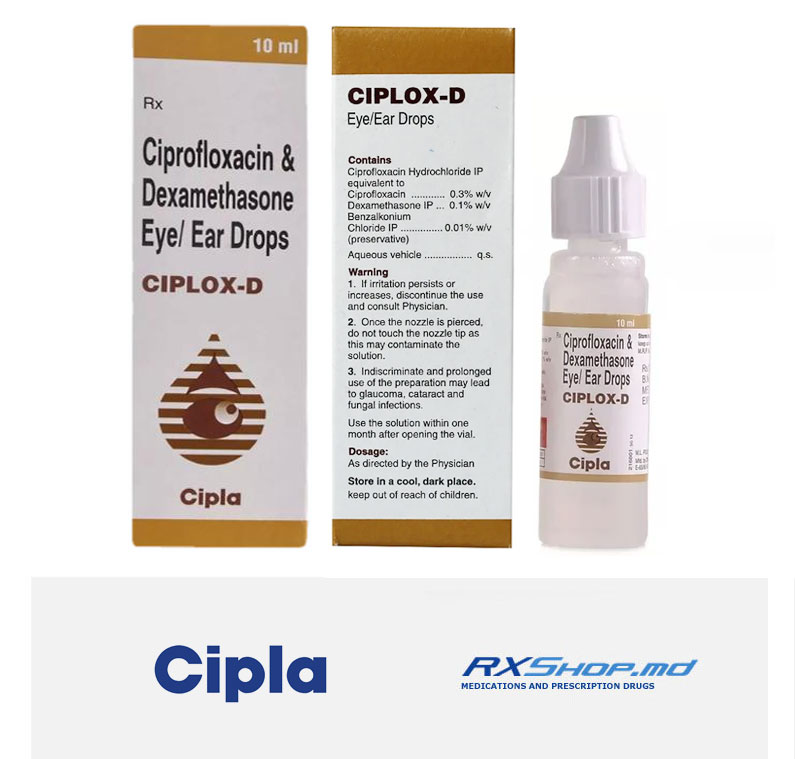
Ciplox D is an affordable ophthalmic combination of Ciprofloxacin and Dexamethasone — the same fluoroquinolone antibiotic and corticosteroid combination used worldwide for treatment of bacterial eye infections with significant inflammatory component. Manufactured by Cipla Pharmaceuticals (India), Ciplox D provides effective dual-action therapy combining bacterial killing with rapid anti-inflammatory relief in a single convenient eye drop formulation.
The combination works through complementary mechanisms. Ciprofloxacin (0.3%) is a fluoroquinolone antibiotic that inhibits bacterial DNA gyrase and topoisomerase IV — the two enzymes essential for bacterial DNA replication. It provides broad-spectrum activity against most common ocular pathogens including Staphylococcus aureus, Streptococcus pneumoniae, Haemophilus influenzae, Pseudomonas aeruginosa, and many other bacterial causes of eye infections. Dexamethasone (0.1%) is a potent corticosteroid that binds glucocorticoid receptors — reducing inflammation, redness, swelling, and tissue damage at the infection site.
Ciplox D is used for treatment of bacterial conjunctivitis with significant inflammatory component, blepharitis, blepharoconjunctivitis, post-operative ophthalmic inflammation following cataract surgery or other anterior segment procedures, and selected corneal abrasions or external ocular infections where the inflammatory response would benefit from corticosteroid suppression.
The medication is supplied as a sterile ophthalmic suspension in 5 mL bottles. Standard dosing is one to two drops in the affected eye(s) every 2-6 hours initially, tapering to less frequent dosing as the condition responds. Treatment courses are typically short (7-14 days) to minimise corticosteroid-related complications.
Important considerations include avoiding use in viral eye infections (especially herpes simplex keratitis where corticosteroids can dramatically worsen the disease), fungal eye infections, and most cases of conjunctivitis without significant inflammation. Prolonged use can elevate intraocular pressure, promote cataract formation, and mask progression of serious eye conditions. Ciplox D should be used under ophthalmologist supervision, with regular monitoring for adverse effects.
Free prescription
Discrete packaging
Have questions?
Quality Assurance
- Acute Bacterial Conjunctivitis: For acute bacterial conjunctivitis with prominent redness, discharge, and swelling;
- Blepharitis: For acute bacterial blepharitis with eyelid inflammation requiring combined antibiotic-corticosteroid therapy;
- Blepharoconjunctivitis: For combined eyelid and conjunctival inflammation with bacterial component;
- Post Cataract Surgery Drops: Post-operative eye drops following cataract surgery to prevent infection and control inflammation;
- Post LASIK Drops: Post-operative drops following LASIK or other refractive surgery;
- Post Operative Eye Drops: For anterior segment surgery aftercare requiring both anti-infective and anti-inflammatory action;
- Corneal Abrasion Inflammation: For traumatic corneal abrasions with significant inflammatory response;
- Bacterial Keratitis Selected: Selective use in stable bacterial keratitis where inflammation control is needed;
- Foreign Body Eye Aftercare: Aftercare following corneal foreign body removal to prevent infection and inflammation;
- Chemical Eye Injury Aftercare: For aftercare of minor chemical eye injuries with inflammation;
- Pediatric Bacterial Conjunctivitis: For pediatric bacterial conjunctivitis with significant inflammation under ophthalmologist guidance;
- Adult Bacterial Conjunctivitis: For adult bacterial conjunctivitis requiring combined antibiotic and anti-inflammatory therapy;
- Eyelid Infection: For bacterial eyelid infections with surrounding inflammation;
- Stye With Inflammation: For external hordeolum (stye) with significant surrounding inflammation;
- Episcleritis Adjunct: Selective adjunct in bacterial-associated episcleritis under ophthalmologist supervision;
- Anterior Uveitis Adjunct: Selective use as adjunct in anterior uveitis with bacterial risk under specialist supervision;
- Bacterial Corneal Ulcer Stable: Adjunct in stable bacterial corneal ulcer once infection is controlled and inflammation requires steroid;
- External Ocular Infection: For external ocular infections with significant inflammatory response.
- Less Eye Discharge: Resolution of purulent eye discharge as bacterial infection clears;
- Less Eye Pain: Anti-inflammatory effect rapidly reduces ocular discomfort and pain;
- Less Eyelid Swelling: Reduction of inflammatory eyelid swelling in blepharoconjunctivitis;
- Less Tearing: Reduced reflex tearing as inflammation and irritation resolve;
- Less Itching: Anti-inflammatory effect reduces ocular itching from infection or surgery;
- Less Light Sensitivity: Reduction of photophobia as anterior segment inflammation resolves;
- Better Eye Comfort: Restoration of normal eye comfort following resolution of infection and inflammation;
- Better Vision Recovery: Clearer vision as corneal and conjunctival inflammation clears;
- Faster Symptom Relief: Combined action provides faster symptom relief than antibiotic alone;
- Less Crust Formation: Reduction of eyelid crusting in blepharitis as bacterial colonization clears;
- Better Daily Function: Return to work, screen time, and normal visual activities as eye infection clears;
- Brand Ciplox D: Affordable Cipla-manufactured ophthalmic combination with established international quality manufacturing standards;
- Generic Ciprofloxacin Dexamethasone: Affordable generic combination expanding global access to dual-action eye drop therapy;
- Ciprodex Equivalent: Same active combination as the international branded products with bioequivalent therapeutic profile;
- Ciprofloxacin Ophthalmic: Broad-spectrum fluoroquinolone antibiotic with established ocular penetration profile;
- Dexamethasone Ophthalmic: Potent ophthalmic corticosteroid for rapid anti-inflammatory action;
- Antibiotic Corticosteroid Combo: Dual-mechanism therapy — kills bacteria while suppressing inflammation;
- Fluoroquinolone Eye Drops: Modern fluoroquinolone class providing broad-spectrum ocular antibacterial coverage;
- Broad Spectrum Eye Drops: Covers most common ocular bacterial pathogens including Pseudomonas aeruginosa;
- Single Bottle Dual Therapy: One bottle delivers both antibiotic and anti-inflammatory — supports adherence over separate drops;
- Bacterial Conjunctivitis Therapy: First-line for bacterial conjunctivitis with significant inflammatory component;
- Blepharitis Therapy: Effective for acute bacterial blepharitis with eyelid inflammation;
- Post Surgery Eye Drops: Standard post-operative drops following anterior segment ophthalmic surgery;
- Cipla Generic Quality: International quality manufacturing standards meeting global bioequivalence requirements;
- Affordable Eye Drops: Significantly more affordable than branded combination eye drops for chronic or repeated use;
- Pseudomonas Coverage Eye: Ciprofloxacin provides reliable coverage against Pseudomonas aeruginosa — serious ocular pathogen;
- 5 ml Multidose Bottle: Convenient 5 mL bottle supports complete treatment course in single packaging;
- Ophthalmologist Prescribed: Standard ophthalmologist option for bacterial eye infections with inflammation;
- Avoid Viral Eye Infections: Corticosteroid component can dramatically worsen herpes simplex keratitis — never use if viral cause suspected;
- Avoid Fungal Eye Infections: Corticosteroids worsen fungal eye infections — confirm bacterial cause before use;
- Short Term Use Only: Treatment courses typically 7-14 days to minimise corticosteroid-related complications;
- IOP Monitoring: Prolonged use can elevate intraocular pressure — monitor in patients with glaucoma risk;
- Cataract Risk: Long-term corticosteroid use promotes cataract formation — avoid prolonged courses;
- Specialist Supervision: Use under ophthalmologist or qualified physician supervision — not for self-treatment of persistent eye problems;
- Shake Before Use: Shake the ophthalmic suspension well before each use to ensure even drug distribution;
- Avoid Contact Lens: Remove contact lenses before instilling drops — reinsert at least 15 minutes after;
- Stable Storage: Refrigerate or store at controlled room temperature per label instructions;
- Globally Available: Cipla Ciplox D widely available in international markets — standard combination eye drop.
Generic Ciplox-D (Ciprofloxacin and Dexamethasone 10 ml) Medication guide:
📖 What is Ciplox D and its place in the otic antibiotic landscape
Ciplox D is a fixed combination of ciprofloxacin 0.3% (a fluoroquinolone antibiotic) and dexamethasone 0.1% (a corticosteroid) formulated as otic drops (ear drops) for the treatment of bacterial ear infections combining infection and inflammation. Manufactured by Cipla, Ciplox D is the generic equivalent of Alcon Ciprodex, which received FDA approval in 2003 under NDA 021537.
The combination approach addresses two problems simultaneously: ciprofloxacin kills the bacteria causing the infection, while dexamethasone reduces inflammation, pain, and swelling that make ear infections so uncomfortable. This dual action is why ciprofloxacin+dexamethasone otic has become first-line for acute otitis externa (swimmers ear) and standard therapy for post-tympanostomy-tube otorrhea in children.
📌 Quick clinical positioning
Ciplox D = topical ear drops combining antibiotic (ciprofloxacin) + corticosteroid (dexamethasone). Key strengths: first-line per AAO-HNS 2014 for acute otitis externa; FDA-approved for tympanostomy tube otorrhea; non-ototoxic (safe with perforated tympanic membrane); minimal systemic absorption; twice-daily dosing; rapid symptom relief from dexamethasone.
- 💊 Drug class
- Combination otic antibiotic + corticosteroid. Ciprofloxacin is a second-generation fluoroquinolone (bactericidal via DNA gyrase inhibition). Dexamethasone is a potent long-acting corticosteroid (anti-inflammatory via glucocorticoid receptor).
- 🏢 Manufacturer of Ciplox D
- Cipla — established Indian generic pharmaceutical company with global distribution. Original branded product (Ciprodex) manufactured by Alcon (a Novartis division). Multiple other generic manufacturers globally.
- 🌍 International brand names
- Ciprodex (US, Canada, original Alcon brand); Ciplox D (Cipla, this product); Cetraxal Plus (some European markets); Otiprio (an FDA-approved single-dose intratympanic gel formulation); generic ciprofloxacin+dexamethasone otic widely available.
- 📜 FDA approval history
- Ciprodex original approval: NDA 021537 (2003) by Alcon for acute otitis externa and acute otitis media with tympanostomy tubes. Generic ANDA approvals since 2020 following patent expiration. Cipla Ciplox D registered in India and international markets.
- 📏 Available strength
- Single formulation: ciprofloxacin 0.3% + dexamethasone 0.1% as sterile otic suspension in 7.5 mL bottle (typical). Not available as ear drops in other strengths — this is the standard concentration.
- 👋 Route of administration
- Otic (ear canal) drops — topical instillation into the affected ear. NOT for systemic use, NOT for oral use, NOT for IV use. Occasionally used off-label ophthalmically but that is not the primary indication.
- ⏱️ Onset of action
- Ciprofloxacin bactericidal effect begins within hours; dexamethasone anti-inflammatory effect begins within 12-24 hours. Symptom relief (pain, swelling) typically within 24-48 hours. Full clinical resolution: 5-7 days.
- 🌎 WHO Essential Medicines status
- Ciprofloxacin (systemic) is on the WHO Essential Medicines List; the topical otic combination is not specifically listed but is widely available globally and considered standard therapy for its indications.
The distinguishing features of Ciplox D include: fluoroquinolone antibiotic (works against Pseudomonas aeruginosa - a major otitis externa pathogen); dexamethasone anti-inflammatory (dramatic symptom relief); non-ototoxic (safe with perforated tympanic membrane, unlike older Cortisporin with neomycin); twice-daily dosing convenience; minimal systemic absorption (safer than oral antibiotics for many patients); FDA-approved pediatric use down to 6 months of age with tympanostomy tubes.
The research foundation for Ciplox D clinical positioning includes the Roland et al pivotal Ciprodex trials (Otolaryngology-Head and Neck Surgery 2003; Pediatrics 2004;113:e40-e46), the Rosenfeld 2014 AAO-HNS Acute Otitis Externa Clinical Practice Guideline, the Rosenfeld 2013 AAO-HNS Tympanostomy Tubes in Children Guideline, and the Hoberman NEJM tympanostomy tube studies.
🏛️ Ciprofloxacin+dexamethasone heritage: Alcon Ciprodex 2003 and generic era
The development of ciprofloxacin+dexamethasone otic combination by Alcon in the early 2000s addressed a specific clinical need: safer treatment for external ear infections that combined effective bactericidal antibiotic activity with rapid anti-inflammatory relief, without the ototoxicity concerns of older combination products containing neomycin (Cortisporin). Ciprodex's 2003 FDA approval marked the establishment of ciprofloxacin+dexamethasone as the preferred modern otic combination therapy.
Timeline of ciprofloxacin+dexamethasone otic development:
1980s
Ciprofloxacin developed by Bayer as a second-generation fluoroquinolone; oral and IV formulations approved 1987. Systemic ciprofloxacin becomes a major antibiotic for gram-negative infections including complicated UTI and Pseudomonas infections.
1990s
Topical ophthalmic and otic ciprofloxacin formulations developed. Ciloxan (ciprofloxacin ophthalmic 0.3%) approved 1990. Otic-focused development follows to address Pseudomonas-dominant otitis externa without ototoxic aminoglycoside components.
2003 FDA Approval
FDA approval of Ciprodex (ciprofloxacin 0.3% + dexamethasone 0.1% otic suspension) by Alcon as NDA 021537. Approved for acute otitis externa in patients 6 months and older, and acute otitis media in pediatric patients (age 6 months and older) with tympanostomy tubes.
2003
Roland et al publish pivotal trials (Otolaryngology-Head and Neck Surgery 2003) demonstrating superior efficacy and safety of ciprofloxacin+dexamethasone vs Cortisporin (polymyxin B + neomycin + hydrocortisone) for acute otitis externa. Non-ototoxic formulation and BID dosing offer clinical advantages.
2004
Roland et al publish tympanostomy tube otorrhea trial (Pediatrics 2004;113:e40-e46) — landmark study demonstrating ciprofloxacin+dexamethasone otic superior to older regimens for acute otorrhea in pediatric patients with tympanostomy tubes.
2011 Hoberman NEJM Trial
Hoberman et al publish landmark tympanostomy tube trial (NEJM 2011;364:105-115) informing pediatric AOM management approaches. Ciprofloxacin+dexamethasone otic becomes established for post-tube otorrhea management.
2013 Tympanostomy Guideline
Rosenfeld et al, AAO-HNS Clinical Practice Guideline: Tympanostomy Tubes in Children (Otolaryngology-Head and Neck Surgery 2013;149:S1-S35). Positions ciprofloxacin+dexamethasone otic among preferred topical therapies for post-tube otorrhea.
2014 AAO-HNS AOE Guideline
Rosenfeld et al, AAO-HNS Clinical Practice Guideline: Acute Otitis Externa (Otolaryngology-Head and Neck Surgery 2014;150:S1-S24). Explicitly positions ciprofloxacin+dexamethasone otic as first-line topical therapy for acute otitis externa.
2020s
Generic ciprofloxacin+dexamethasone otic becomes available following patent expiration. Multiple manufacturers including Cipla (Ciplox D), Sandoz, and others produce bioequivalent formulations. Cost decreases substantially, expanding access globally.
The contemporary role of Ciplox D in 2026 reflects two decades of established use as the preferred modern topical treatment for acute otitis externa and post-tympanostomy-tube otorrhea. The combination of effective Pseudomonas coverage, dramatic anti-inflammatory relief, non-ototoxic profile, twice-daily dosing, and pediatric age approval down to 6 months has made ciprofloxacin+dexamethasone otic the standard of care for these indications. Generic availability (Ciplox D and others) now ensures cost accessibility globally.
🧬 How Ciplox D works: dual bactericidal and anti-inflammatory mechanism
Ciplox D contains two active ingredients with complementary mechanisms of action: ciprofloxacin kills the bacteria causing infection (bactericidal), and dexamethasone reduces inflammation, pain, and swelling (anti-inflammatory). The combination addresses both the infectious and inflammatory components of ear infections simultaneously — the reason ciprofloxacin+dexamethasone otic produces faster and more complete symptom relief than antibiotic-alone otic products.
💡 The dual mechanism at a glance
Ciprofloxacin = kills bacteria (DNA gyrase inhibition, bactericidal within hours). Dexamethasone = reduces inflammation (glucocorticoid receptor activation, anti-inflammatory within 12-24 hours). Together = comprehensive treatment of bacterial ear infection with inflammatory component.
How ciprofloxacin works (the antibiotic component):
- 🧬 DNA gyrase inhibition
- Ciprofloxacin binds to bacterial DNA gyrase and topoisomerase IV — enzymes essential for bacterial DNA replication. Blocked replication prevents bacterial multiplication and triggers bacterial death. This is a fundamentally different mechanism from cell wall-active beta-lactams (penicillins, cephalosporins).
- 💥 Bactericidal effect
- Ciprofloxacin is bactericidal (kills bacteria) rather than just bacteriostatic. Effect begins within hours of first application. Rapid bacterial killing helps resolve symptoms quickly.
- 🏛️ Selectivity for bacteria
- Human cells have different topoisomerase enzymes not affected by ciprofloxacin at therapeutic concentrations. This provides selective antibacterial action with minimal direct human cell toxicity.
- 🦠 Broad gram-negative activity
- Ciprofloxacin covers Pseudomonas aeruginosa (a major otitis externa pathogen), Staphylococcus aureus, Streptococcus, Enterobacterales, and many other pathogens. Excellent for the polymicrobial ear infection setting.
- 📍 Topical concentrations
- The 0.3% otic concentration produces bacterial-killing concentrations in the ear canal far exceeding MIC for typical pathogens. Local antibacterial action without systemic drug levels.
How dexamethasone works (the anti-inflammatory component):
- 💉 Glucocorticoid receptor activation
- Dexamethasone binds to intracellular glucocorticoid receptors, altering gene transcription. This produces broad anti-inflammatory effects: reduced cytokine production, decreased inflammatory cell migration, decreased vascular permeability, decreased tissue edema.
- 🔥 Rapid inflammation reduction
- Anti-inflammatory effects begin within 12-24 hours of first application. Symptom relief (pain, swelling, itching, discharge) becomes noticeable in the same timeframe. Faster symptom relief than antibiotic-only otic products.
- 💧 Reduced ear canal edema
- In acute otitis externa, ear canal swelling can be so severe the canal is nearly closed. Dexamethasone reduces this edema, opening the canal, improving drop penetration, and reducing pain.
- 🤬 Reduced pain
- Otitis externa pain is severe (often out of proportion to visible findings). Dexamethasone anti-inflammatory action provides rapid pain relief, reducing need for systemic analgesics.
- 👎 Potential immunosuppression
- The anti-inflammatory effect includes some immunosuppression at the local level — important consideration for fungal or viral infections where corticosteroids can worsen the primary pathology. See Section 24 for corticosteroid-specific concerns.
Why the combination is better than either agent alone:
✅ Combination therapy advantages
- Faster symptom relief — dexamethasone provides anti-inflammatory action antibiotics cannot
- Better drop penetration — dexamethasone opens swollen ear canals, allowing antibiotic to reach deeper tissue
- Reduced pain — decreased need for systemic analgesics or additional pain management
- Improved adherence — patients experiencing rapid relief are more likely to complete the course
- Reduced treatment duration — combination often allows 7-day courses vs longer for antibiotic-only regimens
- Established safety — no ototoxicity in pediatric or perforated TM patients
📘 Pharmacodynamic principle
Fluoroquinolones like ciprofloxacin demonstrate concentration-dependent killing — higher local drug concentration produces faster and more complete bacterial death. The 0.3% otic concentration produces very high local concentrations far above MIC of typical pathogens. This is why relatively brief courses (7 days) achieve reliable clinical cure for acute otitis externa.
📊 The combination advantage: antibiotic + corticosteroid synergy in otic infections
The ciprofloxacin+dexamethasone combination represents a mature and evidence-based approach to acute ear infections that combine bacterial infection with inflammatory symptoms. Understanding why combination therapy is preferred over either monotherapy clarifies when Ciplox D is the right choice versus alternatives.
The clinical problem: acute otitis externa and post-tube otorrhea
Acute otitis externa (AOE) and acute otitis media with tympanostomy tubes both share two features:
🦠 Bacterial infection component
Pseudomonas aeruginosa, Staphylococcus aureus, and other bacteria colonise the moist ear canal or middle ear space. Bactericidal antibiotic needed to eliminate the pathogen.
🔥 Inflammatory component
Bacterial infection triggers substantial inflammation — pain, swelling, redness, discharge. Ear canal edema can be so severe the canal is nearly closed. Inflammation causes the majority of patient symptoms.
Why treat both together:
| Treatment approach | Bacterial coverage | Inflammation control | Speed of relief | Best for |
|---|---|---|---|---|
| Ciprofloxacin + dexamethasone (Ciplox D) | Excellent | Excellent | 24-48 hours | Acute inflammatory infections |
| Ciprofloxacin monotherapy (Cetraxal) | Excellent | None | 3-5 days | Mild infections, contraindication to steroid |
| Ofloxacin monotherapy | Good | None | 3-5 days | Post-op ear infections |
| Cortisporin (older combination) | Adequate | Good (hydrocortisone) | 2-3 days | Only if intact TM (neomycin ototoxic) |
| Oral antibiotics | Adequate | None | 3-5 days | Systemic infection, otitis media without tubes |
Clinical evidence supporting combination:
📊 Roland 2003 pivotal trial
Ciprofloxacin+dexamethasone demonstrated faster time to clinical cure and faster pain resolution compared to older Cortisporin combination in acute otitis externa. Established the modern combination as preferred therapy.
📊 Roland 2004 tympanostomy tube trial
In pediatric patients with post-tympanostomy-tube acute otorrhea, ciprofloxacin+dexamethasone was more effective than oral antibiotics and demonstrated safety in this special pediatric population.
📊 Rosenfeld 2014 guideline endorsement
AAO-HNS Clinical Practice Guideline for Acute Otitis Externa explicitly recommends topical antibiotic (with or without corticosteroid) as first-line. The combination is preferred when inflammation is prominent (most cases).
When combination not needed:
⚠️ Consider ciprofloxacin alone (Cetraxal)
- Mild otitis externa with minimal inflammation
- Corticosteroid contraindication (rare in local topical use)
- Suspected fungal component (steroids can worsen fungal infection)
- Herpes simplex or zoster (steroids contraindicated with active viral infection)
💡 Bottom line on combination advantage
For typical acute otitis externa (most cases have significant inflammation) and post-tympanostomy-tube otorrhea (inflammatory response common), the combination is superior to either agent alone. Faster symptom relief, better patient satisfaction, better drop penetration, and shorter treatment duration justify combination therapy as first-line. Reserve monotherapy for specific scenarios where steroid is contraindicated.
🦠 Bacterial spectrum of ciprofloxacin: broad gram-negative and gram-positive coverage
The bacterial spectrum of ciprofloxacin (the antibiotic component of Ciplox D) is broad, covering both gram-positive and gram-negative pathogens including Pseudomonas aeruginosa — the principal cause of external ear infections (swimmers ear). This broad coverage matches the polymicrobial nature of ear canal infections.
💡 Why Pseudomonas coverage matters
Pseudomonas aeruginosa is the #1 cause of acute otitis externa — the moist warm ear canal is an ideal Pseudomonas environment. Ciprofloxacin covers Pseudomonas reliably; older combination products like Cortisporin were less reliable. This is the principal reason ciprofloxacin+dexamethasone has become first-line for otitis externa.
Ciprofloxacin bacterial spectrum:
- 🦠 Gram-negative bacteria - the ciprofloxacin strength
- Reliably susceptible: Pseudomonas aeruginosa (principal AOE pathogen), Escherichia coli, Klebsiella pneumoniae, Proteus mirabilis, Haemophilus influenzae, Moraxella catarrhalis, Enterobacter species, Serratia marcescens, Neisseria species. Excellent gram-negative coverage.
- Variable: Some Pseudomonas strains showing increasing resistance in some regions; local antibiogram may guide expectations.
- 🦠 Gram-positive bacteria
- Susceptible: Staphylococcus aureus (both MSSA and some MRSA strains — variable), Staphylococcus epidermidis, Streptococcus pyogenes, Streptococcus pneumoniae (susceptible strains).
- Variable coverage: Streptococcus pneumoniae (some resistance evolution), Enterococcus (variable).
- 🦠 Atypical pathogens
- Susceptible: Mycoplasma, Chlamydia, Legionella. Not typically relevant for otic infections but part of ciprofloxacin systemic spectrum.
- 🦠 Not covered
- Fungi (Candida, Aspergillus - can cause otomycosis, not covered by ciprofloxacin); most anaerobes (limited activity); Mycobacteria (ciprofloxacin has some activity but not covered by short topical courses); viruses.
Otitis externa pathogens and Ciplox D coverage:
| Pathogen | Frequency in AOE | Ciplox D coverage |
|---|---|---|
| Pseudomonas aeruginosa | 20-60% (most common) | Reliable |
| Staphylococcus aureus | 10-20% | MSSA reliable; MRSA variable |
| Staphylococcus epidermidis | 10-15% | Reliable |
| Polymicrobial (mixed pathogens) | 20-40% | Broad coverage of typical pathogens |
| Streptococcus species | 5-10% | Reliable for susceptible strains |
| Fungal (Aspergillus, Candida) | 2-10% (otomycosis) | NOT covered - need antifungal |
| Herpes simplex/zoster | rare | NOT covered - antiviral if suspected |
Post-tympanostomy tube otorrhea pathogens:
| Pathogen | Frequency | Ciplox D coverage |
|---|---|---|
| Streptococcus pneumoniae | 25-30% | Susceptible strains reliable |
| Haemophilus influenzae | 20-25% | Reliable |
| Pseudomonas aeruginosa (older children/chronic) | 15-25% | Reliable |
| Staphylococcus aureus | 10-15% | MSSA reliable |
| Moraxella catarrhalis | 5-10% | Reliable |
| Polymicrobial | 15-25% | Broad coverage matches |
❌ Important pathogens NOT covered by Ciplox D
- Fungal otitis externa (otomycosis) — Aspergillus, Candida. Use antifungal ear drops (clotrimazole, acetic acid) instead.
- Herpes simplex or zoster oticus (Ramsay Hunt syndrome) — need antiviral (acyclovir, valacyclovir).
- Chronic suppurative otitis media with cholesteatoma — may need combined systemic and topical approach with surgical consideration.
- Malignant otitis externa — invasive Pseudomonas infection in immunocompromised/diabetic patients; requires systemic IV antibiotics not topical.
⏱️ Pharmacokinetics of topical otic ciprofloxacin and dexamethasone
The pharmacokinetics of Ciplox D reflect its topical otic formulation — designed for local action at the ear infection site with minimal systemic absorption. This is fundamentally different from oral or IV ciprofloxacin PK. The topical concentrations at the site of infection greatly exceed MIC of typical pathogens, while systemic drug levels remain very low.
💡 Topical vs systemic PK
Topical Ciplox D produces very high local drug concentrations in the ear canal or middle ear space (through tympanostomy tube), often 1000x or higher than typical MICs. Systemic absorption is minimal (<1% of applied dose reaches systemic circulation). This means excellent local antibacterial action with essentially no risk of systemic ciprofloxacin adverse effects (tendon issues, QT prolongation, etc.).
Ciprofloxacin PK in otic use:
- 📍 Local concentration
- Applied 0.3% concentration produces very high drug levels at the site of application. Direct contact with infected tissue maximises antibacterial effect. Concentration 1000x or more above MIC of typical AOE pathogens.
- 📍 Ear canal retention
- Suspension formulation allows ear canal retention after instillation. Patient positioning (affected ear up for 1 minute after instillation) maximises contact time.
- 📍 Middle ear penetration
- In patients with tympanostomy tubes or perforated TM, drops enter middle ear space. Ciprofloxacin achieves effective concentrations for middle ear pathogens.
- 📉 Systemic absorption
- Less than 1% of applied dose is absorbed systemically. Systemic drug levels essentially undetectable. Systemic adverse effects of ciprofloxacin (tendinitis, QT, drug interactions) not clinically relevant with topical use.
- 💧 Elimination
- Trace systemic amounts eliminated renally (same as systemic ciprofloxacin). Not clinically meaningful given minimal absorption.
Dexamethasone PK in otic use:
- 📍 Local anti-inflammatory action
- Applied 0.1% concentration provides sufficient tissue concentrations for local anti-inflammatory effect. Onset of anti-inflammatory action within 12-24 hours.
- 📉 Systemic absorption
- Minimal systemic absorption - trace amounts reach systemic circulation. Systemic corticosteroid effects (adrenal suppression, hyperglycaemia) not clinically relevant with topical otic use over standard 7-day course.
- ⏳ Half-life (systemic)
- Dexamethasone systemic half-life approximately 3-4 hours (biological effect longer). Not clinically meaningful for topical otic dose since systemic absorption minimal.
- 🧬 Metabolism (systemic)
- Hepatic CYP3A4 - if systemic exposure occurred, drug interactions with strong CYP3A4 inhibitors/inducers could be relevant. Not clinically meaningful for topical otic use.
✅ The topical PK advantage
The topical formulation is the principal reason Ciplox D is safer than systemic ciprofloxacin. High local concentrations at the site of infection achieve strong antibacterial effect. Minimal systemic absorption means: no significant systemic drug interactions, no fluoroquinolone class warnings (tendon rupture, aortic aneurysm risk), no need for renal or hepatic dose adjustment, safe in pregnancy and lactation, minimal drug-drug interaction concerns.
Practical PK implications:
- Twice-daily dosing - sufficient for local concentration maintenance
- 7-day standard course - achieves clinical cure for typical AOE
- Proper instillation technique - critical for adequate ear canal penetration (see Section 15)
- Head positioning after instillation - keeps drops in ear canal 1 minute
- No dose adjustment for renal or hepatic impairment (minimal systemic absorption)
- Minimal drug interaction concerns - can co-administer with most other medications
- Pregnancy and lactation acceptable - see Section 20
- Age approval down to 6 months - safety established in pediatric populations
✅ FDA-approved indications for ciprofloxacin+dexamethasone otic
Ciprofloxacin+dexamethasone otic (Ciplox D generic; Ciprodex brand) has two FDA-approved indications both focused on external and middle ear infections requiring combined antibacterial and anti-inflammatory therapy. Understanding these indications and their appropriate use guides clinical prescribing.
FDA-approved indications:
👂 Acute otitis externa (AOE)
Patients age 6 months and older with acute otitis externa caused by susceptible strains of Staphylococcus aureus and Pseudomonas aeruginosa. Per the AAO-HNS 2014 Clinical Practice Guideline (Rosenfeld et al), ciprofloxacin+dexamethasone otic is positioned as first-line topical therapy for typical AOE. Standard treatment duration: 7 days.
👶 Acute otitis media with tympanostomy tubes (AOMT)
Pediatric patients (age 6 months and older) with acute otorrhea (drainage) through tympanostomy tubes caused by susceptible strains of Streptococcus pneumoniae, Haemophilus influenzae, Moraxella catarrhalis, Staphylococcus aureus, and Pseudomonas aeruginosa. This indication addresses the common pediatric problem of ear drainage after ear tube placement.
Age approval detail:
👶 Age 6 months and older
Both indications approved for patients 6 months of age and older. This is a very pediatric-friendly approval — safe for infants and toddlers when the indication matches. Below 6 months of age, safety data less established; pediatric ID consultation appropriate if considering off-label use in younger infants.
Common off-label uses (not FDA-approved but clinically used):
- 👀 Ophthalmic use (corneal infections)
- Occasional off-label ophthalmic use for combined bacterial keratitis with inflammation. Preferred ophthalmic products for eye use are formulated specifically for ophthalmic pH and osmolarity — otic formulation not ideal but sometimes used. Consider dedicated ophthalmic ciprofloxacin+dexamethasone (Zylet, Tobradex — different combinations) for eye indications.
- 🥅 Post-otologic surgery care
- Off-label use after ear surgery to prevent post-operative infection and reduce inflammation. Otologists may prescribe based on individual case.
- 🥵 Chronic suppurative otitis media
- Off-label use for chronic middle ear infection with drainage. May be part of combined systemic and topical approach.
- 👤 Adult use for other otic conditions
- Off-label but common: adult use for AOE (approval extends to all ages 6 months+), post-op ear surgery, external ear inflammation.
Indications NOT appropriate for Ciplox D:
❌ Use alternative
- Acute otitis media WITHOUT tympanostomy tubes — middle ear space not accessible via ear canal drops. Use oral antibiotic (amoxicillin or Augmentin per AAP guidelines).
- Fungal otitis externa (otomycosis) — Aspergillus, Candida. Ciplox D not antifungal. Use antifungal ear drops (clotrimazole solution, acetic acid, or specific antifungal).
- Viral ear infections (herpes zoster oticus / Ramsay Hunt) — use antiviral (acyclovir, valacyclovir) plus supportive care.
- Malignant otitis externa — invasive Pseudomonas infection, usually diabetic or immunocompromised. Requires systemic IV antibiotics; topical alone inadequate.
- Systemic bacterial infections — oral or IV antibiotics needed; topical inadequate.
- Perforated TM WITHOUT tympanostomy tubes — while Ciplox D is non-ototoxic, some clinicians prefer specific formulations for perforated TM without tubes. See Section 11.
- Ear pain without infection — no antibiotic needed; assess for other causes (TMJ, referred pain).
- Active TB, herpes, other specific infections — corticosteroid component contraindicated with active viral infections.
📘 Contemporary positioning summary
Ciplox D has two established indications in contemporary otologic practice: (1) first-line for acute otitis externa per AAO-HNS 2014 guidelines; (2) standard therapy for post-tympanostomy-tube otorrhea in children. Both indications benefit from the combined antibacterial + anti-inflammatory approach. Use for these indications; refer to alternative therapies for other otic conditions.
👂 Acute otitis externa - the signature Ciplox D indication
Acute otitis externa (AOE), also called "swimmers ear," is the signature Ciplox D indication and the most common reason for prescribing ciprofloxacin+dexamethasone otic drops. Per the AAO-HNS 2014 Clinical Practice Guideline by Rosenfeld and colleagues (Otolaryngology-Head and Neck Surgery 2014;150:S1-S24), topical antibiotic therapy is first-line, and ciprofloxacin+dexamethasone combines the recommended antibiotic action with dexamethasone anti-inflammatory relief.
📘 AOE clinical framework
AOE is external ear canal infection - not middle ear disease. Symptoms: severe ear pain (often on tragus manipulation), discharge, itching, hearing muffled by canal edema. Common in swimmers, humid environments, ear canal trauma from Q-tips or hearing aids. Pseudomonas aeruginosa is the #1 pathogen. Treatment is topical - oral antibiotics are usually not necessary.
Typical AOE presentation:
- 🤬 Severe ear pain
- Often out of proportion to visible findings. Pain worsens dramatically with tragus manipulation or auricle traction — the classic AOE finding. Distinguishes from middle ear infection (where pain is less positional).
- 💧 Ear discharge (otorrhea)
- Typically purulent, sometimes bloody. Volume variable. Discharge is from the external canal, not middle ear.
- 🎤 Muffled hearing
- Due to ear canal narrowing from inflammation and edema. Not sensorineural hearing loss.
- 🏮 Ear canal appearance
- Red, swollen, moist appearance. Ear canal may be so narrow the tympanic membrane cannot be visualised. Debris and discharge often present.
- 🏊 Risk factors
- Recent swimming (chlorinated or freshwater), humid climate, Q-tip use disrupting canal skin, hearing aid or earbud use, dermatitis (seborrheic, psoriasis), diabetes (increased Pseudomonas risk including malignant otitis externa).
- 🌡️ Fever and systemic symptoms
- Usually absent or mild. Significant fever suggests deeper infection, malignant otitis externa, or wrong diagnosis.
AOE treatment per AAO-HNS 2014:
💊 First-line: Topical antibiotic +/- corticosteroid
Ciplox D (ciprofloxacin 0.3% + dexamethasone 0.1%) 4 drops in affected ear twice daily for 7 days is the standard modern treatment. Combination product preferred when inflammation prominent (most cases). Ofloxacin monotherapy or ciprofloxacin monotherapy acceptable alternatives.
⚠️ Analgesia
AOE pain is severe. Oral analgesics (acetaminophen, NSAIDs) important adjunct. Some clinicians prescribe short course of opioid for severe cases. Dexamethasone component of Ciplox D reduces pain within 24-48 hours.
⚠️ Wick placement
If ear canal is severely edematous (drops cannot penetrate), consider wick placement — a small compressed sponge inserted into the canal that soaks up drops and allows deeper penetration. Wick left in place for 2-3 days, then removed and drops applied directly. May require otolaryngology referral.
⚠️ Water precautions
Keep ear DRY during treatment. Avoid swimming for 7-10 days. Use ear plugs or cotton with petroleum jelly during showers. Water exposure prolongs AOE and increases relapse.
When to refer to otolaryngology:
- Failure to improve within 48-72 hours of appropriate therapy
- Severe pain not controlled by combination therapy and oral analgesics
- Ear canal so swollen that drops cannot be instilled (wick placement needed)
- Suspected malignant otitis externa (diabetic patient, severe pain, cranial nerve involvement)
- Recurrent AOE (more than 3-4 episodes per year)
- Chronic otorrhea beyond 3 months
- Suspected fungal component (otomycosis)
- Perforated TM without tubes (drops may still be OK but consider referral)
Practical workflow for AOE with Ciplox D:
- Confirm AOE diagnosis (severe pain with tragus manipulation, canal inflammation)
- Rule out mimics: middle ear infection, mastoiditis, malignant otitis externa
- Assess severity: mild (canal open, minimal discharge), moderate, severe (canal closed, severe pain)
- Clean canal if possible (curette, suction) — improves drop penetration
- Prescribe Ciplox D 4 drops BID in affected ear for 7 days
- If severe canal edema: consider wick placement
- Prescribe adequate analgesia: acetaminophen/NSAIDs, occasionally opioid
- Counsel about: water precautions, proper instillation technique (Section 15), pain management, symptom resolution timeline
- Follow-up at 48-72 hours if not improved
- Address risk factors (swimming habits, Q-tip use, hearing aid hygiene) for recurrence prevention
- Document diagnosis, severity, treatment, follow-up plan
✅ Why Ciplox D is first-line for AOE
Ciplox D covers the principal AOE pathogens (Pseudomonas, Staphylococcus), provides dexamethasone anti-inflammatory relief within 24-48 hours (dramatic pain reduction), is non-ototoxic, twice-daily dosing supports adherence, generic pricing keeps costs low, and pediatric approval down to 6 months. For typical uncomplicated AOE, this is the modern standard of care.
👶 Acute otitis media with tympanostomy tubes - pediatric otorrhea
Acute otitis media with tympanostomy tubes (AOMT) is the second FDA-approved indication for ciprofloxacin+dexamethasone otic. When children with previously placed ear tubes develop acute drainage from the ear, topical antibiotic drops through the tube are often more effective than oral antibiotics, and Ciplox D is the standard modern option.
📘 Why topical drops work for AOMT
Tympanostomy tubes create an opening in the tympanic membrane that allows direct communication between ear canal and middle ear. Topical drops can enter the middle ear through the tube and reach the site of infection. This is why topical therapy is often more effective than oral for post-tube otorrhea.
What is a tympanostomy tube?
Tympanostomy tubes (ear tubes, ventilation tubes, PE tubes) are small tubes surgically placed through the tympanic membrane to ventilate the middle ear. They are commonly placed in pediatric patients with:
- Recurrent acute otitis media (3+ episodes in 6 months or 4+ in a year)
- Chronic otitis media with effusion (persistent middle ear fluid causing hearing loss)
- Complications of ear infections
- Certain craniofacial abnormalities affecting eustachian tube function
Tubes typically remain in place for 12-18 months, then extrude naturally. During this time, middle ear infections can present as ear drainage through the tube (otorrhea) rather than the typical middle ear symptoms of children without tubes.
AOMT pathogens and Ciplox D coverage:
| Pathogen | Frequency | Ciplox D coverage |
|---|---|---|
| Streptococcus pneumoniae | 25-30% (younger children) | Susceptible strains reliable |
| Haemophilus influenzae | 20-25% | Reliable |
| Pseudomonas aeruginosa (older children/chronic) | 15-25% | Reliable |
| Staphylococcus aureus | 10-15% | MSSA reliable |
| Moraxella catarrhalis | 5-10% | Reliable |
| Polymicrobial | 15-25% | Broad coverage matches |
Treatment of AOMT with Ciplox D:
💊 Standard pediatric dose
Ciplox D 4 drops in affected ear twice daily for 7 days. Pediatric ages 6 months and older. Position child ear-up during administration; keep in position 1 minute after drops. Pump tragus gently to help drop entry.
Comparison: topical (Ciplox D) vs oral antibiotic for AOMT:
| Feature | Ciplox D (topical) | Oral antibiotic (amoxicillin/Augmentin) |
|---|---|---|
| Efficacy | Roland 2004: superior for AOMT | Adequate |
| Pathogen coverage | Includes Pseudomonas | Does not cover Pseudomonas |
| Systemic effects | Minimal absorption | Systemic effects (GI, rash, resistance) |
| Palatability | Ear drops - not tasted | Oral suspension - taste issues in children |
| Cost | Higher per unit | Lower per unit |
| Duration | 7 days | 7-10 days |
| Compliance | Parent-administered ear drops | Requires child oral cooperation |
Practical clinical workflow for AOMT with Ciplox D:
- Confirm AOMT diagnosis: ear drainage through known tympanostomy tube in pediatric patient
- Distinguish from AOE (external ear infection - usually with intact TM or tube not draining)
- Distinguish from external canal infection secondary to drainage irritation
- Assess severity: mild otorrhea vs severe otorrhea with fever, systemic symptoms
- For typical uncomplicated AOMT: Ciplox D 4 drops BID for 7 days
- Counsel caregivers on: proper administration technique, keeping ear dry between doses, complete course
- Follow-up at 48-72 hours if not improved
- Consider oral antibiotic in addition if: fever, systemic symptoms, severe illness, treatment failure
- Ear/nose/throat (ENT) consultation if: chronic drainage beyond 2 weeks, treatment failure, tube dislodgement, recurrent AOMT episodes
- Address prevention: keep ears dry during bathing/swimming (custom ear plugs), address underlying causes of ear tube placement (allergies, etc.)
- Document diagnosis, treatment, follow-up plan
✅ Why topical Ciplox D preferred for AOMT
Roland 2004 pivotal trial demonstrated superior efficacy of ciprofloxacin+dexamethasone otic over oral antibiotics for post-tympanostomy-tube otorrhea. The topical approach delivers antibiotic directly to the middle ear space through the tube, achieves high local concentrations, covers Pseudomonas (which oral amoxicillin/Augmentin does not), reduces systemic drug exposure and side effects, and is generally well-tolerated by children. This is the standard modern approach.
👀 Ophthalmic use of ciprofloxacin+dexamethasone - selected corneal indications
Although Ciplox D is FDA-approved as an otic (ear) preparation, ophthalmic (eye) use of ciprofloxacin+dexamethasone occasionally occurs — either off-label with the otic product or with different eye-specific formulations. This section clarifies the ophthalmic considerations.
⚠️ Ciplox D is OTIC, not ophthalmic
Ciplox D (Ciprodex generic) is formulated for the ear canal, not the eye. The pH, osmolarity, and preservatives are optimised for otic use. Eye-specific ciprofloxacin+corticosteroid combinations exist (Zylet, Tobradex — though these are actually loteprednol+tobramycin or dexamethasone+tobramycin respectively, not ciprofloxacin+dexamethasone). True ciprofloxacin+dexamethasone ophthalmic is much less common than the otic version.
Ophthalmic products for eye infections with inflammation:
| Product | Composition | Indication |
|---|---|---|
| Ciloxan (ophthalmic) | Ciprofloxacin 0.3% alone | Bacterial keratitis, conjunctivitis |
| Zylet (ophthalmic) | Loteprednol 0.5% + tobramycin 0.3% | Steroid-responsive inflammation with infection risk |
| Tobradex (ophthalmic) | Dexamethasone 0.1% + tobramycin 0.3% | Steroid-responsive inflammation with infection risk |
| Maxitrol (ophthalmic) | Neomycin + polymyxin B + dexamethasone | Older combination, various eye conditions |
| Ciprofloxacin+dexamethasone ophthalmic (rare) | Same as Ciplox D composition | Same indications as Zylet/Tobradex if available |
Common eye conditions where combination antibiotic+corticosteroid used:
- 🔻 Bacterial keratitis with inflammation
- Corneal ulcer with substantial inflammation. Typically managed by ophthalmology with fortified antibiotics + judicious steroid use. Not a primary care indication.
- 🔻 Post-cataract surgery care
- Common ophthalmology use of combination drops to prevent infection and control inflammation post-op.
- 🔻 Blepharoconjunctivitis with staphylococcal component
- Chronic eyelid inflammation with staphylococcal colonisation - combination therapy may be considered by ophthalmology.
- 🔻 Marginal keratitis
- Sterile inflammatory response often associated with staphylococcal blepharitis - combination products sometimes used.
🚫 Do NOT use Ciplox D otic in the eye without ophthalmology guidance
Otic products are not formulated for eye use. Different pH, preservatives, and osmolarity than ophthalmic products can cause corneal irritation, delayed healing, or complications. If eye infection with inflammation is suspected, use dedicated ophthalmic products under ophthalmology supervision. Corticosteroid use in the eye requires careful consideration of contraindications (herpes simplex keratitis, fungal keratitis, glaucoma risk).
Key considerations for ophthalmic corticosteroid use:
- Rule out herpes simplex keratitis before steroid use - can cause dendritic ulcer worsening leading to corneal scarring
- Rule out fungal keratitis - steroids can dramatically worsen fungal infections
- Monitor intraocular pressure - topical steroids can cause glaucoma in susceptible patients
- Cataract risk with prolonged use
- Delayed corneal healing - avoid in patients with corneal epithelial defects
- Ophthalmology follow-up essential for any eye infection treated with steroids
📘 Bottom line on ophthalmic use
Ciplox D is an otic (ear) product - use it for ear indications. For eye infections with inflammation, refer to ophthalmology for evaluation and appropriate eye-specific therapy. The eye has specific requirements (formulation, preservatives, monitoring) that otic products do not meet. Do not substitute otic products for ophthalmic use.
🥊 Perforated tympanic membrane safety and non-ototoxic formulation
One of the principal advantages of Ciplox D over older combination otic products is its non-ototoxic profile — safe to use in patients with perforated tympanic membrane (TM) or tympanostomy tubes. Older products like Cortisporin contain neomycin, an ototoxic aminoglycoside that can cause hearing loss when it reaches the inner ear through a perforation. The ciprofloxacin+dexamethasone combination avoids this risk.
✅ Ciplox D non-ototoxic profile
Ciprofloxacin (fluoroquinolone) is not ototoxic at topical concentrations. Dexamethasone (corticosteroid) is not ototoxic. Neither active ingredient causes hearing loss when it reaches the middle ear space through a perforated TM or ventilation tube. This is why Ciplox D is FDA-approved for use in patients with tympanostomy tubes and is safe for patients with perforated TM.
What is tympanic membrane perforation?
The tympanic membrane (eardrum) is a thin membrane separating the ear canal from the middle ear. Perforation (a hole in the eardrum) can result from:
- Acute otitis media with rupture (spontaneous perforation from pressure)
- Trauma (Q-tip injury, barotrauma from flying or diving)
- Chronic otitis media with persistent perforation
- Surgical placement of tympanostomy tubes (intentional controlled perforation)
When perforation is present, drops applied to the ear canal can enter the middle ear space. This is beneficial for treatment (drops reach the infection site) but creates ototoxicity concern for certain drug classes.
What is ototoxicity?
👂 Ototoxicity = drug-induced hearing loss
Ototoxicity is drug-induced damage to inner ear structures causing hearing loss, tinnitus, or balance problems. Certain drug classes are ototoxic when they reach the inner ear: aminoglycosides (gentamicin, neomycin, tobramycin), platinum chemotherapy (cisplatin), certain diuretics (furosemide in high doses). When these drugs enter middle ear through TM perforation, they can cross into inner ear and cause permanent hearing loss.
Comparison: ototoxic vs non-ototoxic otic drops:
| Product | Composition | Ototoxic? | Safe with perforated TM? |
|---|---|---|---|
| Ciplox D (Ciprodex) | Ciprofloxacin + dexamethasone | No | Yes - FDA-approved for tympanostomy tubes |
| Cetraxal (ciprofloxacin alone) | Ciprofloxacin | No | Yes |
| Ofloxacin otic (Floxin) | Ofloxacin | No | Yes - FDA-approved for perforated TM |
| Cortisporin | Polymyxin B + neomycin + hydrocortisone | YES (neomycin) | NO - contraindicated |
| Domeboro (aluminum acetate) | Antiseptic astringent | No | Consider alternative first |
| Acetic acid (VoSol) | Acetic acid + hydrocortisone | Low | Consider alternative first |
🚫 Do NOT use Cortisporin with perforated TM
The neomycin component of Cortisporin is a well-known ototoxin. In patients with perforated TM or tympanostomy tubes, neomycin can reach the inner ear and cause permanent sensorineural hearing loss. Cortisporin is contraindicated in patients with perforated TM. Use Ciplox D or ofloxacin otic instead.
Roland safety studies establishing non-ototoxicity:
The pivotal Roland et al 2004 tympanostomy tube trial (Pediatrics 2004;113:e40-e46) and subsequent safety studies established that ciprofloxacin+dexamethasone otic is non-ototoxic in pediatric patients with tympanostomy tubes. Hearing was monitored during and after treatment; no ototoxicity signals emerged. FDA approval for use in patients with tympanostomy tubes reflects this safety profile.
Practical implications:
✅ Ciplox D safe scenarios
- Pediatric patients with tympanostomy tubes — FDA-approved
- Acute otitis media with rupture — safe to use
- Chronic otitis media with perforation — safe topical therapy
- Post-otologic surgery — often prescribed by ENT surgeons
- Traumatic TM perforation — safe when antibiotic indicated
The non-ototoxic profile of Ciplox D is one of its principal clinical advantages over older combination products and is a key reason it has become the modern standard of care for otic combination therapy.
💧 Comparison to other otic antibiotic preparations
Multiple otic antibiotic preparations are available for ear infections, differing in antibiotic class, presence or absence of corticosteroid, ototoxicity profile, and clinical positioning. Understanding the landscape helps identify when Ciplox D is the right choice versus alternatives.
Otic antibiotic preparation landscape:
| Product | Antibiotic | Corticosteroid | Ototoxic? | Primary use |
|---|---|---|---|---|
| Ciplox D / Ciprodex | Ciprofloxacin | Dexamethasone | No | Modern standard: AOE + tympanostomy AOM |
| Cetraxal | Ciprofloxacin alone | None | No | AOE without significant inflammation |
| Ofloxacin otic (Floxin) | Ofloxacin alone | None | No | AOE, perforated TM safe |
| Cortisporin | Polymyxin B + neomycin | Hydrocortisone | Yes (neomycin) | Only intact TM (older legacy product) |
| Colistimethate otic | Colistin | Neomycin + hydrocortisone | Yes (neomycin) | Rare use, legacy product |
| Acetic acid + hydrocortisone (VoSol HC) | Acetic acid (weak antibacterial) | Hydrocortisone | Low | Mild AOE, prophylaxis |
| Domeboro (aluminum acetate) | Astringent (weak) | None | No | Adjunct, not standalone |
| Otovel | Ciprofloxacin + fluocinolone acetonide | Fluocinolone | No | AOM with tympanostomy tubes (alternative to Ciprodex) |
| Otiprio (intratympanic gel) | Ciprofloxacin | None (procedural) | No | Single-dose intratympanic during tube placement |
Category summary:
🏆 Modern preferred: Ciplox D / Ciprodex / Otovel
Fluoroquinolone + corticosteroid combination. Non-ototoxic. Broad coverage including Pseudomonas. Anti-inflammatory relief. Twice-daily. FDA-approved down to 6 months. First-line per AAO-HNS 2014 for AOE, standard for tympanostomy tube AOM.
✅ Fluoroquinolone monotherapy: Cetraxal, Ofloxacin
Fluoroquinolone alone (no corticosteroid). Non-ototoxic. Broad coverage. Acceptable alternatives when corticosteroid contraindicated (rare) or when inflammation is minimal. Ofloxacin has longer FDA history for perforated TM use.
⚠️ Legacy combinations: Cortisporin, Colistimethate
Contain ototoxic neomycin. Historical use before fluoroquinolone otic drops. Contraindicated with perforated TM or tympanostomy tubes. Modern practice largely replaced by non-ototoxic alternatives, but still occasionally prescribed for intact-TM AOE where lower cost is priority.
🔬 Adjunct/mild: Acetic acid, Domeboro
Weak antibacterial action. May be used as adjunct, for mild AOE, or for AOE prophylaxis in swimmers. Not first-line for established significant infection.
When to choose which otic product:
- 🏆 Ciplox D — first choice for most AOE and post-tube AOM
- Combines effective antibacterial + anti-inflammatory. Non-ototoxic. FDA-approved for typical indications. Modern standard.
- ✅ Ofloxacin otic (Floxin) — good alternative
- Similar spectrum. Non-ototoxic. Longer FDA history for perforated TM. Consider if patient responded poorly to ciprofloxacin previously, cost consideration, or physician preference.
- ✅ Cetraxal (ciprofloxacin alone) — steroid-avoiding alternative
- Consider when: suspected fungal component (steroid can worsen), viral infection (herpes zoster oticus), or specific corticosteroid contraindication. Not commonly needed in typical AOE.
- ⚠️ Cortisporin — legacy option, only intact TM
- Cheaper but ototoxic neomycin. Only appropriate for confirmed intact TM. Modern practice generally prefers non-ototoxic alternatives even for intact TM.
- 🔬 Acetic acid — mild cases and prophylaxis
- Adjunct or for mild AOE. Also used for swimmers ear prophylaxis (dilute acetic acid drops after swimming).
💡 Contemporary consensus
In modern outpatient otologic practice, fluoroquinolone-based otic drops (Ciplox D, Ciprodex, ofloxacin, Cetraxal) have largely replaced older ototoxic combination products (Cortisporin). For typical AOE with inflammation, the ciprofloxacin+dexamethasone combination (Ciplox D) provides the most complete symptom relief. Ofloxacin monotherapy is a solid alternative. Legacy Cortisporin retains only niche use for intact-TM cases where cost is priority — and even then, modern practice generally prefers safer alternatives.
💊 Standard adult Ciplox D dosing
Standard adult Ciplox D dosing is weight-independent — the same dose applies to all adults regardless of body size. The topical route means dose is determined by drops instilled locally, not systemic drug exposure. Twice-daily administration is convenient and matches the pharmacodynamic requirements.
Adult Ciplox D dosing:
| Indication | Dose | Frequency | Duration |
|---|---|---|---|
| Acute otitis externa (AOE) | 4 drops in affected ear | Twice daily (BID) | 7 days |
| Post-tympanostomy tube otorrhea (adult with tubes) | 4 drops in affected ear | Twice daily (BID) | 7 days |
| Bilateral infection | 4 drops in EACH affected ear | Twice daily (BID) | 7 days |
| Off-label prophylaxis (rare, post-op) | Per otologist | Variable | Variable |
📌 The 4-drops BID standard
The 4 drops twice daily for 7 days regimen is used for all typical indications in patients aged 6 months and older. This dosing was established in the Roland 2003/2004 pivotal trials and confirmed in subsequent clinical experience. Both morning and evening doses are essential — do not skip.
Practical administration considerations:
- 📧 Twice-daily scheduling
- Typical times: 8 AM (morning) and 8 PM (evening), or 9 AM and 9 PM. Both doses important — do not skip. The 12-hour interval maintains adequate ciprofloxacin concentrations for time-above-MIC and dexamethasone anti-inflammatory effect.
- 📍 Bilateral infections
- If both ears infected, apply 4 drops to EACH ear at each dose. Total: 8 drops per dose, 16 drops per day. Perform each ear separately with proper positioning between doses.
- 🔭 Ear canal preparation
- If ear canal contains debris or discharge, cleaning by healthcare provider may improve drop penetration. Cleaning at home (with cotton swabs pushed into canal) generally NOT recommended — can cause trauma or push debris deeper.
- 🌡️ Warm the bottle
- Cold ear drops can cause dizziness (caloric effect on inner ear). Warm the closed bottle in your hands for 1-2 minutes before instillation to bring drops to body temperature.
- ✅ Complete the course
- Even if symptoms improve within 2-3 days, complete the full 7-day course. Stopping early increases relapse and resistance risk. See Section 16 for duration details.
- 🏊 Water precautions during therapy
- Keep ear DRY during treatment. Avoid swimming for 7-10 days. Use ear plugs or cotton with petroleum jelly during showers. Water in the ear canal displaces drops and dilutes their effect.
Practical workflow for adult Ciplox D prescribing:
- Confirm appropriate indication (AOE, post-tube otorrhea)
- Rule out contraindications (viral, fungal, herpes, TB - see Section 36)
- Assess ear canal for severe edema requiring wick placement
- Prescribe: Ciplox D 4 drops twice daily in affected ear for 7 days
- Prescribe adjunctive analgesia (acetaminophen or NSAIDs for pain)
- Counsel about: administration technique, water precautions, complete course, warm the bottle
- Address ear canal preparation if needed (professional cleaning, wick placement)
- Plan follow-up at 48-72 hours if severe or not improving
- Document indication, dose, duration, adjunctive care
✅ Adult dosing simplicity
The Ciplox D adult dosing regimen is straightforward: 4 drops, twice daily, 7 days for all typical indications. No weight-based calculation, no renal adjustment, no hepatic adjustment, no interaction dose adjustments. The topical route eliminates most complexity of systemic antibiotic prescribing.
👶 Pediatric Ciplox D dosing - weight-independent otic drops
Pediatric Ciplox D dosing is identical to adult dosing — one of the practical advantages of topical therapy. The same 4 drops twice daily regimen applies regardless of age or weight in patients 6 months and older. No weight-based calculation needed.
👶 Pediatric Ciplox D key facts
FDA-approved age: 6 months and older. Dose: 4 drops in affected ear twice daily. Duration: 7 days. Weight-based calculation: NOT needed. Renal adjustment: NOT needed. Hepatic adjustment: NOT needed. Topical route eliminates most pediatric dosing complexity.
Pediatric Ciplox D dosing by indication:
| Indication | Age | Dose | Frequency | Duration |
|---|---|---|---|---|
| Acute otitis externa | 6 months+ | 4 drops in affected ear | BID | 7 days |
| AOM with tympanostomy tubes | 6 months+ | 4 drops in affected ear | BID | 7 days |
| Bilateral infection | 6 months+ | 4 drops in EACH ear | BID | 7 days |
| Age below 6 months | Off-label | Pediatric ID consultation | - | - |
Age-specific considerations:
- 👶 Infants 6-12 months
- FDA-approved and safe. Standard dose. Extra care with administration — infant may cry or move, making drop instillation challenging. Have another adult help hold infant. Use ear-up positioning.
- 🧒 Toddlers (1-3 years)
- Common age group for post-tube AOM. Distraction techniques (toys, phone videos, favorite blanket) help. May resist drops — persist with brief application, then reward.
- 👦 Older children (4-12 years)
- Usually cooperative. Explain what will happen. Involve child in choosing which ear first (if bilateral). Older children can self-administer under supervision by age 8-10.
- 🧑 Adolescents (13+)
- Adult regimen. Can self-administer independently. Emphasize completing the full 7-day course despite feeling better after 2-3 days.
Pediatric administration tips:
👶 Administering ear drops to children
- Warm the bottle in your hands 1-2 minutes — cold drops cause dizziness/crying
- Position child on side with affected ear UP (or lying across parents lap)
- For children under 3: gently pull the ear lobe DOWN and BACK to straighten canal
- For children over 3 and adults: gently pull the ear lobe UP and BACK
- Instill 4 drops into the ear canal
- Gently press or pump the tragus (small flap in front of ear opening) to work drops into canal
- Keep child in position for 1 minute so drops can reach infection site
- Wipe any excess from outer ear
- Reward or comfort the child afterwards
Common pediatric administration challenges:
- Child resists drops — try distraction, warming bottle, involving in process
- Child moves during instillation — have another adult help hold, use quick brief application
- Cold drops cause crying — warm bottle in hands first
- Drops run out of ear — normal, some run-off expected; if excessive, check positioning
- Second dose forgotten — set smartphone alarms, mark on calendar
- Child says pain not improving after 2 days — continue drops, ensure proper technique, contact prescriber if truly no improvement at 48-72 hours
✅ Ciplox D pediatric advantages
- Weight-independent dosing — no calculation errors
- Topical route — no palatability issues (unlike oral antibiotic suspensions)
- Twice-daily — convenient for school-age children and daycare
- Non-ototoxic — safe for children with tympanostomy tubes
- FDA-approved down to 6 months of age
- Rapid symptom relief from dexamethasone — pain control
- Minimal systemic exposure — no systemic antibiotic side effects
🎯 Administration technique: proper ear drop instillation
Proper ear drop instillation technique is critical for effective Ciplox D therapy. Incorrect technique can result in drops running out of the ear, poor drug penetration to the infection site, and treatment failure. This section provides detailed step-by-step technique for adults and children.
🎯 Why technique matters
Ear drops must reach the actual infection site (deep in the ear canal, or through the tympanostomy tube into the middle ear) to work. If drops run out immediately or do not penetrate, treatment will fail. Proper positioning, warming, and holding technique dramatically improve outcomes.
Step-by-step administration for adults:
- Wash your hands with soap and water before starting
- Warm the bottle by holding it in your hands or under your armpit for 1-2 minutes — bring to body temperature
- Shake the bottle gently to ensure uniform drug distribution (Ciplox D is a suspension)
- Lie on your side with the affected ear facing UP, OR tilt your head sideways so affected ear points up
- Gently pull the outer ear UP and BACK (adults) to straighten the ear canal
- Position the dropper tip near the ear canal opening — do NOT insert into ear canal (can injure eardrum or push wax)
- Instill 4 drops into the ear canal
- Gently press or pump the tragus (the small cartilage flap in front of the ear opening) several times to help drops move into the canal
- Stay in position for 1 minute — allows drops to reach the infection site and be absorbed
- Wipe any excess from the outer ear with a tissue
- Replace the cap tightly on the bottle
- If treating both ears: repeat entire process on the other side
Step-by-step administration for children under 3 years:
- Wash your hands
- Warm the bottle in your hands 1-2 minutes
- Shake gently
- Position child lying on side with affected ear UP (or across parents lap)
- Have another adult help hold child gently if needed
- Gently pull the outer ear DOWN and BACK (young children have different canal anatomy)
- Position dropper near opening — do not insert
- Instill 4 drops
- Gently pump the tragus a few times
- Keep child in position for 1 minute (comfort/distract as needed)
- Wipe excess
- Praise child and provide comfort/reward
- If treating both ears: allow child to reposition, then repeat on other side
⚠️ Key difference by age: ear canal direction
- Adults and children 3+: Pull ear UP and BACK — straightens the natural ear canal curve
- Children under 3: Pull ear DOWN and BACK — infant ear canal has different angle
This positioning difference reflects developmental anatomy of the ear canal.
Common technique mistakes:
❌ Avoid these mistakes
- Inserting the dropper into the ear canal — can injure canal or eardrum, contaminate the bottle
- Using cold drops directly from refrigerator — causes dizziness (caloric effect) and crying in children
- Sitting upright during instillation — drops run out immediately without reaching infection site
- Not holding position long enough — need full 1 minute for drops to be absorbed
- Skipping tragus pump — helps drops move deeper into canal
- Not shaking the bottle — drug particles may have settled, giving inconsistent dose
- Using expired drops — check expiration date on bottle
- Wrong ear direction for age (up/back vs down/back)
- Not washing hands — introduces contamination
- Touching dropper tip — contaminates the bottle for future use
Special situations:
- 🥊 Severe ear canal edema (canal nearly closed)
- Drops may not penetrate. Wick placement by ENT (small compressed sponge inserted into canal) allows drops to be absorbed. Wick removed after 2-3 days, then continue drops directly.
- 👶 Uncooperative child
- Distraction (phone videos, favorite toy), swaddling (younger infants), positive reinforcement (small treat after). If truly cannot administer, consult prescriber about alternatives.
- 💧 Excessive drainage present
- Clean the outer ear canal opening gently with tissue before drop application. Do NOT use cotton swabs deep in canal. If drainage is very heavy, consult prescriber.
- 👩🩺 Ear tube in place
- Drops enter middle ear through the tube — proper technique important to ensure drops reach the middle ear space, not just ear canal.
💡 Technique matters as much as the drug
Well-instilled drops from any decent otic antibiotic will outperform poorly-instilled drops of the best product. Take the time to warm the bottle, position properly, pump the tragus, and hold position for a full minute. Educate patients and parents at prescribing — treatment success depends on it.
📅 Duration of therapy: 7-day standard course
The standard duration of Ciplox D therapy is 7 days for both FDA-approved indications (acute otitis externa and post-tympanostomy-tube otorrhea). This duration is supported by clinical trial evidence and reflects the balance between adequate treatment and antimicrobial stewardship.
📅 7-day standard course
The 7-day treatment course was established in the Roland 2003/2004 pivotal trials and remains the standard for both AOE and AOMT in the current FDA labeling. This duration achieves reliable clinical cure while minimising unnecessary drug exposure and adherence burden.
Why 7 days?
- 📊 Clinical trial evidence
- Roland 2003/2004 trials tested 7-day regimens and demonstrated high clinical cure rates (>90%). Longer courses did not add benefit for typical AOE or AOMT.
- 🧬 Pharmacodynamics
- Ciprofloxacin achieves very high local concentrations. 7 days of BID dosing is sufficient time to eliminate bacterial pathogens even with slow-multiplying organisms.
- 🔥 Dexamethasone anti-inflammatory
- 7 days allows anti-inflammatory action to fully resolve tissue edema. Shorter courses risk incomplete inflammation control.
- ⚖️ Stewardship balance
- Shorter than needed = relapse risk. Longer than needed = unnecessary drug exposure, resistance selection, adherence burden. 7 days balances efficacy with these concerns.
Expected clinical timeline:
Day 1
Start therapy. Ciprofloxacin begins killing bacteria immediately; dexamethasone anti-inflammatory action beginning. Pain may still be severe — analgesics important.
Day 2-3
Pain reduces significantly (dexamethasone effect). Ear canal swelling decreases. Discharge may decrease. Patient starts feeling substantially better.
Day 4-5
Most patients feeling essentially normal. Ear canal appearance improved. Hearing returning to baseline. DO NOT STOP TREATMENT — this is the phase where premature discontinuation causes relapse.
Day 6-7
Complete the full course. Symptoms resolved. Ear canal appears normal. Bacterial eradication should be complete.
After Day 7
Treatment complete. Water precautions can be relaxed. Resume normal activities. Monitor for any recurrence.
When to consider longer duration:
⚠️ Extended treatment scenarios
- Not improved at day 3-4 — continue full 7 days, re-evaluate at day 7; if still not improved, ENT consultation
- Severe infection at baseline — some clinicians extend to 10 days, but evidence limited
- Malignant otitis externa — NOT treated with topical only; requires systemic therapy
- Recurrent AOE — 7 days for each episode; investigate underlying causes
- Chronic suppurative otitis media — may need longer topical courses under ENT supervision
Consequences of shortening duration:
🚨 Do NOT stop early
Stopping treatment when symptoms improve (typically day 3-4) is a common cause of AOE relapse. The patient feels better because dexamethasone controlled inflammation, but the bacterial infection may not be fully eradicated. Relapsing infection is often more difficult to treat and can lead to chronic issues.
Counselling patients about duration:
- "You will likely feel much better by day 3 — but do NOT stop the drops"
- "Complete the full 7 days even if symptoms are gone"
- "Stopping early increases the chance the infection comes back"
- "Set a reminder to finish the course"
- "If you have questions about stopping, call the office before deciding"
- "You can resume normal water activities once the 7 days is complete"
💧 Renal considerations with topical otic ciprofloxacin
Renal function considerations for Ciplox D are minimal — the topical route produces minimal systemic ciprofloxacin absorption (less than 1% of applied dose), meaning renal impairment does not require dose adjustment. This contrasts sharply with oral or IV ciprofloxacin which requires renal-based dose modification.
✅ No renal adjustment needed
Topical otic Ciplox D does NOT require renal dose adjustment at any level of renal function including severe renal impairment and dialysis. This is because systemic absorption is negligible (<1%) so renal clearance of the drug is not clinically relevant.
Comparison: topical vs systemic ciprofloxacin renal considerations:
| Feature | Ciplox D (topical otic) | Ciprofloxacin oral/IV (systemic) |
|---|---|---|
| Route | Ear canal drops | Oral tablet, IV infusion |
| Systemic absorption | Less than 1% | ~70% oral, 100% IV |
| Renal elimination | Trace amounts (irrelevant) | ~50% renal excretion |
| eCrCl above 50 mL/min | No adjustment | Standard dose |
| eCrCl 30-50 mL/min | No adjustment | Reduce dose or extend interval |
| eCrCl less than 30 mL/min | No adjustment | Substantial dose reduction |
| Hemodialysis | No adjustment | Dose after dialysis |
Special populations:
- 💧 Chronic kidney disease
- No Ciplox D dose adjustment needed at any CKD stage. Topical use safe. This is a significant advantage over systemic antibiotics for CKD patients who often have complex renal dosing requirements.
- 🖥️ Dialysis patients
- No Ciplox D dose adjustment. Topical use safe. Ideal antibiotic choice for dialysis patients needing ear infection treatment given the minimal systemic exposure.
- 👵 Elderly with declining renal function
- No adjustment. Even patients with age-related eGFR decline (common in elderly) can use standard Ciplox D dosing.
- 👶 Pediatric with immature renal function
- No adjustment for infants 6 months+. Standard 4 drops BID dose. Renal maturation not a concern for topical therapy.
- 💓 Transplant recipients
- No Ciplox D adjustment for renal function. However, coordinate with transplant team for any medication in transplant patients. Topical route minimises drug interaction concerns with immunosuppressants.
📘 The topical route advantage for renal patients
For patients with chronic kidney disease, dialysis-dependent renal failure, or age-related renal decline, topical otic Ciplox D is safer than systemic ciprofloxacin for ear infections. No dose adjustment, no accumulation risk, no impact on other renally-cleared medications, no need for renal function assessment before prescribing. This is one of the practical advantages of choosing topical when the indication permits.
Practical workflow for renal patients:
- Confirm appropriate indication (AOE or post-tube AOM)
- Standard Ciplox D dose regardless of renal function: 4 drops BID for 7 days
- No need to check eCrCl or eGFR before prescribing
- No dose adjustment needed at any level of renal impairment
- Counsel patient about administration technique
- Standard follow-up for treatment response
✅ Renal-friendly antibiotic choice
Ciplox D is among the most renal-friendly antibiotic options for ear infections. When the indication matches (AOE, post-tube AOM), the topical route eliminates the renal complexity that comes with oral or IV ciprofloxacin. This is a valuable practical advantage for the significant population of patients with renal dysfunction.
💚 Hepatic considerations and topical corticosteroid use
Hepatic considerations for Ciplox D are minimal — the topical route produces minimal systemic absorption of either ciprofloxacin or dexamethasone. No hepatic dose adjustment is needed at any level of hepatic impairment. Concerns about hepatotoxicity or interactions with hepatic clearance are essentially not relevant with topical otic use.
Қ No hepatic adjustment needed
Topical Ciplox D does NOT require hepatic dose adjustment at any level of hepatic function including cirrhosis and hepatic encephalopathy. Systemic absorption is minimal, so hepatic metabolism concerns do not apply clinically.
Hepatic considerations:
- 💚 Mild to moderate hepatic impairment
- No dose adjustment needed. Standard Ciplox D dosing (4 drops BID for 7 days) appropriate.
- 💚 Severe hepatic impairment / cirrhosis
- No specific dose adjustment for Ciplox D. Systemic absorption is minimal, so hepatic clearance does not affect drug exposure meaningfully. Cirrhotic patients can use standard dosing.
- 💚 Hepatic encephalopathy
- No Ciplox D concerns. Topical use safe. Systemic antibiotics can precipitate encephalopathy through gut flora disruption; topical Ciplox D avoids this issue.
- 💚 Pre-existing liver disease
- No specific Ciplox D contraindication. The favourable hepatic profile makes Ciplox D a preferred antibiotic choice for ear infections in patients with liver disease.
- 💚 Post-liver transplant
- No specific concerns. Coordinate with transplant team as with any medication. Topical route minimises immunosuppressant interaction concerns.
Corticosteroid-specific hepatic considerations:
⚠️ Dexamethasone systemic effects (very rare with topical)
Systemic corticosteroids can theoretically affect hepatic function and glycemic control in patients with hepatic disease. However, topical otic dexamethasone at 0.1% for 7 days produces essentially no systemic absorption. These systemic corticosteroid effects are not clinically relevant with typical Ciplox D use.
Rare hepatic adverse effects:
✅ Mild transaminase elevation (extremely rare with topical)
Essentially not seen with topical otic use. Reported occasionally with systemic ciprofloxacin (1-2%). Not a clinical concern for Ciplox D.
❌ Severe hepatic reaction (essentially not seen with topical)
Severe hepatotoxicity with topical Ciplox D is not a documented concern. Any signs of hepatic dysfunction during Ciplox D therapy should prompt evaluation for alternative causes (concurrent medications, underlying liver disease).
Practical workflow for patients with hepatic disease:
- Confirm appropriate indication (AOE, post-tube AOM)
- Standard Ciplox D dose regardless of hepatic function: 4 drops BID for 7 days
- No need for hepatic function testing before prescribing
- No dose adjustment needed at any level of hepatic impairment
- Counsel patient about administration technique
- Standard follow-up for treatment response
- No specific hepatic monitoring during Ciplox D therapy
📘 Hepatic-friendly antibiotic choice
For patients with liver disease, Ciplox D offers the advantages of any topical antibiotic: minimal systemic absorption means minimal hepatic metabolism concerns, no dose adjustment, no interaction with hepatic-cleared medications, and no risk of drug-induced liver injury. When the indication matches, this is a preferred antibiotic choice for patients with underlying hepatic disease.
🔁 Drug interactions with Ciplox D topical formulation
Drug interactions with Ciplox D are minimal due to the topical route and negligible systemic absorption. The many drug interactions that concern systemic ciprofloxacin (dairy products, calcium supplements, warfarin, theophylline, QT-prolonging drugs) are essentially not clinically relevant with topical otic use.
✅ Favourable interaction profile
Because Ciplox D produces less than 1% systemic absorption of either active ingredient, the numerous systemic drug interactions listed for oral/IV ciprofloxacin are essentially not clinically meaningful with topical otic use. This makes Ciplox D interaction-friendly for patients on polypharmacy.
Systemic ciprofloxacin interactions (NOT relevant with topical Ciplox D):
| Interaction | Concern with oral/IV ciprofloxacin | Relevance to Ciplox D otic |
|---|---|---|
| Dairy products, calcium | Reduces oral absorption | Not relevant (topical) |
| Antacids, iron supplements | Chelates oral ciprofloxacin | Not relevant |
| Warfarin | Enhances anticoagulation | Not relevant |
| Theophylline | Elevates theophylline levels | Not relevant |
| Tizanidine | Contraindicated (systemic) | Not relevant |
| QT-prolonging drugs | Additive QT prolongation | Not relevant |
| NSAIDs | Rare CNS effects | Not relevant |
| Cyclosporine | Elevates cyclosporine levels | Not relevant |
Actual clinical interactions to consider with Ciplox D:
⚠️ Other ear drops or ear medications
Do NOT mix or alternate Ciplox D with other ear medications without prescriber guidance. Using multiple ear products can cause chemical interactions in the ear canal, altered drug penetration, or irritation. If patient is using ear wax removal drops or acetic acid drops, discuss timing with prescriber.
⚠️ Concurrent oral ciprofloxacin (very rare)
If patient is receiving oral ciprofloxacin for a systemic infection AND Ciplox D for a local ear infection, the topical exposure adds minimally to systemic drug load. No specific interaction concern, but generally the two routes are not simultaneously needed for the same patient.
⚠️ Hearing aids
Remove hearing aids during Ciplox D therapy — the drops can damage hearing aid components, and hearing aids can obstruct drop penetration. Reinstall hearing aids after drops are absorbed (5-10 minutes) or delay until after treatment completion.
⚠️ Cochlear implants (rare consideration)
Patients with cochlear implants have complex ear anatomy. Consult ENT before Ciplox D use in cochlear implant patients — the antibiotic itself is not contraindicated, but treatment planning may benefit from otologist input.
What does NOT interact clinically with Ciplox D:
- Oral medications — minimal systemic absorption means no oral drug interaction concerns
- IV medications — no interference
- Warfarin — no INR effect (unlike oral ciprofloxacin)
- Immunosuppressants — no interference with tacrolimus, cyclosporine, or others
- Antidepressants (SSRIs, SNRIs, tricyclics) — no interaction
- QT-prolonging medications — no additive QT concern
- Antiplatelet agents — no interference
- Statins — no interaction
- DOACs — no interaction
- Diabetes medications — no interference with glucose control
- Vaccines — no interaction; can be given during Ciplox D therapy
💡 Ciplox D vs oral ciprofloxacin: interaction advantage
When patients are on complex medication regimens (elderly, polypharmacy, cardiac patients, transplant recipients), topical Ciplox D offers dramatic interaction safety advantages over oral ciprofloxacin. For ear infections where topical therapy is appropriate, Ciplox D is essentially interaction-free while oral ciprofloxacin has multiple concerning interactions.
Practical interaction management:
- Review patient medication list — Ciplox D adds minimal interaction concern regardless
- Confirm no other ear medications being used concurrently
- Advise hearing aid users to remove during instillation
- For patients on complex regimens (elderly, transplant), the topical route is a positive feature
- Document that interactions with Ciplox D are not clinically significant
🤰 Pregnancy and lactation - topical otic ciprofloxacin+dexamethasone safety
Ciplox D use in pregnancy and lactation has a favourable safety profile primarily because of minimal systemic absorption. The topical route means essentially no fetal or breastmilk exposure to either active ingredient. This makes Ciplox D an acceptable choice for ear infections in pregnant or breastfeeding patients when the indication matches.
✅ Pregnancy Category C but topical route reassuring
Systemic ciprofloxacin is Pregnancy Category C (fluoroquinolone class concern about cartilage development in animal studies). However, topical Ciplox D produces essentially no systemic absorption, so fetal exposure is negligible. Topical otic use is generally considered acceptable during pregnancy when indicated.
Systemic ciprofloxacin pregnancy concerns (NOT relevant with topical):
Systemic fluoroquinolones raised concerns in animal studies about effects on developing cartilage, leading to avoidance in pregnancy for oral/IV forms when alternatives exist. Human data has been more reassuring but caution has persisted. These concerns do not translate to topical otic use where systemic absorption is negligible (<1%).
Trimester-specific considerations:
- 🤰 First trimester (weeks 1-13)
- Acceptable when indicated. Topical route minimises fetal exposure. Consider timing of ear infection — treatment should not be delayed if AOE or AOMT diagnosed. Confirm with obstetrician if uncertainty.
- 🤰 Second trimester (weeks 14-27)
- Acceptable when indicated. Same safety profile as first trimester. Fetal organogenesis complete, additional reassurance.
- 🤰 Third trimester (weeks 28-40)
- Acceptable when indicated. Standard precautions apply. Continue normal dosing.
- 🍼 Lactation (breastfeeding)
- Topical otic Ciplox D produces minimal maternal systemic drug levels. Breast milk exposure to both ciprofloxacin and dexamethasone is essentially negligible. Compatible with breastfeeding (LactMed L2 for topical use).
Specific pregnancy scenarios:
👂 Pregnant patient with acute otitis externa
Ciplox D 4 drops BID for 7 days appropriate. Topical route reassuring. Alternative: ofloxacin otic (similar profile). Acetic acid drops for very mild cases.
👶 Breastfeeding mother with AOE
Ciplox D appropriate. No breast milk transfer concern. Continue normal breastfeeding. Monitor infant only for the general considerations (no specific Ciplox D monitoring needed).
⚠️ Alternative topical options for pregnancy
If Ciplox D unavailable or concerned: ofloxacin otic (Floxin) similar profile. Acetic acid + hydrocortisone (VoSol HC) for very mild AOE. Systemic oral antibiotics generally avoided for local infections when topical works.
🍼 Lactation specifics
- Compatibility
- LactMed L2 for topical otic route. Essentially negligible transfer to breast milk. Compatible with breastfeeding.
- Infant exposure
- Not detectable in breast milk from topical maternal use. Systemic infant exposure zero.
- Monitor infant for
- No specific monitoring needed. Standard newborn assessment.
Comparison to systemic antibiotic alternatives for pregnancy AOE:
| Option | Pregnancy safety | Choice for AOE |
|---|---|---|
| Ciplox D (topical) | Preferred - minimal absorption | First-line |
| Ofloxacin otic (topical) | Preferred - minimal absorption | Excellent alternative |
| Acetic acid drops (topical) | Very safe | Very mild AOE only |
| Amoxicillin (oral) | Category B, safe | Not first-line for AOE (poor Pseudomonas coverage) |
| Cephalexin (oral) | Category B, safe | Not first-line for AOE |
| Ciprofloxacin oral | Category C - avoid | Avoid in pregnancy for local infections |
| Trimethoprim/sulfa | Avoid first trimester and near term | Not first-line for AOE |
Patient counselling for pregnant/lactating patients:
- Topical Ciplox D produces essentially no fetal or breast milk exposure
- The pregnancy concerns about systemic ciprofloxacin do not apply to topical use
- Continue normal breastfeeding — no interruption needed
- Complete the 7-day course as prescribed
- Standard administration technique
- Document indication and prescribing decision
📊 Common adverse effects with Ciplox D
Ciplox D is generally very well tolerated with adverse effects that are almost entirely local (ear canal) rather than systemic. The topical route means the numerous systemic adverse effects of oral ciprofloxacin (GI, tendinopathy, CNS effects) are not concerns with Ciplox D use.
Common local adverse effects (frequency above 1%):
| Adverse effect | Frequency | Notes |
|---|---|---|
| Ear pruritus (itching) | 3-5% | Usually mild; may improve as inflammation resolves |
| Ear discomfort | 2-4% | Transient after instillation |
| Ear pain (new/increased) | 2-3% | Usually mild; distinguish from original infection pain |
| Ear discharge (new) | 2-3% | Often reflects continuing infection resolution |
| Burning sensation on instillation | 1-3% | Reduced by warming bottle before use |
| Taste disturbance (bitter) | 1-2% | Can occur if drops enter throat via eustachian tube in tympanostomy patients |
| Ear canal debris/precipitate | 1-2% | Suspension formulation may leave visible residue |
| Otorrhea persistence | 1-2% | Should improve during treatment; if persistent, evaluate |
✅ Compare to systemic ciprofloxacin
The systemic adverse effects of oral ciprofloxacin (diarrhoea 5-10%, nausea 3-5%, CDAD risk, tendinitis warnings, QT concerns, photosensitivity) are essentially not relevant with topical otic use. This is why Ciplox D is dramatically better tolerated than oral fluoroquinolone therapy.
Management of common adverse effects:
- 👀 Ear itching (pruritus)
- Usually mild and self-limiting. May be part of healing process as inflammation resolves. Do NOT scratch inside the ear or insert objects to relieve itching — can worsen infection. If severe, consult prescriber.
- 🤬 Ear discomfort or new pain
- Transient discomfort right after instillation is common. Warming the bottle before use reduces this. If pain increases significantly or persists, evaluate for treatment failure or complication.
- 🔥 Burning on instillation
- Reduced by warming the bottle to body temperature before use. If persistently uncomfortable, discuss with prescriber — alternative products available.
- 👄 Bitter taste
- Occurs in patients with tympanostomy tubes when drops enter the middle ear and drain through eustachian tube to throat. Usually mild and does not affect treatment. Warn patients this can happen.
- 💧 Continued or new discharge
- Initial improvement then plateau or slight increase in discharge can occur. Continue treatment. If discharge is very heavy, has changed character, or persists beyond day 3-4, contact prescriber.
- ✨ Ear canal debris/precipitate
- Ciplox D is a suspension and may leave visible white precipitate in the ear canal. This is not concerning if treatment is working. Gently wipe outer ear if needed. Do NOT insert cotton swabs deep into canal.
Rare systemic adverse effects (essentially not seen with topical):
✅ NOT clinical concerns with Ciplox D
- Diarrhoea (unlike oral ciprofloxacin)
- Nausea/vomiting (unlike oral ciprofloxacin)
- C. difficile-associated diarrhoea (systemic antibiotic risk)
- Tendinopathy/Achilles tendon rupture (systemic fluoroquinolone class warning)
- Aortic aneurysm risk (systemic fluoroquinolone concern)
- QT prolongation (systemic fluoroquinolone concern)
- Photosensitivity (systemic fluoroquinolone effect)
- Peripheral neuropathy (systemic fluoroquinolone concern)
- CNS effects/seizure risk (systemic fluoroquinolone concern)
- Blood glucose disturbance (systemic fluoroquinolone concern)
- Systemic corticosteroid effects (adrenal suppression, hyperglycemia)
- Bone density effects (systemic corticosteroid concern)
Patient counselling about common adverse effects:
- "You may notice mild ear itching or discomfort during treatment"
- "Warming the bottle in your hands before use reduces burning sensation"
- "A bitter taste may occur if you have ear tubes — this is normal"
- "Do not insert cotton swabs or objects into the ear to relieve itching"
- "White residue in the ear canal is expected with this suspension"
- "Call if: severe new pain, worsening symptoms, high fever, systemic symptoms, or no improvement at 48-72 hours"
- "Complete the full 7-day course even if you feel better"
💡 Tolerability summary
Ciplox D is among the best-tolerated antibiotic products for ear infections. Local adverse effects are usually mild and transient. Systemic adverse effects are essentially absent due to minimal absorption. This favourable profile contributes to excellent adherence and patient satisfaction — patients feel better AND are not troubled by adverse effects, so they complete the course.
⚠️ Serious adverse effects and warning signs
While Ciplox D is generally very safe, serious adverse effects can rarely occur. The most clinically important serious adverse effects include severe hypersensitivity reactions, secondary infections (fungal superinfection from prolonged use), and rare local complications. The systemic serious adverse effects of oral fluoroquinolones (tendon rupture, aortic aneurysm) are essentially not risks with topical use.
⚠️ Serious Ciplox D adverse effects to recognise
Severe hypersensitivity reactions (rare); secondary fungal infection (with prolonged use); local irritation reactions; corticosteroid delayed healing effects; treatment failure with worsening infection. Discontinue and seek evaluation if serious signs develop.
Severe local reactions:
- 🆘 Hypersensitivity / allergic reaction
- Very rare but possible. Severe itching, rash extending beyond ear canal, swelling, or difficulty breathing suggest allergic reaction. Discontinue immediately and seek evaluation. Anaphylaxis extremely rare with topical use.
- 🍄 Fungal superinfection (otomycosis)
- Prolonged use of topical antibiotic (>7 days) can allow fungal overgrowth in the ear canal. Aspergillus or Candida infection presents as continued or worsening symptoms with white/black debris in the canal. Complete standard 7-day course; if new fungal symptoms suggested, evaluate for otomycosis and consider antifungal therapy.
- 💔 Delayed wound healing
- Corticosteroid component (dexamethasone) can delay healing of ear canal skin injuries. If canal was traumatised prior to treatment (e.g., aggressive Q-tip use), healing may be slower. Not usually a concern with typical AOE where canal skin is intact.
- 💧 Persistent otorrhea
- Discharge that does not improve or worsens during treatment. May indicate: treatment failure, resistant organism, fungal component, complication (e.g., mastoiditis, malignant OE, cholesteatoma). Requires evaluation.
Treatment failure warning signs:
⚠️ Not improving at 48-72 hours
- Pain not decreasing
- Discharge persisting or increasing
- Ear canal appearance not improving
- New fever or systemic symptoms
- Suspected wrong diagnosis
- Consider ENT referral for evaluation and possible wick placement
Serious complications requiring urgent evaluation:
🚨 Emergency evaluation required
- Malignant otitis externa — invasive Pseudomonas infection especially in diabetics/immunocompromised. Signs: severe deep pain, cranial nerve palsies, granulation tissue in canal, systemic symptoms. Requires hospitalisation and IV antibiotics.
- Mastoiditis — infection extending into mastoid bone behind ear. Signs: swelling/tenderness behind ear, protruding ear, fever, systemic illness. Requires urgent ENT and IV antibiotics.
- Facial nerve palsy — inability to move face on affected side. Suggests deep infection. Urgent ENT evaluation.
- Meningitis symptoms — severe headache, neck stiffness, altered mental status, high fever. Emergency evaluation.
- Anaphylaxis — very rare with topical; if severe systemic allergic reaction develops, emergency care.
Corticosteroid-specific serious concerns (rare with topical):
- 💉 Suppression of local immune response
- Dexamethasone can suppress local immunity, potentially allowing fungal overgrowth or masking signs of continuing bacterial infection. Standard 7-day course limits this concern; longer courses increase risk.
- 💉 Viral infection worsening
- If underlying cause is viral (herpes zoster oticus / Ramsay Hunt syndrome), corticosteroid can worsen viral pathology. Confirm bacterial etiology before Ciplox D use.
- 💉 Delayed healing of TM perforation
- Dexamethasone may theoretically slow healing of TM perforation. Practical clinical significance limited with standard 7-day course.
Warning signs that mandate discontinuation:
🚨 Immediate action required
- Severe rash extending beyond ear (allergic reaction)
- Difficulty breathing or throat swelling (anaphylaxis - very rare)
- Severe worsening ear pain despite treatment
- New fever or systemic symptoms
- Facial nerve weakness
- Swelling or tenderness behind the ear (mastoiditis)
- Neurological symptoms (severe headache, confusion)
- New fungal-appearing discharge (white or black debris)
- Worsening rather than improving symptoms after 48-72 hours
Patient counselling about warning signs:
- "Most side effects are mild and local"
- "Stop the drops and seek emergency care if: severe rash, difficulty breathing, facial weakness"
- "Call the office if: no improvement at 48-72 hours, worsening symptoms, new fever"
- "Watch for signs of deeper infection: swelling behind the ear, severe deep pain, systemic illness"
- "Document any reaction with photographs if possible"
- "Inform any healthcare provider in the future about any reaction to fluoroquinolone or corticosteroid"
✅ Serious adverse effects perspective
Serious adverse effects with Ciplox D are rare. Most patients complete the 7-day course with only mild local effects. The topical route eliminates virtually all systemic serious adverse effects associated with oral fluoroquinolones (tendon rupture, aortic aneurysm, QT prolongation, severe CDAD). This makes Ciplox D one of the safest antibiotic products available for its indications.
👂 Ototoxicity risk and safe use with perforated tympanic membrane
Ototoxicity — drug-induced damage to inner ear structures causing hearing loss, tinnitus, or balance problems — is a critical safety consideration for any otic drug. Ciplox D has an established non-ototoxic profile, making it safe for patients with perforated tympanic membrane, tympanostomy tubes, or any scenario where the drug could reach the inner ear.
✅ Non-ototoxic combination
Neither ciprofloxacin nor dexamethasone cause ototoxicity at topical otic concentrations. Combined ciprofloxacin+dexamethasone otic (Ciplox D, Ciprodex) is FDA-approved for use with tympanostomy tubes and is safe in patients with perforated TM. This is fundamentally different from older combination products (Cortisporin) containing ototoxic neomycin.
How ototoxicity occurs:
- 👂 Drug entry to inner ear
- Under normal conditions, the tympanic membrane separates the ear canal (with topical drops) from the middle ear space, protecting the inner ear structures. With TM perforation or tympanostomy tubes, drops can enter the middle ear space, then potentially diffuse across the round window membrane into the inner ear fluid (perilymph).
- 💔 Damage to sensory cells
- Certain drugs (aminoglycosides, platinum chemotherapies) can damage the sensory hair cells of the cochlea (causing hearing loss) or vestibular hair cells (causing balance problems). This damage is often permanent.
- 👂 Clinical presentation
- Hearing loss (usually high-frequency, sensorineural), tinnitus (ringing in ears), or vestibular symptoms (dizziness, balance problems). Can be temporary or permanent.
- 🔬 At-risk drug classes
- Ototoxic classes: Aminoglycosides (neomycin, gentamicin, tobramycin) — highest risk. Platinum chemotherapies (cisplatin). Certain diuretics (furosemide, high dose). Non-ototoxic classes: Fluoroquinolones (ciprofloxacin, ofloxacin). Corticosteroids (dexamethasone, hydrocortisone). Beta-lactams (penicillins, cephalosporins — though not otic use). Acetic acid at typical concentrations.
Ciprofloxacin non-ototoxicity evidence:
📊 Roland safety studies
Roland et al 2004 tympanostomy tube trial (Pediatrics 2004;113:e40-e46) formally evaluated hearing outcomes in pediatric patients receiving ciprofloxacin+dexamethasone otic after tube placement. No ototoxicity signals emerged. Hearing was preserved or improved (due to infection resolution). Subsequent studies and post-market surveillance have confirmed this safety profile.
Dexamethasone non-ototoxicity:
Corticosteroids are not ototoxic at topical otic concentrations. In fact, dexamethasone is sometimes used intratympanically (injected directly through the TM into middle ear) as a treatment for sudden sensorineural hearing loss and Meniere's disease — the opposite of ototoxic, actually potentially otoprotective in some contexts.
Safe scenarios for Ciplox D:
✅ Intact tympanic membrane
AOE with intact TM. Drops stay in ear canal, ototoxicity not a consideration. Ciplox D safe.
✅ Tympanostomy tubes in place
FDA-approved indication. Drops enter middle ear through tubes; non-ototoxic ingredients safe. This is a signature Ciplox D use.
✅ Perforated TM without tubes
Safe with Ciplox D. While formal FDA approval is for tympanostomy tubes, off-label use for perforated TM is well-established given non-ototoxic profile. Ofloxacin otic has formal FDA labeling for perforated TM.
✅ Post-otologic surgery
Safe after ear surgery when drops indicated. Non-ototoxic profile especially important in this setting.
✅ Chronic suppurative otitis media
Chronic drainage through perforated TM. Ciplox D safe; often used as part of combined management.
🚫 NEVER use ototoxic drops with perforated TM
Cortisporin (polymyxin B + neomycin + hydrocortisone) contains ototoxic neomycin. Contraindicated with perforated TM or tympanostomy tubes. Use Ciplox D or ofloxacin otic instead. This is a critical prescribing safety point.
Practical implications:
- Ciplox D is safe for all otic indications regardless of TM status
- No hearing testing needed before or during standard 7-day Ciplox D course
- Can be prescribed in patients with pre-existing hearing loss — will not worsen it
- Pediatric use safe including infants with tympanostomy tubes
- Chronic use in chronic suppurative otitis media appears safe based on post-market experience
- Post-operative use after ear surgery — non-ototoxic profile appreciated
💡 The non-ototoxic advantage
Ciplox D non-ototoxicity is a fundamental clinical advantage. Patients can receive effective otic antibiotic+corticosteroid therapy without hearing loss concern regardless of TM status. This has made Ciplox D and similar fluoroquinolone-based otic combinations the modern standard, largely replacing older ototoxic products like Cortisporin except where cost priorities and confirmed intact TM allow legacy use.
💉 Corticosteroid-specific concerns with dexamethasone otic
The dexamethasone corticosteroid component of Ciplox D provides its dramatic anti-inflammatory benefits but also carries corticosteroid-specific concerns. Understanding these concerns guides when Ciplox D is appropriate versus when a corticosteroid-free alternative should be chosen.
⚠️ Corticosteroid effects in ear infections
Corticosteroids reduce inflammation, pain, and swelling (the desired effect). They also suppress local immunity, which can worsen certain infections (fungal, viral) and mask signs of continuing bacterial infection. These effects mean Ciplox D is not appropriate for every otic condition.
Corticosteroid mechanism and concerns:
- 🔩 Anti-inflammatory action (desired)
- Dexamethasone activates glucocorticoid receptors, reducing cytokine production, cell migration, and vascular permeability. Result: reduced ear canal edema, decreased pain, faster symptom resolution.
- 🔩 Local immunosuppression (unwanted effect)
- The same mechanism that reduces inflammation also suppresses local immune responses. This can allow secondary infections to develop or established infections to worsen (fungal, viral).
- 🔩 Delayed wound healing
- Corticosteroids can slow tissue healing. Rarely clinically significant with 7-day topical otic course, but consideration in prolonged use or where TM perforation healing matters.
- 🔩 Systemic absorption (minimal with topical)
- Systemic corticosteroid effects (adrenal suppression, hyperglycemia, immunosuppression) not clinically relevant with topical 7-day course. Would become concerning only with very prolonged use.
When corticosteroid component is problematic:
🚫 Avoid Ciplox D (consider ciprofloxacin monotherapy) if
- Suspected fungal otitis externa (otomycosis) — Aspergillus, Candida. Corticosteroid can worsen fungal infection. Signs: white/black debris, cotton-like appearance, itching prominent.
- Herpes zoster oticus (Ramsay Hunt syndrome) — corticosteroid can worsen viral disease. Signs: vesicles in ear canal, facial nerve palsy, severe pain.
- Active herpes simplex ear infection — corticosteroid worsens viral disease
- Active tuberculosis (any form) — corticosteroids can worsen mycobacterial disease
- Chronic suppurative otitis media of uncertain etiology — before ruling out fungal component
Fungal superinfection concern:
⚠️ Post-antibiotic otomycosis
Prolonged use of topical antibiotic-corticosteroid combination can allow fungal overgrowth in the ear canal. Fungal otitis externa (otomycosis) presents as continued or worsening symptoms after antibacterial treatment, often with visible white or black debris. Standard 7-day Ciplox D course minimises this risk; longer courses or repeated courses increase risk. If suspected, evaluate for otomycosis and consider antifungal treatment.
Adrenal suppression (essentially not relevant with topical otic 7-day course):
Systemic corticosteroid use can suppress the hypothalamic-pituitary-adrenal (HPA) axis, potentially causing adrenal insufficiency. With topical otic dexamethasone 0.1% for 7 days, systemic absorption is minimal and HPA axis suppression is not a clinical concern. This would only become a consideration with very prolonged use (weeks-months) which is not the standard indication.
Corticosteroid contraindications summary:
| Scenario | Ciplox D appropriate? | Reason |
|---|---|---|
| Typical bacterial AOE | YES | Anti-inflammatory helps |
| Post-tympanostomy AOM | YES | FDA-approved |
| Fungal otitis externa | NO | Corticosteroid worsens |
| Herpes zoster oticus | NO | Corticosteroid worsens viral |
| Herpes simplex ear | NO | Same as above |
| Active TB | NO | Corticosteroid worsens |
| Mild AOE without inflammation | Optional | Ciprofloxacin alone may suffice |
| Prolonged treatment need (>2 weeks) | Caution | Fungal superinfection risk |
✅ When corticosteroid is beneficial
For typical acute otitis externa (bacterial infection with significant inflammation) and post-tympanostomy AOM, the dexamethasone component provides substantial clinical benefit: faster pain relief, reduced ear canal edema allowing drop penetration, improved patient satisfaction. The corticosteroid concerns above are not typically relevant for these standard indications.
🩹 Fluoroquinolone-specific concerns with topical ciprofloxacin
The ciprofloxacin fluoroquinolone component of Ciplox D produces excellent antibacterial action but carries fluoroquinolone class warnings — most of which are not clinically relevant with topical otic use due to minimal systemic absorption. Understanding what applies vs what does not helps clinicians and patients understand the safety profile.
✅ Systemic FQ warnings NOT applicable to topical
Fluoroquinolones (ciprofloxacin, levofloxacin, moxifloxacin) carry black box warnings for tendon rupture, aortic aneurysm/dissection, peripheral neuropathy, CNS effects, and worsening myasthenia gravis. These warnings apply to systemic (oral/IV) fluoroquinolones. With topical otic Ciplox D producing less than 1% systemic absorption, these concerns are essentially not applicable.
Systemic fluoroquinolone class warnings and their relevance to Ciplox D:
| FQ class warning | Systemic concern | Ciplox D relevance |
|---|---|---|
| Tendinopathy / Achilles tendon rupture | Real risk with oral/IV | Not clinically relevant |
| Aortic aneurysm / dissection | FDA warning 2018 | Not clinically relevant |
| Peripheral neuropathy | Can be irreversible | Not clinically relevant |
| CNS effects (seizures, agitation) | Rare but serious | Not clinically relevant |
| QT prolongation | Additive with other QT drugs | Not clinically relevant |
| Photosensitivity | Sunburn easier | Not clinically relevant |
| Blood glucose disturbance | Hypo/hyperglycemia | Not clinically relevant |
| Myasthenia gravis worsening | Real concern - avoid | Not clinically relevant |
| C. difficile colitis | Significant risk with oral | Not clinically relevant |
Why topical route eliminates these concerns:
📘 The systemic exposure question
Fluoroquinolone class adverse effects require systemic drug exposure — the drug must reach the tendons, aorta, peripheral nerves, CNS, or muscles. With topical otic Ciplox D producing negligible systemic drug levels (<1% of applied dose), tissue concentrations at these systemic sites remain essentially zero. The mechanisms causing adverse effects at oral/IV concentrations simply do not occur with topical use.
What DOES apply to topical Ciplox D:
- 🧪 Fluoroquinolone hypersensitivity
- Patients with true fluoroquinolone allergy (rare) should not receive Ciplox D. History of anaphylaxis, SJS, or severe rash from any fluoroquinolone contraindicates any fluoroquinolone including topical. Very uncommon but relevant.
- 🧪 Local ear canal reactions
- Local hypersensitivity (rare) — ear canal rash, severe itching beyond normal treatment course. Discontinue and evaluate.
- 🧪 Bacterial resistance concerns
- Fluoroquinolone overuse contributes to systemic resistance. Topical otic use has lower resistance-selection pressure than systemic use, but still contributes. Reserve for appropriate indications.
Patient counselling about FQ class concerns:
✅ What to tell patients
- "You may have heard about tendon problems with ciprofloxacin — those concerns are with pills, not ear drops"
- "The topical ear drop application produces essentially no drug in your body, so those systemic concerns do not apply"
- "You do not need to avoid exercise, sun exposure, or any activities during Ciplox D treatment"
- "This is why we can use Ciplox D safely in patients who cannot take oral fluoroquinolones"
Patients where topical Ciplox D is preferable to oral ciprofloxacin:
- Prior tendon problems or history of Achilles tendinitis
- Aortic aneurysm history or family history of aortic disease
- Peripheral neuropathy from any cause
- Myasthenia gravis (systemic FQ contraindicated)
- Prior CDAD or IBD (systemic FQ CDAD risk)
- QT prolongation risk or QT-prolonging concurrent medications
- Elderly at higher risk of systemic FQ adverse effects
- Pediatric where systemic FQ generally avoided
- Pregnancy where systemic FQ Category C
- Any patient where topical therapy is appropriate for the ear infection
💡 Topical route safety advantage
The topical otic route is what makes Ciplox D safe when systemic ciprofloxacin would be problematic. All the black box warnings and class concerns that require systemic drug exposure are eliminated by the topical approach. This is why Ciplox D can be safely used in populations where oral fluoroquinolones are contraindicated (elderly, pediatric, pregnant, tendon history, QT concerns, MG).
📝 Ciplox D vs Cortisporin - modern non-ototoxic vs legacy neomycin combination
The Ciplox D vs Cortisporin comparison represents the modern non-ototoxic combination vs the legacy neomycin-based product. This is one of the most important clinical decisions in prescribing otic combination therapy, as the safety profiles differ substantially.
| Feature | Ciplox D / Ciprodex | Cortisporin |
|---|---|---|
| Antibiotic component | Ciprofloxacin 0.3% (fluoroquinolone) | Polymyxin B + neomycin (aminoglycoside) |
| Corticosteroid component | Dexamethasone 0.1% (potent, long-acting) | Hydrocortisone 1% (shorter-acting) |
| Pseudomonas coverage | Reliable | Adequate (polymyxin) |
| Staphylococcus coverage | Reliable (MSSA) | Adequate |
| Ototoxicity | NON-ototoxic | OTOTOXIC (neomycin) - can cause hearing loss |
| Safe with perforated TM | YES | NO - contraindicated |
| Safe with tympanostomy tubes | YES - FDA-approved | NO - contraindicated |
| Pediatric approval | Age 6 months and older | Historical use; ototoxicity concerns |
| Dosing frequency | Twice daily (BID) | 3-4 times daily (TID-QID) |
| Duration standard | 7 days | 7-10 days |
| Adherence | Better (BID) | Worse (TID-QID) |
| Speed of symptom relief | 24-48 hours (dexamethasone) | 48-72 hours (hydrocortisone) |
| Cost (US generic) | Higher | Lower |
| Guideline recommendation | Modern preferred (AAO-HNS 2014) | Legacy; only intact TM |
| Resistance concerns | Rising in some regions (Pseudomonas) | Neomycin resistance common |
🚫 Critical safety difference
Cortisporin contains ototoxic neomycin. When the TM is perforated or tympanostomy tubes are in place, neomycin can reach the inner ear and cause permanent sensorineural hearing loss. Cortisporin is CONTRAINDICATED with perforated TM or tympanostomy tubes. This is a critical prescribing safety point that has led to modern practice largely replacing Cortisporin with fluoroquinolone-based alternatives.
When Ciplox D is clearly preferred:
✅ Ciplox D preferred
- Tympanostomy tubes in place (FDA-approved indication for Ciplox D; contraindicated for Cortisporin)
- Perforated TM (Ciplox D safe; Cortisporin contraindicated)
- Uncertain TM status (default to Ciplox D for safety)
- Pediatric patients (safer profile)
- Prior history of hearing loss (avoid any ototoxicity risk)
- Chronic or recurrent otitis (multiple courses; ototoxicity cumulative)
- Better adherence needed (BID vs TID-QID)
- Faster symptom relief priority (dexamethasone more potent)
When Cortisporin might still be considered:
⚠️ Cortisporin niche use
- Confirmed intact TM AND cost is a priority (Cortisporin cheaper)
- Cost-sensitive scenarios where confident TM is intact
- Patient preference or physician preference with clear intact TM
- Alternative if fluoroquinolone allergy (very rare)
🚫 Do NOT use Cortisporin without confirming intact TM
If TM cannot be visualised (severe canal edema, debris) and status is uncertain, do NOT use Cortisporin. Use Ciplox D or ofloxacin otic which are safe regardless of TM status. Only use Cortisporin when TM has been directly visualised and confirmed intact by the prescriber or another clinician.
Historical context:
Cortisporin was the standard otic combination for decades before fluoroquinolone-based alternatives became available in the early 2000s. The ototoxicity concern was recognised but often overlooked, and many older clinicians retain habit of prescribing Cortisporin. Modern otology and pediatric practice have largely replaced Cortisporin with ciprofloxacin+dexamethasone (Ciplox D/Ciprodex) or ofloxacin otic due to the safety advantage. AAO-HNS 2014 guidelines reflect this modern approach.
💡 Modern practice consensus
In contemporary otologic practice, fluoroquinolone-based non-ototoxic otic drops (Ciplox D, Ciprodex, ofloxacin) have replaced Cortisporin as the standard. The safety advantage (non-ototoxic, safe with perforated TM), guideline endorsement, better adherence (BID vs TID/QID), and faster symptom relief justify the higher cost. Cortisporin retains only a niche for confirmed intact TM cases where cost is the priority.
📝 Ciplox D vs Ofloxacin otic - combination vs monotherapy
The Ciplox D vs ofloxacin otic (Floxin) comparison is between two non-ototoxic fluoroquinolone-based otic products — Ciplox D is a combination (ciprofloxacin + dexamethasone) while ofloxacin otic is monotherapy (ofloxacin alone). Both are excellent modern options; the choice depends on whether inflammation control is a priority.
| Feature | Ciplox D / Ciprodex | Ofloxacin otic (Floxin) |
|---|---|---|
| Antibiotic | Ciprofloxacin 0.3% | Ofloxacin 0.3% |
| Corticosteroid | Dexamethasone 0.1% | NONE |
| Class | Combination FQ + steroid | FQ monotherapy |
| Pseudomonas coverage | Reliable | Reliable |
| Staph coverage | Reliable (MSSA) | Reliable (MSSA) |
| Ototoxicity | Non-ototoxic | Non-ototoxic |
| Safe with perforated TM | Yes | Yes - FDA-approved |
| Safe with tympanostomy tubes | Yes - FDA-approved | Yes |
| Pediatric approval | 6 months and older | 6 months and older (varies by indication) |
| Anti-inflammatory effect | Yes (dexamethasone) | None |
| Speed of pain relief | 24-48 hours (dexamethasone) | 3-5 days (bacterial killing only) |
| Adult AOE dosing | 4 drops BID | 10 drops BID (adult) or 5 drops BID (pediatric) |
| Duration standard | 7 days | 7-10 days depending on indication |
| Cost | Higher (combination) | Lower (monotherapy) |
| Guideline positioning | Modern preferred for inflammatory infections | Alternative; preferred if steroid contraindicated |
When to choose Ciplox D over ofloxacin otic:
✅ Ciplox D preferred
- Significant inflammation — typical AOE has substantial ear canal swelling and pain
- Severe pain — dexamethasone provides rapid pain relief
- Post-tympanostomy tube otorrhea — dexamethasone helps in inflammatory component
- Faster symptom relief needed — patient priority
- Poor adherence risk — BID vs TID/QID
- Better patient satisfaction — faster relief means patients feel treated
When ofloxacin otic might be preferred:
📝 Ofloxacin otic advantages
- Corticosteroid contraindication — suspected fungal (otomycosis), viral (herpes zoster oticus), TB
- Cost considerations — monotherapy generally cheaper
- Historical FDA labeling for perforated TM — longer track record for this indication
- Mild AOE without significant inflammation — steroid benefit minimal
- Prior response to ofloxacin — patient familiarity
- Chronic suppurative otitis media — some clinicians prefer for prolonged use given no steroid
Both products are equivalent for:
- Basic bacterial coverage (Pseudomonas, Staphylococcus, streptococci)
- Safety with perforated TM or tympanostomy tubes
- Pediatric approval down to 6 months (varies by exact indication)
- Non-ototoxicity
- Topical route safety (minimal systemic absorption)
- Pregnancy safety profile
- Renal/hepatic safety (no adjustment)
📘 Combination vs monotherapy decision
For typical acute otitis externa with significant inflammation (the majority of AOE cases), the combination Ciplox D is generally preferred due to the dramatic anti-inflammatory benefit of dexamethasone. For mild AOE, corticosteroid contraindications, or cost considerations, ofloxacin otic is an excellent alternative. Both are modern non-ototoxic options that have replaced older ototoxic combinations.
📝 Ciplox D vs Ciprofloxacin otic monotherapy - when to add dexamethasone
The Ciplox D vs ciprofloxacin monotherapy (Cetraxal) comparison is between combination and single-agent versions of the same fluoroquinolone. Both contain the same antibiotic (ciprofloxacin 0.3%); Ciplox D adds dexamethasone for anti-inflammatory benefit while Cetraxal omits it.
| Feature | Ciplox D / Ciprodex | Cetraxal (ciprofloxacin alone) |
|---|---|---|
| Antibiotic | Ciprofloxacin 0.3% | Ciprofloxacin 0.2% (single-use) |
| Corticosteroid | Dexamethasone 0.1% | NONE |
| Formulation | Multi-dose bottle (7.5 mL) | Single-use ampules (0.25 mL each) |
| Dosing | 4 drops BID for 7 days | 0.25 mL (1 ampule) BID for 7 days |
| Total product | 28 doses from one bottle | 14 individual ampules |
| Preservatives | Yes (multi-dose) | Preservative-free (single-use) |
| FDA indication | AOE + AOMT | AOE only |
| Age approval | 6 months and older | 1 year and older |
| Anti-inflammatory action | Yes (dexamethasone) | None |
| Speed of symptom relief | 24-48 hours | 3-5 days |
| Practical convenience | Single bottle for full course | Individual ampules per dose |
| Cost | Higher | Very high (single-use ampules) |
Comparing therapeutic effects:
- 🦠 Antibacterial coverage
- Equivalent. Both contain ciprofloxacin at effective otic concentrations. Same spectrum of bacterial coverage.
- 🔥 Anti-inflammatory effect
- Ciplox D advantage. Dexamethasone reduces ear canal edema, pain, and swelling. Cetraxal has no anti-inflammatory component.
- ⏱️ Speed of clinical response
- Ciplox D faster. Pain relief within 24-48 hours with dexamethasone; 3-5 days with antibiotic alone.
- 💧 Ear canal edema resolution
- Ciplox D advantage. Corticosteroid opens swollen canal, allowing better drug penetration to deeper infection.
- 🎓 Patient satisfaction
- Ciplox D generally higher due to faster pain relief. Cetraxal single-use ampules can feel inconvenient.
When Ciplox D is preferred:
✅ Ciplox D preferred (most common)
- Typical AOE with inflammation — dexamethasone benefit substantial
- Severe pain — faster relief valuable
- Post-tympanostomy tube otorrhea — FDA-approved for both indications, Cetraxal only for AOE
- Very young pediatric — Ciplox D approved 6 months+, Cetraxal 1 year+
- Practical convenience — single bottle vs individual ampules
- Cost-effective for full course — Ciplox D bottle covers full 7-day course; Cetraxal requires many ampules
When ciprofloxacin monotherapy might be preferred:
📝 Ciprofloxacin alone advantages
- Suspected fungal component — corticosteroid can worsen fungal infection
- Herpes zoster oticus or other viral infection — steroid contraindicated
- Active TB — steroid contraindicated
- Preservative-free formulation needed (rare)
- Corticosteroid allergy (extremely rare)
- Prolonged treatment planned (>2 weeks) — reduce corticosteroid exposure
📘 Practical positioning
For the vast majority of acute otitis externa cases, Ciplox D is preferred over ciprofloxacin monotherapy due to the substantial anti-inflammatory benefit and faster symptom relief. Cetraxal or other ciprofloxacin monotherapy is reserved for specific scenarios where corticosteroid is contraindicated. The dexamethasone component of Ciplox D delivers real clinical benefit that justifies its inclusion in most cases.
📝 Ciplox D vs oral ciprofloxacin for otic infections
The Ciplox D vs oral ciprofloxacin comparison is between topical and systemic ciprofloxacin — same active drug, different routes and dramatically different safety profiles. For appropriate ear infection indications, topical is preferred. For systemic infections, oral or IV ciprofloxacin is needed.
| Feature | Ciplox D (topical otic) | Oral ciprofloxacin |
|---|---|---|
| Route | Ear canal drops | Oral tablet |
| Systemic absorption | Less than 1% | ~70% |
| Local ear concentration | Very high | Modest (depends on inflammation) |
| Anti-inflammatory (dexamethasone) | Yes | No (unless added) |
| Adult dose | 4 drops BID | 500-750 mg BID |
| Duration typical | 7 days | 7-14 days depending on indication |
| Systemic AE risk | Essentially none | Significant (tendon, aortic, GI, QT, etc.) |
| Drug interactions | None clinically relevant | Many (dairy, warfarin, theophylline, etc.) |
| Renal dose adjustment | Not needed | Required if CrCl <50 |
| Pregnancy Category | C but topical acceptable | C - generally avoided |
| Pediatric use | 6 months+ | Restricted (fluoroquinolone class) |
| Cost per course | Higher upfront | Lower drug cost |
| Indication for otic infections | Yes - direct site of action | No - poor penetration into ear |
| Indication for systemic infections | No - topical only | Yes - broad systemic use |
✅ Topical vs systemic decision
For localised ear infections (AOE, post-tympanostomy AOM), topical Ciplox D provides higher local drug concentrations, immediate site delivery, minimal systemic exposure, and no systemic adverse effects. For systemic infections requiring bloodstream drug levels (severe pneumonia, complicated UTI, sepsis), oral or IV ciprofloxacin is needed. The routes serve different clinical purposes.
When Ciplox D (topical) is preferred over oral ciprofloxacin:
✅ Topical Ciplox D preferred
- Acute otitis externa - topical delivery to site of infection
- Post-tympanostomy tube AOM - topical enters middle ear through tube
- Chronic suppurative otitis media - topical often adjunct to systemic
- Patient wants avoiding systemic drug - polypharmacy, renal issues, elderly
- Prior fluoroquinolone systemic adverse effects - tendon, CDAD, etc.
- Pediatric - systemic fluoroquinolones generally avoided in children
- Pregnancy - avoid systemic FQ, topical acceptable
When oral ciprofloxacin is needed:
⚠️ Systemic (oral/IV) ciprofloxacin needed
- Malignant otitis externa - invasive infection, topical inadequate; IV ciprofloxacin often needed
- Complicated UTI with ciprofloxacin sensitivity
- Complicated skin/soft tissue infections with Pseudomonas
- Bone/joint infections with susceptible organisms
- Selected respiratory infections where fluoroquinolone indicated
- Prostatitis (Pseudomonas or E. coli)
- Sepsis with susceptible organism (IV form)
- AOM without tympanostomy tubes - topical cannot reach middle ear; systemic (usually amoxicillin, not ciprofloxacin) needed
Special scenarios for combined systemic + topical:
📘 Combined therapy scenarios
- Severe AOE with systemic symptoms - topical Ciplox D + brief oral ciprofloxacin or Augmentin
- Malignant otitis externa - IV ciprofloxacin (systemic bacteremia risk) + topical (local high concentration)
- Chronic suppurative otitis media - topical Ciplox D + systemic based on culture
- Cellulitis extending from ear - systemic antibiotic for tissue infection + topical for ear canal
💡 Topical route safety advantage summary
For localised ear infections, topical Ciplox D delivers dramatic safety advantages over oral ciprofloxacin: no tendon rupture concern, no aortic aneurysm risk, no QT prolongation, no CDAD risk, no significant drug interactions, no renal or hepatic dose adjustment, safe in pregnancy and pediatric populations, safe with myasthenia gravis and neuropathy. When the indication is topical-appropriate, choose topical.
🔀 When to choose an alternative to Ciplox D
Ciplox D is appropriate for typical acute otitis externa and post-tympanostomy tube otorrhea, but specific scenarios call for alternative agents. Understanding when to choose alternatives ensures optimal patient outcomes and appropriate antibiotic selection.
When to AVOID Ciplox D:
❌ Fungal otitis externa (otomycosis)
Aspergillus or Candida ear infection. Ciplox D not antifungal, and corticosteroid can worsen fungal infection. Use antifungal drops (clotrimazole solution, acetic acid) or oral antifungal in severe cases.
❌ Herpes zoster oticus (Ramsay Hunt syndrome)
Varicella zoster reactivation in geniculate ganglion. Signs: vesicles in ear canal, facial nerve palsy, severe pain. Requires antiviral therapy (acyclovir, valacyclovir) plus corticosteroids (systemic, not topical Ciplox D). Corticosteroid alone (as in Ciplox D) inadequate.
❌ Herpes simplex ear infection
Corticosteroid can worsen viral infection. Use appropriate antiviral therapy.
❌ Malignant otitis externa
Invasive Pseudomonas infection in diabetic or immunocompromised patients. Signs: severe deep pain, cranial nerve palsies, granulation tissue in canal. Topical inadequate; requires IV ciprofloxacin (systemic form) plus surgical debridement in some cases.
❌ Acute otitis media WITHOUT tympanostomy tubes
Middle ear space not accessible through intact TM. Ciplox D cannot reach infection site. Use oral amoxicillin (high-dose per AAP) or Augmentin for pediatric AOM.
❌ Mastoiditis
Infection extending into mastoid bone. Signs: swelling behind ear, protruding auricle, fever. Requires IV antibiotics (ceftriaxone, ampicillin/sulbactam) plus possible surgical drainage. Topical inadequate.
❌ Active tuberculosis
Corticosteroid can worsen mycobacterial disease. Consult ID for TB otitis management.
❌ Confirmed fluoroquinolone or corticosteroid allergy
Extremely rare. Use alternative product without offending component.
❌ Age below 6 months (off-label)
Not FDA-approved below 6 months. Pediatric ID consultation for younger infants if antibiotic drops considered.
❌ Ophthalmic (eye) use
Ciplox D is otic formulation. Use dedicated ophthalmic products under ophthalmology guidance for eye infections.
Alternative antibiotic selection at a glance:
| Scenario | Preferred alternative |
|---|---|
| Fungal otitis externa (otomycosis) | Clotrimazole solution or acetic acid drops |
| Herpes zoster oticus | Acyclovir/valacyclovir + systemic steroids |
| Malignant otitis externa | IV ciprofloxacin + surgical evaluation |
| AOM without tympanostomy tubes | High-dose amoxicillin (AAP) or Augmentin |
| Mastoiditis | IV ceftriaxone + possible surgery |
| Mild AOE without inflammation | Ofloxacin monotherapy or acetic acid drops |
| Corticosteroid contraindication | Ciprofloxacin monotherapy (Cetraxal) or ofloxacin |
| Fluoroquinolone allergy (rare) | Cortisporin (if intact TM confirmed) or acetic acid |
| Systemic ciprofloxacin needed | Oral or IV ciprofloxacin (different indication) |
| Chronic suppurative OM | Systemic antibiotic + topical adjunct + ENT |
📘 Where Ciplox D remains excellent
Ciplox D retains excellent clinical utility for its established indications: acute otitis externa with typical bacterial etiology and inflammation, and post-tympanostomy tube otorrhea. For these indications, Ciplox D remains first-line and should not be replaced with alternatives inappropriately. The non-ototoxic profile, dexamethasone anti-inflammatory benefit, BID dosing, and FDA approval down to 6 months of age make it the modern standard.
🧊 Ciplox D storage and stability requirements
Proper Ciplox D storage maintains drug stability and efficacy throughout the 7-day treatment course. Ear drop suspensions have specific storage requirements — different from tablets or capsules — that patients should understand.
Ciplox D storage requirements:
- 🌡️ Room temperature
- Store at controlled room temperature (15-30 degrees C / 59-86 degrees F). No refrigeration needed. Refrigeration can cause cold drops (dizziness on instillation) and may affect suspension characteristics.
- 📦 Original bottle
- Keep in original bottle with tight cap. The dropper tip is designed to prevent contamination. Do not transfer to other containers.
- 🌞 Light protection
- Original bottle provides light protection. Do not store in direct sunlight (window sills, dashboard). Ciprofloxacin can be affected by prolonged light exposure.
- 💧 Moisture protection
- Store in dry location. Avoid bathroom storage (humidity). Kitchen cupboard or bedroom drawer typical good locations.
- 👶 Out of reach of children
- Standard medication safety practice. Ear drops are for local use — accidental ingestion should not cause serious systemic effect but avoid taste concerns.
- ❄️ Do not freeze
- Freezing can damage the suspension formulation. If accidentally frozen, discard.
- 🧎 Do not shake vigorously before every drop
- Gentle mixing before each dose is sufficient. Avoid violent shaking that could introduce air bubbles or cause splashing.
🌡️ Warm to body temperature before use
Before each dose, warm the closed bottle in your hands for 1-2 minutes. Room temperature drops can still feel cold to the sensitive ear canal, causing dizziness (caloric effect on inner ear). Warming to body temperature dramatically improves patient tolerance especially in children.
Shelf life and expiration:
- 📅 Unopened bottle
- Follow expiration date on the bottle. Typically 2-3 years from manufacture when stored properly.
- 📅 Opened bottle
- Once opened, use within reasonable timeframe. For a 7-day treatment course, one bottle typically covers the full course. Discard remaining product after treatment complete.
- 📅 Multi-dose bottle
- Ciplox D multi-dose bottles have preservatives allowing safe use throughout the course. After course completion, discard remaining product.
- 📅 Do not save for future ear infections
- Do not save partially used bottles for future infections. Contamination risk, expiration concerns, and appropriate diagnosis for each infection make this practice inappropriate.
Travel considerations:
- Carry-on luggage — take medication with you on flights, not in checked bags (temperature control)
- Original packaging — for security screening, keep in original bottle
- Warm climates — bottle stable up to 30 degrees C; brief exposure to higher temperatures generally acceptable
- Cold climates — do not allow to freeze; keep in inner pockets or insulated container
- Airline pressure changes — do not affect ear drops; bottle sealed
- Camping/outdoor — protect from direct sunlight and extreme temperatures
Storage troubleshooting:
- Bottle left in hot car briefly — usually still effective; if bottle appears damaged or contents changed, contact pharmacy
- Bottle left in cold weather briefly — bring to room temperature; if frozen, discard
- Contents appear separated — normal for suspension; gentle mixing before use
- Color change — discard; may indicate degradation
- Cloudy appearance — normal for suspension; different from clear ophthalmic drops
- Dropper tip contaminated (touched something) — clean gently with clean tissue; if concerns, contact pharmacy
- Expiration date passed — do not use; obtain fresh prescription if needed
✅ Storage simplicity
Ciplox D storage is straightforward: room temperature, out of direct sunlight, out of reach of children. No refrigeration needed. One bottle covers a standard 7-day course. Warm to body temperature before use. Discard any remaining product after treatment. These simple guidelines ensure effective therapy throughout the course.
🕑 Missed dose handling for otic drops
Missed Ciplox D doses can happen with any twice-daily medication regimen. Understanding proper missed-dose handling minimises treatment impact and supports adherence throughout the standard 7-day course.
🕑 Missed dose - the basic rule
Take the missed dose as soon as you remember IF it is well before the next scheduled dose (e.g., within 4-6 hours of normal time). Otherwise skip the missed dose and continue with the next scheduled dose. Never take double doses to make up for missed doses.
Practical missed dose scenarios:
- 🕑 Missed dose, remembered within 2-4 hours
- Take the missed dose as soon as remembered. Warm the bottle, instill 4 drops properly. Resume normal BID schedule (12 hours from this dose to next).
- 🕑 Missed morning dose, remembered mid-day
- Take now. Delay evening dose slightly to maintain approximately 12-hour interval, or take evening dose at usual time (may result in shorter interval). Either approach OK.
- 🕑 Missed evening dose, remembered next morning
- Skip the missed dose. Take next scheduled dose normally. Do not take an extra dose in the morning to make up. Continue normal BID from that morning forward.
- 🕑 Missed multiple consecutive doses
- If patient has missed several consecutive doses (over 24 hours of gap), contact prescriber to discuss. Treatment failure risk increases with significant adherence gaps. May need to restart course or extend duration.
- 🕑 Stopped early due to feeling better
- Common but problematic behaviour. Even if pain and symptoms resolve at day 3-4, complete the full 7-day course. Stopping early increases relapse risk. Counsel patient strongly about this.
- 🕑 Drops spilled during instillation
- If most of the dose successfully applied, do not double. If very little went into the ear, may repeat gently.
- 🤬 Vomited during pediatric administration
- Not relevant for ear drops (not systemic). If child moved during application causing drops to miss ear, re-position and apply again.
Adherence enhancement strategies:
📱 Technology
- Smartphone alarms 12 hours apart (typical 8 AM and 8 PM)
- Medication reminder apps
- Calendar reminders
🕜 Routine pairing
- Pair with breakfast and dinner (or morning/bedtime routine)
- Keep bottle near toothbrush for visibility
- Take at consistent times each day
👪 Support systems
- Parent-administered for pediatric — establish routine
- Family/friend reminder for adults
- Written medication schedule
- Track doses on refrigerator calendar
⚠️ Why completing course matters
- Treatment failure risk — infection may relapse if course incomplete
- Bacterial regrowth — surviving bacteria may multiply if antibiotic stopped early
- Chronic infection risk — incomplete AOE treatment can become chronic
- Resistance selection — sublethal antibiotic concentration selects for resistant strains
- Patient feels better does not equal cure — dexamethasone controls symptoms while bacteria may persist
Counselling patients about missed doses:
- "Try to take doses at consistent times — set alarms if helpful"
- "If you miss a dose but remember within a few hours, take it"
- "If it is close to your next dose time, just skip and continue normally"
- "Never take double doses to catch up"
- "Missing occasional doses is not a treatment failure — just get back on schedule"
- "Complete the full 7 days even if you feel better after 2-3 days"
- "If you miss many doses or stop early, contact us before starting a new course"
👵 Geriatric considerations for Ciplox D
Ciplox D use in older adults (65+) has a very favourable profile due to the topical route. The concerns that limit systemic antibiotic use in elderly patients (renal decline, drug interactions, adverse effect susceptibility) are minimal with topical otic administration.
👵 Geriatric-friendly topical route
Ciplox D is particularly appropriate for elderly patients: no renal adjustment, no drug interactions with polypharmacy, no systemic corticosteroid concerns, minimal adverse effect risk. When ear infection appropriate for topical therapy, Ciplox D is often the preferred choice in this population.
Age-related considerations:
- 💧 Renal function decline
- Common in elderly but NOT a concern for Ciplox D. Topical route means no renal dose adjustment regardless of eCrCl. This is a significant practical advantage over oral antibiotics.
- 💊 Polypharmacy interaction screening
- Elderly often take many medications. Ciplox D has essentially no clinical drug interactions due to minimal systemic absorption. Ideal for polypharmacy patients.
- 🤔 Cognitive considerations
- Twice-daily administration and 7-day course can be challenging with cognitive impairment. Family/caregiver assistance often needed. Written instructions helpful. Consider using pill/dose organiser with drops.
- 👂 Hearing loss
- Many elderly have pre-existing hearing loss. Ciplox D is non-ototoxic and does not worsen hearing loss. Safe for use in patients with any degree of pre-existing hearing loss.
- 👩🩺 Hearing aids
- Remove hearing aids during Ciplox D instillation. Wait 5-10 minutes after drops before reinstalling. During infection, hearing aid use may be limited by ear canal edema — drops help resolve this.
- 🚶 Falls risk
- Cold drops can cause dizziness (caloric effect). Warm bottle to body temperature before use. Have patient sit or lie down during instillation to prevent falls from dizziness.
- 💪 Manual dexterity
- Ear drop instillation requires positioning and dropper handling. Patients with tremor, arthritis, or weakness may need caregiver assistance. Standing mirror can help self-administration.
Beers Criteria status:
✅ Not on Beers Criteria avoid list
Ciplox D (topical) is NOT among medications on the Beers Criteria for potentially inappropriate medications in older adults. The topical route eliminates most systemic concerns. This is different from oral fluoroquinolones which have Beers concerns for elderly.
Special geriatric scenarios:
- 👵 Diabetic elderly with AOE
- Diabetic patients are at risk for malignant otitis externa - invasive Pseudomonas infection. Typical AOE in a diabetic still gets Ciplox D, but watch closely for signs of malignant OE: severe deep pain, cranial nerve palsies, granulation tissue, systemic symptoms. If suspected, urgent ENT and IV antibiotics needed.
- 👵 Immunocompromised elderly
- Higher risk for atypical infections including fungal. Monitor for treatment response. If no improvement at 48-72 hours, consider otomycosis or malignant OE.
- 👵 Elderly with cochlear implant
- Consult ENT/otologist before Ciplox D use. Non-ototoxic profile theoretically safe but implant patients have complex anatomy requiring specialist input.
- 👵 Care facility residents
- Facility nursing staff can administer drops reliably. Coordinate schedule with staff routines. Document indication and treatment plan clearly.
Practical workflow for older adult Ciplox D:
- Confirm appropriate indication (AOE, post-tube AOM)
- No renal function or drug interaction screening needed (topical)
- Assess cognitive status and support system for administration
- Standard Ciplox D dose: 4 drops BID for 7 days
- Counsel about warming bottle to body temperature
- Address falls risk during instillation (sit or lie down)
- Provide written instructions (visual reference for elderly)
- Family/caregiver involvement in administration if appropriate
- Screen for malignant OE risk factors in diabetic patients
- Plan follow-up based on clinical status
- Document indication, dose, cognitive/support considerations
📘 Ciplox D vs alternatives in elderly
For ear infections in older adults, topical Ciplox D is often preferable to oral antibiotics. No renal adjustment, no drug interactions with polypharmacy, no CDAD concern, no systemic effects. Practical challenges are limited to administration technique which can be addressed with counselling and family support. This makes Ciplox D an excellent choice for elderly patients with appropriate ear infection indications.
💰 Ciplox D cost and generic availability
Ciplox D is a generic version of Ciprodex (Alcon), manufactured by Cipla. Cost has decreased substantially since generic availability began around 2020 following patent expiration. Multiple generic manufacturers now produce ciprofloxacin+dexamethasone otic globally.
Generic vs brand comparison:
| Feature | Brand Ciprodex (Alcon) | Generic Ciplox D (Cipla) |
|---|---|---|
| Active ingredients | Ciprofloxacin 0.3% + dexamethasone 0.1% | Same |
| FDA approval | NDA 021537 (2003) | ANDAs from 2020 onward |
| Bioequivalence | Original | FDA-required bioequivalence |
| Formulation | Sterile otic suspension | Same |
| Bottle size | 7.5 mL | Same or similar |
| Cost (US, 7-day course) | $200-350 | $40-120 |
| Cost (India/Cipla market) | Not available | Very low ($5-15) |
| Availability | Widely available in US, Canada, EU | Cipla globally, especially India + emerging markets |
| Prescribing | Brand Ciprodex or generic accepted | Ciplox D or ciprofloxacin+dexamethasone otic |
Practical cost considerations:
- 💰 Generic preference
- Generic ciprofloxacin+dexamethasone (Ciplox D and other generics) is bioequivalent to brand Ciprodex and substantially cheaper. Default to generic for most prescriptions.
- 💳 Insurance coverage
- Most insurance plans cover generic ciprofloxacin+dexamethasone otic. Brand Ciprodex may require prior authorisation or higher copay. Check formulary.
- 🏪 Pharmacy shopping
- Generic pricing varies substantially by pharmacy. Use GoodRx or similar tools for best price. Chain pharmacies (CVS, Walgreens) and warehouse pharmacies often competitive on generic pricing.
- 🌍 International accessibility
- Cipla Ciplox D and other generics widely available in international markets at much lower prices than US pricing. WHO Essential Medicine consideration reflects global need for accessibility.
- 📋 Patient assistance
- For uninsured patients or those with high deductibles, manufacturer patient assistance programs available for Ciprodex. Cipla generic pricing typically not a barrier.
- 🔬 Formulation choice
- The one-bottle-per-course design of Ciplox D is more cost-effective than individual ampules (Cetraxal) which require many single-use ampules for the same 7-day course.
Approximate cost comparison (7-day course, US 2026 estimates):
| Product | Typical cost (cash, 7-day) |
|---|---|
| Brand Ciprodex | $200-350 |
| Generic Ciplox D / Ciprodex generic | $40-120 |
| Ofloxacin otic generic (Floxin generic) | $30-80 |
| Cortisporin generic | $25-60 |
| Cetraxal (ciprofloxacin single-use ampules) | $150-300 |
| Acetic acid + hydrocortisone (VoSol HC) | $20-50 |
| Otovel (ciprofloxacin + fluocinolone) | $250-400 |
💰 Cost positioning
Generic Ciplox D is in the moderate cost tier — more expensive than legacy Cortisporin or ofloxacin monotherapy, but substantially cheaper than brand Ciprodex, single-use ampules (Cetraxal), or newer combinations (Otovel). For the clinical advantages (non-ototoxic, dexamethasone anti-inflammatory, BID dosing, FDA-approved pediatric use), the moderate cost is generally justified. In markets served by Cipla directly, the pricing is very affordable.
📘 Cost vs value discussion
When discussing cost with patients, emphasise that Ciplox D delivers substantial clinical value: faster symptom relief (24-48 hours vs 3-5 days with monotherapy), non-ototoxic profile (unlike cheap Cortisporin), pediatric approval, BID dosing convenience, and reliable Pseudomonas coverage. The moderate cost premium over legacy alternatives buys measurable clinical benefit. For patients unable to afford Ciplox D, ofloxacin otic generic ($30-80) is an acceptable alternative.
🔮 The future of ciprofloxacin+dexamethasone in otologic practice
The future of ciprofloxacin+dexamethasone otic combination in otologic practice involves continued use as the modern standard, careful stewardship of fluoroquinolones, potential new formulations and delivery methods, and generic availability ensuring cost accessibility. Two decades of established use have made Ciplox D a mature and reliable product.
Projected developments and trends:
- 🌟 Continued role for AOE
- Ciplox D remains first-line for acute otitis externa per AAO-HNS 2014 guidelines. Target pathogens (Pseudomonas, Staphylococcus) show relatively stable susceptibility. This indication will continue to drive use.
- 🌟 Post-tympanostomy tube management
- Ciplox D remains standard for post-tube otorrhea per Rosenfeld 2013 tympanostomy tube guideline. As long as tympanostomy tubes remain a common pediatric intervention, this indication will drive use.
- 🌟 Resistance monitoring
- Pseudomonas fluoroquinolone resistance is rising in some regions. Local antibiogram monitoring will guide continued appropriateness. In areas with over 20% Pseudomonas ciprofloxacin resistance, empirical use may need reconsideration.
- 🌟 Stewardship pressure
- Fluoroquinolone stewardship efforts may target overuse but topical otic use has less resistance-selection pressure than systemic. Reserve for appropriate indications; do not use for wax removal, mild irritation, or non-bacterial conditions.
- 🌟 Generic competition stable
- Multiple generic manufacturers (Cipla, Sandoz, others) ensure ongoing supply and competitive pricing. Generic Ciplox D costs likely to remain stable or decrease.
- 🌟 New combinations
- Otovel (ciprofloxacin + fluocinolone acetonide) approved 2015 as alternative combination. Similar profile with different corticosteroid. Additional combinations may emerge.
- 🌟 Extended-release formulations
- Otiprio (intratympanic ciprofloxacin gel) approved 2015 for single-dose administration during tympanostomy tube placement. Represents the potential future of extended-release ear drug delivery.
- 🌟 Pediatric focus
- Continued strong pediatric role given non-ototoxic profile, FDA approval down to 6 months, and effectiveness for common childhood otitis conditions.
📘 Patient and clinician message
Ciplox D remains the modern standard for its established otic indications: acute otitis externa and post-tympanostomy tube otorrhea. Non-ototoxic profile, dexamethasone anti-inflammatory benefit, twice-daily dosing convenience, FDA approval down to 6 months, and generic availability make it a highly practical clinical choice. Use for these indications; alternative products for others.
Clinical takeaways for the next decade:
- Acute otitis externa — Ciplox D remains first-line per AAO-HNS 2014
- Post-tympanostomy tube AOM — Ciplox D FDA-approved and standard
- Non-ototoxic advantage — safer than Cortisporin; use with perforated TM
- Pediatric age approval — 6 months and older
- Twice-daily dosing — better adherence than TID/QID alternatives
- Dexamethasone benefit — faster symptom relief than monotherapy
- NOT for AOM without tubes — cannot reach middle ear through intact TM
- NOT for otomycosis — use antifungal drops
- NOT for herpes zoster oticus — use antivirals
- NOT for malignant otitis externa — systemic IV needed
- Stewardship priority — use only when indication matches
🎯 Bottom line
Ciplox D (ciprofloxacin+dexamethasone otic) is a well-established combination antibiotic+corticosteroid ear drop with a clear clinical niche: modern standard for acute otitis externa and post-tympanostomy tube otorrhea. Non-ototoxic profile (safe with perforated TM), dexamethasone anti-inflammatory relief, BID dosing, pediatric approval down to 6 months, favourable safety profile including in pregnancy and elderly, minimal drug interactions, and worldwide affordable generic availability (Cipla and others) make it a highly practical choice. Two decades of established clinical experience ensure Ciplox D will remain valuable in outpatient otologic practice for the foreseeable future.
⚠️ Contraindications and cautions for Ciplox D therapy
Ciplox D is generally well-tolerated but has specific contraindications and cautions that must be understood before prescribing. Understanding these ensures patient safety and appropriate otic therapy selection.
🚫 Absolute contraindications
Ciplox D is absolutely contraindicated in patients with hypersensitivity to ciprofloxacin, other fluoroquinolones, or dexamethasone; viral infections of the ear (herpes simplex, herpes zoster oticus, varicella); fungal ear infections (otomycosis) as monotherapy; and active mycobacterial ear infection.
Absolute contraindications:
- ❌ Fluoroquinolone hypersensitivity
- Prior severe reaction to ciprofloxacin, levofloxacin, moxifloxacin, or any fluoroquinolone (anaphylaxis, SJS/TEN, severe rash). Use alternative (ofloxacin otic if not cross-reactive, or non-fluoroquinolone).
- ❌ Corticosteroid hypersensitivity
- Prior severe reaction to dexamethasone or other corticosteroids. Extremely rare with topical use but possible. Use ciprofloxacin monotherapy (Cetraxal) or ofloxacin.
- ❌ Viral ear infections
- Herpes zoster oticus (Ramsay Hunt), herpes simplex, varicella infection of the ear. Corticosteroid component (dexamethasone) can worsen viral disease. Signs: vesicles in ear canal, facial nerve palsy, severe pain in zoster. Use antiviral therapy (acyclovir, valacyclovir) instead.
- ❌ Fungal ear infections
- Otomycosis caused by Aspergillus or Candida. Corticosteroid can worsen fungal overgrowth. Signs: white/black debris, cotton-like appearance, prominent itching, no response to typical antibacterial therapy. Use antifungal drops (clotrimazole solution, acetic acid).
- ❌ Active mycobacterial ear infection
- Tuberculous otitis or other mycobacterial infection. Corticosteroid worsens mycobacterial disease. Consult ID for appropriate management.
Relative contraindications and cautions:
⚠️ Age below 6 months
Not FDA-approved below 6 months of age. Off-label use may be considered by pediatric ID for specific scenarios. Safety data limited in younger infants.
⚠️ Otomycosis suspicion
If fungal component is suspected but not confirmed, avoid Ciplox D. Consider antifungal empirical therapy or evaluation with ENT. Corticosteroid could worsen unrecognised fungal infection.
⚠️ Prolonged use beyond 7 days
Standard course is 7 days. Prolonged use increases fungal superinfection risk (corticosteroid immunosuppression allows Aspergillus/Candida overgrowth). If treatment failure at day 7, evaluate rather than simply extend course.
⚠️ Systemic fluoroquinolone therapy
If patient receiving concurrent oral or IV ciprofloxacin for systemic infection, topical use adds minimally. Not a contraindication, but generally not needed simultaneously. Different indications typically.
⚠️ Ophthalmic (eye) use
Ciplox D is otic formulation only. Use dedicated ophthalmic products under ophthalmology guidance for eye conditions.
⚠️ Systemic infection without local otitis
Ciplox D is topical only. Not appropriate for systemic bacterial infections requiring bloodstream drug levels. Use oral/IV antibiotics for systemic disease.
⚠️ Malignant otitis externa
Invasive Pseudomonas infection needs systemic IV therapy. Topical Ciplox D alone inadequate. Signs: severe deep pain, cranial nerve palsies, granulation tissue, immunocompromised patient. Refer urgently.
Warnings during therapy:
🚨 Discontinue and evaluate if
- Signs of hypersensitivity (severe rash, angioedema, breathing difficulty)
- New symptoms suggestive of fungal superinfection (white/black debris, prominent itching, worsening despite treatment)
- Facial nerve weakness (may indicate herpes zoster or deep infection)
- Systemic illness with fever developing during therapy
- No improvement at 48-72 hours (evaluate for diagnosis, complications)
- Worsening rather than improving symptoms
- Signs of mastoiditis (swelling behind ear, protruding auricle)
Populations requiring extra caution:
- 👶 Infants under 6 months
- Off-label. Pediatric ID consultation appropriate if considering use.
- 🤰 Pregnancy
- Category C but topical route acceptable when indicated. See Section 20.
- 🍼 Lactation
- LactMed L2 - topical compatible with breastfeeding. See Section 20.
- 👵 Diabetic patients
- Higher risk for malignant otitis externa. Standard Ciplox D for typical AOE; watch for signs of malignant OE (severe deep pain, cranial nerves, granulation tissue).
- 🦪 Immunocompromised patients
- Higher risk for atypical infections including fungal, malignant OE, and treatment failure. Monitor closely. ID consultation for serious infections.
- 👩🩺 Cochlear implant patients
- Consult ENT/otologist. Non-ototoxic profile theoretically safe but complex anatomy warrants specialist input.
📘 Contraindications summary
Do not prescribe Ciplox D if: fluoroquinolone or corticosteroid severe allergy, viral ear infection (herpes zoster/simplex/varicella), confirmed fungal otitis externa, or active mycobacterial ear infection. Use with caution in: infants under 6 months, suspected otomycosis, prolonged use scenarios, concurrent systemic fluoroquinolone therapy, diabetic patients (watch for malignant OE), immunocompromised patients. For most other patients with appropriate indications (AOE, post-tube AOM), Ciplox D is safe and effective.
Ciplox-D — Frequently Asked Questions
-
What is Ciplox-D used for?
Ciplox-D is a combination of an antibiotic (Ciprofloxacin) and a corticosteroid (Dexamethasone). It is prescribed for bacterial infections of the eye and ear, such as conjunctivitis, keratitis, otitis externa, and post-surgical inflammation. The antibiotic clears bacteria, while the steroid reduces swelling and discomfort. -
How does Ciplox-D work?
Ciprofloxacin in Ciplox-D stops bacteria from multiplying by interfering with their DNA replication. Dexamethasone reduces inflammation, redness, and itching. Together, they control both the root cause and the symptoms of infection, allowing faster healing and greater comfort. -
Can Ciplox-D be used for both eye and ear infections?
Yes, Ciplox-D is specifically formulated for both ophthalmic (eye) and otic (ear) use. Doctors often recommend it when there is not only bacterial infection but also significant inflammation that needs control. -
How long does it take for Ciplox-D to work?
Most patients begin to notice relief within 24 to 48 hours. Symptoms like redness, pain, or discharge usually decrease quickly. However, full recovery requires completing the full treatment course to ensure bacteria are completely eliminated. -
What are the common side effects of Ciplox-D?
Mild burning, irritation, stinging, or dryness may occur after application. Some patients may experience a slight headache or dizziness. These effects are generally temporary and subside once the body adjusts to the drops. -
What serious side effects should I watch for?
Although rare, serious effects can include allergic reactions such as rash, swelling of the face or throat, breathing difficulty, or vision changes. If these occur, discontinue use and contact a doctor immediately. -
Can Ciplox-D cause blurred vision?
Yes, blurred vision may occur briefly after applying Ciplox-D eye drops. This is usually temporary and clears as the solution spreads evenly across the eye surface. Avoid driving or operating machinery until vision stabilizes.
See all Ciplox-D questions (32)
📚 Drug Description Sources:
Ciplox D contains a fixed combination of ciprofloxacin 0.3% (a fluoroquinolone antibiotic) and dexamethasone 0.1% (a corticosteroid), formulated as otic drops for the treatment of ear infections combining bacterial and inflammatory components. Manufactured by Cipla as a generic version of Alcon Ciprodex (FDA approved 2003 as NDA 021537). The drug description draws on FDA regulatory documentation, otitis externa and acute otitis media clinical guidelines, ciprofloxacin+dexamethasone otic pharmacology research, and ototoxicity safety literature.
🏛️ Regulatory documentation
- FDA NDA 021537 Ciprodex (Alcon ciprofloxacin+dexamethasone otic, original approval 2003) prescribing information
- Multiple ANDA generic ciprofloxacin+dexamethasone otic approvals since 2020
- Cipla Ciplox D registration data (India, international markets)
- FDA Orange Book bioequivalence data for otic combination formulations
📚 Clinical guidelines
- Rosenfeld et al, AAO-HNS Clinical Practice Guideline: Acute Otitis Externa (Otolaryngology-Head and Neck Surgery 2014;150:S1-S24) - ciprofloxacin+dexamethasone otic first-line
- Lieberthal et al, AAP Clinical Practice Guideline for AOM (Pediatrics 2013;131:e964-e999) - otic drops for tympanostomy tube management
- Rosenfeld et al, AAO-HNS Clinical Practice Guideline: Tympanostomy Tubes in Children (Otolaryngology-Head and Neck Surgery 2013;149:S1-S35)
- Schilder et al, ESPO/EAONO consensus on paediatric otitis - international perspective on otic antibiotic use
🧪 Pharmacology and combination therapy research
- Roland et al, pivotal ciprofloxacin+dexamethasone otic vs Cortisporin trial (Otolaryngology-Head and Neck Surgery 2003) - efficacy and safety establishment
- Roland et al, ciprofloxacin+dexamethasone otic in tympanostomy tube otorrhea (Pediatrics 2004;113:e40-e46)
- Roland et al, ototoxicity safety data - non-ototoxic even with perforated tympanic membrane
- Wall et al, comparative studies vs ofloxacin otic monotherapy - inflammatory component advantage
👂 Otitis externa and pediatric otitis literature
- Rosenfeld 2014 AAO-HNS AOE Guideline - topical antibiotic first-line, ciprofloxacin+dexamethasone preferred
- Hoberman et al, AOM with tympanostomy tubes (NEJM 2011;364:105-115) - treatment approaches
- Wald et al, pediatric AOM epidemiology and management body of work at UW-Madison
- Pichichero et al, pediatric otitis pathogen studies - Rochester community pediatrics research
🩺 Medical Expert Review:
The clinical positioning of ciprofloxacin+dexamethasone otic combination draws on contributions from otologists, pediatric ENT specialists, otitis externa guideline authors, and ototoxicity researchers. The following five clinicians have been particularly influential in defining Ciplox D role in outpatient otologic practice:
Peter S. Roland, MD
University of Texas Southwestern Medical Center, Department of Otolaryngology — Dallas, USA
Prof. Roland led the pivotal clinical trials of ciprofloxacin+dexamethasone otic (Ciprodex) that established efficacy and safety in acute otitis externa and acute otitis media with tympanostomy tubes (Otolaryngology-Head and Neck Surgery 2003; Pediatrics 2004;113:e40-e46). His extensive research on otic drug safety and ototoxicity directly informed the FDA approval and continues to shape clinical use of Ciplox D and other ciprofloxacin+dexamethasone otic products globally.
Richard M. Rosenfeld, MD, MPH
SUNY Downstate Health Sciences University, Department of Otolaryngology — Brooklyn, USA
Prof. Rosenfeld was the lead author of the 2014 AAO-HNS Clinical Practice Guideline for Acute Otitis Externa (Otolaryngology-Head and Neck Surgery 2014;150:S1-S24), which positions ciprofloxacin+dexamethasone otic as a first-line topical treatment. He also led the AAO-HNS Tympanostomy Tubes in Children guideline (2013). His frameworks directly shape when and how Ciplox D is prescribed in contemporary otologic practice.
Ellen R. Wald, MD
University of Wisconsin School of Medicine and Public Health, Department of Pediatrics — Madison, USA
Prof. Wald is an internationally recognised authority on pediatric acute otitis media and coauthor of the AAP AOM Clinical Practice Guideline (Pediatrics 2013;131:e964-e999). Her decades of research on pediatric respiratory tract infections directly inform when otic drops like Ciplox D are appropriate — particularly in children with tympanostomy tubes or acute otitis externa — versus systemic antibiotics for middle ear infections without tubes.
Alejandro Hoberman, MD
University of Pittsburgh School of Medicine, Department of Pediatrics — Pittsburgh, USA
Prof. Hoberman leads landmark research on tympanostomy tubes and pediatric otitis media management (NEJM 2011;364:105-115; NEJM 2016;375:2446-2456). His work on when to place tubes, how to treat post-tube otorrhea, and the role of topical antibiotics like ciprofloxacin+dexamethasone directly informs clinical decision-making for pediatric patients receiving Ciplox D after tympanostomy tube placement.
Anne G. M. Schilder, MD, PhD
University College London, Ear Institute and evidENT — London, UK
Prof. Schilder is a leading international authority on pediatric otitis media and otitis externa management, and has led ESPO/EAONO consensus statements on topical otic therapy. Her research on antibiotic-corticosteroid combinations, non-ototoxic drop formulations, and evidence-based paediatric otology directly informs European and international positioning of Ciplox D and equivalent products in outpatient practice.
More Antibiotics Medications