Buy Astelin (Azelastine) Online — Original Topical Antihistamine Nasal Spray for Allergic Rhinitis

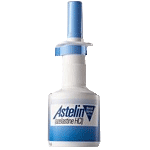
Astelin is one of the original branded prescription nasal spray antihistamines — the first second-generation H1-antihistamine nasal spray ever approved by the FDA. The active ingredient is Azelastine hydrochloride, a potent topical H1-receptor antagonist that delivers fast, targeted relief from nasal allergy symptoms directly to the nasal lining where they originate. FDA-approved since 1996, Astelin has provided nearly three decades of effective treatment for adults, adolescents, and children with allergic and non-allergic rhinitis.
Astelin works through a unique dual mechanism in the nasal mucosa: it blocks the action of histamine at H1 receptors AND inhibits mast cell mediator release, calming the inflammatory cascade that drives allergic nasal symptoms. By delivering Azelastine directly to the nasal lining, Astelin achieves rapid onset of action within 15-30 minutes — substantially faster than most oral antihistamines — while minimising systemic absorption and associated side effects.
A defining clinical advantage of Astelin is its effectiveness against nasal congestion — a symptom that oral antihistamines like loratadine or fexofenadine often address poorly. By acting on multiple inflammatory pathways directly in the nasal lining, Astelin clears blocked nasal passages while also reducing sneezing, runny nose, nasal itching, and post-nasal drip. This makes it particularly valuable for patients whose primary complaint is nasal stuffiness rather than sneezing.
Astelin is FDA-approved for seasonal allergic rhinitis in adults and children aged 5 years and older, perennial allergic rhinitis from year-round indoor allergens, and vasomotor (non-allergic) rhinitis in adults — a category where systemic antihistamines often fail to provide meaningful relief. Standard dosing is one or two sprays in each nostril, twice daily, providing reliable 24-hour symptom control.
Astelin can be used in combination with intranasal corticosteroids and oral antihistamines for moderate-to-severe or refractory allergic rhinitis. The fixed-dose combination of azelastine + fluticasone (Dymista) represents one of the most effective single-spray regimens available for difficult-to-treat allergic rhinitis worldwide.
The medication has an excellent long-term safety profile, with the most common side effect being a brief bitter taste after spraying — easily reduced by tilting the head forward during application. Astelin is also available as an affordable generic Azelastine globally, supporting accessible long-term allergy care for millions of patients.
Free prescription
Discrete packaging
Have questions?
Quality Assurance

- Year Round Allergies: For perennial allergy symptoms caused by indoor allergens including dust mites, pet dander, cockroach allergens, and indoor moulds;
- Non Allergic Rhinitis: For vasomotor rhinitis triggered by temperature changes, strong odours, smoke, or unidentified causes where systemic antihistamines often fail;
- Mixed Triggers Rhinitis: For patients with combined allergic and non-allergic nasal symptoms where topical Azelastine is particularly valuable;
- Pollen Allergy: Specifically for tree, grass, and weed pollen allergic reactions during peak pollen seasons;
- Pet Allergy: For patients with cat, dog, or other animal dander allergies experiencing year-round symptoms;
- Dust Mite Allergy: For chronic exposure to house dust mite allergens triggering perennial nasal symptoms;
- Indoor Mould Allergy: For sensitivity to indoor Aspergillus, Penicillium, and other household mould species;
- Weather Triggered Rhinitis: For non-allergic nasal symptoms triggered by temperature changes, humidity shifts, or barometric pressure changes;
- Pediatric Nasal Allergies: Approved for children aged 5 years and older with seasonal allergic rhinitis;
- Adolescent Nasal Allergies: For teenage patients, particularly when oral antihistamines cause sedation affecting school and sports performance;
- Nasal Congestion: One of few antihistamines that effectively addresses nasal blockage where oral H1-blockers like loratadine often fail;
- Allergic Cough: Reduces postnasal drip that triggers chronic throat clearing and cough in allergic patients;
- Severe Nasal Allergies: Used as monotherapy or in combination with intranasal corticosteroids for stronger symptom control;
- Sudden Allergy Onset: Rapid 15-30 minute onset makes Astelin useful for prompt relief during unexpected allergen exposure;
- Sinus Pressure: Reduces nasal mucosal inflammation that contributes to sinus pressure and discomfort in allergic patients.
- Less Runny Nose: Reduces rhinorrhea by acting directly on nasal mucosa rather than waiting for systemic absorption;
- Less Nasal Itching: Calms intranasal itching at the source — quickly and locally rather than systemically;
- Less Postnasal Drip: Reduces production of nasal secretions draining into the throat that cause chronic throat clearing;
- Rapid Relief: Symptom relief begins within 15-30 minutes of application — substantially faster than most oral antihistamines;
- Brand Name Azelastine: The original FDA-approved brand of Azelastine nasal spray with established clinical reputation since 1996;
- First Nasal Antihistamine: The first second-generation H1-antihistamine nasal spray ever FDA-approved for allergic rhinitis treatment;
- Nasal Spray Antihistamine: Direct topical delivery to nasal mucosa with minimal systemic exposure compared to oral options;
- Topical Antihistamine: Acts directly at the site of symptoms — less risk of systemic side effects than oral therapy;
- Dual Action Antihistamine: Combines H1 receptor blockade with mast cell stabilisation — broader activity than pure H1-blockers;
- Mast Cell Stabilizer: Inhibits release of inflammatory mediators from mast cells — addresses allergy at multiple points;
- Nasal Congestion Relief: Addresses nasal blockage that oral H1-blockers often fail to relieve — signature advantage of topical Azelastine;
- Hay Fever Spray: Targeted topical therapy for seasonal allergic rhinitis during peak pollen exposure;
- Allergic Rhinitis Spray: First-line topical therapy for seasonal and perennial allergic rhinitis when oral antihistamines are insufficient;
- Vasomotor Rhinitis Treatment: One of few medications effective for non-allergic nasal triggers where oral antihistamines fail;
- Pediatric Nasal Spray: Approved for children aged 5 and older with simple twice-daily application;
- Twice Daily Dosing: Morning and evening application provides steady symptom control throughout the day;
- Generic Azelastine: Affordable generic Azelastine versions of Astelin available for patients needing budget-friendly alternatives;
- Combination Spray Therapy: Effective alongside intranasal corticosteroids (fluticasone, mometasone, budesonide) for moderate-severe disease;
- Dymista Component: The Azelastine half of the famous Azelastine + Fluticasone combination spray for moderate-severe rhinitis;
- Daytime Alertness: Lower systemic absorption supports work and school functioning compared to oral first-generation antihistamines;
- Less Drowsiness: Topical delivery reduces sedating effects compared to systemic oral antihistamines;
- Driving Safety: Lower systemic exposure supports safer driving compared to first-generation oral antihistamines;
- Better Sleep: Effective nasal symptom control supports restful sleep during peak allergen exposure season;
- Quality of Life: Improvement in sleep, productivity, and concentration during allergy seasons through effective nasal control;
- On Demand Allergy Relief: Rapid onset supports as-needed dosing during occasional allergen exposure events;
- Refractory Allergy Treatment: Provides additional symptom control when oral antihistamines alone are insufficient;
- Year Round Antihistamine: Suitable for chronic daily use in perennial allergic rhinitis without tolerance development;
- Allergic Asthma Adjunct: Treating upper airway allergy supports better lower airway control in united airway disease;
- Mild Side Effects: Main effect is brief bitter taste — easily managed by tilting head forward during application;
- Few Drug Interactions: Local nasal delivery limits systemic drug interactions — useful in polypharmacy patients;
- Stable Storage: No refrigeration required — practical for travel, school bags, office desks, and long-term home storage;
- Globally Available: Widely stocked across international markets in both branded (Astelin, Astepro, Rhinolast) and generic forms.
Generic Astelin (Azelastine 10 ml) Medication guide:
💊 What is Astelin (Azelastine) and what does it treat
Astelin is the brand name for azelastine hydrochloride, a prescription intranasal antihistamine medication used to treat allergic and non-allergic nasal symptoms. Unlike oral antihistamines (Claritin, Zyrtec, Allegra), Astelin is sprayed directly into the nostrils, delivering rapid local action where allergic inflammation actually occurs. It is one of the few antihistamines effective for both allergic and non-allergic (vasomotor) rhinitis — making it useful for patients whose nasal symptoms have unclear or mixed causes.
Conditions Astelin treats
Astelin is FDA-approved for the following indications:
- 🤧 Seasonal allergic rhinitis (hay fever) — nasal symptoms from pollens, mould spores
- 🏠 Perennial allergic rhinitis — year-round symptoms from dust mites, pet dander, indoor allergens (Astepro)
- 💨 Vasomotor rhinitis — non-allergic nasal symptoms from temperature changes, strong odours, certain foods
- 👶 Pediatric allergic rhinitis — in children as young as 6 months (Astepro 0.15%)
Astelin is particularly useful for symptoms including runny nose, sneezing, nasal congestion, itching of the nose, postnasal drip, and nasal discharge. It does NOT directly treat allergic eye symptoms (those need separate eye drops or oral antihistamines).
- Active ingredient: azelastine hydrochloride
- Drug class: second-generation H1 antihistamine with mild anti-inflammatory effects
- FDA approved: 1996 (Astelin 0.1%); 2009 (Astepro 0.15%); 2010 (Dymista combination)
- Available formulations: nasal spray 0.1% (137 mcg per spray) and 0.15% (205.5 mcg per spray)
- Dosing: 1–2 sprays per nostril twice daily
- Onset of action: typically within 15–30 minutes
- OTC availability: Astepro 0.15% became OTC in many markets in 2021
What Astelin does NOT do
Astelin is not a cure for allergies — it controls symptoms while the medication is being used. It does not desensitise the immune system to allergens (only allergen immunotherapy does that). When you stop using Astelin, allergic symptoms typically return if the allergen exposure continues.
Astelin is also not effective for: lower respiratory symptoms (cough, wheezing — need asthma medication), skin allergies (hives, eczema — need oral antihistamines or topical treatment), eye-only allergic symptoms (need eye drops or oral antihistamine), severe acute allergic reactions like anaphylaxis (needs epinephrine), or nasal polyps and sinusitis (different conditions requiring different treatment).
Compared to intranasal corticosteroids like fluticasone (Flonase), Astelin works faster but with somewhat less anti-inflammatory effect. For moderate-to-severe persistent allergic rhinitis, the combination of both (Dymista) is often more effective than either alone.
🔬 How Astelin works inside the body (mechanism of action)
Azelastine works through multiple complementary mechanisms that together produce both fast symptom relief and modest anti-inflammatory effects. Unlike older antihistamines that simply block histamine receptors, azelastine has additional actions on inflammatory mediators and mast cell stability. Understanding the mechanism explains why intranasal azelastine often works when oral antihistamines have failed, and why its effects extend beyond simple histamine blockade.
The 4-step mechanism
Step 1 — Local delivery to nasal mucosa
When sprayed into the nostril, azelastine deposits on the nasal mucosa where allergic reactions actually occur. About 40% of the drug remains in the nose tissue; the rest is gradually swallowed and slowly absorbed systemically. This local concentration is many times higher than what oral antihistamines achieve in the nose.
Step 2 — H1 histamine receptor antagonism
Azelastine binds tightly to H1 histamine receptors on nasal blood vessels and sensory nerves. By blocking histamine binding, it prevents the cascade of symptoms: vasodilation (congestion), increased vascular permeability (runny nose), sensory nerve activation (itching, sneezing), and mucus secretion.
Step 3 — Mast cell stabilisation
Beyond simple receptor blockade, azelastine stabilises mast cells — the immune cells that release histamine and other inflammatory mediators during allergic reactions. With more stable mast cells, less histamine, leukotrienes, and other mediators are released even with continued allergen exposure.
Step 4 — Anti-inflammatory effects on multiple pathways
Azelastine also reduces production of leukotrienes, interleukin-4, interleukin-5, and other inflammatory cytokines. It interferes with intercellular adhesion molecule expression that allows inflammatory cells to migrate into nasal tissue. These effects contribute to longer-lasting symptom control beyond what pure histamine blockade would provide.
Why intranasal works better than oral for nasal symptoms
| Comparison | Oral antihistamine | Intranasal azelastine |
|---|---|---|
| Onset | 1–3 hours | 15–30 minutes |
| Concentration in nose | Whatever passes from blood | Direct high local concentration |
| Systemic side effects | Common (drowsiness, dry mouth) | Reduced (less systemic absorption) |
| Effect on congestion | Limited (oral antihistamines weak for congestion) | Strong (direct vasoconstrictor effect) |
| Mast cell stabilisation | Minimal | Significant local effect |
Why this matters in practice
- Better congestion relief than oral antihistamines — the most common complaint
- Faster onset — useful for symptoms that emerge during the day
- Less drowsiness than first-generation antihistamines (chlorpheniramine, diphenhydramine)
- Works even when oral antihistamines fail — combined oral + intranasal often controls difficult cases
- Effective for non-allergic rhinitis — one of few antihistamines with this indication
Allergic rhinitis is fundamentally a local inflammatory disease of the nasal mucosa. Treating it with oral medication that reaches the nose only through bloodstream is like trying to extinguish a candle from across the room. Intranasal delivery puts the medication exactly where the inflammation is happening — explaining why azelastine works faster and often better than oral options for nasal symptoms specifically.
🧪 First, second, and third-generation antihistamines explained
Antihistamines have evolved across three pharmacological generations, each addressing limitations of the previous one. Azelastine belongs to the second generation — the class that revolutionised allergy treatment in the 1990s by combining effectiveness with substantially reduced sedation. Understanding where azelastine sits in the antihistamine landscape helps explain its strengths and how it compares to alternatives.
The three generations explained
| Generation | Era | Key examples | Main feature |
|---|---|---|---|
| First generation | 1940s–1980s | Diphenhydramine (Benadryl), chlorpheniramine, hydroxyzine, promethazine | Effective but cause significant sedation and anticholinergic effects |
| Second generation | 1990s–present | Cetirizine (Zyrtec), loratadine (Claritin), azelastine (Astelin), olopatadine | Less sedating; longer duration; some anti-inflammatory effects |
| Third generation | Late 1990s–present | Fexofenadine (Allegra), desloratadine (Clarinex), levocetirizine (Xyzal) | Active metabolites or refined enantiomers of 2nd-gen drugs; even less sedating |
First-generation antihistamines — their place today
First-generation antihistamines like Benadryl (diphenhydramine) cross the blood-brain barrier easily, causing:
- Significant sedation — sometimes used as a sleep aid
- Anticholinergic effects — dry mouth, constipation, urinary retention
- Cognitive impairment — reduced reaction time, learning difficulties
- Risk in elderly — falls, confusion, delirium; should generally avoid
- Drug interactions — additive sedation with alcohol and other depressants
Despite these issues, first-gen drugs are still used for severe acute reactions (intramuscular for anaphylaxis), motion sickness (dimenhydrinate), and as sleep aids (diphenhydramine). For routine allergy treatment, they have been largely replaced.
Second-generation antihistamines — the modern mainstays
- Modified molecular structure to minimise blood-brain barrier crossing — less sedation
- Higher H1 receptor selectivity — fewer anticholinergic effects
- Often have additional anti-inflammatory properties beyond histamine blockade
- Longer duration of action (allows once or twice daily dosing)
- Generally safer in elderly and those operating machinery
Where azelastine sits within the second generation
Among second-generation antihistamines, azelastine has several distinctive features:
- Available intranasally — few second-gen antihistamines have nasal spray formulations
- Strong mast cell stabilisation — greater than cetirizine or loratadine
- Anti-inflammatory effects on multiple cytokine pathways
- Effective for non-allergic rhinitis — unusual among antihistamines
- Some sedation possible — more than fexofenadine or loratadine
- Local action — mostly works where applied, less systemic effect
Third-generation antihistamines — refined descendants
Third-generation antihistamines are active metabolites or specific enantiomers (mirror-image molecules) of second-generation drugs:
- Fexofenadine (Allegra) — active metabolite of terfenadine; eliminated cardiac concern
- Desloratadine (Clarinex) — active metabolite of loratadine; longer duration
- Levocetirizine (Xyzal) — active enantiomer of cetirizine; equal effect at half dose
These are sometimes marginally better than their parent drugs but the differences are modest in clinical practice.
For routine allergy symptoms, any second-or third-generation antihistamine is reasonable. The choice often comes down to: delivery route (oral for systemic symptoms, intranasal like Astelin for nasal-only), onset speed (intranasal faster), sedation tolerance (cetirizine more than fexofenadine), and cost. Many patients combine oral and intranasal for best coverage.
📜 The history of Astelin -- from 1996 launch to today
Azelastine has had a long and successful presence in allergic disease treatment since its 1990s introduction. Originally developed by ASTA Medica (now part of Meda Pharmaceuticals) in Germany, the drug pioneered the intranasal antihistamine concept and demonstrated that local delivery could outperform oral antihistamines for nasal symptoms specifically. Its evolution from prescription-only allergy spray to widely available OTC product reflects the maturing of allergy treatment over three decades.
Timeline of major milestones
| Year | Milestone |
|---|---|
| 1980s | Azelastine synthesised by ASTA Medica researchers; initial pharmacology characterised |
| 1991 | First European approvals; launched as Allergodil in Germany and other EU markets |
| November 1996 | FDA approval of Astelin (azelastine 0.1%) for seasonal allergic rhinitis in adults |
| 1997 | Approved for non-allergic vasomotor rhinitis — a distinctive indication few antihistamines hold |
| 2000s | Pediatric approvals progressively expanded; safety profile in children established |
| 2009 | Astepro (azelastine 0.15%) approved — higher concentration, once-daily dosing option |
| May 2012 | Dymista approved — combination of azelastine + fluticasone in one nasal spray |
| 2014 | Generic azelastine becomes widely available; cost drops substantially |
| 2018 | Astepro pediatric approval extended to age 6 months for perennial allergic rhinitis |
| 2021 | Astepro 0.15% becomes OTC in the US — major access expansion |
| 2020s | Continues as a first-line option for allergic rhinitis worldwide; integrated into clinical guidelines |
The Dymista innovation
One of the most important developments in azelastine's history was the 2012 approval of Dymista — a single nasal spray combining azelastine with the corticosteroid fluticasone. This addressed a major clinical need:
- For moderate-to-severe persistent allergic rhinitis, single agents often inadequate
- Patients prescribed separate antihistamine and steroid sprays had poor adherence
- The combination provided faster onset (azelastine within 30 min) plus stronger long-term control (fluticasone over weeks)
- Clinical trials showed Dymista superior to either drug alone for severe cases
- Dymista became a paradigm-defining product for combination intranasal therapy
The OTC transition
The 2021 conversion of Astepro to over-the-counter status was significant for patient access:
- Patients can buy Astepro directly without a prescription
- Cost coverage shifts (often not covered by insurance once OTC)
- Pharmacist counselling becomes important for proper use
- Self-diagnosis of allergic rhinitis required — not always accurate
- Astelin (prescription form) and Dymista remain prescription-only
Position in modern allergy guidelines
Azelastine occupies a well-established place in current allergic rhinitis treatment algorithms:
- ARIA (Allergic Rhinitis and its Impact on Asthma) guidelines — recommended as first-line for mild allergic rhinitis and moderate-severe cases (often combined with intranasal steroid)
- AAAAI / ACAAI Practice Parameter — intranasal antihistamines recommended for both seasonal and perennial allergic rhinitis
- BSACI (UK) guidelines — included in stepwise treatment approach
- Vasomotor rhinitis — azelastine is the antihistamine of choice for this indication
Patients starting azelastine in 2026 benefit from 30+ years of clinical experience, multiple dosing options (0.1%, 0.15%, combination with steroid), generic affordability, OTC convenience for some formulations, and a well-characterised safety profile across age groups from infants (6 months+) to elderly patients.
🤧 Seasonal allergic rhinitis (hay fever) treatment
Seasonal allergic rhinitis — commonly called hay fever — is the most familiar Astelin indication. Triggered by outdoor allergens that appear at specific times of year (tree, grass, and weed pollens; mould spores), seasonal allergic rhinitis affects approximately 10–30% of the population globally. Astelin is well-suited to treat this pattern because of its rapid onset (15–30 minutes) and effective control of multiple symptoms in one nasal spray.
What seasonal allergic rhinitis feels like
- Sneezing — repeated bouts, particularly upon allergen exposure
- Runny nose — clear watery discharge
- Nasal congestion — stuffiness, mouth breathing
- Itching — nose, throat, ears
- Postnasal drip — throat clearing, cough
- Eye symptoms — itching, watering, redness (Astelin does NOT treat these)
- Fatigue and reduced productivity — often the most underestimated impact
Typical seasonal patterns
| Season | Typical allergens | Geography variation |
|---|---|---|
| Spring | Tree pollens (oak, birch, maple, juniper, cypress) | Peak Feb–May in temperate zones |
| Summer | Grass pollens (timothy, Bermuda, rye), some moulds | Peak May–July |
| Late summer / autumn | Weed pollens (ragweed, sagebrush, lambsquarter), outdoor moulds | Aug–Oct primarily |
| Winter | Mostly perennial allergens (dust mites, pets); some indoor moulds | If allergic to outdoor allergens only, winter typically symptom-free |
Standard dosing for seasonal allergic rhinitis
- Adults and adolescents 12+: 1–2 sprays per nostril twice daily
- Children 5–11: 1 spray per nostril twice daily
- Adults and adolescents 12+: 1–2 sprays per nostril once or twice daily
- Children 6–11: 1 spray per nostril twice daily
What to expect during seasonal treatment
- Within 15–30 minutes: noticeable reduction in itching and sneezing
- Within 1–2 hours: congestion begins to improve
- Day 1–3: consistent symptom relief during waking hours
- Week 1+: full effect; anti-inflammatory effects accumulate
- Throughout season: continuous use prevents symptom breakthrough
- End of season: can stop when allergen exposure ends
Pre-treatment timing strategy
For known seasonal patterns, start Astelin 1–2 weeks before the typical onset of your symptoms. The anti-inflammatory effects accumulate over time, and pre-loading the nasal mucosa provides the best symptom control. Patients who wait until symptoms are severe to start treatment never achieve the same level of control as those who treat preventively.
Combining Astelin with other approaches for seasonal allergies
- Intranasal corticosteroid (fluticasone, mometasone) — for moderate-to-severe symptoms; or use Dymista combo
- Oral antihistamine — for systemic and eye symptoms not addressed by nasal spray
- Allergen avoidance — closing windows during pollen peaks, showering after outdoor time, allergen forecasts
- Saline nasal rinses — physical removal of allergens from nasal mucosa
- Eye drops — for eye symptoms (Astelin does not treat these)
- Allergen immunotherapy — for severe persistent seasonal allergies, long-term disease modification
Untreated seasonal allergic rhinitis significantly impairs quality of life: poor sleep from nasal congestion, reduced work productivity, missed school days, exacerbation of asthma in susceptible patients. Effective treatment with Astelin or similar improves cognitive performance, exercise capacity, mood, and overall well-being during allergy season. The medication can mean the difference between dreading a season and enjoying it.
🏠 Perennial allergic rhinitis (year-round allergies)
Perennial allergic rhinitis means year-round nasal allergy symptoms caused by indoor allergens that persist through all seasons. Unlike seasonal allergies that come and go with pollen calendars, perennial allergies cause continuous lower-grade symptoms that can interfere with daily life every day. Astepro (azelastine 0.15%) is FDA-approved specifically for perennial allergic rhinitis, including in children as young as 6 months — making it the most flexible azelastine formulation for chronic year-round allergic symptoms.
Common perennial allergen triggers
| Allergen | Where it lives | Practical avoidance |
|---|---|---|
| House dust mites | Mattresses, pillows, bedding, carpets, upholstery | Hot wash bedding weekly; mite-proof covers; reduce carpet |
| Cat dander | Cat skin flakes; lingers in homes for months even after cat removed | Keep cats out of bedroom; HEPA air filters |
| Dog dander | Dog saliva and skin; varies by breed | Dog out of bedroom; regular bathing; HEPA filters |
| Cockroach allergen | Urban environments, food storage areas | Pest control; food storage; cleaning |
| Mouse / rat allergen | Urinary proteins from rodents in walls | Rodent control; sealing entry points |
| Indoor moulds | Bathrooms, basements, water-damaged areas | Reduce humidity; fix leaks; ventilation |
| Pet birds | Feather and droppings allergen | Limit exposure; regular cleaning |
How perennial differs from seasonal
- Continuous symptoms rather than seasonal peaks
- More nasal congestion, less sneezing/itching than seasonal
- Often less severe daily but more persistent and tiring over time
- Associated with chronic sinusitis, sleep disturbance, secondary headaches
- Higher rates of asthma coexistence
- Children may have associated learning difficulties from chronic congestion and poor sleep
- Daily treatment needed rather than seasonal use
Why daily treatment is needed
Unlike seasonal allergies where pre-treating before allergen exposure works, perennial allergies require continuous daily use of medication. Stopping treatment for even a few days allows inflammation to rebuild, requiring weeks to re-establish control. Long-term daily use of Astelin or Astepro is safe (extensively studied for years of continuous use) and is the only way to maintain symptom control for perennial sufferers.
Dosing for perennial allergic rhinitis
- Adults and adolescents 12+: 1–2 sprays per nostril twice daily
- Children 6–11: 1 spray per nostril twice daily
- Children 6 months to 5 years: 1 spray per nostril twice daily
- Astepro 0.15% is the only intranasal antihistamine approved for ages as young as 6 months
What to expect with continuous perennial treatment
- Week 1: Significant symptom improvement
- Week 2–4: Steady-state effect; nasal mucosa healing
- Month 2+: Sustained relief; quality of life improvement
- Long-term: Safe for years of continuous use; tachyphylaxis (loss of effect) does NOT develop with intranasal azelastine
The role of allergen avoidance with perennial allergies
Unlike seasonal allergies where avoidance is impractical (you cannot stop pollen), perennial allergens are often more controllable:
- Dust mite reduction can reduce symptoms significantly
- Pet allergens — often improve dramatically if pet removed (rarely practical)
- Mould control through humidity management
- Air filtration — HEPA filters for allergen reduction
- Allergen testing can identify specific triggers worth avoiding
Astelin addresses inflammation regardless of allergen identification, but identifying and reducing specific triggers can reduce medication needs over time.
Perennial allergic rhinitis is a chronic condition like asthma or eczema. The goal is not to "cure" it but to achieve daily symptom control that allows normal life. Astelin/Astepro is a foundational tool in this management. Combined with allergen avoidance where possible, intranasal steroids for more severe cases, and immunotherapy for the long term, perennial allergies can be effectively managed indefinitely.
💨 Vasomotor rhinitis (non-allergic nasal congestion)
Vasomotor rhinitis — also called non-allergic rhinitis — is a condition with allergy-like nasal symptoms (runny nose, congestion, postnasal drip) but no underlying allergic immune response. It is triggered instead by environmental stimuli, temperature changes, strong odours, certain foods, or unknown causes. Approximately 40 million people in the US have non-allergic rhinitis, often misdiagnosed for years as "allergies that medications do not help". Astelin is one of the few antihistamines approved specifically for vasomotor rhinitis — making it uniquely useful for this often-overlooked condition.
How vasomotor rhinitis differs from allergic rhinitis
| Feature | Allergic rhinitis | Vasomotor (non-allergic) rhinitis |
|---|---|---|
| Immune involvement | IgE-mediated allergic reaction | No immune component |
| Allergen identification | Yes — specific allergens trigger symptoms | No identifiable allergens |
| Skin test result | Positive for relevant allergens | Negative |
| Eye symptoms | Common (itching, watering) | Usually absent |
| Triggers | Specific allergens (pollens, dust mites, pets) | Temperature, odours, food, stress, hormones |
| Family history | Usually present | Less commonly familial |
| Response to oral antihistamines | Good | Poor (this is diagnostically suggestive) |
Common triggers for vasomotor rhinitis
- Temperature changes — cold air, warm air, sudden shifts
- Strong odours — perfumes, cleaning products, smoke, paint
- Spicy foods — "gustatory rhinitis"; immediate runny nose with hot peppers
- Alcohol — particularly wine and beer
- Stress and emotions
- Hormonal changes — pregnancy, menstrual cycle, oral contraceptives
- Certain medications — aspirin, NSAIDs, alpha-blockers, beta-blockers
- Air pollution and irritants
- Posture changes — lying down can worsen congestion
Why Astelin works for vasomotor rhinitis
The mechanism is not fully understood — if there is no allergic immune response, why does an antihistamine work? Current understanding suggests:
- Anti-inflammatory effects beyond simple histamine blockade
- Mast cell stabilisation — mast cells can be activated by non-allergic triggers
- Effects on sensory nerve responses in the nasal mucosa
- Reduction of nasal vascular reactivity
- Most other antihistamines (including oral cetirizine, loratadine) do NOT work well for vasomotor rhinitis — suggesting azelastine has unique properties
Diagnosis of vasomotor rhinitis
- Clinical history — symptom patterns and triggers
- Negative allergy skin testing or blood tests for relevant allergens
- Endoscopic examination may show inflamed but allergic-pattern-negative mucosa
- Treatment response — many patients try multiple oral antihistamines without help before vasomotor rhinitis is suspected
Treatment approach for vasomotor rhinitis
- Trigger identification and avoidance — particularly for clear triggers like cold air or spicy food
- Intranasal azelastine (Astelin) — first-line antihistamine for this condition
- Intranasal ipratropium — effective for runny nose specifically
- Intranasal corticosteroids — can be effective for some patients
- Capsaicin nasal spray — sensory nerve desensitisation
- Saline nasal rinses — mechanical cleaning
- Surgical options — rarely; for severe refractory cases
What to expect on Astelin for vasomotor rhinitis
- Week 1: Some symptom reduction; full effect not yet achieved
- Week 2–4: Sustained improvement in runny nose, congestion, postnasal drip
- Month 2+: Steady-state effect; many patients see 50–70% symptom reduction
- Specific triggers may still cause acute symptoms but background symptoms much improved
- Long-term use is safe and often needed for ongoing control
Many patients with vasomotor rhinitis spend years convinced they have "allergies that don't respond to allergy medicine". They try multiple oral antihistamines (cetirizine, fexofenadine, loratadine), often with minimal benefit. If you have nasal symptoms that have not responded to standard allergy medications, ask your doctor about vasomotor rhinitis. Azelastine nasal spray is the antihistamine of choice for this condition and often works dramatically better than the oral options that have failed.
👀 Astelin and eye symptoms -- limitations and pairing options
One important limitation of Astelin is that it primarily treats nasal symptoms only. For patients whose allergies also affect their eyes — with itching, watering, redness, and irritation — Astelin alone is rarely sufficient. Understanding this limitation and how to address eye symptoms alongside Astelin nasal therapy makes for far better overall allergy management.
Why Astelin does not help eye symptoms
Astelin is sprayed into the nostrils and its effects are largely local to the nasal mucosa. Only a small amount of medication is absorbed systemically — not enough to provide meaningful relief for eye symptoms. The eyes have their own histamine receptors that respond to local allergen exposure on the conjunctiva (the lining of the eye and inner eyelid). These local eye symptoms require local eye treatment or systemic (oral) antihistamines to address.
Common allergic eye symptoms
- Itching — the cardinal symptom; "itchy eyes" is highly specific for allergic involvement
- Watery discharge — clear, often profuse
- Redness — conjunctival injection
- Burning sensation
- Eyelid swelling — particularly upper eyelid puffiness
- Light sensitivity
- Foreign body sensation — "something in my eye"
Treatment options for eye allergy symptoms
| Option | How used | Notes |
|---|---|---|
| Antihistamine eye drops (olopatadine, ketotifen, azelastine eye drops) | 1–2 drops per eye 1–2 times daily | Most effective for itching; fast onset |
| Mast cell stabiliser eye drops (cromolyn, lodoxamide) | 1–2 drops 4–6 times daily | Preventive; takes weeks to reach full effect |
| Oral antihistamines (cetirizine, fexofenadine, loratadine) | Once daily oral pill | Systemic; treats both nose and eyes |
| Decongestant eye drops (naphazoline, tetrahydrozoline) | Short-term use only | Reduces redness; not for chronic use (rebound) |
| Steroid eye drops (loteprednol, fluorometholone) | Prescription; short courses | For severe symptoms; ophthalmologist supervision |
| Cool compresses | As needed | Non-drug relief; safe to use frequently |
| Artificial tears (preservative-free) | As needed | Dilutes allergens; comfort |
The azelastine eye drop option
- Brand names: Optivar, Optilast (international)
- Generic available
- Same active drug as Astelin nasal spray, but formulated for ocular use
- One drop per eye twice daily
- Effective for itching, watering, redness
- Can be combined with Astelin nasal spray for comprehensive nose + eye coverage
Common combined treatment strategies
- Astelin nasal spray + olopatadine eye drops — common dual local approach
- Astelin nasal spray + oral cetirizine — combines local nasal action with systemic coverage including eyes
- Astelin nasal spray + saline eye rinse + cool compresses — conservative approach for mild eye symptoms
- Dymista (combination nasal spray) + eye drops — for severe persistent allergic rhinoconjunctivitis
When eye symptoms suggest a different problem
- Eye pain (not just itching or burning)
- Vision changes
- Severe redness in one eye only
- Thick yellow or green discharge
- Light sensitivity with pain
- Symptoms persist despite proper treatment
- Contact lens wear with eye symptoms
For allergic rhinitis with associated eye symptoms (allergic rhinoconjunctivitis), combination therapy usually works better than single agents. Astelin handles the nose effectively. Adding either antihistamine eye drops or an oral antihistamine completes the coverage. Most patients find this two-front approach controls both symptom areas with minimal side effects.
🎯 Combining Astelin with other allergy treatments
Astelin is rarely the only allergy treatment a patient needs. For moderate-to-severe allergic rhinitis, optimal control often requires combining Astelin with other agents that address different aspects of the allergic response. Understanding which combinations work well together — and which are redundant or problematic — helps maximise relief while minimising medication burden.
The most useful Astelin combinations
| Astelin combined with | When useful | How they complement |
|---|---|---|
| Intranasal corticosteroid (fluticasone, mometasone, budesonide) | Moderate-severe persistent symptoms | Azelastine for fast action; steroid for sustained anti-inflammation |
| Oral antihistamine (cetirizine, fexofenadine, loratadine) | Multiple-site allergic disease — nose + eyes + systemic | Local nasal + systemic coverage |
| Antihistamine eye drops (olopatadine, azelastine eye drops) | Allergic rhinitis with significant eye symptoms | Targeted nose and eye therapy |
| Leukotriene receptor antagonist (montelukast) | Allergic rhinitis with asthma component | Different pathway; addresses both conditions |
| Saline nasal rinses | High allergen exposure days | Mechanical removal of allergens before medication application |
| Decongestant (oral pseudoephedrine; topical oxymetazoline) | Acute severe congestion | Short-term only; topical not more than 3 days (rebound) |
| Allergen immunotherapy | Severe persistent symptoms; multiple allergens | Long-term disease modification |
Astelin + intranasal corticosteroid — the most effective combo
- Different mechanisms — antihistamine vs corticosteroid
- Different onset — azelastine fast (30 min), steroid slow (days)
- Different duration — steroid provides background anti-inflammation, azelastine fills in
- Clinical trials show superiority over either drug alone for moderate-severe disease
- Dymista is the pre-packaged version — combines both in one spray
Practical timing of combination therapy
| If using separate sprays | Best practice |
|---|---|
| Astelin morning, steroid evening | Different times to ensure each can deposit on mucosa without dilution |
| Both same time | Wait 5–10 min between sprays; either drug first |
| Once-daily simplification | Many patients prefer Astepro 0.15% once daily + steroid once daily — simpler than 2x daily |
| Dymista | Eliminates timing issues; one spray contains both |
Astelin + oral antihistamine — when this makes sense
- Severe persistent symptoms not controlled by nasal spray alone
- Co-existing eye symptoms — oral covers eyes
- Multiple sites of allergic disease — nose, eyes, throat, skin
- Sleep disruption from nighttime symptoms — oral provides longer coverage
- Patients used to oral and adding intranasal for stubborn symptoms
Combinations to be cautious with
- Multiple oral antihistamines — do not combine cetirizine + loratadine + fexofenadine etc.; pick one
- Astelin + Dymista — redundant; Dymista contains azelastine already
- Topical decongestant for > 3 days — rebound congestion (rhinitis medicamentosa)
- Multiple sedating drugs together — first-gen antihistamines + alcohol + sleep aids
- Two intranasal antihistamines — redundant; pick one
What allergen immunotherapy adds
For patients with severe persistent allergic disease, particularly with multiple identified allergens, allergen immunotherapy (allergy shots or sublingual tablets) modifies the underlying immune response over years:
- Disease-modifying — reduces underlying allergy over time
- Long-term benefit — some patients reduce or stop medication after 3–5 years
- Time commitment — injections weekly initially, then monthly for years
- Best alongside Astelin — immunotherapy modifies disease while Astelin controls daily symptoms during the years it takes to work
Most allergists recommend a stepped approach to combining therapies. Start simple: allergen avoidance + one effective medication (Astelin alone for many). Add agents only when symptoms remain inadequately controlled. Most patients find their optimal combination through trial; the maximum benefit usually comes from combining one nasal anti-inflammatory (Astelin or steroid or Dymista), one systemic antihistamine if needed, and lifestyle measures.
📋 Standard Astelin dosing -- comprehensive reference
Astelin and Astepro dosing is straightforward but varies by formulation strength, age group, and indication. The two main formulations — Astelin 0.1% and Astepro 0.15% — offer flexibility in dosing frequency and age range. This is the master reference for which dose to use in which situation.
Astelin 0.1% (137 mcg per spray) — adult and pediatric dosing
| Age group | Indication | Dose |
|---|---|---|
| Adults and adolescents 12+ | Seasonal allergic rhinitis | 1–2 sprays per nostril twice daily |
| Adults and adolescents 12+ | Vasomotor rhinitis | 2 sprays per nostril twice daily |
| Children 5–11 | Seasonal allergic rhinitis | 1 spray per nostril twice daily |
| Under 5 | Not approved for Astelin 0.1% | Use Astepro 0.15% instead |
Astepro 0.15% (205.5 mcg per spray) — broader age range, simpler dosing
| Age group | Indication | Dose |
|---|---|---|
| Adults and adolescents 12+ | Seasonal/perennial allergic rhinitis | 1–2 sprays per nostril once or twice daily |
| Children 6–11 | Seasonal/perennial allergic rhinitis | 1 spray per nostril twice daily |
| Children 6 months to 5 years | Perennial allergic rhinitis | 1 spray per nostril twice daily |
Dymista (azelastine + fluticasone combination) dosing
- Adults and adolescents 12+: 1 spray per nostril twice daily
- Children 6–11: 1 spray per nostril once daily (in some markets)
- For more severe symptoms than single-agent therapy can control
Adjustments and special considerations
| Situation | Dosing approach |
|---|---|
| Renal impairment | No dose adjustment needed (minimal systemic absorption) |
| Hepatic impairment | No formal adjustment; use cautiously in severe disease |
| Elderly | Standard dose; monitor for sedation |
| Pregnancy | Standard dose if needed; discussed in dedicated section |
| Concurrent CYP3A4 inhibitors | Minimal effect due to low systemic absorption; no formal adjustment |
Maximum daily dose
The maximum recommended doses are:
- Astelin 0.1% — 2 sprays per nostril twice daily = 4 sprays per day per nostril = 8 sprays total daily
- Astepro 0.15% — 2 sprays per nostril twice daily = 4 sprays per day per nostril = 8 sprays total daily
- Higher doses do NOT improve symptom control; exceeding these doses increases side effects without therapeutic benefit
When to take Astelin during the day
- Morning + evening — most common for twice-daily; 12 hours apart
- Take before known allergen exposure — outdoor walk, pet visit, dusty cleaning
- Consistent timing daily — helps with adherence and steady-state effect
- Astepro once-daily — usually taken morning to cover the day; can shift to evening if congestion worse at night
Bottle contents and supply
| Product | Bottle size | Estimated supply |
|---|---|---|
| Astelin 0.1% | 30 mL (~200 sprays) | ~25 days at 8 sprays/day |
| Astepro 0.15% | 30 mL (~200 sprays) | ~25 days at 8 sprays/day or ~50 days at 4 sprays/day |
| Dymista | 23 g (~120 sprays) | ~30 days at 4 sprays/day |
Compared to medications with complex titration schedules, weight-based pediatric dosing, and renal adjustments, Astelin dosing is refreshingly simple. The same dose works for most adults regardless of body size, kidney function, or liver function. Choose the formulation that matches the age and indication, and follow the standard dose — that is most of the dosing decision.
🧴 Proper nasal spray technique -- getting it right
Nasal spray technique is one of the most underappreciated factors in allergic rhinitis treatment. Studies consistently show that 40–60% of nasal spray users have improper technique — reducing medication effectiveness, increasing local side effects (irritation, bitter taste), and wasting medication. Getting technique right takes about 5 minutes to learn and dramatically improves outcomes.
Step-by-step proper technique
Step 1 — Prime the spray (first use or after long gap)
Before first use of a new bottle, spray 4 times into the air to fill the pump mechanism. If the bottle has not been used for more than 3 days, re-prime with 2 sprays. This ensures consistent medication delivery from the first spray.
Step 2 — Clear your nostrils
Blow your nose gently to clear any mucus. This allows the medication to deposit on the nasal mucosa rather than getting absorbed into mucus. Do not blow forcefully — gentle is sufficient.
Step 3 — Tilt your head slightly forward
Lean your head slightly forward, not back. The common mistake is tilting the head back — this is wrong. Forward tilt directs the spray onto the nasal mucosa where it is needed, not down the throat where it causes the bitter taste.
Step 4 — Use the opposite hand
Use your left hand to spray the right nostril, and your right hand to spray the left nostril. This naturally angles the spray outward toward the side of the nasal cavity (where the turbinates and inflamed mucosa are) rather than at the septum (the middle wall).
Step 5 — Close the other nostril gently
Press the other nostril closed with a finger. This prevents the spray from escaping out the other side and ensures medication stays in the target nostril.
Step 6 — Aim outward, not at the septum
Direct the nozzle slightly toward the outer wall of the nostril (your earlobe direction), not toward the middle (the septum). Aiming at the septum causes irritation and nosebleeds with chronic use.
Step 7 — Breathe in gently while spraying
Take a gentle, slow breath in through the nose as you press the spray. Do NOT sniff hard — this pulls medication down the throat where it tastes bitter. A soft inhale is enough to direct medication to the nasal mucosa.
Step 8 — Repeat on the other nostril; do not blow nose for 15 minutes
Repeat the technique on the other nostril. After spraying, do not blow your nose, sniff hard, or wipe inside for at least 15 minutes — this gives the medication time to absorb into the nasal mucosa.
The most common mistakes
| Mistake | Consequence | Correction |
|---|---|---|
| Tilting head back | Bitter taste, less local effect | Tilt forward instead |
| Sniffing hard | Medication goes to throat, not nose | Gentle inhale only |
| Same hand for same nostril | Aims at septum; irritation, nosebleeds | Use opposite hand |
| Spraying at septum | Drying, irritation, perforation risk long-term | Aim toward outer wall |
| Blowing nose immediately | Removes medication | Wait 15 minutes |
| Not priming new bottle | Inconsistent dosing first sprays | Always prime 4 times |
| Spraying too far up | Medication into sinuses, not turbinates | Aim level, slightly downward |
Bottle care and maintenance
- Replace cap immediately after each use to prevent contamination
- Wipe the nozzle with a clean tissue if it appears clogged or has dried medication
- Do not share nasal sprays between people — even within a family
- Replace at the labelled expiry — usually 60 days after opening regardless of contents remaining
- Count sprays mentally to track when bottle is nearing empty
- If pump clogs: rinse the nozzle with warm water (not the medication chamber), dry thoroughly
What to do if a child needs nasal spray
- Practice with saline spray first to remove fear
- Explain in simple language; show on yourself
- Have child blow nose first
- For very young children, sometimes easier with child lying back slightly
- Reward and praise for cooperation
- If consistently distressed, consider alternative formulations (oral medication may be more acceptable)
Reducing the bitter taste
Even with proper technique, some of the bitter taste is unavoidable due to medication that drips down the throat. Strategies to minimise:
- Use proper forward-tilt technique (most important)
- Drink water immediately after dosing
- Brush teeth or use mouth rinse if persistent
- Some patients find honey or peppermint candies help mask
- The taste typically becomes less noticeable over weeks of consistent use
- If intolerable, consider switching to Dymista (slightly less bitter due to fluticasone component)
A patient who has correctly mastered nasal spray technique gets substantially better symptom control with less bitter taste than a patient using the same medication with poor technique. The 5 minutes spent learning proper technique pays back for years of better allergic rhinitis treatment. If you have struggled with intranasal sprays in the past, ask your pharmacist or allergist to watch you do it and provide feedback.
🚀 How quickly Astelin starts working -- onset and duration
One of Astelin advantages over oral antihistamines is its rapid onset of action. Patients typically feel noticeable symptom relief within 15–30 minutes of the first dose — far faster than the 1–3 hours required for oral tablets to work. Understanding the timeline of azelastine effects helps patients set realistic expectations and use the medication strategically for symptom control.
Astelin timeline at a glance
| Time after spray | What is happening | What you may notice |
|---|---|---|
| 0–5 minutes | Medication deposits on nasal mucosa; bitter taste from swallowed portion | Bitter taste; perhaps slight burning sensation |
| 5–15 minutes | Azelastine begins to block H1 receptors on nasal vessels and nerves | Sneezing reduces; itching subsides |
| 15–30 minutes | Peak local effect on histamine-mediated symptoms | Noticeable reduction in runny nose; congestion starting to improve |
| 1–2 hours | Peak symptom relief; mast cell stabilisation building | Maximum symptom improvement at this dose |
| 6–12 hours | Sustained effect from continued mucosal medication | Consistent symptom control |
| 12+ hours (without next dose) | Local levels declining | Symptoms may begin returning; time for next dose |
| Day 3–7 of consistent use | Anti-inflammatory effects accumulate; mast cell stabilisation maximal | Best overall symptom control achieved |
Astelin vs oral antihistamines — speed comparison
| Medication | Onset | Peak | Duration |
|---|---|---|---|
| Astelin nasal spray | 15–30 min | 1–2 hours | 12+ hours |
| Cetirizine oral | 30 min–1 hour | 1–2 hours | 24 hours |
| Loratadine oral | 1–3 hours | 8–12 hours | 24 hours |
| Fexofenadine oral | 1–3 hours | 2–3 hours | 12 hours (typically twice daily) |
| Fluticasone nasal (steroid) | 12 hours | 7–14 days for full effect | 24+ hours |
What this means in practice
- Symptoms emerged today? Astelin starts working within an hour; intranasal steroid would take days
- Heading outside during pollen season? Spray before going out for proactive coverage
- Late-onset symptoms during the day? Astelin can be your "rescue" between scheduled doses
- Sustained allergy season? Twice daily provides round-the-clock symptom control
- Peak effect builds over a week — do not judge effectiveness from the first dose alone
What you may feel right after spraying
- Bitter taste in throat or back of mouth — from some medication being swallowed; the most common immediate sensation
- Mild burning or tingling in nostrils — usually subsides within minutes
- Sneezing — particularly with first dose; the nasal mucosa is reacting to the spray itself
- Brief watery discharge — the medication mixing with mucus
- Slight altered smell for a few seconds
If Astelin does not seem to be working
| Issue | Likely cause | Fix |
|---|---|---|
| No effect after first dose | Normal — full effect takes days | Continue for 7 days before judging |
| Effect wears off before next dose | Insufficient dose or technique | Verify technique; consider 2 sprays per nostril; add steroid |
| Initial improvement then regression | Increased allergen exposure | Combination therapy; allergen avoidance |
| Some symptoms improve, others persist | Multi-site allergic disease | Add oral antihistamine or eye drops |
| No effect after weeks of use | Wrong diagnosis or wrong formulation | See specialist; consider alternative therapy |
The 15–30 minute onset of Astelin makes it uniquely useful as a "rescue" treatment for sudden allergic flares — quite different from intranasal steroids that take weeks to work. Patients can keep a bottle handy and spray when they know they will encounter allergens (visiting a friend with cats, going outdoors during pollen peak, cleaning a dusty room). Combined with consistent twice-daily use, this makes Astelin a versatile tool for symptom management.
🥗 Astelin and food -- no concerns and timing flexibility
One of the simplest aspects of Astelin therapy is its complete independence from food, drinks, or meals. Because Astelin is sprayed directly into the nostrils and acts mostly locally on nasal mucosa, food has essentially no effect on its absorption, distribution, or effectiveness. You can spray Astelin at any time of day, with or without food, and the medication works the same. This simplicity is welcome when you have many other things to coordinate.
The bottom line on food
Food, beverages, and meals have no effect on intranasal azelastine. Use whenever fits your schedule. Take with breakfast or coffee, before or after meals, with snacks or while fasting — all equivalent.
Why food does not affect intranasal medications
- Local delivery bypasses the digestive system — the medication absorbs through nasal mucosa, not gastrointestinal tract
- Most medication acts locally — about 40% remains in nasal tissue; rest is gradually swallowed but at low concentrations
- Systemic absorption is minimal — what little is absorbed reaches blood slowly and at low levels
- Food cannot interfere with what is delivered locally — unlike oral medications where stomach contents matter
Timing flexibility considerations
- Consistent times daily — helps maintain steady-state effect
- Approximately 12 hours apart for twice-daily dosing
- Before known allergen exposure — spray 30 min before going outside, cleaning, or visiting allergen sources
- Linking to a daily routine (breakfast, brushing teeth, etc.) improves adherence
- Avoid spraying immediately after blowing nose hard — let nasal lining recover briefly
What about drinks after spraying?
The classic experience with Astelin involves the bitter taste from medication dripping down the throat. Strategies:
- Drink water immediately after spraying to wash away the taste
- Coffee, tea, or juice after spraying — any preference works
- Mints or gum can mask the lingering bitter taste
- Eating shortly after dosing also helps with taste
- Brushing teeth after dosing if persistent — can do without affecting medication effect
Alcohol and Astelin
While alcohol does not directly affect azelastine absorption, both can cause mild sedation. Heavy drinking combined with Astelin may produce more drowsiness than either alone. Moderate alcohol use is generally fine, but the dedicated section on Astelin + alcohol gives detailed guidance.
Specific food-related allergy triggers
Some patients have food-induced rhinitis — spicy foods, alcohol, or other substances triggering nasal symptoms. This is different from food allergy and is part of vasomotor rhinitis. For these patients, Astelin can help prevent or treat the symptoms but does not change your ability to eat the triggering foods:
- Spray Astelin before known trigger meals if symptoms predictable
- Spray as soon as symptoms emerge for acute episodes
- Long-term twice-daily use reduces overall nasal reactivity
- Continue identifying and reducing dietary triggers when possible
Timing with other medications
- Other intranasal sprays — space by 5–10 minutes
- Oral medications — no timing requirement; can be taken simultaneously
- Eye drops — no timing requirement
- Inhaled asthma medications — no interaction with Astelin
Compared to medications requiring careful coordination with meals, water, or other drugs, Astelin imposes very few restrictions on your daily routine. This simplicity makes it easier to maintain consistent twice-daily use over months and years. Pick two convenient times each day and stick with them — that is essentially the entire dosing strategy.
🍃 0.1% vs 0.15% -- choosing the right strength
Astelin comes in two strengths — 0.1% (Astelin) and 0.15% (Astepro). While the difference may seem small (only 0.05% concentration), the practical implications matter for choice of formulation. Astepro 0.15% has higher per-spray dose, more flexible dosing (can be once daily), broader age range (down to 6 months), and OTC availability in many markets. Understanding which formulation fits which situation makes the choice clear.
Side-by-side comparison
| Feature | Astelin 0.1% | Astepro 0.15% |
|---|---|---|
| Concentration | 0.1% (1 mg/mL) | 0.15% (1.5 mg/mL) |
| Dose per spray | 137 mcg | 205.5 mcg |
| FDA approval year | 1996 | 2009 |
| Minimum age | 5 years | 6 months |
| Dosing frequency | Twice daily | Once or twice daily |
| Indications | Seasonal allergic; vasomotor rhinitis | Seasonal allergic; perennial allergic rhinitis |
| Prescription status (US) | Prescription only | OTC (as of 2021) |
| Pre-prime sprays | 4 sprays | 6 sprays |
| Bitter taste | Common | Common (similar profile) |
When Astelin 0.1% might be the better choice
- Vasomotor (non-allergic) rhinitis — this is the specifically approved indication; Astepro is only approved for allergic rhinitis
- Insurance coverage prefers the prescription version
- Patient prefers lower per-spray dose — particularly for those experiencing strong bitter taste
- Established success on this formulation; switching unnecessary
- Cost considerations — generic 0.1% available widely; OTC may not be insurance-covered
When Astepro 0.15% might be the better choice
- Once-daily preference — significant convenience advantage
- Children under 5 — only Astepro approved this young (6 months+)
- Perennial allergic rhinitis — specific FDA approval (vs Astelin seasonal-only)
- OTC convenience — available without prescription in many markets (US, post-2021)
- Higher symptom severity needing larger per-spray dose
- Self-management without psychiatric follow-up requirement
The clinical effectiveness comparison
For most patients with allergic rhinitis, the two strengths produce similar overall symptom control when used appropriately:
- Astelin 0.1% twice daily = Astepro 0.15% twice daily — roughly comparable
- Astepro 0.15% once daily — somewhat less control than twice daily but still effective for most
- Astepro 0.15% twice daily — the maximum and most effective regimen
- Individual responses vary — some patients prefer one formulation
Switching between formulations
Switching from Astelin to Astepro or vice versa is straightforward:
- No washout period needed
- Start the new formulation with its standard dose
- Use existing supply until empty, then switch
- If switching for once-daily simplification: Astepro once daily provides about 75% of twice-daily control
- If switching for cost: generic azelastine 0.1% is typically cheapest
Pediatric considerations
- Age 6 months to 5 years: Astepro 0.15% (only formulation approved this young)
- Age 6–11: Astepro 0.15% (1 spray each nostril twice daily) or Astelin 0.1% (1 spray each nostril twice daily for ages 5+)
- Age 12+: Either formulation appropriate; adult-pattern dosing
Dymista combines azelastine with fluticasone
For patients needing combination therapy, Dymista contains 137 mcg azelastine (the Astelin concentration) plus 50 mcg fluticasone in each spray. Same azelastine concentration as Astelin 0.1%. Not an alternative to choosing 0.1% vs 0.15% — it is a different therapeutic category (combination).
For most adults with allergic rhinitis seeking simple effective treatment, Astepro 0.15% (OTC, once or twice daily, broader indications) is the more flexible modern choice. For vasomotor rhinitis or insurance-coverage reasons, Astelin 0.1% remains useful. The two are similar enough that getting started with either is reasonable; adjust if needed based on response.
🚨 Astelin Side Effect
Astelin (azelastine HCl) has a generally favourable safety profile, particularly compared to first-generation antihistamines or oral antihistamines used for the same purpose. Most patients tolerate Astelin well with only minor local side effects. The single most distinctive side effect — bitter taste — is common but rarely severe. Understanding the full side-effect spectrum from common to rare helps patients use this medication safely and recognise when something needs attention.
🔔 Side effect zones (use this as a quick navigation guide)
Green zone — usually manageable
What helps: water after spraying, proper forward-tilt technique, consistent use (taste lessens over time). |
Yellow zone — monitor and adjust
Best move: contact prescriber within days; consider technique review or dose adjustment. |
Red zone — stop and seek care
Action: emergency department if severe; urgent doctor visit if developing. |
📌 Most reported everyday side effects (what they feel like)
- Bitter taste: by far the most common side effect; affects approximately 19% of patients. Caused by medication that drips down the back of the throat. Usually decreases with proper technique.
- Headache: approximately 13% of patients; usually mild; often improves with continued use
- Somnolence: approximately 12% in clinical trials; usually mild; mostly noticed in first week
- Nasal burning: brief sensation right after spraying; usually transient
- Sneezing: particularly with first doses; subsides with consistent use
- Dry mouth: mild anticholinergic effect; less than oral antihistamines
- Fatigue: mild tiredness; usually less than oral antihistamines
- Bitter aftertaste lasting hours: some patients; usually decreases over weeks
📋 Symptom-to-action table (fast problem solving)
| Side effect | Likely cause | What to do first | When it becomes a bigger concern |
|---|---|---|---|
| Bitter taste | Medication dripping into throat | Improve technique; tilt forward; drink water | Persistent for hours; affecting eating |
| Daytime drowsiness | Antihistamine sedation | Adjust dosing time; avoid alcohol | Affecting work, driving, daily function |
| Nasal burning | Local irritation | Technique check; gentle saline rinse before spraying | Severe; persistent days; visible damage |
| Recurrent nosebleeds | Spraying at septum; mucosal drying | Re-train technique; angle away from septum | More than 2–3 per week; visible mucosal damage |
| Persistent dry mouth | Anticholinergic effect | Increase fluids; sugar-free gum | Tooth decay; difficulty swallowing |
🌟 What increases side effects (the hidden multipliers)
|
😞 Poor technique Tilting head back, sniffing hard, or aiming at septum dramatically increases bitter taste and local irritation. |
🍷 Alcohol Amplifies any sedation from azelastine. Heavy use plus Astelin can produce more drowsiness than either alone. |
💤 Other sedating medications First-gen antihistamines, sleep aids, certain antidepressants — additive sedation possible. |
Rare serious reactions — very uncommon
- Anaphylaxis — severe allergic reaction to azelastine itself; very rare; immediate emergency
- Severe skin reactions — Stevens-Johnson syndrome, toxic epidermal necrolysis; extremely rare
- Severe nasal septal damage — with chronic improper technique; perforation possible
- Severe somnolence affecting safety — rarely; usually in combination with other sedatives
- Cardiac effects — first-gen antihistamines can affect heart rhythm; azelastine has minimal effect but rare reports exist in overdose
- Hepatitis — extremely rare reports; usually with other contributing causes
- Severe allergic reaction — facial swelling, breathing difficulty, hives
- Severe drowsiness or confusion affecting safety
- Widespread skin reaction with blistering or peeling
- Severe ongoing nosebleeds that cannot be controlled
- Sudden severe headache with vision changes
- Chest pain or palpitations after dosing
👅 The bitter taste -- Astelin signature side effect
The bitter taste is the single most recognised side effect of Astelin and one of the most common complaints from patients. It affects approximately 19% of patients in clinical trials — meaning nearly 1 in 5 patients experience it noticeably. While not dangerous, the taste can be unpleasant enough to cause some patients to stop using the medication. Understanding what causes it and how to minimise it dramatically improves the experience.
What the bitter taste feels like
- Strong bitter sensation at the back of the throat or upper mouth
- Begins seconds to minutes after spraying
- Can persist for several minutes to an hour
- Sometimes lingering aftertaste hours later
- Worse with first doses; many patients adapt over weeks
- Variable intensity between patients — some find it mild, others severe
Why the bitter taste happens
- About 40% of medication remains in the nose where it works
- The remaining 60% drips down the throat
- Azelastine has an inherently bitter molecular structure
- Bitter taste receptors at the back of the tongue and pharynx detect it
- The "post-nasal drip" sensation registers as taste
The single most effective fix: proper technique
- Tilt head FORWARD, not back
- Take a gentle breath, not a hard sniff
- Use opposite hand for each nostril (aims outward, not down throat)
- Keep nozzle pointing toward outer nostril wall — not the septum and not straight up
- Hold breath briefly after spray to let medication deposit before swallowing
Strategies to reduce or mask the bitter taste
| Strategy | How effective | Notes |
|---|---|---|
| Drink water immediately after | Helpful | Washes taste away; rinse and spit if persistent |
| Strong-flavour drink (coffee, tea) | Helpful | Masks lingering taste |
| Mints or peppermint candy | Helpful | Particularly effective for lingering aftertaste |
| Sugar-free gum | Helpful | Chewing helps salivary clearance |
| Honey or lemon water | Sometimes helpful | Strong sweet/sour can mask |
| Brush teeth after spraying | Helpful for persistent taste | Does not affect drug efficacy if used 10+ min after spray |
| Eating food after spraying | Helpful | Any food can mask the taste |
| Cool nasal saline rinse before spraying | Modest effect | Reduces drip into throat |
Patient adaptation over time
Many patients report that the bitter taste diminishes with consistent use:
- Week 1: Often most noticeable; new sensation
- Week 2–4: Brain adapts to expectation; taste perception lessens
- Month 1+: Many patients say they "barely notice it" anymore
- Technique improvement over time also reduces taste
- Variation in daily intensity normal — some days worse than others
When the bitter taste makes Astelin intolerable
- Dymista — same azelastine but with fluticasone; slightly less bitter taste in many patient reports
- Olopatadine intranasal (Patanase) — another intranasal antihistamine; less bitter taste
- Intranasal corticosteroid alone — fluticasone, mometasone, etc.; no bitter taste
- Oral antihistamine — bypasses local taste issue
- Combination therapy — oral antihistamine + intranasal steroid; may be tolerable enough
Why the bitter taste might be considered acceptable
Despite being unpleasant, many patients tolerate the bitter taste because:
- Effectiveness justifies the trade-off — azelastine is highly effective for many patients
- It is a brief inconvenience — minutes after spraying, not hours
- It is not dangerous — no health risk from bitter taste
- It indicates the medication is working — though this is psychological, not pharmacological
- Strategies above usually reduce it substantially
The bitter taste is genuinely unpleasant for some patients, mildly bothersome for others, and barely noticed by a third group. If you find yourself in the first category, try the techniques above before giving up on azelastine. If they do not help, alternative medications (Dymista, olopatadine, or intranasal steroids without antihistamine) provide options without the taste. For most patients, the bitter taste is a small price for highly effective allergy symptom control.
😴 Somnolence and antihistamine drowsiness
Antihistamines historically caused significant drowsiness, and even second-generation antihistamines like azelastine retain some of this effect. Approximately 12% of patients in clinical trials reported somnolence with Astelin — much less than first-generation oral antihistamines but more than fexofenadine or loratadine. Understanding this side effect, when it matters, and how to manage it helps patients use Astelin safely while maintaining alertness.
How somnolence on Astelin compares to other antihistamines
| Medication | Sedation level | % reporting somnolence |
|---|---|---|
| Diphenhydramine (Benadryl) first-gen | High | 40–60% |
| Chlorpheniramine first-gen | Moderate-high | 25–35% |
| Cetirizine (Zyrtec) | Mild-moderate | 12–15% |
| Azelastine (Astelin) intranasal | Mild | ~12% |
| Loratadine (Claritin) | Low | ~8% |
| Fexofenadine (Allegra) | Very low | 2–3% |
| Levocetirizine (Xyzal) | Low-moderate | 10–15% |
Note: intranasal azelastine causes less somnolence than oral azelastine would — much of the medication acts locally with minimal systemic absorption.
What azelastine-related sedation feels like
- Mild tiredness — "wanting to rest" feeling
- Slightly slower reaction time — often subtle
- Mild concentration difficulty — for some patients
- Sleep changes — some patients find sleeping easier; others note slight grogginess in morning
- Usually noticeable in first 1–2 weeks, then often diminishes
- Variable between people — some no effect, others significant
When somnolence matters most
- You drive for work or significant distances
- You operate machinery or heavy equipment
- Your job requires fine motor skills or quick reactions (medical, aviation, sports)
- You take other sedating medications or supplements
- You drink alcohol regularly
- You are an older adult with baseline cognitive concerns
- You are a child or adolescent in school requiring focus
Management strategies if drowsiness is a problem
| Strategy | How effective | Notes |
|---|---|---|
| Move dose to evening | Helpful | Peak sedation during sleep hours |
| Take both doses with food | Modest | Food can affect absorption rate |
| Improve sleep hygiene | Helpful | Better nighttime sleep reduces daytime drowsiness sensitivity |
| Reduce other sedating substances | Helpful | Avoid alcohol; limit caffeine cycling |
| Switch to less-sedating alternative | Effective if necessary | Intranasal steroid alone; or oral fexofenadine |
| Use once-daily Astepro | May help | Fewer dosing windows for sedation; choose nighttime |
What the FDA warning says about driving
Astelin product labelling includes a warning: "Avoid engaging in activities requiring alertness such as driving or operating dangerous machinery while using Astelin since drowsiness may occur with use."
Most patients are not affected sufficiently to impair function, but the warning exists for a reason. Assess your individual response before assuming Astelin does not affect your driving.
Specific situations requiring caution
- Pilots: some aviation authorities require grounding period when on antihistamines — check with aviation medical officer
- Professional drivers: commercial driver assessment may be required
- Heavy machinery operators: employer policies vary; assess individual response
- Surgical residents/clinicians on call: may need to switch to less-sedating alternative
- Students during exam periods: consider switching if cognitive effects noted
- Athletes: generally fine; some sports drug testing rules vary
What to do if drowsiness is unacceptable
Alternatives that cause less drowsiness:
- Intranasal corticosteroid alone (fluticasone, mometasone, budesonide) — no antihistamine sedation
- Oral fexofenadine (Allegra) — lowest sedation among effective antihistamines
- Olopatadine intranasal (Patanase) — less sedation reported than azelastine
- Combination of intranasal steroid + oral fexofenadine — comprehensive without sedation
Sedation effects vary substantially between individuals. The clinical-trial 12% rate is an average — some patients have no drowsiness at all; others experience significant fatigue. The first 1–2 weeks of Astelin are when you should pay closest attention. If drowsiness emerges, you have options to manage it; if it does not, you can use Astelin confidently with minimal concern.
🚫 Astelin Contraindications
Astelin has very few absolute contraindications. It is one of the safer prescription medications, with most patients tolerating it well across age groups, medical conditions, and combinations with other drugs. The main precautions involve specific allergic reactions to azelastine itself and a few situations requiring caution rather than outright avoidance.
🚫 Absolute contraindications (do not use)
- Known hypersensitivity to azelastine or any nasal spray excipient
- Prior anaphylaxis to azelastine
- Severe nasal septal damage or perforation — nasal sprays can worsen mucosal damage
- Active nasal surgery recovery — until surgeon clears use
- Active severe nasal trauma — let healing occur before resuming
🟡 Relative contraindications (use only with caution)
- Recent nasal surgery within last few weeks
- Active untreated nasal infection — treat infection first
- Severe persistent nosebleeds — could be worsened
- Children under 6 months for Astepro; under 5 years for Astelin 0.1%
- Heavy alcohol use — additive sedation
- Operation of safety-critical machinery — need to assess individual response first
- Other sedating medications — consider total sedation burden
🟢 Conditions requiring caution but not contraindicated
- Pregnancy — discussed in dedicated section; not contraindicated but requires consideration
- Breastfeeding — minimal systemic exposure; usually acceptable
- Asthma — not affected by Astelin directly; do not stop asthma medication
- Atrial arrhythmias — very minimal cardiac effect from intranasal azelastine
- Hepatic disease — minimal systemic absorption; no formal restriction
- Renal disease — no formal restriction
- Diabetes — no concern
- Age over 65 — standard dose; monitor sedation
Decision table: should you start Astelin?
| Patient situation | Recommendation |
|---|---|
| Healthy adult with seasonal allergies | Proceed — standard approach |
| Child age 6 months+ with perennial allergic rhinitis | Proceed with Astepro 0.15% |
| Pregnant patient with severe allergies | Proceed if benefits justify; discuss with obstetrician |
| Elderly patient with mild allergic rhinitis | Proceed with sedation monitoring |
| Patient with vasomotor rhinitis (non-allergic) | Proceed — specific approved indication for Astelin 0.1% |
| Patient with active nasal infection | Treat infection first, then start Astelin |
| Patient with known azelastine allergy | Do not use — alternative needed |
| Patient with severe nasal septal perforation | Avoid — oral or alternative therapy |
| Professional pilot or driver concerned about sedation | Trial period; consider less sedating alternatives |
Drug interactions to be aware of
Most Astelin drug interactions are minor due to limited systemic absorption, but some warrant attention:
- Alcohol — additive sedation; moderate use OK, heavy use avoid
- Other CNS depressants (sleep aids, opioids, anti-anxiety medications) — additive sedation
- Other antihistamines (oral or first-gen) — redundant; pick one approach
- MAOI antidepressants — rarely; theoretically increase sedation
- Cimetidine — may slightly increase azelastine plasma levels; clinically minor
What to tell your prescriber before starting
- Complete current medication list including OTC and supplements
- Any nasal disease, surgery, or trauma history
- Allergic reactions to any antihistamines or nasal sprays
- Pregnancy status, breastfeeding, or pregnancy planning
- Alcohol use patterns
- Safety-critical job (driving, machinery, aviation)
- Other sedating medications you take
Astelin is one of the safer prescription medications, with most adults and even infants (Astepro 6 months+) able to use it without significant concerns. The few real contraindications are easy to identify (allergic reaction, severe nasal damage). For everyone else, individual factors (sedation tolerance, driving requirements) determine optimal use rather than absolute contraindication. Use with confidence within these limits.
🤰 Astelin in pregnancy and breastfeeding
Pregnancy decisions about allergy medication balance the discomfort of allergic symptoms against potential medication risks. Azelastine is generally considered acceptable in pregnancy when needed, but is not the absolute first-line choice. Older, more extensively studied options like loratadine and cetirizine usually take priority — not because azelastine is unsafe, but because they have more pregnancy data.
What the pregnancy data shows
- Pregnancy category C (older FDA classification) — animal studies showed effects at very high doses
- Limited but reassuring human data
- No specific pattern of birth defects identified
- Minimal systemic absorption with intranasal use — less fetal exposure than oral antihistamines
- Used clinically in pregnant women when needed without major safety signals
- Most extensive data on loratadine, cetirizine, chlorpheniramine in pregnancy — preferred first-line
Allergic rhinitis in pregnancy — the context
Allergic rhinitis affects approximately 20–30% of pregnant women. Untreated symptoms can:
- Impair sleep quality — problematic in pregnancy
- Worsen asthma in those with both conditions
- Reduce quality of life during a challenging time
- Lead to chronic mouth breathing from nasal congestion
- Affect productivity and well-being
Effective treatment is reasonable when symptoms are bothersome.
Preferred order of pregnancy treatment
| Step | Approach | Comments |
|---|---|---|
| 1 | Allergen avoidance + saline nasal rinses | No medication exposure; useful baseline |
| 2 | Loratadine or cetirizine (oral) | Most extensive pregnancy safety data |
| 3 | Intranasal cromolyn | Mast cell stabiliser; safe but milder effect |
| 4 | Intranasal corticosteroid (fluticasone, mometasone) | Effective; minimal systemic absorption |
| 5 | Intranasal azelastine (Astelin/Astepro) | Acceptable when other options insufficient |
| 6 | Dymista (azelastine + fluticasone) | Severe persistent symptoms only |
When azelastine is the right choice in pregnancy
- Severe symptoms not adequately controlled by safer alternatives
- Vasomotor rhinitis — azelastine is the antihistamine of choice; safer than systemic alternatives
- Concurrent asthma that worsens with poor allergic rhinitis control
- Established successful use before pregnancy — switching not necessarily needed
- Patient preference after discussing options with obstetrician
Trimester-specific considerations
- First trimester: period of organogenesis; theoretical highest concern; existing data reassuring
- Second trimester: generally safest time for medication exposure
- Third trimester: use closer to delivery less concerning for intranasal than oral antihistamines
- Throughout pregnancy: minimal systemic absorption keeps fetal exposure low at any time
Breastfeeding on Astelin
Azelastine and breastfeeding considerations:
- Very low systemic absorption — minimal amount reaches breast milk
- Limited specific studies in nursing mothers
- Most professional sources consider compatible with breastfeeding
- Watch infant for unusual sedation — very rare but theoretically possible
- If concerned: oral cetirizine or loratadine have more breastfeeding safety data
- Intranasal corticosteroid is even less concerning than azelastine if needed
Pregnancy planning considerations
- Discuss your allergy treatment with your obstetrician before conception
- Consider switching to safer alternatives proactively
- If currently on Astelin and pregnancy occurs, do not stop abruptly — discuss with prescriber
- Many women successfully continue Astelin throughout pregnancy without problems
- Avoiding effective allergy treatment is not necessarily safer than using a well-studied medication
Postpartum and lactation
- Continue effective allergy treatment as needed postpartum
- Breastfeeding does not require stopping Astelin
- Watch infant for any unusual behaviour at start; usually no concern
- Resume normal pre-pregnancy treatment if it differs from pregnancy regimen
Untreated severe allergic rhinitis in pregnancy is not "safer" than well-considered medication use. Most allergists recommend a stepwise approach: avoidance first, then loratadine or cetirizine oral, then intranasal options including azelastine if needed. Most pregnant women can find effective treatment that fits both their symptoms and risk preferences with their obstetrician's input.
👶 Astelin in children and adolescents
Children represent a significant portion of allergic rhinitis patients, with prevalence rising in adolescence. Azelastine has been extensively studied in pediatric populations, with Astepro 0.15% specifically approved for ages 6 months and older — the only intranasal antihistamine with such young age coverage. Understanding pediatric-specific considerations helps families use this medication effectively.
FDA-approved pediatric indications
| Age | Indication | Formulation |
|---|---|---|
| 6 months to 5 years | Perennial allergic rhinitis | Astepro 0.15% (1 spray each nostril 2x daily) |
| 5–11 years | Seasonal allergic rhinitis | Astelin 0.1% (1 spray each nostril 2x daily) |
| 6–11 years | Seasonal or perennial allergic rhinitis | Astepro 0.15% (1 spray each nostril 2x daily) |
| 12+ years | All approved indications | Adult dosing applies |
Why pediatric allergic rhinitis treatment matters
- Sleep disturbance — from nasal congestion; affects daytime function
- Learning difficulties — chronic congestion and poor sleep impair school performance
- Mouth breathing — can affect facial development in chronic cases
- Increased ear infections — Eustachian tube dysfunction
- Worsened asthma control — allergic rhinitis is closely linked to asthma
- Behavioural issues sometimes attributed to ADHD may actually be allergy-related fatigue
- Reduced quality of life — especially during pollen season
Helping young children use nasal spray
Pediatric nasal spray administration can be challenging. Strategies:
- Familiarisation — let child see and touch the bottle; demonstrate on yourself
- Practice with saline first — removes the bitter taste association initially
- Age-appropriate language — "this helps your nose feel better"
- Position child upright — sitting in your lap for younger children
- One nostril at a time — with gentle support
- Distraction during dosing — song, story, screen time
- Reward and praise — even small positive reinforcement helps
- Consistency — same routine each time builds tolerance
Pediatric-specific side effect considerations
| Side effect | Pediatric concern |
|---|---|
| Bitter taste | More problematic in children — cooperation drops; mask with strong-flavour drink afterwards |
| Sedation | Can affect school performance; observe in first week |
| Nasal irritation | Children may rub nose worsening irritation; gentle handling |
| Headache | Sometimes underreported by children; check if behaviour changes |
| Sore throat | From throat dripping; usually transient |
Why Astepro 0.15% specifically for very young children
Astepro 0.15% has demonstrated safety in children as young as 6 months in extensive clinical trials. Key features:
- Pre-approval studies in over 1,500 children showed acceptable safety
- Pharmacokinetics appropriate for younger children
- Once-daily dosing option works for child schedules
- Effective for perennial allergic rhinitis — common in young children with dust mite or pet allergies
- Astelin 0.1% remains for ages 5+; not approved for under 5
School-age considerations
- Morning dose at home — child takes evening dose at home as well
- School nurse involvement — if afternoon dose needed (unusual)
- Spray technique training — older children can self-administer
- Watch for school-related sedation — report to teacher if concerned
- Allergen avoidance at school — window/AC use during pollen season
- Sports days — outdoor exposure may need pre-treatment
Adolescent considerations
Teenagers face specific adherence challenges:
- Less direct parental supervision — medication independence
- Embarrassment about nasal spray — particularly in front of peers
- Time pressure — busy schedules may lead to missed doses
- Self-management of allergen avoidance
- Activity-related allergic exposure — sports, outdoor activities
- Independence skills — preparing teens to manage own medication
When pediatric allergic rhinitis might need specialist care
- Persistent symptoms despite appropriate medication
- Severe symptoms affecting school or sleep significantly
- Co-existing asthma not well-controlled
- Suspected food allergies or multiple allergic conditions
- Considering allergen immunotherapy
- Unusual symptoms not typical of allergic rhinitis
- Allergen identification needed for avoidance planning
Astelin/Astepro is a well-validated option for childhood allergic rhinitis with extensive pediatric clinical trial experience. The Astepro 0.15% approval extending to 6 months is rare among intranasal medications and reflects strong safety data. Effective allergic rhinitis treatment in childhood can substantially improve sleep, school performance, and quality of life — benefits worth pursuing for affected children.
👴 Astelin in older adults
Older adults are increasingly common allergic rhinitis patients, as the condition can persist or even develop late in life. Astelin is generally well-tolerated in elderly patients, but several age-related considerations matter: increased sedation sensitivity, polypharmacy concerns, and potential effects on nasal mucosa thinning with age. Standard dosing typically works without adjustment, but monitoring needs are higher.
Why elderly patients deserve special consideration
- Increased sedation sensitivity — reduced brain reserve; sedation effects more pronounced
- Polypharmacy — typically taking 5+ medications; interaction concerns increase
- Falls risk — sedation can worsen baseline falls risk
- Nasal mucosal thinning — more susceptible to irritation, dryness, nosebleeds
- Hepatic and renal function — may be reduced; minimal concern with intranasal but worth assessing
- Cognitive concerns — anticholinergic effects may compound
- Reduced manual dexterity — may need assistance with proper technique
Standard dosing for elderly
- Standard adult dose (1–2 sprays per nostril twice daily) usually appropriate
- Astepro 0.15% once daily may be preferred for simpler regimen
- Monitor for sedation in first 2 weeks
- Consider time of dose to coincide with planned rest periods initially
- If sedation problematic, reduce to 1 spray per nostril 1–2x daily
Drug interactions of higher concern in elderly
| Concurrent medication class | Concern with Astelin |
|---|---|
| Benzodiazepines (lorazepam, alprazolam, diazepam) | Additive sedation and falls risk |
| Opioids | Additive sedation |
| Antidepressants with sedation (mirtazapine, trazodone) | Increased drowsiness |
| Sleep aids (zolpidem, eszopiclone, diphenhydramine) | Additive next-day sedation |
| Other antihistamines | Redundant; pick one approach |
| Anticholinergic medications (oxybutynin, certain antidepressants) | Additive cognitive effects, dry mouth, constipation |
Specific monitoring for elderly Astelin users
- New or worsening daytime sedation — particularly first 2 weeks
- Changes in cognition or memory
- Falls or near-falls
- Recurrent nosebleeds — common in elderly anyway
- Nasal dryness or irritation beyond normal
- Difficulty with spray technique — arthritis affects ability to press pump
- Confusion — rare but watch in those with baseline cognitive concerns
Why intranasal is preferred over oral antihistamines in elderly
| Concern | Oral antihistamines | Intranasal Astelin |
|---|---|---|
| Anticholinergic burden | High for first-gen; moderate for some 2nd-gen | Much lower (minimal systemic absorption) |
| Falls risk from sedation | Moderate to high | Lower |
| Urinary retention risk | Real (problematic in BPH) | Minimal |
| Cognitive impact | First-gen can cause confusion in elderly | Less concerning |
| Polypharmacy interactions | Multiple potential | Fewer |
Beers criteria considerations
The Beers criteria, used by geriatricians to identify potentially inappropriate medications in older adults, flag first-generation antihistamines (Benadryl, hydroxyzine, chlorpheniramine) as best avoided in elderly. Intranasal azelastine is NOT on the Beers list — it is considered a safer alternative because of minimal systemic absorption. This is an important advantage for elderly allergy treatment.
Practical tips for elderly users
- Take morning dose with breakfast — build routine; assess afternoon alertness
- Consider Astepro once daily — simpler than twice daily
- Family or carer involvement — helpful for technique assessment
- Use as standalone — avoid combining with other antihistamines
- Mark calendar or use pill organiser visualisation — sprays not always tracked well
- Address simultaneous nasal dryness — saline rinses, humidifier
For older adults with allergic rhinitis, intranasal azelastine offers advantages over oral antihistamines: lower anticholinergic burden, fewer polypharmacy interactions, and avoidance of Beers-criteria first-generation medications. With appropriate monitoring for sedation and falls risk in the first weeks, most elderly patients can use Astelin effectively for ongoing allergy control.
🍷 Astelin with alcohol and other CNS depressants
Astelin and alcohol do not interact dangerously, but they share sedative effects that can compound when combined. Understanding how alcohol and other central nervous system (CNS) depressants combine with azelastine helps patients use Astelin safely while maintaining normal social activities or other medications. Most patients can drink moderately without major concern; heavy use or combination with sedating medications requires more attention.
The fundamental concern
- Both substances cause sedation through different mechanisms
- Effects are additive, not just simple addition — the combined effect can exceed either alone
- Impaired judgement on one can lead to overuse of the other
- Reaction time and coordination affected more than either alone
- Sleep quality can be compromised by combination
Alcohol-specific guidance
| Drinking pattern | Risk on Astelin | Recommendation |
|---|---|---|
| 1–2 drinks occasionally | Low | Generally acceptable; assess sedation initially |
| Moderate regular (1–2 daily) | Moderate | Watch for cumulative sedation; consider timing |
| Binge drinking (4+ in session) | High | Substantial sedation amplification |
| Daily heavy drinking | High | Address alcohol use; significant safety concerns |
Other CNS depressants to consider
| Medication class | Examples | Combination concern with Astelin |
|---|---|---|
| Benzodiazepines | Lorazepam, alprazolam, diazepam, clonazepam | Significant sedation; falls risk especially in elderly |
| Opioids | Hydrocodone, oxycodone, morphine, codeine | Additive sedation; respiratory depression risk if heavy use |
| Sleep aids | Zolpidem, eszopiclone, ramelteon, doxepin | Next-day grogginess can be amplified |
| Sedating antidepressants | Mirtazapine, trazodone, amitriptyline | Cumulative sedation |
| First-generation antihistamines | Diphenhydramine, chlorpheniramine | Avoid combination; both sedating |
| Muscle relaxants | Cyclobenzaprine, baclofen, methocarbamol | Significant sedation amplification |
| Anticonvulsants | Gabapentin, pregabalin, valproate | Additive drowsiness |
| Antipsychotics | Quetiapine, olanzapine | Sedation overlap |
Specific situations and guidance
- "Glass of wine with dinner": Usually fine; assess if any sedation accumulates
- "Weekend social drinking": Generally OK; do not drive if both sedating effects noticeable
- "Anxiety medication daily": Discuss with prescriber; combination usually OK with monitoring
- "Sleep aid most nights": Take Astelin morning dose only if next-day grogginess concerning
- "Opioid pain medication": Watch for cumulative effect; report any breathing concerns
- "Recovering from substance use": Discuss with addiction medicine specialist before starting
Driving and operating machinery
- The FDA-mandated warning on Astelin advises caution with driving
- Combined with alcohol, this warning becomes more important
- Legal driving limit for alcohol still applies regardless
- "Buzzed driving" judgement is impaired further on Astelin
- Professional drivers: discuss with employer/medical examiner
- Long-distance driving after alcohol + Astelin should be avoided
How alcohol affects allergic rhinitis directly
Beyond drug interaction concerns, alcohol can directly affect nasal symptoms:
- Alcohol-induced rhinitis — some patients get runny nose specifically from alcohol
- Wine triggers — sulfites and histamines in some wines
- Beer triggers — some patients sensitive to beer ingredients
- Worsened nasal congestion — alcohol dilates blood vessels including nasal
- Disrupted sleep — alcohol affects sleep quality; worsens daytime allergy fatigue
The honest discussion with your prescriber
- Confidentiality protects you in medical care
- Your prescriber can adjust dosing time, formulation, or medication
- Some alcohol-related concerns may require different approach
- Honest information allows for safer medication choices
- The goal is effective allergy treatment compatible with your lifestyle
Bottom line for most patients
- Moderate alcohol use is generally fine with Astelin
- Heavy drinking raises real concerns and warrants discussion
- Combinations with other sedating medications need careful assessment
- Always assess individual response in first weeks
- Driving and operating machinery require sober judgement
- Adjust dose timing if combinations cause problems
Most patients can enjoy occasional moderate alcohol use while on Astelin without significant problems. The combination only becomes concerning with heavy alcohol use, complex medication regimens, or safety-critical activities. Awareness and personal assessment guide safe combinations.
💊 Astelin with other allergy medications
Astelin is rarely used alone for moderate-to-severe allergic rhinitis. Most patients combine it with other allergy treatments — intranasal corticosteroids, oral antihistamines, eye drops, or leukotriene receptor antagonists. Understanding which combinations work synergistically, which are redundant, and how to time them correctly maximises symptom control while avoiding unnecessary medication burden.
Compatibility matrix — Astelin with other allergy treatments
| Other allergy medication | Combination with Astelin | Best for |
|---|---|---|
| Intranasal fluticasone (Flonase) | ✅ Excellent combo | Moderate-severe; complementary mechanisms |
| Intranasal mometasone (Nasonex) | ✅ Excellent combo | Same as fluticasone — preferred steroid in some markets |
| Intranasal budesonide (Rhinocort) | ✅ Excellent combo | Pregnancy preferred steroid |
| Oral cetirizine (Zyrtec) | ✅ Good combination | Multi-site allergic disease (nose + eyes + systemic) |
| Oral loratadine (Claritin) | ✅ Good combination | Daytime alertness preserved |
| Oral fexofenadine (Allegra) | ✅ Good combination | Least-sedating systemic option |
| Antihistamine eye drops (olopatadine) | ✅ Targeted combo | Combined nasal + eye symptoms |
| Montelukast (Singulair) | ✅ Useful adjunct | Combined allergic rhinitis + asthma |
| Saline nasal rinses | ✅ Always compatible | All allergic rhinitis cases |
| Cromolyn intranasal (NasalCrom) | 🟡 Redundant | Both stabilise mast cells; pick one |
| Olopatadine intranasal (Patanase) | 🚫 Avoid combination | Both intranasal antihistamines — redundant |
| Diphenhydramine (Benadryl) | 🟡 Use cautiously | Additive sedation; first-gen for acute cases only |
| Topical nasal decongestant (oxymetazoline) | 🟡 Short-term only | More than 3 days = rebound congestion |
| Pseudoephedrine | ✅ Compatible | Useful for severe congestion; not for long-term |
| Allergen immunotherapy | ✅ Excellent long-term combo | Severe persistent allergies |
The most useful combinations explained
- Most extensively studied combination for moderate-severe allergic rhinitis
- Azelastine: fast onset, antihistamine effect, mast cell stabilisation
- Steroid: deeper anti-inflammatory effect, sustained over weeks
- Together: 25–40% greater symptom reduction than either alone
- Available pre-mixed as Dymista (azelastine + fluticasone)
- Or use separate sprays with consistent technique
Astelin + oral antihistamine — when to combine
- Eye symptoms not addressed by nasal spray — oral provides systemic coverage
- Severe symptoms during peak season — double coverage strategy
- Concurrent skin allergy symptoms — hives, eczema
- Concurrent allergic asthma
- Sleep disturbance from nighttime symptoms — oral provides longer coverage
Combinations to avoid or minimise
- Two intranasal antihistamines — Astelin + Patanase; pick one
- Astelin + Dymista — Dymista contains azelastine; double azelastine dose
- Multiple oral antihistamines simultaneously — cetirizine + loratadine + fexofenadine = no extra benefit
- Topical decongestant for > 3 days — rhinitis medicamentosa (rebound)
- First-generation antihistamines daily — sedation, anticholinergic effects
Timing combination sprays properly
| Scenario | Best timing |
|---|---|
| Astelin + intranasal steroid, both 2x daily | Same time, 5–10 min apart (one first, then other) |
| Astelin + once-daily steroid | Steroid in morning; Astelin morning + evening |
| Astelin + oral antihistamine | Both morning; oral with breakfast, Astelin after teeth brushing |
| Astelin + eye drops | No timing requirement; sequential or simultaneous |
| Astelin + montelukast | Montelukast in evening; Astelin morning + evening |
The stepwise approach to combining
Rather than starting multiple medications simultaneously, use a stepwise approach: start with Astelin alone for 1–2 weeks, evaluate symptom control. If inadequate, add intranasal steroid (or switch to Dymista combination). If still inadequate, add oral antihistamine for systemic coverage. This way you can identify which combinations truly help versus which are unnecessary cost and complexity.
🔄 Astelin with non-allergy medications and OTC
Astelin has relatively few drug interactions with non-allergy medications, particularly compared to oral antihistamines. The minimal systemic absorption of intranasal azelastine means most prescription drugs, over-the-counter products, and supplements can be taken alongside without significant concern. The main exceptions involve CNS depressants and a handful of medications with additive effects.
Common non-allergy medications — compatibility quick reference
| Medication category | Compatibility | Notes |
|---|---|---|
| Antibiotics (amoxicillin, azithromycin, etc.) | ✅ No interaction | Continue both as prescribed |
| Antivirals (acyclovir, oseltamivir) | ✅ No interaction | No special precautions |
| Acetaminophen / NSAIDs (Tylenol, ibuprofen) | ✅ No interaction | Standard dosing |
| Blood pressure medications | ✅ No interaction | Continue as prescribed |
| Cholesterol medications (statins) | ✅ No interaction | No special precautions |
| Diabetes medications | ✅ No interaction | No effect on glucose control |
| Thyroid medications | ✅ No interaction | No special precautions |
| Stomach acid medications (PPIs, H2 blockers) | ✅ Mostly fine | Cimetidine: minor theoretical concern |
| Birth control pills | ✅ No interaction | No effect on contraception |
| Asthma inhalers | ✅ No interaction | Continue both |
| Anticoagulants (warfarin, DOACs) | ✅ No interaction | No effect on coagulation |
| Antidepressants (SSRI) | ✅ Mostly fine | No significant pharmacokinetic interaction |
| Sedating antidepressants | 🟡 Additive sedation | Mirtazapine, trazodone, amitriptyline |
| MAOIs | 🟡 Theoretical concern | Rarely a real problem; discuss with prescriber |
| Benzodiazepines | 🟡 Additive sedation | Common combination; monitor sedation |
| Sleep aids | 🟡 Additive sedation | Time Astelin to morning if sleep aid at night |
| Opioid pain medications | 🟡 Additive sedation | Watch for cumulative effect |
| Muscle relaxants | 🟡 Additive sedation | Cyclobenzaprine, baclofen, methocarbamol |
Over-the-counter products to be aware of
- Cold and flu medications — often contain first-gen antihistamines (diphenhydramine, chlorpheniramine); read labels
- Sleep aids — Tylenol PM, Advil PM contain diphenhydramine; avoid combining
- Motion sickness pills — meclizine, dimenhydrinate; additive sedation
- Allergy combination products — may double-dose antihistamine effect
- Anti-anxiety supplements — valerian, kava, ashwagandha may add to sedation
- Cannabis products / CBD — some can cause additive sedation
- Melatonin — generally fine; watch combined evening drowsiness
The pharmacist check approach
Whenever a new prescription or OTC product is being considered, ask your pharmacist to check the interaction with Astelin. Modern pharmacy interaction-checking systems flag potential issues immediately. This 30-second consultation prevents most preventable medication problems.
Before surgery or dental procedures
- Astelin does not typically need to be stopped before surgery
- Inform anaesthesiology team about all medications including Astelin
- No interaction with most anaesthetic agents
- Can resume immediately post-procedure
- Dental procedures — no concerns; continue normal dosing
Astelin has one of the cleanest drug interaction profiles among prescription allergy medications. The main concerns are additive sedation with CNS depressants, not pharmacokinetic interactions. For most patients on common medications — antibiotics, blood pressure pills, statins, contraceptives — Astelin can be added without complex coordination.
🆚 Astelin vs Flonase (fluticasone) -- antihistamine vs steroid
Two of the most commonly compared allergy nasal sprays are Astelin (azelastine, an antihistamine) and Flonase (fluticasone, a corticosteroid). They work through entirely different mechanisms, have different speeds of action, and excel at slightly different symptoms. Many patients use both. Understanding the differences helps you choose the right approach for your situation.
Astelin vs Flonase side-by-side
| Feature | Astelin (azelastine) | Flonase (fluticasone) |
|---|---|---|
| Drug class | H1 antihistamine | Corticosteroid |
| Mechanism | Blocks histamine receptors + mast cell stabilisation | Broad anti-inflammatory effect on many pathways |
| Onset of action | 15–30 minutes — fast | 12 hours; full effect 1–2 weeks |
| Dosing | 2 sprays per nostril twice daily | 2 sprays per nostril once daily |
| FDA approval | 1996 (Astelin) | 1994 (prescription); 2014 (OTC) |
| OTC availability | Astepro 0.15% OTC since 2021 | Flonase OTC since 2014 |
| Bitter taste | Yes (~19%) — signature side effect | No |
| Sedation | ~12% | Minimal |
| Nosebleeds | Less common | More common (5–10%) |
| Vasomotor rhinitis indication | Yes | No |
| Long-term safety | Excellent | Excellent |
| Pregnancy preference | 2nd-line (limited data) | 1st-line for intranasal |
| Pediatric use | From 6 months (Astepro) | From 4 years |
When to choose Astelin first
- Fast onset — same-day symptom relief
- "Rescue" use — spray when symptoms emerge
- Vasomotor (non-allergic) rhinitis — only Astelin approved
- Pediatric use as young as 6 months (Astepro)
- No long-term nasal mucosal effects — less risk of mucosal thinning
- No HPA axis effects — no hormonal concerns
When to choose Flonase first
- Stronger overall effect for established allergic inflammation
- Once-daily dosing — simpler regimen
- No bitter taste
- Minimal sedation
- Eye symptom benefit — some patients see eye allergy improvement
- Better data in pregnancy
- Often more economical — OTC longer
Why many patients use both
For moderate-to-severe persistent allergic rhinitis, the combination is often more effective than either alone:
- Different mechanisms = additive symptom control
- Different onset times — Astelin immediate, Flonase sustained
- Different side-effect profiles — one may compensate for limitations of the other
- Clinical trials confirm superior outcomes vs single agent for moderate-severe
- Dymista pre-combines them — one spray instead of two
How they compare on specific symptoms
| Symptom | Astelin effect | Flonase effect |
|---|---|---|
| Sneezing | Excellent — fast | Excellent — sustained |
| Itching | Excellent | Very good |
| Runny nose | Excellent | Very good |
| Congestion | Good | Excellent — strongest for this |
| Postnasal drip | Good | Good |
| Eye symptoms | Minimal | Some indirect benefit |
For most patients, Flonase as first-line makes sense — it is OTC, once daily, generally well-tolerated, and provides strong sustained effect. Astelin shines when fast onset matters, when vasomotor rhinitis is suspected, or as add-on therapy. Combination (Dymista or both separately) is for moderate-severe cases not controlled by single agent.
🆚 Astelin vs oral antihistamines (Claritin, Zyrtec, Allegra)
Many patients with allergic rhinitis face the choice between Astelin nasal spray and oral antihistamines like Claritin (loratadine), Zyrtec (cetirizine), or Allegra (fexofenadine). Both approaches treat allergic rhinitis, but they differ significantly in onset, where they work best, side effects, and cost.
Astelin vs popular oral antihistamines
| Feature | Astelin nasal | Claritin (loratadine) | Zyrtec (cetirizine) | Allegra (fexofenadine) |
|---|---|---|---|---|
| Form | Nasal spray | Oral pill | Oral pill | Oral pill |
| Onset | 15–30 min | 1–3 hours | 30 min–1 hr | 1–3 hours |
| Duration | 12 hours | 24 hours | 24 hours | 12–24 hours |
| Dosing | 2x daily | Once daily | Once daily | Once or 2x daily |
| Where it works | Local nose | Systemic (all body) | Systemic | Systemic |
| Eye symptoms? | No (need separate) | Yes | Yes | Yes |
| Skin allergy? | No | Yes | Yes | Yes |
| Sedation | Mild (~12%) | Low (~8%) | Mild-moderate (~12%) | Very low (~3%) |
| Vasomotor rhinitis | Yes | No | No | No |
| Congestion strength | Strong | Mild | Mild-moderate | Mild |
| Cost (generic) | $40–80/mo Rx; OTC ~$25 | $5–15/mo OTC | $5–15/mo OTC | $10–20/mo OTC |
Why intranasal can beat oral for nasal symptoms
- Faster onset — relief in minutes vs hours
- Higher local concentration in nose vs whatever passes from blood
- Better congestion relief — oral antihistamines are weak for stuffy nose
- Less systemic effect — less sedation, drier mouth, fewer drug interactions
- Mast cell stabilisation in nose — only achievable locally
- Effective for vasomotor (non-allergic) rhinitis — oral antihistamines do not help here
Why oral antihistamines have their advantages
- Systemic coverage — treats eye, skin, throat symptoms simultaneously
- Once-daily dosing — simpler regimen
- No bitter taste
- Lower cost — OTC generic versions inexpensive
- Easier to use — just swallow a pill
- Better for allergic conjunctivitis (eye allergies)
- Useful for skin allergies (urticaria, eczema flares)
Match the medication to the symptom pattern
| Symptom pattern | Best choice |
|---|---|
| Nasal-only symptoms, severe congestion | Astelin or Astepro |
| Nasal + eye symptoms, multi-site allergic | Oral antihistamine (or both) |
| Severe persistent symptoms not controlled by either alone | Astelin + oral antihistamine |
| Vasomotor (non-allergic) rhinitis | Astelin (oral antihistamines do not work) |
| Hives, eczema, skin allergies | Oral antihistamine (Astelin does not help) |
| Pregnancy | Loratadine or cetirizine first; Astelin if inadequate |
| Cost-sensitive | OTC generic oral antihistamines |
| Fast onset needed (sudden allergy attack) | Astelin — works in minutes |
| Safety-critical work (pilot, driver) | Fexofenadine (Allegra) — least sedating |
The combination strategy — using both
Many allergy specialists recommend combining intranasal and oral approaches for severe disease:
- Astelin nasal twice daily for local nasal control
- Plus oral antihistamine (fexofenadine or loratadine) for systemic and eye coverage
- Add intranasal corticosteroid if inflammation is significant
- Result: comprehensive coverage with relatively few side effects
For most patients with mild allergic rhinitis and other allergy symptoms, start with oral antihistamine — simpler, cheaper, broader coverage. Switch or add Astelin when oral alone is insufficient or when nasal congestion is the dominant problem. Many patients find their best results combining the two approaches.
💧 Dymista -- azelastine + fluticasone combination spray
Dymista is a fixed-dose combination nasal spray containing both azelastine (the antihistamine in Astelin) and fluticasone propionate (the corticosteroid in Flonase) in a single device. Approved by the FDA in 2012, Dymista was designed for moderate-to-severe persistent allergic rhinitis — cases where single-agent therapy provides incomplete relief.
What Dymista is
- Azelastine HCl 137 mcg — same as Astelin 0.1%
- Fluticasone propionate 50 mcg — the same fluticasone as Flonase
- Mixed in single formulation for delivery from one device
- FDA approved 2012 for seasonal allergic rhinitis (now also perennial)
- Bottle: 23 g (~120 sprays)
- Prescription only
How Dymista works in combination
The two components address allergic inflammation through different mechanisms that complement each other:
- Azelastine — immediate H1 receptor blockade + mast cell stabilisation + anti-cytokine effects
- Fluticasone — deeper anti-inflammatory effect; reduces overall mucosal inflammation; takes longer to peak but provides sustained background control
- Together — fast onset (from azelastine) plus sustained anti-inflammatory effect (from fluticasone) plus broader symptom coverage
Dymista vs single-agent therapy — clinical evidence
| Treatment | Symptom score reduction | Comparison to Dymista |
|---|---|---|
| Placebo | ~5% | — |
| Azelastine alone | ~20% | Significantly less than Dymista |
| Fluticasone alone | ~28% | Less than Dymista |
| Dymista (combination) | ~37% | — |
Clinical trials consistently show 25–40% greater symptom reduction with Dymista compared to either component alone. Faster onset of action is also documented.
When Dymista is the better choice
- Moderate-to-severe persistent allergic rhinitis
- Inadequate control on Astelin alone
- Inadequate control on intranasal steroid alone
- Patients wanting one spray instead of two — convenience and adherence
- Multiple symptom types — congestion + runny nose + sneezing + itching
- Suboptimal compliance with separate sprays
Dymista vs separate sprays — the practical comparison
| Factor | Dymista (combination) | Separate Astelin + Flonase |
|---|---|---|
| Number of sprays daily | 1 spray each nostril 2x | 2 sprays each nostril Astelin + 2 fluticasone |
| Total sprays needed | 4 per day | 8–10 per day |
| Convenience | One bottle to carry | Two bottles to coordinate |
| Cost | Higher ($100–200/month) | Lower (Flonase OTC + generic azelastine) |
| Adherence | Better — one product | Patients sometimes forget one |
| Insurance | Prior authorisation often needed | Routine coverage usually |
Side effects of Dymista
Combined side effects of both components — mostly similar to each individual agent:
- Bitter taste — from azelastine; about 15% (similar to Astelin alone)
- Headache — ~7%
- Nasal burning — mild; usually transient
- Sneezing — particularly first doses
- Nosebleeds — ~5% (more than Astelin alone, from fluticasone)
- Sedation — minimal; less than expected for combination
Dymista dosing
- Adults and adolescents 12+: 1 spray per nostril twice daily
- Children 6–11: 1 spray per nostril once daily (in some markets)
- Maximum benefit typically within 1–2 weeks
- Long-term use: safe; no need to cycle off
- Pre-prime: 6 sprays at first use
Dymista is genuinely superior to single-agent therapy for moderate-severe disease — the clinical trial data is robust. However, it is also significantly more expensive than separate sprays. For most patients with mild-moderate allergic rhinitis, starting with a single agent is reasonable. Step up to Dymista or separate combination when single agents fail.
💰 Generic azelastine vs brand Astelin / Astepro
Generic azelastine has been widely available in the US since 2014 and in Europe even longer. The price difference between brand-name Astelin/Astepro and generic versions can be substantial — sometimes 10x or more. Understanding what generic means, when it is appropriate, and any meaningful differences helps make informed cost-effective decisions.
Brand vs generic at a glance
| Aspect | Brand-name Astelin / Astepro | Generic azelastine |
|---|---|---|
| Active ingredient | Azelastine HCl | Azelastine HCl (identical) |
| Concentration | 0.1% or 0.15% | Same concentrations |
| Bioequivalence | Reference standard | Required to demonstrate equivalence |
| FDA approval | Original NDA | ANDA (abbreviated) |
| Excipients (inactive ingredients) | Specific formulation | May vary slightly |
| Bottle and pump design | Original design | May differ slightly |
| Cost | High ($150–250 cash) | Low ($15–40 cash) |
| Insurance coverage | Often higher copay; may need prior auth | Lower copay; usually preferred |
What FDA bioequivalence means
- Same active ingredient (chemically identical)
- Same strength and dosage form
- Same route of administration (intranasal here)
- Bioequivalent — delivers same amount of drug to target site
- Same labelling, indications, dosing
- Same therapeutic effect
- Manufactured under FDA-inspected quality standards
Why some patients perceive differences
Despite bioequivalence requirements, some patients report differences between brand and generic. Reasons can include:
- Spray pump variations — can affect deposition pattern slightly
- Excipient differences — preservatives, pH, viscosity
- Bottle design — may affect ease of use
- Expectation effects — psychological factors
- Different manufacturers — multiple generic versions available; switching can feel different
When brand-name may be worth the extra cost
- Insurance fully covers — brand may have lower copay in some plans
- Specific generic ineffective — rare but possible
- Manufacturing lot issues — consistent problems with one specific generic
- Patient preference — if substantially better experience perceived
- Patient assistance programs — brand manufacturer may have lower-cost program
OTC Astepro 0.15% (no longer prescription)
- Astepro 0.15% became OTC in 2021 in the US
- Insurance often does NOT cover OTC medications
- Cash price OTC: $20–30 per bottle (reasonable)
- Prescription generic azelastine 0.1% may still be covered
- Some patients save money by sticking with prescription generic instead of switching to OTC
- Discuss with pharmacist to optimise cost
Cost-saving strategies regardless of brand
- Compare prices across multiple pharmacies — can vary by $50+ for same medication
- Use discount programs — GoodRx, manufacturer coupons, pharmacy discount cards
- 90-day supplies through mail-order — often cheaper per month
- Patient assistance programs — for those with financial need
- Manufacturer coupons — sometimes available for brand-name
- HSA/FSA accounts — pre-tax dollars stretch further
- Generic when possible, brand when needed — balanced approach
For the vast majority of patients, generic azelastine works identically to brand-name Astelin or Astepro at a fraction of the cost. Start with generic; switch only if there is a specific problem (rare). The cost savings are substantial — often hundreds of dollars per year — without meaningful clinical difference for most users.
🕒 When to start Astelin -- timing for seasonal allergies
When you start Astelin matters more than many patients realise. For seasonal allergic rhinitis, starting 1–2 weeks before your typical allergy season provides substantially better symptom control than starting after symptoms emerge. This "pre-treatment" or "prophylactic" approach takes advantage of azelastine's accumulating anti-inflammatory effects on nasal mucosa.
Why timing matters
- Anti-inflammatory effects accumulate — azelastine has effects beyond histamine blockade that build up over days to weeks
- Mast cell stabilisation — the mast cells in your nasal mucosa become less reactive over time; this protection requires consistent dosing in advance
- Established mucosal control — when allergen exposure begins, an already-treated nose handles it better than a freshly inflamed one
- Easier than treating active flare — controlling stable mucosa is easier than calming heavily inflamed
Common allergy season patterns — when to start
| Allergen pattern | Typical peak | Recommended start |
|---|---|---|
| Spring tree pollen (oak, birch, maple) | February-April (depending on region) | Mid-January to early February |
| Grass pollen (timothy, Bermuda) | May-July | Mid-April |
| Ragweed (most common autumn allergen) | August-October | Mid-July |
| Mould spores | Variable; often May-September | 2 weeks before known personal trigger period |
| Christmas tree allergy (rare) | December-January | 2 weeks before bringing tree home |
| Cat or dog allergy visit | Visit-specific | 1–2 days before visit; spray morning of |
Knowing your personal trigger calendar
The single most useful tool for timing Astelin is knowing your personal allergy pattern:
- Keep an allergy journal for 2–3 seasons to identify exactly when your symptoms start
- Note specific triggers — "got worse when grass was being cut" or "after camping trip"
- Track pollen counts via local weather apps or AccuPollen, Pollen.com, etc.
- Identify your personal "season" — usually 4–8 weeks per allergen type
- Start Astelin 2 weeks before your historical onset
The pre-treatment protocol
- Start 1–2 weeks before expected season
- Use standard twice-daily dosing from day 1
- Continue throughout season
- Continue 1–2 weeks after season ends if symptoms persist (mucosa not yet fully calmed)
- Stop completely when symptom-free for sustained period
"On-demand" use vs daily use
- Daily preventive use — 2x daily through season; best symptom control; recommended for moderate-severe
- On-demand use — spray only when symptoms emerge; less effective overall but acceptable for mild symptoms
- Hybrid approach — daily preventive during peak weeks; on-demand during low-pollen periods
- Best symptom control with daily preventive
- Best cost-efficiency with hybrid
Sporadic exposure scenarios
For predictable but occasional allergen exposure:
- Visit to a friend with pets: Spray 30 min before arrival
- Outdoor sports event during pollen season: Spray 30 min before going
- Cleaning a dusty space: Spray 30 min before starting
- Allergy testing day: Some clinics ask you to skip medication; check first
- Vacation in high-allergen area: Start daily use 2 weeks before travel
A few weeks of medication before symptoms emerge means a much better allergy season. Patients who treat preventively typically have 50–70% better symptom control than those who wait until symptoms force them to start. The strategy is simple: identify your personal allergy calendar, start Astelin 1–2 weeks before expected onset, and continue through the season.
📅 What to do if you miss an Astelin dose
Astelin is a forgiving medication when it comes to missed doses. Because it acts locally on nasal mucosa with accumulating anti-inflammatory effects, missing an occasional dose has minimal impact on long-term symptom control. Still, consistent dosing produces the best results.
The general rules
- If you remember within 2–3 hours of the missed dose time: spray immediately, continue normal schedule
- If more than 3 hours late but next dose is > 6 hours away: spray now, resume schedule
- If next dose is within 6 hours: skip the missed dose; take next dose as scheduled
- Never double-dose to make up for a missed spray
Different scenarios — what to do
| Scenario | What to do |
|---|---|
| Missed morning dose, remembered at lunch | Spray now; take evening dose at normal time |
| Missed morning dose, remembered just before evening dose | Skip morning; take evening dose only; do NOT spray 2 doses |
| Missed evening dose, remembered before bed | Spray now; resume normal morning dose tomorrow |
| Missed evening dose, remembered next morning | Take morning dose normally; resume schedule |
| Missed entire day | Resume normal twice-daily next day; do not catch up |
| Missed 2–3 days | Resume normal dosing; symptoms may worsen briefly; back to baseline in days |
| Missed week or more | Resume normal dosing; allow 1–2 weeks to regain control |
Why doubling up is harmful
Some patients think doubling the next dose will "catch up" the missed one. This is incorrect:
- Does not improve control — one normal dose restores plasma levels quickly
- Increases bitter taste and sedation
- Can cause more nasal irritation
- Cannot make up for accumulated mast cell stabilisation lost
Adherence strategies
| Strategy | Best for |
|---|---|
| Phone alarms | Most patients; reliable reminder |
| Linked routine | Spray after brushing teeth |
| Bottle in visible location | By bathroom sink or coffee maker |
| Smartphone apps | Medication tracking apps |
| Family/partner reminders | Particularly helpful for children |
| Multiple bottles in different locations | Home, work, travel bag, car |
| Switch to once-daily (Astepro) | If twice daily consistently missed |
Travel and time zones
- Short trips: Pack adequate supply; maintain normal schedule
- Time zone changes: Adjust gradually — shift by 2–3 hours per day to new schedule
- Long trips: Continue normal dosing; allow for adjustment time
- Carry on plane: Always carry-on, never checked baggage
Unlike medications where missed doses can cause withdrawal or rebound, Astelin can be missed without dramatic consequences. However, consistent daily use produces the best long-term symptom control. Build a sustainable routine that includes your two daily sprays.
🔁 Long-term use of Astelin -- safety considerations
Astelin is one of the medications that can be used safely for years or decades without significant cumulative concerns. For patients with perennial allergic rhinitis or chronic vasomotor rhinitis, long-term daily use is the expected approach — not a temporary fix.
The good news about long-term Astelin
- No tachyphylaxis (loss of effect) — unlike topical decongestants, Astelin remains effective
- No cumulative toxicity — safe for years of continuous use
- Minimal systemic effects — low absorption means low cumulative body exposure
- No effect on HPA axis — no hormonal concerns (unlike intranasal steroids)
- No significant effect on bone density
- No increase in nasal infections
- Safe in pregnancy when needed
Long-term effects to monitor
| Effect | Frequency | What to watch |
|---|---|---|
| Local mucosal irritation | Uncommon over time | Burning, bleeding, dryness |
| Nosebleeds | More common with poor technique | Technique review; aim away from septum |
| Bitter taste persistence | Some patients adapt; some do not | If persistent, alternative formulations |
| Cumulative cost | Significant over years | Generic options; insurance optimisation |
The septal perforation question
- Very uncommon with intranasal antihistamines
- More common with topical decongestants (oxymetazoline) used long-term
- More common with intranasal steroids than antihistamines
- Almost always associated with improper technique — spraying at septum chronically
- Prevention: opposite-hand technique that aims spray outward, not at septum
- Annual nasal examination by primary care or allergist can detect early changes
Periodic reassessment — should you continue Astelin?
| Assessment timing | Questions to consider |
|---|---|
| Every 6 months | Still effective? Side effects? Cost manageable? |
| Annually | Allergen avoidance optimised? Allergen testing useful? |
| Every 2–3 years | Allergen immunotherapy still consideration? Long-term plan? |
| When symptoms change | New allergens? Different pattern? Specialist needed? |
| When life situation changes | Pregnancy planning? New job affecting allergen exposure? |
Stopping Astelin — what to expect
- No physical dependence develops
- No withdrawal symptoms
- Symptoms return only because underlying allergy returns
- Can be stopped abruptly without medical concern
- Restarting at any time is straightforward
The allergen immunotherapy alternative
For patients on long-term Astelin with significant identified allergens, consider allergen immunotherapy (allergy shots or sublingual tablets). Unlike Astelin which controls symptoms, immunotherapy modifies the underlying immune response. After 3–5 years of treatment, many patients can stop Astelin or reduce frequency, tolerate allergens that previously caused symptoms, and maintain benefit for years after stopping therapy.
Allergic rhinitis is a chronic condition for many patients, similar to asthma or eczema. The goal is not to "get off the medication" but to find the most effective and well-tolerated approach for daily life. Astelin is well-suited for long-term use; many patients use it successfully for years or decades with no significant concerns.
🚫 What NOT to do during Astelin therapy
Most Astelin users complete their treatment without major problems. The patients who experience preventable difficulties usually make one of a small set of avoidable mistakes. Knowing what to avoid is as important as knowing what to do.
The top mistakes to avoid
- Stop and start Astelin erratically based on whether you "feel allergic"
- Spray more than the prescribed dose hoping for stronger effect
- Combine Astelin with multiple other antihistamines unnecessarily
- Use Astelin with poor technique (tilting head back, sniffing hard)
- Aim the spray at the septum (middle nasal wall)
- Ignore proper bottle hygiene (never wiping nozzle, sharing with others)
- Continue past expiry or after long unused periods
- Drive or operate machinery if Astelin makes you significantly drowsy
- Combine heavily with alcohol or other CNS depressants
- Skip allergen avoidance strategies relying only on medication
Why each matters
1. Erratic on/off use
Starting and stopping Astelin based on daily symptom severity prevents the medication from achieving its full anti-inflammatory effect. The mast cell stabilisation and accumulated effects require consistent daily use for at least a week to develop. Erratic use means erratic control.
2. Exceeding the prescribed dose
Using more than 2 sprays per nostril twice daily provides no additional therapeutic benefit but increases side effects: more bitter taste, more sedation, more nasal irritation. The receptors are saturated at recommended doses; extra medication is wasted.
3. Combining multiple antihistamines
Taking Astelin + cetirizine + loratadine + olopatadine eye drops does not provide better control than well-chosen combination. Excessive antihistamine use increases side effects, costs more, and confuses identification of what is actually helping.
4. Poor spray technique
Improper technique dramatically increases bitter taste, reduces effectiveness, and increases local irritation. The 5 minutes spent learning proper technique pays back for years of better use.
5. Spraying at the septum
Long-term spraying at the septum can cause nasal septal perforation — a hole in the cartilage separating the nostrils. Rare but serious. Always aim the spray outward toward the outer nasal wall, using opposite-hand technique.
6. Bottle hygiene
Not wiping the nozzle, never capping, or sharing the bottle can introduce contamination. Always cap immediately after use; wipe nozzle if visibly soiled; never share.
7. Using past expiry
Active drug degradation reduces effectiveness; preservative breakdown reduces sterility; pump mechanism issues with extended storage. Always discard at labelled expiry; replace 60 days after opening regardless.
8. Driving while drowsy
The FDA warning is real. About 12% of patients experience some sedation. Assess your individual response in the first week before assuming you are unaffected.
9. Heavy alcohol or sedative combinations
Mild combination is usually fine. Heavy alcohol or chronic CNS depressant use combined with Astelin creates significant cumulative sedation, judgement impairment, and safety risks.
10. Skipping allergen avoidance
No medication, including Astelin, fully replaces the benefit of avoiding the allergen when possible. Reducing dust mites in bedding, avoiding pollen peaks, controlling indoor moulds — these reduce medication need and improve overall control.
Things commonly worried about — but actually fine
| Activity / situation | Safe on Astelin? | Notes |
|---|---|---|
| Driving (most people) | ✅ Usually safe | Assess individual response first |
| Exercise | ✅ Encouraged | No restrictions; can spray before outdoor exercise |
| Routine vaccinations | ✅ Yes | All standard vaccines safe |
| Dental work | ✅ Yes | No special precautions |
| Surgery | ✅ Usually continued | Inform anaesthesia team; rarely needs to be paused |
| Travel | ✅ Yes | Adequate supply; pack in carry-on |
| Routine medications, OTC | ✅ Mostly safe | Check for sedating combinations |
| Pregnancy planning | 🟡 Discuss in advance | Loratadine/cetirizine preferred first-line; Astelin acceptable |
| Hot tub / sauna | ✅ Yes | No specific concern |
| Swimming / chlorine exposure | ✅ Yes | Astelin not affected; chlorine may worsen nasal symptoms |
Approach Astelin therapy as a partnership with your prescriber and pharmacist. Use the medication consistently with proper technique. Report side effects honestly. Coordinate with your allergen avoidance strategy. Patients who follow this approach overwhelmingly do well long-term.
🧊 Storing Astelin properly -- nasal spray and travel
Proper storage preserves Astelin's effectiveness over its labelled shelf life. While intranasal medications are generally robust, specific storage conditions matter for maintaining potency, preventing contamination, and ensuring consistent dosing.
Standard storage requirements
- Temperature: Room temperature, 15–25°C (59–77°F)
- Upright position (do not store on side or upside down)
- Avoid extreme heat (above 30°C / 86°F)
- Avoid freezing (below 0°C / 32°F)
- Keep capped when not in use
- Original packaging until use
- Out of reach of children
- 60-day discard after opening
Temperature considerations
| Temperature | Effect on Astelin | Practical guidance |
|---|---|---|
| Freezing (< 0°C) | May damage pump mechanism | Bring to room temp; check function |
| 15–25°C (room) | Ideal | Standard storage location |
| 25–30°C (warm) | Acceptable short-term | No long-term concern |
| 30–40°C (hot car) | Begins to accelerate degradation | Do not leave in parked car |
| Above 40°C | Notable potency loss | Avoid; discard if exposed for many hours |
Humidity and location considerations
- Bathrooms — the worst common storage location due to shower humidity; avoid
- Kitchen near stove — periodic heat exposure; avoid
- Kitchen counters away from heat — fine; convenient for daily routine
- Bedroom drawer — good option if temperature stable
- Bedside table — convenient for evening dose
- Medicine cabinet (kitchen, not bathroom) — ideal
- Office desk drawer — fine if not in direct sunlight
The 60-day rule
Most intranasal sprays including Astelin have a 60-day post-opening shelf life:
- Active drug degrades over time once opened
- Preservative effectiveness decreases
- Risk of contamination increases
- Mark opening date on bottle when first used
- Replace at 60 days regardless of remaining contents
- The bottle will likely have empty doses past 60 days — this is normal
Travel with Astelin
- Carry enough for trip + 1 extra week as backup
- Pack in carry-on luggage — never checked baggage (temperature extremes, loss risk)
- Original packaging with prescription label — for customs and replacement if lost
- Doctor letter for international travel — signed and dated
- Translation of medication name in destination language
- Cool bag for hot climates or summer travel
- Multiple bottles for long trips — spread across luggage
- Backup pharmacy contact at destination if travelling for extended period
Pump and nozzle care
| Issue | What to do |
|---|---|
| Pump clogs | Rinse the external nozzle with warm water (not the medication chamber); dry thoroughly; re-prime |
| Inconsistent spray pattern | Re-prime; check that bottle is upright; if persistent, replace |
| Dried medication on nozzle | Wipe with clean tissue; rinse with warm water if needed |
| Pump completely fails | Replace bottle (rare; usually toward end of life) |
| Lost cap | Cover with clean tissue; replace bottle soon (contamination risk) |
Signs your medication may have deteriorated
- Unusual odour (chemical, vinegar, or off smell)
- Discolouration of liquid
- Particles visible after shaking
- Pump no longer delivers consistent spray
- Past expiry date
- Past 60-day post-opening period
- Packaging compromised before use
Disposal of expired or unused Astelin
- Pharmacy take-back program — first choice; safe and environmentally responsible
- DEA-authorised drug collection sites — periodic events
- Household trash — mixed with unpalatable substance (coffee grounds, kitty litter) in sealed container if take-back not available
- Do not flush down toilet or sink — environmental contamination
- Remove personal information from prescription label before disposal
Astelin is generally robust in normal storage. The most common reason for problems is the 60-day post-opening rule — many patients use bottles much longer than intended. Mark the date when you first open, set a reminder for 60 days later, and replace consistently. Choose a storage location away from bathrooms and kitchens for the best long-term medication quality.
Astelin — Frequently Asked Questions
-
What is Astelin (Azelastine)?
Astelin is a nasal spray containing azelastine, an antihistamine that helps relieve allergy symptoms.
-
How does Astelin work?
Astelin works by blocking the effects of histamine, a substance in the body that triggers allergy symptoms. -
What conditions does Astelin treat?
Astelin is used to treat symptoms such as sneezing, runny or stuffy nose, itching, and nasal discomfort associated with allergic rhinitis. -
Is Astelin available over the counter?
Astelin is available by prescription only and is not available over the counter. -
How do I use Astelin nasal spray?
Follow the instructions provided by your healthcare provider for proper usage of Astelin nasal spray. -
Can Astelin be used for children?
Astelin is approved for use in children aged 5 and older. However, pediatric dosages should be determined by a healthcare professional. -
How quickly does Astelin work?
Astelin often provides relief within 15 minutes of use, with its full effects felt within a few hours.
See all Astelin questions (30)
📚 Drug Description Sources:
All clinical and pharmacological information about Astelin (Azelastine HCl) presented in this Medication Guide has been compiled from reputable, peer-reviewed, and regulatory-approved sources to ensure accuracy, transparency, and medical reliability.
Below are the specific references and publications used to build the drug description, indications context, safety counseling, and practical-use sections for intranasal azelastine.
- U.S. FDA Prescribing Information — Astelin and Astepro (azelastine HCl) nasal spray (official label: indications, dosing framework, contraindications, warnings, pharmacology)
- European Medicines Agency (EMA) — European assessment for intranasal azelastine products
- DailyMed — U.S. National Library of Medicine label repository for azelastine product labeling
- Health Canada Product Monograph — Canadian regulatory labeling for azelastine nasal spray
- MHRA (UK) — label and safety information for Rhinolast (UK brand name)
- ARIA (Allergic Rhinitis and its Impact on Asthma) — international clinical guidelines for allergic rhinitis treatment
- American Academy of Allergy, Asthma & Immunology (AAAAI) — clinical practice parameters for allergic rhinitis
- American College of Allergy, Asthma & Immunology (ACAAI) — joint practice parameters with AAAAI
- European Academy of Allergy and Clinical Immunology (EAACI) — position papers on intranasal therapy
- World Allergy Organization (WAO) — global guidance on allergic disease management
- British Society for Allergy and Clinical Immunology (BSACI) — UK clinical guidelines for rhinitis
- CDC (Centers for Disease Control and Prevention) — allergic disease prevalence and public health resources
- AHFS Drug Information (American Society of Health-System Pharmacists) — professional monograph for azelastine and counseling points
- IBM Micromedex — drug interaction screening and safety summaries
- Lexicomp — professional drug monographs, interaction checks, and dosing references
- BNF (British National Formulary) — class-level counseling style and safety structure for intranasal antihistamines
- Clinical Pharmacology Database — pharmacokinetic and pharmacodynamic reference data
- Middleton Allergy: Principles and Practice (9th edition, Elsevier) — comprehensive allergy clinical reference
- Cummings Otolaryngology (7th edition, Elsevier) — ENT clinical reference for rhinitis treatment
- Bailey Head & Neck Surgery — otolaryngology reference
- Journal of Allergy and Clinical Immunology — peer-reviewed clinical research on intranasal therapies
- Annals of Allergy, Asthma & Immunology — specialty journal for clinical allergy research
- Allergy (EAACI journal) — European specialty research
- International Forum of Allergy & Rhinology — specialty journal for rhinology research
- The Laryngoscope — ENT clinical research journal
🩺 Medical Expert Review:
The clinical content of this Astelin (Azelastine HCl) Medication Guide draws on the published research, clinical trials, and recognized expertise of leading authorities in allergic rhinitis, intranasal therapy, and rhinology. Their work forms the scientific foundation of the safety, efficacy, and clinical-use information presented in this guide.
Notable medical experts whose published work in azelastine and intranasal antihistamine therapy informs this guide:
Principal investigator on multiple pivotal azelastine clinical trials. Long-standing leader in allergic rhinitis treatment research and intranasal therapy clinical development.
Founder of the ARIA (Allergic Rhinitis and its Impact on Asthma) global initiative. His work on classification and treatment of allergic rhinitis underpins the indication and treatment-pathway sections of this guide.
Internationally recognised authority on rhinitis pathophysiology and treatment. Pioneering research on nasal allergen challenge and intranasal pharmacotherapy informs the mechanism-of-action sections.
Leading expert on antihistamine pharmacology and clinical use. Her comprehensive reviews of H1-receptor antagonist pharmacology underpin the mechanism and classification sections.
Lead author of British Society for Allergy and Clinical Immunology rhinitis guidelines. Her clinical research on combination intranasal therapy informs the Dymista and combination-treatment sections.
Pioneer of intranasal corticosteroid therapy and intranasal medication delivery research. His foundational work on nasal pharmacology informs the nasal spray technique and absorption sections.
This guide is provided for informational purposes only. The named experts contribute to the scientific basis of the content through their published clinical research; this material does not represent personal endorsement of this specific page by named individuals. Always consult your prescribing physician for personalised medical advice.
More Allergy Medications