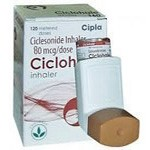
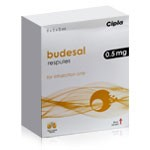
Buy Pulmicort (Budesonide) Online — AstraZeneca Foundational ICS for Asthma Maintenance (Flexhaler & Respules Nebulizer from 12 Months+)


Pulmicort is the original brand-name formulation of Budesonide — one of the most widely prescribed inhaled corticosteroids (ICS) globally and a foundational asthma controller medication. Developed by AstraZeneca and FDA-approved since 1997 (Pulmicort Turbuhaler), Pulmicort uniquely offers a nebulizer suspension formulation (Pulmicort Respules) approved for children as young as 12 months of age — the youngest pediatric approval among inhaled corticosteroids. Listed on the WHO Model List of Essential Medicines, Budesonide is the ICS component of the popular Symbicort combination inhaler (Budesonide + Formoterol).
The active ingredient is Budesonide, a synthetic corticosteroid with potent local anti-inflammatory action in airways. Budesonide binds the glucocorticoid receptor in airway epithelium, reducing airway inflammation, mucus production, and airway hyperresponsiveness. Approximately 11% systemic bioavailability after inhalation (lower than older ICS), with extensive first-pass hepatic metabolism limiting systemic exposure. Pulmicort delivers medication via three formulations: Flexhaler dry powder inhaler, Turbuhaler (international), and Respules nebulizer suspension.
Pulmicort is FDA-approved for asthma maintenance therapy in patients aged 6 years and older (Flexhaler) and aged 12 months to 8 years (Respules nebulizer suspension — signature unique pediatric indication). Off-label uses include COPD adjunct therapy, croup (nebulized for pediatric subglottic edema), severe acute asthma exacerbations (high-dose nebulized), and various inflammatory airway conditions. Budesonide is also marketed separately for inflammatory bowel disease (Entocort, Uceris) and allergic rhinitis (Rhinocort).
The medication is available as Pulmicort Flexhaler 90 mcg and 180 mcg per actuation dry powder inhaler, Pulmicort Respules 0.25 mg/2 mL, 0.5 mg/2 mL, and 1 mg/2 mL nebulizer suspension, and Pulmicort Turbuhaler internationally. Standard adult dosing for asthma: 180-720 mcg twice daily (Flexhaler). Pediatric Respules (12 months-8 years): 0.25-1 mg once or twice daily.
Critical safety considerations include oral candidiasis (thrush) — rinse mouth after use; dysphonia and hoarseness; HPA axis suppression at high doses; growth reduction in children with prolonged use (monitor growth velocity); cataracts and glaucoma risk with chronic use; decreased bone mineral density; hypersensitivity reactions; paradoxical bronchospasm. Drug interactions: strong CYP3A4 inhibitors (ritonavir, ketoconazole) significantly increase budesonide levels and systemic glucocorticoid effects.
Free prescription
Discrete packaging
Have questions?
Quality Assurance
- Pediatric Asthma Age 12 Months: FDA-approved (Respules) from age 12 months — signature unique earliest pediatric ICS approval;
- Pediatric Asthma Age 6: FDA-approved (Flexhaler) from age 6 years;
- Mild Persistent Asthma: For mild persistent asthma controller therapy (lower doses);
- Moderate Persistent Asthma: For moderate persistent asthma (180-360 mcg BID Flexhaler);
- Severe Persistent Asthma: For severe persistent asthma (720 mcg BID Flexhaler);
- Infant Asthma Respules: For asthma in infants 12 months+ via nebulizer (Respules);
- Adolescent Asthma: For adolescent asthma maintenance therapy;
- Adult Asthma: For adult asthma maintenance therapy (all strengths);
- Asthma Prophylaxis: As prophylactic therapy for asthma symptom prevention;
- Croup Pediatric Nebulized: Off-label nebulized for pediatric croup (subglottic edema);
- Severe Acute Asthma Nebulized: Off-label high-dose nebulized for severe acute asthma exacerbation;
- Pregnancy Asthma Maintenance: Pregnancy Category B — preferred ICS in pregnancy;
- Exercise Induced Asthma Maintenance: Long-term controller for exercise-induced asthma;
- Nocturnal Asthma Symptoms: For nocturnal asthma symptoms;
- Step Up ICS Monotherapy: ICS monotherapy for step-up from rescue-only therapy;
- Oral Steroid Sparing: For oral steroid-sparing in severe asthma;
- COPD Adjunct Off Label: Off-label adjunct therapy for COPD;
- Frequent SABA Use: For patients requiring frequent rescue SABA inhaler use;
- Maintenance NOT Rescue: For MAINTENANCE only — NOT a rescue inhaler for acute attacks.
- Less Asthma Exacerbations: Significant reduction in asthma exacerbation frequency and severity;
- Better Lung Function: Improvement in FEV1 (forced expiratory volume) and peak flow measurements;
- Less Nocturnal Symptoms: Significant reduction in nighttime asthma symptoms;
- Better Sleep: Improved sleep quality through reduced nocturnal symptoms;
- Less Daytime Symptoms: Reduction in daytime asthma symptoms allowing normal activities;
- Less Rescue Inhaler Use: Reduction in need for short-acting rescue inhalers (SABA);
- Better Exercise Tolerance: Improved exercise capacity through reduced airway inflammation;
- Less Exercise-Induced Symptoms: Long-term reduction in exercise-induced asthma symptoms;
- Better Daily Function: Return to school, work, and normal activities;
- Less School Absences: Reduction in school absences in pediatric asthma patients;
- Less Airway Inflammation: Direct anti-inflammatory action on airway epithelium;
- Less Mucus Production: Reduction in airway mucus production;
- Less Airway Hyperresponsiveness: Long-term reduction in airway hyperresponsiveness to triggers;
- Better Infant Asthma Control: Approved infant use from 12 months (Respules) supports earliest pediatric asthma management;
- Better Pediatric Asthma Control: Effective pediatric asthma maintenance with nebulizer delivery;
- Less Croup Severity: Off-label nebulized reduces croup severity in pediatric patients;
- Less Oral Steroid Need: Effective ICS may reduce need for oral systemic steroids in severe asthma;
- Better Quality of Life: Substantial improvement in quality of life with effective asthma control;
- Less Asthma Hospitalizations: Effective controller therapy reduces asthma-related hospitalizations;
- Brand Pulmicort: Original AstraZeneca brand of Budesonide with established global clinical reputation since 1997;
- Generic Budesonide: Affordable generic versions expand global access to foundational ICS therapy;
- Pulmicort Flexhaler: Pulmicort Flexhaler dry powder inhaler — breath-activated, no propellant;
- Pulmicort Respules Nebulizer: Pulmicort Respules nebulizer suspension for infants/young children (signature unique formulation);
- Pulmicort Turbuhaler International: Pulmicort Turbuhaler international DPI formulation;
- Symbicort Combination: Budesonide is the ICS component of Symbicort combination inhaler (with Formoterol);
- Earliest Pediatric ICS: Earliest FDA-approved pediatric age (12 months Respules) among inhaled corticosteroids;
- Inhaled Corticosteroid ICS: Foundational inhaled corticosteroid class member;
- Glucocorticoid Receptor Agonist: Synthetic glucocorticoid with potent local anti-inflammatory effect;
- High First Pass Metabolism: Extensive first-pass hepatic metabolism limits systemic glucocorticoid exposure;
- Airway Inflammation Reduction: Targets airway inflammation, mucus production, and hyperresponsiveness;
- Pregnancy Category B ICS: Pregnancy Category B — preferred ICS during pregnancy;
- Twice Daily Maintenance ICS: Twice-daily dosing supports excellent adherence;
- Asthma First Line Controller: First-line ICS controller therapy for persistent asthma per GINA guidelines;
- WHO Essential Medicine: Listed on the WHO Model List of Essential Medicines for respiratory care;
- 25 Plus Year ICS History: 25+ years of clinical use since 1997 — extensive safety data globally.
Generic Pulmicort (Budesonide 100 mcg) Medication guide:
📖 About Pulmicort from Cipla
Pulmicort is a brand of budesonide - one of the most widely used inhaled corticosteroids in the world and arguably the most-studied ICS in specific patient populations (young children, pregnant women, patients on nebulizer therapy). Originally developed by AstraZeneca in Sweden, budesonide has been in clinical use since the early 1980s and remains a foundational option in modern step-therapy guidelines. This Cipla-manufactured version delivers the same budesonide molecule across the same multi-format range - Flexhaler dry-powder inhaler, Turbuhaler DPI (international markets), and Respules nebulizer suspension.
What distinguishes Pulmicort from other ICS products is its unusual multi-format range combined with a specific safety profile that has been documented over four decades. Most inhaled corticosteroids are available only as MDI or DPI; budesonide is the one major ICS also available as a nebulizer suspension, which makes it uniquely suitable for young children who cannot yet use a handheld inhaler reliably. And it is the ICS with the largest human pregnancy safety database - the specific choice that most obstetric and respiratory guidelines endorse when pregnancy is the deciding factor.
📋 Pulmicort at a glance
Before going deeper into the pharmacology and practical use, the key facts about this product are worth pinning down. The stat row below is what a clinician or informed patient would confirm when first meeting the product.
Manufacturer
Cipla Limited, Mumbai, India
Active ingredient
Budesonide
Drug class
First-generation ICS with fatty-acid conjugation
Flexhaler DPI strengths
90 mcg and 180 mcg per actuation
Respules strengths
0.25, 0.5, and 1 mg per 2 mL vial
Minimum age
12 months (Respules); older for DPI formats
Several of these numbers become important later. The presence of both DPI and nebulizer formats means one active ingredient can serve patients across an unusually wide age and clinical range - a 12-month-old with a mask nebulizer through to an adult managing severe asthma with a Flexhaler. The five available strengths across formats give clinicians real flexibility in matching dose to severity. And the 12-month approval is one of the youngest for any daily controller, reflecting both the safety data and the clinical need for nebulizer-format ICS therapy in early childhood asthma.
🗺️ Terms you will see across this guide
A few pharmacological terms come up repeatedly in Pulmicort discussions. Getting them straight up front makes the rest of the guide much easier to follow.
- ICS (inhaled corticosteroid)
- The controller class that reduces airway inflammation. Budesonide is one of the most-studied ICS drugs.
- Budesonide
- The specific active molecule in Pulmicort. Distinct from other ICS drugs like fluticasone (Flovent), ciclesonide (Ciclohale), or mometasone.
- Flexhaler
- The breath-activated dry-powder inhaler format of Pulmicort marketed in North America. Contains 60 or 120 doses depending on strength.
- Turbuhaler
- The international DPI format of Pulmicort - a breath-activated device functionally equivalent to Flexhaler but with slightly different mechanics. Sometimes spelled Turbohaler.
- Respules
- Single-dose plastic vials of budesonide nebulizer suspension - 0.25, 0.5, or 1 mg per 2 mL vial. Used with a jet nebulizer, typically in young children.
- Fatty-acid conjugation
- A biochemical mechanism by which budesonide molecules are reversibly linked to fatty acids inside airway cells, extending the local anti-inflammatory duration. Explains why budesonide can achieve reasonable effect from once-daily dosing in some patients.
These terms map onto the structure of the rest of the guide. Budesonide is the specific ICS; Flexhaler, Turbuhaler, and Respules are the three delivery formats; fatty-acid conjugation is the pharmacological quirk that makes budesonide behave slightly differently from other first-generation ICS drugs. Everything else builds on these five ideas.
The one-sentence summary of Pulmicort: a Cipla-made generic of the AstraZeneca originator brand of budesonide, available as Flexhaler dry-powder inhaler (90 or 180 mcg), Turbuhaler international format, or Respules nebulizer suspension (0.25 to 1 mg per vial), used daily to control asthma inflammation - with an unusually strong pediatric and pregnancy safety database that makes it a preferred choice in several specific populations.
🧪 Budesonide as the Active Molecule
The active molecule in every Pulmicort product is budesonide - a synthetic corticosteroid developed at AstraZeneca (then Astra) in Sweden in the late 1970s and brought to market in the early 1980s. It was designed for potent local anti-inflammatory action with minimal systemic exposure, and it achieved this through a combination of high glucocorticoid receptor affinity, reasonable lipophilicity for airway retention, and the distinctive fatty-acid conjugation mechanism that extends its local duration of action.
Understanding what makes budesonide distinctive at the molecular level helps explain why it has such a wide clinical footprint across ages and delivery formats. It works reliably in the airway; it has decades of accumulated safety data; it can be formulated as a stable dry powder for DPI use or as a suspension for nebulizer use; and the fatty-acid conjugation gives it duration characteristics that some other first-generation ICS drugs do not share. All of these properties trace back to the specific chemistry of the molecule itself.
🧪 Molecule at a glance
| Property | Detail |
|---|---|
| Chemical name | (11beta,16alpha)-16,17-[butylidenebis(oxy)]-11,21-dihydroxypregna-1,4-diene-3,20-dione |
| Molecular formula | C25H34O6 |
| Molecular weight | Approximately 430.5 g/mol |
| Appearance | White to off-white crystalline powder |
| Solubility | Very poorly soluble in water; sparingly soluble in ethanol |
| Stereochemistry | Mixture of 22R and 22S epimers; both active |
| Glucocorticoid receptor affinity | High - roughly 9 times that of dexamethasone |
| Protein binding (plasma) | Approximately 85-90% |
| Unique property | Reversible fatty-acid conjugation in airway tissue extends local duration |
The last row is worth spending a moment on. Budesonide's fatty-acid conjugation is one of the mechanisms that distinguishes it from earlier first-generation ICS drugs like beclomethasone. When budesonide reaches airway cells, some of it becomes temporarily linked to intracellular fatty acids, forming a slow-release depot that keeps releasing active drug over the hours following a dose. This is why budesonide can support once-daily dosing in some patients and situations where earlier ICS drugs needed twice-daily use to maintain adequate coverage.
🎯 What the molecule does and does not do
✅ What it targets
Glucocorticoid receptors inside airway epithelial cells and smooth muscle cells. Switches off inflammatory gene programs.
🟡 What it does not do
Does not open airways in real time. Does not treat sudden bronchospasm. Does not work like a rescue medication.
🔵 What it does slowly
Reduces airway inflammation over days to weeks of daily use. Prevents attacks by keeping the airway baseline healthy.
The three panels capture the personality of any good inhaled corticosteroid. Budesonide is not fast, is not a rescue, and is not a bronchodilator - it is a background daily anti-inflammatory that changes the trajectory of asthma over weeks and months. Confusing this timescale is one of the most common misunderstandings of ICS therapy.
🧬 What happens after a single budesonide dose
Following the drug through a single Pulmicort administration helps show why daily use is standard rather than intermittent bursts. The pharmacology depends on cumulative daily receptor contact, augmented by the fatty-acid depot mechanism unique to budesonide.
Budesonide is not a complicated molecule to understand once you know what it does. Passive cellular entry, high receptor affinity, gene-level anti-inflammatory action, fatty-acid depot for extended local release, rapid systemic clearance. The combination gives daily-use ICS therapy that has been foundational in asthma management for over four decades across an unusually wide age and clinical range.
🫁 How Budesonide Reduces Airway Inflammation
Asthma is fundamentally an inflammatory disease. The airway narrowing that causes symptoms is not the underlying problem - it is a consequence of inflammation involving multiple cell types (eosinophils, T-helper cells, mast cells) and dozens of inflammatory messengers (cytokines, chemokines, adhesion molecules). Bronchodilators like salbutamol treat the symptom of narrowing; inhaled corticosteroids like Pulmicort treat the underlying inflammation that produces the narrowing in the first place.
Budesonide reduces airway inflammation through the same core mechanism as all glucocorticoid receptor agonists, with two features that give it a slightly distinctive personality within the class: high receptor affinity and the fatty-acid conjugation depot. The essential story is that budesonide binds intracellular receptors, the receptor complex moves to the nucleus, and it changes the transcription of dozens of inflammatory genes. Over days to weeks of daily use, this transcriptional shift accumulates into a fundamentally less inflamed airway.
🧬 The anti-inflammatory cascade, step by step
Understanding the mechanism at this level of detail is not academic - it explains why ICS therapy has to be daily, why the effect builds slowly, and why stopping the medication does not produce an immediate return of inflammation. Everything about ICS pharmacology follows from the receptor-level biology.
- Receptor binding. Budesonide diffuses into airway cells and binds the intracellular glucocorticoid receptor with high affinity - roughly 9 times that of dexamethasone at equivalent concentration.
- Chaperone release. The receptor is normally held in the cytoplasm by chaperone proteins. Binding budesonide triggers release, allowing the complex to move.
- Nuclear translocation. The activated receptor complex enters the cell nucleus and finds its DNA binding sites (glucocorticoid response elements) in the promoters of many genes.
- Transrepression of inflammatory genes. The receptor complex silences transcription of pro-inflammatory genes - dozens of cytokines (IL-4, IL-5, IL-13), chemokines, and adhesion molecules.
- Transactivation of anti-inflammatory genes. Simultaneously, some anti-inflammatory genes (like the enzyme MKP-1 that dampens signaling) are switched on.
- Effect on inflammatory cells. Reduced cytokine production leads to fewer eosinophils recruited to the airway, less mast cell activation, and less T-cell activity.
- Airway remodeling reversal (slow). Over months, sustained reduction in inflammation allows some of the structural airway changes of chronic asthma to partially reverse.
This sequence explains the timing puzzle of ICS therapy: nothing about the mechanism is fast. Receptor binding happens in minutes, but gene transcription changes take hours to shift protein levels, and altered protein levels take days to change cellular behavior, and cellular changes take weeks to translate into measurably calmer airway inflammation. This is why patients starting an ICS often feel nothing for days and then gradually notice they are better - the biology is unfolding on its natural timescale.
👤 From Sven-Erik Dahlen, MD, PhD
"Budesonide has been one of the most reliable inhaled corticosteroids in clinical use since the early 1980s. Its receptor pharmacology is thoroughly characterised, its safety profile is exceptionally well-documented, and its multi-format availability - from Turbuhaler dry-powder inhaler through to nebulizer suspension for young children - gives it a clinical footprint few other ICS drugs can match. Much of what we know about how modern ICS therapy shapes long-term asthma outcomes comes from studies that used budesonide as the reference drug, and the accumulated data continues to support its foundational role in the class."
📍 Where glucocorticoid receptors are found and why it matters
| Location | Effect of budesonide binding | Clinical relevance |
|---|---|---|
| Airway epithelial cells | Reduced cytokine and chemokine production | Primary therapeutic effect - less inflammation signaling |
| Airway smooth muscle cells | Reduced hyper-responsiveness | Airways less prone to spasming after triggers |
| Eosinophils and other inflammatory cells | Reduced recruitment and activation | Fewer inflammatory cells in the airway over time |
| Mast cells | Reduced mediator release potential | Less allergic response magnitude |
| Systemic tissues (adrenal, bone, skin) | Only relevant with drug that reaches bloodstream | Low at usual inhaled doses due to high protein binding and rapid clearance |
The anti-inflammatory action of budesonide is thorough - it touches multiple cell types and dozens of inflammatory pathways in the airway. The trade-off for this thoroughness is that the effect takes time to build and can only be maintained by consistent daily dosing. That trade-off has, over four decades of clinical use, proven to be well worth making for the vast majority of patients with persistent asthma.
✨ The Fatty-Acid Conjugation Advantage
One of the more distinctive features of budesonide is its reversible fatty-acid conjugation in airway tissue. When budesonide reaches airway epithelial cells and enters the cytoplasm, a fraction of it becomes temporarily linked to intracellular fatty acids - typically oleate esters - forming a lipid-conjugated depot. This depot is not metabolically active in itself, but it slowly releases free budesonide over the hours following a dose, extending the local anti-inflammatory duration well beyond what the pharmacokinetics of the free drug alone would predict.
This mechanism is not universal across the ICS class. Older first-generation drugs like beclomethasone do not undergo meaningful fatty-acid conjugation. Ciclesonide (Ciclohale) uses a different chemical strategy - it is a prodrug activated by airway esterases. Only budesonide has this specific reversible-esterification depot property, and it is one of the reasons budesonide can achieve reasonable clinical effect from once-daily dosing in some patients where a first-generation ICS without the conjugation would need twice-daily use.
🔬 How the conjugation depot works
⚖️ Budesonide fatty-acid conjugation compared to other ICS
| ICS drug | Extended airway retention mechanism | Typical dosing |
|---|---|---|
| Beclomethasone | None - relies on inherent lipophilicity | Twice daily typical |
| Budesonide (Pulmicort) | Fatty-acid ester depot | Once or twice daily (once possible with fatty-acid depot support) |
| Fluticasone propionate (Flovent) | Very high receptor affinity plus lipophilicity | Twice daily standard |
| Ciclesonide (Ciclohale) | Prodrug design - activated by airway esterases | Once daily typical |
| Mometasone furoate | Very high receptor affinity plus retention | Once daily possible |
| Fluticasone furoate | Very long tissue retention (2nd generation) | Once daily |
The table shows why budesonide's mechanism is distinctive. Every ICS has some way to extend its local action, but budesonide is the one that specifically uses reversible fatty-acid conjugation as its main strategy. Ciclesonide uses a related but different approach (prodrug activation); second-generation ICS drugs like mometasone and fluticasone furoate use different strategies (very high receptor affinity, long lipophilic retention). The clinical outcomes across these approaches are broadly similar, but the specific mechanism matters for understanding why budesonide behaves the way it does.
🎯 Clinical implications of the conjugation advantage
🕑 Extended dosing intervals
Once-daily dosing feasible in many patients thanks to the fatty-acid depot; especially useful for adherence in patients who struggle with twice-daily schedules.
🌟 MART approach compatibility
The extended local action supports budesonide-formoterol maintenance-and-reliever therapy (MART) - the modern combined approach for many asthma patients.
📈 Steady state coverage
The gradual release from the depot smooths out the peaks and troughs of receptor occupancy that might otherwise occur between doses.
🔓 Rescue-dose response
In MART protocols where budesonide-formoterol is used both daily and as needed, the extra doses add both immediate anti-inflammatory action and additional depot loading.
Fatty-acid conjugation is one of the pharmacological features that separates budesonide from other first-generation ICS drugs and makes its dosing behaviour more flexible. It is why once-daily use works in many patients, why budesonide can serve as the anti-inflammatory component in modern MART regimens, and why the drug has held its place in asthma management for over four decades even as newer ICS options have entered the market.
📋 Available Formats Overview
One of the practical strengths of Pulmicort is that budesonide is available in three quite different delivery formats: Flexhaler (dry-powder inhaler used mainly in North America), Turbuhaler (dry-powder inhaler used internationally, functionally similar to Flexhaler), and Respules (nebulizer suspension for use with a jet nebulizer). Each format delivers the same budesonide molecule to the same airway targets, but they interact with patients in very different ways and fit different clinical situations.
The most distinctive of these formats is Respules. Very few daily controller inhaled corticosteroids are available as nebulizer suspensions - most ICS drugs are MDI or DPI only. Budesonide's availability as a nebulizer product opens up daily ICS therapy for young children (from 12 months onward) who cannot yet use handheld inhalers reliably, and for adults with severe dexterity or cognitive limitations. This is one of the reasons Pulmicort has such a wide age range of use compared with most other ICS products.
📋 The three Pulmicort formats compared
| Format | Delivery | Available strengths | Age range | Best suited for |
|---|---|---|---|---|
| Flexhaler (DPI) | Breath-activated dry powder | 90 mcg, 180 mcg per actuation | 6 years and older | Older children, adolescents, adults with adequate inspiratory force |
| Turbuhaler (DPI) | Breath-activated dry powder | 100, 200, 400 mcg per actuation (varies by market) | 6 years and older | International markets; functionally equivalent to Flexhaler |
| Respules (nebulizer) | Nebulized suspension via mask or mouthpiece | 0.25, 0.5, 1 mg per 2 mL vial | 12 months and older | Young children; adults unable to use handheld inhalers |
Notice that the Flexhaler and Turbuhaler are functionally similar - both are breath-activated dry-powder inhalers that use different naming conventions in different markets. The clinically distinctive format is Respules, which uses a fundamentally different delivery mechanism (nebulizer suspension inhaled as a mist rather than dry powder) and is the only Pulmicort format approved for children as young as 12 months.
🎯 When each format is the right choice
Flexhaler suits
- Adults with reliable inhalation force
- Older children (age 6+) transitioning from nebulizer
- Patients in North American markets where Flexhaler is standard
- Portable daily controller for travel and work
Turbuhaler suits
- Patients in European/international markets
- Same clinical use cases as Flexhaler
- Functionally equivalent for daily controller therapy
- Continuity for patients traveling between regions
Respules suits
- Infants and young children (12 months+)
- Adults unable to coordinate MDI or DPI
- Patients with severe frailty or cognitive limitations
- Home nebulizer users with existing equipment
🕚 Life-stage progression through formats
12 mo - 5 yr
4-6 yr
6-11 yr
12+ yr / adult
Format choice for Pulmicort is not one-time-forever - a patient's ability to use a device changes with age, dexterity, and clinical status. Reviewing device fit at every asthma review, and transitioning between formats when appropriate, is one of the disciplines of good long-term ICS care. The multi-format range of Pulmicort makes this transition smoother than for many other ICS products because it can accompany the same patient from toddlerhood through adulthood on the same active ingredient.
💠 Pulmicort Flexhaler DPI Explained
The Pulmicort Flexhaler is a breath-activated dry-powder inhaler containing a reservoir of budesonide powder ready to be delivered one dose at a time. Unlike capsule-based DPIs (Rotahaler, Handihaler), the Flexhaler stores the drug internally and dispenses one dose per twist-and-inhale cycle - no capsules to load or handle. This makes it convenient for daily use and reduces the small handling errors that come with capsule loading. It also means the whole device needs to be discarded when the dose counter reaches zero.
Flexhaler is the North American format of AstraZeneca's classic Turbuhaler design. The internal mechanics are similar; the naming and some minor design details differ. Both devices work by requiring the patient to generate a moderately strong inhalation that draws budesonide powder from the internal metering chamber into the airway. This inspiratory force requirement is the main practical consideration - it works well for older children, adolescents, and adults, but is not suitable for very young children or patients with weak respiratory effort.
💠 Flexhaler device anatomy
- Cylindrical plastic body - roughly the size of a small pen, easy to hold and slip into a pocket.
- Mouthpiece at the top with a protective cap; some models have a color indicator for open/closed status.
- Twist grip base that rotates to load the next dose from the internal reservoir. Audible click confirms the loading action.
- Internal drug reservoir holding 60 or 120 doses depending on strength (60 for 180 mcg, 120 for 90 mcg).
- Dose counter window showing the number of doses remaining. Turns red when 20 or fewer doses left.
- Desiccant chamber inside the base to keep the powder dry - one reason Flexhaler must be stored in low-humidity conditions.
🌬️ The Flexhaler six-step usage protocol
- Remove the cover cap from the mouthpiece. Hold the Flexhaler upright with the mouthpiece pointing up.
- Twist the base in one direction until it stops, then twist it back in the opposite direction until it stops. You should hear a click - this loads the next dose. The dose counter drops by one.
- Breathe out gently and fully away from the Flexhaler mouthpiece. Do not breathe into the device - moisture from breath can affect the powder.
- Seal your lips around the mouthpiece firmly. Do not bite the mouthpiece.
- Inhale deeply and forcefully through your mouth - a strong steady breath that continues for as long as comfortable. The powder is drawn out by your inhalation force.
- Remove the mouthpiece and hold your breath for about 10 seconds. Then exhale slowly away from the device. Replace the cover cap. Rinse your mouth with water.
The whole sequence takes about 30 seconds once the routine is established. The most important step is the strong steady inhalation - the powder cannot enter the airway without adequate airflow, and shallow breaths do not deliver the full dose. Patients unable to generate this inspiratory force reliably should consider Respules with nebulizer instead.
⚖️ Flexhaler advantages and limitations
✅ Advantages
- Breath-activated - no puff-and-inhale timing challenge
- Dose counter shows remaining supply
- Compact and portable
- No propellant environmental concerns
- No capsules to load or lose
- Fewer technique errors in patients who can inhale strongly
❌ Limitations
- Requires strong inhalation force - not suitable for youngest children
- Breathing into the mouthpiece can dampen the powder
- Humid storage can affect powder integrity
- Cannot use with spacer (breath-activated design)
- 60 or 120 doses may not suit high-dose regimens without frequent refills
- Not usable during severe attack (weakened inspiratory force)
The Flexhaler is a well-designed dry-powder inhaler that works reliably for older children, adolescents, and adults who can generate the required inhalation force. Its breath-activation removes the coordination challenge of MDI use; its dose counter simplifies supply management. Confirming that inhalation force at every review is what keeps this device working over years of use.
🌍 Pulmicort Turbuhaler International Format
The Pulmicort Turbuhaler is the international format of AstraZeneca's dry-powder budesonide inhaler - functionally very similar to the North American Flexhaler, but with minor differences in the specific device design, dose counter appearance, and available strengths depending on the market. Patients traveling between regions or using online pharmacies may encounter either format; the clinical drug is identical, and the technique is essentially the same across both.
Understanding the Turbuhaler-Flexhaler relationship helps prevent confusion when a patient encounters a device that looks slightly different from what they used before. AstraZeneca originally launched the Turbuhaler in the 1980s and it became the reference dry-powder budesonide inhaler globally. When the product line was updated for the North American market, some regulatory and design considerations led to the Flexhaler brand emerging alongside the international Turbuhaler. Both persist today in their respective markets.
⚖️ Turbuhaler versus Flexhaler side by side
| Attribute | Turbuhaler (international) | Flexhaler (North America) |
|---|---|---|
| Active ingredient | Budesonide (identical molecule) | Budesonide (identical molecule) |
| Delivery mechanism | Breath-activated dry powder from reservoir | Breath-activated dry powder from reservoir |
| Typical strengths | 100, 200, 400 mcg per actuation (varies by market) | 90 mcg, 180 mcg per actuation |
| Doses per device | 60, 100, or 200 depending on strength | 60 or 120 depending on strength |
| Loading mechanism | Twist base back and forth | Twist base back and forth |
| Dose counter | Numeric display window | Numeric display window (red when low) |
| Cover cap | Twist-off cap | Twist-off cap |
| Inhalation technique | Strong steady inhalation through mouthpiece | Strong steady inhalation through mouthpiece |
| Regulatory approval basis | National regulators in respective markets | US FDA approval as separately branded device |
The essential clinical drug is identical between Turbuhaler and Flexhaler. The main practical difference is the available strength options - Turbuhaler internationally often comes in slightly different mcg-per-actuation values than the North American Flexhaler. This means direct dose conversion between the two requires attention: 200 mcg Turbuhaler and 180 mcg Flexhaler are not the same per-puff dose even though they are clinically similar options for similar patient categories.
🌍 Why two format brands exist
- Historical development. Turbuhaler was AstraZeneca's original dry-powder budesonide device, launched in Europe in the 1980s and adopted globally.
- North American regulatory pathway. The Flexhaler brand emerged for the US market with slightly different design specifications approved by the FDA.
- Strength standardisation. Different markets have historically used different mcg-per-actuation conventions; Turbuhaler and Flexhaler reflect these regional standards.
- Manufacturer continuity. AstraZeneca continues to produce both formats; Cipla generic versions follow similar market-specific conventions.
- Patient familiarity. Patients in their home market are typically familiar with one format; the other may appear unfamiliar even though it works the same way.
🌬️ Turbuhaler technique - what is the same, what may differ
The core technique is the same as Flexhaler: twist the base to load a dose, exhale away from the device, seal lips around the mouthpiece, inhale strongly and deeply, hold your breath. The small differences that occasionally trip up patients switching between the two involve the specific feel of the loading twist and the exact position of the dose counter window - familiarity comes within a few uses.
Points to check when switching between Turbuhaler and Flexhaler:
- Check the strength label carefully - your usual dose may correspond to a different per-actuation number in the other format.
- Adjust the number of puffs if the total daily dose needs to remain the same across formats.
- Confirm with your pharmacist when a first prescription of the other format is dispensed - they can verify the equivalent number of puffs.
- Practice the loading twist a couple of times on the new format so the movement feels natural before your first real dose.
- Do not assume the dose counter starts identically - Turbuhaler and Flexhaler may show different starting numbers.
Turbuhaler and Flexhaler are functionally equivalent budesonide DPI devices in different markets. The active drug is identical; the technique is essentially the same. The main things to confirm when moving between them are the per-actuation strength and the resulting number of puffs needed to reach the same total daily dose. Once these are verified, either format serves the same clinical role reliably.
💧 Pulmicort Respules for Nebulizer Use
Pulmicort Respules are single-dose plastic vials of budesonide nebulizer suspension - the format that makes Pulmicort unique among daily controller ICS products. Each vial contains 2 mL of a preservative-free sterile suspension at one of three budesonide strengths (0.25 mg, 0.5 mg, or 1 mg per vial). The vial is opened by twisting the top off, the contents are emptied into a jet nebulizer cup, and the mist is breathed in through a mask or mouthpiece over 5-10 minutes.
Respules exist primarily to make daily ICS therapy possible in very young children. Age 12 months to 6 years is the group that cannot yet use dry-powder inhalers reliably (they cannot generate the inspiratory force) and that struggles even with MDI-plus-spacer. For these children, nebulizer therapy is the practical daily route - and budesonide is the ICS with the manufacturing infrastructure, safety data, and regulatory approval to fill that role. Respules also serve adult patients whose dexterity or cognition prevents reliable handheld inhaler use.
💧 What each Respule contains
| Component | Function | Amount per 2 mL vial |
|---|---|---|
| Budesonide | Active corticosteroid (anti-inflammatory) | 0.25 mg, 0.5 mg, or 1 mg depending on strength |
| Sodium chloride | Isotonic saline base for airway tolerance | Sufficient for 2 mL isotonic suspension |
| Sodium citrate + citric acid | Buffer to maintain pH near physiological range | Small amounts |
| Polysorbate 80 | Surfactant to help suspend the drug particles | Small amount |
| Water for injection | Solvent / carrier | To 2 mL final volume |
| Preservatives | - | None (single-use vial) |
The absence of preservatives is one of the practical strengths of the single-dose Respule format. Multi-dose nebulizer solutions often contain benzalkonium chloride or similar preservatives that can occasionally trigger paradoxical bronchospasm in sensitive patients. Single-use vials avoid this by opening only for immediate use; nothing is stored back for later.
👤 From Sameer K. Mathur, MD, PhD
"Pulmicort Respules occupy a specific and valuable niche in pediatric asthma care. For children under about 4-5 years who cannot use a handheld inhaler reliably, having a daily ICS available in nebulizer format changes what is clinically possible. Without Respules, these children would either be on inadequate control or would need to wait until they could use a spacer-MDI reliably - and that wait costs months to years of undertreated inflammation. The transition from Respules to Flexhaler as children grow into inhaler-capable ages is one of the standard developmental milestones in pediatric asthma management."
🏥 A typical Respules nebulizer session
- Wash your hands and gather equipment: compressor, tubing, nebulizer cup, mask (or mouthpiece), and a single Respule vial.
- Assemble the nebulizer: connect tubing from compressor outlet to nebulizer cup base.
- Twist open the Respule vial and empty the full 2 mL contents into the nebulizer cup. Do not add saline unless clinician instructs.
- Attach the mouthpiece or mask to the top of the cup.
- Sit upright in a comfortable, supported position - this improves lung volume and drug delivery.
- Turn on the compressor. A steady mist should form within seconds.
- Breathe normally through the mouthpiece or mask for 5-10 minutes until the mist becomes sputtery or stops.
- Turn off, rinse the cup and mouthpiece with warm water, air-dry. Rinse the patient's mouth with plain water and spit.
👶 Special considerations for very young children
😮 Right mask size
Should seal around nose and mouth without gaps. Wrong size dramatically reduces delivered dose. Have age-appropriate masks available as the child grows.
👶 Upright position
Hold the child on your lap facing forward, or in a supportive chair. Never nebulize a lying-down child.
🎵 Distract, do not force
A stressed crying child breathes shallowly and rejects the mask. Use songs, a favourite toy, or a screen to keep calm.
❌ Avoid blow-by
Holding the mask away from the face because the child does not like it wastes most of the dose. Consistent seal matters far more than session length.
Pulmicort Respules make daily ICS therapy possible for the youngest patients who cannot use handheld inhalers - and for adults whose limitations prevent MDI or DPI use. Single-use vials, preservative-free, three available strengths, straightforward nebulizer administration. It is the format that fills a genuine gap in the ICS class and is one of the reasons budesonide has such a wide clinical footprint compared with most other inhaled corticosteroids.
🔀 Choosing Between Flexhaler and Respules
When a patient qualifies for either the Flexhaler DPI or Respules nebulizer format of Pulmicort, the choice comes down to practical fit: which format the specific patient can actually use reliably, which is convenient for their daily routine, and which fits their current life situation. Both deliver the same budesonide molecule; both work well when used correctly. The right choice is the one that this patient will use consistently for months and years.
For young children (under 6), Respules is essentially the only feasible option because Flexhaler requires an inspiratory force that young children cannot generate. For adults with normal respiratory function and reasonable dexterity, Flexhaler is usually preferred because it is more portable, faster to use, and easier to travel with. Between these two extremes lies a range of situations where clinical judgment based on the specific patient's abilities and preferences drives the choice.
🧭 A decision path for Flexhaler vs Respules
Child under 6 years
Respules with jet nebulizer. Flexhaler not suitable for this age due to inspiratory force requirement. Typically twice-daily nebulizer sessions with pediatric mask.
Child 6-11 years
Flexhaler if inspiratory force is adequate and coordination reliable. Respules if the child cannot manage Flexhaler consistently. Transition often happens gradually with practice.
Adolescent or adult with reliable inhalation force
Flexhaler is standard. Portable, quick to use, easier to travel with. Respules reserved for specific circumstances (see below).
Adult unable to use Flexhaler
Respules with nebulizer. Applies to elderly with weak inspiratory effort, severe frailty, cognitive limitations, or specific respiratory conditions where DPI is not feasible.
Patient already using home nebulizer for other reasons
Respules can integrate with existing nebulizer routine. May be preferred over Flexhaler if the patient has developed comfort with nebulizer therapy.
🎯 Common patient scenarios
👶 2-year-old with persistent asthma
Respules 0.25 mg twice daily via mask-spacer nebulizer. Standard for this age. Continues until child can transition to Flexhaler around age 5-7.
👨 45-year-old with moderate asthma
Flexhaler 180 mcg twice daily. Portable, quick, fits daily routine. No reason to consider Respules for this patient.
🧓 82-year-old with weakness from stroke
Respules with home nebulizer. Weak inspiratory effort makes Flexhaler unreliable. Nebulizer session with caregiver support works better.
🏫 8-year-old transitioning from Respules
Try Flexhaler. Practice with pharmacist. Confirm technique reliable before switching completely. Some children benefit from parallel use during transition period.
📋 Points that surprise patients switching formats
- Dose values are different. A 0.5 mg Respule is not the same as one puff of 180 mcg Flexhaler. Total daily dose recalculation is needed when switching.
- Session time differs dramatically. Flexhaler takes 30 seconds; a nebulizer session takes 5-10 minutes. Both are equally valid; the time investment is different.
- Portability is very different. Flexhaler fits a pocket; a nebulizer setup requires transporting the compressor and cup.
- Cleaning differs. Flexhaler needs only occasional mouthpiece wiping; nebulizer requires cleaning after every session.
- Storage requirements differ. Flexhaler and Respules have similar storage needs but Respules should be kept in the original box (light-sensitive).
Format choice for Pulmicort is a clinical decision, not a self-adjustment. Do not switch between Flexhaler and Respules on your own - the doses are not directly equivalent, and the technique requirements are quite different. Discuss format changes with your clinician when the current format is no longer working well or when life circumstances (child growing up, elderly frailty developing) suggest a transition is due.
🔢 Understanding the Available Strengths
Pulmicort is available in five strengths across the two main formats sold in most markets: Flexhaler at 90 mcg and 180 mcg per actuation, and Respules at 0.25 mg, 0.5 mg, and 1 mg per 2 mL vial. This range covers everything from starter doses in young children through to higher-dose therapy in adults with more severe disease. Clinical strength choice matches patient age, severity, and format preference.
Understanding the strengths matters because dose choice is not something patients should adjust on their own. Doubling the budesonide strength does not double the effect - the anti-inflammatory response is not linear at these doses. But it does meaningfully increase daily budesonide exposure, which matters for both the intended benefit and the small increase in systemic corticosteroid footprint at higher doses. Following the prescribed strength as directed is what makes long-term ICS therapy work as intended.
🔢 The five Pulmicort strengths at a glance
| Format | Strength | Typical daily total range | Best suited for |
|---|---|---|---|
| Flexhaler | 90 mcg per actuation | 90-360 mcg per day | Older children (6+), mild-moderate adult asthma |
| Flexhaler | 180 mcg per actuation | 180-720 mcg per day | Adults with moderate-severe asthma; higher-dose maintenance |
| Respules | 0.25 mg per 2 mL vial | 0.25-0.5 mg per day | Youngest children (12 months+), pediatric mild persistent |
| Respules | 0.5 mg per 2 mL vial | 0.5-1 mg per day | Pediatric moderate persistent; step-up from 0.25 mg |
| Respules | 1 mg per 2 mL vial | 1-2 mg per day | Pediatric severe persistent; adults on nebulizer therapy |
Notice that Flexhaler and Respules use different unit conventions (mcg vs mg). This is a common source of prescription confusion - always confirm the specific dose you were prescribed matches the label on the product you receive. A "0.5 mg Respule" and "180 mcg Flexhaler" are not the same total drug amount (0.5 mg = 500 mcg vs 180 mcg per actuation), though the clinical daily dose may be similar depending on how many actuations are prescribed.
🧭 A decision path for strength selection
Starting fresh, mild persistent asthma
Adults: 90 mcg Flexhaler once or twice daily. Children under 6: 0.25 mg Respule twice daily. Reassess in 4-6 weeks.
Moderate asthma or partial response to starter dose
Adults: 180 mcg Flexhaler twice daily. Children: step up to 0.5 mg Respule. If still not controlled, consider adding LABA rather than climbing further on budesonide alone.
Severe or poorly controlled asthma
Higher strengths per format; usually combined with LABA (Symbicort budesonide-formoterol combination); specialist input often warranted.
Stepping down from higher doses
Once asthma is well controlled for 3+ months, consider moving to lower strength. Do not stop entirely without a plan - most patients maintain some ICS long-term.
🎯 Which strength suits which situation
Lower strengths suit
- Mild persistent asthma in adults (90 mcg Flexhaler)
- Youngest pediatric patients (0.25 mg Respule)
- Step-down maintenance from higher dose
- Starting dose for adults new to ICS therapy
Higher strengths suit
- Moderate persistent asthma - medium range
- Moderate-severe asthma - top of range
- Step-up from partial response to lower dose
- Cases where combination inhaler is being planned
Strength choice is a conversation, not a self-adjustment. Do not switch between strengths or formats on your own. Both starting dose and step-up or step-down decisions belong with the treating clinician who considers the whole clinical picture - severity, previous response, comorbidities, age, and the specific format being used.
📅 Once Versus Twice Daily Dosing
Budesonide can be dosed once daily or twice daily depending on the specific product, strength, and clinical situation. This flexibility distinguishes it from ICS drugs like fluticasone propionate (which is standard twice-daily) and puts it closer to newer once-daily options like ciclesonide, mometasone, and fluticasone furoate. The fatty-acid conjugation depot is one of the mechanisms that supports this dosing flexibility - it extends the local anti-inflammatory action beyond what free-drug pharmacokinetics alone would suggest.
In practice, twice-daily dosing (morning and evening) is common for higher doses and for patients where consistent 24-hour coverage matters most. Once-daily dosing works well for lower doses in mild persistent asthma and can substantially help adherence for patients who struggle to remember an evening dose. When budesonide is used as part of a maintenance-and-reliever therapy (MART) approach - budesonide-formoterol combination inhaler taken both as scheduled maintenance and as needed for rescue - the dosing pattern is fundamentally different again.
📅 When once daily works, when twice daily is preferred
Once daily is often adequate for:
- Mild persistent asthma on lower doses (90 mcg Flexhaler)
- Patients with excellent adherence and stable control
- Situations where twice-daily is a barrier to adherence
- Step-down phases after prior good control on twice-daily
Twice daily is usually preferred for:
- Higher doses (180 mcg Flexhaler, larger Respules doses)
- Moderate to severe asthma needing consistent 24-hour coverage
- Patients with variable control on once-daily attempts
- Nocturnal symptoms suggesting overnight coverage matters
- Pediatric use where dose is split across the day for stability
👤 From Klaus F. Rabe, MD, PhD
"Budesonide has been one of the workhorses of modern asthma management for decades, and its dosing flexibility is one of the reasons. The fatty-acid conjugation extends local action enough that many patients do well on once-daily use at lower doses - a real advantage for adherence. At higher doses and in more variable asthma, twice-daily use gives smoother receptor coverage and typically better control. Where budesonide has particularly transformed modern care is through the maintenance-and-reliever approach with formoterol, which lets a single combination inhaler serve both as daily controller and as symptomatic reliever - a strategy that has reduced exacerbations meaningfully compared with traditional separate-inhaler approaches."
🌟 The MART approach: a different dosing paradigm
Budesonide-formoterol combination inhalers (marketed as Symbicort and generics) can be used in a distinctive dosing pattern called maintenance and reliever therapy (MART). Instead of separating daily controller and rescue medications into two different inhalers, MART uses the same combination inhaler for both purposes: a daily maintenance dose plus additional doses as needed for symptoms. This works because formoterol is a rapid-onset long-acting bronchodilator (unlike salmeterol which has slow onset), and budesonide's fatty-acid conjugation supports the mixed dosing pattern.
How MART differs from traditional dosing:
- Single inhaler for both roles. The same budesonide-formoterol product serves as controller and reliever.
- Daily scheduled dose plus as-needed doses. Typically 1-2 puffs twice daily maintenance plus 1-2 puffs as symptoms arise.
- Each rescue dose also delivers ICS. Additional anti-inflammatory action loads whenever symptoms trigger a rescue - potentially preventing worsening.
- Not applicable to Pulmicort alone. MART requires the combination product; single-ingredient budesonide (Pulmicort) is dosed traditionally.
- Different rescue rules. In MART, the rescue medication is the same combination; salbutamol may still be prescribed for severe exacerbations.
MART is not a Pulmicort dosing option per se - it requires the combination product with formoterol. But understanding it matters because many patients start on Pulmicort monotherapy and later step up to a combination product like Symbicort, and the dosing paradigm changes when they make that transition. Your clinician will explain the specific rules for whichever product you are on at the time.
🕑 Building a sustainable twice-daily schedule
For patients on twice-daily Pulmicort, the challenge is maintaining consistency over months and years. The pairing that works most reliably is toothbrushing morning and evening - most adults have this habit twice a day already, and pairing the Pulmicort dose with it means both events happen or neither does. The pairing piggybacks on an existing routine rather than requiring a new independent behaviour.
🌅 Morning anchor examples
- After brushing teeth
- With first cup of coffee
- Before breakfast
- Right before leaving for work
🌚 Evening anchor examples
- After brushing teeth before bed
- With dinner
- During evening TV or reading
- Right before bed reading
Budesonide dosing flexibility is one of Pulmicort's practical strengths - once-daily works for mild persistent asthma with excellent adherence, twice-daily for higher doses and more variable control, and MART with combination products for a modern maintenance-and-reliever approach. Your clinician will match the pattern to your specific situation; your job is to follow whichever schedule was prescribed consistently and to raise any adherence challenges early so the plan can be adjusted rather than silently drift into inadequate dosing.
🔁 Building the Daily Controller Habit
Long-term ICS therapy stands or falls on habit. Pulmicort works for the patients who take it daily, most days, for the years asthma remains active in their life. It does not work for the patients who take it inconsistently or who drop it during good periods and restart during flares. Everything in the pharmacology assumes daily consistent use, and the evidence base on adherence shows that this consistency is the largest single predictor of long-term asthma outcome - more important than which specific ICS was chosen, more important than which delivery format, more important than which specific dose was prescribed.
Understanding this shifts the practical priority. If you want to get the most from Pulmicort, invest in the habit before you invest in anything else about the treatment. Choose your anchor points in the day (morning and evening if twice-daily, or one anchor if once-daily), attach the inhaler or nebulizer to them physically and mentally, and build a system that keeps the habit running through the periods when you feel well and would otherwise be tempted to skip. The molecule is well-designed; what you can influence is the reliability with which it reaches the airway on schedule.
🔁 The five-stage adherence pattern
Adherence over months has a characteristic shape. Recognising which stage you are in helps you defend the habit at the moments it is most vulnerable.
Knowing this pattern exists is half the battle. When you find yourself in the fade phase thinking "maybe I do not need this anymore," you can recognise the thought as predictable rather than a genuine clinical insight. The right response is not to test it by stopping - it is to book a review with your clinician who can make an informed step-down decision if appropriate.
💡 Practical habit-building strategies
- Anchor to existing habits. Pair Pulmicort with something you already do reliably (toothbrushing, morning coffee). Piggybacking is more powerful than trying to establish a completely independent routine.
- Same physical location. Keep the inhaler in one specific place - next to your toothbrush, on the kitchen counter, in a specific drawer. Location cues the behaviour.
- Use phone reminders as a safety net. Daily alarm at your chosen time. Snooze if you cannot use the inhaler immediately.
- Track for the first few weeks. A daily tick mark on paper or in an app catches missed doses before they become weeks-long gaps.
- Do not judge yourself for missed doses. Missed doses happen. The response is "back to normal today," not "I have failed and might as well stop."
- Refill early. Order the next Flexhaler or Respules box when you have 15-20 doses/vials left. Running out is a common reason for accidental multi-day gaps.
The daily controller habit is one of the most valuable investments in long-term health for anyone with persistent asthma. Pulmicort is a strong molecule and any of its delivery formats works well - but none can compensate for inconsistent use. Building the habit, defending it against life's disruptions, and refreshing it every few months when routines drift is what makes long-term ICS therapy actually deliver on its promise.
🌬️ Proper Flexhaler Inhalation Technique
Flexhaler technique looks simple on the surface but has enough subtle details that patients using the device for years can drift into technique errors that meaningfully reduce delivered dose. Reviewing the exact steps periodically - not just relying on memory from initial training - is one of the most reliable ways to keep Pulmicort Flexhaler therapy working as intended over time.
The general principle behind good Flexhaler technique is generating a strong steady inhalation that draws all the powder from the internal metering chamber into the airway in one continuous breath. The device does not spray the drug; the patient's inhalation force is what carries it. Understanding this distinction is what prevents the most common technique errors and separates Flexhaler use from MDI use fundamentally.
🌬️ The complete eight-step Flexhaler protocol
- Hold the Flexhaler upright with the mouthpiece pointing up. This orientation is important during dose loading.
- Remove the cover cap from the mouthpiece.
- Twist the base in one direction until it stops, then twist it back the opposite direction until it stops. You should hear a click - this loads the next dose. Confirm the dose counter drops by one.
- Breathe out gently and fully AWAY from the Flexhaler mouthpiece. Do not breathe into the device - moisture from breath can affect the powder in the metering chamber.
- Bring the Flexhaler to your mouth and seal your lips firmly around the mouthpiece. Do not bite the mouthpiece. No gaps at the corners.
- Inhale forcefully and deeply through your mouth - a strong steady breath that continues for as long as comfortable, typically 3-5 seconds. The powder is drawn out by this airflow.
- Remove the Flexhaler and hold your breath for about 10 seconds - or as long as comfortable. This lets the powder settle in the airway rather than being immediately exhaled.
- Exhale slowly away from the device. Replace the cover cap to protect the mouthpiece until next dose. Rinse your mouth with water and spit.
The whole sequence takes about 30 seconds once the routine is established. The most important steps are the strong forceful inhalation (step 6) and the breath-hold (step 7) - these two together determine how much of the delivered dose reaches the small airways where it needs to act. Everything else supports these two central actions.
❌ Common Flexhaler mistakes and how they hurt delivery
| Mistake | What happens | Fix |
|---|---|---|
| Breathing into the mouthpiece | Moisture from breath dampens the powder in the chamber; sticky powder does not deposit properly | Always exhale AWAY from the device before inhaling |
| Weak inhalation | Insufficient airflow to draw powder out of the metering chamber; drug stays in the device | Practice generating a strong steady breath; try inhaling through a straw to gauge force |
| Interrupted inhalation | Powder starts moving but the breath stops before it reaches the airway | Continue inhaling for 3-5 seconds without pausing |
| Holding the Flexhaler horizontally during loading | Metering chamber may not fill correctly; next dose may be reduced | Hold upright with mouthpiece up while twisting the base |
| Not holding breath after inhalation | Powder does not have time to settle in the airway before being exhaled | Hold breath 5-10 seconds after each dose |
| Twisting the base multiple times | Multiple doses may be counted but only one is actually loaded into the chamber | One full twist-and-back per dose; wait for the click |
| Poor lip seal | Air enters around the mouthpiece; some dose escapes | Firm complete seal with lips; check for gaps at corners |
👁️ Do this. Not that.
✅ Do this
- Hold the Flexhaler upright during dose loading
- Exhale fully AWAY from the device before inhaling
- Generate a strong steady inhalation for 3-5 seconds
- Hold breath 5-10 seconds after each dose
- Rinse mouth after every dose
- Watch the dose counter for supply management
- Have a pharmacist watch your technique once a year
❌ Not that
- Do not breathe into the mouthpiece
- Do not tilt or shake the Flexhaler after loading a dose
- Do not twist the base multiple times per dose
- Do not use half-hearted or interrupted inhalations
- Do not use a Flexhaler with a red dose counter reading if you have run out of the next supply
- Do not wash the Flexhaler with water
- Do not assume technique from years ago is still correct
Flexhaler technique is one of the more forgiving delivery methods in the ICS class - breath-activation removes the coordination challenge that trips patients up with MDIs. But it still needs a strong inhalation, a clean protocol, and periodic technique review. Getting these details right is what makes the Flexhaler deliver its full dose reliably over months and years of use.
🌬️ Proper Turbuhaler Inhalation Technique
Turbuhaler technique is essentially the same as Flexhaler technique because the two devices are functionally similar - both are breath-activated dry-powder inhalers that use a twist-and-inhale mechanism to deliver budesonide from an internal reservoir. If you have learned Flexhaler technique, you already know how to use a Turbuhaler. The differences are cosmetic and minor mechanical rather than fundamentally different.
That said, patients switching from one format to the other sometimes notice small differences in the feel of the loading twist, the position of the dose counter window, and the specific look of the mouthpiece. These are worth flagging so the switch feels familiar rather than confusing. This section covers the specific Turbuhaler protocol and the small points that differ from Flexhaler in practice.
🌬️ The complete Turbuhaler technique
- Unscrew and remove the cover cap from the mouthpiece. The Turbuhaler has a screw-off cap rather than a friction-fit cap.
- Hold the Turbuhaler upright with the mouthpiece pointing up.
- Twist the coloured base grip one way as far as it will go, then twist it back the other way until you hear a click. This loads the dose. The dose counter drops by one (or the window colour changes on some models).
- Breathe out gently and fully AWAY from the Turbuhaler. Do not exhale into the device.
- Place the mouthpiece between your teeth and close your lips around it. Firm seal, no biting.
- Inhale deeply and forcefully for 3-5 seconds. Strong steady breath - the powder is drawn from the chamber by your airflow.
- Hold your breath for about 10 seconds after removing the mouthpiece from your lips.
- Replace the cover cap by screwing it back on. Rinse mouth with water and spit.
⚖️ Small differences between Turbuhaler and Flexhaler technique
- Cover cap: Turbuhaler cap unscrews; Flexhaler cap pulls off.
- Base grip color: Turbuhaler often has a distinctive coloured grip at the base; Flexhaler is typically all-white or all-neutral.
- Dose counter position: Slightly different position on the device; may display in different format (numbers vs colour indicator).
- Loading feel: The Turbuhaler twist may feel slightly different in the hand - shorter travel, different resistance - but the underlying mechanic is the same.
- Available strengths: International Turbuhaler strengths (100, 200, 400 mcg) differ from North American Flexhaler (90, 180 mcg) - so total dose may need recalculation when switching.
- Same core technique: Twist-load-exhale-seal-inhale-hold. Learn one, you know the other.
🌍 Region-specific considerations
Patients travelling between markets or ordering from international pharmacies may find that their prescription arrives as a Turbuhaler rather than the Flexhaler they are used to (or vice versa). A few practical notes:
✈️ International travel
If you buy Pulmicort abroad you may receive Turbuhaler instead of Flexhaler. Same active drug; slightly different device. Ask the pharmacist to demonstrate if unsure.
📋 Strength conversion
Confirm your total daily dose translates correctly: 200 mcg Turbuhaler twice daily is not the same as 180 mcg Flexhaler twice daily. Small differences may need adjustment.
🤝 Bring your prescription
When collecting a prescription of the unfamiliar format, bring documentation showing your usual dose. The pharmacist can verify the equivalent.
🎓 Practice loading
Try the twist a couple of times on the new device without inhaling. Get familiar with the specific feel and click position before your first real dose.
Turbuhaler technique is Flexhaler technique with minor cosmetic differences. The core mechanic - twist the base to load a dose, exhale away, seal lips around mouthpiece, strong steady inhale, hold breath - is universal across the AstraZeneca DPI family. Patients switching between the two formats find that after a couple of doses on the new device, it feels as familiar as the previous one.
🏠 Nebulizing Respules at Home
Home nebulizer therapy with Pulmicort Respules is one of the practical realities of pediatric asthma care and of adult care for patients who cannot use handheld inhalers. Once a clinician has prescribed a course, the family can typically administer sessions at home with a standard jet nebulizer compressor - the same equipment used for other nebulized asthma treatments. The setup is not complicated once learned, but the details matter for consistent drug delivery.
The overall goal is a clean, calm, well-fitting session lasting 5-10 minutes, with visible steady mist coming from the mouthpiece or mask, and the patient breathing normally through the device. Anything that disrupts this - a poorly fitting mask, a stressed crying child, a compressor working at half capacity because of a clogged filter - shows up as either less drug delivered or a session that has to be repeated.
🏠 The ten-step home nebulizer session
- Wash your hands with soap and dry them thoroughly before handling any equipment or the Respule vial.
- Gather your equipment. Compressor, tubing, nebulizer cup, mask or mouthpiece, and the single Pulmicort Respule vial you will use.
- Assemble the nebulizer by connecting one end of the tubing to the compressor outlet and the other end to the base of the nebulizer cup.
- Twist open the Respule vial and empty the full 2 mL contents into the nebulizer cup. Do not add saline unless specifically instructed.
- Attach the mouthpiece (older children and adults) or mask (young children) to the top of the cup.
- Sit upright in a comfortable, well-supported position - improves breathing depth and drug delivery.
- Turn on the compressor. A steady mist should form within a few seconds.
- Breathe normally through the mouthpiece or mask for 5-10 minutes until the mist becomes sputtery or stops.
- Turn off the compressor and disassemble.
- Rinse the cup and mouthpiece with warm water; let air-dry on a clean towel. Rinse the patient's mouth with plain water and spit.
🧰 Home nebulizer equipment checklist
- Jet compressor nebulizer. Most home models work with Pulmicort Respules.
- Nebulizer cup. Standard reusable cup that holds the medication. Replace every 3-6 months.
- Tubing. Standard clear plastic tubing connecting compressor to cup. Replace every 6-12 months.
- Mouthpiece and/or mask. Adult mouthpiece, or age-appropriate mask (child, toddler, infant sizes). Replace as needed for hygiene.
- Small cloth or paper towel. For air-drying components after each session.
- Mild household detergent. For weekly wash of cup and mouthpiece.
- Storage container. Clean dry drawer or box for equipment between sessions.
🧼 Cleaning schedule
| Component | After every session | Weekly | Long term |
|---|---|---|---|
| Nebulizer cup | Rinse with warm water, air-dry | Wash with mild soap; disinfect per instructions | Replace every 3-6 months |
| Mouthpiece / mask | Rinse with warm water, air-dry | Wash with mild soap | Replace as needed for hygiene |
| Tubing | Do not wash inside - dry with compressor air by running for a minute | Check for moisture and cracks | Replace every 6-12 months |
| Compressor filter | - | Inspect for dust | Change per manufacturer schedule (typically every 3-6 months) |
| Compressor housing | Wipe outside with damp cloth | Check air intake for dust or obstruction | Follow service schedule for internal components |
A well-run home nebulizer session delivers most of the labelled dose in a calm, repeatable way. A poorly-run session - clogged filter, cracked tubing, kicking child in a bad mask fit - can lose a substantial fraction of the dose without anyone noticing. Setting up the routine correctly at the start of Pulmicort Respules therapy, and reviewing technique periodically, is what makes home therapy actually work.
💧 Rinsing the Mouth After Every Dose
Rinsing your mouth after every Pulmicort dose is one of those small habits that prevents a real problem. Budesonide is active from the moment of inhalation - it is not a prodrug like ciclesonide - which means any drug residue in the mouth exerts local corticosteroid effects until it is removed. Over days and weeks of daily use, retained residue can shift the mouth's normal microbial balance and drive local complications: oral candidiasis (thrush), hoarseness, throat irritation.
The rinse is important for every Pulmicort format - Flexhaler, Turbuhaler, and Respules - but for slightly different reasons. With Flexhaler and Turbuhaler, some drug always deposits in the mouth and throat despite a good inhale. With Respules, the nebulizer session delivers drug over 5-10 minutes with the mouth continuously exposed. In both cases, rinsing after every use largely prevents the local complications.
💧 The rinse routine step by step
- Immediately after the dose, take a mouthful of plain water - roughly 20-30 mL, enough to swish thoroughly.
- Swish for at least 20-30 seconds, moving the water around all surfaces of the mouth.
- Gargle briefly to reach the back of the throat where drug also lands.
- Spit out, do not swallow. Spitting removes the drug from the body; swallowing sends it to the stomach.
- For Respules with mask, also wipe the child's face with a clean damp cloth - drug can settle on skin around the mouth and eyes.
- For young children unable to rinse and spit, offer water to drink after the dose and wipe the mouth area with a clean damp cloth.
The whole ritual takes about 30 seconds. Pairing it with toothbrushing works exceptionally well - most adults brush their teeth twice a day already, and taking the Pulmicort dose right before brushing means the rinse-and-spit happens as part of the brushing routine.
⚖️ Why rinsing matters especially for reservoir DPI
Flexhaler and Turbuhaler are reservoir DPI devices where the entire dose is deposited in the mouth if the inhalation is not strong enough. Unlike an MDI with spacer (where the spacer catches larger droplets), a DPI depends entirely on the patient's inhalation force to draw the powder past the throat and into the lung. When the inhalation is inadequate, more drug ends up in the mouth - and rinsing becomes even more important.
Respules nebulizer sessions deliver drug over 5-10 minutes with the mouth continuously exposed to the mist. Even a good session leaves detectable drug residue that continues local action if not removed. Rinsing after every session is standard for nebulized budesonide use.
🧫 What oral thrush looks and feels like
Signs of possible thrush from inconsistent rinsing:
- White patches on the tongue, inner cheeks, or the back of the throat
- Red, sore areas underneath the white patches
- Burning or sore sensation in the mouth or throat, especially with acidic foods
- Hoarseness or a change in voice that persists for days
- A bad or metallic taste in the mouth
If you notice any of these, contact your clinician. A short course of antifungal mouthwash or lozenges usually clears it up within a week. Do not stop Pulmicort on your own - the plan is treatment plus a technique/rinsing review to prevent recurrence.
❓ Rinse-related questions patients ask
What if I forget the rinse just once?
Not a disaster - single missed rinses do not typically cause immediate problems. But make the effort to catch up on the habit; the risk accumulates with repeated skipping.
Can I rinse with mouthwash instead of water?
Yes - alcohol-free mouthwash is fine and some patients prefer the taste. Water is the recommended default because it is universally available and has no additives.
Do I need to rinse if I used a spacer with Flexhaler?
Flexhaler cannot be used with a spacer (breath-activated design does not work with spacers). If you have been using a spacer, you likely have MDI-format ICS, not Pulmicort.
How often should I brush my teeth in relation to my Pulmicort dose?
Brushing right after rinsing is fine and reinforces the habit. Do not skip brushing because you used the inhaler. Just make sure the rinse happens.
A 30-second rinse-and-spit after every Pulmicort dose is the single simplest way to prevent oral thrush and hoarseness during long-term ICS therapy. Pair it with toothbrushing so you do not forget. Over years of daily use, this habit alone accounts for a significant portion of why Pulmicort remains as well-tolerated as it does.
⏳ When to Expect Symptom Improvement
One of the first questions patients ask when starting Pulmicort is: "when will I feel it working?" It is a reasonable question, and the honest answer requires a short lecture on how ICS drugs differ from rescue inhalers. You will not feel Pulmicort in the way you feel salbutamol. There is no fast opening of the airways, no immediate sensation of easier breathing. What you get instead is a gradual, largely invisible reduction of the inflammation that has been making your airways twitchy, and that reduction accumulates over days and weeks.
For most patients, meaningful clinical improvement becomes noticeable within 1-2 weeks - fewer nighttime awakenings, less morning tightness, less coughing after exercise. Peak effect on airway responsiveness usually takes 4-8 weeks. And for a fair minority of patients, the full benefit continues to build for 12 weeks or more, particularly if they came into treatment with substantial airway remodelling from long-standing uncontrolled asthma.
📆 What to expect week by week
The timeline below is a rough guide for someone starting Pulmicort from scratch or after a period without an ICS controller. Individual patients will vary - some see effects sooner, some take longer. Do not judge whether the medicine is working based on the first few days.
Days
1-3
Nothing dramatic.
You take the inhaler, follow the technique, rinse your mouth - and feel exactly the same. This is expected. Receptor binding is happening, but airway inflammation does not change fast enough to be noticeable yet.
Days
4-7
Subtle changes may appear.
Some patients notice one or two nights of better sleep, a slight reduction in the morning cough, or slightly less breathlessness with normal activity. Real signals, but easy to miss unless you look.
Weeks
2-4
Clinically meaningful improvement.
Typical window for noticeable benefit: fewer daytime symptoms, less nocturnal disturbance, reduced need for rescue inhaler puffs, better tolerance of exercise or cold air. Peak flow readings often start climbing.
Weeks
4-8
Full anti-inflammatory effect.
Peak effect on airway hyper-responsiveness and inflammation. This is when clinicians typically reassess and decide whether the current dose is right, or whether step-up or step-down makes sense.
Months
3+
Continued gradual gains.
In patients with long-standing uncontrolled asthma, further slow improvement in airway remodeling can occur over months. The habit and consistent adherence build the long-term benefit.
This timeline explains why a two-week trial of Pulmicort is almost never adequate to judge whether it is "working." The pharmacology needs the time. Someone who declares failure after ten days is judging the medicine on a fraction of its actual response curve.
❓ Common questions in the first month
I don't feel anything after the dose. Is it working?
Almost certainly yes, if you took it correctly. ICS medicines do not produce an immediate sensation.
Should I feel my chest opening up, like with salbutamol?
No. That is a bronchodilator effect specific to rescue medicines. Pulmicort is anti-inflammatory and does not open airways in real time.
My asthma feels worse in the first week - is Pulmicort causing it?
Almost never. Asthma has natural variability, and starting a new medicine coincidentally is easy to attribute cause to. If symptoms are much worse than usual, contact your clinician.
When will I know it is working?
Two to four weeks is the typical window for clinical signs: fewer nighttime symptoms, less rescue inhaler use, better tolerance of exercise. At the 4-8 week mark you should be reviewed to confirm.
How long should I give it before deciding it does not work for me?
At least 6-8 weeks of consistent daily use at the prescribed dose. Anything less is not enough time to draw conclusions.
If your symptoms have not clearly improved after 6-8 weeks of daily use at the prescribed dose, this is the right moment to see your clinician. Do not silently give up. There are many reasons this can happen - technique problems, wrong dose, comorbid conditions, or the need for an additional controller class - and each has a specific solution.
🚨 Combining Pulmicort with a Rescue Inhaler
For essentially every patient on Pulmicort, treatment is not a single medication - it is a two-inhaler plan. Pulmicort is the daily controller; a rescue inhaler (typically salbutamol - Ventolin, Asthalin, or a similar generic) is the medication for symptoms as they happen. Using the two together is straightforward once the roles are clear, and getting them mixed up is one of the more common mistakes new asthma patients make.
The framing that helps is thinking about timescales. Pulmicort operates on the scale of weeks and months - reducing inflammation, preventing attacks from forming, keeping the airway baseline healthy. Salbutamol operates on the scale of minutes - relaxing airway muscle to open a narrowed passage right now. Different molecular targets, different pharmacokinetics, different clinical roles. Neither substitutes for the other, and no patient should be relying on only one when they need both.
🛡️ The two-inhaler plan side by side
Pulmicort - Daily controller
Take: Every day at the same time regardless of symptoms.
Effect: Anti-inflammatory. Reduces airway swelling and hyper-reactivity.
Onset: Days to weeks for full effect.
Duration: Continuous background effect with daily use.
Goal: Prevent attacks from starting.
Salbutamol - Rescue inhaler
Take: Only when symptoms happen or before a known trigger.
Effect: Bronchodilator. Relaxes airway muscle to open narrowed airways.
Onset: Within minutes.
Duration: 4-6 hours per dose.
Goal: Stop an attack in progress or prevent one from known exposure.
Both inhalers should be with you or accessible in your daily life. Pulmicort at home for its scheduled dose; salbutamol carried in a bag or kept at your desk for the moment you need it. If you find yourself in a situation where you have your controller but not your rescue, or vice versa, the setup needs a small change - both should always be reachable.
📍 When to reach for each one
Reach for Pulmicort when...
- It is your usual scheduled time of day
- You are starting or ending your day and it is part of the routine
- You are travelling and packing morning/evening medications
Reach for salbutamol when...
- You feel breathless, wheezy, chest-tight NOW
- You are about to exercise if that is a known trigger for you
- You wake at night with breathing symptoms
- An asthma attack is starting or ongoing
Nothing subtle. If it is a symptom happening in real time, it is salbutamol. If it is a scheduled preventive dose, it is Pulmicort. Confusion in either direction wastes the medicine and, in the case of using Pulmicort as a rescue, can cost dangerous time during an attack.
🏷️ Label your inhalers if you are prone to mixing them up
Simple labeling strategies that work:
- Colour coding. Wrap coloured tape around each inhaler - blue for rescue (salbutamol is often "the blue one"), a different colour for Pulmicort.
- Written labels. A small permanent-marker label saying "RESCUE - use for symptoms" or "CONTROLLER - daily use only" on each inhaler removes any ambiguity.
- Physical separation. Keep the two inhalers in visibly different locations - Pulmicort near your morning routine; salbutamol in a bag or specific pocket.
- Family briefing. Anyone in your household who might help you during an attack should know which inhaler is which and what to hand you.
These strategies matter especially in an emergency, when someone else may be helping you or grabbing an inhaler for you. Clear labels prevent the wrong medicine being reached for at the wrong moment.
The two-inhaler approach is not a compromise. It is the modern standard for essentially every patient with persistent asthma. Pulmicort prevents; salbutamol rescues. Both matter, both need to be available, and neither is optional in a well-controlled asthma plan.
➕ Stepping Up to Budesonide-Formoterol Combinations
For some patients on Pulmicort, control on budesonide alone is not enough. Increased rescue inhaler use, persistent daytime symptoms, and nocturnal awakenings despite consistent Pulmicort therapy are signals that the plan needs stepping up. The most common next step is switching from Pulmicort monotherapy to budesonide-formoterol combination inhaler - marketed as Symbicort by AstraZeneca and available as generics globally. This combination delivers budesonide alongside formoterol, a rapid-onset long-acting bronchodilator, in a single inhaler.
The transition from Pulmicort to Symbicort is one of the most well-established step-up pathways in modern asthma management. Both products come from the AstraZeneca respiratory family; the ICS component (budesonide) is unchanged; the addition is formoterol, which provides sustained bronchodilation and, importantly, has fast enough onset to be used as a reliever medication in the maintenance-and-reliever therapy (MART) approach.
📋 When to consider step-up from Pulmicort alone
Any of the following signals should prompt a step-up discussion:
- Persistent daily symptoms despite Pulmicort at current dose for at least 6-8 weeks.
- Frequent rescue inhaler use - more than twice a week outside colds or exercise.
- Nocturnal symptoms - waking with tightness, cough, or wheeze at night.
- Activity limitations because of asthma symptoms.
- Exacerbation requiring oral steroids in the past year despite ICS therapy.
- Peak flow persistently below personal best despite consistent adherence.
Before stepping up, a good clinical review checks the fundamentals first: is technique correct, is adherence real, are triggers being addressed. Many "poor response" situations turn out to be adherence or technique problems dressed up as pharmacological insufficiency.
🔗 The budesonide-formoterol combination advantage
🤝 Same ICS, one inhaler
Budesonide component is unchanged; formoterol added in same device. Simpler regimen than separate Pulmicort plus separate LABA inhaler.
⚡ Fast-onset LABA
Formoterol acts within minutes (unlike salmeterol which is slower onset), which enables MART approach - the same inhaler serves as both maintenance and reliever.
📈 Better control at similar ICS
Combination therapy typically achieves better asthma control than higher-dose ICS monotherapy at similar or lower total corticosteroid exposure.
🌟 MART option
Single-inhaler maintenance-and-reliever therapy is one of the modern step-up options - has reduced exacerbations meaningfully in clinical trials.
👤 From Klaus F. Rabe, MD, PhD
"The transition from Pulmicort monotherapy to budesonide-formoterol combination is one of the most impactful step-ups in modern adult asthma care. The clinical data are clear - patients typically achieve better control at similar or lower total ICS doses when the LABA is added, and the MART approach with rapid-onset formoterol has reduced exacerbations across multiple clinical trials. Where clinicians need to be careful is not skipping this step-up when it is warranted, and not staying with high-dose Pulmicort monotherapy when a combination product would achieve better outcomes with less total corticosteroid burden."
📋 What changes when switching from Pulmicort to Symbicort
- Same budesonide molecule - the ICS component is unchanged. Technique for the Turbuhaler/similar device is also similar.
- Added long-acting bronchodilator - formoterol provides sustained 12-hour bronchodilation, complementing the anti-inflammatory action.
- Same twice-daily schedule for maintenance - combination is typically dosed like Pulmicort was.
- One inhaler instead of two - simpler regimen if you were combining Pulmicort with a separate LABA.
- MART option may be prescribed - if so, the same combination inhaler serves as both scheduled controller and as-needed reliever.
- Rescue inhaler role may change - in MART, budesonide-formoterol replaces salbutamol for symptomatic relief. Discuss with clinician.
Stepping up from Pulmicort monotherapy to budesonide-formoterol combination is a common and well-supported transition when control on ICS alone is inadequate. The most direct option (Symbicort) keeps the same budesonide molecule while adding formoterol; the practical benefit is usually better asthma control at similar or lower total ICS exposure. Discuss the transition with your clinician when the signals for step-up appear rather than accepting suboptimal control on Pulmicort alone.
📏 Adult Standard Dosing Guidelines
Adult dosing for Pulmicort is well established and consistent across major asthma guidelines. The principle is the same as for other ICS controllers: use the smallest daily dose that controls symptoms, review at appropriate intervals, and step up or down based on ongoing assessment rather than leaving the same dose in place indefinitely. Budesonide's dosing flexibility supports both once-daily and twice-daily use depending on strength and severity.
One useful frame before the specific numbers: dose selection is not primarily about how severe your asthma looks on paper. It is about what dose is needed to achieve control - freedom from daytime symptoms, absence of nocturnal symptoms, minimal rescue inhaler use, and normal activity tolerance. Two patients with similar-looking asthma histories may need different doses because they respond differently to ICS therapy. The right dose is the one that works.
📏 Adult dosing ladder for Flexhaler
| Asthma severity / phase | Typical daily dose | Dosing schedule | Notes |
|---|---|---|---|
| Mild persistent - starting | 180 mcg total | 1 puff of 90 mcg twice daily OR 1 puff of 180 mcg once daily | Reassess in 4-6 weeks |
| Mild persistent - maintained | 180-360 mcg total | 1-2 puffs of 90 mcg twice daily | Continue with regular review |
| Moderate persistent | 360-720 mcg total | 1-2 puffs of 180 mcg twice daily | Consider adding LABA (switch to Symbicort) before going higher |
| Moderate-severe (partial response) | 720 mcg or higher | 2 puffs of 180 mcg twice daily | Usually combined with LABA at this point |
| Stepping down (well-controlled 3+ months) | Reduce by 25-50% | Move down one strength or reduce frequency | Do not stop entirely; smallest maintenance dose |
Beyond the maximum recommended dose for Flexhaler monotherapy, additional benefit is minimal and the systemic corticosteroid footprint starts to matter more. At this point, adding a LABA (via Symbicort combination) usually offers better outcomes than climbing higher on budesonide monotherapy.
🗓️ Review schedule for adults on Pulmicort
Regular review is what turns a static prescription into a responsive management plan. The intervals below reflect what most guidelines recommend for someone on a stable ICS regimen.
First few weeks
Initial assessment (4-8 weeks after starting).
Confirm technique, review adherence, check whether the starting dose is producing the expected reduction in symptoms and rescue use.
Every 3-6 months
Ongoing routine review while symptoms are stable.
Discuss control, adherence, technique refresh, review whether step-up or step-down is appropriate.
After any exacerbation
Post-exacerbation review (within 1-2 weeks).
Identify what triggered the flare, whether the controller regimen needs to be stronger, whether Symbicort combination should be added.
Yearly at minimum
Annual asthma review.
Full assessment including action plan update, spirometry if indicated, medication reconciliation.
🚦 Safety limits and warnings for adult use
- Do not exceed maximum recommended dose without clinical guidance. Beyond a certain point, combination therapy is usually preferred.
- Do not use Pulmicort as a rescue inhaler. It does not open airways in real time; rescue = salbutamol.
- Do not stop suddenly after months of use. Gradual reduction is safer than abrupt cessation.
- Watch for signs of oral thrush especially at higher doses; rinsing after every dose is essential.
- Coordinate with any concurrent systemic corticosteroid use - cumulative exposure matters for long-term safety.
Never adjust your own Pulmicort dose. Both step-up and step-down are clinical decisions made after review of symptoms, rescue use, and possibly peak flow. Self-adjustment is one of the most common causes of loss of control - and the fix once control has been lost takes months longer than the discipline of following the plan would have.
👶 Pediatric Dosing from 12 Months of Age
Pulmicort has one of the widest pediatric approval ranges of any daily controller ICS - approved from 12 months of age for the Respules format. This is younger than most other ICS drugs and reflects both the accumulated safety data on budesonide in children and the practical clinical need for nebulizer-format ICS therapy in early childhood asthma. For a child too young to use a handheld inhaler reliably, Pulmicort Respules with a jet nebulizer often represents the only feasible daily controller option.
Pediatric dosing follows the familiar principles - match the dose to age and severity, use the smallest effective dose that maintains control, prefer the delivery format that reliably works for the specific child, and monitor growth annually as standard practice. What differs from other ICS products is that the youngest end of the age range extends further with Pulmicort, and the transition from nebulizer to DPI format happens as the child grows into inhaler-capable ages around 5-8.
👶 Pediatric dosing by age
| Age | Format | Typical daily dose | Notes |
|---|---|---|---|
| 12 months to 5 years | Respules with mask-spacer nebulizer | 0.5 mg total per day (typically 0.25 mg twice daily) | Youngest safe age for daily ICS; specialist supervision often |
| 4-8 years | Respules or Flexhaler (transition period) | 0.5-1 mg total per day (Respules) or 90 mcg per actuation Flexhaler | Assess whether child can use Flexhaler reliably |
| 6-11 years | Flexhaler preferred (Respules if needed) | 90-360 mcg total per day Flexhaler | Standard pediatric DPI range; adjust for severity |
| 12 years and older | Flexhaler standard | Adult dosing applies (180-720 mcg total) | Same principles as adult step-therapy |
The critical takeaway for the youngest patients is that Respules is what makes daily ICS therapy possible in this age range. Without a nebulizer format, children under 4-5 who cannot use an MDI-spacer reliably would face a choice between undertreated persistent asthma and higher-risk oral corticosteroid courses during exacerbations. Pulmicort Respules provides a controlled daily option that fills this gap.
📈 Growth: the concern that keeps parents awake
What the growth data actually shows for budesonide:
- Budesonide at moderate doses can slightly reduce growth velocity in the first year of treatment in children.
- Long-term studies suggest final adult height is affected by a small amount (typically less than 1 cm) even after years of ICS use.
- The effect is dose-dependent - lower daily doses produce less measurable growth impact.
- Budesonide has one of the largest pediatric growth databases of any ICS, giving relatively high confidence in the size of the effect.
- The alternative - poorly controlled asthma - is itself associated with reduced growth via chronic inflammation and poor sleep.
The consensus across pediatric respirology and endocrinology is that the growth risk is real but small, is smaller at lower doses, and is dwarfed by the benefits of effective asthma control. Annual height monitoring is standard for any child on regular ICS.
👤 From Erika von Mutius, MD, MSc
"Pediatric asthma is fundamentally shaped by early intervention. A child whose airway inflammation is well-controlled from the first years of persistent disease has a fundamentally different long-term trajectory than a child whose disease was allowed to remodel airways over years of undertreatment. Budesonide, particularly in the Respules nebulizer format, has been one of the most important tools for making early ICS therapy feasible in the youngest patients. The growth data are reassuring at standard doses, and the alternative of undertreated asthma is much worse for growth than well-managed ICS therapy at appropriate pediatric doses."
👨👩👧 Practical tips for parents
- Use a well-fitted mask for the youngest children on Respules. Right size is critical - too small or too big both lose dose.
- Make the routine specific and predictable. Same time, same place, same order. Small children respond well to ritual.
- Do the rinse with them, especially at first. Swishing water and spitting is a learned skill.
- Give the dose during a calm moment, not during a crying tantrum. A stressed crying child does not seal the mask.
- Keep the family briefed. Anyone caring for the child should know the routine.
- Track annual height as standard growth monitoring.
- Bring the equipment to every clinic visit. Technique review is part of every pediatric asthma review.
A well-controlled child with asthma should be running, playing sport, sleeping through the night, and missing school no more often than their peers. If that is not the reality, review the plan - not lower expectations. Pulmicort in the right format and dose for the child's age (Respules for youngest, Flexhaler as children grow) is one of the tools that makes this level of control achievable across a wide pediatric age range.
🩺 Common and Rare Side Effects
Pulmicort, like every inhaled corticosteroid, has a well-characterised side effect profile after four decades of clinical use in millions of patients. Most local effects come from drug deposition in the mouth and throat and are manageable with technique and rinsing. Systemic effects are rare at standard doses due to budesonide's rapid liver clearance and high protein binding. Serious effects are very rare and typically limited to specific situations (very high doses, patient susceptibility, drug interactions).
Two framing points before the tables. First, the vast majority of Pulmicort users at standard doses experience no clinically significant side effects. Reports come mostly from patients on higher doses, patients with poor rinsing habits, or patients with specific concurrent circumstances. Second, the alternative - poorly controlled asthma - is itself associated with substantial morbidity. The side effect discussion should be weighed against the disease-control benefit, not read in isolation.
🩺 Local side effects (mouth, throat, airway)
| Side effect | Frequency | What it feels like | Management |
|---|---|---|---|
| Oral candidiasis (thrush) | Occasional (5-10% with prolonged use if rinsing skipped) | White patches on tongue/cheeks, sore red areas, sometimes burning | Antifungal mouthwash or lozenges; improve rinsing; check technique |
| Hoarseness / dysphonia | Occasional | Rough voice, vocal fatigue lasting days | Voice rest, rinsing improvement, temporary dose reduction if severe |
| Throat irritation | Occasional | Tickly or dry throat during and after dose | Rinsing helps; usually settles between doses |
| Cough on inhalation | Occasional | Brief cough as powder or mist reaches airway | Slower breathing during dose; usually adapts within a few sessions |
| Paradoxical bronchospasm | Rare | Sudden wheeze immediately after inhalation | Discontinue Pulmicort; use rescue inhaler; clinical review essential |
🧬 Systemic side effects
| Systemic effect | Frequency and dose dependence | Notes |
|---|---|---|
| HPA axis suppression | Rare at standard doses; possible at high doses | Meaningful suppression usually only above 800 mcg/day long-term |
| Growth effect in children | Small; dose-dependent | Typically less than 1 cm final adult height reduction at moderate doses |
| Bone density changes | Rare at usual doses | Relevant with cumulative high-dose exposure over many years |
| Cataract or glaucoma risk | Small increase reported with long-term high-dose ICS | Regular eye examinations advisable for long-term users |
| Skin thinning / bruising | Rare at usual doses | Higher risk with long-term high-dose therapy |
| Mood or sleep changes | Rare | Usually related to systemic corticosteroid effect; more relevant with oral steroids |
🚦 Severity triage - when to act
✅ Usually no action
- Brief throat tickle after dose
- Occasional mild bad taste
- Minor voice change that resolves
🟡 Contact clinician
- Persistent hoarseness beyond 2 weeks
- White patches suggesting thrush
- Recurrent throat irritation
- Cough that started with Pulmicort and persists
⛔ Emergency or urgent
- Sudden wheezing after inhalation (paradoxical bronchospasm)
- Severe facial or throat swelling
- Difficulty breathing or swallowing
- Signs of severe allergic reaction
👤 From Sven-Erik Dahlen, MD, PhD
"The safety profile of budesonide at standard inhaled doses is one of the cleanest in the ICS class. Four decades of clinical use across an unusually wide age range - from 12-month-old children through elderly adults - have produced a consistent pattern: mild manageable local effects preventable with technique and rinsing, rare systemic effects that become relevant mainly at very high doses over years, and serious effects that are truly uncommon. Where the risk-benefit calculation almost always favours treatment is in the comparison to undertreated asthma, which carries substantially larger risks than any of the small ICS side effects."
The Pulmicort side-effect profile is well-characterised and, for most patients at standard doses, clinically minor. Most local effects respond to technique fixes and consistent rinsing. Systemic effects are dose-related and small at usual doses. Serious effects are rare. The bigger risk in almost every case is undertreated asthma, not the medicine used to treat it well.
💊 Drug Interactions to Discuss
Budesonide has a relatively small drug-interaction profile. The main pathway to know about is metabolism through CYP3A4, the same liver enzyme system that handles a very large number of commonly prescribed drugs. Because budesonide is metabolised primarily by CYP3A4, drugs that strongly inhibit this enzyme can raise budesonide levels in the body - which theoretically increases the risk of systemic corticosteroid effects.
In practical clinical use, this interaction rarely creates problems at standard inhaled doses. The systemic exposure from inhaled budesonide is low to begin with, so even a several-fold increase from CYP3A4 inhibition still leaves total exposure in a safe range for most patients. Where it becomes a genuine concern is at higher ICS doses, in longer courses, or when the CYP3A4 inhibitor is a very strong one used chronically.
💊 What CYP3A4 is and why it matters
CYP3A4 is one of the enzymes of the cytochrome P450 family living primarily in the liver, and it metabolises a very large fraction of commonly prescribed drugs. Some drugs strongly inhibit CYP3A4, some strongly induce it, and many others do neither in meaningful amounts. Budesonide is almost entirely metabolised by CYP3A4, which is why CYP3A4 interactions matter for it.
When another drug inhibits CYP3A4:
The rate at which the body clears budesonide slows down. Drug levels rise. Over time this can produce systemic corticosteroid effects even from what looks like a normal inhaled dose.
When another drug induces CYP3A4:
Budesonide is cleared faster than usual. Drug levels are lower. Anti-inflammatory effect could theoretically be reduced, though this is rarely clinically apparent at inhaled doses.
🔀 Interactions to know about
| Interacting drug or class | Effect on Pulmicort | Practical significance |
|---|---|---|
| Strong CYP3A4 inhibitors (ketoconazole, itraconazole, ritonavir, clarithromycin) | Substantially increase systemic budesonide levels | Caution warranted, especially at higher ICS doses; consider dose reduction |
| Moderate CYP3A4 inhibitors (erythromycin, fluconazole, diltiazem, verapamil) | Smaller increase in budesonide levels | Usually acceptable at standard inhaled doses; watch for cumulative effects |
| Strong CYP3A4 inducers (rifampicin, phenytoin, carbamazepine) | Faster clearance; potentially lower drug levels | Rarely clinically important at inhaled route; monitor asthma control |
| HIV protease inhibitors (ritonavir combinations) | Very strong CYP3A4 inhibition | Use with awareness; combined with high-dose ICS can produce systemic effects |
| Other systemic corticosteroids | Additive corticosteroid exposure | Coordinate with prescriber; ICS plus oral corticosteroids has additive systemic footprint |
| Grapefruit juice | Modest CYP3A4 inhibition in the gut | Minor effect for inhaled route; more relevant if oral corticosteroids also involved |
| Non-selective beta blockers | Can blunt rescue inhaler response, not Pulmicort directly | Prefer cardioselective beta blockers in asthma; avoid non-selective when possible |
Most patients on standard-dose Pulmicort (90-180 mcg twice daily or equivalent Respules dose) do not need to change anything based on this table. The interactions become clinically important primarily when several factors combine: high ICS doses, chronic use of a strong CYP3A4 inhibitor, and possibly other systemic corticosteroid exposure.
📋 Practical management approach
Standard-dose Pulmicort with no strong CYP3A4 inhibitors
No special precautions. Take as prescribed.
Standard-dose Pulmicort with a moderate CYP3A4 inhibitor
Usually acceptable. Watch for signs of increased corticosteroid exposure over months.
High-dose Pulmicort with a strong CYP3A4 inhibitor
Requires clinical review. May need dose reduction or switch to an alternative ICS less dependent on CYP3A4.
Starting a new medication while on Pulmicort
Tell the prescriber that you are on inhaled budesonide. Ask them to check for CYP3A4 interactions.
For most patients, drug interactions with Pulmicort are a theoretical concern rather than a practical one. Standard-dose inhaled budesonide produces low systemic exposure to begin with, and modern prescribing systems flag the interactions worth acting on. Do not hesitate to ask your pharmacist if a new prescription might affect your ICS.
📈 Long-Term Effects on Growth in Children
Few questions from parents come up as reliably as the growth question. If a child needs a daily inhaled corticosteroid to control asthma, will Pulmicort affect how tall they eventually become? The concern has been present since ICS drugs first entered pediatric use in the 1980s, and it has been studied extensively over the decades since. Budesonide specifically has one of the largest pediatric growth databases of any ICS - which means the answer for Pulmicort is more evidence-based than for many alternative drugs.
The short version of what we now know: there is a real but small effect on growth velocity in the early treatment period, most of it is compensated over time, and the final adult height impact is much smaller than parents typically fear. The scale of the effect matters. So does the alternative - poorly controlled asthma is itself associated with reduced growth through chronic inflammation, poor sleep, and periods of oral steroid use during exacerbations. Choosing controller therapy is not a choice between "shorter with treatment" and "normal without treatment."
📊 What the long-term data actually shows for budesonide
The best available evidence for budesonide comes from long-term follow-up studies including the CAMP trial (Childhood Asthma Management Program) and the START program. Both followed pediatric ICS users into adulthood, measuring final height and comparing against matched untreated peers.
Relative growth impact on final adult height (typical patterns from budesonide long-term studies)
The chart makes the trade-off visible. A child on low-dose Pulmicort typically ends up about half a centimetre shorter as an adult than an untreated peer - a difference smaller than the standard measurement error in most clinics. A child on moderate-dose Pulmicort might end up about 1 cm shorter. A child with uncontrolled asthma is likely to end up shorter still because the disease itself affects growth. Choosing controller therapy is not a choice between "shorter with treatment" and "normal without treatment" - it is between "slightly shorter with excellent asthma control" and "somewhat shorter with poor asthma control and much higher acute risks."
🧫 What affects the size of the growth effect
💡 Dose
Higher daily budesonide doses produce measurably more growth impact than lower doses. Using the smallest effective dose is the primary way to minimise this effect.
🗓️ Duration
Most growth impact happens in the first year of treatment. Longer therapy does not proportionally increase the effect - partial catch-up occurs.
👶 Age at start
Effect appears somewhat more pronounced in prepubertal children. Regular monitoring across growth years is standard.
For most parents, the practical takeaway is: yes, monitor your child's height at annual reviews; use the smallest effective Pulmicort dose; and remember that the alternative - untreated asthma - is not neutral for growth either. Making the choice that controls the asthma well usually gives the best outcome for both breathing and long-term development.
🤰 Pregnancy and the Budesonide Advantage
Pregnancy is the situation where budesonide has its most distinctive clinical advantage among ICS drugs. Every inhaled corticosteroid is considered acceptable in pregnancy - the risk of untreated asthma consistently exceeds any theoretical risk of the medication - but budesonide specifically has accumulated the largest human safety database of any ICS across decades of use and multiple pregnancy registries. This is why when guidelines address the specific question of ICS choice during pregnancy, they specifically mention budesonide.
The reason budesonide has this advantage is largely historical rather than pharmacological. It was one of the earliest widely-prescribed ICS drugs, has been used in pregnant women for four decades, and Swedish and other national health registries have systematically tracked outcomes across tens of thousands of pregnancies. The resulting safety data are consistent and reassuring: no meaningful teratogenic signal, no unusual pregnancy complications attributable to the drug, no consistent effects on the newborn. For clinicians who need to make an ICS choice specifically for a pregnant patient, budesonide is the option with the strongest evidence backing.
🤰 Trimester-by-trimester approach
| Phase | Pulmicort approach | Key considerations |
|---|---|---|
| Planning pregnancy | Continue Pulmicort at current dose | If choosing an ICS with pregnancy in mind, budesonide is a natural choice given the data |
| First trimester | Continue as prescribed | Historically the trimester of most concern; budesonide shows no consistent teratogenic signal across large registries |
| Second trimester | Continue as prescribed | Asthma control often stable; adjust dose as needed either direction |
| Third trimester | Continue as prescribed | Rising diaphragm can reduce lung volumes; review technique |
| Labour and delivery | Continue daily controller | Do not stop asthma medications for delivery |
| Postpartum | Continue; breastfeeding-compatible | Postpartum sleep disruption can affect asthma control; keep the controller in place |
👤 From Michael Schatz, MD, MS
"Budesonide occupies a specific place in pregnancy asthma management. When a woman with asthma is planning a pregnancy or discovers she is pregnant while on inhaled corticosteroid therapy, the safety data across large pregnancy registries has consistently shown no meaningful teratogenic signal for budesonide. This is why our guidelines specifically identify budesonide as the ICS with the strongest pregnancy safety evidence, and why it is often the preferred choice when the decision is being made freshly. Where the message needs to be clearer for patients is that untreated asthma during pregnancy carries substantial risks - preterm delivery, pre-eclampsia, low birth weight - that dwarf any theoretical concerns about the medication."
📊 Why budesonide has a stronger pregnancy database than other ICS
- Earlier market introduction. Budesonide reached widespread clinical use in the early 1980s, giving it a longer accumulation window than newer ICS drugs.
- Swedish registry advantage. Sweden operates comprehensive national health registries that systematically capture prescribed medications and pregnancy outcomes. Budesonide use in Sweden generated exceptionally clean epidemiological data.
- Specific registry studies. Multiple pregnancy-focused analyses (Schatz, Kallen, Gluck and others) specifically examined budesonide exposure in tens of thousands of pregnancies.
- Guideline endorsement. Major respiratory and obstetric guidelines specifically name budesonide when discussing pregnancy-specific ICS choice - unusual for guidelines to name a specific drug.
- Continued use in pregnancy. Because guidelines endorse it, budesonide continues to be prescribed in pregnancy, generating ongoing surveillance data - a self-reinforcing evidence base.
💡 What this means for Pulmicort users planning pregnancy
- Continue your Pulmicort. No reason to change to a different ICS based on pregnancy plans - budesonide is exactly the ICS you would want in this situation.
- Have a preconception review. Optimise asthma control before conception; make sure the plan is explicit rather than assumed.
- Do not stop or reduce Pulmicort during pregnancy without discussing with your clinician. Rising rescue use or worsening symptoms should trigger a review, not a pause in treatment.
- Continue regular asthma reviews during pregnancy. Trimester-specific attention to control matters; changing physiology can affect breathing mechanics.
- Coordinate with obstetric care. Your obstetrician should know you are on Pulmicort; the pharmacological safety profile makes this a straightforward conversation.
Budesonide's pregnancy safety database is one of the strongest arguments for choosing Pulmicort over alternative ICS options when pregnancy is a factor - and one of the strongest arguments for staying on it once pregnancy occurs. Well-controlled asthma is the goal in pregnancy as in every other phase of life; Pulmicort is one of the ICS drugs with the strongest evidence supporting its safe use to achieve that goal.
🍼 Breastfeeding While Using Pulmicort
Breastfeeding while using Pulmicort is considered fully compatible. Inhaled budesonide produces very low systemic exposure (thanks to high protein binding and rapid liver clearance), and the small amounts that appear in breast milk are far below any concentration that could affect a nursing infant. Every major guideline that addresses this question concludes the same thing: continue Pulmicort as prescribed; nurse as normal; no timing adjustments needed.
The pharmacological reasoning is straightforward. For any drug to affect a breastfeeding infant, it needs to reach the mother's bloodstream in meaningful amounts, transfer into breast milk in meaningful concentrations, be absorbed by the infant's gut, and produce a clinical effect. Inhaled budesonide fails at nearly every one of these steps: minimal systemic absorption from the inhaled route, minimal milk transfer given the high protein binding, and rapid infant liver clearance of anything absorbed. The net effect is essentially zero clinical exposure for the nursing baby.
🍼 Common breastfeeding questions
Does budesonide transfer into breast milk?
Very small amounts, if any, appear in milk after inhaled use. The combination of low systemic absorption from the inhaled route, high protein binding, and rapid liver clearance keeps milk concentrations very low.
Do I need to time feeds around my inhaler?
No. There is no need to wait between a dose and a feed. Take Pulmicort at your normal time regardless of the feeding schedule.
Are there any expected effects on the baby?
No consistent effects on breastfed infants have been reported. If you notice unusual irritability, feeding changes, or growth concerns, mention them to your paediatrician, but such reports are rare and usually have other causes.
What about Respules nebulizer sessions - is the mist an issue for the baby if nearby?
The nebulizer aerosol is intended for maternal inhalation; whatever escapes the mask disperses rapidly. No meaningful exposure risk to a baby in the same room. Nurse before or after the session as convenient.
Can I combine Pulmicort with other asthma medications during breastfeeding?
Yes. Inhaled bronchodilators, other ICS drugs, and most combination inhalers are considered breastfeeding-compatible. Discuss any new medication with your clinician.
What about oral steroids for an exacerbation during breastfeeding?
Short courses of oral prednisolone are also considered breastfeeding-compatible. Longer or higher-dose courses may warrant timing consideration; standard short exacerbation courses do not.
📅 Practical continuity during the postpartum period
Postpartum is a common period for asthma control to drift - not because of the medication itself, but because of sleep disruption, hormonal changes, and the practical challenges of managing chronic disease alongside newborn care. A few habits protect asthma control through this period.
- Keep Pulmicort visible. Sleep-deprived new parents forget things; a visible inhaler by the bedside is easier to remember than one tucked in a drawer.
- Anchor to feeding times if that helps. Some mothers find pairing Pulmicort with early morning and evening feeding routines works well.
- Have a partner or family member share the reminder role. Someone else in the household can gently check that today's dose happened.
- Watch for symptom escalation early. Postpartum flare-ups can develop quickly; contact your clinician sooner rather than later.
- Do not stop or reduce medications on your own. Postpartum is a bad time for uncontrolled asthma - both the mother's health and the practical demands of newborn care depend on stable breathing.
- Consider a postnatal asthma review. A specific check-in at 6-12 weeks postpartum catches any drift before it becomes a problem.
Breastfeeding and Pulmicort combine well. No timing adjustments, no dose changes, no special precautions. Continue nursing as you would without asthma, continue Pulmicort as you would without a baby, and enjoy both. The pharmacology of inhaled budesonide keeps the exposure to the nursing infant negligible, and the accumulated clinical experience across four decades confirms this in practice.
🧠 Addressing Steroid Fears in ICS Therapy
The word "steroid" carries emotional weight that goes well beyond its actual pharmacology, and the fears it triggers are one of the most persistent obstacles to good asthma control. Patients worry that ICS drugs will affect their bones, their hormones, their mental state, or their long-term health in ways that make them reluctant to take them consistently. Some of these worries have a factual basis (usually in high-dose oral corticosteroid use from decades past); others are essentially cultural, transmitted through informal channels rather than clinical evidence.
Pulmicort specifically has one of the longest safety records in the ICS class - four decades of clinical use in millions of patients globally. Understanding this at a factual level - rather than dismissing the concerns as irrational - is what turns hesitant patients into consistent users. Budesonide is not the same drug as prednisolone; inhaled corticosteroids at pediatric or adult doses are not the same as oral steroids used for autoimmune disease. Naming these distinctions clearly is what makes long-term ICS adherence achievable.
🗯️ Common myths, and what the evidence actually says
MYTH: Inhaled steroids are the same as anabolic steroids or bodybuilding steroids.
FACT: They are unrelated drug classes. Budesonide is anti-inflammatory. Anabolic steroids are androgens used for muscle building. Sharing "steroid" as a root name creates confusion; the pharmacology has essentially nothing in common.
MYTH: You will become dependent on Pulmicort.
FACT: ICS drugs are not addictive. The airway does not develop dependence in a pharmacological sense. What is true is that stopping abruptly can cause loss of asthma control - which is a return of the underlying disease, not withdrawal from the medicine.
MYTH: Long-term Pulmicort causes serious weight gain.
FACT: Weight gain is associated with oral corticosteroids (like prednisolone), not with inhaled corticosteroids at standard doses. The systemic exposure from inhaled budesonide is a small fraction of oral therapy and does not produce the metabolic changes that cause steroid-related weight gain.
MYTH: Pulmicort wrecks your bones over time.
FACT: Very high cumulative doses over many years can slightly reduce bone density. Standard-dose Pulmicort shows minimal effect. Regular weight-bearing exercise and adequate vitamin D/calcium far outweigh the small ICS contribution.
MYTH: If I feel fine, I should stop.
FACT: Feeling fine on Pulmicort is evidence the medicine is working, not evidence you no longer need it. Stopping unilaterally is the leading cause of loss of asthma control and the subsequent exacerbations.
MYTH: My child will not grow properly on Pulmicort.
FACT: Small growth velocity reduction in the first year is real; final adult height impact is small (typically less than 1 cm) at standard doses. Untreated asthma also affects growth. On balance, controlled asthma with the smallest effective dose is the safer choice.
Not every one of these myths comes up with every patient, but at least a couple almost always do - especially when someone is starting a new controller or when a friend or family member has expressed concern. Having short, evidence-based responses ready is part of what makes long-term adherence achievable.
👤 From Sameer K. Mathur, MD, PhD
"The steroid fear is real, and dismissing it does not work. What works is taking the time to explain what modern inhaled corticosteroids actually do and do not do. Budesonide has been used in millions of patients across all ages for four decades, from infants on Respules through elderly on Flexhaler. The safety profile is thoroughly characterised. What patients need is honest information about the small quantified risks - not vague reassurance and not dismissive dismissal. Given the numbers, most hesitant patients become consistent users when they understand what the actual trade-offs are."
Modern inhaled corticosteroids at standard doses are one of the safest chronic-disease drug classes available. The fears that surround them mostly reflect confusion between different steroid types, older data from oral steroid use, or informal reports that do not match the systematic evidence. Pulmicort has one of the longest safety records in the class. Understanding this rationally, not just accepting it on authority, is what supports long-term consistent use.
📚 Long-Term Safety Data Across Decades
Pulmicort has been on the market since the early 1980s and has accumulated one of the largest bodies of clinical trial, real-world use, and pharmacovigilance data of any inhaled medication. The safety profile in these datasets is consistently favourable across an unusually wide age range: local effects manageable with technique and rinsing, systemic effects rare at standard doses, no unexpected signals in decades of long-term use across pediatric and adult populations.
Two useful framings before the specifics. First, "long-term safety data" for budesonide means genuinely long-term - four decades of continuous use in millions of patients across regulatory jurisdictions worldwide. This is qualitatively different from newer drugs where the accumulated real-world experience is measured in years rather than decades. Second, budesonide has been used across an unusually wide age range (from 12 months upward), which means the safety database covers pediatric, adult, elderly, and pregnancy exposures in ways few other ICS drugs match.
📚 Categories of long-term evidence
Pivotal efficacy and safety trials (1980s-1990s)
The initial approval studies compared budesonide against placebo and other ICS. They established efficacy comparable to or superior to beclomethasone at appropriate dose equivalents.
Long-term pediatric studies (CAMP, START)
Multi-year follow-up studies including the Childhood Asthma Management Program (CAMP) and START program specifically tracked pediatric budesonide users into adulthood, confirming the small growth effect and manageable long-term safety profile.
Swedish registry epidemiology
Sweden's comprehensive national health registries provided systematic large-scale data on budesonide use including pregnancy safety, pediatric outcomes, and elderly comorbidity management. Unusual quality of long-term epidemiological evidence.
Comparative effectiveness studies
Head-to-head trials against beclomethasone, fluticasone, and second-generation ICS drugs show generally similar clinical outcomes with different side effect profiles.
Post-marketing surveillance (40+ years)
Ongoing pharmacovigilance since budesonide's launch has not identified major unexpected safety concerns. The profile has held stable over four decades.
Reading through these five categories, the pattern is clear: no surprises, no accumulating concerns, no signals that would suggest budesonide poses risks not seen with other ICS drugs. If anything, the systematic finding across the evidence base is a well-characterised profile that has held up better than most drugs across an unusually long observation period.
📊 Key safety metrics from budesonide clinical use
Oral candidiasis (thrush)
Occasional - typically 5-10% with prolonged use if rinsing skipped
Dysphonia (hoarseness)
Occasional - manageable with rinsing and technique review
HPA axis suppression at standard doses
Uncommon - clinically meaningful suppression rare below 800 mcg/day
Pediatric growth impact (first year)
Small - typically 1 cm or less final adult height at moderate doses
Pregnancy safety signal
None detected - largest ICS pregnancy database with no teratogenic signal
Serious adverse events
Rare - anaphylaxis, angioedema, paradoxical bronchospasm all very uncommon
Four decades of clinical use and pharmacovigilance have not produced any long-term safety concerns that would warrant reconsidering budesonide's foundational role in asthma management. For patients considering a decade or more of daily ICS therapy - which is what modern asthma treatment often involves - this depth of safety evidence is reassuring rather than nice-to-have.
📦 Storage of Flexhaler and Respules
Storage of Pulmicort depends on which format you use. Flexhaler is a plastic device containing dry-powder budesonide with an internal desiccant chamber. Respules are single-dose plastic vials of sterile budesonide suspension. Both formats are stable under ordinary domestic conditions up to their printed expiry dates, but each has different vulnerabilities to environmental extremes, and getting the storage right prevents avoidable dose reliability issues over the life of the supply.
Both formats share the same broad rules: keep at room temperature, away from direct sunlight, in the original packaging where possible, and away from the humid conditions of a bathroom. Where they differ is in specific vulnerabilities. Flexhaler contains dry powder that can absorb moisture in humid conditions and lose delivery reliability - the internal desiccant helps, but consistent low-humidity storage helps more. Respules contain aqueous suspension and can be affected by temperature extremes (freezing especially) and by extended light exposure.
📦 Storage requirements for each format
| Format | Ideal storage | What ruins it |
|---|---|---|
| Pulmicort Flexhaler | Room temperature (15-25 °C); dry, covered drawer or cupboard; keep cover cap on when not in use | Humidity (bathroom), excessive heat, freezing, submerging in water |
| Pulmicort Turbuhaler | Same as Flexhaler - room temperature, dry, covered | Same as Flexhaler - humidity is the main concern |
| Pulmicort Respules | Room temperature (in original foil pouch until use); store box upright; use within 6 hours of opening foil pouch | Light exposure over time; freezing; extreme heat; using past expiry |
The bathroom deserves specific mention for both formats. It is where many patients instinctively store medications. It is one of the worst spots for both Pulmicort formats: humidity during showers affects Flexhaler powder integrity; temperature swings during the day affect Respules. A bedroom drawer or a kitchen cupboard is a much better default location for either format.
✅ Storage: what to do and what to avoid
✅ Do this
- Store at room temperature (15-25 °C)
- Keep in original packaging away from direct sunlight
- Store in a bedroom drawer or covered kitchen cupboard
- Keep Respules in the foil pouch until immediate use
- Keep Flexhaler cover cap on when not in use
- Check the expiry date periodically
❌ Not that
- Do not store in the bathroom (humidity)
- Do not leave in a hot car (over 30 °C prolonged)
- Do not freeze Respules
- Do not submerge Flexhaler in water
- Do not use Respules from a broken foil pouch beyond a few hours
- Do not use past the expiry date
🌡️ Temperature extremes: what actually goes wrong
Overheating (above 30 °C, especially over 40 °C):
- Flexhaler: plastic housing may deform at extreme heat; powder can clump if exposed to humidity plus heat
- Respules: drug stability may be affected over prolonged exposure; suspension particles can aggregate
Freezing (below 0 °C):
- Respules: suspension can be damaged by freezing - do not use if you know Respules have frozen
- Flexhaler: powder integrity can be affected; return to room temperature before use if brief exposure
✈️ Travel and portable storage
Both Pulmicort formats travel well when packed sensibly. Flexhaler is very portable (small device, no vials). Respules require slightly more careful packing (foil pouches must stay intact).
- Keep with you in carry-on luggage during flights - hold temperatures are unpredictable.
- Original box or foil pouch protects against knocks and light exposure.
- Away from car dashboards - even a "not that hot" day can produce 50 °C surface temperature on a sunlit dashboard.
- Extra supply for trips longer than a week or to a location where a replacement would be hard to obtain.
- Prescription letter for international travel - customs occasionally asks about medications in unfamiliar packaging.
- Nebulizer equipment - if using Respules, decide whether to bring the compressor or arrange a rental at destination for longer trips.
🗑️ Disposal of empty or expired supplies
Used Respule vials: The empty plastic vial can go in general household waste after use - residual drug volume is minimal.
Empty Flexhaler: Discard when the dose counter reaches zero. Household waste is acceptable in most areas.
Expired unused supplies: Take back to a pharmacy where possible; some pharmacies operate take-back schemes for expired medications.
Storage of Pulmicort is straightforward for both formats: room temperature, original packaging, away from humidity and freezing. A few minutes of attention to where you put the Flexhaler or Respules box translates into reliable dose delivery across the entire life of the supply.
⛔ Contraindications and When to Avoid
Pulmicort is remarkably safe for most patients when used as intended. True contraindications are few. What matters more in practice is knowing the situations where caution is needed - either because side effects can be more pronounced, or because an interaction changes the safety picture. Understanding both categories helps patients and clinicians make appropriate use decisions across a wide range of medical circumstances.
The key distinction throughout is that "contraindicated" means the treatment should not be used at all in that situation, while "requires caution" usually means the treatment can still be used with more monitoring, a lower dose, or a specific concurrent adjustment. Very few patients have absolute contraindications to Pulmicort. Many more may fall into a caution category at some point, and knowing how those are managed is worth reading even when none currently apply.
⛔ Absolute contraindications
Do not use Pulmicort if:
- Hypersensitivity to budesonide or any excipient in the formulation.
- Previous severe allergic reaction or anaphylaxis to budesonide or a closely related corticosteroid.
- History of paradoxical bronchospasm triggered by a previous budesonide dose.
⚠️ Situations requiring caution
| Condition | Why caution matters | Practical approach |
|---|---|---|
| Active tuberculosis | ICS may mask symptoms or delay diagnosis | Treat active TB first; ICS after clearance under specialist supervision |
| Untreated fungal or bacterial respiratory infections | ICS could complicate infection course | Treat infection first; delay initiation or continue with monitoring per clinician |
| Recent cataract surgery or glaucoma | Long-term high-dose ICS associated with small ocular risk | Continue standard-dose ICS; regular eye reviews for long-term users |
| Untreated osteoporosis | Cumulative high-dose ICS can slightly worsen bone density | Address bone health independently; continue ICS as needed |
| Uncontrolled diabetes | Very high-dose ICS may modestly affect blood sugar | Standard-dose Pulmicort rarely a problem; monitor if higher doses needed |
| Strong CYP3A4 inhibitors long-term (ritonavir, ketoconazole) | Can substantially raise systemic budesonide exposure | Consider alternative ICS at high doses; standard-dose usually manageable |
| Immunosuppression (organ transplant, chemotherapy) | Small theoretical increase in local infection risk | Continue ICS - benefit usually outweighs; monitor for oral thrush more closely |
| Severe liver disease | Impaired clearance may increase systemic exposure | Use with caution; monitor for systemic effects; may need lower dose |
Reading this list, most items are situations where Pulmicort is not the primary concern - the underlying condition needs its own management, and the ICS use gets adjusted around it. Very few of these situations lead to stopping Pulmicort entirely; most lead to closer monitoring or a slightly modified dose plan.
👤 From Klaus F. Rabe, MD, PhD
"True contraindications to inhaled budesonide are few. What comparative studies across the ICS class have shown consistently is that the tendency to treat caution situations as if they were absolute prohibitions usually leaves patients worse off than the underlying caution would. Most conditions on the caution list still allow ICS use with a small adjustment somewhere else - a switch of another medication, a dose reduction, closer monitoring. Avoiding effective controller therapy because of a marginal caution rarely produces the safety benefit the avoidance is meant to achieve, and often means the patient ends up on higher-risk rescue-heavy management or oral corticosteroids during exacerbations."
👥 Special populations worth flagging
🧓 Elderly with comorbidities
Generally safe. Watch for polypharmacy interactions, coordinate with any concurrent oral corticosteroid use, and pay attention to bone health.
👶 Very young children
Approved from 12 months (Respules). Younger than 12 months requires specialist input. Youngest-safe ICS in the class.
🤰 Pregnancy
Continue as prescribed; budesonide has the largest human pregnancy safety database of any ICS - specifically preferred when choice matters.
🤕 Athletes / competitive sports
Inhaled budesonide is permitted in most sports; check current rules with your sport's governing body if in competitive play.
The overarching message on contraindications: they are few, and most caution situations still allow safe use of Pulmicort with appropriate monitoring or minor adjustments. Discuss your full medical history with your clinician so the plan is personalised. Avoiding a well-tolerated controller because of a marginal caution usually leaves the patient worse off than the caution itself would.
🛑 Stopping or Tapering Pulmicort Safely
Stopping or tapering Pulmicort is not something to do casually. Once asthma is well controlled on budesonide, the temptation to see if you can go without it is understandable - but the actual clinical process of stopping requires the same care as starting. Done properly, it is safe and often successful; done improperly, it can lead to a return of symptoms within weeks and an exacerbation within months.
The general rule across asthma guidelines is: consider step-down only after at least 3 months of good control on the current dose. Reduce gradually rather than in one step. Watch for symptom re-emergence during and after the reduction. And do not stop entirely without a maintenance plan, even if you feel completely well - many patients need some level of ICS long-term, even if the dose is small.
🧭 When to consider stepping down
- Well-controlled asthma for at least 3 consecutive months - meaning minimal daytime symptoms, no nocturnal symptoms, rescue inhaler used less than twice a week outside colds, and normal daily activity.
- No exacerbation in the last 6-12 months - a recent exacerbation is a reason to hold the current dose, not to step down.
- Stable peak flow readings (if you monitor) at or near your personal best.
- Reliable inhaler technique and adherence - stepping down should not be a way to compensate for missed doses.
- No new upcoming triggers like a seasonal allergen peak or major life stress.
🗓️ A typical step-down timeline
Week 0
Week 1
Weeks 2-4
Weeks 4-8
Month 3+
Notice that even a successful step-down process takes 8-12 weeks per step, and that a "small" reduction is safer than a "big" reduction. Trying to compress this schedule - dropping straight from moderate dose to zero, or reducing every two weeks - is one of the most common ways step-down attempts fail. Slow is safer.
🛑 What NOT to do
- Do not stop abruptly. Even if you feel completely fine. Abrupt cessation is the leading cause of step-down failure.
- Do not skip the clinical review. Step-down is a clinical decision, not a self-management choice.
- Do not reduce and rescue. If you find yourself reaching for the rescue inhaler more often after step-down, that is the signal to reverse.
- Do not step down during allergy season, viral illness, or major life stress.
- Do not step down two things at once. If you are also on a LABA or other controller, step down one class at a time.
Stepping down or stopping Pulmicort is not a failure of self-discipline or a reward for good behaviour - it is a clinical decision informed by months of stable control and made in partnership with your clinician. Done properly and slowly, it succeeds most of the time. Done impulsively, it usually fails within weeks. The extra caution is worth it.
🤧 Pulmicort During Respiratory Infections
Respiratory infections - colds, viral bronchitis, influenza, and other seasonal viruses - are one of the most common triggers of asthma exacerbations. When you catch a virus, the airway inflammation that Pulmicort is designed to control gets an extra push from the viral inflammation, and the risk of an exacerbation goes up sharply for a week or two. The right approach to Pulmicort during these periods is continue and often intensify, not pause because you are sick.
The instinct to stop or reduce medication when you are unwell is understandable but backwards for asthma controllers. The whole point of an anti-inflammatory controller is that it works best when the airway is most stressed - which is exactly what a respiratory infection produces. Stopping Pulmicort during a cold is like turning off your car's cooling system when the engine is running hot.
🤒 The sick day rules for Pulmicort users
Rule 1: Do not stop your controller.
Continue Pulmicort at your normal dose throughout a respiratory infection.
Rule 2: Use your rescue inhaler as needed.
Symptoms may increase; use salbutamol for actual bronchospasm. Do not use Pulmicort as a rescue.
Rule 3: Have an action plan ready.
Your written asthma action plan should include what to do when symptoms worsen - typically a temporary dose increase, oral steroids per plan, escalation triggers.
Rule 4: Consider temporary dose increase if action plan allows.
Some plans include doubling ICS dose for 1-2 weeks during a cold. Follow your specific plan; do not double up unilaterally.
Rule 5: Know when to escalate.
Contact your clinician if rescue needed every few hours, peak flow drops sharply, cannot speak in full sentences. Seek emergency care if severe.
📉 Signals that require clinical contact during illness
🟡 Contact clinician within 24 hours
- Rescue inhaler needed more than every 4 hours
- Nocturnal symptoms disrupting sleep more than one night
- Peak flow readings below 80% of personal best
- Symptoms not improving after 2-3 days
⛔ Seek emergency care immediately
- Cannot speak in full sentences
- Lips or fingertips turning blue
- Rescue inhaler not helping at all
- Extreme fatigue with breathing effort
- Peak flow below 50% of personal best
💉 Vaccines during Pulmicort therapy
Standard-dose inhaled budesonide is not a contraindication to any routine vaccine. Annual influenza vaccination is specifically recommended for people with asthma; pneumococcal vaccine is often recommended too. COVID-19 vaccines and boosters are recommended per public health guidance. Continue Pulmicort normally on vaccination day - no need to adjust or skip doses.
Respiratory infections are one of the most common triggers of asthma exacerbations, and continuing Pulmicort through them is one of the most important preventive habits. Combine that with rescue inhaler use for actual symptoms, adherence to your action plan, and early escalation if things worsen - and most infections pass without becoming a full asthma emergency.
✈️ Traveling with Pulmicort Practical Tips
Pulmicort travels well. Both formats are portable, do not require refrigeration, and work reliably across the temperature range of ordinary travel destinations. What makes travel work smoothly for a patient on daily controller therapy is a bit of planning - making sure you have enough supply, protecting the inhaler or Respules from the two or three environmental extremes they do not like, and adjusting your dosing schedule for time zone changes if the trip is long enough for that to matter.
The general goal is: no interruption to your daily controller routine, ever, for any travel reason. A well-controlled patient who stops Pulmicort for a two-week holiday is one who returns home with symptoms creeping back. The cost of a lost inhaler or a missed dose on a trip - a possible cascade of asthma issues that takes weeks to reverse - is much higher than the cost of the small logistics that prevent it.
✈️ Before you travel: a practical checklist
- Check your Pulmicort supply. Enough Flexhaler doses or Respules for the full trip plus a buffer of at least 2 weeks. Order refill before leaving if needed.
- Pack your rescue inhaler too. Salbutamol should always be with you regardless of travel - both inhalers in carry-on.
- Carry a prescription letter especially for international travel. Customs at some airports may ask.
- Bring the original box. Makes airport security screening faster and confirms what the inhaler is.
- Print your action plan. Useful if you need emergency care abroad.
- Check travel insurance covers asthma. Most standard policies do; read the fine print.
- Nebulizer for Respules users. If travelling for more than a few days on Respules, decide whether to bring your compressor or arrange one at destination.
🌐 On arrival: making the new setting work
🏨 Where to keep the inhaler
Bedside drawer or cool cupboard - not on a sunlit windowsill, not in a hot beach bag.
🌐 Local pharmacy scoping
On the first day, note where the nearest pharmacy is. If you lose or damage your inhaler, this saves hours.
🌍 Local triggers
Different climates bring different asthma triggers - dust, pollen, humidity. Continue Pulmicort as normal.
🏔️ Altitude
High altitudes can worsen asthma in some people. Pulmicort continues to work normally.
🕚 Time zone changes: adjusting your dosing schedule
For trips crossing a few time zones, you have two reasonable options:
- Gradual shift. Move your dosing time by 1-2 hours per day toward destination time. Ends up on the new schedule by the middle of the trip.
- Immediate switch. On the first full day, take Pulmicort at the equivalent local time. May mean a slightly different gap that day; keeps the schedule clean going forward.
Budesonide's fatty-acid depot means either approach is safe pharmacologically. A single day of imprecise timing does not derail control. The bigger risk is losing track entirely and missing days.
Asthma is not a reason to stop travelling, and travel is not a reason to stop asthma medication. A little planning removes almost all the friction, and the payoff is a trip that goes as smoothly as it would for anyone else. Continue Pulmicort as normal; have your rescue inhaler accessible; and enjoy the trip.
🤝 Working with Your Clinician Long Term
Asthma is a long-term relationship - not just with the disease, but with the clinician (or clinicians) who help you manage it. Pulmicort is one part of that relationship, and getting the most from the medicine depends on more than just taking it daily. It depends on regular review, honest reporting of how things are actually going, willingness to adjust the plan when needed, and mutual understanding of the goals of treatment. This final section is about how to make that clinical partnership work over the years you will be using Pulmicort.
Every experienced asthma clinician has patients who come in every six months, briefly, and whose asthma quietly stays under control for decades - and patients who come in every few weeks with fresh crises. The difference is often not the severity of the underlying disease but the quality of the partnership. Being an active participant is a skill worth developing.
🏥 What a good asthma review includes
- Symptom review. Daytime symptoms, nocturnal symptoms, activity limitation, rescue inhaler use - honest, specific, over the last few months.
- Exacerbation history. Any use of oral steroids, urgent care visits, hospital contact since the last review.
- Inhaler or nebulizer technique check. Actually demonstrating your technique in front of the clinician - Flexhaler, Turbuhaler, or Respules.
- Adherence discussion. Honest conversation about how often you actually take the medicine.
- Format review. Is the current Pulmicort format still the right one, or has your life situation changed (child growing up, elderly capacity declining)?
- Peak flow or spirometry. Objective measurement of lung function trending over time.
- Action plan review. Update the written plan to match current medications.
- Step-up or step-down discussion. Explicit conversation about whether the current regimen is right.
❓ Questions worth bringing to every review
- "Is my current dose still right?"
- "Should I be considering Symbicort combination?"
- "Can we review my Flexhaler/Turbuhaler/Respules technique together?"
- "Is my action plan up to date?"
- "What should I do if [specific situation]?"
- "Are there any new options I should know about?"
- "When should our next review be?"
🗓️ The rhythm of long-term asthma care
- Every 4-8 weeks in the first few months while starting or adjusting therapy.
- Every 3-6 months once control is established.
- Annual reviews at minimum - a fuller review at least once a year.
- Post-exacerbation reviews - always within 1-2 weeks after any exacerbation requiring oral steroids.
- Ad hoc contact when things change - new triggers, worsening symptoms, life changes affecting your asthma.
This rhythm keeps the plan responsive to what your asthma is actually doing rather than what it was doing when you were first diagnosed. Asthma severity fluctuates over years - triggered by seasons, life events, other health changes - and a plan that never gets revisited becomes progressively less well-matched to current reality.
Pulmicort is a well-designed medicine with four decades of clinical use across an unusually wide age range and clinical footprint, but no medicine can substitute for a good clinical partnership. The daily inhaler or nebulizer session is what you do; the review appointments are how the plan stays right; and the honest conversations are what turn treatment into control. Bring the medicine, bring the questions, and expect the partnership to last as long as the asthma does - probably a very long time, and hopefully with very little disruption to the life you want to live.
Pulmicort — Frequently Asked Questions
-
What is Pulmicort (Budesonide)?
Pulmicort is an inhaled corticosteroid that reduces inflammation in the airways, used to control and prevent asthma symptoms. -
How does Pulmicort work?
It works by decreasing inflammation in the lungs, which helps to prevent asthma attacks and improve breathing. -
Is Pulmicort a rescue inhaler?
No, it's a maintenance inhaler used for long-term asthma control, not for immediate relief. -
How should Pulmicort be used?
Inhale the prescribed dose usually once or twice daily using an inhaler or nebulizer, as directed by your doctor. -
Can Pulmicort be used for sudden asthma symptoms?
No, use a fast-acting bronchodilator for sudden symptoms. -
What are the common side effects of Pulmicort?
These include oral thrush, sore throat, cough, and hoarseness. -
How quickly does Pulmicort start to work?
It may take a few days to a week to notice improvements in symptoms.
See all Pulmicort questions (32)
📚 Drug Description Sources:
🔬 Regulatory and pharmacopeial references
- US FDA prescribing information for Pulmicort Flexhaler and Pulmicort Respules (originator brand AstraZeneca) - dosing, formulation, and clinical trial data.
- European Medicines Agency product assessments for budesonide DPI and nebulizer suspension formulations.
- Central Drugs Standard Control Organisation (CDSCO) - Indian approval records for Cipla budesonide.
- US Pharmacopeia and European Pharmacopoeia monographs on budesonide finished product standards including inhaled formulations.
📚 Clinical practice guidelines
- GINA 2024 (Global Initiative for Asthma) - budesonide-formoterol as maintenance-and-reliever therapy; ICS positioning across severity steps.
- NAEPP EPR-4 (US) - guidance including nebulized budesonide for young pediatric asthma.
- ATS/ERS severe asthma guidelines - budesonide role in step-therapy and combination products.
- American College of Obstetricians and Gynecologists - budesonide specifically recommended when ICS choice matters in pregnancy.
🧪 Peer-reviewed research
- Schatz M et al., American Journal of Obstetrics and Gynecology - key budesonide pregnancy safety analyses across large registries.
- Dahlen SE et al., European Respiratory Journal - budesonide pharmacology and clinical positioning research from Karolinska.
- SMART/START programs - foundational multinational studies on budesonide efficacy across ages.
- Cochrane Reviews - nebulized budesonide in pediatric asthma; comparative studies against other ICS.
🏭 Manufacturer and product documentation
- Cipla Pulmicort product monograph - dosing tables, formulation composition, and administration guidance for Flexhaler and Respules.
- Cipla patient information leaflets - practical usage, storage, and safety notes.
- Pulmicort originator prescribing information (AstraZeneca) - reference product data supporting generic bioequivalence.
- Batch quality certificates - GMP compliance documentation for Cipla respiratory manufacturing sites.
🩺 Medical Expert Review:
Michael Schatz, MD, MS
Kaiser Permanente Southern California, Department of Allergy — San Diego, USA
Long-standing authority on asthma management in pregnancy. His registry analyses of budesonide safety across thousands of pregnancies form much of the evidence base that guidelines cite when recommending budesonide as the preferred ICS for pregnant patients who need choice guidance.
Sven-Erik Dahlen, MD, PhD
Karolinska Institute, Institute of Environmental Medicine — Stockholm, Sweden
Foundational researcher in respiratory pharmacology whose work has shaped modern understanding of inflammatory mediator biology and ICS mechanism. Based at the same Swedish institution where much of the original budesonide research was conducted; his ongoing work covers ICS positioning across the asthma severity spectrum.
Klaus F. Rabe, MD, PhD
LungenClinic Grosshansdorf and Christian-Albrechts University Kiel — Grosshansdorf, Germany
One of Europe's most influential respiratory physicians. His clinical trial work on budesonide-formoterol combination therapy shaped the modern maintenance-and-reliever approach that many patients now use. His practical experience with inhaled steroid step-up decisions informs how Pulmicort fits into contemporary asthma care.
Erika von Mutius, MD, MSc
Ludwig Maximilian University, Munich, Dr. von Hauner Children's Hospital — Munich, Germany
World-leading pediatric asthma epidemiologist whose research on childhood asthma origins and long-term outcomes underpins much of what we know about how ICS therapy fits into pediatric respiratory care. Her work informs the practical questions parents ask about starting Pulmicort in young children.
Sameer K. Mathur, MD, PhD
University of Wisconsin School of Medicine and Public Health, Allergy Section — Madison, USA
Clinician-scientist whose work bridges asthma immunology research and everyday allergy practice. His experience with ICS therapy across the age spectrum, particularly the transition from nebulizer to inhaler formats as children grow, informs the practical multi-format use of Pulmicort in pediatric care.
More Asthma Medications