Buy Thyronorm (Levothyroxine 88mcg) Online - Abbott India Bioidentical Thyroid Hormone Replacement for Hypothyroidism Precise 88 mcg Intermediate Dose

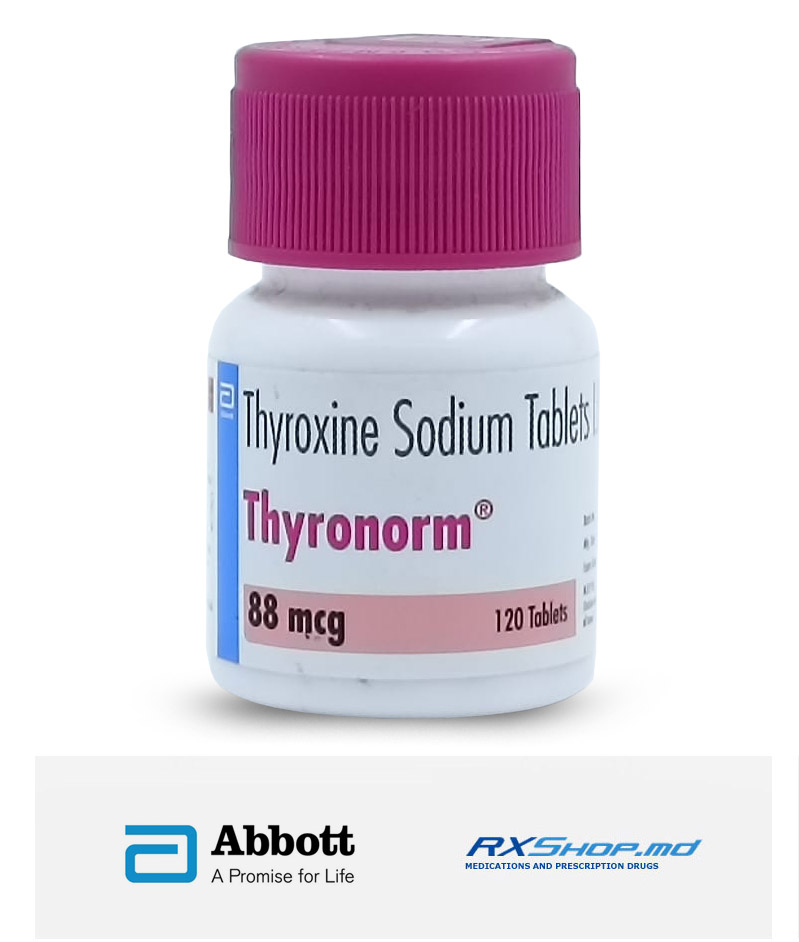
Thyronorm (Levothyroxine 88mcg) represents Abbott India's brand of thyroid hormone replacement therapy — the same corporate family as Synthroid (Abbott/AbbVie US brand). Thyronorm provides bioidentical synthetic levothyroxine sodium (T4) — chemically identical to endogenous thyroid hormone naturally produced by the thyroid gland — offering physiological replacement for hypothyroidism from any cause. As third levothyroxine option on rxshop.md thyroid category alongside Synthroid (Abbott/AbbVie US brand — 5 strengths) and Eltroxin (Combitic + GSK Pharma India brand — 50 mcg), Thyronorm offers the distinctive 88 mcg intermediate strength — filling the precise dosing gap between standard 75 and 100 mcg not available in other rxshop levothyroxine brands.
The 88 mcg unique niche makes Thyronorm particularly valuable for specific patient populations requiring this precise dose: patients weighing 55-60 kg on standard 1.6 mcg/kg replacement protocols, post-thyroidectomy patients whose optimal dose falls in this range, and thyroid cancer patients requiring intermediate TSH suppression doses. Rather than requiring combination tablets (50 mcg + 25 mcg + tablet splitting or approximation), Thyronorm 88 mcg provides single-tablet precision at this common maintenance dose. Manufactured by Abbott India under strict pharmaceutical quality standards, Thyronorm serves as Abbott's regional Indian counterpart to the US Synthroid brand with equivalent therapeutic outcomes expected from bioequivalent formulations of the same active ingredient.
Levothyroxine works as bioidentical prohormone T4 — chemically identical to endogenous thyroxine. Peripherally converted to active triiodothyronine (T3) by 5'-deiodinase enzymes in target tissues providing sustained physiological thyroid hormone activity supporting normal metabolic rate cardiovascular function cognitive processes body temperature regulation and growth. Long ~7-day half-life enables convenient once-daily dosing with steady state achieved in 4-6 weeks.
Thyronorm serves comprehensive hypothyroidism management including primary hypothyroidism, Hashimoto's thyroiditis, post-thyroidectomy replacement, congenital hypothyroidism, thyroid cancer TSH suppression, and goiter management. Take on empty stomach 30-60 min before breakfast. Monitor TSH q6-8 weeks. Sibling: opposite indication Carbirose (carbimazole antithyroid).
Free prescription
Discrete packaging
Have questions?
Quality Assurance
- Congenital Hypothyroidism: Newborn screening positive infants requiring immediate replacement for critical brain development in first year of life;
- Goiter Thyroid Enlargement: Selected cases of thyroid enlargement responding to TSH suppression through levothyroxine therapy;
- Thyroid Cancer: Essential replacement after thyroidectomy for differentiated thyroid cancer with TSH suppression at higher doses;
- Thyroid Hormone Replacement: Comprehensive replacement therapy for any cause of insufficient endogenous thyroid hormone production;
- TSH Suppression Therapy: Higher doses to suppress TSH below 0.1 mIU/L preventing differentiated thyroid cancer recurrence;
- Primary Hypothyroidism: Thyroid gland failure from autoimmune surgical or radiation-induced causes requiring replacement;
- Hashimoto Thyroiditis: Chronic autoimmune destruction of thyroid gland producing progressive hypothyroidism requiring lifelong replacement;
- Post Thyroidectomy Replacement: Complete replacement therapy after surgical thyroid removal for cancer or intractable hyperthyroidism;
- Post Radioactive Iodine Ablation: Replacement after RAI treatment for Graves disease or thyroid cancer when patient becomes hypothyroid;
- 88 mcg Maintenance Dose: Precise intermediate dose ideal for 55-60 kg patients on 1.6 mcg/kg replacement protocols;
- Precise Dose Titration: 88 mcg fills 75-100 mcg gap enabling precise titration without combination tablets;
- Central Hypothyroidism: Pituitary (secondary) or hypothalamic (tertiary) hypothyroidism requiring full replacement therapy;
- Subclinical Hypothyroidism: Elevated TSH with normal T4 in selected patients with symptoms or cardiovascular risk factors;
- Hypothyroidism in Pregnancy: Critical for fetal neurological development requirements increase 20-30% during pregnancy monitored monthly;
- Elderly Hypothyroidism: Age-related thyroid dysfunction requiring careful monitoring with cardiovascular considerations;
- Autoimmune Thyroiditis: Various autoimmune thyroid conditions producing hypothyroidism requiring replacement therapy;
- Post Graves Disease Treatment Hypothyroidism: Replacement after treatment for Graves disease when patient becomes hypothyroid;
- Bioidentical Thyroid Hormone Therapy: Bioidentical synthetic T4 matching endogenous thyroxine for physiological replacement;
- Generic Levothyroxine Therapy: Bioequivalent Abbott India generic alternative to brand Synthroid at accessible cost for lifelong therapy.
- Alleviates Symptoms of Hypothyroidism: Comprehensive improvement of fatigue cold intolerance dry skin constipation weight gain and other hypothyroid symptoms;
- Improves Metabolic Rate: Restores basal metabolic rate reversing hypothyroid-related metabolic slowdown enabling normal energy expenditure;
- Enhances Overall Wellbeing: Restoration of normal thyroid function improves quality of life across multiple physiological and psychological domains;
- Prevents Serious Complications: Adequate replacement prevents cardiovascular disease myxedema coma and other hypothyroid-related serious complications;
- Supports Heart Health: Normalizes cardiovascular function reducing hypothyroid-related bradycardia diastolic hypertension and cardiovascular abnormalities;
- Facilitates Normal Growth and Development: Critical for infant and child neurological development preventing intellectual disability in congenital hypothyroidism;
- Better Easy Monitoring and Adjustment: TSH monitoring enables straightforward dose adjustment with predictable pharmacokinetic response;
- Better 88 mcg Intermediate Dose Option: Fills precise dosing gap between 75 and 100 mcg not available in other rxshop levothyroxine brands;
- Better Abbott India Heritage: Same corporate family as Synthroid providing established manufacturing quality and pharmaceutical expertise;
- Better Bioidentical Hormone: Chemically identical to endogenous thyroxine providing physiological replacement without foreign substance concerns;
- Better Peripheral T3 Conversion: Body regulates peripheral T4-to-T3 conversion providing tissue-specific active hormone as needed;
- Better Once Daily Dosing Convenience: Long half-life (~7 days) allows convenient once daily dosing improving compliance for lifelong therapy;
- Better Precise Dosing Advantage: 88 mcg single-tablet dose avoids combination tablets or splitting for patients needing this specific dose;
- Better Cognitive Function Improvement: Reverses hypothyroid-related brain fog memory problems concentration difficulty and mental slowing;
- Better Weight Normalization: Restored metabolic rate helps normalize weight though weight loss from levothyroxine alone typically modest;
- Better Body Temperature Regulation: Restores normal thermoregulation eliminating cold intolerance and low body temperature symptoms;
- Better Mood Stabilization: Reverses hypothyroid-related depression low mood and emotional flattening restoring normal affect;
- Better Lifelong Therapy Suitability: Excellent safety profile enabling lifelong replacement therapy for chronic hypothyroidism without cumulative toxicity;
- Better Quality of Life: Effective hypothyroidism management dramatically improves quality of life restoring energy cognition mood and cardiovascular function.
Generic Thyronorm (Thyroxine Sodium 88 mcg) Medication guide:
Thyronorm (Levothyroxine 88mcg) represents Abbott India's brand of thyroid hormone replacement therapy - the same corporate family as Synthroid (Abbott/AbbVie US brand). Thyronorm provides bioidentical synthetic levothyroxine sodium (T4) - chemically identical to endogenous thyroid hormone naturally produced by the thyroid gland - offering physiological replacement for hypothyroidism from any cause. As third levothyroxine option on rxshop.md thyroid category alongside Synthroid (Abbott/AbbVie US brand - 5 strengths) and Eltroxin (Combitic + GSK Pharma India brand - 50 mcg), Thyronorm offers the distinctive 88 mcg intermediate strength - filling the precise dosing gap between standard 75 and 100 mcg not available in other rxshop levothyroxine brands. This unique dose is particularly valuable for patients weighing 55-60 kg on standard 1.6 mcg/kg replacement protocols, post-thyroidectomy patients requiring intermediate maintenance, and cancer patients needing precise TSH suppression doses. Manufactured by Abbott India under strict pharmaceutical quality standards, Thyronorm serves as Abbott's regional Indian counterpart to the US Synthroid brand with equivalent therapeutic outcomes expected from bioequivalent formulations. This comprehensive medication guide covers every aspect of Thyronorm therapy from Abbott India manufacturing heritage through the unique 88 mcg dose niche, bioidentical T4 pharmacology, comparison with sibling levothyroxine brands, and complete hypothyroidism management protocols.
💊 Introduction to Thyronorm
Thyronorm is a prescription oral medication containing levothyroxine sodium as its active ingredient in tablet form manufactured by Abbott India. Thyronorm represents Abbott's regional Indian brand of levothyroxine — the pharmaceutical company's counterpart to the widely known Synthroid brand marketed in the United States by Abbott/AbbVie. This corporate relationship provides Thyronorm patients with access to Abbott pharmaceutical manufacturing quality and expertise at Indian generic pricing.
The Thyronorm brand contains bioidentical synthetic levothyroxine sodium (T4) — chemically identical to endogenous thyroid hormone naturally produced by the thyroid gland. As a prohormone, levothyroxine is peripherally converted to active triiodothyronine (T3) by tissue-specific deiodinase enzymes providing sustained physiological thyroid hormone activity supporting normal metabolic rate, cardiovascular function, cognitive processes, body temperature regulation, and growth and development. This bioidentical approach distinguishes levothyroxine from earlier natural thyroid extract preparations providing consistent, predictable pharmacology suitable for lifelong therapy.
Available on rxshop.md at the distinctive 88 mcg intermediate strength, Thyronorm fills a specific clinical dosing niche not available in other rxshop levothyroxine brands: Synthroid (Abbott/AbbVie US) offers 25/50/100/125/200 mcg, and Eltroxin (Combitic + GSK) offers only 50 mcg. The 88 mcg Thyronorm dose fills the precise gap between 75 mcg (achievable by combining 50+25 in Synthroid) and 100 mcg — providing single-tablet convenience for patients whose optimal dose falls in this range. This is particularly valuable for patients weighing 55-60 kg on standard 1.6 mcg/kg replacement protocols where 88 mcg represents optimal weight-based dosing.
🏭 Abbott India Manufacturing Heritage
Abbott Pharmaceutical Corporate Family
Abbott Pharmaceutical corporate heritage:
- Abbott Laboratories: Founded 1888 - major global pharmaceutical company
- Synthroid acquisition 2001: Abbott acquired Knoll Pharmaceuticals including Synthroid brand
- AbbVie spinoff 2013: Abbott divested specialty pharmaceuticals to newly formed AbbVie
- Synthroid US: Currently owned and marketed by AbbVie Pharmaceuticals
- Abbott India: Continues Indian regional pharmaceutical operations
- Thyronorm brand: Abbott India's Indian regional brand of levothyroxine
- Same manufacturing standards: Abbott quality standards across all levothyroxine brands
- Extensive Indian portfolio: Comprehensive pharmaceutical presence in Indian market
Thyronorm vs Synthroid Corporate Relationship
Understanding the corporate relationship between Thyronorm and Synthroid clarifies the brand family dynamics:
- Same corporate parent — Abbott Laboratories historically owned both
- Different regional branding — Synthroid for US market, Thyronorm for Indian market
- Different manufacturing subsidiaries — Abbott/AbbVie US vs Abbott India
- Same active ingredient — Levothyroxine sodium in both
- Equivalent bioequivalent formulations — Same clinical outcomes expected
- Different available strengths — Regional market preferences
- Different pricing — Regional market dynamics
⚖️ Three Levothyroxine Brands Comparison
| Property | Thyronorm | Synthroid | Eltroxin |
|---|---|---|---|
| Manufacturer | Abbott India | Abbott/AbbVie US | Combitic + GSK India |
| Corporate family | Abbott | Abbott (originally) | GSK heritage |
| Available strength on rxshop | 88 mcg | 25, 50, 100, 125, 200 mcg | 50 mcg |
| Unique advantage | Intermediate 88 mcg dose | Wide strength range | GSK brand recognition |
| Regional dominance | India/Asia | US market | UK/India/Canada/Australia |
| Active ingredient | Levothyroxine sodium | Levothyroxine sodium | Levothyroxine sodium |
| Mechanism | Bioidentical T4 | Bioidentical T4 | Bioidentical T4 |
| Clinical uses | Hypothyroidism replacement | Hypothyroidism replacement | Hypothyroidism replacement |
| Bioequivalence | Equivalent | Equivalent | Equivalent |
| Best for | Patients needing 88 mcg dose | Wide dose range needs | Standard 50 mcg dose |
📏 The Unique 88 mcg Strength Advantage
Why 88 mcg matters clinically:
Standard levothyroxine strengths on rxshop levothyroxine brands include 25, 50, 100, 125, 200 mcg (Synthroid) and 50 mcg (Eltroxin). The 88 mcg Thyronorm fills the precise dosing gap between 75 mcg and 100 mcg — a common clinical range where many patients require dosing.
Ideal Patient Populations for 88 mcg
Patients particularly suited for Thyronorm 88 mcg:
- 55-60 kg patients on 1.6 mcg/kg protocols: 55 kg × 1.6 = 88 mcg exactly; 60 kg × 1.6 = 96 mcg close to 88
- Post-thyroidectomy patients: Whose optimal dose falls in 75-100 mcg range
- Hashimoto's patients: With optimal maintenance at 88 mcg after titration
- Thyroid cancer patients: Requiring intermediate TSH suppression doses
- Patients previously on 75 mcg with inadequate control: Precise dose escalation to 88 mcg
- Patients on 100 mcg with mild overtreatment: Precise dose reduction to 88 mcg
- Patients preferring single-tablet convenience: Avoiding combination therapy or tablet splitting
- Patients titrating in fine increments: Precise adjustment between 75 and 100 mcg
Weight-Based Dosing Where 88 mcg Fits
| Patient Weight | Calculated Dose (1.6 mcg/kg) | Thyronorm 88 mcg Suitability |
|---|---|---|
| 50 kg (110 lb) | 80 mcg | Close approximation - 88 mcg slightly higher |
| 55 kg (121 lb) | 88 mcg | Perfect match! |
| 60 kg (132 lb) | 96 mcg | Close approximation - 88 mcg slightly lower |
| 65 kg (143 lb) | 104 mcg | 100 mcg better fit; 88 mcg for subclinical hypothyroidism |
| 70 kg (154 lb) | 112 mcg | 100-125 mcg range - 88 mcg subtherapeutic |
🔬 Understanding Hypothyroidism
The Thyroid Gland and Hormone Production
Understanding thyroid gland physiology is essential for appreciating how levothyroxine replacement therapy addresses hypothyroidism. The thyroid gland produces two primary thyroid hormones — thyroxine (T4) and triiodothyronine (T3) — regulated through hypothalamus-pituitary-thyroid feedback axis. When the thyroid gland produces insufficient hormones (hypothyroidism), levothyroxine replacement restores physiological function.
Common Causes of Hypothyroidism
- Hashimoto's thyroiditis: Autoimmune destruction - most common cause
- Post-thyroidectomy: After surgical thyroid removal
- Post-RAI ablation: After radioactive iodine treatment
- Congenital hypothyroidism: Newborn screening positive
- Iodine deficiency: Selected geographic regions
- Central hypothyroidism: Pituitary or hypothalamic disease
- Medication-induced: Lithium, amiodarone, immune checkpoint inhibitors
- Radiation exposure: Head/neck radiation therapy
Common Hypothyroid Symptoms
Hypothyroid symptoms responding to Thyronorm therapy:
- Persistent fatigue: Profound tiredness despite adequate sleep
- Cold intolerance: Feeling cold when others are comfortable
- Weight gain: Unexplained weight increase
- Dry skin and hair: Coarse dry skin, brittle hair
- Constipation: Slowed intestinal motility
- Depression and mood changes
- Cognitive slowing: Memory problems, concentration difficulty
- Muscle weakness and aches
- Menstrual irregularities
- Bradycardia: Slow heart rate
- Elevated cholesterol
- Goiter in some cases
🧪 Chemistry and Mechanism
Levothyroxine sodium has the chemical formula C15H10I4NNaO4 with molecular weight approximately 798.9 g/mol. Levothyroxine is the sodium salt of the levorotatory isomer of thyroxine — synthetic form chemically identical to endogenous thyroxine naturally produced by the thyroid gland.
Mechanism as Bioidentical T4 Prohormone
Levothyroxine mechanism at cellular level:
- Absorption: Primarily jejunum and ileum with variable bioavailability (60-80 percent)
- Circulation: Bound to thyroxine-binding globulin (TBG) and other proteins (99.97 percent)
- Cellular uptake: Free T4 enters target cells through specific transporters
- Peripheral conversion: 5-prime deiodinase enzymes convert T4 to active T3
- Nuclear receptor binding: T3 binds thyroid hormone receptors in cell nuclei
- Gene transcription: Modulates transcription of hundreds of thyroid-responsive genes
- Physiological effects: Increased metabolic rate, protein synthesis, growth
- Homeostatic feedback: Elevated T4/T3 suppresses hypothalamic TRH and pituitary TSH
Pharmacokinetic Profile
| Parameter | Value | Clinical Significance |
|---|---|---|
| Oral bioavailability | 60-80 percent (variable) | Affected by food and medications |
| Time to peak | 2-4 hours | Peak plasma concentration |
| Half-life | Approximately 7 days | Allows once daily dosing |
| Steady state | 4-6 weeks | TSH monitoring at 6-8 weeks |
| Protein binding | 99.97 percent (mostly TBG) | Very highly protein bound |
| Metabolism | Peripheral deiodination to T3 | Body regulates T3 production |
| Elimination | Biliary and renal metabolites | Slow elimination |
| Food effect | Substantially reduces absorption | MUST take on empty stomach |
| Onset of clinical improvement | 2-4 weeks partial, 6-8 weeks substantial | Gradual response over weeks |
🎯 Approved Indications
Primary Indications
- Hypothyroidism - primary and secondary from any cause
- Congenital hypothyroidism - newborn screening positive infants
- Goiter (thyroid enlargement) - selected cases with TSH suppression
- Thyroid cancer - post-thyroidectomy replacement and TSH suppression
- Thyroid hormone replacement - comprehensive replacement therapy
- TSH suppression - for cancer or nodular goiter management
Specific Clinical Uses Where 88 mcg Ideal
- 55-60 kg patients: Optimal weight-based dose calculation
- Post-thyroidectomy: Whose optimal dose falls in 75-100 mcg range
- Hashimoto's maintenance: After titration to 88 mcg
- Fine dose titration: Precise adjustment between 75 and 100
- Cancer suppression: Intermediate TSH suppression protocols
- Single-tablet convenience: Avoiding combination or splitting
Broader Clinical Uses
- Hashimoto's thyroiditis - autoimmune hypothyroidism
- Post-thyroidectomy replacement
- Post-RAI ablation
- Central hypothyroidism
- Subclinical hypothyroidism - selected patients
- Pregnancy hypothyroidism - critical for fetal development
- Post-Graves' disease treatment hypothyroidism
- Elderly hypothyroidism - with cardiovascular considerations
- Pediatric hypothyroidism - weight-based dosing
🚫 Contraindications and Precautions
Contraindications
- Untreated thyrotoxicosis - would worsen hyperthyroidism
- Untreated adrenal insufficiency - risk of adrenal crisis
- Acute myocardial infarction - initiate cautiously after acute event
- Hypersensitivity to levothyroxine or any excipient
- Not for weight loss - dangerous in euthyroid patients
Precautions - Cardiovascular Caution
Cardiovascular considerations:
- Elderly patients: 88 mcg may be too high starting dose - consider Synthroid 25 mcg first
- Coronary artery disease: Start low, titrate slowly (Synthroid 25 mcg better start)
- Atrial fibrillation: May be precipitated by overtreatment
- Long-standing untreated hypothyroidism: Start with lower strength first
- Osteoporosis: Overtreatment increases bone loss in postmenopausal women
- Diabetes: Thyroid replacement may affect glucose control
Additional precautions:
- Adrenal insufficiency: Replace glucocorticoids BEFORE thyroid hormone
- Pregnancy: Requirements increase 20-30% - monitor monthly
- Anticoagulation: Thyroid replacement affects warfarin sensitivity
- Diabetes medications: May need adjustment as thyroid normalizes
- Estrogen therapy: May increase levothyroxine requirements
💉 Dosage and Administration
When Thyronorm 88 mcg Is Optimal
Ideal patient scenarios for 88 mcg single-tablet dosing:
- 55-60 kg patients on full replacement (1.6 mcg/kg)
- Post-thyroidectomy with optimized 88 mcg dose
- Hashimoto's patients titrated to 88 mcg maintenance
- Intermediate cancer TSH suppression doses
- Precise titration between 75 and 100 mcg
- Patient preference for single tablet over combinations
Standard Dosing Protocol
Standard adult dosing considerations:
- Weight-based: Approximately 1.6 mcg/kg/day for full replacement
- Once daily dosing: Long half-life supports single daily dose
- Timing: Empty stomach 30-60 minutes before breakfast
- Consistency: Same time daily for stable levels
- Water only: No coffee, tea, or juice with the dose
- Wait 4 hours: Before/after calcium, iron, coffee, cholestyramine
Elderly and CAD Considerations
Note: For elderly patients or those with cardiovascular disease, Thyronorm 88 mcg may be too high starting dose. Consider starting with Synthroid 25 mcg (sibling product) for gradual titration, then transition to Thyronorm 88 mcg when this becomes optimal maintenance dose. This approach leverages Synthroid's lower strength availability for safer initiation while accessing Thyronorm's precise 88 mcg strength for maintenance.
Pregnancy Dosing
- Requirements increase 20-30 percent during pregnancy
- Increase dose immediately upon pregnancy confirmation
- If on Thyronorm 88 mcg pre-pregnancy: increase to 100-125 mcg approximately
- Monitor TSH monthly throughout pregnancy
- Return to pre-pregnancy Thyronorm 88 mcg after delivery
- Critical for fetal brain development
🍴 Critical Absorption Considerations
Levothyroxine absorption critically affected by food and medications:
Optimal administration:
- Take on EMPTY STOMACH with water only
- 30-60 minutes before breakfast optimal
- Alternative: Bedtime - at least 3 hours after last meal
- Consistency: Same time daily
- Water only: No coffee, tea, juice
- Do not chew or crush - swallow whole
Foods and Medications Affecting Absorption
Wait at least 4 hours before/after:
- Coffee and caffeine: Reduces absorption 30-40 percent
- Calcium supplements: Binds levothyroxine reducing absorption
- Iron supplements: Forms complexes reducing absorption
- Magnesium supplements: Interferes with absorption
- Aluminum antacids: Reduces absorption
- Sucralfate: Binds levothyroxine
- Cholestyramine: Substantial binding
- Proton pump inhibitors: Long-term use may reduce absorption
- Milk and dairy: Calcium reduces absorption
- Soy protein and fiber: May reduce absorption
- Estrogen therapy: Increases TBG - may increase requirements
📊 TSH Monitoring Framework
TSH monitoring schedule:
- Initial dose: Check TSH at 6-8 weeks after starting
- Dose changes: Check TSH at 6-8 weeks after each adjustment
- Once stable: Annual TSH monitoring
- Pregnancy: Monthly TSH monitoring
- Elderly: Every 6 months minimum
- Cancer suppression: Every 3-6 months
- Symptom change: Repeat TSH sooner if symptoms worsen
Target TSH Ranges
| Population/Indication | Target TSH (mIU/L) |
|---|---|
| Standard adult replacement | 0.5-4.0 |
| Elderly patients | 1.0-5.0 (higher acceptable) |
| Pregnancy first trimester | 0.1-2.5 |
| Pregnancy second trimester | 0.2-3.0 |
| Pregnancy third trimester | 0.3-3.5 |
| Thyroid cancer high-risk | Below 0.1 |
| Thyroid cancer intermediate | 0.1-0.5 |
⚠️ Side Effects
Signs of Overtreatment
Overtreatment symptoms (dose too high):
- Palpitations, tachycardia
- Weight loss despite normal appetite
- Heat intolerance, excessive sweating
- Anxiety, nervousness, irritability
- Insomnia, sleep disturbance
- Tremor
- Diarrhea, increased bowel movements
- Muscle weakness
- Atrial fibrillation (elderly particularly)
- Bone loss (postmenopausal women)
Signs of Undertreatment
Undertreatment symptoms (dose too low):
- Persistent fatigue
- Cold intolerance continues
- Weight gain difficulty losing
- Constipation
- Dry skin and hair
- Continued depression, low mood
- Cognitive slowing continues
- Elevated cholesterol
🔄 Drug Interactions
| Drug/Substance | Interaction |
|---|---|
| Warfarin | Increased anticoagulant effect - monitor INR |
| Diabetes medications | Thyroid normalization may reduce needs |
| Calcium supplements | Reduces absorption - separate by 4 hours |
| Iron supplements | Reduces absorption - separate by 4 hours |
| Cholestyramine | Substantial binding - separate 4-6 hours |
| PPIs (omeprazole) | Long-term may reduce absorption |
| Estrogen therapy | Increases TBG - may need dose increase |
| Amiodarone | Complex thyroid effects - monitor closely |
| Coffee and caffeine | Reduces absorption 30-40% |
| Lithium | Can cause hypothyroidism |
🛡️ Special Populations
- Pregnancy
- Requirements increase 20-30 percent. If on 88 mcg pre-pregnancy, may need 100-125 mcg during pregnancy (transition to Synthroid strengths for precise doses). Monitor TSH monthly. Return to 88 mcg Thyronorm after delivery.
- Lactation
- Compatible with breastfeeding. Minimal breast milk excretion. Continue normal replacement during nursing.
- Pediatric Patients
- 88 mcg typically too high for pediatric use. Consider Synthroid lower strengths (25/50 mcg) for pediatric weight-based dosing. Pediatric endocrinology supervision essential.
- Elderly Patients Over 65
- 88 mcg may be too high starting dose. Consider Synthroid 25 mcg for gradual titration. Transition to Thyronorm 88 mcg once this becomes maintenance dose. Careful cardiovascular monitoring.
- 55-60 kg Adult Patients
- Ideal candidates for Thyronorm 88 mcg. Perfect weight-based dose calculation - 55 kg × 1.6 = 88 mcg exactly. Single-tablet convenience optimal for this weight range.
- Coronary Artery Disease
- 88 mcg may be too high starting dose. Start with Synthroid 25 mcg, titrate slowly, transition to Thyronorm 88 mcg when this becomes optimal maintenance dose.
- Adrenal Insufficiency
- Treat adrenal insufficiency BEFORE thyroid hormone to prevent adrenal crisis. Cortisol replacement essential first.
- Post-Thyroidectomy Patients
- Essential lifelong replacement. If optimal dose 88 mcg, Thyronorm provides single-tablet solution. Monitor TSH regularly.
- Thyroid Cancer Patients
- Higher doses typically needed for suppression. Thyronorm 88 mcg may serve as intermediate suppression dose. Higher-dose patients may need Synthroid strengths. Endocrinology supervision essential.
- Diabetic Patients
- Thyroid normalization may reduce insulin needs. Monitor blood glucose closely during titration.
- Osteoporosis Patients
- Avoid overtreatment - excess thyroid increases bone loss. Target upper end of normal TSH. Regular DEXA monitoring.
- Congenital Hypothyroidism Infants
- 88 mcg too high for infants. Requires much lower doses (10-15 mcg/kg/day). Consider Synthroid 25 mcg or lower strengths for pediatric dosing.
📆 Long-Term Follow-Up
Lifelong therapy considerations:
- Annual TSH monitoring: Once stable dose established
- Symptom assessment: At each visit
- Weight monitoring: Track for dose adjustment need
- Cardiovascular monitoring: Particularly in elderly
- Bone density in postmenopausal women: Periodic DEXA
- Pregnancy planning: Optimize TSH before conception
- Medication changes: Reassess for new interactions
- Brand consistency: Try to maintain same brand
- Weight changes: Over 10% may require adjustment - possible switch from 88 mcg
📦 Storage and Handling
- Store at room temperature between 20°C and 25°C (68°F and 77°F)
- Protect from light, moisture, and heat
- Keep tablets in original packaging
- Keep out of reach of children and pets
- Do not use past expiration date
- Do not share medication with others
- Maintain consistent supply - avoid missing doses
👨⚕️ When to Contact Your Doctor
- Signs of overtreatment: palpitations, weight loss, heat intolerance
- Signs of undertreatment: persistent fatigue, cold intolerance, weight gain
- Chest pain or worsening angina
- Atrial fibrillation or new arrhythmia
- Confirmed or suspected pregnancy - dose increase needed
- Starting or stopping medications potentially interacting
- Starting calcium, iron, or PPI therapy
- Significant weight change (over 10 percent)
- Development of new medical conditions
- Time for scheduled TSH monitoring
- Symptoms not improving after 6-8 weeks of therapy
- Signs of allergic reaction (rare)
- Difficulty tolerating the medication
- Missing doses regularly
- Considering brand or dose change
🌟 Key Takeaways
Essential points about Thyronorm therapy:
- Thyronorm is Abbott India brand levothyroxine sodium 88 mcg tablets
- Same corporate family as Synthroid (Abbott/AbbVie US brand)
- Third levothyroxine option on rxshop alongside Synthroid and Eltroxin
- Unique 88 mcg intermediate strength fills 75-100 mcg gap
- Ideal for 55-60 kg patients on 1.6 mcg/kg replacement (55 kg × 1.6 = 88 mcg exactly)
- Bioidentical synthetic T4 - chemically identical to endogenous thyroid hormone
- Prohormone peripherally converted to active T3 by tissue enzymes
- Long ~7-day half-life allows once daily dosing
- Steady state 4-6 weeks - clinical assessment requires patience
- Take on EMPTY STOMACH 30-60 min before breakfast
- Wait 4 hours before/after coffee calcium iron cholestyramine
- Monitor TSH q6-8 weeks during titration, annually once stable
- Target TSH 0.5-4.0 for standard replacement
- Elderly/CAD: consider Synthroid 25 mcg first, transition to 88 mcg when appropriate
- Pregnancy: increase 20-30% requirements (may need transition to Synthroid strengths)
- Treat adrenal insufficiency BEFORE starting levothyroxine
- Overtreatment causes iatrogenic hyperthyroidism
- Undertreatment continues hypothyroid symptoms
- Lifelong therapy typical for most causes
- Sibling brands available for different dose needs: Synthroid (5 strengths) and Eltroxin (50 mcg)
Important Medical Disclaimer: This medication guide provides general information about Thyronorm (Abbott India levothyroxine 88 mcg tablets) and does not constitute individualized medical advice. Every patient situation is unique and requires evaluation by a qualified healthcare provider. Thyronorm 88 mcg is a specific intermediate dose most appropriate for patients whose optimal weight-based dose calculation falls in this range - typically 55-60 kg patients on standard 1.6 mcg/kg replacement protocols. For patients requiring different doses, consider sibling brands Synthroid (5 strengths 25/50/100/125/200 mcg) or Eltroxin (50 mcg) available on rxshop.md. Levothyroxine therapy requires regular TSH monitoring and dose adjustments - do not modify dose without physician guidance. Take on empty stomach 30-60 minutes before breakfast with water only. Avoid coffee calcium iron cholestyramine within 4 hours. Elderly patients and those with coronary artery disease may find 88 mcg too high starting dose - consider Synthroid 25 mcg for gradual titration, transitioning to Thyronorm 88 mcg once this becomes optimal maintenance dose. During pregnancy requirements increase 20-30 percent - may need dose increase requiring transition to Synthroid strengths for precise adjustment. TSH monitoring critical: every 6-8 weeks during titration, annually once stable, monthly during pregnancy. Treat adrenal insufficiency BEFORE starting levothyroxine to prevent adrenal crisis. Report signs of overtreatment or undertreatment to your healthcare provider. If you experience concerning symptoms particularly chest pain new arrhythmias or difficulty tolerating the medication contact your healthcare provider promptly. The information provided here should complement but never replace direct professional medical guidance.
Thyronorm — Frequently Asked Questions
-
What is Thyroxine Sodium (Thyronorm)?
Thyroxine Sodium, sold as Thyronorm, is a synthetic form of the thyroid hormone thyroxine (T4) used primarily to treat hypothyroidism. -
How does Thyronorm work?
Thyronorm works by replacing the thyroxine hormone that the thyroid gland cannot produce in sufficient amounts, helping to restore normal metabolism. -
What conditions does Thyronorm treat?
It treats hypothyroidism, goiter, thyroid cancer, and is used in thyroid function tests and as a diagnostic agent in suppression tests. -
How do I take Thyronorm?
It should be taken on an empty stomach, ideally 30 minutes before breakfast, with a full glass of water to ensure absorption. -
What dosage of Thyronorm should I take?
Dosages vary based on individual thyroid hormone levels, weight, age, and overall health. Your doctor will prescribe the appropriate dose. -
Can children take Thyronorm?
Yes, children with hypothyroidism or congenital thyroid deficiencies can take Thyronorm, but dosages must be carefully adjusted. -
Is Thyronorm safe during pregnancy?
Yes, it is crucial for pregnant women with hypothyroidism to continue taking Thyronorm, as low thyroid hormone levels can harm both mother and baby.
See all Thyronorm questions (32)
More Thyroid Medications